Morocco highlight reel and a few things that are good to know.

Morocco Highlights

  • Souk hebdomadaire/weekly market/outdoor souk

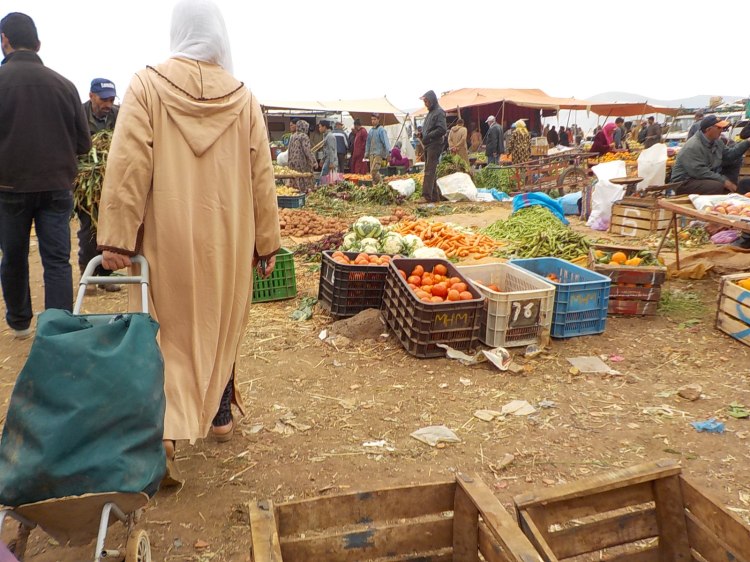
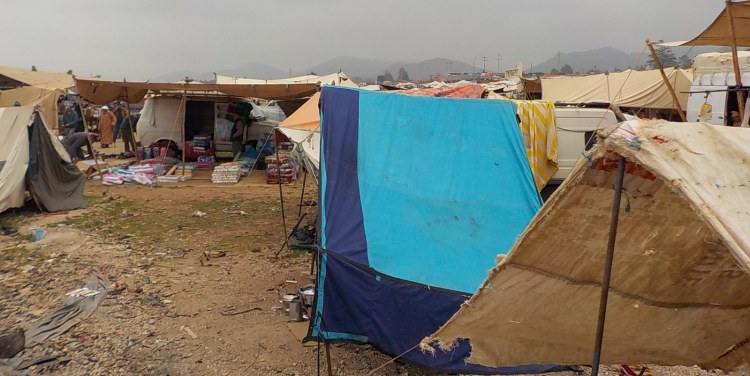
These markets under tents are sprawling, temporary tent cities and a great slice of life, showing what Moroccans purchase. NB: We were warned that pickpockets frequent the souks, though we did not have trouble.
  • The medina of any city. The medina of Fez and of Marrakesh are the best known in Morocco, but any medina, with its narrow, winding streets and many tiny shops is an experience. Medinas tend to have shops aimed at tourists, unlike the weekly souks that may or may not have rug and pottery sellers.
  • Every town has its distinctive look and we liked all of the places we visited, including Rabat, often dissed for being too contemporary. I particularly enjoyed the view from Café Maure, reached through the Andalusian gardens in the kasbah of Rabat.
  • Sitting in a café is a great pleasure of Morocco. You can have a café crème, orange juice, or Oulmes (ool-mess, or club soda). You can take your time, people watching is always good and it is an inexpensive pastime. We’ve had coffee at expensive hotels to take in their view or lovely patio—that costs more, but is often worth it to see a fabulous restored riad.
    4.29.16-008sm
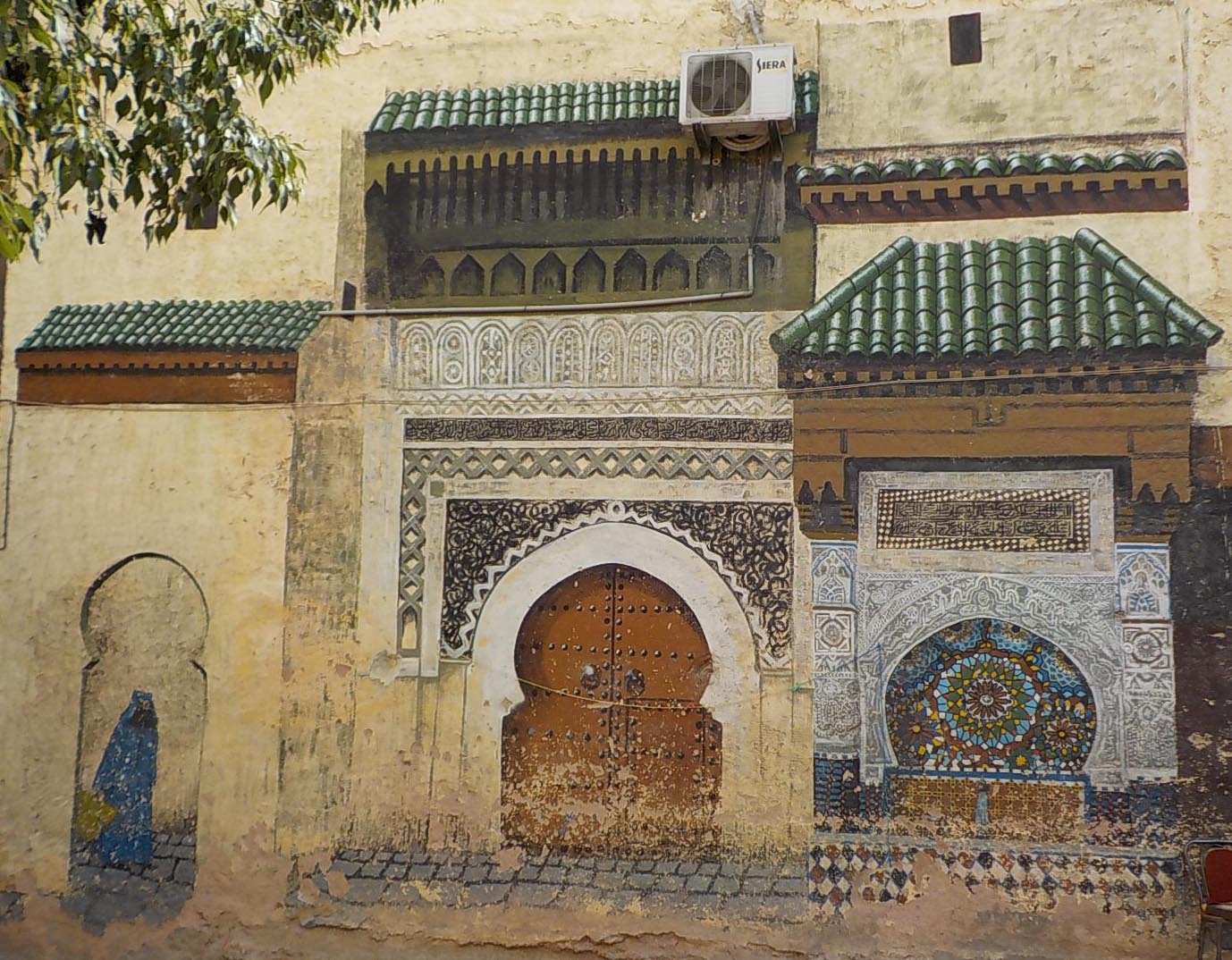
    A neighborhood mural.

    Good to know for travel in Morocco

  • Very few places accept credit cards. Be prepared to pay cash almost everywhere. Not all hotels and riads take credit cards, and in Marrakesh, the riad took credit cards but then couldn’t get its scanner to work. Only the occasional restaurant took a card (once or twice in 2 months). We didn’t make a large enough purchase to see whether credit cards could be used to pay for artisan work.
  • We carried only zipped backpacks and did not put all our money in one place. I had change in a small purse with a small bill and carried more money in a zipped pocket.

My tiny backpack is reversible and can be worn with all the zipped pockets against my back. It’s great for cities. Urbanitabarcelona.com

  • We use Maroc Tel sim cards in our phones and had no trouble calling our Moroccan friends. We didn’t even try to use them to call outside the country, but I believe that’s possible.
  • Most people speak a little bit of French and Darija, Moroccan Arabic. I have a vague sense that an increasing number of people speak English, but it is still quite uncommon. My high school French was very helpful. Store owners speak enough to give prices in many languages (French, English, Spanish, German, Italian, maybe others), but they are much less likely to be able to discuss the details of their goods in any language but French. A few people speak Spanish, depending on where you are in the country. In a shop in the Ville Nouvelle of Fez, I had a long conversation with a sales person who spoke excellent Spanish. At the ‘Coin Berber’ in the Fez medina, the salesman spoke English, making it easier to discuss the items displayed. The more upscale a store, the more likely it is that someone will speak English or will be able to get someone to come in who does.
  • It can be fascinating to see the workshop of an artisan, but it can be awkward because some are up steep and dark stairways (what am I getting into?!). You may not be invited in if you are not interested in making a purchase. The tanneries are an exception, you can see the tanneries only from the balcony of a business. They are very cordial about inviting you in, and only moderately aggressive with the sales pitch.
    • One alternative if you would like to visit workshops and don’t plan to do a lot of buying is to take a tour specifically designed to connect visitors and artisans. We did not do this, but would probably have enjoyed it. Guidebooks make recommendations of reputable tour organizers, or check the blog, “A View from Fez.”
  • We brushed our teeth with the tap water, and used it to make tea and coffee, but we drank bottled water.
  • Prescription drugs are available without a prescription. We purchased antibiotics for an upper respiratory infection that wouldn’t go away, and a refill for a prescription that wouldn’t get to us from home before it ran out. Drugs are not inexpensive but they are available if you need them and the item is not too exotic.
  • Taxi cabs have meters, which can be a relief to those of us unused to bargaining for every cab ride. Unfortunately for taxi drivers, fares are set very low, meaning that if you insist on using the meter, a driver may not be willing to take you to your destination. Once we learned that most rides were almost 20 dh if you included a tip, it didn’t seem so bad to offer 20 dh, since that seems to be enough (at present) to get a driver to take you to a location around the medina, Fes Jdid, the Mellah or even the Ville Nouvelle. If the driver doesn’t start the meter, be sure to set the price, or get out.
  • You must try to bargain. True, you can pay the asking price, but it will be 2-4 times a reasonable sales price. People use a variety of techniques to set starting prices, including labeled tags, reference to prices online and in stores, but all starting prices are a minimum of twice a realistic price. Try to think of how much you would pay for a similar item at home as a check on your enthusiasm for what you are purchasing. Remember that creating a sorely disappointed and wounded expression is an art form among Moroccan salespersons. When you start to bargain you should have an acceptable price in mind, be prepared to buy the item if you reach that price, and be prepared to walk away if you do not. You might find your price agreed to when you are already a couple of steps into the street. Keep in mind that it is acceptable to stop by the shop on one or more additional occasions and continue the discussion, though we did not do this ourselves.
  • If you don’t want to bargain, shop in the fixed price stores (Ensemble artisanal) in the large cities. You will only pay about twice the street price, or find a cooperative. We bought argan oil at a cooperative, but other cooperatives I found only online.
  • We did not bargain when food shopping, though we saw local people angling for better prices for a few things (strawberries). We did shop at the Carrefour grocery store for exotic items like packaged crackers, imported cheese, and wine. The wine shop associated with Carrefour in Morocco (the cave), is down a separate stairway, though the entrance is usually adjacent to the main store entrance.
  • Moroccans are friendly and most people will return a smile and a ‘Bonjour.’ Occasionally, people will engage you in a brief conversation, asking where you come from and welcoming you to Morocco. Even if you speak French or Spanish and your conversation starts in one of those languages, you may find that you run out of steam quickly. Many people only know how to say hello, welcome, and ‘What is your name?’ The vast majority of people mean well. If you look lost for more than a minute, especially in any medina, a passerby is likely to ask where you are going and point you on your way. If you are uncertain about where you are going, you can ask a shop keeper for directions. If you are well and truly lost, you can get a boy/young man to take you where you are going for 10 dh. The question is whether they understand where you want to go.
  • There are some Moroccans who take advantage of the national friendliness to initiate a conversation and then ask you to hire them as a guide, accompany them to an excellent hotel or restaurant or to the very fine shop of their brother/cousin/friend. Some pretend to be angry if you will not go with them (see the fine art of making a wounded expression mentioned above). We spent a lot of time saying ‘Ca va, ca va’ (it’s fine), and ‘No thank you, no thank you.’ I was not able to explain that sometimes taking a walk is like solving a puzzle. I may be lost, but I am enjoying figuring out where I am (Fez medina).
    • One scam that is so frequently used it’s barely a scam, just an annoyance. When you walk down a street, someone stops you and says “It’s closed.” If you say, “The museum’s closed?” you’ve given away that you were going to a museum. The speaker agrees, ‘Yes, the museum is closed’ and offers to take you to another place. Usually, nothing is closed. (except much of the Fez medina on Fridays).
    • A man came up to us in the street, reminded us that he had helped translate for a woman in a store about a half hour before (how did he find us? Were we followed?). He then held out a 10 dh coin and said that we had given the store a counterfeit coin. We pointed out that we left the store a while ago and there was no way that the 10 dh coin in his hand was the same one that we had given to the woman in the shop.

He gave up pretty rapidly, which left us puzzled. Do foreigners usually hurry to hand over a replacement coin?

  • We had no trouble driving in Morocco, where the roads are better than in Peru. We drove at the speed limit, never over, as there are numerous check points around the country. We were only stopped once for a review of our license and registration. The officer was polite and didn’t detain us longer than it took to look over the documents.
  • If you don’t have experience driving outside the US, you might want to stick to the recommended bus lines (CMB or Supratours), grand taxis or hiring a driver.
  • In Fes, where we did not have a car, we hired a driver through our riad and were happy with the flexible itinerary and the price.


A few more sights from the neighborhood

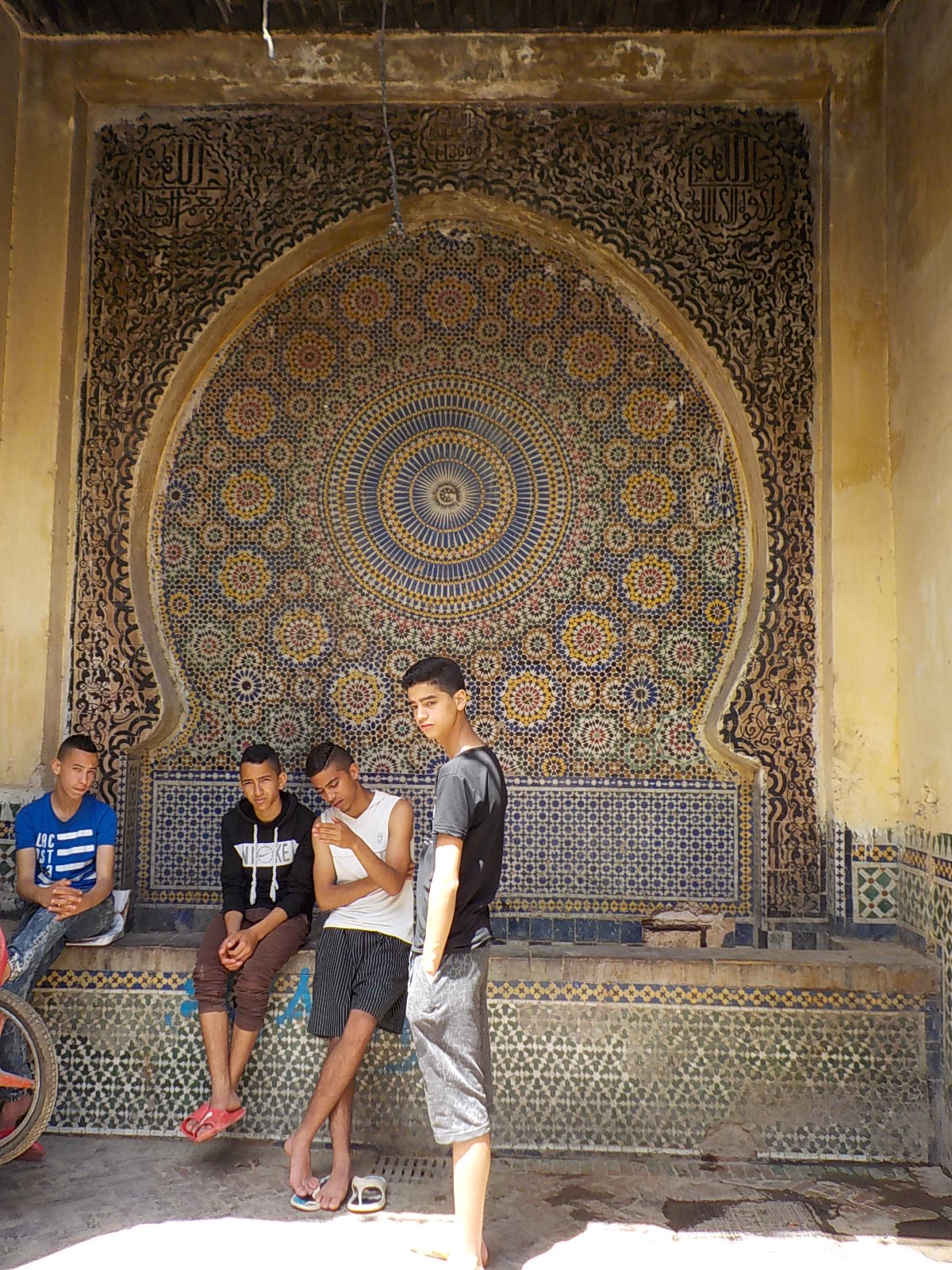
Young people are everywhere, here are some hanging out at a local fountain (water tap). What is education like in Morocco? Are there after school activities or part-time jobs available to young people? Is an after school job considered a good thing or a stigma? It’s clear I have a lot to learn about Morocco, but these young men are the face of Fez today.

4.23.16 Fez-004When the king visited recently, there was a frenzy of quick painting, and hundreds of Moroccan flags were posted all over the city. We even saw a motorcade pass, with police clearing the streets and standing with their backs to the motorcade, presumably scanning the route for threats.

Unfortunately, most of the pageantry was off limits. Officials in bright uniforms manned every gate of the city but didn’t permit photos. The king’s itinerary wasn’t publicized, so we never did find out whether he was inaugurating a new facility at the airport, or the renovations in our neighborhood, Bab Rcif.

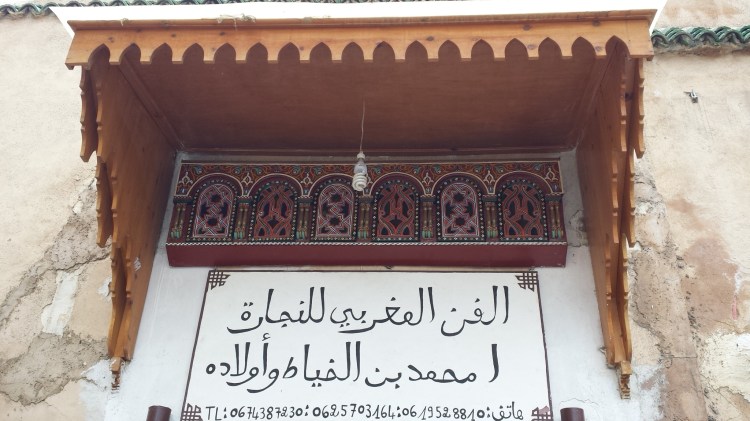
Apparently, the king was unhappy at the pace of renovations in the Fez medina. The dyers’ souk is just about renovated. There’s not much to see because the artisans haven’t moved back in yet, but the new shop fronts are fresh and each shop has new wood doors and canopy with carved decoration. If you look beyond the souk, the neighborhoods where people live are in need of renovation just to make them safe for habitation. This is our street. While picturesque, keep in mind that there are hundreds of buildings in the medina that are similarly braced to prevent collapse.

4.26.16 aShouldn’t this kind of repair be a priority for the king?

The boys in the background just got out of school and after saying “Bonjour” about 15 times each, they decided that staring from a distance was just as interesting as chatting.

Here are some sights from a walk down the street:

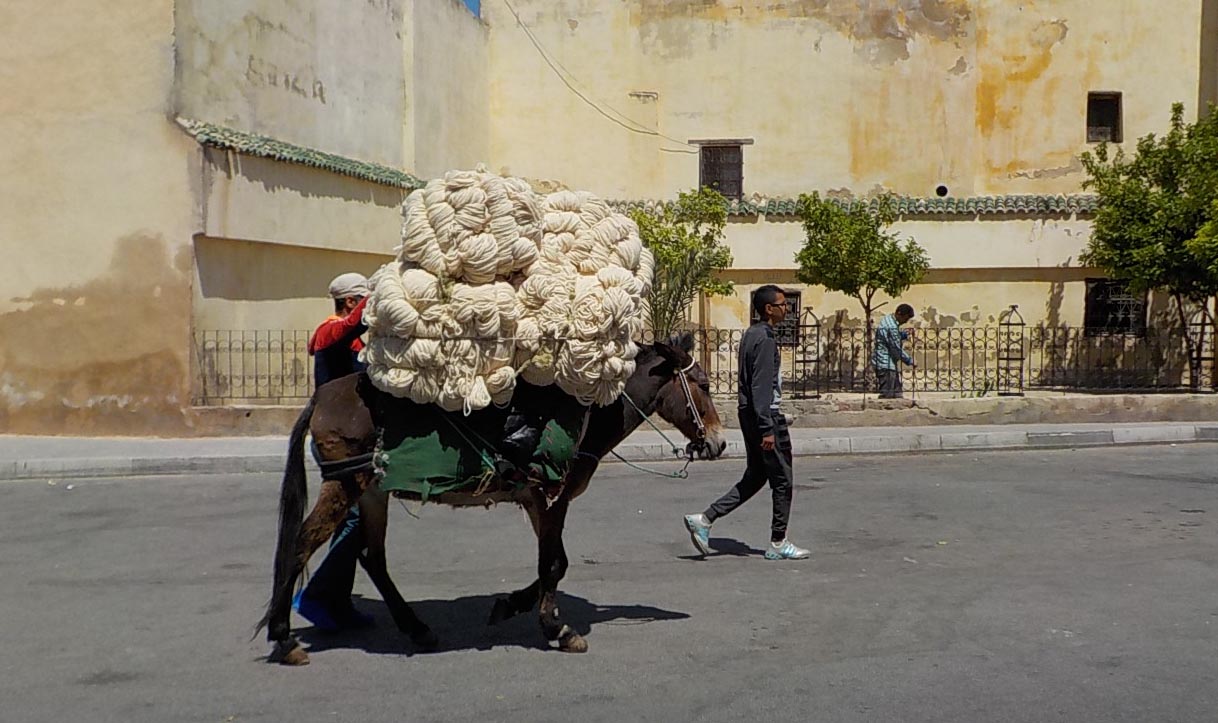
4.16.16 Ain Noqbi-014smThis horse loaded with yarn may be headed to the dyers’ souk.

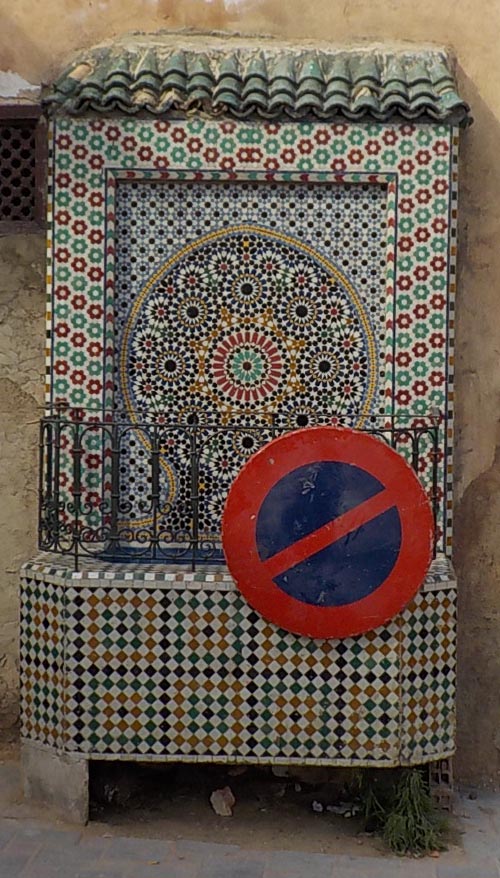
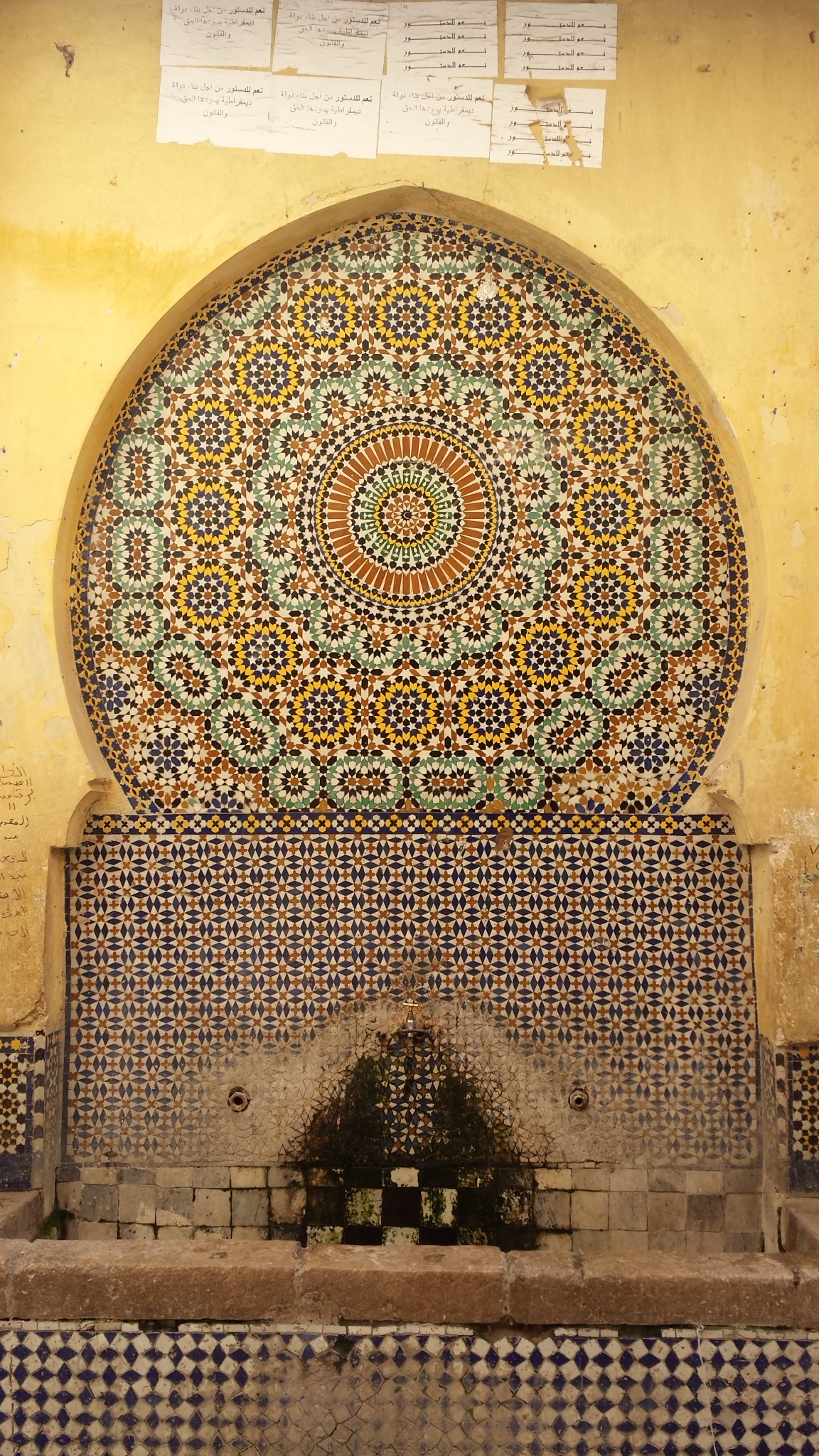
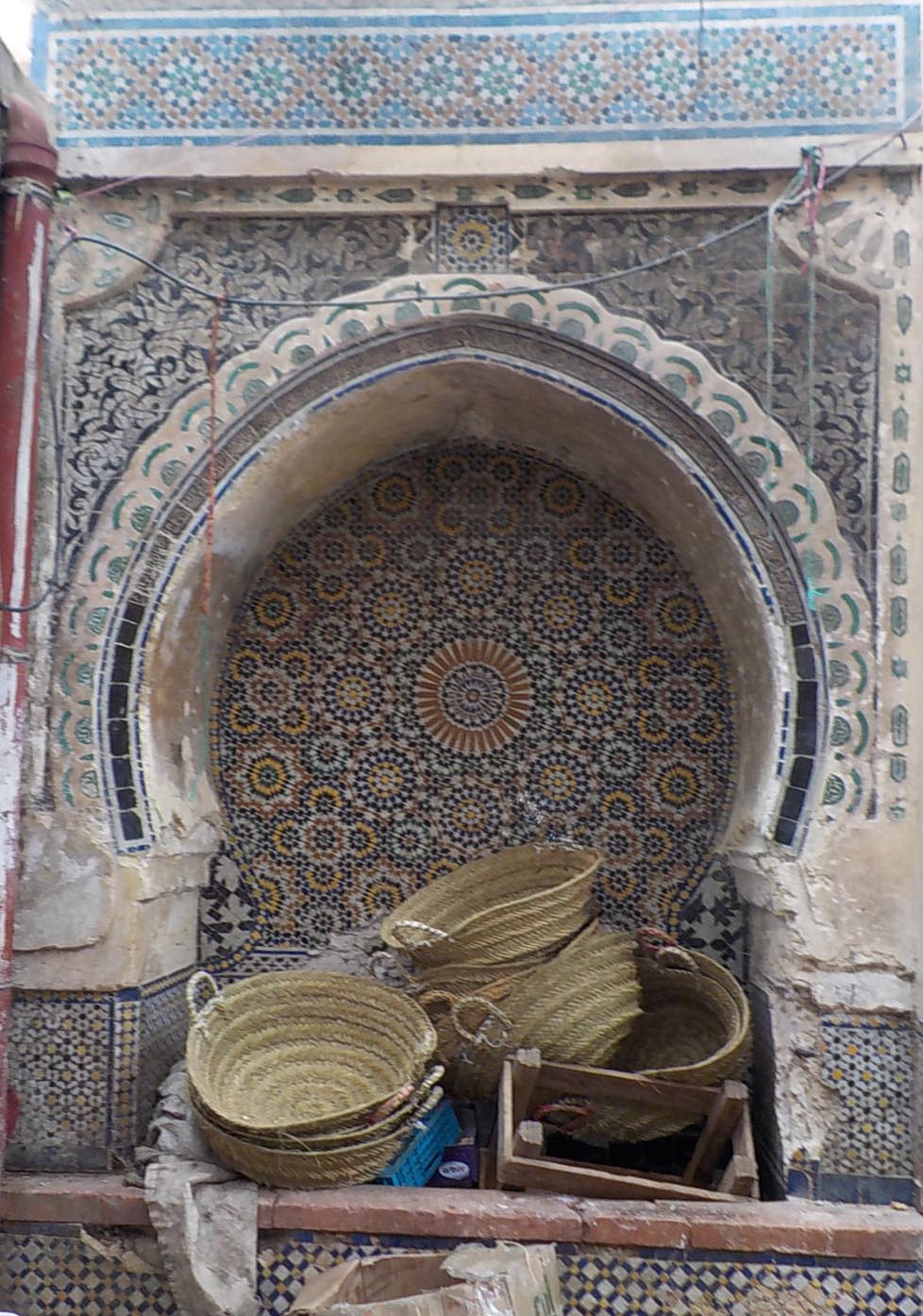
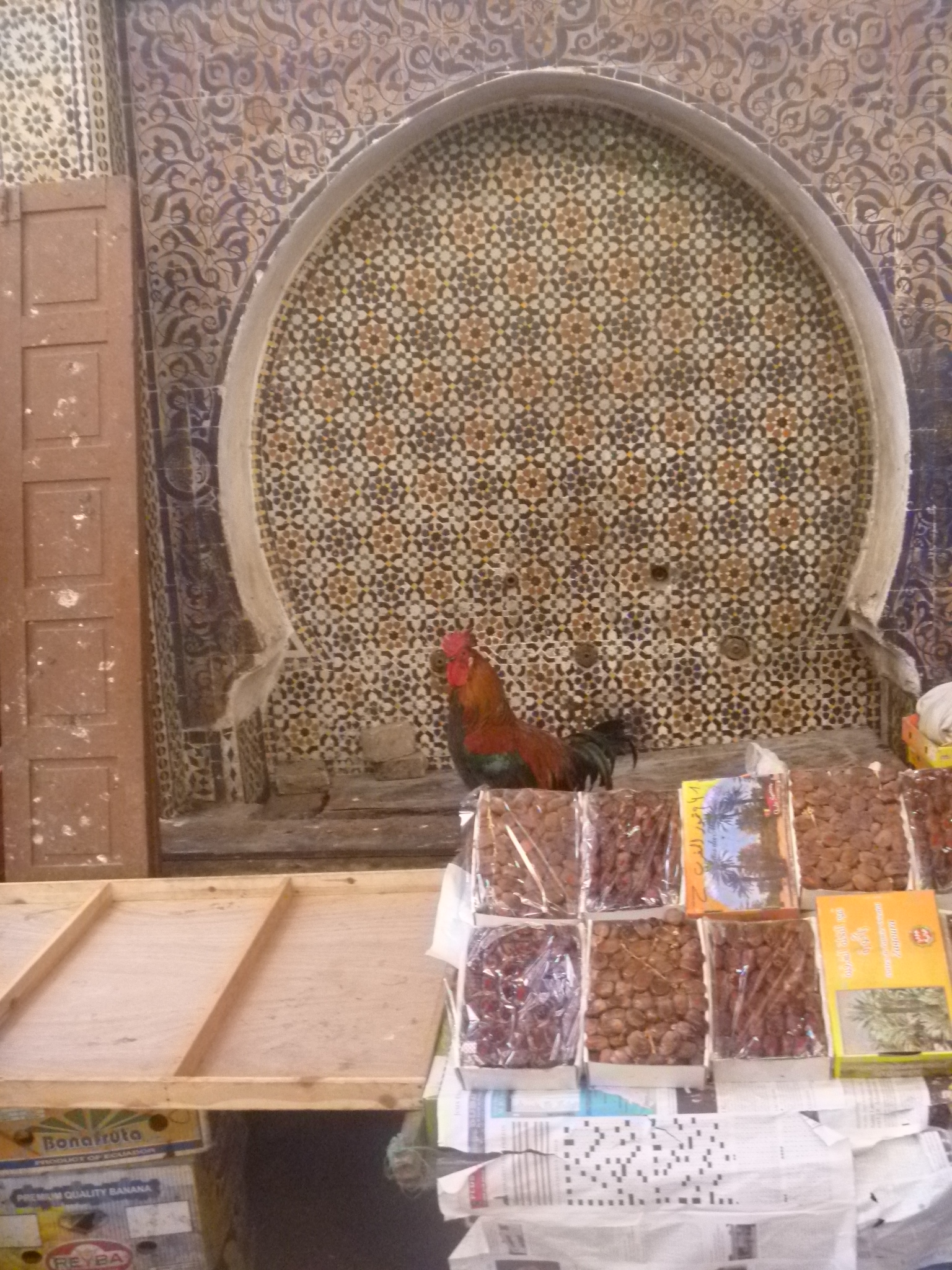
Public fountains are an important water source in Fes. Not all fountains are lovely, though many started out that way.

No parking by the fountain

20160408_124000


4.7.16 fountain-001


4.7.16 fountain 4.6.16-046 4.6.16-034


Ceramics in the El Noqbi neighborhood

Lyra and I wanted to look at ceramics and found a recommendation to visit the El Noqbi neighborhood on the northeast side of the medina. Art Naji is probably the best known spot, partly because it is so visible on googlemaps. There are many workshops that sell pottery on the streets that radiate out from the bus stop and from Art Naji. The workshop allows photos.

This slideshow requires JavaScript.

We looked at thousands of pieces from tiny to huge. We selected two small bowls and went to the counter where we found that they offer only fixed prices. (For the reason we left, see my “Good to Know about Morocco” post, coming soon. As soon as we left Art Naji, we were approached by a neighboring merchant who showed us his smaller, somewhat less organized studio. We found two bowls that we liked and paid a price we thought reasonable.

The Glaoui Palace

A peculiar sight in the Fez medina is the Glaoui palace. The lavish home of a pasha of the early 20th century, the Glaoui family sided with the French and were stripped of all their properties when Morocco achieved independence. For reasons that are completely mystifying, the family palace in Fez has lain unused for a very long time. (I have no idea who actually owns it.) A former caretaker’s family and his descendants allow visitors to tour some of the rooms, which were spectacular in their heyday long ago. Today the Glaoui palace is a crumbling reminder of the past. It would be much better served by a multi-million dollar renovation turning it into a hotel/conference center, but no one seems interested, possibly because of the cavernous size of the place. It is said to have 100 rooms. I am sure many of them are smaller than the main floor rooms we were shown, but it is an amazing ruin. I believe that photographers and architectural historians compose the bulk of its visitors.

This slideshow requires JavaScript.


Our last week in Fez

4.23.16 Fez-003

So many loose ends, so little time. We took a couple more of the walks in the guidebook, “Fez from Bab to Bab.”


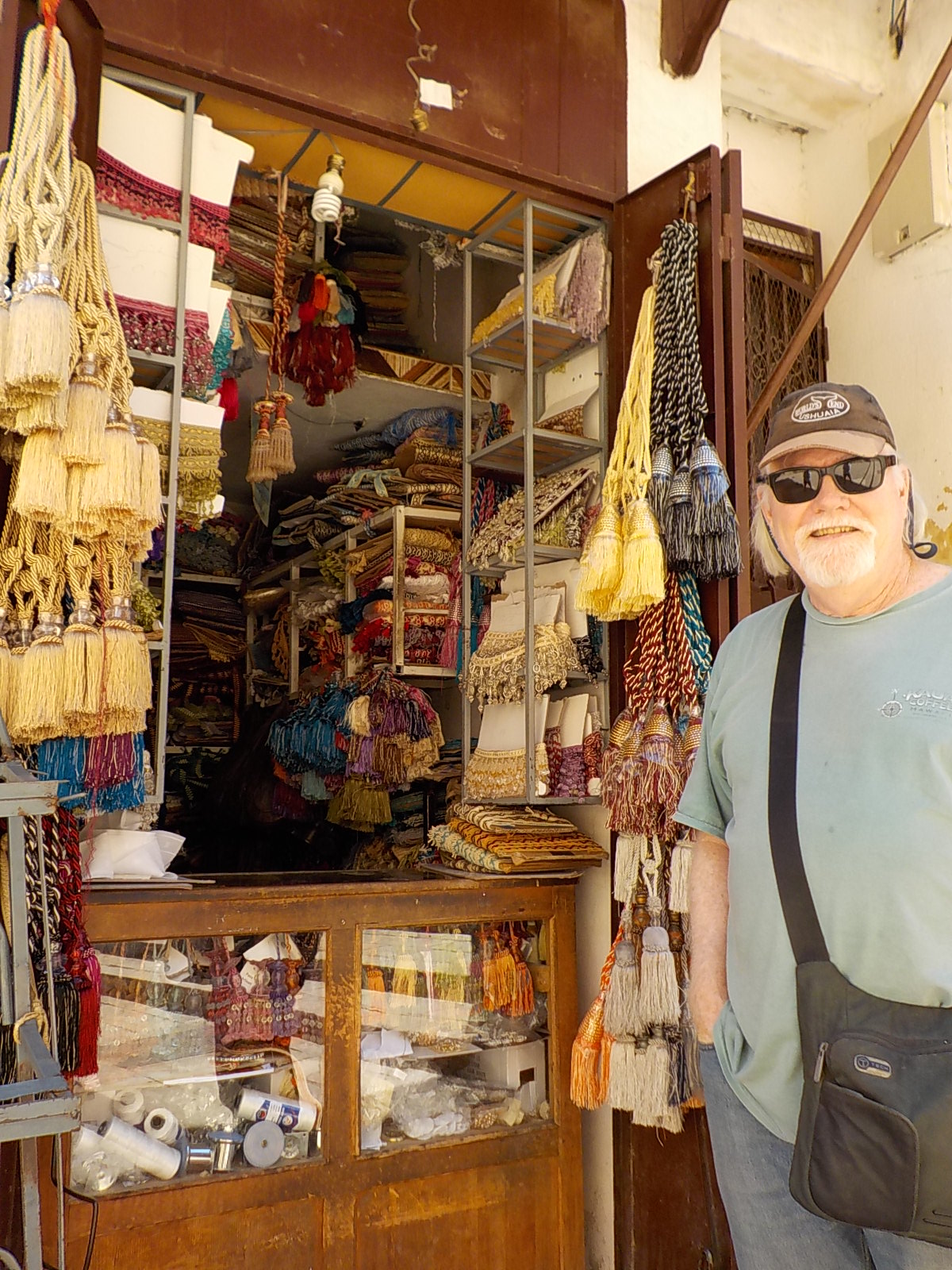
We passed a tassel seller.

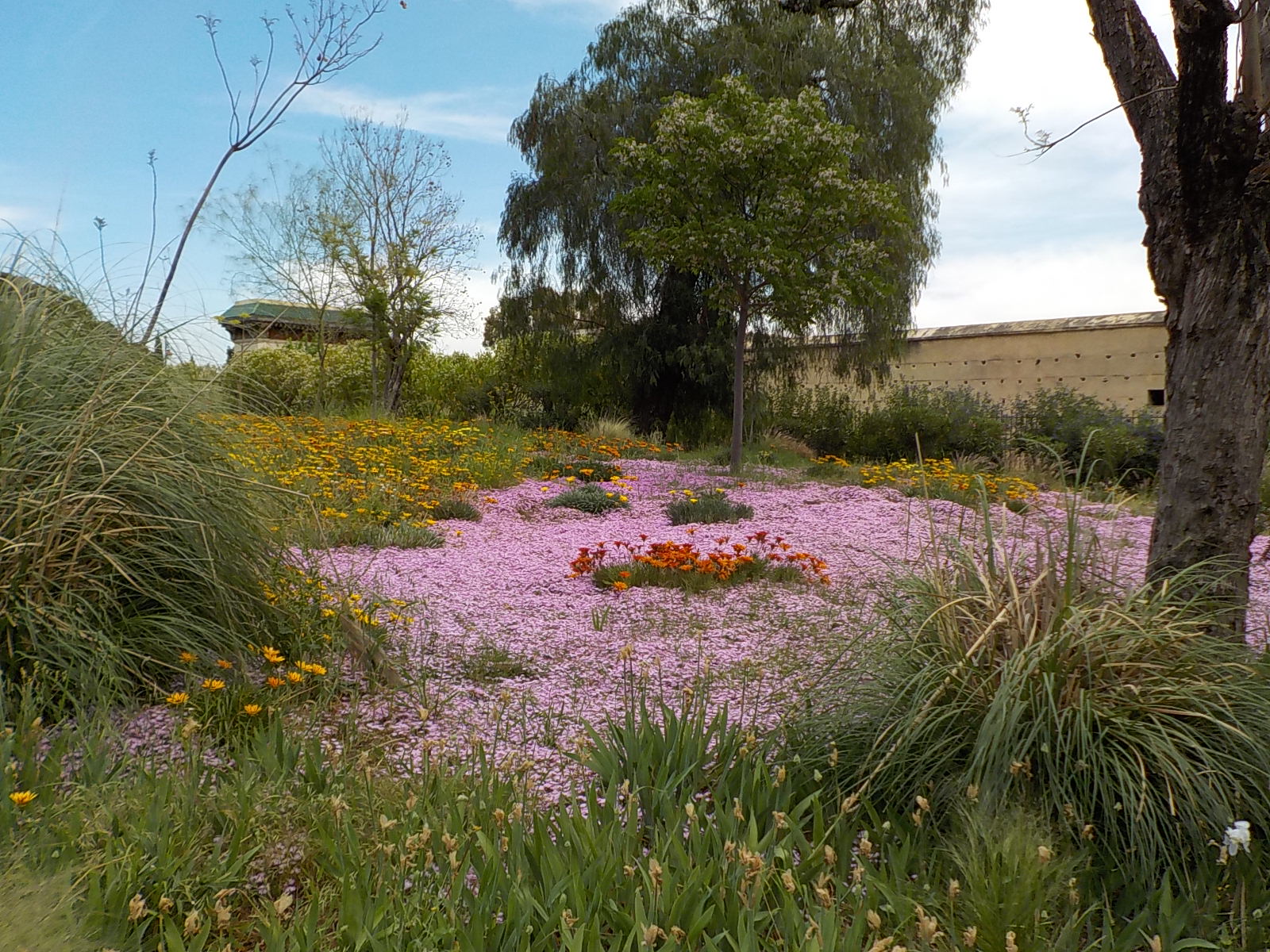
One of the walks took us through the Jnane Sbil, a beautiful garden near the Royal Palace. This month is perfect for visiting, the orange blossoms are out, as are lilacs, roses and all kinds of flowers. The garden is carefully maintained, the gardeners have even created some new small islands within the stream that passes through the garden. We did some birdwatching, and even saw a new bird, a grey wagtail.

Male Grey Wagtail

4.27.16 Jnane Sbil garden-004


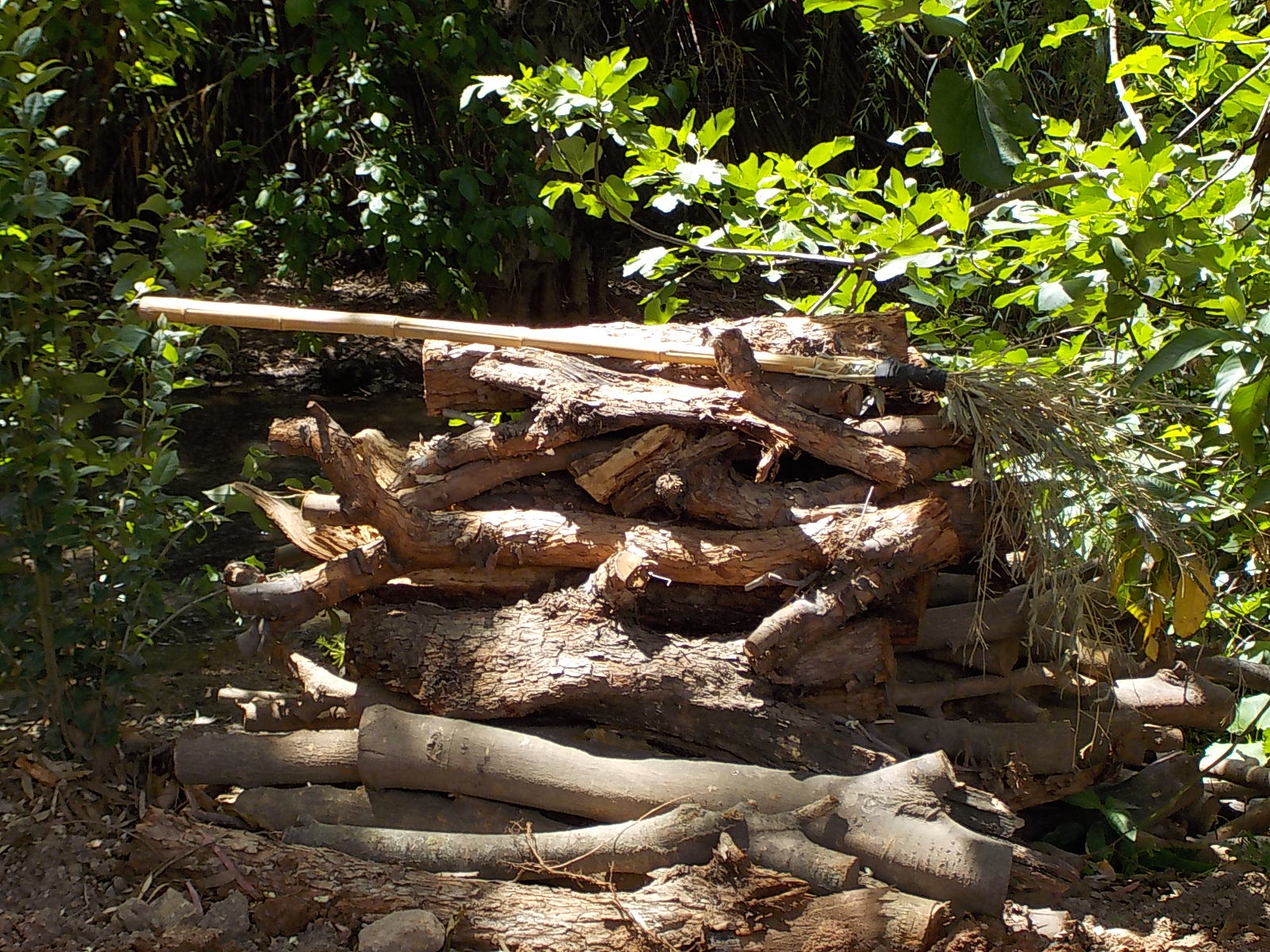
The gardener made his own broom.
The gardener made his own broom. It’s like a ‘hidden picture’ on top of the woodpile.

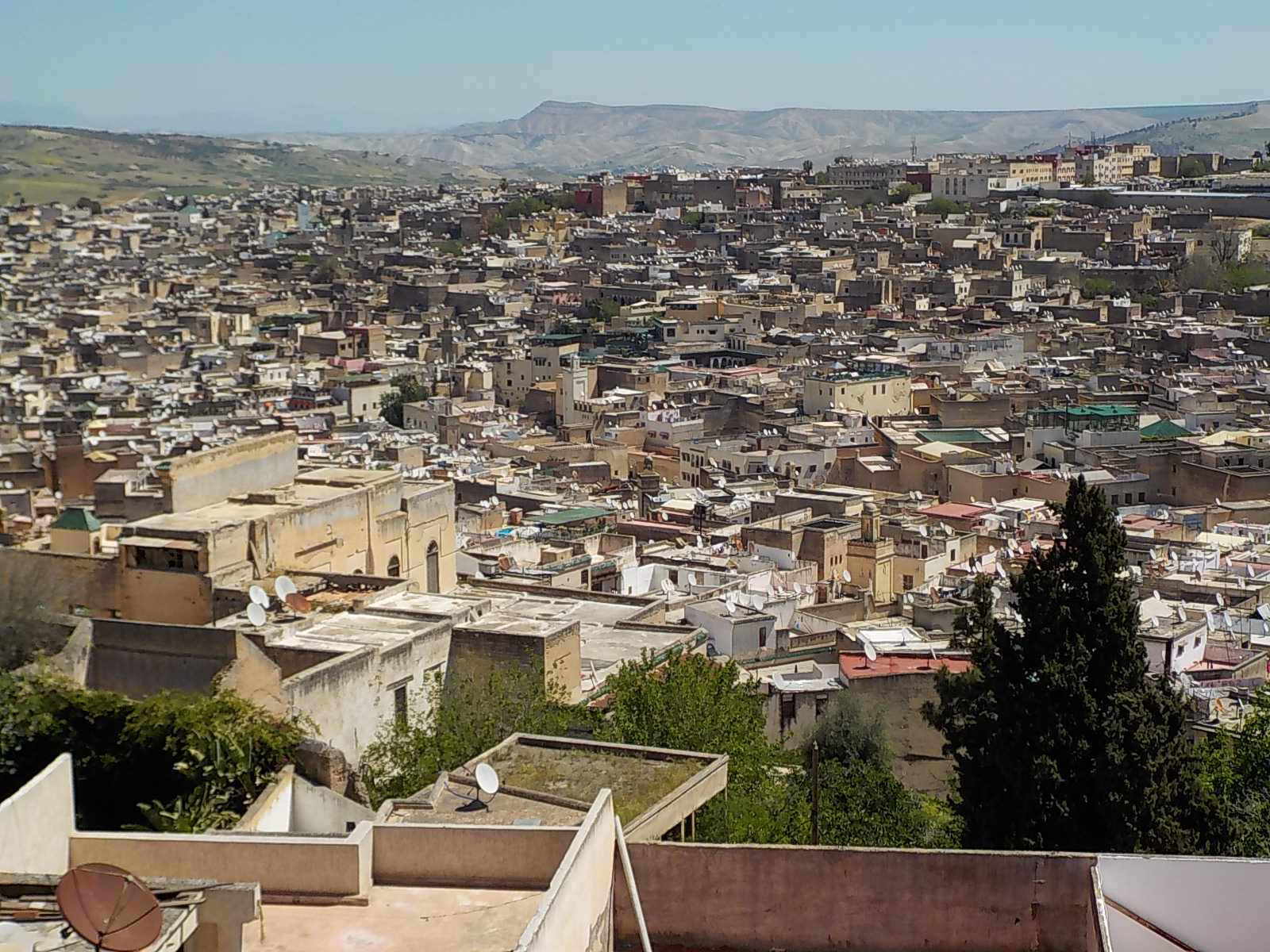
Another day we took a route that included the official Municipal Market.4.26.16 Ville NouvelleWe drank coffee on the roof terrace of the Palais Faraj hotel. It overlooks our neighborhood and after spotting its terrace, we decided to go for a visit. It has a lovely  view over the medina, and the cookies were excellent, too.

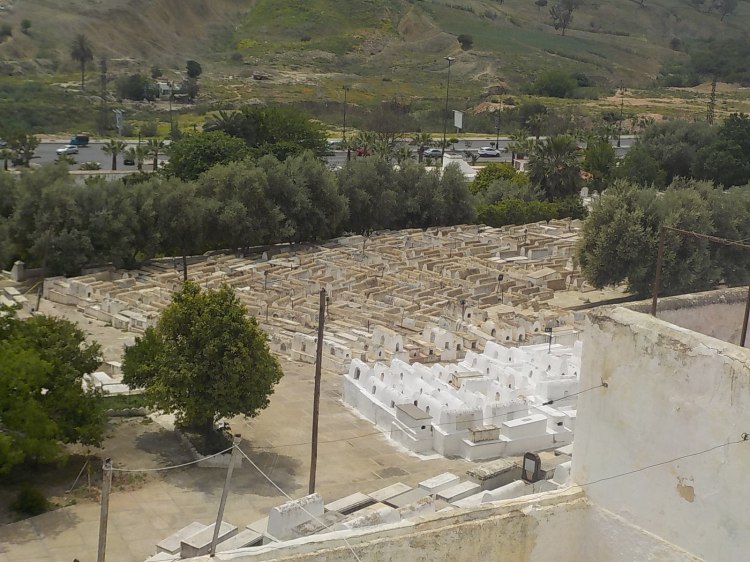
4.25.16 Palai Faraj Fes-001Today we walked around the Mellah, the former Jewish neighborhood. We visited the synagogue along with an Israeli tour group. The Mellah not a large area, but some of the streets are winding.

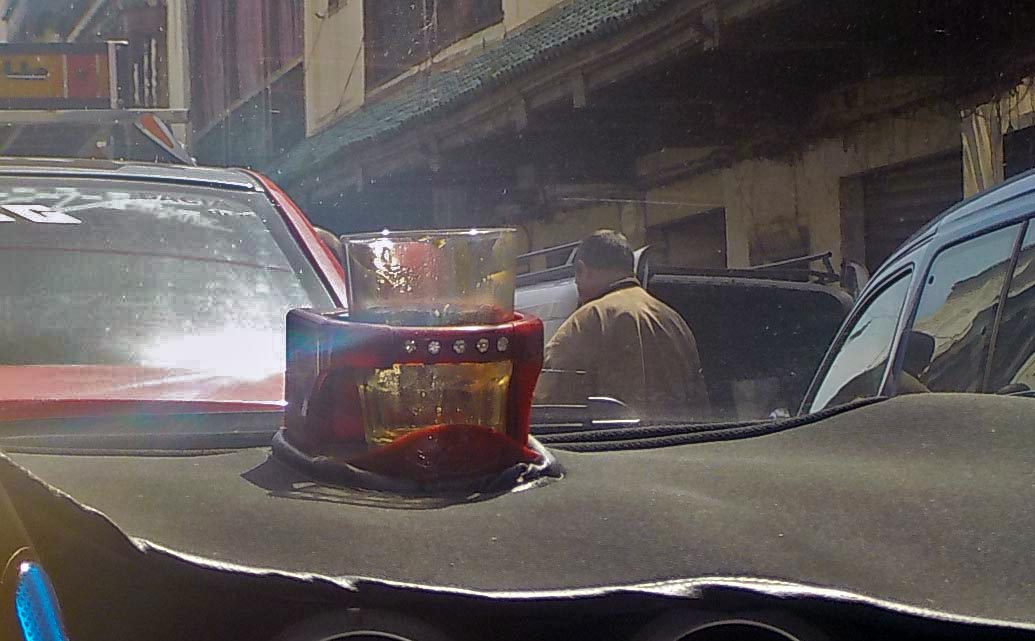
On the way home, I noticed that our taxi driver had a dashboard cupholder for his glass of mint tea. I love it.

4.28.16 Mellah Fes-001

Chefchaouen, a blue city

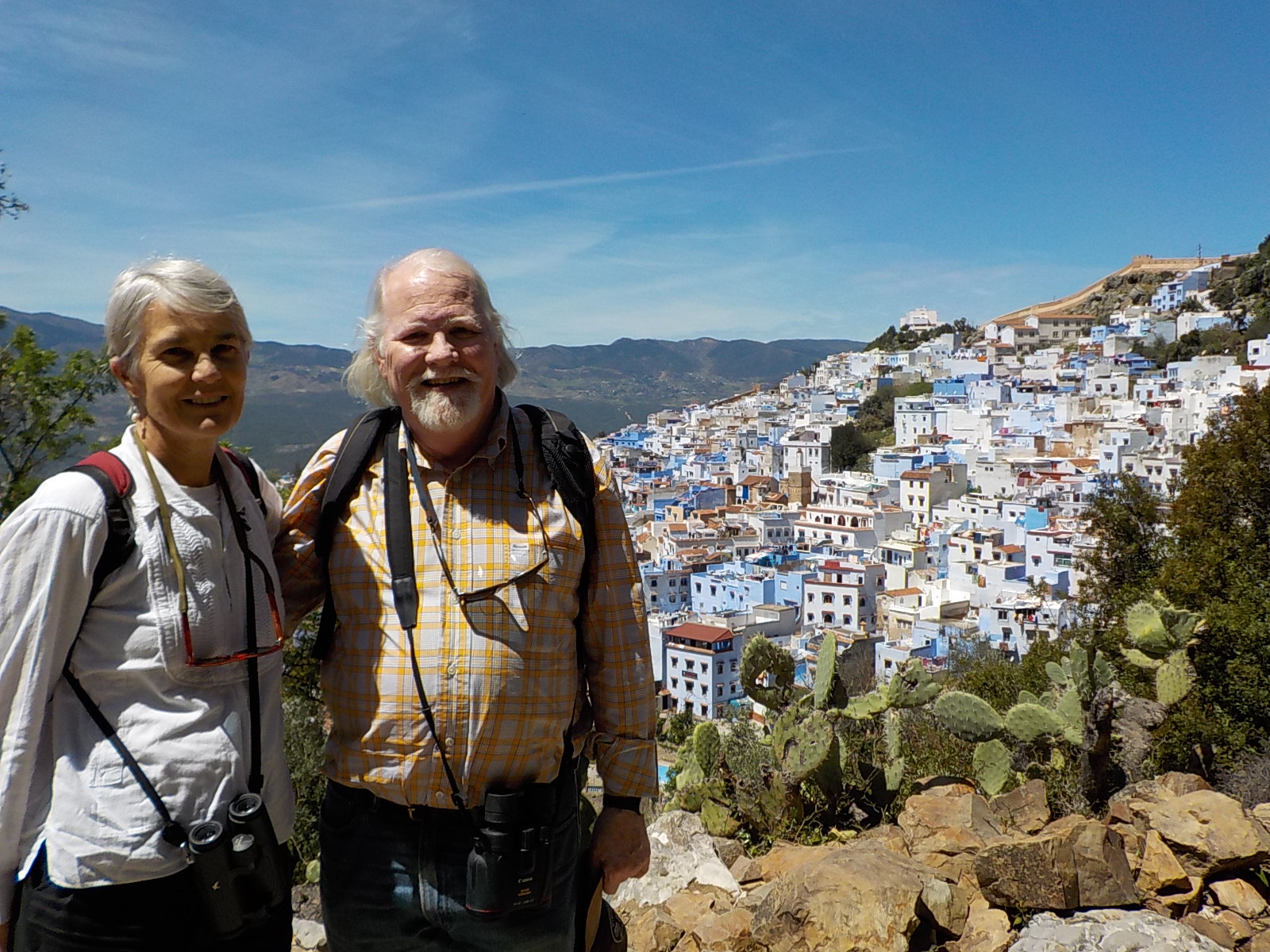
4.21.16 Chefchaouen-012There isn’t much to do in Chefchaouen, other than admire the lovely blue color painted on many buildings. There is a mosque that can be visited after an uphill walk, a waterfall, and a walk downhill from the waterfall along the wall of the medina. You can stroll in the medina admiring the walls, having lunch or a coffee. There is not a lot on display that cannot be purchased in other Moroccan cities, but Chefchaouen is an enjoyable place to stop and stroll.

This slideshow requires JavaScript.

We made our visit as a day trip from Fez. I don’t recommend it because it is a long day in the car. Much better to stay overnight nearby or to combine a visit to Chefchaouen with a stop in one of the coastal towns nearby, like El Hoceima.

Souk Hebdomadaire, Weekly market in Azrou

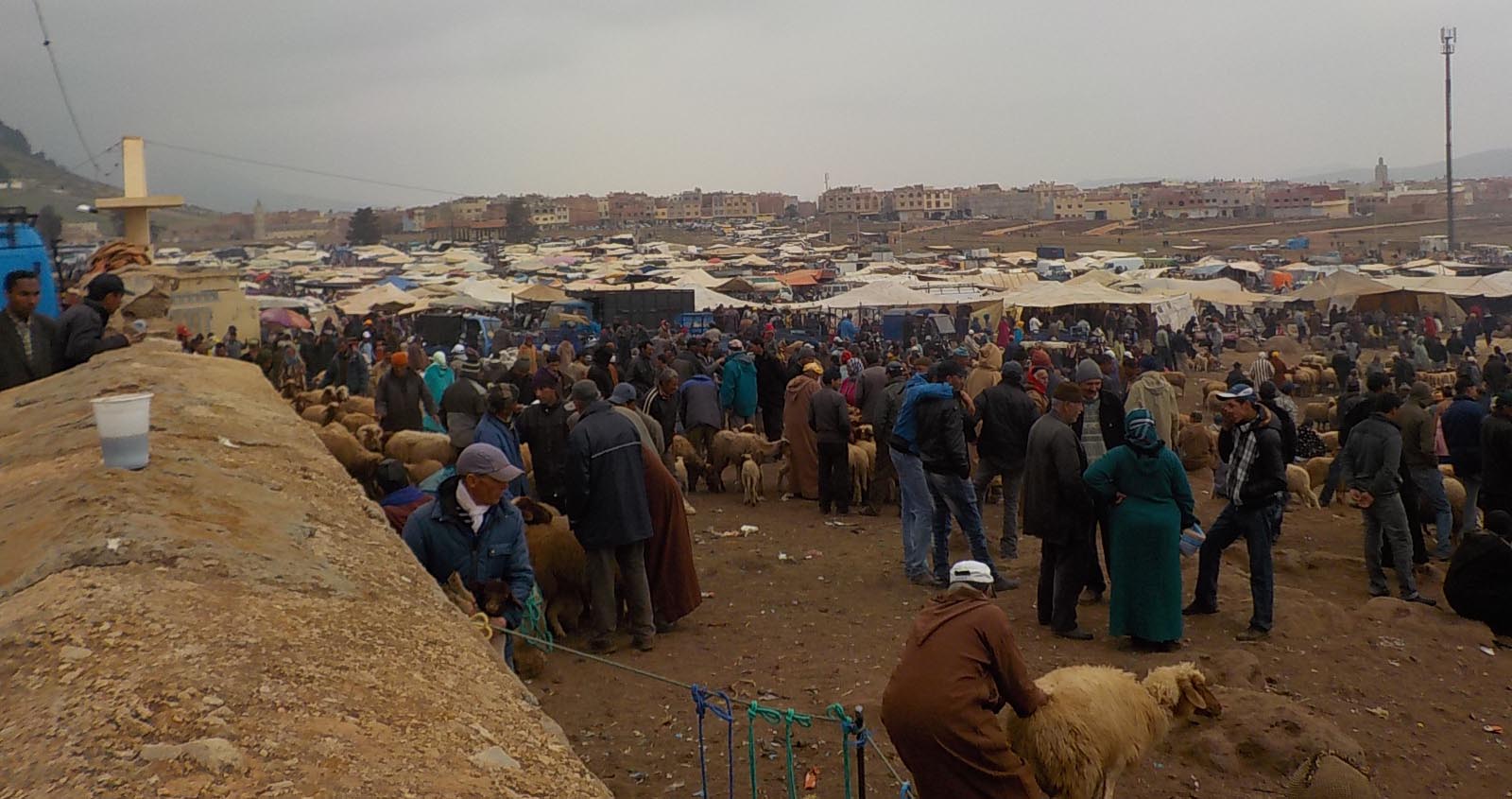
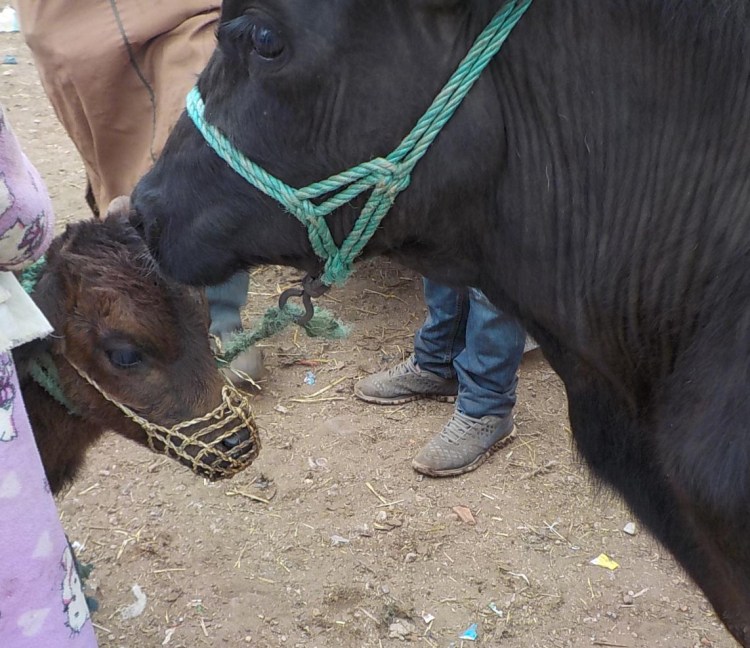
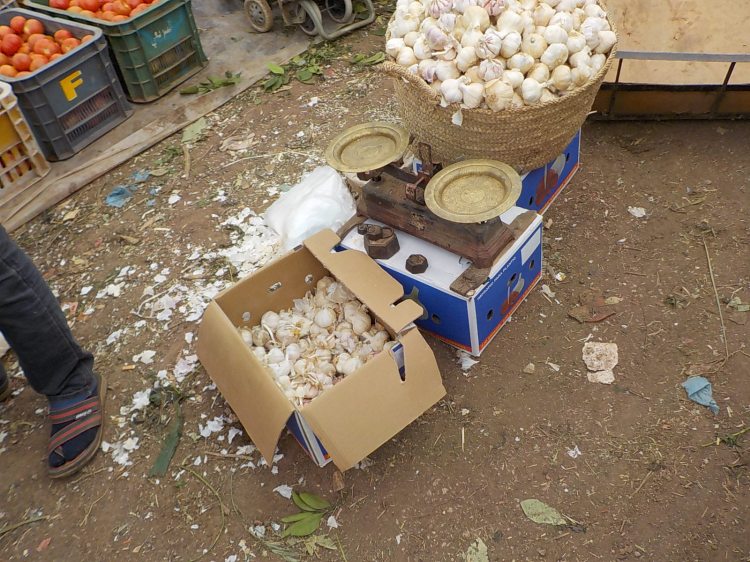
The same day we visited the macaques (see previous post), we stopped at the souk hebdomadaire in Azrou. This is a traditional weekly market where vendors put up tents or canopies and sell all kinds of goods. A lively functioning market has to deal in goods people really want and in Azrou that ranges from livestock to plastic containers, with lots of clothing, fruits and vegetables, even a flea market section. The only rugs we saw were mass produced, possibly in China. There were no Berber crafts at all, guidebooks notwithstanding. It was animated and crowded, with a very large livestock area (foreground below).

4.19.16-017sm

People wound around tent ropes and among vendors.

The day was overcast and quite cool. Smoke from the food tent drew us in for a snack of freshly grilled meat on bread.

4.19.16-013
These colorful items turned out to be donkey saddles.

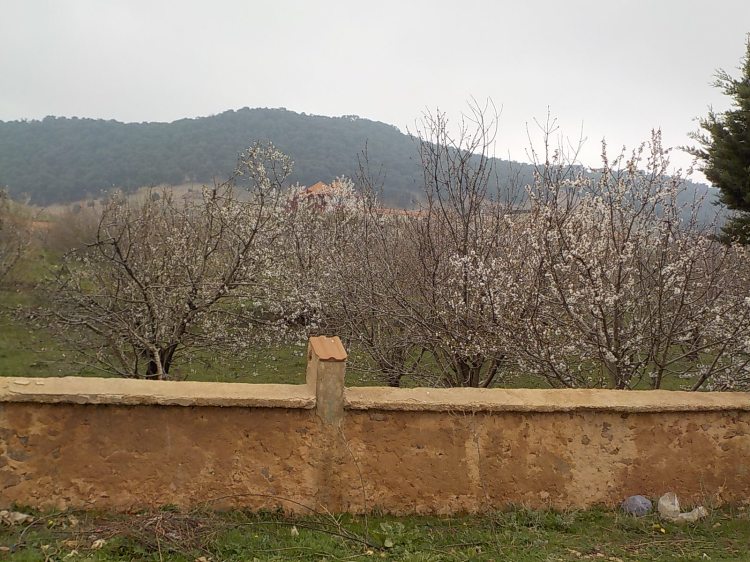
We were happy to have visited in the morning. The sky was full of low clouds, but we could see the fruit trees just coming into bloom.

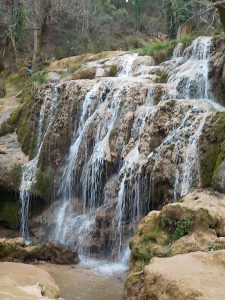
4.19.16-051It was a lovely drive and we stopped at an enchanting waterfall, where we also saw a new bird, a great spotted woodpecker.

It began to rain on the way back to Fez and rained most of the night. We were happy to have had our visit before it started.

Barbary Macaques in Ifrane, a biologist might tear his/her hair

We all love monkeys because they remind us of ourselves. Who wouldn’t want to visit a group distinctive for living in the mountains of Morocco and Algeria, along with a colony in Gibraltar that makes the news now and then? (http://www.theguardian.com/world/2014/oct/11/gibraltar-barbary-macaques-deported-scottish-safari-park-blair-drummond)

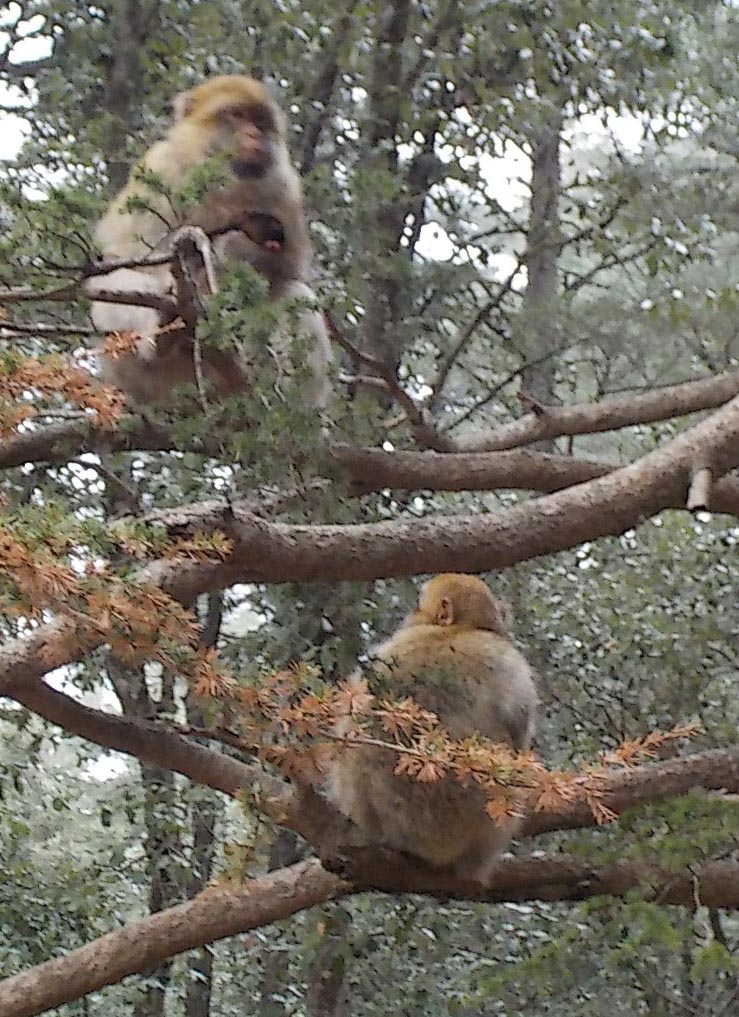
It is easy to see the groups that live in the Ifrane National Park because they have become habituated to humans and getting food handouts. I read online “feed them anything you have.” ACK! Don’t people know anything about wild animals? NO FEEDING wild animals.

Visitors don’t recognize these animals as wild considering how close they get, trying to feed and pet them. I kept a bit of distance, knowing these animals can inflict a lot of damage with a scratch or bite.

4.19.16-034It’s also clear that the macaques get a lot more food from handouts than any source in the forest. If tourism declines, they’ll starve. Someone said that different groups occupy the picnic area at different times of the day, rotating through the feeding area. I also heard someone say that when the macaques get tired of peanuts they throw them away, preferring bread. (A vendor sells bananas and peanuts to visitors.) It was fun to see them, but now we need to imagine a way to make visiting the macaques better for the animals. Otherwise, they’ll become obese and diabetic caricatures of us, begging for cokes and big macs.

Fantasia, a Moroccan sport

Fantasia, or cavalry charge, is the name given to a popular Moroccan sport and neither name does justice to the event, which is a cross between a game of “chicken” and a battle from Game of Thrones. We went to Tissa, where a well known Fantasia and horse fair are held every September. We watched practice runs for a local competition to be held this week and saw junior teams learning the ropes.

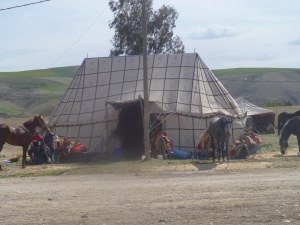
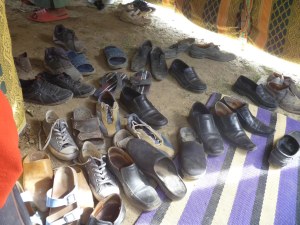
4.17.16 Tissa fantasia-021Inside the tents, men drank tea, chatted and checked their cell phones while waiting for the competition to begin. We were invited into the tent belonging to a cousin of our driver, Simohammed. The tents are huge and brightly patterned on the interior.

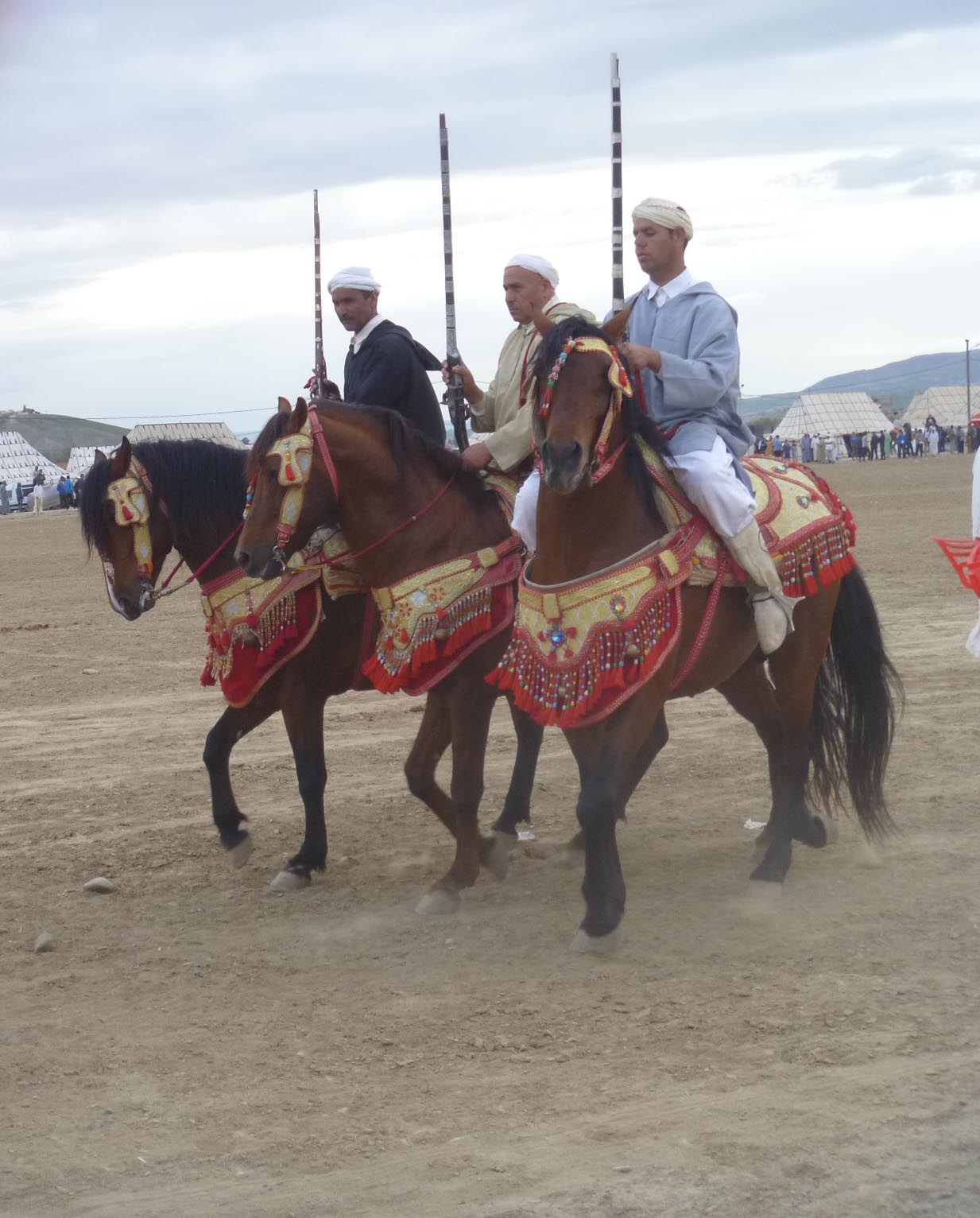
The fantasia is a competition among teams of nine to twelve men on horseback carrying antique rifles. The goal is for the team to charge in a single straight line at top speed, pulling up as a unit as close as possible to a chalk line at the end of the field, while firing their rifles overhead. A perfect team fires the volley and it is heard as a single shot. The horses are bedecked with elaborate gold, green and red embroidered trappings and saddles, and the men wear a range of clothing from matching white robes and soft leather boots, to jeans and tshirts. (Their clothing is probably more elaborate on competition days.)

4.17.16 Tissa fantasia-029 4.17.16 Tissa fantasia-056The advantage of attending the practice sessions is that several teams were on the field at once, sometimes with two groups charging down the field at the same time. Spectators along the sides of the field can judge the straightness of the line as it builds up speed down the field. We moved from the side to the end of the field.

4.17.16 Tissa fantasia-058

4.17.16 Tissa fantasia-066smWe moved from the side to the end of the field.

4.17.16 Tissa fantasia-074
The center horse in gold trappings is the leader’s ride.
4.17.16 Tissa fantasia-082sm
You feel like an extra in a movie. Riders charge toward you and then they shoot!

Terrifying, except that the crowd applauds and laughs, both admiring and relieved that the horses held up at the line and that the guns shoot powder but not shot. Every charge looks like the horses will trample the wall of spectators and the cars and trucks behind them, but they don’t. Spectators are kept about 6 feet back from the chalk line, so there’s not a lot of room for skittish or out of control horses.

Teams compete locally and regionally, with national championships in the fall. The national champions must look like a bloodthirsty drill team. I’d love to see them.

Modern medieval in the Medina

A medina is a walled city, very exotic for a visitor, and it’s easy to forget that medieval here isn’t just an adjective. In Fez, this means that many buildings are hundreds of years old, maybe their foundations really are a thousand years old. I find that close to unimaginable.

Today some structures are sagging a bit.

When Fez was founded, the ideal medina house, called a dar, or riad, was a tower 12-40 feet square (about 3.5-12 m), and about three stories tall. This was completely closed to the outside with only a small door.

4.1.16 Fes Riad Dar Jnane-007
Our front door, repelling all comers.


4.2.16 our street


There were no windows at all, no balconies, no porches. The interior of the tower consisted of narrow rooms around the sides of the tower and an unroofed central courtyard open to the sun, also the rain. Rooms open to the central courtyard received lots of light, but very little if they were walled off for privacy. Narrow stairs led to the second or third stories, and there was a terrace on the roof around the central opening. Today, houses have that footprint, with small windows added. A portion of the roof is usually the laundry and the rest for family life, though a tent can be set up to provide a rooftop sleeping area.

4.2.16 Dar Jnane-005

Living in such a house today requires adapting to the footprint. The central patio has to be rainproof if not covered, so rugs can only go in the alcoves around the sides. Our riad has roofed the central courtyard and added a chandelier. There is lots of natural light.


4.5.16 Dar Jnane-010
This bedroom has the only window to the outside in our riad.


Bedrooms must adapt to the long, narrow shape and can be dark, though in larger houses the bed is at one end and a comfortable sitting area is at the other end of the room.


DSCN3402
Over the rooftops from our house. The Borj Sur is on the hilltop in the distance.


A roof terrace can be wonderful and usually has a view over the surrounding neighborhood.


4.2.16 Dar Jnane-017

The downside is the flights of narrow stairs that must be climbed to get there. If you plan to have tea or dine on the roof, you must carry trays to the roof from the ground floor kitchen. That shows my prejudice because we eat our meals at home. Not everyone would think about whether to eat in the dining room or on the roof–they’d pick a restaurant!


Upgrades have been made over the last thousand years. The central air shaft is usually surrounded by a railing or otherwise protected. A cover is often used to keep out rain, converting the ground floor into a living area. On the other hand, such coverings, even pale canvas, dim the interior light and close a vent for the kitchen–important for cooks.  Keeping in mind that plumbing and sewers are all additions of the 20th century, there is still a need for ventilation after it rains or any time there are sewer troubles.

A medina tower is therefore short on sunlight in the rooms and iffy on fire safety, but safe from attack by barbarians. It’s a wonderful experience.