Rabat, Morocco

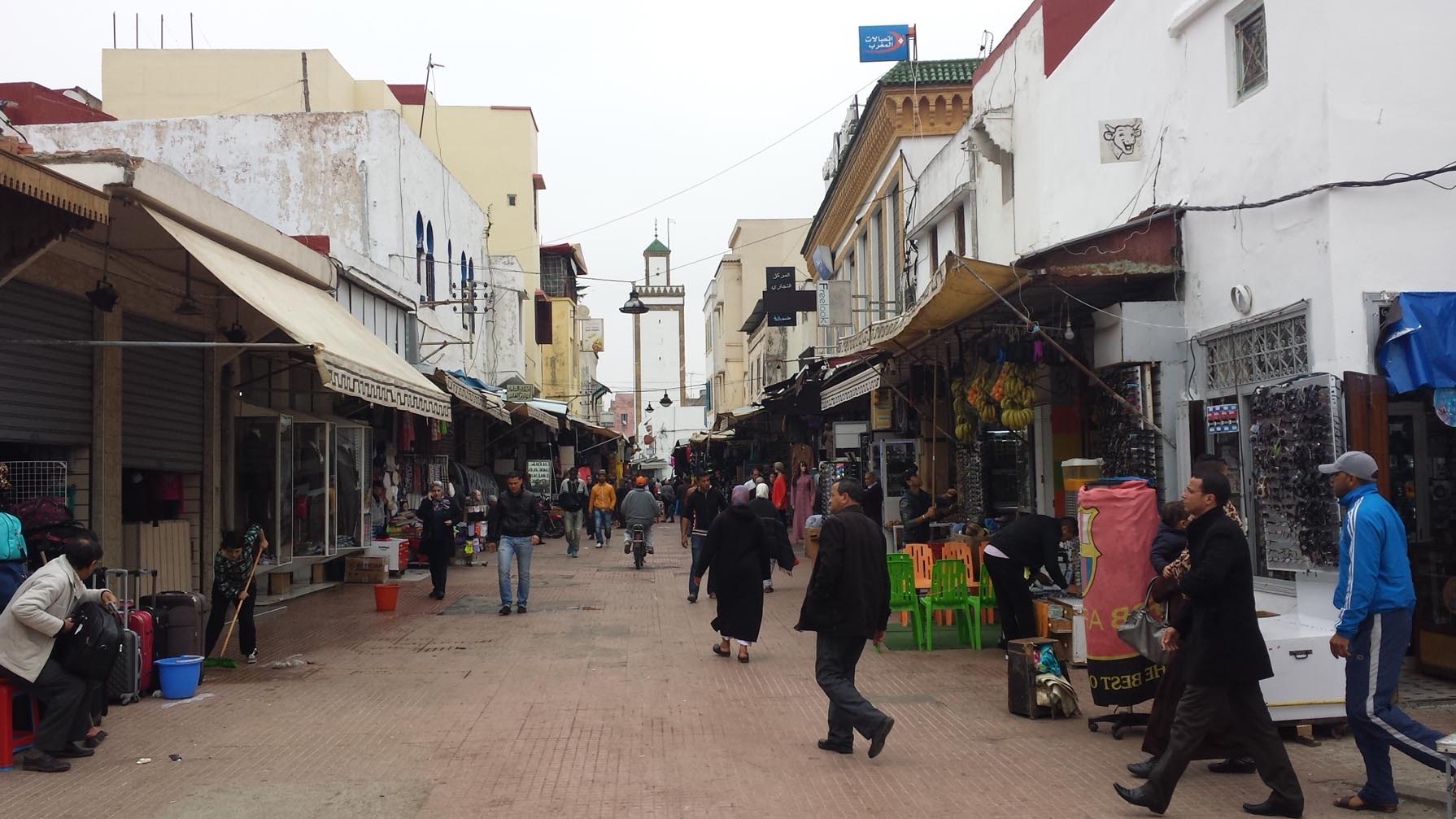
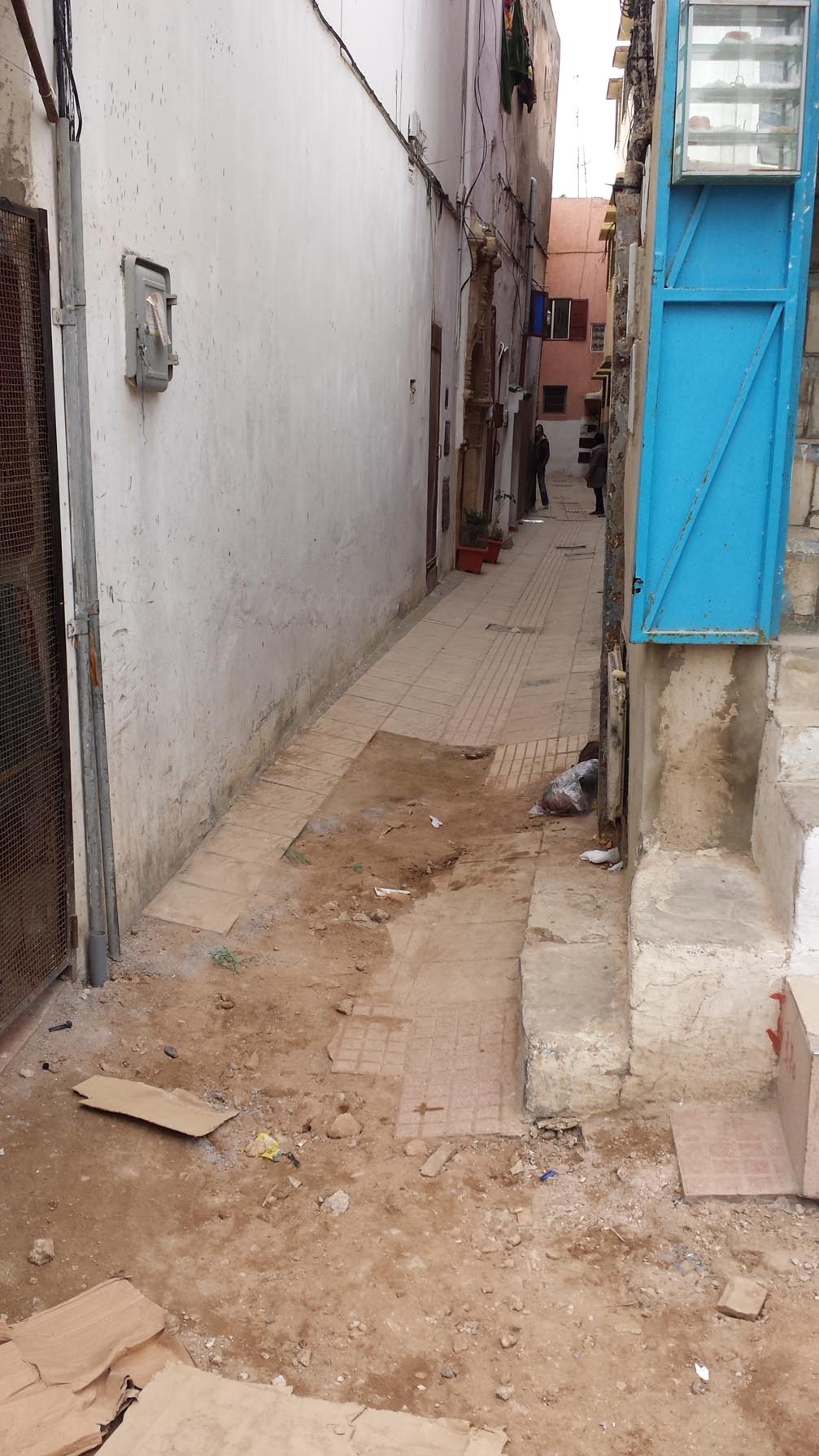
We arrived in Rabat, and got to our hotel in the medina with minimal confusion.  The Rabat medina is more spacious than others we’ve seen in Essaouira, Agadir and Marrakesh. As in the others, no cars are allowed, though motorbikes race through. When we arrived at the walls of the medina, we called our hotel and our host Benoit emerged to meet us. It takes some getting used to that you can park on the street and a random person will make sure your car is ok, yet that seems to be the way it works. Our luggage was put in an overgrown garden cart. Off we went on foot to the Riad Dar Soufa. The door to the house is down an alley, and Benoit lamented that city workers had just dug up the entrance to the alley and refilled it hastily–he has no idea when they will return to finish the job.

3.30.16 Rabat-0013.30.16 Rabat-010

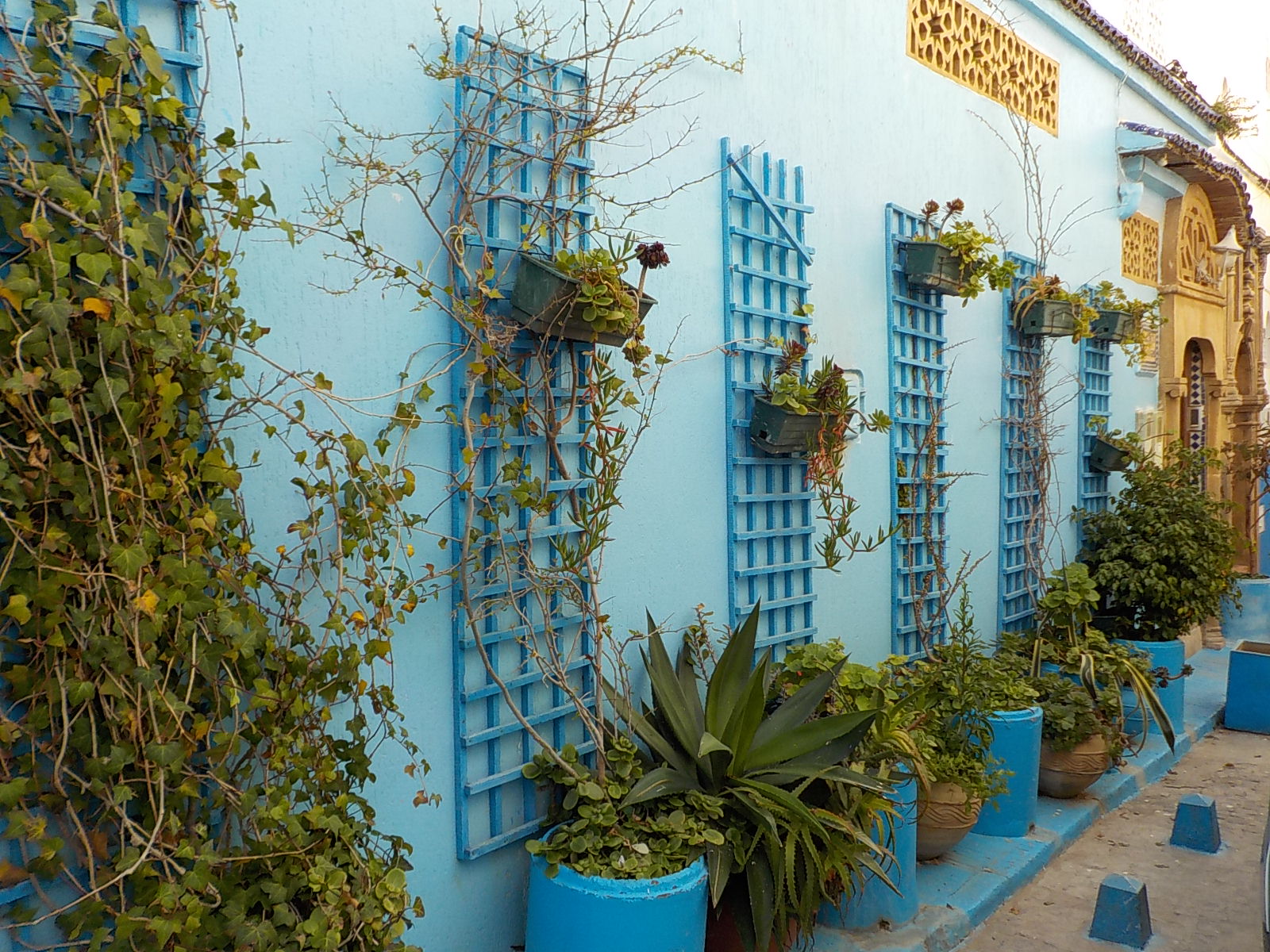
The inside of the riad is nothing like the street.

Once we went for a walk, I found that there is a place in Rabat that provides a vision of Morocco corresponding to my imagination.

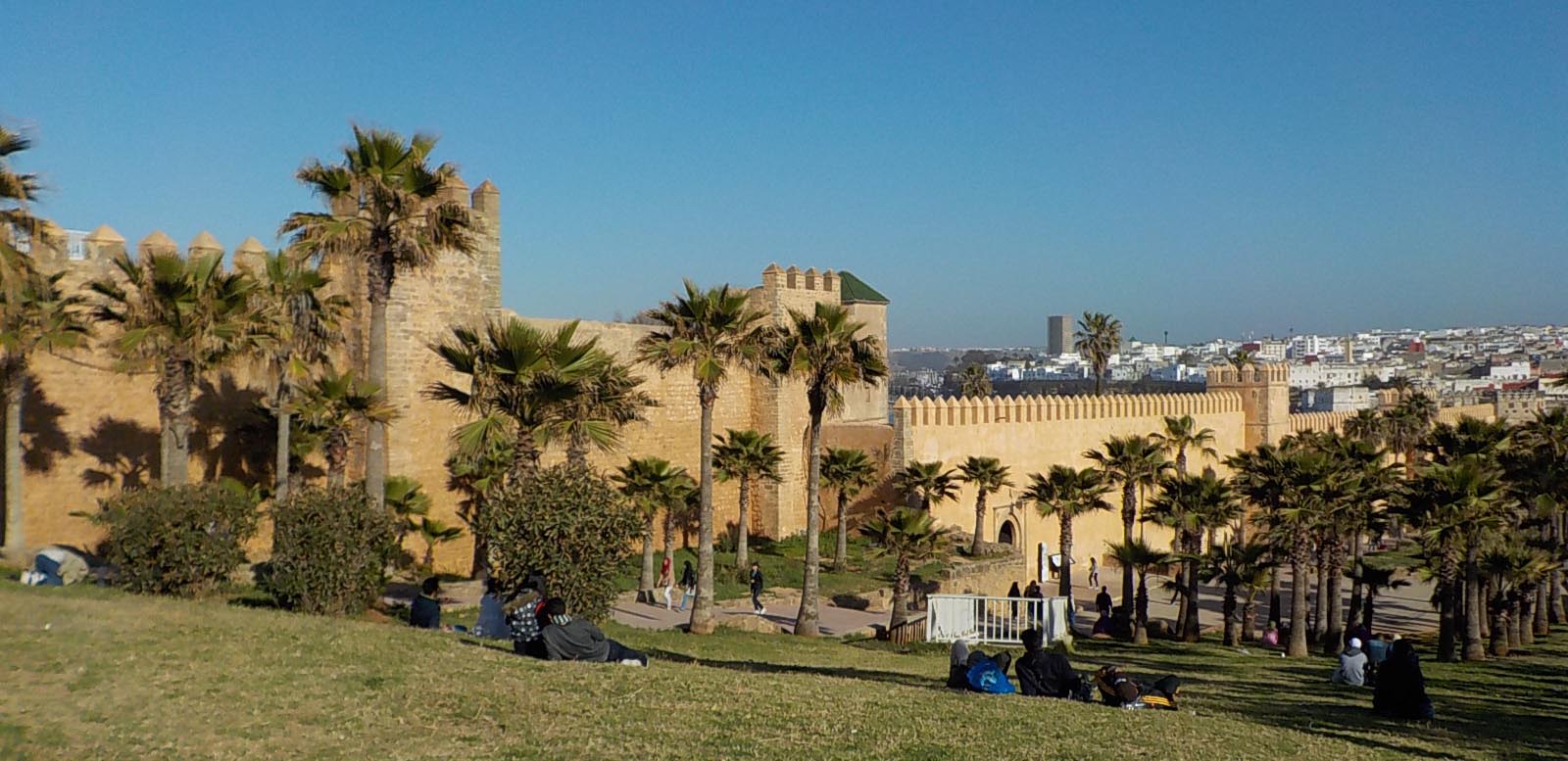
3.29.16 Rabat Kasbah-005Here’s the ancient walled fortress, the Kasbah of the Oudayyas, still occupied, with a modern white city (the rest of Rabat) in the distance. Why this is my vision of Morocco, I don’t know, but I love this view. It’s my mental image of Morocco

3.29.16 Rabat Kasbah-009The Rabat kasbah has a community atmosphere. Plenty of families still live in this very small neighborhood. It has not all been converted to hotels. The Cafe Maure is tucked into the far side of the kasbah in a small park called the Andalusian Gardens, where the wall loops out on the riverbank and you can sip tea or coffee and look across to the rest of the neighborhood, or down the estuary to the sea. It’s a bit tricky to find the entrance, you have to enter the gardens despite the low reviews on TripAdvisor….and then you see the entrance to the terrace and cafe.

3.31.16 Rabat kasbah from Cafe MaureI went to the Andalusian Garden expecting to see a display of traditional Moroccan jewelry that was part of the Palace museum, until it closed. Sadly, the exhibit at the gardens is now closed as well, and there is no information about what has become of the palace collections. The cafe was a consolation prize.

Back at Riad Dar Soufa we admired the elaborate restored woodwork, stone and carved plaster and mosaic tile that shows off Moroccan craftsmanship. We are in the zellij room, which refers to the detailed tile in a patterned mosaic along the walls. It is unusual to have so much preserved/restored. Older houses with such detail that fall into disrepair are not always repaired and the tile either falls down or is covered with paint and plaster. It’s not easy to find out about the history of Rabat. See my next post to find out more.

This slideshow requires JavaScript.

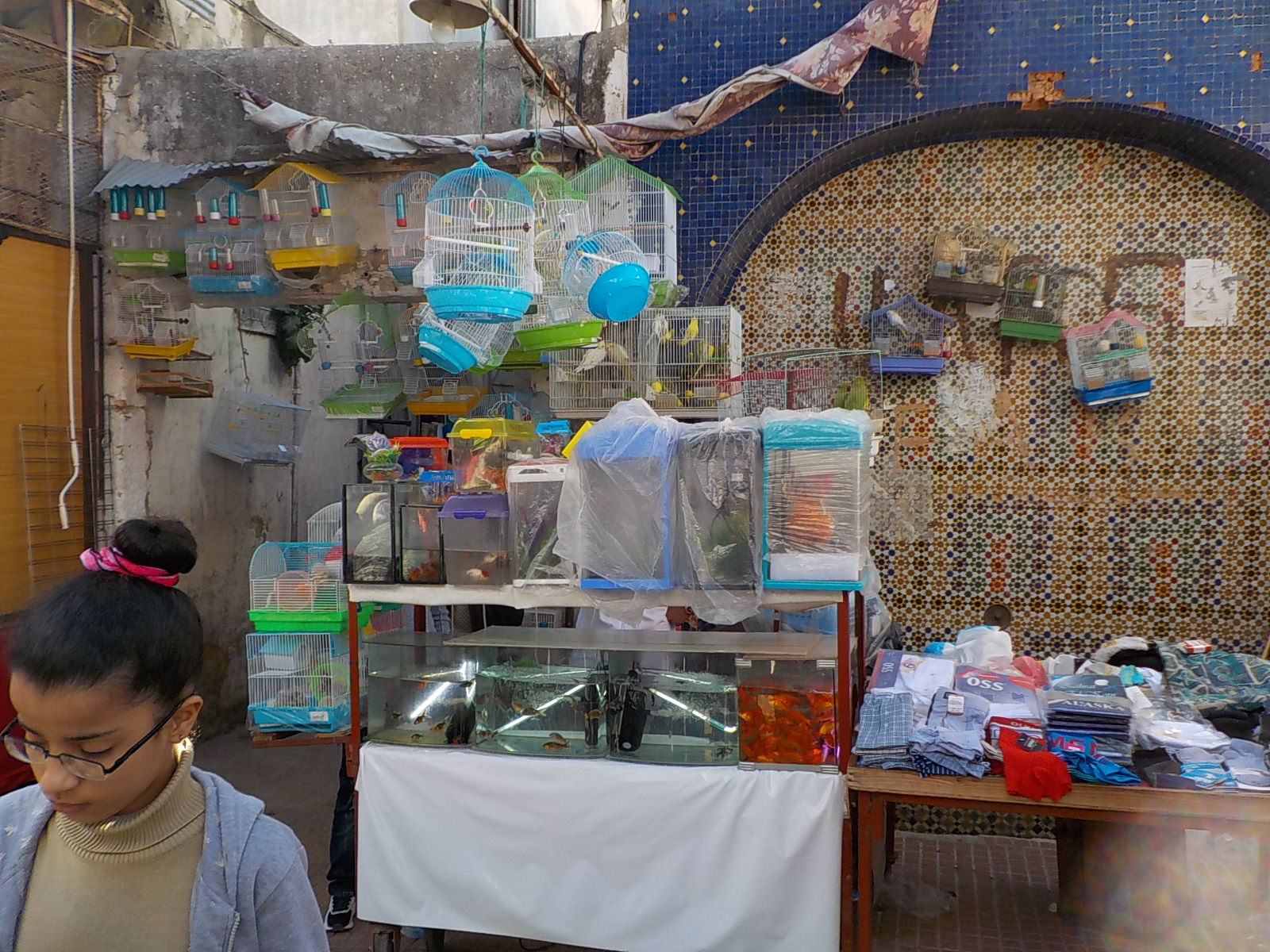
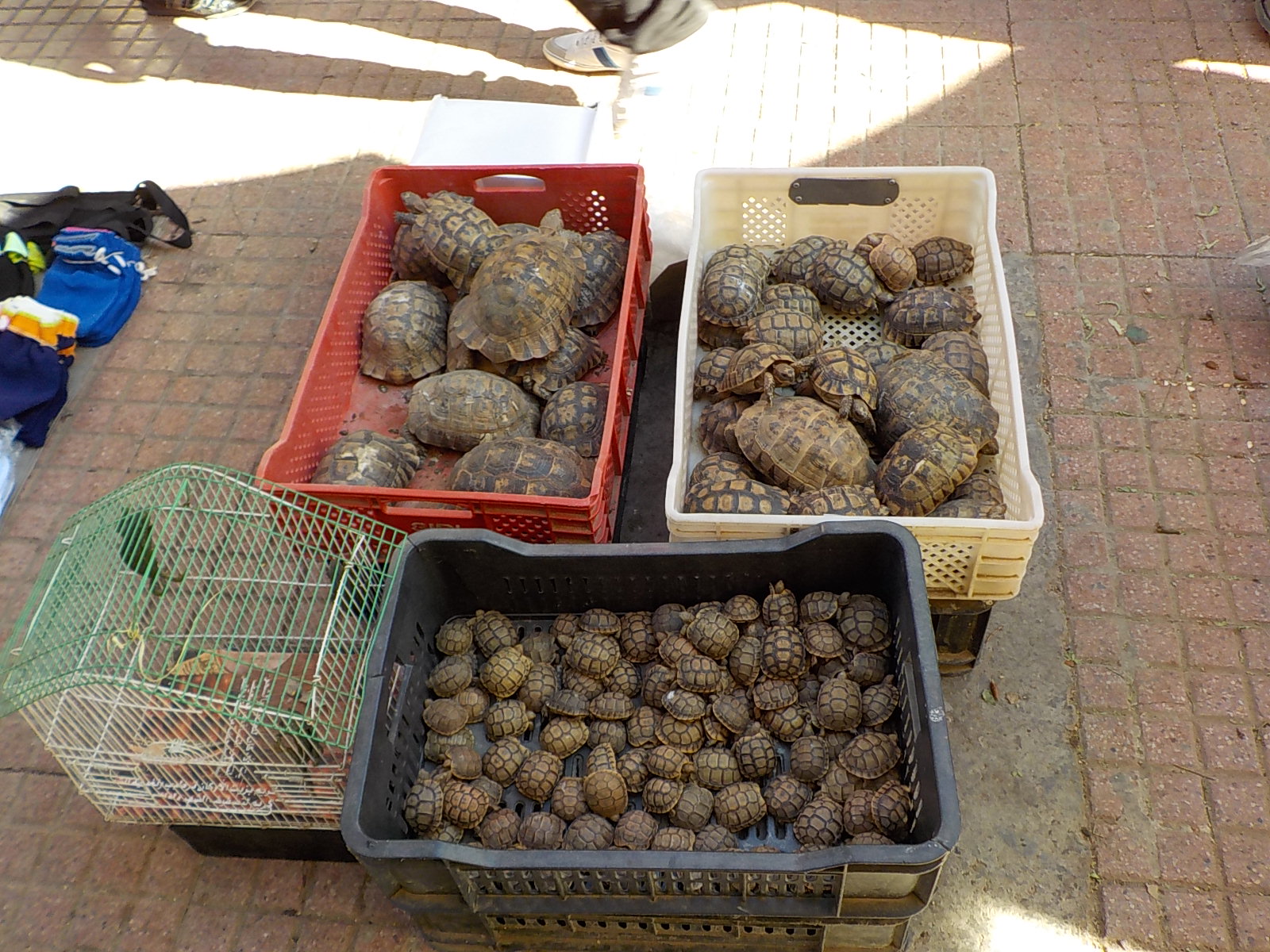
The next day we rambled in the medina in the late afternoon when it was full of shoppers. I noticed more sellers of birds (and turtles!) than I’ve seen before in Morocco, and I was impressed by the colorful thread and embroidery sellers.

3.29.16 Rabat Medina-004

Poor turtles! I hope these are pets and not dinner.

3.29.16 Rabat Medina-001More about Rabat to come!


El Jadida, and the “citerne portugais” of Orson Welles

We drove to El Jadida and discovered that along with the coastal beaches there is a stretch from about 10 km outside town into the city that is heavily industrial. Smokestacks from a power plant and phosphate plant are followed by a huge port facility, petroleum storage, LPG storage, one huge facility after another. None of the guidebooks mention this. It’s a bit otherworldly after driving through agricultural countryside for quite a while.

We went to El Jadida specifically to visit the old town, which is not the medina, but the Portugese walled city of the 1500s. Inside is a large cistern made famous by Orson Welles, who filmed a scene of Othello there. It’s very atmospheric.

The Portugese area is quite small, though picturesque. After a cup of coffee on a terrace (we couldn’t find one with a view of the ocean), we headed back to Oualidia.

Taking a break in Oualidia

It’s easier to say as Wah-Lidia, a small beach town on a lagoon that offers a surfing school (we enjoyed watching the wet-suited group from a distance), oysters farmed locally that we ate every day,

and bird-watching. From our Airbnb home we have a great view over the lagoon to the ocean.

It was a comfortable beach house, a bit dated, but comfortable, obviously a family home. The kitchen had everything you could need for cooking.

This slideshow requires JavaScript.

To say that this town is quiet in the off season is an understatement. There is a large campground full of RVs that seem to be European retirees, though we only see a few people strolling up and down. On Sunday afternoon, the park by the water was full of children playing and families chatting, but most days were quiet. There isn’t much beach right here, the shore is rocky, made of porous material that is like lava to walk on.

There was a “souk hebdomadaire,” a weekly market that set up in a field at the edge of town. It was a true a field of tents. It was even more hands-on than markets in Peru, with people killing and cleaning chickens in one section, selling spices in another, shoes and clothing along another aisle. (I had only a few photos from a distance, in deference to the number of people who don’t want their picture taken, then I accidentally erased the ones I had.) I bought a pair of bright pink leather slippers (babouche) stamped with camels on the toes. What could be better!

Jonathan bought lamb and used the couscousiere, couscous cooker, to make couscous with preserved lemons, olives and garbanzos. We should have invited the neighbors.

Bird-watching is excellent in Oualidia because of the large lagoons. We had great luck in an area that looked like some disaster had struck. There was a grand bridge/stairway that ended suddenly, with piles of discarded construction debris dumped along the road. Bridge across the RV park, ends in swamp.In the middle of all this we saw a spoonbill, Kentish plovers, common plover, stilts, and even a Sardinian warbler. It was great.


We explored the coast to the south. Once you leave the shore, you are faced with miles of rocky landscape. People farm and graze despite the rock that is everywhere.3.27.16-018sm

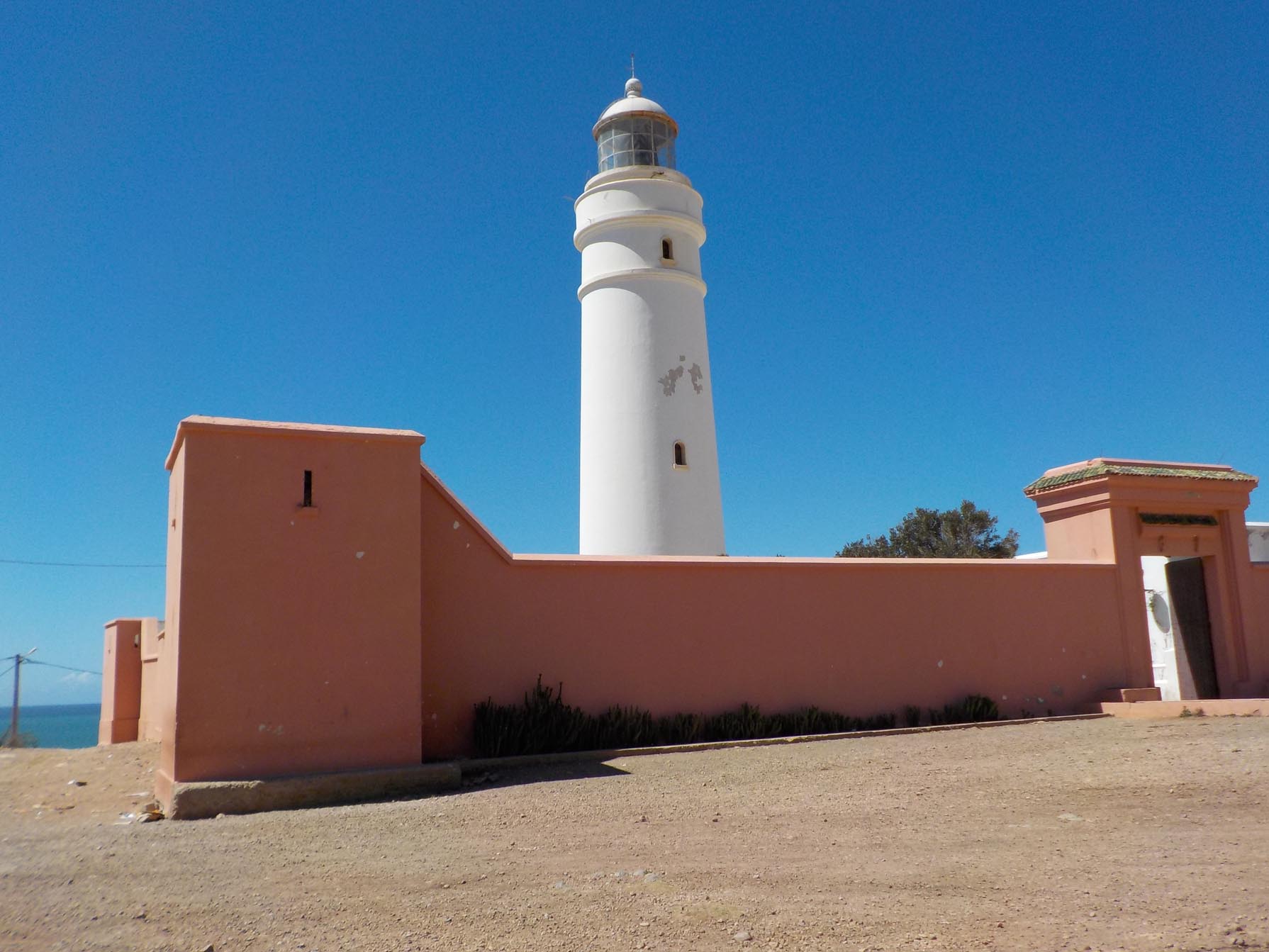
There are towns and monuments among the rocks. We stopped at the lighthouse at Cap Beddouza, and saw a few distinctive places. Some may be tombs of saints, Muslim holy men.

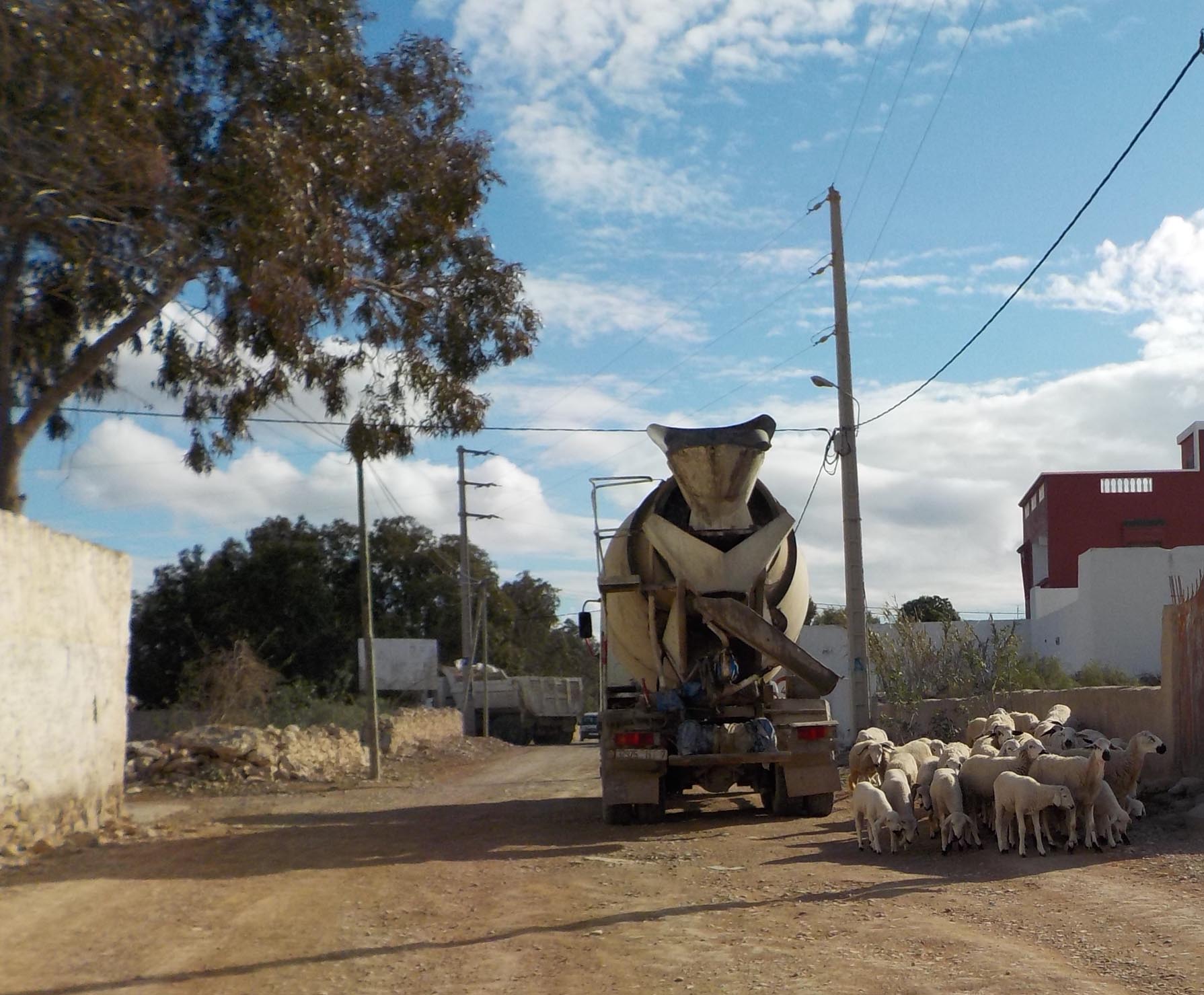
Daily life intrudes on the landscape.

Along the coast

We’ve spent two days driving along the coast, first from Agadir to Essaouira, and then from Essaouira to Oualidia, our outpost for this week.

On the leg north from Agadir, we were surprised to see how much the landscape looked like versions of other places.

Black Mesa, AZ, moved to the edge of the Atlantic.

Northern California is an easier comparison.

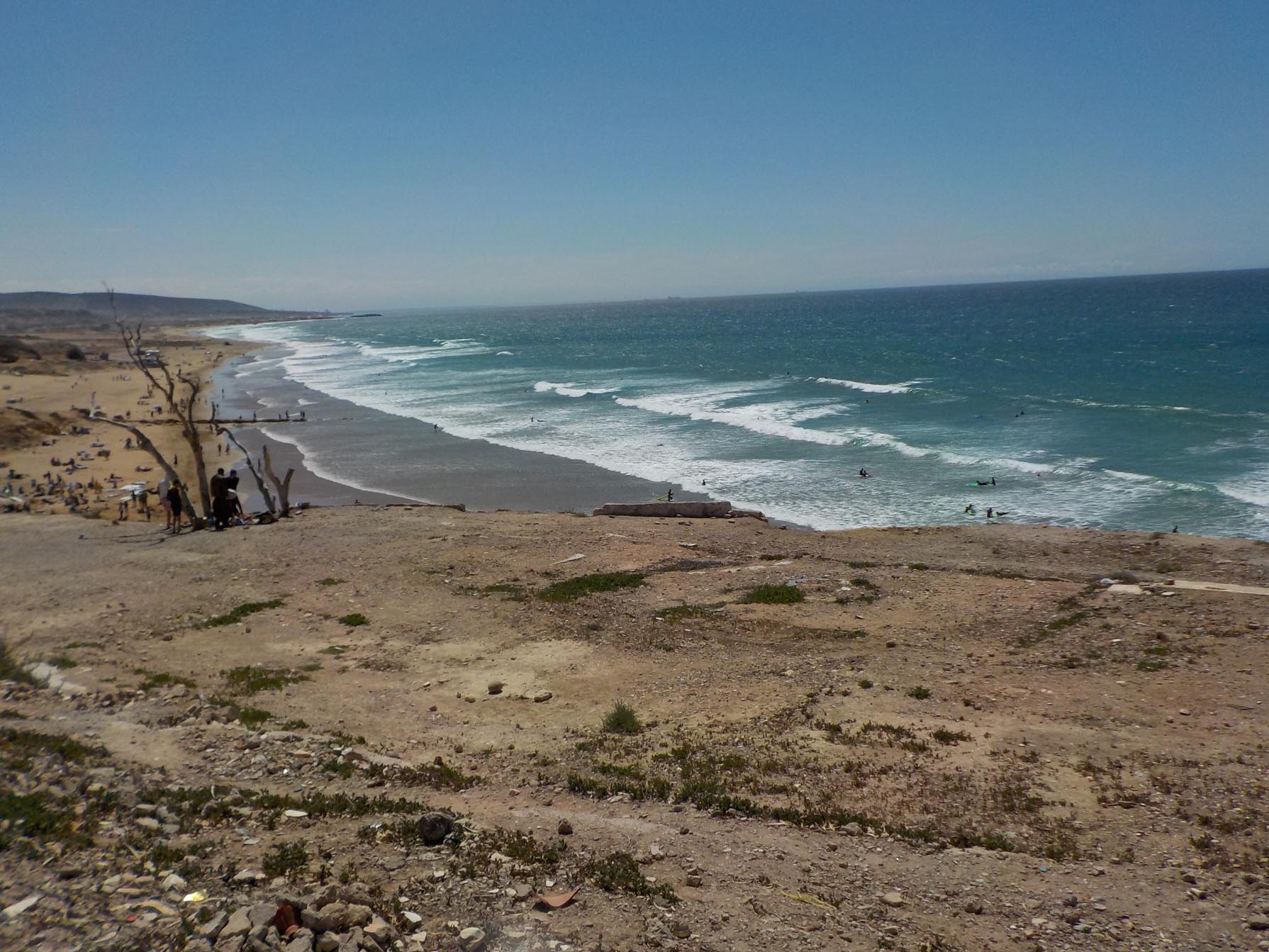
We saw people surfing. 3.20.16 Agadir to EssaouirasmA lighthouse

3.20.16 Agadir to Essaouira-002smThere are lots of coastal archaeological sites, too. Most are former living areas, with marine shell, pottery and stone tool fragments, and some walls of rock remaining. There’s a site in the foreground here, under our feet.

3.20.16 Agadir to Essaouira-004smBeyond Essaouira, the argan trees disappear and the ground becomes rocky. Incredibly rocky. Walls of rock are constructed around fields, piles of rock (pirca) are built, and finally there is more rock in the fields than there is land. Sheep graze among the rocks, but planting looks impossible.

3.24.16 Oualidia-030sm

We reach the coast and down the hill we see the lagoon that is Oualidia.

3.22.16 oualidia-016smWe are here for a week. Aaaahhhhhh.


Essaouira, city of doors

We dodged a few raindrops and ducked into a restaurant for lunch just as it started to rain. We ended up on the third floor in a low-ceilinged room with several other groups of foreigners, French, Spanish and German. We had an especially nice chat with a German woman who was on a two week holiday (she chose Morocco because she wanted someplace close, and warm) while she is between jobs. On her return she moves from Frankfurt to Berlin. Her English was excellent (studied English Lit in college just because she likes it), as was her French.

There is lots of shopping in the medina here, and lots of old buildings.

Most of all, Essaouira has doors. Here are some of them.

This slideshow requires JavaScript.

A hidden treasure in Essaouira

We arrived on the outskirts of Essaouira, fortunately with our phone GPS working. The surroundings are a bit intimidating.

3.22.16 Domaine d Arganaraie-032smThere were ancient and modern hazards.

3.21.16 Essaouira-016smFortunately, there were strategically posted signs.

3.21.16 Essaouira-018smWe found the Domaine de l’Arganaraie, a delightful set of large houses around a common swimming pool and dining area, spacious and beautiful, a real oasis. We were able to have a fire in the fireplace both nights. This was our house–there was also a full kitchen and bathroom.

This slideshow requires JavaScript.

We arrived late one day, had a delicious dinner (briouats, tagine, strawberries), built a fire in the fireplace and relaxed. We visited the Medina in Essaouira the next day and were very happy not to have to either go out OR cook in the evening. Fatima, the excellent cook produced squash soup, tagine of chicken, olives and potatos and a world class chocolate mousse. We sat by the fire again and didn’t regret the cool weather one bit. I was glad that it was pre-laid to start with just a match, too. The donkey cart towed our luggage back to the car when it was time to leave. Next time we’ll stay to have a swim.


A further note on Argan products

Cooperatives of woman formed to produce argan oil and related products can be found across southwest Morocco. On our drive from Agadir to Essaouira along the coast, we passed thousands of argan trees full of fruit, signs for cooperatives, and billboards referring to projects benefitting women. These all appear to be cooperatives to produce argan products. While cooperatives seem to help women, in the region we drove through there was no other visible employment of any kind. As we drove down the road, we passed stand after stand where vendors (men) held out bottles of argan oil and gestured to us. I subsequently read that many of these are probably adulterated products.

3.20.16 Agadir to Essaouira-013My conclusion is that women need assistance beyond forming a cooperative. Each cooperative needs to connect with markets outside the immediate area. There are a limited number of tourists who drive through this region, and roadside sales cannot help much economically. Once argan oil is produced, it has to reach markets where it has commercial value and can be sold as a fair trade product to ensure that some of the proceeds reach the producer communities. Otherwise, women’s cooperatives of argan oil may become a dead end, producing a luxury product that is stockpiled until it goes bad (rancid, becomes too old) or until there is so much unsold oil that the price collapses.

Buy fair trade argan oil–put it on everything.

3.15.16 Mesti-008sm

Surprises at the end of the road

We arrived at Foum Assaka, the mouth of the Assaka River, to find a beach community under construction, not uncommon in Morocco. We threaded through the streets until the car could go no further, then parked in a pullout. This is the entrance to “Le Rayon Vert,”  the Green Flash. I guess you can see it here as easily as in Key West. 3.16.16 Foum Assaka-009sm


3.16.16 Foum Assaka-013sm 3.16.16 Foum Assaka-008smIf you visit with a group, you can stay in a Moroccan tent.3.16.16smWe sat down to a delicious lunch of baked fish and vegetables. The eggplant were baked and the glazed with honey and spices. Delicious and in the middle of nowhere. The secret? Our friends called in advance.

3.16.16 Foum Assaka-005sm3.16.16 Foum Assaka-006sm


This was not the only hidden surprise we visited in the Sidi Ifni area.

The next evening we had dinner at the “3-O” restaurant in Mirleft. After driving from Sidi Ifni in the dark, we stopped in front of a pharmacy, with its lurid fluorescent light washing out everything. We got out of the car and looked around, puzzled. Jean-Marie pointed to an alley, unlighted. Then we saw “3-O” painted on the wall, and an arrow. We walked down the alley in the dark to a door. Locked. It has a buzzer. It looks like we are being checked into prison. The door opens and we are in a gallery of contemporary Moroccan furniture. We walk between the rows of tables, mirrors, and sculpture to a doorway and we are then in, a nightclub. Really. Tables and chairs, mirrors, light fixtures, very chic decor. We continue along to a dining room where our table is ready. We meet our host, Didier, who runs the restaurant, the workshop, and the club. The feature of this restaurant, where we also called ahead, is oysters. These are straight from the oyster farms in Dakhla in the Western Sahara, fresh every Wednesday. We had all we could eat and they were delicious, crisp as the ocean. Morocco is full of wonderful secrets.

3.17.16 Rest.3os.Didier-002 3.17.16 Rest.3os.Didier-003

A Women’s Cooperative, Mesti, Morocco

About a half hour outside Sidi Ifni on the road to Guelmime is the town of Mesti, where the Tafyoucht cooperative of women produces argan oil.

3.15.16 MestismArgan trees are only found in Morocco, and the oil pressed from the nuts can be eaten or used on the skin and in cosmetics. We sat with the women cracking the nuts and found how difficult it is. It was much easier to hit my finger than the nut. I have read that an automated method of removing the nuts has not been developed and so they are all cracked by hand (!)–mostly by women like ones we sat with. We chatted with a young woman near us, so deft she could crack the tiny nuts from the shells while chatting. She was abandoned by her husband while she was still pregnant. Her daughter is now five years old. Both she and her mother work at the cooperative.3.15.16 Mesti-005The process is lengthy, but nothing is wasted. The outer husk of the argan nut can be removed mechanically and is used as animal fodder. A classic photo from Morocco is a herd of goats climbing in argan trees and eating the nuts. (I did not take this one, I’m still looking for my tree of goats.)tree-climbing-goats-morocco-woe1The nuts can still be cracked and squeezed for oil after they’ve been through the digestive tract of a goat, so fallen nuts are collected as well as those still on the trees. The hard inner shell that is removed by the women is used as fuel in the community bread oven. The raw nuts are pressed for cosmetics, or toasted and then cold pressed for edible oil. The slide show below shows the process at Tafyoucht.

This slideshow requires JavaScript.

We were present on a lively day at the cooperative. Not only was there another group of visitors, but there was a film crew from BBC Arabic. The presenter asked whether he could interview Joyce as a resident of the area to ask her about the cooperative and its work and value to the community. It was fun to watch.

3.15.16 Mesti argan coop-008sm

Argan oil products

We purchased some skin oil and some cooking oil. We did not buy, but tasted, amlouze, a blend of argan oil, ground almonds and sugar. It would be good on toast.


When you plan your visit to southern Morocco, the Tafyoucht cooperative is a great place to visit.

Comparing Peru and Morocco

An initial look at Morocco shows some similarities with Peru. There are low buildings of adobe, lots of craft items, a long coastline, surfing, parasailing, and high mountains. There is only a limited amount of rain and some creative terracing has been developed over the centuries to foster agriculture.

3.16.16 Foum Assasa-018smDespite the visible similarities, the two countries are different. Morocco is 1/3 the size of Peru and has a larger population by 5-6 million. As a result, the population density of Morocco (74 persons per sq km) is three times greater than that of Peru (24 persons per sq km). Morocco’s population density is deceptive, as much of the south is lightly populated, meaning that the population is dense, more than 100/sq km throughout the northern part of the country bounded by Casablanca–Marrakech–Fez–Tangier. This northern region is the heart of Moroccan tourism, more than 10 million visitors per year, much greater than Peru’s 4 million visitors (85% visit Machu Picchu).

3.11.16 Agadir to SI-006The Human Development Index, a composite of life expectancy, education, and per capita income is .628 for Morocco and .734 for Peru (2014). Life expectancy at birth is 74 years in both countries, but average income in Morocco is just under half that of Peru ($12,000). The potential for education and income is greater in Peru than Morocco.

3.13.16 souksm

The Sidi Ifni Sunday souk looks like flea markets everywhere.


3.13.16 Sidi Ifni souk-007sm

Except sometimes the souk in Morocco looks very different.


What can we conclude from these few statistics and my observation of Morocco for only a week? Educational opportunities are limited by tradition to some extent, and jobs for people of working age are not sufficient for the size of the working class in both countries, though the problem is more acute in Morocco. People of both nations leave for employment in other countries. This can lead to successful careers elsewhere, or a lifetime of scraping by in a more developed country in order to send money home. The extended family can be a source of contacts and assistance, but it can also be a terrible drain on the income a person does manage to generate. Peru remittances for the 4th quarter of 2015 were 715.81 million dollars, while Morocco’s were apparently 6 billion dollars for the year (aprox 1.5 billion per quarter). Thus remittances are one of Morocco’s important sources of foreign exchange.

3.13.16 Sidi Ifni souk-002sm 3.14.16. Sidi Ifnism

An important difference in the Human Development Index may be most visible in the number of Moroccan women who go about veiled. I personally see this as a barrier to education and work. In southern Morocco, where we are now, many women wrap themselves in a 3 meter long swath of fabric, a melfa, to go out. These can be very attractive, but the need to be veiled is something I view as a problem. Foreign women do not alter their mode of dress, and men can wear anything from jeans to a floor-length caftan. Note the men and boys in the background of these photos.

I am not sure what women think of their lesser role, and I know that many appreciate opportunities that arise for them. (See my next post on the argan oil cooperative in Mesti.)

An FYI: Many people do not wish to be photographed, and Joyce gave me good advice to always ask people before taking a photo. Some people agree to have a picture taken, others not. Thus, I do not have a photo of the beautiful tent full of vegetables presided over by a turbaned man in the Sunday souk. I have a picture of the camel’s head from the camel butcher, but not the crossed hooves from the beef butcher.