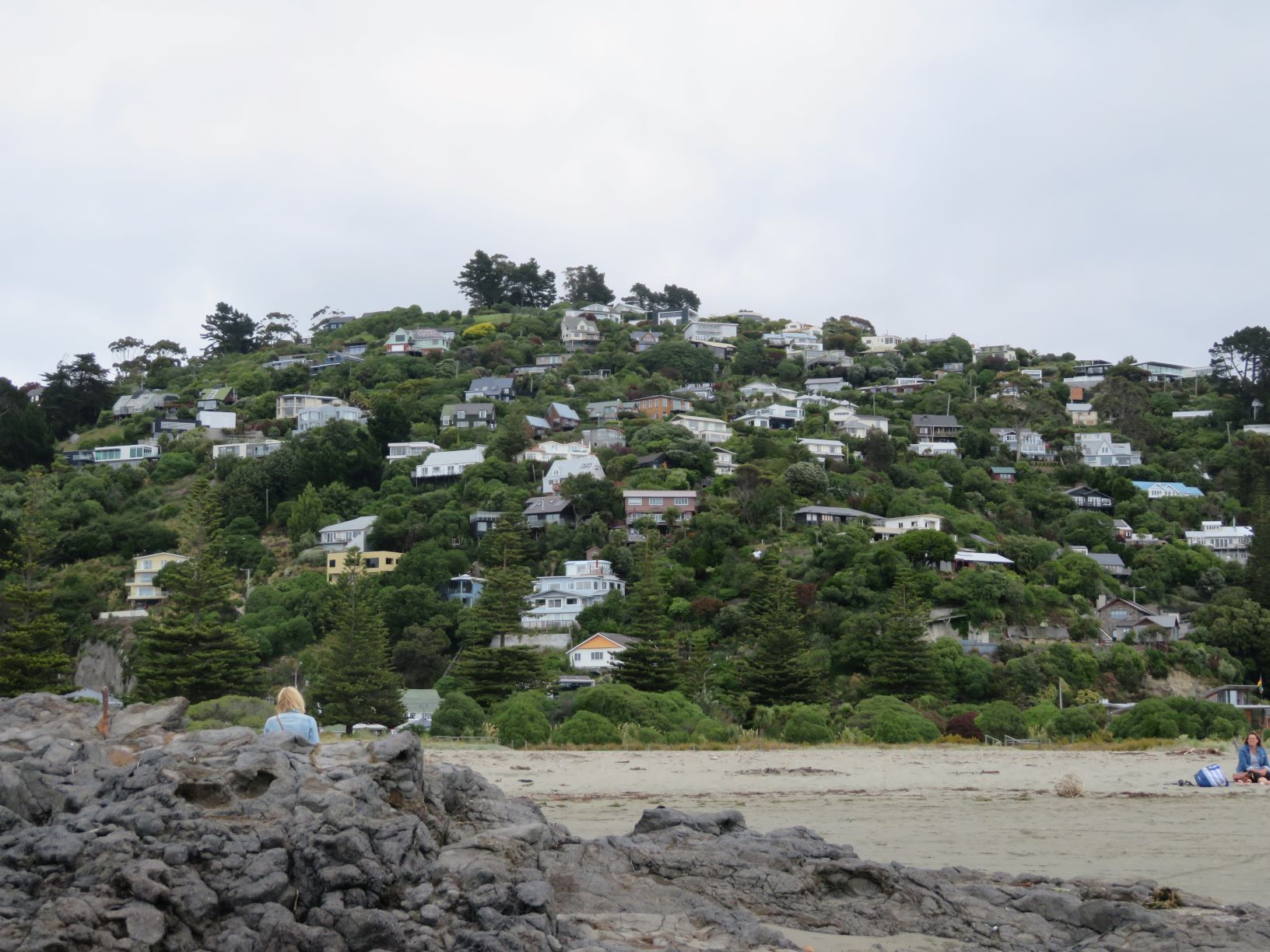
Visiting Christchurch and the Banks Peninsula

My mental map of Christchurch is a triangle. The city center is near the top. The lower right corner is the Banks Peninsula, an ancient volcano that on the map looks like a huge pinwheel. The lower left corner is Lake Ellesmere, a very large, shallow lagoon that is barely connected to the sea through a gap in the dunes. The Pacific Ocean borders two sides of the triangle with one side (left) firmly part of the mainland.

My favorite place in central Christchurch was the Canterbury Museum. It has skeletons of extinct moas, and lots of maori artifacts. The museum is located on the corner of the Botanical Gardens, too, making it possible to visit to both places in one day.

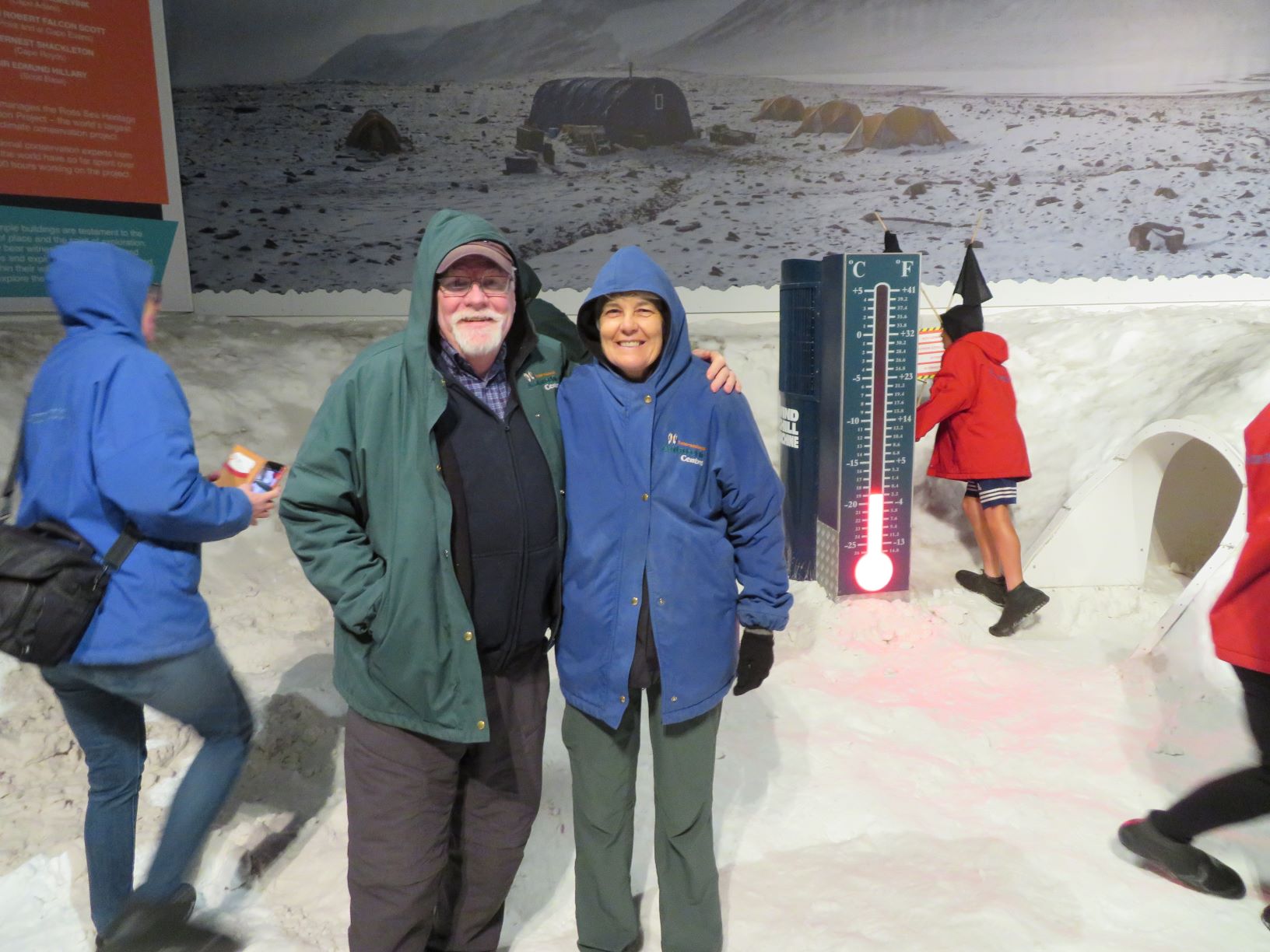
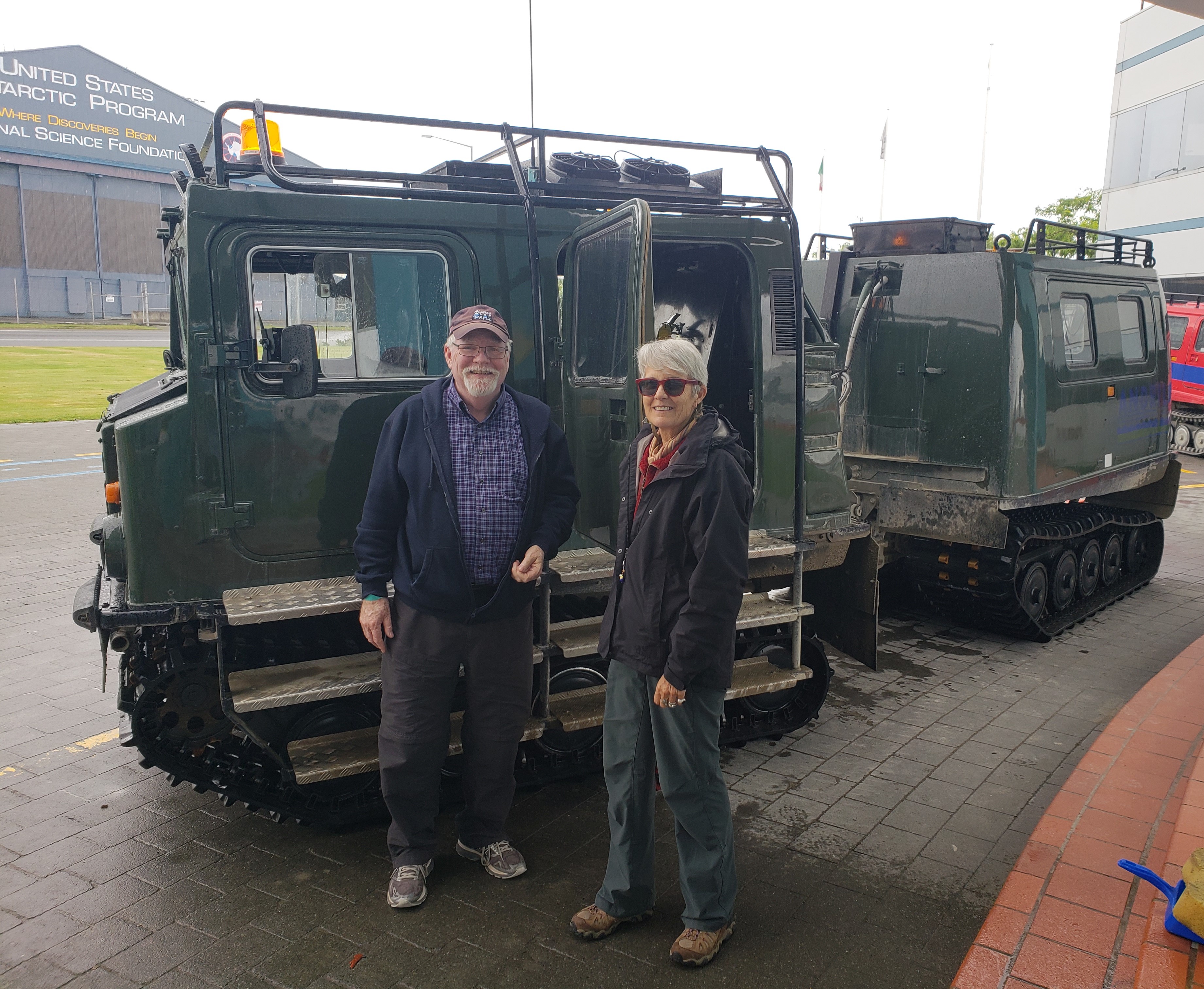
Just outside the city center, right at the airport, is the International Antarctic Centre. I wasn’t sure it would be worth the price of admission, yet we had a great time and were there for at least two hours. There are excellent exhibits on what its like to spend a research season in Antarctica, the clothing, the housing, even an Arctic storm room that simulates a whiteout. The snow and ice covered room not really as cold as the Antarctic, but it’s very cold. You wear an extra expedition jacket over what you are already wearing, and boot covers. Later, we went for a ride in the tank-like vehicles they drive on the snow in Antarctica, including demonstrations of going up and down steep hills and leaning way over to one side. There are penguins, too, blue penguins swimming in a pool with an underwater window. It was a great visit, and I really liked seeing the US National Science Foundation Antarctic Center right across the street, even if there wasn’t an exhibit there. Christchurch is the departure point for all US researchers going to the US Antarctic base at McMurdo Sound, including some of my colleagues from Northern Illinois University. What an adventure that must be!

Out on the Banks Peninsula, Akaroa is a small town known for its brief reign as the French outpost in New Zealand. From Christchurch the drive is at least an hour and a half across two old volcanoes. You see the edge of the crater as you go over the hills to Little River, then across the crater to Akaroa. The town offers beaches, lunch, and shopping, an excellent vacation stop. We were there on a day with a cruise ship visit (!), which has the benefit that all the stores and restaurants are open, but the disadvantage that they are all full. We left town to look for a place to have a picnic, and ended up in a cove across from the moored cruise ship, watching tenders carry passengers back and forth, while people paddleboarded, jet skied, and kayaked around the bay. The water is cloudy in other parts of New Zealand from glacial dust and runoff that gives it a bright turquoise color. Akaroa is nowhere near the glaciers but the water has the same slightly cloudy bright blue color.

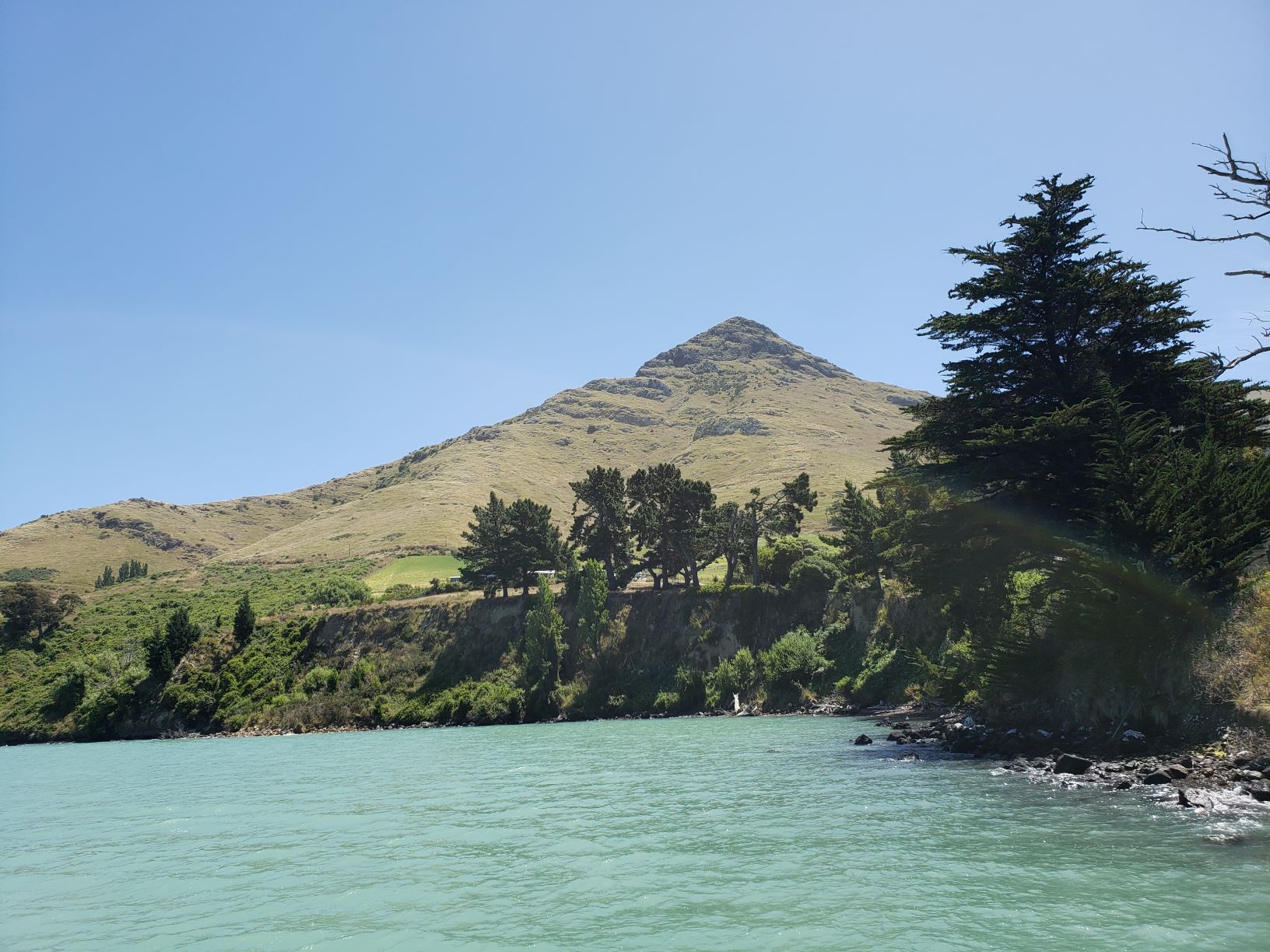
We explored the north edge of the Banks Peninsula in a separate trip around Governors Bay where the only person we met was a young woman at a family reunion nearby. She told us the name of this mountain in Maori.

Our visits to the third corner, Lake Ellesmere began coincidentally when we turned off the highway to look at shore birds. We ended up at Birdling’s Flat, a long pebbly stretch of beach. On our way out we stopped at a quirky rock shop and museum and found that many of the pebbles at Birdling’s Flat are agates. Once polished, there are all colors, and the shop/museum displayed thousands of polished stones.

On our final trip to Lake Ellesmere to look at birds, we ended up laughing and taking a selfie while slogging around in a muddy tidal flat. The promised birds…..they were all black swans, hundreds of them. (We’d already seen hundreds of black swans.)

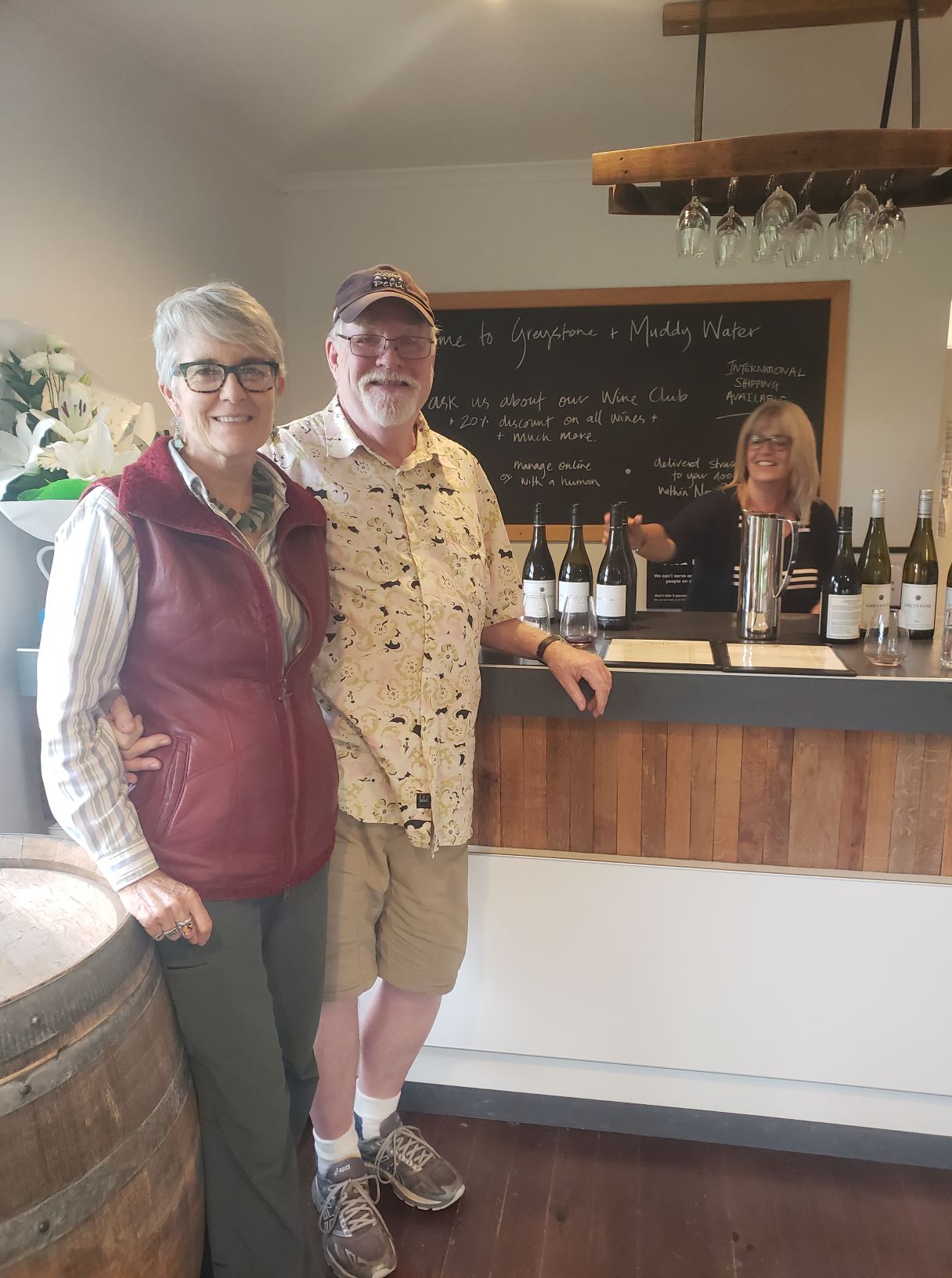
The weather has been unusually rainy and cool, we hear, though since we didn’t know any better, we went out almost every day to visit a beach, or a winery. You could spend a lot of time touring the Marlborough wine region north of Christchurch, but we decided to leave that for another time. We had delicious wine at the wineries we did visit. In New Zealand, a tasting room is a “cellar door.”

Christchurch and The Earthquake

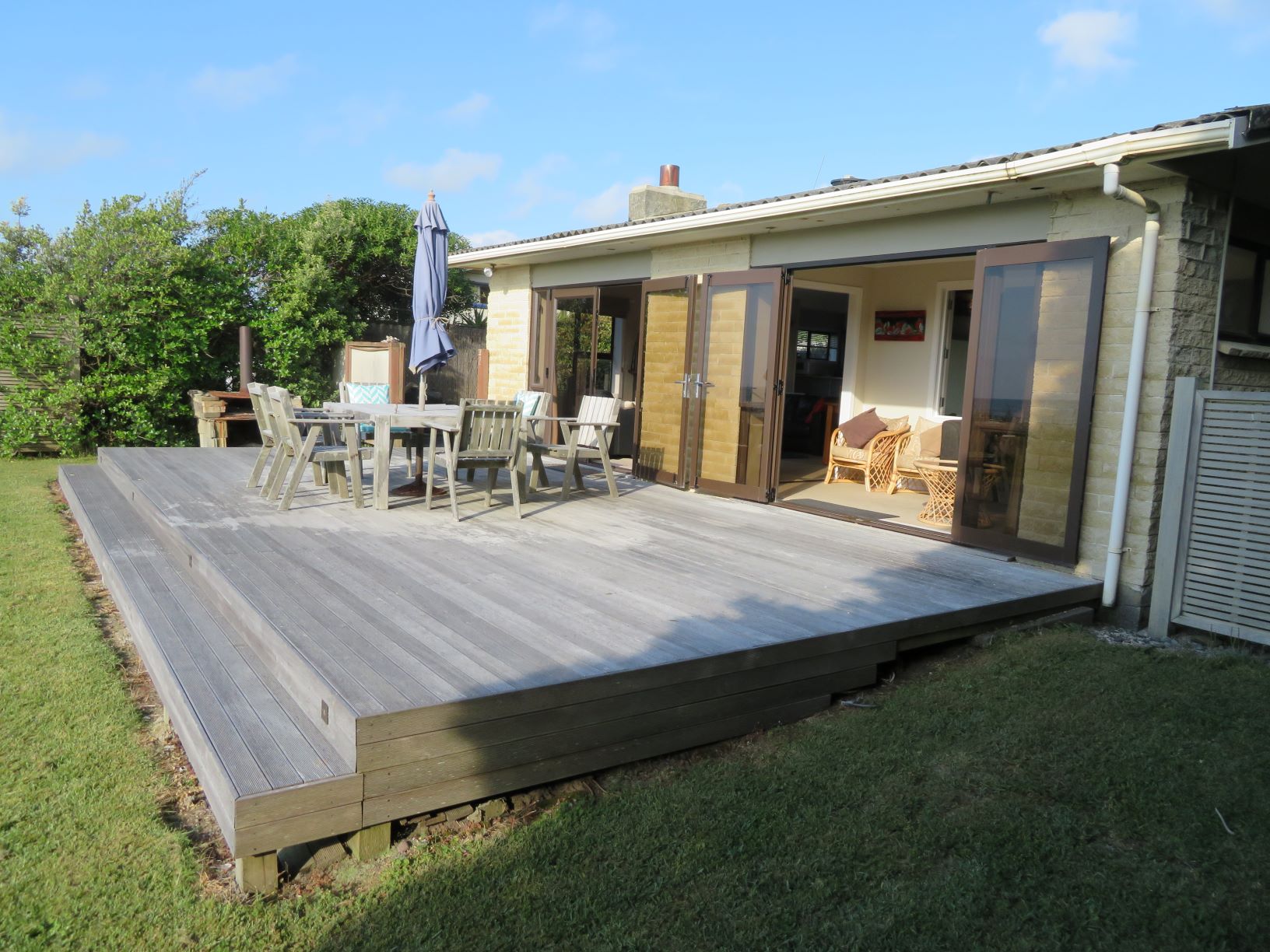
Our home in Christchurch is a recently renovated bungalow near the Avon River. A stroll around the neighborhood when we arrived revealed that we are only three houses away from an extensive park along the river. What we subsequently found out is that the park was fully occupied by houses until the Christchurch earthquake of 2010/2011.

A substantial area liquefied during the earthquake and was deemed unsuitable for rebuilding. Houses were removed, the street along the river was closed, and today the riverside park is segmented by the remnant landscaping of the homeowners who had to move away. It is a bit melancholy to see what must have been someone’s yard, minus the house.

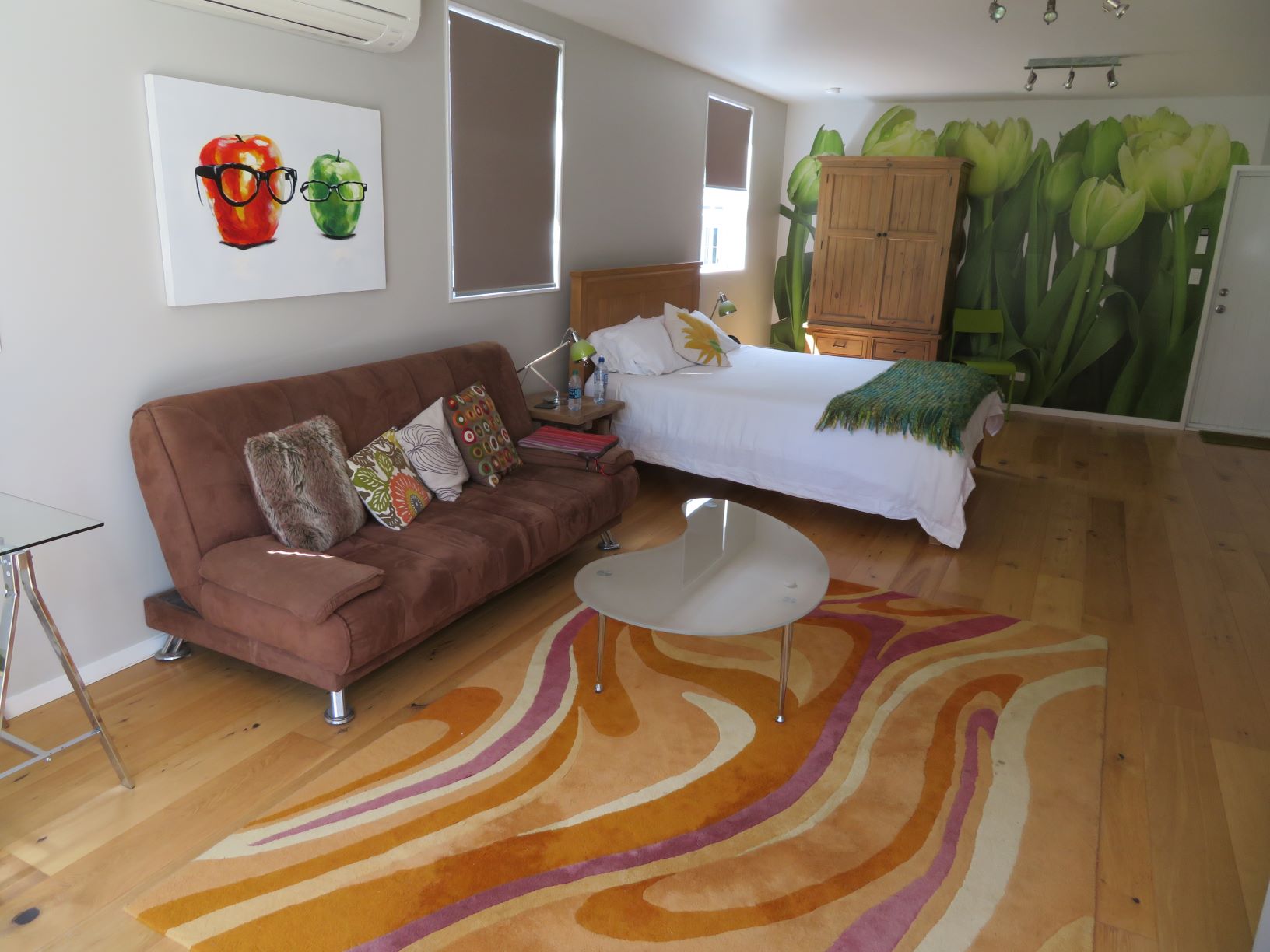
Our house was repaired rather than demolished. There is lovely wood paneling that has been retained, along with old-fashioned light switches. Windows have beveled glass panels at the top in living room and bedrooms, but the kitchen and bath are entirely new.

There is still a lot of rebuilding going on throughout the city, as well as construction of new houses, even though the earthquake was almost seven years ago. What is a sharp memory here wasn’t even on my radar.


New Zealand Jade: Art not Science

Before coming to New Zealand, we looked forward to seeing jade being worked, and shopping for a jade pendant or two. After arriving, we began to find out a bit more about jade and jade carving that did not make our search easier. Jonathan and I are well-trained researchers, and we like to know about things. We wanted to know what New Zealand jade really is, mineralogically, where it comes from and how it is carved. We barely got past the first question because there are too many answers.

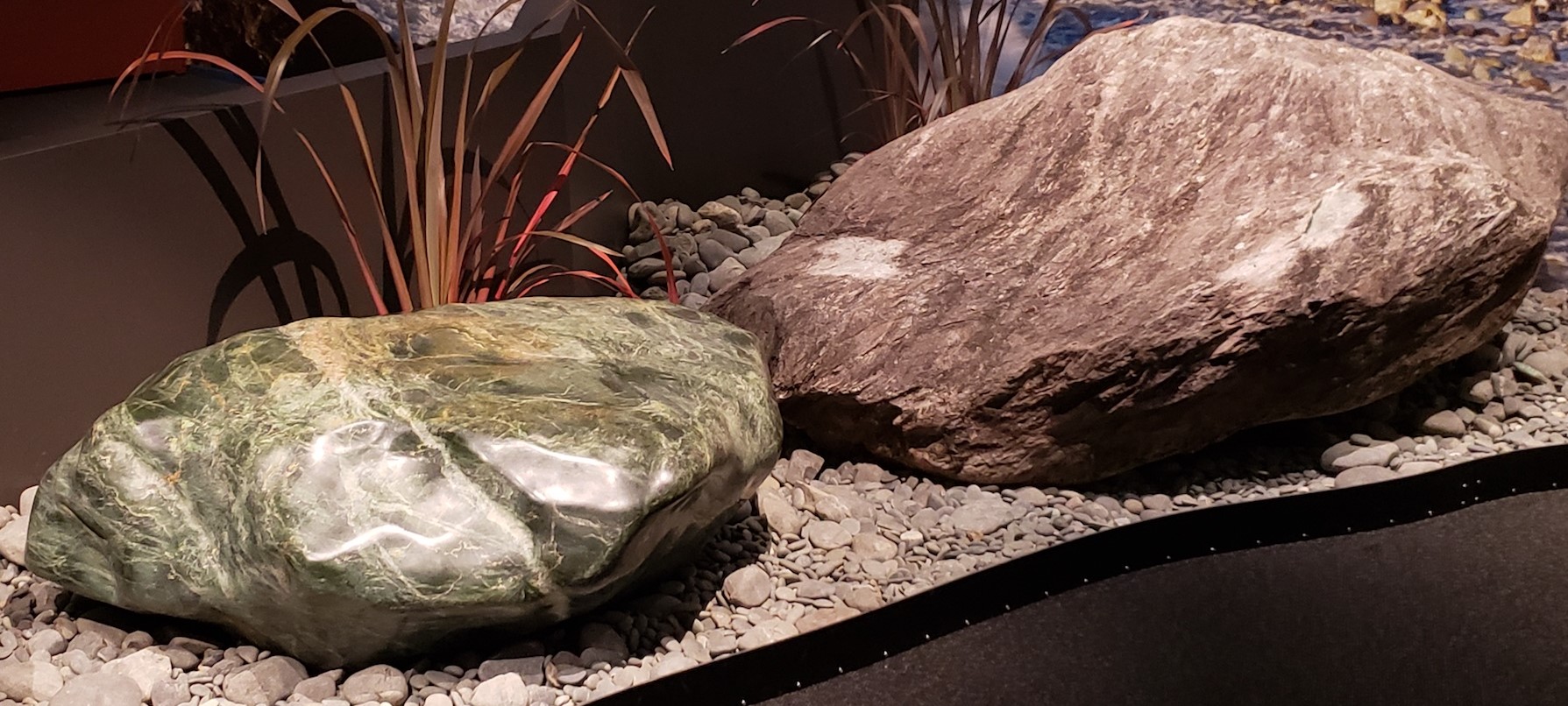
On the right is an unpolished boulder (chipped to show jade interior). On the left is a polished jade boulder.

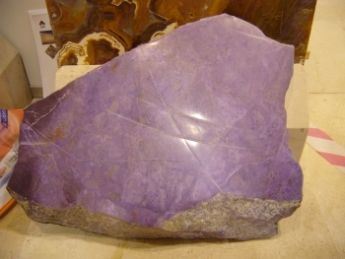
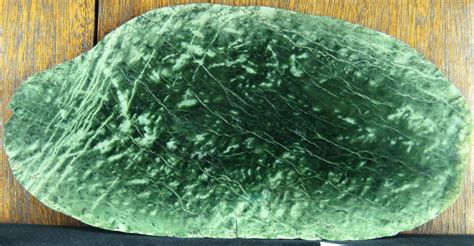
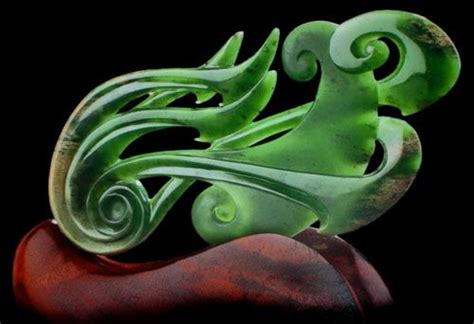
Jade is composed of silica and other minerals and is best known as a translucent green stone. (That is what I think of.) We also found that jade can be hard or soft, and occurs in all shades of green, lavender, blue, red, and black. There are so many varieties that what a carving is made of becomes impossible to determine without spectroscopy.

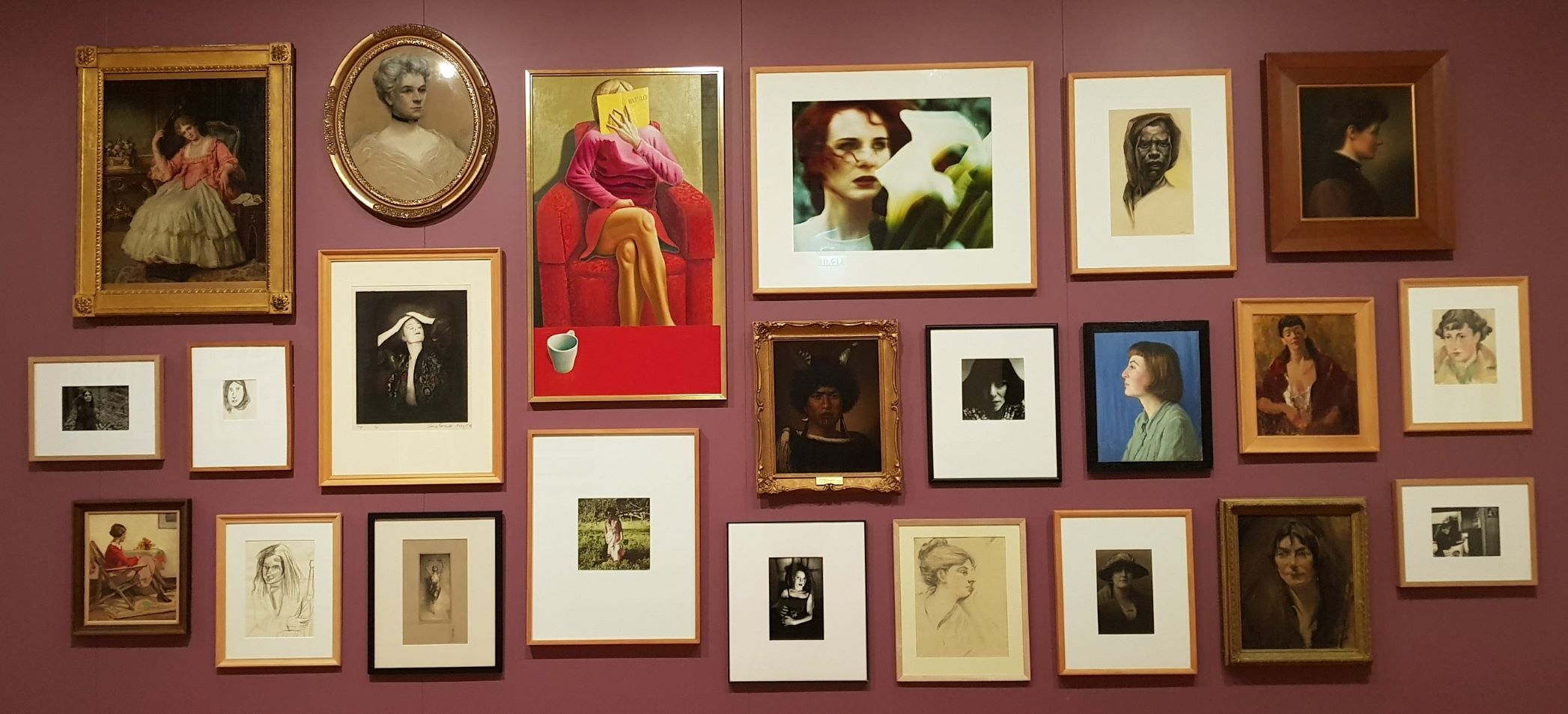
In New Zealand, jade is known from the earliest arrival of Europeans who observed the Maori people wearing carved jade pieces. In this portrait of Rangi Topeora, one of the few women leaders to sign the Treaty of Waitangi, you can see carved jade objects in two shapes, cylinders and hei-tiki. These are some of  the fairly limited repertoire of traditional shapes. I found the limited number of shapes a bit disappointing until I thought a bit about this portrait. The Maori didn’t carve jade to be decorative, they carved it to make symbols of power and personal rank. It was important for a carved piece of jade to be recognizable as a particular shape and carry its associated meaning. Creativity was only valuable within the constraints of a particular shape. A person wearing a hei-tiki wanted those who saw it to recognize it immediately.

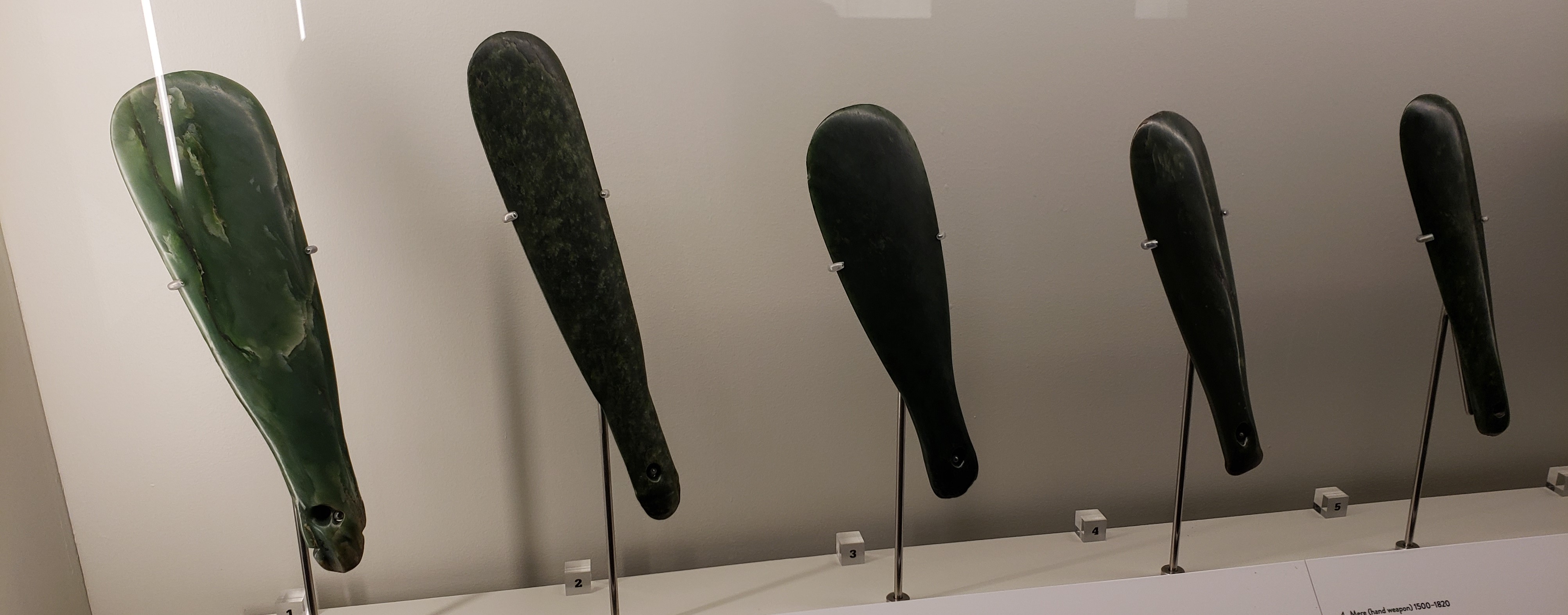
Today, traditional forms are what you see in most stores. I am skeptical of the “meaning” that is described in flowery language on sales materials. What we know is that these shapes have been passed down through generations, providing buyers a memento that gives a nod to Maori history and tradition. In the Canterbury museum in Christchurch there are numerous examples of all the traditional forms along with a lot of jade fighting clubs. Jade was definitely associated with power!Not everything is traditional. There are some contemporary carvings made from jade, and also bone, wood, and stone.

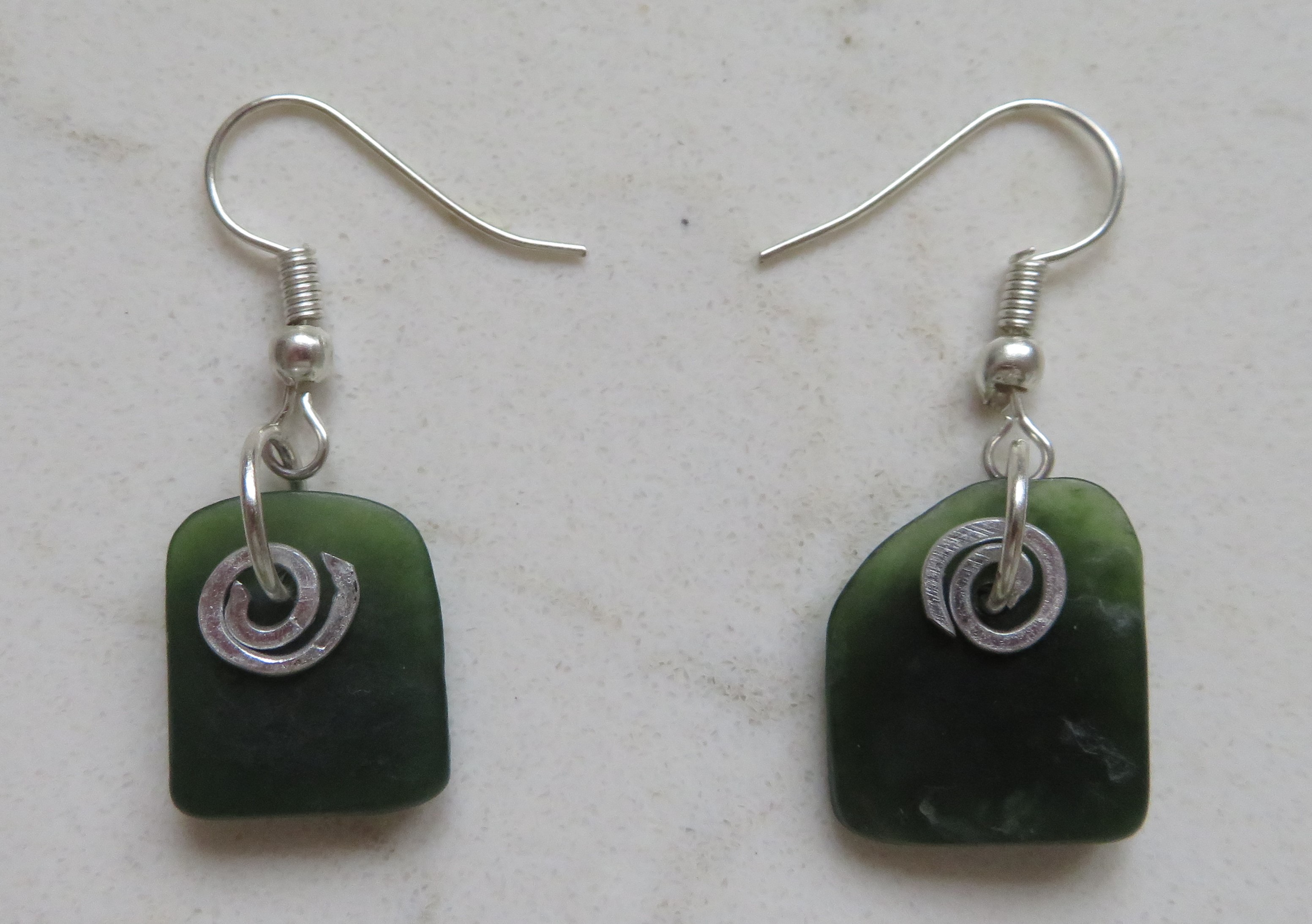
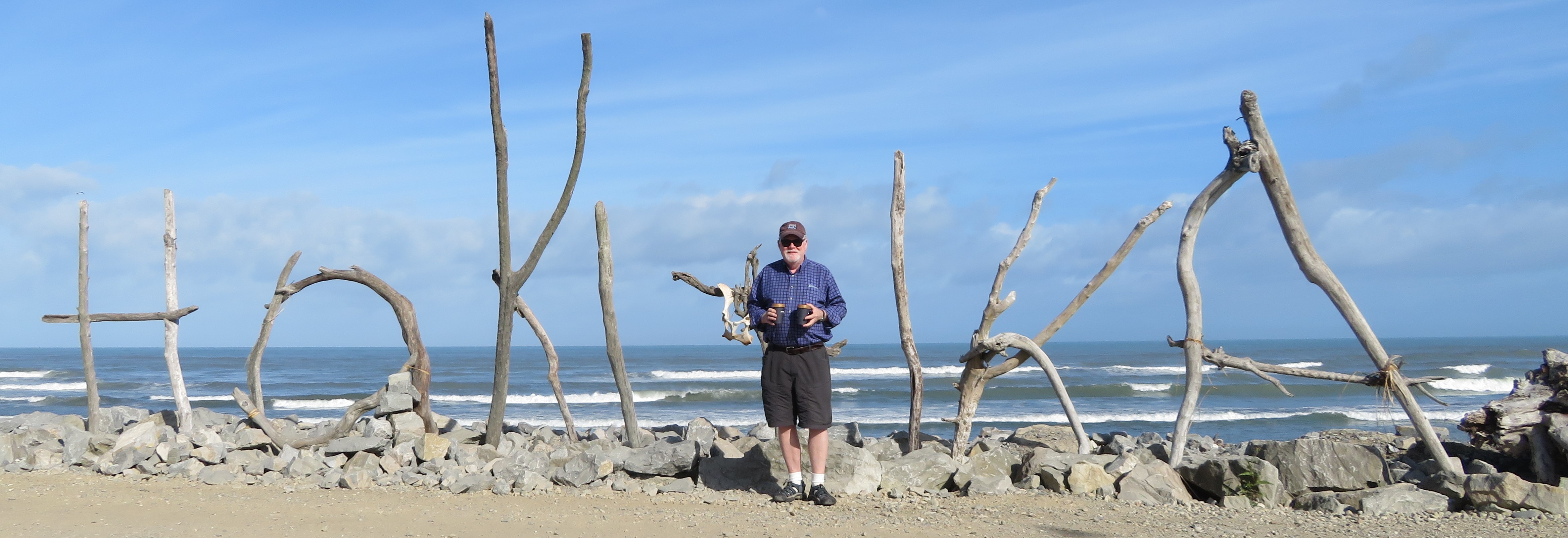
Having given up on what jade is, we looked at where jade is found. New Zealand jade is found in several localities on the west coast of the South Island as pebbles and boulders that wash out of the mountains. Most jade collecting is reserved for authorized members of an ‘iwi’, a traditional Maori group. The jade is carved by Maori carvers, or sold to others to carve. When we heard that it was possible for anyone to search for jade pebbles on the beach in Hokitika, on the west coast of the South Island, we knew we would visit and have a look for ourselves. When we got there, we used our combined archaeological surface collecting expertise and our diligent beach-combing efforts to search out jade pebbles. Jonathan found one, about the size of his thumbnail. This is definitely an activity in the “if it was easy there’d be a lot more people out here” category. I decided against purchasing a carving and instead bought two tiny matte-finished slices of jade out of which I made earrings. I spent a lot less than I would have on anything comparable. It was fun and makes a good story.

Hokitika Beach
Hokitika Beach

We concluded that the best way to purchase jade in New Zealand is to talk to people, especially those who work with jade, rather than buy items in a gift shop.  Chatting with people at craft markets can lead to meeting someone who actually carved the jade themselves, or possibly someone who collected the jade personally. A small studio run by an individual or a family may make it possible to find out where the jade you are looking at comes from and who carved it. To me, the greatest enjoyment of an object comes from knowing something of its history. I met a woman selling jade pieces near the beach in Hokitika and she explained that her husband did most of the carving though she was learning and could produce simpler shapes. They purchase their jade from the Maori authorized to collect it, and she could describe the shapes and varieties of stone. I enjoyed our discussion more than any of my visits to the shops in town.

When you find out that jade can be almost anything, you depend upon the honesty of the seller to find what you want. That proves problematic, as a lot of jade is treated to improve the color or to make the piece smooth. These “enhancements” include anything from simply rubbing the piece with wax (the finish on most pieces), to dying, impregnation with resin, or placing stone on plastic backing. Sellers of jade do not mention any of these techniques of ‘enhancement’. How is a person to shop? The color question is amplified by adding the questions of where jade comes from and who carves it. The largest seller of jade carving in Hokitika is Mountain Jade, with at least two stores. Looking around the store we found that though some of the jade was local, most was not. Some items were marked “New Zealand jade”, others “New Zealand greenstone”, others “carved in New Zealand”. This means that carved items not marked “New Zealand” are likely to come from sources in China or Canada, especially as the owners of the business are from China and Canada, where British Columbia produces much of the world’s jade today. Objects not marked “carved in New Zealand” might well be carved in Indonesia or China. A “featured artist” bio in the store described a designer who purchases stone in New Zealand, ships it to Indonesia to be carved and then re-imports it to sell in New Zealand. We were disappointed by this, as we’d rather see work by local artists. Maybe that’s just us.

The jade hunt was very enjoyable, and we learned enough to ask questions and chat with people. A significant part of the beauty and value of jade is based on what the buyer believes, and not on any particular measurement or test, a case of art, and artifice, prevailing over science.[Those of you who read my posts regularly may have noticed a bit of a gap over the past two weeks. I splashed coffee on my keyboard one morning, and despite my rapid actions, part of my keyboard stopped working. I now have a much cleaner laptop and an interim keyboard, though I may never catch up in describing all the great things to see in and around Christchurch.]

Road Trip! Milford Sound and Queenstown

Each of our New Zealand stops lasts two weeks, and we tend to go on one trip that takes us away from our base overnight. Our present spot on Shag Point is the farthest south we get in New Zealand and we were torn between getting to see more of the coast nearby and seeing other parts of the South Island. We decided on a whirl across the South Island to see Milford Sound and Queenstown, returning through the wine country of Central Otago.

On our loop south, we crossed miles of sheep pasture. This is the part of New Zealand where sheep outnumber people more than twenty to one. The yellow hillside in this photo is covered with gorse, an invasive species that sheep won’t eat. (Winnie-the-Pooh fell into gorse bushes and found them very prickly). Many plant and animal species thrive in New Zealand’s cool and rainy climate, which is part of the reason that invasive species are an ongoing menace.

As I’ve mentioned, every mammal is invasive. One of these, a brush-tailed possum came to our patio door to invade us! He stared through the glass and was only intimidated from trying to get in the house when he hit his nose hard on the glass.(Possums are not related to opossums found in the US). Possum eradication includes the development of a merino wool/possum fur fiber blend that is very soft. It has become popular for sweaters, scarves, and gloves.

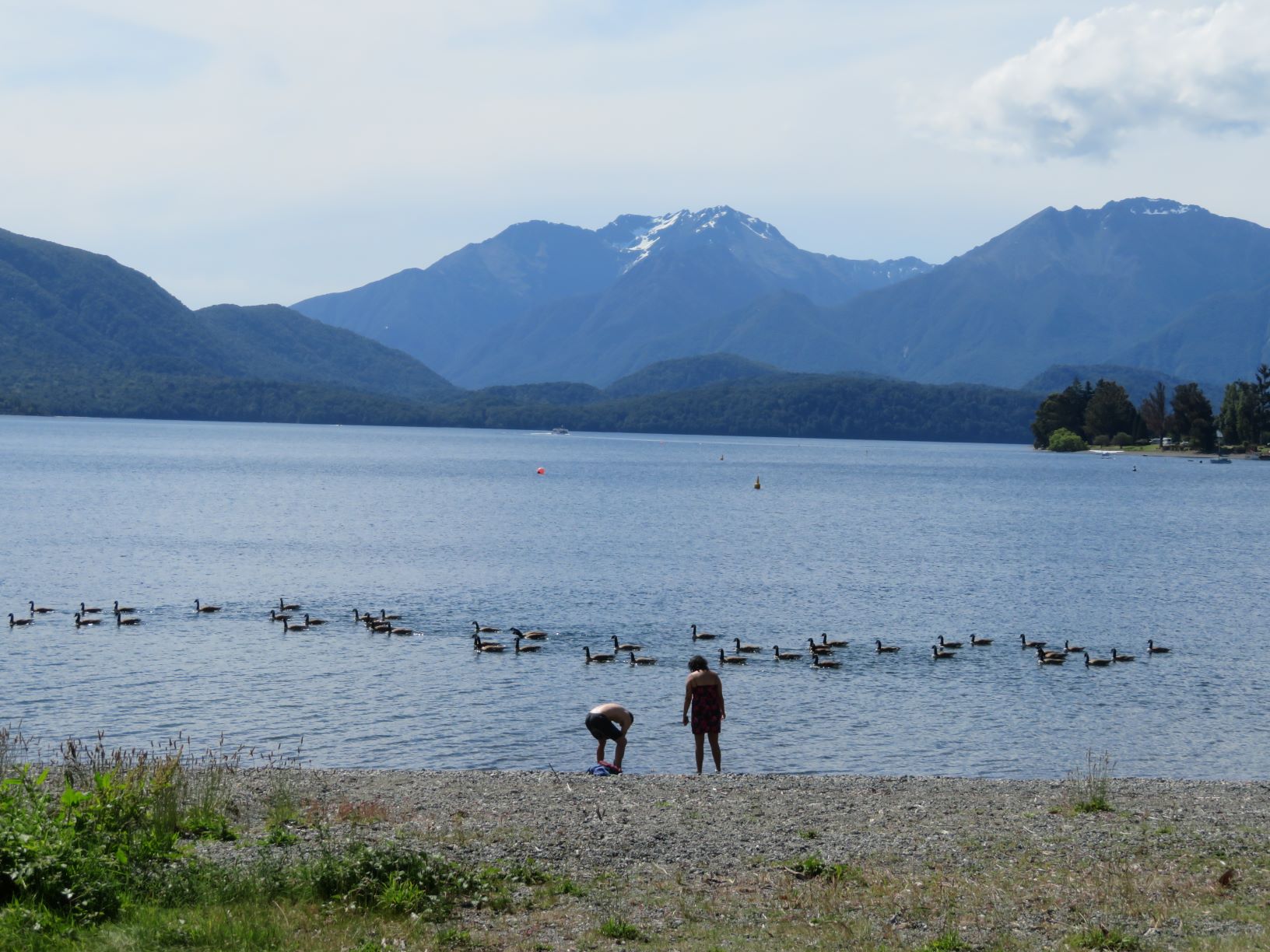
As we drove west, the high mountains of the Fjordland National Park rose up in the distance. The huge park encompasses the southwest portion of the South Island of New Zealand and is about the size of Connecticut. We arrived in Te Anau, the closest jumping-off spot for Milford Sound, in the afternoon. The sun was bright and there was almost no wind, it was beautiful.  Lake Te Anau is a very long, narrow, deep lake bordered by snow-capped mountains. We watched a seaplane take off with groups of sightseers as we strolled to the local bird sanctuary from our hotel. It was great to stretch our legs after the long drive.

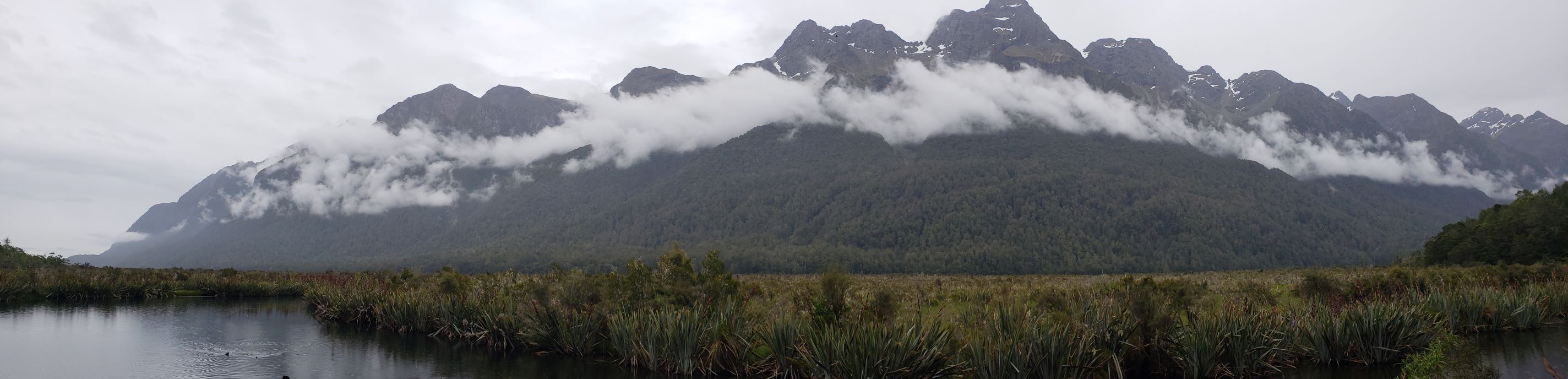
There are very few roads into the Fjordland National Park, the longest runs from Te Anau to Milford Sound. The drive is about 120 km and takes 2 1/2 to 3 hours depending on how many times you stop. From the open space along Lake Te Anau, the road rises around Mirror Lakes, where the reflections in the water were a bit blurred by the rain. The view of the mountains was impressive, with clouds encircling the mountains like smoke rings around Santa’s head in “A Visit from St. Nicholas”.

Our next stop was Monkey Creek, to look for blue ducks. We saw no ducks, but were entertained by a Kea parrot, a largish, short tailed, mischievous, and endangered species. One flew to the top of a van full of tourists. Its goal was to chew anything that looked like it might come off–they particularly like rubber gaskets. It has a very long and pointed beak, so I kept my distance. We saw it ride off on top of the van rather than let go of whatever it was chewing. Similar antics were on display as we waited our turn to go through the Homer Tunnel on the approach to Milford Sound.

The hillsides along our route were dripping with water from recent rains. Parallel streams too small to be called waterfalls poured down the bare rocky faces. There was water everywhere.

Our last stop before Milford was at the Cataract, a rushing stream that thunders through its deeply entrenched bed in the surrounding rock. The twisting rock shapes are a reminder of the power of the rushing water. The plants growing around the cataract were brilliant green.

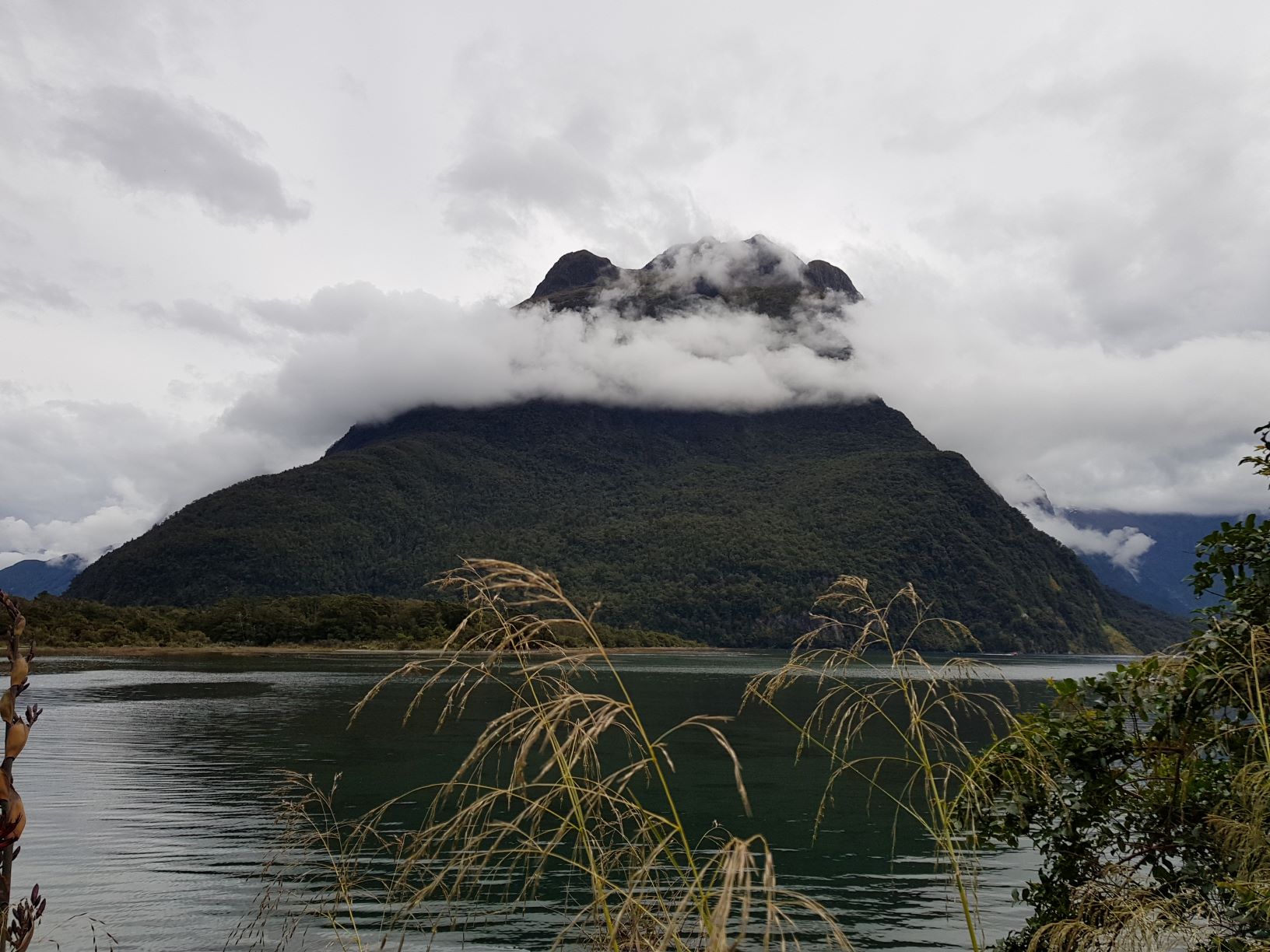
At the end of the trail is Milford Sound, a settlement consisting of a visitors center, gift shop, short walking trail, and embarkation pier. The Sound itself is a fjord, deep and narrow, running inland from the Tasman Sea to the Milford Sound settlement. The water is dark, dark green, backed by hillsides of dense forest, and sheer vertical cliffs of rock. Snow clings to the upper reaches of the mountains that stretch away from the boat landing. We strolled the trail, watching the birds and the boats coming and going. A small ship on a multi-day tour stood off the pier for a while as smaller ships arrived and departed.

This is a majestic landscape that makes you think about “big” things. The meaning of life, the tiny size of each of us, and our place within nature. It’s a moving place. The reality requires you to create a bit of space for contemplation around yourself as you think about all these interesting things while you stroll. Around you are people walking both ways on the trail speaking all kinds of languages, buses hurry to the pier and back trailing a thin wake of diesel smoke. Looking out over Milford Sound, though, the noise recedes into the background and the majesty of nature takes over.

We left Milford Sound with regret. Not that there was anything more to see, but with the melancholy that comes from turning away from a truly impressive view. We passed the keas at the tunnel entrance, stopped for one more look for the blue duck at Monkey Creek (and saw one!) and continued all the way to Queenstown, two and a half hours down the road. We strolled to the downtown area from our hotel and had fun window-shopping in the drizzle. We ate at the peculiarly-named Botswana Butchery. After dinner we stopped in a leather store and found the red vest I have been looking for (red, natural shearling inside, pockets, made in New Zealand).

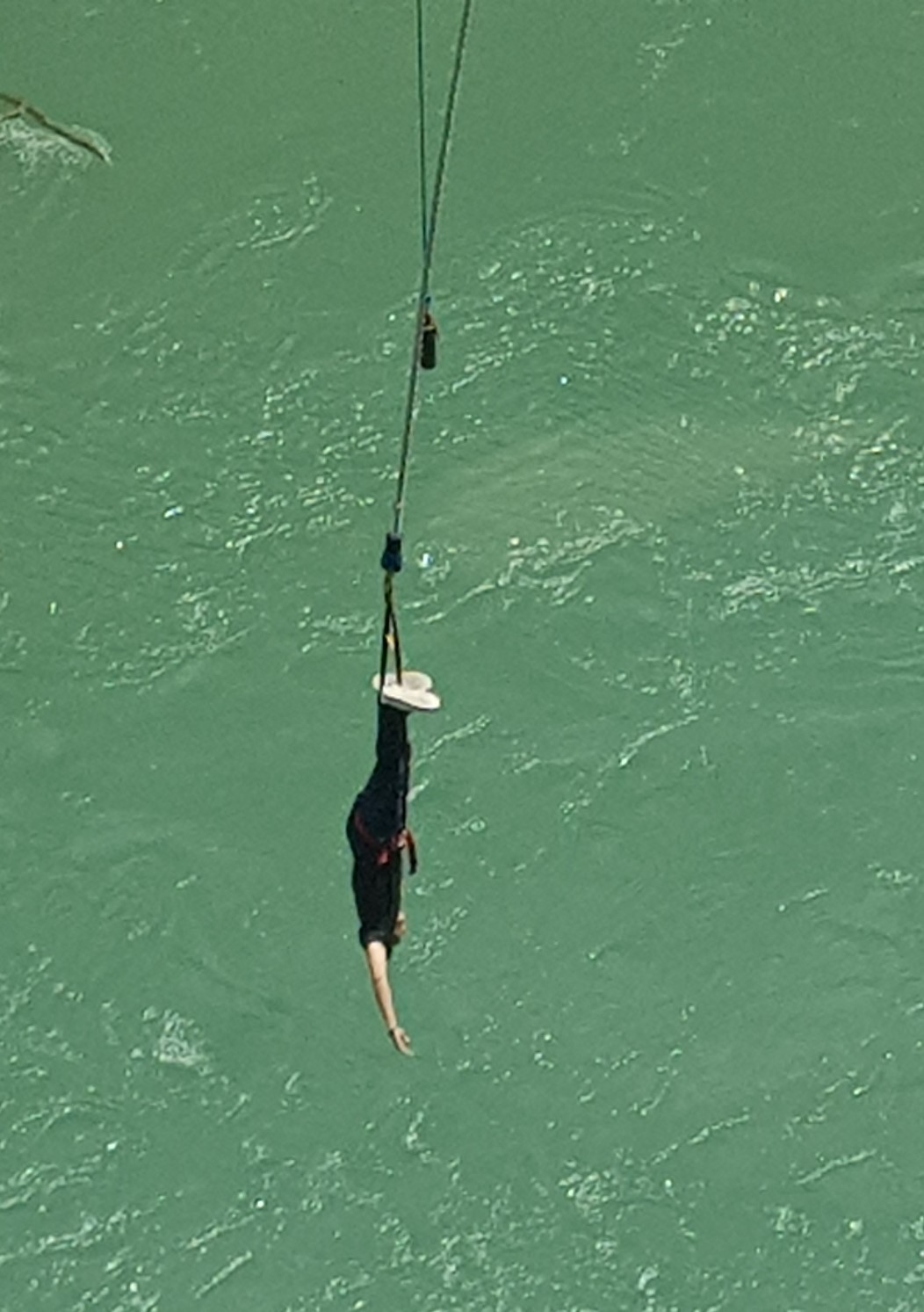
On the way back to Shag Point we stopped at Bungy Bridge, something of a family historic site. This is where Lyra went bungee jumping on the spring break of her semester abroad. From the side of an old bridge just off the main highway we watched young people jump into the void and then bounce upside down for a while…

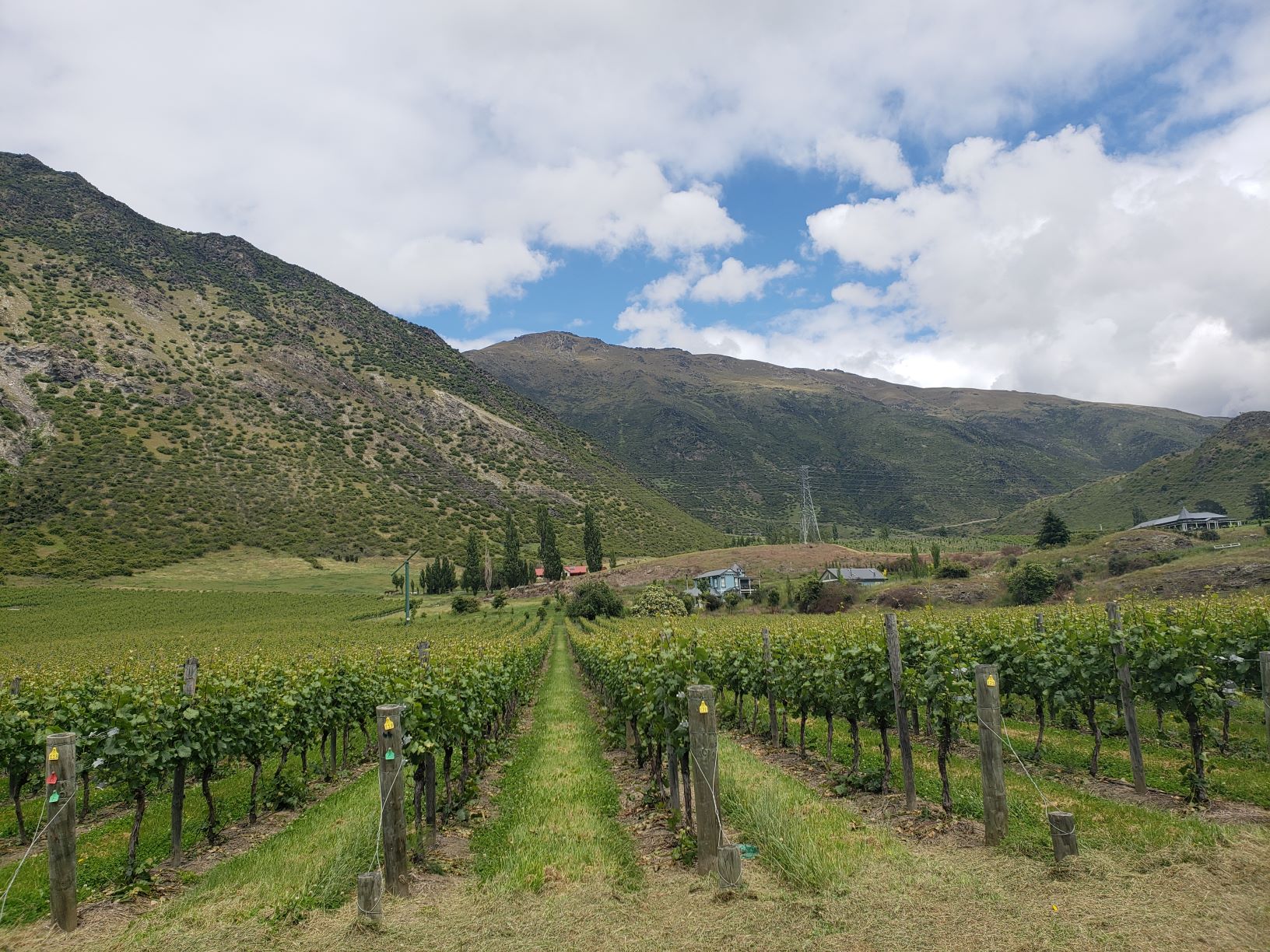
After the bridge, we focused on wineries, stopping at Amisville near Queenstown, and Weaver Estate near Alexandra. Weaver had particularly interesting offerings for people who like white wine, including a Pinot Noir Rose, a faintly orange-tinted pinotgris, as well as other whites, natural “orange” wine, and pinot noir. We enjoyed our visits and bought some wine, ending up back at home at Shag Point before long. We don’t have to worry about driving when it gets dark because the sun doesn’t set until 10:01 pm this week. (The sun rises at 5:15 am but I’m not awake to notice.)


Oamaru: Steampunk HQ

We visited Oamaru to see the Victorian area of town. This turns out to be two streets of 19th century industrial buildings that are gradually being converted into businesses. There is still a lot of space for potential investors. It isn’t Victorian gingerbread houses, though, more like old bank buildings. Still, Oamaru is changing with the times.

On one corner of the Victorian precinct is something called Steampunk HQ, a place where gearheads with access to lots of old machinery went crazy. It was a fun, intriguing experience to see the dirigible, train climbing into the air, and see an extinct moa made of metal. There are finished areas, as well as a lot of work in progress. With a little suspension of disbelief you can have a great visit.

This slideshow requires JavaScript.

The town seems to have gotten on board with the steam punk theme, as the large playground at the other end of the Victorian zone is populated with steampunk versions of the traditional slide, swing, etc. It looked like fun, and I even rode the mini-zipline. There is a hidden picture here, too, for my Chicago friends.

Stores in Oamaru carry steampunk paraphernalia, top hats, goggles, and there’s a creative woman who makes elaborate studded belts with attached suede half skirts that would look great over leather pants or whatever the well-dressed woman of steampunk wears. If you’re serious, the next festival is coming up at the end of May, 2019.

If you’re still be reading to find out what Steampunk is, my take is that it is a reimagining of the world if electronics had never been invented, and steam continued to be the most important power source in the world. Ever more sophisticated systems would run vehicles, industry, dirigibles of course, which rather than dying out, became an important means of transportation. There are lots of other versions, though I suggest reading “The Eyre Affair” by Jasper Fforde, as a starting point that describes that world. Fortunately, it’s the first book in a series.

Should you already know what Steampunk is, and would like to suggest other definitions or important informative works, other than say, Dr. Who, please post a comment with your thoughts.

On the Edge of a Cliff at Shag Point

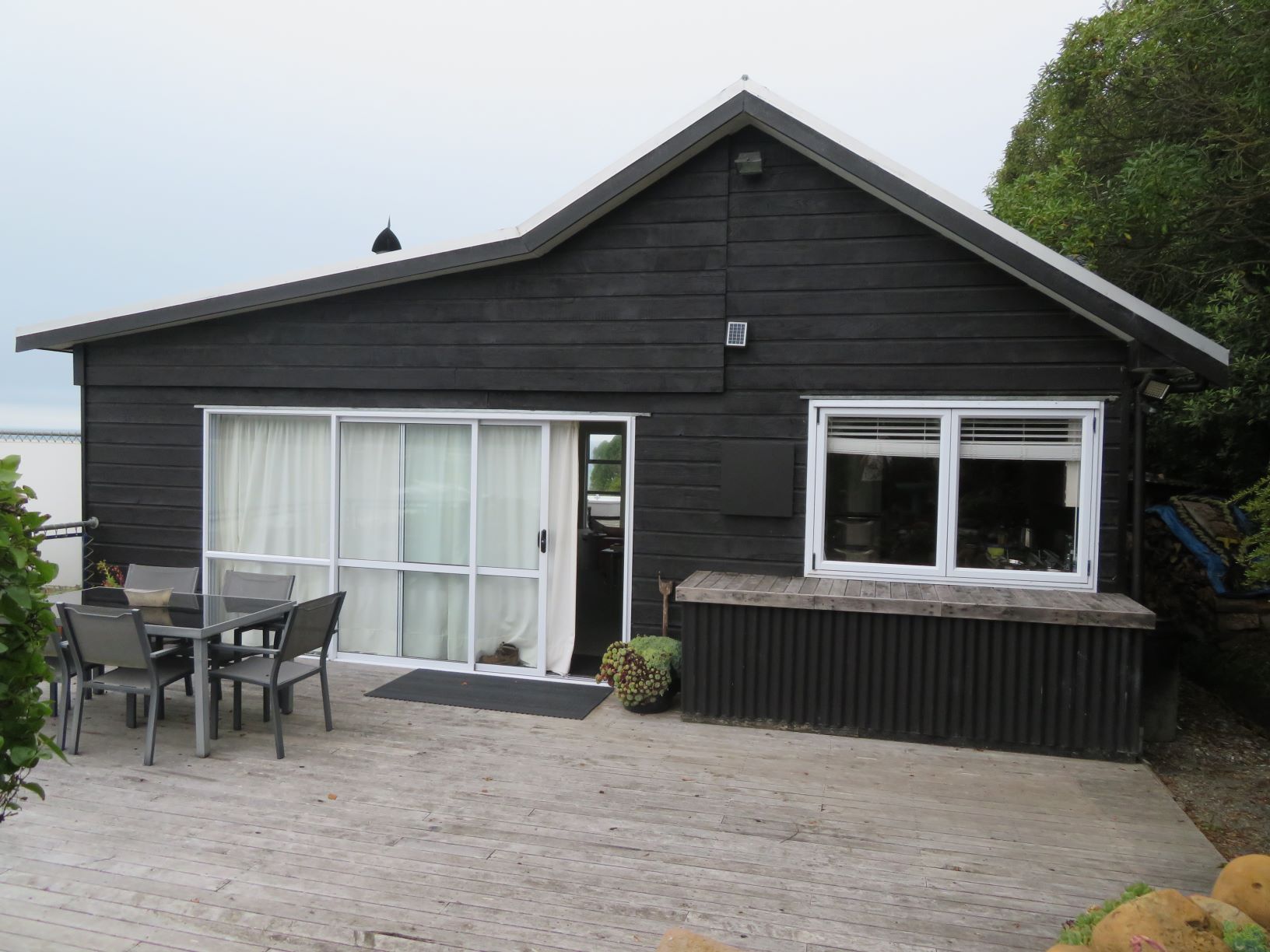
Pulling up at our new house on Shag Point there wasn’t much to see. A thick screen of trees and bushes separates the house from the road. Enter the gate and it all changes. The house overlooks the ocean, with lovely small gardens tucked in on either side. Bushes, potted plants and sculpture are combined with short paths and hidden table and chairs to create intriguing spaces for sitting and looking out across the waves. We face northeast with a view up the coast and out over the Pacific, called the Canterbury Bight. Looking over the edge of the cliff, we spotted a spherical boulder eroding out of the shore, part of the deposits extending over 15 km from here to the opposite side of the bay. There the Moeraki Boulders are one of the tourist sites of this region. We have a few in our yard, along with a limestone bathing beauty hiding in the bushes.

Inside, the house is open plan with glass surrounding all the living areas. It makes the most of the sun and doors slide open if it gets too warm. A tiny wood stove builds up enough heat to take the chill off when there’s a drizzle at night or early in the day.

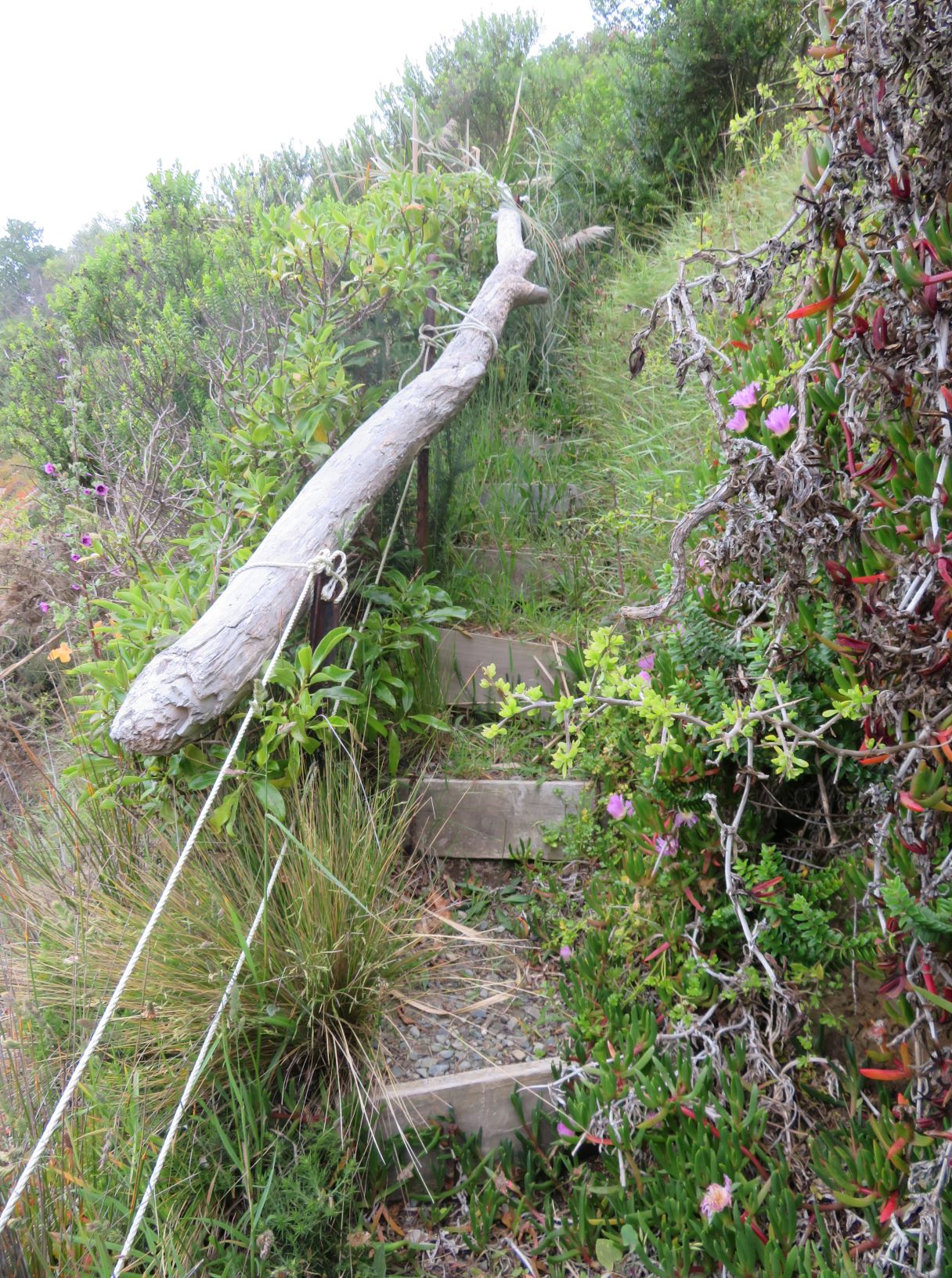
The spectacular view and glass walls brings the outdoors inside. It’s a stunning location. Our only problem may be leaving home to go anywhere. I did find the somewhat hidden path to the shore below us yesterday. I was just getting comfortable walking around on the rocks when a big “Whuff!” scared the wind out of me. A sea lion was resting a few yards away, and wasn’t interested in my company. I gave him/her their space and decided to visit another day when my breathing returns to normal.

North Island Highlights

This week we moved from the North Island of New Zealand to the South. During the past month we walked on beaches, collected glass, shells, and driftwood, drank coffee at a wonderful local cafe, visited museums and wineries, strolled in parks and botanical gardens, climbed hills, and watched birds. Every day held vivid and memorable scenes. Rather than a list of where we were and what we did, here are some of my impressions.

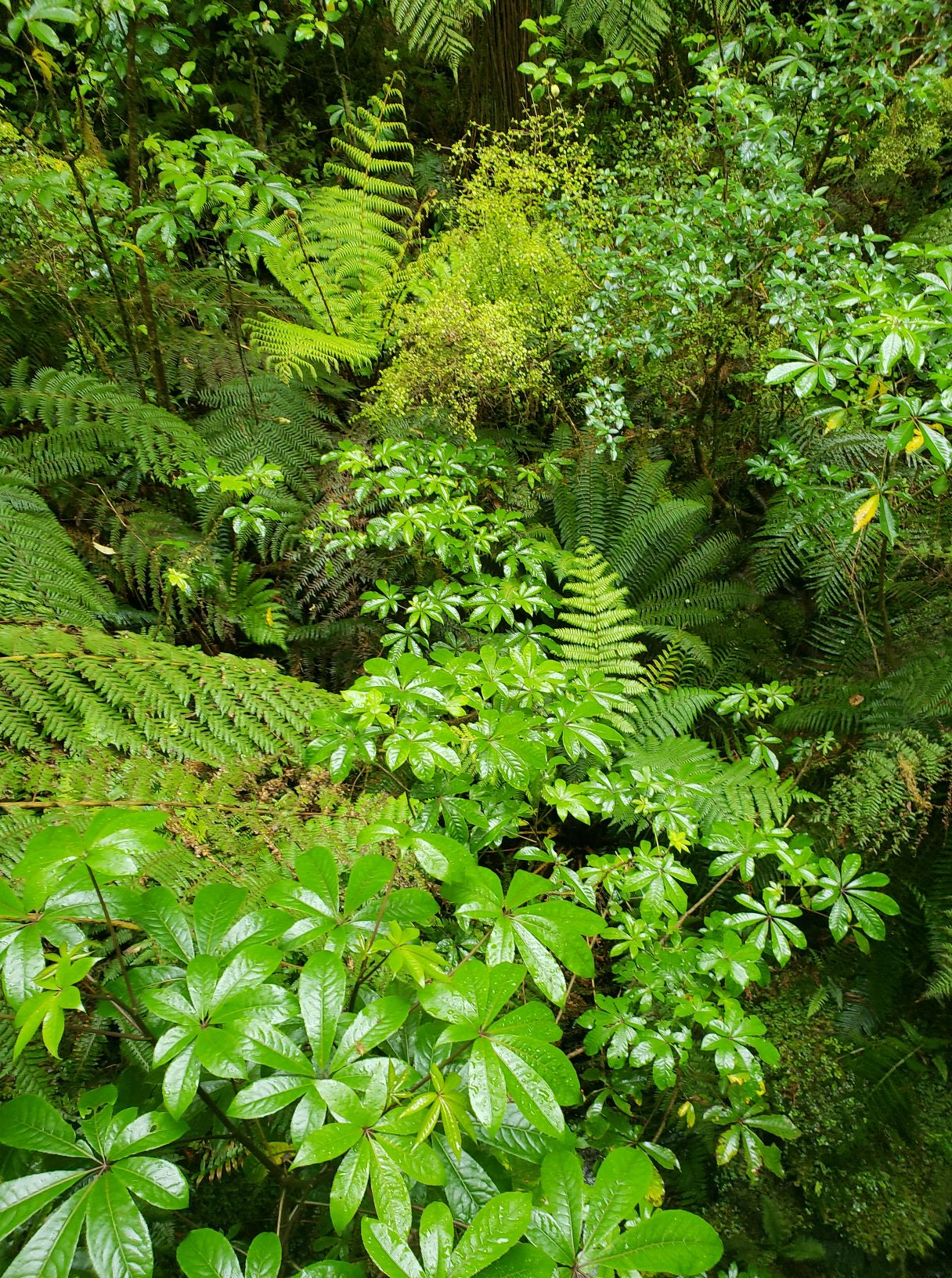
The forest here is many shades of deep green, and dense. The first people to arrive here, both Maori and then European, must have felt an oppressive challenge. Not enough to arrive on shore, newcomers had to make a dent in that dark wall.

Despite vast changes in the landscape over time, nature remains a watchword to Kiwis (New Zealanders). It’s not all birdwatching.

Nature is a visible presence, even in the large cities. Seagulls complain as boats moored along city sidewalks rise and fall. Yet the people are equally important. We see personal statements, like the pink stump on Te Horo Beach.

In Te Horo Beach, the Bus Stop Cafe is the community center and general landmark, open Friday through Sunday. Kirstie’s famous jam and cream donuts seem to get a lot of neighbors out of bed on the weekend. Kirstie also sells hand made goods by local artisans. When I was at the eye doctor in Wellington, chatting about our stay in New Zealand and mentioned Te Horo, Dr. Long said, “Be sure and stop by the Bus Stop Cafe and say hello to Kirstie for me.” Turns out, Dr. Long spins and dyes wool that Kirstie carries. (And yes, she’s also an opthalmologist and retina specialist.) It’s a small country and everyone multitasks.

On a visit to Scorching Beach, Wellington, we saw a cafe with all-out abalone decoration.

This slideshow requires JavaScript.

We admired the range of beaches. Some bloomed with flowers, others were covered with driftwood. Some were ready for surfers, and others were on estuaries that became vast tide flats during low tide. We found intriguing patterns and textures. Some beach finds  became part of the decor around our house.

This slideshow requires JavaScript.

We found many things to like in the cities. Museums, botanical gardens, street life, and good restaurants. For us, the appeal of the coast and the bush far outweighs the allure of city life.

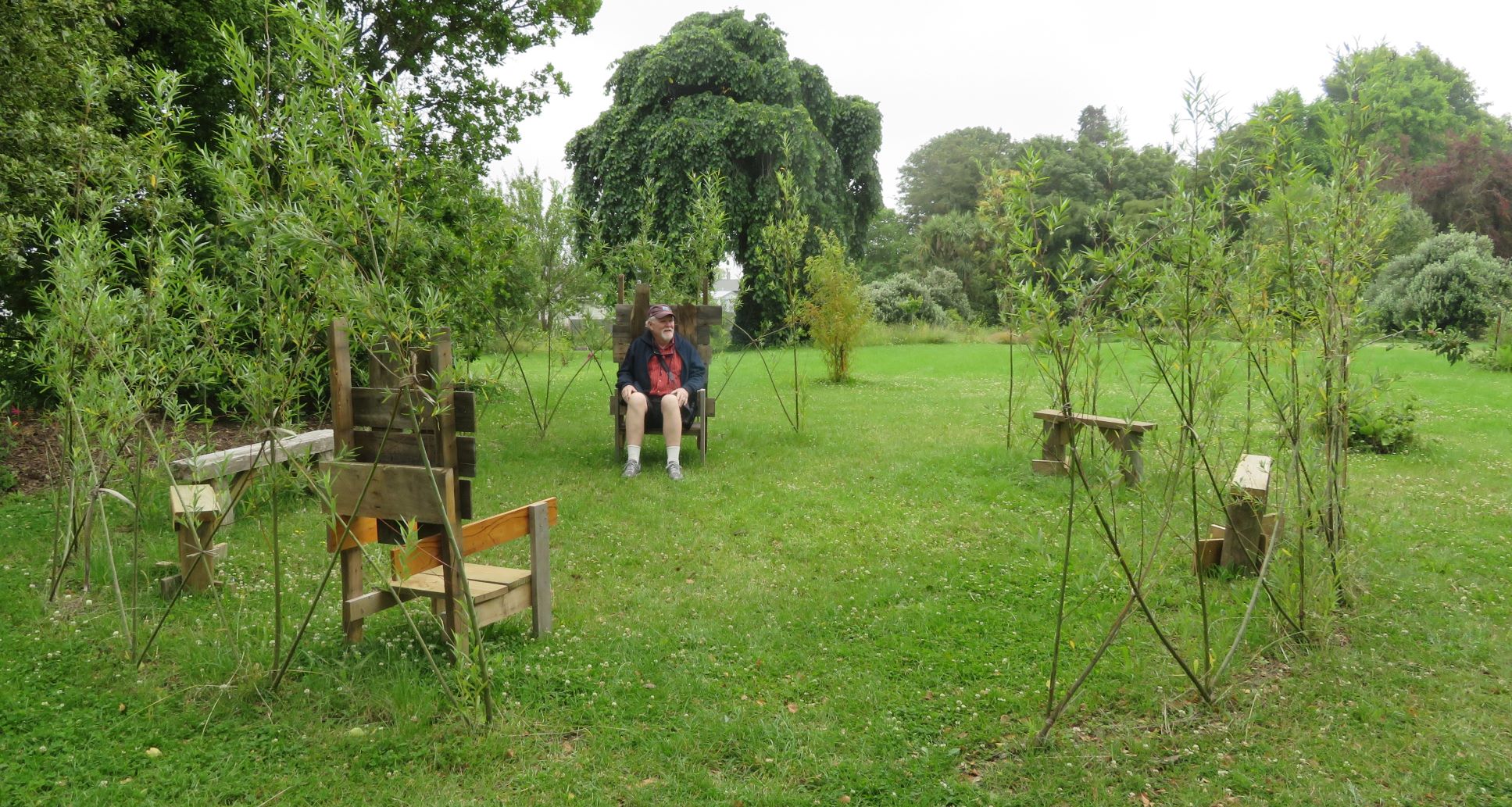
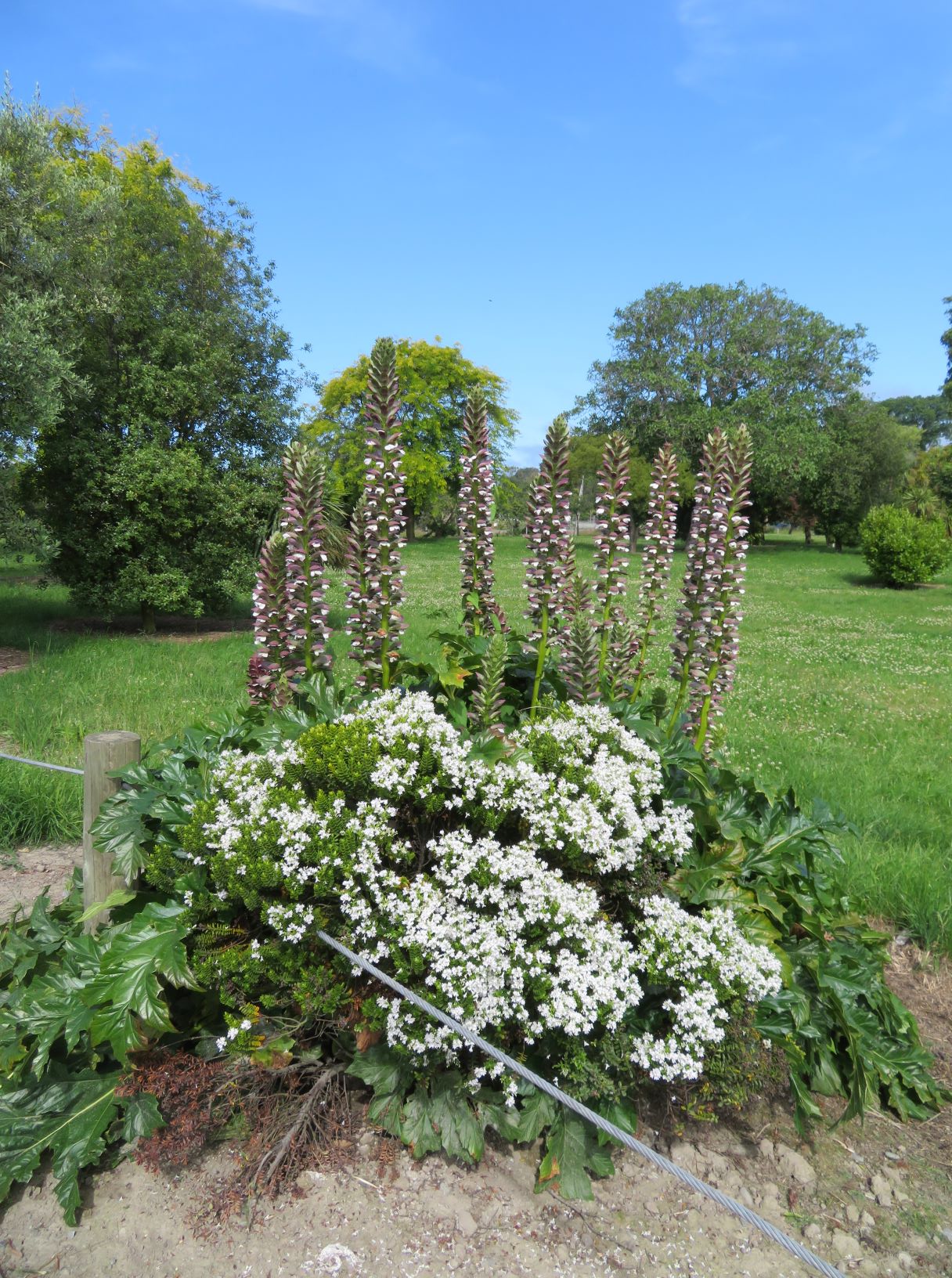
We gravitated to parks like Zealandia, or the Wellington Botanical Garden, where there were flowers and sculpture at every turn.

This slideshow requires JavaScript.

We have enjoyed every minute on the North Island. Off to the South!

Kapiti Island

We almost didn’t get there. I put off our reservation because the weather forecast was all rain–then the sun shone every day. We were finally scheduled to visit the island nature reserve two days before leaving the area–and our trip was cancelled to make some repairs to the boat. We rescheduled for the next day, before we were to fly to the South Island, and got on the last boat of the day (10 am) to Kapiti Island, one of the largest island reserves in New Zealand open to the public. On this island there are no mammals, all the invasive rats, possums, sheep, goats, and horses were removed between 1897, when it first became a park, and 1998, when the last possums were finally eradicated.

We boarded the boat after it was towed up onto the beach with a tractor. All loaded on land, the tractor towed us back into the water and we floated away. A new experience.

The absence of land mammals is crucial to survival of native New Zealand species like the little spotted kiwi that was moved to Kapiti and now is found nowhere else, and myriad bird species, along with reptiles. The native species only know how to hide by holding still and blending in, to hide from owls and hawks. Many build nests in holes in the ground or bushes. They are easy prey for any land animal that can sniff them out.

Birdsong was all around us when we got to Kapiti. After an orientation by a guide very knowledgeable about the range of birds, we were set loose. The sounds were unfamiliar and delightful, and we saw unusual birds before the orientation even ended when a weka wandered across the deck and peeked into the meeting room.

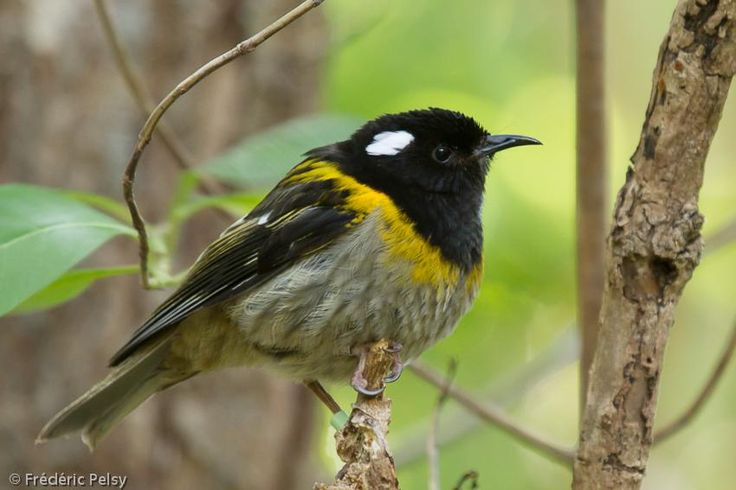
A feeder for the hihi, or stitchbird, one of New Zealand’s rarest birds, was described as one-third of the way up the trail to the top of the island, and we decided to try it. We had no intention of hiking to the top of the island (just over 1500 ft), as we were told most of the birds live in the lower levels. When the switchbacks started on the path, we should have known enough to turn back, but we kept thinking it would be just a little farther. When we asked people coming down, they’d say, “Not too far…”

By the time we staggered into the tiny clearing with the two nectar feeders, we were about to collapse. Imagining the return trip made it even worse. We’d climbed most of the 1500 feet. The latter two-thirds of the trip to the top appears to be walking the relatively level upper spine of the island. We’d inadvertently done just what we had planned not to!

We sat at the picnic table, eating lunch and watching the bird feeders, when a male stitchbird snuck into the feeder and then shot back out again. There was barely time to get a peek, but we managed. Another came by shortly afterward, ducking into the feeder through a small hole intended to keep other birds out, sipping some nectar and shooting out again. All that climbing, but at least we did see this rare  bird. Eventually, we set out down the hill, spotting other birds on the way, including parrots, parakeets, and a North Island robin rummaging in the undergrowth. (Robins are not red in New Zealand.)

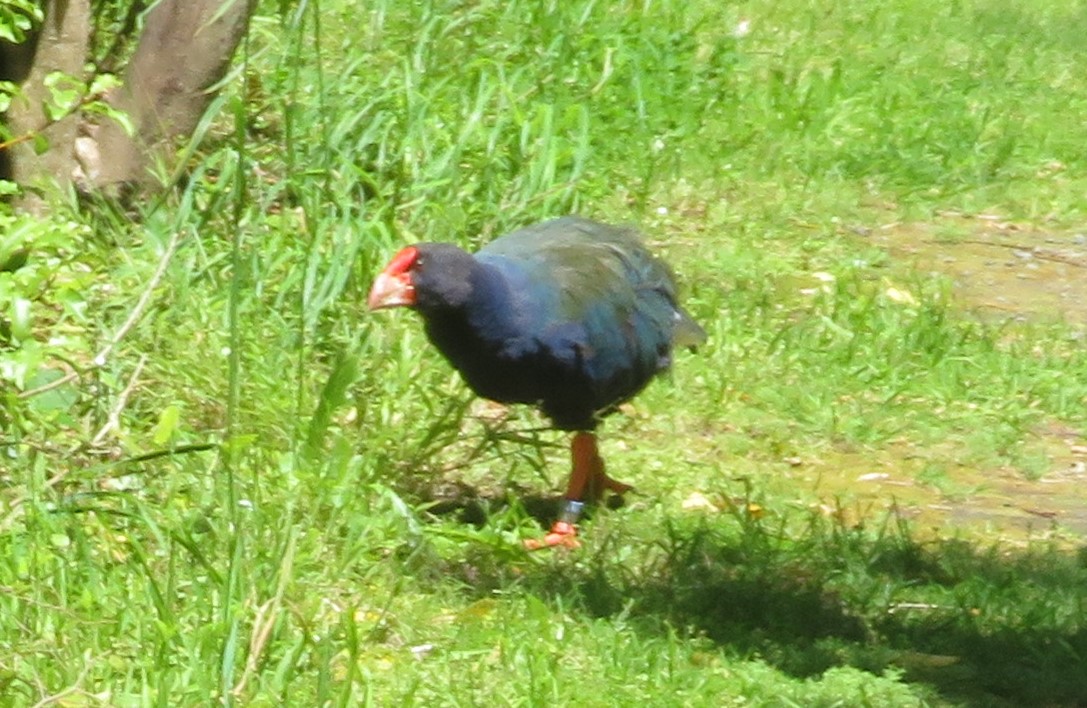
Arriving at sea level with about an hour left before our return trip, we strolled the paths through wetlands and along the shore. We heard a slight noise behind us and turned around to find one of the other rare birds, the takahe, a giant red-nosed chicken. Not a chicken at all, it is a flightless bird native to New Zealand that looks like an overgrown version of a purple gallinule. Takahe are rare, and we thought we would not see one, yet there it was. It bobbed in and out of the trees beside the trail, a happy surprise.

When we first saw a purple gallinule in Europe, we were amazed. So purple! So red-beaked! In New Zealand, purple gallinules roam farm fields like stray poultry. We even saw one crossing the road with two fuzzy black chicks. We are having a lot of fun with birds, and good fortune, too. Part of this is because we are here during nesting season. We’ve seen brown-speckled blue eggs in the nests of black-backed gulls, and watched a pair of chicks of the endangered New Zealand dotterel follow their mother along the shore. Dotterell nests on public beaches are carefully fenced off and very clearly visible. Seeing the chicks was a bonus.

We ended up bobbing up and down on the water for a half hour waiting for the final two passengers to turn up. Though the guide says that this is rare, it seems unsurprising that twenty or more people let loose on the island and told to return at a specific time would always result in a couple of latecomers. With no pressing duties, we chatted with a Dutch woman who had also enjoyed the birds, and a young man and his mother who spotted the super-elusive kokako and heard its mournful call. The lost couple turned up and we sailed away. We can see Kapiti Island from our backyard in Te Horo beach, making our final night’s sunset more memorable than ever.NB: Only two of the bird photos are pictures I took (takahe and weka). The others are courtesy of people who post bird photos on the internet. Thank you to all of them!

Australian Tourist Visas

Australia offers same-day, on-line free visas for stays up to 90 days. We wanted to stay for six months, and found the 600 visa, for stays up to a year. This takes longer and costs a minimum of $140. We decided to go for it. The complication seemed minor, your passport must be valid for six months after the end of your planned stay.  Jonathan’s passport was set to expire in February 2019, so he needed a new one before we could begin the visa application process, but he did not arrive in the US until Oct. 1.

On Oct. 2, he ordered a new passport with expedited delivery. I waited to file our visa paperwork until the new passport arrived on the 13th. I needed his new passport number. Since each application asks about your traveling companions, it seemed impractical to apply before we were both ready. Here’s what we did for the first step.

Quick Summary

A 600 visa allows you to visit Australia for 6 to 12 months continuously. You may not work at all, or study for more than three months on this visa.

What you need:

You must get a (free to set up) Australian ImmiAccount https://www.homeaffairs.gov.au/trav/visa/immi

You can only apply for the Australian visa valid for six to twelve months from the ImmiAccount site.

Your US passport must be valid for at least six months after you plan to leave Australia, and you need a digital copy of your passport.

You must show income sufficient to support yourself.

You may not be planning a hospital stay or medical treatment.

A list of all countries outside your home base where you have spent more than three months continuously during the past five years.

There are other questions about whether you have applied for or hold a visa for Australia.

The on-line form is long but not difficult, and the questions are basic. How is your health, what are your finances, when do you plan to arrive and leave? It took a us a few minutes to fill in the page that asks you to name countries where you have spent more than three consecutive months annually going back five years, because we have traveled a lot, but the only place we’ve stayed more than three months continuously is Peru. I had to upload a photo of each of our passports. It was relatively painless apart from the $140 per person, though the fee can be higher. The immigration web page suggest that 80% of applications for this visa are processed within 20 days. I submitted the forms on Oct. 15 and late on Oct. 19, we each received a note requiring us to have a physical exam and chest xray because we have spent more than three months a year in Peru, a country with high risk of tuberculosis.

Really? The odds of either of us getting TB in Peru is around zero, as we don’t live in a rural area, or around animals, or where it is damp, or where our neighbors have TB. This was a bit of a setback because of the fine print. The exam must be done by a doctor that is empaneled by the Australian authority, a group called Emed. There are three offices in California, and a call to LA got us appointments at 11 am on Oct. 23. After the exam, the office uploads the results directly to the Australian immigration authority. We thought that would do it. The physical exam was cursory in the extreme and the chest xray was unnecessary. I’d asked the price and was told $125 a person. We got to the end of the process and were charged $325 each. The receptionist apologized for the “confusion,” and couldn’t think why we were misquoted the cost.

Still reeling a bit from sticker shock, we hoped that the process would move quickly, and sure enough, I received my visa four days later, via email. Jonathan did not. We waited over the weekend, and he finally received an email the following Monday, but the news was terrible! His chest xray showed some streaks of abnormality and he was required to see a specialist to have his xray assessed. Now we had two dilemmas, one worse than the next. Did Jonathan have a previously undiagnosed lung ailment? He does cough and has asthma. Next was the fact that we might not get visas to visit Australia. At this point it was Oct. 29, we were due to leave for New Zealand in two days, and it was impossible to get an appointment with a lung specialist before leaving the US. We decided to go ahead with our visit to New Zealand, find a doctor there, and connect with the Australian immigration system electronically. If we had to return to the US after two months, we would.
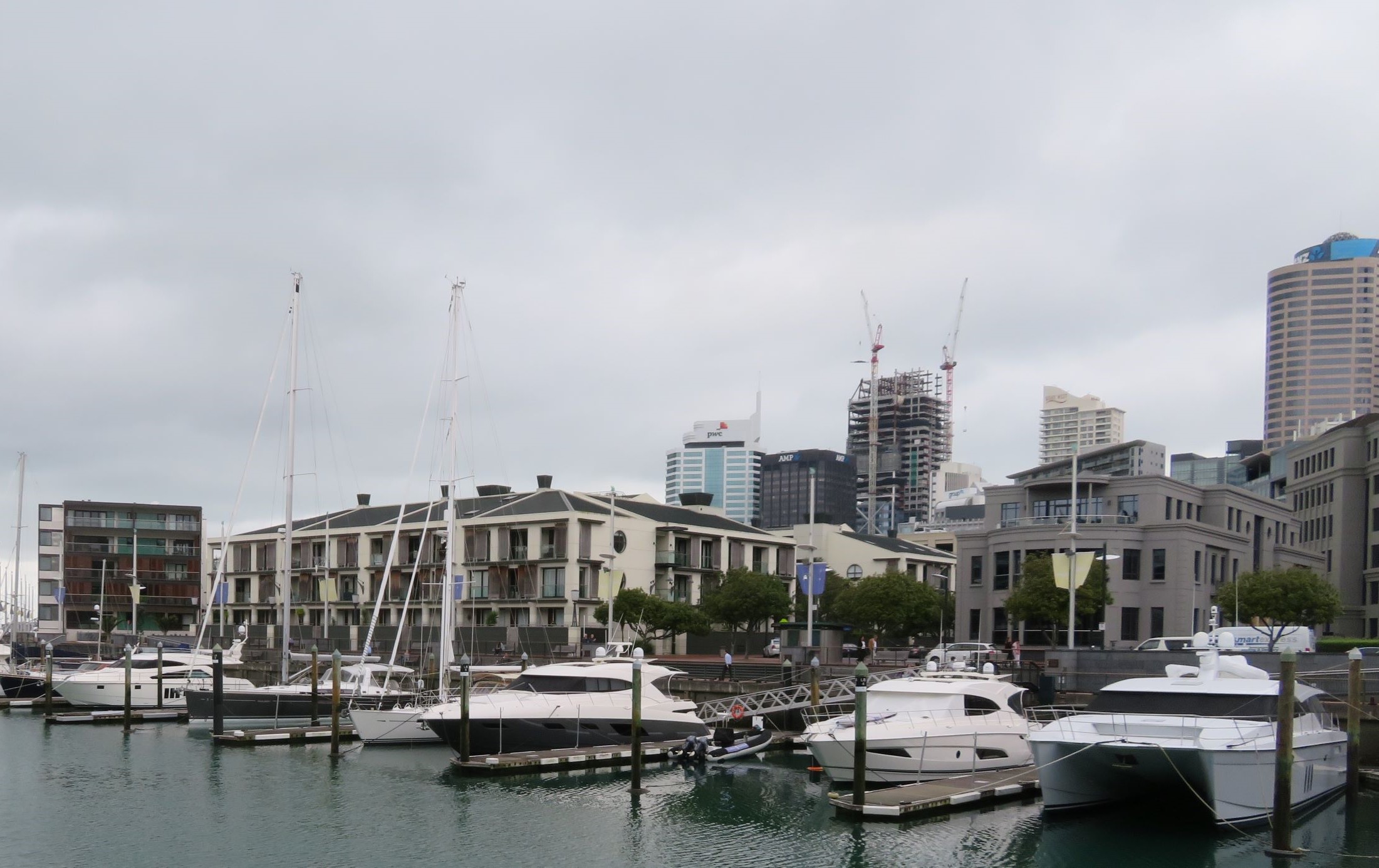
When we arrived in Auckland, Jonathan had to find a doctor affiliated with the Australian immigration system. Then he found that his xray couldn’t be transferred from Los Angeles, he’d need another. We went into Auckland where the doctor at the Emed clinic was very nice, but not qualified to write the needed opinion. He called around Auckland to try and get Jonathan an appointment with a lung specialist, but he couldn’t find anyone who would see him while we were there. We tried not to panic, and Jonathan began calling clinics in Wellington, to see whether he could get an appointment during the end of November. He did finally get an appointment for the day after we arrived in Wellington, and we waited for that day.
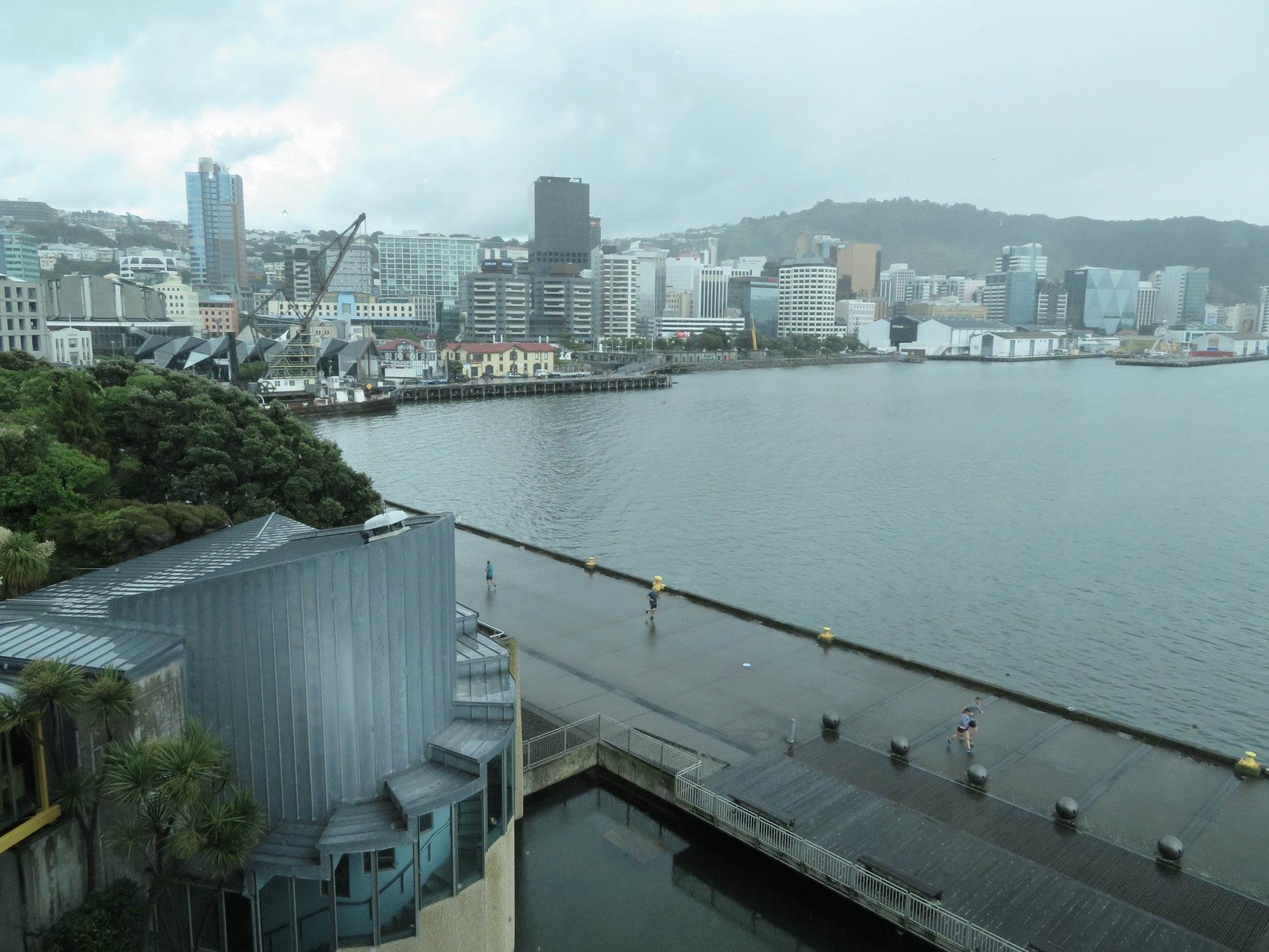
Jonathan went in for his new chest xray and then saw the specialist in Wellington. This took a bit more than an hour, and after all the tension of waiting for the appointment and getting to it, waiting, etc. and the additional cost, the results were truly surprising. The doctor couldn’t understand why the xray had been flagged. He described the “abnormalities” in the first report as trivial, and sat down and wrote a letter to that effect. He gave Jonathan a copy of his xray on his jump drive and promised to convey the xray and his results to the Emed office in Auckland that is our official contact point for the visa process.

Following up by phone on the Monday that followed, all the information was uploaded to the Australian visa system as promised. By Wednesday, Jonathan had his visa. Our six month visas shouldn’t have been such an irritation, and the extra exams and xrays ended up costing about $1000. It did all work out in the end.

Here we come Australia!

Rather than take the time to get a six-month visa, we could have flown to New Zealand and spent a month, then spent three months in Australia, another month in New Zealand and three more months in Australia. We could have done this for less than $1,000 (not flying business class).

Disclaimer: I do not claim to be an expert on Australian 600 visas, and I cannot guarantee the absolute accuracy of my description of the visa process for everyone. I am sharing my personal experience as a US citizen, presently located outside Australia. lf you plan to apply for a visa, double check everything at  https://www.australia.gov.au/information-and-services/immigration-and-visas
 

Wonders in Wellington

Wellington is not a large city and though it is hilly, the downtown is along the water and easy to walk. Even driving on the left it wasn’t too difficult to navigate. We’ve always been able to find parking and figure out how to pay for it. There are about three coffee shops on each block and not a Starbucks among them (There are only two or three in all of New Zealand). Coffee is served strong, no need to ask for extra shots!

We’ve now been to Wellington twice–both great days. We had to begin with a day of doctor visits. Fortunately, the morning visit was shorter than expected (!) and we had time to visit the Zealandia nature park. It’s a green fold in the land just above Wellington center. I don’t know why it wasn’t developed, as there are suburbs all around. It’s about the size of Central Park in Manhattan and a section of the park is walled and fenced to keep out non-native species. In New Zealand, there are no native mammals, so everything from cats and dogs to opossums and stoats are predators. Native New Zealand animals, including kiwis, never learned to hide from ground predators. There’s even a ground-dwelling parrot in New Zealand. They’re all endangered. We saw tuataras sitting at mouth of their burrows. They look ordinary but are the only surviving descendant of an ancient line of reptiles. For an animal-centric view of this country, read “Notes from New Zealand: A Book of Travel and Natural History,” by Ed Kanze.

There are bird feeders at Zealandia, where we saw Kaka, one of the native parrots. These clever birds have to operate a handle to open their food dish, both to keep them engaged and to keep the other birds from stealing their food pellets.

The walk was lovely and not difficult. One area was closed off to protect the nest of a Takahe, an oversized purple gallinule that is only found in New Zealand (endemic). I overheard a staff member excitedly chatting with a visitor–the egg is due to hatch in a week! We get so excited about the little things.

Our second trip to Wellington was entirely by choice, focusing on the Maori collection at the Museum of New Zealand Te Papa Tongarewa, called Te Papa. The Maori exhibit was fascinating. The sculpture is highly detailed, it is a shame that photos aren’t permitted beyond the entrance. There were some massive canoes, all highly decorated, along with sculpture, clubs, and tools.

From the museum, we crossed the Sea to City Bridge, an art piece on its own, and window-shopped on Cuba St. This is a lively neighborhood of restaurants and shops. Around the corner, we bought a loaf of multi-grain sourdough bread at Leeds St. Bakery just before it closed, and finished with lunch at Florinda’s where Jonathan’s tuatua pasta (pasta with clams) was so delicious that we decided to go clamming the next day.
Our final stop on both trips was Evans Beach. I found a web site that shares places around the world where you can look for beach glass, and I looked up Wellington. Our beach in Te Horo has lots of driftwood but not much glass. Evans Beach in Wellington was said to have beach glass, so we made our way there. We didn’t find a beach, just a few rocky stretches connected by cement walls holding up the highway. We found a less-developed stretch where we could pull over, but most of the shore was rock. The tide was low, so I went down to look at a gravelly spot–and there I found a great spread of beach glass! Jonathan was surprised that I found anything. It was such a surprise that we made a return trip the second time we were in Wellington to return the larger pieces and pick up smaller ones that I can use in my jewelry-making. Wellington is truly a something-for-everyone place.The Wellington waterfront from Te Papa.