Romans in Morocco at Volubilis

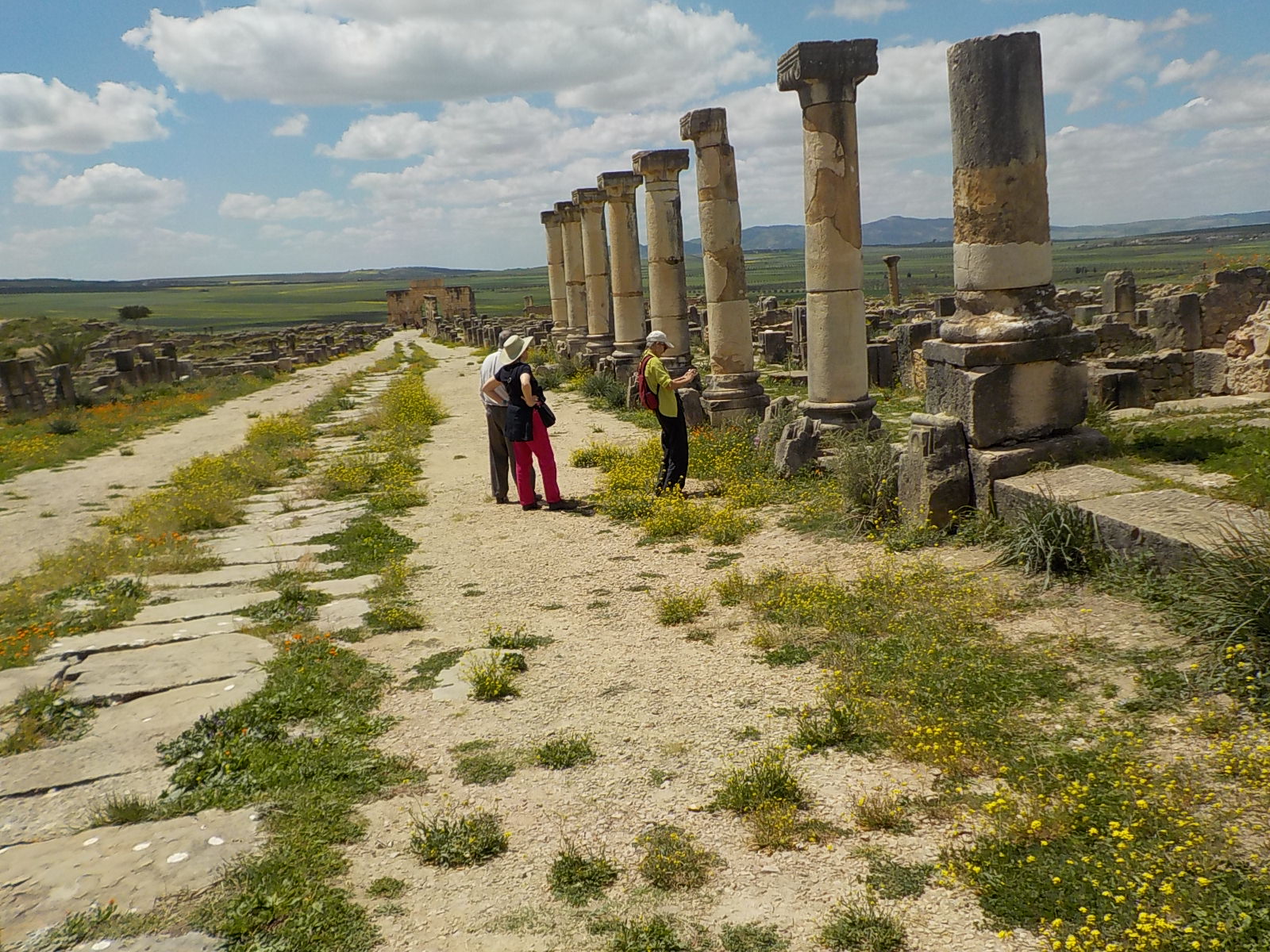
There may be nowhere more beautiful than a Roman ruin on a spring day and Volubilis, one of Morocco’s best known archaeological sites, was perfect for us.

On the main street, the Decumanus Maximus
That keystone looks loose!

Volubilis was abandoned by the Romans in AD 285, but not by the local community, who lived there for another 700 years. The site has little new construction since AD 1000, part of the reason it was declared a World Heritage site by UNESCO. http://whc.unesco.org/en/list/836

The architecture is extensive and an interested visitor could spend all day exploring the arches and stairways, admiring the mosaics. Lyra did her best and saw more than the rest of us.

Volubilis is justly famed for its mosaics. There could be a guidebook just to show the locations of the different mosaic floors.

This slideshow requires JavaScript.

Though a large section of the site was cleared by French workers during the era of the French Protectorate (1912-1956), little to none was supervised by archaeologists. The French archaeologists Marcel and Jane Dieulafoy were commissioned to carry out a project at the site, but Marcel had duties for the French government in Morocco and Jane fell ill from dysentery, from which she died in 1916. The Volubilis initiative seems to have been an effort to lay a scholarly stamp on a mostly political project. The clearing of Roman Volubilis was a blatant effort to demonstrate the “classical” and European connections to the area as justification of the French colonial intervention.

Contemporary excavations have taken place irregularly since 2000. http://www.sitedevolubilis.org/www/english/about/currentresearch.htm                     I found no information on research carried out between 1956 and 2000.

Edith Wharton visited Morocco in 1918 as a guest of French authorities and visited Volubilis briefly. She was very much a Francophile and believed the French were imposing (Western) order on (Eastern) chaos. She saw Moulay Idriss on a nearby hill, bright white in the afternoon light, but her visit did not change her view:

“…the two dominations look at each other across the valley: one, the lifeless Roman ruin, representing a system, an order, a social conception that still run through all our modern ways; the other, the untouched Moslem city, more dead and sucked back into an unintelligible past than any broken architrave of Greece or Rome.”

Today is different. We enjoyed our visit to Volubilis. We even found a shaded spot for our picnic lunch. However, we were also happy to stop in Moulay Idriss, find a cafe and sip coffee among the living, before heading back to Fez.

This slideshow requires JavaScript.


We find a photography gallery off the beaten path: Dar Balmira

While at the Cafe clock, we saw a poster for an exhibit of historic photos of Fez from the early 20th century that have been restored and reprinted. The gallery is not far from our riad and is in a restored riad, so we decided a field trip was in order. We found our way there without difficulty, though it was in Gzira, the easternmost part of the medina, an area not known for an influx of foreign owners.

The restored riad, Dar Balmira, is spectacular, decorated with traditional carved and painted wood, carved plaster and zellij tile mosaic. The owner, Jearld Moldenhauer, was very gracious about our visiting without a reservation and showed us around the galleries and the beautiful rooftop deck with his feathered guests, cockatiels, small parrots and rosellas.

This slideshow requires JavaScript.

We did not purchase any prints, but we enjoyed our visit very much. Though you can drop in, contact information can be found at:

darbalmira.com

This is a great place to visit for the art, the interiors and the rooftop!

A Moroccan Wine Tasting

There is a thriving wine industry in Morocco, mostly consumed domestically. It is possible to purchase wine in this Moslem country at the “Cave” or wine cellar at the Carrefour grocery store. (We also heard that the Marjane chain of grocery stores ended liquor sales and found their overall business dropped 20-25%.)

We planned to taste wine in the Meknes area ever since Joyce and Jean-Marie indicated that it was possible to do so. It’s not as easy as in California, perhaps, but a wine tasting is available at Chateau Roslane, located south of Meknes. It is part of the group, Les Celliers de Meknes.

http://www.lescelliersdemeknes.net/en/?Include=About%20us

The property was lovely and we were able to find it with the directions given and phone GPS.

This slideshow requires JavaScript.

We tasted some of the best wines Chateau Roslane makes, including La Perle du Sud sparkling wine, a chardonnay and a red blend of shiraz, cabernet sauvignon and merlot. We were disappointed that we could not purchase bottles during our visit, but that may be coming in the future. Who knew that Fez-Meknes area wines would be so attractive? We have only drunk Moroccan wines during our stay and generally have been happy with them.

After the wine tasting it was lunchtime and we were able to stop at a nearby place with an attractive dining room in extensive grounds with an area of lodgings, a large pool and play area. I mention this because it had no identifying sign or name on it, yet was clearly for guests. We were recommended to it by the winery.


Around the ramparts

Our friends Joyce and Jean-Marie joined us at the riad and brought their car, so we took advantage to do some exploring outside the medina. The book “Fez from Bab to Bab” by Hammad Berrada, is a classic guide to the medina and it starts by suggesting a driving tour around the ancient city walls. The French “Guide Bleu” has a similar tour. We started by walking to the parking lot, passing the traditional medina transport:

4.7.16 Bab Rcif area-003smThere are two large fortresses on either side of Fez. The Borj Sud provides a view over the medina and away to the south.

4.9.16 Fes medina from Borj sur Kestrels and jackdaws live in the many nooks and crannies in the Borj Sud. They zip in and out while you are having your photo op.

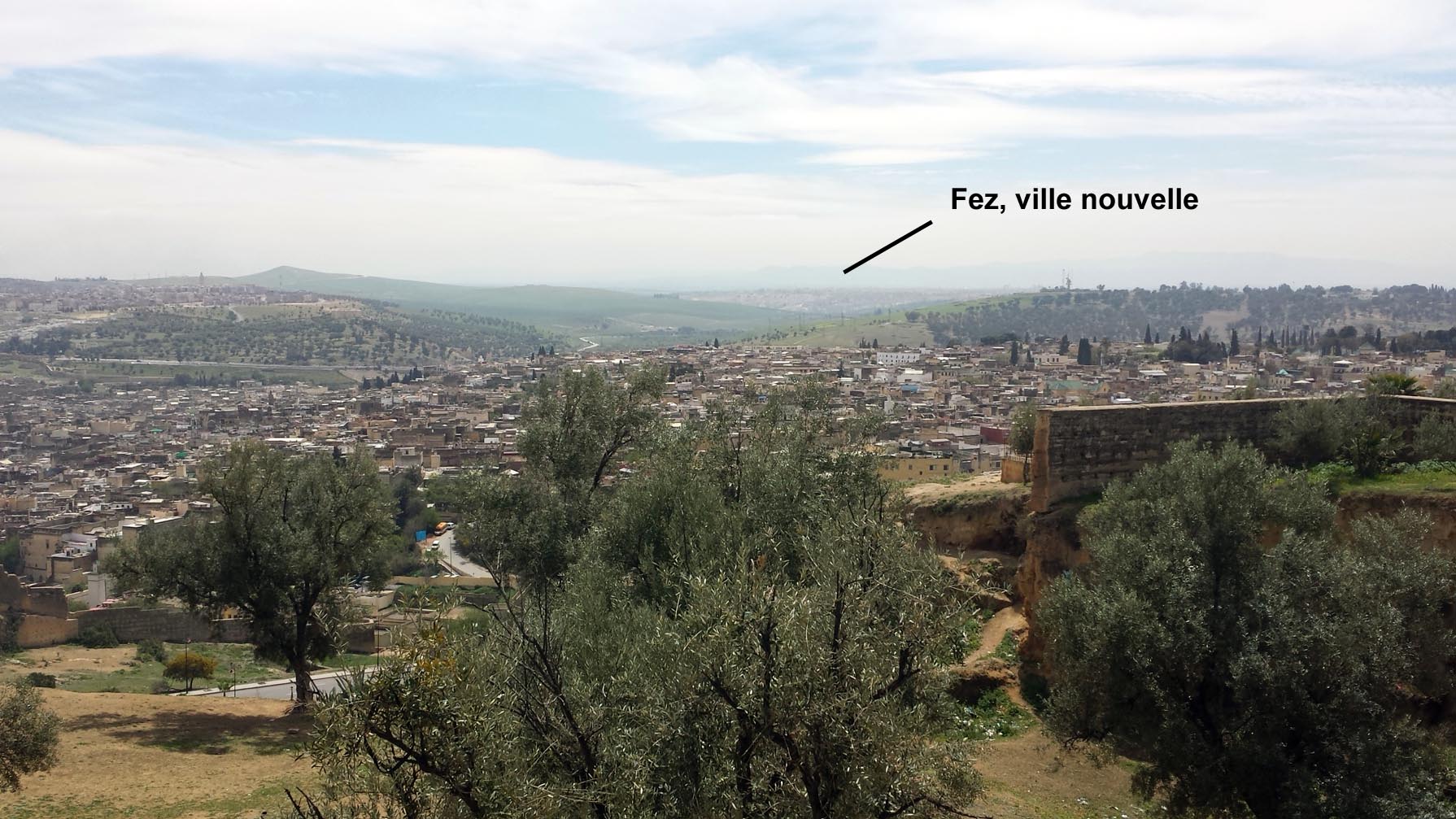
Borj Nord is on the other side of the city, past several other gates and old bridges. There is a military museum there, but as has been our luck in Fez, it was closed. From the Borj Nord you can see how far modern Fez spreads from the medina. The new city or Ville Nouvelle, (not to be confused with the new city of the 1400s Fez Jdid), is not particularly close to the Medina. It’s a separate city, not surrounding the old walled medina that is in the foreground below.

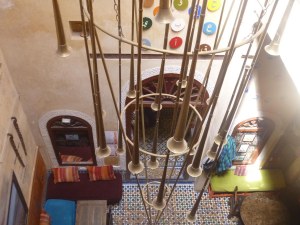
4.9.16 Fes medina from Borj sur-006verWe intended to savor the view of the city from the Palais Jamai, an elegant hotel situated on the northern edge of the Fez medina, but it is closed for renovation. We continued along the walls to Bab Boujlud, parked and walked in to the Cafe Clock. The “clock” is a puzzle, a series of brackets supporting brass bowls that caught a brass ball signaling the hour. Behind the facade, water draining from a tank at a constant rate was used to determine the passage of time. However, none of this has worked since the death of the clockmaker in about 1400. The bowls were removed in 2004 for restoration, which has not taken place.

4.6.16-053

The 13 lower brackets hold brass bowls in photos from the early 20th century. Today the cafe is as much a landmark as the “clock” itself.


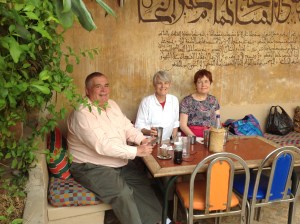
The cafe has a very nice roof terrace with lots of shaded tables. As long as you can climb the four flights of stairs to get there, it is lovely. After lunch we made our way back to the Bab Jdid parking and the delightfully cheerful Mohammed, chief parking attendant.


Getting used to Fez

We planned for a long time to stay a month in the Fez medina. Now we are here in a riad of our own.

This slideshow requires JavaScript.

4.5.16 Medina walk-010sm


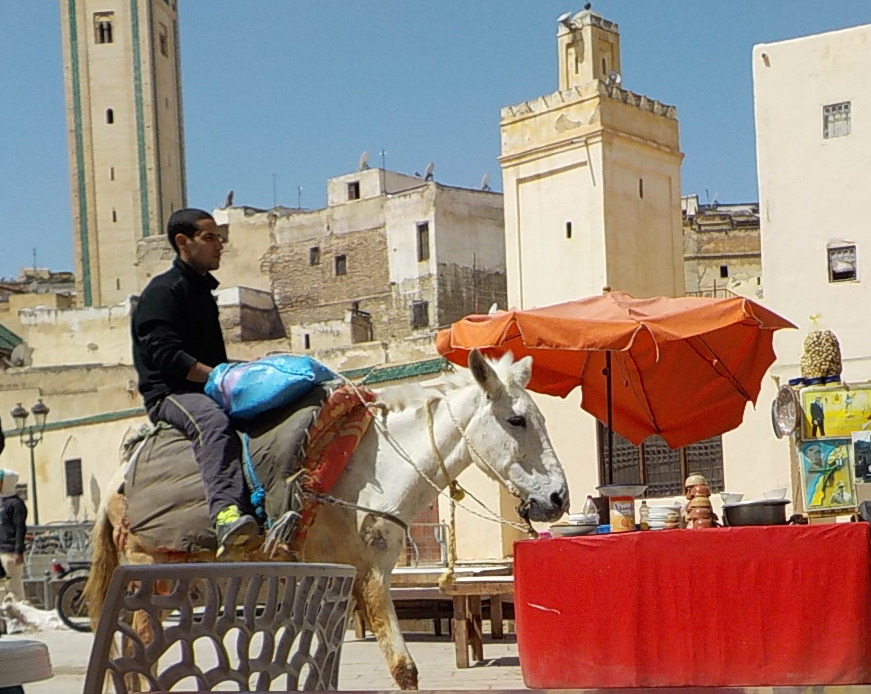
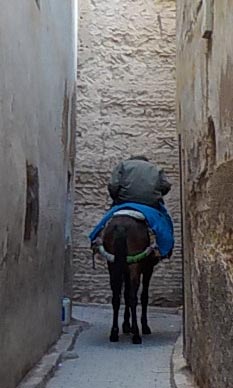
There are lots of surprises in the medina. No cars are allowed in most of the area, but donkeys and horses clop back and forth. The animals give you time to get out of the way, but the motorcycles are a menace.


We’ll start with a neighborhood landmark, Bab Rcif. There are 15 of these large gates around the city of Fez. Fortunately, each seems to be a landmark for taxi drivers, so we can now get home from anywhere by saying “Bab Rcif”!

4.2.16 Bab Rcif

4.2.16 our street
This is the bottom of the hill we walk up to get to our riad.

4.5.16 Medina walk-011


4.5.16 Medina walk-006


4.5.16 Medina walk-008
Here’s the view from the upper end of our neighborhood.


4.5.16 Medina walk


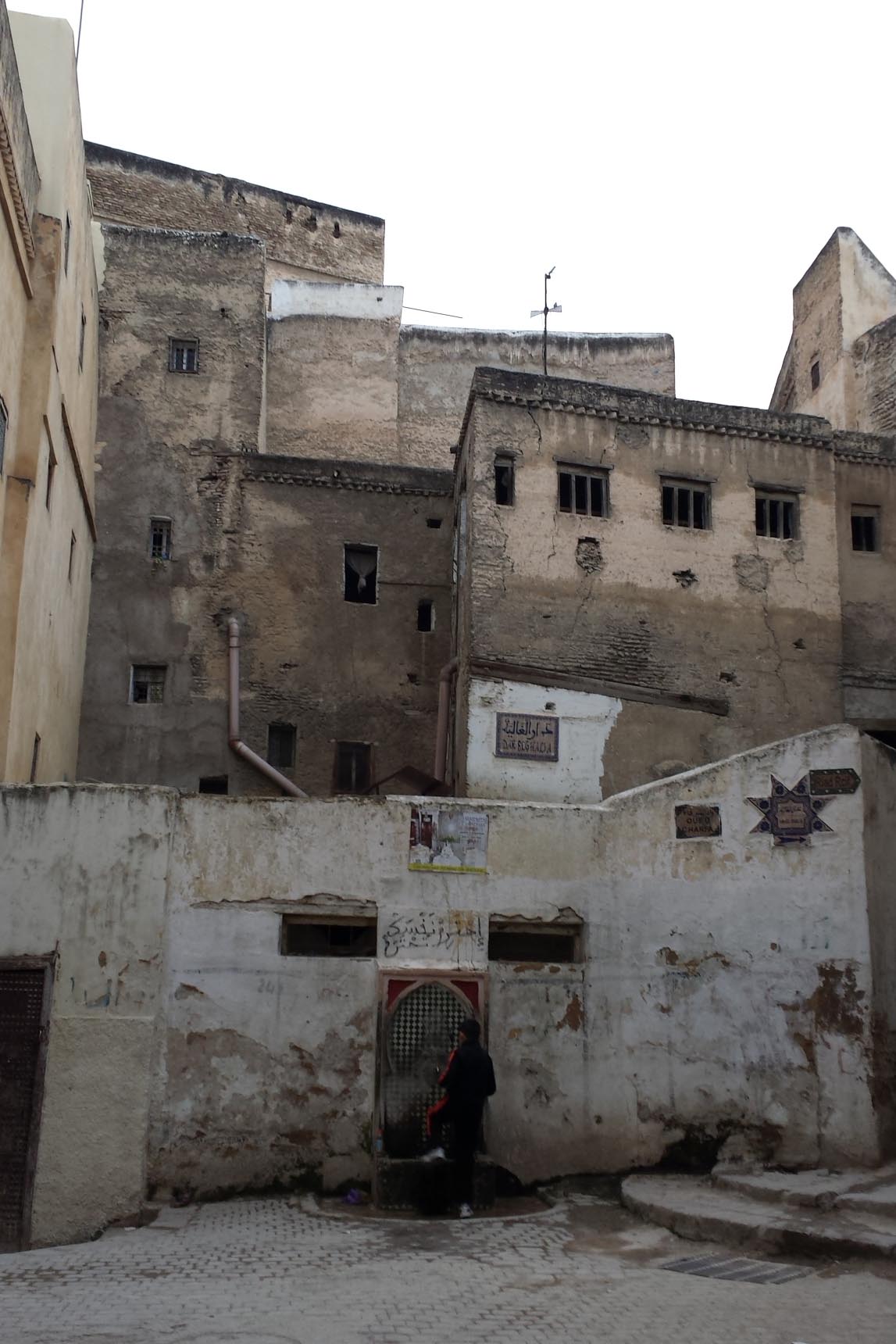
There are a lot of different kinds of buildings, new and old. The walk takes us past homes, workshops, and other riads.


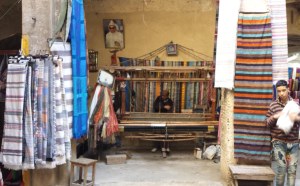
By the time I took these photos we had three days to walk around–it’s takes some time to start learning your way around the Fez medina. We started by taking a walk with a guide for a couple of hours, and got a sense of the main route home. Our guide, Khlafa Elasefar, was excellent. His English was very good, he understood our goals and only pressed us to do a little that we didn’t want to–and that was to spend more time at the historic sites. We saw a few of the sights during our orientation. “Agave silk” is beautiful. I didn’t know that agave fibers had such a luster. (I’m going back to buy a scarf.)

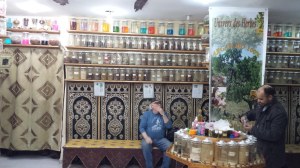
There are fragrant heaps of spices in the market, but for freshness and purity, closed jars are preferable. Our guide brought us here and we bought all we need for our stay.

We took in the mosque (no photos) and the Attarine Mederesa, formerly a school with 150 rooms for boarding students who came from far beyond Fez.

This slideshow requires JavaScript.


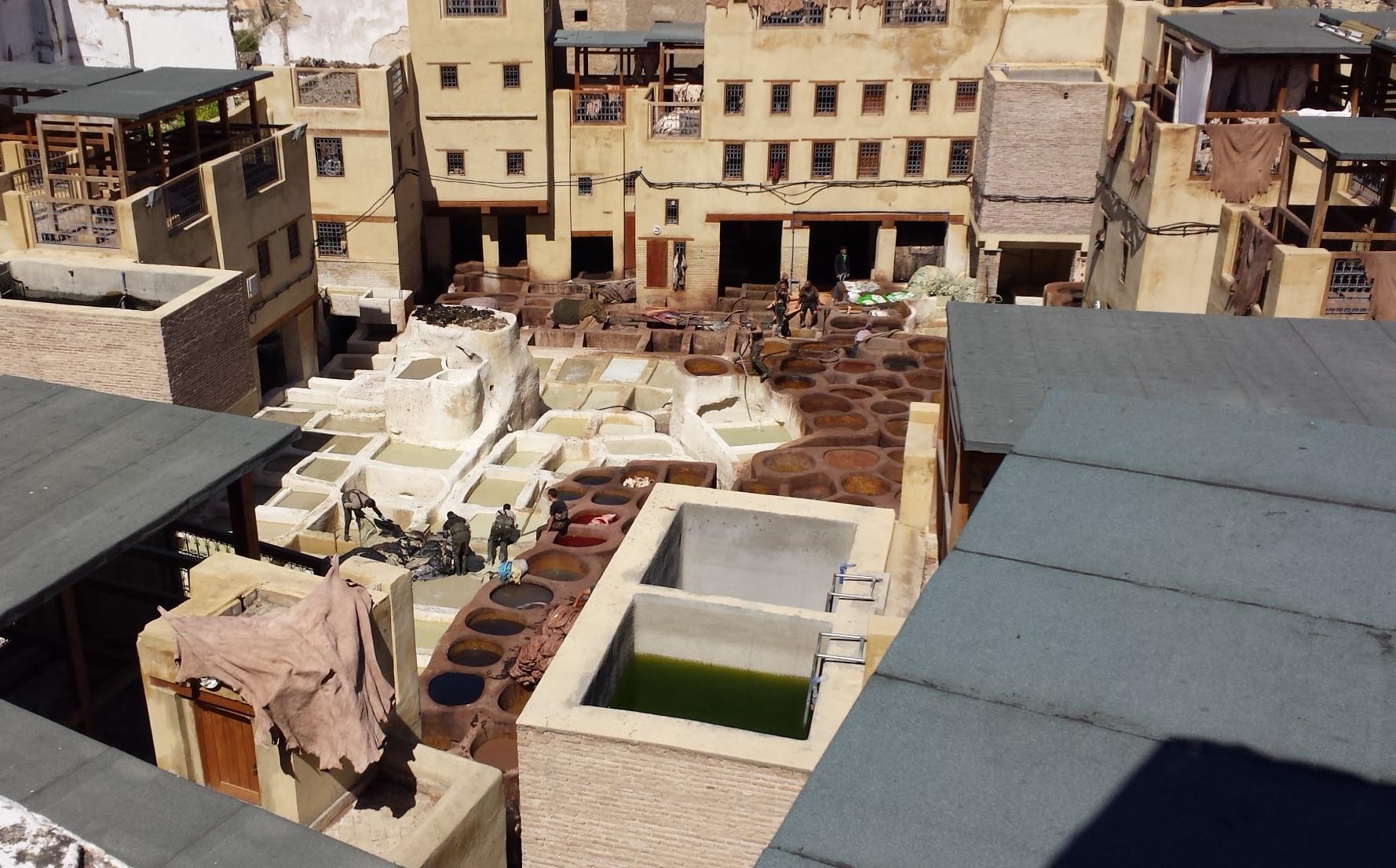
We also visited the Sidi Moussa tanneries. The traditional tanneries of Fes are a big attraction, despite the smell they generate during hot weather and the colorful and possibly poisonous runoff. After some debate about whether to move the tanneries out of town, Fes seems determined to keep this tourist attraction and the Sidi Moussa tanneries have recently been renovated. Now the larger, better known Chaouwarra tanneries are under renovation and only the Sidi Moussa tannery is active. The benefit of a tour guide was finding this out before the hike to the closed tannery. It did not smell very much during our visit, but the weather is cool, it’s spring, not summer. We were given a sprig of mint to sniff, and that was pleasant, if not strictly necessary.

4.2.16 Sidi Moussa tannery-003The white vats are the smelliest, where a mix of limestone and pigeon poop softens the skins and removes the hair. The dye vats are the brown ones. Huge cylindrical machines wash hides between phases. The finest skins take a month to be processed and dyed. The balconies overlooking the tannery all belong to merchants selling leather products. A young salesman said they could complete a custom leather jacket in three hours.

It was a lot to take in. What you don’t see here is our efforts to buy cups of coffee, fruits, vegetables and meat, water, salt. Even more difficult is to ask directions. Or to not ask directions, because sometimes people want to help you when you don’t want help. “I am not lost, thank you. I am taking a walk. Yes, walking. No, thank you.” Etc. People mean well, but it’s not very relaxing.

Museums and Sites in Rabat–mixed opportunities

Rabat is Morocco’s capital. It has strong competition from Casablanca for economic prominence and with Marrakesh for cultural prominence. I’d like to see the capital with museums that reflect the best of all periods of Moroccan history, but Rabat seems to have thrown in the towel on the museum front.  I already mentioned my fruitless search for the traditional jewelry from the palace collection. (These pieces are from an exhibit in Marrakesh in 2014.) The traditional jewelry is extravagant and beautiful.
https://static01.nyt.com/images/2014/04/15/education/15iht-fberber15-A/15iht-fberber15-A-popup.jpg

Next up was the archaeology museum in Rabat to see the Roman era bronzes recovered from the site of Volubilis, an ancient Roman city near Meknes. Anyone planning to visit the site tries to see the bronzes in the museum. No luck for us. The main gallery of material was closed, with only a few small items on view along with a reconstructed mosaic floor. Objects had been removed with only a “not on display” tag in their place. There was little information about objects apart from the name of the site. It was depressing.

Not all museums have been abandoned in the capital, however. The Mohammed VI Foundation supports the new Museum of Contemporary Art in Rabat. It is a large building with extensive exhibits of art by Moroccan artists. Too bad some support couldn’t be shared with other museums.

3.30.16 Rabat-008This piece is at the contemporary art museum in Rabat. The tiled surface seems to refers to the traditional zellij tile work found in all historic Moroccan structures. Too bad museums where examples of traditional zellij might be seen are all closed. (There are museums in other cities in Morocco, just not in the capital.)

We went on to the ruins of Chellah, an ancient Roman city within what is now Rabat. There may have been earlier occupation by Carthaginians and Phoenicians, but the Roman settlement is what can be seen today. Here’s the Roman era:

3.31.16 Chellah-018

The long occupation here is indicated by the reuse of older dirt full of pottery fragments by people making mud walls at a later time.

3.31.16 Chellah-028

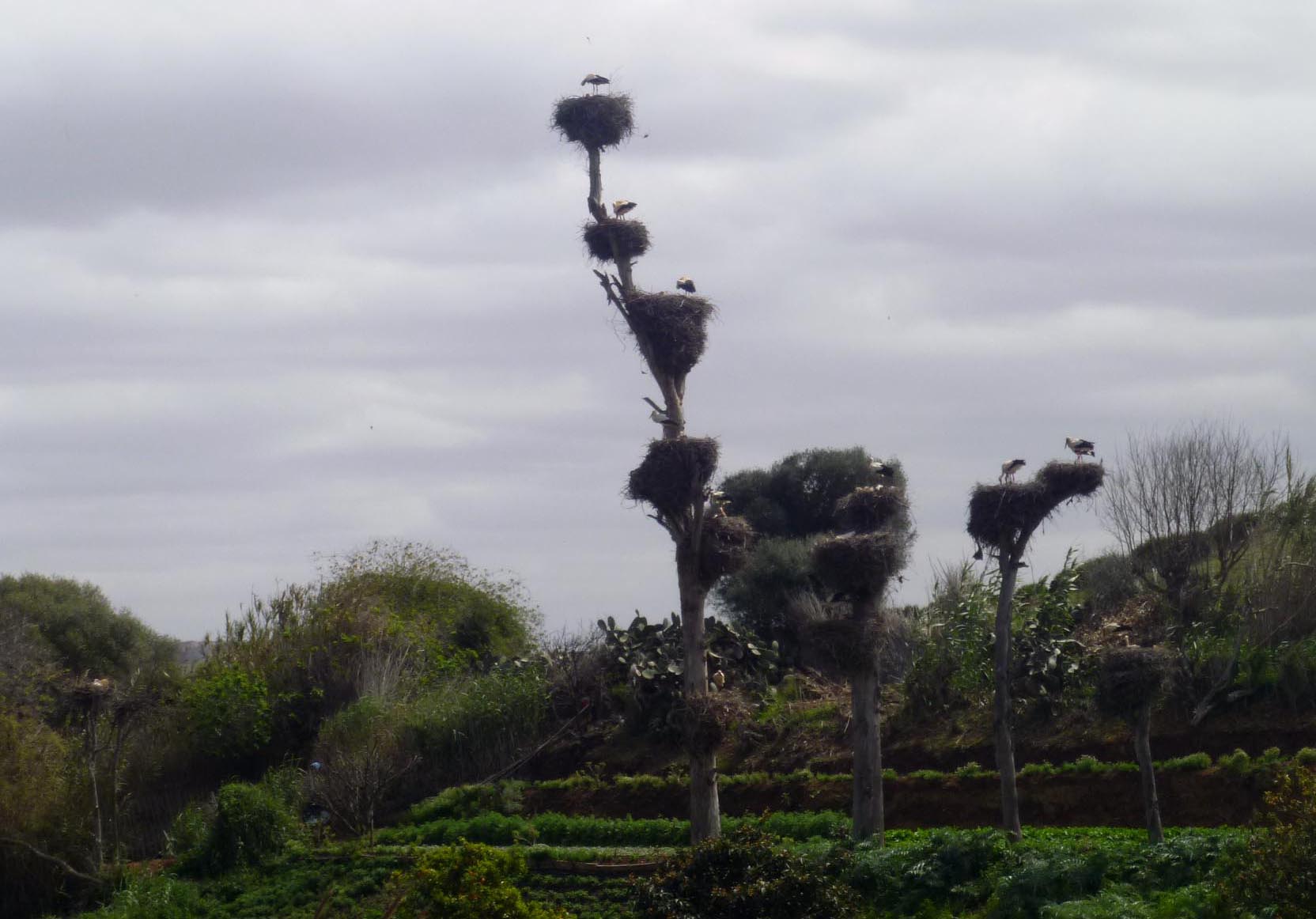
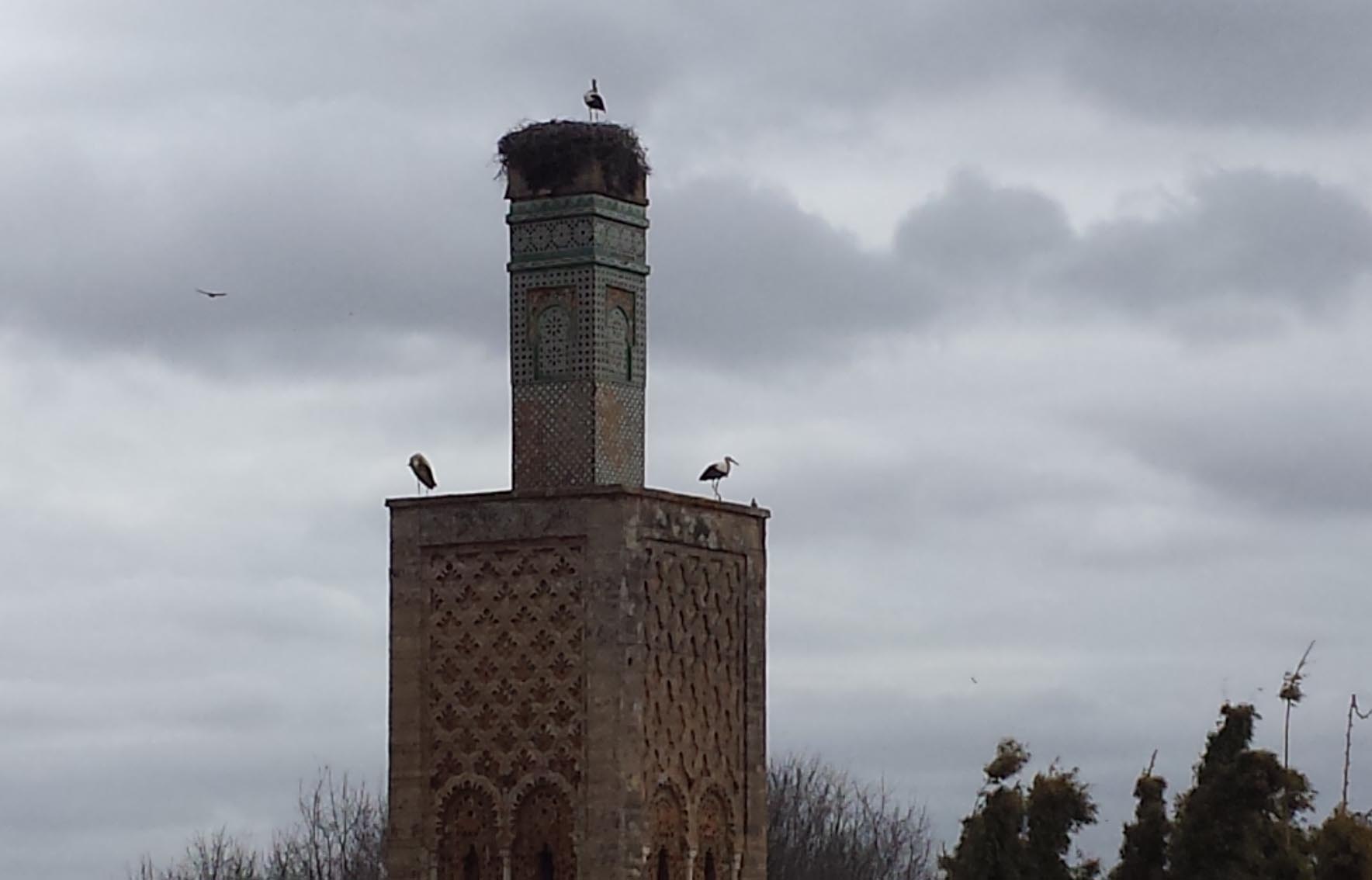
The ruins are maintained in a garden setting, and are home to a colony of storks. This is probably not good for conservation of the site, but it enhanced our visit.

3.31.16 Chellah-030I am pretty sure that Dr. Seuss has been here.

Chellah was used as a necropolis (burial area) during a much later period (Merinid) and the storks are as partial to the mosque for nesting as they are to other locations. There was a lot of clacking of beaks going on as male storks competed for attention.

3.31.16 ChellahThe Merenid ruins revealed a interesting sights, including a piece of zellij similar to one we saw in the archaeological museum, and a man feeding the cats that are everywhere.

There wasn’t a lot of information about the site or any archaeological research that has been done here. There are men willing to provide guide service that have to be eluded or turned away at the entrance. I do not believe they have any information about the site either, other than the dates of construction of the Roman and Merenid structures. There are a couple of signs if you read French or Arabic. They, too, focus on dates. Overall, the scene for ancient culture in Rabat is pretty limited. It’s a view that has endured from the 19th century that people benefit from being in association with ancient ruins, an osmosis-preferably-with-a-picnic as a way to absorb an appreciation of monumental works from the past. My impression is that Morocco has too many unoccupied palaces and too few well-endowed museums.

Rabat, Morocco

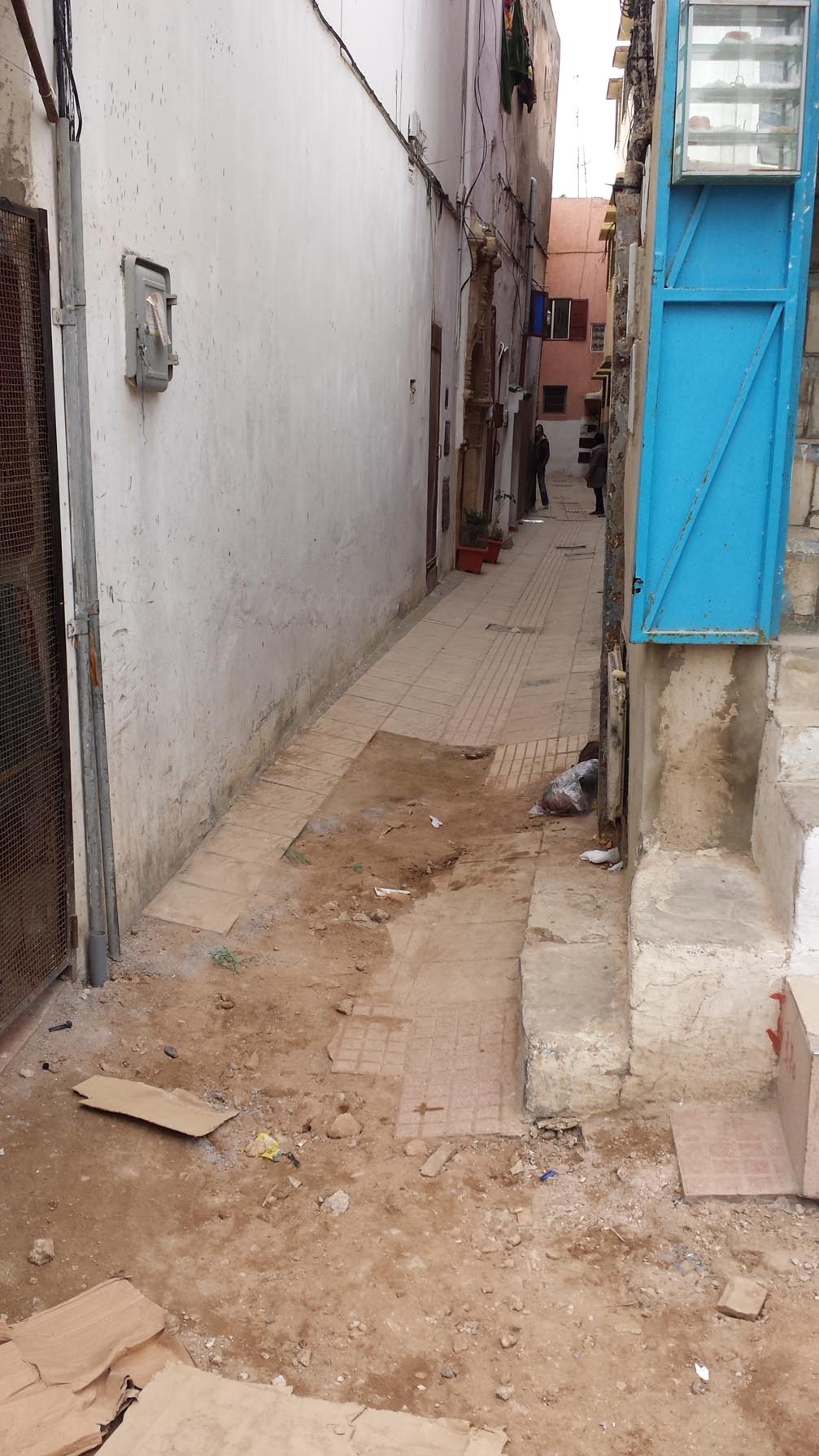
We arrived in Rabat, and got to our hotel in the medina with minimal confusion.  The Rabat medina is more spacious than others we’ve seen in Essaouira, Agadir and Marrakesh. As in the others, no cars are allowed, though motorbikes race through. When we arrived at the walls of the medina, we called our hotel and our host Benoit emerged to meet us. It takes some getting used to that you can park on the street and a random person will make sure your car is ok, yet that seems to be the way it works. Our luggage was put in an overgrown garden cart. Off we went on foot to the Riad Dar Soufa. The door to the house is down an alley, and Benoit lamented that city workers had just dug up the entrance to the alley and refilled it hastily–he has no idea when they will return to finish the job.

3.30.16 Rabat-0013.30.16 Rabat-010

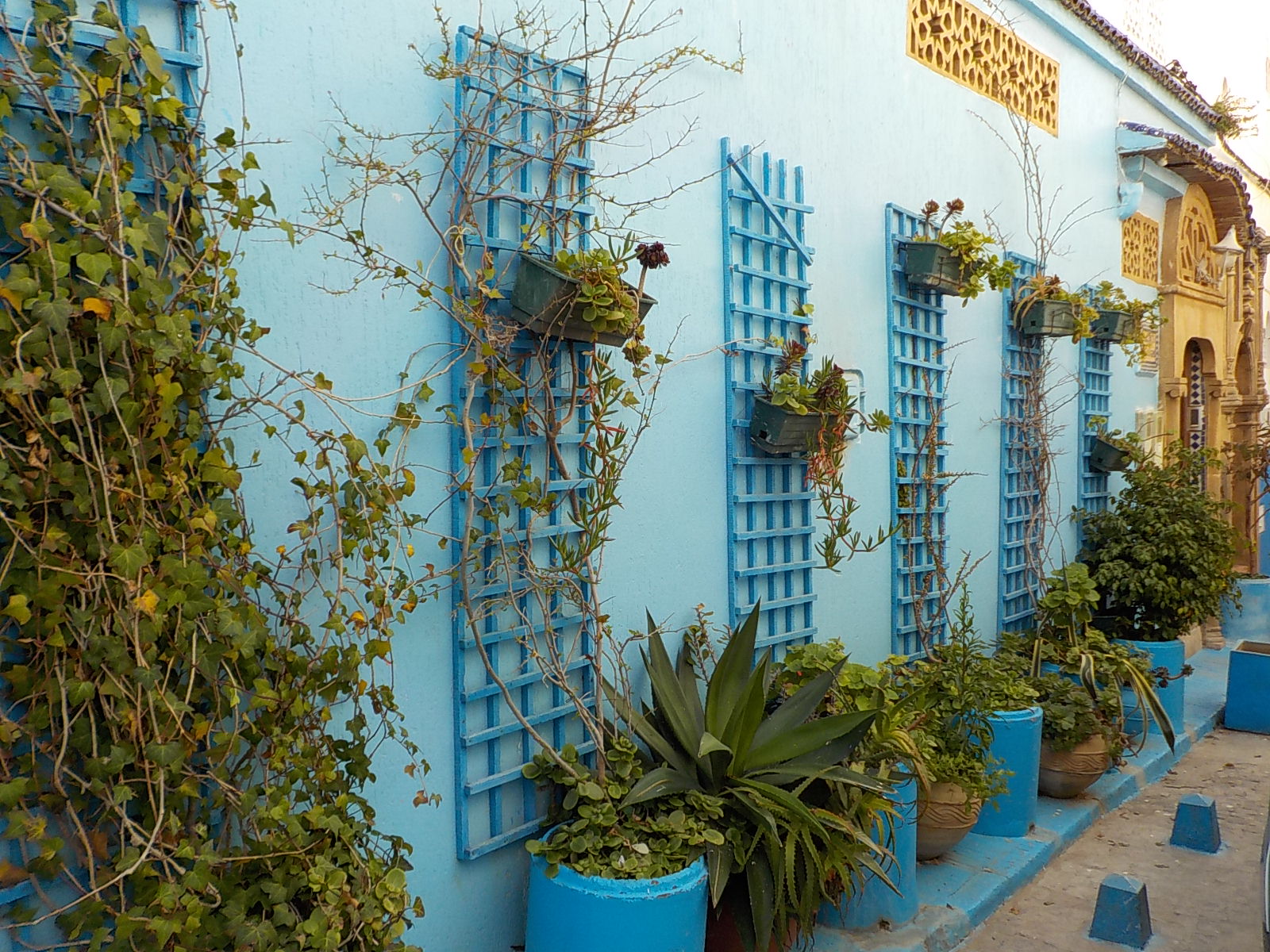
The inside of the riad is nothing like the street.

Once we went for a walk, I found that there is a place in Rabat that provides a vision of Morocco corresponding to my imagination.

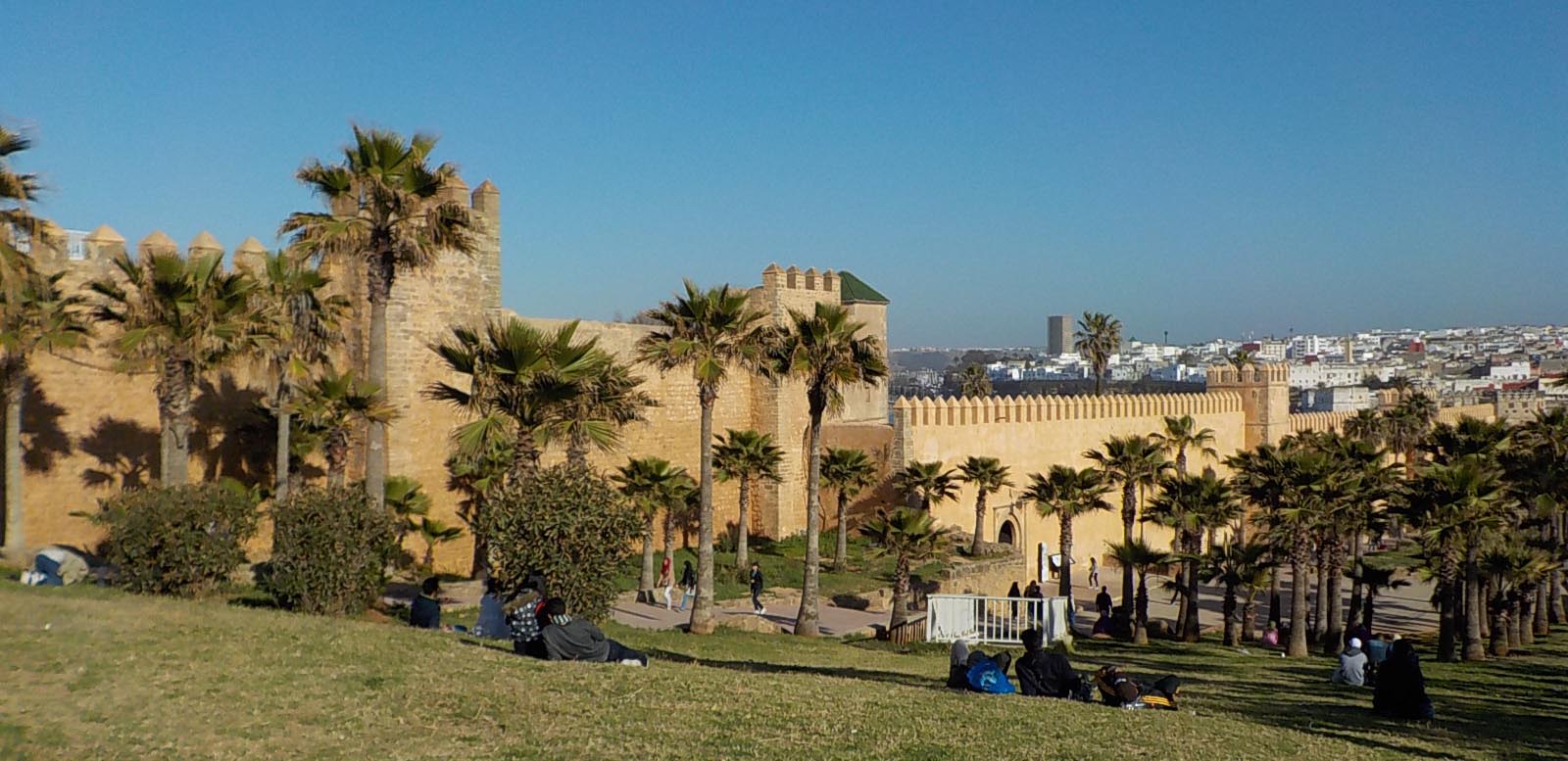
3.29.16 Rabat Kasbah-005Here’s the ancient walled fortress, the Kasbah of the Oudayyas, still occupied, with a modern white city (the rest of Rabat) in the distance. Why this is my vision of Morocco, I don’t know, but I love this view. It’s my mental image of Morocco

3.29.16 Rabat Kasbah-009The Rabat kasbah has a community atmosphere. Plenty of families still live in this very small neighborhood. It has not all been converted to hotels. The Cafe Maure is tucked into the far side of the kasbah in a small park called the Andalusian Gardens, where the wall loops out on the riverbank and you can sip tea or coffee and look across to the rest of the neighborhood, or down the estuary to the sea. It’s a bit tricky to find the entrance, you have to enter the gardens despite the low reviews on TripAdvisor….and then you see the entrance to the terrace and cafe.
3.31.16 Rabat kasbah from Cafe MaureI went to the Andalusian Garden expecting to see a display of traditional Moroccan jewelry that was part of the Palace museum, until it closed. Sadly, the exhibit at the gardens is now closed as well, and there is no information about what has become of the palace collections. The cafe was a consolation prize.

Back at Riad Dar Soufa we admired the elaborate restored woodwork, stone and carved plaster and mosaic tile that shows off Moroccan craftsmanship. We are in the zellij room, which refers to the detailed tile in a patterned mosaic along the walls. It is unusual to have so much preserved/restored. Older houses with such detail that fall into disrepair are not always repaired and the tile either falls down or is covered with paint and plaster. It’s not easy to find out about the history of Rabat. See my next post to find out more.

This slideshow requires JavaScript.

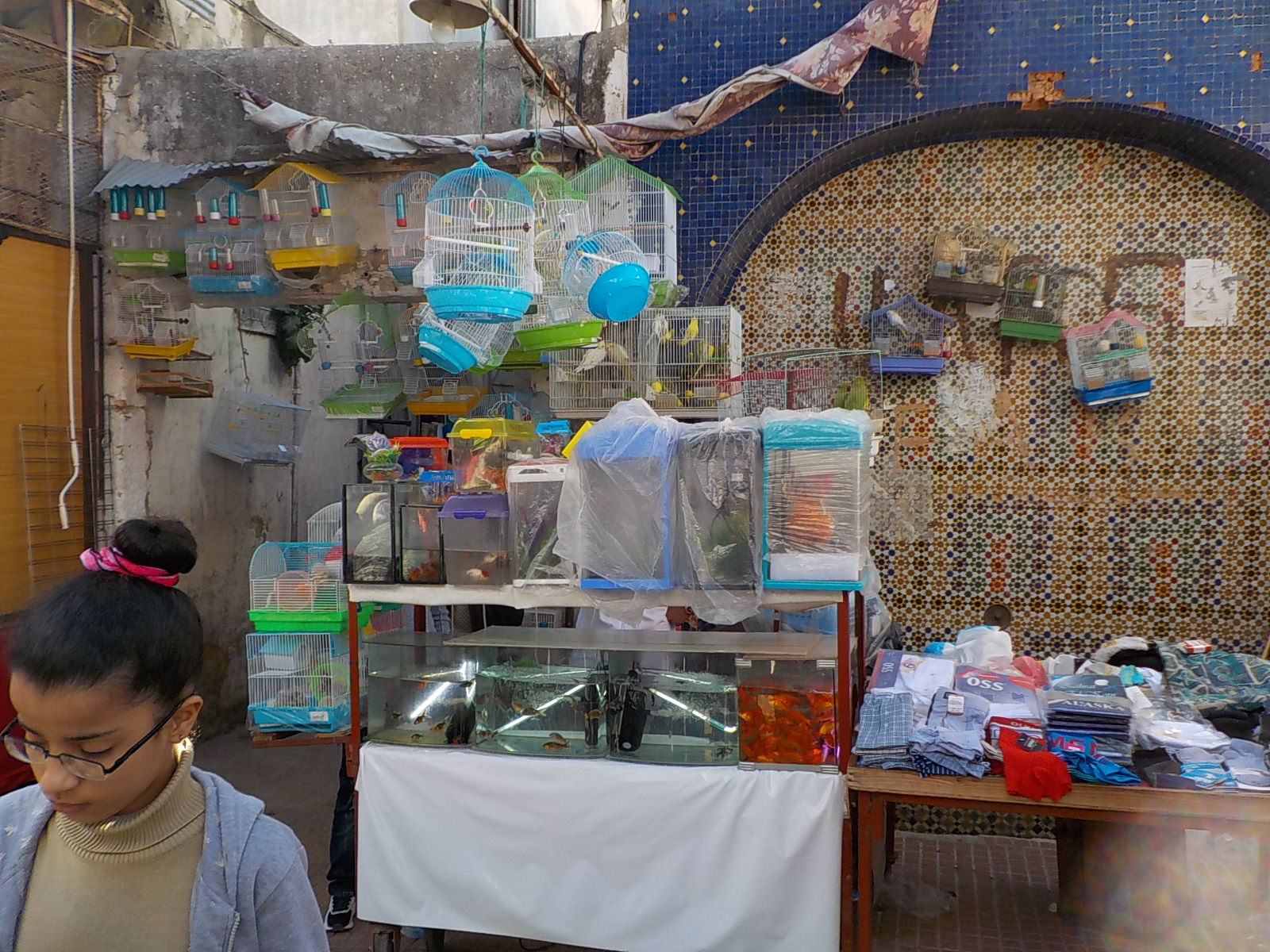
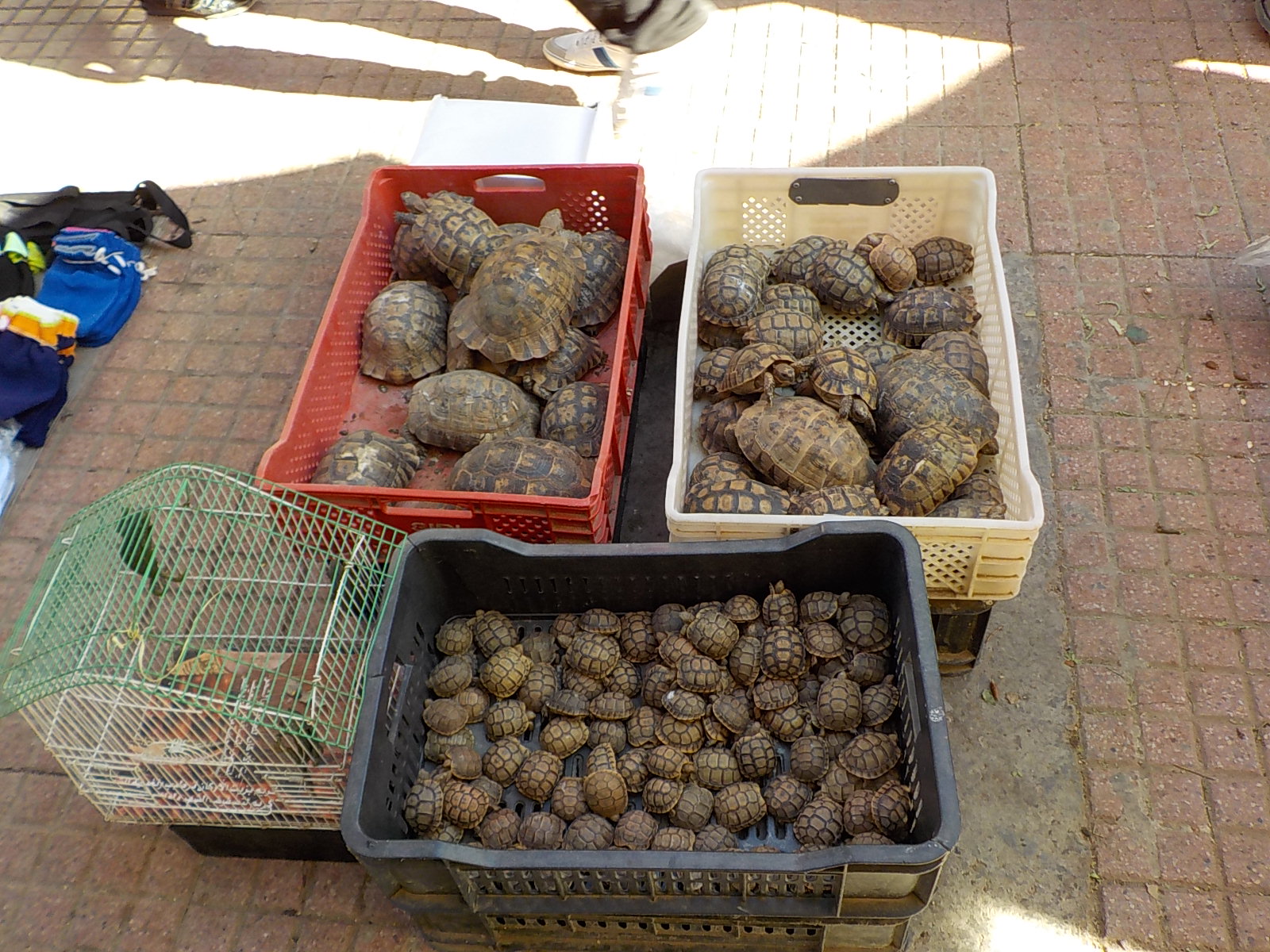
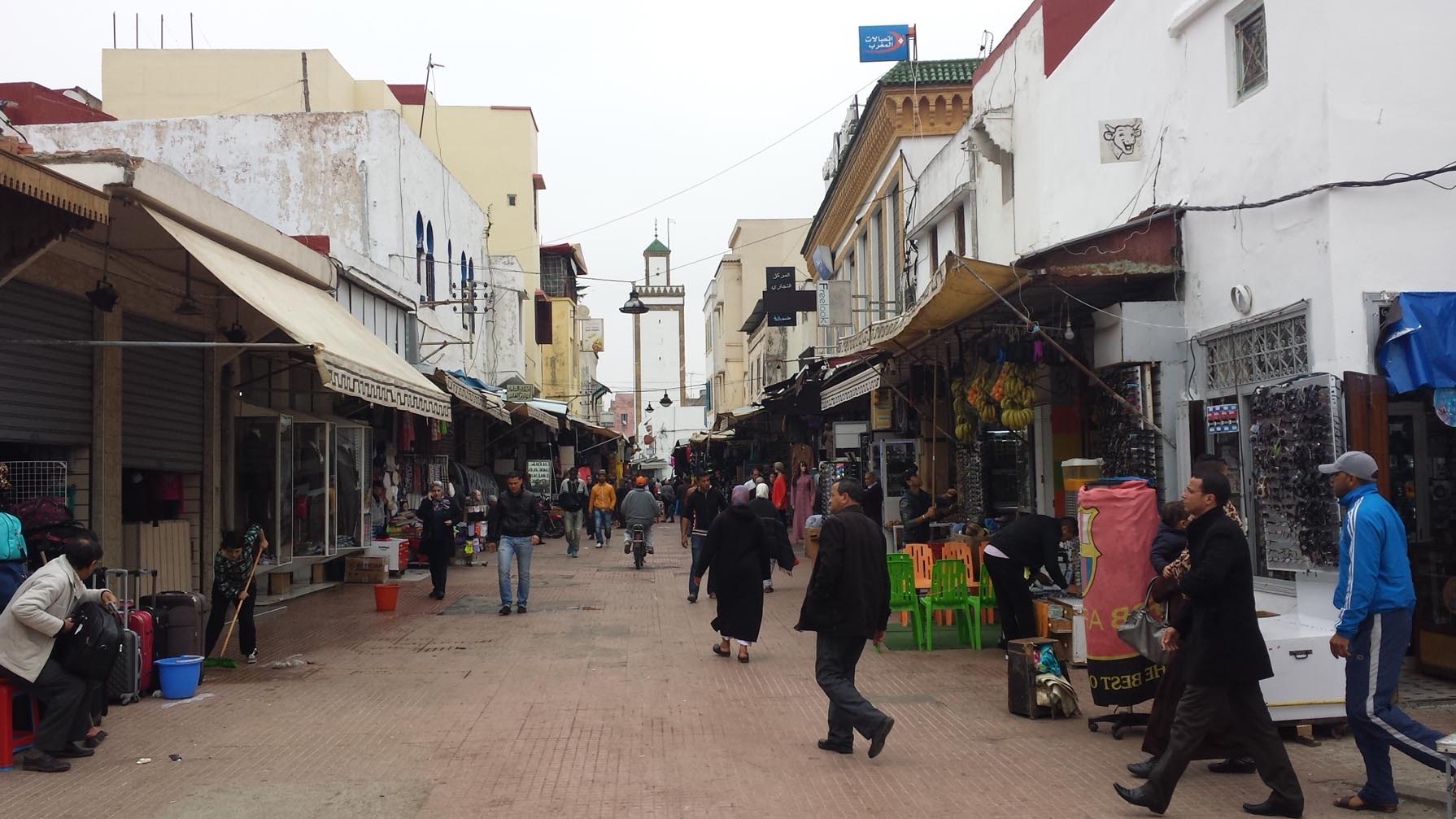
The next day we rambled in the medina in the late afternoon when it was full of shoppers. I noticed more sellers of birds (and turtles!) than I’ve seen before in Morocco, and I was impressed by the colorful thread and embroidery sellers.

3.29.16 Rabat Medina-004

Poor turtles! I hope these are pets and not dinner.

3.29.16 Rabat Medina-001More about Rabat to come!


El Jadida, and the “citerne portugais” of Orson Welles

We drove to El Jadida and discovered that along with the coastal beaches there is a stretch from about 10 km outside town into the city that is heavily industrial. Smokestacks from a power plant and phosphate plant are followed by a huge port facility, petroleum storage, LPG storage, one huge facility after another. None of the guidebooks mention this. It’s a bit otherworldly after driving through agricultural countryside for quite a while.

We went to El Jadida specifically to visit the old town, which is not the medina, but the Portugese walled city of the 1500s. Inside is a large cistern made famous by Orson Welles, who filmed a scene of Othello there. It’s very atmospheric.

The Portugese area is quite small, though picturesque. After a cup of coffee on a terrace (we couldn’t find one with a view of the ocean), we headed back to Oualidia.

Taking a break in Oualidia

It’s easier to say as Wah-Lidia, a small beach town on a lagoon that offers a surfing school (we enjoyed watching the wet-suited group from a distance), oysters farmed locally that we ate every day,

and bird-watching. From our Airbnb home we have a great view over the lagoon to the ocean.

It was a comfortable beach house, a bit dated, but comfortable, obviously a family home. The kitchen had everything you could need for cooking.

This slideshow requires JavaScript.

To say that this town is quiet in the off season is an understatement. There is a large campground full of RVs that seem to be European retirees, though we only see a few people strolling up and down. On Sunday afternoon, the park by the water was full of children playing and families chatting, but most days were quiet. There isn’t much beach right here, the shore is rocky, made of porous material that is like lava to walk on.

There was a “souk hebdomadaire,” a weekly market that set up in a field at the edge of town. It was a true a field of tents. It was even more hands-on than markets in Peru, with people killing and cleaning chickens in one section, selling spices in another, shoes and clothing along another aisle. (I had only a few photos from a distance, in deference to the number of people who don’t want their picture taken, then I accidentally erased the ones I had.) I bought a pair of bright pink leather slippers (babouche) stamped with camels on the toes. What could be better!

Jonathan bought lamb and used the couscousiere, couscous cooker, to make couscous with preserved lemons, olives and garbanzos. We should have invited the neighbors.

Bird-watching is excellent in Oualidia because of the large lagoons. We had great luck in an area that looked like some disaster had struck. There was a grand bridge/stairway that ended suddenly, with piles of discarded construction debris dumped along the road. Bridge across the RV park, ends in swamp.In the middle of all this we saw a spoonbill, Kentish plovers, common plover, stilts, and even a Sardinian warbler. It was great.


We explored the coast to the south. Once you leave the shore, you are faced with miles of rocky landscape. People farm and graze despite the rock that is everywhere.3.27.16-018sm

There are towns and monuments among the rocks. We stopped at the lighthouse at Cap Beddouza, and saw a few distinctive places. Some may be tombs of saints, Muslim holy men.

Daily life intrudes on the landscape.