A further note on Argan products

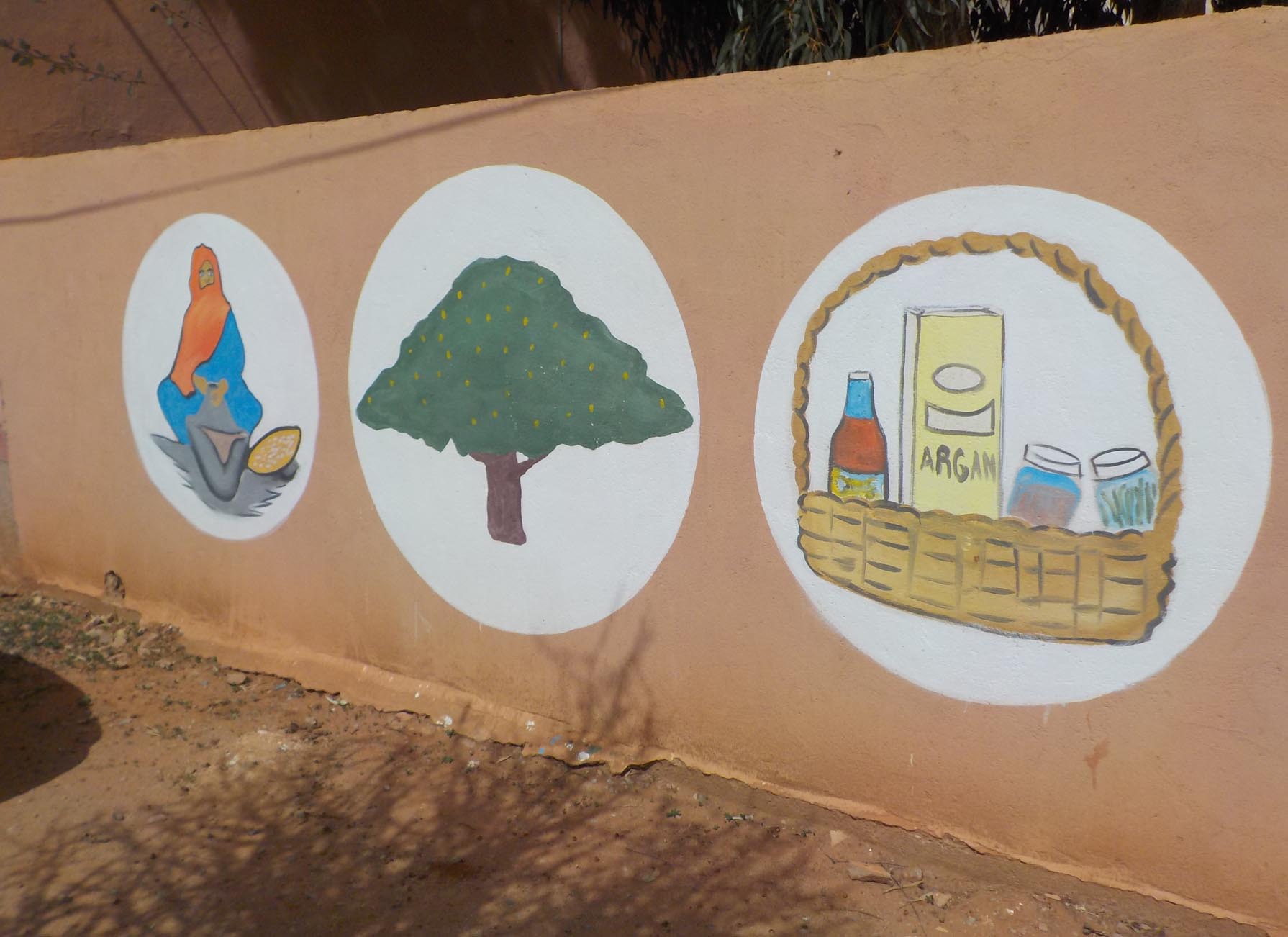
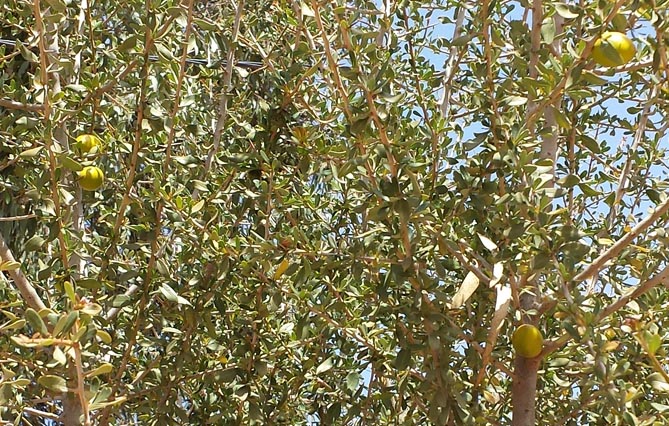
Cooperatives of woman formed to produce argan oil and related products can be found across southwest Morocco. On our drive from Agadir to Essaouira along the coast, we passed thousands of argan trees full of fruit, signs for cooperatives, and billboards referring to projects benefitting women. These all appear to be cooperatives to produce argan products. While cooperatives seem to help women, in the region we drove through there was no other visible employment of any kind. As we drove down the road, we passed stand after stand where vendors (men) held out bottles of argan oil and gestured to us. I subsequently read that many of these are probably adulterated products.

3.20.16 Agadir to Essaouira-013My conclusion is that women need assistance beyond forming a cooperative. Each cooperative needs to connect with markets outside the immediate area. There are a limited number of tourists who drive through this region, and roadside sales cannot help much economically. Once argan oil is produced, it has to reach markets where it has commercial value and can be sold as a fair trade product to ensure that some of the proceeds reach the producer communities. Otherwise, women’s cooperatives of argan oil may become a dead end, producing a luxury product that is stockpiled until it goes bad (rancid, becomes too old) or until there is so much unsold oil that the price collapses.
Buy fair trade argan oil–put it on everything.

3.15.16 Mesti-008sm

Surprises at the end of the road

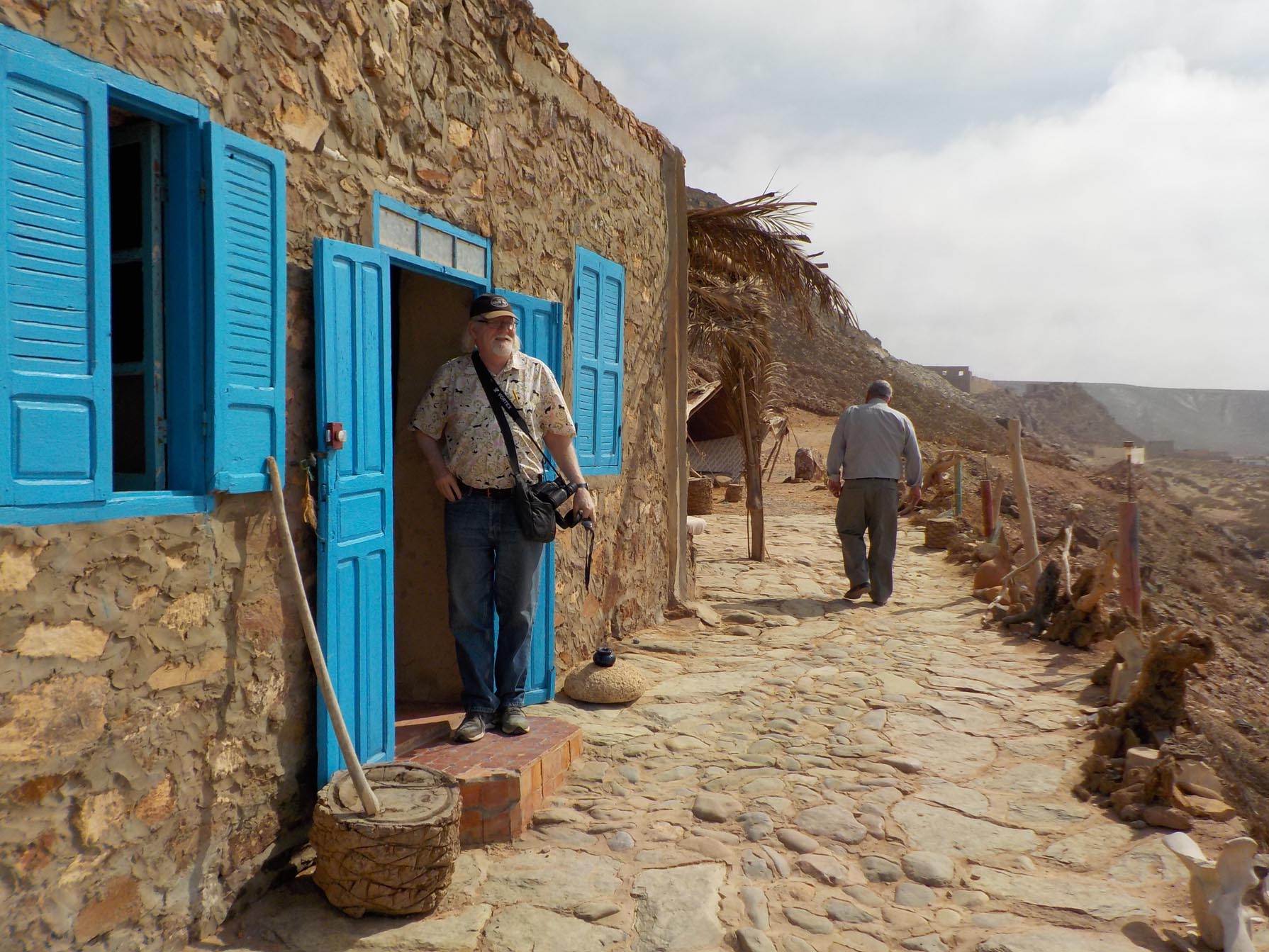
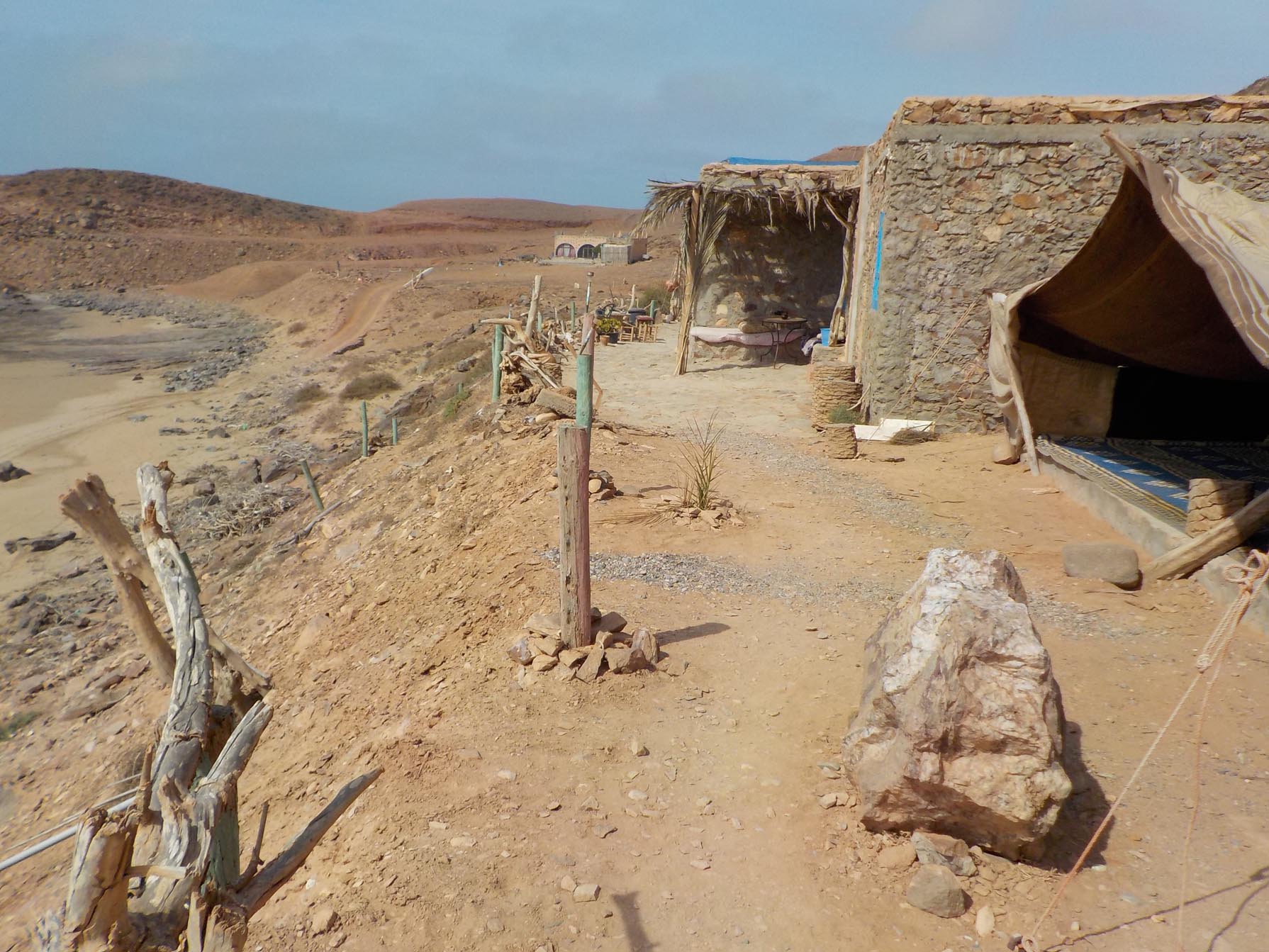
We arrived at Foum Assaka, the mouth of the Assaka River, to find a beach community under construction, not uncommon in Morocco. We threaded through the streets until the car could go no further, then parked in a pullout. This is the entrance to “Le Rayon Vert,”  the Green Flash. I guess you can see it here as easily as in Key West. 3.16.16 Foum Assaka-009sm


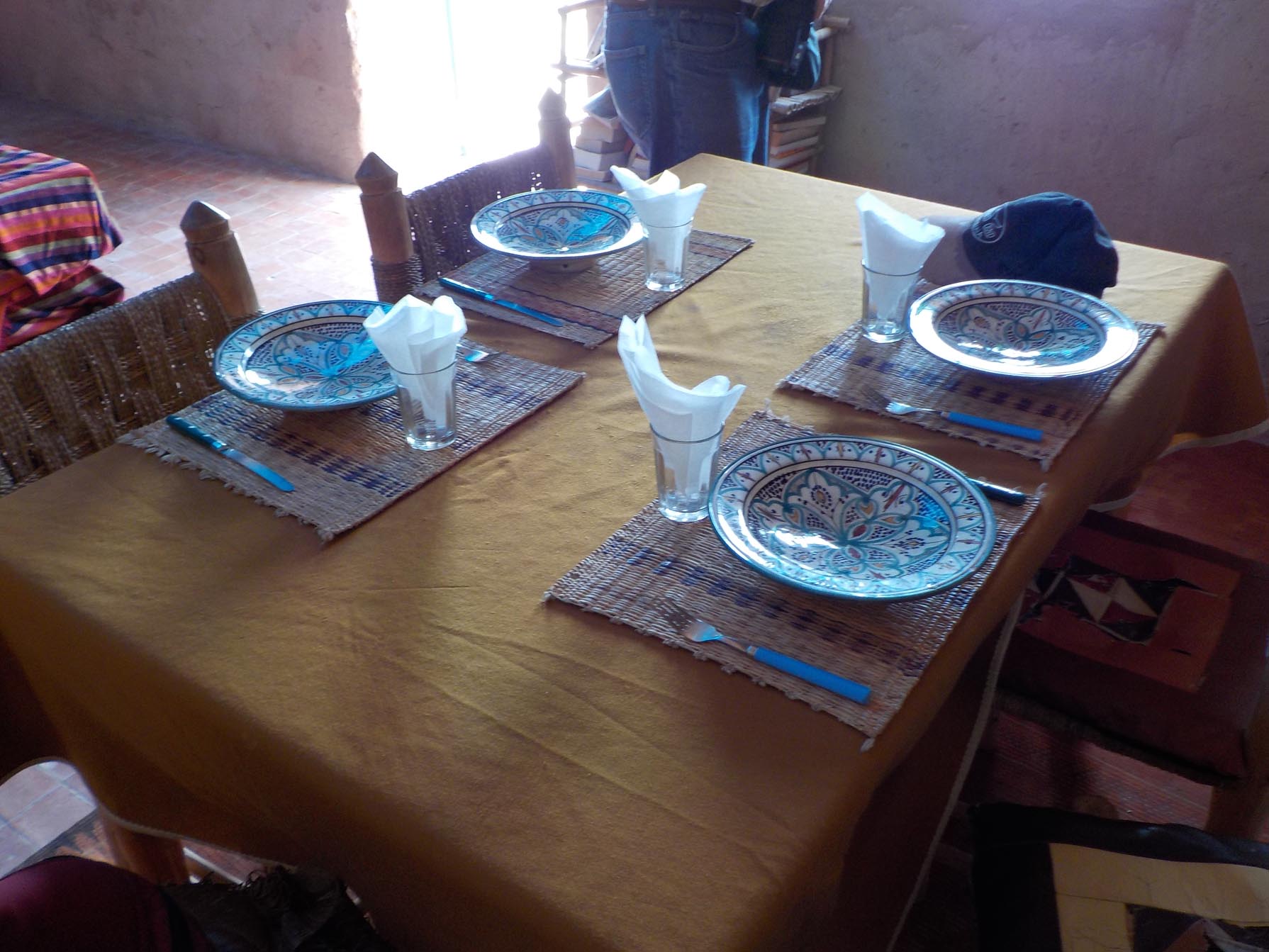
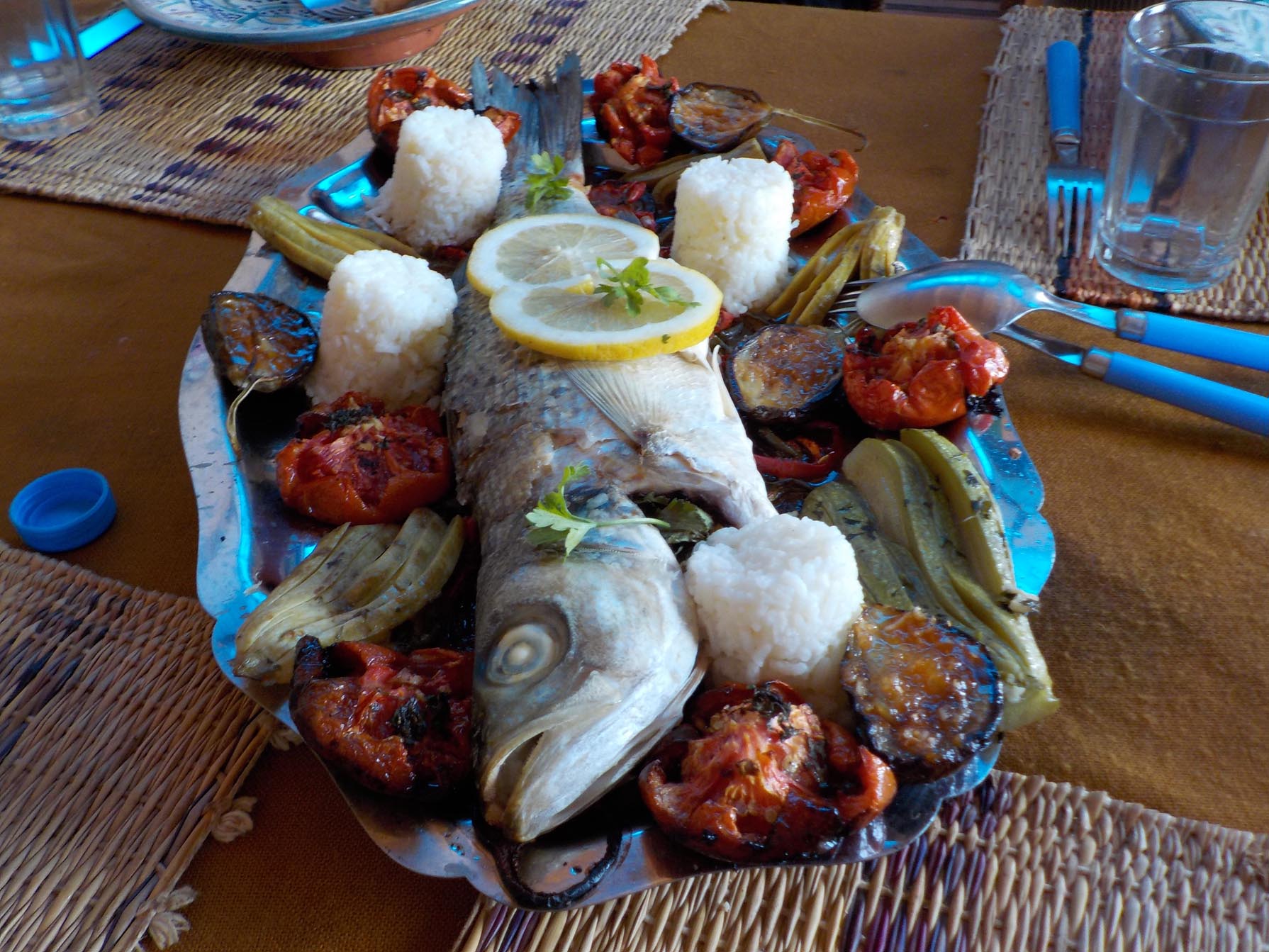
3.16.16 Foum Assaka-013sm 3.16.16 Foum Assaka-008smIf you visit with a group, you can stay in a Moroccan tent.3.16.16smWe sat down to a delicious lunch of baked fish and vegetables. The eggplant were baked and the glazed with honey and spices. Delicious and in the middle of nowhere. The secret? Our friends called in advance.

3.16.16 Foum Assaka-005sm3.16.16 Foum Assaka-006sm


This was not the only hidden surprise we visited in the Sidi Ifni area.

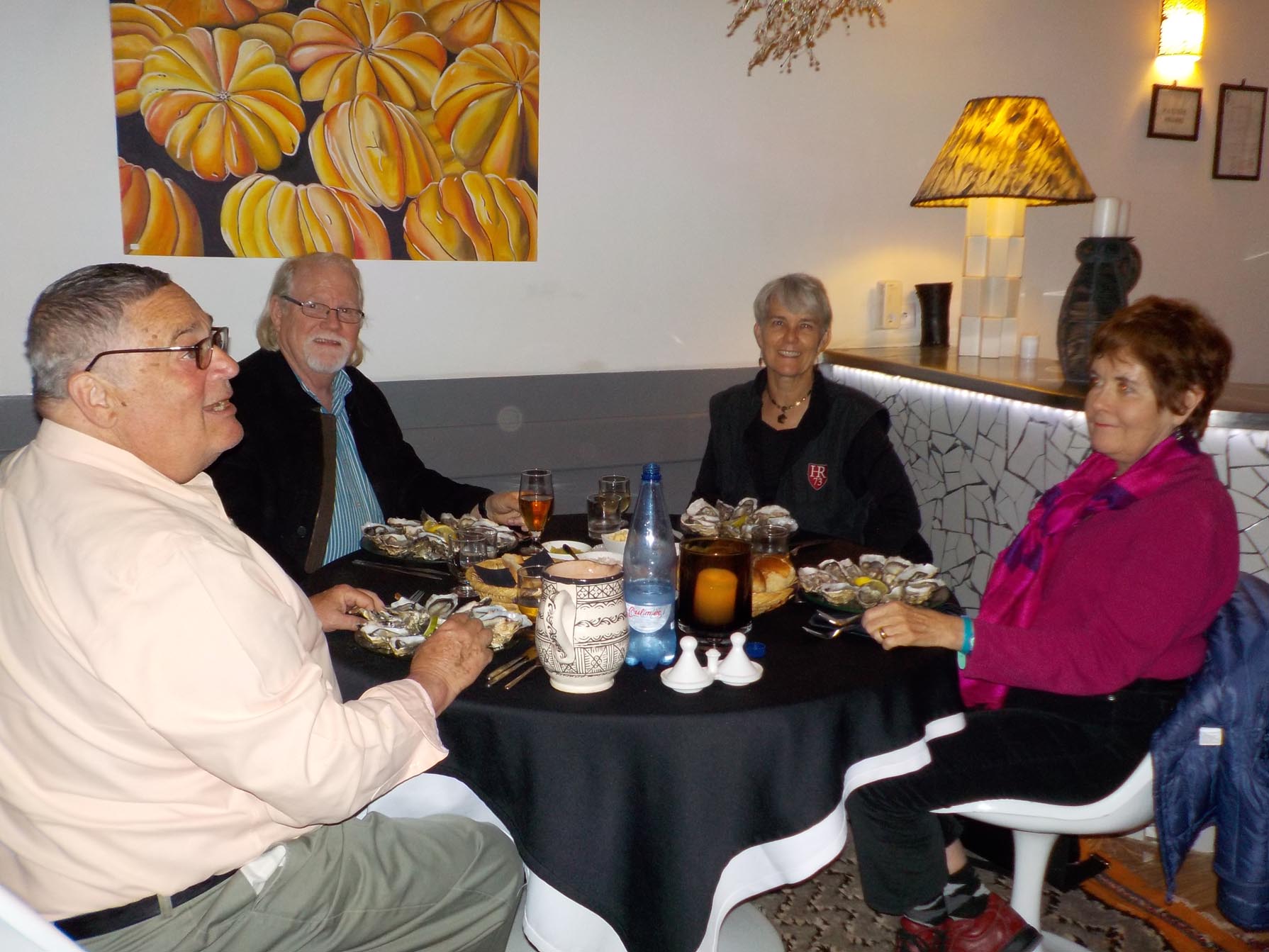
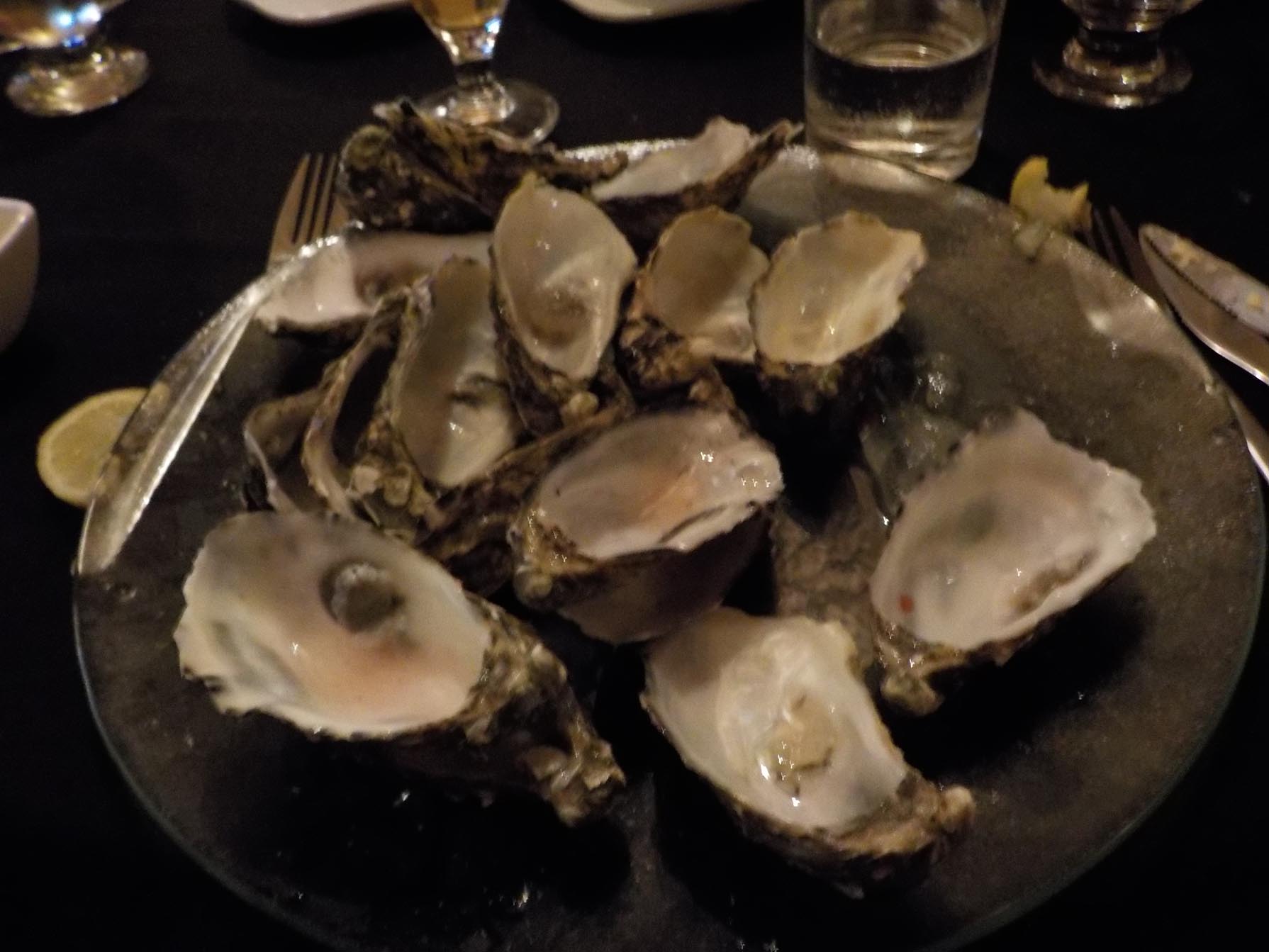
The next evening we had dinner at the “3-O” restaurant in Mirleft. After driving from Sidi Ifni in the dark, we stopped in front of a pharmacy, with its lurid fluorescent light washing out everything. We got out of the car and looked around, puzzled. Jean-Marie pointed to an alley, unlighted. Then we saw “3-O” painted on the wall, and an arrow. We walked down the alley in the dark to a door. Locked. It has a buzzer. It looks like we are being checked into prison. The door opens and we are in a gallery of contemporary Moroccan furniture. We walk between the rows of tables, mirrors, and sculpture to a doorway and we are then in, a nightclub. Really. Tables and chairs, mirrors, light fixtures, very chic decor. We continue along to a dining room where our table is ready. We meet our host, Didier, who runs the restaurant, the workshop, and the club. The feature of this restaurant, where we also called ahead, is oysters. These are straight from the oyster farms in Dakhla in the Western Sahara, fresh every Wednesday. We had all we could eat and they were delicious, crisp as the ocean. Morocco is full of wonderful secrets.

3.17.16 Rest.3os.Didier-002 3.17.16 Rest.3os.Didier-003

A Women’s Cooperative, Mesti, Morocco

About a half hour outside Sidi Ifni on the road to Guelmime is the town of Mesti, where the Tafyoucht cooperative of women produces argan oil.

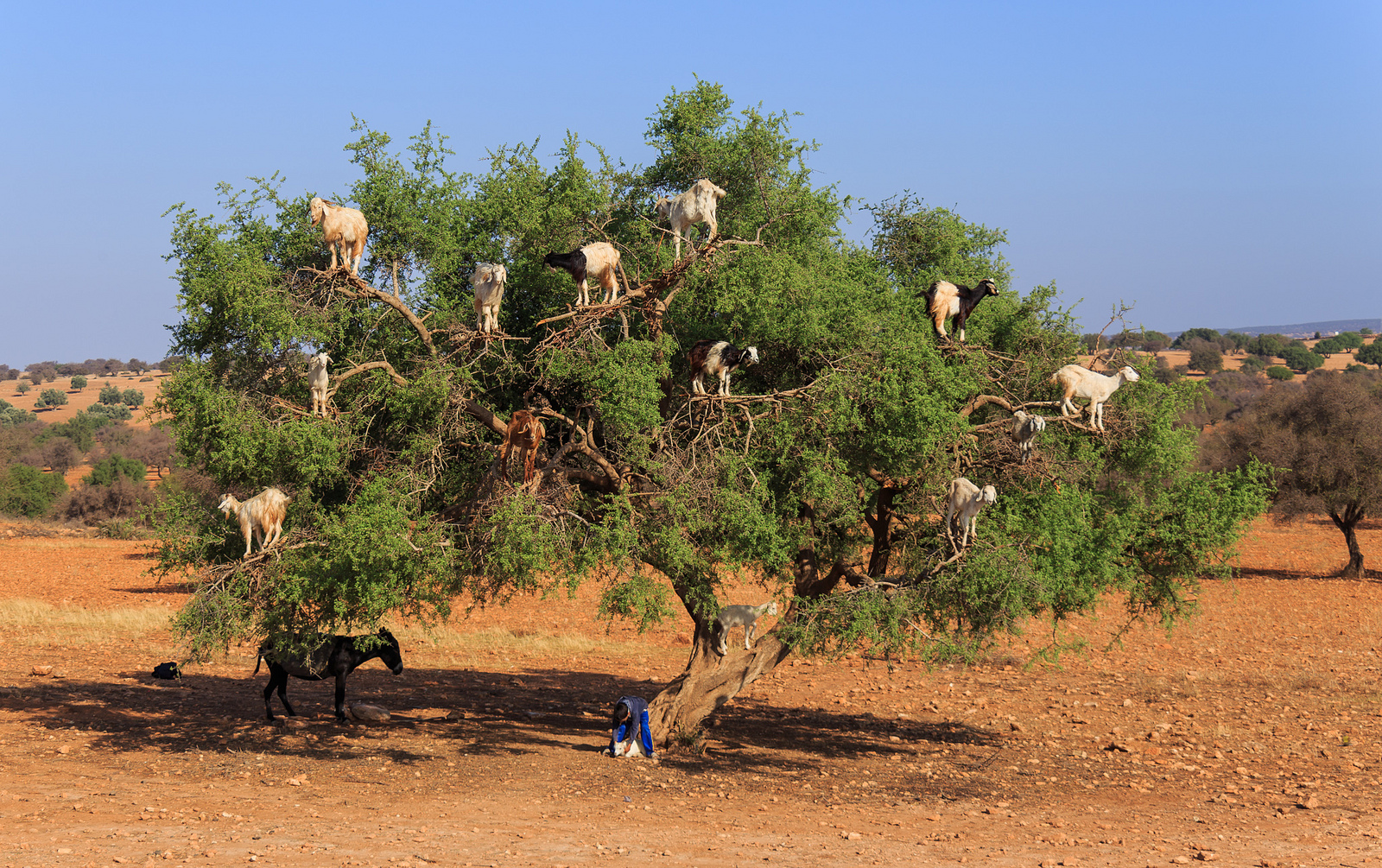
3.15.16 MestismArgan trees are only found in Morocco, and the oil pressed from the nuts can be eaten or used on the skin and in cosmetics. We sat with the women cracking the nuts and found how difficult it is. It was much easier to hit my finger than the nut. I have read that an automated method of removing the nuts has not been developed and so they are all cracked by hand (!)–mostly by women like ones we sat with. We chatted with a young woman near us, so deft she could crack the tiny nuts from the shells while chatting. She was abandoned by her husband while she was still pregnant. Her daughter is now five years old. Both she and her mother work at the cooperative.3.15.16 Mesti-005The process is lengthy, but nothing is wasted. The outer husk of the argan nut can be removed mechanically and is used as animal fodder. A classic photo from Morocco is a herd of goats climbing in argan trees and eating the nuts. (I did not take this one, I’m still looking for my tree of goats.)tree-climbing-goats-morocco-woe1The nuts can still be cracked and squeezed for oil after they’ve been through the digestive tract of a goat, so fallen nuts are collected as well as those still on the trees. The hard inner shell that is removed by the women is used as fuel in the community bread oven. The raw nuts are pressed for cosmetics, or toasted and then cold pressed for edible oil. The slide show below shows the process at Tafyoucht.

This slideshow requires JavaScript.

We were present on a lively day at the cooperative. Not only was there another group of visitors, but there was a film crew from BBC Arabic. The presenter asked whether he could interview Joyce as a resident of the area to ask her about the cooperative and its work and value to the community. It was fun to watch.

3.15.16 Mesti argan coop-008sm

Argan oil products

We purchased some skin oil and some cooking oil. We did not buy, but tasted, amlouze, a blend of argan oil, ground almonds and sugar. It would be good on toast.


When you plan your visit to southern Morocco, the Tafyoucht cooperative is a great place to visit.

Comparing Peru and Morocco

An initial look at Morocco shows some similarities with Peru. There are low buildings of adobe, lots of craft items, a long coastline, surfing, parasailing, and high mountains. There is only a limited amount of rain and some creative terracing has been developed over the centuries to foster agriculture.

3.16.16 Foum Assasa-018smDespite the visible similarities, the two countries are different. Morocco is 1/3 the size of Peru and has a larger population by 5-6 million. As a result, the population density of Morocco (74 persons per sq km) is three times greater than that of Peru (24 persons per sq km). Morocco’s population density is deceptive, as much of the south is lightly populated, meaning that the population is dense, more than 100/sq km throughout the northern part of the country bounded by Casablanca–Marrakech–Fez–Tangier. This northern region is the heart of Moroccan tourism, more than 10 million visitors per year, much greater than Peru’s 4 million visitors (85% visit Machu Picchu).

3.11.16 Agadir to SI-006The Human Development Index, a composite of life expectancy, education, and per capita income is .628 for Morocco and .734 for Peru (2014). Life expectancy at birth is 74 years in both countries, but average income in Morocco is just under half that of Peru ($12,000). The potential for education and income is greater in Peru than Morocco.

3.13.16 souksm

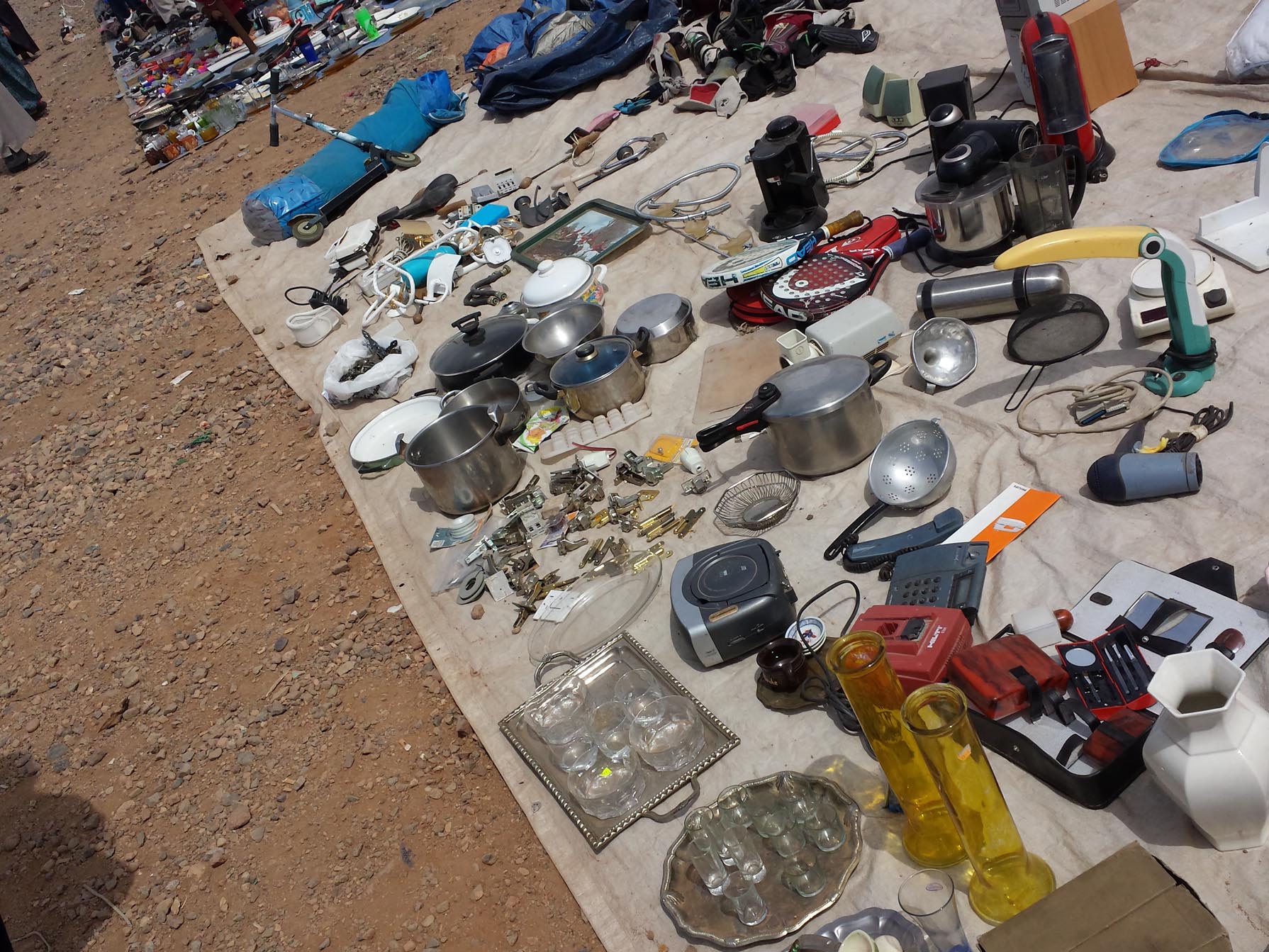
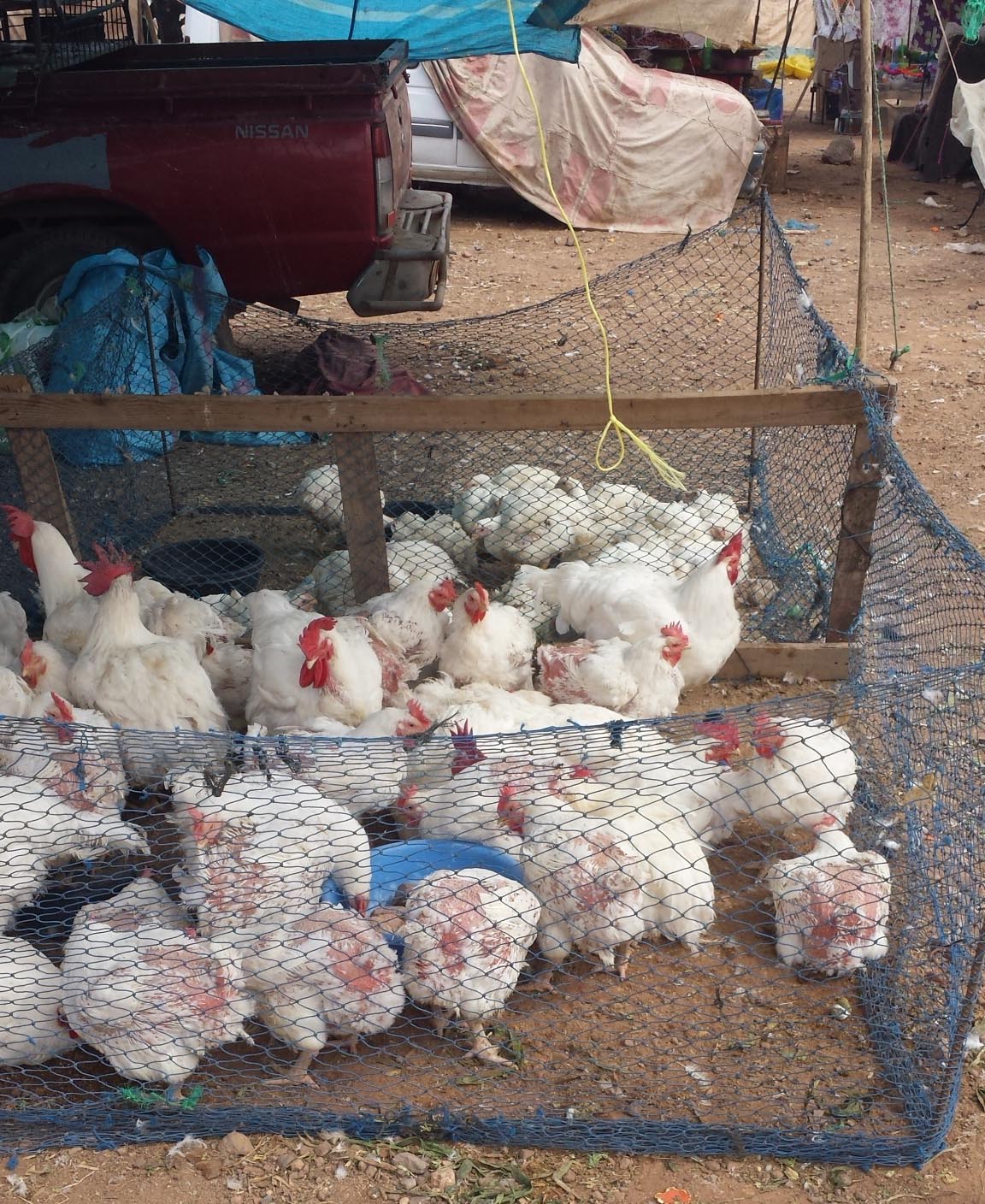
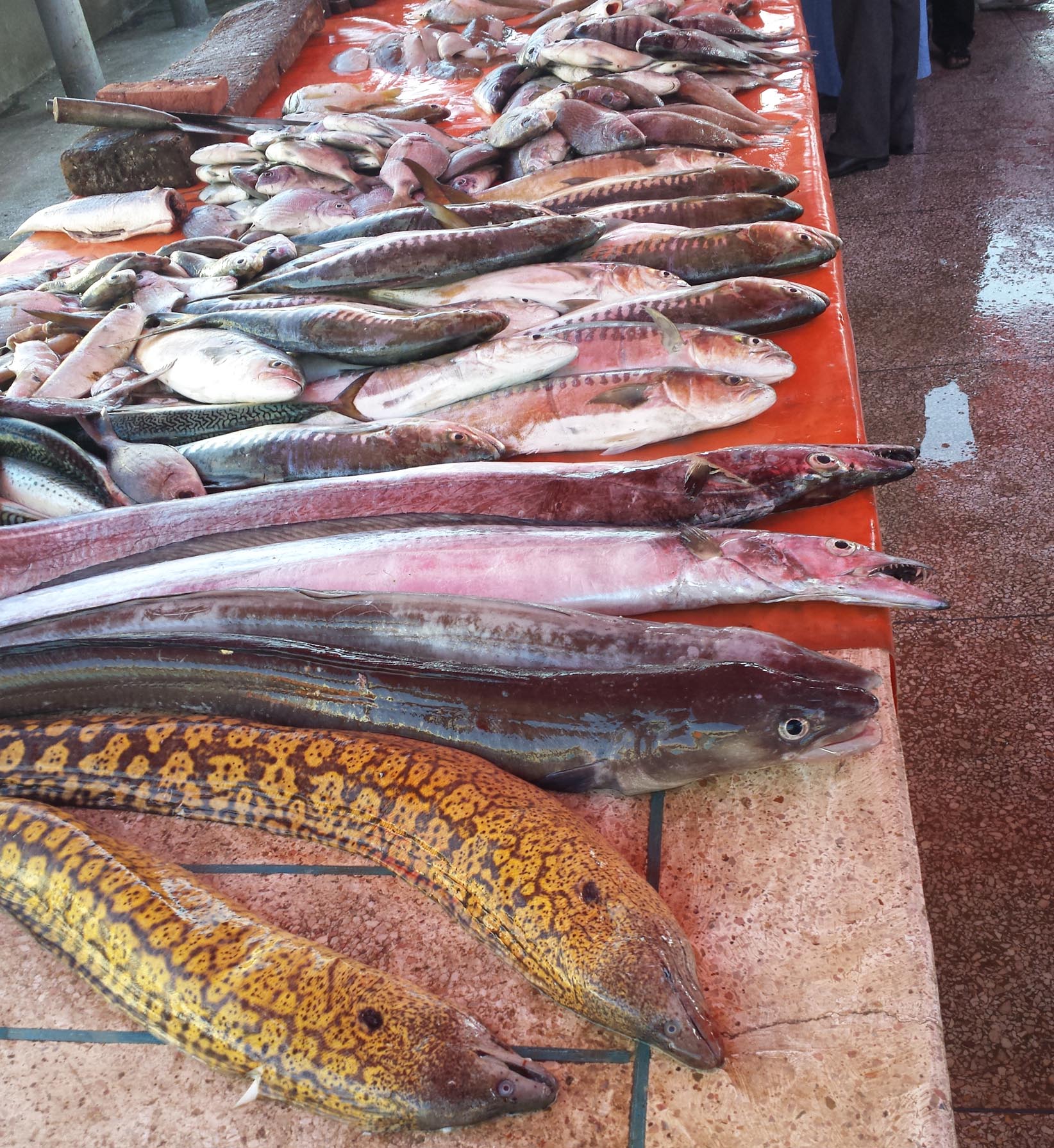
The Sidi Ifni Sunday souk looks like flea markets everywhere.


3.13.16 Sidi Ifni souk-007sm

Except sometimes the souk in Morocco looks very different.


What can we conclude from these few statistics and my observation of Morocco for only a week? Educational opportunities are limited by tradition to some extent, and jobs for people of working age are not sufficient for the size of the working class in both countries, though the problem is more acute in Morocco. People of both nations leave for employment in other countries. This can lead to successful careers elsewhere, or a lifetime of scraping by in a more developed country in order to send money home. The extended family can be a source of contacts and assistance, but it can also be a terrible drain on the income a person does manage to generate. Peru remittances for the 4th quarter of 2015 were 715.81 million dollars, while Morocco’s were apparently 6 billion dollars for the year (aprox 1.5 billion per quarter). Thus remittances are one of Morocco’s important sources of foreign exchange.

3.13.16 Sidi Ifni souk-002sm 3.14.16. Sidi Ifnism

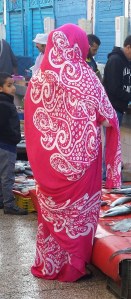
An important difference in the Human Development Index may be most visible in the number of Moroccan women who go about veiled. I personally see this as a barrier to education and work. In southern Morocco, where we are now, many women wrap themselves in a 3 meter long swath of fabric, a melfa, to go out. These can be very attractive, but the need to be veiled is something I view as a problem. Foreign women do not alter their mode of dress, and men can wear anything from jeans to a floor-length caftan. Note the men and boys in the background of these photos.

I am not sure what women think of their lesser role, and I know that many appreciate opportunities that arise for them. (See my next post on the argan oil cooperative in Mesti.)

An FYI: Many people do not wish to be photographed, and Joyce gave me good advice to always ask people before taking a photo. Some people agree to have a picture taken, others not. Thus, I do not have a photo of the beautiful tent full of vegetables presided over by a turbaned man in the Sunday souk. I have a picture of the camel’s head from the camel butcher, but not the crossed hooves from the beef butcher.

Agadir to Sidi Ifni–the charming Hand of Fatima

Nouri, the very helpful manager at our riad in Marrakesh, picked up our bus tickets to Agadir. He also helped arrange our transfer to the bus station. First the suitcases go in a cart to the edge of the medina, then the taxi is loaded, and then we are off to the bus station. Three hours later we meet Joyce and Jean-Marie in Agadir.

3.11.16 BusBus stations are much alike.

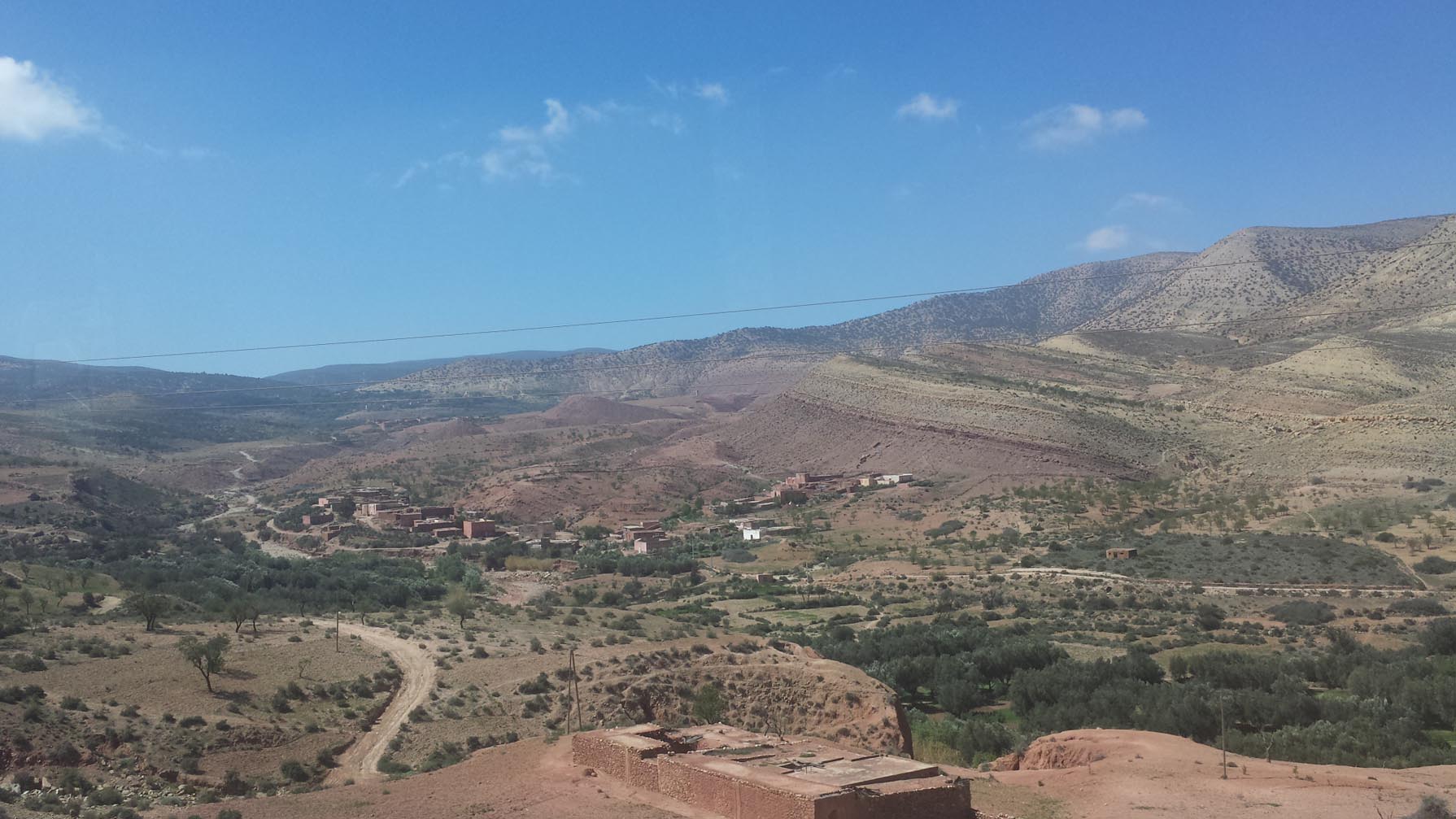
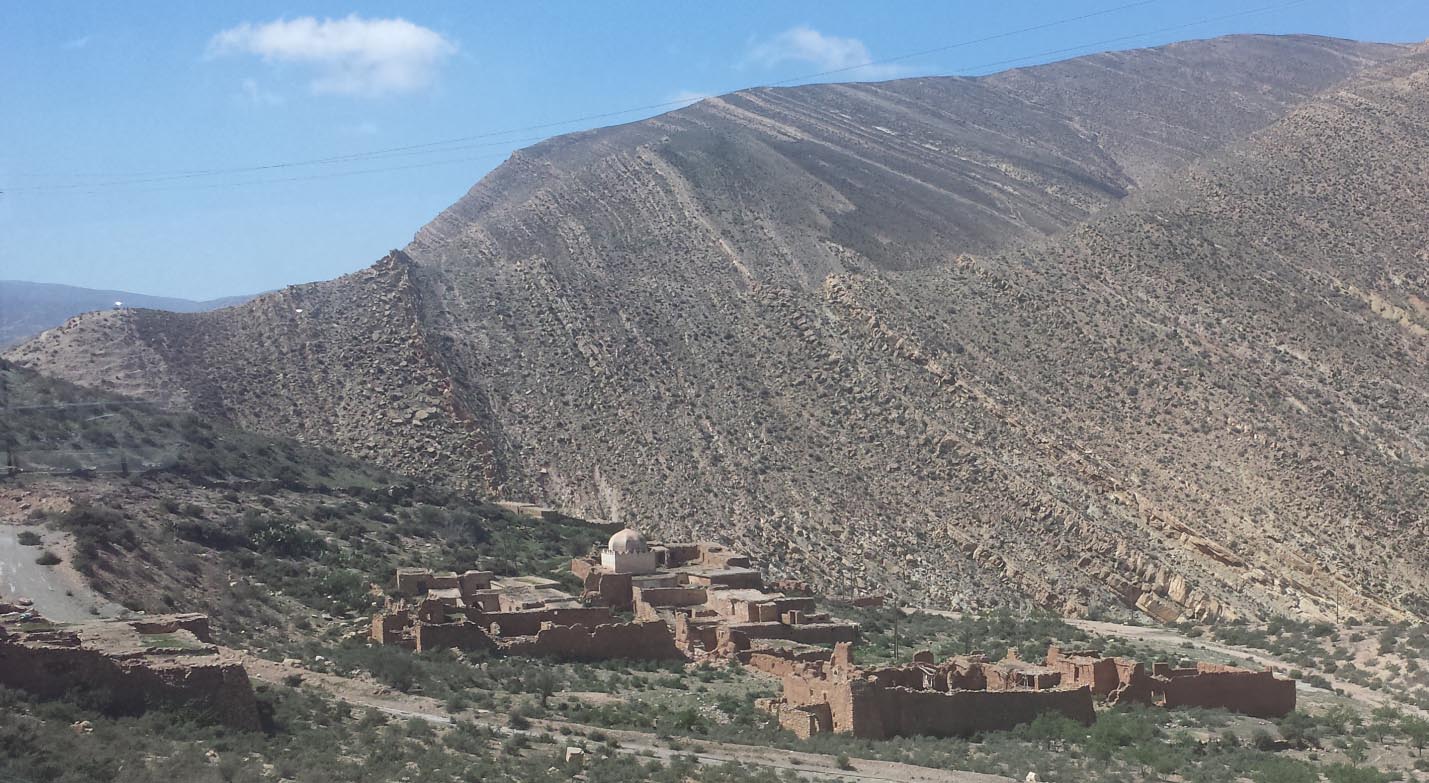
3.11.16 Agadir to SI-004smThis is the landscape of southern Morocco.

We were delighted to arrive at our friends’ home in Sidi Ifni. The Hand of Fatima painted on their front door is a symbol of protection and fortune.

This slideshow requires JavaScript.


Cue the music–Marrakesh Express

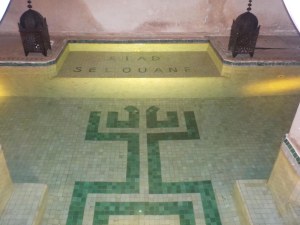
Our stay in Marrakesh was short, but we made the most of it. From Riad Selouane, we made our way past the souks (dense warren of market stalls selling everything a tourist could want). I took a few photos of the route as we went, so we wouldn’t get lost. The market is brilliant with colors and polished metal.

This slideshow requires JavaScript.

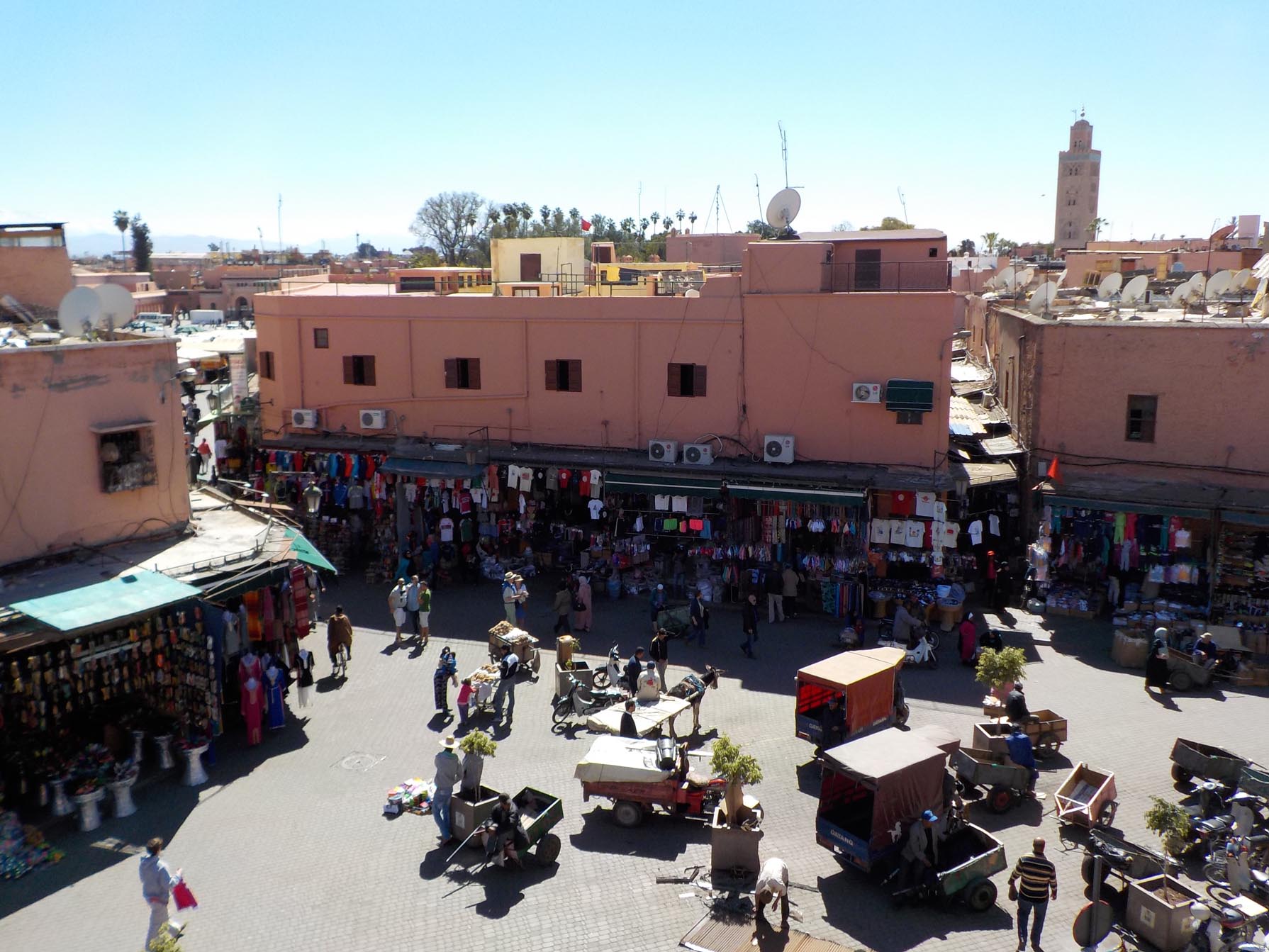
We stopped for lunch in a rooftop cafe over a small square where vehicles park temporarily. We found out that donkeys and motorcycles are the principal vehicles found in the medina.

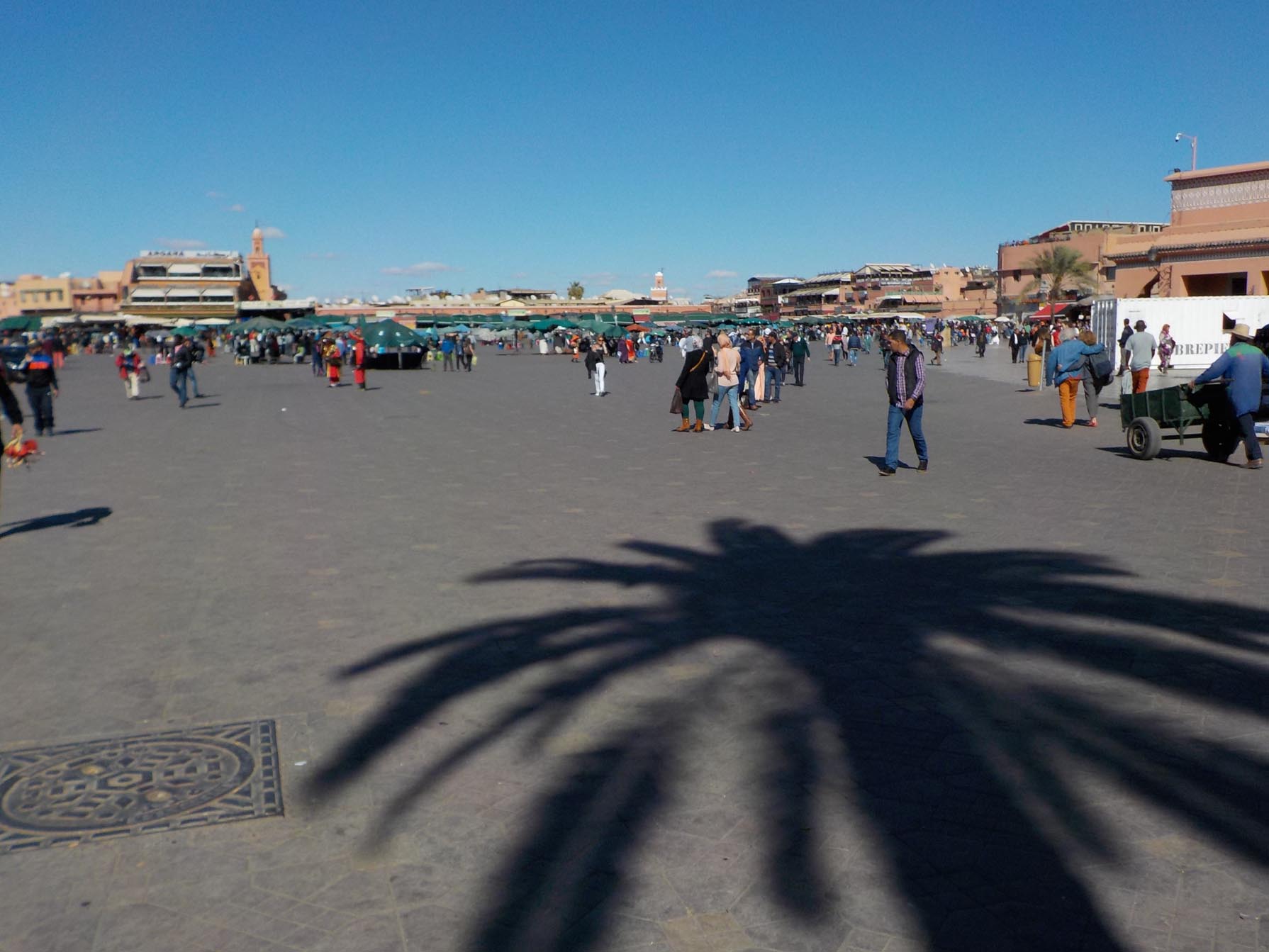
3.10.16 Mor Day 2-024smFrom the rooftop we could see the palm trees bordering the Jma El Fnaa, the main square of Marrakesh. After lunch we walked over. The square in enormous, with room for many snake charmers, music performers, men in traditional water-bearer dress waiting to take a photo with you, and roving henna artists with their squeeze bottle of henna paste. They will decorate your shoulder, palm or ankle while you wait.

3.10.16 Mor Day 2-037smWe returned to the riad without getting lost, and that is saying something.

3.10.16 Mor Day 2-053smOur dinner was around the corner at a restaurant where I had a chicken “pastille”, chicken in a phyllo wrapper with cinnamon. Our Moroccan cakes for dessert were a bit of a disappointment, mostly all almond paste, though in different shapes.

We fell into bed dreaming of Marrakesh.

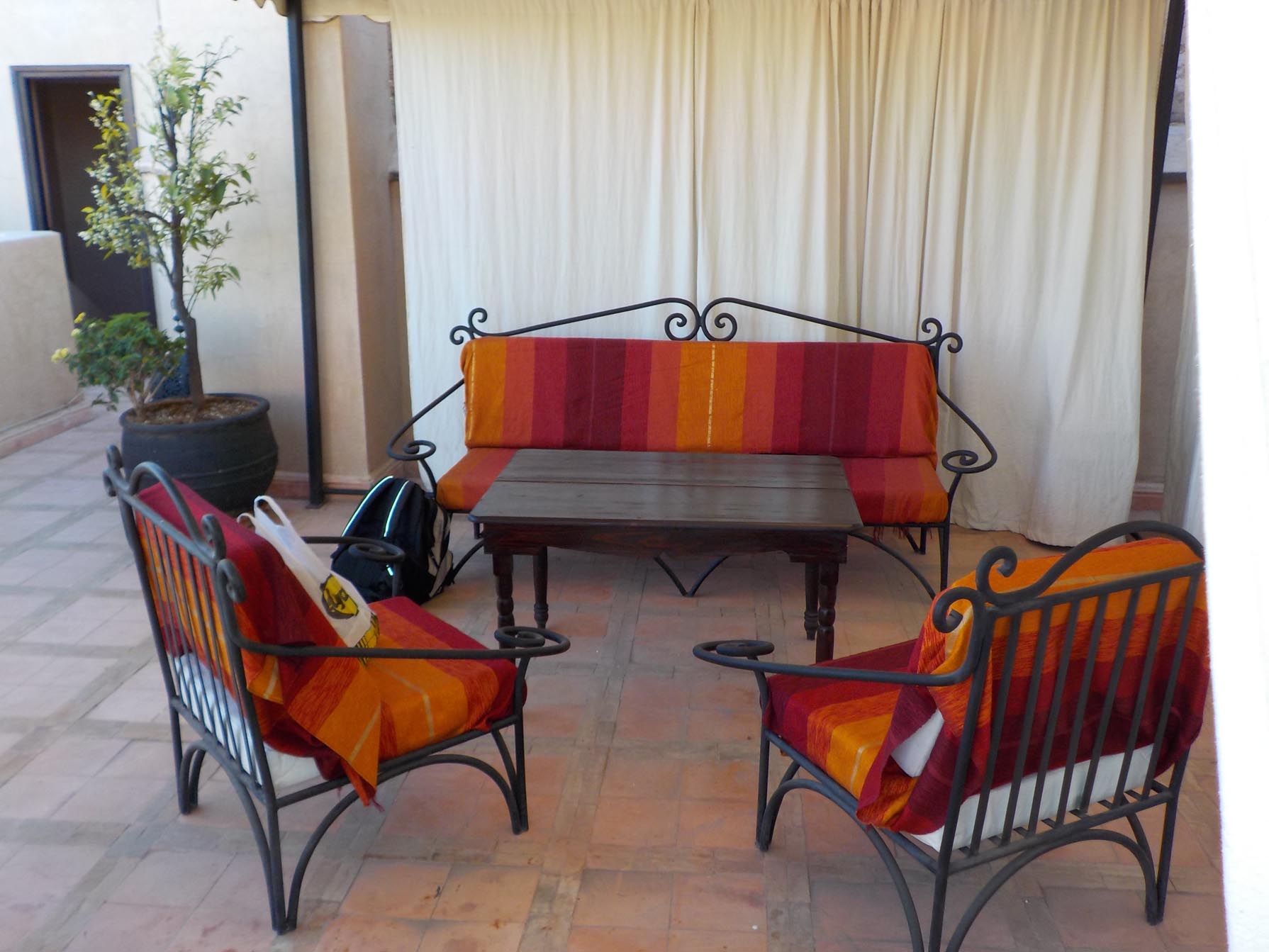
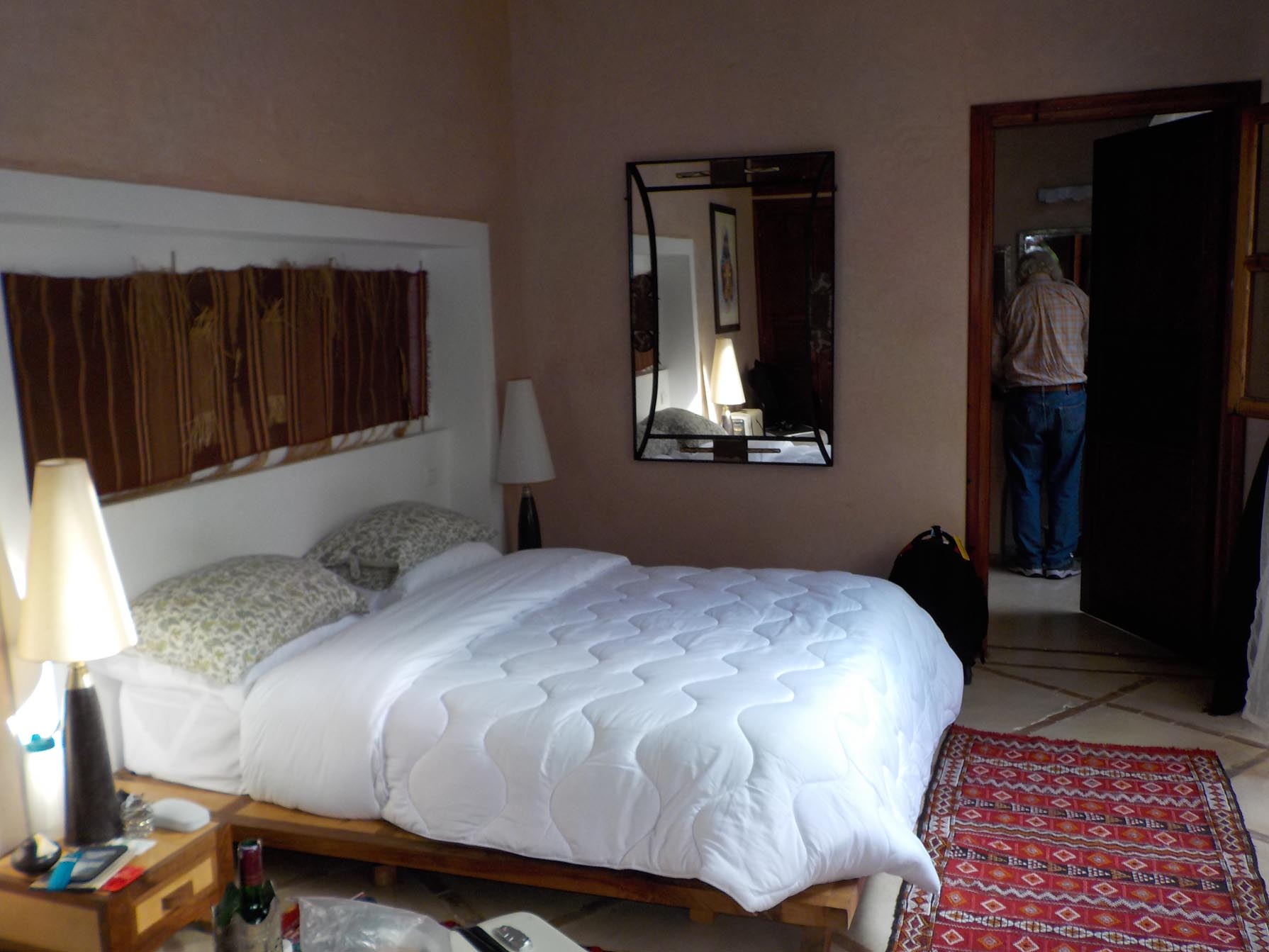
Here are a few more photos of Riad Selouane, Marrakesh.

3.10.16 Mor Day 2-056sm

Main floor salon


3.10.16 Mor Day 2-060sm 

Rooftop lounge chairs


3.10.16 Mor Day 2-061sm


Our room:


3.10.16 Mor Day 2-063sm

First Accomplishment of the New Travel Season

When we left Wheaton last year in April, all our possessions were packed in our Prius (and the storage unit). We went to California for 3 months and stopped on our way to the airport to drop off a lot of stuff with Amanda, since she’s in CA. We left for Barcelona with 4 suitcases.

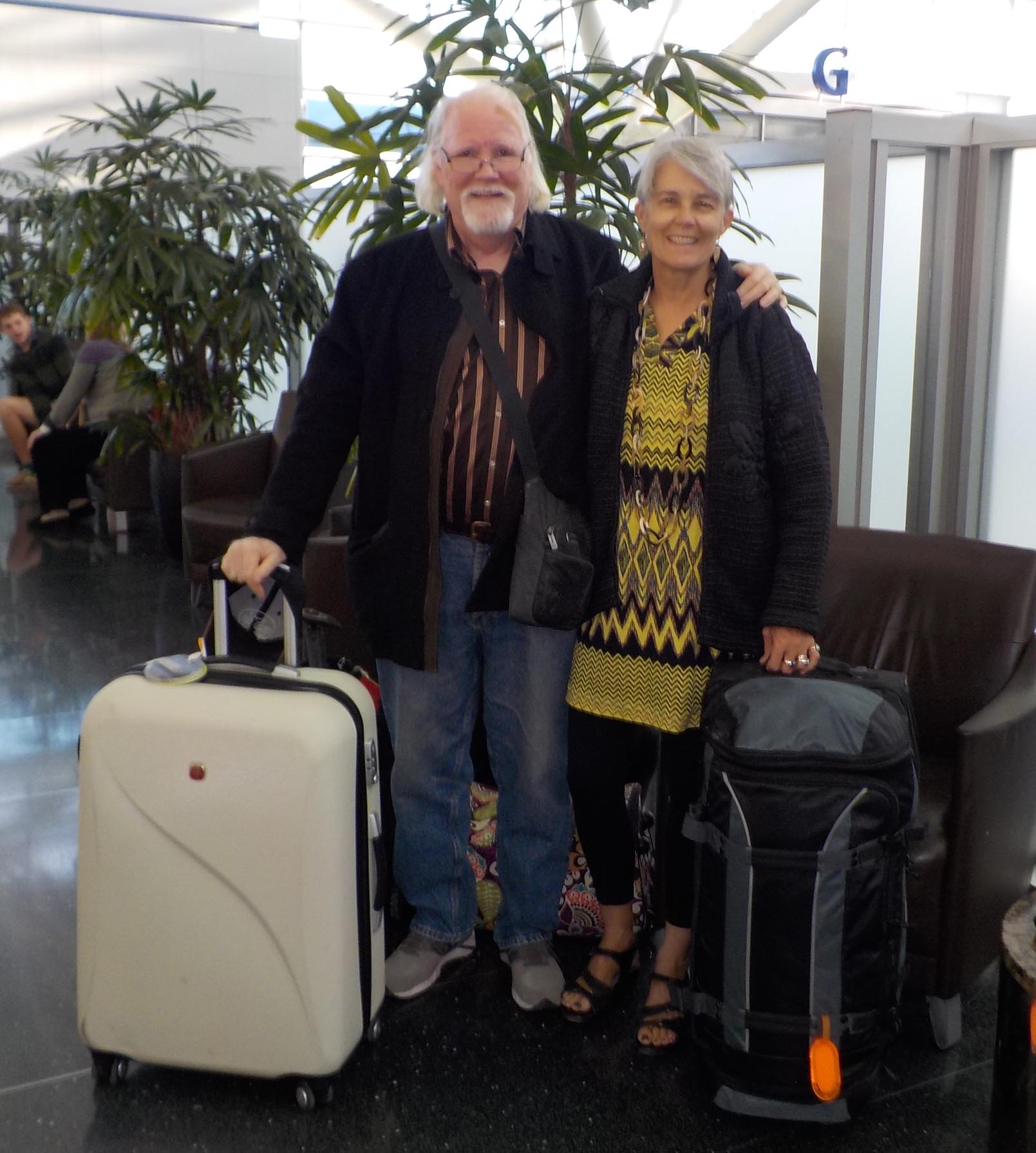
Five months have passed since our return from Barcelona, and we are hitting the road again and Voila! we are down to one suitcase each. Plus generous carry-ons.3.8.16 Leaving NYC-005sm Advice to travellers: Avoid driving through the NY area. Yes, it cost less to drive from Syracuse to JFK, even with the $250 drop off fee, but the tolls were a shock. $15 to cross the George Washington Bridge, and $8 more to cross the Whitestone. I was glad to turn our car in.

We had to hug Lyra a lot, since she was the only daughter available for hugging. She was a champ to brave the traffic to come and see us at the airport. This may never happen again.

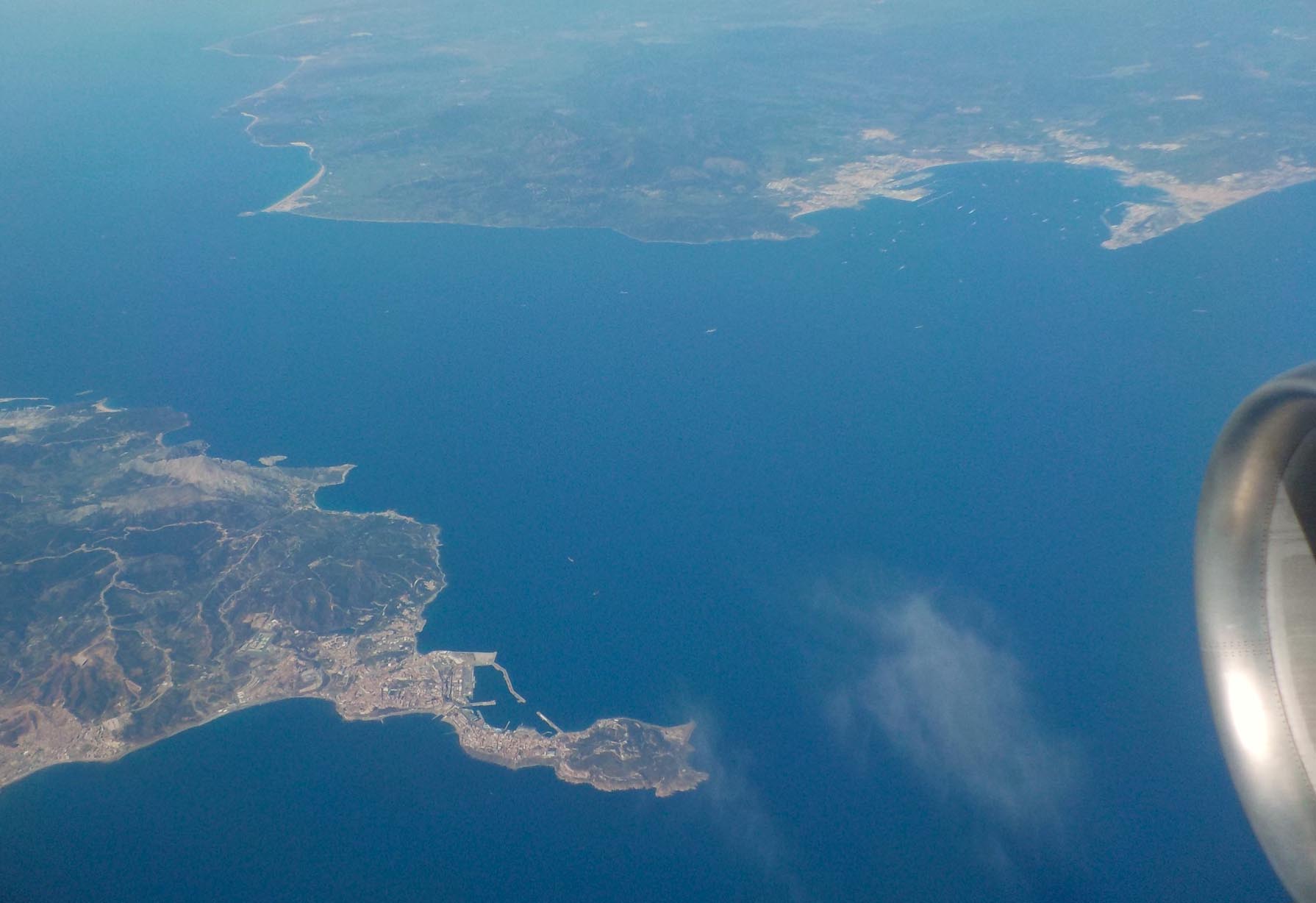
Traveling business class makes the best of a long night.3.8.16 Leaving NYC-008smAs I mentioned on Facebook, the business class lounge for Iberia in Madrid is excellent. We whiled away the time until our flight to Marrakech. The day was perfect, and we could see Ceuta, the Spanish enclave in North Africa (left), and Gibraltar (right).

3.9.16 Mor Day 1 Ceuta-Gibraltar.16 Mor Day 1-003smWe landed in Marrakesh and were collected by a taxi from our hotel, Riad Selouane. The driver got a man with a cart to take our suitcases from the taxi to the riad, because it is in the Medina where cars are not allowed. The streets are only one lane, and very narrow.


Mom is right, again!

My mother is going into her third year in an independent living setting and has just turned 91. She claims that there are all kinds of wonderful stories among her neighbors. In addition to the 23 retired priests (there’s a story there), and a retired ambassador (another), artists, intellectuals, she says everyone has a story, and she proved it by inviting her friend Florence to have lunch with us. Florence is 95, and came to the US from China in a cargo ship in the 1930s. She had a lot of adventures before she arrived (carrying a rifle among them), and a lot more when she settled in the US. Florence taught cooking at the China Institute in New York, and after meeting her, Craig Claiborne (long time food critic of the NY Times) wrote a full page article about her that led to her writing a cookbook about Regional Chinese cooking, long, long before anyone in the US knew there was anything but Cantonese food in China. Jonathan had her cookbook on our kitchen shelf for many years and was thrilled to meet her.

Florence is charming and wonderful to talk to. She invited us to her apartment to see her books and she had some beautiful souvenirs of China that she showed us. When she was young, women had to learn to embroider with fine, silk thread to decorate their trousseau. She still has some of the pillow cases she embroidered, and according to my mom, Florence is still skilled with a needle. We had a lively discussion over lunch and our visit. My mom is (once again) right, everyone seems to have a story and don’t let a mild gaze keep you from asking about what people did before they hit age 90. You’ll probably be surprised. I was.

L-R: Jeanne Creamer, Florence Lin, Jonathan Haas

Me and my Warby Parkers are off and away

I wanted to say that for a while (see my Facebook for the actual eyeglasses). Accuracy demands that I note it’s not just me and my attractive eyewear, but also Jonathan (beloved and chef), two or three large suitcases, carry-ons and much paperwork clutched in our slightly nervous hands. Last year was easy, everyone spoke something we speak. This year is different, definitely out of our comfort zone, though we’re looking forward to all our stops, starting with the US and then Morocco.

We said goodbye to all our friends in Barranca. Most people were packing up to return to Lima this weekend because the school year starts on Tuesday, though there was some complaining that it was too hot to go back to school when the beach is still much nicer than the city. This reminds me of our annual lament in Wheaton that the pool closes before Labor Day even though it is still plenty hot enough to swim. It doesn’t matter where you live, no one wants summer to end. We have the advantage of following spring for a while.

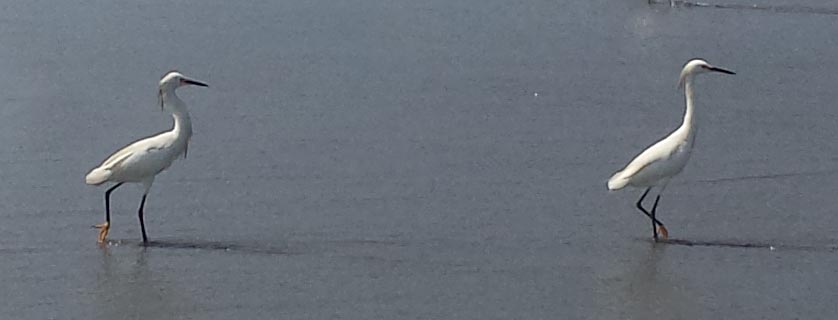
20160226_100200smI love these guys with their yellow feet and ducktail hairdos. They’ll still be fishing along the shore when I get back in November. In the meantime, I’ll be posting about our travels. I hope you’ll keep reading!

From the Vault: Barcelona

I made a list of my favorite places in Barcelona. I’m not sure why I never posted it, so here it is now. It is followed by my notes on “useful to know” items for Barcelona and Europe more widely.

Barcelona Highlights
Best way to spend a Sunday (many stores are closed): Montjuic park. Visit any of these places that are within the park: Castle, Botanical Garden, Miro Museum, National Museum of the Art of Catalonia, Poble Espanol. If you’d just like a stroll, you can forgo all of these and walk along the top of the hill from the Miramar Hotel along a path that has a view of the sea from the W Hotel and superyacht basin to the cruise ship port and the container ship port.

Favorite sights:
Sagrada Familia basilica
Miro museum
Picasso museum
National Museum of the Art of Catalonia
MUHBA-Museum of the History of Barcelona, walk through the excavation of ancient Barcelona back to the time of the Romans

Gaudi and Catalan Modernism:
Everyone visits Barcelona to see the architecture of Antoni Gaudi (Gow-DEE). There are other fascinating buildings by his competitors and students.
• Favorite Gaudi works: Parc Guell, Palau Guell, Casa Batllo, Casa Vicens (will be open to the public starting in 2016)
• Favorite works of others:
o Palau de la Musica Catalana and the Hospital de la Santa Creu I Sant Pau, or the Sant Pau recinte modernista (https://www.santpaubarcelona.org/en/qui-som) both by Gaudi’s competitor Domenech I Montaner and are fabulous examples of the extreme creativity of Catalan modernism. The “hospital” complex is no longer a hospital, is recently renovated and still finding its mission but the exteriors are gorgeous and reminiscent of a section of Disney World because of the number of restored period buildings included.

Day (or two) trips from Barcelona
o Beaches. There are beaches that range from a short bus or metro ride away from the old city, to a couple of hours. Barceloneta is the area closest to the city and has a highly developed area of restaurants along the shore. The beaches have facilities. Frank Gehry built a gigantic sculpture of a fish that looks over the beaches and the former Olympic harbor. We visited these beaches by bus.
o Beaches out of town. We visited Caldes d’Estrach one day, and Sant Pol de Mar another. Sant Pol has a hermitage dating to the 11th century on a knoll overlooking the water that is worth a look. These beaches were accessible by the regional short-distance trains (Rodalies de Catalunya). Try Sitges and the nearby town of Garraf, where there is a structure by Gaudi that is now a restaurant.
o Tarragona. We spent a day in Tarragona, traveling both ways on the train from the main Sants station in Barcelona. The lesson from this is that you need to know the final destination of the train you want to get on, as well as the stop you want, as the train may not be marked with your destination.
o Figueres. We stayed overnight in Roses on the Bay of Roses and recommend it.
In Figueres we visited the Dali Museum. There is also the Dali home in Portlligat, which we did not have time to visit. The bay is good for swimming and the beach if the weather cooperates. Nearby are two excellent areas for birdwatching, the Cap de Creus Natural Park, and the Emporda marshes (Aiguamolls de l’Empordà). We visited the marshes and had a wonderful day. There are hides to sit in, lots of parking and helpful ranger staff. We also did not have time to visit the archaeological of Empúries, the largest Greek outpost in Spain. There is also a later Roman occupation. The name of the town is related to the word “Emporium” meaning place of trade. For this trip, we rented a car from a Europcar office, located in a parking garage a short subway ride from our apartment. This proved more convenient than going to the airport to pick up a car, though not different in price.
• There is an excellent birdwatching area very close to the Barcelona airport, but ironically, unless you are a strong hiker and have a deft hand with the bus system, a car is needed.

Good to Know for travel in Europe/Spain/Barcelona
o Europe–Credit cards must have a chip to work everywhere. US credit cards that slide do work, but not in every kiosk, such as in train stations.
Europe–It helps to have a phone data plan so that you can use GPS.
Europe–Many apartments have a clothes washer but not a dryer. Apartments often have clotheslines or access to clotheslines on the roof of the building. You may have to ask a neighbor or concierge how to get access.
Europe–If you are eligible for an ICOM, ICOMOS or other card that gives you a discount on museum entrance fees, consider getting one. Having to decide whether it’s worth another 12-15€ to check out a lesser known museum makes economic sense but sometimes the exhibits in the smaller museums can be interesting and less crowded than elsewhere. We saw an exhibit, Humans+: the Future of our Species, at the Centro de Cultura Contemporanea de Barcelona (CCCB) that was excellent. There was only one other exhibit at the center, however. With our membership there was no charge, and I probably would have skipped it for 8€.
Europe–Look for free events in listings online English-language newspapers, free handouts from hotels, visitor information offices and guidebooks. I found free concerts by reading posters in the street. There are often free concerts associated with festivals. Not all of these are advertised to tourists. The Merce festival in Barcelona in September included a very large program of free concerts. The full listing only appeared in the Catalan program, paper or pdf. The Palau de la Musica Catalana features highly publicized flamenco concerts, but also hosts inexpensive concerts produced in house. Thus we saw Nosferatu with live organ accompaniment by the chief organist for Sagrada Familia on Nov. 1.
Spain–Store hours can be unfamiliar. In Barcelona, many stores are closed from 2-3:30 pm, and open until 8 pm.
Spain–Trash may go out to large containers on the corner of the block rather than go in containers in your building. Same with recycling.
Spain–Dishwashers may need to be refilled with salt periodically. You’ll know because your dishes will come out filmed with white stuff. I went online and found where to add it in the model in our apartment.
Spain–Lots of people speak English, but don’t hesitate to try out your Spanish, no matter how limited.
Spain–If you are over 60 and plan to travel by train, spend a few minutes at the station and get a “targeta daurada” (gold card). It makes you eligible for a significant discount on train trips, though you’ll need help at the ticket machine the first time you use it to purchase a ticket. It cost us 6€ each and is good for one year throughout Spain.
Barcelona–Unless you make multiple trips per day per person on the buses, subway, train, it doesn’t pay to buy a monthly, weekly or daily unlimited transit pass. The T-10 transit card for Barcelona is very useful because it can be shared between two people (maybe up to 4 people). All the other multi-ride tickets are specific to an individual. Each ticket includes free transfers to most other forms of transport within 90 minutes of your departure time.
Barcelona–Aerial tramways don’t participate in the common ticketing sytem and cost significantly more each way (7-11€). You may consider taking a ride to view the city but don’t count on these as transport to a specific destination. The lines are usually long.
Barcelona–If you are going someplace that requires you to be on time, identify two ways to get there so that you can take a bus if the taxis are blocked or on strike, the metro if the bus route is blocked by a demonstration, or a bus if the metro is on a slowdown. These things happened to us.