On June 1, we moved into our new apartment, half a house above Scandicci, a suburb of Florence. It is very comfortable, and our hostess, Lucia, is very warm and willing to put up with my stumbling Italian.
El 1 de junio, nos mudamos a nuestro nuevo apartamento, media casa encima de Scandicci, un suburbio de Florencia. Es muy cómodo, y nuestra anfitriona, Lucía, es muy cálido y aguanta mis esfuerzs para hablar italiano.
This slideshow requires JavaScript.
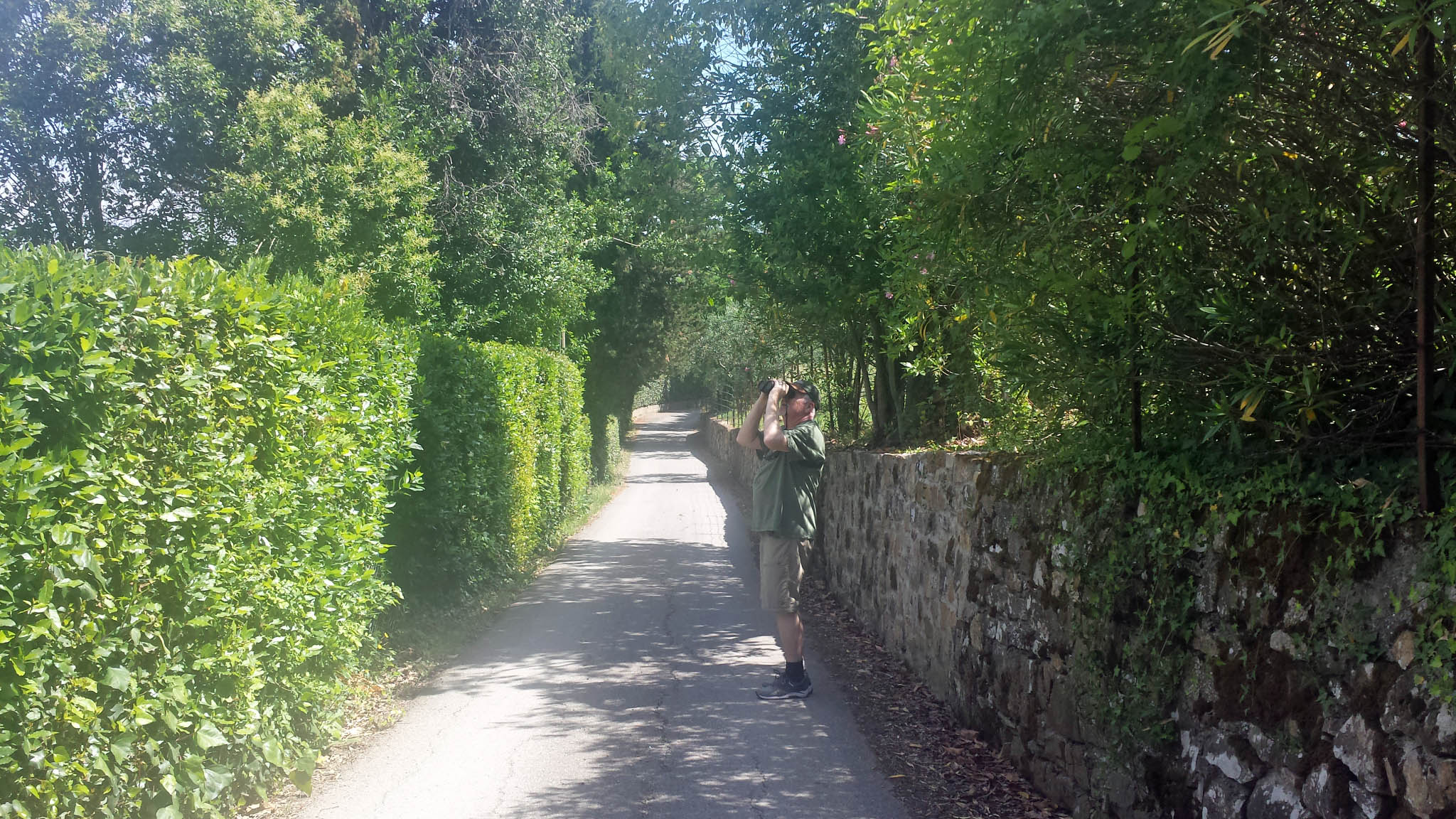
We went for a walk in the neighborhood along the narrow road.
Fuimos a dar un paseo por el barrio a lo largo de la calle estrecha.
There are mosaics in Venice, but I didn’t find any place that was making mosaics. In Ravenna, however, there are several large mosaic studios. We visited one and I enjoyed seeing the range of work that was being done. Some pieces are copies of classical mosaics, or pieces made in classical style.
Hay mosaicos en Venecia, pero no encontré ningún lugar que estaba haciendo mosaicos. En Ravenna, sin embargo, hay varios fabricantes grandes del mosaico. Visitamos uno y disfruté ver la gama de trabajo que estaba haciendo. Algunas piezas son copias de mosaicos clásicos o hecho en estilo clasico.
Lots of other styles are made, too. We watched a woman work on a lamb that was covered with tooth-sized pieces making it’s wooly coat. She seems to have just finished making a wolf for the same set.
Muchos otros estilos se hacen, también. Vimos a una mujer trabajar en un cordero que estaba cubierto con piezas de diente de tamaño haciendo su capa de lana. Parece que acaba de terminar de hacer un lobo para el mismo conjunto.
Tools of the trade
I liked some of the birds that they’d made.
Me gustaron algunos de los pájaros que habían hecho.
And I enjoyed seeing the materials that were around the studio.
Y disfruté viendo los materiales que estaban alrededor del estudio.
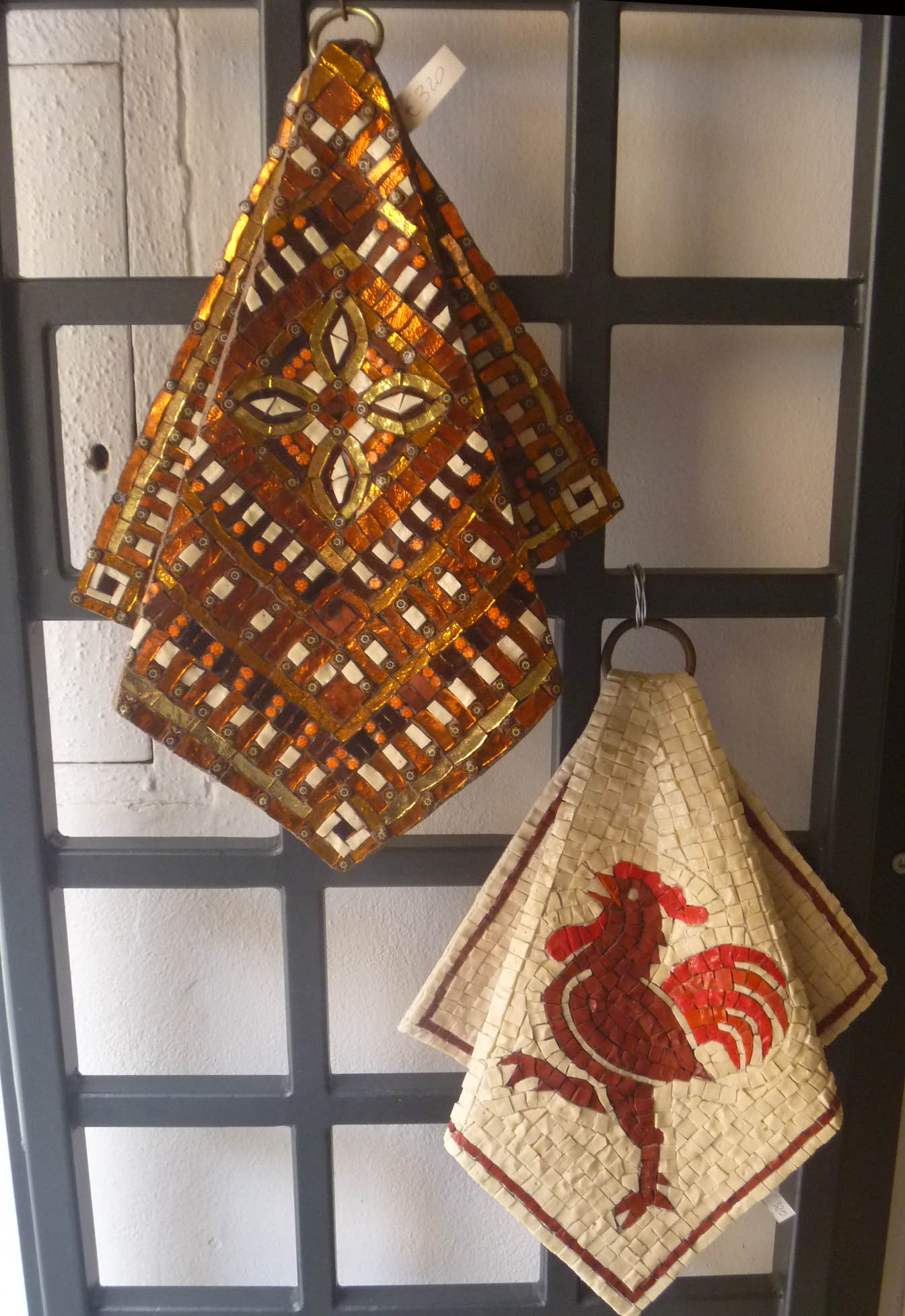
Here’s a clever design I saw in a nearby gift shop. I’d hang one of these in my kitchen.
Aquí está un diseño que vi en una tienda de regalos cercana. Colgaría uno de ellos en mi cocina.
We spent the day between rental apartments in Ravenna. I visited in 1968 with my Italian family when I was a summer exchange student and I never forgot these beautiful works of art and I wanted Jonathan to see them. We had a rapid but satisfying visit to all the main sites. The mosaics are Byzantine style with influence of Greek and Roman mosaic artisans. The buildings stand out because they have survived all this time. Elsewhere such work was knocked down and replaced with the next big thing. All these photos are of mosaics created in the 6th century. They are 1500 years old! Amazing!
Pasamos el día entre apartamentos de alquiler en Ravenna. Visité en 1968 con mi familia italiana cuando era estudiante de intercambio de verano y nunca olvidé estas hermosas obras de arte y quería que Jonathan las viera. Tuvimos una visita rápida pero satisfactoria a todos los sitios principales. Los mosaicos son de estilo bizantino con influencia de los artesanos de mosaico griego y romano. Los edificios se destacan porque han sobrevivido todo este tiempo. En otras partes, ese trabajo fue derribado y reemplazado por el siguiente gran acontecimiento. Todas estas fotos son de mosaicos creados en el siglo VI. ¡Son 1500 años! ¡Asombroso!
Neonian Baptistry
Arian Baptistry
There are two baptistries, built by supporters of different sects, but the central image on both is the same, Jesus being baptized by John the Baptist. I like the differences in the water of the Jordan River in each.
Hay dos batisterios, construidos por partidarios de diferentes sectas, pero la imagen central en ambos es la misma, siendo Jesús bautizado por Juan el Bautista. Me gustan las diferencias en el agua del río Jordán en cada uno.
The mausoleum of Galla Placidia, below, is the earliest of the mosaic monuments in Ravenna, begun in about AD 495. It had very inventive mosaics, as well as alabaster panels over the windows. The light was a lovely color.
El mausoleo de Galla Placidia es el más antiguo de los monumentos mosaicos de Ravena, iniciado hacia el año 495 dC. Poseía mosaicos muy inventivos, así como paneles de alabastro sobre las ventanas. La luz era de un color encantador.
Marble panels on windows
There are also three churches. The basilica of San Vitale, Sant Apollinaire Nuovo and Sant Apollinaire in Classe.
También hay tres iglesias. La basílica de San Vitale, Sant Apollinaire Nuovo y Sant Apollinaire en Classe.
San Vitale is the most unusual church because it is octagonal rather than a long rectangle. The apse is decorated with mosaics so tightly packed it is difficult to show it all at one time. It is a challenge to decode the messages coming from the past that are embedded in each person, their face, positions, gestures and associated symbols. There are some very good photos of the mosaics in Basilica San Vitale in Wikipedia.
San Vitale es la iglesia más inusual porque es octogonal en lugar de un largo rectángulo. El ábside está decorado con mosaicos tan fuertemente empacados que es difícil mostrarlo todo a la vez. Es un desafío para decodificar los mensajes que vienen del pasado que están incrustados en cada persona, su rostro, posiciones, gestos y símbolos asociados. Hay algunas muy buenas fotos de los mosaicos en la Basílica de San Vitale en Wikipedia.
Also in the town itself is the church of Sant Apollinaire Nuovo. There is a long procession of Martyrs down one side of the church, and Virgins down the other side. These long ranks of figures give the church an air of vastness that is unlike anywhere else.
También en la ciudad misma está la iglesia de Sant Apollinaire Nuovo. Hay una larga procesión de Mártires por un lado de la iglesia, y las Virgenes por el otro lado. Estas largas filas de figuras dan a la iglesia un aire de inmensidad que es diferente a cualquier otro lugar.
The procession of Virgins is led by the Three Kings (R above). They wear pants and soft hats (Phrygian cap) indicate they are from the East.
La procesión de las vírgenes es dirigida por los tres reyes (R arriba). Llevan pantalones y sombreros blandos (gorro frigio) indican que son del este.
Our last stop on the way out of town was Sant Apollinaire in Classe, which was the seaport for Ravenna in AD 500. This church has a vivid mosaic of a pastoral scene.
Nuestra última parada en el camino fuera de la ciudad fue Sant Apollinaire in Classe, que era el puerto marítimo de Ravenna en 500 dC. Esta iglesia tiene un mosaico vívido de una escena pastoral.
The gold tiles shimmer even in low light. Ravenna is a great place to visit, mysterious and faintly unearthly-all those figures in procession. I haven’t begun to tell you about the history of the Byzantine (Eastern Orthodox) church in Ravenna or scratched the surface of the religious symbolism embedded each mosaic scene. Whether you want to immerse yourself in the history of church schisms and who-was-who in church hierarchy during the 500s, or whether you would be content to see wonderful mosaic scenery, it’s all in Ravenna.
Los azulejos de oro brillan incluso en poca luz. Ravenna es un gran lugar para visitar, misterioso y débilmente sobrenatural, con todas esas figuras en procesión. No he empezado a contarles sobre la historia de la iglesia bizantina (Ortodoxa oriental) en Ravena o la simbolismo religioso incrustado en cada escena de mosaico. Ya sea que quiera sumergirse en la historia de los cismas de la iglesia y quién-fue-que en la jerarquía de la iglesia durante los años 500, o si usted se contentaría con maravillosos paisajes de mosaico, todo está en Ravenna.
Venice has signs along some of its narrow streets and on its narrow bridges that remind visitors that real people (Italian people, VENETIAN people) live in Venice and have places to go, people to see, things to do. If tourists would kindly keep moving and not stop in the middle of bridges, people who live in Venice will be able to get where they are going.
….Welcome to Venice?….
Oops!
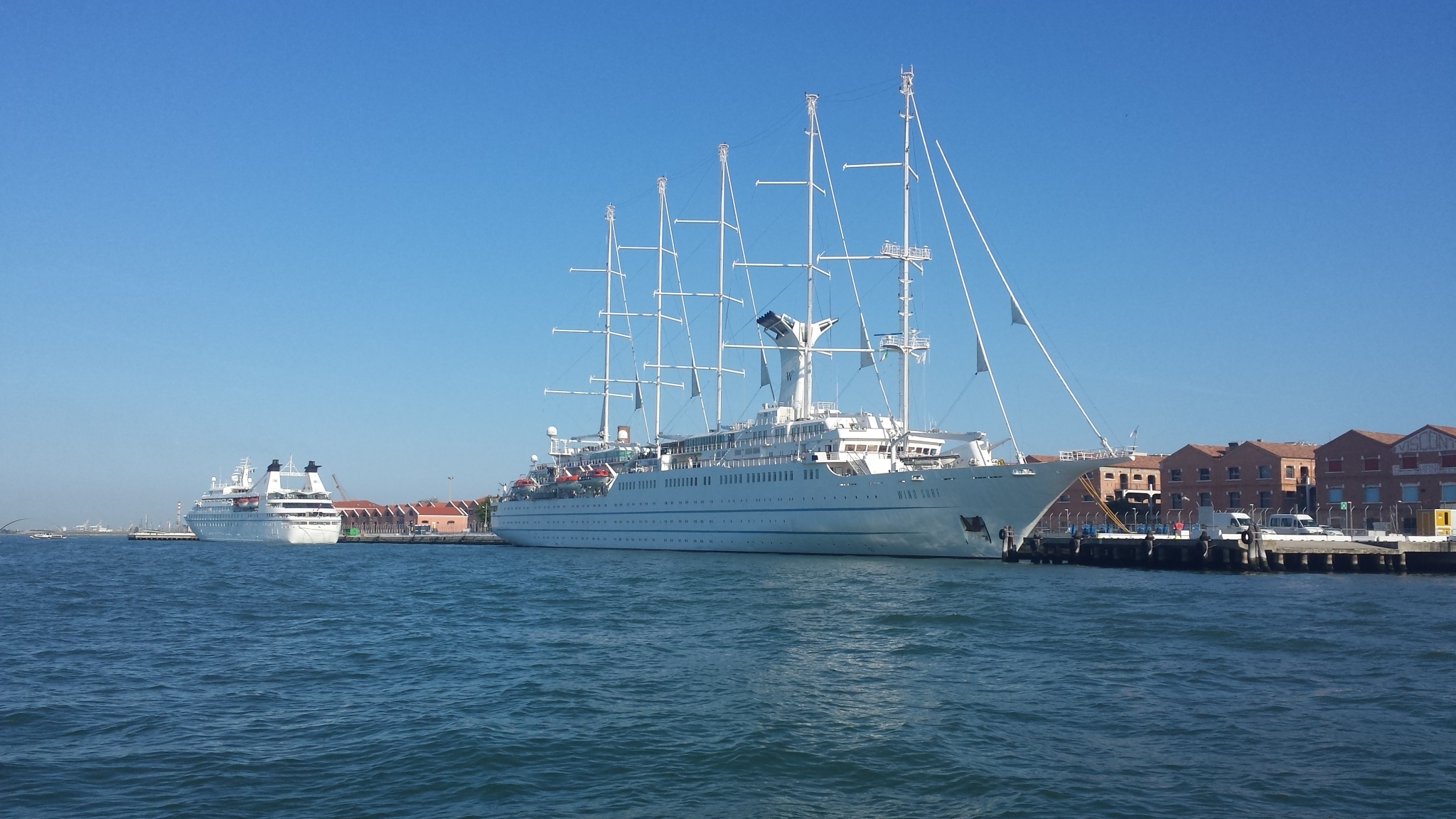
The dilemma is that the city is being loved to death. Without tourism, Venice would be a moldering ruin, rapidly emptying of people, the Detroit of ten years ago. The center of activity would be the decidedly less glamorous port and industrial area on the mainland nearby. With tourism, Venice is a showplace of art and architecture that blends Moorish with Baroque and a bit of everything else. There is barely a slow season even in the dead of winter. Venice fills in March and starts to come apart at the seams from Late April through October, bursting with visitors of all kinds.During our visit in late May, there were three cruise ships docked on most days. Three cruise ships with 6-10 stories above the water. This does not include the river cruise boat, or the vast sailing cruise boat. (I’ve never seen such a large sailboat.) Nor do I include groups of all sizes down to Jonathan and myself, independent travelers. There were many, many people like us.
Venecia tiene señales a lo largo de algunas de sus calles estrechas y en sus estrechos puentes que recuerdan a los visitantes que la gente real (pueblo italiano, pueblo VENECIANO) viven en Venecia y tienen lugares para ir, la gente a ver, cosas que hacer. Si los turistas se animan a seguir en movimiento y no parar en medio de los puentes, la gente que vive en Venecia será capaz de llegar a donde van.
… .Bienvenido a Venecia? ….
El dilema es que la ciudad está siendo amada hasta la muerte. Sin turismo, Venecia sería una ruina en descomposición, vaciando rápidamente a la gente, la Detroit de hace diez años. El centro de actividad sería el decididamente menos glamoroso puerto y zona industrial en el terrafirme cercano. Con el turismo, Venecia es un lugar de arte y arquitectura que combina lo morisco y barroco y un poco de todo lo demás. Hay apenas unas semanas fuera de temporada. Venecia llena en marzo y comienza a deshacerse en las costuras de finales de abril a octubre, repleto de visitantes de todo tipo. Durante nuestra visita a finales de abril, había tres cruceros atracados en el Puerto todos de los días. Tres cruceros con 6-10 pisos sobre el agua. Esto no incluye el barco de la travesía del río, o el barco de crucero grande de la navegación. (Nunca he visto un velero tan grande.) Tampoco incluyo grupos de todos los tamaños hasta Jonathan y yo, viajeros independientes. Había mucha, mucha gente como nosotros.
The hierarchy of disdain for tourists seems to be in direct proportion to how local a person is. If you were born and live in Venice you look down on everyone, if you live in Venice, you look down on everyone except native Venetians, who you want as friends, etc. etc. Beggars don’t care where you are from. There is a level of impatience with customers that is unparalleled in the world. Yes, you’ve just sat down in a restaurant, but if the wait staff is on their cell phone, don’t expect a menu until they are finished. It’s the same in a store. Sales people answer their cell phone in mid-conversation with you. You’re a foreigner–how valuable is your business? (You have no value, no importance. Another foreigner will be along in a moment. You are in the way.)
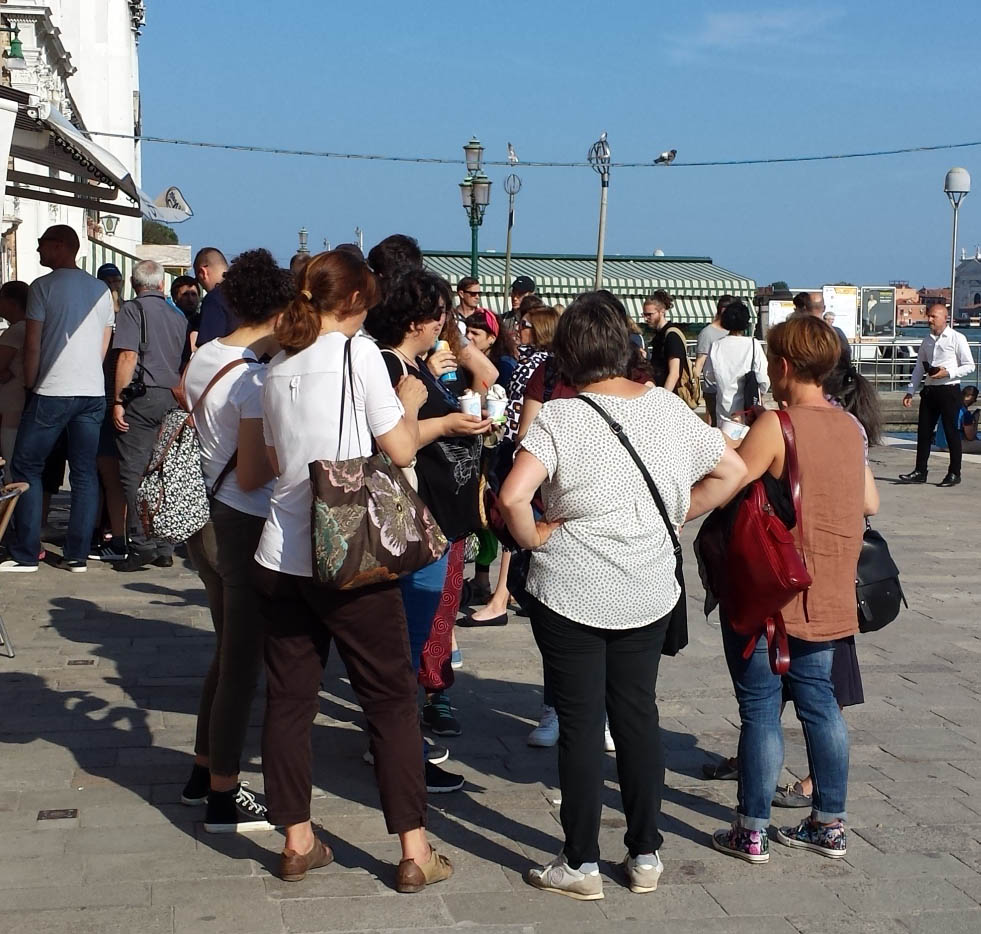
A gaggle of tourists clog the sidewalk
Venice is a city that may as well have a big sign over the entry points “Welcome to Venice. To minimize the inconvenience of having you here, please deposit your money in this box and then go away.”
La jerarquía del desdén para los turistas parece estar en proporción directa a cómo es local una persona. Si naciste y vives en Venecia miras a todos, si vives en Venecia, miras a todos menos a los venecianos nativos, a los que quieres como amigos, etc., etc. Los mendigos no se importan de dónde eres. Hay un nivel de impaciencia con los clientes que es incomparable en el mundo. Sí, usted acaba de sentarse en un restaurante, pero si el personal está en su teléfono celular, no esperes un menú hasta que hayan terminado. Es lo mismo en una tienda. Las personas de ventas responden a su teléfono celular en medio de la conversación con usted. Eres un extranjero – ¿qué tan valioso es tu negocio? (No tienes valor, no importa, otro extranjero estará en un momento, estás en el camino.)
Bars have very few seats, and besides, a seat costs extra.
Venecia es una ciudad que también puede tener una gran señal sobre los puntos de entrada “Bienvenido a Venecia. Para minimizar el inconveniente de tenerlo aquí, por favor deposite su dinero en esta caja y luego vaya.”
This attitude is common among people providing services in restaurants and stores, and among pedestrians on the street. But there is plenty of blame to go around. Visitors are unbelievably, incredibly thoughtless. Every visitor seems to have the idea that their trip to Venice is more important than anyone else’s, and no visitor seems willing to give an inch to their fellow traveler. As a result, visitors bump into other visitors, they jostle other people in lines, they walk in the middle of the (very) narrow streets, stop suddenly to admire the view, or halfway up a set of steps, when there is a long line of people behind them. We visitors are utterly frustrating to others, including ourselves, the other visitors. Is there a way to improve this situation—maybe not. Visitors! Try to remember that you are not alone.
Everyone wants to take this photo of themselves. Notice that the crowd is far in the background.This is what it really looked like in Piazza San Marco that afternoon.
There is proof of this obliviousness to others in the photos we take. Look at your photos from a recent visit anywhere. You will find that you’ve cut out the crowds and all the other people. Your photo will include only the people in your group with rarely even a person walking in the background. We edit our travels to suggest that we are out there on our own, even in a crowded area. (The Grand Canyon is a great place for this. I also have photos from our walk to Arthur’s Seat in Edinburgh last year that show Lillian and Neil and I. When I wanted a photo that showed how many other people we out there–easily 150 others on the trail– I didn’t have one.)
The Doge’s Palace is crowded, as usual.
Esta actitud es común entre las personas que prestan servicios en restaurantes y tiendas, y entre los peatones en la calle. Pero hay mucha culpa por recorrer. Los visitantes son increíblemente increíblemente irreflexiva. Cada visitante parece tener la idea de que su viaje a Venecia es más importante que cualquier otra persona, y ningún visitante parece dispuesto a dar una pulgada a su compañero de viaje. Como resultado, los visitantes chocan con otros visitantes, empujan a otras personas en filas, caminan en medio de las (muy) calles estrechas, detienen repentinamente para admirar la vista, oa la mitad de un grupo de escalones, cuando hay un largo Línea de gente detrás de ellos. Los visitantes somos absolutamente frustrantes para los demás, incluidos nosotros mismos, los otros visitantes. ¿Hay alguna manera de mejorar esta situación? Quizás no. ¡Visitantes! Trate de recordar que no está solo.
Hay pruebas de este olvido a los demás en las fotos que tomamos. Mire sus fotos de una visita reciente en cualquier lugar. Usted descubrirá que ha cortado las multitudes y todas las demás personas. Su foto incluirá sólo a las personas de su grupo con rara vez incluso una persona caminando en el fondo. Nosotros editamos nuestros viajes para sugerir que estamos por ahí solos, incluso en un área llena de gente. (El Gran Cañón es un gran lugar para esto.También tengo fotos de nuestro paseo a Seat de Arturo en Edimburgo el año pasado que muestran Lillian y Neil y yo. Cuando quería una foto que mostró cuántas otras personas que por ahí (fácilmente 150 Otros en el camino), yo no tenía uno.)
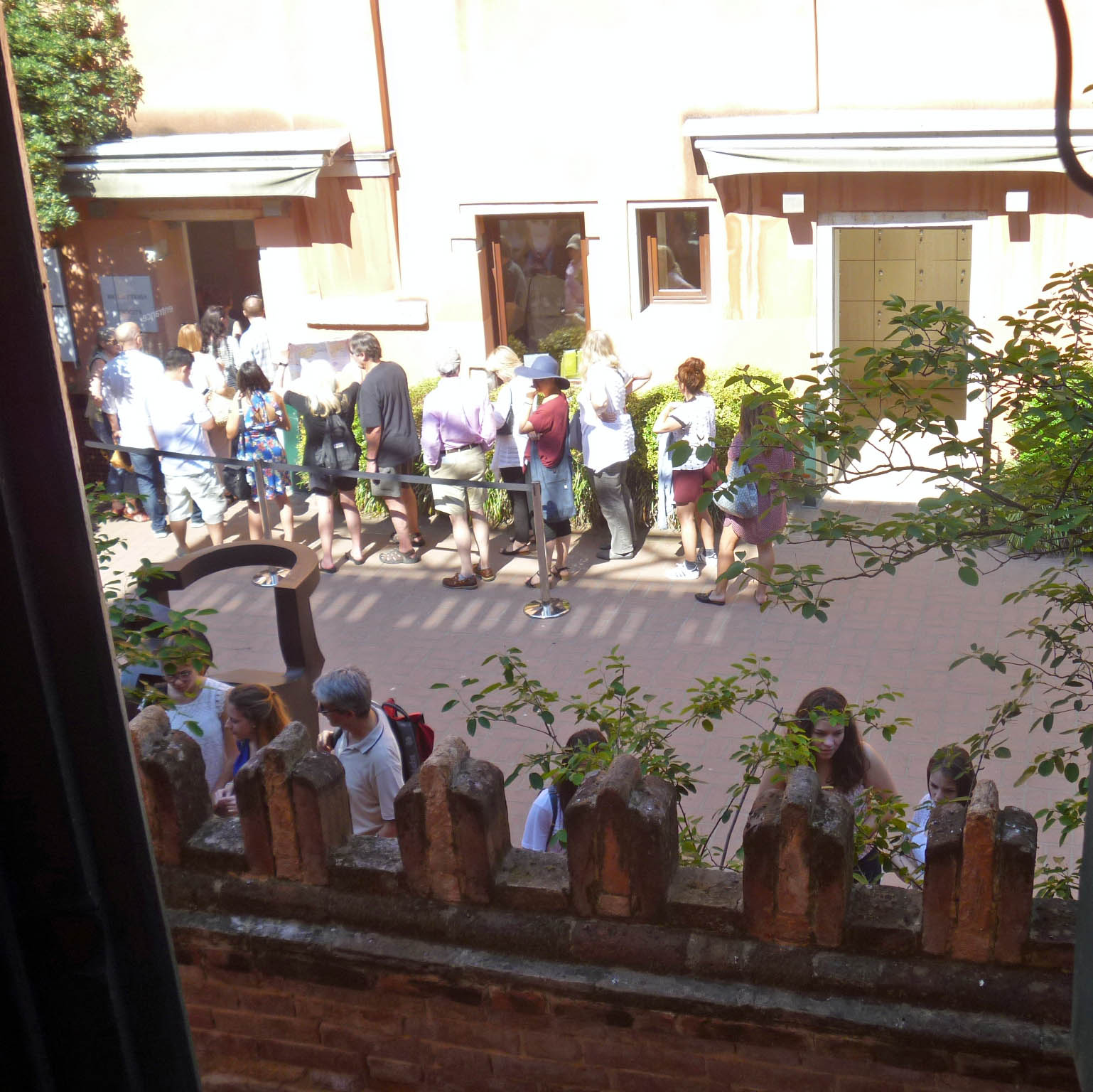
Lines at the Peggy Guggenheim Collection
What is Venice to do? The newspaper reports that discussions are underway to gate the Piazza San Marco and sell tickets to control the crowds. Right now the only control is if you sit in a café. A spritz is €17. It doesn’t cost anything to walk around the square, where you can visit the Doge’s palace and see some of the largest, gaudiest, look-at-me jewelry made with real gem stones that I have ever seen.
There are rumors that the total number of visitors to Venice will be capped to decrease congestion. I cannot imagine how that could happen. If climate change is any indicator, humans can’t, and won’t see a problem until it is way too late (Have you read The Lorax?). Venice will sink due to the weight of tourists. At least if you go now you can see what’s still afloat. If this sounds negative, see my previous post for some of the reasons I love Venice and would go back.
¿Qué está haciendo Venecia? El periódico informa que las discusiones están en marcha para cerrar la Plaza San Marco y vender entradas, para controlar a las multitudes. En este momento el único control es si te sientas en un café. Un spritz es de 17 €. No cuesta nada caminar alrededor de la plaza, donde se puede visitar el palacio de los duxes y ver algunas de las más grandes, más gauditas, look-at-me joyas hechas con verdaderas piedras preciosas que he visto .
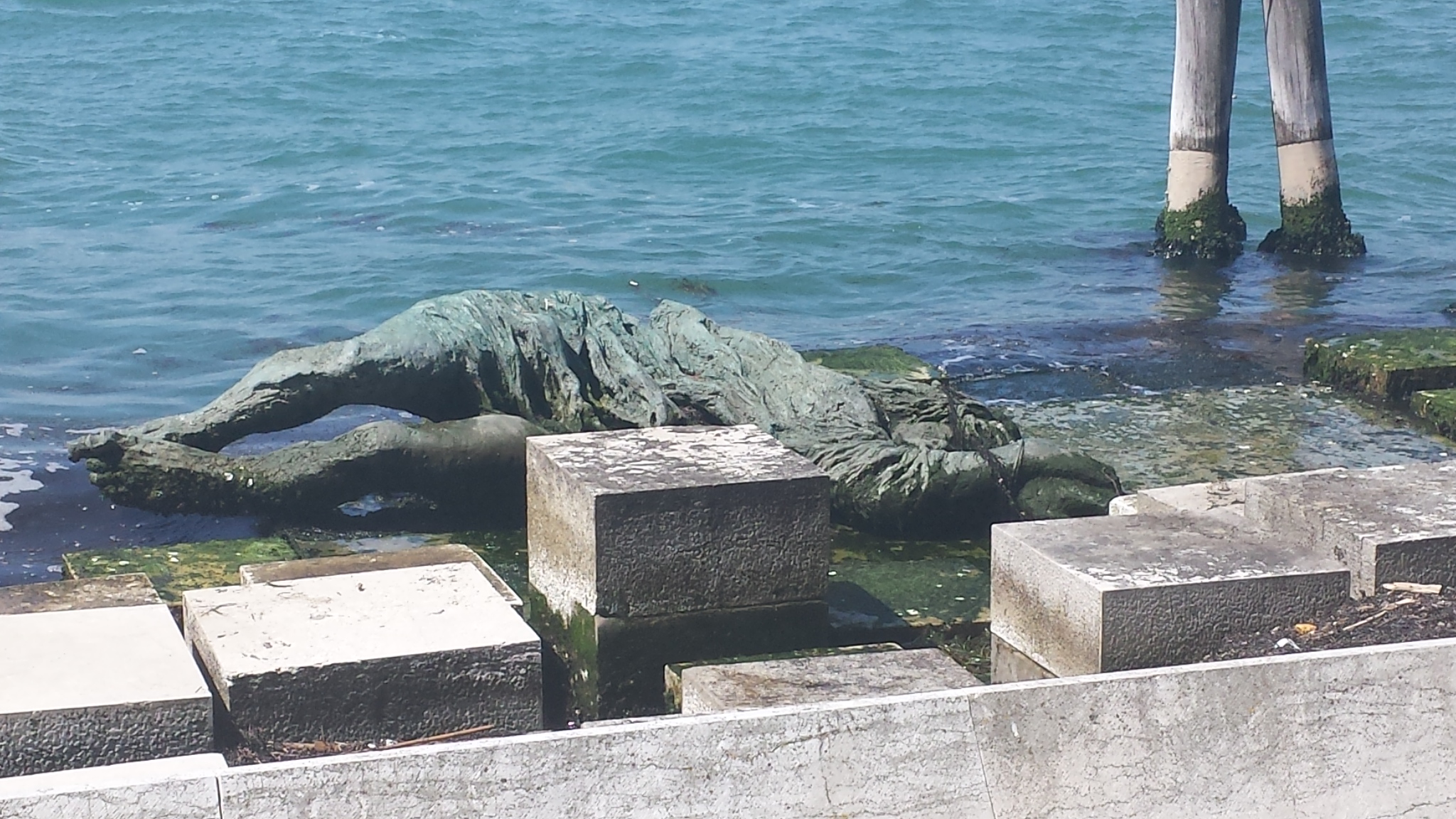
Is this Venice? (The Partisan Woman, at Biennale Gardens, by Augusto Murer)
Hay rumores de que el número total de visitantes a Venecia será limitado para disminuir la congestión. No puedo imaginar cómo podría pasar eso. Si el cambio climático es un indicador, los humanos no pueden, y no verán un problema hasta que sea demasiado tarde (¿Has leído El Lorax?). Venecia se hundirá debido al peso de los turistas. Al menos si vas ahora puedes ver lo que sigue a flote. Si esto suena negativa, ver mi post anterior para algunas de las razones por las que amo Venecia y regreseria.
I would go back to Venice. (See my next post for why that might not be a good idea.) The city is small and walkable, it has excellent public transportation that takes you from the airport to the train station and onto the island of Venice seamlessly. There are wonderful artisans and delicious food. Here are some of the things and places I particularly enjoyed.
Me gustaría volver a Venecia. (Ver mi próximo post por qué eso tal vez no es una buena idea.) La ciudad es pequeña y andable, tiene excelente transporte público que te lleva desde el aeropuerto a la estación de tren y hacia la isla de Venecia sin problemas.Hay maravillosos artesanos y deliciosa comida. Aquí están algunas de las cosas y lugares que disfruté particularmente.
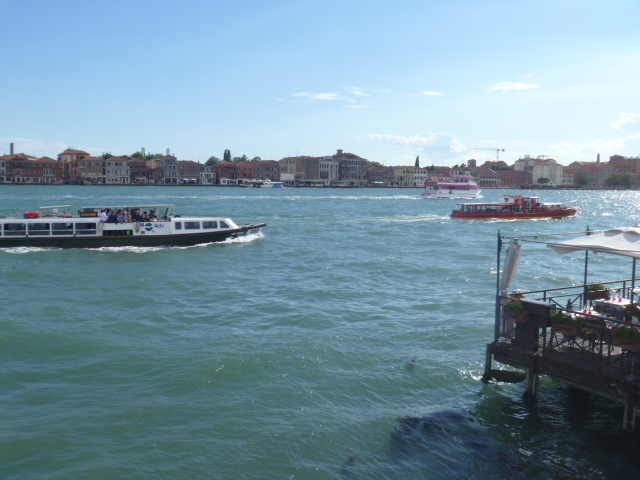
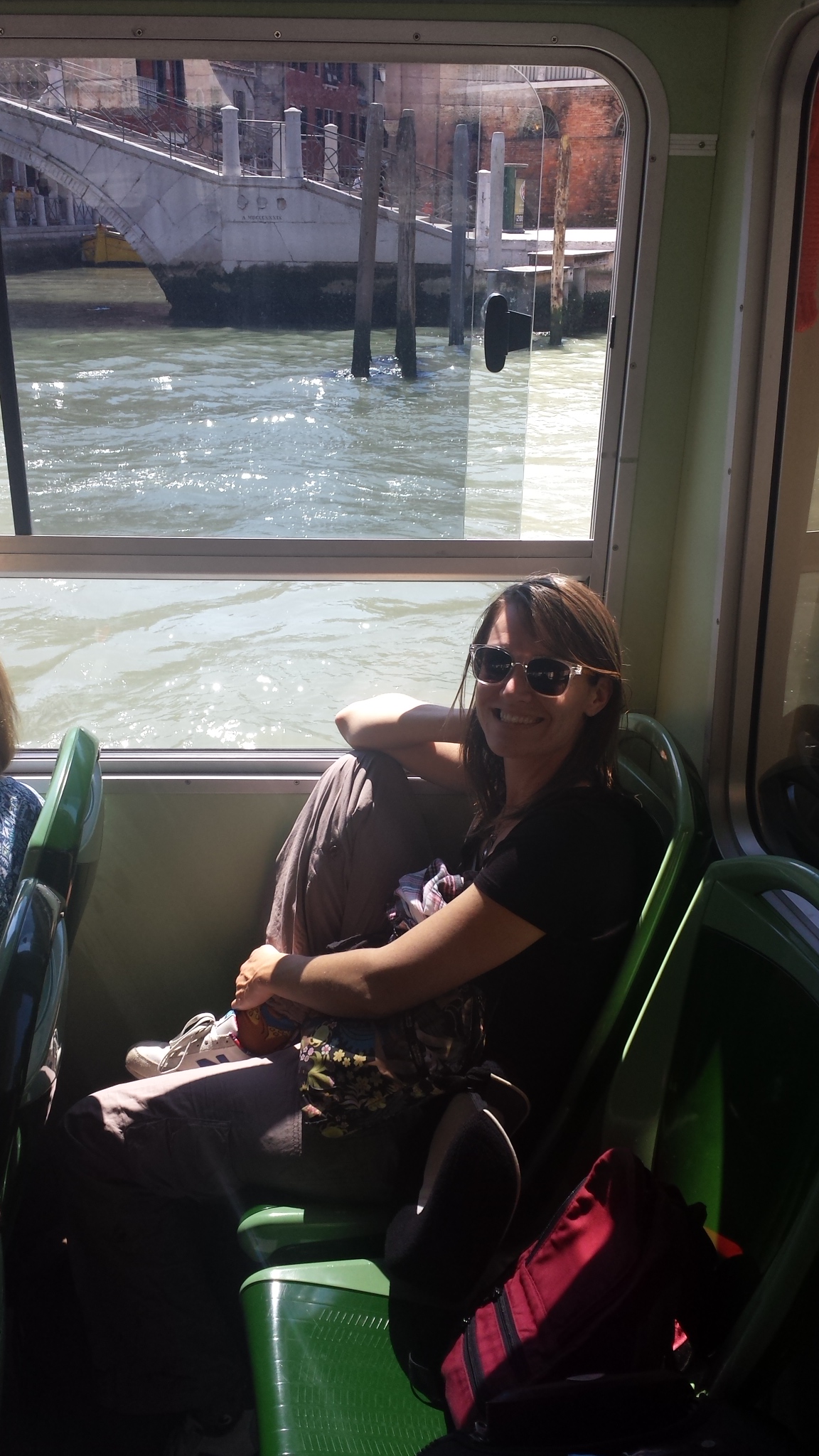
We loved riding on the vaporettos, the boats that run in lieu of buses. One is heading to Piazza San Marco in the lower right above They may not be fast, but Venice is small, and it is relaxing to be on the water, even if the motors roar or sound like crying gulls, and the boats bump into every pier. Vaporetto staff have to manage thousands of people who all want to stand on the tiny deck rather than enter the seating area. They answer the same questions hundreds of times every day. The vaporetto staff (men and women) were already doing a heroic job in May. I can only imagine the crush in July.
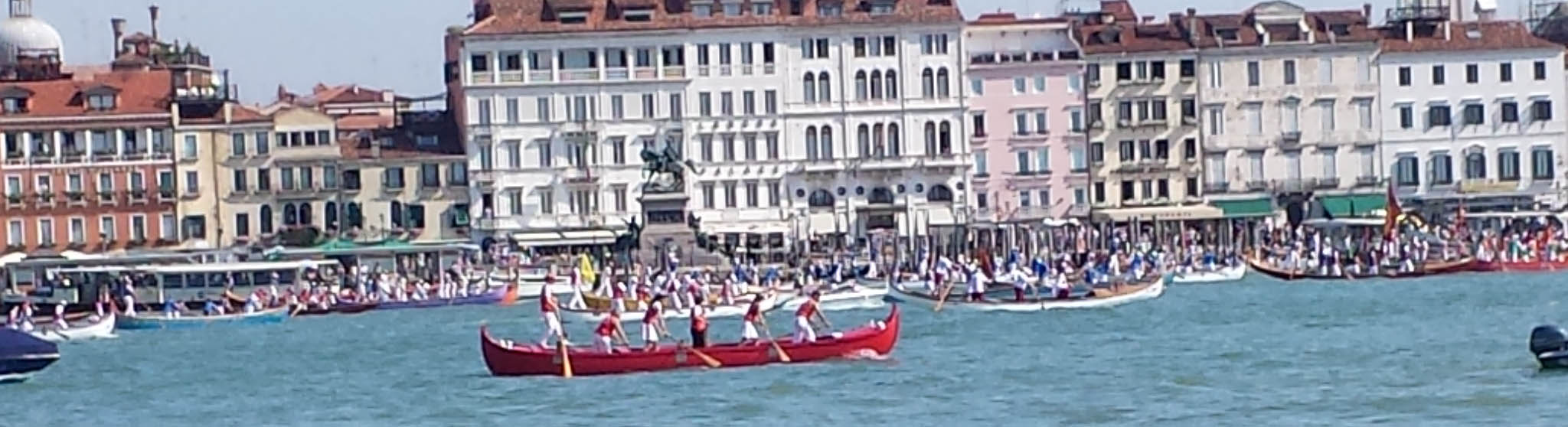
Festa de la Sensa regatta brought out all kinds of gondolas with up to 20 oarsmen/women!
Nos encantó montar en los vaporettos, los barcos que funcionan en lugar de autobuses. Uno está dirigiéndose a la Piazza San Marco en la parte inferior derecha de arriba. No andan rápidos, pero Venecia es pequeña, y es relajante estar en el agua, incluso si los motores rugen o suenan como gaviotas llorando, y los barcos se topan con cada muelle. El personal de ellos tiene que manejar a miles de personas que quieren pararse en la pequeña cubierta en lugar de entrar en la zona de asientos. Responden las mismas preguntas cientos de veces cada día. El personal de los vaporettos (hombres y mujeres) ya estaba haciendo un trabajo heroico en mayo. Sólo puedo imaginar el aplastar en julio.
Boats on Venice lagoon
Useful information–Vaporetto rides are expensive (€7.50) but there are many discounted cards based on how long you will be there and whether you want to visit the islands beyond Murano. We were staying two weeks and wanted to see Burano, Torcello, and the Lido (Venice’s beach). The two main venues for the Venice Biennale are away from the main part of the city and is most easily reached by vaporetto. We went for the most expensive/economical option. We purchased a VeneziaUnica card for €50 plus a month of unlimited vaporetto/bus rides for €37. That’s €87 each for two weeks. However, we could ride anywhere we wanted without regard to additional cost. I figure we averaged no more than €2 a ride. That included my going back and forth to the airport to meet Amanda. The down side: you can’t purchase the card at the airport, so you have to pay for the airport bus into Piazzale Roma where there is a HelloVenezia kiosk. I’m sure it’s all collusion and corruption, but that’s life.
Información útil – Los paseos en vaporetto son caros (7,50 €), pero hay muchas tarjetas con descuento basado en cuánto tiempo estará allí y si desea visitar las islas más allá de Murano. Estuvimos dos semanas y queríamos ver Burano, Torcello, y el Lido (playa de Venecia). Los dos lugares principales para la Bienal de Venecia están lejos de la parte principal de la ciudad y es más fácilmente alcanzado por el vaporetto. Fuimos por la opción más cara y económica. Compramos una tarjeta VeneziaUnica por € 50 más un mes de vaporetto/autobuses ilimitados por € 37. Eso es € 87 cada uno por dos semanas. Sin embargo, podíamos montar en cualquier lugar que queríamos sin tener en cuenta el costo adicional. Me imagino que promedió no más de € 2 por paseo. Eso incluía mi ir y venir al aeropuerto para encontrar a Amanda. El lado negativo: no puedes comprar la tarjeta en el aeropuerto, así que tienes que pagar por el autobús desde el aeropuerto a Piazzale Roma donde hay un quiosco HelloVenezia. Estoy seguro de que es todo colusión y corrupción, pero asi es la vida.
In the Doge’s palace
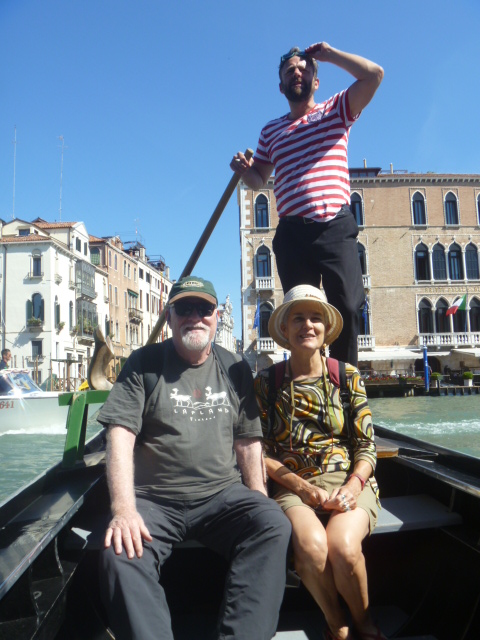
We did not take a gondola ride, though we took a short ride in a gondola at a traghetto crossing, where gondolas ferry people directly across the canals at specific points. It’s a bargain at 2€. We observed many other gondola rides from the bridges and canal embankments. Some cruised along with a singer and an accordionist entertaining a string of five or six boats.
No tomamos un paseo en góndola, aunque tomamos un corto paseo en una góndola en un cruce de traghetto, donde góndolas ferry personas directamente a través de los canales en puntos específicos. Es una ganga a 2 €. Observamos muchos otros paseos en góndola desde los puentes y terraplenes del canal. Algunos cruzaron junto con un cantante y un acordeonista entreteniendo una cadena de cinco o seis barcos.
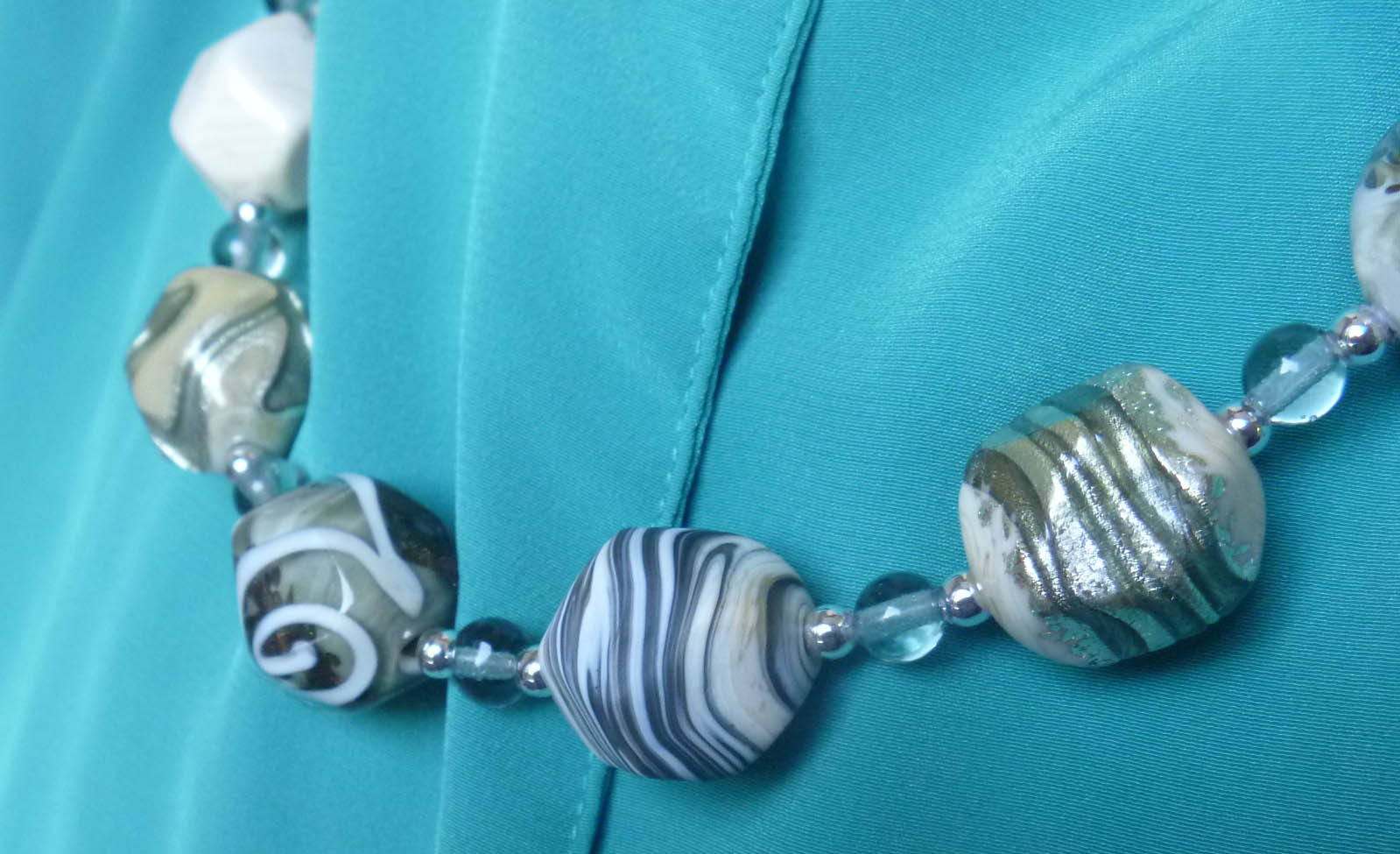
Everyone visits Murano to look at glass and glass-blowing. I found it very confusing and should have gone back a second time. There was so much to look at and much of it was very similar. I did find a necklace that I like very much.
Todos visitan Murano para ver vidrio y vidrio. Me pareció muy confuso y debería haber vuelto una segunda vez. Había mucho que ver y mucho de lo que era muy similar. Encontree un collar de perlas muy interesantes.
Burano’s colorful houses
Burano has a Leaning Tower
The Scales of JudgementTorcello
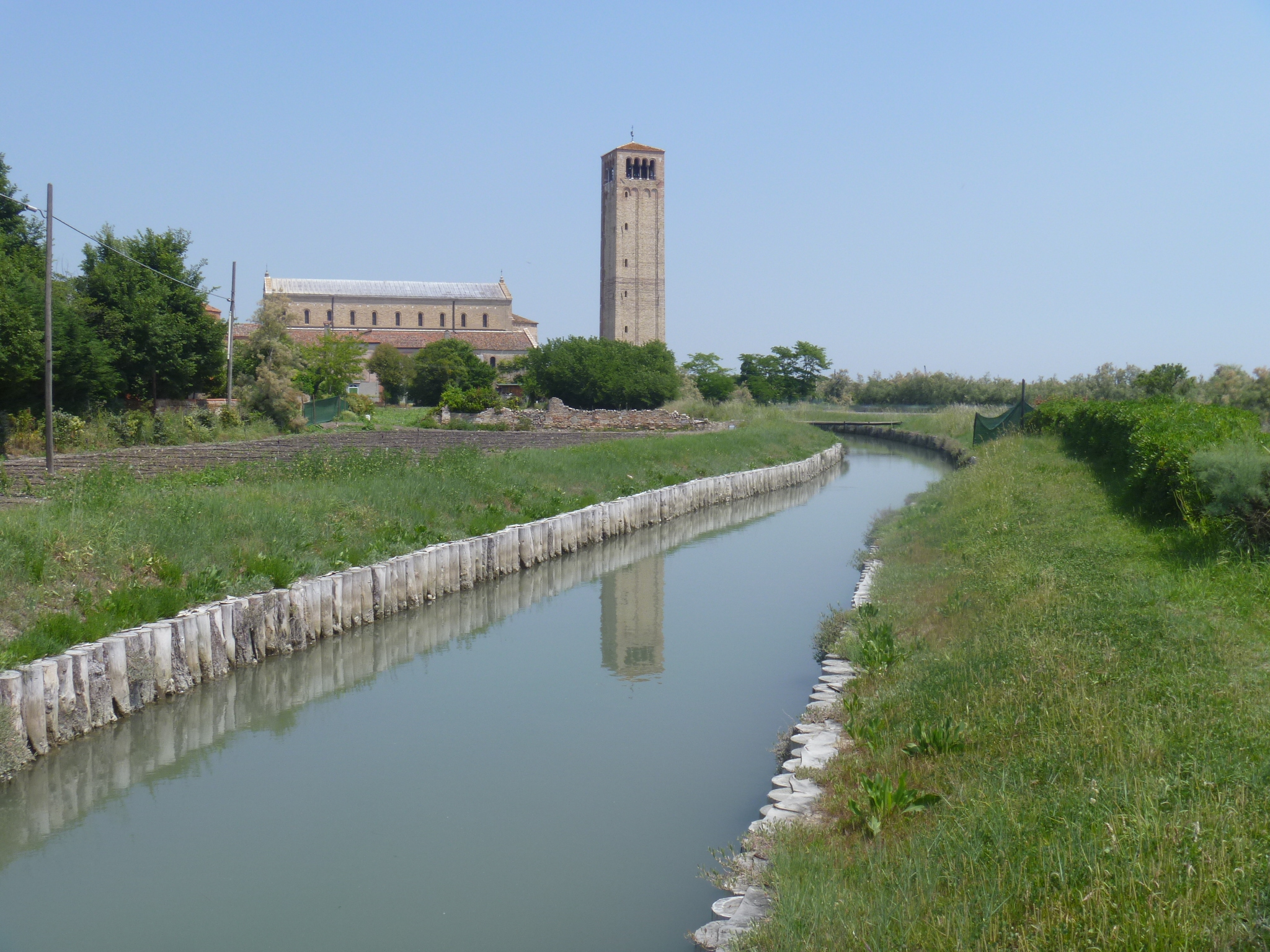
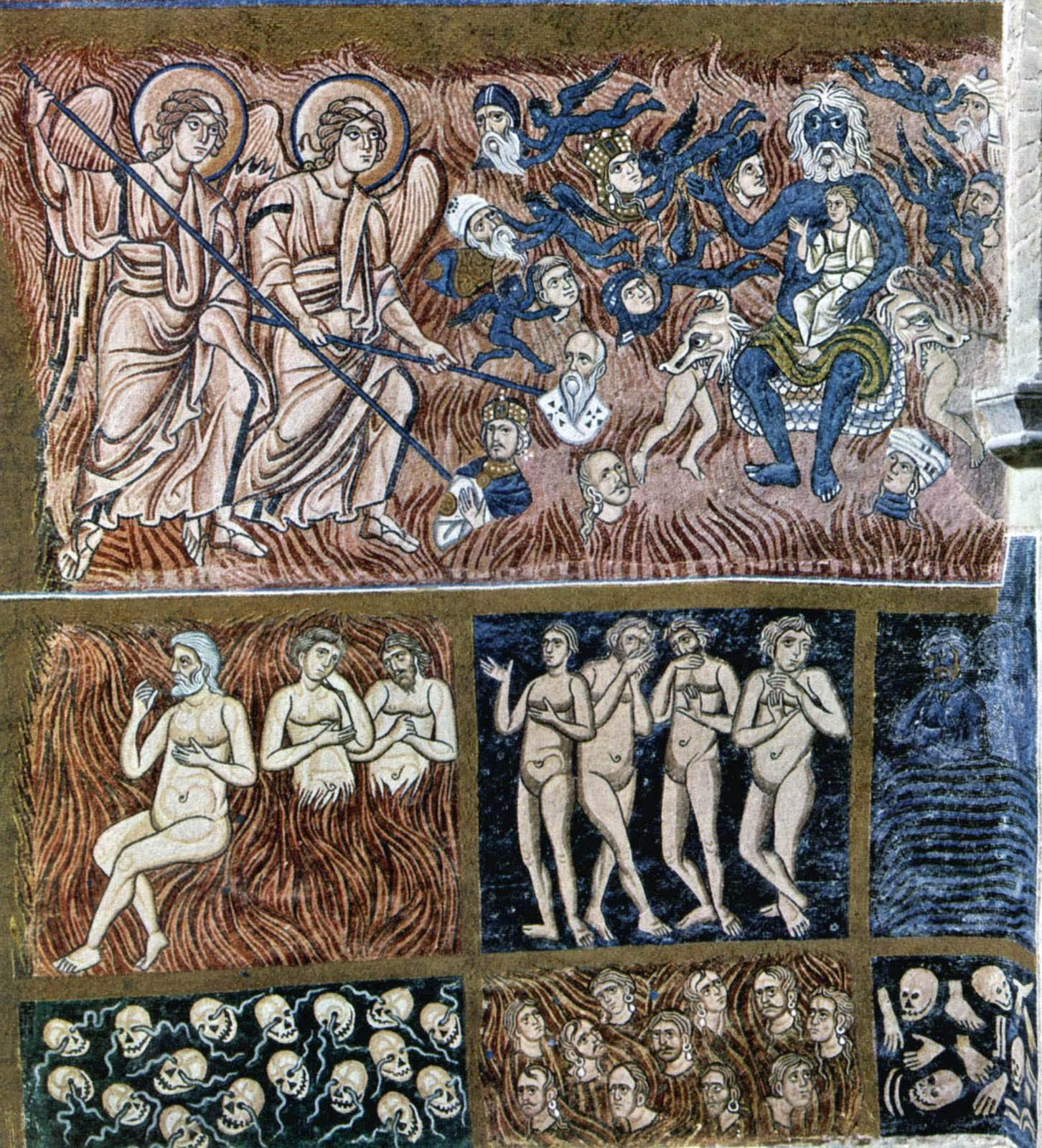
We visited Burano and Torcello, one of my favorite places. Our Blue Guide to Venice was woefully out of date saying there are no services on Torcello, but we found a string of restaurants and cafes where we sat in the shade and had coffee. The cathedral on Torcello dates to the 11th century when Torcello was a well established settlement and Venice a budding town. In light of the present day, it seems impossible for a cathedral, complete with fantastic Byzantine mosaics, to have been built on this island. The mosaic of the Last Judgement includes mosaic depictions of Heaven, Hell and even Limbo.
Angels and the Damned
Visitamos Burano y Torcello, uno de mis lugares favoritos. Nuestra guía azul de Venecia estaba lamentablemente fuera de fecha diciendo que no hay servicios en Torcello, pero encontramos una cadena de restaurantes y cafeterías donde nos sentamos a la sombra y tenía café. La iglesia en Torcello data del siglo 11 cuando Torcello era un asentamiento bien establecido y Venecia una ciudad en ciernes. A la luz de los tiempos actuales, parece imposible construir una catedral, con fantásticos mosaicos bizantinos en esta isla. El mosaico del Juicio Final incluye representaciones en mosaico del Cielo, el Infierno y hasta el Limbo.
The Venice Lido is a different world from the crowds and hustle of Venice proper and it is only a single stop away. If the weather is warm enough you can swim in the sea on the Adriatic side of this narrow peninsula. It’s an easy stroll to and from the lagoon-side vaporetto stop.
El Lido de Venecia es un mundo diferente de las multitudes y el ajetreo de Venecia propiamente dicho y está a sólo una parada de distancia. Si el clima es lo suficientemente cálido se puede nadar en el mar en el lado adriático de esta estrecha península. Es un paseo fácil a la laguna y el vaporetto.
We were fortunate to be in Venice during the Biennale, and we enjoyed what we saw. It would have been easy to spend all of our two weeks in Venice visiting art.
This slideshow requires JavaScript.
Tuvimos la suerte de estar en Venecia durante la Bienal, y disfrutamos de lo que vimos. Hubiera sido fácil pasar todas nuestras dos semanas en Venecia visitando el arte.
Thanks to the article above (click on the title in red), I saw some interesting places in Venice. It was very useful to have these suggestions because stores are everywhere and it takes time to find artisans and places with distinctive items. I didn’t get to all the stores mentioned in the article. My favorites follow in order of how much I enjoyed them.
Gracias al artículo anterior (haga clic en el título en rojo), vi algunos lugares interesantes en Venecia. Fue muy útil tener estas sugerencias porque las tiendas están en todas partes y se necesita tiempo para encontrar artesanos y lugares con elementos distintivos. No llegué a todas las tiendas mencionadas en el artículo. Mis favoritos siguen en orden de cuánto los disfruté.
Vittorio Constantini is a master of creating figurines with glass. The small shop is filled with cases of birds, animals and sea creatures he has made. These are much more detailed than most of the figures for sale elsewhere and Mr. Constantini may be working on a piece while you are in the shop. (His wife speaks English.) The shop has hours listed on line and when we arrived just before the midday closing, they stayed open to chat with us for a few minutes. Calle de Fumi, 5311 Cannareggio. Vittorio Costantini
Vizio Virtu chocolate shop. The chocolates here were delicious, with a number of interesting flavors. Passion fruit filling was my favorite, closely followed by all the others, cinnamon, cardamom, raspberry. We also bought chocolate dipped lemon and grapefruit peel. They were open as listed on the web and no one was waiting. Calle Campaniel, 2898a San Polo. Vizio Virtu chocolates
Laberintho. This one man jewelry shop has distinctive pieces in the windows. He designs, makes and repairs all kinds of high quality jewelry. The store was open as listed, and though I found it difficult to locate, we got there in the end. Calle della Scaleter, 2236 San Polo.
Banco Lotto No. 10–sells bags made from used PVC banners by female prisoners in Venice. The charity that runs the program, Rio Terà dei Pensieri Cooperative Association, is now in a six year partnership with Mark Bradford, the artist representing the US at the Biennale. We happened upon a store other than the one mentioned in the article, and Amanda bought bags for herself and friends. It’s all for a good cause. The brand is “Malefatte” for several reasons.
Legatoria Piazzesi, makes handmade and printed paper. It was closed when we went by (it was supposed to be closed) but a large selection of papers were visible. Campiello della Feltrina, 2511c San Marco. Legatorio Piazzesi paper products
Venetian Dreams. Maria Convento works with seed beads here and is known for her red and black stems of “coral” made from beads. Ms. Convento has an attractive web site but it doesn’t list hours and the shop was closed when we were able to stop by. I was disappointed to miss it. Calle de Mandola, 3805a San Marco. Marisa Convento–beads
Vittorio Constantini es un maestro de la creación de figuras con vidrio. La pequeña tienda está llena de cajas de aves, animales y criaturas marinas que ha hecho. Éstos son mucho más detallados que la mayoría de las figuras para la venta en otra parte y Sr. Constantini puede trabajar en una pieza mientras que usted está en la tienda. (Su esposa habla inglés.) La tienda tiene horas listadas en línea y cuando llegamos justo antes del cierre del mediodía, se mantuvieron abiertos a charlar con nosotros por unos minutos. Calle de Fumi, 5311 Cannareggio.
Tienda de chocolate Vizio Virtu. Los chocolates aquí eran deliciosos, con una serie de sabores interesantes. El relleno de la fruta de la pasión era mi favorito, seguido de cerca por todos los otros, canela, cardamomo, frambuesa. También compramos chocolate crujiente limón y pomelo peel. Estaban como aparece en la web y nadie estaba esperando. Calle Campaniel, 2898a San Polo.
Laberintho es una joyería de un hombre solo que hace piezas distintivas visible en las ventanas. Él diseña, construye y repara toda clase de joyería de la alta calidad. La tienda estaba abierta como indicada en varios sitios del web, y aunque me pareció difícil de localizar, llegamos allí al final. Calle della Scaleter, 2236 San Polo.
Banco Lotto No. 10 – vende bolsas hechas de banderas de PVC usadas por mujeres presas en Venecia. La organización caritativa que dirige el programa, la Asociación Cooperativa Río Terà dei Pensieri, está ahora en una asociación de seis años con Mark Bradford, el artista que representa a los EE.UU. en la Bienal. Nos topamos con una tienda distinta a la mencionada en el artículo, y Amanda compró bolsos para ella y para sus amigos. Es todo por una buena causa. La marca es “Malefatte” por el use de materiales reciclados y de la gente preso que los hacen.
Legatoria Piazzesi, hace el papel hecho a mano y impreso. Estaba cerrado cuando pasamos por (se suponía que estaba cerrado) pero una gran selección de papeles eran visibles. Campiello della Feltrina, 2511c San Marco.
Sueños venecianos María Convento trabaja con granos de semilla aquí y es conocida por sus tallos rojos y negros de “coral” hechos de cuentas. La Sra. Convento tiene un atractivo sitio web pero no lista horas y la tienda estaba cerrada cuando pudimos parar. Me decepcionó a perder. Calle de Mandola, 3805a San Marco.
The Bridge of Sighs
Useful information–Venice and Murano have wonderful artisans. It is not always easy to find them, but worth the effort when you arrive. Discovering the hours when a store is open may also be part of the quest. The more distinctive the product, the less likely the shop is to have posted hours. An artisan may have a lovely website (Maria Convento), but with no mention of hours, or clearly indicated hours but be closed when you arrive during those hours. Shops may post hours on the door or on line not related to whether or not someone will be there.
Información útil – Venecia y Murano tienen maravillosos artesanos. No siempre es fácil encontrarlos, pero vale la pena el esfuerzo cuando llegue. Descubrir las horas cuando una tienda está abierta también puede ser parte de la búsqueda. Cuanto más distintivo es el producto, menos probable es que la tienda tenga horas fijadas. Un artesano puede tener un sitio web encantador (Maria Convento), pero sin mención de horas, o horas claramente indicadas, pero se cerrará cuando llegue durante esas horas. Las tiendas pueden publicar horas en la puerta o en la línea no relacionadas con si alguien estará o no allí.
Useful information–Addresses in Venice are not like any I’ve seen before. The city is divided into six zones (sestiere) and every house is numbered within it’s area. The numbers run up and down and around. On some streets the numbers run in order, though with both odd and even side by side (not at all like the US). The numbers do not need to be in order. The name of the street is intended to guide you to the area where the neighborhood number will be found–most streets in Venice are short. Apparently, there is a decoder/guide for the numbers, but to find out about it you need to read mysteries by Donna Leon. (Maybe she made it up.) Take an example from the stores above: Vittorio Constantini’s store is 5311 Cannareggio, on Calle de Fumi. The street appears on maps and was not difficult to find. But when Jonathan and I arrived in Venice, I thought our address, 687 Dorsoduro, was a street. It isn’t, we were on an unnamed bit between Fondamenta Venier dai Leon and Campiello Barbaro. The entire neighborhood is Dorsoduro, so it is laughable to ask someone where a specific number can be found. The person I asked looked blank, but they didn’t laugh. Or explain.
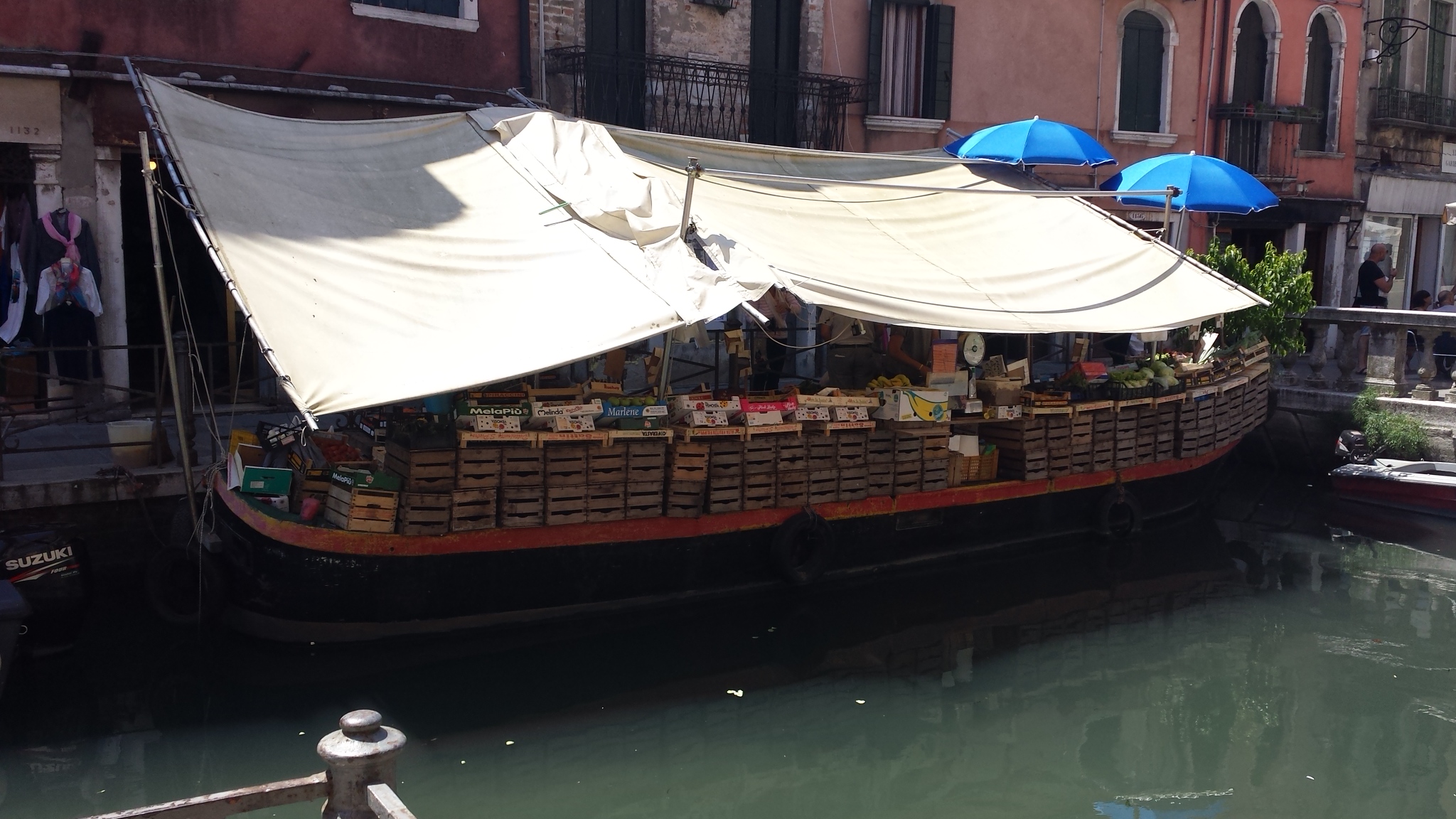
Floating produce market with sun shade
Información útil – Las direcciones en Venecia no son como las que he visto antes. La ciudad está dividida en seis zonas (sestiere) y cada casa está numerada dentro de su área. Los números corren hacia arriba y hacia abajo y alrededor. En algunas calles los números funcionan en orden, aunque con ambos impar e incluso lado a lado (no en todos como los EEUU). Los números no necesitan estar en orden. El nombre de la calle está destinado a guiar a la zona donde se encuentra el número de barrio – la mayoría de las calles de Venecia son cortos. Aparentemente, hay un decodificador / guía para los números, pero para averiguarlo hay que leer misterios de Donna Leon. (Tal vez lo inventó.) Tomemos un ejemplo de las tiendas de arriba: La tienda de Vittorio Constantini es 5311 Cannareggio, en la calle de Fumi. La calle aparece en los mapas y no fue difícil de encontrar. Pero cuando Jonathan y yo llegamos a Venecia, pensé que nuestra dirección, Dorsoduro, era una calle. No lo es, estábamos en un pedazo sin nombre entre Fondamenta Venier dai Leon y Campiello Barbaro. Todo el barrio es Dorsoduro, así que es risible preguntar a alguien donde se puede encontrar un número específico. La persona que pregunté parecía en blanco, pero no se reían. O explicaban.
Food
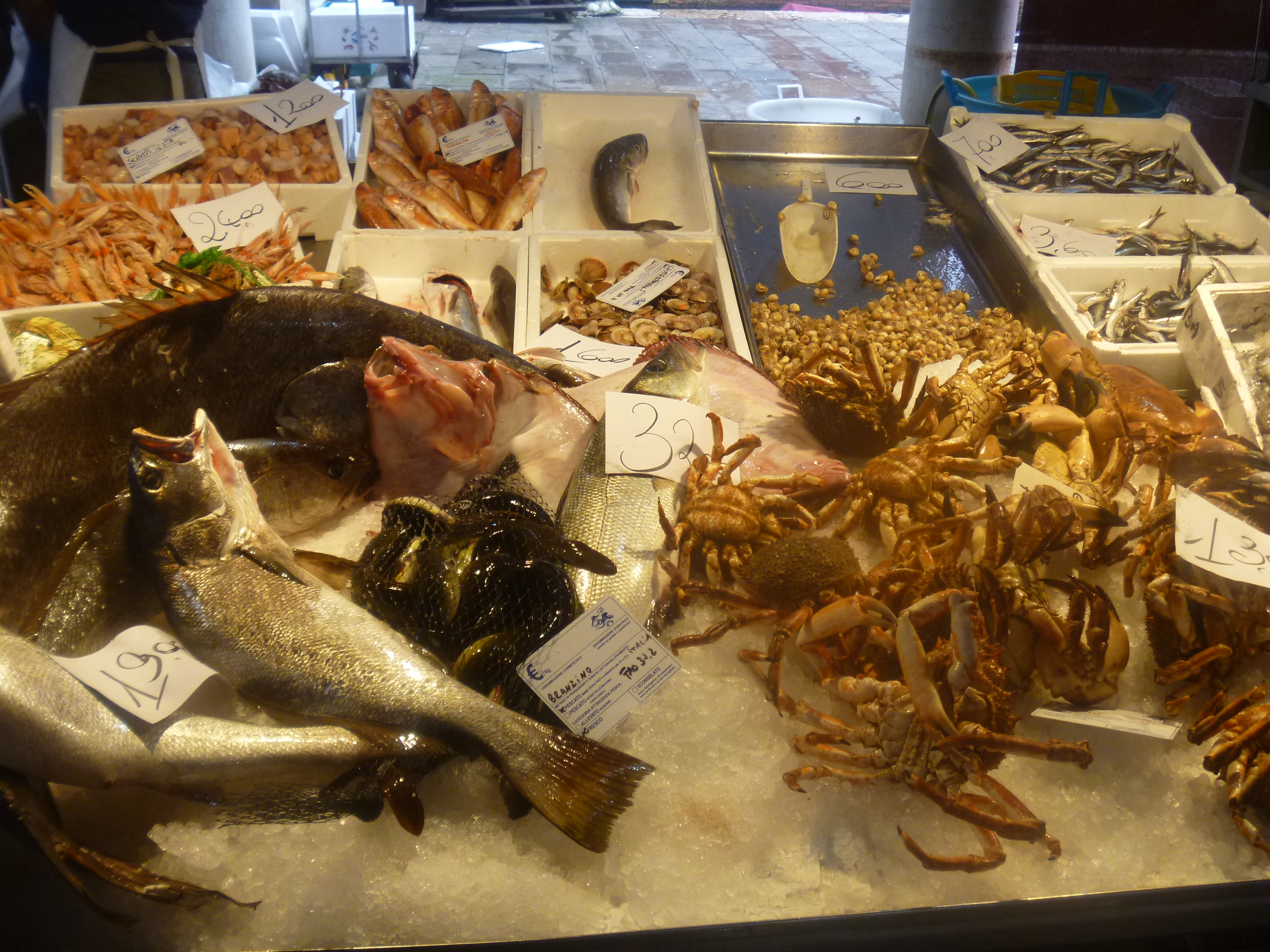
Jonathan cooked up a storm in Venice, mostly fish and shellfish from the Rialto Market. It does help to go earlier, and the fish vendors close the earliest. Try these.
Jonathan cocinó una tormenta en Venecia, en su mayoría pescados y mariscos del mercado de Rialto. No ayuda a ir antes, y los vendedores de pescado cierre lo más temprano. Pruebe estos.
Rates of adult obesity are much lower in Italy than the US, yet Italians eat delicious dishes (Roman fried artichokes, veal scallopine, eggplant parmesan, gelato, cannoli). How do they do it? I’ve found one way. They only eat lunch sitting down!
In the morning, every cafe sells “caffè e cornetto”, expresso and a croissant (not always as delicious as a real French croissant, but the shape is the same). Most people consume these while standing a a window or in the street because it costs extra to sit down. The basic coffee is tiny, as well, a small shot of expresso. You can drink a cappuccino in the morning, but at snack time cappuccino marks you as a tourist. Italians take a break by standing at a bar drinking another tiny expresso.
Las tasas de obesidad en los adultos son mucho más bajas en Italia que en los EE.UU., pero los italianos comen deliciosos platos (alcachofas fritas romanas, scallopine de ternera, parmesano berenjena, gelato, cannoli). ¿Cómo lo hicieron? He encontrado una manera. Sólo comen el almuerzo sentado!
Por la mañana, cada café vende “caffè e cornetto”, expreso y un croissant (no siempre tan deliciosa como un verdadero croissant francés, pero la forma es la misma). La mayoría de la gente consume estos mientras está de pie una ventana o en la calle porque cuesta extra sentarse. El café básico es pequeño, así, un pequeño tiro de expresso. Puedes tomar un capuchino en la mañana, pero en el momento de la merienda cappuccino te marca como un turista. Los italianos toman una rotura parado parado en un bar que bebe otro pequeño expresso.
People sit down in a restaurant or go home for lunch.
La gente se siente en un restaurante o va a casa para el almuerzo
They may have another coffee or two in the afternoon, standing. At the end of the day, many people stop on their way home, possibly meeting family or friends for a drink. They may even decide to have a plate of snacks–there are very interesting appetizers in some bars incorporating delicious things like anchovies, shrimp, prosciutto, artichokes, olives, even a bit of truffle. A plate of these and a glass of wine or a “spritz” (aperitif, prosecco, club soda, ice), can make a light dinner. BUT, it’s all eaten standing up.
Pueden tomar otro café o dos por la tarde, de pie. Al final del día, muchas personas paran en su camino a casa, posiblemente reunión de la familia o amigos para una bebida. Incluso pueden decidir seleccionar un plato de antipasti – hay sabores muy interesantes en algunos bares incorporando cosas deliciosas como anchoas, camarones, prosciutto, alcachofas, aceitunas, incluso un poco de trufa. Un plato de estos y una copa de vino o un “spritz” (aperitivo, prosecco, soda club, hielo), puede hacer una cena ligera. PERO, todo está comido de pie.
My feet hurt just thinking about it, but that appears to be the way things are done. Maybe it’s the secret to keeping in shape in Italy.
Me duelen los pies al pensar en ello, pero eso parece ser la forma en que se hacen las cosas. Tal vez es el secreto para mantenerse en forma en Italia.
One stupendous appropriation of archaeology by an artist at the Biennale was the exhibit by Damien Hirst, “Treasures from the Wreck of the Unbelievable”. This work takes up a total of almost 40 rooms in two different buildings and is not a part of the Biennale but is displayed as though it were an associated event. Hirst has not shown any work in ten years and is rumored to be trying to relaunch his career. It may have been derailed by the many protestors who spent years picketing his displays of dead animals in formaldehyde, his previous theme.
Una estupenda apropiación de la arqueología por un artista en la Bienal fue la exposición de Damien Hirst, “Tesoros de la ruina de lo increíble”. Este trabajo ocupa un total de casi 40 salas en dos edificios diferentes y no es parte de la Bienal pero se muestra como si se tratara de un evento asociado. Hirst no ha mostrado ningún trabajo en diez años y se rumorea que está tratando de relanzar su carrera. Puede haber sido descarrilado por los muchos manifestantes que pasaron años piquetando sus exhibiciones de animales muertos en formaldehído, su tema anterior.
The new exhibition tells the story of the ancient wreck of a vast ship, the ‘Unbelievable’, and presents what was discovered of its precious cargo: the impressive collection of Aulus Calidius Amotan – a freed slave– which was destined for a temple dedicated to the sun. This is a story Hirst has invented of a shipwreck from which 100 treasures have been salvaged. These are all pieces he has designed, mostly made of bronze, that recreate pieces from a panorama of past cultures, borrowing, reusing and modifying styles from ancient civilizations and jumbling them all together. As part of this new plan, Hirst took most of these pieces to the Indian Ocean off Zanzibar, Africa and put them in the water, filming the crew that hauled them back out as part of his “discovery” narrative.
La nueva exposición cuenta la historia del antiguo naufragio de un inmenso buque, el ‘Inacreditable’, y presenta lo que se descubrió de su preciosa carga: la impresionante colección de Aulus Calidius Amotan -una esclava liberada- destinada a un templo dedicado a el sol. Esta es una historia Hirst ha inventado de un naufragio de la cual 100 tesoros han sido salvados. Estas son todas las piezas que ha diseñado, en su mayoría de bronce, que recrean piezas de un panorama de culturas pasadas, prestando, reutilizando y modificando estilos de civilizaciones antiguas y mezclándolos todos juntos. Como parte de este nuevo plan, Hirst tomó la mayoría de estas piezas en el Océano Índico de Zanzíbar, África y las puso en el agua, filmando a la tripulación que las sacó de vuelta como parte de su narración de “descubrimiento”.
I’ve never seen such a large scale piece of fiction spun out and mounted as art. The story is fascinating, with just enough fact to string together the lies that make up the rest. The photos of the team working underwater are gorgeous, even when you know that it is all made up and that even the coral “growing” on the sculptures was cast and painted along with the rest.
Nunca he visto un pedazo tan grande de la ficción girado hacia fuera y montado como arte. La historia es fascinante, con sólo el suficiente hecho para encadenar las mentiras que componen el resto. Las fotos del equipo que trabajan bajo el agua son magníficas, incluso cuando se sabe que está todo hecho y que incluso el coral “creciendo” en las esculturas fue fundido y pintado junto con el resto.
The largest sculpture, a headless monster, is over 18 m tall, and was not submerged–they made a smaller version…. The smallest object may be a “gold” statue of Mercury that is smaller than your index finger. What a show. I read that he spent $13 million just to create and film the works. Will people buy them and make him a big name in art again? The reviews below include more photos.
La escultura más grande, un monstruo sin cabeza, tiene más de 18 m de altura, y no se sumergió – hicieron una versión más pequeña …. El objeto más pequeño puede ser una estatua “de oro” de Mercurio que es más pequeña que su dedo índice. Que show. Leí que gastó $ 13 millones sólo para crear y filmar las obras. ¿La gente los comprará y volverá a hacerle un gran nombre en el arte? Las reseñas a continuación incluyen más fotos.
There are lots of jokes in the series, too, like a valium capsule or a medic alert symbol as the pendant on an “ancient” necklace.
Hay un montón de bromas en la serie, también, como una cápsula de valium o un símbolo de alerta médico como el colgante en algo supuestamente antiguo.
Is this Pharrell Williams?
Here’s a “Greek” statue
marked “Mattel”, “China”
Medic alert pendant
Valium capsule
“Quetzalcoatl”
Here’s a quick survey of some of the archaeological cultures that Hirst has borrowed into his exhibit.
He aquí un breve resumen de algunas de las culturas arqueológicas que Hirst ha tomado prestado en su exposición.
Bernini would cringe
Egypt’s bastet
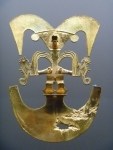
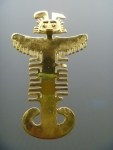
Sinu, Colombia
Egypt again
South America
The Aztec Calendar stone
Ox hide ingots–Mediterranean
Nature–a fake giant clam
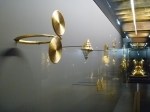
Sinu earrings
Colombian gold
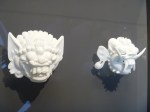
Balinese masks
“Jade” buddha
Art has always borrowed from archaeology, but all the objects faked for this “shipwreck” belong to Damien Hirst, not to their culture of origin. He intends to sell them for hundreds of thousands to millions of dollars. Is this fair use? Because the entire display is a put-on, we don’t even know whether the materials listed are the ones used. The card says “2000 year old jade buddha”. Since we know that this buddha was made for the exhibit and is not 2000 years old, is it also “jade” made of cast resin? Who can tell? Has he included his “jokes” to keep from being accused of wholesale copying of ancient art for his own gain? He seem to be having a great time at his patrons and collectors expense. His “art” fits well in the age of post-truth.
El arte siempre ha tomado prestado de la arqueología, pero todos los objetos falsificados para este “naufragio” pertenecen a Damien Hirst, no a su cultura de origen. Tiene la intención de venderlos por cientos de miles a millones de dólares. ¿Es este uso justo? Debido a que toda la pantalla es un put-on, ni siquiera sabemos si los materiales enumerados son los que se utilizan. La tarjeta dice “2000 años de jade buddha”. Puesto que sabemos que este buddha fue hecho para la exhibición y no es 2000 años, es también “jade” hecho de la resina del molde? ¿Quién sabe? ¿Ha incluido sus “bromas” para no ser acusado de copiar al por mayor el arte antiguo para su propia ganancia? Él parece estar pasando le bien con con sus clientes y coleccionistas pagando la cuenta. Su “arte” encaja bien en la era de la post-verdad.
This is our apartment in Venice. It is small, but well located next door to the Peggy Guggenheim Collection. During the day it is noisy, especially when school and tour groups arrive and leave the Guggenheim, but after 6 pm it is quiet.
Este es nuestro apartamento en Venecia. Es pequeño, pero bien situado al lado de la Peggy Guggenheim Collection. Durante el día es ruidoso, especialmente cuando grupos escolares y de excursión llegan y salen del Guggenheim, pero después de las 6 pm es tranquilo.
This slideshow requires JavaScript.
We are close to three vaporetto stops (Venice’s water buses), and that helps a great deal in getting around. Surprise guests include mosquitos. We read about these, but weren’t prepared for their enthusiastic presence.
Estamos cerca de tres paradas de vaporetto (autobuses de agua de Venecia), y que ayuda mucho en moverse. Los huéspedes sorpresa incluyen mosquitos. Hemos leído acerca de estos, pero no estabams preparados para su presencia entusiasta.
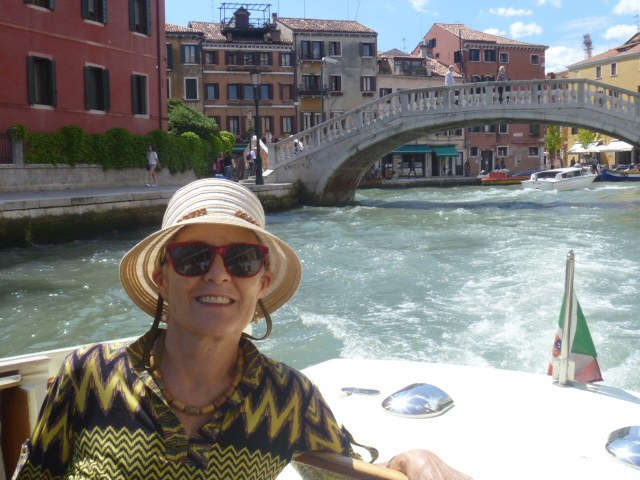
We love Venice. It is on the water and of the water with the attendant pleasures and hazards that brings. We rode in from the train station in style in a water taxi. Shortly after that we had our first gondola ride for a mere €2 each by taking the “traghetto” service–crossing the canal in a gondola. There’s no singing, but it was a real gondola.
Nos encanta Venecia. Está por el agua y hecho del agua, con los placeres y peligros que conlleva. Nos montamos en de la estación de tren en estilo en un taxi de agua. Poco después de eso tuvimos nuestro primer paseo en góndola por sólo € 2 cada uno por tomar el “traghetto” – cruzando el canal en una góndola. No hay gondolier qui canta, pero era una verdadera gondola.
Our visit is even better now that Amanda has arrived.
Nuestra visita es aún mejor ahora que Amanda ha llegado.
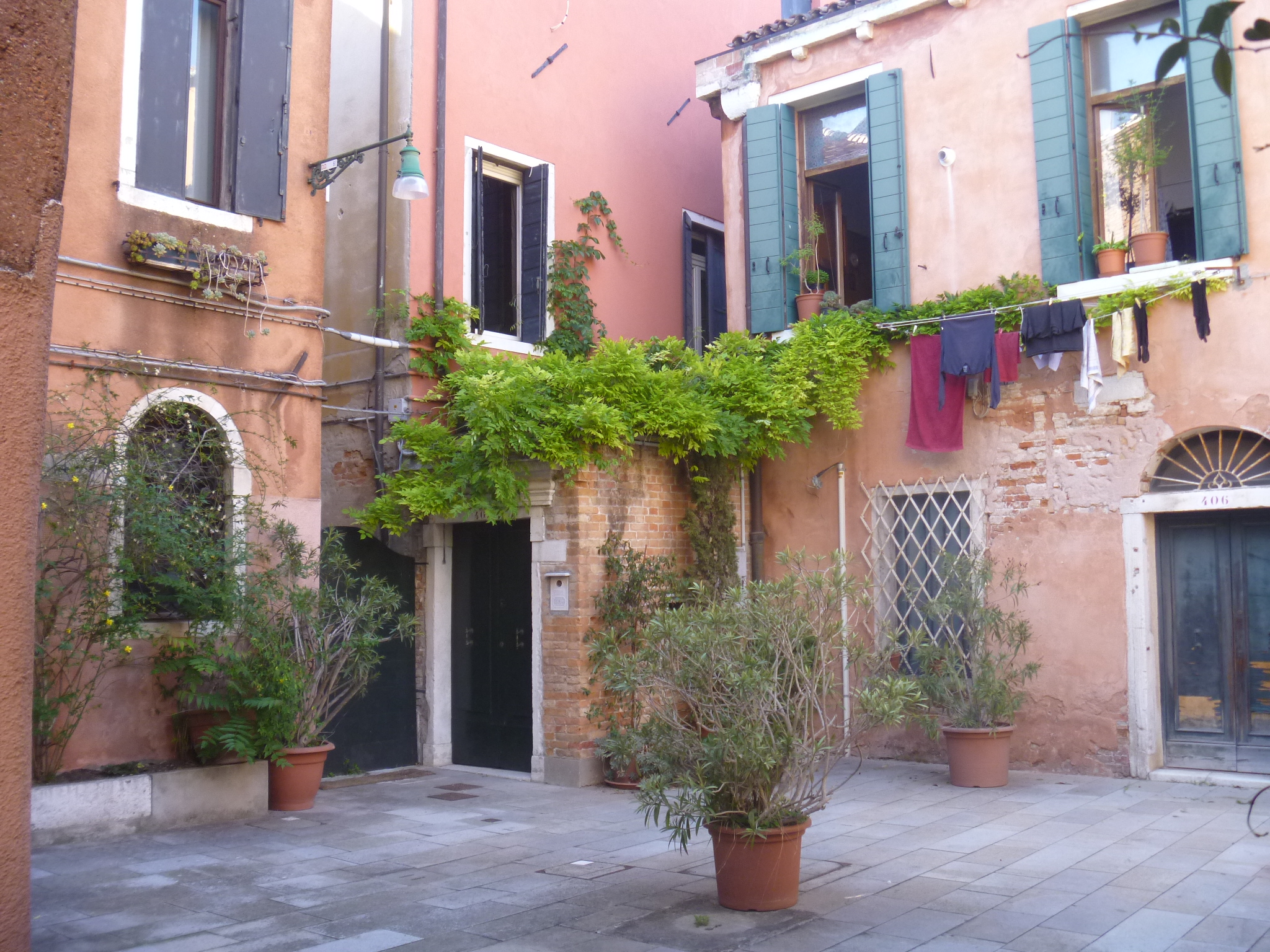
Most of the action in Venice is on the main streets. That’s where the shops are located, and where you can get from one place to another without getting hopelessly lost. When you go off on a side street, it may be completely empty, but occasionally you get a glimpse of courtyards and secret gardens.
La mayor parte de la acción en Venecia está en las calles principales. Ahí es donde se encuentran las tiendas, y donde se puede llegar de un lugar a otro sin perder irremediablemente. Cuando sales en una calle lateral, puede estar completamente vacío, pero ocasionalmente se obtiene una visión de patios y jardines encantados.
We found this little piazzetto at a dead end.
Encontramos este pequeño piazzetto en un callejón sin salida.
There is a pretty garden over the wall. They appear to have a door to the water where their motor boat is parked, too.
Hay un bonito jardín sobre la pared. Parecen tener una puerta al agua donde su barco de motor está aparcado, también.
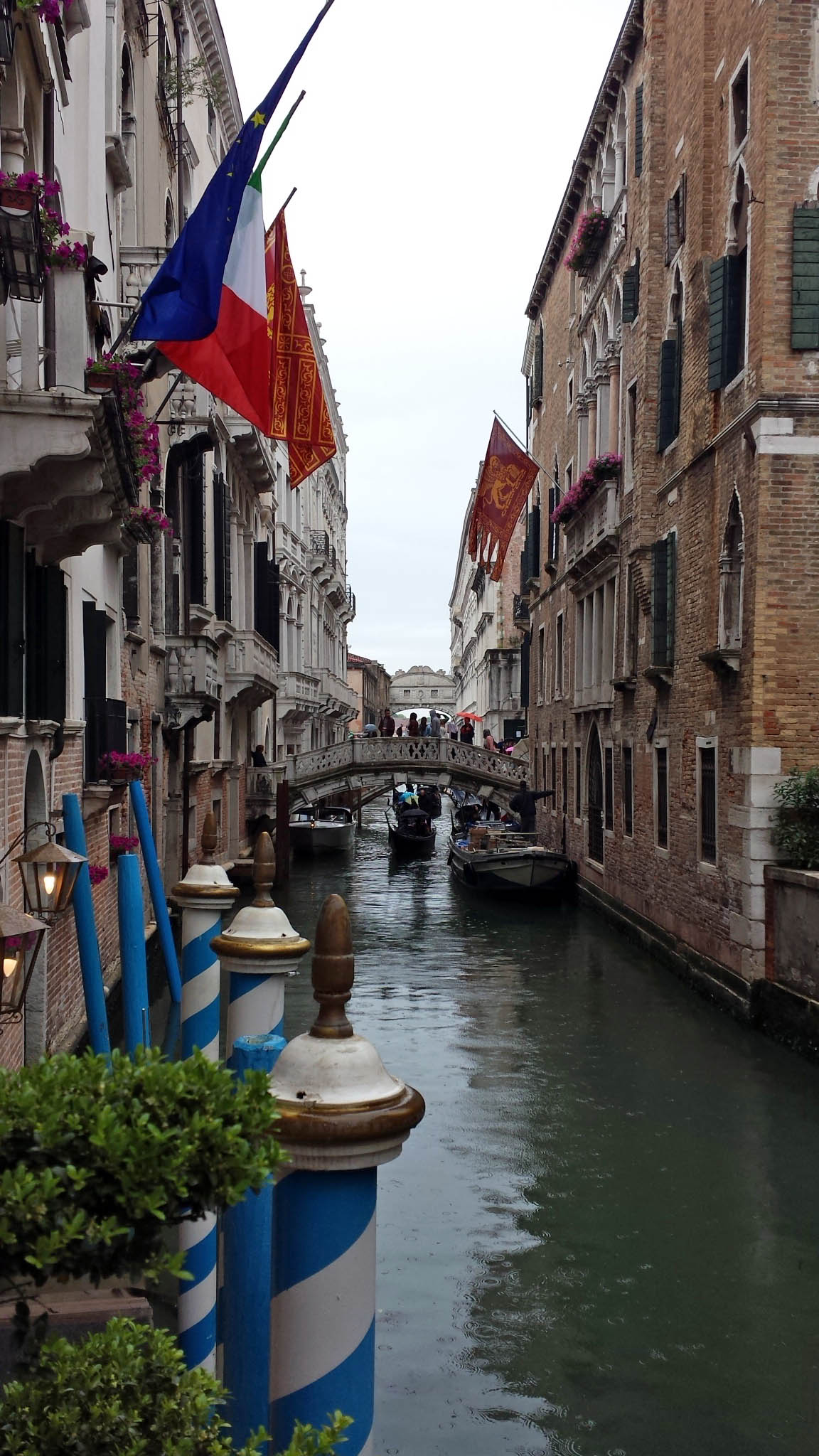
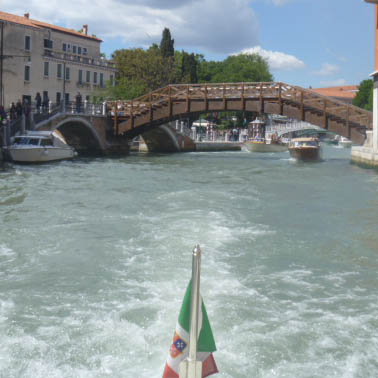
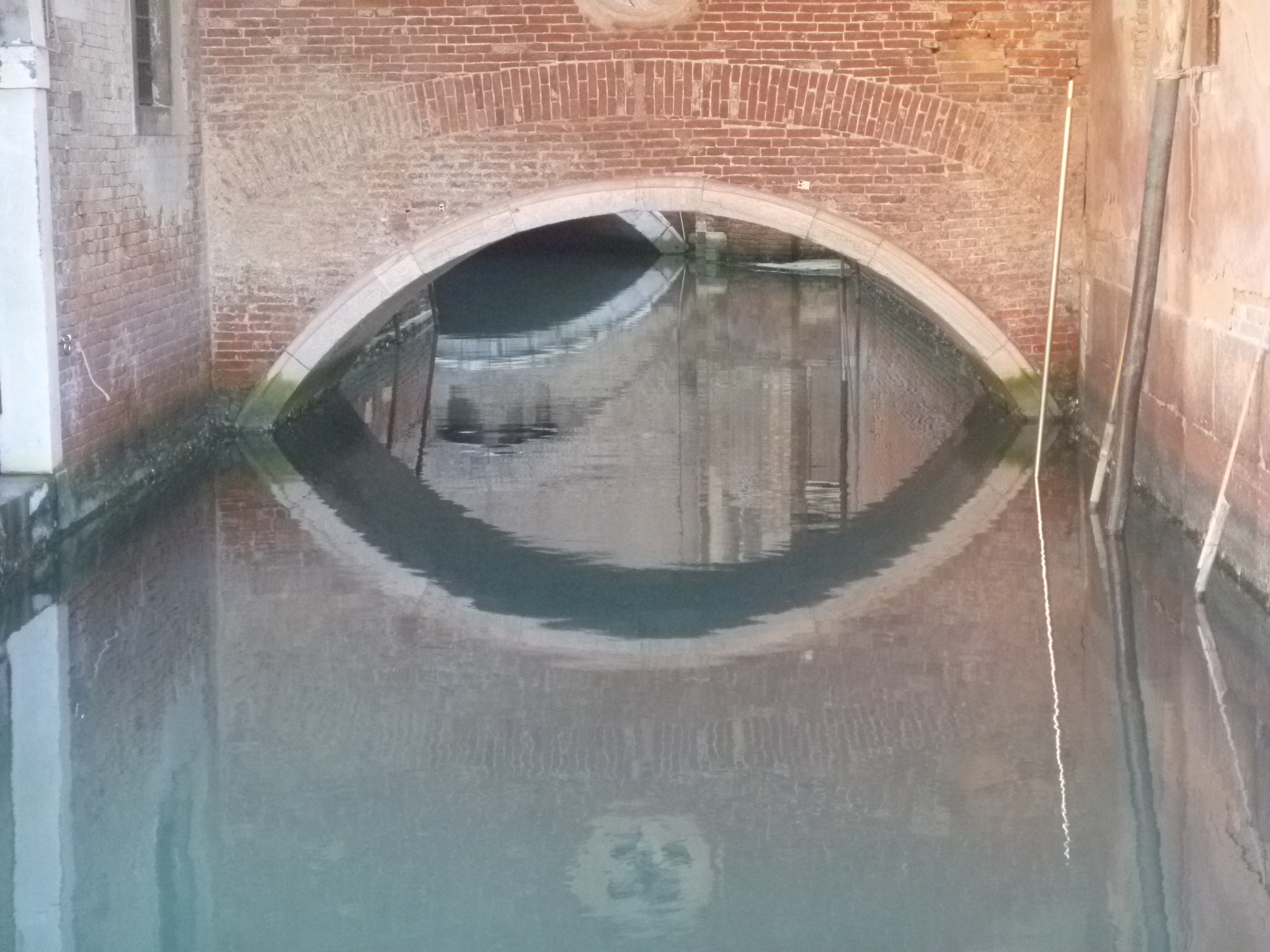
Bridge after bridge.
— Un puente sigue otra.
This slideshow requires JavaScript.
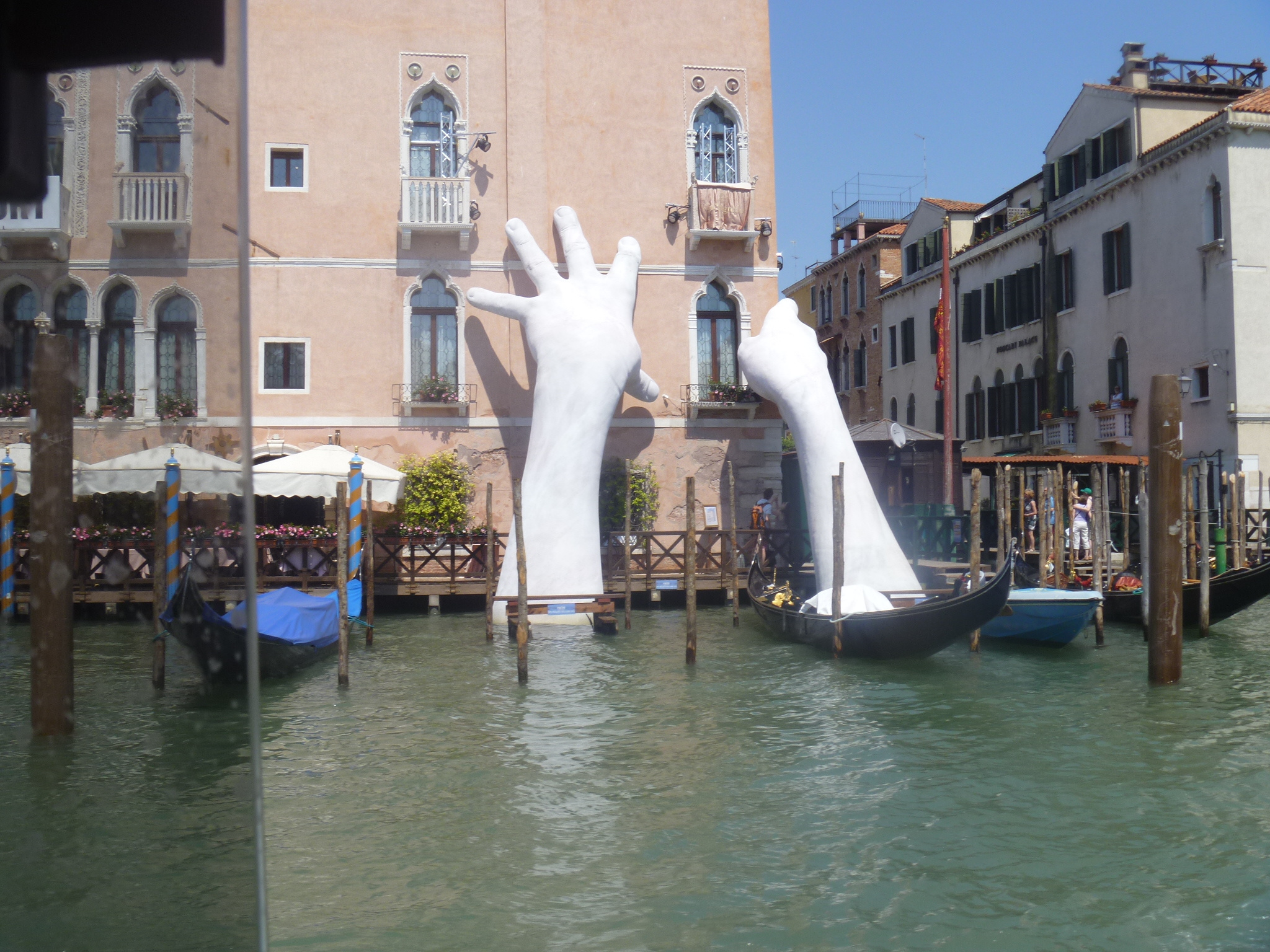
These are some of the views I collected on our walks around Venice.
Estas son algunas de las vistas que recogí en nuestros paseos por Venecia.
Rome is wonderful and slightly overwhelming. We have had a wonderful time here–it would be a long time before we ran out of things to see and do. Here are a couple of thoughts on our leaving Rome.
Roma es maravilloso y un poco abrumador. Hemos tenido un tiempo maravilloso aquí – sería mucho tiempo antes de que nos quedamos sin cosas para ver y hacer. Aquí hay un par de pensamientos sobre nuestra salida de Roma.
Rome has lots of quirks. People park all over the place, especially on the sidewalk. There are lots of national holidays and there is enough discontent that there are specially announced strikes, and strikes that pop up out of nowhere. If the metro breaks down, it is likely to be out of service for at least half a day. A surprise shutdown can have a disastrous effect on travel time to the airport… Roma tiene muchas peculiaridades. La gente parquea por todo el lugar, especialmente en la acera. Hay un montón de fiestas nacionales y hay suficiente descontento que hay huelgas especialmente anunciadas, y huelgas que aparecen de la nada. Si el metro se rompe, es probable que esté fuera de servicio por lo menos medio día. Eso puede hacer un desastre de tu viaje al aeropuerto …
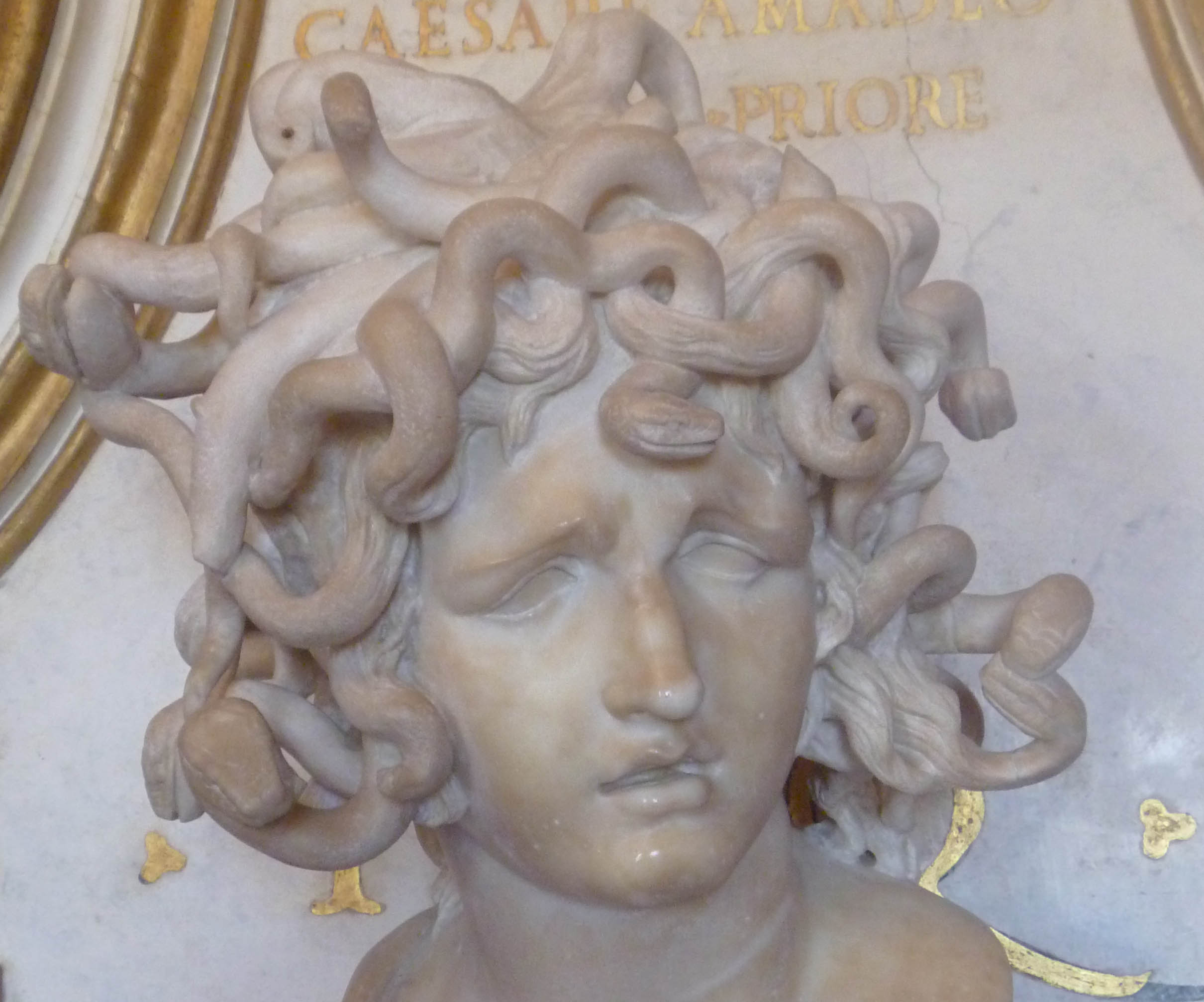
Some days you just feel like you have snakes in your hair.
There is lots of inaccurate information available, and you can spend a lot of time looking for things that aren’t there. I wanted to go to flea markets and did a lot of reading and calculating on line before we set out. We managed to find two small markets after a lot of looking, and we found at least three others that were either on a different day (Porta Portese) or weekend, or entirely out of business (Sotto i Portici) despite what the internet says. I decided that perhaps flea markets and Rome don’t mix. I did get to the Porta Portese flea market which is very large but consists mostly of used and overstock-type clothing and cheap Chinese imports. There were a handful of vendors of interesting things out of hundreds of booths (hundreds).. The Mercato Monti was very small and in a ground floor room in the back of a hotel. Advertised as an urban market, it did include people making creative items, especially clothing and jewelry. I also liked the mercatino Borghetto Flaminio. This market had 50+ vendors, both new and old items. It was the market I could have returned to, but it is not every weekend. Hay mucha información inexacta disponible, y usted puede pasar mucho tiempo buscando cosas que no existen. Quería ir a los mercados de pulgas e hizo un montón de lectura y cálculo en línea antes de salir. Por fin encontremos dos pequeños mercados después de un montón de busqueda, y nos encontramos al menos otros tres que estaban en un día diferente (Porta Portese) o fin de semana, o completamente fuera de negocios (Sotto i Portici) a pesar de lo que dice Internet. Decidí que tal vez mercados de pulgas y Roma no se mezclan.Llegué a la Porta Portese mercado de pulgas que es muy grande, pero se compone principalmente de ropa usada y barato importaciones chinas. Había un puñado de vendedores de cosas interesantes de cientos de cabinas (cientos). El Mercato Monti era muy pequeña y en una habitación en la planta baja en la parte trasera de un hotel. Anunciado como un mercado urbano, incluyó a personas haciendo artículos creativos, especialmente ropa y joyas. También me gustó el mercado Borghetto Flaminio. Este mercado tenía 50+ vendedores, tanto nuevos como viejos artículos. Era el mercado al que podría haber regresado, pero no es todos los fines de semana.
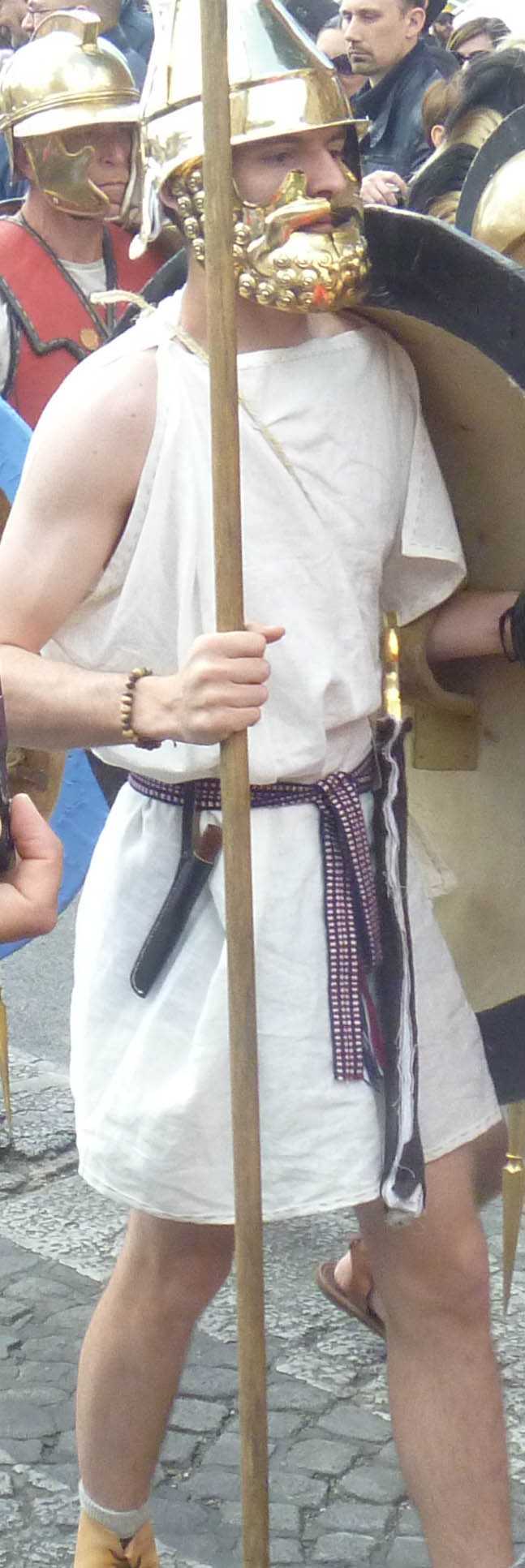
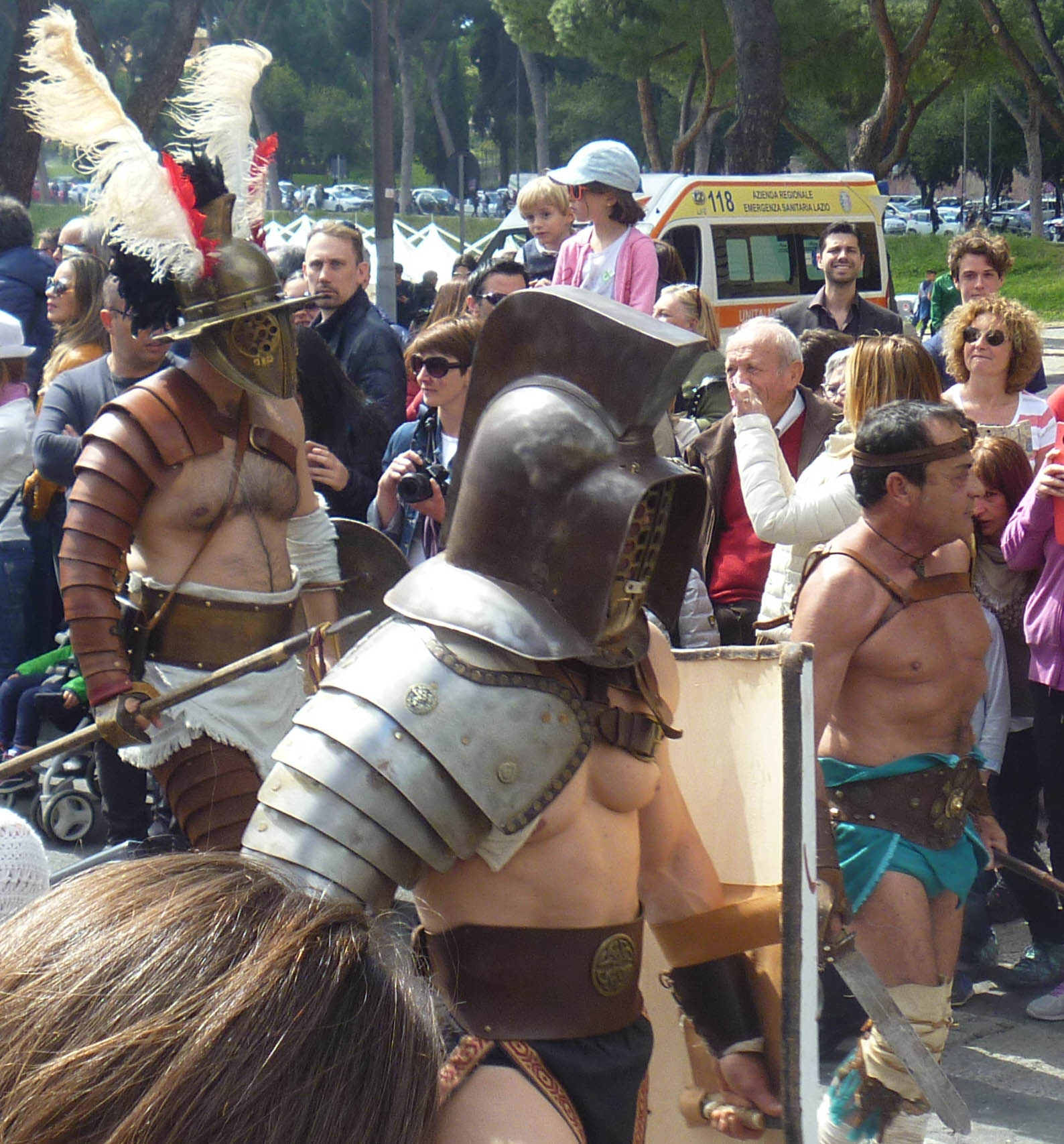
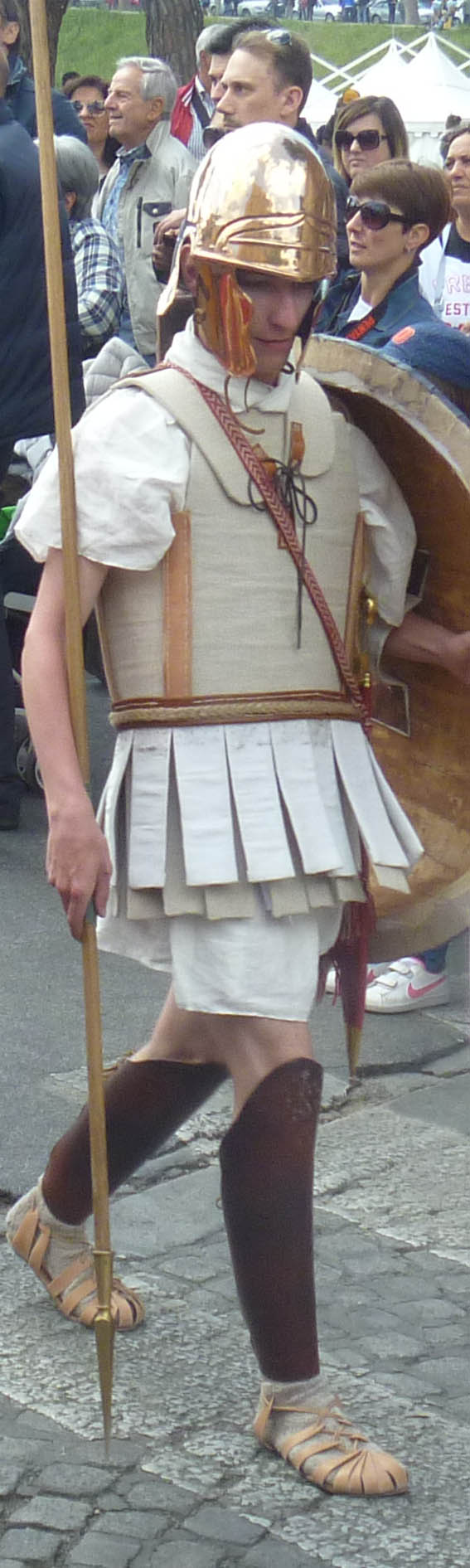
We were compensated by the unexpected events we discovered, like the huge pageant of Roman legion reenactors celebrating Natale di Roma (the birth date of Rome) on April 23. Estábamos compensados por los acontecimientos inesperados que descubrimos, como el gran desfile de los reenactores de la legión romana celebrando Natale di Roma (la fecha de nacimiento de Roma) el 23 de abril.
There aren’t practical issues specific to Rome. I’d suggest that you NEVER even THINK of driving in Rome. I’m a big fan of the public transit system. And all those cautions about pickpockets? They are all true, we saw some in action. No hay problemas prácticos específicos de Roma. Sugeriría que usted NUNCA incluso PIENSA de conducir en Roma. Soy un gran fan del sistema de transporte público. ¿Y todas esas precauciones sobre los carteristas? Todos ellos son verdaderos, vimos algunos en acción.
As long as you don’t expect everything to go according to plan, Rome is a great place to visit.
Siempre y cuando usted no espera que todo vaya de acuerdo al plan, Roma es un gran lugar para visitar.
 We like it here.
























 Llywindatravels 2025