Sucre and the Tarabuco Market

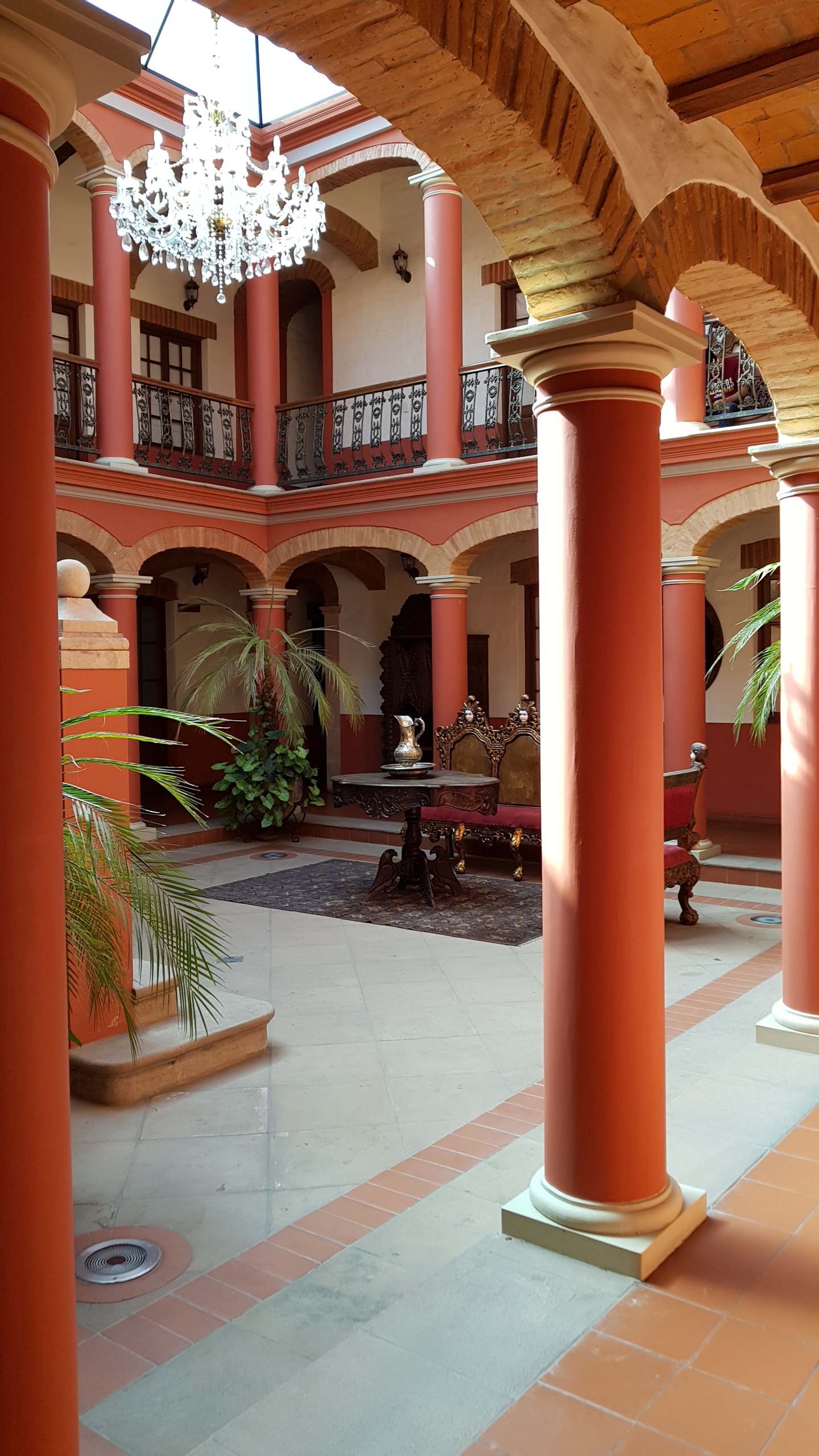
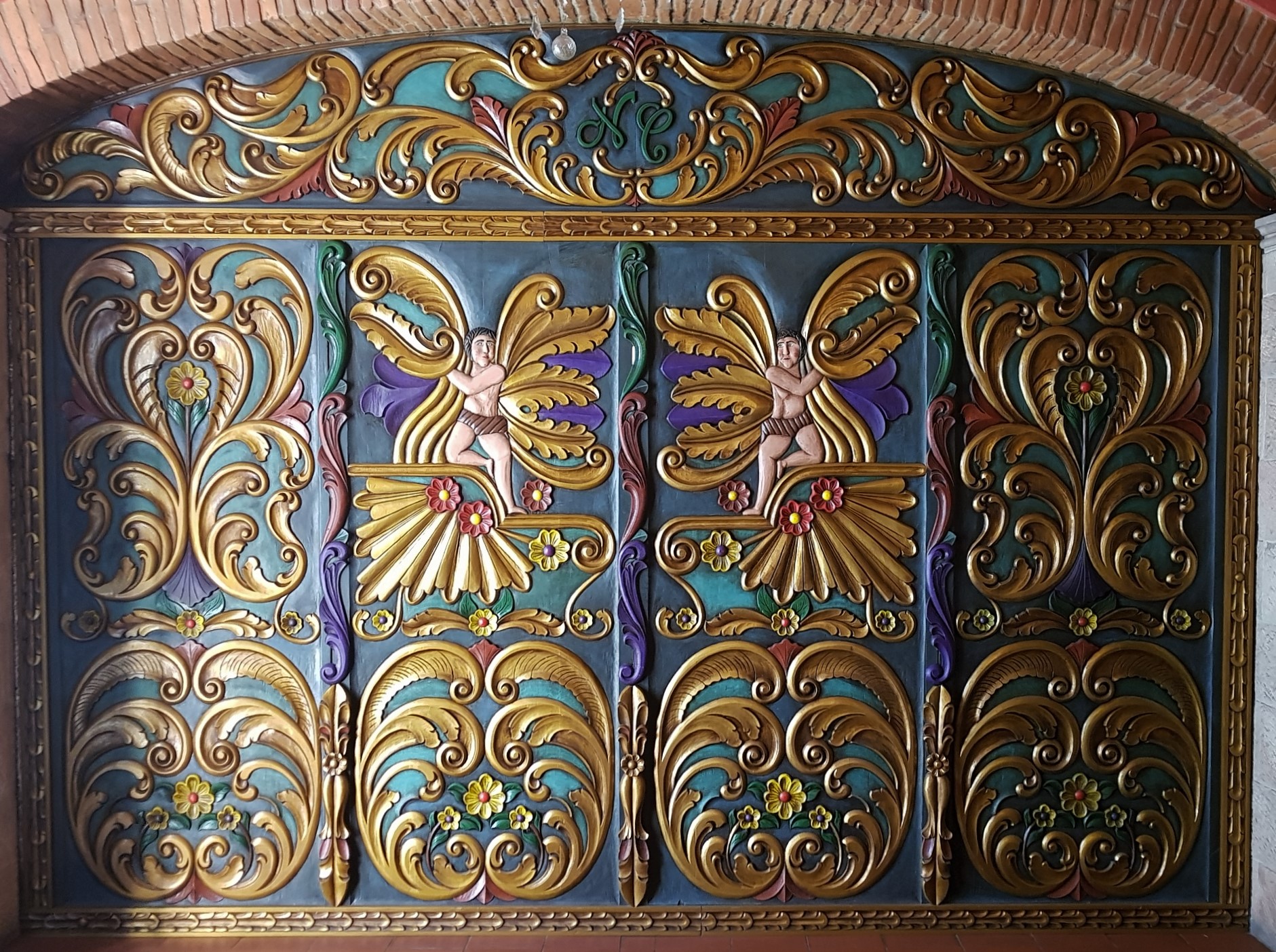
 We spent three nights in Sucre. The Hotel Monasterio used to be a monastery and still has some great decor–Bolivian Baroque? It was comfortable and placed us in the heart of Sucre. We walked down to the central plaza for dinner each night and found good places, La Taverne (French-Bolivian), Cosmo Cafe, and Cafe Florio (Dutch-Bolivian).

This slideshow requires JavaScript.

During the day we visited the central market

The ethnographic and Indigenous Art museums.

We happened to be in Sucre on the day of the Tarabuco Market 65 km from Sucre. We hired a driver to take us there, wait three hours, and return us to Sucre (300 Bolivianos). The market is known for textiles and there were wonderful items all over the place. We looked at rugs, ponchos, wall hangings, table cloths, bags and lots of other things. There was a regional gastronomy competition. The dishes seemed to consist of potatoes, wheat berries, broth and chili peppers, though I don’t think it was very spicy. There was chicha to drink, but neither of us are fans of fermented corn. Most of the women wore traditional dress to enhance their presentation.

We strolled the main plaza and side streets looking at weavings.


I tried on one hat that looked like it escaped from a marching band.


Another is modeled after Spanish conquistadors helmets. Both men and women wear them.

We bought a bright red patterned rug and a salmon-colored tablecloth as well as a crocheted hat for me and a suitcase to carry it all home.

Finding Red-Fronted Macaws

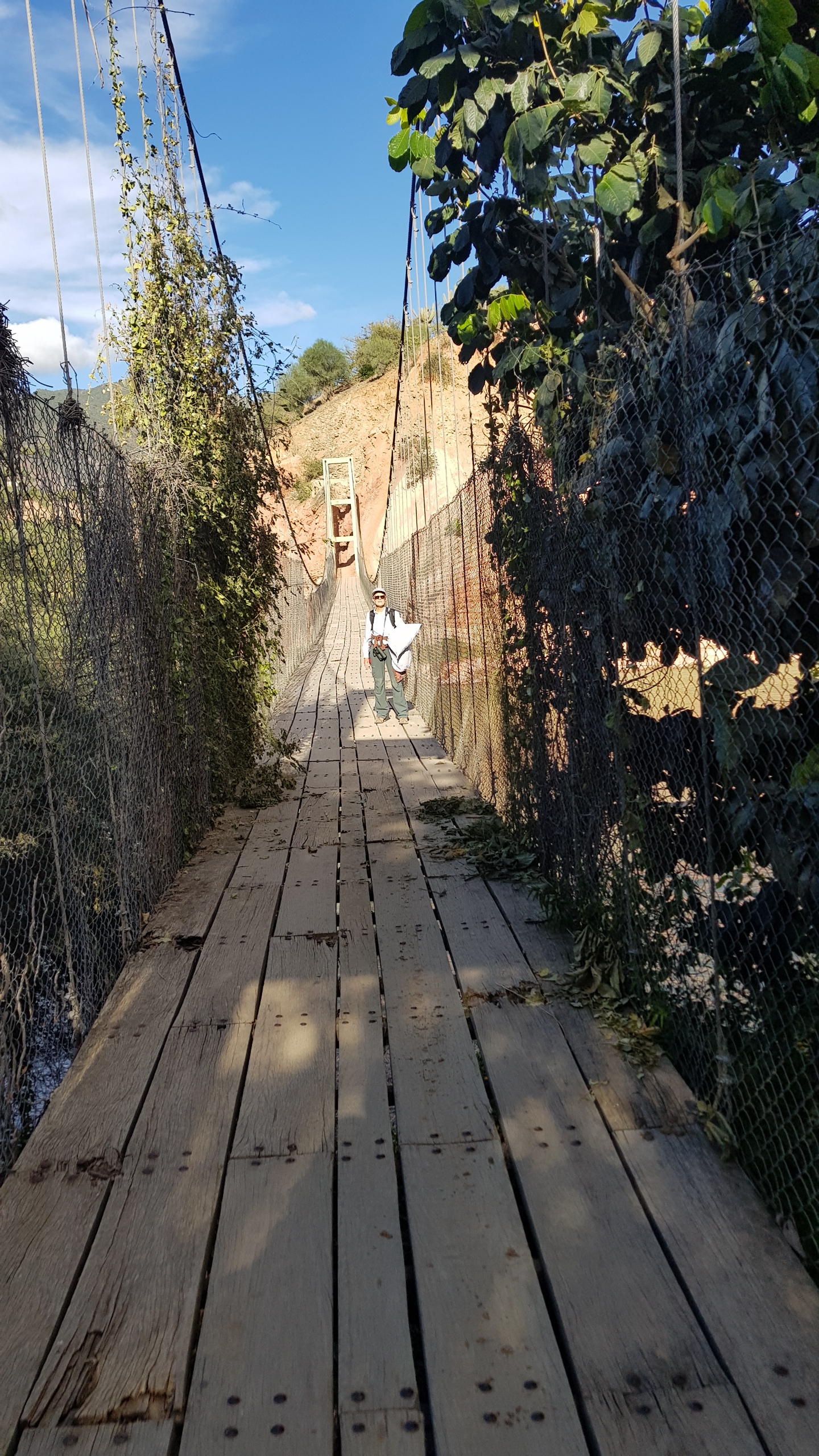
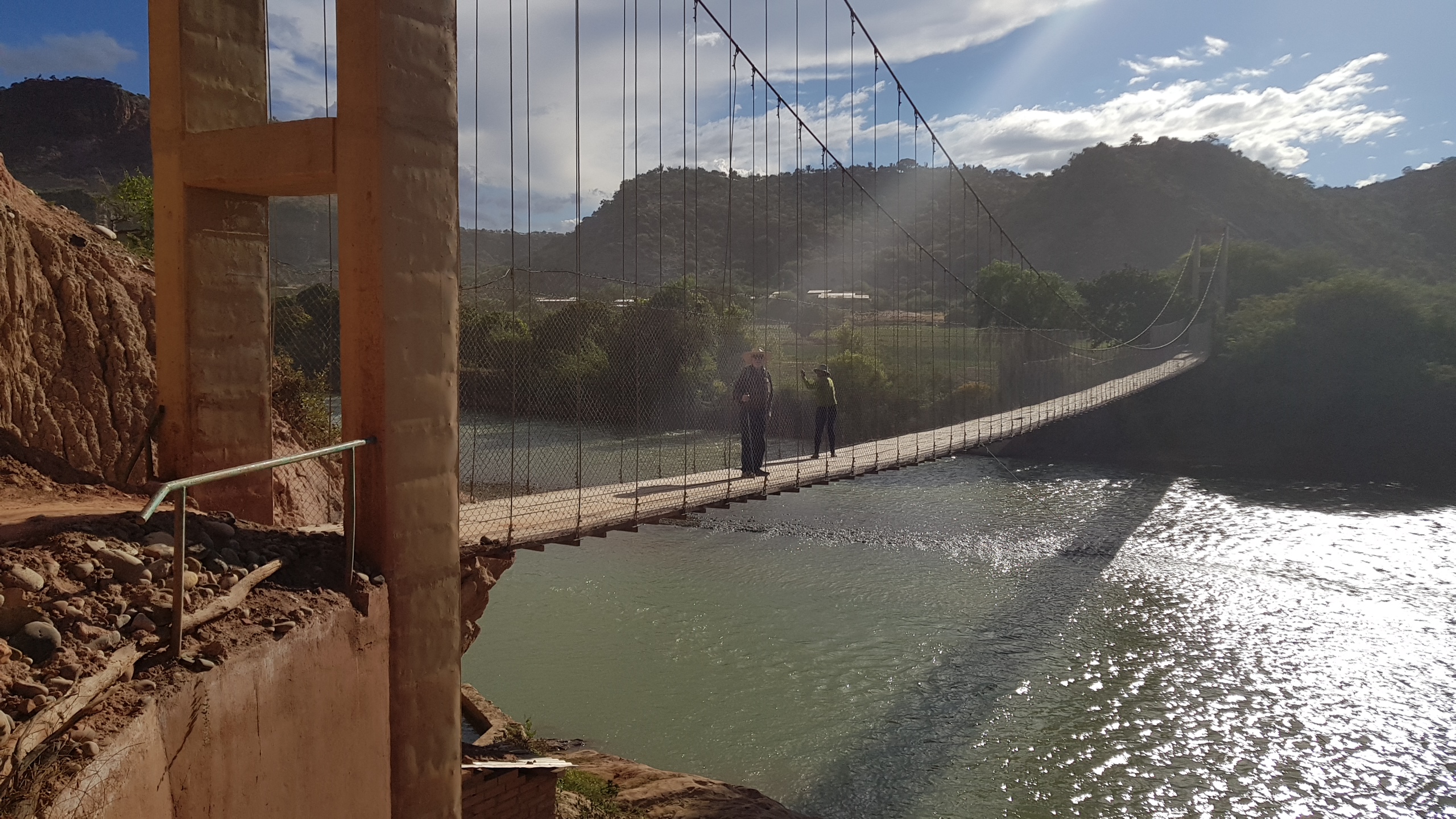
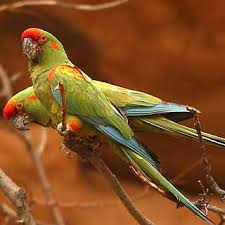
After Tiwanaku, our goal for Bolivia was to see where Red-Fronted Macaws live in the wild. We drove to Cochabamba, setting out the next day for the Red-Fronted Macaw Lodge. At Aiquile, we turned off the Cochabamba-Sucre road and continued for 40 km on a road under construction until we reached Perereta, a hamlet beside the Mizque River. The landscape is dry and stony with steep cliffs and prickly vegtation. It reminded us of northern Arizona. Our local contact, Don Filemon, was out in his fields when we arrived. It appears we are the first tourists of the season. After a few minutes of uncertainty, a young neighbor showed us where to park. “No one will touch your car,” she said. We left it behind the house of Don Filemon and walked us across the suspension bridge and out to the lodge.  We’d brought backpacks with a minimum of clothing for our three nights because it was a 2 km walk to the lodge. We crossed the suspension bridge over the river then cut through fragrant fields of oregano.
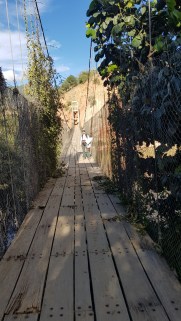
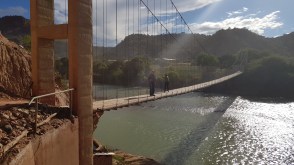
The lodge was rustic, but we avoided the shared bath by being the only people there. We saw our true goal of the entire trip, a pair of red fronted macaws flying overhead!
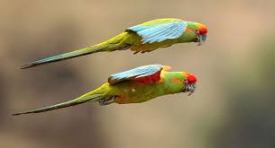
We watched others disappear into cracks in the cliff where their nests are located and we heard lots of their bass squawks. The night was impressive too. There were no outdoor lights and we could see the Milky Way looping across the sky. It was spectacular.

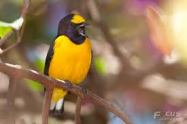
The next day we walked along the river, adding more birds to our list. In the afternoon, we walked the edge of the oregano fields. We identified many birds while sitting on the porch of the guest bungalow. This is definitely our kind of birdwatching, sitting at a table with a cold drink and binoculars, sighting new birds both mundane (woodpecker, hornero) and spectacular (blue and yellow tanager). The blue and yellow tanager has a Day-glo orange patch on its back, while the Purple Throated Euphonia looks like a flying peach. We loved it. We managed to keep busy for our two night stay despite the absence of an internet connection. Our birdwatching was successful and we left with an appreciation for this region of dry scrub, red cliffs, and rivers, managing to see twenty-two more species of birds most of which we had never seen before.
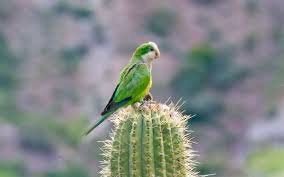
The Red-Fronted Macaw Lodge is a hostel type accommodation on the edge of a small refuge that includes the largest remaining breeding area of red fronted macaws, a critically endangered species. The refuge is a project of the civic association Armonia.com in association with local communities including Perereta and San Carlos. The goal is to help the communities benefit from tourism and give them a reason to preserve these birds. Sales of birds to the pet trade is a major cause of this species’ disappearance. They are also considered a pest by corn and peanut farmers. Without advocates, red fronted macaws will disappear.

We went out of our way to visit this reserve because of our own pet red fronted macaw, Simon. He was bred in Florida from birds taken from Bolivia in the 1970s. Based on our experiences, we can attest to the annoying traits of these birds, but Simon is also playful and curious. I no longer think that having a tropical bird as a pet is a good idea. Yes, they are beautiful, playful and intelligent, but they are also easily bored, often neurotic in captivity, plucking out their feathers and screeching incessantly. Most refuges for abandoned tropical birds in the US are full as people realize that their bird is going to be annoying forever. There is no humane way to get rid of them.
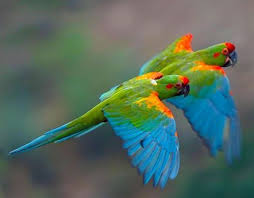
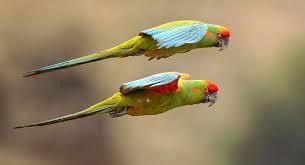
In the wild red fronted macaws are beautiful, flashing their olive green, blue, orange, and red feathers as they fly. They are relatively large birds and fly high above the valley floor into their nests in crevices in the stony cliffs. Their distinctive voice, a deeper and louder call than other parrots, echoes across the valley. In such an open space, it doesn’t bother you as it might from inside a cage in your living room.

Though we were enchanted by the opportunity to see Simon’s family in the wild the Red Fronted Macaw Lodge is best visited on a birding tour. When we arrived the housekeeper made us lemonade and asked us which bedroom we wanted, then made up the bed. We were given soap, toilet paper and towels when we asked. Our ability to speak Spanish helped things along. The bed was comfortable and the hot water in the shower worked.  The downside to the refuge was the complete lack of information about the refuge, its size, age, how the community partnership works, where trails are located. There is no indication of how the $100 per person per night is used, whether a portion is tax deductible or how it is divided with the community. It was obvious that very little of the fee is used to maintain the guest quarters. That’s why I’d recommend visiting with a birding tour rather than independently as we did. It’s a place best experienced on a tour with a good guide. (The photos of birds are from the internet.)
 

Tihuanaco/Tiwanaku

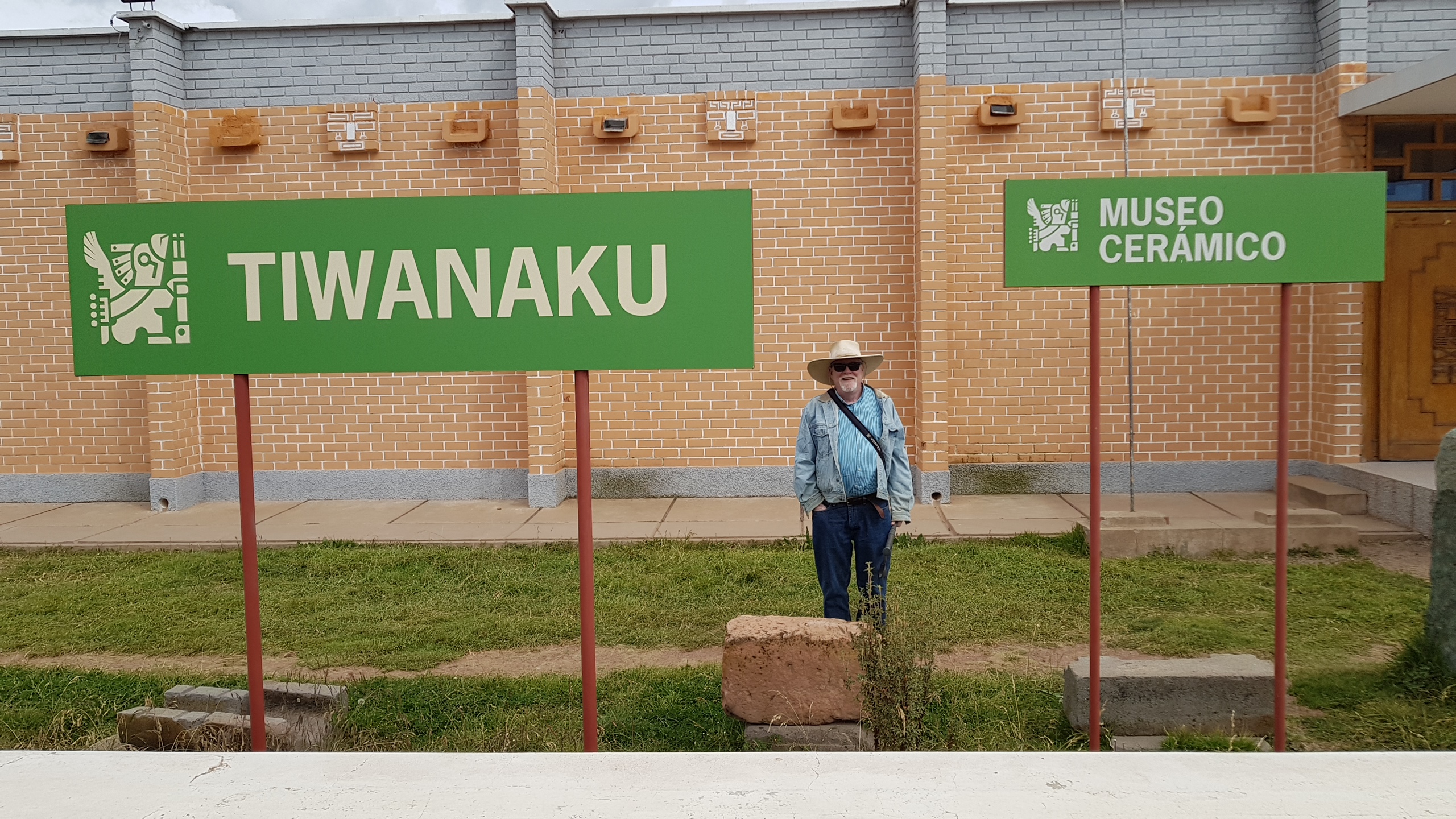
Most people visit Tiwanaku on a day trip from La Paz, spending about two hours at the site. We set aside two and a half days. After talking to visitors in our La Paz hotel we wondered whether we’d regret booking two nights at the Akapana Hotel around the corner from the site entrance. We could have used another half day beyond the two days we were there. We stayed at the Akapana Hotel, a block from the site. Our room was fine, the top floor restaurant was (grilled llama one night, trout the next). The enclosed parking is a must for us, and we were very comfortable in this miniscule town.

Tiwanaku was an ancient empire that controlled southern Peru and northern Bolivia for centuries (AD 400-900). The capital city lies on the altiplano, a high altitude (3850 m) open plain on the south shore of Lake Titicaca. The lakeshore has receded from the site leaving the gigantic buildings stranded. We began our visit in the afternoon of the day we arrived, starting with the ceramic museum and then following the path to the large pyramid in the center of Tiwanaku, the Akapana. The Akapana looks like a natural hill though some of the terracing used to build it has been reconstructed. From the top you can look out over the other structures. From the ground these are not immediately impressive but they make a satisfying meditative stroll.  The upper picture is a reconstruction of the step-sided Akapana. The lower picture is a photo of it today. We followed the paths out to smaller areas, enjoying the view across the landscape and imagining what it was like when it was first occupied. The modern town of Tiwanaku lies on top of what was the living area of the site in ancient times, so not much is known about daily life.

The next day we visited the large enclosure called the Kalasasaya a low platform that was originally walled. On one corner is the best known artifact of Tiwanaku, the Gateway of the Sun. This portal was originally a massive piece of stone heavily carved and inscribed on one side. It was identified in the mid 19th century, already broken into two pieces as it is today. No one is sure where it was originally located and 19th century drawings show that it has been broken into two pieces for at least the past 150 years. The carving is quite detailed, showing the Andean deity often called the Sun God. The image can be traced back through many ancient Andean civilizations.

The semi-subterranean temple has the most distinctive decoration, with more than 100 tenon heads projecting from the four interior walls of this structure.

Tiwanaku is known for a number of monumental stylized human figures, El Fraile and the Ponce Monolith among them. The biggest and best preserved is the Bennett monolith. Identified by the American archaeologist Wendell Bennett in 1932, this statue is over 20 ft high and so impressed people that it was carried off to La Paz and set up in several locations between 1932 and 2002 when it was returned to Tiwanaku. Today it can be seen in the Lithic Museum at Tiwanaku where it dwarfs the room that houses it.

Both the Bennett and Ponce Monoliths (R, L) have fine designs carved over their entire surface, like the Gateway of the Sun.

Directing Traffic in La Paz

La Paz has terrible traffic. We picked up our rental car less than 1 km from our hotel and drove back to the parking structure. Sunday morning we planned to drive to Tiwanaku. Google Maps and our phones suggest a route crossing the heart of the city. We opted for the slightly longer highway route that circle the city center. Sunday’s are often a good day to drive in large cities. Traffic can be lighter because it’s not a work day.

Not for us. Today was the first Sunday closing of the highway to permit its use by cyclists. It was only supposed to have closed a single lane, but the entire area was blocked off, so we gritted our teeth and followed the directions on Google maps. What a disaster! Who writes the algorithms that send you from a blocked highway into a Sunday market! We were trapped in a maze of streets as we very very slowly worked our way around a large area blocked off for the day. As we felt our way along the edge of the market, we crossed intersections that let through one car on each green light, another in which all streets were one way the wrong way because the market had closed off the only through street. We fought taxis and combis (van buses) to turn back at two dead ends, waving back the cars coming toward us to the same fate. We seemed to have made it to the far side of the market area after almost an hour and our directions sent us up a hill. The street was open as we started up but there was only one lane, the rest of the street was taken up by parked cars. We got half way up and cars started streaming down. We held up opposite an empty parking space so that vehicles could get around us, waiting for another gap to get the remaining half block.

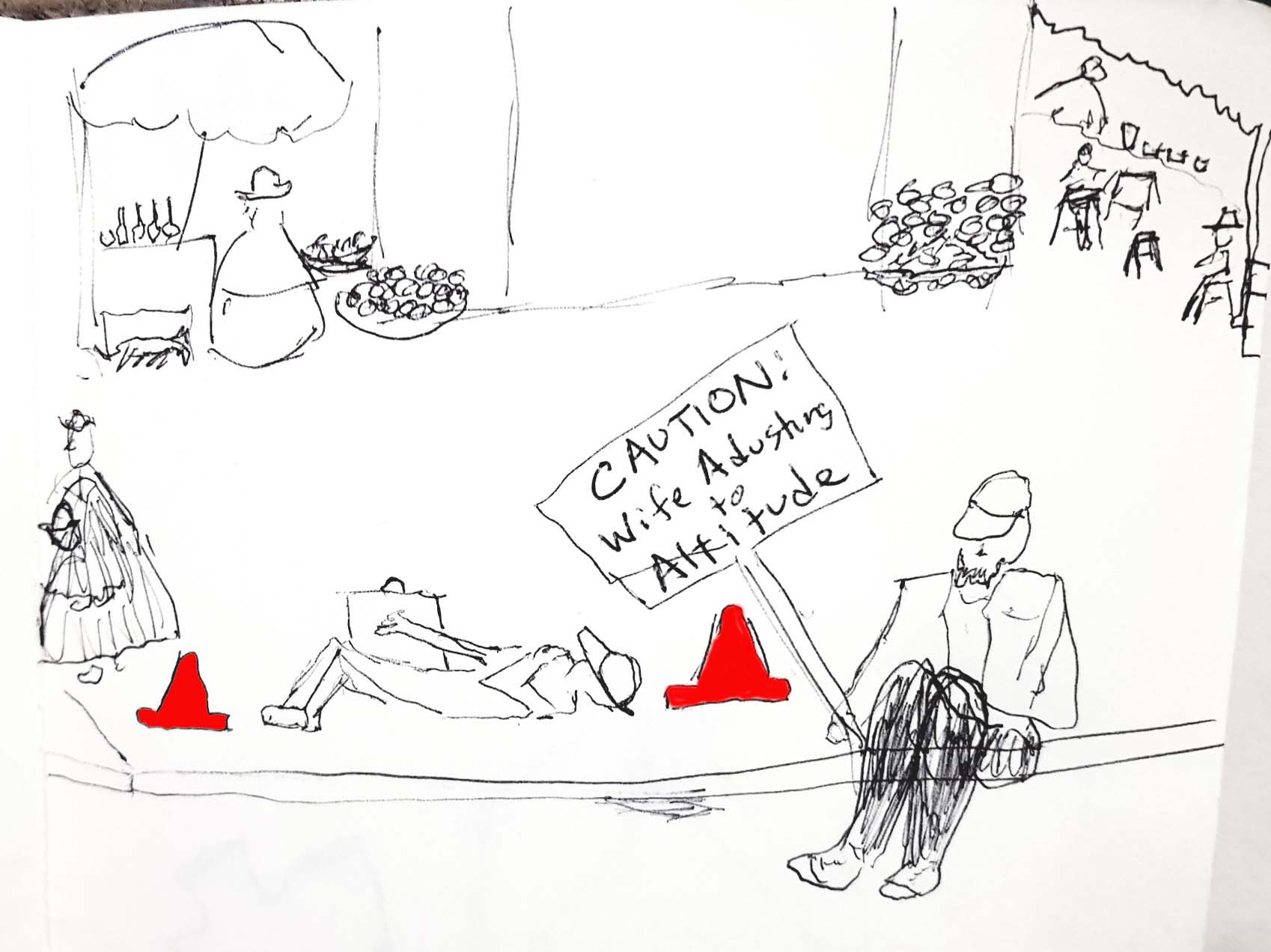
Car after car funneled into the street. After ten minutes or so, I said, I’ll go up to the corner and stop traffic. Jonathan encouraged me to wait. After all, the street was empty when we started up. Five more minutes and the street was full up to our front bumper. I was getting a bit worried. Just then the front corner of a full-sized bus began to emerge from the right and turn into our lane. I got out of the car and ran the half block up the hill. I forgot we were over 12,000 ft and by the time I arrived in the intersection, panting heavily, the bus was already inching toward Jonathan. Cars were barely moving. I began waving my arms. “Stop! Stop! No! Back!” I shouted at them. I yelled that a car had to get out. No one wanted to stop but I stood in the intersection. A cab tried to get around me, but I stepped toward him waving my arms and using my mom voice. He was going to create gridlock in another few seconds. “Back, back up!” I stepped toward the front bumper of his black station wagon taxi still creeping forward. “BACK!” He began to reverse. Another car began to pull ahead and I waved my hand and shouted “NO.” Then a car indicated it wanted to pull away from the mess in the direction we ultimately wanted to go. I waved them on. Another followed. I looked back down the street. The green and yellow bus was still choking the street, a giant inchworm trying to move ahead. There was some movement, though slight. I turned my head back to the intersection still waving and shouting. Two cars back, the honking began, but I waved my arms, “No, No, Not until it’s clear!” The bus had begun to worm its way past Jonathan. He was almost clear, so I kept shouting.

Two women at a sidewalk stall were grinning at my antics, some crazy foreigner shouting at the traffic in Spanish. Then they pointed and shouted. Jonathan was finally coming up the hill. He stopped in the middle of the intersection, I opened the door, got in and shouted my thanks as we drove off. The ladies waved.Waving my arms frantically and yelling at two lanes of oncoming cars is hard work at 12,000 ft and the second I sat down in the car, I wilted, my head began to burn with a full-on migraine, and I grabbed a bottle of water. It was just overexertion at altitude and in a few minutes my blood pressure was back to normal and we were climbing up the side of the valley away from the city center and on to Tiwanaku.  At that point, I opted to pop a mouthful of coca leaves and some activating ingredient, which put my mouth immediately to sleep and then miraculously cured my headache.  Some traditional medicine is worth its weight in gold.

Postscript: We may be dumb but we’re not stupid. We are never driving in La Paz again. We’re parking our rental at the airport and taking a taxi in. We learned our lesson.

Riding the Teleferico

Jonathan likes markets, and as Thursday is the El Alto market on Av. 16 de abril, we decided to go. When we went to the hotel desk to ask about getting a taxi, one of the bellmen suggested we take a taxi to the main aerial tramway station and ride the tram to El Alto. The ticket is three Bolivarianos a person, about fifty cents, and you get off in the middle of the market. He went on to say that we could make the return journey to the hotel completely by aerial tram, circling the city. It sounded like a bit of a headache, but he said we could buy all the tickets at the start of the journey so we didn’t have to stand in line at each station. We would ride the red line back from El Alto to the end at the central station, the take the orange line to where it ends and then the white line to where it ends just below our hotel. We’d save money on the taxi fare, too.

Road up the hillside below the teleferico.

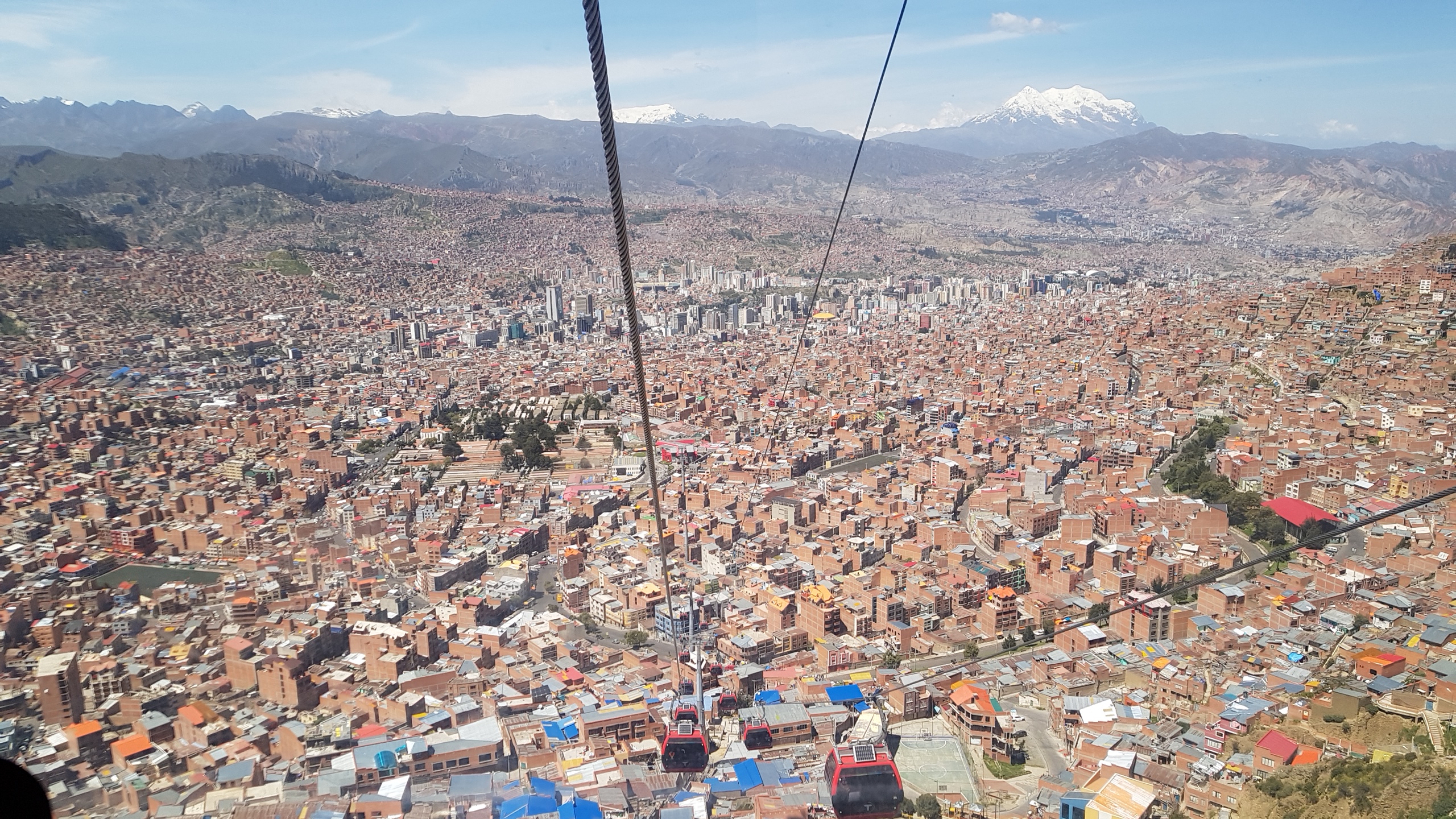
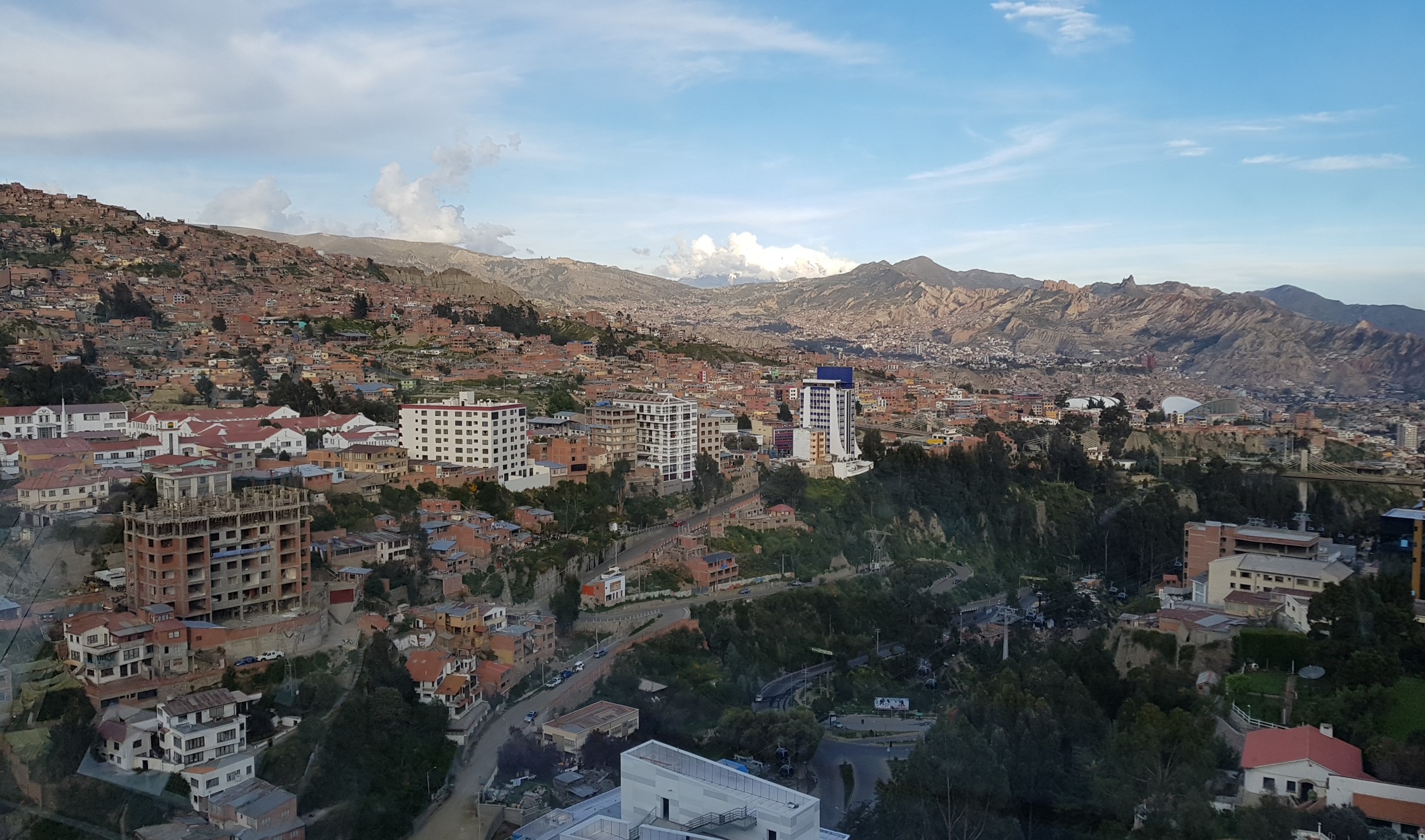
The taxi ride to the main station convinced us. Traffic was heavy, inching along every street. It took almost a half hour to get to the station. The aerial tramway is a different world. It is new, uncrowded, and clearly marked, with lots of staff. There was almost no line and you get in your eight person gondola while it shuffles along at a snail’s pace. At the end of the runway you swing out and up and you’re over the city with a breathtaking view both down into people’s backyards and out across the valley. I looked up at the valley rim and thought, “We won’t go up there.” We touched down at a station and changed direction, but my smugness evaporated as we swung up and over the edge of the valley into the next valley that holds El Alto, Peru’s second largest city. By the time we arrived in El Alto we were sold on returning by air.

Shopping for polleras/skirts in El Alto

The market was huge, full of every imaginable household item. I bought a nailbrush. We would have bought one of the brooms they sell for sweeping sidewalks made of a bundle of reeds tied together, but neither of us thought we could get one through Peruvian customs.

We followed the suggested plan, paying for the six tickets we needed in order for both of us to get back to the hotel. The ride was spectacular. From El Alto you can see snowcapped mountains ringing the valley, while back in La Paz, Illimani is a single huge beacon over the city. We could see the whole bowl of the city with it’s patch of twenty story buildings right in the center. It was easy to change from one line to the next. There are elevators and elevated walkways that meant Jonathan could avoid stressing his knees. Those who’ve ridden subways know how rare it is to find a seamless system without stairs. Our swing around La Paz, literally, was a good way to get a sense of the city.

Note: The young man at the ticket booth in El Alto didn’t give us all the tickets we paid for. Whether it was an error or by design, count your tickets and your change and politely ask for what’s missing if necessary. To save face, most people will comply.

April in La Paz, Bolivia

Whatever I was expecting from LaPaz, it wasn’t the brilliant blue sky capping the overflowing natural bowl that encompasses the city. From our window in the Hotel Stannum we see the snow-covered peak of Illimani southwest of the city center and the houses under construction farther and farther from the center, rising like the foam on a pot about to boil over.

Our trip started with two goals, as archaeologists we must visit Tiwanaku, and after that we wanted visit the last place where red-fronted macaws can be seen in the wild. We have a pet red-fronted macaw currently living with our very generous daughter Amanda. Simon was bred in Florida from birds probably exported from Bolivia in the 1970s. Once we found he was from a critically endangered species, we decided that if the opportunity ever came up, we’d go see his extended family. This is another of the many reasons that no one should have these birds as pets. Too much work, too much guilt. Simon may live to be forty and he’s only about fifteen now.

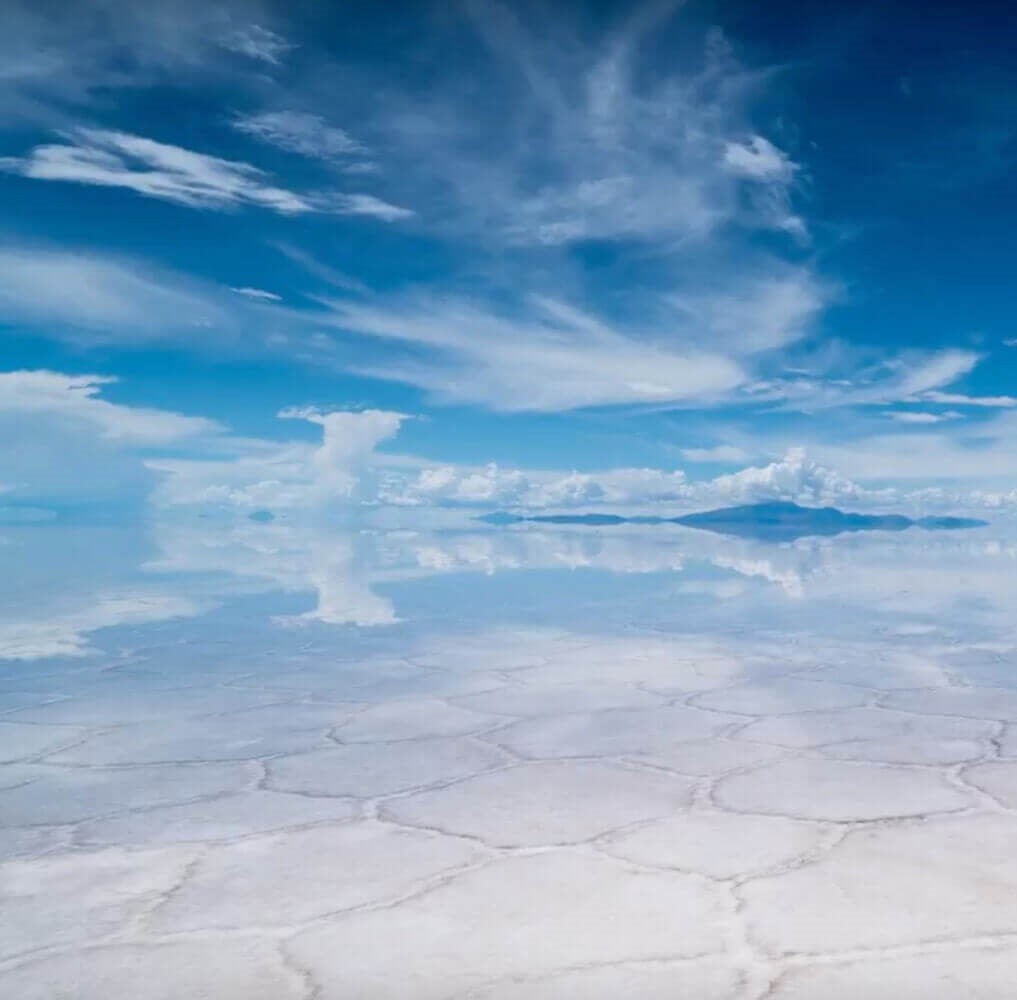
We found we could round out our visit to Bolivia by stopping in at the Uyuni salt flats. It’s possible to take a tour that lasts four to ten days around the Uyuni area but we are just going to have a look.

I’ll confess to a lapse in planning in that I didn’t realize we needed visas to visit Bolivia until the day before we were leaving. In a panic I called the consulate and found that if you have your paperwork in order and crisp bills to pay the fee of $160 per person fee, you are able to get a visa upon entry, especially at larger crossings like the El Alto airport in La Paz. I hustled around and printed the online-only form, copies of our passports, itinerary, hotel reservations and yellow fever vaccination just for good luck. When we arrived with all this information neatly clipped together, we were rapidly given our visas. The line was short at 12:30 am. Legally in the country, we headed for the hotel, where the full extent of the next cruel lesson hit me. Eat lightly if you are going from sea level to 12,000 feet in two hours. We had dinner in the Lima airport before our 10 pm flight and I did also eat a morsel on the plane. It was a big mistake because my salad in the Lima airport gave me food poisoning. The worst didn’t start until we were at the hotel, so perhaps I have something to be grateful for. Sparing you the details, I spent the next day lying around waiting to feel better. This is why we booked four nights in La Paz at the start of the trip, to acclimatize. I really needed it.

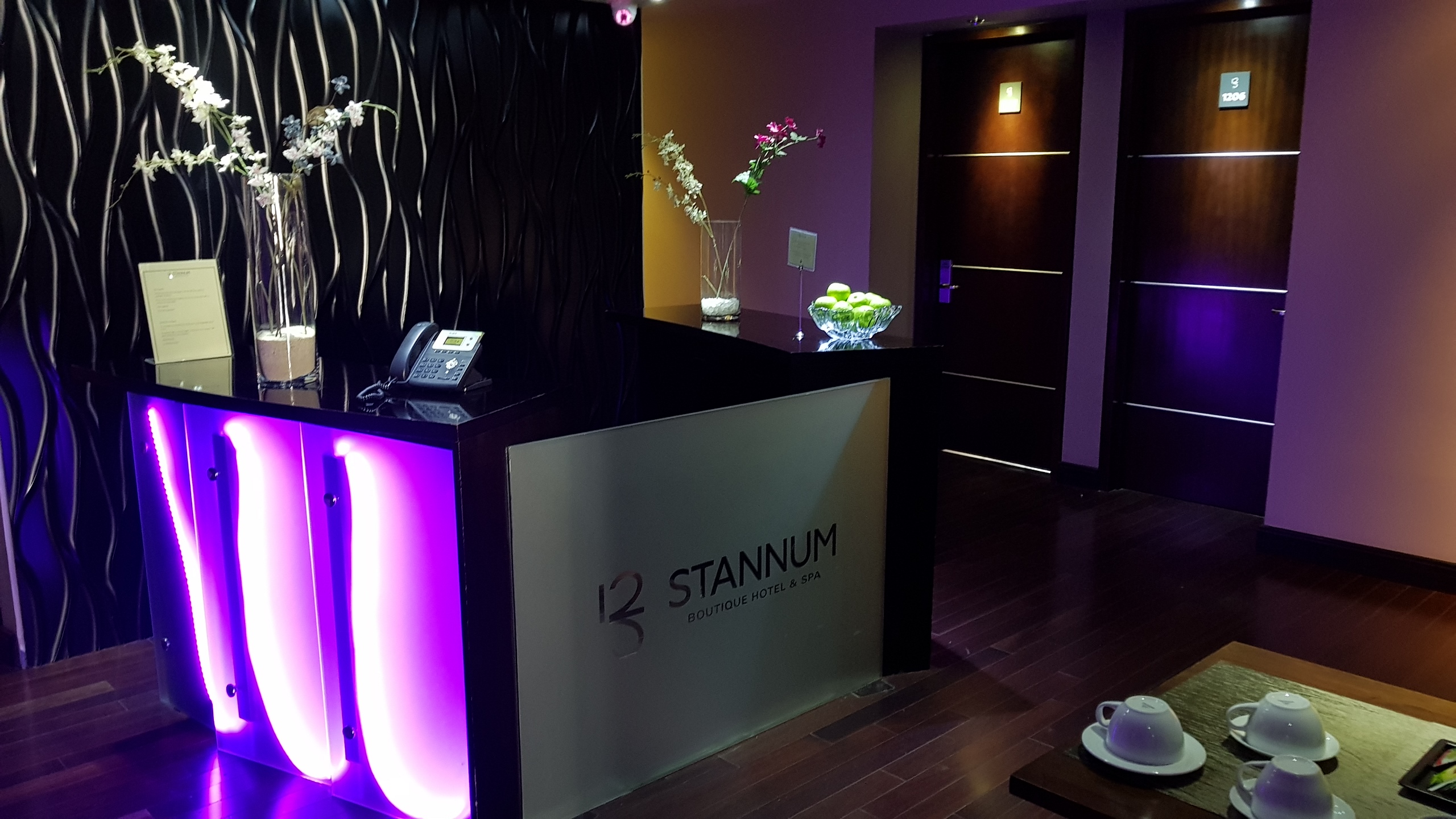
The Stannum Hotel occupies the upper floors of a multiplex/mall/office building. The staff are helpful and their English is very clear, which we appreciate even though we speak Spanish. The kitchen staff even sorted through their cutlery to find the travel teaspoon they inadvertently collected with other dishes. It was easy to find, it’s stamped SWISSAIR.  The decor is contemporary and a bit nightclubby, though I enjoy trying out all the unusual shaped chairs. There is a comfortable couch and chair in a small “library” of coffee table books about Bolivia. There’s also a small internet pod on our floor where I can slide the doors shut and make a skype call without awakening my napping husband. Room service was handy when all I could get down was chicken soup. It’s the perfect starting point for us.


The Other Side of Travel in Peru

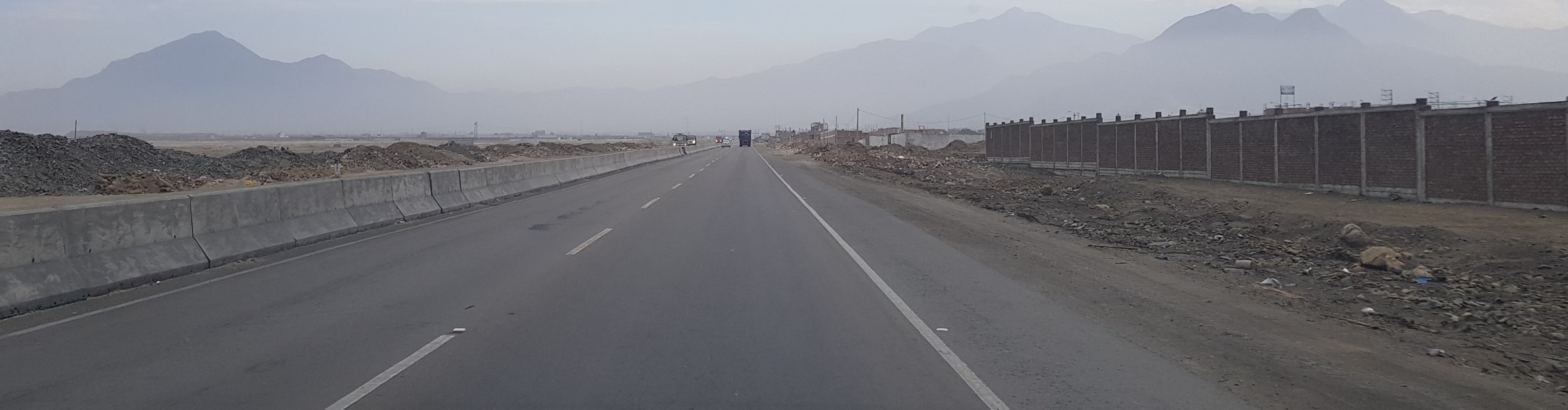
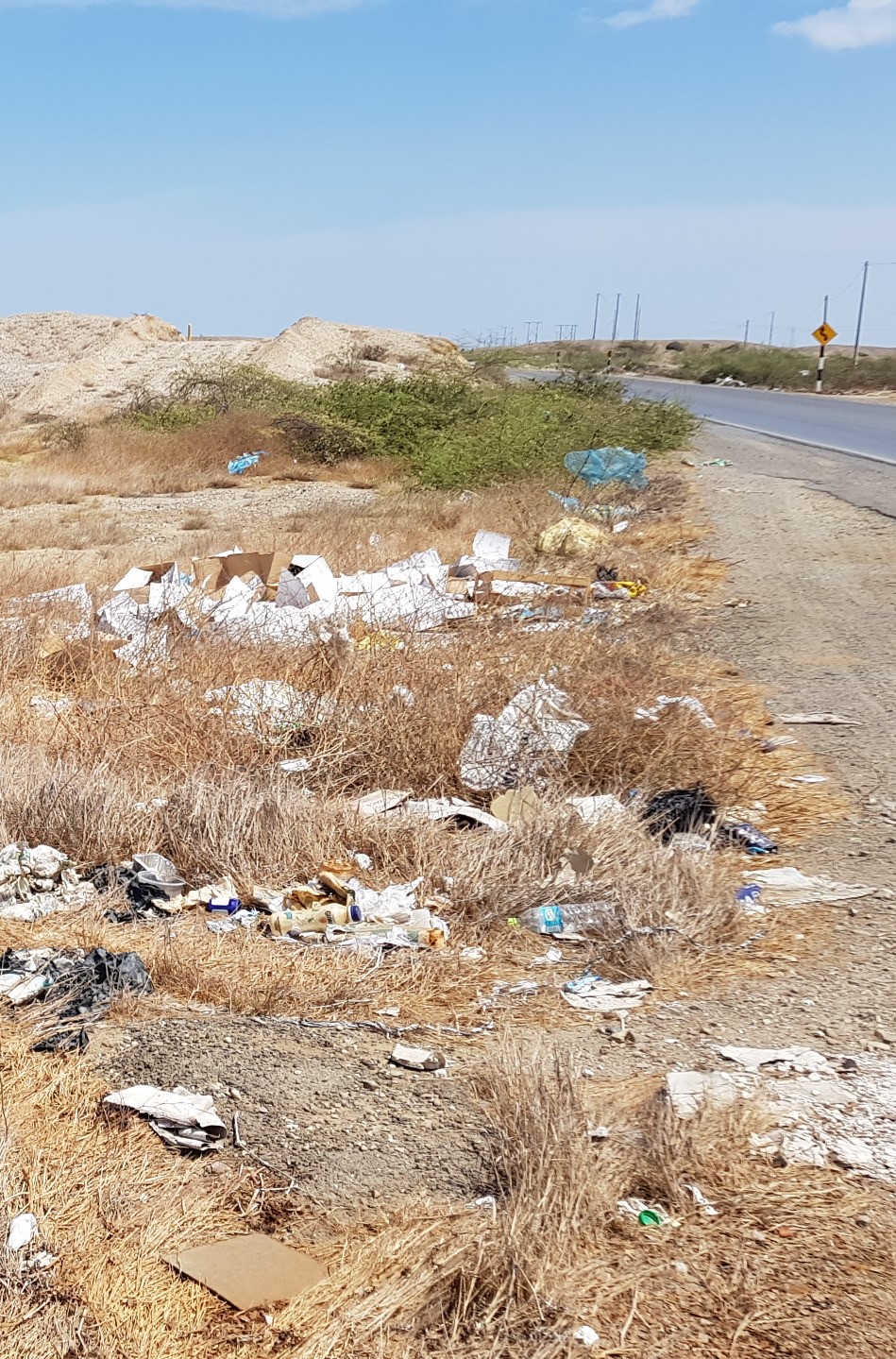
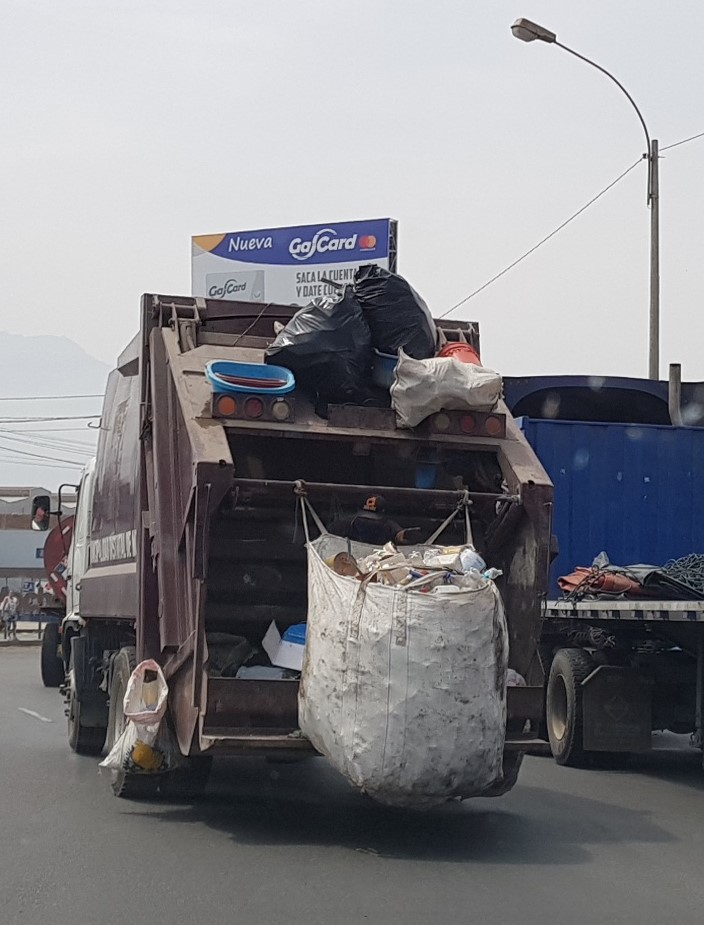
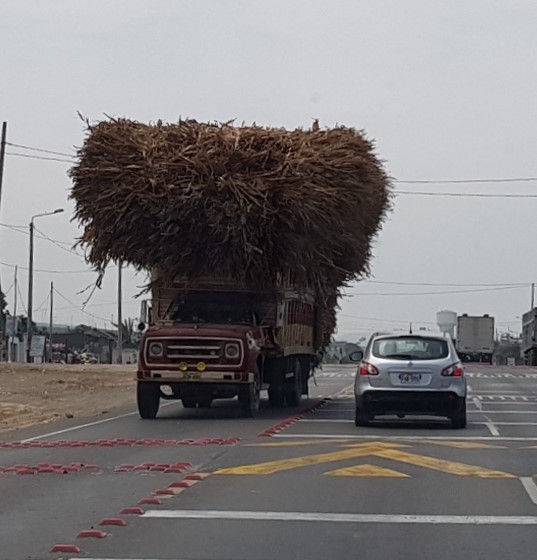
As we drove north, we saw the side of Peru away from the beaches and national treasures. This part is a desert without water, except when the rivers flood. It’s where last year’s El Nino peeled off miles of pavement still awaiting repairs, and the problem no one can escape–waste. Along the highways from Lima to the far north garbage along the roadside is proportional to population. Most roads are lined with garbage ranging from scraps of plastic bag clinging to plant stems, pale flags waving in the wind. Moguls of construction debris border the dunes.

It is frustrating to visit world renowned archaeological sites and gorgeous beaches that feel like oases in a countryside splotched everywhere with trash. How can we convince people to visit us when one neighbor says she now finds it depressing to drive from Lima to Barranca because of the miles of shacks and garbage? And she lives here.Peruvians may produce less garbage per capita than other countries, yet for lack of systems to dispose of waste, much of it ends up along the highway. There is not much investment in landfills or equipment to keep them sanitary. Local officials appear to prefer dumping waste behind a sand dune to organizing garbage disposal. There’s no glamor in cleanup. What happened to “cleanliness is next to godliness?” We all lost our faith. Driving north, the car in front of us opened a window and threw out a whole coconut that they’d finished drinking. They didn’t even slow down. We followed a trucker peeling a tangerine as every few seconds another piece of peel flew out the window.

How can we ask people to keep their trash in their car if the roadside is covered with garbage bags, water bottles and diapers?  There are lots of people who need better sanitation, and the evidence is along the roadside.

Tumbes to the north, Cabo Blanco to the south

We went to Tumbes because it was there. We said we were going to northern Peru and that’s as north as it gets. The Plaza de Armas has two elaborate monuments facing each other, a condor and llama on one side and a giant band shell filled with faces and figures on the other.  

I’m not sure I’ve seen another civic monument quite like it. We had lunch in Tumbes at Eduardo El Brujo, ceviche and fried calamari. The restaurant is upstairs around the corner from the Plaza de Armas. To make sure that clients get there, several people stand in the street indicating parking spaces and showing visitors where the door is located. We were interested to see that on the day we visited, most of the diners were locals having business lunches. No one drank alcohol with their meal, though having a beer or two with a seafood lunch is normal for vacationers.We stopped at Puerto Pizarro, the supposed site of Francisco Pizarro’s entry into Peru, the first step in a chain of events that devastated the Inca Empire. Lowlife Pizarro and his brothers melted down Inca treasures to make ingots. They had no sense of history, and no recognition of other cultures. We’ll never know for sure what they melted down, rumored to include an entire garden made of gold and silver.

Puerto Pizarro is the launching spot for tours of the Tumbes mangroves. We preferred to do our birdwatching from the shore and saw enough to keep us looking.

The next day we went south along the coast on an unpaved road that runs from Playa El Nuro past Cabo Blanco. We had been to lunch at the excellent Cabo Blanco restaurant with neighbors from Playa Los Organos, Darryl and Arla. They invited us over to chat on our first day in the area. They built a house about ten years ago and it now is surrounded by a lovely garden area. We decided to go to lunch together and they introduced us to the Cabo Blanco area. Our return trip was a chance to walk on the beaches. Some of the coast is very rugged, with natural terraces of rock extending up the hillsides. For now the shore is still largely empty and untamed, though that may change as new houses and hotels are being built all along the coast among the folds in the hills.

Our hats are now so big that there is hardly any room in a selfie for anything else. This week has been much hotter around Playa Los Organos than in Barranca. Hats keep the sun off and that’s what’s important. We could have continued down the beach indefinitely, collecting driftwood and seashells, cooling off now and then in the ocean.


Mancora

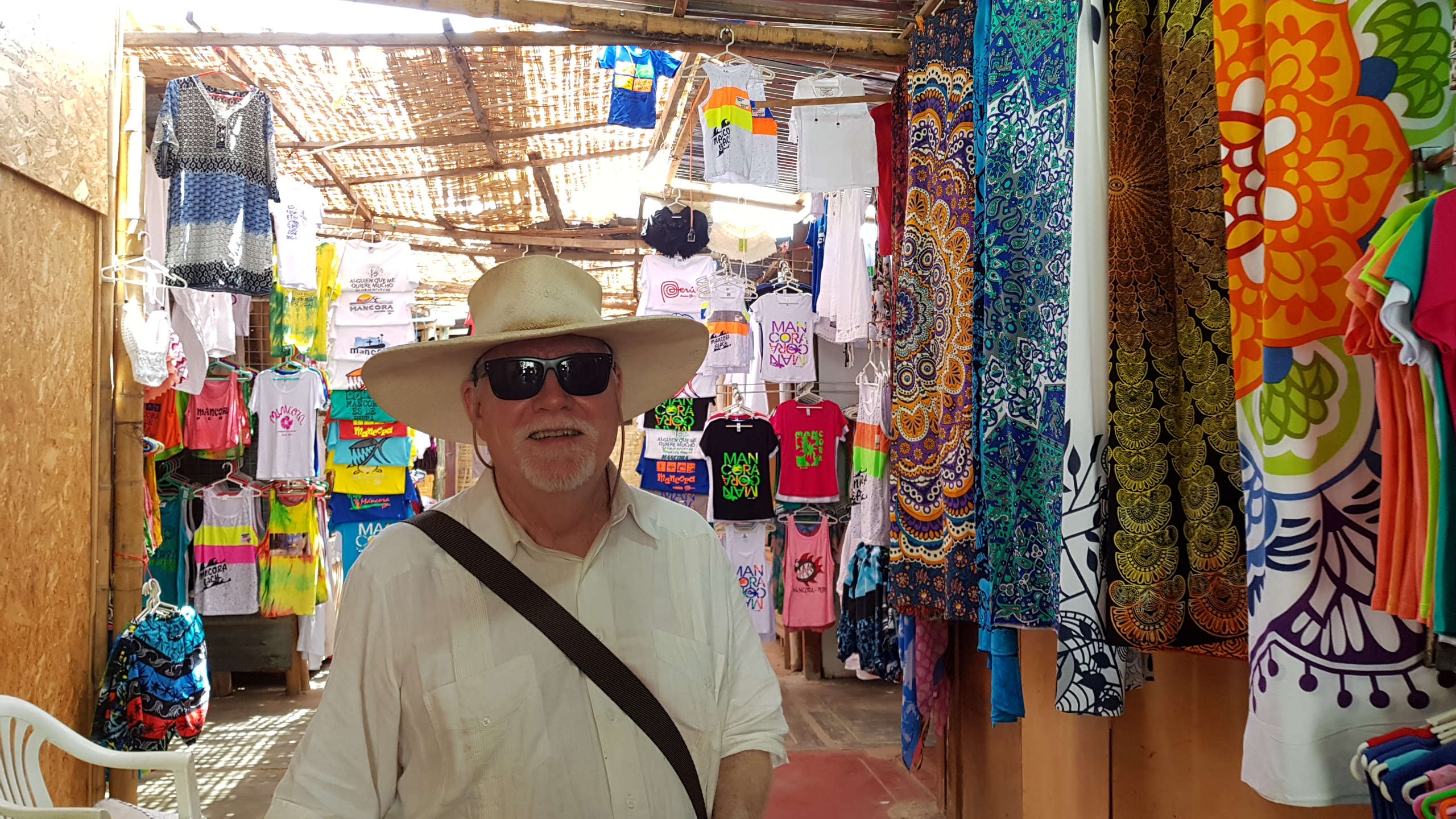
Best known of the northern beaches is Mancora, where surfing competitions are held. The center of town is a bustle of hostels, restaurants and shops. We found a few things we’d forgotten to bring along, like peanut butter, and new flip-flops. Mancora is 100% tourist.

The beach in Mancora had everything we’d heard about, jet skis, horseback riding, and people spending a day in the sun.In town, what looks like a grocery store is an overgrown convenience store, as no one is expected to stay for long. Supplies for cooking include beer, energy drinks and chips. Prices are high compared to elsewhere in Peru. I passed on a crocheted bag to carry my keys and beachcombing. We didn’t need shell souvenirs or bikinis. We strolled the downtown area and then had sushi at Buda with its irresistable wall painting. We have friends who’ve bought art in Mancora. Another recommends the Sirena dress shop.


In contrast to the hostels that are cheek by jowl in town we drove south along the shore road on our way home. This is where you find mile after mile of large houses and comfortable hotels with pools overlooking the beach. This is the Mancora that people dream about.


Playa Los Organos

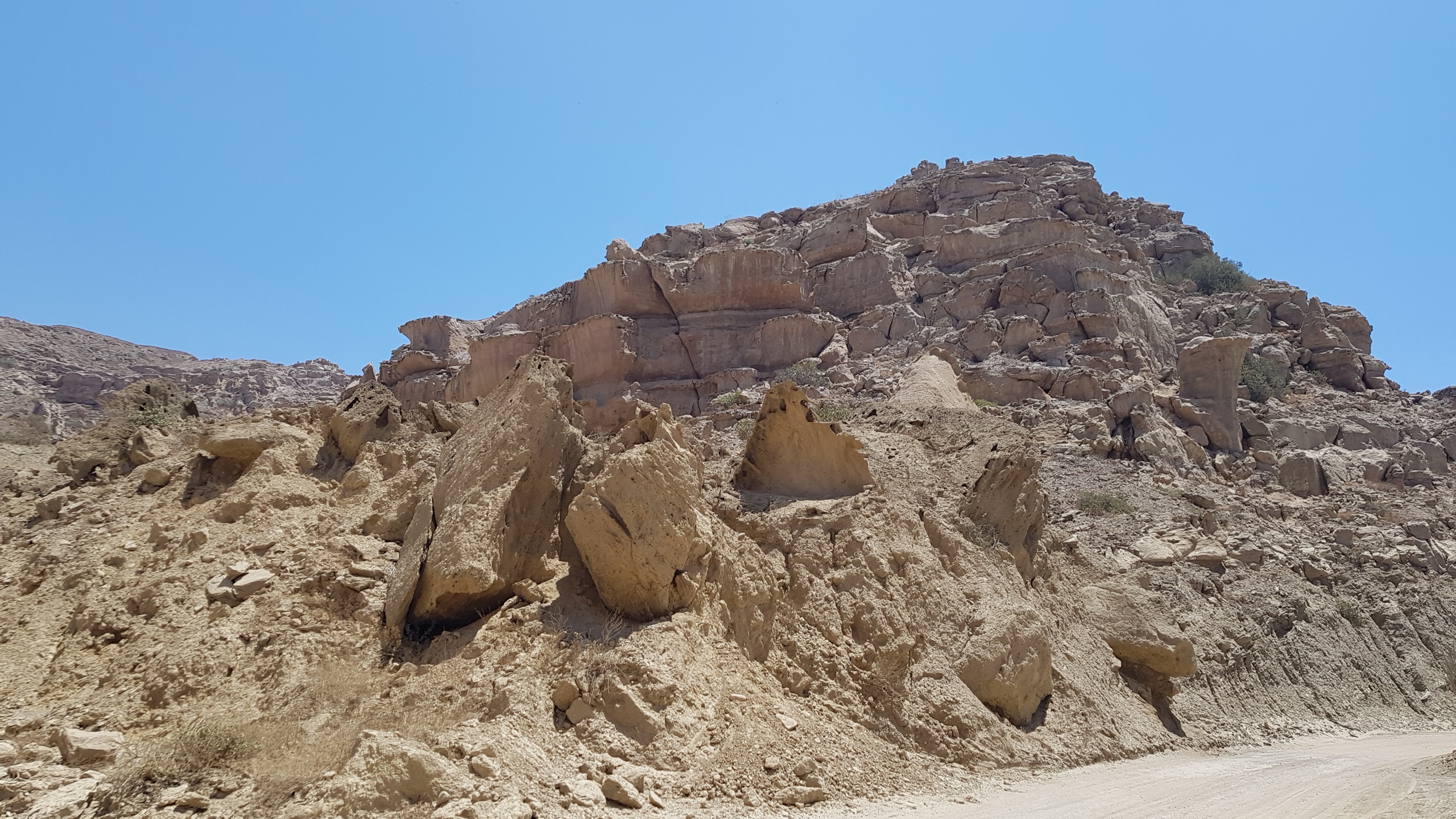
Our home stretch into the north took us from Piura to Playa Los Organos. We saw more of the damage from El Nino as we left Piura on bumpy roads, the asphalt having washed off last year. Road construction detoured us every few kilometers for the first hour of our drive. After that, the road was merely bad, partly peeled away in places, one lane each way in others, and full of potholes along the rest of the route. The landscape changed as we drove, getting dryer and dryer, sandy hills covered with tan fields of grass that sprouted after the El Nino and died as the water dried up. We stopped for a breathtaking view of this brown scenery at the top of a hill, sandstone and scrub reaching to the horizon. We only misinterpreted our Airbnb directions once, and a quick call to our hostess got us to our rental house facing the beach near El Ñuro. It was a pleasure to stop driving. Our house is perfect, lots of outdoor terrace and chairs, a tiny pool, and a view of the Pacific.

Why stay here when we already live opposite the beach in Barranca? The water is warm. We went for a swim the afternoon we arrived once the blazing sun drifted into the late afternoon mist. It was blissfully cool and not straight from a melted glacier. Divine. Just down the beach at the pier is a colony of sea turtles and we saw the carapace of four former turtles in the sand.

Talk about beachcombing! I did not bring a turtle skeleton home, but I’m thinking about it. I have to see whether it is illegal to possess marine turtle shell. We did find a few other things along the beach.

From here we will explore the beach, other beaches and towns from Mancora to Tumbes.