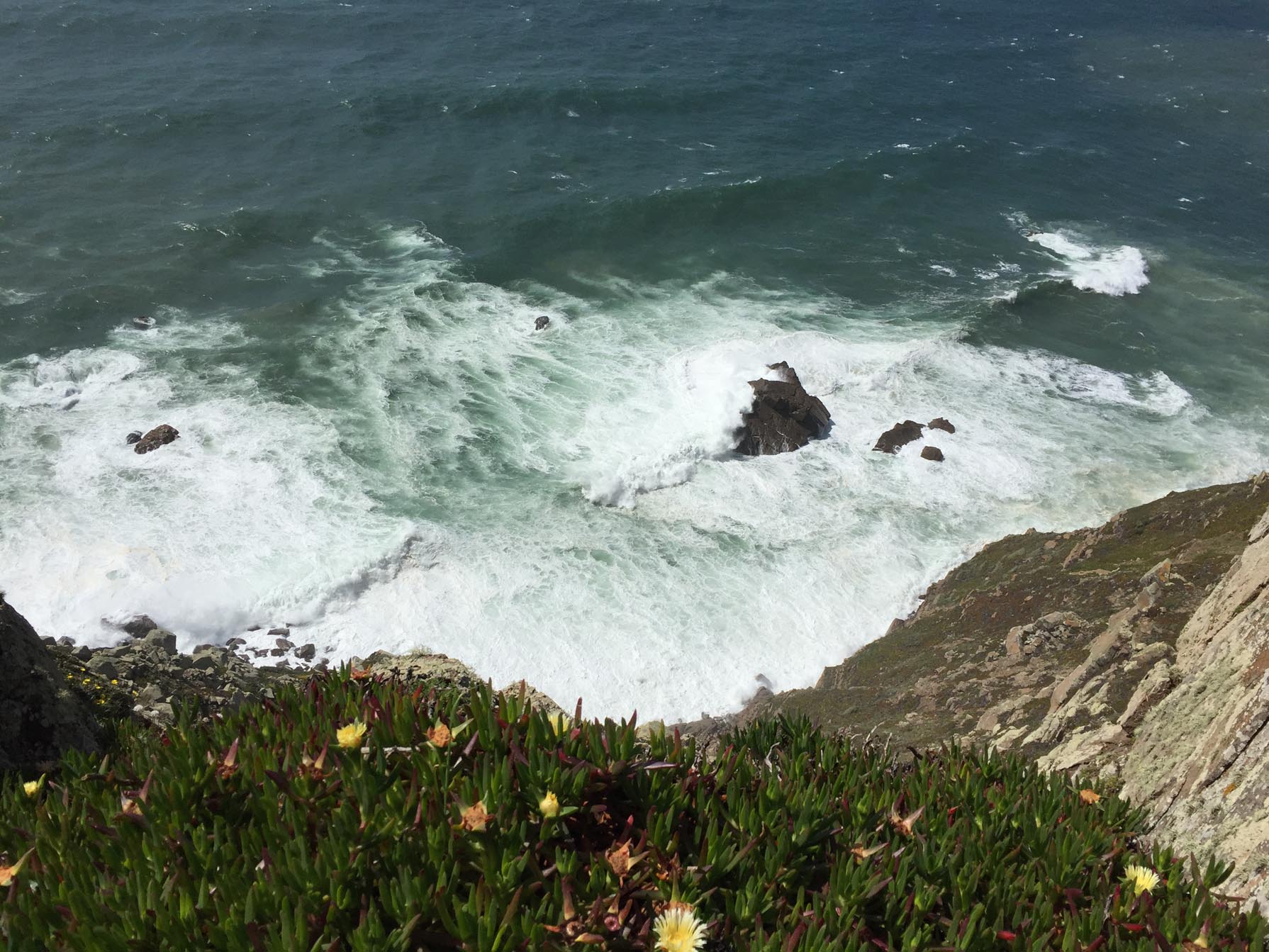
From Cascais, we drove to the westernmost point of land nearby to look out at the Atlantic. It was a bit gray out, and the waves broke and boomed. The view was impressive–there’s nothing between you and the New World except the Azores, which belong to Portugal, as it turns out.
Cabo Raso was windswept and there were a number of abandoned buildings and foundations, some with stairways to the water through unlit interior rooms. We explored the somewhat spooky remains for a while before going on our way.
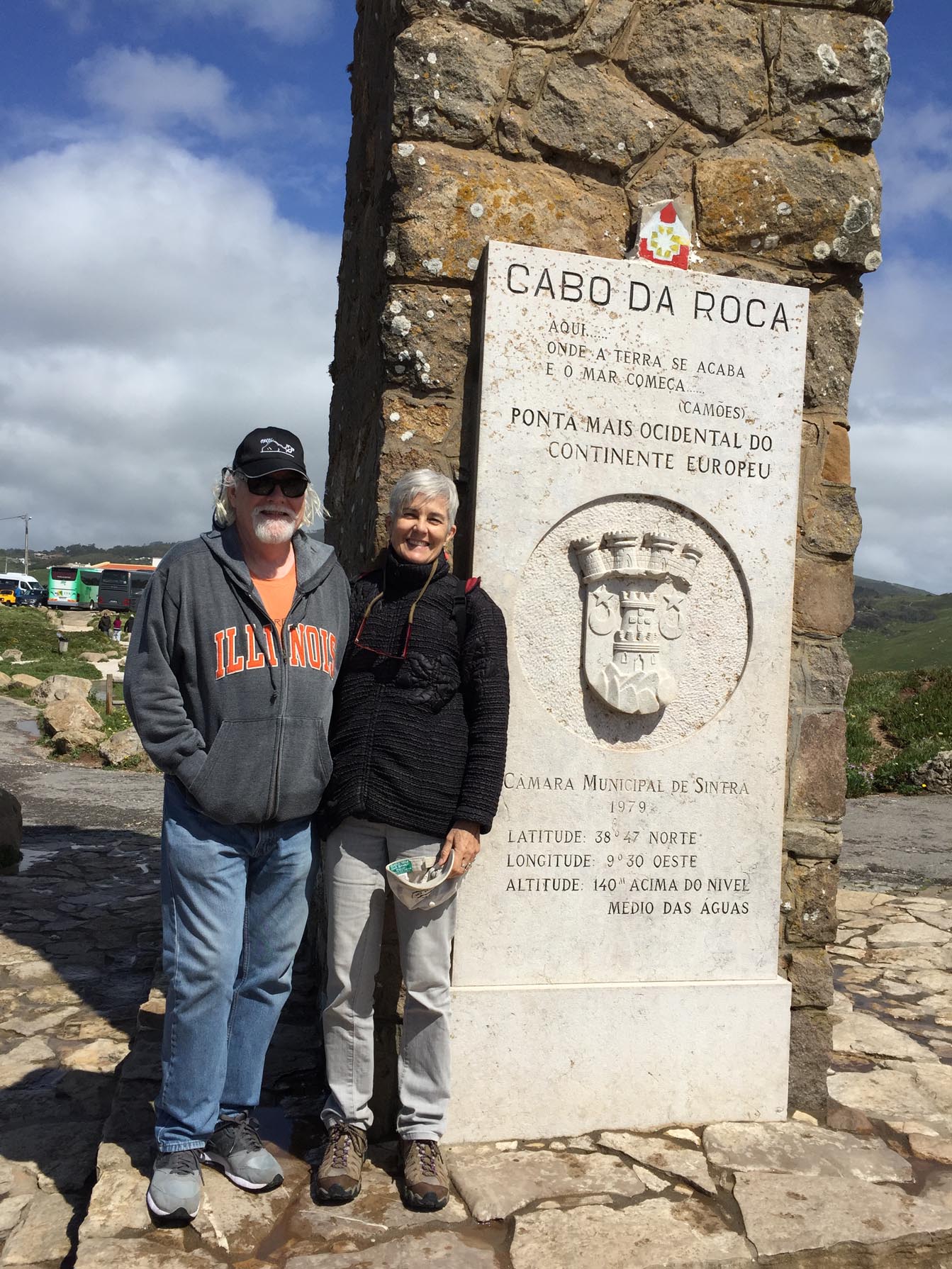
We enjoyed our visit so much that a few days later when we were in Sintra and had seen enough palaces for one day, we decided to go Cabo da Roca, the point due west. We read that it was the westernmost point in mainland Europe. Why not!
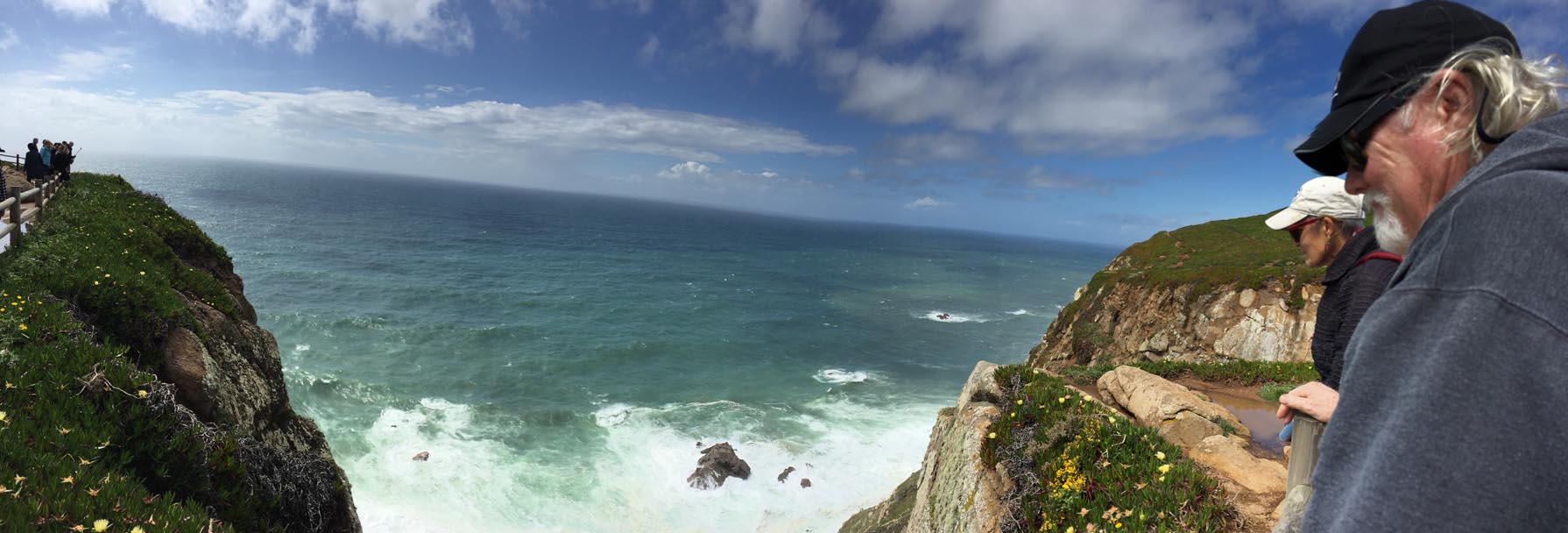
How much difference a few measurements make! We arrived at Cabo da Roca to find an extensive parking area filled with cars, six tour buses and about 200 other visitors. It was Sunday, not Friday, and the sun was out, but we were taken by surprise to find this spot so heavily visited when the other point is largely empty. We walked down the road a bit and found a less traveled area. The view out to sea was as impressive as ever.
You can see some of our fellow visitors in the upper left corner.There is an official marker.
I was going to insert a few seconds of crashing waves, but my skills aren’t up to embedding even a short video.
Both points have their charms. One comes with industrial archaeology. (I believe the abandoned buildings at Cabo Raso are related to the fishing industry.) The other has tour buses, a gift shop and cafe.
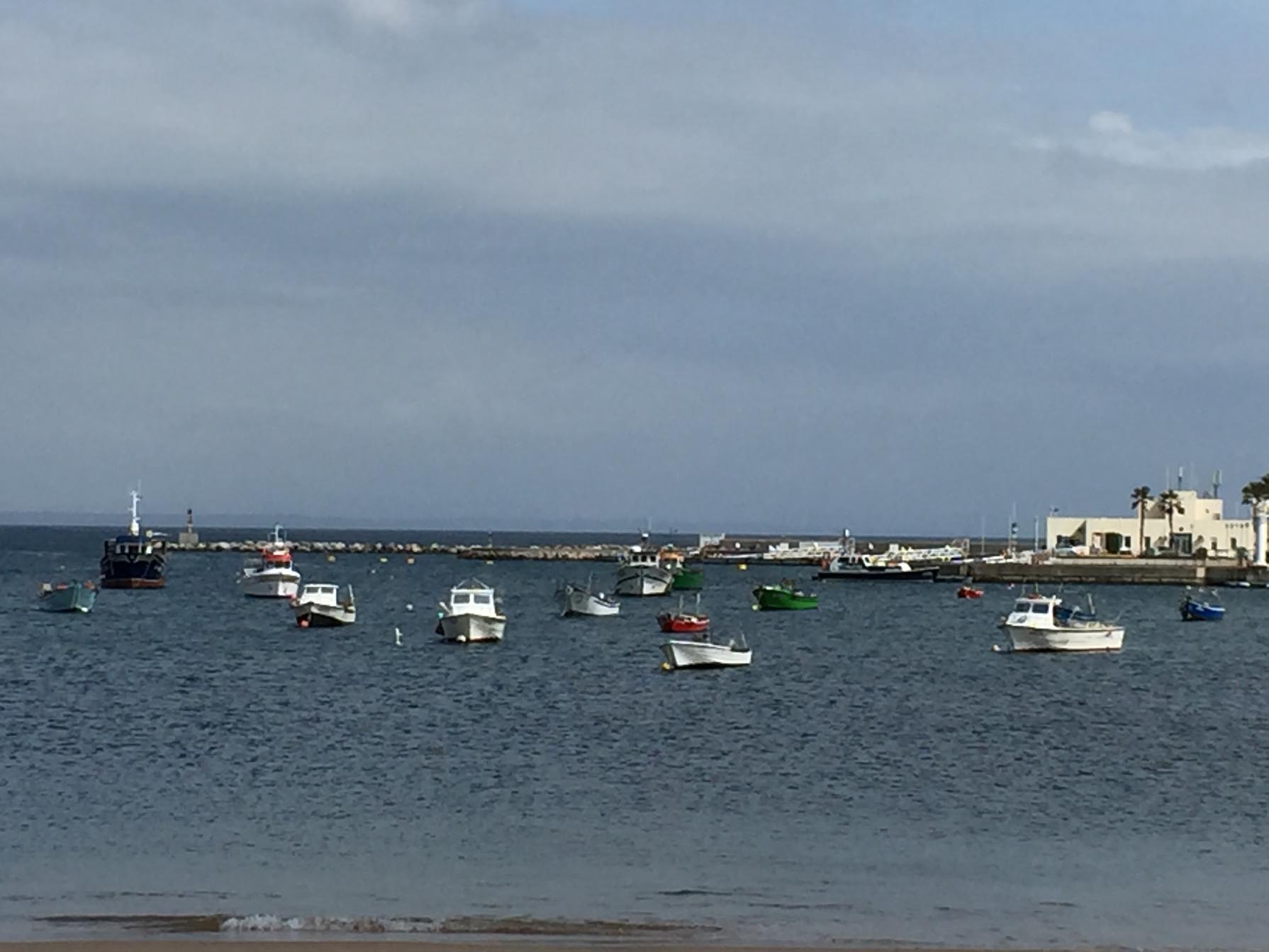
Views over this seaside town may remind you of novels from the age of F. Scott Fitzgerald, when people sat on verandas sipping cool drinks and men wore boaters.
Today there’s a focus on shopping, though the town is still lovely. We visited the museum/library house of the Condes de Castro Guimares. The story is probably worthy of a novel. The house was built around 1900 by Jorge O’Neil, titled in both Ireland and Portugal and a good friend of King Carlos I of Spain. He built a fantasy palace that is described as both eclectic and Romantic. It was beautiful and as you might think, packed with beautiful furniture and artworks. It was very much worth the visit. (The present name comes from the count that O’Neill sold the house to in 1910.)
This slideshow requires JavaScript.
As is essential on a visit to Cascais, we visited the blowhole, Boca do Inferno (Mouth of Hell, oooooooo!). We ate lunch in a fish restaurant along the beach and had a good day.
A couple of quirky things we saw:
Not your typical paint job!
It looks like he’s lost something in his beard.
It’s like a bowsprit coming out of the corner of a building.
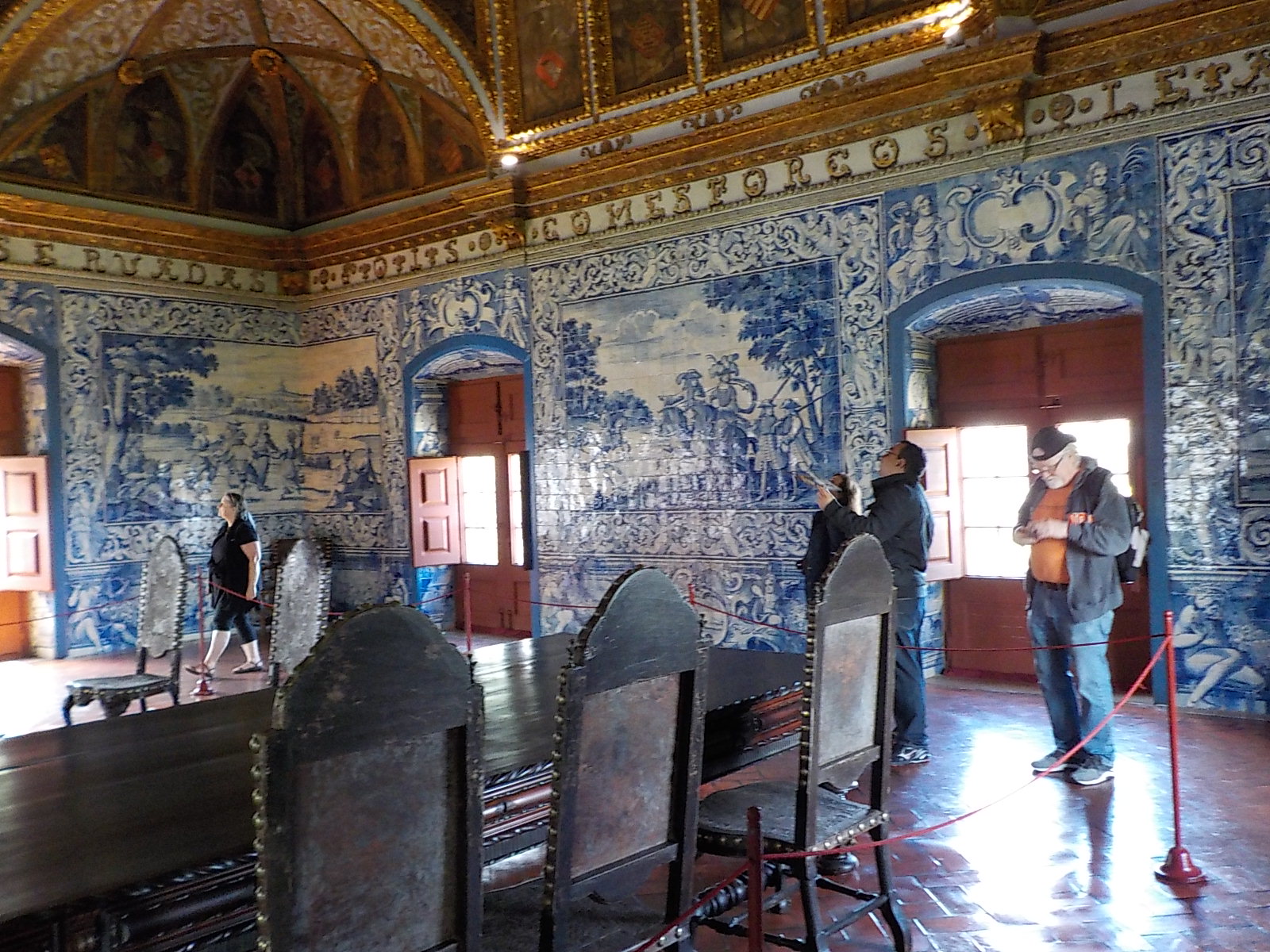
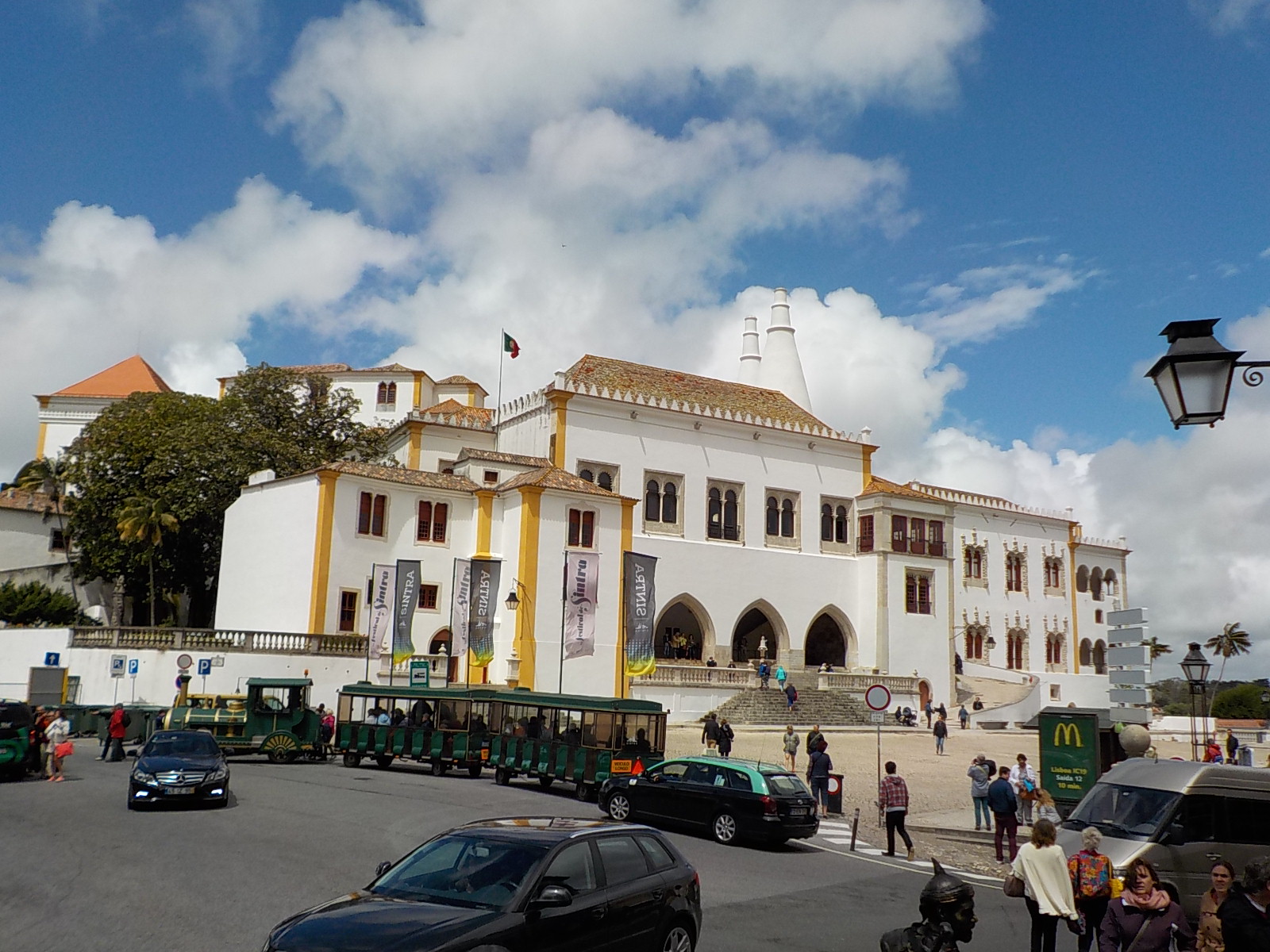
So far, we’ve only spent one day in Sintra, making inroads on a single palace, the National Palace of Sintra. The Palace dates from the 14th century and has been updated and remodeled over the centuries. The ceilings appear the oldest style, painted boards, yet what boards! There are magpies, swans, mermaids and a fleet of sailing ships.
This slideshow requires JavaScript.
Later, ceilings were carved and gilded, and walls covered with tile.
Furnishings were elaborate.
This slideshow requires JavaScript.
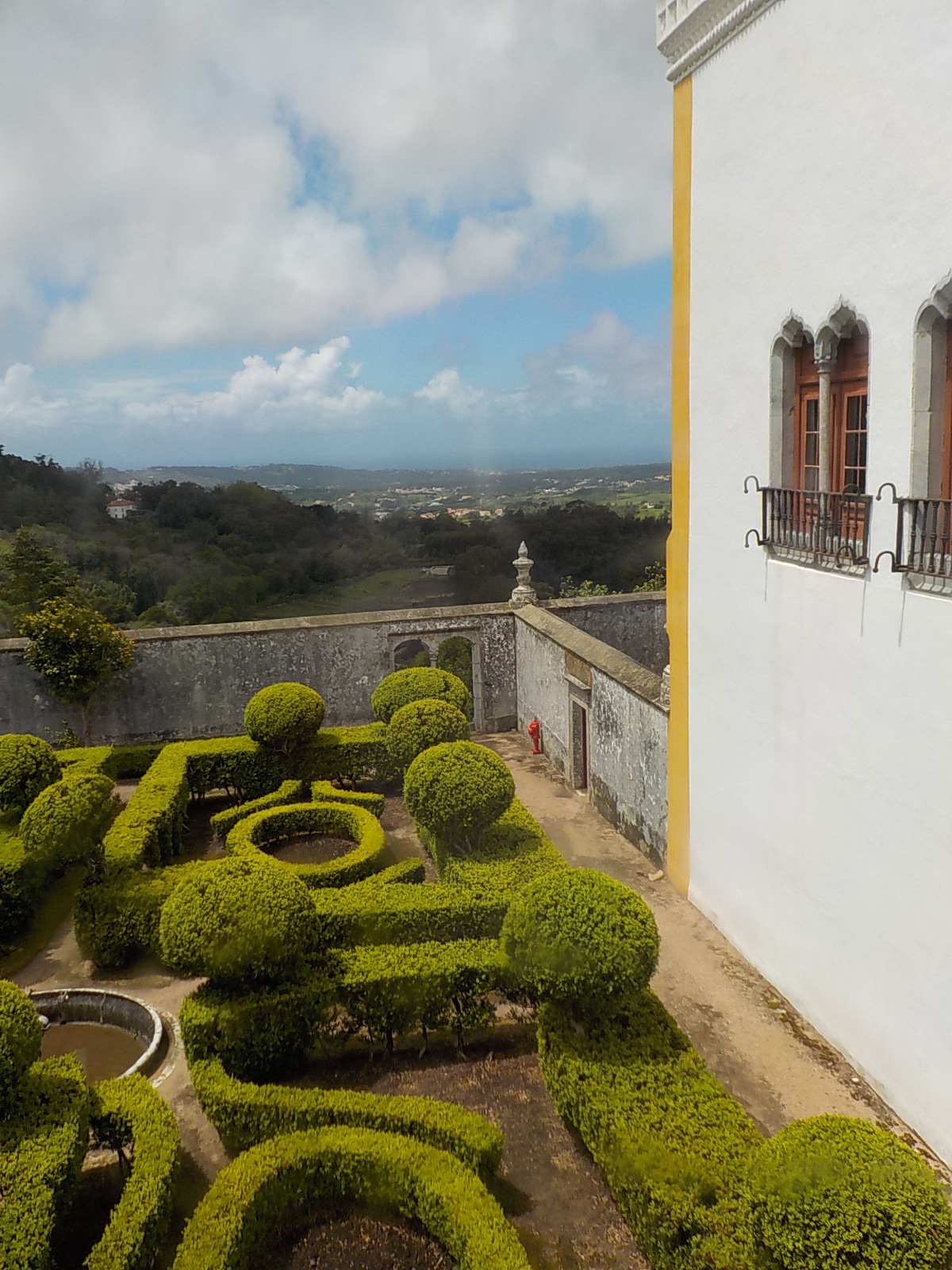
The exterior was as decorative as the interior.
The vast kitchen is in the process of being restored.
Having completed our tour, we admired the exterior that features two large chimneys from the kitchen.
The two kitchen chimneys are in the rear in this photo.
That leaves us with the Moorish Castle (Castelo dos Mouros), just above Sintra
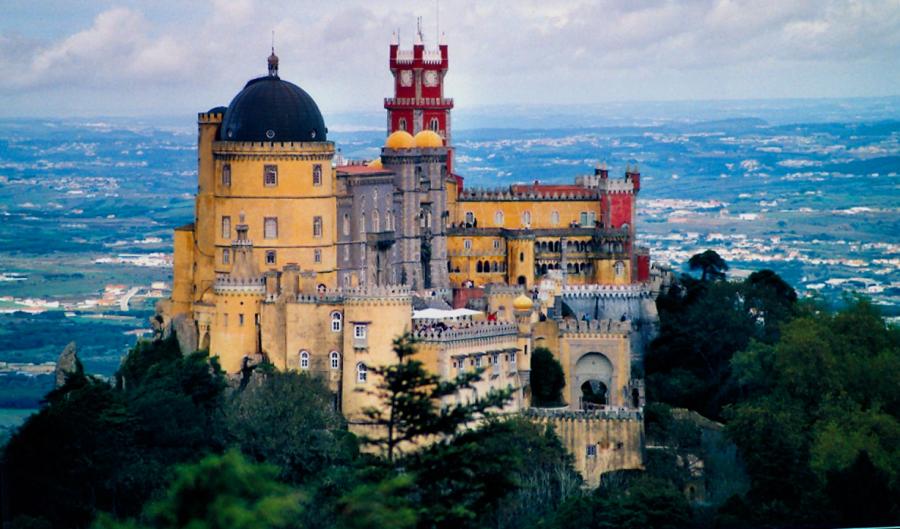
Then there’s the Palacio Nacional de Pena,
the castle in the Parque de Monserrate,
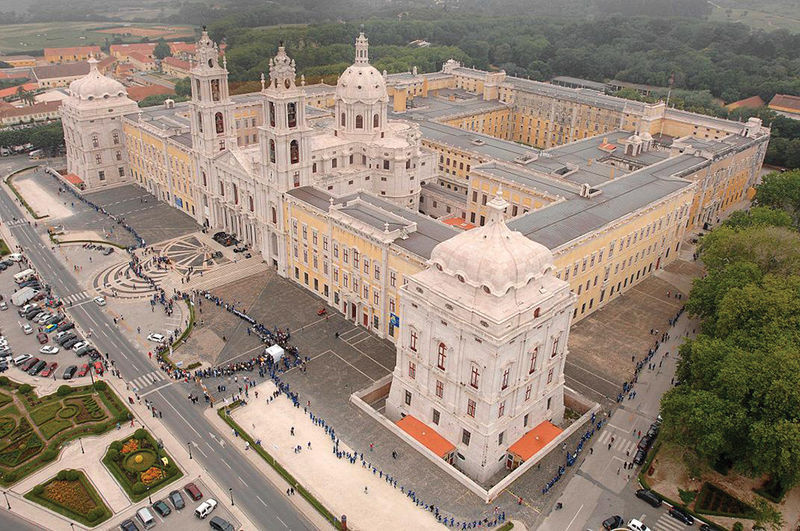
and nearby, the Palacio de Mafra.
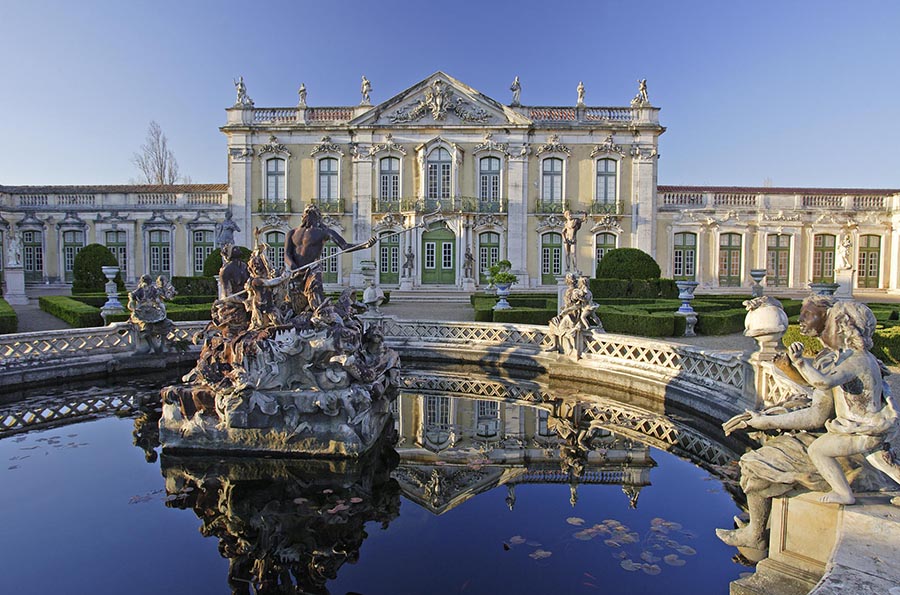
On the way back toward Lisbon is the Palacio de Queluz.
That’s a LOT of palaces, and will take several days to visit. You could easily spend a day at each one. Palace overload comes on pretty rapidly considering each of these is enormous and most are full of Portuguese tile, sculpture, architecture, and gardens in addition to objects from Europe and former Portuguese possessions, especially Goa.
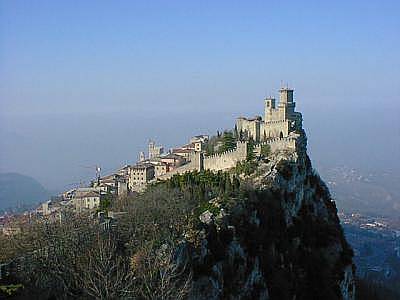
Portugal, land of castles, especially around Sintra.
Here’s a surprising piece of tile work that we saw in the Palacio Nacional in Sintra. It’s a bit ahead of Escher.
We had a whirlwind week, splashing through the rain and ducking into cafes to avoid the worst of the downpours as we visited a variety of places with our visitor, Peggy. In Lisbon, we began at the “Taste of Perdition” and Thieves Markets, both of which might have been better without rain. Despite the unprepossesing start, we did buy cheese and meat, and drink coffee while we dried off. Peggy and Jonathan each found a treasure in stalls that weren’t washed out.
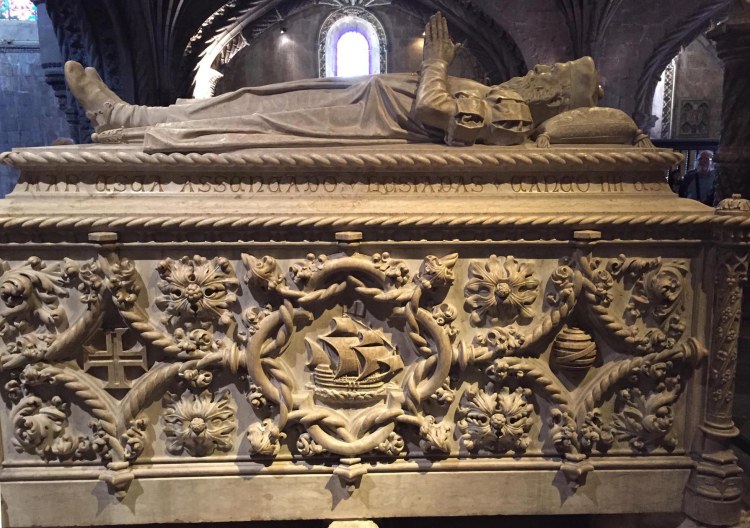
On our other days in Lisbon we visited the National Tile Museum (Museu Nacional do Azulejo), the Castelo São Jorge (St. George), the museum of Portuguese decorative arts of Ricardo do Espirito Santo Silva (FRESS), and the Tower of Belém along with the Discovery Monument and the Monastery of Saint Jeronimo (Hieronymus, Jerome, all the same name). The Church of Santa Maria in the monastery complex was a highlight, as it contains the tomb of Vasco de Gama, the great explorer.
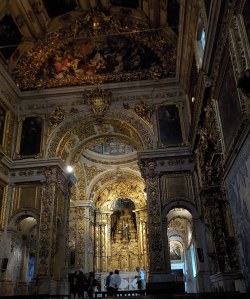
Many sights incorporate churches and chapels. The National Museum of Tile is the Madre de Deus convent. The archaeology museum, marine museum and planetarium are all part of the St. Jerome monastery complex, and other museums are adjacent to or within old churches, monasteries, fortresses, castles, or mansions–of which Portugal has many. They can start to merge together–which monastery, church, museum?
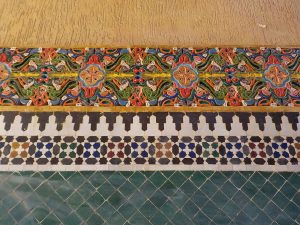
The Museu Nacional do Azulejo was a highlight, so much tile, so little time! Early on, Portuguese tile makers learned to imitate Arab mosaics with painted and incised tile. The lower right is a mosaic of a hundred or more tiles (Fez, Morocco), a similar pattern on the upper right consists of 18 tiles (Lisbon, Portugal).
This is Portuguese tile made to look like a mosaic.
This is a Moroccan mosaic.
The setting was also spectacular, a gilded convent, suggesting that things weren’t bad for all cloistered nuns, you just had to get into a cloister that had a royal patron.
The Castelo Sao Jorge gave us a chance to look at the view over the city. We had lots of excellent parking karma during the week, too, and were able to park about 100 yards below the castle entrance. (Lisbon is definitely short on parking–they could use quite a few 10 story parking structures, but parking is possible.)
View from the parapet.
Iron Age area.
The rain let up long enough for us to have a great view over the city from the ramparts of the castle and to look at the archaeological excavation of an Iron Age settlement that predates the rest of the area. Later, the sun appeared briefly, and we took a stroll around the neighborhood and ate our picnic:
The sun shone, the wind blew, and the flag waved.
Every castle needs a peacock–except when they cry like a dying cow.
The street performers came out with the sun.
Sometimes a park bench is a picnic spot.
Peggy found this sculpture around a corner.
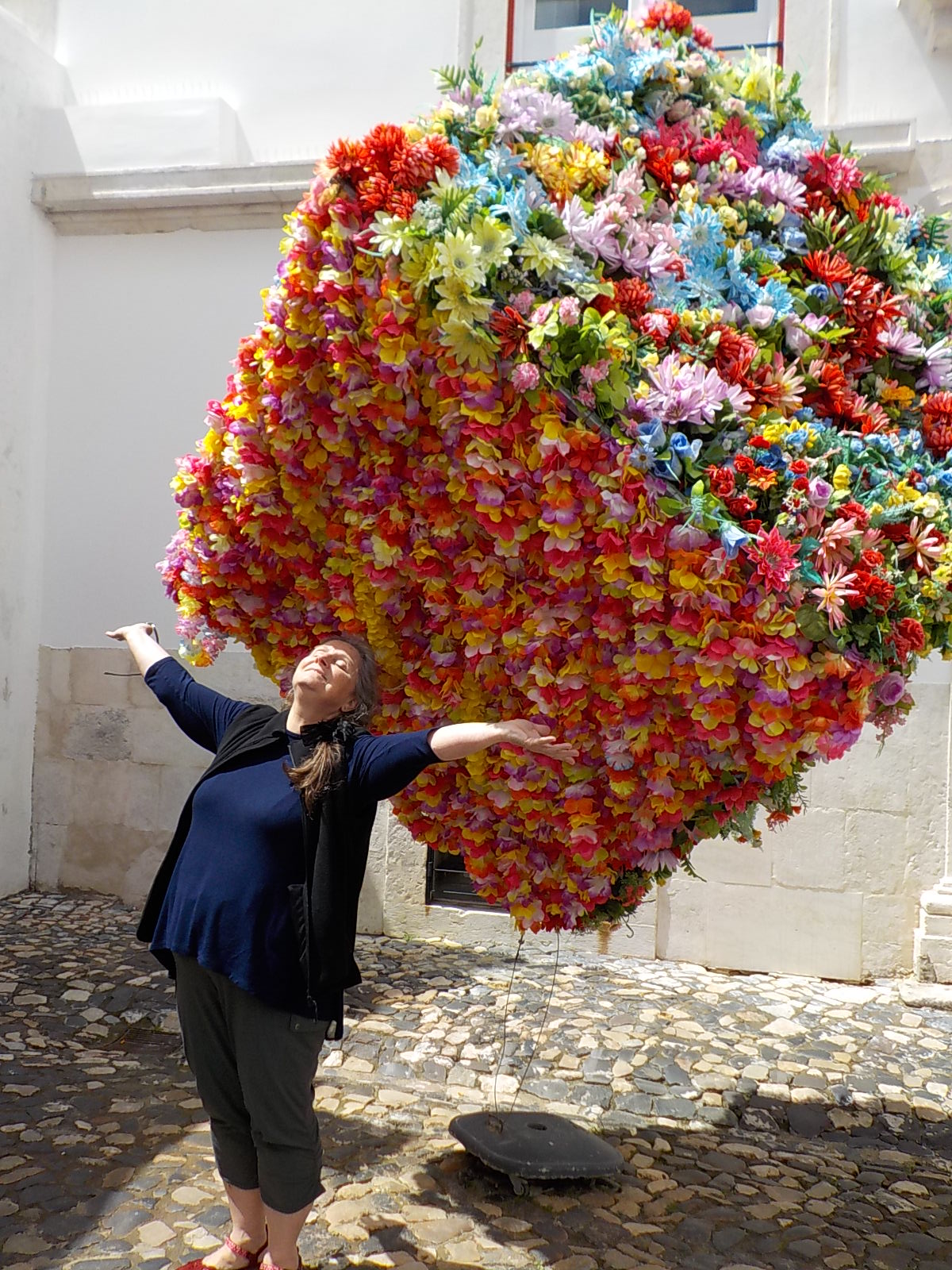
My favorite picture of Peggy.
When the rain returned, we ducked into the Museu Artes Decorativas Portuguesas–Fundacao Ricardo do Espirito Santo Silva (FRESS). Sr. Silva collected a lot of things and though there’s not much narrative about why he selected these objects, some are lovely, and nearly all are by Portuguese artists.
This slideshow requires JavaScript.
By late afternoon, we were leaking historical facts like stuffing from an old sofa cushion, so we headed for home.
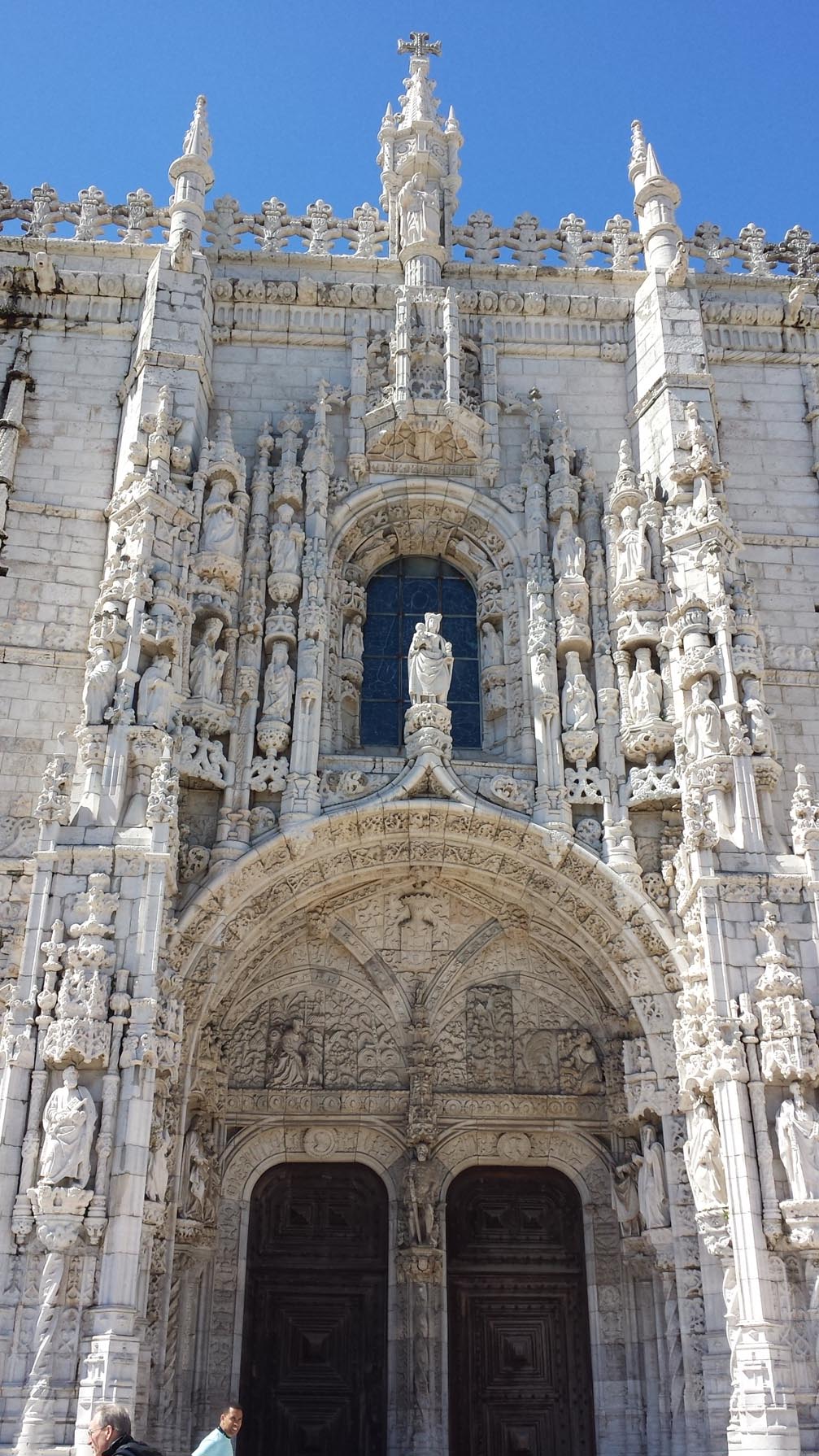
We weren’t done with Lisbon, because we’d decided to see the Torre de Belem, an old fortress on the waterfront. We parked at the Mosteiro dos Jeronimos, a gigantic complex complete with church (Vasco’s tomb). Though many structures are noted as pinnacles of the “Manueline style”, highly ornate carved stone that became popular in Portugal during the reign of Manuel I when, as far as I can see, money was no object…to anything. Here is the door at the monastery, one of the many considered to be the apotheosis of Manueline style. It’s easy to recognize because it has to have everything, arches, multiple columns, twisted, of course, and statues.
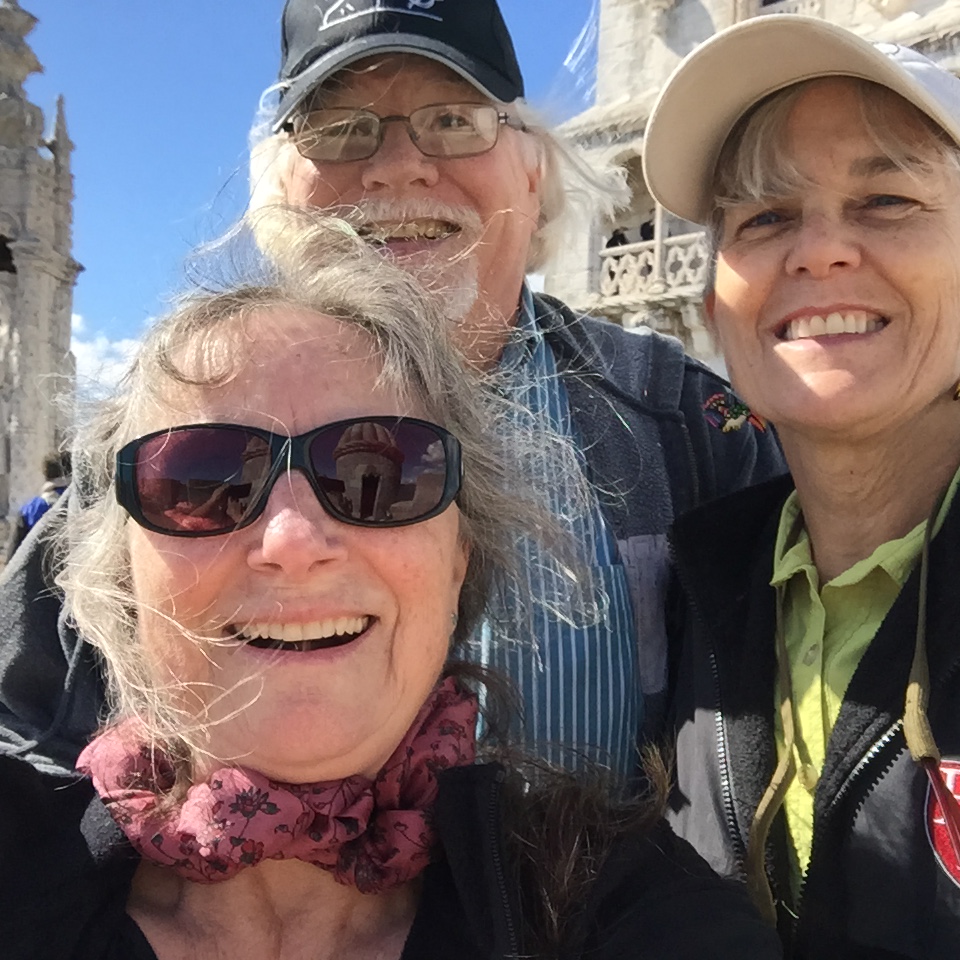
Though much smaller, the Torre de Belem is equally ornate, crouched by the river with lots of cannons ready to defend Lisbon. The tower was paired with another on the opposite bank of the river at Sao Sebastiao, to defend Lisbon. This worked more or less well during a long and complicated history, but the tower has survived to the present. Long lines of visitors wait to come through the doors, descend to hit their head on the arches of the dungeon, and then climb to the upper floor for a view over the water. The sun broke out in the late afternoon in honor of our visit, making it beautiful.
This slideshow requires JavaScript.
In honor of the sun, we took a three-person selfie.
We landed in Portugal after a long layover in Casablanca, but little the worse for wear.
Here’s Lisbon as we landed. The bridge that looks like the Golden Gate is the route to our house in Cotovia. The tower in the center of the photo is topped by a giant Cristo statue.
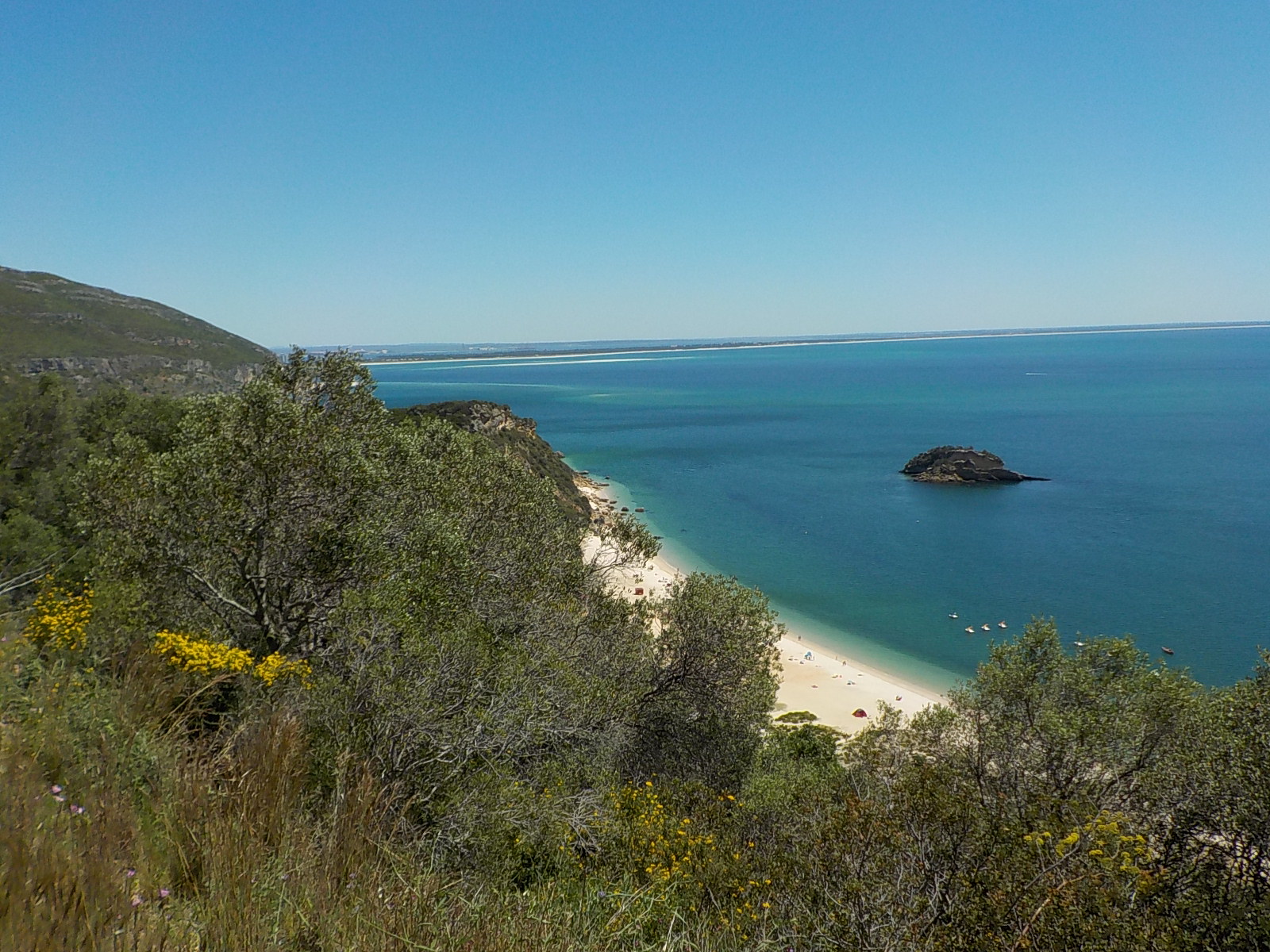
Stayed overnight near the airport and picked up our car the next day. We went off to find our house, and met Ruca, our host. After a helpful intro, we went shopping and immediately settled in. The house is perfect for us. It’s near the beach, but not far from necessities. Our next order of business was to find the beach.
Praia do Creiro on a sunny day from above.
These yellow flowers smell divine, but I don’t know what they are.
Our first beachcombing. I’m going to like it here.
I already have a lot of questions about Portugal, like how Portuguese developed as a language distinct from Spanish. Don’t be fooled, Portuguese is not a version of Spanish. It is it’s own thing, and not at all easy for a Spanish speaker to pick up quickly. Many of the people we come across in stores speak English more readily than Spanish.
Then there’s the history of Portugal. How did it get to be a separate country? No, I probably didn’t pay enough attention if I was ever in a class that explained it. Even the guidebooks skip from prehistory to the Moors to King Manuel I.
Portugal seems to be doing fine, despite or because of the EU bailout it received in 2010. Reading about debt and bailouts sounds much more sinister:
Portugal still has a lot of debt, relatively high unemployment (though lower than Spain) and a bloated public service sector. We see little of this other than the numerous museums in Lisbon, some of which are wonderful. I’ll come back to that.
Rather than looking at Portugal as a problem state of Europe, compare it to Morocco and it looks pretty good. Portugal is just over 20% of the size of Morocco. It’s population is 10.5 million, and its largest city, Lisbon, has around 575,000 people in it, smaller than Boston (city limits). Population density is higher (113 per km²) than Morocco (74 per km²), yet per capita income is much higher ($11,120 vs. $3,070). At the same time, when adjusted for purchasing power (PPP*) the difference is diminished: Portugal $14,101 vs. Morocco $8,164. PPP is generally seen as a way to compare standard of living that takes other factors into account than income. It suggests that the money Moroccans earn may be less than the Portuguese, but does go further in covering their expenses than it does in Portugal.
That’s a bit like finding that a phone recharge in Morocco give you four times the face value of your recharge (a 10 dirham recharge gives you 40 dirhams of phone time). Getting off the plane in Portugal, a 10 euro phone recharge give you 9.4 euros of call time. Welcome to Europe.
Last but not least, here are a few photos of our very comfortable house in Cotovia. It’s missing a few photos of rooms we’ve already spread out in, but I’ll add those.
These markets under tents are sprawling, temporary tent cities and a great slice of life, showing what Moroccans purchase. NB: We were warned that pickpockets frequent the souks, though we did not have trouble.
The medina of any city. The medina of Fez and of Marrakesh are the best known in Morocco, but any medina, with its narrow, winding streets and many tiny shops is an experience. Medinas tend to have shops aimed at tourists, unlike the weekly souks that may or may not have rug and pottery sellers.
Every town has its distinctive look and we liked all of the places we visited, including Rabat, often dissed for being too contemporary. I particularly enjoyed the view from Café Maure, reached through the Andalusian gardens in the kasbah of Rabat.
Sitting in a café is a great pleasure of Morocco. You can have a café crème, orange juice, or Oulmes (ool-mess, or club soda). You can take your time, people watching is always good and it is an inexpensive pastime. We’ve had coffee at expensive hotels to take in their view or lovely patio—that costs more, but is often worth it to see a fabulous restored riad.
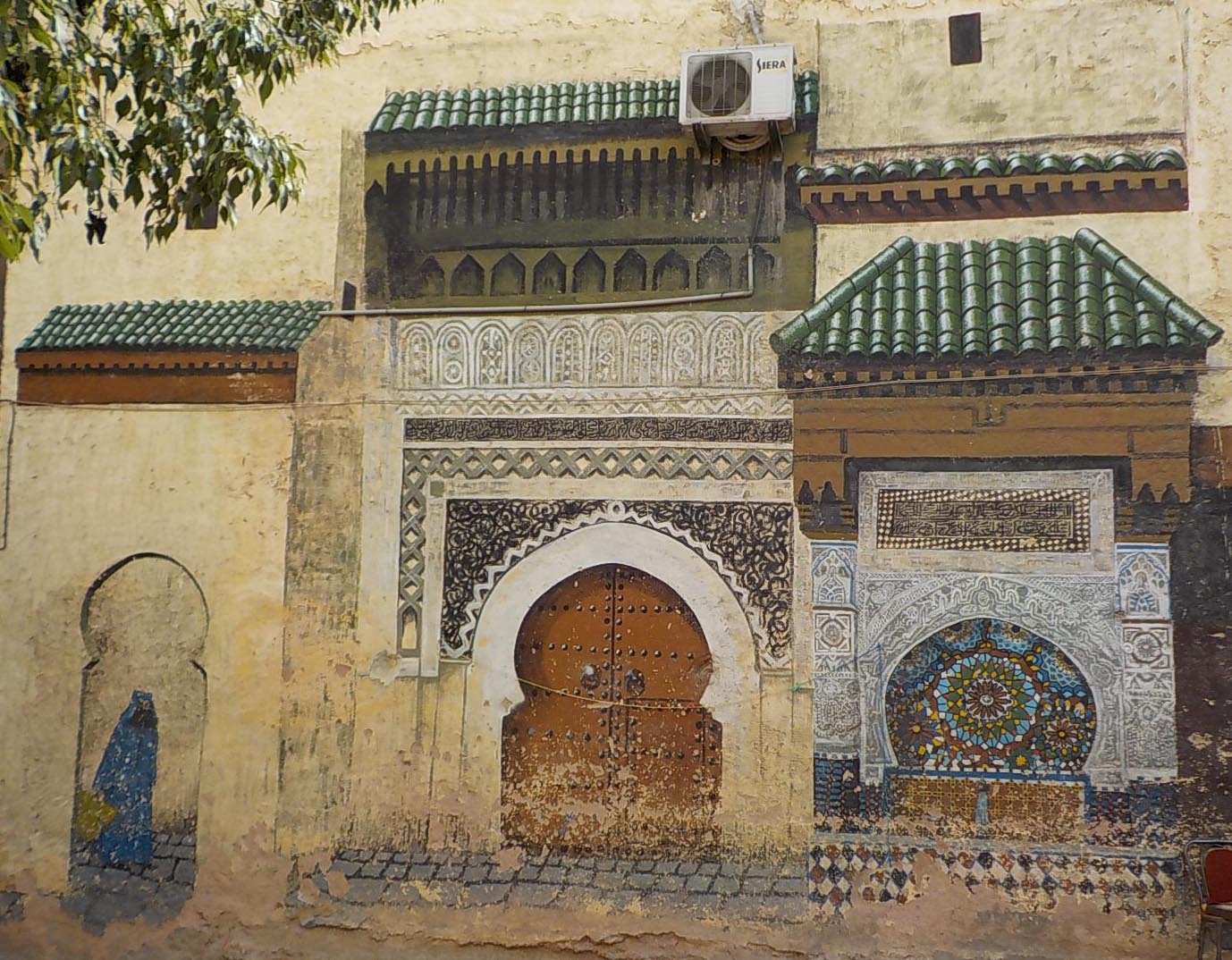
A neighborhood mural.
Good to know for travel in Morocco
Very few places accept credit cards. Be prepared to pay cash almost everywhere. Not all hotels and riads take credit cards, and in Marrakesh, the riad took credit cards but then couldn’t get its scanner to work. Only the occasional restaurant took a card (once or twice in 2 months). We didn’t make a large enough purchase to see whether credit cards could be used to pay for artisan work.
We carried only zipped backpacks and did not put all our money in one place. I had change in a small purse with a small bill and carried more money in a zipped pocket.
My tiny backpack is reversible and can be worn with all the zipped pockets against my back. It’s great for cities. Urbanitabarcelona.com
We use Maroc Tel sim cards in our phones and had no trouble calling our Moroccan friends. We didn’t even try to use them to call outside the country, but I believe that’s possible.
Most people speak a little bit of French and Darija, Moroccan Arabic. I have a vague sense that an increasing number of people speak English, but it is still quite uncommon. My high school French was very helpful. Store owners speak enough to give prices in many languages (French, English, Spanish, German, Italian, maybe others), but they are much less likely to be able to discuss the details of their goods in any language but French. A few people speak Spanish, depending on where you are in the country. In a shop in the Ville Nouvelle of Fez, I had a long conversation with a sales person who spoke excellent Spanish. At the ‘Coin Berber’ in the Fez medina, the salesman spoke English, making it easier to discuss the items displayed. The more upscale a store, the more likely it is that someone will speak English or will be able to get someone to come in who does.
It can be fascinating to see the workshop of an artisan, but it can be awkward because some are up steep and dark stairways (what am I getting into?!). You may not be invited in if you are not interested in making a purchase. The tanneries are an exception, you can see the tanneries only from the balcony of a business. They are very cordial about inviting you in, and only moderately aggressive with the sales pitch.
One alternative if you would like to visit workshops and don’t plan to do a lot of buying is to take a tour specifically designed to connect visitors and artisans. We did not do this, but would probably have enjoyed it. Guidebooks make recommendations of reputable tour organizers, or check the blog, “A View from Fez.”
We brushed our teeth with the tap water, and used it to make tea and coffee, but we drank bottled water.
Prescription drugs are available without a prescription. We purchased antibiotics for an upper respiratory infection that wouldn’t go away, and a refill for a prescription that wouldn’t get to us from home before it ran out. Drugs are not inexpensive but they are available if you need them and the item is not too exotic.
Taxi cabs have meters, which can be a relief to those of us unused to bargaining for every cab ride. Unfortunately for taxi drivers, fares are set very low, meaning that if you insist on using the meter, a driver may not be willing to take you to your destination. Once we learned that most rides were almost 20 dh if you included a tip, it didn’t seem so bad to offer 20 dh, since that seems to be enough (at present) to get a driver to take you to a location around the medina, Fes Jdid, the Mellah or even the Ville Nouvelle. If the driver doesn’t start the meter, be sure to set the price, or get out.
You must try to bargain. True, you can pay the asking price, but it will be 2-4 times a reasonable sales price. People use a variety of techniques to set starting prices, including labeled tags, reference to prices online and in stores, but all starting prices are a minimum of twice a realistic price. Try to think of how much you would pay for a similar item at home as a check on your enthusiasm for what you are purchasing. Remember that creating a sorely disappointed and wounded expression is an art form among Moroccan salespersons. When you start to bargain you should have an acceptable price in mind, be prepared to buy the item if you reach that price, and be prepared to walk away if you do not. You might find your price agreed to when you are already a couple of steps into the street. Keep in mind that it is acceptable to stop by the shop on one or more additional occasions and continue the discussion, though we did not do this ourselves.
If you don’t want to bargain, shop in the fixed price stores (Ensemble artisanal) in the large cities. You will only pay about twice the street price, or find a cooperative. We bought argan oil at a cooperative, but other cooperatives I found only online.
We did not bargain when food shopping, though we saw local people angling for better prices for a few things (strawberries). We did shop at the Carrefour grocery store for exotic items like packaged crackers, imported cheese, and wine. The wine shop associated with Carrefour in Morocco (the cave), is down a separate stairway, though the entrance is usually adjacent to the main store entrance.
Moroccans are friendly and most people will return a smile and a ‘Bonjour.’ Occasionally, people will engage you in a brief conversation, asking where you come from and welcoming you to Morocco. Even if you speak French or Spanish and your conversation starts in one of those languages, you may find that you run out of steam quickly. Many people only know how to say hello, welcome, and ‘What is your name?’ The vast majority of people mean well. If you look lost for more than a minute, especially in any medina, a passerby is likely to ask where you are going and point you on your way. If you are uncertain about where you are going, you can ask a shop keeper for directions. If you are well and truly lost, you can get a boy/young man to take you where you are going for 10 dh. The question is whether they understand where you want to go.
There are some Moroccans who take advantage of the national friendliness to initiate a conversation and then ask you to hire them as a guide, accompany them to an excellent hotel or restaurant or to the very fine shop of their brother/cousin/friend. Some pretend to be angry if you will not go with them (see the fine art of making a wounded expression mentioned above). We spent a lot of time saying ‘Ca va, ca va’ (it’s fine), and ‘No thank you, no thank you.’ I was not able to explain that sometimes taking a walk is like solving a puzzle. I may be lost, but I am enjoying figuring out where I am (Fez medina).
One scam that is so frequently used it’s barely a scam, just an annoyance. When you walk down a street, someone stops you and says “It’s closed.” If you say, “The museum’s closed?” you’ve given away that you were going to a museum. The speaker agrees, ‘Yes, the museum is closed’ and offers to take you to another place. Usually, nothing is closed. (except much of the Fez medina on Fridays).
A man came up to us in the street, reminded us that he had helped translate for a woman in a store about a half hour before (how did he find us? Were we followed?). He then held out a 10 dh coin and said that we had given the store a counterfeit coin. We pointed out that we left the store a while ago and there was no way that the 10 dh coin in his hand was the same one that we had given to the woman in the shop.
He gave up pretty rapidly, which left us puzzled. Do foreigners usually hurry to hand over a replacement coin?
We had no trouble driving in Morocco, where the roads are better than in Peru. We drove at the speed limit, never over, as there are numerous check points around the country. We were only stopped once for a review of our license and registration. The officer was polite and didn’t detain us longer than it took to look over the documents.
If you don’t have experience driving outside the US, you might want to stick to the recommended bus lines (CMB or Supratours), grand taxis or hiring a driver.
In Fes, where we did not have a car, we hired a driver through our riad and were happy with the flexible itinerary and the price.
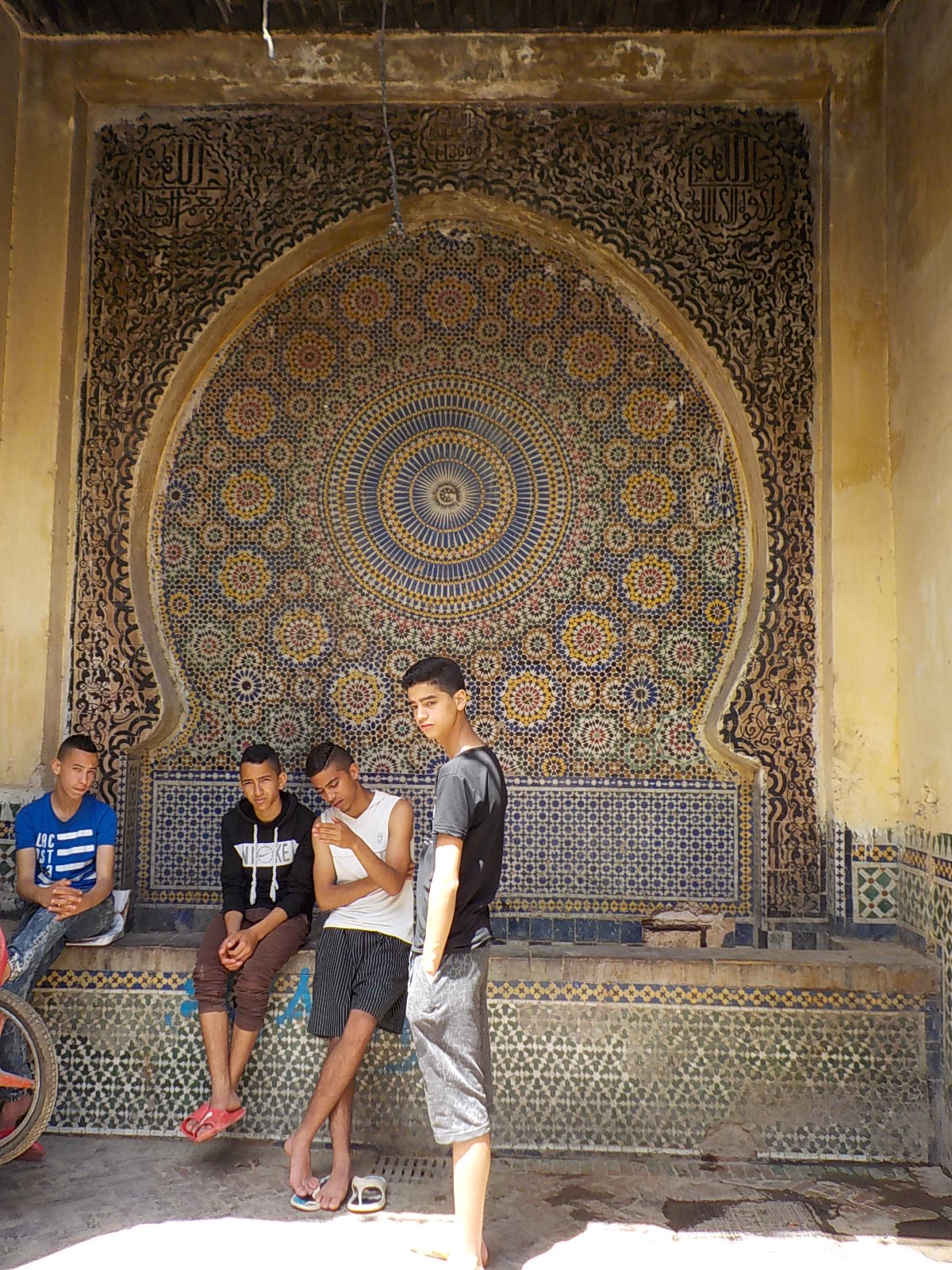
Young people are everywhere, here are some hanging out at a local fountain (water tap). What is education like in Morocco? Are there after school activities or part-time jobs available to young people? Is an after school job considered a good thing or a stigma? It’s clear I have a lot to learn about Morocco, but these young men are the face of Fez today.
When the king visited recently, there was a frenzy of quick painting, and hundreds of Moroccan flags were posted all over the city. We even saw a motorcade pass, with police clearing the streets and standing with their backs to the motorcade, presumably scanning the route for threats.
I’m sure it was the king.
Unfortunately, most of the pageantry was off limits. Officials in bright uniforms manned every gate of the city but didn’t permit photos. The king’s itinerary wasn’t publicized, so we never did find out whether he was inaugurating a new facility at the airport, or the renovations in our neighborhood, Bab Rcif.
Apparently, the king was unhappy at the pace of renovations in the Fez medina. The dyers’ souk is just about renovated. There’s not much to see because the artisans haven’t moved back in yet, but the new shop fronts are fresh and each shop has new wood doors and canopy with carved decoration. If you look beyond the souk, the neighborhoods where people live are in need of renovation just to make them safe for habitation. This is our street. While picturesque, keep in mind that there are hundreds of buildings in the medina that are similarly braced to prevent collapse.
Shouldn’t this kind of repair be a priority for the king?
The boys in the background just got out of school and after saying “Bonjour” about 15 times each, they decided that staring from a distance was just as interesting as chatting.
Here are some sights from a walk down the street:
Painted plaster carving along the street.
This was in the trash. I was dying to take it home, but I had nowhere to put it.
Look at the date, 1332!
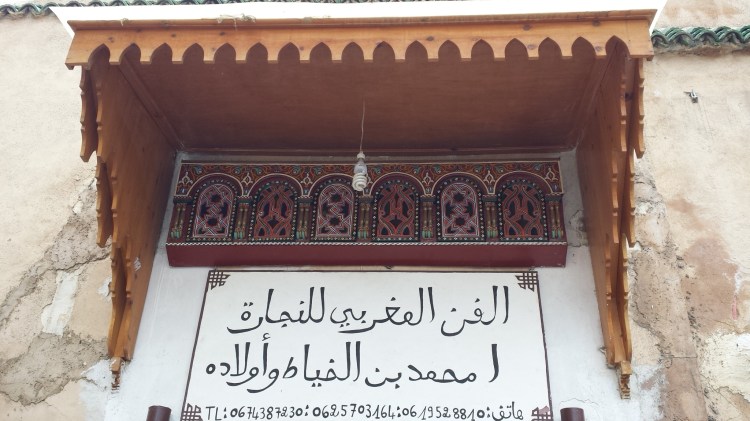
Many buildings have a carved and painted wood canopy over the door.
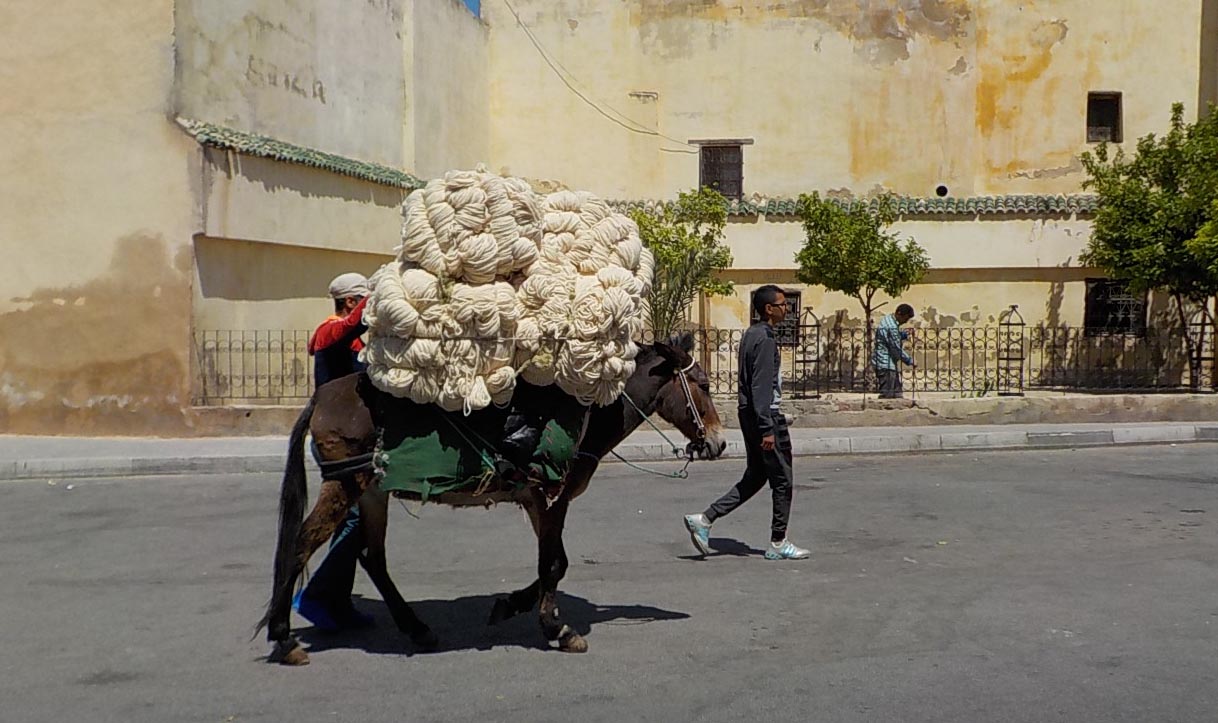
This horse loaded with yarn may be headed to the dyers’ souk.
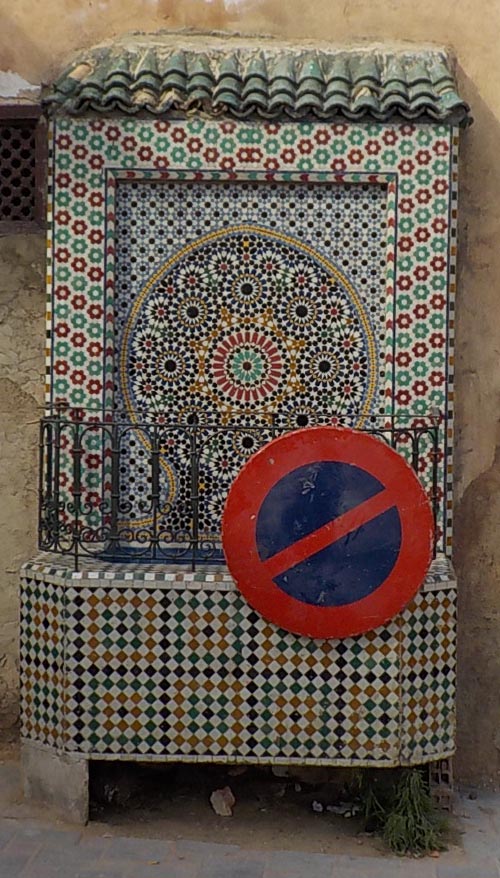
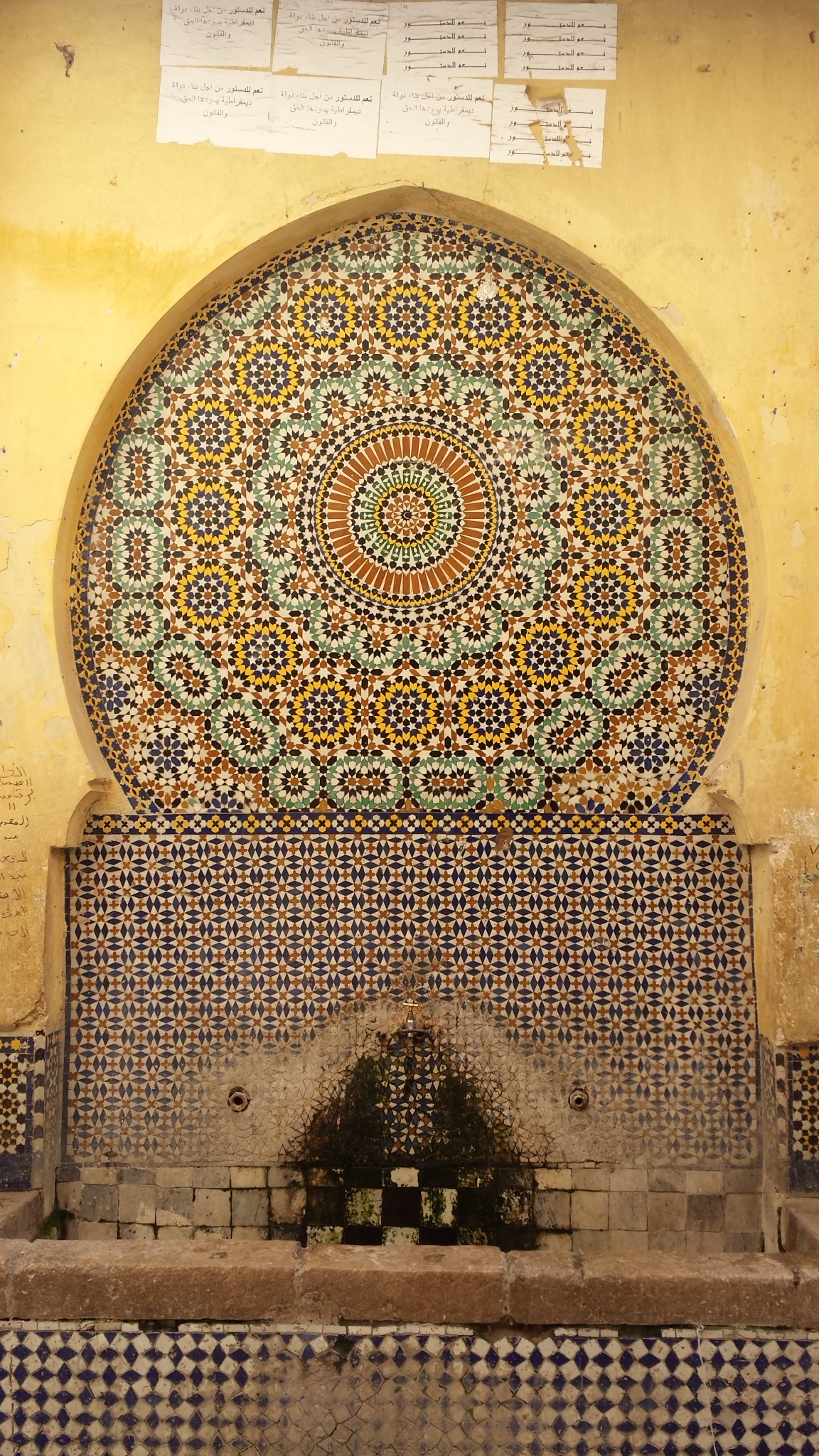
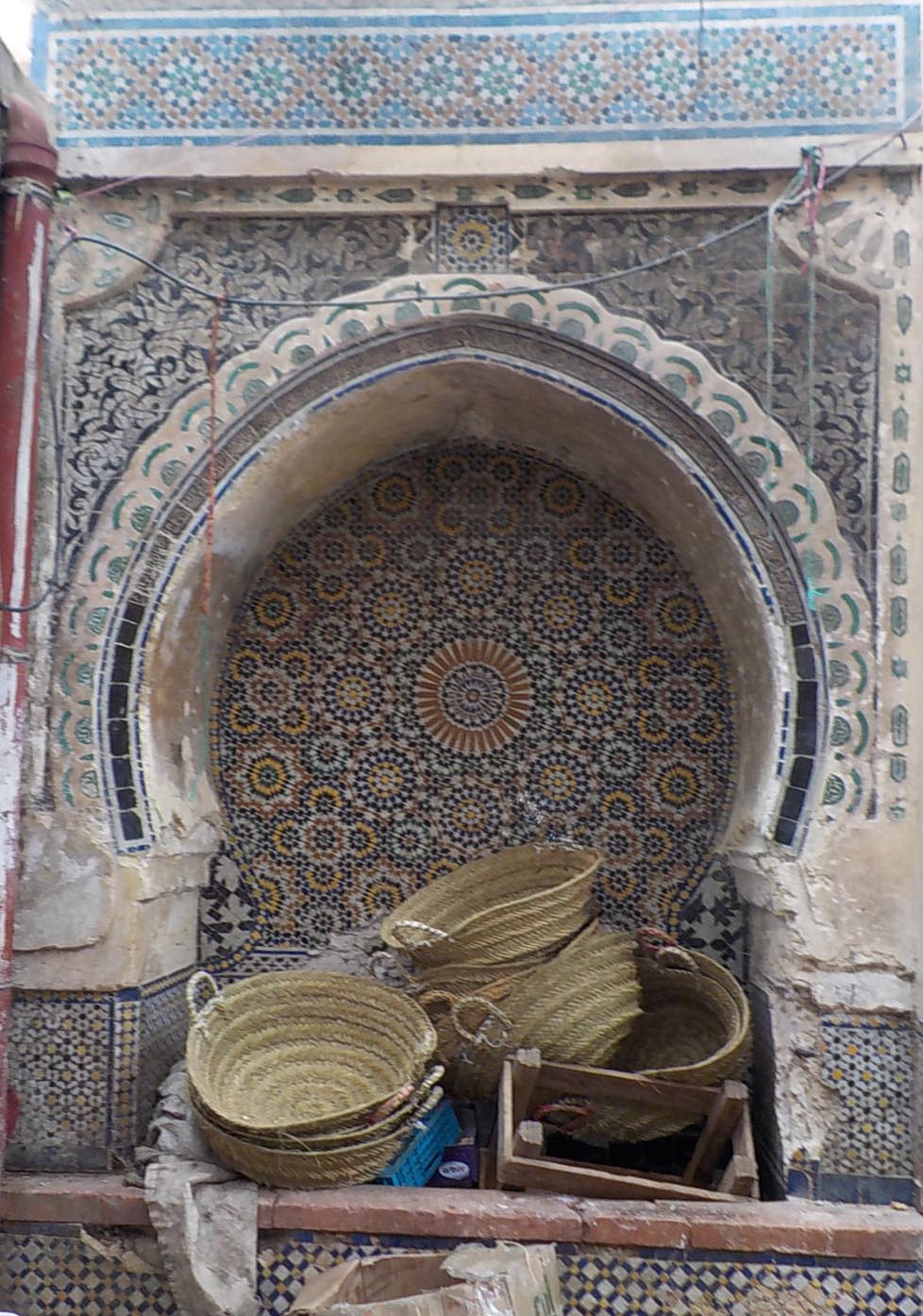
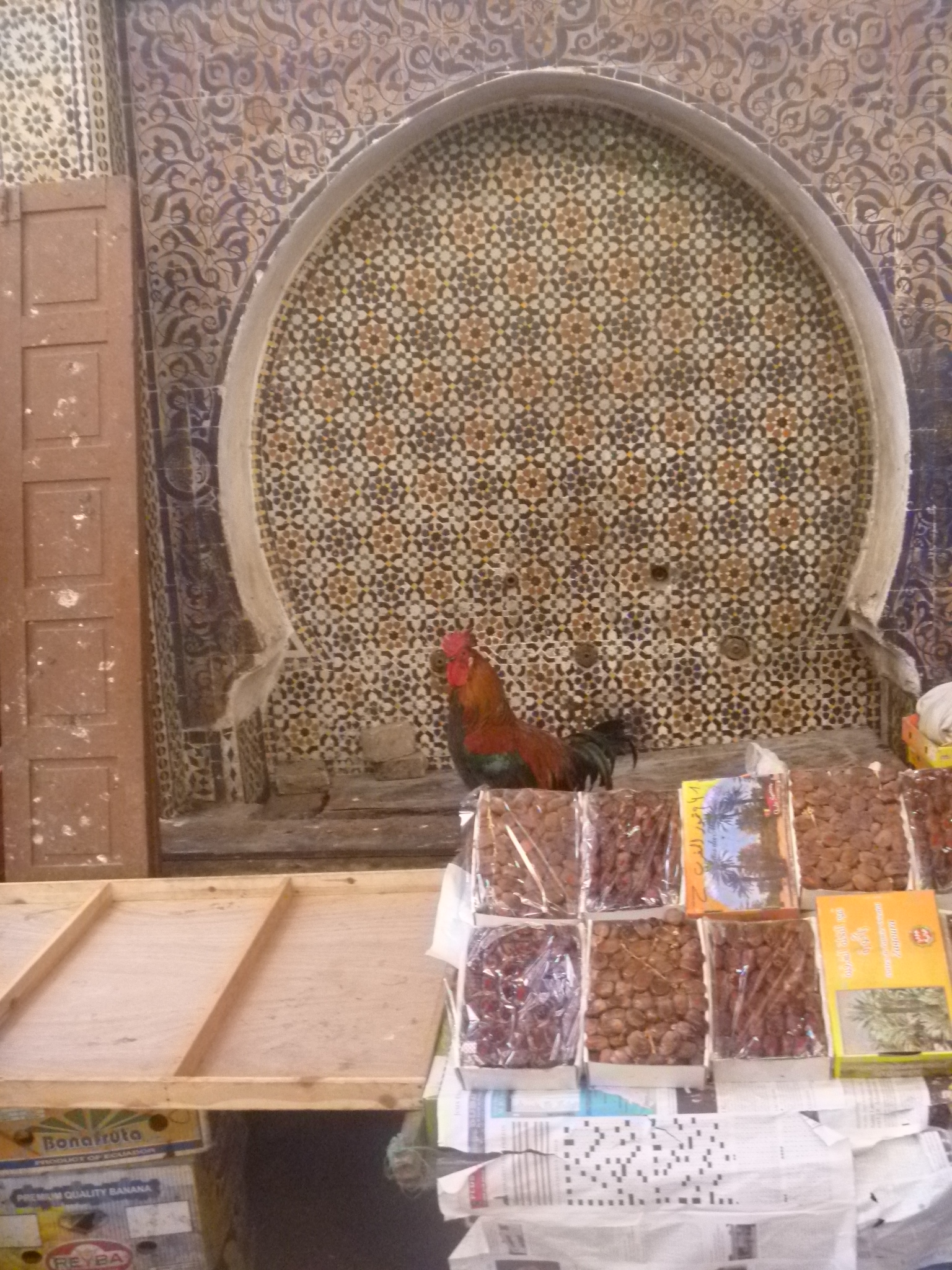
Public fountains are an important water source in Fes. Not all fountains are lovely, though many started out that way.
Lyra and I wanted to look at ceramics and found a recommendation to visit the El Noqbi neighborhood on the northeast side of the medina. Art Naji is probably the best known spot, partly because it is so visible on googlemaps. There are many workshops that sell pottery on the streets that radiate out from the bus stop and from Art Naji. The workshop allows photos.
This slideshow requires JavaScript.
We looked at thousands of pieces from tiny to huge. We selected two small bowls and went to the counter where we found that they offer only fixed prices. (For the reason we left, see my “Good to Know about Morocco” post, coming soon. As soon as we left Art Naji, we were approached by a neighboring merchant who showed us his smaller, somewhat less organized studio. We found two bowls that we liked and paid a price we thought reasonable.
A peculiar sight in the Fez medina is the Glaoui palace. The lavish home of a pasha of the early 20th century, the Glaoui family sided with the French and were stripped of all their properties when Morocco achieved independence. For reasons that are completely mystifying, the family palace in Fez has lain unused for a very long time. (I have no idea who actually owns it.) A former caretaker’s family and his descendants allow visitors to tour some of the rooms, which were spectacular in their heyday long ago. Today the Glaoui palace is a crumbling reminder of the past. It would be much better served by a multi-million dollar renovation turning it into a hotel/conference center, but no one seems interested, possibly because of the cavernous size of the place. It is said to have 100 rooms. I am sure many of them are smaller than the main floor rooms we were shown, but it is an amazing ruin. I believe that photographers and architectural historians compose the bulk of its visitors.
So many loose ends, so little time. We took a couple more of the walks in the guidebook, “Fez from Bab to Bab.”
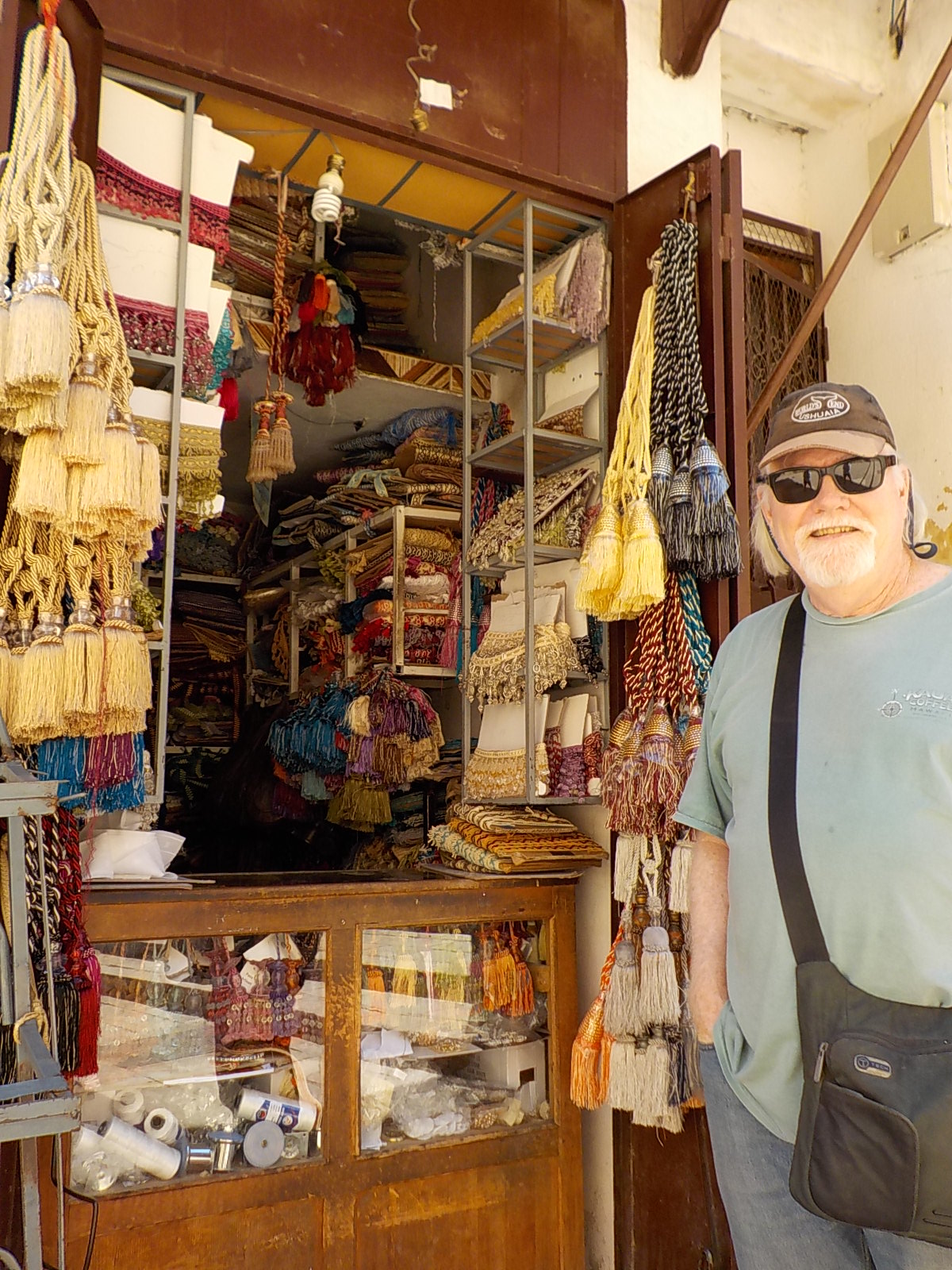
We passed a tassel seller.
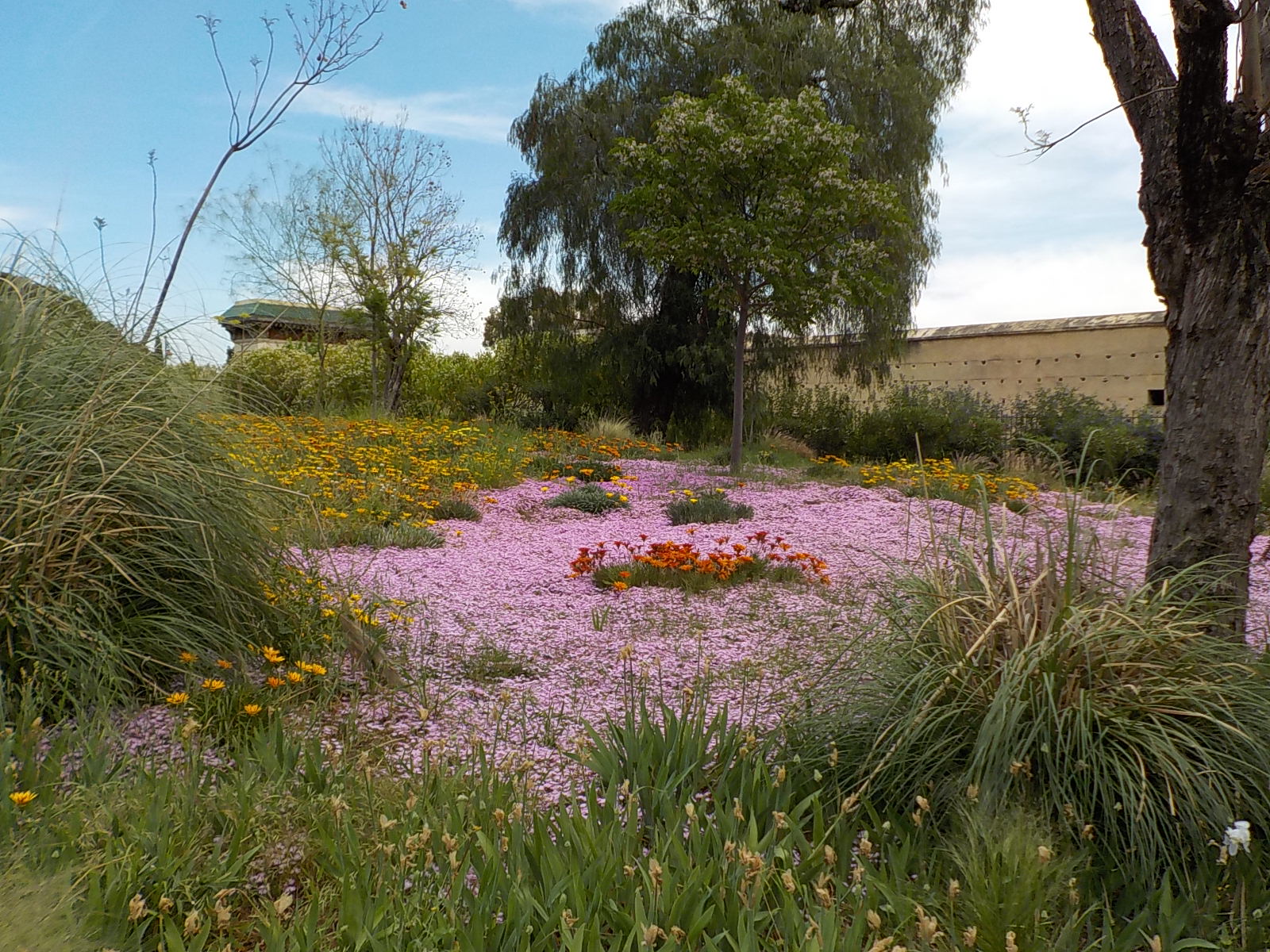
One of the walks took us through the Jnane Sbil, a beautiful garden near the Royal Palace. This month is perfect for visiting, the orange blossoms are out, as are lilacs, roses and all kinds of flowers. The garden is carefully maintained, the gardeners have even created some new small islands within the stream that passes through the garden. We did some birdwatching, and even saw a new bird, a grey wagtail.
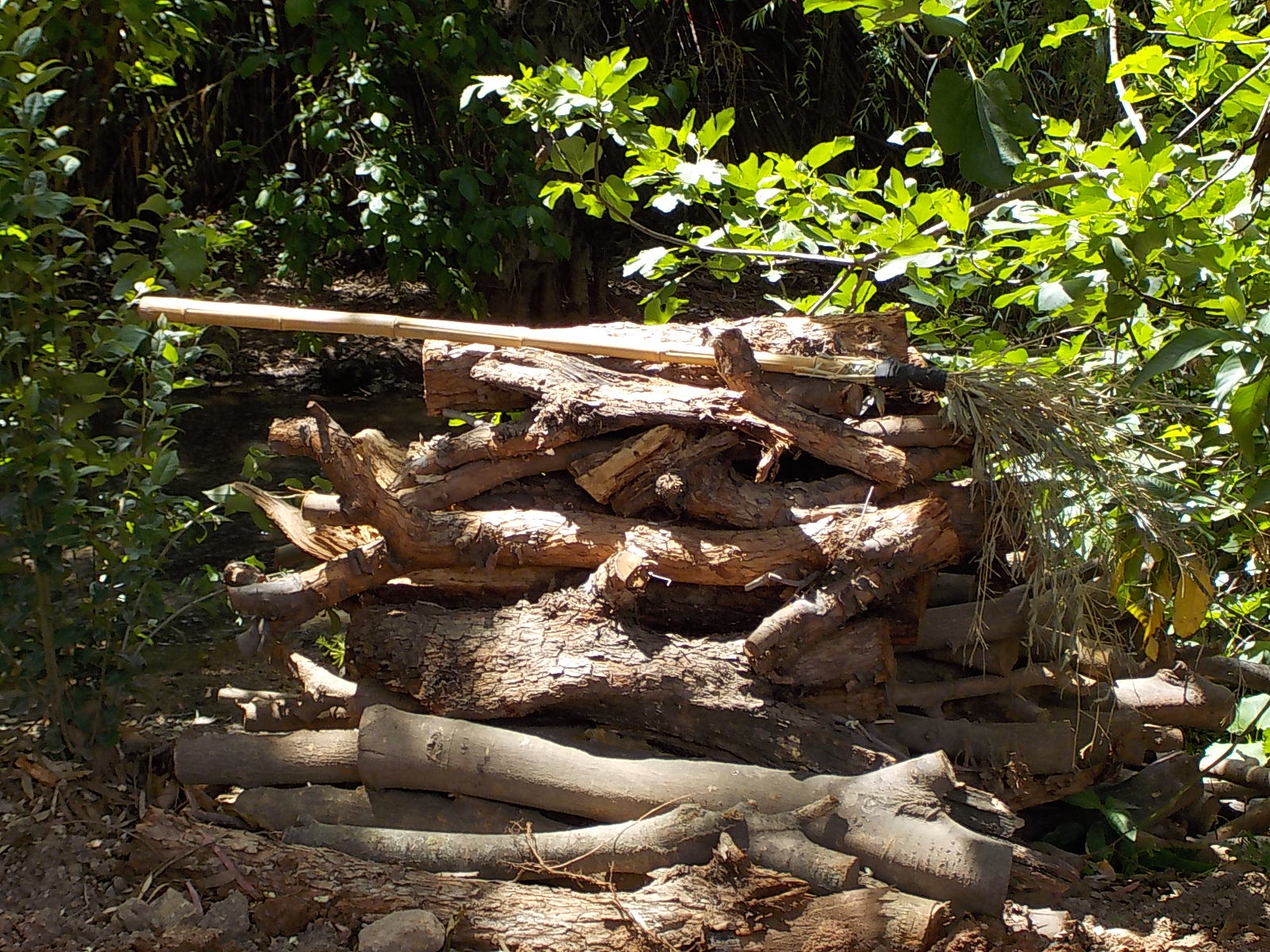
The gardener made his own broom. It’s like a ‘hidden picture’ on top of the woodpile.
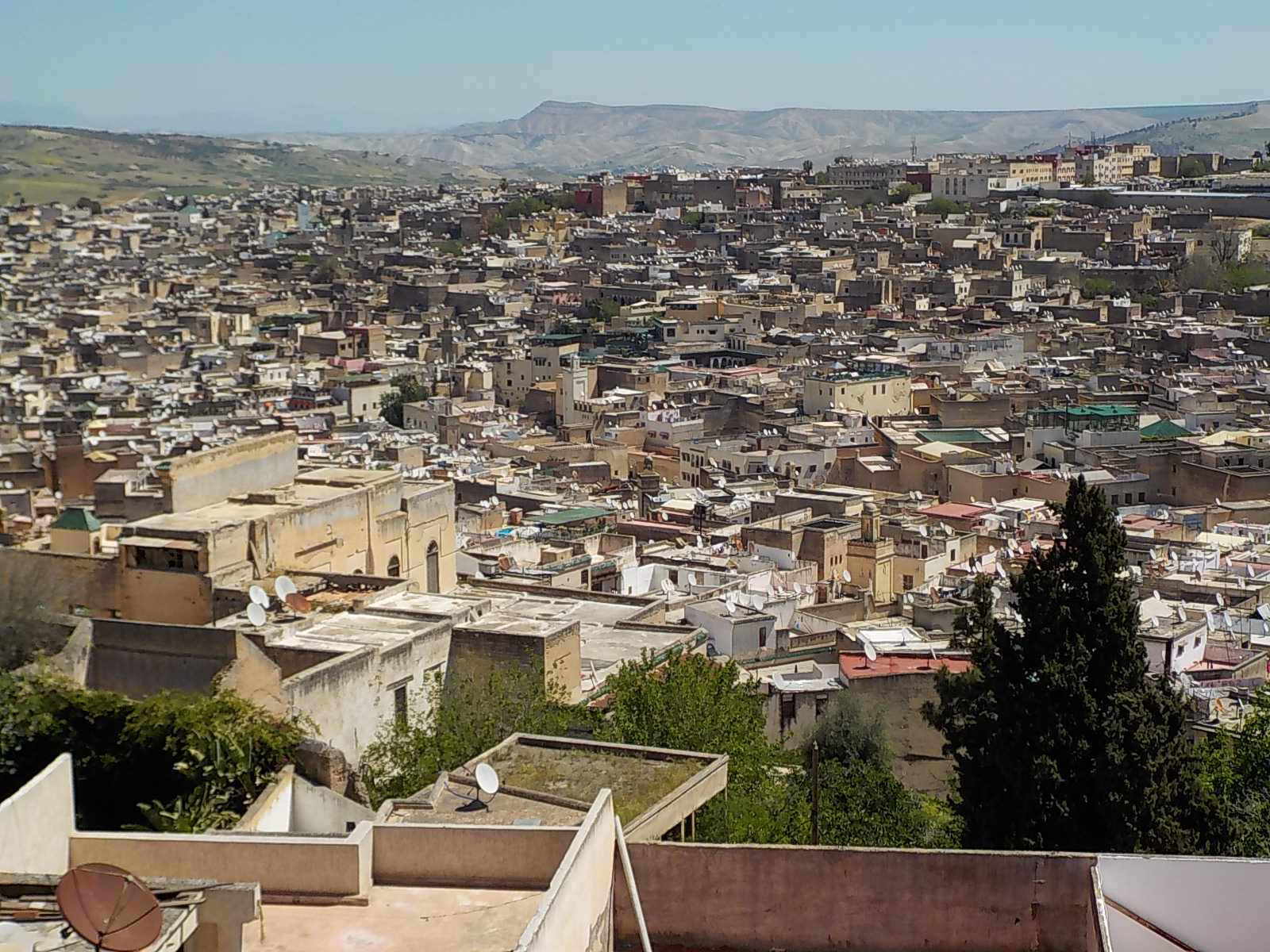
Another day we took a route that included the official Municipal Market.We drank coffee on the roof terrace of the Palais Faraj hotel. It overlooks our neighborhood and after spotting its terrace, we decided to go for a visit. It has a lovely view over the medina, and the cookies were excellent, too.
Today we walked around the Mellah, the former Jewish neighborhood. We visited the synagogue along with an Israeli tour group. The Mellah not a large area, but some of the streets are winding.
The Ibn Danan synagogue
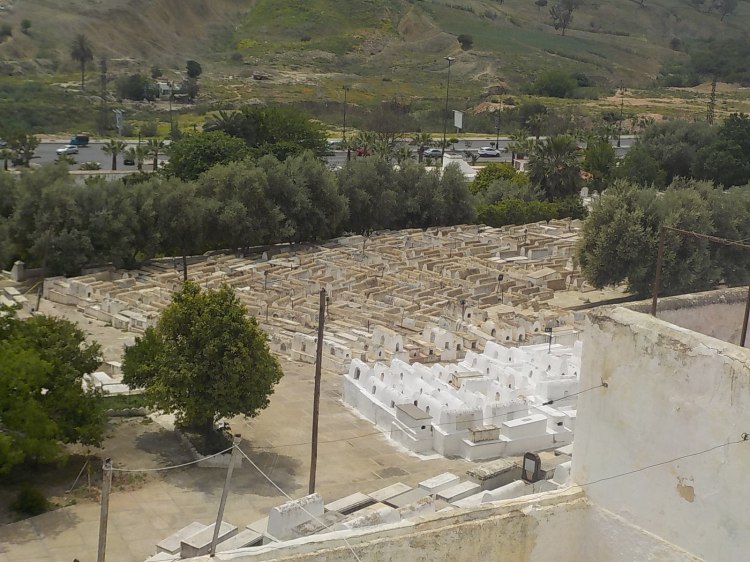
A portion of the Jewish cemetery viewed from the roof terrace of the synagogue.
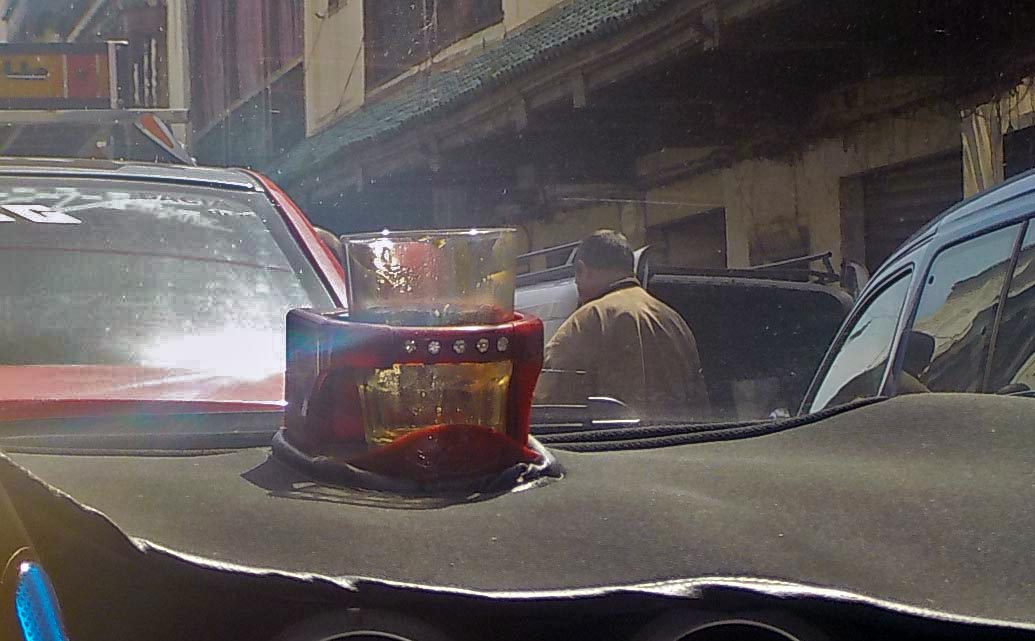
On the way home, I noticed that our taxi driver had a dashboard cupholder for his glass of mint tea. I love it.


 Both points have their charms. One comes with industrial archaeology. (I believe the abandoned buildings at Cabo Raso are related to the fishing industry.) The other has tour buses, a gift shop and cafe.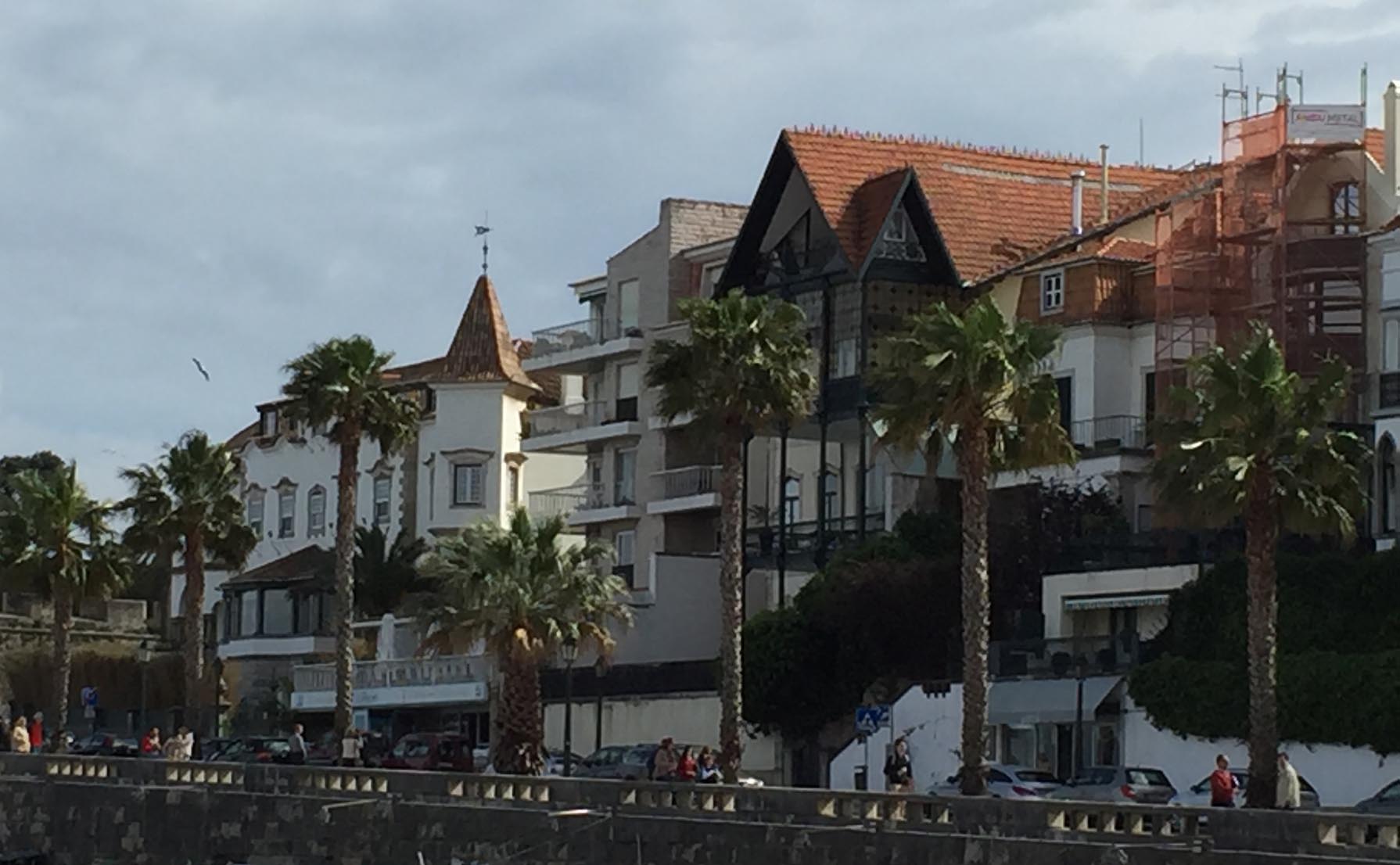






















 Llywindatravels 2025