Plants and Animals, the Royal Botanical Garden and the Edinburgh Zoo

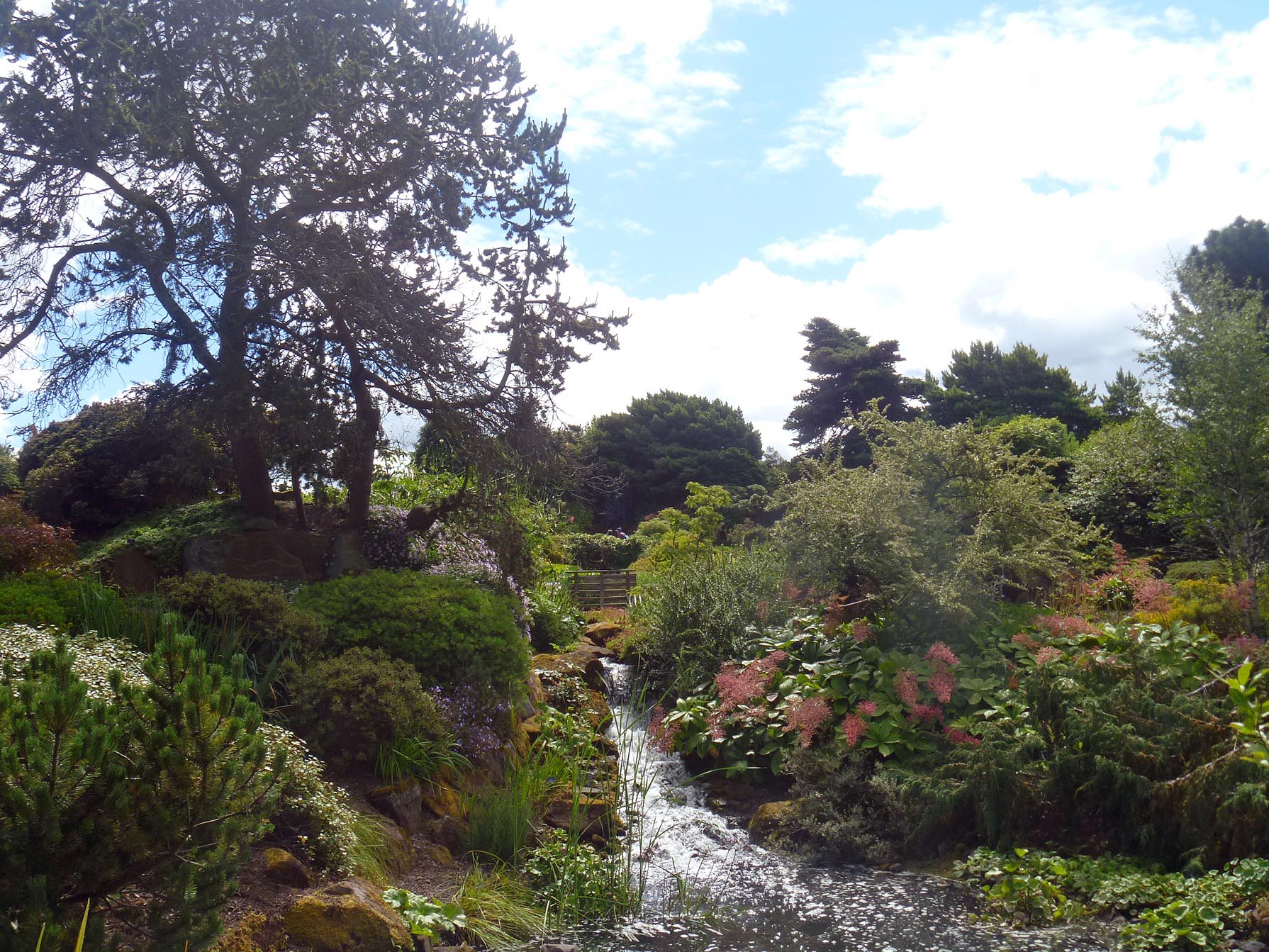
Two days of sunny weather let us take advantage of the natural world in Edinburgh, the Royal Botanical Garden, and the Edinburgh zoo. Both have their high points. The Botanical Garden is very large and has many different gardens, though I misread Scottish Heath Garden as Scottish Heather Garden, and was mildly disappointed until I figured that out. The flowers were all in bloom, though a grounds keeper told us he thinks it is at its best in May when the rhododendrons are blooming.
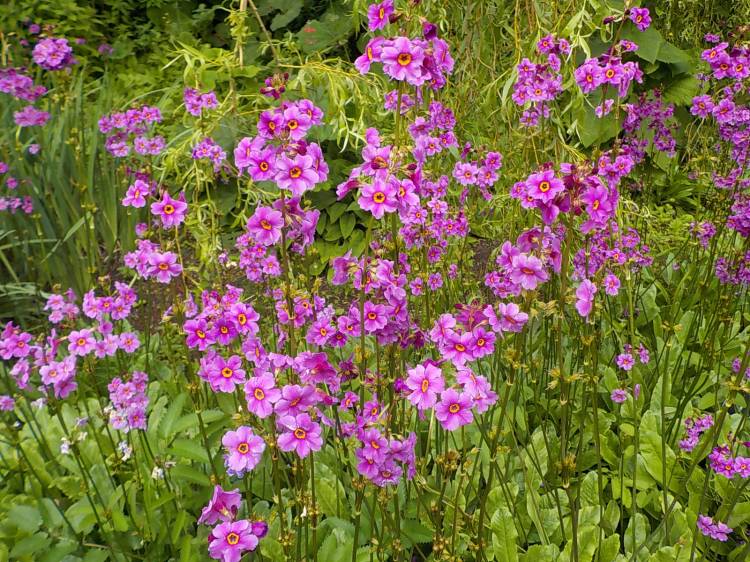

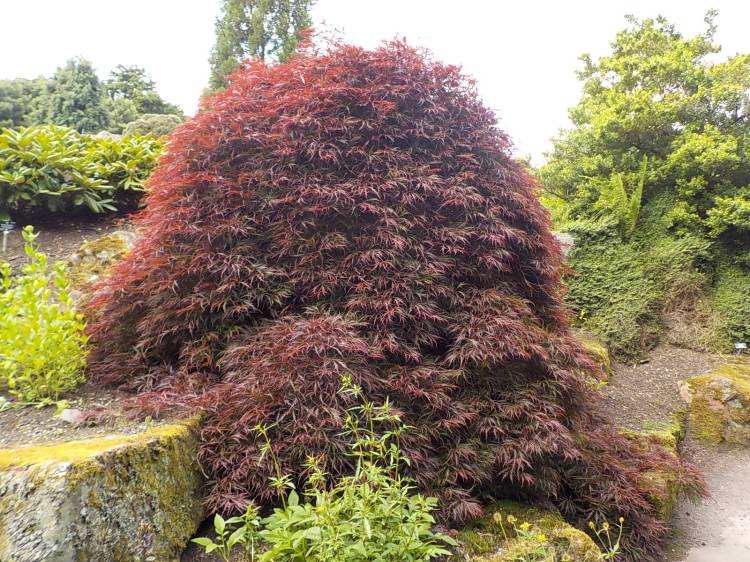
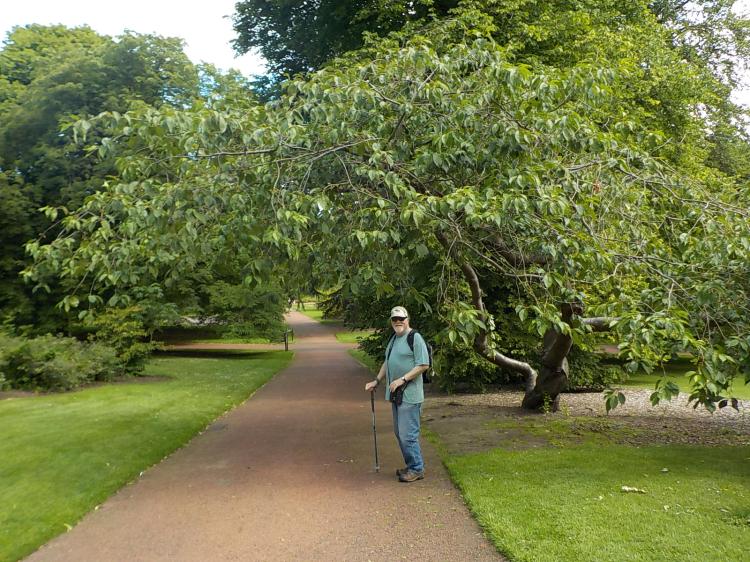
There were trees with interesting shapes.
Sculpture and artwork is included in a number of places. 7.13.16 Royal Bot Garden-008
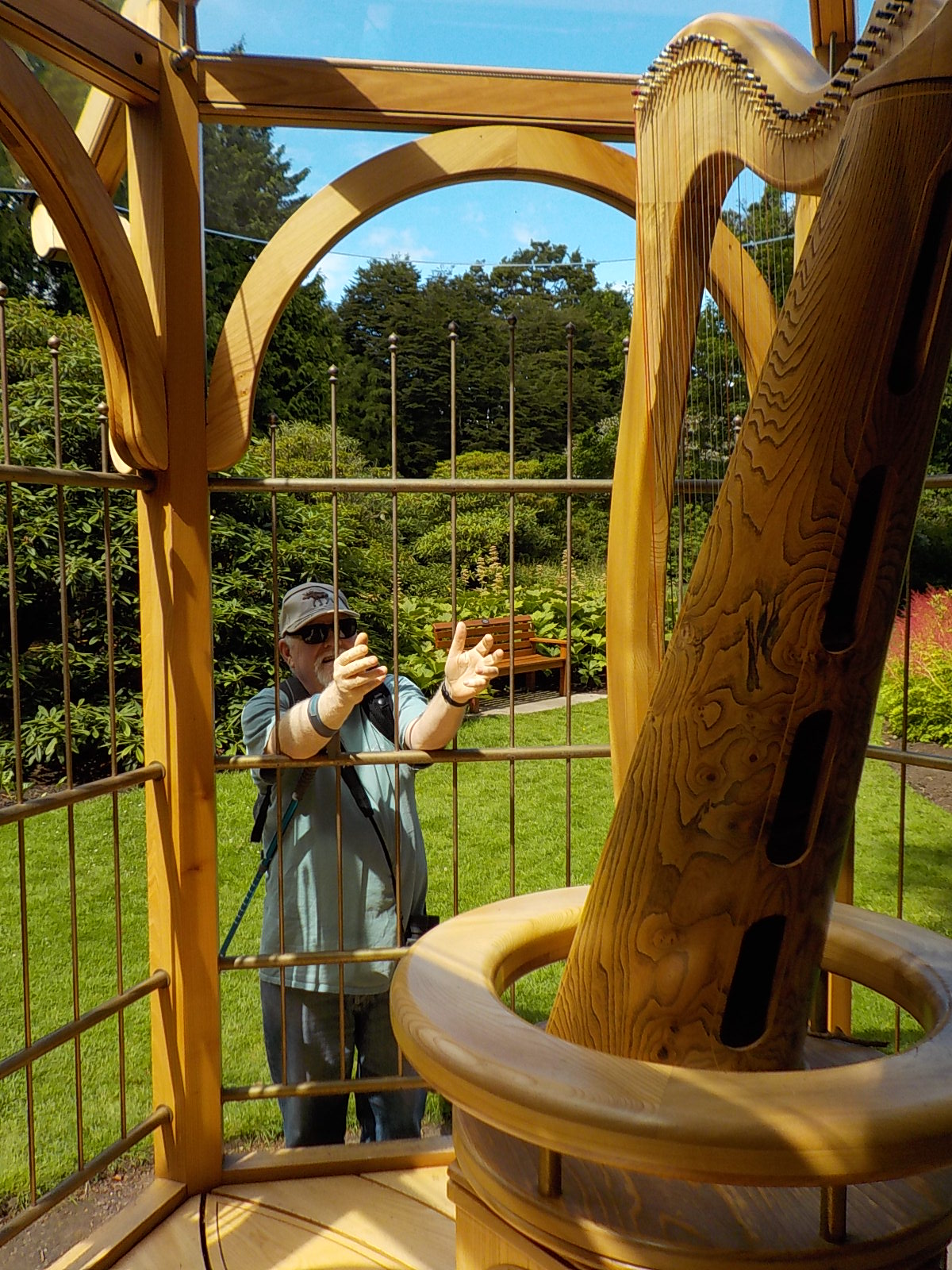


Jonathan wanted to play the aeolian harp, but he couldn’t quite reach the strings.


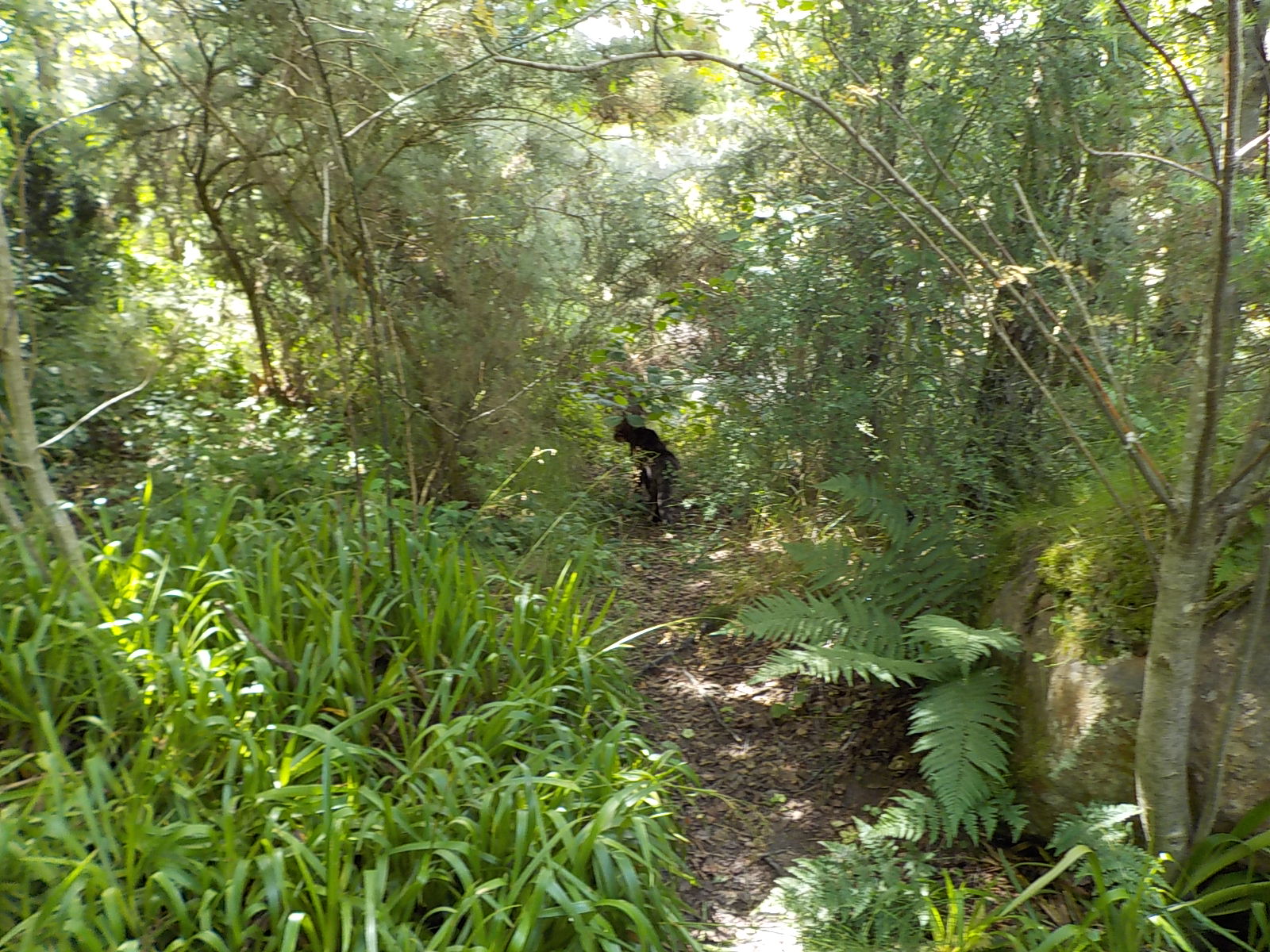
We saw a wild animal in the bushes, possibly stalking a fat pigeon.
7.13.16 Royal Bot Garden-004


Despite the fact that this looks like a panther, it is a cat at the botanical gardens.


7.13.16 Edinburgh botanical garden-004

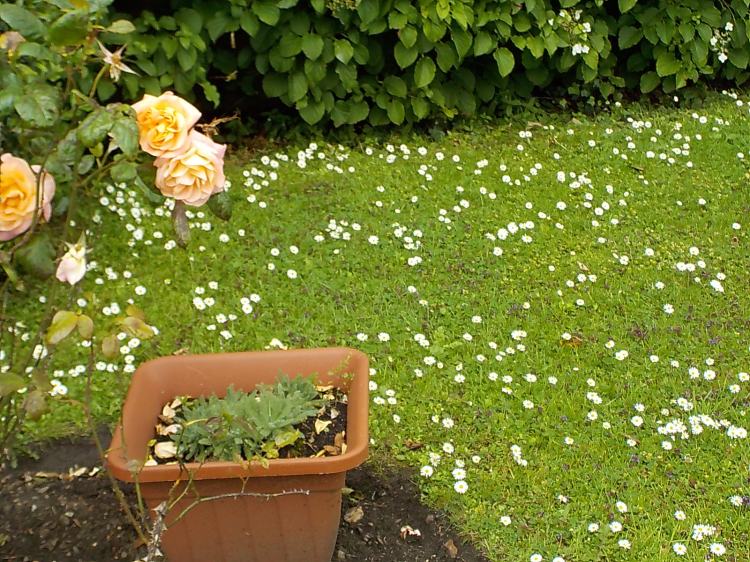
We thoroughly enjoyed our stroll around the garden.


On we went to the Edinburgh Zoo.

There were many fun parts of our zoo visit. The movie celebrities were entertaining.
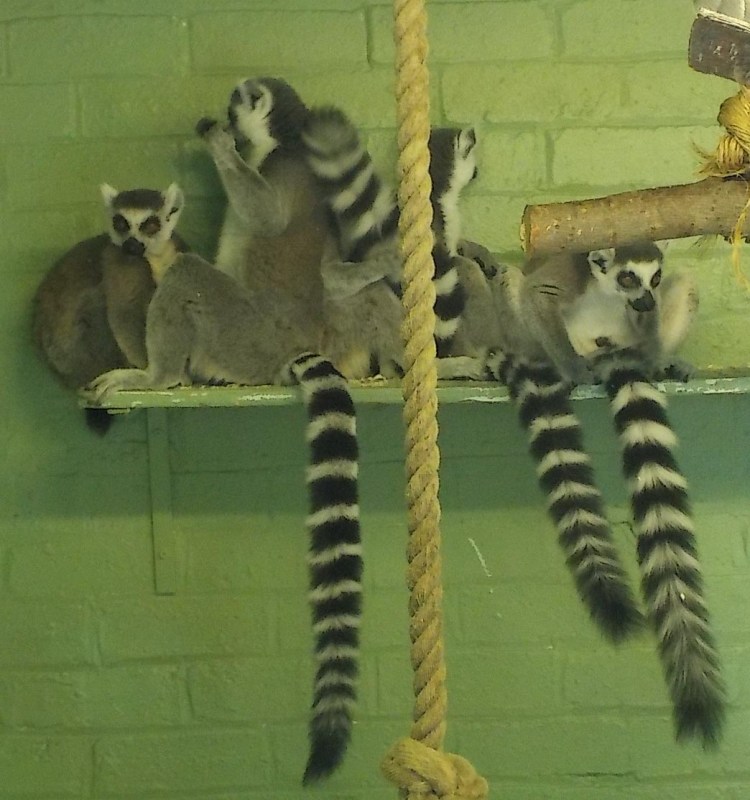
The Edinburgh Zoo makes it clear that it is heavily involved in research and conservation. It participates in projects in Scotland and all over the world. It also holds animals that are not commonly seen. That way it doesn’t directly compete with the very largest zoos, though they do have a giant panda. We dutifully went to look, but the female is off display because of breeding, and the male had just lumbered out of sight when we arrived. I guess it’s pandacam for us.

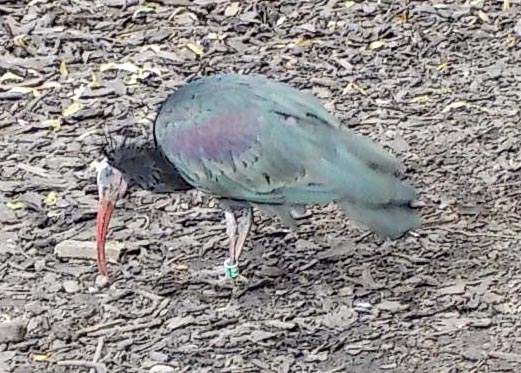
We did see the bald ibises that we were unable to see in Morocco, their largest remaining breeding area. They aren’t lovely, but there is a flock in Edinburgh and we could see their peculiar bald heads.

Another species we saw in Morocco has adapted well to Edinburgh, the Barbary macaque. The “wild” macaques (unconfined might be more accurate) we saw begging by the road in Morocco were obese from eating food provided by visitors. 7.14.16 Edinburgh zoo-014sm

The group in the Edinburgh zoo was livelier. This young macaque was chewing his way through a rope end. The zoo also participates in a chimpanzee project in Uganda. I even saw a Callimico monkey, from Bolivia, where my former colleague Leila Porter studies them.


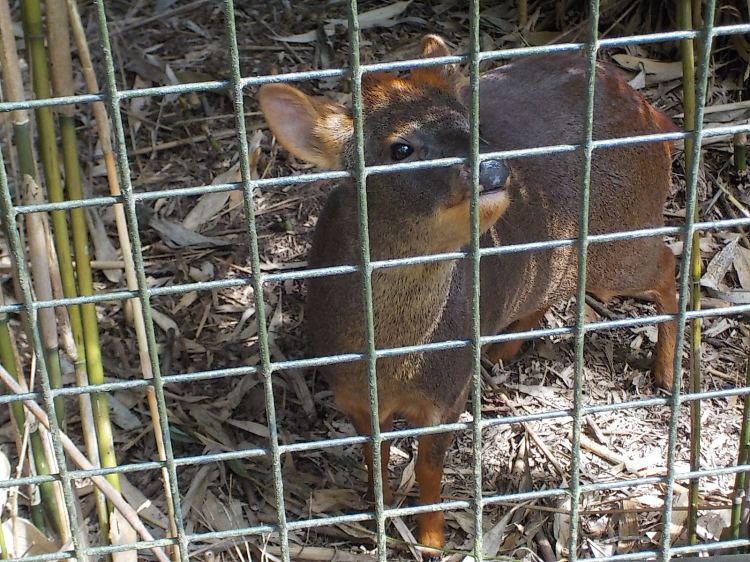
There were a pair of dik-diks, each the size of a fawn, and a pudu, a Chilean species that I had never heard of before.

A local rarity is the Scottish wild cat. This animal has a tough time keeping its dignity, because it looks exactly like a tabby cat unless you look VERY very closely. I even read a conservation article that questions how many resources should be invested in saving this endangered species if it isn’t certain there are any left that aren’t part house cat.

https://i0.wp.com/treesforlife.org.uk/archive/images/NEW%20WEB%20PAGES/wildcru.png

I have to admit, the differences are slight enough that I think some DNA testing is in order.

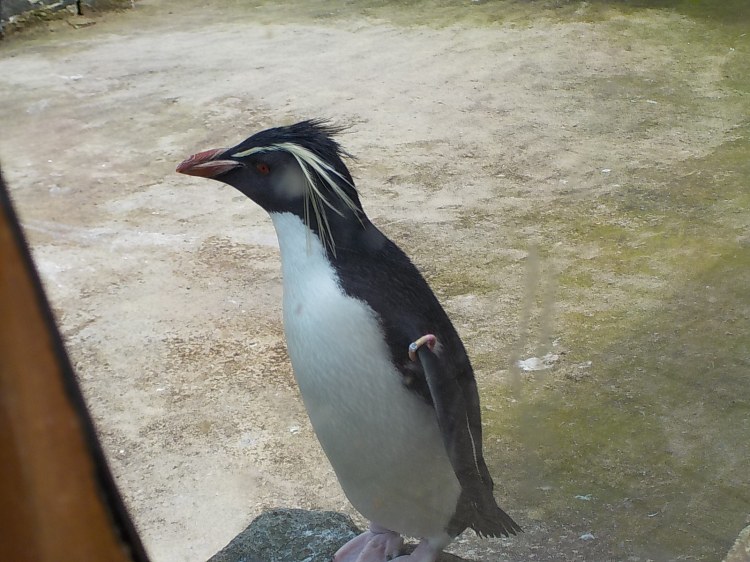
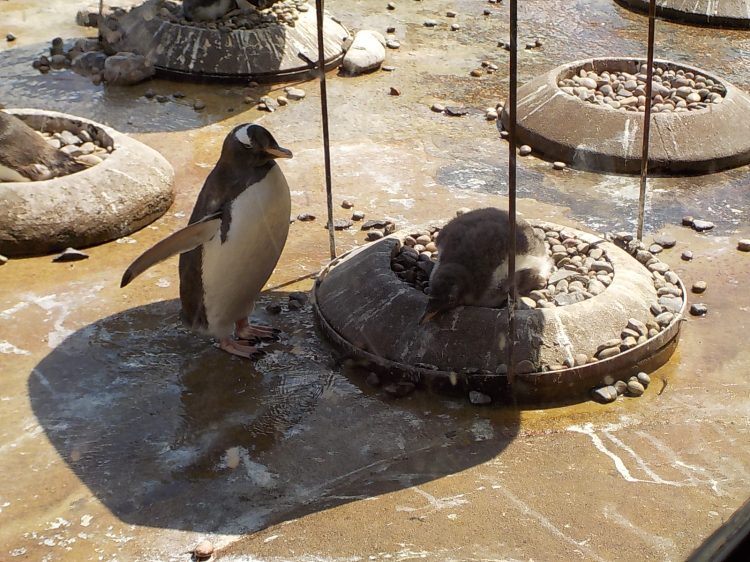
The penguins are always fun and Edinburgh has a large colony of gentoo, rockhopper and King penguins. The penguins go for a walk every day led by keepers, but (!),

“Please Note:

The penguin parade is run on an entirely voluntary basis. It is the penguins choice to take part, we do not encourage them with food. Unfortunately this does mean that occasionally the parade is cancelled if they do not wish to go out.” (Edinburgh zoo web site)
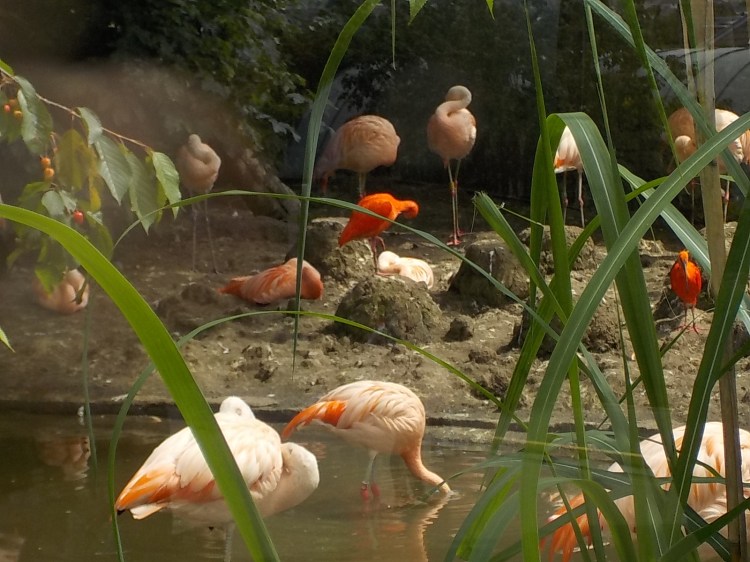
I also love all the birds. We saw the world’s largest pigeons, who strolled right out under visitors’ feet, a large stork, Chilean flamingos far from home, and scarlet ibis that you can see if you visit Trinidad (or northern South America).

The zoo property was purchased from a private owner in the early 20th century and the elaborate house is still present, right in the middle of the grounds. It’s now used as an event venue, “The Mansion.”

https://i0.wp.com/blog.weddingdates.co.uk/files/2013/11/ed-zoo13.jpg


It is the kind of house that a child looks at and says, “I want to live in that house in the zoo.” I agree.
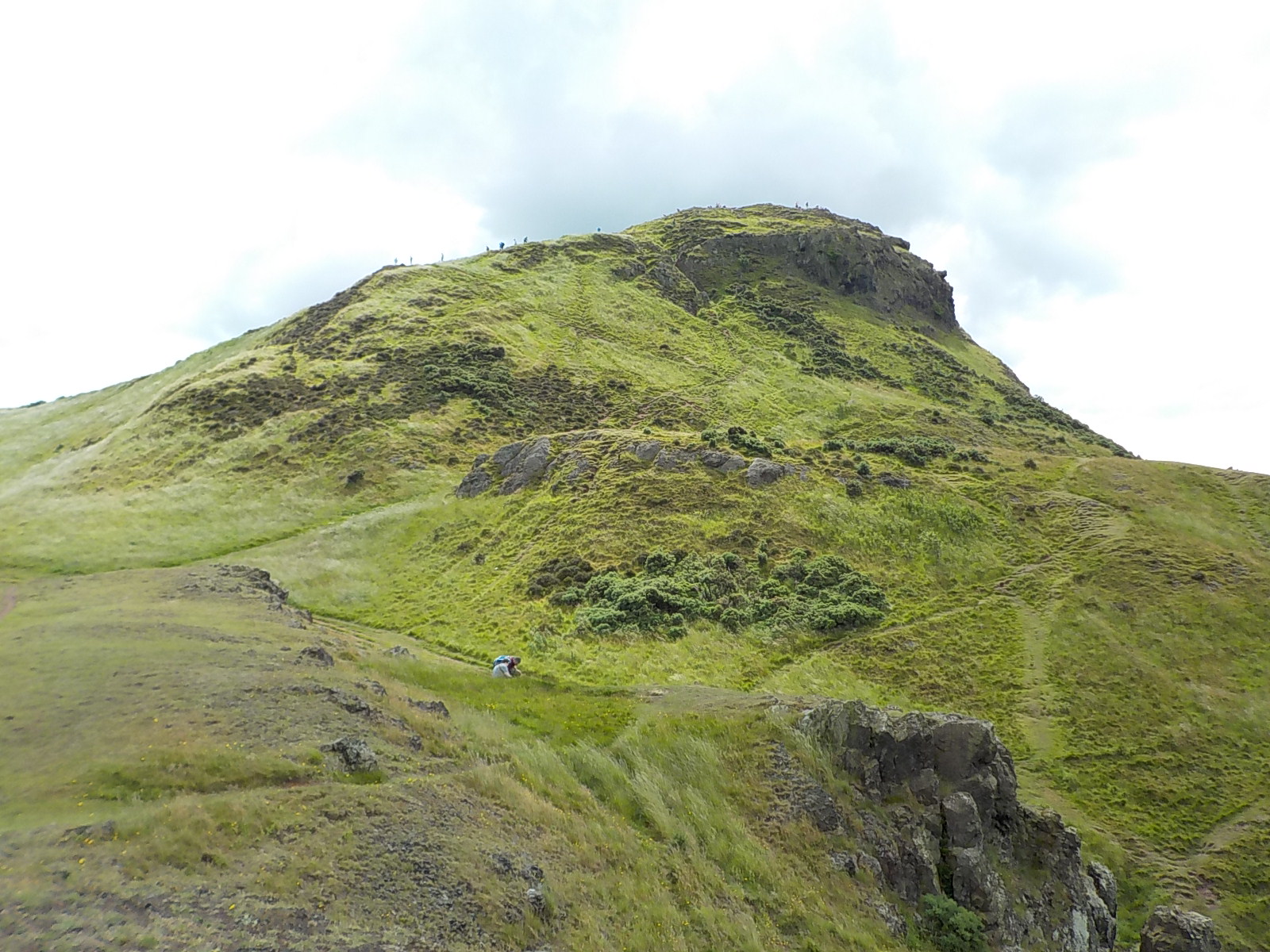


The hike to Arthur’s Seat

A good park takes planning and Holyrood Park began as a hunting preserve long before 1541 when James V enclosed the area with a wall. Though adjacent to Holyrood Palace at the east end of the Royal Mile (where the Queen was recently in residence), the former hunting grounds are now a world-class park that encompasses Arthur’s Seat, a popular walk to the highest point overlooking Edinburgh. 7.12.16 Arthurs Seat.16 Arthurs Seat-016Arthur’s Seat is the remains of the heart of a volcano, highly eroded over the years and scraped by glaciers during the ice age. There are a few low junipers and grasses. (There are also gorse bushes, but I haven’t seen any. As a reader of Winnie-the-Pooh, I must see some.) It’s the high point Holyrood Park, 650 acres now surrounded by Edinburgh and its suburbs. We took only one walk of many possible paths that include several slightly lower hills and an area of cliffs, the Salisbury Crags. There is historic significance here, too, as James Hutton, the father of modern geology, made some of the observations that led him to propose the theory of uniformitarianism from viewing the geology of the area. He concluded that the earth’s crust, the surface of the land, was formed by continuing processes over long periods of time.
  • At the time, this was a fundamental, crucial change in thinking, because the history of the world was still viewed as very recent, so Hutton had to brave criticism of those who believed strongly and devoutly that the world was only a few thousand year old. Unimaginably long periods of time before people existed was rarely even discussed.
  • Hutton recognized that erosion and deposition along with volcanic action could explain the layers seen in any geological cross-section. It changed geology from the observation of curious features to a puzzle that could be solved. Based on Hutton’s principle, any section, even any landscape, could be explained by tracing the sequence of deposition and erosion. Geologists and archaeologists still rely on the underlying significance of uniformitarianism.

Guidebooks tell you the walk to Arthur’s Seat takes 45 minutes. That figure assumes you won’t be stopping to take photos, chat, look around,or breathe. We did all those things, so it took us a bit longer, but the view was excellent, the day was perfect, cool and comfortable, and there was no rain. The upper part of the route is uneven underfoot, slick from wear and rain in places, with exposed rock waiting to trip you. We got to the top and back without any (additional) twisted ankles, but it is not a hike for everyone, despite the deceptively smooth green view from a distance.

At places, it’s surprising to remember that we are within the city. The park seems vast when you are in the center. (I dreamed of an endless green landscape afterward.) Yet the city is just over the hill in every direction.

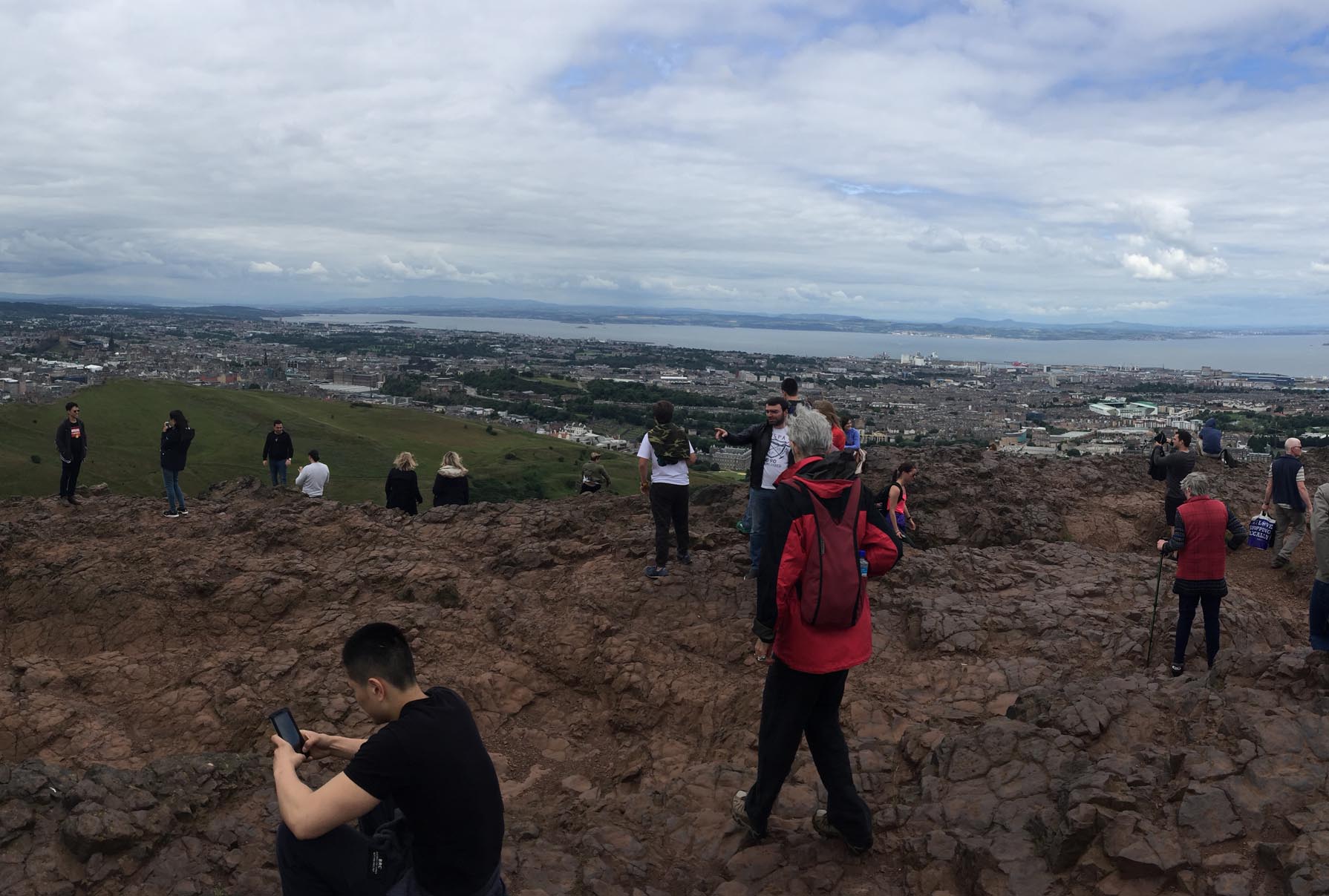
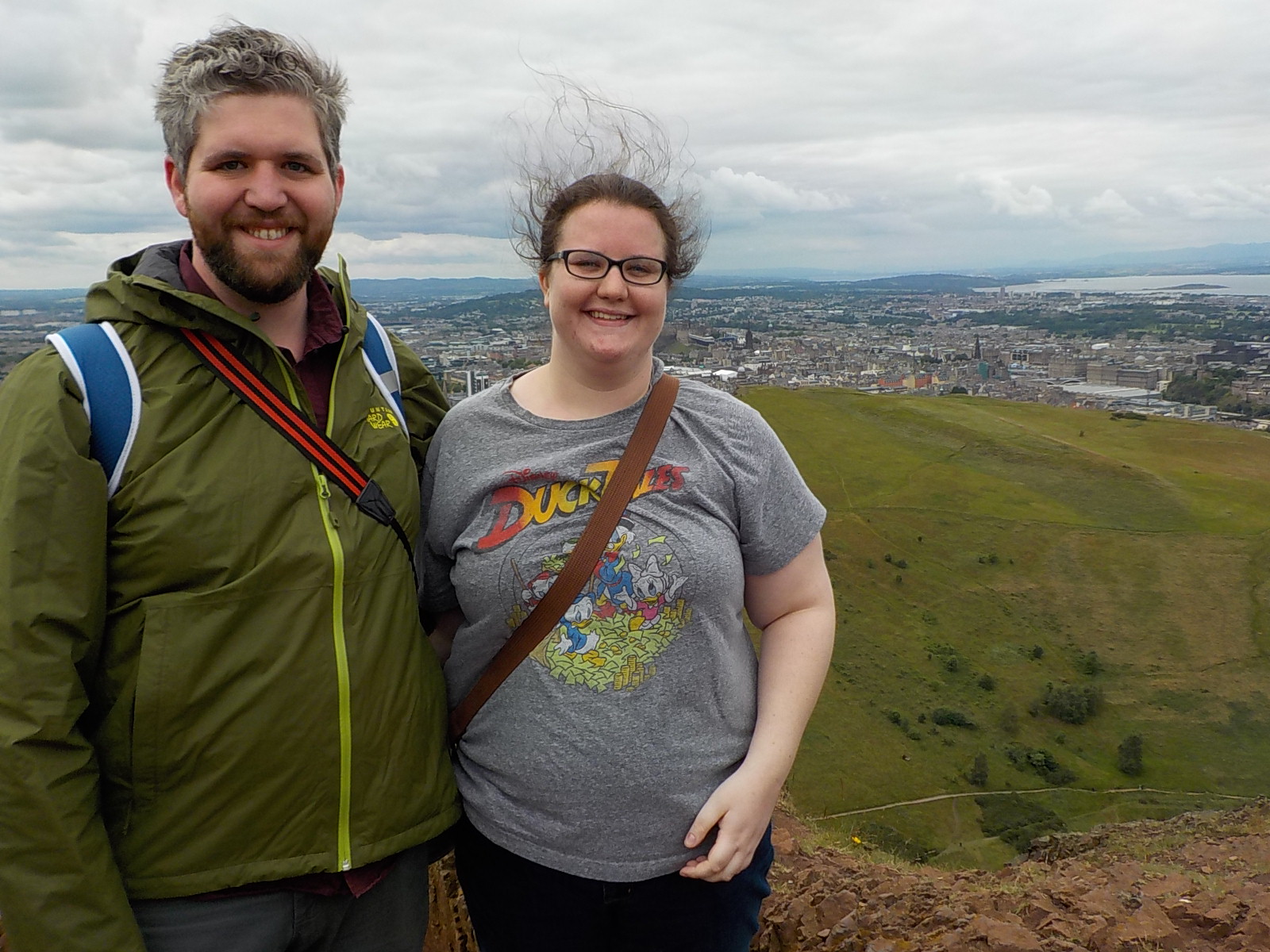
We made it to the top where we promptly took a selfie, now posted on Facebook. What you don’t see from my bucolic photos is the number of other people on the same walk. It shows you how we edit what we see and experience.

7.12.16 Arthurs seat aYou can have a personal stroll to Arthur’s Seat despite the hundred or so other visitors coming and going.

7.12.16 Arthurs Seat.16 Arthurs Seat-019

Lillian’s hair loved the top of Arthur’s Seat. It stood up and did a dance.


Our Castle Experience–round 2.

Getting to Edinburgh Castle was an adventure all its own, because we had to find a route that was short enough that Jonathan’s ankle would still function after we arrived.  We pored over the street map and ended up taking a bus to the center and walking up “the mound” to the castle. It was a lot shorter than on my previous visit with Paula and Emily where we walked to North Bridge and up the Royal Mile.

The parade ground after the portcullis is marred a bit during the summer by the huge metal stands that engulf the space, setup for the Edinburgh Tattoo military show that takes place every night in August. There is still plenty of pageantry for those of us who won’t be staying until then.

The crown jewels of Scotland were impressive, though the Stone of Scone, displayed with them is a puzzling display of patriotism. The tale goes that ancient kings of Scotland were crowned while standing on the stone, a small featureless block that now has a couple of iron rings set in it. When Scotland signed the treaty that made it part of England, the block was carried off to Westminster in 1296 and stored in a drawer below the seat of a custom-made throne designed by Edward I. It stayed there until 1950, more than 650 years later (!), when it was stolen by Scottish students. Despite a wide search, the stone was not recovered by the police, but was returned early in 1951 after only four months in hiding. Scottish nationalism built up over the years since then and in 1996, the stone was returned to Scotland. That doesn’t seem to have quelled nationalism, and Scotland may again one day be an independent state. The Stone of Scone rests with the crown jewels while they wait.

7.11.16 Edinburgh Castle-008smLike the Stone of Scone, resting.

First impressions of Edinburgh

Edinburgh is as green as anywhere you can imagine. Yes, it has been raining, sometimes heavily, but the payoff is that the gardens are beautiful and the flowers in perfect bloom.

We’ve arrived in Scotland at an unusual time. The Brexit vote was just over a week ago, and like many others, we were unprepared for a decision for the UK to leave the EU. The pound sterling is at a record low, this morning $1.29 = £1. This has no visible effect on daily life, though it will help our end-of-month budget accounting. Comparing Scotland with Norway and the other places we’ve visited is an inexact science because most statistics are for the UK as a whole. The population of Edinburgh itself is around 500,000 or around the size of Albuquerque. Average income is about $35,000 per year. That’s lower than Norway, but higher than anywhere else we’ve been, more than twice the average for Portugal, for example, and Portugal is also a member of the EU (for now). Every site that notes average income points out there is huge variability. The Human Development Index is .907, almost as high as Norway, and life expectancy is relatively high, 78 for men and 80 for women.

IMG_0587I made my first visit to Edinburgh Castle with Paula and Emily (her daughter-in-law) before Emily returned to her conference in Glasgow and Paula left for Italy. We had a ROYAL moment at the castle, when the car carrying Princess Anne to a war memorial event passed right by us. (She didn’t wave, but there she is.)

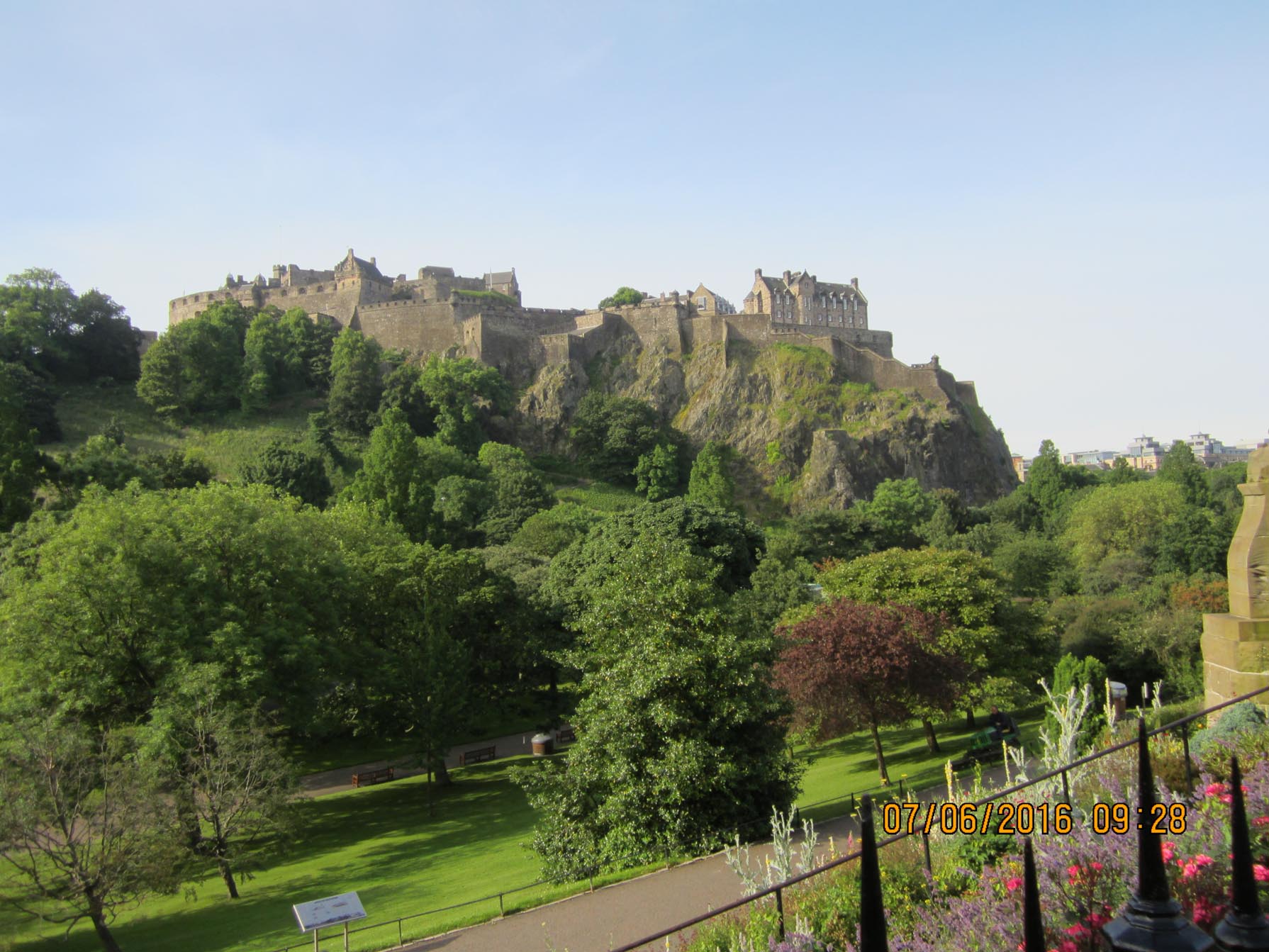
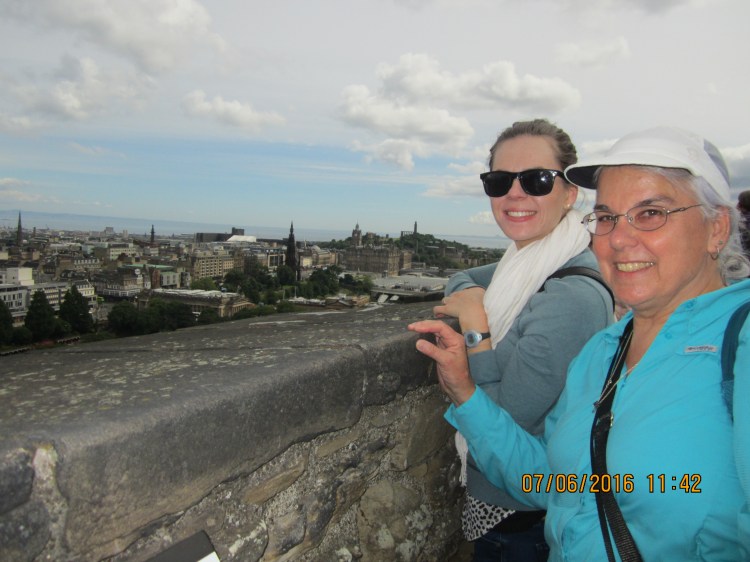
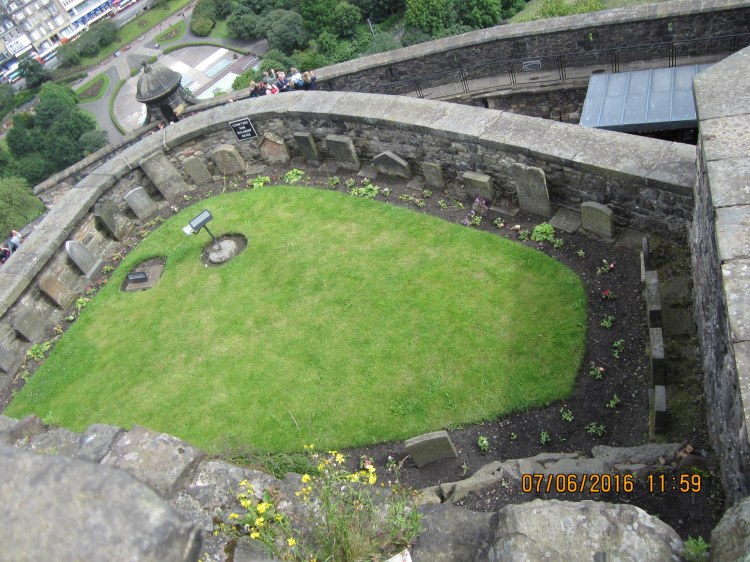
IMG_0592smAfter that excitement, we liked the views from the castle best, along with the dog cemetery. I invested in a membership to Historic Scotland (£34.50 each) that will allow me to revisit Edinburgh castle and visit many others.

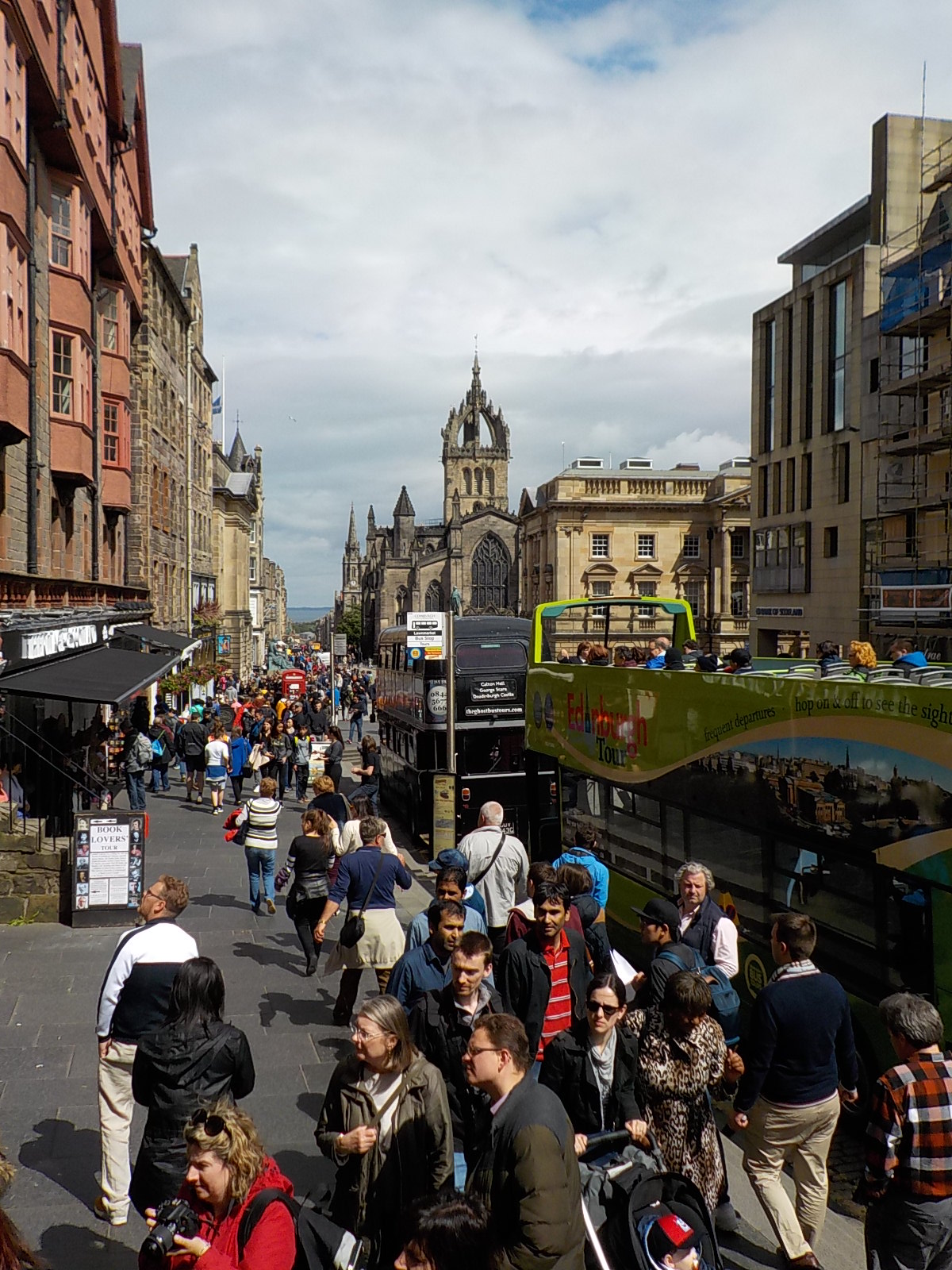
This was our first sunny day, and we had coffee on the Royal Mile, admiring the sun on the steeple of St. Giles cathedral.

IMG_0588There are already lots of things of note.

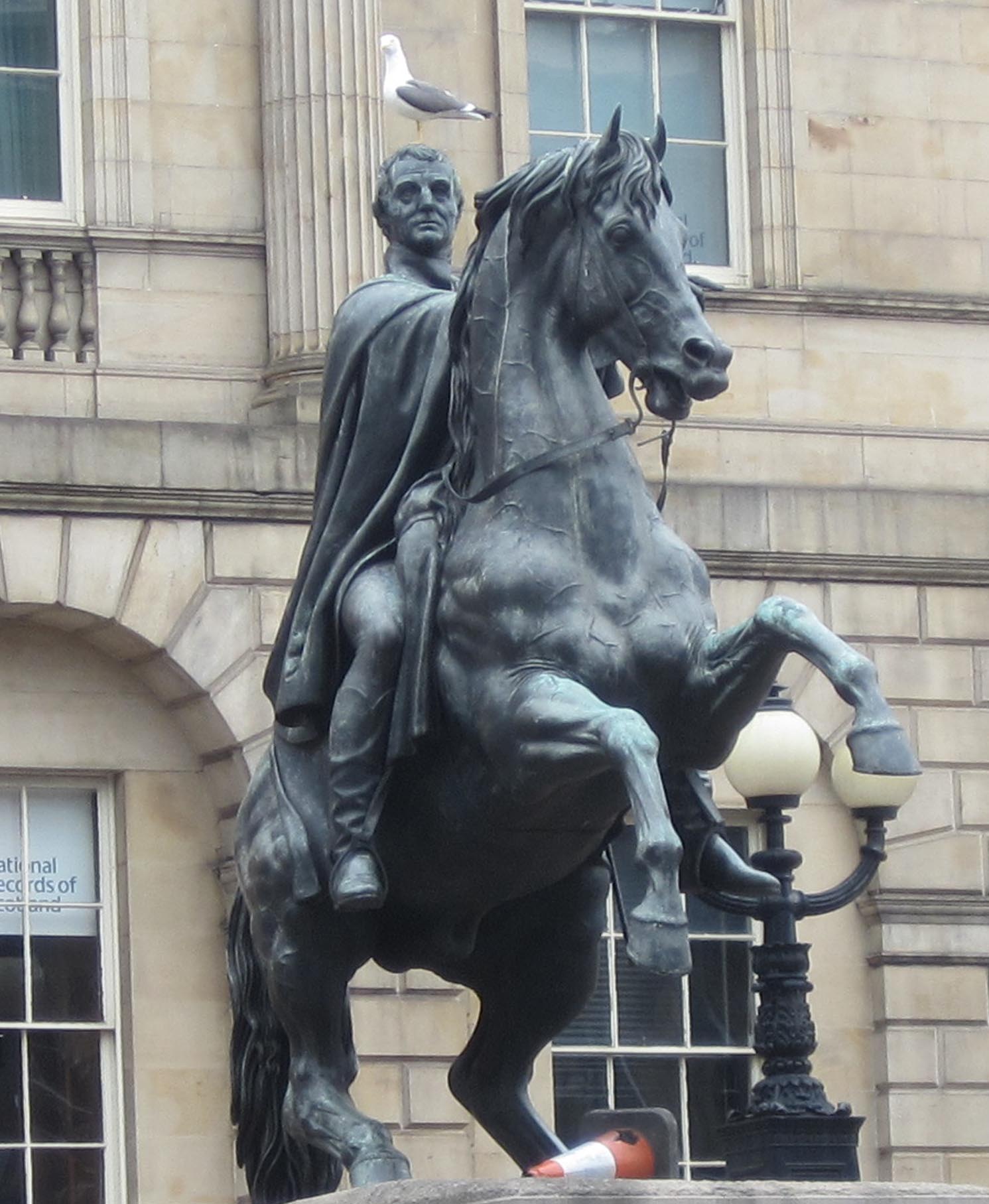
IMG_0599smThere are many, many statues of famous Scotsmen that always seem to have a bird standing on their head. I will be vigilant in documenting them–I’ve never been in a city with so many bronze men standing around on pedestals.

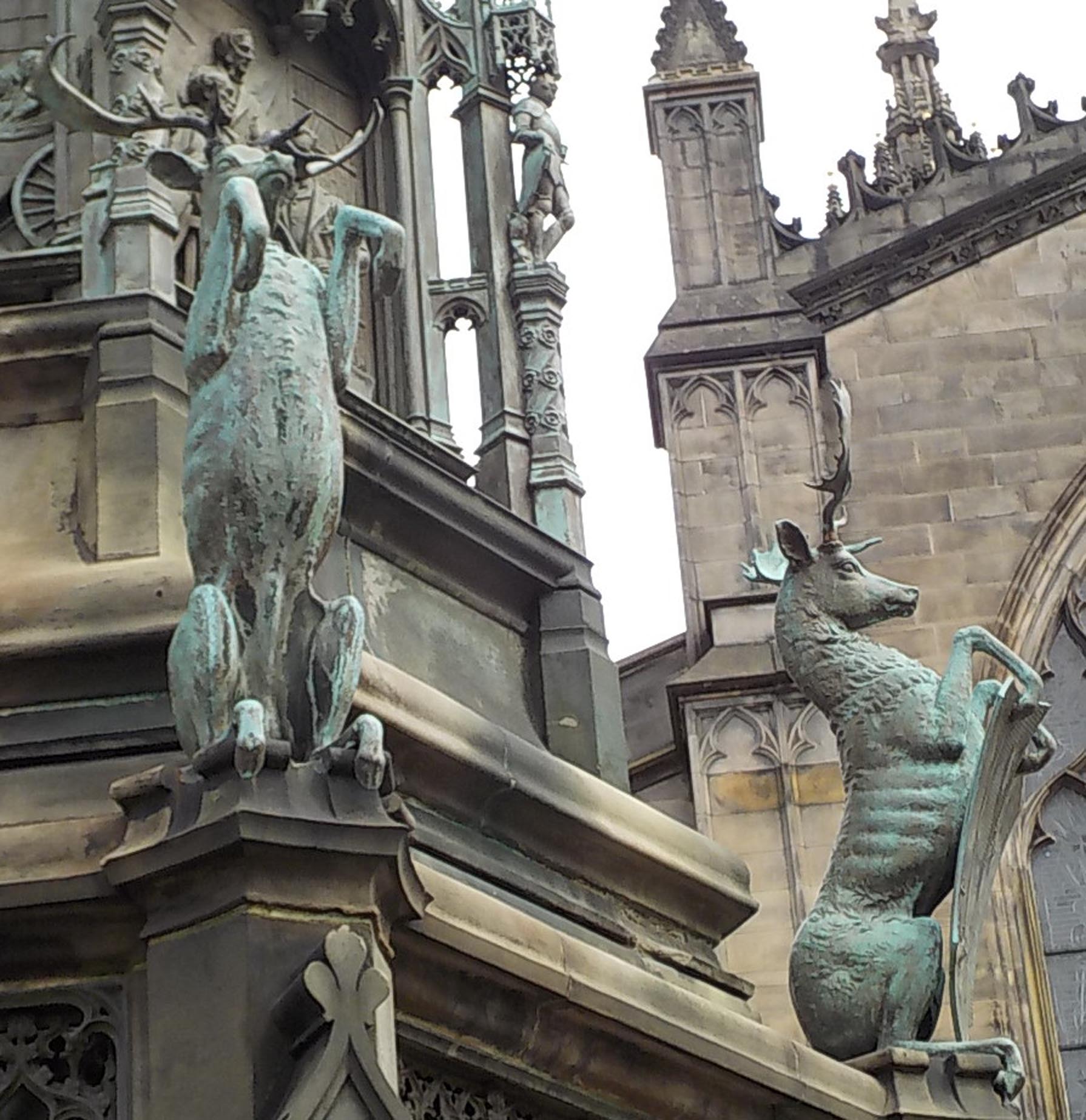
There are also animals, sometimes in preposterous poses. Here are some rearing elk.

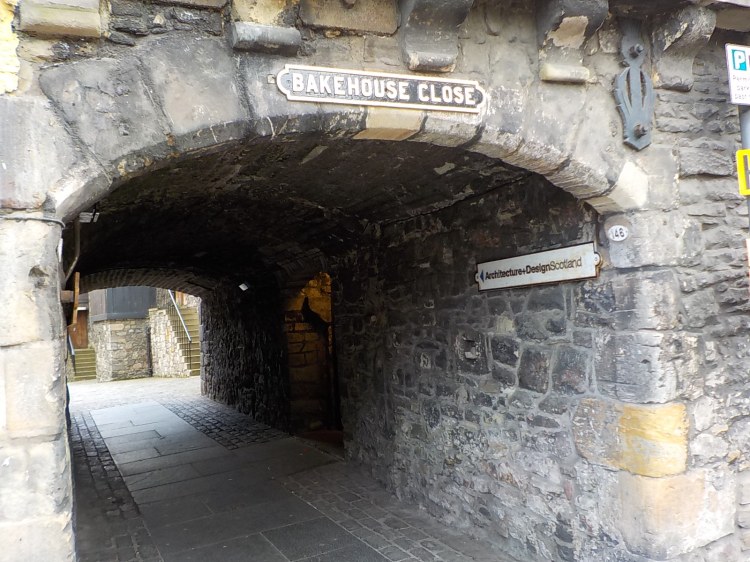
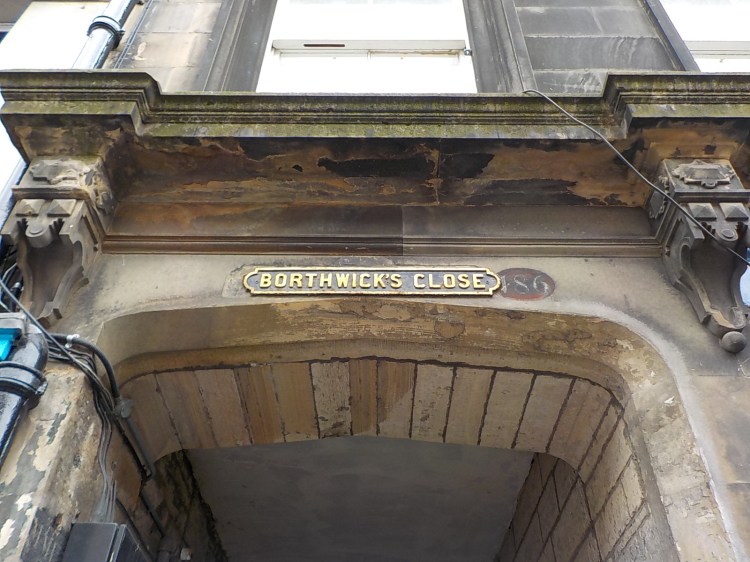
7.3.16 Edinburgh Royal Mile-004smNarrow passages lead off the Royal Mile, each considered an alley, or close.

There are unusual shapes, too.

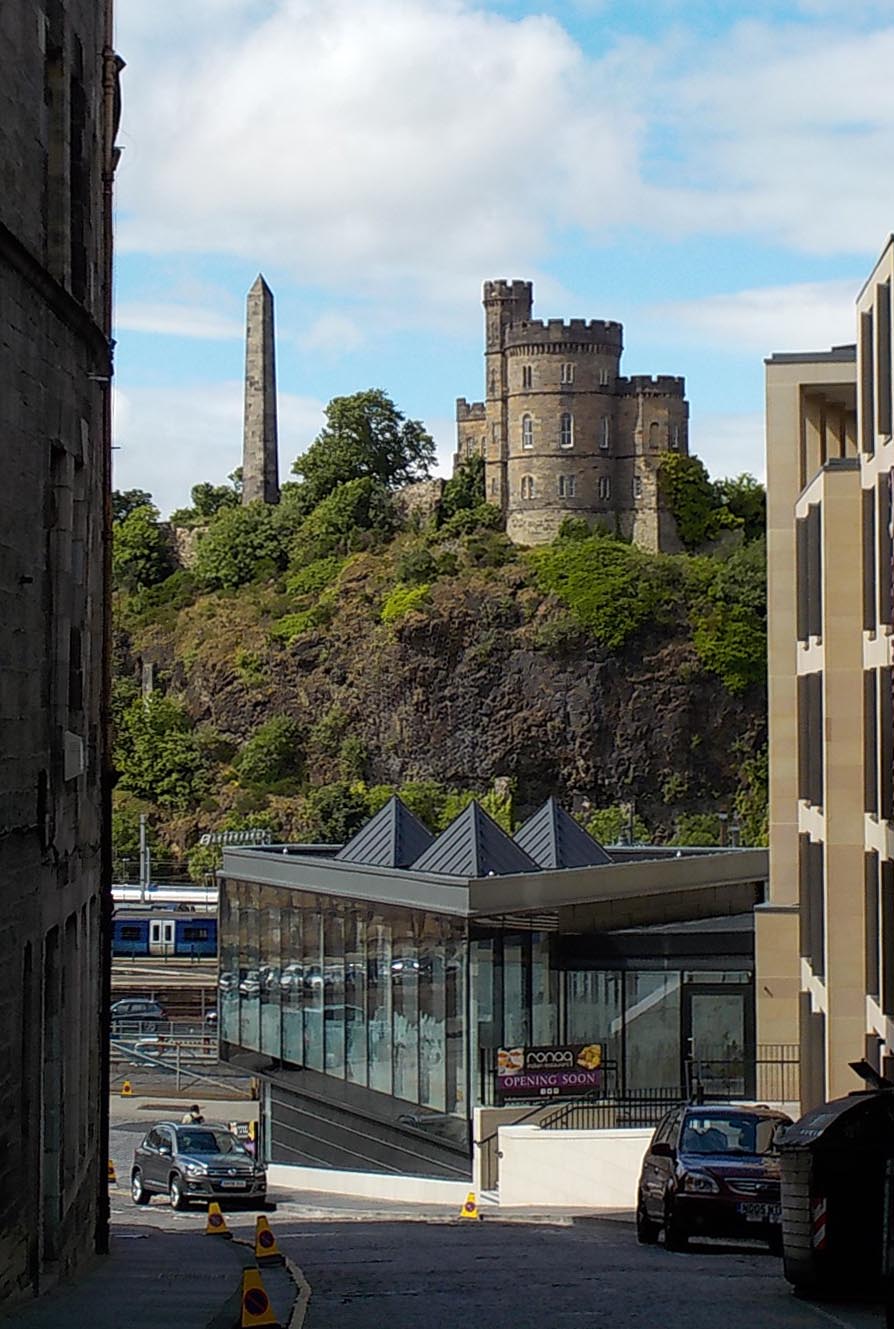
And romantic views out over the city.

7.3.16 Edinburgh Royal Mile-012smThe old towers over the new, looking from the Old Town toward Calton Hill.

Murrayfield Road, our base of operations

Our apartment is a recently renovated three bedroom, one bath place on Murrayfield Road, and it suits us very well. We are a short walk from the bus into Princes Street, the center of the city, and only a couple of blocks from a bus that goes directly to a large Sainsbury’s, where we can do almost all of our shopping. We’ve bought 4 week bus passes that give us unlimited bus/tram transport on Lothian Buses, including the airport bus (£27 each). Here are some photos of our new spot.

This slideshow requires JavaScript.

Dealing with a sprained ankle in Edinburgh, update

After a week of rest, Jonathan’s ankle still hurt a lot. I crossed the street to the Murrayfield Medical Office and asked about options and was told to go to A&E at the Royal Infirmary. As I was looking up directions I found a reference to the “Minor Injury Clinic” at Western General Hospital and looked it up. Yes! They deal with sprains and “routine fractures” (are there any?). We went down to the corner and were able to catch a cab promptly (it was not raining). The driver dropped us at the door of the clinic, the Porterfield Road entrance of the hospital, and we hobbled in.

It was a miracle. First of all, almost no one was there. Jonathan was seen almost immediately and sent for an xray. He hobbled off to get it, hobbled back ten minutes later and was called in about 5 minutes after that. His foot is not broken! It will mend on its own! No more ace bandage!

Saving the best news for last, your first visit to the Minor Injury Clinic is free, even if you are not Scottish, from the UK or the EU. Free once for anyone. Thank you, clinic and Great Western Hospital.


New territory–Edinburgh

Rain and a lost suitcase notwithstanding, we are now settled in Edinburgh. A quick history review suggests that Edinburgh has been here for so long that it’s not clear when the first hut was built on the crag where Edinburgh Castle now sits. Bronze Age artifacts have been found in the area, putting people in the area before 750 BC, though occupation of the greater British Isles goes back to the Mesolithic, at least 8500 BC. People may have been able to arrive on the islands on foot across what is the North Sea today.

By the Middle Ages there was a hillfort on the site, and the settlement and surroundings became part of the Kingdom of Northumbria. A long and complex history of kingdoms that grew and fought, rising and falling across the centuries developed into the historic record that most of us only know from movies like Braveheart and the novels of Diana Gabaldon (Outlander). I won’t even try to summarize Scottish history, as I’ll be sure to overlook something. This is a story that has something for everyone. I encourage you to google a question about Scotland.

Paula will only be here until Thursday, so we set off to see a little of the city once we had a good night’s sleep. We started with the Royal Mile. It begins at Edinburgh Castle.

7.3.16 Edinburgh Royal Mile-025
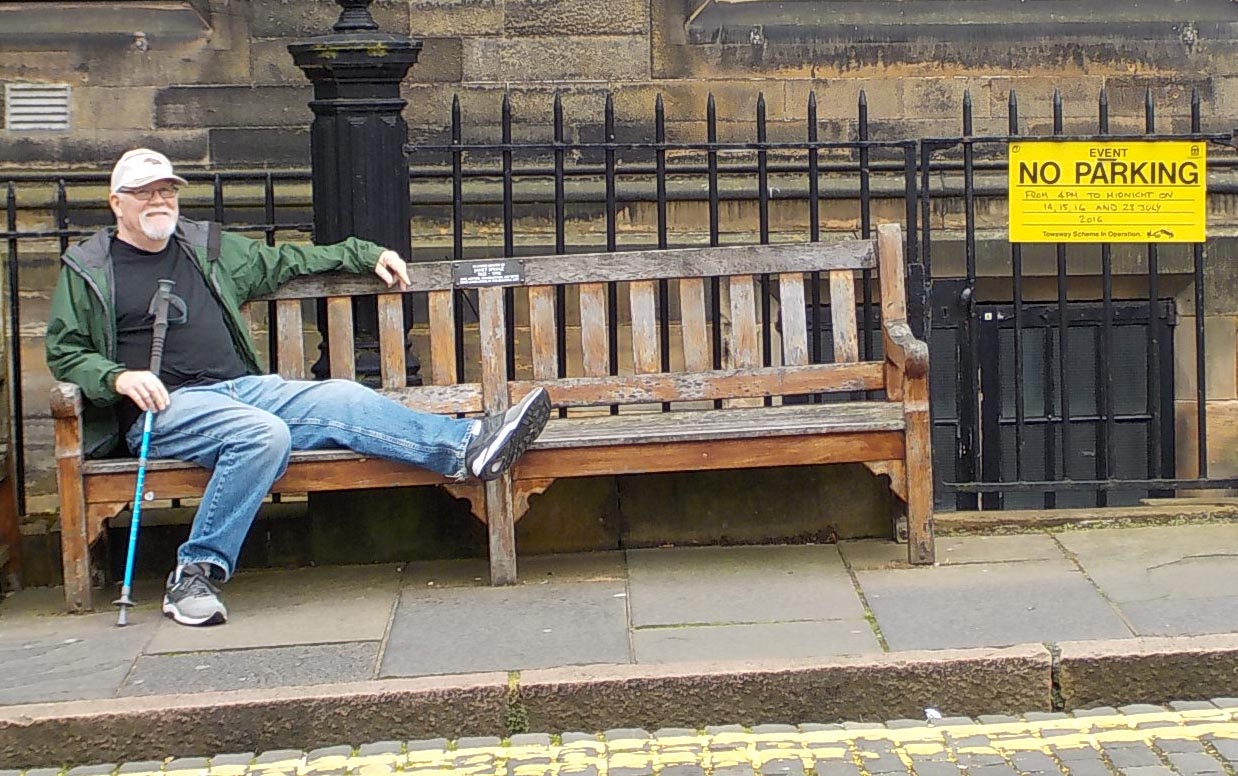
Here I am, blending in.

7.3.16 Edinburgh Royal Mile-026

We didn’t realize there was a changing of the guard here, but there they were. We’re also in Edinburgh when the Queen is in residence at the opposite end of the Royal Mile, at Holyrood Palace. She opened the session of the Scottish Parliament just as we arrived.


The palace is off limits to visitors until July 10, by which time the Queen will have gone on to her other activities, or another of her Scottish palaces.

7.3.16 Edinburgh Royal Mile-009

The Royal Mile between the castle and the palace is full of lovely, turreted and elaborately dormered windows. From here you can see the unusual “crown” steeple on St. Giles cathedral. It was a sunny Sunday afternoon and lots of people were out.

The ground floor of each hosts a tourist shop of some kind. We saw more tourist shopping in one afternoon here than in a month in Norway.  It will be easy to find postcards here.


7.3.16 Edinburgh Royal MileThis was one sight as we approached the Royal Mile. As a fan of the Isabel Dalhousie series of novels by Alexander McCall Smith, I was reminded of Isabel drinking her morning coffee and reading The Scotsman.

I went to read the Scotsman and found that the weather forecast is for rain, rain and more rain. Maybe I’ll stop reading the paper.


Good to know about Northern Norway

Shopping

7.1.16 Oslo-053smLiving in northern Norway is an exercise in planning, because it takes over 30 minutes to get to the nearest store of any kind, and an hour to get to a place with even a very modest shopping area. There are two principal grocery chains, REMA 1000, and Co-op. Their offerings are similar. Most stores take credit cards with a chip, though at some gas stations you need to pay inside unless you have both a chip AND a pin (we have chip/signature cards).

Surprises:

  • Typically people purchase frozen meat. Don’t count on fresh meat being available.6.9.16 Fishing-003
  • In our area, most fish in the store was dried or frozen. If you want fresh fish, you need to go fishing. That’s a great idea, but then you have to fish until you get what you want.
  • Ocean fishing is permitted anywhere in Norway if you plan to eat your catch. A fishing permit is required for lake and river fishing.
  • The coast is open to all. You can walk along the shore anywhere except posted military installations.
  • Speed traps on the highway. Just as mean-spirited as any you’ve been caught in at home. They are aimed at those unfamiliar with the area and tourists.
  • The self-serve economy. There are many things that you have to do for yourself even it you’d rather not, because there just isn’t anyone to do them or to hire to do them. At the airport, for example, there is no staff at check in. You check yourself in, weigh your own bag, put on your own tags, and heave it onto the conveyor belt. (There was also no security check.) Our host said there was not anyone available to do weekly cleaning at our rental, or to mow the lawn. If you think about it in the context of paying everyone a living wage for their work, perhaps that’s the explanation. After Jonathan sprained his ankle, however, we really wished there were alternatives.

No surprise, but true:

  • Everything is expensive. If you look at the prices, you won’t eat. We had delicious blueberries, some memorable strawberries, and a pineapple. I noticed that our excellent red Thompson Seedless grapes came from Egypt.
  • Gyetost (whey cheese) is strange (brown, a bit sweet) but delicious, especially on hot toast. If you don’t think you’ll like it, try White Gyetost, which has a milder flavor.
  • Alcoholic beverages are startlingly, shockingly, expensive. Inexpensive beer is $25 per six pack. Approximately three quarters of the price is the tax.

Driving

6.21.16 Finland trip-006Distances are great, everything is far from where you are in northern Norway. If you make plans to visit a lot of well-known places, you will be on the road for many hours.

There is no tolerance for drinking and driving. Everyone pulled over gets brethalyzed, no matter what hour of the day or night. The legal limit is .02, so designated drivers are a must. This has been true since my first trip to Scandinavia in the 1970s.

  • I got caught in a speed trap, going 80 kmph (50 mph) in a 60 kmph (37 mph) zone. The fact that the radar was set up in a short zone of 60 at the end of a long downhill posted 80…. Well, never mind. The bad news is that tickets are costly, and the only good news the policeman had for me was how lucky I was not to be going 1 kmph faster because THEN my fine would have been 50% higher. Lucky me.
  • Roads can be narrow, some stretches are 1 ½ lanes shared by two way traffic, with pullouts for one vehicle to pull aside for the other. No one drives very fast (see above). Plus there are speed cameras, though those are posted in advance.

Weather

6.10.16 viking ship burial tjeldoya-024

  • July and August may the best months to visit. There is more sun. We heard that this June was unusually rainy, but I’m not sure I believe it. A typical week included 2 sunny days, 3 cloudy days possibly with damp mist, and 2 rainy days. On the other hand, we only used bug spray twice, and I suspect it is a daily necessity in July and August.
  • The weather can change rapidly, for better and worse. One day the sun came out and the temperature rose more than 5º C in 12 hours. We were delighted because it had been cold. Conversely, our first two days were sunny and warm, followed by 3 weeks of cool, often windy weather with temperatures as low as 9º C. I gratefully wore my new fur hat from the resale store, and all my layers of clothing.

Cell phone service

You may be happiest if you can use your US cell phone as you travel. It is expensive but usually works. We change SIM cards in each country, with fair results. Norway was the exception. Jonathan’s phone didn’t always work (though the coverage was fine, he got an error message when he dialed), and mine never worked. The lesson is a basic one that all websites tell you. 1) Don’t be in a hurry when you purchase phone service. 2) DO NOT leave the place where you purchase your SIM card until you have made a call on it, and tested that the data portion works. 3) If you don’t, remember that I told you so.

We made an impulse buy of phone service in the Evenes airport from a young man who didn’t mention that he was going to leave us in order not to miss his train home. So he left, encouraging us to call the help number. I suppose I could have tried that, but when I stopped in a phone store I got no help, and I was told that my phone wasn’t fully unlocked (not true).

Community

  • People are as varied here as anywhere else. We had delightful conversations with people we met at the Sunday café (noon-3 pm one day per week in the summer), where we ate waffles, drank coffee and enjoyed the fact that all Norwegians under the age of 70 speak excellent English, even when they say their English is not so good.
  • Many people will smile and nod without engaging in conversation. Norway is very much a mind-your-own-business society, and many people will answer questions if asked, but may not be chatty. We waved at passing drivers and they waved back.

Something got confused in Den/burgh or Edin/mark

More on having a sprained ankle….. There was a long walk between flights. Our first leg, Oslo to Copenhagen, landed at the end of one terminal. Our next leg left from the end of another terminal that also required passport check. I went ahead (a bad idea as it turned out) and then tried to get an electric cart for Jonathan. By the time I got it, he was at passport control. When we went through, we turned out to be at the start of a very long walk to the gate. Fortunately, Paula had contacted the gate staff and the plane waited for us. We weren’t late for the flight, but we arrived at the gate with only a few minutes until flight time, and the doors are often closed 10-20 minutes before the scheduled departure. We had already found out that our seats were SASGo, the cheap seats, and not SASPlus as they had been on our arrival in Norway. That meant less room and no food. Not a problem, fortunately, as Jonathan was on the aisle and we weren’t starving.

SAS–THE uH-oH FLIGHT!!!

Our welcome to Edinburgh was marred by the arrival of our luggage. That is, all of our luggage EXCEPT Jonathan’s suitcase. I went to the desk to submit a report and found two staffers, only one of whom could handle SAS issues. He was on the phone for a long time, 10-15 minutes, with the group before me. He then said he couldn’t be in two places at one time. “If you have lost luggage to report, follow me.” So I did. He then walked me and another passenger out of security without telling us that was happening. We got near the exit and I said, “What about the others in my party?” His answer, “You didn’t say you were with a group.” He said it was already too late to go back, at which I pointed out that I didn’t even have my passport.  In the end, I got him to call Paula’s cell phone to tell her and Jonathan to come out of baggage claim and meet me. At the end of a half hour after the last bag came off the carousel, all I had was a strip of paper with a phone number. He said to call and collect our reference number for the lost bag, he couldn’t give it to me because it involves typing in all the information on the form I’d filled out and he was too busy. “Be sure to leave a message, because I can’t always answer,” was his last comment.

That was Saturday afternoon at about 4 pm. It is now Monday at 1:30 pm, Jonathan made about a dozen phone calls, mostly with no answer despite the website saying that baggage handling works seven days a week.  To get the reference number for his bag he had to call SAS in Stockholm (possibly outsourced to New Delhi) where you are charged 18 cents per minute to speak to an agent. The young man in Edinburgh was just not going to answer the phone, I guess. We now have our reference number but no further information on where his suitcase might be. More updates as they happen. I am doing the laundry in our new flat so that he has more clothing. Fortunately, I had some of his dirty clothes in my suitcase, so he is not utterly without clothing. We may have to do some shopping.

What happens when you twist your ankle?

Occasionally, people ask how we will deal with illness or injury as we travel, particularly since US insurance rarely applies outside the US. Travel insurance only covers injury during travel. My macular degeneration is considered a chronic condition and therefore not covered (see amdontheroad.wordpress.com).

DSCN4440

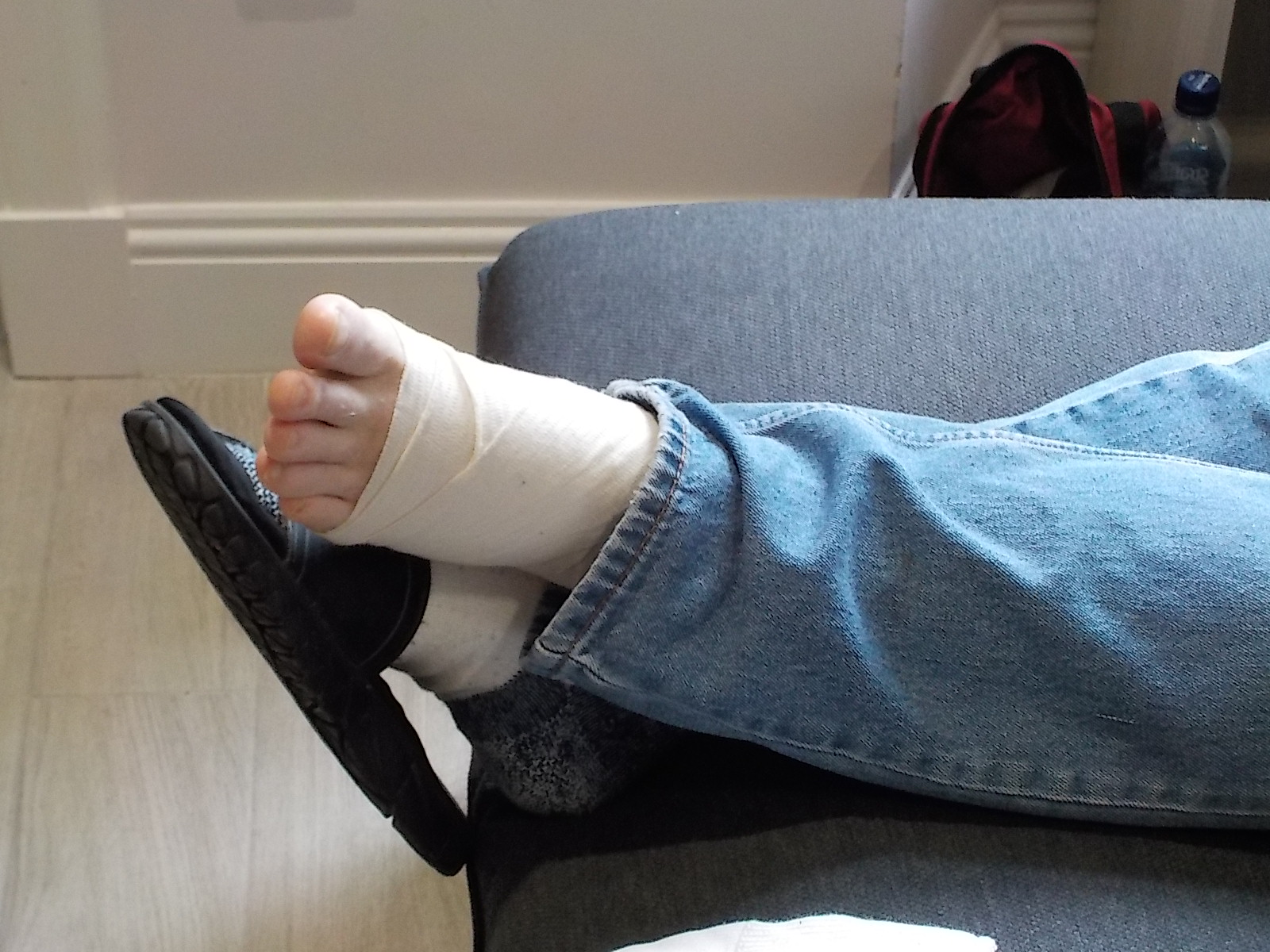
Jonathan sprained his ankle on one of our last days in Kjerstad (June 28). We’d already reserved 2 nights hotel in Oslo to have a day in the city. The Oslo airport is a 40 minute train ride from the city, and there is a lot of walking in a one-day visit, so we had to rethink.

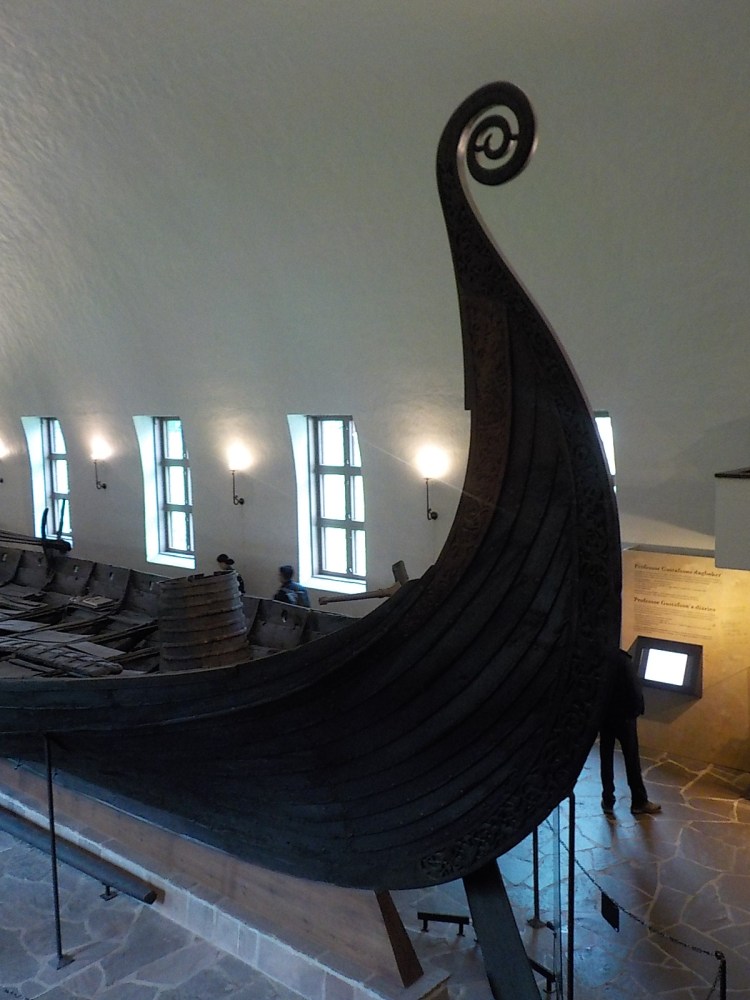
We rented a car and each chose a place we wanted to see, settling on the Viking Ship museum, the stave church at the Norwegian folk museum and the Vigeland sculpture garden in Frogner Park. The Viking ships are impressive, even though the gold and other loot was long gone by the time they were excavated.

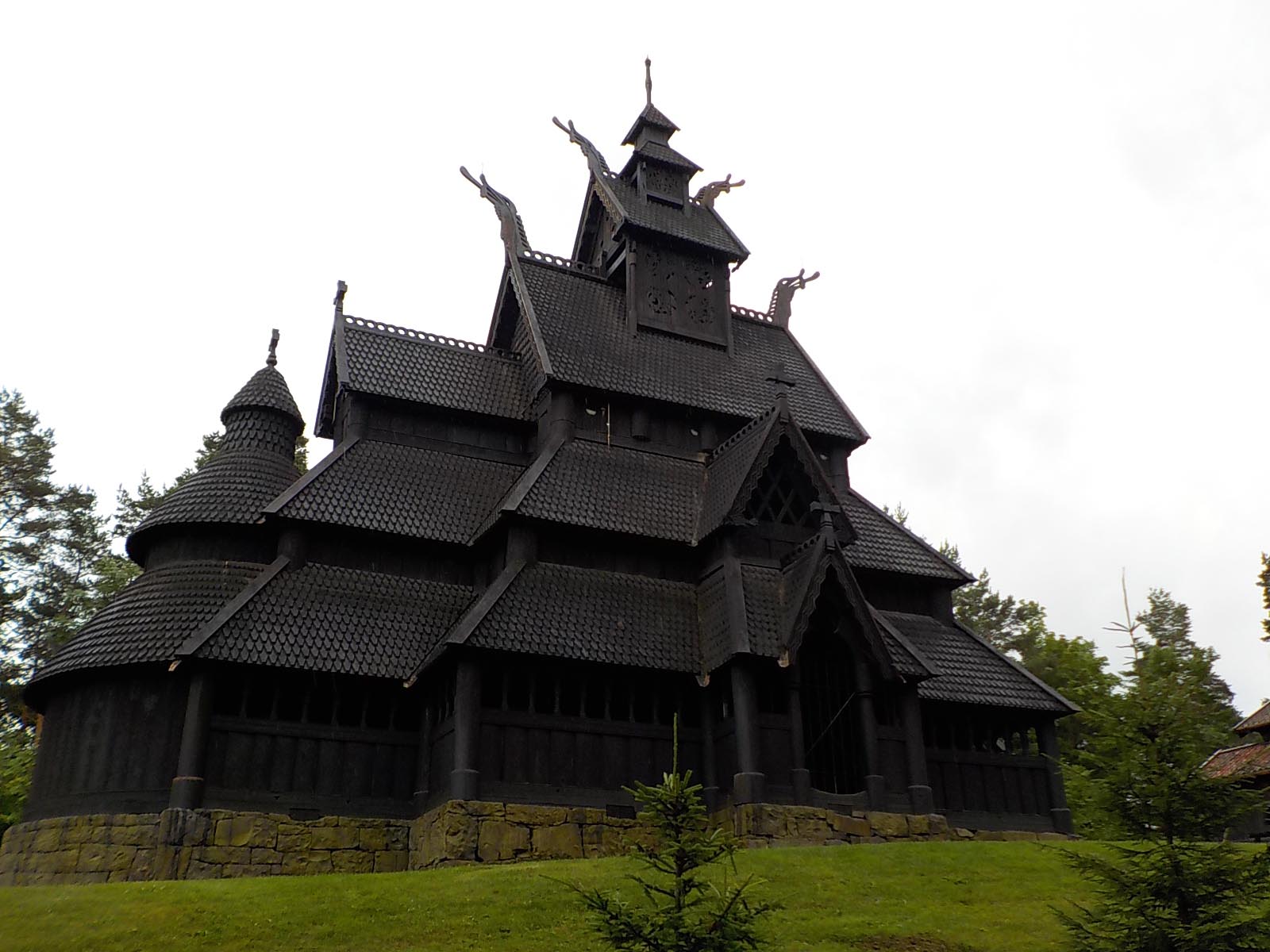
I’ve wanted to see a stave church since I wrote a paper about them for an anthropology class in college. The oldest portion of this one dates to about 1200. It was originally built in Gol, Norway and when the city was going to tear it down in 1880, the king, Oscar II, had it saved and restored in its current location among many other structures from around Norway in the Norsk Folkemuseum.

DSCN4416Jonathan rested his foot in the cafe while Paula and I did a bit more walking around the Folkemuseum. The costumed people manning the stops were well informed and we chatted with the man in the stave church for a while, the the silversmith and the pottery studio. It was raining in earnest by this time, so we headed to the cafe for a few minutes before leaving.

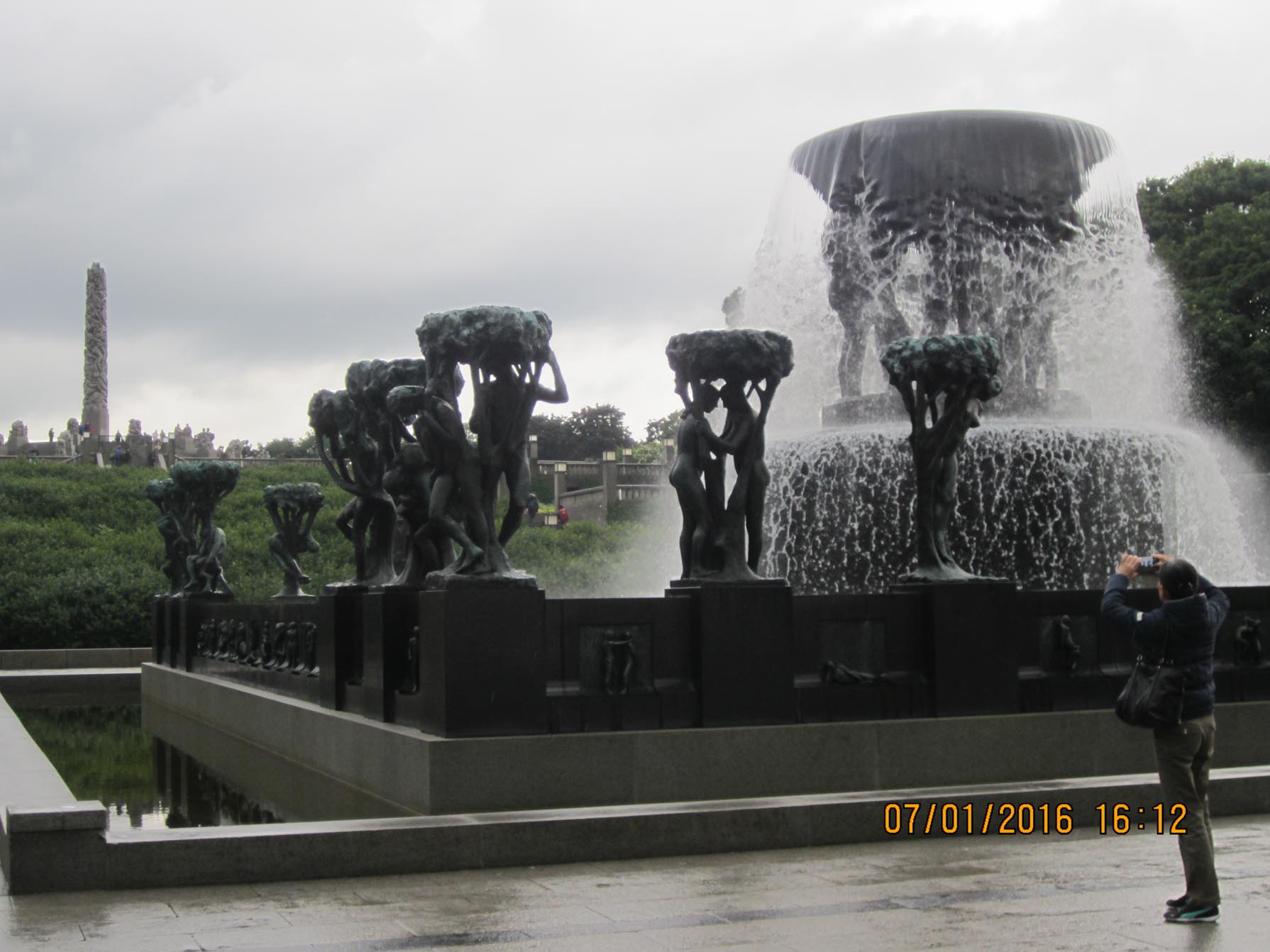
IMG_0510Our final tour stop was Frogner Park to see the Vigeland sculptures. Jonathan was only able to manage a short walk, though we pulled out our binoculars to look at birds splashing about in the rain.

From there we went to an early dinner at Markveien. It was delicious (see Jonathan’s review on TripAdvisor). We headed back to the hotel, having made the best of a day that could have been much more difficult. We were happy to have the car in the morning to get us back to the airport. Our flight was not until 11:40 am, so we had plenty of time to get there and give Jonathan time to walk slowly to the gate. We successfully spent the rest of our Norwegian kronor, to the last one.