The Stewartry Show

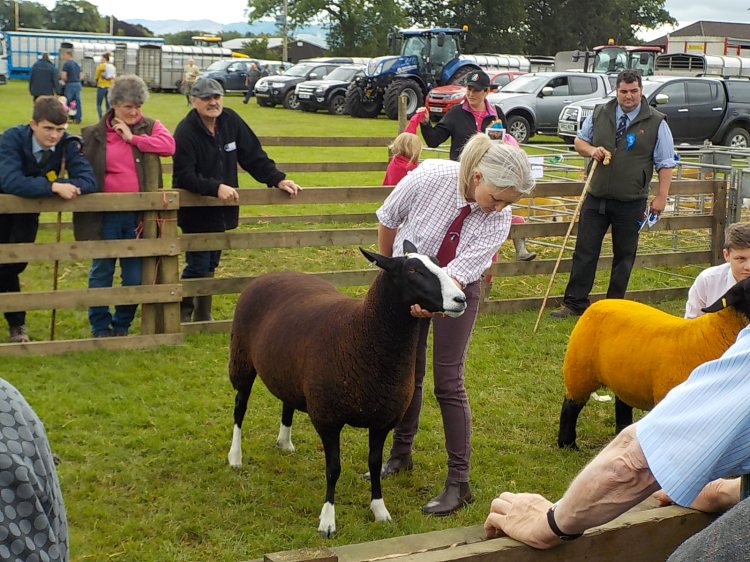
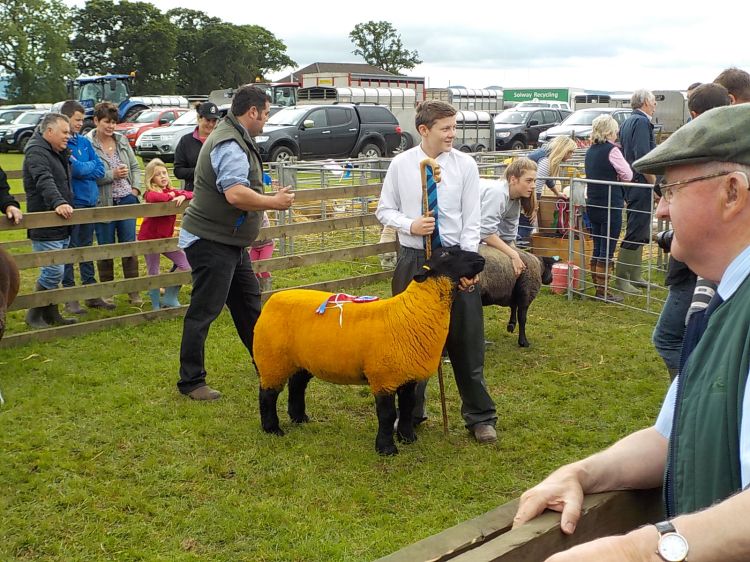
We jumped right in to life in southern Scotland. During August, every town and region holds an agricultural show and a town fair. We went to the Stewartry (historically, a region within what is now Dumfries and Galloway) show, and watched animal judging

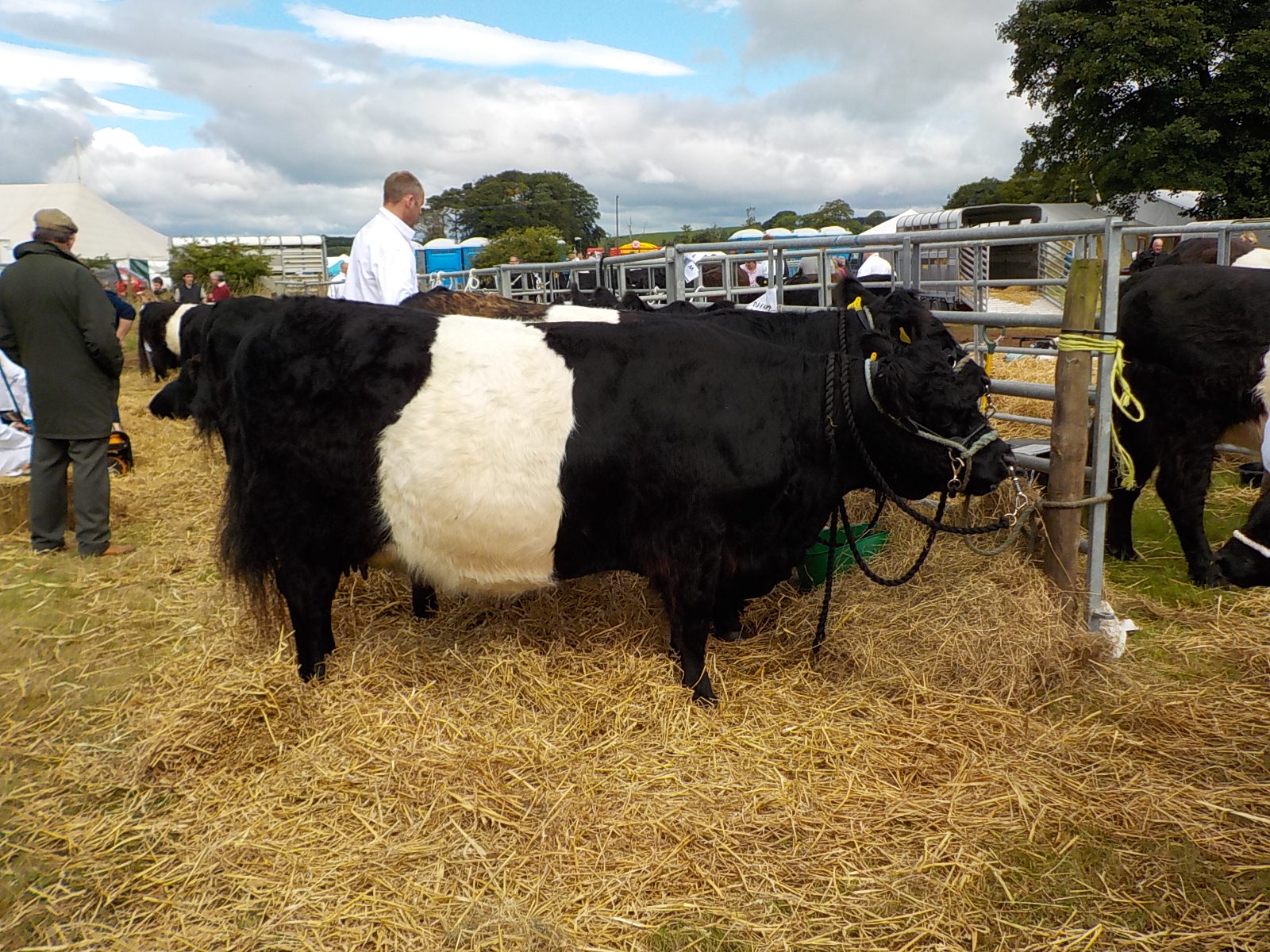
8.4.16 Stewartry Show-011A woman I spoke to said “Are you here for the congress?” “What congress?,” I asked. “The Galloway Cattle World Congress.” “Er, no, just visiting,” was my lame reply. Later I figured out that these animals are Belted Galloway cattle, one of the subjects of the world congress.


There were other huge animals on display.

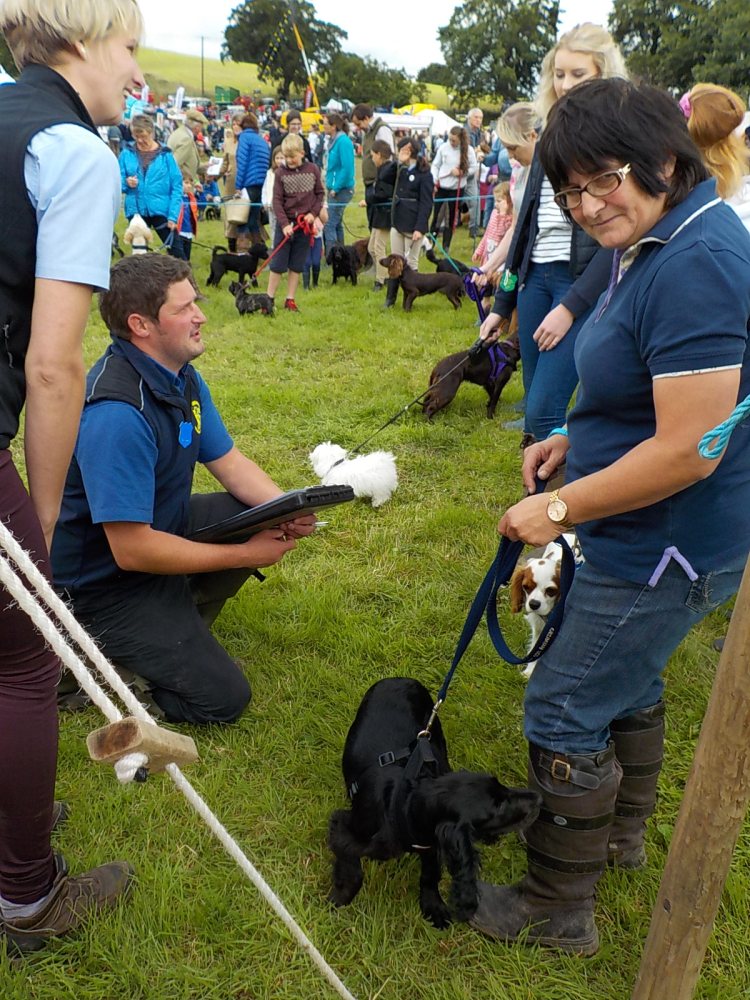
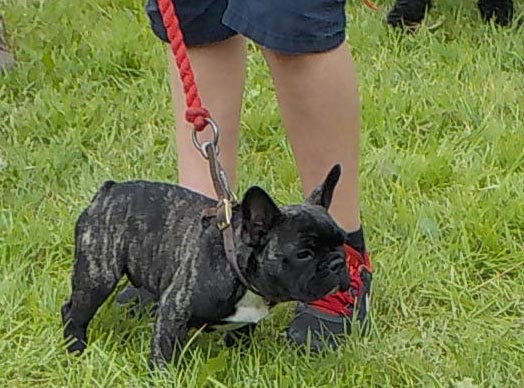
After touring booths of agricultural machinery, tents of crafts, flowers, carved walking sticks, and lots of food, we ended our day with the puppy judging. Too cute.

After our eager visit to the Stewartry show, we found out the Dumfries show is this weekend, followed by several others. We may have seen enough sheep in a single show to last all month.

Get in the car.

These may be the scariest words on the planet for someone approaching a right hand drive vehicle for the first time. The day before we left Edinburgh, with our rental car awaiting us in the morning, we took a driving lesson. One hour each behind the wheel with Michael, the most unflappable person I’ve ever met. We each had our hour of white-knuckle driving on the left hand side of the road, learning about merging, roundabouts (there are two kinds) and standard speed limits. We survived our lesson and went to the airport with trepidation. Some of the things that you immediately do wrong are to look the wrong way, attempt to enter a roundabout going the wrong direction, go to shift with your right hand and turn on your wipers instead (gears are on left). Then there’s driving too close on the left, and too close on the right, both at the same time!!! Roads are often narrow, I swear standard lanes are narrower than in the US.

I’d looked up historic sites on our route that would give us a break from driving. Our first stop was about 20 minutes down the road at Castlelaw Hill fort, just off the Edinburgh bypass. Not much of a surprise that we were already ready for a break.

7.31.16 Castelaw Hill Fort-009Even in blustery weather, the site was impressive, three rings of earthen embankments encircling the top of a hill, with occupation going back to the Iron Age, about 800 BC, and perhaps even earlier. There is also a subterranean chamber that may have been a hiding place, a storage space or ritual space. Called a “souterain,” similar rooms from medieval times hid priests after Catholicism was outlawed. (Author Erin Hart makes great use of a souterain in her mystery novel Haunted Ground.) It was a bit drippy crawling in and out of the underground room.

We moved on toward southern Scotland. Our next stop was Coulter Motte, a tiny flat-topped hill that used to hold a castle. There’s nothing left but the mound.

After this break, we got serious and headed for our destination, Aird Farm B&B in Crossmichael, near our new place in Dalbeattie. We move in tomorrow. The B&B is great, with bird feeders by the sitting room. We saw blue tits, great tits, a Great Spotted woodpecker and many of the usual suspects. https://i0.wp.com/www.psiloswildlifephotography.co.uk/birds/redleggedpartridgesm.jpg

On our drive out for dinner we spotted a red-legged partridge, a very weird dude. (The photo is not by me).


Dinner at the Kings Arms in Castle Douglas poring over the bird book.

It was great to be out of the car for a while, but tomorrow is move-in day including grocery shopping, so I’m going to have to get used to driving. We split the driving 50-50 so that we both learn how to do it. I still feel nauseous when I get into the car in the morning.


Good to know about Edinburgh

THE Festival

If you plan to attend the Edinburgh Festival, I can’t help you. We are leaving the city before it begins, in part because the cost of housing skyrockets and we can’t keep to our budget and stay in an apartment. Perhaps another year we’ll come for a Festival week and listen to lot of music, see a lot of theater and appreciate the scene.

However, I have advice on a few things for people planning to visit at other times.

Weather

7.25.16 Linlithgow Castle-045
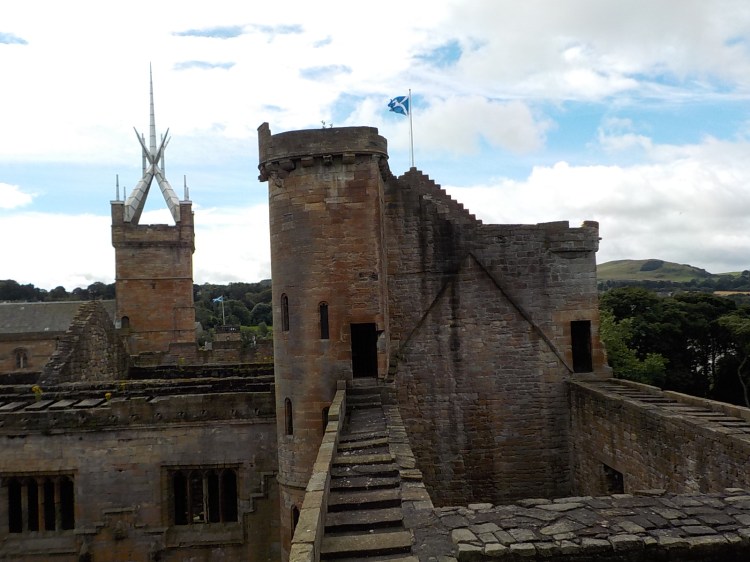
It rained most of the time we were at Linlithgow Castle.

Like everywhere else in Scotland, you can experience four seasons in a day. The sun may turn up early or late, the rain may pour before breakfast or after dinner–or in the middle of your plans. Be a good Scotsperson and ignore the fact that there is weather and keep going, or modify your plans enough to get out of the rain by going to a museum or a cafe. Either way, the weather will change soon enough. (Imagine you’re in Portland.) Wear waterproof shoes. Don’t go out without your raincoat.

Local Travel

7.19.16 Holyrood Palace-018
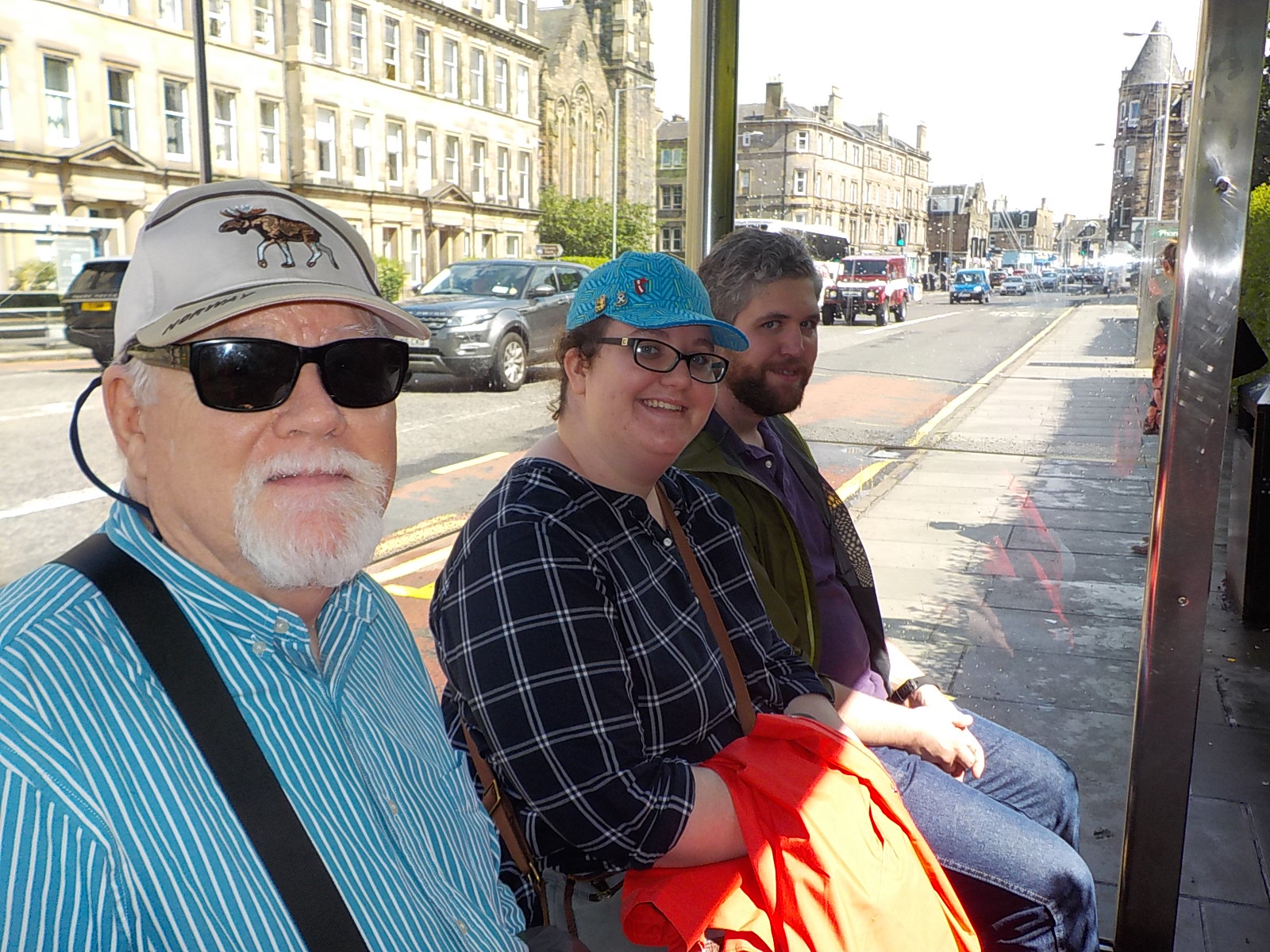
Waiting for the bus.

If you aren’t on an organized tour, consider purchasing a weekly (or monthly) bus pass. This year the first week is £21 and subsequent weeks £18. Additional weeks can be added in many corner shops (pay point), though to start you need to go to a Lothian Buses travelshop because they take your picture and put it on your card. A monthly pass is £57. Bus passes are especially helpful once you find out that there is no such thing as a bus transfer in Edinburgh, and you must pay £1.60 each time you board a bus. A bus pass includes tram service, and service to the airport by either bus or tram. It is not possible right now to purchase your bus pass at the airport, so even if you travel light, you have to pay £4 to get from the airport to the city on arrival (A taxi is about £20). Our bus passes are for Lothian buses, and that does not include every bus in the city. Sometimes you have to wait until your Lothian bus arrives. Overall, it’s been worth a lot. (I’ve rarely been tempted to call the bus line Loathsome buses.)

Visiting the Sights/Sites

If you are a fan of historic sights and sites, you might consider a membership in Historic Scotland. This gives you free admission to several of the major sites in the Edinburgh area, including Edinburgh, Stirling, and Linlithgow castles. You get a discount (20%) on admission to Holyrood Palace. Historic Scotland also manages many other sites throughout Scotland, many do not charge admission. I’ve taken advantage of their booklet to identify interesting lesser-known places to visit.

Outdoors–Gardens and Walks

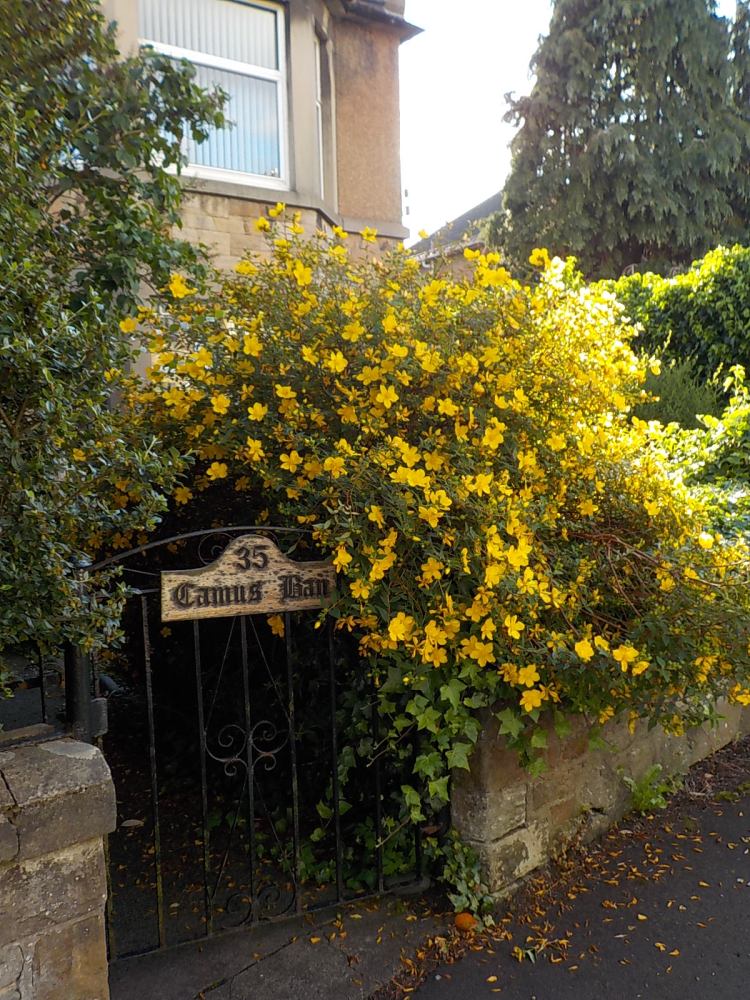
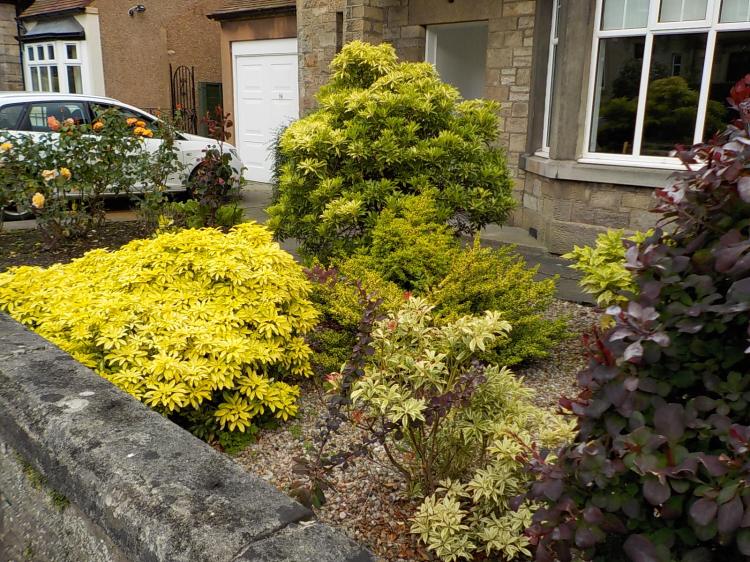
Edinburgh is full of wonderful gardens and gardening. Often a small front garden is beautifully arranged with beds and pots of plants.

There are wonderful walks throughout Edinburgh. Several paths climb Arthur’s Seat and the Salisbury Crags in Holyrood Park. Walking through Princes Street Gardens is lovely and there are more paths around St. Cuthbert’s church at the west end of the garden. There is a trail along the Water of Leith (see my post on the Modern Art museum) that you can follow for miles. Just because you are in the city doesn’t mean the outdoors isn’t nearby. Also, you can get to the beach on the bus. My only caveat: we saw very few birds in the city itself.

Food

We rarely eat out, but had an excellent dinner at Field, a tiny restaurant near the university. Make a reservation, because it seats 26 if every seat is filled.

Outside Edinburgh

Both the train (Scotrail) and buses go from Edinburgh to Glasgow (and other cities). There are websites for each and a variety of options. Train travel is reliable as well as a bit faster and a bit more comfortable than the bus. It costs slightly more.

A Last Word

We left Edinburgh with many places still to visit. Small museums, historic houses, even Building 2 of the Modern Art Museum (Building 1 took all our time on our first visit). Living in the city full time may not be for me, as I enjoyed our walks along paths as much as the big attractions. Who can resist a street called Ravelston Dykes? Or a path that looks like deep woods but actually circles a private school and takes you to Sainsbury’s (grocery store)?


Other fun in Edinburgh, ancient and modern

Some of the places we’ve visited and things we’ve seen in Edinburgh haven’t fit in to my comments until now. By joining Historic Scotland, we were able to visit Edinburgh Castle multiple times, Linlithgow Castle and there are 75 sites they manage. Not all have admission fees, and I enjoyed visiting one of these that was just down the road from our flat, in Corstorphine.

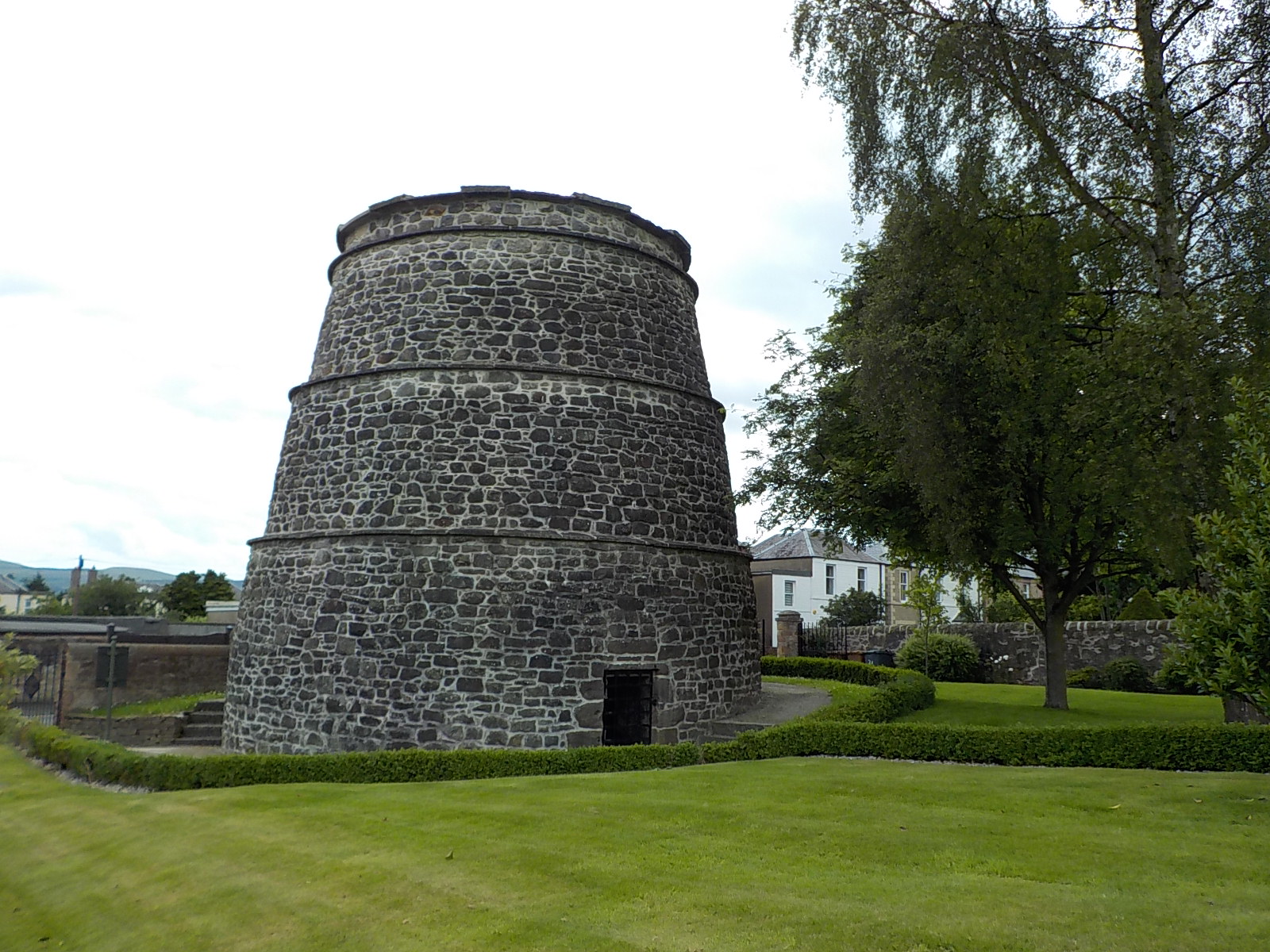
The low hedge marks the historic site from the front yard, and divides the two front yard from each other.

Once a village, now a neighborhood within Edinburgh, Corstorphine was part of lands belonging to the Forrester family. Corstorphine Castle lasted from the 14th to the 18th century, but is now gone. The only remaining structure of the estate is a dovecote, built of stone with about 1000 nesting boxes.

I visited this dovecote, and found it sitting in two adjacent front yards that neatly curve around halves of the structure. An informational sign suggests the structure avoided being demolished because of a local myth that anyone destroying a dovecote would be cursed.

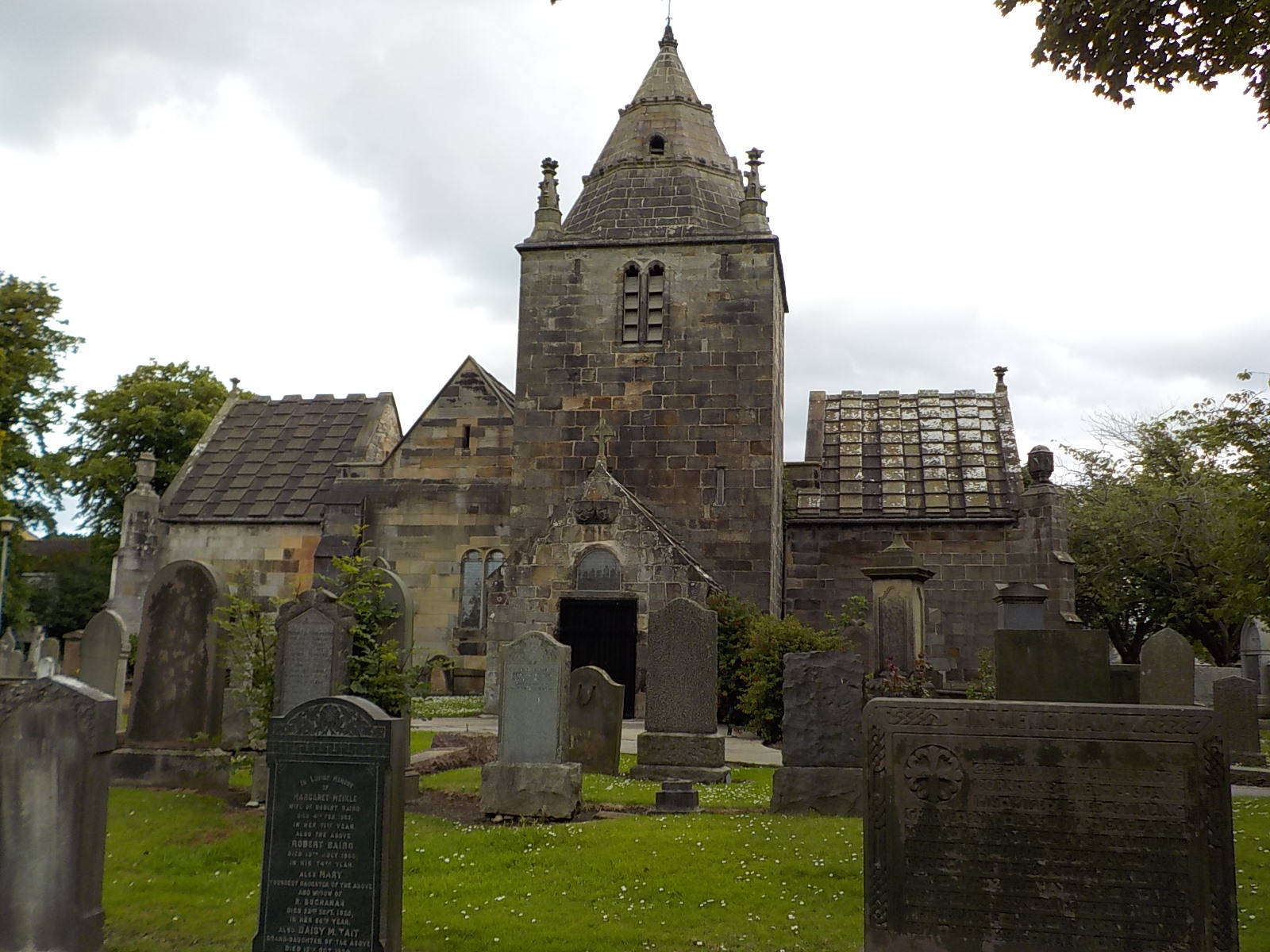
7.6.16 Corstorphine-004After making my brief tour, I returned to the bus stop via the Corstorphine Old Parish Church and churchyard. The oldest part of the church dates to 1429 (Unbelievable!) The historic documentation of some structures is impressive. There are records of who owned and built what building by dates in the 1200s. As a resident of the New World, I am amazed.

Without entering a museum in Edinburgh you can see historic symbols.

7.8.16 with Kathleen Renk-007

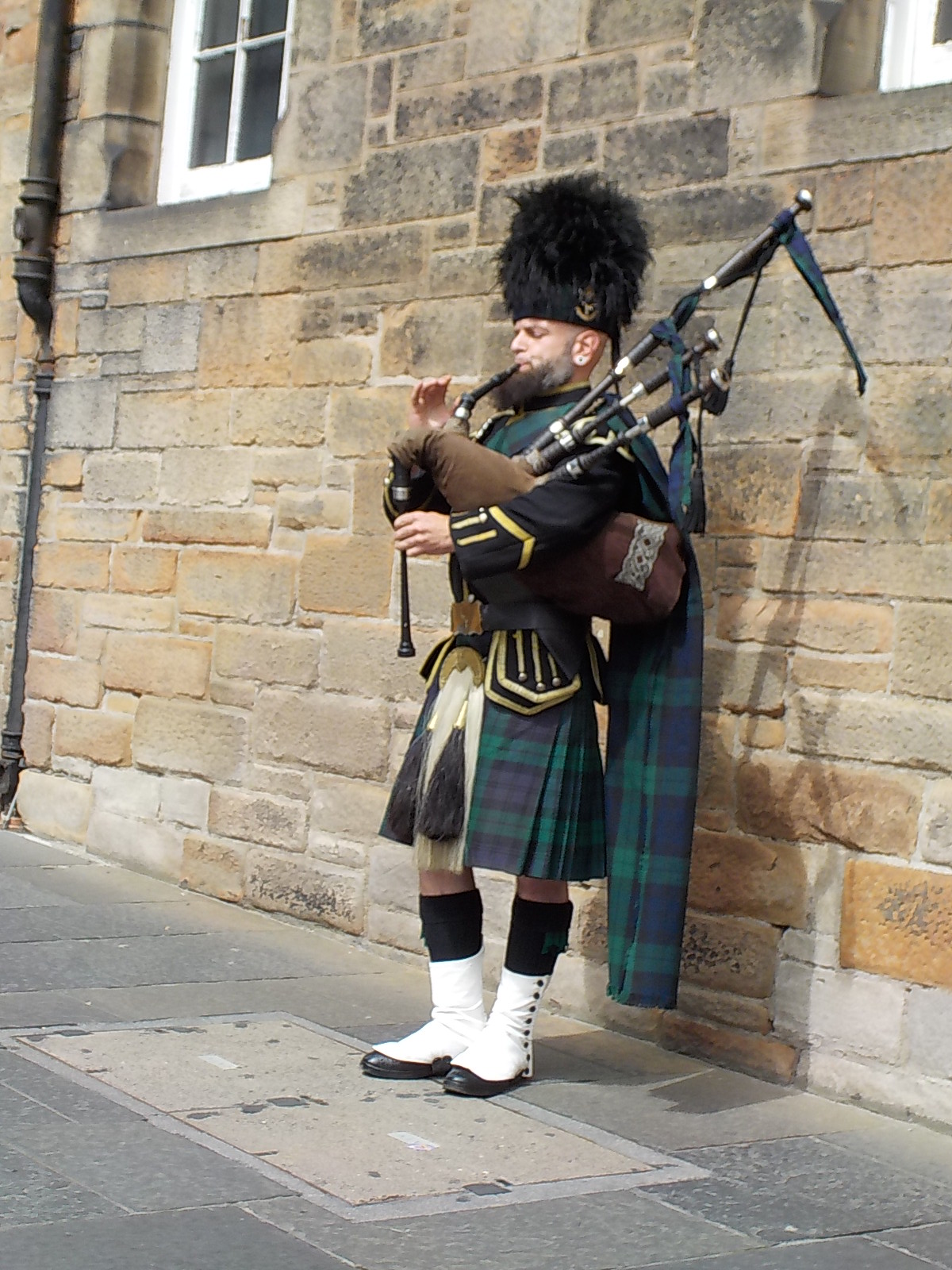
We also saw lots of entertainment in the street. My favorite busker is the bagpiper in Highland dress, though there was also a jazz bagpiper. 7.14.16 Jazz piper


7.8.16 with Kathleen Renk-009


Sometimes it was not clear what was going on, as with the drum group on the steps of the National Museum of Scotland. The drumming was great.


The parade for the opening of the Edinburgh Jazz Festival that precedes the overall Edinburgh Festival, was also full of character.

This slideshow requires JavaScript.

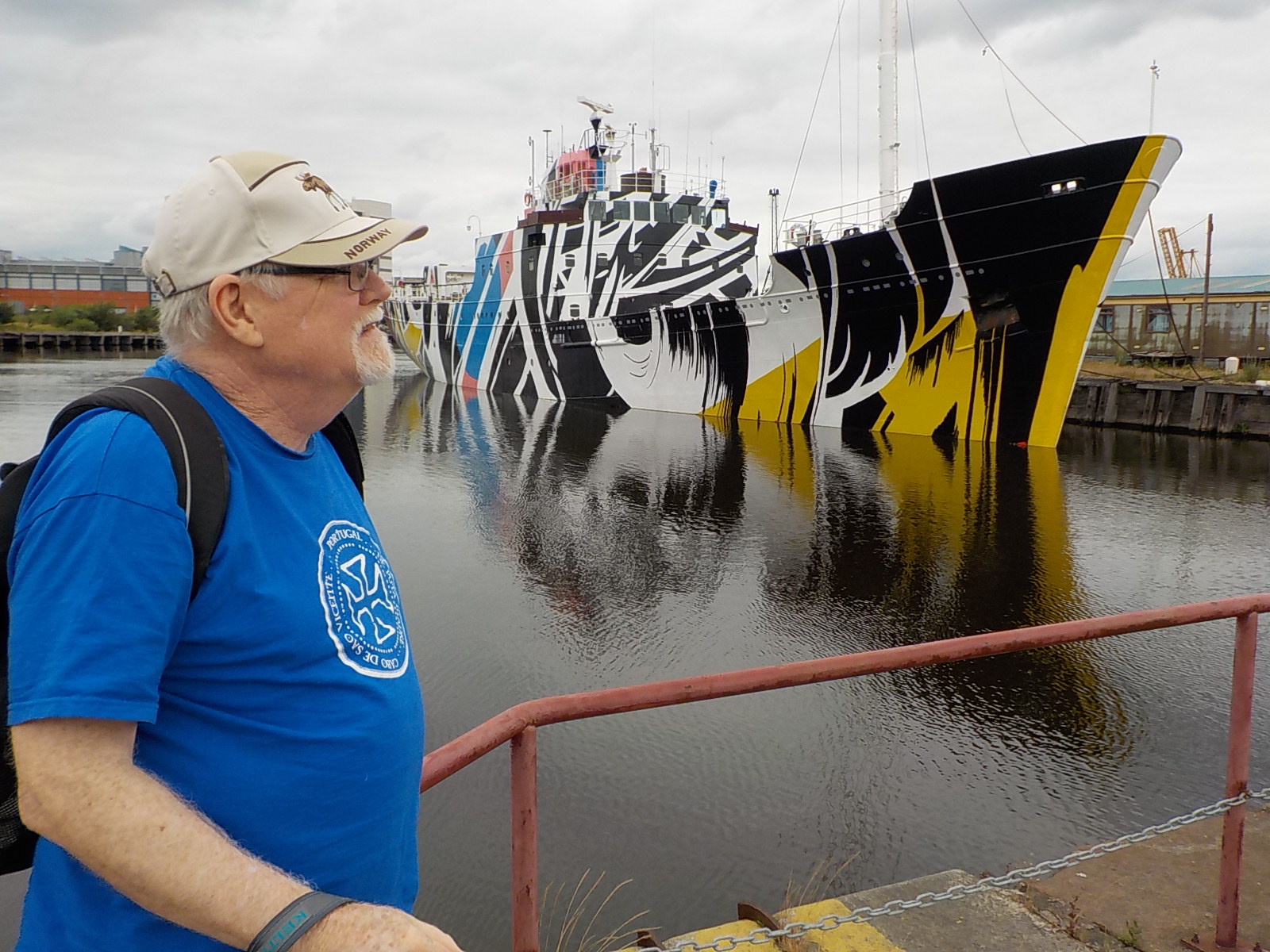
The most unusual site we visited was the Dazzle Ship at the Prince of Wales Dock in Leith. A combination of history and art, the MV Fingal was repainted by artist Ciara Phillips as a tribute to the “dazzle” ship painting used during WWI. 7.24.16 Leith-003The original idea was not to disguise ships but to distract and confuse anyone viewing them through a telescope. Sadly, there is no evidence that the system worked at all, but the resulting ships were a distinctive landmark of the war. At least 2000 ships were painted in this way in Several ships have been “dazzled” by artists as part of a project sponsored by a number of UK institutions as part of this year’s centenary commemoration of WWI.

7.24.16 Leith-006verThe Fingal was a supply ship of the Northern Lighthouse Board, built in 1963, to ply the coast of Scotland and later the Orkneys, resupplying remote towns and lighthouses until 2000. Now owned by the Royal Yacht Brittania Trust (the Fingal is docked just around the corner from the former royal yacht), the Fingal is scheduled to become luxury hotel accommodations in 2018. Really?


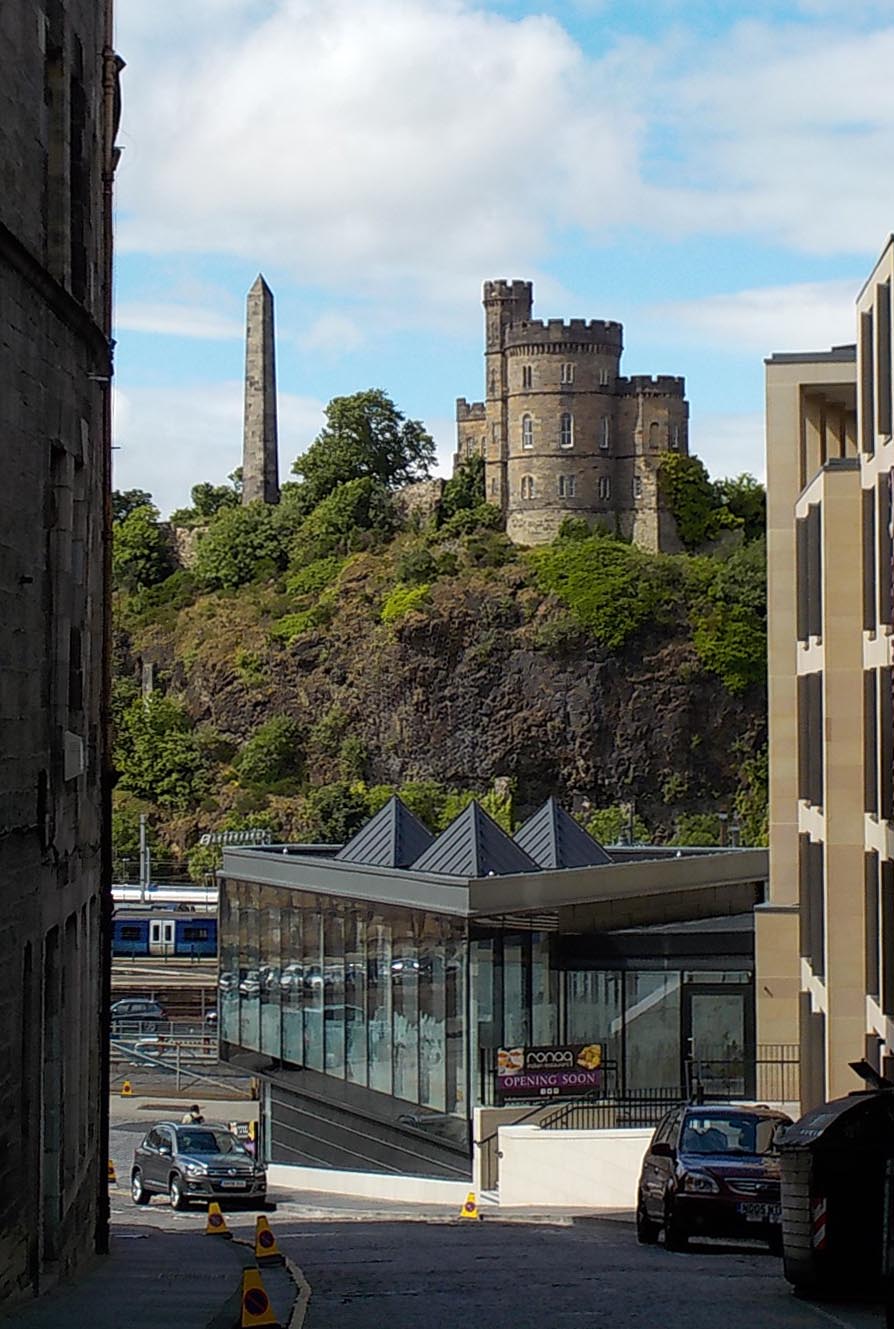
Calton Hill

7.3.16 Edinburgh Royal Mile-012sm

From many places around Edinburgh, you can see monuments on Calton Hill. Here is what you see from the Old Town. It’s a very romantic view.


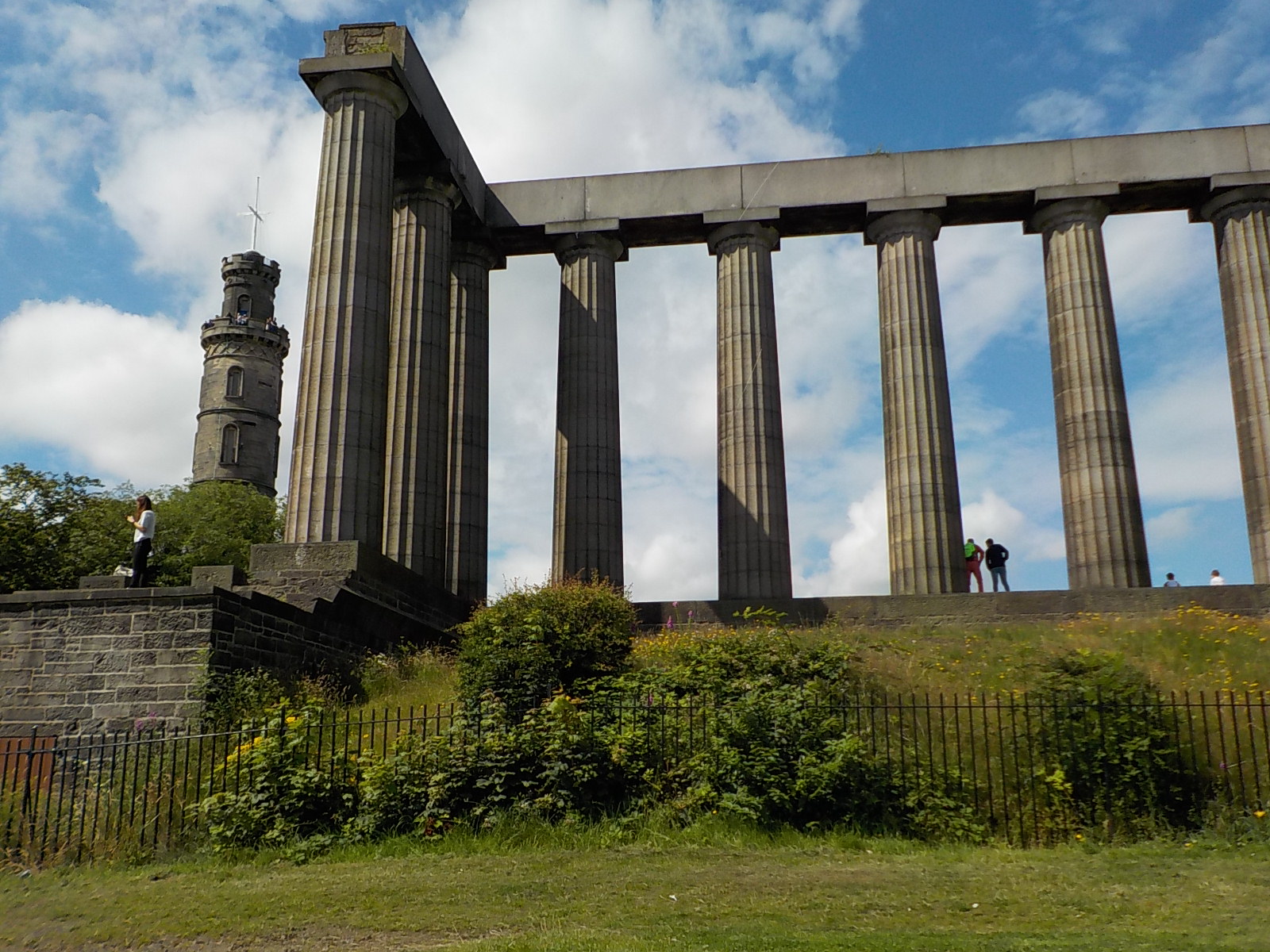
There is a tower, a dome or two, and even some Grecian columns, a failed effort to duplicate the Parthenon in Edinburgh.

7.29.16 Calton Hill-004

During the Scottish Enlightement (18th century), the city called itself the Athens of the North, and the structure is officially the National Monument of Scotland (also, Edinburgh’s Disgrace, as it was never completed).


A stroll up Calton Hill seemed like pleasant walking, little did we know that it is full of monuments.

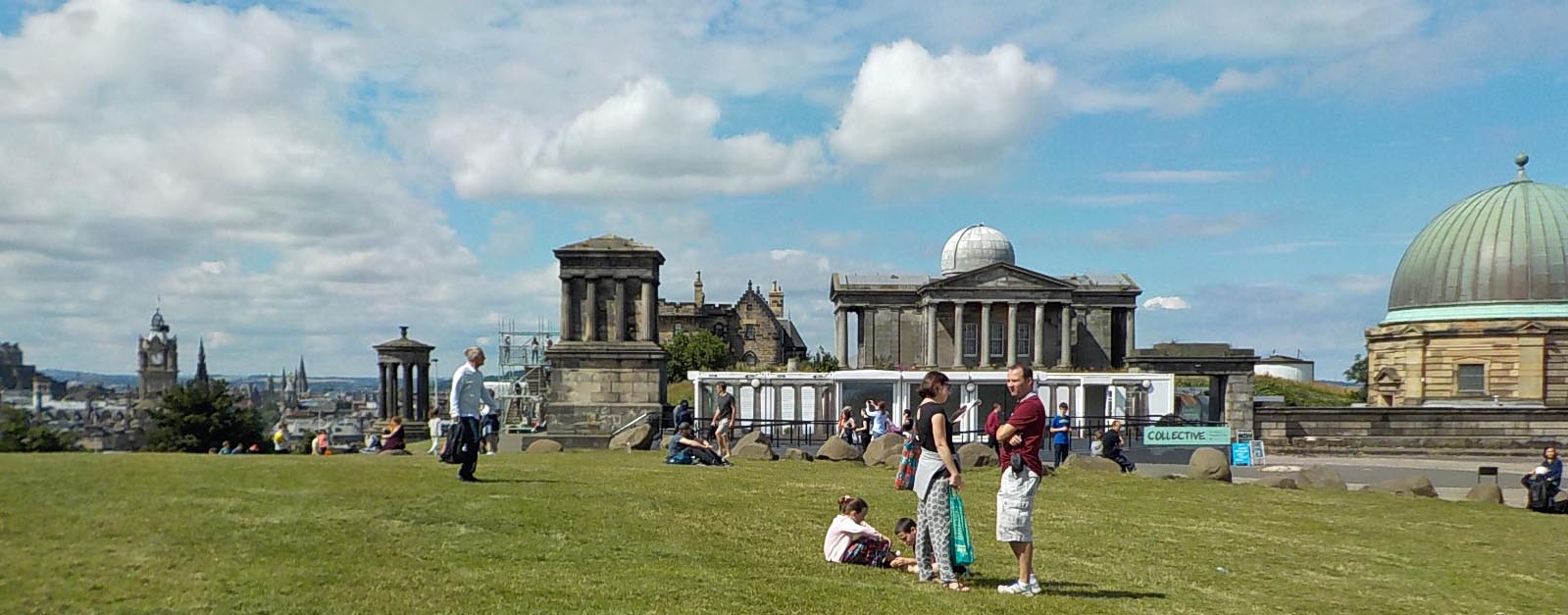
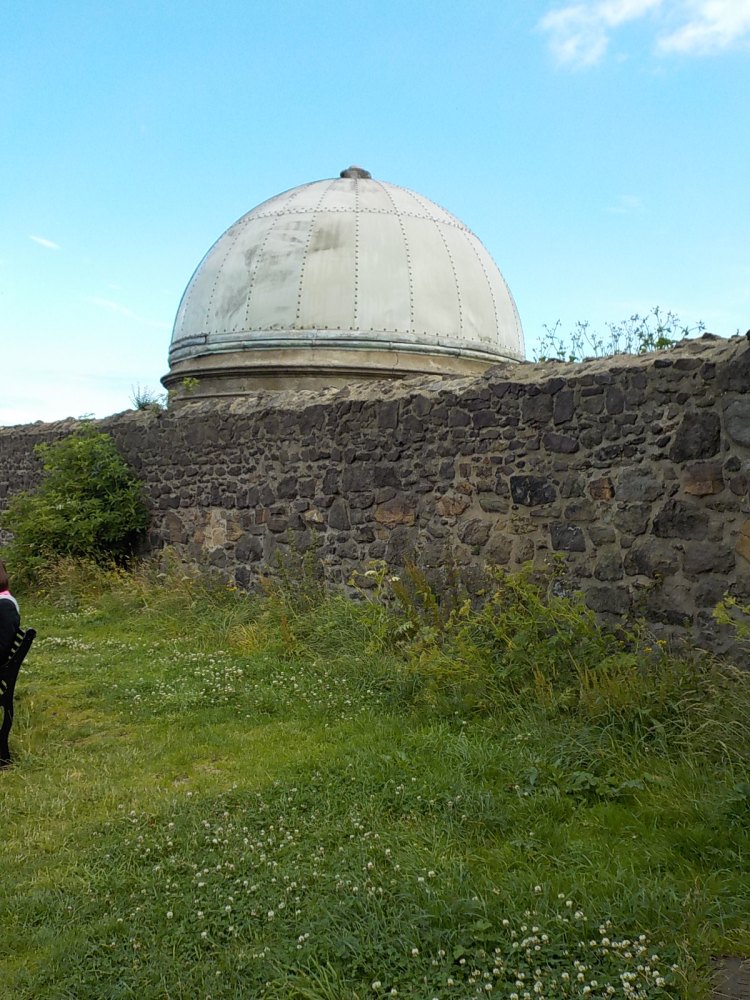
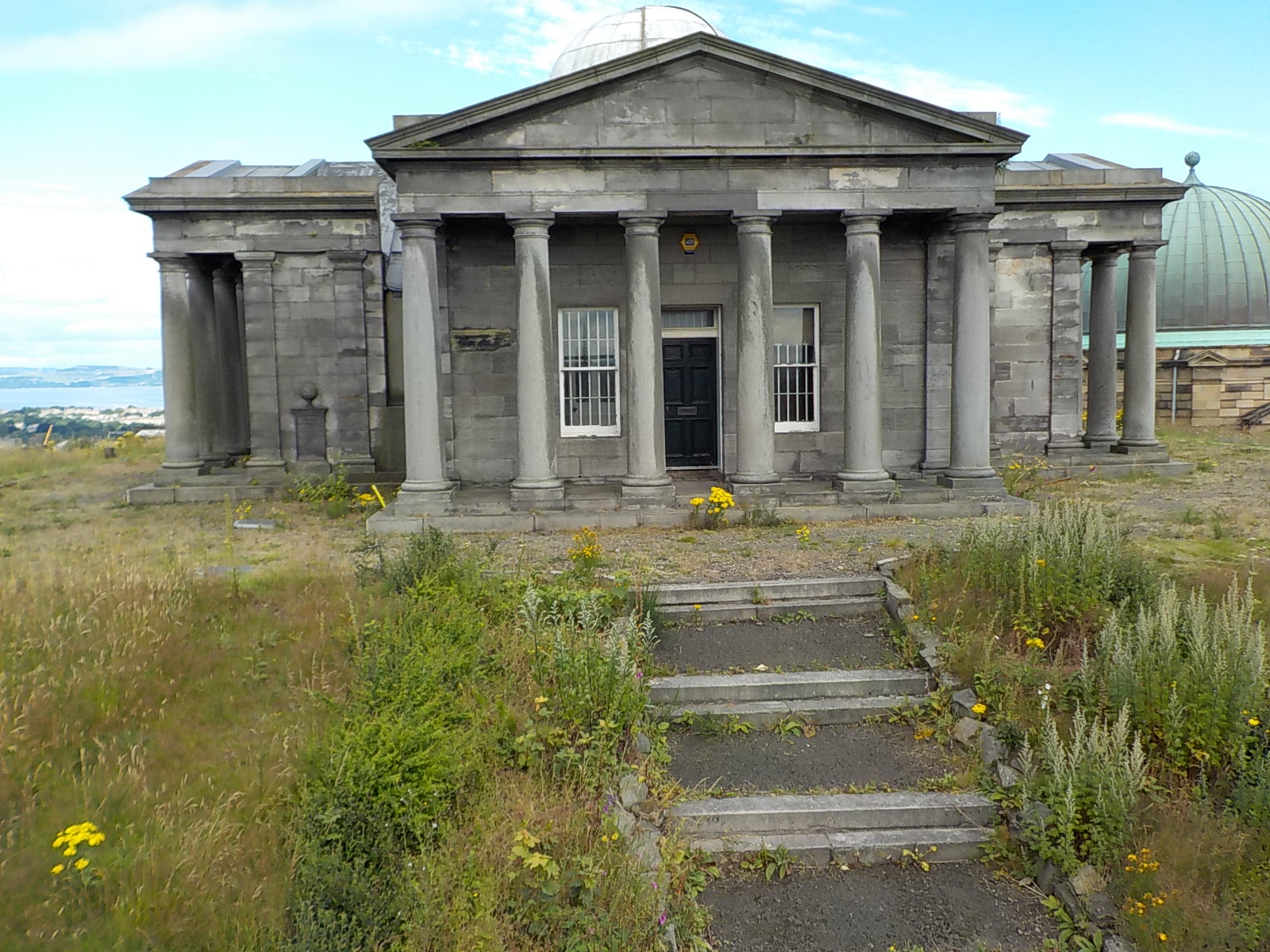
7.29.16 Calton Hill-003smAt the top, we could see not only the Parthenon, but all kinds of other buildings. It reminded me of being at a World’s Fair. Lots of other people, including a tour group from Spain, were enjoying the day with us. Jonathan practiced his hobby of offering to take group photos for people. He had lots of takers. In addition to the Parthenon, there is the Edinburgh Astronomy Society observatory and at least one other dome.

An art collective is renovating the old city observatory property as an art center. It’s very promising that their first act on the way to raising funds and planning what to do was to put up scaffolding so that visitors can see over the wall into the observatory grounds. Apparently, that has never been possible before.

7.29.16 Calton Hill-018 There’s nothing inside except the overgrown lawn and the same building you can see from outside, but it is fun to see “inside”.

7.29.16 Calton Hill-023In addition to the monuments, on Calton Hill is the only surviving private home built by James Craig, original architect of New Town Edinburgh. This home, Observatory House, was briefly the city observatory, then provided housing to astronomers using the nearby observatory designed by Wm. Henry Playfair, another esteemed Scottish architect. Today Observatory House is being renovated for rental as a luxury vacation spot—the only lodging on Calton Hill.

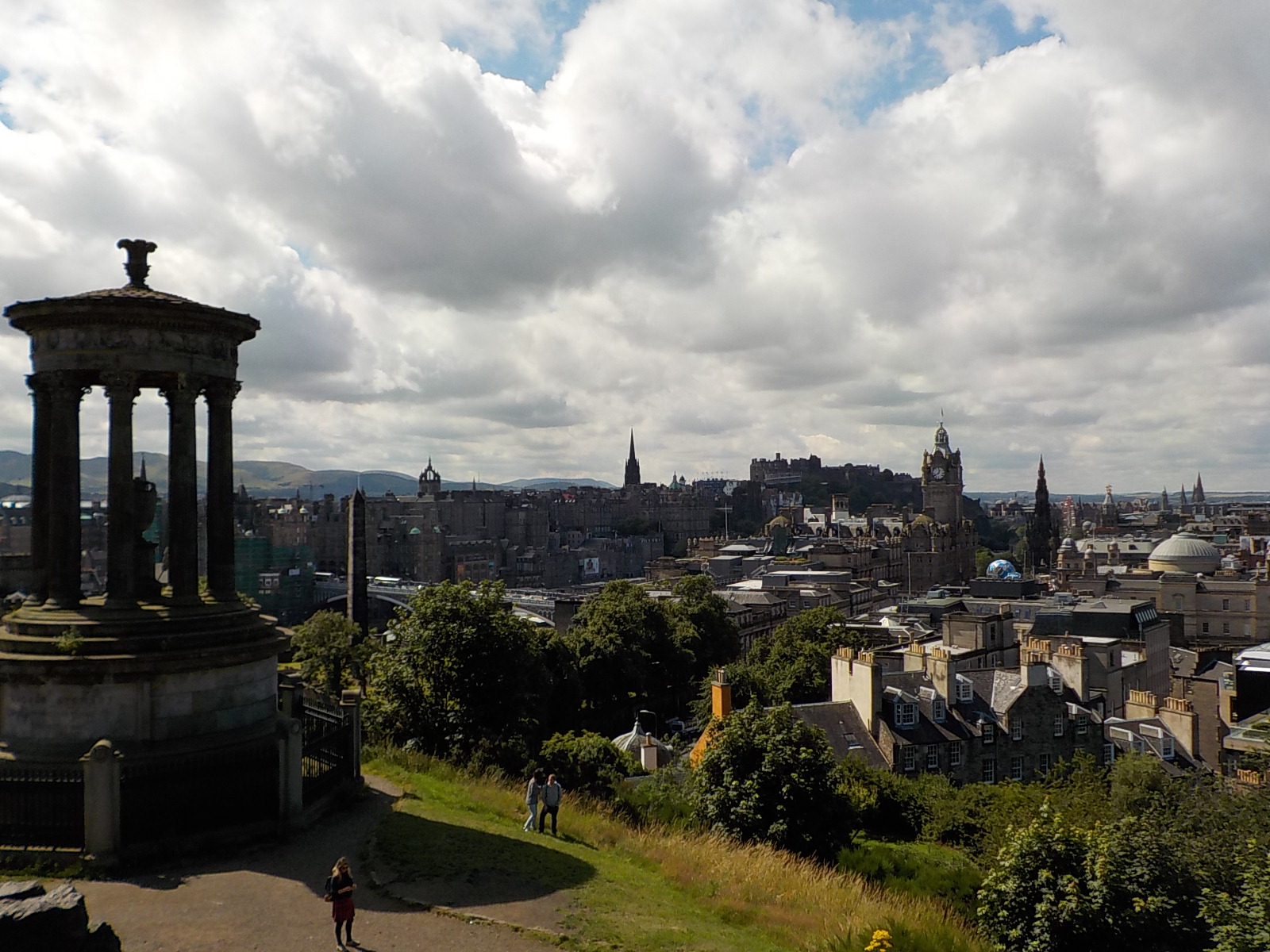
Looking outward from Calton is a panorama of Edinburgh. On the left is Holyrood Palace and behind it is Arthur’s Seat in Holyrood Park. On the right, you can see the Salisbury Crags with the new Scottish Parliament (the hedgehog building is part of it).

Turn to the right and you see the Dugald Stewart monument with Old Town Edinburgh beyond, marked by the crown steeple of St. Giles Cathedral and many other steeples.

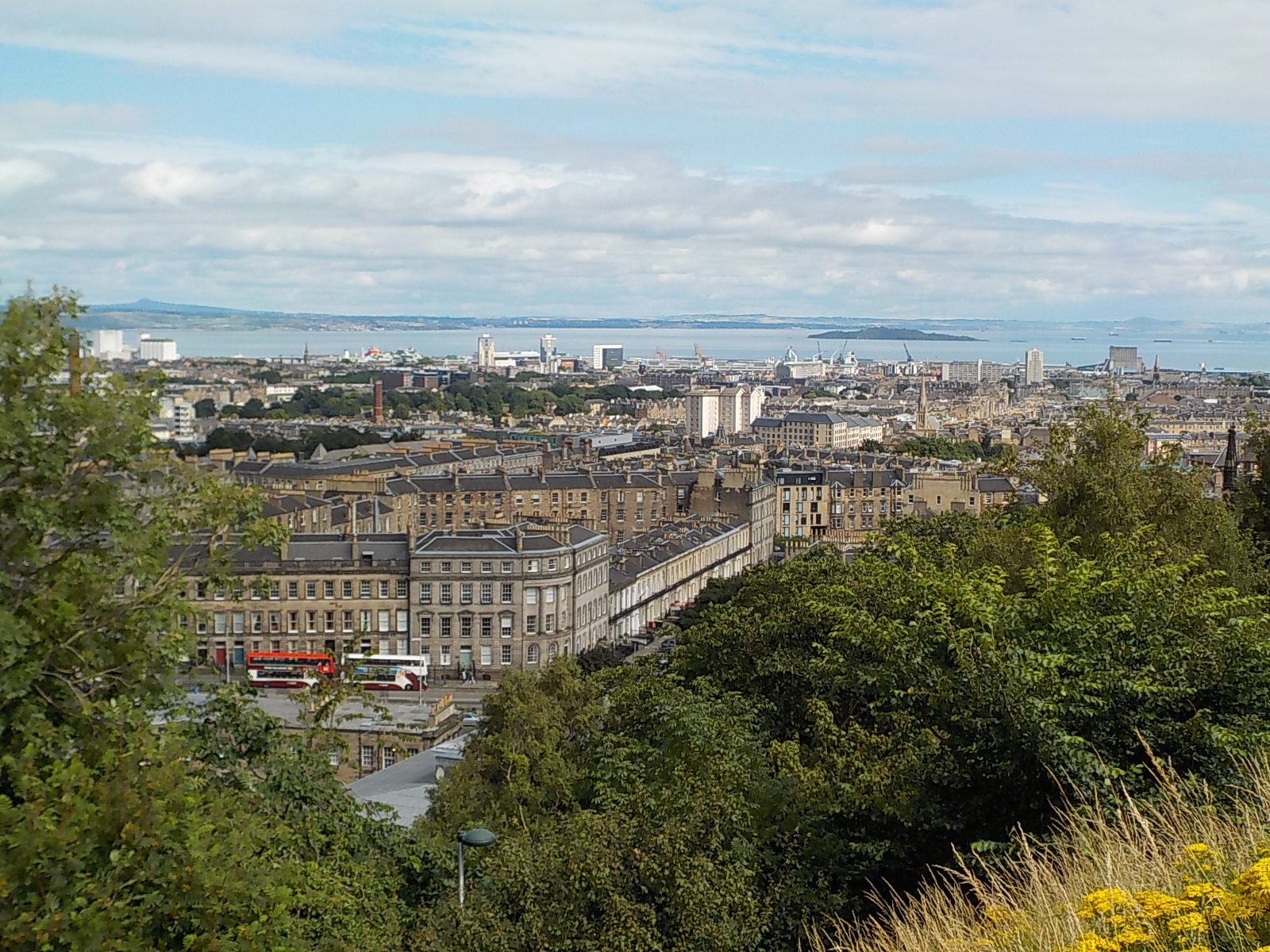
7.29.16 Calton Hill-020 7.29.16 Calton Hill-002Turning again offers New Town, where you can see neat rows of stone houses. Beyond New Town is Leith, the docks and waterfront of the Firth of Forth, with Inchkeith island  in the distance.


With that you’ve completed a 360º tour of Edinburgh, all from Calton Hill.

So many castles,

In the Edinburgh area, there are so many castles and palaces that are on the “must-see” list that it would take a solid week to see them all. Over the past month, we’ve visited Edinburgh Castle, Holyrood Palace, Linlithgow Castle and Rosslyn Chapel, and have passed up visiting the others. I’ve already mentioned Edinburgh Castle, and the most memorable aspect of Holyrood is that the Queen still stays there periodically. Of the interior, I only remember that we passed a beautiful figured granite table. The ruins are impressive, and the archaeological remains of Holyrood Abbey are clearly marked in the sod behind the ruins of a later abbey. The sequence of Palace, ruined abbey and archaeological remain of the older abbey are visually impressive.

7.19.16 Holyrood Palace-001


All of Holyrood Park extends beyond the castle as far as Arthur’s Seat, a beautiful setting.

We managed to stay out of the rain during our visit.

The chevrons on the archway below show that it dates to Norman times, possibly around 1128 when the Augustinian Holyrood Abbey was founded.

7.19.16 Holyrood Palace-016a


Next up in our castle itinerary was Linlithgow. It’s not far from Edinburgh, most easily accessible by train. Crossing the village to the castle is only a short walk and it is a postcard-pretty place.

7.25.16 Linlithgow Castle-005The village and the ruined castle are full of interesting details like the elaborate well in the photo above.

This slideshow requires JavaScript.

We enjoyed the ruins more than we would probably have enjoyed another set of furnished rooms. Plus, it seems that you’re never allowed to photograph restored interiors. There is a spacious park and a small loch by Linlithgow. The walk around the park is about 5 miles, and would be perfect on a warm day. We were dodging showers of rain and contented ourselves with a short walk along the loch and tea in the town.

There is a bit of controversy in Linlithgow. The church was first constructed in 1242, and after many changes, the crown spire (similar to that on St. Giles in Edinburgh) was dismantled for fear of its collapse. The spire was replaced in 1964 with a contemporary aluminum steeple that some say is out of character with the village and castle.

We didn’t make it to Stirling Castle. As they say, “So many castles, so little time.”

I did make the trip out to Rosslyn Chapel, partly in homage to the DaVinci Code by Dan Brown, and partly to see the chapel’s rightly famous detailed stonework.

7.26.16 Rosslyn ChapelOnce again, the restored interior cannot be photographed and the postcards don’t do it justice. The carving is really, really intricate, beyond all reason or prudence, which is what makes it so much fun to look at. There are lots of “Green Man” carvings peeking out from under a leaf or chewing on a stem, alongside pillars carved with twisting designs or detailed flowers. Carved projections line the stone ribs of the chapel ceiling. It’s a fantasy, with no surviving plans. Built by William Sinclair, 1st Earl of Caithness, the meticulous stonework required 40 years of work, and the overall project ended at the death of the Earl. His intention had been to complete a much larger church. We can enjoy what he was able to accomplish.

Restoration of the chapel from a ruin took place a couple of times during the 1900s, most recently in 1995. The movie of the DaVinci Code may have saved the chapel from long term ruin by increasing the number of visitors. Now thoroughly restored, the chapel is in good condition for now. It’s difficult to predict what will happen over centuries.

This slideshow requires JavaScript.

The trip to Rosslyn Chapel highlighted the good and bad of a weekly/monthly bus pass. Yes, travel to Rosslyn was included on my bus pass. No, it wasn’t rapid, taking almost an hour, well, maybe a bit more than an hour each way. The village of Roslin is only 6 miles south of central Edinburgh. Buses are reliable, but not fast.

One Spectacular Day

The weather was absolutely perfect. The sky was clear and bright blue and the sun shone. We walked on a path along the Water of Leith, a stream really, to get to the Scottish National Gallery of Modern Art. The entrance was inviting. Can you believe we’re in the middle of the city?

The exhibit on Surrealism was so good that you didn’t have to have any particular interest in the topic to enjoy the art, the explanations, the description of the three particular collectors whose donations have made Edinburgh’s collections on Surrealism one of the world’s finest.

The permanent collection includes Scottish artists and other works, though we were most attracted to the sculpture on the lawn, itself sculpted into a piece of landscape art. Signs indicate that you are allowed to walk on the sculpture. There is a somewhat arty play area for kids. It’s a very welcoming museum. There’s even some sculpture by women.

Conversation with Magic Stones              by Barbara Hepworth. It looks archaeological.

At the end of the day, the sun still shone, but the wind picked up and blew clouds fast across the sky, the air cooled and I could feel the cold on my cheeks. We’d had a day of all-out, full on summer, and yet I could already feel autumn in the air. Yes, there was one hot day two weeks ago–but that would make summer have lasted two days in total, if clouds and rain don’t count. That may be it for summer in Scotland.

Edinburgh: Men on plinths

This slideshow requires JavaScript.

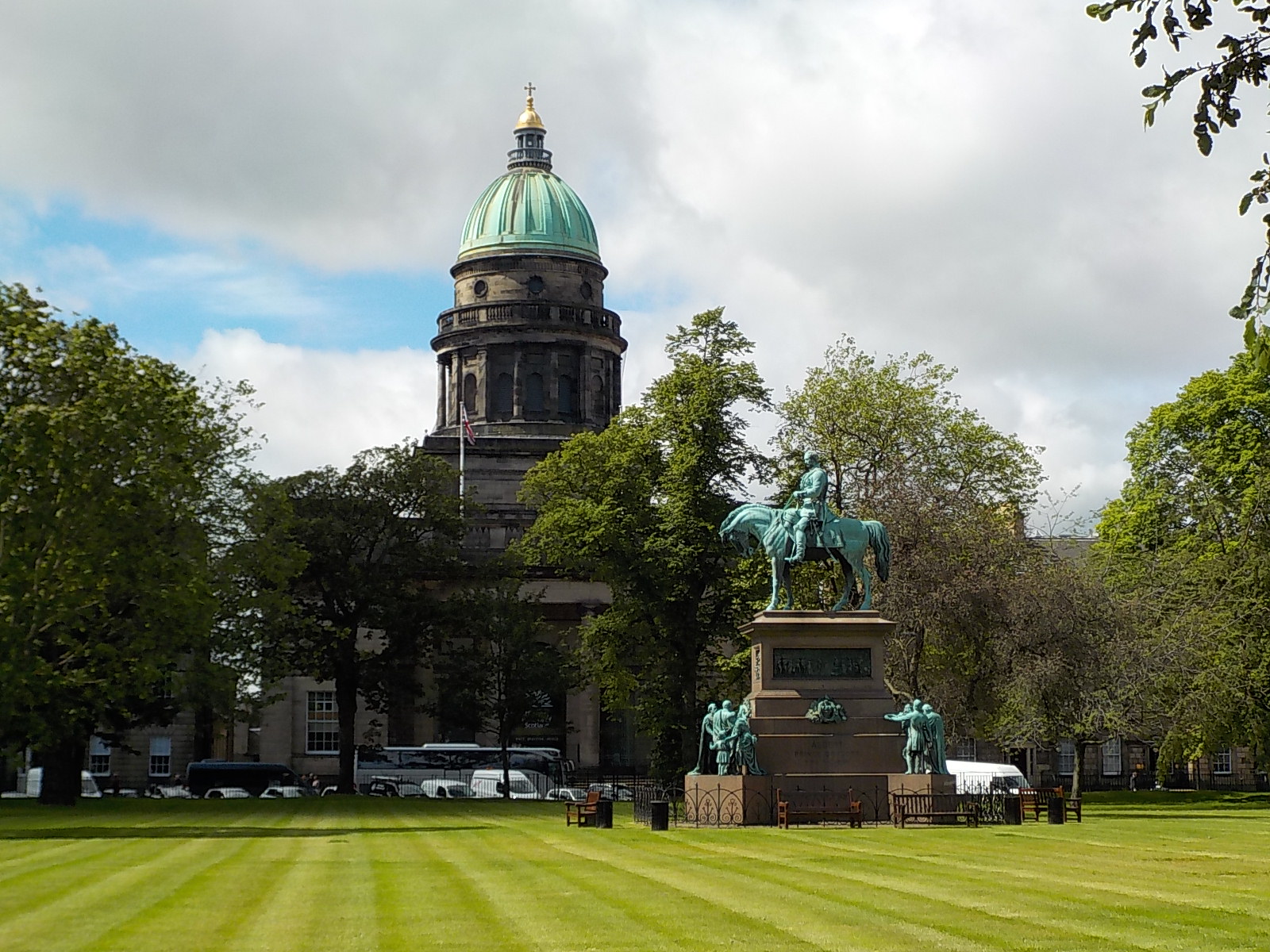
Yes, there is a statue of Queen Victoria that dominates all of Princes Street from its perch on top of the Scottish National Academy. However, the rest of Edinburgh hosts an unusual number of life-size or larger statues of men. Some of the figures are more recognizable than others.

August 16, 2016

It turns out that men on plinths is not just an Edinburgh phenomenon.

8.6.16 Dumfries-001But surprise!, it’s Robert Burns (again).

In southern Scotland, animals are an alternative to men.

Kelpies are malevolant water spirits in Scottish mythology that are impossible to tame, but if caught, have the power of ten horses. This story was recast by artist Andy Scott as two monumental horse heads 30 ft high that now stand by a canal in Falkirk, Scotland. The figures have become so popular that a pair travel around Scotland, spending time in many communities. This summer a pair of kelpies is in Kirkudbright, near us.

Become your favorite character for a day in Edinburgh

As readers of Alexander McCall Smith and Ian Rankin, each of whom set their stories in and around Edinburgh, it was easy to find landmarks that relate to the work of both authors.

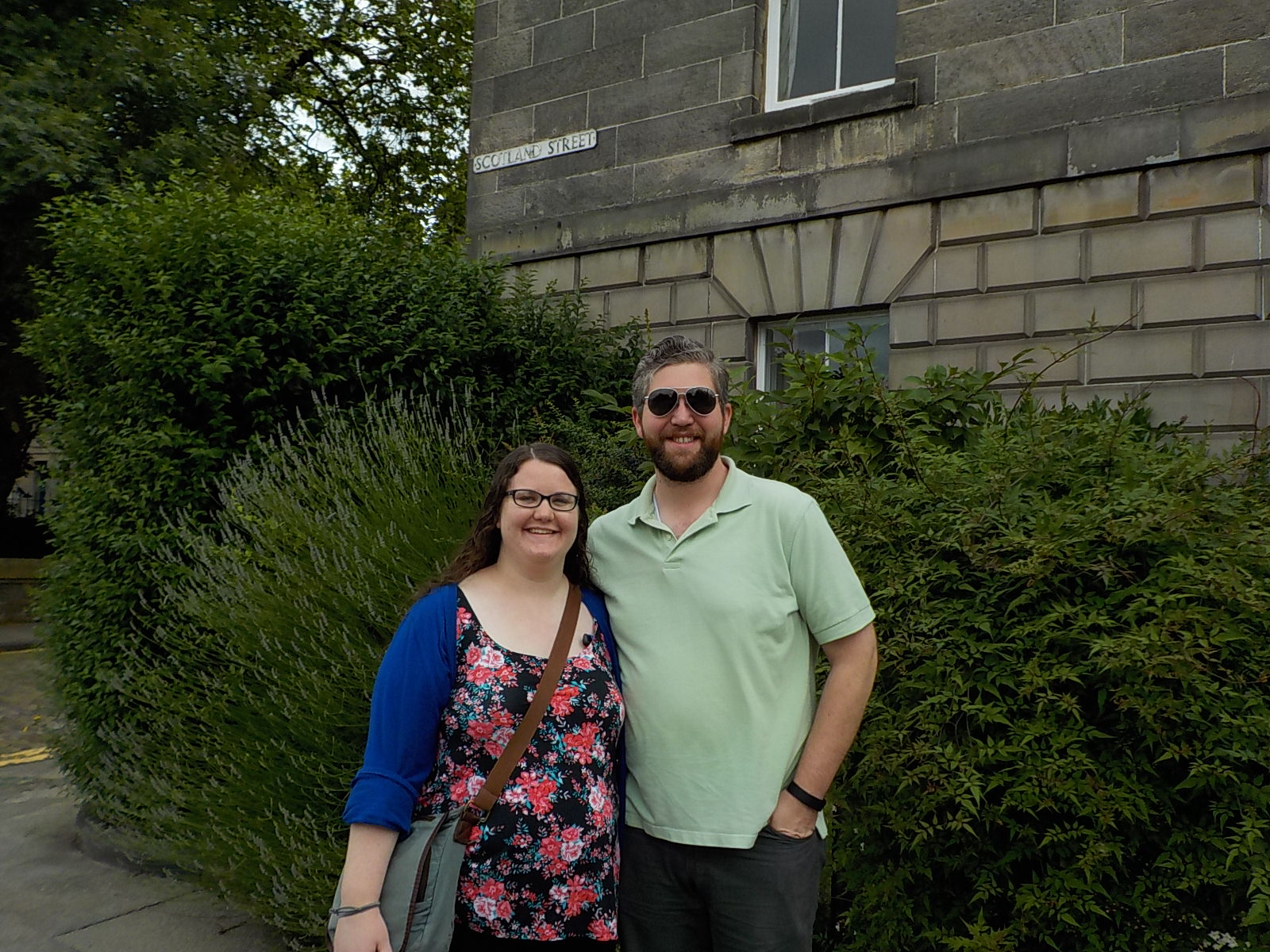
7.18.16 AMS tourIn the background of the photo you see here is the street sign for Scotland Street. (There is no number 44). The series               44 Scotland Street recounts the goings-on of the people who live at that address. I think Lillian’s favorite is Bertie, the precocious, saxophone-playing little boy.


Thanks to a quiz app on Lillian’s cell phone, we had a pleasant introduction to the New Town and the landmarks used in the books. It was a bit surreal to find there really is a “Flotarium” (sensory deprivation tanks in which you float in salt water in the dark). The Cafe St. Honore is a couple of turns off a main street, with a charming facade.

https://llywindatravels.com/wp-content/uploads/2016/07/7d391-dsc_8683.jpg


The photo is from the restaurant’s web page.


We passed the Queen Street Gardens, which unlike the gardens along Princes Street, are private, behind locked gates.
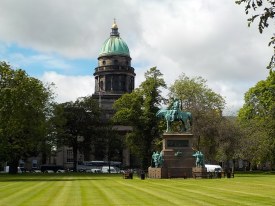
7.18.16 AMS tour-005This made it a bit difficult to answer one of the questions on our tour app, (the inscription associated with this statue), but never mind. I’m sure there is some historic explanation, though I don’t much like the fact that a very extensive garden covers several downtown blocks yet is not open to visitors. Blog post discussion of Edinburgh’s private parks:

Edinburgh’s private parks–David Hill (The New Town Flaneur blog)
7.18.16 AMS tour-003

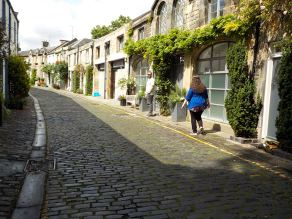
New Town is called a masterwork of city planning, though it almost seems overly spacious to me. We found lovely neighborhoods in addition to the long streets of Georgian stone houses. I think I’d prefer a cozy mews to a stately home.


7.22.16 New Town-001


A true manifestation of “location, location, location” are the apartments that are two stories below street level. You’ve heard of a walk-up. How about a walk-down?

7.18.16 AMS tour-009


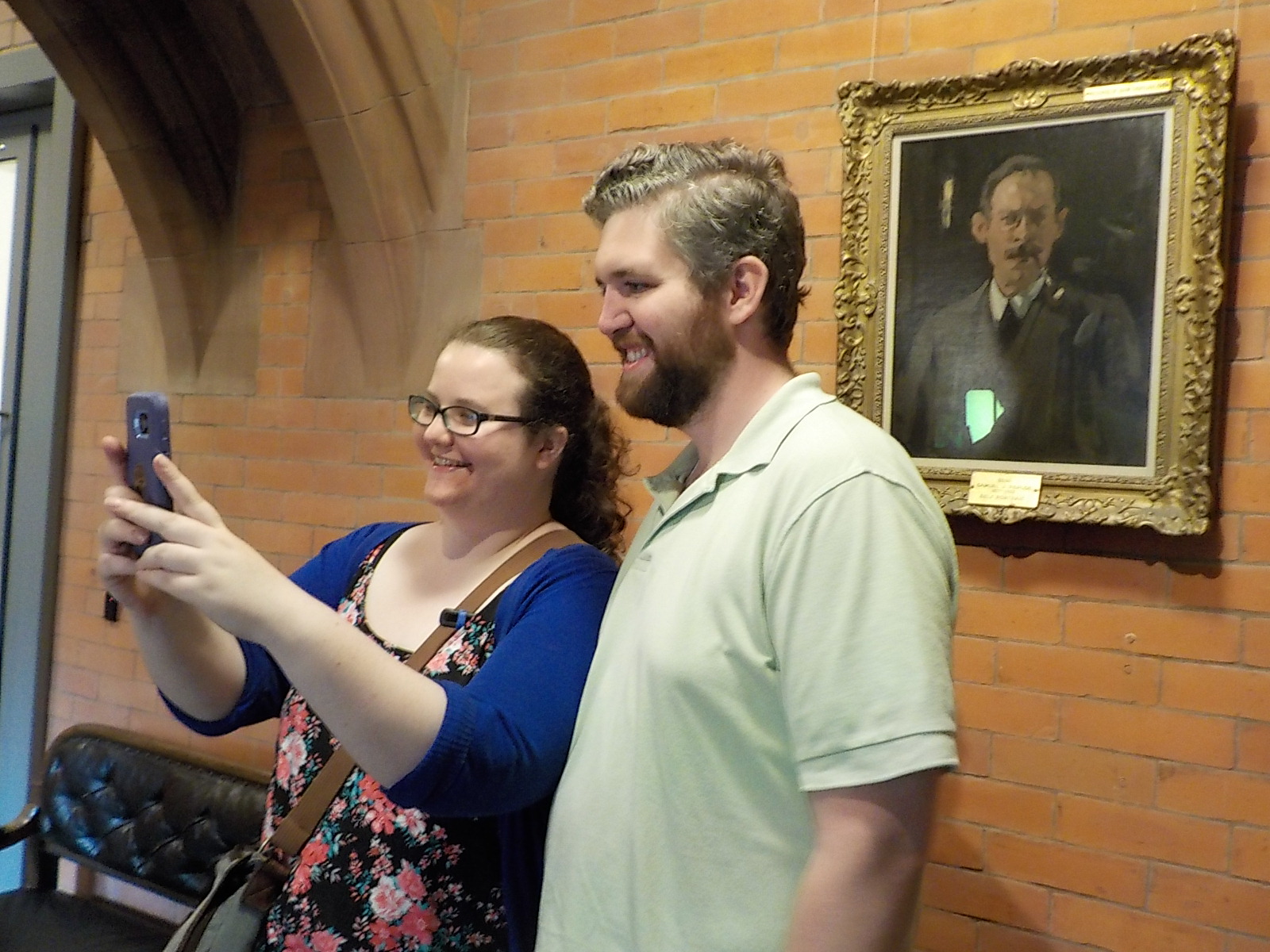
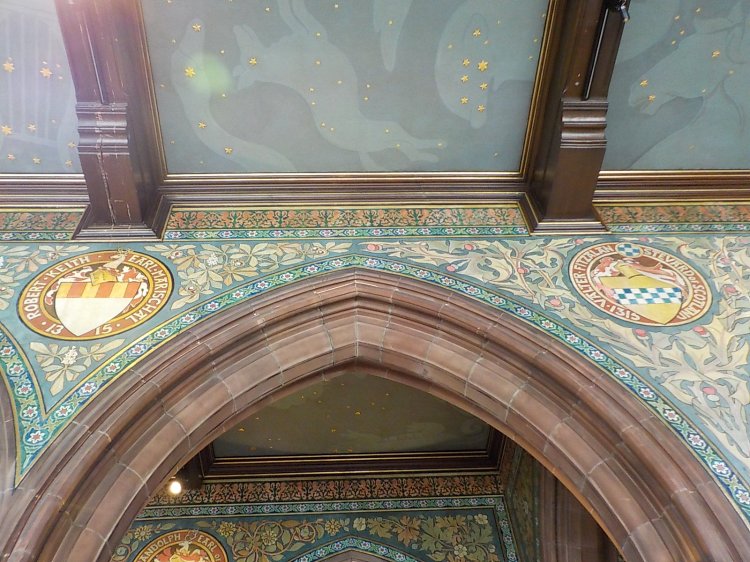
The Scottish National Portrait Gallery is one of the museums that the characters of 44 Scotland Street like, and it is also a favorite of Isabel Dalhousie, of the Sunday Philosophy series, also by Alexander McCall Smith. I like Isabel, and was happy to see the self-portrait of Samuel Peploe, among her favorite Scottish artists. Lillian and Neil decided to take a selfie with him.
7.18.16 AMS tour-002

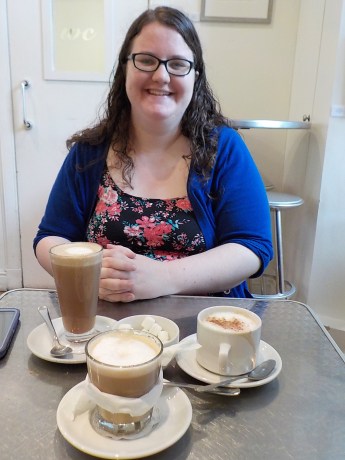
By this time, we were ready for a break, and it had to be at Valvona & Crolla, a venerable Edinburgh institution, and a favorite of Bertie and his mom. An early importer of fine Italian food, I thought we were mistaken about finding a cafe when we walked in. A long case lines one side, but if you keep walking and don’t get distracted by the meat and cheese, you turn a corner and go up a few steps and Voila! there is the cafe.  Everything was delicious.


That stop completed the McCall Smith tour, though I did go to Bruntsfield, Isabel’s domain. I didn’t see Isabel there, but she could have gone by, pushing Charlie in his stroller, while we were having coffee. At George Hughes & Son Fish, we bought some excellent Scottish salmon and some smoked haddock that with some bacon, onions, potatoes and a dash of double cream made a delicious chowder.

We haven’t embarked specifically on an Ian Rankin tour. I had my hair cut by a woman who lives in his neighborhood and says he does sometimes show up at the pub (“He can be a bit cranky,” she says.) I do enjoy seeing bits of Edinburgh that overlap with his writing. Now I know what they see when he and Siobean go out for a drive around Arthur’s Seat. I’ve seen Fettes Street (where the main police offices are located), and I’ve passed Gayfield Square and even St. Leonard’s (other police outposts in his books). I know that the Oxford Bar, his main character John Rebus’ watering hole, is visited by readers almost every night, but I think I’ll pass. I don’t want to make him cranky….7.21.16 Old Town-001


Ignore the menu, it’s Fleshmarket Close, site of one of Ian Rankin’s novels. There could be some very creepy stuff down there after dark.


It’s a great city for readers and their imaginations.

Museums and more museums

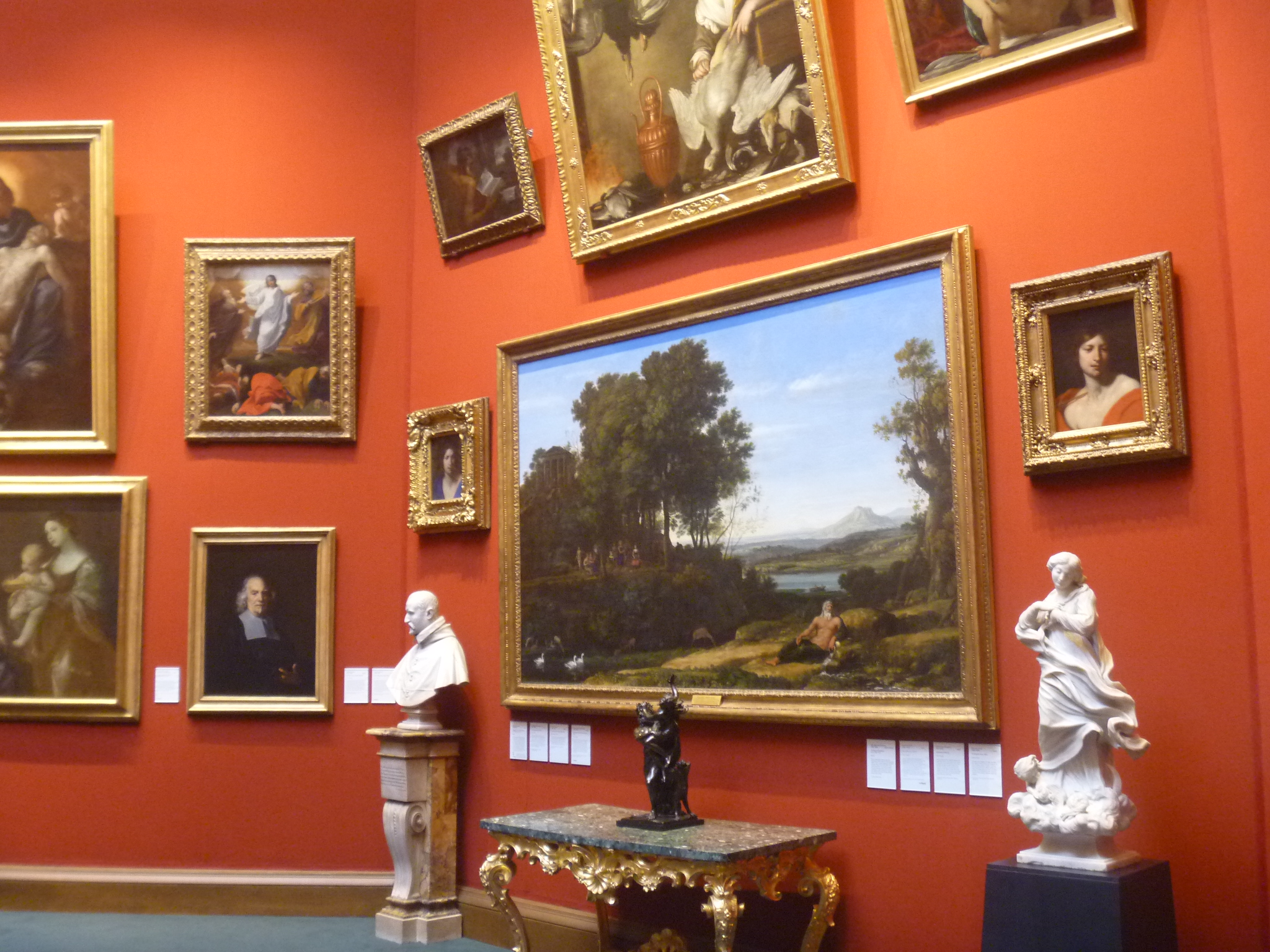
The good weather having deserted us, we headed indoors to check out some of the museums of Edinburgh. We started at the Scottish National Gallery, where we admired art from the Renaissance to 1900.

7.15.16 national gallery of scotland-002

It’s a traditional art museum and we enjoyed the broad range of work.

(The Scottish National Academy is nearby, but we didn’t get there yet.)


We moved uphill to the National Museum of Scotland, an enormous natural history museum. On my first visit, I saw the current exhibit on the Celts. It is very extensive, with objects from Bulgaria to the Orkney Islands.

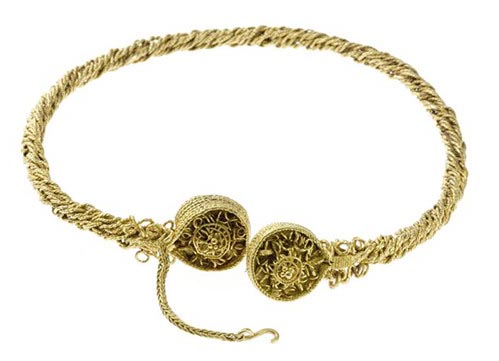
gold-torcHere’s a piece from Scotland, part of the Blair torcs find (also called the Stirling torcs). The four neck-rings, or torcs, were found by a metal detectorist in 2009. The UK policy toward archaeological finds by amateur treasure hunters, mostly with metal detectors, differs from that in the US. There is a clear policy that defines what is considered “treasure” and what must be reported. Portable Antiquities Scheme–UK

In the UK, finds must be reported, but are then evaluated and the nation has right of first refusal (the government can purchase the items). After being valued at over £400,000 the four “Blair torcs” were acquired for the National Museums of Scotland with funds raised by a public appeal. All four torcs are part of the “Celts” exhibit.

[In the US, metal detecting is only permitted (legal) on private land. Anything found belongs to the landowner and does not need to be reported. Anything found on federal land is the property of the US government and is a felony to remove.] There is a lot more cooperation between detectorists and government in the UK than in the US

For comic relief, see the British TV comedy, The Detectorists. It’s on Netflix.

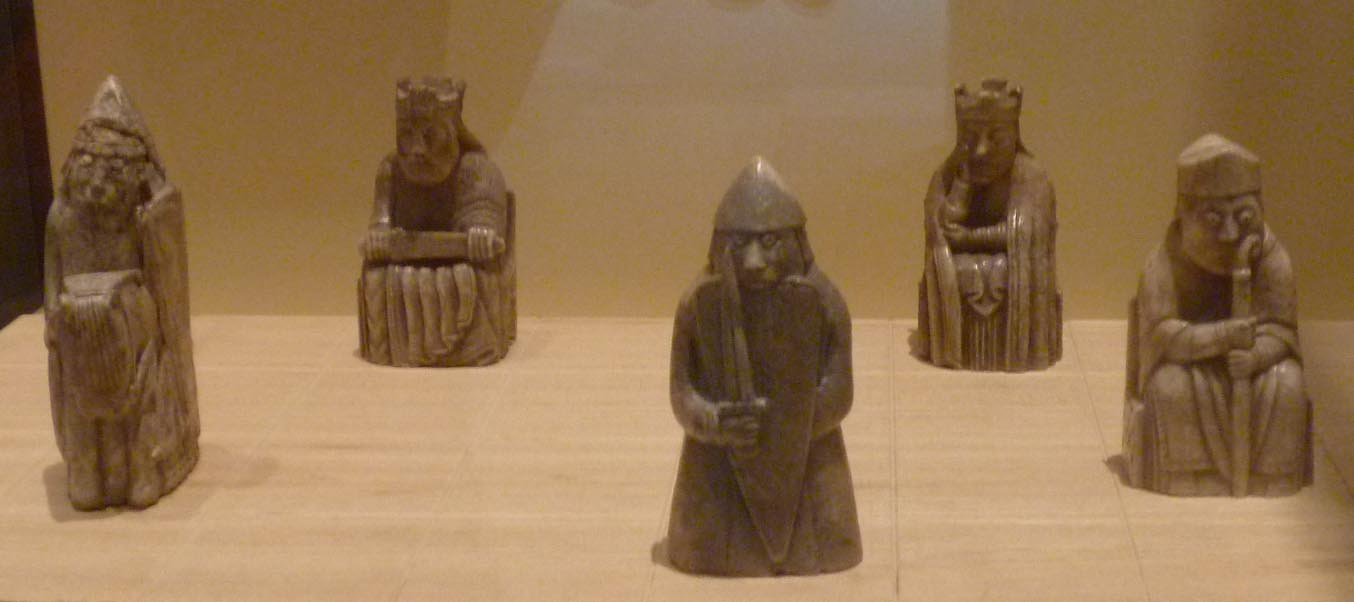
I have now seen ALL the Lewis chessmen. The mournful – comic faces of these characters have charmed many museum visitors over the years.   I’ve seen those held by the British Museum (they have 82 of the 93 known) and now I’ve seen the 11 at the National Museum of Scotland. There are enough pieces for at least four chess sets, and ironically (based on our recent travels) they are believed to have been carved in Trondheim, northern Norway, in the 1200s.

7.15.16 National Museum of Scotland-006smThe figures were discovered in 1831, in a stone cist built into a dune on the beach at Uig (Isle of Lewis). There is enough speculation about when and why to fill several mystery stories, though at the time, the coast of Scotland was controlled by Vikings, and its suggested the pieces were property of a merchant who may have intended to sell them to wealthy local leaders in Ireland. It is remarkable that they have only been divided into two groups over the years. They are carved from walrus ivory (teeth). Notice the center figure is biting his shield, a characteristic of Scandinavian “berserkers,” though as a chess piece it is a rook. There are excellent close ups of these figures. Lewis chessmen close-up views, National Museum of Scotland

There is also a detailed account of the chessmen on Wikipedia. Wikipedia–Lewis chessmen

7.15.16 National Museum of Scotland

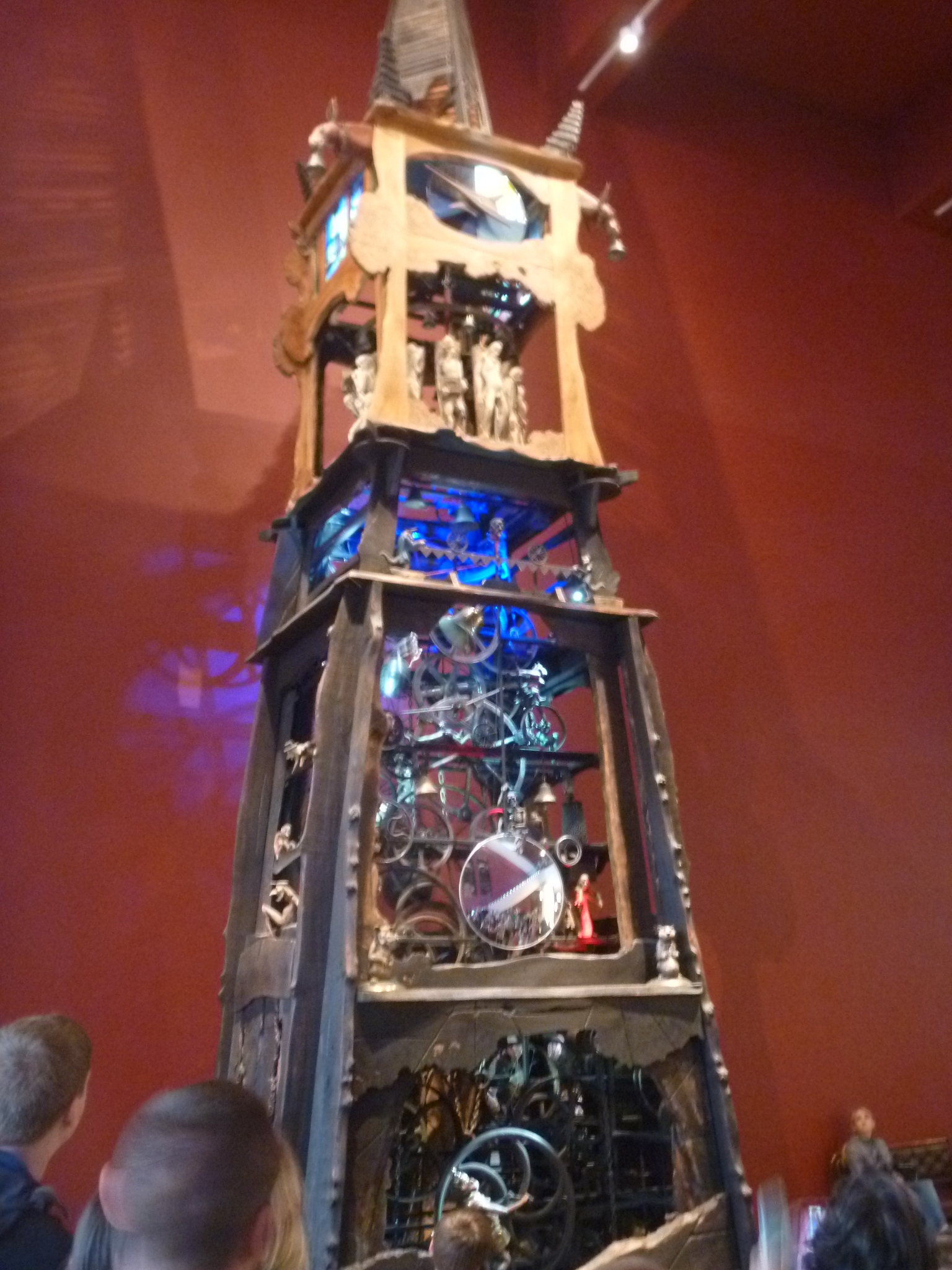
The National Museum of Scotland is loaded with other exhibits and activities, including a wacky clock that chimes every hour–lasting about 15 minutes–with whirling figures and flashing lights.


Our next museum stop was the Scottish National Portrait Gallery. The portrait gallery was built to be shared with the Society of Antiquaries of Scotland, which it did until 2009. The structure has a shimmering frieze of figures from Scottish history that looks like something from a Byzantine church, busts of famous Scotsmen, and a small, more recent exhibit of famous Scotswomen.

There are many more museums to see in Edinburgh, and plenty of rainy days to enjoy them.