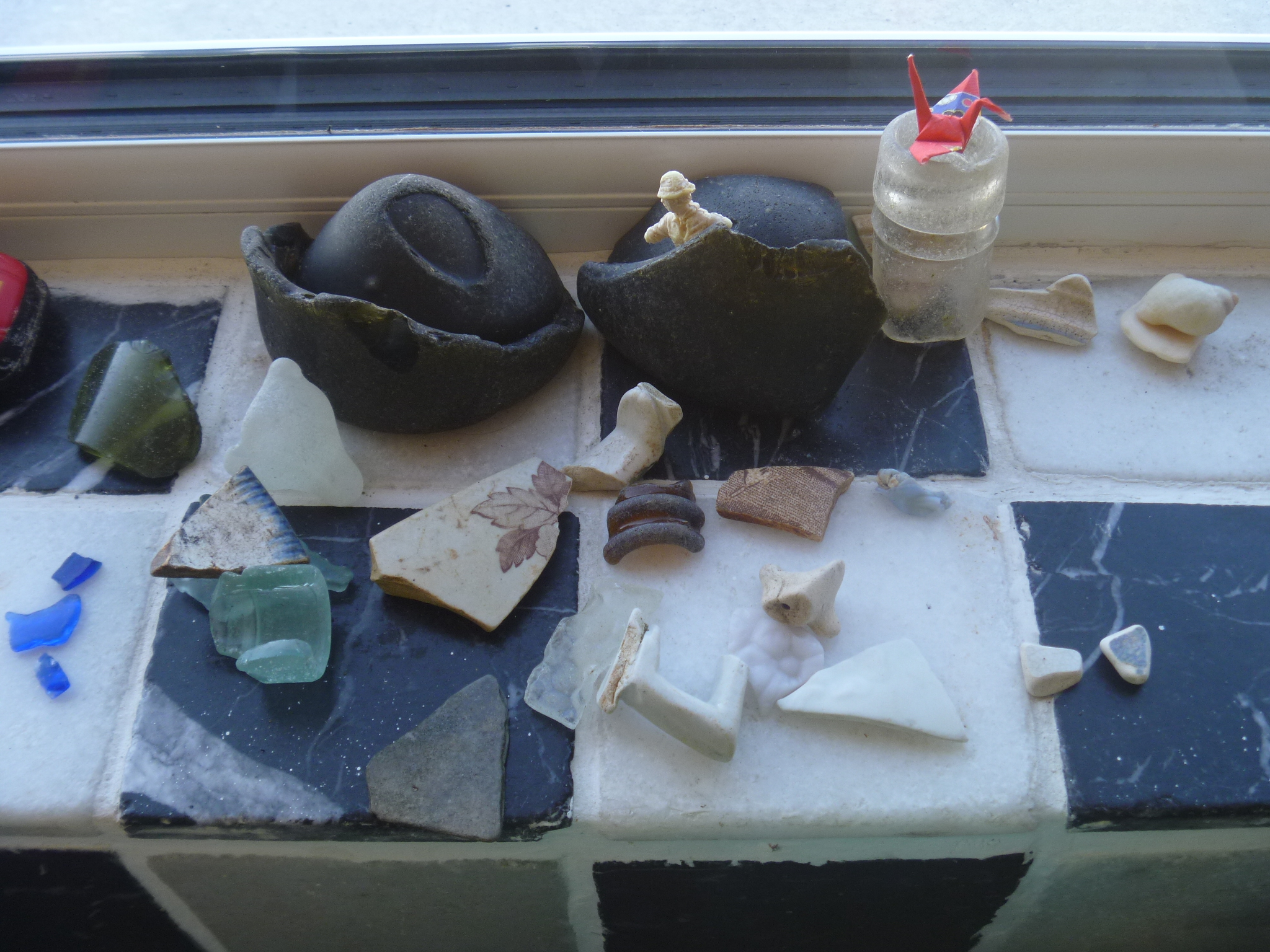
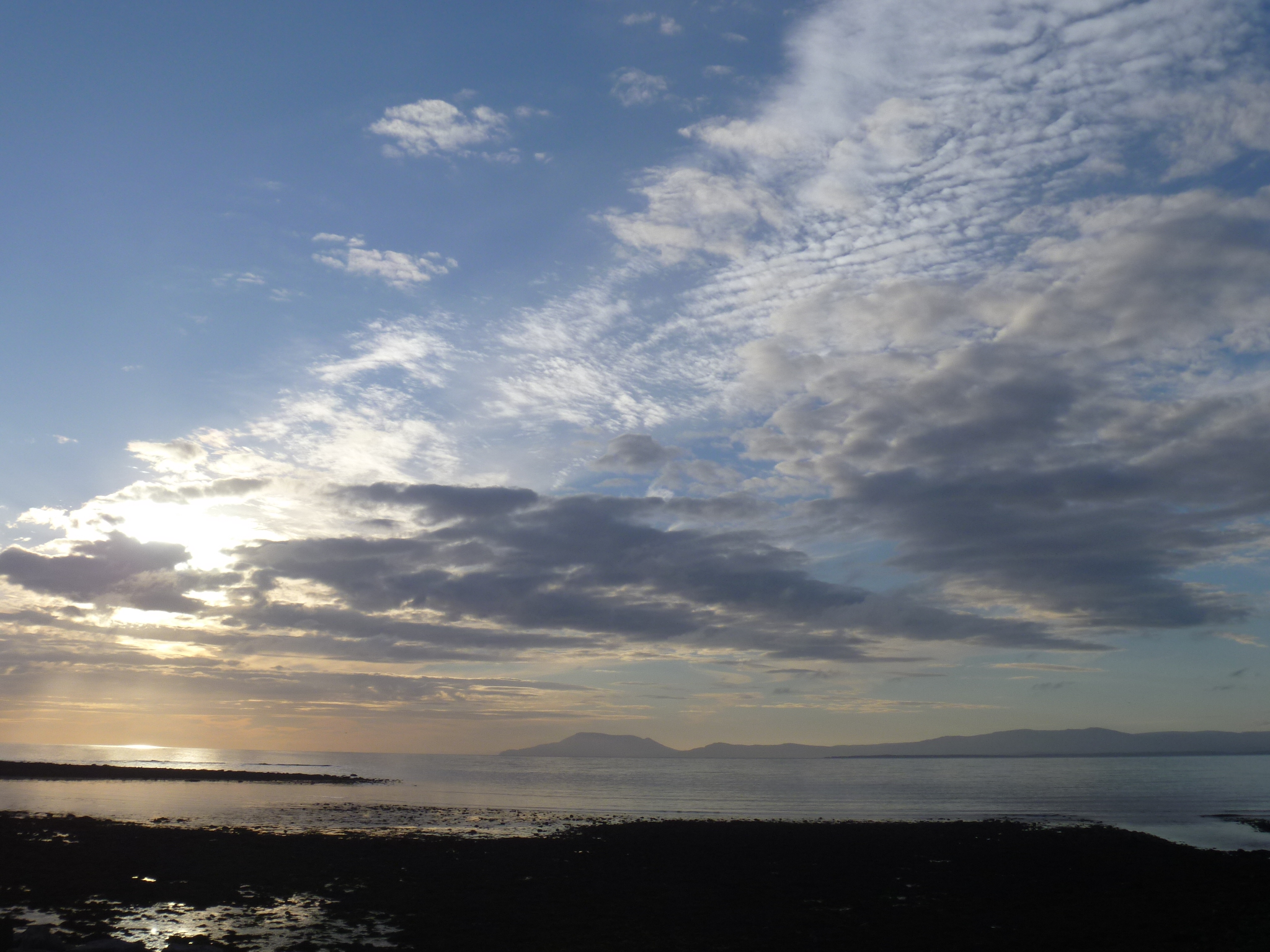
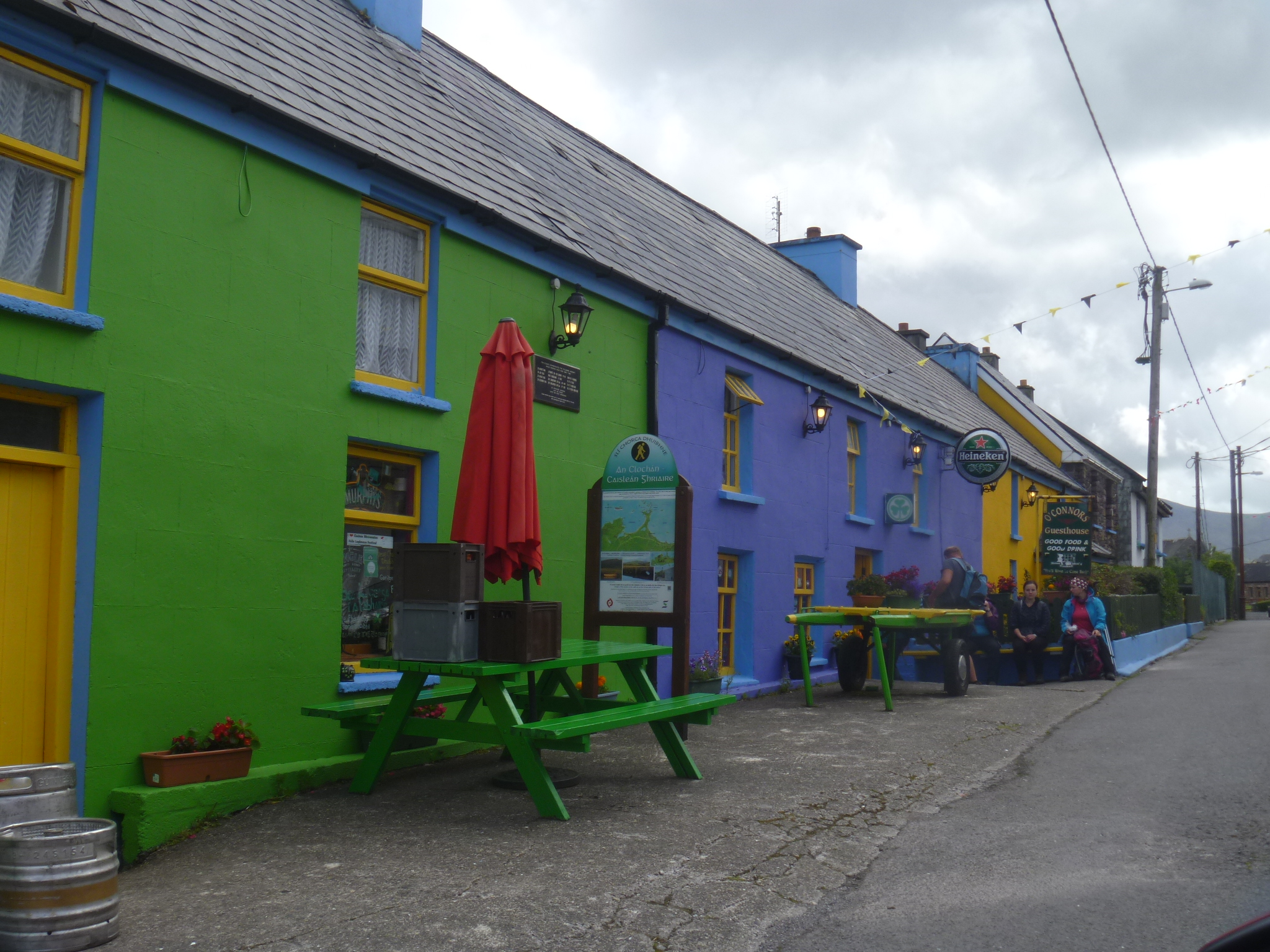
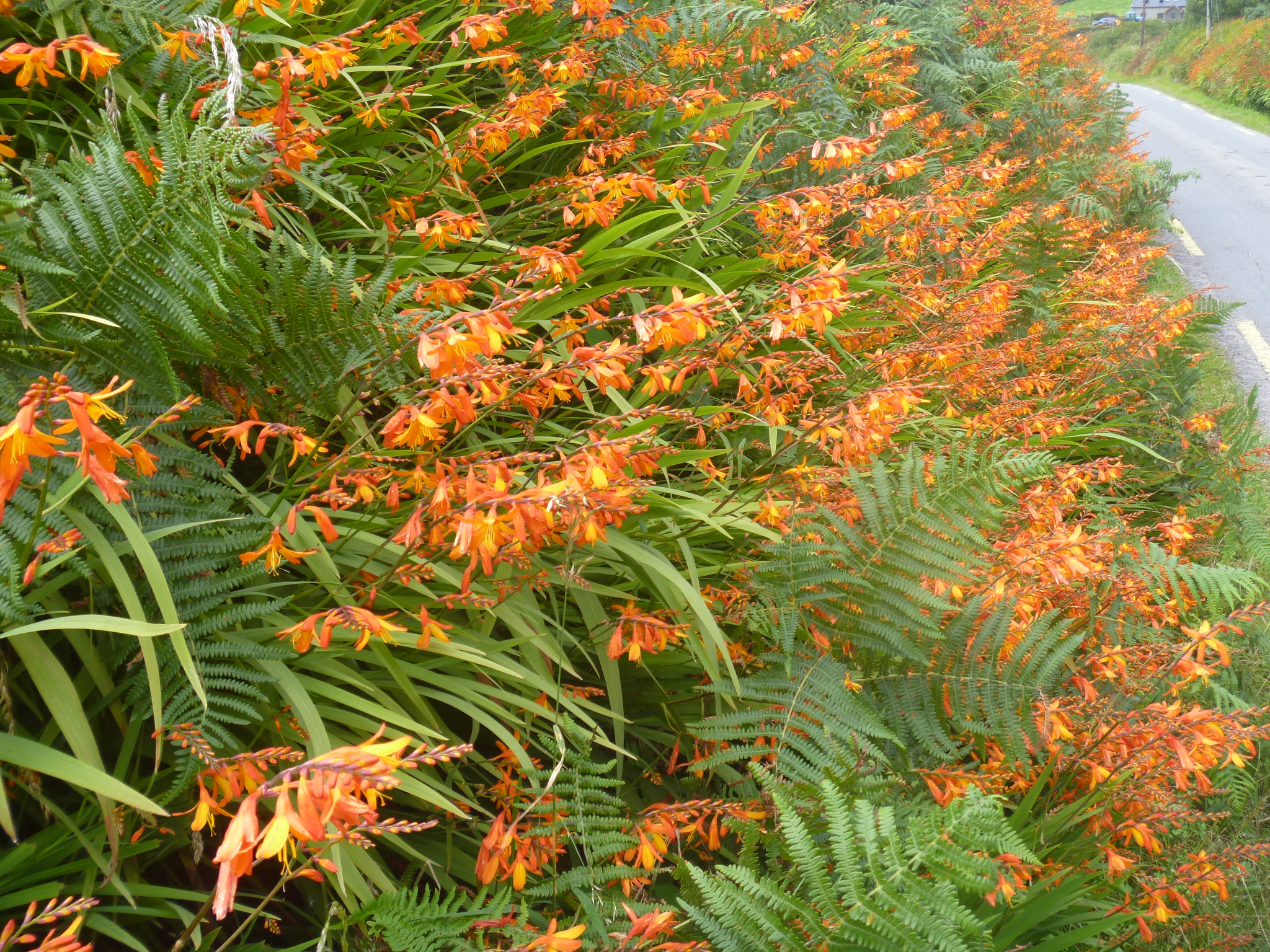
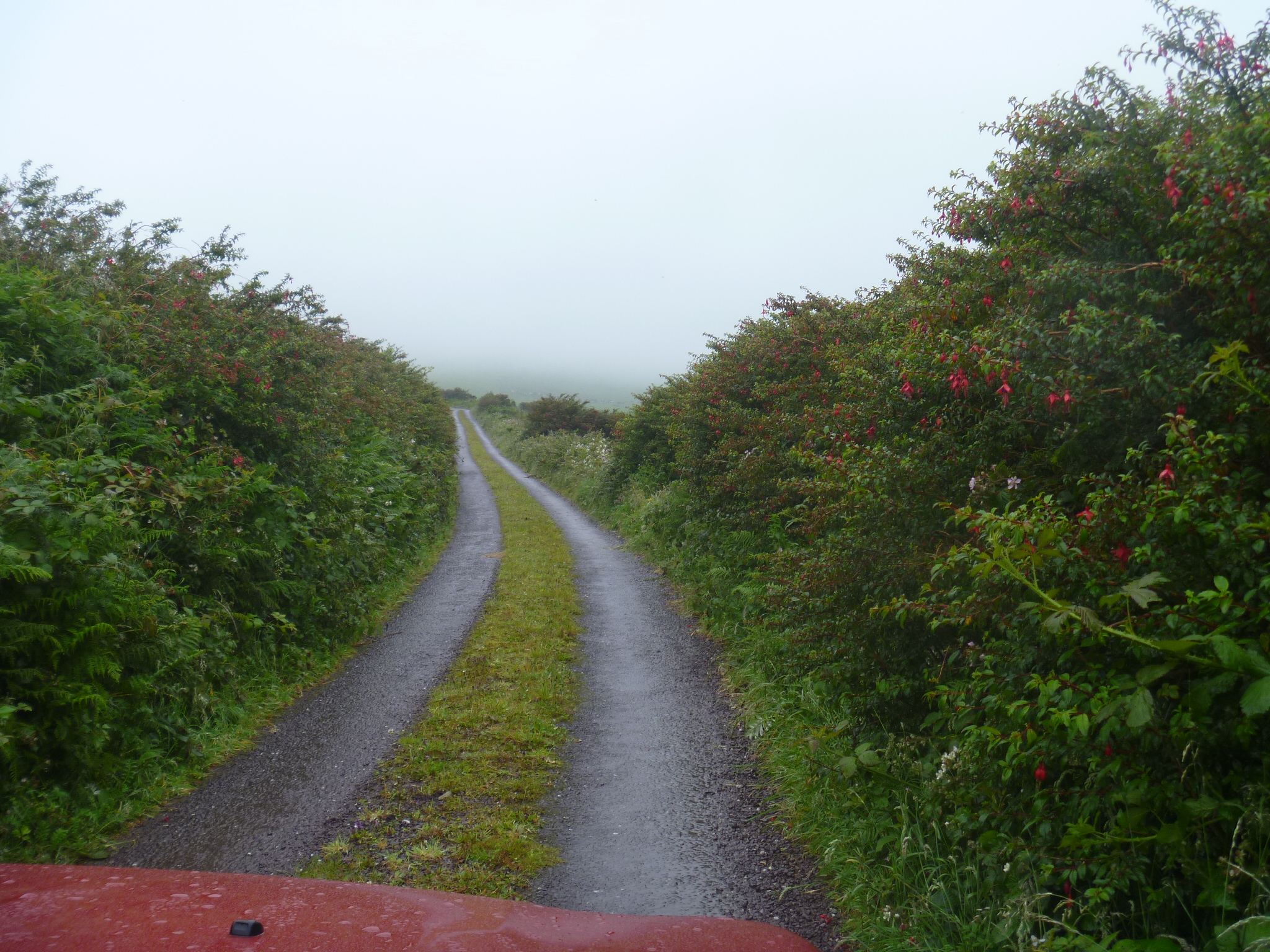
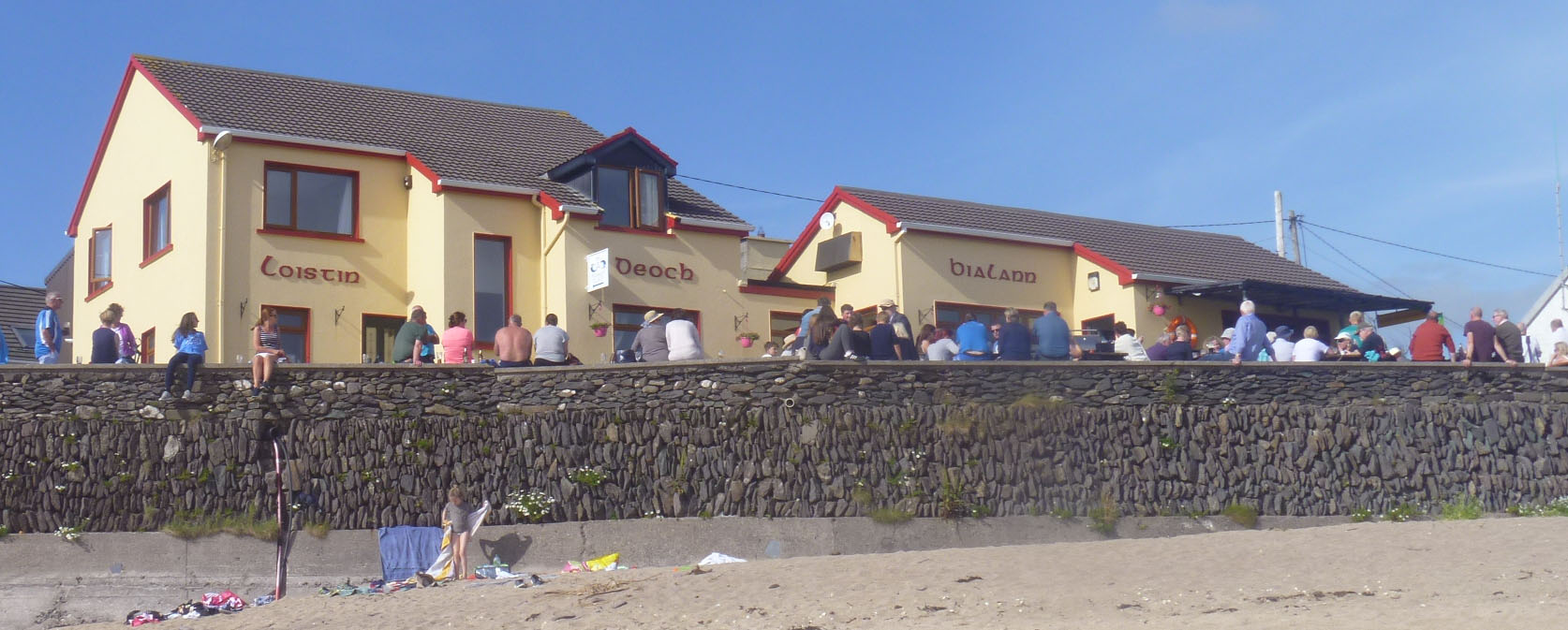
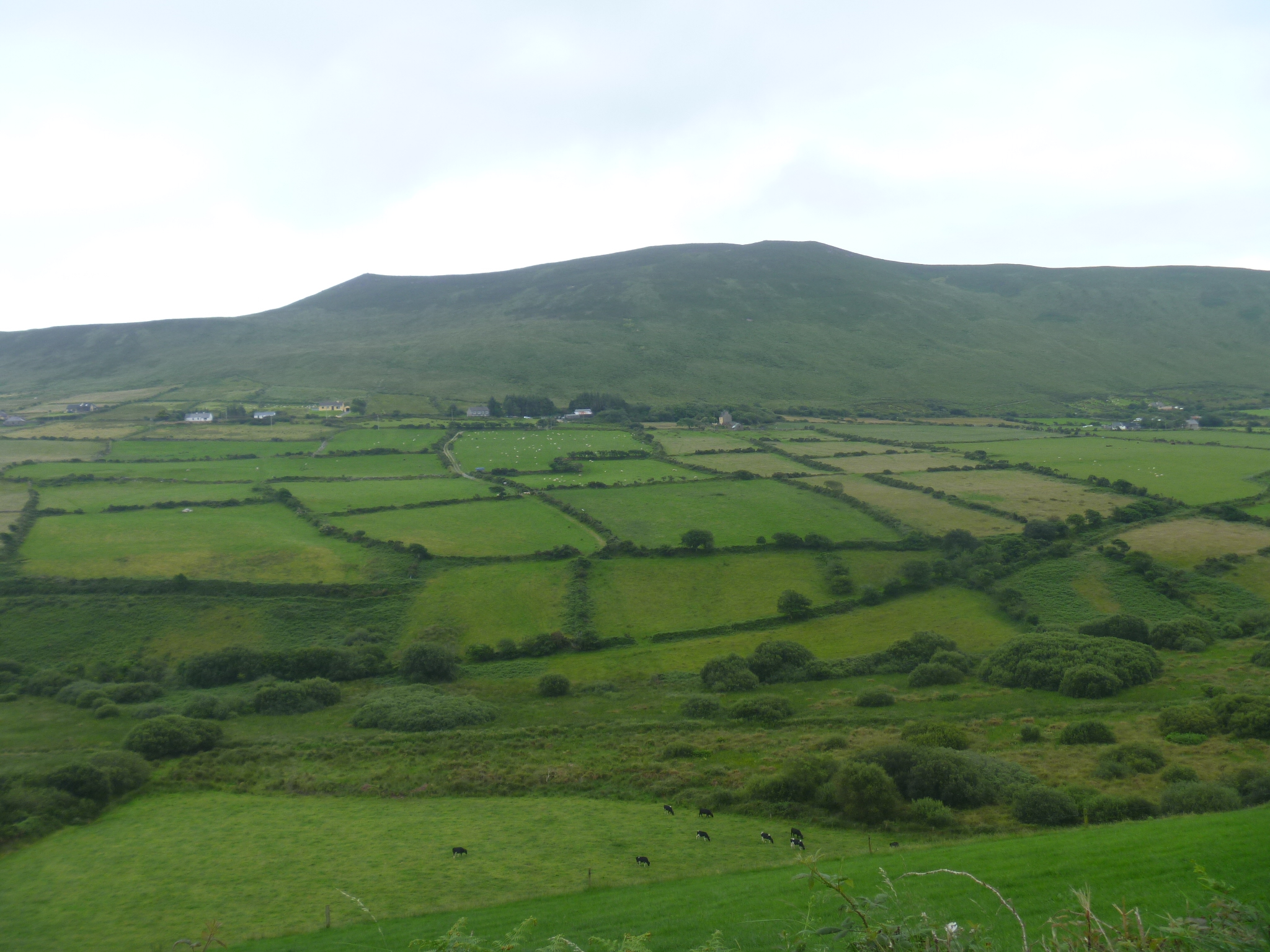
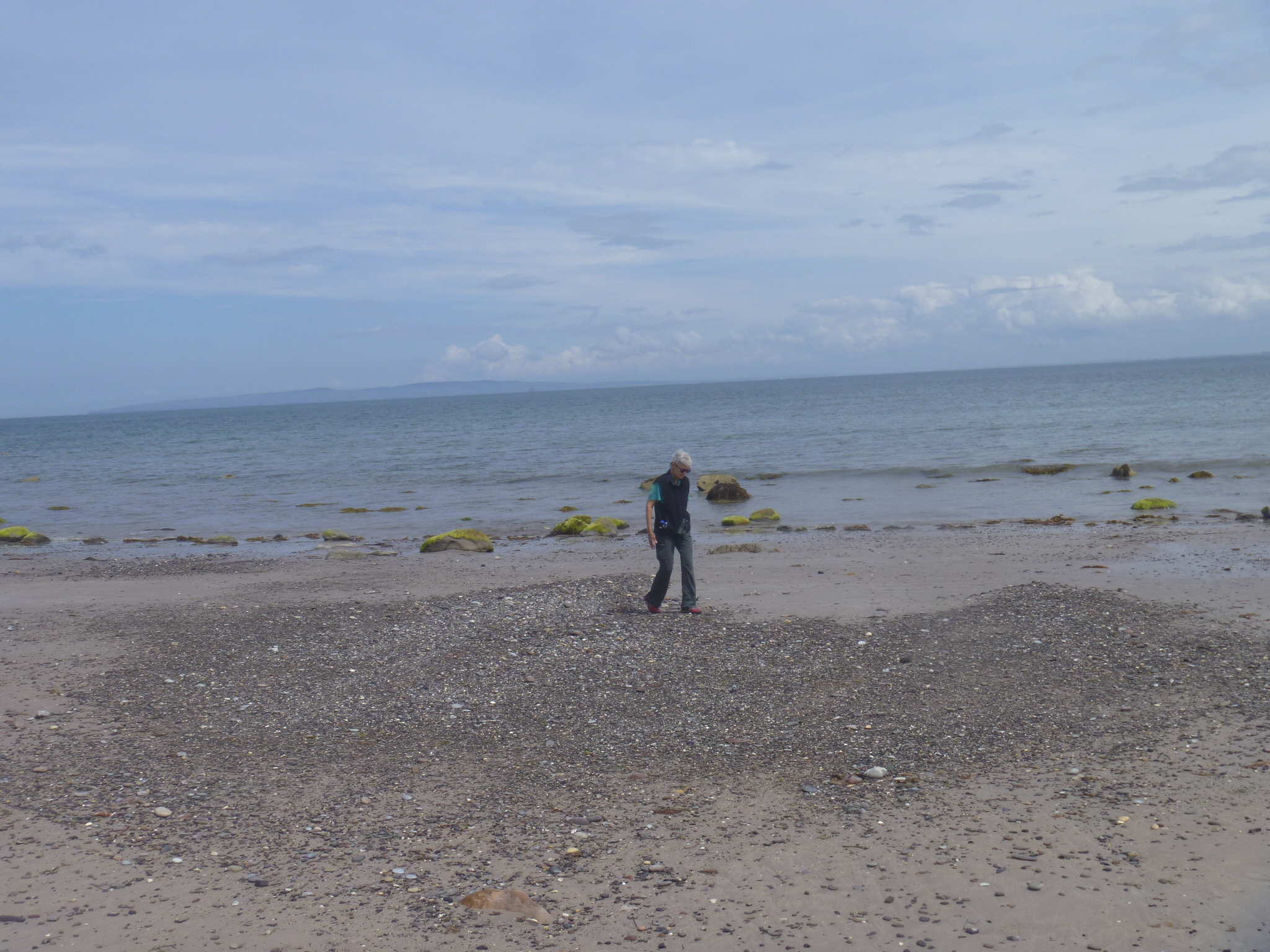
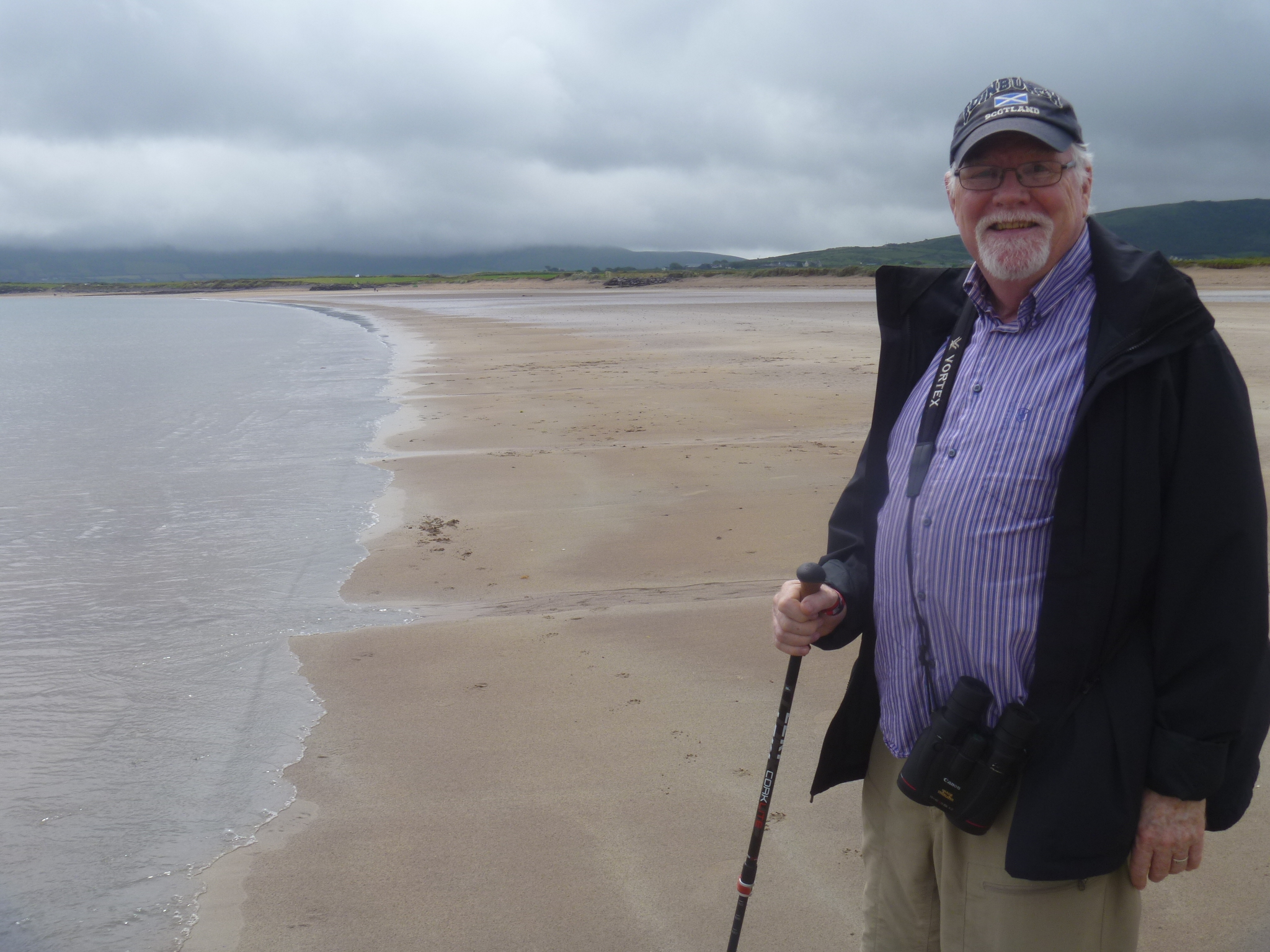
We are settled in Bundoran, north of Sligo. The wow factor here is the sea just over the back wall. It is always there and really wonderful. The sunset and evening sky has been clear our first two nights, a bit different from Dingle where we often had heavy clouds, fog, or rain at night.We are in Tullaghan, a hamlet that has two pubs and a lot of summer/second homes. We had tea with our hosts, who came from Dublin to meet us since we are staying for a full month. They were very kind, left us cookies and cake and all the instructions. Later we met our next door neighbors, Frances and Paul from a town near Belfast, here with their three children for a vacation. They were here last year and are back again.
The house is two stories and has all the mod cons (washer/dryer, dishwasher, microwave) that I missed in Italy. We are comfortable and looking forward to visitors later in the month.
This slideshow requires JavaScript.
We’ve visited a couple of beaches and located the stores. Now we’re ready for adventure.
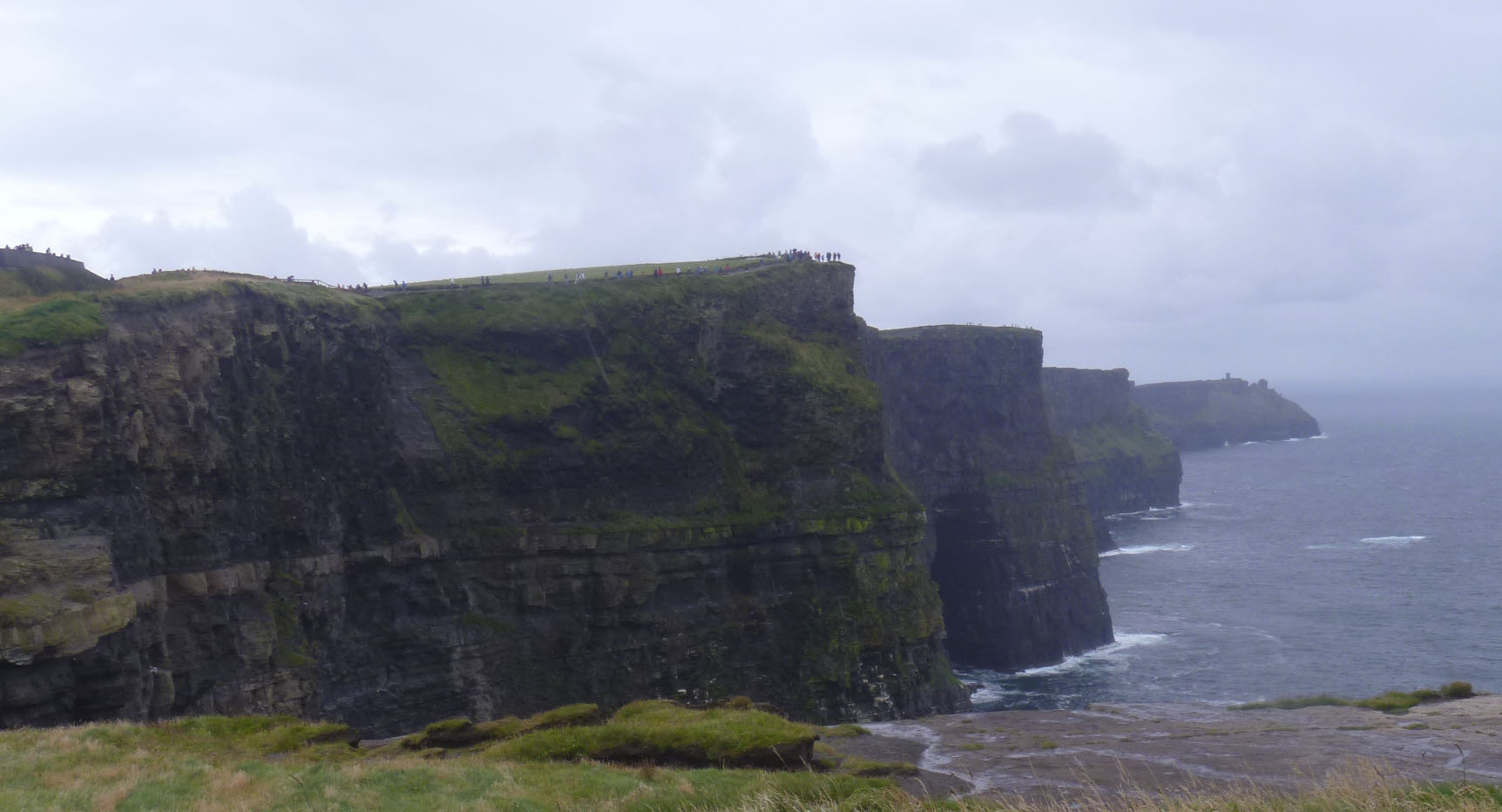
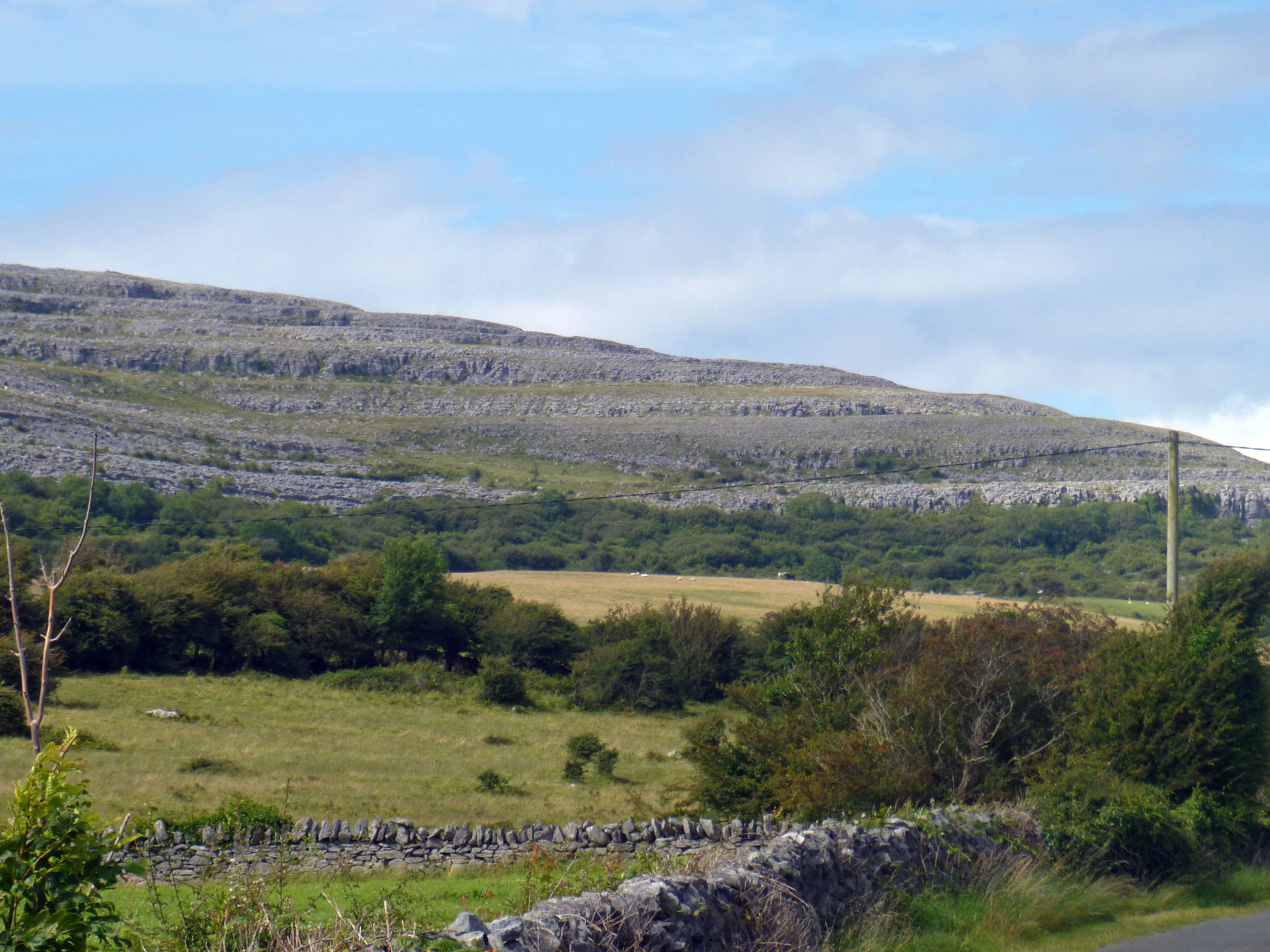
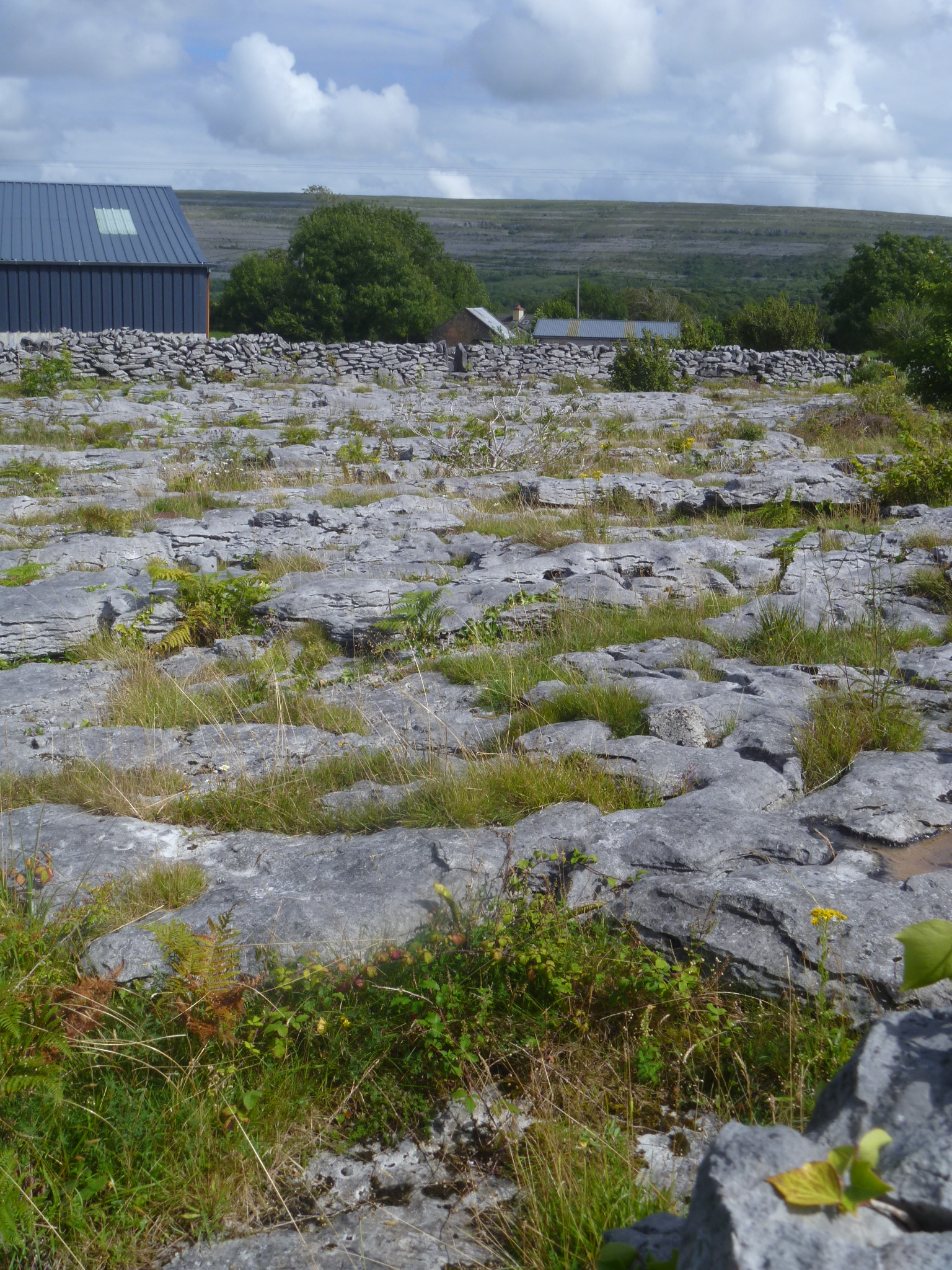
On our way north along the coast of Ireland, we stopped to see the Cliffs of Moher, one of Ireland’s staggering sights. People look tiny standing on the edge of the 390 ft. high escarpment. It was impressive (Look for the tiny, tiny people on the top of the cliff).Before you rush to book your trip, keep in mind that we were there with 20 bus loads and hundreds of cars full of other visitors. The Cliffs of Moher is one of the most popular sights in all of Ireland, with about 1 million visitors per year. That’s more than 2,000 people a day all year long. That’s a lot of people. From the cliffs we headed toward Galway, our overnight stop halfway to Bundoran. The road cuts through an unusual geologic formation called The Burren. From a distance you see gray, stony hillsides. These rocky places are home to unusual plant species of both alpine and mediterranean origin. We stopped to take a photo and when I got out of the car and looked over the nearest stone wall, I was face to face with The Burren. Plates of gray stone cover the ground, with plants growing up through the cracks. I couldn’t imagine why anyone would wall in an area like this. (From Wikipedia):The rolling hills of The Burren are composed of limestone pavements with criss-crossing cracks known as “grikes”, leaving isolated rocks called “clints”.
OK, whatever you say. Grikes and clints. It is a remarkably stony landscape. I have never seen anything like it.
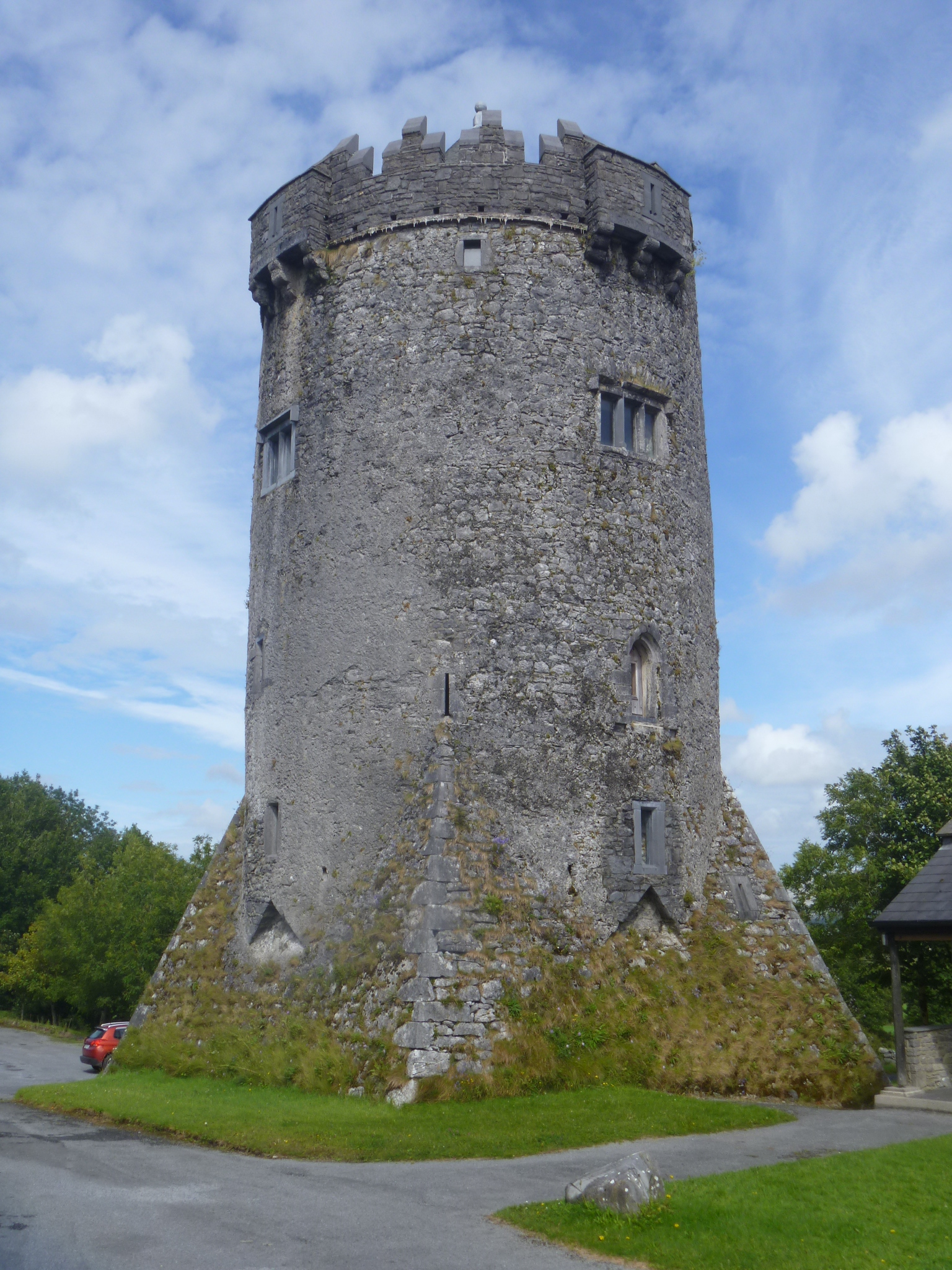
Further on, we passed a castle and found out it is the Burren School of Art. It would be a lovely place to study.
We ended the day with dinner in downtown Galway and a stroll through the pedestrian area. It was very lively as we happened to be in town on the first night of the Galway Races. The horse races were being broadcast on every TV. They ended around 8:30 pm and by the time we finished dinner women and men in their best Race Day clothes were pouring in for an evening on the town.
I have learned a few things about Ireland in our first month here. Most people are friendly and everyone seems glad to be here. People often refer to our surroundings as “god’s own country.” There are many signs of prosperity, even a construction crane in Dingle. Restored houses dot the peninsula, usually with well kept gardens. There are abandoned stone houses, but few abandoned storefronts in town, and no charity shops.
Seals near Cloghane
I’ve learned that life in Ireland can be very different even for people of the same age. I spoke to a young woman cutting hair. She was just back from some months working in Melbourne and plans to return to travel. We talked about what Australia was like and what she saw while she was there. New Zealand was one of her favorite stops along the way. She returned to Dingle when she heard there was a job opening–she has an excellent family grapevine in the area.
I spoke to another woman of about the same age who said she was not from the area. I asked where and she said, “North Kerry.” That means the other side of Tralee, maybe an hour’s drive away. She and her husband moved to Dingle for his job. They have two small children. Her friends and family look at Dingle as terribly remote because of the narrow roads. Tourists singing the praises of Dingle don’t impress her at all. “Why do you live there?” ask her family. She said they don’t see her family much, often three weeks between visits. I couldn’t tell her how close to her family that seems to me, since I see my family twice a year, maybe three times. She would think me heartless.
We’ve walked all the beaches on the Dingle Peninsula that are more than a few meters long.
Coumeenoole Beach
Our beachcombing has been a pleasure and we’ve enjoyed the wind and tides. Though Dingle is very popular as a vacation spot and the town is full of visitors, we often had the beaches to ourselves.
On the right is Coumeenoole beach, where the movie Ryan’s Daughter was filmed. That was in 1970, but apparently people still visit to see the location. Much of the coast is rocky and steep, another reason that in a month we managed to visit all the beaches.
Brandon Point
There are spectacular clifftop walks. We spent a morning at Brandon Point, looking out over the Atlantic. “Next stop, Boston,” joked a hiker we chatted with in the parking area.
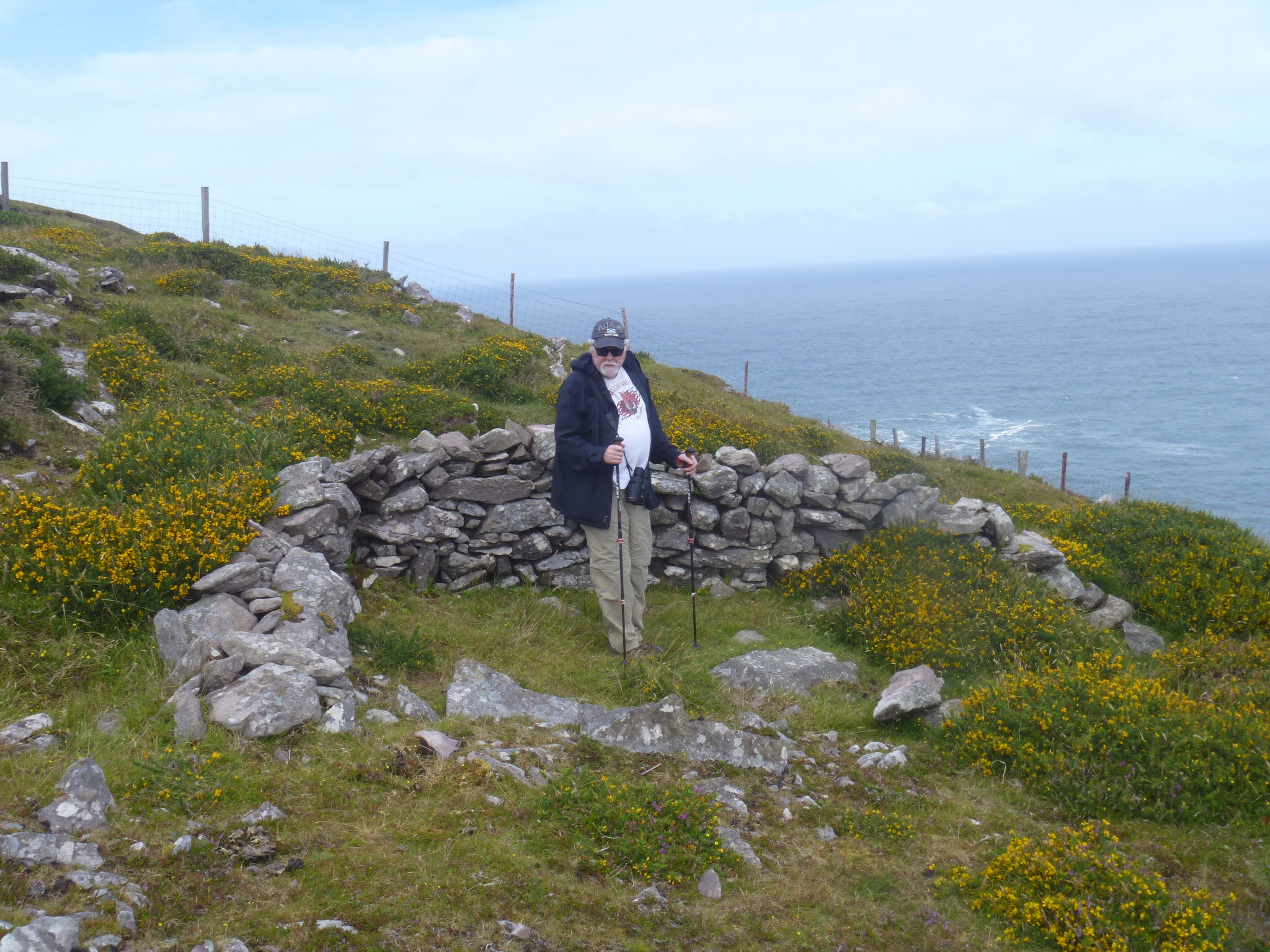
Overlooking the sea at Brandon point are abandoned houses that may date back as far as the famines that began in 1841.
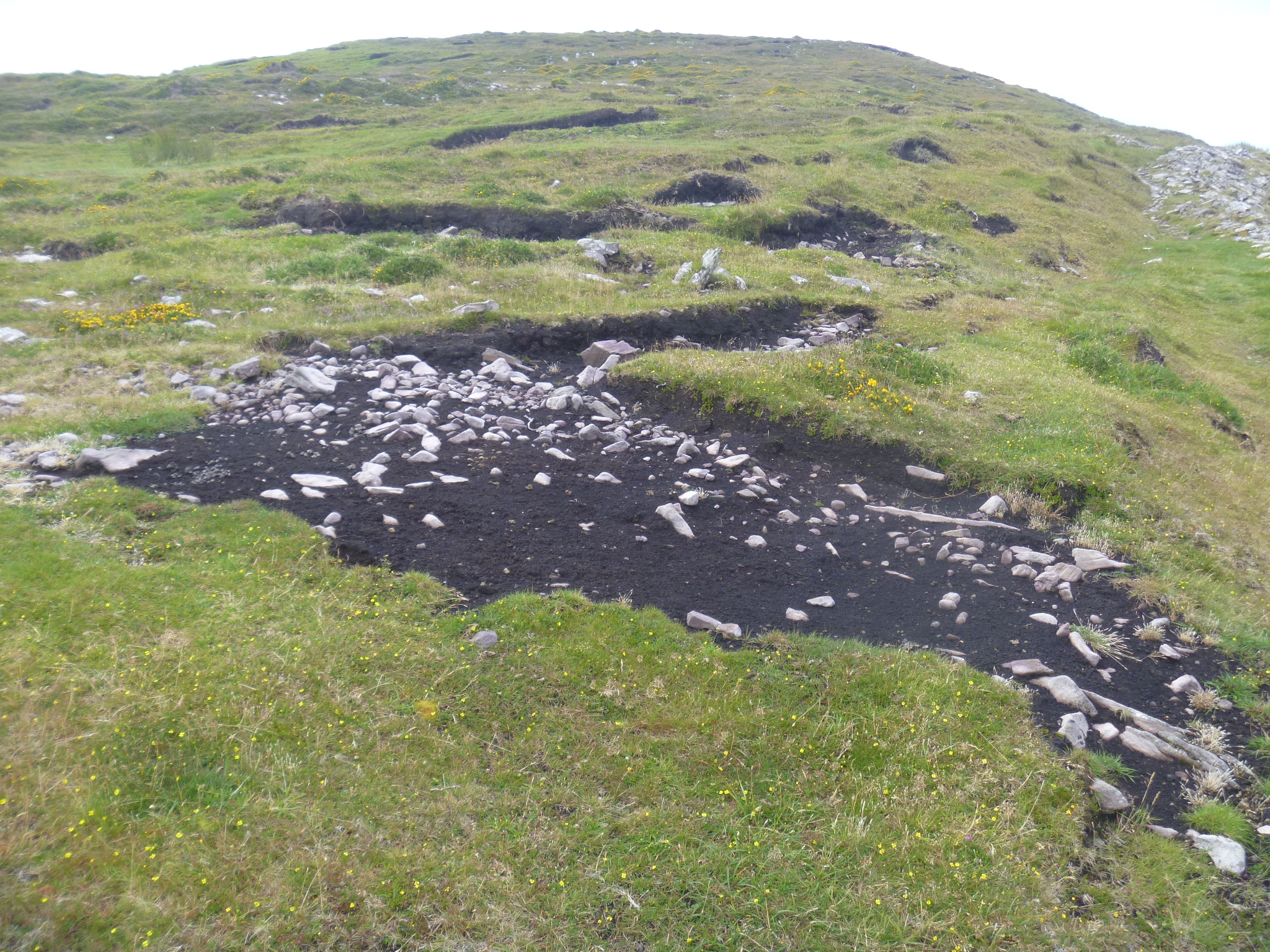
Archaeological sites are thick on the ground. Since everything is built of stone, my colleagues must tear their hair out trying to figure out which comes first. Everything from the Neolithic (8000 yrs ago or so) to the early 20th century is built of the same stone. There weren’t a lot of household goods, so there aren’t a lot of castoffs and broken pieces lying around. The pottery pieces that archaeologists rely upon to tell the age of a settlement are long gone or buried. We visited only a fraction of the 1200 or so archaeological sites on the peninsula, but we have enjoyed the fact that there is often an informational sign on sites even when they are not marked on maps. Many sites are melting into the fields, but how many stone enclosures can a person visit? How many can be restored when they all look alike?On Brandon Point, peat is still cut for fuel. The hillside is scarred from digging and someone had just set aside their tools, a peculiar peat shovel and a fork used to spread the peat blocks to dry.
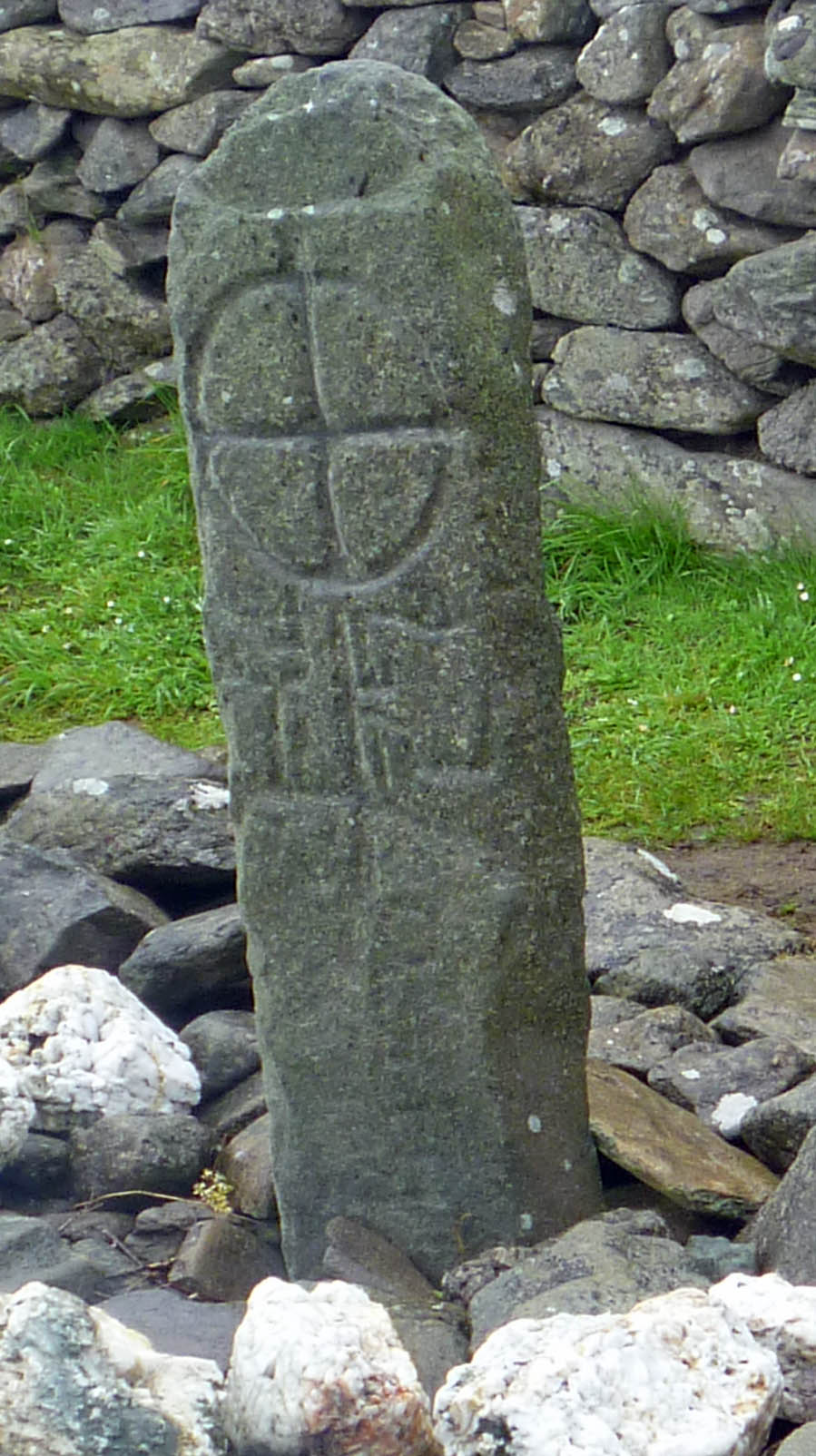
In addition to the abandoned farmsteads and peat-cutting on Brandon Point, we’ve seen Ogham Stones, early Christian crosses, monastic settlements, beehive huts and many historic houses that collapsed in place after the famines drove people away. When the population of Kerry was over 293,000 in 1841, there were tiny farms everywhere. In 2016 the population of Kerry was 147,500. I have trouble imagining double the present population with no automobiles.
We will miss the lovely view from our living room, yet we are on to another adventure. We head to Bundoran, a summer holiday town on the west coast of Ireland in the north, nearer to Belfast than to Dublin.
Harry Clarke isn’t a name well known outside the world of stained glass, though he should be. An Irish artist who died at age 42 (in 1931), at the time of his death he had completed 40 commissions, including one in Dingle for the convent of the Presentation Sisters. In the 1990s, the order decided to reduce its presence in the region and The Diseart Center of Irish Spirituality and Culture formed to take over the space, including the chapel with 12 individualistic, dramatic stained glass windows of Bible scenes. They are very much worth visiting.
Clarke lived during a period of artistic upheaval. After the Pre-Raphaelites, but during the Celtic revival in Ireland, Art Nouveau in France, Arts & Crafts in the UK, Art Deco, too. He used elements of many styles in his work. Clarke also illustrated works of Edgar Allen Poe and Hans Christian Andersen. Some of his drawings resemble the work of Aubrey Beardsley.
This slideshow requires JavaScript.
One of the features of the windows is the fine-line painting on many of the individual pieces of glass. There are details that make some panels seem like a game of Hidden Pictures. I don’t know whether Clarke ever created any non-religious images, but I would certainly be interested to know what he might have created. He created 9 stained glass panels illustrating a poem by Synge, “Queens”. Originally created for a library in a Dublin area estate, the panels were sold to a private collector in 1996 and their location is no longer known. The price was a record for Harry Clarke’s work. Since most is located in religious structures, it is rarely for sale.
Check the link below to see whether there is any of his work near you.
The Diseart Center, where the stained glass windows you see here are located, offers classes in Irish culture, language and themes related to spirituality.
The boatman made the quip as we left, “Tell them this year summer came on Monday!” That’s because the weather is never forecast to be as fine as it was on our trip out to Great Blasket Island last Monday. The sun shone all day long. The boat ride from Dunquin to Great Blasket was smooth and the 35 passengers smiled and chatted all the way.Great Blasket Island was an independent community lived there from early in the 19th century until Nov. 17, 1953. They were completely Irish speaking, cut off from the mainland as they were. The distance is short, but the water can be rough, and boats were the traditional naomhog, or currach, rowboats framed of wood and covered with tarred cloth.
As the Irish language fell into disuse in the 19th century, linguists and writers discovered the community on Great Blasket and visited to study the language or expand their proficiency. Visitors such as the poet Robin Flower encouraged the islanders to write about their lives and several did just that. The strong tradition of storytelling among people who have to entertain themselves on long winter evenings seems to have eased the transition to writing stories in a book. Best known are: An tOileánach (The Islandman) by Tomás Ó Criomhthain, Peig by Peig Sayers and Fiche Blian ag Fás (Twenty Years A-Growing) by Muiris Ó Súilleabháin. The remains of each author’s house is marked on the visitors map.
Most houses lie in ruins today, though one was being renovated during our visit. That’s puzzling because there’s only seasonal ferry service, no central water source, no electricity, no store, all part of the reason the island was evacuated years ago. We looked at the ruined community and hiked up the spine of the island. At the peak of the island, I could see the faint outline of the Skellig Islands on the horizon to the south.
Blasket harbor–tiny
At the harbor
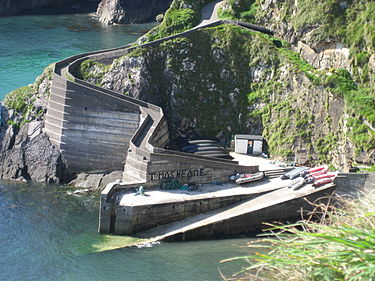
We waited for our trip home just above the tiny boat landing on Blasket. Arriving at Dunquin we struggled up the steep incline from the beach. (This is an internet photo–see the upturned naomhog boats in the lowest bend of the ramp.)
Months before we arrived in Dingle, Jonathan read about a local potato festival and decided that he wanted to participate. He emailed the organizers, sharpened his potato peeling knife, and marked the date. It wasn’t as easy as jumping in the car, because all the publicity for the festival was in Irish. Diligent work with Google translate and the map led us to a pub in Ballydavid (only shown as Baile na nGall on signs). The roads are pretty small, but we emerged into a seaside community centered on a small beach and a pub, Tigh TP. Quite a crowd turned out for the potato festival, and it seems that everyone other than the three of us understood Irish.
We found the organizers, who were delighted that we actually made it there. Jonathan submitted his dish for the cooking competition. He made causa, a potato and fish terrine that is a popular appetizer in Peru.
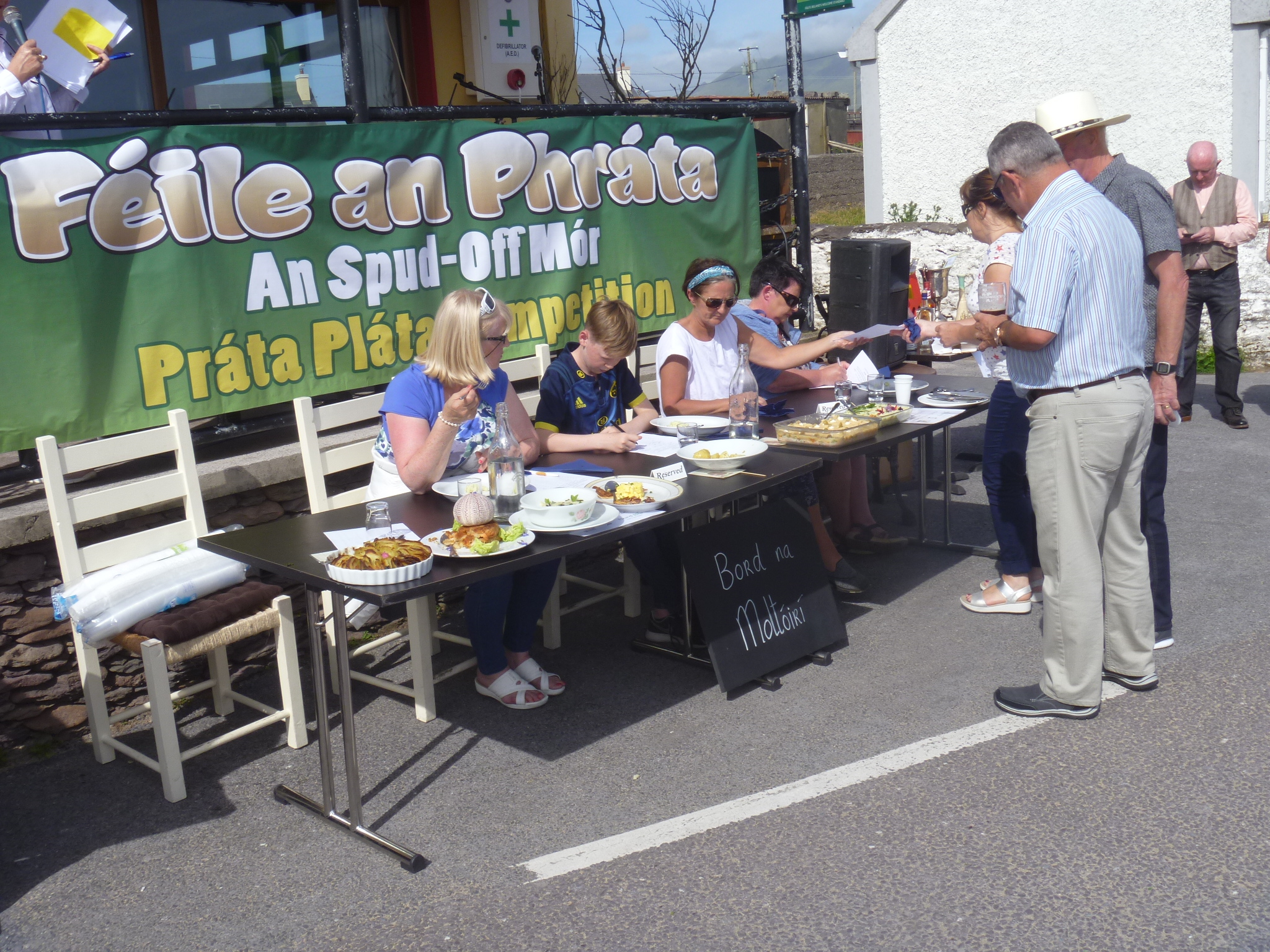
It took him a few minutes to explain to everyone that potatoes actually come from Peru–there was some skepticism. There was more skepticism that he was from Peru, so he had to tell the story of our retirement travels. After that, we went to find a seat to watch the festivities. There was a tasting of boiled potatoes (no salt, no butter). The judges were heroic in tasting about eight different potatoes submitted by growers from Dingle as far as Tralee. There was a separate panel of judges that tasted the prepared dishes. While we watched the dishes being introduced and tasted, we shared a picnic table with a couple from Dublin who come to Dingle every year. Mary and John were excellent company. The afternoon passed rapidly. The results of the cooking contest were held until the very end. In the mean time was the peeling contest.
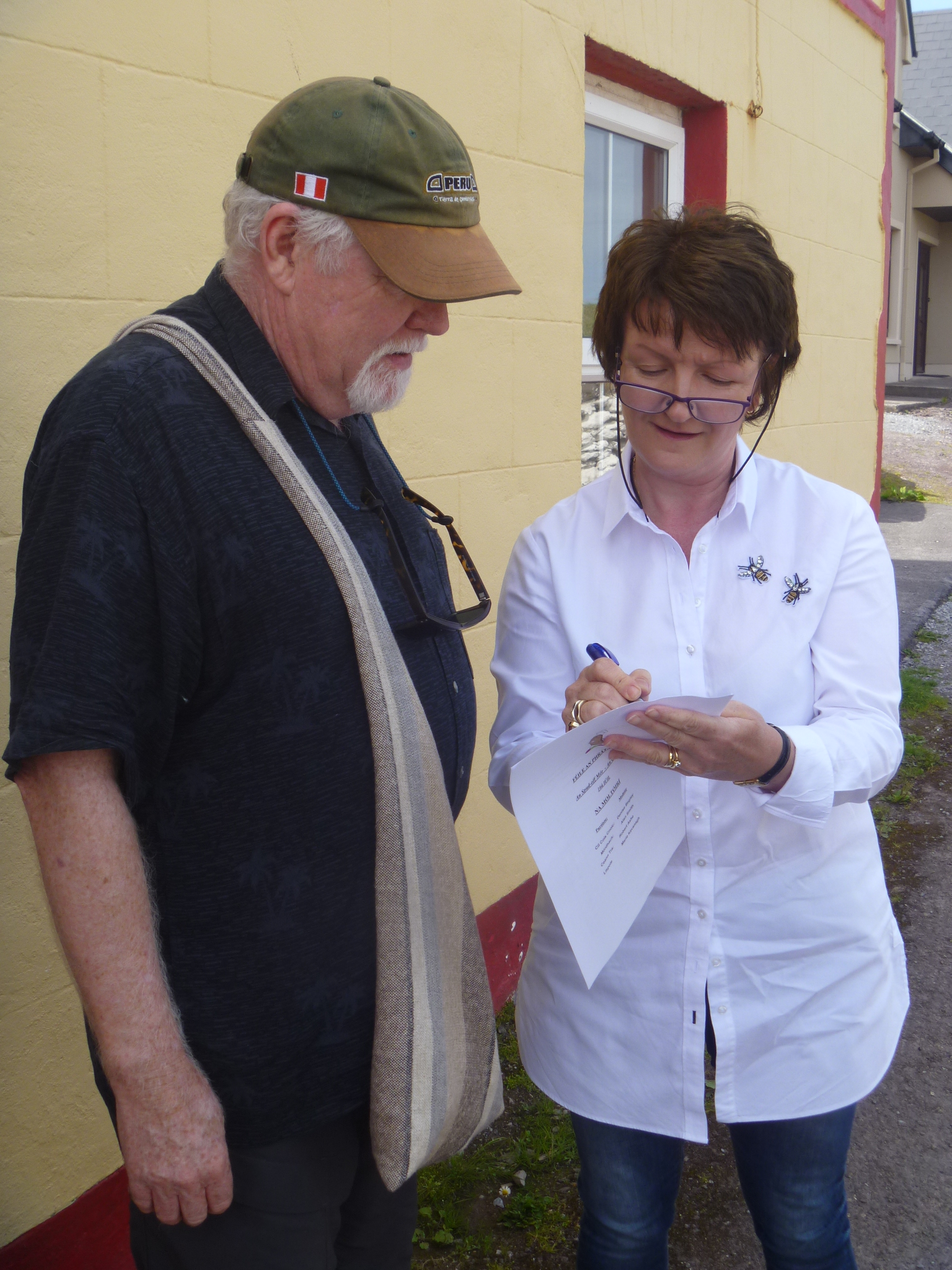
Jonathan discovered that he had to use a standard knife given to all contestants, he couldn’t use his nicely sharpened knife. He protested to the judges (L), but they insisted that everyone use the same knife. He was up against one other man in his heat and both of them qualified by completely peeling two potatoes in under one minute. In the end, though the winner was a woman in the first heat. She was able to peel both potatoes with the greatest “post-peel weight”. The best was yet to come, however.
When the results of the cooking contest were announced, Jonathan won second prize! There was mention of the original intention of the Wild Atlantic Way to reveal the connections between the sea and the land. Jonathan’s coming all the way from Peru to Dingle in order to participate in the potato festival and his dish with seafood and potato was widely appreciated, and he will treasure his prize plate.
Sponsors included the local radio station and the national Irish potato board, Bord Bía. Féile an Phráta is held every year and is well worth a visit.
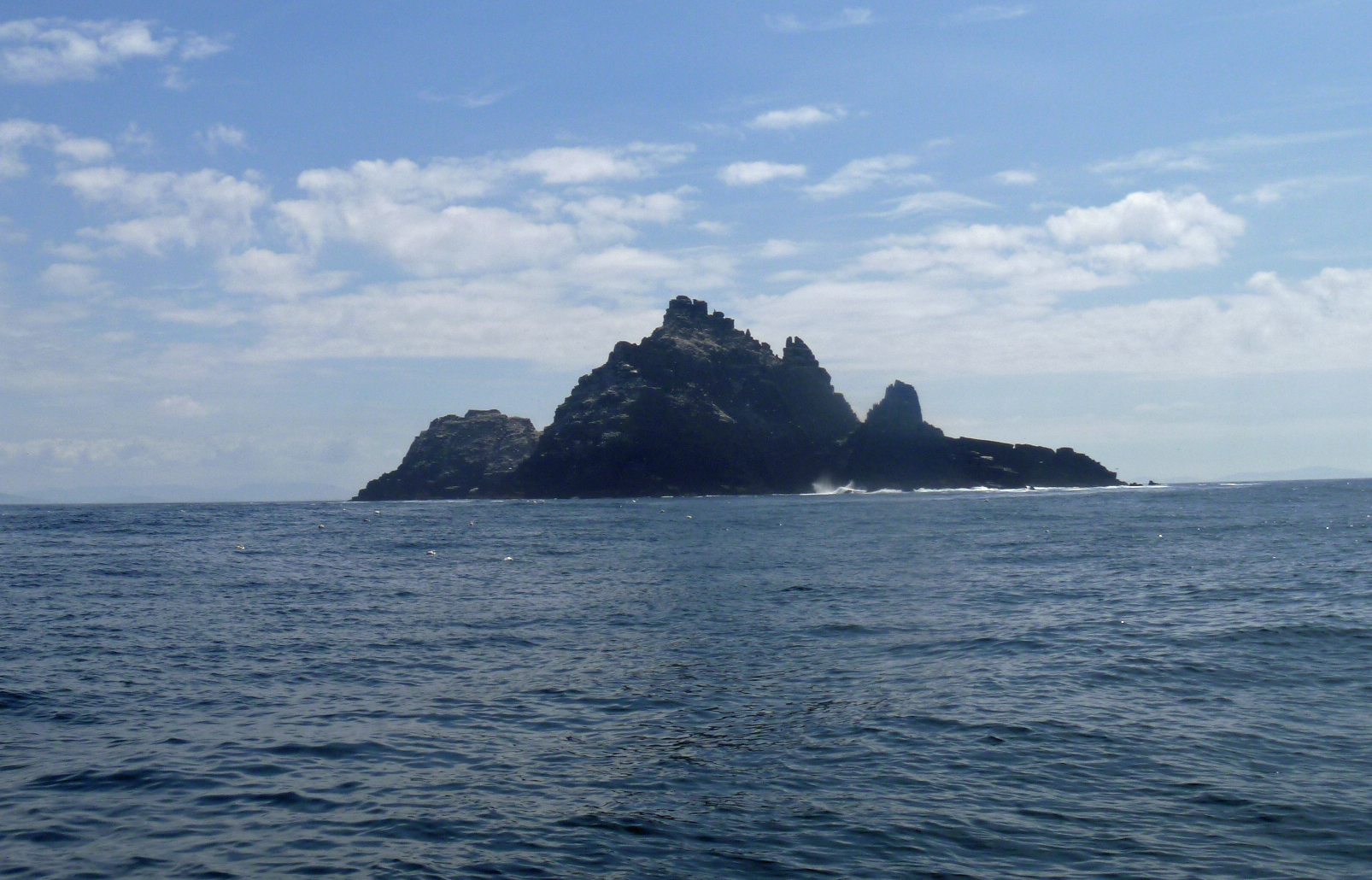
Had my sister Paula not read in her guide book about an offshore rock group with an ancient monastery at the top, we might never have visited the Skellig Islands. We considered hiking to the top of the 600+ steps to see the domed stone cells that may date back to 600 AD. If that weren’t enticing enough, the site appears at the end of Star Wars: The Force Awakens and in the trailer for the next Star Wars movie.
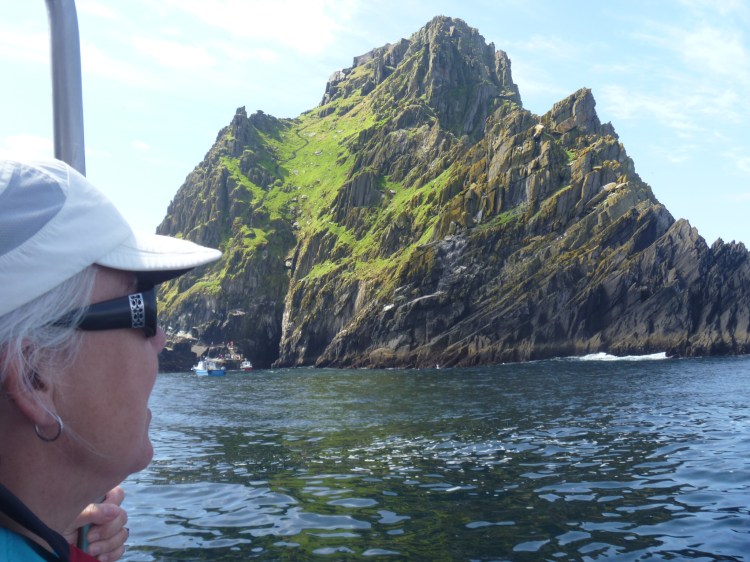
It’s an intimidating place. 12 km off shore, a jagged triangle juts from the water. After reading about landing, where there is no dock and heaving seas may toss you in or out of the boat, we decided against it (Tours are sold out for the entire season, too). We decided to take a ride around both islands to see the steep steps and birdwatch. It was a wonderful tour!
We had total weather karma. The day dawned sunny for the first time since we arrived in Ireland and stayed sunny and warm ALL DAY. It took us just over two hours to drive from our house in Dingle to Port Magee, mostly along the Ring of Kerry drive, so you could say we were multi-tasking in the tourism department. Our boat left at 11:45 am and we were asked to arrive at the dock by 11:30 am. A friendly young man named Brendan, dressed in a dirty tshirt and jeans strolled out and ticked our names off a list on his phone. He led us to the boat where there were 12 outward facing seats hung with life jackets. Dressed, we took off, heading straight out to sea for 45 min. The islands, two triangular chunks of rock, stick up out of the sea and are easily visible from shore. Cliffs and hills line the coast on the way out to sea from Port Magee, then Puffin Island off to the south, then sea birds zoom alongside the boat or bob on the water. (What are they doing, just hanging out in the middle of the ocean?) We saw gannets and then puffins, the world’s cutest birds.
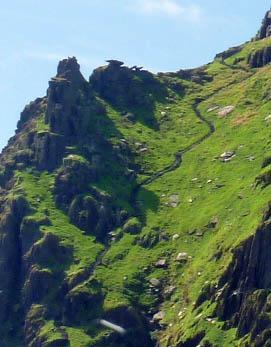
More steps wind up the face of the rock. Made of slabs of the island rock, it’s a long hike. The path on the right is not used today, though rock climbers can access the top this way. The safety video that is recommended for people considering a landing on Skellig Michael shows what the climb looks like in wet weather. (As I write this, the fog is so thick that we can see nothing beyond the front yard of our house. I wonder whether the Skellig boats will go out today.) The safety video shows the stone steps.
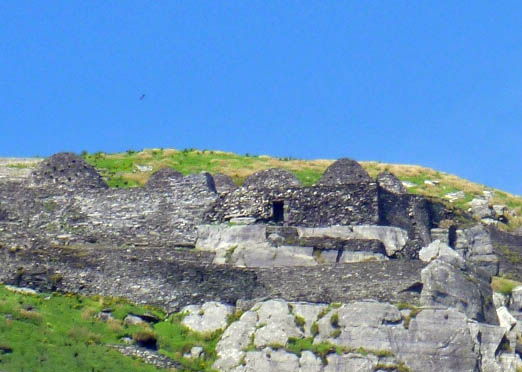
One reason to make the climb to the top is the archaeological site, a tiny monastery of stone beehive huts enclosed by a wall that was in use at various times from the 8th century until the 13th century. Monks rowed out to the island, climbed to the tiny settlement and lived their hermit existence. The island was finally abandoned when the climate began to shift toward colder weather after 1300. There are beautiful views of the archaeological site on the Heritage Ireland website.
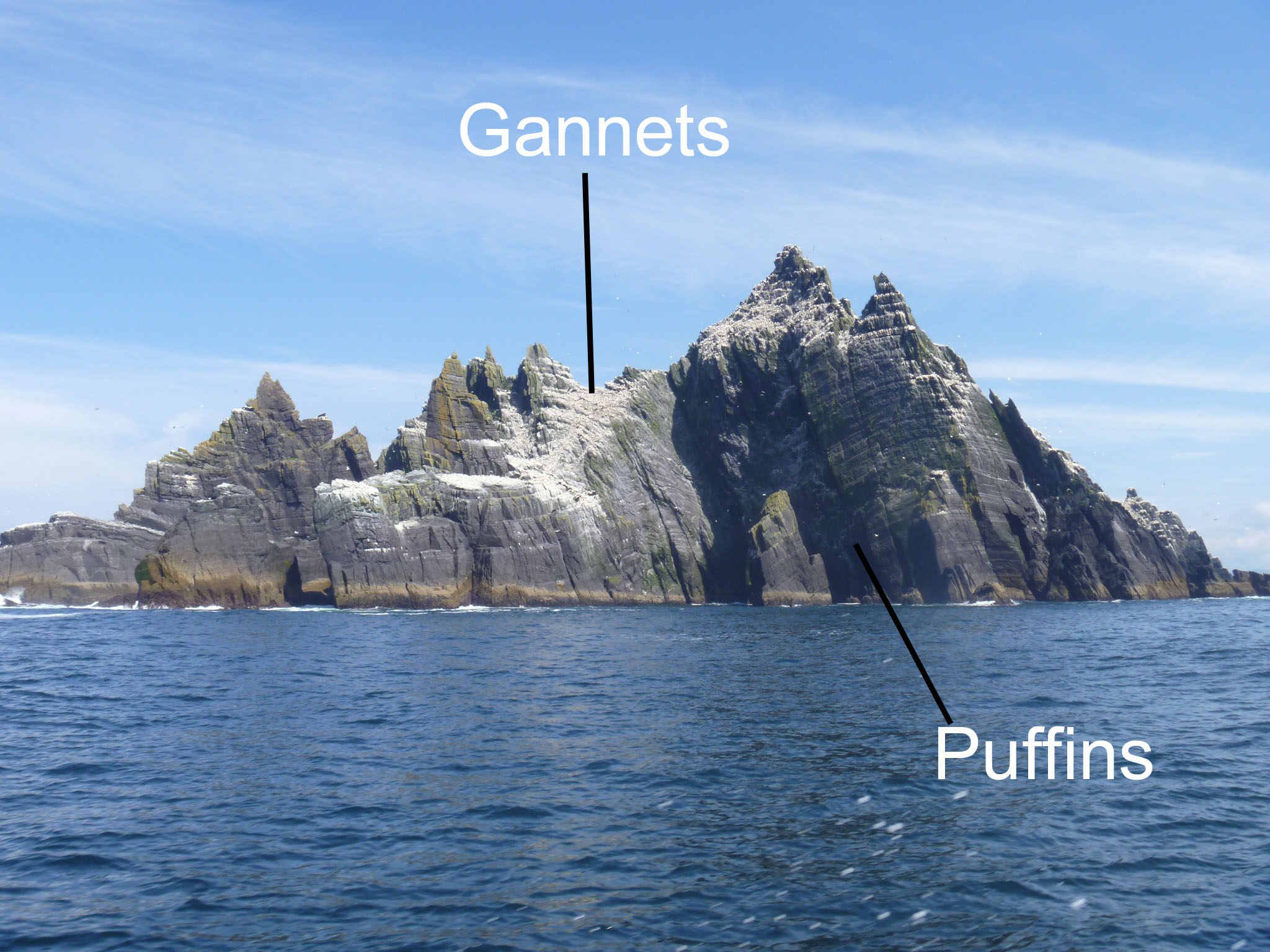
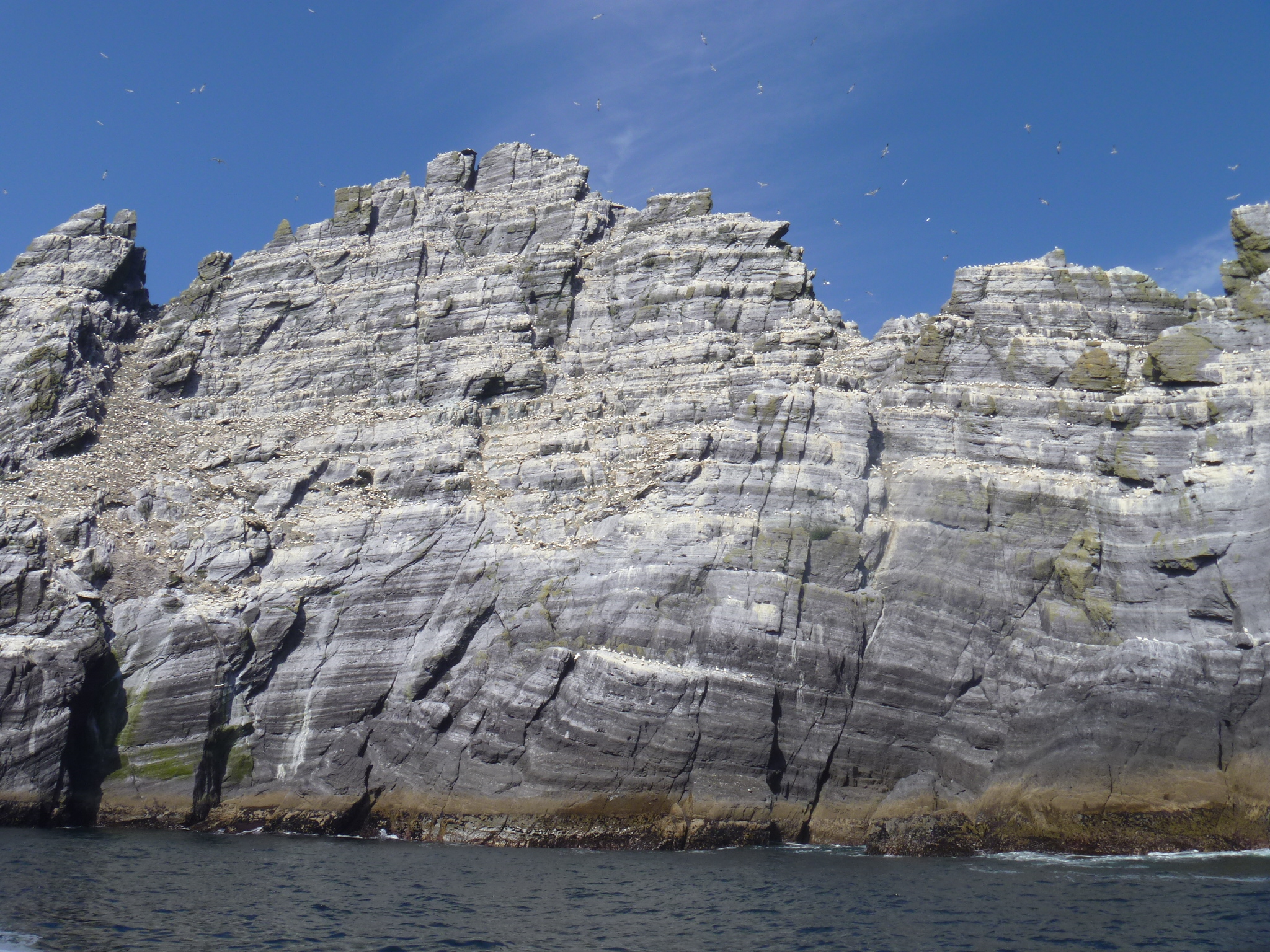
From Skellig Michael we went on to Little Skellig, a bird sanctuary. The entire surface of the island is alive with birds. This is home to one of the largest gannet colonies anywhere.Up close, you see the white area is all birds, calling, flying, wriggling and doing what birds do. The majority of the birds are gannets, but in the lowest most sheltered crevices we could see puffins.So many birds, so little time.
From Little Skellig, we sailed back to Port Magee, delighted by our brilliant day.
Ireland is very green and lovely, and when the sun is out the views are spectacular. When I asked my daughter, Lillian, how she dealt with the changeable weather when she was here she said she always wore her rain jacket. That’s a must. We tried scheduling activities according to the weather report this first week in Dingle. (That was a silly idea.) The weather never corresponded to the forecast, and the days that were supposed to have pouring rain had sun, and the day that was supposed to be sunny had fog so thick you couldn’t see the water from the cliffs. (We’ll go see the view another time.) Everyone goes about their touring as though the sun is out, and sometimes it comes out, sometimes the fog rises to the top of the hills, and other times it rains. Bring your boots/rain shoes.
We spent our first week getting to know the Dingle Peninsula, visiting some of the beaches and the many archaeological sites. We also scoped out the local grocery store (Supervalu), weekly market (Saturday mornings), and ice cream store (Murphy’s). We chatted with visitors from the US, the UK and Italy, as well as the delightful host of our house here, Marie.
There are lots and lots of historic and archaeological sites on the Dingle peninsula, and most of them are some kind of circular structure, like these two places.
Jonathan is standing up on the wall of the Cathergall stone fort
Leacanabuile stone fort.
Jonathan is standing on the wall of the stone fort on the left.
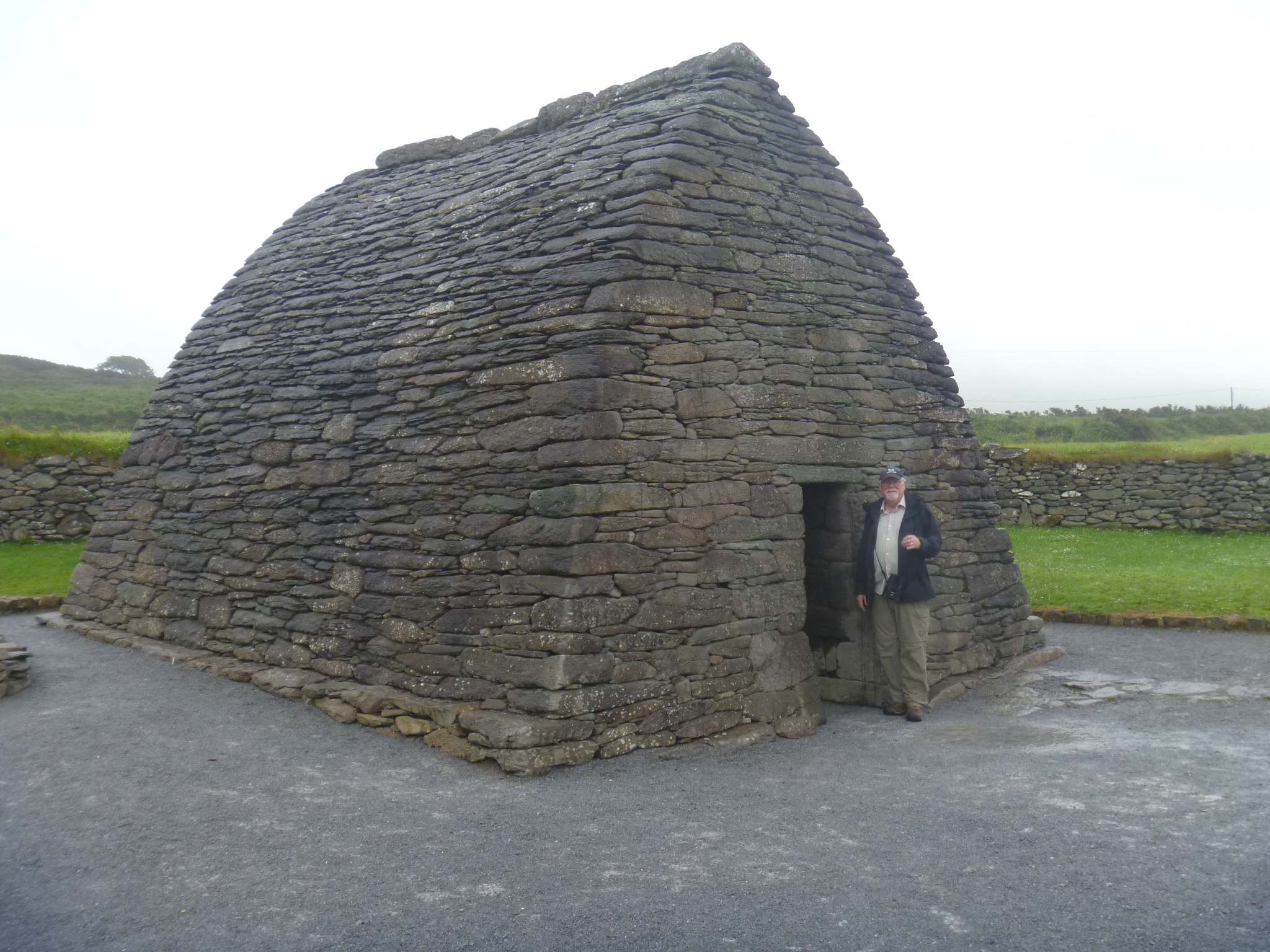
Like many places, preservation is a difficult issue. There are about 1200 documented historic features on the Dingle Peninsula alone, and most of them are not restored–how many stone circles are people interested in visiting? There are a number of small chapels called oratories that date from Irish christian worship as early as 600 AD. The most intriguing is the Gallarus Oratory. It is a tiny log cabin-sized box of a building with only a small door and a tiny window. The entire building is made out of flat pieces of stone that overlap so that water flows off the roof and sides. It claims to never have been restored.
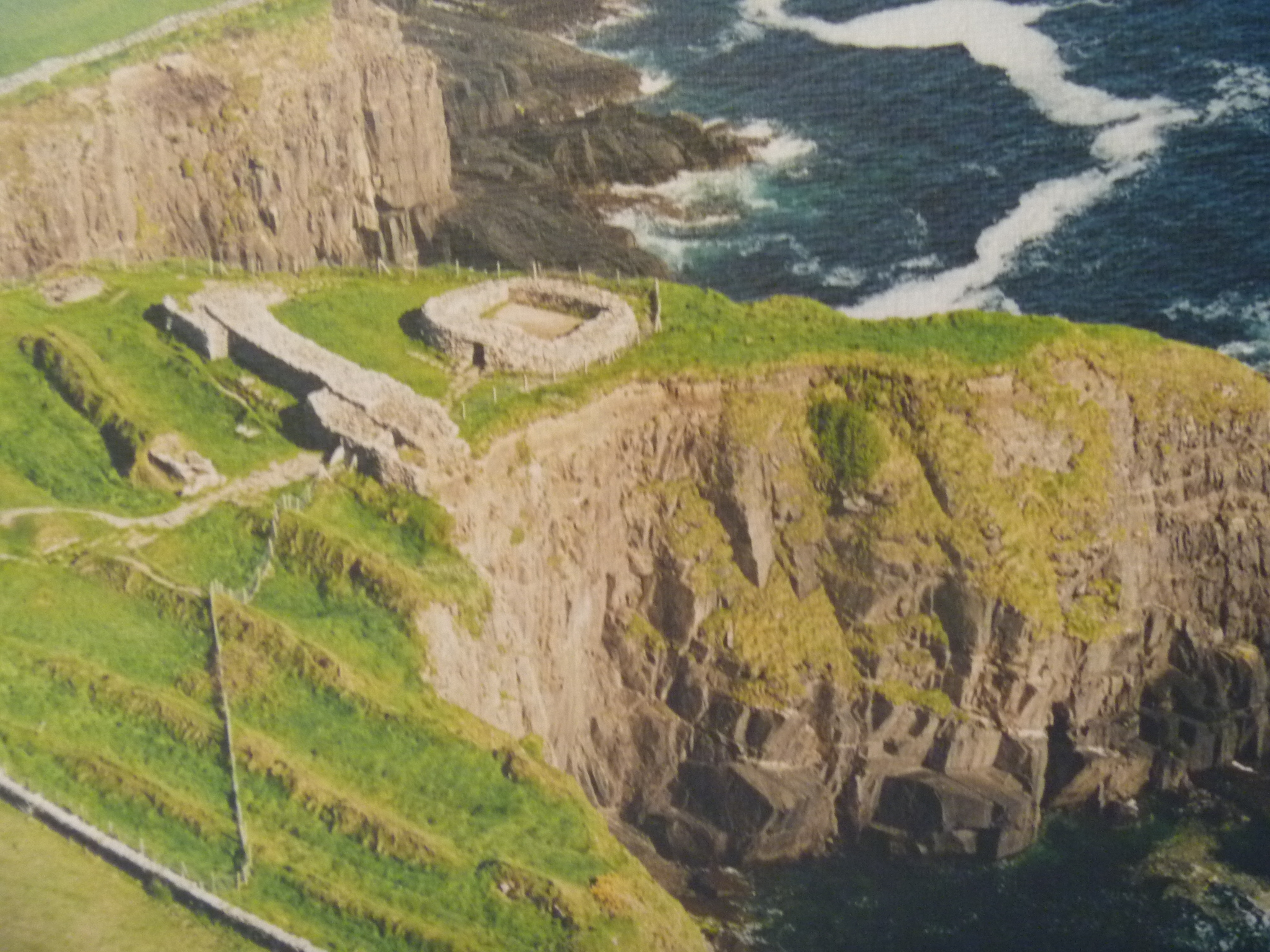
The amazing preservation of Gallarus is counterbalanced by the eventual disappearance of the Dun Beg Promontory Fort. Perched on a cliff overlooking Dingle Bay, erosion is taking its toll and about half of the main wall has fallen in due to erosion of the cliff edge. In the past, entry was through the center doorway. Now that door is too close to the cliff edge and visitors circle around the end that is not falling into the sea.You can see in this photo from the site where the cliff edge gave way (in 2014). How much longer will the remainder of the fort last? There is nothing that can be done to save it in the long run. As if this were not enough archaeology, we happened to see a notice for a talk on the archaeology of the Blasket Islands that are off the end of the Dingle Peninsula. We were part of a full house in a local hotel meeting room and saw maps of the islands that go back to the 1400s. Like many places around here, very little archaeology has been carried out. Despite this, the case of the Blasket Islands is interesting because people lived on Great Blasket until 1953 when they agreed to be moved to the mainland to obtain services like school, church and stores.
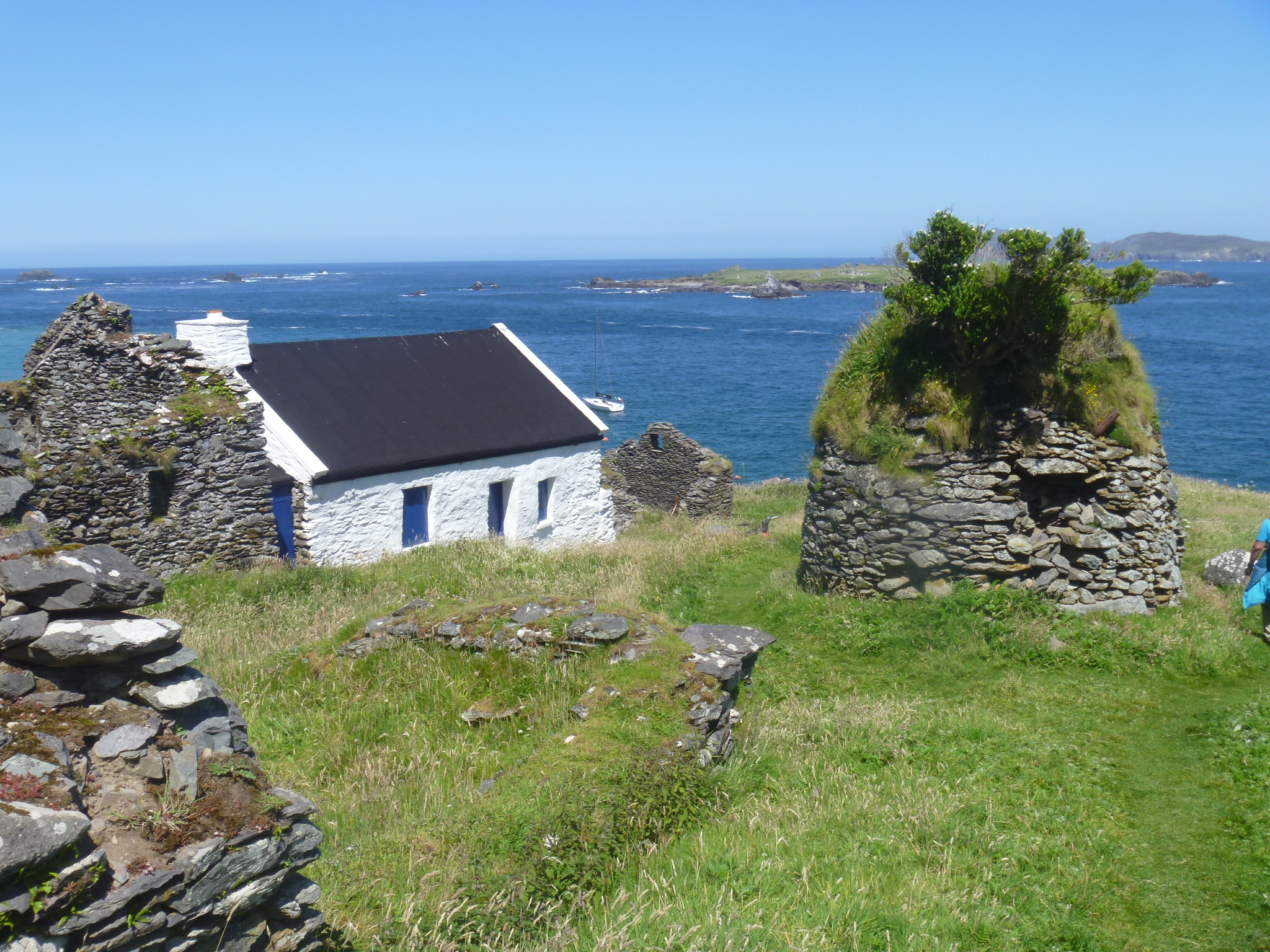
This view of the domed stone hut on Great Blasket Island is similar to one I saw years ago on a calendar. I’ve had the Dingle Peninsula in the back of my mind ever since. It is great to finally be here.
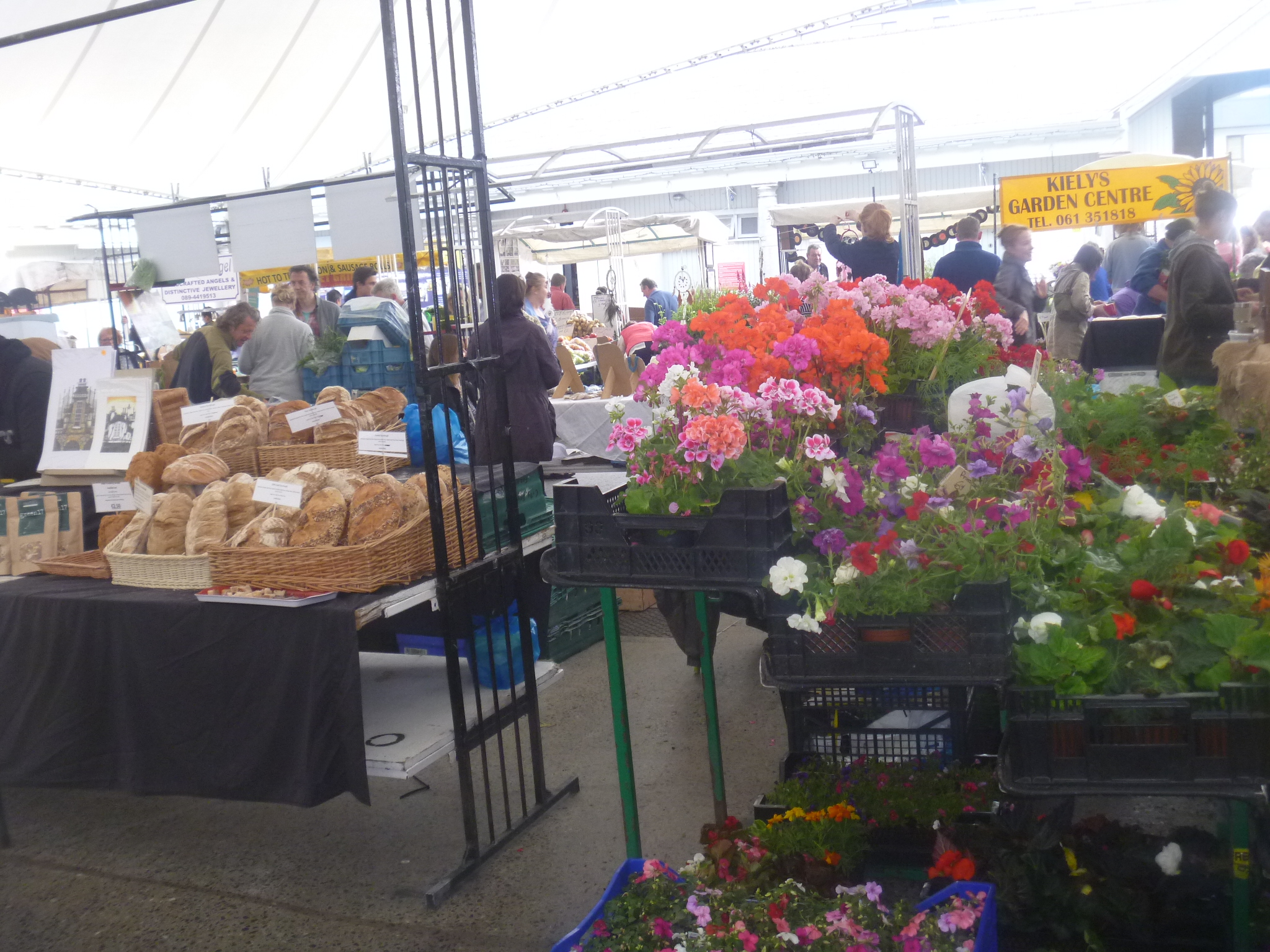
We made the move to Ireland from Italy, landing in Dublin and staying overnight in Limerick. On Saturday morning, there is a weekly market called the Milk Market. It is a perfect size and holds a wide variety of goods. Vendors carry delicious salami (fennel, wild boar), and cheeses (Irish cheddar), bread, fruits and vegetables, as well as art and jewelry. We bought local strawberries that were tender and delicious. I checked our Michelin and Lonely Planet guidebooks and neither one had a word for Limerick. It goes to show that you can find interesting things to do by looking around.
We went on to our new home outside Dingle, in the heart of the Dingle peninsula. Our host Marie met us–we managed to find the house on our own–and showed us around. The big change for us is the range of ‘mod cons’. Where our host in Italy was apologetic about no microwave (they tried one and it blew out the power), here we have not only a toaster and microwave, but a dishwasher (oooooh) and not only a washing machine, but a dryer. Our internet is fast, and the heat can be turned on to burn off the chill. Did I mention that it is almost 30° F. cooler here than in Florence? In Florence, it was regularly 90º+ and here it barely creeps over 60º. So far I’m enjoying the change and it hasn’t rained heavily when we were out. A bit of llovizna (Peruvian sea mist) is no trouble. Here’s our Dingle home:
This slideshow requires JavaScript.
Hicimos el traslado a Irlanda desde Italia, aterrizando en Dublín y pasando la noche en Limerick. El sábado por la mañana, hay un mercado semanal llamado el mercado de la leche. Es un tamaño perfecto y tiene una amplia variedad de productos. Los vendedores llevan el salami delicioso (hinojo, jabalí), y quesos (cheddar irlandés), pan, frutas y verduras, así como arte y joyería. Compramos fresas locales que eran tiernos y deliciosos. Me registré nuestra guía Michelin y Lonely Planet guías y ni uno tenía una palabra para Limerick. Va a demostrar que usted puede encontrar cosas interesantes para hacer mirando alrededor.
Nos fuimos a nuestra nueva casa fuera Dingle, en el corazón de la península de Dingle. Nuestro anfitrión Marie nos recibió – nos las arreglamos para encontrar la casa por nuestra cuenta – y nos mostró alrededor. El gran cambio para nosotros es la gama de electrodomesticos. Donde nuestro anfitrión en Italia se disculpó por no microondas (intentaron uno y sopló el poder), aquí tenemos no sólo una tostadora y microondas, pero un lavavajillas (oooooh) y no sólo una lavadora, pero una secadora. Nuestro Internet es rápido, y el calor se puede encender para quemar el frío. ¿Mencioné que es casi 30 ° F. más frío aquí que en Florencia? En Florencia, era regularmente 90º + y aquí apenas se arrastra sobre 60º. Hasta ahora estoy disfrutando del cambio y no ha llovido mucho cuando estábamos fuera. Un poco de llovizna no es ningún problema. Aquí está nuestro hogar de Dingle:
Arriverderci means “until we see each other again.” We will return to Italy in September after cooling off for two months in Ireland. I’ve already commented on dealing with crowds (“Top Ten” post), so here are a few interim comments on Florence and our Italian travels in general.
Arriverderci significa “hasta que nos veamos de nuevo”. Volveremos a Italia en septiembre después de refrescarnos por dos meses en Irlanda. Ya he comentado sobre tratar con multitudes (“Top Ten” post), así que aquí hay unos cuantos comentarios provisionales sobre Florencia y nuestros viajes italianos en general.
Good to Know about Florence.
Parade to the Calcio Storico (Historic Soccer) match between the Red and White teams. (It was over 90º).
If you’ve read my post on the Top Ten problem, some of my comments may sound like repeats, but you can’t avoid the fact the Florence has a very long high season (early March through the first week in November, plus New Year’s and Pitti fashion week) and a very short low season (mid-November to the beginning of March minus the events mentioned). Most of the low season is cold and wet. March and early April are good times to visit but there will be crowds. I imagine the same is true from mid-Septemper through early November. We were in Florence during June and while the start of the month was good weather, at least half the month was very hot, too hot for comfortable visiting. I would not visit Florence again in June.
On the positive side, many people speak some English, yet are willing to let you try your Italian. Store personnel are often very good about letting you practice. Keep in mind though, that the busier the place, the less patience people will have. In busier localities, every business, whether restaurant or shop, is likely to provide less personal service because they are worn out by all of us who are visiting at the same time. Control your expectations. Not everyone is going to burst into happy song as you arrive.
Florence is small enough that if you stay near the center, you may never need to ride a bus or tram unless you are going on an excursion. If you stay outside the center, there is a bus system and the start of an excellent tram system. We happened to stay where there was access to a tram stop and that made it easy to go into the city center. There are plans for a tram line that will reach the airport. At present, the fare is €1.20 for 90 minutes of travel on any line—except—you cannot make a round trip on a single ticket even if you are able to make the circuit in 90 min or less. We found it convenient for going in and out of the city center.
There are lots of things to see in Florence, but most of it is art spanning the period from the Etruscans through the Renaissance, or about 700 BC-1750 AD. After a while, it is difficult to keep paying attention, especially if you begin with a “great” museum like the Uffizi where there are so many wonderful works. After that experience, if you visit a church that has one small work by a known artist, it’s a bit difficult to feel the wow! Consider my friend Joyce’s “Church of the Day” plan and limit your visits so that you don’t forget where you’ve been and why it was interesting.
Información útil sobre Florencia.
Si has leído mi post en el Top Ten, algunos de mis comentarios pueden sonar como repeticiones, pero no se puede evitar el hecho de que la Florencia tiene una temporada alta muy larga (principios de marzo a través de la primera semana de noviembre, además de Nueva Año y semana de la moda Pitti) y una temporada baja muy corta (mediados de noviembre a principios de marzo menos los eventos mencionados). La mayor parte de la temporada baja es fría y húmeda. Marzo y principios de abril son buenos momentos para visitar, pero habrá multitudes. Me imagino que lo mismo es cierto desde mediados de septiembre hasta principios de noviembre. Estuvimos en Florencia durante junio y mientras el comienzo del mes era buen tiempo, por lo menos la mitad del mes era muy caliente, demasiado caliente para visitar cómodo. No volvería a visitar Florencia de nuevo en junio.
En el lado positivo, aunque muchas personas hablan algo de inglés, puede probar su italiano. El personal del almacén es a menudo muy bueno sobre el dejar de practicar. Tenga en cuenta, sin embargo, que el más ocupado el lugar, la gente menos paciencia tendrá. En las localidades más concurridas, cada negocio, ya sea un restaurante o tienda, es probable que proporcione un servicio menos personal porque están gastados por todos nosotros que están visitando al mismo tiempo. Controle sus expectativas. No todo el mundo va a estallar en la canción feliz a medida que llegas.
Florencia es lo suficientemente pequeño como para que si te quedas cerca del centro, puede que nunca necesite ir en autobús o tranvía a menos que vayas a una excursión. Si te quedas fuera del centro, hay un sistema de autobuses y el comienzo de un sistema de tranvía. Nos pasó a estar donde había acceso a una parada de tranvía y que hizo que sea fácil ir al centro de la ciudad. Hay planes para una línea de tranvía que llegará al aeropuerto. En la actualidad, la tarifa es de € 1.20 por 90 minutos de viaje en cualquier línea-excepto-no se puede hacer un viaje de ida y vuelta en un solo billete, incluso si usted es capaz de hacer el circuito en 90 minutos o menos. Nos pareció conveniente.
Hay muchas cosas que ver en Florencia, pero la mayoría de ella es el arte que abarca el período de los etruscos a través del Renacimiento, o alrededor de 700 aC-1750 dC. Después de un tiempo, es difícil seguir prestando atención, especialmente si usted comienza con un “gran” museo como el Uffizi donde hay tantas obras maravillosas. Después de esa experiencia, si usted visita una iglesia que tiene un pequeño trabajo de un artista conocido, es un poco difícil sentir el wow! Considera el plan de “Iglesia del Día” de mi amiga Joyce y limita tus visitas para que no te olvides donde has estado y por qué fue interesante.
Some things I love about Italy so far:
Sitting in a cafe, anywhere.
Pistachio spread. It’s frosting for toast–delicious!
Fresh nectarines and peaches that taste divine (not mushy as in US supermarkets).
Escaped parrots. We saw flashes of bright green ones in Rome.
Strolling uncrowded back streets. (Don’t do this if you are interested in shopping). The Castello neighborhood in Venice was particularly pleasant.
Marbled paper in Florence.
The Venice Lido and the island of Torcello.
The Italian game show “L’Heredità”. Great for vocabulary building.
Algunas cosas que me encantan de Italia hasta ahora:
Did I mention that I like gelato?
Sentado en un café, en cualquier lugar.
Pistacho. Es glaseado para tostadas – delicioso!
Nectarinas frescas y melocotones que sabor divino (no blanda como en los supermercados de Estados Unidos).
Los loros escapados. Vimos destellos de verde brillante en Roma.
Paseo por las calles secundarias. (No hagas esto si estás interesado en ir de compras). El barrio de Castello en Venecia era particularmente agradable.
Papel veteado en Florencia.
El Lido de Venecia y la isla de Torcello.
El espectáculo italiano “L’Heredità”. Ideal para la construcción de vocabulario.
Less attractive aspects of Italy:
A lot of Italy is hilly, and tall buildings sometimes act like hills in cutting cell network reception. If you count on your phone for directions, you’ll find times that it won’t get a signal. We bought a dedicated GPS unit to use in the car and found that it, too, sometimes cuts out. Layers of backup help. We have a GPS, two phones (one or the other usually works) and we have paper maps.
Italians always drive too fast for local conditions. Thus 40 kph in parking lots, and 150 kph on the autostrada. No matter how high the speed limit, people want to go faster. Italians do not understand stopping distance. You will be dangerously tailgated if someone comes up behind you on the highway and you will not get a blink of lights or a few seconds to get in the slower lane. Don’t even think of tapping your brakes to give them a scare, because that’s not understood, and you might both die in the ensuing accident.
The bigger the crowds, the poorer the service. See my post on Venice about the fact that Italy needs tourism, but many people employed in service jobs don’t particularly like tourists. Individual Italians are often wonderful people, but your reception in stores and cafes will vary. Be pleased when people are polite and friendly. We tip every person who is pleasant.
Aspectos menos atractivos de Italia:
Una gran cantidad de Italia es montañosa, y edificios altos a veces actúan como colinas en la recepción de la red celular. Si cuenta con su teléfono para direcciones, encontrará tiempos que no obtendrá una señal. Compramos una unidad dedicada del GPS para utilizar en el coche y encontramos que, también, corta a veces. Tenemos un GPS, dos teléfonos (uno u otro normalmente funciona) y tenemos mapas de papel. Con todos estos llegamos.
Los italianos siempre conducen demasiado rápido para las condiciones locales. Así, 40 kph en estacionamientos, y 150 kph en la autostrada. No importa cuán alto el límite de velocidad, la gente quiere ir más rápido.
Los italianos no entienden la distancia de parada. Usted estará peligrosamente tailgated si alguien viene detrás de usted en la carretera y no obtendrá un parpadeo de luces o unos segundos para entrar en el carril más lento. Ni siquiera pienses en tocar los frenos para darles un susto, porque eso no se entiende, y ambos podrían morir en el accidente que se avecinaba.
Cuanto más grandes son las multitudes, peor es el servicio. Ver mi post de Venecia sobre el hecho de que Italia necesita turismo, pero mucha gente empleada en trabajos de servicio no les agradan las turistas. Individualmente, los italianos pueden ser personas maravillosas, pero no cuenta con una sonrisa en cada negocio y café. Aprecia la gente amable. Dejamos propina en cada café con personal agradable.