We chose a peculiar area for this trip, based on our archaeology backgrounds. We wanted to visit the sites we’d heard of for so long. Neither of us looked at the region on GoogleEarth, for example, where it appears as a gray patch on the otherwise bright green surface of Ecuador. At this time of year, the Santa Elena peninsula is very dry and tends to be overcast, which we discovered when we drove north to visit the Valdivia museum and the sun was out. On the days we’ve driven north, the sun has appeared as soon as we get about 10 miles up the road.
We discovered the charms of the region right away. We walked down the beach in front of our house and found a man playing a romantic Latin tune on the trumpet while the rest of his family swam and played on the beach.
On another day, we drove to the part of Ecuador that juts furthest into the Pacific Ocean, Salinas point. It was Saturday and there were lots of visitors. The ocean extended as far as anyone could see.
We had wonderful beach combing in many places. Playa Rosada is a place that many people recommend. I didn’t find the sand particularly pink, but perhaps the sun needs to be out. One of my favorite beaches is the stretch north of Valdivia and San Pablo and south of Montanita. We found a couple of very old pieces of beach glass, one colored lavender from the sun (these mostly date prior to 1915), the neck of a glass jug and the base of an old spirits bottle.
On the way home, we stopped for a look at the “Antiquities” store and saw old radios, fishing tackle, chandeliers, even electric typewriters, though I doubt they still work.
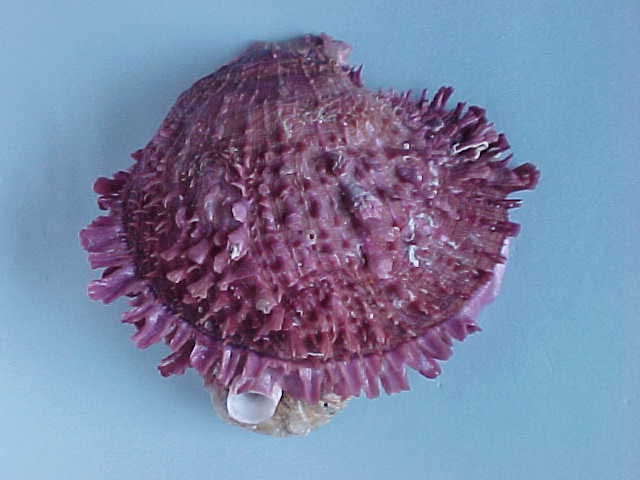
On our last day of beach combing, I found a piece of spondylus shell. It’s not much to look at, a piece from the center of a spondylus calcifer, but it’s the only fragment we’ve seen. A little research shows that there are spondylus species in all the world’s temperate oceans, so the shell that ends up in jewelry in Peru, where it is very popular with tourists (it was used by the Inca), probably is all imported from Asia. There certainly isn’t much left in Ecuador.
We visited beaches that host nesting turtles earlier in the year. There are even covers that are used to mark turtle nests, though wouldn’t it be better leave them anonymous? We also saw this sign, that I don’t think sends the correct message. It says: KEEP THE BEACHES CLEAN SO THAT MORE TOURISTS COME.
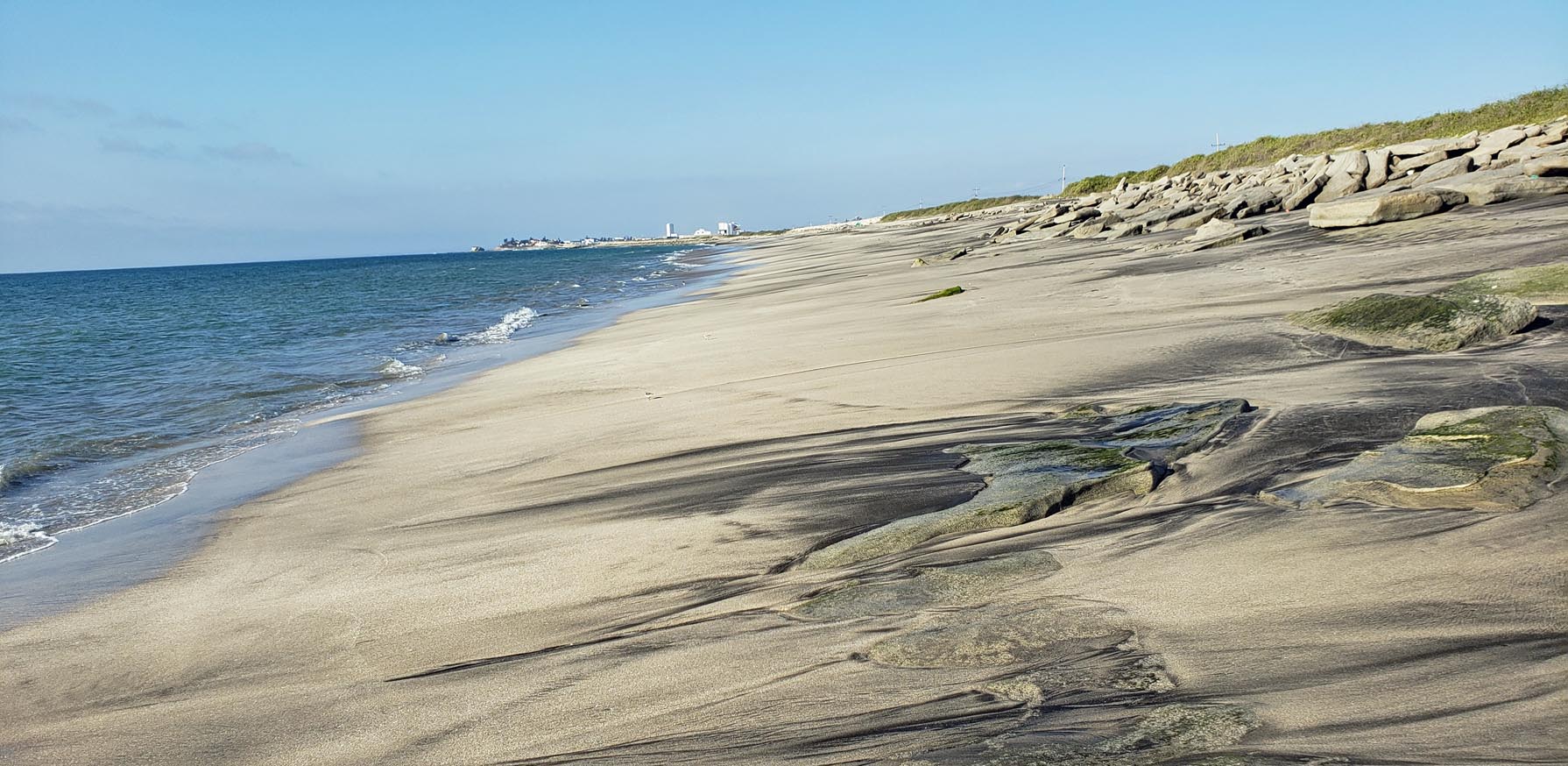
I’d rather have the beach kept clean because that’s good for everyone. When we walked on the beach we were reminded of the present state of the oceans. No matter where you are, there is lots of plastic on the shore. If you visit a clean beach, it’s because someone cleaned it before you arrived. There is no escaping ocean plastic, even on gorgeous beaches where it’s not immediately visible.
Romantically named, the Ruta del Spondylus highway borders the the ocean in places, then dips inland around high hills, making its way from northern Peru to northern Ecuador. It is named after the spondylus shell, brilliant orange or deep purple species that were used to make beads and jewelry by the ancient people of both Ecuador and Peru. These mollusks are only found in warmer waters–no spondylus were harvested in the waters off Peru, but the bright colored shell was traded south from Ecuador into Peru by 3000 BC, or perhaps even earlier.
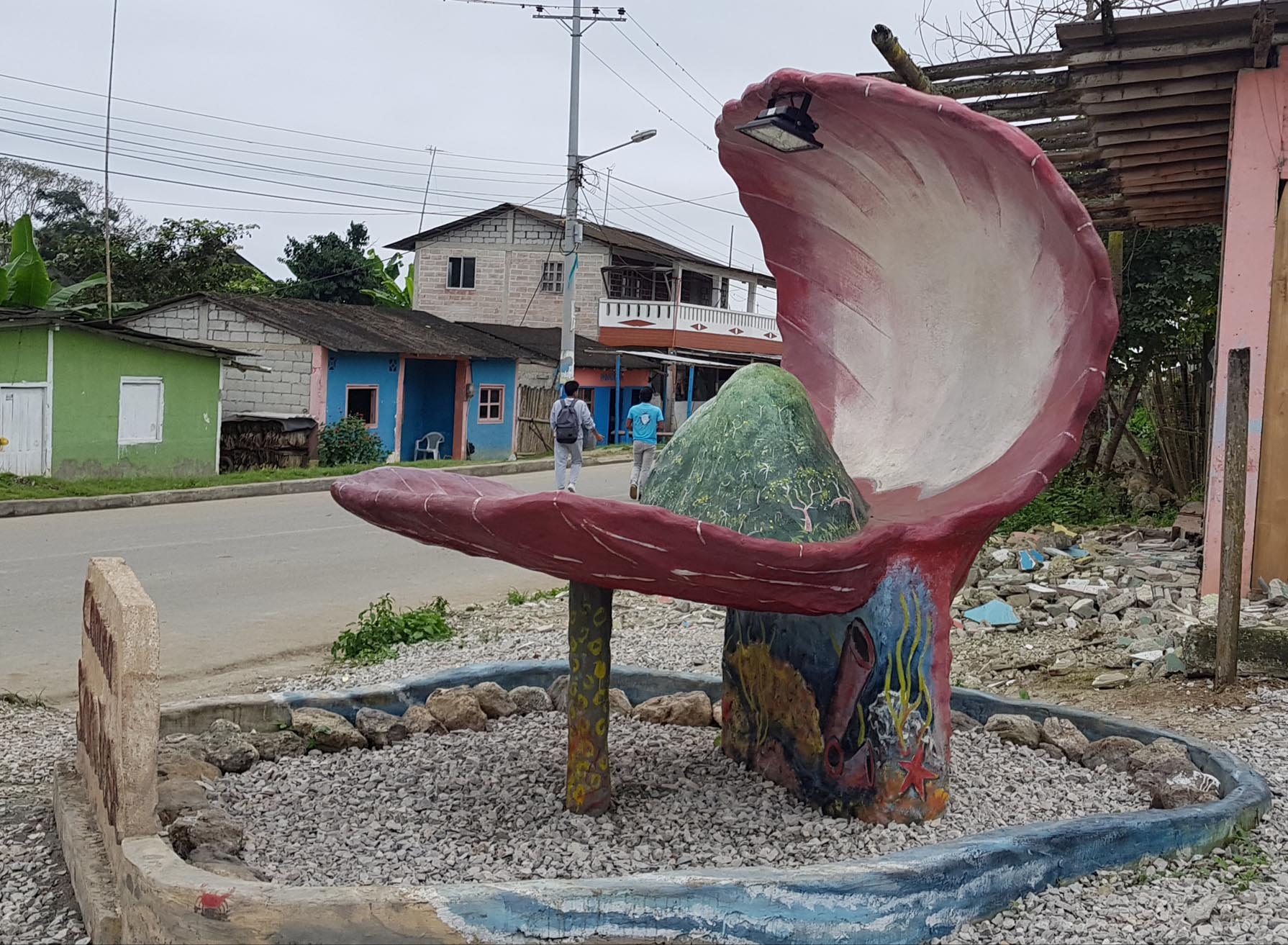
Over-harvesting resulted in a crash of spondylus and today it is in danger of extinction. The Ecuadorian government is supporting experiments in repopulating these species. We found no trace of spondylus in the many tourist souvenir stands along the roadway, though we found a local monument to these lovely shells. Jewelry made from spondylus shells is very popular among tourists visiting Peru, though the shell comes from all over the world. The romance of having something made from shell that was valuable to the Inca and their even earlier ancestors still captivates visitors.
In Ecuador, however, the greatest enchantment is in the beaches that line the route. There are well-known stops such as Playa Los Frailes or Playa Rosada (pinkish sand), and lesser known beaches that lack umbrellas and chairs for rent, but provide long stretches for a walk or a swim. We are visiting during the off season, the dark of winter to many Ecuadoreans because of the cloudy weather. It has not rained, but the sun has been out only two days of our first seven here. The Santa Elena peninsula, where we are located, is one of the driest places on the Ecuadorian coast. In GoogleEarth, it shows up as a grayish brown finger of land pointing out into the Pacific.
Part of the attraction to us is the deep history of the area. Ecuador was home to very early villages that formed by 3800 BC in places like Real Alto. We visited the museum at that site on one of our first days in the area and walked around. It’s a difficult sell for tourism, however, because there is nothing to see on the surface. The raised area where people built their houses is barely distinguishable from the surroundings, and even when the excavations were first being carried out, the astonishingly early remains consisted of the stones that formed the base of clusters of houses. There was never anything on the surface. You need a good imagination to build a circle of oval thatched houses in the brush that covers the area today. We enjoyed chatting with the young woman excavating some test units as part of a thesis project at ESPOL (Escuela Superior Politecnica del Litoral).
Our next archaeology stop was the Museo des Amantes de Sumpa, just down the street from our house, in the town of Santa Elena. We wanted to see the famous skeletons of a young couple buried together in an embrace. What we found was an excellent local museum with information on the ancient people of the region that was never boring or preachy (as a lot of museum text seems to be). In addition to the archaeological exhibits there was a recreation of a local house from a century ago that showed the very simple possessions people are likely to have had. Having heard a lot about hat-making in Ecuador (home of “real” Panama hats), we were interested to see that the equipment for making straw hats is unchanged between today and the 19th century. It was a lovely visit–I only wished they had a gift shop! We were impressed by the entire museum, which is carefully tended. The exhibits are not complex or high tech, yet they are absorbing. The meeting room of the museum was in use during our visit with a training program (according to the guard). It is nice to see the public spaces of a museum in use.
Our next stop was the museum at Valdivia, site of the oldest pottery in the New World when it was originally reported in the 1970s. Jonathan and I studied archaeology when this site was the next big thing, and Betty and Clifford Meggers and their Ecuadorean colleague Emilio Estrada, proposed that Validivia showed a connection between Japan’s ancient Jomon culture and the earliest ceramic-makers, as early as 4000 BC. Today this seems like an unlikely proposal. The similarities between Jomon and Valdivia pottery are related to the fact that there are only so many ways you can decorate pottery that is made and decorated by hand with no tool more complex than a pointed stick.
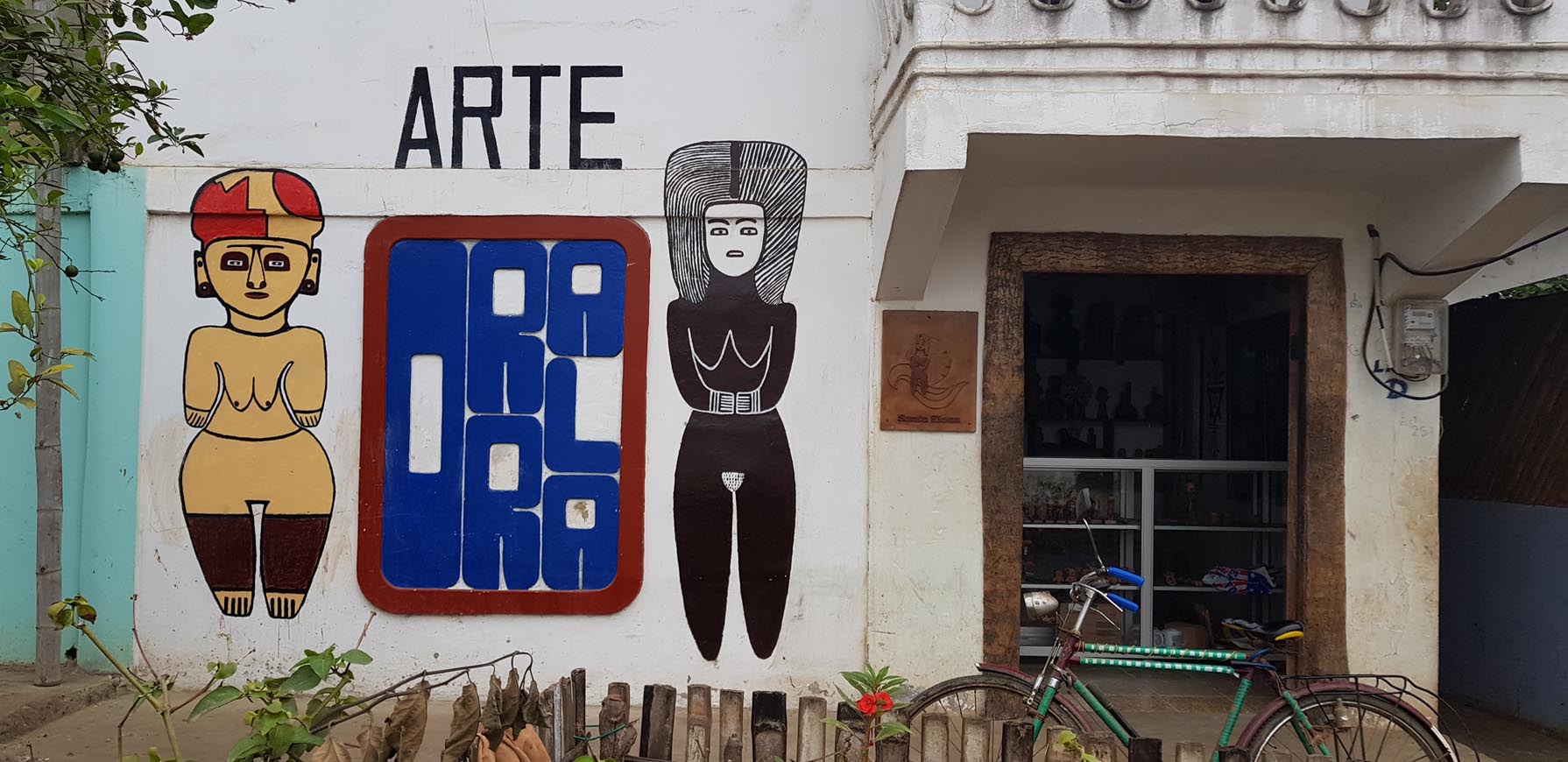
The Valdivia Museum is run by the community and has almost no budget. There are volunteer docents who were pleasant and knowledgeable, but there was almost no labeling and many of their photographs had disappeared or disintegrated. We enjoyed our visit. I was astonished to hear that the museum is built right on the middle of the excavated site. The town has grown up on and around it, covering up the site entirely. We stared at a low dirt embankment in the parking lot as though potsherds would be lying there waiting for us. Since none appeared, we asked whether anyone sold replicas of ancient pottery and were referred to a house around the corner, the home and studio of Juan Orrala, master replica-maker. We chatted and looked at his work, all the copies stamped with “Replica-Juan Orrala” in the clay of the base. His contemporary work inspired by ancient designs is beautifully made, so we took home some of each. What you see below is the replica figurine we purchased (8 in long), a whalebone figurine in the museum (about 24 in long) and a monument outside the town of Valdivia (about 6 ft. high). The museum holds hundreds of fragments of smaller clay versions of the “goddess.”
We also bought a matching plate and bowl set that we are already using as serving ware.We are happy to have met the talented Sr. Orrala.
We opted for a tour after finding it complicated to arrange an independent trip, choosing Birding Ecotours, a US based company that runs birding tours all over the world. An important starting point is to realize there are several clay licks. Make sure you know where you are going and what you may see. It’s also important to find a tour company that you believe will give you a good tour. I found Birding Ecotours through the website: Fatbirder.com that I’ve used to find birding spots on several occasions at places around the US and Europe.
Visiting the clay licks involves a flight to Puerto Maldonado, Peru. Our group of six and a guide stayed overnight at the inexpensive Cabana Quinta. Our room was small but the AC and hot water worked. Dinner in the restaurant was fine. In the morning, we drove for about 40 minutes on a paved road and another 40 on a very rutted unpaved road that can be impassable in rain. We visited the area in August, the dry season (Wet season is approx. Nov.-May). A short boat ride took us from the end of the road to the lodge. We left Puerto Maldonado at 8:30 am, did some birdwatching and arrived at the lodge by about 2 pm.
Lodging
We stayed at Chuncho Lodge, slightly closer to the clay licks than other lodges. They have five cabins that sleep 1-3 persons each, and a cabin with two adjacent rooms of similar size. Beds have mosquito netting. Two more cabins were under construction during our visit, and construction noise began at breakfast and continued until late afternoon.
There is no wifi.
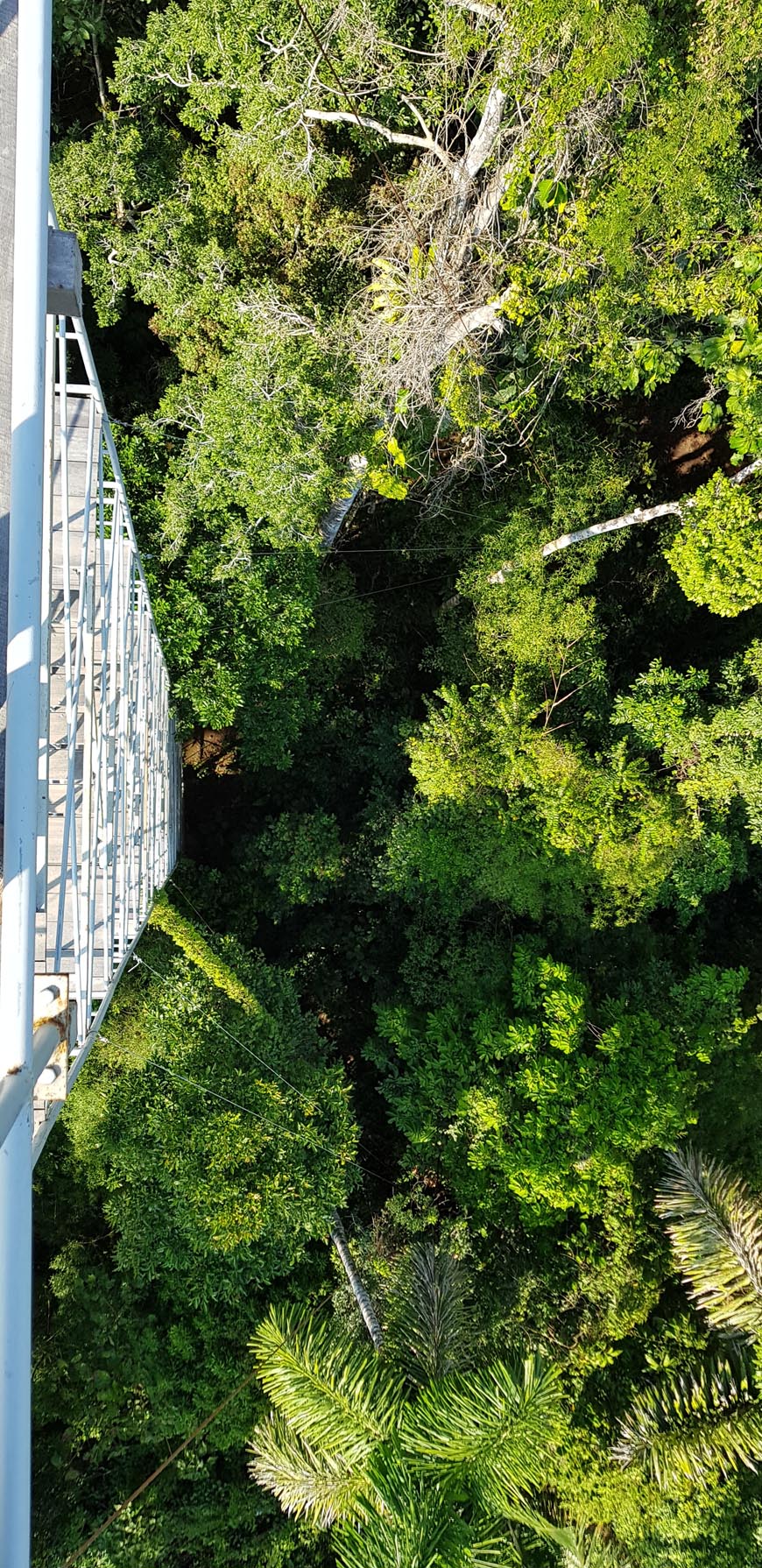
Phone service is limited to customers of Claro, and that can only be obtained at the top of the canopy observation tower that is 129 ft high and a 15 minute walk away from the lodge. A maximum of six persons can be at the top of the tower at one time. Despite this, guides and guests seemed to walk to the tower in the evenings (in the dark!) to make calls and admire the Milky Way.
Hot water and sometimes all water is only available when the power is on, 6 am-1 pm and 3:30-9 pm.
Weather
During the day the weather was very hot and very sticky with lots of insects. Bug spray was necessary and the day I forgot to shake all my clothes out in the morning before I got dressed I got a bunch of bites from a spider that seems to have climbed my pant leg. Consider tucking your pantlegs in your socks. The guides do.
Despite the lack of air conditioning and the fact that fans stop runnning at 9 pm when the power goes off, we had no trouble sleeping because of an unusual weather phenomenon, a “friaje.” In the past this occurred about twice a year at predictable times, this year it has occurred more than six times. Currents of cold air from further south toward the Antarctic are channeled up the river and chill the area at night resulting in temperatures much lower than normal. It can get to 10 degrees C. (50 F). Rather than tossing and turning in the sticky heat, we slept under all the available blankets. It was coldest on our first night at Chuncho Lodge but it was cool all three nights we were there, and it was easy to sleep.
Meals
All meals were provided. The food was very abundant but utterly uninspired. One birder who had been on the tour for three weeks before we arrived said he’d never look at another plantain after the tour ended. I was happy to have brought a few packets of starbucks instant coffee, cookies, peanuts and dried fruit. We ate it all.
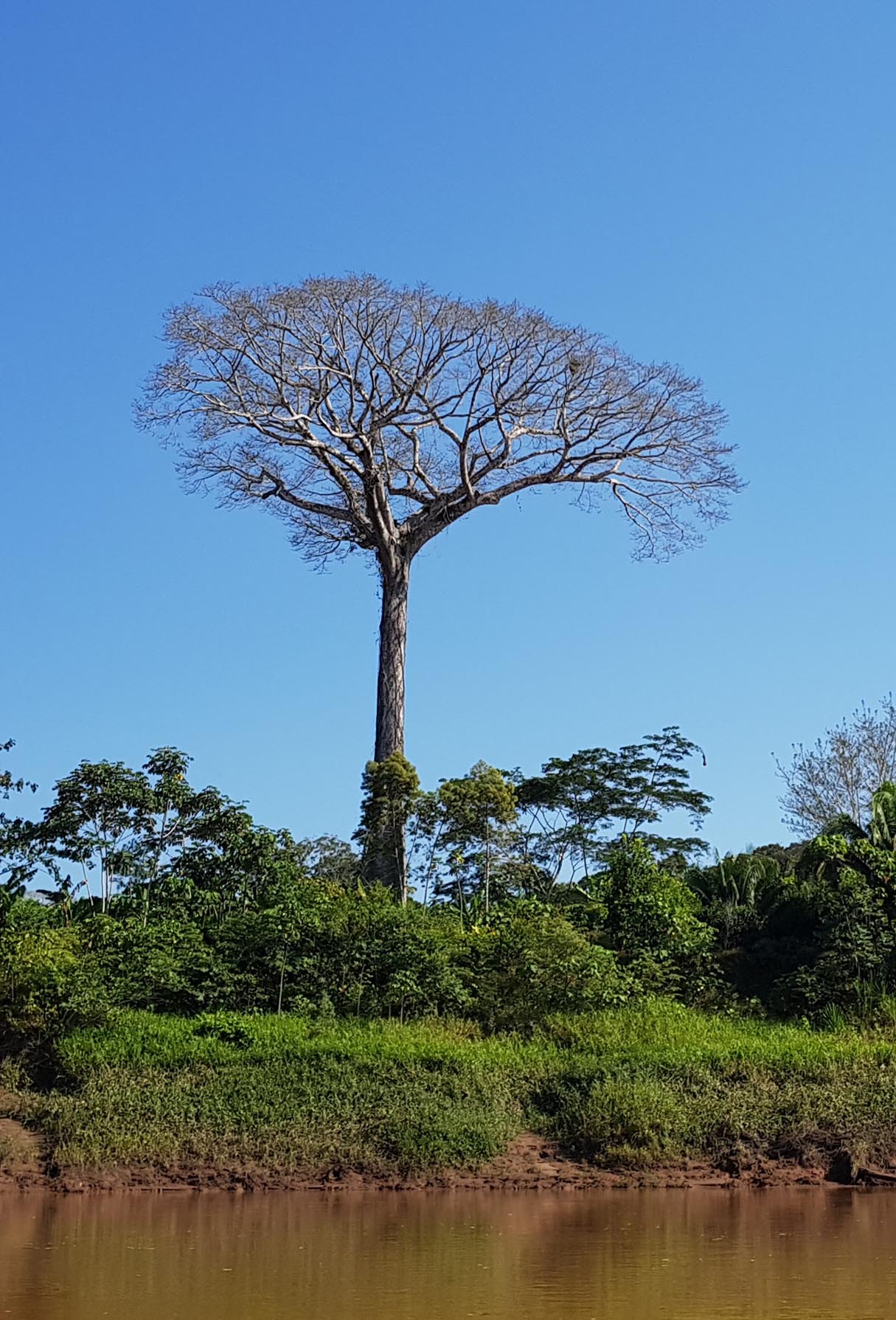
Several different species of birds were in and out of this huge tree during our morning on the observation tower.
Tour
Our tour included everything but alcoholic beverages and tips. It was expensive for us, just over $1600 pp for four days but there were no hidden costs. Our guide, Eduardo Ormaeche, was excellent. He worked hard to make sure everyone saw what they wanted to see and more. There are both cheaper and more expensive ways to see the phenomenon of the macaw clay licks and we were content with this version. Our tour included lots of birding time in addition to the visit to the clay licks. We spent at least six hours a day birding in total. We went on a walk at night to see owls, and on a sunset boat ride to see owls, nighthawks, nightjars and a potoo. The trails near the lodge always yielded new birds. The morning we spent on the canopy tower was full of interesting birds seen from a new angle above the canopy of trees. We saw 106 different species of birds during our four-day visit.
Positives and Negatives
Positives
1) Experience of a lifetime.
2) It’s all organized. People met us at every stop or change of transport. Eduardo was on hand from Lima to Chuncho Lodge and back to Puerto Maldonado. There were no surprise expenses.
Negatives
1) The region is hot and humid, there’s lots of walking, mosquitos, spiders.
2) The lodgings are rustic.
3) Seeing birds involves early mornings. We left at 5 am for the clay lick and almost as early on the other mornings. There is time for napping at midday but it can be too hot to sleep.
4) On a tour, you take your traveling companion as they come. You may or may not make new friends.
Would I do it again? Heck, yes.
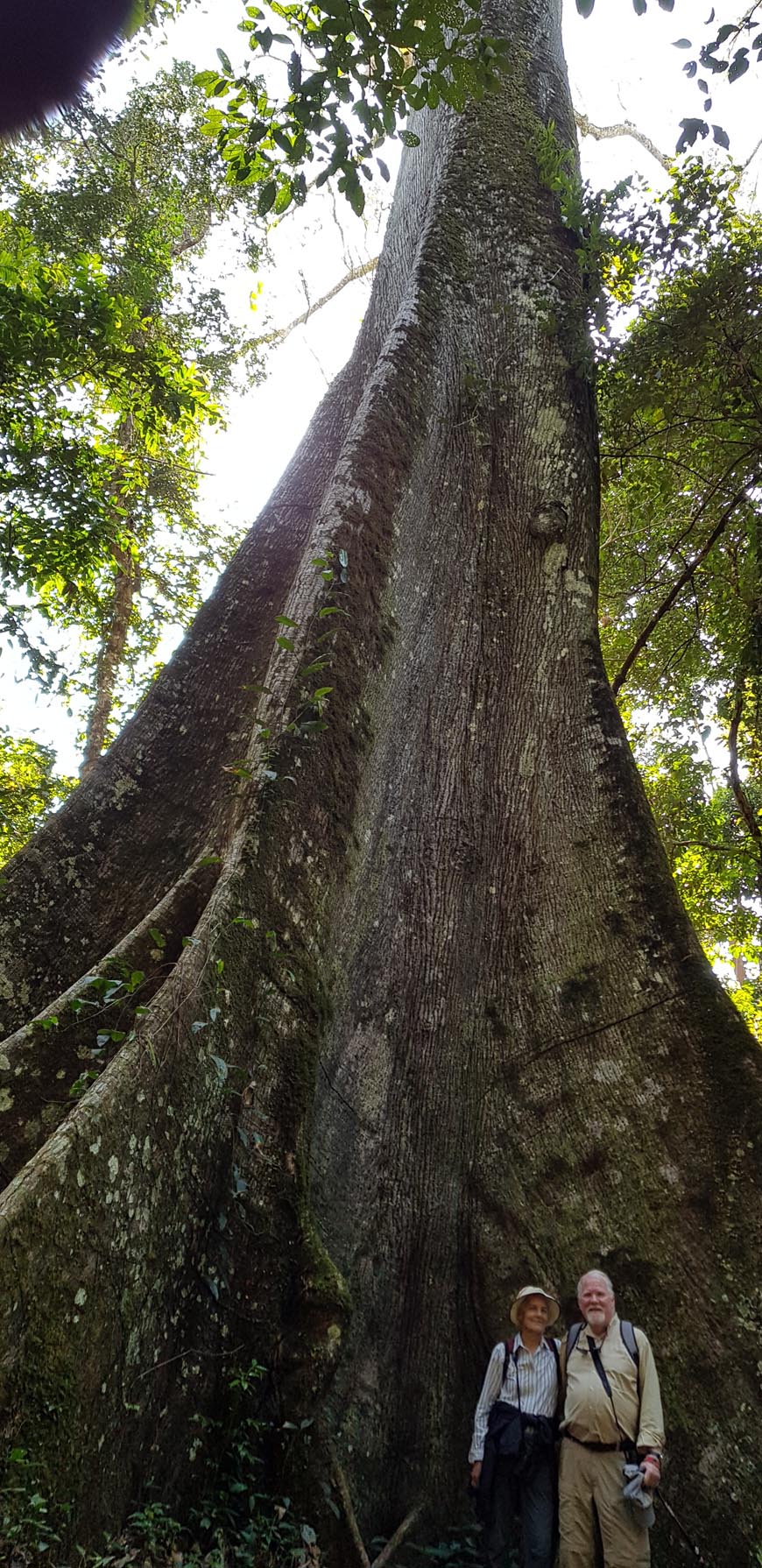
FYI: We were in the Amazon rainforest, where the humidity was usually at least 80% and the temperature over 80°F. Giant trees like the one we posed by are rare, most were logged over the past 20 years as the population of the region expanded and foreign desires for mahogany furniture overcame the scruples of people who had been farmers. One of the lodge staff members told us that his mother trained to be a nurse, but took a loan from an uncle and made a handsome living heading into the forest to commission (illegal) tree-cutting, until there were almost no large, desirable trees left. At that point, nature reserves and national parks were established. Everyone shrugged and became tour reps. There is still a lot to see and lots of birds in the forest even if it is recent regrowth. The occasional giant tree is a reminder of what is gone now.
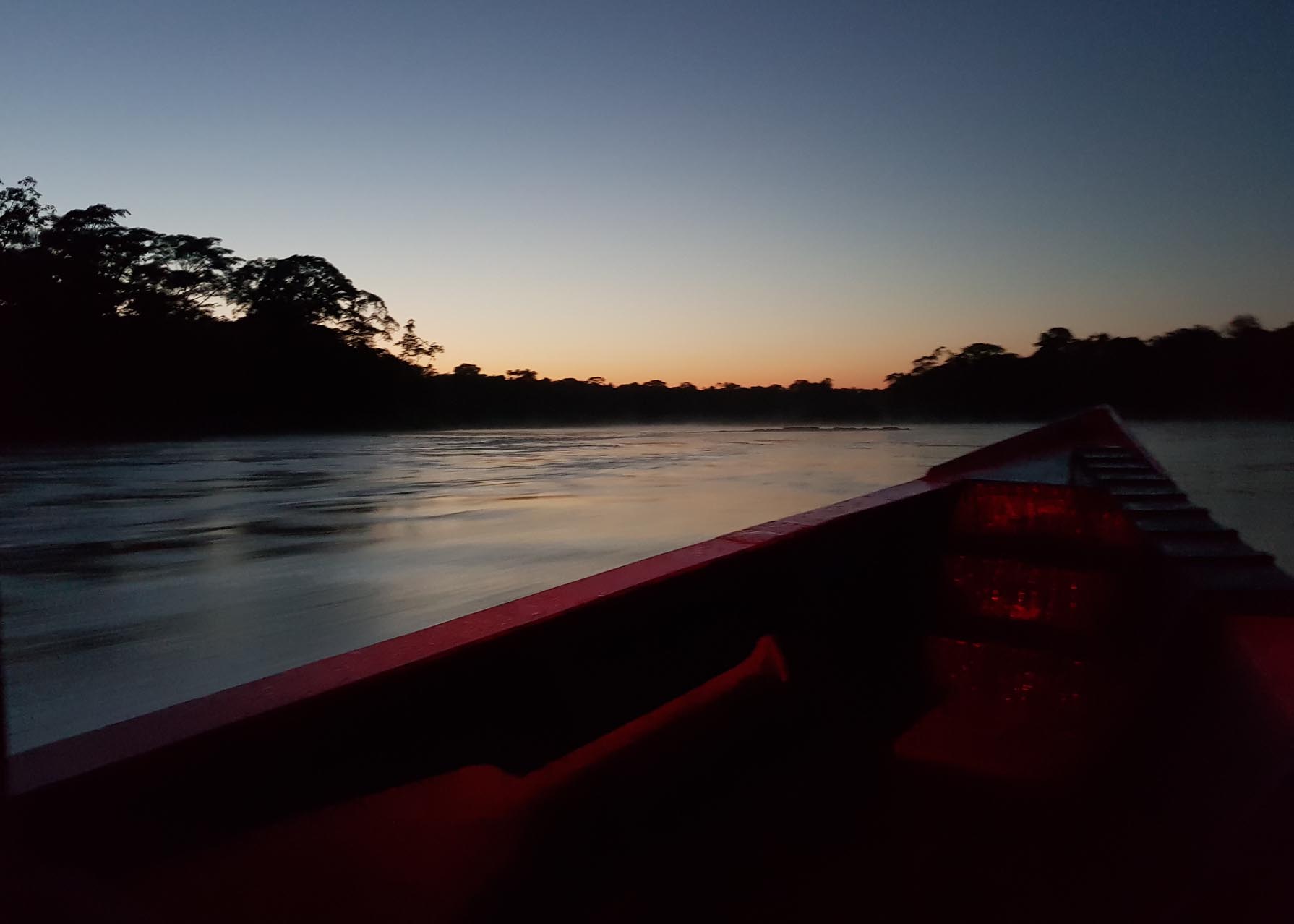
It was almost dawn, 5 am when we left the dock for an hour’s ride up the Tambopata River. Boatmen know their way around snags and shallow spots even in the dark. Our boat was long and narrow, the eight of us sitting on benches that faced each other, all of us leaning out to stare at the shore. They make no promises but many animals feed at dawn. Before long we saw three capybara (like 50 pound guinea pigs) grazing on the riverbank, then a caiman and then two more. A large heron stood by the shore, and turtles perched on logs. Looking at the river more than 100 yds wide and still hundreds of miles from emptying into the Amazon, it is difficult to comprehend the immense size of the Amazon Basin.
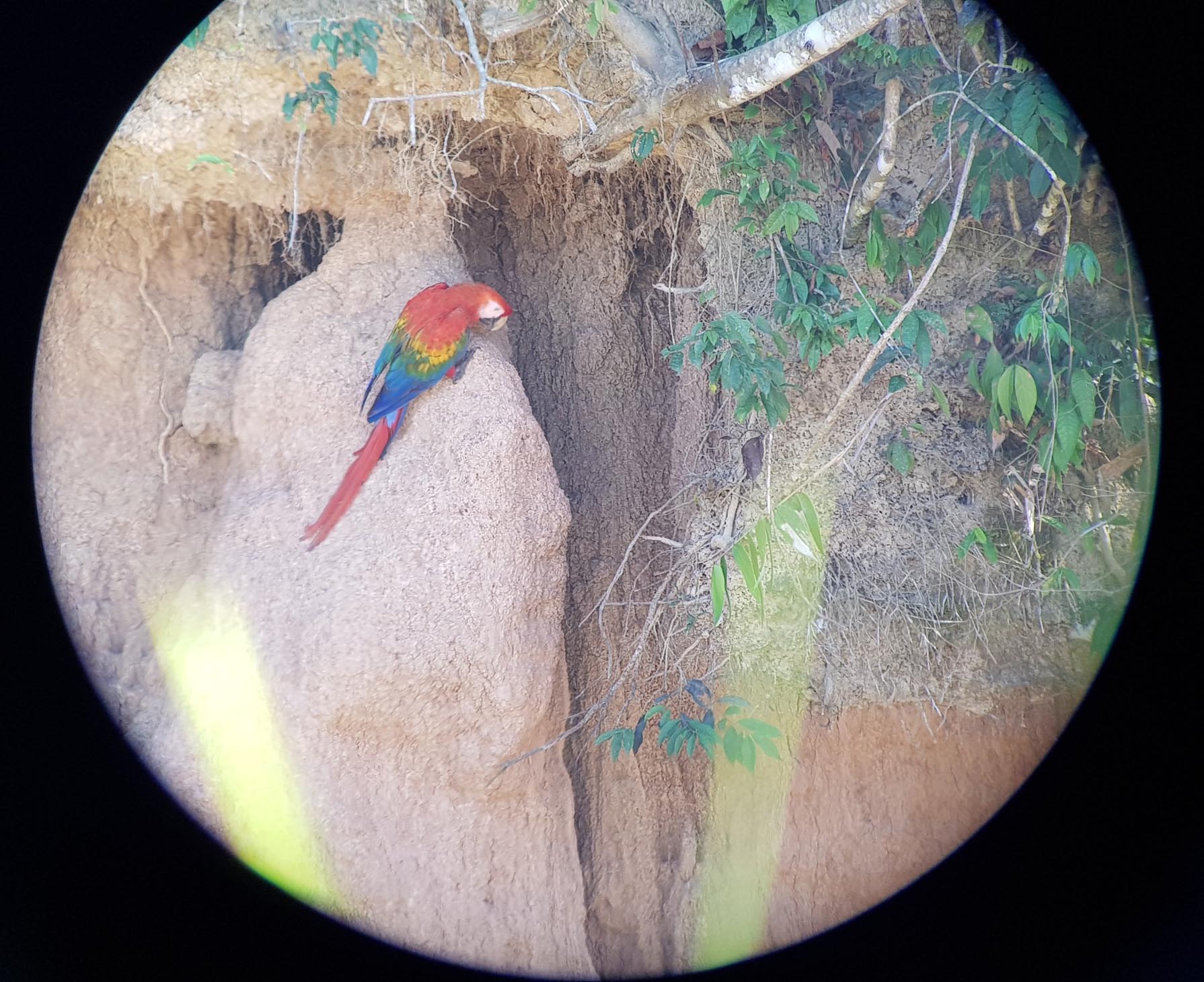
We came to see a special part of the Amazon, short clay cliffs that attract macaws and parrots. Since I first saw a picture, I have wanted to visit. If you watch TV, you may have seen images of large bright-colored macaws perching on the clay as the narrator explains that the clay provides minerals and helps the birds digest the fruits and insects they eat, counteracting toxins that are found in some of these.
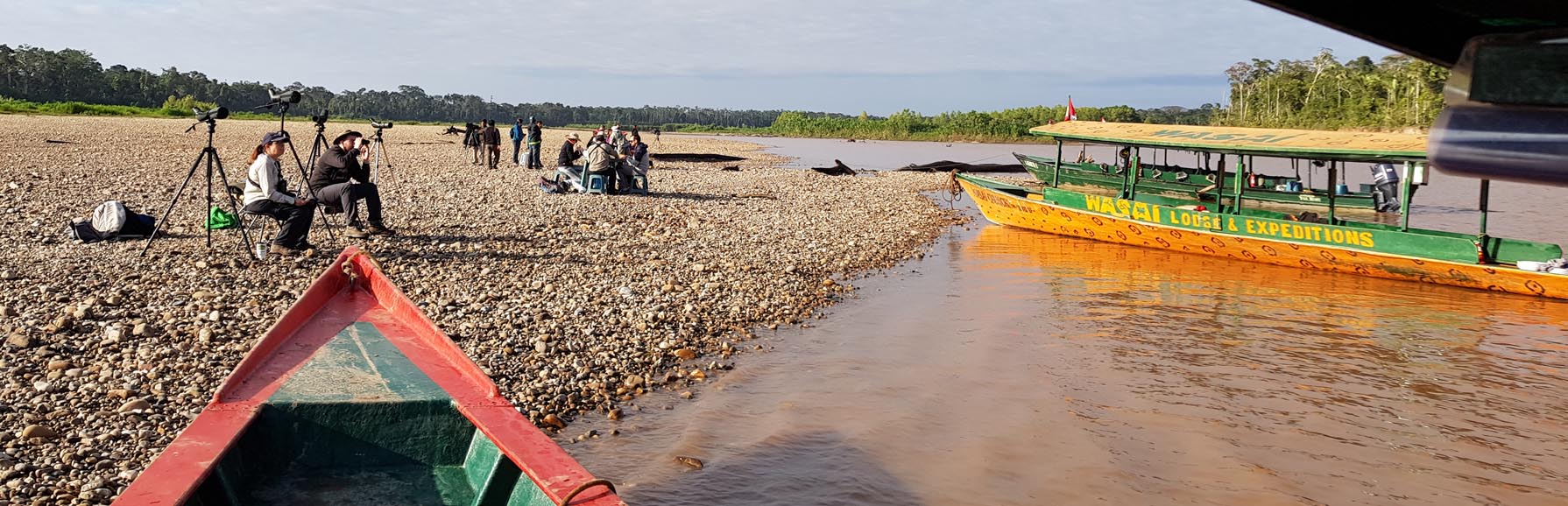
It is a dream come true to be riding along the river. As we ride along, I consider my desire to see this in person and my expectations. I am thrilled to have gotten here and I’m not as tired as I thought I might be at 5 am. I can’t wait to see the birds. I’m apprehensive, too. I don’t want to be disappointed and we’ve been told there are some mornings when the birds don’t come down to the clay or are scared away. We stop at a ranger checkpost where one boat is just pulling out and another is right behind us. Each boat carries 4-8 tourists. Our local guide runs up the steps cut into the steep clay bank. He reappears a minute later and we cast off, hurrying upriver. Finally we pull up onto a gravel bar where two boats have already put in. The clay lick is on the other side of the river. We’ve arrived.
The cliffs are not as high as they look on TV because cameramen use telephoto lenses, but with binoculars you can see all the birds very clearly as we’re barely 100 yards away.
There is a pattern to the way the birds visit the clay lick. Smaller birds come first. Flocks of as many as 100 blue headed parrots shimmer blue and green as they fly by.
As they turn and tilt upward the color changes to the red of the feathers under their wings. Smaller numbers of other species are there, too, and our group gets busy identifying dusky headed parrots, yellow crowned amazons, white eyed parakeets, orange cheeked parakeets. There are even a few blue headed macaws in among the blue headed parrots. The crowd of smaller parrots flies onto the clay and we watch them cling to the surface as they gnaw bits of clay and scuffle, keeping up a constant chatter. The audience is largely silent, pointing and muttering descriptions and species names, focusing their binoculars, spotting scopes, and cameras. Many visitors have 300-400 mm lenses to be able to capture the details of every bird. We are fortunate to be with them and see their spectacular images.
After an hour we’ve seen the small parrots flock on the clay. We’ve identified all the species present and we’ve seen the birds spooked by something and fly away in a mass of blue wingbeats. Slowly they return to the branches above the cliff and even more slowly a few fly onto the clay again and begin to nibble.
Meanwhile, the macaws sit high in the trees. They arrive in pairs, blue and gold, scarlet, red and green, and the smaller chestnut fronted macaws. After a while they come closer, moving in pairs. Eventually the scarlet macaws are sitting on the branches just over the clay, and then fly down to the clay surface and take over.
We see the process twice as we change sites. After the first hour our group returned to the boat for breakfast onboard though still in sight of the birds. We drank tea and coffee, ate rolls and butter, hard-boiled eggs and sipped juice boxes, then set off around the next bend to another spot where birds gather on the clay. The other boats moved as well and we all end up sitting on folding stools or standing quietly waiting for the birds. This time, a flock of scarlet macaws arrived two at a time to two trees above the clay. About 30 of these huge birds huddled together as they awaited some invisible signal. Little by little they began to fly onto the clay. Shutters snapped like it was a presidential news conference.
Not all went as planned. We all expected the flock to descend to the clay but just as the first dozen birds began investigating the clay, a group of vultures coasted in over the trees, spooking the macaws. In an explosion of red wings the macaws dispersed, circling down the channel and up into the trees. Slowly the flock re-formed in the trees over the clay, mostly scarlet macaws but also red and green and chestnut fronted macaws. By this time it was 10:30 am and we’d been watching the clay and the birds for more than four hours. It was time to go. We were all tired but not entirely happy to leave. This scene repeats itself every day and we were walking away after only one long look. We motored back downriver, stopping to look at other birds and the now-sleeping capybara. I’ve just realized one of the great dreams of my life and all I can think of is a second cup of coffee and a nap.
Still, I’ll have the picture of macaws on clay in my head forever.
We don’t consider ourselves to be on vacation, but we had a wonderful two weeks of vacation in Aruba–it’s too hot to call it anything else. Here’s my advice based on our visit.
Airbnb
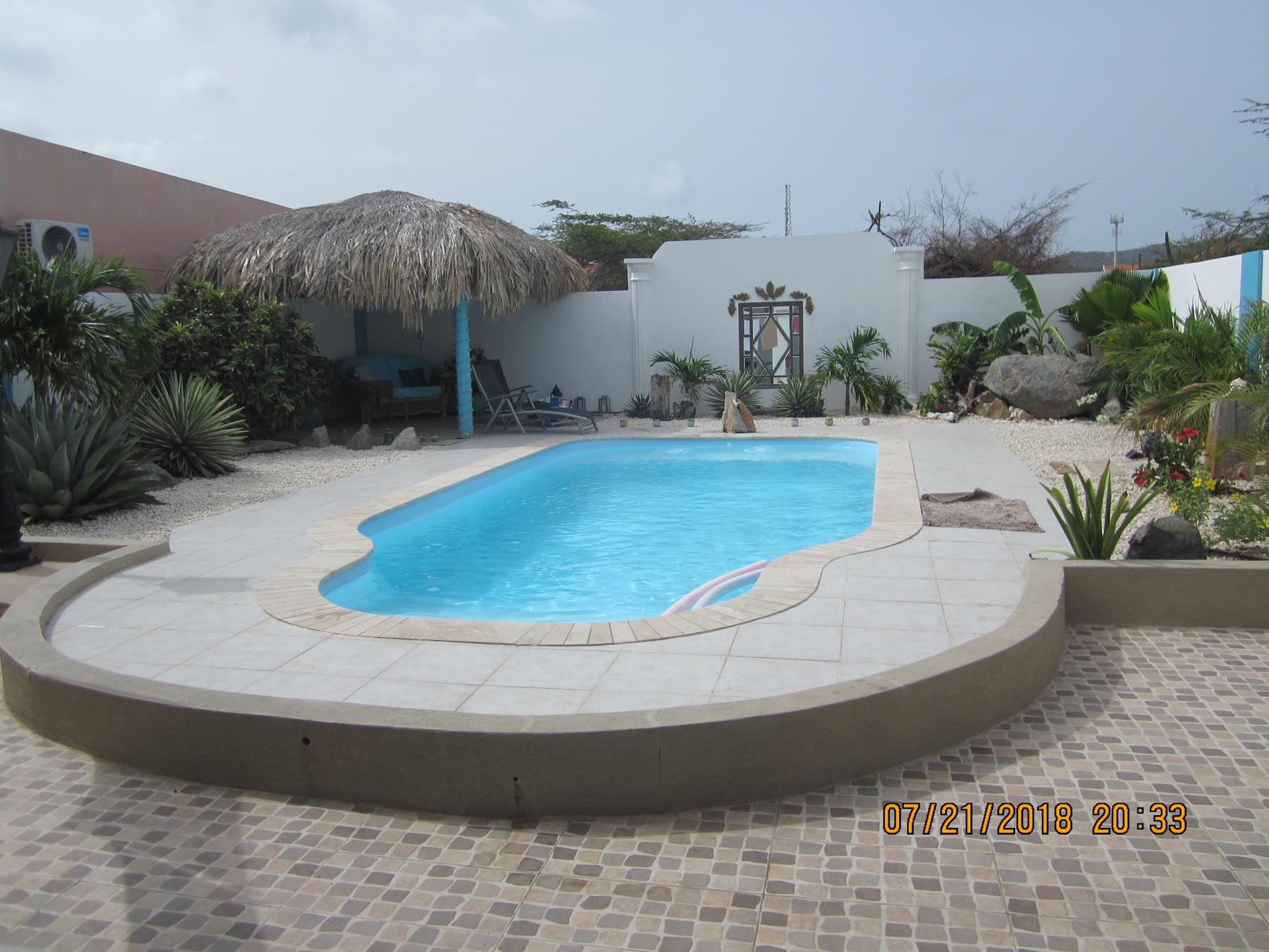
We rented a house in Savaneta that was quirky but worked well for us. I didn’t think a pool was very important since we were so close to the ocean in Aruba, but I had no idea how hot and humid it is just sitting still. A pool lets you sit around outside for a while reading or writing or whatever you enjoy and when you feel really hot you can take a dip and feel refreshed without a hike to the beach or drive in a hot car. We swam at least twice a day.
The covered patio and pool were a highlight, especially since there were shaded spaces at either end of the pool so you could be in the shade morning or evening. There were colored lights you could turn on at night..and a tiki bar….Jonathan did almost all our cooking on the grill in the tiki bar/kitchen on the patio. Air conditioning is the essential ingredient for a happy stay in Aruba, “One Happy Island”, and ours worked well. Only one bath had hot water though that was rarely an issue.
Climate
If you have delicate skin you might consider another destination for your vacation. We all got as much sun in two weeks in Aruba as we might in an entire summer in the US. Most activities involve being outdoors or in the ocean, with breaks to jump in the pool. The temperature is at least 80°F all day and night. After a week we all felt like human potato chips. Between the salt and the sun, your skin dries out completely. Liberal application of sunscreen and lip balm can ward off burns and blisters, but it’s really impossible to avoid the sun entirely. On the other hand, why would you visit Aruba and plan to stay out of the sun?
Driving
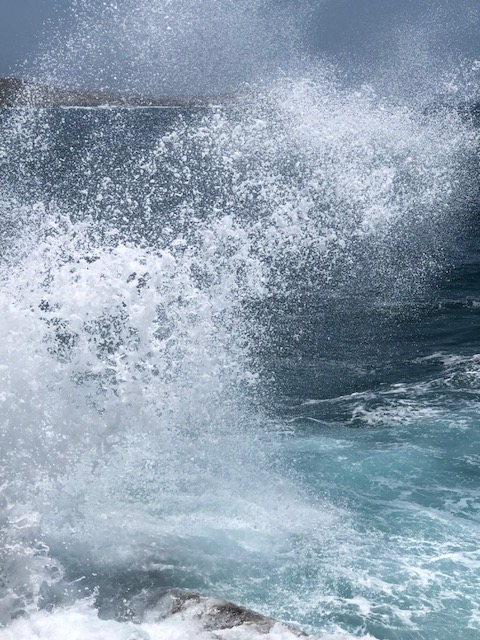
Driving our rental car was no problem in Aruba, it’s just like the US. Roads are narrow and not always in good repair. Rental cars need to stay on reasonable surfaces, they are too low for the really bumpy unpaved roads. If you are going to be in Aruba for a week or more you might consider renting a jeep or other high-centered vehicle for a day or two to explore the Arikok National Park and the north/east coast of the island. There are wonderful small beaches and inlets to visit. The mighty power of the crashing waves is remarkable. We were able to visit much of the area, but barely made it over some of the rough spots in our rental car even with two experienced off-roaders in charge.
Money
Aruba has its own currency, the Aruba Florin (AFL). Change a $20 but don’t bother getting more. You’ll only use it for the occasional soft drink. Local people do all their shopping in florins, but prices aimed at foreigners (restaurants, supermarket, gift shops, even the flea market) are almost always in dollars—vendors don’t seem to want florins and often charge double the dollar price in florins. That is, a $10 item costs 20 florins. The problem is that a florin is worth about $ .75, meaning that you just paid $15 for a $10 item by using the local currency. Not worth it.
Language
Aruba is united by the local language, Papiamento. All local people speak it among themselves and it’s a quick guide to who is local and who is not. If you can understand someone, they’re tourists, or working with tourists. People from Aruba are Dutch citizens and school children learn Papiamento, Dutch and English. Many people also speak Spanish, especially if their family came to the island from Colombia or Venezuela. It’s pretty impressive to find your average person speaks at least three languages. People working with tourists often speak five or six. Be careful what you say!
Shopping
There is a lot of publicity about shopping in Aruba, but it’s shopping for items imported from other places. This part of the Dutch Caribbean is a desert island. Its industry is tourism–there isn’t much that is made in Aruba itself. There’s some local white rum, including Palmera, there’s locally brewed Balashi beer, some aloe products, and a very few local crafts. Everything else is made elsewhere, stamped Aruba and brought in by the container-load.
There are no markets like there are in Central and South America because there are no local food products. We found fresh fish but it took some effort. There’s only fresh fish when someone goes out fishing and fishermen don’t go out every day. Some of the best known fish restaurants serve frozen imported fish and shrimp most of the time.
Water
Aruba has no natural surface water, and all water comes from an impressively large desalination plant that serves the entire island. Everyone drinks the tap water and it is very pure. We drank the water and put ice in our drinks from our first day and had no stomach troubles. It saves a lot of plastic bottles.
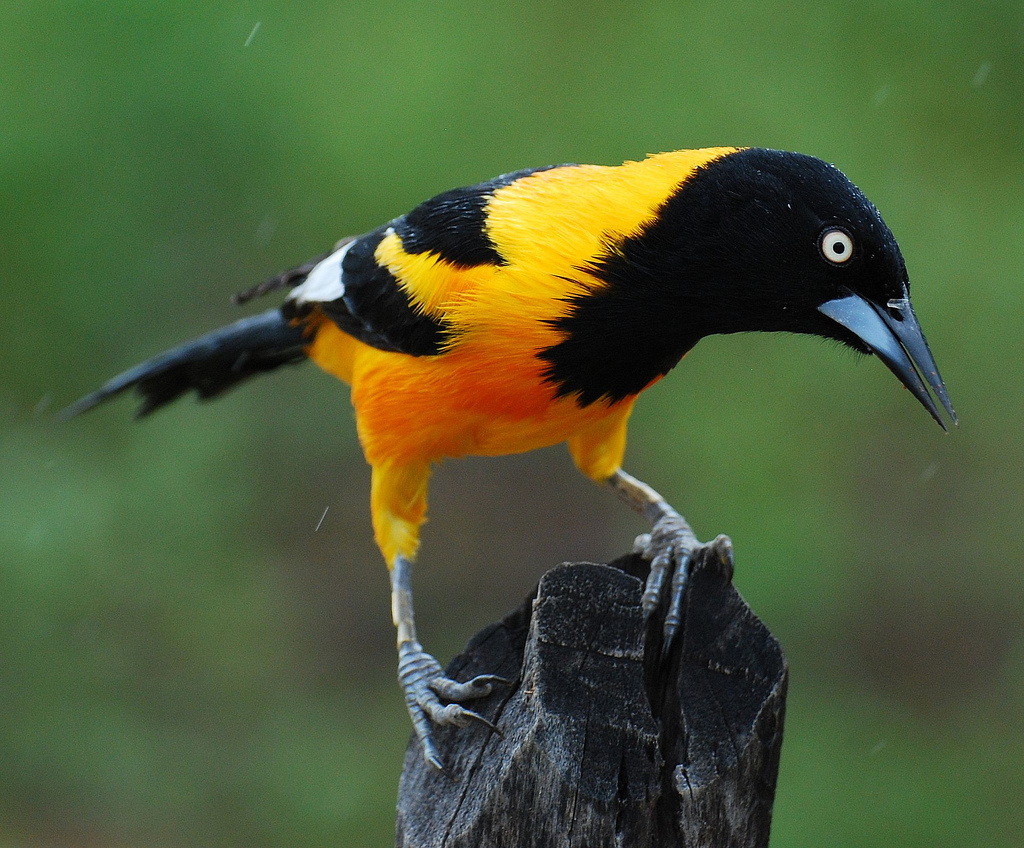
High noon birding doesn’t work well when it’s over 90 and extremely humid, so the High Noon Birding Society moved its adventures to tea time, waiting until after 4 pm when the sun began to dip toward the water. Despite being a desert covered with cactus, Aruba has a lot of birds. One of the most fun is the national bird of Venezuela, the Troupial, that lives in the local trees and may be sitting in the branches over your head if you sit in the shade anywhere.
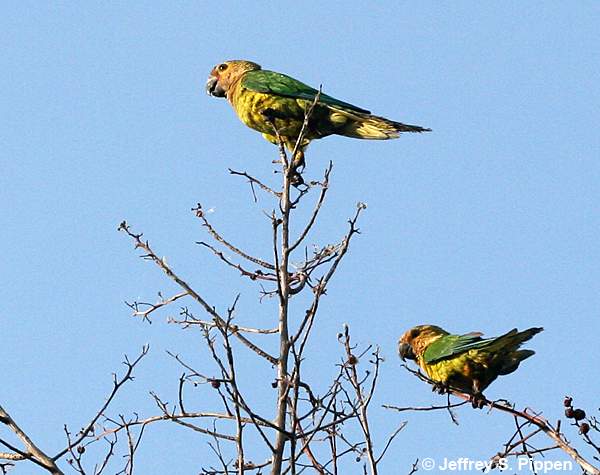
There is a native variety of brown throated parakeet, called the prikichi. We saw the parrots zoom overhead though we never got a good at them. Our experience in Colombia was similar, the parrots never seemed to perch near us.
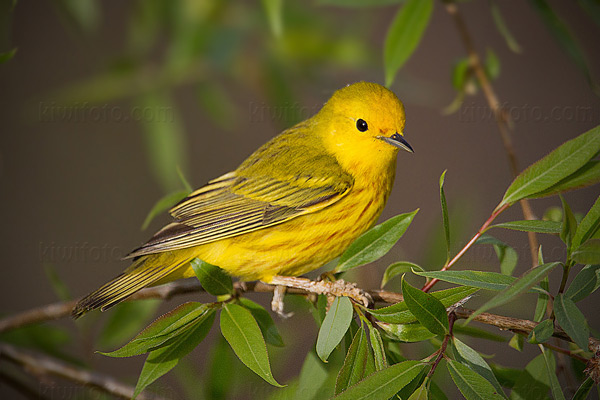
The north end of Spanish Lagoon was where we saw burrowing owls, yellow warblers, herons and egrets.
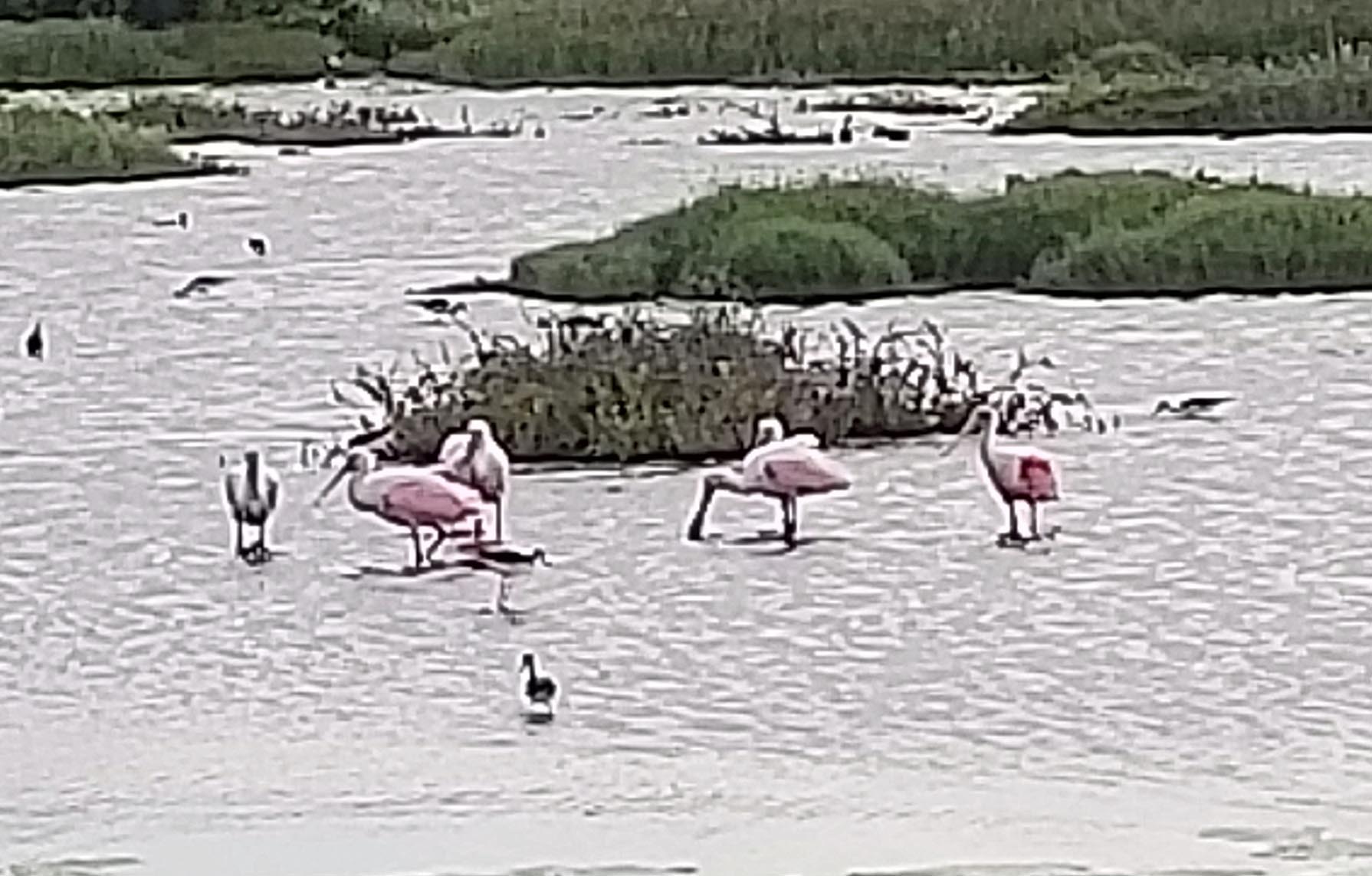
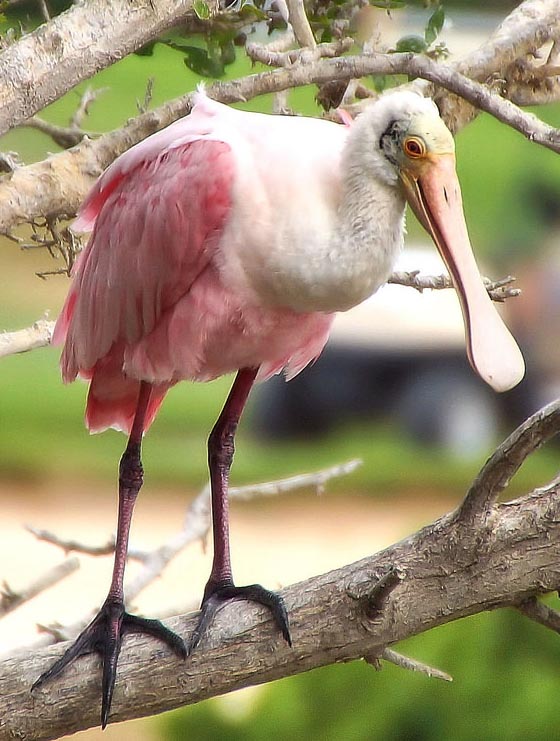
The Bubali bird reserve and the other ponds that parallel the shore inland from the big hotels were where we saw black-bellied whistling ducks, white cheeked pintails and our most enjoyable sight–roseate spoonbills. These big birds look like a flamingo with a spatula instead of a beak. The flock of ten included some with bright red patches on the wings. They sat and groomed themselves with their wide beaks, looking as incongruous as you can imagine. They were close enough to get a picture. None of the other bird photos are by us. Taking good photos of birds is a special art. It takes lots of patience and a long lens.
After seeing the spoonbills, we were out of time. We could have spent many more hours waiting for parrots to perch or flamingos to arrive. Instead we went home to pack.
Our Airbnb house had snorkeling equipment and I found enough to fit, though Jonathan found that his knees don’t much like snorkeling any more. We went snorkeling at Rodgers Beach, in sight of the former refinery, and saw many small fish. We found even better underwater terrain right by our house at Savaneta beach. The shore is a mix of rocks and sand and it was a bit of a balancing act to put on fins. Once in the water, though, visibility was excellent and we saw clouds of tiny fish along with some bigger ones. The small patch of mangrove seems to have been home to the billows of minnows of several species. We watched tiny black fish defending the sunken tire or coral covered brick that was their home base from all kinds of larger interlopers. At Savaneta Beach we met a group of men who usually have lunch on the table we happened to be using. They ended up advising us to try Boca Catalina on the north end of the island, which is a lovely beach with bigger fish than at Savaneta.
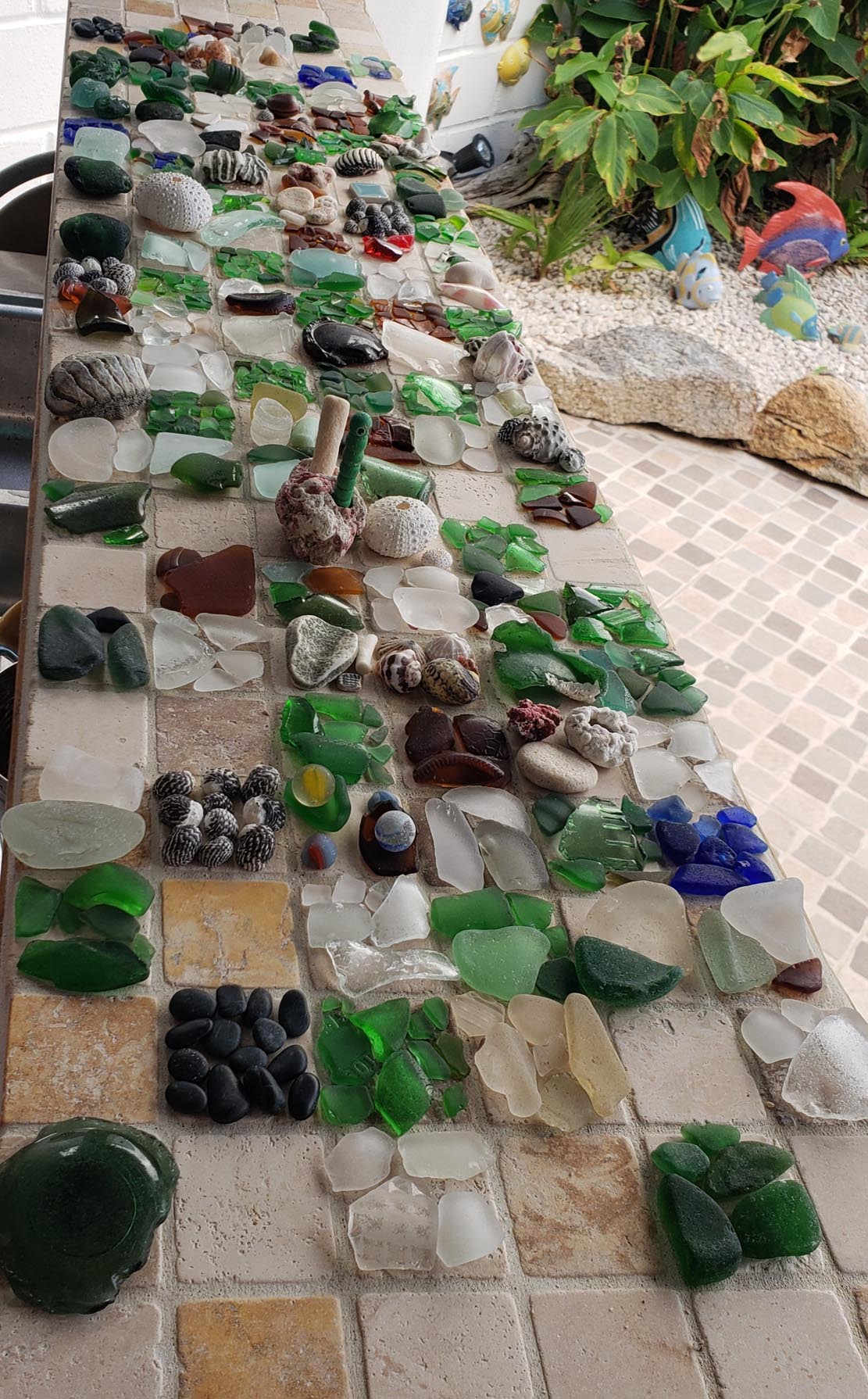
We returned to Savaneta for one last exploration because Wayne wanted to reach the barrier island that was a couple hundred yards off the Savaneta dock. With snorkel and fins that distance is no problem when there isn’t fast moving water or marine traffic, so we crossed with relative ease. I’m reminded that I don’t really like the deep water when I can’t see the bottom, but it probably took us less than ten minutes to cross. We’d both carried our sandals to do some exploring. There are a couple of houses out there and Wayne was curious about who would build out there and why, since a big storm would wash over the narrow gravelly strip. We saw that one house was abandoned but the other was someone’s summer home carefully gated across the entrance. A walkway lined with, beach glass, pebbles, and chunks of coral led to the dock! The entire spit of land was the big surprise—it is made of beach glass. Imagine sitting in front of your beach house at your cafe table and chairs amid a carpet of green and white glass pebbles. The entire barrier island is less than 50 ft. wide though it extends for about 500 ft parallel to the shore. We didn’t cover all of it once we discovered the carpet of glass. There is as much as at Glass Beach in northern California. I found a plastic bag among the usual shore detritus and picked up as much as I thought I could carry on the swim home. We laughed at how easy it was to collect pieces that we’d been combing the beaches to collect elsewhere on the island. It was a fantastic last day on Aruba. The swim back took two or three extra minutes as I carried my bag of loot to the other side. This was the perfect last day of snorkeling in Aruba. I now have jewelry-making supplies that will last a year or more.
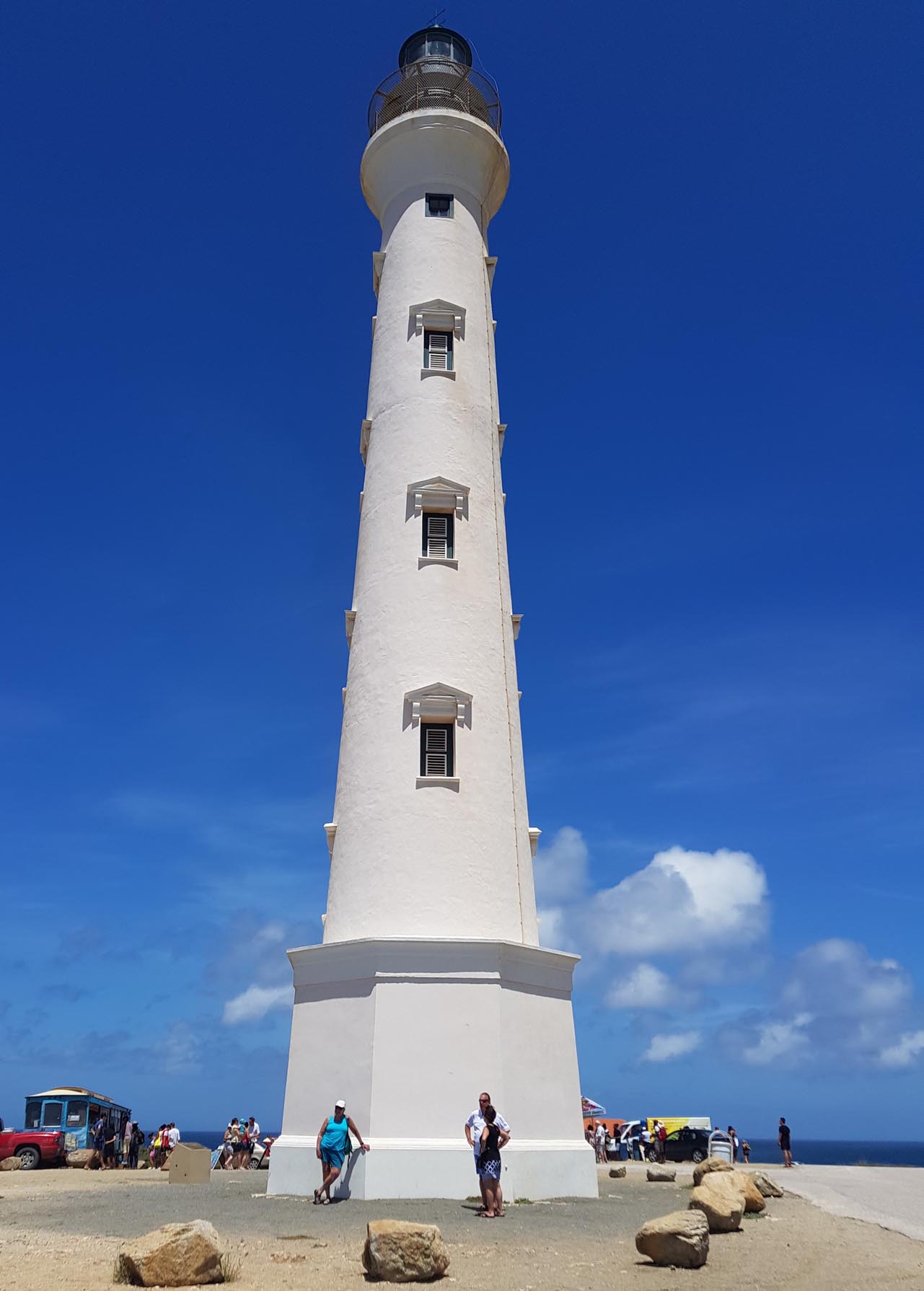
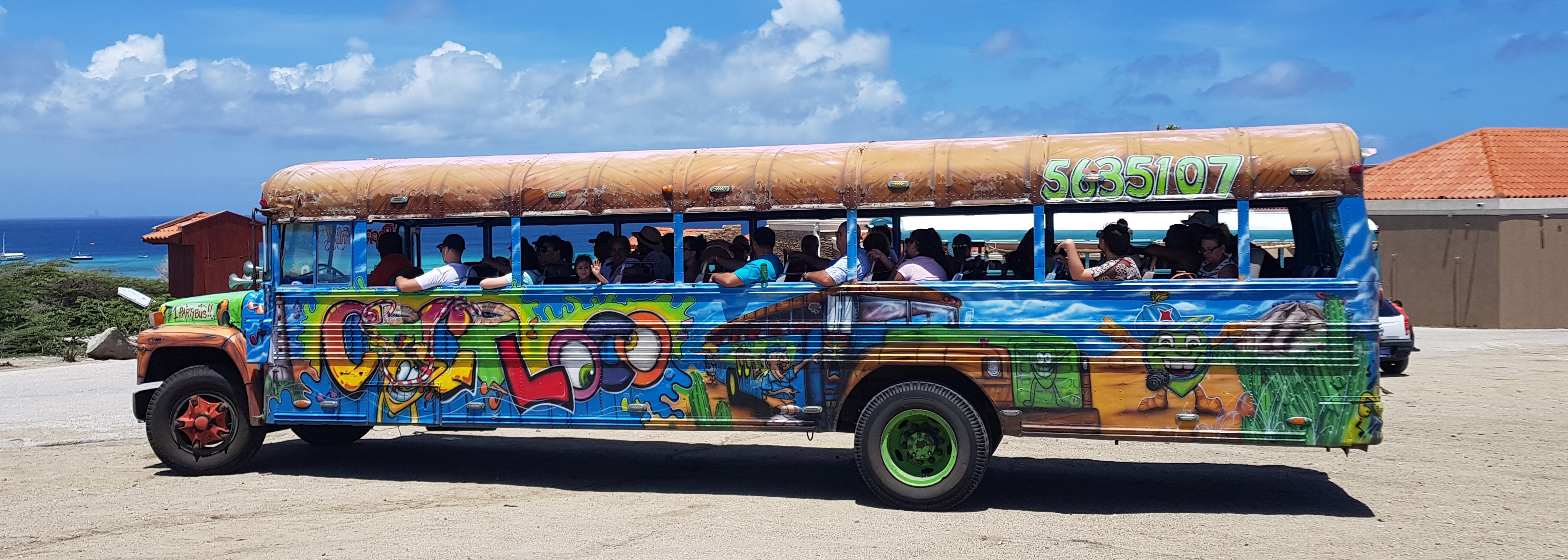
When we arrived, I thought we might spend two weeks making our way from beach to beach around the island of Aruba. We have been happily distracted along the way. My sister Paula and her guy Wayne are with us and wanted to see the California Lighthouse at the north end of Aruba. The lighthouse is on most tours for the view out over the blue, blue water to the west and crashing waves to the east. We got a kick out of the tour vehicles that drove up. One minute there would be eight tiger-striped jeeps with whooping passengers. Next came four wheelers on balloon tires and then The Party Bus, a retired school bus with a hippy paint job. Whether they screeched to a halt or eased slowly into the parking lot, every group had their own personality.The sky was brilliant blue and the guys cutting the tops off drinking coconut were very busy. All this tourism wore us out, so we headed home to rest up by the pool.
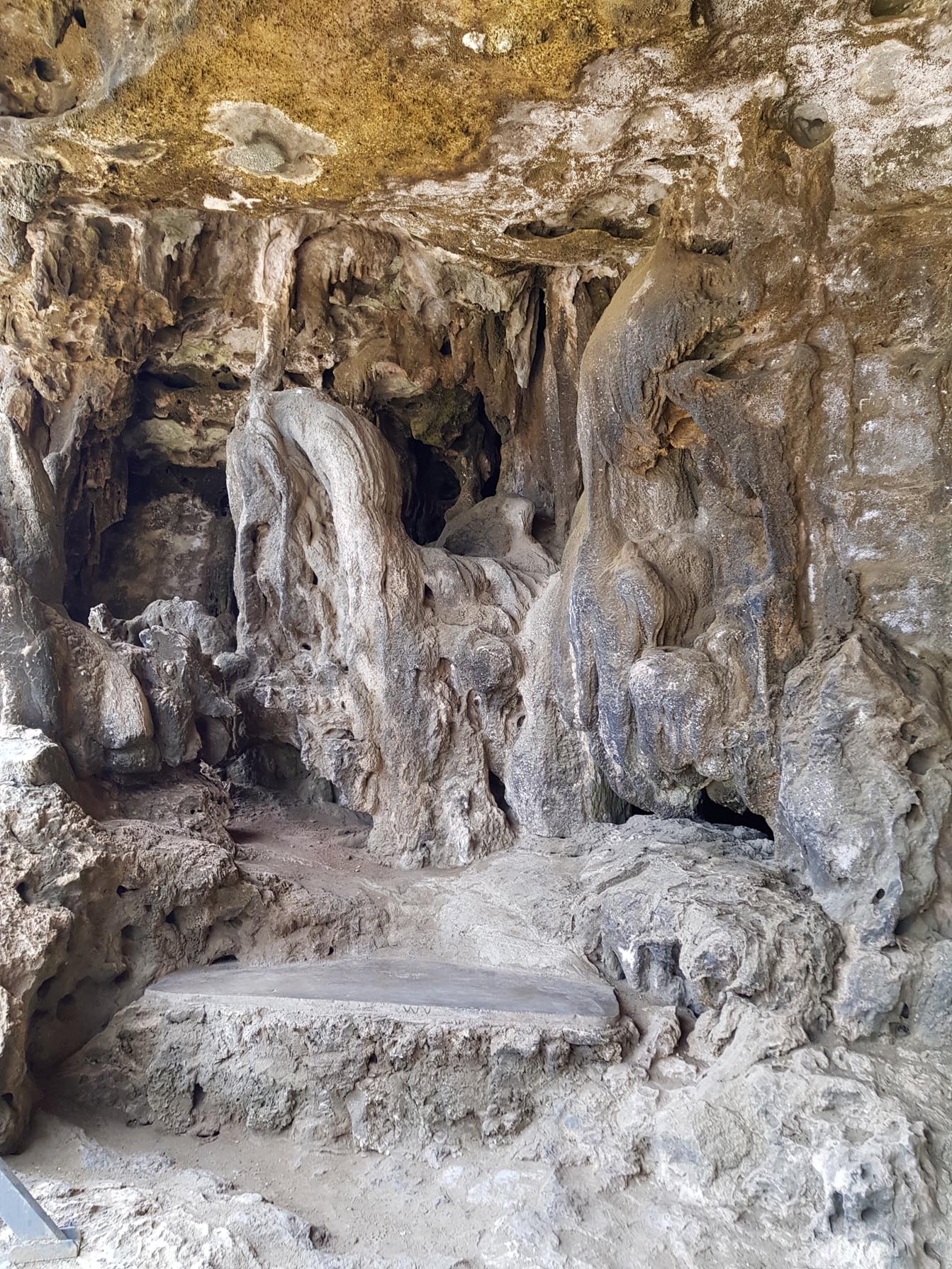
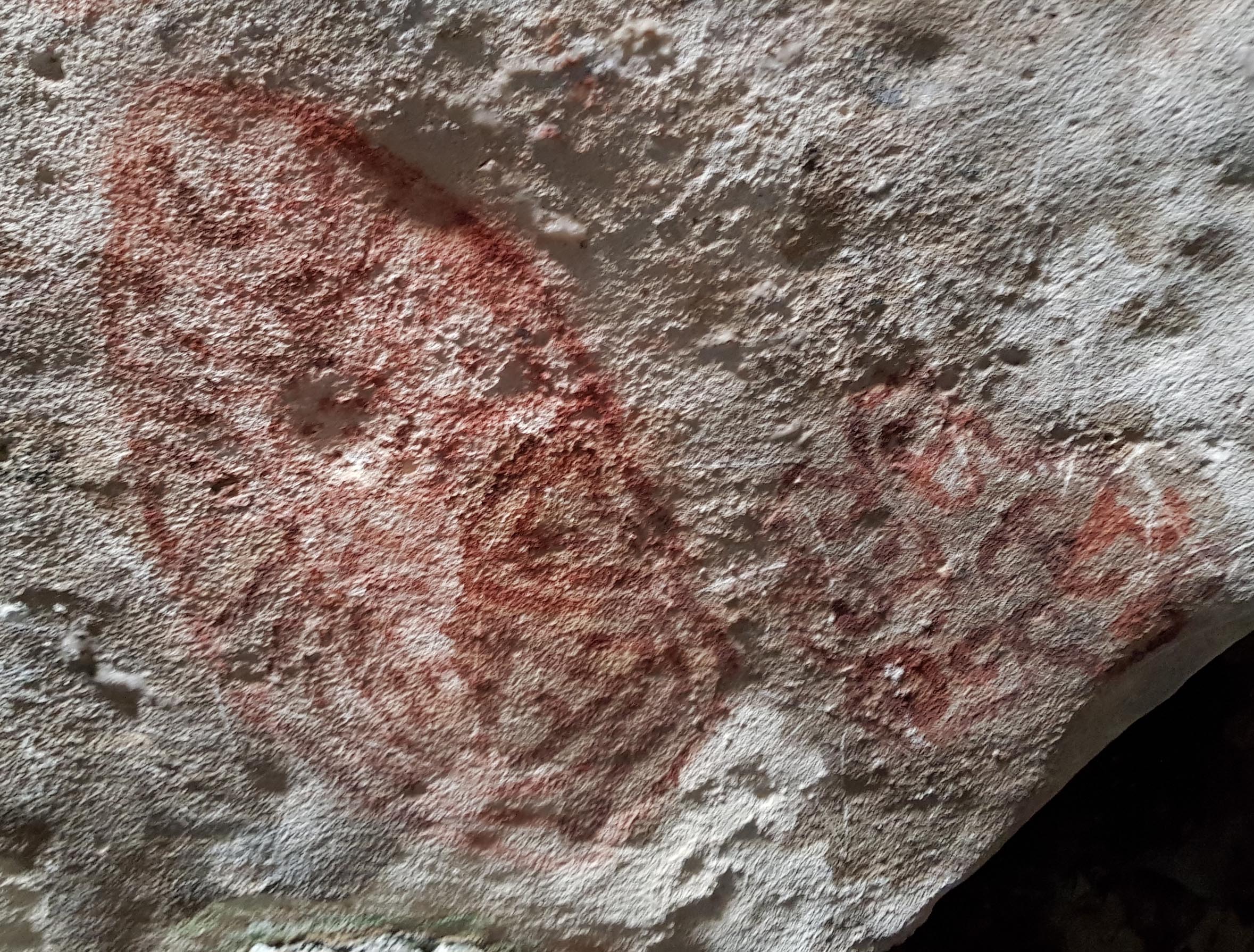
The east side of Aruba is honeycombed with caves. Many of these are part of Arikok National Park. We stopped at Fontein Cave to see the rock art. Some of the stone is twisted in fantastic shapes. We also visited Quadiriviri cave, where an interior room with a hole to the surface is reached by walking down a dark path. A bat emerged from among those sleeping on the ceiling.
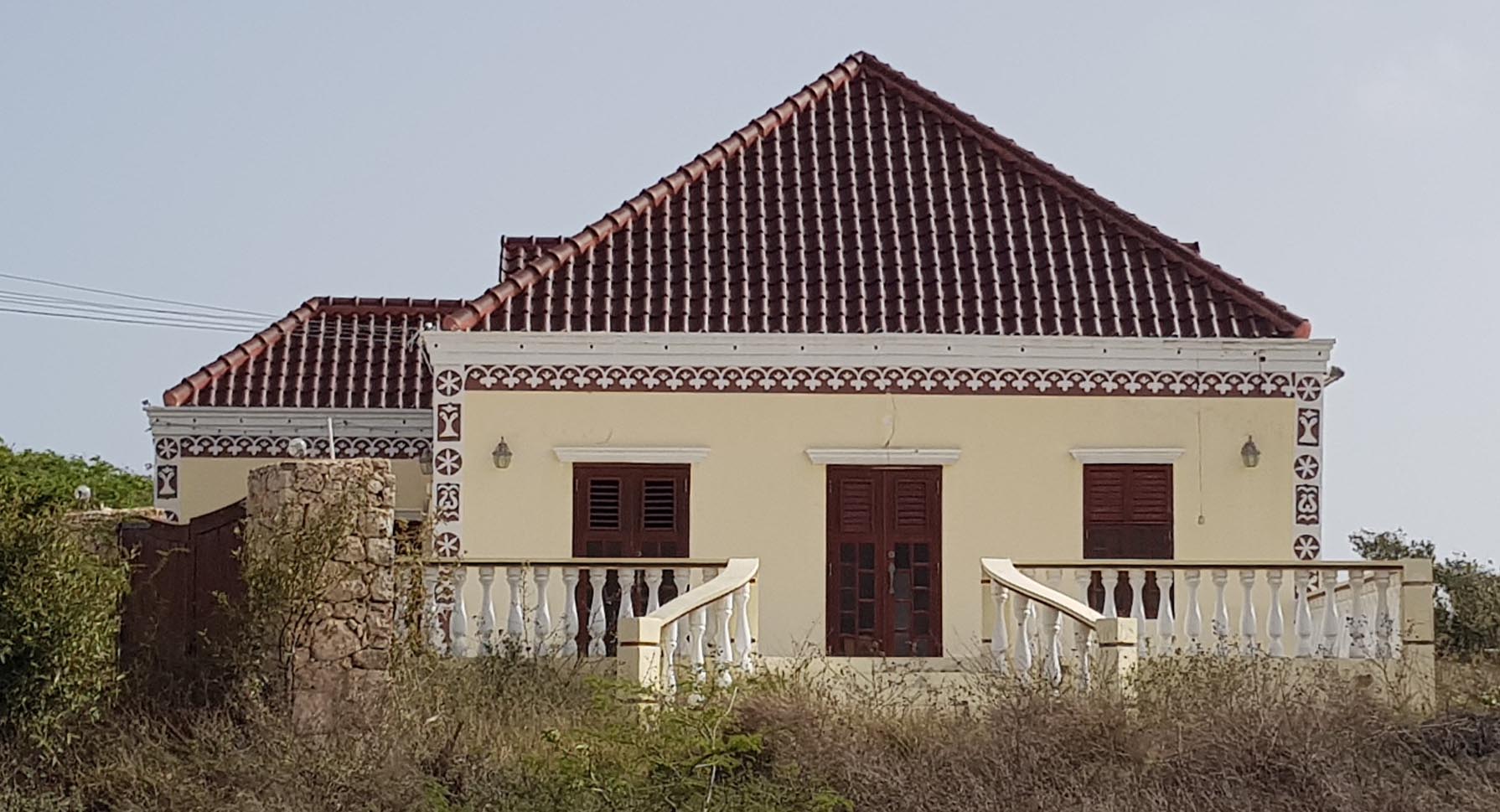
On our way out the south entrance to the park we passed the island’s wind farm, a row of turbines that catch the strong wind coming in from the east. Driving back to Savaneta we passed a number of houses with decorative painted trim. Houses range from tiny cottages, workers housing from the oil refinery days, to large walled compounds with beautifully landscaped gardens.
The hotels are a world apart in Aruba. Just north of Oranjestad is a signpost to the “low rise” hotels and beyond that, another sign to the “high-rise” hotels. These face Eagle Beach and the adjacent beaches and are the center of the Aruba tourist industry, where all-inclusive resorts, package tours, and destination weddings are held. Guests sign up for one day adventure tours, parasailing, kite surfing and other activities. When we went snorkeling at Boca Catalina, along the tourist coast, we saw all this going on just off the beach all at the same time: jet skis, kite surfers, windsurfers, parasailers, catamarans full of snorkelers, a two-masted sailboat, and a flat dredge-like boat leading a group using self-propelled devices to motor through the water in their snorkeling gear.
The cruise ship terminal is in the middle of Oranjestad and traffic slows to a halt when ships are in, up to three at a time moored and looming over the small downtown. One day on our way back from birdwatching, we saw three ships of very different sizes, from a Tradewinds vessel that holds about 200 passengers to a Fortune of the Seas that holds 4,000. We met a two men at the birdwatching site who had arrived that morning. Their ship was leaving again at 3 pm and they were trying to squeeze in some birdwatching and a trip to the beach. When I said we were only in Aruba for two weeks, they laughed at “only,” as their stop was “only” seven hours.
Oranjestad is mostly a single main street along the water, though we found interesting stops a block further inland as we searched for parking. The largest lime kiln still standing in all the Caribbean is the feature of a now-neglected park. The walls are almost two feet thick. A lot of coral was turned into lime for cement here.
Not far away in a restored colonial building is a shop called “Cosecha,” which means “harvest” in Spanish. They carry items made locally and of local materials. There were some lovely things to see and the young woman managing the shop was pleasant and able to talk about the artists.
No trip to Aruba is complete without a visit to one of the fish restaurants, and we decided to give Jonathan a break on cooking to go to the Flying Fishbone. Not only is it down the street from our house, it was part of the directions to get here. I didn’t realize that the tables in demand at the Flying Fishbone are the ones in the water. Yes, the tide comes in and surrounds the legs of the tables up about 12 inches. The restaurant provides racks to hold shoes, though part of ours was submerged–it was high tide at 8 pm. Since Aruba is very warm, even at night, sitting with my feet under water resting on the sand was not uncomfortable. The high tide tables are not the only feature, our seafood was delicious and generous. We had another meal at home of the shrimp, fish, mussels, and scallops that we carried off when we were done. We only had room to share one creme brulee among the four of us. During dinner there was a bit of disturbance at a nearby table when a crab scuttled over the diners’ feet. As we got up to leave, a circle had cleared around another table and people were peering into the water at the base of a post. A waitress told us that there is a moray eel that’s become habituated to the diners and comes out to scrounge. The diners are not used to the eel, however, and there was lots of eek-ing and peeking.
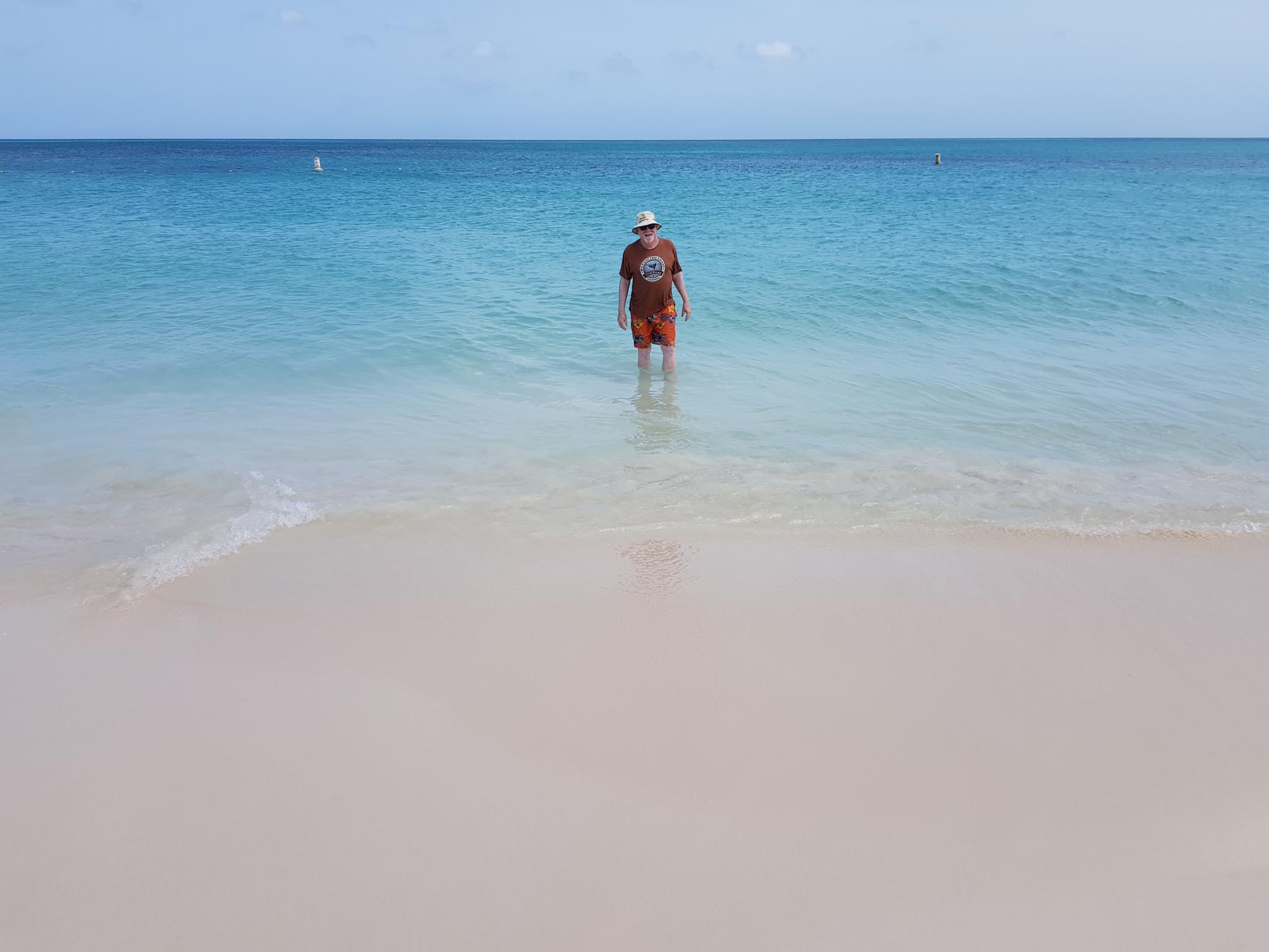
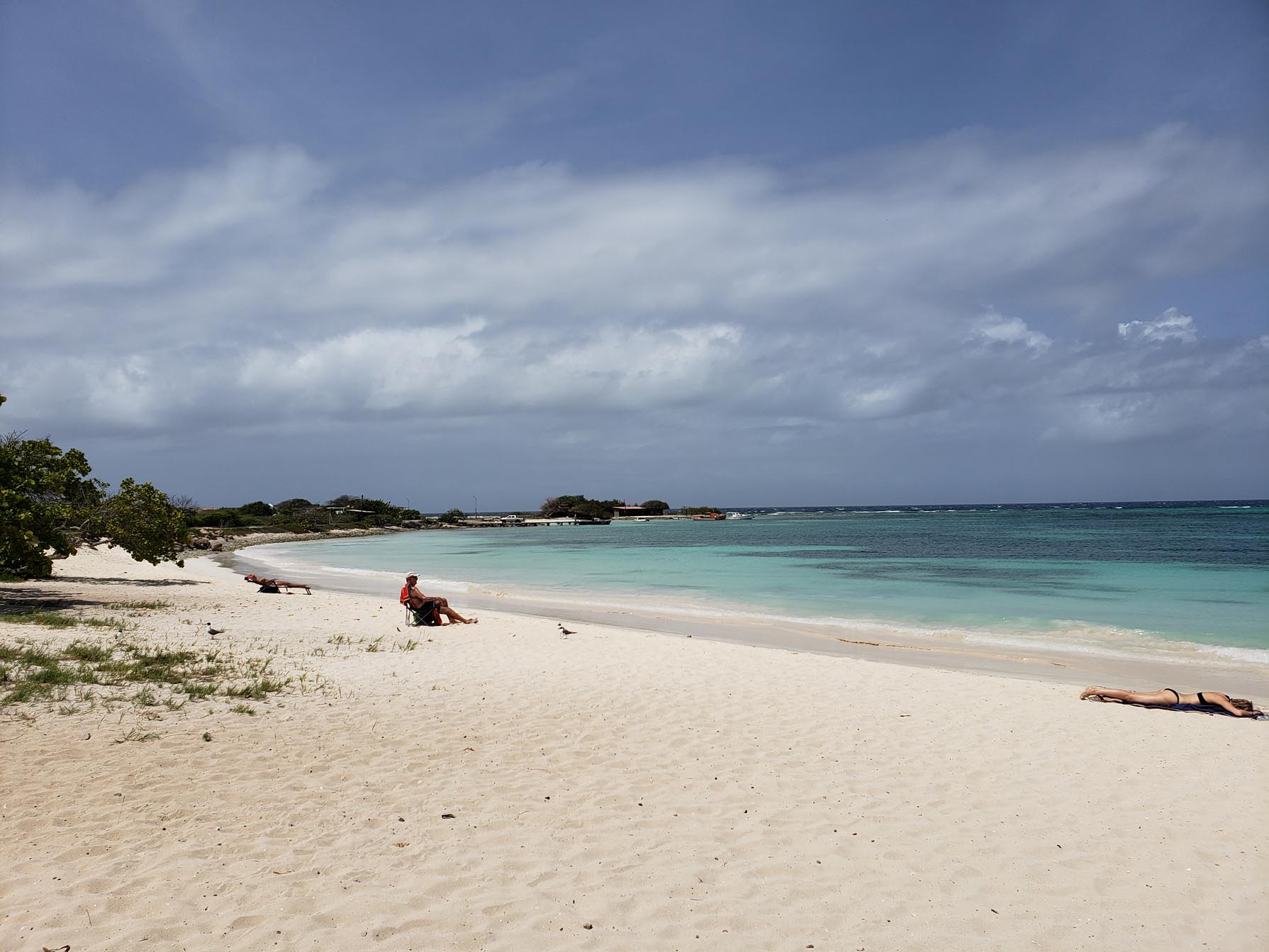
Aruba is justifiably known for its white sand beaches and turquoise water. Directly across the road from our house is Savaneta beach. Sections of white sand beach are punctuated by small stands of mangrove. Snorkeling takes you into clouds of minnows and the occasional foursome of little squid. From here we skipped over the huge extent of the old refinery area. It may not be in use but it is thoroughly fenced off. Within sight of the tank field we snorkeled at Rodgers Beach, the next in our counterclockwise tour of the shore. The fish are tiny, but captivating, mini-angel fish, parrotfish, wrasses and the elegant spotted trunkfish. It looks like it should be carrying a Chanel bag.
At Baby Beach, a deep U-shaped stretch of calm water, we walked out to the far end and looked back to where the thatched beach shelters are almost invisible. The beach combing was very good among stubs of ancient coral as big as tree trunks. It’s easy to imagine they are the bones of whales or turtles that washed up and are now petrified.
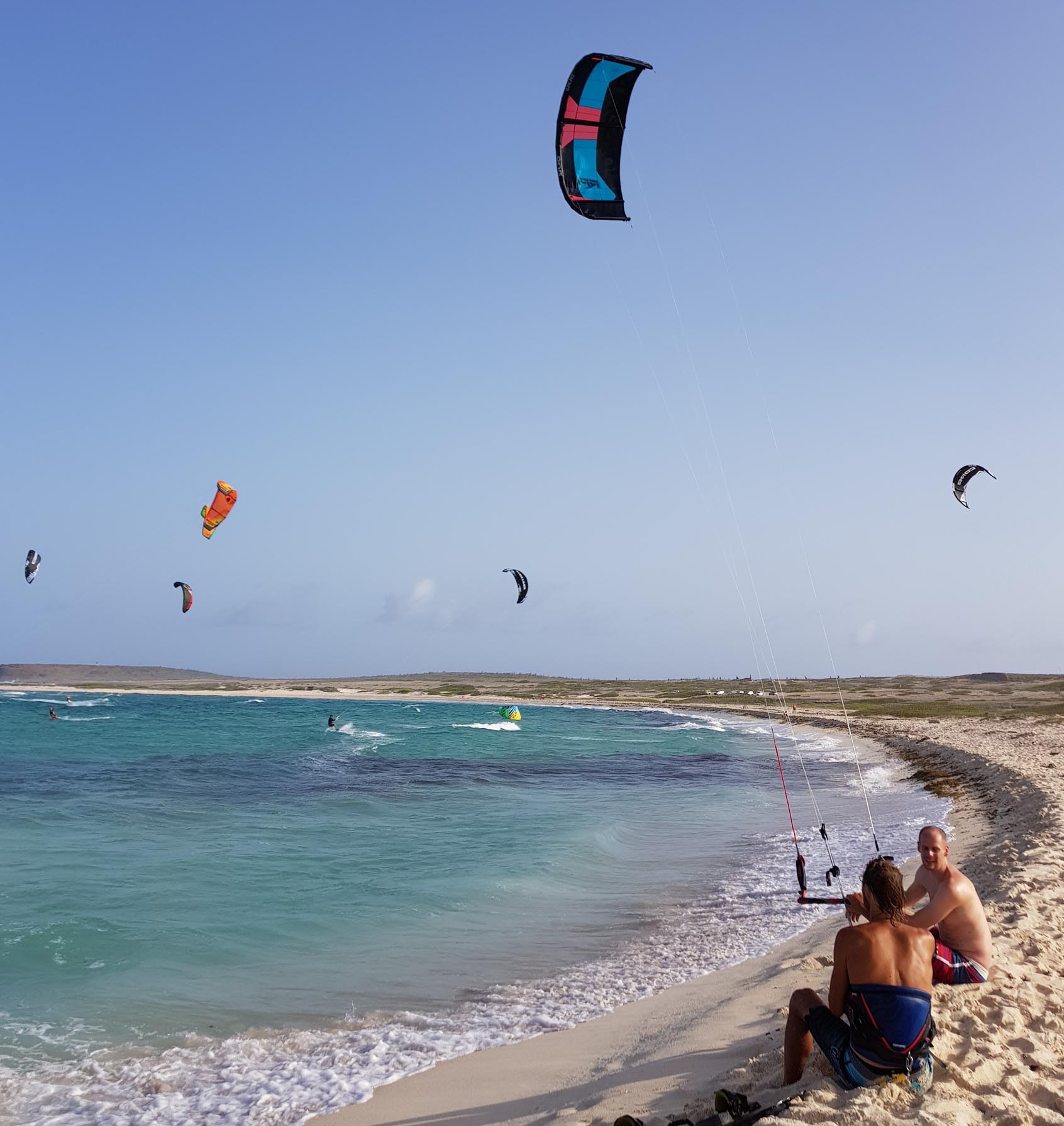
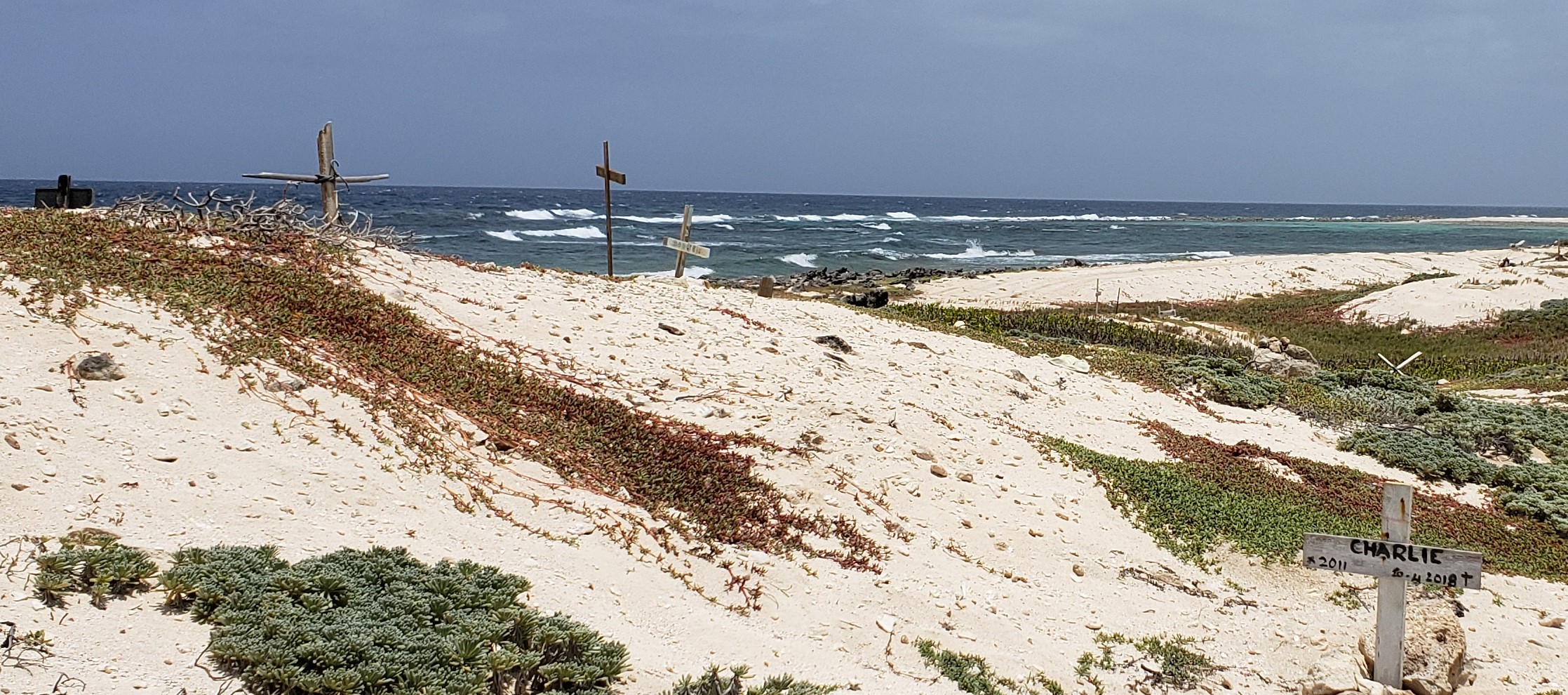
We moved on to the Santana di Cacho, a beach of shelving rock that is bordered by a huge pet cemetery. When the oil refinery was working, this area was started by employees. The tradition continues. The pet cemetery beach is at the southern tip of Aruba. Our exploration headed up along the eastern Atlantic side of the island. When you look out over the ocean, the next land mass is either the island of Grenada or Guinea, Africa. The waves are larger, though broken by shelving rock. We walked from Bachelor’s Beach to Boca Grandi (in Papiamento, the local language) where kite surfers take lessons and practice. All day long ten or more kite surfers can be found zooming across the bay. We passed a deeply tanned young man sitting on the beach in conversation with a newcomer (pale skin) while his kite flew above him, tethered to his safety vest. From Boca Grandi we visited Grapefield Beach, another long rocky stretch. We had traded beach combing comments with a young man we met at the pet cemetery. He was collecting driftwood and dried coral fans for his mother in law. When we showed him our beach glass, he directed us to the northern end of Grapefield beach where there is an abandoned settlement and a newer settlement. He said the turnoff was marked by a boat on the roadside, and sure enough, it is. It felt a bit strange to beach comb among houses right on the shore. Most are empty during the day. The young man we spoke to said that it would be fine to collect things there. “The people live here and so they don’t need to collect things to take back to the US. To them it has no purpose.”
From Grapefield beach the route enters Arikok National Park. There is a visitor’s center in the center of the island that tells how the park was started and identified some of the many paths and sights. Our visit ended at a “boca,” an inlet eroded into the shore. This one, Boca Prinz, is not the smallest but it’s less than 100 yards across. We scouted for beach glass (none) and admired the pink sand.
For the rest of our stay we are going to work our way up the boca, boca, boca indented east coast until we reach the California Lighthouse (more about that next).
We visited beaches on the south/west side of Aruba from our house northward to Mangel Halto. There is a fish supplier near the inlet to Spanish Lagoon where we bought red snapper that was delicious on the grill. Jonathan and I took a multi-visit detour to the bird refuge around Spanish Lagoon and enjoyed seeing new species. Across the inlet is the industrial part of the shore with the extensive desalination plant that supplies all the drinking water for the island, and adjacent to that, the landfill. (I’m pretty sure these two go to great lengths to avoid contact with one another.) We started along this road looking for the marina where visiting trawlers would moor. Since Aruba is valued as a harbor for private yachts during hurricane season, we know there’d be a big, big marina and we found it behind the airport at the edge of the industrial area. It’s an excellent location for yacht owners, you can fly into Aruba and be on your boat in under an hour.
A neighbor told us to see Eagle Beach, a long, long stretch of white sand the borders hotels. It is lovely, but there isn’t anything to do but swim or sit in the shade. The sandy shore has no driftwood or beach glass and the water was cloudy for snorkeling. After some floating around, I went inside a nearby resort and got my hair cut, a great treat. Then we moved back toward Oranjestad to Divi Beach, smaller but similar. The beaches at the far north/west end of the island are still on our radar. A group of “old-timers” having lunch on Savaneta Beach told us not to miss Boca Catalina in the northern zone. It’s now on our list.
The story of Aruba: So many beaches, so little time.
I’d never heard of the A, B, C islands and like people of a certain age, when I looked at the map I saw that west to east, the islands of Aruba, Curacao and Bonaire are not in ABC order….
People who visit these Caribbean islands have their favorites. Some prefer Aruba for the well developed beach of high rise hotels that looks a bit like Waikiki. Others like Bonaire for its dive sites. The islands are south of the hurricane zone, appealing to anyone fearful of bad weather. Aruba is mostly desert, too. Though the air is humid, not much rain falls and the temperature is in the 80s all day, all year, with sea breeze to stir the air and dispel the heat. I’m not sure how anyone managed to sleep before the invention of air conditioning. The blue water and white sand make you forget everything but floating.
Aruba is a small island (8 x 21 mi) of volcanic rock covered with coral. The rocky coast is cut by numerous sandy beaches, though the east side of the island facing out to the Atlantic is rockier than the west side.
It was a pleasure to find our house on the “far” south part of the island meant it was about a 15 minute drive from the airport. We are in Savaneta, a residential community of beaches, bungalows, restaurants and small markets that each sell a little of a lot of things. When we drove into the only large town, Oranjestad (the capital), we visited the “American-style” supermarket. Ling’s has a larger selection, stronger A/C, and higher prices than other stores, and its where we found peanut butter, half and half, and a big wine and liquor department.
All of our subsequent stops have been beaches, working our way from Savaneta south around the tip of the island and up the east side. We snorkeled at Savaneta Beach and Rodgers Beach (top), beachcombed at Baby Beach, Pet Cemetery (Santana di Cacho) beach and Bachelor’s Beach. We watched kite surfers at Boca Grandi–what strength they possess! An Amazon swooped up out of the water about 20 feet, hung upside down for a moment and landed back on the water.
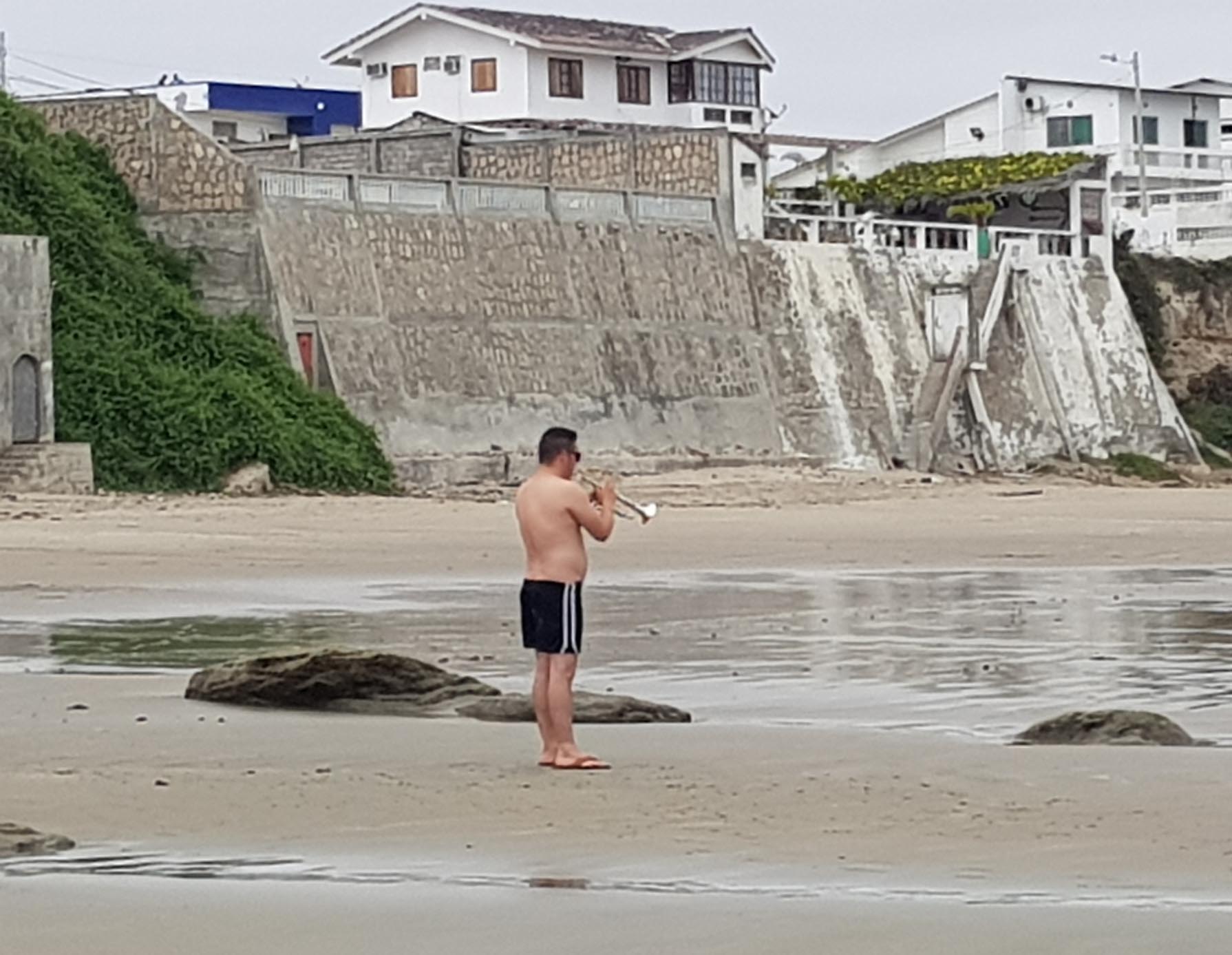 We discovered the charms of the region right away. We walked down the beach in front of our house and found a man playing a romantic Latin tune on the trumpet while the rest of his family swam and played on the beach.
 Salinas point. It was Saturday and there were lots of visitors. The ocean extended as far as anyone could see.
 We had wonderful beach combing in many places. Playa Rosada is a place that many people recommend. I didn’t find the sand particularly pink, but perhaps the sun needs to be out. One of my favorite beaches is the stretch north of Valdivia and San Pablo and south of Montanita. We found a couple of very old pieces of beach glass, one colored lavender from the sun (these mostly date prior to 1915), the neck of a glass jug and the base of an old spirits bottle.
 On the way home, we stopped for a look at the “Antiquities” store and saw old radios, fishing tackle, chandeliers, even electric typewriters, though I doubt they still work.

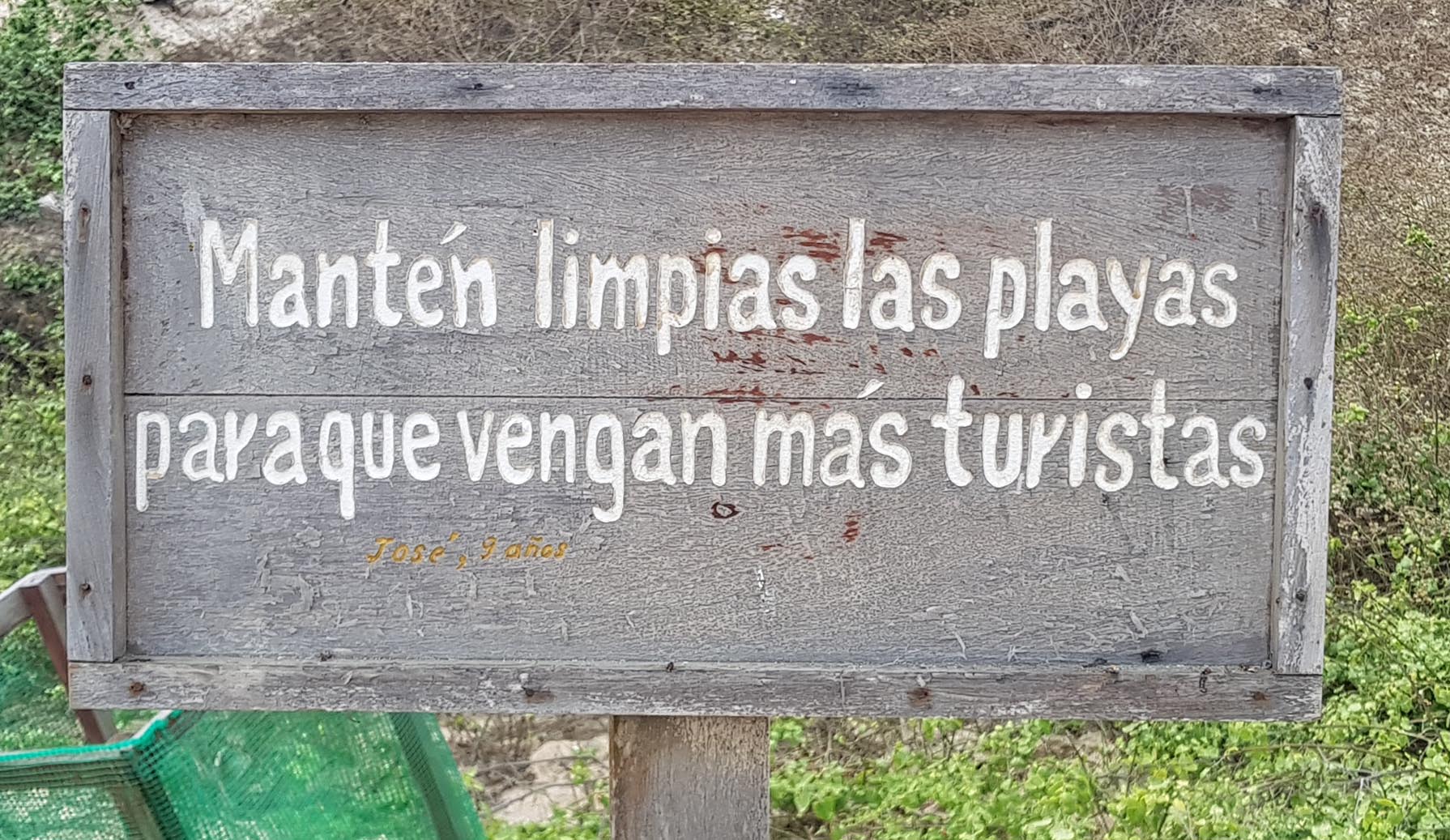 We visited beaches that host nesting turtles earlier in the year. There are even covers that are used to mark turtle nests, though wouldn’t it be better leave them anonymous? We also saw this sign, that I don’t think sends the correct message. It says: KEEP THE BEACHES CLEAN SO THAT MORE TOURISTS COME.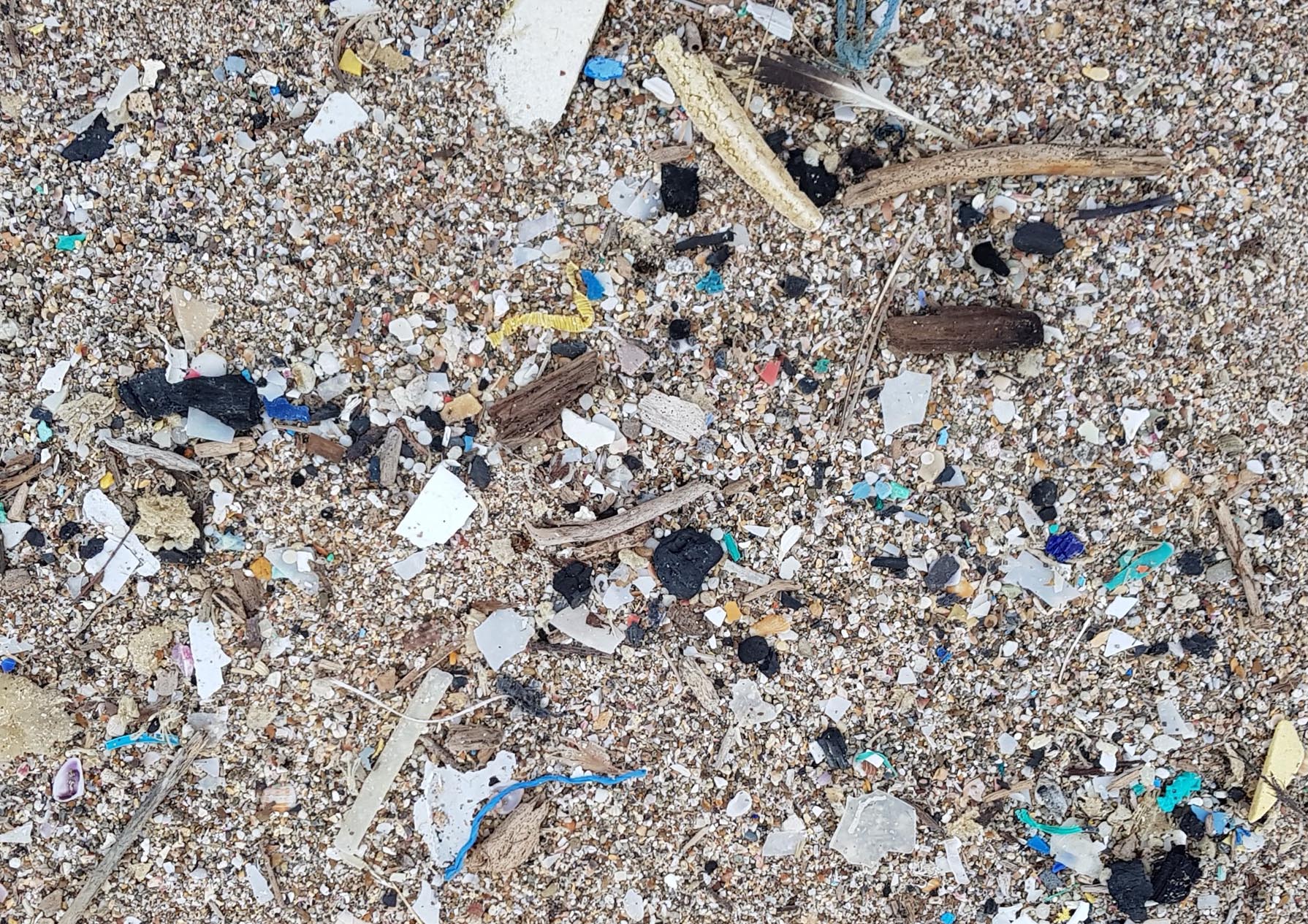



















 O
O