Our visit to Colombia was only two weeks and we spent the first week visiting specific places. I have fewer general comments about Colombia as a result.
Airbnb
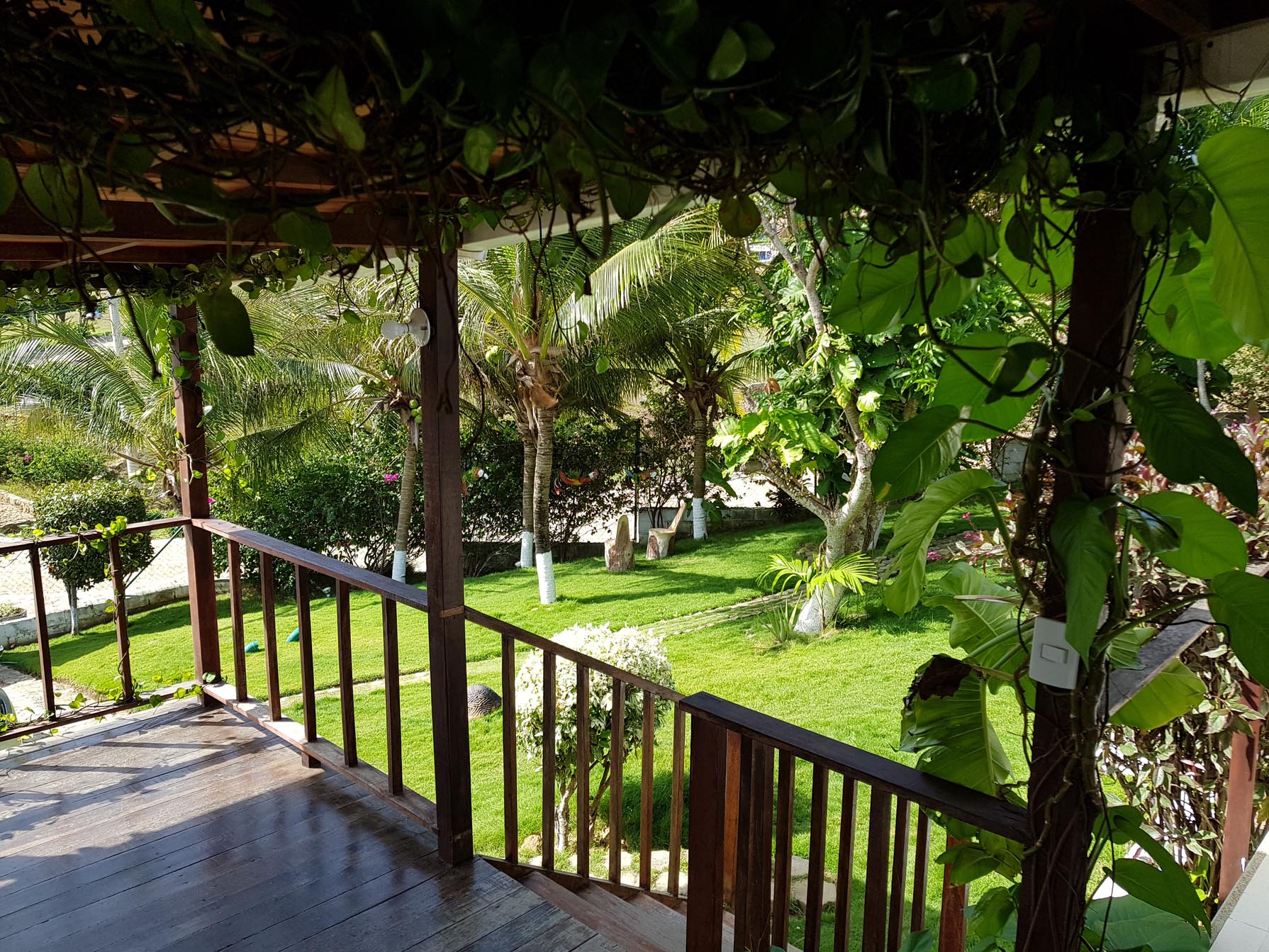
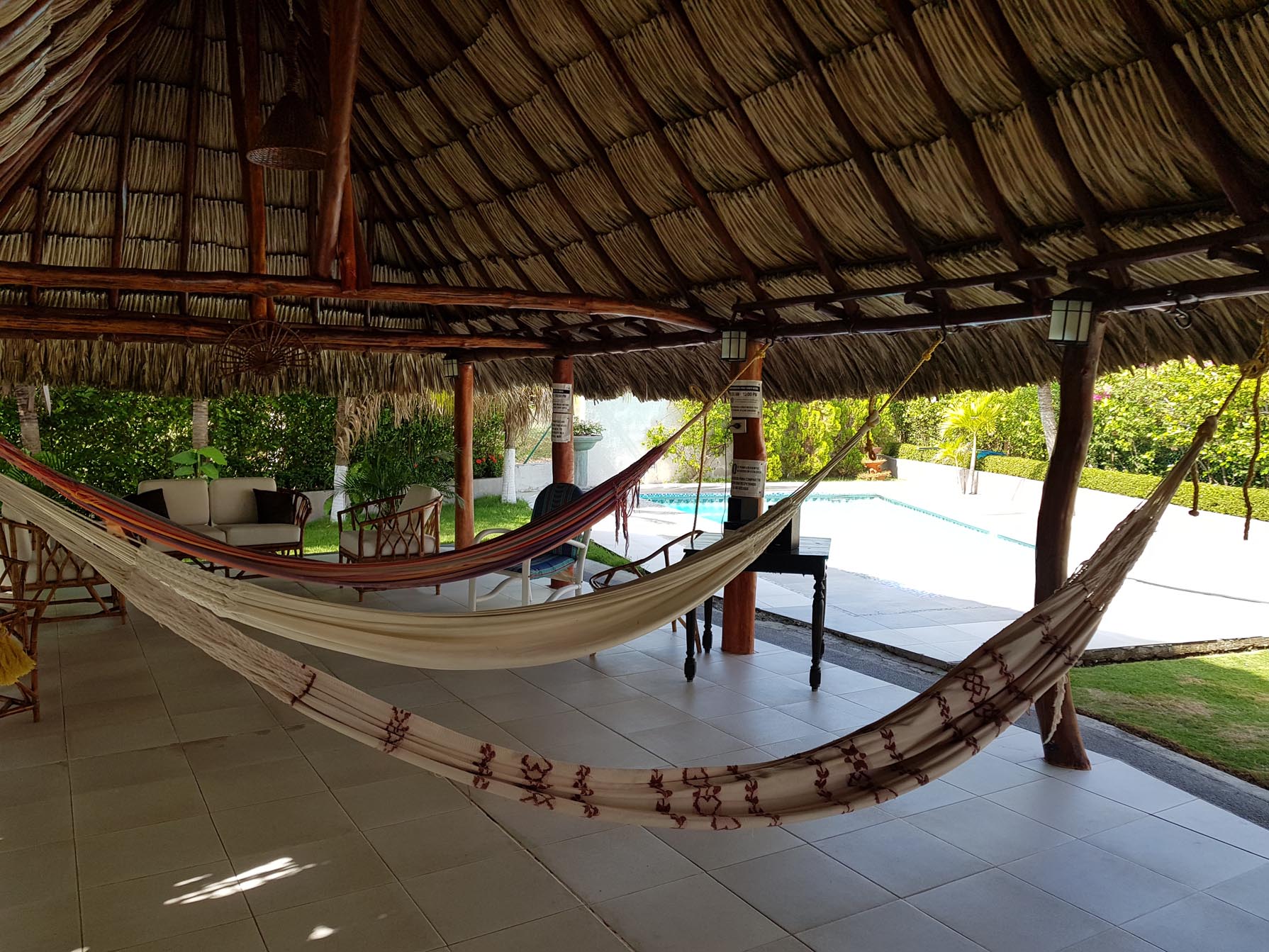
Our Airbnb rental was eight days, much shorter than usual. Our experience shows the ups and downs of Airbnb. Our host texted us GPS coordinates, and Jonathan recognized the house from the Airbnb listing. As I mentioned, the place was gorgeous, but when we arrived, the host was not there, left no message, no booklet of carefully worded instructions. There was a caretaker whose job was to open the gate across the driveway as we went in and out, water the garden and clean the pool. There was no wifi and the local phone signal was minimal. We never book a place without wifi and had no idea what happened. The house was completely empty of food, too. There was no welcome basket of fruit, bottle of wine, loaf of bread, butter or bottle of milk in the fridge as we sometimes find. There was not even salt, and it was 5 pm on Friday evening. We asked about a grocery store and found the nearest was 20 km back the way we came. With no alternative we set off again.
Driving
We rented a car at the Barranquilla airport, and though the checkout took a long time, we had no trouble with the car. We were warned that visiting Santa Marta and Cartagena required checking to make sure that the car wasn’t banned from the city that day (It depends on the last digit of the license plate). We were also warned about speed cameras and police stops, though as far as we can tell we did not run afoul of any of the cameras and we were not stopped by the police.
Language
Like every country, Spanish is spoken in its own way in Colombia, and we had little trouble being understood with our Peruvian vocabulary. It was sometimes difficult to understand the directions we were given. Many people speak some English, though our waitress at La Perla seemed relieved that she could bring us Spanish language menus. Outside of cities we didn’t run into a lot of English speakers.
Shopping
There are lots of handicrafts available in Colombia, including woven bags, hats, leather goods that seem to be mostly handbags, and lots of souvenirs. The border with Panama seems to be influential as there are lots of molas for sale and things made from molas, like bags, hairbands, clothing, and even shoes (I bought a pair). There are lots of beaded necklaces and earrings hung on boards in the street, especially calle 7 in Bogota.
We saw two spectacular “spirit boat” carvings made by Amazonian people, one in the gift shop of the Museo de Oro and another in a shop in Cartagena. Both were too large and too fragile to get home easily.
Tipping
Most restaurants and service businesses in Colombia add a 10% “propina voluntaria,” or voluntary tip. We paid the tip every time and when I tried to ask a waitress whether the tip could be removed from the bill if a customer was dissatisfied, she said yes, but in a way that suggestedl it would be awkward to decline this “voluntary” donation. We did decline to tip the guy who stood in the exit of a parking lot that we had already paid to enter.
Colombia is famous for the hundreds of bird species within its boundaries. You can spend two weeks or more on a dedicated birding trip just to get started. The High Noon Birdwatching Society takes a low key approach, looking at lovely flying creatures when it is most convenient. We have seen and heard some highly entertaining species. In Cartagena, we met the squirrel cuckoo. These are named after their sound, vaguely like that of a squirrel. We found two young individuals sitting in a tree by the sidewalk begging to be fed. The mother bird was in a tree overhead, declining to answer their frantic screeching. The young birds hopped and flopped upward among the tree branches trying to reach mama, though they didn’t succeed. I later read that squirrel cuckoos leave the nest before they can fly. That’s just how they looked—unwillingly out of the nest.
By our beach house, a pair of brown fronted parakeets ate seed pods from the neighbor’s tree. Near the house we also saw a white winged swallow, brown chested martin, and the biggest wren we’ve seen, the bicolored wren.
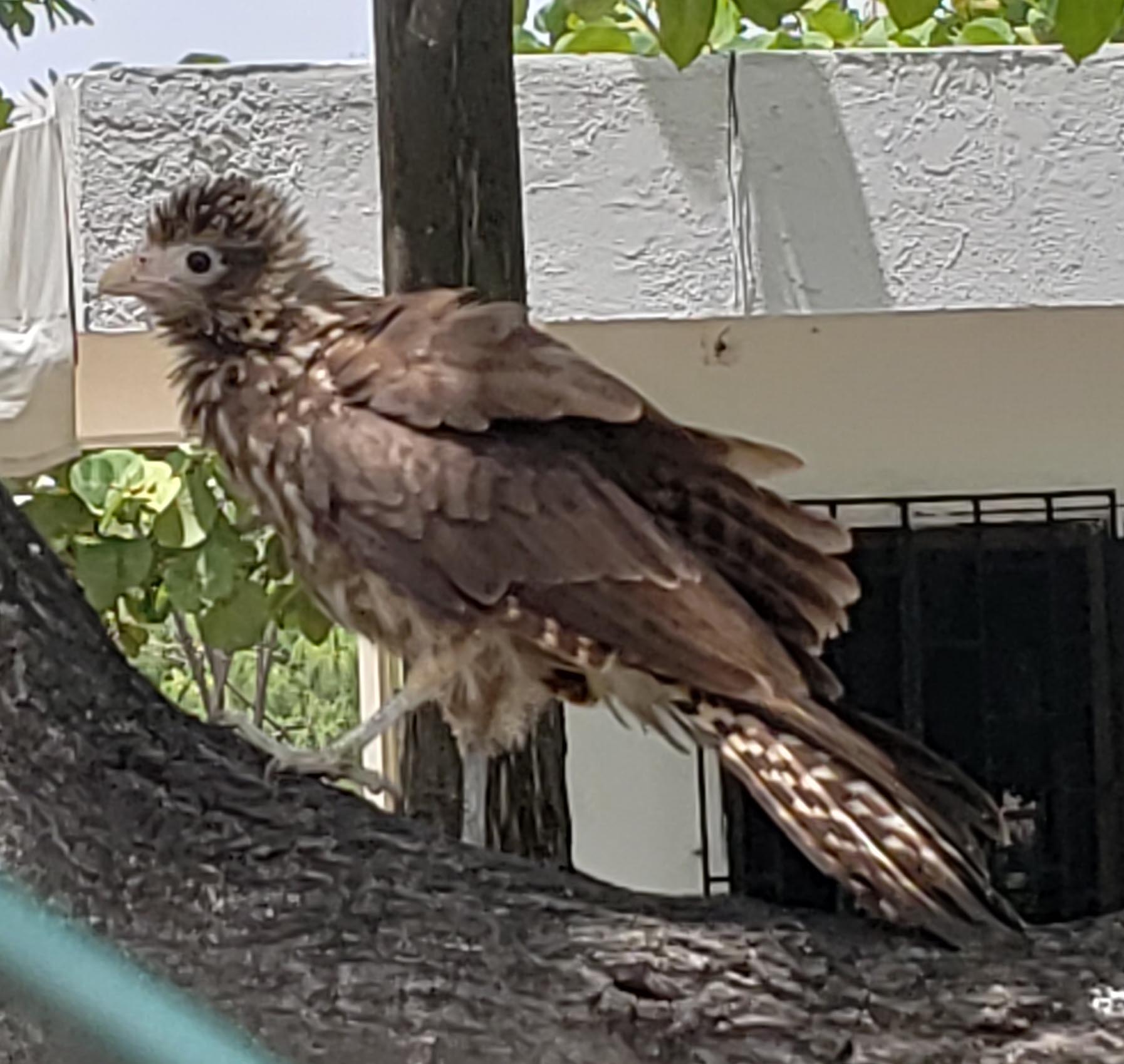
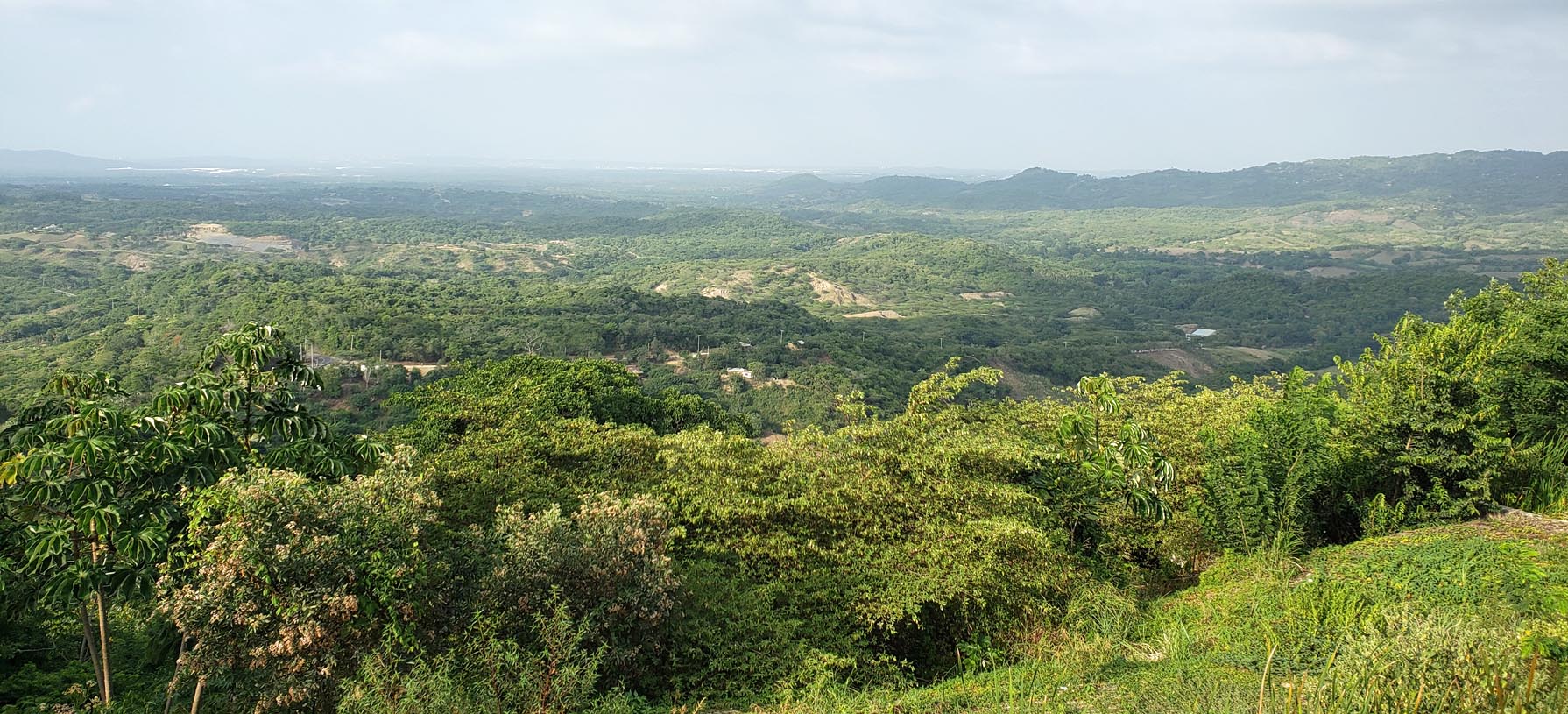
When we drove inland to the town of Tubara we found the town spread across the crest of a high hill and down into the adjacent valley. From one moment to the next you go from a coastal region to an inland one, covered with forest. In a clearing by the road we saw yellow oriole, red crowned woodpecker, boat billed flycatcher, smooth bill ani, tropical kingbird, blue black grassquit, ruddy dove and a gray bird sitting on a nest that we couldn’t identify. A very gangly savannah hawk stood on a stump staring at us by the side of the road. Other raptors we saw included yellow headed caracara, pearl kite and American kestrel. On the way home we saw a group of orange chinned parakeets.
At the Hotel Monasterio in Saint Agustin the guans were making so much racket that you couldn’t hear the roosters crow. Unfortunately, we never saw any guans though we heard them all around us. We also saw the scrub tanager, a blue and yellow tanager sort of bird, a rufous collared sparrow, and an Andean siskin.
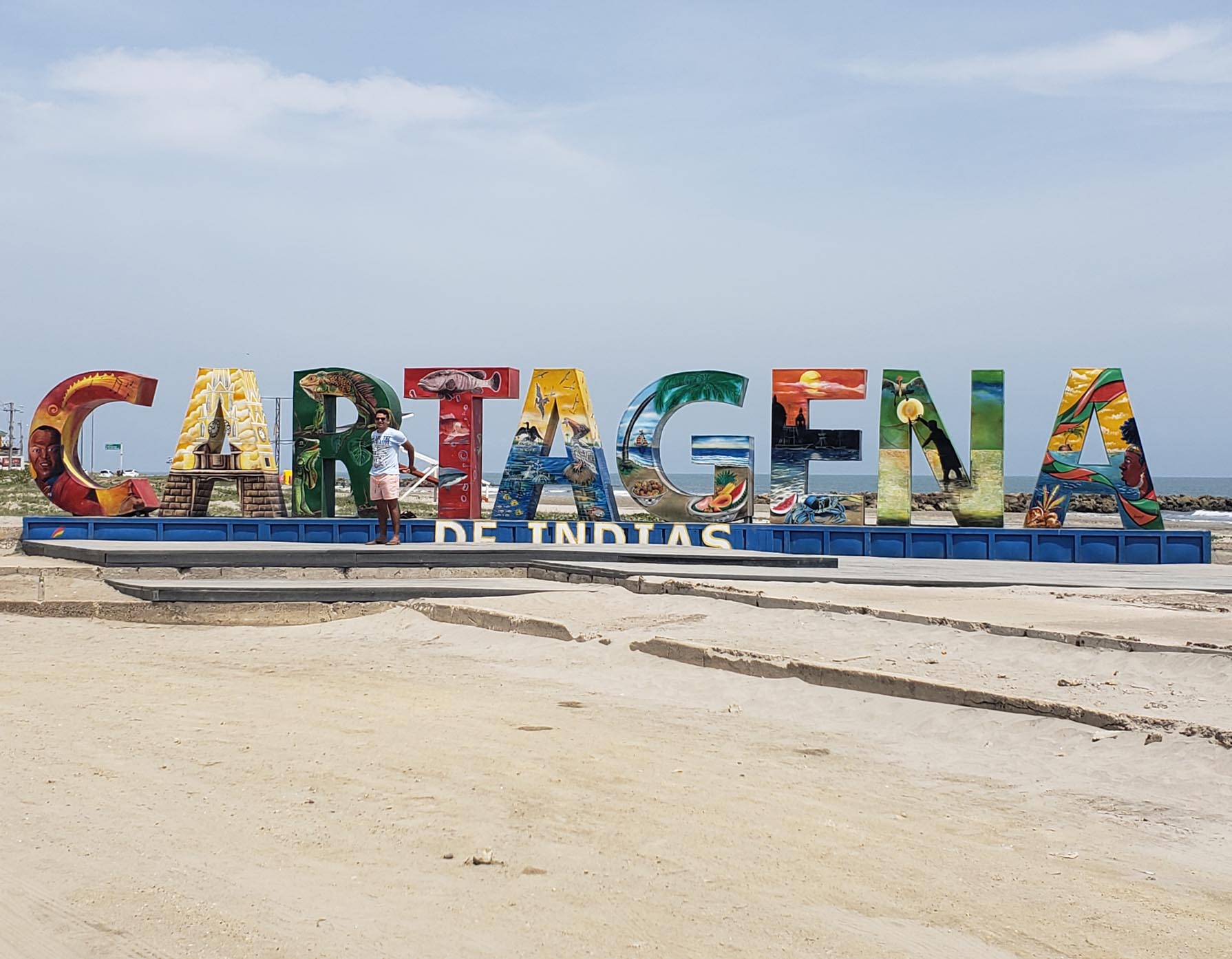
The sign says it all. We arrived in Cartagena, one of the oldest cities in the New World founded in the 1500s. It has survived all these years despite colonization, wars and heat. Many places are suffering from high heat this summer, but Cartagena is always hot and humid. Hot, hot, hot, and sweat-dripping-from-every-pore humid.We enjoyed strolling the walled city, window shopping, having a coffee and wifi access, chatting with the café owner who is back in the area after 20 years in Florida–his accent, or lack of it, gave him away. We stopped for lunch at La Perla, run by the people who run the Peru sushi restaurant next door. Our Peru-inflected food was delicious, including shrimp ceviche Cartagena style in a spicy tomato sauce, oxtail and blue cheese filled appetizer puffs, and ravioli with shrimp and crab. The air conditioning felt delicious, too.
Houses are carefully painted and decorated, often with lizards.
The arcades are remodeled storage from earlier times when the arches housed storage for mariners or the fort. Today, vendors offer woven goods, leather bags, and souvenirs.
As we headed back to the car, we stopped in a store to buy some Colombian chocolate for scientific purposes, to compare with single source chocolate from Peru and Bolivia. It’s all pretty tasty.
Three young men wanted to rap to us for a tip and were unhappy to find us hot and tired and uninterested in rap. Some people enjoy these performers, and pass by the entrance to the fort to see whether the trumpeter will guess their nationality and play the national anthem of their home country.
We stuck to the UNESCO World Heritage site portion of the city. It is lovely, though touristy, a bit like the French Quarter in New Orleans, or the Casco Viejo in Panama, and makes a pleasant day trip.
Though most people are pretty low key here, you see that some people are struggling. Like the young rappers in Cartagena getting up close hoping for a tip, fruit-sellers rush to your window when you stop along the highway. There’s a touch of desperation in their desire to sell you something. It can be overwhelming to be offered a bag of mangoes by five different people at the same time. Even if you wanted mangoes, how would you choose?
No one moves fast in the Caribbean, it’s too hot. Barranquilla and the surrounding area rarely gets below 30⁰C (80s℉). This was our first lesson, as it took almost an hour to pick up our rental car. There were no problems, just an endless stream of information written on paper, xeroxed, typed into a computer, printed, signed and fingerprinted. We managed to get around Barranquilla on its ring road before rush hour took serious hold and made it to our new place in Tubará.
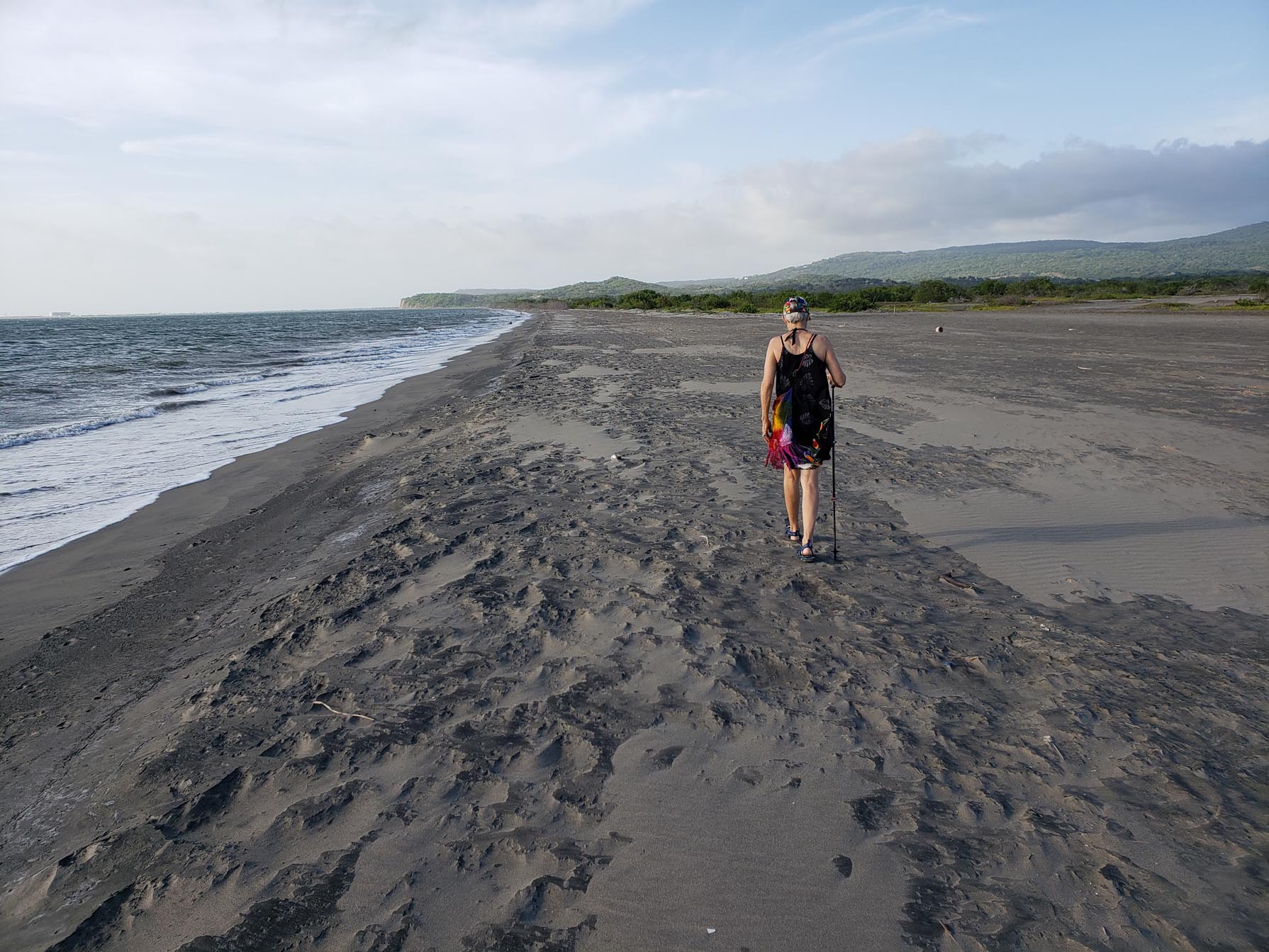
The next day we took a long walk on the beach, did some beachcombing and headed for the store with a shopping list for the rest of our stay. With vague directions, we drove toward Cartagena and toured a bit of the region, ending up at a small grocery store in Juan de Acosta. Remarkably, we found everything on our list.
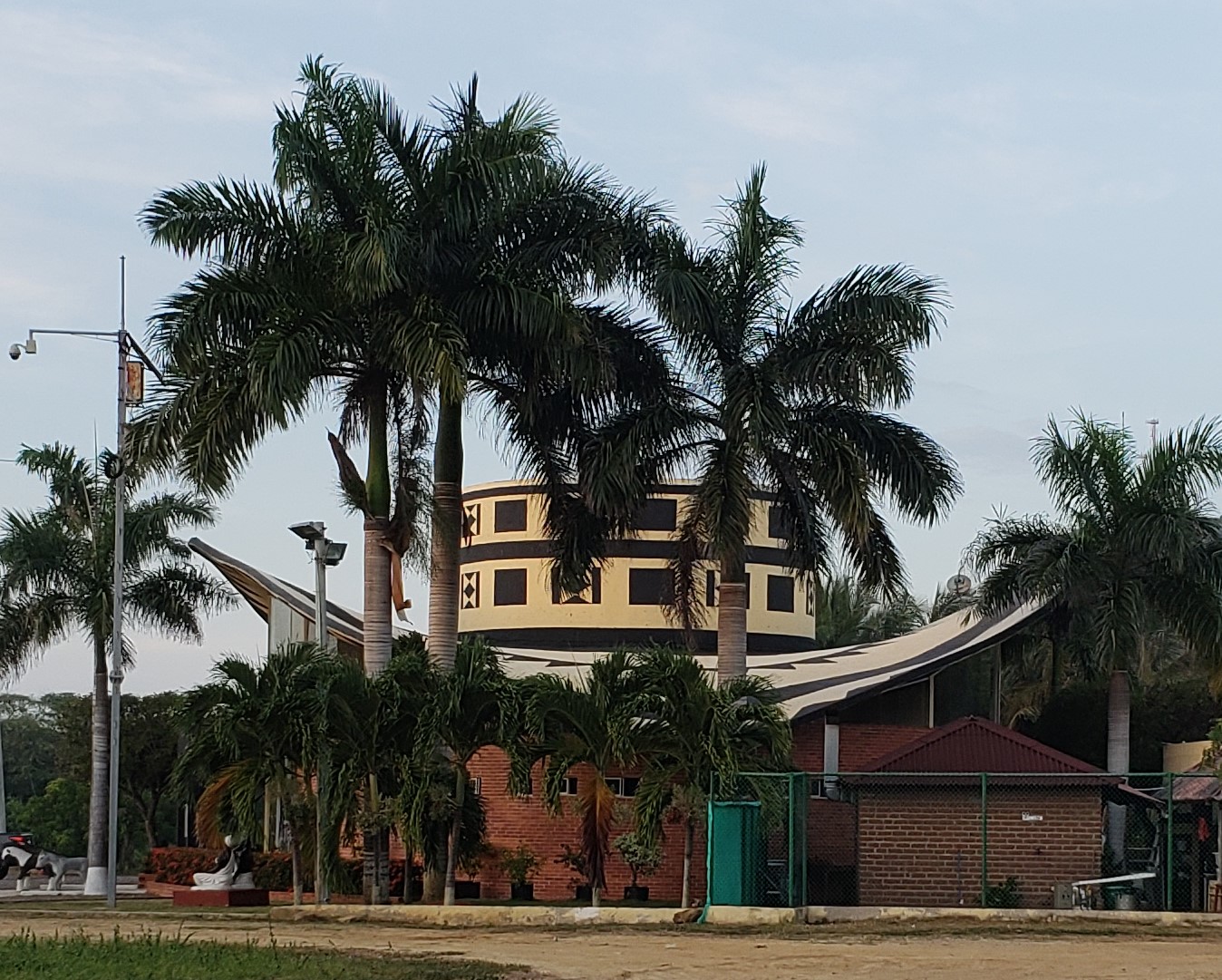
One of the local landmarks is The Sombrero, a restaurant, store, roadside stop.
We stopped at a woodworking stand where the owner showed us a wood sink basin he was carving. It yielded bright yellow sawdust. The wood is called Golden something for the color.
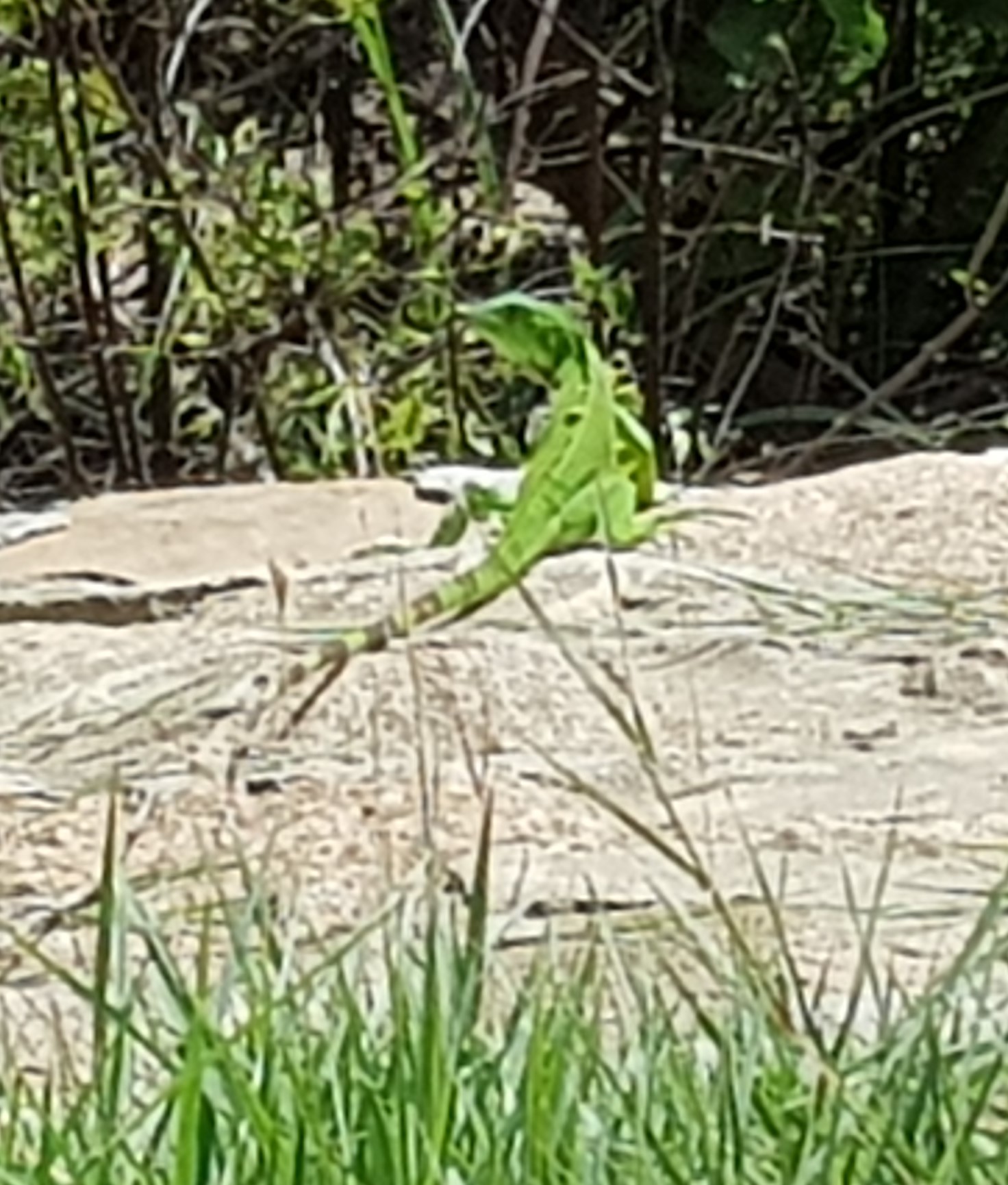
We saw a few birds and are still waiting for more of the local fauna to step out.
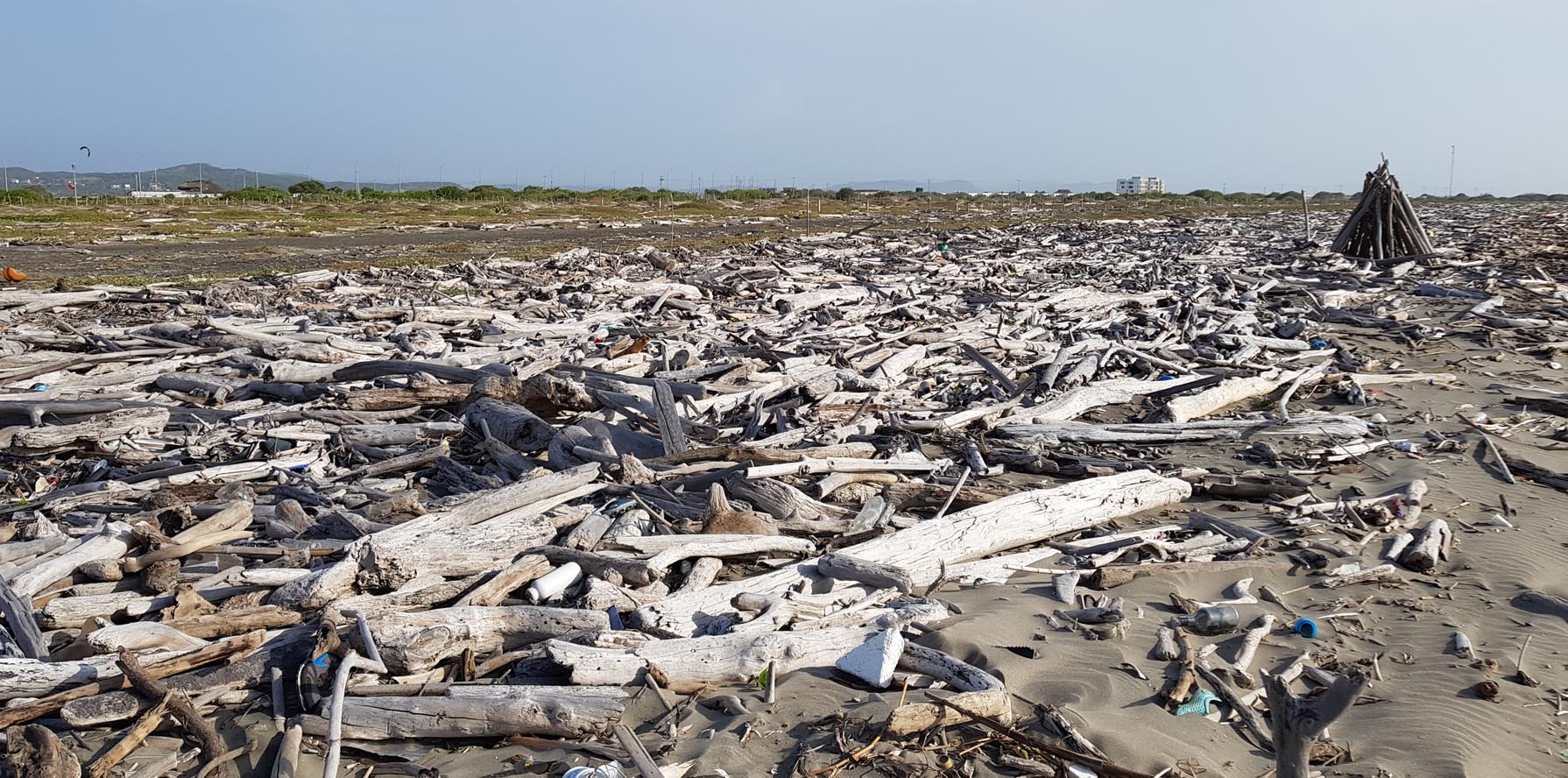
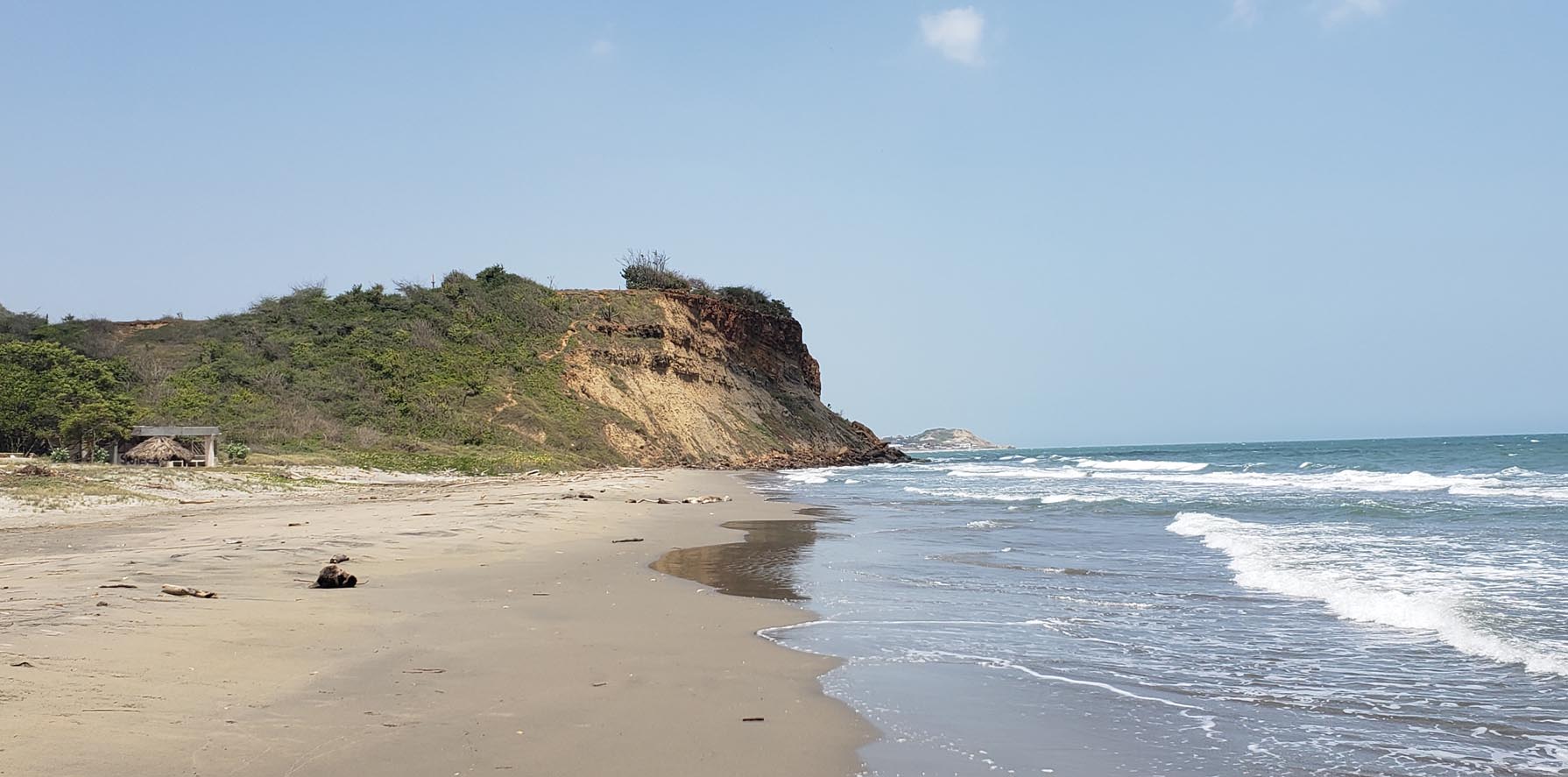
The beaches are highly varied. There are barely any waves on Playa Cano Dulce, the closest to our house. One arm of a long bay, Ensenada de Trebol, shields the beach. When we went out to the sea side of the Ensenada we found an astonishing beach full of driftwood. There are huge logs and twisted shapes of all kinds.
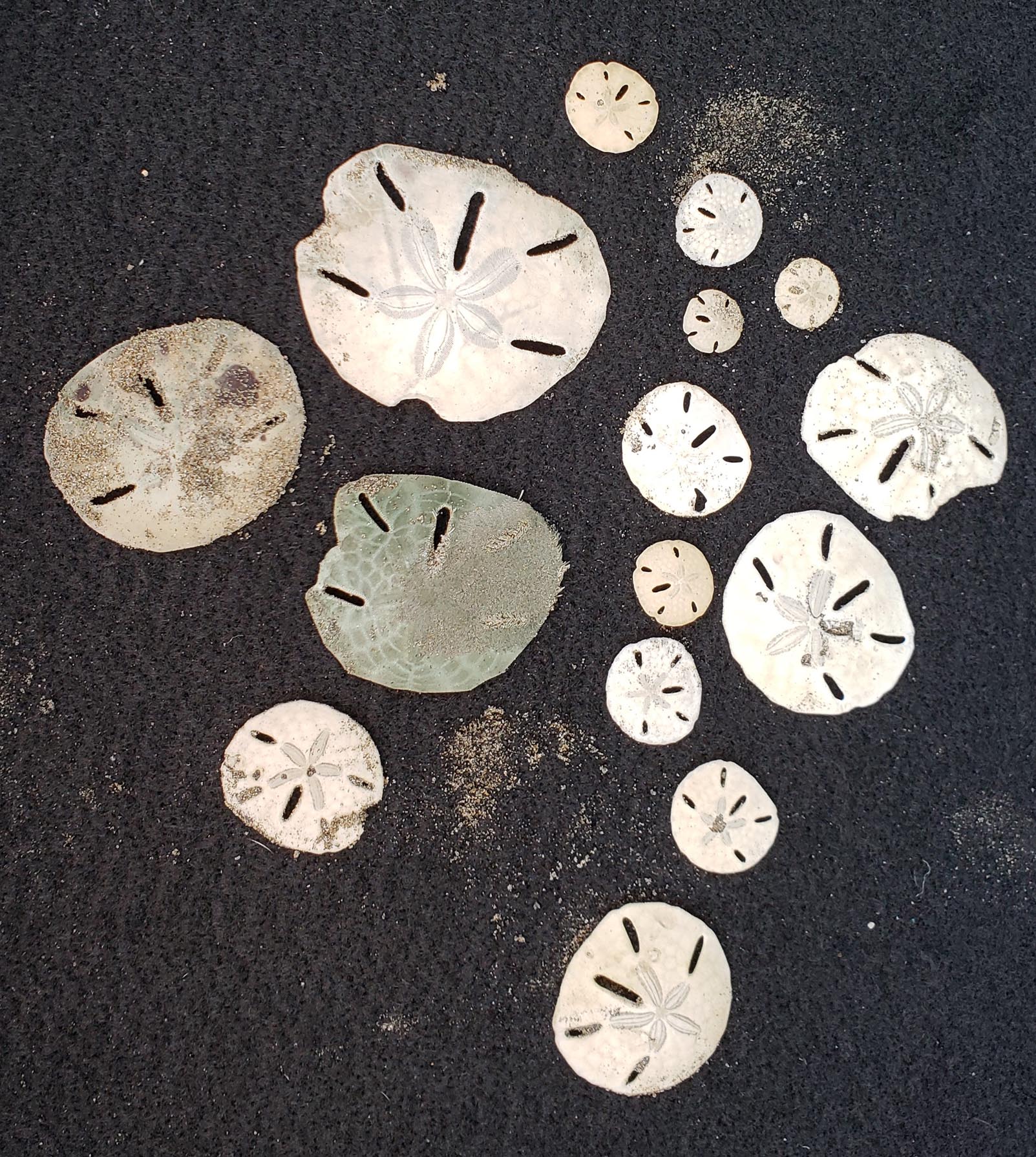
The next day we visited Playa Mendoza, where we found sand dollars.
What would it be like to live in this region? Getting used to the heat is the biggest hurdle. It makes most sense to go out in the morning and evening and stay home in the shade in the middle of the day. You wouldn’t need to worry about getting to the office and into the air-conditioning at work because no one commutes to Barranquilla from here. Our house this week is a “casa campestre,” part of a development of vacation homes. On Saturday and Sunday we can hear the voices of people on the beach. At night there is music. Weekdays we are alone apart from the caretakers. We had to summon someone to open the gate to the beach on Monday morning.
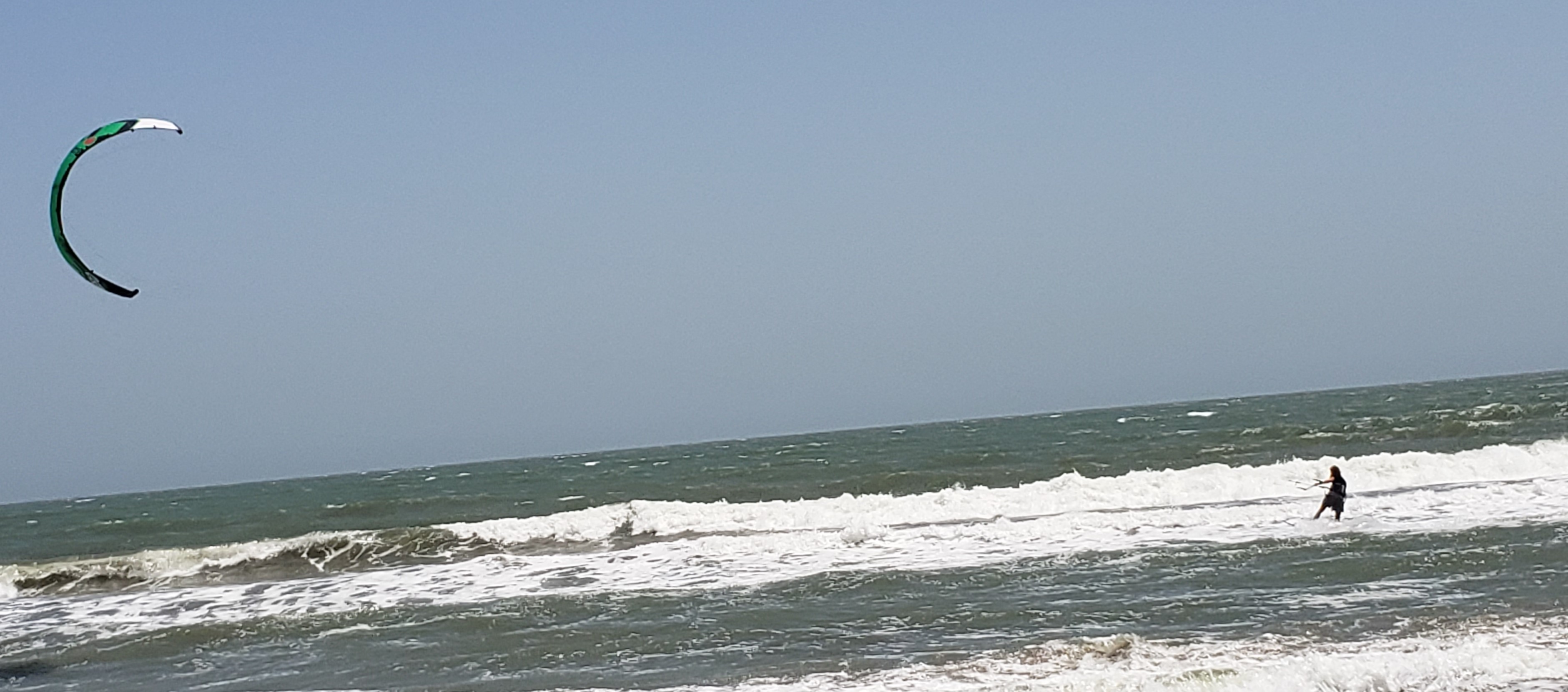
The people who live in this area full time are those who staff the beachside businesses, teach kite-surfing or build new villas for the weekenders, as development extends ever further along the coast between Baranquilla and Cartagena.
The pace of life suits us fine, as we visit beaches in the morning and late afternoon. We are at home for a dip in the pool, lunch and rest in the shade while it is hot.
We drive through the Colombian countryside alongside the Magdalena River in a tiny cab. When we met Hugo and his taxi at 9 am we were glad we decided to leave our big suitcases at the hotel in Neiva and travel with our carry-ons for our two-day trip to San Agustin. Other than the occasional swerve when we go over a bump or hit a pothole we are doing well, seeing rural sights as we make our way toward the archaeological sites of the San Agustin region. We were doubly happy that we hired Hugo to drive when his car was struck by a branch about a half hour out of Neiva. He stopped and negotiated with the trimmers from the electric company and we continued on our way.
Crops of all kinds are out the car windows. Colombia grows fruit, vegetables, ornamental plants and cut flowers. In addition to pineapple, banana, watermelon and papaya at breakfast, we tried juice of lulo (ugh) and cholupa (yum). Passing through Campoalegre we saw cacao beans drying on the sidewalk. There are lots of combination businesses, like photocopies and coffee, or parking and coffee.
Here’s a reason to eat less beef and drink more coffee.
Cattle pastureShade grown coffee
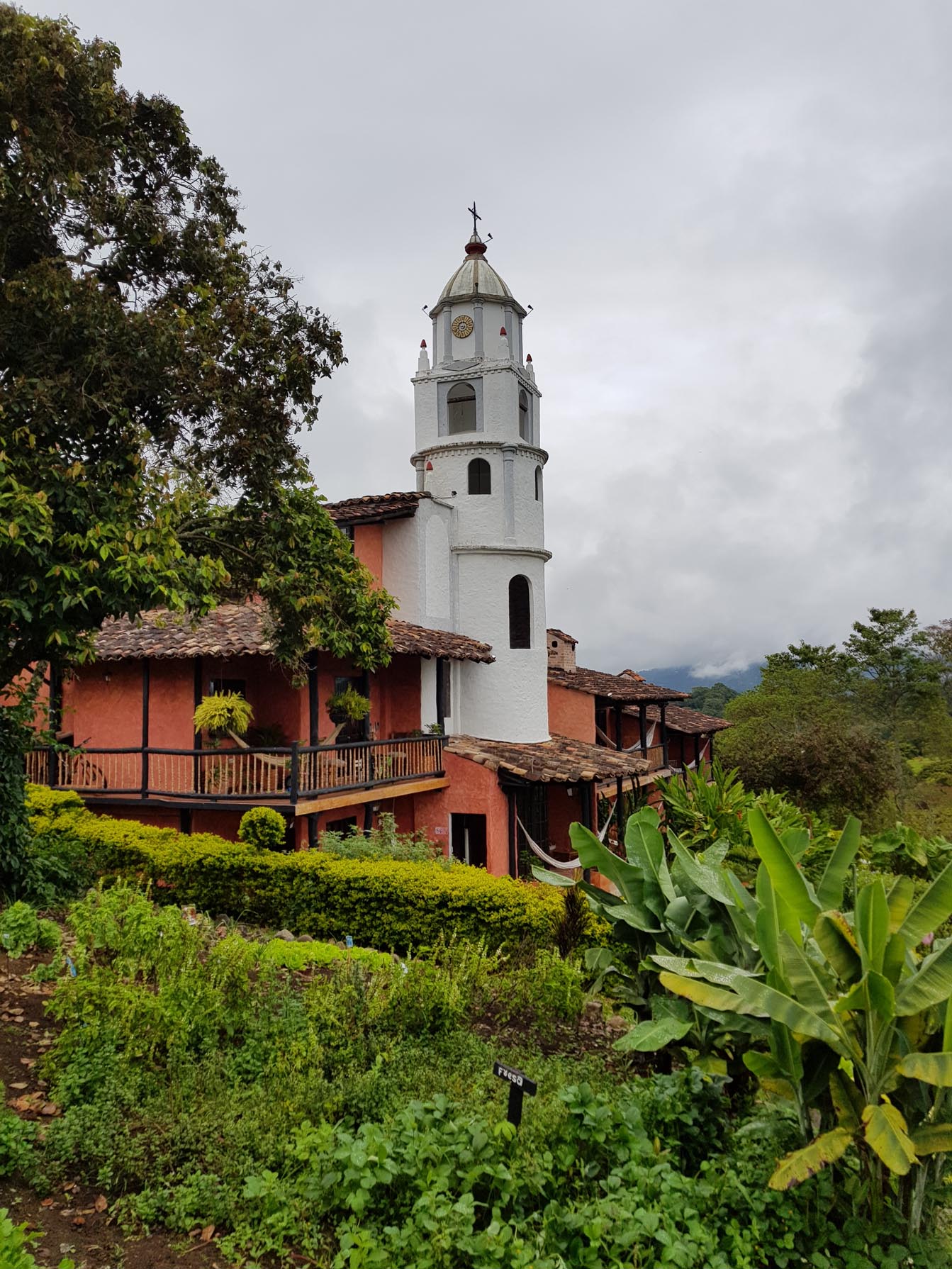
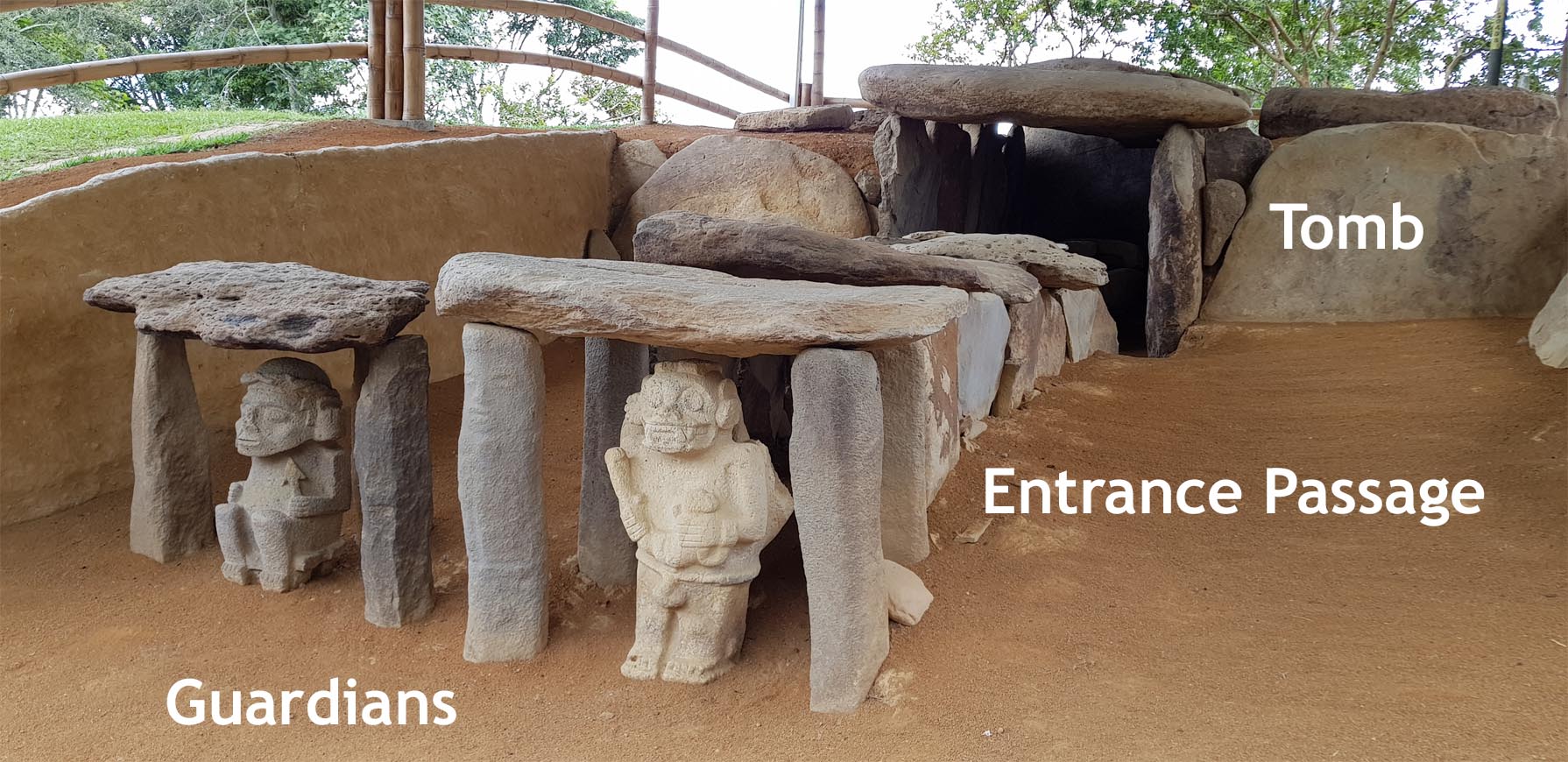
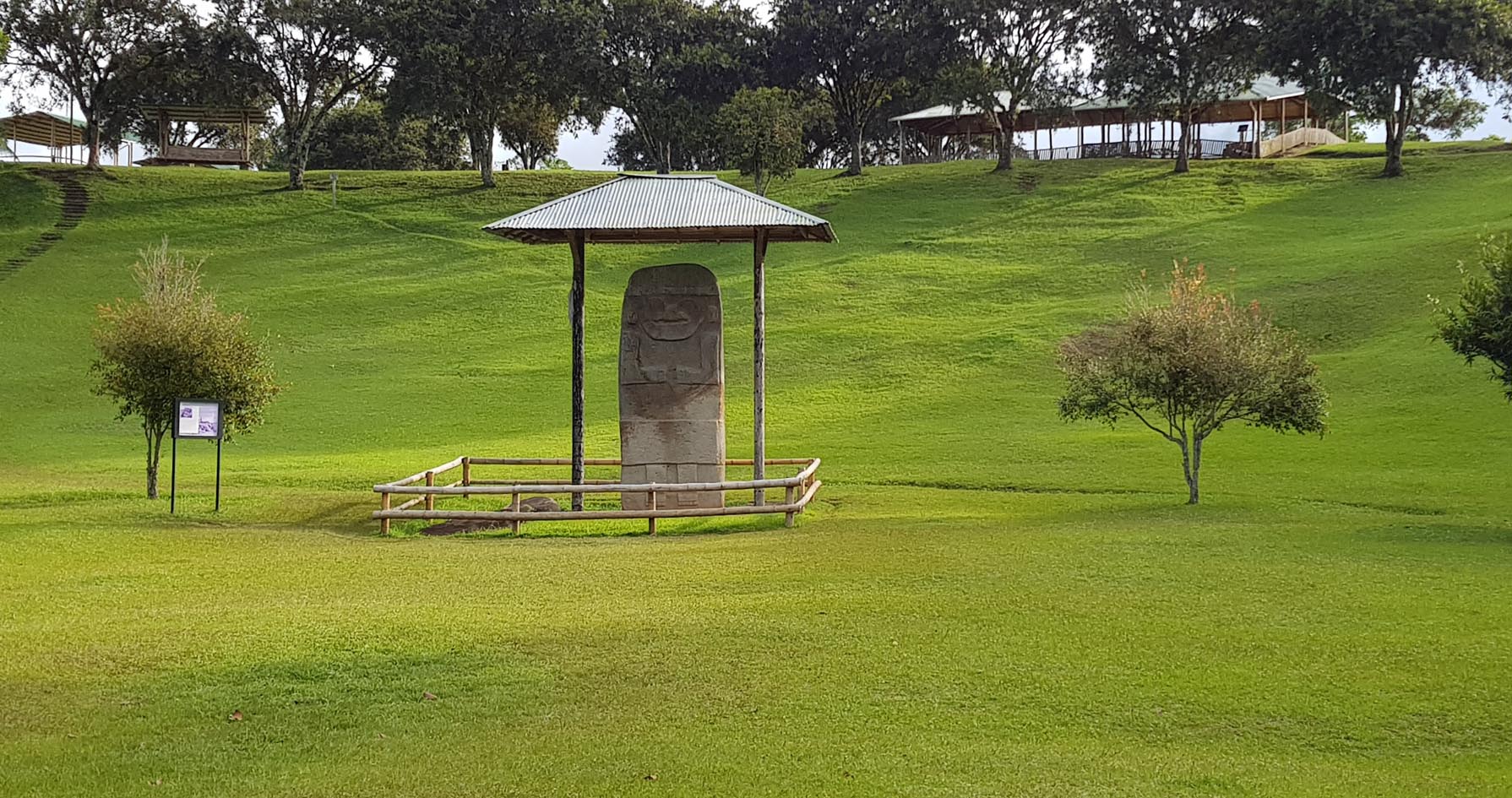
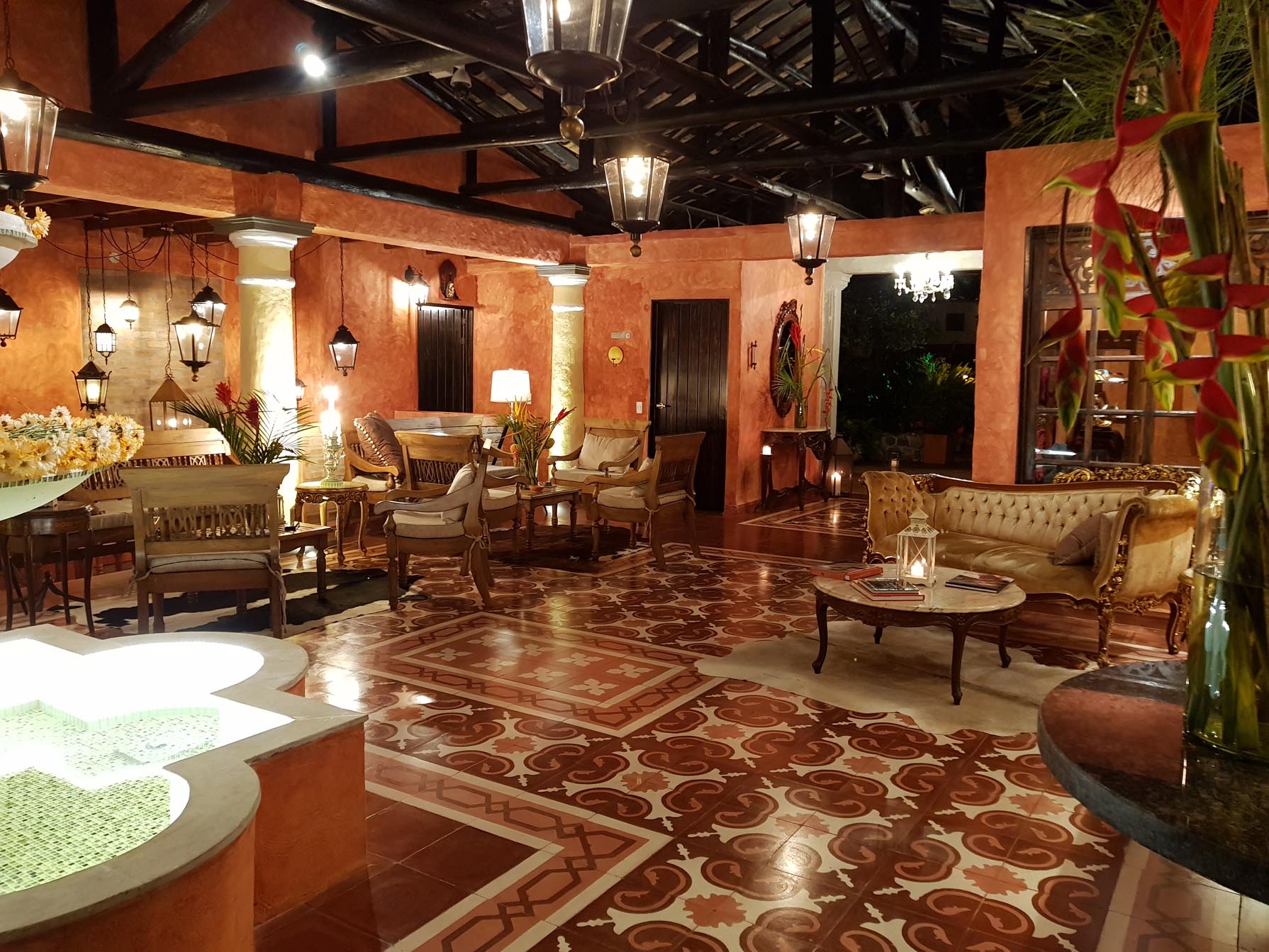
The drive to San Agustin takes five hours. We arrived tired and had trouble finding the hotel, which is a lovely hacienda with a small chapel that gives it the name Hotel Monasterio. It is about a half mile past the end of the paved road and has no sign so when we found it we were delighted, though it was more isolated than we expected. No one was available to drive us anywhere. We renegotiated our agreement with Hugo so that he drove us to see the sites as well as the coming and going from Neiva. Before unpacking or rest, we found that we could follow a tour group to one of the other sites, Alto de los Idolos. Alto de los Idolos was about a half hour drive away, again further than we imagined, but well worth it. In a manicured park, we visit huge carved stone monuments and tombs. These were built by some of the earliest chieftains in the Americas, during the early Formative period, as early as 1000 BC. Large mounds were built to cover stone tombs, and carved figures guarded the entrances.
We were at Alto de los Idolos just before sunset, and the setting sun lit the park in green and gold.We had dinner at the hotel and it was delicious, with the best-tasting broccoli I have ever eaten in a restaurant.
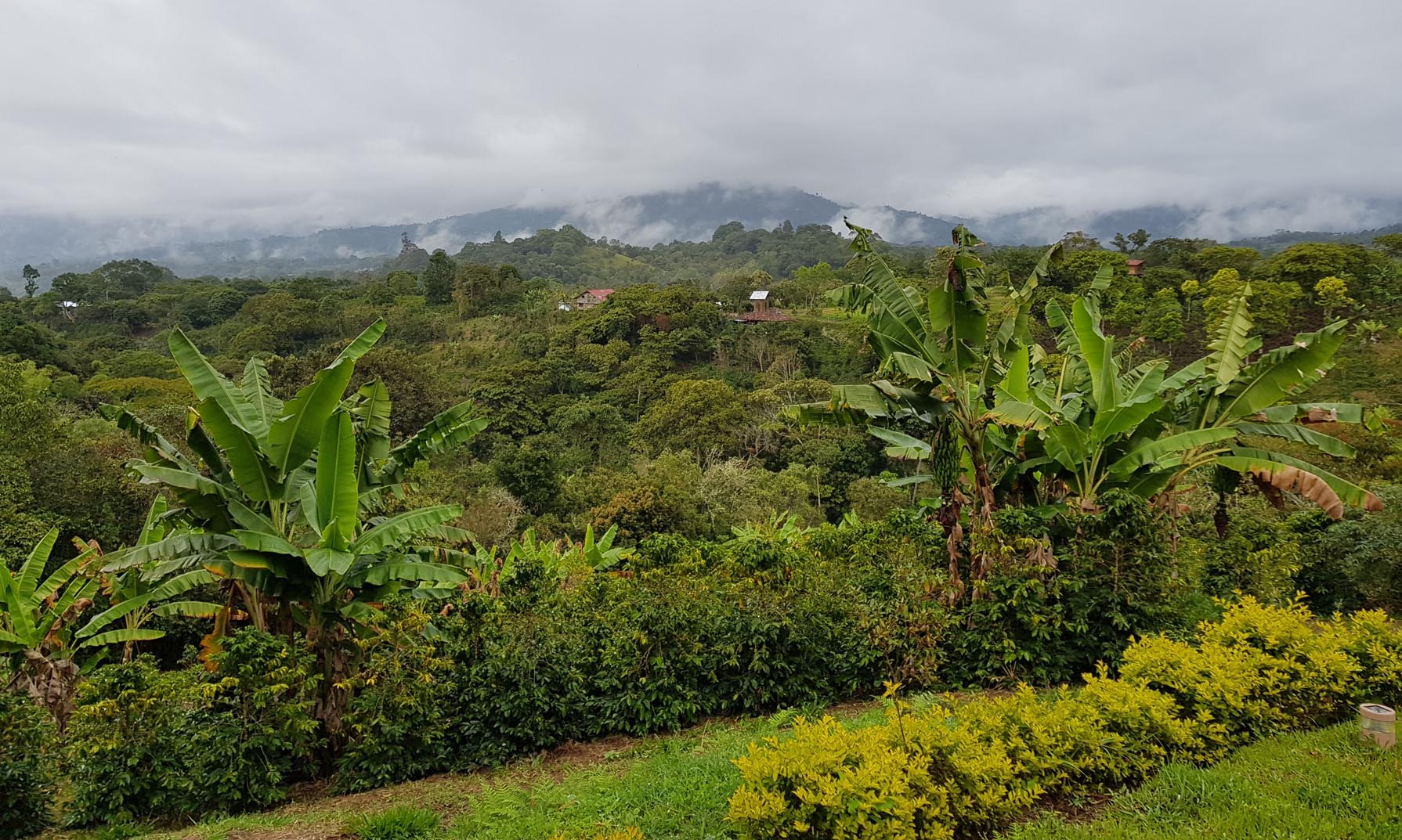
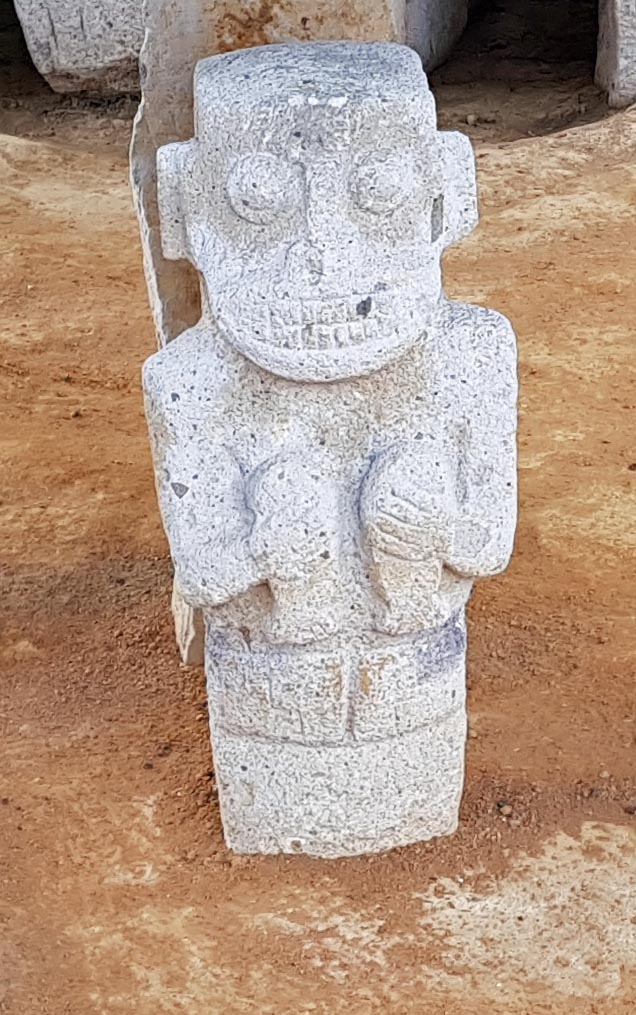
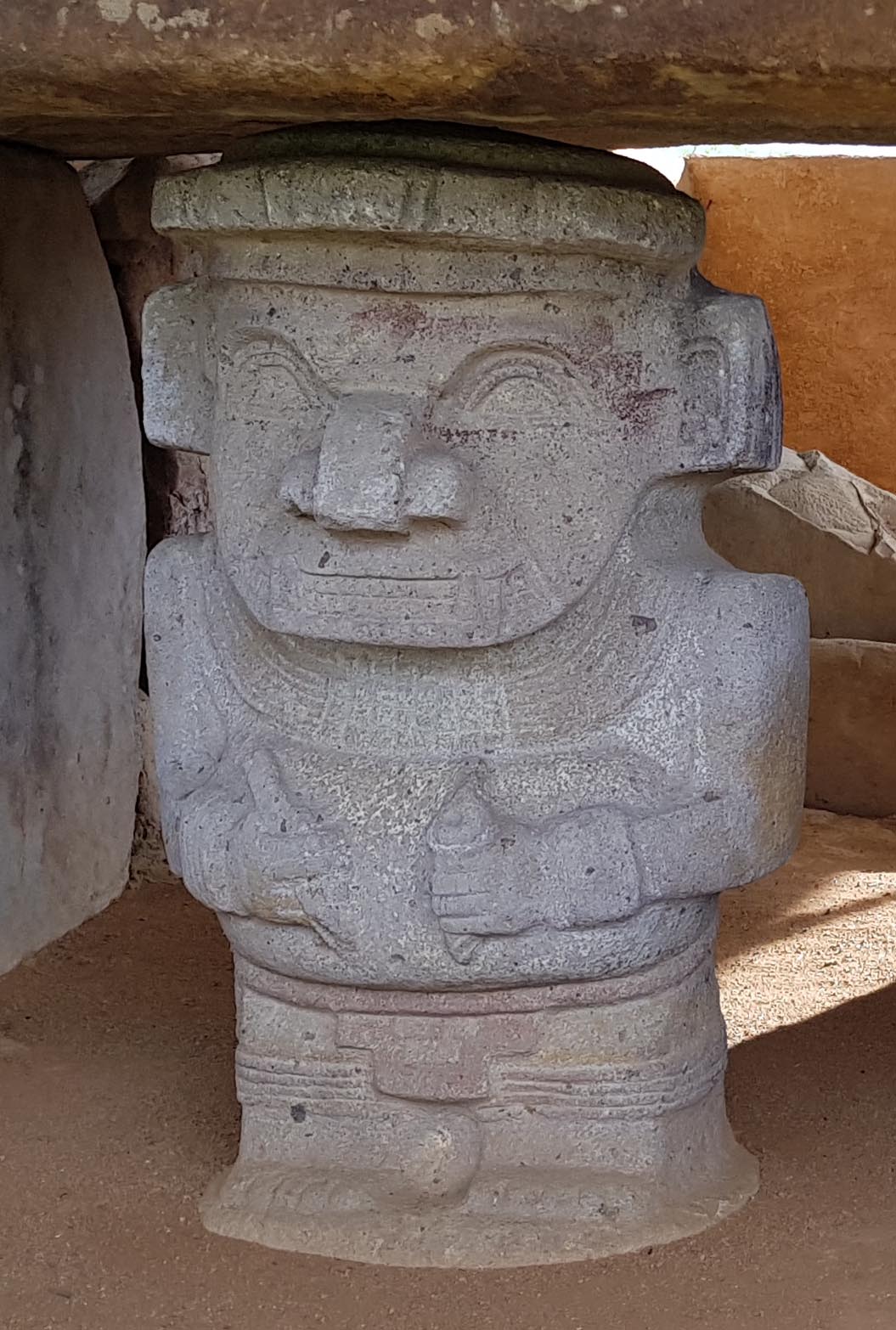
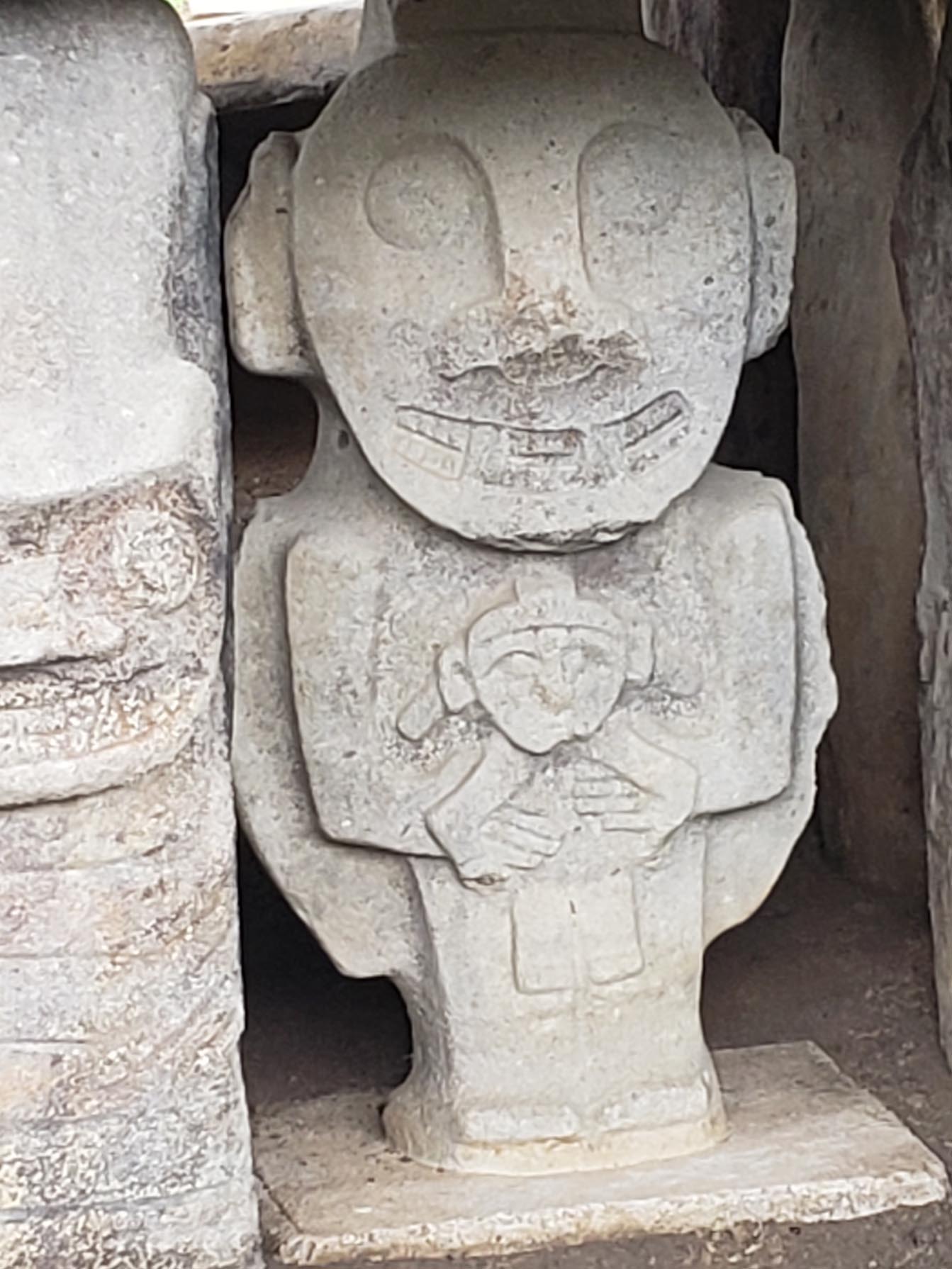
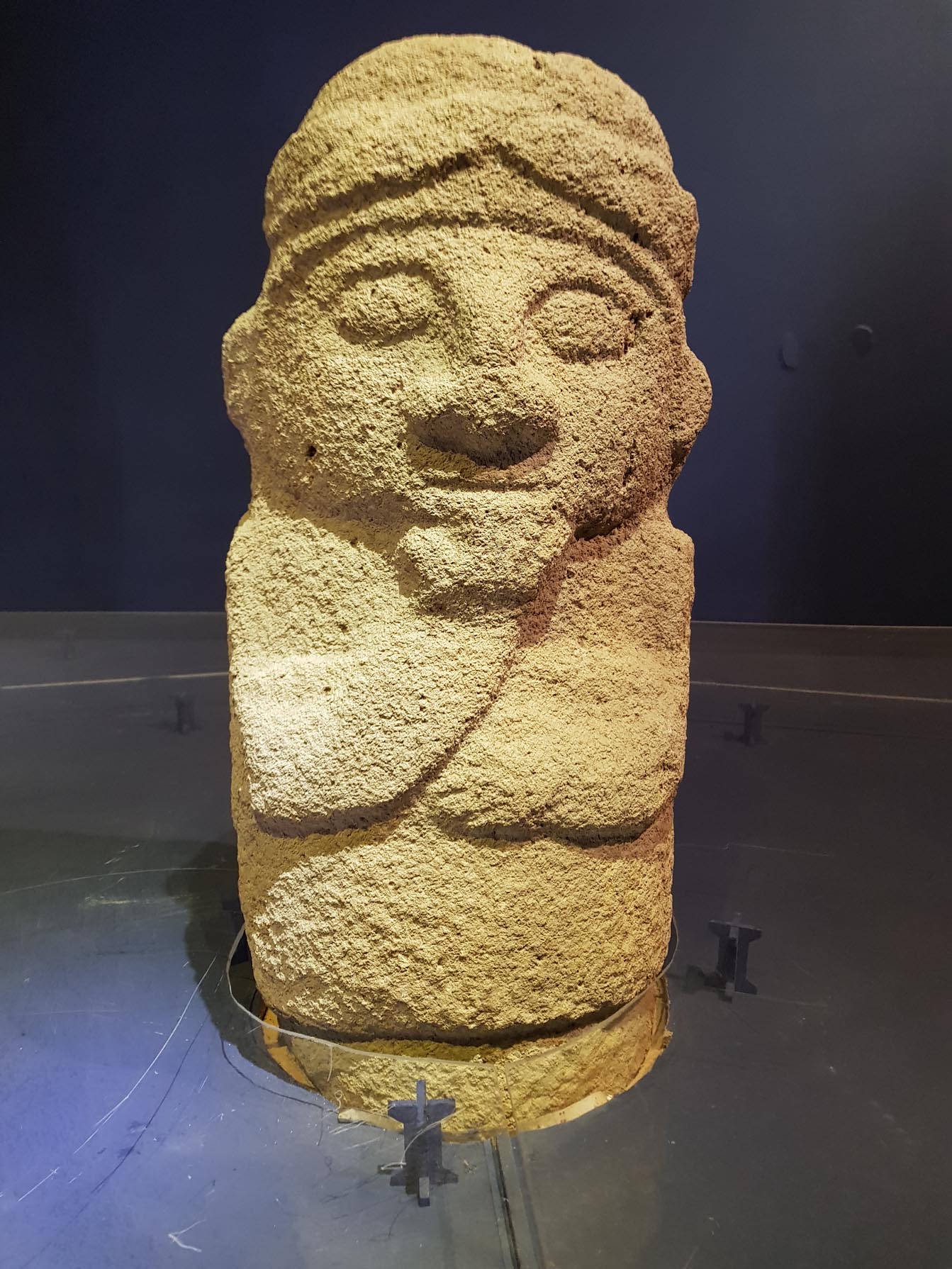
There were fantastic birds around the hotel, red tanagers, yellow and green birds, hummingbirds that are dark blue and purple. We ate breakfast and looked out over the landscape. The mist in the distance rises off the Rio Magdalena, the huge main artery of the region. It did not rain on us despite the low clouds.The San Agustin archaeological park encompasses four groups of stone monuments and tombs and an area of stream bed that was carved into channels and pools decorated with carved figures, the Fuente de Lavapatos. The monuments have focused themes. Each figure has large eyes, broad nose, fangs, claws and sometimes wears a helmet. The hands/claws are most often held close together and may be holding a captive (?), two fish (?), two staves, a cup, an arrow, a pencil (?), an ice cream cone (?). There is also “The Thinker,” Colombia style.
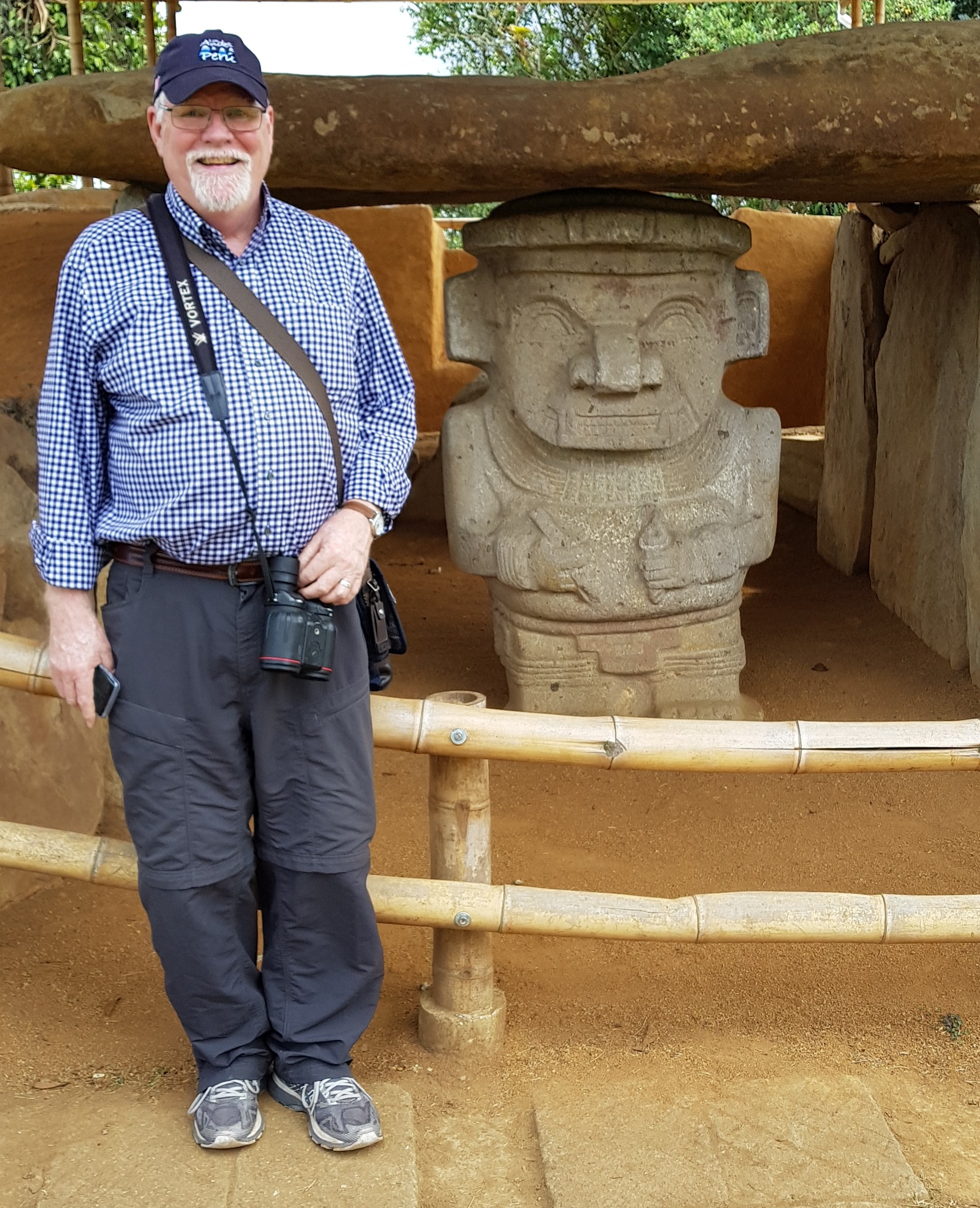
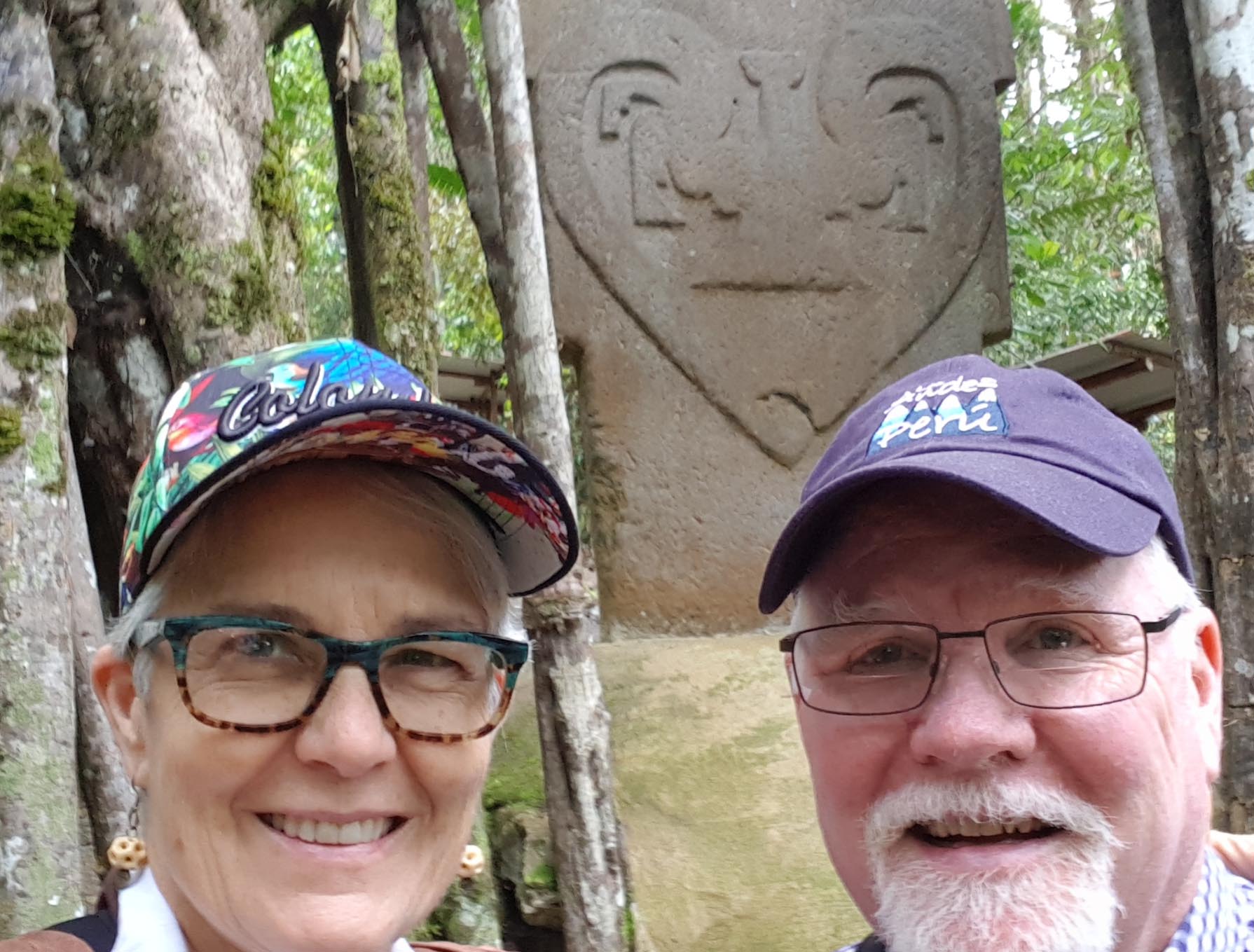
The entire circuit takes at least a half day to cover. Overcast weather made for a comfortable visit, and there were places to stop for coffee and souvenir shopping. I had a fresh ginger, lime, mint tea that was delicious. We finished off with a selfie.
We got back on the road again in the early afternoon for the five hour return trip to Neiva. For another view of visiting San Agustin, see this article in the NYT from last week. We seem to have visited at the same time!
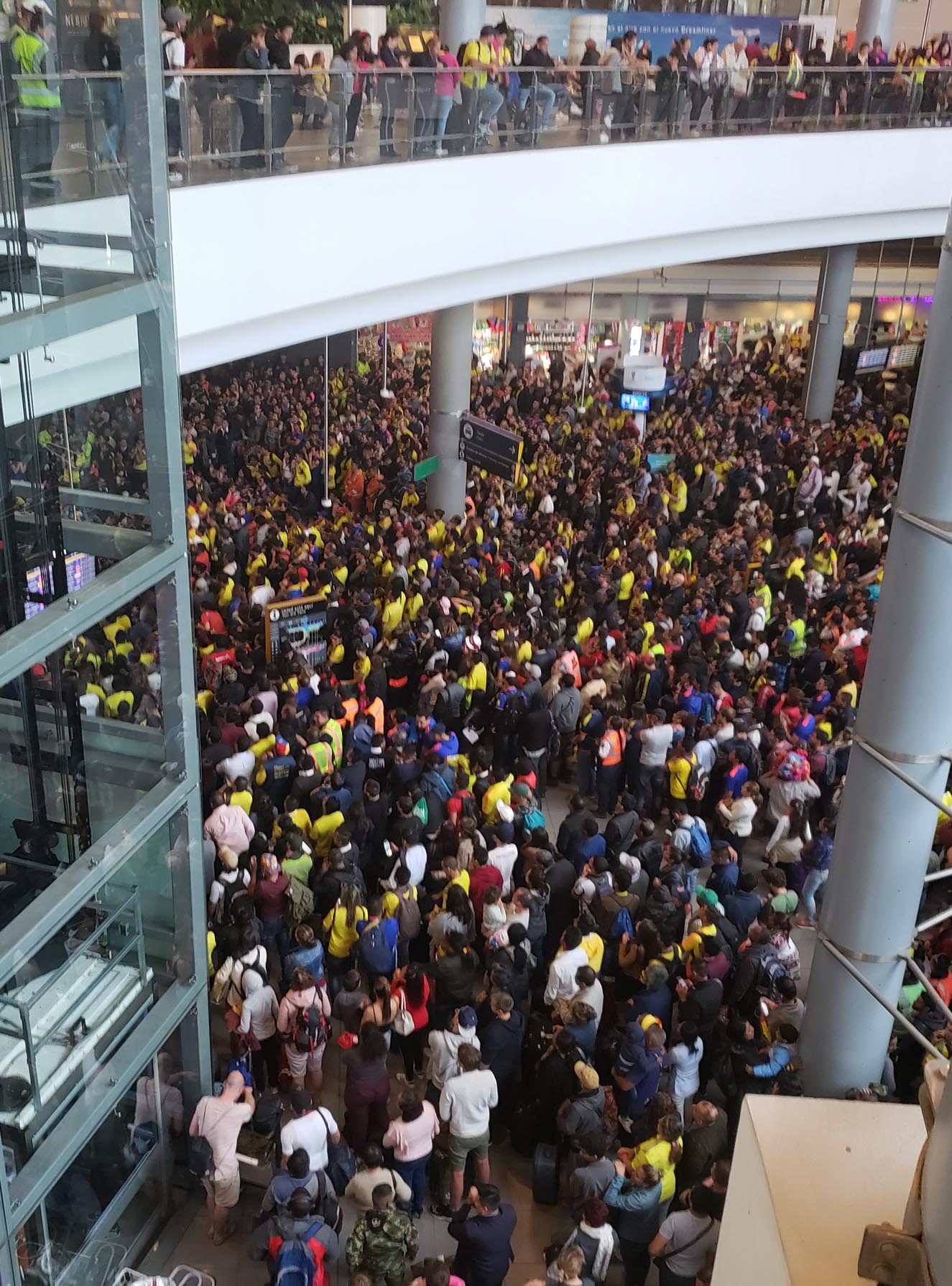
Our flight on to Barranquilla was the next morning at 10 am, so there was no time for a longer stay in Neiva and the San Agustin area, though there are many more things to see. We did happen to be on layover in Bogota during the final moments of the Colombia-England game of the World Cup. Everyone was watching until the bitter end, when Colombia lost on the final penalty kick.
The San Agustin archaeological park encompasses four groups of stone monuments and tombs and an area of streambed that was carved into channels and pools decorated with carved figures. The monuments have a limited range of themes. The figures have large eyes, broad nose, fangs, claws and sometimes wear a helmet. The hands/claws are most often held close together and may be holding a captive (?), two fish (?), two staves, a cup, an arrow, a pencil (?), an ice cream cone (?). There is also “The Thinker” Colombia style.
The entire circuit takes at least a half day to cover. Overcast weather made for a comfortable visit, and there were places to stop for coffee and souvenir shopping. I had a fresh ginger, lime, mint tea that was delicious. We finished off with a selfie.
We got back on the road again in the early afternoon for the five hour return trip to Neiva. Our flight on to Barranquilla was the next morning at 10 am, there was no time for a longer stay in the San Agustin area, though there are many more things to see. We did happen to be on layover in Bogota during the final moments of the Colombia-England game of the World Cup. Everyone was watching until the bitter end, when Colombia lost on the final penalty kick.
It just happened to be sunset, lighting the park in green and gold.
We had dinner at the hotel and it was delicious, with the best-tasting broccoli I have ever eaten in a restaurant. We were still in a panic about how we could have chosen a hotel so far from our destination. We double checked the map and discovered our error. We are indeed only 15 min from the San Agustin archaeological park. It was an awful few hours, but now our visit tomorrow will be reasonable.
There are fantastic birds around the hotel, red tanagers, yellow and green birds, hummingbirds that are dark blue and purple. We have breakfast and look out over the landscape. The mist in the distance is rising off the Rio Magdalena, the huge main artery of the region. So far it has not rained on us despite the low clouds.
The San Agustin archaeological park encompasses four groups of stone monuments and tombs and an area of streambed that was carved into channels and pools decorated with carved figures. The monuments have a limited range of themes. The figures have large eyes, broad nose, fangs, claws and sometimes wear a helmet. The hands/claws are most often held close together and may be holding a captive (?), two fish (?), two staves, a cup, an arrow, a pencil (?), an ice cream cone (?). There is also “The Thinker” Colombia style.
The entire circuit takes at least a half day to cover. Overcast weather made for a comfortable visit, and there were places to stop for coffee and souvenir shopping. I had a fresh ginger, lime, mint tea that was delicious. We finished off with a selfie.
We got back on the road again in the early afternoon for the five hour return trip to Neiva. Our flight on to Barranquilla was the next morning at 10 am, there was no time for a longer stay in the San Agustin area, though there are many more things to see. We did happen to be on layover in Bogota during the final moments of the Colombia-England game of the World Cup. Everyone was watching until the bitter end, when Colombia lost on the final penalty kick.
We came to Bogota for a single reason: to see the best gold museum in the world. The Museo De Oro is full of gold panned from streams around Colombia, hammered and cast into amazing shapes. One of the fascinating parts of this history is that several regions of Colombia made gold objects in clearly recognizable styles. One of the first exhibits you see takes you through these areas. This could exhaust anyone.
The Sinu style of gold-working used a lot of wire to make detailed shapes and poses, including the coolest gold artifact in the Americas, the golden raft.
Quimbaya work was thicker than the others because they had more productive sources of gold. Pieces were made with exquisite detail. The museum has so many different artifacts that hundreds of them are shown in a very short light show. It’s difficult to take in how many pieces there are. There are a few chunks of Colombian emerald, too.
This is a sample of what is in the museum. It’s worth a trip to Bogota. Our hotel in Bogota, in the historic Candelaria neighborhood, was lovely. Decorated with furniture from an elegant private home, The Orchids also served the best arepas we’ve eaten in Colombia.
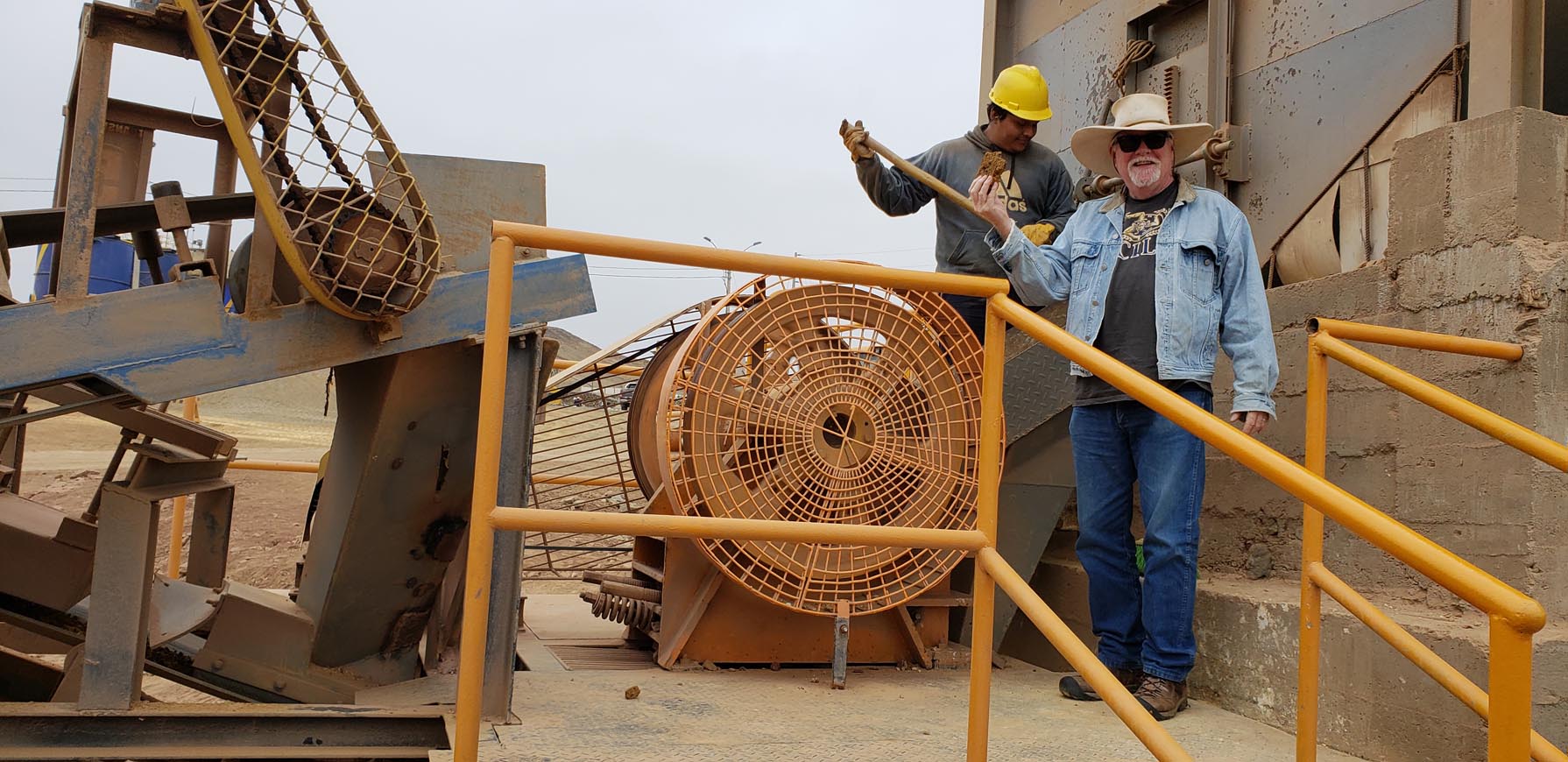
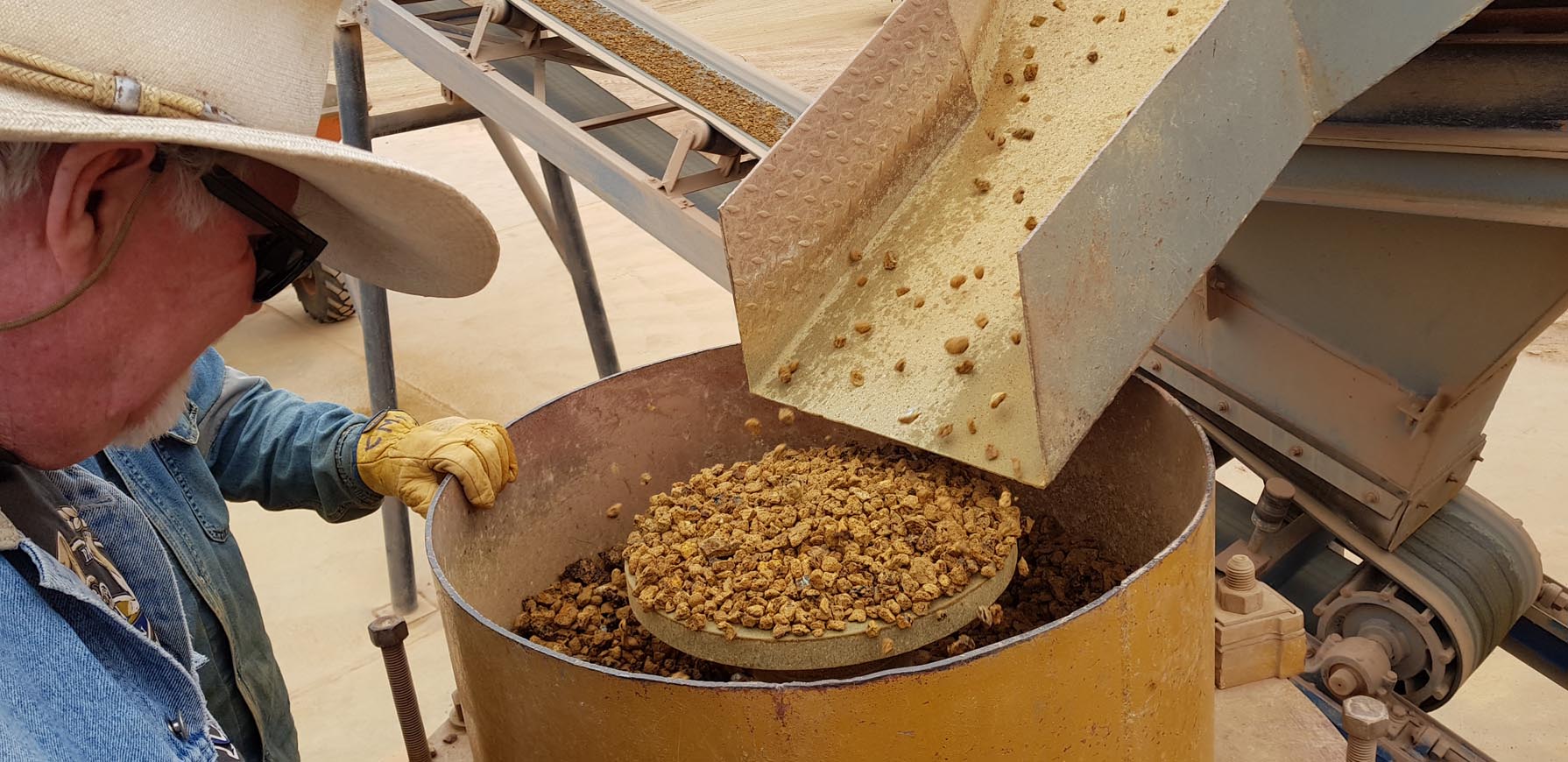
We had a chance to visit a gold and silver processing operation run by friends of ours. Even though the precious metals are invisible, it was fascinating to see how they are extracted from tons of earth, and why gold and silver mining involves moving mountains. First Jonathan put a piece of raw material into the crusher.A couple of rounds later, the little pieces of raw material are all the same size.
Each pile represents a truckload of material. The plant takes in metal-bearing loads from mines all over northern Peru. The raw material is tested several ways to assign a value and the supplier is paid. After that the loads are blended to create raw material that contains about 10 g of gold per ton. This goes into big drums with cyanide, sodium hydroxide and water and washes around and around until it is largely dissolved.
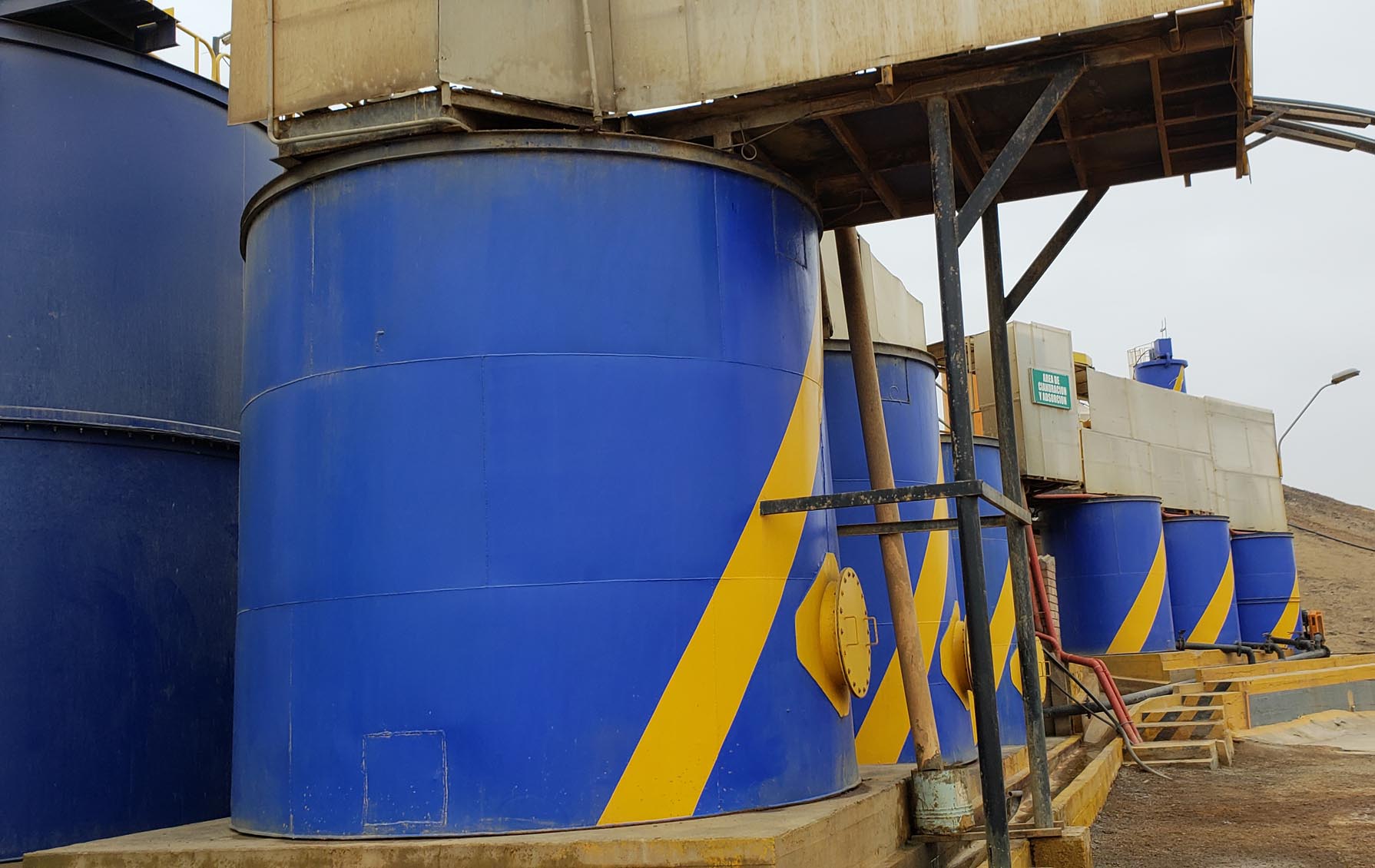
The liquid is put in tanks where it mixes with activated charcoal, the material in cigarette filters and water filters. The microscopic particles of gold and silver are absorbed by the charcoal. This takes about three days.
This charcoal has just been cleaned and dried and is ready to be used again.
The end of the process is the dangerous part. The gold is removed from the charcoal by processing with heat and alcohol. The alcohol is highly combustible, but at the end, gold and silver are separated from everything else.
The final step is melting the metal into an ingot that is a mix of gold and silver. In batch of material they process (multiple truckloads) the result is about 5 kg of gold and 16 kg of silver. The plant runs 24 hours a day with three groups of workers who live on site during their ten-day shift.Our neighbors, the hardworking guys who run the plant, Miguel and Tito. There weren’t stacks of ingots lying around, they whisk the bars off to Lima to be refined into separate blocks of gold and silver. India is a big market for their gold. September is wedding season there and lots of people want new gold jewelry for important occasions.
A few years ago, this was field season. We spent every June, July and August excavating at sites near Barranca, leaving home around 8 am and returning around 3:30, followed by clean-up, lab work, dinner and more administrative tasks. I remember it being cold in general, but I’m surprised by how different I feel this year. We are in Barranca in June by choice, without specific activities to do, and I don’t like the austral winter on the coast any better than I did when I was so busy I barely had time to notice. Most days are overcast. The ground is damp in the morning, with a few puddles of condensation from the trees. Since no one has central heating, it may be in the high 60s, even 70 outdoors, but it is the same temperature indoors. When you sit at a desk, you get cold.
Some days it warms up toward midday. I start out with pants, long-sleeved t-shirt, sweater and padded vest, wool socks and shoes. I shed layers, change to shorter pants for a walk on the beach, put on a lighter vest, add hat and sunscreen, and take a walk. Return home, rinse feet, dry feet, put socks, shoes and long pants back on and gradually add my layers again through the afternoon. If we sit on the front porch to watch the sunset, which is not visible through the clouds, and play cards, I may end up wearing fingerless gloves and a knit hat. It’s quite a look.
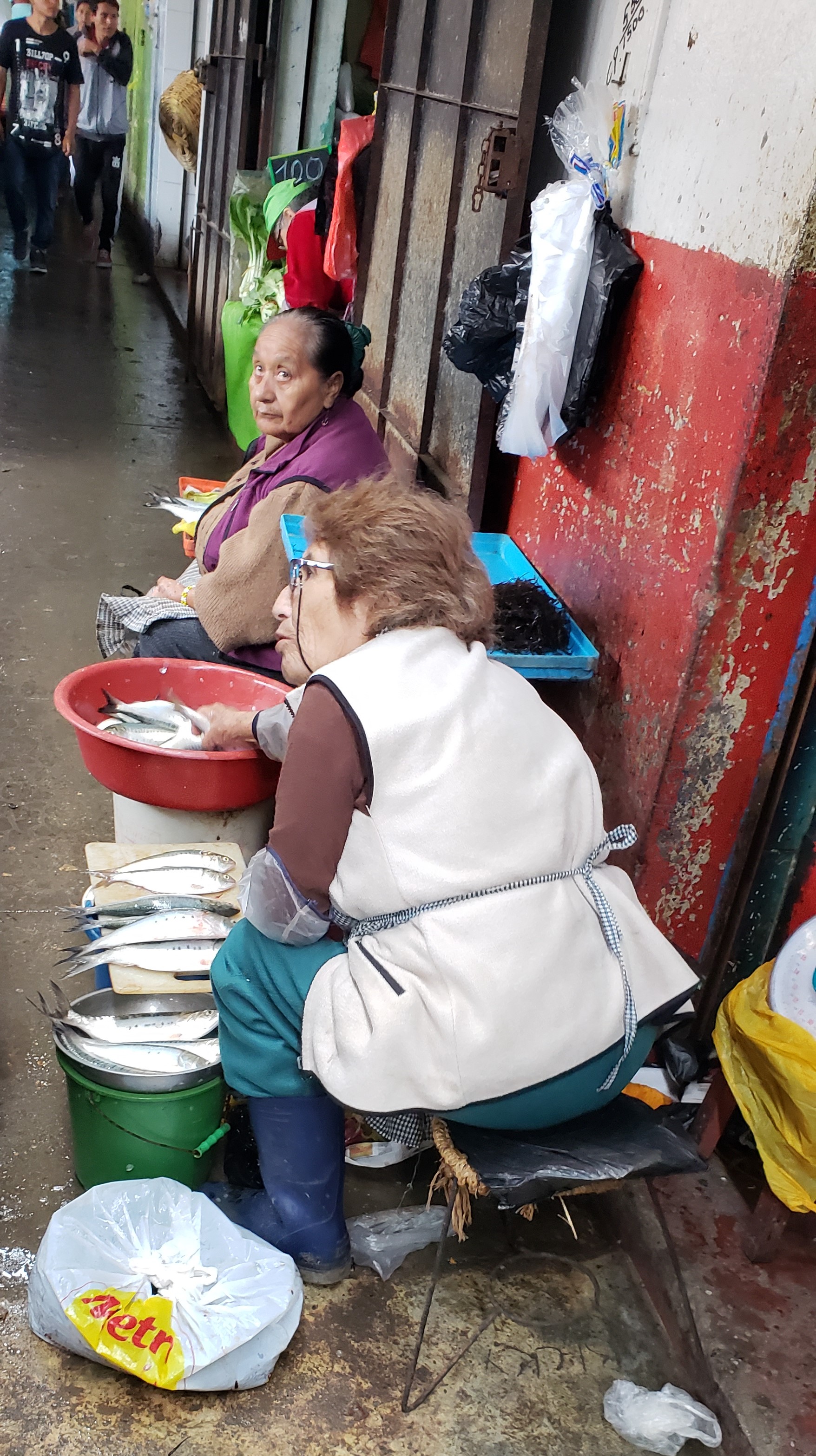
In town, though, life goes on through the seasons. Jonathan stopped to buy lamb. Then we strolled the fish aisle to find a fish for dinner. These ladies are selling fish and chatting up a storm.
A woman sells roast pork sandwiches from the real thing. Her stand is squeezed between the street and sidewalk on a corner. Lots of foot traffic!
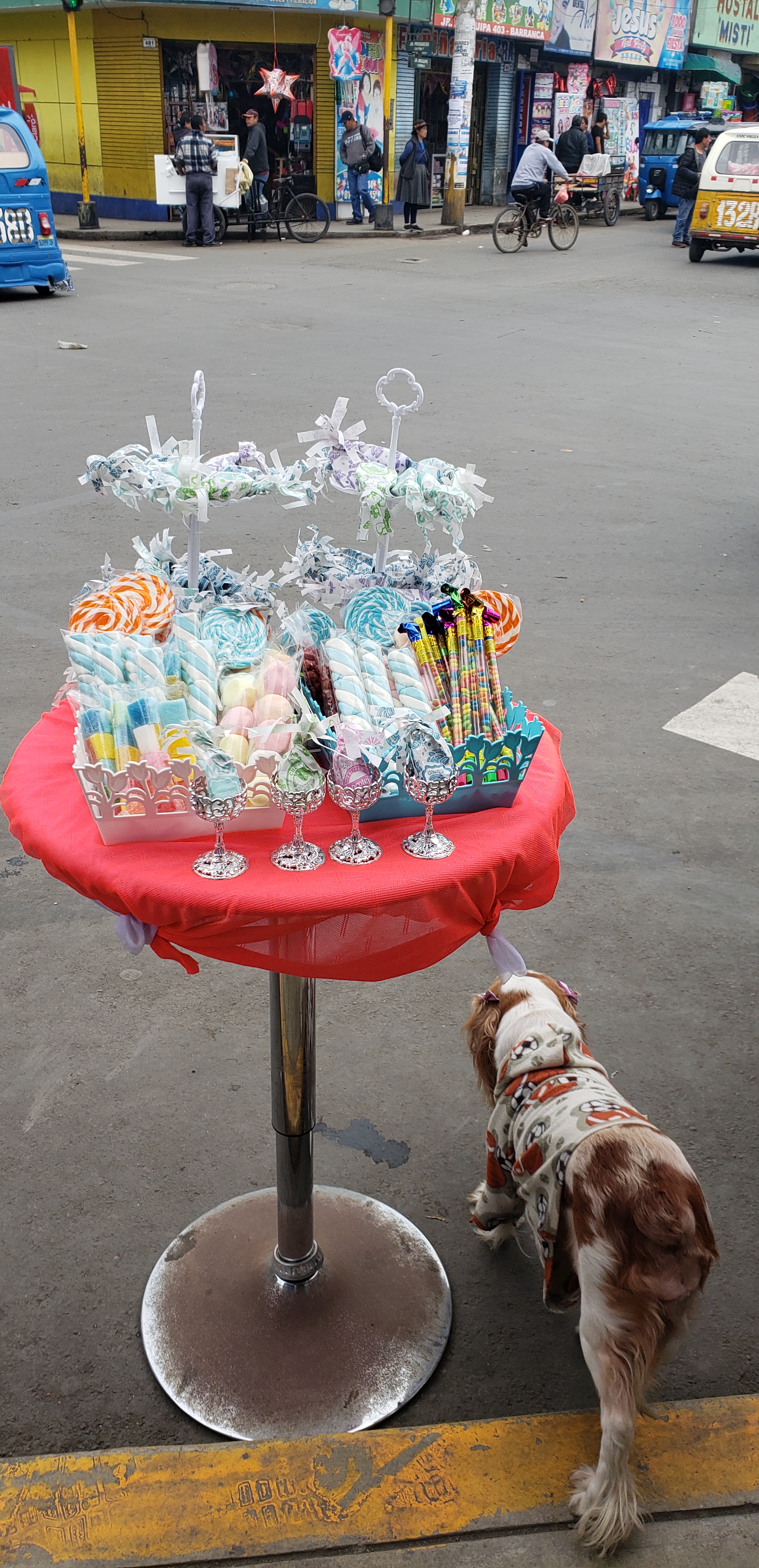
We passed a display of decorative marshmallows on a stand in the street. Every day there’s something new to see.
There are beautiful flowering trees this week in Lagrange. They bloom and fade so rapidly that I didn’t get a photo of many of the white pear trees that are widely used in landscaping. I love the pink flowering redbuds. This tree looks like it is dancing in the street.
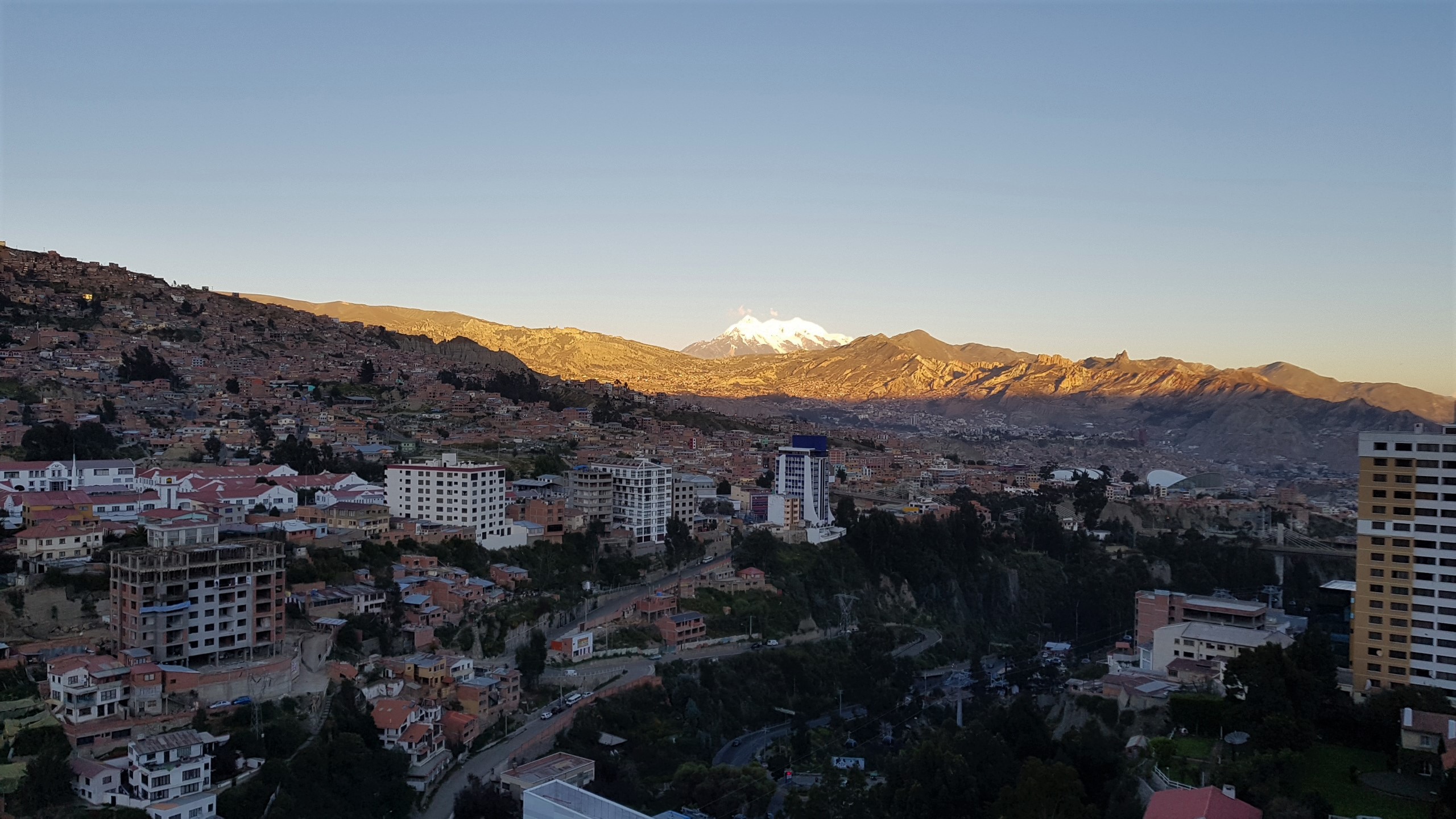
We saw wonders in Bolivia, a remarkable plain of salt, the capital of an ancient empire, rare birds. In between those high points we flew around La Paz in a gondola, then drove across miles of altiplano where we passed quinoa fields, grazing herds of cows, horses, sheep, llamas, alpacas, vicunas and even pigs. We saw an Andean condor with its 8-10 ft wingspan as well as the bird I called a “flying peach”. We had one of the best dinners of our lives in La Paz and ate as much excellent Bolivian chocolate as we could in Sucre. Why do I plan never to return?
Altitude. More than half of Bolivia is tropical, but the best known part of Bolivia is the altiplano, a grassland area between 3500-4000 m above sea level, about 11,500-13,000 ft. My head ached most of the first week. Jonathan’s asthma made him short of breath. We both had trouble sleeping. Adjusting to high altitude takes time and flying from Lima at sea level to the El Alto airport in La Paz (4,050 m), in less than two hours, was a huge shock.
Getting to the wonderful places in Bolivia takes a lot of effort. Our usual scheme of renting a car and driving around was perfect when we wanted to pull over at a shallow lake and look at birds, or stop to check out ruined chullpas, ancient burial towers. Driving in major cities was nerve-wracking and it was very nearly impossible to find our way. Maybe we’re just getting too old for this. We hate the thought, but it’s out there. By the end of our trip we were both tired, ready for a well-seasoned, properly cooked meal where the hot dishes were hot and the cold dishes cold followed by a good night’s sleep in a comfortable bed–one of life’s great pleasures that is not usually available on the road.
Good Things About Bolivia
Cell phone service and data worked very well and cost us about US$10 each for a month of service, a bargain. We used Entel because it appears to have better coverage in Bolivia and had no trouble. We didn’t make many calls, but used the data for mapping our routes.
Gasoline was inexpensive, where else can you say that? The Bolivian government subsidizes gasoline, and resists making regular increases. We spent less than US$20 to fill the tank of our rental RAV4. It costs about triple that to fill up in Peru.
Food costs are low and there is a wide variety of products available, many coming from the lowland portion of the country that is focused on agriculture (and removing tropical forest…).
Textiles. If you want weaving, Bolivia is for you. We found the most interesting and highest quality weavings in Sucre and the Tarabuco market, in the Tarabuco and Jalqa styles. There are many other styles from different regions. Typical of Bolivia, there are specific markets and towns that sell the greatest variety of each. There’s a lot of travel involved.
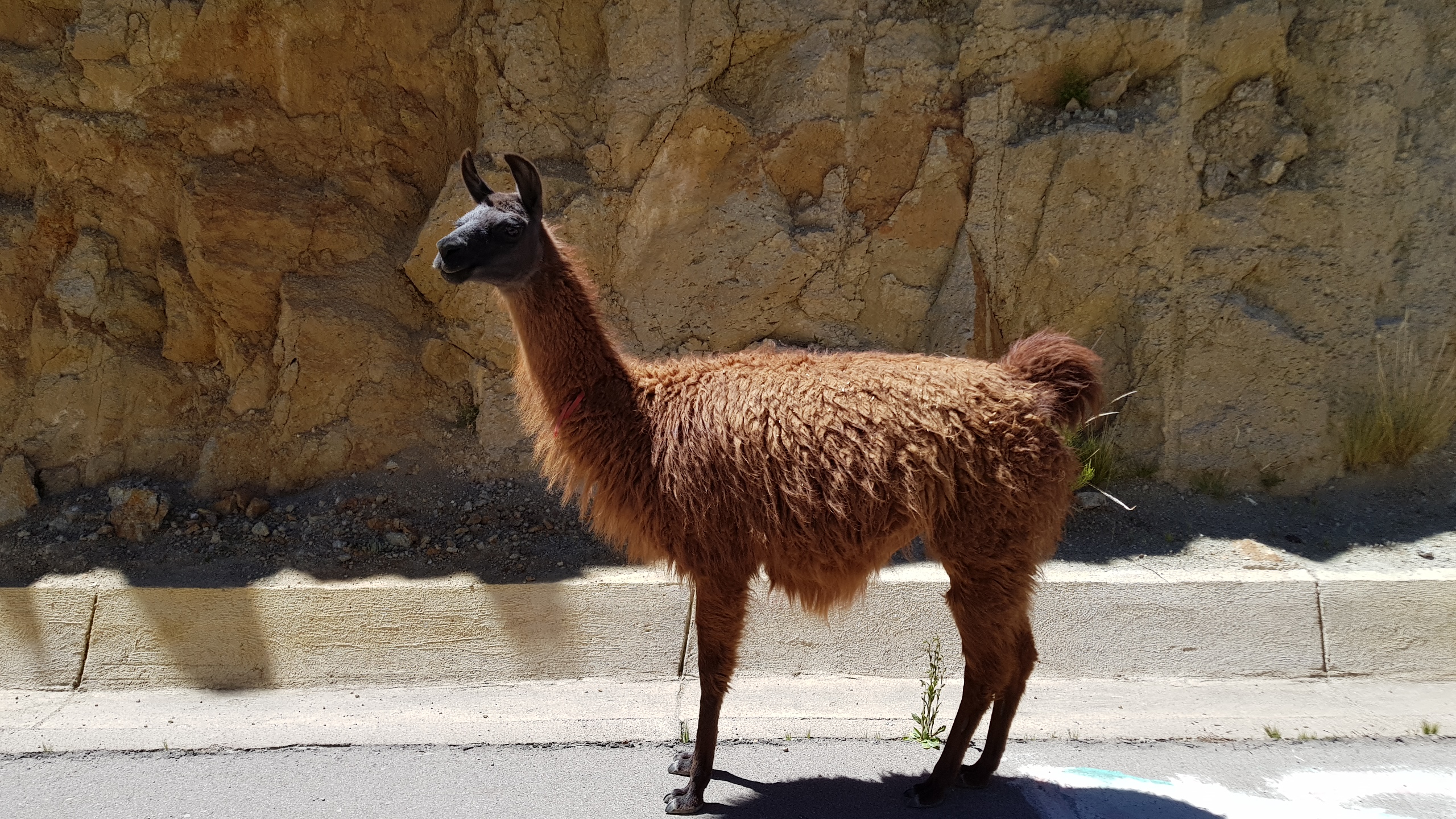
Llama in the road.
Wildlife. We saw vicuna grazing by the side of the highway, and a lot of other animals, too. You have to be careful not to hit them with your vehicle. Bolivia has a tremendous variety of birds, too. There is lots to see every day, and specialized tours for anything specific you want to find.
Minor Annoyances
The google maps algorithm for directions works very poorly in South America so far. In both Peru and Bolivia, it sends us on unnecessarily complex routes and detours. We have to critique and second-guess every route that is not highway point-to-point.
There is no international mail service. I took my postcards to the Post Office and the man behind the window looked at me blankly. “We have no directions for this process at this time.” What? No international mail.
You have to give your name and passport number every time you get gas, part of a vain government effort to prevent smuggling of petroleum products.
To pay for a service by putting money in a specific bank account, a common practice in parts of South America, you not only have to provide your name and passport number, but an explanation of what the payment is for (e.g. lodging), but also where the money comes from. I had to explain that I am retired and receive a pension.
US citizens require a visa. Don’t forget to fill out the forms and pay your $160.
The final indignity was having our luggage stay behind in La Paz when our flight left for Lima. Two days later it all turned up safe. Just one more Bolivian moment.
Tiwanaku museum
Advertising in La Paz
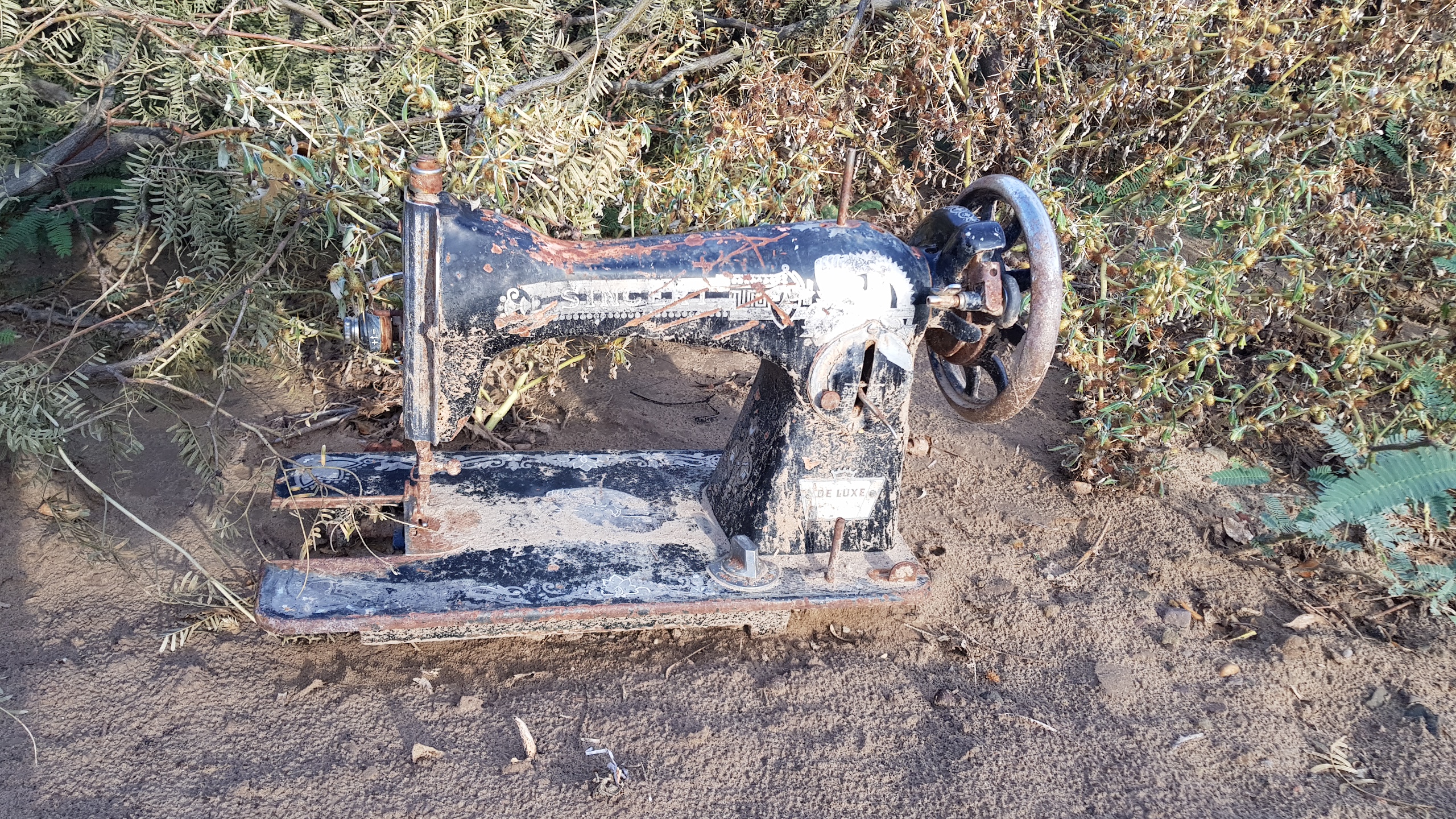
Abandoned in Perereta
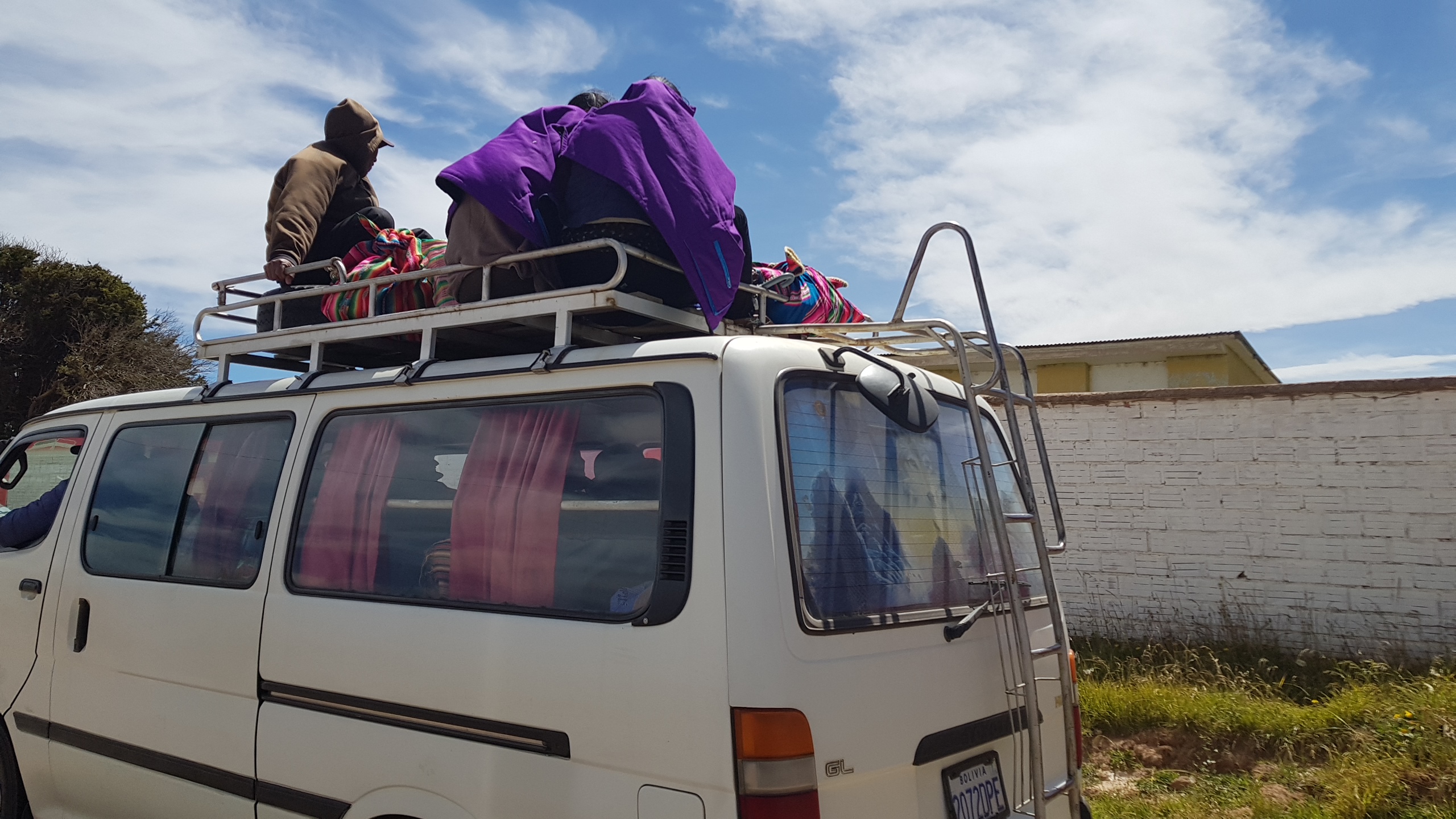
In Bolivia, some passengers ride on top of the bus.
 Our visit to Colombia was only two weeks and we spent the first week visiting specific places. I have fewer general comments about Colombia as a result.
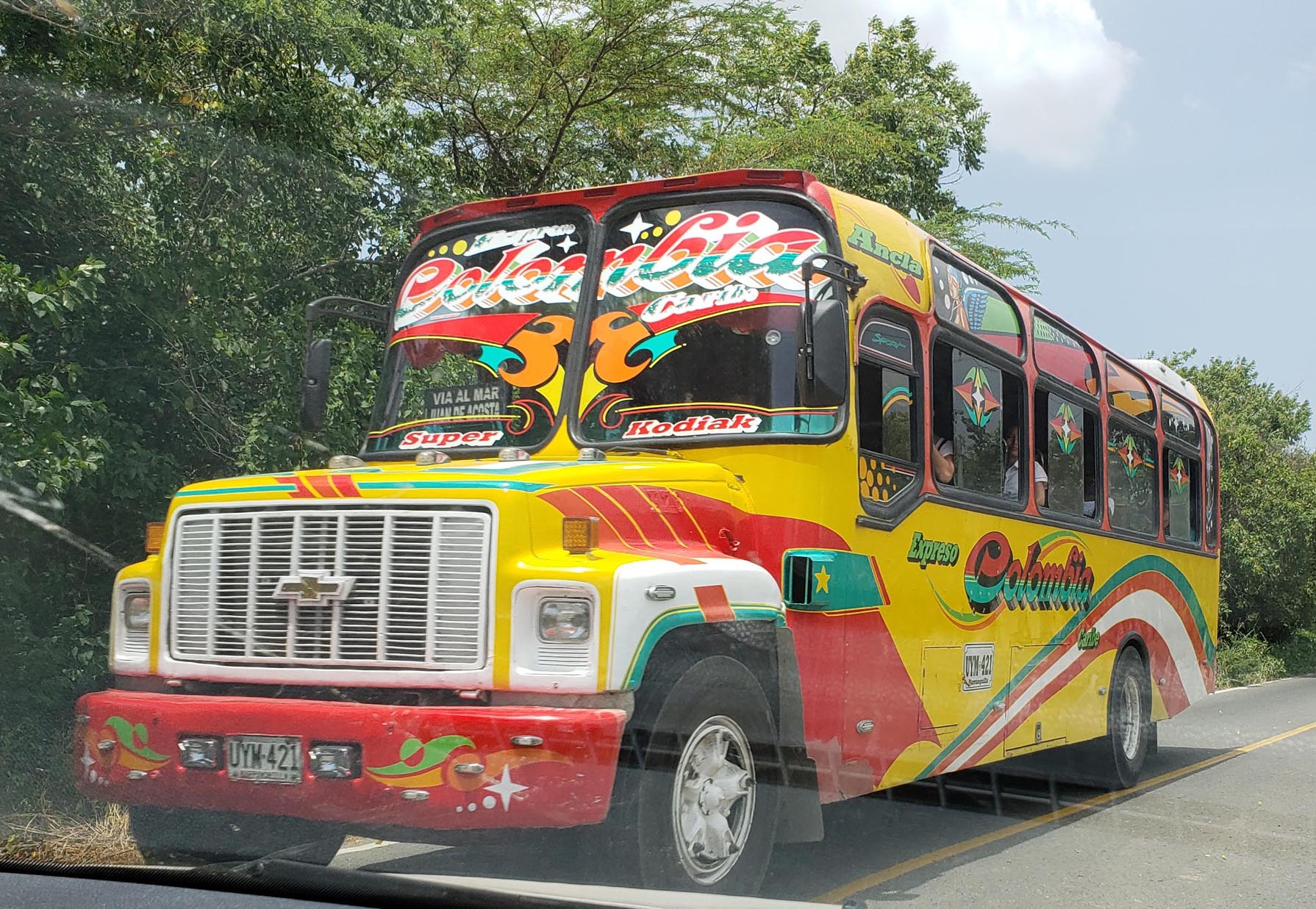 We rented a car at the Barranquilla airport, and though the checkout took a long time, we had no trouble with the car. We were warned that visiting Santa Marta and Cartagena required checking to make sure that the car wasn’t banned from the city that day (It depends on the last digit of the license plate). We were also warned about speed cameras and police stops, though as far as we can tell we did not run afoul of any of the cameras and we were not stopped by the police.