Planning Ahead

We are planning to offer one of our bedrooms that has a private bath on Airbnb after the first of the year. My pilot guest will be Lillian and her boyfriend Neil over Christmas, and before they arrive I want to get the room as well-arranged as possible. I can use some help.

11.23.15 Barranca-001The bedroom has high windows and I don’t want to put curtains on them because it becomes difficult to open them in the morning. The mattress is a good one, so I believe the bed will be comfortable. I am going to center a hanging over the head of the bed. I have good cotton sheets, so the basics are there. I believe it also needs a coverlet that is coordinated with the hanging, pillows, and a small straw mat on either side of the bed. Since we are on the beach, rugs don’t work very well, and there are some very nice locally made straw mats. The next photo is the space to the left of the bed.

DSCN2257

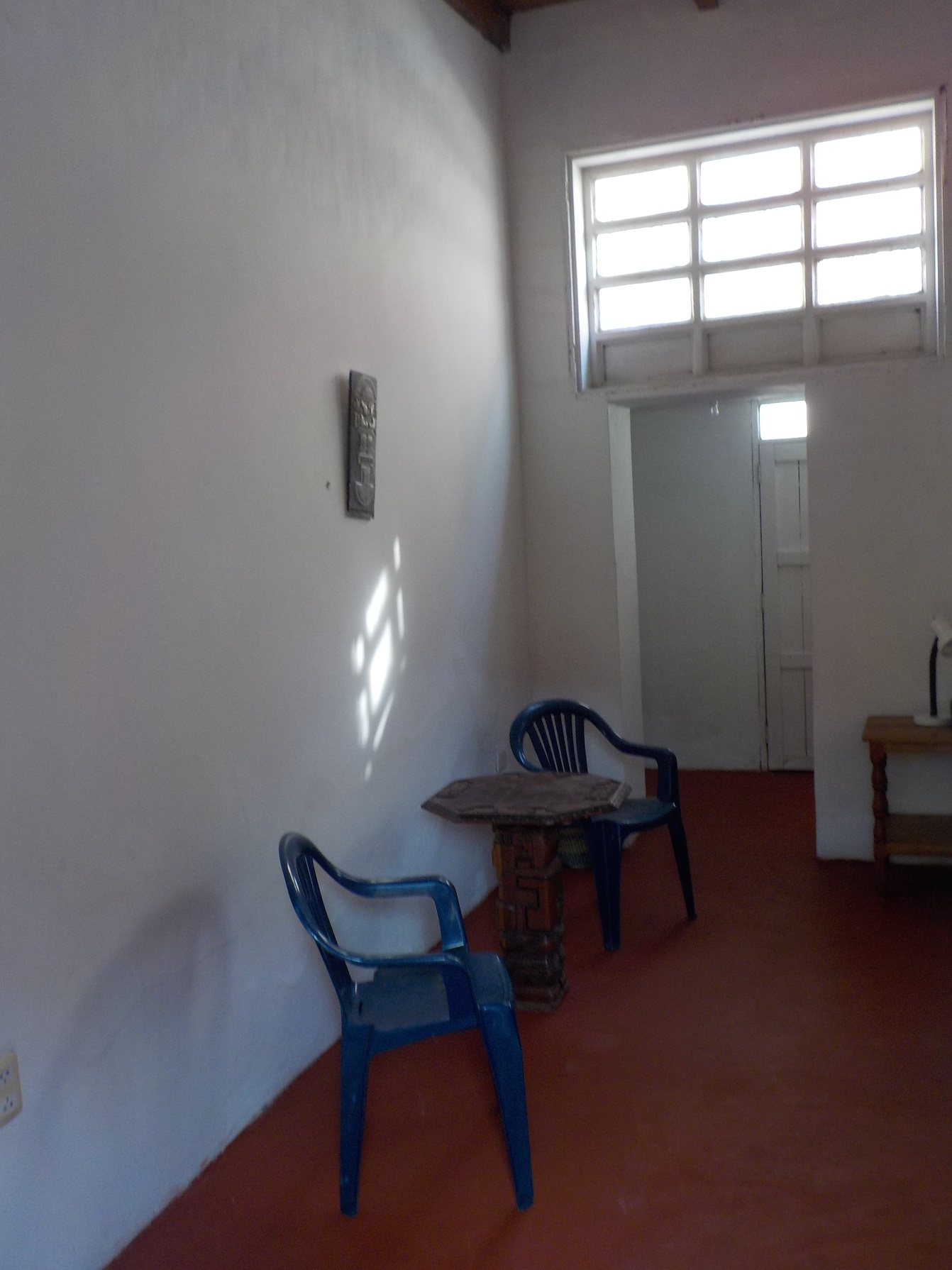
I am having a coffee table made to replace the checkerboard table, but I’m not sure what to do about chairs. The doors of this room are narrow and an overstuffed chair or recliner won’t fit through the door. Small upholstered chairs made here are very low.

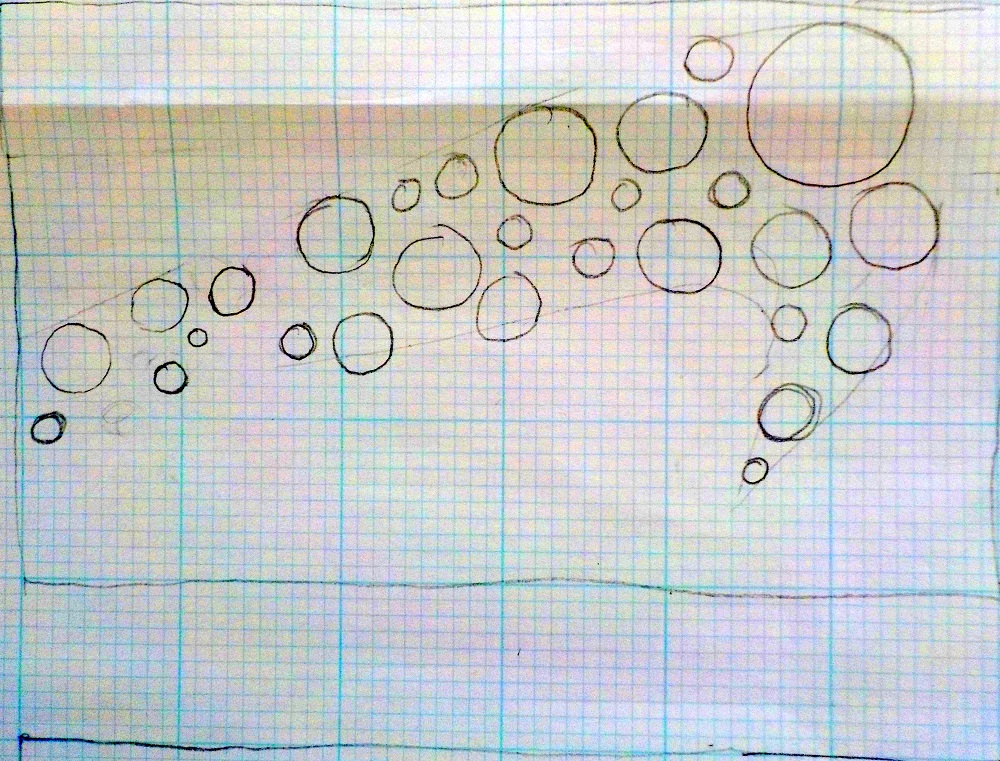
I am considering mounting a group of baskets on the wall because it is a large space. I was going to bring in an armoire for the corner of the room, but it won’t fit through the door.


Below is another photo of the space and a couple of ideas I have of patterns for mounting baskets.

DSCN2258sm DSCN2259 DSCN2260

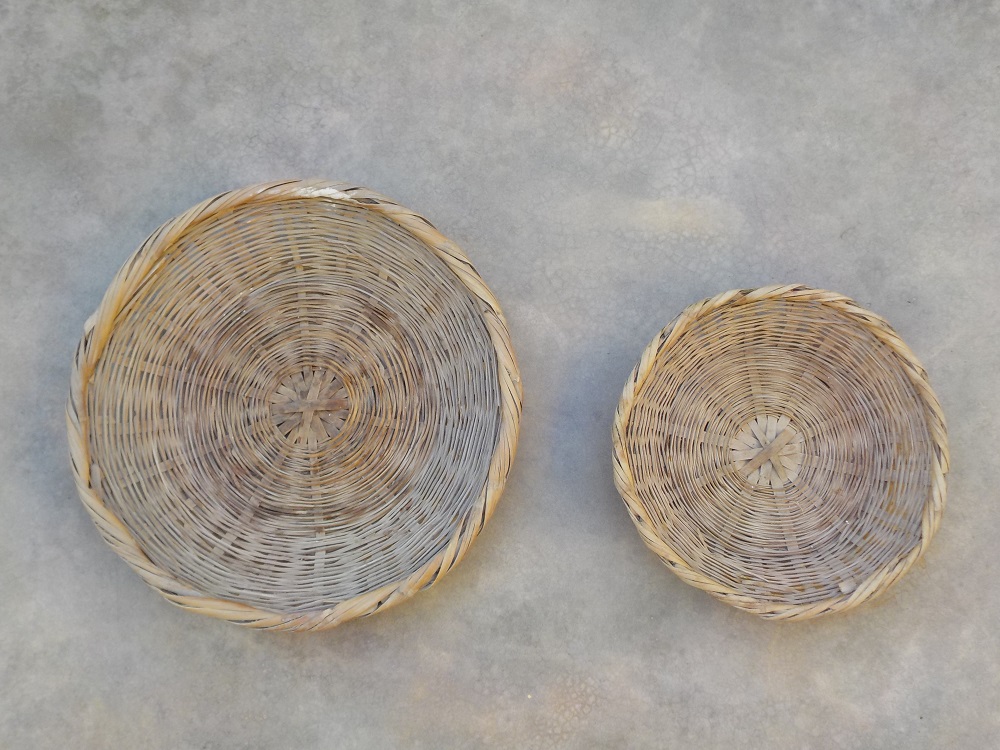
If you have other suggestions, let me know. I am thinking about using natural baskets, because I would like to use quite a few.

DSCN2261

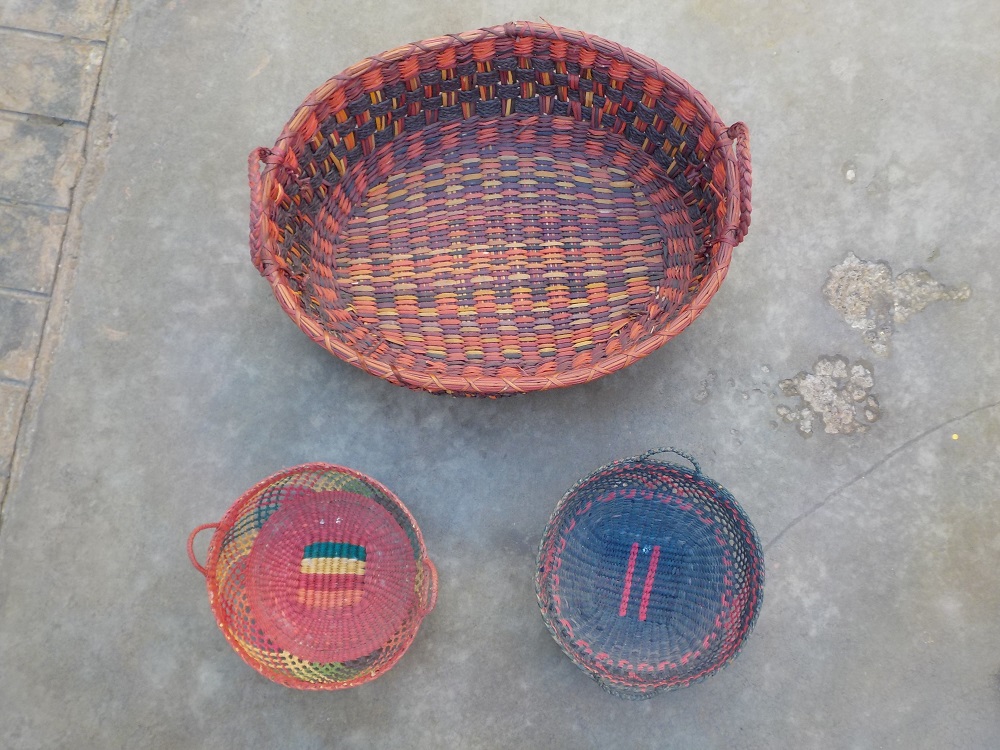
Colorful baskets are also available.

DSCN2262

You may notice that right now the room doesn’t have a color scheme. The floor is brick red, a common treatment for cement floors in Peru. The walls are white. (I don’t want to repaint.) What about shades of blue or blue/green? Alternatively, yellow and orange to complement the brick colored floor?

Your comments are welcome.


Greetings from Barranca

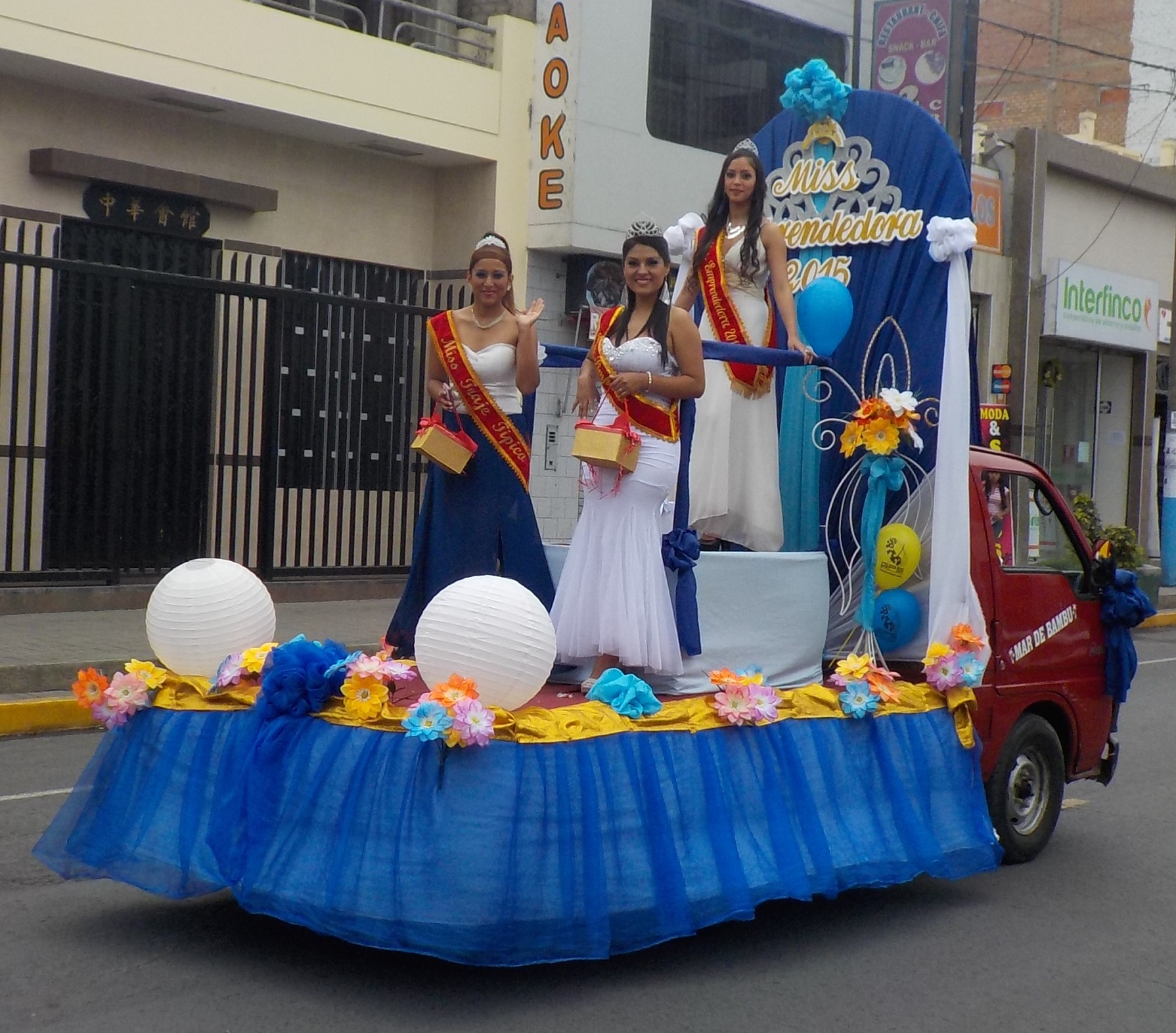
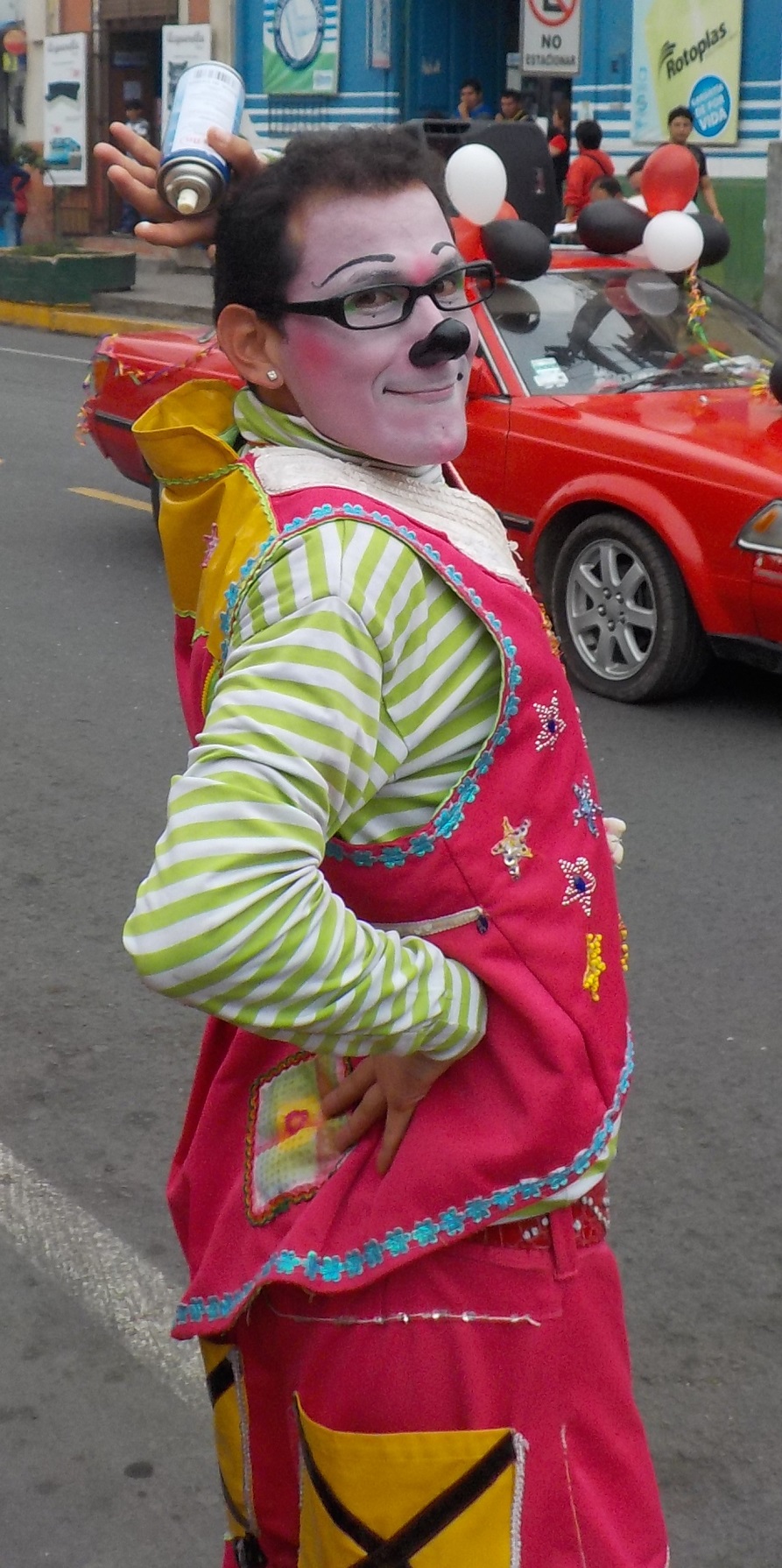
I didn’t realize they would be throwing us a parade, but it was fun to see enthusiasm for education. Thanks, University San Pedro in Barranca. I am not sure what was being celebrated, but the queen might be “Miss Learner” 2015.

11.21.15 Barranca Parade-004sm

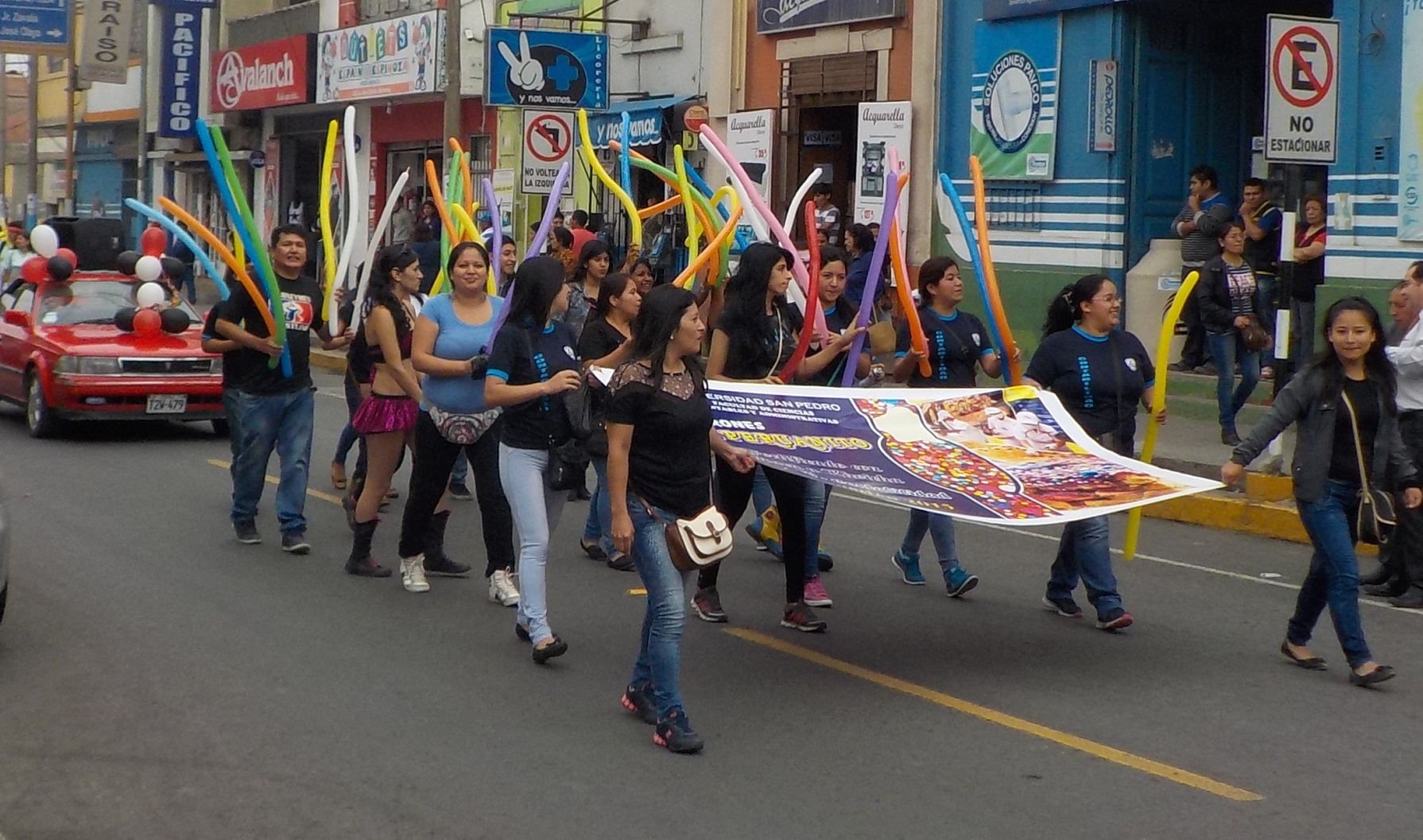
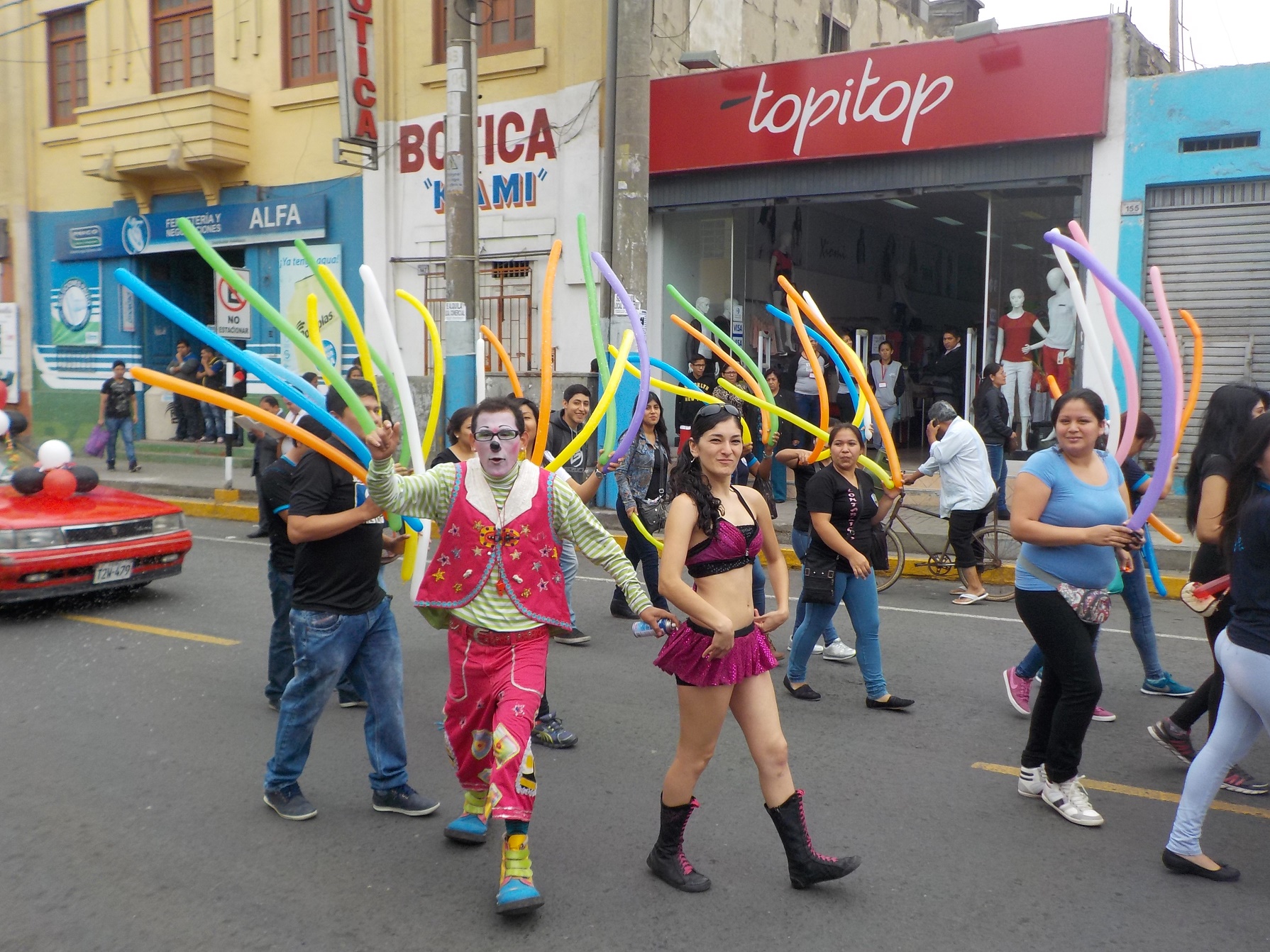
11.21.15 Barranca Parade-002smPart of the reason for the parade is to celebrate the presence of the university and I am all for that. As Jonathan noted on his facebook page, there are some dubious sponsors, like the mobile drinks truck, but the paraders were just having fun.

11.21.15 Barranca Parade-005sm

The blending of past and present is highly visible in parades like this one. A recent poll in Peru showed most people consider themselves to be a mix of backgrounds (mestizo).

11.21.15 Barranca Parade-006sma


11.21.15 Barranca Parade-013sma

The “Marinera” dancers here are from a traditional dance performed on the coast, especially in northern Peru.

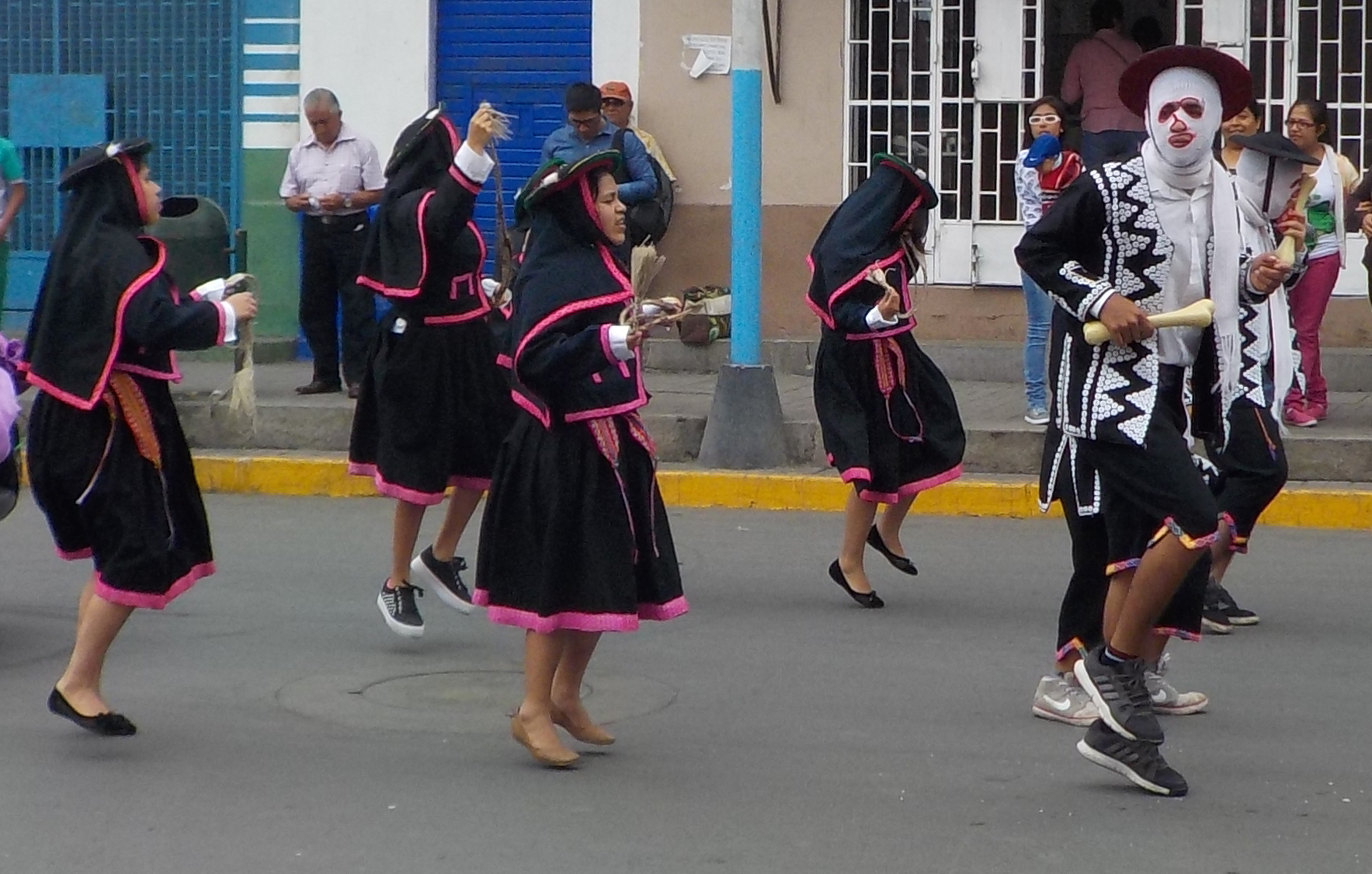
The dancers dressed as skeletons and carrying bones display highland traditions, where there are many dances and dance groups, most consisting of groups of both men and women, like this one.

11.21.15 Barranca Parade-023

Many families that live in Barranca today emigrated from the highlands to this coastal region in search of work and to escape drought conditions. Some arrived as nomadic herders and later settled in towns and cities.


We’re Baaaack!

New York and Chicagoland are great, but it is nice to stop moving after a bit more than two weeks. We arrived in Lima on the night of 11/18 (Wed), stayed overnight at our usual stopping place, the Hotel Senorial in Miraflores, and began our resettlement process with a visit to the Surquillo market, more shopping at the Wong and shopping center in San Miguel and the drive to Barranca. Traffic is worse than ever, the highway entrance near the hotel (Bajada Balta) is closed indefinitely for bridge rebuilding, and it takes a half hour to get anywhere. I was happy to head out of town.

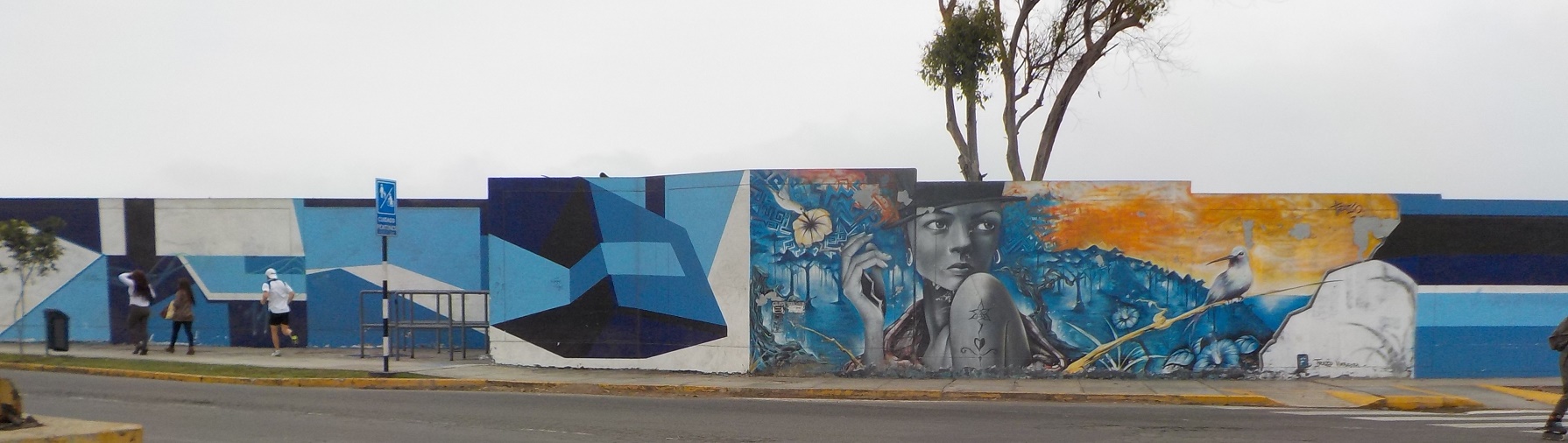
There was some new street art:

11.19.15 Limasma

Lima has been reclaiming land from the ocean for many years and the results are emerging with a series of parks along the shore.

11.19.15 Lima-005sm

This is the “before” view. The shore has been extended outward, but it’s still settling.


11.19.15 Lima-004

The “after” view includes recently planted palm trees, bus shelters, streetlights, playing fields and some sports facilities.

The Invisible Week

I completely fell down on my obligation to the blog world during our week in Wheaton. I have almost no photos despite a very full schedule of events.

We arrived from NYC on Wednesday night, collapsing onto the soft bed provided by our good friend Peggy. Thursday, Peggy hosted a Caribbean dinner as part of our local AAUW’s Spice Routes interest group. There was a groaning board of dishes from all over the Caribbean and more than 20 participants. The program is kept to a brief period in the kitchen when each person explained the dish they brought. The rest is experimentation with knife and fork. I loved catching up with friends. (Did not take one photo.)

Our oldest daughter Amanda arrived from LA later in the evening, and the following day we went out to Dekalb to meet up with our colleagues at the NIU Anthropology Department and the Pick Museum of Anthropology at NIU. Another large group sat around O’Leary’s in Dekalb chatting about work and family. Emily and Tim brought their new baby Clara–an absolutely darling baby. (Again, not one photo.)

Bright and early on Saturday we left for Champaign to see our youngest, Lillian, and her boyfriend Neil. We shopped, took a walk, talked a lot, admired the pets (rabbit Gizmo and parakeet Green) and played Trivial Pursuit (I won!). Jonathan grilled steak and veggies and then drove back to Wheaton. We managed one picture. Hooray!

11.14.15 family champaign


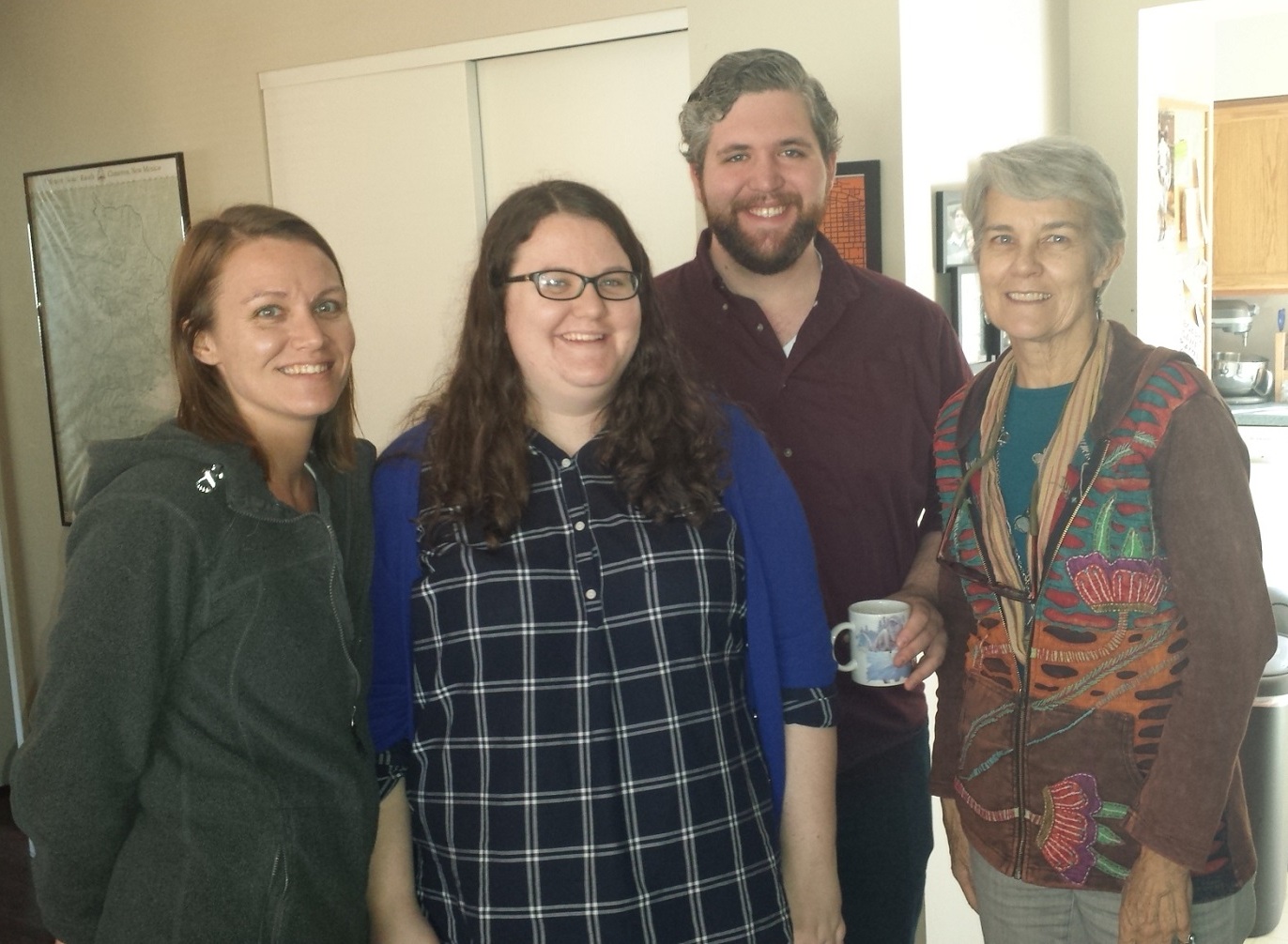
Amanda, Lillian, Neil, & me


New York from two different angles

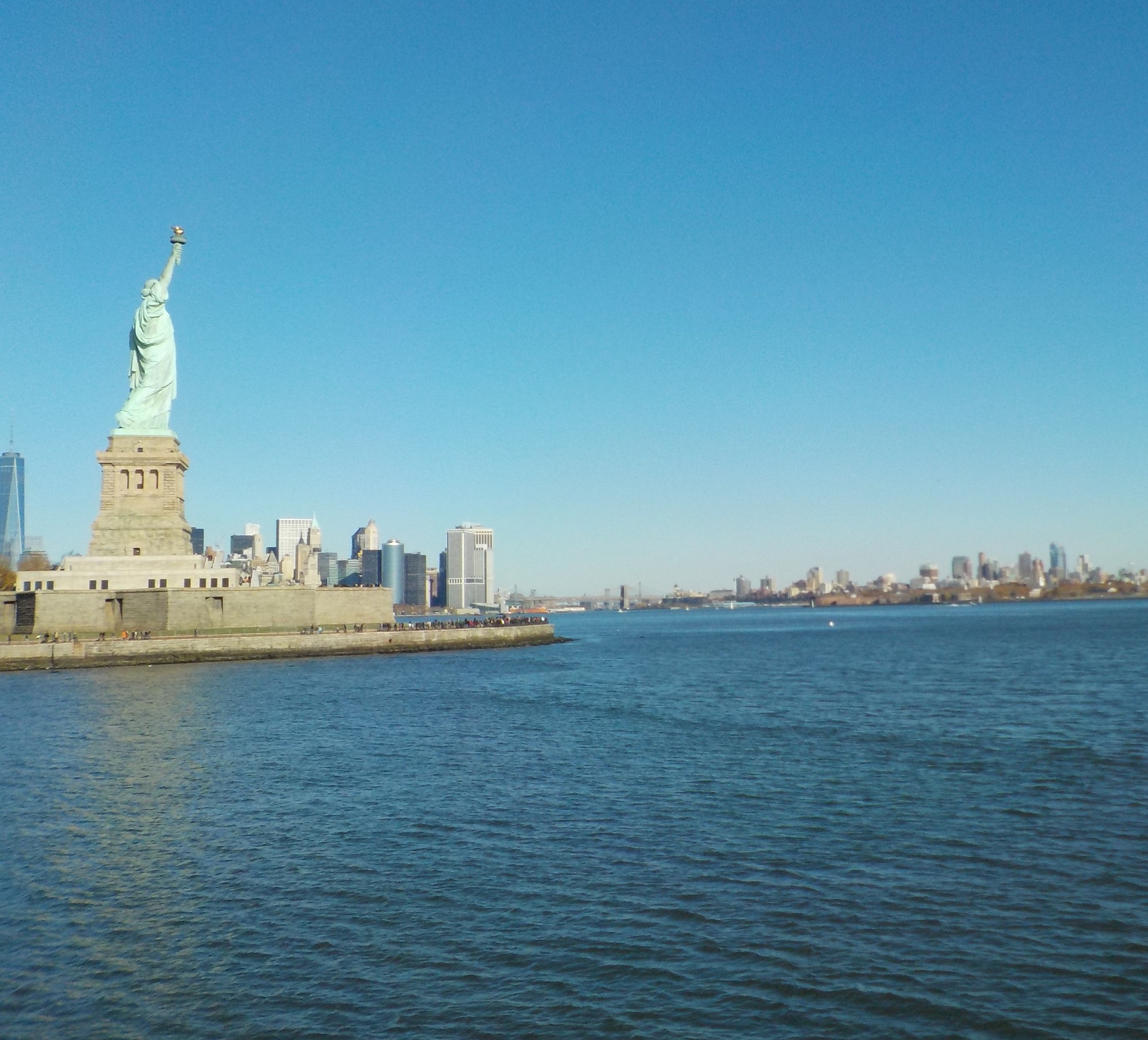
We spent a clear, bright Sunday visiting the Statue of Liberty and Ellis Island.

8.11.15 Liberty smJPG

8.11.15 -009sm

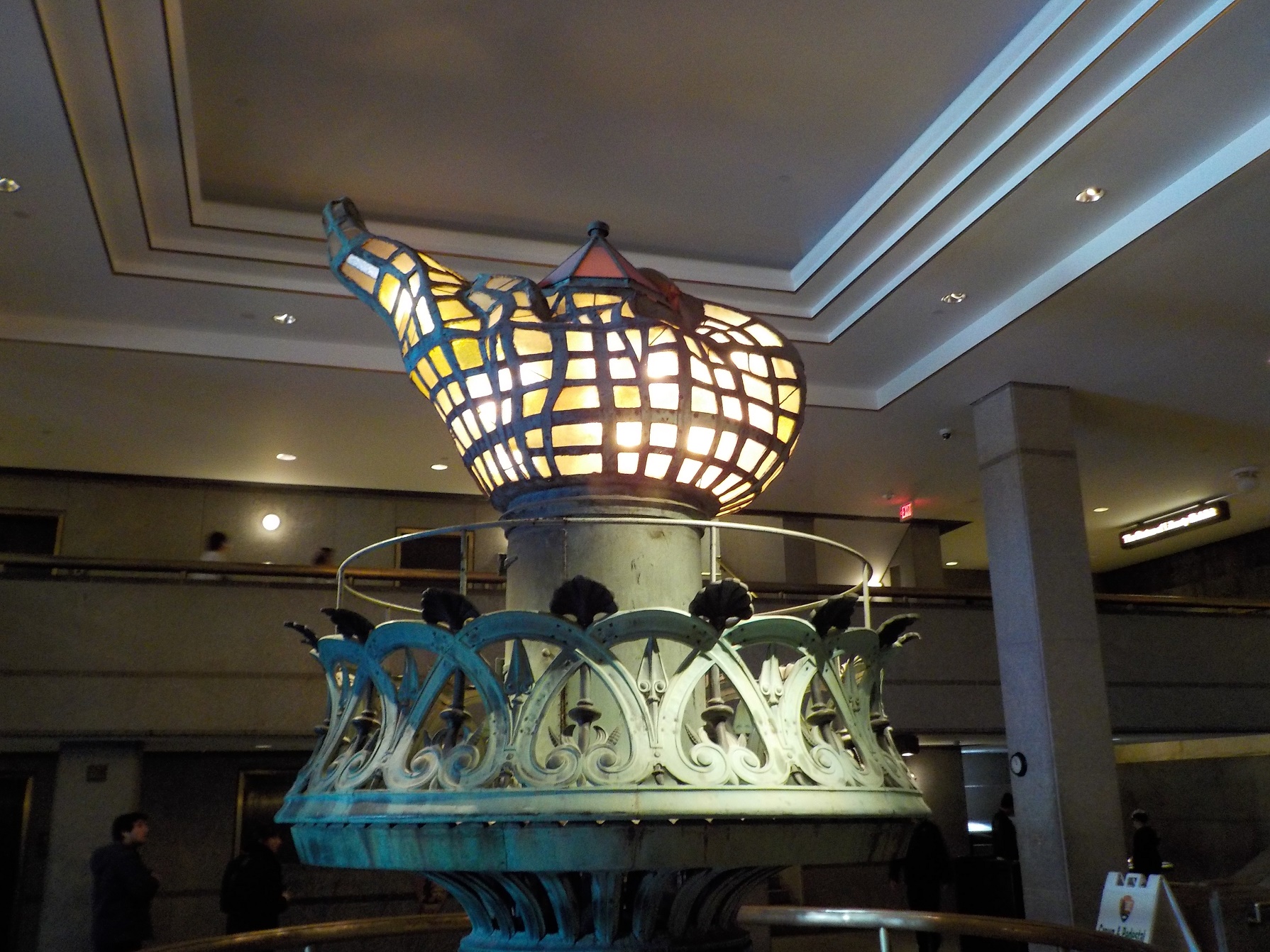
An earlier torch was shaped like an aladdin’s lamp.


8.11.15sm


Lyra is standing beside a full-sized replica of the statue’s toes.


My paternal great, great grandfather was Michael Dwyer, and he may have arrived at Ellis Island from Ireland. I didn’t find him in the records, but I could do more looking.

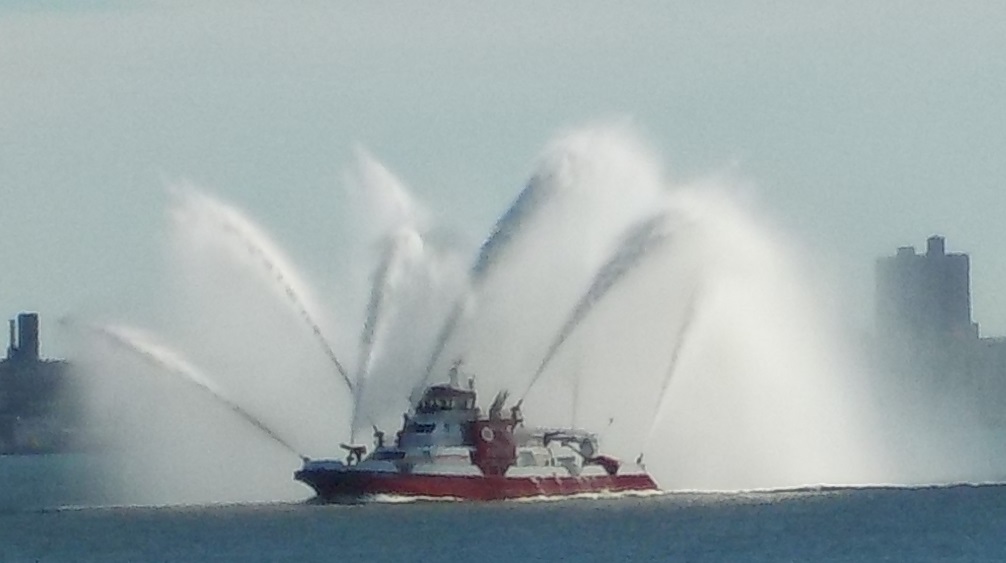
On the way back to Manhattan from Ellis Island, we saw a fireboat with all its hoses shooting in the air. It was a salute to an arriving Navy vessel.

8.11.15 -003sm8.11.15 -004sm

8.11.15 -destroyer salute sm


9.11.15 Whitney Museumsm


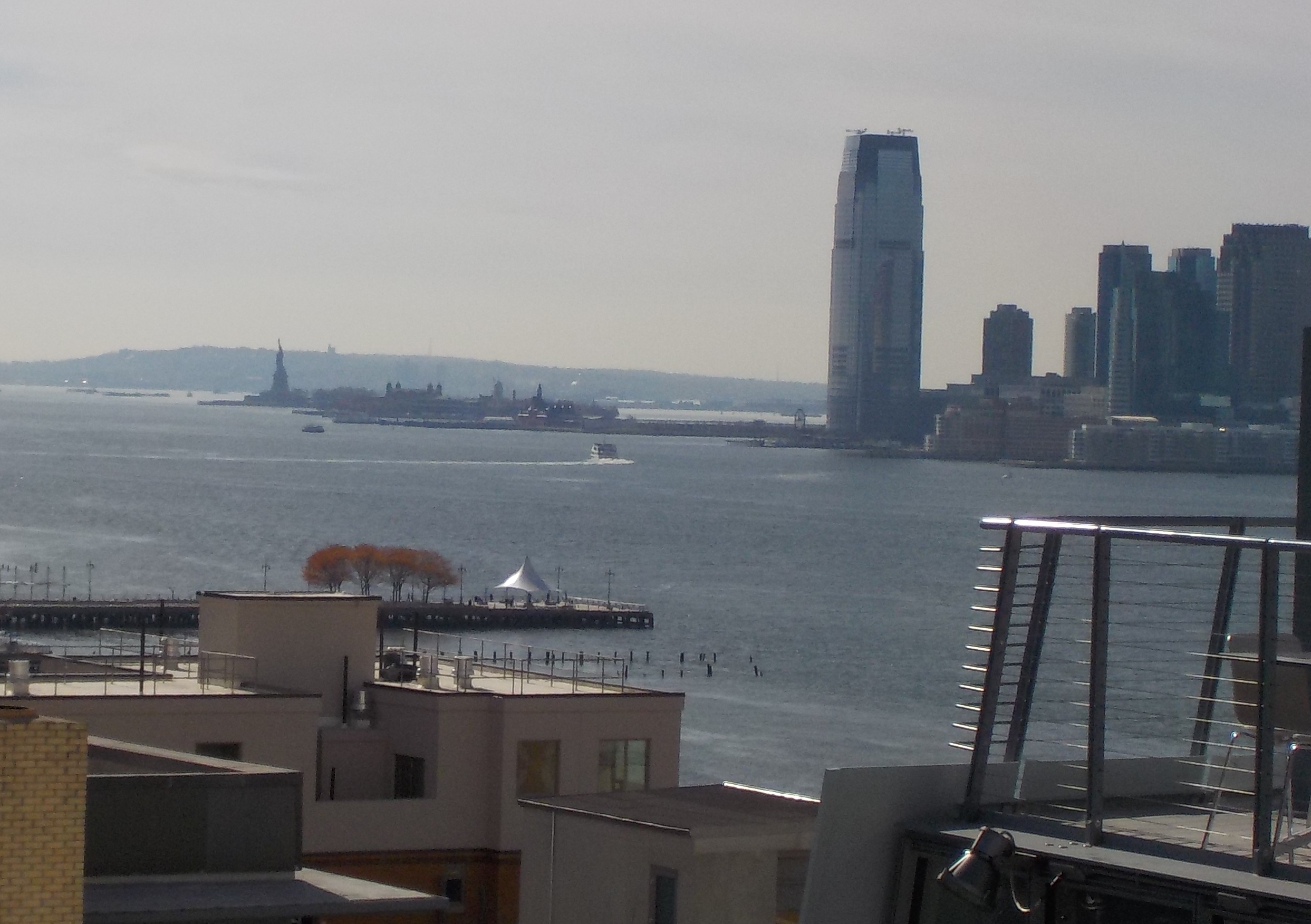
The next day we visited the Whitney Museum in its new location, and looked at the Statue of Liberty and Ellis Island from the other side.


We particularly enjoyed the Frank Stella retrospective.

9.11.15 Whitney Museum-004sm 9.11.15 Whitney Museum-003sm


First Bites of the Big Apple

Arrived NYC from Barcelona on Wednesday, bought household supplies and crashed. The weather is wonderful for November, short sleeves, high 60s to low 70s, with some rain. Thursday was subway tickets (unlimited 1 week) and the Met. We selected 4-5 different galleries we’d like to see, mostly temporary exhibits (Faberge eggs, American quilts, House models from the Americas, and some jade). As we moved from gallery to gallery we had brief looks at many other things, Greek vases and sculpture, the Temple of Dendur, Egypt.

From the Met we returned to our neighborhood (E. 3rd St.) and had a late lunch at Katz’s delicatessen that resulted in our not needing dinner. It was divine pastrami, chopped liver, coleslaw and a vanilla egg cream, not to mention pickles.

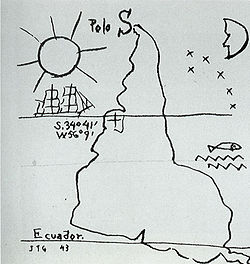
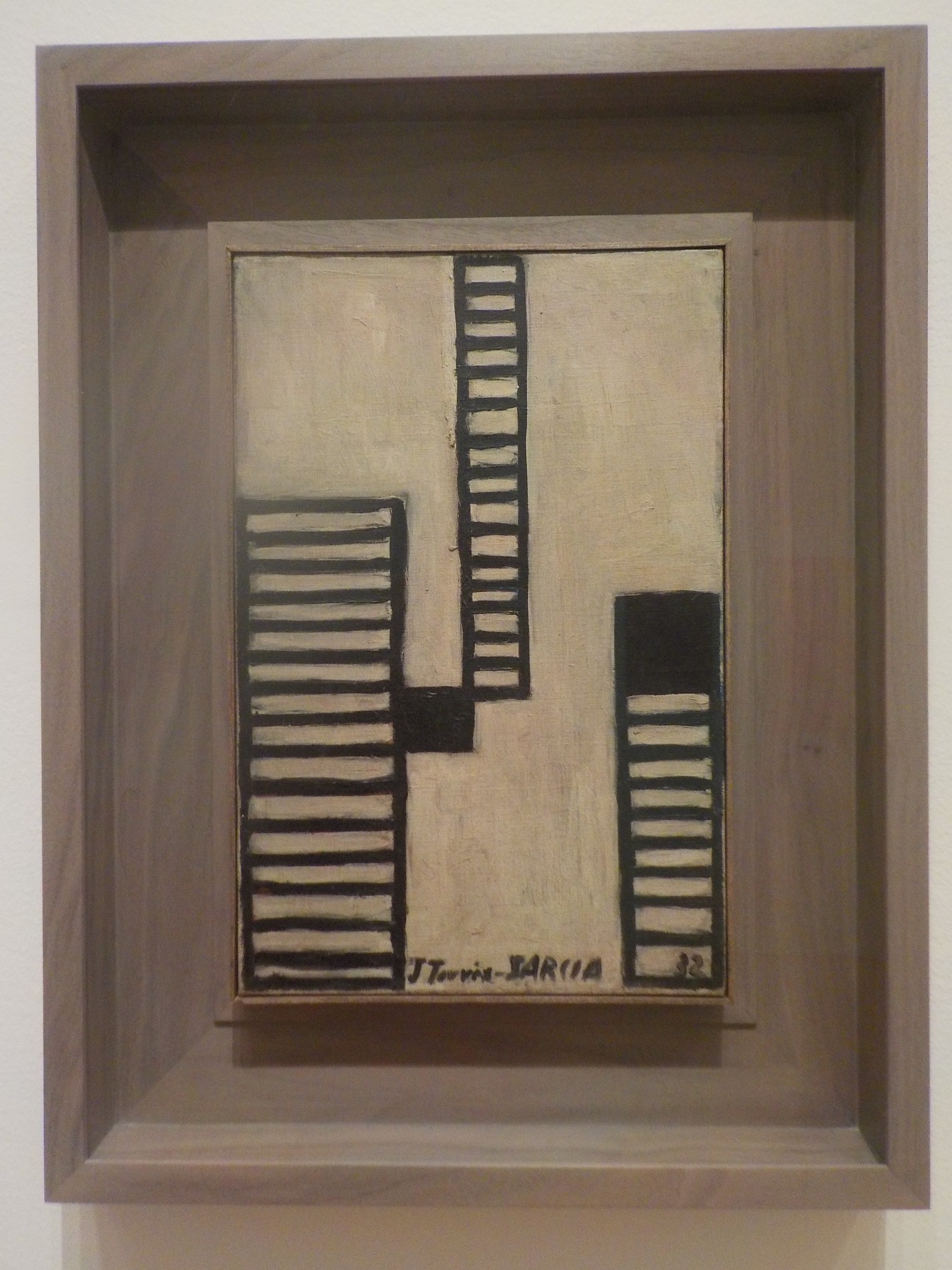
Friday we went on round 2 to MOMA. I was particularly interested in the temporary exhibit on Joaquin Torres-Garcia (1874-1949) because of his overlap with the Barcelona modernists. Torres-Garcia lived the artist’s mobile life in Europe, working in Gaudi’s studio in Barcelona, spending time in Paris, and 2 years in the US. Well established by 1932, and seeing the impending possibility of war, Torres-Garcia returned to Uruguay where he began a school and taught, wrote and campaigned for art until his death in 1949. He was the first person to draw a South American’s view of the continent, America Invertida:

Torres_García_-_América_Invertida

Much of Torres-Garcia’s work looks familiar to be because it seems to have influenced my late mother-in-law, artist Eleanor Haas.

Torres-Garcia:                                     Eleanor Haas:

6.11.15 J Torres Garcia URU at the metsm 32L18WanimalsEleanor Haassm


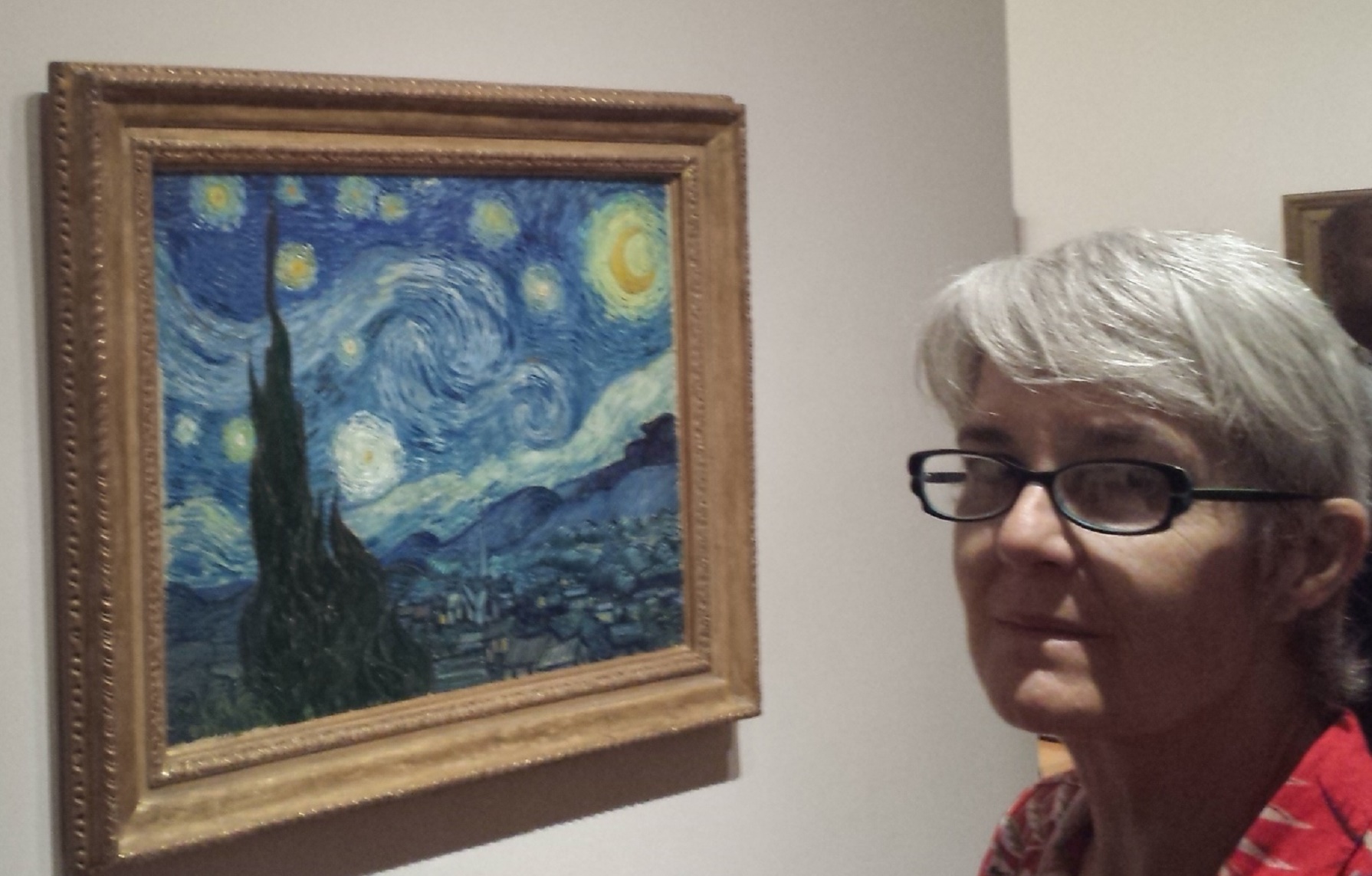
Not to brag, but here I am with a famous painting….

6.11.15 MOMA-007crop

Here’s a short explanation of  Van Gogh’s success at depicting turbulence in “Starry Night,” despite this being a thorny problem in physics.

We leave Barcelona

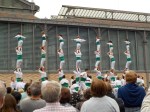
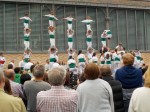
I am sorry to be leaving Barcelona. It is a walkable, livable city, architecturally rich, with a new vista or decorated facade around every corner. Most people have a balcony and there are lots of people in the streets. There are many daily markets and even more appear on weekends. People take festivals and traditions seriously. Take the castellers, they are not just forming towers, but all kinds of human sculpture. Note the satisfied coach on the left. This is a youth group. I’m impressed.

No place is perfect. I understand that Barcelona still has high unemployment among college educated young people. The real estate market is described as just now rebounding from 2008. There are beggars and street people. I still think it is a wonderful city.

I cannot say what has been my favorite experience. I made a list of all the things we did and places we went, something different almost every day of the 60 that we were here, and some days more than one stop on the tour. I didn’t want to forget anything. We had a last meeting with Joan, who provided our apartment and we chatted about Barcelona and travel and home. When I started this blog, I put Gaudi tile work on the banner because visiting Barcelona was a long-standing dream. I have to consider changing the image now and see what the future holds. For now we are on to the US and then to Peru for the winter. The next two posts after this one are informational, highlights of Barcelona, and a “Good to Know” section with a few practical thoughts.

Thanks for coming with us this far.

Gaudi Day, the Sagrada Familia church

We were going to use our ICOM cards to visit Sagrada Familia, but it requires waiting in the long ticket line and then returning for the timed entry, often late in the afternoon. We caved and bought the online tickets.

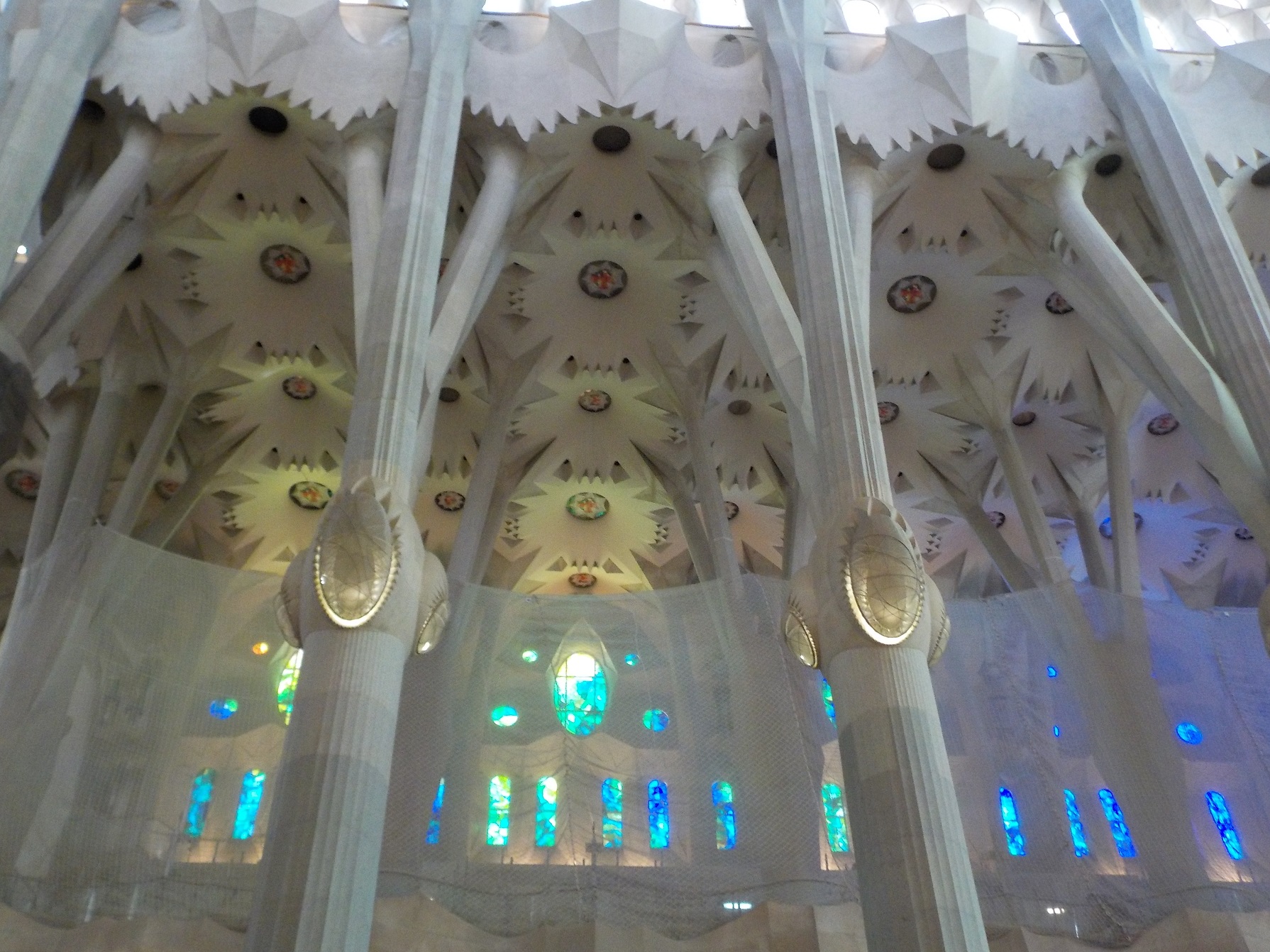
10.29.15 Sagrada Familia-051smEven waiting until the end of October didn’t diminish the crowds much, though we got right in at our ticketed time. Now fully roofed and dedicated as a minor basilica (no resident cardinal) by Pope Benedict XVI, Sagrada Familia looks very different from the last time I visited 25 years ago. It is much less a ruin and more a church. The constant loud sound of power tools detracts from the atmosphere, but does show that work is ongoing.

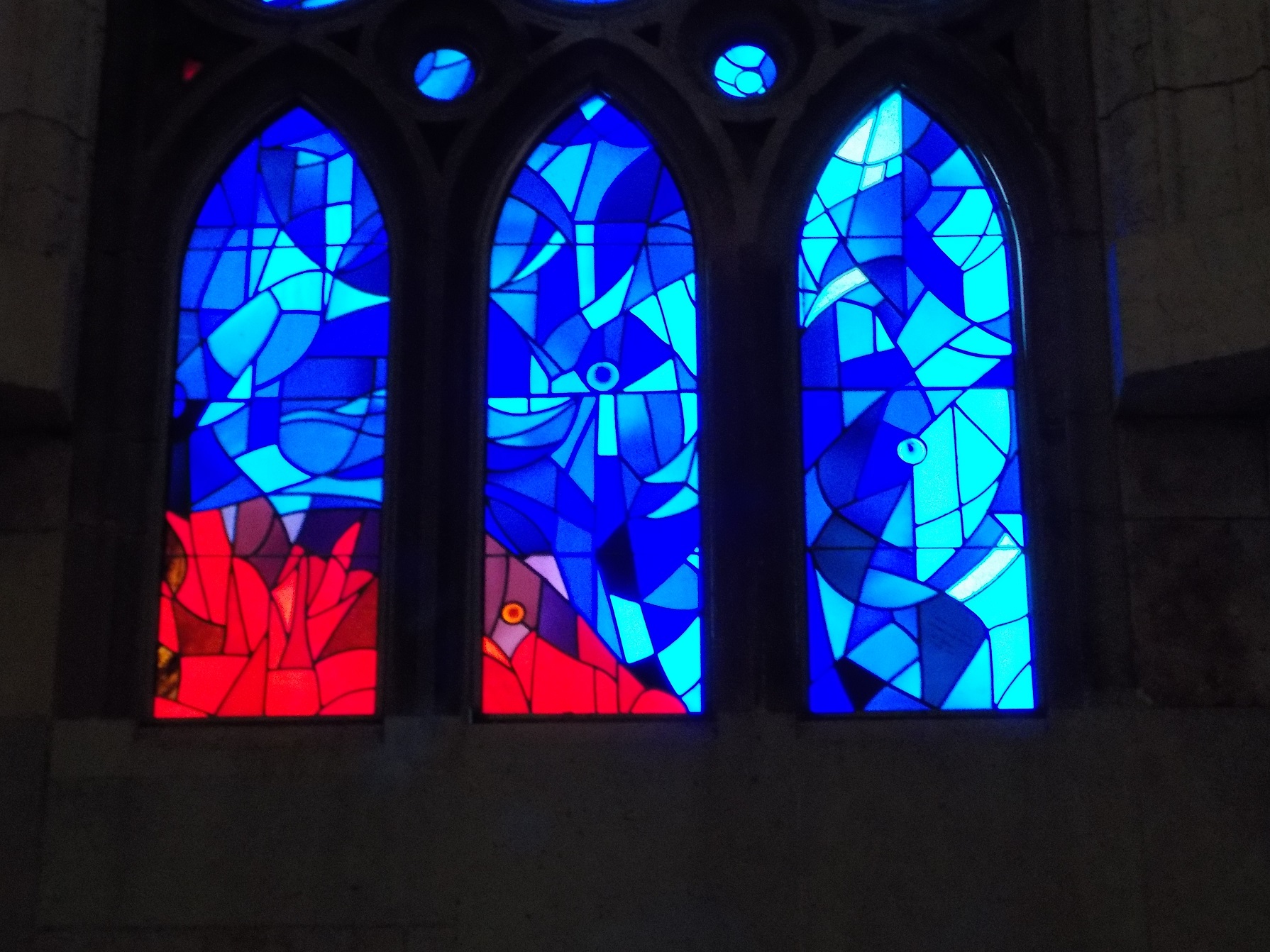
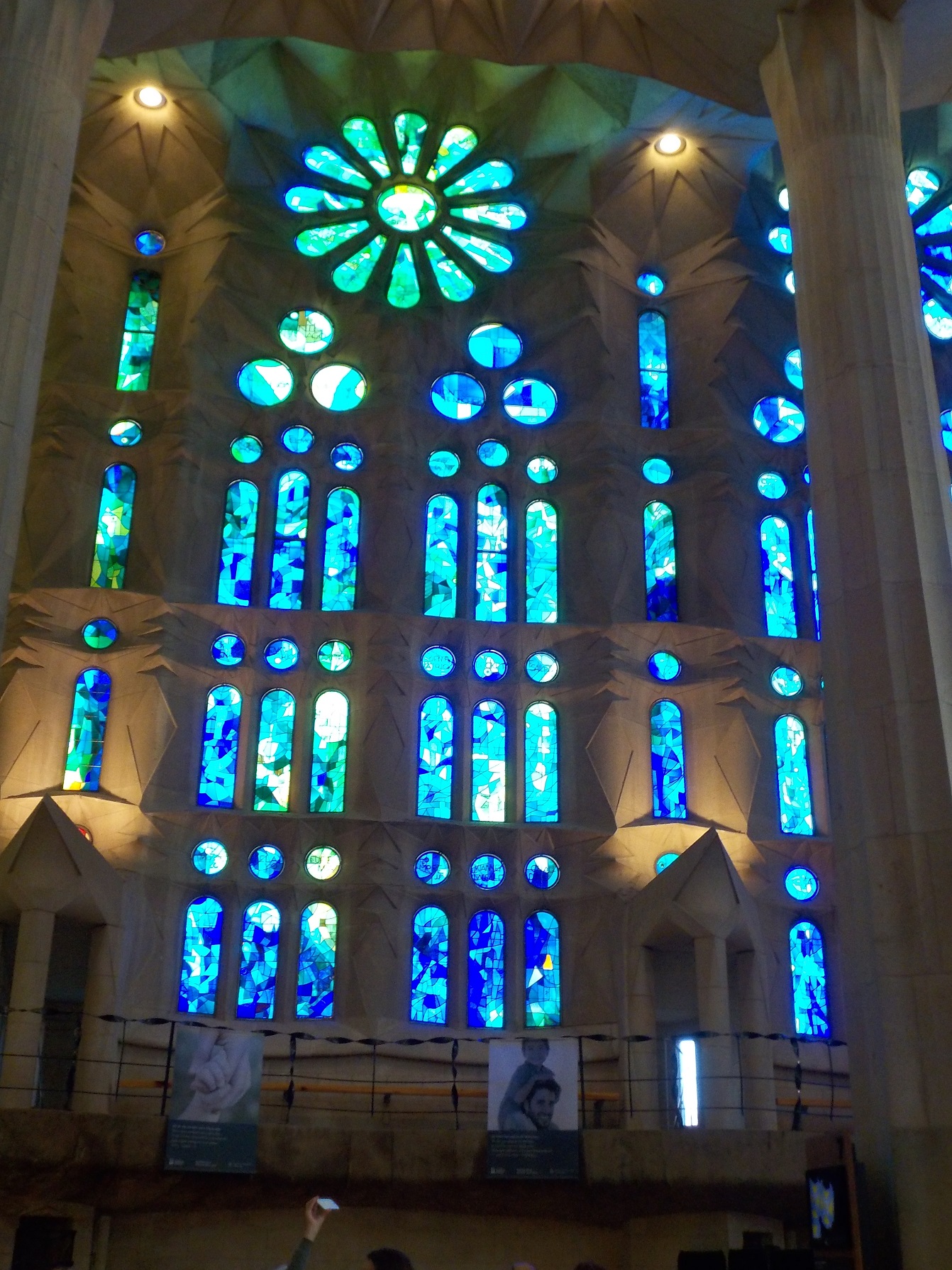
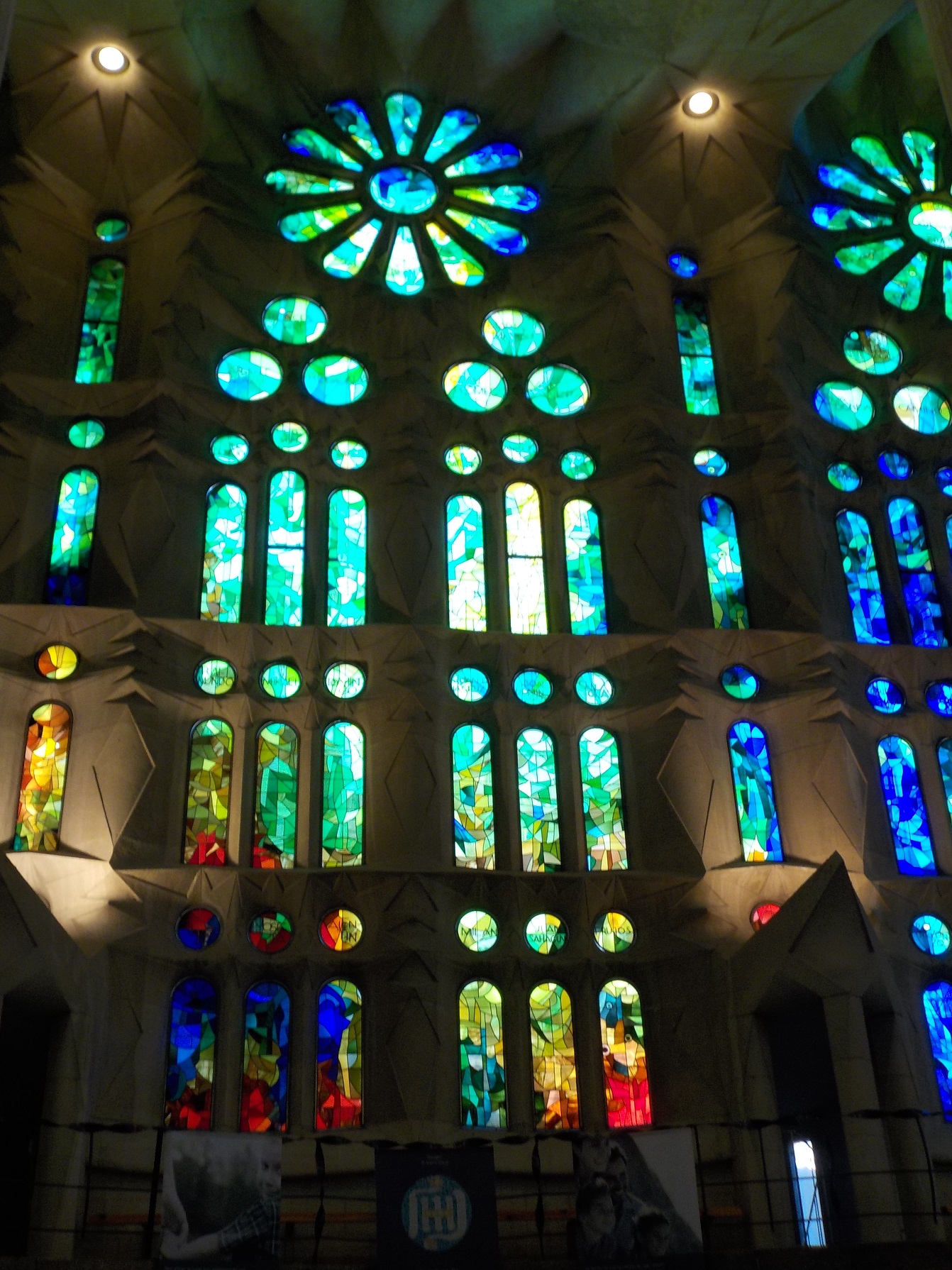
Optimists see the church finished in 2026. The stained glass is beautiful, though Gaudi was also very smart to design the windows of the highest stories to be clear so that the church is full of light.

10.29.15 Sagrada Familia-038In some churches, stained glass appears like embers in the dark. At Sagrada Familia it adds color to the light. Here is a single small pane.


The color gradations from window to window are spectacular. Here’s the big picture.

10.29.15 Sagrada Familia-010sm 10.29.15 Sagrada Familia-011sm 10.29.15 Sagrada Familia-018sm 10.29.15 Sagrada Familia-019sm

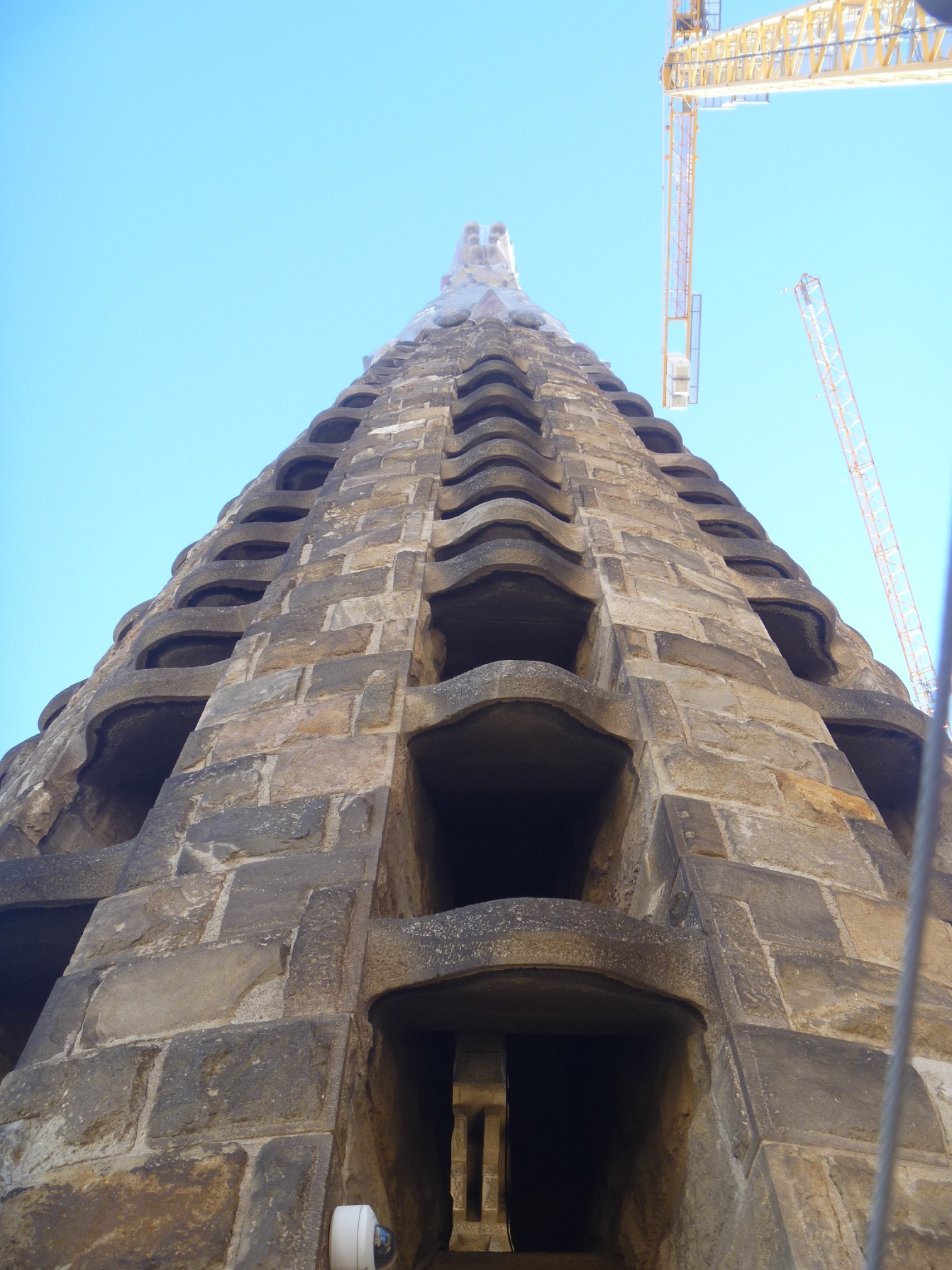
I purchased the additional ticket to go up in one of the towers, but I didn’t realize that it was only an elevator UP in the Nativity Tower. You walk down. It wasn’t as bad as I realized and the view was fascinating because you see the work currently underway.

Note the construction office perched in the rafters.

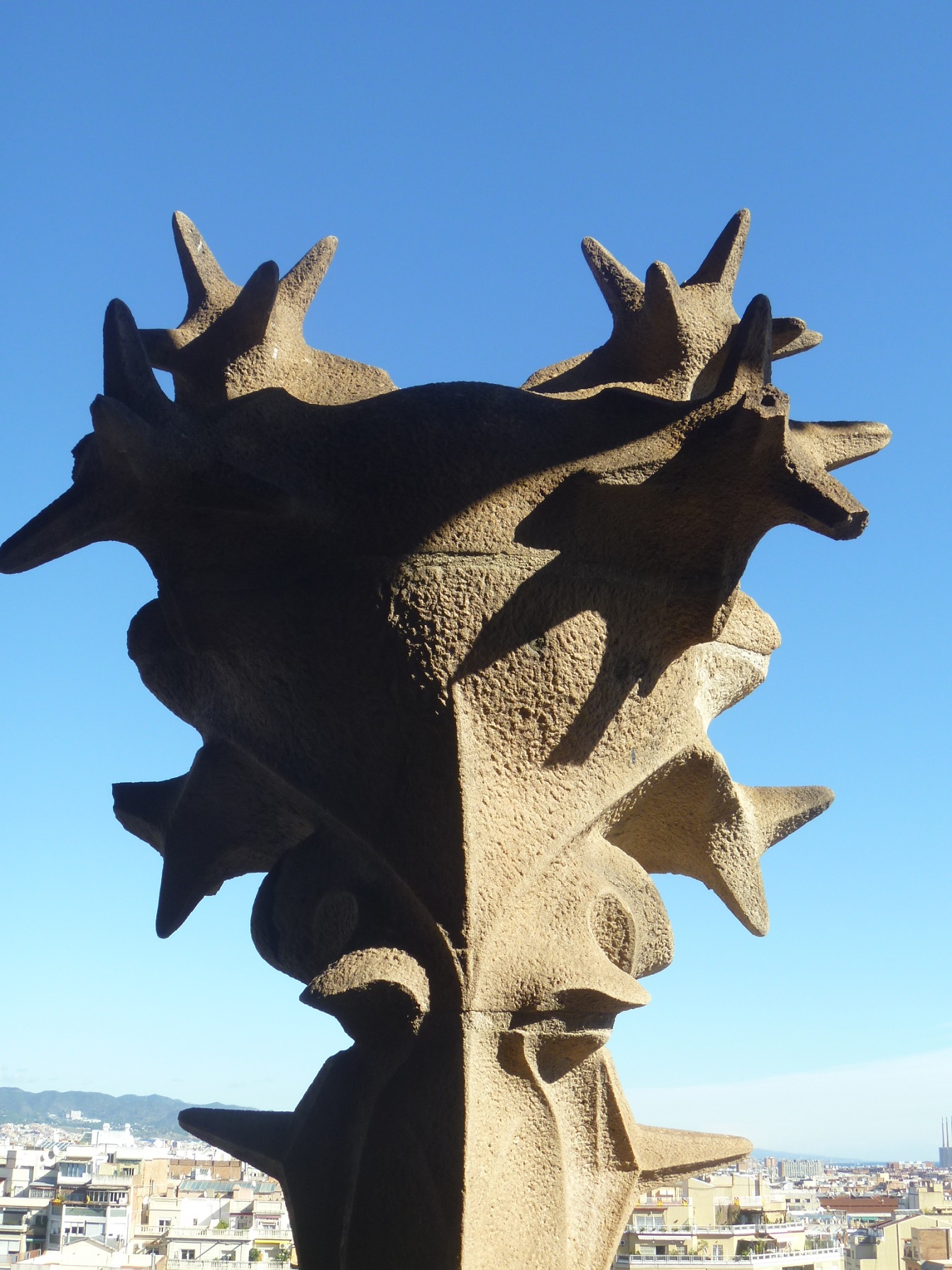
We could see the details.

10.29.15 Sagrada Familia-067sm

10.29.15 Sagrada Familia-095sm

It is a breathtaking structure.


Gaudi incorporated many animals into his design. Here are some of them.

Here is Gaudi’s idea of the ceiling as a forest canopy.

10.29.15 Sagrada Familia-022sm10.29.15 Sagrada Familiasm

I have to point out that God the Father has a lot of competition in this church. Gaudi was sure that his work was great, but he’d be horrified to find that it competed with religious observance. For such a wildly creative person, he was devout and ascetic, never married and worked all the time.

He spent the last months of his life living inside the constructed portion of Sagrada Familia. He died after being hit by a tram, unrecognized for his first couple of days in the hospital because he was dressed in work clothes and carried no ID. Would it have been different if he were wearing a suit and hat, carrying a briefcase?


Roman Tarragona

Welcome to Roman Tarragona!

10.29.15 Tarragona-002sm

Tarragona, Roman Tárraco, was the capital of Hispania Citerior during the Roman Republic, from about 197 BC until 27 BC when the emperor Augustus arrived. He stayed until his death in 14 BC, making Tarraco both capital of his new province Hispania Tarragonensis and the unofficial capital of the Roman Empire. The emperor’s presence fostered prosperity and expansion that continued during the first two centuries AD. This link provides an excellent summary of the story of Tarraco:
https://www.tarragona.cat/patrimoni/museu-historia/en/history-of-tarragona/roman-tarraco

Our visit was confined to the oldest part of Tarragona, partially encircled by the remaining Roman walls and originally the location of Roman military barracks and the provincial forum.

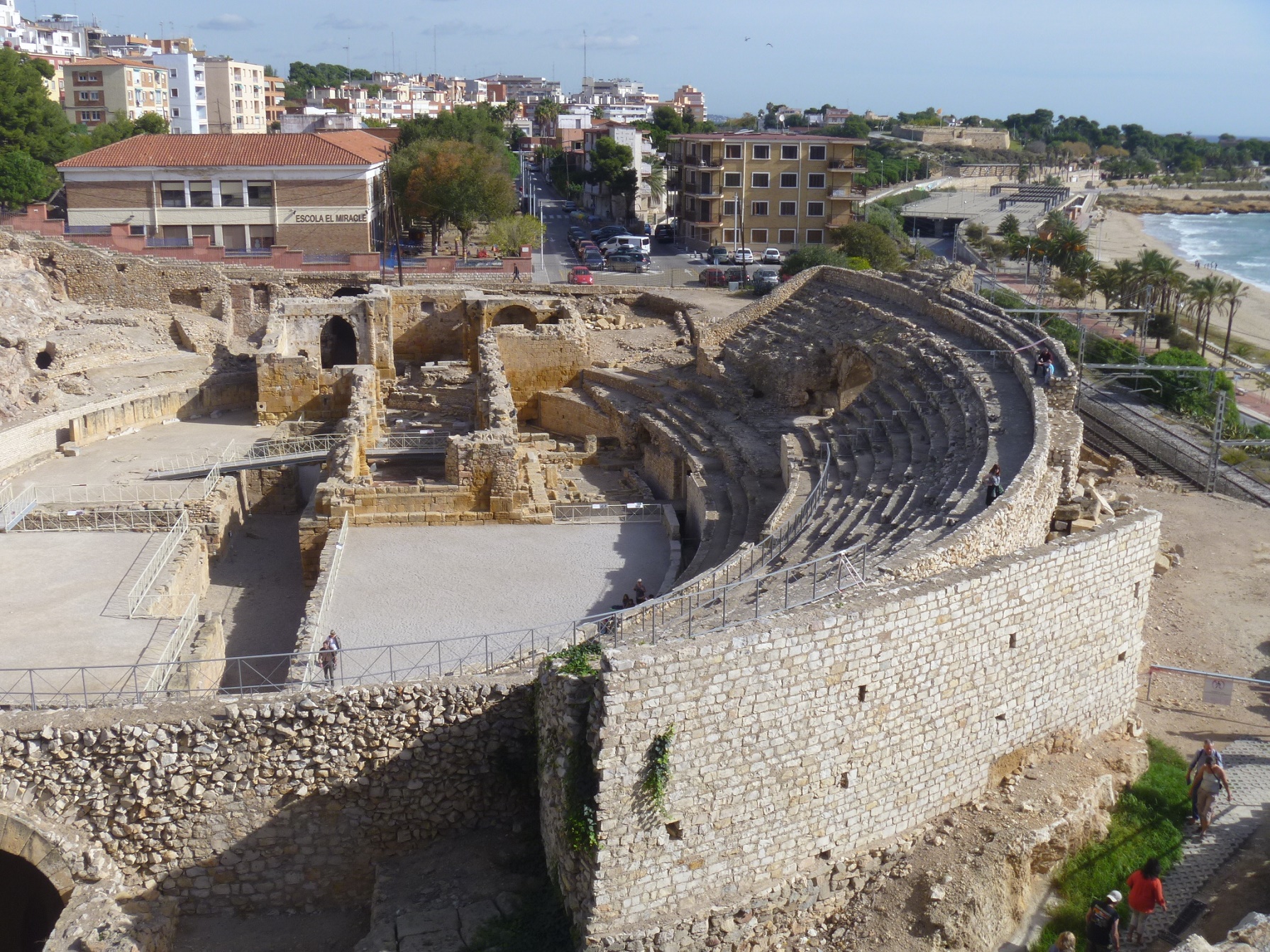
We had a great field trip. We took the train, even changing platforms (ooooh) and using our Tarjeta Dorada to get our senior discount. The train takes a bit longer than an hour. We paid 9.70€ each for a round-trip ticket. I checked the train that only takes a half hour (AVE). If I read the schedule correctly, it was about 31€ each way. (Can that be correct?). Just down the street from the train station is the amphitheater, our first stop.
10.29.15 Tarragonasm

The seats are largely restored but there is a lot of Roman construction left, along with the remains of a Visigoth church and a later church. They overlap one another and comprise the cross-shaped structure in the center of the amphitheater. It is a gorgeous location with the Mediterranean in the background. It was sunny and warm all day, Oct. 30.

Up the hill and into town, the closest corner of the old walled city brings you to the Placa Reial and the National Museum of the Archaeology of Tarragona, with artifacts from before the Romans up through the many historic invasions and rebuildings. We focused on the displays of materials related to Roman daily life, and the mosaics. Like the other archaeological collections we’ve seen on this trip, they have beautiful glass, from vials to large pale blue jars with lids. I wonder what they kept in them? Beyond these things is the display of mosaics, actually on two floors.

10.29.15 Tarragona-013crop

This is a portion of a much larger mosaic with sea creatures showing lots of personality. See the sad fish near the bottom looking at the hermit crab?

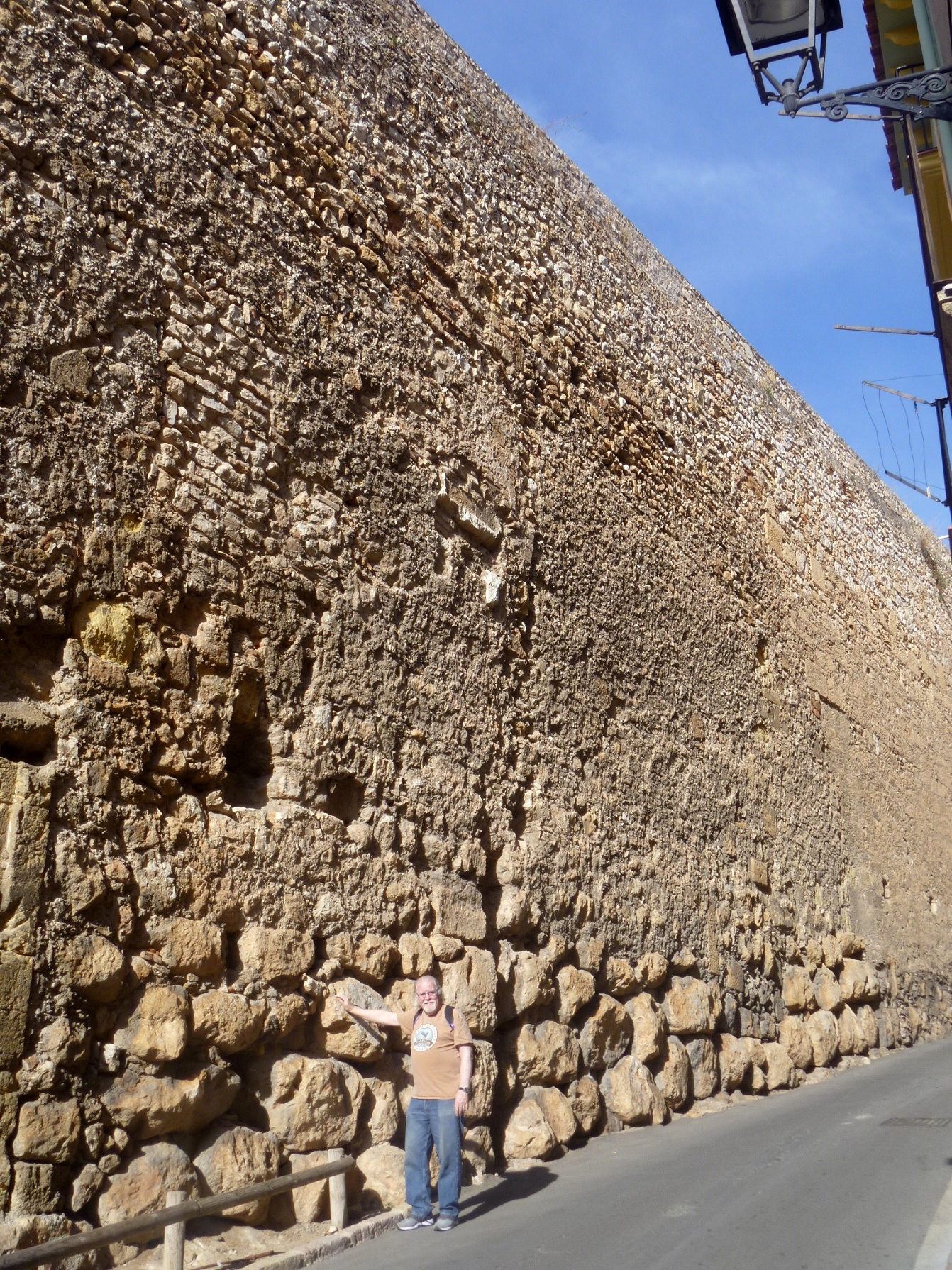
After the museum we walked the archaeological promenade, a landscaped path between the inner Roman walls and the later outer walls. The earliest surviving portions are huge rocks that form the “cyclopean” base of the Roman walls from the beginning of the 2nd century BC. Expansions took place up until the construction of the final outer fortifications during the War of Spanish Succession in the 18th century. In places, the walls are 15 m high and 6 m thick.

10.29.15 Tarragona-023sm.15 Tarragona-023

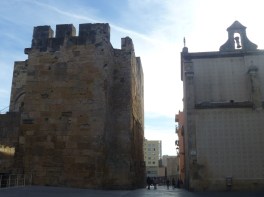
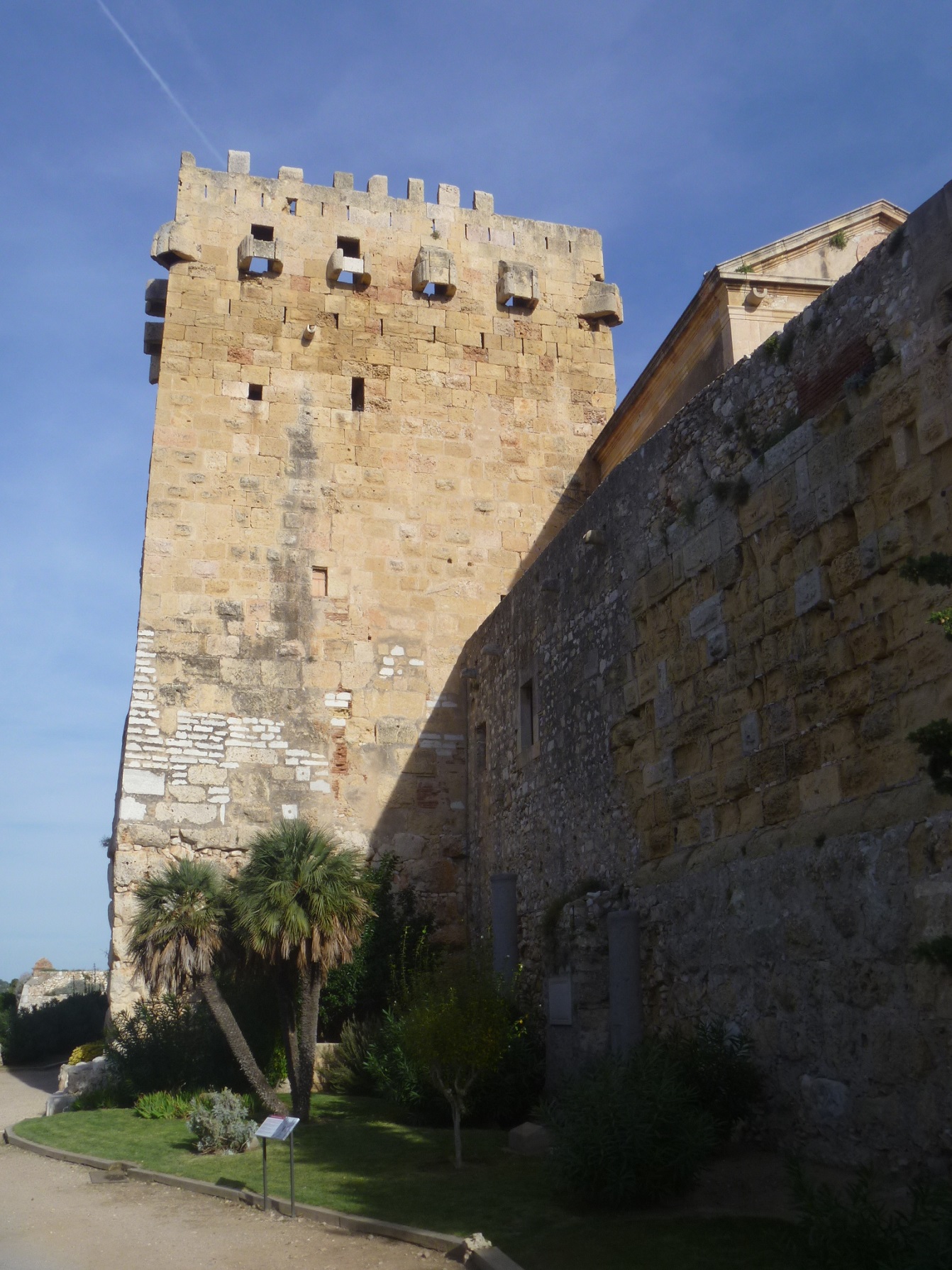
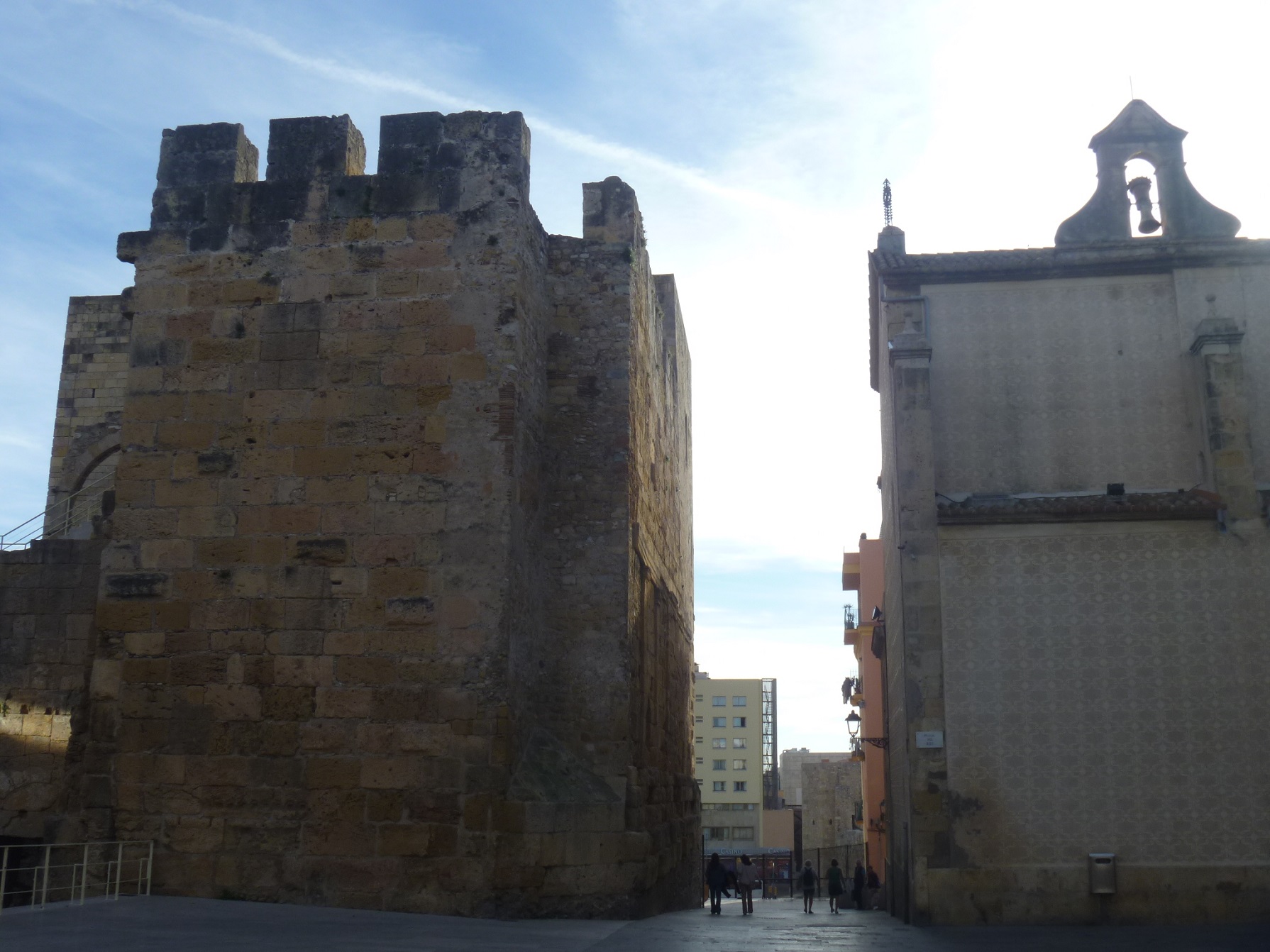
There are two surviving towers, as well.

10.29.15 Tarragona-026sm


10.29.15 Tarragona-034sm


The description of the tower on the left includes the two rows of arrow slits, the machiolations (spaces where rocks can be dropped on the attackers below), and the crowning row of merlons (tooth-like upright rock). Castles have their own vocabulary.

The portion of Tarragona within the Roman walls is on a hill as well, and from the highest part of the walk between the walls is a view over the rest of the city. The part of town within the Roman walls is the oldest, streets are very narrow, and I imagine parking is a nightmare. It still is charming.

10.29.15 Tarragona-025sm

We chatted with a man at the “maqueta”, or scale model of Roman Tarragona. He said that buildings in the old portion of the city were becoming increasingly difficult to renovate because of the requirements to conduct an archaeological excavation any time the ground is opened. If nothing found is new or considered significant, it can be covered, but ordinarily remains cannot be removed. Significant finds have to be both excavated and preserved below whatever work is eventually carried out above ground. The man we spoke with told us that more and more properties are being abandoned rather than renovated. He pointed to a building that we had noticed, wrapped in netting and labeled with a big placard about renovation. He said it has been at a standstill for the past three years awaiting a budget to complete renovation.

10.29.15 Tarragona-024smThis is a sad situation, since the area would be lovely as apartments. The alternative is to turn the old city into a Disneyland, importing people to work the tourist places, but leaving the area empty at the end of the day.

Just outside the old city walls we sat in a park to eat lunch. There was a public drinking fountain and we shared the area with school groups doing the same as we were, visiting the old city and having a picnic. Sections of roadway in the old city and sidewalks nearby have been repaved with colorful pebble mosaics.

10.29.15 Tarragona-022sm

This seems too pretty for a sidewalk–I love it. Can you tell it does not snow here so there is no need to use a snowplow and chip out part of the mosaic every winter? At the end of the afternoon we strolled back to the train station and returned to the big city, leaving Rome behind for the moment.


Roman Barcino (Barcelona)

We spent two full days exploring Roman Barcelona and now, much later, a day in Tarragona (we could have stayed a week), visiting the Roman ruins there. Archaeology is alive and well in both cities. This post is on Barcino, the next on Tarraco.

In Barcelona, there is an ongoing program of archaeological excavations in the area of the Roman walled city that has been underway for many years. A guide to walking around the Barri Gotic, the oldest portion of the city that still retains a bit of Roman wall and street layout, includes stops at surviving places. We found that the Roman features were right under our noses in places that we had already visited, but only with a list that said to look here, look there, did we see the Roman remains underfoot.

9.25.15 Ps.de Gracia strs-001sm

An archaeologist’s puzzle. Which wall came first, and what happened after that and after that?


There is a Roman cemetery in a park beneath the streets.

9.30.15 Roman Barcelonasm

The convent over the tombs burned down in 1936 and the area underwent urban renewal in the 1950s when these were discovered and incorporated into the landscaping of the area, now called Plaza Vila de Madrid. http://www.barcelonaturisme.com/wv3/es/page/492/muhba-via-sepulcral-romana.html

The tour of Roman Barcelona took us all over the old part of the city and showed that the part of the city retains the shape established by its Roman walls. The walking tour ends at the Museu de la Historia de Barcelona (MUHBA). This museum was established when renovation in the city center revealed the remains of occupation from the Romans up through the Middle Ages. Archaeological investigations ran continuously for more than 30 years and continue from time to time today. A network of stairways, ramps and boardwalks over the ancient remains is accessible to visitors. The associated information shows the relationships among the different eras represented, but it is a maze of interwoven layers. Even with the detailed presentation of levels and layers, we had trouble following what went with what. The fact that a Roman city lies below Barcelona and a portion of it is there to look at is fascinating.
10.1.15 Roman Barcinosm

This wall of miscellaneous stone includes various shapes and one with a Roman inscription. Materials were reused over and over.


10.1.15 Roman Barcino-002sm

We are looking over the wine-making facilities of an ancient occupation. The archaeological work continues for a very extensive area underground.


Later, when we visited the Santa Caterina market, we found there is an extensive section of preserved excavations under the market and the plaza in front of it. This isn’t surprising, as the market is one block east of the cathedral. The posted information traced constructions back to the 11th century in this area, though there could be even early material below the stone buildings.

10.30.15-001sm