Plymouth

We were invited to visit friends in Plymouth and went down on the train from Paddington. The forecast was for rain all weekend “it’s October in England for god’s sake!” so we went with raincoats, sweaters, and boots. Fortunately, we didn’t need them.

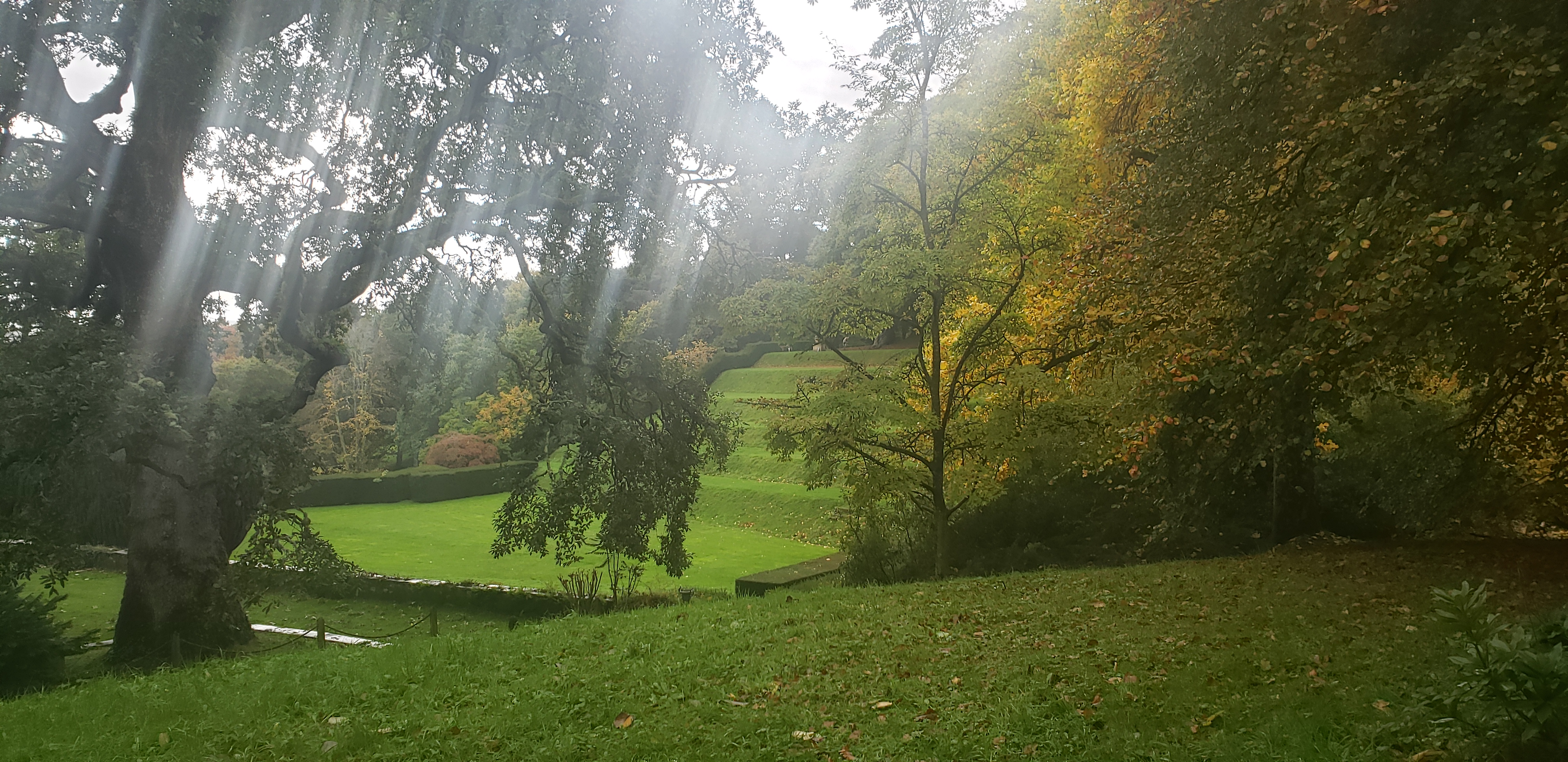
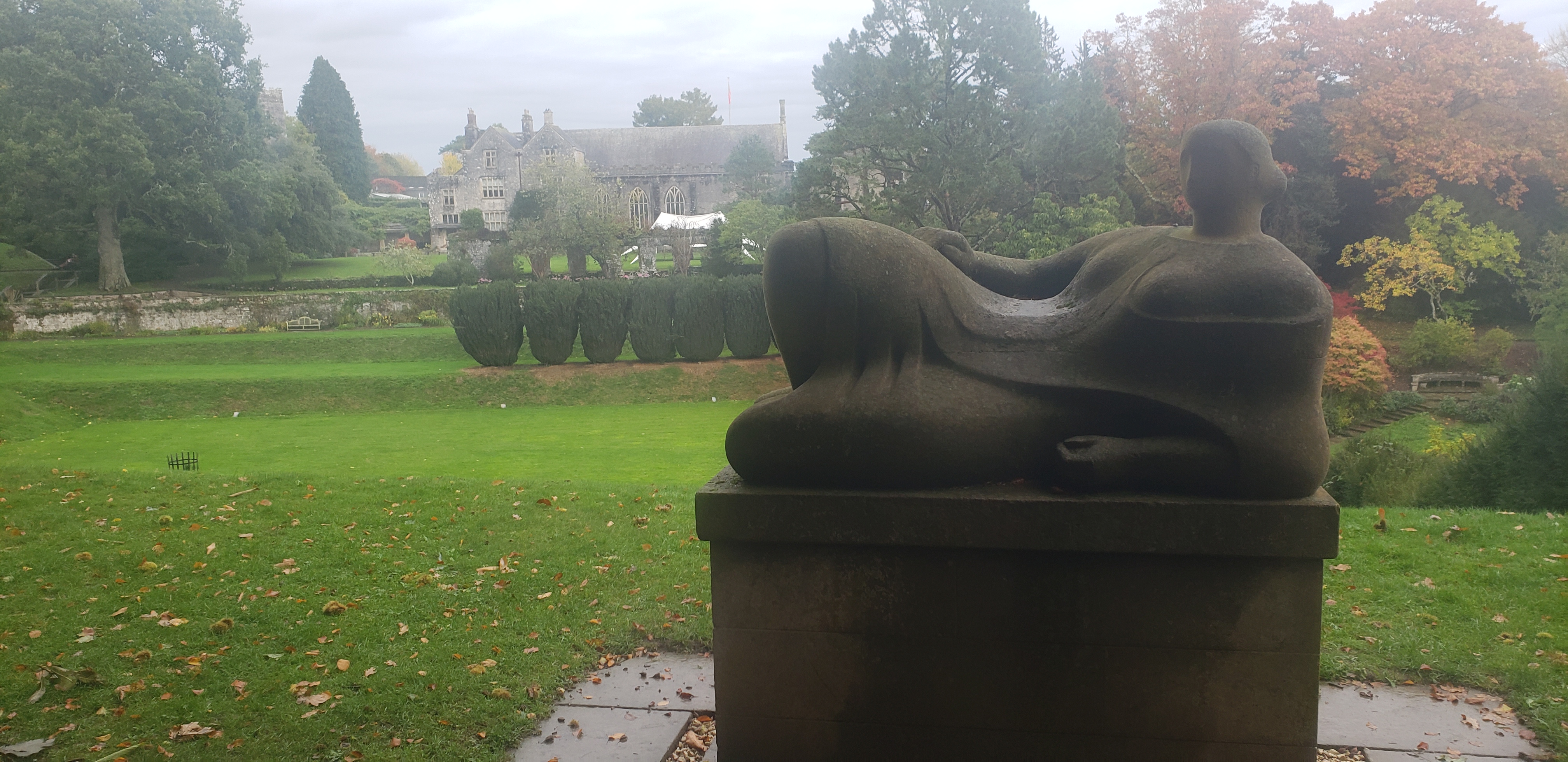
From the train, we went to visit the Dartington Trust Gardens, a beautiful property. We strolled the path to a high point where an early work by Henry Moore is positioned overlooking the grounds. The area below is called The Tiltyards, and as the path winds toward them we stopped at the whispering circle. This walled perfect half-circle allows a person to stand in the center and hear their own voice amplified. We ambled past a number of buildings, studios for artist residencies, and rental rooms for visitors. Dartington also produces fine crystal. After we returned to London, I discovered that my favorite glass in our rental house is Dartington.

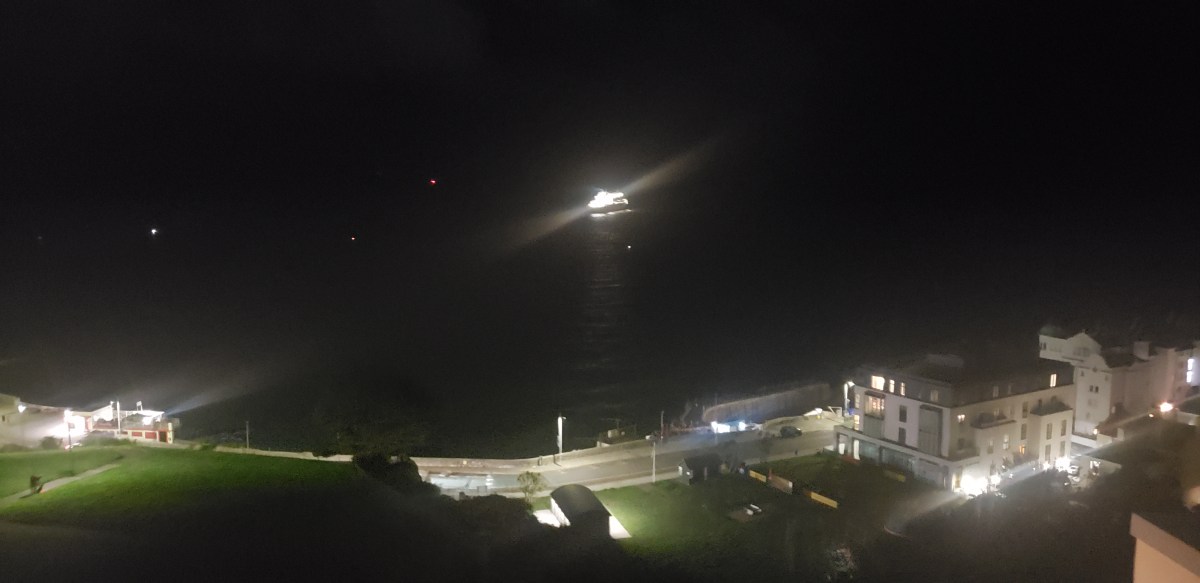
We had a splendid dinner at Everest Spice in Plymouth, then fell into bed. The view from the apartment out over Plymouth Harbor is mesmerizing, night or day. Ferries to France and Spain leave from the wharf just below the hill. The overnight ferry leaves after dark and lights up the bay before it sails.

In the morning, we walked across Plymouth Hoe*, a broad green area above the shore. With a lighthouse and fluttering flags, it is the picture of an English port city; it is the banner photo for this post. We wound down past the Lido, a handsome swimming facility that made me regret that the season had ended. We strolled the cobbled streets and admired the buildings in the neighborhood near the harbor called the Barbican**, cobbled streets and historic buildings.

Our friends’ apartment has a terrace with views each direction, over the city and over the harbor. It would be easy to sit by the window or on the terrace all day. I imagine watching the weather change, or a storm roll in over the Atlantic.

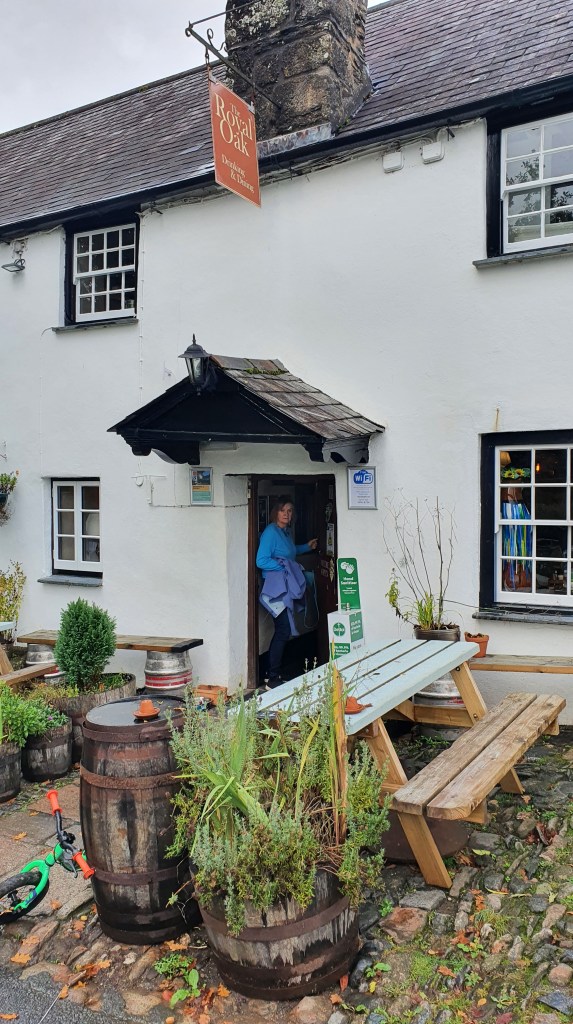
After our stroll in the Barbican**, we drove out of town to have lunch at the Royal Oaks, in Maevy, on the edge of Dartmoor, the vast national park of grasslands and forest. There are open grasslands, bog areas, and woodlands. On a bright autumn afternoon, it was not nearly as threatening as in The Hound of the Baskervilles. A pub lunch is always fun. I was a bit concerned that my glass of cider would make me want to take a nap rather than continue on our exploration, but it was a very small glass.

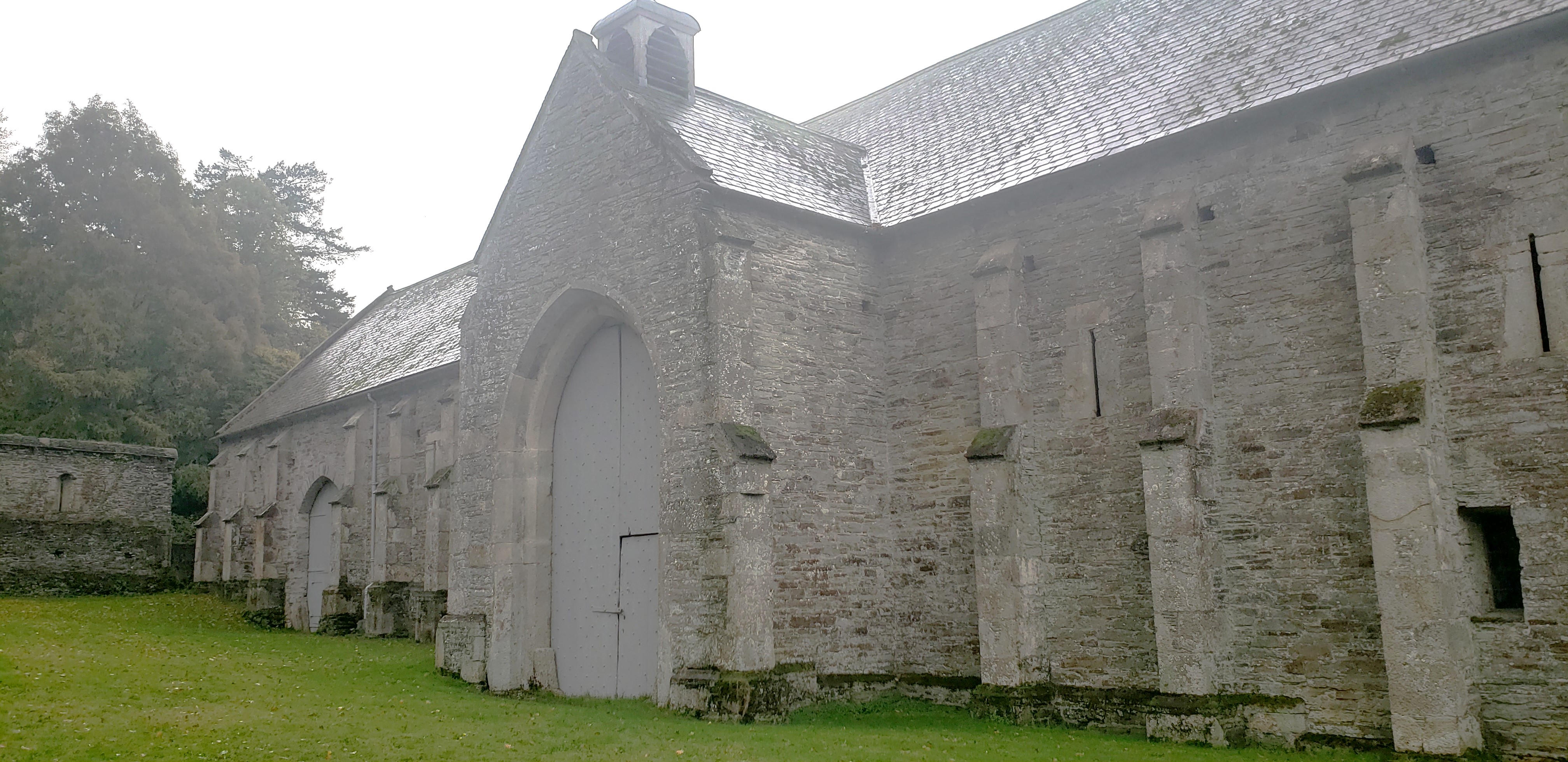
We continued on to Buckland Abbey, an extensive group of buildings and gardens that began as a Cistercian monastery in the 1200s and continued until Henry VIII took over the church and began the destruction of all English monasteries in 1536. The monks ran a profitable farm, managed other property and held markets and fairs, and the king sold the property to Sir Richard Grenville, a member of his court. In 1580, the Grenville family sold the property to men acting for Sir Francis Drake (who Grenville despised). Though Drake only lived in the house for 15 years, his descendants lived at Buckland until the 1930s. Buckland Abbey was donated to the National Trust and has been open to visitors since 1951. The grounds are perhaps best known for the enormous Tithe Barn built by the monks to house the agricultural goods and livestock paid to them by their tenants and members of their congregation. It is a cavernous space for something built before 1530.

(Clockwise from top: Buildings at Buckland, exterior of the Tithe Barn, garden at Buckland.

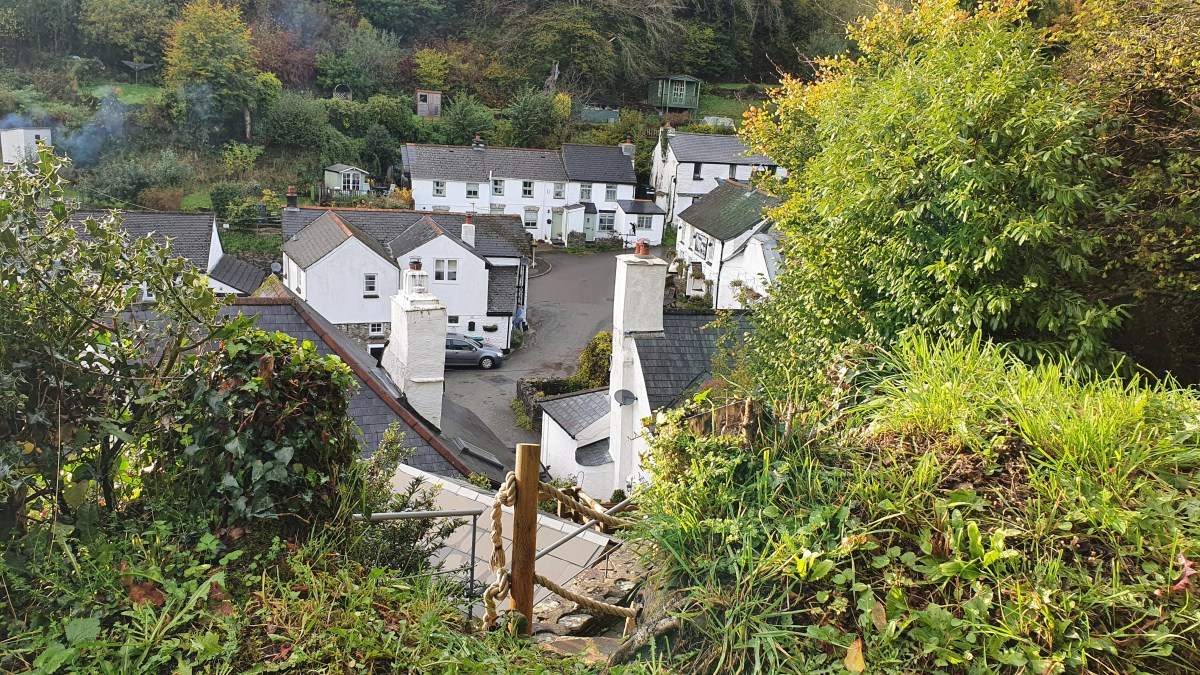
We visited the main building at the Abbey, where memorabilia from the Grenvilles and Sir Francis Drake are on display, along with a painting recently cleaned, restored, and attributed to Rembrandt. After our visit we returned to Plymouth by another route that let us see more of the countryside. We passed through the tiny and picturesque town of Milton Combe. Back at the apartment, we had a delicious dinner with our hosts and two of their friends, and discussed everything from the new Prime Minister (Rishi Sunak) to where to go on safari in South Africa. It was a lively evening.

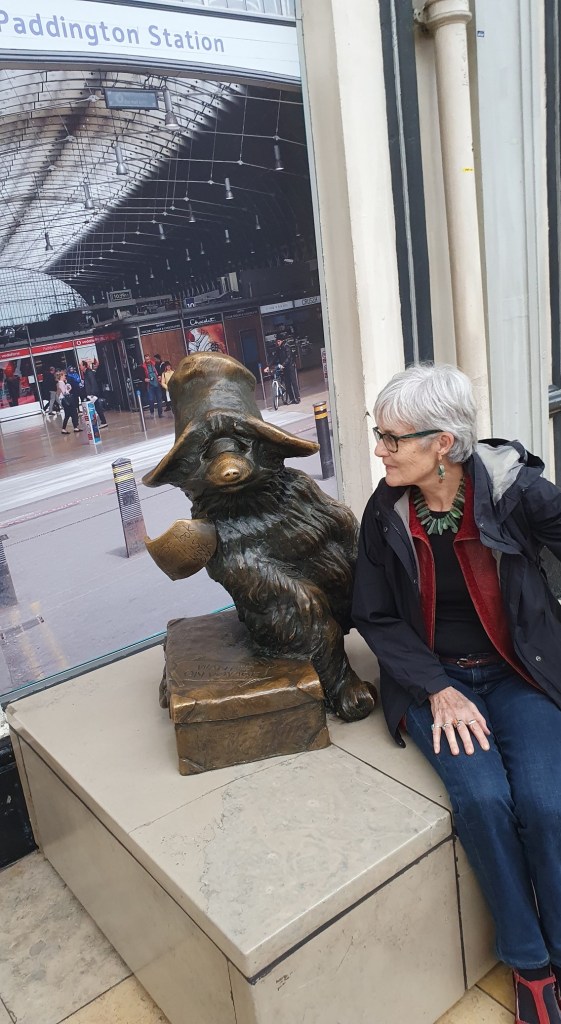
We left the next day to return to London. The advantages of the train are many, avoiding traffic, the congestion charge, and where to park. Our train came in to Paddington Station and I took a moment to say hello to Paddington Bear. We arrived back at our townhouse in Kennington without any trouble.

* What is a Hoe? An ancient Anglo-Saxon word for an open area in a town that includes a gentle ridge.

**A barbican is a fortified gateway. In Plymouth, the Barbican is a neighborhood by the harbor that somehow avoided being flattened by the bombing that destroyed most of Plymouth during WWII.

Mudlarking Finds New & Old

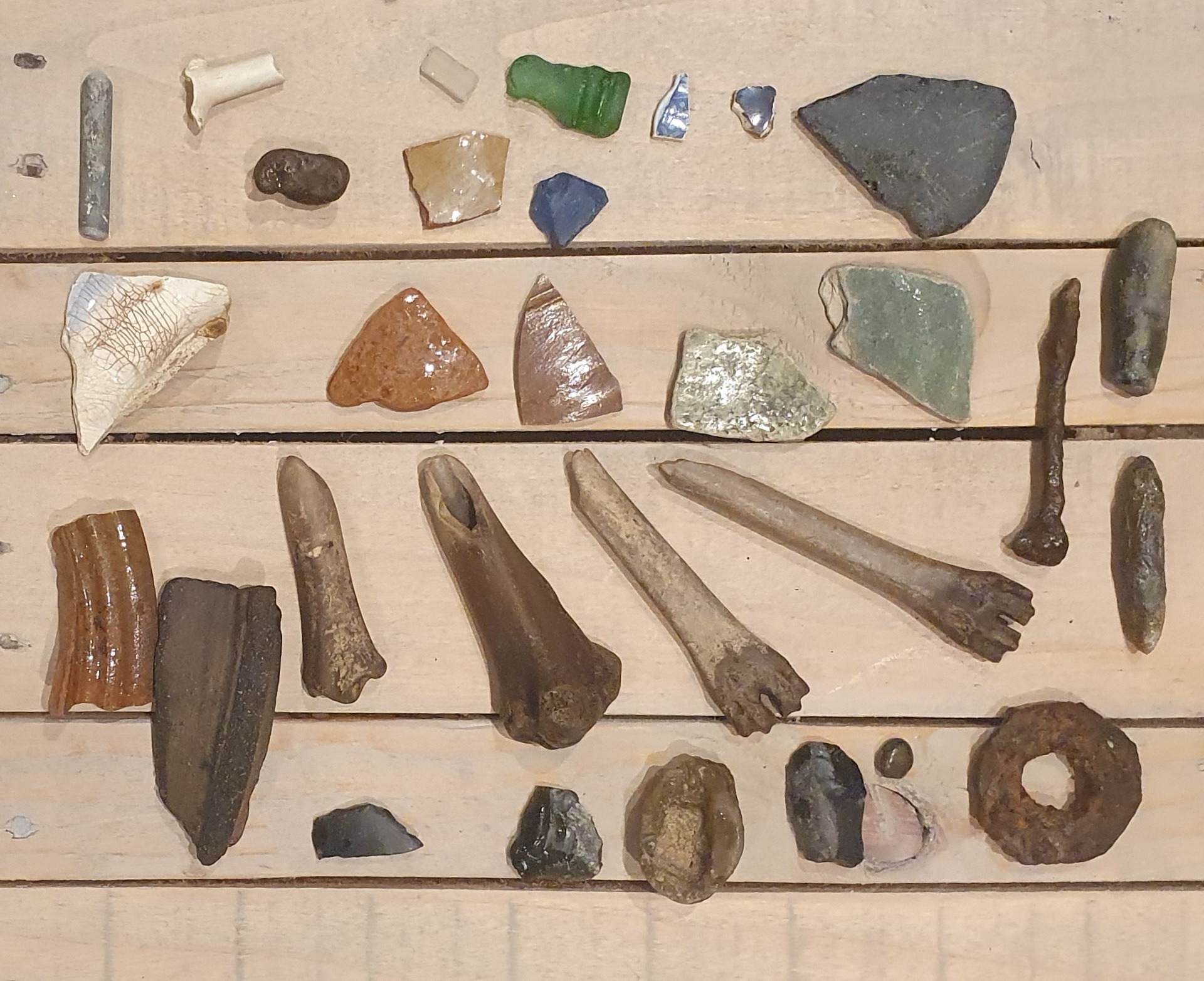
This month you will see a lot of my mudlarking finds. I am thrilled to be able to poke around in the Thames gravel, and with Jonathan’s sharp eyes on the alert, we brought home a big collection of little pieces. We haven’t found any treasure (technically, in the UK, that would be gold) or gems, or anything that isn’t broken. What we do have are pieces of stone, clay, and metal from the ancient past to very recent times. This time I’ll show you the newest and the oldest.

20th century:

Truly recent items are garbage (chip packets, plastic bags), though I did pick up a tiny green house from a Monopoly game.
The button is the most recent item we’ve found. It’s a bit decorative, but ordinary, made of plastic.

The other fragment may not look like much, but it comes from the first half of the 20th century. At that time, some glass items were colored with a bit of uranium to create a yellow-green color. Glass made this way is also fluorescent. The piece I picked up seems to be part of a candy dish or other decorative bowl, with a fluted edge and a bit of red coloring below. I’ve found pieces of fluorescent glass elsewhere, and am slowly collecting enough for a necklace.
The Ancient Past:

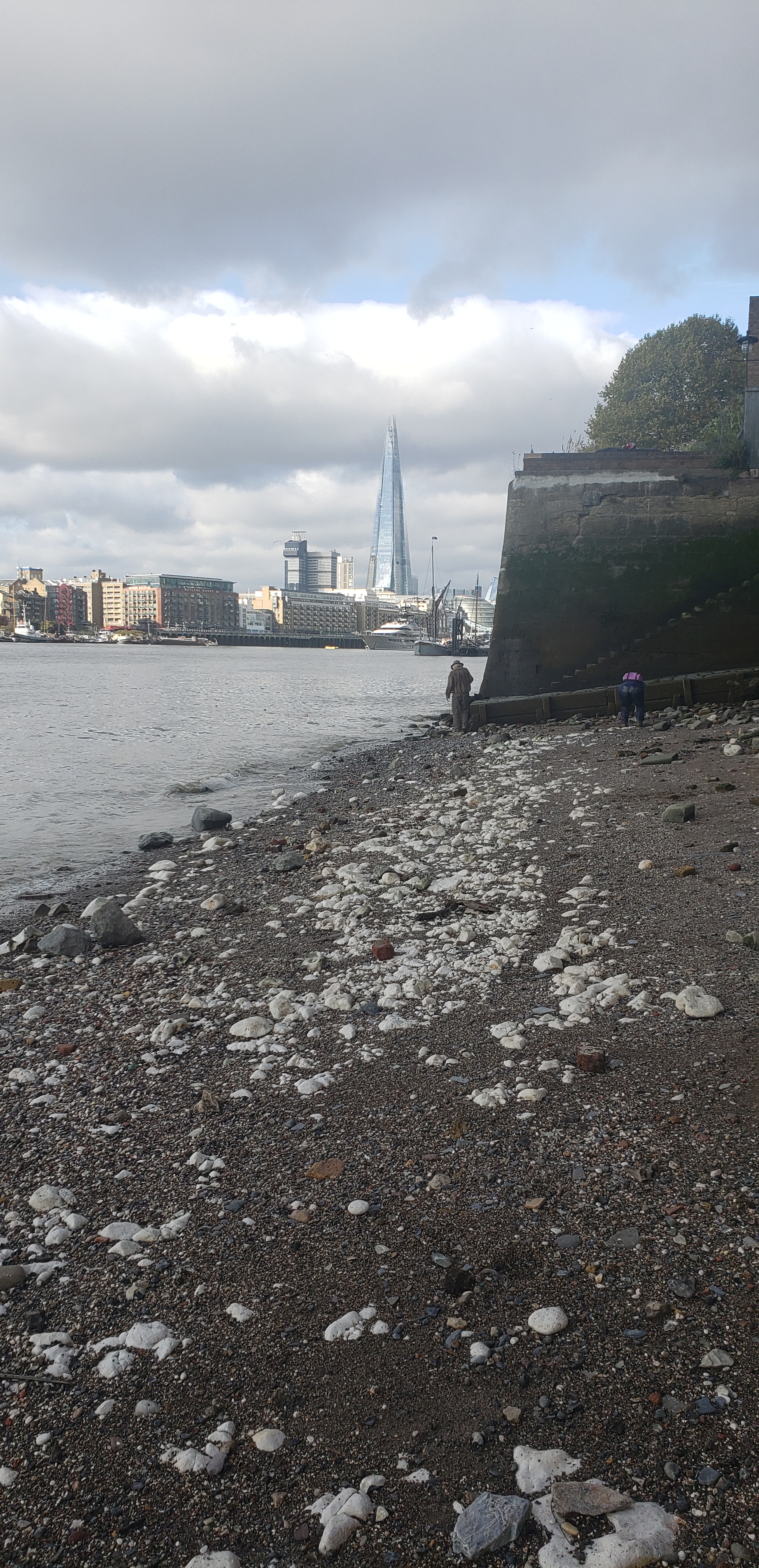
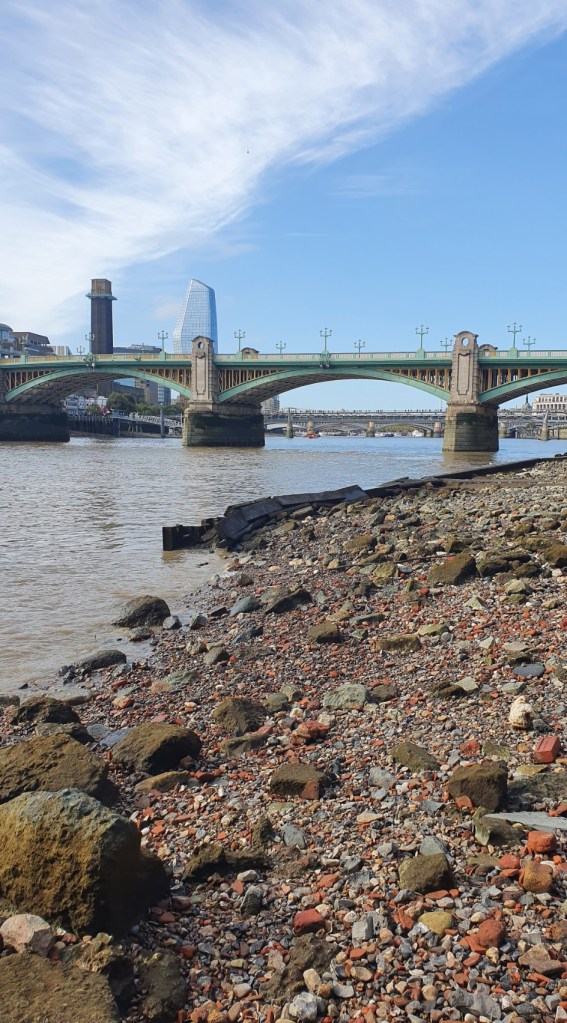
The shores of the Thames are covered with bricks, rock, and lumps of flint. The flint forms as nodules in limestone, and is a very fine grained form of silica, the same material that is called chert in the US. Flint nodules were the raw material for stone tools in ancient times, as it chips into sharp flakes and was used to make sharp-edged cutting tools. The oldest flint tools in the UK date to the Mesolithic Period, 9600-4000 BC. These were very small chipped tools called microliths. Over time, larger and more elaborate tools were created, and some of these have been recovered along the Thames.
The large quantity of flint found along the Thames is mostly lumps that were used as ballast in ships. The rock was dumped along the shore when ships arrived to create room for cargo. Among all that flint is a small number of artifacts have been found that were made from flint long before it became ballast. Some of the pieces we’ve picked up look like tools but are probably chipped by erosion rather than intentionally shaped. Still, a few pieces look a bit like scrapers.

Next time I’ll look at some of the things I’ve found that date between these two extremes.

Mudlarks!

We got our Oyster cards for riding the Tube (subway) with the help of a particularly nice agent at the Kennington station just around the corner from our house. With that, we were ready for one of my principal goals of this visit: to go mudlarking, beachcombing along the Thames at low tide. I checked the tides and chose a spot. When low tide is early and late, we’ll visit museums and parks, but this week it’s just right for a leisurely visit during the day.

We rode the tube for a few stops and decided to walk across London Bridge. It was a gorgeous day and we could see that on a rare sunny Sunday afternoon in mid-October, everyone with a Foreshore Permit seemed to be out. We climbed down a set of stairs to the river’s edge.

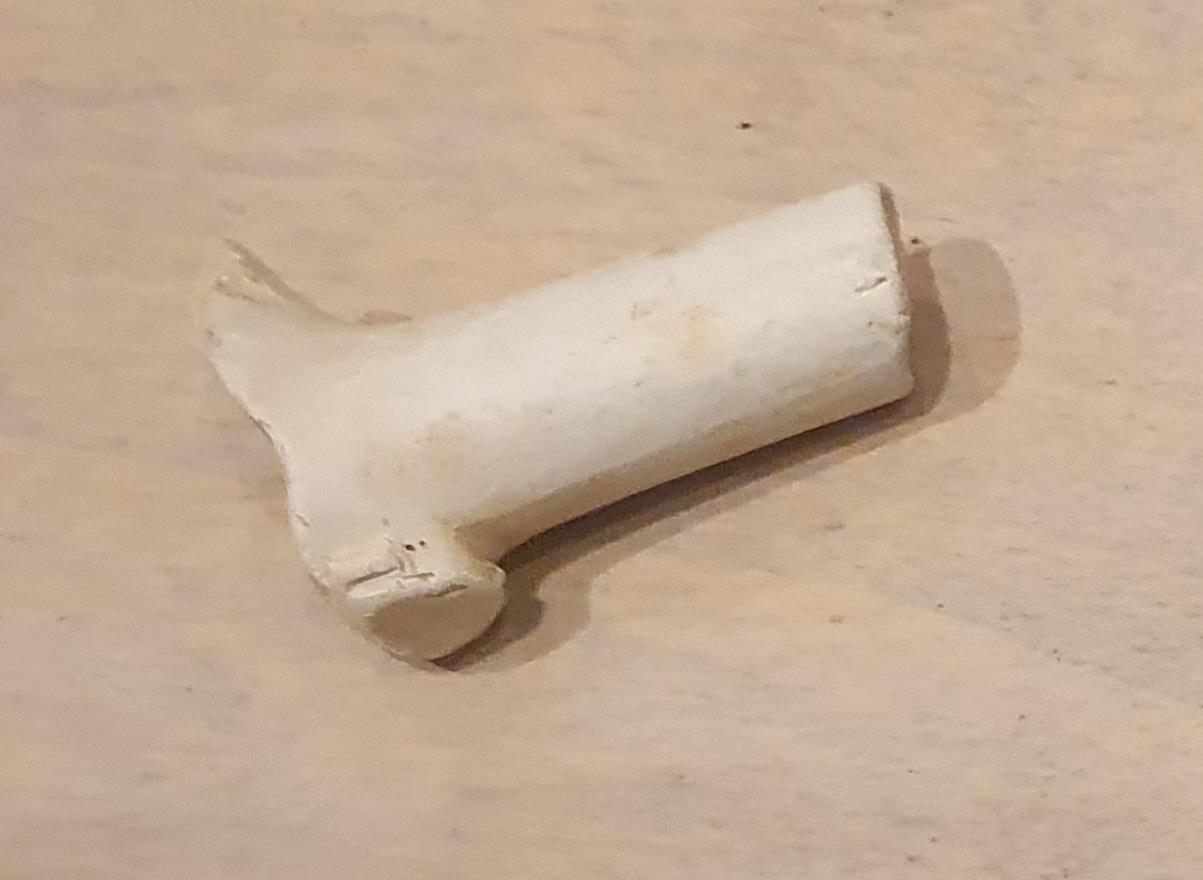
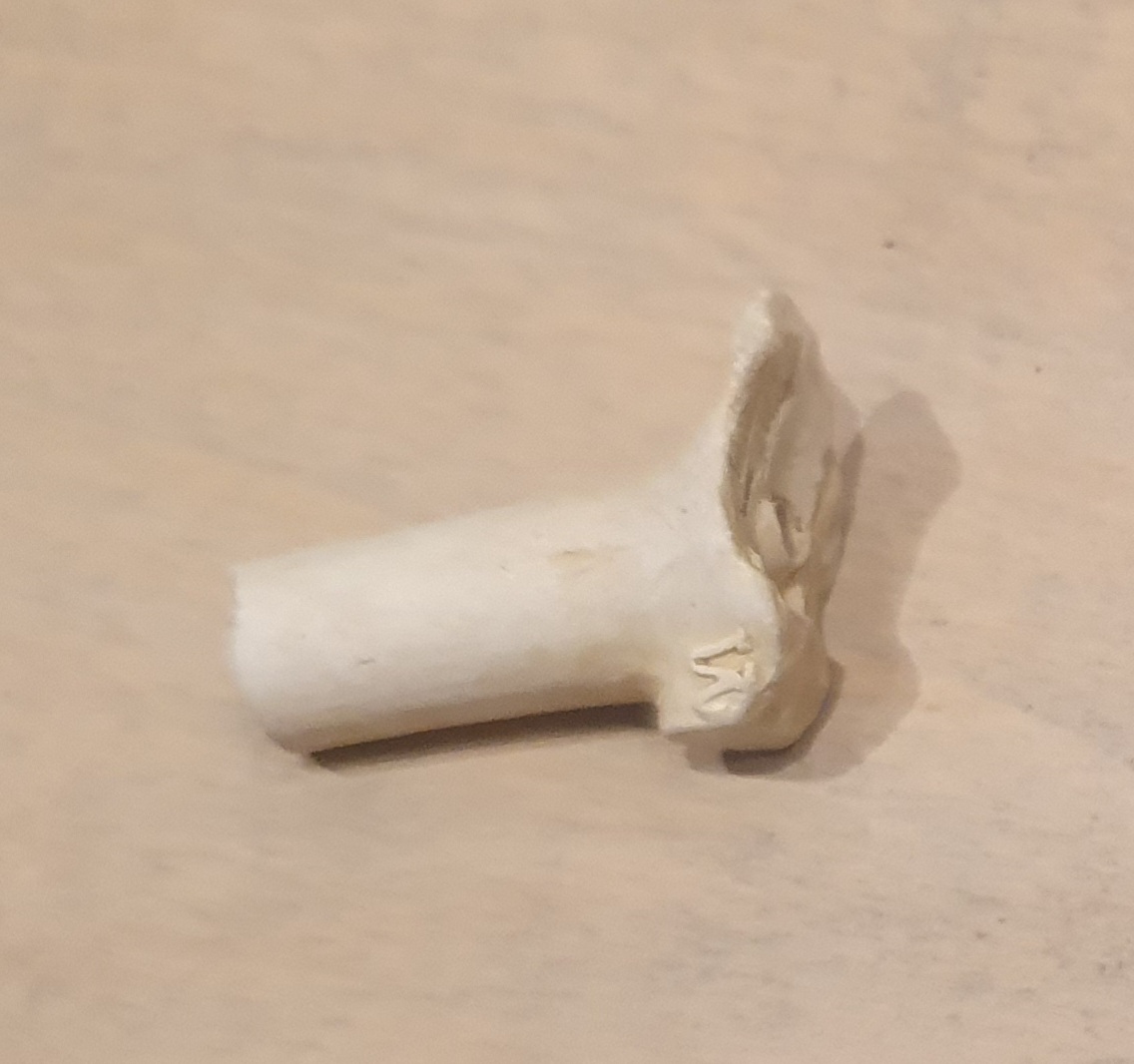
At low tide, there is a broad, gravelly margin along the water, full of rocks and things that have been discarded in the water. Fortunately for us, there was almost no plastic waste like we often see on beaches. The gravel includes a lot of flint fragments and nodules. Some of this was brought in as ballast in ships, and dumped in the river to make space for cargo. Rock isn’t used for ballast today, but tons of it still wash up and down the river. There is a lot of glass, not as tumbled as on the seashore, though neither of us could resist picking up a few larger pieces. There was a lot of bone, and I picked up bone awls made from deer as well as domesticated animals, a knucklebone (often used like dice in the past), metal bits, and a lot of glazed pottery. Erosion uncovers new items all the time, and when you realize that people have been living along this stretch of the Thames in a crowded city for two thousand years, you can understand where all the waterside junk comes from. One man’s trash, as they say, is another man’s treasure, and I happily collected my treasure of the day. Perhaps my most interesting find was a small piece of clay pipe that had an initial on either side of the heel (the part that kept the pipe from tipping over). W on one side, I on the other.

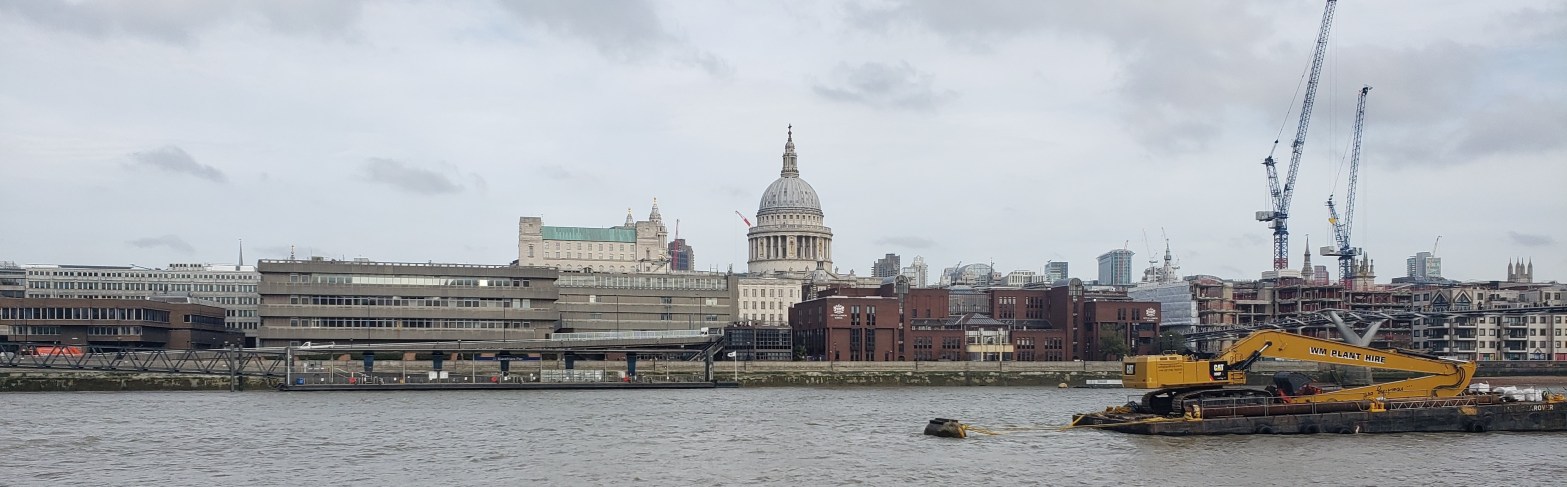
Seeing London from the riverside is a beautiful, alternate view of the city, dominated by bridges and tall buildings. We went by The Shard, a relatively recent addition to the London skyline, as we walked across London Bridge, quicker than riding the tube, and with more gorgeous views.

Returned home, washed hands thoroughly–the Thames may not be a completely clean river–and admired my loot. I’m looking forward to more tomorrow.

There’s one tiny inconvenience to mudlarking. Everything is on the ground. After about two hours, either my knees hurt, or my back does, or both. By this point, the tide is usually coming in, and I’m amenable to being chased away. We get home, have a bite of lunch and then I lie down to rest my back and read for a while. Do I ever fall asleep? Maybe.

London!

This is our first big adventure since settling in California, and it is a LONG, LONG, way from Eureka to London. We drove to San Francisco to squeeze in an eye appointment for me, and we knew that we could park for a month at the El Rancho motel. (Bad and good news though: the hotel will close in the next year and the property be redeveloped as housing.)

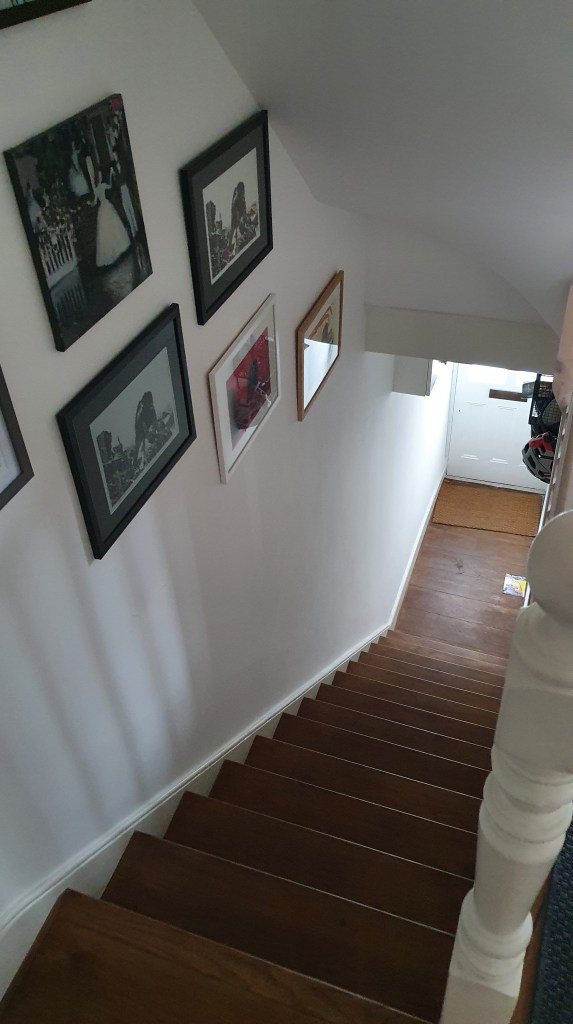
Townhouse = Stairs

We flew Delta to Heathrow via Salt Lake City, and our travel went as smoothly as it could have. We arrived at 1:40 pm and had to wait a while for our prearranged ride to the city. More good news, our phone chips work and I could check with the taxi company. About a half hour late the driver showed up, and off we went. We arrived at our rental townhouse in Kennington, on the south side of the river, at 4 pm, both exhausted.

Tiny sink

Our home for the month is compact. There is a extra bedroom and bath on the third floor that we decided not to use. The upstairs bathroom is a bit larger, but the extra stairs make it less attractive.

The bath attached to our bedroom is similar to the kind you find on a cruise ship. Everything is there, but close together. The sink is the smallest we’ve ever seen, the bowl is 8 x 10 inches, smaller than a sheet of printer paper. It makes us laugh, as we always thought the powder room at our house in Wheaton had the smallest sink we’d ever seen.

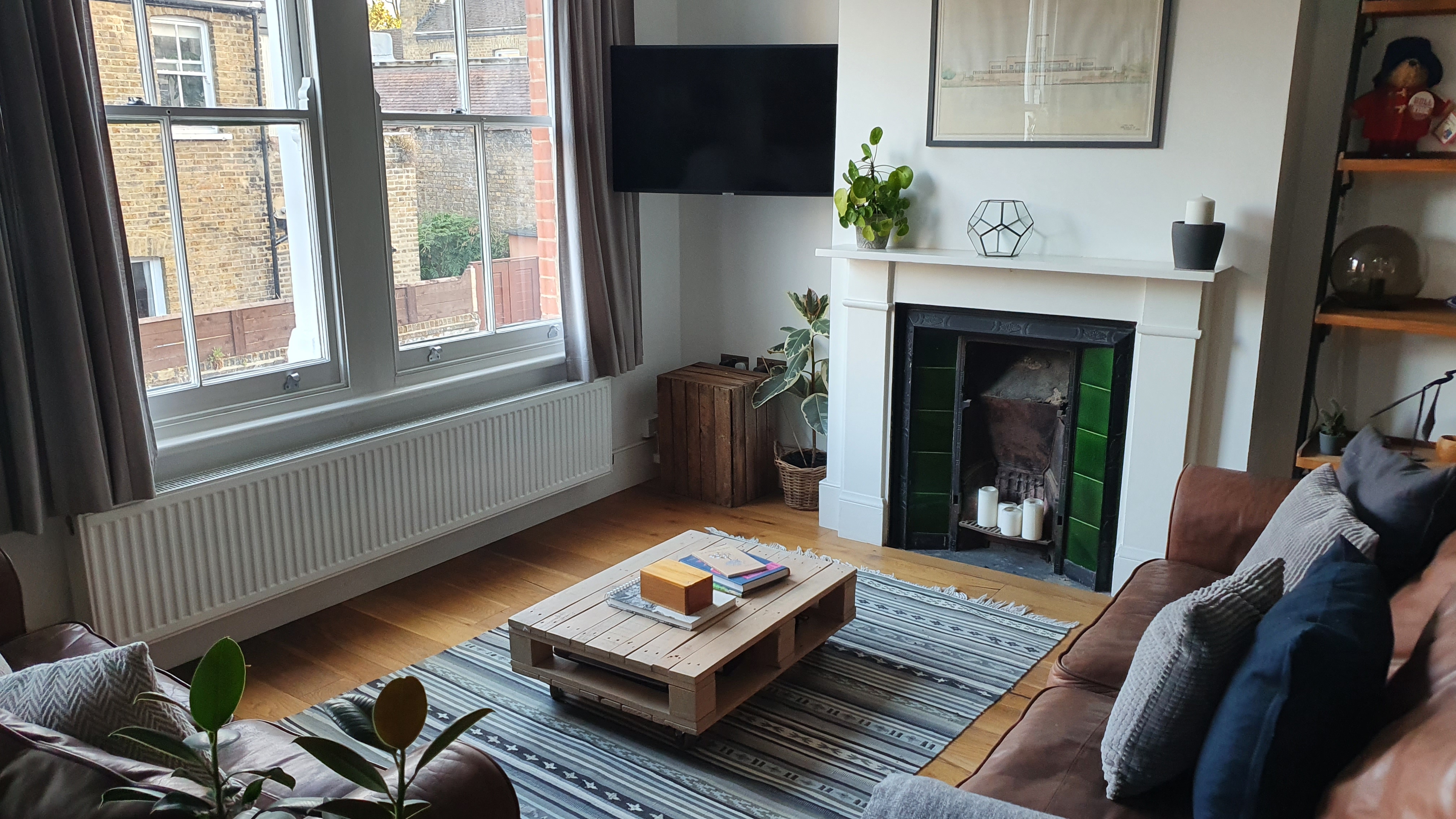
The kitchen is made for cooking, with a large range, all the cookware Jonathan needs, and a full-size fridge. It also has the dining table (photo is at the top of this post). Heat and hot water work very well, and the house gets nice light from windows over the street in the living room, and kitchen windows over the back garden. We hear a few birds in the trees, but haven’t seen any. Our first morning, I looked out the garden window and watched a fox prowling on the lawn. It’s definitely a city dweller, as there’s is not much in the way of woods for quite a distance.

A quick check on the phone and we found a nearby store where we could get something for dinner and breakfast. I love that it is “National Crumpet Week”. The neighborhood appears to have a bit of everyone, meticulously maintained gardens, houses with new paintwork, and some DIY works in progress. Most is town houses and apartments, including a couple of big council estates (subsidized housing).

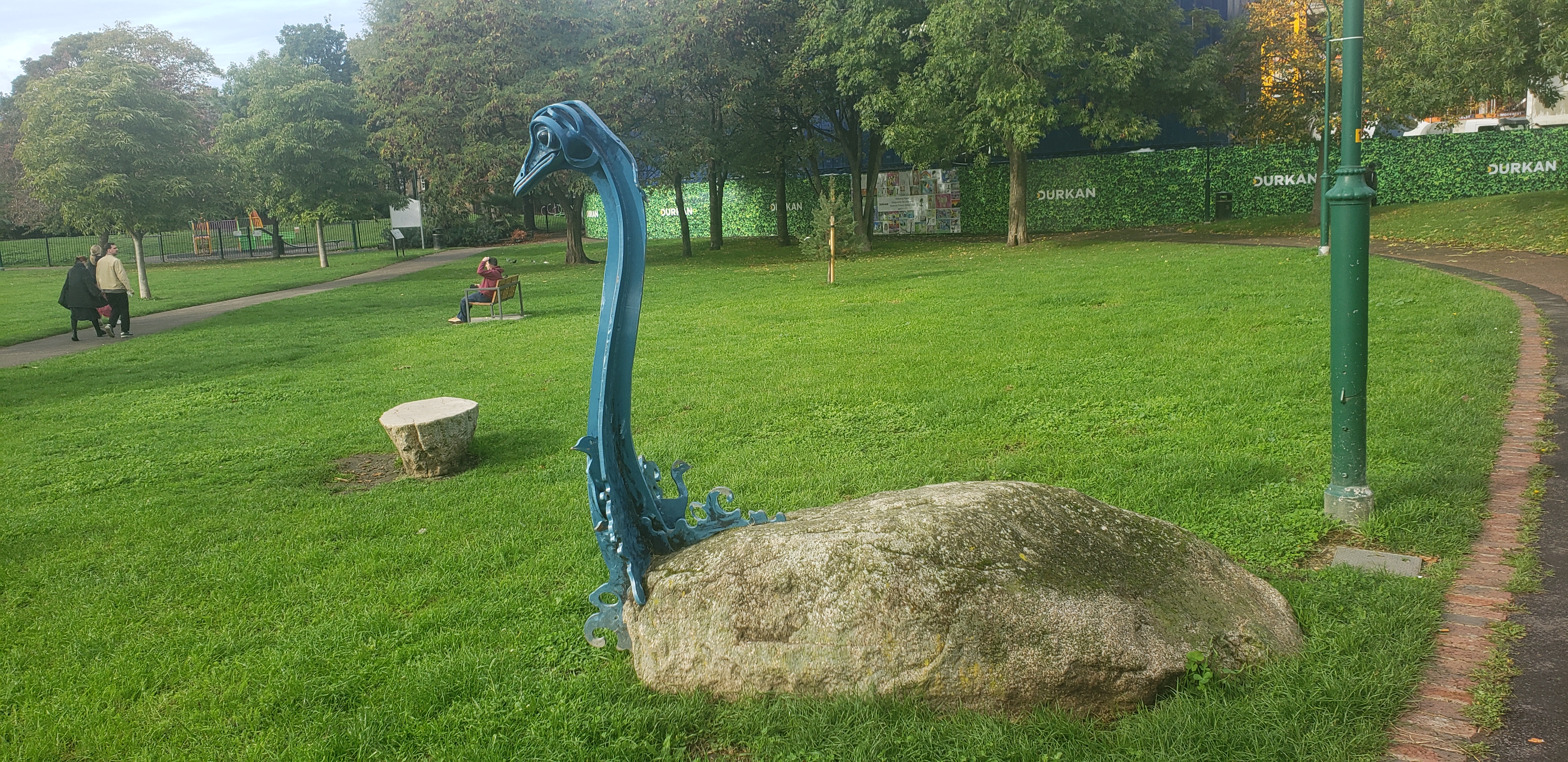
On the way to the closest large grocery store, we cross Pasley Park, where a pair of boulders have been turned into birds. We’ve seen a few live birds, too, the dramatically colored black and white magpies, and rose-ringed parakeets (much larger than pet budgies) that escaped from a cage somewhere. Robins chirp in the bushes. Last night’s sunset was spectacular. All this in the middle of the city.

Despite the comfortable surroundings, we didn’t sleep well the first couple of nights, no surprise considering the 8 hour time difference between London and Eureka. Coffee fixes many things, and before long, we were ready to explore.

I Become a Grandmother

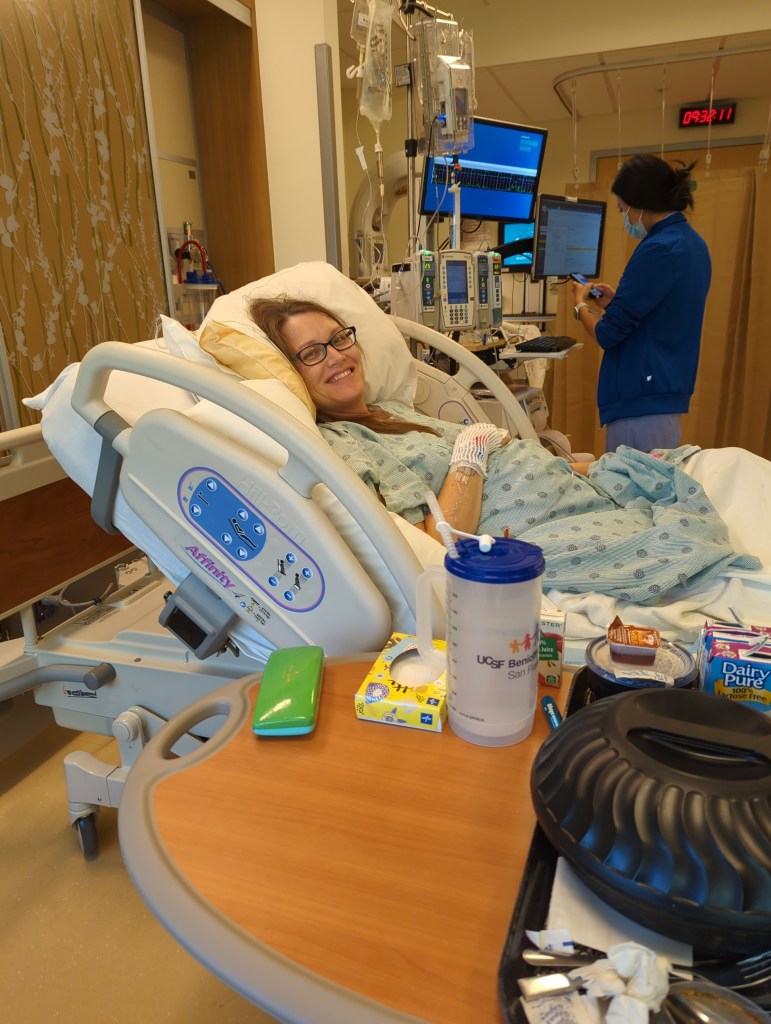
Of course, I knew the baby was coming, I just didn’t think she would arrive four weeks early. Amanda very carefully arranged her four weeks pre-natal leave, went to her last day of work on a Monday, and her water broke that night. Best laid plans, and all that.

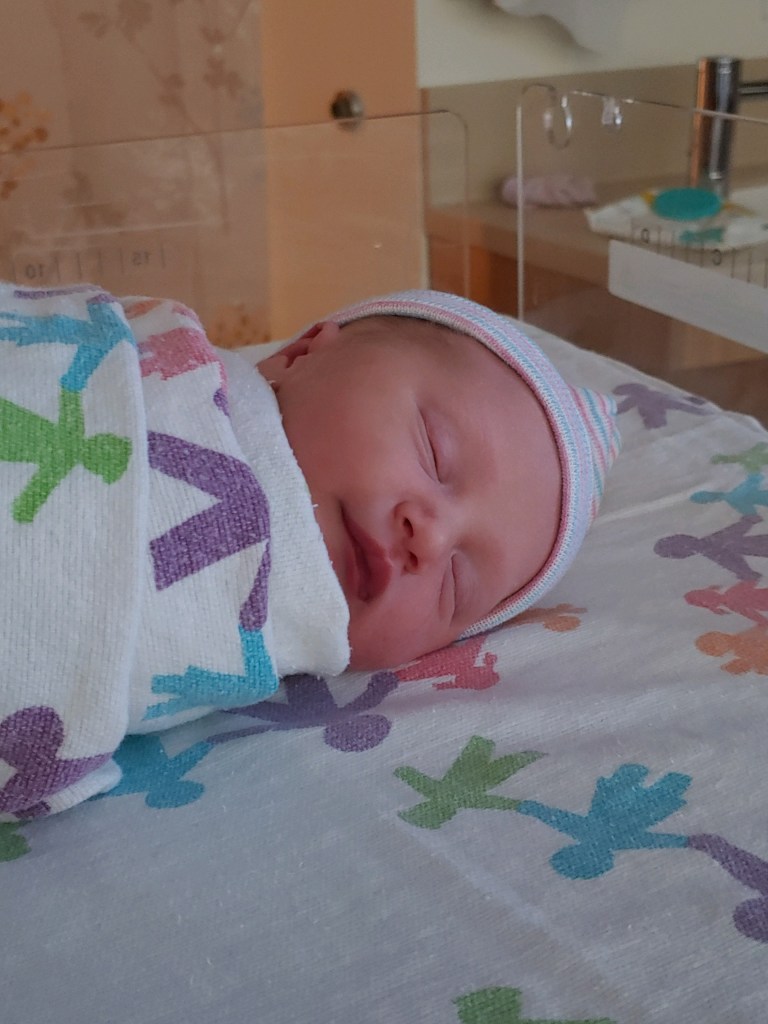
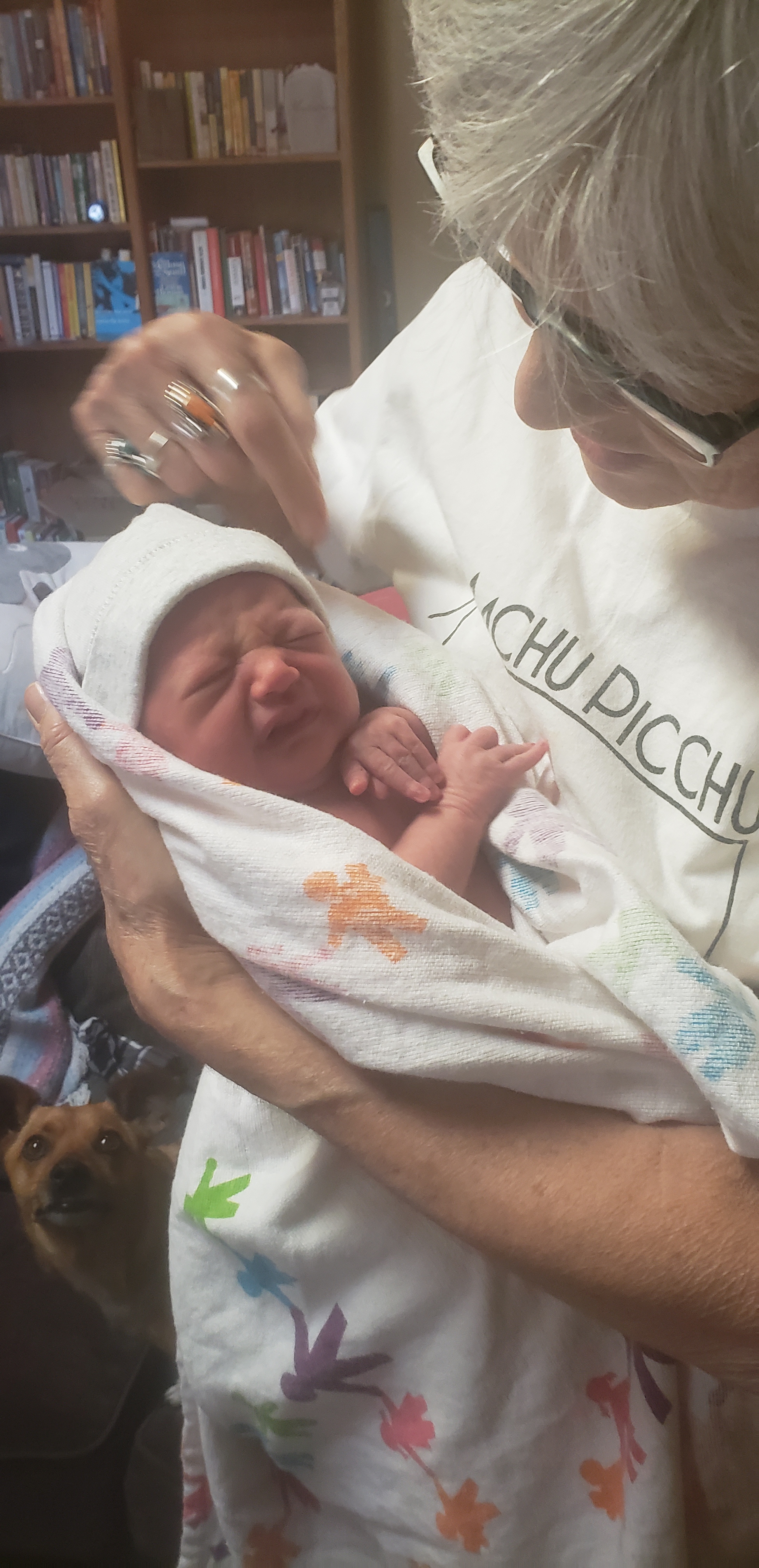
The process of having the baby took some time, once the hospital in Arcata recommended Amanda be moved to the UC San Francisco hospital. Amanda waited for the medical flight, but her husband Jim had to drive himself to San Francisco–the flights take no one but the patient. Eighteen hours after Jim arrived in San Francisco, Aurora Violet Haas Woodhead was born. The family stayed in San Francisco for four nights to make sure that everything was ok. Aurora had a bit of jaundice, and was treated with the hospital’s newest device, in-room blue light treatment. She managed to get her arm free of her wrappings despite the effort to keep her wrapped up.

Jim, Amanda, and the baby made their way home on Sunday, and we went for a visit today. Aurora weighed 5 lb. 5 oz when she was born, and weighs just about that now (babies lose a bit of weight after they are born). She’s a tiny thing, with skinny little arms and legs waiting to fill up.

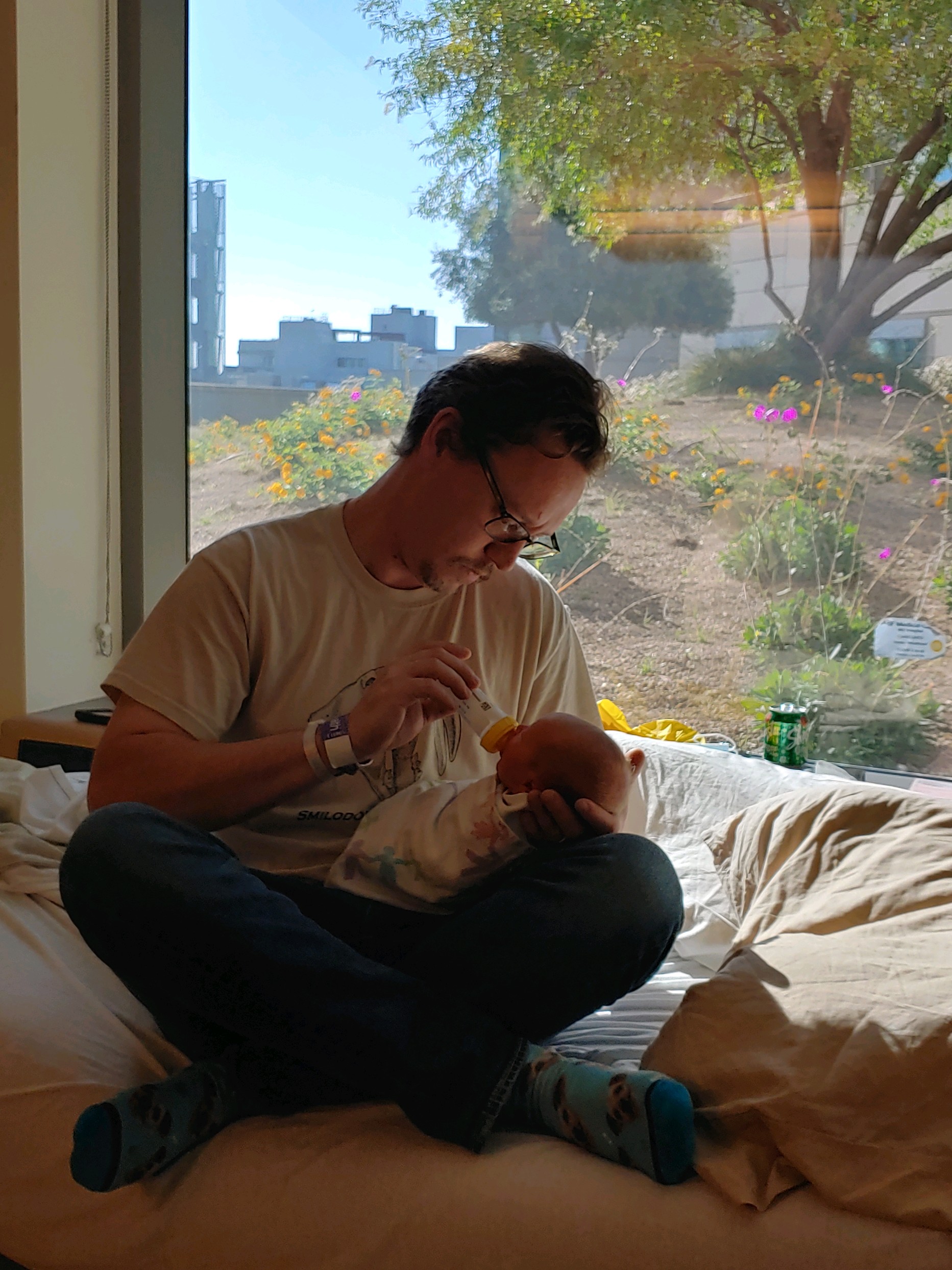
When we met her on Monday, Aurora was busy growing. It was nice to hold her and feel her soft skin, but she was not very interested in her grandparents, she was busy doing her thing, sleeping and occasionally eating, age-appropriate behavior. We’ll see her again soon.

We’re in the New York Times!

On August 23, I read this call for comments:

What Are Your ‘Non-Negotiables?’

A daily walk? Meditation? Or something sweet at 2 p.m.? The Times wants to know what you prioritize each day — and why.

Read the rest of the callout here.

I wrote about what Jonathan and I do every day, just for fun. It was used in the article that appeared on Saturday. This is the excerpt about us:

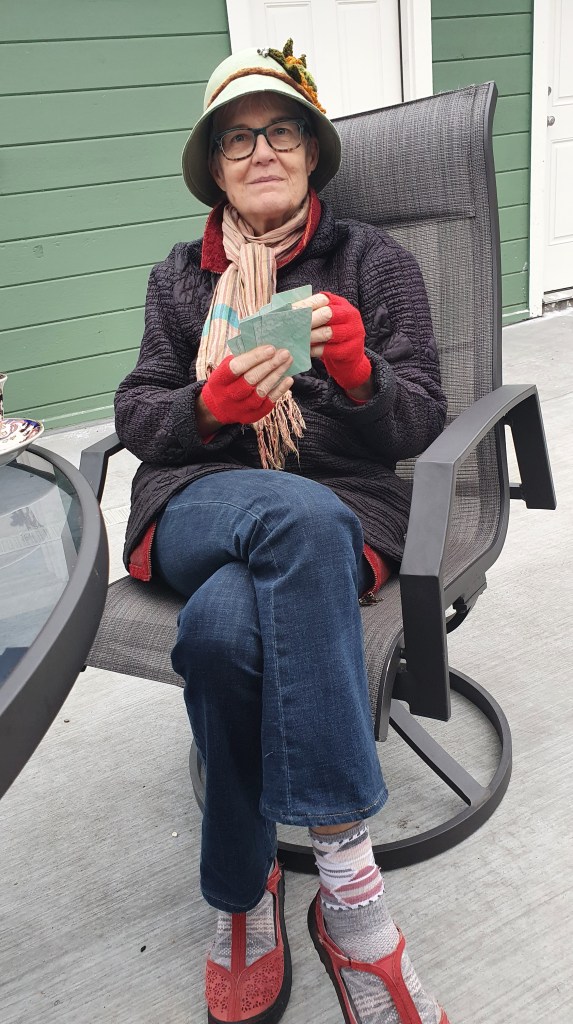
At 6 p.m. every day, my husband of 39 years makes popcorn, I make tea, and then we sit down and play gin rummy, five hands, so there has to be a winner. Our competition is fierce, we play avidly to the last moment. The winner gloats and cheers. Five minutes later, neither of us can remember who won.

— Winifred Creamer, Eureka, Calif.

I’m happy we could share our moment of fun. The photo was taken one afternoon when Jonathan wanted to sit outside and I thought it was a bit chilly. I overdressed just a bit.

Here is the entire article.

September in Humboldt

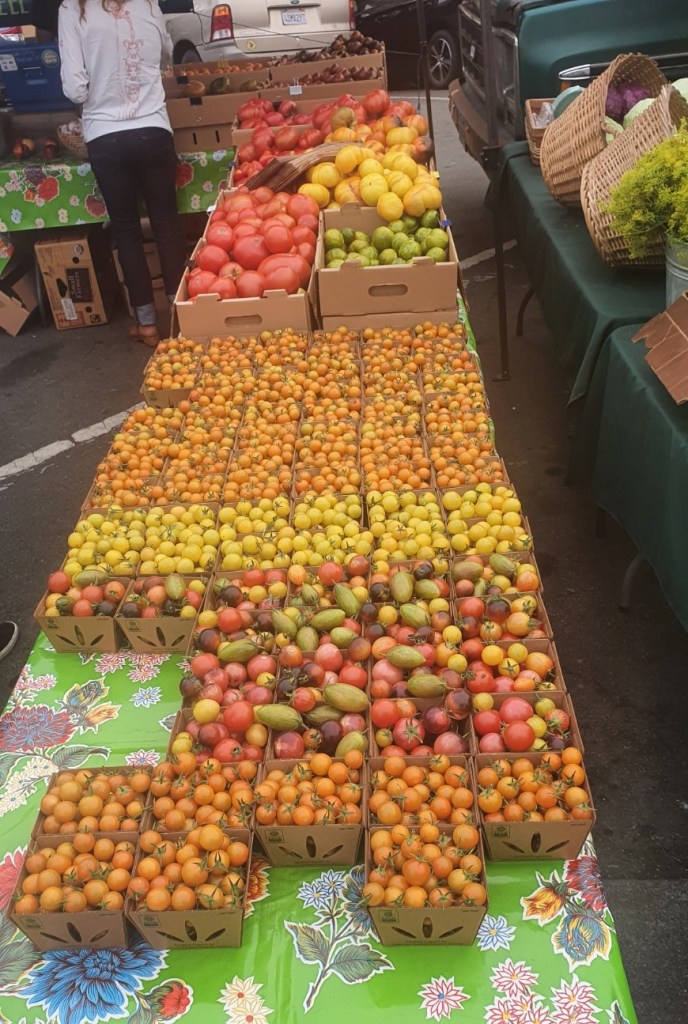
Despite my trip to Chicago and having Covid, we continued exploring our new region. The Arcata Farmer’s Market is full of gorgeous produce during late summer, tomatoes, eggplant, apples.

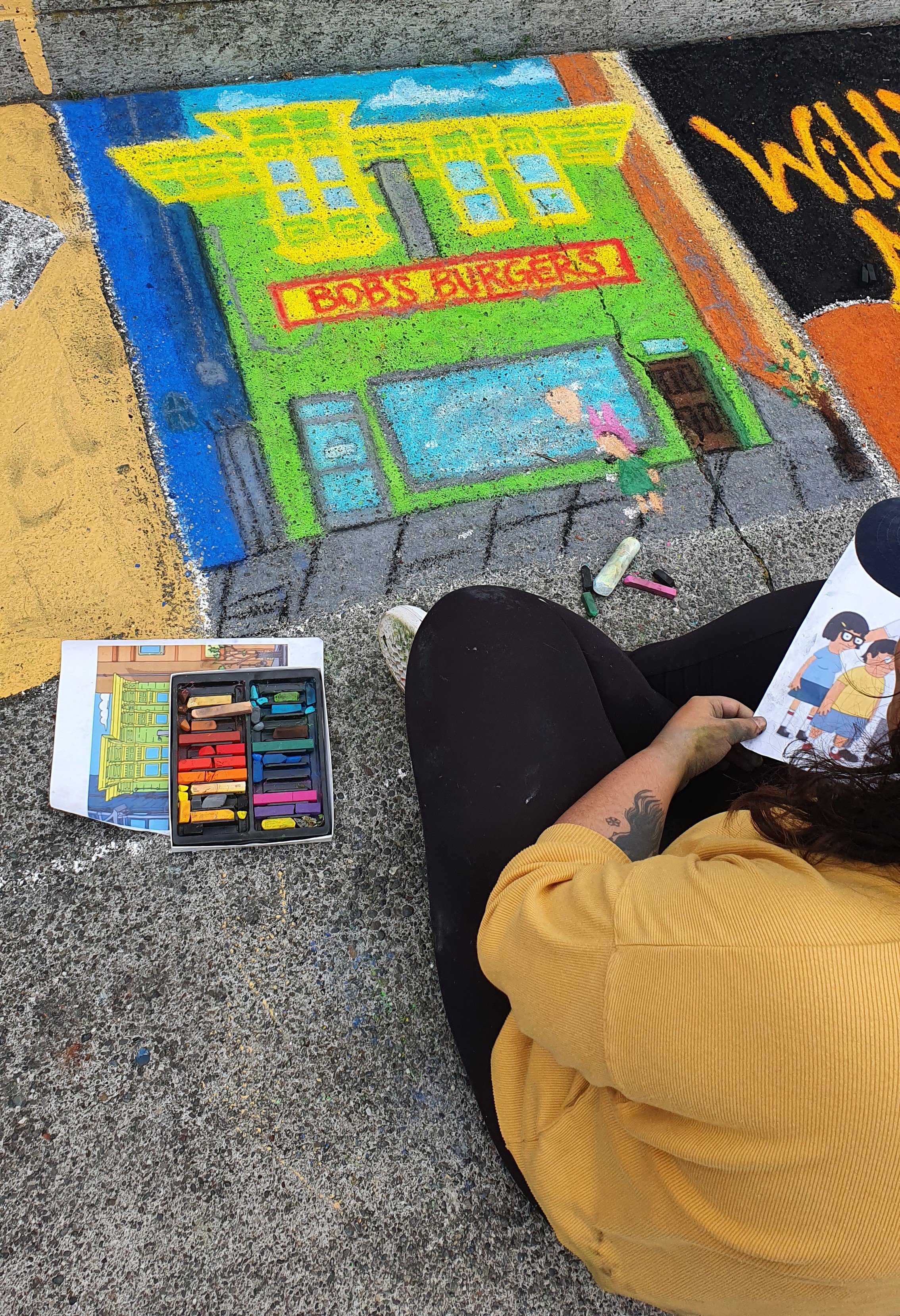
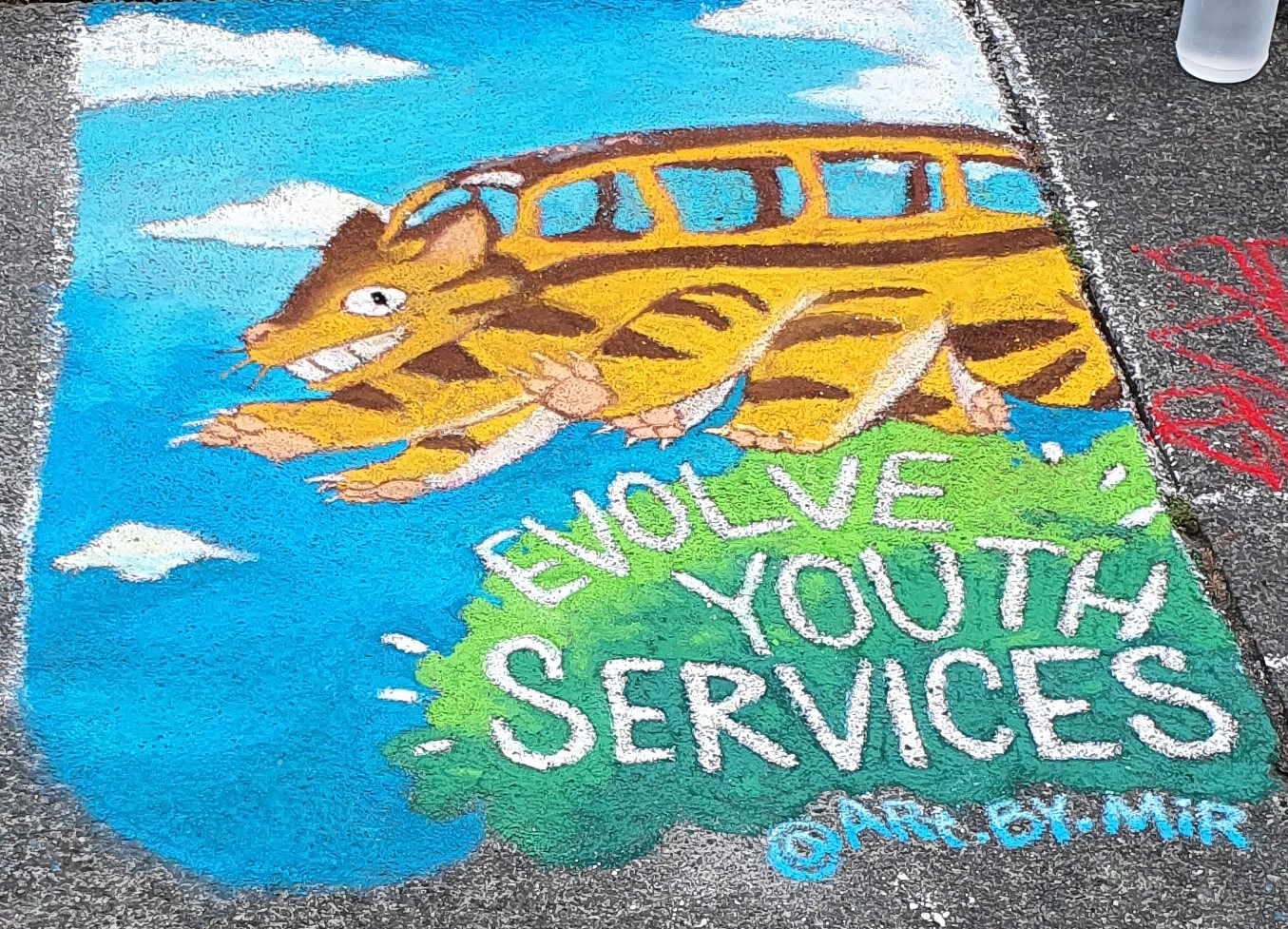
We buy the bread of the week from Beck’s, made with a different freshly ground grain combination each week. Last weekend was also Pastels on the Plaza, with 100 artists decorating sections of the sidewalk around the Arcata Plaza, sponsored by different agencies and businesses.

The monthly Arcata Flea Market was worth visiting, too, and we picked up a few things we needed. It’s fun to have a look around and see what people are selling.

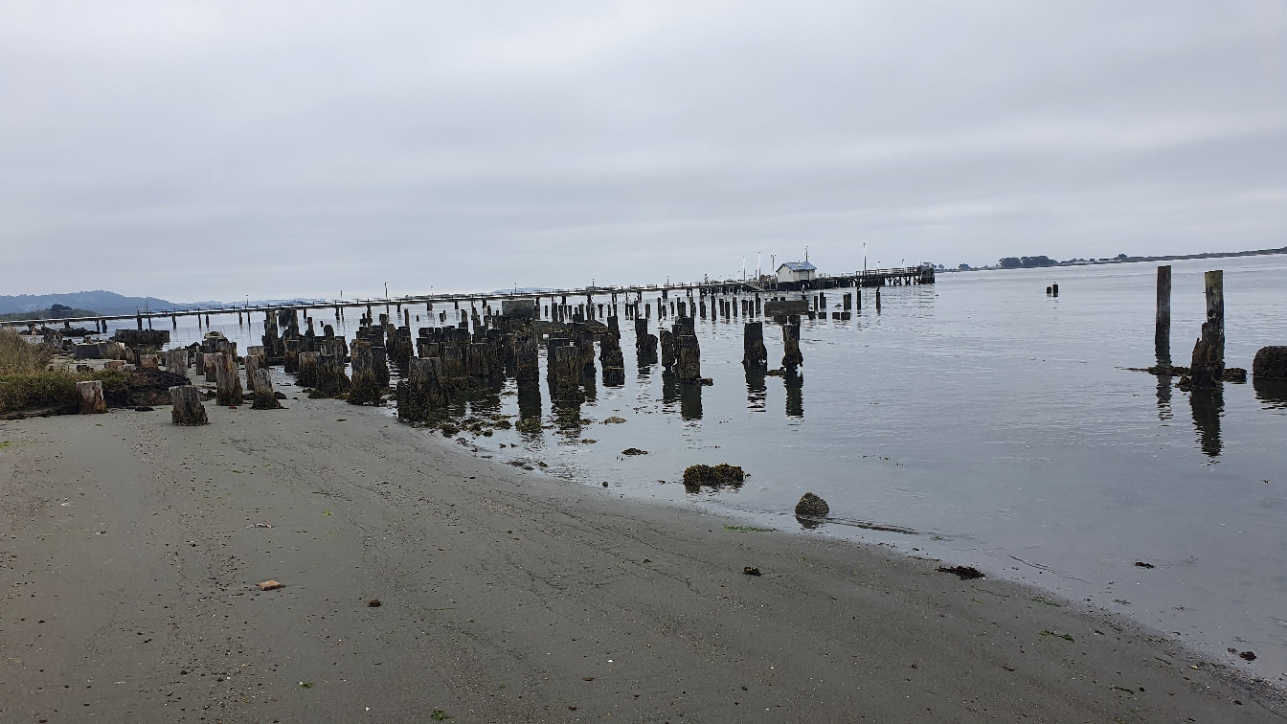
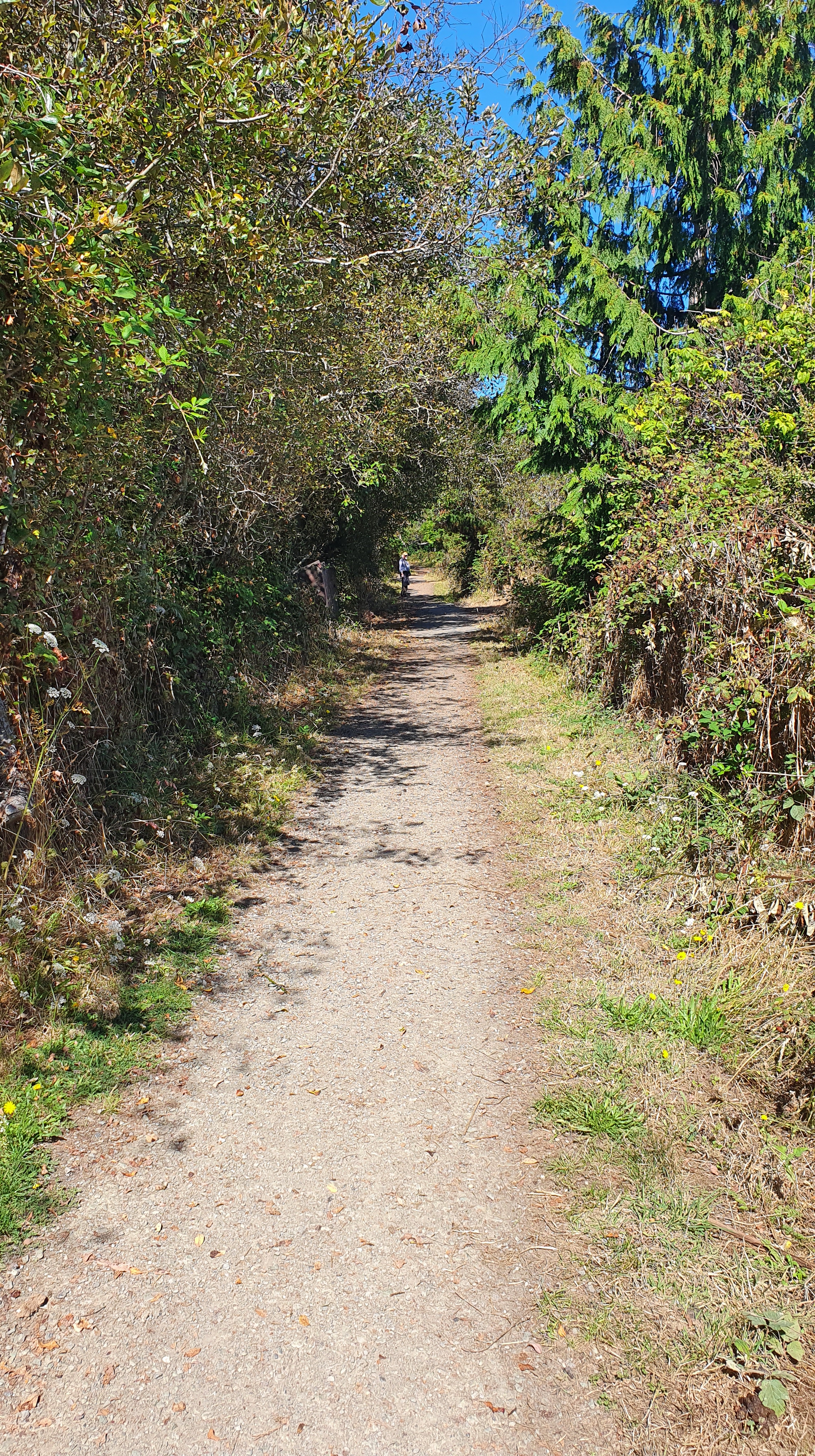
There are also wonderful outdoor places to explore. We started close to home on the Eureka waterfront trail running along Humboldt Bay through the city. Coastal trails continue along an old rail line heading north and connect with the section called the Hammond Trail in Arcata. We have walked on the coast by the Del Norte pier, due west from our house, as well as another segment behind the Walmart. It is a bit odd to be going for coastal walks by parking behind the mall, the Walmart, or the CVS, but that’s how urban trails work. We done some beach combing, not finding much, and seen some interesting birds–these trails get us into the natural world.

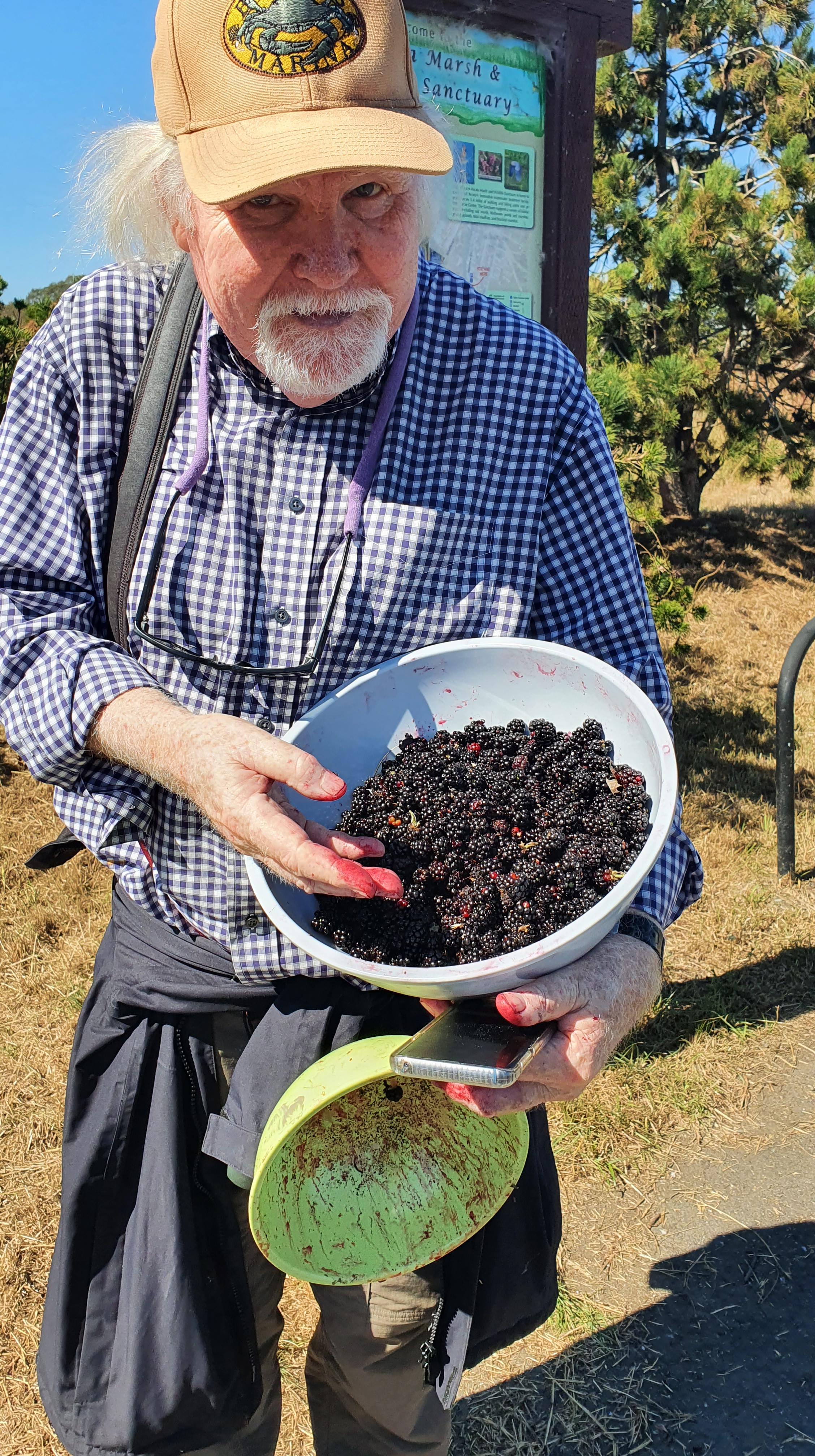
Himalayan blackberries are an aggressive invasive plant found all over the world. We’ve picked them in many places, and stopped at the Arcata Marsh to get some this year. The berries are very seedy, but we’ve found that if you cook the berries briefly and put them through a sieve, most of the seeds can be removed. We picked several quarts in a half hour, then went home and processed the fruit. Jonathan made seedless blackberry jam, I made a custard pie topped with blackberry puree, and took the remaining puree and made blackberry sorbet!

Hawk, Fay Slough

We discovered an excellent trail when we went to pick up our car from the Toyota dealership, too. Called Fay Slough, it runs inland through fields bordered with blackberries and pussy willow trees. We saw a hawk and a kite along with smaller birds, and marveled that such a fine trail was tucked in just off the highway. What is Eureka today was an extensive coastal marsh in the early 19th century when ambitious loggers arrived in the area by steamer. A century and a half of draining and filling turned the swamp into the town and surrounding pastures. Today, cattle are being removed from some of this land and coastal wetlands restored. Wetlands are a crucially important buffer for climate change in this area, providing a place for increasingly heavy rains to run off, rather than flooding streets and homes.

Not all our explorations are just the two of us discovering our surroundings. We joined the local Audubon group and went on a Sunday drive/walk to Titlow Hill Rd. As always, Audubon groups include people with remarkable ability to recognize birds by their chirps and calls. We saw very few actual birds, but the view out over the valley was spectacular.

View from Titlow Hill Rd.

Back from our walks, we finished out the month by attending the first concert of the year by the Eureka Symphony, directed by Carol Jacobson. The theater is relatively small, and the ticket prices are modest compared to Chicago and New York. We had excellent seats and enjoyed the program (Glière and Beethoven). I’m looking forward to their next concert in December.

It was a busy month, not all moving and organizing, and there’s more to come.

No more storage unit for us!

When we planned to move our storage unit to California, we agreed that we were in no hurry for our cargo to arrive. The window for delivery ended up being more than two weeks, which we attributed to the relatively remote location of Humboldt County, CA. We were surprised to be notified that our goods would arrive on the earliest possible date,` Monday Sept. 26, 2022, just one week after it was picked up from Carol Stream, IL. For me, the planning and arranging seemed to take ages. I was away from home, caught Covid, and had to sit tight for almost two weeks. Once our things were loaded, it seemed like they arrived in the snap of a finger.

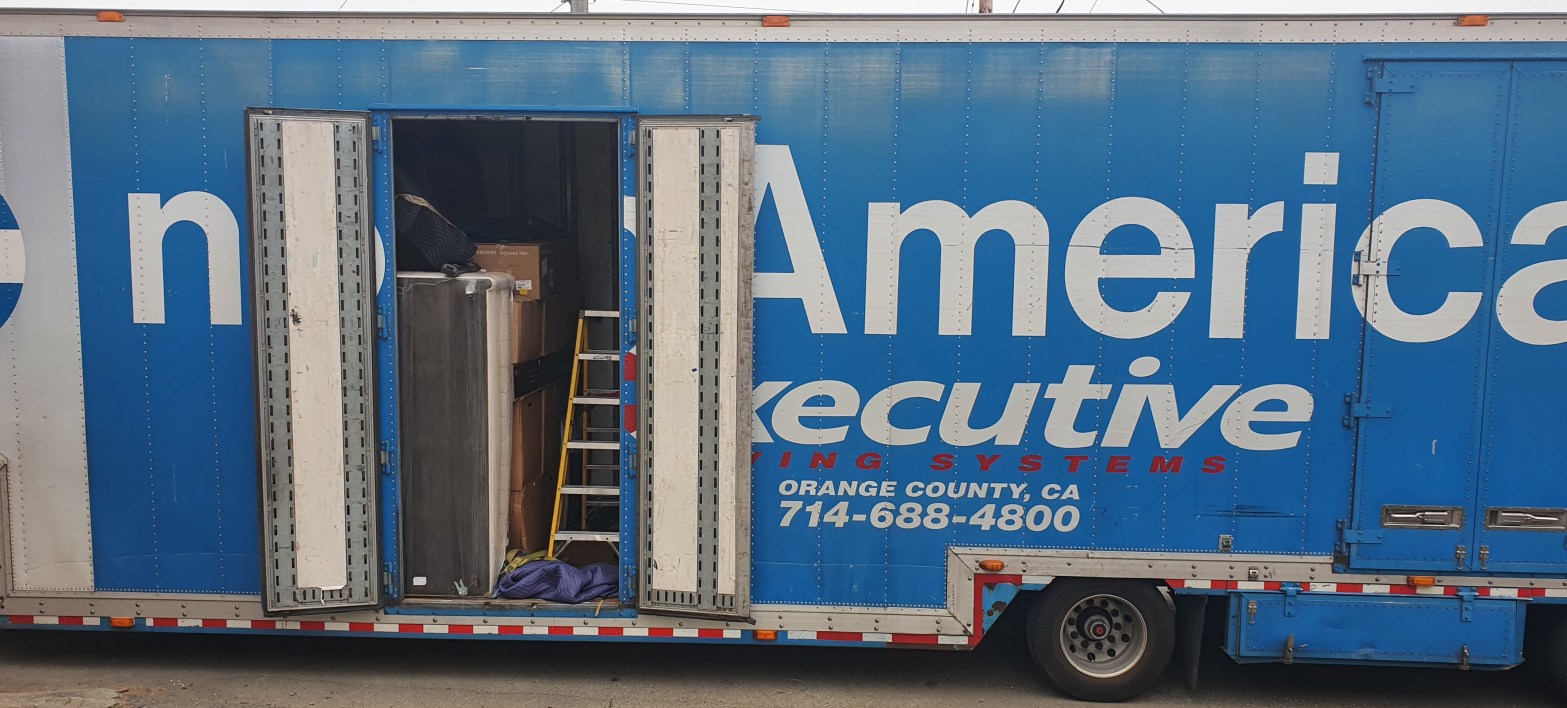
Our cargo floor to ceiling in a tiny slice of the huge van.

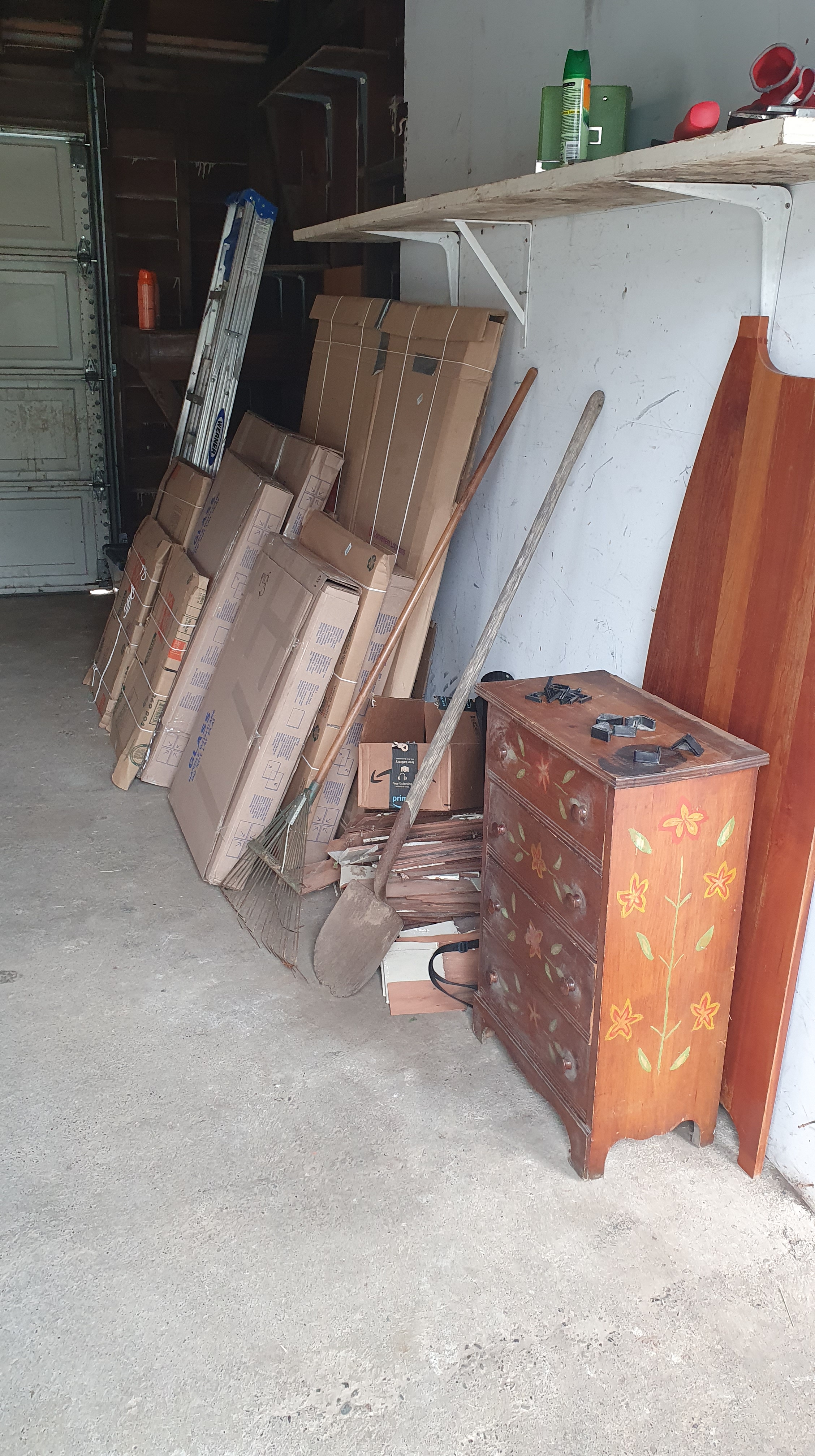
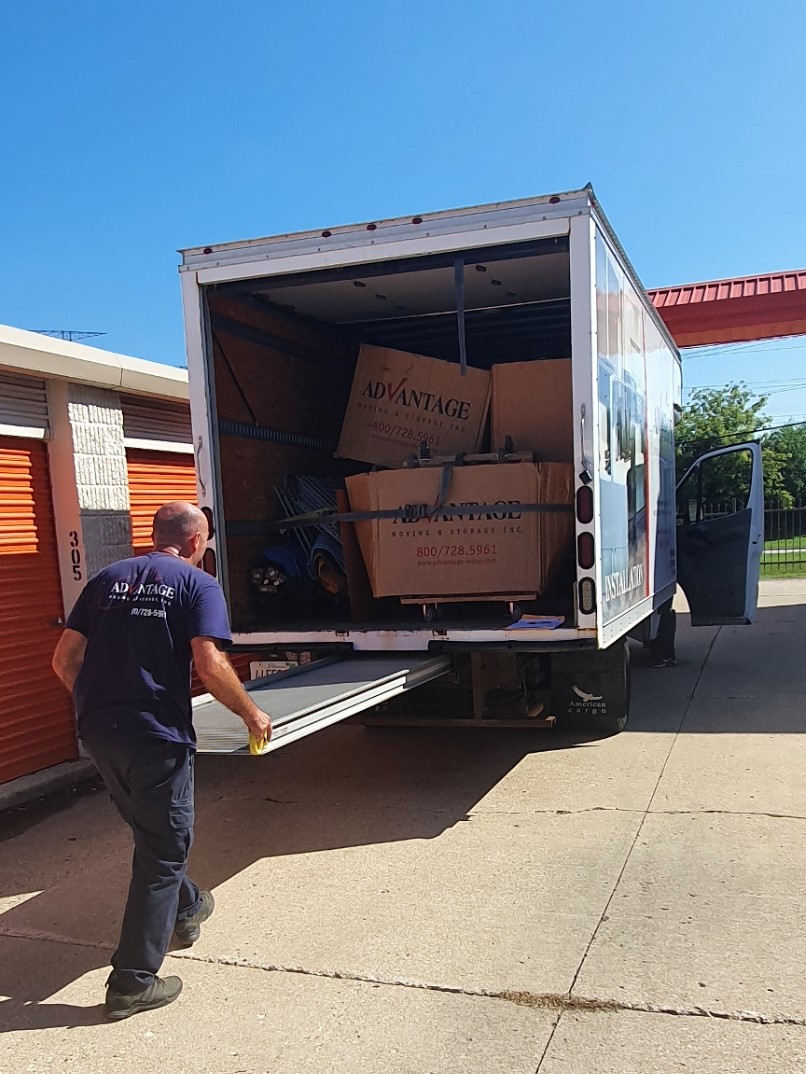
Our driver, Ralph (probably Rafael), arrived at 9 am Monday morning with two assistants. After looking over the possibilities, he pulled the immense moving van (over 70 ft long) across the end of our alley, and the guys hauled our boxes to the garage, avoiding the stairs between the street and the front door. It took about a half hour just for them to maneuver the contents inside the van to extract our boxes. From that point, the delivery went rapidly. By noon, all the boxes were piled in our garage, and the storage shelves disassembled by the packers in Illinois were put back together.

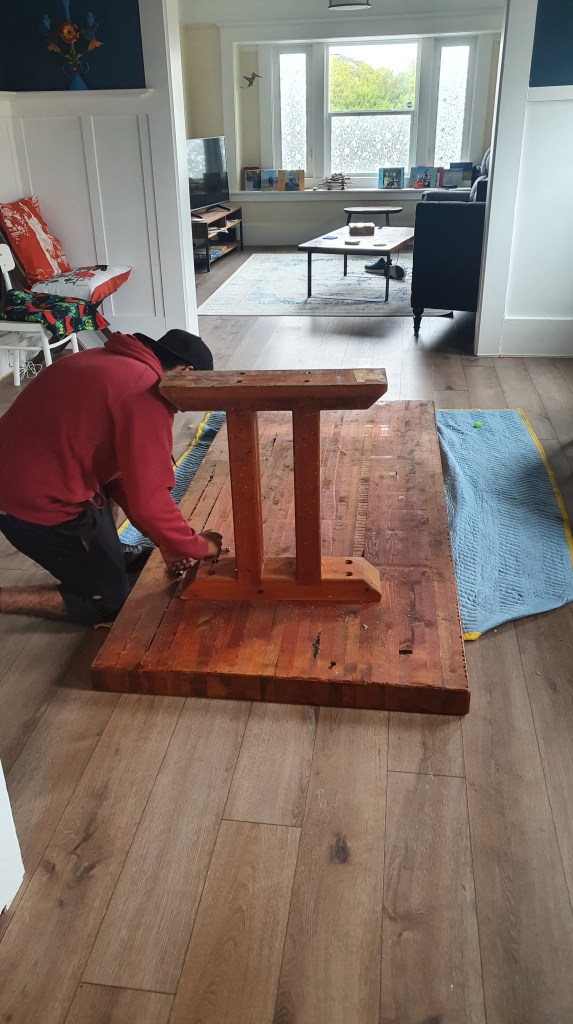
To get the table into the house, the legs had to be removed.

Everyone was pleasant and helpful, and we got to chatting in Spanish. Two of the truckers were born and raised in California. The third, Anthony, was from Chile, so we spent a few minutes discussing our favorite places in Chile, and comparing notes on the differences in vocabulary between South America and North America.

When everything was unloaded, all the inventory tags matched entries on the list, meaning nothing was lost. Nothing was broken, either, a minor miracle. The movers got our dining table through the narrow door, and reconstructed the storage shelves that were disassembled for the journey. By noon, the project was done and the giant van pulled away from the curb. The crew had a very long drive, as vehicles over 40 ft. long are not permitted on Highway 101–they can’t get by the redwood trees! Our driver was heading through the mountains to Redding, to pick up the freeway south toward their next stop outside San Jose.

We began to sort boxes, putting books, papers, and photos on the reassembled shelves, and opening boxes of clothing, memorabilia, and artwork, and carrying things into the house. We took a break for lunch, but couldn’t resist continuing to unpack boxes for the rest of the afternoon. By the time I set down my box cutter for the day it was almost six pm, and I had enjoyed seeing items that hold memories of our years in the Southwest US as well as Peru, and all our travels. It was like a constant stream of Christmas stockings to open, each one full of surprises.

One more step West

Despite losing a week to Covid, I was able to carry out my mission to the midwest, by getting the contents of our storage unit moved from the Chicago area to Eureka, CA. We’ve had the storage unit since we decided to sell our house in Wheaton, early in 2014. We filled it with items we didn’t need during staging, then emptied it out for our estate sale, then we filled it with the items we wanted to keep while we traveled.

Storage unit contents

Eight years later, we are ready to get rid of the storage unit. The price has crept up and up. We already knew that the value of the items stored in the unit would never equal the money we paid to keep them, but some things have sentimental value. Now that it costs over $200/mo for a 10 x 15 ft. space, though, we will both be relieved to be done with it.

We were a bit concerned about getting access to our storage unit, when the key we left with Peggy didn’t work. I arrived with the one remaining key that might work, and it did, so there was no added drama or need to cut the lock. We’ve been visiting the storage locker a couple of times a year, and we have a general idea of what is in it, but it has also accumulated a deep layer of dust and some lumpy pieces of insulation that seems to have been blown into the roof of these units. It appears to be harmless, just a bit messy.

I met with a “relocation specialist” from our mover, and found that this is the person who negotiates what the client wants: packing, shipping, storage, immediate vs. delayed pick-up, immediate vs. delayed delivery, all the options. Our specialist, Lee, looked over the unit, took photos and video, and discussed the fact that we wanted some fragile items packed by them. Our conversation was straightforward, and the visit was brief.

Lee did a good job of follow-up and that proved important. We followed up with her when the estimate didn’t turn up as scheduled, and she got it to us. Then when we accepted the bid we didn’t get the contract. Lee found out that the office manager she hands her work off to was out sick. She got someone else to send us the paper work. Once that was lined up we got a date for pickup, and again Lee was the person who confirmed the dates.

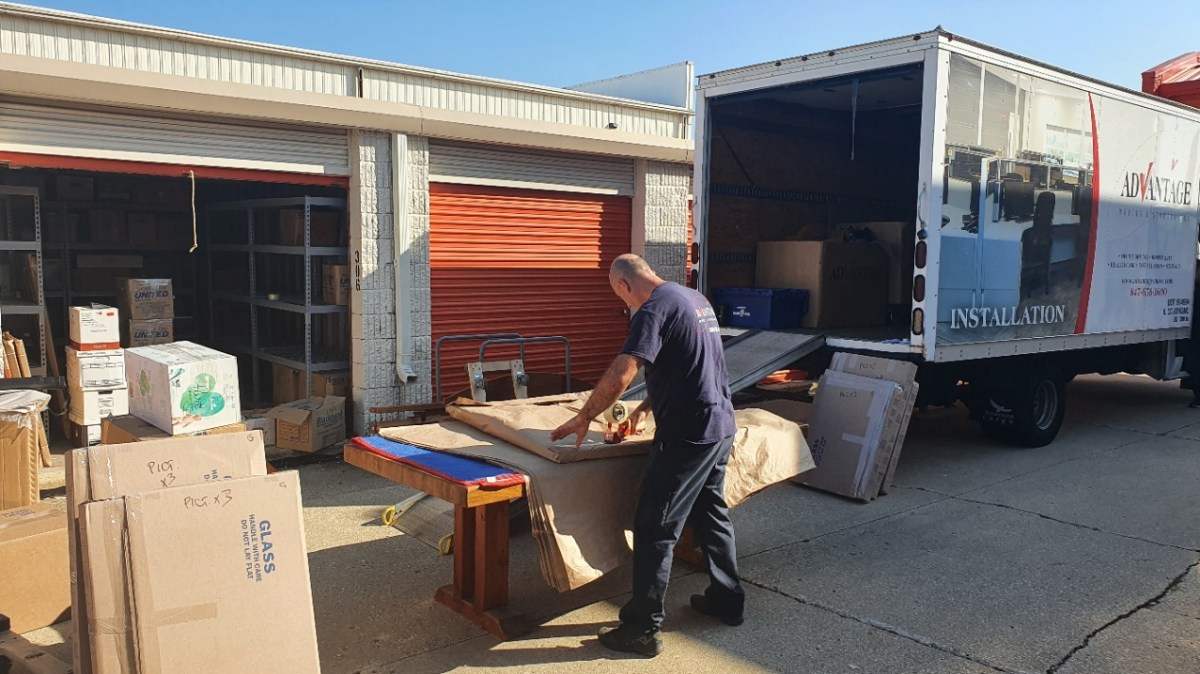
Movers setting up for the packing job

In the meantime, I had Covid and recovered and then still had a couple of days left over before pickup of our items. I visited the storage unit and by taking a bit of Benadryl and wearing a face mask, I began to sweep and dust the boxes I could reach. Cleaning is not required, but the movers don’t clean anything, they just pack. I figured it would benefit all of us to have a bit less dust on everything. I couldn’t reach it all, there was plenty left on moving day.

On Monday morning right at 8 am, the two movers arrived at the storage unit. I let them in and watched while they set up. After getting to work and making sure we agreed on what they’d be packing, I left them to it for an hour and went home for coffee. By the time I returned, the packing was well under way. I dozed in the car while they finished up, all done exactly three hours after they arrived.

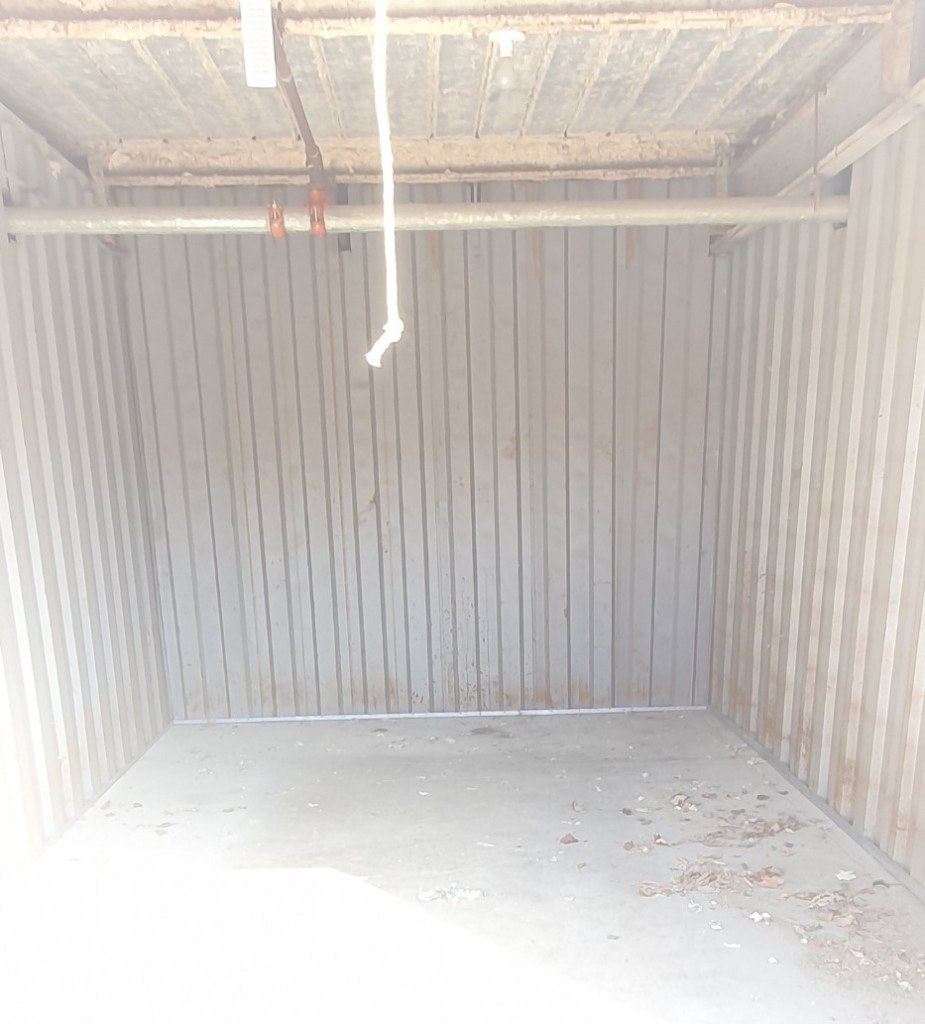
I left a few dried leaves for the clean-up crew.

I signed paperwork, and the lead packer advised me to check the inventory carefully when it arrived. He pointed out that our goods were picked up in one truck, and would be transferred to another, and perhaps another after that, and the risk of leaving something behind increases every time the load is moved from one vehicle to another. Now we wait and see how long it takes for our collection to cross the US, and what shape it is in when it arrives in Eureka. We agreed to a very flexible delivery date, figuring it would help with price and scheduling. After all, Eureka is not a major city on the west coast… The packer whistled at the 16 day window for delivery. Fortunately, it doesn’t matter to us.

Covid Houseparty

Arriving on Peggy’s on a Tuesday evening, I was already infectious with Covid, though I didn’t know it. I was there to tackle our storage unit and getting it moved west. The next day we had lunch on the outdoor terrace of a local restaurant, and went to our AAUW branch meeting in the evening. The following morning, on my way home from meeting with a mover’s rep at our unit, I noticed a funny feeling in my chest. That afternoon I took a Covid test, and it was positive.

I felt progressively worse for the rest of the day, my nose ran, my eyes were puffy, I felt feverish and congested. I went to bed. With nothing to do for the five days until I could test again, I rested. Fortunately, Peggy wasn’t sick, and plied me with food and drink. She notified our branch president of my illness. No word yet on who may have become ill.

At the end of my second full day of quarantine, Peggy woke up with Covid. She was hoarse, coughing, and felt sick. She went back to bed. Every day a different symptom has come and gone. Stuffiness, headache, runny nose, chest tightness. On day four I still have some sore throat and cough, but even those are abating. We spend each day alternating between reading in bed and reading in Peggy’s two recliners, one on each side of the living room. In the evening, we watch a movie, before trying to sleep. Having slept most of a rainy Sunday, I laid awake late into the night. Being awake when you want to be asleep is boring, annoying, and uncomfortable. Ask any insomniac.

Our Covid houseparty continues. Tomorrow afternoon I can test, and see whether my infectious phase is over. Fingers crossed my test will be negative.