A sunny day makes everything better. We’ve been in Barranca for two weeks, with only an occasional hour of afternoon sun. It felt like we had been here for months. Yesterday, the sun was out early and it stayed out all day. I didn’t realize what a difference sunshine makes until yesterday, when everything felt better in the brighter light.
Fiestas Patrias on the beach in Barranca
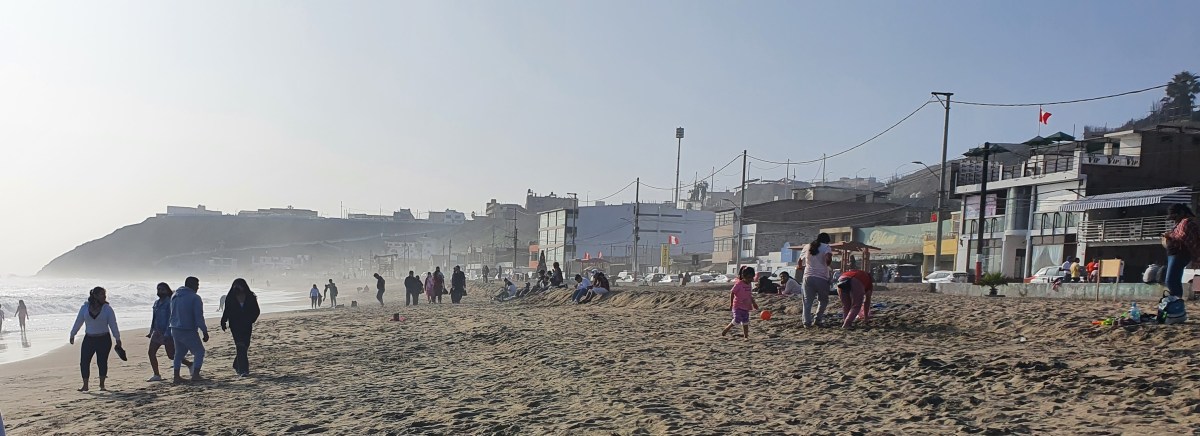
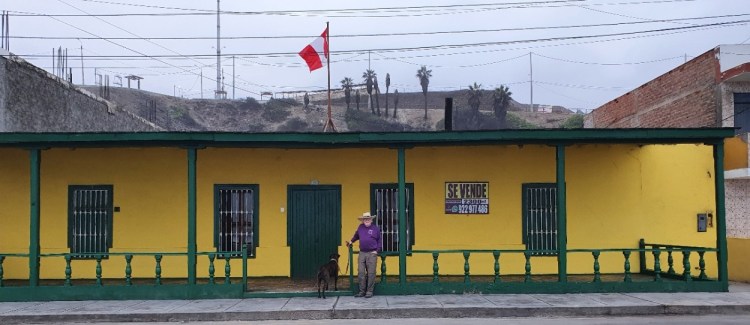
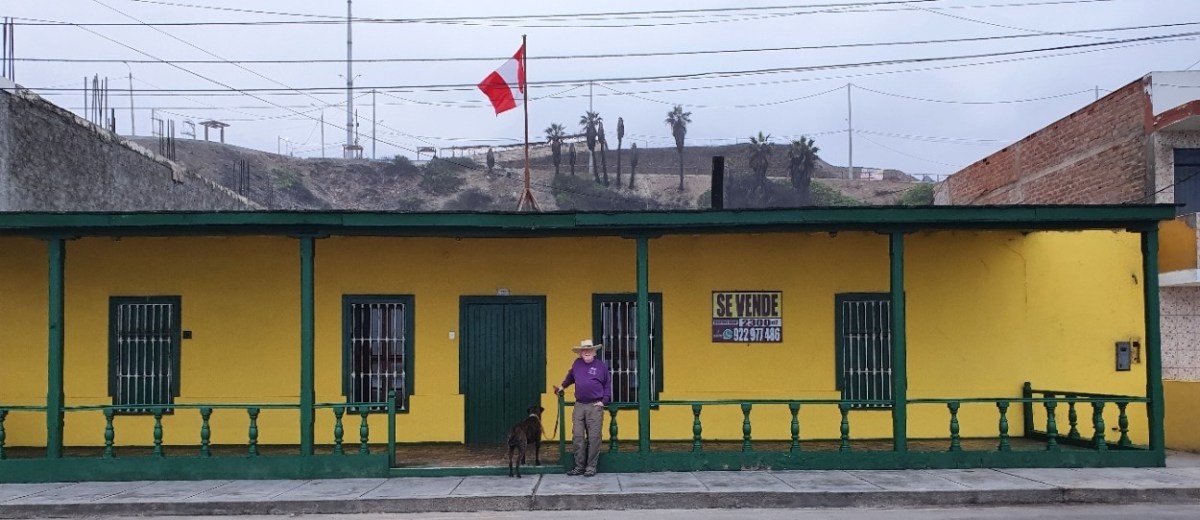
This week included July 28, the national day of Peru, Fiestas Patrias. Thursday and Friday, the 28th and 29th, were national holidays, followed by the weekend. Children have two weeks of vacation from school, and many people visit the beach. We aren’t crazy about all the traffic the visitors bring, the trash they leave on the beach, and the disco that thumps music until 6 am on some nights. I like the flags that wave over most houses, the tradition of cleaning up around houses and repainting the facades, and the general cheerfulness that the holiday brings.
We dreaded Fiestas Patrias this year because all business comes to a halt for the long weekend. We’d like to get our house in the hands of a responsible realtor and begin to plan our trip back to the US. We knew that no progress would be made this week. The good news is, we seem to have been wrong…
After spending six months in an exclusive contract with a local realtor, we were happy to have that over. Nothing happened. Disappointed and a bit confused by the lack of any interest in our house since we were last here, we chatted with a neighbor who is building a group of apartments down the street. Miguel is a charming guy, and a great neighbor. He pointed out that he is in the neighborhood full time managing his project, and his sister-in-law, someone we know well, is a realtor. Her work is largely in Lima, but she grew up here and understands the ups and downs of having a house on the beach. She spends holiday weekends here, and has a space in her mothers house, just a few doors down from us. Miguel thought that if we worked with Bertha, he could help out showing the house as needed. We were bowled over by his offer.
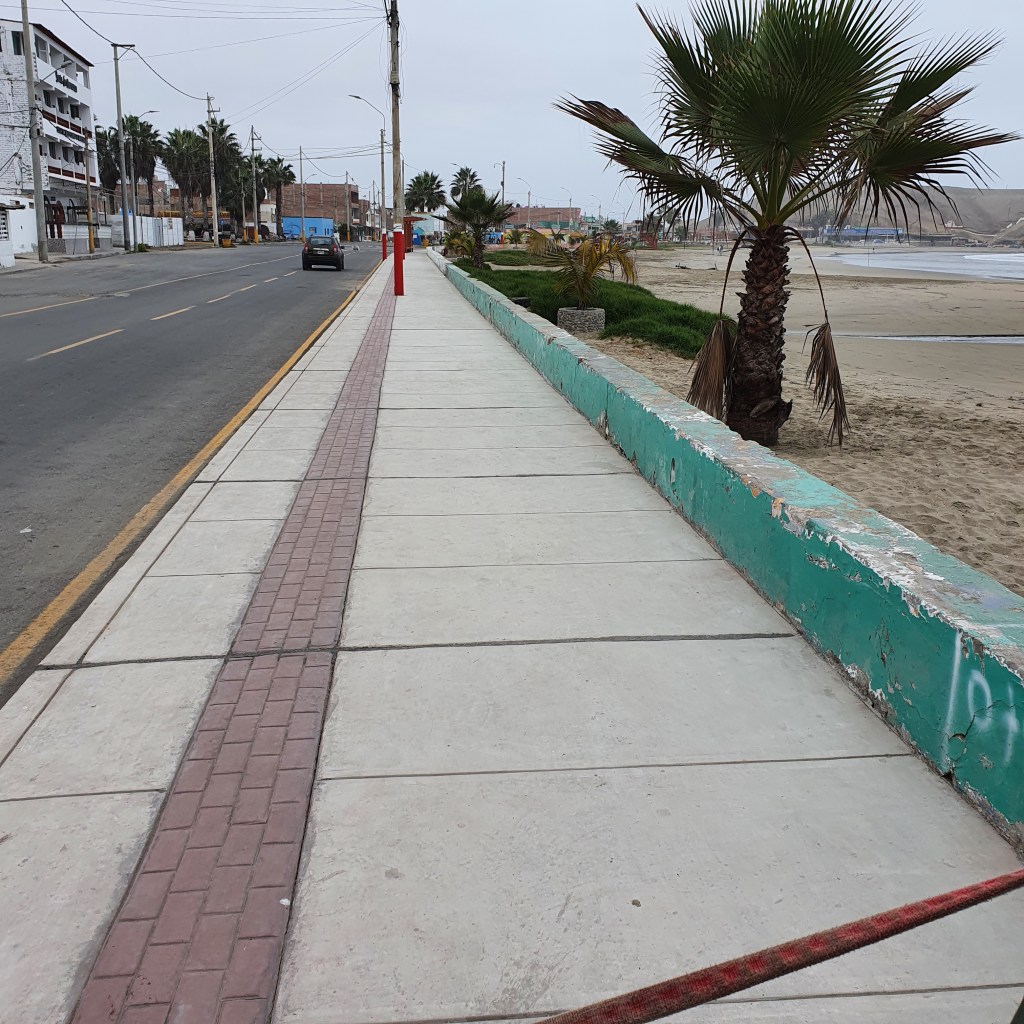
Newly replaced sidewalk along the beach
I contacted Bertha, and rather than setting a time after the holidays to chat, she said she was coming out to Barranca for the holiday weekend and would stop by. The next afternoon, we got together and chatted about the house, our plans, and hers. We walked around so she could see all the rooms, and in the end, we agreed to work together starting Monday. Jonathan sent her photos of the house. We already felt that it would be possible to leave for the US. Bertha is a cosmopolitan person, familiar with both city and beach life in Peru, and should be able to get our house sold for us.
We pointed out to her that we do have one lead pending that predates our new agreement. Back in February when we were here, Jhon, who lives down the beach, stopped in to say he knew people interested in buying the house, and that he’d line them up for us. We encouraged him, but promises are easy to make. Jonathan got in touch when we were returning, and he assured us that his group was still interested. Last weekend, when we expected a visit, no one showed up. That’s not an unusual outcome here. Monday afternoon, there was a knock on the door, and it was Jhon and three men, ready to have a look around. We gave them the tour, and they seemed interested, surprised at how nice the interior is, and how well maintained. That’s a pretty common reaction to our house.
After some muttering among them, the group left with promises that an offer would be forthcoming. We figured that would be the end of it, but on Saturday one member of the group returned to chitchat. His aim seemed to be to feel us out about whether we’re serious about selling, and how far below our asking price we’re willing to go. We settled on his returning with an actual offer on Monday afternoon. We may get an offer, and we’ll see where the negotiation takes us.
All in all, things are looking up. After our first week here, when no one turned up to see the house after various promises, we were discouraged. The gray weather didn’t help. Our mood is better because of the sunny day, and because perhaps something is happening on the real estate front. We’ll see where it goes. Even if we don’t sell the house immediately, it will be in the hands of someone we trust, and that will allow us to move on for now.
We stayed for three nights after arriving from the US. On previous trips, we have tended to stay overnight, shop, and head north out of town. This time, we’ve had some free time while waiting for people to get back to us, and we’ve done a little bit of walking around the neighborhood.
Miraflores, the area where we stay in Lima, has undergone tremendous changes over the past twenty years. Large family homes, or casonas, were the principal houses. Some of these were turned into small hotels, like the Senorial, where we stay, then adjacent houses were added. Next, old houses were knocked down to make space for six-eight story apartment buildings. Along the cliffs by the sea, fifteen stories has become common, while the old casonas are largely gone. There is more housing, and there are more hotels, but the graceful curves of creative architecture are also gone. We saw a doorway to nowhere that turns out to be the entrance to an older house now surrounded by a mature garden.
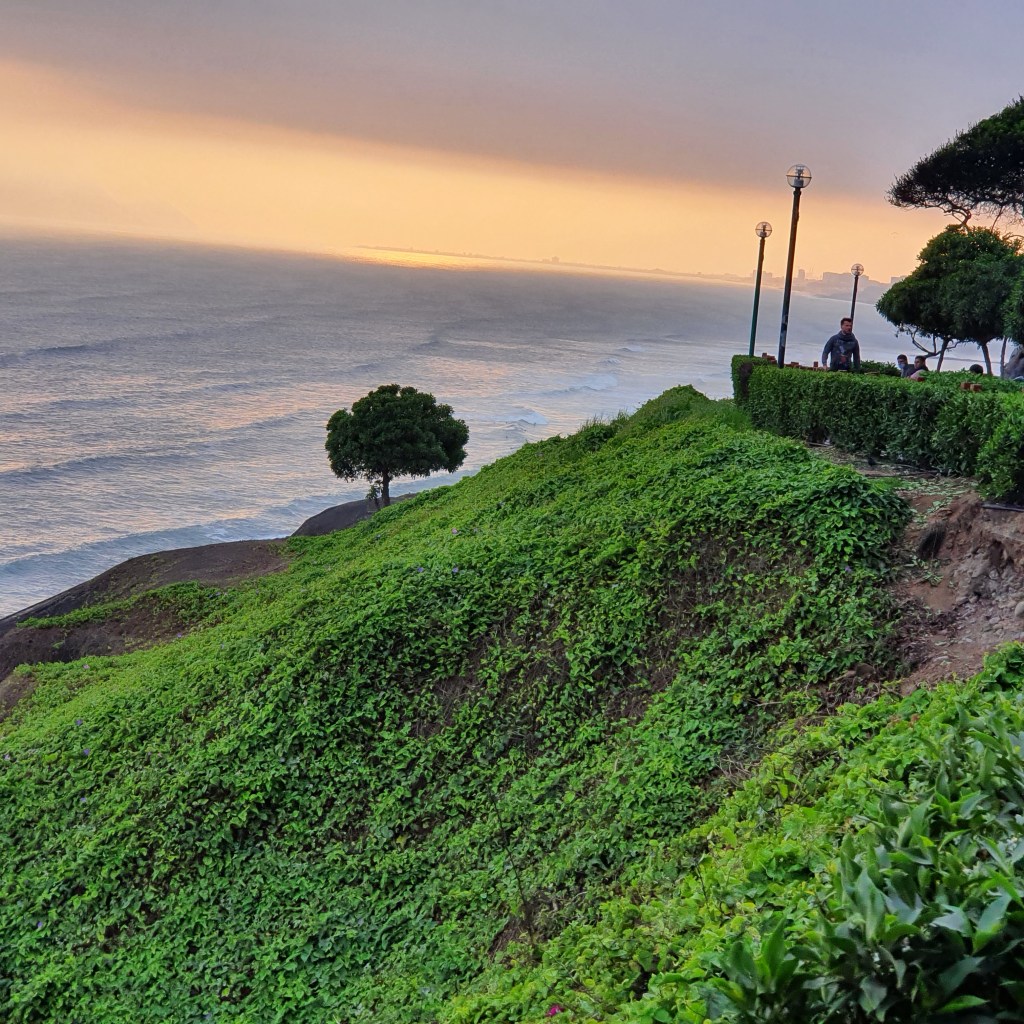
(L-R) Sunset in Lima, doorway to nowhere, saffron finch
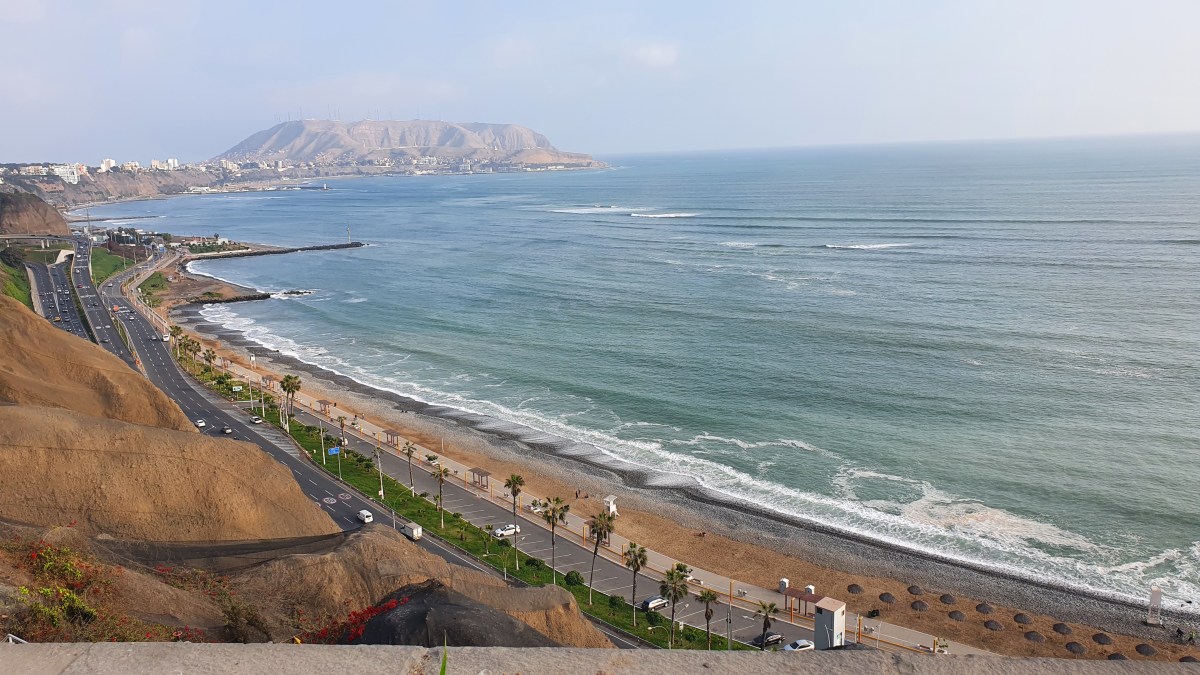
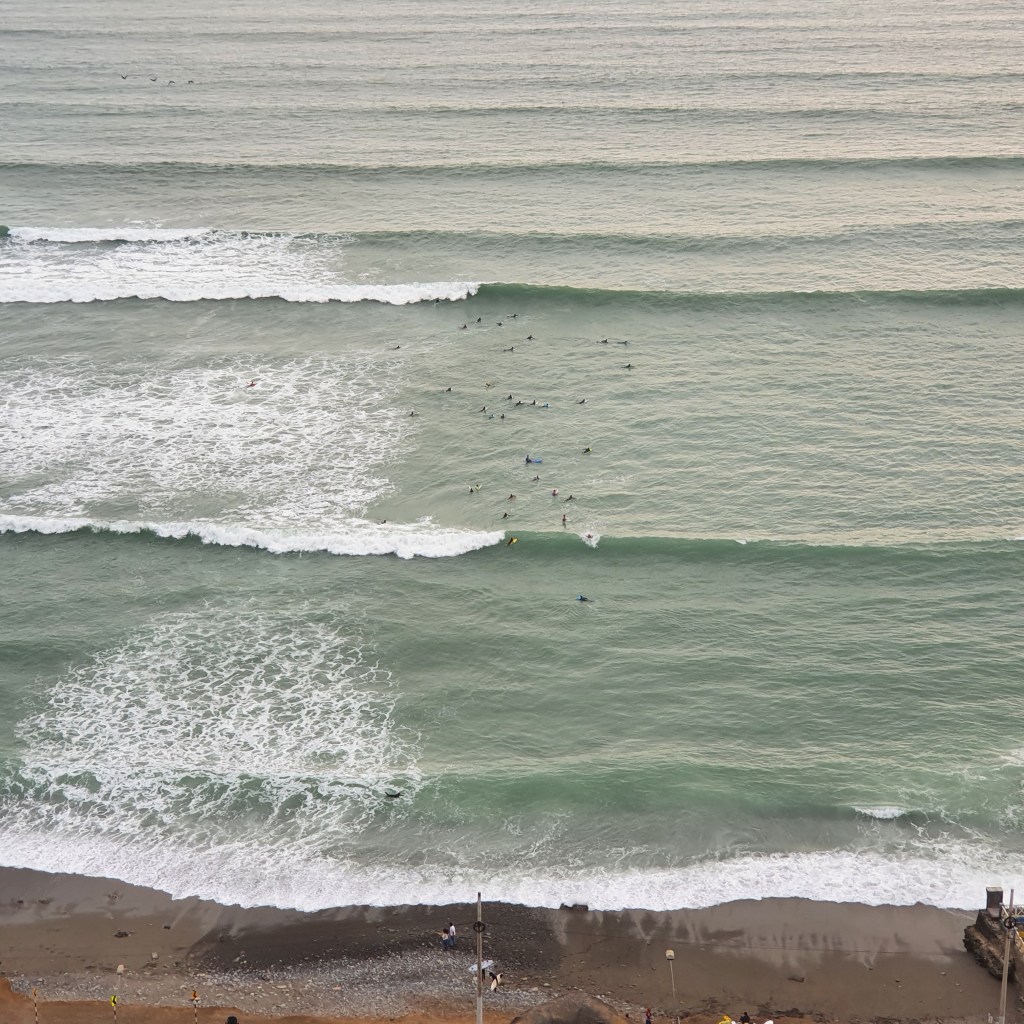
One of Lima’s great achievements of the past twenty years is the extension of the shore at the base of the cliffs into the sea to create space for a highway and a coastline park. Surfers occupy the waters off Miraflores, and there are miles of parks and playing fields extending along the edge of the city. Pedestrian bridges descend from the cliffs and over the highway, and there is parking. It’s a project worthy of Robert Moses, reshaper of New York, and we often wonder how it came about in a city composed of 50 districts with competing agendas.
(L-R) Pier with restaurant La Rosa Nautica, waves and surfers, surfers closeup
We did not visit any museums or famous sites in Lima, but we did have some excellent meals. We always like Punta Azul, a seafood restaurant on Cantuarias in Miraflores. Their tiradito is delicious (Raw fish, like ceviche). We had three sauces, purple olive, rocoto (chili), and Parmesan, and there are other options. Their risotto Punta Azul with squid ink, was also delicious. The restaurant is always crowded at lunch time, but not usually at dinner. At one pm, there was a long line, but at 7 pm, we had our choice of tables.
The next night we tried for sushi, but after being seated and ignored for ten minutes we left, uncertain of where to go next. Fortunately, we looked at Amore, next door, and gave it a try. This restaurant is a block from the N end of Parque Kennedy, just around the side of the Saga Falabella department store. We shared pasta with oxtail ragout, and “drunken” arroz con pato (duck fried rice with duck leg cooked in beer), both very good. Lima is full of good restaurants.
Covid infections are fewer in Peru than the US, and more people wear masks on the street. Masks are required at most indoor localities, restaurants, stores, even the markets. Lots of people are on the streets.
The next day, we slipped back into our regular mold, visited the Surquillo market, where we buy Uruguayan parmesan cheese (excellent!), nuts, and spices. Flags are for sale everywhere. Fiestas Patrias, the national day of Peru, is July 28, and municipalities can require homeowners to display the flag. We went on to the supermarket, then headed for Barranca, where our flag is up for the next couple of weeks.
For a different view: I have followed the blog of a Canadian couple, Les Voyages de Suzanne & Pierre for several years. They travel widely and they take sublime photos. In June 2022, they visited Peru, and I have been enjoying their take on Lima and the other places they visited. I urge you to take a look at their blog for another perspective.
I was not looking forward to our trip to Peru. We have been enjoying Eureka, and it is quite a slog to Peru from there.
And yet.
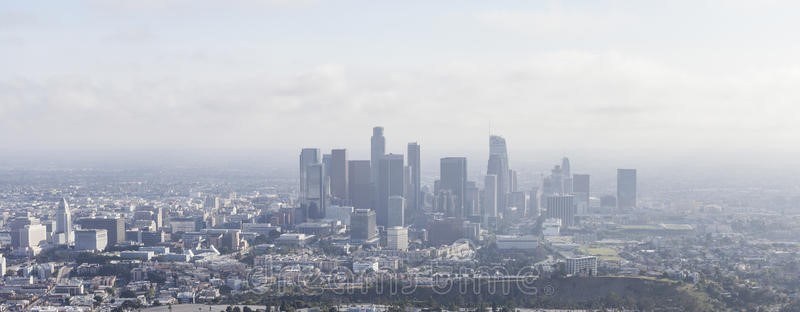
Downtown Los Angeles in light smog (Wikimedia Commons)
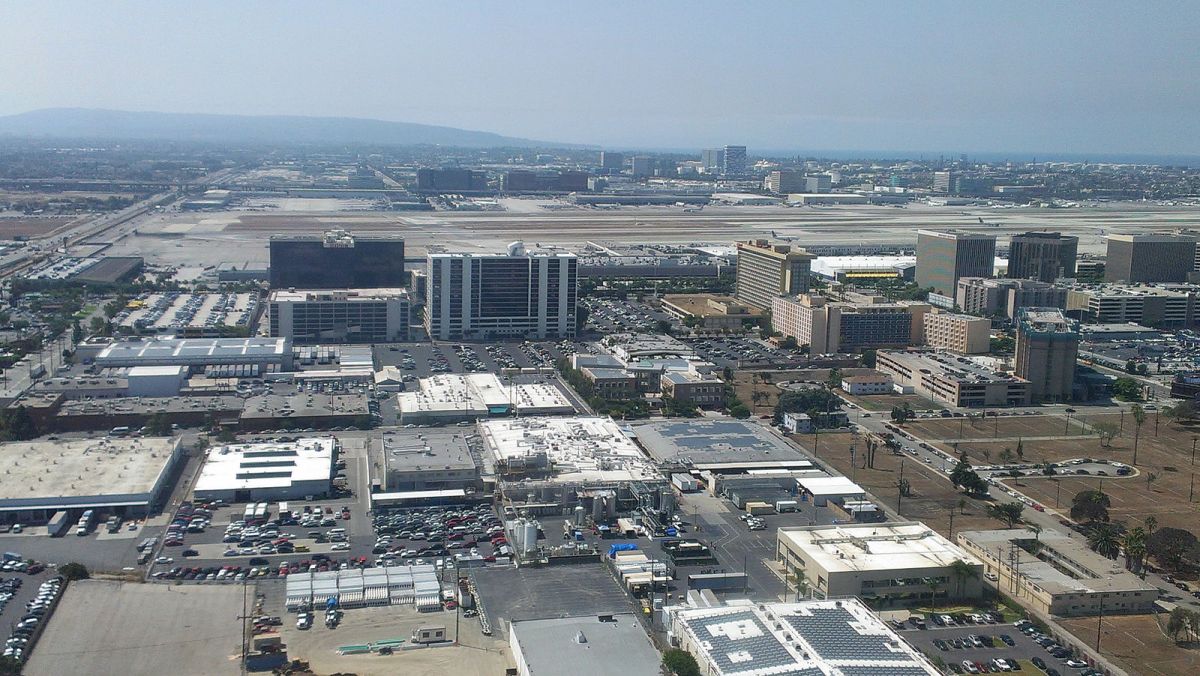
LAX (Internet photo)
Flying into Los Angeles we paralleled the gorgeous coast for a while, crossed immense tracts of single family houses, skirted the skyscrapers of downtown, and landed among the warehouses and hangars that turn the ground into a cement checkerboard. It’s an impressive cityscape. We overnighted near the airport, watching a corner of sunset from the rooftop dining area.
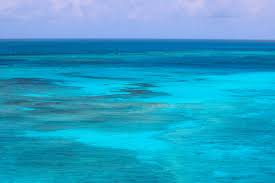
Most of the next day was our transit to Miami. In the early evening, flying up out of Miami toward South America, we crossed spectacular blue-green water streaked with sandbars pointing offshore. Where the sandbars end and the water deepens, clusters of tiny white sport fishing boats perch on the dark surface below me, like fluff from dandelions on a pond.
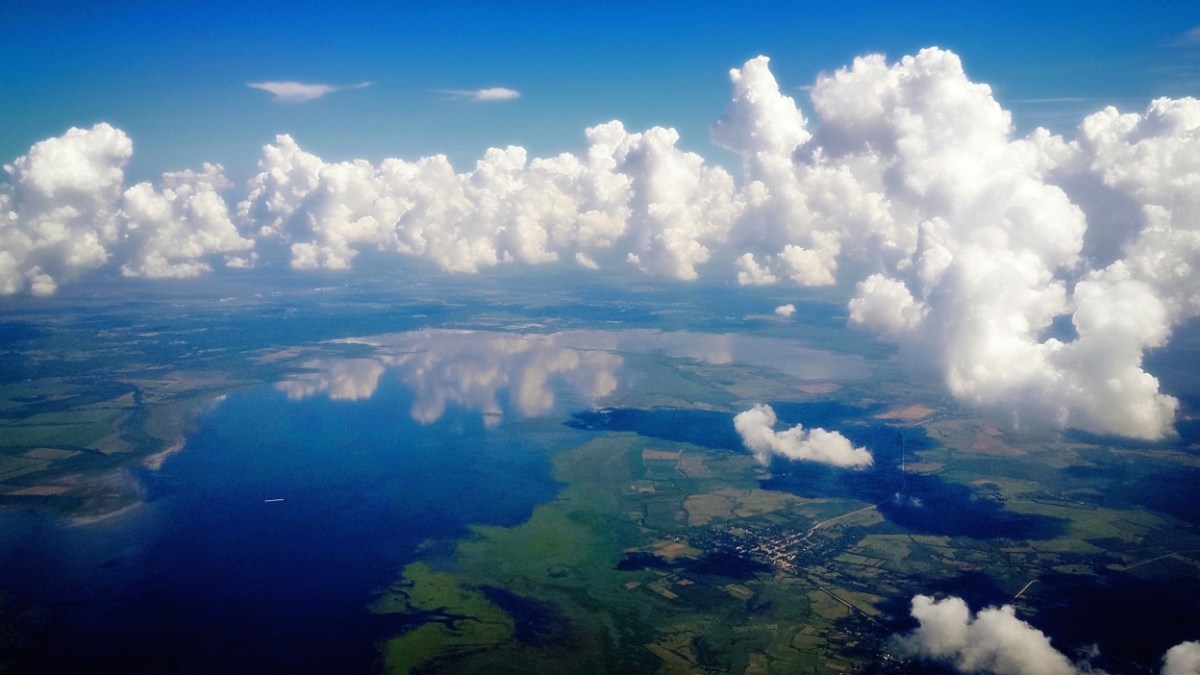
Clouds over Cuba (Internet photo)
The flight crosses Cuba, where I see late afternoon storms forming under cumulous clouds that are impossibly high billows of white, so much taller from a plane than from the ground. I could see the different sides of a mountain range, one drier, one greener from the prevailing winds carrying rain.
These sights are an inspiration. The immensity of nature, the power of air and water, the beauty of patterns that form on their own from these forces at work, are the miracles of life.
We arrive in Lima at 10 pm, speed through immigration and customs and are in bed at the hotel by 11:30 pm, as good an outcome as possible. The next morning on my way to breakfast I see one of the plants in the meticulously kept garden has sent out new leaves of shiny yellow in startling contrast to the dark maroon red they will become. Nature is full of surprises.
Hotel Senorial, Lima, Peru
I am amazed and delighted by my ability to see these things, to travel in planes and look out the window, and to have the time to think about the wonders around me.
We drive to Santa Rosa once a month so that I can see a retina specialist. On our first visit last month, we drove up and back in the same day. Three and a half hours to get there, a two hour appointment, and three and a half hours home. It was a long and tiring visit. This month, we decided to drive to Santa Rosa on one day, and return on the next. This gave us the chance to rest between drives, and we could have a nice dinner in honor of my birthday, which fell on the day of my appointment.
Lambretta scooters
The result was very pleasant. We stayed overnight at the Sandman Motel, and it has a pool. Though the weather has been overcast and cool in Eureka, it was in the mid-80s in Santa Rosa, and I was able to go for a swim after we arrived. There were a lot of little scooters parked in the lot, so many that we thought the motel rented them to guests for trips around town. On my way to the pool, I asked a man whether the scooters were for something special, and he told me about the annual Lambretta Jamboree. Owners of vintage versions of this Italian-made scooter (smaller than a Vespa), gather for a weekend celebration and this year the Sandman was hosting. We appear to have gotten a reservation by miraculous means, as the hotel was completely sold out for the weekend. My informant had come all the way from Italy to be part of the event, borrowing a Lambretta from a friend in California for the events.
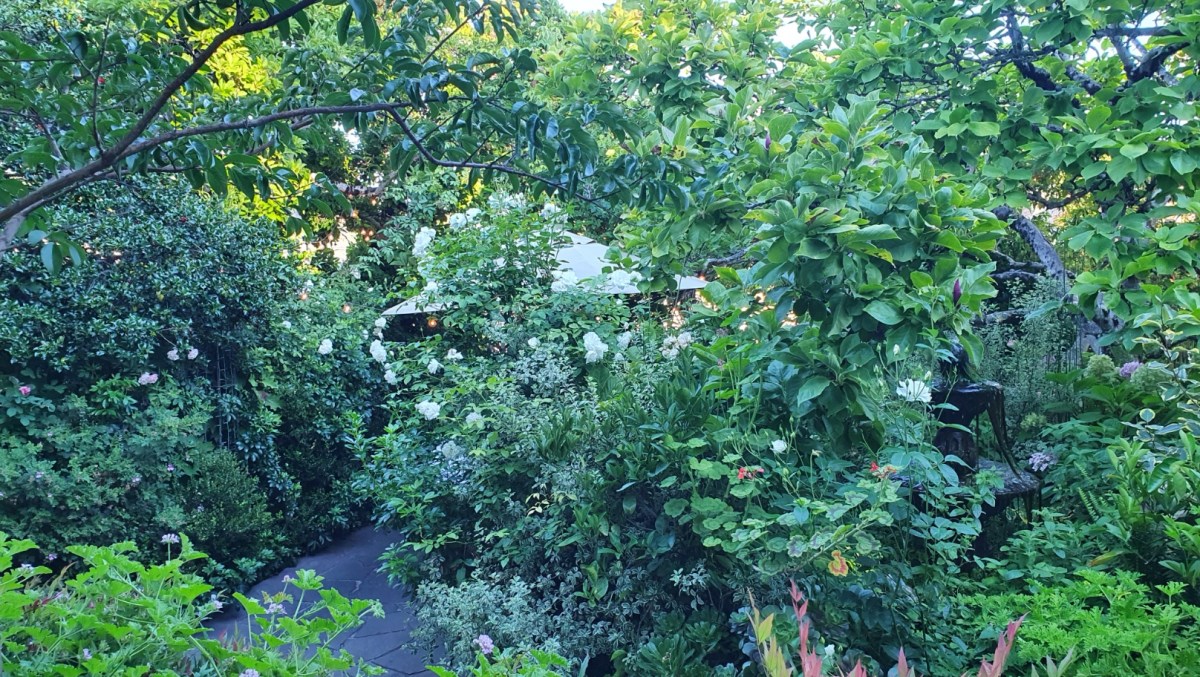
We left the party at the motel and went into Santa Rosa to do some wine tasting. We stopped at 4th Street Cellars, where Jonathan had a glass of wine, and I tasted Bambury Collection white and rosé, all very good. From there, we went a few blocks to Ca’Bianco. This restaurant began as a white house in what is locally called Victorian style. There are some lovely details of metal work, stained glass, and tiled floors. The most attractive feature, though was the garden, with trees, mature plants, and lots of white flowers including jasmine and roses. The plants are so tall that they screen many of the tables from one another, so dining outdoors is a bit like having your own little salon. It was lovely, and the air was faintly scented with flowers. Dinner was good, though perhaps not earth-shaking, and we enjoyed our surroundings most of all. We arrived back at the motel to find the Lambretta Jamboree well underway.
The Jamboree website told us about the many events, mostly group excursions into the hills or down to the coast. These took place every day and were graded from ‘easy’, 2-3 hours, to ‘difficult’ 6-7 hours. There were t-shirts and hats, barbecue grills and lots of beer. We were a bit concerned that the festivities would go on all night, based on our one previous experience with a group event at a motel.
[In the late summer of 1985, we drove from our home in Santa Fe to San Diego for a celebration of my parents 40th wedding anniversary. Amanda was tiny, and the three of us made the trip in our first family car, a Toyota sedan. We drove all day, heading for the California border, and decided to stop for the night in Yuma, AZ. Yuma being a pretty out of the way place, we didn’t make a hotel reservation, but stopped in at the first motel we came to that looked promising. There was no room, so we kept going. After the fourth motel, we began to get worried. It was late and we were tired.
At our next stop, we explained that we had to get going again early and were just looking for a short stay. Somehow, we got a room, and on the way in we asked why all the hotels in Yuma were full that night. The clerk looked at us with surprise (how could we not know this), and told us it was the first day of dove-hunting season. People had gone out all day and were now back at the motel setting up grills, cleaning and plucking birds, and having a late night cookout with the first catch of the season.
Feathers eddied around our feet as we carried Amanda and all her gear up to the room and got settled. No one told the hunters, however. The pool deck and the parking lot were lined with barbecues glowing red, people sitting in lawn chairs chatting and drinking. The clerk had mentioned that they’d all be going out to hunt again at 4 am. I figured they’d need some sleep in the meantime, but I was wrong. Just about the time it quieted down enough for us to fall asleep, the alarms began to go off, there was a general stampede, doors slamming, engines racing, and the crowd left to go hunting.
There was still a small snowdrift of feathers around the parked cars when we left later that morning.]
You can imagine why a similar festival all these years later might make us wary, but we had no cause for concern. The entire Lambretta group seems to have turned in around 10 pm, and the music and carousing dissipated until morning.
My appointment was early, and I was finished in record time, 45 minutes, including an injection. I guess that’s the advantage of being a known patient. I often see a new doctor every month, so I’m accustomed to the entire sequence: history, eye exam, pressure, dilation, OCT, consultation, prep, injection. We skipped several of these steps, and off I went, ready to enjoy the trip home. My eyes didn’t itch or hurt, they weren’t dilated, and the day was young.
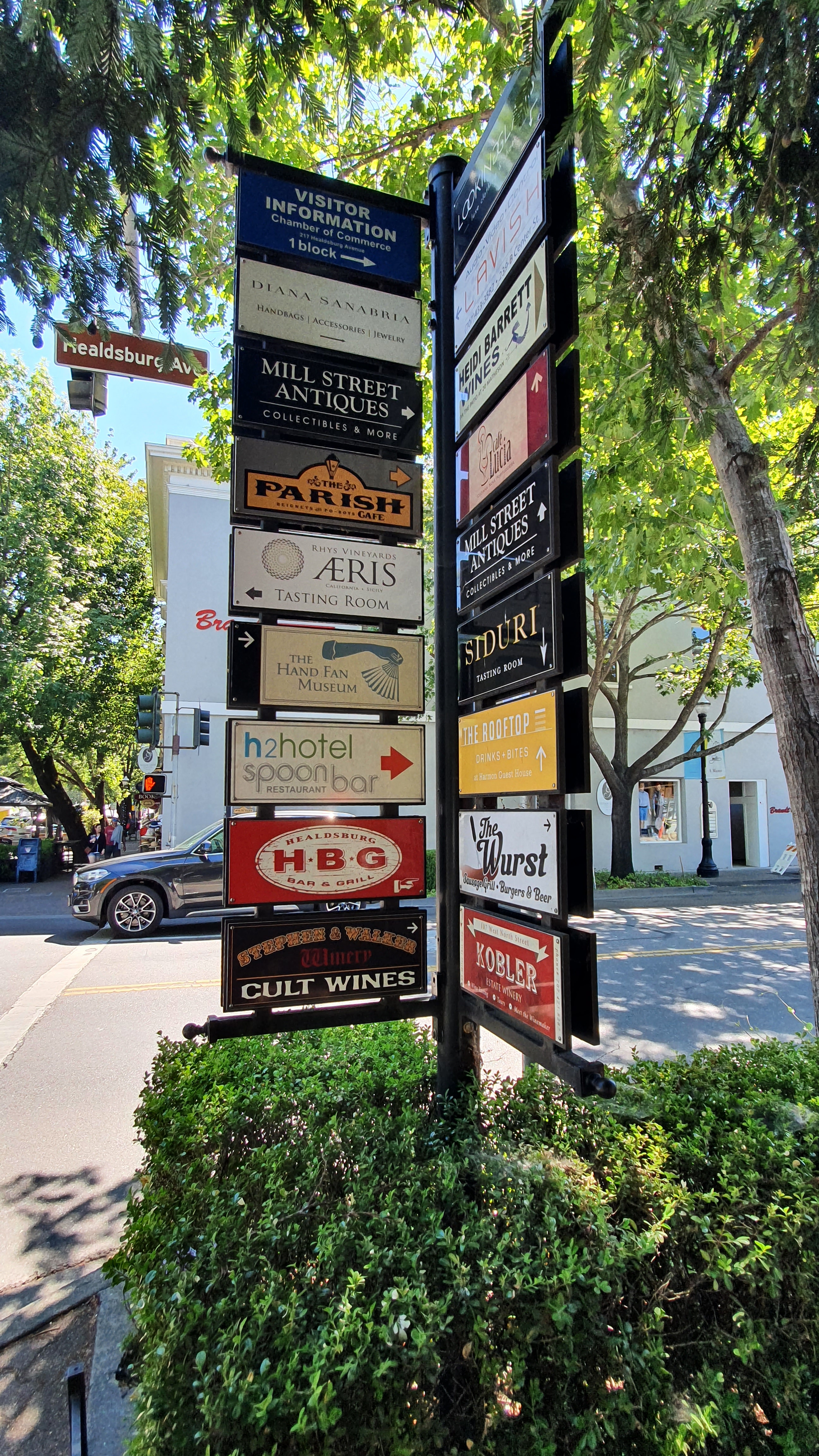
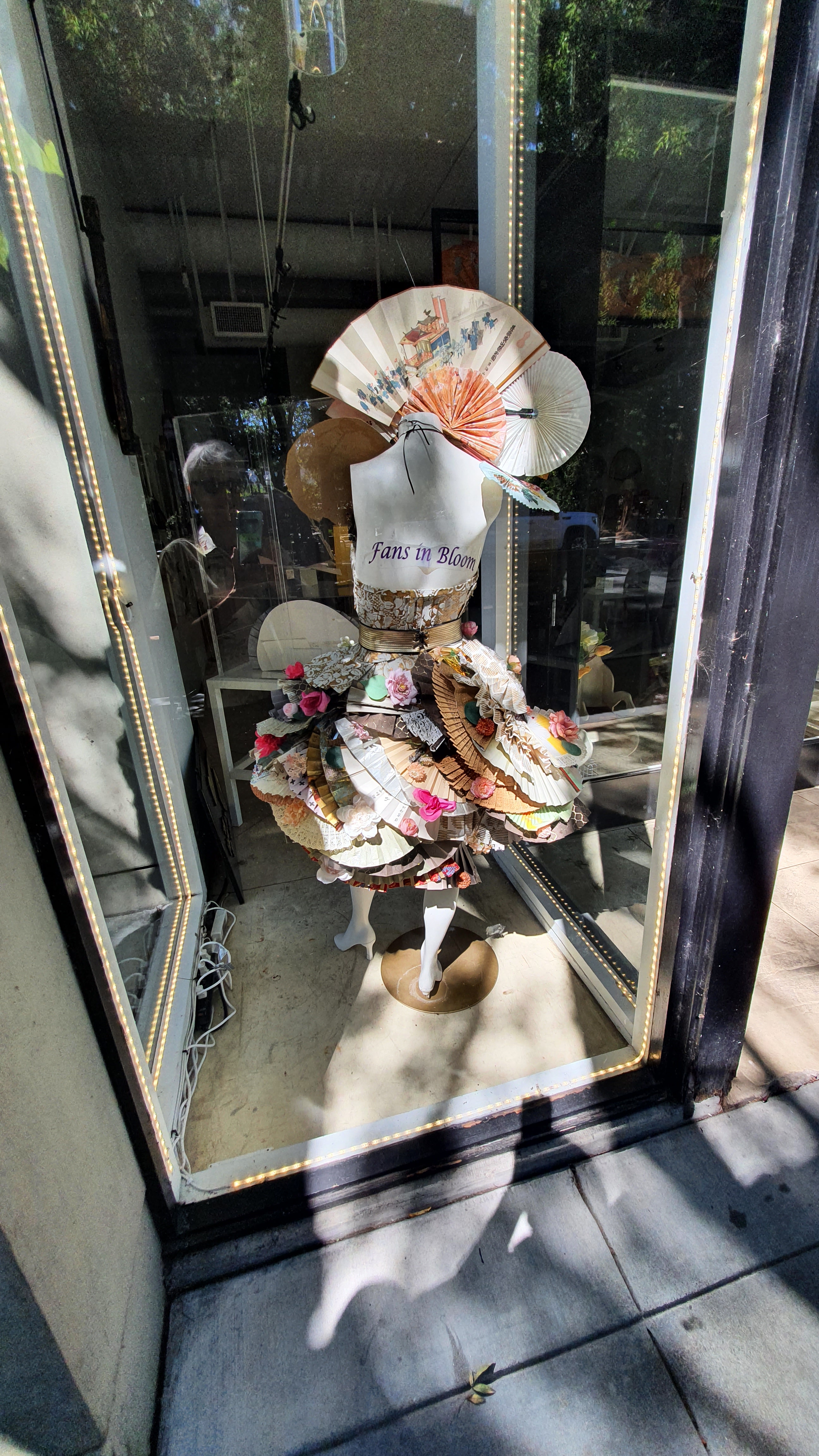
We decided to stop in Healdsburg, just ten miles down the road toward Eureka, to walk around the plaza and see what it looked like. These days the town is a wine destination, with tasting rooms on every block along with hotels, restaurants, and boutiques. There were some lovely things in the windows, and Jonathan enjoyed the cookware store. We asked a man holding a nice looking pastry where it came from, and he directed us to Quail & Condor, a very fine pastry shop. It was late morning and a lot of the pastry was sold out, so we’ll have to stop in earlier next time. After our stroll, it was time to head back to Eureka. We drove through 80 degree weather most of the trip, then descended into the mist as we approached the coast, arriving home again by about 3:30 pm to temperatures in the 60s .
There is more to see in Santa Rosa and surroundings. Countless wineries, more small towns, and in a few weeks, the wild blackberries will ripen, and there will be berry-picking for anyone who would like some jam or a tasty fruit dessert. We will miss some of this, but we’ll be back for another visit.
The more you travel outside the US, the more you find elements of other countries here at home.
This week, as the rest of the country stayed very warm, Eureka was largely overcast and quite cool, with temperatures in the 50s and 60s. The sun came out occasionally in the afternoon, but it was jacket weather. It reminded us both of Ireland.
Plants love to be under the mist. Like Ireland, there are bushes entirely covered with primroses, all kinds of flowers in gardens, and the (invasive) blackberries will be ripe in a week or two. This is similar to our impression of Dingle, Ireland, where we made blackberry jam and took lots of long walks.
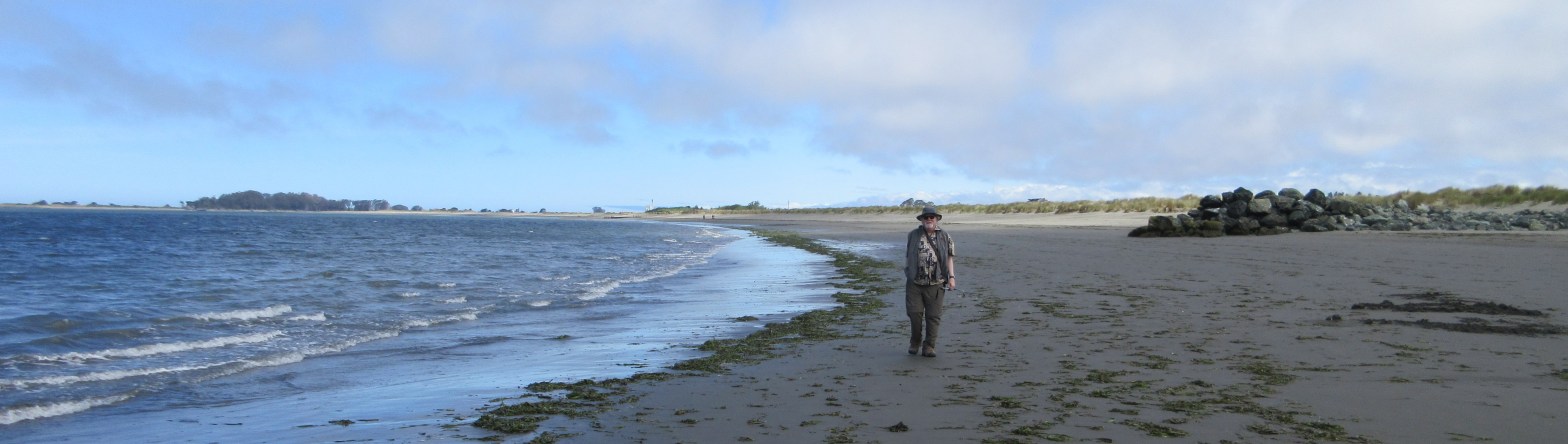
The beach here is similar to Ireland, as well. Today we went to Manila Dunes, where in a light mist, there were only a few other people in the distance. We walked and beach combed, not finding much other than a beach toy and a big clam shell. No matter, it was good to be outside enjoying the day.
We’ve just finished our first full month in Eureka, and we like it here. Our rental home is comfortable, the neighborhood is interesting, and definitely on an upswing. We’ve met a couple of the neighbors, and are taking walks to get the lay of the land. It will take some time for us to become part of the community.
We are among the ever-smaller group of people who have never had Covid. We still wear masks when indoors, and we avoid crowds, apart from the farmers market. Our Audubon walk was enjoyable, and we’ll keep going out with them, but we don’t envision much indoor fun for a while yet.
We look forward to getting more settled and exploring more of the coast. We’re already getting used to ignoring the rain unless its a downpour.
One constant for us is to walk along as much of the shore as we can, wherever we are. California is an excellent place for this, as the law strongly protects public access to the shore. Some landowners have tried to oppose this system, but all they’ve done is unloaded some of their excess cash in pursuit of things that are not theirs (Hello, David Geffen).
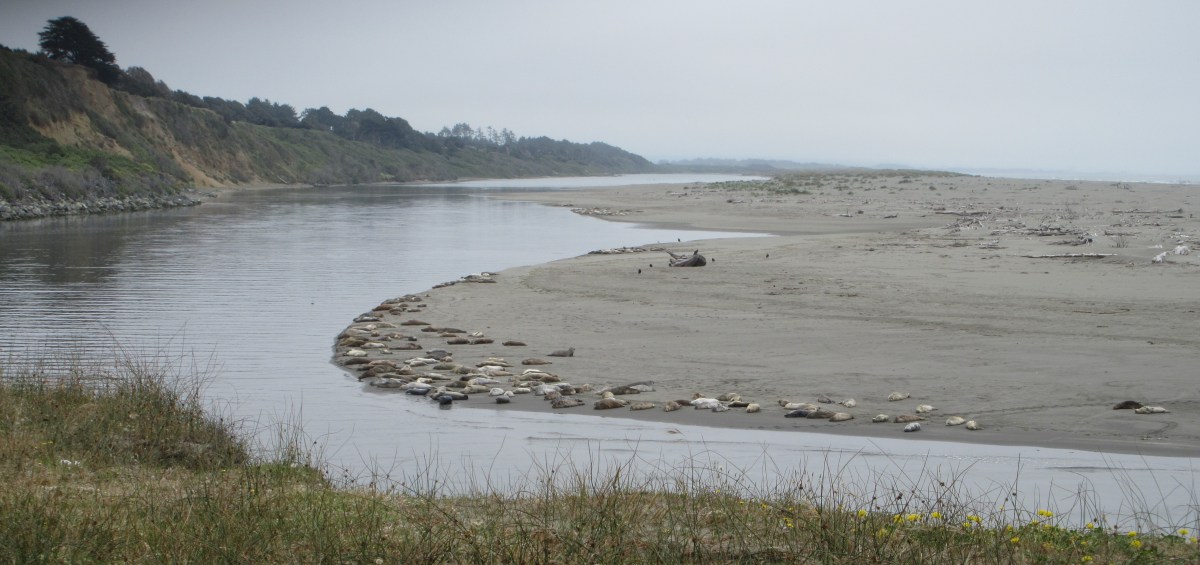
In northern California, there are lots of new places for us to visit. The only limit to how much of the shore we see is how long we can keep walking. We had to make a stop at the Arcata-Eureka Airport. I looked for a place nearby for a walk and found Letz Ave., right across from the airport turnoff. We drove north as far as it went, then parked. The Hammond Trail passes by the parking area and we headed north past another parking spot, Vista Point, where you can see out over the mouth of the Mad River. The river has worn a channel parallel to the shore for over three miles before making its way to the ocean, creating a narrow island. The island’s end at the river mouth is quite remote. We could see across the narrow span of water, but it’s only accessible from far to the south. The tip of the peninsula is quiet, serene, and empty, except for the seals.
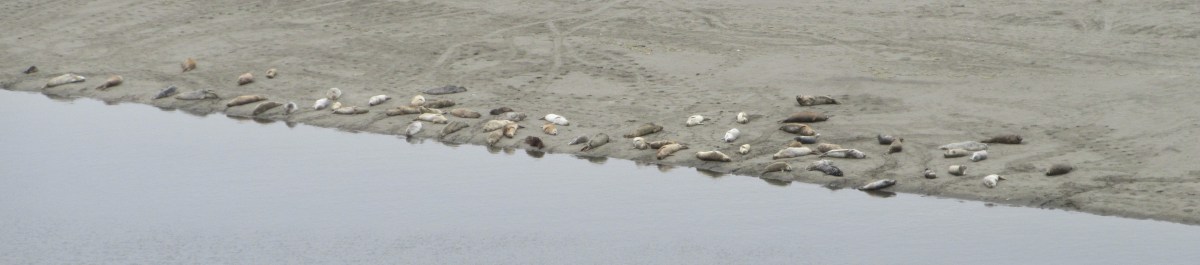
Harbor seals at the mouth of the Mad River
The beach was lined with harbor seals! More than 100, casually hauled out, with a few more swimming around nearby. With their tiny rear flippers, these seals move like inchworms, wiggling up onto the beach, and eventually waggling back into the water. Their motion is called “galumphing.” (Not kidding.) People stop to get a view of the shore and the animals. From where we parked, a gentle downhill trail led us all the way to the beach opposite the seals, the far south end of Crab Beach.
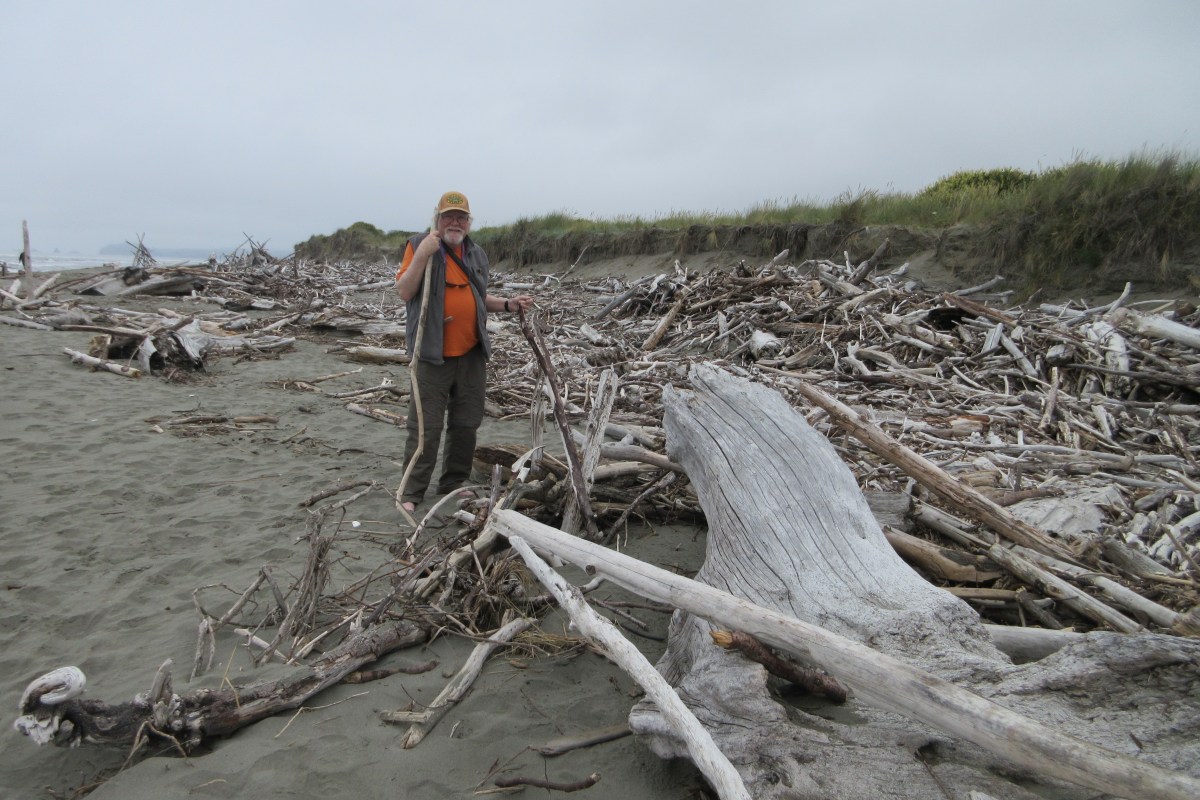
We could see the seals just across the river mouth, but they stayed on their side and avoided our side. Once we headed up the beach we were surprised by the huge amount of driftwood that has piled up. Currents must bring it in during storms and on high tides, as a lot of the tree trunks were very large, and perched well above the normal high tide line. It must be quite something to see during a winter storm–from a safe distance.
At the far south end of Clam Beach
We strolled up the beach looking for shells and beach glass, picking up a large clam shell to use as a soap dish, driftwood sticks for our jenga pile, and our biggest sand dollar thus far. We looked at the seals for a while, watching them do nothing, and occasionally galumph their way in and out of the water. With almost no human company on an overcast day, we had another beautiful walk.
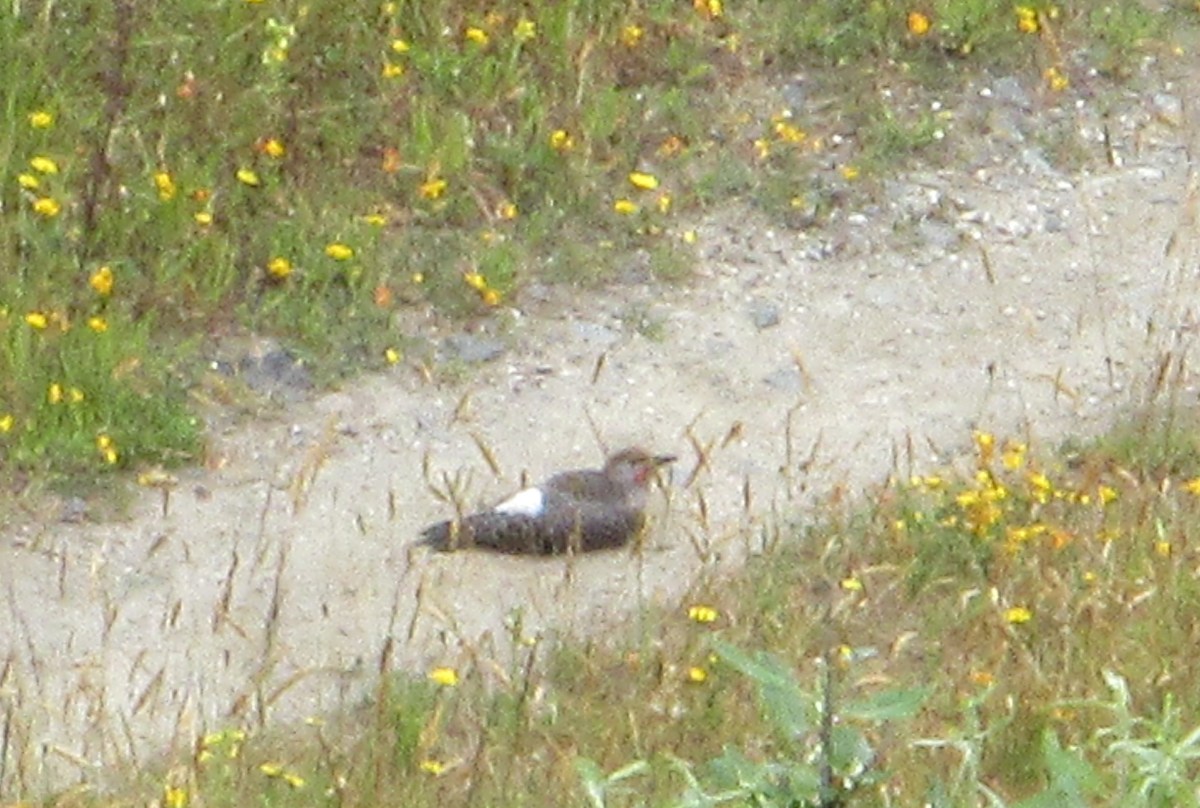
Flicker
A small stand of trees leans across part of the path, blown by the constant wind into a permanent arc. On the way back to the car, it provided excellent birdwatching: an osprey overhead, a yellow warbler and a wrentit in the trees, and down below us, like a chicken on a nest, a flicker sat in the middle of the path.
We were invited to meet my sister and her partner in Ashland, OR and take in a few plays at the well-known Oregon Shakespeare Festival. Jonathan found us a hotel room and I bought tickets to three of the pieces they were going to, without thinking too much about it. One night we’d see The Tempest, so there was Shakespeare involved, and we’d also see a musical that I’d heard of, Once on This Island, and a new play, Revenge Song. I had some doubts about this last one, but Paula was going and the festival is supposed to be full of interesting works, so I took the plunge.
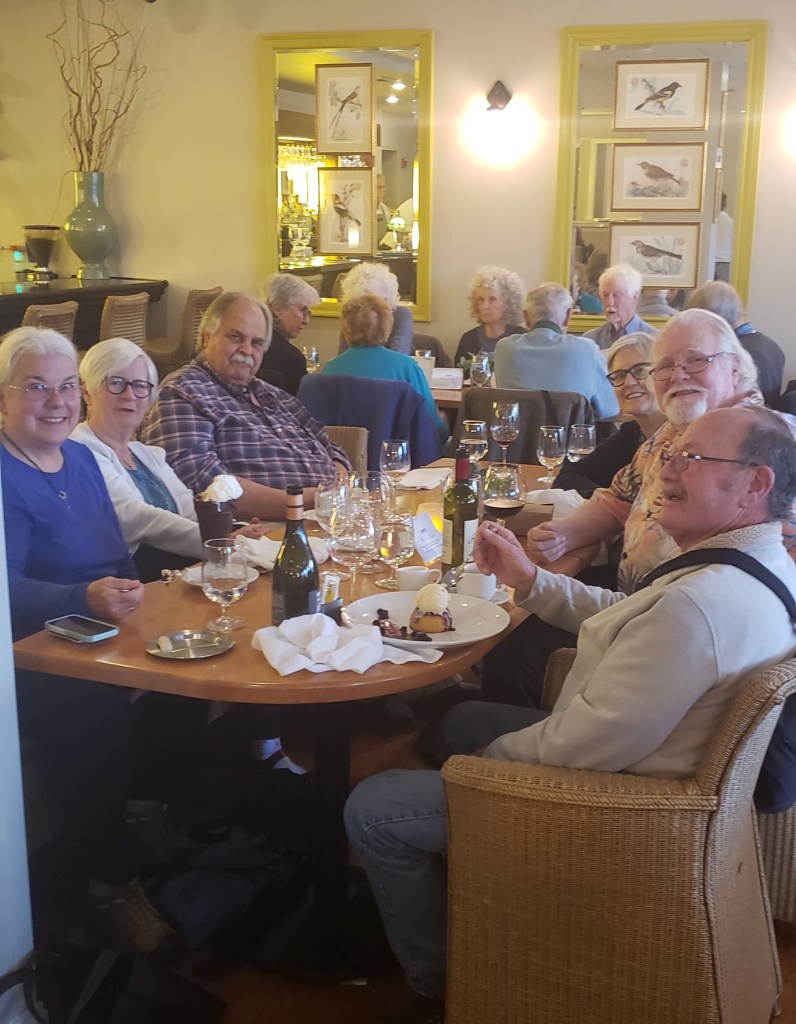
The drive to Ashland was long (5 hrs including stops) but pretty, through the redwoods. After an hour at the hotel with our feet up, we headed off to an early dinner at Lark’s Home Kitchen in the Ashland Springs Hotel, the oldest and most elegant of local choices. We met Paula and Wayne, and their friends Nora and Oscar. Paula had brought two bottles of wine for us to sample, as her wine cellar at home in Portland is quite good and this was a festive occasion. The food was excellent, Jonathan’s spicy lamb spread (nduja), and my clams were delicious, as was the wine. We headed off to the play in good spirits.
Revenge Sont, OSF
The Elizabethan theater is largely in the open, a replica of the Shakespearean theaters of England. We were warned to wear warm clothing and bring rain gear, and we needed it. Our seats were under cover, but it had drizzled most of the day and I was glad to be dry. The play started with an ear-splitting crash of rock music, vastly over-amplified, and that set the tone of the evening. The story was vague, and the production values disappointingly low. It was as though we’d come to One Act night at the local high school. Painfully loud electric guitar chords punctuated some of the action, making us despise every looming, obvious plot twist. We wondered what the organizers of the festival were thinking when they added this work to the schedule. The strange thing about Revenge Song is that audience opinion was evenly divided. One half clapped loudly, cheered, and (I understand) gave it a standing ovation at the end. The other half of the audience, ourselves included, left at intermission, thoroughly fed up.
The next morning, we discovered Remix Coffee Shop and had delicious coffee and the crispiest croissants this side of Paris. We returned every morning that we stayed in Ashland. We whiled away the morning, then set out on the day’s adventure, a wine-tasting at Cowhorn Winery, where Paula has a subscription and would pick up her quarterly allotment of wine after our tastes. Paula’s membership provided two free tastings that Nora and I used, while Paula, Wayne, and Jonathan had what are called pairings, 3 oz pours of each of the four wines on the tasting list, and a wood-fired pizza into the bargain. Our tasting began at 1:30 pm, so the pizza was both well-timed and delicious. Cowhorn rosé is excellent, and we also tasted their Spiral white blend, a grenache, and a pinot noir. We chatted and sipped. This was not a serious ‘spit and dissect’ kind of wine tasting but a relaxed ‘sip and discuss’ that made a delightful afternoon.
We had another early dinner and 8 pm curtain time, getting back to the hotel for a short rest between events. Dinner at 5 pm was at another excellent local restaurant, Peerless, in the Peerless Hotel. Halibut and soba noodles, and buckwheat noodles with lamb were two of our favorite entrees, and we drank more delicious Oregon wine.
Prospero, The Tempest, OSF
The play was The Tempest, again in the Elizabethan theater, and raining. The performance was not cancelled because the rain didn’t actually prevent the actors from working, though I imagine it made them very cold. Everyone in the audience cringed for poor Miranda, “unconscious” in a puddle on the stage, with rain coming down on her face. Once again, our seats were under the edge of the roof and we did not get wet. A contingent of die-hards in plastic ponchos sat out in the on-and-off rain for the entire performance. I think it’s a personal challenge to some.
Either the diction of the actors improved as they froze, or we became more accustomed to their speech patterns, but the second act seemed easier to understand than Act 1. It would have helped to have a synopsis of scenes in the program. All of us have read The Tempest at some point, but we did not recall all the twists and turns of the plot. Between that and hearing aids, it was often difficult to follow the action. Two nights in a row we returned home wondering whether we’d made a mistake. We’d heard so many good things about the festival.
Once on This Island, OSF
It seemed fortunate that our final event, the musical Once On This Island, was in the Bowman Theater, indoors and climate controlled. The play is a New World version of The Little Mermaid, set in Haiti. The plot paralleled the traditional Hans Christian Anderson story until the end, when the woman dies and the gods take her into the sea. That much is in keeping with the original tale, but Once on This Island has her come back from the ocean as a tree, which makes a new plot twist, “and the tree grew up right where the gates joined so they could never be closed against anyone ever again,” a successful tearjerker, it defied all logic as a plot. (As a tree, she watches over the lover that spurned her, his wife, and their descendants. Why would she want to do that?)
For us, the high points of the weekend were the company, food and drink, singing and dancing. We had a bit of time to stroll the main street of Ashland and look in some of the stores. There are bookstores, a nature shop, and a store with native art including some nice southwestern silver and turquoise jewelry. I bought yet another ring and am quite content.
About Attending the Oregon Shakespeare Festival
Travel to the Festival: There are easier ways to get to the festival than the one we took. It’s about a five hour trip from Eureka to Ashland, three hours of driving on winding roads through gorgeous redwood forests, an hour of high speed highway, two pit stops, and a number of waits at road construction in far northern California, including the notorious Last Chance Grade. Last Chance is a spot where the highway has fallen into the ocean too many times, and the highway department is faced with trying to rebuild a roadway between a vertical rock face and the sea. A bit like Big Sur, popular sentiment wants the road rebuilt in its current location despite logic that points inland to safer and more durable routes. There are four or five places where construction creates single lane traffic. A relaxed attitude and flexible timetable are essential to enjoying this route.
Lodging at the Festival: Many people make a vacation of the festival, staying several days, seeing one or even two performances each day, and book the most elegant, charming, or distinctive accommodations well in advance. Those of us who decide to visit two weeks beforehand end up in the adequate but uninspired Holiday Inn. It was reasonably comfortable, but with post-Covid amenities such as daily housekeeping by request only, and boxed breakfast items. Paula and Wayne waited downstairs for us between events one afternoon and assured me that it was the most uncomfortable lobby in existence, along with no cell or wifi service they could detect.
Paula and Wayne stayed in their RV at the Ashland Creekside RV park. They have a beautiful Airstream motorhome, and Airstreams often receive favorable treatment in such places. A number were in evidence at their stop in Ashland, on their way to some Airstream roundup elsewhere. Many had the nicer spots, and in frustration at their cramped location, Paula asked them how long ago they had booked their spot. After all, she made her reservation back in March. The others–booked their June spots last November.
If you want to make the Oregon Shakespeare Festival an unforgettable experience, book carefully, and ideally, months in advance. For a spontaneous visit, I recommend a day trip and a single performance.
Booking your Tickets: It was easy to purchase seats on line, and the theaters are not large; I believe the largest seats 600. That means that even when you purchase seats in the last row on the side, you will still have a good view. We did need both a photo ID and proof of vaccination including booster in order to enter.
It is obvious that I should have considered the shows on offer more carefully, and done some reading prior to booking. I suggest you don’t repeat my mistake. Even for Shakespeare, unless you are quite familiar with the play, a scene by scene synopsis to read before, during, and at intermission, might be handy. Read reviews of the plays, if there are any.
Attending the Performance: Assuming one of the plays you plan to see will be held in the open air theater, think about how you’d feel in the cold and rain, or in high heat and humidity. When you book your tickets, you have the option to select seats that are under the various overhangs, which helps in case of rain. We didn’t have significant wind, which might change that.
I was surprised by Paula’s counsel to forget about dressing up, and dress for warmth, and to have both something to sit on and wrap up in. I was glad I paid attention to her advice. I was comfortable both nights, even the rainy night, in my hiking boots and wool socks, jeans, various layers, raincoat, hat, hood, shawl and fuzzy throw blanket. Not exactly a LBD and pearls, but effective.
Last year at this time, Ashland was under the Heat Dome, and theatergoers had to cope with temperatures over 100 F. Which would bother you more, outdoor theater in stifling heat, or drizzling cold rain? I decided I was fine with the cool weather and rain. I might even visit again.
We spent October 2020 in Eureka, CA, and moved on to Monterey after that. What brought us back now is our impending grandchild and her parents. That, and Jonathan and I can’t seem to find a way to live together comfortably in hot weather.
Eureka, in far northern California, has very little snow in the winter (annual average snowfall, 1″), quite a bit of rain (annual average rainfall, 46″), and cool summer weather when temperatures rarely top 75o F. How did the two of us who have been chasing summer for seven years, traveling from one warm region to another, always choosing the desert over the garden, end up in a cool place?
I loved all the hot places: the coast of Colombia, Aruba, northern Peru, Darwin Australia, but each of these houses were on the beach or had a swimming pool. In principle, though, I don’t want to own a pool and handle the upkeep. In the US, where air conditioning is widely available, we don’t have to tolerate blistering temperatures, and theoretically we could live anywhere. That’s how we ended up in Charleston, SC in September 2019. We met some lovely people there, and enjoyed our walks, beachcombing, and bird watching, but the heat and humidity created a problem. For Jonathan to keep from dripping sweat on the furniture, the temperature had to be kept at a level that required me to wear a sweater and fingerless gloves.
Where we have found middle ground is in places that don’t require frequent use of air conditioning. We enjoyed our months in Monterey, CA for that reason and now we’re going to give Eureka another try. We’d become completely unaccustomed to rain when we first visited, but the drought that afflicts the entire western US, especially California, is not as bad in this area because there is rain. We feel growing appreciation for water that falls from the sky free of charge, and I will purchase rain pants for walking.
I am enjoying life in a place where almost no one uses or even has A/C. I can open my windows and let the cool air in, and yet I can count on pleasant weather to go for a walk most days.
Unless it’s raining.
The last time we were here we decided against staying because of the regional shortage of health care personnel. We are giving it another try in hopes we can make it work with a bit more effort and greater lead time in making appointments. I have high hopes. As of January 2022, Humboldt State University became Cal Poly Humboldt, adding a dozen new programs in the coming year alone, and doubling enrollment over the next seven year, supported by more than $400 million from the state and federal governments. I am hoping that the expansion will draw more health care professionals to this area and that among them will be the retina specialist I need.
Jonathan found us a perfect house in Eureka, open and sunny, and we plan to stay here for a year to start. Even though we will be out of town for a month now and then on our travels, committing to a full year in one place is a big change for us.
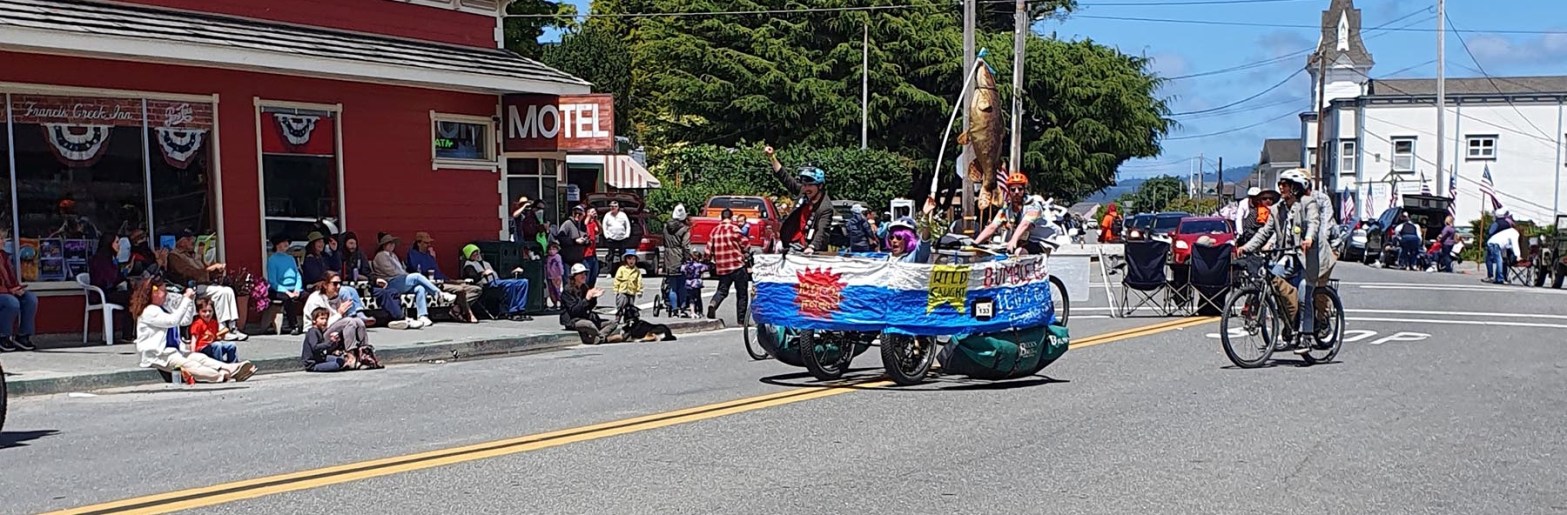
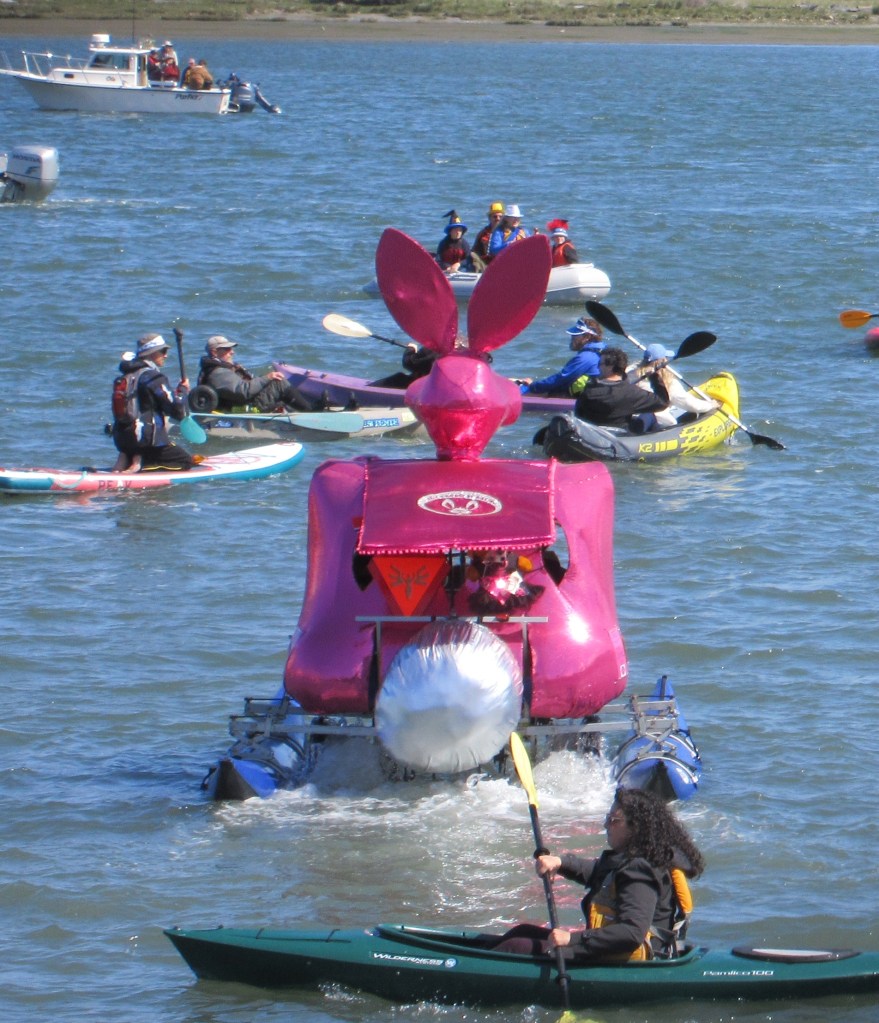
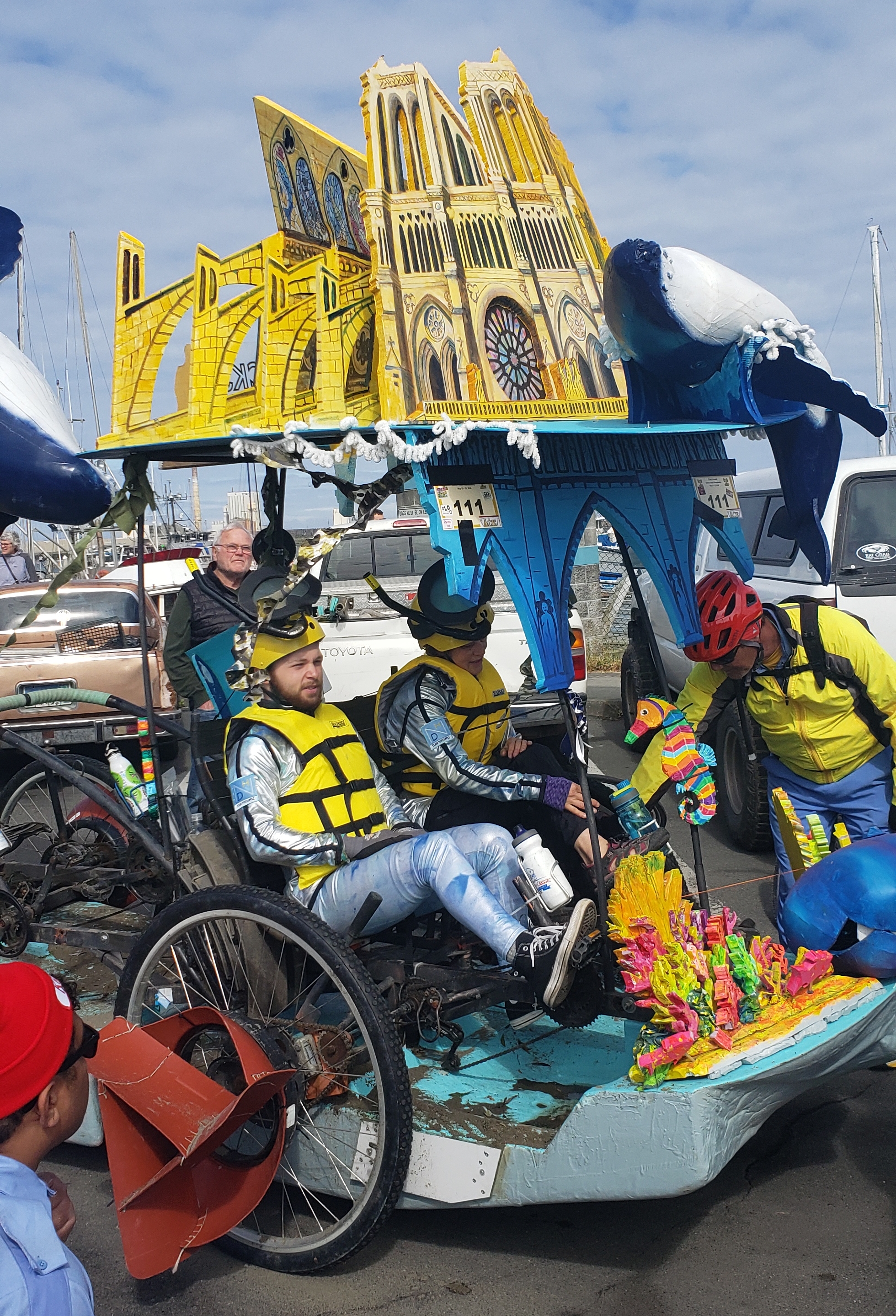
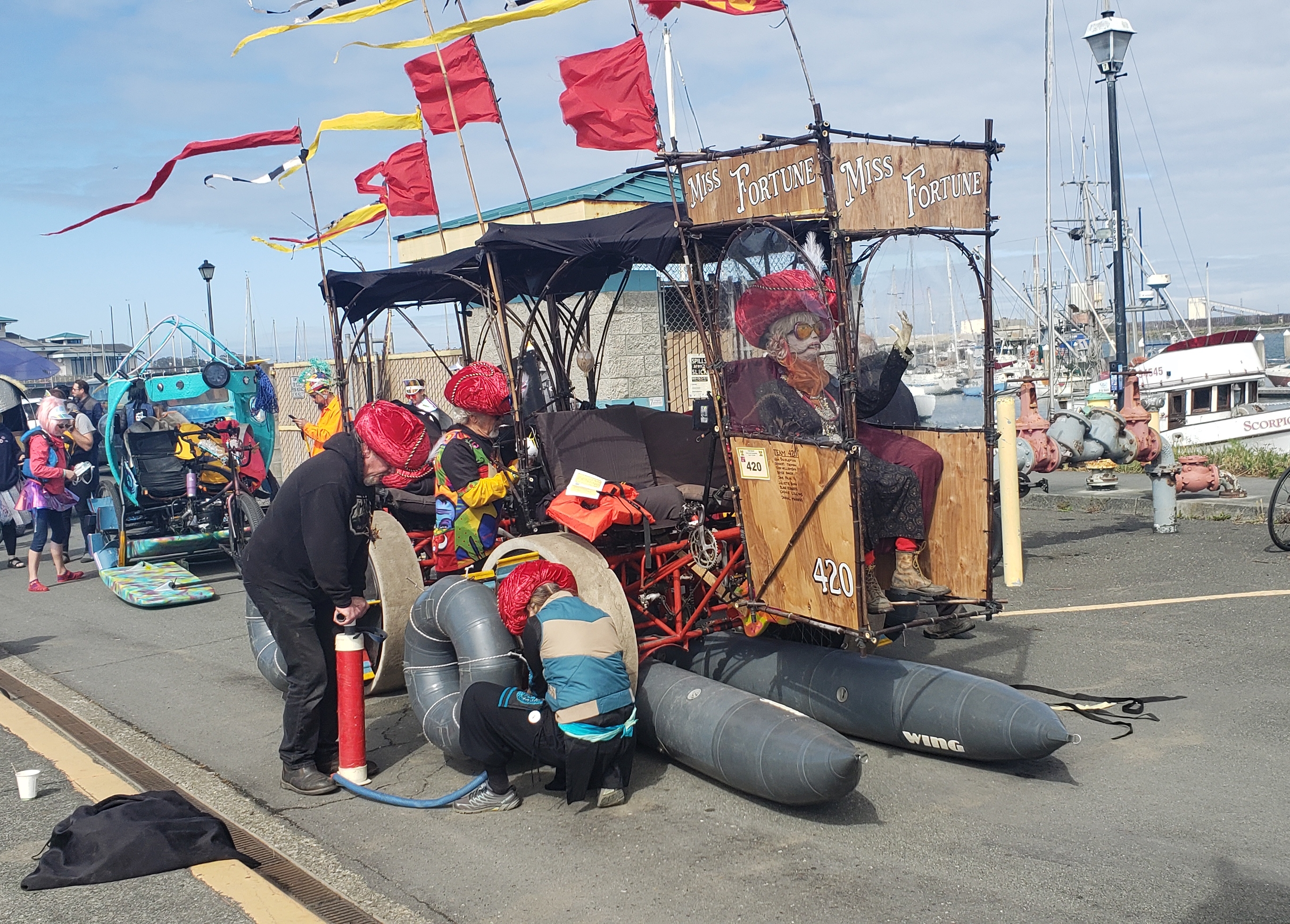
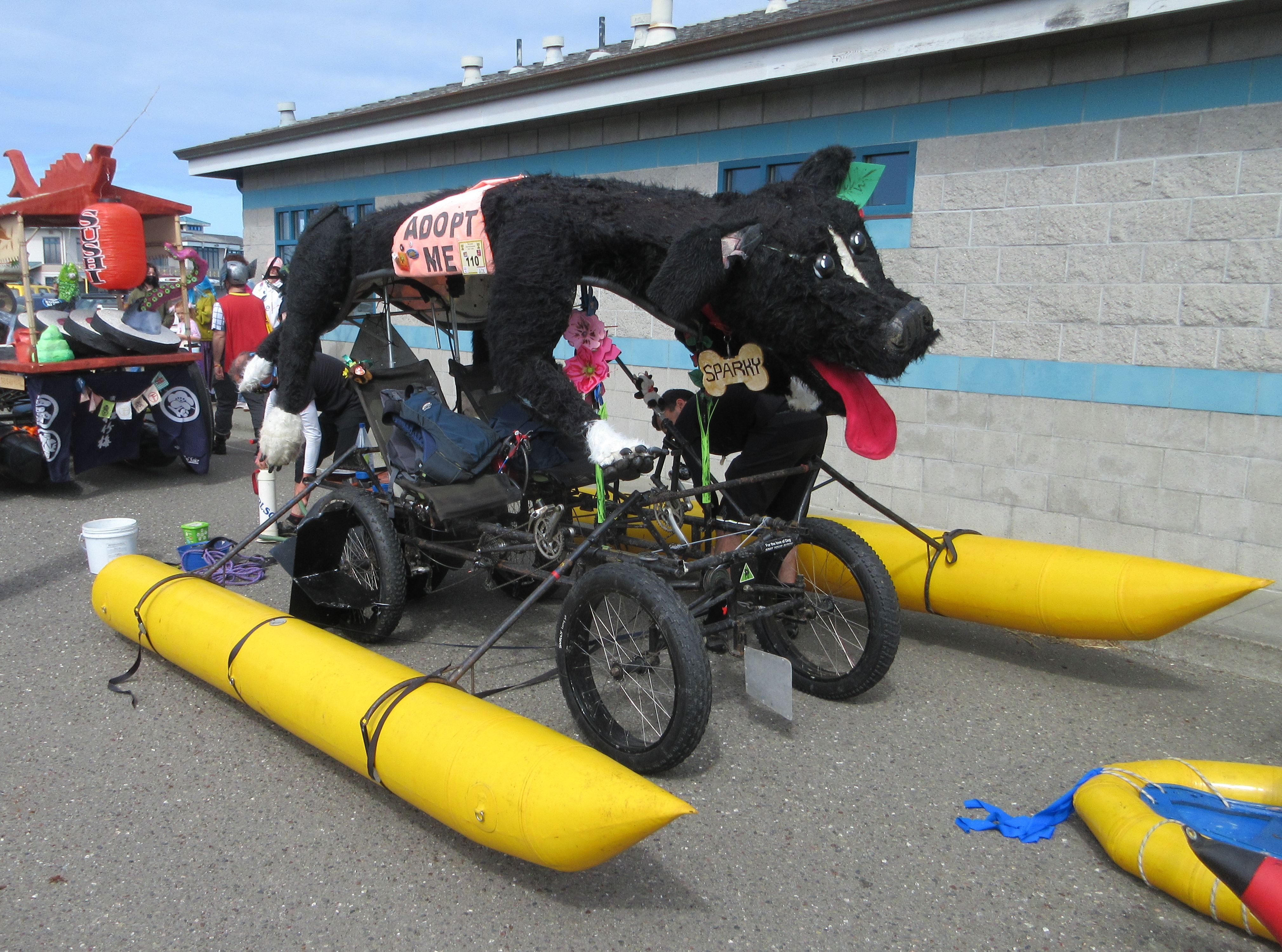
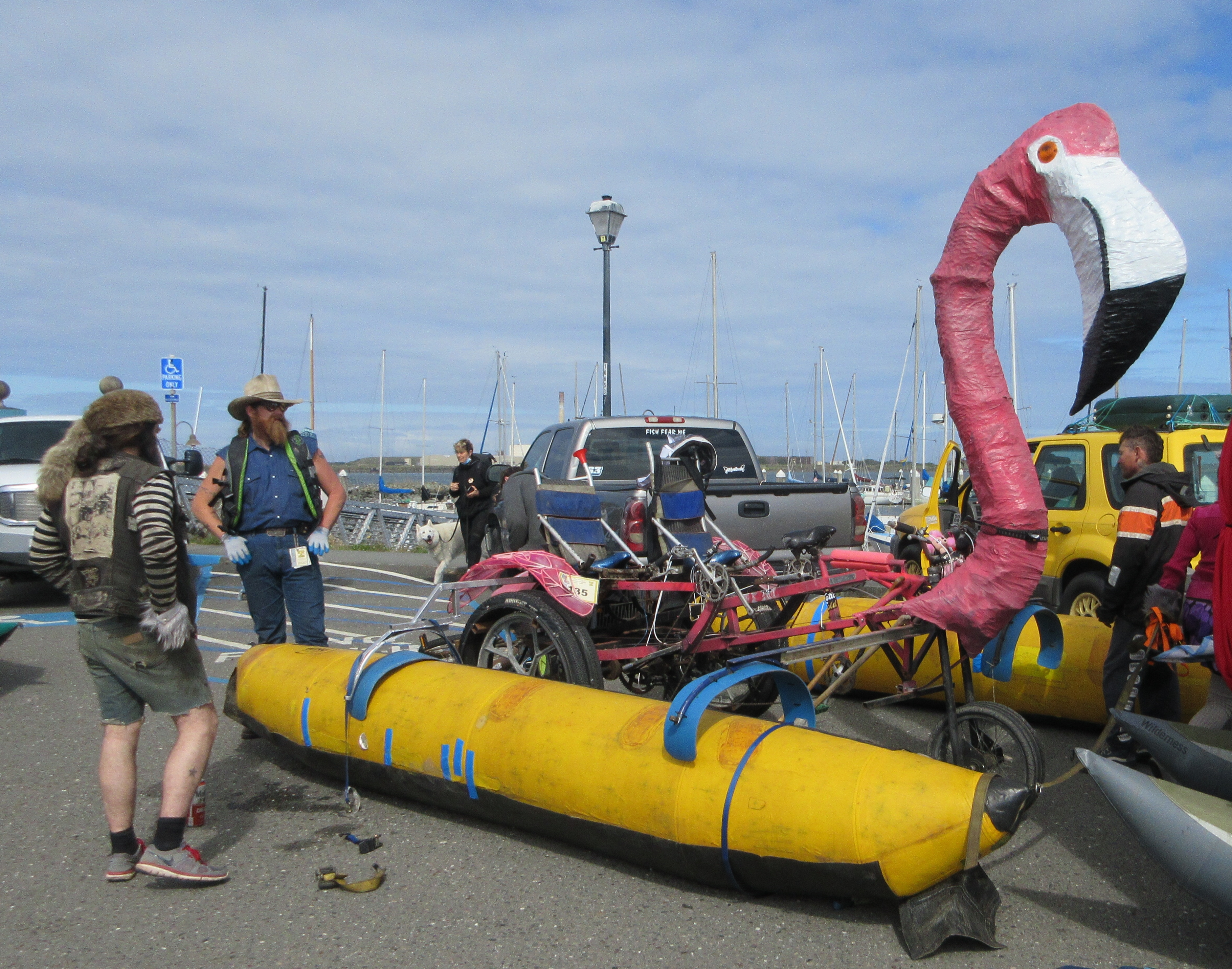
I read some local news and discovered that Eureka’s best known annual event, the Kinetic Grand Championship, was underway on our first weekend in town. Artists and enthusiasts create moving sculptures, kinetic works of art. Over three days, these pedal-powered artworks race along roadways, up and down sand dunes, and with a break to attach pontoons, roll into the water, crossing the finish line around noon on Memorial Day in the center of Ferndale.
In all, these moving sculptures cover miles of roadway and coastline, starting with a circuit of the plaza in Arcata, then going out to the coast, and south toward Eureka on the first day. Day two, competitors take swim in Humboldt Bay. We caught up at the boat launch in Eureka, where a few hundred people walked around the sculptures as they lined up.
One at a time, the sculptures rolled into the water. Crew members began pedaling furiously to make headway against the stiff wind. About 500 yards later, each vehicle lumbered out of the water and continued their land journey south. At the end of the second day, pilots and co-pilots were required to camp out at Crab Beach, about halfway between Eureka and Ferndale on the coast. (We did not camp.)
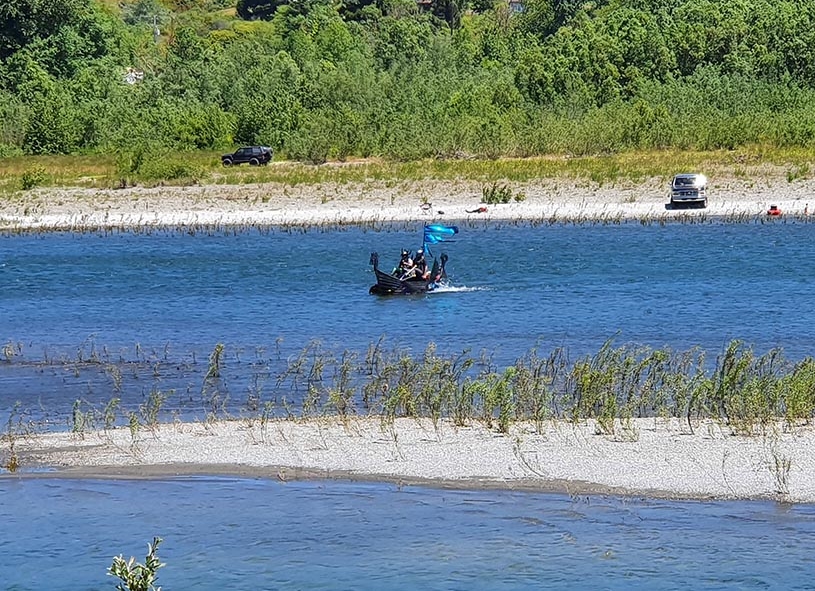
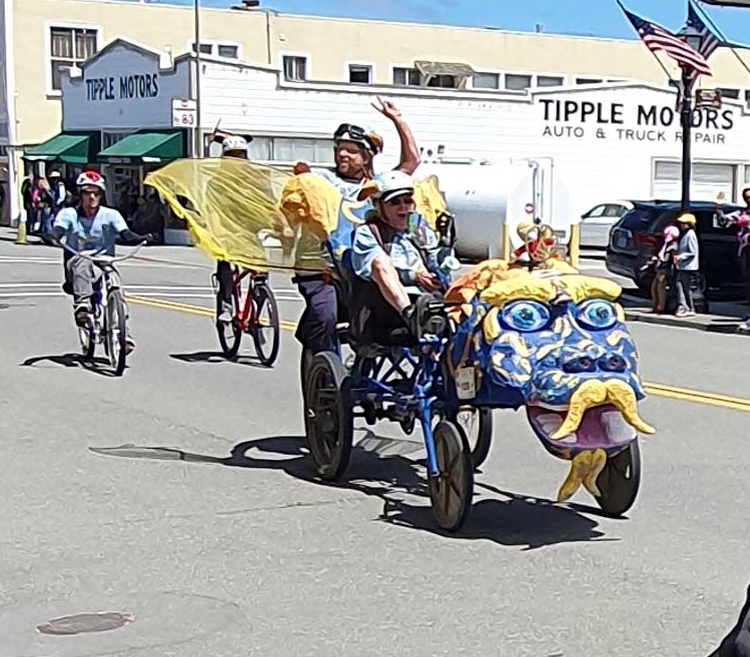
L-R: Vikings crossing the Eel R., crossing the sand bar, and at the finish line in Ferndale.
On the final day, we drove to watch contestants cross the Eel River. Each sculpture had to stop on the shore, attach their pontoons/flotation devices (they are required to carry these with them) and after a longish period of adjustment, enter the water, pedaling like crazy to go upstream to the exit point.
Not everyone opted for the full competition, and a number of pieces were brought to the Eel River crossing or the Humboldt County Fairgrounds where they resumed the land portion of the journey toward the finish line.
After watching about half the entrants cross the river, we drove into Ferndale, wedged ourselves into a parking space, and watched the festivities. There was a wildly energetic band playing, led by a woman in a majorette dress wielding an oversized spatula.
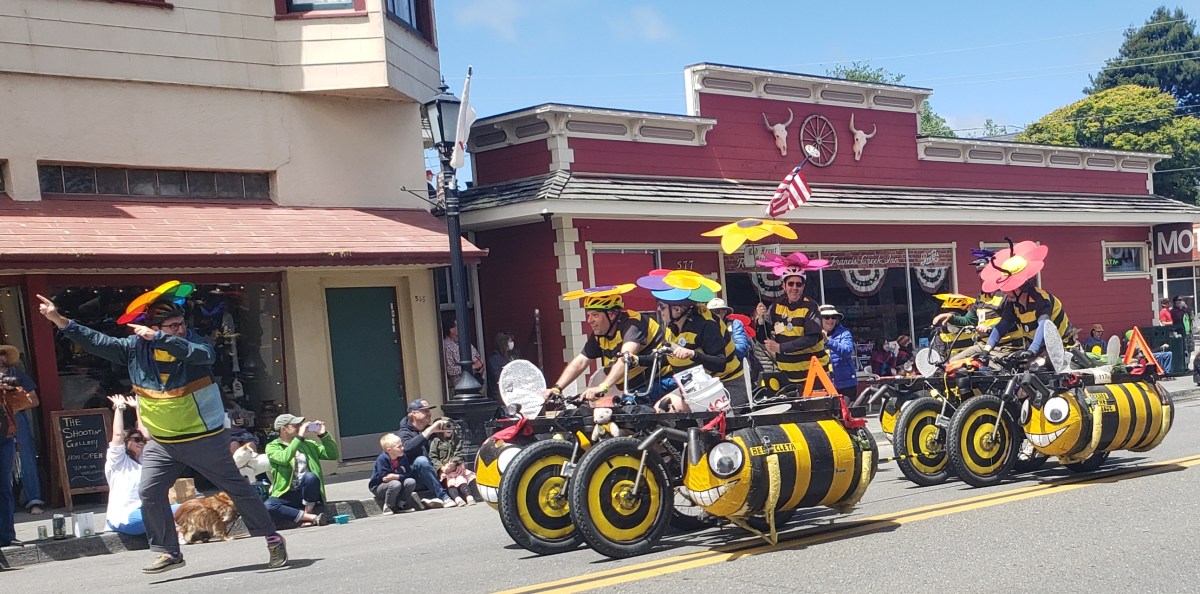
Spectators were dressed in everything from street clothes to wild and crazy getups. We sat down and had a bite to eat, considering it a contribution to local fund-raising rather than a culinary achievement. By the time we got up, the first finisher was rolling down the street, having made much better time than I would have thought from the river to Ferndale. A trickle of finishers began arriving, and after admiring some of our favorites, like the tuna can, the pink lamé camel, the Viking couple, and the bumblebees, we took our leave.
This is a wonderful festival, and though they had to miss a couple of years due to Covid, it seems to be back as wild as ever. It’s a Eureka moment in Eureka.
Want to see professionally produced photos of the race? Here’s a terrific article:
Over the past couple of months we’ve considered where we’d like to live in the US. I wanted to try the East coast before making a decision about which coast we’d prefer, since coastal life is our first choice. As much as we enjoyed Virginia Beach, VA and Wilmington, NC, recent family developments convinced us that California is for us, so we’re moving to Eureka, CA for now. (I’m going to be a grandma.)
We stopped in Wheaton, IL for a few days to pack and re-pack, getting items from our storage unit, and leaving other things behind. We stayed with our friend Peggy, and had a wonderful time for such a short stay. One evening was a book discussion with our Wheaton-Glen Ellyn AAUW non-fiction book group. We all read Code Breaker, by Walter Isaacson, about the 2020 Nobel prize-winning scientist Jennifer Doudna and the development of CRISPR gene-editing. The next night was a the AAUW Spice Routes group dinner. Twice yearly, participants hold a themed potluck focusing on the cuisine of a particular region. Our theme was tapas, and we ate small plates from Spain and Portugal, from gravlax to anchovies, accompanied by flan and sangria. This was also a chance for me to catch up with friends I hadn’t seen for some time. It was a wonderful way to celebrate our impending move to new surroundings, though it reminds me how much we’ll miss our Wheaton friends.
Mid-morning, crossing the Rocky Mountains beyond Denver
Early on Saturday we headed to the airport. We flew to Denver, then to Eureka, and were in our new Airbnb by 1:30 pm (Pacific Time). It had been an early start, and by the time we unloaded our luggage, unpacked, and did a bit of shopping, the day was over and the time change had tired us out. It drizzled on and off all day, and we were reminded of how much warmer the weather had been in our previous locations.
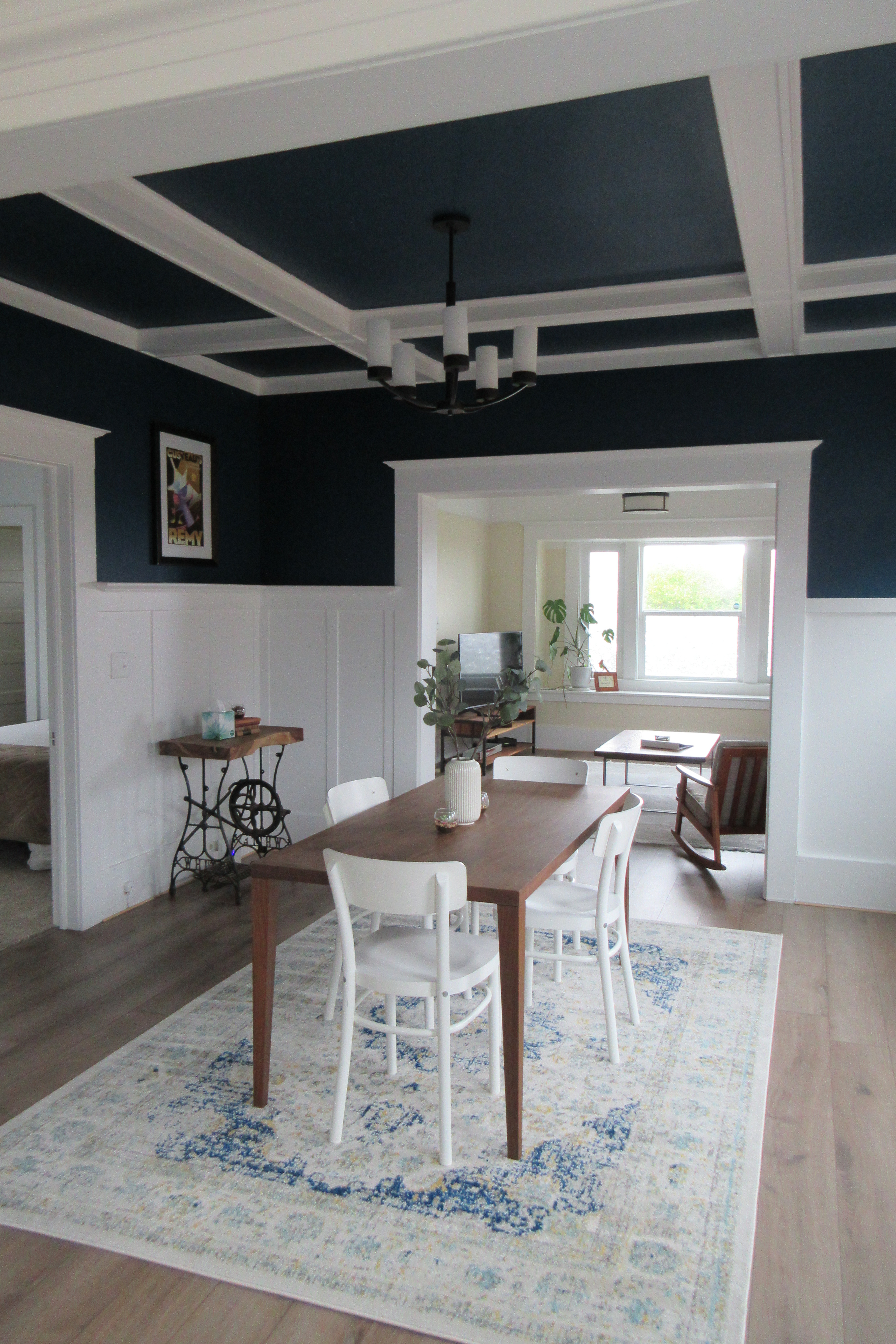
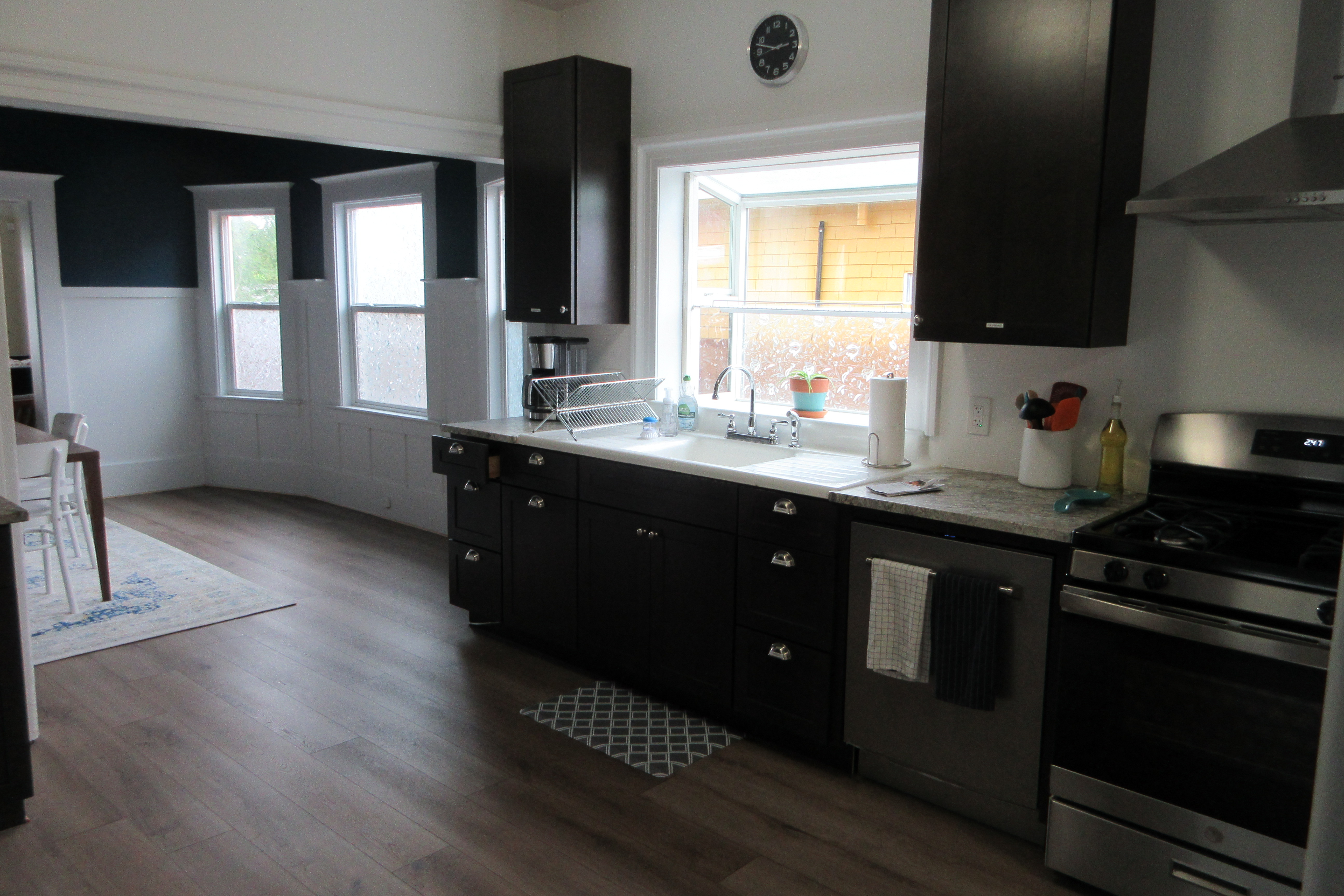
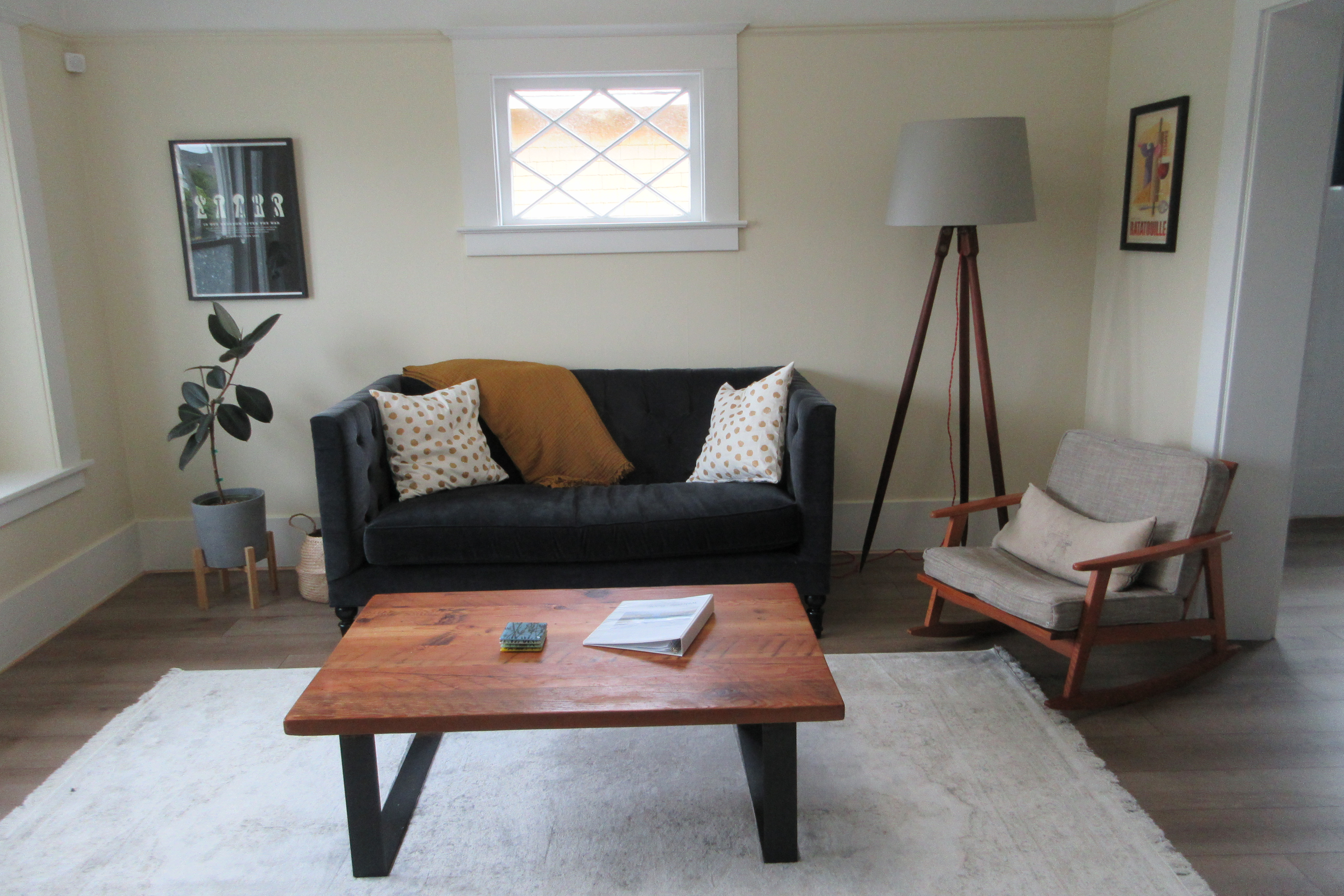
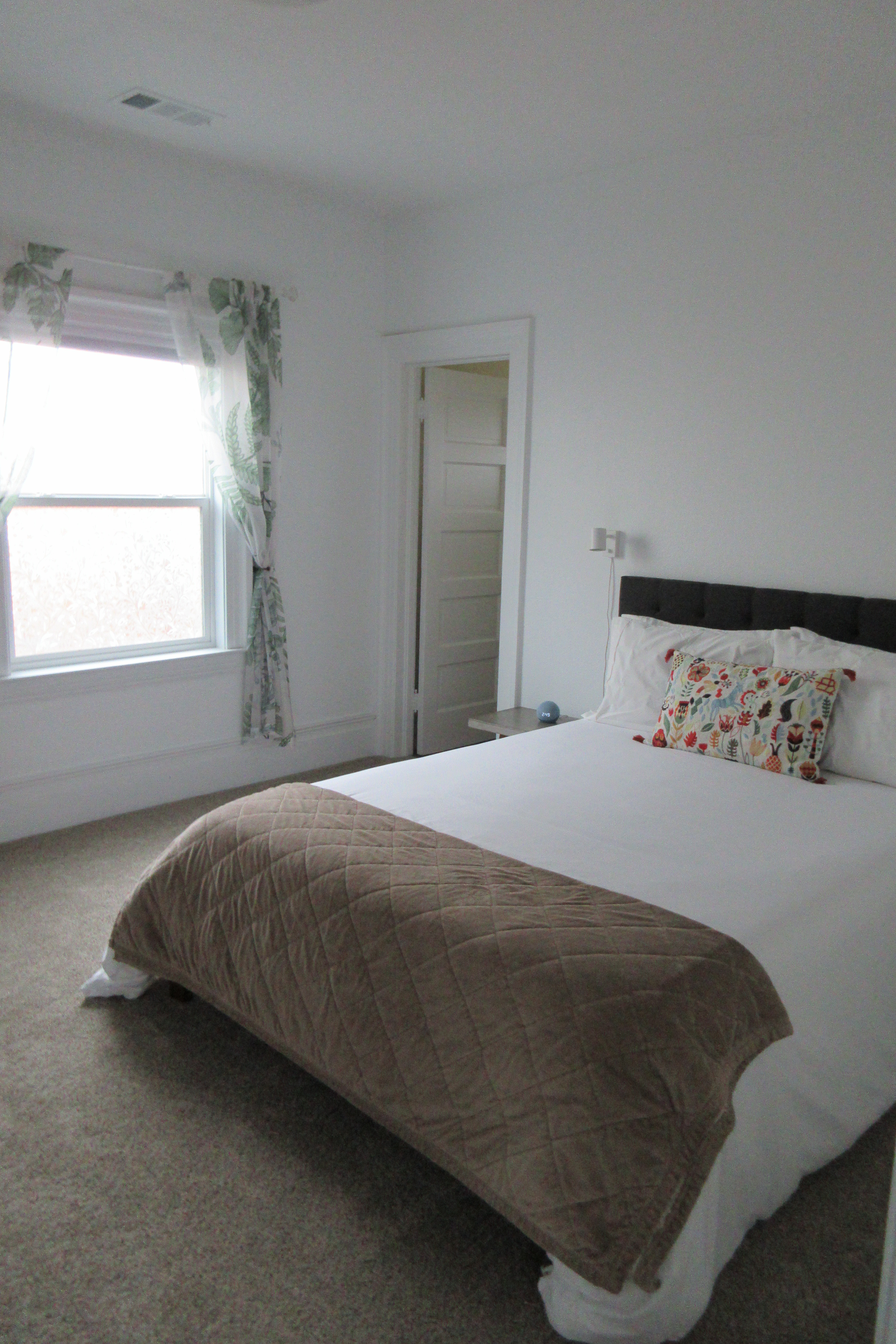
Our new house is bright and comfortable, and we may be the first occupants after a recent renovation. We have an extra bedroom, a bit of outdoor space, and even a garage for our rental car. Airbnb owners often keep a home’s garage for personal storage, so it’s unusual to have one available.
Our house in Wilmington was full of plants, art, and household accumulation, and our Eureka house is just about the opposite, furnished, but with space to add some of our own things. Monday is Memorial Day, and everything is closed, but on Tuesday we begin the process of deciding whether to stay in this house indefinitely and looking at other housing options in the area.