Getting to Edinburgh Castle was an adventure all its own, because we had to find a route that was short enough that Jonathan’s ankle would still function after we arrived. We pored over the street map and ended up taking a bus to the center and walking up “the mound” to the castle. It was a lot shorter than on my previous visit with Paula and Emily where we walked to North Bridge and up the Royal Mile.
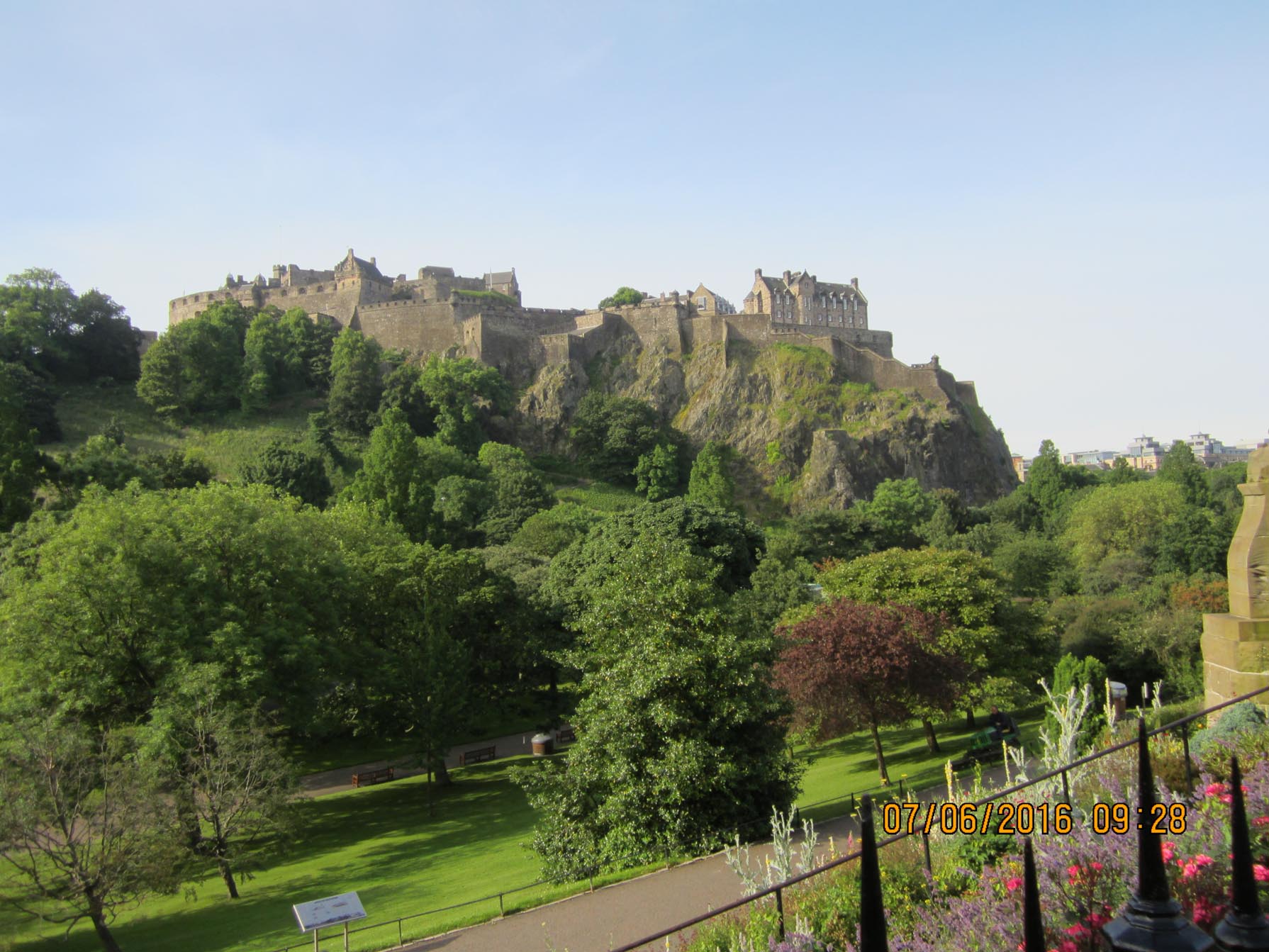
Imposing from every angle.
The portcullis is still the entrance.
The parade ground after the portcullis is marred a bit during the summer by the huge metal stands that engulf the space, setup for the Edinburgh Tattoo military show that takes place every night in August. There is still plenty of pageantry for those of us who won’t be staying until then.
The guards change with a bit of the pomp you see at Buckingham palace. They also rotate services. Today was Beefeaters. Another day were men in green with flat caps.
Weaponry as decor.
The crown jewels of Scotland were impressive, though the Stone of Scone, displayed with them is a puzzling display of patriotism. The tale goes that ancient kings of Scotland were crowned while standing on the stone, a small featureless block that now has a couple of iron rings set in it. When Scotland signed the treaty that made it part of England, the block was carried off to Westminster in 1296 and stored in a drawer below the seat of a custom-made throne designed by Edward I. It stayed there until 1950, more than 650 years later (!), when it was stolen by Scottish students. Despite a wide search, the stone was not recovered by the police, but was returned early in 1951 after only four months in hiding. Scottish nationalism built up over the years since then and in 1996, the stone was returned to Scotland. That doesn’t seem to have quelled nationalism, and Scotland may again one day be an independent state. The Stone of Scone rests with the crown jewels while they wait.
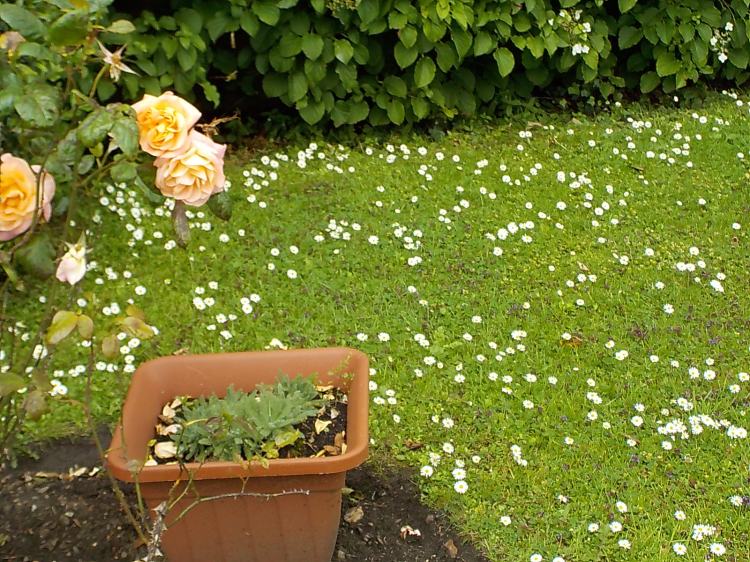
Edinburgh is as green as anywhere you can imagine. Yes, it has been raining, sometimes heavily, but the payoff is that the gardens are beautiful and the flowers in perfect bloom.
We’ve arrived in Scotland at an unusual time. The Brexit vote was just over a week ago, and like many others, we were unprepared for a decision for the UK to leave the EU. The pound sterling is at a record low, this morning $1.29 = £1. This has no visible effect on daily life, though it will help our end-of-month budget accounting. Comparing Scotland with Norway and the other places we’ve visited is an inexact science because most statistics are for the UK as a whole. The population of Edinburgh itself is around 500,000 or around the size of Albuquerque. Average income is about $35,000 per year. That’s lower than Norway, but higher than anywhere else we’ve been, more than twice the average for Portugal, for example, and Portugal is also a member of the EU (for now). Every site that notes average income points out there is huge variability. The Human Development Index is .907, almost as high as Norway, and life expectancy is relatively high, 78 for men and 80 for women.
I made my first visit to Edinburgh Castle with Paula and Emily (her daughter-in-law) before Emily returned to her conference in Glasgow and Paula left for Italy. We had a ROYAL moment at the castle, when the car carrying Princess Anne to a war memorial event passed right by us. (She didn’t wave, but there she is.)
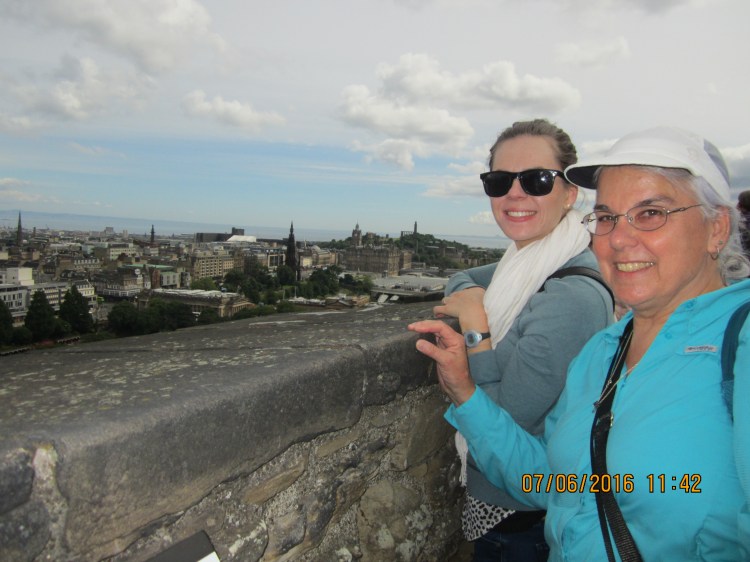
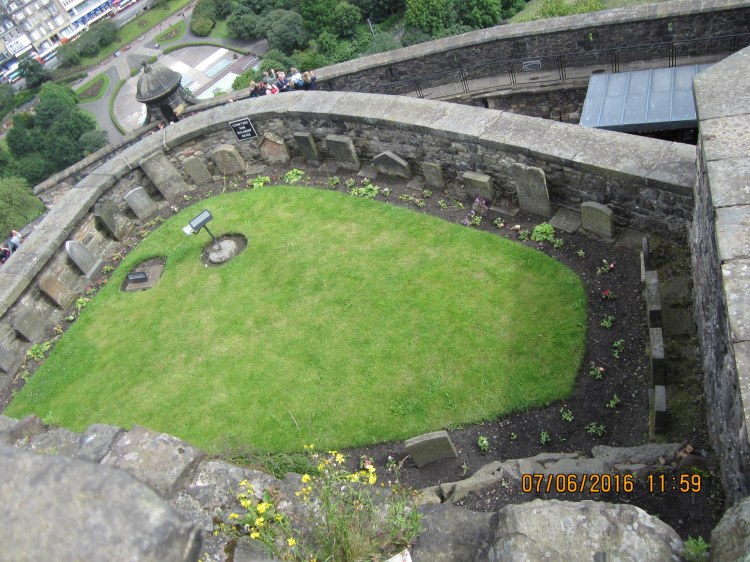
After that excitement, we liked the views from the castle best, along with the dog cemetery. I invested in a membership to Historic Scotland (£34.50 each) that will allow me to revisit Edinburgh castle and visit many others.
Emily (L) and Paula
Pet headstones
This was our first sunny day, and we had coffee on the Royal Mile, admiring the sun on the steeple of St. Giles cathedral.
There are already lots of things of note.
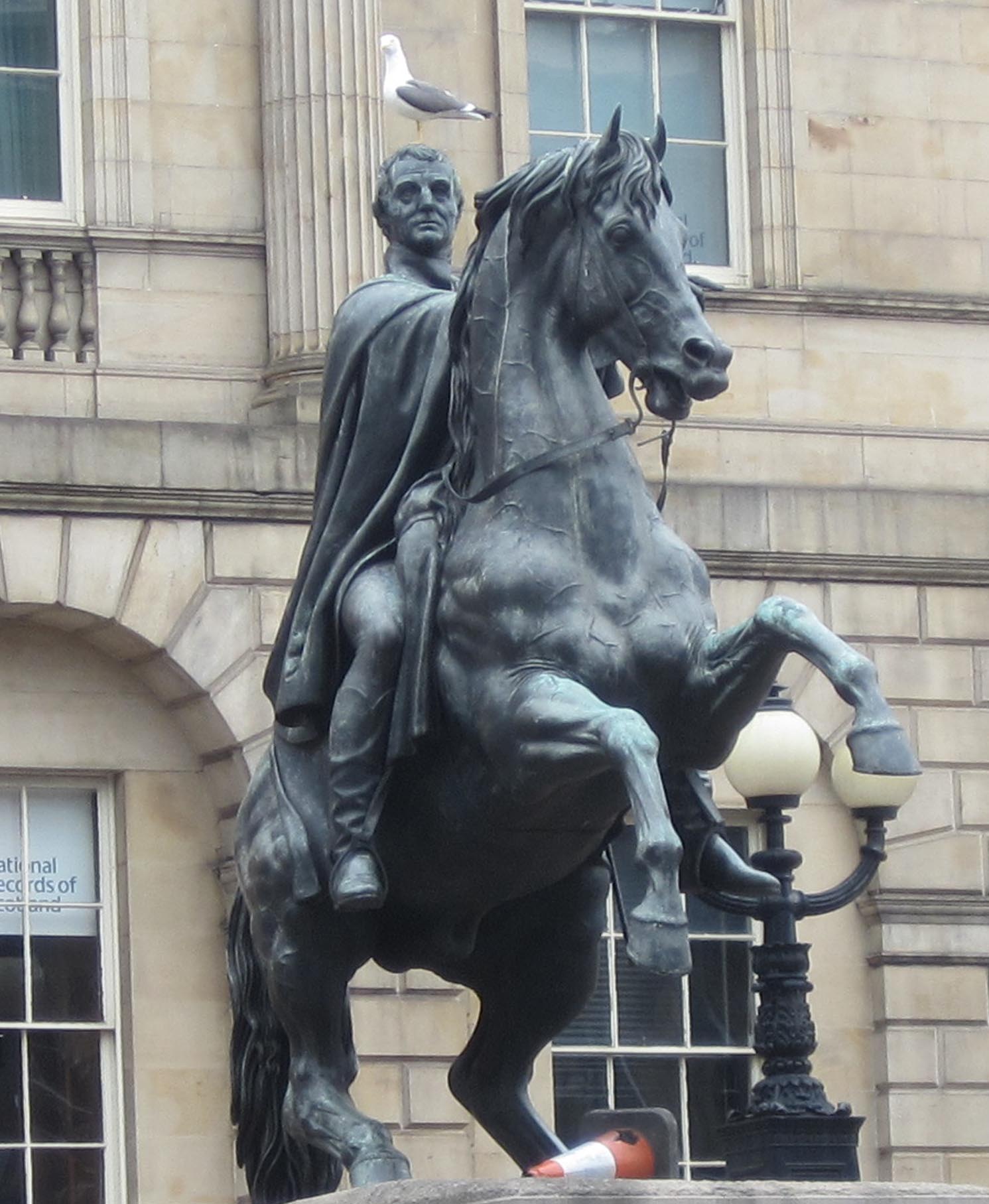
There are many, many statues of famous Scotsmen that always seem to have a bird standing on their head. I will be vigilant in documenting them–I’ve never been in a city with so many bronze men standing around on pedestals.
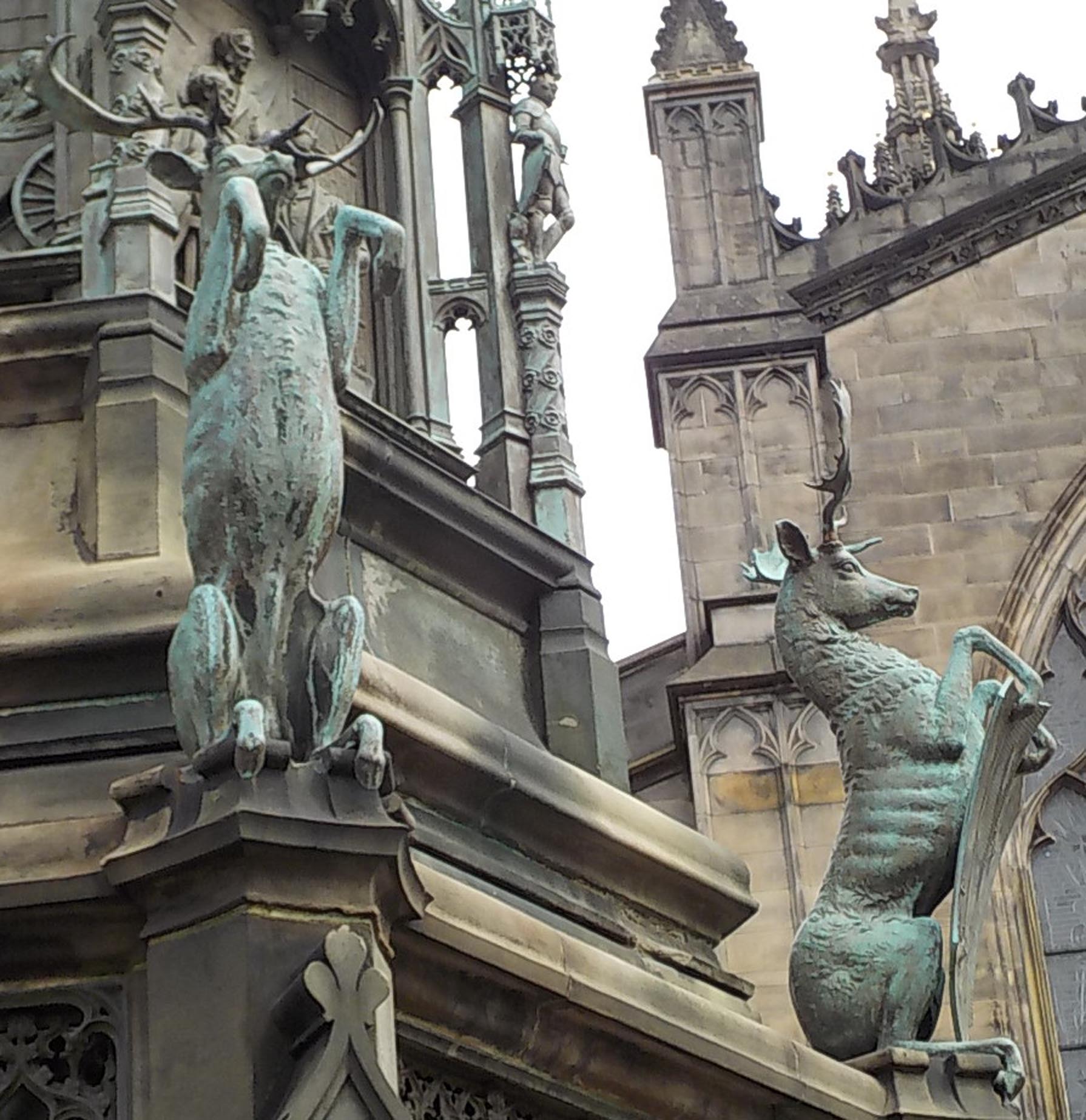
There are also animals, sometimes in preposterous poses. Here are some rearing elk.
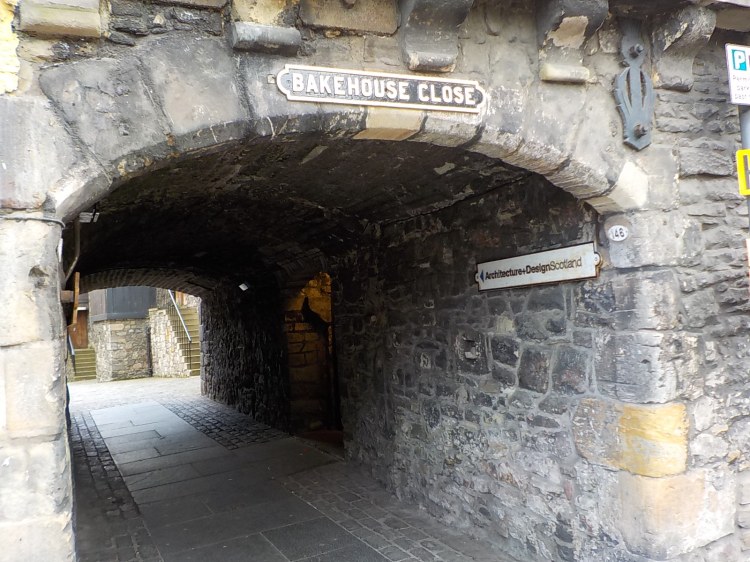
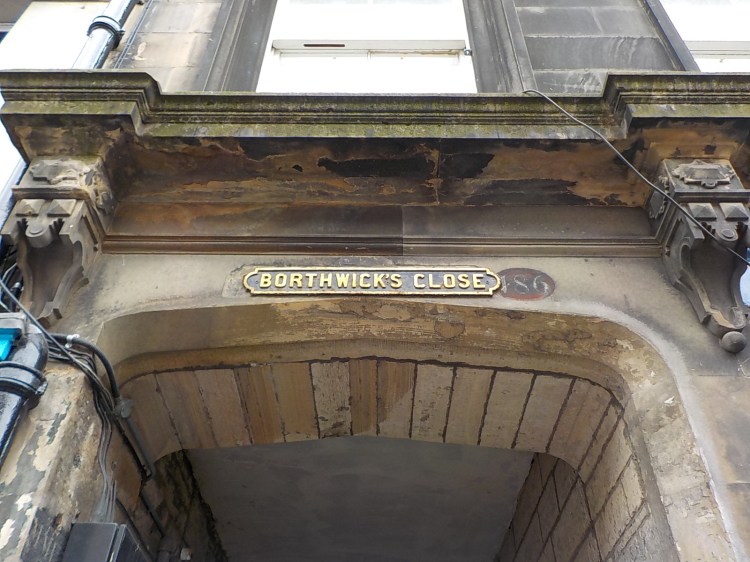
Narrow passages lead off the Royal Mile, each considered an alley, or close.
There are unusual shapes, too.
Curved facade
The Market Cross
Roof tower
And romantic views out over the city.
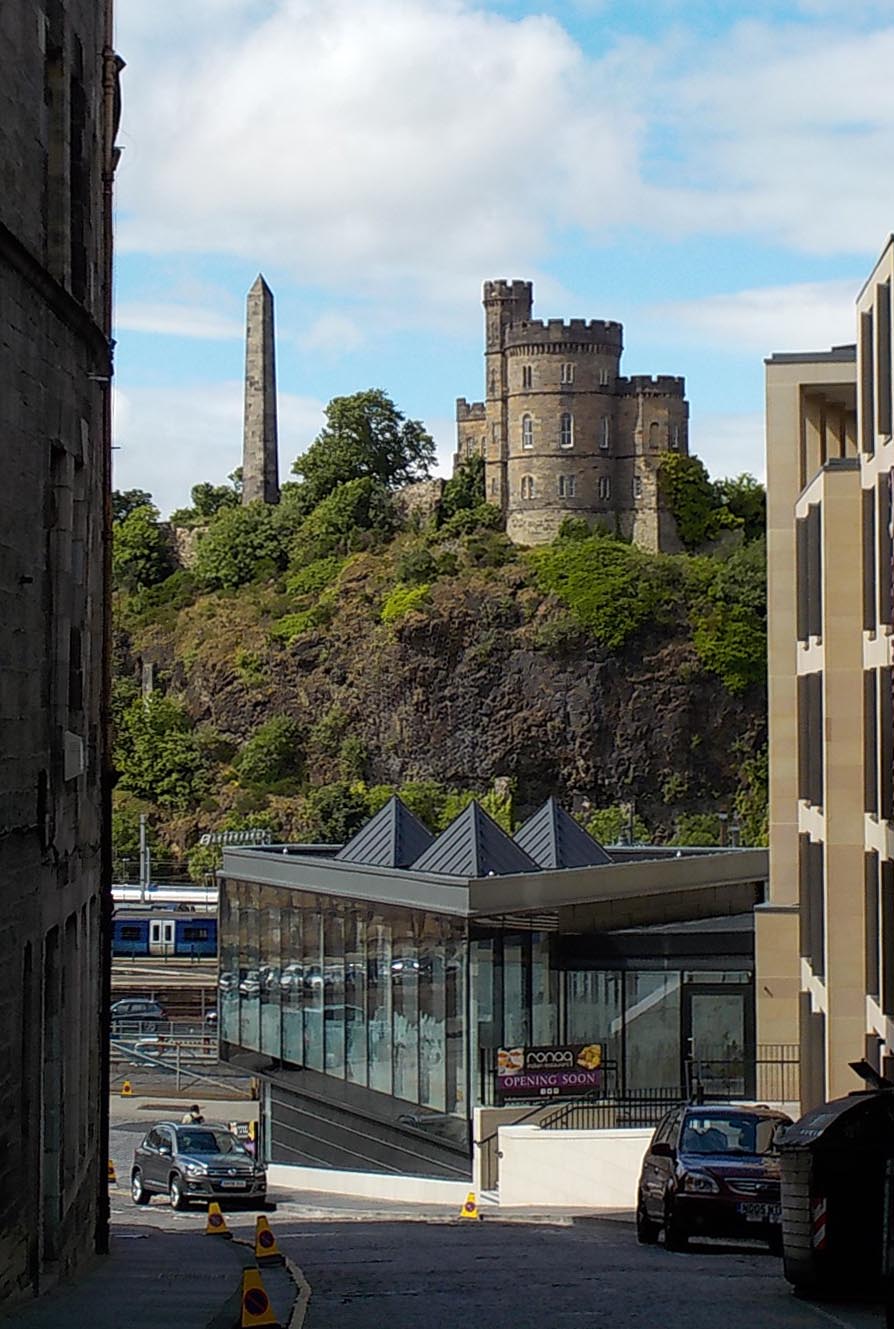
The old towers over the new, looking from the Old Town toward Calton Hill.
Our apartment is a recently renovated three bedroom, one bath place on Murrayfield Road, and it suits us very well. We are a short walk from the bus into Princes Street, the center of the city, and only a couple of blocks from a bus that goes directly to a large Sainsbury’s, where we can do almost all of our shopping. We’ve bought 4 week bus passes that give us unlimited bus/tram transport on Lothian Buses, including the airport bus (£27 each). Here are some photos of our new spot.
After a week of rest, Jonathan’s ankle still hurt a lot. I crossed the street to the Murrayfield Medical Office and asked about options and was told to go to A&E at the Royal Infirmary. As I was looking up directions I found a reference to the “Minor Injury Clinic” at Western General Hospital and looked it up. Yes! They deal with sprains and “routine fractures” (are there any?). We went down to the corner and were able to catch a cab promptly (it was not raining). The driver dropped us at the door of the clinic, the Porterfield Road entrance of the hospital, and we hobbled in.
It was a miracle. First of all, almost no one was there. Jonathan was seen almost immediately and sent for an xray. He hobbled off to get it, hobbled back ten minutes later and was called in about 5 minutes after that. His foot is not broken! It will mend on its own! No more ace bandage!
Saving the best news for last, your first visit to the Minor Injury Clinic is free, even if you are not Scottish, from the UK or the EU. Free once for anyone. Thank you, clinic and Great Western Hospital.
Rain and a lost suitcase notwithstanding, we are now settled in Edinburgh. A quick history review suggests that Edinburgh has been here for so long that it’s not clear when the first hut was built on the crag where Edinburgh Castle now sits. Bronze Age artifacts have been found in the area, putting people in the area before 750 BC, though occupation of the greater British Isles goes back to the Mesolithic, at least 8500 BC. People may have been able to arrive on the islands on foot across what is the North Sea today.
By the Middle Ages there was a hillfort on the site, and the settlement and surroundings became part of the Kingdom of Northumbria. A long and complex history of kingdoms that grew and fought, rising and falling across the centuries developed into the historic record that most of us only know from movies like Braveheart and the novels of Diana Gabaldon (Outlander). I won’t even try to summarize Scottish history, as I’ll be sure to overlook something. This is a story that has something for everyone. I encourage you to google a question about Scotland.
Paula will only be here until Thursday, so we set off to see a little of the city once we had a good night’s sleep. We started with the Royal Mile. It begins at Edinburgh Castle.
Here I am, blending in.
We didn’t realize there was a changing of the guard here, but there they were. We’re also in Edinburgh when the Queen is in residence at the opposite end of the Royal Mile, at Holyrood Palace. She opened the session of the Scottish Parliament just as we arrived.
The palace is off limits to visitors until July 10, by which time the Queen will have gone on to her other activities, or another of her Scottish palaces.
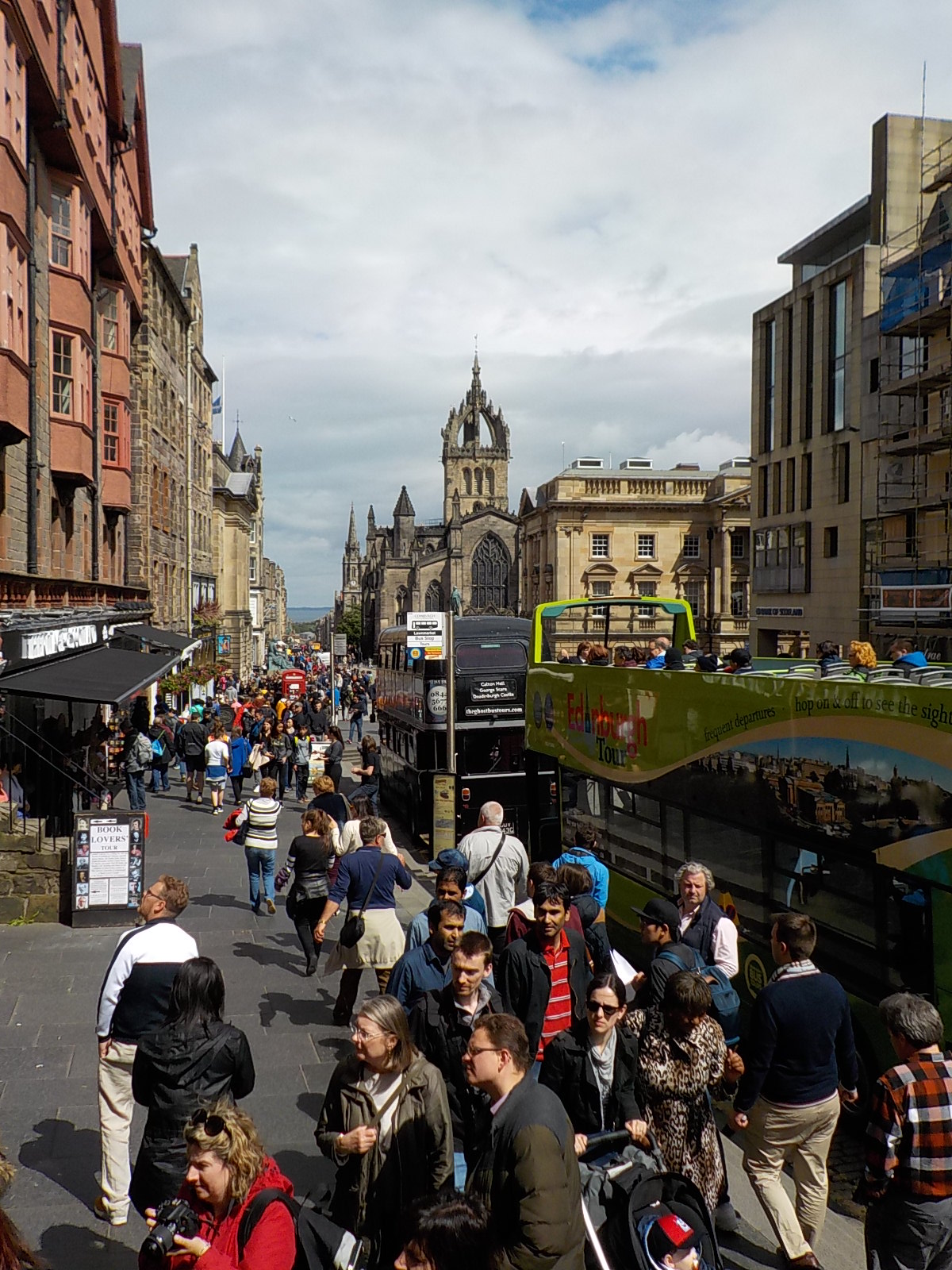
The Royal Mile between the castle and the palace is full of lovely, turreted and elaborately dormered windows. From here you can see the unusual “crown” steeple on St. Giles cathedral. It was a sunny Sunday afternoon and lots of people were out.
The ground floor of each hosts a tourist shop of some kind. We saw more tourist shopping in one afternoon here than in a month in Norway. It will be easy to find postcards here.
This was one sight as we approached the Royal Mile. As a fan of the Isabel Dalhousie series of novels by Alexander McCall Smith, I was reminded of Isabel drinking her morning coffee and reading The Scotsman.
I went to read the Scotsman and found that the weather forecast is for rain, rain and more rain. Maybe I’ll stop reading the paper.
Living in northern Norway is an exercise in planning, because it takes over 30 minutes to get to the nearest store of any kind, and an hour to get to a place with even a very modest shopping area. There are two principal grocery chains, REMA 1000, and Co-op. Their offerings are similar. Most stores take credit cards with a chip, though at some gas stations you need to pay inside unless you have both a chip AND a pin (we have chip/signature cards).
Surprises:
Typically people purchase frozen meat. Don’t count on fresh meat being available.
In our area, most fish in the store was dried or frozen. If you want fresh fish, you need to go fishing. That’s a great idea, but then you have to fish until you get what you want.
Ocean fishing is permitted anywhere in Norway if you plan to eat your catch. A fishing permit is required for lake and river fishing.
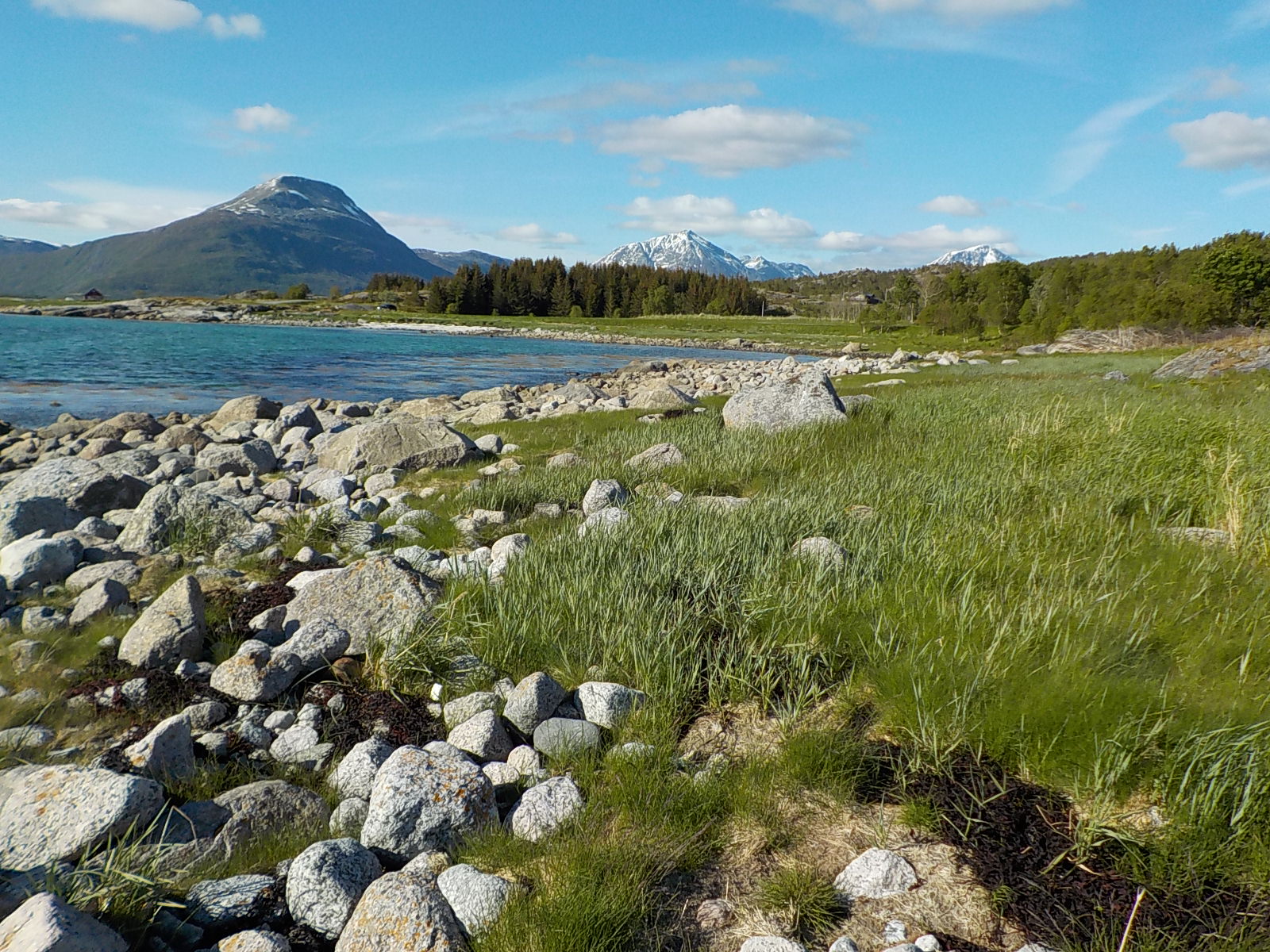
The coast is open to all. You can walk along the shore anywhere except posted military installations.
Speed traps on the highway. Just as mean-spirited as any you’ve been caught in at home. They are aimed at those unfamiliar with the area and tourists.
The self-serve economy. There are many things that you have to do for yourself even it you’d rather not, because there just isn’t anyone to do them or to hire to do them. At the airport, for example, there is no staff at check in. You check yourself in, weigh your own bag, put on your own tags, and heave it onto the conveyor belt. (There was also no security check.) Our host said there was not anyone available to do weekly cleaning at our rental, or to mow the lawn. If you think about it in the context of paying everyone a living wage for their work, perhaps that’s the explanation. After Jonathan sprained his ankle, however, we really wished there were alternatives.
No surprise, but true:
Everything is expensive. If you look at the prices, you won’t eat. We had delicious blueberries, some memorable strawberries, and a pineapple. I noticed that our excellent red Thompson Seedless grapes came from Egypt.
Gyetost (whey cheese) is strange (brown, a bit sweet) but delicious, especially on hot toast. If you don’t think you’ll like it, try White Gyetost, which has a milder flavor.
Alcoholic beverages are startlingly, shockingly, expensive. Inexpensive beer is $25 per six pack. Approximately three quarters of the price is the tax.
Driving
Distances are great, everything is far from where you are in northern Norway. If you make plans to visit a lot of well-known places, you will be on the road for many hours.
There is no tolerance for drinking and driving. Everyone pulled over gets brethalyzed, no matter what hour of the day or night. The legal limit is .02, so designated drivers are a must. This has been true since my first trip to Scandinavia in the 1970s.
I got caught in a speed trap, going 80 kmph (50 mph) in a 60 kmph (37 mph) zone. The fact that the radar was set up in a short zone of 60 at the end of a long downhill posted 80…. Well, never mind. The bad news is that tickets are costly, and the only good news the policeman had for me was how lucky I was not to be going 1 kmph faster because THEN my fine would have been 50% higher. Lucky me.
Roads can be narrow, some stretches are 1 ½ lanes shared by two way traffic, with pullouts for one vehicle to pull aside for the other. No one drives very fast (see above). Plus there are speed cameras, though those are posted in advance.
Weather
July and August may the best months to visit. There is more sun. We heard that this June was unusually rainy, but I’m not sure I believe it. A typical week included 2 sunny days, 3 cloudy days possibly with damp mist, and 2 rainy days. On the other hand, we only used bug spray twice, and I suspect it is a daily necessity in July and August.
The weather can change rapidly, for better and worse. One day the sun came out and the temperature rose more than 5º C in 12 hours. We were delighted because it had been cold. Conversely, our first two days were sunny and warm, followed by 3 weeks of cool, often windy weather with temperatures as low as 9º C. I gratefully wore my new fur hat from the resale store, and all my layers of clothing.
Cell phone service
You may be happiest if you can use your US cell phone as you travel. It is expensive but usually works. We change SIM cards in each country, with fair results. Norway was the exception. Jonathan’s phone didn’t always work (though the coverage was fine, he got an error message when he dialed), and mine never worked. The lesson is a basic one that all websites tell you. 1) Don’t be in a hurry when you purchase phone service. 2) DO NOT leave the place where you purchase your SIM card until you have made a call on it, and tested that the data portion works. 3) If you don’t, remember that I told you so.
We made an impulse buy of phone service in the Evenes airport from a young man who didn’t mention that he was going to leave us in order not to miss his train home. So he left, encouraging us to call the help number. I suppose I could have tried that, but when I stopped in a phone store I got no help, and I was told that my phone wasn’t fully unlocked (not true).
Community
People are as varied here as anywhere else. We had delightful conversations with people we met at the Sunday café (noon-3 pm one day per week in the summer), where we ate waffles, drank coffee and enjoyed the fact that all Norwegians under the age of 70 speak excellent English, even when they say their English is not so good.
Many people will smile and nod without engaging in conversation. Norway is very much a mind-your-own-business society, and many people will answer questions if asked, but may not be chatty. We waved at passing drivers and they waved back.
More on having a sprained ankle….. There was a long walk between flights. Our first leg, Oslo to Copenhagen, landed at the end of one terminal. Our next leg left from the end of another terminal that also required passport check. I went ahead (a bad idea as it turned out) and then tried to get an electric cart for Jonathan. By the time I got it, he was at passport control. When we went through, we turned out to be at the start of a very long walk to the gate. Fortunately, Paula had contacted the gate staff and the plane waited for us. We weren’t late for the flight, but we arrived at the gate with only a few minutes until flight time, and the doors are often closed 10-20 minutes before the scheduled departure. We had already found out that our seats were SASGo, the cheap seats, and not SASPlus as they had been on our arrival in Norway. That meant less room and no food. Not a problem, fortunately, as Jonathan was on the aisle and we weren’t starving.
SAS–THE uH-oH FLIGHT!!!
Our welcome to Edinburgh was marred by the arrival of our luggage. That is, all of our luggage EXCEPT Jonathan’s suitcase. I went to the desk to submit a report and found two staffers, only one of whom could handle SAS issues. He was on the phone for a long time, 10-15 minutes, with the group before me. He then said he couldn’t be in two places at one time. “If you have lost luggage to report, follow me.” So I did. He then walked me and another passenger out of security without telling us that was happening. We got near the exit and I said, “What about the others in my party?” His answer, “You didn’t say you were with a group.” He said it was already too late to go back, at which I pointed out that I didn’t even have my passport. In the end, I got him to call Paula’s cell phone to tell her and Jonathan to come out of baggage claim and meet me. At the end of a half hour after the last bag came off the carousel, all I had was a strip of paper with a phone number. He said to call and collect our reference number for the lost bag, he couldn’t give it to me because it involves typing in all the information on the form I’d filled out and he was too busy. “Be sure to leave a message, because I can’t always answer,” was his last comment.
That was Saturday afternoon at about 4 pm. It is now Monday at 1:30 pm, Jonathan made about a dozen phone calls, mostly with no answer despite the website saying that baggage handling works seven days a week. To get the reference number for his bag he had to call SAS in Stockholm (possibly outsourced to New Delhi) where you are charged 18 cents per minute to speak to an agent. The young man in Edinburgh was just not going to answer the phone, I guess. We now have our reference number but no further information on where his suitcase might be. More updates as they happen. I am doing the laundry in our new flat so that he has more clothing. Fortunately, I had some of his dirty clothes in my suitcase, so he is not utterly without clothing. We may have to do some shopping.
Occasionally, people ask how we will deal with illness or injury as we travel, particularly since US insurance rarely applies outside the US. Travel insurance only covers injury during travel. My macular degeneration is considered a chronic condition and therefore not covered (see amdontheroad.wordpress.com).
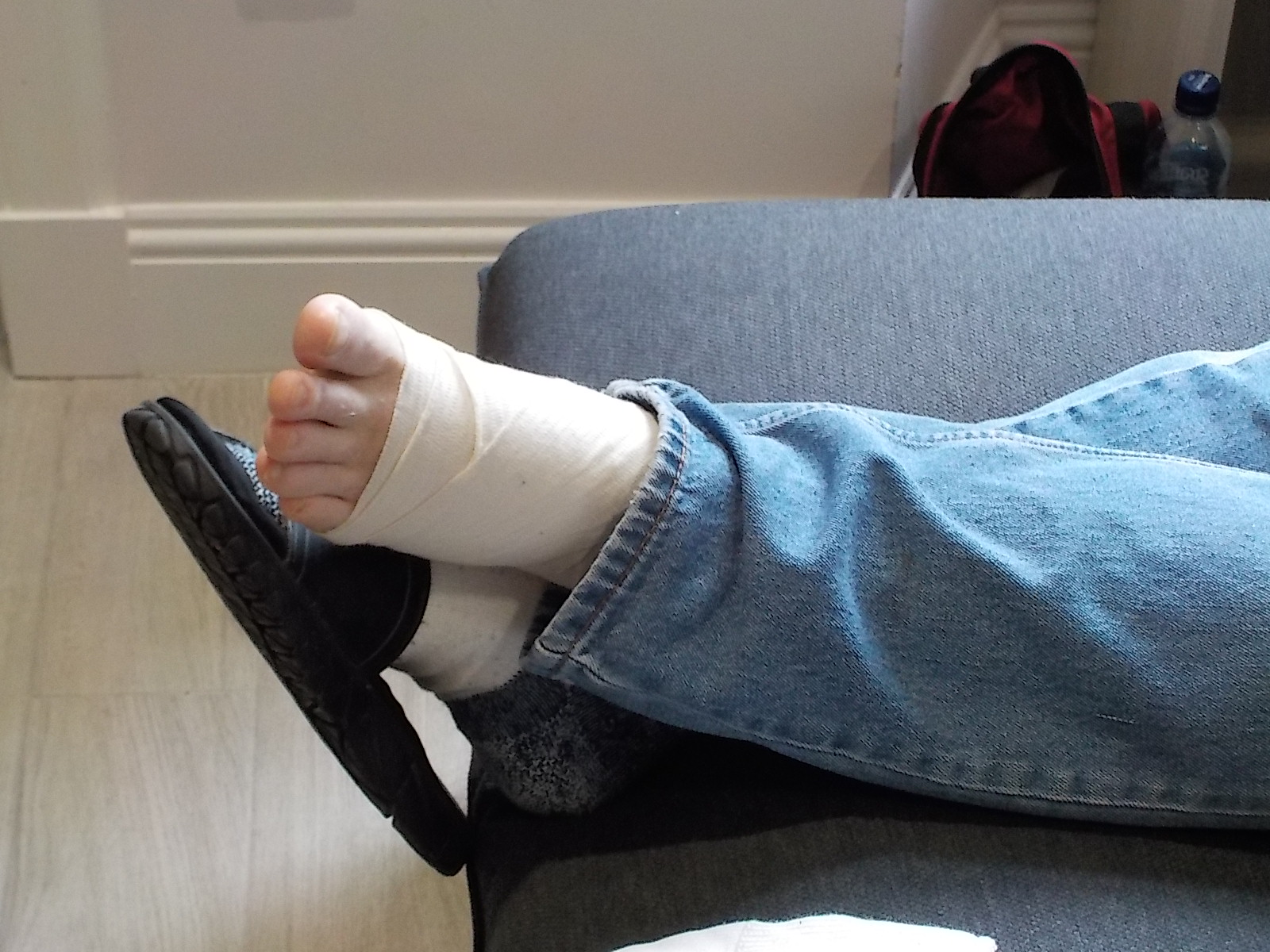
Jonathan sprained his ankle on one of our last days in Kjerstad (June 28). We’d already reserved 2 nights hotel in Oslo to have a day in the city. The Oslo airport is a 40 minute train ride from the city, and there is a lot of walking in a one-day visit, so we had to rethink.
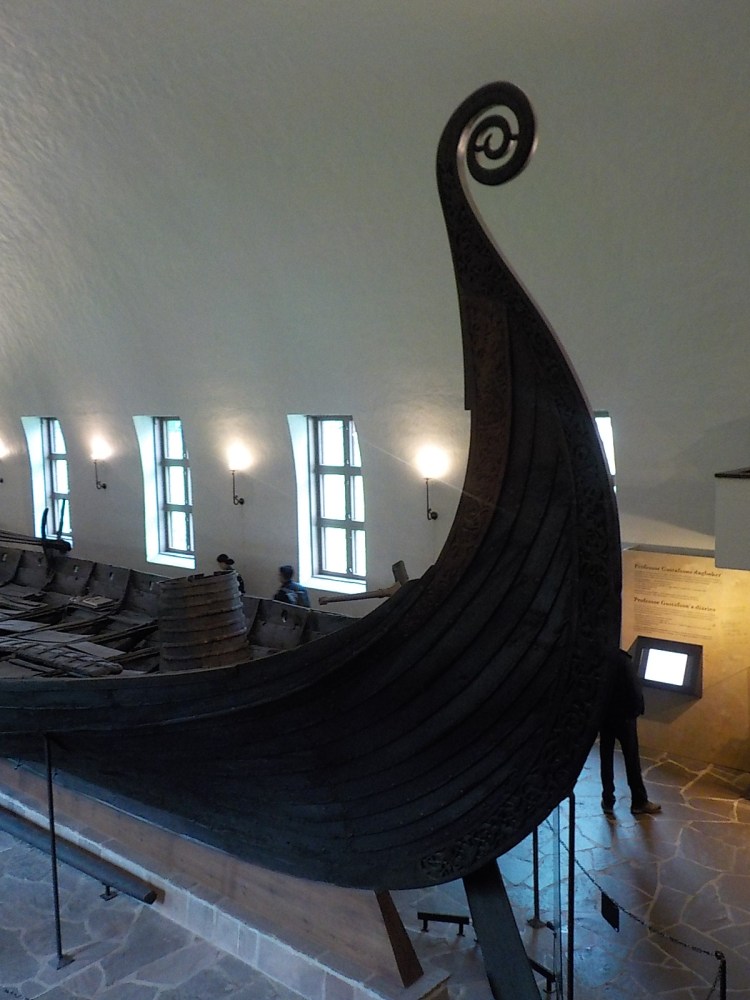
We rented a car and each chose a place we wanted to see, settling on the Viking Ship museum, the stave church at the Norwegian folk museum and the Vigeland sculpture garden in Frogner Park. The Viking ships are impressive, even though the gold and other loot was long gone by the time they were excavated.
Jonathan is sad, just like the sad-eared animal.
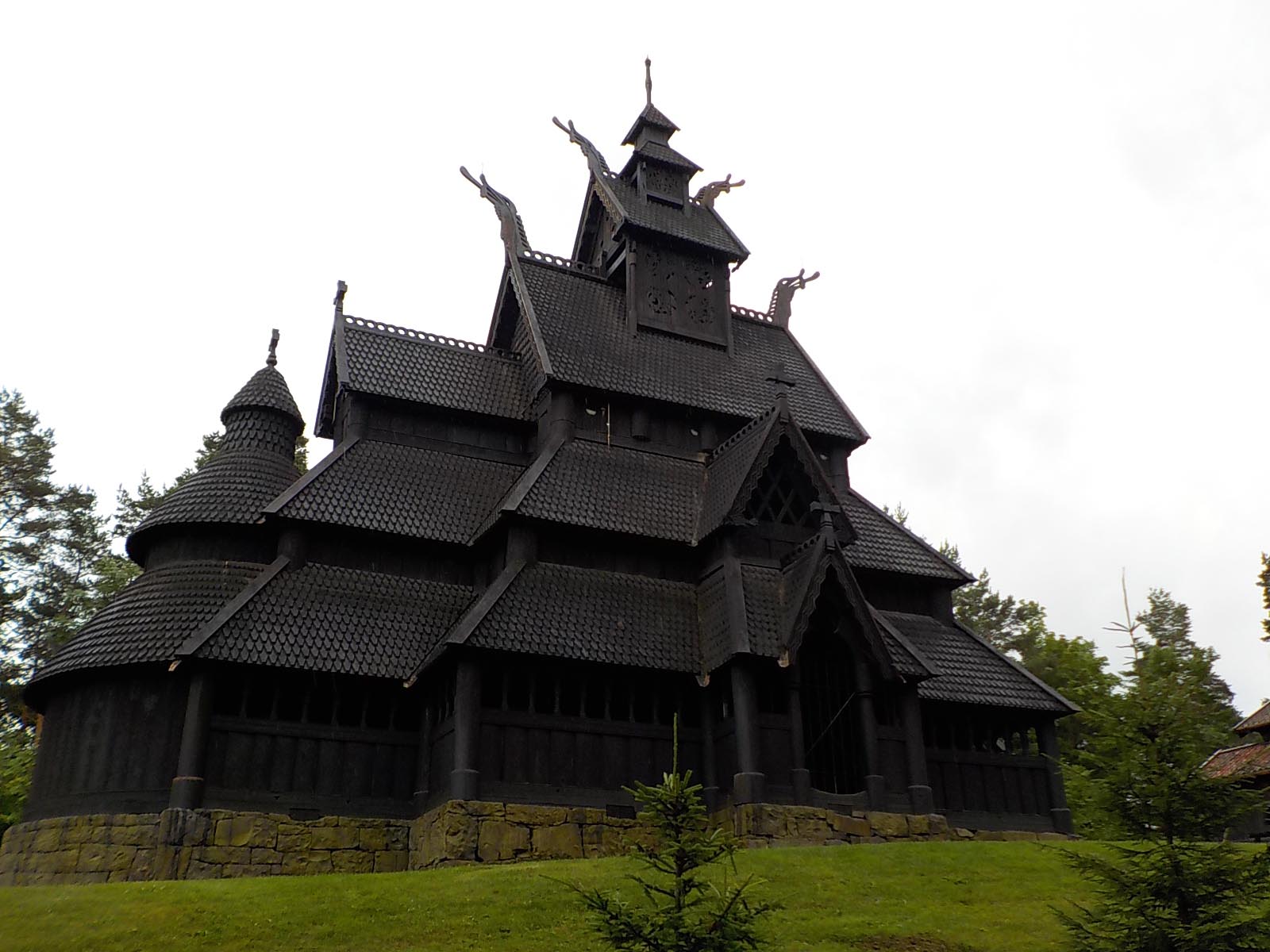
I’ve wanted to see a stave church since I wrote a paper about them for an anthropology class in college. The oldest portion of this one dates to about 1200. It was originally built in Gol, Norway and when the city was going to tear it down in 1880, the king, Oscar II, had it saved and restored in its current location among many other structures from around Norway in the Norsk Folkemuseum.
Jonathan rested his foot in the cafe while Paula and I did a bit more walking around the Folkemuseum. The costumed people manning the stops were well informed and we chatted with the man in the stave church for a while, the the silversmith and the pottery studio. It was raining in earnest by this time, so we headed to the cafe for a few minutes before leaving.
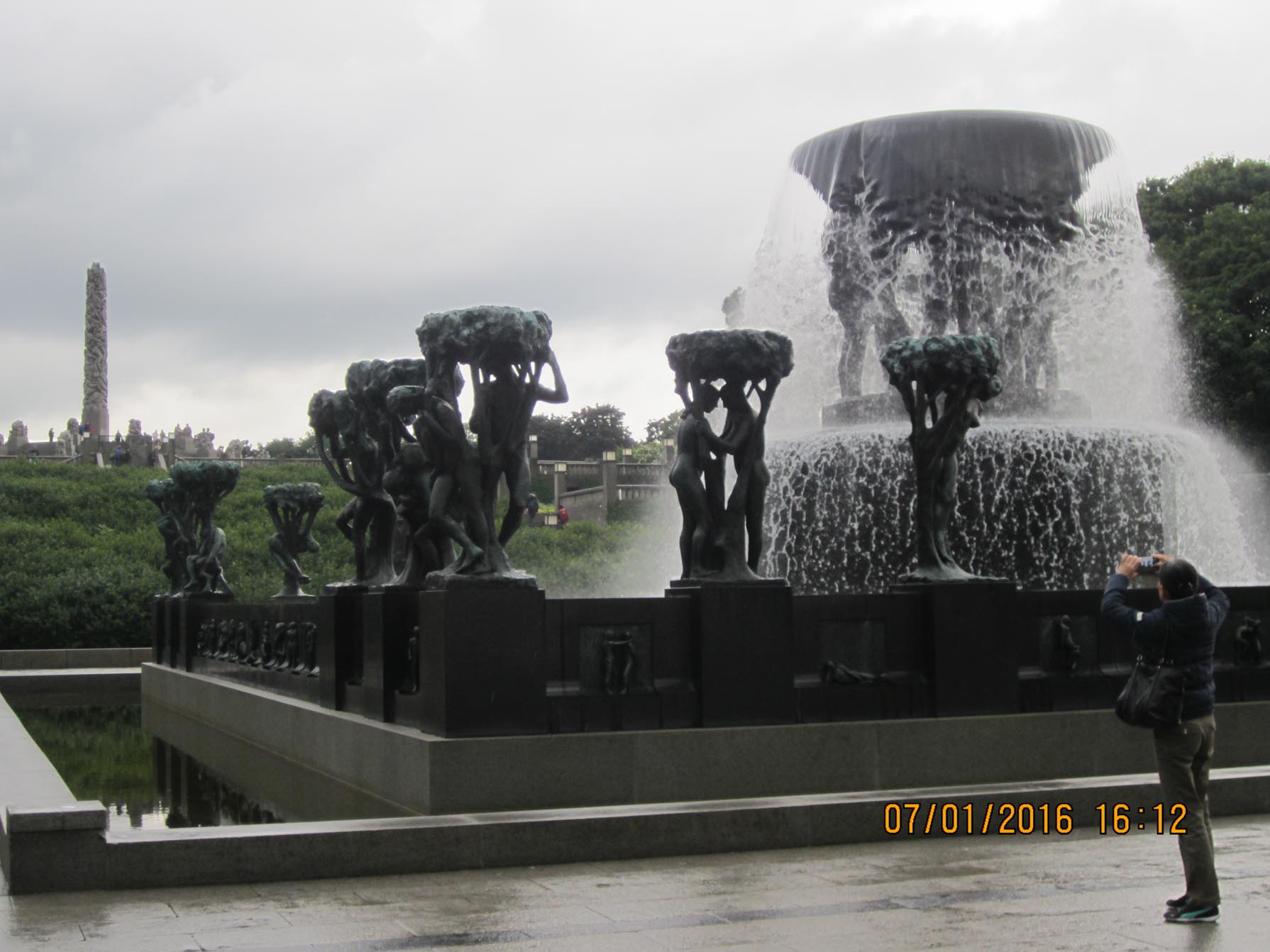
Our final tour stop was Frogner Park to see the Vigeland sculptures. Jonathan was only able to manage a short walk, though we pulled out our binoculars to look at birds splashing about in the rain.
From there we went to an early dinner at Markveien. It was delicious (see Jonathan’s review on TripAdvisor). We headed back to the hotel, having made the best of a day that could have been much more difficult. We were happy to have the car in the morning to get us back to the airport. Our flight was not until 11:40 am, so we had plenty of time to get there and give Jonathan time to walk slowly to the gate. We successfully spent the rest of our Norwegian kronor, to the last one.
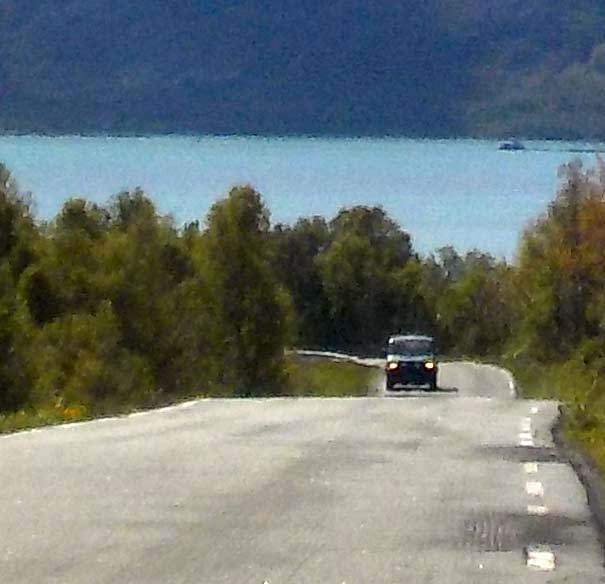
Tjeldoya Island looks deceptively empty. On the day we drove to Lodingen we were on the opposite side of the fjord and Amanda pointed out that there are many houses on the shore of Tjeldoya that you don’t see from the narrow road where one driver often has to pull over when two vehicles meet.
Reindeer crossing.
Car coming. Who will pull over?
Despite this rural setting, there are quite a lot of people on the island, especially in the summer, and many communities hold events. Kjerstad is active, holding a Sunday cafe in the small building that works as a community center.
On Sundays from noon-3 pm you can stop in for waffles or pancakes with jam and sour cream to top them and a beverage (soda, coffee) or an ice cream. The few indoor tables have been full and the heaters running when it was cold out this week, but lately people sit in the sun on outdoor benches and picnic tables. I took advantage of the women who run the event to find out the answers to my recycling questions (!) and we chatted about the weather. Even the woman who said her English wasn’t very good spoke excellent English.
During the week we saw a new poster on the building. After some searching and translating, we found that it is by a theater group that tours northern Norway in the summer, performing plays that incorporate elements of Norwegian history. At the following Sunday cafe, when we went with Amanda and Jimmy, we found out more.
1880 — Amerika: A tilbud you can’t refuse. [That is the actual title of the play.]One of the actors in the theater group is from Kjerstad, part of the reason it is a stop on each summer’s tour. (He’s the one holding the fish.) I am so sorry we will miss this. The third week, we returned to the cafe with Paula, and met the actor’s brother, who lives in Kjerstad. Each week we learned something new. We also went fishing off the pier after finishing our waffles.
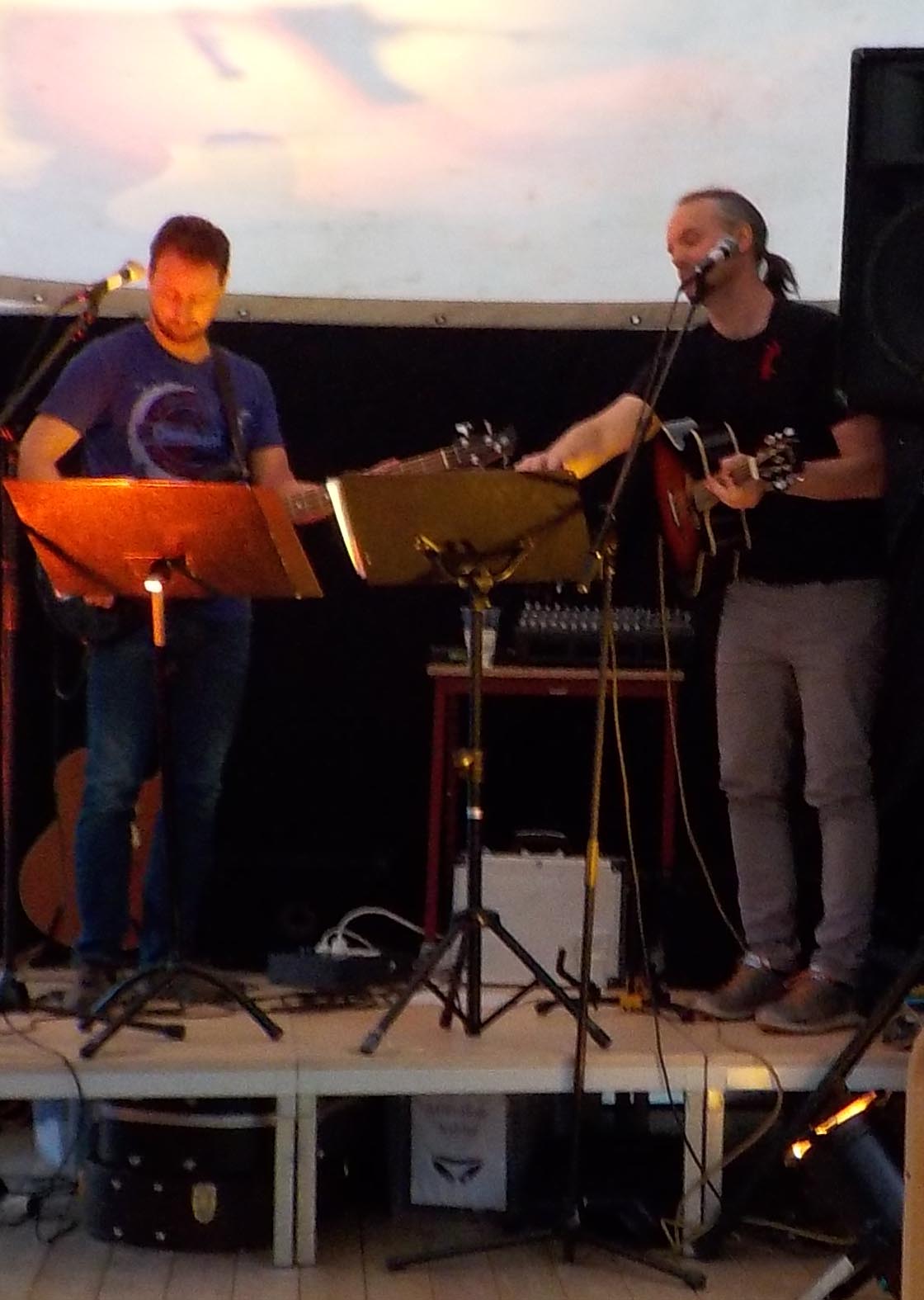
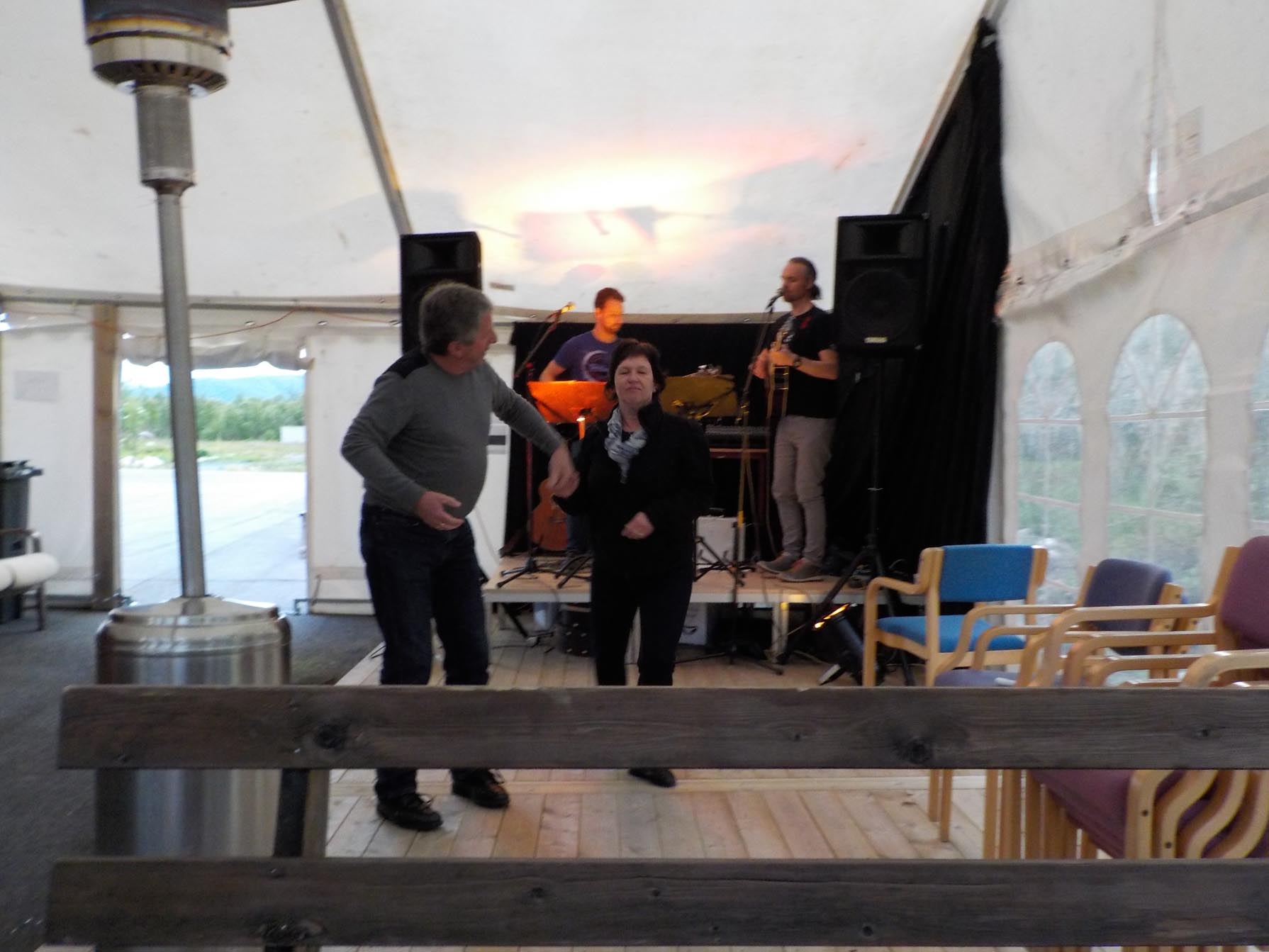
Last Saturday night was a pub night at the same place in Kjerstad, the community center. We were told it began at 9 pm, so we arrived at 9:30 pm. We were almost the first people there, but we got drinks and sat down and chatted with two men who turned out to be the musicians. Both are teachers in Harstad, one focusing on English though teaching other subjects, most recently to 6th graders. The other teaches a range of subjects to middle and high school students. They play for fun and pocket money. This was a last minute event for one or both of them. Someone cancelled somewhere along the way and one or both of them were a last minute addition. It didn’t matter to us because they were very good, playing bass and guitar and singing, mostly in English! The songs were familiar rock tunes. I’m sorry there was only one of these events during our stay.
We left them to tune up and took seats for the music. There was some wrangling about the space heater. (How many men over 65 does it take to start a space heater?) I’m not sure. They were not crazy about the foreigner figuring it out, but later we all toasted one another.
We’d be dancing with them if Jonathan hadn’t sprained his ankle.
Jonathan recognized a woman at the next table from when we turned around in her driveway (How did he do that?) and we had one of those funny conversations, “Oh, YOU were the ones in the dark car!” “Yes, that was us.” “I was mowing the lawn.” “Yes, on that riding mower.” “Hello.” (We shake hands and smile). Then we discussed how we happened to be in their neighborhood–Dragland–yet not related to anyone there. It seems that most people visit because they have a relative there, so our new friends assumed we must be some newly arrived relation of a Draglander. Since we had this conversation, I found that there is an Association of people named Dragland who are actually from Dragland. They all have a common ancestor.
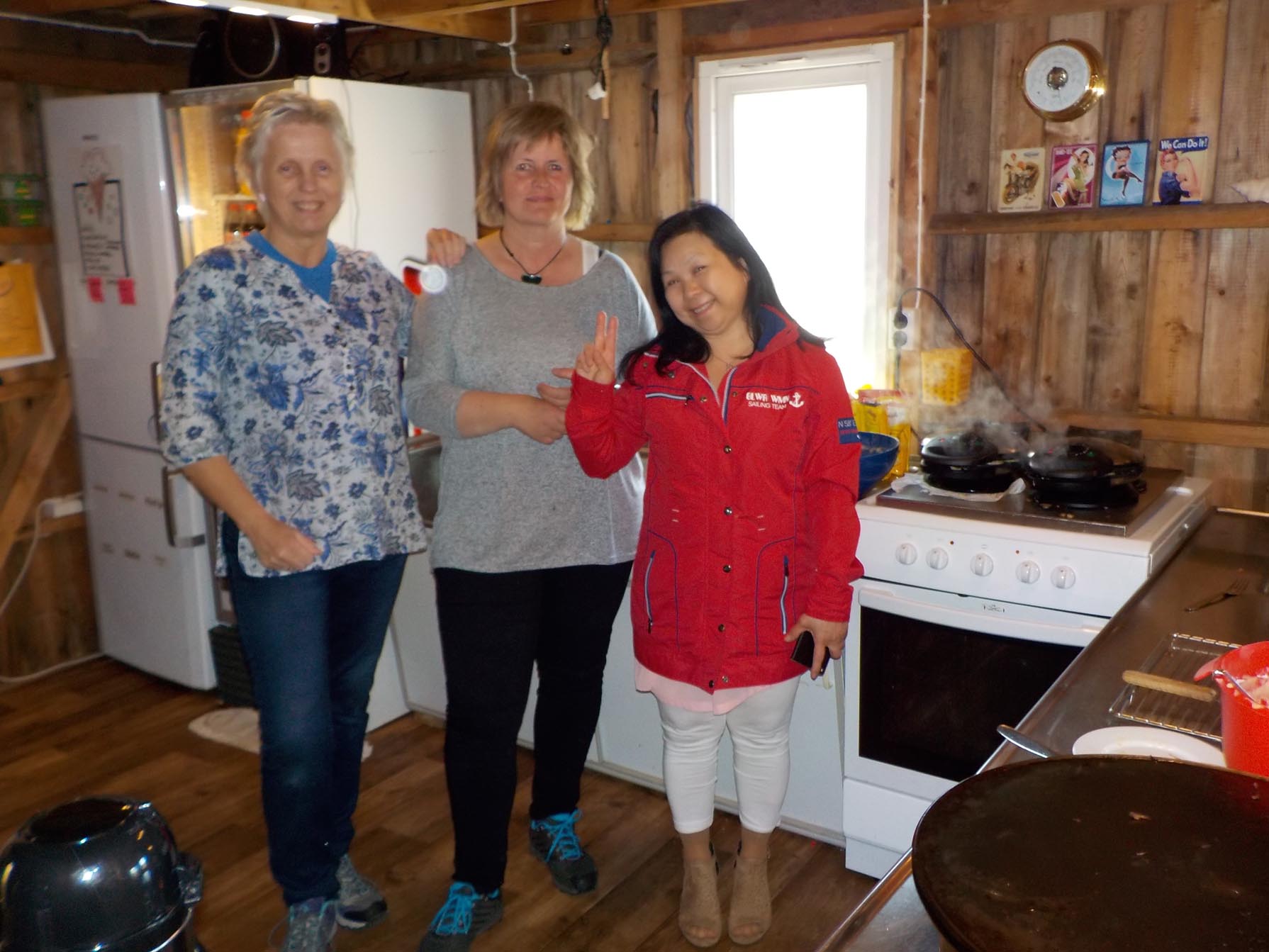
The next day was our last Sunday cafe before leaving, and I asked if I could have a photo with the ladies who run it. They were all delightful. The woman on the left is from southeast Norway and said that though it appears isolated, people of the north have always been able to fish, and never starved like her ancestors who were farmers. She shook her head as she described her grandmother, poorly nourished, with ten children, not all of whom survived. I mentioned the bread made with crushed tree bark to extend the flour that was made in Sweden during famines. “Oh, yes, bark bread. They made that in Norway, too.” Fortunately, times have changed. How much we appreciate their community events!
Walking along the furrows of a plowed field after a rain is the best way to find artifacts, and there have been archaeological finds from Neolithic (Stone Age) farmers along the north side of Tjeldoya. There are photos of stone axes and spear points in the “Tjeldsund” booklet I mentioned in the last post. A wistful voice describes these 5000 year old finds. “Most of these artifacts have been found by farmers during the clearing and plowing of fields. Systematic investigations would provide a much more complete picture….” There don’t seem to have been many professional excavations in this region. Archaeologists probably come by only when a big grave turns up.
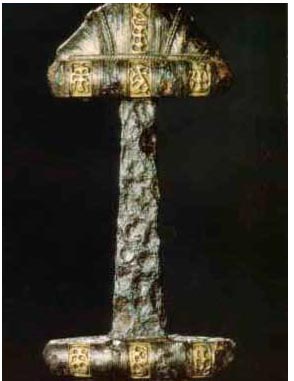
Dramatic archaeological finds are reported from graves in Ripelen, Sand, and Steinsvik, hamlets on Tjeldoya where burials from as early as AD 400 were found, extending into the Viking period and up through the ages. Best known among these is the Steinsvik sword, from an Iron Age grave (early 800s) that was found in 1902. The sword is now in the archaeology museum in Oslo. The tomb also held this chieftain’s ax and spear, along with agricultural tools, knife and scissors, symbols of his leadership.
The sword is on the left side of the left hand photo, before restoration. The right hand image is after restoration. It was difficult to find a photo–the right hand photo is from a tourist brochure. Sword collectors have a strong interest in the Steinsvik sword, and there are a number of recreations of it, but all the photos are copy-protected. The gold detail is of stylized animals and is part of the original sword.
Another intriguing find is that of a woman buried with “knives, scissors, a key, a needle and a bone comb. To her dress was fastened a rare bronze figure of an animal, around her neck was a chain of 55 glass, amber and bronze pearls [beads], and 16 small shells.” The shells are the unusual part of the necklace because they are cowries.
The nearest source of cowrie shells would have been the Mediterranean, indicating the distant reach of trade even in the 8th century, when the woman was buried.
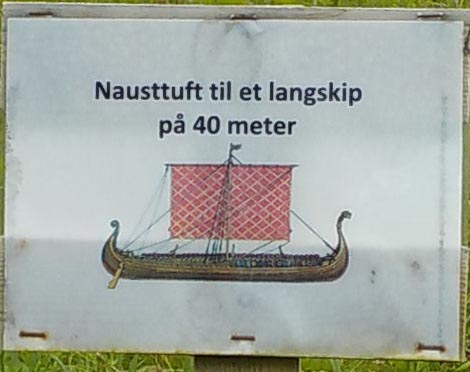
Of the archaeological sites mentioned, only one is clearly marked on the map and prepared for visitors, the Sand Viking Boathouse site. There is a small parking area and a marker, as well as a paved trail past the mounds that are the remains of a very large boathouse. This is considered significant, because a 40 m boathouse could house as large a Viking ship as has ever been found in Norway, suggesting an important person lived nearby. The large boathouse was later divided in two, for later, smaller boats.
Each mound is one side of the boathouse.
This is Lofotr, the 23.5 m replica Viking ship at the Viking Museum on Vestvågøy in the Lofoton chain. The boat housed in the Viking boathouse at Sand would have been almost twice as long as this one.
A second boathouse foundation is from later, medieval times. The boat kept here would be about the size of the Lofotr, shown above.
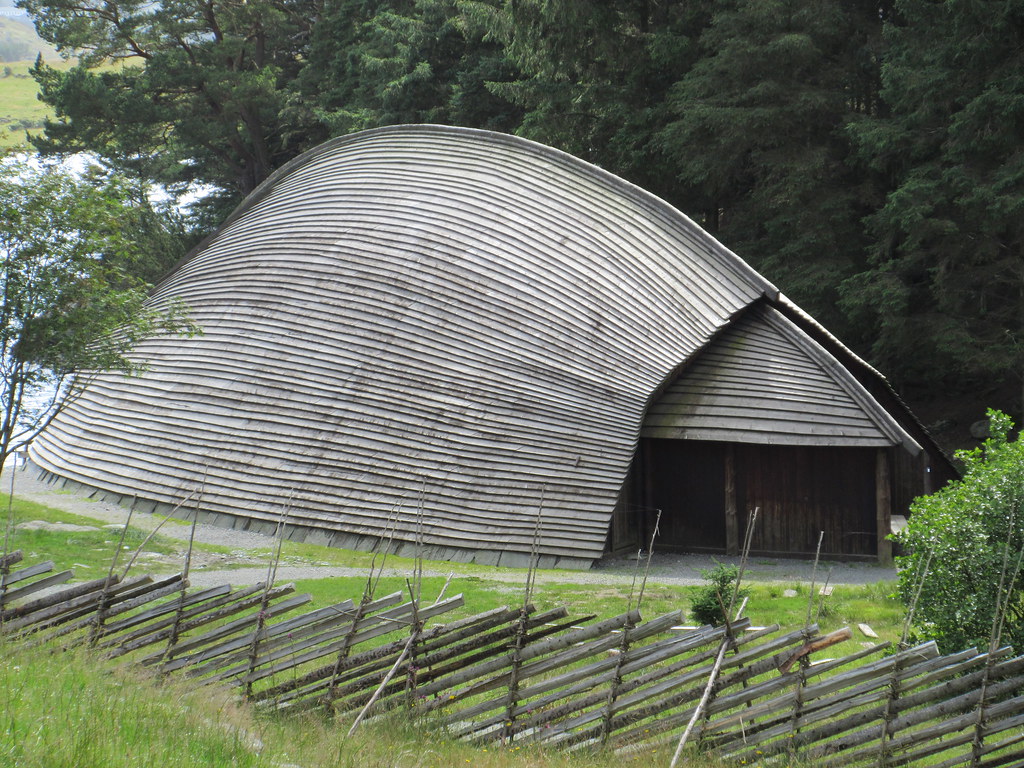
This is the reconstructed Viking boathouse in Avandsnes, Norway. The boathouse in Sand might not have been as elegant, but it would have been even larger than this one. These finds show you why Viking era archaeology can be so interesting, with large timber buildings. Even people who lived far from the main centers of trade obtained unusual objects. Though a village site might yield only remains of animals and a few tools, it also might have a few beads of Baltic amber or a shard of Roman glass.


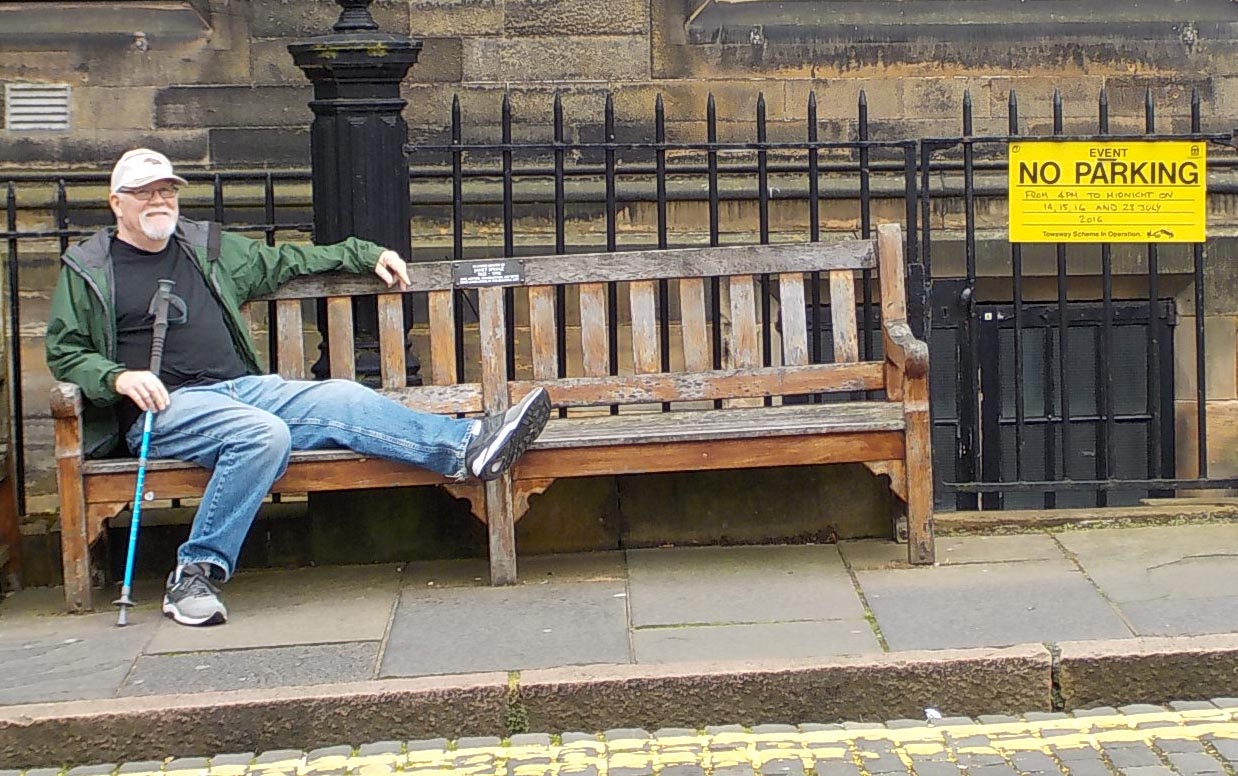 Like the Stone of Scone, resting.

















 Llywindatravels 2025