It turns out that men on plinths is not just an Edinburgh phenomenon.
Surprise!, it’s Robert Burns (again). This is in the center of Dumfries. There is really a passion for Robert Burns. In Moffat, the Black Bull pub that has a plaque on it because Robert Burns wrote a brief poem on a window pane. It also has a replica of the pane.
In southern Scotland, animals are an alternative to men on monuments.
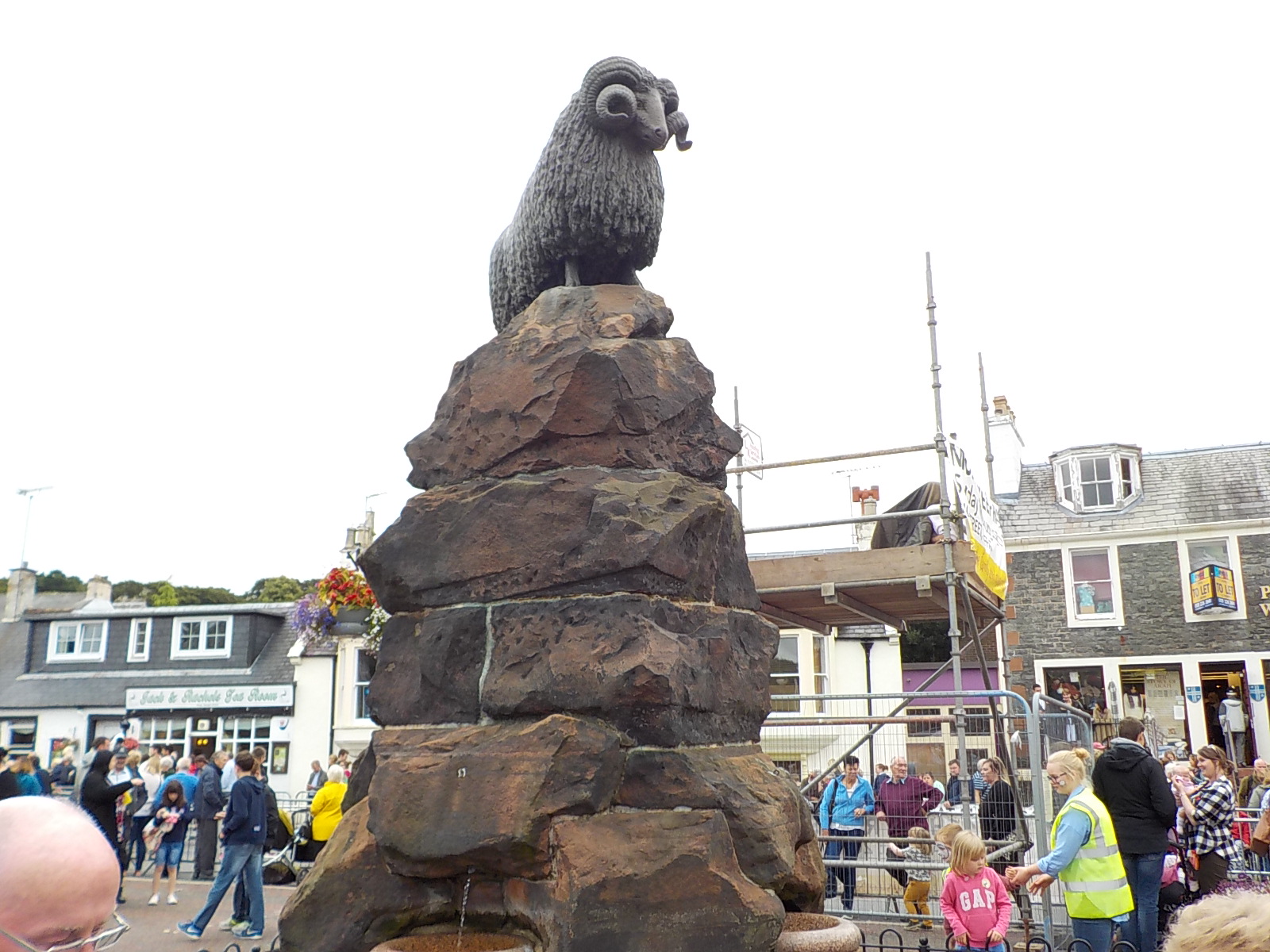
Moffat’s sheep
Kirkudbright has kelpies.
Kelpies are malevolant water spirits in Scottish mythology that are impossible to tame, but if caught, have the power of ten horses. This story was recast by artist Andy Scott as two monumental horse heads 30 m/98 ft high that now stand by a canal in Falkirk, Scotland. The figures have become so popular that a pair travel around Scotland, spending time in many communities. This summer a pair of kelpies is in Kirkudbright (Ker-CUD-brie), near us.
Every town in Scotland has a summer festival or agricultural show, meaning that on any given weekend you are within an hour’s drive of at least two such events. We had the Dalbeattie Civic Day on Saturday, culmination of a week-long series of events.
The parade started at 1 pm, led by a pipe band.
followed by activities and entertainment in the park, finishing with fireworks at 10:30 pm. I watched them from the back yard, since by 10:30 I was long past celebrating.
Civic Day princess
Who’s been watching “Land Girls”?
Austin Powers, really?
Soliciting for charity.
Batman and the batmobile.
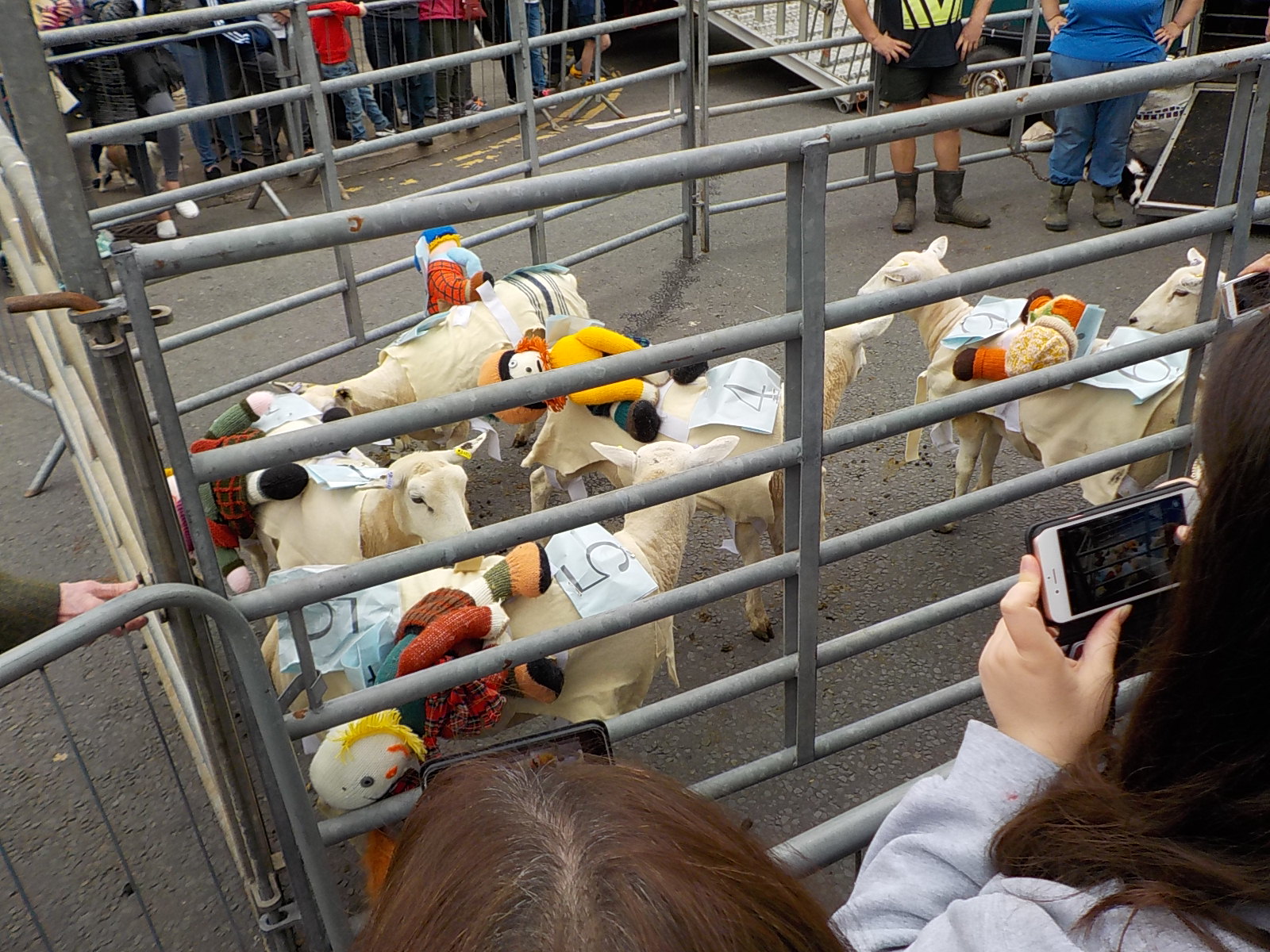
On Sunday, there were sheep races in Moffat, highly recommended by a woman we met at a farmer’s market. Moffat’s advantage is that the main street consists of two parallel streets on either side of a narrow garden strip. One side can be cordoned off without paralyzing the town. Sheep race from down one block. Viewers can bet on the sheep and the money goes to a different local charity for each of the six races.
Jugglers
“Sheep” and race-caller
Sheep face art
The event opens with jugglers and people dressed as sheep.
Contestants
How can you tell which sheep is which? Each one has a loony saddle tied around its middle, complete with rag doll rider and a big number. The program has the “names” and “breeding” of the entrants.
Distracted part way along the course
During the first race, one sheep got distracted half way down the course, but being sheep, all the others followed it. They had to be shooed to the end of the route by the brigade of helpers.
When you get a look at the racers, you realize that the sheep absolutely hate this. They try to get back in the pen before the race. A sheepdog gets the group started with the aid of three people shouting and waving their arms. When the despairing sheep realize they can’t get back in the pen, they scurry down to the other end of the course where there is another pen, which they rush into with great enthusiasm. We bet on three races and lost on all counts, but it was a very funny event. Afterward, we debated whether sheep ever die from fright during the races.
The town of Moffat has great pride when it comes to sheep. They have a bronze sheep rather than a famous man in the center of town.
The Shepherd and the Lass.
As part of the annual gala, they select representatives for the year, “The Shepherd and the Lass.” We met this year’s couple at the races.
Moffat is a pretty town, too, very accustomed to tourists. The town center is full of hotels, coffee houses, tea rooms, pubs and restaurants. We wondered where the people who live here actually shop. I assume there is a shopping center somewhere out by the highway. It was another great day.
Our present outpost is Ruby Cottage, on the High Street in Dalbeattie (some say “Dal-bee”), Scotland.
The High Street is not the busiest street in town, and our bedroom overlooks the back garden, so it is quiet at night. The back garden is a long stretch of grass, with picnic table and chairs, charcoal grill and hidden behind a hedge, a very useful laundry line.
This slideshow requires JavaScript.
There is a small grocery store nearby, and more stores toward the center of town.
We arrived in Dalbeattie just before the start of Civic Week. There has been a treasure hunt, quiz night, bingo and on Saturday we’ll see the parade.
Our neighbors are faintly surprised to find us here, staying an entire month. They are pleased by our enthusiasm, but most visitors to the Dumfries and Galloway region come from Scotland or northern England. We get asked about Donald Trump everywhere we go. People express deep skepticism and ask whether we would vote for him. Even though we assure them that we oppose Trump, we get some dubious looks. They have a point, how did it get this far? How did Trump get nominated by the Republican party? It shows that a lot of Americans don’t understand a lot of other Americans–not a unified front to show the world.
At the Stewartry show, we met a member of the local Royal Scottish Forestry Society. We chatted a bit and the next thing you know, William invited us to tea on Saturday. It sounded like fun, we’d had an enjoyable chat, and it was a chance to get to know someone from the area a bit better.
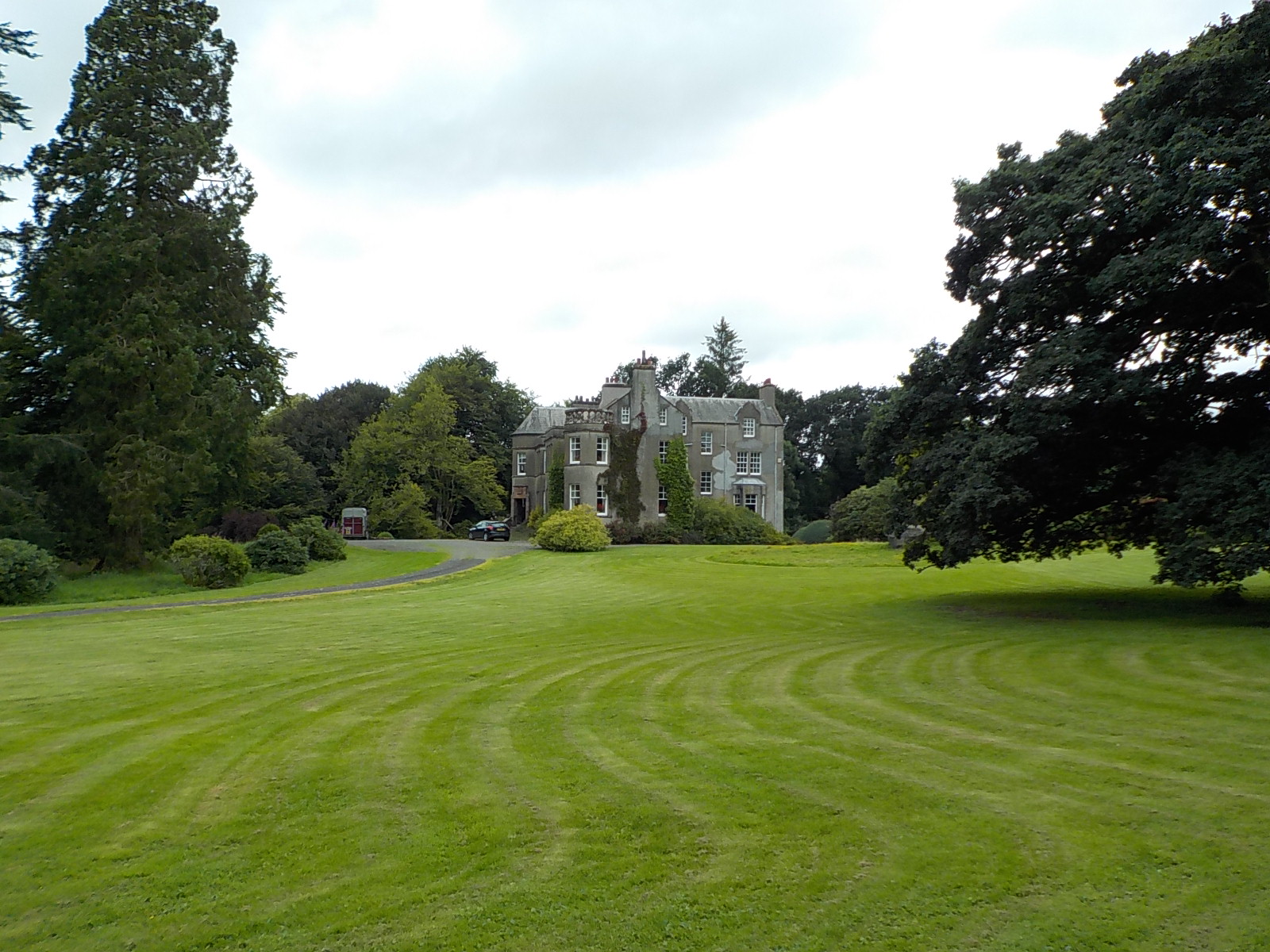
We drove out to Dunscore on very small roads, narrow but scenic, and found our way to Dalgonar House.
As we arrived we met visiting family members just arriving for a stay.
We walked around the gardens, where every turn presents a new vista.
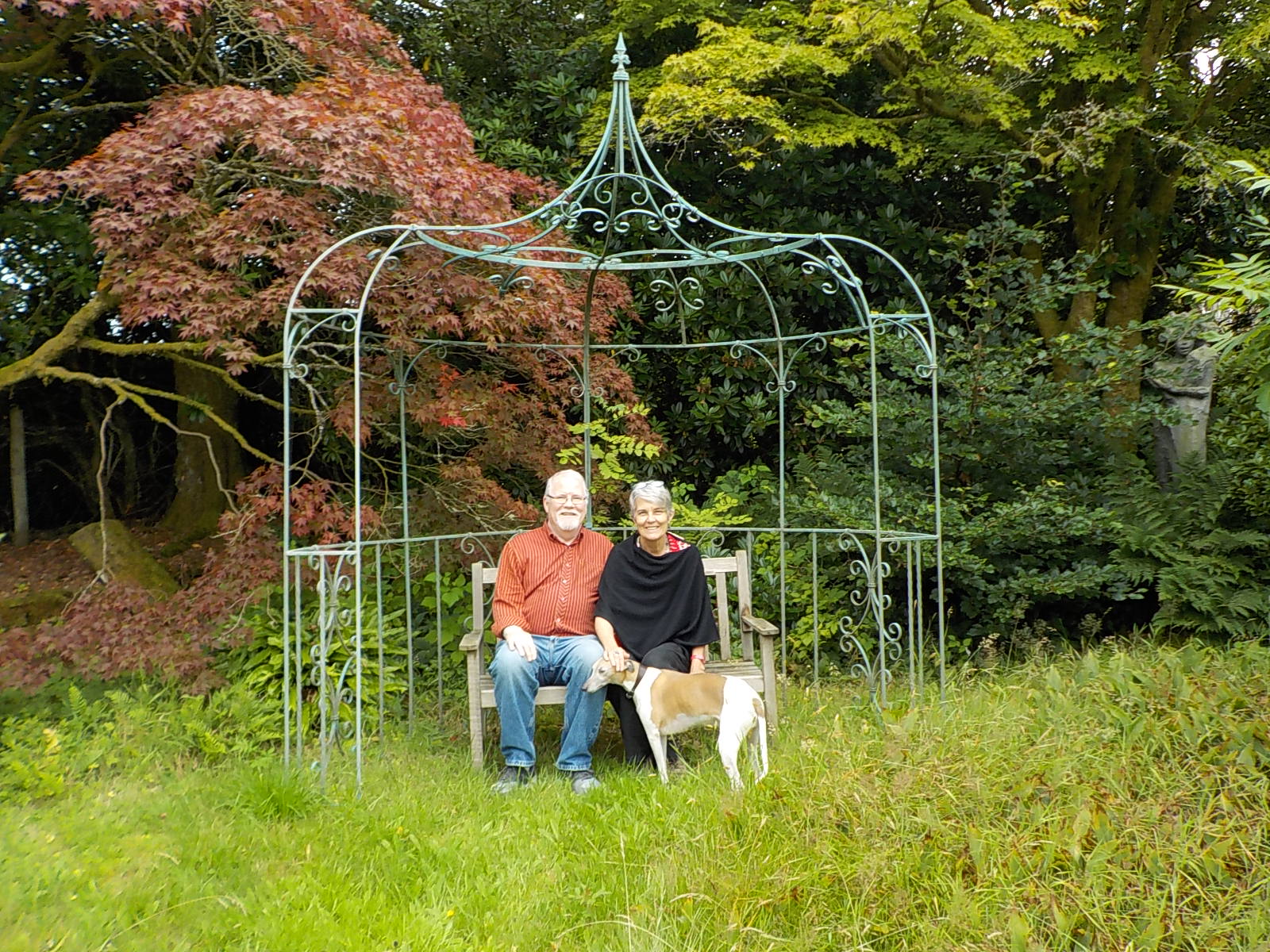
Hugo the whippet was willing to join us for a picture on a particularly attractive garden bench.
On our return to the house we had tea and chatted with Marilyn about her sculptures in the garden, really wonderful pieces. It dawned on us that we were in the midst of move-in day for a family get together. During the time we were there, all three adult children, eight grand children and four grand-dogs arrived. We chatted while new arrivals ebbed and flowed in and out of the kitchen. It was pretty clear that we were a last minute addition to a pretty free-form household. It was a pleasure to be around such interesting and unflappable people, who didn’t seem to mind the visiting Americans. When the last of the family turned up (the countess and the earl), we made our farewells and headed off–just then the sun came out. The drive home to Dalbeattie was gorgeous.
Southern Scotland is “undiscovered” in that people ask us what we plan to do, though they themselves may be there on vacation. It is only undiscovered by foreigners, I think. Here are a few more pictures of the lovely gardens at Dalgonar House.
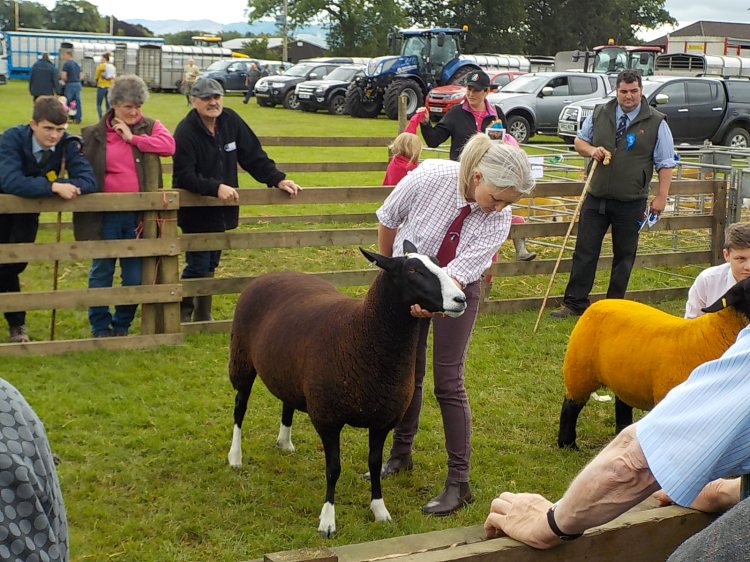
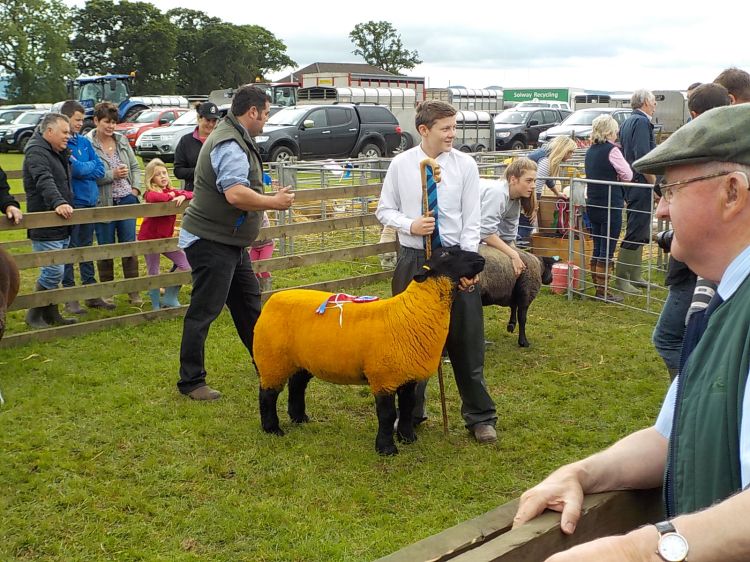
We jumped right in to life in southern Scotland. During August, every town and region holds an agricultural show and a town fair. We went to the Stewartry (historically, a region within what is now Dumfries and Galloway) show, and watched animal judging
Judging underway
Later, picking a champion.
Grand champion.
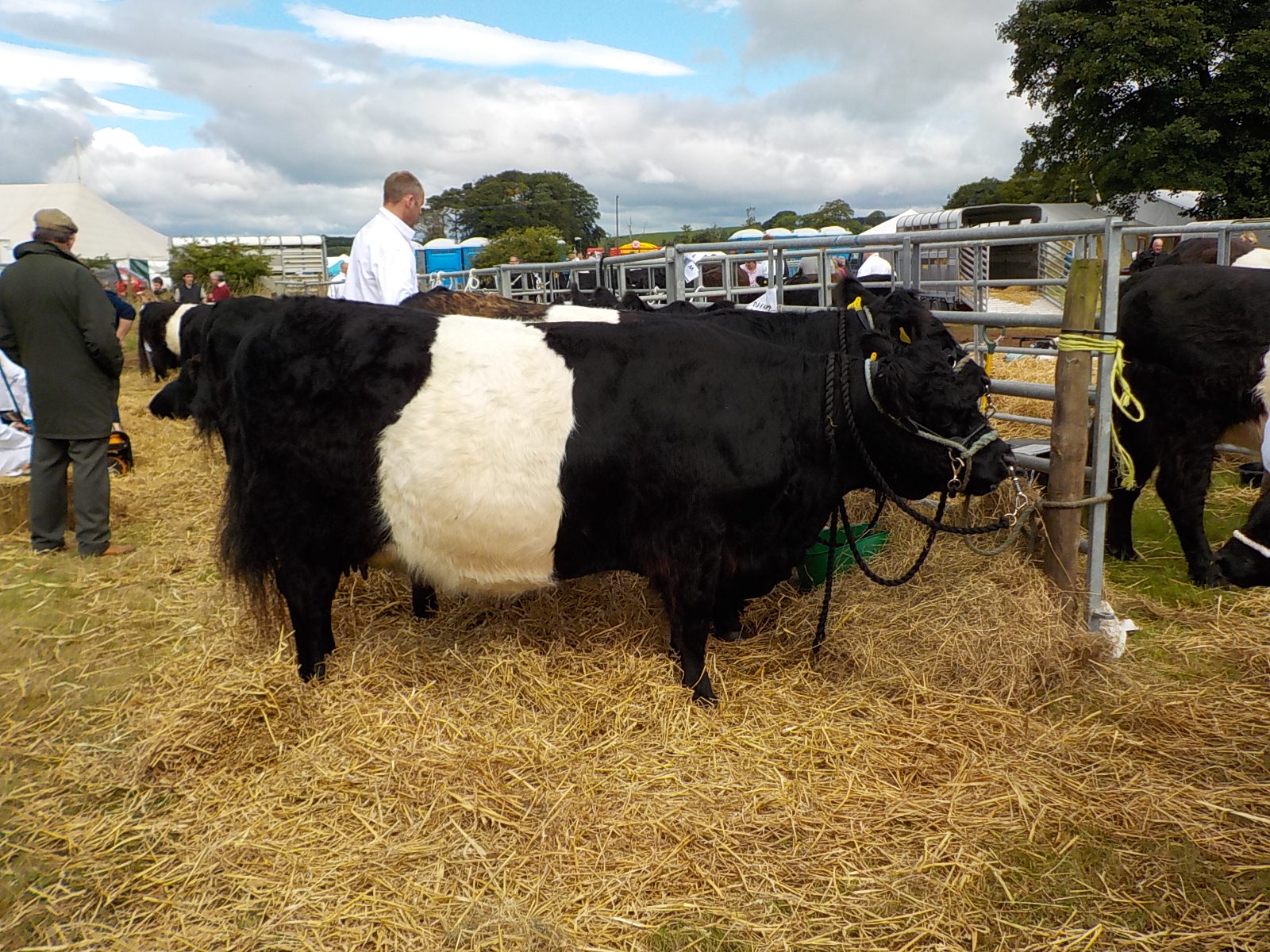
A woman I spoke to said “Are you here for the congress?” “What congress?,” I asked. “The Galloway Cattle World Congress.” “Er, no, just visiting,” was my lame reply. Later I figured out that these animals are Belted Galloway cattle, one of the subjects of the world congress.
There were other huge animals on display.
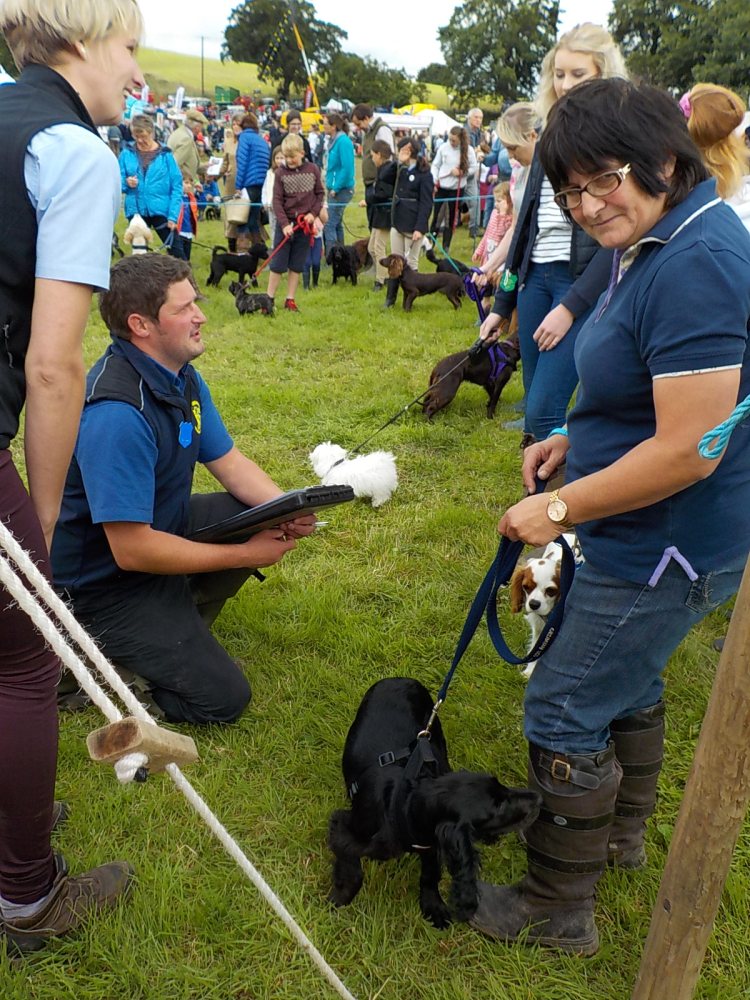
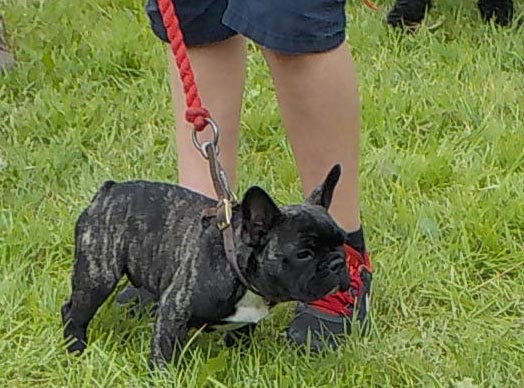
After touring booths of agricultural machinery, tents of crafts, flowers, carved walking sticks, and lots of food, we ended our day with the puppy judging. Too cute.
Not all the puppies knew much about being judged.
After our eager visit to the Stewartry show, we found out the Dumfries show is this weekend, followed by several others. We may have seen enough sheep in a single show to last all month.
These may be the scariest words on the planet for someone approaching a right hand drive vehicle for the first time. The day before we left Edinburgh, with our rental car awaiting us in the morning, we took a driving lesson. One hour each behind the wheel with Michael, the most unflappable person I’ve ever met. We each had our hour of white-knuckle driving on the left hand side of the road, learning about merging, roundabouts (there are two kinds) and standard speed limits. We survived our lesson and went to the airport with trepidation. Some of the things that you immediately do wrong are to look the wrong way, attempt to enter a roundabout going the wrong direction, go to shift with your right hand and turn on your wipers instead (gears are on left). Then there’s driving too close on the left, and too close on the right, both at the same time!!! Roads are often narrow, I swear standard lanes are narrower than in the US.
I’d looked up historic sites on our route that would give us a break from driving. Our first stop was about 20 minutes down the road at Castlelaw Hill fort, just off the Edinburgh bypass. Not much of a surprise that we were already ready for a break.
Even in blustery weather, the site was impressive, three rings of earthen embankments encircling the top of a hill, with occupation going back to the Iron Age, about 800 BC, and perhaps even earlier. There is also a subterranean chamber that may have been a hiding place, a storage space or ritual space. Called a “souterain,” similar rooms from medieval times hid priests after Catholicism was outlawed. (Author Erin Hart makes great use of a souterain in her mystery novel Haunted Ground.) It was a bit drippy crawling in and out of the underground room.
We moved on toward southern Scotland. Our next stop was Coulter Motte, a tiny flat-topped hill that used to hold a castle. There’s nothing left but the mound.
After this break, we got serious and headed for our destination, Aird Farm B&B in Crossmichael, near our new place in Dalbeattie. We move in tomorrow. The B&B is great, with bird feeders by the sitting room. We saw blue tits, great tits, a Great Spotted woodpecker and many of the usual suspects.
On our drive out for dinner we spotted a red-legged partridge, a very weird dude. (The photo is not by me).
Dinner at the Kings Arms in Castle Douglas poring over the bird book.
It was great to be out of the car for a while, but tomorrow is move-in day including grocery shopping, so I’m going to have to get used to driving. We split the driving 50-50 so that we both learn how to do it. I still feel nauseous when I get into the car in the morning.
If you plan to attend the Edinburgh Festival, I can’t help you. We are leaving the city before it begins, in part because the cost of housing skyrockets and we can’t keep to our budget and stay in an apartment. Perhaps another year we’ll come for a Festival week and listen to lot of music, see a lot of theater and appreciate the scene.
However, I have advice on a few things for people planning to visit at other times.
Weather
It rained most of the time we were at Linlithgow Castle.
Like everywhere else in Scotland, you can experience four seasons in a day. The sun may turn up early or late, the rain may pour before breakfast or after dinner–or in the middle of your plans. Be a good Scotsperson and ignore the fact that there is weather and keep going, or modify your plans enough to get out of the rain by going to a museum or a cafe. Either way, the weather will change soon enough. (Imagine you’re in Portland.) Wear waterproof shoes. Don’t go out without your raincoat.
Local Travel
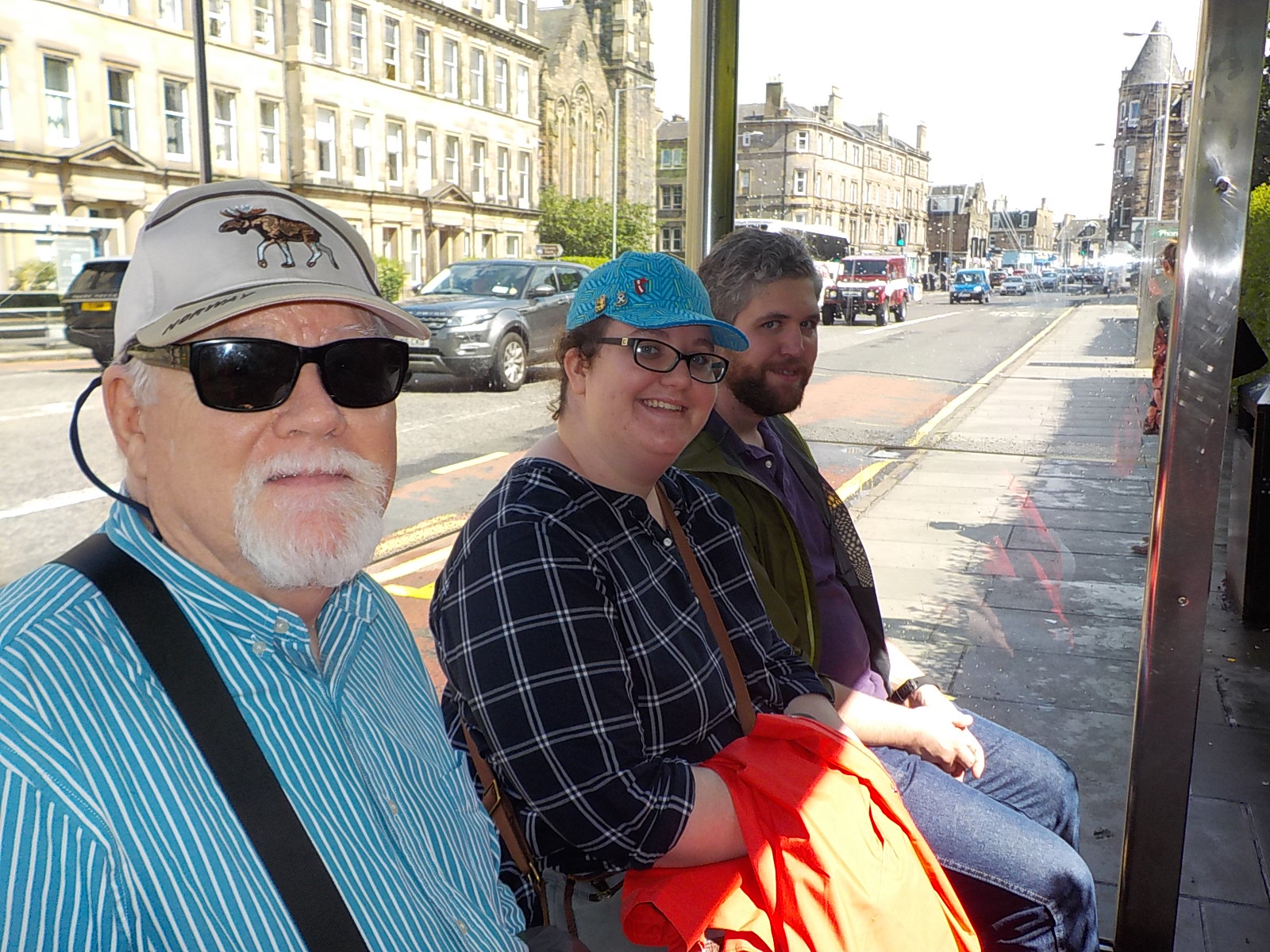
Waiting for the bus.
If you aren’t on an organized tour, consider purchasing a weekly (or monthly) bus pass. This year the first week is £21 and subsequent weeks £18. Additional weeks can be added in many corner shops (pay point), though to start you need to go to a Lothian Buses travelshop because they take your picture and put it on your card. A monthly pass is £57. Bus passes are especially helpful once you find out that there is no such thing as a bus transfer in Edinburgh, and you must pay £1.60 each time you board a bus. A bus pass includes tram service, and service to the airport by either bus or tram. It is not possible right now to purchase your bus pass at the airport, so even if you travel light, you have to pay £4 to get from the airport to the city on arrival (A taxi is about £20). Our bus passes are for Lothian buses, and that does not include every bus in the city. Sometimes you have to wait until your Lothian bus arrives. Overall, it’s been worth a lot. (I’ve rarely been tempted to call the bus line Loathsome buses.)
Visiting the Sights/Sites
If you are a fan of historic sights and sites, you might consider a membership in Historic Scotland. This gives you free admission to several of the major sites in the Edinburgh area, including Edinburgh, Stirling, and Linlithgow castles. You get a discount (20%) on admission to Holyrood Palace. Historic Scotland also manages many other sites throughout Scotland, many do not charge admission. I’ve taken advantage of their booklet to identify interesting lesser-known places to visit.
Outdoors–Gardens and Walks
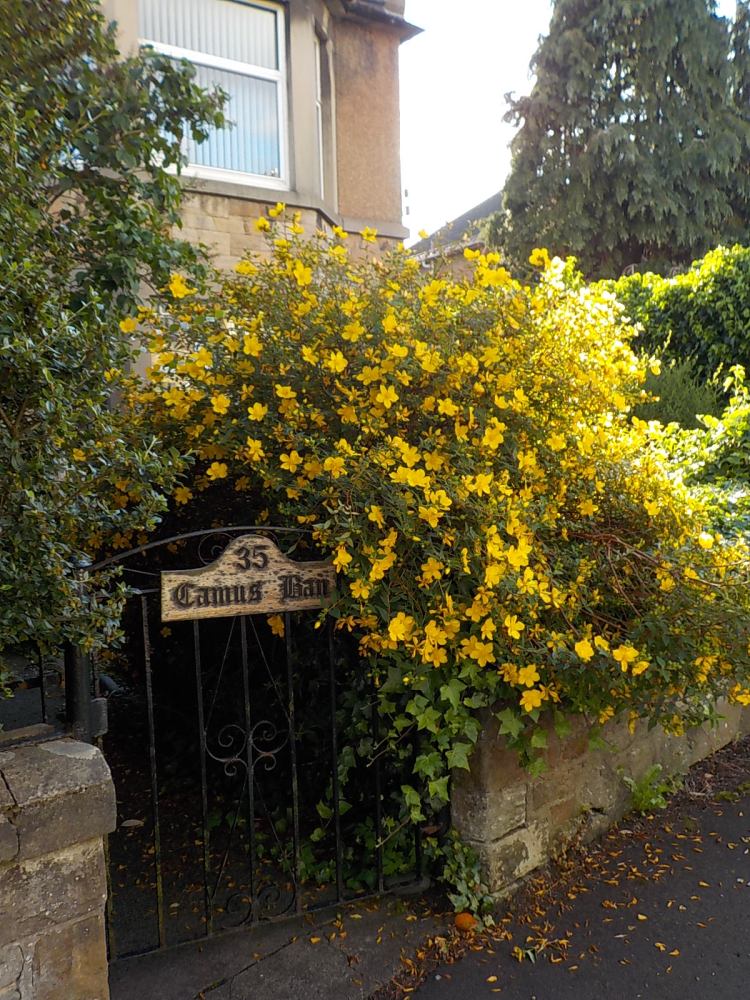
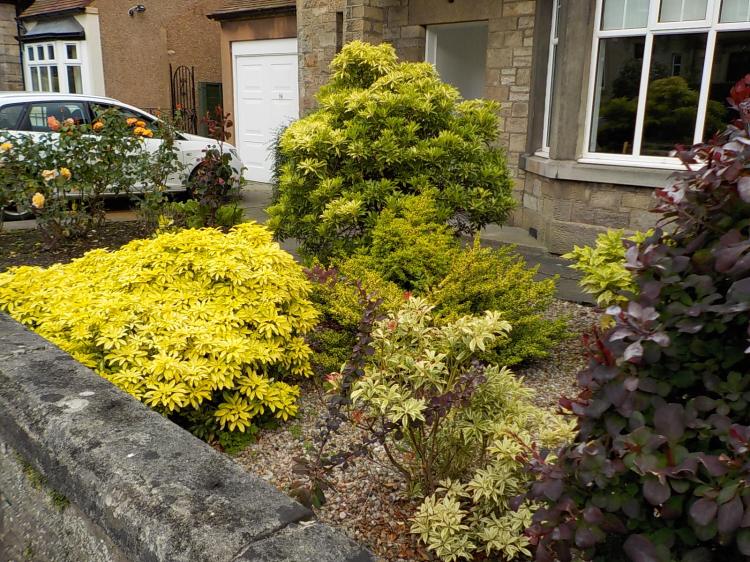
Here are some lovely front gardens we passed.
Edinburgh is full of wonderful gardens and gardening. Often a small front garden is beautifully arranged with beds and pots of plants.
There are wonderful walks throughout Edinburgh. Several paths climb Arthur’s Seat and the Salisbury Crags in Holyrood Park. Walking through Princes Street Gardens is lovely and there are more paths around St. Cuthbert’s church at the west end of the garden. There is a trail along the Water of Leith (see my post on the Modern Art museum) that you can follow for miles. Just because you are in the city doesn’t mean the outdoors isn’t nearby. Also, you can get to the beach on the bus. My only caveat: we saw very few birds in the city itself.
Food
We rarely eat out, but had an excellent dinner at Field, a tiny restaurant near the university. Make a reservation, because it seats 26 if every seat is filled.
cured salmon
stout ice cream
Outside Edinburgh
Both the train (Scotrail) and buses go from Edinburgh to Glasgow (and other cities). There are websites for each and a variety of options. Train travel is reliable as well as a bit faster and a bit more comfortable than the bus. It costs slightly more.
A Last Word
We left Edinburgh with many places still to visit. Small museums, historic houses, even Building 2 of the Modern Art Museum (Building 1 took all our time on our first visit). Living in the city full time may not be for me, as I enjoyed our walks along paths as much as the big attractions. Who can resist a street called Ravelston Dykes? Or a path that looks like deep woods but actually circles a private school and takes you to Sainsbury’s (grocery store)?
Some of the places we’ve visited and things we’ve seen in Edinburgh haven’t fit in to my comments until now. By joining Historic Scotland, we were able to visit Edinburgh Castle multiple times, Linlithgow Castle and there are 75 sites they manage. Not all have admission fees, and I enjoyed visiting one of these that was just down the road from our flat, in Corstorphine.
The low hedge marks the historic site from the front yard, and divides the two front yard from each other.
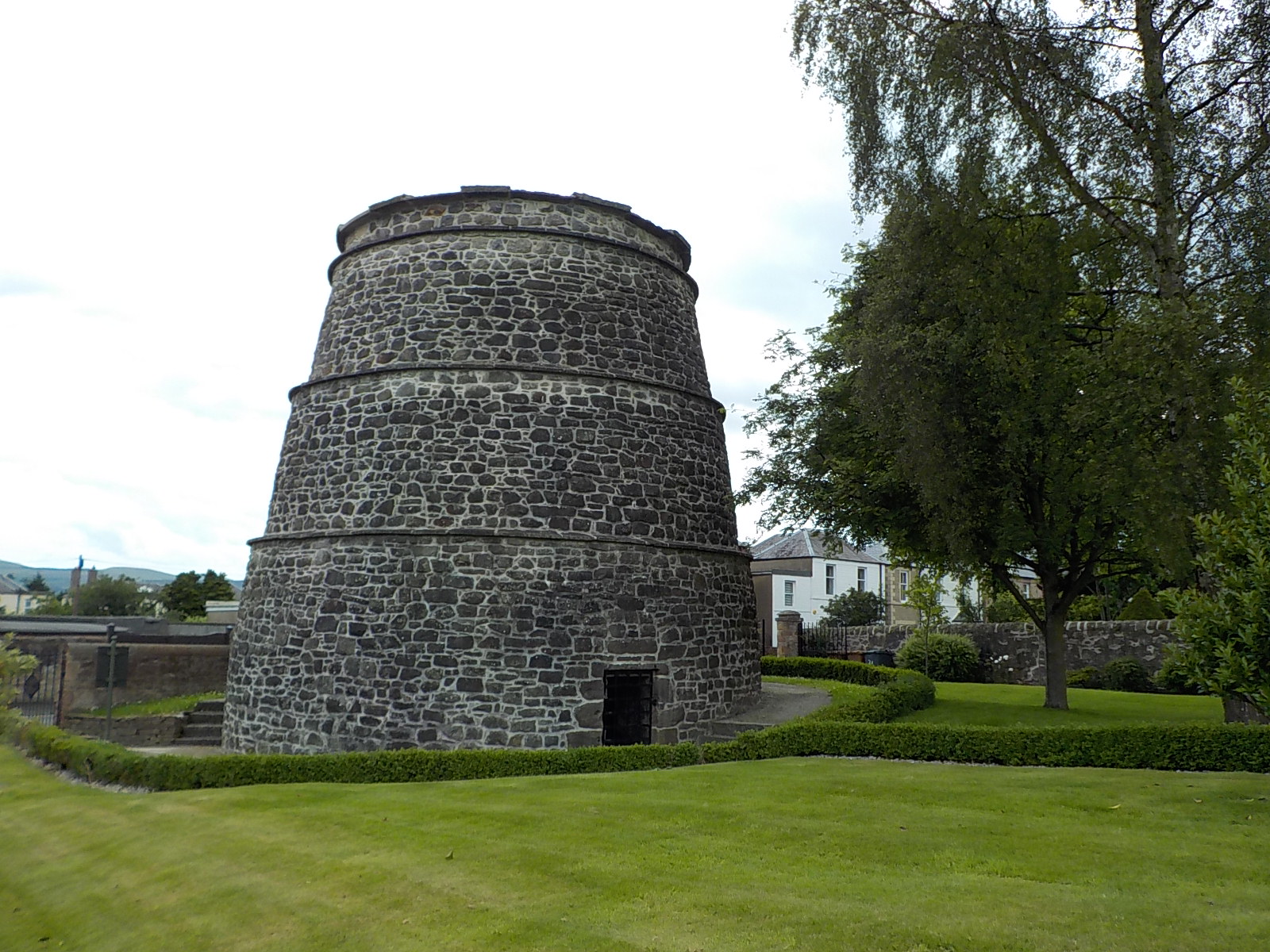
Once a village, now a neighborhood within Edinburgh, Corstorphine was part of lands belonging to the Forrester family. Corstorphine Castle lasted from the 14th to the 18th century, but is now gone. The only remaining structure of the estate is a dovecote, built of stone with about 1000 nesting boxes.
I visited this dovecote, and found it sitting in two adjacent front yards that neatly curve around halves of the structure. An informational sign suggests the structure avoided being demolished because of a local myth that anyone destroying a dovecote would be cursed.
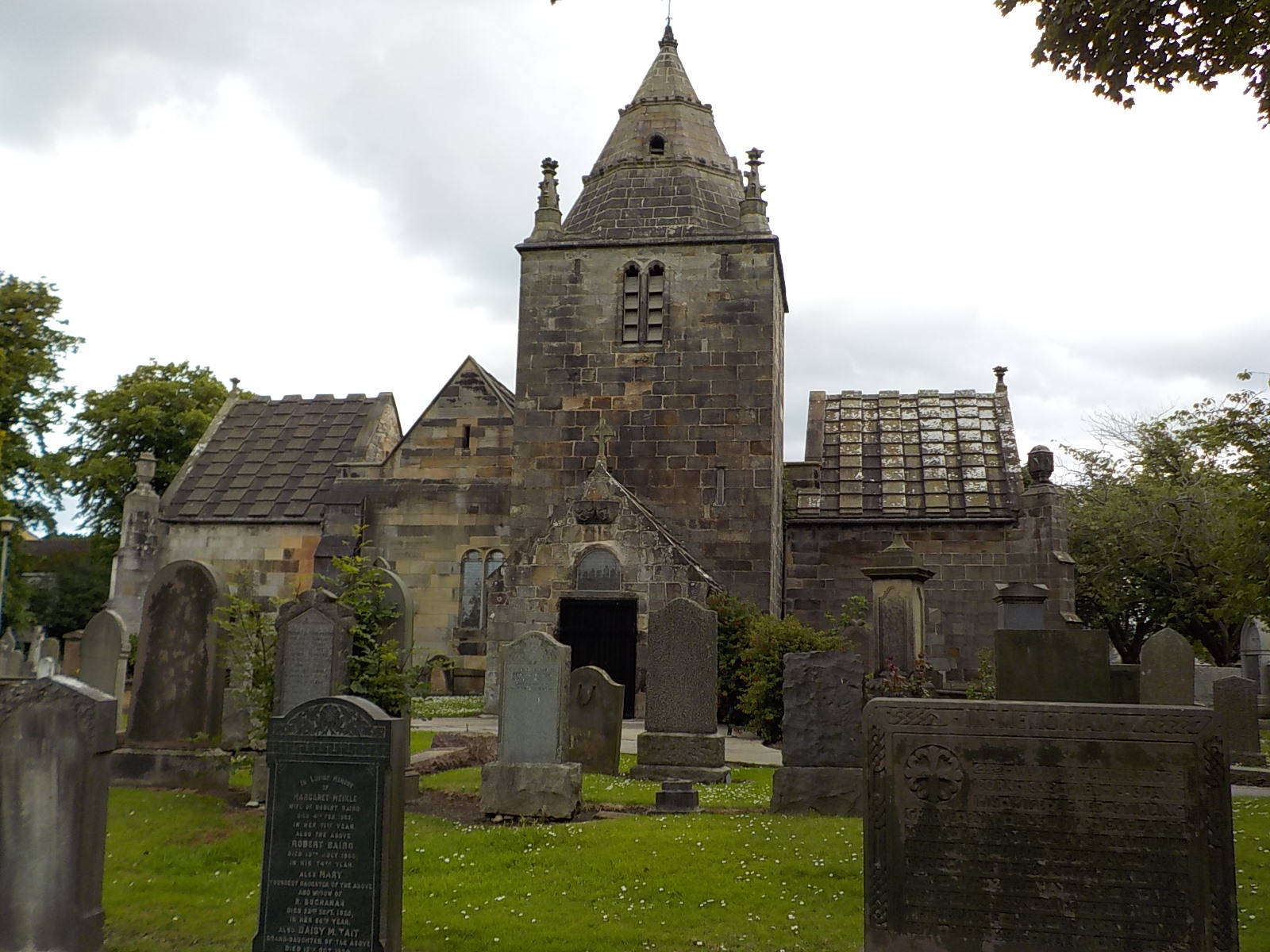
After making my brief tour, I returned to the bus stop via the Corstorphine Old Parish Church and churchyard. The oldest part of the church dates to 1429 (Unbelievable!) The historic documentation of some structures is impressive. There are records of who owned and built what building by dates in the 1200s. As a resident of the New World, I am amazed.
Without entering a museum in Edinburgh you can see historic symbols.
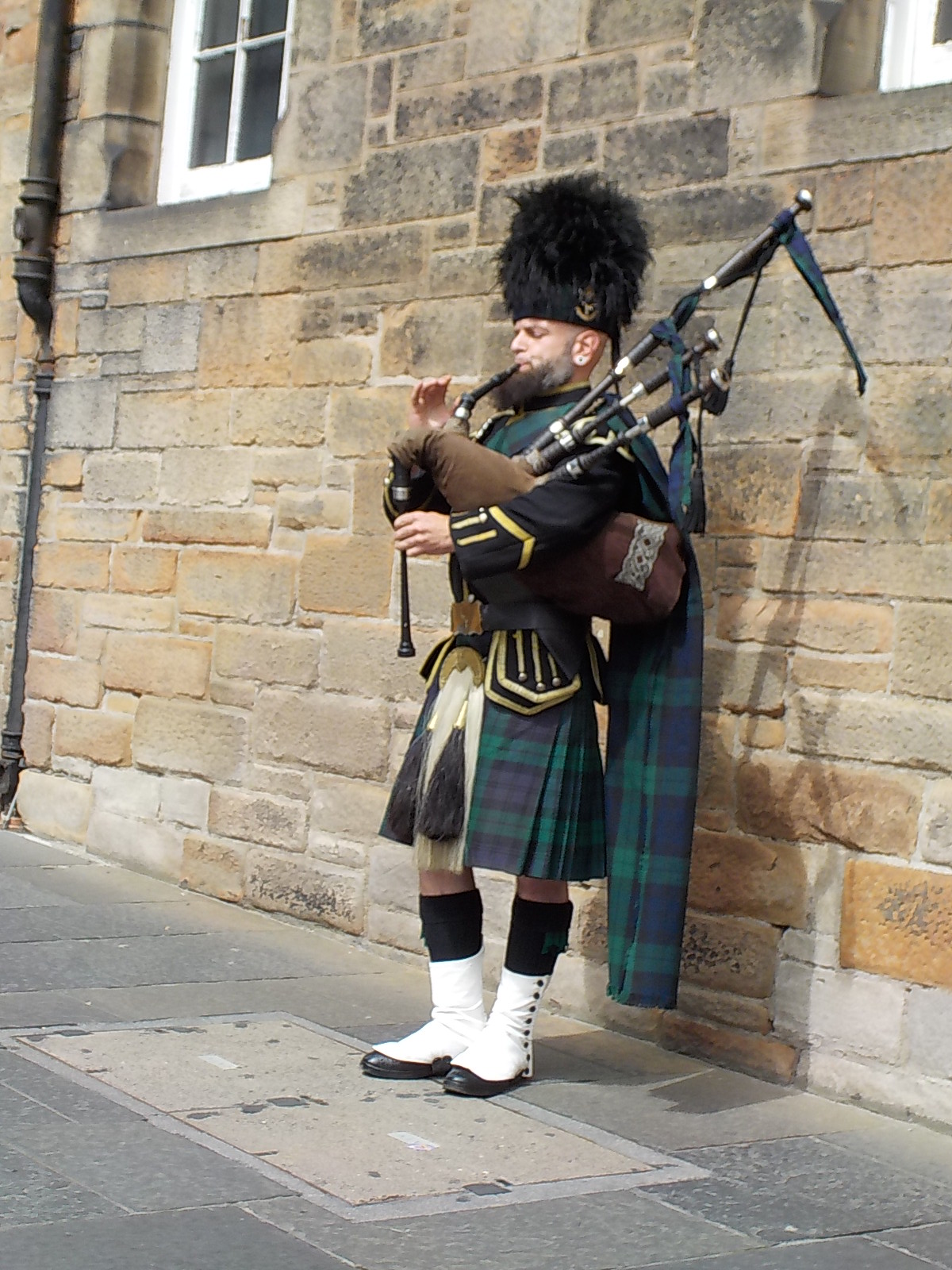
We also saw lots of entertainment in the street. My favorite busker is the bagpiper in Highland dress, though there was also a jazz bagpiper.
Sometimes it was not clear what was going on, as with the drum group on the steps of the National Museum of Scotland. The drumming was great.
The parade for the opening of the Edinburgh Jazz Festival that precedes the overall Edinburgh Festival, was also full of character.
This slideshow requires JavaScript.
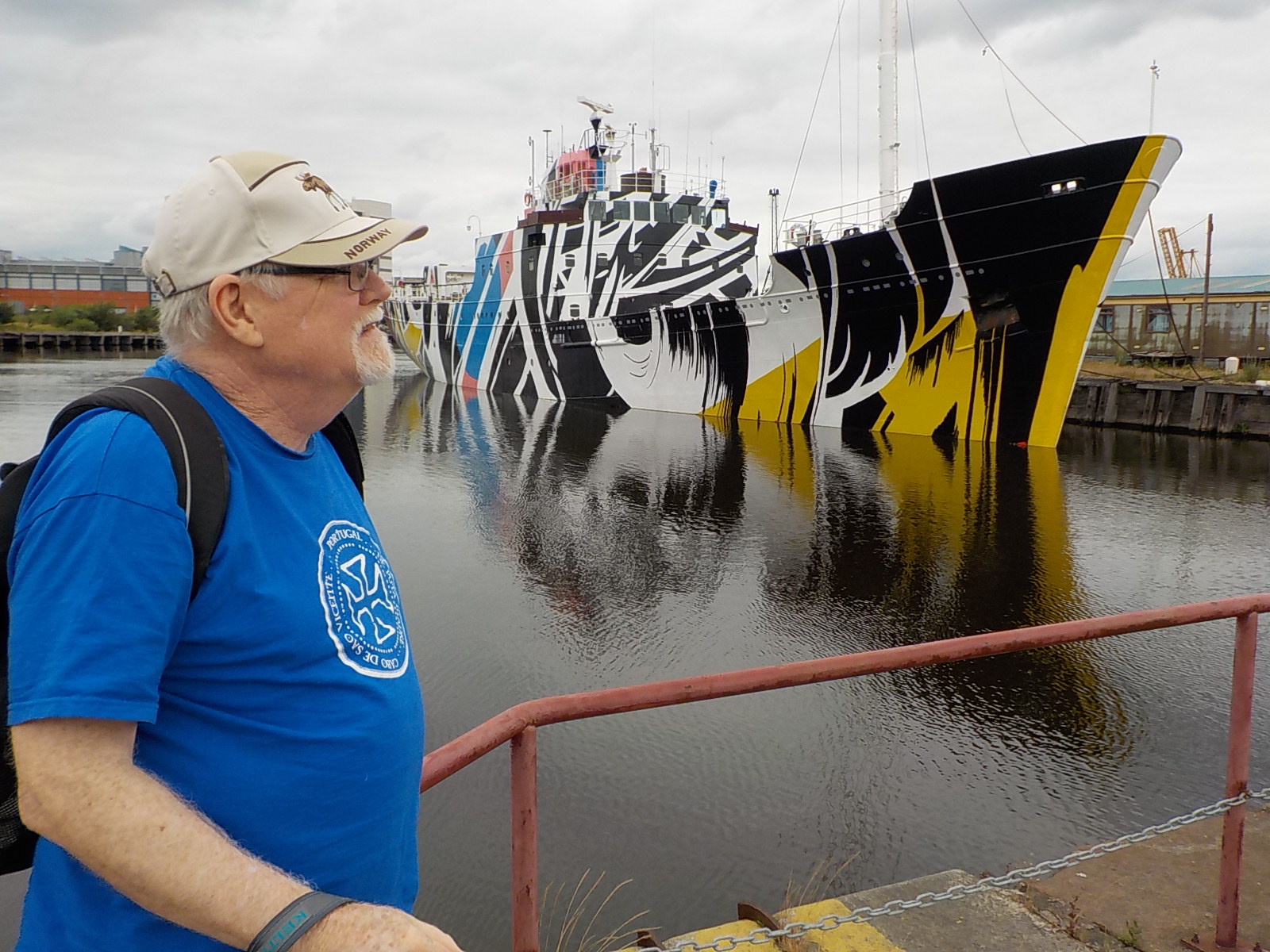
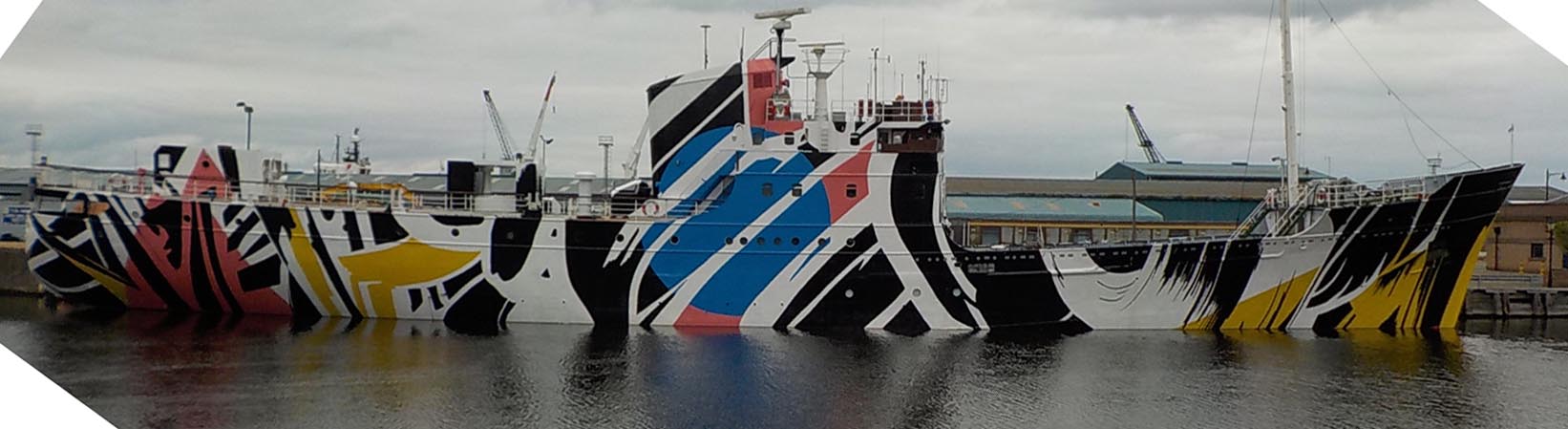
The most unusual site we visited was the Dazzle Ship at the Prince of Wales Dock in Leith. A combination of history and art, the MV Fingal was repainted by artist Ciara Phillips as a tribute to the “dazzle” ship painting used during WWI. The original idea was not to disguise ships but to distract and confuse anyone viewing them through a telescope. Sadly, there is no evidence that the system worked at all, but the resulting ships were a distinctive landmark of the war. At least 2000 ships were painted in this way in Several ships have been “dazzled” by artists as part of a project sponsored by a number of UK institutions as part of this year’s centenary commemoration of WWI.
The Fingal was a supply ship of the Northern Lighthouse Board, built in 1963, to ply the coast of Scotland and later the Orkneys, resupplying remote towns and lighthouses until 2000. Now owned by the Royal Yacht Brittania Trust (the Fingal is docked just around the corner from the former royal yacht), the Fingal is scheduled to become luxury hotel accommodations in 2018. Really?
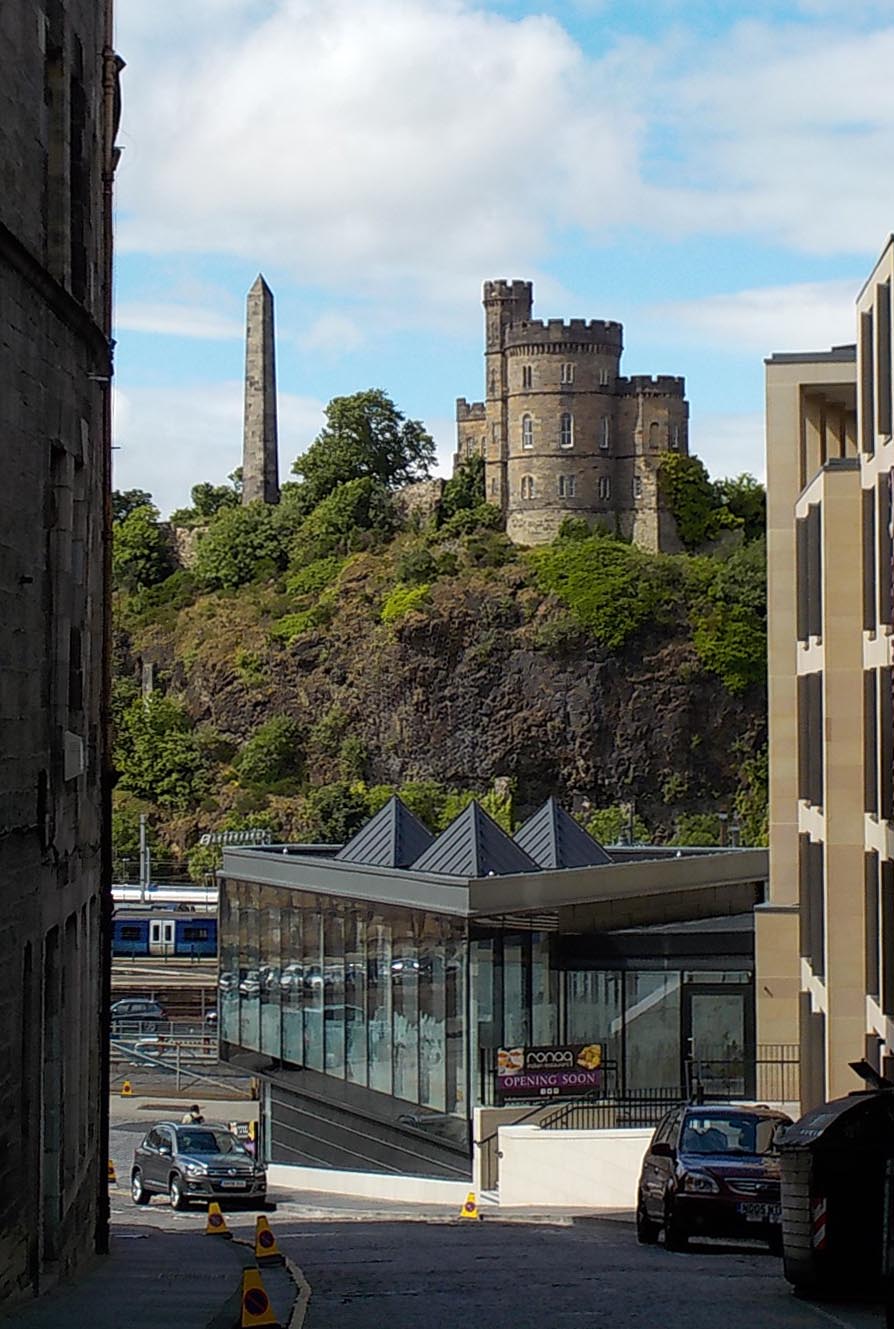
From many places around Edinburgh, you can see monuments on Calton Hill. Here is what you see from the Old Town. It’s a very romantic view.
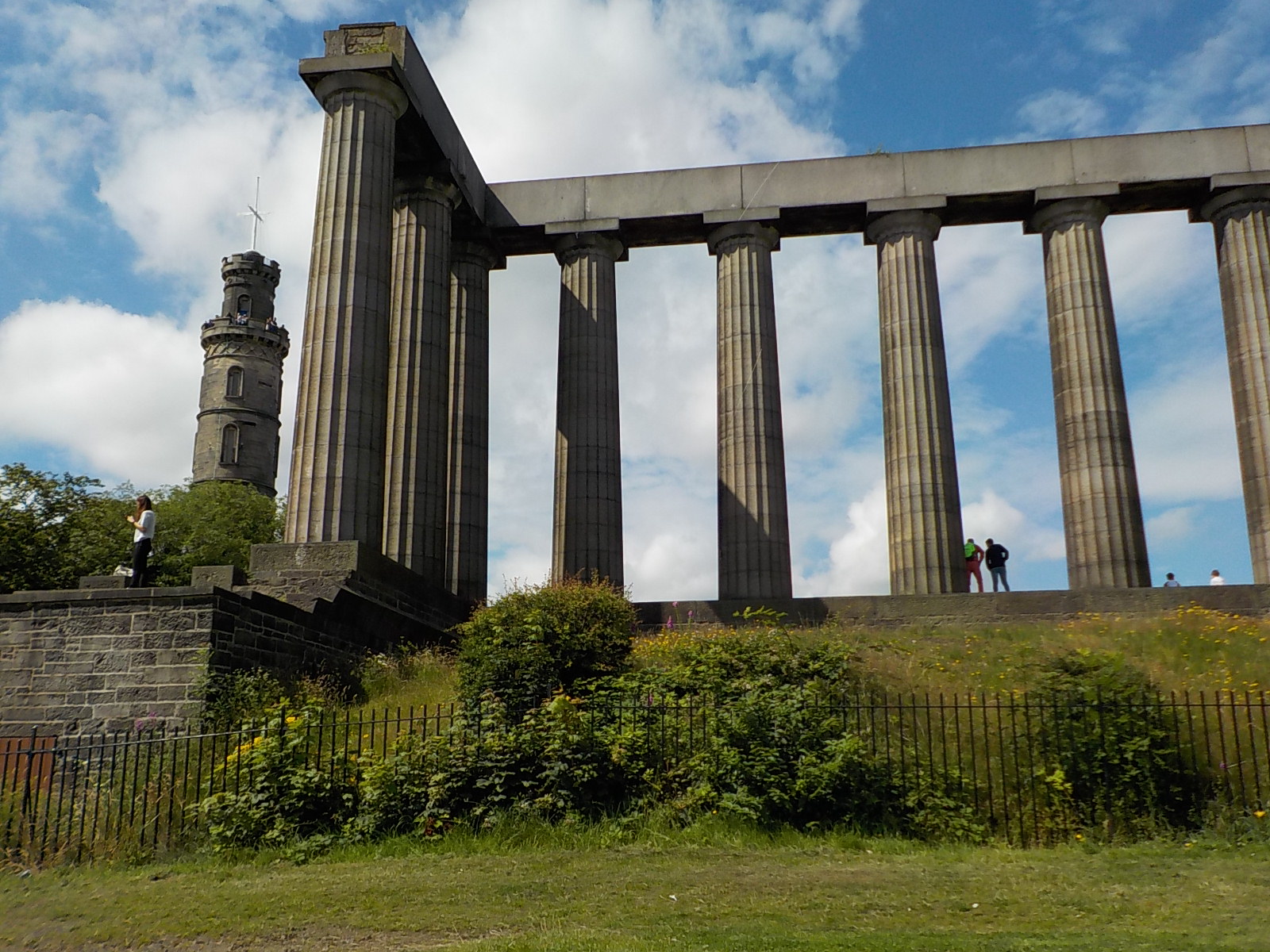
There is a tower, a dome or two, and even some Grecian columns, a failed effort to duplicate the Parthenon in Edinburgh.
During the Scottish Enlightement (18th century), the city called itself the Athens of the North, and the structure is officially the National Monument of Scotland (also, Edinburgh’s Disgrace, as it was never completed).
A stroll up Calton Hill seemed like pleasant walking, little did we know that it is full of monuments.
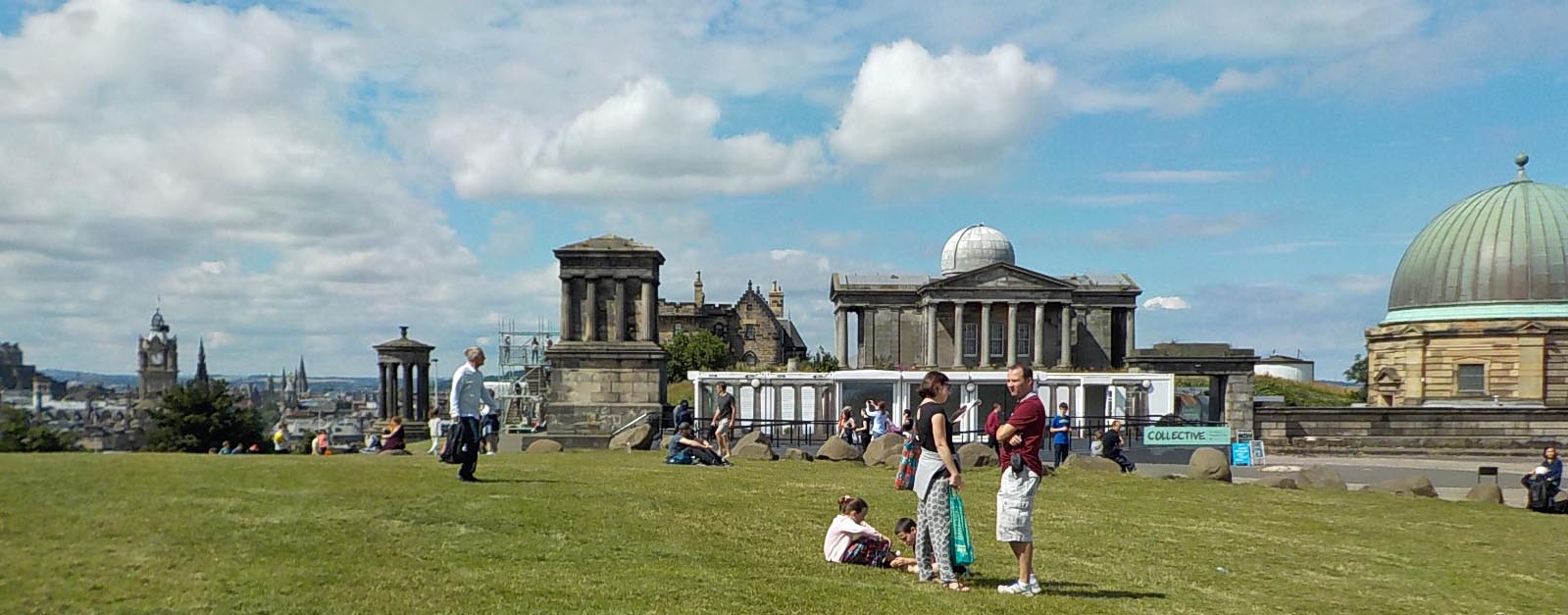
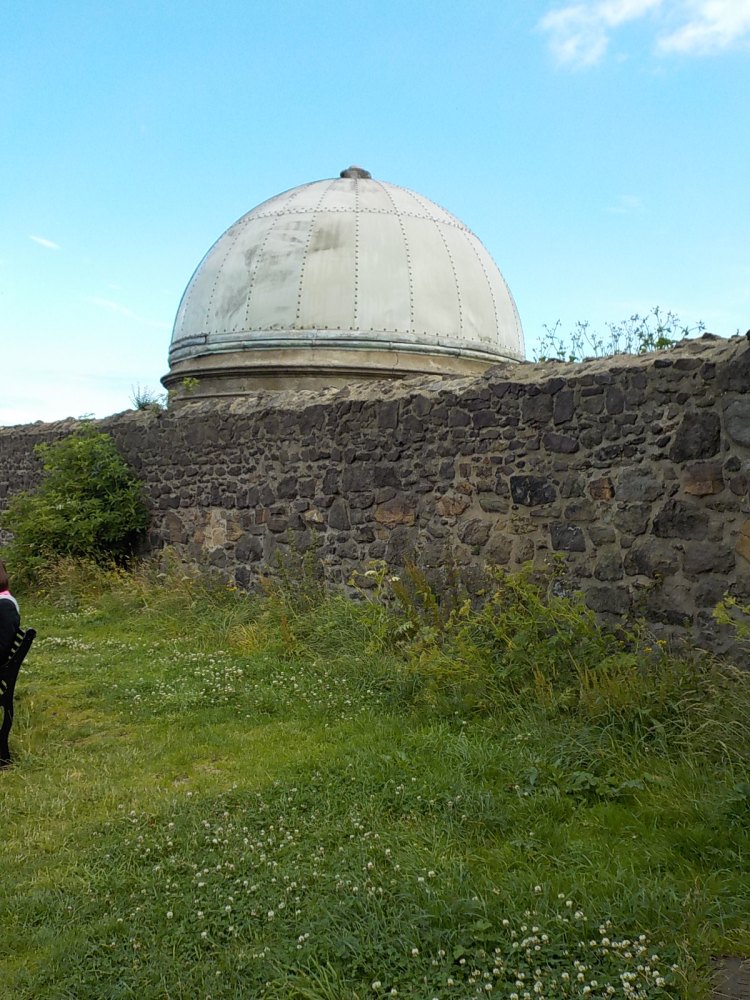
At the top, we could see not only the Parthenon, but all kinds of other buildings. It reminded me of being at a World’s Fair. Lots of other people, including a tour group from Spain, were enjoying the day with us. Jonathan practiced his hobby of offering to take group photos for people. He had lots of takers. In addition to the Parthenon, there is the Edinburgh Astronomy Society observatory and at least one other dome.
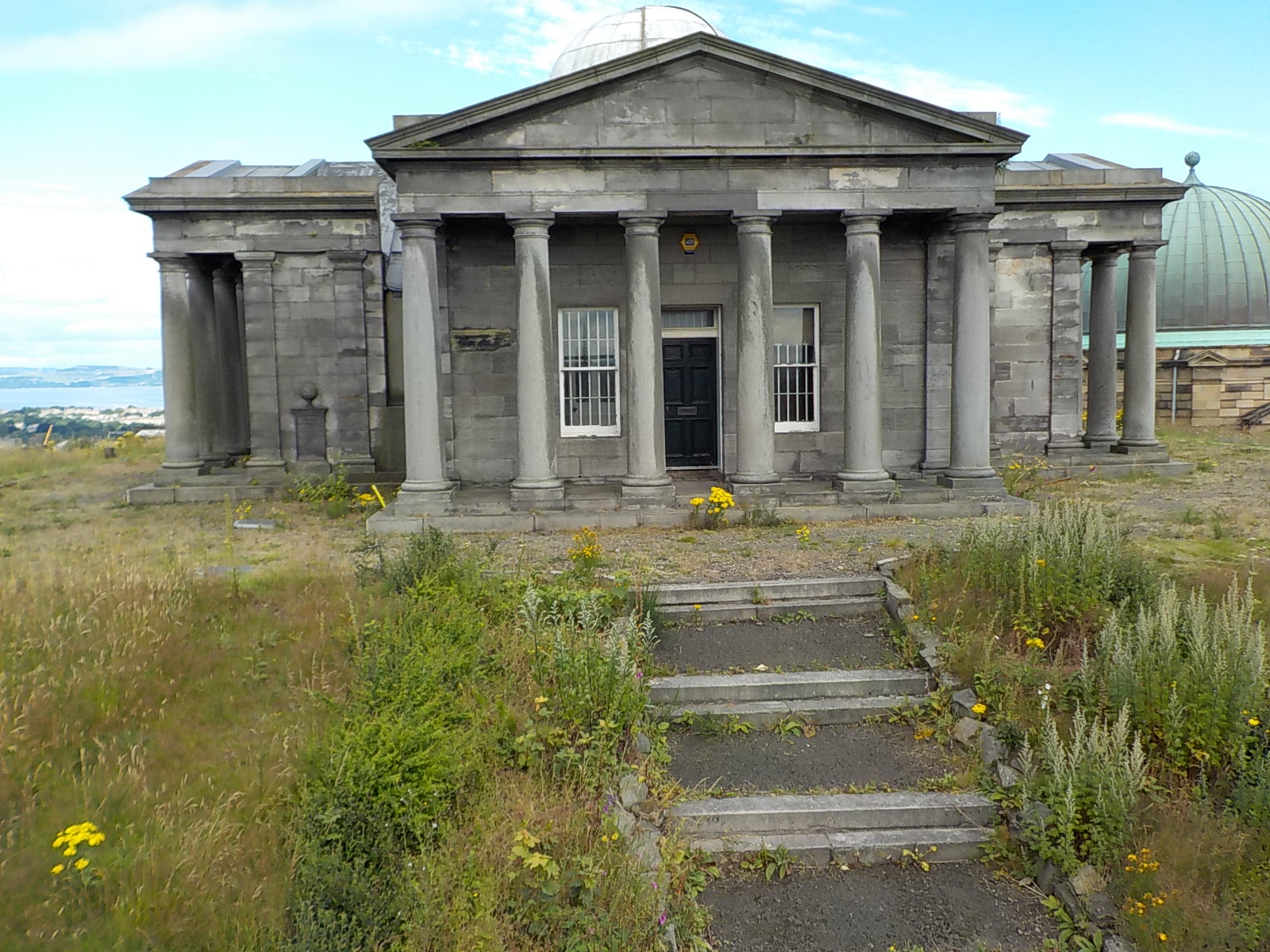
An art collective is renovating the old city observatory property as an art center. It’s very promising that their first act on the way to raising funds and planning what to do was to put up scaffolding so that visitors can see over the wall into the observatory grounds. Apparently, that has never been possible before.
There’s nothing inside except the overgrown lawn and the same building you can see from outside, but it is fun to see “inside”.
Calton Tower war memorial
John Playfair Monument. Mathematician and geologist, one of the promoters of the construction of an observatory on Calton Hill.
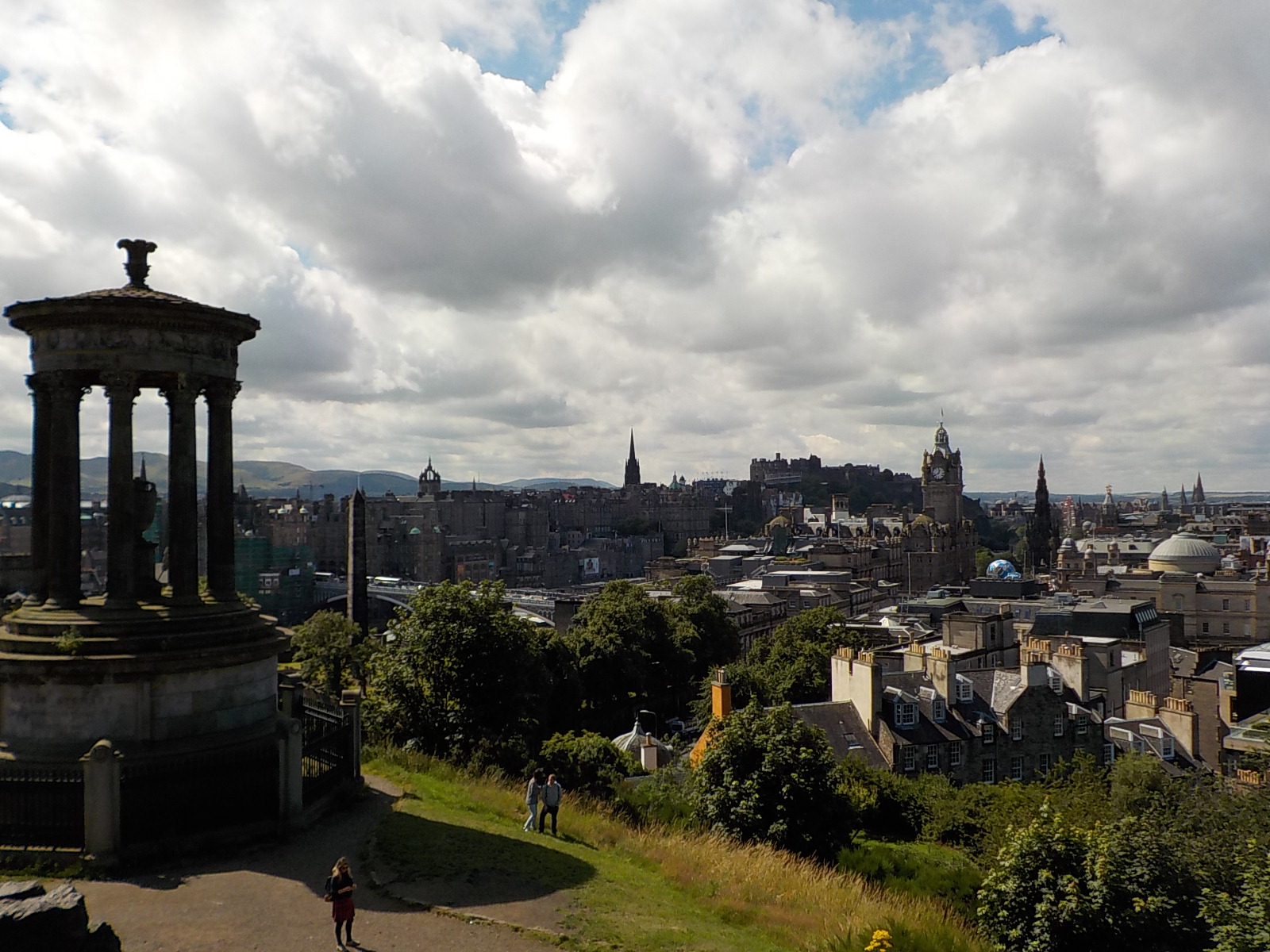
Dugald Stewart Monument. Professor of Moral Philosophy. His monument was designed by Wm. Henry Playfair, nephew of John Playfair.
In addition to the monuments, on Calton Hill is the only surviving private home built by James Craig, original architect of New Town Edinburgh. This home, Observatory House, was briefly the city observatory, then provided housing to astronomers using the nearby observatory designed by Wm. Henry Playfair, another esteemed Scottish architect. Today Observatory House is being renovated for rental as a luxury vacation spot—the only lodging on Calton Hill.
Looking outward from Calton is a panorama of Edinburgh. On the left is Holyrood Palace and behind it is Arthur’s Seat in Holyrood Park. On the right, you can see the Salisbury Crags with the new Scottish Parliament (the hedgehog building is part of it).
Turn to the right and you see the Dugald Stewart monument with Old Town Edinburgh beyond, marked by the crown steeple of St. Giles Cathedral and many other steeples.
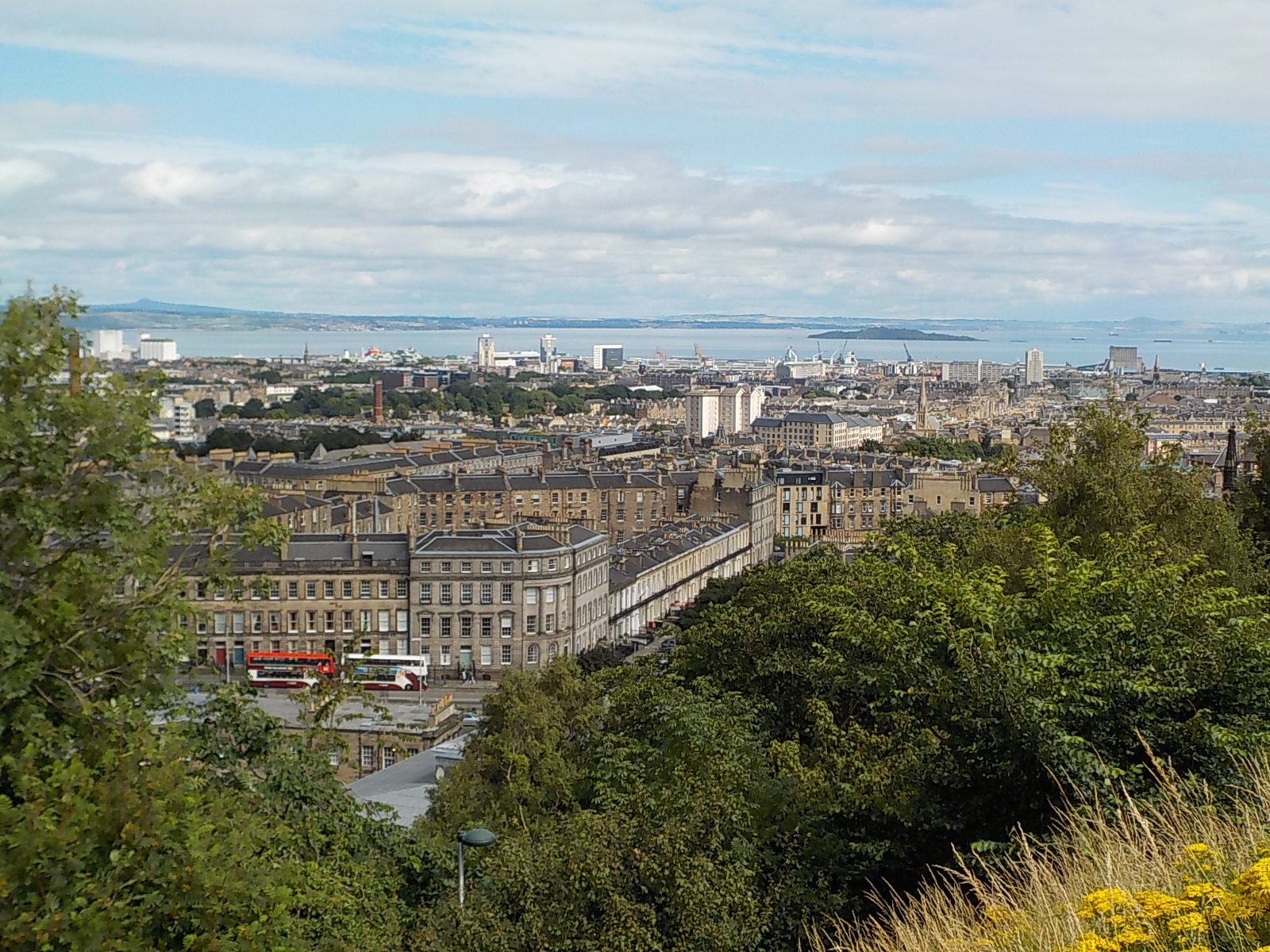
Turning again offers New Town, where you can see neat rows of stone houses. Beyond New Town is Leith, the docks and waterfront of the Firth of Forth, with Inchkeith island in the distance.
With that you’ve completed a 360º tour of Edinburgh, all from Calton Hill.
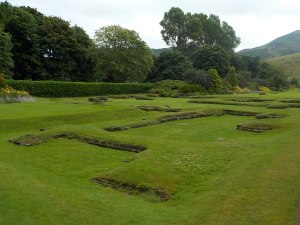
In the Edinburgh area, there are so many castles and palaces that are on the “must-see” list that it would take a solid week to see them all. Over the past month, we’ve visited Edinburgh Castle, Holyrood Palace, Linlithgow Castle and Rosslyn Chapel, and have passed up visiting the others. I’ve already mentioned Edinburgh Castle, and the most memorable aspect of Holyrood is that the Queen still stays there periodically. Of the interior, I only remember that we passed a beautiful figured granite table. The ruins are impressive, and the archaeological remains of Holyrood Abbey are clearly marked in the sod behind the ruins of a later abbey. The sequence of Palace, ruined abbey and archaeological remain of the older abbey are visually impressive.
Left, a tiny “bath” house of an ancient queen. Center is the ruin of Holyrood Abbey
Right: the archaeological remains of the first abbey.
All of Holyrood Park extends beyond the castle as far as Arthur’s Seat, a beautiful setting.
We managed to stay out of the rain during our visit.
The chevrons on the archway below show that it dates to Norman times, possibly around 1128 when the Augustinian Holyrood Abbey was founded.
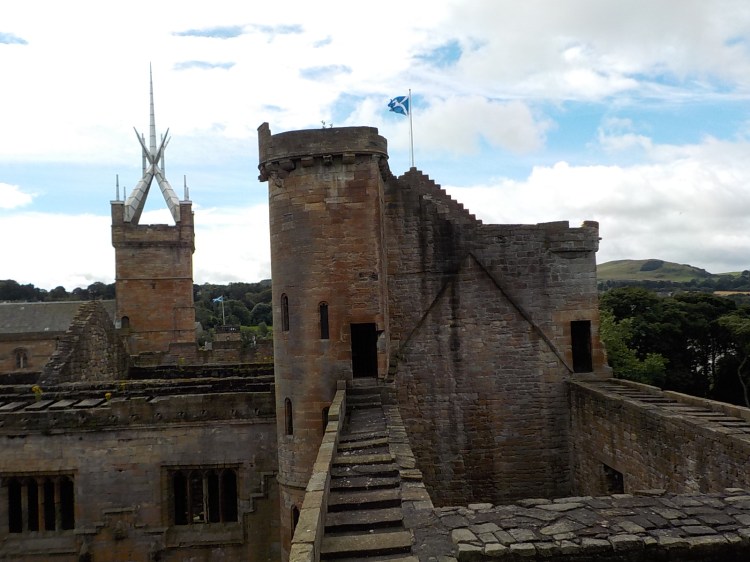
Next up in our castle itinerary was Linlithgow. It’s not far from Edinburgh, most easily accessible by train. Crossing the village to the castle is only a short walk and it is a postcard-pretty place.
The village and the ruined castle are full of interesting details like the elaborate well in the photo above.
This slideshow requires JavaScript.
We enjoyed the ruins more than we would probably have enjoyed another set of furnished rooms. Plus, it seems that you’re never allowed to photograph restored interiors. There is a spacious park and a small loch by Linlithgow. The walk around the park is about 5 miles, and would be perfect on a warm day. We were dodging showers of rain and contented ourselves with a short walk along the loch and tea in the town.
There is a bit of controversy in Linlithgow. The church was first constructed in 1242, and after many changes, the crown spire (similar to that on St. Giles in Edinburgh) was dismantled for fear of its collapse. The spire was replaced in 1964 with a contemporary aluminum steeple that some say is out of character with the village and castle.
We didn’t make it to Stirling Castle. As they say, “So many castles, so little time.”
I did make the trip out to Rosslyn Chapel, partly in homage to the DaVinci Code by Dan Brown, and partly to see the chapel’s rightly famous detailed stonework.
Once again, the restored interior cannot be photographed and the postcards don’t do it justice. The carving is really, really intricate, beyond all reason or prudence, which is what makes it so much fun to look at. There are lots of “Green Man” carvings peeking out from under a leaf or chewing on a stem, alongside pillars carved with twisting designs or detailed flowers. Carved projections line the stone ribs of the chapel ceiling. It’s a fantasy, with no surviving plans. Built by William Sinclair, 1st Earl of Caithness, the meticulous stonework required 40 years of work, and the overall project ended at the death of the Earl. His intention had been to complete a much larger church. We can enjoy what he was able to accomplish.
Restoration of the chapel from a ruin took place a couple of times during the 1900s, most recently in 1995. The movie of the DaVinci Code may have saved the chapel from long term ruin by increasing the number of visitors. Now thoroughly restored, the chapel is in good condition for now. It’s difficult to predict what will happen over centuries.
This slideshow requires JavaScript.
The trip to Rosslyn Chapel highlighted the good and bad of a weekly/monthly bus pass. Yes, travel to Rosslyn was included on my bus pass. No, it wasn’t rapid, taking almost an hour, well, maybe a bit more than an hour each way. The village of Roslin is only 6 miles south of central Edinburgh. Buses are reliable, but not fast.
 Surprise!, it’s Robert Burns (again). This is in the center of Dumfries. There is really a passion for Robert Burns. In Moffat, the Black Bull pub that has a plaque on it because Robert Burns wrote a brief poem on a window pane. It also has a replica of the pane.




























 Llywindatravels 2025