For us, the Opera House is the heart of Sydney. We made our first pilgrimage to this icon by bus to Circular Quay, then a stroll toward the point where rounding a row of apartments, the Opera House is revealed in all its glory. On a sunny day the roof tiles create a dazzling reflection.
We walked all around the building, noticing that it is three separate rooftops, not a single one as it often appears in photos. From one spot it looks like three giant-sized Spanish conquistadors helmets.From another angle, it looks like a spaceport, with at least one spaceship ready to take off.Close up, the Opera House is a busy place. Tourists walk around taking photos, runners avoid them as they circle the Opera House on the path. Women in black dresses walk in and out. Either Sydney is a lot like New York or the dress code for staff is “wear black.”
From the Opera House you can see tiny figures of the groups climbing high up the sides of the Harbor Bay Bridge. We walked around the edge of the ferry docks into the neighborhood called “The Rocks.” It is full of shopping and restaurants, and a lot of stairs. We ended up in the park beneath the huge bridge where plaques explain the process by which the fort located on this point was demolished and the bridge built. From a distance the Opera House looks quiet and peaceful, a ship at its mooring.In this age of celebrity architects, we couldn’t name the designer of this marvel, Jørn Utzen. After winning the design competition, new construction techniques had to be invented in order to build his design, methods that made later more free-form works by Frank Gehry and Zaha Hadid possible. Construction was both expensive and political and Utzon resigned from the project part way through. He never returned, not for the opening or to receive any of the awards offered to him by subsequent Australian governments. “If you like a person’s work, you don’t give them an award, you give them something to build.” There are a lot of stories there. Here are a few:
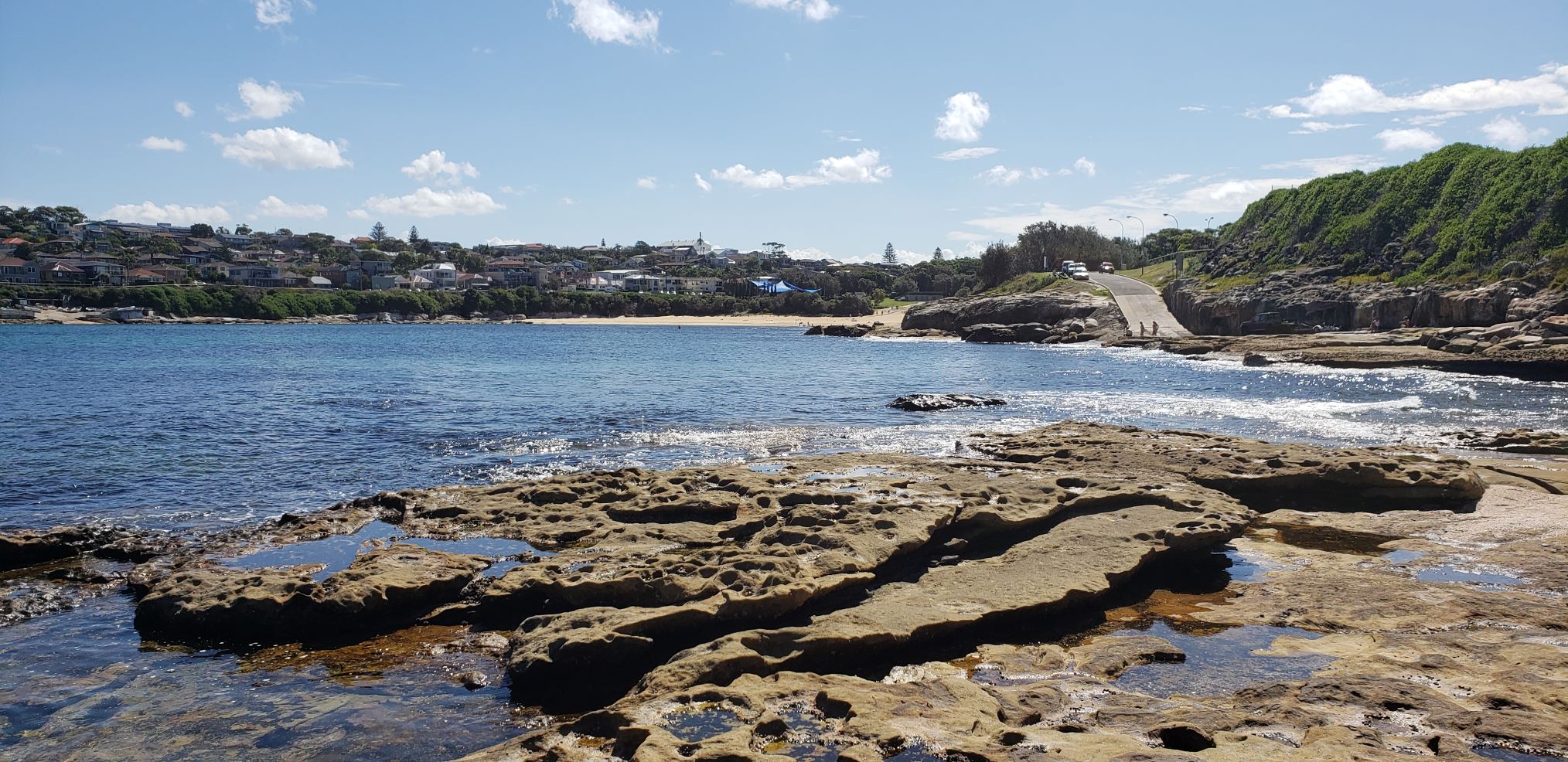
Our first day in Sydney was focused on settling into our new Airbnb and shopping, but the next effort was to explore the nearest beach. Maroubra Beach is just one km from our house, about 5 minutes by car. It has everything, sandy beach, interesting rock formations, good beachcombing, surfers, even a biology class combing the rocks. This is a lively zone.
We stopped in at the next beach to the south, Malabar Beach, for a follow up. In between beaches are cliffs and headlands. There are lots of walking trails and views out over the ocean–beautiful!
Melbourne proved easy to live in, another testament to Jonathan’s Airbnb research skills. We were walking distance from the beach, very handy on hot days, and also close to public transport. We drove into the center of the city on our first day to go to my eye doctor appointment and it was as nightmarish as in any big city. So was the price of parking. We learned the bus, tram, train system immediately, and had no trouble getting around in the city subsequently. In fact, there is virtually no down side to Melbourne apart from the big issue–it is difficult to emigrate. We met lots of young people from all around the world in Australia for a year or two, including a woman who arrived from England the day before, and a young man returning to France next month after two years working and traveling here. None knew of a legal way to emigrate apart from marrying an Australian. The young Frenchman said, “Yes, I could, but I am here with my girlfriend and she would object.”…..
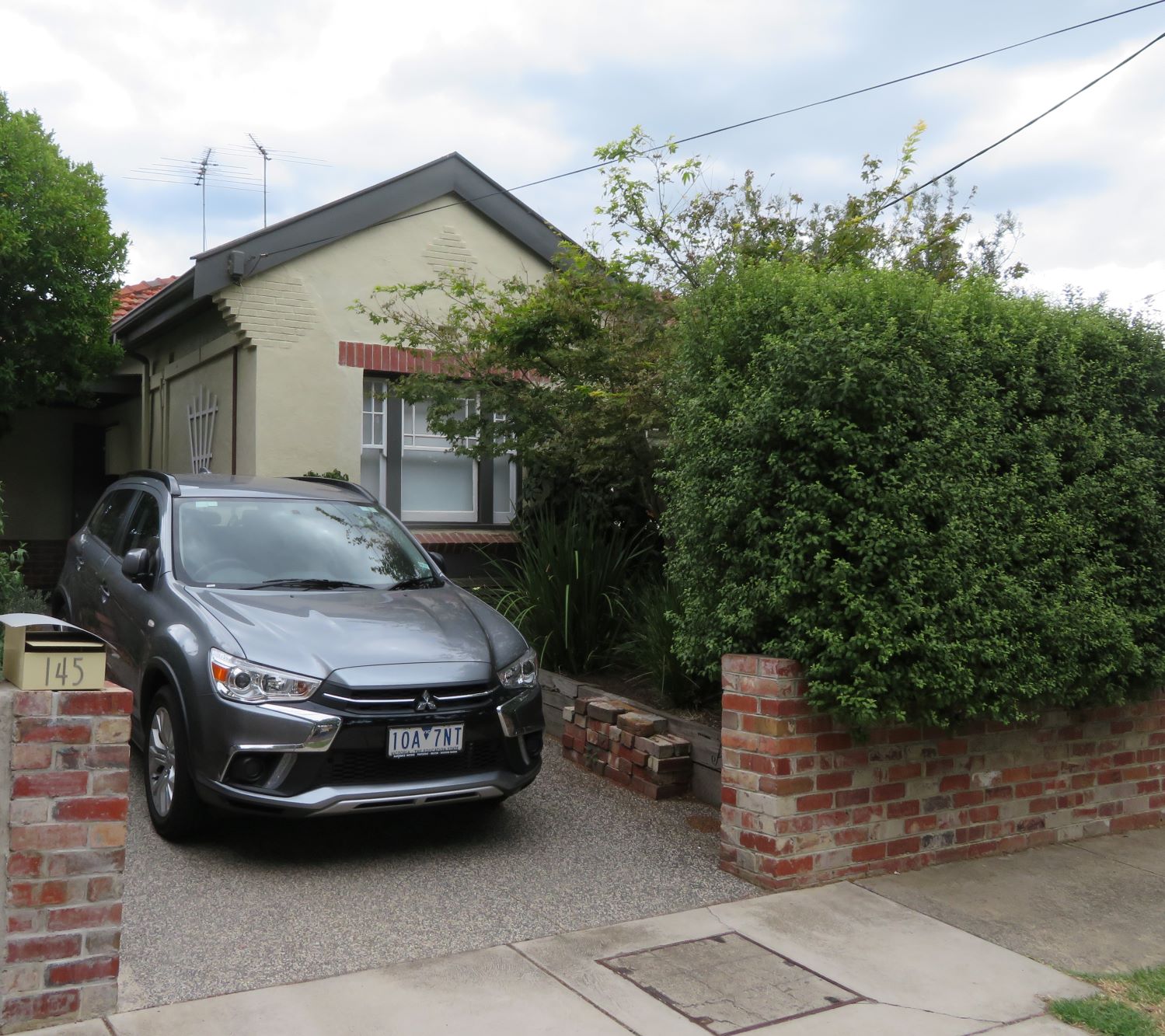
Our half of a duplex.
Airbnb: Airbnb is legal here despite the scarcity of housing across Australia. We found lots of choice, though it was not inexpensive. The neighborhood we lived in, Elwood, was a good balance of proximity to the city and also the beach. Our Aribnb was a duplex that shared a wall with neighbors, though we rarely heard them. I liked having the chance to live in one of these older houses. Ours had been thoroughly renovated, so none of the Edwardian inconveniences remained.
Bus, tram, train: Melbourne has an integrated transit system that allows you to use one pass (Myki card, $6) to get around. A genius policy decision provides free transit in the heart of downtown for everyone, card or not. The system is not inexpensive, but there is a cap on the fare you pay each day at $8.80, a full fare round trip. When we went to the Botanical Garden in the evening to see a play, my tram ride was free because I’d been in and out of the city during the day. To pay, you scan your card on a device in the station or onboard, and you scan again when you get off. In the month of our visit, only one time did a conductor pass along the aisle of the train double-checking tickets. These checks are random and the fines are high, so people pay up.
Markets: So much shopping, so little time! The Queen Victoria market is probably the best known of the Melbourne markets, and it was full of delicious goods, but so is the South Melbourne market, which we hadn’t even heard of. There’s an equally large market in Footscray, just across from the railroad station. We are visiting during the summer and that means there are weekend markets in many neighborhoods. We went to a good sized spread at the Elwood elementary school, just two blocks from our house. There are more specialized markets that lean toward artisan items on Saturdays, Sundays (St. Kilda), monthly dates, and special events including the St. Kilda Festival, the Bright’n Sandy Festival (Brighton), and many others.
Parking: This is one reason people travel by public transport. We paid $16/hour in the city center, comparable to any other world city (and less than Chicago). Parking at the beach was $5.70/hour and the price per day is capped at the three hour price, so it isn’t bad for a full day outing. Beach-hopping is a bit pricey–not that it stopped us. It is always possible to look for free parking in the neighborhoods across from the beach, but some of these areas are now posted for residents-only parking.
People: We found people in and around Melbourne to be friendly and helpful. People were easy to talk to and we often ended up in conversation on the beach, in the store, anywhere we happened to be. We got our recommendations on where to stop along the Great Ocean Road from a couple we sat next to at Mozart by Moonlight. We felt very comfortable here.
Phone: We use the Optus phone service we began in Tasmania, and renew automatically every 28 days ($30). The pay as you go service is heavy on data. Apparently people who use this tend to watch video on their phone. The good news is this means we’ll never run out of data and can look up directions constantly. The phone battery runs down long before the data runs out.
Weather: Welcome to global warming. Some days it was 95, others topped out in the high 60s. I don’t think this is unusual anymore–call it the new normal. It can be difficult to have the right clothes at the right time. Dress for something between sunbathing and cross-country skiing. We tried, and mostly succeeded.
Places we visited and recommend:
Food/Shopping
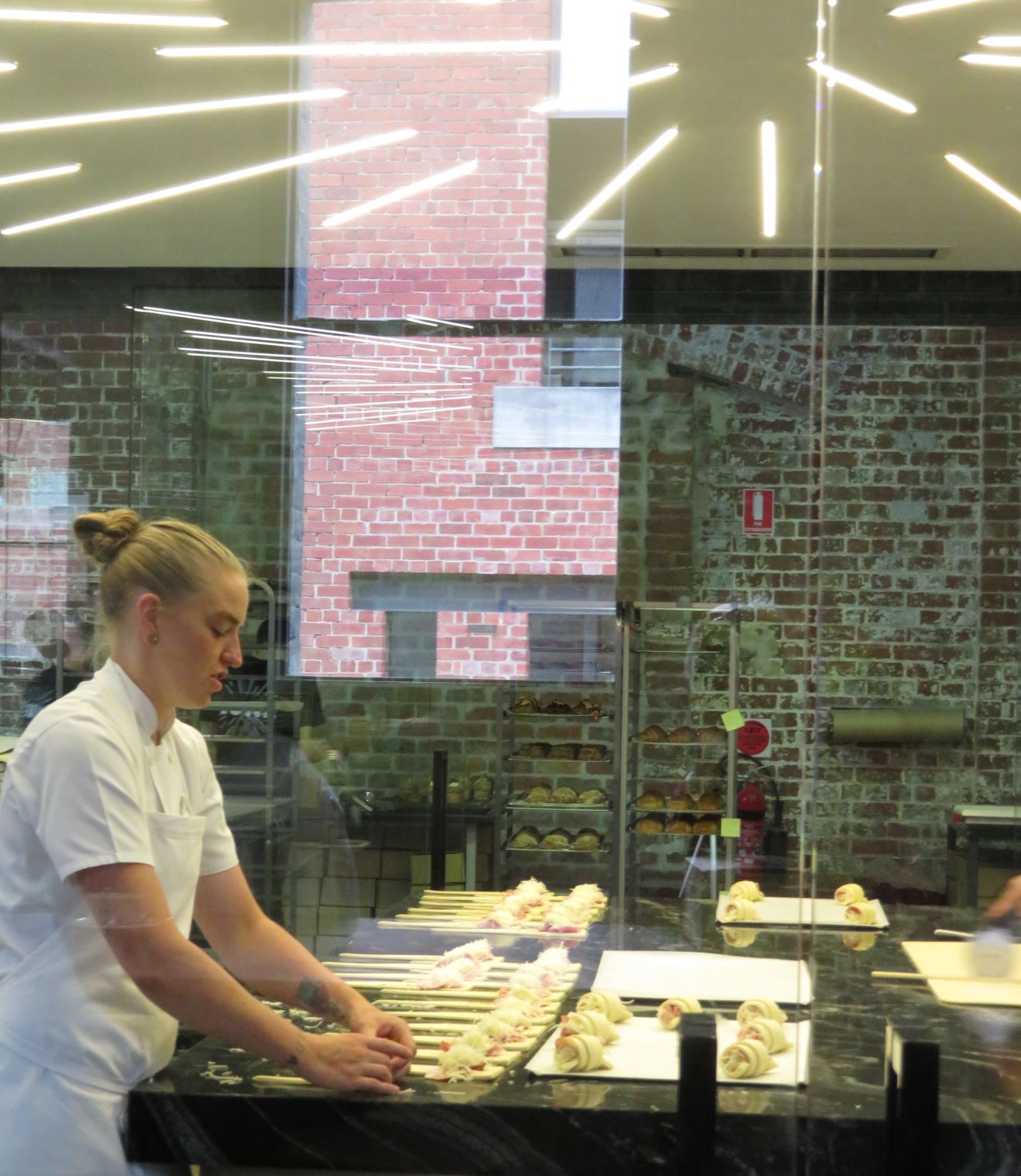
Lune Croissanterie, Fitzroy
South Melbourne Market
Queen Victoria Market
Wineries, Mornington Peninsula, Yarra Valley
St. Kilda farmer’s market
Elwood school weekend market
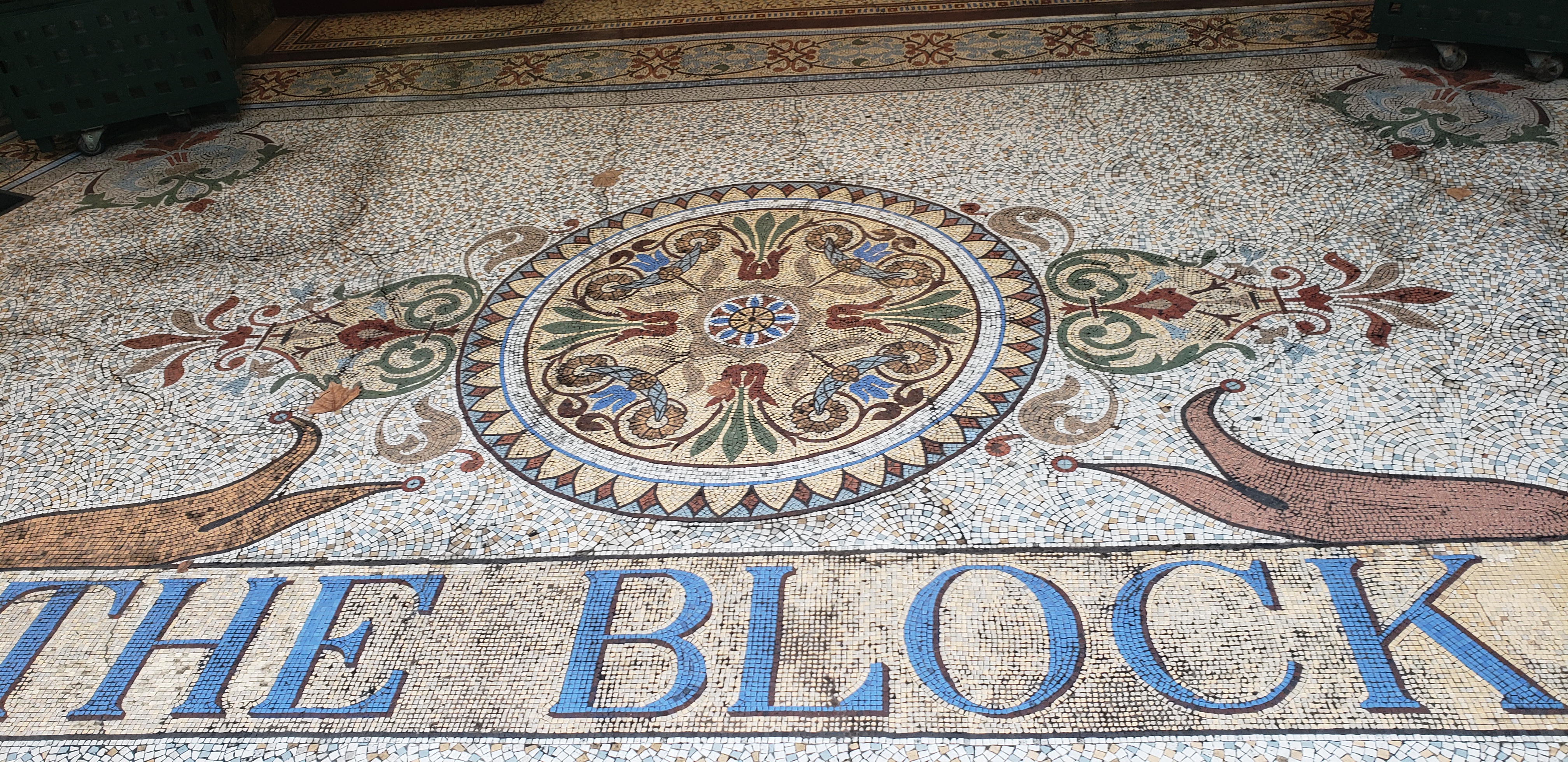
Melbourne arcades and laneways
Outdoors–
Any beach around Melbourne Bay (St. Kilda, Elwood, Frankston, Hampton, Mentone, Mornington, Mt. Eliza, Rye, Sandringham)
Beaches on the ocean: St. Andrews, Torquay, Bell’s Beach
Royal Botanical Garden–see an evening performance in the garden
Walking the laneways and shopping arcades of downtown Melbourne
Walking in any older neighborhood
Brighton Bathing Boxes
Healesville Sanctuary
Great Ocean Road, Koala cafe stop is a short bird/koala walk
Yarra Bend Park
Lake Connewarra
Indoor–
Federation Square, Australian Center for the Moving Image
Melbourne Museum
Heide Museum
The National Opal Collection (store/museum, with a very pleasant, informative salesman who didn’t push us to buy)
Looking at buildings gives me a sense of the age of a place, style, and how lively and economically vibrant it is. You won’t see construction cranes on the horizon if people aren’t doing well. Melbourne is very dynamic, with a skyline full of cranes, new buildings pushing out the old. The skyline is developing a panorama of very new, very tall structures. “Melbourne style” consists of angular multi-story buildings patterned with color. There are apartments that look like stacks of cubes and buildings decorated with lego-like designs and dramatic geometric patterns.
This slideshow requires JavaScript.
The skyline is filling with tall structures and continues to expand. It certainly impressed us when we arrived. Contemporary architecture is entering the neighborhoods, too. It can be jarring to see it run into the older building styles when angular contemporary homes fill lots created by the demolition of older homes gradually transforming neighborhoods.
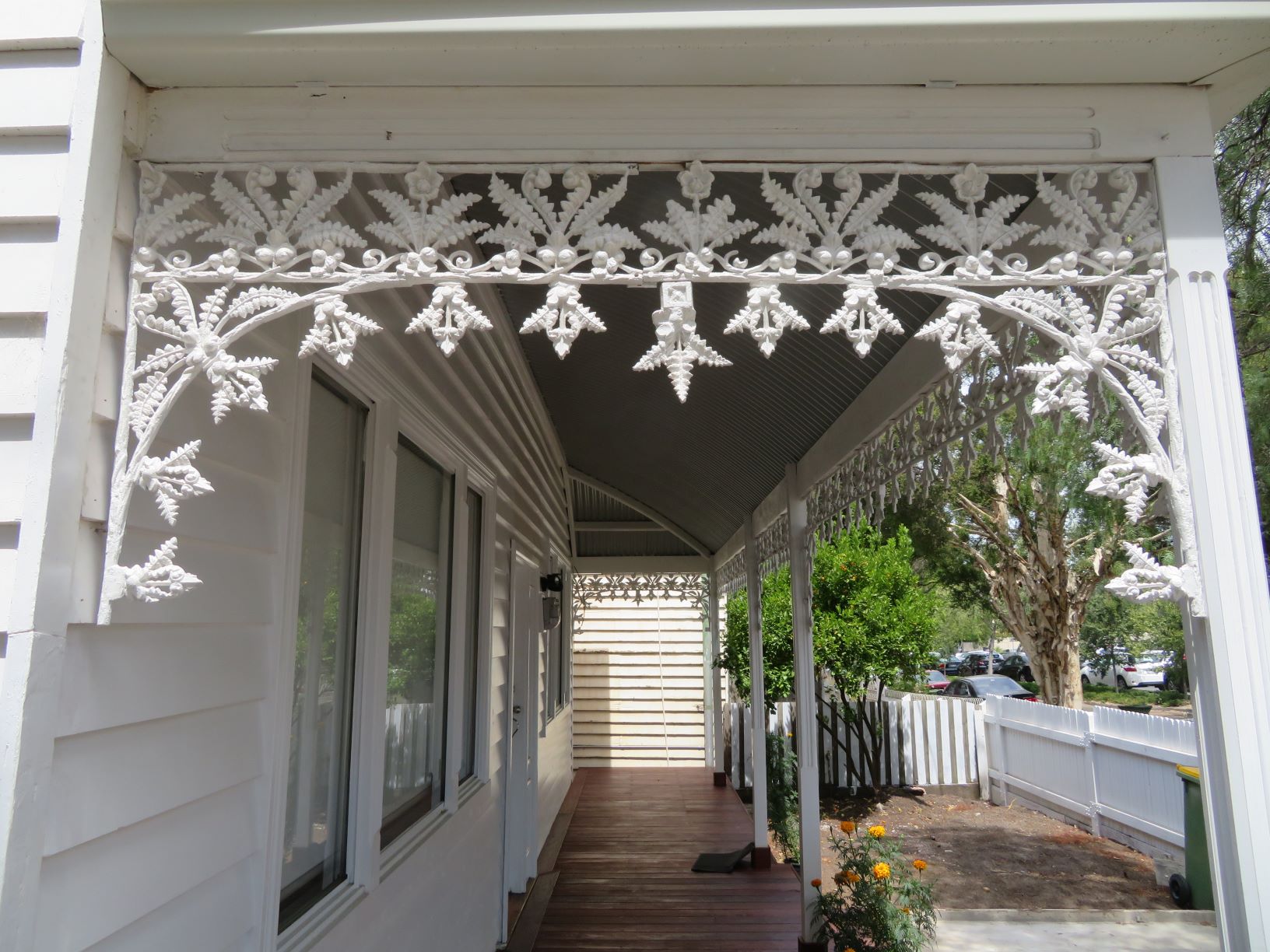
The other interesting architecture harks way back–Victorian/Edwardian cottages decorated with elaborate cast iron railings or complex wooden barge boards and gingerbread trim, beautiful and intriguing. These are often quite small, 1000-1800 sq ft, with a tiny garden front and back. Many were designed and built as single story duplexes, sharing a center wall.
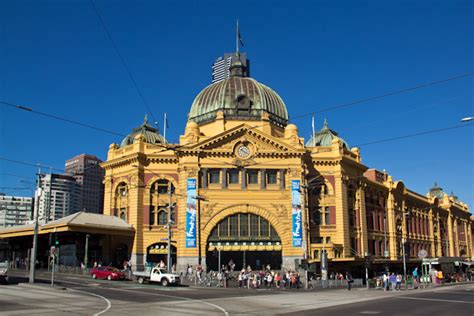
Fans of Phryne Fisher will recognize the older buildings and some of the more ornate civic structures that display decorative circular towers, balconies, and niches. The covered shopping arcades also reflect turn-of-the-century style. The Flinders St. train station is a stately and highly decorative central place. In addition to all its flourishes, it apparently hides a ballroom on the top floor that is only open once a year for visits by architecture aficionados.
While I like the old style, a brick cottage has limited space and light. Upkeep on all that gorgeous decorative trim…. I was unable to find any evidence of historic districts in residential areas. This may not be a concept that is applied in Australia. Without one, though, the charming cottages of the older neighborhoods will be gone sooner rather than later as the city expands upward.
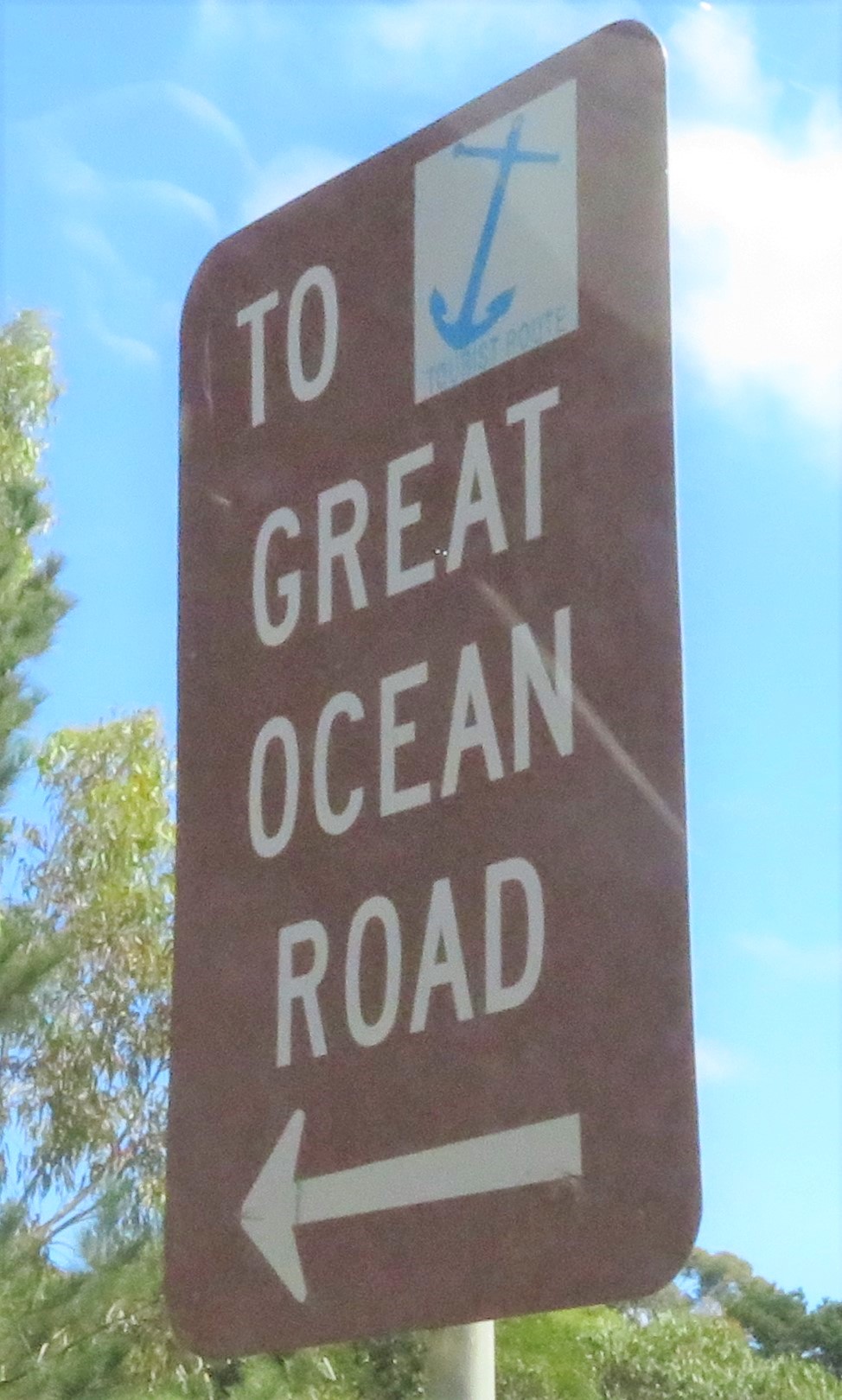
Chatting with the man next to me at last week’s concert, I heard about the Surf Capital of Australia–Torquay. We were told about the wonderful beaches and gorgeous coastal drive. Much as we enjoy Melbourne’s gigantic bay, we had wanted to get out to the ocean, and were convinced. My new friend admitted he was not unbiased, having grown up in Torquay. He lobbied for us to drive at least the portion of the Great Ocean Road from Torquay to Lorne. So we did.
What beautiful scenery, beaches, rocks, surfers! Torquay beach was full of surfers and surfing students, even on an overcast day. Shops focus on surf and swimming gear, surfboards and paddleboards are piled up on the sidewalk, strapped to the roof of cars and stuck into the sand.
After Torquay, we stopped at Bell’s Beach, famous for the climax scene in the film Point Break, despite the scene being filmed elsewhere. It’s a series of coves with waves of different sizes at different times depending on wind and weather. We asked a guy with a surfboard whether waves were larger on incoming or outgoing tide and it took him ten minutes to say, “It depends.” (With greater detail.)
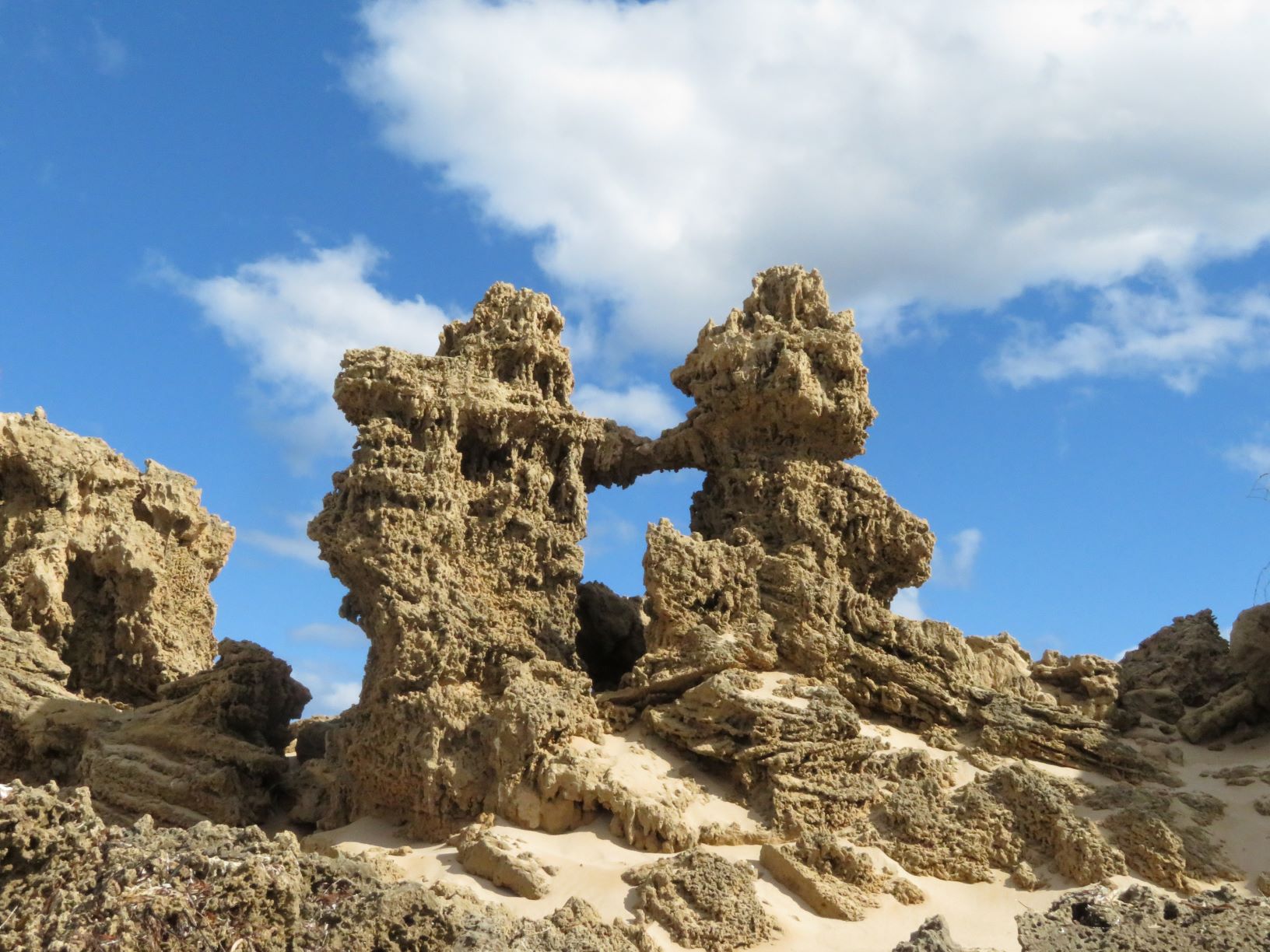
None of our stops beyond Bell’s Beach were in the guidebook, despite being glorious beaches with shelving rock and sandy shores. Roadknight Point has eroded rock that looks like ancient ruins, another version of the Library at Ephesus. Or perhaps a pair of giant twins.
For sustenance, we stopped at the well-publicized Chocolaterie for ice cream. They have many unusual flavors and a parking lot big enough for thirty tour buses. We were happy to be there on a quiet afternoon. We stopped for the night in Lorne, a beach town with it’s own surf school. At dinner, the young Frenchman who waited on us is at the end of his two-year stay in Australia. He told us of his travels around Australia and recommended the Koala Cafe, “just a little further down the road.” The koalas and parrots in the trees there were irresistible to us. The next morning we agreed that we’d get to the Koala Cafe and then turn back. We did see one koala “in the wild” that was every bit as interesting as the caged koalas we’ve seen–asleep with its back to us. The parrots were a different story. Despite all the signs forbidding visitors to feed them, tour guides pulled out containers of bird seed and filled the hands of all their charges. We benefited from seeing King parrots and rosellas up close.
It would be easy to spend the next two weeks making our way along the remaining 350 kilometers of the Great Ocean Road.
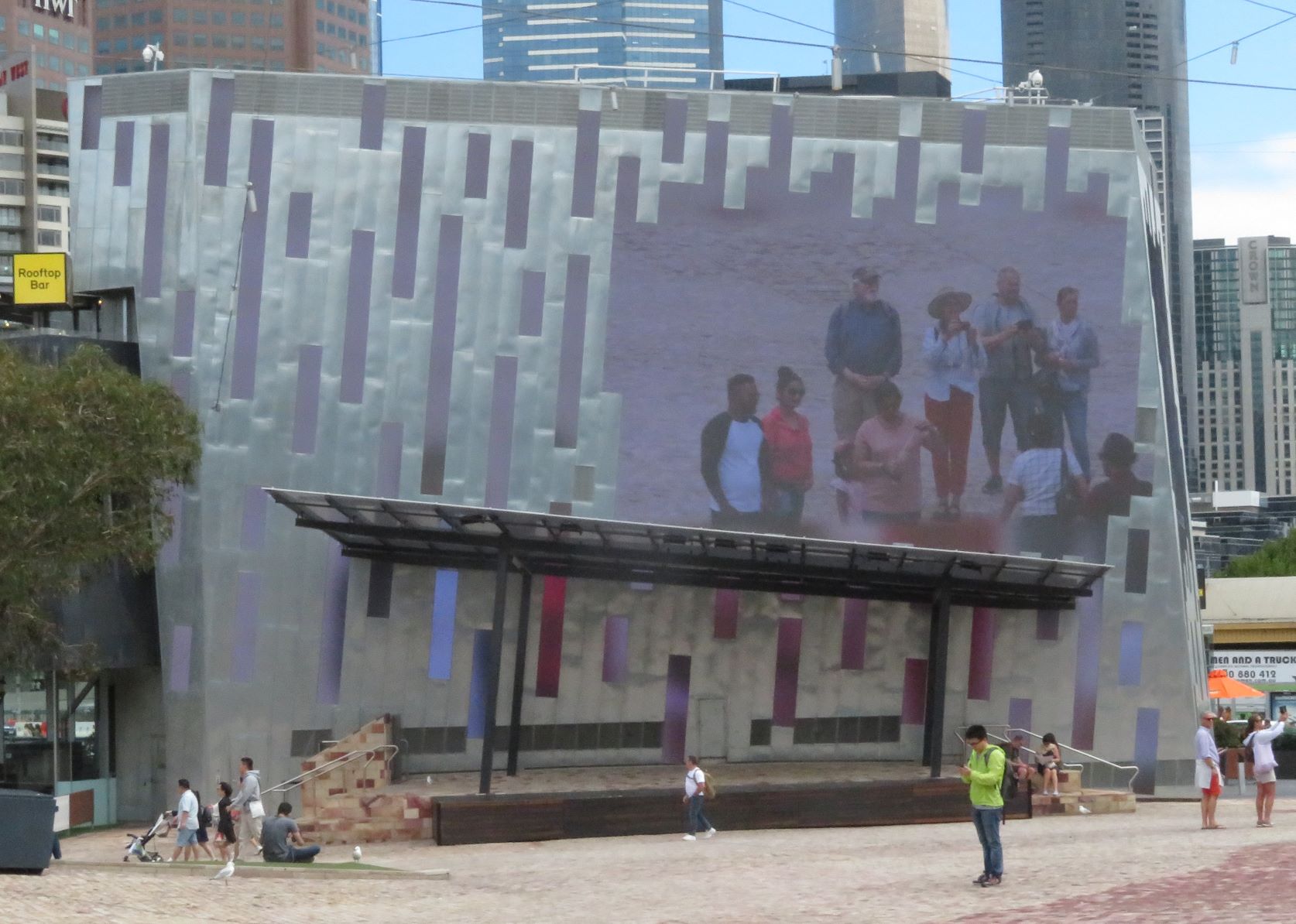
The Australian Centre for the Moving Image is right in the middle of Melbourne, on Federation Square across the street from the main train station. This vast center(re) offers a schedule of movie screenings every day, along with permanent galleries, and temporary exhibits. We spent all day there and ended up with visual overeload while completely running out of steam. It was great.
The temporary installation is a piece of performance art in which snippets of films have been spliced together to span twenty-four hours of real time, using images of clocks from movies showing the time. Do we really see that many clocks in the background of movies? And so many pocketwatches! The artist is making a commentary on time and other themes, but the clips are so short it could be an all day vimeo contest: Can you identify these movies/actors/places? The clip from The Third Man was so short that I only recognized it from the music. There’s Meryl Streep and Alec Baldwin, Mata Hari, everyone. We sat for forty minutes and could easily have stopped in for another hour. Just think, it goes for 24 hours like this! There are all night showings!
It’s wondrous for non-movie fanatics, I wonder what movie fans think? I’d guess they love it, so much trivia, so many details. Here’s what the Centre says about it:
The Clock is a 24-hour video installation created from thousands of clips of clocks, watches and other references to time from film and television. These are masterfully edited together and synced to the present moment in one mesmerising collage. The result is an epic journey through cinematic history as well as a functioning timepiece.
Minute by minute, hour by hour, hundreds of characters are jolted awake by alarms, run for trains, wait for lovers, or dream strange dreams. Stitched together from hours of cinematic history, The Clock gifts audiences the addictive joy of recognising favourite actors or scenes from beloved films, as well as being wildly compelling and dream-like itself.
Here’s a review by someone who watched the entire twenty-four hours.
Can you see us projected on the side of the building?
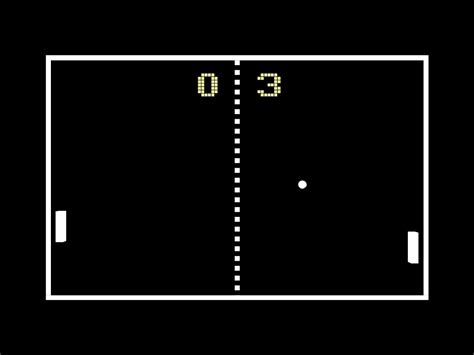
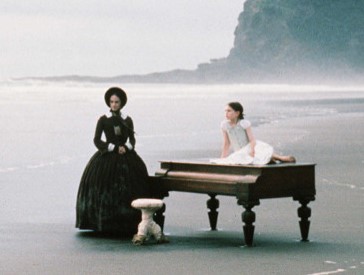
The permanent exhibit focuses on the history of the film industry emphasizing Australia when possible. There are views from old devices and lots of movie clips, lots. Silent movies, Marx Brothers, Clark Gable and Katherine Hepburn (Bringing Up Baby), but the Australians, Moulin Rouge, Cate Blanchett, producers, directors. By the time I’d looked at clips from the first silent films to the advent of sound, color, and television, I was up to my eyeballs in movie scenes. From there, the exhibit branches off into Australian TV, movies, costumes, special effects, animation, video games, and digital media. The only game I could manage was Pong–slow motion ping pong. We took a break for lunch and returned for another round. The gallery is arranged around their two big pieces, a vehicle from Mad Max, and the piano from “The Piano.” There are some places to sit when your feet start to give out, as well as a cafe and lots of outdoor seating for resting or picnicing. Amazingly, all this is free. The only charge is for screenings of full-length movies. You could spend all day looking at the exhibits and then take in a film that starts at 6:45pm. There’s even a series called prosecco + film. The ACMI is a place that really does have something for every taste and level of enthusiasm.
Neither of us is good at sitting on the beach. We need chairs (knees) and an umbrella (skin cancer) as well as good books or crosswords, water, and snacks…. We don’t just plunk down on the sand between swims. We wade, look at tide pools, and beachcomb.
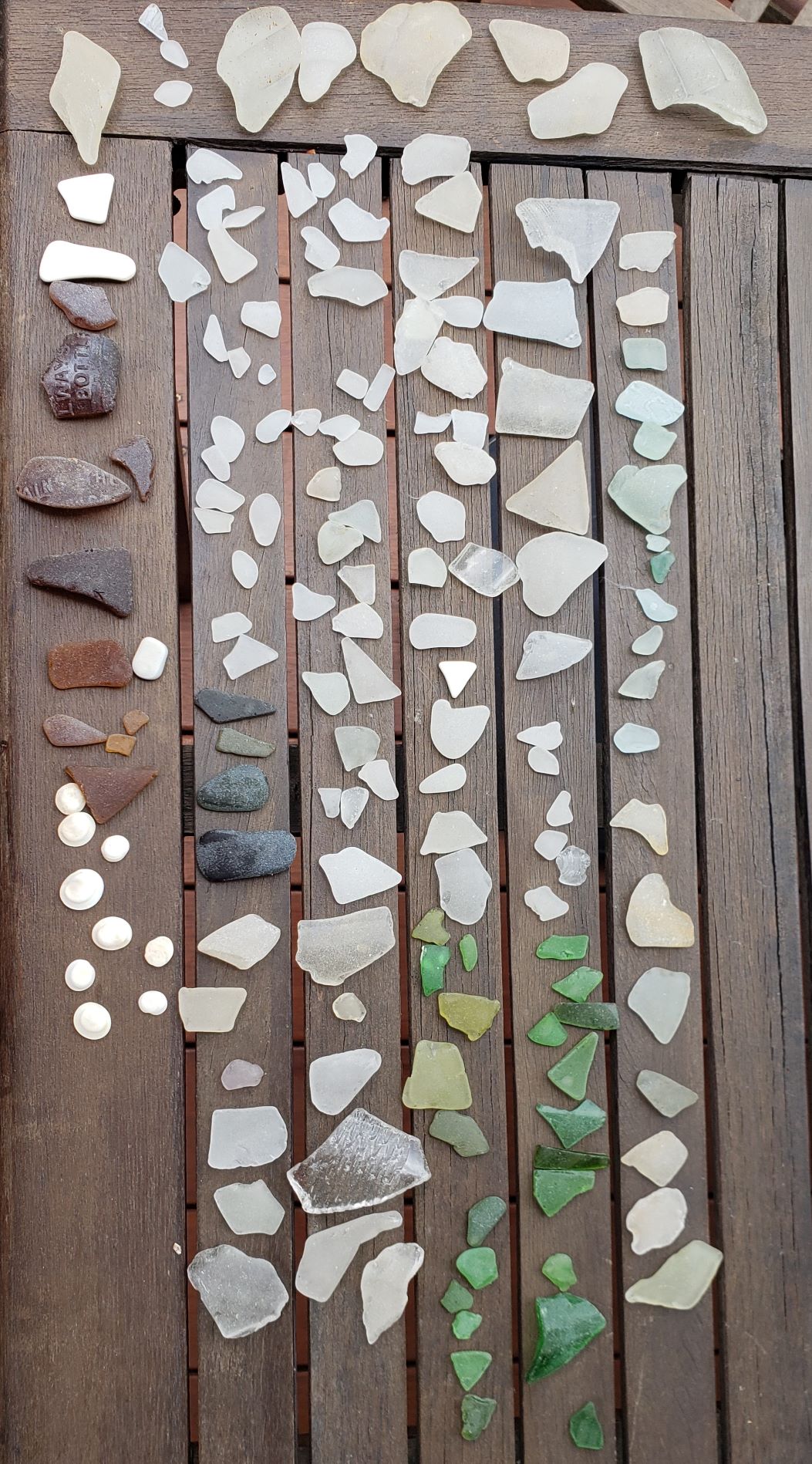
I began collecting along the beach well before we started our current travels. In Peru, I found a Fred Flintstone figure. During our three months in northern California, I collected abalone and a few tiny pieces of beach glass, the gems among the shell. At our next stop in Barcelona, thousands of years of occupation around the Mediterranean yielded lots of beach glass, yet the only person I met while collecting was a young woman from California. We shook our heads at the oblivious Catalans, passing up the treasure under their feet.
Since then we’ve walked along beaches in Ireland and Scotland, Italy, South America, New Zealand and Australia. I’ve found cowboy figurines, mini-superheroes, and toy trucks. We’ve picked up lots of beach glass–Jonathan can see beach glass from 20 paces with his eagle eyes.
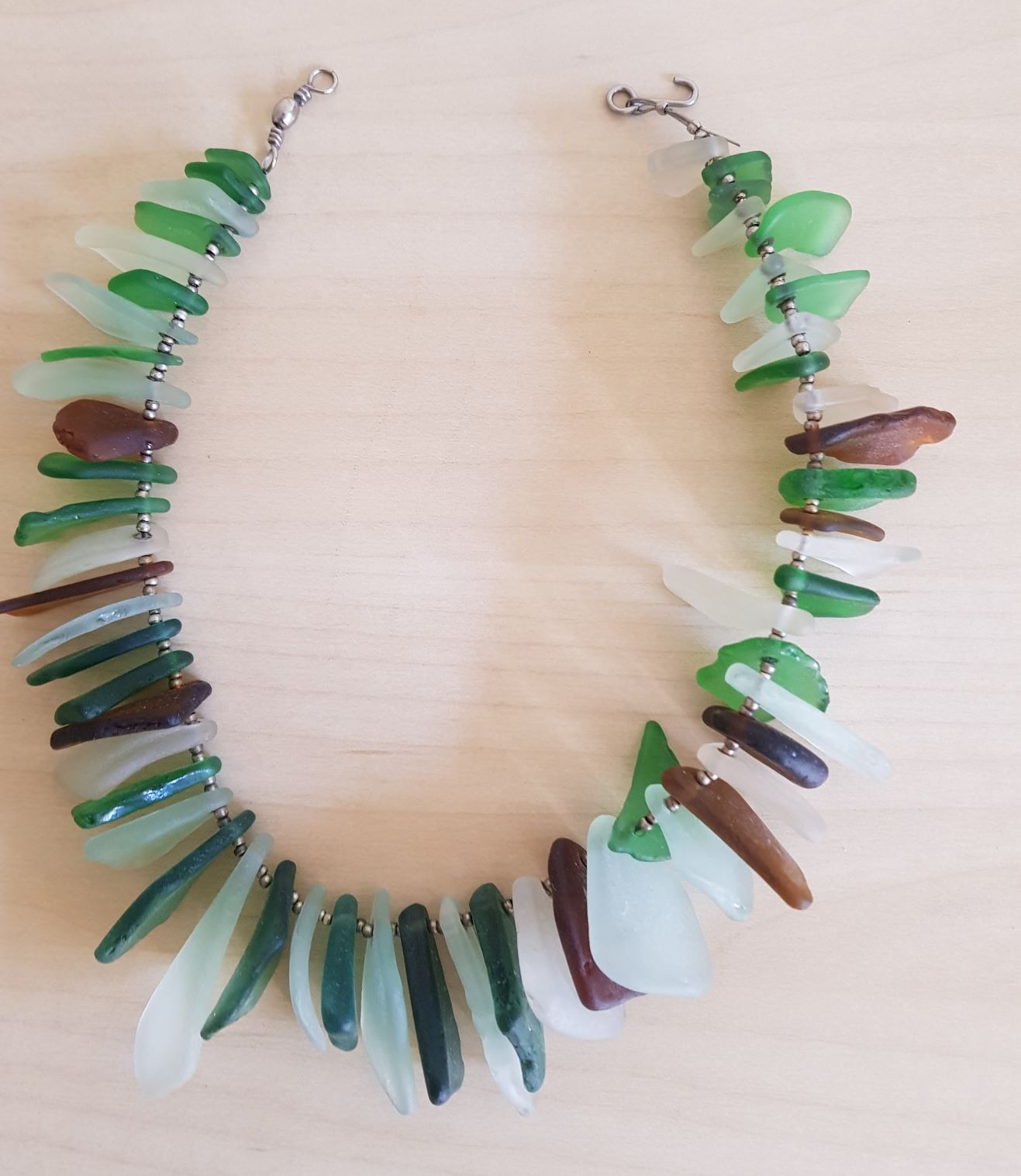
In Italy, I began to make pendants from beach glass wrapped in wire from the many bottles of prosecco we were consuming. Wire-wrapped pendants can be beautiful, but wine bottle wire isn’t always the best material. I had a lot of fun making do with pliers and what was at hand, but to create something better I had to invest in some beading wire, a few jewelry findings, and a drill. I bought a Dremel.
[A Dremel is a popular brand of multi-tool that is very popular with crafters. If you know what a Dremel is, you know it’s the first step on a slippery slope to a garage full of project materials and 15 kinds of pliers.]
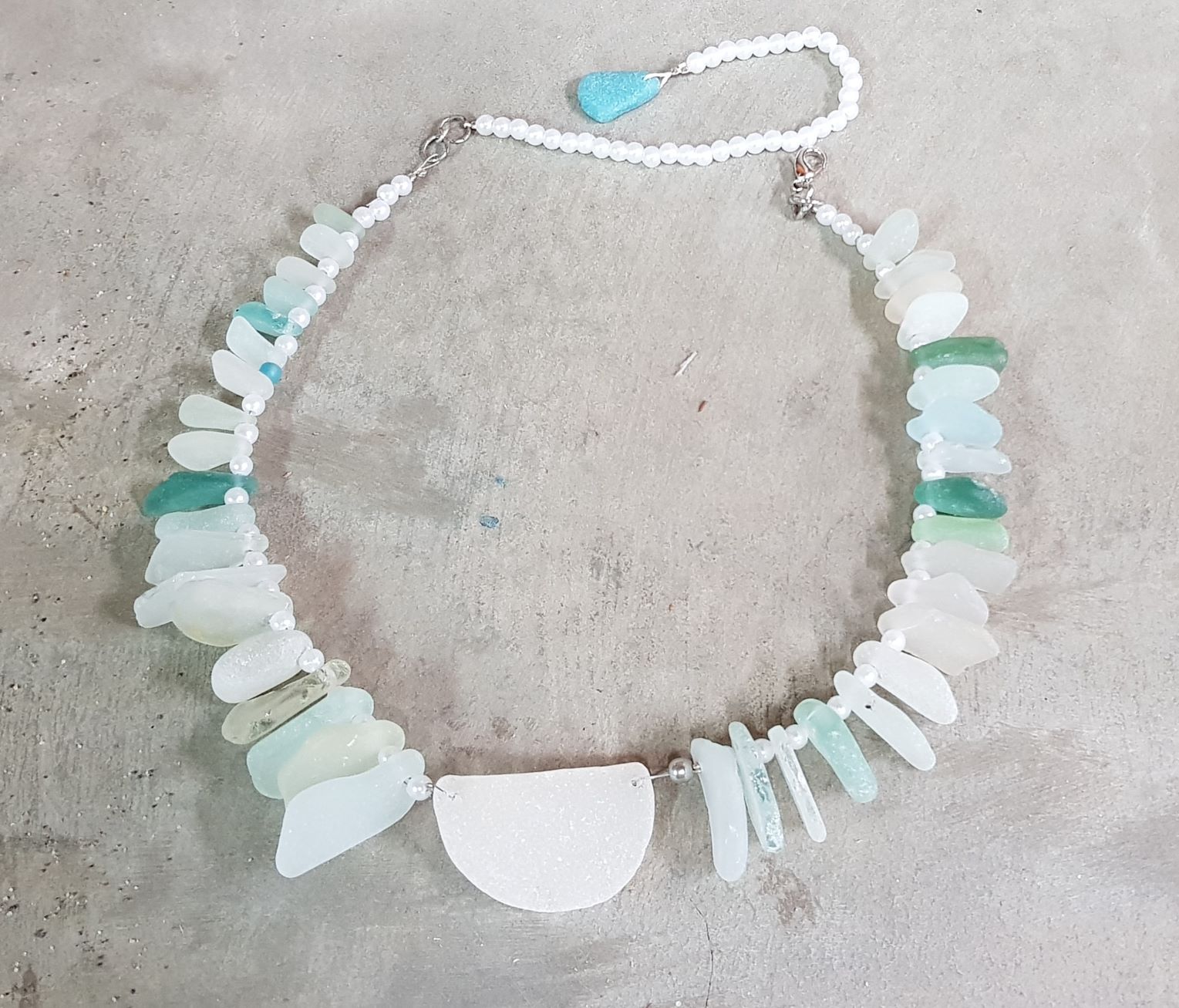
My first design turned out well. I wear it all the time and it’s been a good conversation starter. People ask where I find the glass and when I tell them it is all along their local beaches, they seem truly surprised. I’ve continued making beach glass necklaces, trying out a variety of colors. There are lots of different variations that I still want to make. A few are laid out on the window sill and more are ideas. I frequently get distracted by new possibilities. I made earrings to match the necklaces, then made a detour into bracelets that still needs a lot of development. When we found shells on the beach, I made shell necklaces.
When we found driftwood, I made a wall hanging.
I’m still learning how to wrap a perfect piece of beach glass in wire to make a pendant, though.
One day soon, I’ll set up a website. The slide show below includes projects that I’ve made when not drilling beach glass for necklaces.
We’ve been following summer around the world for five years, and I enjoy summer in every locality. Now that we’ve been in Melbourne for a week, I’m getting a sense of what summer is like right here. Our neighborhood is Ellwood, a close-in suburb of Melbourne. For Chicagoans, it’s like living in Evanston near the lake. I can walk to the beach in ten minutes, while ten minutes the other direction takes me to the tram or the train into the city center.
The city influence means there is a good bakery just blocks away despite our street being a leafy residential zone. The cafe right at the beach does good business all day long. I see all kinds of people there, moms and small children, older couples having lunch, individuals reading on their phones. There are always at least a few people on the beach, and on the hot, hot Saturday there must have been 300 people there.
A cool Monday
A hot Saturday
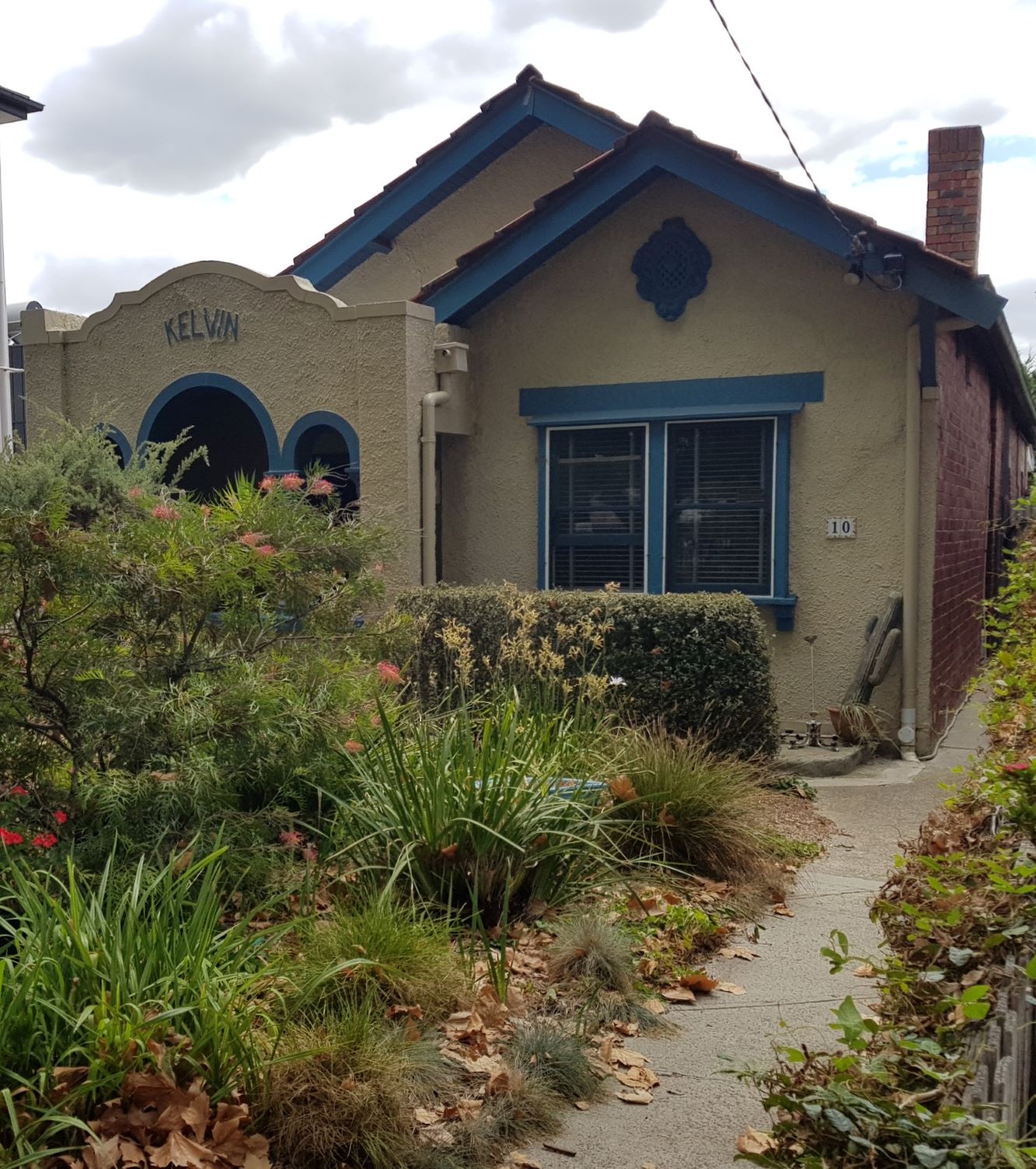
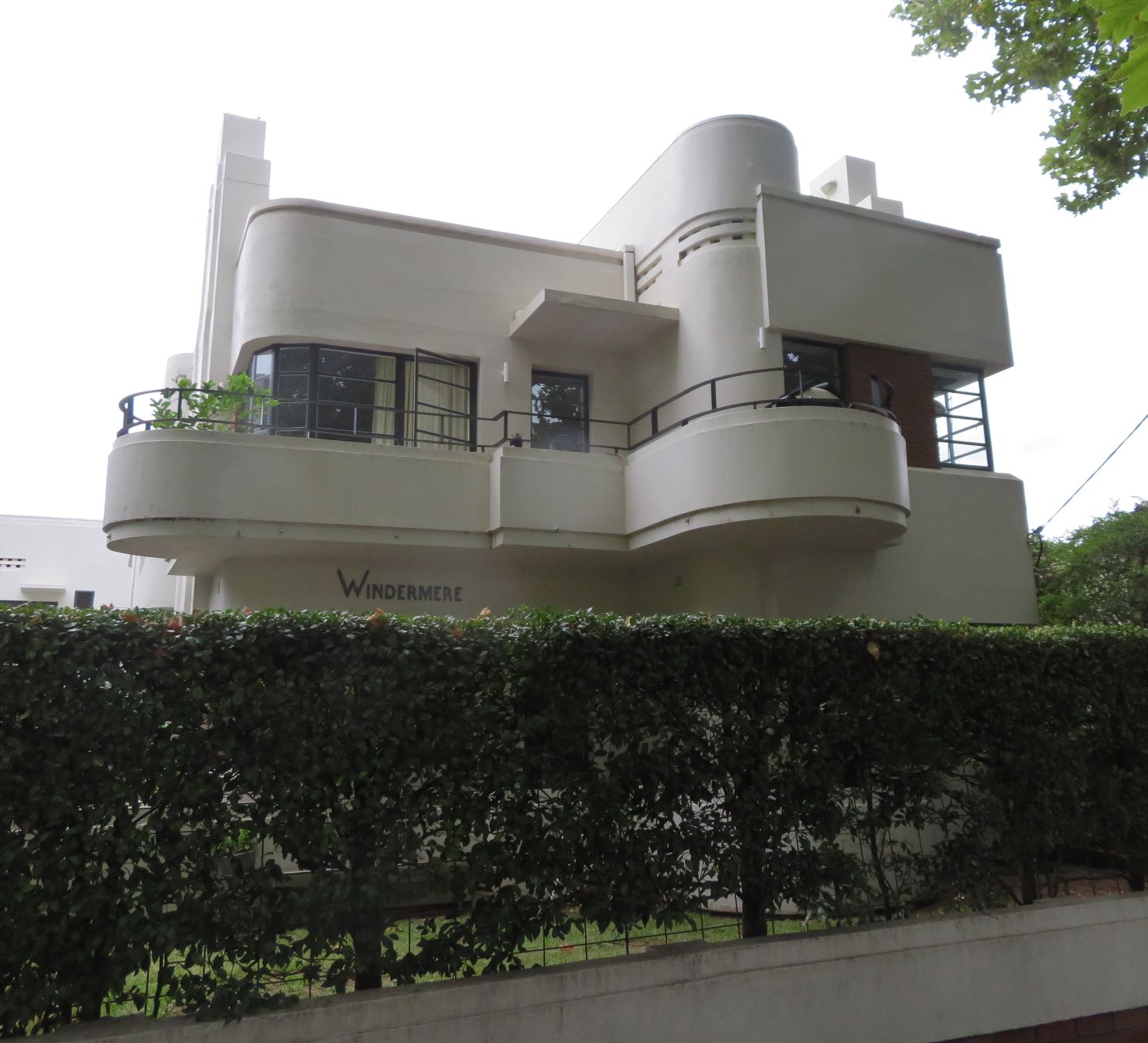
I take different routes to and from the beach, watching the construction of new houses and renovations of older ones. There seems to be a tendency to build ever higher walls along the street. I see the upper fringe of detail on a house and am unable to take a photo that does it justice because of a brick or concrete wall that covers most of the facade. Duplexes are quite common here, and halves of houses are bought and sold independently. With high walls proliferating, the best picture I have of a traditional duplex shows that sometimes one owner is more diligent at upkeep than another. Many neighborhoods of Melbourne hold lovely old houses in a variety of styles. There’s a “Southwest style” house, others with elaborate exterior trim or fencing, and even a few Art Deco.
Many older houses have lovely beveled glass windows. Our front door has some. I saw a creative newspaper box on my walk, too.
Occasionally, though, duplex life produces some pretty uncomfortable architecture. The most extreme I’ve seen is a traditional house on one side, single story with a low peaked roof, with a two-story contemporary on the other half. Possibly the only original part of the newer half is the connecting wall between them. The two houses below really share a center wall.
There are lots of apartment buildings throughout Ellwood, but most are no more than two stories tall and fit into the neighborhood easily. In this way the area holds enough population to support urban services like public transportation. Melbourne’s system is easy to use, one card for bus, tram, and train.
My walk generated a moment of nostalgia when I saw a four-drawer file cabinet on the sidewalk with a couple of other items marked “free.” About 40 years ago, Jonathan rescued a similar cabinet from the sidewalk in Manhattan. It moved around the country with him. I met up with it when we got married and lived in Denver, and from there we went to Santa Fe and Chicago. We finally donated our file cabinet to Goodwill when we downsized. I hope the cabinet on the sidewalk in Ellwood gets as good a run as ours did.
One of life’s pleasures is feeling like you belong somewhere and however fleeting, I feel this way about Ellwood. I could live here happily, even though we’ll be moving on at the end of the month. Something about the settled neighborhood, the weekly market at the school at the end of the block, access to other areas of the city, and friendly neighbors makes it feel like it could realistically be home. It’s a very warm feeling that I enjoy every day.
We left Hobart under a cloud of cold smoke, with the temperature around 60°. We arrived in Melbourne in similar weather but without the smoke. The coming days are forecast to be in the 90°s. Rolling blackouts in Melbourne last week ended with a lot of finger-pointing. I’m waiting to see what happens during our stay. Will the AC work? Will there be blackouts?
After a month in farmland, Melbourne looms as a gigantic city full of contemporary architecture. I feel like the country mouse newly arrived in the city.
Sure enough, the day after we arrived was a scorcher, and it was even hotter on Sunday. The beach was packed both days, and I didn’t go until late in the afternoon to avoid the worst of the heat (over 100°).We braved the heat in the morning when we found out that the route of the Melbourne Midsumma Pride March was relatively near us. The parade was a wholly upbeat event, mostly people with rainbow umbrellas and enthusiasm, many friends and family of LGBTQIA marching and watching. There were a few people dressed in fabulous outfits, and a few barely dressed. The mood was celebration rather than hookup, and we enjoyed it all. Why go to a pride parade? General support for the idea that people can be whoever they decide they are, and the possibility of seeing something fun and a little outrageous. We did well on both counts.
We always learn as we go, and Tasmania was no exception.
Airbnb: Our Airbnb in Tea Tree was different. We enjoyed the view out over a vineyard, but it was a bit more rustic than we like. I didn’t mind the geese, but we did have to watch our steps.
Car: We rented a Kia Rio through Budget and though we had no problems, the car was underpowered. It’s a good thing there aren’t any real mountain passes in Tasmania.
Cost of Living: A recent TV report put Tasmania as the fourth most active economy of the Australian states. Tourism is climbing and the cost of housing is not falling as it is elsewhere in Australia. Food costs are comparable to Chicago and food purchased at a farmer’s market usually costs more than the grocery store. Most of the seafood that is consumed is farmed locally. Fresh oysters, shrimp, lobster, and salmon are available and delicious. We found few other choices and almost no whole fresh fish. Having lived in Peru for a while, we are used to looking at the eyes and gills of a fish to asses freshness–you can’t do that with a plastic wrapped fillet.
National Parks: Every state in Australia make their own rules for National Parks, so you can’t buy a pass to use all around Australia. If you are staying in the Hobart area for a few weeks, you can purchase a $40 month long pass and use it to visit three beautiful places, Fortescue Bay in Tasman National Park; Wineglass Bay in Freycinet National Park; and Mount Field National Park. Though each of these parks merits a longer visit they can be reached by car as a day trip from Hobart. Individually, they cost $24 per car (up to 8 passengers), thus the month long pass is economical.
In the summer, these parks are very popular. The road in to Fortescue Bay is 14 km of bumpy dirt. There is a sign 2 km in letting visitors know if there are already no vacant campsites, so that visitors don’t bump all the way in just to find out there is no space to stay overnight. When we arrived, the ranger asked us why we weren’t staying for five days! She really likes it there. We met two couples who had just emerged from a hike they called both short and family friendly, the new Three Capes trail–a four day three night hike. (Australians are outdoorsy.)
People: Everyone has been friendly and helpful. We’ve chatted with people who have visited many places in the US, though mostly California. I’ve been promoting Chicago as a tourist destination–just not in the winter.
Phone: We bought Optus SIM cards and service that costs between $20 and $30 per month per phone. This plan has worked well and we had enough data to find directions and look up random facts all month. We’ll keep these the entire six months of our visit.
Weather: I cannot recall any place we’ve visited where the weather changed so dramatically from one day to the next. Several times the temperature has soared to well over 90°, and the next day the high has been closer to 60°. Occasionally it’s been even more extreme. We have clothing for all weathers, and have used it all in a single week. It takes some getting used to.
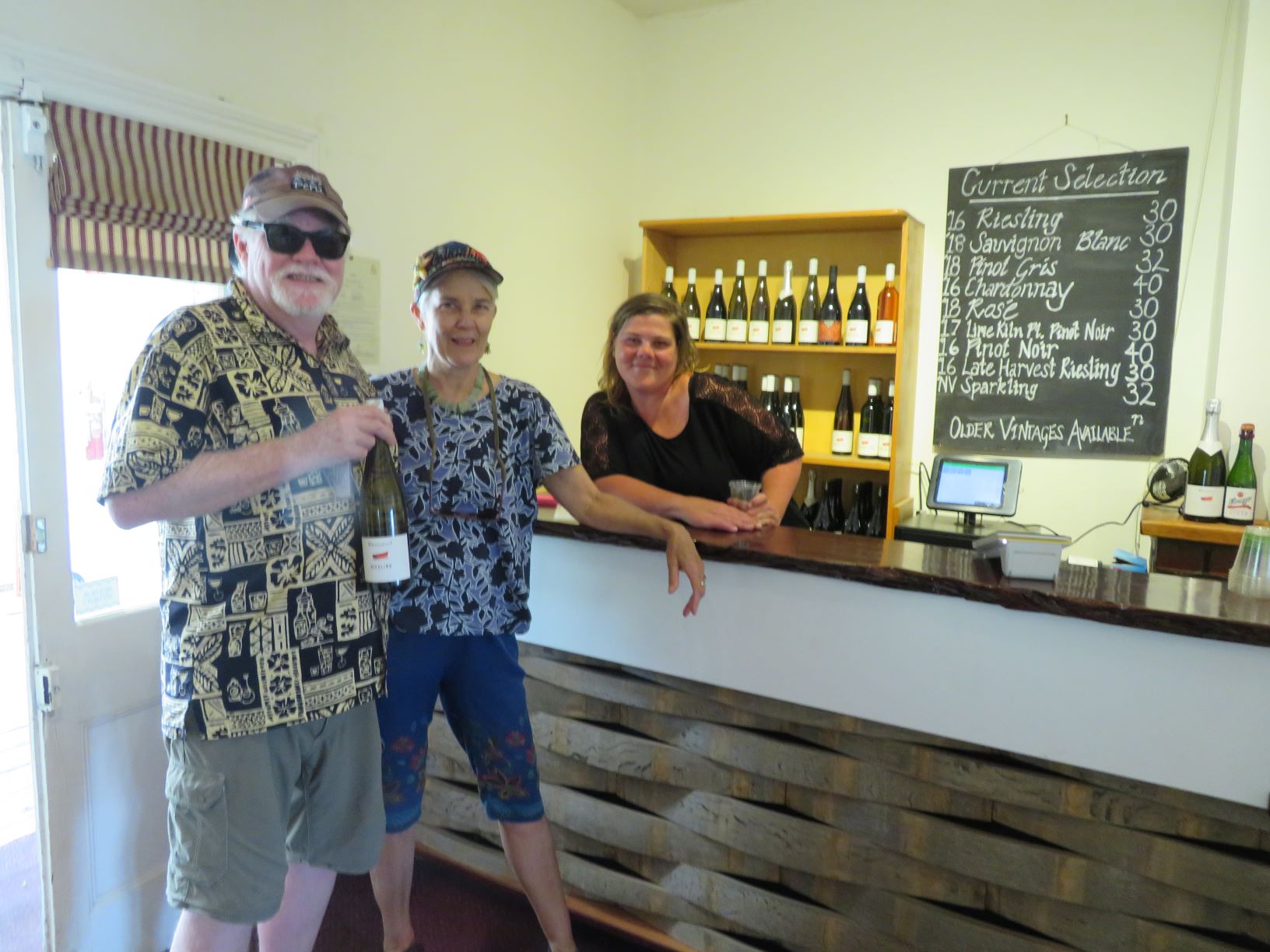
Wine: We learned a lot about Tasmanian wines by visiting the “cellar door” at wineries and tasting wine, lots of tasty whites and pinot noirs. Most tastings cost $5, waived if you purchase a bottle. We found that few producers export wine beyond the Australian mainland, though they can ship cases of wine to the US. Tasmanian wine is not produced on a massive scale yet, and a number of wineries don’t own their own wine-making equipment. Frogmore Creek Vineyards makes wine for several labels. Inexpensive wine comes from Australia. Most Tasmanian wine starts at about $20 (AU) per bottle. Not expensive, but there is no Two Buck Chuck.
 For us, the Opera House is the heart of Sydney. We made our first pilgrimage to this icon by bus to Circular Quay, then a stroll toward the point where rounding a row of apartments, the Opera House is revealed in all its glory. On a sunny day the roof tiles create a dazzling reflection.
 From another angle, it looks like a spaceport, with at least one spaceship ready to take off.
 Close up, the Opera House is a busy place. Tourists walk around taking photos, runners avoid them as they circle the Opera House on the path. Women in black dresses walk in and out. Either Sydney is a lot like New York or the dress code for staff is “wear black.”
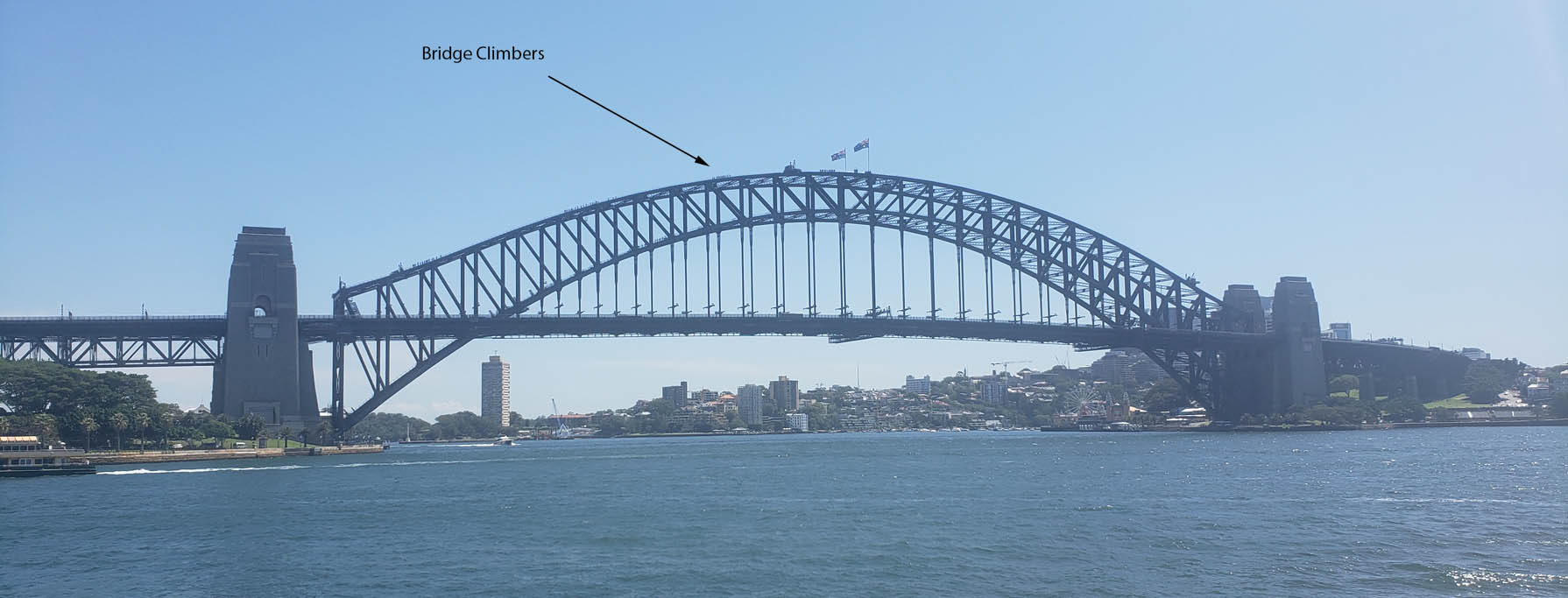 From the Opera House you can see tiny figures of the groups climbing high up the sides of the Harbor Bay Bridge. We walked around the edge of the ferry docks into the neighborhood called “The Rocks.” It is full of shopping and restaurants, and a lot of stairs. We ended up in the park beneath the huge bridge where plaques explain the process by which the fort located on this point was demolished and the bridge built. From a distance the Opera House looks quiet and peaceful, a ship at its mooring.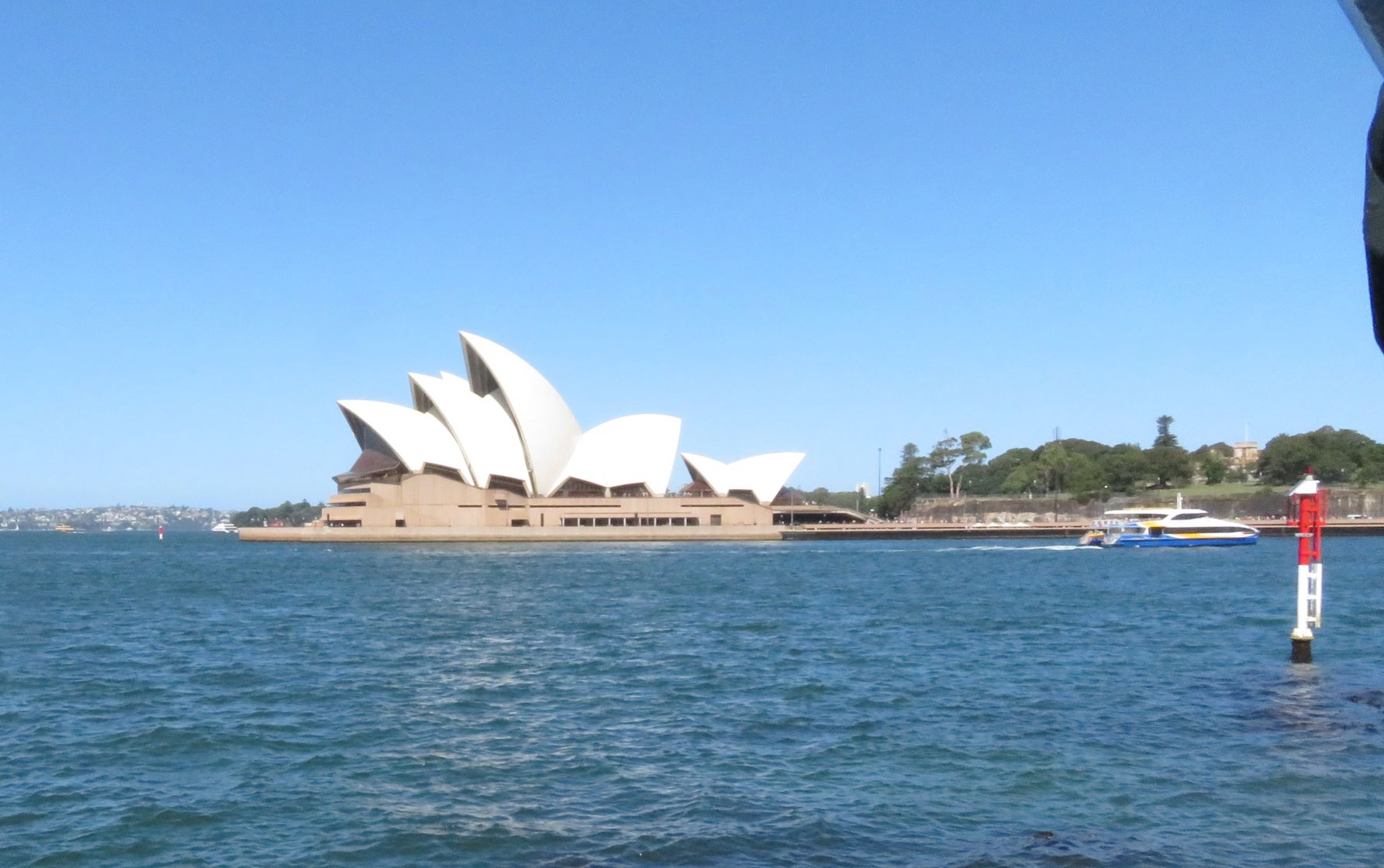
 In this age of celebrity architects, we couldn’t name the designer of this marvel, Jørn Utzen. After winning the design competition, new construction techniques had to be invented in order to build his design, methods that made later more free-form works by Frank Gehry and Zaha Hadid possible. Construction was both expensive and political and Utzon resigned from the project part way through. He never returned, not for the opening or to receive any of the awards offered to him by subsequent Australian governments. “If you like a person’s work, you don’t give them an award, you give them something to build.” There are a lot of stories there. Here are a few: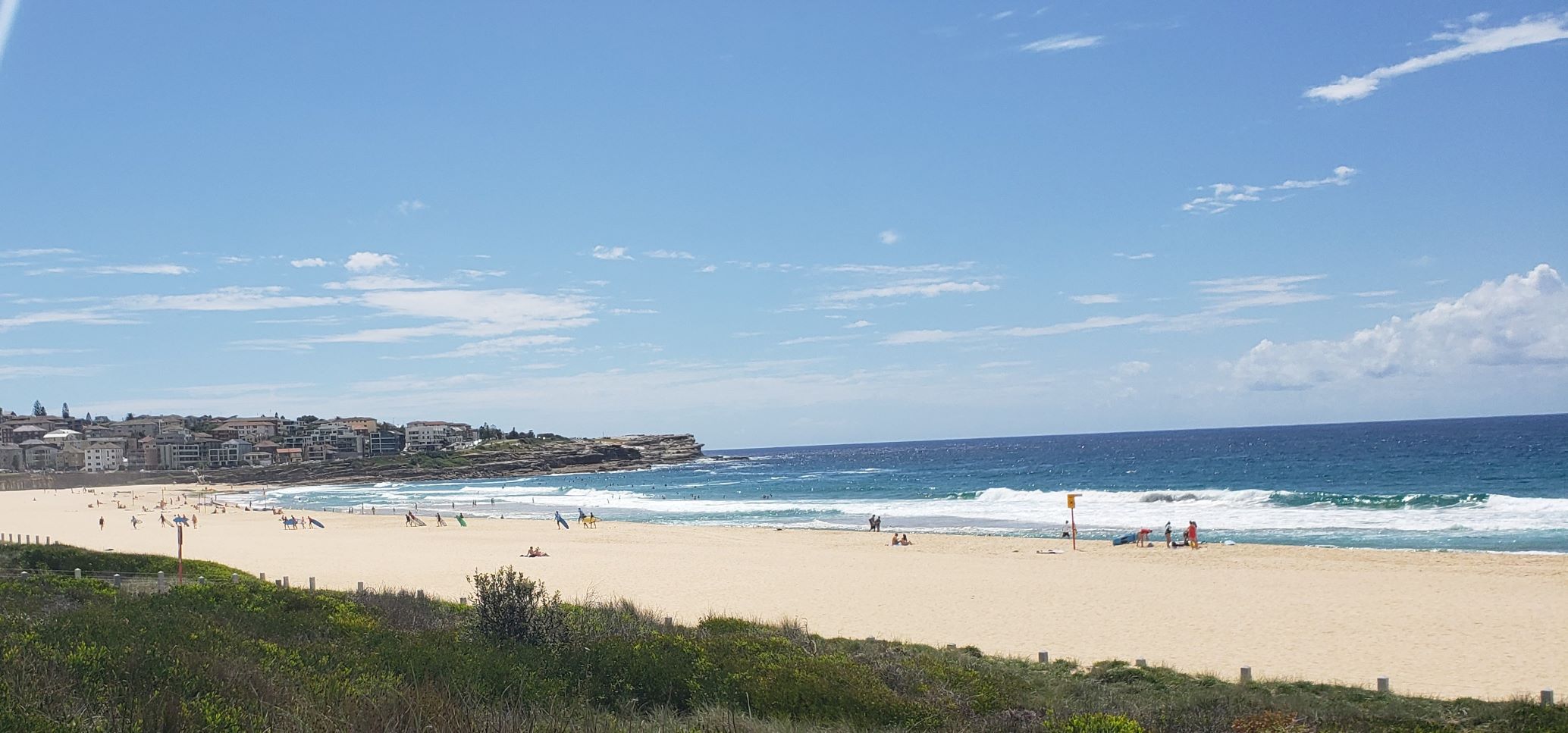
















 Llywindatravels 2025