Opal Hunting in Coober Pedy

There are said to be two million spoil heaps from opal mining in and around Coober Pedy, and the same number of holes…

I wanted to hunt for opals. I like rocks and minerals, have years of experience poking around in the dirt as an archaeologist. If anyone can find them, it should be me. True, thousands of other people have hunted for opals over the years and most of them have not become rich. I don’t need riches, but I want to find an opal.

Opal hunting areas are remote, and the annual opal festivals are held in the dead of the austral winter when temperatures subside and we will have left Australia. (Coober Pedy’s daytime temperature can hit well over 100° from October through April.) Taking a day trip from the Ghan to Coober Pedy was the way we could visit this strange mining town where half the population lives underground.

Jonathan emerges from the underground Serbian Orthodox church.

Underground life began as a practical choice. People dug into the soft rock hunting opals and camped beside their works. With a bit of enlarging, the former mining areas became rooms that maintain a constant mild temperature. Occasionally, the opal mined during room construction paid for the digging.

Opal is a fickle material, formed as liquid evaporates from cracks in other rock. Lots of opal is very thin, a sheen on a surface. There are beautiful opalized fossils where opal formed on the fossil’s surfaces in the hairline crack between fossil and parent rock. Unfortunately for jewelry lovers, this means that a gorgeous colorful solid opal is a great rarity. I was told that you cannot get opals wet. Part of the reason was that inexpensive “triplet” opals (a sandwich of backing, opal layer, glass) can peel apart when wet. A salesman said that these days there are excellent waterproof glues used and now opals are watertight. It also means that it is more difficult than ever to tell whether the opal you buy is solid or a composite. Honest dealers clearly mark the differences. Colorful opals run well over $10,000 for an attractive ring with a medium sized stone.

Though the train had a day-long stop in Coober Pedy, the staff didn’t understand that some of us (me) really wanted to hunt for opals, not just spend five minutes poking the rock after a mine tour. Jonathan and I got directions to the “Public noodling” site and set off. We promptly got confused, possibly by the “Waffles and Gems” sign across the street. It took part of our precious time to find the place, but then we got to work. There are acres of crushed pale rock. It’s very soft and you’re immediately covered in dust from the surface. It is possible to rent shovels and sifting screens locally, but we contented ourselves with poking around, which is why it’s called noodling, or fossicking.
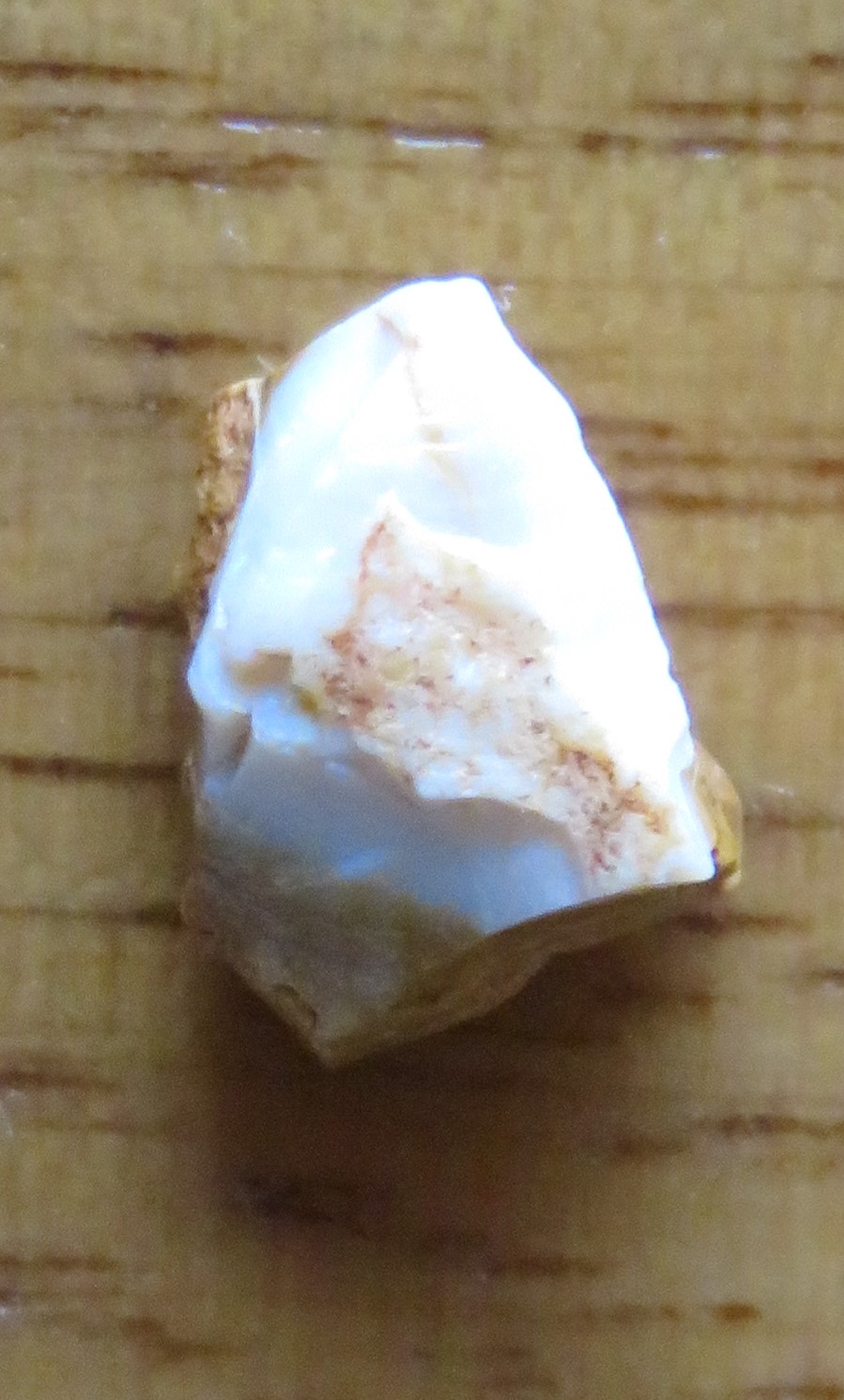
My opal

Because opals can be one side of an otherwise plain rock, people are always finding new items in old piles. We found very little, and wished we had more time, but I did find a tiny piece of opal, and that was my goal. We chatted with a mother and daughter who were giving the piles a full day. They had hunted around, gone into town for equipment and were settling down for an afternoon of hunting. The daughter showed us the pieces of pale opal they had collected–more than we found.
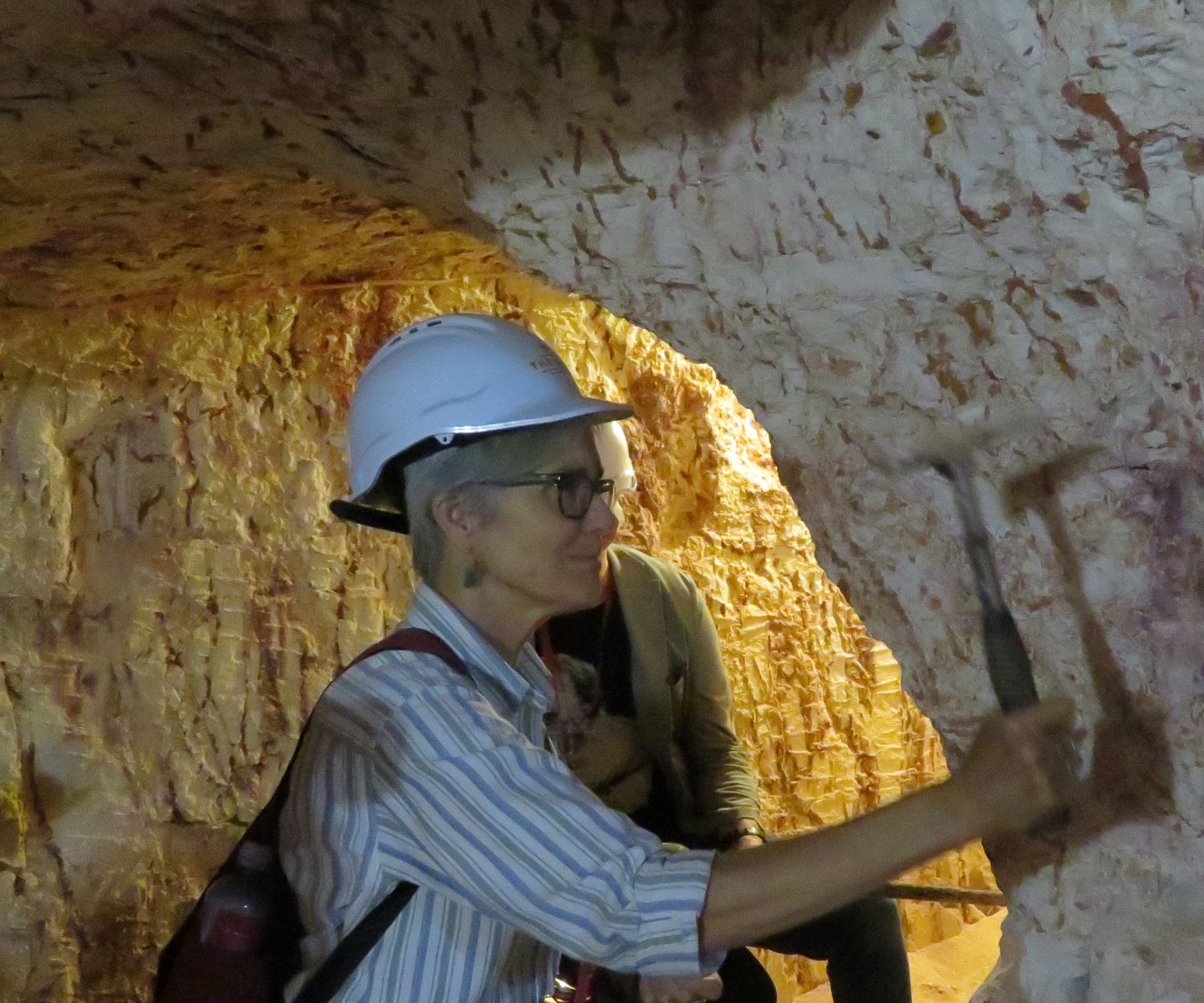
Rejoining our group, we visited a mine and looked at the shaft, heard about how you make explosives (alarmingly easy), had lunch along a long table in an old mine tunnel, and did a bit more poking. This time we got to pick the rock out of the cave wall. It could have yielded something. Mining opal is a bit like spending your days scratching lottery tickets. Every strike of the pick is another try, but at the end of the day you are more likely to have nothing than a jackpot.
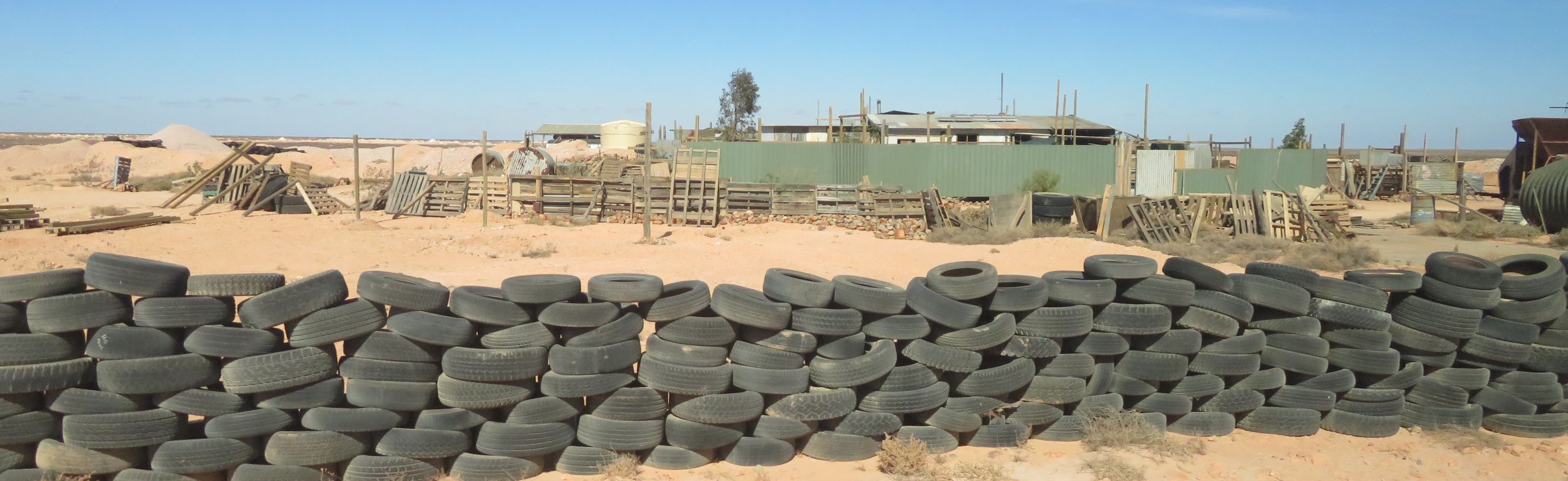
An opal mining works above ground portion.

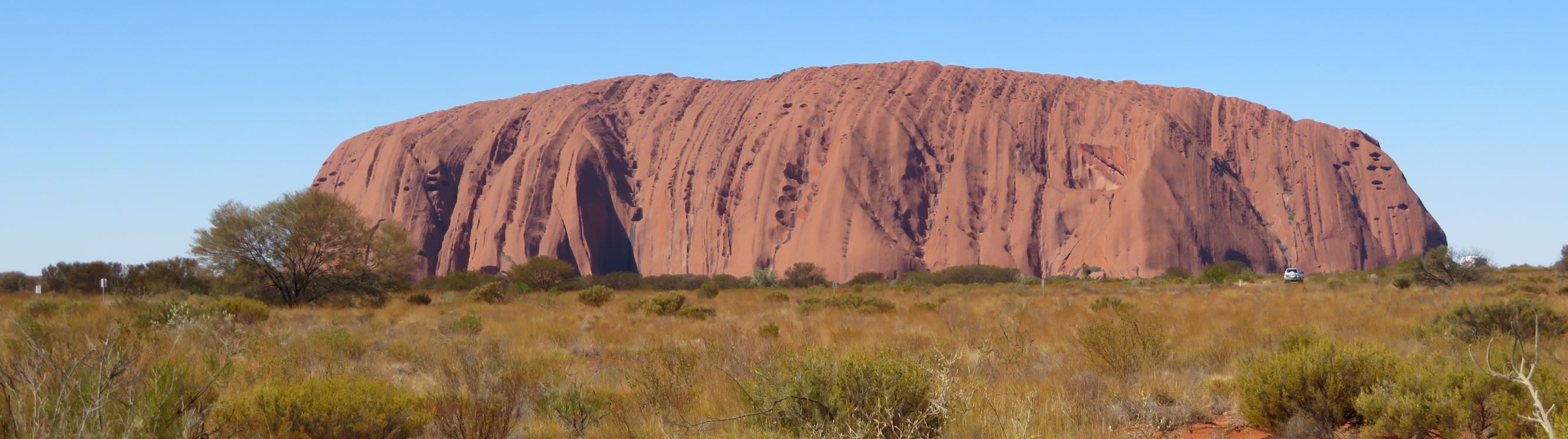
Uluru: A Wonder of the World

We planned to skip the Ghan’s Uluru option (crowds, distance, expense) and tour Alice Springs, where the train stops for the day. We changed our minds when we found that the scenic flight from Alice to Uluru included a stop on the ground to see Uluru up close, a drive around the rock, and some time to walk around.

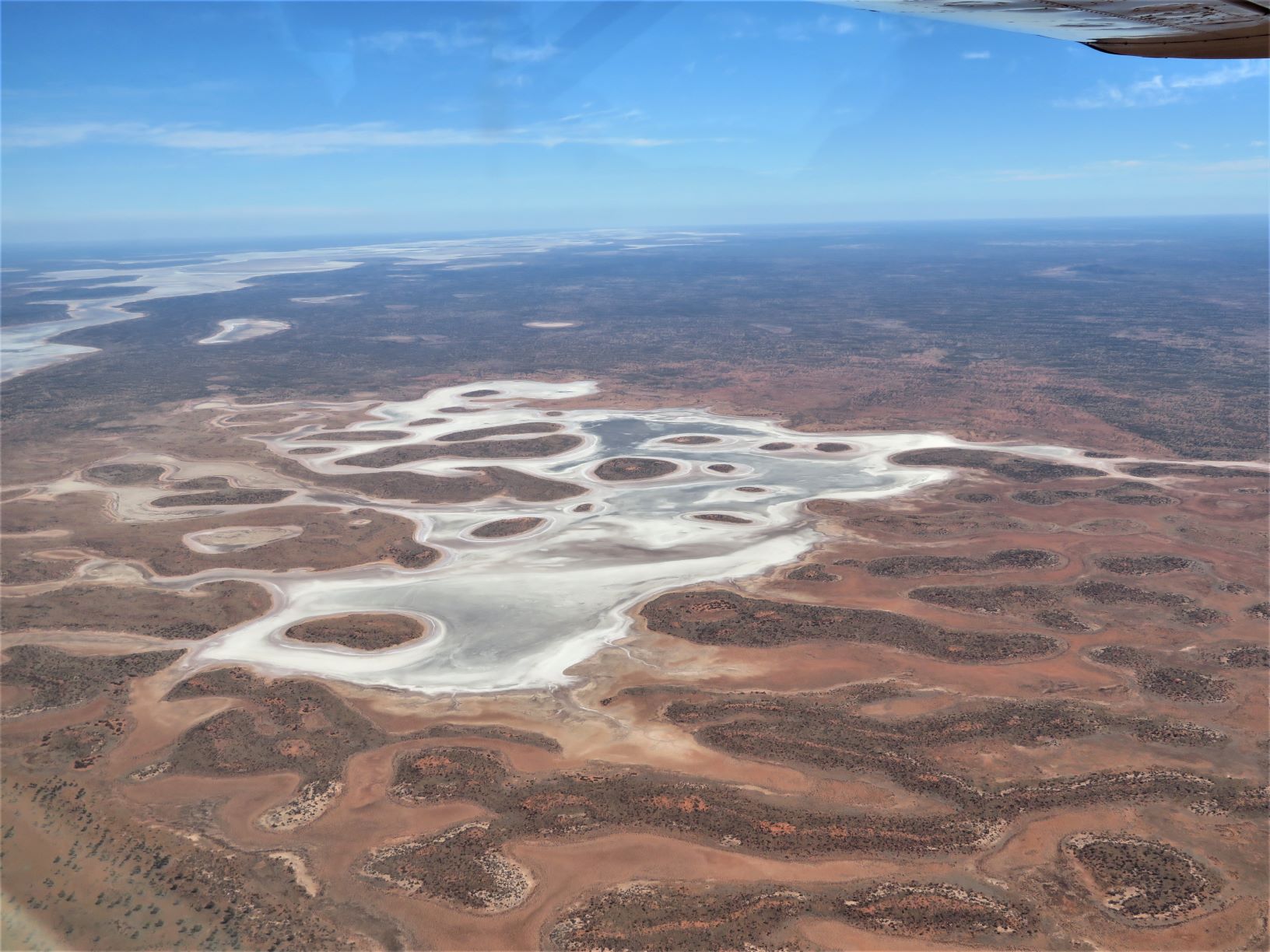
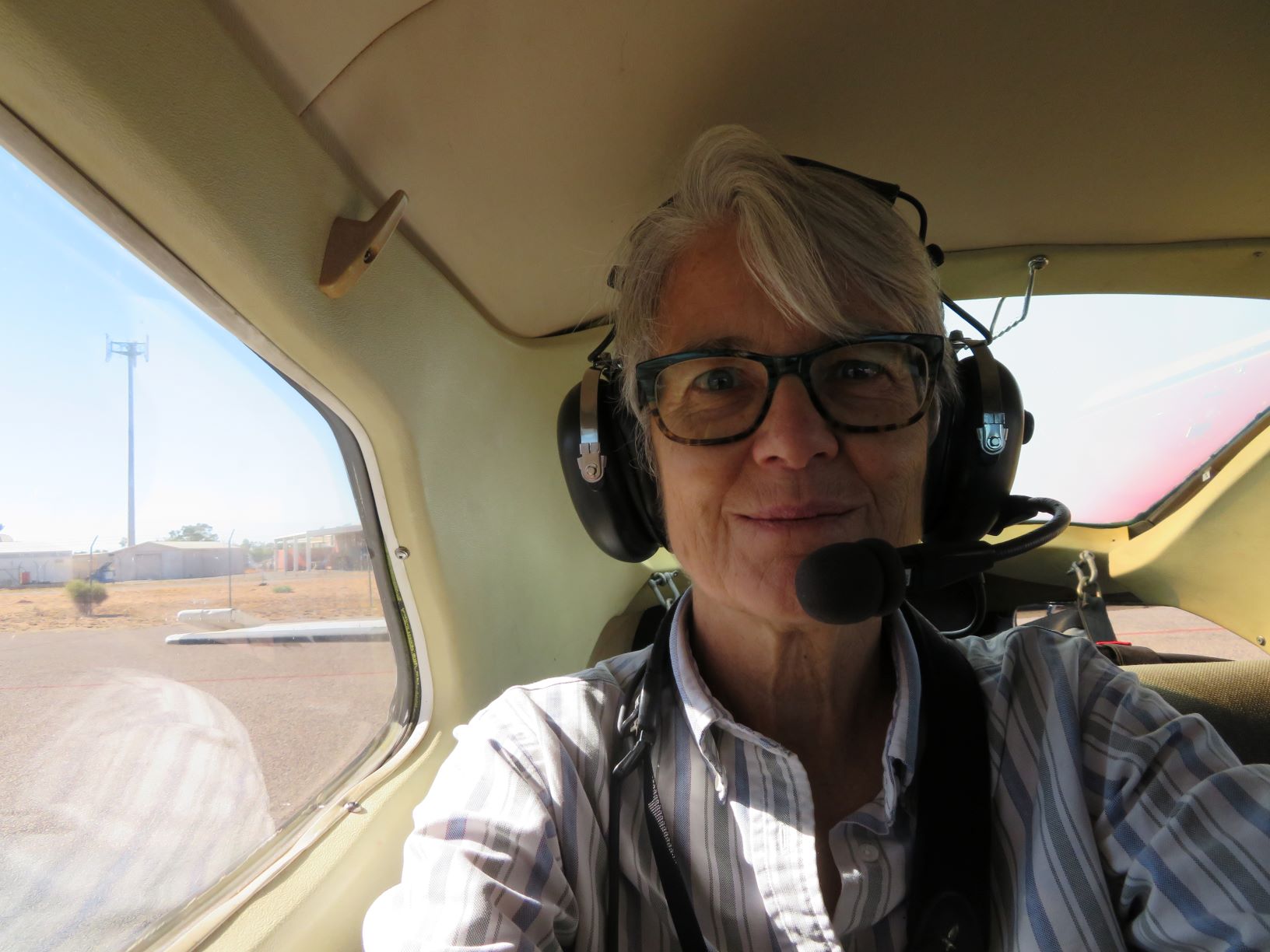
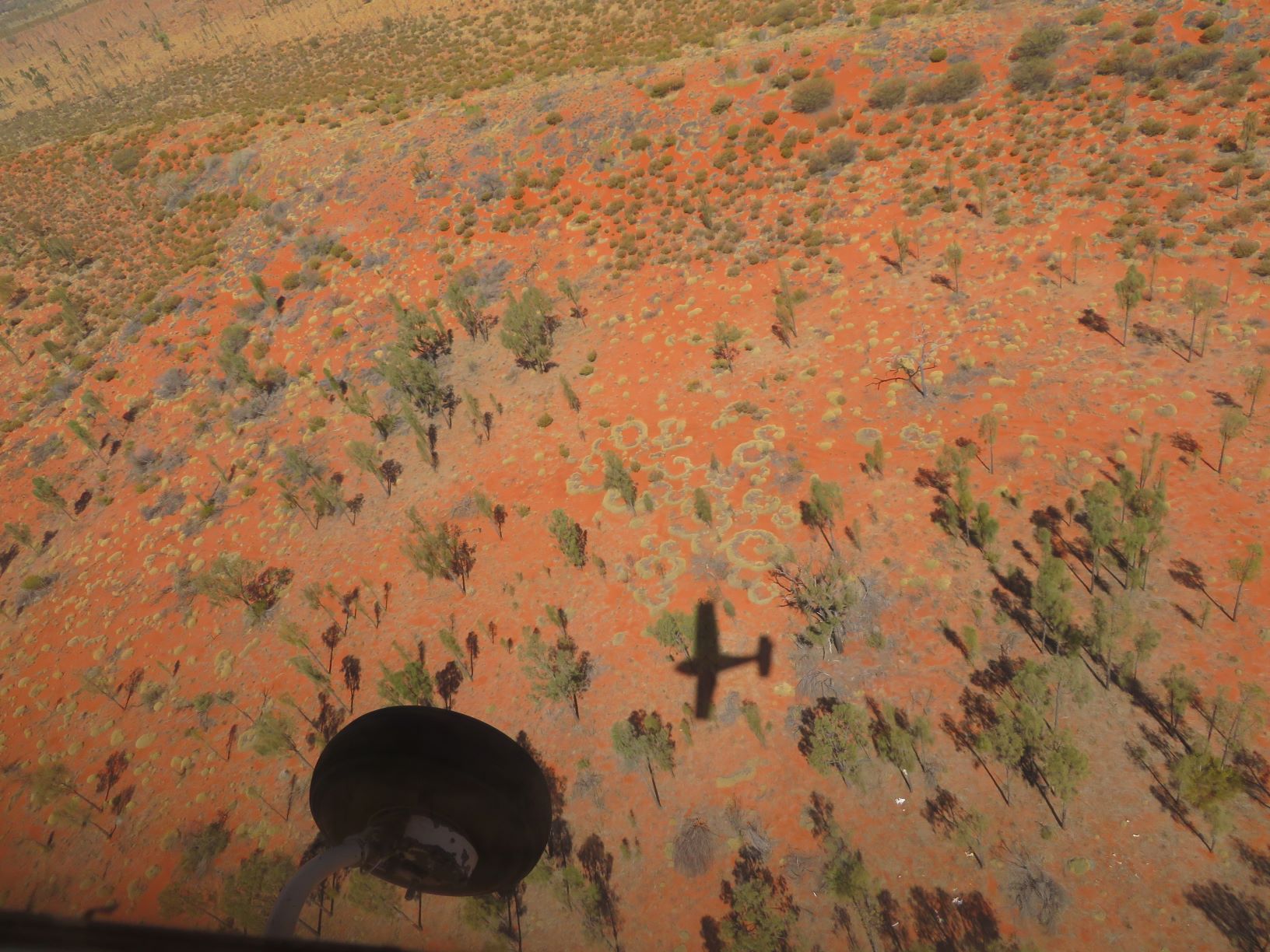
From the air, we finally saw The Outback. Not a bare desert, but a vast area of tan grasses, spindly gum trees, and lots of an invasive grass from S. Africa that we are assured no animal will eat. Parts of the Outback resemble the Sonoran Desert of Arizona and northern Mexico. What differs is its immensity. We flew more than 400 km and saw roads only at takeoff and landing. There was one town, Hermannsburg, a former mission. There was also Pine Gap. If you watch Netflix, you may have seen the new show set at the CIA/Australian joint spy base. Having seen a few episodes, it was a bit strange to actually see the field of white domes that covers the spying equipment. Beyond Pine Gap and Hermannsburg, we saw no isolated farmsteads, roads, trains, trucks, vehicle tracks, not even any animals. Somewhere below us was a cattle station of over one million acres, yet we saw no evidence of this. There were no fences, water tanks, windmills, air strips, the features of remote farms.

This slideshow requires JavaScript.

Geology and vegetation create the landscape. What looks like the green verges of a superhighway is a geological fault. A crack in the earth lets a bit of water escape and a streak of dark green trees emerges. Pale earth is peppered with green shrubs, alongside an empty river cut through rock. An irregular band of white pools crossed our route, a dry river of salt, hundreds of thousands of tons too remote to mine. Straight lines on the ground are bands of red, ochre, and tan stone lying one beside the next, straight as an arrow, or bending in parallel lines created eons ago. On the distant horizon rounded hills suggest this flat plain eventually ends.

Some of the landscape recalls aboriginal painting, circles, dots, lines of contrasting colors. How can there be no roads? Finally, I begin to see roads, threads of orange-brown.

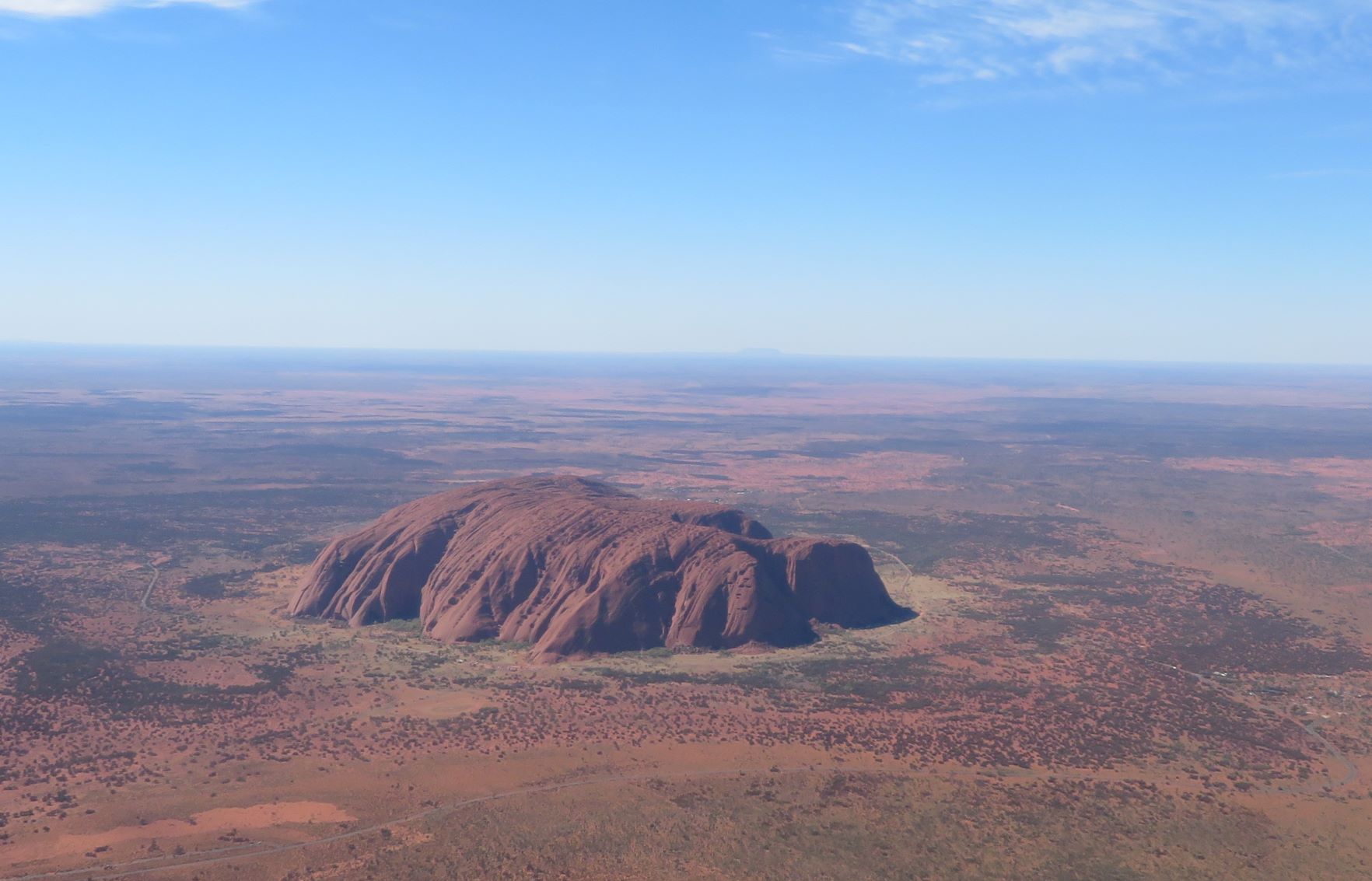
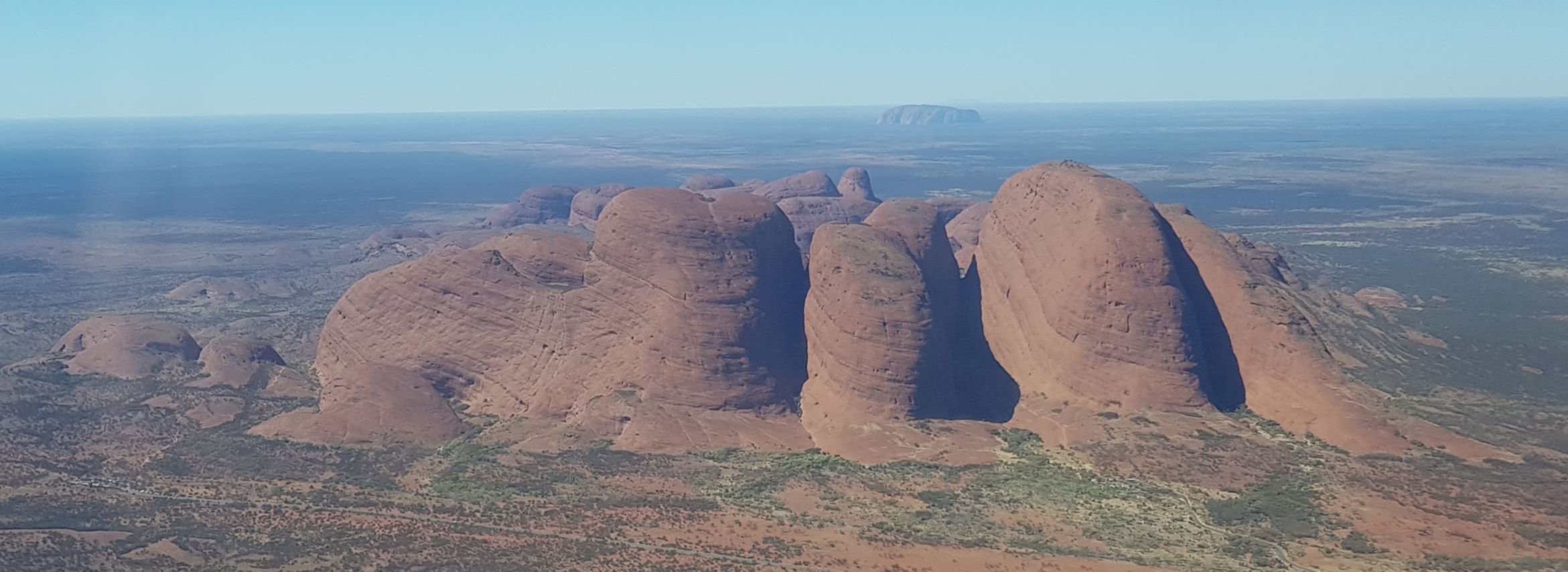
After an hour and a half in the air, we approached Uluru, imposing even from above. The aerial circuit was spectacular, and was followed by a swing around Kata Tjuta, a knobby rock formation that is close by, aeronautically speaking, though it would take at least an extra day to visit by car from Uluru.

Kata Tjuta, with Uluru in the background.

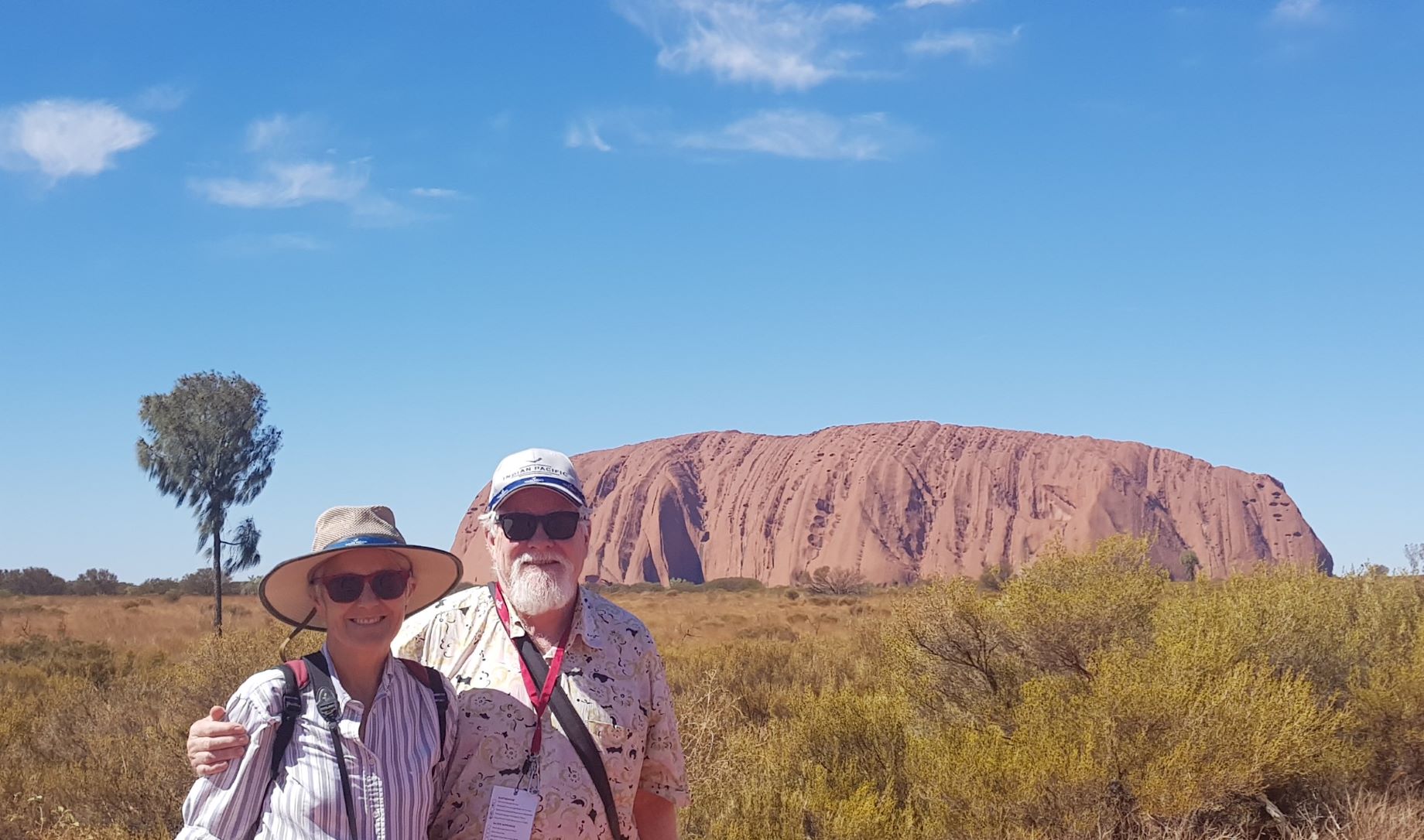
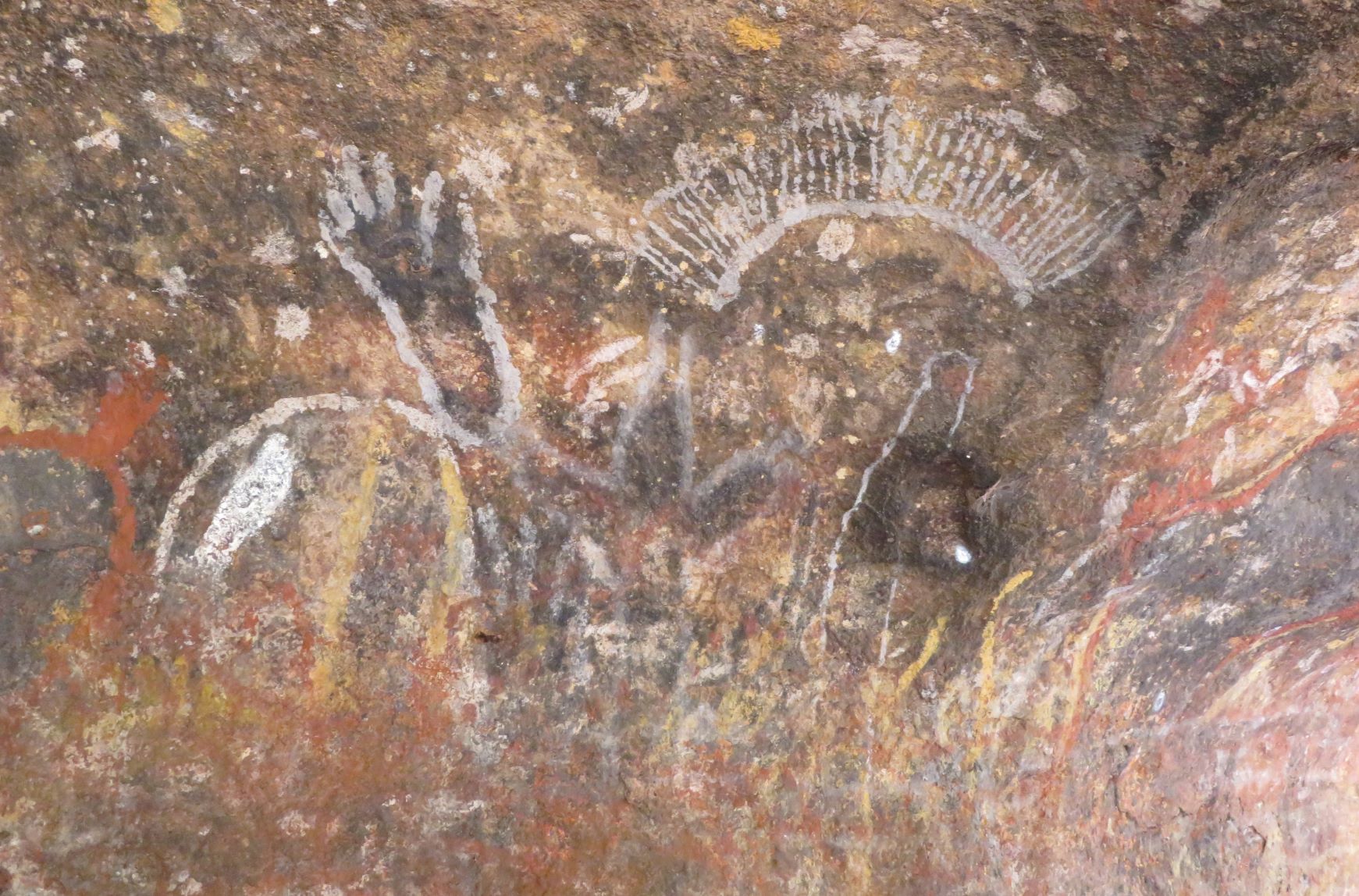
We are compressing a three day visit into one, our aerial outback tour followed by a picnic lunch on the ground at a shelter perfectly positioned to let us soak in Uluru while sitting in the shade. Next we walk to the Mutitjulu Waterhole with a stop at some rock art along the way. Everyone sees different things in the rock art.

Our tour guide was a white Australian, young enough to be completely captivated by Aboriginal stories of The Dreamtime. The age of rock art is given as 5000 to 8000 years old. When we asked whether there had been any archaeological investigation of the area to provide samples for dating the rock art, the young man enthusiastically told us that archaeology wasn’t needed because the stories of The Dreamtime are supported by visual proof. “See the way there is a dark shadow on the rock that follows the curve of the cliff?” “That is the snake from the story of….” He believes that there is nothing more needed than the stories to explain Uluru. Science is not part of his mindset, at least not right now. We wonder why the guides are not Aboriginal people.

Completing a circuit of Uluru by car, we hear the history of visits and visitors. Many people have climbed it over the years, and though the aboriginal owners have banned climbing as of October 2019, there will be controversy until no one remembers when it could be climbed. We are not staying long enough to consider a climb.

On our return flight, I try to photograph as many of the different patterns of landscape as I can, knowing that a photo through the window of a small plane will be no substitute for seeing the many forms of the land that expand the definition of “desert” to a much broader range of shapes and colors. Back in Alice Springs, I am amazed and content. The tiny plane barely scared me and our visit to Uluru was beyond great.

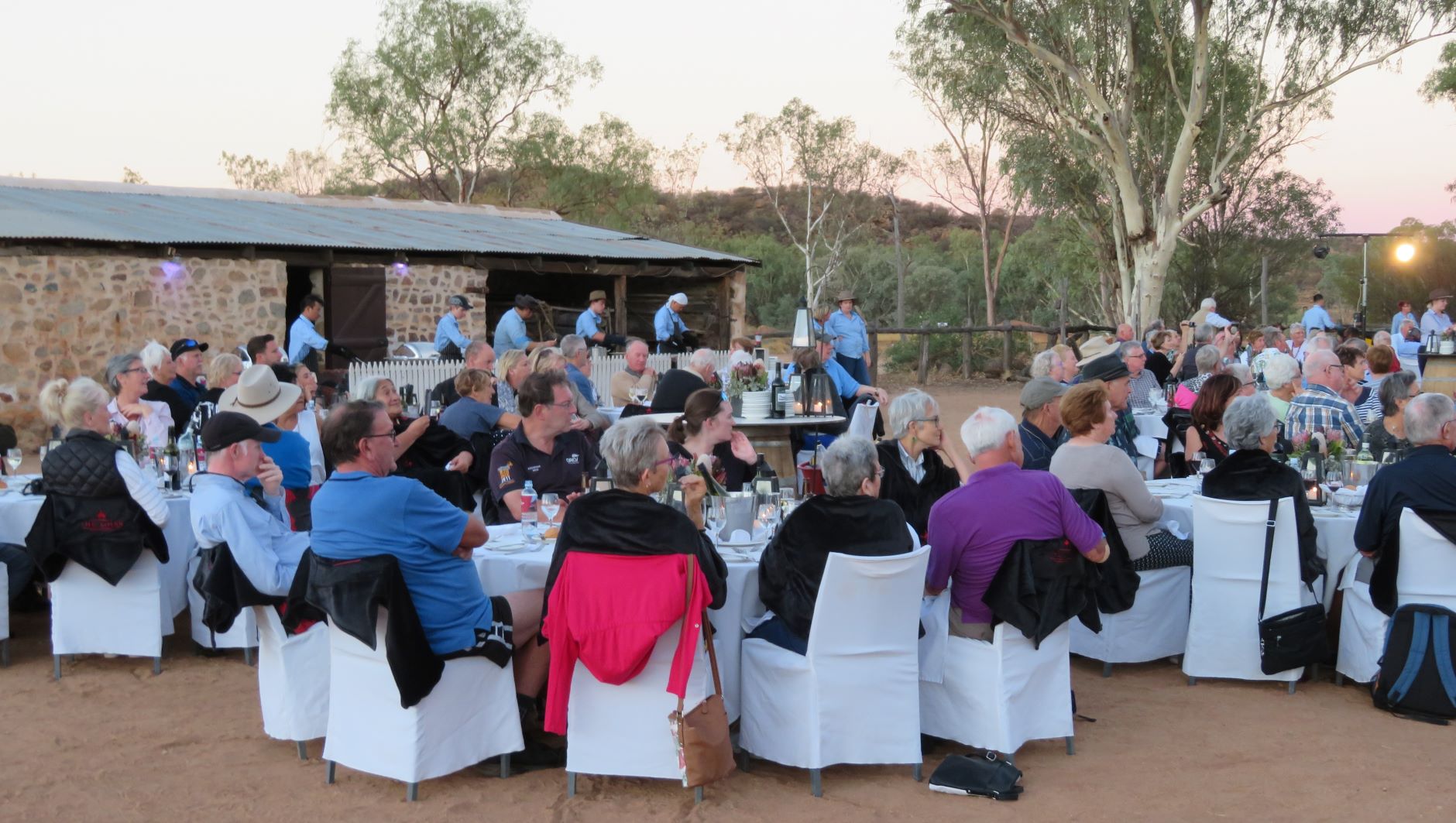
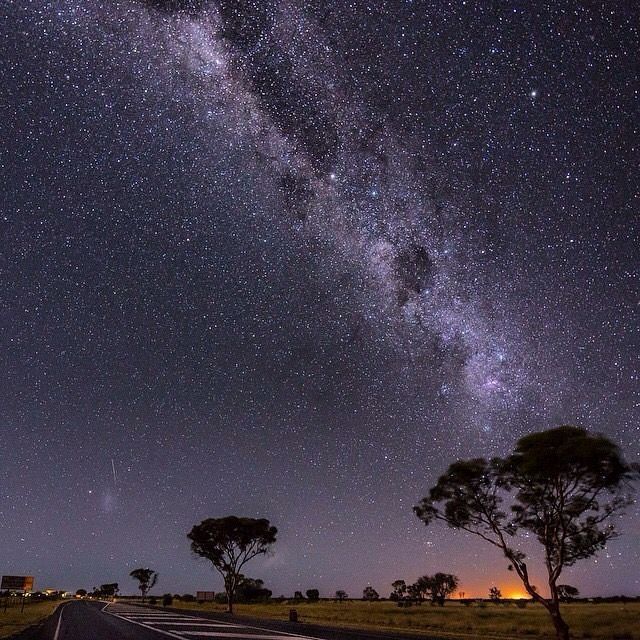
The day is not over, as the entire train of 300 dines al fresco at the old Alice Telegraph Station. As the sky darkens and the stars come out, we walk away from the illuminated dining area to look up. The Milky Way is a starry shawl thrown into the heavens, while the constellations shine brightly, performing the fandango of the night sky.

Internet Photo


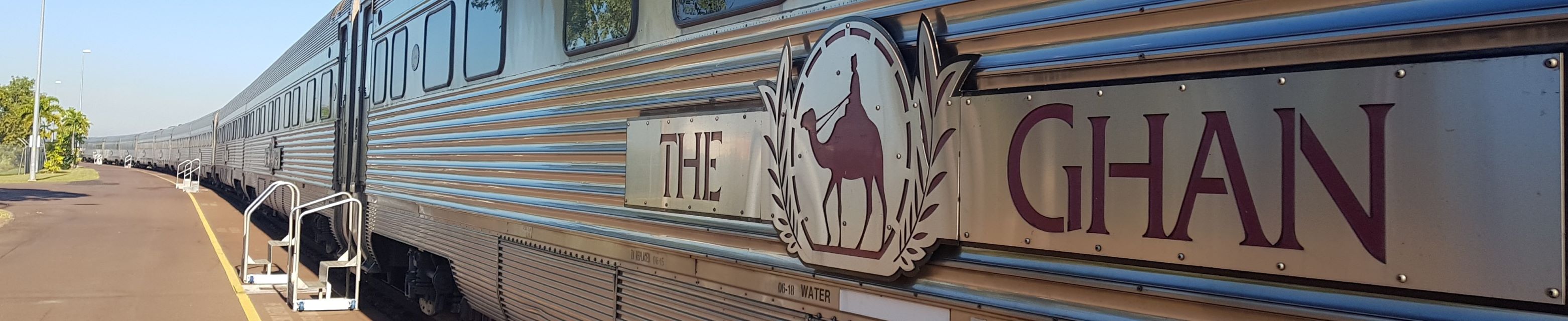
The Ghan: Railroad Adventure to Katharine, NT

We wanted to see the interior of Australia, that vast dry landscape that fuels novel after novel, starting for me with The Thorn Birds, on through the mysteries of Arthur Upfield (The Bone is Pointed). Everyone in Australia knows the true stories of exploration by Burke and Wills, who completed their crossing of the continent, dying of starvation at the end of their journey. There are ranches (stations) of more than a million acres, where drones are starting to be used to track animals. We wanted to see a region that is so resistant to encroachment by man.

Australia is both huge and largely empty, and travelers who want to leave the principal urban regions have to go prepared. Having left our camping and RVing days behind us, we decided that taking the train from Darwin to Adelaide would give us a chance to see some of the “Red Center.” We booked our trip on the Ghan, choosing the expedition version that stops each day in the 4 day/3 night journey for a side trip. This was perfect for us. We took the Indian Pacific train across the country from Sydney to Perth last month, and it didn’t work out at all, so with a bit of trepidation, we set off for the Darwin train station.

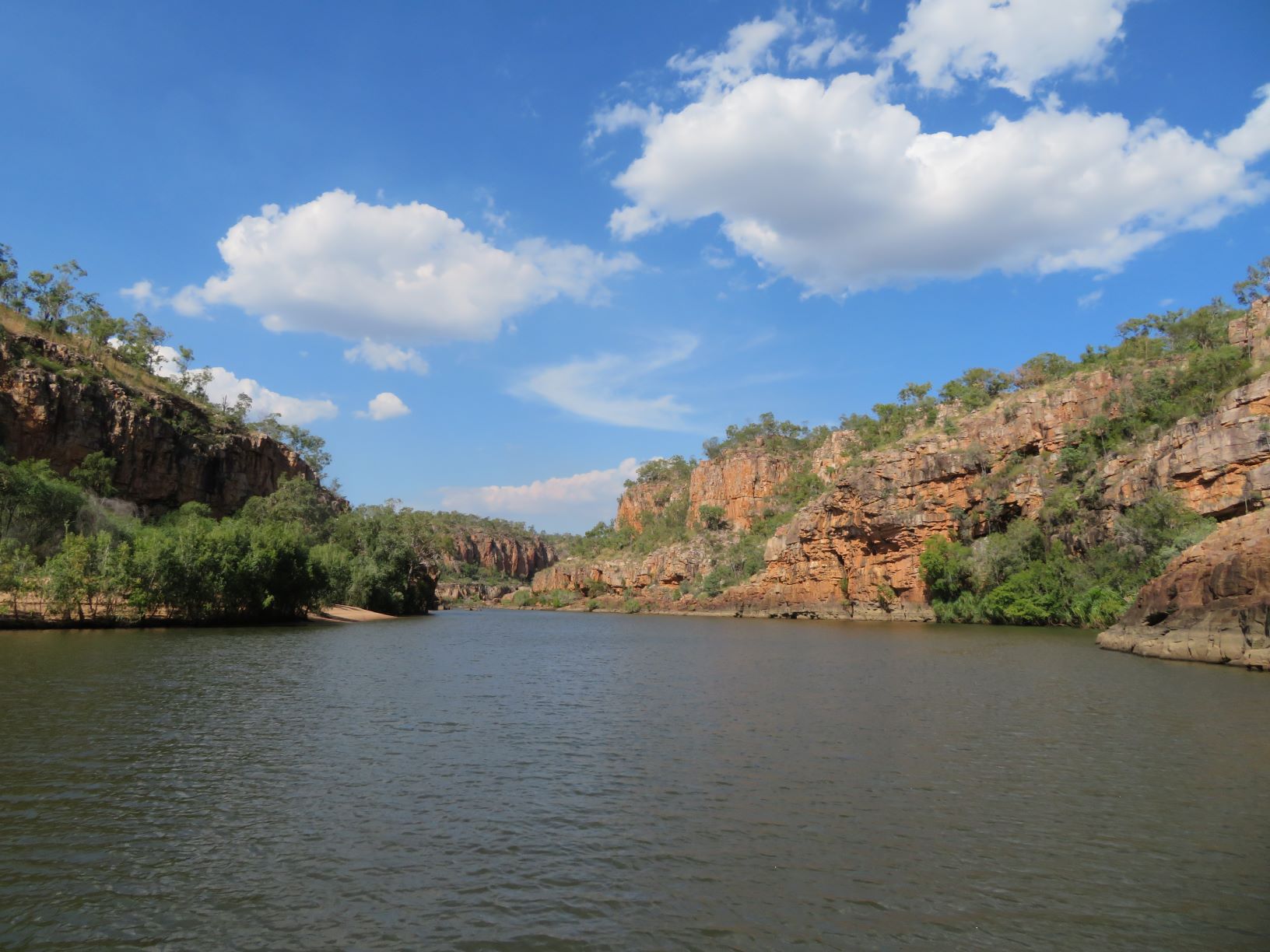
This time, the trip started on time, and after an early lunch–who doesn’t enjoy a dining car?–we stopped in Katharine, a mere 300 km down the road, for an afternoon visit to Katharine Gorge. We took the relaxing trip, a boat cruise along the sides of the gorge with a stop to look at aboriginal rock art. There is more spectacular rock art in Australia, but most of it requires a healthy hike in the high heat and humidity. I asked our boatman whether the holes in his hat were from a crocodile bite. (He laughed.) We did see a salt water crocodile on our cruise. They have a very pointed nose and are only 4-6 ft. long. They couldn’t even get your foot in their mouth…..

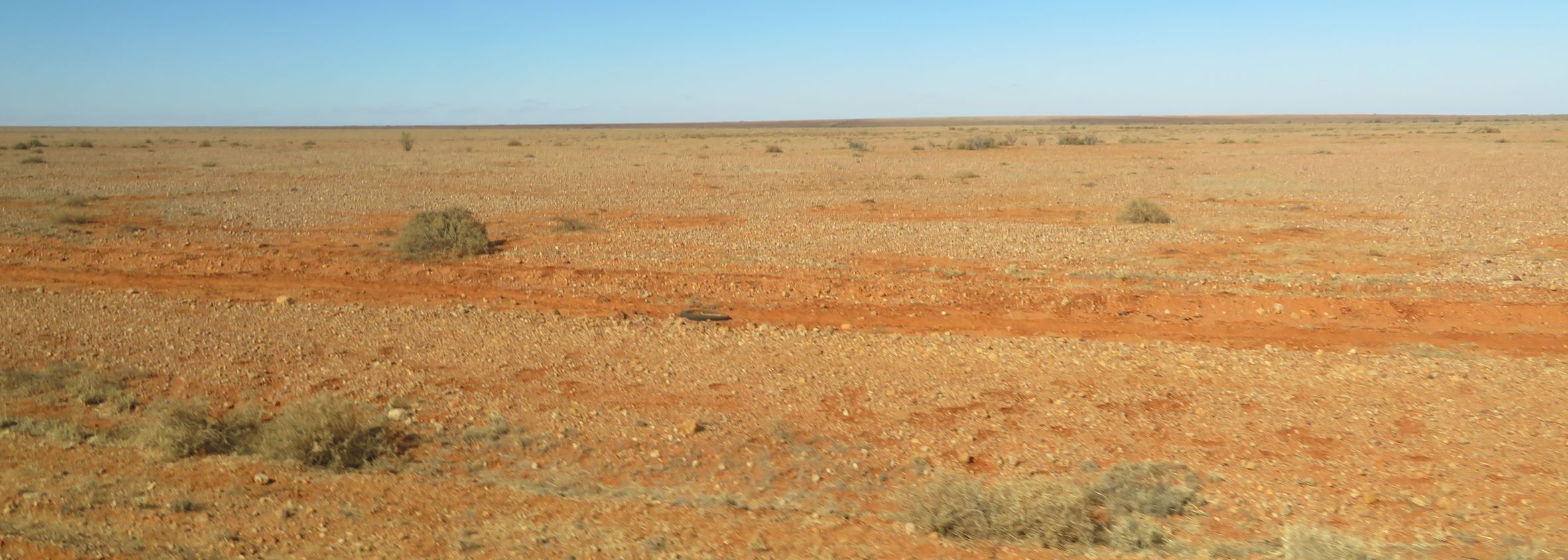
Back on board the train, we watched the dry scenery until sunset, then met new people at dinner. Most of the other travelers were Australians taking the trip to see more of their country, though we chatted with people from the UK, the US, and New Zealand. Overnight, the Ghan crossed a lot of empty territory. We watched the sun come up over a dry, dry landscape. It’s not desert with sand dunes, but desert with colored rock, low scrub bushes, and sparse grass.This was Day 1. More soon.

Good to know about Darwin, Australia

We enjoyed Darwin very much, and were there for a very short time by our standards (10 days).

Airbnb: Our place was excellent, with a large roofed outdoor patio and a small pool. We used both often.

Air Conditioning: Is a must for Darwin, at least in the bedroom. The temperature is normally over 90°F. during the day and doesn’t cool too much overnight.

Do you get swollen feet?: The heat and equally high humidity has a big impact on travel. Between 10 am and 6 pm your clothes start sticking to you after a minute or so outdoors. You may not want to walk very far. If you visit a national park to hike, you need to consider how hot it is likely to be when you arrive, and how long a hike you intend to take. We tried to do most of our walking 6-10 am, and it worked very well, even though we are not morning people. If your ankles/feet swell in hot weather, or you develop heat rash easily, this may not be the place for you. The tropical setting is lovely and there are lots of birds, but it won’t be fun if the heat and humidity make you miserable. We would have stayed longer despite the conditions.

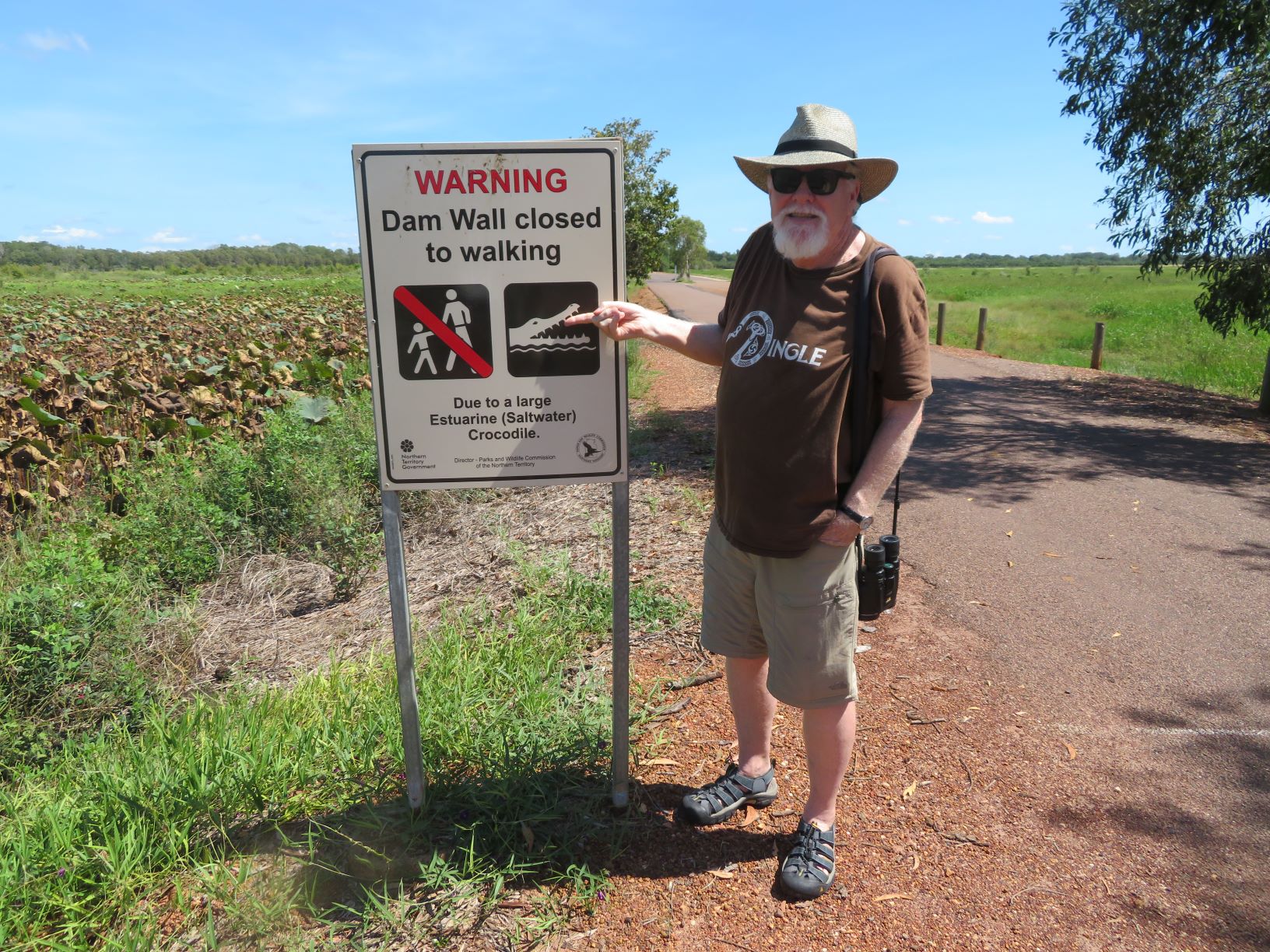
Hazards: During “The Wet,” between November and May, crocodiles spread from estuaries across coastal waterways and into the ocean. The difference between fresh water and salt water crocodiles? The freshies just bite you, while the salties drown you and then eat you. Ready to go swimming? Neither am I. There are a few beaches with nets that make it possible to swim. The nets also keep out box jellyfish, or stingers, that are around during the same season. By June, both menaces retreat and it is safe to swim in most places. It’s never absolutely safe to walk the remote beaches.

Hot Days in Darwin

Gunn Point Campsite

It doesn’t ever get very cool in Darwin, you have to seize the day and then duck into the shade, so that’s what we did and our ten days flew by. The park adjoining our deck continued to yield new birds, from tiny crimson finches to orange legged scrubfowl, a brown chicken-sized bird with long stilt legs the color of traffic cones. Nightcliff Beach gave us beach glass for more projects. Further along was the Casuarina Reserve, another lovely walk on the shore. One day we decided to take the road to the north until it ended, which is how we visited the Gunn Point campsite and the Tree Point Conservation Area. These places may not be on the top ten list, yet we saw something new at every one. We ended with an evening at the Foreshore Cafe watching the sun set over the ocean.

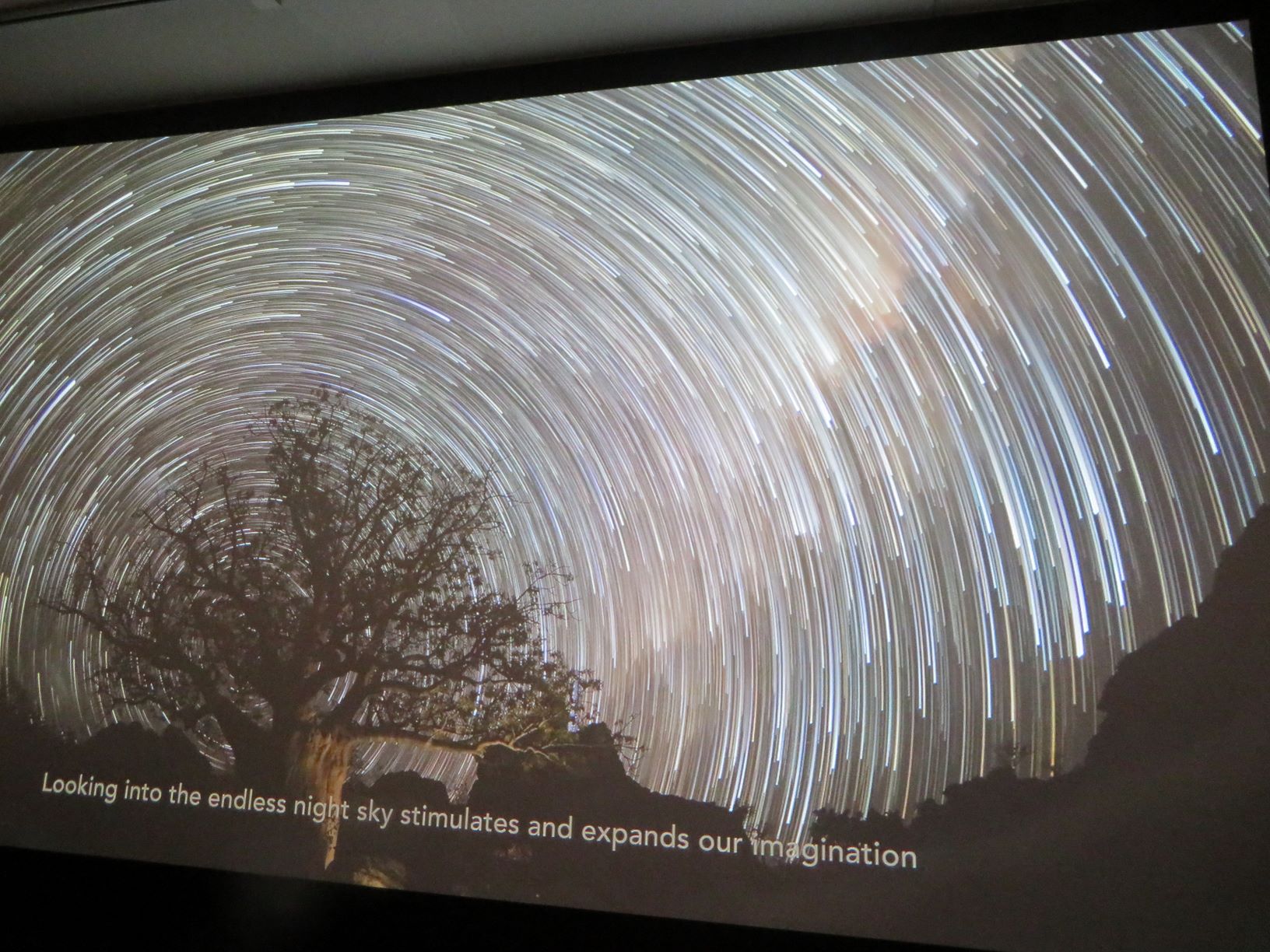
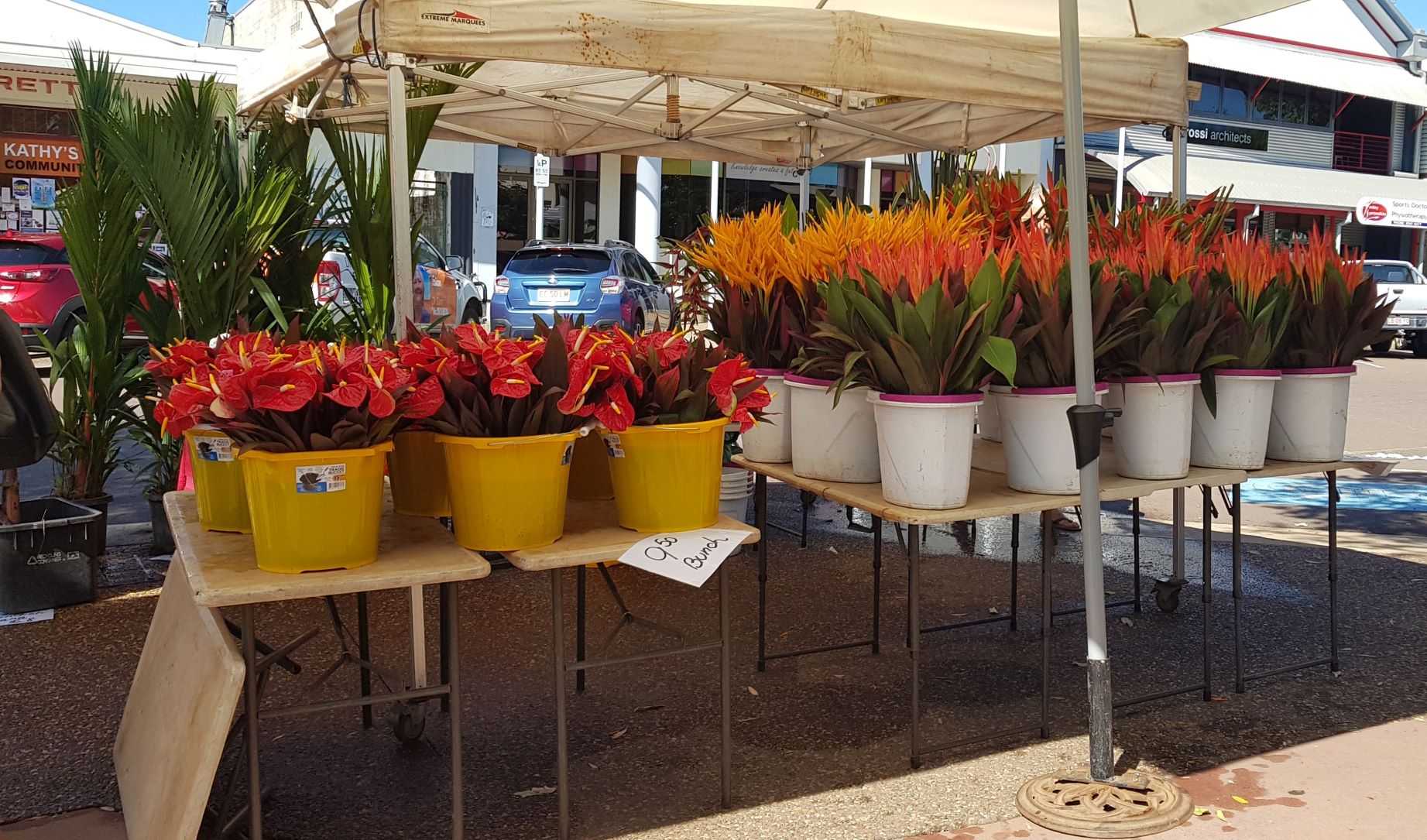
In Darwin city, we visited the Museum and Art Gallery of the Northern Territories (MAGNT). We looked at the Australian art and Aboriginal art, the stuffed animals, and a display about the sky and art that blended everything from meteorites to contemporary painting. Not far from the museum, the Saturday Parap Market has lots of food stalls, craft shops, flowers, and even some fruit and veg. Art galleries nearby feature Aboriginal artwork. The best known market in Darwin is the Mindil Beach market. To avoid the drenching downpours of “The Wet,” the market runs from the last Saturday in April through October. We arrived a week too early, but Parap operates all year long and had a little bit of many things. Downtown Darwin is not the most popular part of the region, but we went on an aboriginal art crawl, visiting five different galleries and seeing a lot of artwork. There are so many pieces, and prices are high. We wondered how they will manage to sell it all.

The Darwin area is best known as the gateway to Kakadu National Park, but a visit requires at least one night away from home and a healthy hike in the heat. Instead, we drove out to have coffee in Humpty Doo. With a name like that, it was a must see. Beyond Humpty Doo, we stopped at the Fogg Dam nature preserve, an excellent place for bird-watching. There were crocodile warning signs all along the road, and I was happy not to see one.

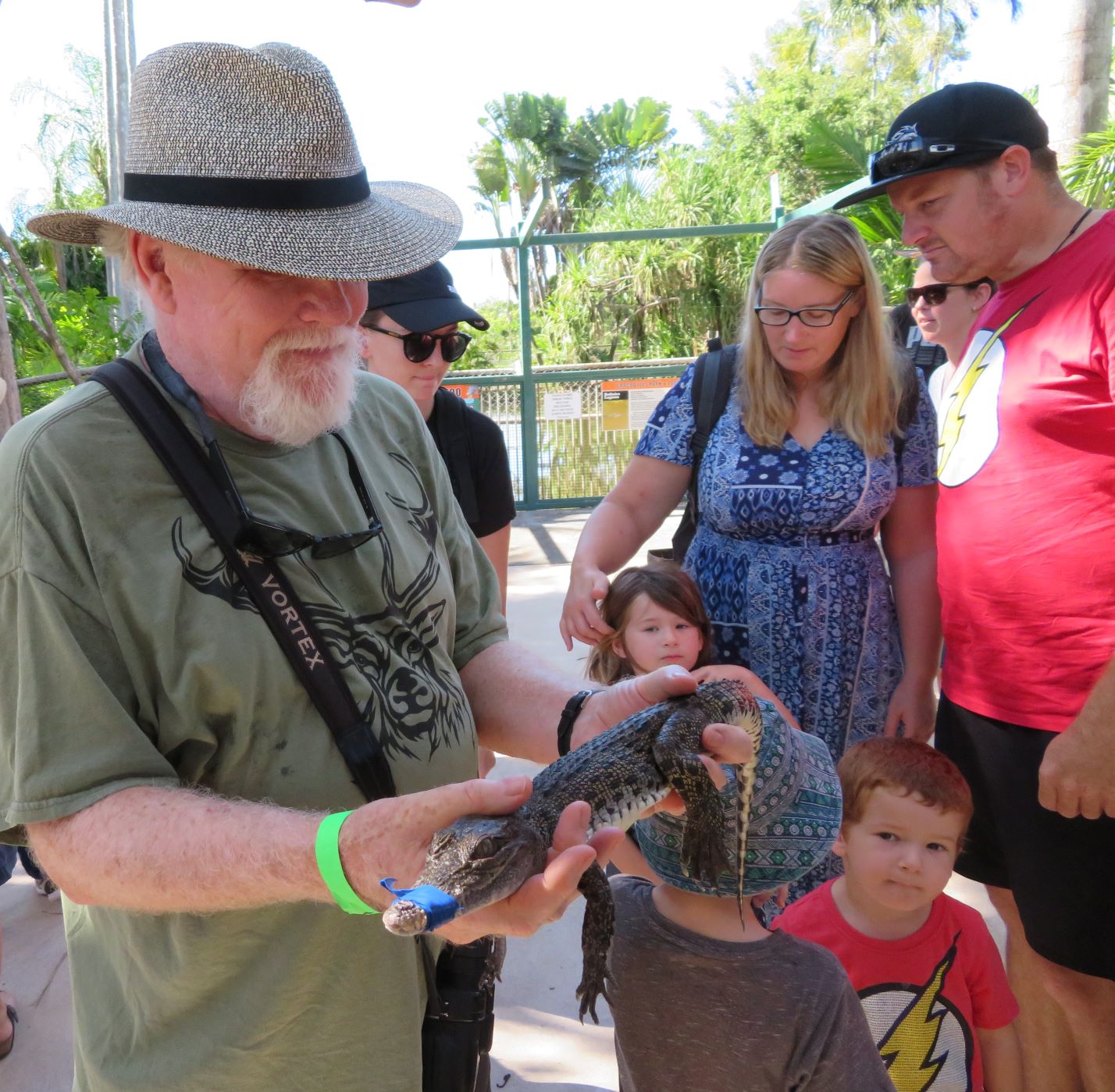
For a close up with crocs, we visited Crocodylus Park on our final day in Darwin. Crocodiles are a hazard in this region, but they are also protected. A recent article suggested that Australia’s success in protecting crocodiles has resulted in an increase in crocs as far as New Guinea and Indonesia. Sounds like a mixed blessing. Crocodile breeding is big business and relies on wild crocs to provide lots of eggs. During the egg-laying season, collectors with special permits collect thousands of crocodile eggs from nests and bring them to facilities where they are raised in controlled temperatures, since precise temperature differences result in the hatching of males vs. females. Males are the delicate ones, needing to incubate at around 88° F. Otherwise, hotter or colder, the hatchlings are female. Australia exports both salt water and fresh water crocodiles, and croc skins for fashion products. I almost fell for a croc clutch for only AU$200. Then I thought, When would I carry it?

We had a great time in Darwin and wished we had allotted more time for our visit.


Preview (opens in a new tab)

The Heat of Darwin

Stepping outside the airport terminal in Darwin, the humidity wraps you like a thick fog. It’s over 90°F, and barely started on the walk to collect the rental car, our clothes are sticking to us. Our new Airbnb is nearby, our host is waiting, and we get all the instructions we need in short order. Two minutes after his departure, we are sitting in the pool. It feels heavenly, and slowly my brain comes back online.

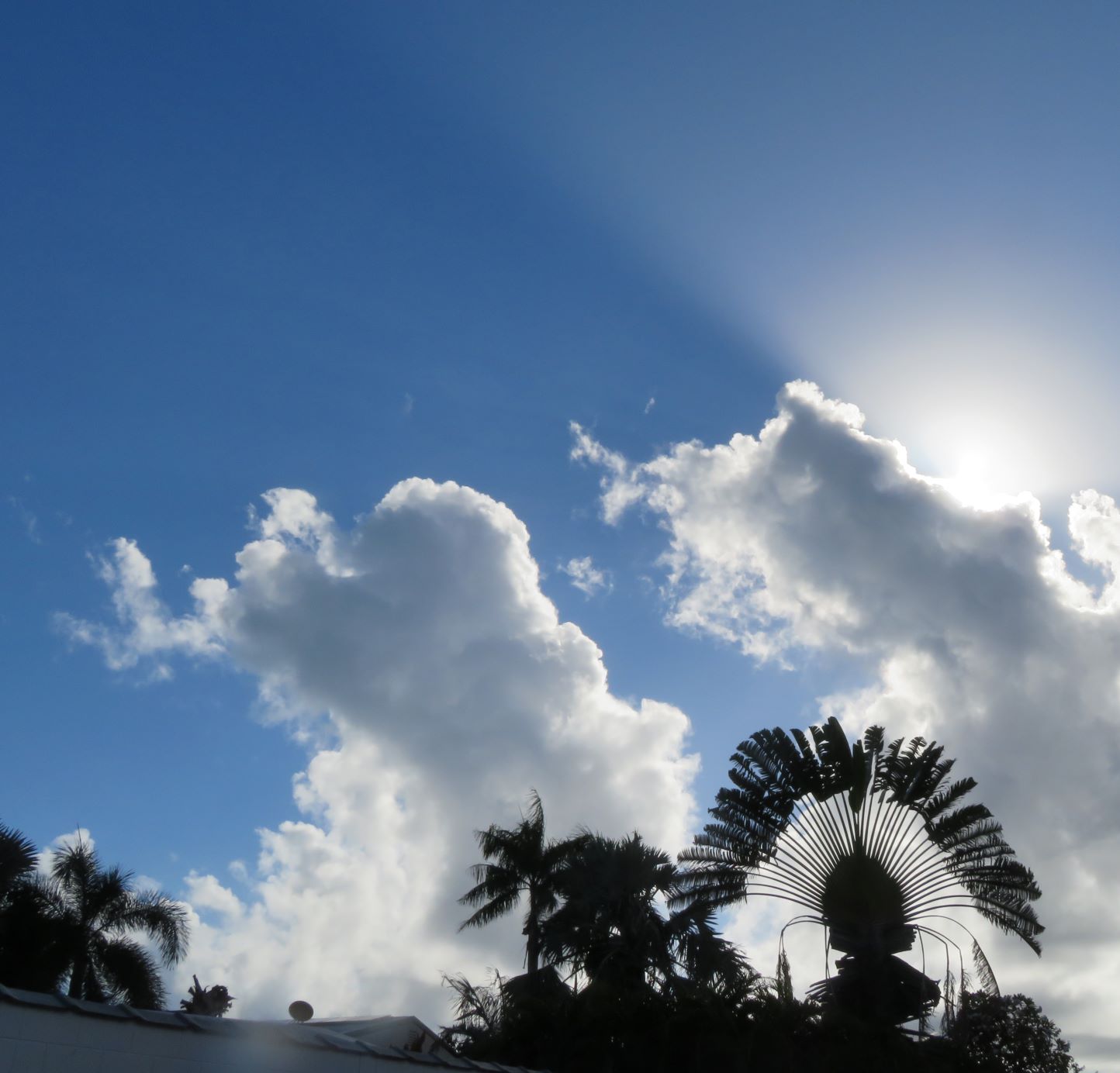
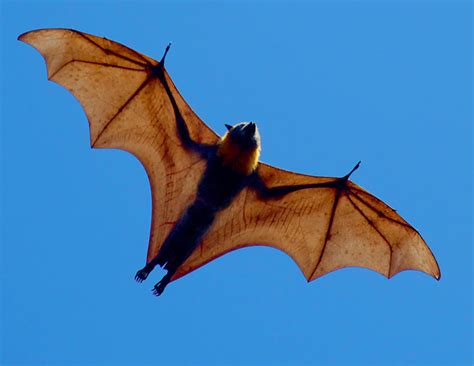
We are in Darwin at a good time, the start of the dry season. It may not rain at all while we are here, there are few bugs, and the crocodiles are retreating into the estuaries (I don’t think I will be swimming, just in case). Within two days, we adjust to the weather by getting up early to look at birds and avoid the heat, shop in the air conditioned stores during the heat of the day, and swim or sit on the patio in the late afternoon. Cumulus clouds build into giant fluffy white mounds. They are the Queen Mum of clouds, in stately progress toward the horizon. There are a surprising number of new birds in our yard and the nearby park, and a pair of huge flying foxes (bats) come out of a nearby tree at dusk. The last rays of the sun turn their leathery, translucent wings orange as they flap in a leisurely loop around the neighborhood (internet photo). When they return to the tree, they hang upside down. Folded-up, they return to their dark brown color, resembling a demented cat hanging by its tail. I’ve never seen anything like this. Welcome to Darwin, a different way of life.

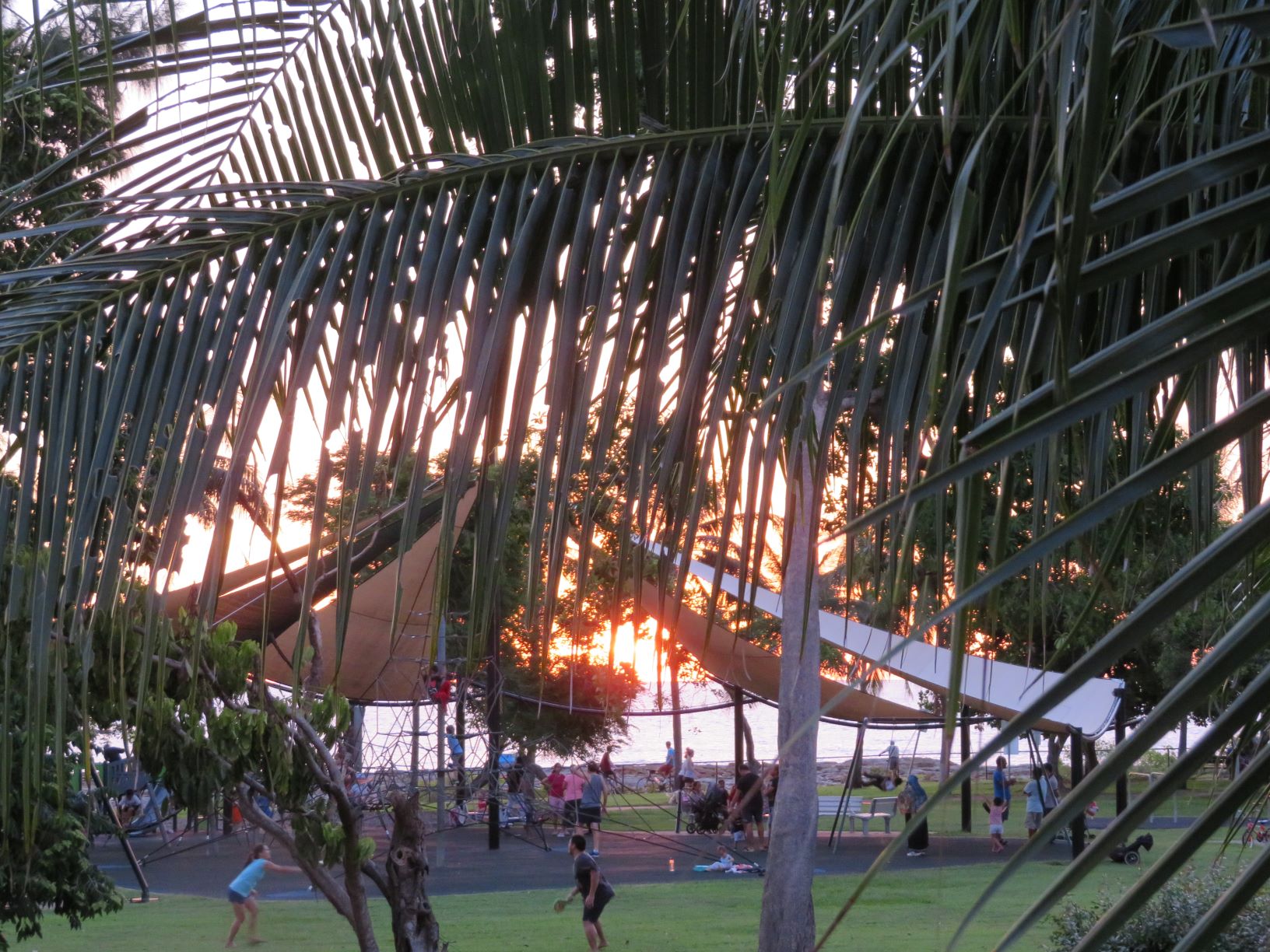
There are lots of places where we can watch the sun set over the water. An hour before sunset, the park between our house and the beach comes alive.  Families emerge to walk or sit and chat, while the “pock pock” of bouncing balls becomes noticeable. Bicyclists whiz along the path. The sounds of people in the parkland continues until well after dark. Streetlights come on but people disappear only gradually. It is much nicer out after dark than it was in the heat of the day.


Good to Know About Perth, Australia

Though we were only in Perth for two weeks, we saw a lot of wonderful places. It would be easy to spend six months traveling from the far south corner of Australia around Albany, moving along the coast until you reached Darwin. That’s about 5000 km, and part of the reason that we didn’t see more of Western Australia than we did. This is a really, really big place. Here are a few thoughts about our visit.

AirBnB: We stayed in Yanchep, north of Perth, in a house that overlooks the ocean. There is a drop to the beach of 5-10 m so we looked out over the water, not on the breaking waves, but we could hear them. Our house was comfortable and well furnished for a good-sized group. We had more than enough dishes, linens, etc. The TV was simple to work.

Attractions: We liked a number of tourist attractions that we might not have visited without the initiative of Lyra during her visit.

  • Guidebooks all recommend a visit to Rottnest Island, and now we do, too. It is a lovely vacation spot, with beaches for swimming and snorkeling around every corner. There are miles and miles of beaches along the coast, too, and lots have rocky reefs for snorkeling. Rent a bicycle, or ride the hop on-hop off bus like we did.
  • The Pinnacles, near Cervantes, is a geological marvel. If your group is young, stop to sand board at Lancelin on the way.
  • I was skeptical of the Yanchep Crystal Caves, which turned out to be impressive caves with an interesting story.
  • Fremantle Markets is a touristy area, but fun, with lots to look at.
  • We saw a comedy revue, Senior Moments, at the Heath Ledger theater at the State Theater Center. It was lots of fun–the Theater Center has a busy program.
  • Perth Botanical Garden and King’s Park is particularly nice to walk in. There are lots of paths, some raised so you don’t need to think about snakes. There are beautiful views over downtown Perth.
  • Yanchep National Park is home to a large flock of Carnaby’s cockatoos, an endangered species. We saw lots and lots of them near the Visitor’s Center!
  • We went on an outing with Bird Life Western Australia, and had a lovely time.
    Lyra rides a tortoise at Perth Zoo

    Everyone was friendly and we saw interesting birds at Tomato Lake.

  • Our visit to Perth Zoo was unforgettable due to Michele Cavanagh, docent extraordinaire. We met Michele on our Galapagos trip, and had a wonderful reunion in Perth. The zoo has many animals that are unique to Western Australia. (Do you know what a numbat is? Now I do.)

Driving: Roads are generally good in this area. Despite the distance (about an hour’s drive), we went in to Perth and Fremantle several times. The traffic was slow during rush hour, but it was easy to find parking in the city. The cost ranged from free to about $5.50 an hour. We saw signs announcing speed cameras, but we won’t know for about three months whether we got any speeding tickets. It doesn’t seem likely, but that’s what we thought in other places. There are no toll roads in this area.

Shopping: We found the best place to shop thus far in Australia, Mokoh Designs. They make interesting items with humorous Australian themes. We liked everything they sell.

Mokoh Designs, Perth Australia

We recommend Perth to everyone!

Swan Valley Wine Tasting

As is often the case, we meant to go much farther afield. We intended to go to Margaret River, but it is a 3 1/2 hour drive each way. Even staying overnight there would be a lot of driving, so we decided to taste wine closer to home, just outside Perth in the Swan River Valley. There is a readily available map (online and paper) that shows many of the vineyards, restaurants, and other stops in the area that extends from just NW of the Perth Airport northward through towns like Midland, Henley Brook, and Brigadoon.

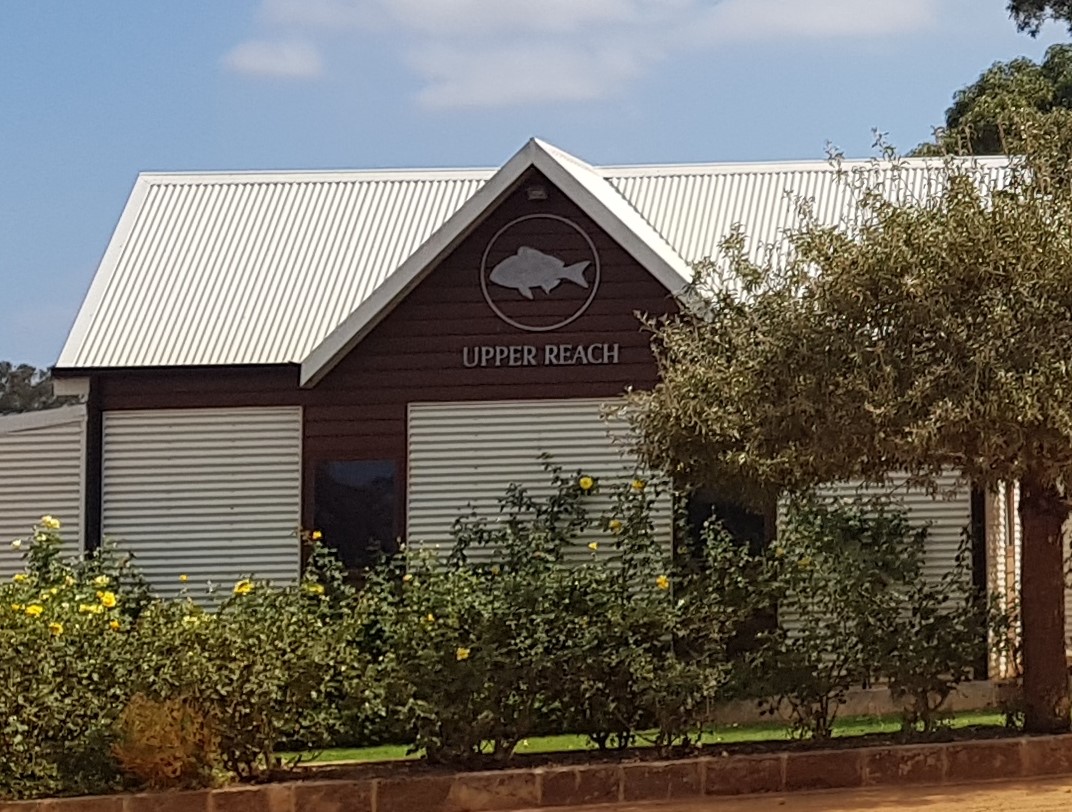
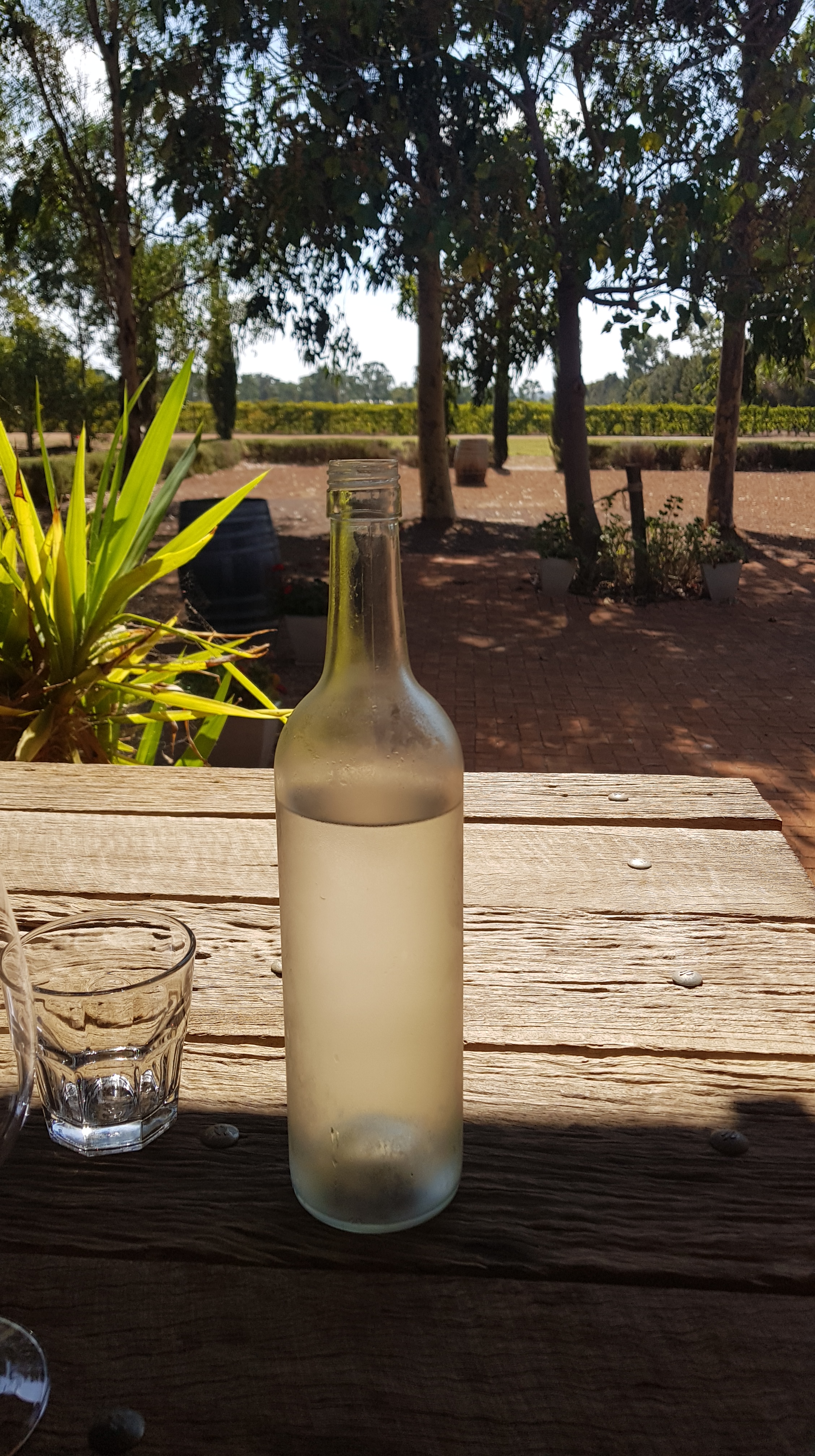
Coming from Yanchep, we drove north to south, and after a brief stop and taste at John Kosovich winery, we stopped at Upper Reach. We chatted with Steve, who steered us to the rest of our day’s stops. We were only buying one bottle (we’re leaving shortly), and Upper Reach was only our second stop, so we put off a purchase. Armed with Steve’s suggestions and a bottle of wine to deliver to Tyler’s Vineyard for him, we went on to Faber Vineyard. I planned to taste their Verdelho, as Upper Reach was sold out of theirs, but we found that Faber had just sold out their 2018 Verdelho the previous day. New releases don’t start until August, and Swan Valley Verdelho appears to have plenty of fans. Rather than standing at the bar, Faber invites visitors to sit at tables facing a nicely landscaped area.

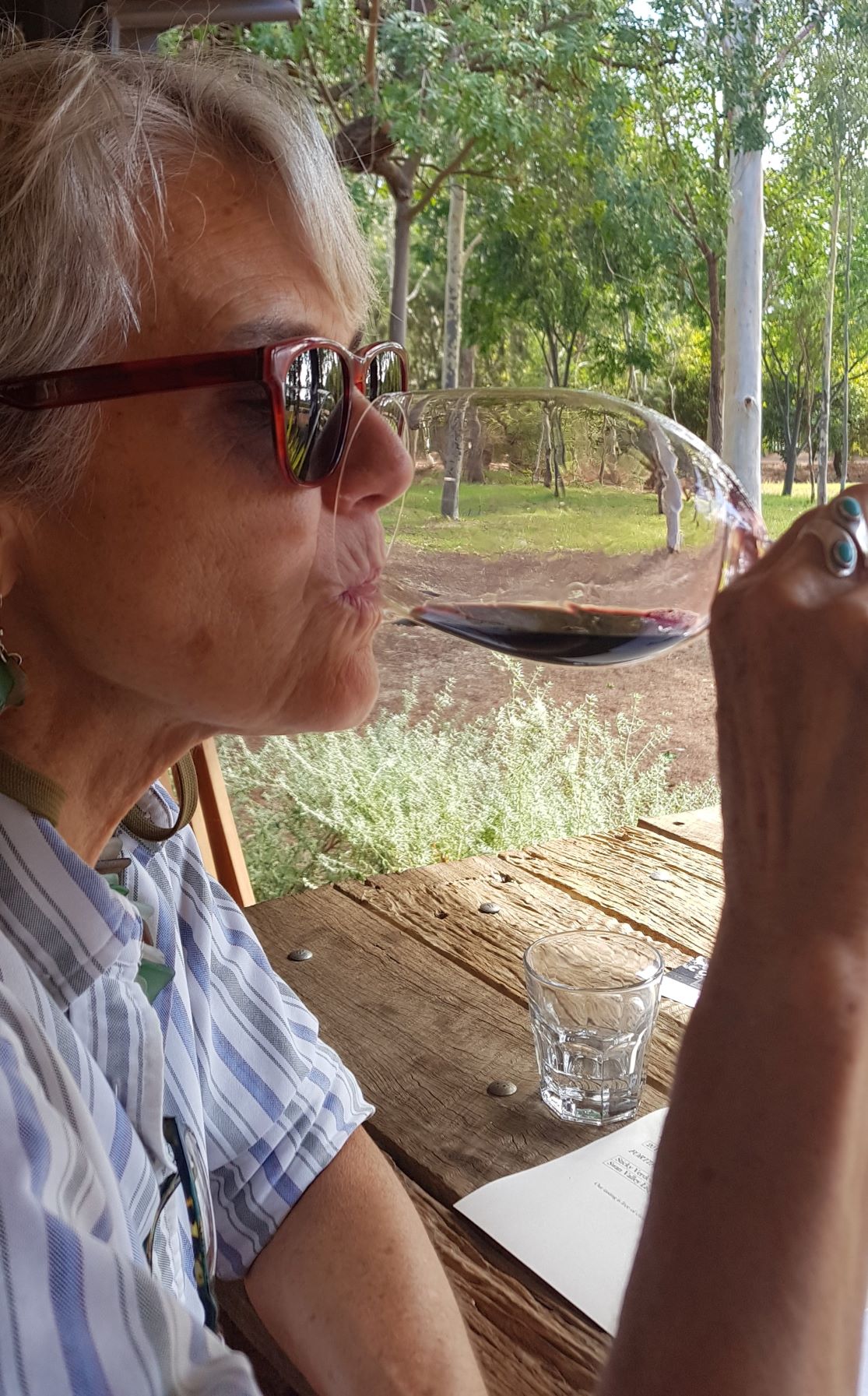
We both spit out most of the wine we taste, and we share a single glass to keep our tasting sips small, but you can still feel the alcohol after a while. We’ve found Australian vineyards generous in the range of wines offered. Each vineyard offers six to ten different wines for tasting. Even declining the sweet wines and most of the fortified wines, there is a lot to taste. Swan River whites are generally good, and the range of reds is enormous, definitely something for everyone.

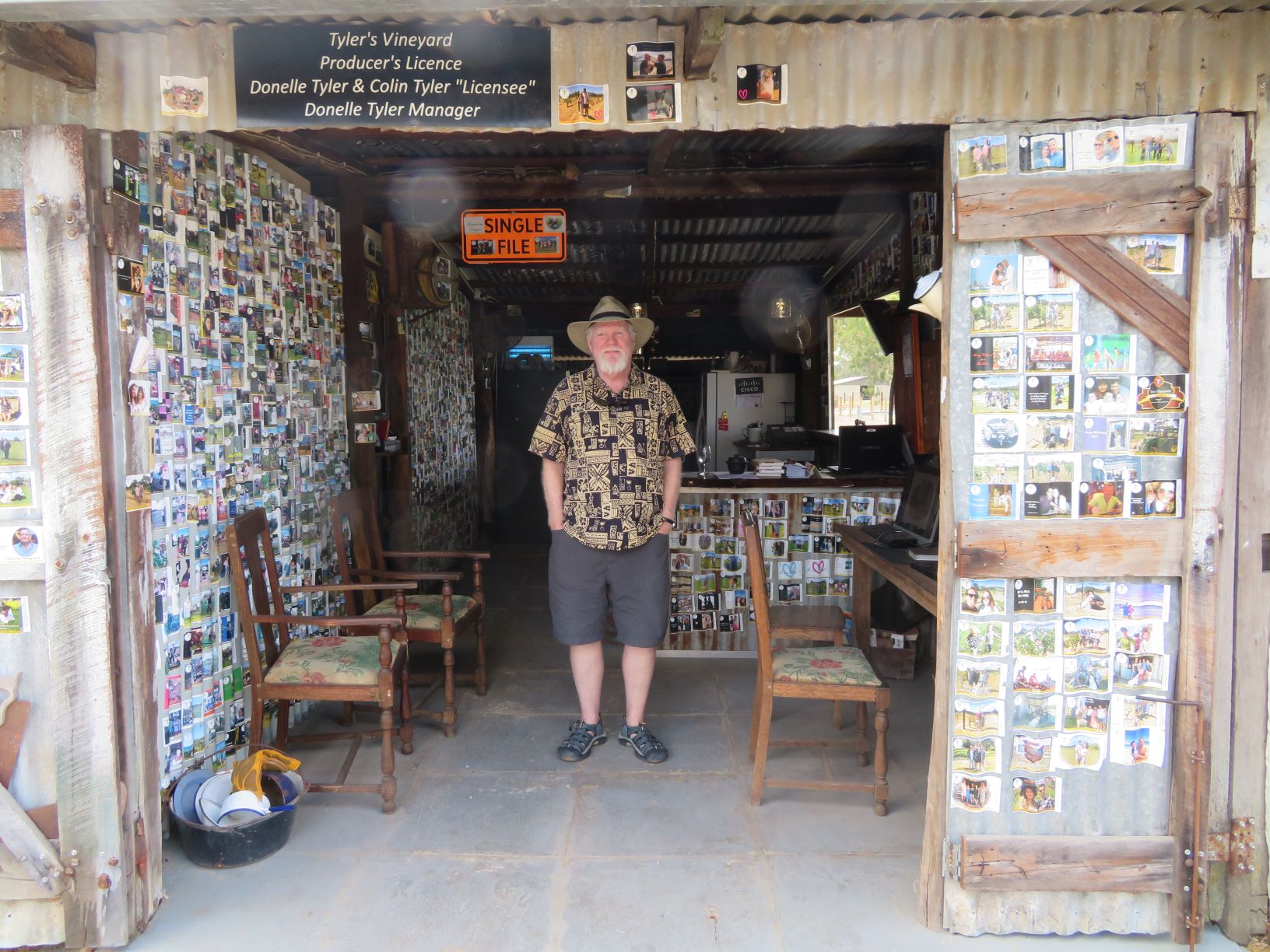
From Faber we went to the most entertaining of our stops, Tyler’s Vineyard. We delivered the bottle from Steve, well-received as you can imagine. Tyler’s produces only grenache in a variety of forms, but they have a great gimmick. With the purchase of any bottle, you can get your photo taken and make your own label. In addition to what goes on the bottle(s), an extra label is produced that can be pasted on the walls of the tiny cellar door shed. The walls are covered with labels. You can see the celebration of anniversaries from first year to 60 years, marriage proposals, and lots of birthdays. While we were there, a couple was buying wine and making a label for his birthday. We had a nice chat, got a recommendation to her sister’s Barossa tasting room in Hahndorf (near Adelaide), and chatted about travel. It was great fun to see the process, especially since we didn’t need any wine ourselves.Making our way to four vineyards is more than our usual tasting tour, and our next stop had to be lunch. We followed Steve’s recommendation and stopped at Mandoon Estate. This is a larger operation than the others we visited. The bistro was packed, there were picnickers on lawn, kids playing on the jungle gym, we even watched the six young men of a wedding party sipping wine as they waited for their event to start. Our lunch was delicious–we went all out for a quiet lunch in the fine dining section. I finally had my glass of Swan Valley Verdelho along with my quail terrine and sous vide chicken. Jonathan had a glass of red with his carpaccio followed by pork belly.

After a long pause over our lunch, we headed home by way of Upper Reach, where we bought the bottle of Black Bream red (Cab-Merlot blend) that was so delicious when we first tasted it in the morning. We thanked Steve for his excellent suggestions and headed for home, pleased with our tasting tour and ready to recommend the Swan Valley to anyone.

Western Australia: Fremantle, Perth, Yanchep and points between

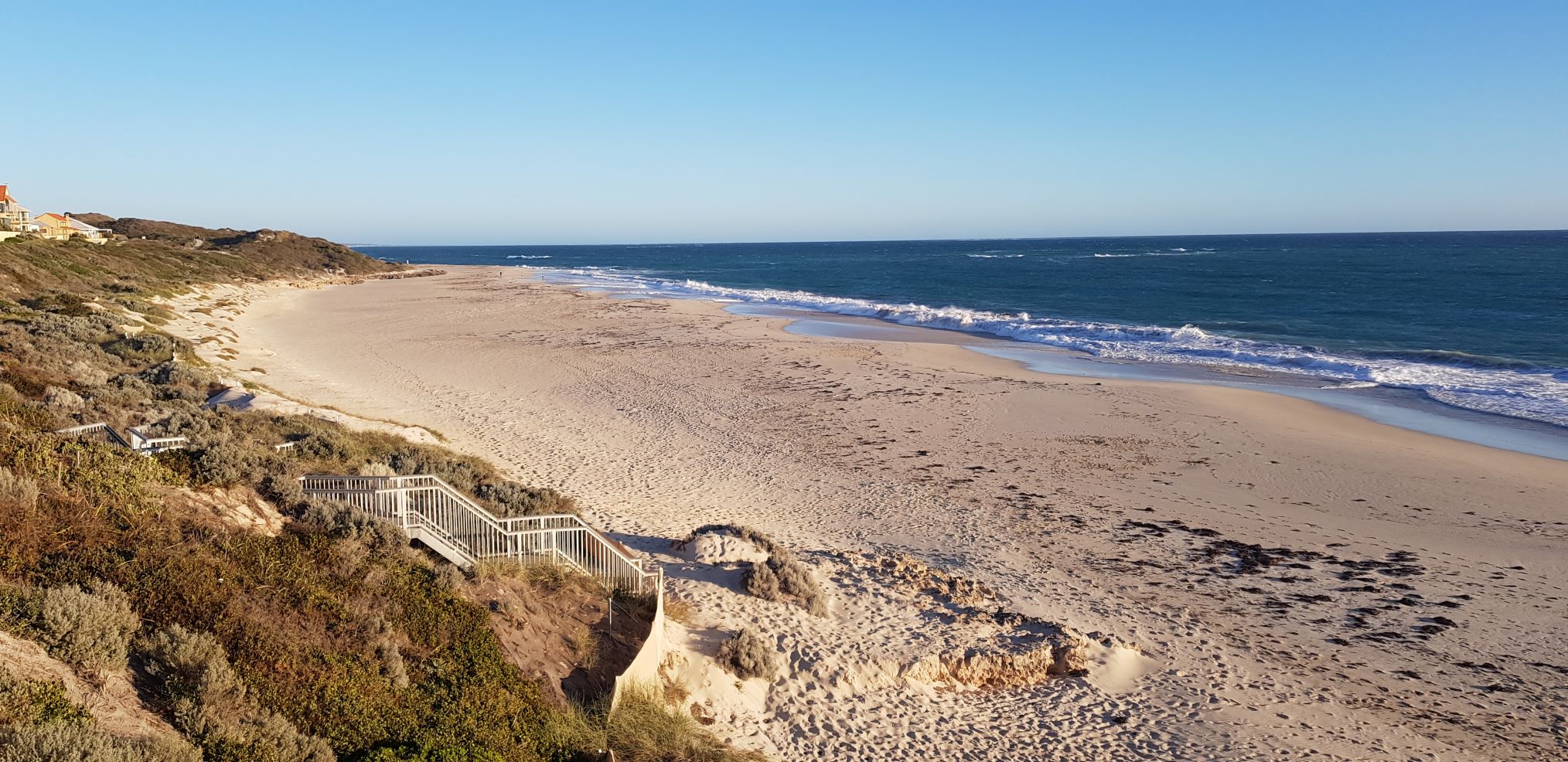
We jumped into action to take advantage of Lyra’s last week with us. After arriving at our temporary home in Yanchep around midnight, we slept in before going to Yanchep Beach just below our house. The water is deep turquoise blue, and the Indian Ocean stretches to the horizon.Beyond Yanchep to the north are the Lancelin dunes, where there is sandboarding for the adventurous. The dramatic formation called “The Pinnacles” is nearby. I missed this as I had a cold and refused to move for a day. I may now insist on visiting. The sand is bright yellow and the rocks stick right up out of it. There’s a remarkable contrast against a blue sky. They picked the right day to visit.

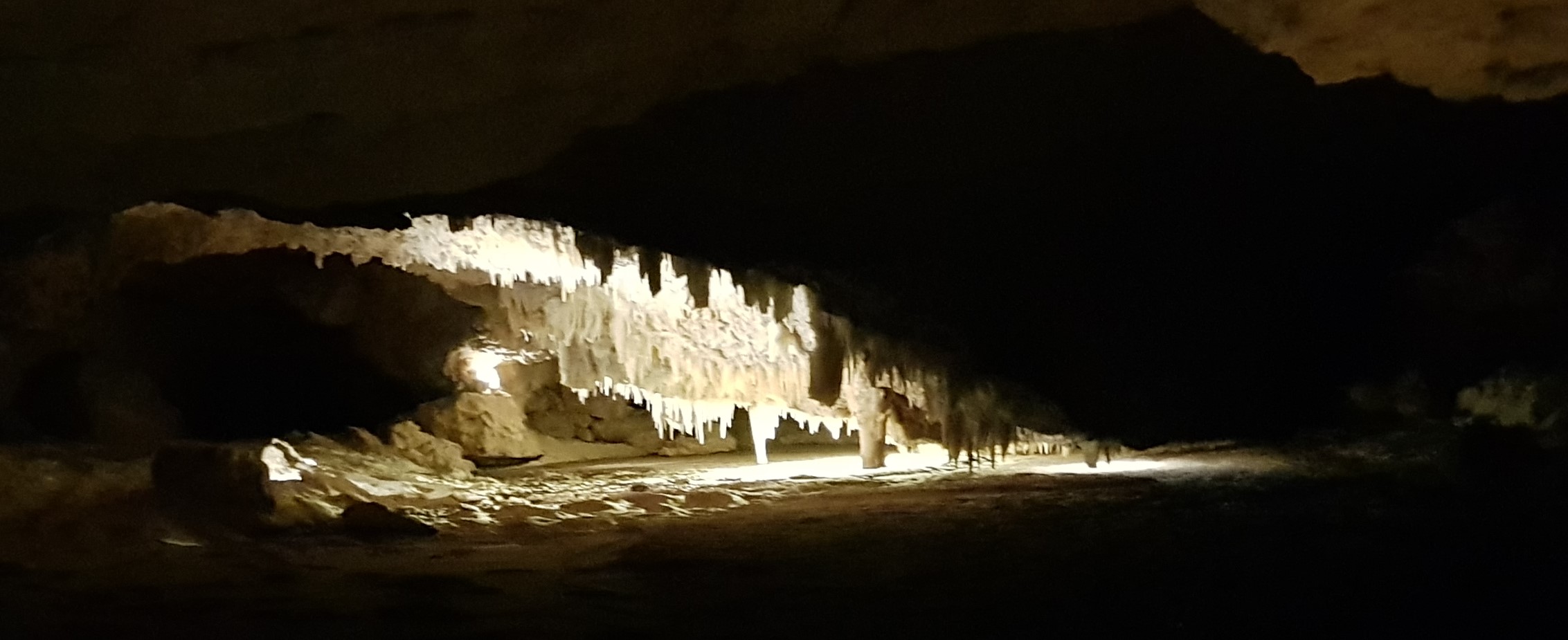
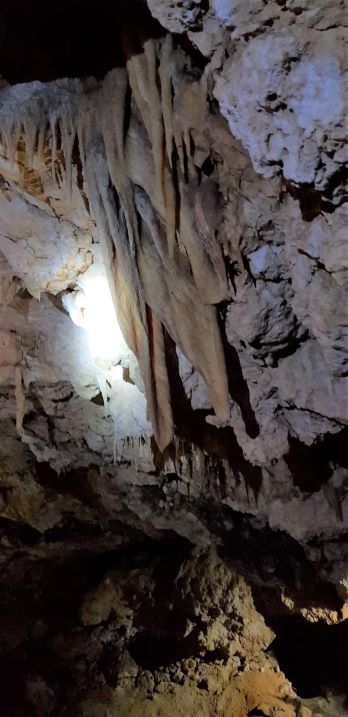
From bright sun, we went into a deep cave, visiting the Yanchep Crystal Caves. A formation of limestone over sand and seawater resulted in the formation of extensive caves that were discovered in the late 19th century. Full of needle-like stalactites and rippling flowstone, one of the chambers is so large it was used for parties. Called Cabaret Cave, it can still be booked for meetings and events. We saw the wedding in the park that was going to have a reception in the cave.

Cabaret Cave

Unfortunately, the use of ground water to supply Perth has lowered the water table a great deal and the cave is now completely dry, meaning no new stalactites are forming. It is also getting warmer and no one knows what may result. The park is gradually creating artificial pools of water within the cave to try and keep it cool and moist. The docent guiding our tour was a passionate caver and water conservation supporter. She tries to make people aware of the inherent conflict between the need for drinking water and the destruction of caves and underground life.

We also met up with our friend Michele from our Galapagos trip. She is a docent at Perth Zoo and fixed us up with a giraffe encounter. They are really BIG, their tongues are really LONG and BLUE. They are very good at pulling a branch out of your hand.

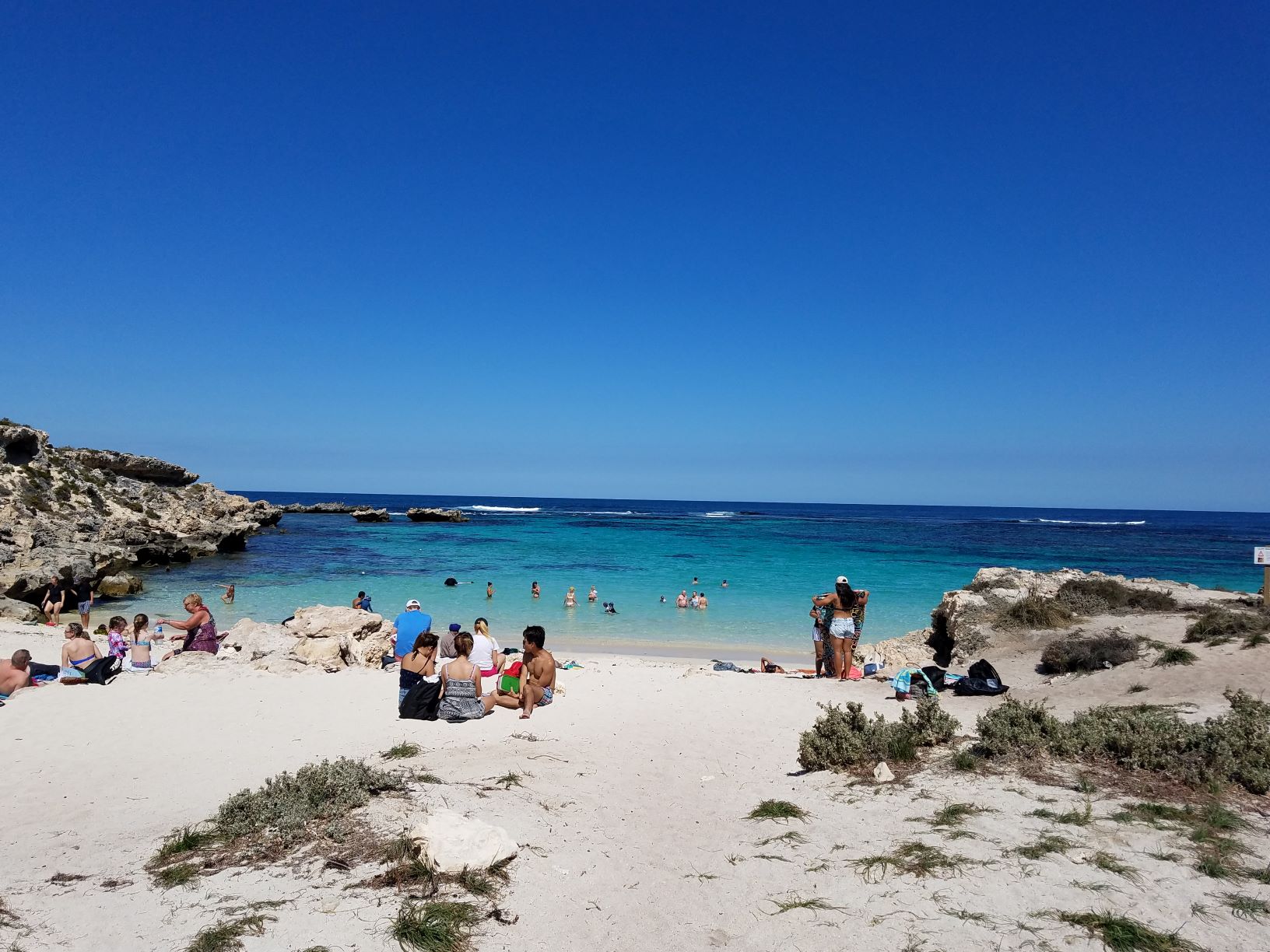
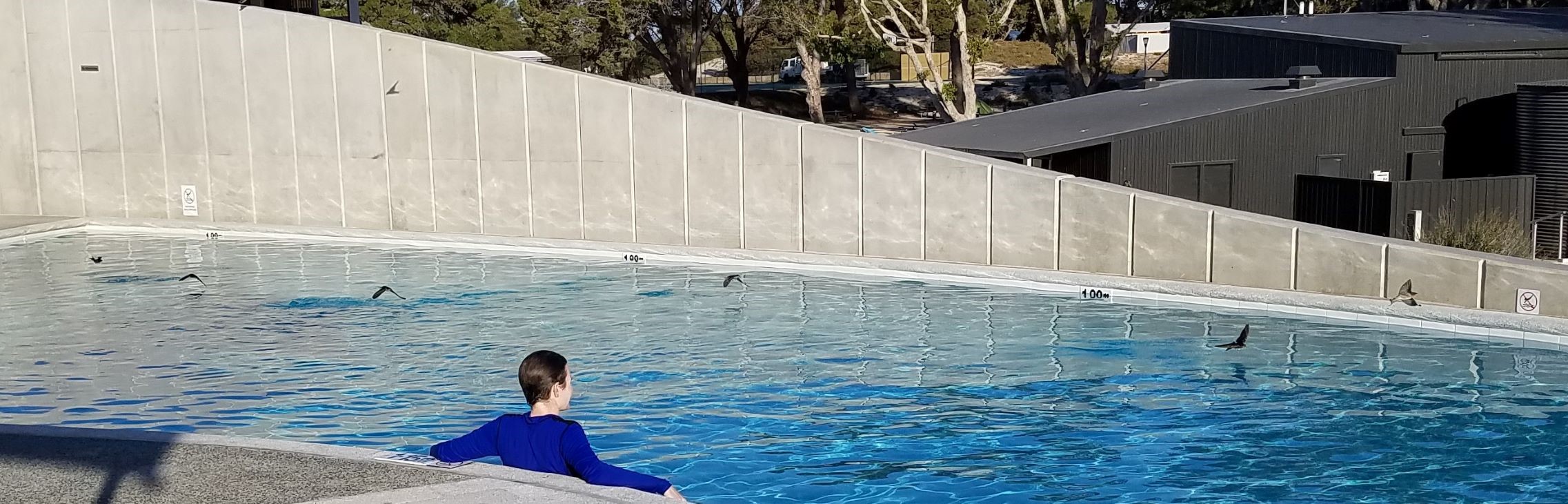
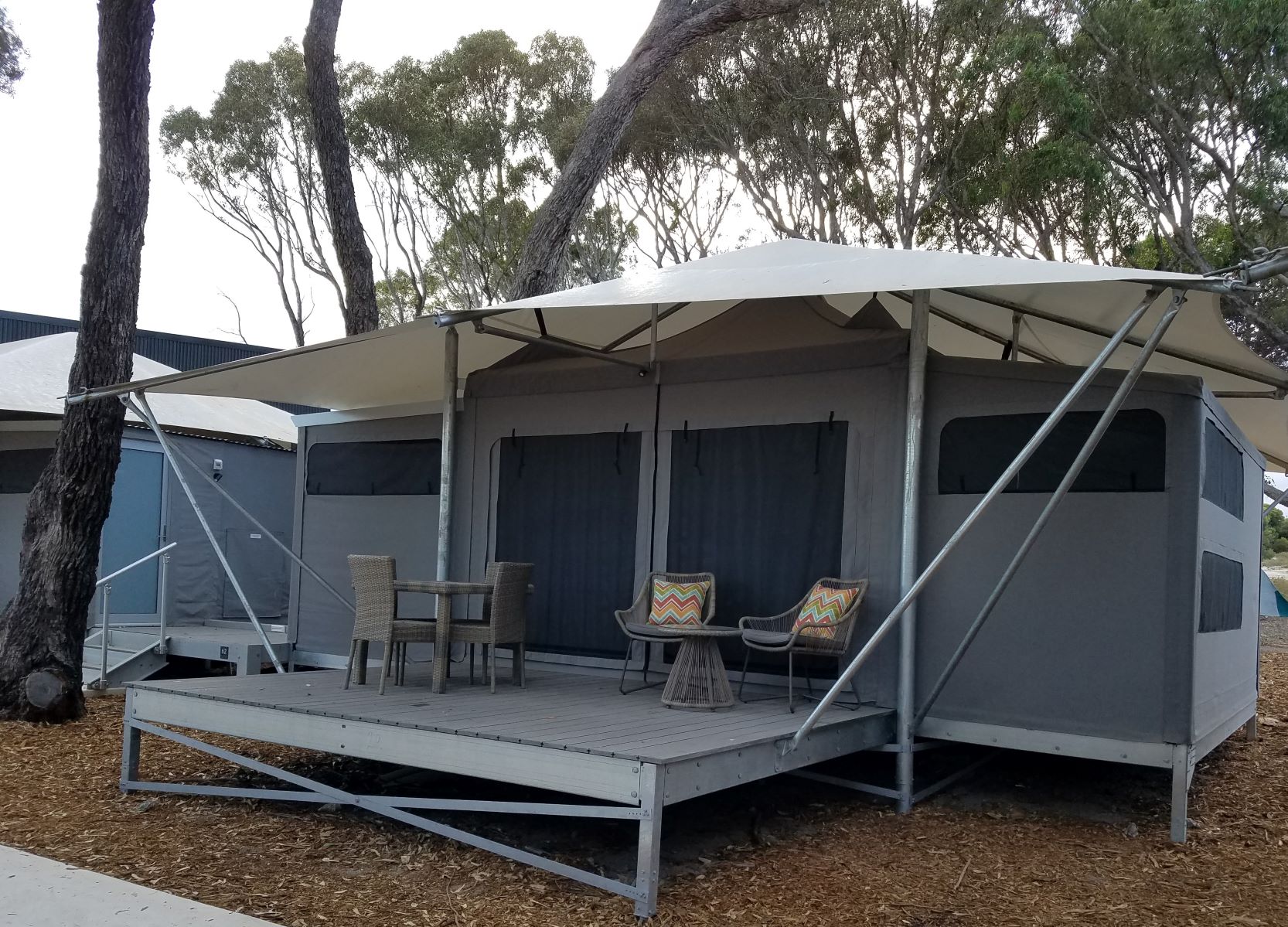
Next we went to sea, taking the ferry to Rottnest Island, a 30 minute ride offshore. Every person we met who knew we were visiting Perth suggested a visit to Rottnest, and our decision to stay overnight was a good one. You can walk, bike, or ride the bus around the island. Lyra took a bike and we rode the bus to Little Salmon Bay. It looks like the Caribbean. From there, we moved on to Strickland Bay, much rockier, but with better beach combing. We met a woman taking her SUP (Stand-up Paddleboard) out to practice for a competition coming up the next weekend. The water was full of surfers.You could easily stay a week, snorkeling at different beaches, biking, fishing, and lounging by the pool. Lyra took a dip in the late afternoon when the Welcome swallows were stopping to sip the water. Rottnest was our first “glamping” experience. There’s nothing wrong with a tent when it has it’s own ensuite bathroom. The Discovery Eco-resort has only been open for a month, and that means the tents are brand new. No critters hiding in the corners, though they remind you to keep your tent zipped so that a curious marsupial doesn’t decide to visit. That’s quite likely, as quokkas live on the island and are well protected. They are not afraid of people, though they don’t tolerate being touched or picked up.

One quokka wanted to sit beside Lyra’s feet at dinner. Others kept us company at the bus stop. They don’t beg, they just sit. Everyone who visits the island takes a quokka selfie. We sailed back to the mainland with plenty of quokka photos and sea views.

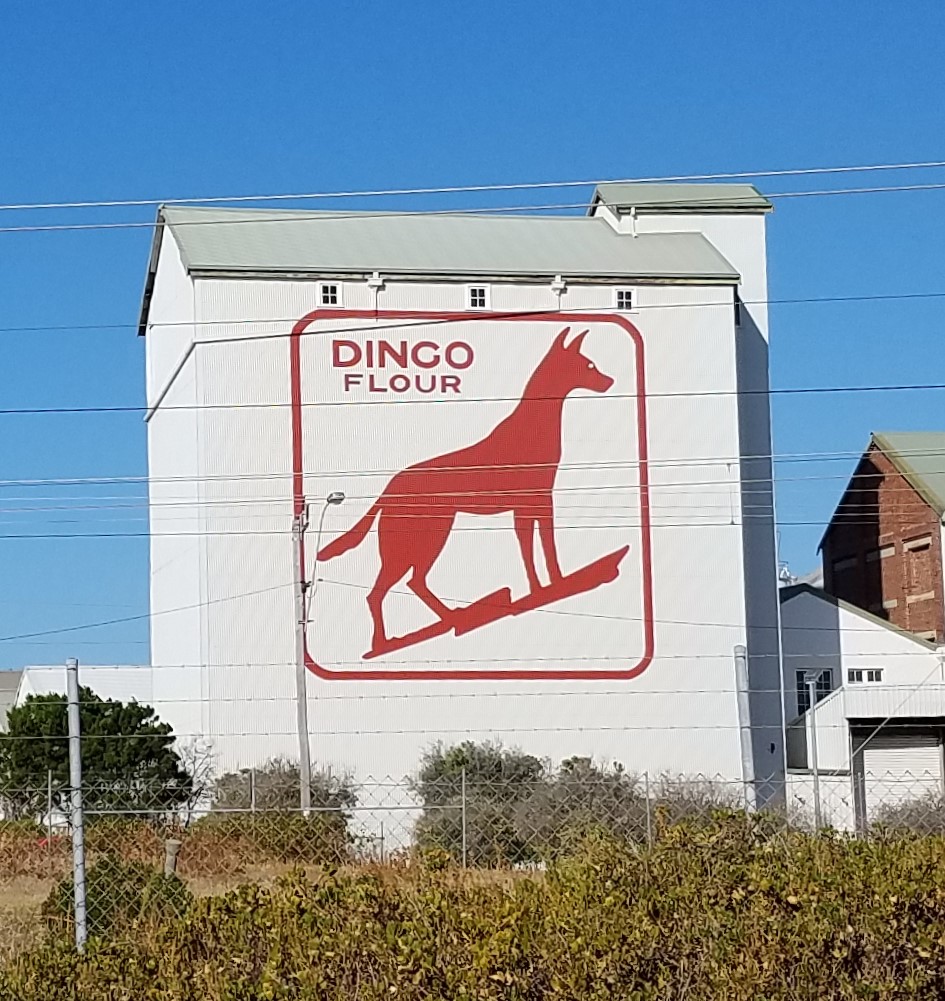
The Fremantle Markets were another stop on our tour of the region. On our way there we passed the Dingo Flour sign, the icon of Fremantle. The markets were full of tourist items, bars, restaurants, and food stalls. We also passed a koala on its way to a public appearance–the most awake koala I’ve ever seen. There’s something weird about seeing a koala carried like a little kid.

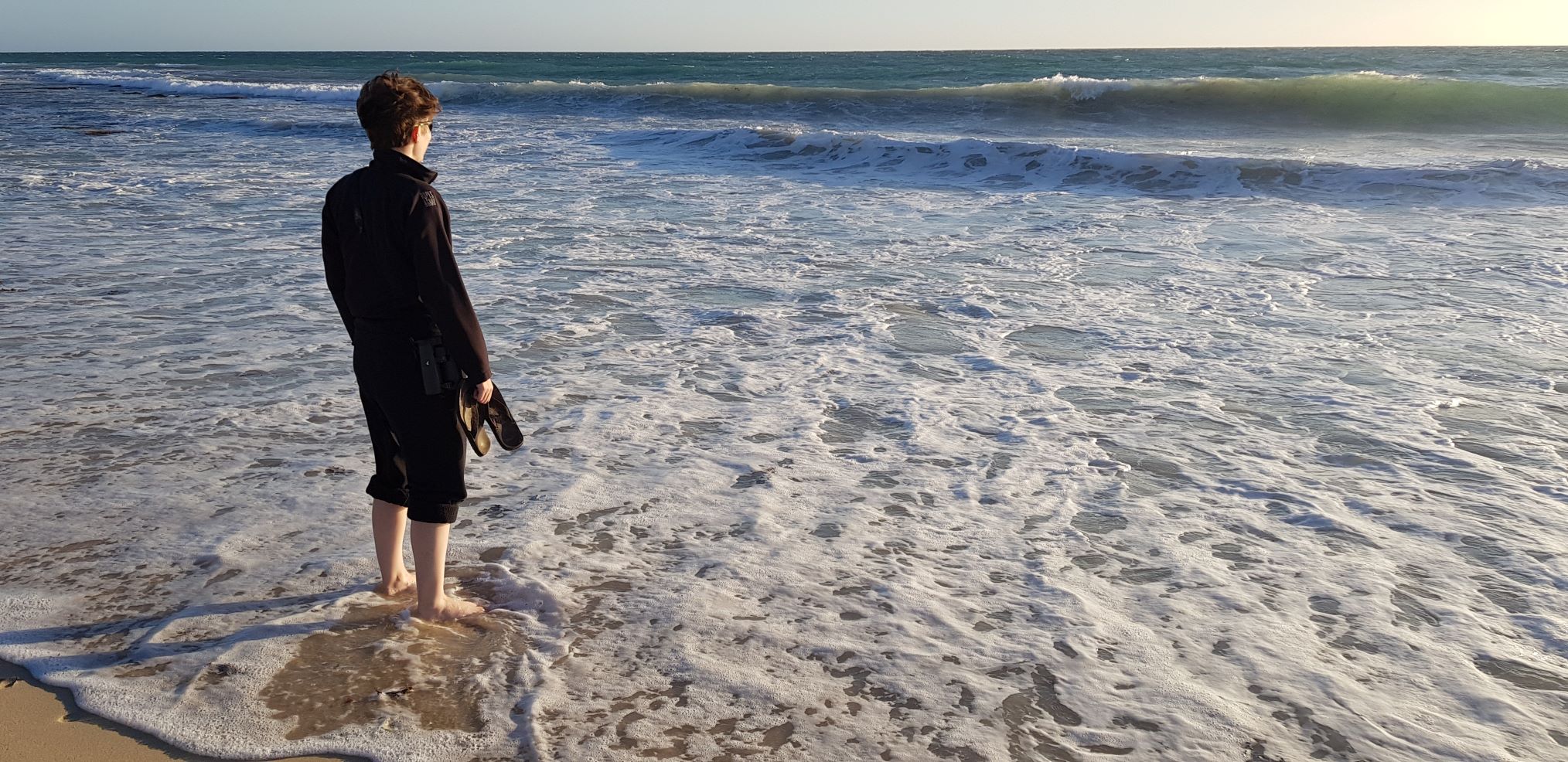
We went for one last walk along the Indian Ocean, then Lyra packed up and headed for LA. Many hours later she was there, though it was still the same day she left Perth.

The Indian Pacific Raillway Takes Us Across

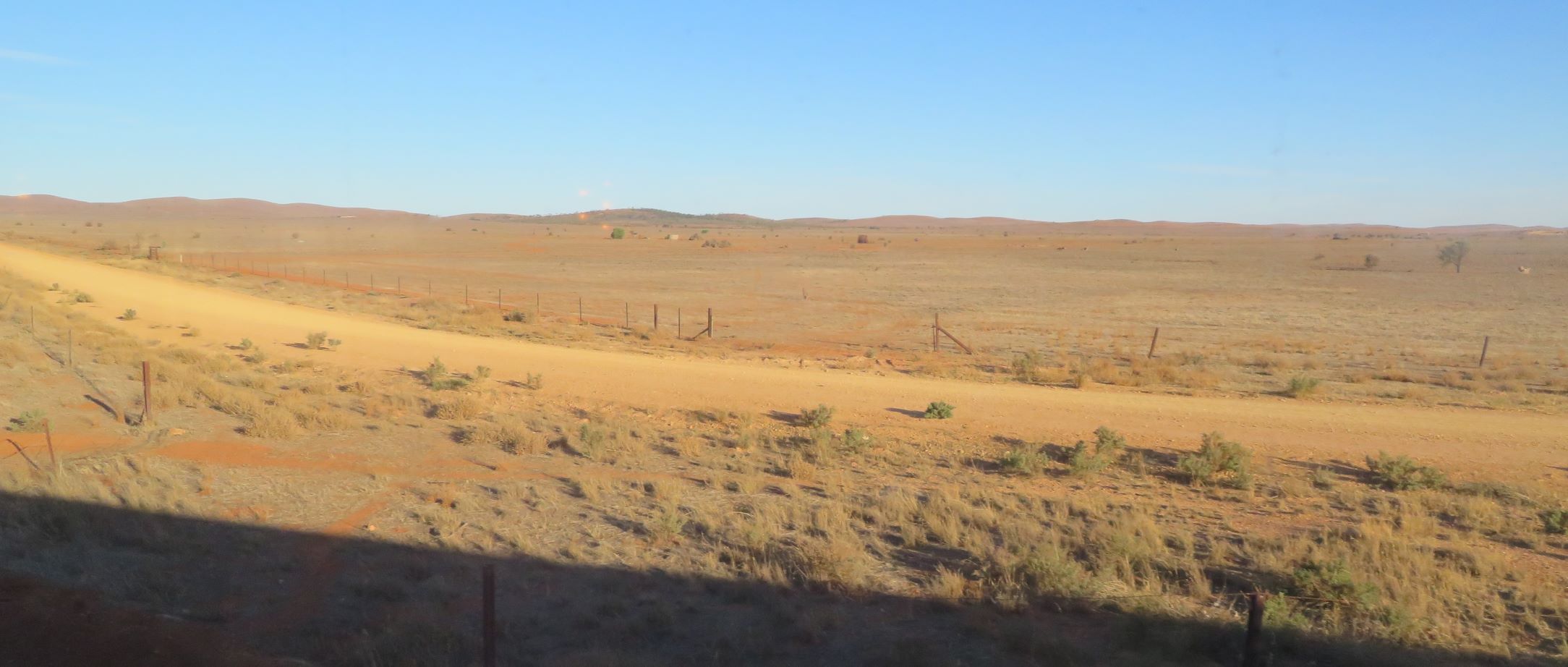
We spent a peculiar four days and three nights crossing Australia from Sydney to Perth. The trip included days of being glued to the train window watching the scenery as it went from tall trees to flat, dry, and empty, liberally dotted with kangaroos and emus. On the other hand, we took this trip to enjoy a number of interesting stops along the way. Due to a breakdown before we ever boarded, we didn’t get any of those opportunities that were such a large part of our decision to take the train. Never mind the downside, the view out the windows was fascinating!

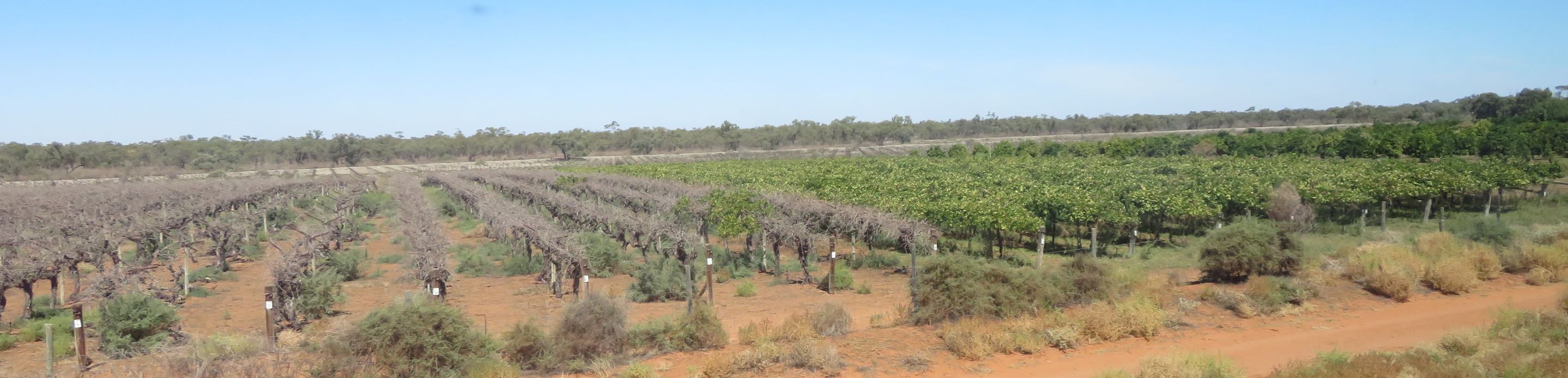
The land became drier and drier as we moved west. The soil ranged from red to white.Water for irrigation is running out and we saw recently abandoned grapevines.

Salt flats between Adelaide and Tarcoola.

We got off the train for a few minutes at Broken Hill, which has interesting train murals. Twenty minutes was just enough time to walk up and down the platform and get some fresh air.

Our next stop was Adelaide, and it was dark when we arrived. The final stop during the journey was Kalgoorlie, where we had an hour to stretch our legs. By then, our third full day on the train, everyone was happy to disembark for a while. We strolled around in the early morning light.

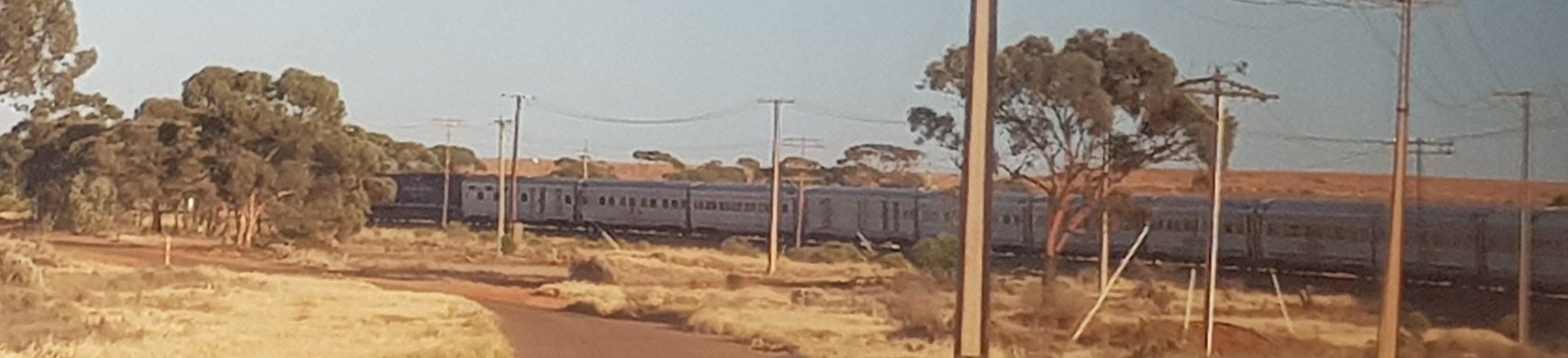
Life on board the train was not uncomfortable, though it did get to be a lot of the same sights after three days of constant motion. There were only a couple of places where the route turned and let us see the cars ahead.

It’s always fun to eat in the dining car of a train, making meals an event. The food was good, and the company excellent. Having Lyra with us made it more fun. The three of us made a winning trivia, team, too.

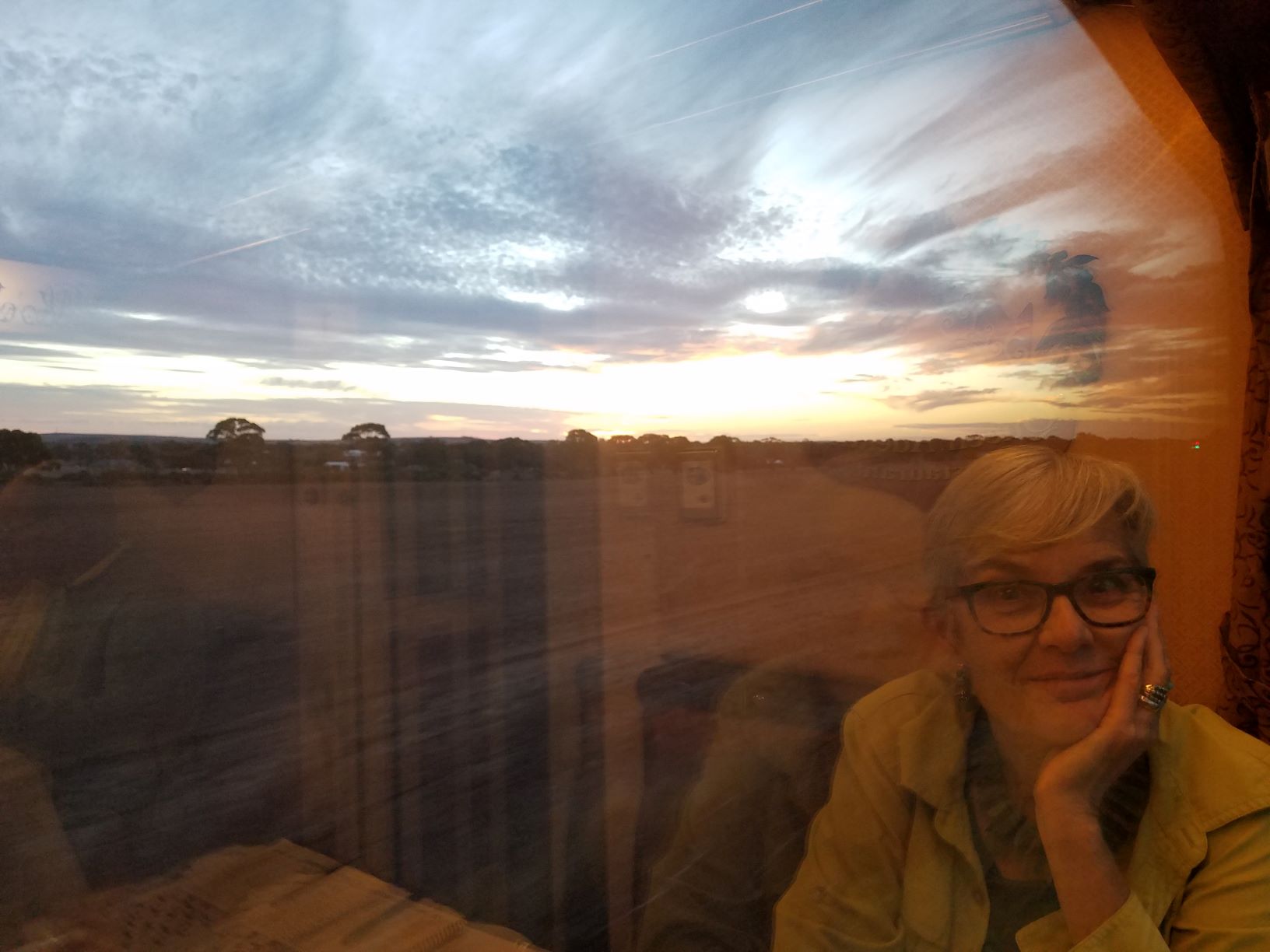
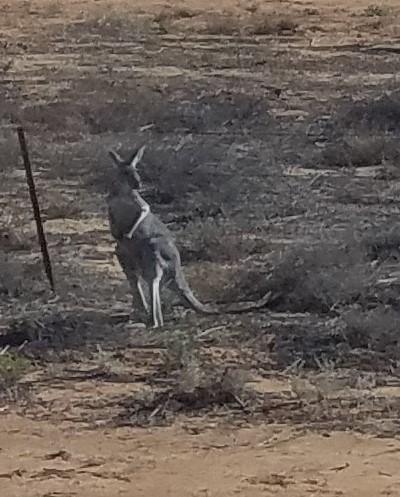
Outside the train, especially in the late afternoon, we saw kangaroos browsing as they watched us pass. There were emus, hawks, and other birds, though we did not see any feral camels, despite spending many hours looking out the window. The sunsets mixed orange sunlight with blue, gray and white fingers of cloud in patterns that changed as we watched. We arrived in Perth after dark, the last kangaroos long since passed. Disembarking was a bit like emerging from a space ship might be. We set down in another landscape, completely different than what we had been seeing out the window. Perth is a large city, and we had to re-engage with reality, find a taxi and go pick up our rental car. Our days of staring out at Australian landscape now over, though well worth the time spent.

If anyone is interested in the story of how our Indian Pacific trip ended up with minimal stops, leaving Sydney late and arriving in Perth late, I’d be happy to tell you.