A Day in the Algarve

On our last weekend in Portugal, we decided to head south for a day trip to the Algarve, as the south coast is called. In particular, Jonathan wanted to see Cabo Sao Vicente, the southwesternmost point in mainland Europe. We planned to go on Saturday, but rain was forecast, so we opted for Sunday and hit the road by about 10 am, typical for us. The landscape shifted toward grassland, and we saw some flocks of grazing sheep and goats. Nearer the coast, the soil was sandy and scrub covered.

Our first stop was in Portimao. Based on my previous shopping failures, I had looked up every weekend market in the Algarve for something interesting to visit. I found “lota cool market,” an annual design-oriented event put on by local artisans. After I double-checked that it was actually going to take place (recent google mentions, facebook page), I looked for an address. What I found was “the ribeira” (riverside) in Portimao. I looked on google maps and didn’t see an area with that name. I checked further and kept finding the same information, then I found “near the velho porto” (old fishing port). Having never been to Portimao, I didn’t know what that meant and again, there wasn’t a label on a map that said “old port.” Finally, I followed a few facebook posts to, “if you’ve never been here before, we’re at the foot of the old bridge coming into town from Parchal.” None of the bridges were named on my map, but I found Parchal. The post included a photo of the old bridge, showing a blue, lattice structure below the bridge that finally let me identify the likely spot for the fair.

Riverfront in Portimao.
Ribeira/riverfront in Portimao.

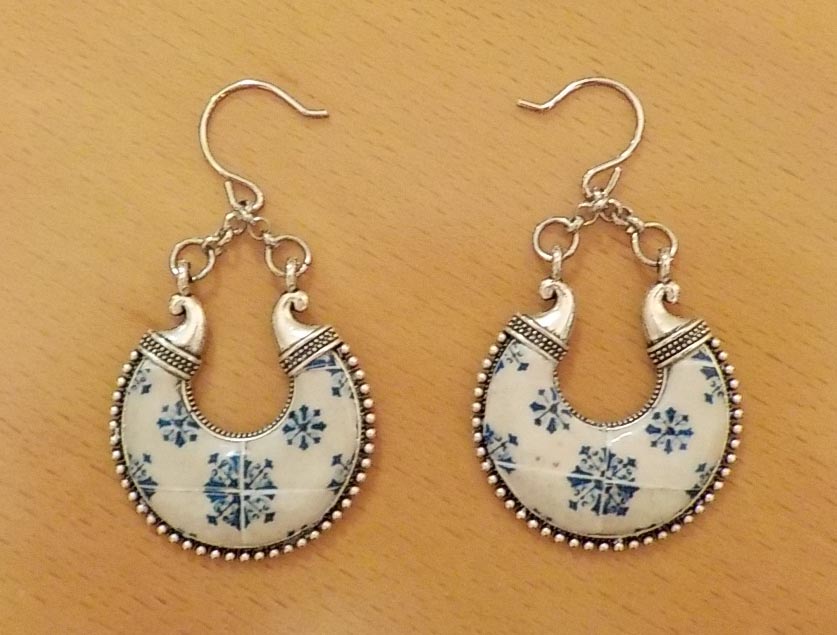
With this homework, we arrived in Portimao and immediately lost sight of the water. My GPS reception was so poor that it didn’t even show the river. We headed toward the center of town to ask questions when I saw a sign, “Ribeira.” We got to the river and there in the distance was the old bridge with its distinctive blue structure. There was even parking. We strolled down to the event. It was small but interesting, with local food producers including a cake designer who had a Barbie-sized fondant figure on her demo cake (impressive). There was clothing, mostly for babies and children, toys, wood cutting boards, cork products including a bicycle and chairs with cork in place of upholstered seats and backs. Jewelry was made of coiled newspaper, laser-cut lucite and polymer clay. The earrings I bought have images of traditional Portuguese tile baked onto the clay. It’s a contemporary application of traditional tile designs that I haven’t seen elsewhere.

5.29.16 Portimao

These earrings are by “Love in Boxes.” See facebook for more. She participates in many summer markets in the Algarve including ‘lota cool’ market in Portimao, the Saturday market in Loule, and the ‘Mercado de Culturas….a Luz das Velas’ a candlelight market in Lagoa July 7-10, 2016.


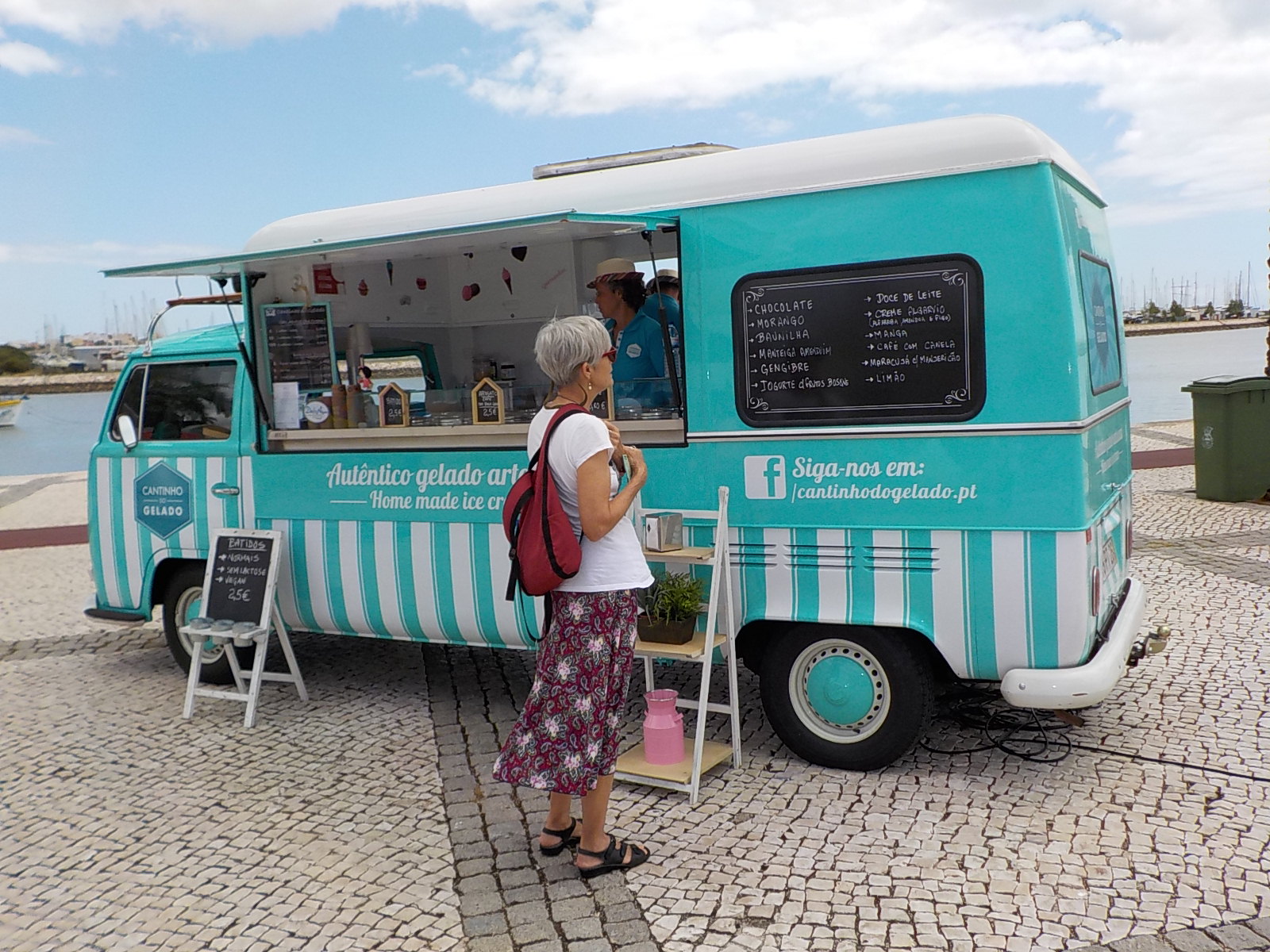
Leaving the market, I ate an “artisan” ice cream of chocolate with fig and almond. It was a good stop, but we weren’t to the end of Europe yet. Next was Sagres.

5.29.16 Algarve-006

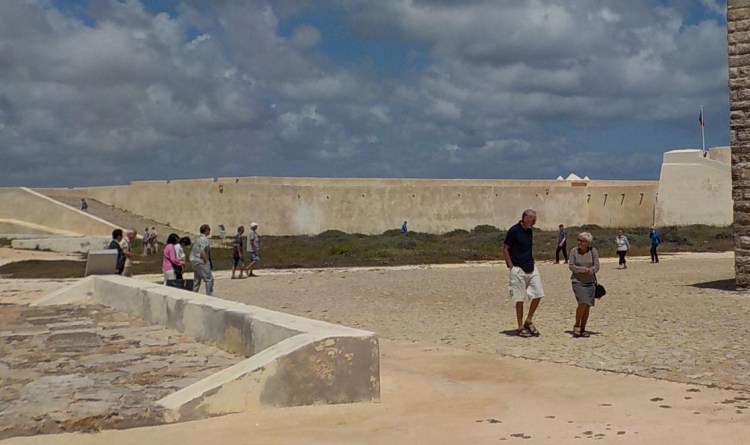
There are two southwesternmost points in Europe, 6 km apart. Sagres is home to a huge fort in the process of being restored. There is a long walking trail along the cliffs, signage about flora, fauna, and the ocean, with great views.

Visitors have built many small cairns of rock.

A small platform lets you look into a deep blowhole. Along the cliffs (40 ft, 60 ft.?), a dozen or so men were fishing using long poles, big reels and a heavy weight. I was curious to know what they caught when one man reeled in a slender fish about 12 in long. It looked small compared to his equipment but he promptly killed it, gutted it and put it in a cooler. We also saw a black redstart on our walk back to the car and wished we’d brought binoculars, because there were a number of birds in the scrub.

5.29.16 Algarve-011
Cabo Sao Vicente from Sagres.

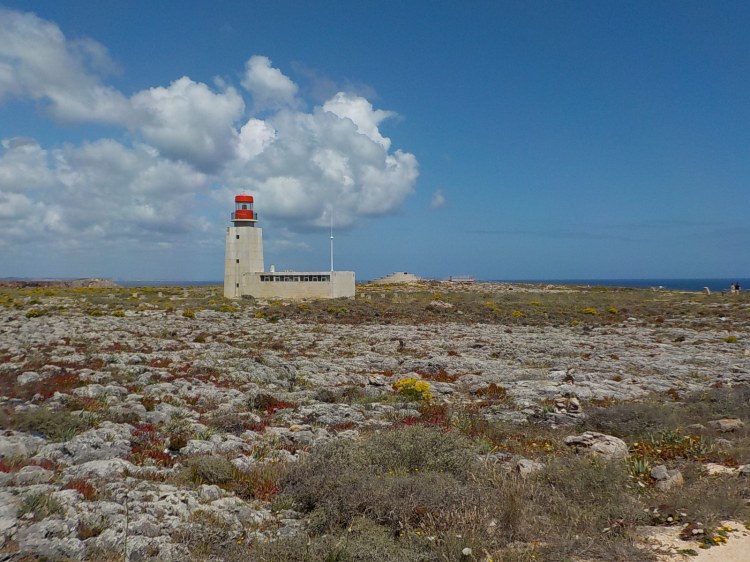
Last but not least was the official furthest point out to the SW, Cabo Sao Vicente. The site is not quite as developed as Sagres, but on a Sunday afternoon, there was a line of food trucks and souvenir vendors that covered a much larger area than the overlook of the ocean. Much of the actual point is blocked off by a lighthouse, though some of this may be due to construction. As a result, you can look out over the neighboring cliffs.

5.29.16 Algarve-022

For looking right out to sea, imagining what it was like when no one knew what was beyond the horizon…….for that you visit Sagres. We picnicked along our route, and stopped for coffee on the long drive home. We got back before 8 pm. With only a couple of days left in Portugal, all our meals are leftovers, so it was quick to set the outdoor table, pour a bit of vinho verde and watch the sunset over a late dinner.

Go to the beach (take your rock hammer?)

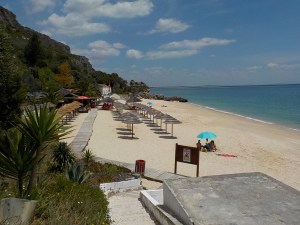
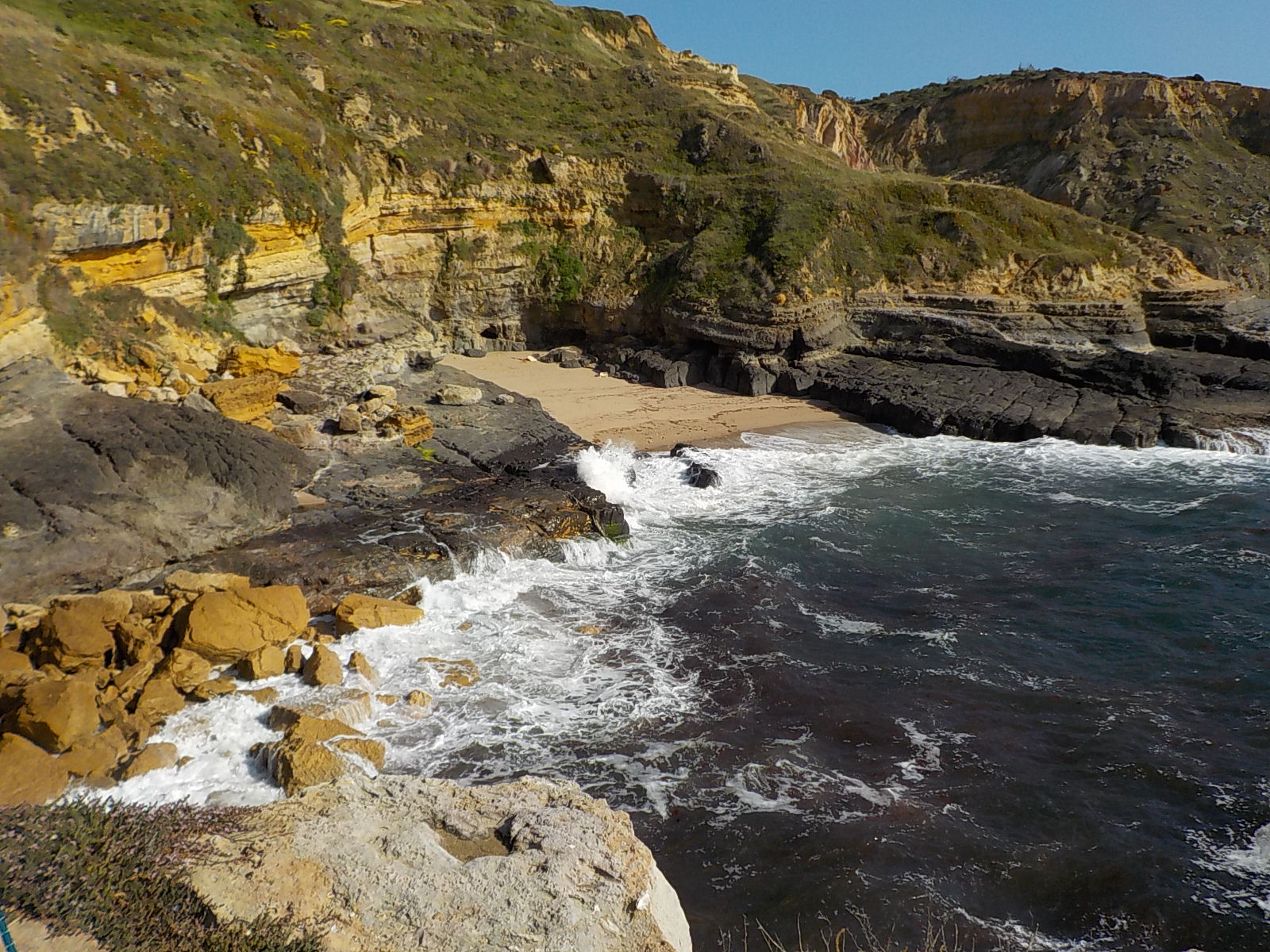
The Praia de Foz is a small beach that is easy to find if you’ve already located it on Google Earth and translated that to your phone, or the equivalent. A single sign marks the turnoff onto a graded, graveled road from the main road but there are no other signs. You choose the various turnoffs at your peril. We were prepared, and even gave directions to a Portuguese couple.

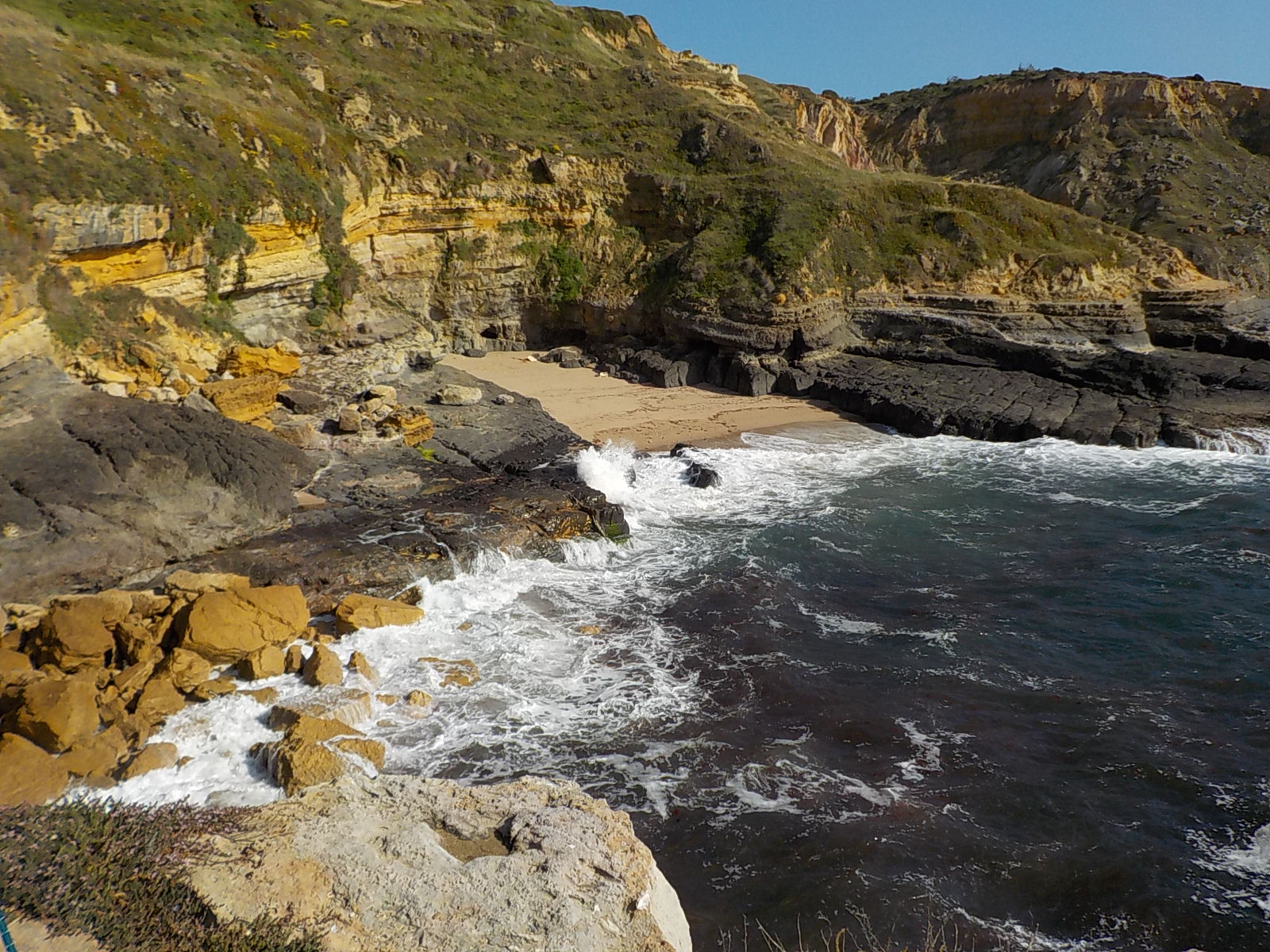
It’s a spectacular setting.

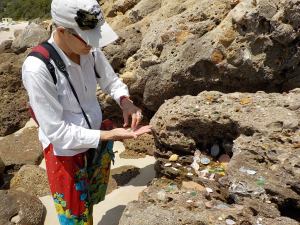
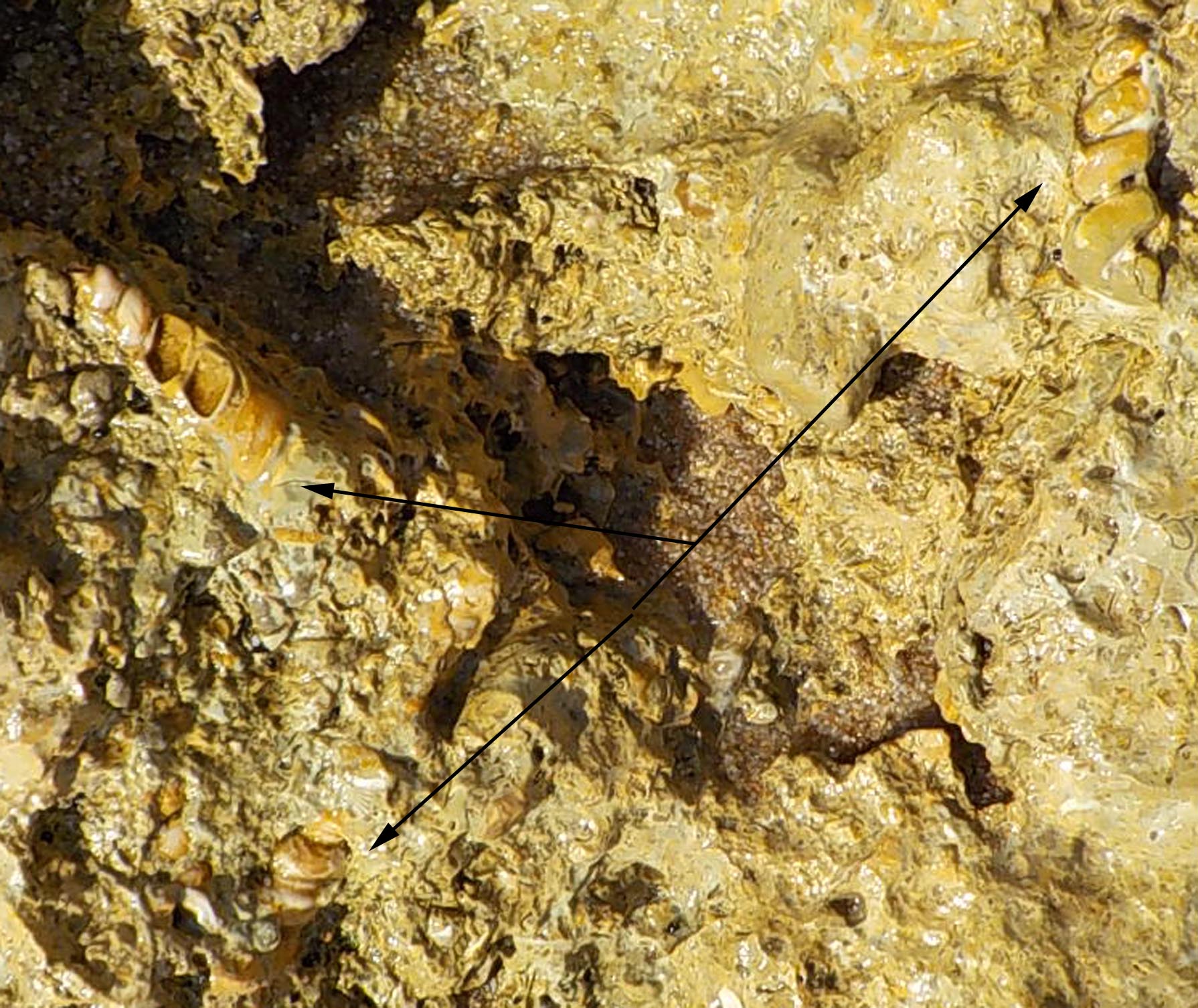
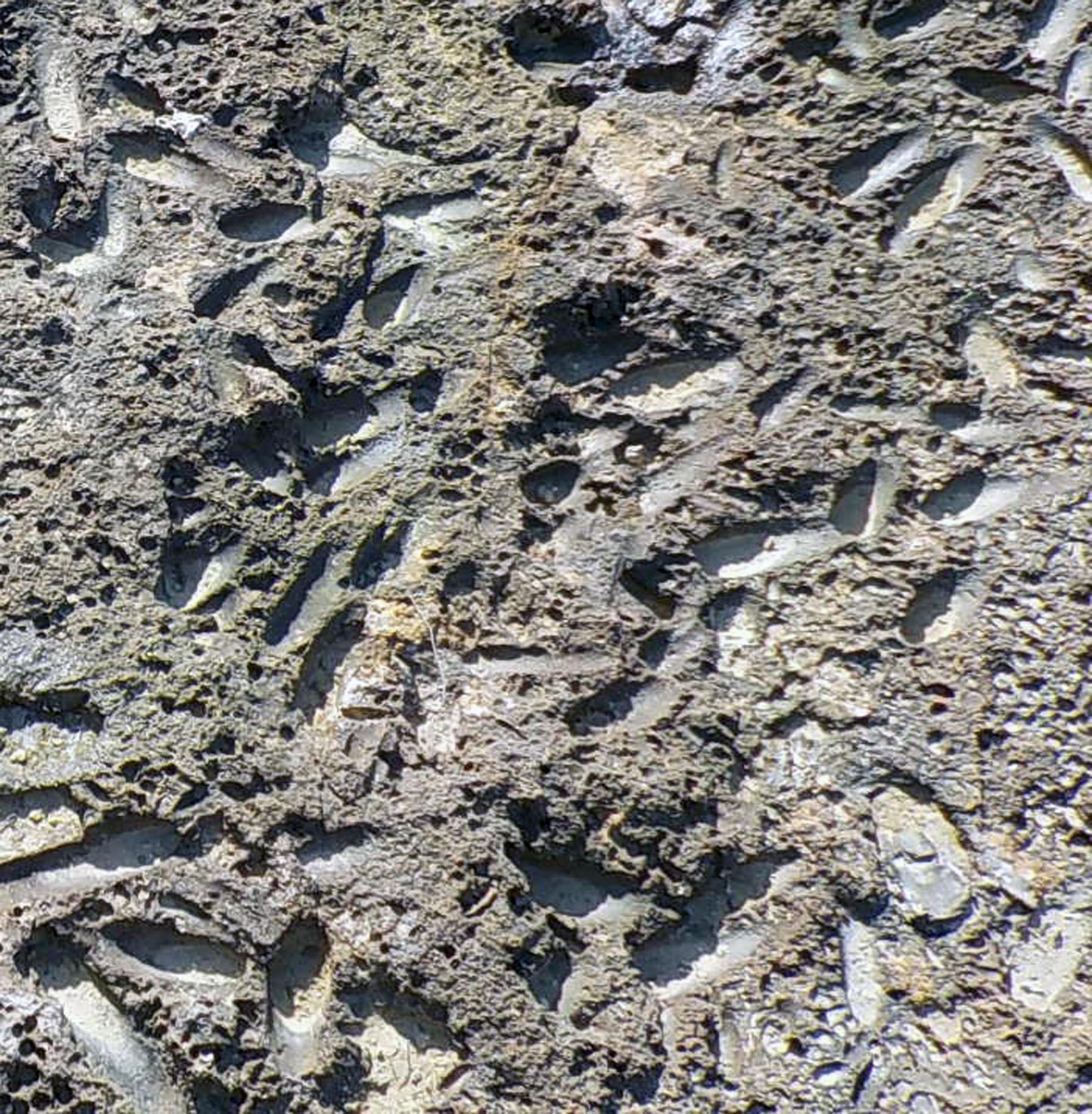
5.28.16 Praia de Foz-010We walked along the shore as the tide rose, picking up a few tiny pieces of beach glass and looking at the rocks. They are full of fossils! I’m not sure all the sea creatures in these rocks are completely fossilized, but most are on their way. Jonathan dug out a spiral worm for me which proved to be very soft, like mudstone. I then broke it into several pieces. I could see other spirals, but the rock was too hard and I couldn’t get anything out. A rock far above us in the escarpment was full of scallop shells, others were full of huge oysters.

5.28.16 Praia de Foz-017sma
Here are spiral worms.
5.28.16 Praia de Foz-014sm
Look at the difference between rocks that are side by side.
5.28.16 Praia de Foz-015
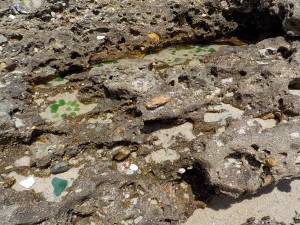
All the bright/white patches on this rock are shells that are embedded in the rock.

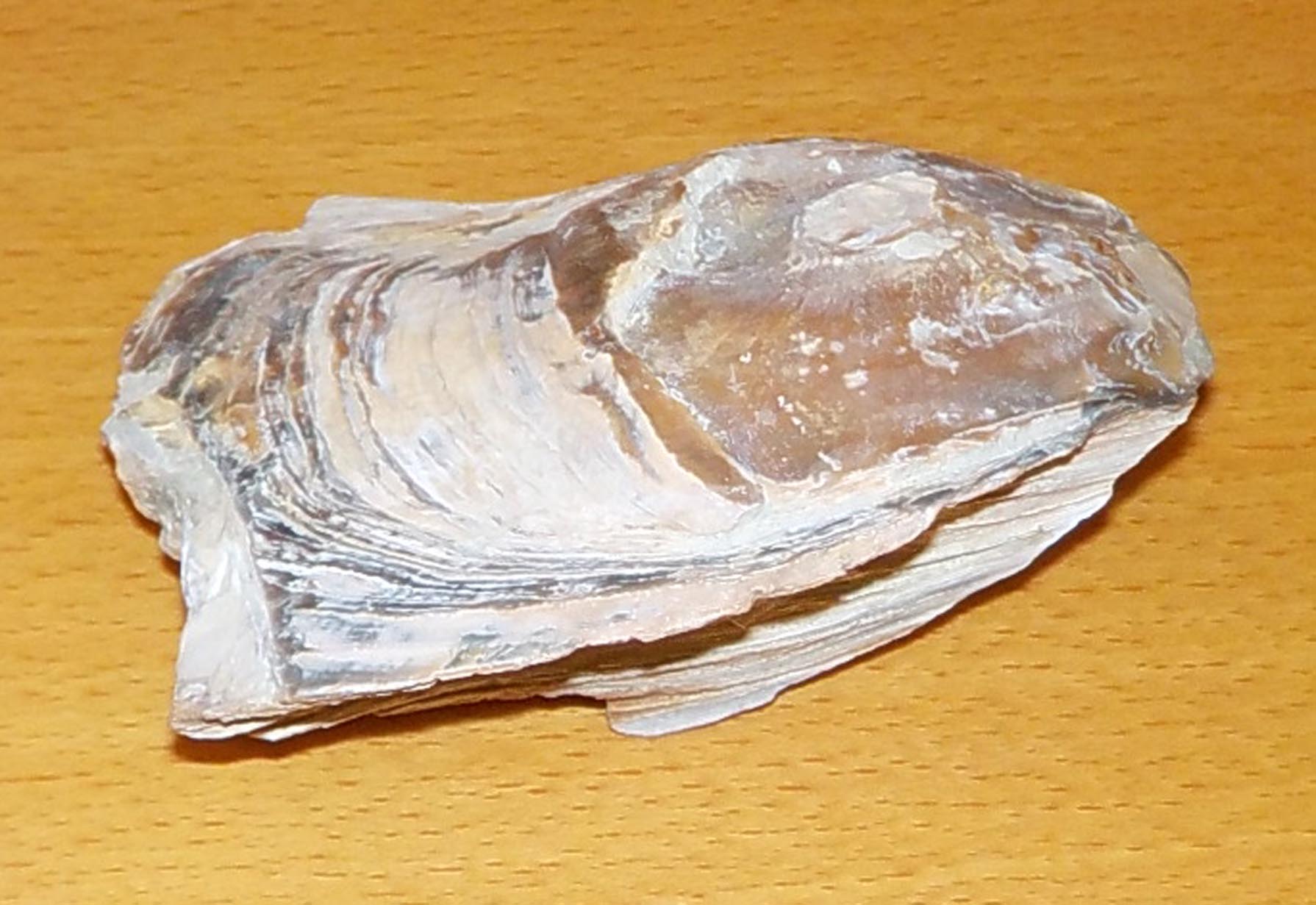
5.28.16 Praia de Foz-013smThese seem to be places where shells or fossils have eroded out of the rock. The layers that have all the shell in them are high over the beach, 40 to 60 feet up. The big rocks on the beach have fallen from the escarpment. You could spend an entire day digging sea creatures out of the rocks along the shore. I came up with an oyster.

5.28.16 oysterIt’s probably a good thing I didn’t have a rock hammer with me.


New Architecture Ignores the Old in Portugal

Portugal is full of churches, palaces, fortresses and restored historic houses containing private art collections. Possibly there are more historic sites per capita in Portugal than anywhere in Europe. Older houses, too, are frequently architecturally interesting, with curved roof lines, angled windows, wrought iron balconies, tiled facades and other graceful details.

This slideshow requires JavaScript.

We even see the occasional Art Deco structure, though most of these are  past their prime.

5.22.16 Porto-010
That really is a peacock on the top balcony.

Every city has a lot of older buildings in need of remodeling or repair. We saw this in Lisbon and Porto as well as in the smaller places that we passed through.

5.21.16-015

This reminded me of the Fez medina where buildings are cantilevered over narrow streets. They often look like they need additional support.


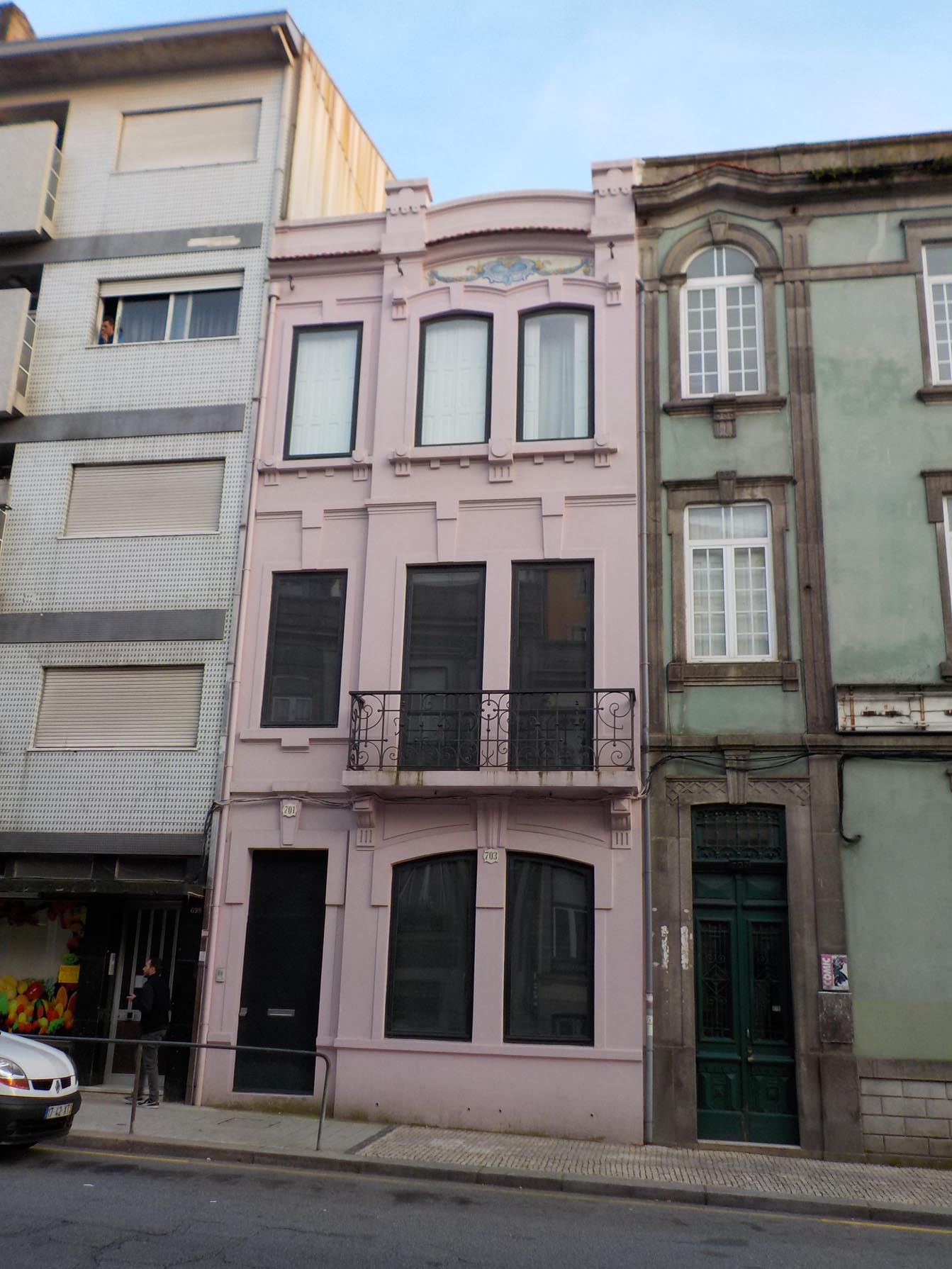
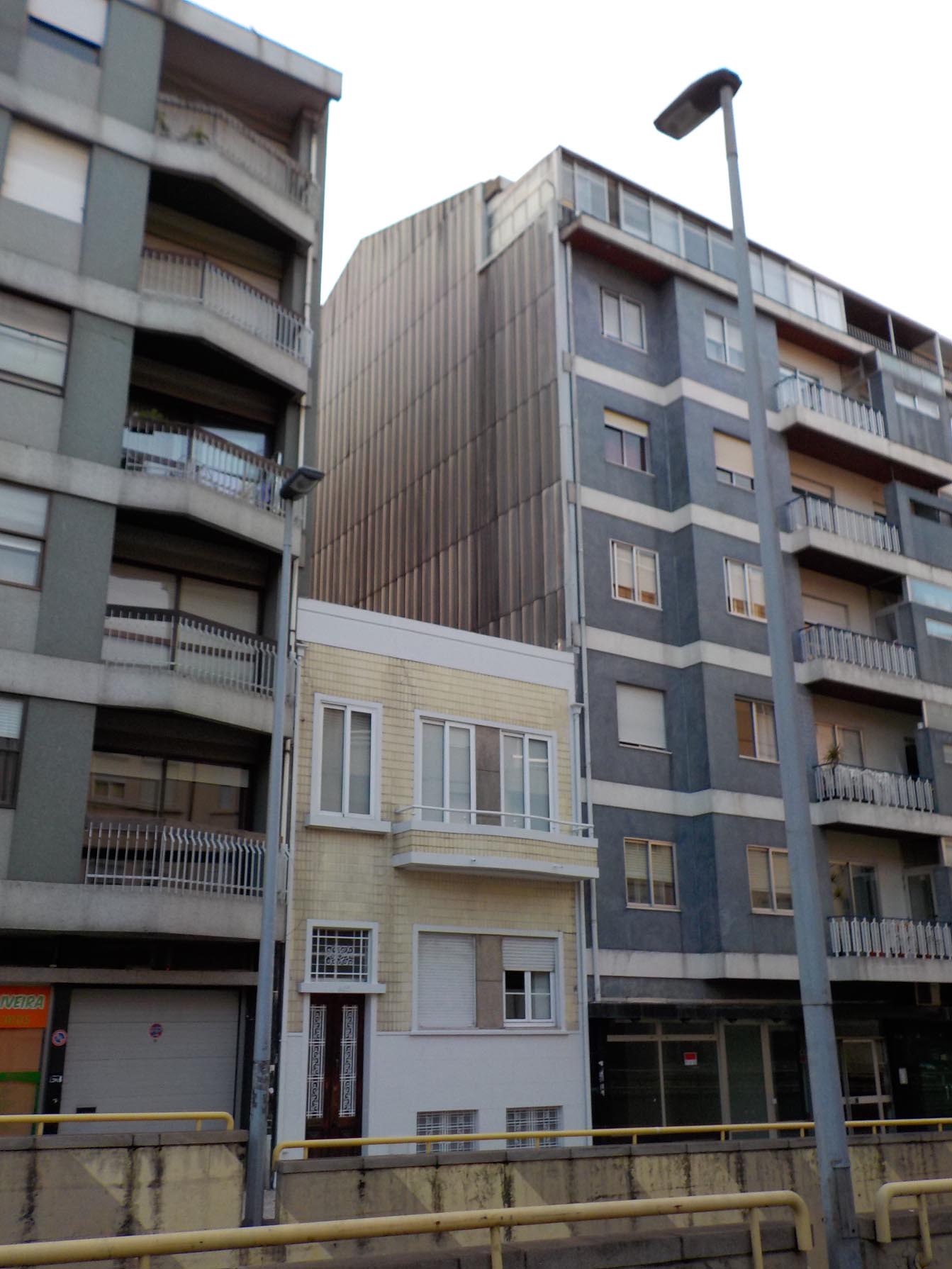
When older buildings are renovated the results can be very attractive, like the pink house below:5.22.16 Porto-029Other houses persist as they are hemmed in by taller buildings:

5.22.16 Porto-030I have nothing against large apartment buildings in general (well, not a lot), but in Portugal, new buildings generally ignore every possible reference to the architectural past, resulting in whitewashed boxes. If there are balconies, they are usually made of cement–they have no detail at all.

This slideshow requires JavaScript.

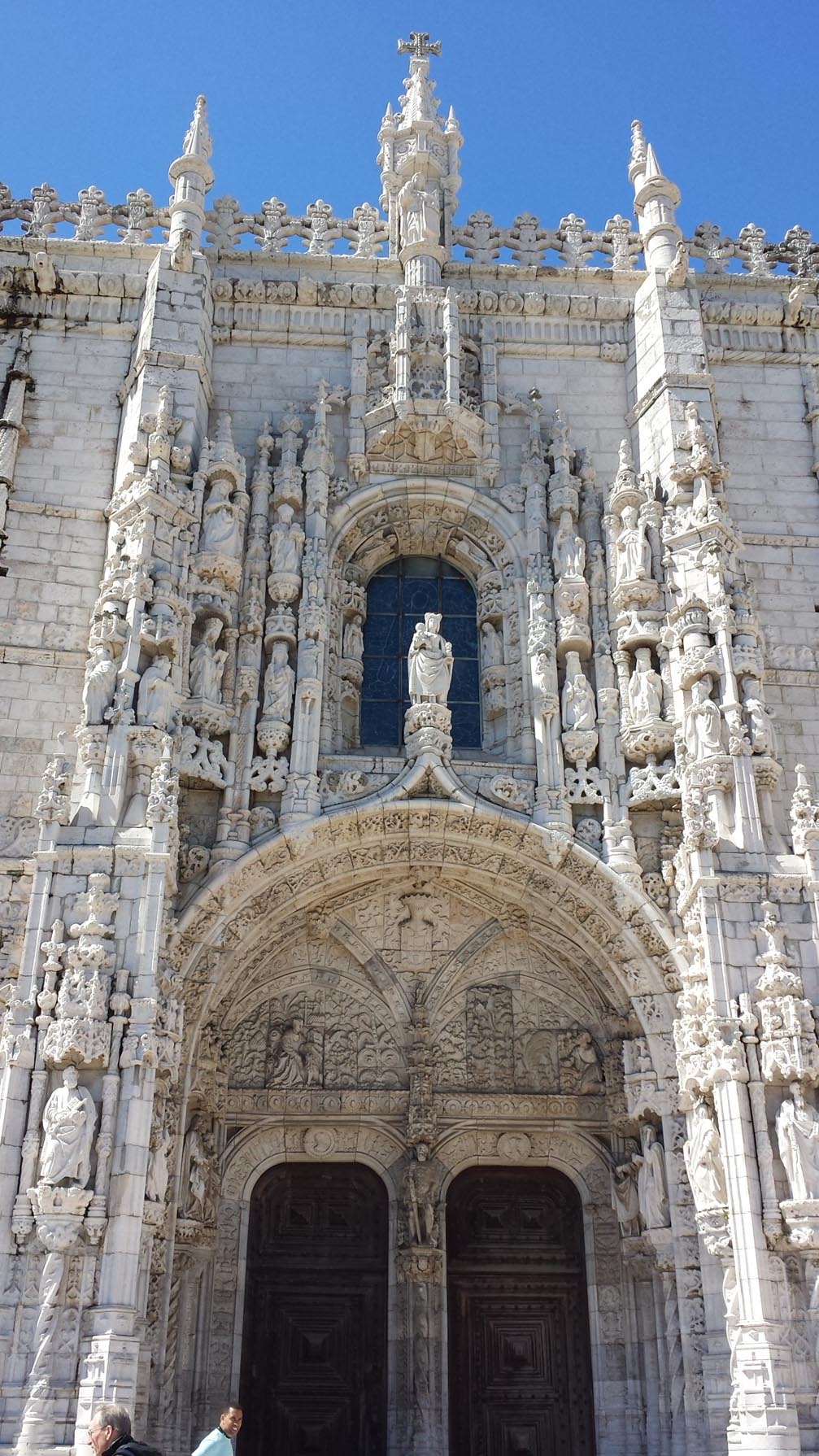
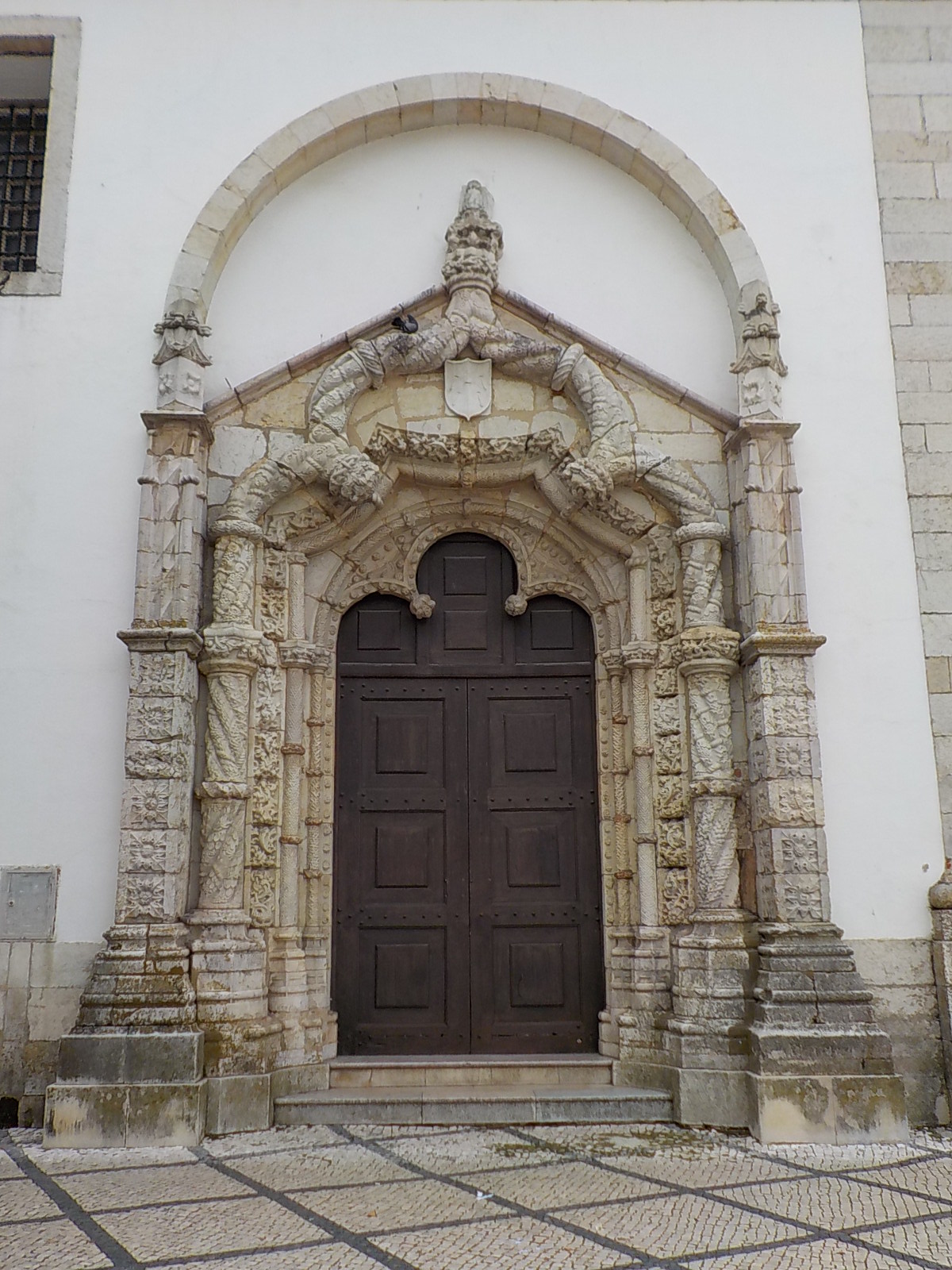
Why can’t new buildings in Portugal have any of the attractive features of older buildings? The tall piles of stacked featureless boxes come from the descendants of the creators of Manueline architectural style, possibly the most ornate in history. I don’t particularly want to live in a Baroque nightmare of twisting snakes and crowns. Here’s an all out example of a Manueline doorway. This probably wouldn’t work for every doorway…

5.11.16 Belem LisbonNot even this one:

5.10.16 Setubal-031but I’d like to see some middle ground.


Porto on a sunny Sunday

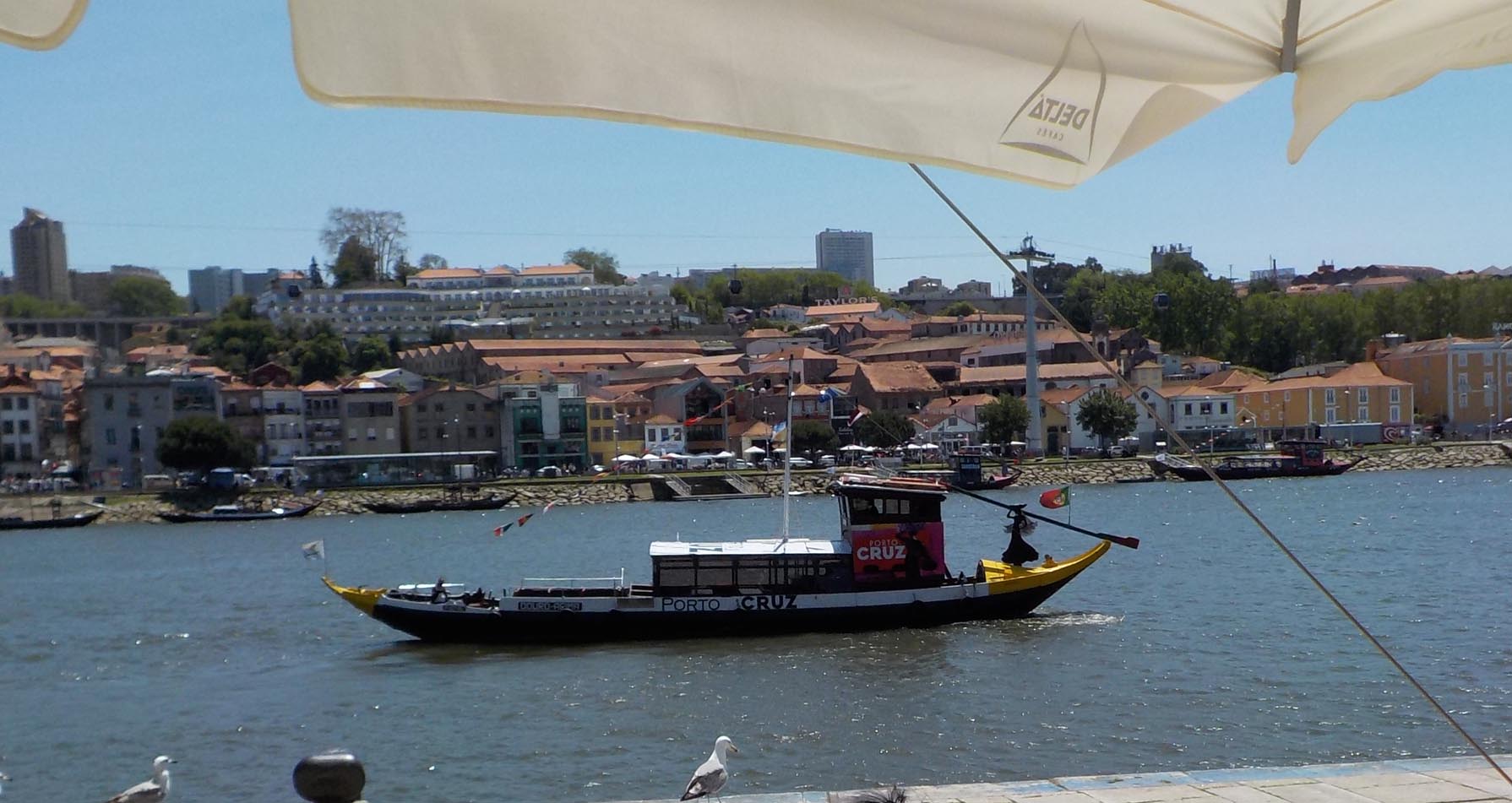
5.22.16 porto shoreThe Douro River divides Porto into the city and the port-tasting zone. There is a long tradition of making port here (Porto, get it?). Whether you like port or not, it is part of the experience to taste some. We didn’t trek across the bridge to the lodges because Jonathan found a place where you can taste port without the hike, Vinologia, on a main street just a couple of blocks up from the shore. We had lunch overlooking the water as you see, and then tasted away the afternoon. We tried some very deluxe ports up to 40 years old.
The tasting was very enjoyable, the staff person was knowledgeable and we really felt no pressure to purchase the product (We didn’t). With only a week to go in Portugal, there doesn’t seem to be time to drink an entire bottle. That was before we found out that a good port should be consumed immediately. You should invite friends and drink the whole bottle. After 24-48 hours in an open bottle, good port is already past its best flavor. I recall bottles of port on my parents shelves for years after first being opened. Granted, these may not have been the most fragile varieties, but now I know that good port is to be drunk all at once by a group.

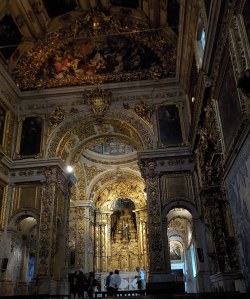
Our stroll through Porto revealed a city in flux, with many structures in the process of renovation and others falling to ruin. Many people tour the Palacio da Bolsa (commercial exchange) to look at highly decorative rooms. Most museums in Portugal are similar, private collections of art works in restored personal spaces, so we passed up that stop for the San Francisco church that is located adjacent to the Bolsa. Another gilded church? Yes, also catacombs, though most of the catacombs are closed. There is only a small window that shows an array of disarticulated bones that was probably what most of the catacombs originally looked like. The space is a bit macabre now as each group of tombs is topped with a skull, but it is all painted white and each tomb is labeled with the name of the person inside. The San Francisco church itself is highly gilded with numerous statues in polychromed wood and plaster. No photos are allowed, so all that wild baroque (or is it rococo?) curvature I must leave to your imagination. (Let it go wild.)

5.22.16 Porto-002

The church exterior I enjoyed the most was the Sao Nicolau. The exterior is covered with blue and white tile that looks purplish from a distance. There are also a lot of spires on the roof. You can see about half of them here. Sao Nicolau is just around the corner from the San Francisco church, and has a completely different look.


On our stroll we passed the Iglesia de Misericordia, sandwiched between buildings on the Rua da Flores, a shopping street, and the Igreja Dos Clerigos, a church whose tall tower can be climbed for a view over the city.

5.22.16 clerigosThese are only two of the many, many churches in Porto. We went out of our way to visit one additional set of churches because their story is … so preposterous.

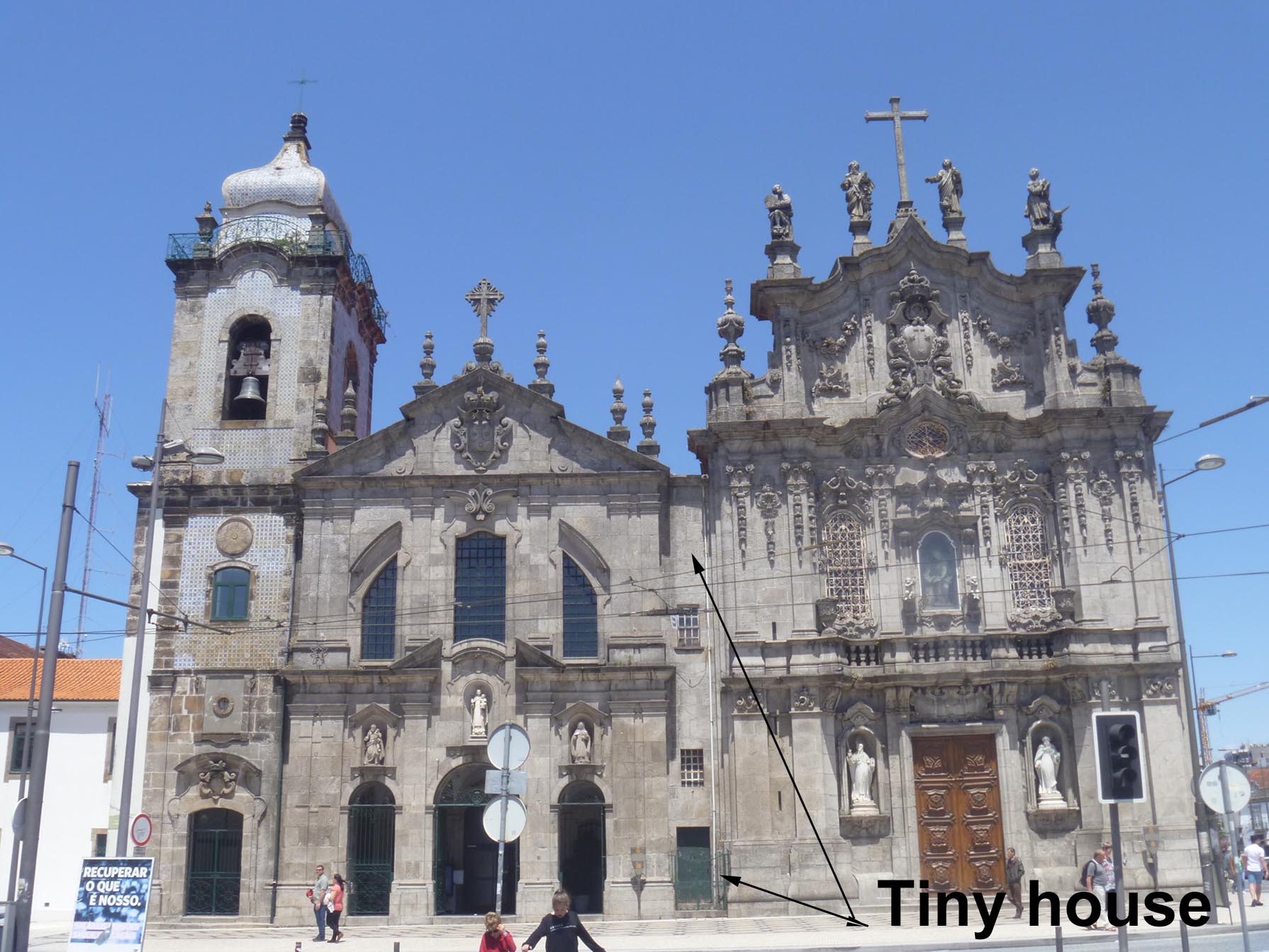
2016-05-22 14.37.27smThe Igreja do Carmo and the Igreja dos Carmelitas were built side by side, the former a monastery and the latter a convent. The church had rules at the time that forbid structures housing monks and nuns to share a wall–who knows what can happen along a common wall! The side by side structures had to be separated by another, and thus, one of the narrowest houses in the world was built. Claimed to be just one meter wide, its green door separates the two buildings, with a single window on each floor. What is remarkable about the house is that it was occupied until the 1980s. I imagine it would still be rented if the church were interested.

Down the street from our hotel is yet another church, Nuestra Senora de Lapa, that is not special from the outside. We were told at the hotel, however, that Lapa is home to the third largest pipe organ in Europe, with 5000 pipes ranging in size from a few centimeters to many meters in length.  Some notes are so low that you think it must be what elephants hear in the range beyond that of humans. We stopped in and found an organist was practicing, so we spent a pleasant half hour listening to the fabulous organ.

This handful of churches is just an example of all the churches there are to visit in most cities in Portugal.

Flea markets and antiquity shopping elude me in Portugal

After visiting the Thieves Market in Lisbon during a series of downpours, I’ve tried to find other flea markets to visit, with limited success. Not because there aren’t any, Portugal has lots of markets of different kinds daily, weekly and intermittent, as well as a constant parade of festivals. Last weekend we drove about 20 minutes from Cotovia to Quinta do Conde for a periodic flea market. There were several vendors and it was fun to walk around and look.

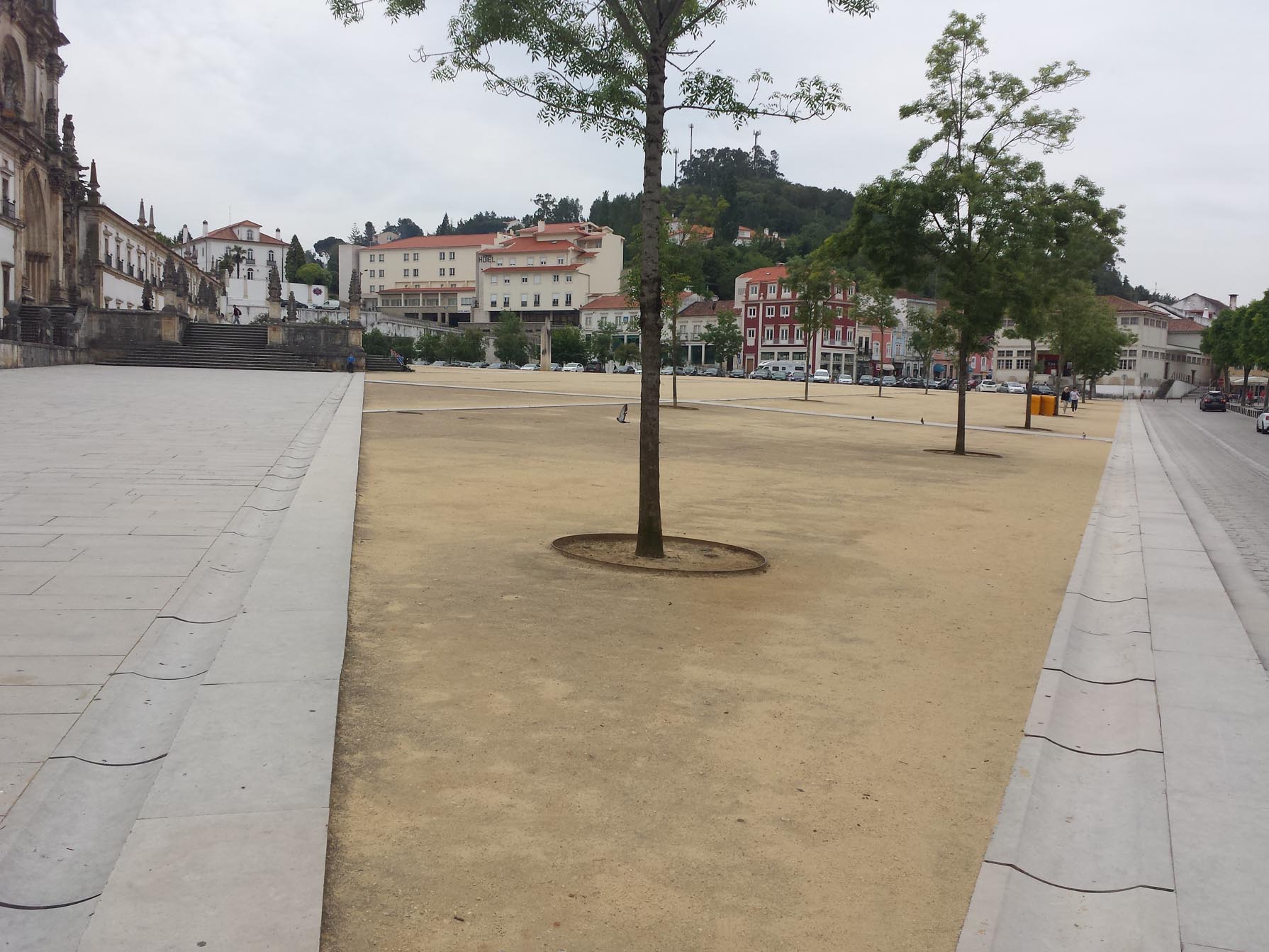
I was hoping for a big flea market moment on our way to Porto on Saturday. After combing the websites, I found there was a once a month flea market/antiques fair in Alcobaca. It’s not far off the highways from Lisbon to Porto. When we arrived in Alcobaca I asked for the market and was directed to the monastery. This was built during the late 1200s and dominates a huge triangular plaza at the heart of the town. It’s a gorgeous setting and we had coffee in one of the cafes. The down side is that despite what websites say, the flea market is now on the third Sunday of the month, and since May 1 was a Sunday, the third Sunday was May 15 (last weekend). There was not a flea in sight. If you’ve been there, tell me about it.

5.21.16-007

Two lookouts to the west: Cabo Raso and Cabo Roca.

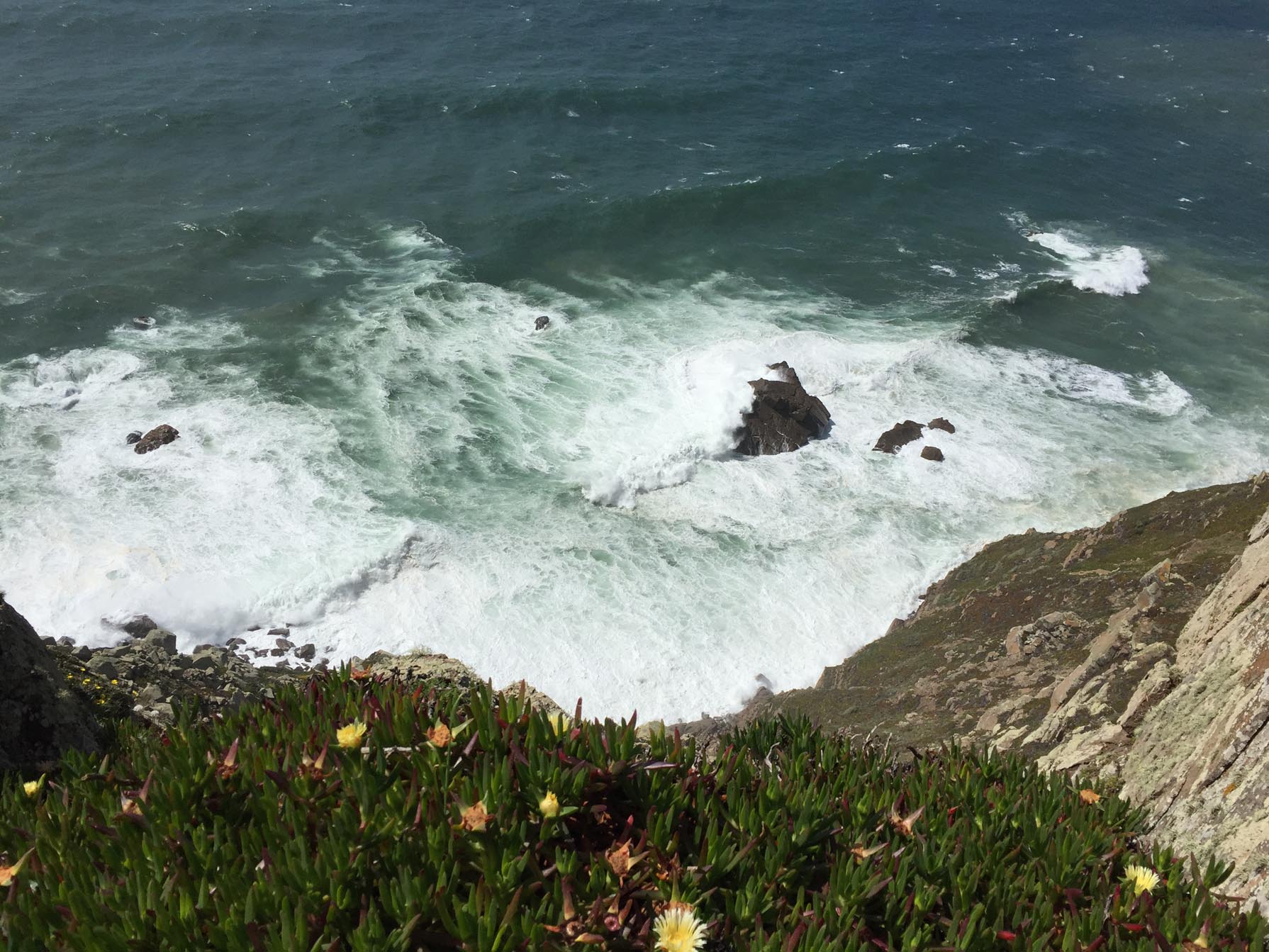
From Cascais, we drove to the westernmost point of land nearby to look out at the Atlantic. It was a bit gray out, and the waves broke and boomed. The view was impressive–there’s nothing between you and the New World except the Azores, which belong to Portugal, as it turns out.

Cabo Raso was windswept and there were a number of abandoned buildings and foundations, some with stairways to the water through unlit interior rooms. We explored the somewhat spooky remains for a while before going on our way.

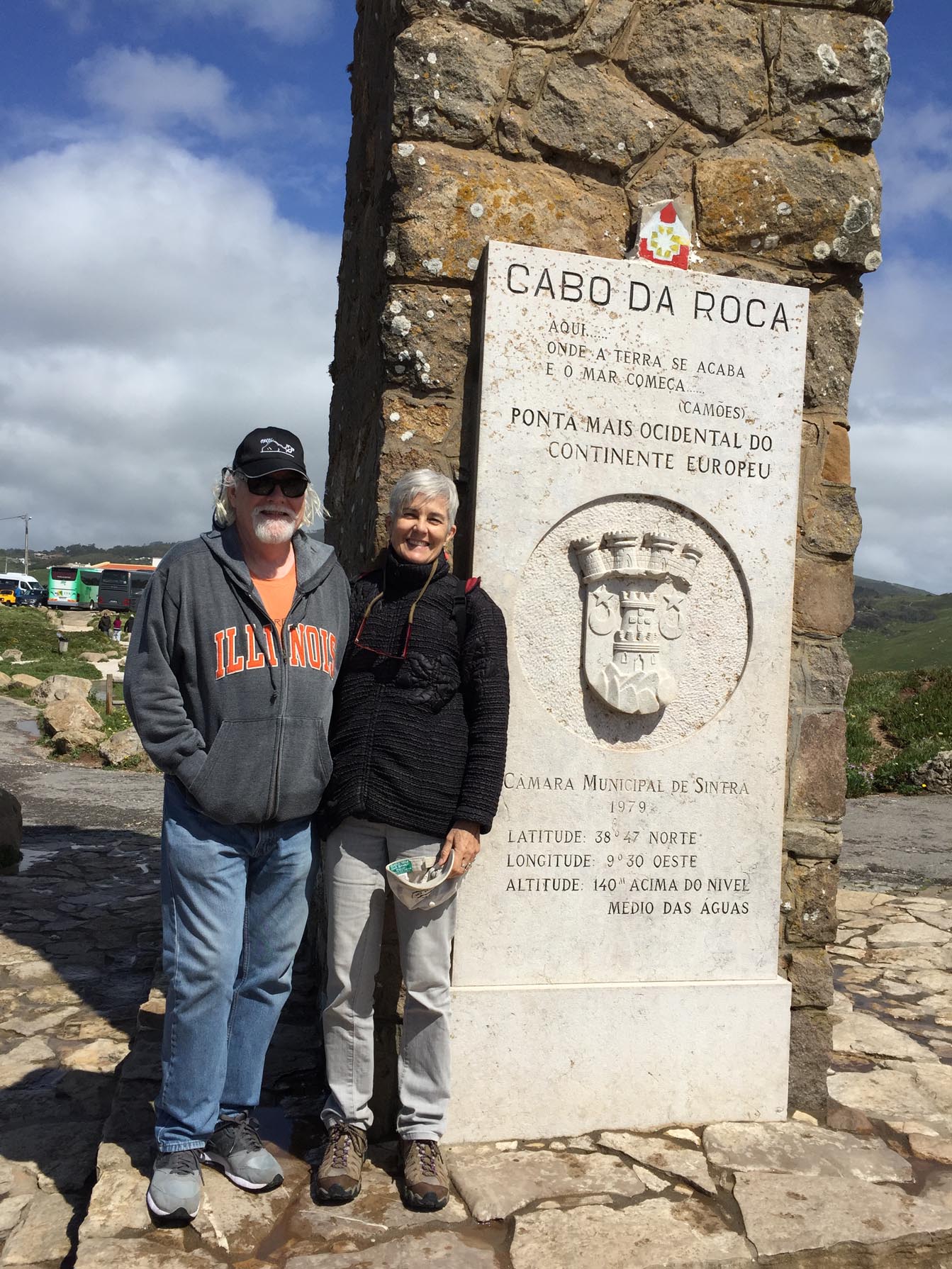
We enjoyed our visit so much that a few days later when we were in Sintra and had seen enough palaces for one day, we decided to go Cabo da Roca, the point due west. We read that it was the westernmost point in mainland Europe. Why not!

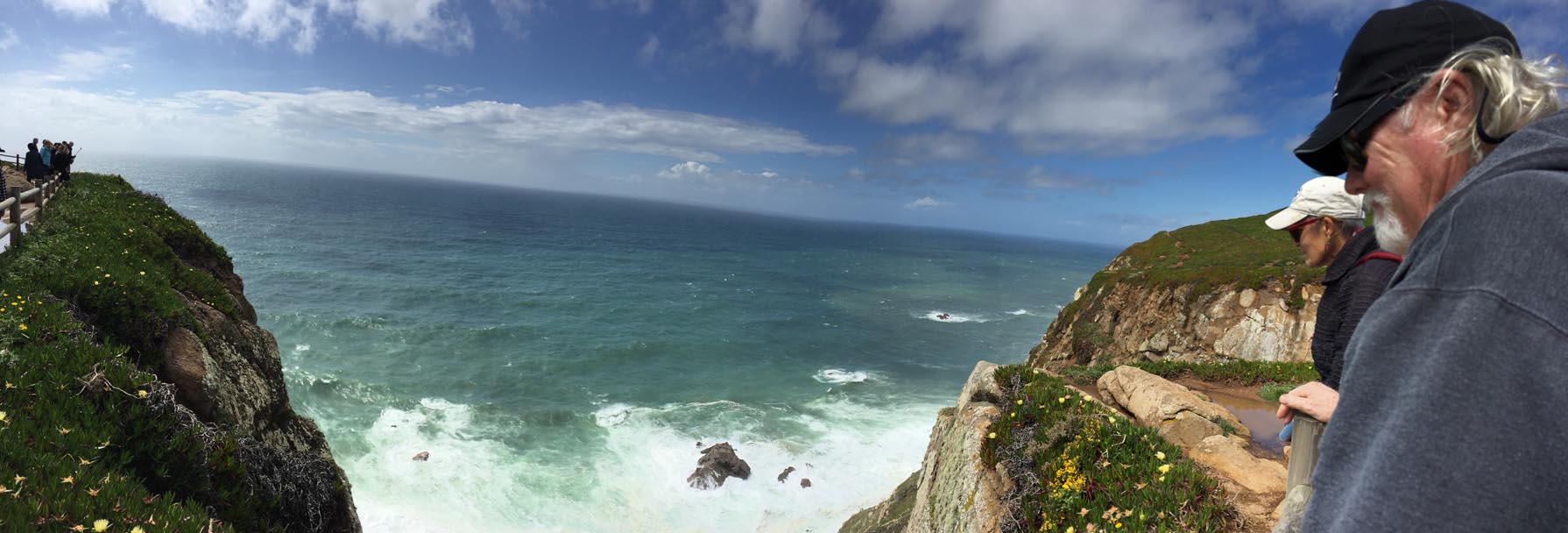
How much difference a few measurements make! We arrived at Cabo da Roca to find an extensive parking area filled with cars, six tour buses and about 200 other visitors. It was Sunday, not Friday, and the sun was out, but we were taken by surprise to find this spot so heavily visited when the other point is largely empty. We walked down the road a bit and found a less traveled area. The view out to sea was as impressive as ever.

You can see some of our fellow visitors in the upper left corner.
There is an official marker.

I was going to insert a few seconds of crashing waves, but my skills aren’t up to embedding even a short video.

5.8.16 Cabo Roca-004Both points have their charms. One comes with industrial archaeology. (I believe the abandoned buildings at Cabo Raso are related to the fishing industry.) The other has tour buses, a gift shop and cafe.


Cascais

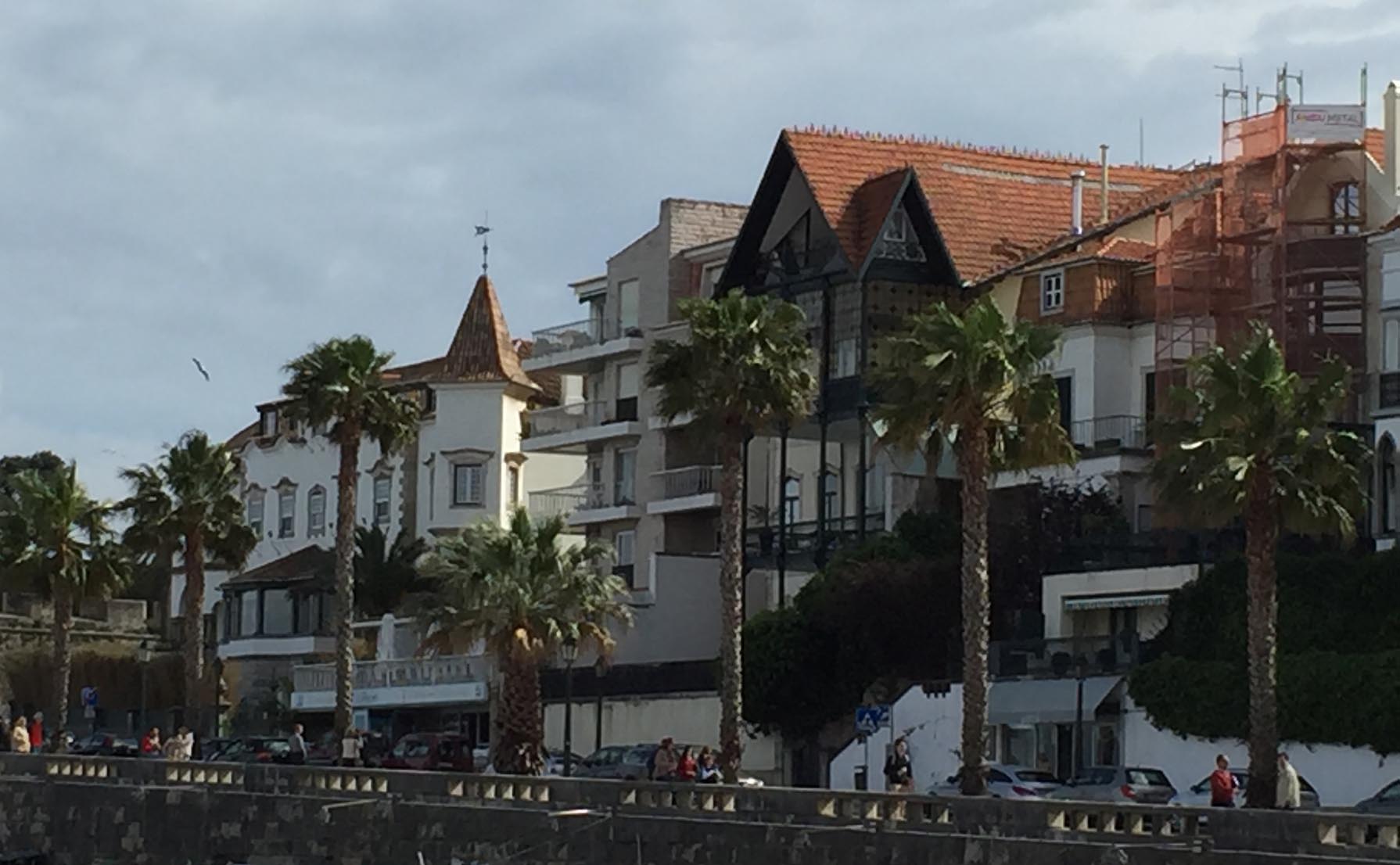
Views over this seaside town may remind you of novels from the age of F. Scott Fitzgerald, when people sat on verandas sipping cool drinks and men wore boaters.

5.6.16 Cascais area-046sm 5.6.16 Cascais area-047Today there’s a focus on shopping, though the town is still lovely. We visited the museum/library house of the Condes de Castro Guimares. The story is probably worthy of a novel. The house was built around 1900 by Jorge O’Neil, titled in both Ireland and Portugal and a good friend of King Carlos I of Spain. He built a fantasy palace that is described as both eclectic and Romantic. It was beautiful and as you might think, packed with beautiful furniture and artworks. It was very much worth the visit. (The present name comes from the count that O’Neill sold the house to in 1910.)

This slideshow requires JavaScript.

As is essential on a visit to Cascais, we visited the blowhole, Boca do Inferno (Mouth of Hell, oooooooo!). We ate lunch in a fish restaurant along the beach and had a good day.

A couple of quirky things we saw:

5.6.16 Cascais area-013
Not your typical paint job!

5.6.16 Cascais area-042sm


It looks like he’s lost something in his beard.

It’s like a bowsprit coming out of the corner of a building.

Palace Central, called Sintra

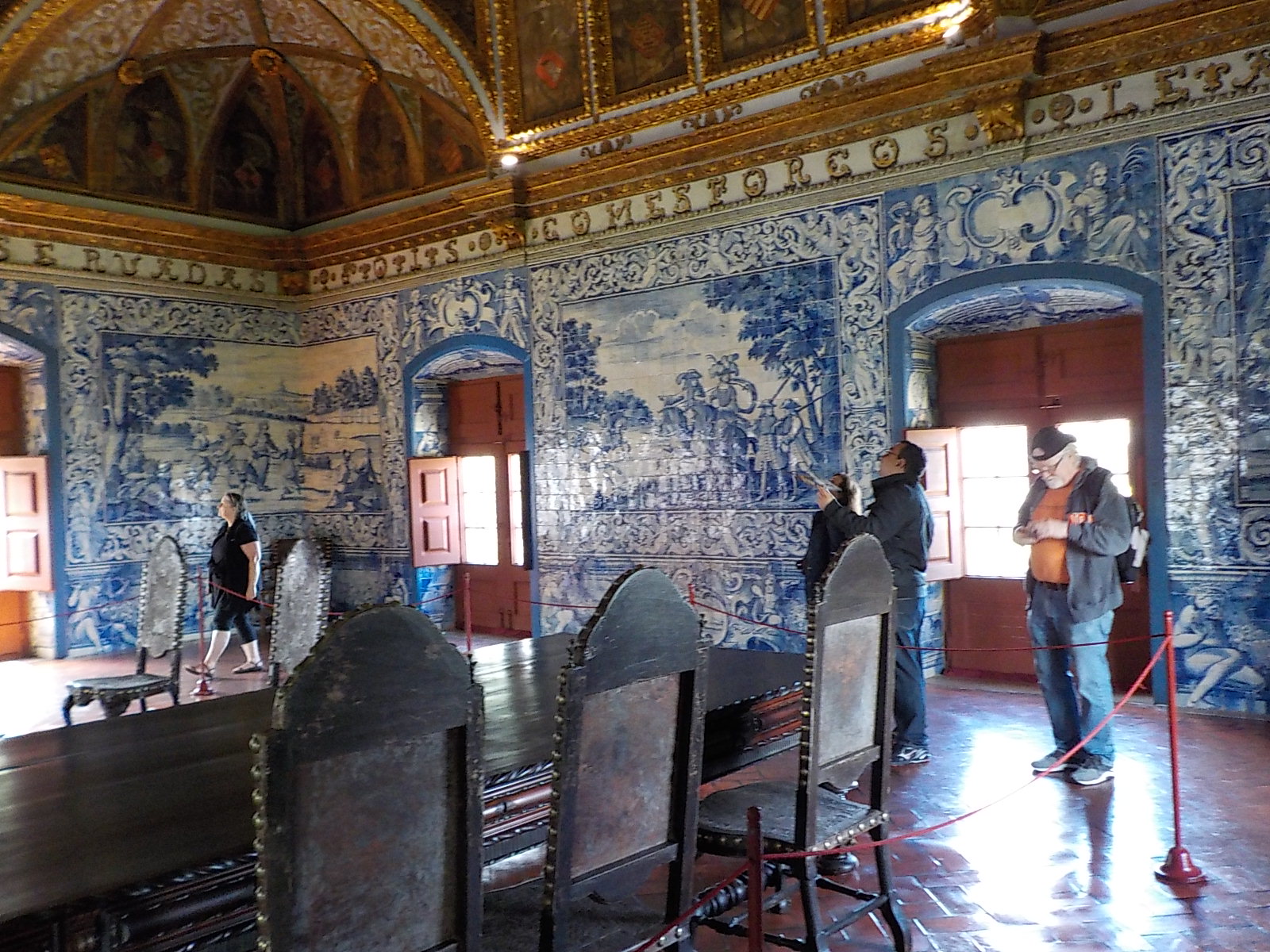
So far, we’ve only spent one day in Sintra, making inroads on a single palace, the National Palace of Sintra. The Palace dates from the 14th century and has been updated and remodeled over the centuries. The ceilings appear the oldest style, painted boards, yet what boards! There are magpies,  swans, mermaids and a fleet of sailing ships.

This slideshow requires JavaScript.

Later, ceilings were carved and gilded, and walls covered with tile.

5.8.16 Sintra-012

5.8.16 Sintra-010Furnishings were elaborate.

This slideshow requires JavaScript.

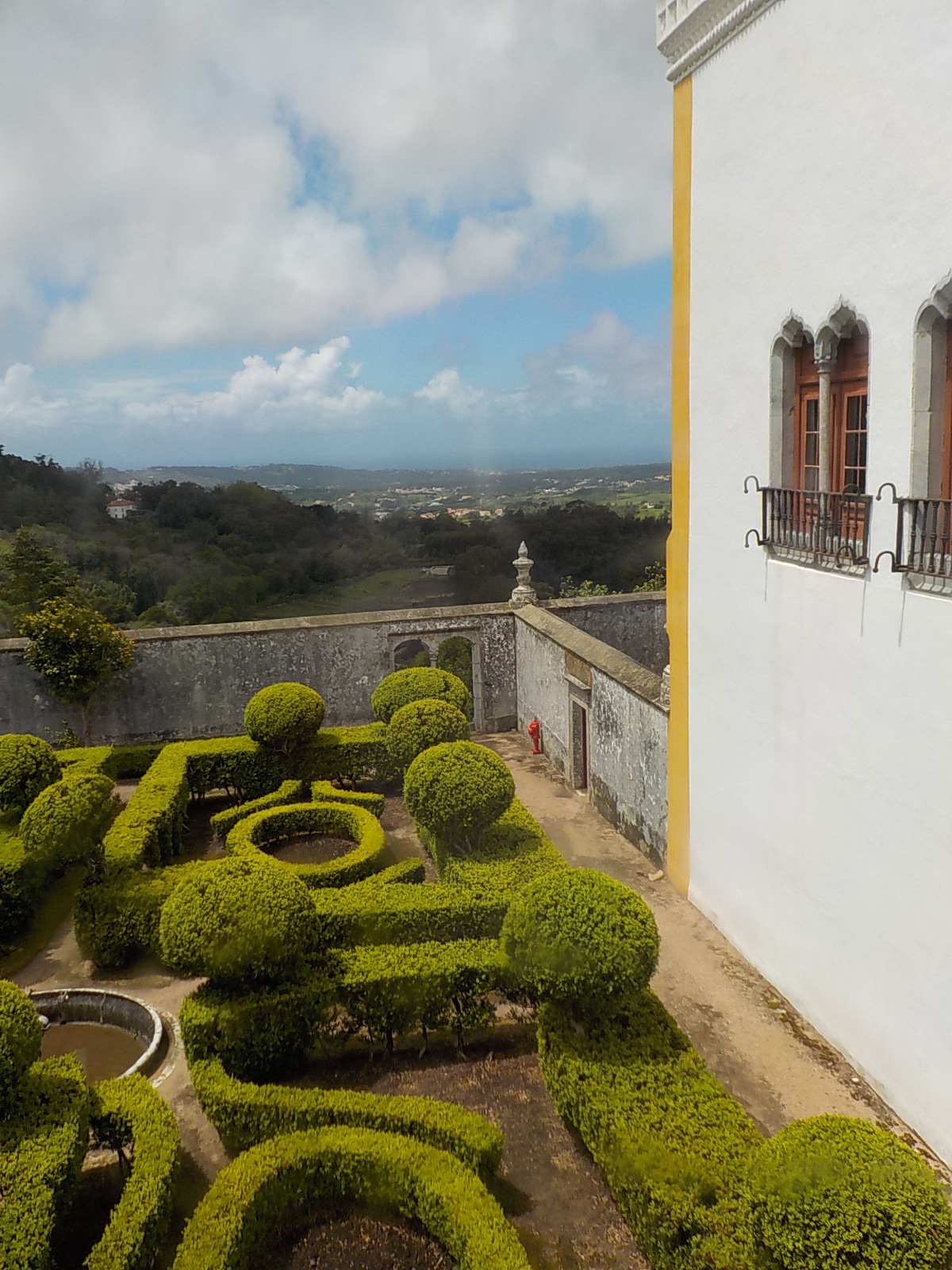
The exterior was as decorative as the interior.

5.8.16 Sintra-006The vast kitchen is in the process of being restored.

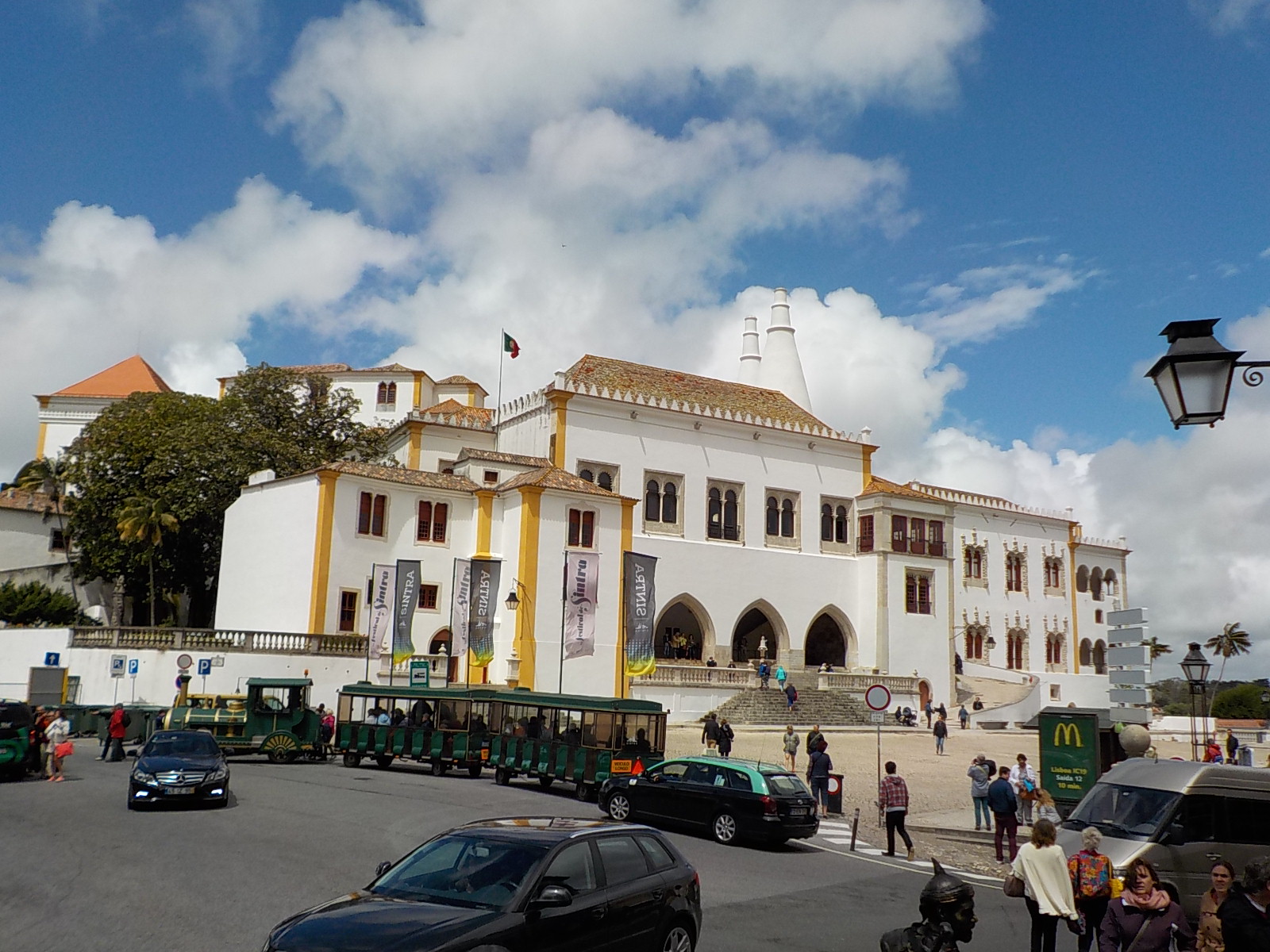
5.8.16 Palacio Sintra-011smHaving completed our tour, we admired the exterior that features two large chimneys from the kitchen.

The two kitchen chimneys are in the rear in this photo.

That leaves us with the Moorish Castle (Castelo dos Mouros), just above Sintra

sintra-mouros-tom


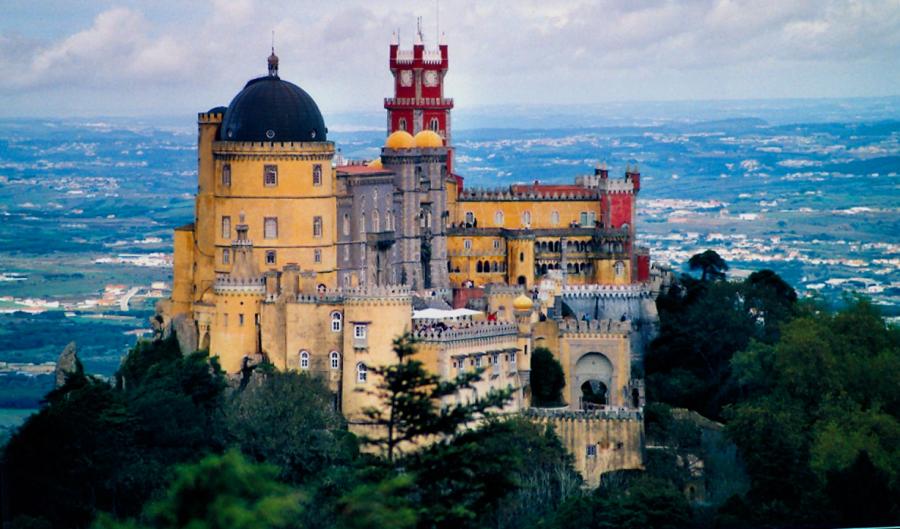
Then there’s the Palacio Nacional de Pena,

Palacio da Pena, Portugal-General view of the castle

the castle in the Parque de Monserrate,

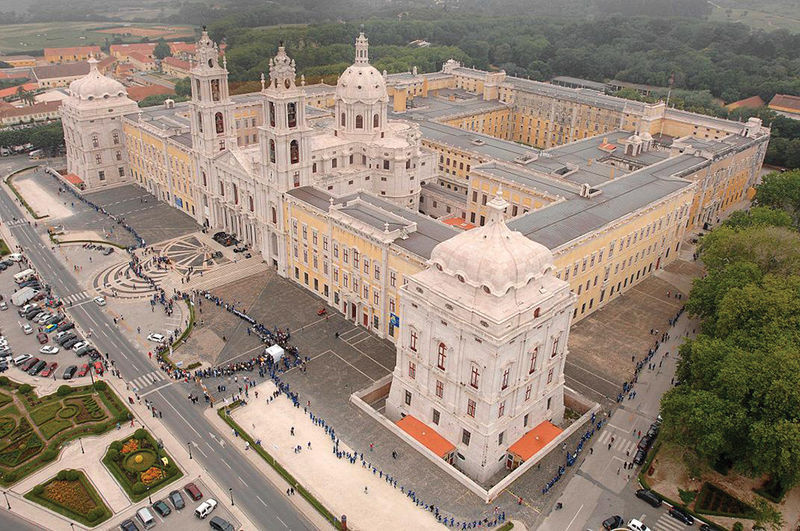
monserrate5-claudia-almeidaand nearby, the Palacio de Mafra.

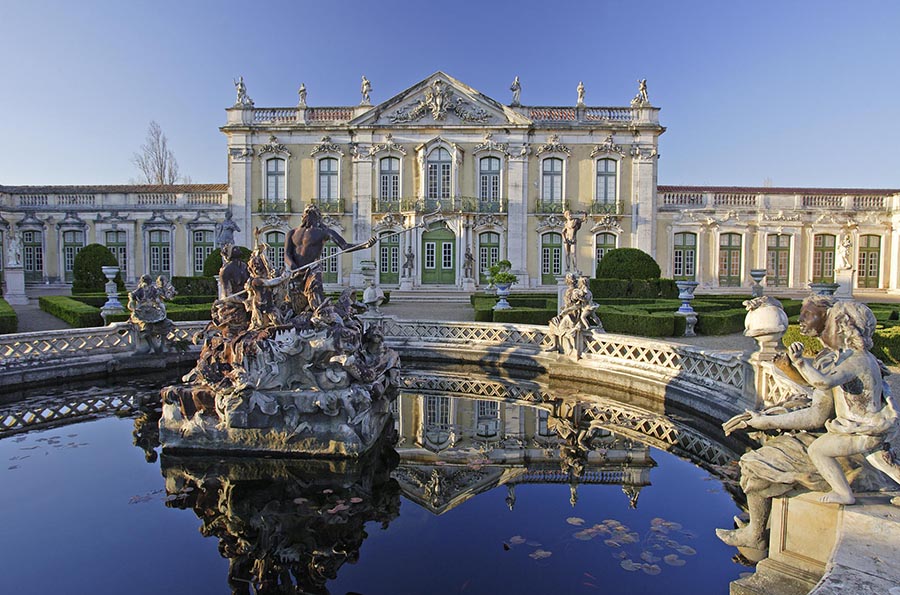
palacio_mafra2On the way back toward Lisbon is the Palacio de Queluz.

Palacio-Nacional-de-QueluzThat’s a LOT of palaces, and will take several days to visit. You could easily spend a day at each one. Palace overload comes on pretty rapidly considering each of these is enormous and most are full of Portuguese tile, sculpture, architecture, and gardens in addition to objects from Europe and former Portuguese possessions, especially Goa.

Portugal, land of castles, especially around Sintra.

Here’s a surprising piece of tile work that we saw in the Palacio Nacional in Sintra. It’s a bit ahead of Escher.

5.8.16 Sintra-015

Lisbon Sights

We had a whirlwind week, splashing through the rain and ducking into cafes to avoid the worst of the downpours as we visited a variety of places with our visitor, Peggy. In Lisbon, we began at the “Taste of Perdition” and Thieves Markets, both of which might have been better without rain. Despite the unprepossesing start, we did buy cheese and meat, and drink coffee while we dried off. Peggy and Jonathan each found a treasure in stalls that weren’t washed out.

5.7.16 Thieves market.16

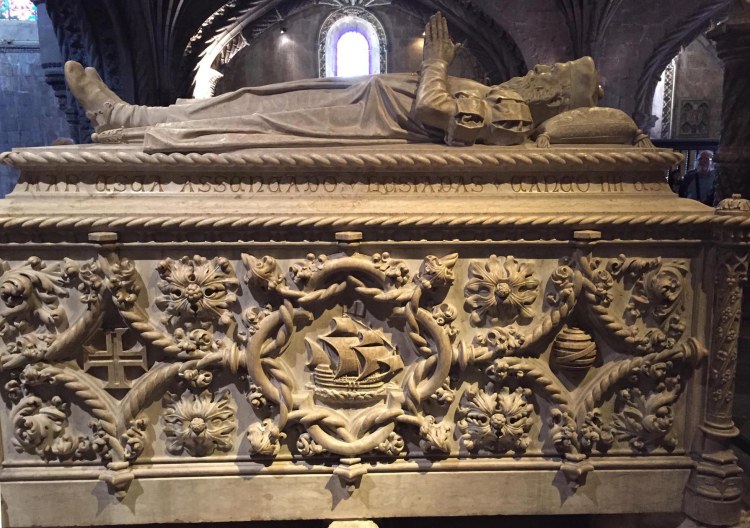
On our other days in Lisbon we visited the National Tile Museum (Museu Nacional do Azulejo), the Castelo  São Jorge (St. George), the museum of Portuguese decorative arts of Ricardo do Espirito Santo Silva (FRESS), and the Tower of Belém along with the Discovery Monument and the Monastery of Saint Jeronimo (Hieronymus, Jerome, all the same name). The Church of Santa Maria in the monastery complex was a highlight, as it contains the tomb of Vasco de Gama, the great explorer.

5.11.16 Belem.16 -011

Many sights incorporate churches and chapels. The National Museum of Tile is the Madre de Deus convent. The archaeology museum, marine museum and planetarium are all part of the St. Jerome monastery complex, and other museums are adjacent to or within old churches, monasteries, fortresses, castles, or mansions–of which Portugal has many. They can start to merge together–which monastery, church, museum?

The Museu Nacional do Azulejo was a highlight, so much tile, so little time! Early on, Portuguese tile makers learned to imitate Arab mosaics with painted and incised tile. The lower right is a mosaic of a hundred or more tiles (Fez, Morocco), a similar pattern on the upper right consists of 18 tiles (Lisbon, Portugal).

The setting was also spectacular, a gilded convent, suggesting that things weren’t bad for all cloistered nuns, you just had to get into a cloister that had a royal patron.

The Castelo Sao Jorge gave us a chance to look at the view over the city. We had lots of excellent parking karma during the week, too, and were able to park about 100 yards below the castle entrance. (Lisbon is definitely short on parking–they could use quite a few 10 story parking structures, but parking is possible.)

The rain let up long enough for us to have a great view over the city from the ramparts of the castle and to look at the archaeological excavation of an Iron Age settlement that predates the rest of the area. Later, the sun appeared briefly, and we took a stroll around the neighborhood and ate our picnic:

Peggy found this sculpture around a corner.

My favorite picture of Peggy.

When the rain returned, we ducked into the Museu Artes Decorativas Portuguesas–Fundacao Ricardo do Espirito Santo Silva (FRESS). Sr. Silva collected a lot of things and though there’s not much narrative about why he selected these objects, some are lovely, and nearly all are by Portuguese artists.

This slideshow requires JavaScript.

By late afternoon, we were leaking historical facts like stuffing from an old sofa cushion, so we headed for home.

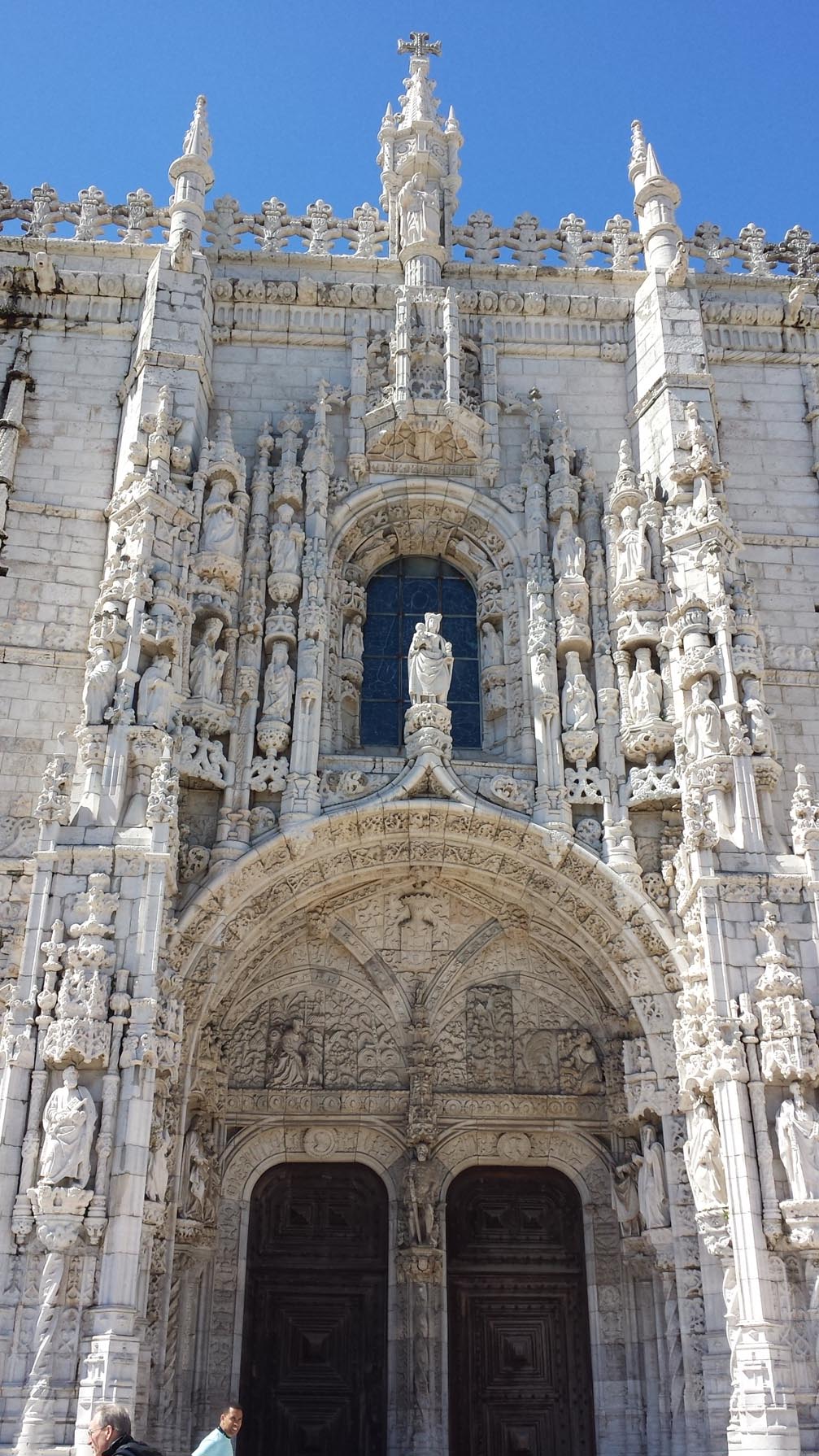
We weren’t done with Lisbon, because we’d decided to see the Torre de Belem, an old fortress on the waterfront. We parked at the Mosteiro dos Jeronimos, a gigantic complex complete with church (Vasco’s tomb). Though many structures are noted as pinnacles of the “Manueline style”, highly ornate carved stone that became popular in Portugal during the reign of Manuel I when, as far as I can see, money was no object…to anything. Here is the door at the monastery, one of the many considered to be the apotheosis of Manueline style. It’s easy to recognize because it has to have everything, arches, multiple columns, twisted, of course, and statues.

5.11.16 Belem LisbonThough much smaller, the Torre de Belem is equally ornate, crouched by the river with lots of cannons ready to defend Lisbon. The tower was paired with another on the opposite bank of the river at Sao Sebastiao, to defend Lisbon. This worked more or less well during a long and complicated history, but the tower has survived to the present. Long lines of visitors wait to come through the doors, descend to hit their head on the arches of the dungeon, and then climb to the upper floor for a view over the water. The sun broke out in the late afternoon in honor of our visit, making it beautiful.

This slideshow requires JavaScript.


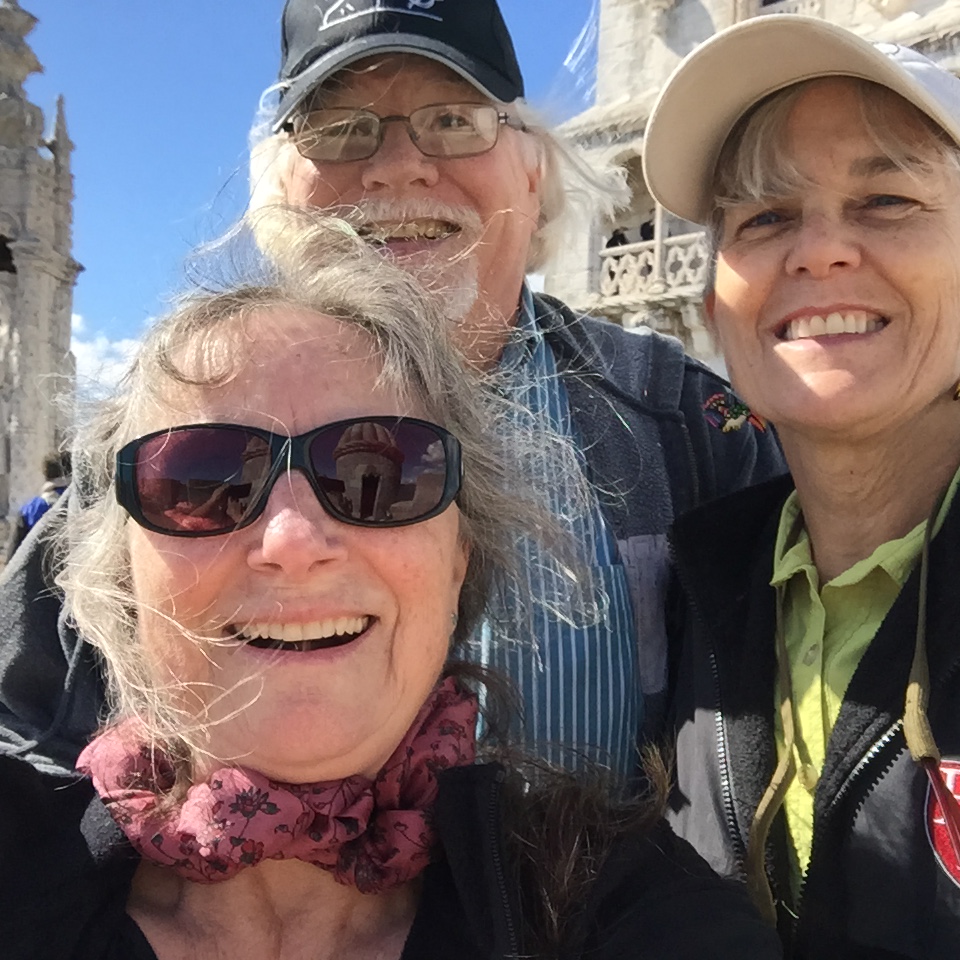
In honor of the sun, we took a three-person selfie.

5.11.16 Belem.16 -025


Welcome to Portugal

We landed in Portugal after a long layover in Casablanca, but little the worse for wear.

4.30.16 Lisbon from the air-004 Here’s Lisbon as we landed. The bridge that looks like the Golden Gate is the route to our house in Cotovia. The tower in the center of the photo is topped by a giant Cristo statue.


Stayed overnight near the airport and picked up our car the next day. We went off to find our house, and met Ruca, our host. After a helpful intro, we went shopping and immediately settled in. The house is perfect for us. It’s near the beach, but not far from necessities. Our next order of business was to find the beach.

Praia do Creiro on a sunny day from above.

I already have a lot of questions about Portugal, like how Portuguese developed as a language distinct from Spanish. Don’t be fooled, Portuguese is not a version of Spanish. It is it’s own thing, and not at all easy for a Spanish speaker to pick up quickly. Many of the people we come across in stores speak English more readily than Spanish.

Then there’s the history of Portugal. How did it get to be a separate country? No, I probably didn’t pay enough attention if I was ever in a class that explained it. Even the guidebooks skip from prehistory to the Moors to King Manuel I.

Portugal seems to be doing fine, despite or because of the EU bailout it received in 2010. Reading about debt and bailouts sounds much more sinister:

https://en.wikipedia.org/wiki/2010%E2%80%9314_Portuguese_financial_crisis

Portugal still has a lot of debt, relatively high unemployment (though lower than Spain) and a bloated public service sector. We see little of this other than the numerous museums in Lisbon, some of which are wonderful. I’ll come back to that.

Rather than looking at Portugal as a problem state of Europe, compare it to Morocco and it looks pretty good. Portugal is just over 20% of the size of Morocco. It’s population is 10.5 million, and its largest city, Lisbon, has around 575,000 people in it, smaller than Boston (city limits). Population density is higher (113 per km²) than Morocco (74 per km²), yet per capita income is much higher ($11,120 vs. $3,070). At the same time, when adjusted for purchasing power (PPP*) the difference is diminished: Portugal $14,101 vs. Morocco $8,164. PPP is generally seen as a way to compare standard of living that takes other factors into account than income. It suggests that the money Moroccans earn may be less than the Portuguese, but does go further in covering their expenses than it does in Portugal.

*PPP: the purchasing power parity (PPP) value of all final goods and services produced within a country in a given year, divided by the average (or mid-year) population for the same year. (https://en.wikipedia.org/wiki/List_of_countries_by_GDP_%28PPP%29_per_capita)

That’s a bit like finding that a phone recharge in Morocco give you four times the face value of your recharge (a 10 dirham recharge gives you 40 dirhams of phone time). Getting off the plane in Portugal, a 10 euro phone recharge give you 9.4 euros of call time. Welcome to Europe.

Last but not least, here are a few photos of our very comfortable house in Cotovia. It’s missing a few photos of rooms we’ve already spread out in, but I’ll add those.

This slideshow requires JavaScript.