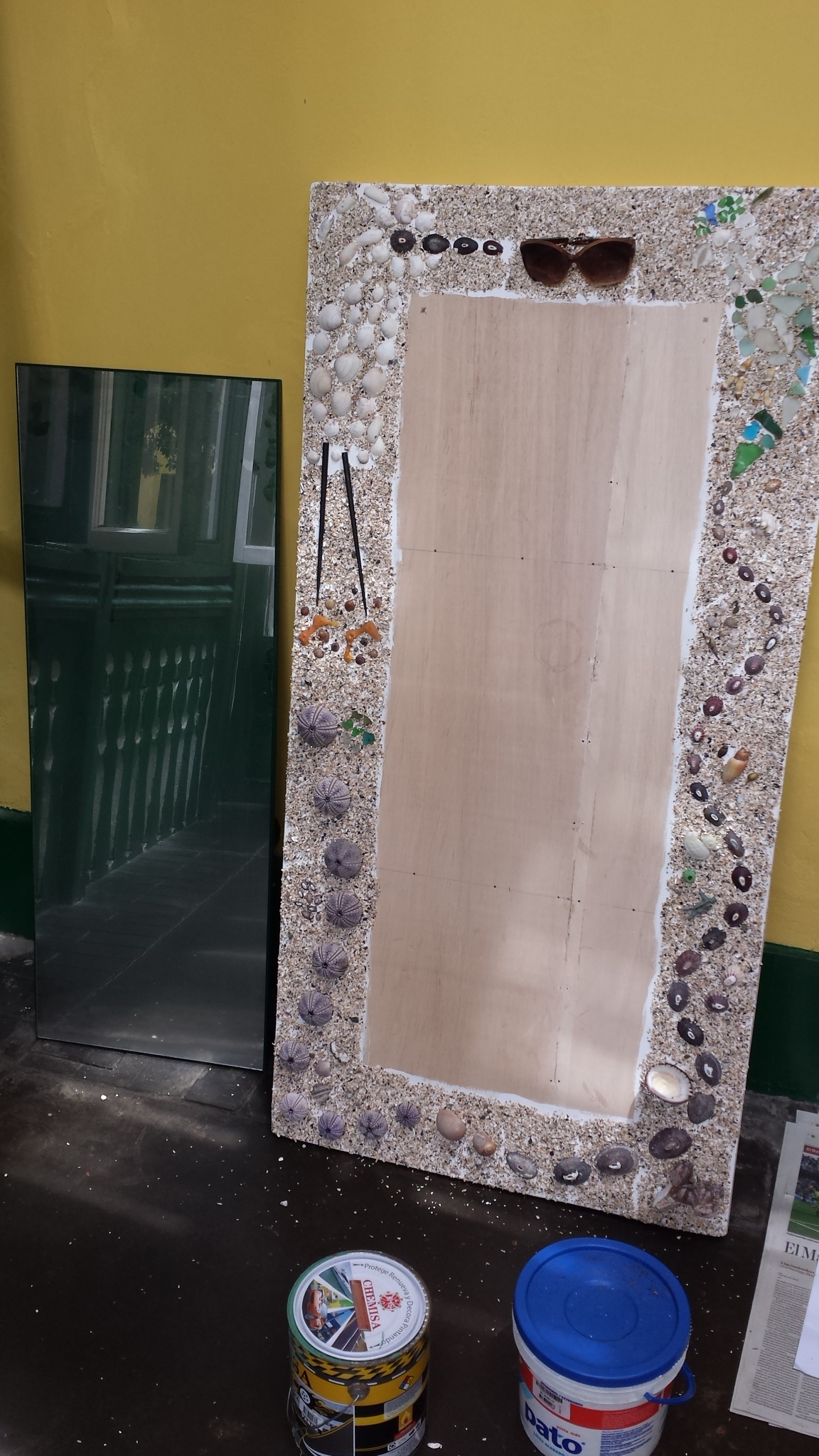
Walking along the beach one afternoon, I stopped at one of the places people sell things to look at a mirror. It was the perfect color for our guest room, so after visiting it a couple of times, we bought it.
I realized that I could make one of these myself, and since the guy on the beach only made them in orange, I decided to make one for our second guest room that would include some green or blue. We’ve collected shells along the beach for so long that we already had an excellent collection, and I have lots of beach glass from our travels.
Caminando por la malecon una tarde, vi un espejo con decoracion marino. Los colores fueron perfecto para nuestra habitacion de huespedes. Despues de varios visitas, compre el espejo. Despues me di cuenta que yo podia hacer un espejo de este tipo para nuestra otra habitacion con tonos de verde y azul, mientras en la playa ofrecio solamente anaranjado. Hemos recogido conchas tanto tiempo que los tenemos en cantidad. Tengo vidrio de mar que encuentro durante nuestras viajes.
I had a wide frame made. My experiments with whether or not to paint the background white are visible on my work table on the right. I went out to the beach with a strainer to collect crushed shell for the background.
Pedi un marco amplio. Mis experimentos con el color del fondo estan en la mesa arriba a la derecha. Fui a la playa con una colador a recoger la concha molida para el fondo.
I always think that birds are a good part of any composition.
Siempre pongo algo de pajaros en cualquier proyecto.
Once the design was laid out and I had rearranged it about six times, I moved the pieces aside, painted the background and started to glue the pieces down and add the shell.
Una vez que hice el diseno y lo arregle varias veces, les quite a un lado, pinte el fondo en blanco y empeze pegar los pedazos con cola.
It took a few days for me to work around the frame in sections. Finally, it was done and I stood the frame up. A cascade of leftover shell crumbs rained onto the floor.
Tomo unos dias a trabajar el marco, pegando una parte y despues el siguiente. Al fin, lo complete y lo subi, viendo la concha molida caer como lluvia en el piso. No importa, quedo bastante.
Tonight I’m waiting for the glue to dry on the mirror. I also used screws. Finally, it is all done and the bare spots touched up. Now we’re not sure where to put it…..the spot I’d picked out is behind part of a door and I don’t want to risk breaking the mirror with a bump from a door handle.
Esta noche estuve esperando que la cola seca donde pege el espejo en adicion a los tornillos que puse para juntar el espejo. Ahora, no estamos seguros donde colgar mi obra….el lugar que escogi esta detras de una puerta y tengo miedo que un solo descuido y la manija quebrara el espejo. Estoy contemplando otros espacios.A word of advice. I used materials I already had, including a piece of mirror on a wood frame and paint that was in the shed. Thus the mirror is a bit heavier than it might be, because I didn’t detach the mirror from it’s wood surround–I painted the black edge with green paint. I also used white house paint for the background under the glue and I used teal floor paint around the outside edge of the frame. You can’t see any of this, yet I ended up using paints that required three different solvents (water, paint thinner, epoxy thinner). I didn’t have to buy any of these things, but it was more to clean up.
Un consejo. Utilze materiales en la casa como el espejo que estaba con un marco y la pintura en el deposito. Resulta que el nuevo espejo pesa mas que tal vez pesaria porque no quite el espejo de su marco delgado de madera–pinte la orilla negra con verde. La pintura blanca debajo la concha es para paredes y un verdeazul al orilla externa del marco es para pisos. Nada de eso es muy visible, pero al fin de cuentas necesite tres solventes diferentes (agua, aguaras, y diluente de epoxica). Fue economico en no comprar pintura pero costo mas en limpiar todo al final.
Despite this past week being the start of the school year, it wasn’t too quiet on the beach. On Tuesday the Argentine backpackers left on their way north. They have been camping across from our house on the beach for about a week, and we let them use the shade of our front porch during the day. We also gave them boiling water for their mate.Aunque la semana pasade fue el inicio del ano escolar, no fue tan tranquilo en la playa. El martes los mochileros argentinos se fueron hacia el norte. Estaban acampados frente nuestra casa y les dejemos descarsar en la sombra de nuestra terraza durante el dia. Tambien les llevemos agua caliente para su mate.
The next day Jonathan harvested pink peppercorns (Schinus molle) from the molle tree in our patio.
El dia siguiente, Jonathan cosecho su molle del arbol en el patio. Se llama “pimienta rosada” en ingles.
Though we aren’t fans of the VERY loud music, we went to take a look at the KR Kola Real festival on the beach on Sunday. There were a lot of people there, and we looked around — watching some of them playing rugby sevens which is becoming popular in Barranca. For a quiet weekend “after” the season, I’d say summer isn’t giving up.
No somos fanaticos de la music MUY fuerte, pero fuimos a ver la fiesta KR Kola Real en la playa el domingo. Habia mucha gente y quedemos un rato viendo un partido de rugby (de siete), un deporte que esta ganando hinchas en Barranca. Para un fin de semana despues del “fin” de la temporada alta, no parece que el verano esta saliendo.
Monday we went birding, determined to drive up the Fortaleza Valley until we saw something new. In addition to the ones we were unable to identify we saw these (I did not take these photos, they’re from the internet). The parrot billed seedeater was the most fun, it’s bill is very chubby and hooked a bit at the end. The Mourning Sierra finca was easy to identify with it’s bright yellow beak.
El lunes fuimos a ver pajaros, con el idea de subir la valle Fortaleza hast encontrar una especia nueva. Identifquemos esto dos, habia otros que no encontremos en nuestra guia. (No tome los fotos de los pajaros, son del internet). Lo a la derecha fue mas divertido por su pico ancho, verdadamente como un loro. No tengo idea de los nombres de estos pajaros en espanol. No creo que poniendo sus nombres latinos ayuda, tampoco.
Mourning Sierra finch
Parrot-billed seed eater
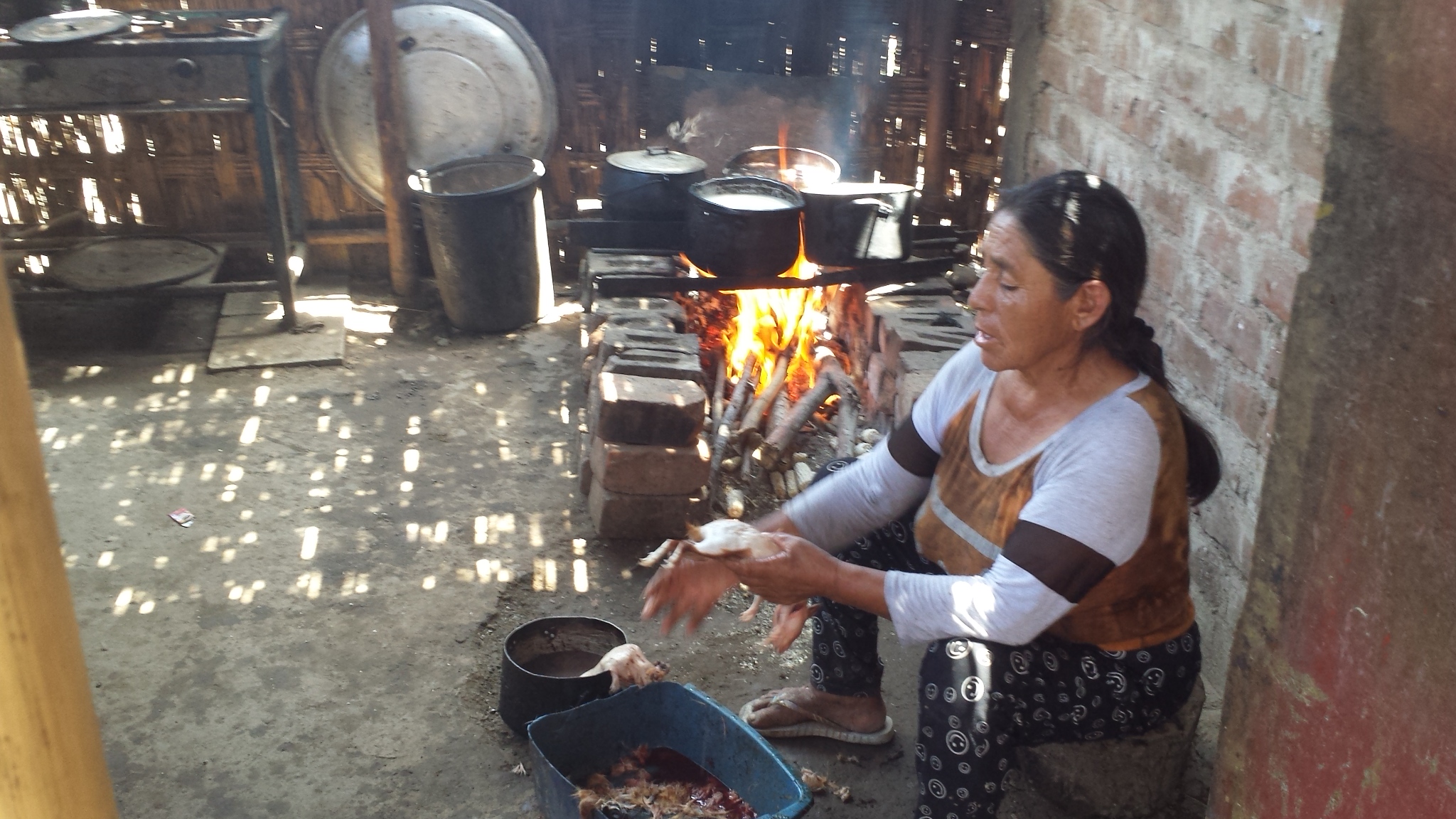
We also stopped to buy honey from the woman and her brother who have an orchard and beehives. It’s always an interesting visit. This time there were four new puppies, her daughter and son in law visiting with their one month old baby, and another member of the group cooking over an open fire and peeling the hair off guinea pigs prior to frying them–everyone agrees that the crispy skin is the best part. Within a short drive of Barranca many homes have no water or sewer service. This house has an indoor kitchen with a gas stove as well as an outdoor kitchen for cooking over a wood fire.
En el viaje visitemos la senora con miel que vive cerca del sitio arqueologico Caballete. Siempre es interestante pasar y este vez habia 4 cachorros nuevos, su hija y su yerno de visita con la nieta de un mes (preciosa). Otra senora estaba haciendo cocino de lena, hirviendo agua para pelar cuyes–estabamos de acuerdo que frito es el major manera de preparar cuy–a todos les gusten la piel croquante. No muy larga de Barranca y casas no tienen ni agua ni desague. Esta casa tiene su cocina de gas adentro y la cocina afuera para cocina de lena.
We had a chance to see the Fortaleza River in full spate. All over the country the rivers are full of water and the rain continues, threatening flooding in both the north and the south. We have not had extreme weather, but the rivers are high. In August, it’s usually possible to drive across this river or walk across through an inch of water.
Lots of crops are about to be harvested in addition to the cycle of sugar cane. We saw three giant piles of passionfruit (maracuya) ready to be loaded into trucks. We also passed mountains of tomatos and piles of watermelons.
Vimos la agua alta del Rio Fortaleza. Por todo el pais los rios estan desbordando por la cantidad de lluvia que sigue cayendo. Sufren en el norte y en el sur pero no mucho cerca de nosotros. La clima es caluroso y los rios llenos pero es la temporada. En agosto, puedes cruzar este mismo rio a pied cuando tiene una pulgada de agua. Estan cosechando muchos productos ademas del ciclo de la cana. Vimos tres grandes montones de maracuya listo para camiones de carga. Tambien habia muchos tomates y cantidades de sandias amontonados al orilla de la carretera.
One of the big advantages of living in Peru is the low cost of labor. That means that we have a caretaker who lives on the property. He keeps up the house and the garden even when we are not here. Compare that to the US, where we would leave in the summer to come to Peru, have to find a house sitter who would swear to be helpful and then might or might not actually stay in the house. We also had to find someone to cut the grass, only sometimes they didn’t show up. A couple of times our next door neighbors wrote a complaint to the city because our grass got too long. This never happens in Peru. We arrive in Peru after eight months on the road and the house is freshly painted, the garden watered, the lawn cut, the trees pruned, the lettuce planted. It’s a miracle.
Una de las gran ventajas de estar en Peru es el bajo costo de mano de obra. Como resultado tenemos un guardian que vive aqui y mantiene la casa y jardin aun cuando no estamos. Compara esto a los EEUU. Cuando salimos en los veranos para venir a Peru, tendriamos encontrar alguien de cuidar la casa y despues de encontrar alguien quien prometio ser lo ideal, resulta que tal vez ni quedaron en la casa. Tuvimos encontrar alguien a cortar el pasto y aveces no cumplieron. Unas veces nuestros vecinos no denuncio a la municipalidad por pasto demasiado alto. Esto nunca nos pasa en Peru. Llegamos despues de ocho meses de viaje y la casa esta pintada, el jardin regado, las alboles podados y la lechuga sembrada. Es un milagro.
While we are in Peru, our caretaker’s wife cleans the house. This means that I don’t have to change the sheets, do laundry or do dishes, except for weekends when she is off. Compare this to the US, where for the same cost, we had two women who came to clean once a week for barely two hours. We also have a driver who takes us to the market, drives us to Lima, runs errands, and keeps our 12 year old Toyota working.
Cuando estamos en Peru, la esposa del guardian nos limpia la casa. Esto implica que you no tengo que cambiar las sabanas, lavar la ropa o los platos, aparte de los fines de semana cuando ella est libre. Compara esto a los EEUU donde por una suma equivalente a su sueldo–que es muy bueno!–dos mujeres mi limbiaba la casa una vez la semana para hasta dos horas.
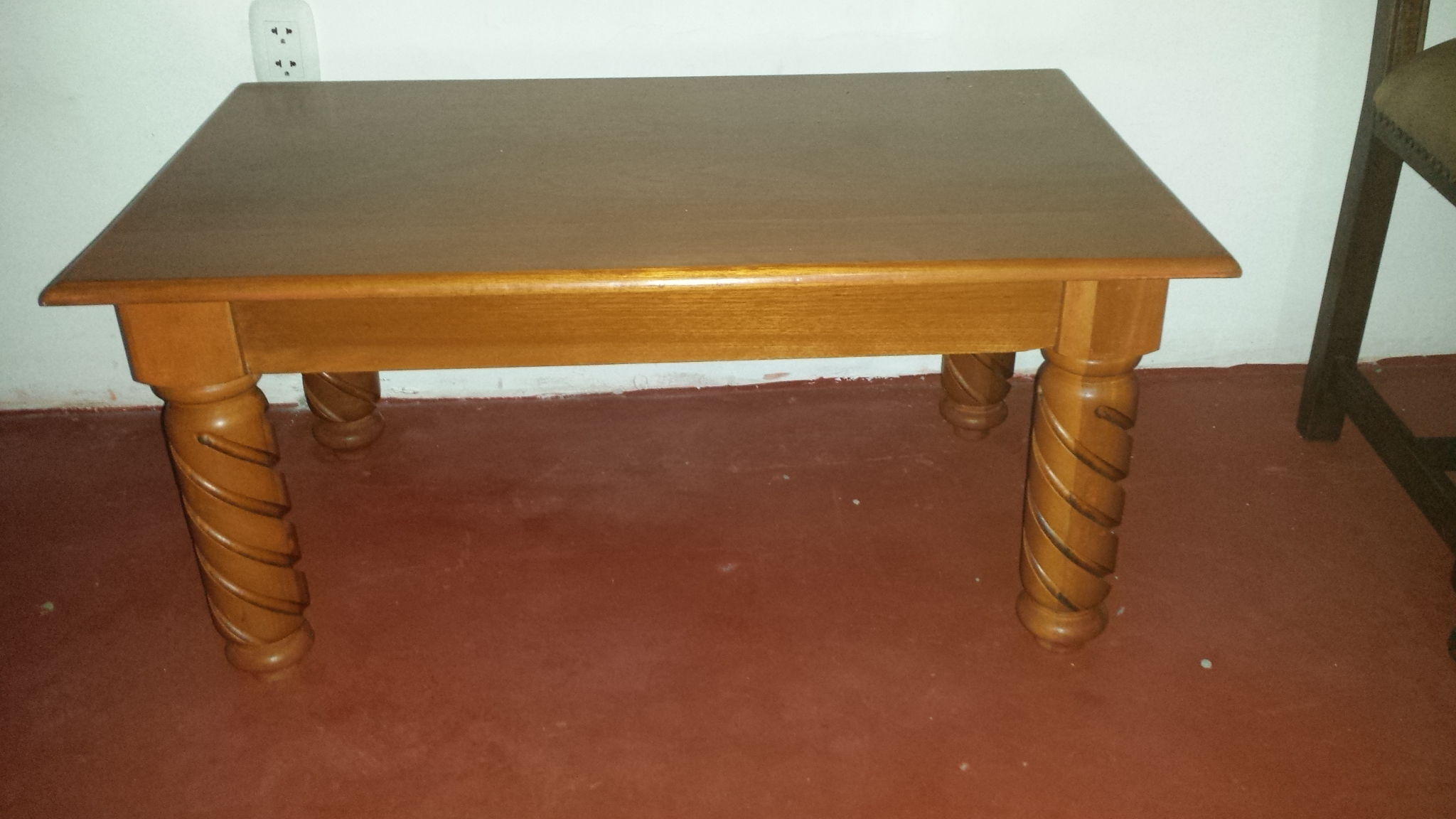
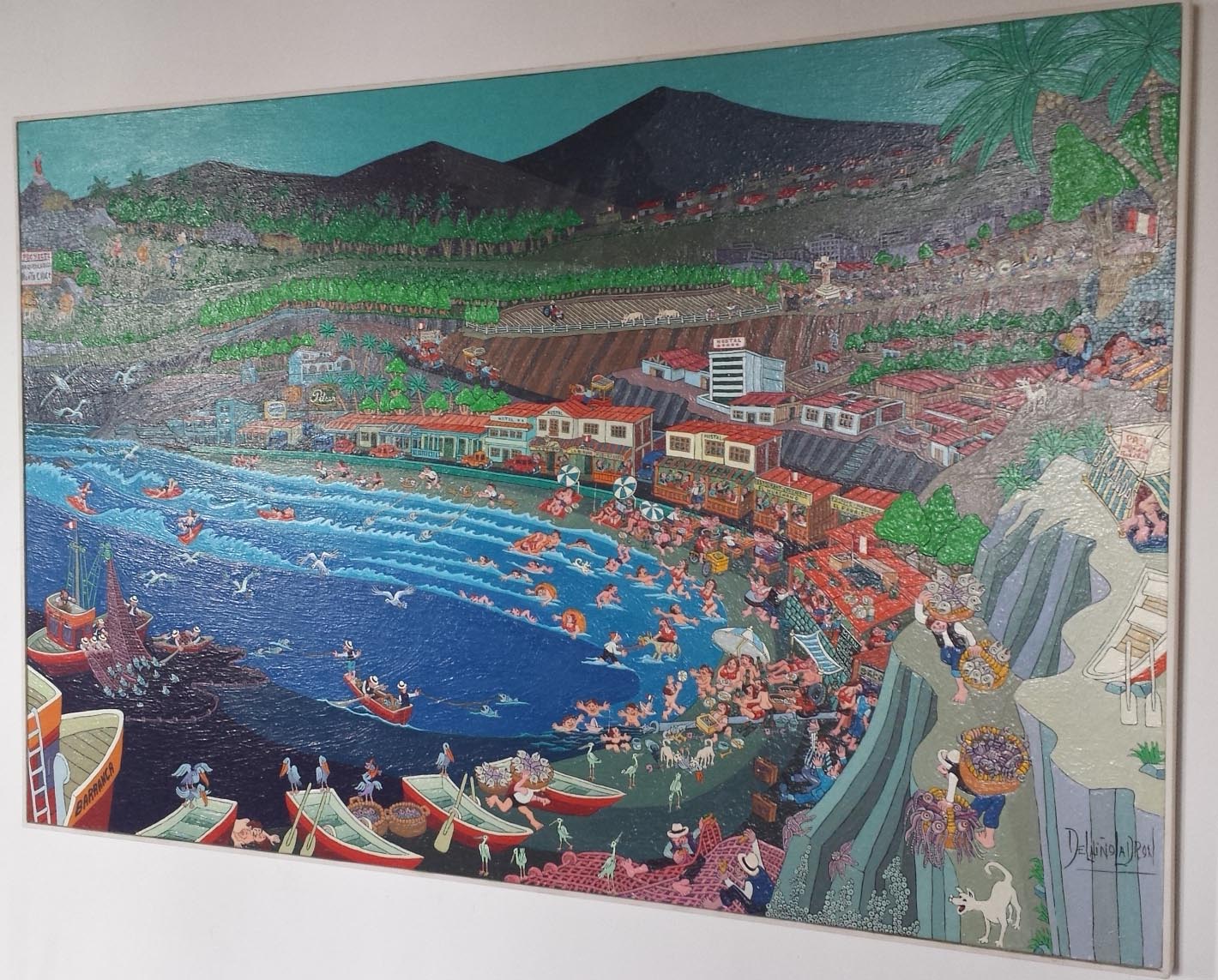
Commissioned in 2015Commissioned in 2004painting commissioned 2006
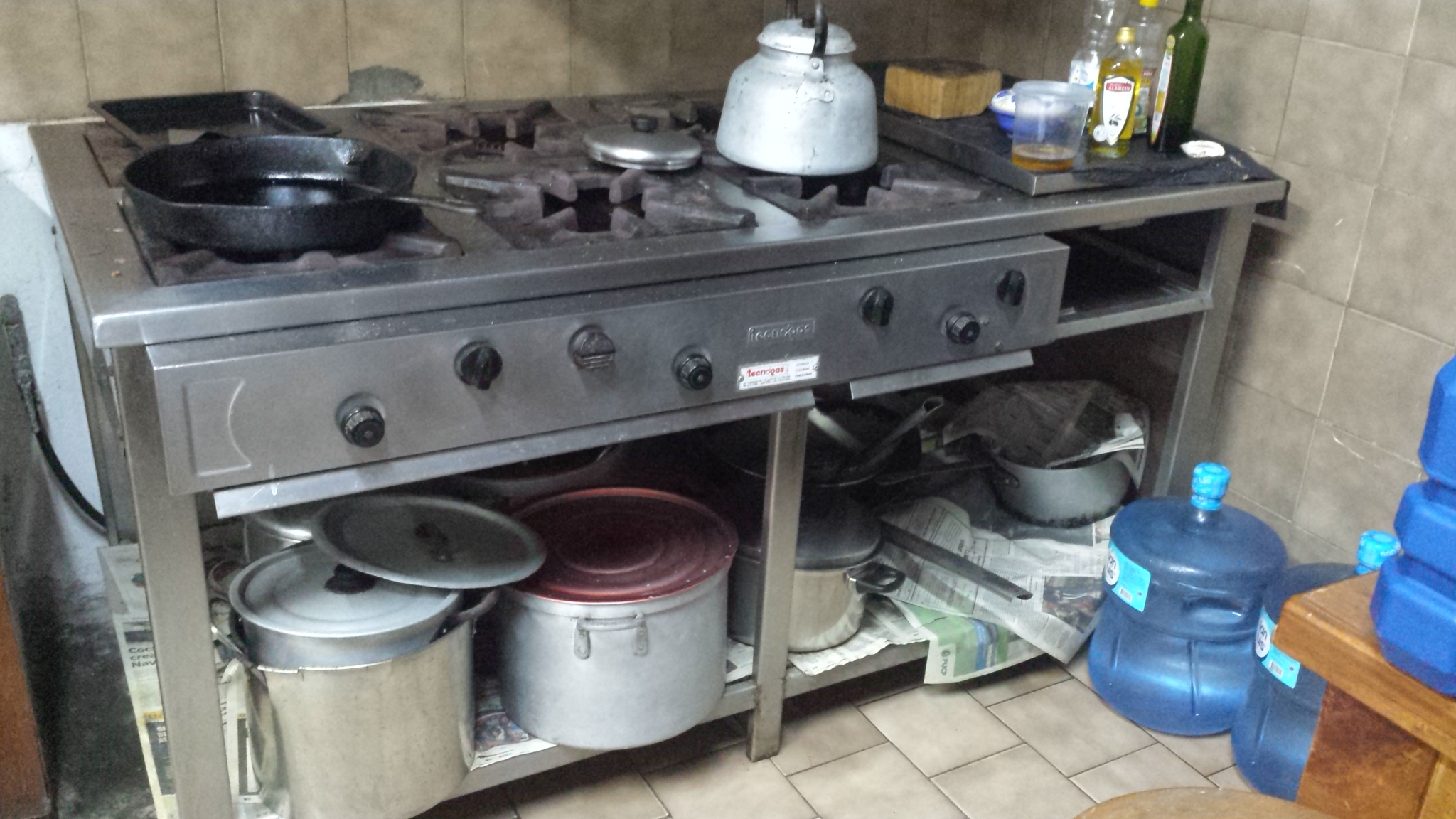
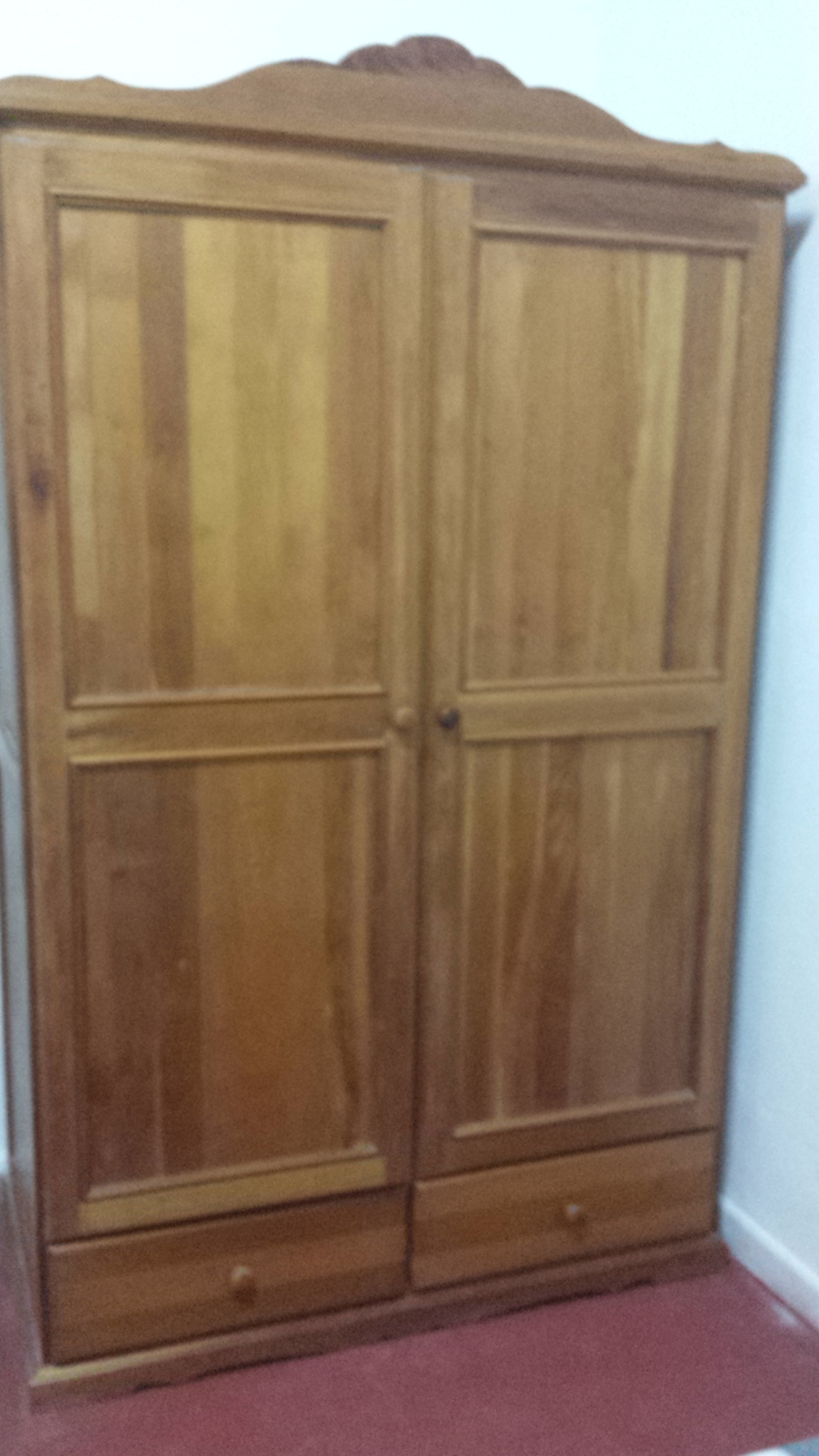
If I want a new piece of furniture, I have it made out of cedar, the only wood that doesn’t rot in the beach environment. Anything I commission costs half of what it would cost in the US, maybe even less. There are people who will make anything you need as long as you can describe and sketch it. In addition to carpenters, there is a
metal worker with a shop full of machinery, there are people who make stoves (how many burners do you want?), and there are people who weave reeds into any shape from placemats to floor coverings in any color and any size.
Commissioned 2005
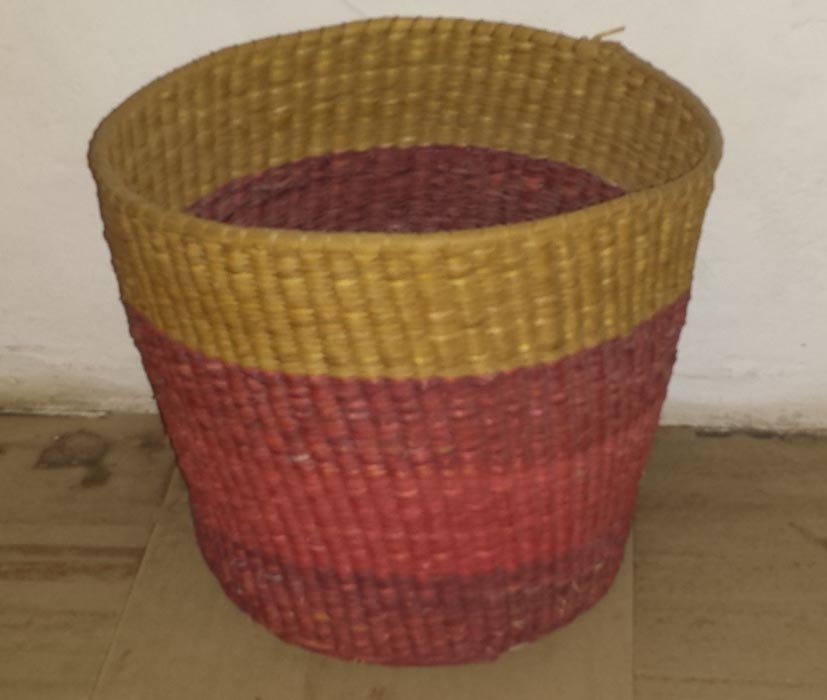
Do you want ten turquoise trash cans? They will dye the reeds and weave them. Come back in two weeks. You can have clothing made or altered. There are two minor issues here, related to the saying “You get what you pay for.” Yes, you can have anything made, but it may not last forever. Second, you are always promised that whatever you want will be ready either tomorrow, in a week, or in two weeks. Whatever date you choose, it won’t be ready. Your commission will be ready when you (or one of your household helpers) stops in every day for three days, or maybe a week. Eventually, your project will be done.
Commissioned in 2004
En Peru, si quisiero algun mueble, tiene estar hecho de cedro, la madera que no malogra en la playa. Cualquier cosa que encargo me cuesta la mitad de lo que costara en los EEUU, tal vez menos. Hay carpinteros que he harian cualquier cosa que podrias describir o dibujar. Ademas, hay un hombre con un taller lleno de maquinaria para trabajos en metal, gente que hacen cocinas (cuantos hornillas quieres?) y hay artesanos que tejen cosas de totora de cualquier tamano y color. Quisieras diez tachos turquesas? Tinan el junco y los tejen. Regresa en quince dias. Puede tener ropa hecho a la medida o arreglada. Sin embargo, hay dos temas a considerar que se relaciona al dicho “Recibes lo que has pagado”. Si, alguien te hara lo que pides, pero no dura a largo plazo. Segundo, siempre te prometen que tu encargo estara para manana, la proxima semana, or en quince dias. N’importa la fecha que apuntes, no estara listo. Estara cuando tu o alguien en tu casa visit cada dia para un dia, o dos, o una semana. Con tiempo, tu encargo estara listo.
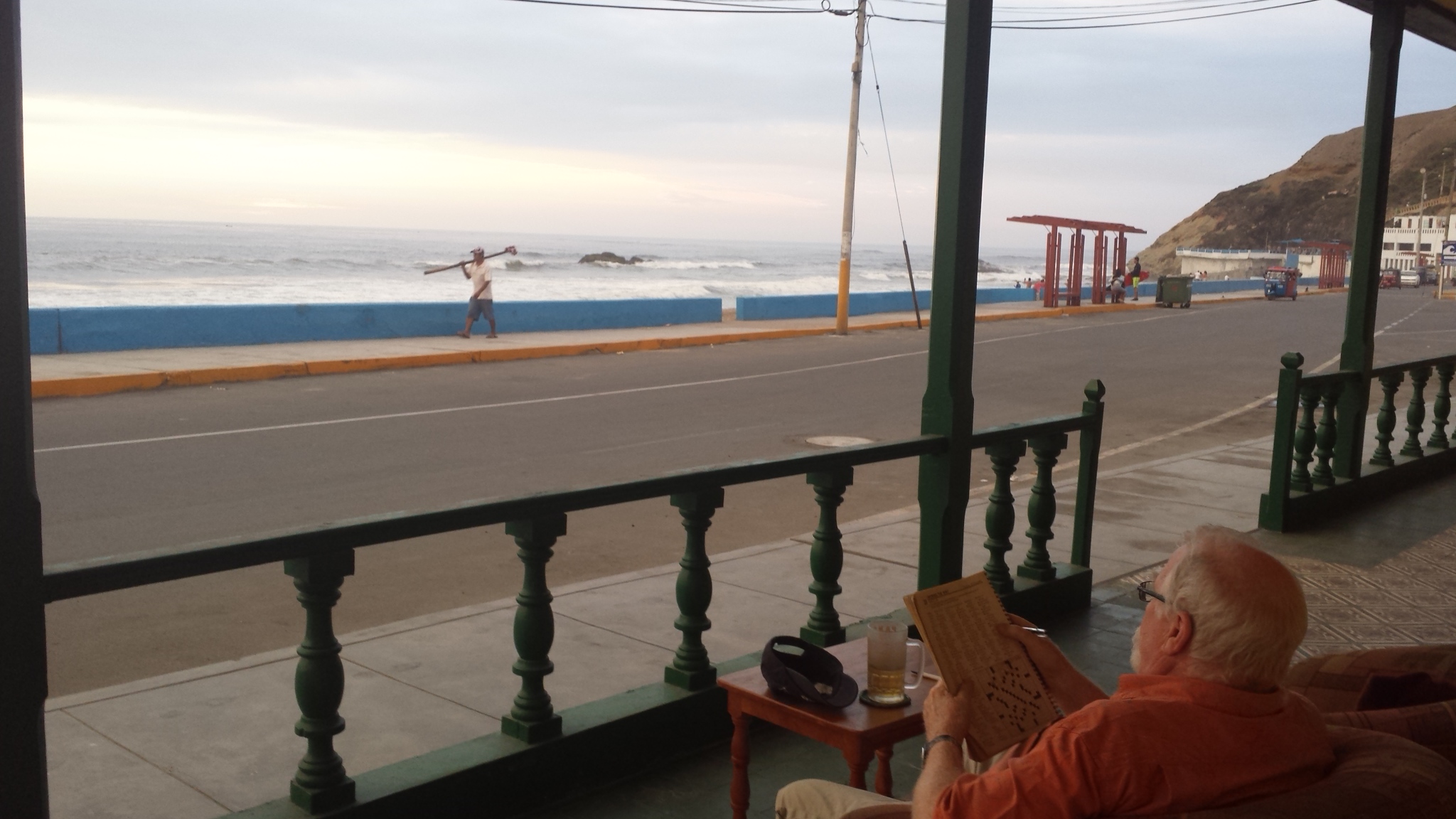
The cost for the caretaker and upkeep on our house for a year is just about what we paid in property taxes alone in the US. It makes it possible for us to live in a large house across the street from the Pacific Ocean and travel the rest of the year. While we are here we can enjoy sitting on the front porch and work on writing projects.
El total para el guardian y los costos de nuestra casa para un ano es aproximadamente lo que paguemos para impuestos municipales (arbitrios, etc) en los EEUU. Esto le hace posible para nosotros vivir en una casa grande frente el Mar Pacifico y viajar el mundo el resto del ano. Mientras que estamos aqui podemos disfrutar nuestra veranda y escribir los proyectos que tenemos pendiente.
An additional advantage not related to the cost of labor is the fact that we live in a neighborhood where most people know each other. Many families have been here for several generations and there is an overall friendliness that makes this a much warmer environment than where we lived for 24 years in the US. Make no mistake, I have wonderful friends in the US who I miss now that we no longer live where we once did. Those friends were not my neighbors. They were friends I made in our community. Right in our neighborhood, however, I was only acquainted with the people who lived on either side and behind us, mostly to discuss repair of the common fence and trimming of trees. At one point I also knew a few other families within a short walk, but as our children grew up we grew apart. I was not sorry to leave the neighborhood. When we eventually leave Barranca, I will always miss the beach and my neighbors here.
Otra ventaje si relacion al costo de mano de obra es que vivmos en un area donde la mayoria de los vecinos se conocen. Muchas familias han vivido aca para generaciones y hay mucha amistad. Es un ambiente mas calida que donde vivimos en los EEUU unos 24 anos. No te equivocas, tengo amigos maravillosos en los EEUU que me hace falta ahora que no estamos en nuestra casa antigua, pero no fueron mis vecinos, fueron amigos de la comunidad grande en que estuvimos. En nuestro barrio, yo conoci los vecinos de los dos lados y detras de nosotros, pero mayormente conversemos sobre el mantenimiento de la cerca entre las propiedades o de podar los arboles limitrofes. Conoci unas mamas de las amigas de mis hijas en el vecindario, pero con tiempo nos dejamos de estar en contacto. No lamente nuestra salida del vecindario, aunque fue una casa bonita. Cuando llega el dia de salir de Barranca, siempre voy a hace faltar la playa y los vecinos aqui.
As I said when I began writing about expat life, I include one positive and one negative in each post. Not all relationships in Peru are perfect. There is quite a bit of built-in prejudice. I probably see it more clearly here because I come from somewhere else. In the US, I may not recognize prejudice when I see/hear it because the context is familiar.
Como dije, cuando escribo sobre la vida expat, incluyo un aspecto positivo y uno negativo en casa post. No todos los relaciones sociales en Peru estan perfectos. Hay mucho perjuicio que tal vez yo veo mas claramente aqui porque vengo de otro lugar. En los EEUU tal vez no reconozco perjuicio cuando lo veo/escucho porque el contexto es tan conocido, de todos los dias.
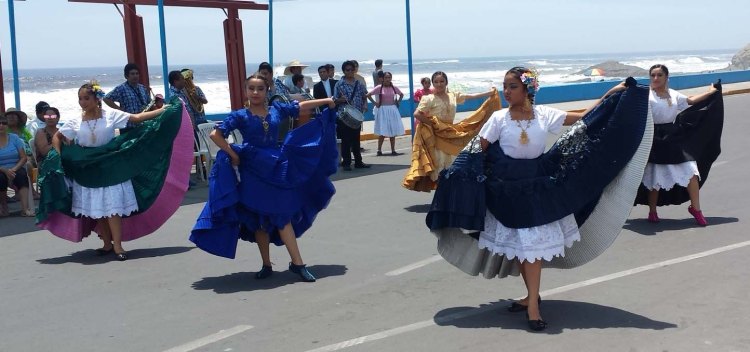
As in the US, prejudice on the broadest level is the racism against people with dark skin color, whether they are Afroperuvian or people from the highlands. I am also speaking as a person who lives on the coast. I believe that the situation is very different in a highland city or town. The indigenous people of the coast were largely obliterated in the 16th century. Today the indigenous people here are mostly descendants of migrants from the highlands. There is great pride among folkloric dance groups who dress ornately and perform wonderful dances, all originally from the highlands. At the very same time, people who speak the principal native language, Quechua, generally don’t let on that they know how. People whose families come from the highlands don’t always mention it.
Como en los EEUU, el perjuicio mas visible es el racismo hacia los con piel oscuro. No importe si son afroperuanos o de familia serrano. Hablo tambien como alguien de la costa y creo que la situacion es muy diferente en un pueblo o ciudad de la sierra. La poblacion indigena de la costa desaparecio casi por completo en el siglo 16. Hoy la gente indigena son descendientes de migrantes de la sierra. Hay mucho orgullo entre miembros de conjuntos de baile folckorico con su traje ornado y sus bailes fantasticos. Al mismo tiempo, los que hablan Quechua, el idioma nativo principal, generalmente no muestran que entiende y pueden hablar. Individuos con familia de la sierra no siempre mencionen sus origines.
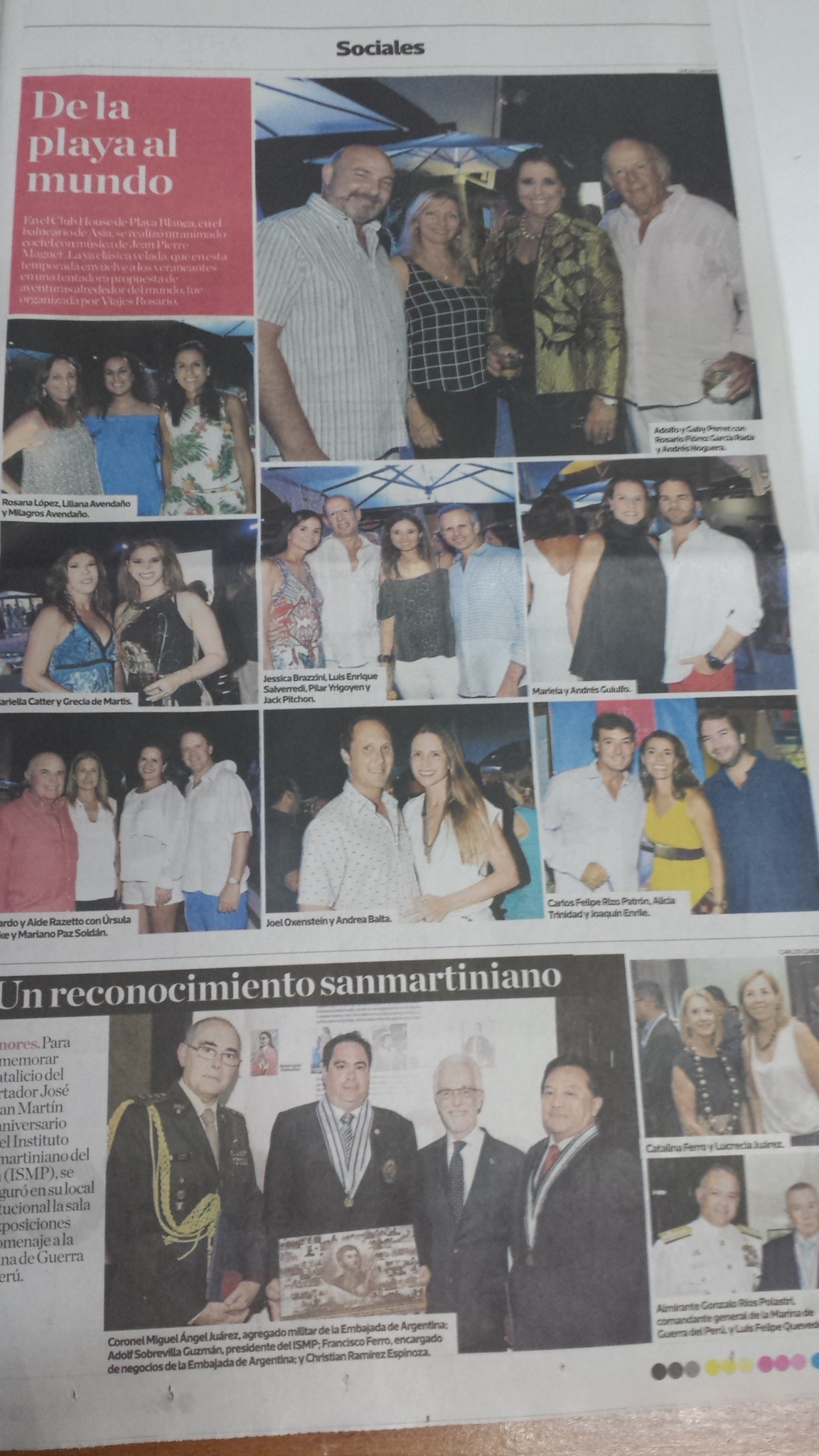
To see racism in action, turn to the social pages of the main Lima newspaper, El Comercio. The people are uniformly pale skinned and could be from France, Italy, California or Ohio. OK, I admit it, I may have had a preconception of Peruvians as brown people, which turns out to be wrong. Peruvians are a range of colors, sizes and looks. Chileans and Argentines are the same. Do all Americans think that everyone from a country south of the US border has a deep tan? Here are recent presidents of Peru. They don’t all look alike. Why is high society different?
Para ver el racismo en marcha, vea las paginas sociales de El Comercio. La gente estan uniforme en su piel blanca. Podrian estar de Francia, Italia, California o Ohio. OK, confieso, tal vez yo tambien imagine todos peruanos como gente de piel moreno, y esto no es cierto. Peruanos vienen en todo color, tamano y como se ve. Los chilenos y argentinos son iguales. Crean todos norteamericanos que toda la gente de paises al sur de EEUU tienen la misma cara morena? Aqui son los presidentes recientes de Peru y no parecen uno al otro. Porque la sociedad elite no es tan diverso?
There is prejudice in the US against Latinos, and in Peru there is prejudice against dark skinned Peruvians. Some of the comments I have heard aimed at them are as cruel as any anti-black sentiment in the US. People with brown skin are not stupid, lazy, or criminal, yet there are people with white skin who think that is the case. Prejudice may be most visible in the social pages, but it is present everywhere, despite the presidents. We consult a practice of lawyers in Lima, and when we first walked in, I thought we’d gotten lost in the social pages. The practice is all women, which is interesting to begin with, but everyone we saw was tall, thin and blond. “Where are we?” was my thought. We eventually met a more varied-looking group of staff members, including lawyers, but my first impression was a shock.
Hay perjuicio en los EEUU contra latinos y en Peru hay perjuicio contra los con piel oscuro. Algunos de los comentarios que he oido son tan mal como cualquier sentimiento anti-negro en los EEUU. Gente con piel moreno no son estupidos, perezozos o criminal pero hay los de piel blanco que piensen asi. Perjuicio resalta en las paginas sociales pero existe en todas partes a pesar de los presidentes. Nosotros consultamos un estudio de abogados en Lima y cuando fuimos por primera vez yo crei que nos habiamos perdidos en las paginas sociales. El estudio es todo mujeres que es algo diferente pero todos que vimos estaban altas, flacas y rubias. “Adonde estamos?”, pense. Con tiempo encontremos un grupo mas variado de miembros del mismo estudio incluso abogados, pero mi impresion inicial fue un choque.
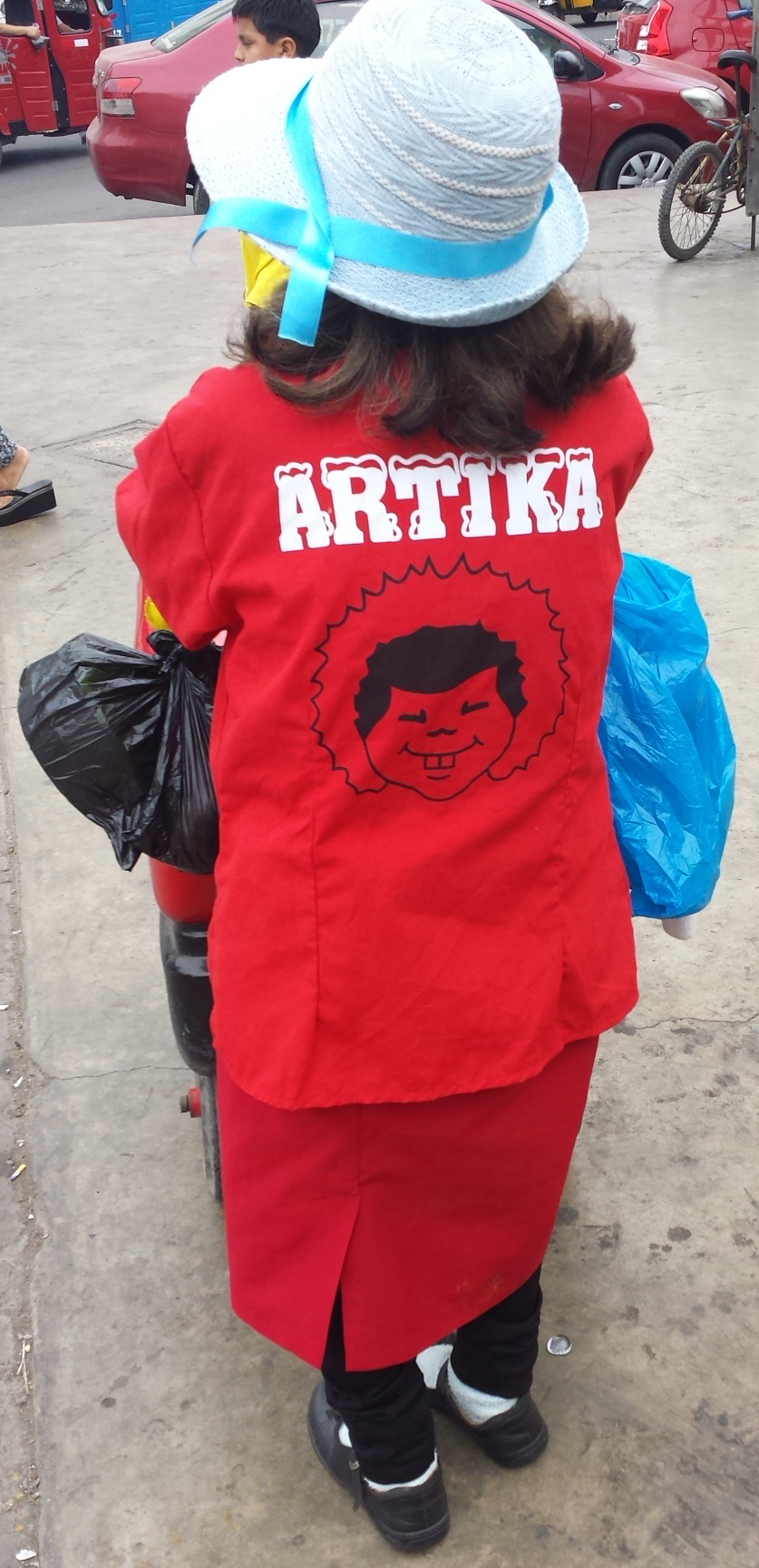
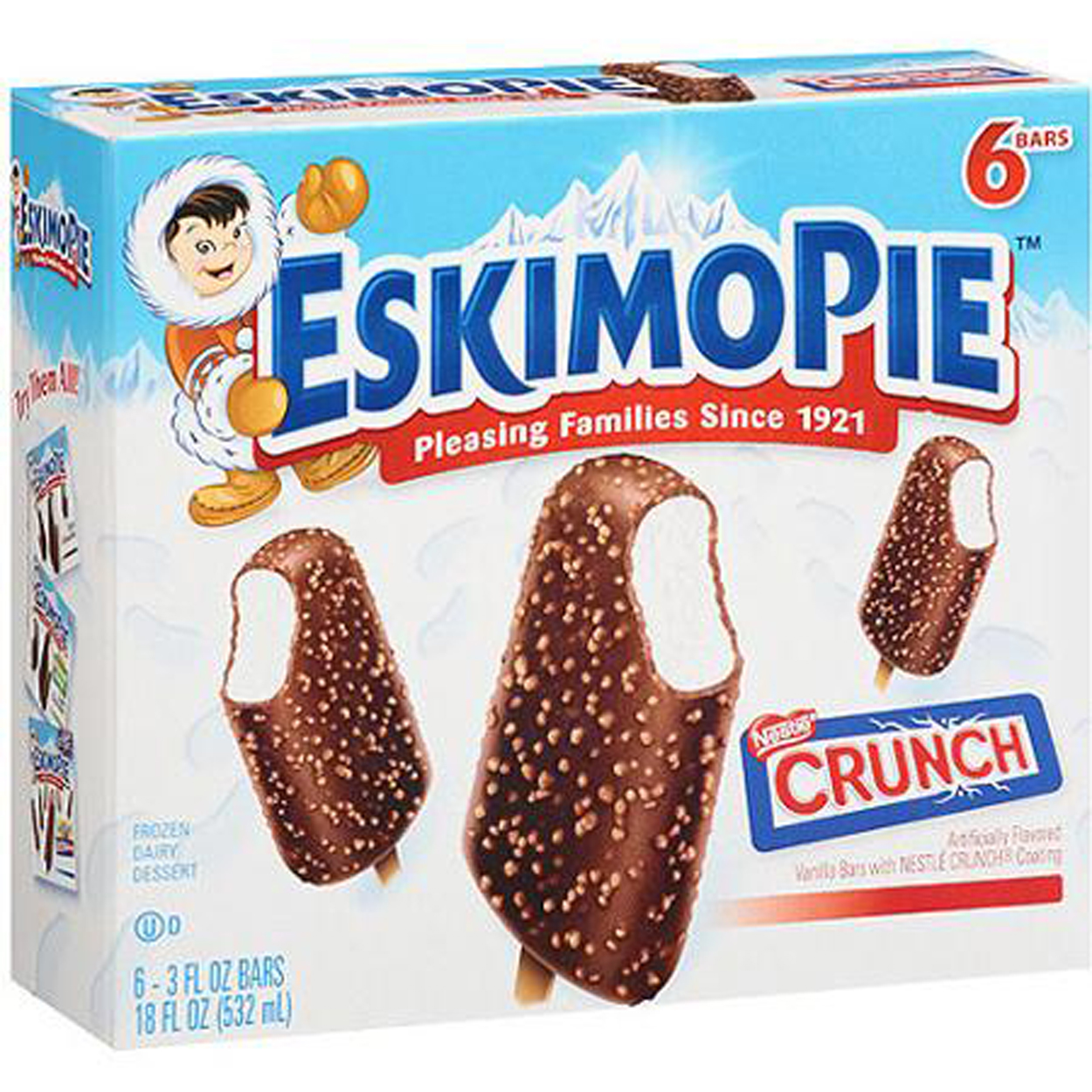
There is less “political correctness” in Peru than in the US. I do not think a company could use a caricature of an Arctic native like this one (left) in advertising in the US. On the other hand, the sanitized version used for Eskimo Pies, still sold in the US, is not any better.
Hay menos de habla “politicamente correcto” en Peru que en los EEUU. No creo que una compania en los EEUU podria usar una caricatura de un nativo de la zona arctica com esto (izq). Sin embargo, abajo es una version sanitizada por la marca Eskimo Pie que todavia venden en los EEUU. No creo que es mejor.
Nicknames are another place where the idea of political correctness hasn’t arrived yet. Most nicknames aren’t related to the person’s name, but are some form of perjorative. (Skinny, chubby, chino/china- for any Asian). Apodos son otro area en donde la politicamente correcto no ha llegado en Peru. La mayoria de los apodos no estan relacionado al nombre del individuo pero son de desprecio (Flacco, gordo, chino).
We skipped our plan to see the opera at the movies in Lima and stayed at the beach to enjoy the end of summer. There was a body board tournament–we watched for a few minutes. We enjoyed chatting with the various backpacking young people from Argentina that seem to be moving through like migrating birds on their way north.
En vez de ir a Lima para ver el opera, quedemos en la playa a disfrutar el fin de verano. Fue un torneo de body board que vimos un rato. Disfrutemos conversando con los varios joven mochileros argentinos pasando por Barranca como pajaros migratorios. Parece que todos van hacia el norte.
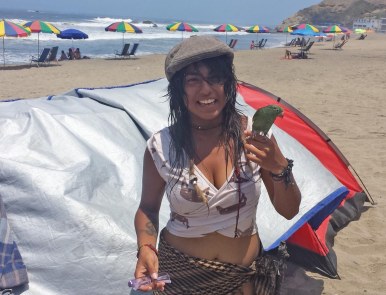
This is KarelÍ–we struck up a conversation when I noticed her pet parrotlet. She adopted him as a baby with a broken wing. She’s on her way to Colombia with a couple of friends, hoping to stay there a few months and then make her way back to Argentina via the Peruvian Amazon and Brazil.
_______
KarelÍ y yo discutimos su perriquito que adopto cuando fue chiquito con una ala quebrada. Ella esta en rumbo a Colombia con unos companeros, esperando quedar alli unos meses y despues regresar a Argentina por la Amazonia peruana y Brazil.
She let me hold her little bird. He was very cute.
Yo quede un ratito con su perriquito, es muy lindo.
More new developments arrived this weekend. Here is our first food truck in Puerto Chico, serving all the specialties of the Norte Chico.
Otro novedad es el primer camion de comida “food truck” en Puerto Chico, con todos los especialidades del Norte Chico.
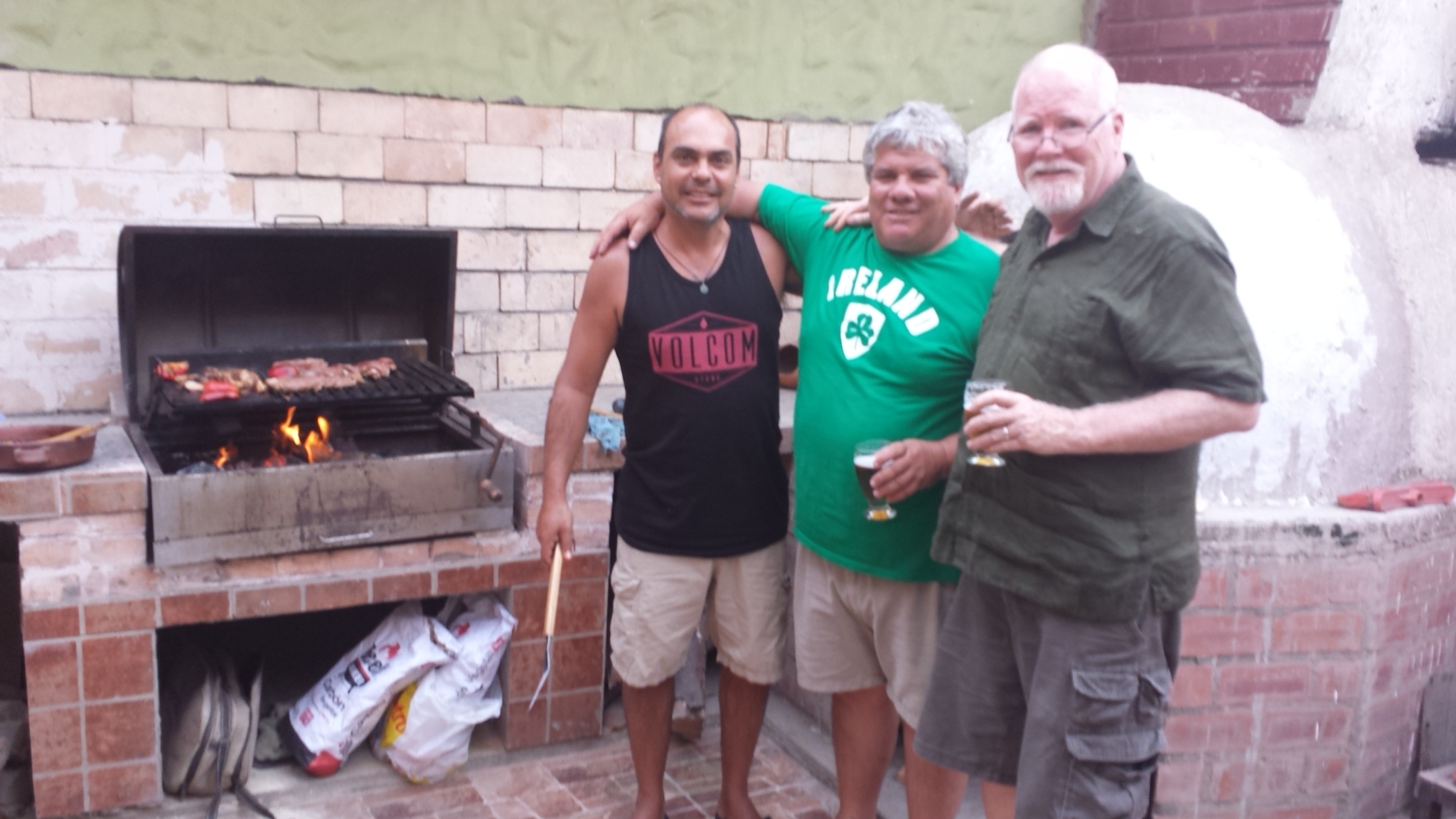
In addition to all this, we had a party to celebrate the end of the summer season. Everyone brought food, the cuy (guinea pig) was the best! We chatted and sipped and ate well into the evening. Now that school is starting up, our friends may not be able to spend weekends at the beach. It doesn’t matter, we’ll remember this one.
Despues de todo esto, habia una fiesta celebrando la fin del temporada de verano. Todos trajeron comida–la cuy fue lo mejor! Divertimos con chistes y bebidads hast la noche. Ahora que clases impiezan, los amigos no necesariamente pueden pasar sus fines de semana en la playa. No importa, recordaremos este.
It was a big weekend on the beach because it’s almost the start of the school year and families want to get to the beach while they can. We won’t mind the decrease in crowds on the weekend, but we will miss our neighbors who have less time to spend once their children are back in classes.
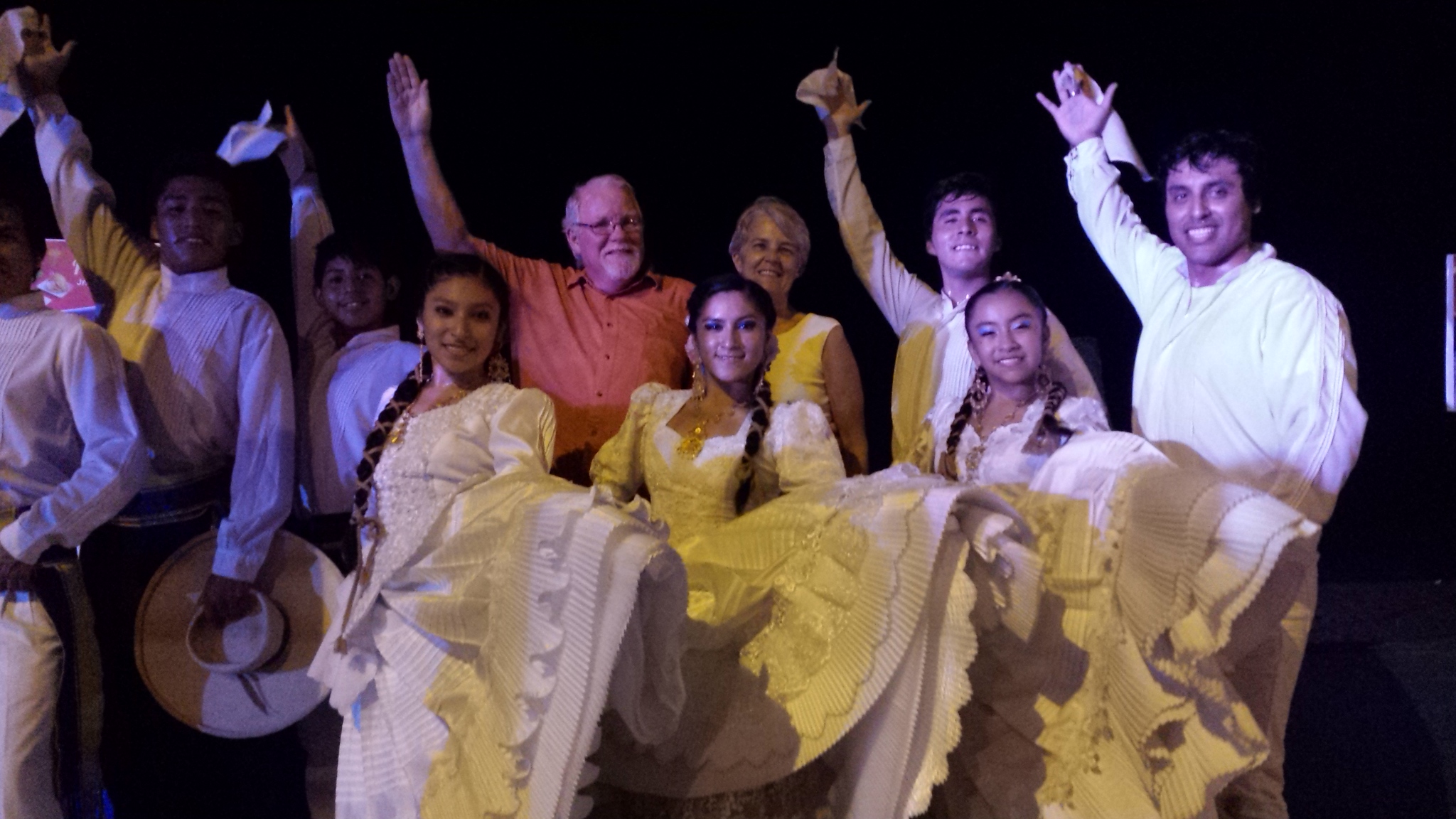
Fue un gran fin de semana en la playa porque estamos llegando al primer dia de clases para la mayoria (1 marzo) y familias quieren estar en la playa mientras pueden. No nos molestaria la disminucion de las multitudes en los fines de semana pero nos va a hace faltar los vecinos que tienen menos tiempo de venir una vez sus chicos inician clases. I didn’t realize there would be so much going on. Saturday there was an evening of cultural events that included spotlights shining up and down the street. Our friends the Marinera dancers were out again this weekend and invited us to be in a group photo. Next up was the Poet Laureate of Barranca declaiming an ode to the city (I think), a procession of the Virgin from the shrine down the beach that wasn’t part of last week’s Fiesta, and as usual a lot of disco music.
No me di cuenta de que habria tantas cosas pasando. Sabado fue una noche de cultura con luces iluminando la calle. Nuestros amigos las bailarines de Marinera estaban presente y nos invitaron tomar un foto juntos. Despues estaba el Poeta Laureado de Barranca declamando una oda a la ciudad (creo). Ademas fue una procesion de la Virgen de Puerto Chico que no fue en procesion la semana pasada, y como siempre, mucha musica de los discos.
The annual sand-sculpting contest produced much better work than I recall from last year and I managed to get a few photos before the prize-winners were trampled by kids who wanted to get up close.
La competencia anual de escultura en arena produjo obras mucha mas bonitas de los que recuerdo del ano pasado. Tome unas fotos antes de que los chicos los malogaron por querer estar lo cercano posible.
This slideshow requires JavaScript.
I said there wasn’t much to do, but that doesn’t apply to the last weeks of summer vacation!
Dije que no hay mucha activadad en la playa pero obviamente no pertenece a las ultimas semanas de vacaciones!
Friends, I am trying something new today, writing the blog in both Spanish and English. Please skip to the language of your choice. I may try blocks of each language or first one the the other. Bear with me.
Amigos, Hoy impieza algo nuevo, voy a escribir el blog en Castellano y Ingles. Por favor, busca el idioma que prefiere. Puedo escribir bloque de un idioma y despues el otro, o tal vez todo en un idioma y despues el otro. Su pacienca, por favor. Ademas, mi escritura en castellano refleja mi falta de estudio!
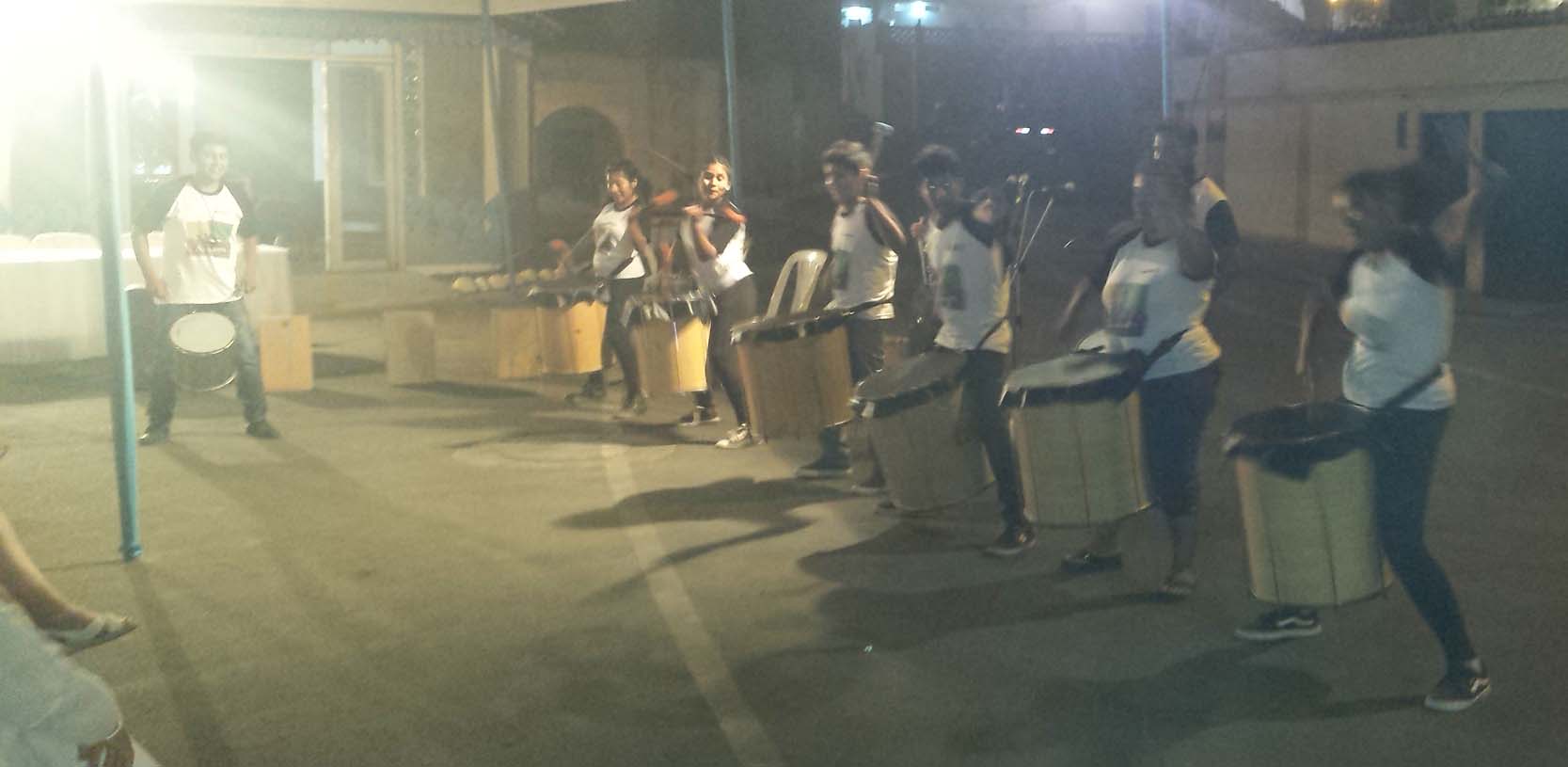
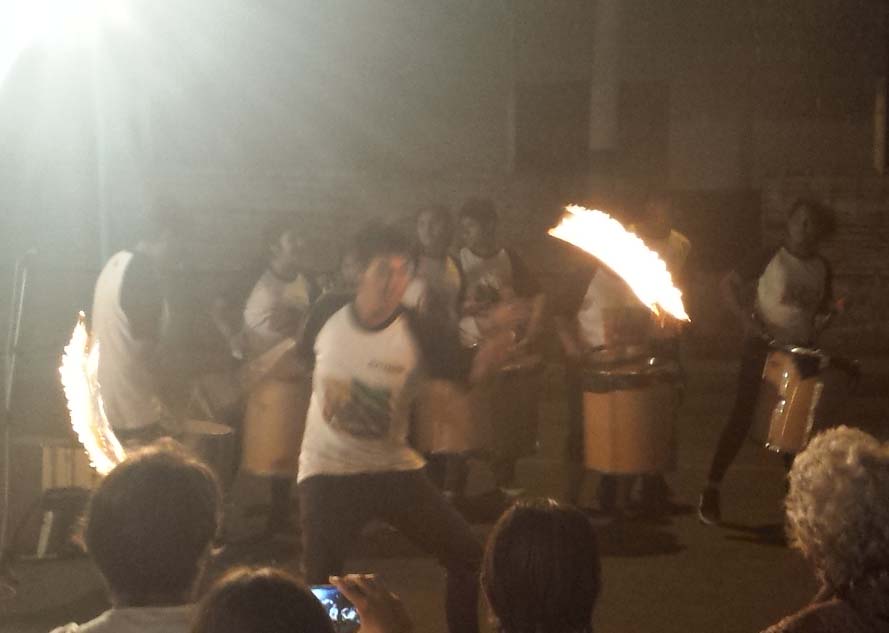
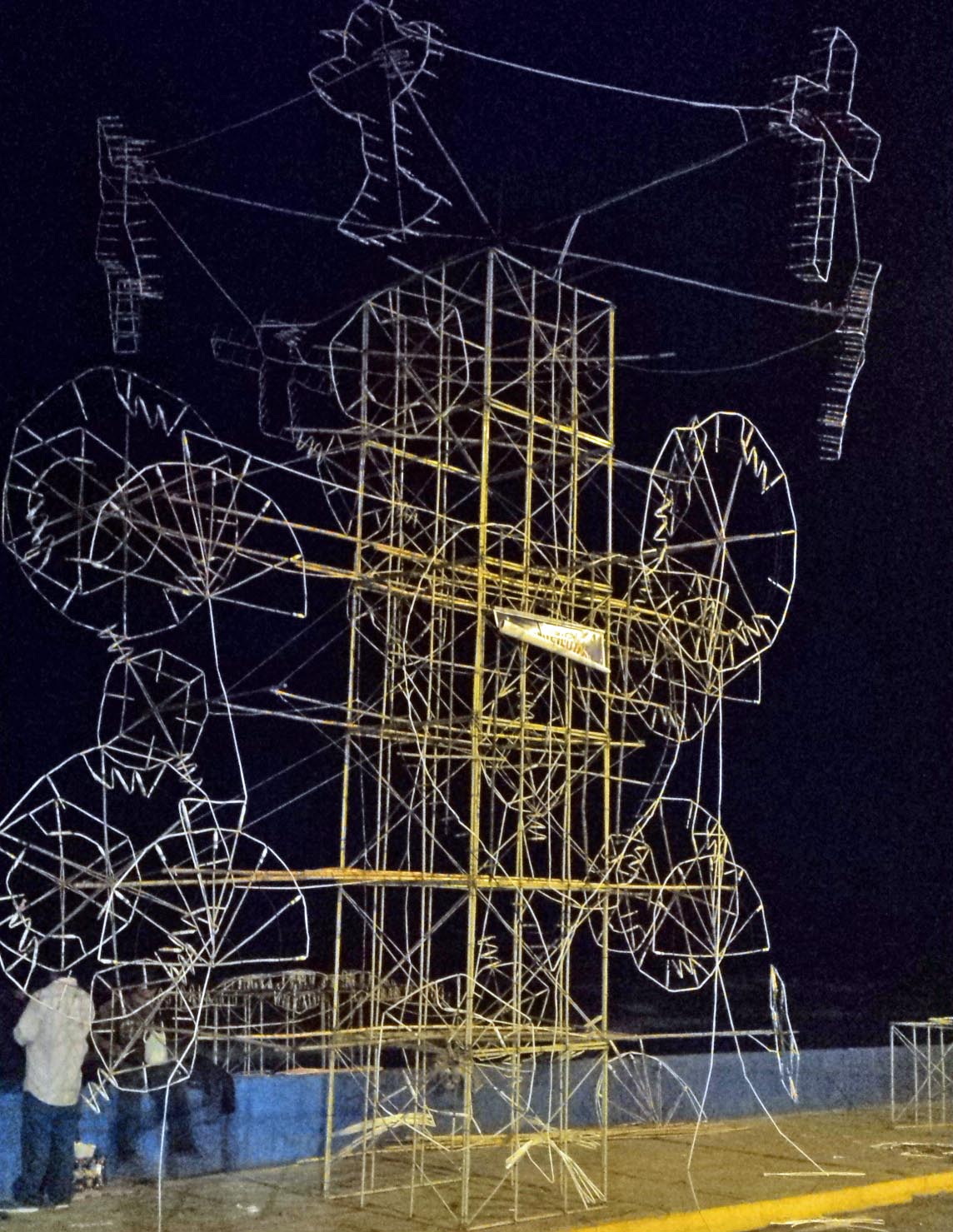
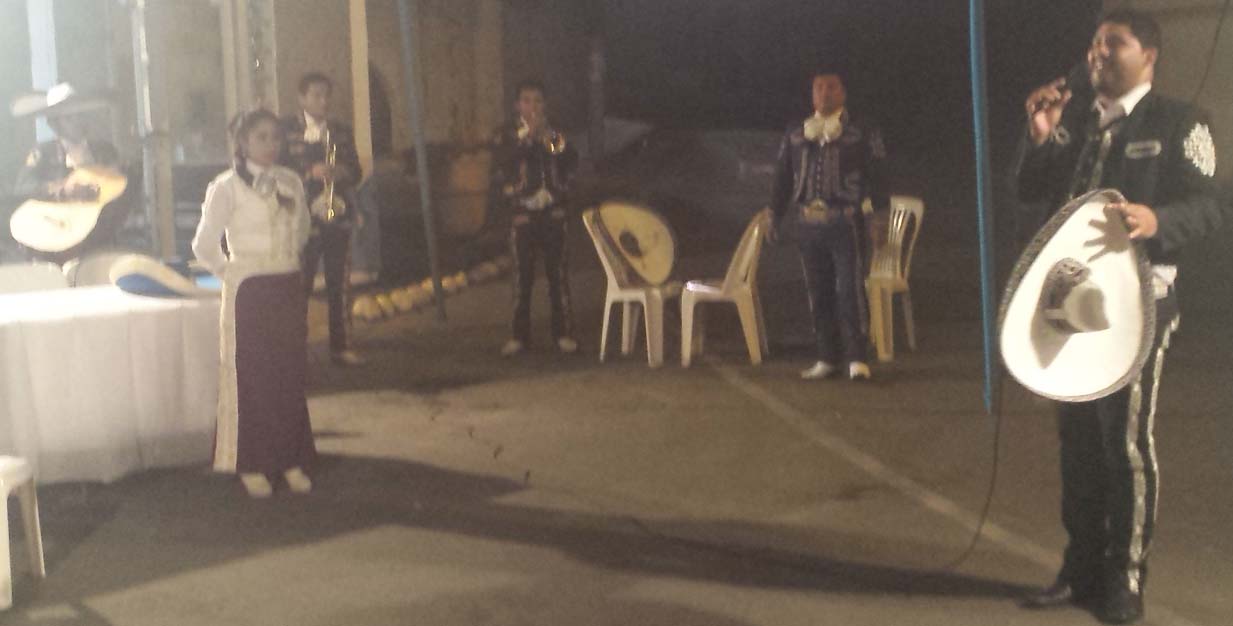
One of the reasons it seems a good day to go bilingual is that this weekend was the biggest summer event for the Barranca beach community, the Fiesta of the Virgin of Lourdes. There has been a shrine to the Virgin at the north end of the beach for many years, but a few years ago a tiny chapel was built so that older devotees could visit without having to climb the stairs to the older image. This year the festival began with a novena (nine nights of saying the rosary at the chapel at 6 pm) on Feb. 3. The ninth night was Friday Feb. 10. A canopy was erected in front of the shrine and on either side of the square in front of the chapel. The virgin was brought out of the chapel and at 9 pm presided over a “chocolatada”, distribution of hot chocolate and rolls. The hot chocolate was delicious, with cinnamon. (I’m going to get the recipe.) Ordinarily, that would be it for me but I wanted to hold out for the rest of the evening, because of the promised fireworks, called a “castillo”–these weren’t scheduled until 12:30. Fortunately, many of the neighbors came out and a lot of family members had come to visit for the weekend. At 9:30, the “batucada” began, and the name describes the presentation, a battery of drummers, who performed a number of pieces and energized the crowd. Their last piece included a group member dancing and swinging flaming lanterns–it was impressive. The music slowed down at about 10 and continued with songs until midnight. I went inside for a while to sit down, but I went back to the canopy for the midnight mariachi. Mariachi? Yes, they are popular in Peru and often perform at special events. This group was quite good, the Joven Aventureros (Young Adventurers), from Supe Pueblo, not far at all. They sang and danced. It was also the first woman Mariachi band member I’ve seen. At 12:30 am the band wrapped up and we crossed the street to see the castillo. These are another feature of celebrations that I’ve seen in Mexico and Peru. We joke about how prohibited they would be in the safety conscious US. A castillo looks precarious because it is a one use structure that may be several stories high, built of bamboo and festooned with fireworks that are ignited one after another via long, trailing fuses. The entire series of hisses and explosions and twirling, flaming shapes lasted about ten minutes. Take a look at the slides below.
This slideshow requires JavaScript.
It was followed by a couple of minutes of beautiful fireworks shot overhead that were as wonderful as any Fourth of July. In Peru, it’s legal to buy and shoot off all this stuff, too, though there are usually people in the neighborhood who specialize in setting up and shooting off the fireworks. Castillo building is a small business found in many towns. You can have towers or shapes built to order. It’s probably safer that way. That was the end, and people drifted home.
Para mi, es buen momento empezar el blog bilingue porque este fin de semana es el evento mas importante del verano en la playa de Barranca, la Fiesta de la Virgen de Lourdes. Un santuario a la Virgen esta en la colina del playa pero hace pocos anos les construyeron una capilla abajo cerca la playa para que las devotos que tienen dificultad en caminar podrian visitar la virgen sin subir tantas gradas. Este ano la fiesta empezo con una novena el 3 de febrero. El nocho noveno fue el viernes 10. El mismo viernes erigieron unos toldos cerca la capilla y trasladaron la virgen frente la capilla. A las 9 pm fue una chocolatada, con chocolate caliente y pancitos. Fue delicioso, voy a pedir la receta. Cuando termino todavia quise quedar, porque la chema del castillo estaba programada para las 12:30 am. Afortunadamente, muchos vecinos fueron presentes con sus familiares que visitaron para la fiesta y estabamos buen acompanados. A las 9:30 empezo la batucada con una bateria de tmbores. Hicieron una buen presentacion con mucha energia. Terminaron con un miembro del grupo bailando con lamparas de fuego. Fue impresionante. La musica tomo un ritmo mas lento pero continuo hasta medianoche cuando llego las mariachi. Mariachi? Si, son populares en Peru y se encuentra en todo tipo de fiesta. El grupo fue muy bueno, los Joven Aventureros de Supe Pueblo, muy cercana de Barranca. Bailaban, cantaron y para mi fue la primera vez que he visto un mujer como miembro de un mariachi. A las 12:30 terminaron su show y cruzamos la calle a ver el castillo, algo que he visto antes en Peru y en Mexico. Bromeamos sobre como estos estaria prohibidos en los EEUU por razones de seguridad, pero los castillos estan construidos por grupos especializados. Parecen precarias porque son de un solo uso, una estructura que puede ser de varios pisos hecho de bamboo, con ruedas de fuegos artificiales y sus fusibles largos que se encienden uno por uno. Produce una seria de ruidos, explosiones y llamas que dura varias minutos. Vea los fotos arriba. Enseguida fue los fuegos artificiales en el cielo, lindo y tan bonito que cualquier celebracion del 4 de julio. En Peru es legal comprar y encender estos objetos, aunque hacer castillos es un trabajo artesanal en muchos lugares. Puede encargar torres o cualquier forma que desea. Es mas seguro que alguien que sepa los construyen y encienden. Despues de los bellos fuegos todos lentmente se despidieron.
Saturday started with a few loud rockets at 6 am followed at a more reasonable hour by free surf and body board classes and some music, but the big event was the marinera dancers and caballos de paso in the square in front of the Virgin at well–maybe noon, maybe one pm, maybe a little later.
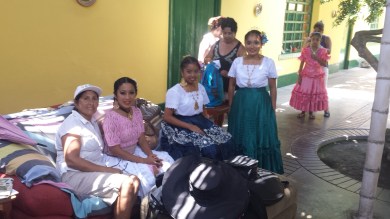
Fortunately, our front porch overlooks the end of the square so we could sit in the shade. We offer our patio to the dancers as they arrive because we have a shady patio and the day of the festival last year and this has been very hot at 1 pm. Next door, festivity gained momentum during the wait.
El sabado empezó con unos cohetes a las seis y mas tarde con clases gratis de surf y body ademas de musica pero el gran evento fue la baile del marinera y los caballos de paso en la plazuela frente la capilla de la Virgen a mediodia—tal vez a la una, o mas tardito….. Afortunadamente nuestra patio frente la casa esta muy cerca y pudimos quedar en la sombra. Ofrecemos nuestro patio a los bailarines cuando llegan porque tenemos sombra y hico mucho calor el dia de fiesta el ano pasado y este ano. El nivel de alegria subio con la espera.
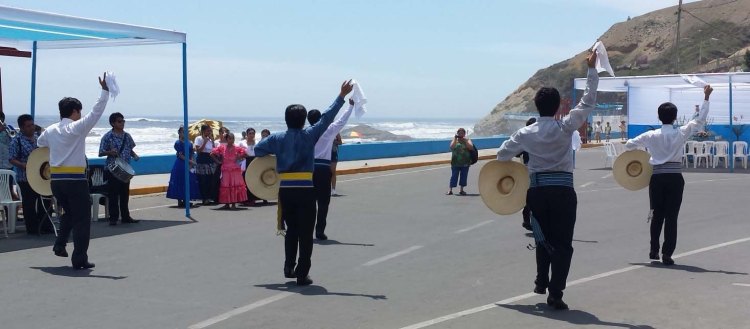
The Marinera is a traditional dance from the north coast of Peru. It has become so popular that there is an annual Marinera competition held in Trujillo, Peru that has a limit of three hundred couples, so there are preliminary competitions all over Peru and around the world. The Trujillo event is always covered in the paper with photos of the wonderful women’s dresses and graceful dancing. I also like the Marinera because there is equal emphasis on dancing by the men and the women. Next was the Marinera with Caballos de paso.
La marinera es un baile tradicional del norte de Peru. Es ahora tan popular que hay una competencia anual en Trujillo que hay un limite de 300 parejas de bailarines. Entonces son competencias preliminares por todo Peru y en el mundo. El evento en Trujillo recibe mucha atencion en la prensa con los fotos de las trajes lindas y los pasos elegantes. Me gusta la marinera porque hay enfasis igual en los hombres y los mujeres.
Next was the Marinera with Caballos de paso. Caballos de paso are a breed developed after horses arrived with the Spanish in the early 1500s. They were developed primarily as long-distance transportation, emphasizing strength and a smooth ride. Caballos de paso have a distinctive gait and though they were used for centuries as transportation on large agricultural properties, today they are largely recreational and show horses. The dance of the Marinera between a woman on foot and a male rider on a Caballo de paso shows careful control of the horse combined with the grace of the dancer. In the best Marineras of this type the woman is able to dance close to the rider because she is confident that the horse will stay fully controlled and will not spook or step on her.
Ahora fue la marinera con caballos de paso. Los Caballos de Paso son una raza que desarollo en Peru despues de la llegada de los espanoles en el siglo XVI. Originalemente fueren criadas para transporte sobre largas distancias en las grandes haciendas, enfatizano fuerza y paso llano, ahora el nombre de su paso distinctivo. Aunque fueron el transporte principal de la costa para 400 anos, hoy son criada mayormente para recreacion y demostraciones de destreza. En el baile de marinera la mujer esta a pied y el jinete en su caballo de paso que demuestra el control sobre el caballo y la gracia y elegancia de la bailarina. En las mejores marineras de este tipo la mujer baile cerca al jinete porque tiene confianza que el controla el caballo que no pisara en ella ni asusta o saltar.
It was hot by the time the dancing ended, we all retreated for lunch. Our friends Mario and Carmela and their two wonderful daughters came up for the weekend, so we were able to go for a swim, walk the dog along the beach and make luminarias for the procession of the Virgin. We were busy.
Hizo mucho calor despues de los bailes y regresemos a casa para almorzar. Nuestros amigos Mario y Carmela y sus dos hijas maravillosas nos visito para el fin de semana. Fuimos a la playa, salimos con la perra y hicios luminariaas para la procesion del Virgen. Estabamos bien occupados.
At sunset, we lit the luminarias and waited for mass to end and the procession to begin. Naturally, we were just sitting down to dinner when they started to move so we abandoned the table briefly. The procession went down the beach and back, and the Virgin returned to her chapel.
A la puesta del sol, nosotros encendimos las velas y esperamos que la misa terminara. Por supuesto, fue cuando por fin decidimos cenar que la procesion empezo. Pasaron las casa en su vuelta de la playa despues de cual la Virgen regreso a su capilla.
As if this were not enough entertainment for one day, there was a “yunza” for adults in the evening. This is a custom that came from the highlands with families. A tree is cut and decorated with balloons and prizes, then put up in a central location. Neighbors gather, music plays, drinks circulate and the noise level escalates. Once a critical mass is gathered, a machete is brought out. As the music plays, people circle the tree–ideally everyone dances around the tree–and take turns having a whack at the trunk. When the tree falls, people rush to grab a prize. It was very funny watching people try to balance a beer in one hand and a machete in the other, but everyone managed. This year’s tree had two trunks and I was watching the first half closely, turned to chat with a neighbor and “boom” I missed it, the branch was down, peeled of everything and being dragged away.The process continued with the second half, but the first trunk had taken a while and I left the merry-makers to continue. The person who takes the last chop before the tree falls is the patron for the next year and provides the tree and gifts. Fortunately, the first branch was cut down by Claudia and the second by her brother, so they’ll share the honors next year.
Si esto no fue diversion suficiente habia una yunza de adultos en la noche. Es un tradicion serrano en que se corte un arbol, decoralo con cintas, globos y premios y esta puesto en una plaza. Los vecinos reunen, hay musica, bebidas, conversacion. Cuando hay gente y alegrai suficiente alguien produce el machete afilado. Mientras la musica toca, todos van alrededor del arbol–bailando, en mundo perfecto–y toman turnos en golpear el arbol. Cuando el tronco cae, todos buscan un premio. Fue divertido ver todos manejando un vaso de cerveza en un mano y el machete en el otro, pero todos lo hicieron. Este ano el arbol estaba con dos troncos y lo observe de cerca para tomar un foto. Volvi la cara a hablar con un amigo y “boom”, bajo el primer tronco, fue pelado de todo y estaba tirado a un lado. Repitieron con el otro tronco pero el primer habia tomado bastante tiempo y deje los celebrantes a disfrutar el proceso. La persona que da el ultimo golpe a la yunza es el patron del ano siguiente. Afortunadamente, Claudia bajo el primer tronco y su hermano el segundo. Ellos compartiran el honor el proximo ano.
On Sunday, there was a yunza for children, and I went with our guests. Silvia was a bit small for this, but Alicia took some brave chops and in the end she scored a couple of prizes. It was a great day. The sharp machete in the hands of those young people was a little scary for the parents.
El domingo hicieron una yunza de ninos y fui con nuestras invitados. Silvia fue pequena para el evento, pero Alicia tomo su turno con unos golpes fuertes y al final gano unos premios. Fue un gran dia para nosotros. El machete afilado en manos de los jovenes dio un poco de miedo a las papas.
What a weekend! What a festival! Keep in mind that the entire event was coordinated by this year’s mayordomo, who was responsible for all the fundraising, planning, timing and execution of the events, all the participants, food and beverages served. A big part of her success was in recruiting the participation of as many of us in the neighborhood as possible. Our tiny part included a donation, making some luminarias to put along the porch the evening of the procession, and hosting the dancers on our patio for a couple of hours, which we enjoyed very much. Most of our neighbors participated. The result was excellent and everyone talked about what a great family and neighborhood event it was.
Que fin de semana! Que fiesta! Toma en cuenta que todo fue organizada por la presidenta de la comision para este ano. Ella estaba responsible por todo, fondos, planificacion, horario, bailarines, caballos, bebidas y comidas. Gran parte de su exito fue en juntar muchos para ayoudar. Por ejemplo, nosotros pusimos un poco de plata, hicimos unos luminaria para la procesion y recibimos los bailarines en nuestro patio durante un par horas que disfrutamos mucho. La mayoria de los vecinos hicieron su parte tambien. Resulto un exito total y todos hablaban de como fue fiesta realmente familiar y del vecindario.
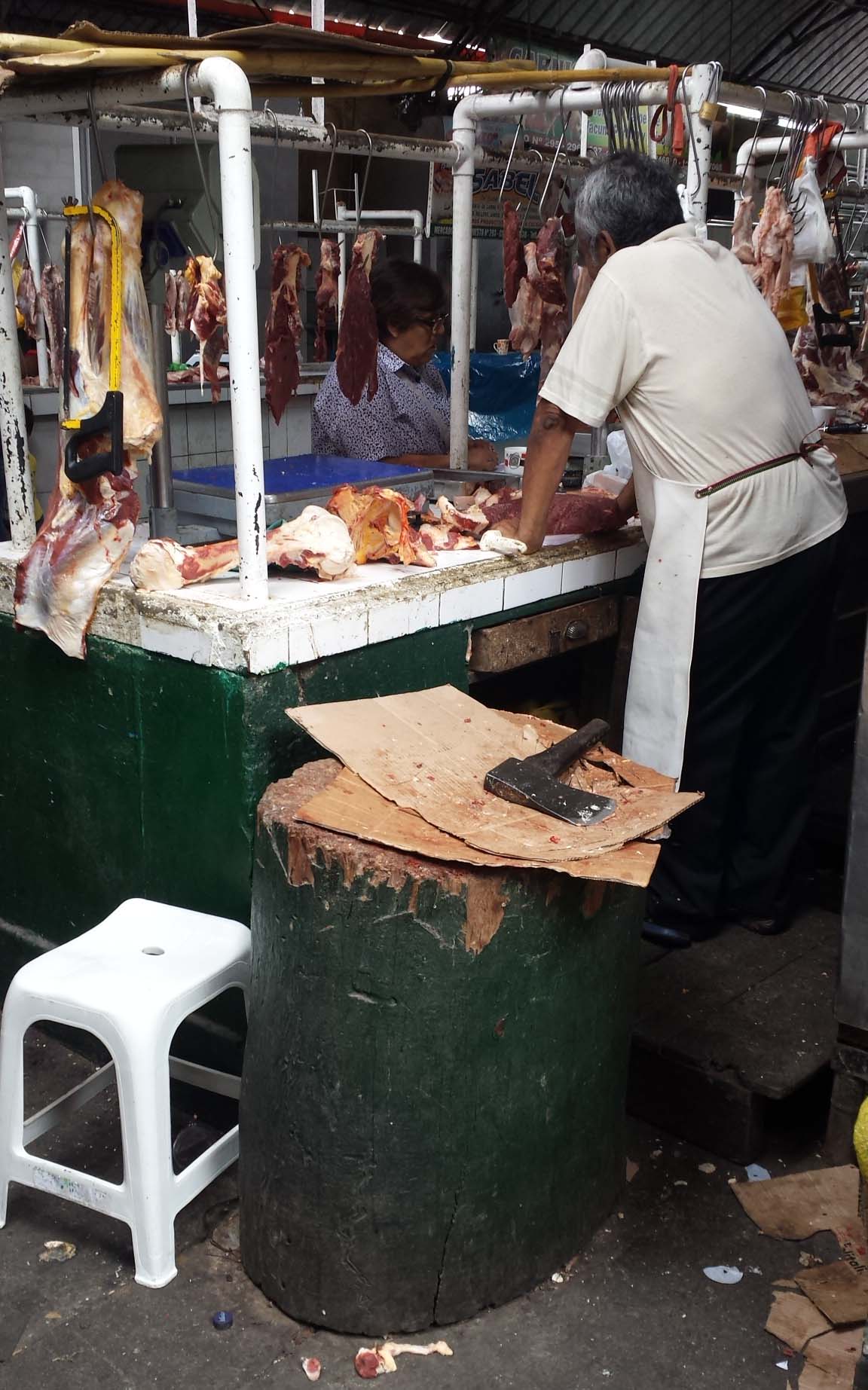
Twice a week around 9 am, we go to the local market complete with hanging raw meat, squelching liquid underfoot in the aisle of fish, and the scent of recently killed chickens. That may be the cost of fresh food, and it doesn’t bother me too much. When we buy fish, Jonathan lifts the gills to check for the slime that indicates a lack of freshness. My neighbor says that if you are going to buy corvina you need only poke it in the side because the flesh depresses very readily if it is at all stale. Sometimes, the fish are still alive, many are still in rigor, so you know that the fish is fresh. You can make sushi of anything we buy. Mahi-mahi appears occasionally and is not very well known, so it is inexpensive. We snap it up. The down side of this wonderful fresh fish is the large poster that hangs in the fish aisle listing the legal size of different fish species. You can see how much smaller most of the fish are than they are supposed to be. In the meat aisle, sides of beef and pork hang in the open, as do smaller cuts. There is a communal refrigerator that lets butchers keep their extra carcasses cold, so it’s not as scary as it might sound (raw meat in hot weather). Often the animals still have a bit of tail attached, to show that you are buying the real thing and that no one is selling you goat for lamb.
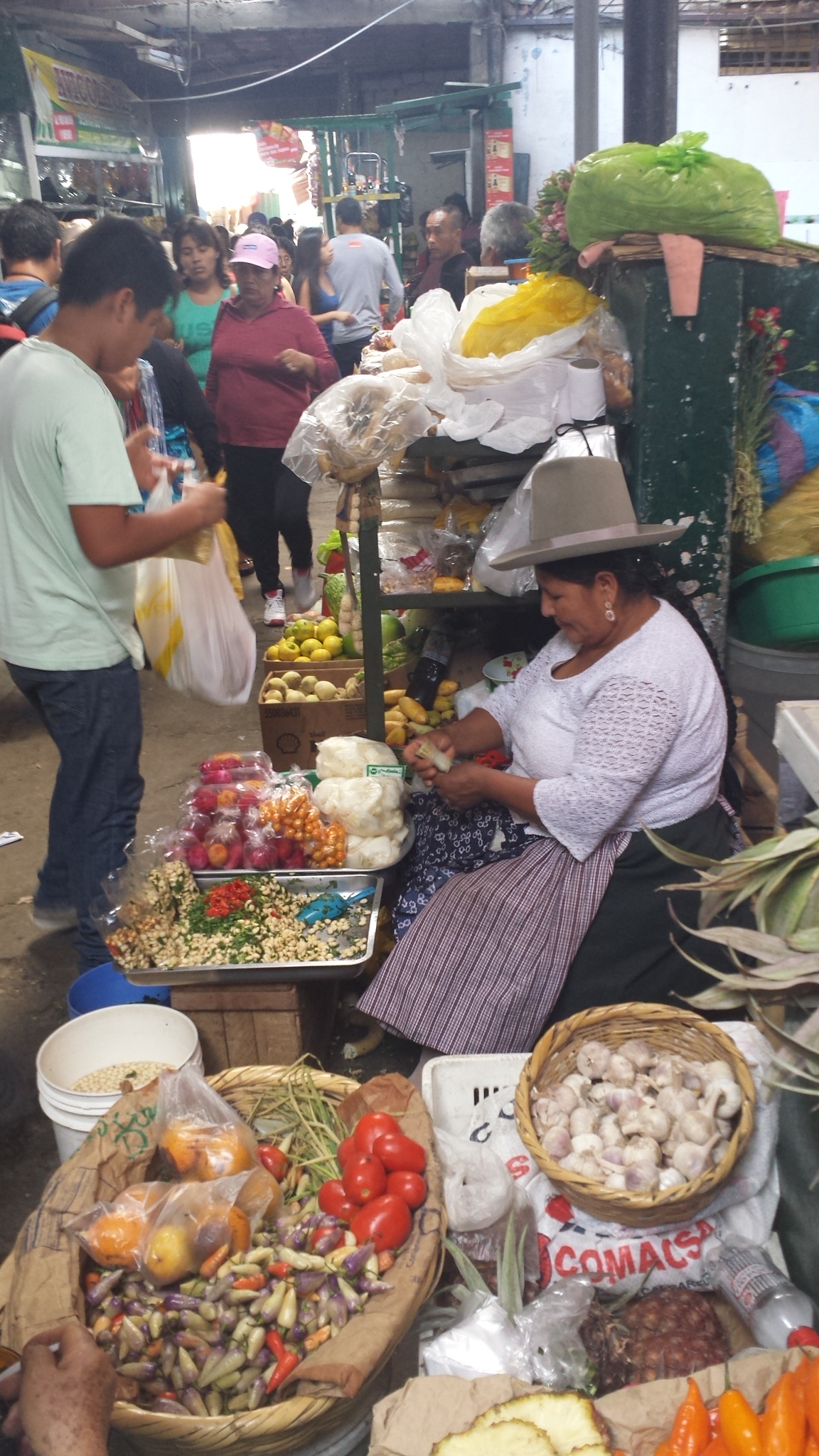
From fish to meat to vegetables and fruits, we take our grocery list and finish up the shopping. Fruit is last because we have to lug the four or five kilos of juice oranges back to the car. We drink a glass of fresh-squeezed orange juice every morning–I think it’s worth the haul. Sometimes we stop at a stand that sells black and green olives, dried fruit, nuts, cheese and bacon. There are several stands of this type, but we have gotten to know the woman who runs it, Elena, and her daughter (the husband was thrown out for cheating). Elena is fascinated by what it would be like to visit the US. She asks about traveling to the US and was enchanted to meet our daughters when they visited.
This woman’s hat (right) shows that she is originally from the highlands and still identifies herself as a highlander. Her dress is local, no multiple colored petticoats. Just the hat.
The man on the left (below) is selling hard boiled quail eggs. You can get them peeled or in the shell. The clown is a professional beggar. The guy on the right in Amazonian garb and python is selling–what else? Snake Oil!
Six years ago, we would have gone on to a dry goods store for the rest of our shopping, but a Metro supermarket has opened in Barranca. Now we go to the Metro and finish up our list. The advantage of a supermarket is being able to select your own items. The selection is not tremendous, but we are accustomed to this kind of shopping. In the dry goods store you stand at the front desk and tell them what you want. It is produced from somewhere in the depths of a very long, narrow storefront. Metro also has a liquor section, and takes our credit card. Outside Lima, only the supermarkets, a few gas stations and some restaurants accept credit cards.
Any other errands on the list come after the market, like stopping at the post office or getting paper goods at the Libreria Universo. This is why we limit shopping to twice a week. You could spend hours every day navigating the same route to get a container of milk or a roll of tape. There are only a few products that we buy in Lima, like Uruguayan parmesan–delicious! available!, a few other exotic cheeses (blue, brie), peanut butter (not Skippy, real peanut butter). We eat very well.
On to a less terrific element of our life, local culture. The beach is the focus of activity, but what else goes on? The short answer is not very much. You have to make your own entertainment. There’s a movie theater now, but all the films are dubbed in Spanish. That makes perfect sense but not for me. There are archaeological sites to visit, many of which we’ve worked at, so there’s not much new there. There are some local festivals. Last weekend I saw part of the parade at the end of Barranca Tourism Week.
This slideshow requires JavaScript.
I saw Miss Regional Tourism, and Miss Argos, and Miss Pre Barranca, along with a big banner and some local dance groups. It was fun that it was right on our street. For our periodic shot of “culture”, we go to Lima to see the Met Opera in HD at one of the big movie theaters. It’s great, it’s the Met. The four+ hour drive is a pretty big disincentive to any cultural offering in Lima though there are a lot of goings-on. I keep clippings about exhibitions or events we might go to, but we try not to visit Lima more than once a month. In the summer (now) it is very hot and very humid. Between that and the traffic, staying home and trolling Netflix wins out most of the time. There are things like archaeology lecture series that might be a way for us to connect with colleagues, but these take place during the academic year, mid-March to December, when we are away.
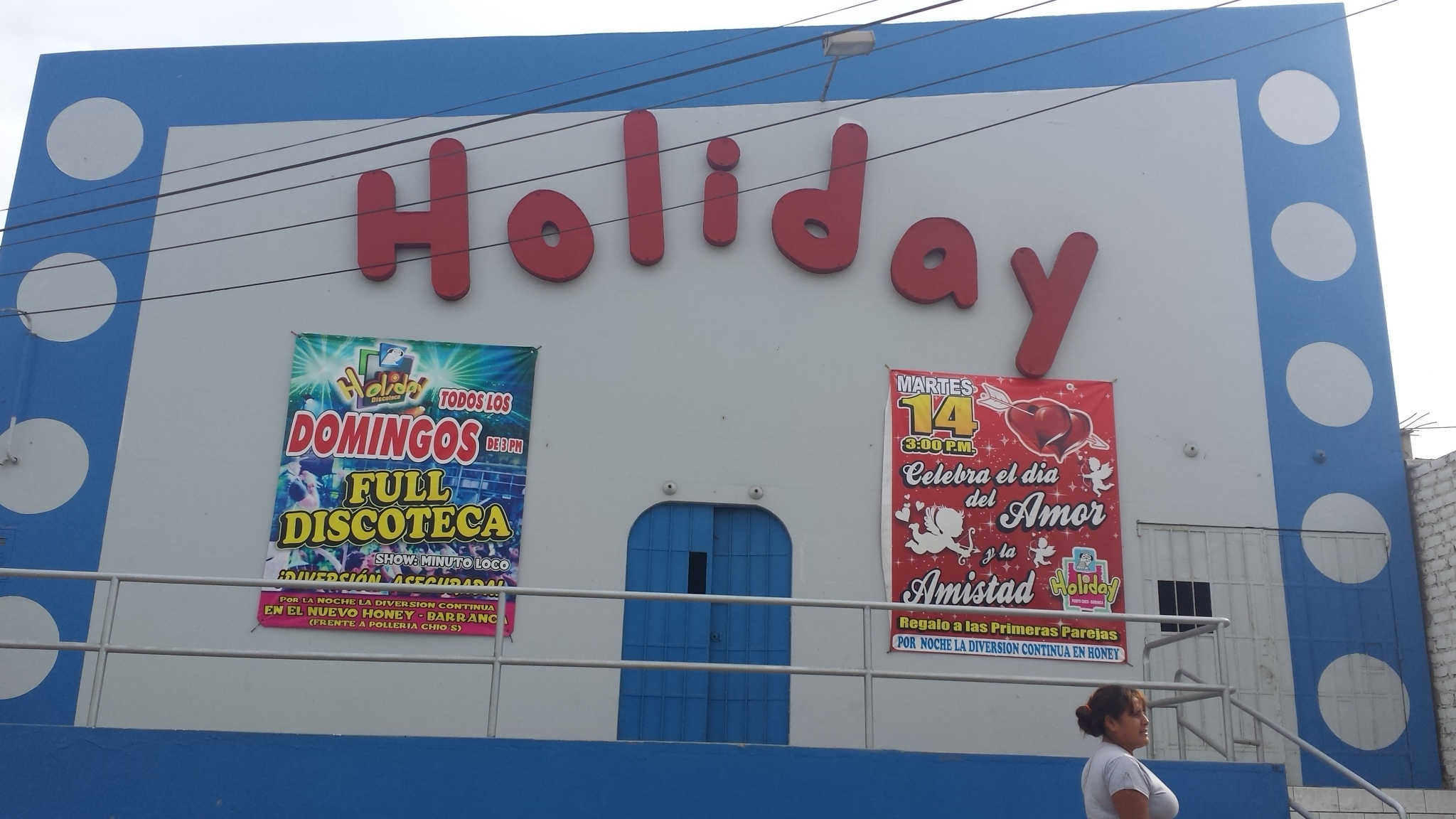
Last but not least are discos. This is a beach community and lots of businesses operate December-March, including several dance places that I will lump together as discos. They pump music across the neighborhood until midnight or so on weekends. The thumping beat is not very interesting and the volume is loud. On Sundays, discos are allowed to throw parties from 2-10 pm. I give them credit for closing on time, but it’s a constant Boomba-Boomba Boomba. In fact, the most annoying party of the year was not at a disco but at a hotel up on the hillside where the reception went on until 5 am. THAT was bad, but what happened? Everyone shrugged. The neighbors band together and petition the city to limit and/or close the discos about every other year. The city fathers agree to study the matter…..
What is it like? Expat Life in Peru? First I didn’t want to use the word expat, but I do spend four or five months a year in Peru and most of the rest of the time traveling. My situation may be a bit different than others because I am more mobile than fixed, but if an expat is someone who lives mostly outside the US, for now that includes me. I started to write about what life is like and ended up with a long laundry list of what is good about it and what isn’t. Instead I’m going to post a positive story and a less positive story every day or two for a while.
I didn’t specifically choose to live outside the US. I am now spending four to six months each year in Peru because it is pleasant and we have a wonderful house here, not because Peru has an especially strong pull on my affections. I have neighbors I am fond of and who I look forward to chatting with. At the same time, I have no plans to apply for residency here, and in the long run, whether in two years or ten, I plan to relocate to the US.
Accepting that I am in my present location in a kind of coincidence, what makes it worth staying for? Location, location, location. I live across the street from the Pacific Ocean, and we are in Peru during the Austral Summer, November-April, when the temperatures reach just over 80º F and the breeze keeps us cool. It’s not always cool, the humidity is often high and you can feel sticky. That’s usually just enough of a push to get me to go in the ocean.
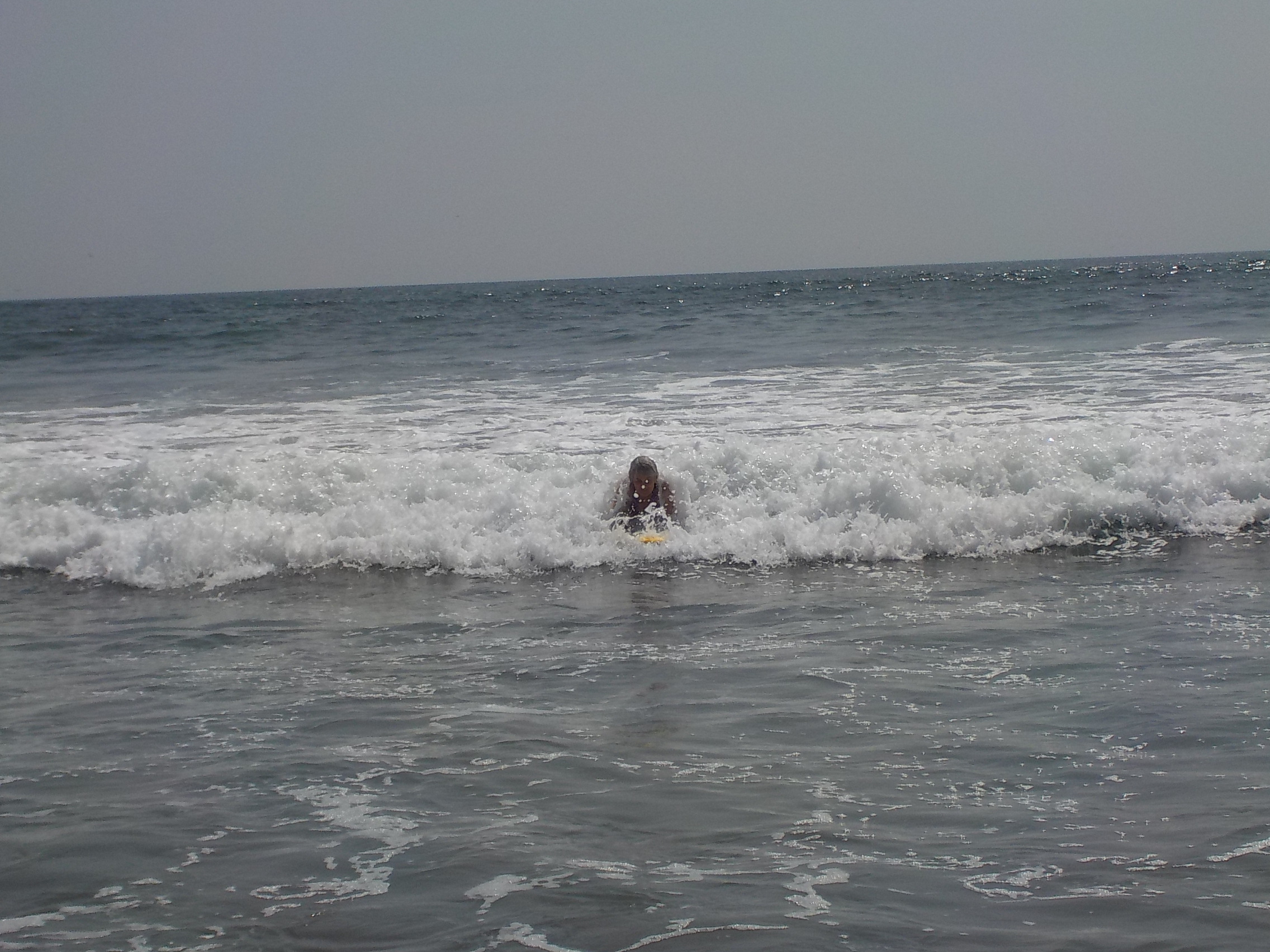
The Pacific is cold here, with the Peru/Humboldt current just offshore coming from Antarctica. In December, my first dip of the season lasted about a minute, most of it spent slowly, slowly wading into the frigid water and feeling my legs go to sleep. I ducked under and rushed out. By mid-January, the temperature has moderated enough that everyone agrees that the water is “refreshing”. I usually wear a cap sleeve, legless wet suit and that makes it just comfortable enough to stay in for a little while. I always take my bodyboard (We don’t call them boogie boards anymore) and I ride waves in to shore. I probably don’t every go even as far as 100 yards on my longest ride, but you get the same rush from riding on a body board that you get from pushing off at the top of a ski slope, and it’s easier on the knees. I am the oldest person with a board by about 50 years, looked at as an amusing quirky figure on the beach. Sometimes being a foreigner lets you do things that others don’t. I keep waiting for others to join me.
Between Christmas and the first of March, a number of neighbors spend part of every day on the beach. With or without umbrellas, people emerge around 11 am and leave when it is time to have lunch, somewhere between 2 and 4 pm. I can sit down and chat with whoever is out for as long as I want before or after my swim. My pattern diverges from the general one because I often work on an archaeological report in the morning and go out to swim at midday. I don’t spend as much time on the beach as some people do. I get pretty tan, but I don’t want to get any more sun than I already do.
Totally unrelated to the wonderful beach but crucial to living in a developing country like Peru is access to the internet, which we obtain through the phone company, Telefonica. This is my not-so-wonderful story. Telefonica is a big Spanish company and has provided our fixed phone and our wifi since we arrived. Wifi has been available for more than ten years and was a BIG help during the research project because everyone wanted to read their mail in the evening and we only had two desktops with cable internet. Further, people used to download all sorts of files with viruses attached. We had to have a technician come in once a month to clean off the unwanted programs. Good thing ransom-ware hadn’t been invented back then. Our service is generally good, but when we have problems, it is a struggle to get someone to come and fix it. Occasionally, the problems we have with internet, like getting dumped off the connection every five minutes, seem like a technique of Telefonica to reduce the number of simultaneous users. Now that everyone has a cell phone and access to the internet the system is easily overloaded. By shaking everyone off every few minutes, people are discouraged from whatever they are doing and free up some space. Thus, all users have the sense that they have service, though it may be for just a few minutes. Some days when we make a skype call to family members, we say goodbye first so that when we’re cut off we don’t have to call back to say goodbye because that can take another 15 minutes.
Weird local observation of the day: The garbage truck slowly moves down the street honking its horn to remind people to bring out their trash. Jonathan points to the back and says, “Look at that!”. I look at the back and see…..a full grown dead sea lion lying in the back of the garbage truck. I don’t even know how they got it in, it must weigh 500 lbs and there are only two skinny guys who collect the bags. Hmmm.
Not much new this week, but some memorable images.
Camping on the beach is a part of summer here. Having spent several summers camping on archaeological research projects I say it looks a lot more fun than it is.
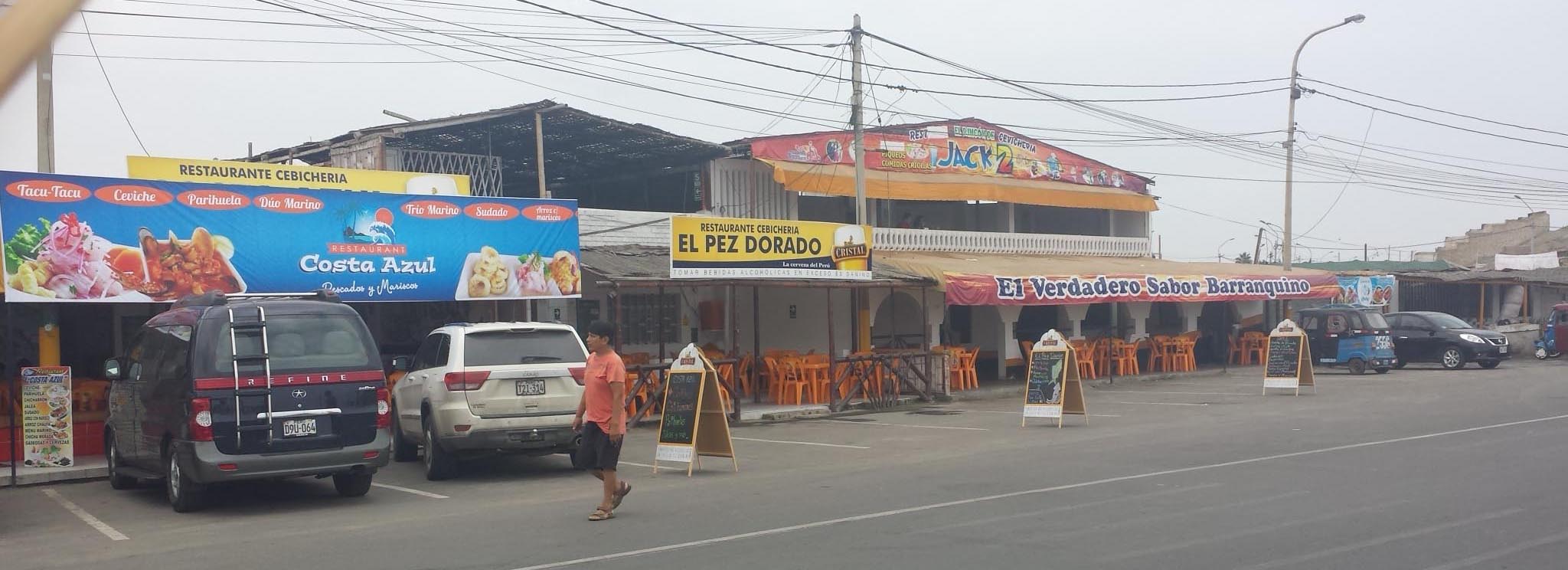
A number of beachfront restaurants open for the four-month summer season.
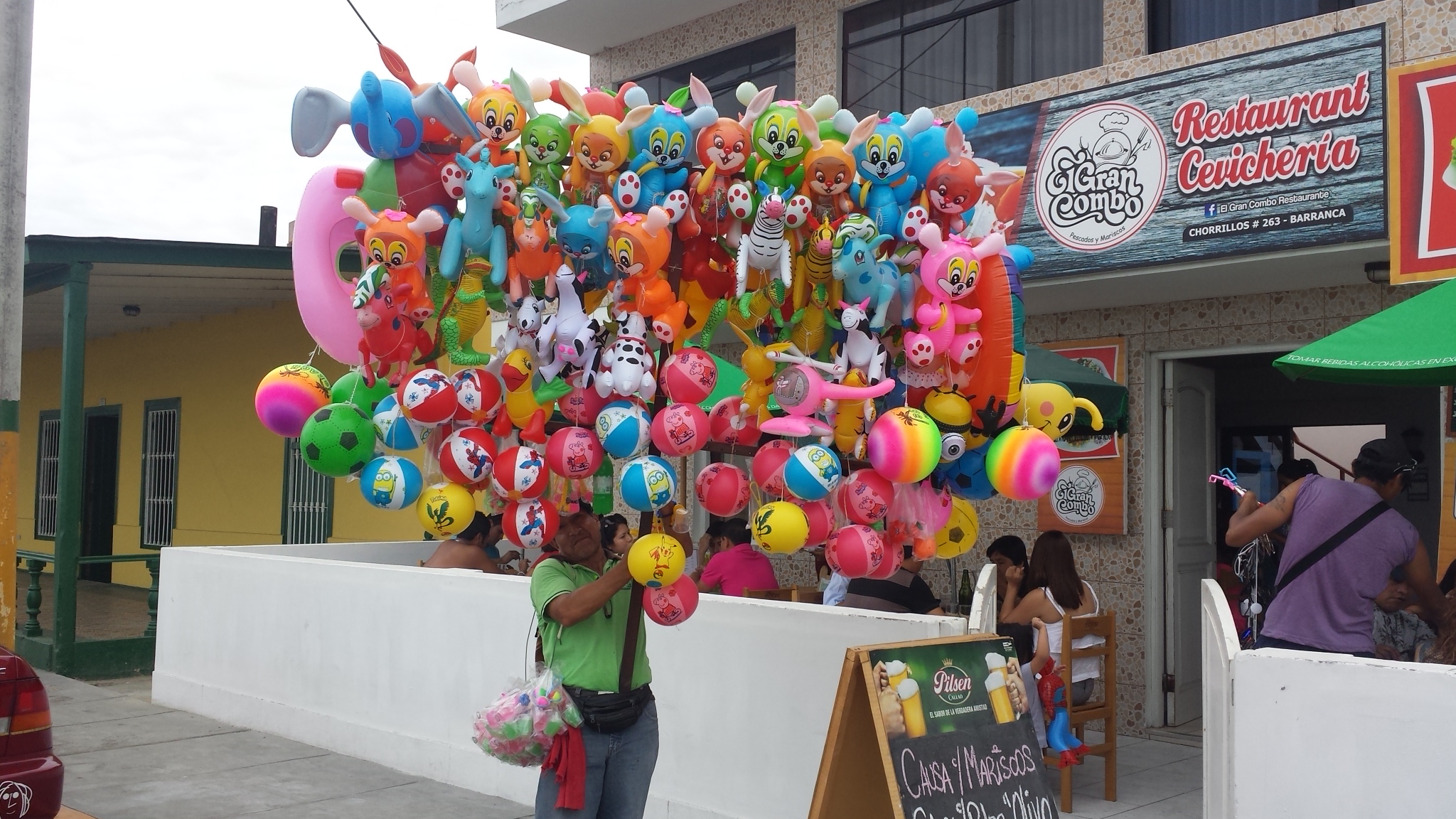
Here’s a color-coordinated vehicular blast from the past.The balloon vendor has just sold balloons to three little girls: a pink cartoon pig, a Pikachu, and a Spiderman. To each her own.
Summer is going full tilt. The air is warm and humid most of the time, and the ocean is not as cold as it was a few weeks ago.
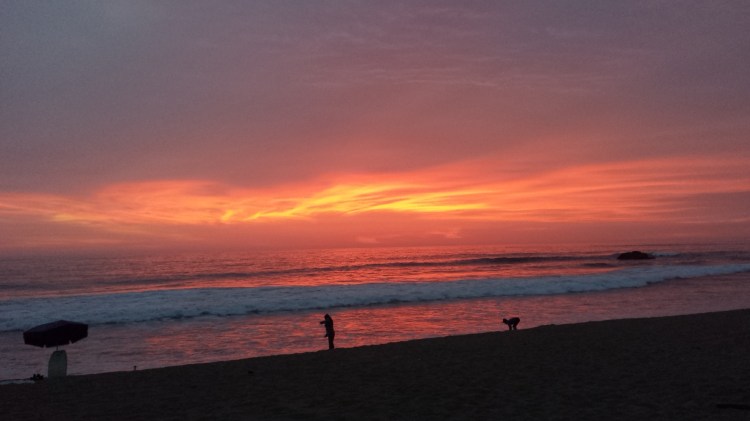
On the left is the rocky point at the south end of our bay. On the right is a recent sunset. We have many, many sunset photos, but sometimes I still want a new picture.
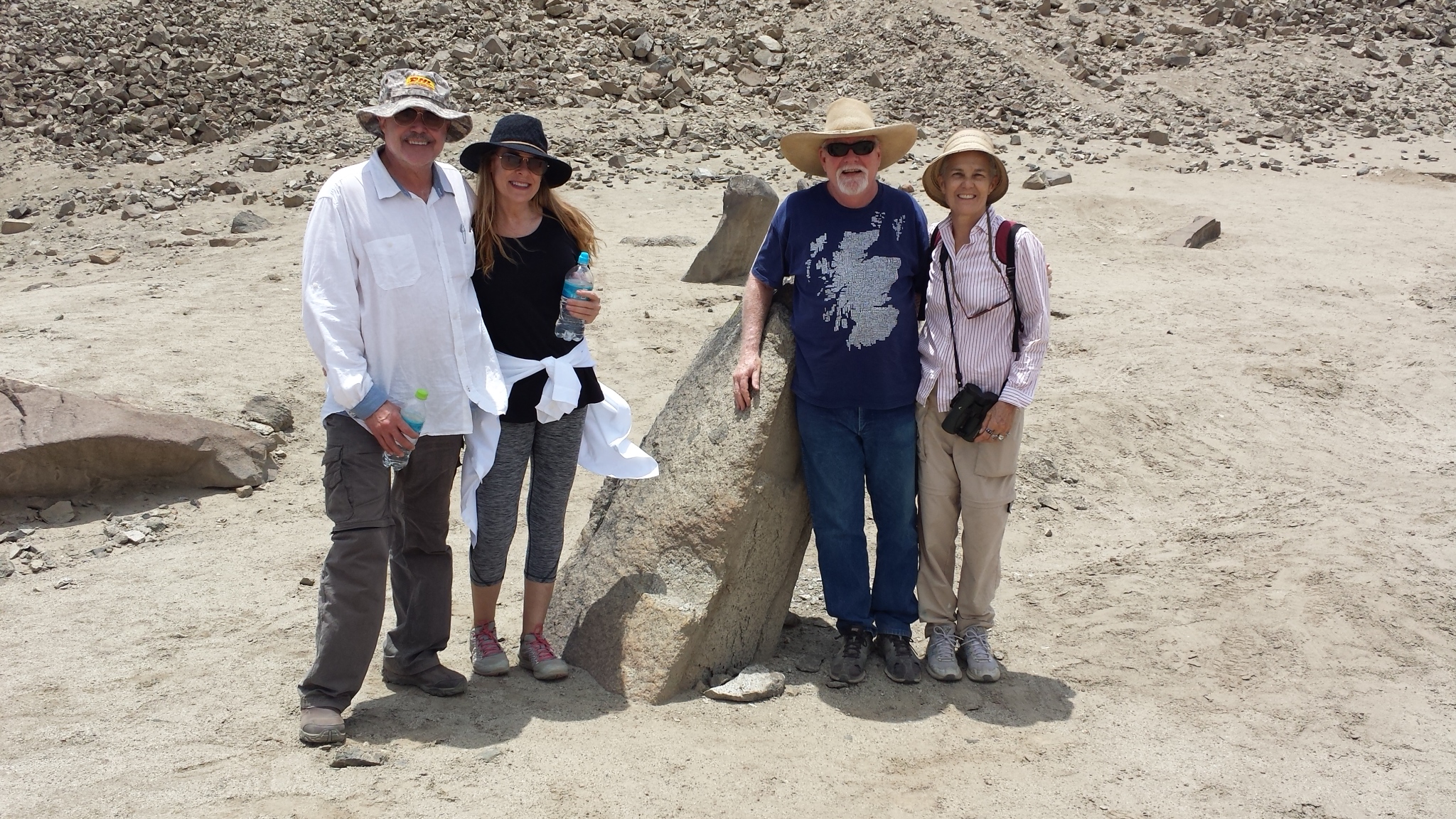
Our friends Mark and Marcy were here for a few days and we visited the archaeological site of Caballete. It was hot and almost clear, but there was some breeze, so we didn’t roast. The summer can be really hot out in the desert.The upright stones near us used to form a circle, but so many people have dug under them to look for gold that they’ve all fallen over. No gold has been found…..
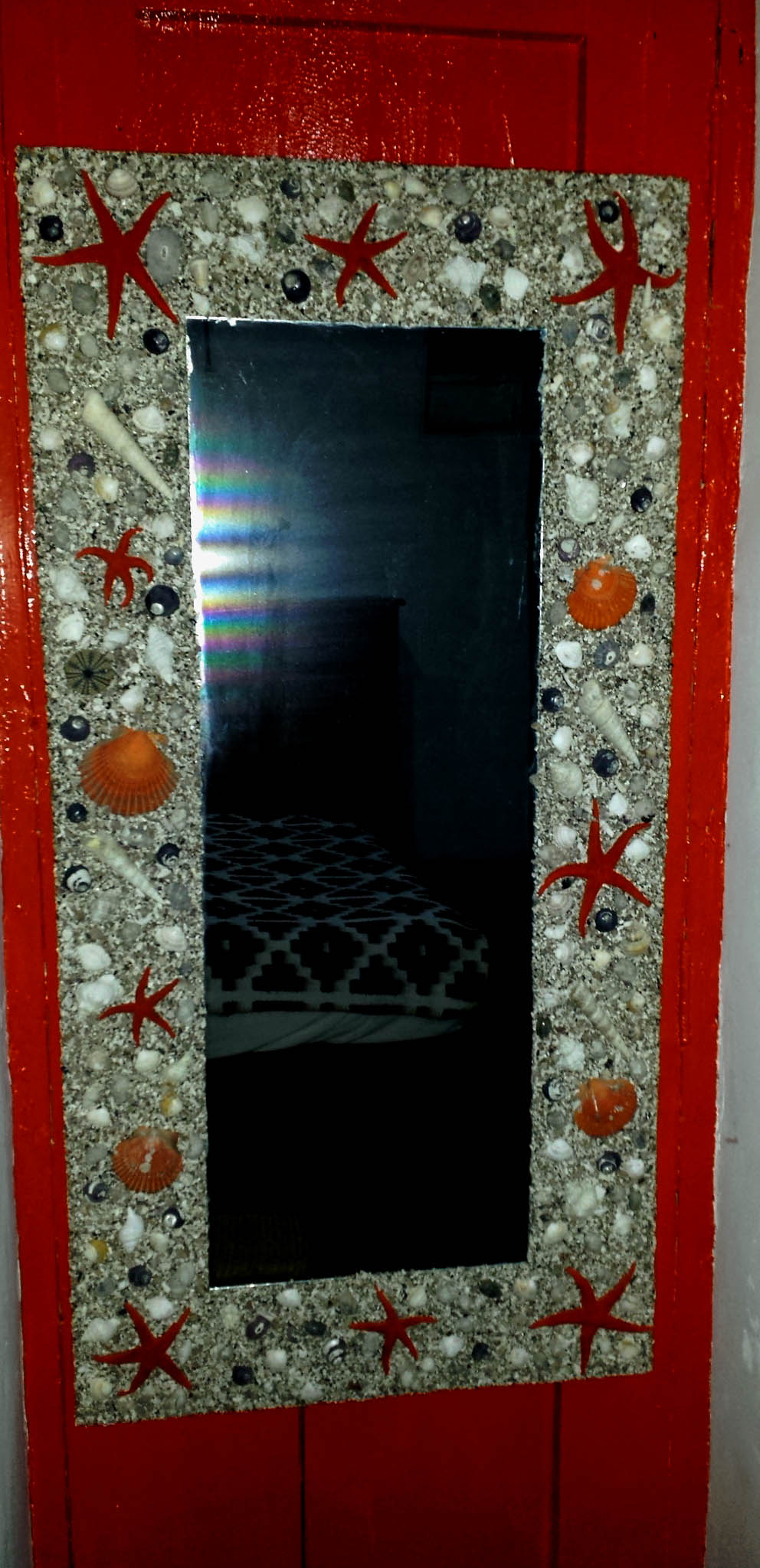 Walking along the beach one afternoon, I stopped at one of the places people sell things to look at a mirror. It was the perfect color for our guest room, so after visiting it a couple of times, we bought it.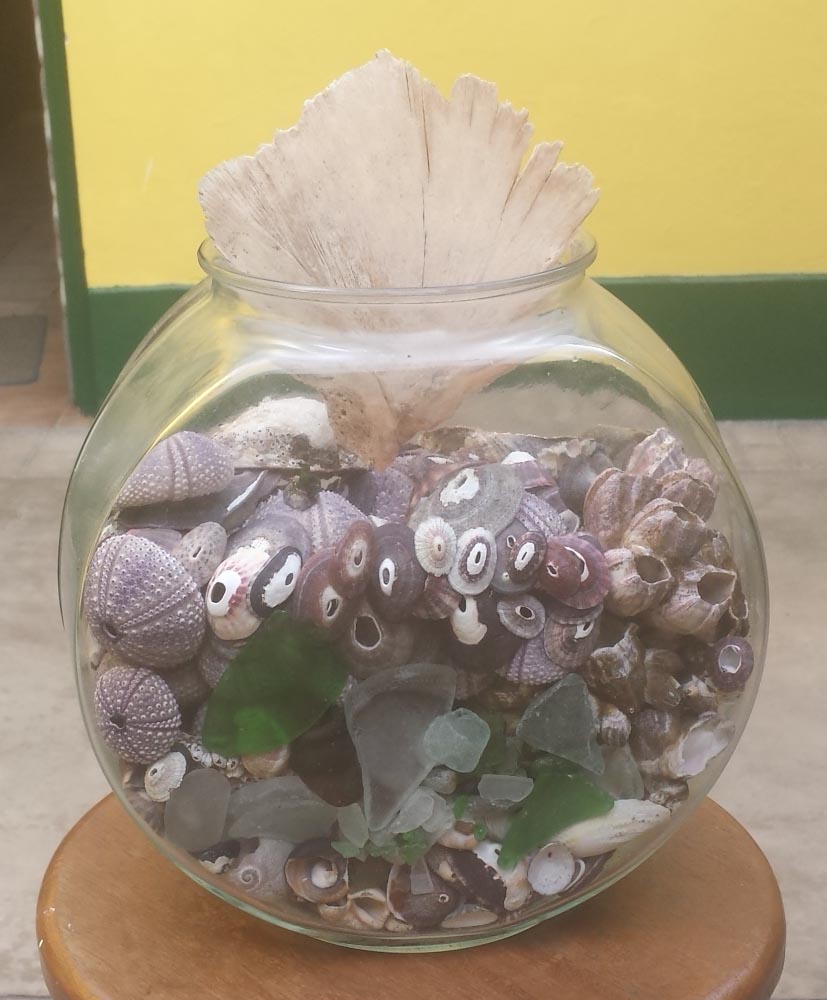
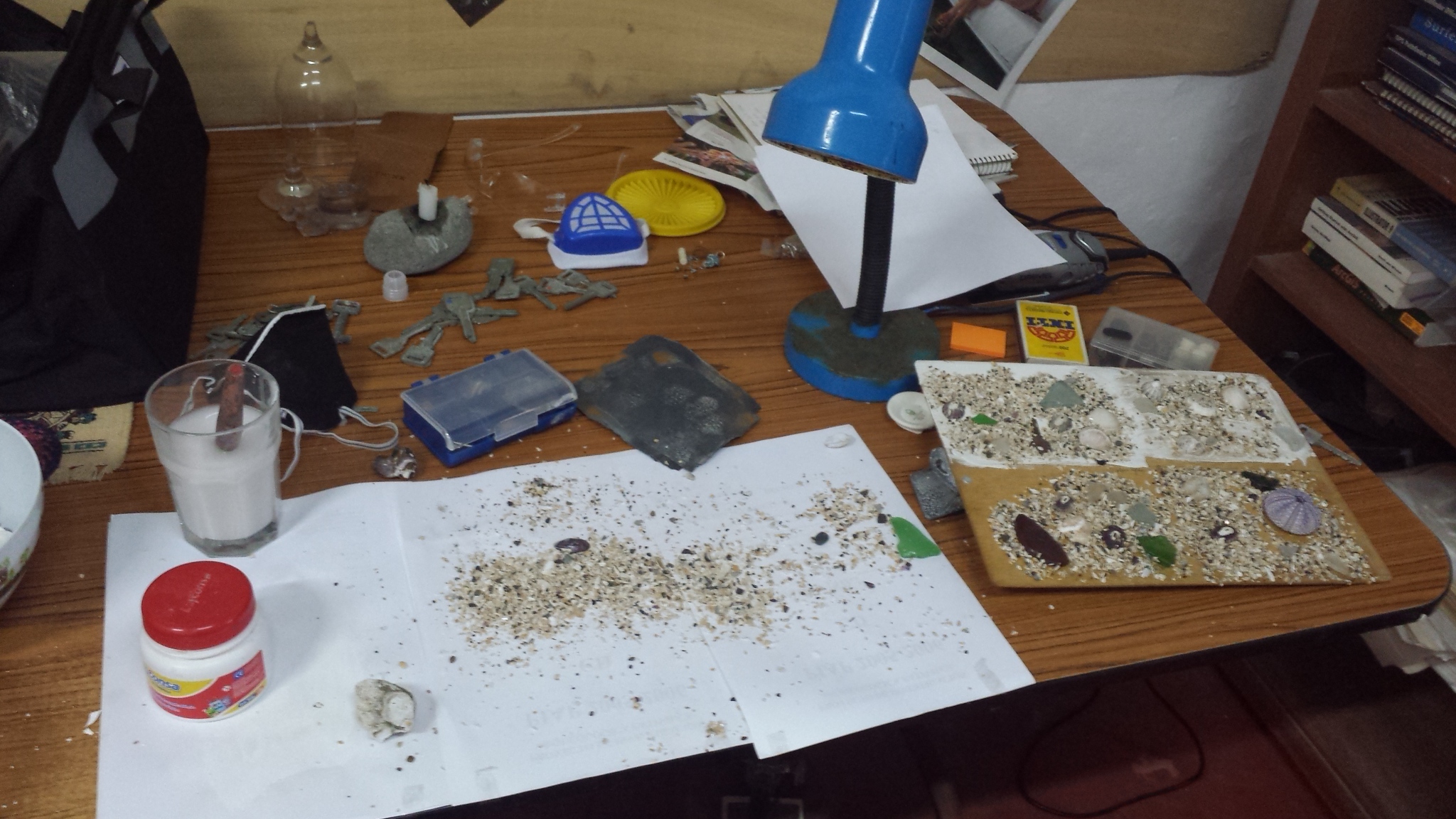 I had a wide frame made. My experiments with whether or not to paint the background white are visible on my work table on the right. I went out to the beach with a strainer to collect crushed shell for the background.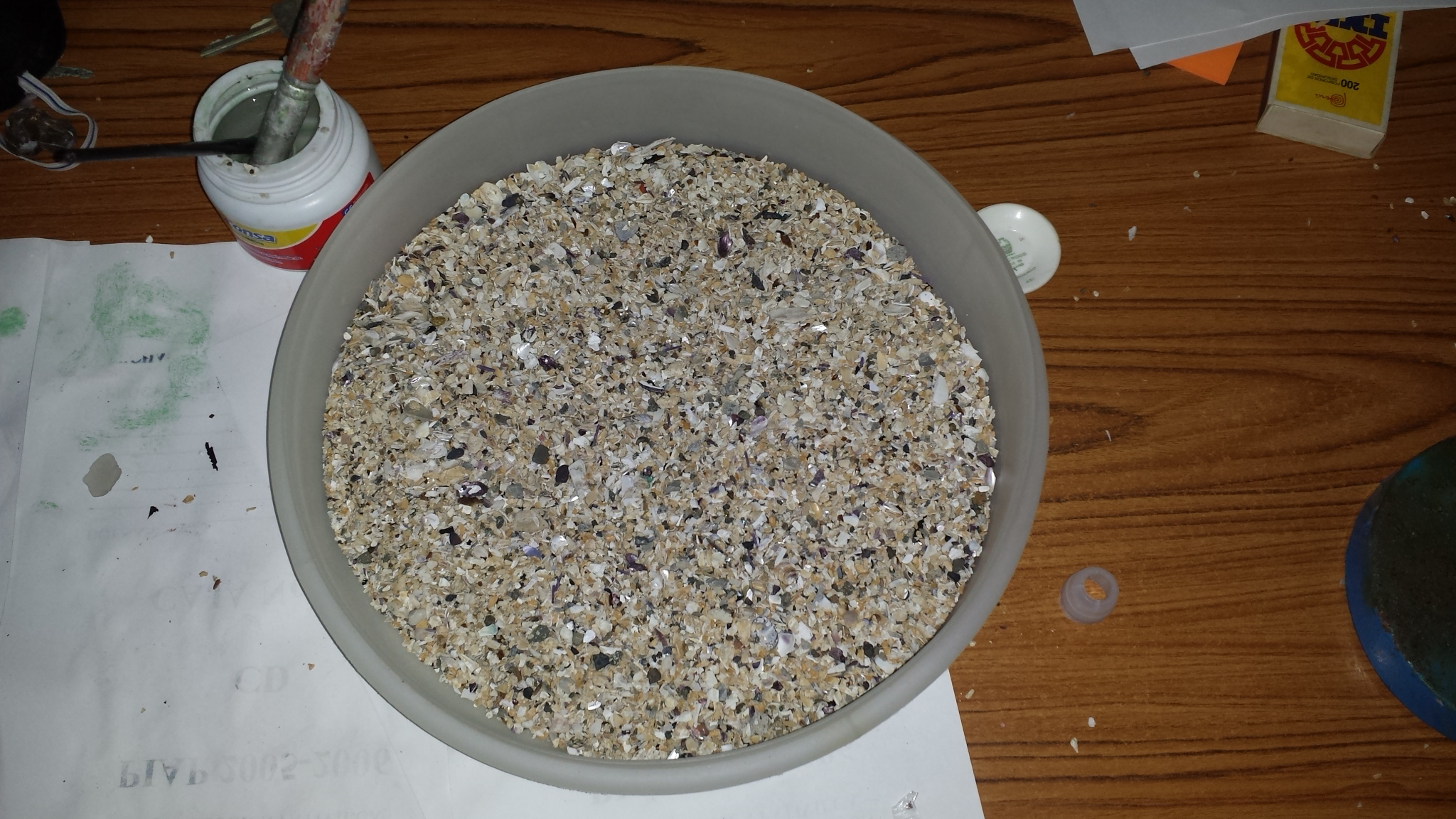
 I always think that birds are a good part of any composition.


 Tonight I’m waiting for the glue to dry on the mirror. I also used screws. Finally, it is all done and the bare spots touched up. Now we’re not sure where to put it…..the spot I’d picked out is behind part of a door and I don’t want to risk breaking the mirror with a bump from a door handle.
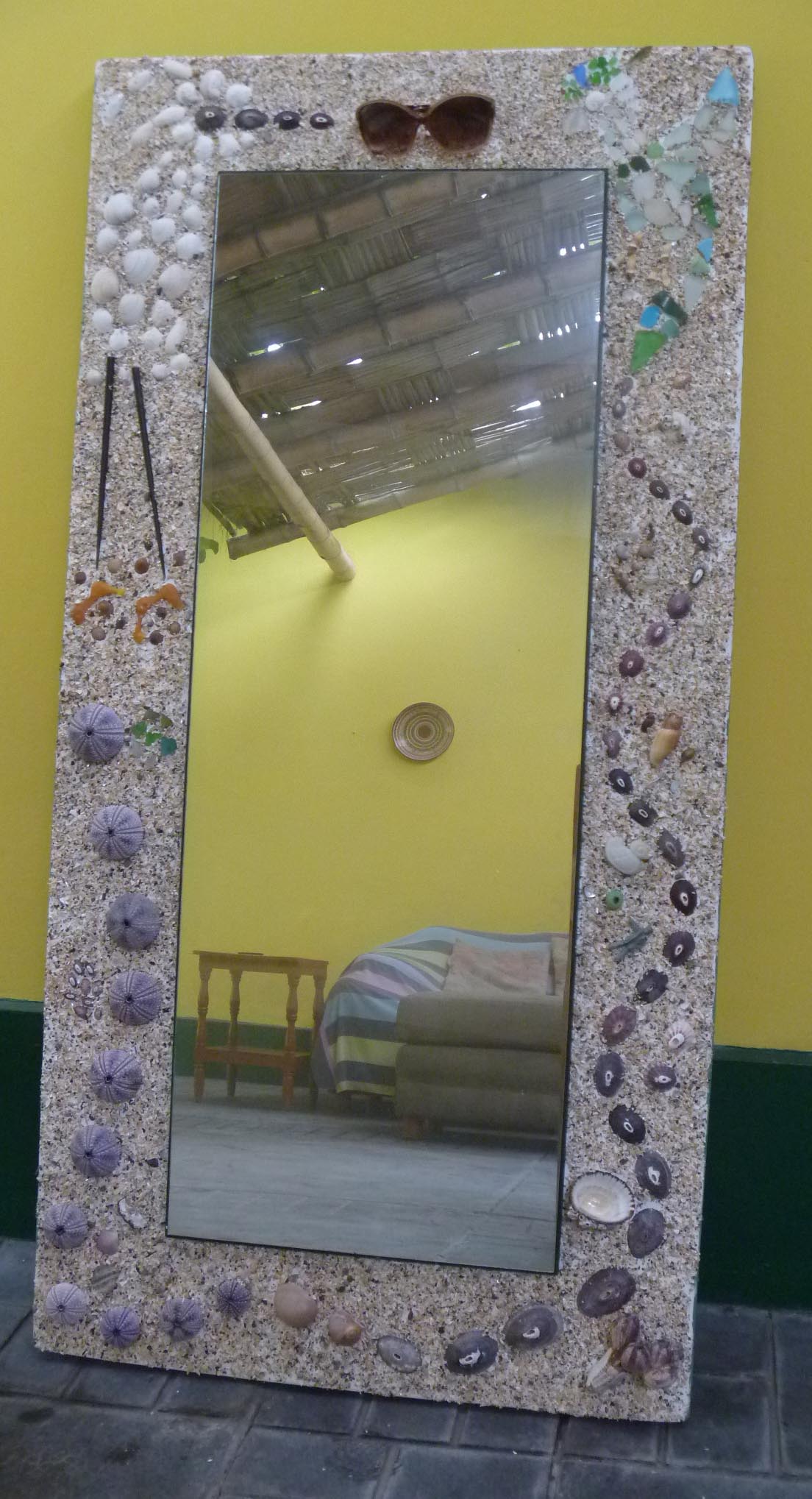 A word of advice. I used materials I already had, including a piece of mirror on a wood frame and paint that was in the shed. Thus the mirror is a bit heavier than it might be, because I didn’t detach the mirror from it’s wood surround–I painted the black edge with green paint. I also used white house paint for the background under the glue and I used teal floor paint around the outside edge of the frame. You can’t see any of this, yet I ended up using paints that required three different solvents (water, paint thinner, epoxy thinner). I didn’t have to buy any of these things, but it was more to clean up.







 This is KarelÍ–we struck up a conversation when I noticed her pet parrotlet. She adopted him as a baby with a broken wing. She’s on her way to Colombia with a couple of friends, hoping to stay there a few months and then make her way back to Argentina via the Peruvian Amazon and Brazil.



 at 6 am followed at a more reasonable hour by free surf and body board classes and some music, but the big event was the marinera dancers and caballos de paso in the square in front of the Virgin at well–maybe noon, maybe one pm, maybe a little later.
 El sabado empezó con unos cohetes a las seis y mas tarde con clases gratis de surf y body ademas de musica pero el gran evento fue la baile del marinera y los caballos de paso en la plazuela frente la capilla de la Virgen a mediodia—tal vez a la una, o mas tardito….. Afortunadamente nuestra patio frente la casa esta muy cerca y pudimos quedar en la sombra. Ofrecemos nuestro patio a los bailarines cuando llegan porque tenemos sombra y hico mucho calor el dia de fiesta el ano pasado y este ano. El nivel de alegria subio con la espera.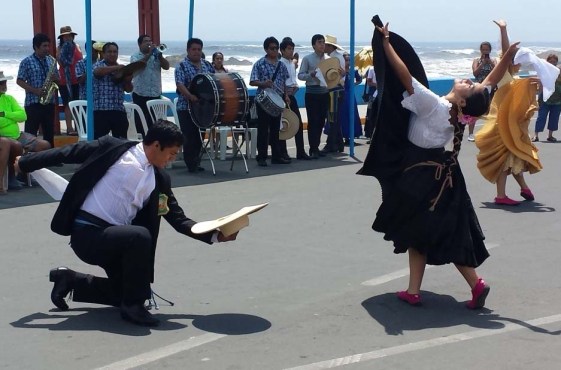
 Next was the Marinera with Caballos de paso. Caballos de paso are a breed developed after horses arrived with the Spanish in the early 1500s. They were developed primarily as long-distance transportation, emphasizing strength and a smooth ride. Caballos de paso have a distinctive gait and though they were used for centuries as transportation on large agricultural properties, today they are largely recreational and show horses. The dance of the Marinera between a woman on foot and a male rider on a Caballo de paso shows careful control of the horse combined with the grace of the dancer. In the best Marineras of this type the woman is able to dance close to the rider because she is confident that the horse will stay fully controlled and will not spook or step on her.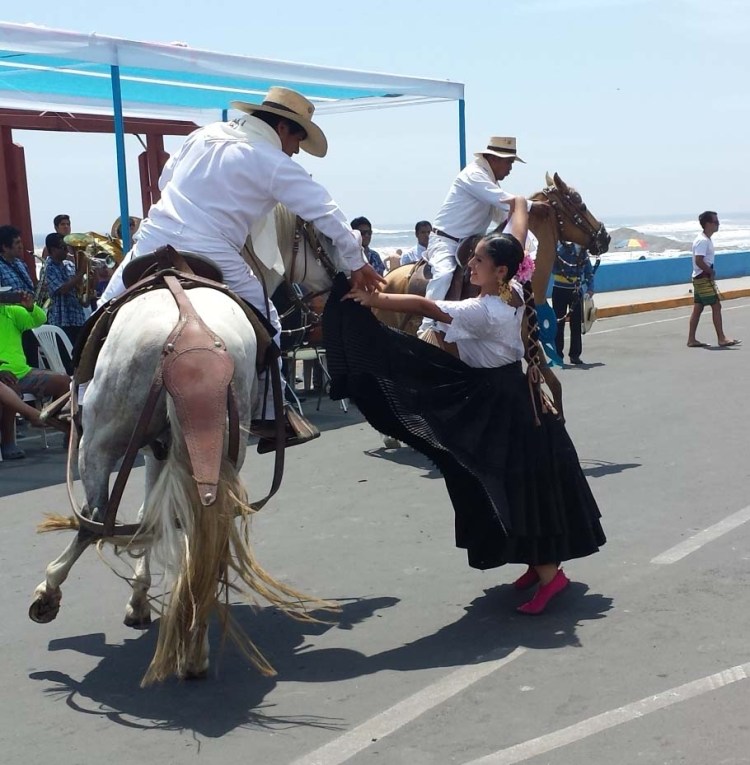
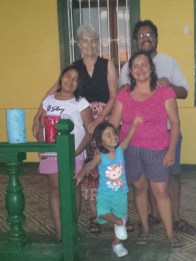 It was hot by the time the dancing ended, we all retreated for lunch. Our friends Mario and Carmela and their two wonderful daughters came up for the weekend, so we were able to go for a swim, walk the dog along the beach and make luminarias for the procession of the Virgin. We were busy.
 At sunset, we lit the luminarias and waited for mass to end and the procession to begin. Naturally, we were just sitting down to dinner when they started to move so we abandoned the table briefly. The procession went down the beach and back, and the Virgin returned to her chapel.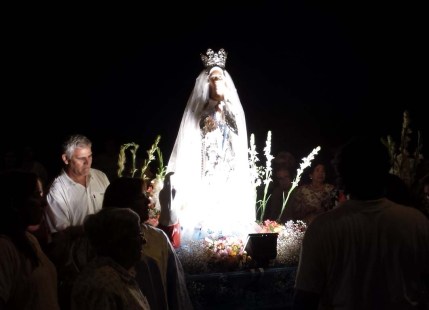












 Llywindatravels 2025