Good to know about Cuba

Internet

There is no internet in Cuba. If you believe those who say there is limited access depending on where you are, you will waste a lot of time trying to connect to systems that have the broadband width of a human hair. Turn your devices off, bring a book to read and try not to think about it. Leave a phone number to be used in case of emergency—there probably won’t be one.

Travel

We went with a tour (see US Citizens, below). I have no useful information about either air or ground travel to or in Cuba because we had pre-arranged transport. Taxis are relatively expensive in Havana ($15-20 each way to the Tropicana and more if you take a vintage ride). As I mentioned in a previous post, we went with Insight Cuba and were very satisfied with the Cuba portion of our tour, and had excellent guides. We were less than satisfied with our pre-tour contacts, orientation and information.

Shopping

Cuba is schizophrenic right now. Some items are inexpensive, such as souvenirs at the many kiosks around interesting sites and in downtown areas like Old Havana or Trinidad. 10-21-16-trinidad-015Souvenirs purchased during visits to artist’s studios are enormously overpriced and rely on captive tour groups to purchase them before they find out that you can purchase a similar item for 2/3 less elsewhere. Art purchased from studios also varies wildly in quality and price. Artists who have been “discovered” by the outside world ask high prices, while undiscovered artists have more modest prices. 10-19-16-havana-021
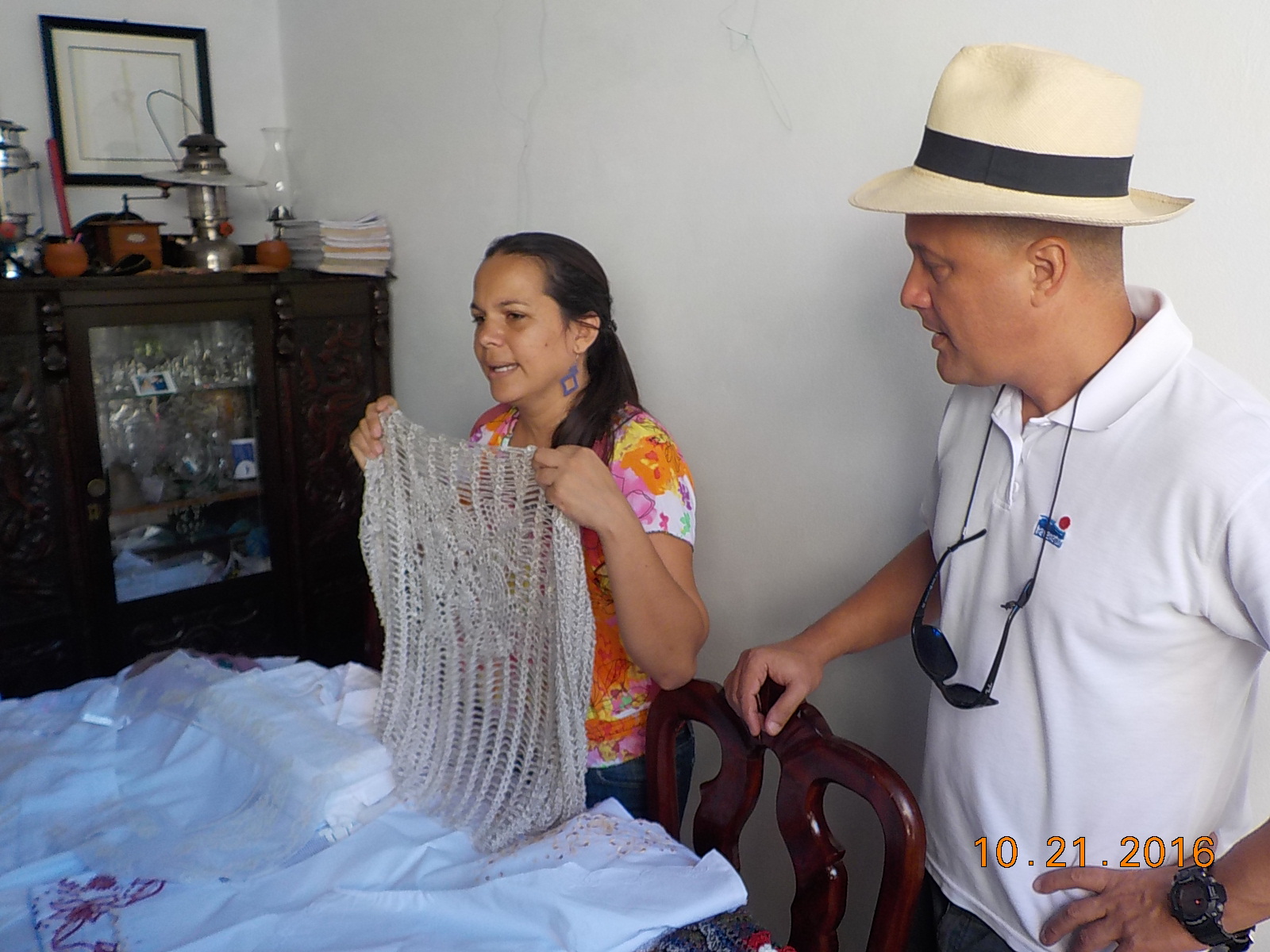
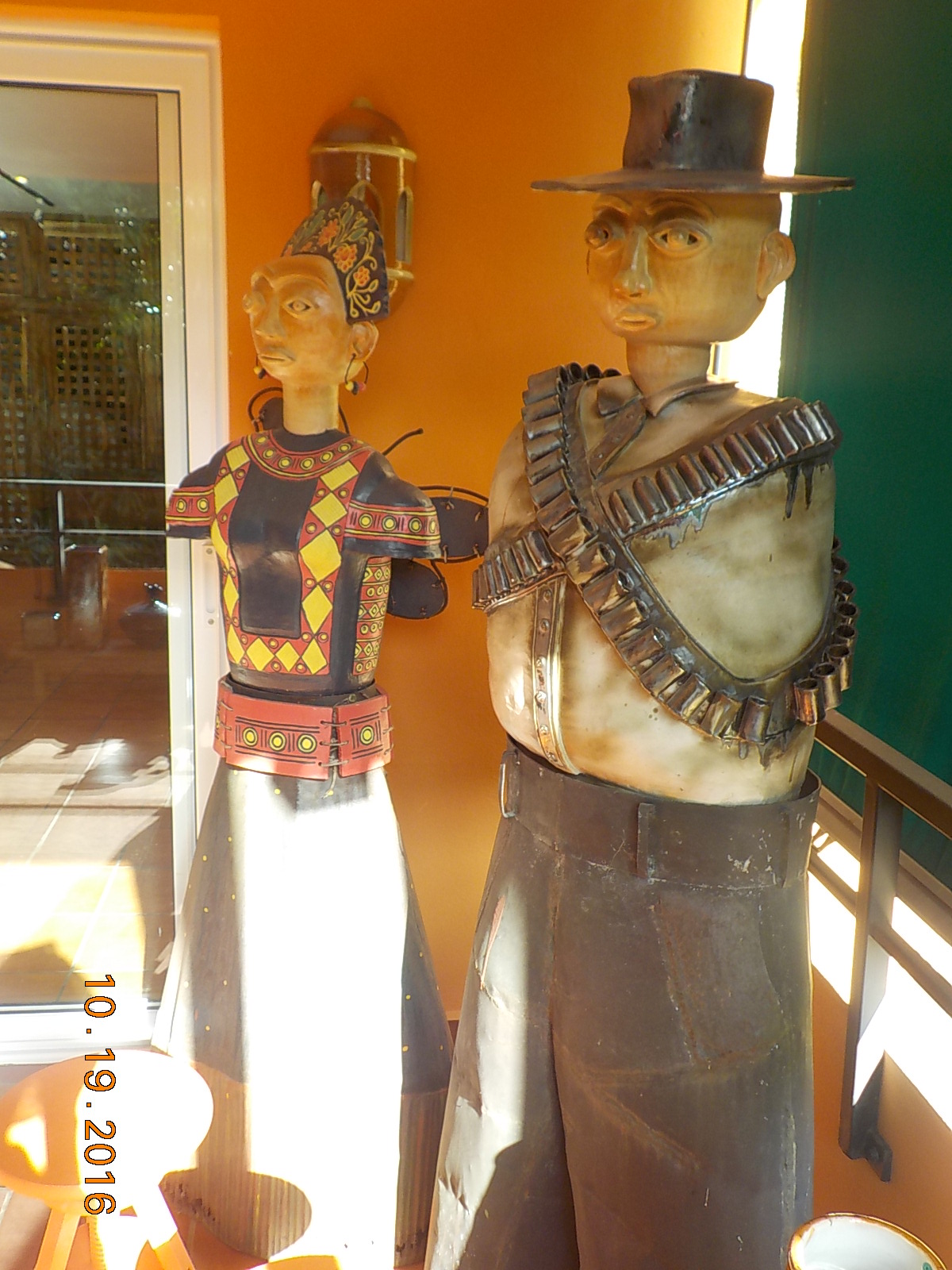
We visited a gallery where the artist recently returned from a successful show in Minneapolis and tripled his prices. He is still selling and his work is very skilled—can we begrudge him this good fortune? Beware the artist who has merely tripled his prices without displaying commensurate skill!


Money

Cuba has an unattractive exchange rate. Each Cuban convertible peso (or “kook”) costs US$1 plus 13%, or US $1.13=CUC $1. There is no legal alternative to this exchange rate and it seemed unwise to inquire about a black market of currency. Cuba also has a currency called the Cuban peso (or CUP) that is not technically available to foreigners. US $1= CUP 23. A foreigner can possess this currency but it cannot be used in most places tourists visit. These CUP can be used in some stores and ice cream parlors where subsidized goods are sold. Thus nine of us ate ice cream one evening for CUP 24.50 or slightly more than US $1. We didn’t realize that the ice cream place only took CUP when we went in and we were amazed by the price (Our Cuban guide came along and paid our bill). On the other hand, there was only one flavor. Everyone in Cuba receives a ration book for highly subsidized food products each month with prices payable in CUP. That effectively eliminates hunger in Cuba because everyone gets rice, beans, oil, coffee, sugar and a few other things at minimal cost. There is probably a lively black market in these items, but our tour guides didn’t discuss it.

….and Tipping

An unanticipated outcome of the currency system is that tipping itself is a major industry in Cuba. We were told that a typical salary in Cuba is US $20 per month, or 460 CUP. A US $1/1 CUC tip therefore amounts to 5% of a regular Cuban salary and consequently even the woman who tends a restroom and receives twenty-five cents CUC per person has the potential to make far more money than a person at a salaried job. Restroom attendants clear away all the small change and leave 1 CUC coins in their little dish so that if you are confused about the cost of a pit stop you can feel free to leave them a dollar/CUC.
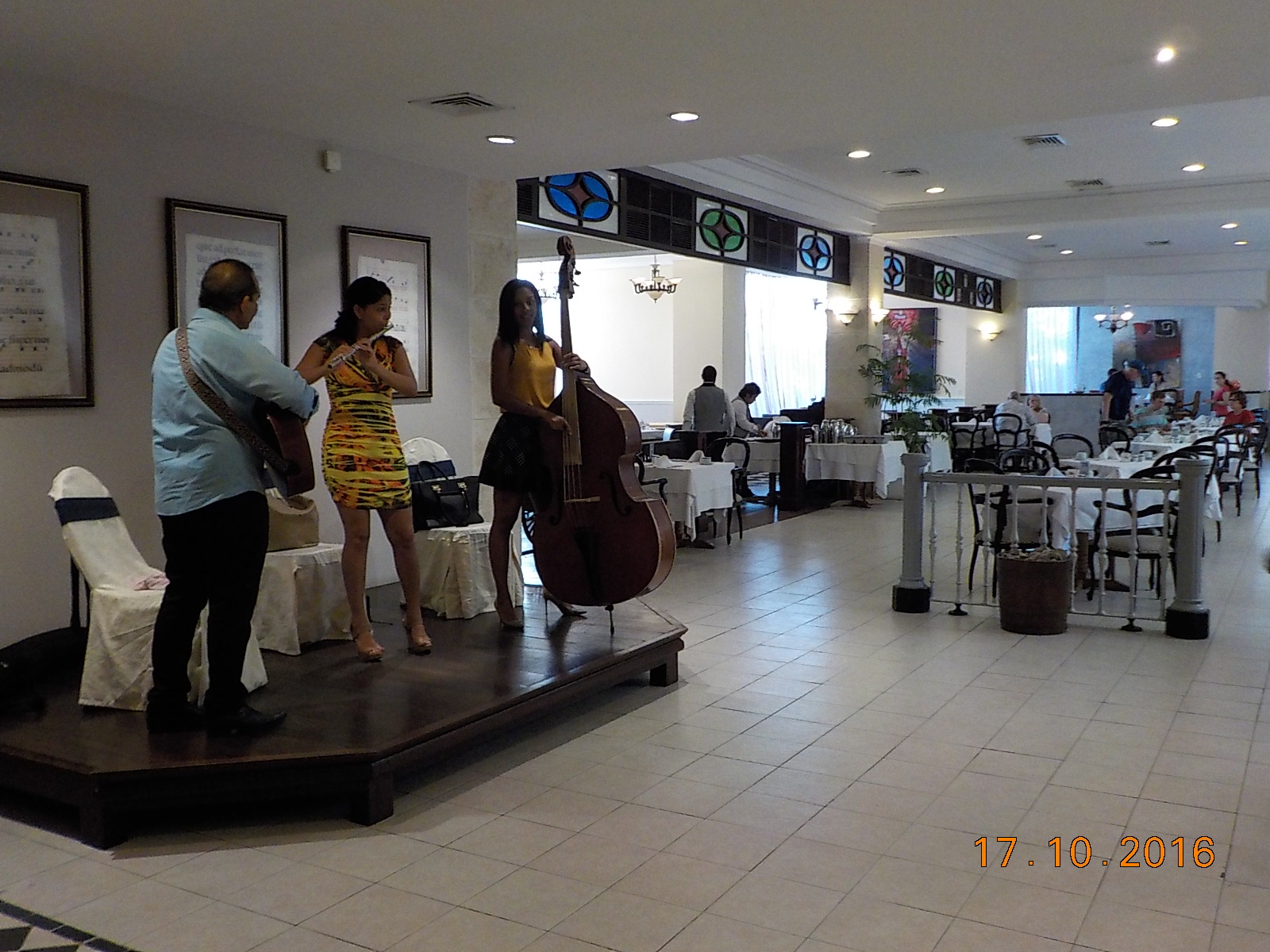
Music at Breakfast--don't forget to tip.
Music at Breakfast–don’t forget to tip.

There were also musicians everywhere, in the street, at every site, at every restaurant, even at the hotel’s breakfast buffet! Musicians offer you the opportunity to purchase a CD for about 8 CUC, or to give them a tip.


Everyone would like a tip. Normalizing relations with the outside world will require some difficult changes to the monetary system. NB: Our local tour guide had been a teacher, but realized that his income would be far greater as a guide. Cuba has a really admirable history of teaching everyone to read and write, as well as providing excellent low cost health care. Can this be sustained when all the teachers and doctors realize that they can earn a lot more money as restroom attendants, waiters and tour guides?

If you are NOT a US Citizen

10-23-16-casa-fuster-havana-022Go to Cuba—now—prices are only going up. Head to the beach spot of your choice and any side trips you want based on your own interests. In addition to the civic orchestra that plays community concerts twice a month in Trinidad, I enjoyed visiting Hemingway’s house outside Havana, and Carlos Fuster’s crazily mosaic-covered fantasyland and studio. 10-23-16-casa-fuster-havana-007The show at the Tropicana was also a lot of fun (skip the dinner). You might want to take a ride in a vintage convertible. Have a great time.


US Citizens

Was our trip to Cuba wonderful? Should you book a trip to Cuba right away, “before it all changes?”

Whoa.

There are things to consider before you rush off to Cuba. The most important issue applies only to US citizens. You cannot go to Cuba for a beach vacation until the embargo is lifted. If you’re thinking of a week or two in the sun, forget it. US citizens must go on a “culturally meaningful people-to-people exchange” program. We had a good time, but only had one noontime opportunity to swim in the gorgeous warm Caribbean water.

10-22-16-orquestra-del-sur-cienfuegos-cubaWe did have the chance to visit a polyclinic, listen to the adult choir at a geriatric center, visit an animation studio for a short film, and see the Bay of Pigs museum for the Cuban side of the story. We saw a wood carver’s studio, a print studio, and a ceramicist’s studio. We heard the civic orchestra in Trinidad, and they turned out to be a passionate, wonderfully skilled group of eight professional musicians who filled a concert hall all by themselves. They even had a handsome young violist as spokesperson. Cuba was interesting and surprising, but not relaxing, because the US doesn’t allow it, yet.
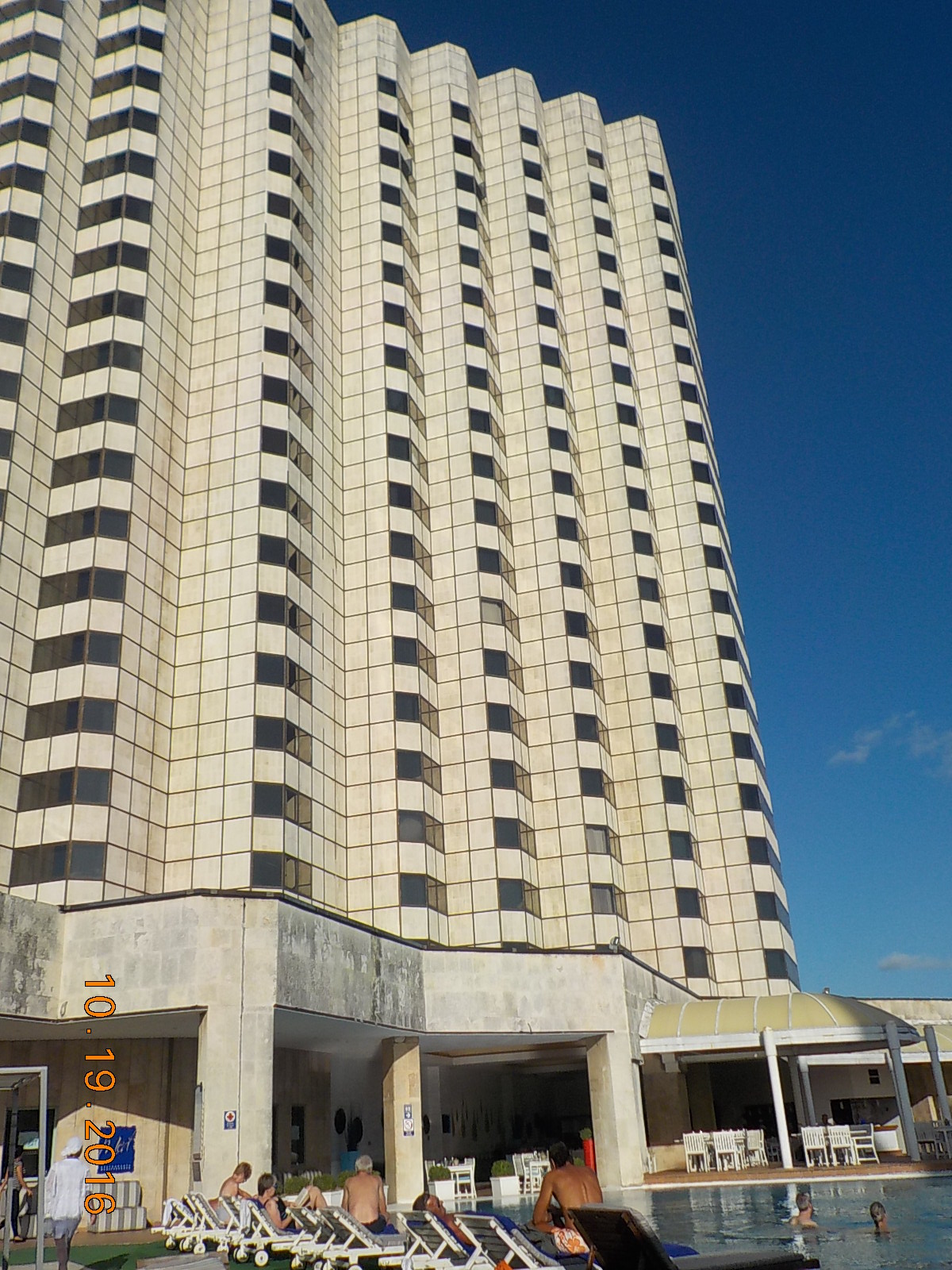
10-19-16-melia-cohiba-hotel-from-pool-001You should book your tour to Cuba if you are avidly interested in a) the history of Cuba’s wars of independence, the Cold War and the Bay of Pigs, or b) Cuban baseball, or c) automobiles from the 1950s that survive in Cuba (approx. model years 1947-1961).  Otherwise, I suggest you wait until the US embargo is lifted, possibly in 2017. (It didn’t get lifted). Then book yourself a beach vacation, whether at a resort in Varadero or an AirBnB anywhere, and enjoy sitting in the sun and staring at the impossibly beautiful water, because the ocean is one of Cuba’s greatest resources. It’s worth waiting for.

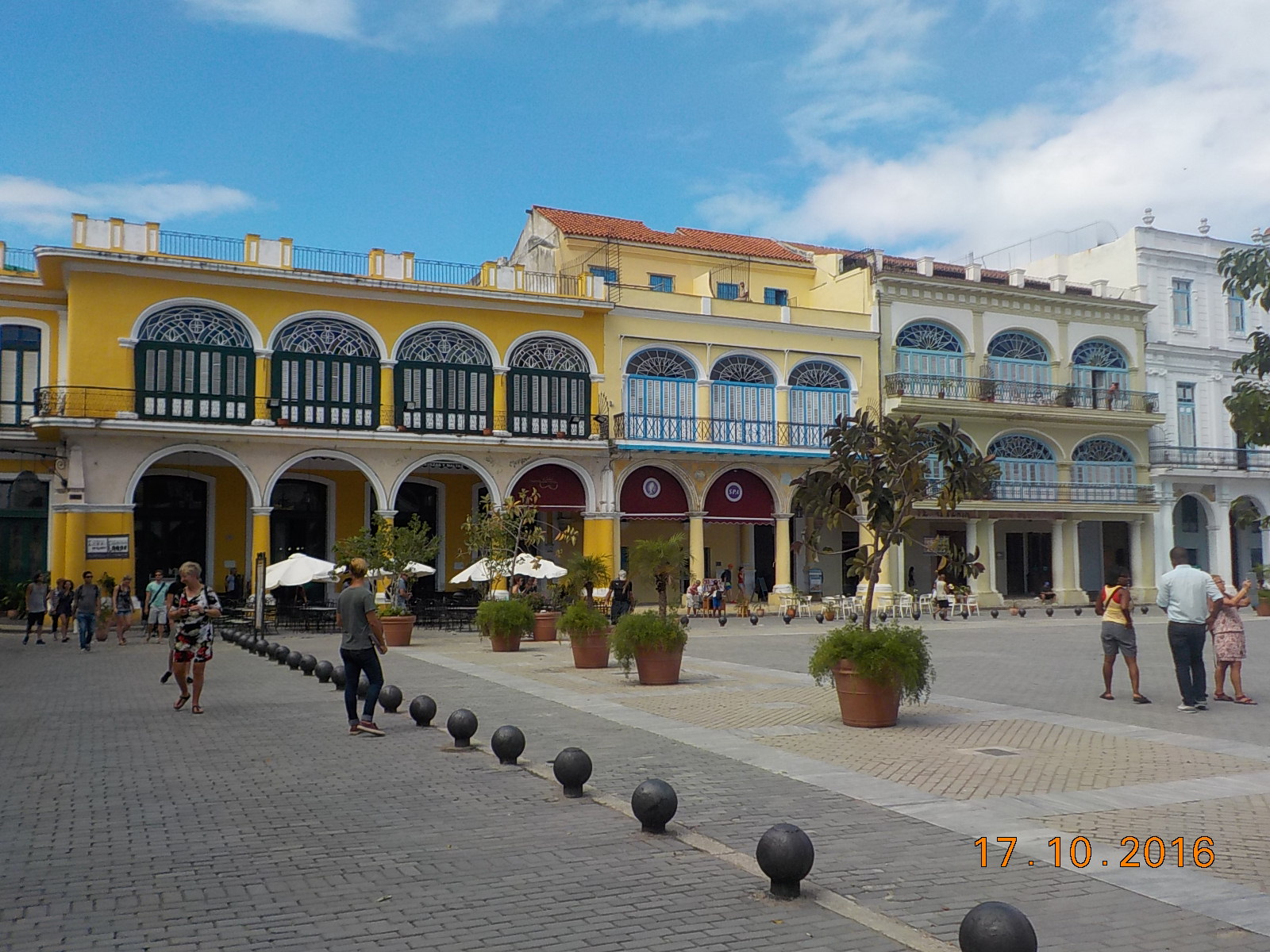


Architecture in Cuba

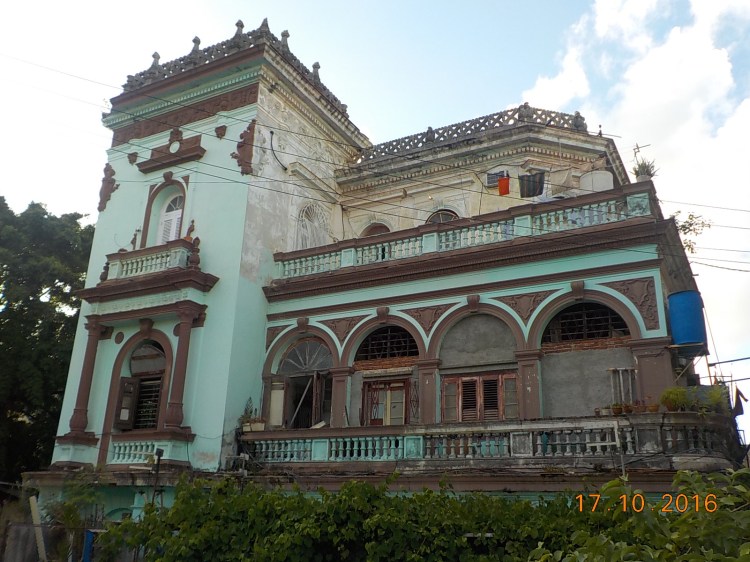
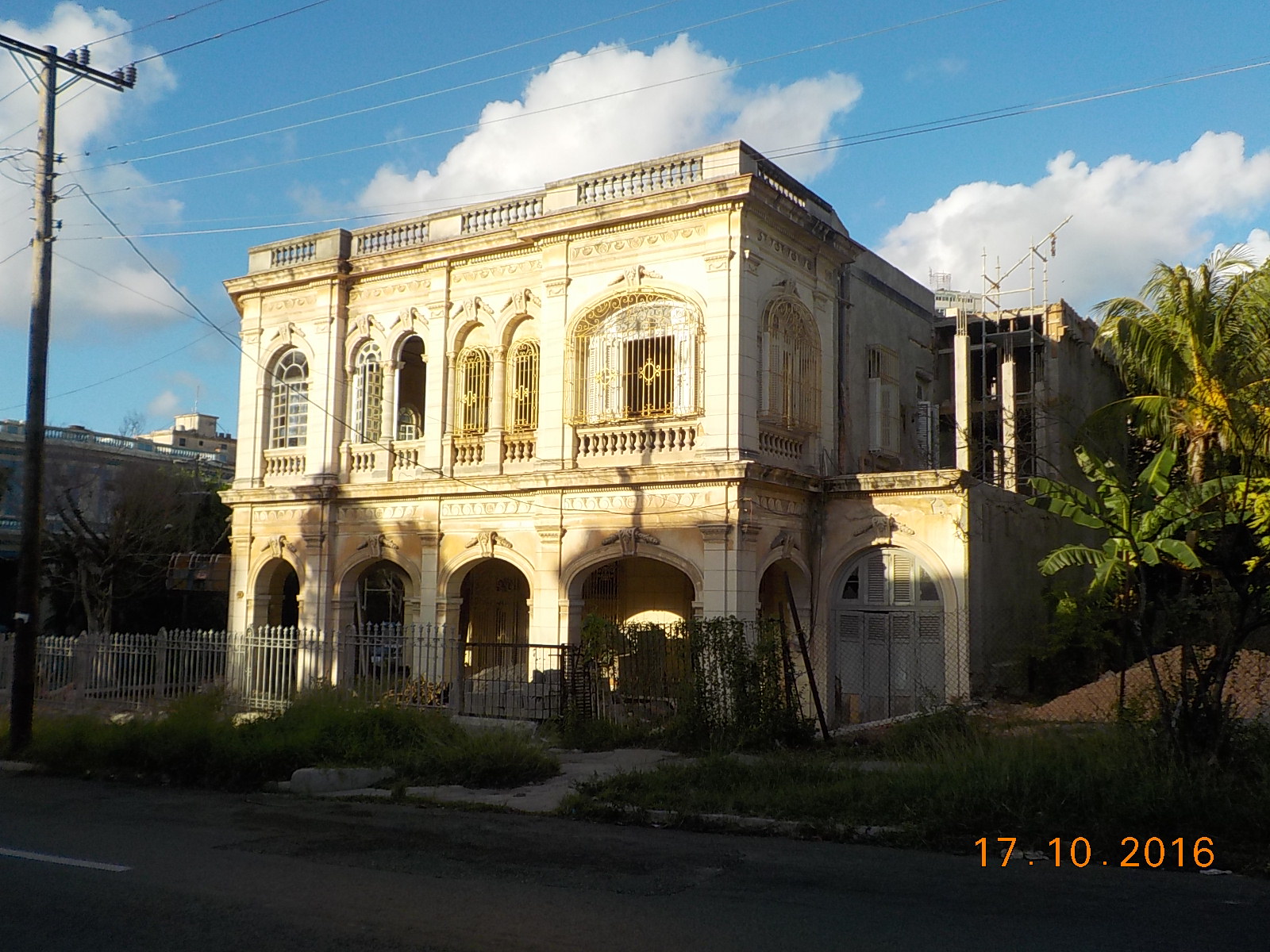
I’d like to begin by discussing the really ancient architecture of Cuba, but we didn’t get to any archaeological sites apart from the footings of a few colonial-era walls that have been cleared in Old Havana. Archaeological work in Havana is directed by the city Historian, who seems to be in charge of a lot of the cultural entities. The oldest surviving structures easily visible are the forts around Havana.10-17-16-havana-013There are many graceful old buildings in Havana that mostly date to the 19th century. Condition varies and our guides tell us there have been times when people could not afford any repairs or even paint. That situation is changing.

10-17-16-havana-old-town


Much of Old Havana is being repaired and renovated (left).


10-17-16-havana-walk-w-cathy


In other neighborhoods the renovated buildings are interspersed with buildings in need of a facelift (right).

Some places have a lot of character even though they are in need of work (above).10-17-16-havana-walk-w-cathy-016


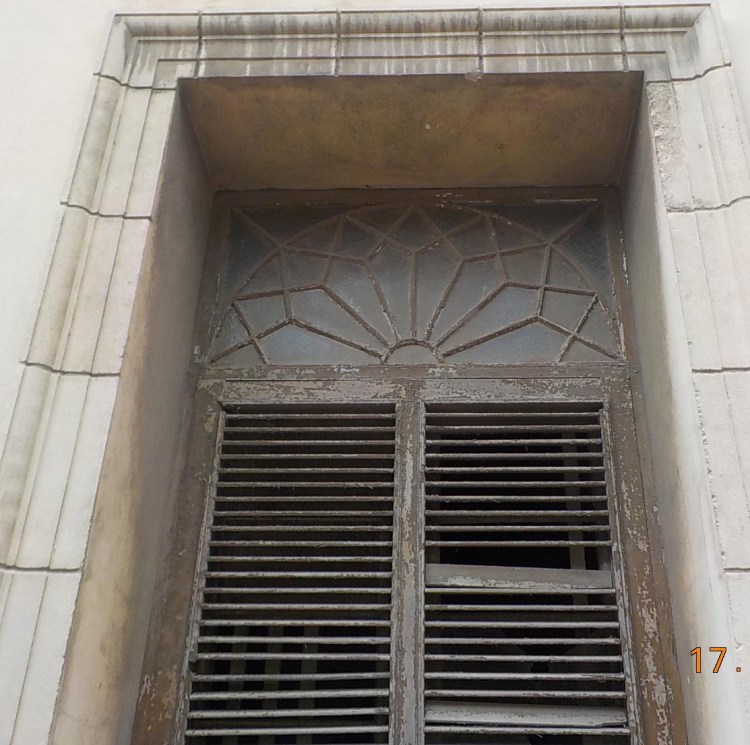
This building is just starting the renovation process. In the photo below, you can see the canopy of the entryway (left side of the upper photo). The glass panels are a traditional decorative technique.

10-17-16-havana-walk-w-cathy-017Fanlights of colored or painted glass were used frequently. Some are stained glass, but many panels of glass are held together with narrow strips of wood.

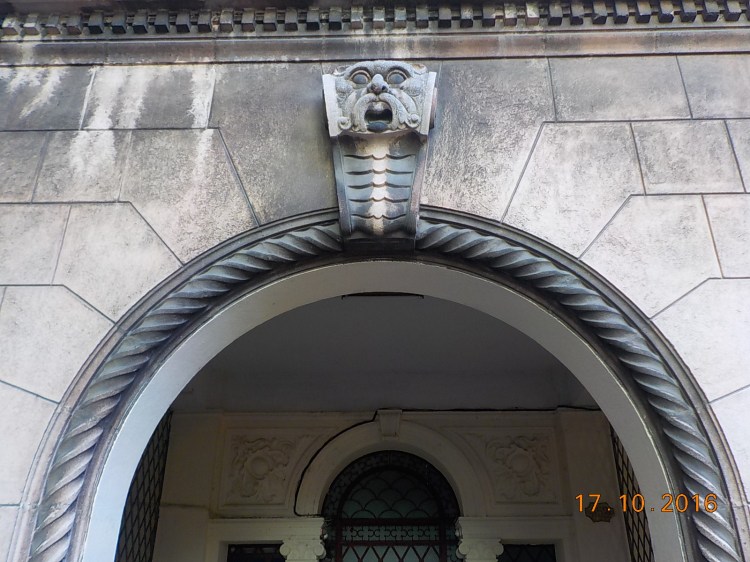
There are some great details:

In addition to architecture that comes from the colonial tradition, there is some newer work that shows off the versatility of cement. I believe these were mostly built in the 60s and 70s.

10-18-16-havana-006 10-17-16-havana-walk-w-cathy-018There are not many of these “space age” buildings. 10-17-16-havana-walk-w-cathy-014My overall impression of Cuba was of graceful buildings in many places and lots of interesting architecture to look at.


Vintage Cars in Cuba

Not knowing much about vintage cars, I figured out that the models you see in Cuba range from about 1947-1961. Some are beautifully restored, others less so. It is fun to look at them, like being on a movie set. Here is a slideshow of the ones I managed to photograph. I was unable to get a good photo of a motorcycle and side car with its passengers, or the motor scooter with dad driving, mom on the back and a baby squashed between the two (Mom and dad wear helmets). There are also cargo trucks that have been turned into buses, horse drawn buses that hold eight passengers, and bicycles, though we were told that people got so tired of going by bicycle during the 1990s (The Special Period), that they don’t like them much anymore.

This slideshow requires JavaScript.

Cuba!

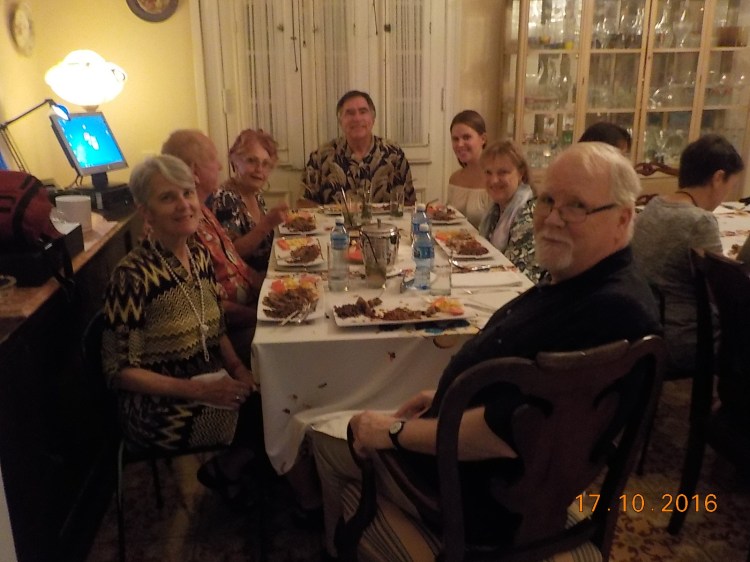
Actually getting to Cuba is the first part of the tour’s adventure, as it turns out. 10-16-16-meeting-before-cuba-002We met our group the night before departure and they proved to be a congenial bunch.

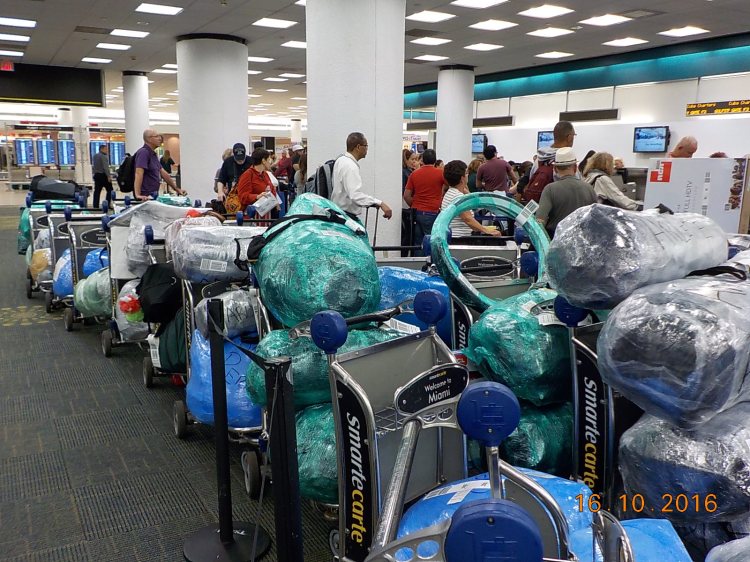
We had to be at the airport three hours ahead of time (boring), but we saw the array of goods that people take to Cuba. We later heard that every Cuban who visits the US may take two televisions back with them each year, and we saw clear evidence of this in the Miami airport….55 inch screens seemed to be popular. Despite our tour company suggesting we bring a 22 lb bag, we found the luggage limit for travel to Cuba is three 70 lb checked bags. People definitely were aware of this option.

10-21-16-marlon-on-the-bus-karaoke-001
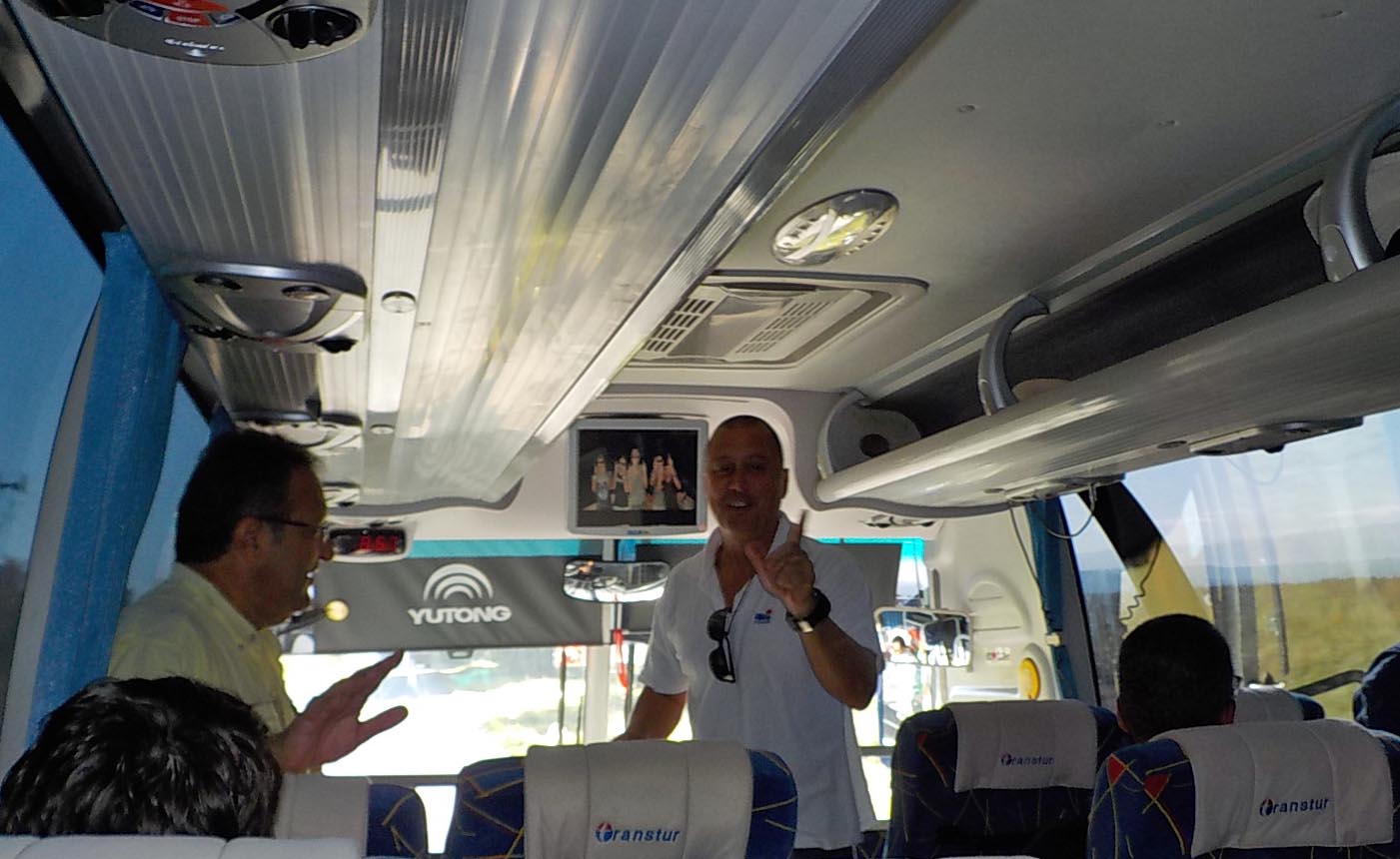
Marlon sings karaoke with “Bailando” on the bus.

We traveled with Insight Cuba, on their Classic Cuba tour. Our logistics person was Alfredo from Costa Rica, and our local guide was Marlon. Our driver was Manuel. The team was excellent. The tour ran smoothly, there was daily communication about plans and any changes being made. They handled all issues and Marlon is full of Cuba content. As a former teacher, he knows what life is like in Cuba for most people, and he was diplomatic about issues of politics and race.

Though a lot of waiting was involved, we got to Cuba pretty painlessly and no one in our group was stopped or inspected with any particular scrutiny. 10-16-16-revolution-sq-havana

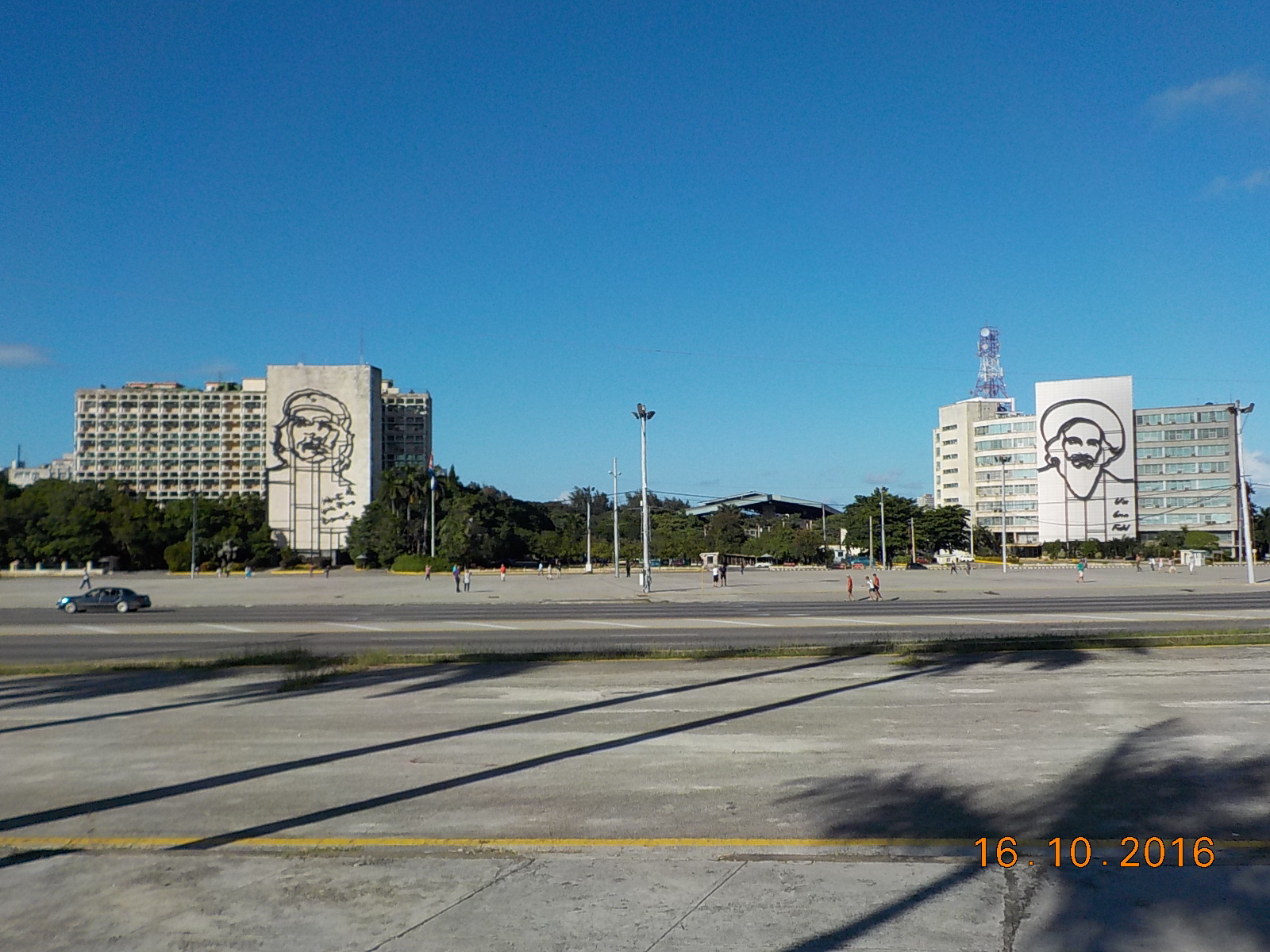
We visited Revolution Square in Havana on our way in, and I found it much bigger and less park-like than I expected. The iron faces of heroes were impressive.


We had a welcome dinner at Los Naranjos, one of Cuba’s paladares, privately owned restaurants that began in homes, though many are now full-fledged restaurants with room for tens of diners.

We heard a lecture on architecture, visited Old Havana and a center for elderly people who sang us a song and were charming to chat with for a few minutes.

I managed a swim in the hotel pool at the end of the day before we left for dinner. The next day we went to the market, where we tried to purchase food for an entire meal with 1 CUC (US $1.13). It was possible, but not easy (no meat). We also visited a dance company, a museum of the great Literacy campaign of the early 1960s in Cuba, and an animation studio.10-17-16-animation-studio-havna

Here are my new animated friends.


10-18-16-la-california-restaurant-havana-009

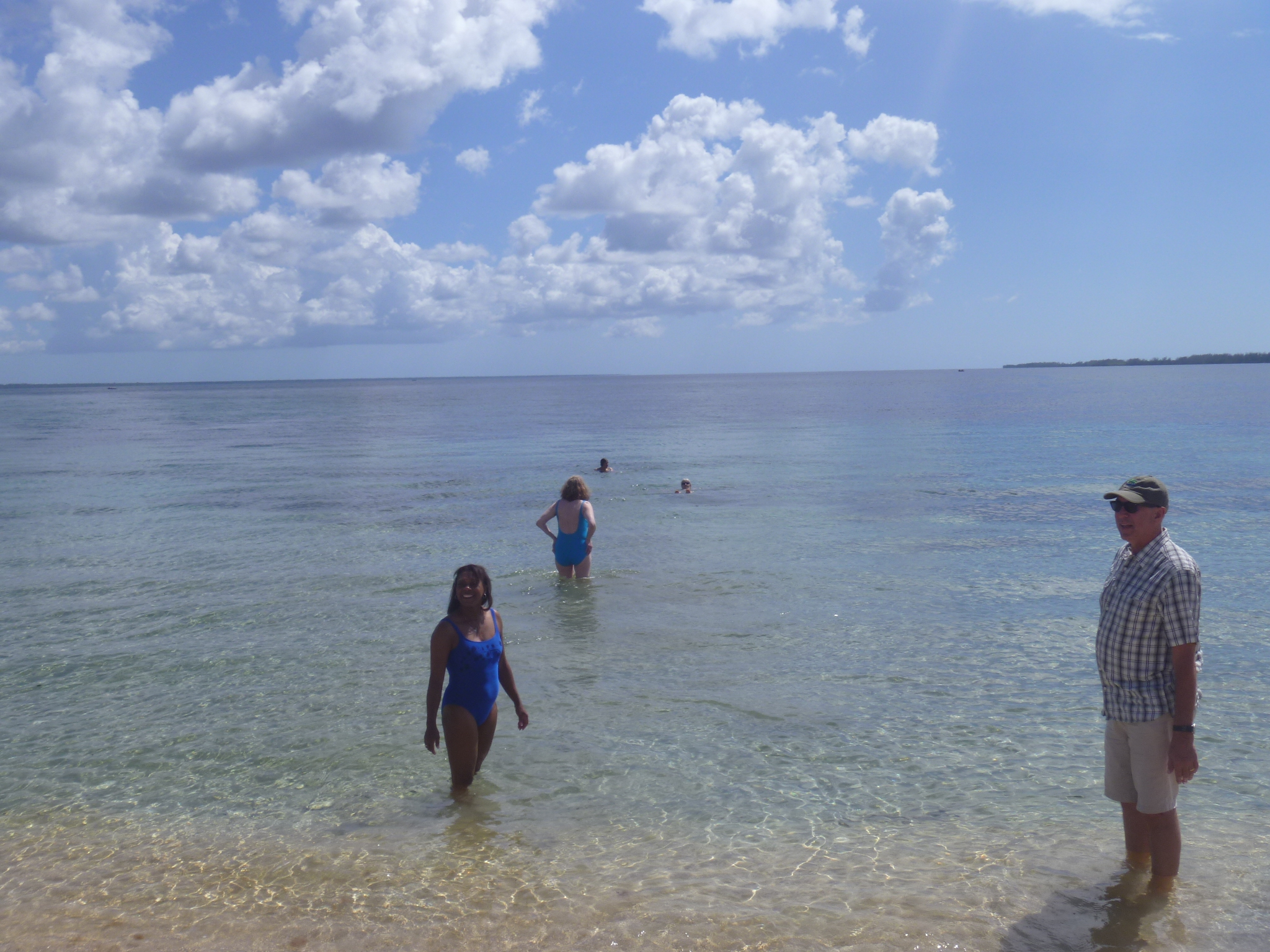
Our restaurant surroundings were lovely for lunch and dinner every day, but the lack of ripe tomatoes, fresh fruit and vegetables and the same entrée choices started to become apparent by the third day. The next day was a visit to the huge Cristobal Colon cemetery (Jose Marti is not buried there), followed by a medical clinic, and after lunch the studio of a well-known ceramic artist, Beatriz Santacana. We got on the road the next day for Cienfuegos, and stopped at the beach for lunch and an excellent talk about the national park adjacent to the Bay of Pigs. Our only swim in the Caribbean was here and it was wonderful.10-20-16-bay-of-pigs-005

10-21-16-trinidad-026
This fish is a pentyptych ? (five panels) painted bas relief.

I was ready to sit under an umbrella all afternoon, but it was not to be. We were due to stop at the museum that tells the Cuban story of the Bay of Pigs and move on to our stay at “casas particulares” private home B&Bs in Cienfuegos. Jonathan and I had a room that was pretty basic, but the air conditioning worked. The public areas of the house were very pretty and airy, though we had little time to sit with our feet up. The next day we visited Trinidad, a town preserved by a big economic slump during most of the 20th century. There we walked on the old cobblestone streets, visited the architecture museum, met with a priest of Santeria, and saw the studio of a very creative woodcarver, who began using old cabinet doors as the material for his bas-relief portraits when artists materials were scarce during the 1990s and beyond. I think everyone slept on the bus back to Cienfuegos.

The next morning we were back on the bus, first visiting a printer’s studio that specializes in wood block and linoleum prints. I did buy an eight-color lino print that I like a lot. Later I found out that most of the people who work there are not paid but live off their government ration cards and what they make from selling prints.

We next heard the Cienfuegos Municipal Orchestra play and they were wonderful, full of energy, as well as very good. There are eight musicians and all teach in the local art school as well as performing concerts twice each month.

10-22-16-lunch-road-to-havanaFrom the orchestra we headed back to Havana, stopping only for sandwiches on bread shaped like a Cuban crocodile.


Before arriving at the hotel, we stopped at Hemingway’s house outside Havana. The man knew how to live. The house is comfortable and airy, with a big pool and beautiful gardens surrounding it. Decor is heavy on dead animals, but we knew he was a big-game hunter. The cape buffalo head is pretty massive and would be a bit strange presiding over a cocktail party.

This was our final full day in Cuba, so we celebrated by going to the famous Tropicana nightclub show. Dinner began at 8:30pm and the show started at 10. The dinner was utterly uninspired, but by purchasing it on top of our admission fee we qualified for good seats by the stage.

We rode home with our heads full of the colorful frenetic dancing. But that wasn’t the end. The next morning we made one last stop at the fanciful compound of artist Carlos Fuster, who has developed a project to cover his home and neighborhood with mosaics. 10-23-16-casa-fuster-havana-043It looks a bit like Gaudi’s mosaics in Parque Guell in Barcelona, doesn’t it?

img_4114We decided on a group photo in front of one of the community-made mosaics by Casa Fuster. Then we said goodbye to Cuba.10-22-16-hemingway-outside-havana-006Our week in Cuba is a bit compressed because I was unable to get internet access and had to wait and post when we returned. Still to come are my posts on vintage American cars in Cuba and Cuban architecture. Last but far from least will be my opinionated “Good Things to Know About Cuba.”

Good to know about Scotland

Good to know about Scotland

People

The smaller town, the nicer the people. Not that people in Edinburgh aren’t great, but it’s a city and you can’t talk to everyone on the street. If you ask a question in a smaller place, the person you’ve asked hasn’t already been asked that question innumerable times, and may have more time and interest in chatting. I have learned from others:

  • Say hello to people.
  • Ask a question, don’t hesitate.
  • If you admire something about a person (hat, walking stick, parking maneuver…) tell them if you have a chance. Everyone likes to be appreciated.

Travel

Whatever your interests are, Scotland has specialized places to visit.

9-21-16-groam-house-museum-015For ancient ruins, the Megalithic Portal provides detailed maps, descriptions and photos of ancient sites that can be visited all over the UK. We used this site to find stone circles and carved stones to visit.

www.megalithic.co.uk

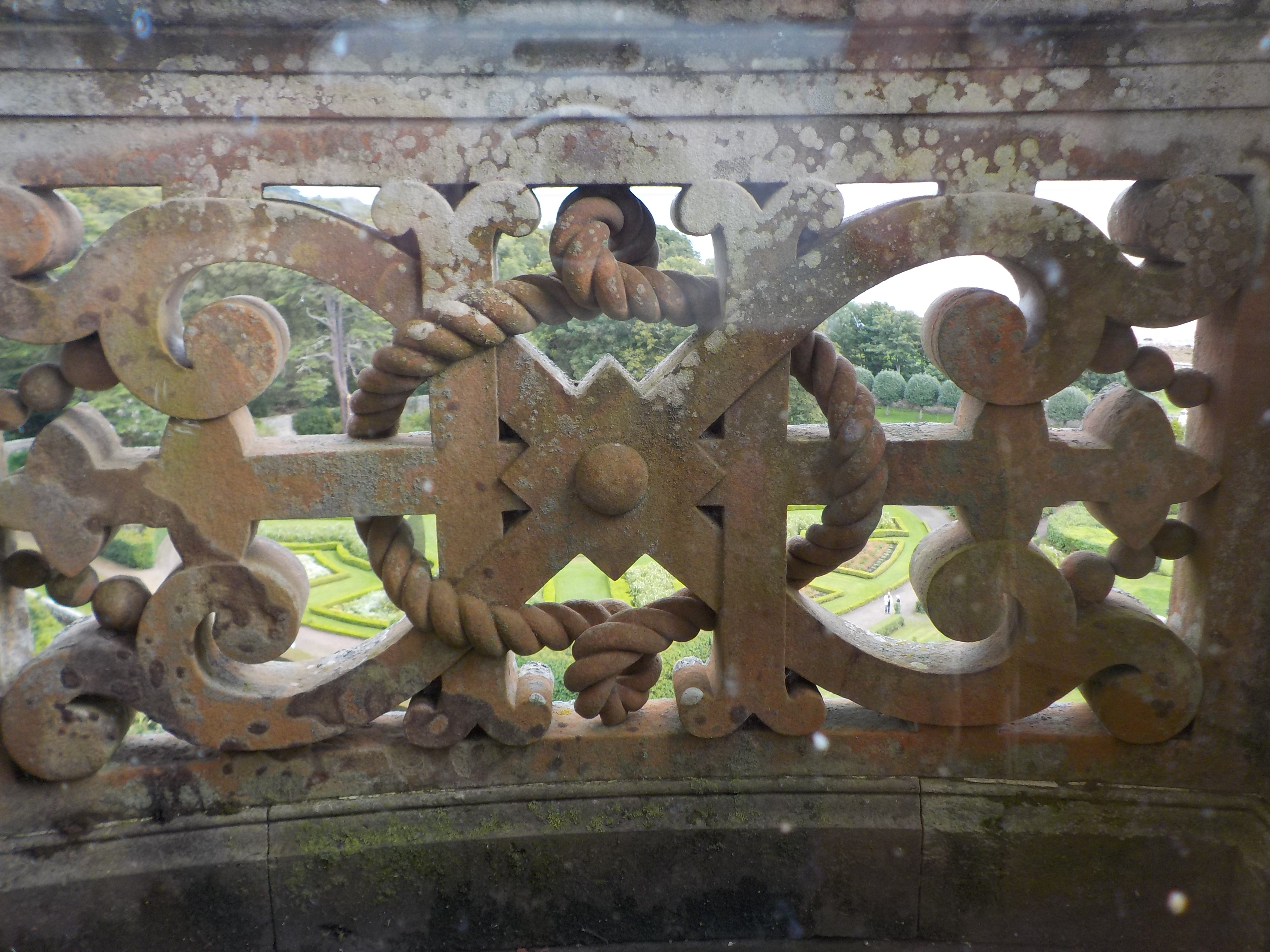
A stone "rope" on a balcony at Dunrobin castle.
A stone “rope” on a balcony at Dunrobin castle.


For castles and historic sites, Historic Scotland is wonderful. We bought an annual membership and then used the member guide to visit places all over Scotland, even in the Orkneys. The guide suggested places along our routes that we would never have known about otherwise.

www.historicscotland.org


For birds, fatbirder.com,  or

https://www.rspb.org.uk (Royal Society for the Protection of Birds (that is, wildlife)

There are several other websites that record recent sightings and good places. I like the British Trust for Ornithology

https://www.bto.org/

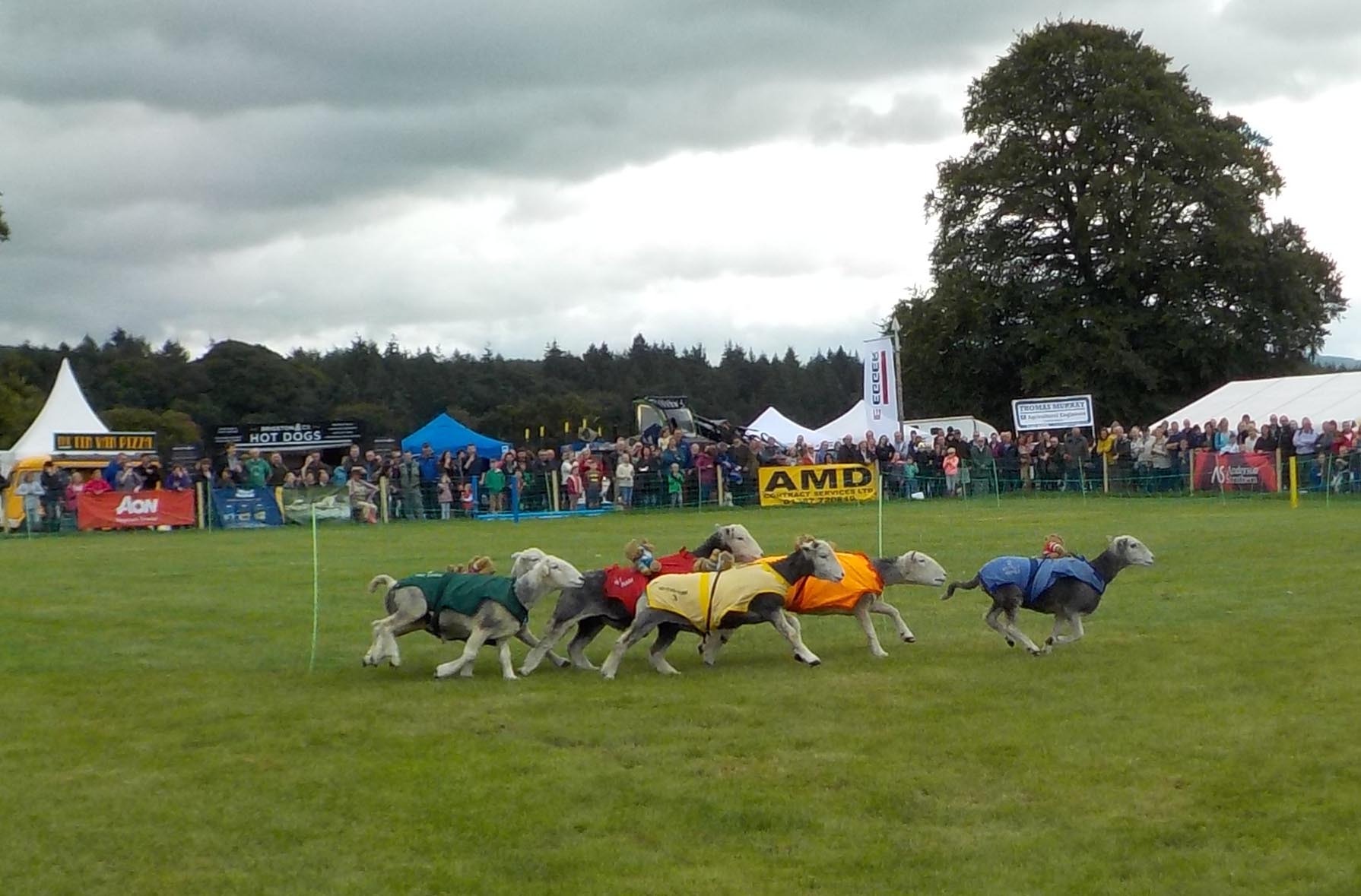
Check into local festivals by looking at the community web page if there is one, or look at posters on walls and utility poles. We got to a few, but missed others. We went to a local agricultural show (The Stewartry Show), a bit like a county fair, complete with animal judging. The sheep races at Moffat were associated with a monthly market day in the summer. 8-21-16-drumlanrig-castle-012smWe saw the annual fair (Civic Day) for Dalbeattie, where we stayed in the south of Scotland, complete with parade and music. We missed the Kirkcudbright fair that included “riding of the marches,” a traditional horseback circuit of the local boundaries. We saw Highland Games, and a local music night, though we missed both the Edinburgh Tattoo and the Kirkudbright Tattoo. Just before we left, we heard about an event that would have been fun (we were in the Orkneys). Avoch, on the Black Isle outside Inverness, has a regatta for St. Ayles skiffs, four-oared rowboats. The man we chatted with on the beach was helping two of the boats land, but said they’d had 14 of them out the previous day. You can’t get to everything, but you should definitely try something off the main routes. We skipped both Stirling Castle and the Culloden battlefield (Gasp!) but enjoyed many other smaller, less crowded places. We enjoyed Skye but found it very crowded when there are so many gorgeous spots in Scotland that are not bursting at the seams with people. Southern Scotland as well as the west and north coast of the Scottish mainland are less visited and have a lot to offer.

Driving

If you plan to drive in Scotland and haven’t driven on the left previously, I strongly recommend taking a driving lesson. Jonathan and I took one hour each with a driving instructor and benefitted a great deal from it. We also drove observantly, looked out for one another while trying not to shout at each other very much (Ack! Too close!).

9-22-16-kinlochbenvie-004Driving in Scotland is more difficult than driving in the US. Everything is narrower, you are required to maneuver in and out much more frequently than in the US, parking spaces are narrower and the space to back out of a parking space is smaller than in the US. In the UK you are permitted to park facing against traffic and it can be confusing. Roads are narrow and often lined by stone walls and hedges. There are often no shoulders, or worse, where the pavement drops off several inches if you get too far to one side. Many rural roads are a single lane with “passing places” meaning you have to pull to the side if someone is coming, creating an eternal game of chicken.

There are national speed limits with lots of posted exceptions and there are many, many speed cameras. We decided to go the speed limit all the time to avoid problems like tickets arriving in the mail out of the blue. We made it through about 10 weeks of driving with only a minor paint scratch that I believe was done by another vehicle—I don’t recall it happening. Overall, be careful, don’t ever hurry, and always check behind you before you back up.

Language

Scotland is wonderful. They speak English, which is a great convenience for native English speakers, despite George Bernard Shaw’s cautionary description, “England and America are two countries divided by a common language.” I don’t find it difficult to understand people when they say lorry for truck, queue for line, garden for yard. New ones this trip ore “toilet roll” for toilet paper, “squash” for juice-type drink. There are many others.

What obscures communication for me is a distinctively Scottish accent. Most people use their “school,” or “tourist” accent with us, so it’s not usually a problem. A charming neighbor wished us well when we left by recounting the story of a traditional saying “shall there always be smoke in your chimney,” though we couldn’t understand any of it when he repeated it to us in Scots.

My favorite word here is “wee”. It means a lot of different things, something small or not small, such as a wee dragon; a brief period of time or a long period of time, like “a wee while” describing a long wait; short stature such as a wee lad six feet tall playing in the Highland Games; and the famous “wee dram,” of whisky, actually an uncertain quantity. There’s great humor and irony in this single word. It’s also used seriously in all those contexts, so when something is described as “wee,” I have to listen up.

Food

9-27-16-skye-tomatoesScotland has excellent dairy products including interesting cheeses, and very fine meats not limited to haggis and black pudding. Both of these latter can be good if cooked properly. Home cooking is not fancy, usually meat, potato and veg. Dessert is called pudding, and can be very enticing for those with a sweet tooth. In addition to traditional English desserts like bread pudding, sticky toffee pudding, Eton mess, and fruit cake, there is cranachan, a combination of fruit, honey, crumbled sweet oatcakes and crowdie, a cross between finely strained cottage cheese and cream cheese. It sounds strange but can be delicious. There is also athol brose, which you should try if you ever get a chance. Again, it sounds weird to mix oatmeal, cream, honey and Scotch whisky, but I can attest to its being delicious and possibly lethal.

9-16-16-macbeths-meat-forres
MacBeth’s Meats, Forres

We found a new meat product being offered in stores, called hogget. Stores were vague on what it was other than not lamb and not mutton. In fact, it is young mutton, and producers claim it is delicious. We ended up leaving our lovely hogget roast behind because we ran out of time to cook. Technically, hogget is lamb that has lived over a winter, thus the animal is 6-12 months old when slaughtered. Lamb is younger, mutton older.

Last Thoughts on Scotland

We had a lot of fun and kept very busy. Below are a few last photos I like.

10-2-16-avoch-001
Celtic alphabet mosaics created by a community project.
9-29-16-to-orkney-010
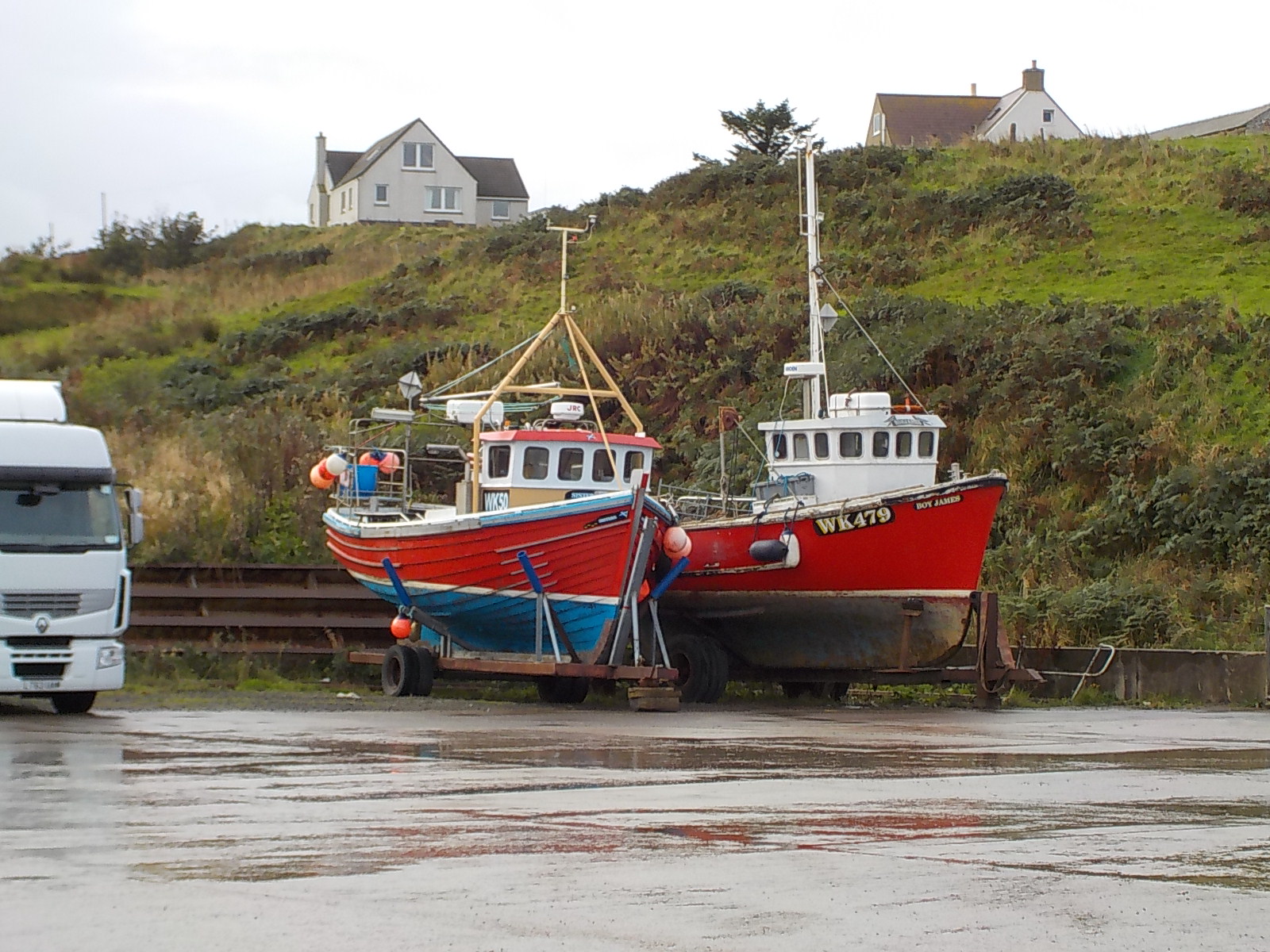
Boats on the Orkneys.
9-21-16-rosemarkie
Cobbled walls.
9-6-16-invergordon-003
Decorative ironwork fence.
9-6-16-invergordon-002
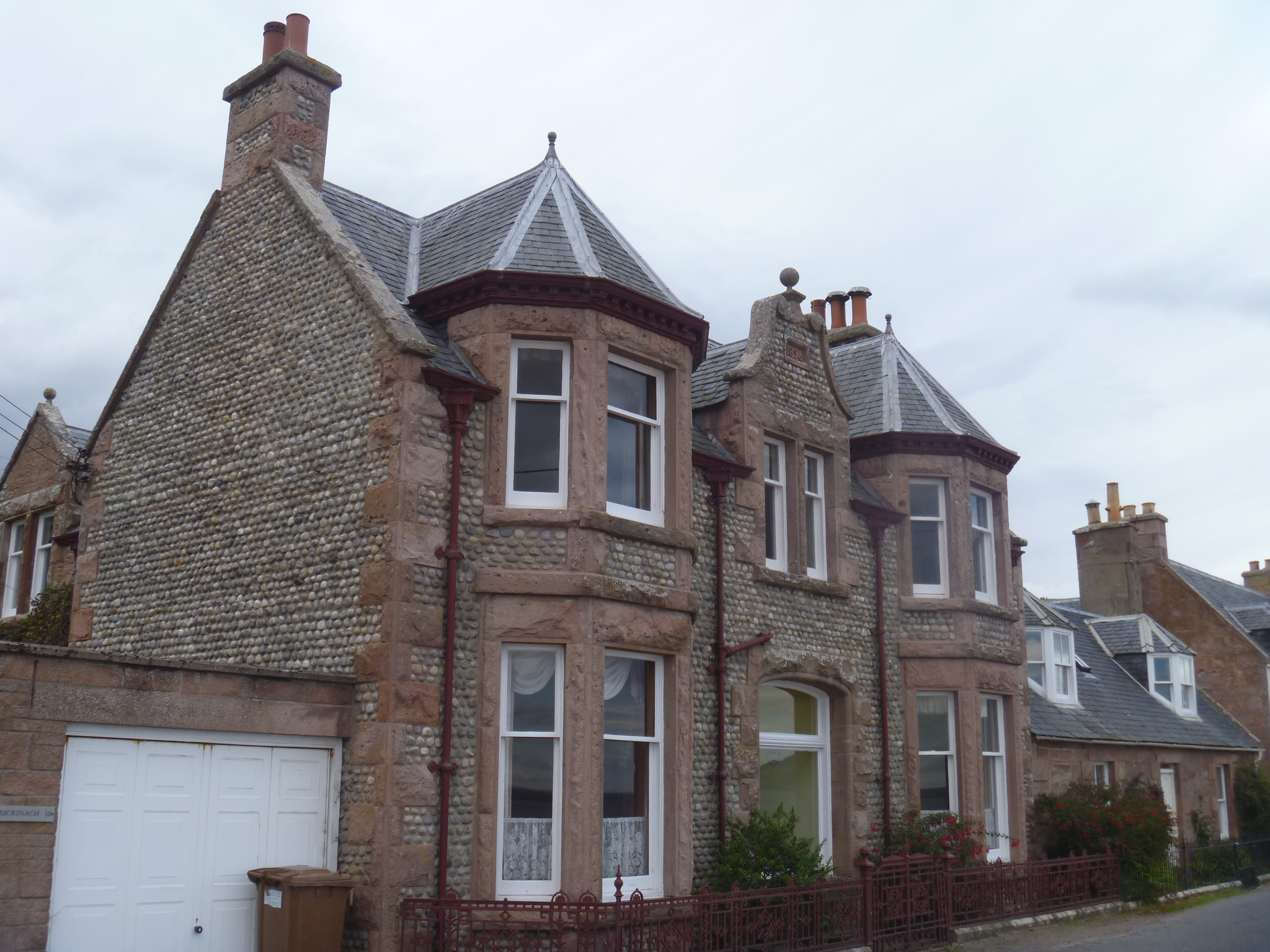
Interesting architecture.

10-2-16-sea-glass-002My beachcombing.

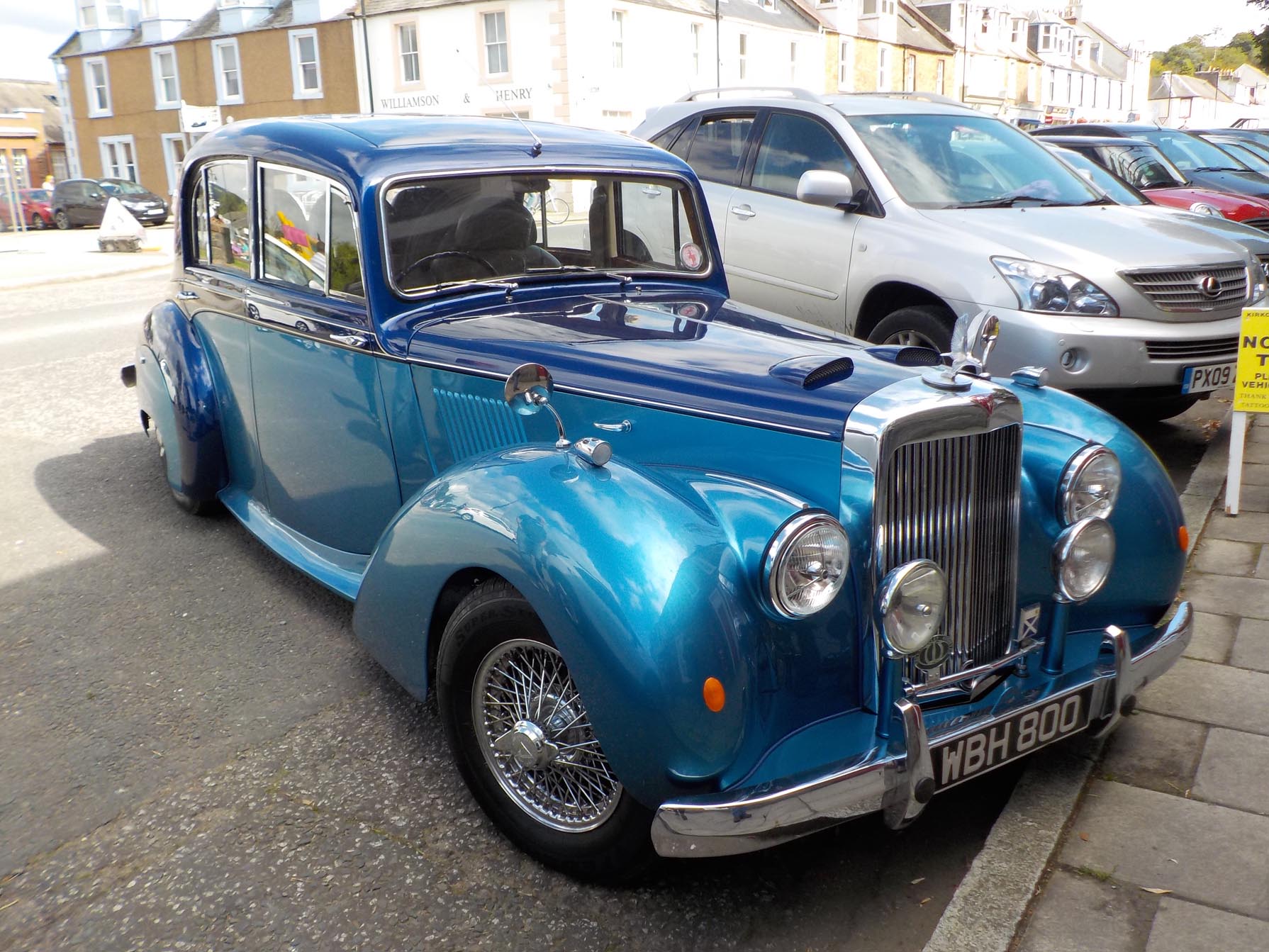
8-27-16-kirkcudbrightLovely antique car in Kirkcudbright.

A Clootie Well

What? A clootie well is a natural water source believed to have special powers. Visitors dip a scrap of cloth in the water. The well is at the bottom of this photo, with a cup:10-2-16-munlachy-clootie-well-004sm

There is some difference of opinion as to whether one bathes with the wet cloth, or makes a wish, or drinks water from the well, but in the end, you hang your scrap, or “clootie” in a nearby tree. I didn’t expect rags to be tied in so many trees over such a large area. It’s a bit eerie. This well is on Scottish Forestry Commission land in Munlochy.

I first read about a clootie well in a novel by Erin Hart set in Ireland. More recently Ian Rankin used this clootie well in Munlochy in his mystery, The Naming of the Dead. Our strange field trip was on our last day in Invergordon. I’ll post a few general comments about Scotland as my farewell to three very enjoyable months here.

Stained glass

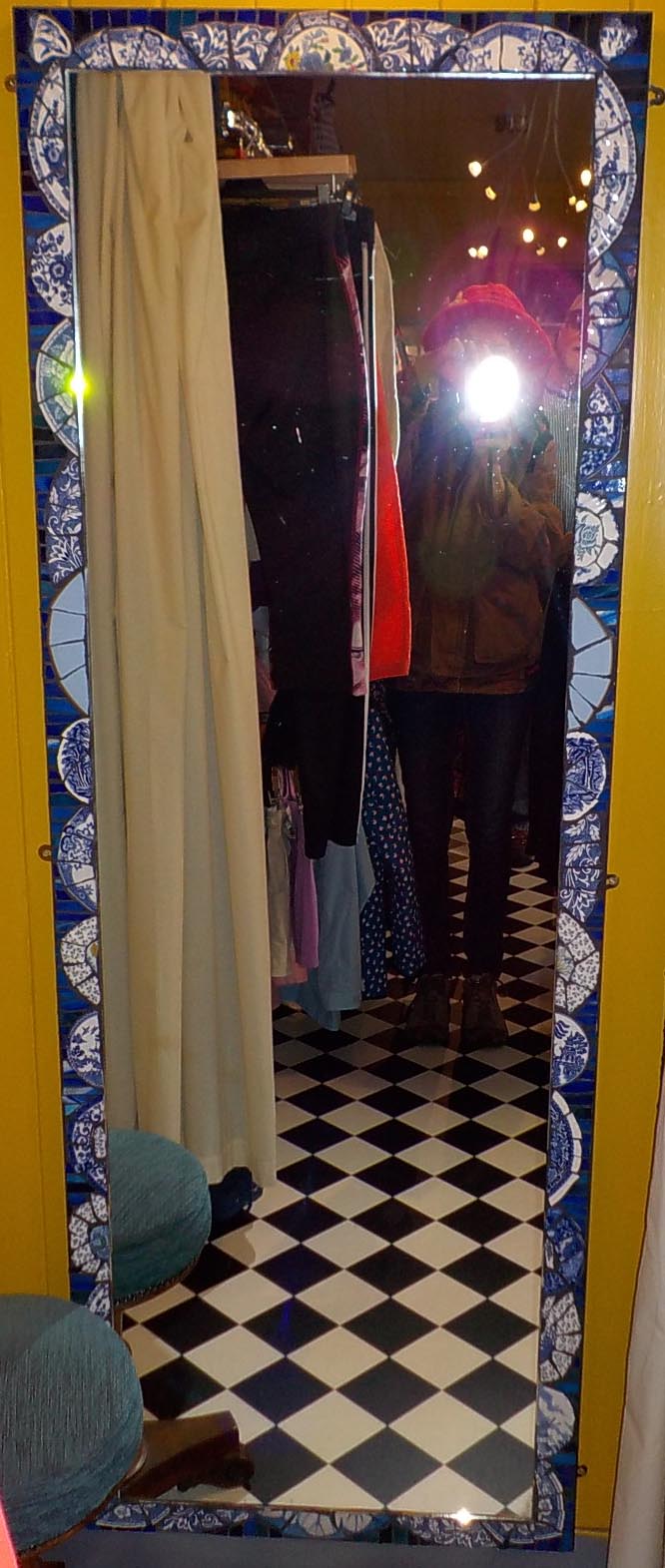
Marion, my neighbor and landlady in Invergordon, makes mosaics and stained glass.  I admired the mirror in our house and found that she made it.

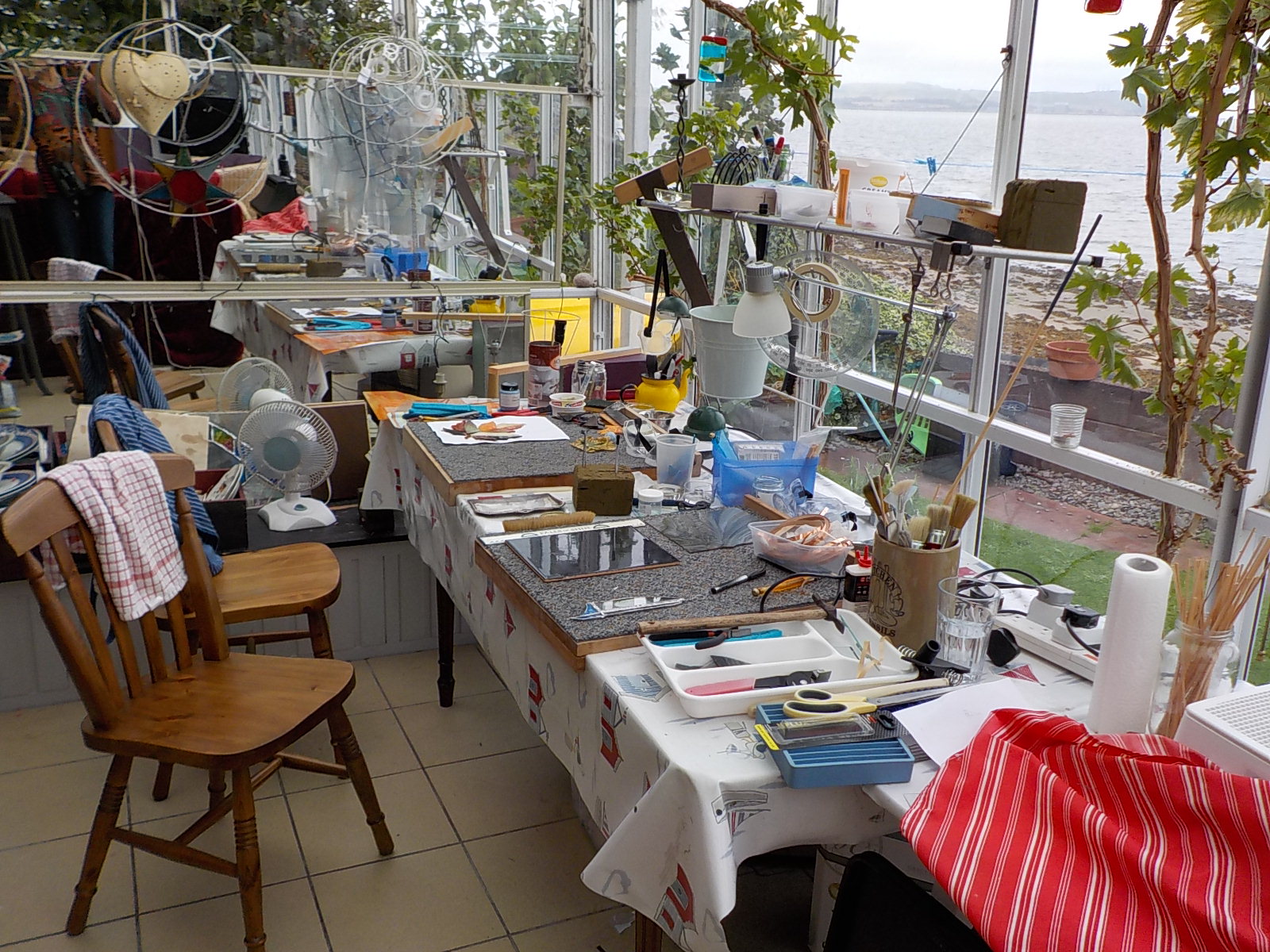
“If you stop in the charity shop in Dornoch, they have a large one I made,” and when we saw it–it was really cool. 9-14-16-dornoch-charity-shop-mirror-by-marion-rhind-002sm9-14-16-dornoch-charity-shop-mirror-by-marion-rhind-001smMarion also makes stained glass and offered to let me make a piece. We talked over ideas and I ended up deciding to make a stylized leaf in fall colors. Here’s the studio space. Who wouldn’t want to make stuff in a greenhouse overlooking the ocean?9-14-16-stained-glas-010Here’s my leaf from pattern to completion:

This slideshow requires JavaScript.

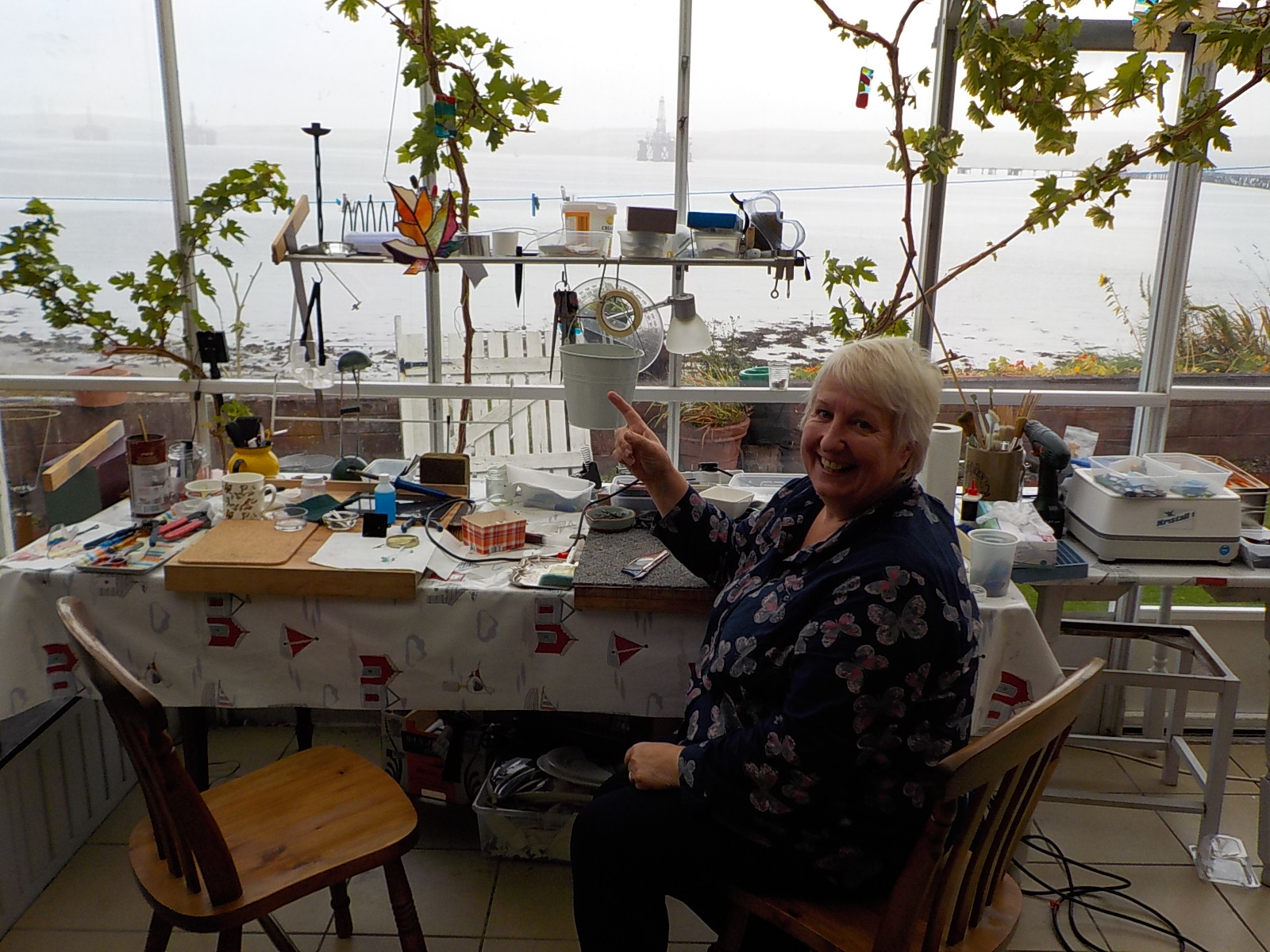
Here’s Marion checking my finished work:dscn5926If you want to make stained glass or mosaics while you’re in Scotland, Marion’s converting her garage into a studio space with enough room to run small classes. What could be more fun? I’m going to check back and see how the studio evolves.

Orkney Islands, land of rainbows

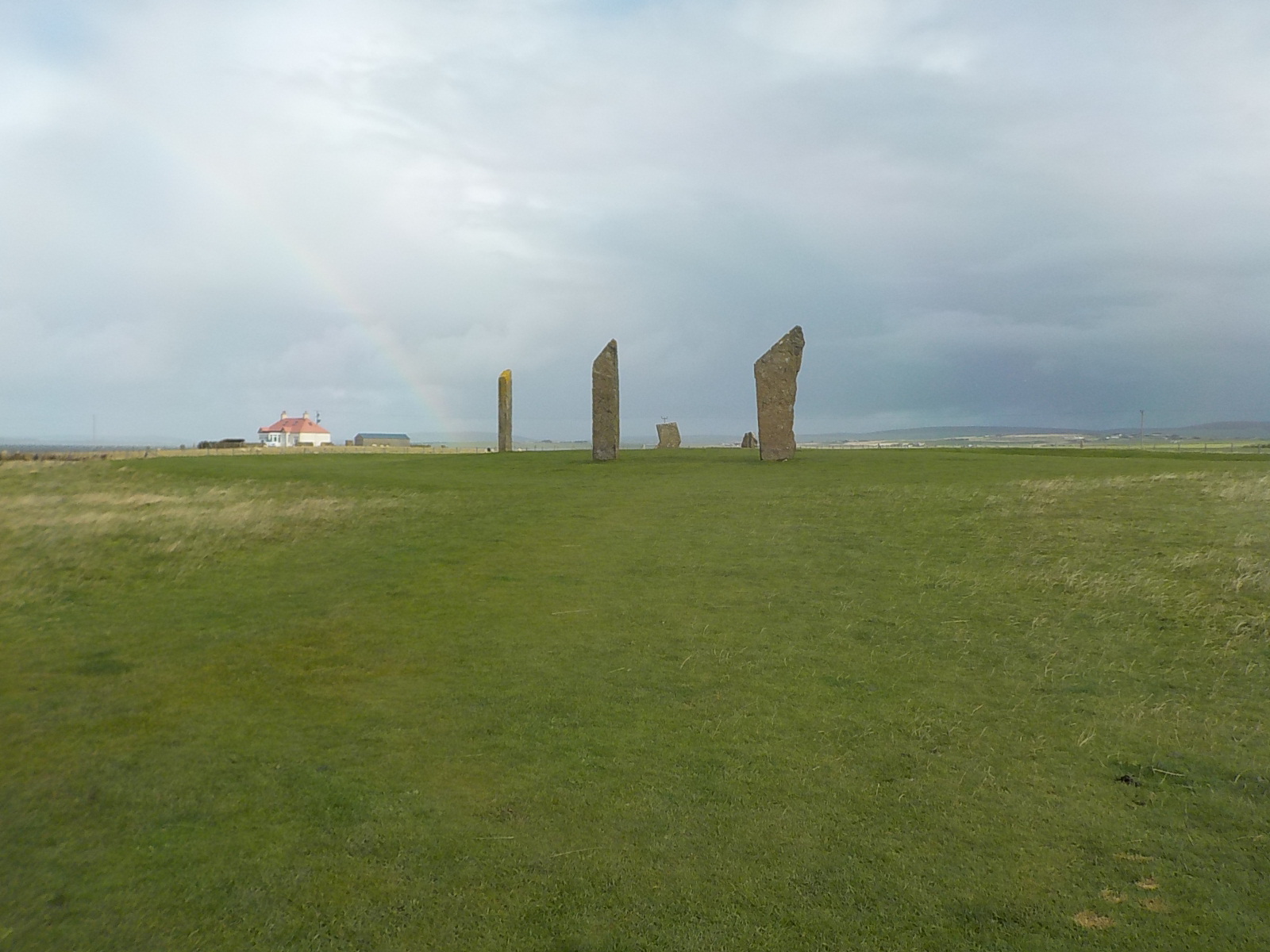
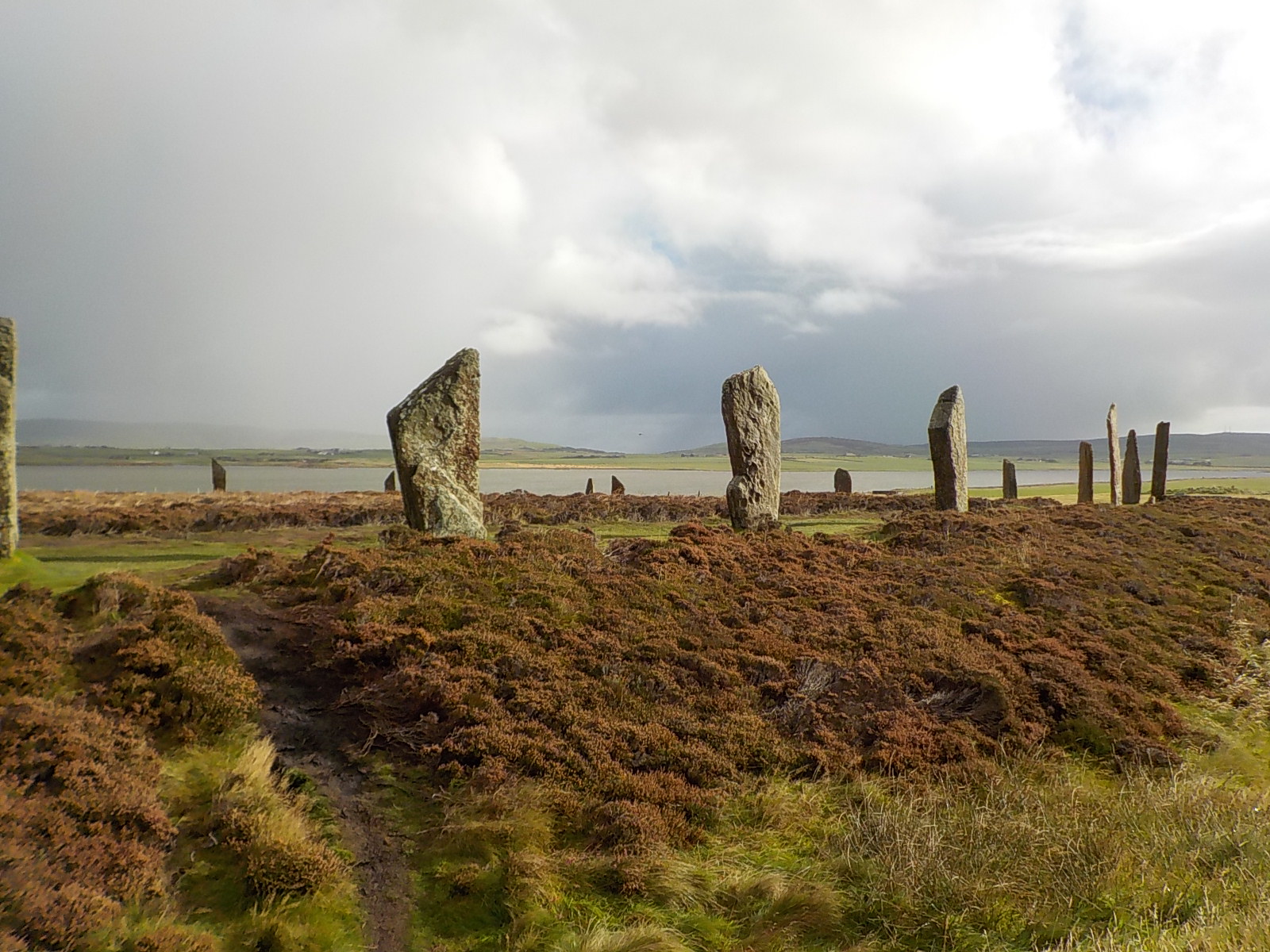
The weather was highly variable on Orkney, rain and wind alternating with sun. Every few minutes we ran for the car to hide from the rain and then hoisted ourselves out again when it passed. We saw rainbows constantly, after every storm. During our full day there, we saw about a dozen different rainbows, partial, whole, even a couple of double rainbows. What a place! The rainbows are one of our strongest memories of the trip.9-30-16-stones-of-steness9-30-16-stones-of-steness-014I wore one short sleeve and two long sleeve shirts, a hoodie, fleece vest, canvas jacket and my raincoat. I wore rain pants over my jeans. I was glad I had my gloves, wool socks and hiking shoes.

9-30-16-stones-of-steness-013

Archaeology was at the top of our sightseeing list, starting with the Stones of Stenness. The remnant of this ring of stones lies at one end of a natural causeway between two lochs (in this case, fresh water lakes) in the center of the Orkney mainland.

Note the rainbow above Jonathan.

It was very cold and rained off and on all day.

9-30-16-stones-of-steness-012smNot all the stones are still standing–in the early 1800s, a local farmer was stopped from knocking them all down and breaking them up. All the visitors got in the way of his farming.9-30-16-stones-of-steness-007

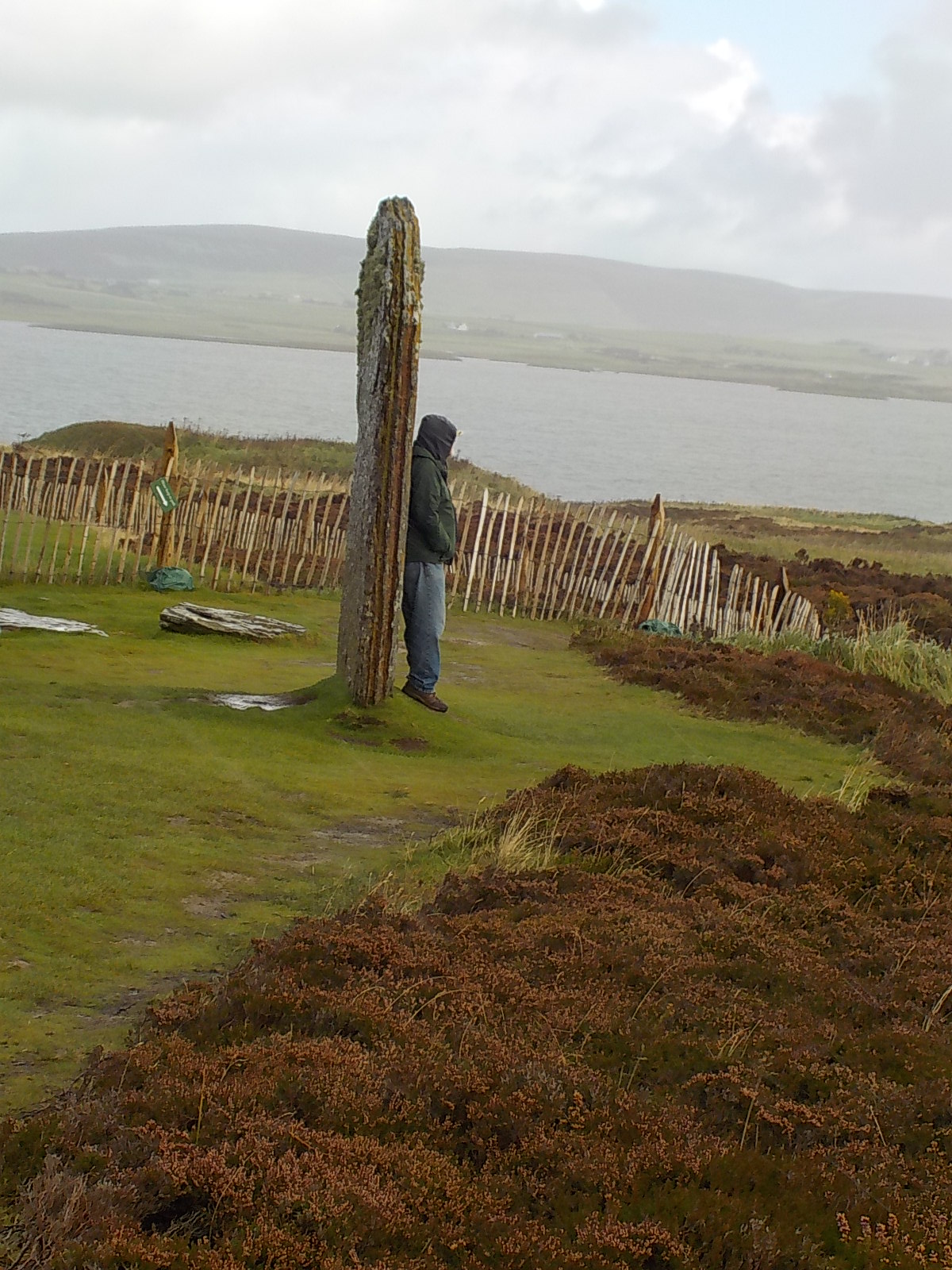
Some of the stones are over 20 ft. tall. That small figure by the stone is Jonathan.

Most remarkable about Orkney is the age of these stone circles and villages. Most are 5000 years old, built and used between 3000-2000 BC.

The Stones of Stenness were not the end of the story.

Just down the isthmus that separates these two lochs is the Ring of Brodgar, an even bigger circle of upright stones. It really is the biggest stone circle I’ve ever seen. 9-30-16-ring-of-brodgarIt started to rain, so we stood in the lee of a tall stone until it passed.

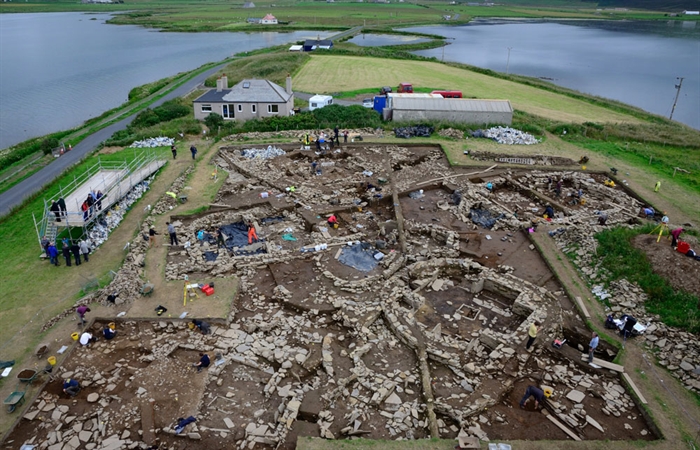
9-30-16-ring-of-brodgar-007Though the stone circles have been known for centuries, the ancient village that lies right between the two circles was not discovered until 2002. New techniques of geophysical survey allowed archaeologists to see that the ground below the surface was disturbed probably. by human settlement. Excavations go on each summer. There is a detailed view of the houses that been excavated and a dig diary on the Brodgar Ness website (click on the words below this photo from their website):https://www.visitscotland.com/wsimgs/low-res-aerial_1037085868.jpg

Ness of Brodgar excavations

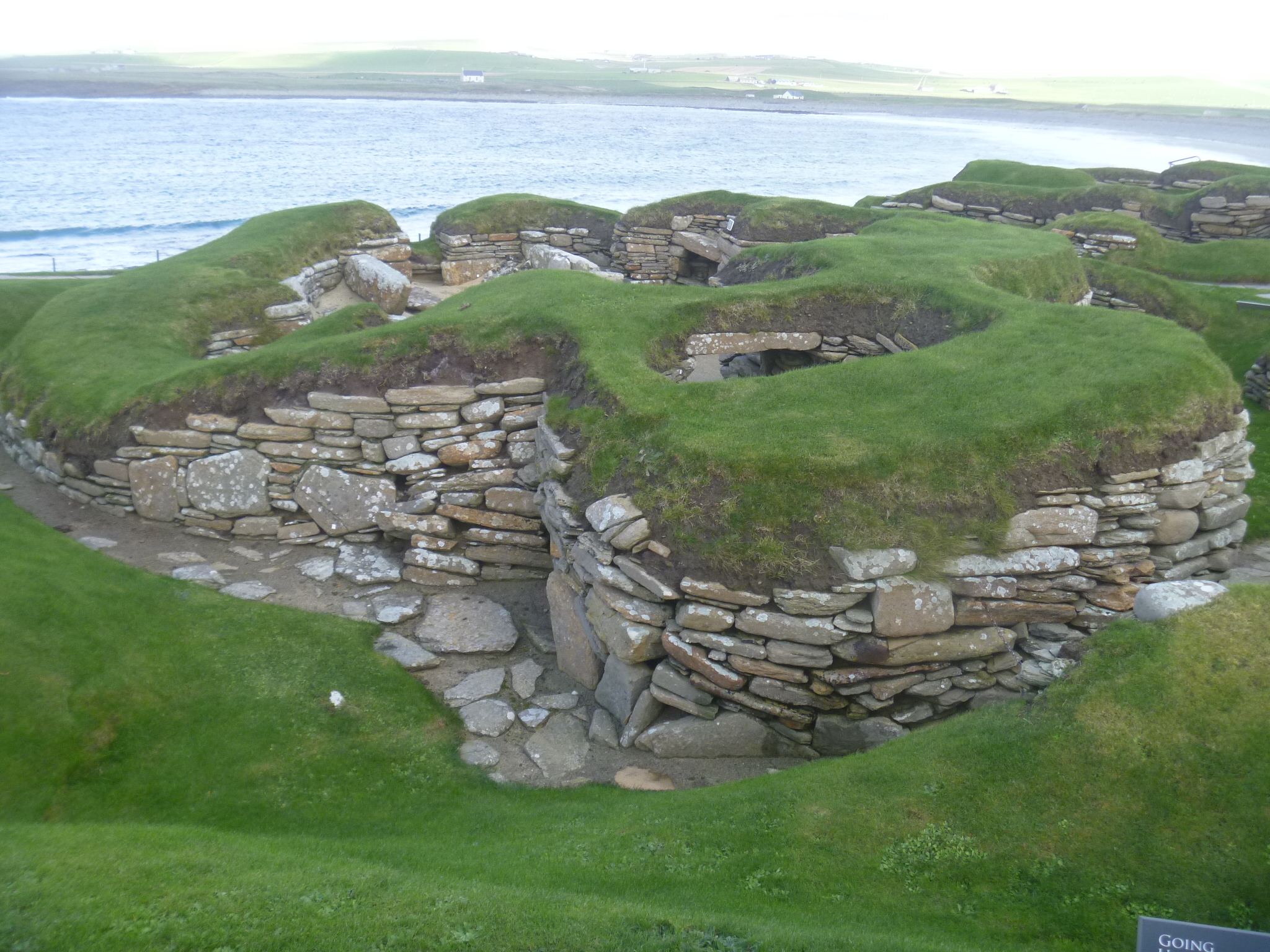
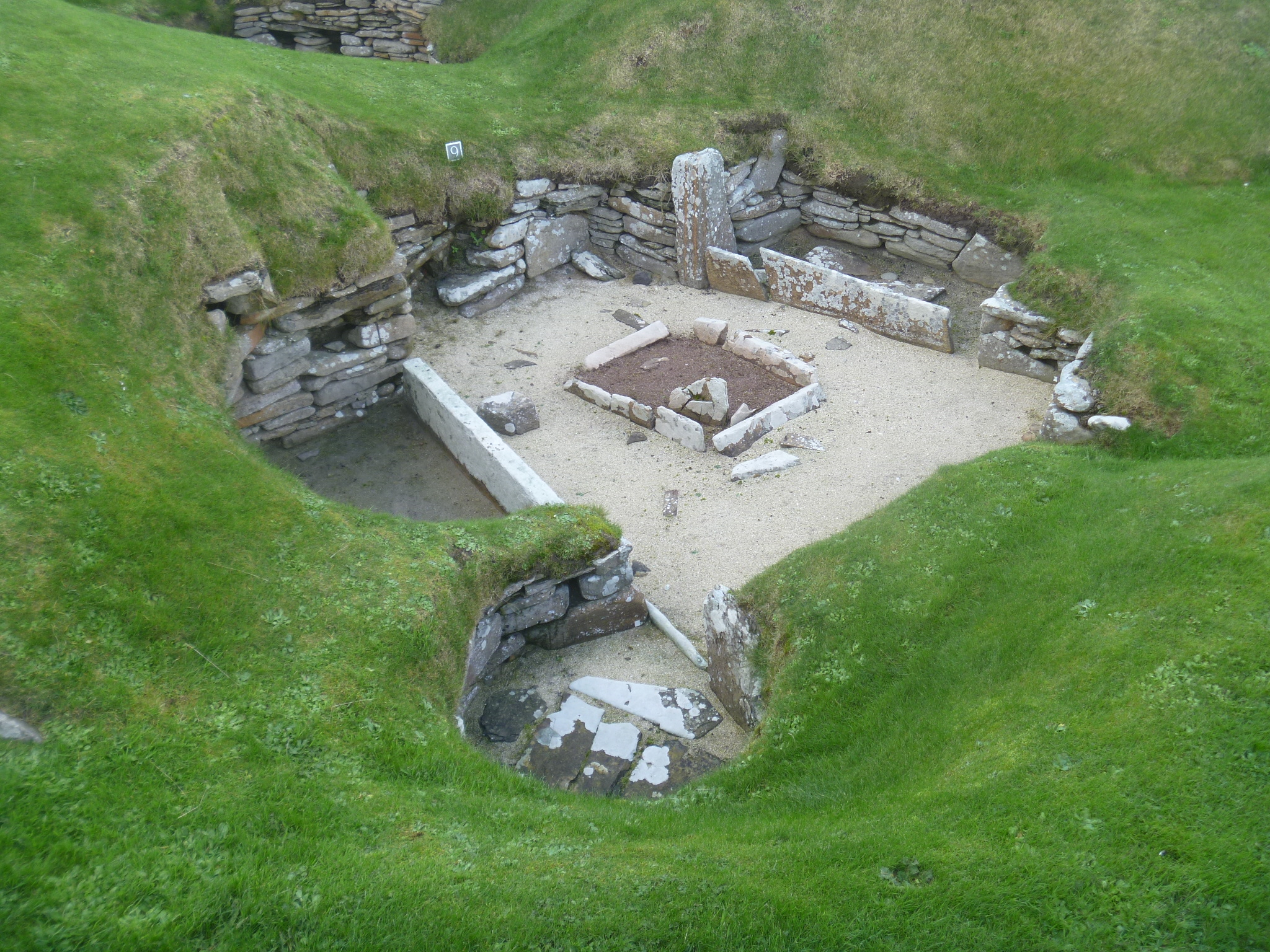
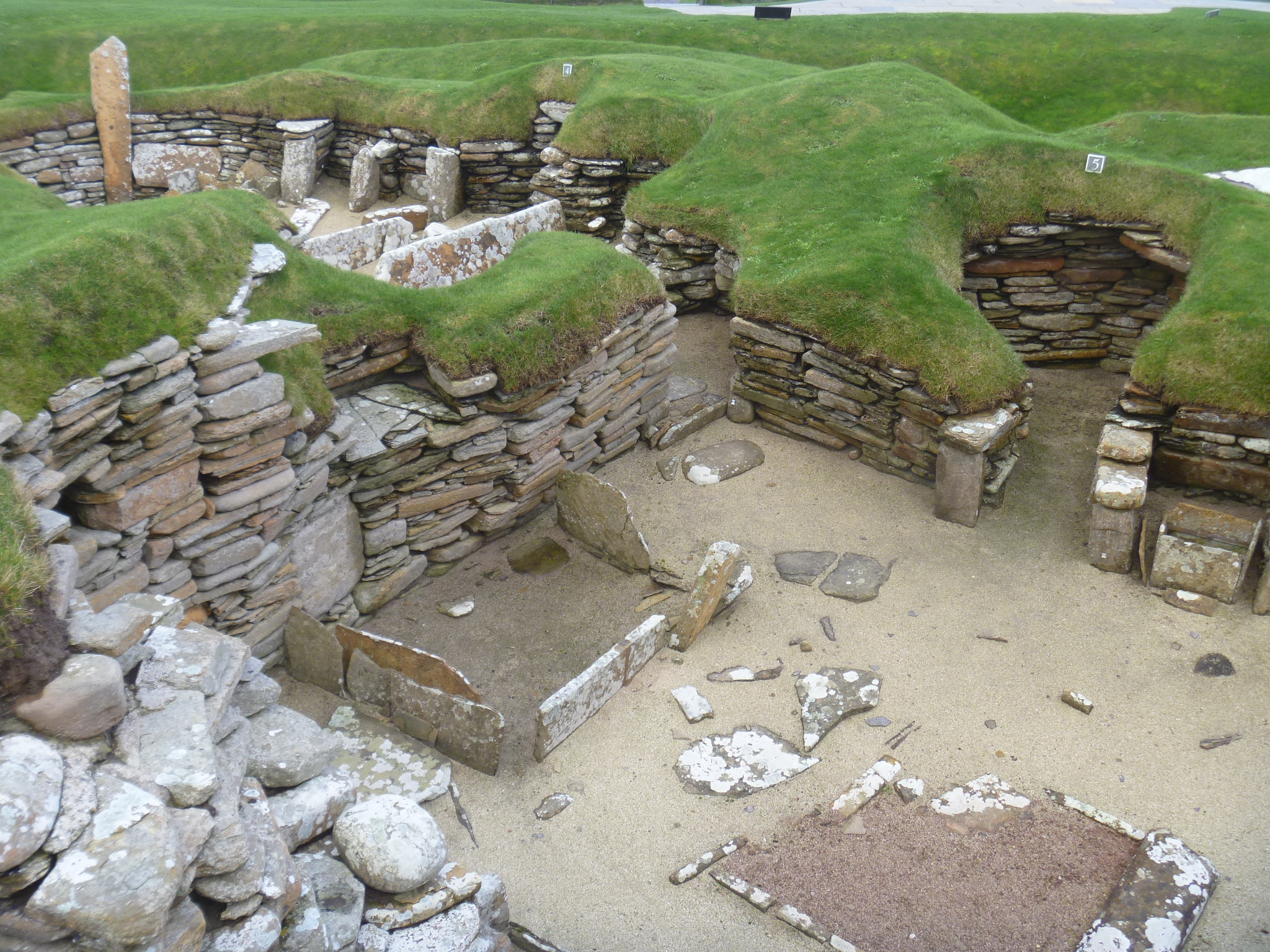
Because dig season was over, the site was not available to visit, and is covered with tarp and old tires to protect it….so we went to visit the site of Skara Brae that is open for visitors. It is a beautifully presented Neolithic site, helped along by the fact that household furnishings were built of stone and left behind.   9-30-16-skara-brae-orkney-004                                        These houses were like hobbit homes, partially underground, with roofed passageways among the structures, so that people did not have to go outdoors to get to their neighbors.


9-30-16-skara-brae-orkney-002The older homes have sleeping areas and storage spaces built into the hillside. (It was made of midden, er, garbage, and might have smelled just a bit. Maybe it was weathered and only smelled like the shore.)


9-30-16-skara-brae-orkney-023The later houses were larger, with areas for sleeping and storage marked off with stone slabs. You can see there was a large hearth at the center of the house. It was probably smoky, but warm.

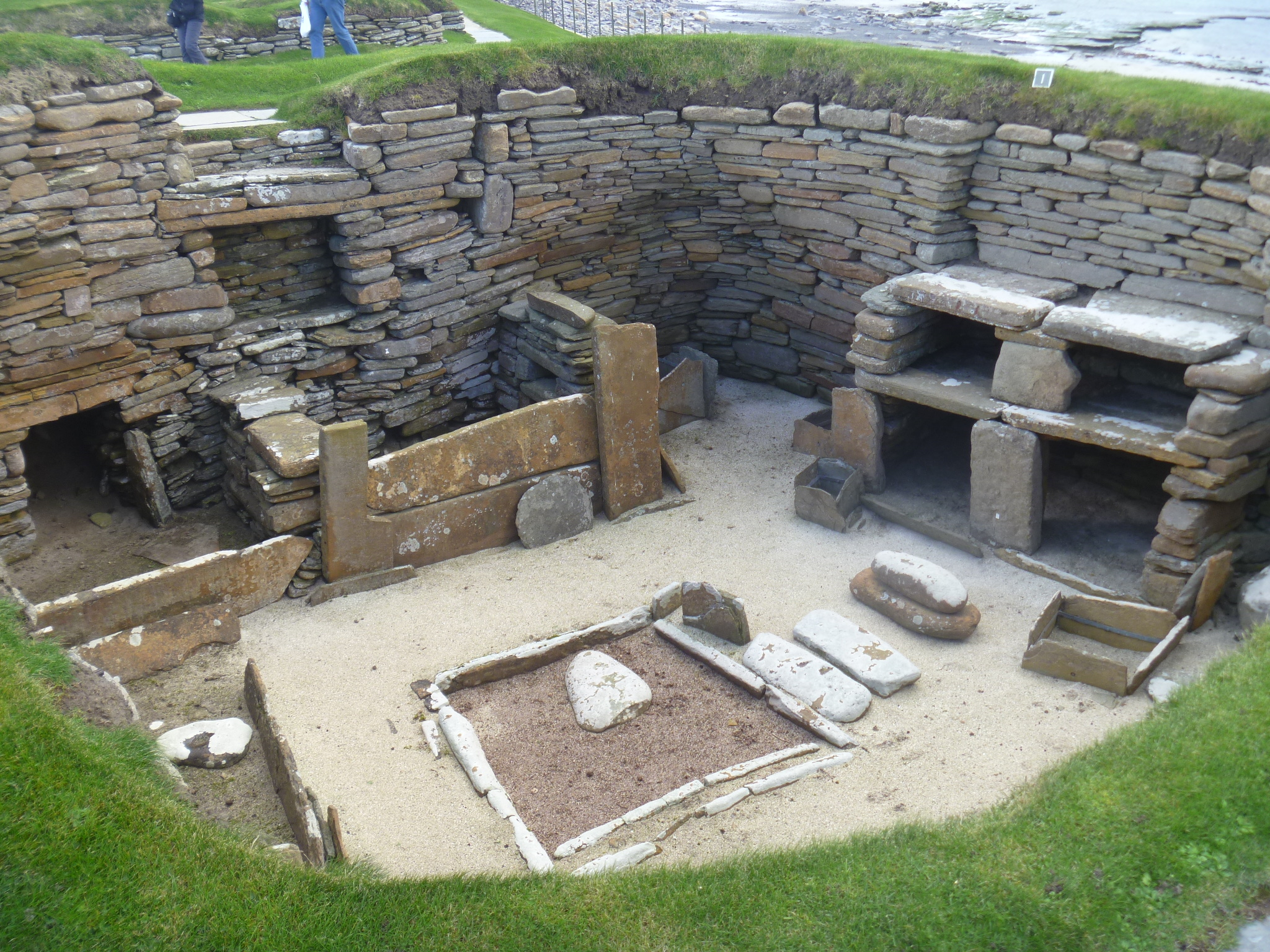
9-30-16-skara-brae-orkney-022

The houses each have a “dresser” or set of shelves built across from the main door (on the right in this photo). It’s suggested these were used to store and display household goods.

The visitor center shows some of the objects found at the site, and others are at the National Museum of Scotland in Edinburgh. It’s a very detailed stabilization project, based on excavation was carried out in 1928-1930 by V. Gordon Childe, a highly regarded British archaeologist.

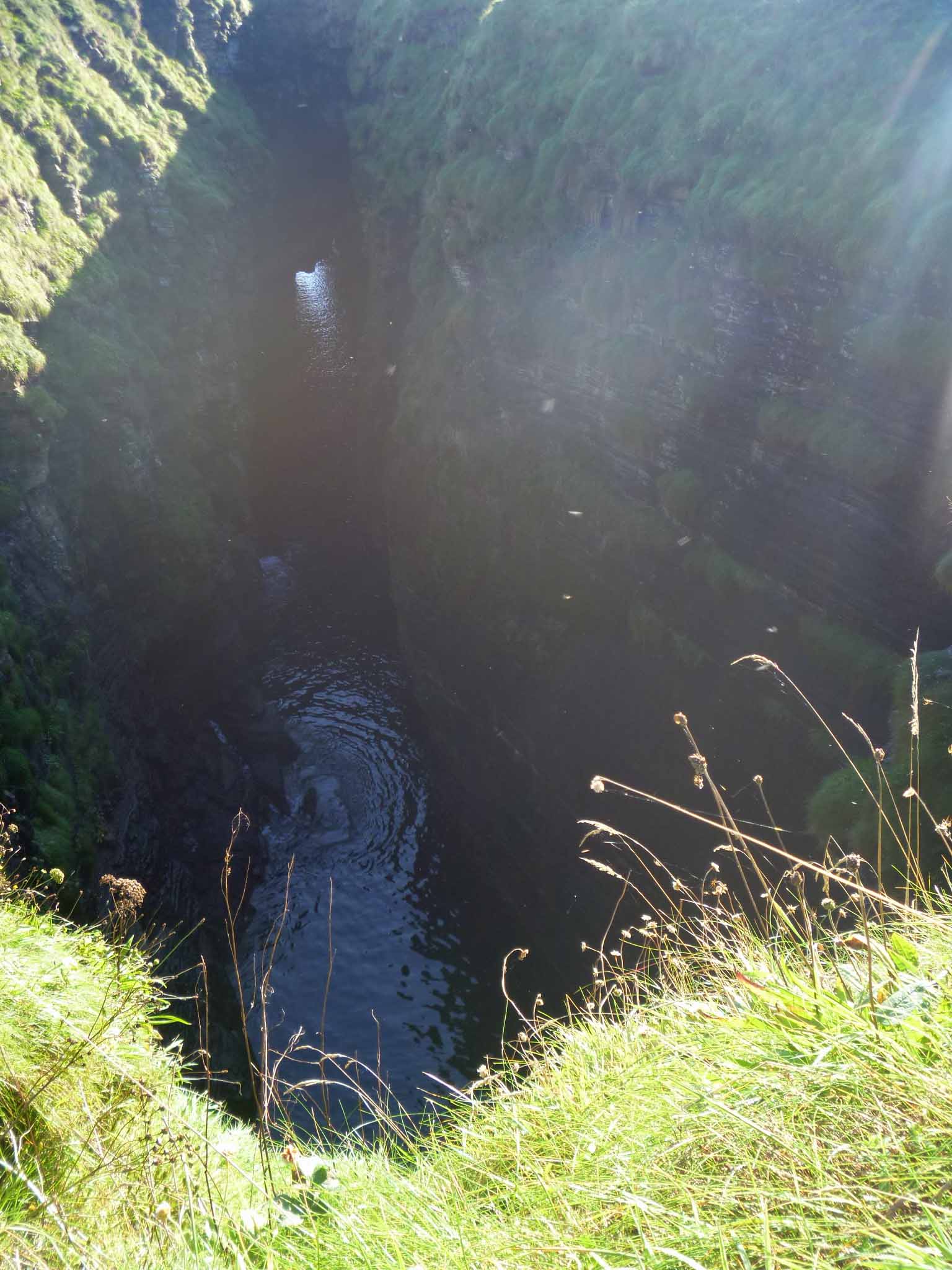
Having met our goal for archaeology, we went to the beach in Birsay to look at birds and picnic looking at the water while it rained and then didn’t rain. The view is stunning, and it’s possible to walk out onto the point at low tide. That will have to be for another trip, and it ought to be in a warmer month.9-30-16-near-birsay-006smWe saw flocks of migrating curlews and lapwings, hundreds in a single flock when we usually see one or two. We made our way back to Kirkwall for a bit of shopping and then on to the hotel and dinner. The next morning we stopped at The Gloup (!) for some birdwatching on the way to the ferry back to the rest of Scotland. p1070514Gloup is a Scottish term for a collapsed blowhole and comes from the Norwegian word for a ravine, so its all very sensible–it just sounds silly. I was sorry to have such a short visit on Orkney. I could have spent a week walking along the cliffs and beaches. The day we left was perfect weather, sunny and mild. We rode on the outdoor deck of the ferry all the way back to Gills.


Getting to the Orkney Islands

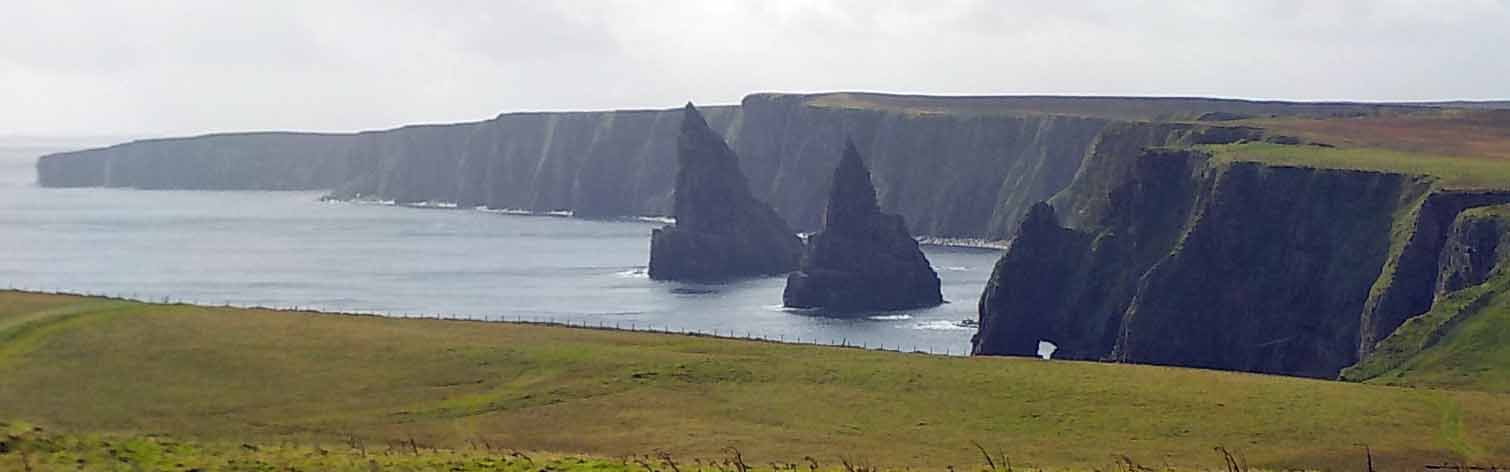
We saved some of the best for last, and after one night in Invergordon after our trip to Skye, we set off for the Orkney Islands. We were advised to check and make sure the ferry was running before leaving home, and found that the first ferry was cancelled due to high winds. The wind and rain was supposed to abate by 1 pm–our ferry was scheduled for 1:30 pm, so we decided to go ahead and go. Part way along we managed to connect with the Pentland Ferries site and found our trip was scheduled to go as scheduled. 9-29-16-duncansby-stacks-005smWe left Invergordon a bit early to fit in a scenic detour to the Duncansby stacks, a couple of wildly sculpted rocks just off the lighthouse beyond John O’Groats. It’s possible to hike about 3/4 mile to get close to them, but the wind and rain deterred us.

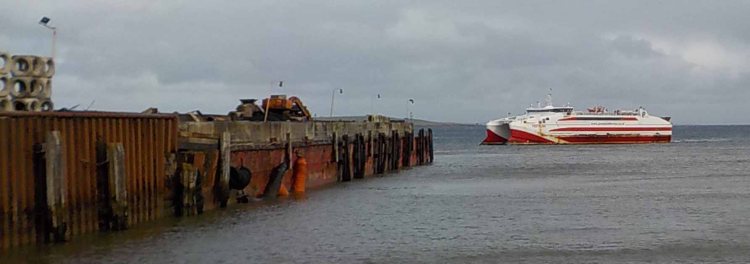
The ferry was a bit late and the ride a bit bumpy, but we made it safely to Orkney. We saw a flock of eider ducks flying by, and gannets. One seal popped its head out of the water to have a look at us, but no whales.

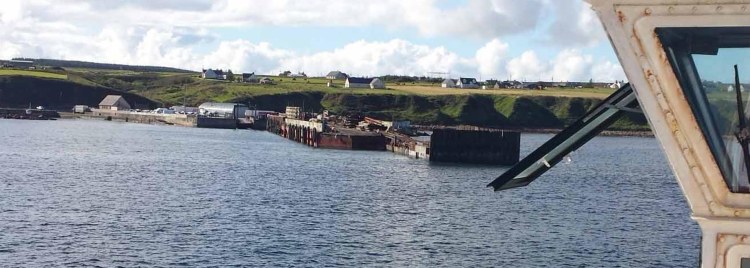
The ferry leaves from the town of Gills, and lands at St. Margaret’s Hope near the southernmost point of the Orkney mainland. We purchased our tickets online ahead of time (one ticket for each of us and for the car R/T £140). Once on dry land, we worked our way north across the Churchill barriers, causeways built of huge cement blocks that were installed after a battleship was sunk in Scapa Flow, the huge natural harbor here. Despite the great motivation behind the project, it ended up being christened a few days after the war in Europe ended. The Churchill barriers connect two small islands with the mainland. Roads in Orkney were narrow, but in better condition than those we recently experienced on Skye. We stayed at The Foveran “food and rooms,” and had dinner there both nights. It was very comfortable and not far from Kirkwall, convenient if you have a car.

More on the sights on my next post.

The Isle of Skye

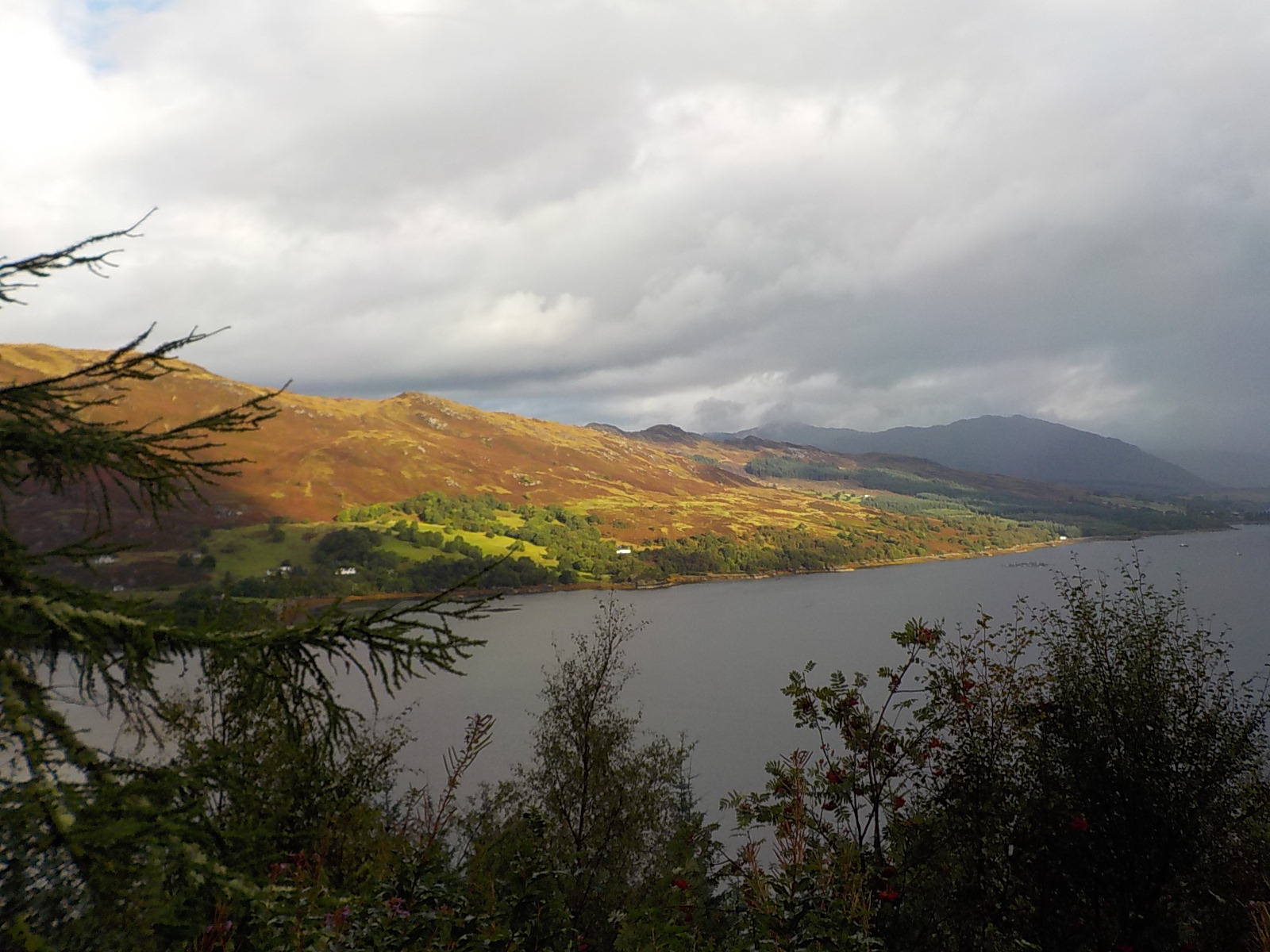
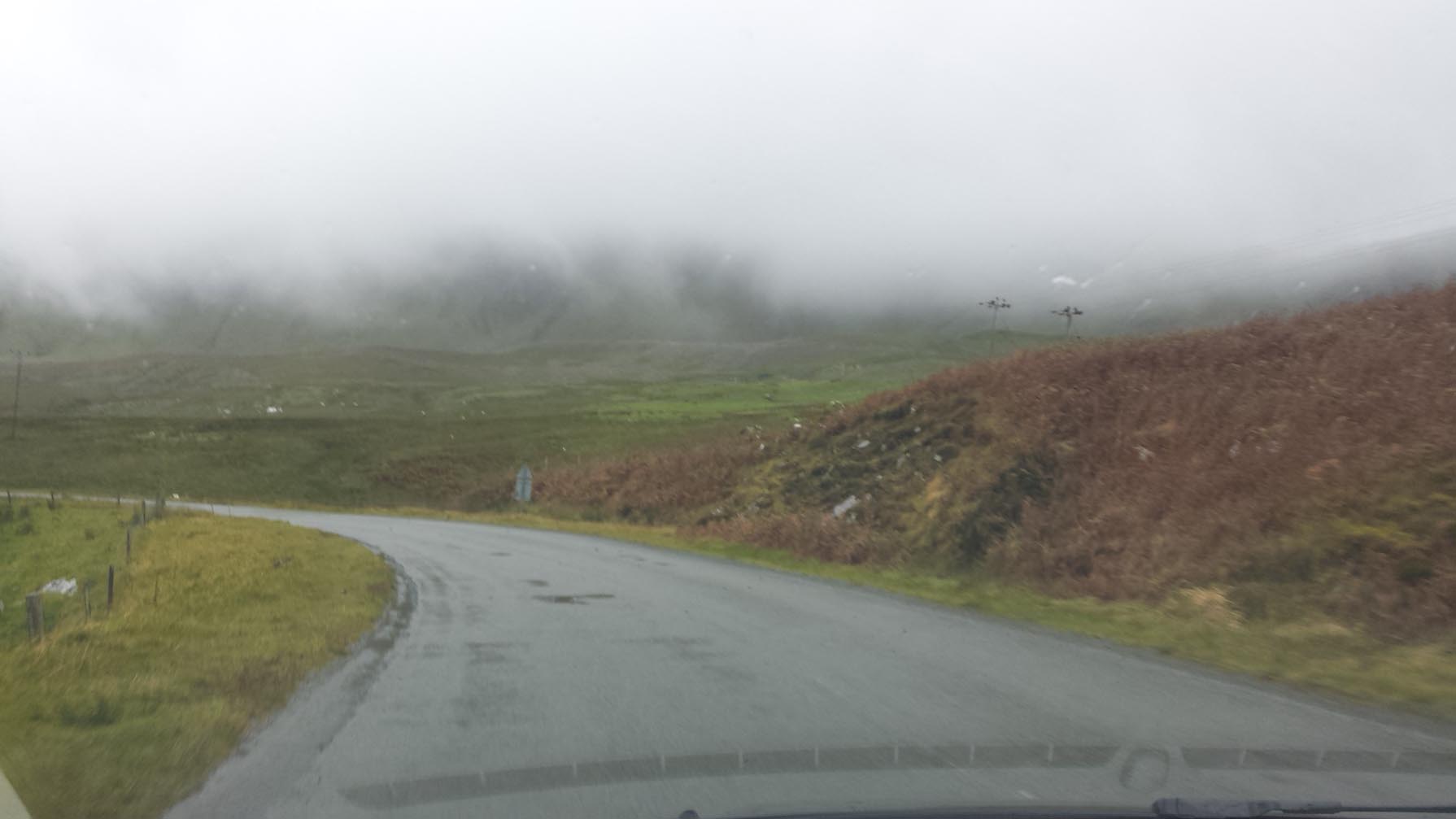
Skye may be the best known island in Scotland, though there are partisans for every island. We decided on a brief visit. You can go for the day from where we are, but it would be very long, so we settled on an overnight, with just two days of touring. 9-26-16-route-to-skye-001This photo depicts the weather for our visit–some sun, with rain coming or just past. We went south to north and clockwise around the island.

9-26-16-broadford-skye

Broadford was our first stop for late morning coffee and a peek at the beach for both birds and beachcombing.


9-26-16-fairy-pools-skyeNext stop, a short hike to a series of waterfalls and clear pools called the Fairy Pools. The mountains in the back are the start of the Cuilins, the highest on Skye.9-26-16-fairy-pools-skye-004No pool pictures because my camera battery died. (Note to self, always carry phone as backup.)

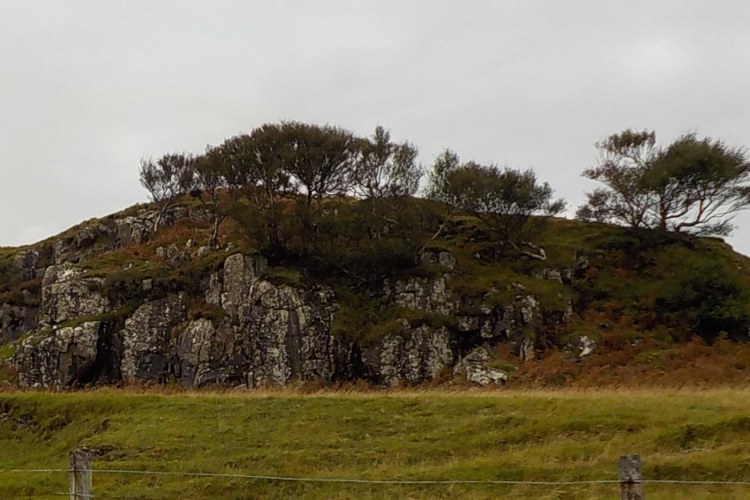
9-26-16-dun-beag-broch-003

From here we saw the circular hill fort (called a “broch”) at Dun Beag. This fort lends its name to the nearby town of Dunvegan where our B&B was located. We had a beautiful view over Dunvegan Loch from our window.


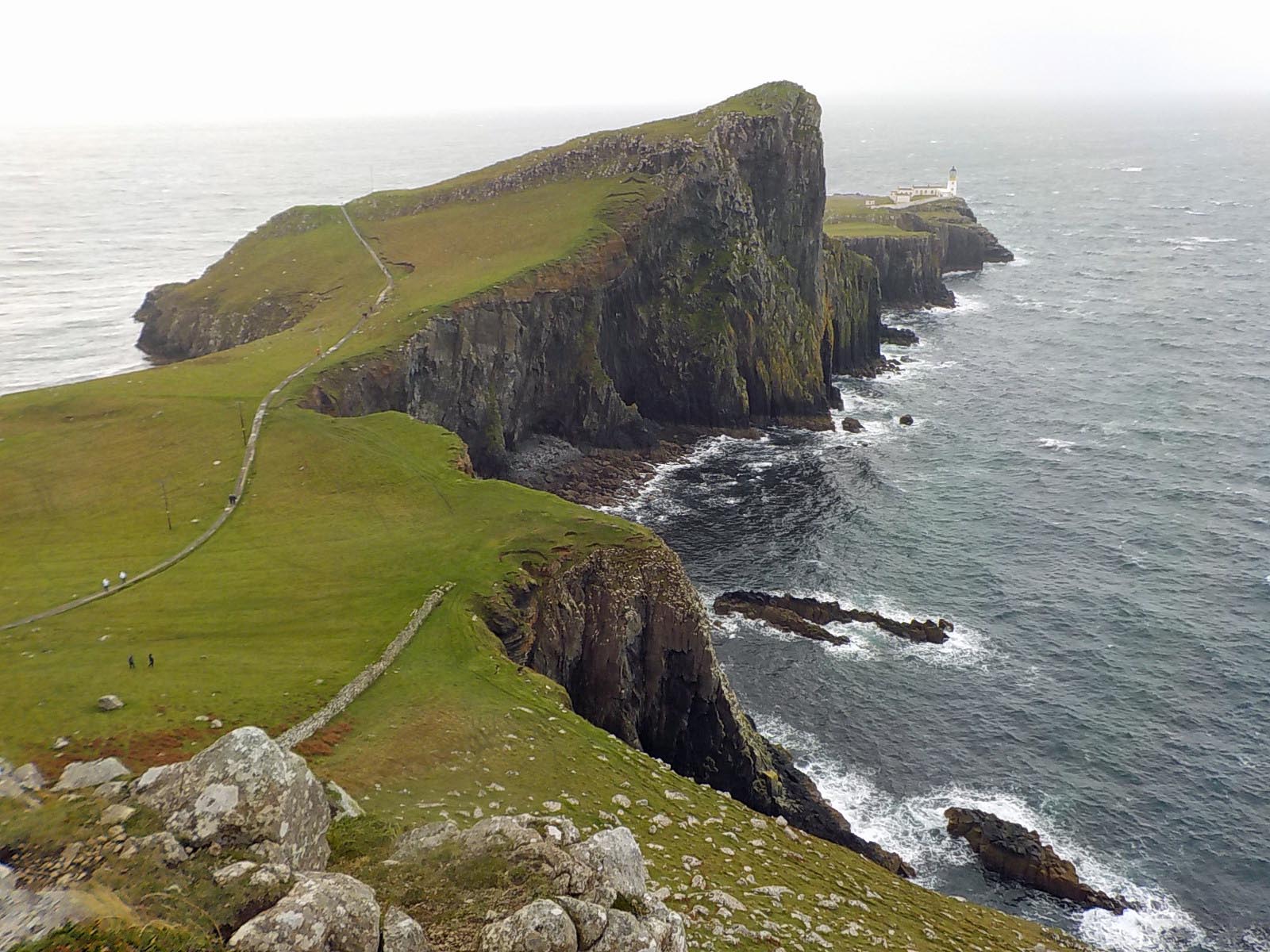
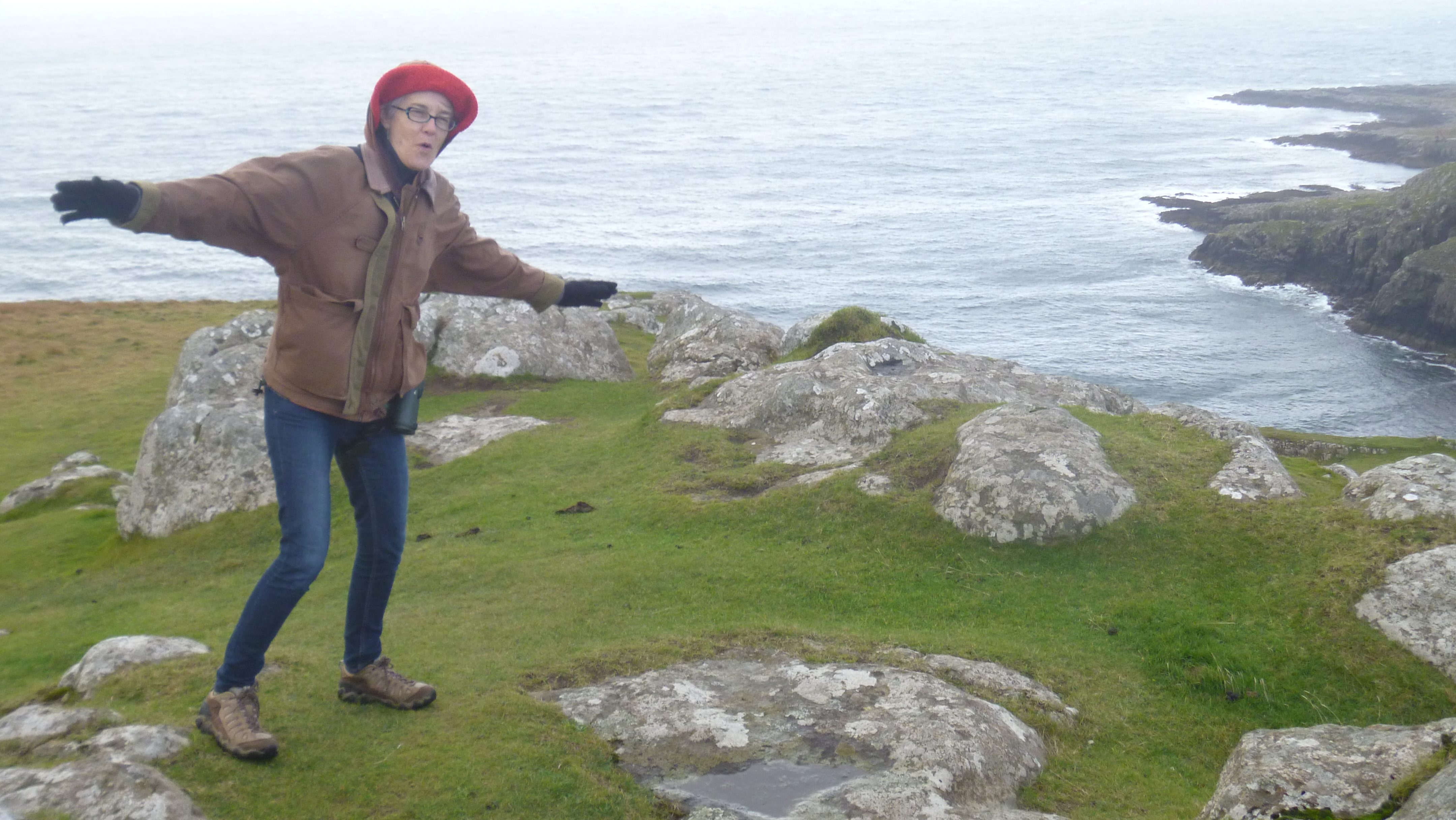
The sun was not as cooperative the next day, as we continued around the island. We saw Neith Point, an impressive setting, but we didn’t hike the path to the lighthouse because of the gale.9-27-16-neist-pt-lighthouse-0089-27-16-neist-point-lighthouse-001It was seriously windy. My hat is held down with my hoodie. It wasn’t even raining yet. That came later.


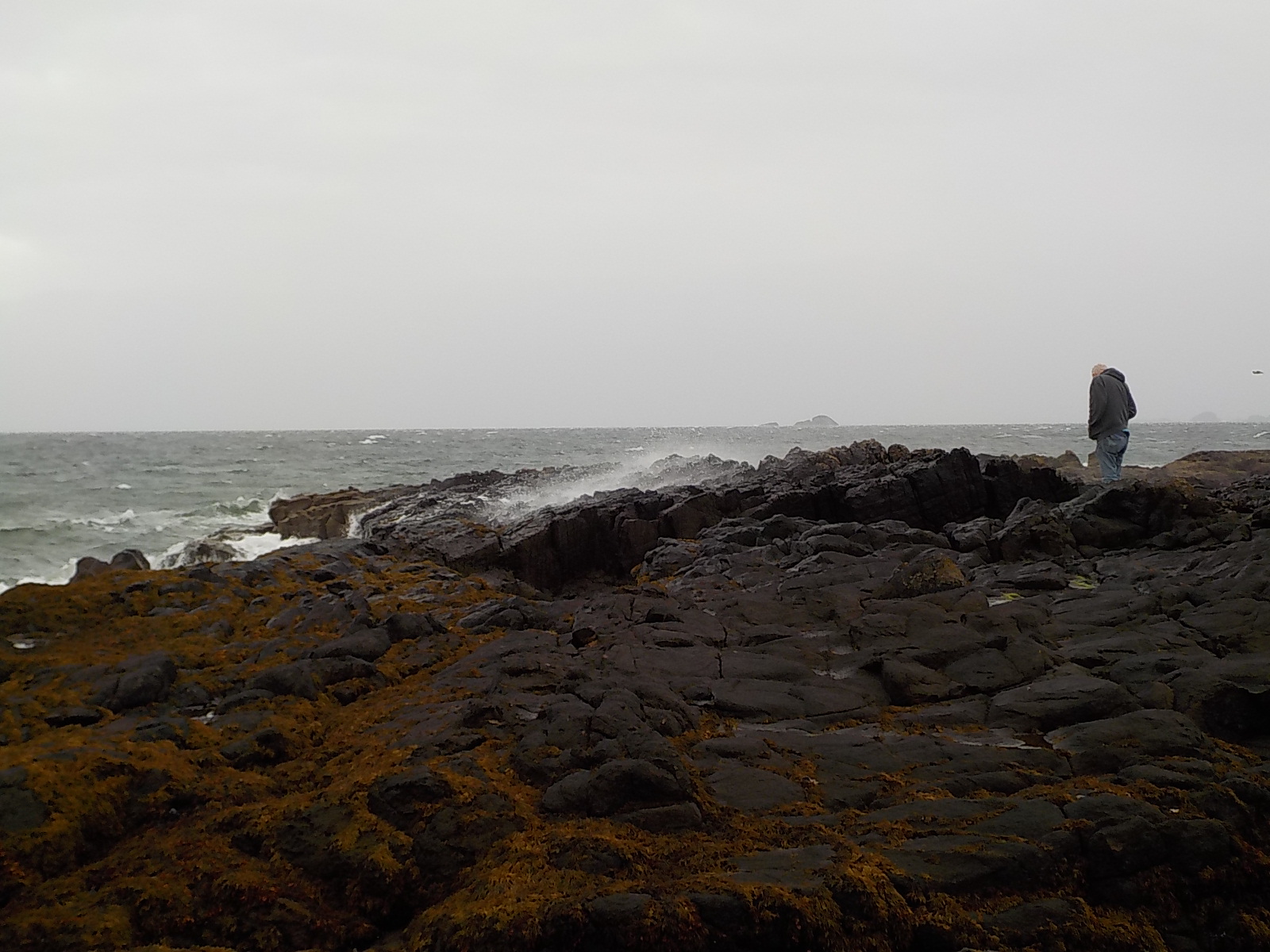
9-27-16-bornisketaig-beach-015Despite the onset of rain, we stopped at Bornisketaig beach, where Jonathan stood in the spray.

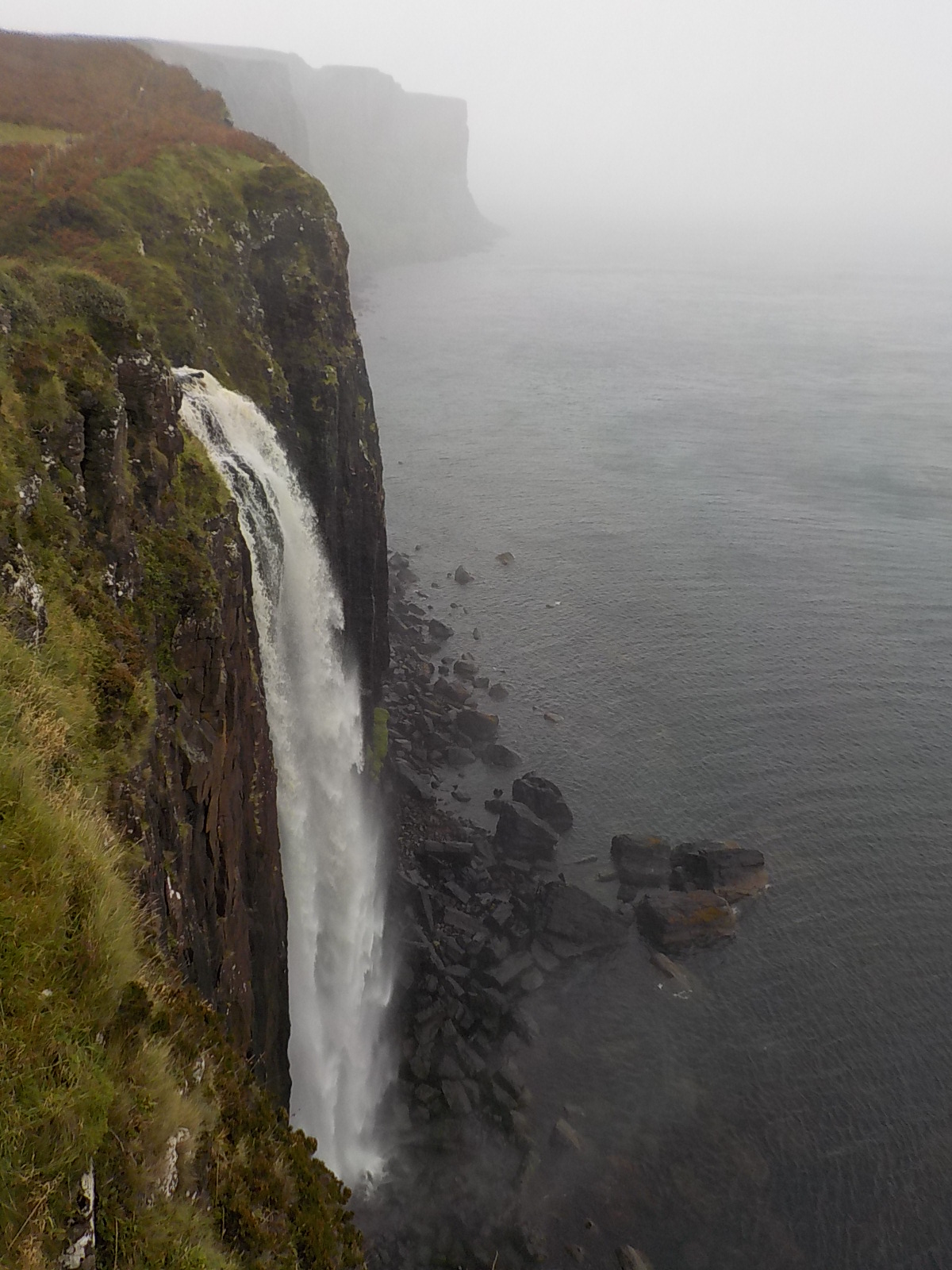
9-27-16-kilt-rock-001


By the time we arrived at Kilt Rock, it was pelting rain sideways. One side got wet while we were rushing from the car to the overlook. The other side got wet when we rushed back to the car. The waterfall was gushing full force. Skye seems to have lots of water right now.


9-27-16-old-man-of-storrThe Old Man of Storr was the final sight on our loop, but was totally obscured in mist. We saw it, but as gray ghosts, not as black pinnacles.

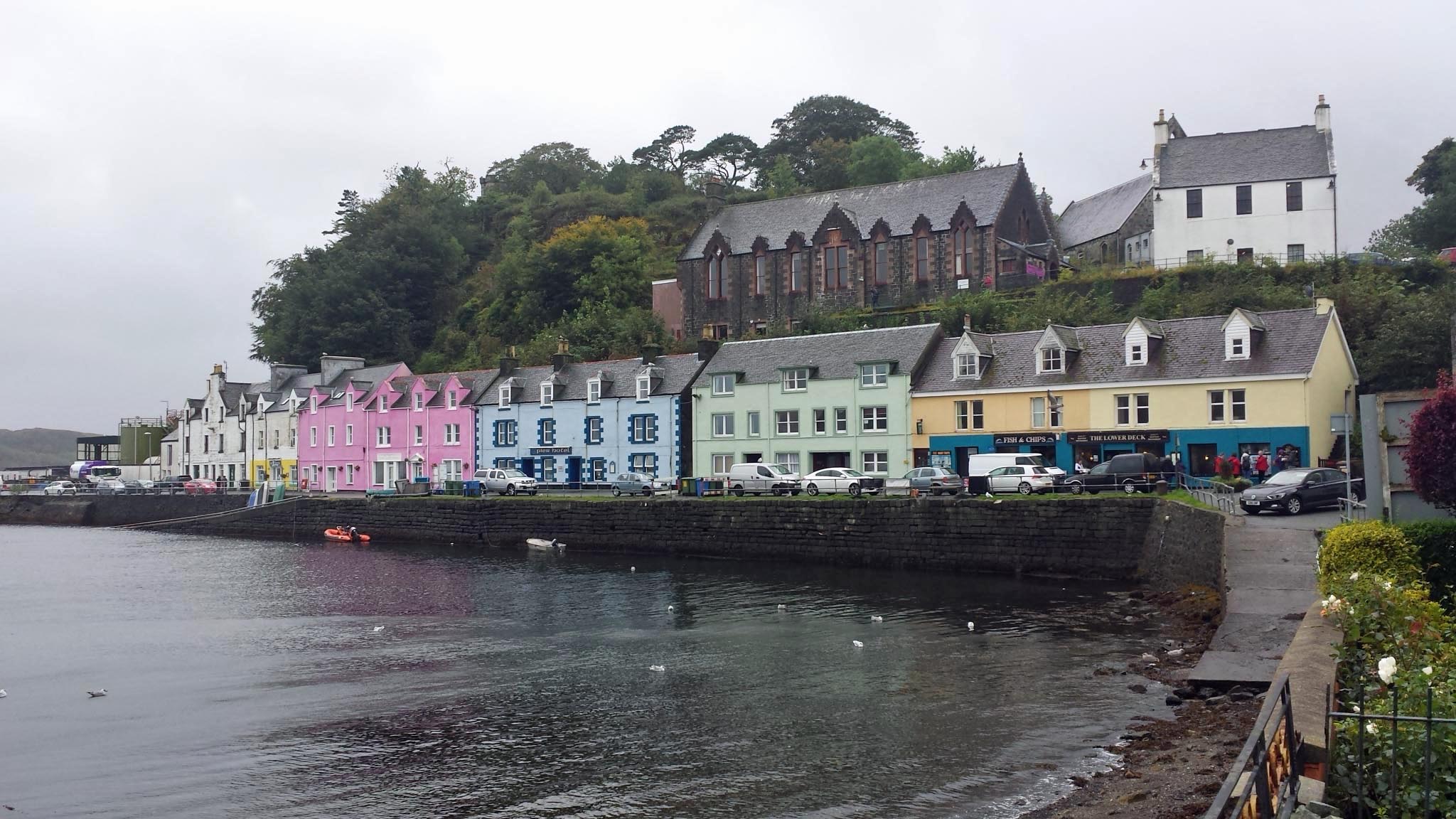
9-27-16-portree-003 9-27-16-portree-005On the bright side, the rain abated in Portree, where we saw some of the lovely town and harbor.
From here it was time to head home. We had a wonderful visit, however short.
 

As always, I have a few comments about Skye. Our experience, backed up by our B&B host is that reservations are essential. We had a reservation for a place to stay and for dinner before we went and both places were full when we arrived. Skye is full of small B&Bs, some of them very remote, and most we saw, even on a Monday night in late September, had “No Vacancies”.

Roads on Skye are often one lane and in poor condition. We shared the road with sheep and the occasional cow which I didn’t mind as much as the large trucks.

Just because roads are narrow and you don’t see anyone doesn’t mean no one is there. We had what has become our typical Scotland experience. You get to the end of a long winding, single lane road and the parking lot is full. The Fairy Pools had a full lot and cars parked along the side of the narrow road on a steep hillside. There just wasn’t anywhere else to stop. There were at least 50 people on the trail at any given time, most of them not Scottish, or even English. Americans and Japanese seemed to prevail, though everyone was there.

There are wonderful sights, crowded or not. Here are a few of my favorites:

Skye is a lovely place, but you could have as good a visit with far less crowding further north along the coast (see my post on the North Coast 500).