 One of our goals in Ayacucho was to look at some of the crafts that the region is known for. There are ceramics, weaving, embroidery, metalwork, saddlery, retablos (tableaus of religious and secular life), and silver filigree. I’m probably forgetting something. There is also at least one artisan from Sarhua, a villlage about three hours drive south of Ayacucho.
Known far and wide as an artisan center, we did not expect to have much difficulty in finding material to look at, but though there are many artisans in Ayacucho you have to do your homework. The local artisan market “Shosaku Nagase” has many stalls. They sell woven goods and smaller ceramics and pieces made of “piedra de huamanga”, local alabaster. To see larger examples or more work, you need to visit workshops or studios. After we figured this out, and with the aid of some business cards, flyers, displays in our hotel, and the Tourist Office, we were able to visit three artisans.
We called each artisan in turn and made an appointment to visit. We were instructed to give a cab driver the address but then call enroute and hand the phone to the driver. Each trip seemed to involve driving up several steep interconnecting streets to where the paving ended. In one case, the driver couldn’t find the correct location even with the phone in one hand, so Sr. Berrocal, the person whose studio we were visiting, came out to the nearest street corner to find us.
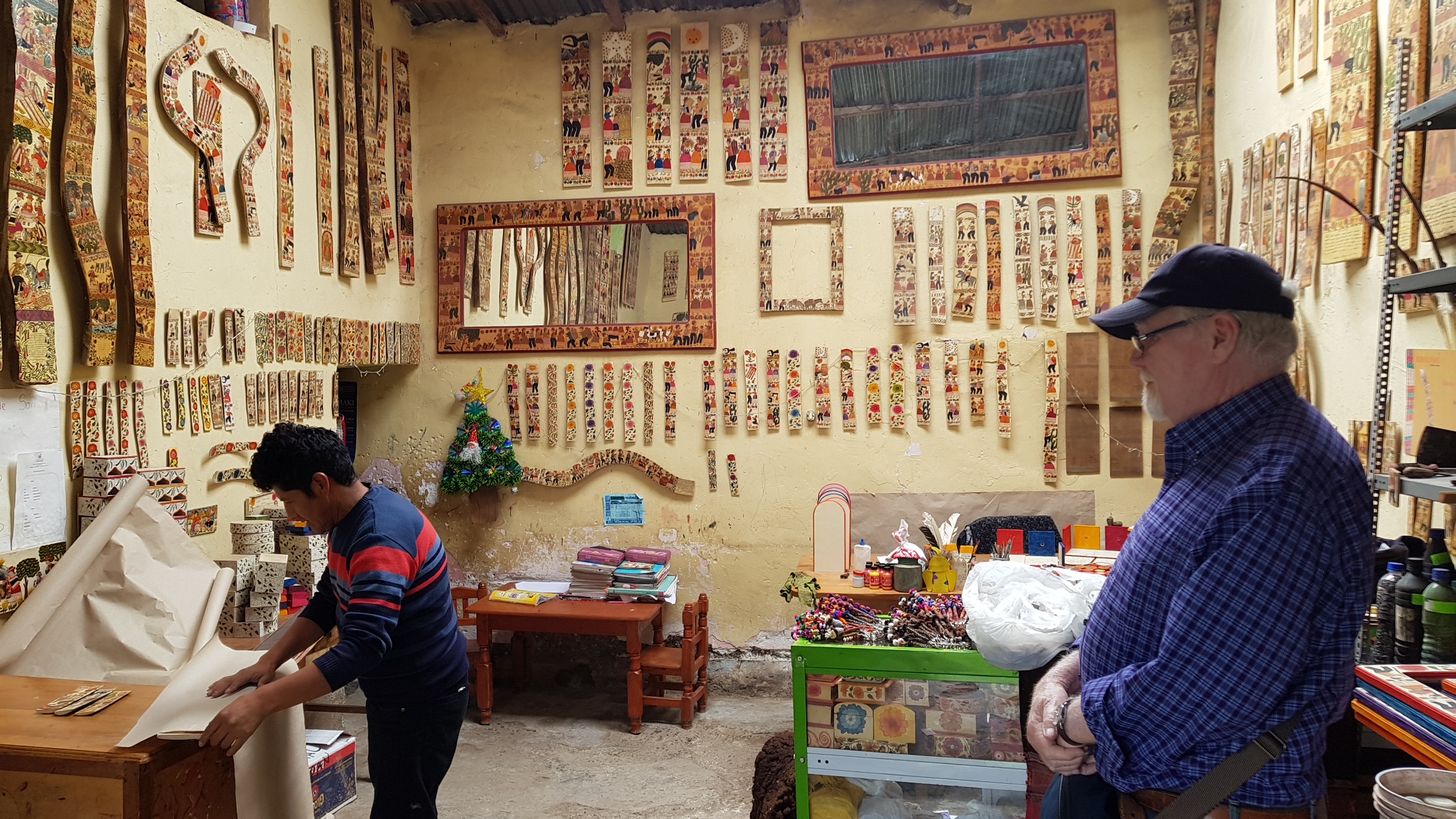
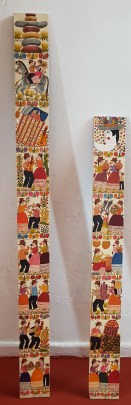
 Marcial Berrocal Evanàn is a painter from Sarhua. Originally, a painted beam was included in every newly built house in Sarhua. Since these aren’t portable, today, the painted boards for sale are thin, lightweight slices of alder in a variety of sizes. Scenes depict myths, courtship, and daily life.
Berrocal has won recognition for many of his pieces. He has most of his prize-winners on display, and some are very creative, especially the paintings on sinuous planks. He is unwilling to sell any of his award-winners, so the selection of items for sale focuses on the smaller pieces. We were able to purchase two.
- Marcial Berrocal Evanán, Tablas Pintada de Sarhua
- Jr. Amauta 418 Vista Alegre, Carmen Alto Ayacucho
- Mercado artesanal Shosaku Nagase Stand 55-A
- Email: MarcialBerrocal@hotmail.com
- 966-127-204
 Our next stop was the weaving studio of the Sulca family. They have a shop in Cusco, and would like to sell more of their work in Ayacucho. Our visit involved another taxi ride up the hills of Ayacucho, and we realized that asking a taxi driver to wait was another essential part of visiting studios.
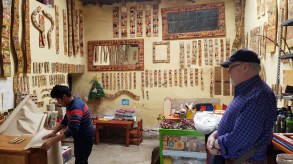
Textiles are on display on the lower floor of  the house. The weavers work upstairs where the light is better. Many of the patterns are very detailed, using motifs from ancient Inca and Wari textiles. Embroiderers work on runners, pillowcases and textiles.
We bought a textile embroidered with flying shaman figures similar to ancient Paracas textiles.
 I lost the card with contact information on it that I got from our hotel, DM Hoteles Ayacucho, 9 de setiembre, just north of the Plaza de Armas in Ayacucho.
There are many, many other textile workshops in Ayacucho and most create contemporary textiles. One of the best known themes is a belt or stripe that appears three-dimensional. There are all qualities, designs and colors of these.
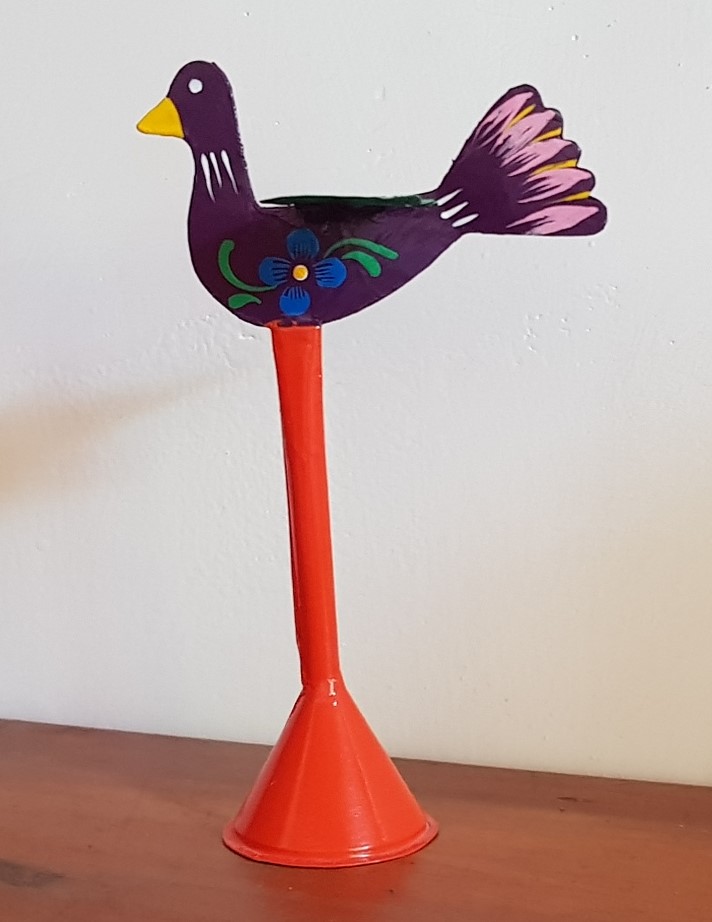
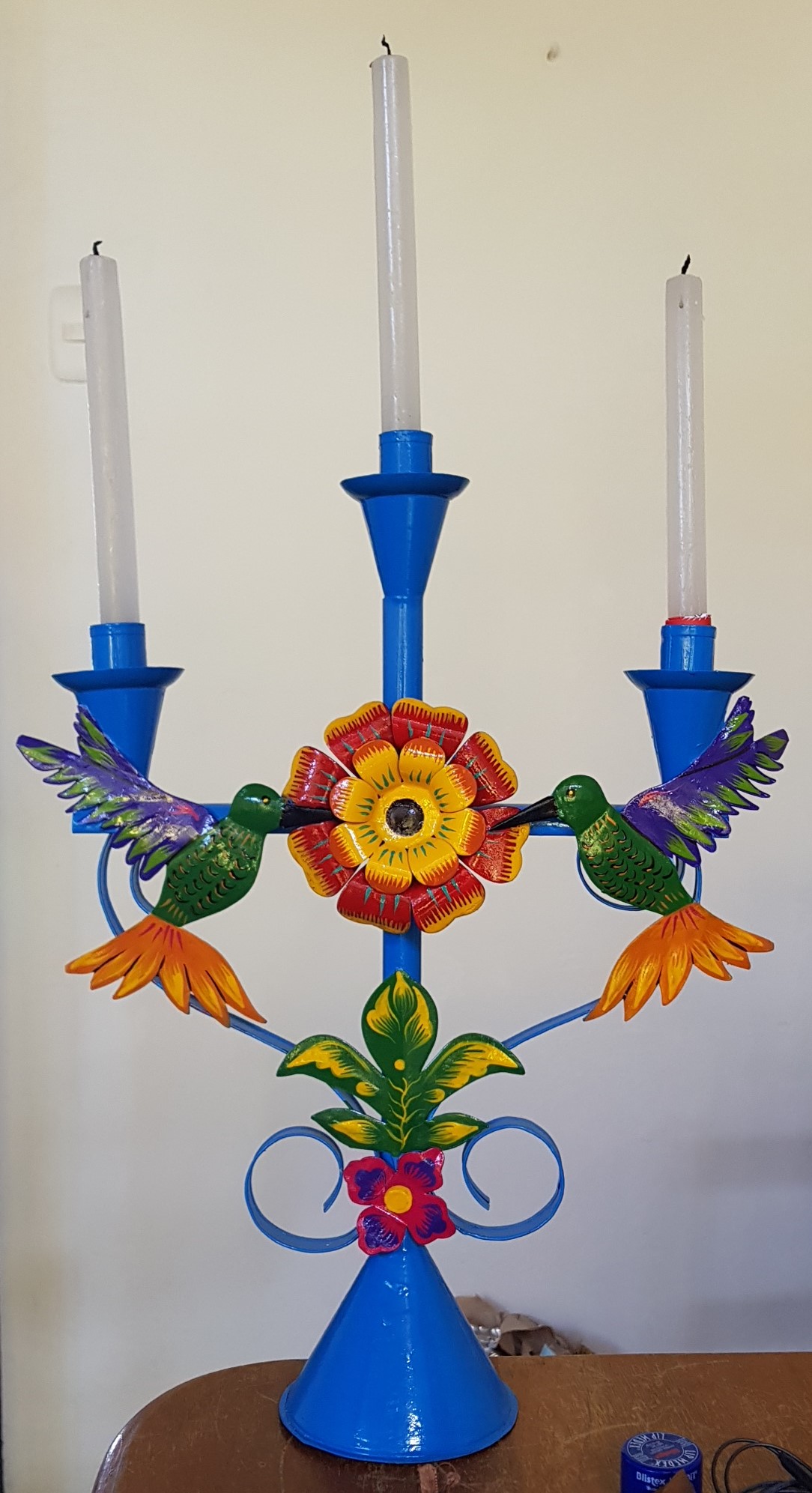
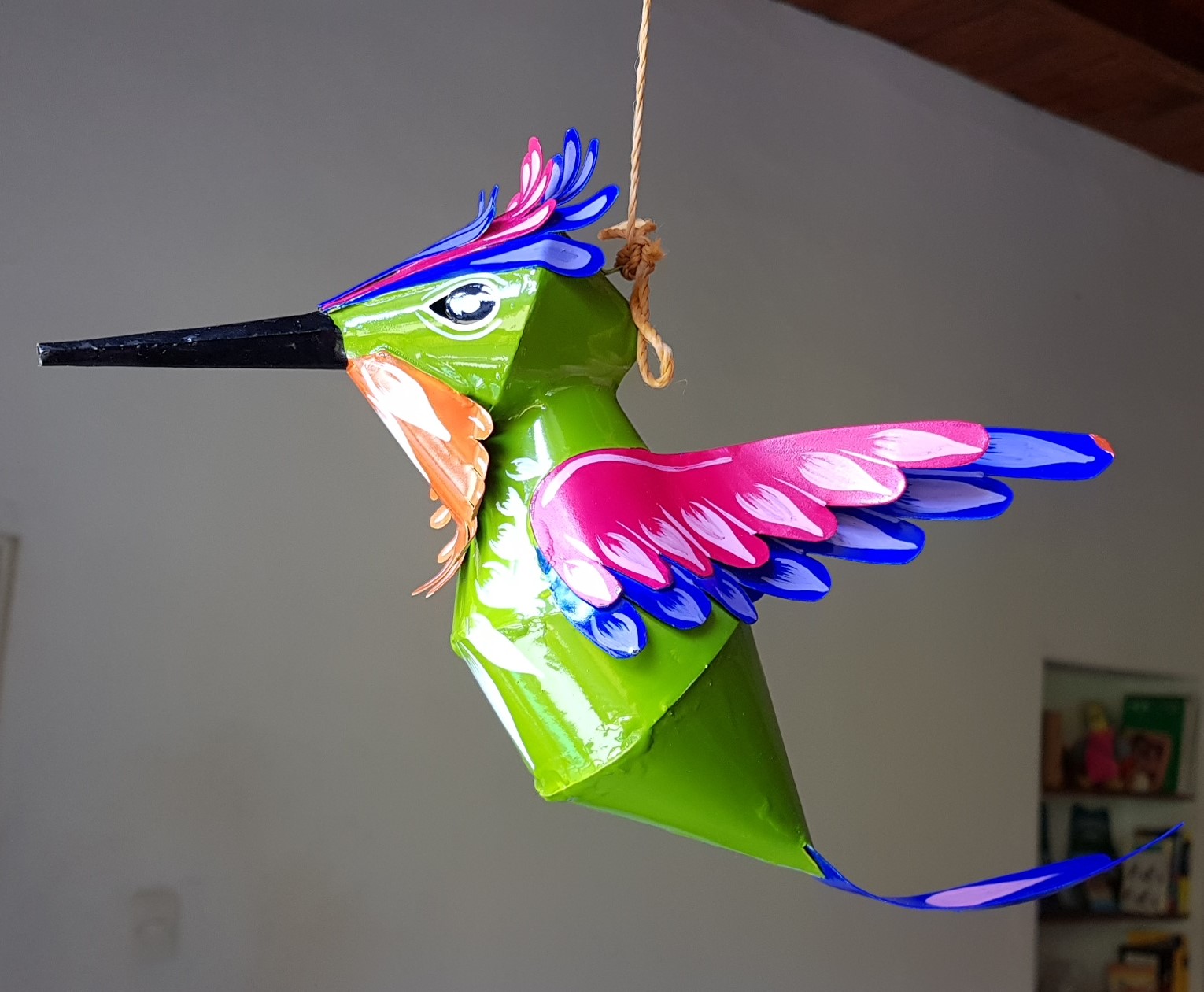
Our last stop for the day was Hojalateria Araujo, the workshop of a family of metalworkers. Each family member has their own style. One of the sons only works in metal without paint. Others make different objects. We purchased one of the most  traditional items, a brightly colored candelabra. We like birds, and ended up with birds made by one of the sons and the daughter.

We learned from our visit that it takes time to connect with craftspeople. We planned to purchase a large ceramic pot of some kind, but didn’t manage to connect with an artisan or workshop before our time ran out. One alternative would be to join a tour. Workshop tours were not on on offer from the travel agencies that line the streets off the Plaza de Armas, but an interested visitor could probably arrange one. If I visit again, I would check out the Santa Ana neighborhood that is said to be home to many weaving workshops and other craftsmen. I’d also use the list below, it includes names of artisans and the type of work they do.
Rutas Artesanales de Ayacucho
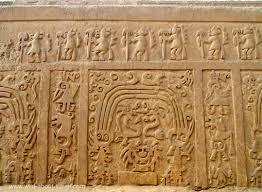
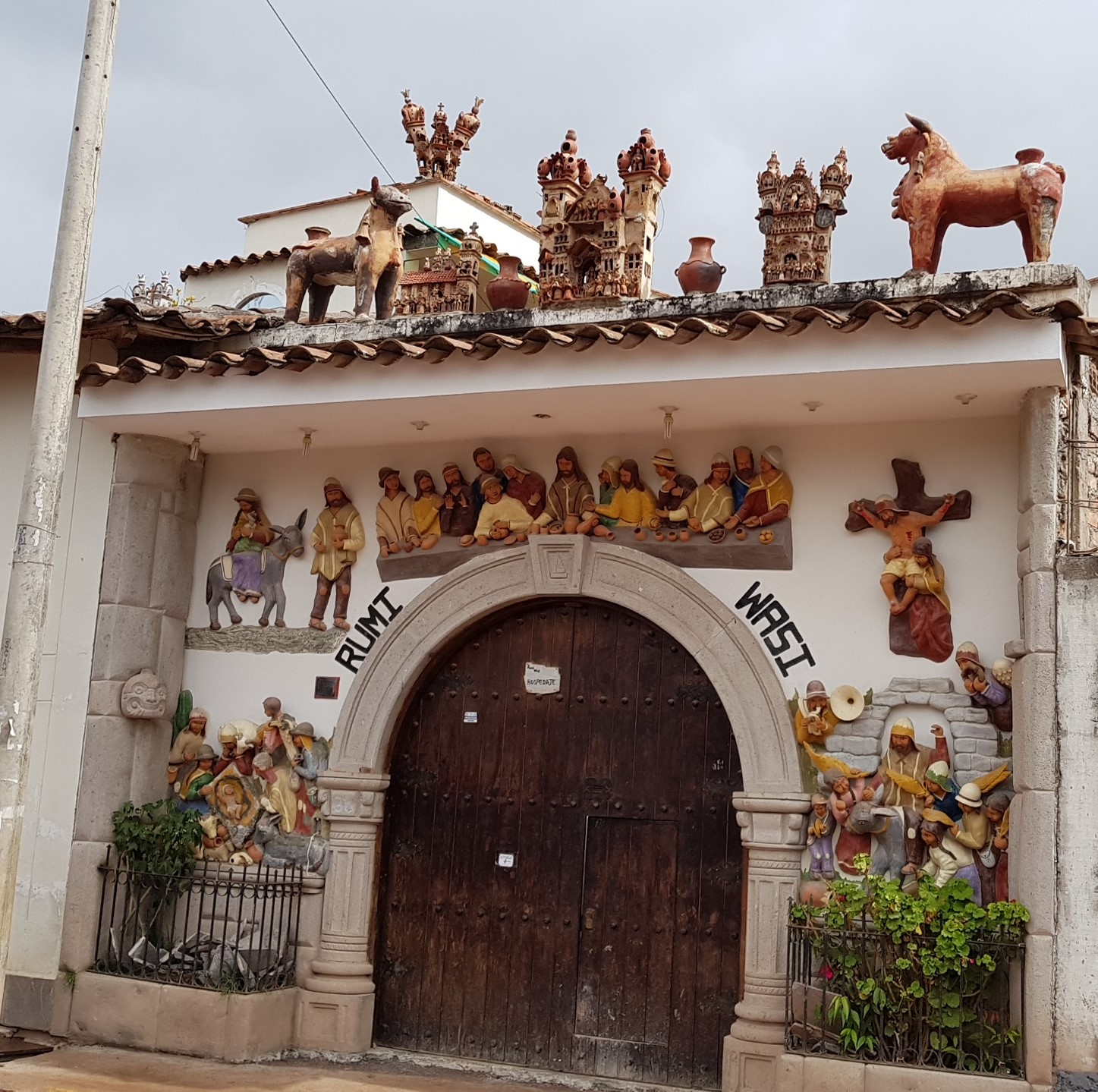
 The town of Quinua is touted as the place where ceramics are made. A 33 km drive from Ayacucho (and 50 speed bumps), we saw this great facade, but did not encounter artisans or workshops of the highest quality work. I wouldn’t drive out again unless I had a specific artisan to visit.
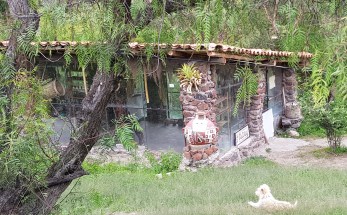 We spotted a lovely studio on the way back to Ayacucho from Quinua and bought two of the undecorated bowls of the type we were looking for. No one was working while we were there and though classes had taken place in the studio at some point, there were only a few pieces for sale, leftovers, perhaps. In general, plastic has overtaken pottery for table ware, and decorative pieces are more valuable to sell. We’ll continue to use our cracked bowls from Ayacucho until they fall apart.
If you’ve been to Ayacucho and visited workshops or studios, let me know where you went and what you liked best. Some people don’t like the word artisan, they are artists who work in clay, or metal, or weaving. People want respect for the work they do. I’d be interested to hear your experience with that, too.

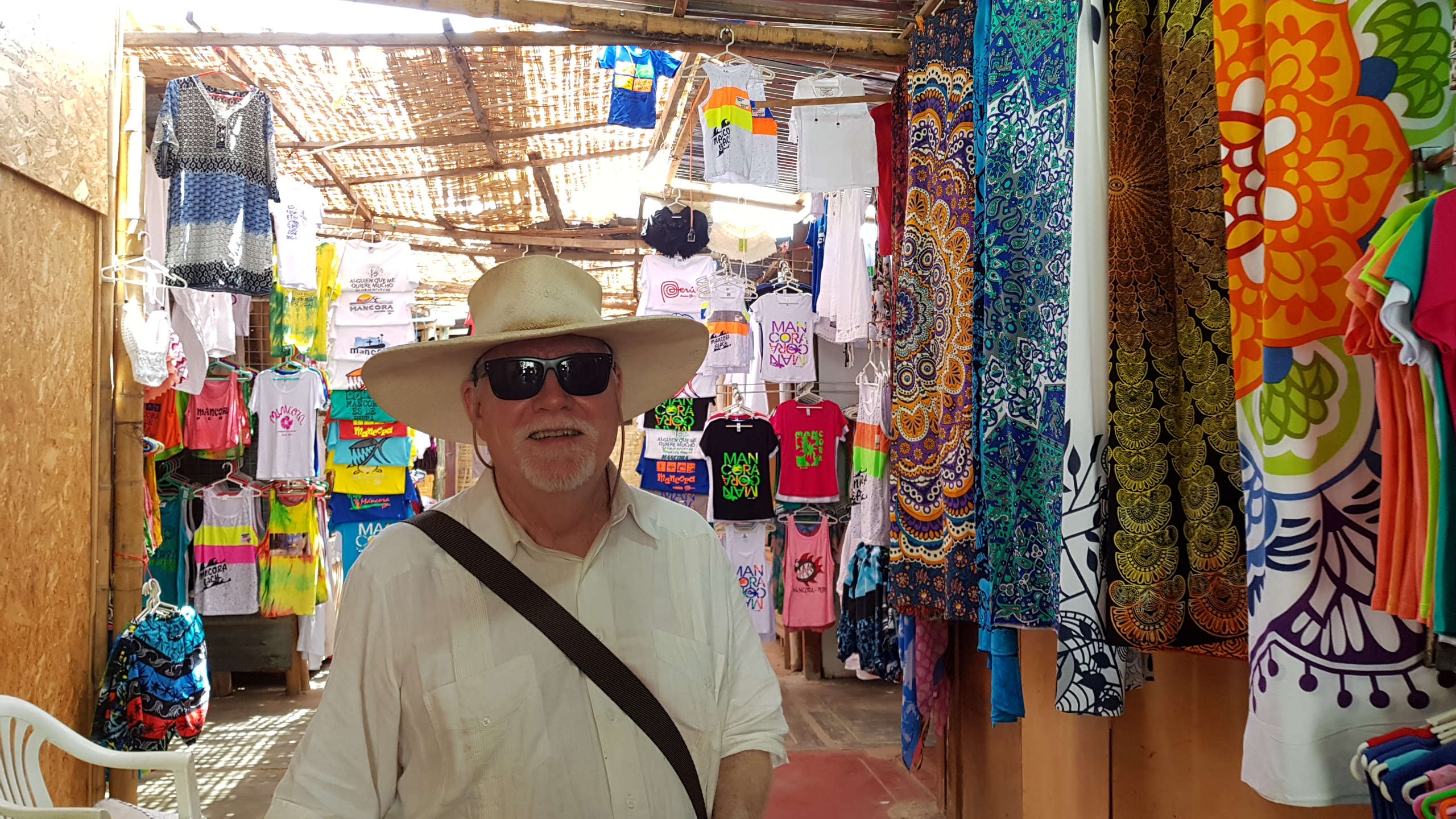 Best known of the northern beaches is Mancora, where surfing competitions are held. The center of town is a bustle of hostels, restaurants and shops. We found a few things we’d forgotten to bring along, like peanut butter, and new flip-flops. Mancora is 100% tourist.
 In town, what looks like a grocery store is an overgrown convenience store, as no one is expected to stay for long. Supplies for cooking include beer, energy drinks and chips. Prices are high compared to elsewhere in Peru. I passed on a crocheted bag to carry my keys and beachcombing. We didn’t need shell souvenirs or bikinis.
  We strolled the downtown area and then had sushi at Buda with its irresistable wall painting. We have friends who’ve bought art in Mancora. Another recommends the Sirena dress shop.
 In contrast to the hostels that are cheek by jowl in town we drove south along the shore road on our way home. This is where you find mile after mile of large houses and comfortable hotels with pools overlooking the beach. This is the Mancora that people dream about.