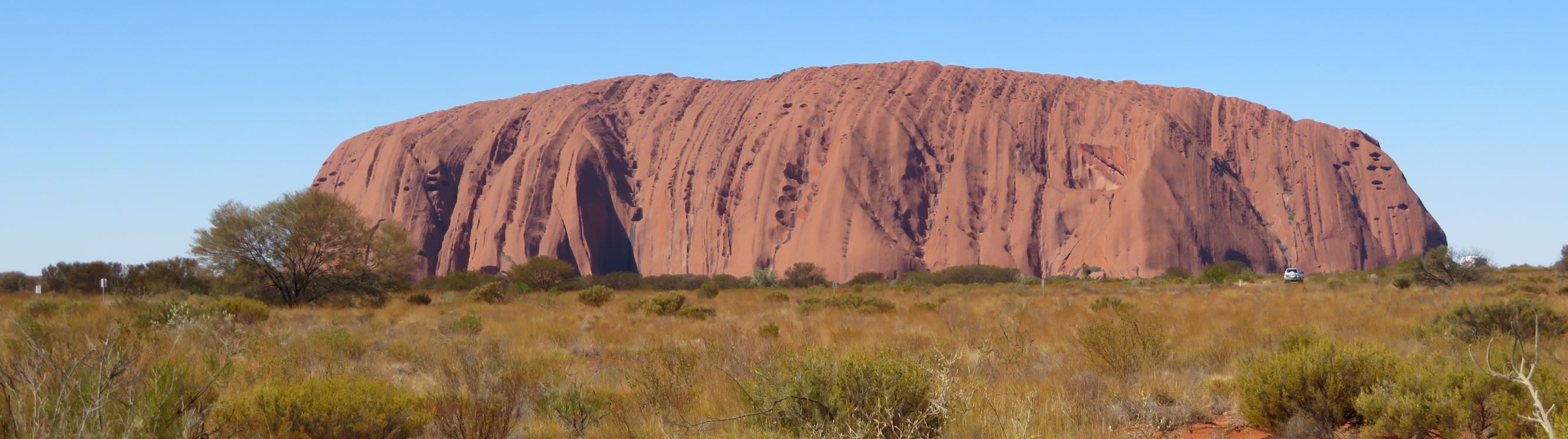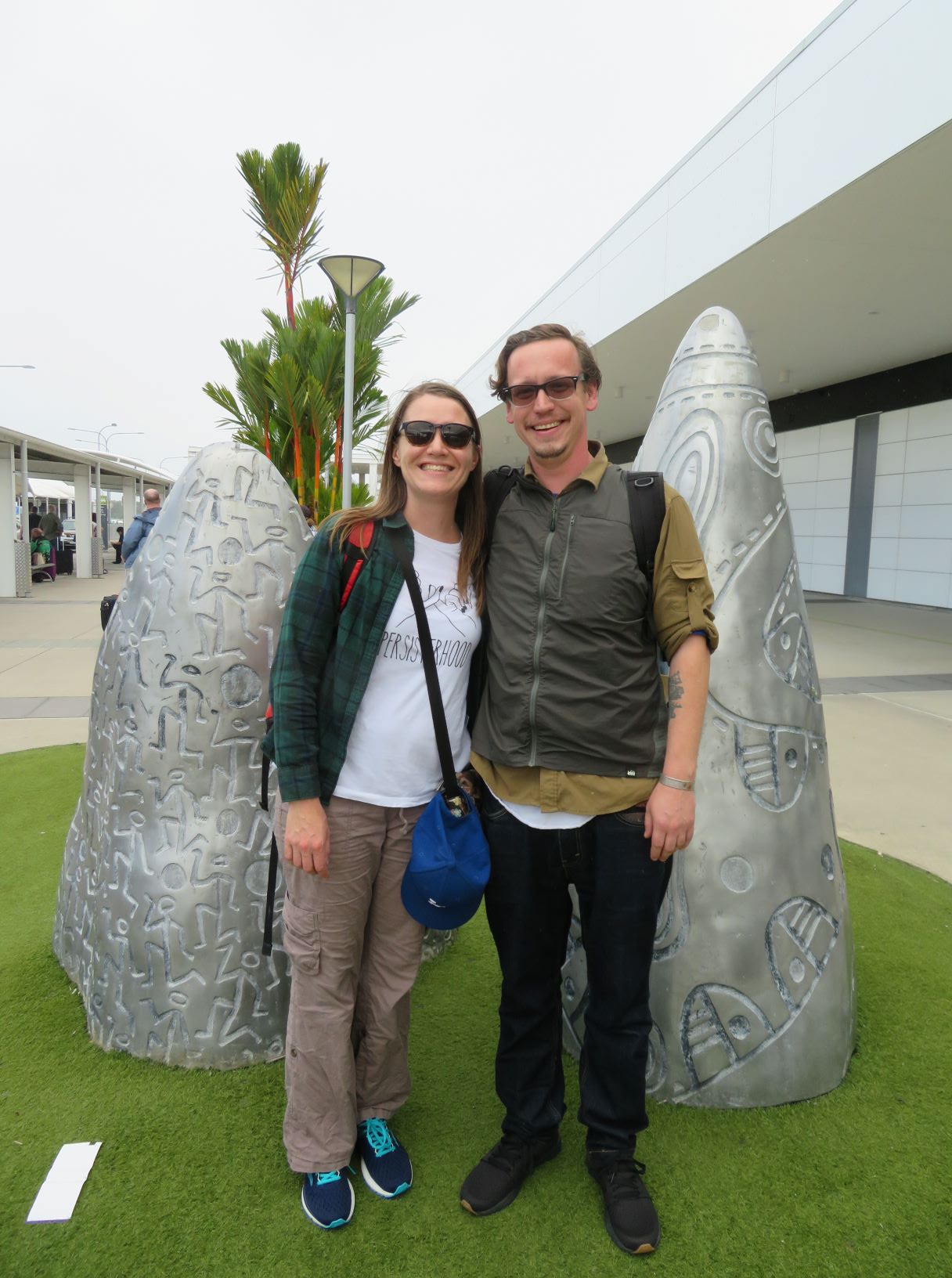
Amanda and Jim’s Cairns Adventure

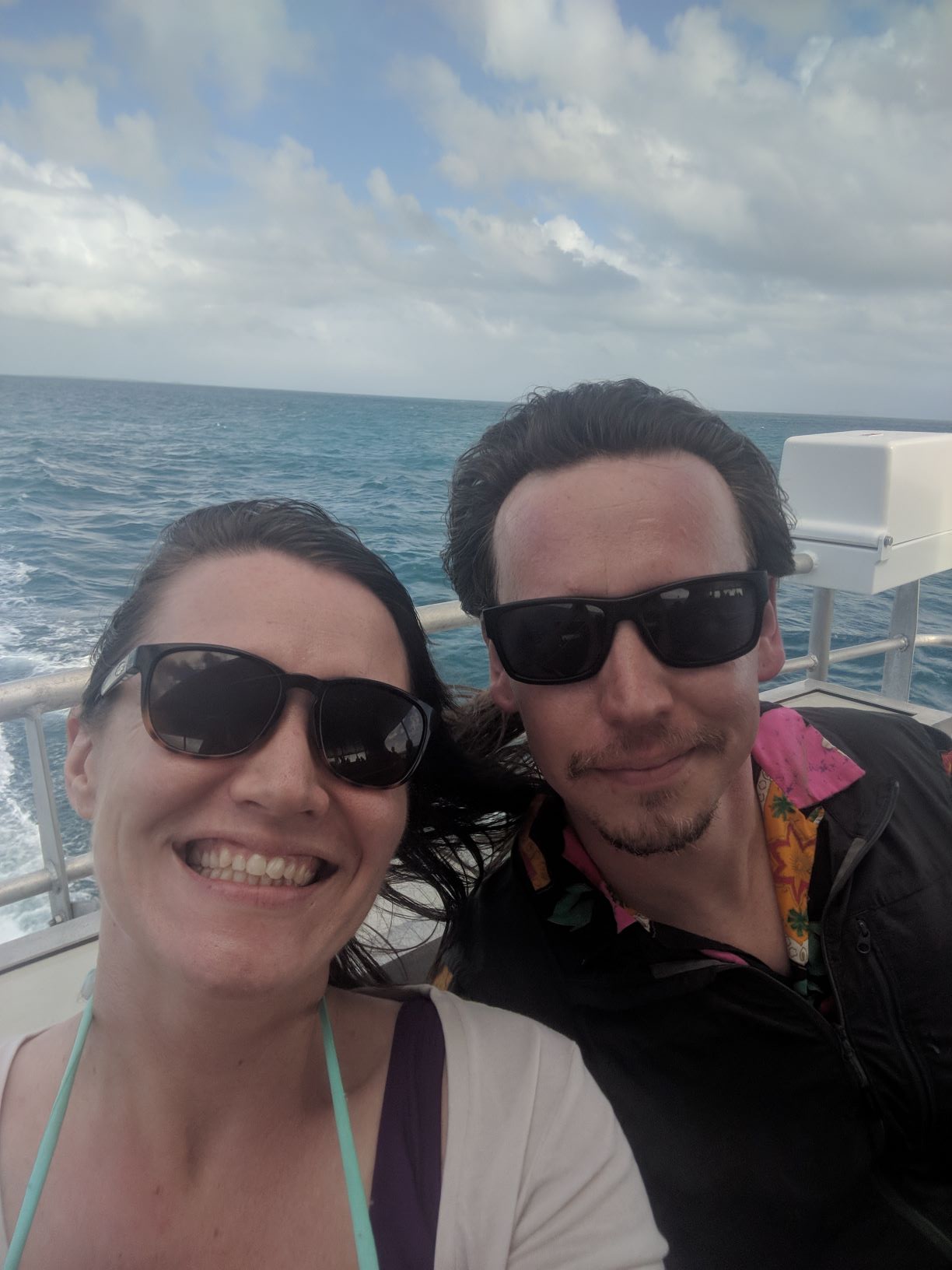
Amanda and Jim are just ending their two week visit with us. We’ve packed a lot of new experiences into this short time. It gives you a snapshot of what there is to do in and around Cairns.

Day 1:

Leaving Los Angeles at 11 pm Friday, they arrived in Cairns at noon on Sunday, though it was only about 18 hours later.

Day 2:

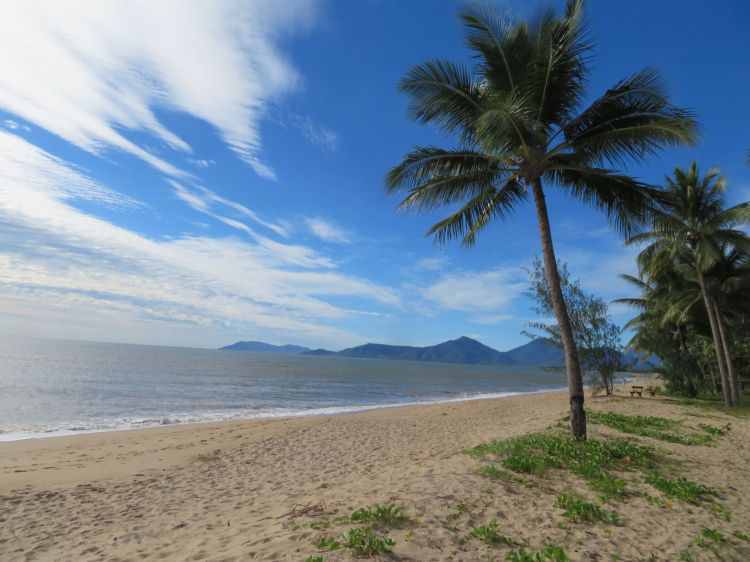
Our first visit was the beach, so that Amanda could take up her signature pose, marine biologist looking into tide pools for tiny critters. The rest of us went beach combing, exploring the rocks and sandy beach at Kewarra and Yorkey’s Knob.

Day 3:

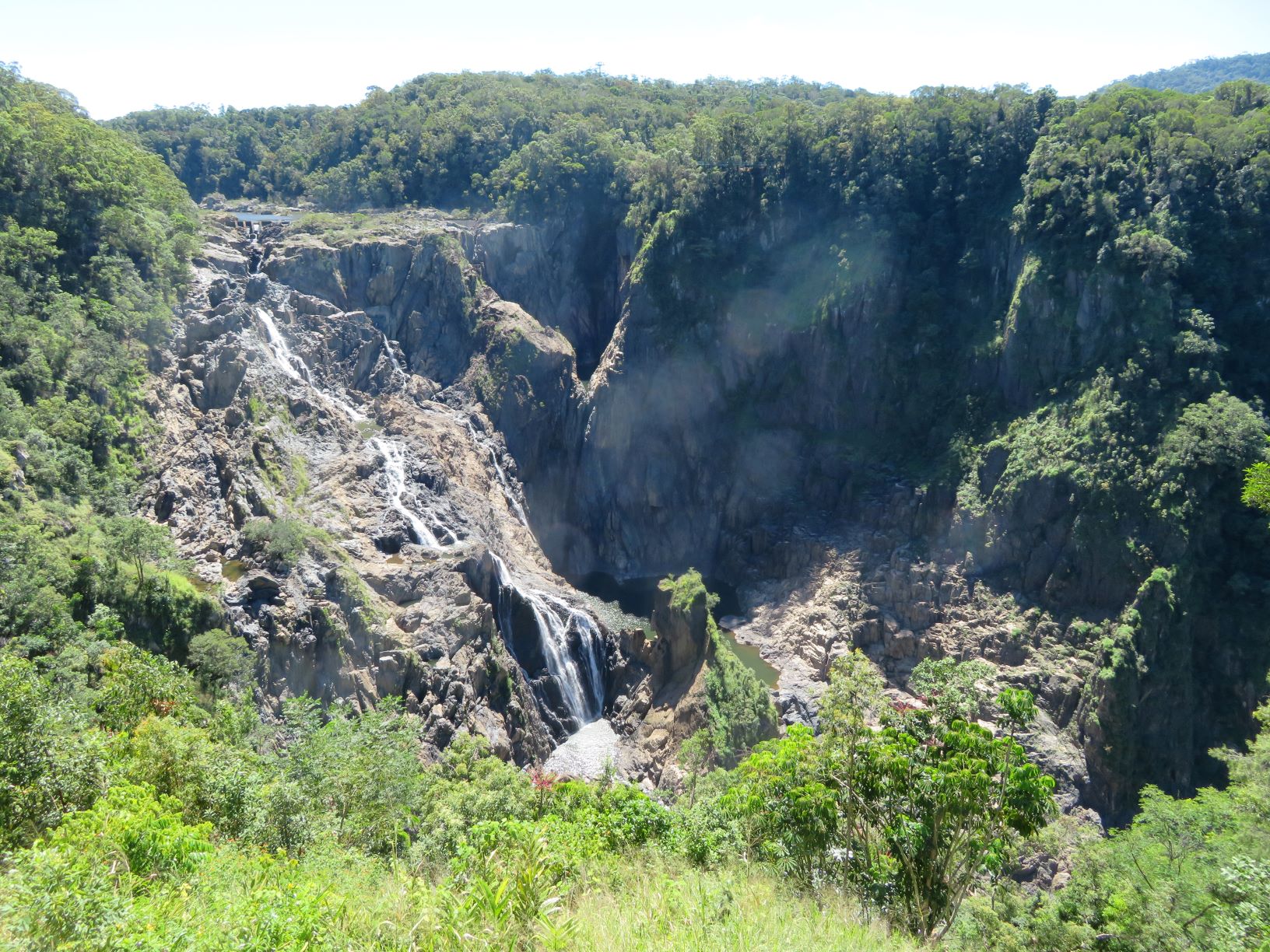
Seeing a bit of the rainforest that covers north Queensland was next. We rode the Skyrail aerial tramway, stopping to look out over Barron Gorge, then hopped back on and rode to Kuranda.

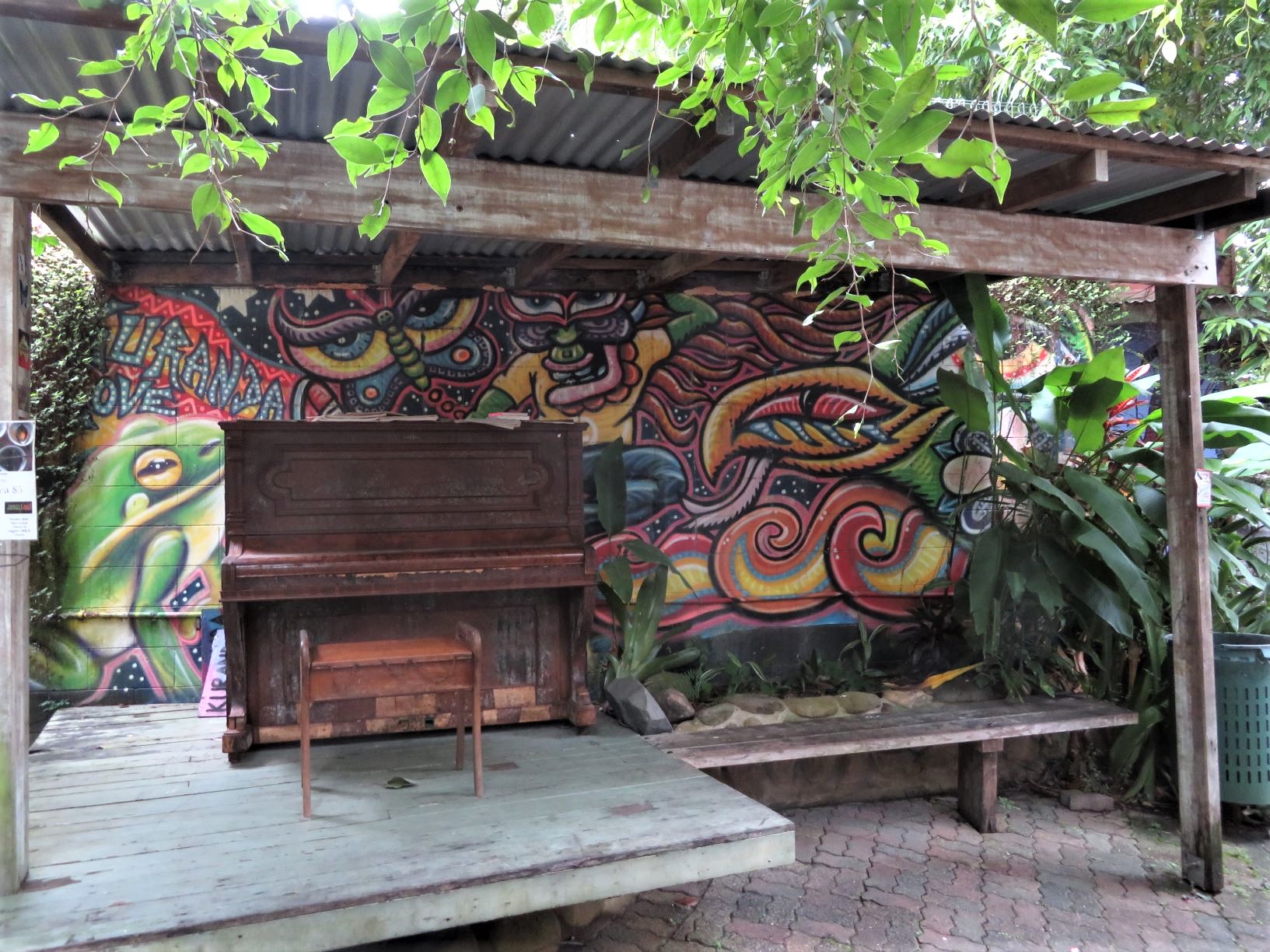
Kuranda is a small town of tourist shops and restaurants that makes a pleasant visit. There is also a section of small vendors’ stalls, the Heritage Markets. We returned on the old-fashioned train. Originally built for mining and local transport, it is now solely for tourist use. It’s not a long ride, and the line is flanked by thick forest, steep hillsides, and a curve so tight the wheels screech against the rails.
Day 4:

The Big Event of the visit was our trip to go snorkeling on the Great Barrier Reef. (See my previous post “Snorkeling on the Great Barrier Reef.”)

Day 5:

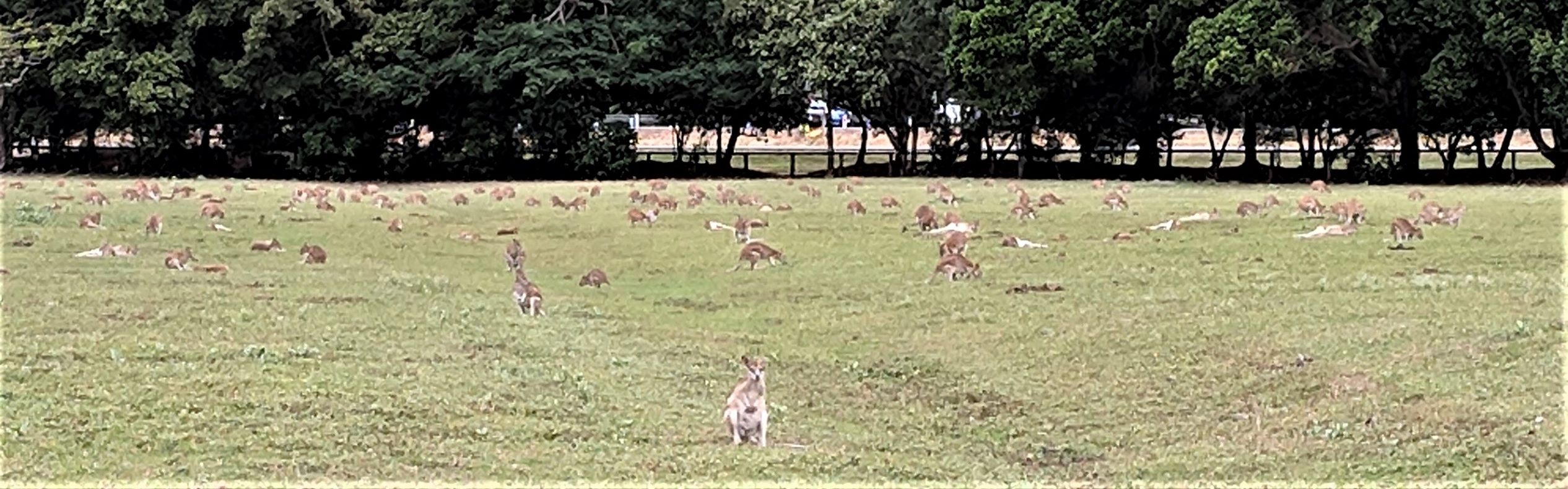
On another beach day we continued exploring the ends of Kewarra Beach in the morning and Yorkey’s Knob in the afternoon. We stopped to photograph the field of wallabies that live in a big park in Kewarra Beach.
Day 6:

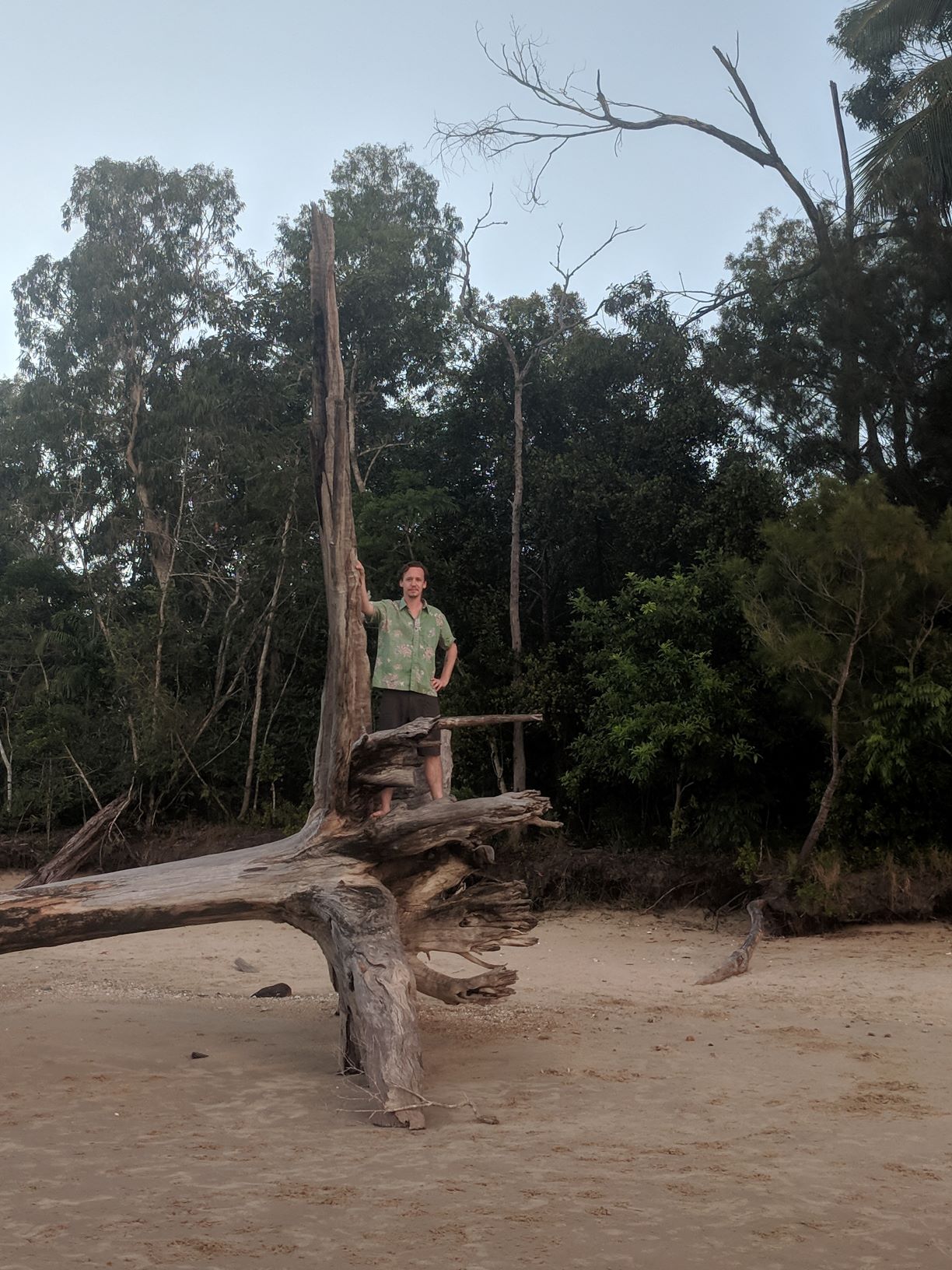
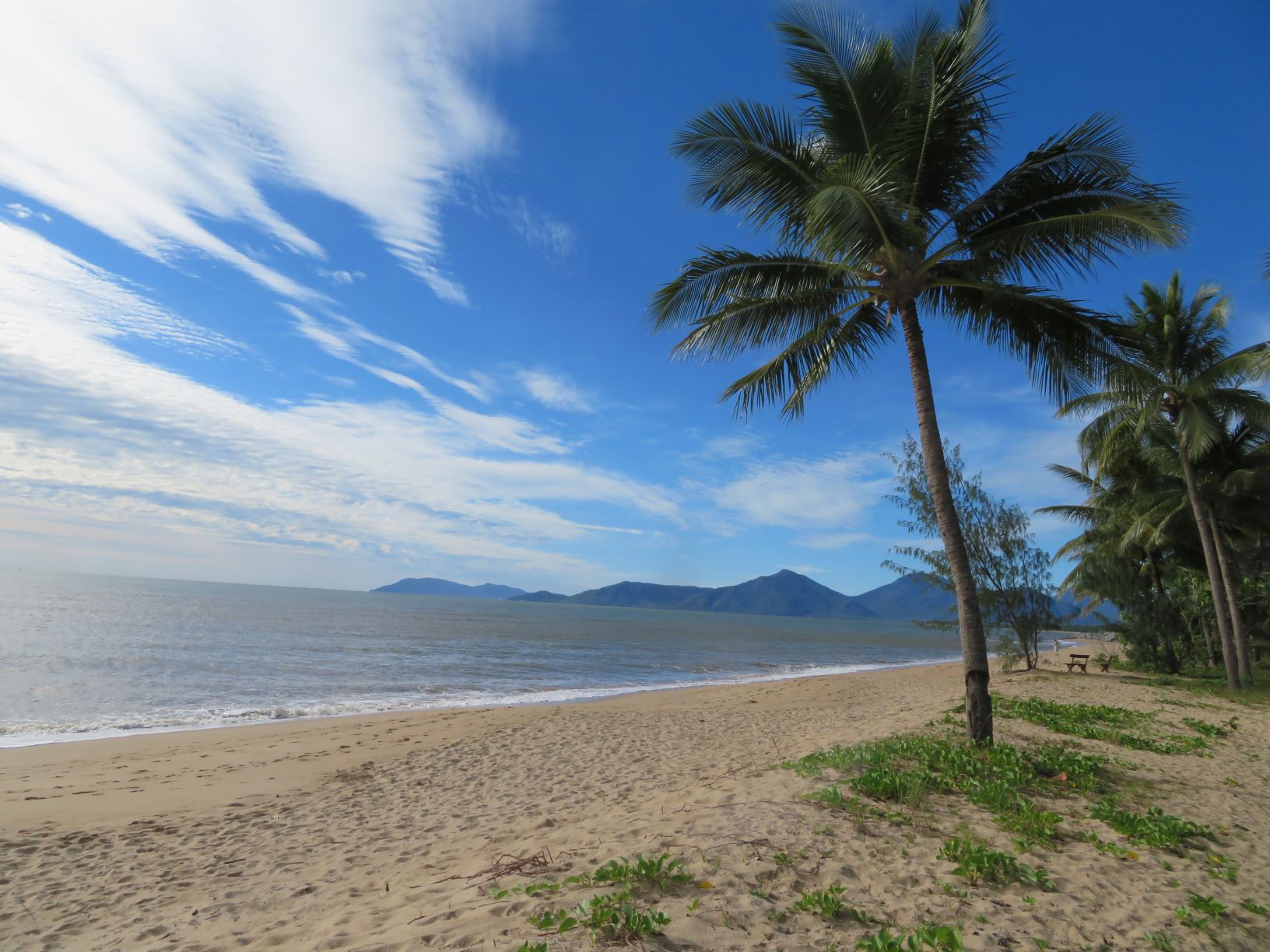
More exploration of the shore at Trinity Beach.
Day 7:

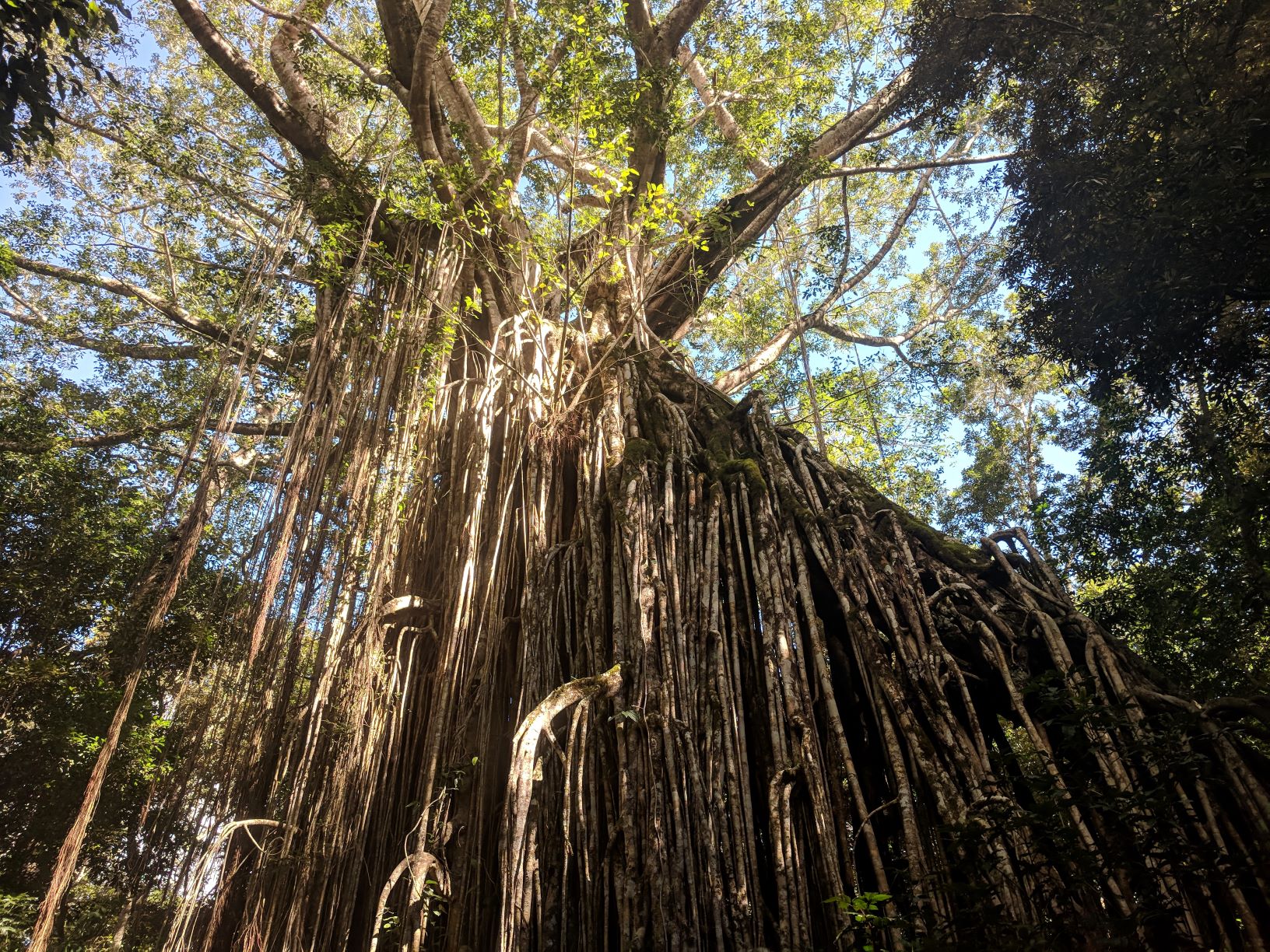
Yungaburra Markets, the Curtain Fig, and the Great Platypus Hunt. (See my previous post “The Great Platypus Hunt.”)
Day 8:

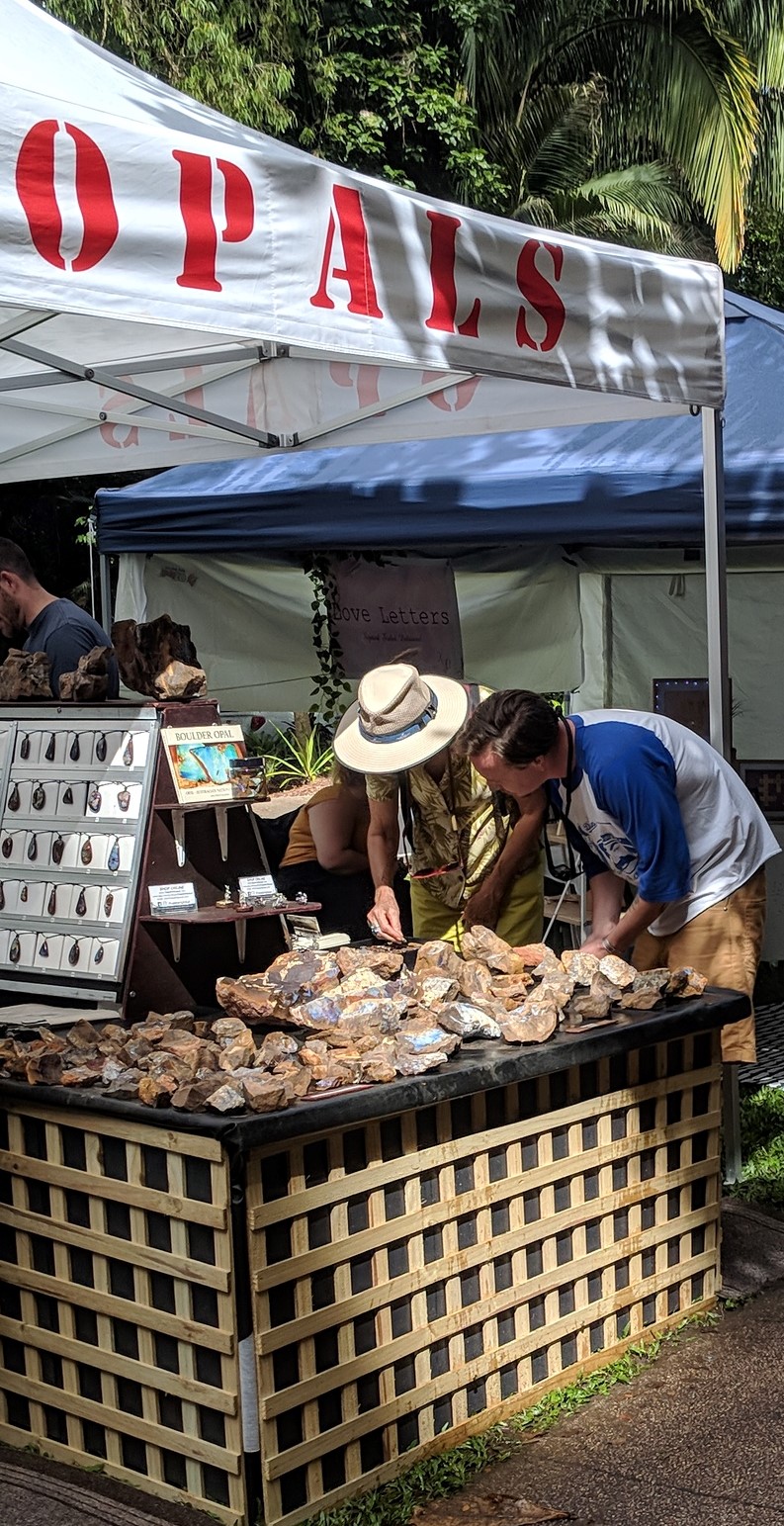
At the Tanks Art Centre, market stalls are dispersed in parts of the Cairns Botanical Gardens as well as along the paths of the Art Centre. After admiring arts and crafts and buying a few of the food offerings, we went to the Cairns Esplanade for a stroll along the esplanade and lunch at Muddy’s. This area is a wonderful city amenity, with a bike path, walking path, barbecue stations, children’s water park, climbing walls, and a pool facing the shore.

Day 9 and Day 10:

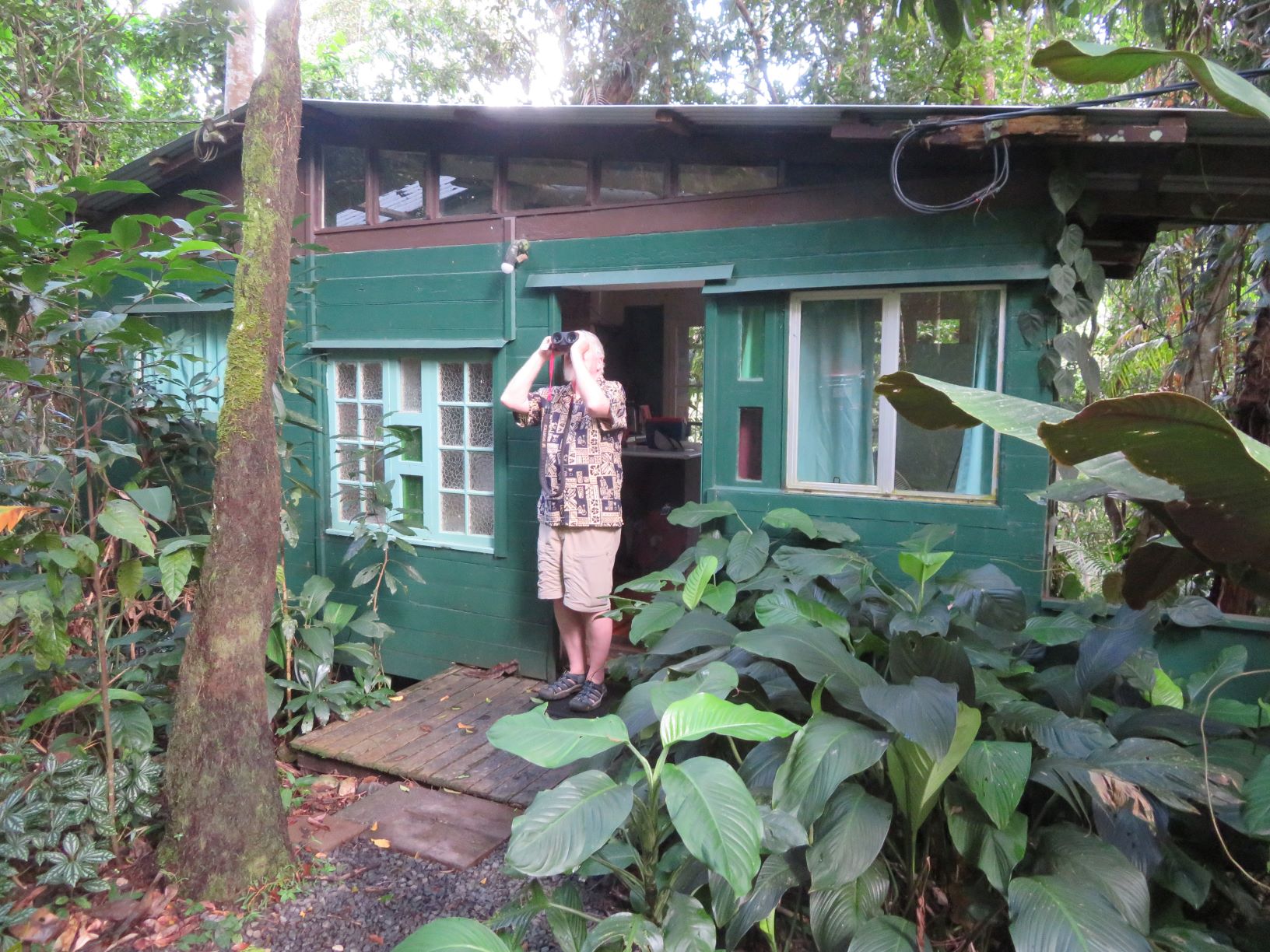
We revisit Kuranda for a last bit of shopping on our way to Cassowary House for an overnight of birdwatching and a raucous after dinner game of Yahtzee in the middle of the rainforest. (See my previous post “Riflebirds at Breakfast.”)
Day 11:

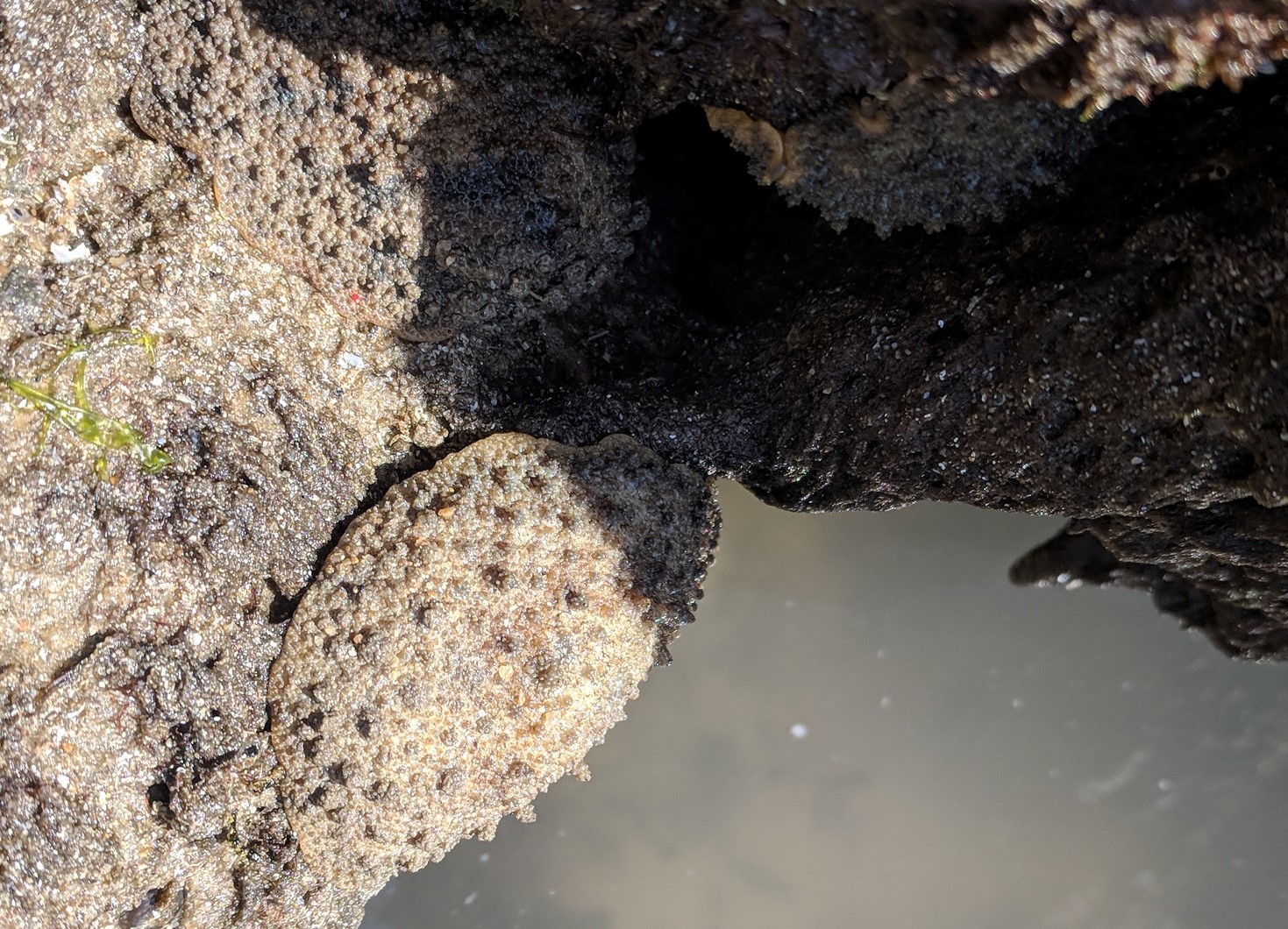
Beach exploration at Redcliffe Point, north of Gatz Balancing Rocks. Amanda found some strange creatures that look like rocks but move when touched. Hermit crabs hid in shells from the tiniest to the largest on the beach.
Day 12:

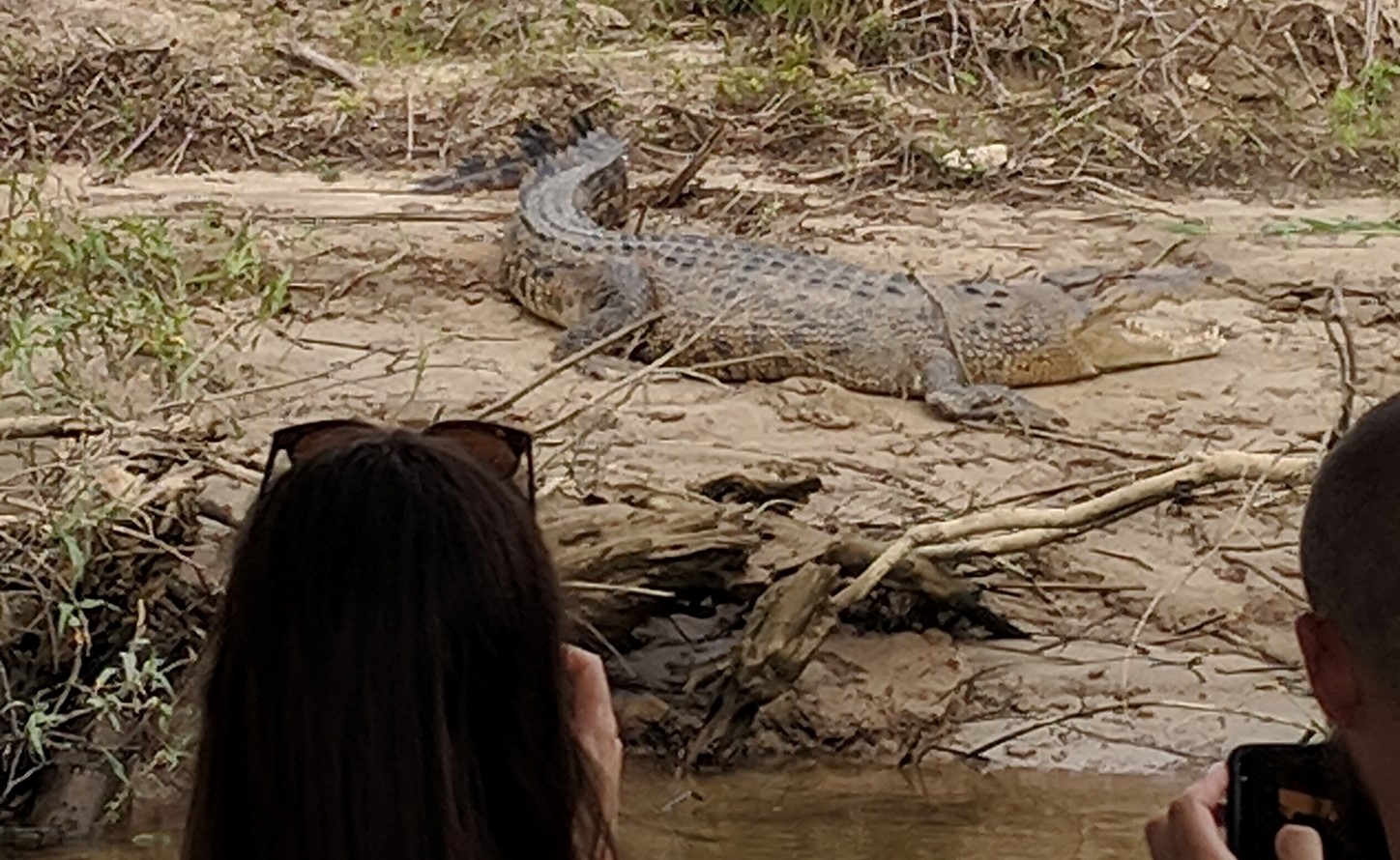
The advantage of taking the Crocodile Express tour is that it starts from Daintree Village and is good for as many additional one hour tours as you request. After a break for lunch, we took our second Crocodile Express trip on the river from the Daintree Ferry Landing. We saw lots of crocodiles both times, all chubby and uninterested in moving from their muddy sunbathing spots.

Day 13:

Another tour of Kewarra Beach hunting for the flipflop Amanda inadvertently dropped in the ocean, followed by Amanda and Jim  tasting beer at CocoMoco in Clifton Beach.
Day 14:

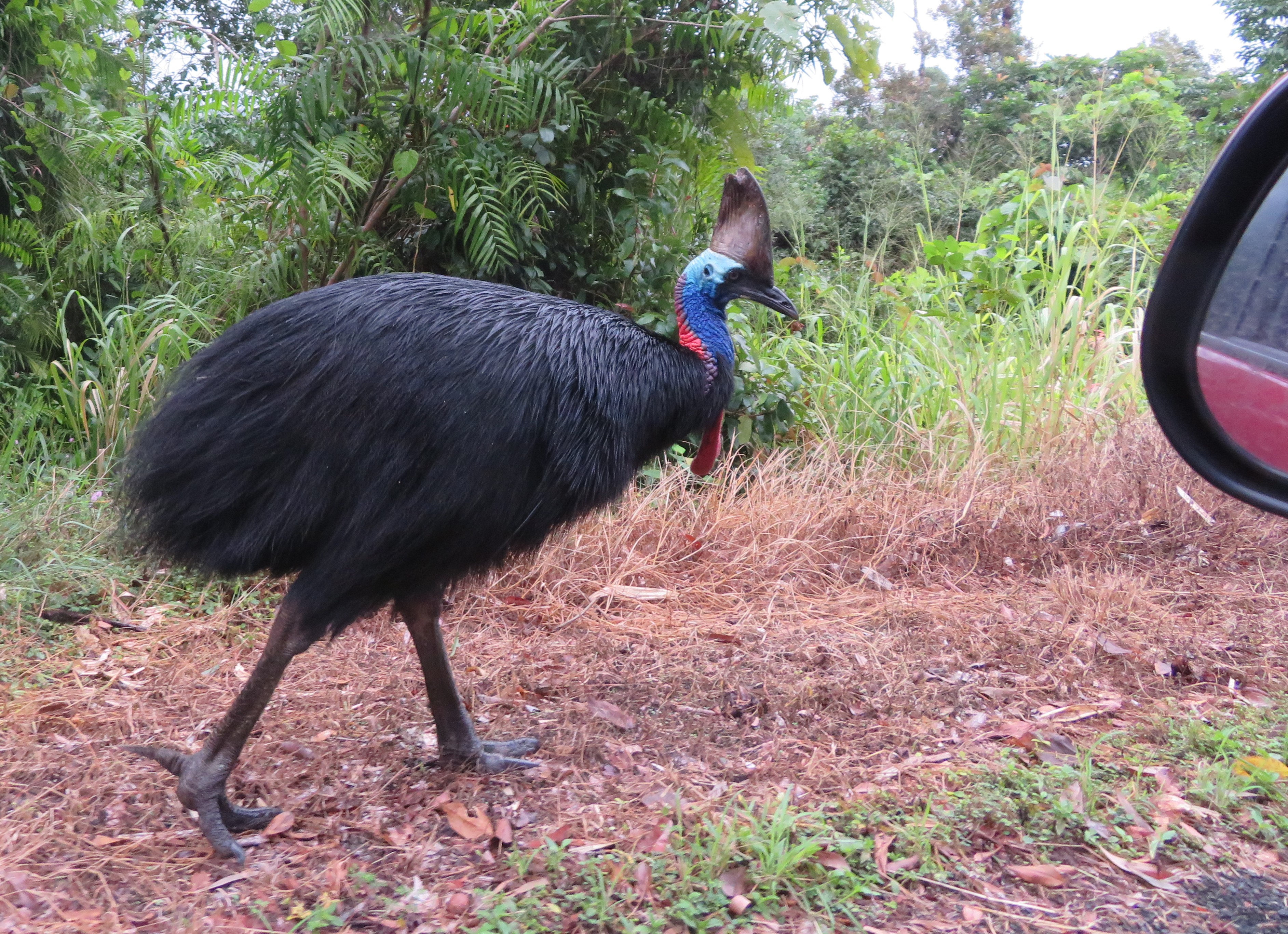
Trip south of Cairns to Etty Beach to see cassowaries by the roadside and begging at the picnic tables. We’ve now seen cassowaries in two places.

Day 15:

At the Palm Cove Markets Jonathan made friends with the best trained cockatoo we have ever met. Our market visit was followed by a final stroll and swim on Kewarra Beach. We celebrated the end of our visitors visit with dinner at the Paperbark restaurant at the Kewarra Beach Resort, only a short walk from our house.
Day 16:

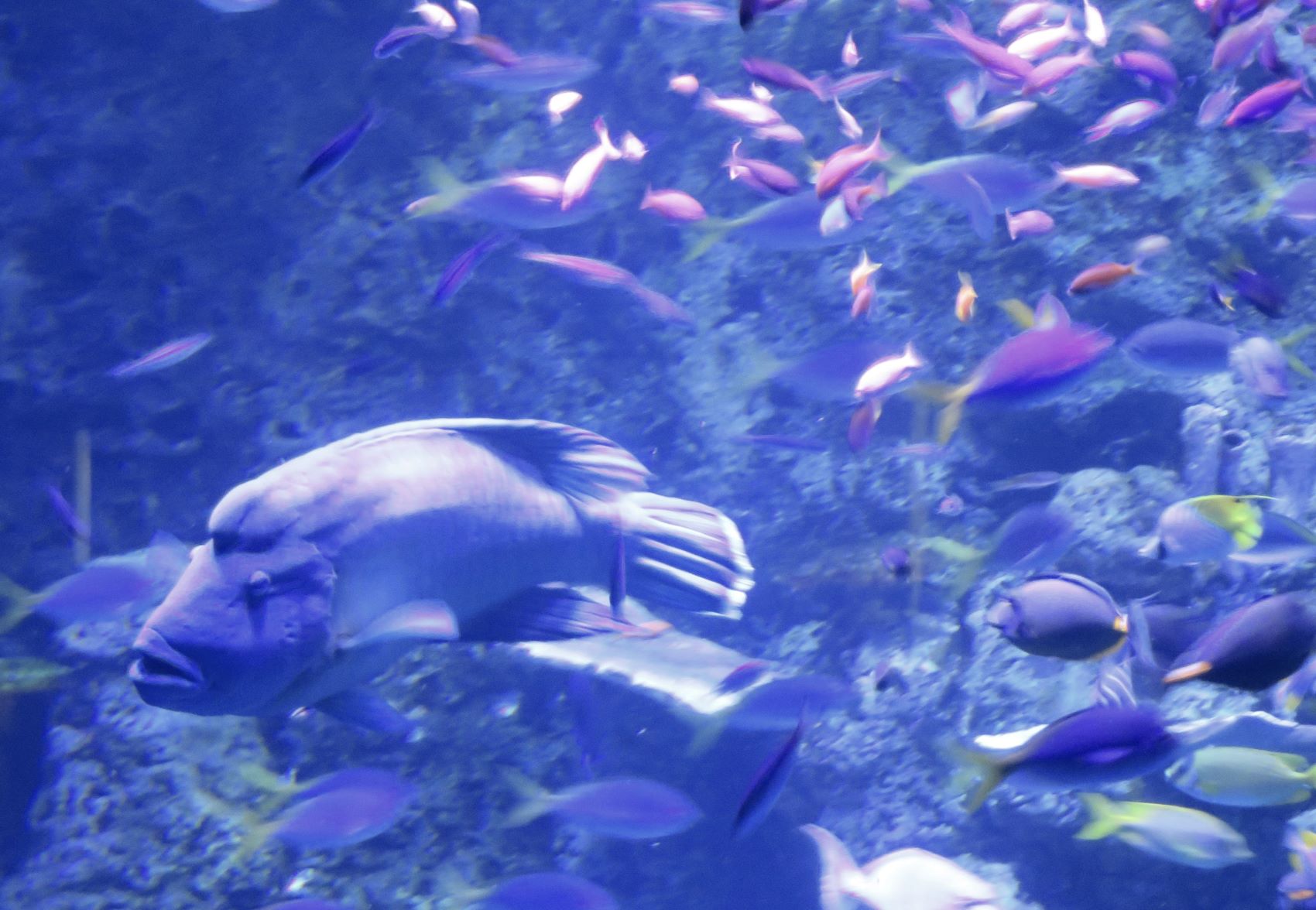
The Cairns Aquarium displays sea life of north Queensland and the Great Barrier Reef. We spent three hours combing the exhibits and watching the fish–we could have stayed longer. We watched a giant hump head wrasse spit out the squid it was fed for lunch just like a little kid who spits a grape across the room. That’s him in the photo.

From the aquarium, we dropped Amanda and Jim at the Cairns Sheridan Hotel, so they could catch a cab for the short ride to the airport at 4 am for their 5:30 am flight to Brisbane and on to Los Angeles. They’ll be home after a very, very long Day 17 of travel. I am sad to see them go, but we will visit with them in Los Angeles just a month from now.

Summary–Two weeks in Cairns

Attractions:

  • Skyrail to Kuranda
  • Snorkeling Great Barrier Reef
  • Crocodile Express tour
  • Cairns Aquarium

Markets:

  • We visited four markets in two weeks: Kuranda, Tanks Art Centre, Yungaburra, Palm Cove
  • Market stalls sell crafts, local products, food and drink. A few have fruit and veg stalls. We bought pillow covers (fit in suitcase), gifts, and treats (macadamia nuts grown locally).
  • Markets are held in different places every weekend from May through November. During the wet season there are still some indoor markets, but fewer.

Animals:

  • Cassowary House
  • Etty Beach (cassowaries)
  • Yungaburra (platypus)
  • Kewarra has several hundred wallabies in Centenary Park, we dropped by to take photos a couple of times.

Beach Exploration:

  • Five days when beaches were the main event, not counting any of the trips already mentioned.
  • Afternoon or sunset visits to nearby beachesIt was a busy two weeks, yet we didn’t have to rush off early other than the day we went out snorkeling on the Great Barrier Reef. We all had time to put our feet up, swim in the pool, and read, as well as go on lots of explorations.


Riflebirds share Breakfast at Cassowary House

I read about Cassowary House online and it sounded like an unusual place to stay overnight and do some birdwatching. This small, family-run guesthouse just above Kuranda is set in a thick patch of rainforest, with frequent visits from local birds, including a cassowary or two. We’ve seen cassowary in the zoo and animal parks, but visiting Cassowary House would be a chance to see them in the wild, with the added possibility of seeing the Victoria’s Riflebird, an endemic bird of paradise. It can be seen only in this part of tropical North Queensland.

After stopping in Kuranda for a stroll around the shops we missed on our previous visit, we drove up Black Mountain Road keeping an eye out for the sign to Cassowary House. Good thing we did, as the sign is small and almost overgrown with the exuberant tropical vines that grow everywhere. Our cabin was rustic and intriguing, cobbled together of windows and doors from other structures. (Both doors have glass central panels marked “Telephone.”) The terrace at the rear looks over the woods. We’ve learned enough about Australia to pay attention to advice like, “No dinner is served.” I checked with our host, Sue, and she advised us that the fish & chips shop in Kuranda was one of the few restaurant options nearby. Our cabin was equipped with hotplate, microwave, and toaster oven, enough to organize a simple dinner so we chose to shop for supplies in Kuranda. When we arrived at Cassowary House, we could do some birdwatching, watch the sun set into the forest and not have to go out.

As we waited to check in, we heard rustling in the bushes, and out stepped a cassowary. We all froze, then reached for cameras, but by then it had stepped back into the forest, and a baby cassowary took its place! Though both vanished back into the leaves, we saw them both again the next day. The female cassowary is Gertie, and she regularly stops by Cassowary House to snack on cornflakes. The baby is this year’s offspring.

Cassowary hatchlings are cared for by the male, and Gertie seemed faintly annoyed by being followed around by a juvenile. The young bird seemed content to wander the property following its mother, welcome or not.

After dark we heard the catbirds mewing louder than a box of kittens. Though we heard far more birds than we saw, the site was lovely, with trees over 60 ft tall trailing long vines, holding up basket ferns and epiphytes. In the morning, we ate breakfast overlooking the feeding cassowaries and the local brush turkeys (protected but unwanted), while on our level, a black butcherbird, and Victoria’s riflebirds stopped by to gulp down tiny cubes of cheese perched on the railing.

The brownish female riflebirds arrived first along with a young male who began doing the riflebird’s courting display, swirling one wing out, then the other, like a bird trying to do “The Swim.” It was promptly shooed away by the females, but shortly afterward, a male riflebird swooped in. They are dark blue/black, but their tail and a line of feathers around the neck flash bright metallic turquoise in the light. It was a treat to see them. We don’t usually go out of our way to see endemic species though we did enjoy our foray into chasing unusual birds. The Cornell Lab of Ornithology has a great video of a riflebird doing his dance.

Victoria’s Riflebird dance

(The photos of female and juvenile riflebirds are from the internet.)

The Great Platypus Hunt

Jonathan and I saw a platypus in a darkened display (they are nocturnal) at the Healesville sanctuary outside Melbourne. We thought we had checked off one of those Australia bucket list activities: See a Platypus!!! The platypus was dark on top with a silvery-white belly, leaving a trail of bubbles as it swam across the surface of its pool. We loved it.

Shift gears to Cairns and our chance meeting with wildlife artist Pete Marshall at the Cattana Wetlands.

Pete Marshall wildlife artist

After chatting for a bit, Pete recommended looking for platypus in the creek by Yungaburra, describing the place where you park, go under the bridge and along the creek. It sounded like a good adventure, though we were dubious that we’d see these secretive little animals.

We suggested a platypus hunt to Amanda and Jim, and I found we could combine our search with a visit to the Yungaburra weekend market. We set out at 8 am Saturday–no dawn patrol for this group, and arrived at the Yungaburra Platypus Viewing Platform around 9:30 am. Sure enough, there is a trail along a creek where a sign lets you know there is a resident platypus family. From the bridge across the creek we saw nothing, and the water was cloudy with runoff from recent rains. We moved along the creek, avoiding the muddy patches. After about twenty minutes of watching without success, we decided to visit the market and give it another try later.

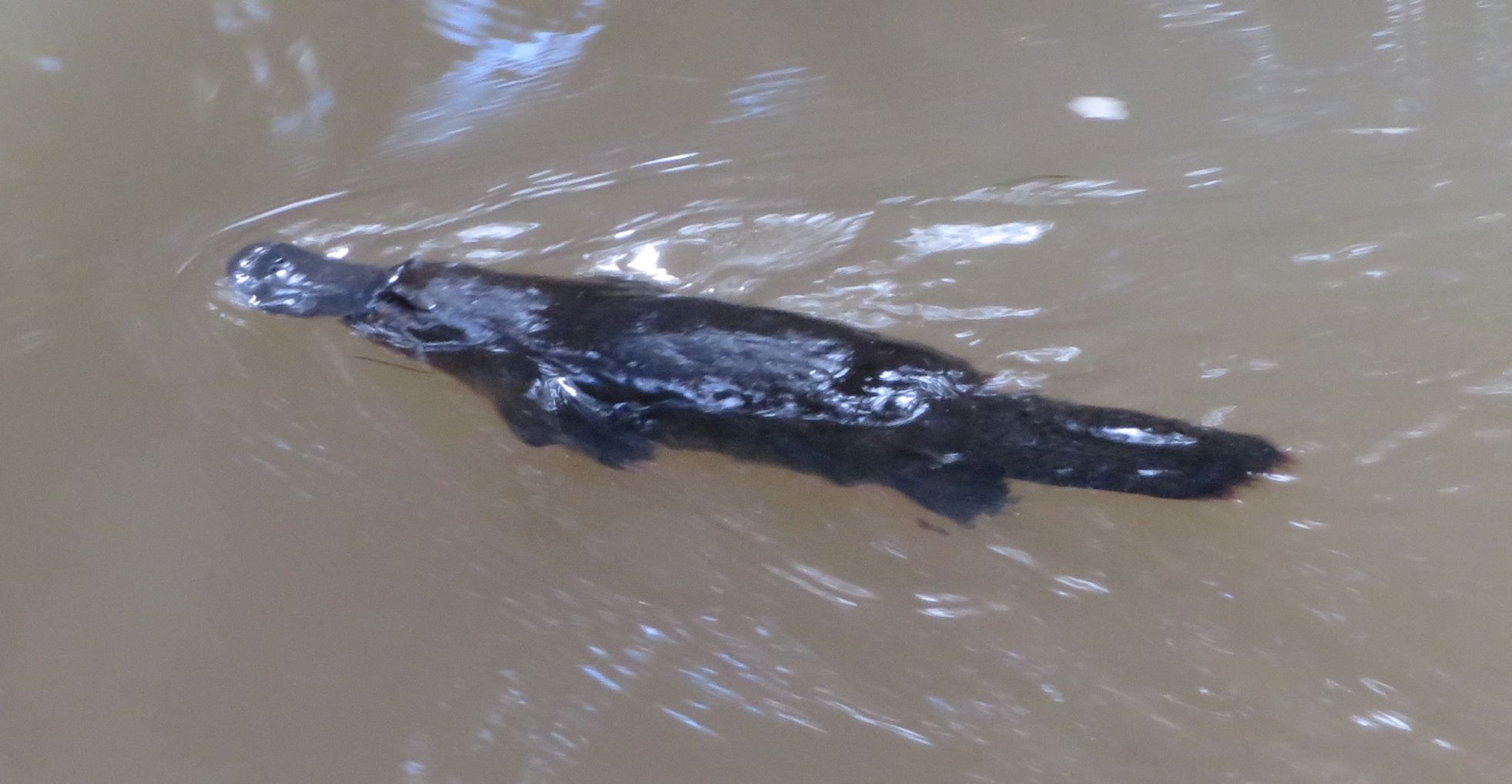
An hour or more later, we stowed our loot (veggies, dukkah, macadamia nuts, salami, oyster mushrooms, radishes, potatoes, and pastry) in the trunk and returned to the platypus zone, just a block or two from the park that hosts the market. We set out again, under the bridge and along the creek. Amanda and I tiptoed around a longish stretch of muddy path, squeezing along the edges to avoid sinking. I was staring at the water when Amanda whispered that she saw one! I turned and watched a dark little animal, definitely a platypus, much smaller than I thought from watching nature shows. We watched it dive, expecting it to return to the surface, but it disappeared. After a few more minutes, there was no sign on the surface and we headed back to the others. We told Jonathan and Jim that we’d seen a platypus and they tried to be enthusiastic, but we knew they wished they’d seen the platypus, too.

Right about then, the platypus emerged. For the next ten minutes, platypus dove and swam around the creek. There were three or four platypus swimming around as we watched. They paddled strangely but moved quickly through the water. I’m not sure why the group of platypus in this creek is awake during the day, but we enjoyed their performance.

I never thought I’d see a wild platypus, but there it is. A successful end to the Great Platypus Hunt.


Snorkeling on the Great Barrier Reef

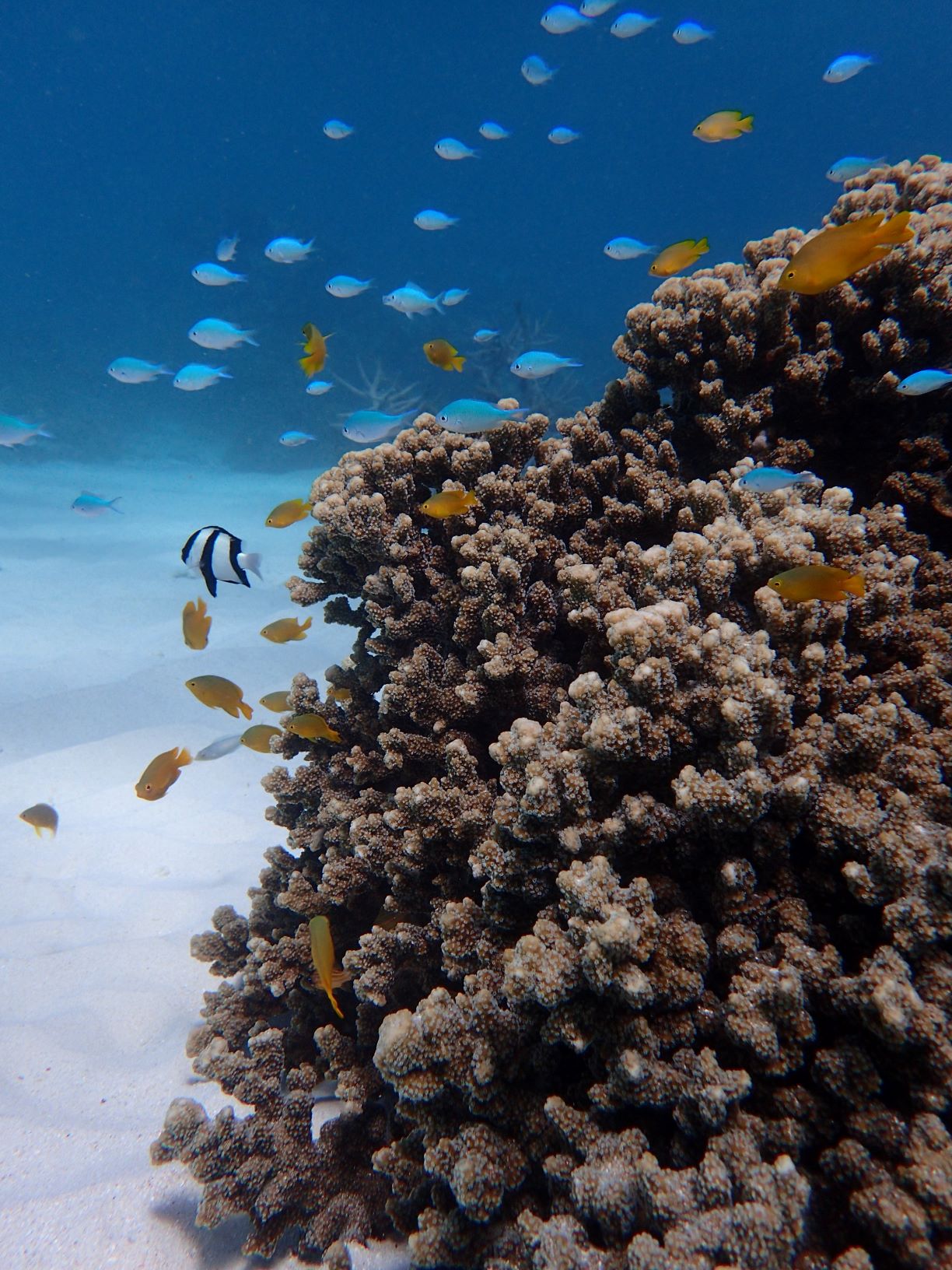
Floating in the water over coral stacks around 20 feet tall watching a cloud of tiny blue and orange fish darting around my hands, I forget what it took to get here. All I can think of is how mesmerizing this view is, I want to remember it clearly. The sun has been in and out, and when it strikes the water, the fish and the coral are illuminated. Fish are sparks of color on the mossy brown coral.

I enjoy snorkeling, any chance to snorkel is a treat, and we’ve seen some wonderful underwater scenery here and there. For that reason, Australia’s Great Barrier Reef (GBR), is an iconic place we’ve decided to visit. There are hundreds of boats that go out to the reef, and many different ways to have a look. Non-swimmers can ride glass-bottom boats or semi-submersible watercraft. Families can visit a large pontoon that provides a place for kids to jump in and splash around. Divers can explore deep places. We chose to go with a group based in Port Douglas, Wavelength, that provides a snorkeling trip to Opal Reef. The company is owned and operated by a marine biologist based in Port Douglas, and all the on-board staff are marine biologists.

We had an early start to a long day, leaving home at 7 am for Port Douglas, arriving before 8 am. With about 40 of us aboard, the boat left port at 8:15 or so, driving out across the water so fast that waves broke against the windows while the boat rocked and pitched. It was impossible to walk across the room without clinging to the rails. During this, the staff gave us orientation briefings and described what we’d be seeing, calm as though these were everyday conditions–I guess they are. The boat finally stopped and anchored, yet we saw nothing around us other than a slight change in the color of the water and breaking waves a few hundred yards away. This was the reef. It’s not like snorkeling around the edge of an island, there’s nothing above the surface.

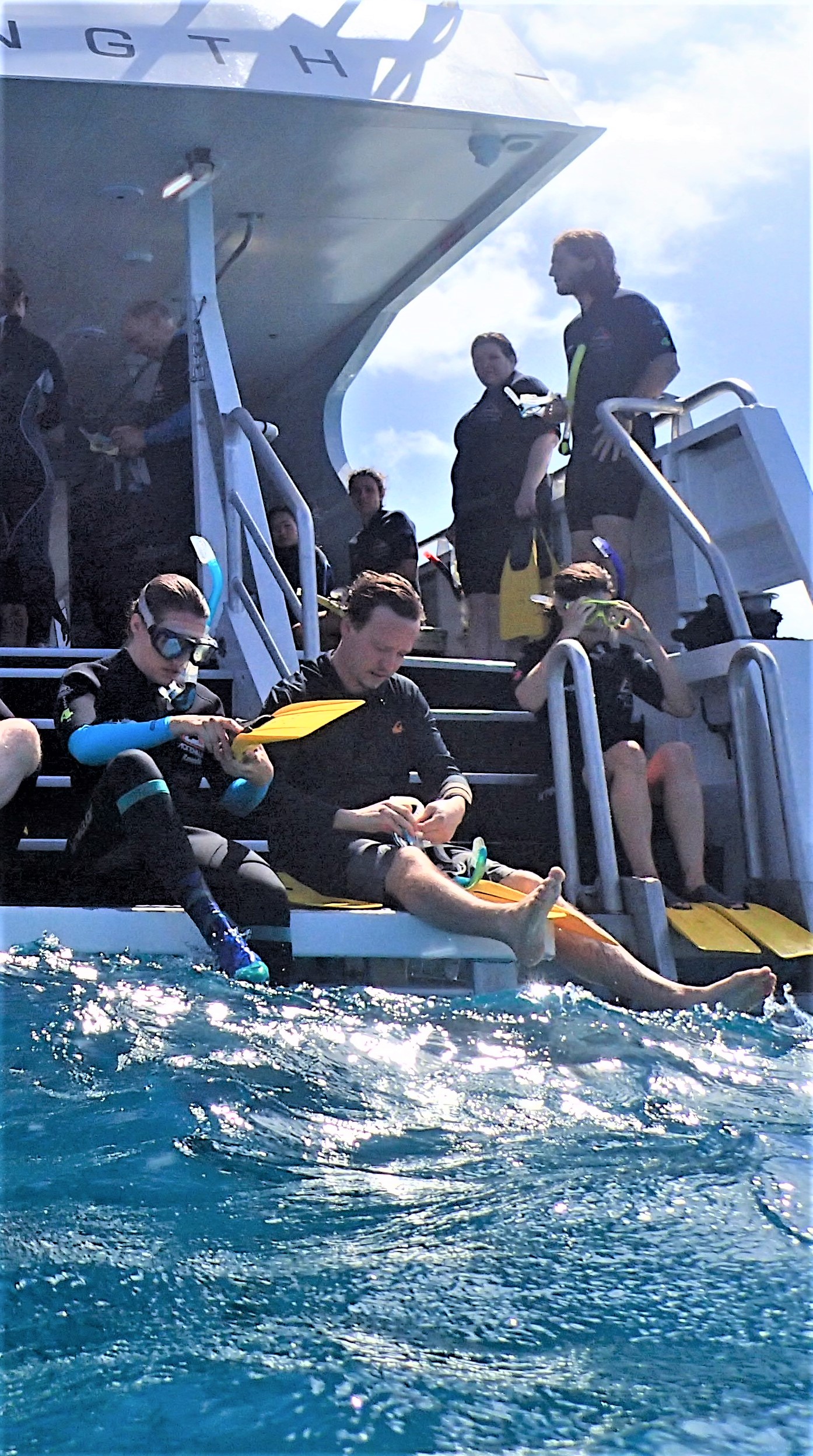
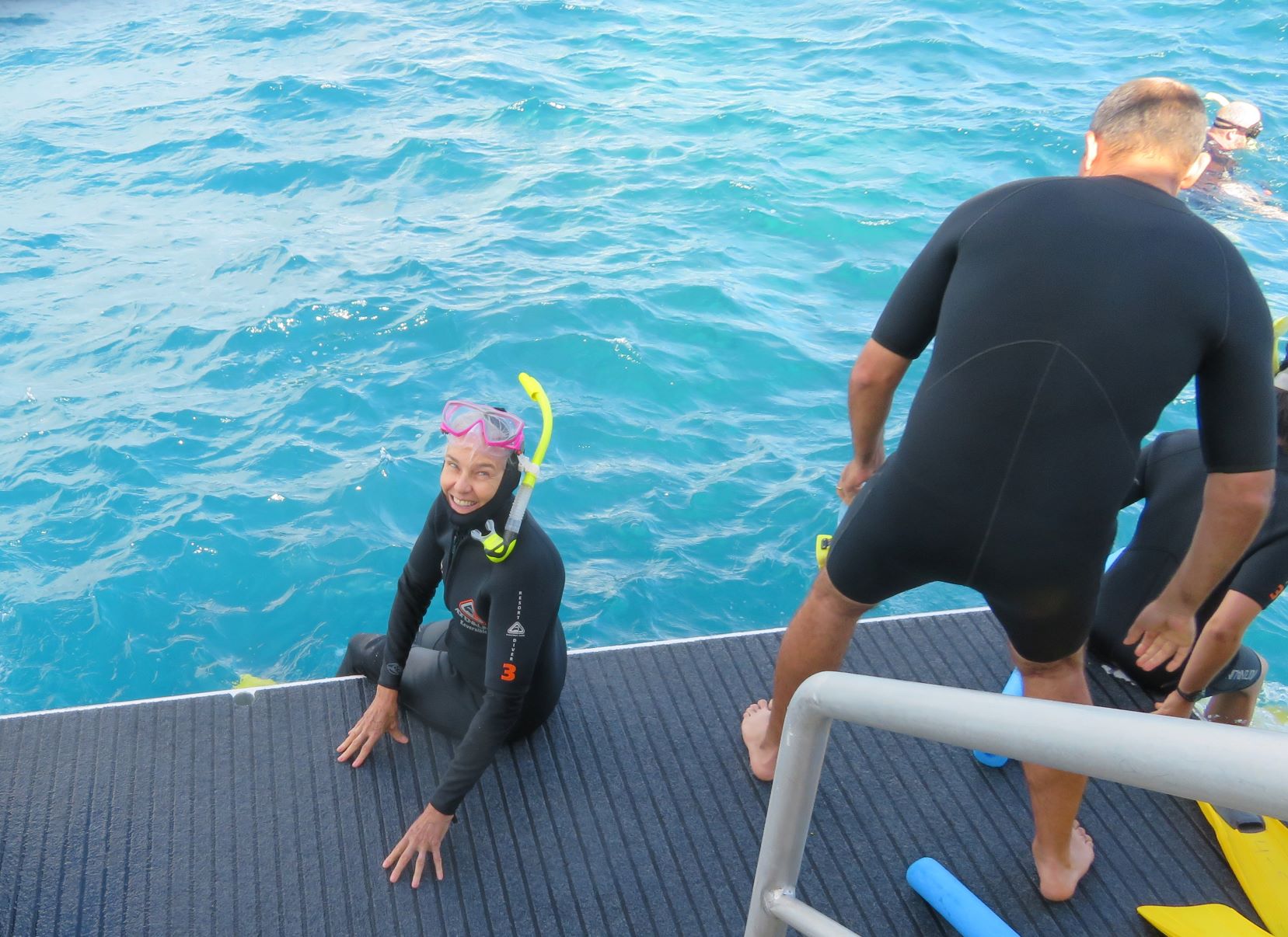
Amanda and Jim arrived in Australia on Sunday–we saved this adventure for their visit so that Amanda could use her skills as a marine biologist to point things out to us. They were among the first into the water. We suited up and flopped in, taking pool noodles for a little extra support.

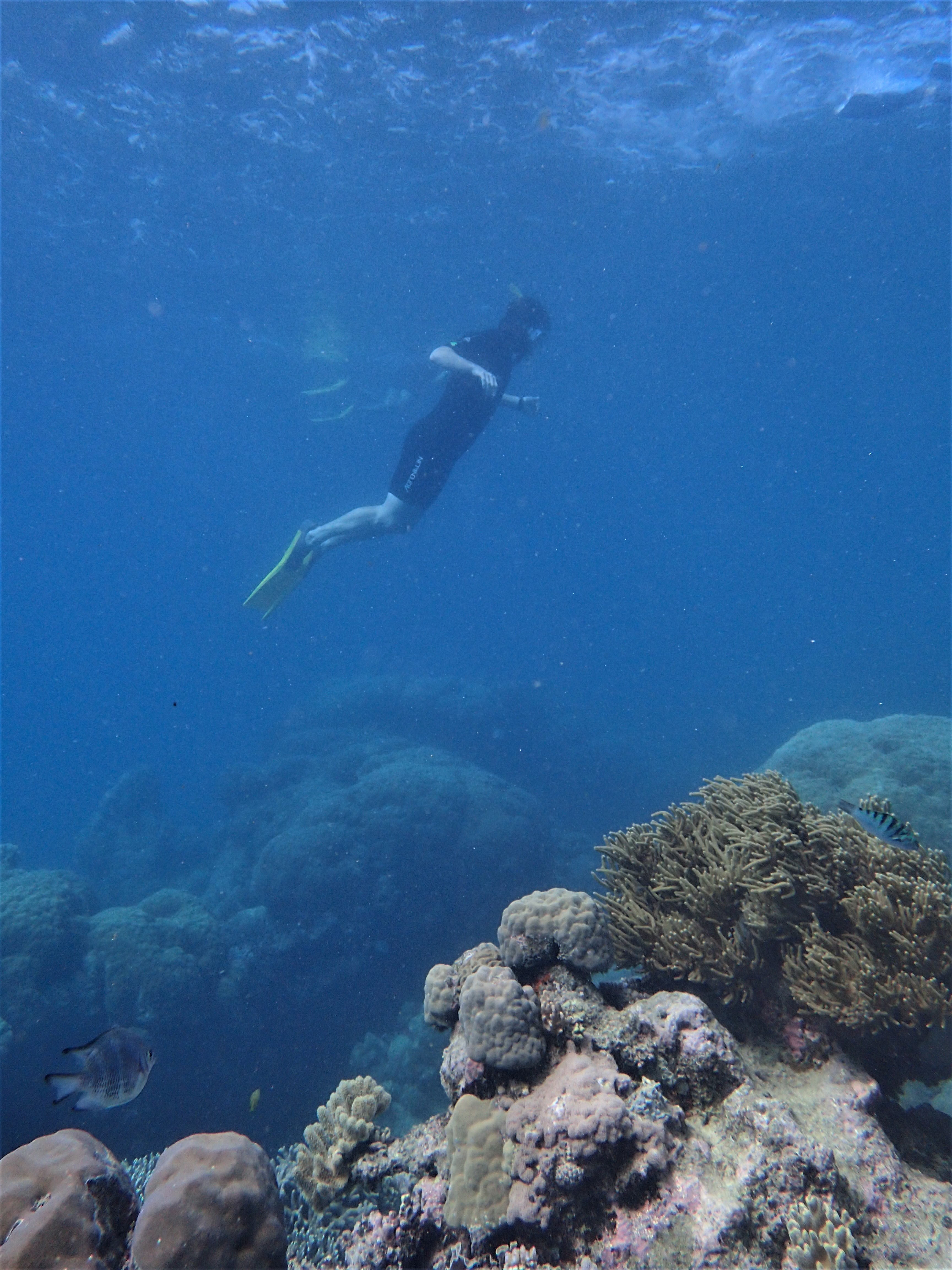
Under the water, we could see coral of all kinds. Some has been bleached by warming seas, as much as 40% at the first site we visited. The effect is disconcerting. Dead coral is either white or brilliant, neon colors. Living coral is green and brown. If you visited the Great Barrier Reef twenty years ago, it might make you sad to return.

Our second stop along Opal Reef was more typical of a living reef, with 10% or less dead coral, and impressive outcrops of flat “table” coral. Water currents keep this section a bit cooler than other areas, thus the lacy, flat corals have survived.

At our last stop, we saw stacks of coral. Huge boulders are solid corals that could be thousands of years old. Smaller corals grow along the sides of the oldest corals, and on top of them, and gradually the stacks grow larger and larger. The shapes are wonderfully complex, and thronged by fish from tiny shimmering flecks to big ones longer than 18 inches. Teal green, brown striped, and orange pink parrot fish nibbled the corals, flicking their tails. Some of the colors were very tropical, pink, orange, turquoise, lemon yellow.

While Jonathan and I snorkeled on top, Jim swooped under the surface to take close-ups with his new Go-Pro camera on his wrist. Amanda dove down and up as well.They peeked at the tooth marks the parrot fish leave on the coral, and peered at sea feathers (a type of star fish). I’ve never gotten the hang of diving under the surface and clearing my snorkel when I return to the air. I was happy to watch them.

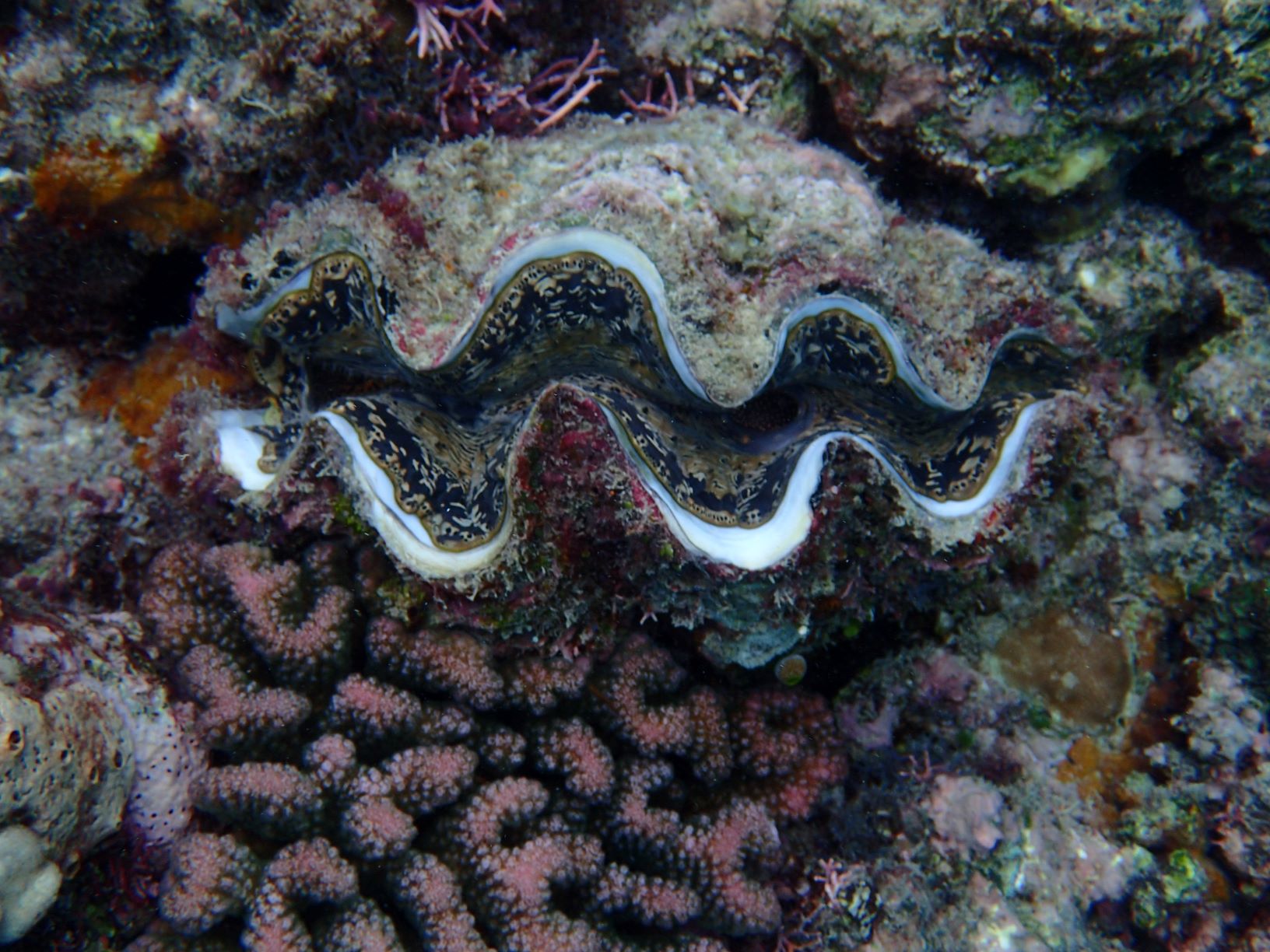
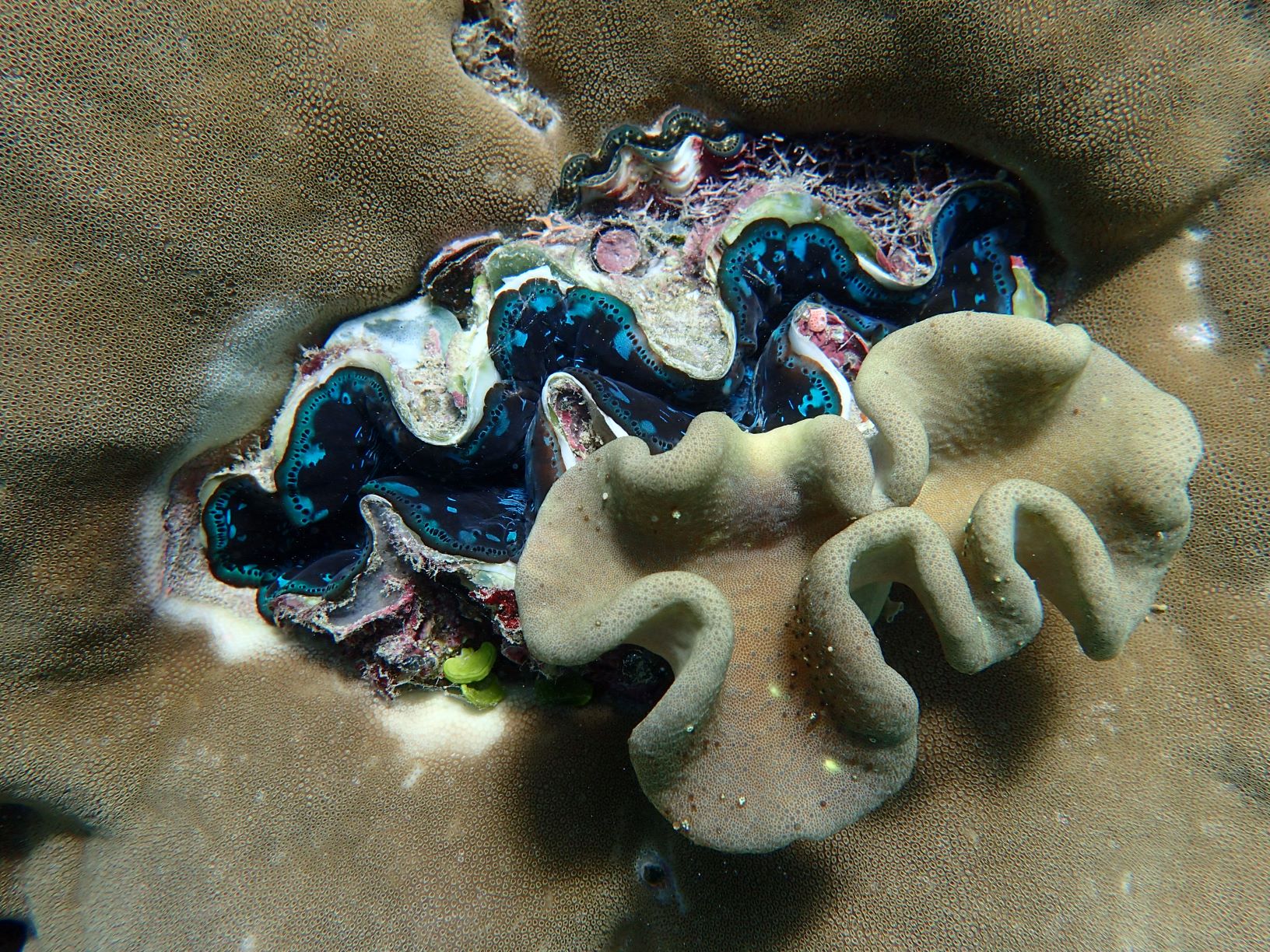
Most of the photos in this post come from the tour company. We decided to buy the photos from our day on the reef, and they throw in a group of their best reef photos so that eveyone could have a photo of a shark, a “Nemo” fish, and a giant clam. The giant clams were one of the highlights of the trip for me, I didn’t realize there were still enough of them that you could easily see them on the bottom. They are huge, and often a glowing bright blue or purple in the middle, where algae live in a symbiotic relationship with the clam. Our stop was a sort of “clam garden” and we saw quite a few, including some that are so old they’ve been engulfed by coral. One of the crew members swam down to a giant clam and waved her hand about six inches from the opening and it slammed shut! Very fun and creepy, it reminded me of an old cartoon.

We had a glorious day,  a wonderful time, well worth the boat ride and getting up early. We hear a lot about the destruction of the Great Barrier Reef, and all that is true. The reef is under immediate threat from warming seas, pollution, dredging, mining, and too many people like us who would like to see the GBR in person. It is a fascinating environment, unlike anything else I’ve ever seen.

Good to Know About Visiting the Great Barrier Reef:

We went with a snorkel-only trip because we knew we didn’t want to Scuba dive, and the focus on a single activity would make a smooth visit. Wavelengths is locally owned by a marine biologist. With one in the family, we’re sympathetic, and were pleased to find the staff really all were marine biologists.

Timing:

Our visit was May 22, toward the end of “stinger” season, and it was not necessary to wear a lycra suit to prevent stings from tiny jellyfish. (I wore a full suit, head cover, and socks to keep warm.) The water was warm, 26° C (almost 79° F) and that made our day easier because we didn’t have to worry about getting cold right away. High season is June-October. Since we visited before the busiest time of year our boat was almost but not completely full–max. number of passengers is 48, and we had around 40.

Conditions:

We visited at the end of the rainy season, and found it was still rainy on shore. We were concerned that the trip would be canceled and we’d have to rebook. They had promised to call, text, and email if there was a schedule change, and when we heard nothing, off we went, and the trip went out on time. On the reef it was partially overcast, with periods of sun that were very warm (nice). The sun on the water improves visibility, and those moments were the best.

The ride out to the reef was pretty rough. I don’t get seasick, but we bumped quite a bit, probably because going slower would end up taking most of our day going out and back. Some people felt nauseous, but sitting outdoors looking at the horizon seems to settle most stomachs.

When we arrived at our first snorkeling spot on Opal Reef, the water was rough. In fact, this was the roughest water we’ve ever tried snorkeling. It wasn’t a problem, other than occasionally getting some seawater in the snorkel, but you spit or blow it out and keep going. Interesting, though, that the experience of the people who do the trips makes them say, “No Worries,” when on our own we would not go into such choppy water. Once in the water, I rarely gave it another thought. There were a couple of spots where we had to kick and paddle pretty enthusiastically just to stay in place, so we probably got more of a workout than on a calmer day. There were always crew members in the water with the group and crew members keeping watch in case anyone signaled the three things we learned: Help (save me), Turtle (come look) and Shark (come look).

Crew/Guides/Staff:

One aspect of the trip we liked was that everyone on the boat worked on all the tour activities. The marine biologists gave safety briefings, doled out coffee and tea, kept things neat, led snorkeling tours, and took photos. We even caught the captain mopping the deck at one of our stops. Everyone pitched in to make a good trip and that was the result. Crew members were well-informed and willing to chat about the weather, the reef, fish identification, whatever questions came up. They were uniformly pleasant and helpful. I’d give Wavelengths high marks as a tour provider.

Cost:

Our trip was about $250 AU per person. We got ourselves to the landing in Port Douglas, though it was possible to be picked up from hotels in Cairns and Port Douglas. Everything on board was included: tea and coffee before departure and after our first and third stops, lunch at the second stop. There were bottled drinks for sale, and the photos did cost extra ($30 as a download; $45 with a cute Nemo usb), but there weren’t unavoidable added costs.

Election Day Australia

A bonus on our trip has been observing the electoral process first hand in Australia. On April 11, Prime Minister Scott Morrison announced an election would be held on May 18, 2019. There were 36 days of campaigning.

High marks to Australia on this point. Campaigning was covered every night on the news and by the 30th day everyone had had just about enough of all the candidates. Scandals were uncovered, old tweets forced some candidates out of the race, all the usual campaign mud was slung–but it only consumed six weeks of everyone’s life. The US could learn something from this approach. It’s a much more humane process. It would put a lot of polling and campaigning consultants and companies out of business in the US. Would that be a bad thing?

The overall race was who will become Prime Minister. The incumbent, Scott Morrison of the Liberal Party, came into office in August 2018. The present election is the first time Morrison will be actually running for office as Prime Minister. He has to keep his elected seat as well as making sure his party wins the majority of seats in Australia’s House of Representatives. Employment prior to politics: Department of Tourism. Three things about Morrison:

  • As Minister of Immigration he upheld Australia’s policy that bans any refugee landing on Australia illegally from ever being granted a visa.
  • Under his leadership, the gigantic new Adani coal mine was approved, intended to produce 20 million tons of coal per year starting in 2020.
  • He admires Trump and has political detente with Clive Palmer of the Australia Party (Their slogan: Make Australia Great Again).

The challenger, Bill Shorten of the Labor Party, has been leader of the opposition since 2013, and has held several Cabinet level posts related to labor, finance, and pensions. Employment prior to politics: Labor organizer. Three things about Bill Shorten:

  • He acknowledges the role of women in his election successes and supports LGBTQ rights.
  • In his campaign, he supported action to combat global warming, including reducing greenhouse gases and phasing out the use of coal, a huge Australian export.
  • Another campaign promise was to raise taxes on the wealthy.

The election boiled down to whether people want the status quo or change. Despite many TV commentators and pollsters indicating Shorten would win, he did not. Humans are most comfortable with the status quo, even when they know change is good for them. Australia has mandatory voting, and it is my own opinion that voters who arrived at the polls without much election awareness voted for the status quo. In Australia, you vote for a local candidate, not directly for the Prime Minister. The two major parties have deep historical roots and an undecided, uninformed voter is likely to go with the party they voted for in the previous election, or that their parents voted for. It is not a big surprise that Scott Morrison’s party won, despite what commentators said.

I’m glad the process took only 36 days, though Australians have to live with the outcome for three years, or perhaps less. Elections must be held every three years, but can be called when there is a no-confidence vote on the leadership, which has happened several times during the last decade.


Rainy Day at the Cairns Botanical Garden

Despite on and off drizzle, the Botanical Gardne was at its best. The rain washed all the leaves clean and gave a bit of shine to all the plants.

This slideshow requires JavaScript.

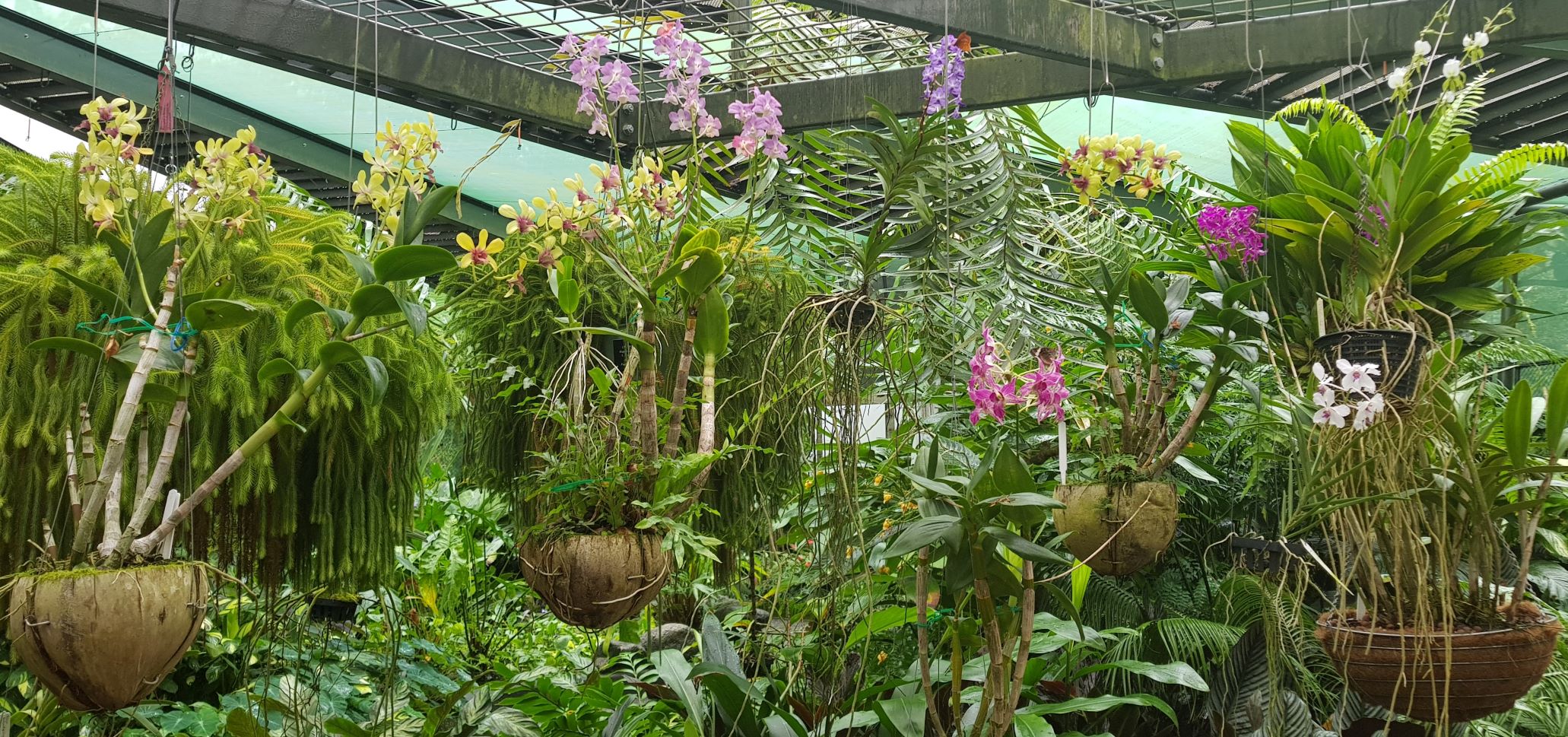
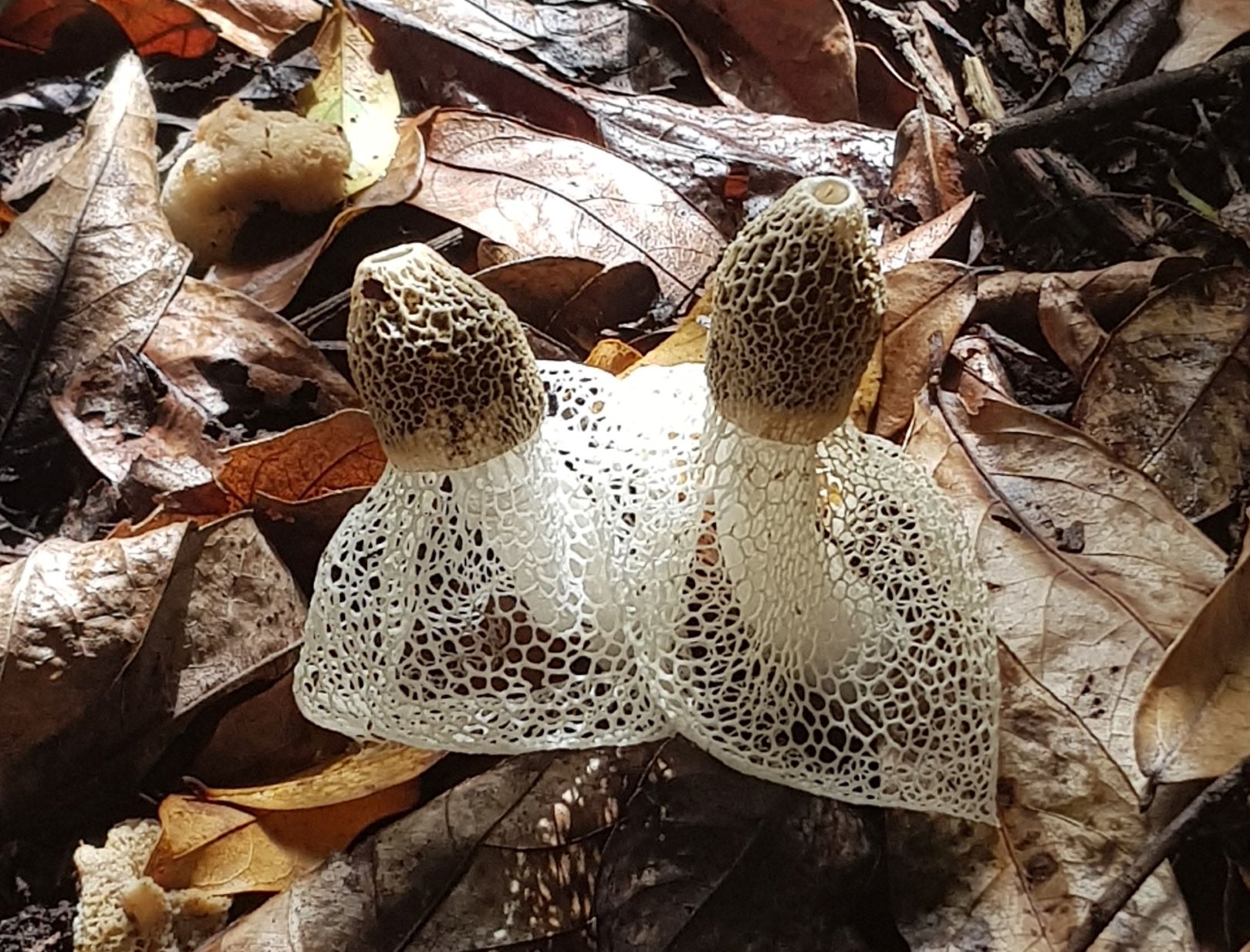
Outdoor plantings are complemented by the indoor collection of bromeliads, orchids, and butterflies. We also saw the weirdest mushroom I’ve ever seen. It grows a little lace dress for itself. Very strange indeed. They probably came out during the rain.


Cairns: Tropical North Queensland

Before the plane lands in Cairns you see the new environment. Unlike anywhere else we’ve been in Australia, the forest of north Queensland is dense green. Enough rain falls year round to keep a thick cover of trees and underbrush growing. We thought Darwin would be like this, but even though it is often hotter, Darwin is in seasonally dry tropical forest. There isn’t enough rain in the dry season to keep everything growing. As a consequence the forest around Darwin is thinner, with less underbrush.

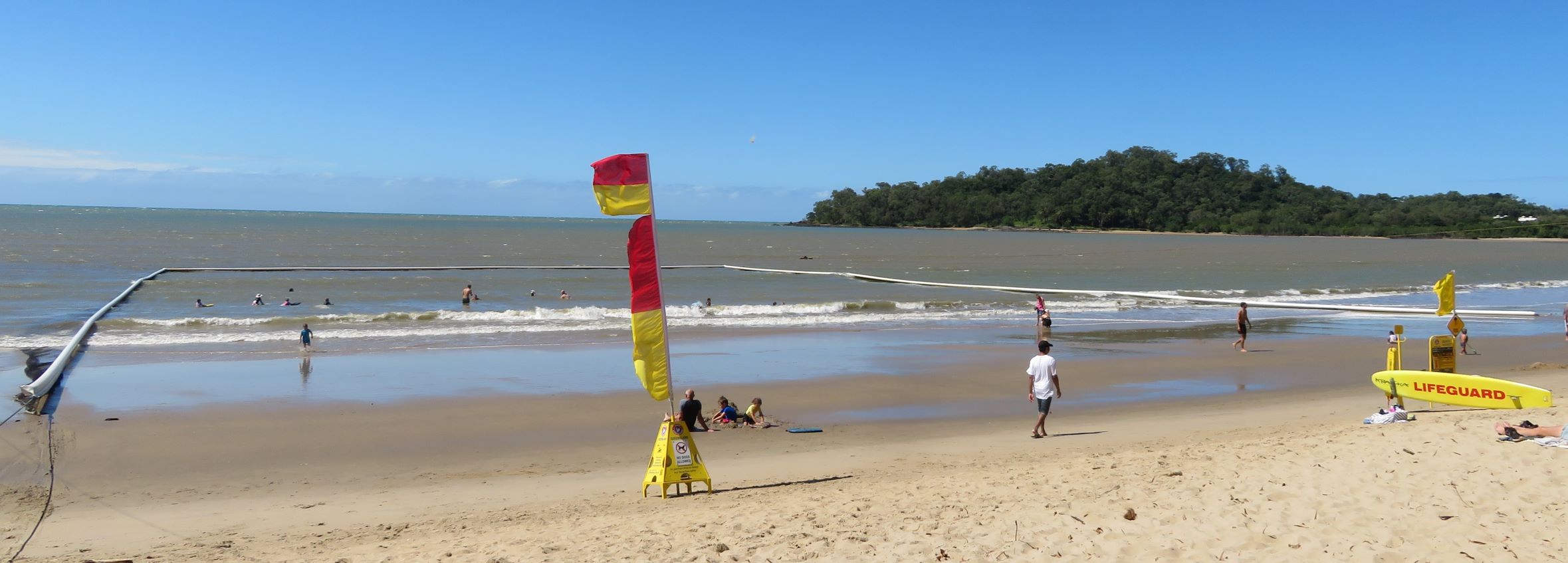
Not only is the forest around Cairns dense, it covers coastal mountains so steep that only a few roads cut across into the interior. Though we are well into autumn in the southern hemisphere, the temperature hits 80° F. most days, and we do use the pool in our yard. Two blocks away is Kewarra Beach. On weekends there are lifeguards and the net to keep out box jellyfish. There are reminders about other hazards, as well.

We had a preliminary look at the coast, driving from our base in Kewarra Beach north as far as Wangetti.

Next we went inland to Barron Gorge. There are boardwalks built along the edge of the cliff overlooking the gorge. There isn’t a swimming hole here because the water eventually runs into the power generating station for Cairns. The view is lovely and we saw new birds along the way.

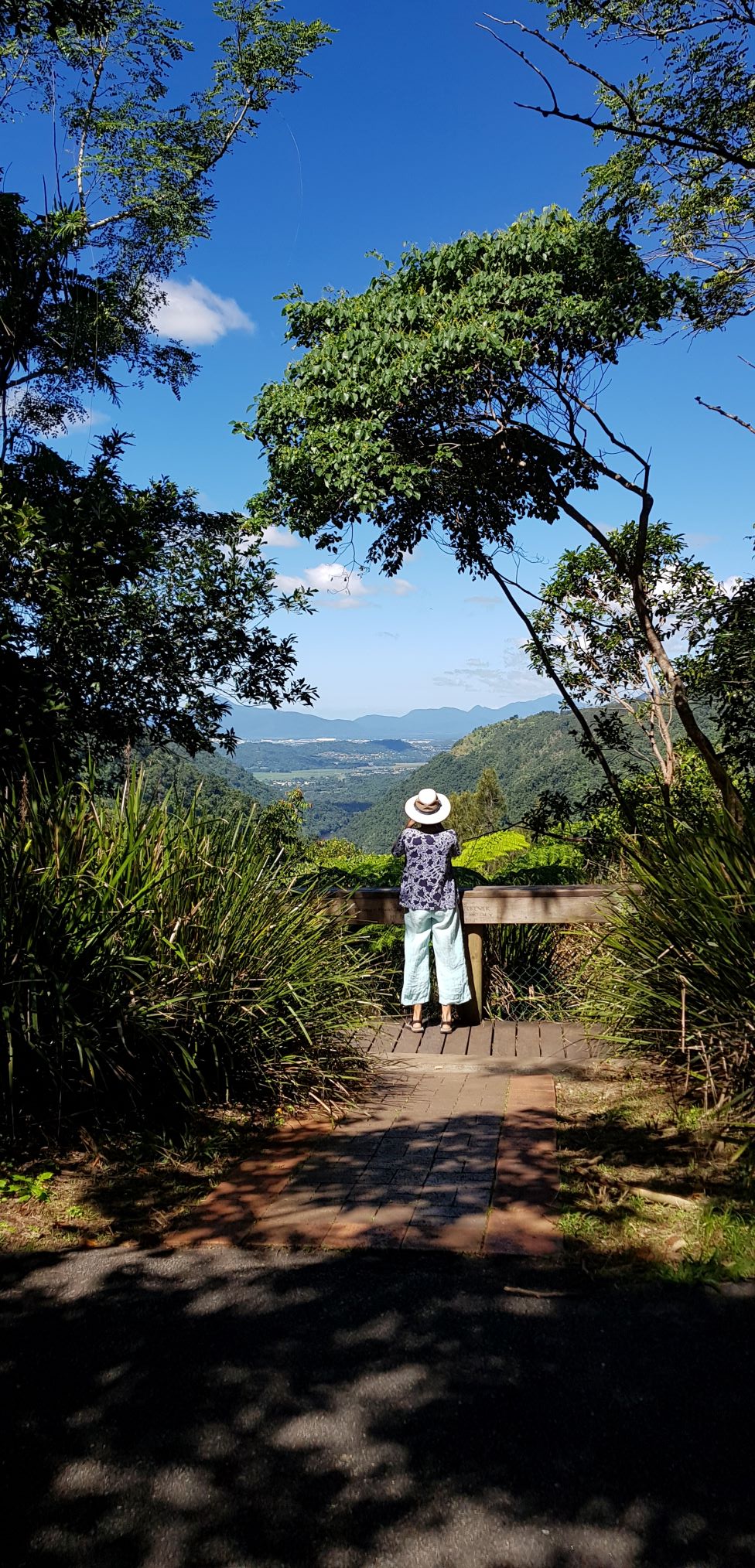
At the far end of the complex is Wright’s Overlook, where you can see Cairns in the distance. We’ll do more exploring across this area now that we’re back on our schedule of staying for a month rather than having to “run off” after a week or two.


One week in Adelaide

One week is barely long enough to get an introduction to a place like Adelaide. We did our best, visiting Hahndorf, walking around historic Port Adelaide, tasting wine in the Barossa Valley and McLaren Vale, and visiting beaches, despite a bit of rain. The drought in South Australia is so bad that we can’t begrudge farmers what they need.

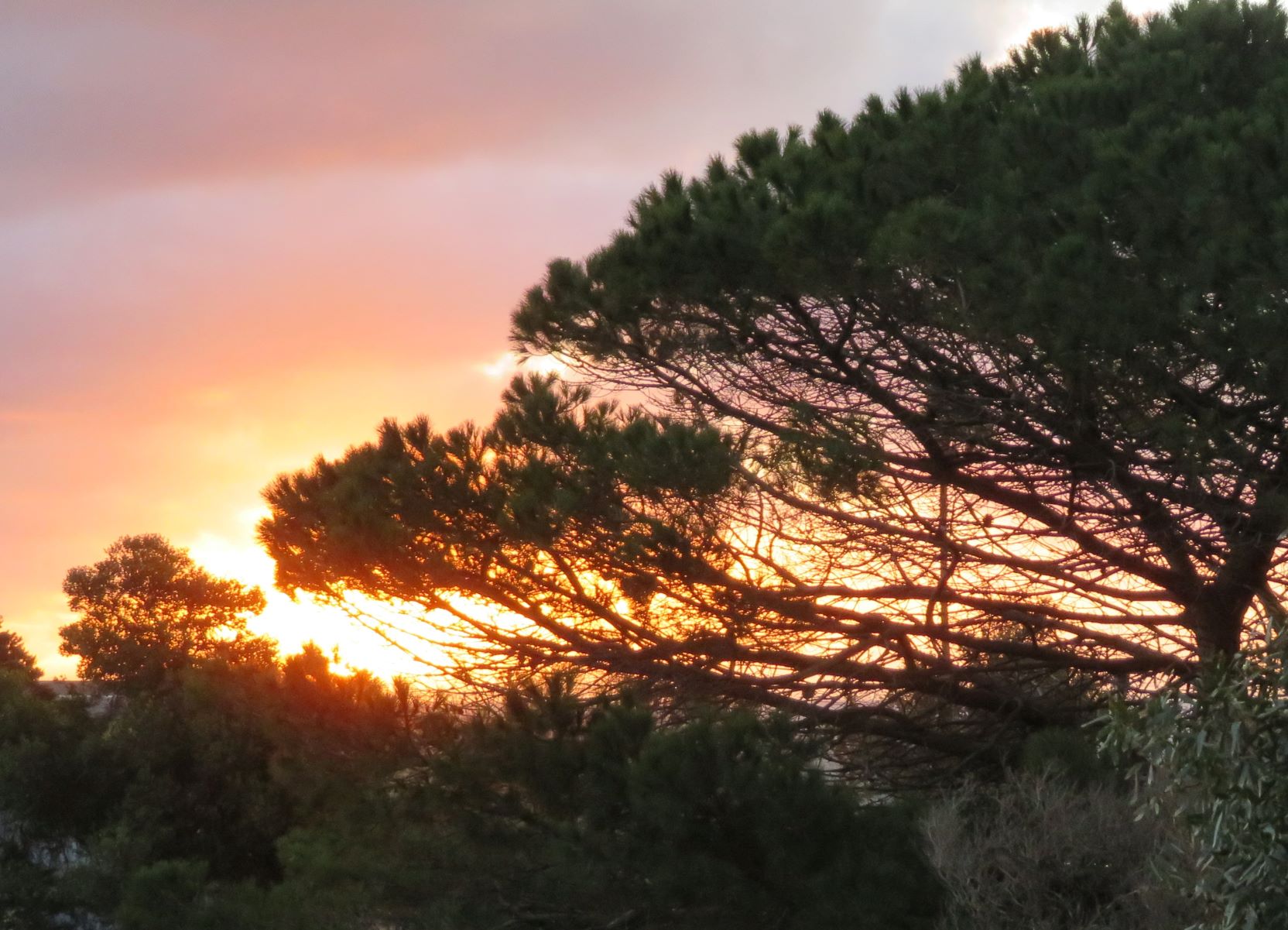
Our Airbnb in Sellicks Beach was a good outpost for exploration. We watched sunset from the second floor deck and listened to the flock of cockatoos twittering in the nearby pines.
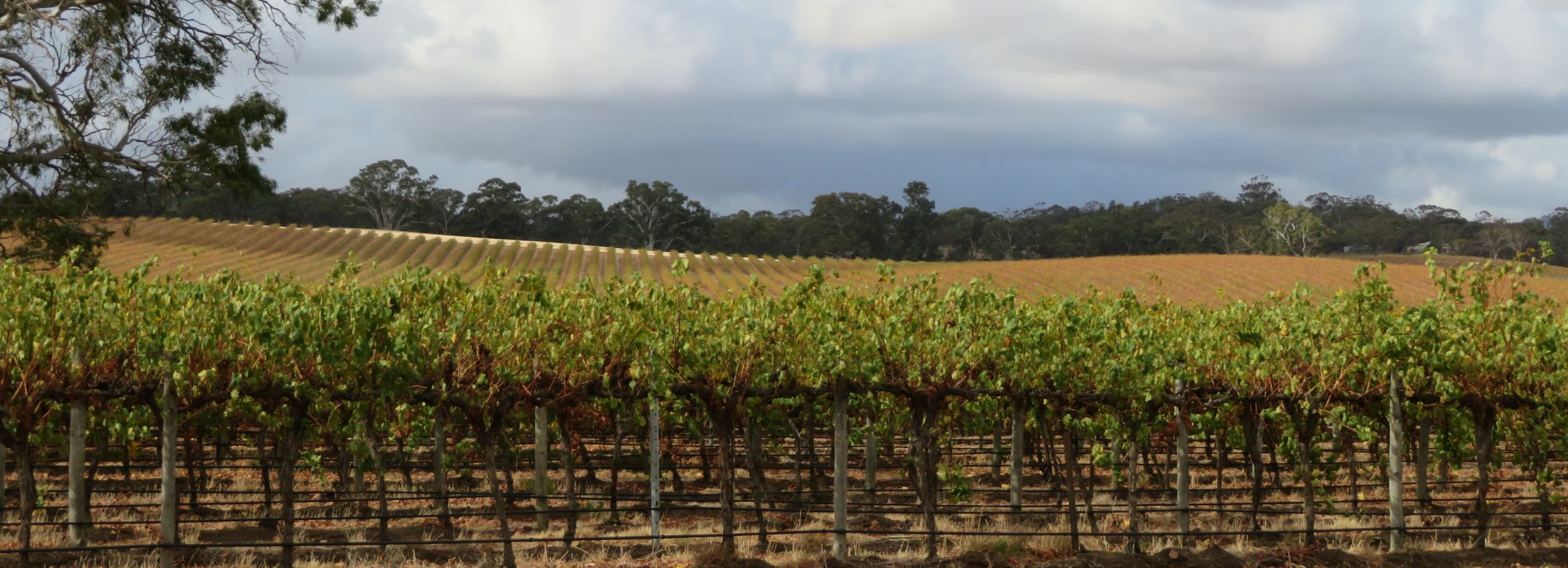
We knew there was a lot of wine produced near Adelaide, but we had no idea how many wine regions are crammed into this relatively small area. We were very close to McLaren Vale, where we tasted wine at a couple of different places. We did the same in the Adelaide Hills, and of course, the Barossa Valley, perhaps the best-known of all. Some marvelous wine came to light. The more places we visited, the more suggestions we received about other wineries. So much wine, so little time!
We had some surprising wildlife encounters along the way. After looking for kangaroos and seeing a very few, we passed a field of them.

Even closer to home we passed a field of at least 1,000 Little Corella cockatoos. The birds were playing, fighting over sticks, all flocking together, waiting for the sunset (?).

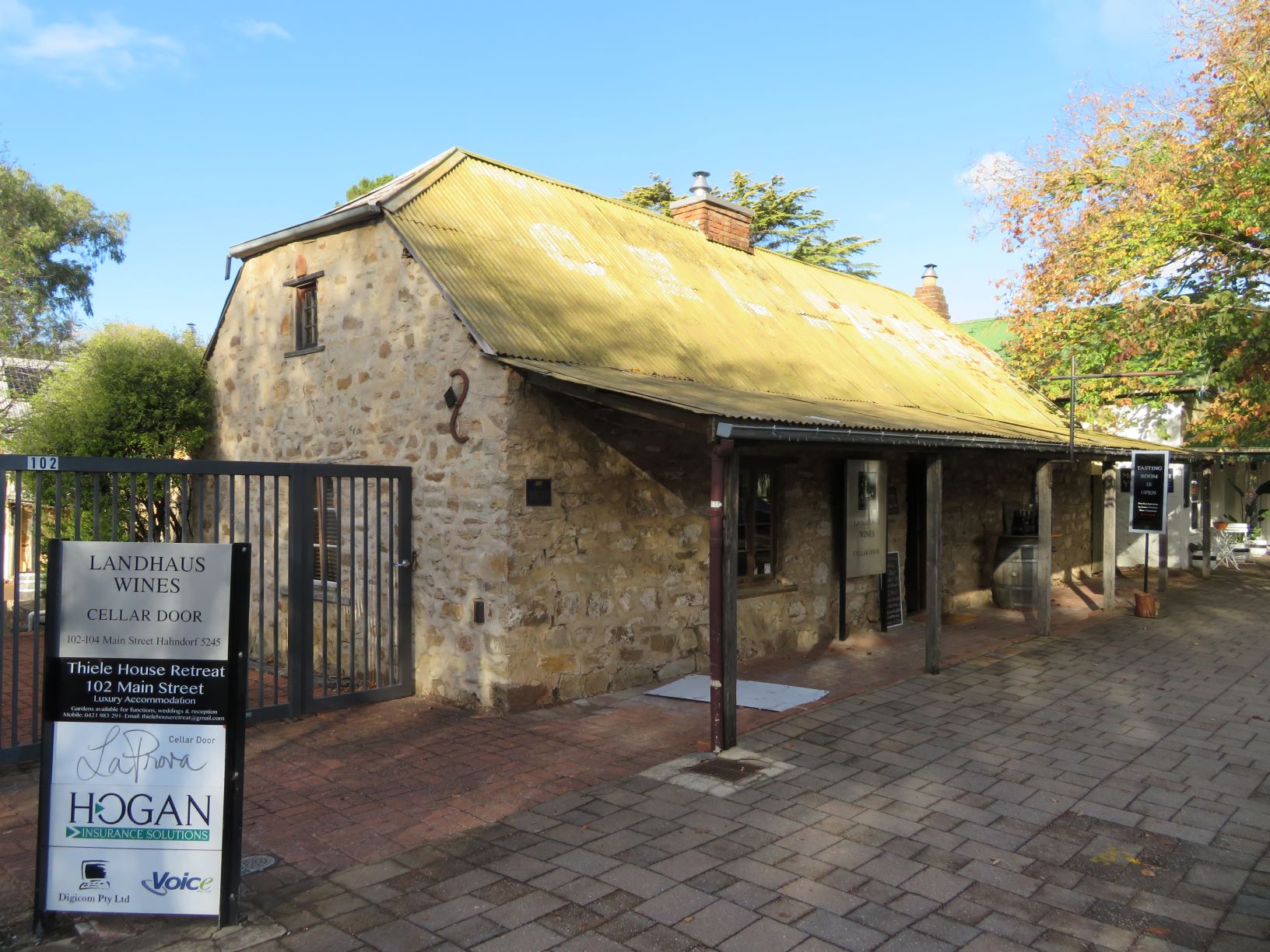
We spent an afternoon in Hahndorf, a small town with many well-preserved stone houses. The area was started as a German Lutheran outpost and today is a lively tourist destination, full of shops and cafes. It makes a nice visit.

Historic Port Adelaide has a self-guided walking tour map that takes you past local stores and many large murals. I stopped to chat with a woman putting the finishing touches on hers. The community hosts muralists every two years and has just added another dozen in 2019. This area, so close to the downtown of Adelaide, makes me think of Fremantle. Port Adelaide may be the next hip community in South Australia. It looks up and coming, with lots of new housing and businesses opening.

On Saturday morning, we stopped at the Willunga Farmer’s Market, one of our favorites in all of Australia. The market had really lovely local produce. It’s not all food stalls and perfumed soap. When I commented to a woman about how much we enjoyed and appreciated the range of products, she told us the secret. Vendors are carefully vetted and get a stall based on a point system that rates whether all their products are local, whether their ingredients are local, foods made and cooked locally, with an effort to have everything that is sold there come from a maximum of 100 km away. The more local a product, the more likely the vendor is to get a space.

Willunga contrasted sharply with the other farmers market we visited. The Torrens Island market is a farmers market in an older sense of the word to my way of thinking. It’s a place where produce is sold at the end of the week (Saturday) and it consists of what is left over from wholesalers. We didn’t buy much, but the prices were about half what you’d pay at the grocery store, and much less than most farmers markets, as most have gotten very upscale in their pricing. Torrens Island is the opposite of boutique. It’s held on a scrap of raw land in an industrial zone that makes you happy to see other cars parked in the lot. Booths are stacks of crates, truck beds, and an occasional canopy. You can buy a coffee, but there are none of the food stalls that crowd out the merchandise at other markets. It’s a bare bones operation in a bare setting. Jonathan asked the people parked beside us what they planned to do with the crate of tiny potates they were loading into the trunk of their car. The man said, “We’ll eat some, give some away, and toss the rest. I couldn’t pass them up, they were only two dollars!”

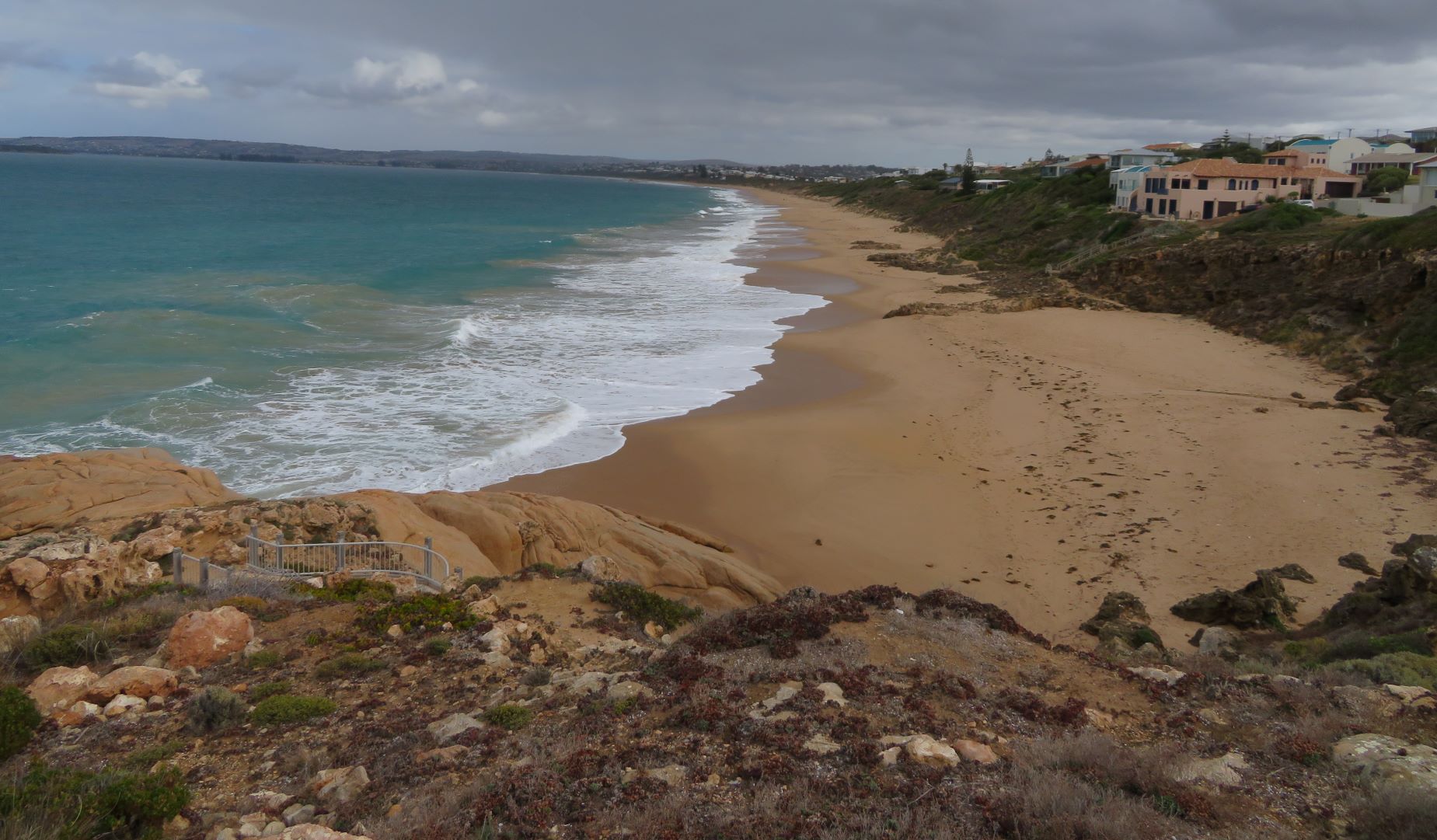
Like all our other stops in Australia, there were gorgeous beaches. Sellicks Beach was our local, but we had a great visit to Port Elliot and to the beaches beyond on the barrier island at the mouth of the Murray River. We even saw a stubby lizard on the dunes.

With all our stops and strolls, I still feel there was a lot more to see and do in this area.

Opal Hunting in Coober Pedy

There are said to be two million spoil heaps from opal mining in and around Coober Pedy, and the same number of holes…

I wanted to hunt for opals. I like rocks and minerals, have years of experience poking around in the dirt as an archaeologist. If anyone can find them, it should be me. True, thousands of other people have hunted for opals over the years and most of them have not become rich. I don’t need riches, but I want to find an opal.

Opal hunting areas are remote, and the annual opal festivals are held in the dead of the austral winter when temperatures subside and we will have left Australia. (Coober Pedy’s daytime temperature can hit well over 100° from October through April.) Taking a day trip from the Ghan to Coober Pedy was the way we could visit this strange mining town where half the population lives underground.

Jonathan emerges from the underground Serbian Orthodox church.

Underground life began as a practical choice. People dug into the soft rock hunting opals and camped beside their works. With a bit of enlarging, the former mining areas became rooms that maintain a constant mild temperature. Occasionally, the opal mined during room construction paid for the digging.

Opal is a fickle material, formed as liquid evaporates from cracks in other rock. Lots of opal is very thin, a sheen on a surface. There are beautiful opalized fossils where opal formed on the fossil’s surfaces in the hairline crack between fossil and parent rock. Unfortunately for jewelry lovers, this means that a gorgeous colorful solid opal is a great rarity. I was told that you cannot get opals wet. Part of the reason was that inexpensive “triplet” opals (a sandwich of backing, opal layer, glass) can peel apart when wet. A salesman said that these days there are excellent waterproof glues used and now opals are watertight. It also means that it is more difficult than ever to tell whether the opal you buy is solid or a composite. Honest dealers clearly mark the differences. Colorful opals run well over $10,000 for an attractive ring with a medium sized stone.

Though the train had a day-long stop in Coober Pedy, the staff didn’t understand that some of us (me) really wanted to hunt for opals, not just spend five minutes poking the rock after a mine tour. Jonathan and I got directions to the “Public noodling” site and set off. We promptly got confused, possibly by the “Waffles and Gems” sign across the street. It took part of our precious time to find the place, but then we got to work. There are acres of crushed pale rock. It’s very soft and you’re immediately covered in dust from the surface. It is possible to rent shovels and sifting screens locally, but we contented ourselves with poking around, which is why it’s called noodling, or fossicking.

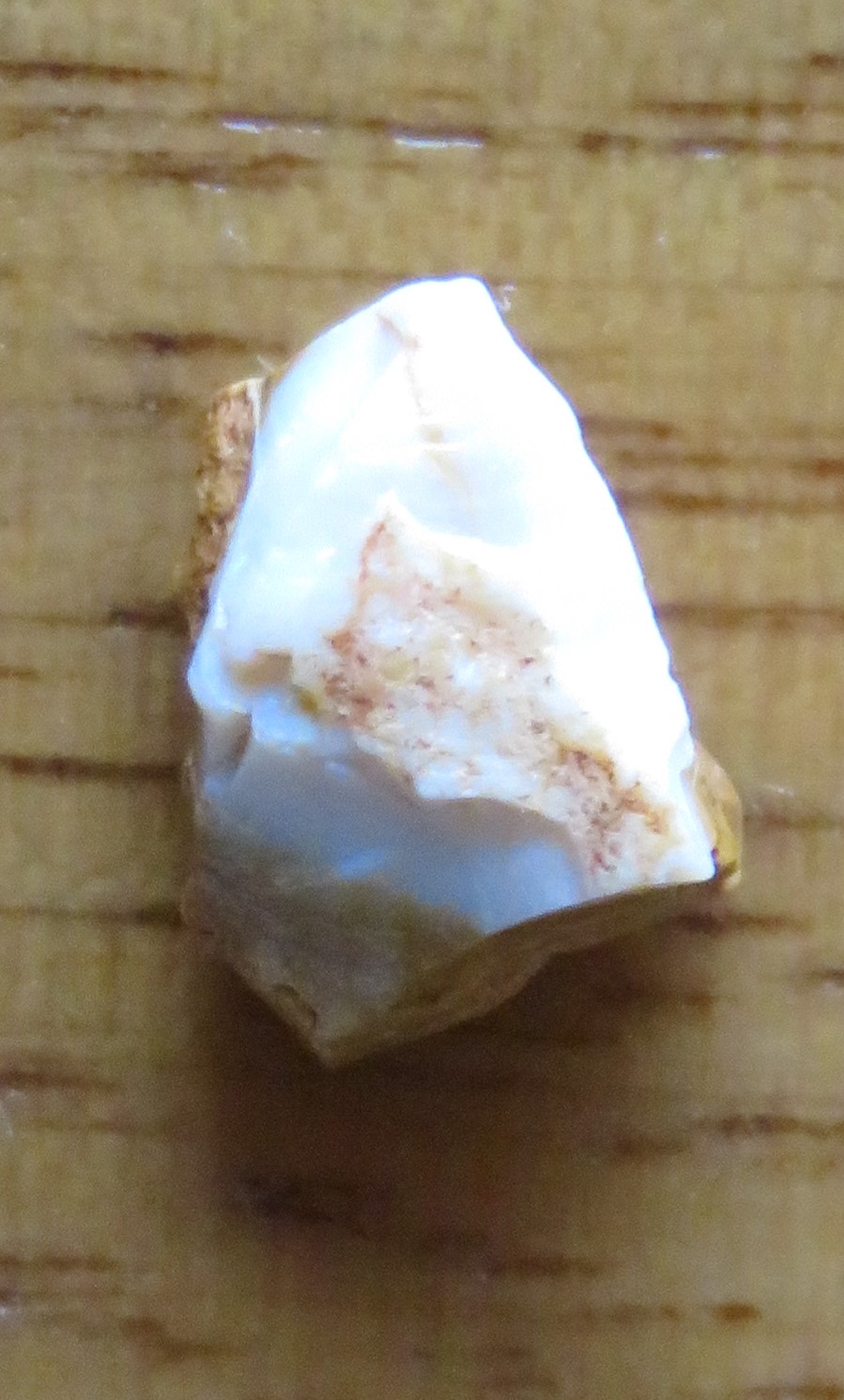
My opal

Because opals can be one side of an otherwise plain rock, people are always finding new items in old piles. We found very little, and wished we had more time, but I did find a tiny piece of opal, and that was my goal. We chatted with a mother and daughter who were giving the piles a full day. They had hunted around, gone into town for equipment and were settling down for an afternoon of hunting. The daughter showed us the pieces of pale opal they had collected–more than we found.

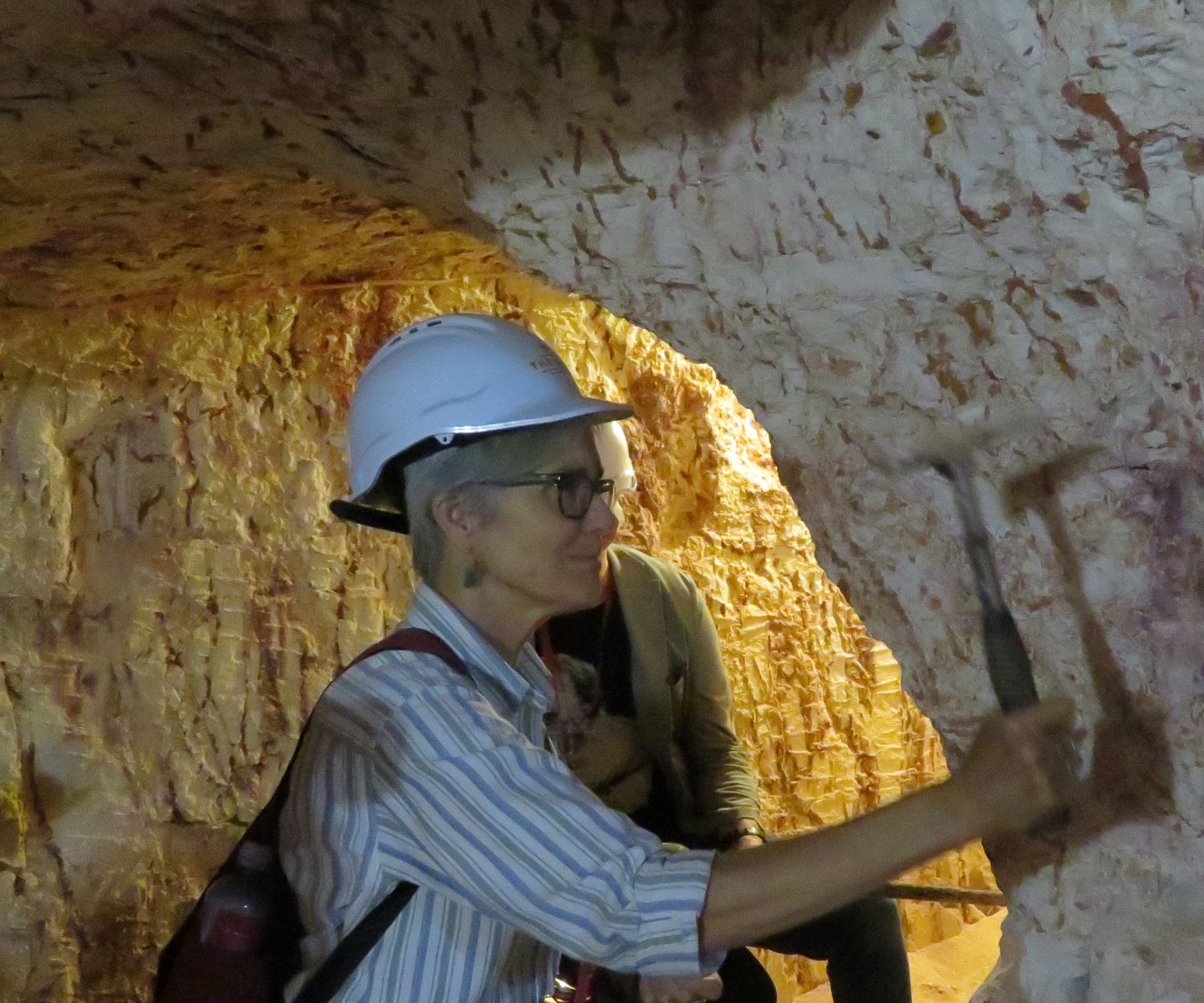
Rejoining our group, we visited a mine and looked at the shaft, heard about how you make explosives (alarmingly easy), had lunch along a long table in an old mine tunnel, and did a bit more poking. This time we got to pick the rock out of the cave wall. It could have yielded something. Mining opal is a bit like spending your days scratching lottery tickets. Every strike of the pick is another try, but at the end of the day you are more likely to have nothing than a jackpot.

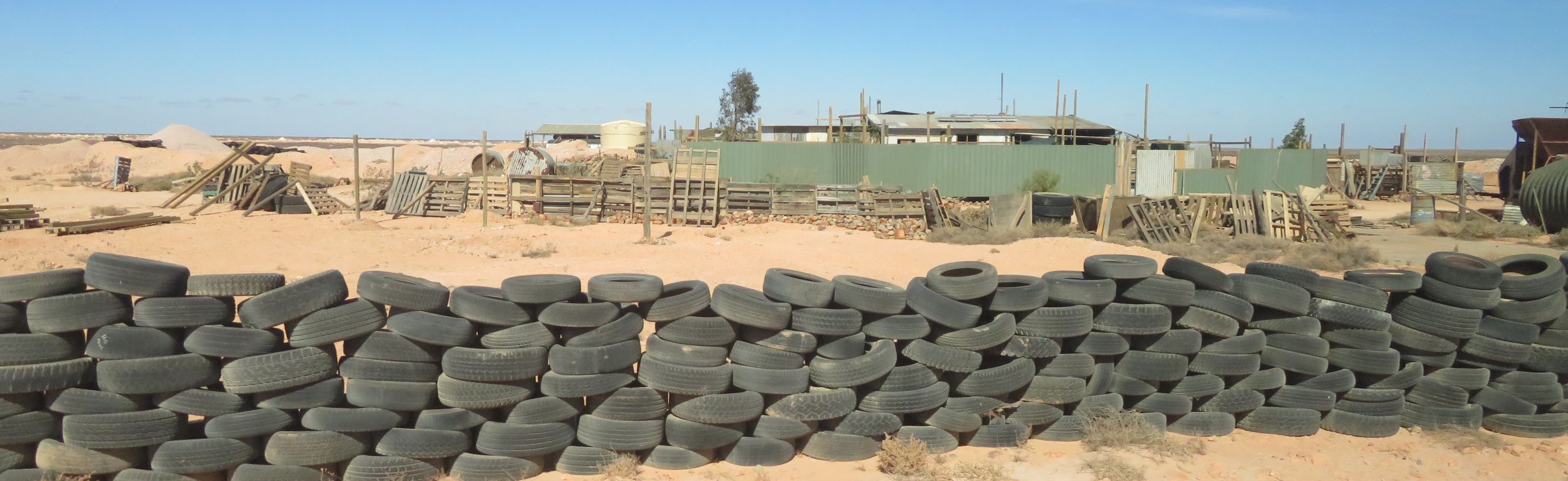
An opal mining works above ground portion.

Uluru: A Wonder of the World

We planned to skip the Ghan’s Uluru option (crowds, distance, expense) and tour Alice Springs, where the train stops for the day. We changed our minds when we found that the scenic flight from Alice to Uluru included a stop on the ground to see Uluru up close, a drive around the rock, and some time to walk around.

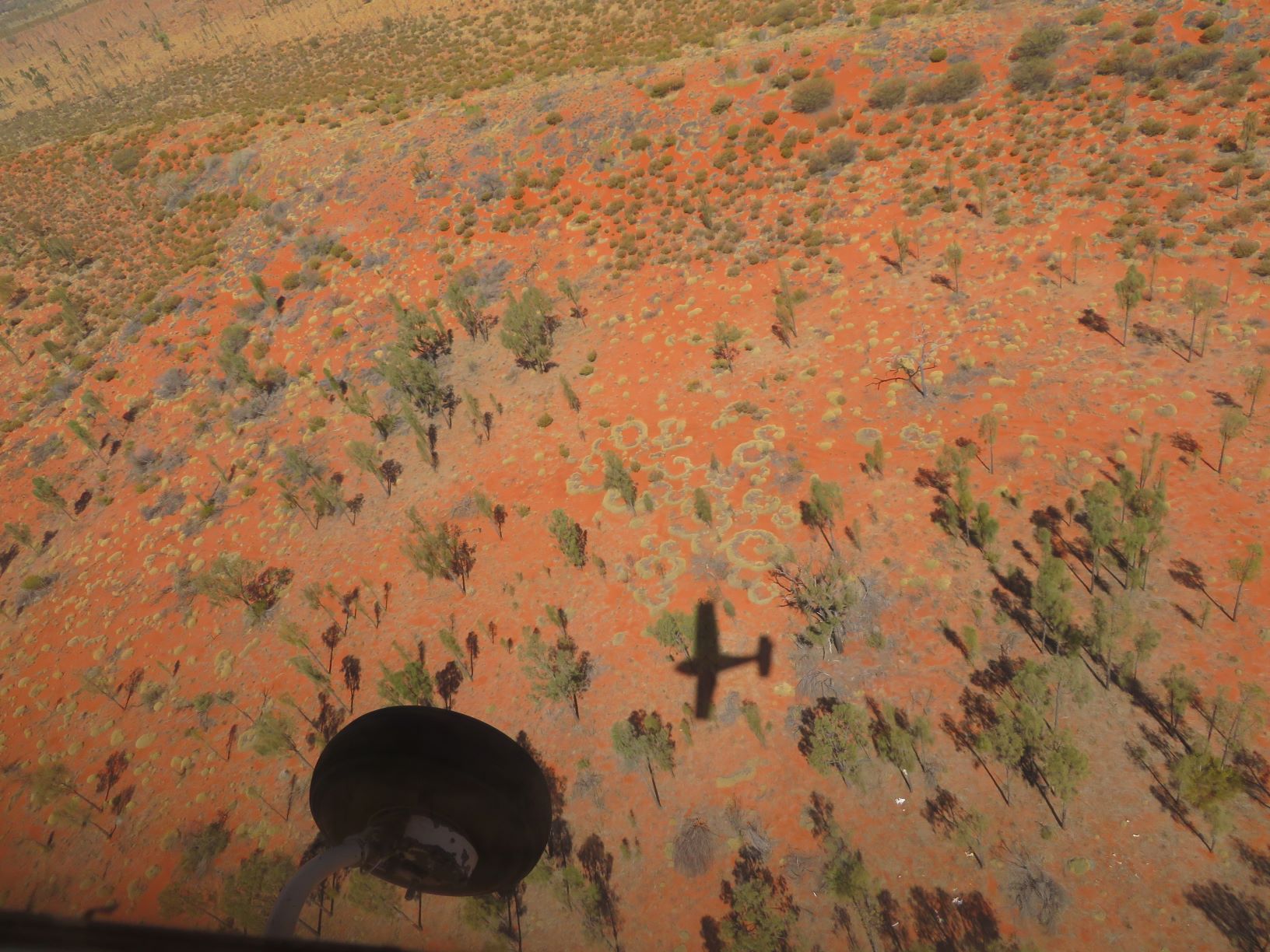
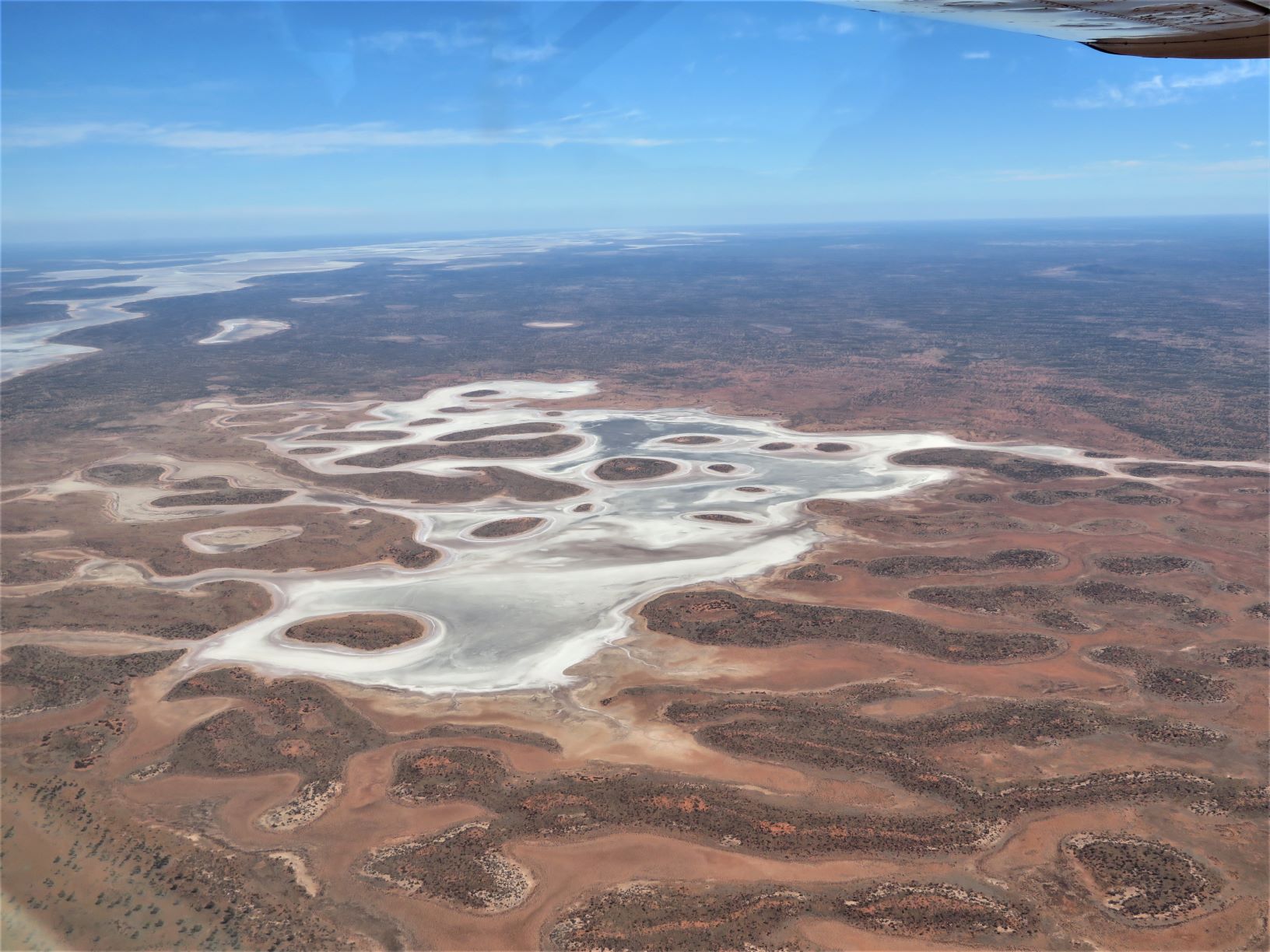
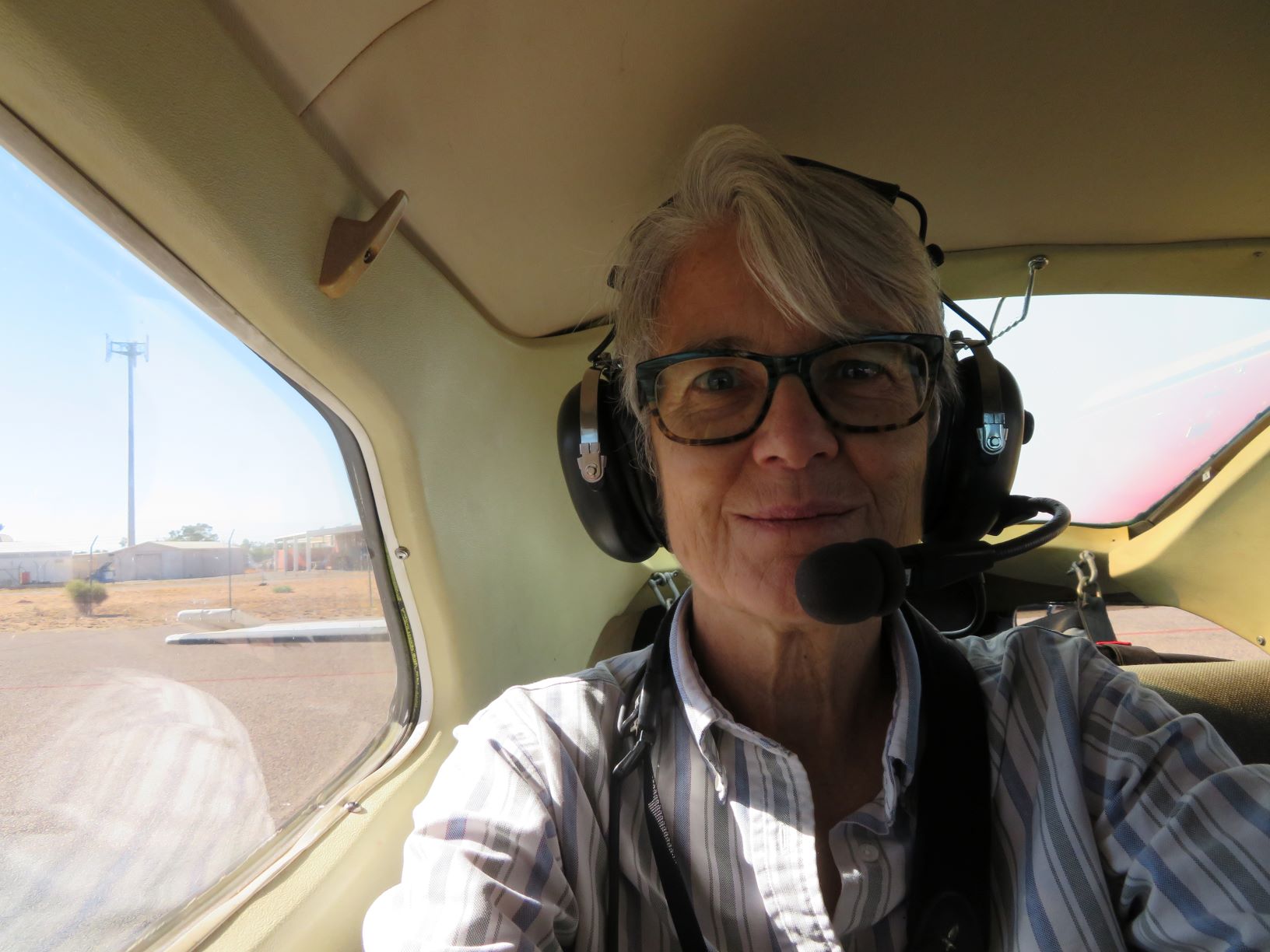
From the air, we finally saw The Outback. Not a bare desert, but a vast area of tan grasses, spindly gum trees, and lots of an invasive grass from S. Africa that we are assured no animal will eat. Parts of the Outback resemble the Sonoran Desert of Arizona and northern Mexico. What differs is its immensity. We flew more than 400 km and saw roads only at takeoff and landing. There was one town, Hermannsburg, a former mission. There was also Pine Gap. If you watch Netflix, you may have seen the new show set at the CIA/Australian joint spy base. Having seen a few episodes, it was a bit strange to actually see the field of white domes that covers the spying equipment. Beyond Pine Gap and Hermannsburg, we saw no isolated farmsteads, roads, trains, trucks, vehicle tracks, not even any animals. Somewhere below us was a cattle station of over one million acres, yet we saw no evidence of this. There were no fences, water tanks, windmills, air strips, the features of remote farms.

This slideshow requires JavaScript.

Geology and vegetation create the landscape. What looks like the green verges of a superhighway is a geological fault. A crack in the earth lets a bit of water escape and a streak of dark green trees emerges. Pale earth is peppered with green shrubs, alongside an empty river cut through rock. An irregular band of white pools crossed our route, a dry river of salt, hundreds of thousands of tons too remote to mine. Straight lines on the ground are bands of red, ochre, and tan stone lying one beside the next, straight as an arrow, or bending in parallel lines created eons ago. On the distant horizon rounded hills suggest this flat plain eventually ends.

Some of the landscape recalls aboriginal painting, circles, dots, lines of contrasting colors. How can there be no roads? Finally, I begin to see roads, threads of orange-brown.

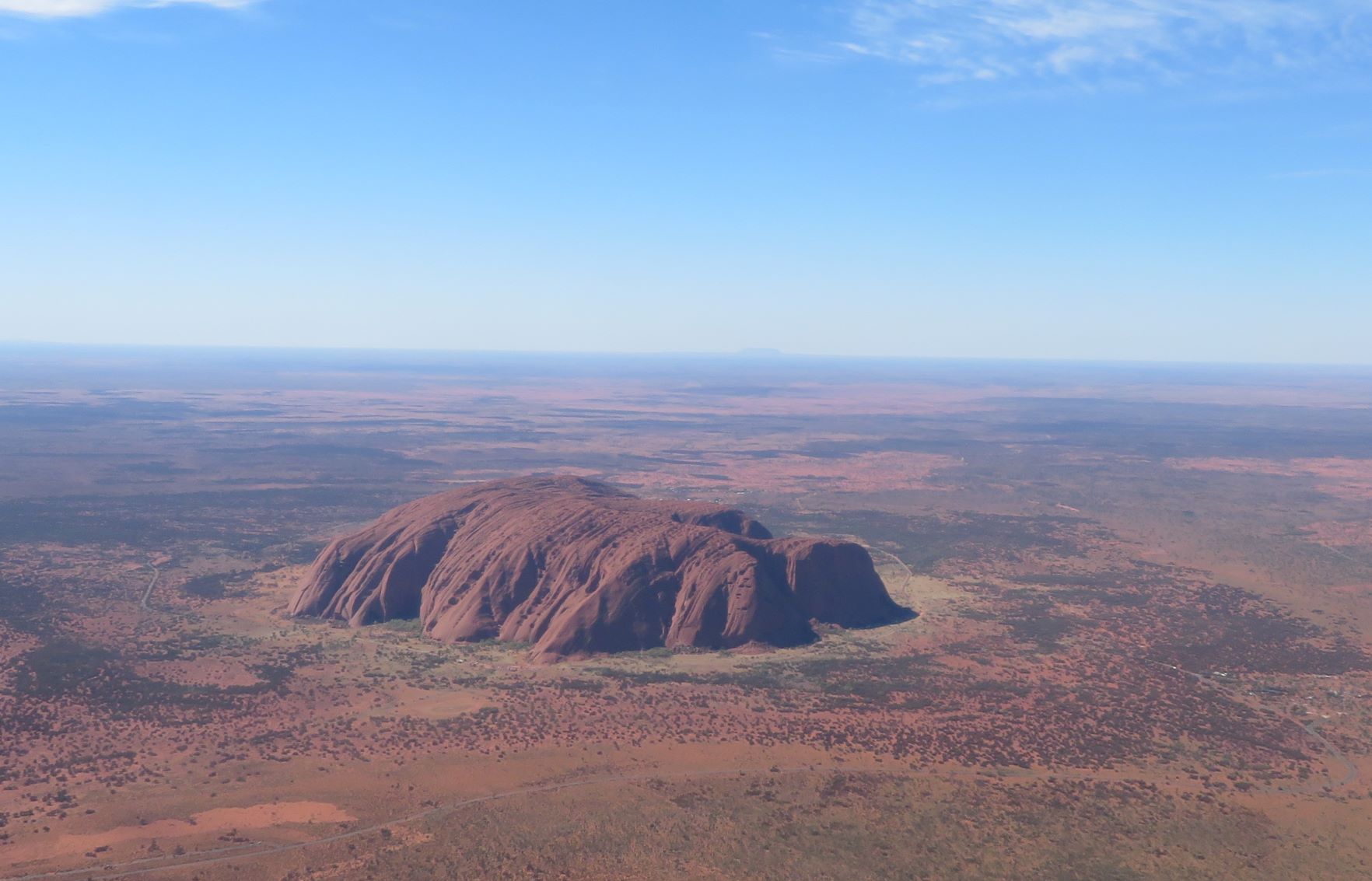
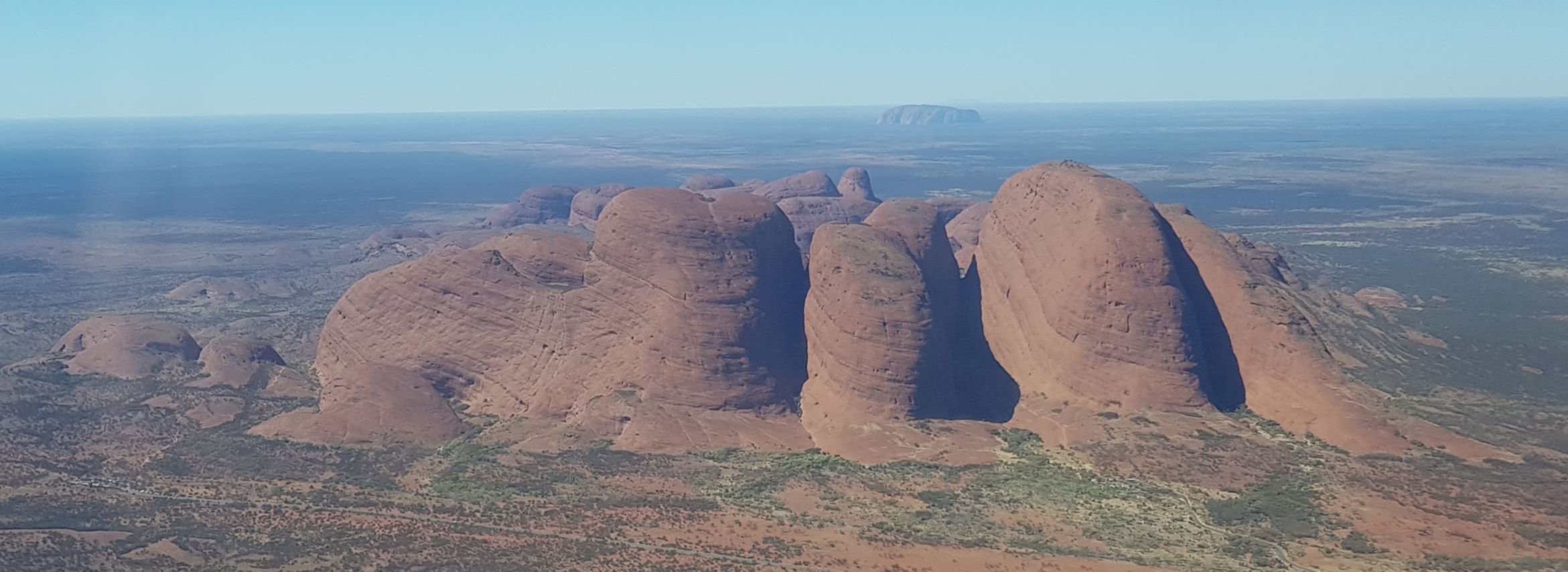
After an hour and a half in the air, we approached Uluru, imposing even from above. The aerial circuit was spectacular, and was followed by a swing around Kata Tjuta, a knobby rock formation that is close by, aeronautically speaking, though it would take at least an extra day to visit by car from Uluru.

Kata Tjuta, with Uluru in the background.

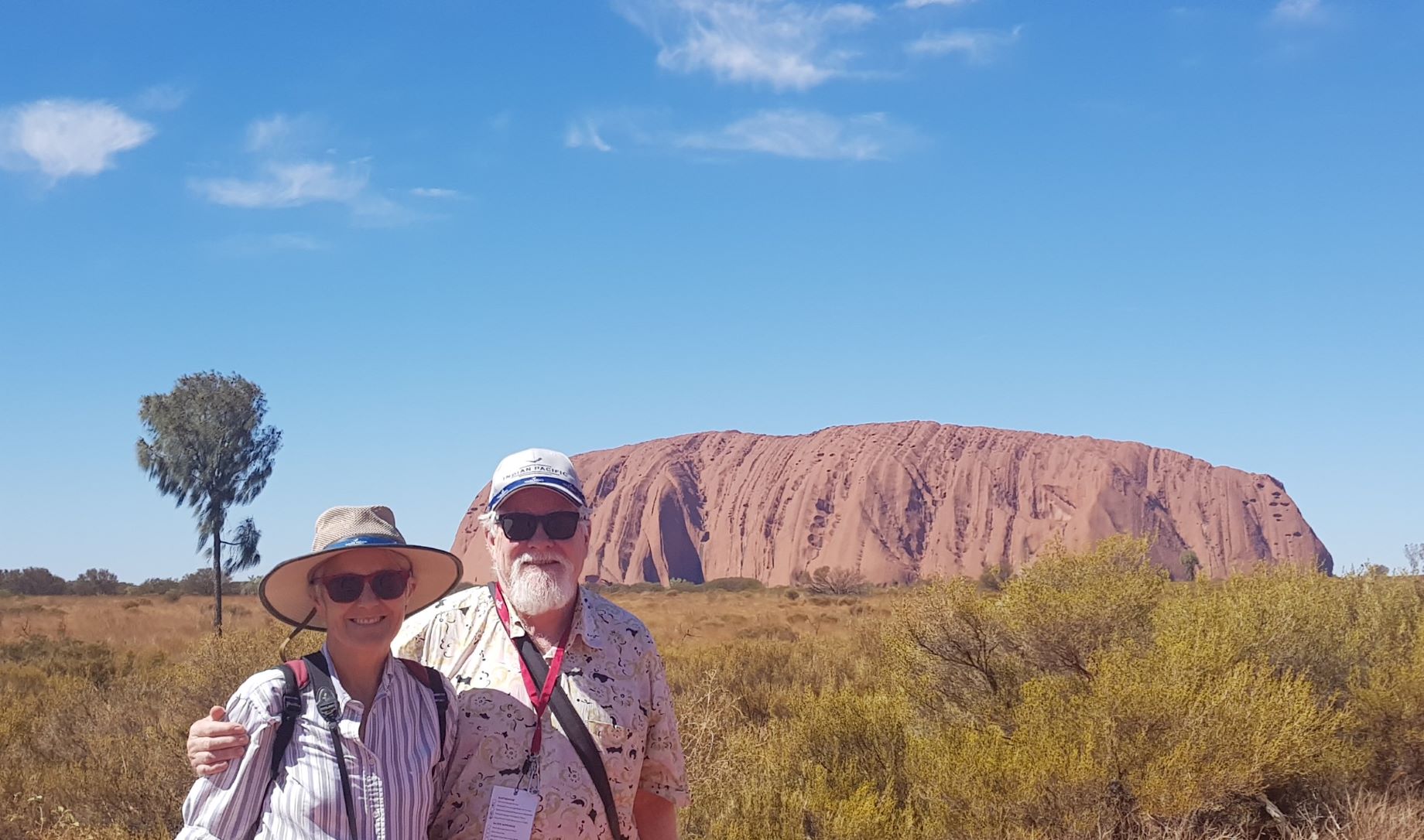
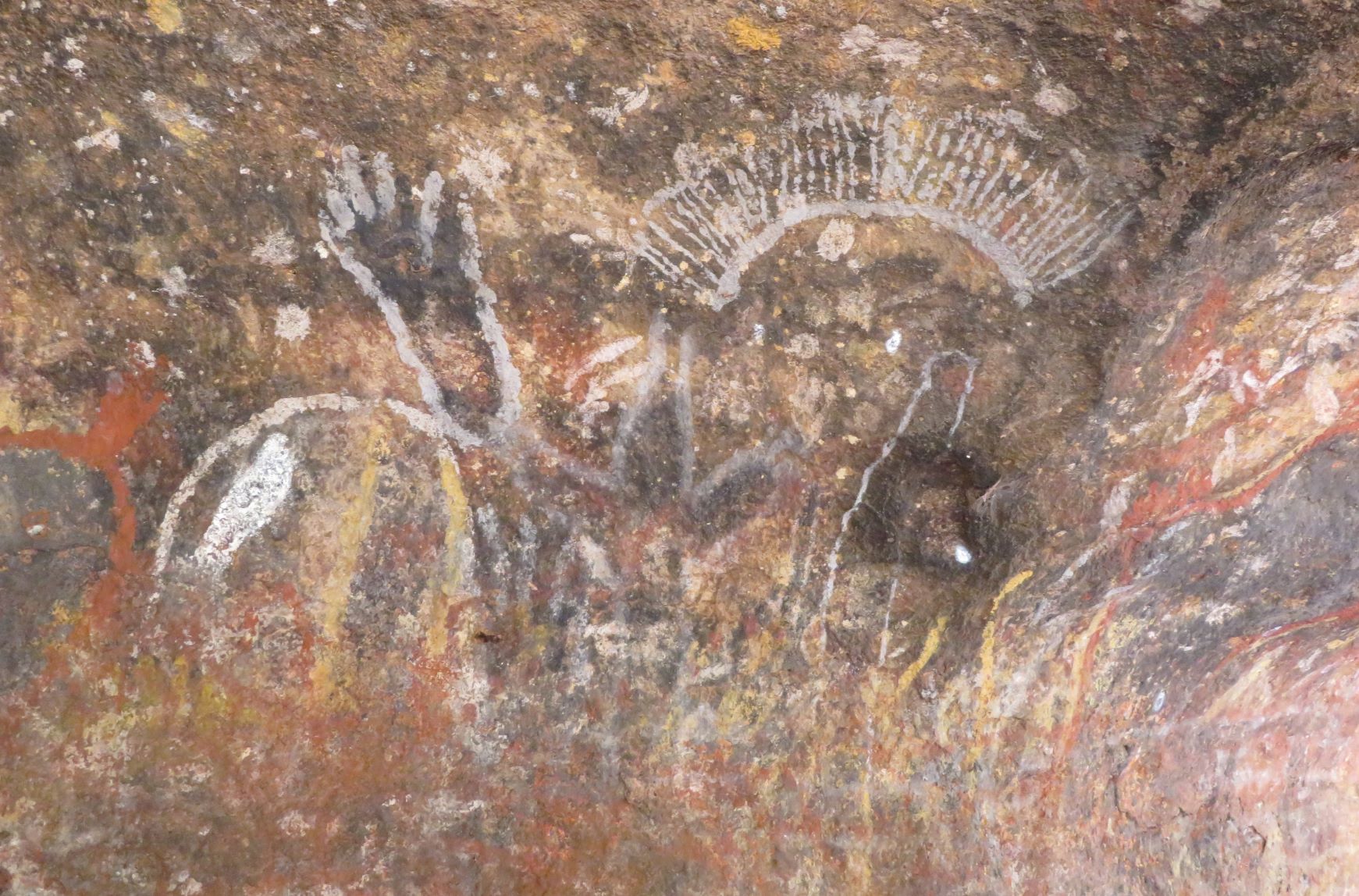
We are compressing a three day visit into one, our aerial outback tour followed by a picnic lunch on the ground at a shelter perfectly positioned to let us soak in Uluru while sitting in the shade. Next we walk to the Mutitjulu Waterhole with a stop at some rock art along the way. Everyone sees different things in the rock art.

Our tour guide was a white Australian, young enough to be completely captivated by Aboriginal stories of The Dreamtime. The age of rock art is given as 5000 to 8000 years old. When we asked whether there had been any archaeological investigation of the area to provide samples for dating the rock art, the young man enthusiastically told us that archaeology wasn’t needed because the stories of The Dreamtime are supported by visual proof. “See the way there is a dark shadow on the rock that follows the curve of the cliff?” “That is the snake from the story of….” He believes that there is nothing more needed than the stories to explain Uluru. Science is not part of his mindset, at least not right now. We wonder why the guides are not Aboriginal people.

Completing a circuit of Uluru by car, we hear the history of visits and visitors. Many people have climbed it over the years, and though the aboriginal owners have banned climbing as of October 2019, there will be controversy until no one remembers when it could be climbed. We are not staying long enough to consider a climb.

On our return flight, I try to photograph as many of the different patterns of landscape as I can, knowing that a photo through the window of a small plane will be no substitute for seeing the many forms of the land that expand the definition of “desert” to a much broader range of shapes and colors. Back in Alice Springs, I am amazed and content. The tiny plane barely scared me and our visit to Uluru was beyond great.

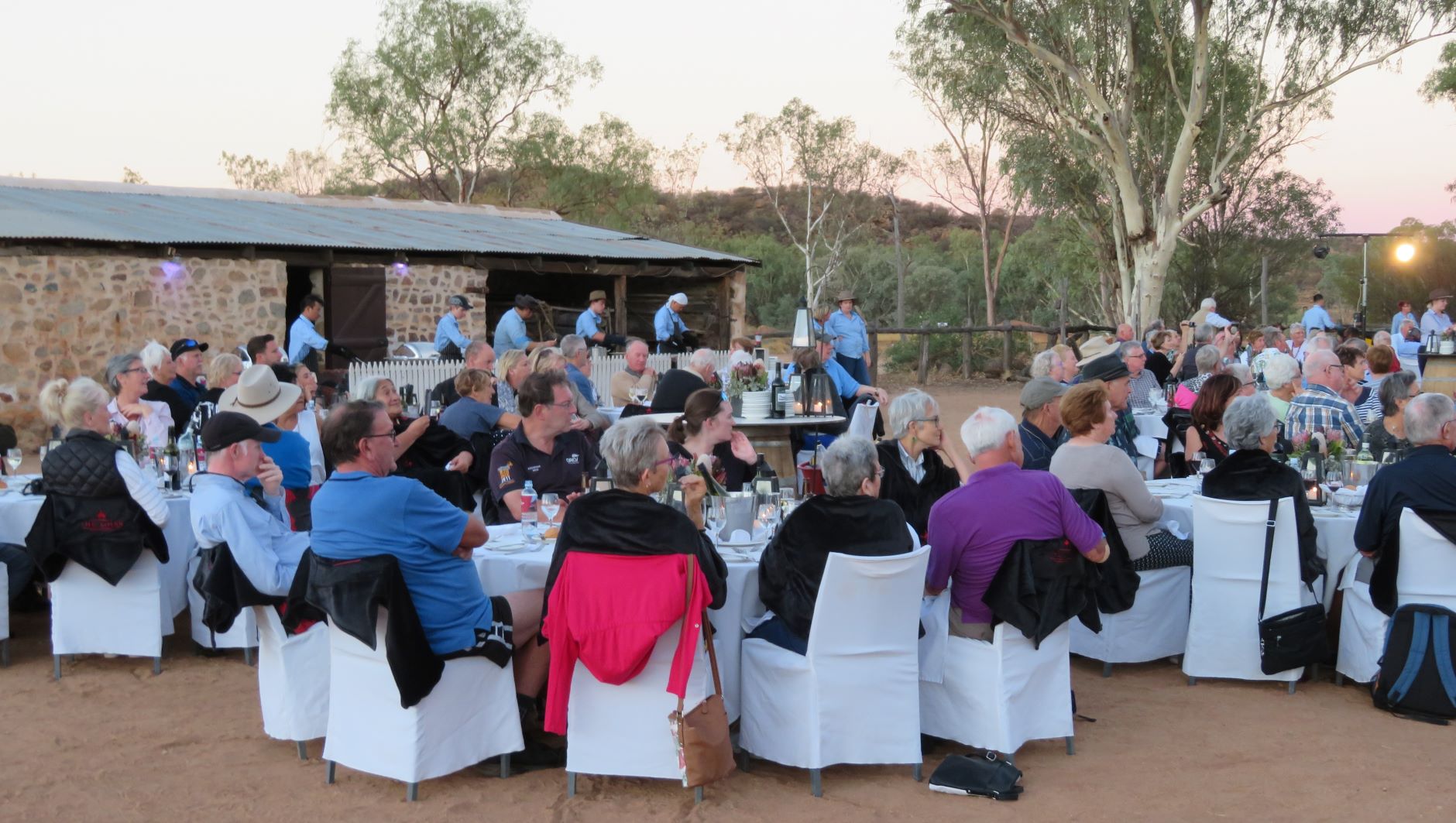
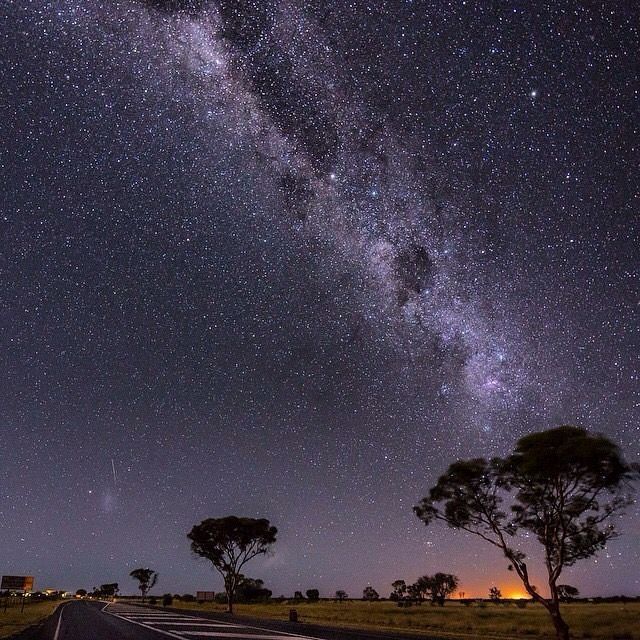
The day is not over, as the entire train of 300 dines al fresco at the old Alice Telegraph Station. As the sky darkens and the stars come out, we walk away from the illuminated dining area to look up. The Milky Way is a starry shawl thrown into the heavens, while the constellations shine brightly, performing the fandango of the night sky.

Internet Photo