Out of the storm in Asheville

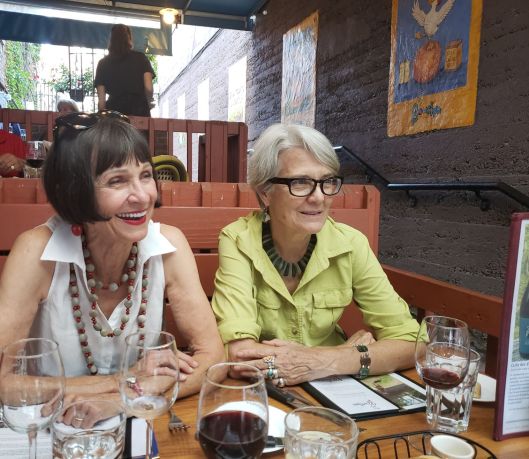
We are the luckiest of storm refugees, able to spend our five days of exile with our friends Billie and Larry in Asheville. The spectacular view over the mountains from their deck was enough to keep us from going anywhere, but we managed to break away and see some of what this area has to offer. Asheville today has a well-deserved reputation as a center for crafts of all kinds, for live entertainment, and for having lots of good food options. We sampled all of these.

On two of our mornings in Asheville, Billie and I walked. One morning we circled Beaver Lake and took a brief loop through the bird sanctuary. I would happily go back for more focused birding. On our next walk, we looped through the campus of UNC-Asheville (UNCA) including their Osher Lifelong Learning Institute (OLLI) center. This beautiful building has space for classes and meetings, a real draw for anyone living in the area.

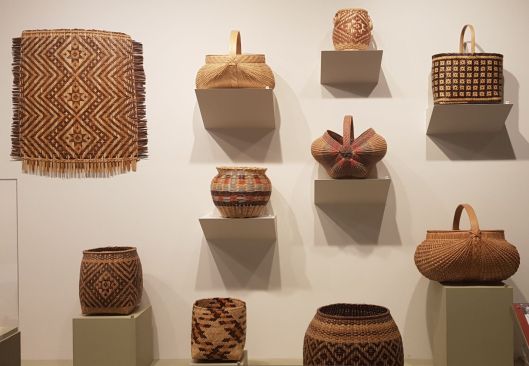
I wanted to visit the Folk Art Center to get an overview of the crafts that the region is known for. There are displays from the permanent collection that goes back to the first Episcopal missionary who wanted to help local people generate income by reviving traditional craft work. Over time, the center expanded to include all kinds of craft work, and eventually moved to its current location. The Center is on the Blue Ridge parkway, a narrow ribbon of road through the thick forest that covers the mountains once you are out of town. Though it’s just beyond Asheville, you get a sense of being deep in the mountains from the leafy setting.

We tried a few of the local restaurants, starting with Bouchon, where French comfort food is on tap. Moules frites, steamed mussels with french fries, is a signature dish. They offer four different preparations from traditional garlic/white wine broth, to one with andouille sausage. The fries are thin and crispy, impossible to resist.

Another night we tried En la Calle, a small plates/bar combination that began as an overflow waiting area for Limones, the restaurant next door, but has flourished on its own terms. Of the plates we tried, the octopus tostada was the favorite.

We’ll have to make another trip to try the fine dining options, since we didn’t get to the Biltmore. Billie and I had a stroll around the Grove Park Inn, just to take in the outlines of this immense old-school lodge.

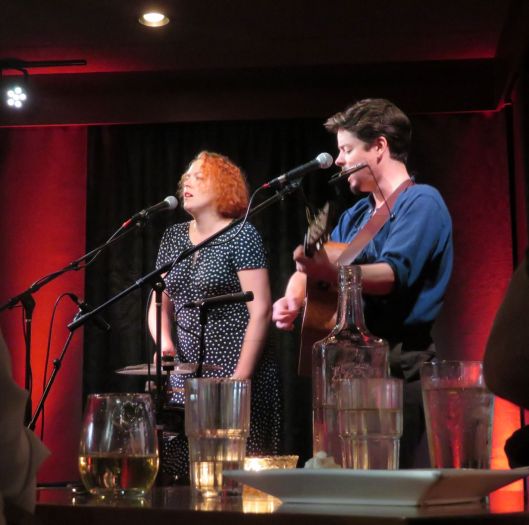
Isis Music Hall let us combine dinner and entertainment. We had dinner in the lounge venue and listened to A Different Thread, a folk duo of a British man and American woman. Melodic and mournful, they played and sang us through the evening.

When we were at home, we tracked the storm as it chewed through the northern Bahamas, an area we have visited and loved. We remember the clear water and gorgeous snorkeling. There is unimaginable damage around Marsh Harbor now, difficult to see how a country dependent on tourism will find the resources to rebuild. (We donated at redcross.com)

Hurricane Dorian finally crawled past. Once the eye was beyond Charleston, it dropped from the news cycle and attention moved north with the winds. Late Thursday we heard from our host that the power was back on and there was no flooding. That evening the curfew was lifted, and Friday morning the highway was reopened. We waited until Saturday to make our way back to Charleston and let the traffic subside. That strategy didn’t work and just as in our leaving town, it took six hours to return. The good news is that all was untouched in our Charleston home, and we settled back in, happy to be back.

Evacuation from Dorian!

We settled into our Charleston house, went shopping, and stopped in at the Sunday markets. At the Sunday Night Market, we saw preparation for a TV appearance and wondered who it would be.

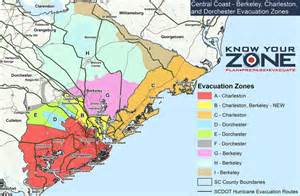
After we got home and put the news on, we found the mayor of Charleston standing right where we’d been, announcing mandatory evacuation of an extensive area including our house. (It is in the yellow area–B–in the center of the evacuation map.)

We are among the fortunate, as our friends Billie and Larry are happy to host us in Asheville, NC for a few days until the evacuation order is lifted. Instead of planning a picnic, we got up Labor Day morning, packed a few days worth of clothing, put the rest of our things upstairs, and hit the road. Traffic warnings were everywhere. A single main highway heads north from Charleston, and at noon on Labor Day, the highway lanes were all to be headed north out of the city. There would be no highway access into Charleston starting about 8 am to get the lanes cleared for the switch. Leaving the city around 9 am, traffic was moderate and we could see the empty southbound lanes blocked at each exit.

We hit heavy traffic before crossing I-95 and again just before Columbia, SC, where we sat still about a half hour as police cars streamed by opening four reversed lanes just across the median. It was frustrating, and so was the diversion off our route that required a ten mile loop to get back to where we were headed.

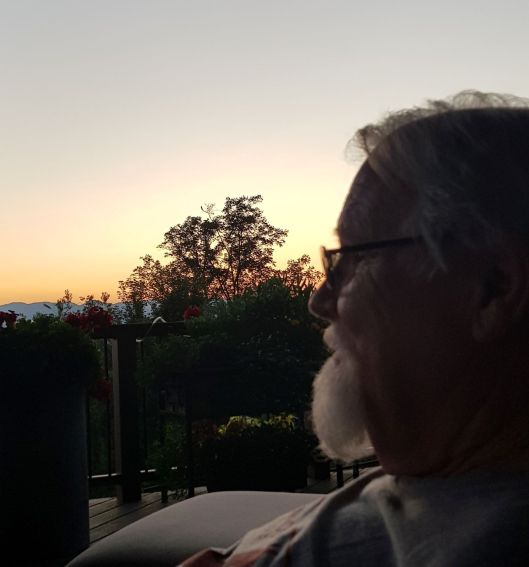
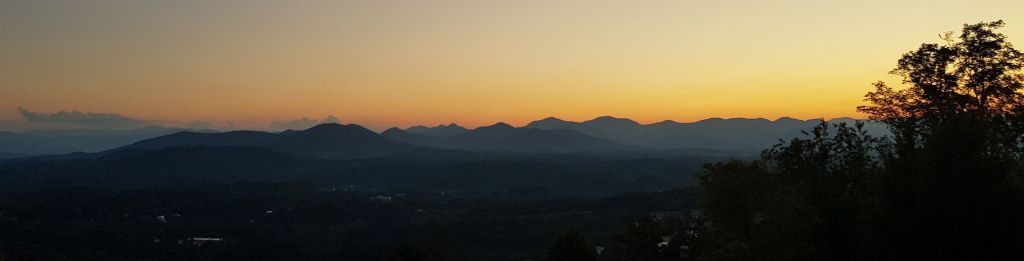
In all, it took about six hours to get to Asheville, two hours longer than normal. Under the circumstances, we were pretty lucky, as the weather was fine, the rest areas were not terribly full, and it was easy to get gas. By sunset, we were safely ensconced on our friends terrace watching the sun set over the Blue Ridge mountains.

Charleston, SC

We just arrived in Charleston, swooping in over Labor Day weekend. Hurricane Dorian isn’t scheduled to land until Wednesday or so. It may veer another direction in the meantime, so we’ll hope for the best.

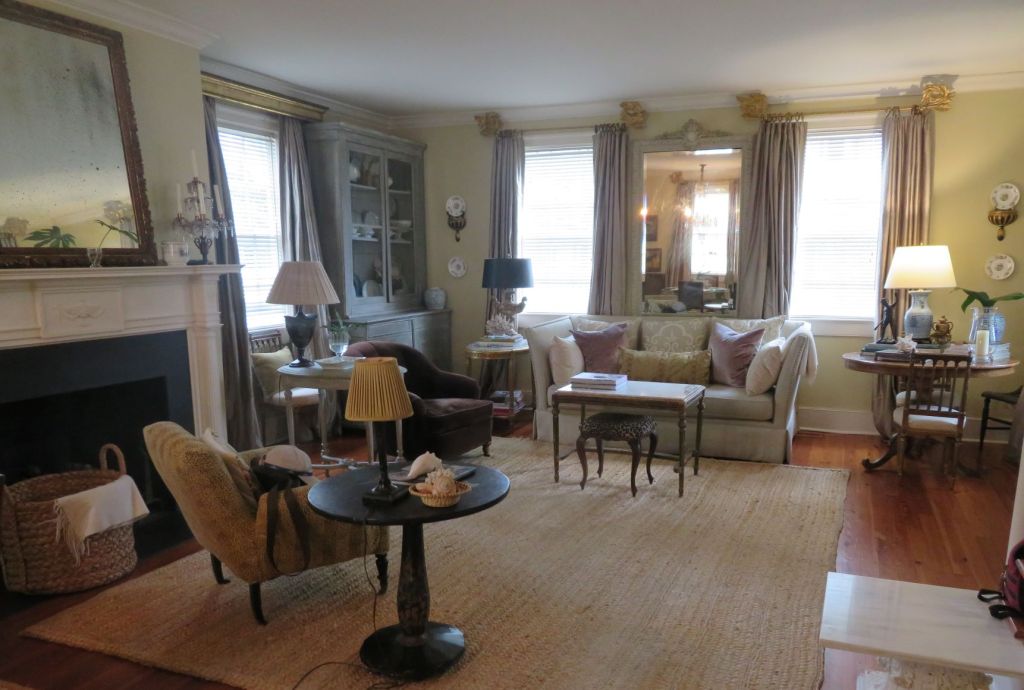
Our house here is completely charming, decorated to the teeth. We are very comfortable, right in the toe of the old city, a short walk from the water.

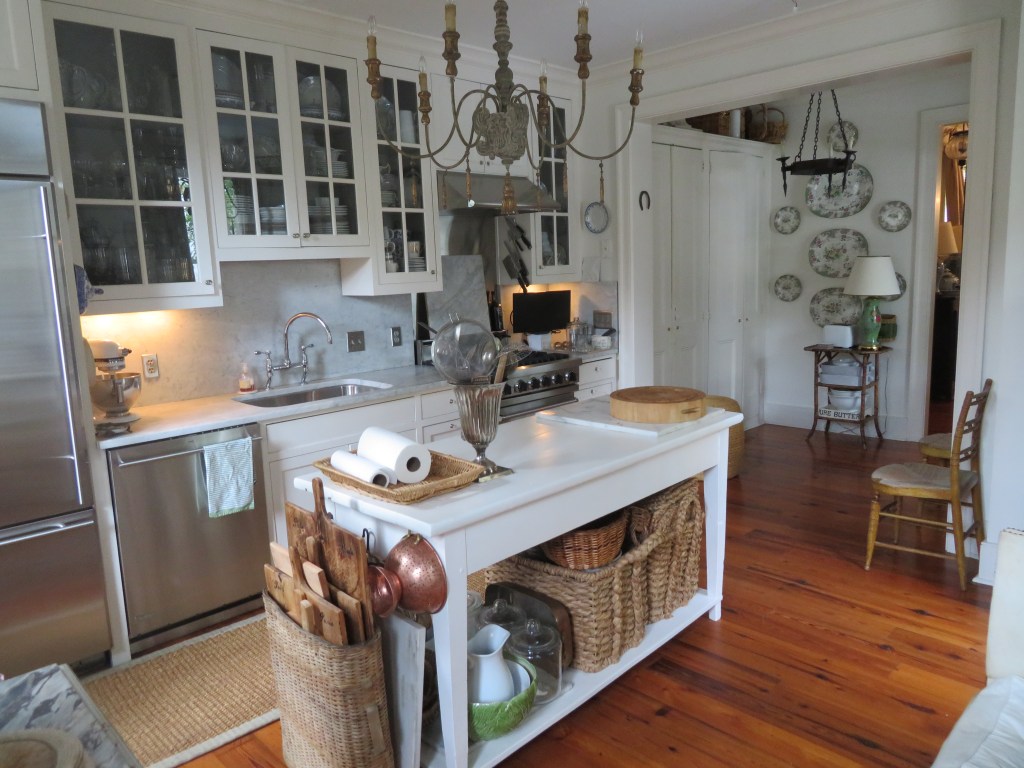
We’ve stayed in many places that have minimal cooking equipment, but not this time. We have blender, stand mixer, waffle maker, dishwasher, and bread boards, cutting boards, carving boards and serving boards. A big basket is filled with platters of various sizes. We could throw dinner for the entire city.

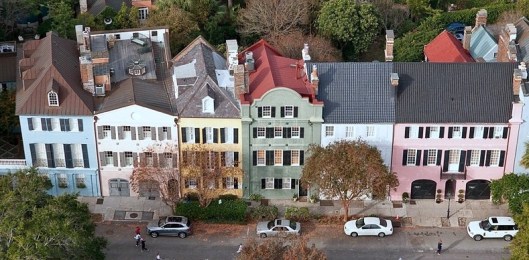
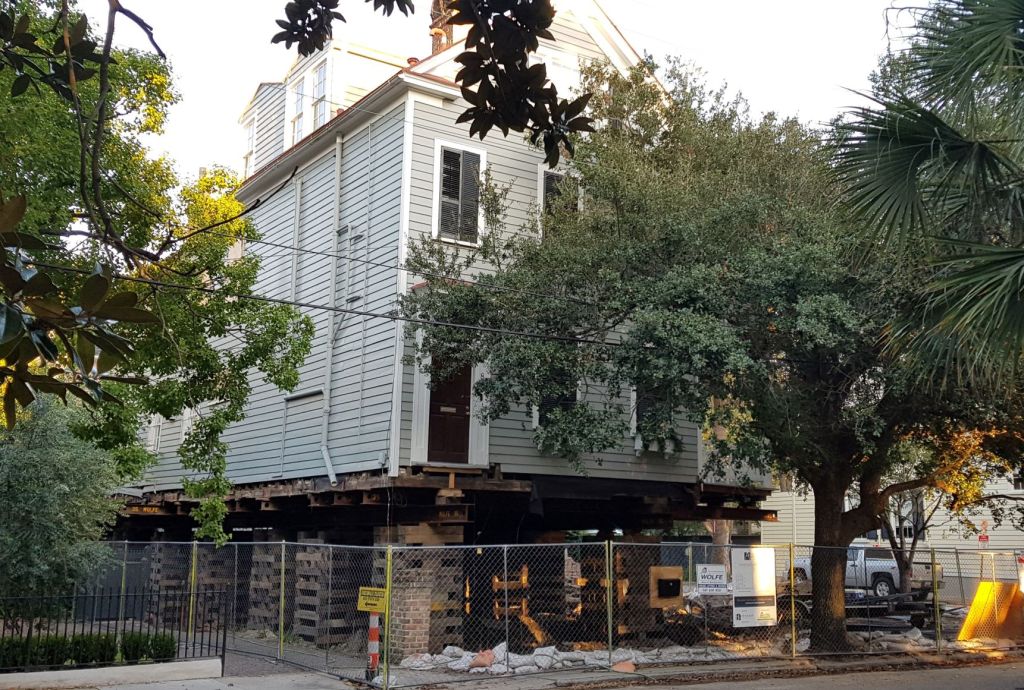
Walking around the neighborhood I notice most houses are several steps above the level of the sidewalk, keeping floods at bay, at least for a while. The oldest houses here were built just after 1700, and over the years a wide variety of styles have accumulated. I like the more elaborate 19th century buildings with cupolas and towers though I admire the durability of the more squat, solid 18th century survivors. It is amazing that any wooden structures still stand in the hot, humid climate of coastal South Carolina.

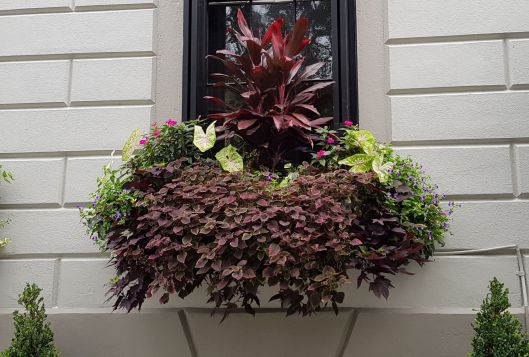
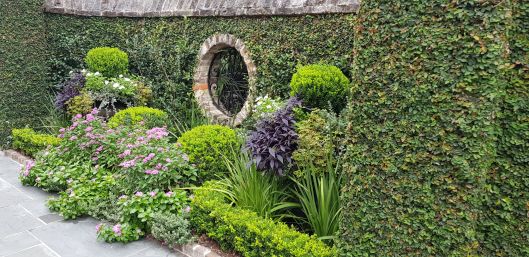
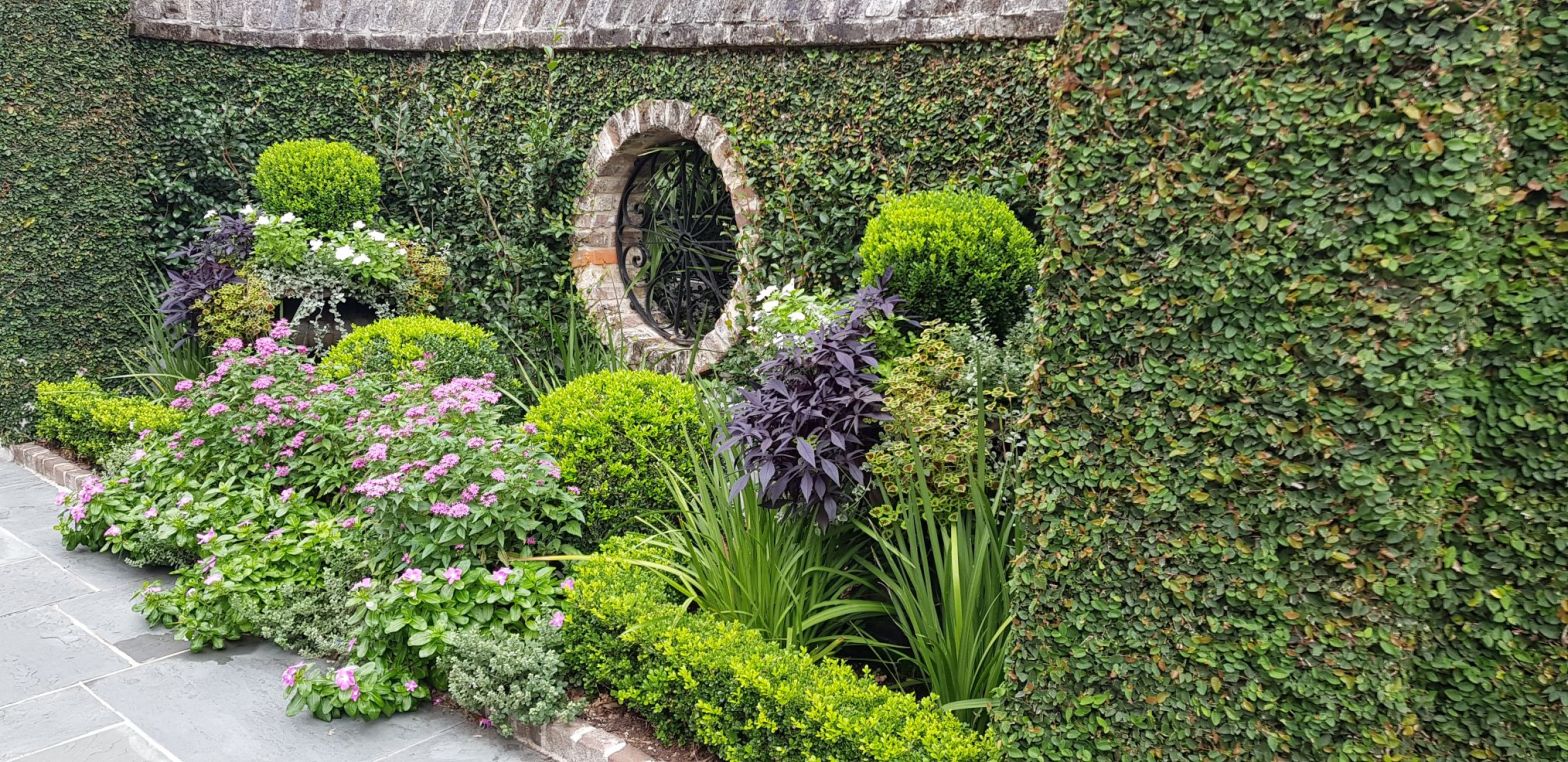
Plants flourish in every nook and cranny that can hold a few drops of water, and there are some unusual efforts to take advantage of their tenacity. I passed a brick building with a cross between ivy and a hedge, a dense layer only an inch thick trimmed neatly down the side of the house, like living wainscoting. Window boxes and tiny formal gardens are raised to fine art, mixing colors and leaf size to create fantastic displays. My initial impression of Charleston is a tranquil, long-settled community.

A brief detour to Syracuse

This image has an empty alt attribute; its file name is 7.31.19-skaneateles-cruise-002sm-1.jpg

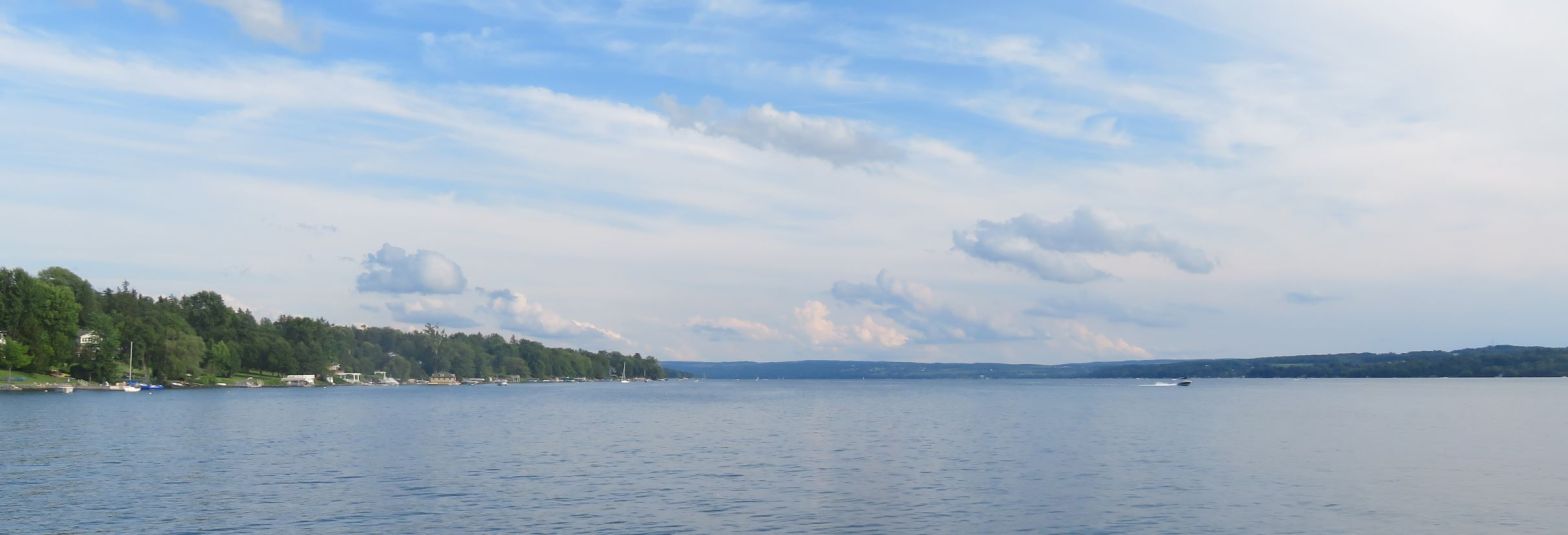
Syracuse was just as warm as Chicago when I arrived, but I was scheduled to accompany my mom on a dinner cruise on Skaneateles Lake that evening. The weather was perfect, the water was smooth as glass, and the food was good. Even though we were guests, it seemed like a worthwhile activity even if I had had to buy tickets. Lake cruises are a popular summer activity for good reason.

Since mom is 94, we didn’t do a lot of trail-walks or swimming in the many Finger Lakes. We spent some time sitting on her tiny deck enjoying the good weather, ran a few errands, and shopped at the ever-amazing Wegman’s.

If you haven’t been there, you haven’t experienced the best in grocery shopping. Maybe Schwegmann’s in New Orleans, back when they allowed beer sales and you could see ladies in robe, slippers, and curlers sipping a beer and smoking as they shopped on Saturday morning, was as much of an experience, but for variety there is nothing like any Wegman’s in New York.

Sunday evening we met my cousin Gail, my brother Tim and my sister-in-law Margie for dinner. We tried the Inn Between, near Camillus, NY. It’s a restaurant in a big white house on the edge of town. It was a lovely evening with excellent company. The group’s comments on the food were mixed, but my dinner of scallops, crab, and shrimp was excellent.

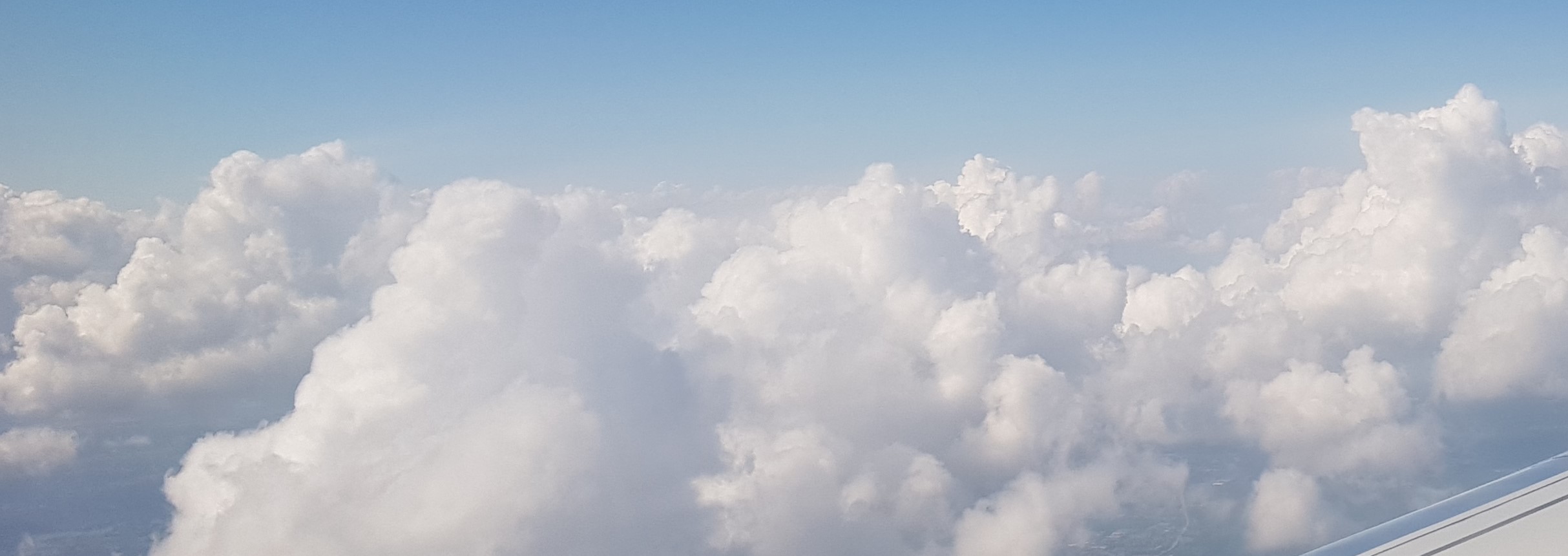
After six days, I headed back to Chicago on a full but uneventful flight. When I looked out the window I saw the tops of high, white cumulus clouds as far as I could see. It reminded me of being a kid and wanting to fly among the clouds. It would look just like this.

It’s August. Why are we in the Midwest?

I always tell people that Chicago is a great place to visit spring and fall, but is to be avoided in the summer, when it’s too hot and humid, and in the winter, when it’s way too cold. Why am I not following my own advice?

We spent the year until now visiting Australia–it was wonderful.

In past years, we traveled to Europe during the summer, stopped in the US in the fall to visit doctors and family, then went on to Peru for the winter. This year the schedule was upended by our time in Australia during their summer, putting us back in the US when winter hit the Southern Hemisphere, July and August here. We need to catch up with annual exams, eye doctors, and visits to family. Our doctors are all located in the Chicago area, too. Voila! We are in the midwest when it is hottest, right now, July/August.

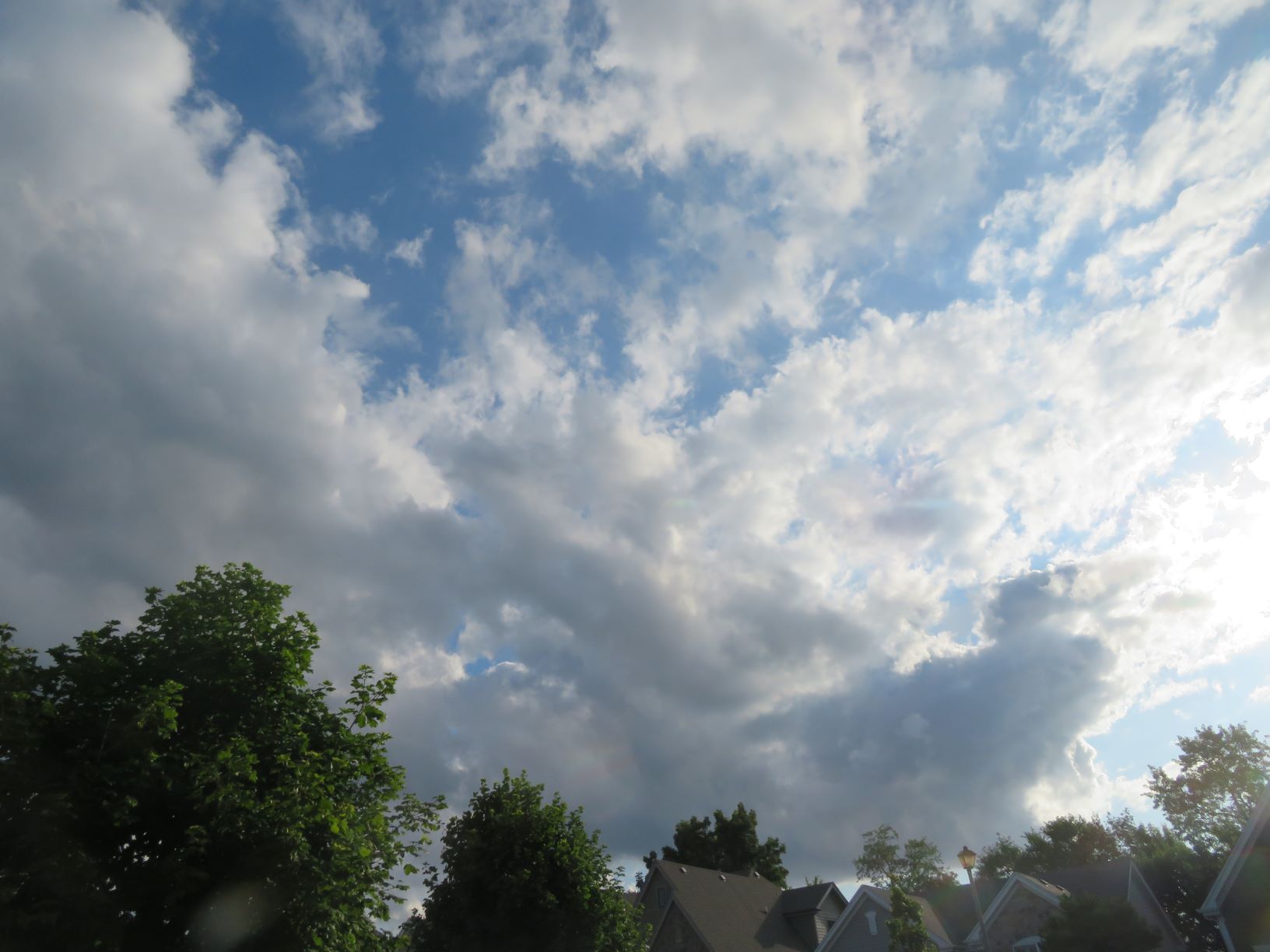
Days have been sunny and warm, in the 80s (since the Heat Dome subsided). The sky may be completely blue, or covered with clouds. I discovered it’s difficult to photograph the sky in the suburbs–there are a lot of wires, towers, and light poles.

There are good reasons for us to be here, beyond the need for doctor visits, and despite the weather’s cooperation or lack of it. We have friends here, and are delighted to reconnect with them.

Under the “Heat Dome”

Meteorologists must spend all their down time inventing terms for the next big climate moment. “Polar Vortex”, “Snowmageddon”, “El Diablo”, and now “Heat Dome”, are some of the more recent ones. I say this in admiration, as we all feel better when the weather changes and we know we’ve survived whatever-it-was.

https://www.cbc.ca/news/technology/how-a-heat-dome-happens-1.5216908

Such a long walk to the car….

In the Midwest, and much of the country (I believe), it was heat combined with high humidity that made Thursday through Saturday of the past week unbearable. Whether you got up at 6 am, or stayed up until 11 pm, it always felt hot. The humidity made the atmosphere feel like a steam room, or breathing through a hot face cloth. There was no reason to go outdoors at all, unless it was to hurry to an air-conditioned car for a drive to a swimming pool or an air-conditioned building. Those days felt exceedingly loooonnnnnngggg, because there wasn’t a reason to do anything or go anywhere.

Rain poured down in heavy showers across our area late in the day on Saturday, and the heat began to abate. By Sunday morning, it was just another glorious day of summer, with the Heat Dome safely in the past. I wonder what they’ll call the next heat wave? It’s not even August yet.

Art and Artisans in Australia

As we traveled around Australia, I was impressed by many of the artists and artisans we met, whose work was creative and out of the ordinary. Here’s a small snapshot of them.

Aboriginal Art

Aboriginal Bush Traders is one of many places that sells work by aboriginal artists in Darwin and the Northern Territory. Unlike most others, this organization is not-for profit, and is focused on getting aboriginal work on the market. The store is in a renovated historic stone cottage on the edge of the Darwin downtown area. We liked the wide range of items from painting to woven goods. I bought my cockatoo shoes there. http://aboriginalbushtraders.com

Paintings are the best known form of aboriginal art in Australia, in part because there is ancient rock art painted in similar styles. We were drawn to different work, especially the linocuts of Vincent Babia. These are his interpretation of the historic migration of people from Sabia Island in the Torres Straits to Cape York, the northern tip of Australia. There is a lot going on in every corner of his prints. They are very large, this one is 121.5 x 97.5 cm (38 x 48 in).

Vincent Babia: Migration from Sabia Island to Cape York

Graphic Art


I like clever graphic art. In Sydney, Squidinki caught my eye, full of humorous souvenirs unlike anything I saw elsewhere. The artist is Max Mendez. http://squidinki.com


Tanya Ferreira works in pen and ink. She’s based in the Northern Rivers Region of New South Wales. https://www.etsy.com/shop/zenfulcreatures


We met Jackie Elms at a fair, and bought one of her hand-painted pillow covers. To see her work on Facebook you need to go to her photos, not her facebook page. https://www.facebook.com/pg/Jacky-Elms-Artist-395713370779264/photos/?ref=page_internal

Jewelry

Now that I make jewelry from beach glass, I scrutinize the jewelry we at markets and fairs. There was lots of inspiring creative work.

Jux jewellery makes rings and other items using the lost-wax casting process. The rings with opals set in them are particularly beautiful. http://www.juxjewellery.com

Indigo Dreaming Designs is a line of sea glass jewelry by Ruth Marshall. It includes rings, bracelets, charms, and pendants of beach glass set in silver. https://www.facebook.com/pg/indigodreamingdesigns/posts/

Opals are mined in Australia and tourists are attracted to them. You can visit mines in Lightning Ridge, Coober Pedy and other remote places. You can buy opals in all the tourist centers and airports. We looked in a lot of places, and found that opals are largely a tourist item found in specialized shops.


In Brisbane, the Australian Opal Shop carries a wide range of opals, I picked out two pieces of opal from Queensland. This is opal formed on a base of dark brown rock. The colors range from lavender to dark blue. green, yellow, orange and red. There are opals from Mexico and Ethiopia, but in Australia, you find mostly the Australian varieties. After we looked at all the displays at the Brisbane Opal Museum, Jonathan bought me an opal ring that shows flashes of blue and green. It is perfect. http://www.brisbaneopalmuseum.com.au/

last but not least: T-shirts

You would think that buying a souvenir t-shirt would be the simplest thing a tourist can do. Not so! If you want an interesting t-shirt, it takes a lot of shopping. In Fremantle, we drove by the huge silo with the Dingo Flour logo on it and several visits and phone calls tracked down the t-shirt bearing that logo. https://www.mokoh.com.au/index.php/mokohshop/category/61-t-shirts

We had an equally daunting time finding an interesting tshirt during our visit and finally found a good one on our way home. Wild Kiwi designs makes a range of tshirts that are more creative than usual. https://wild-kiwi.co.nz/

Those are of some of the artists and artisans I liked during our travels around Australia, and New Zealand. I tended to buy jewelry and textiles like pillow covers, dish towels, and t-shirts, because they are easy to pack.

High Noon Birding Society: Australian Cockatoos

One of our goals in visiting Australia was to see as many of the cockatoos as possible. We heard that in some places there were so many cockatoos in city parks that they became a pest. We wanted to see that many cockatoos. And we did. As we traveled around the country, we tried to find out where to see cockatoos, and when there were flocks of cockatoos in our neighborhood we sat and looked at them.

(Internet)

(Internet)

In Tasmania, our first stop in Australia, we found a flock of sulphur-crested cockatoos arrived in our neighborhood each evening just before sunset. They gathered in a tall tree, then shifted from tree to tree until finally settling in a speckled trail of birds across the hill.

There were fewer cockatoos in Melbourne, but they were loud, cackling from tall trees along the nearby canal, perching in tall trees on the grounds of a school after the students and staff left for the day. Sulphur-crested cockatoos tend to put up their bright yellow crest when they land on a branch. It makes them easy to identify.

(Internet)

You might not think a city as large as Sydney would be home to cockatoos, but we spotted yellow-tailed black cockatoos flying across the freeway, and tracked a big flock of them to a nearby golf course.

(Internet)

On our train ride across the country, we even saw Major Mitchell’s cockatoos, a pink cockatoo with a bright red and white crest.

Perth was our Cockatoo bonanza, where we saw flocks of Corellas perched in the trees by the beach, with more on the ground.

Right in front of our house in Yanchep, a flock of about thirty galahs, the pink and gray cockatoo, visited a large tree every day. We would find them sitting in the branches or poking around on the ground every morning and evening.

On our visit to the zoo, we saw Baudin’s cockatoos and Carnaby’s cockatoos. Fortunately for us, we saw a huge flock of more than 100 of the endangered Carnaby’s cockatoos at Yanchep National Park, just north of us.


(Internet)

Darwin is hot and humid, with many species of birds that are new to us. We got our best look at red-tailed black cockatoos there, in the park that bordered our house. The pair sat in a tree eating large nuts as they watched us watching them.

When I talk about birds, I often use photos from the internet and indicate that. It’s tricky to photograph birds, and takes more patience and a longer lens than I possess. In the end, we saw most of the cockatoos. We missed the red-headed Gang-gang cockatoo of the far south, and the Palm cockatoo of the far north. We really did see a field of thousands (yep!) of Corellas, and places where people are careful not to put out food for cockatoos because of the damage they do whenever the food stops. We saw cockatoos picking in trash bins like crows, and chewing all the top branches off pine trees. We still like them.

At the same time, I’d never have one as a pet. Large tropical parrots and cockatoos are voracious chewers, quick to ruin wicker furniture, wood trim, and kitchen tools. These big birds are easily bored, and will destroy what the owner holds dearest as soon as they have a free minute. The only well-behaved pet cockatoo I’ve ever seen was with a man in an electric wheelchair in Palm Cove, outside Cairns. His bird would sit on our hand or shoulder and was trained to fly back to the shoulder of his owner when you pushed him gently. He was kept on a long tether so that he could fly from his owner to a “new friend” and back. The bird, whose name I forget, was healthy, bright-eyed, and interested in passers-by. The key to this happy relationship was that his owner was always with him. I’d guess 90% of the time when the bird wasn’t sleeping it was on the wheelchair. That’s a lot of attention, and that’s what it takes. Most pet owners devote up to about 5% of their day to being with their pet. That’s a big difference, and it’s why big tropical birds flood bird rescue homes and shelters. They are way too much work.
In the wild, though, give me a flock of cockatoos any day. I’ll give them sticks to chew and take their picture.

Traveling the World in the Age of Overtourism

We travel because we have an insatiable interest in other people and places, in what is around the next corner, and in what it is like to sit on the porch and read a book in Adelaide, Australia compared to Wheaton, Illinois or Invergordon, Scotland. We marvel at the beauty all around us. We have learned a few things along the way.

As we’ve gone from place to place, we’ve stopped in some of the world’s best known hubs of “overtourism.” We spent two months in Barcelona, including days when so many people got off cruise ships for the day that the Rambla, the wide pedestrian avenue, was completely full. Would we have preferred a few less people? Yes, but think about the people who live in beautiful Barcelona who have given up the old downtown area to tourists most of the time. Local people often lose out to visitors.

We’ve seen Venice in June, when people start to line the canals searching for somewhere to sit down with their spritz, and local people lose patience trying to get where they’re going through the multitude of people who aren’t going anywhere at all.

Are we making things worse? Perhaps. We rent through Airbnb, which is one factor making permanent rental housing more costly and less available in tourist-oriented cities around the world. Airbnb is not the sole cause of housing troubles, but one factor along with slow salary growth, competition with real estate investors, and the huge disparity in wealth between the few “haves” and the many “have-less”. We are going to continue to use Airbnb as responsibly as we can.

Nightcap National Forest, NSW

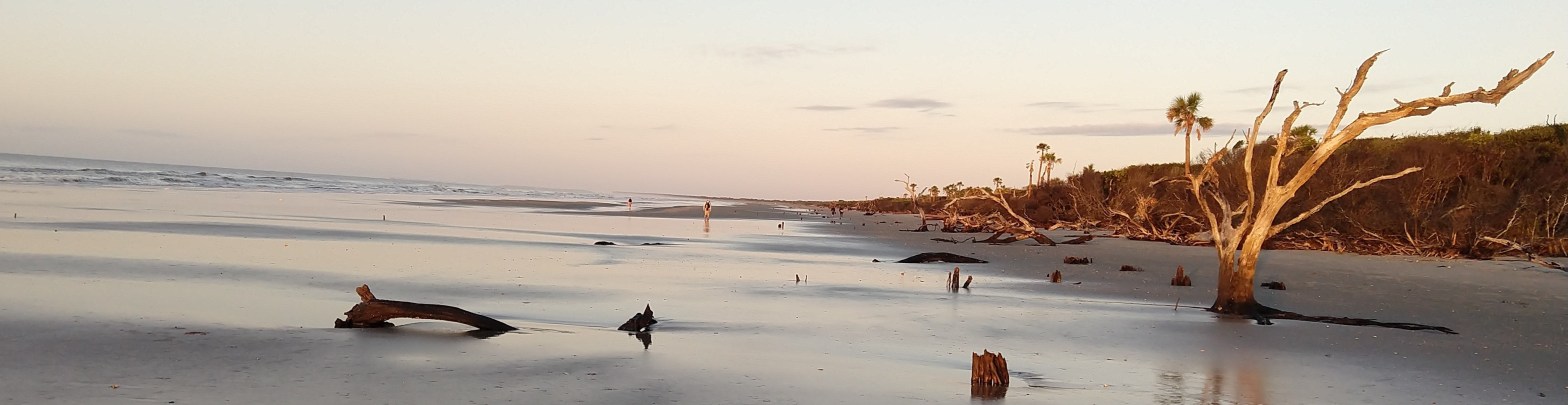
One way to combat overtourism is to consider visiting places that are not necessarily on the “Top Ten” list. In Australia, we visited many well-known places, including the Great Barrier Reef, Uluru, and the Sydney Opera House. Particularly when it comes to seeing natural phenomena like forests and beaches, we’ve found it isn’t worth a long drive if comparable places are nearby, even if they are not in the guide book. Visiting parks and nature preserves all over the world has made me more aware of what can be found around us. With local bird watching groups we visited places that we might never have chosen, and had very worthwhile visits. Now I am more likely to visit a local park in Illinois than when I lived there full time. I look at clouds in the sky at the end of the day and see perfection, no matter where in the world I am. Every sunset is different, every day in every place. It’s important that I appreciate each one, whether on an empty beach or in the center of a bustling city.

I’ve learned to use a bit less. The more I learn about recycling, the more I see that recycling, whether in the US, Europe, or Australia, yields little result, and that far more recycling ends up in trash dumps than anyone admits. We’ve learned to carry shopping bags, and now we’re being taught to bring our own coffee cups and water bottles. That’s the way it has to be to keep the ocean from becoming plastic soup.

Perhaps the next step will be going back to using handkerchiefs and cloth napkins to decrease our use of disposables. That won’t be enough to deter global warming, but it’s something. Who knows? I’m curious about what global changes are next.


Good to Know About Australia

Impossible to sum up Australia, but some things worked for us and others didn’t. Here are a few tips based on our experience over six months.

All my $ figures in this post refer to Australian dollars, currently about US$.70=AU$1

New Brighton, NSW

Airbnb: We stayed in eight different Airbnb properties in Australia that ranged from passable to extremely lovely and comfortable. Most were on the excellent end of the range. Airbnb is increasingly commercial, meaning that you do not meet the host, just let yourself in with a keycode. Properties are often very clean, which is nice, but they sometimes lack personality, and the wall decoration consists of beige/white paint and mirrors. We try hard to stay in places that are owned and operated by the same person, preferably their only Airbnb property. That seems to yield the best results in terms of atmosphere. Still, in two cases we found the owner started with a single rental and was busy adding others. All our rentals were legal, though it is becoming necessary to check the rules for major cities, as property owners aren’t always forthcoming about the legality of their rental if there is a gray area.
Car Rental: We rented a car in each place we stayed. Cars can only be rented for 28 days so occasionally we had to call in toward the end of the month and add a day or two. We never found an agency that made us come in to the office for this. We rented from a wide variety of companies, Avis, Hertz, Budget, and others. We don’t have an auto rental loyalty card of any kind. Most of the time it did not cost extra, or very little, to add me as the second driver. When it cost hundreds of dollars, I didn’t drive.
Drive on the left: I’d still recommend that you do what we did and take a driving lesson before your first time driving on the left. We found it useful, and though we have driven on the left most of the past two years, we still have to pay attention.

Driving in Australia: Perhaps it is greater use of speed cameras, or the effects of aging on reaction time, or the difficulty of remembering how much parking time we paid for, but we got the occasional traffic ticket in Australia. These come by mail about three months after the fact, so it is impossible to contest them, or even to remember the circumstances. Traffic fines are big business, too. Fines are high, and visitors who plan to drive should budget about $200/month for possible traffic tickets. Generally, drivers in Australia don’t speed, and don’t often pass unless there is a dedicated passing lane. Driving takes time and patience.
People tell jokes about the need to avoid hitting slow-moving koalas and echidnas, or faster moving wallabies and kangaroos. And look out for the gasket-chewing parrots and cockatoos! We avoided driving at nightfall after seeing many, many dead animals on the side of the road in Tasmania during January, our first month in Australia. We never saw as much roadkill again, but the thought of hitting a biggish wallaby was enough to keep us indoors at sunrise and sunset when they are most active.

Food: Coffee is brewed to be strong in Australia. Even if you order a latte, you may have to go back and ask for extra milk.

Zentveld’s coffee farm, NSW

We ate lots and lots of Australian lamb, and it was delicious.

Did you know Australia grows cacao and coffee in the tropical areas? Try locally grown coffee and chocolate if you see it. Northern markets also carry locally grown macadamia nuts. Try some of the native fruits and herbs, like finger limes, bush lemons, lilly-pilly, and lemon myrtle. We tried to shop at local farmers markets as often as possible. It was easy to find when and where online.

Health/Travel Insurance: We purchased travel insurance for each of our flights to/from/in Australia. Fortunately, we never had to use it. We did not purchase any additional health insurance because most policies do not cover pre-existing conditions and that’s usually what needs treating while on the road. Jonathan saw a physician to renew his prescriptions that we could not get easily from the US. The office did not charge him for phone follow-ups when one medication became unavailable and he needed a prescription for a replacement. He was able to get his prescriptions filled anywhere in the country for about the same cost as his copay for medications in the US. I saw the “rock stars” of Australian retina specialists by getting referrals from each doctor to the next. My treatment was excellent and paying “full price” in Australia was about 1/3 more than my copay after insurance in the US. (see my other blog: Macular DegenerationontheRoad.wordpress.com)

People: We found Australians to be the most friendly people on earth. It was easy to strike up a conversation or ask directions. In situations that might be uncomfortable in the US, like finding people living in your backyard (see Sydney), we ended up with new friends.

Quokkas at the bus stop

Public transportation/Parking costs: Public transport is available in the large cities. We used it effectively in Melbourne, where we were close to both train and tram lines. In Sydney, we were on a bus line, and the buses were much slower and usually behind schedule. Fares ran about $6 each way. Driving into the city center anywhere in Australia usually involves heavy traffic. Downtown parking in Melbourne and Sydney is expensive ($16/hr). There is often a fee to park at public beaches, up to $4/hour, though the fee is usually capped after four hours.

Shopping: We found lots of markets in Australia. The big cities all have large downtown market areas, though many of these are focused on tourist shopping, not household shopping. Others mix food with craft items. Farmers markets, where food is the central theme, tend to fall on weekday mornings (see Food, above). Though prices are usually higher than those of grocery stores, they make an enjoyable visit.

Telephone: We used Optus. A $10 SIM card and a $30 per month plan (Epic Data plan) gave us lots of data and all the phone minutes and messages we could use. By setting up automatic recharge we were given a few minutes of “extras” which included international minutes to make an occasional call back to the US. This was handy for contacting places that wouldn’t respond to email, like doctors offices.