The apotheosis of Modernism–Lluís Domènech i Montaner

I started with a list of 130 buildings considered part of architectural “Modernisme” in Barcelona. I began collecting them like postage stamps. (some are on my post “Barcelona Modernism”). Whenever Jonathan decides to rest his knees, I go out and look at a few more buildings. This reached its logical conclusion the other day when I walked a huge rectangle to count a few more structures and came home with very sore legs. I am now winding down, checking out a couple more highlights and throwing in the towel on getting to others. I will have checked out more than 86 modernist structures, photographed a lot of them, and saw the inside of a few.

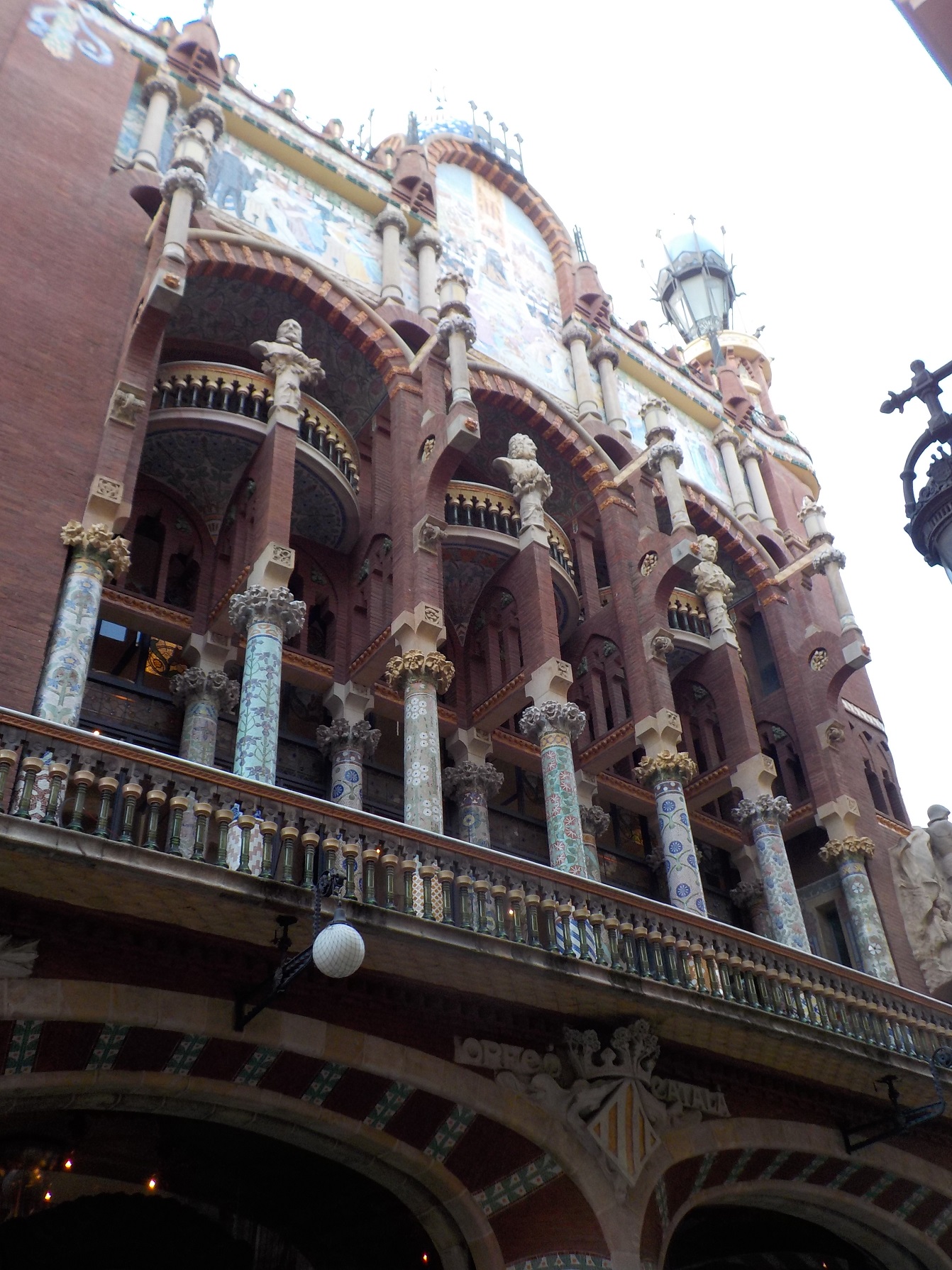
Top of the list after Gaudi’s work come two people (IMO), Lluís Domènech i Montaner and Josep Maria Jujol i Gibert. The title of this post refers to Domènech i Montaner’s Palau de la Musica Catalana. This building is so ornate that it makes high Victorian look simple. He threw the entire book of modernism at this building and let it all stick.

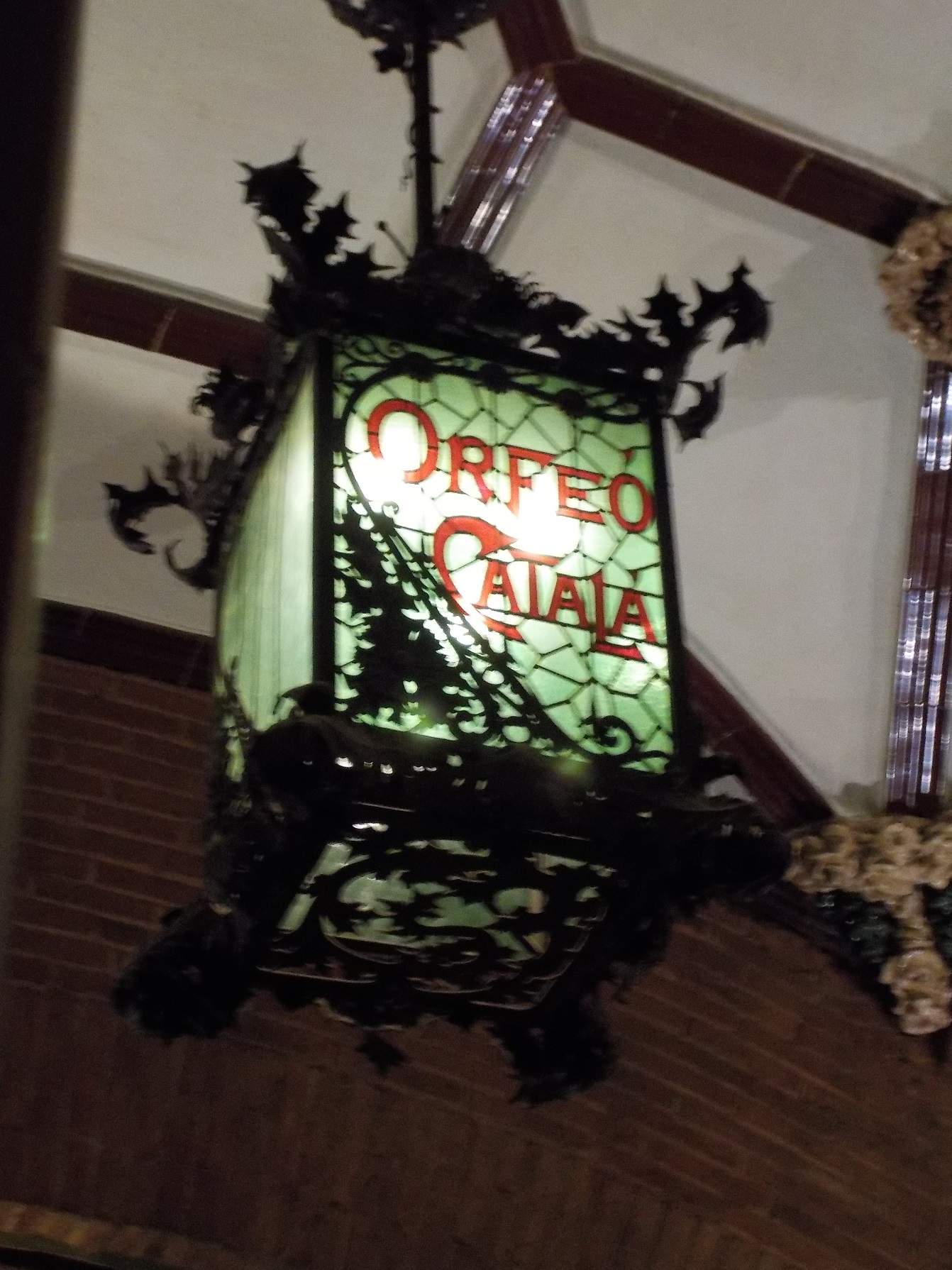
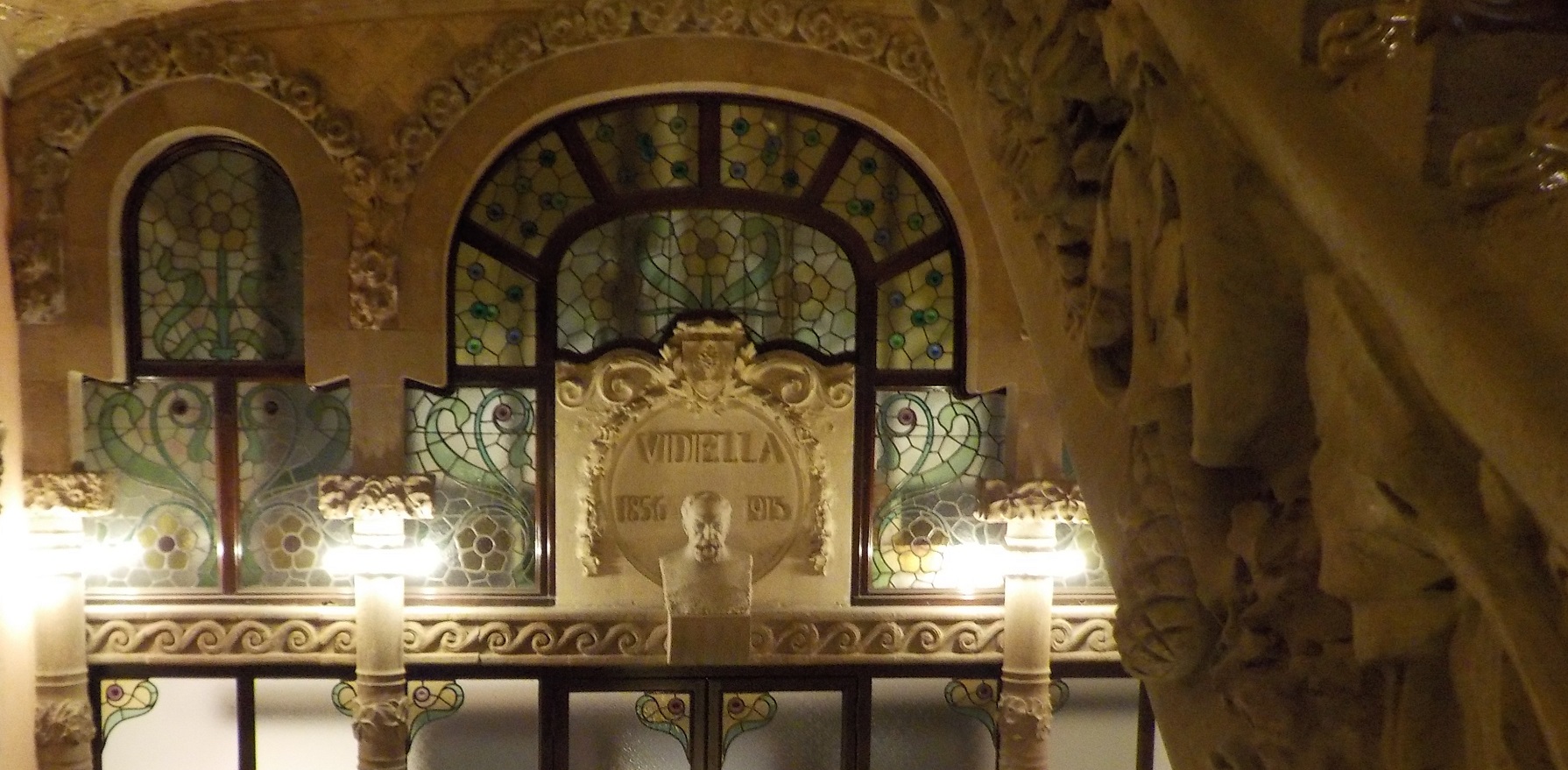
Originally, the Palau (palace) was created to be the home of Orfeo Catala, a choir group, music school, performing arts organization. Its organization and governance have changed over the years, but it still hosts lots of wonderful concerts, both locally produced and brought in by promoters. One stairwell is a shrine to the first conductor of the Orfeo.

10.25.15 Palau de la Musica-05510.25.15 Palau de la Musica-034sm


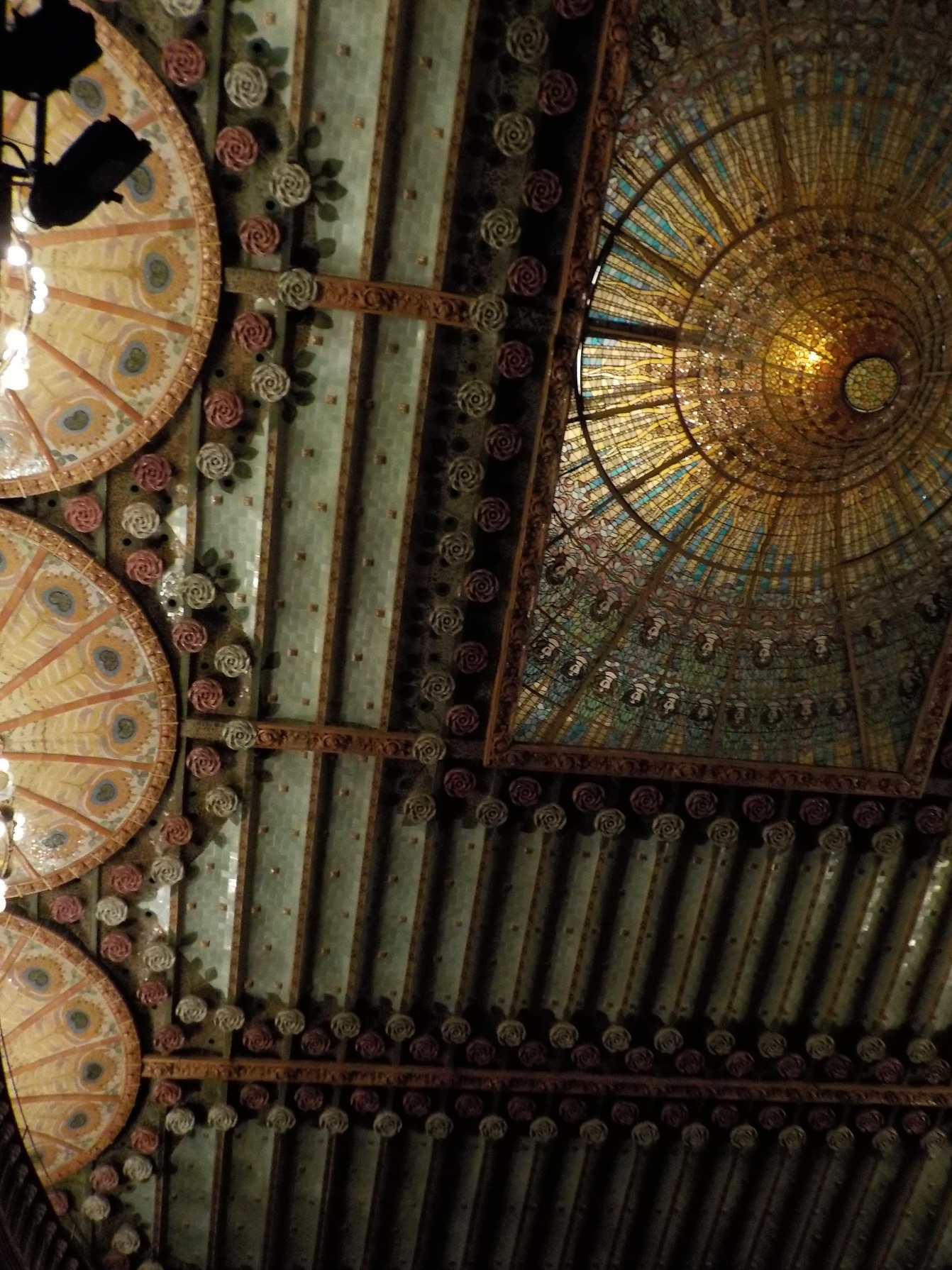
The main auditorium of the Palau has everything that Modernist designers used. It has columns, tile, stained glass, carved wood, marquetry (inlaid wood), and paint. All these media are then all combined in flat, raised, and 3D forms.

10.25.15 Palau de la Musica-046sm

This is the view up toward the ceiling from my seat. There is a tour to see all this, but a ticket to one of the locally organized concerts was only 6€, so I decided that I’d look around during the intermission. I was looking forward to it, an organ concert by Jennifer Bate, a renowned player, but in the end it was cancelled because the organ computer links malfunctioned, so I didn’t have much to do but take photos for a half hour until the official word came down. It was good for photos, but not much for music. I went home and listened to her play on Apple Music.


10.25.15 Palau de la Musica-045sm

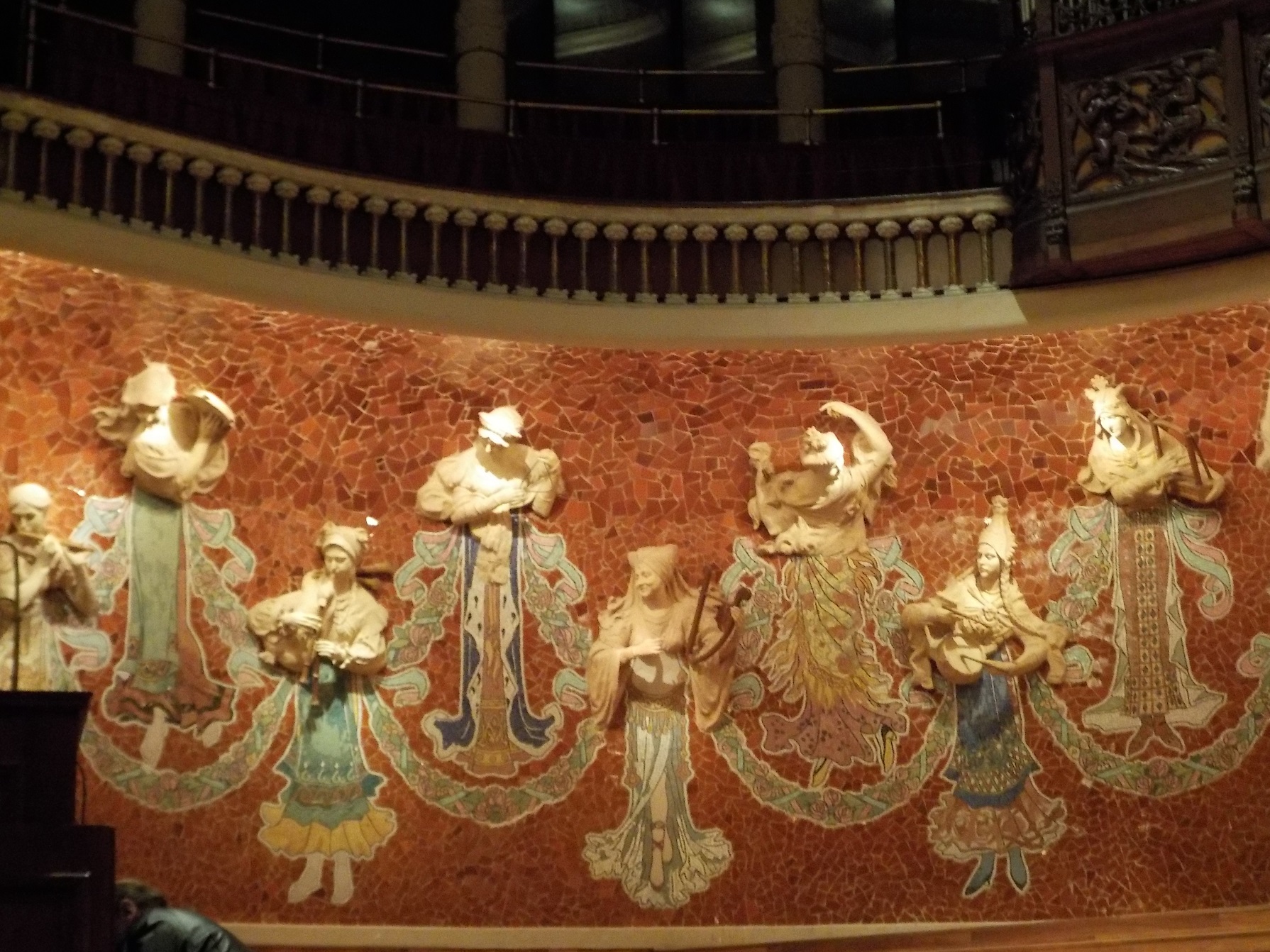
On either side of the stage are carved decorations that are each almost three stories tall.


Around the edge of the stage area is a mosaic frieze of figures with high relief busts at the top of each individual.

10.25.15 Palau de la Musica-044sm

The level of detail is remarkable. This is the only place I have ever seen the balusters or uprights in a staircase made of glass. I would guess there are more than a thousand of them around the theater.

10.25.15 Palau de la Musica-047sm

(See the railing above the figures in the previous photo, as well.)


Ceramic rosettes are featured in several places, at the top of the balusters, on the ceiling of the main auditorium, and at the top of several columns.

10.25.15 Palau de la Musica-056sm

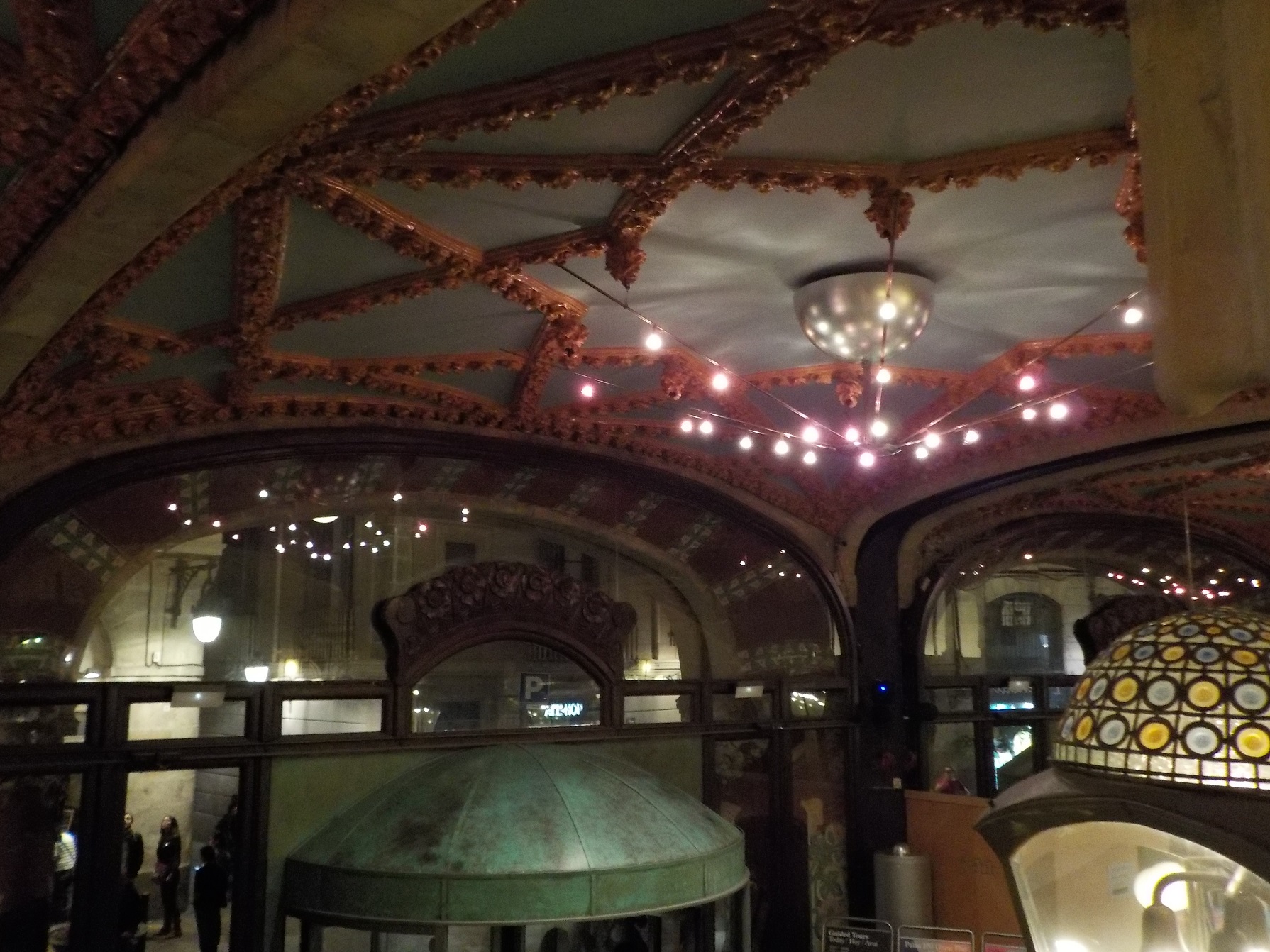
The ceilings are unusually chock full of decoration.

10.25.15 Palau de la Musica-050sm

The pink lines are high relief ceramic tiles. Above the door are carved wood rosettes. On the right is a lamp topped with stained glass circles and on the left is a patinated copper fixture.

(got that?)10.25.15 Palau de la Musica-032sm


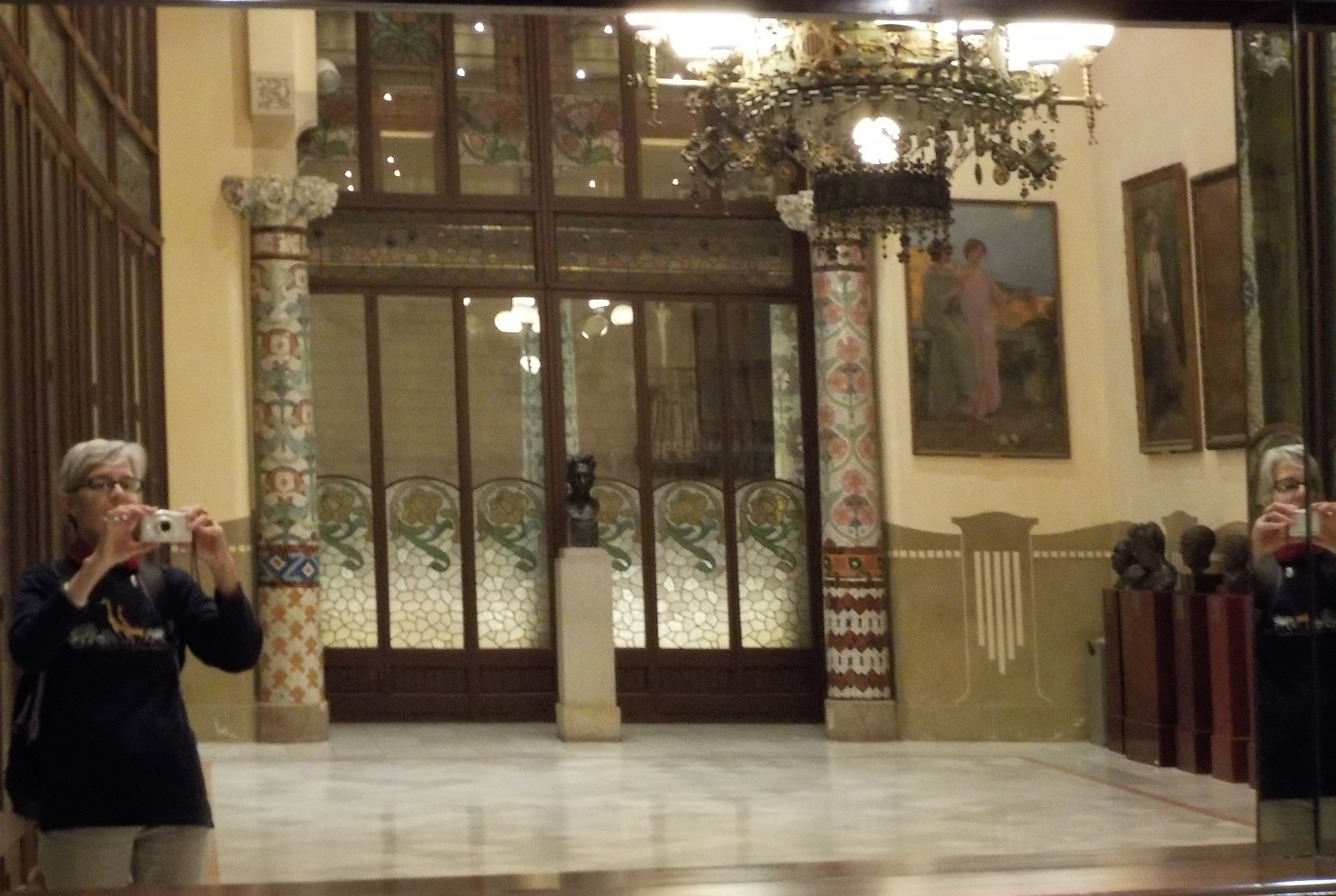
Stained glass panels in a door with a row of glass balusters in the background.


10.25.15 Palau de la Musica-028sm


Lots of tiled columns and stained glass.


10.5.15 Palau de la Musica Catalana.15-004sm

The exterior is equally ornate. This is the base of a pillar.


10.5.15 Palau de la Musica Catalana.15-005sm

Every pillar appears to be tiled with a different pattern.


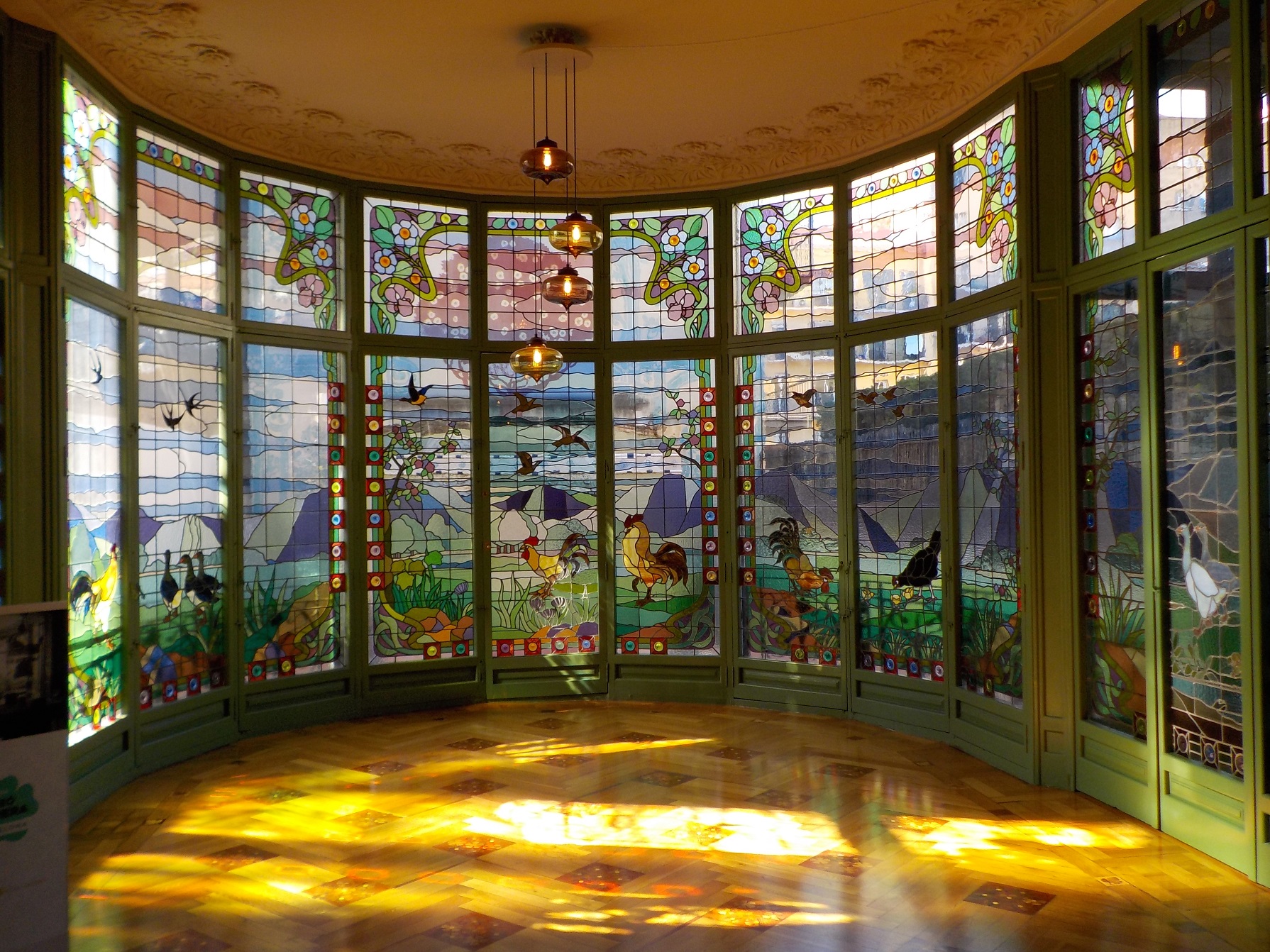
Last but not least, I visited another building that Lluís Domènech i Montaner worked on, the Casa Lleo i Morera. Here is possibly the most beautiful sun room ever made.

10.22.15 Casa Lleo i Morera-024sm

Who wouldn’t want to sit here?

A lighthearted look at the Romanesque

The 11th and 12th centuries were a busy time in the Pyrenees, people were building churches in every little valley and painting them from roof to doors with frescoes. That was a lot of work and a long time ago.

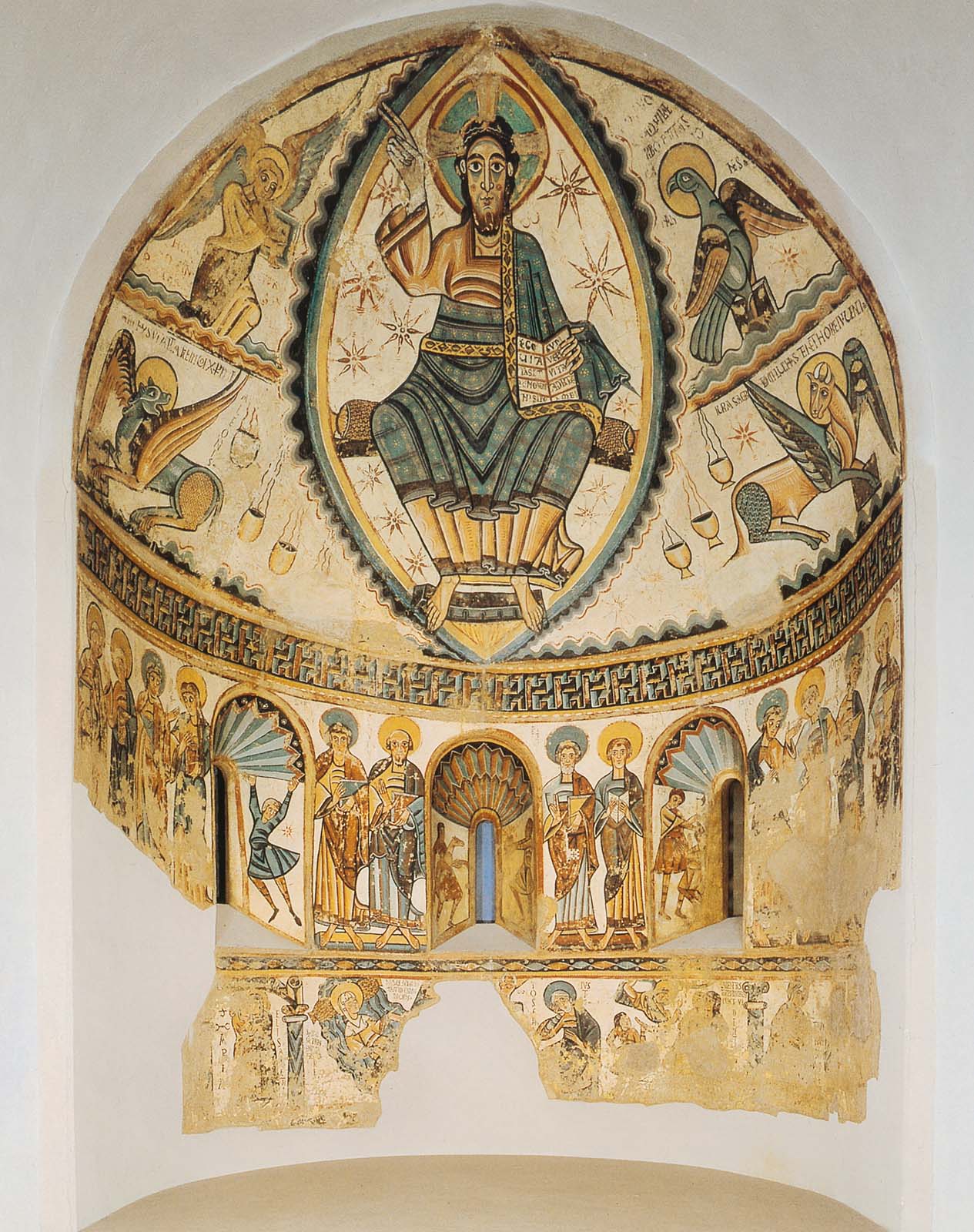
Time passed. At the beginning of the 20th century when museums were building their collections in the US, European art was considered essential because it showed a relationship with the Old World, an appreciation of high culture. In 1919, the rector of a small rural church in the Pyrenees with a very elaborate Romanesque fresco behind the altar sold it. After passing through a few hands it arrived at the MFA Boston in 1921 (MFA paid $92,500–how much of that do you figure the rector got?….). For more:

http://www.mfa.org/collections/object/christ-in-majesty-with-symbols-of-the-four-evangelists-31898

frescoGreat publicity ensued and the Spanish in Catalonia got wind of the fact that the artwork in these remote and sometimes abandoned churches was prized elsewhere. As a result, the regional government purchased the interiors of 19 rural churches, removed the frescoes and brought them to Barcelona, to the Museu Nacional del Arte de Catalunya. The galleries have dimensions, apses and niches that allow the frescoes to be shown in positions similar to their original location. The video showing how the frescoes were removed is cringe-worthy today because conservation standards have changed. There were no cotton gloves, no careful peeling of the fresco. There’s some chiseling, and some flapping of frescoes, but they made it and are still around. Here are some of my favorites. WITH APOLOGIES TO THE HISTORY OF ART.

10.23.15 MNAC visit 2 Romanesque-011sm

It was tough to be alive in the 11th century. People had been embarrassed since the days of Adam and Eve.


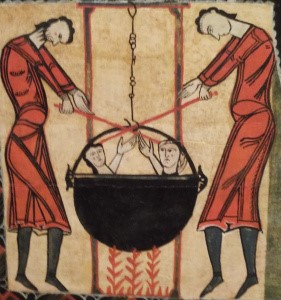
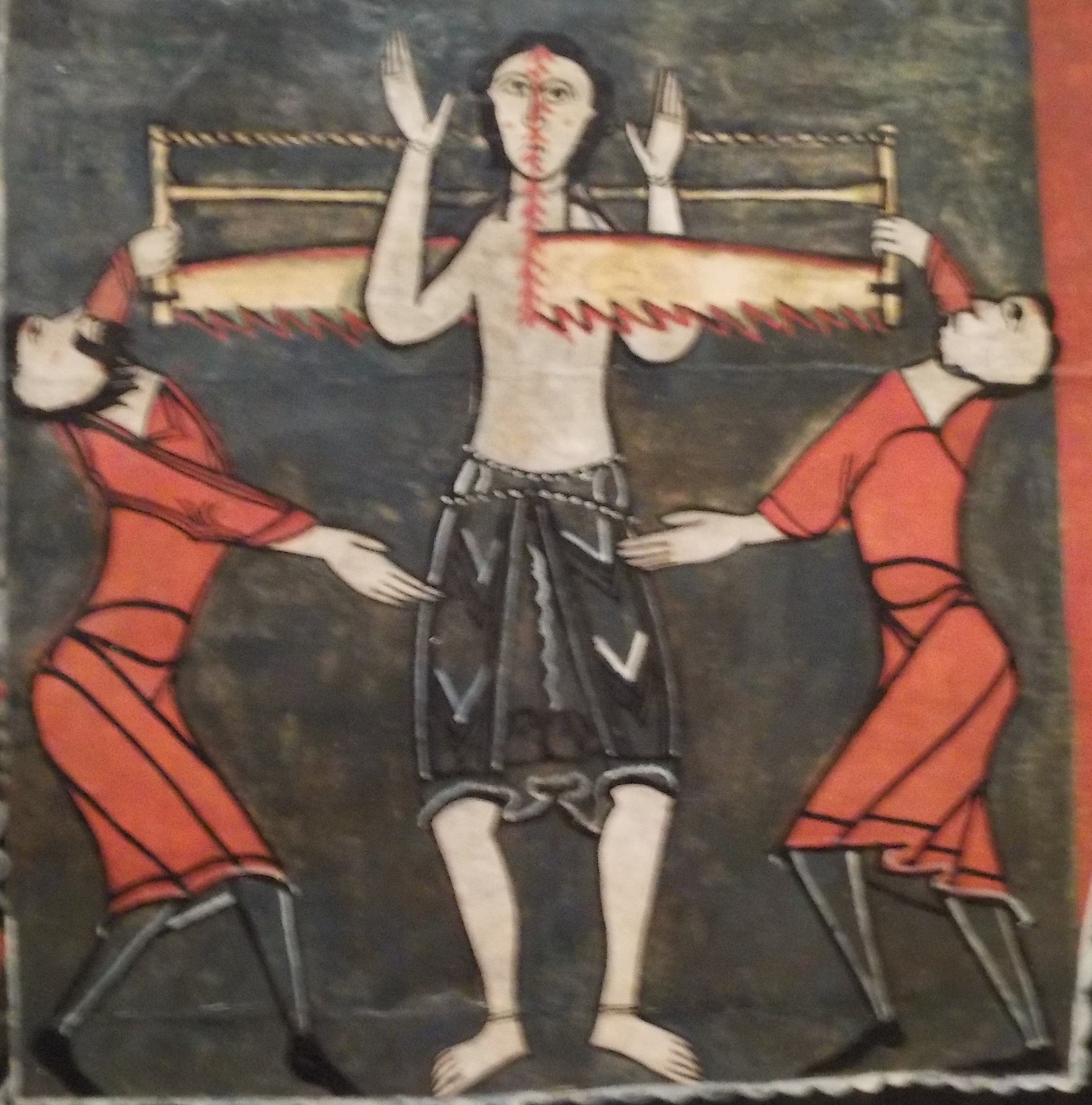
It was difficult to make it to adulthood. If you were a bad child, punishment was severe.

Into the pot with you, bad children!


Sometimes the stress of life gave a person tremendous aches and pains:

10.23.15 MNAC visit 2 Romanesque-005sm

Medical care was very haphazard. Take surgery, for example. Sometimes, the doctors weren’t even sure where to start.

10.23.15 MNAC visit 2 Romanesque-007sm


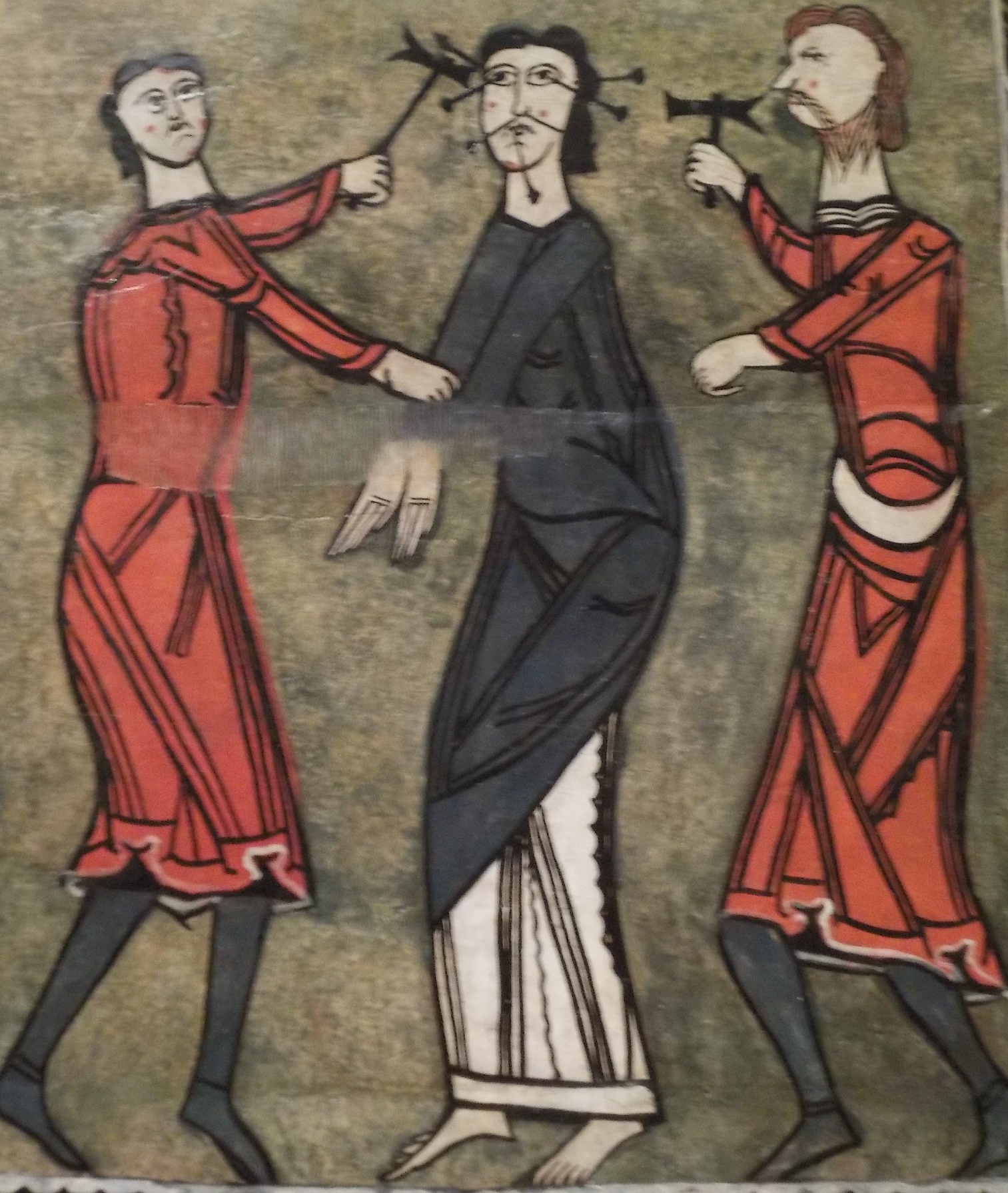
Don’t get me started about old age! The treatment for macular degeneration, well, the odds were against a cure:

10.23.15 MNAC visit 2 Romanesque-006sm

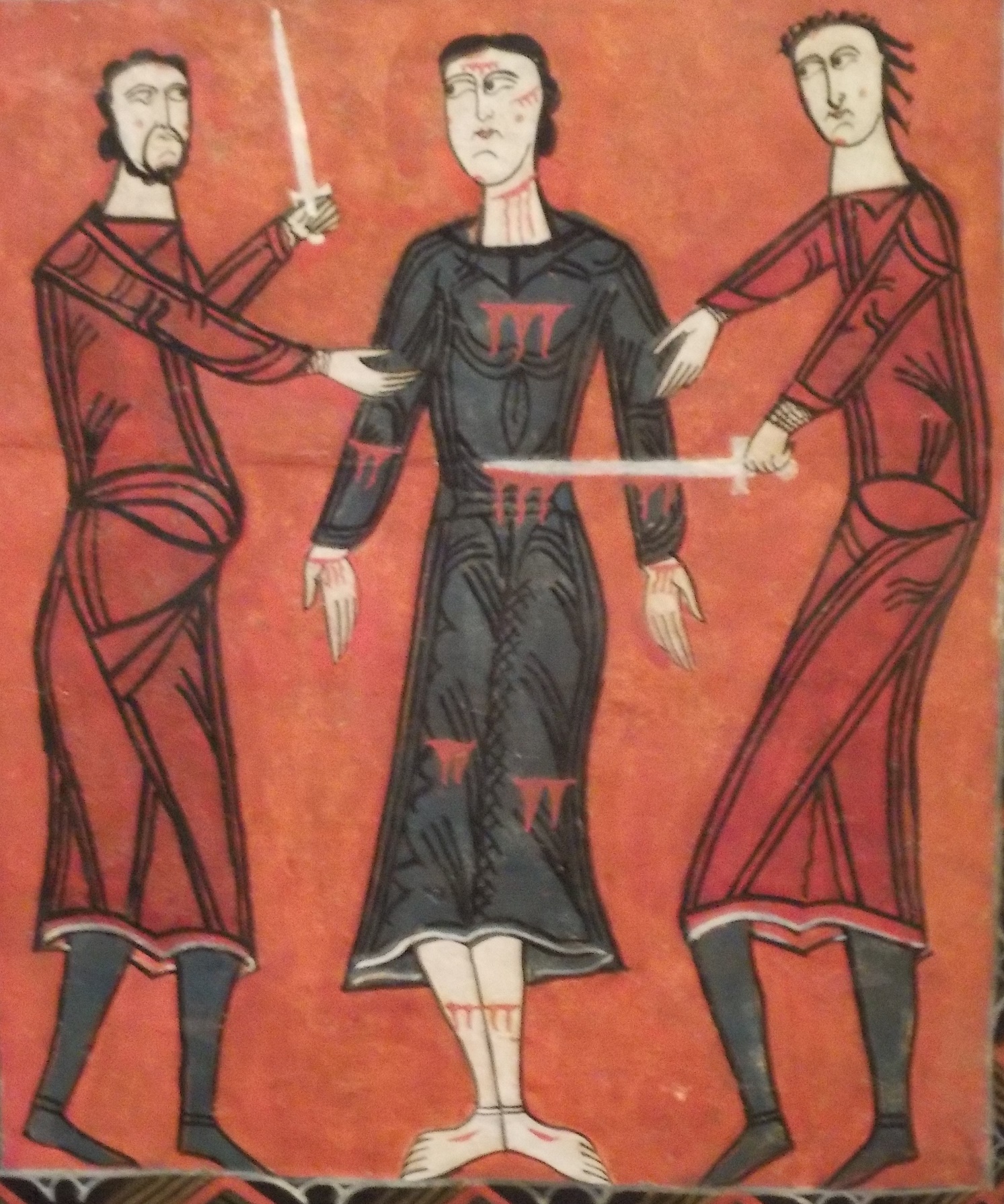
Religion was a real force in the world, and people were watching you all the time.

10.23.15 MNAC visit 2 Romanesque-003smFortunately, there was help:

index

Don’t worry apostles, the Power Puff girls are coming! (Same eyes)


To see all 19 galleries of Romanesque frescoes in Barcelona, visit the MNAC.

http://www.museunacional.cat/en

A Cabinet of Curiosities in a park full of wonders

It was our week in Montjuic Park, where we spent one day walking from the castle along the ridge, looking at the commercial harbor. We watched a container ship back in to a slip. I was sure it would all be done electronically, after all, a person is so small that the idea of pulling a supertanker with a rope seemed impossible.

Wrong.

The ship backed in as neat as you please and then tossed a rope to a guy on the wharf. He dropped it over a bollard and the ship pulled against the rope to move the bow in to shore. What is that rope made of? This is a container ship we’re talking about.

Next we strolled around looking for the Botanical Garden. We had a lovely walk, but never found the garden. We did find a couple of birds, a nice change from the pigeons and Monk parakeets that have taken over most of the city.

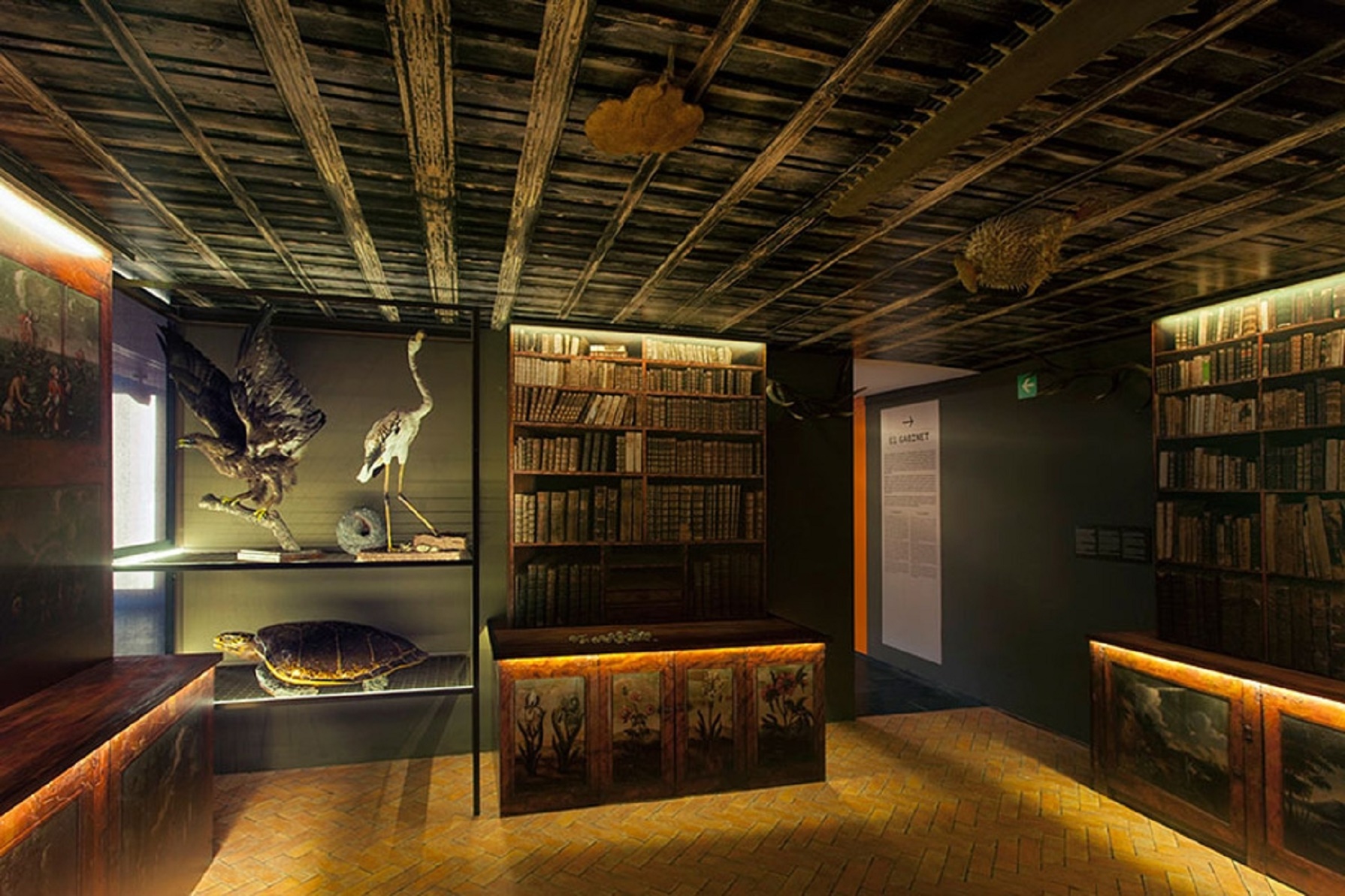
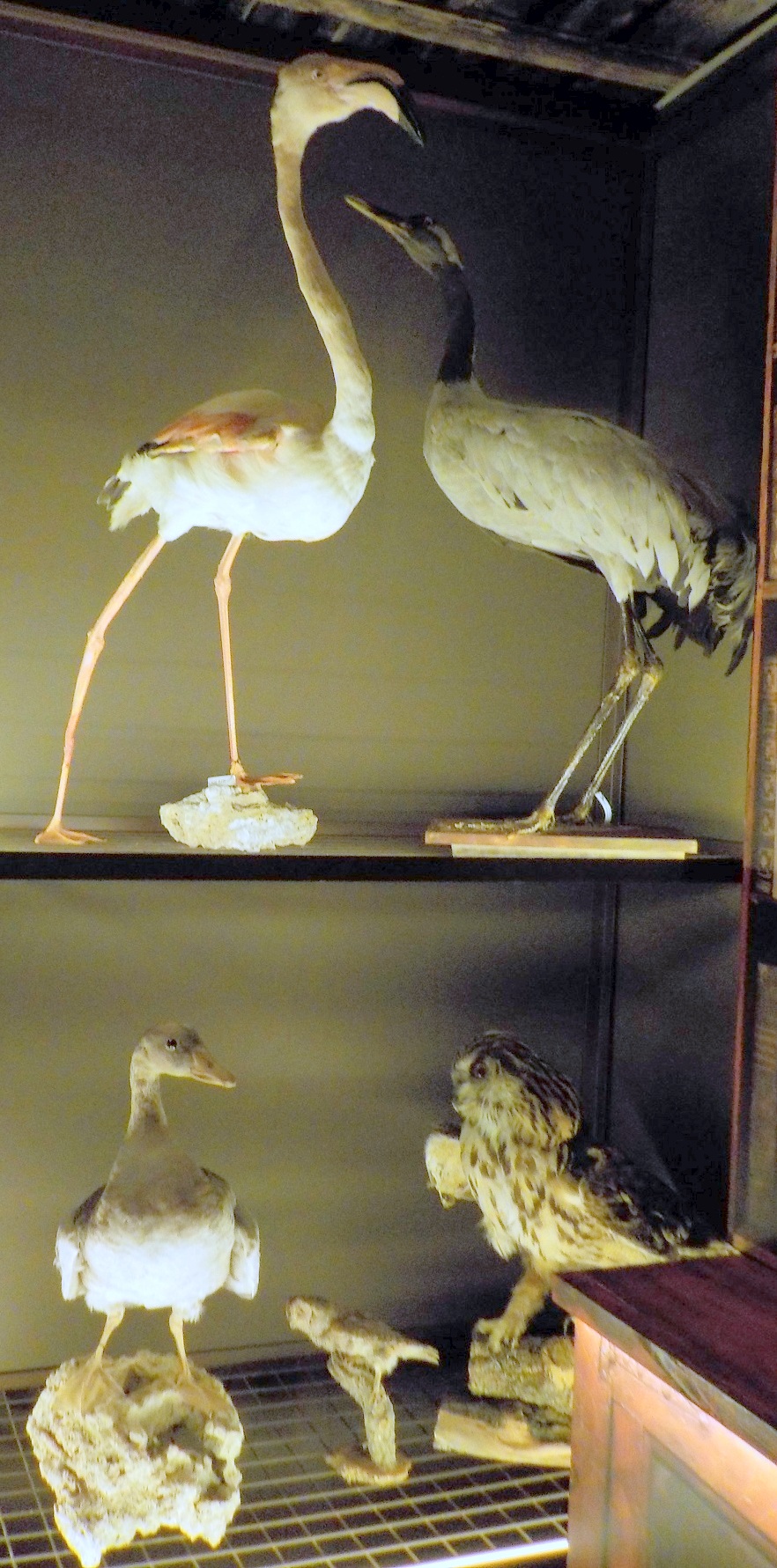
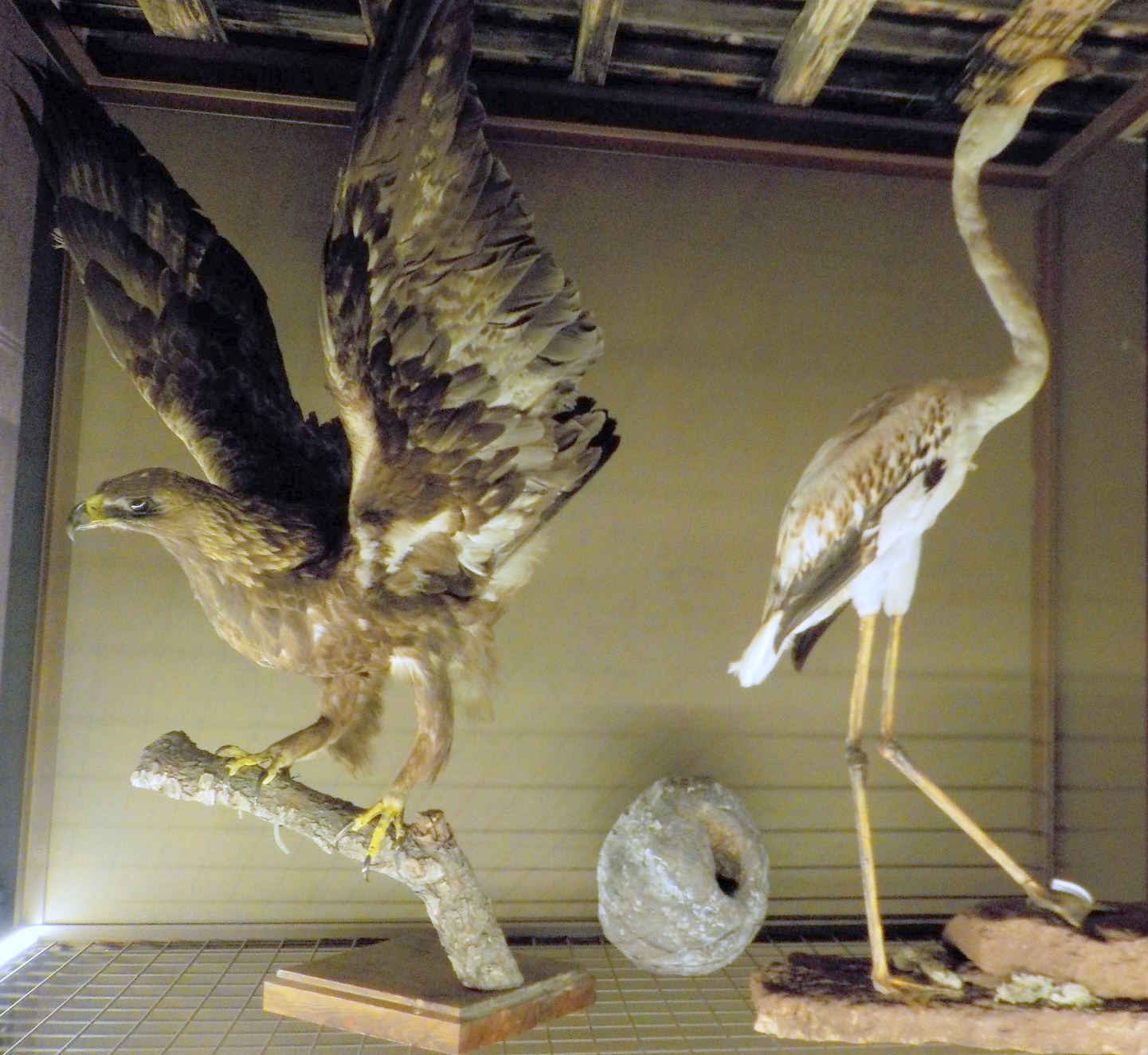
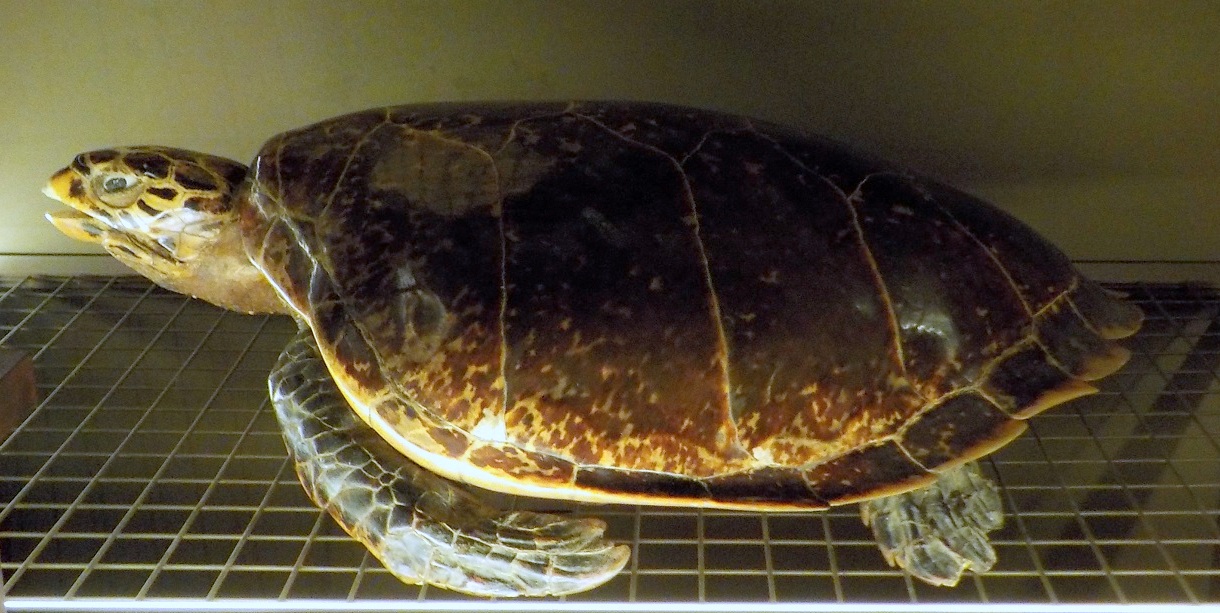
After that, we looked up the location of the Botanical Garden and went there. It was lovely. A temporary exhibit in the Botanical Research Institute showed the personal cabinet of curiosities of the Salvador family that now belongs to the Botanical Garden. In addition to 1200 plant samples that are now part of the herbarium, some of the original painted wood cabinets and drawers survive and were on display, along with some of the original collected materials, from as early as 1714 and kept together until well into the 20th century.

salvadoriana_exposicion_01

10.16.15 Jardi Botanic-003sm 10.16.15 Jardi Botanic-004sm

10.16.15 Jardi Botanic-005sm

Specimens like this sea turtle are part of the reason there are so few left in the wild.

The Salvador family, who owned this collection, held onto it for five generations, though there was decreasing interest after the first hundred years. Fortunately, the cabinets were left in the pharmacy building that the early generations ran and though deteriorated, it was never discarded. The collection was an important scientific venue for the entire city of Barcelona at the turn of the 19th century. The present exhibit was developed for the tercentenary (1714-2014) of the collection.

http://agenda.museuciencies.cat/ca/museus/institut_botanic_de_barcelona/activitats/exposicions/2014/05/20/salvadoriana/

Compare this one with the cabinet of curiosities created by the Tradescant family (father and son) in England. These ‘Keeper(s) of his Majesty’s Gardens, Vines, and Silkworms’ traveled widely for their times and  their cabinet made its way to Oxford and formed the nucleus of the original Ashmolean Museum.

http://www.ashmolean.org/ash/amulets/tradescant/tradescant00.html

When we were bird watching, we saw all the mounted birds shown in the Salvador’s cabinet (except the owl)–the flamingo, stork, marsh harrier and duck.

10.14.15-006smMost of the live birds have more color than the ones in the cabinet of curiosities that are more than 100 years old.There was a large flock of storks in the marsh we visited last week, but this one perched close to us and didn’t mind the photos. When I looked closely at my picture I noticed he has only one leg. He might need to stop in at the nearby wildlife rehabilitation center. Maybe he already goes there for PT.

Last but not least we visited the Archaeology Museum. Spain has a very long record of human occupation and this was well illustrated. The archaeological details throughout were largely based on sites in Catalonia. I was impressed by how much a person from this region could relate to history of the ancient past from its tremendous continuity.

The recently reopened Ethnographic Collection is near the Archaeology Museum, also in Montjuic. The exhibits were on everyday life in Spain in the past, organized by industry, interesting, but not novel. In contrast, the open storage on the ground floor was wonderful to look at. The permanent collection includes the most extensive collection of ancient glass that I’ve seen on display this side of the Corning Museum.

Montjuic is a remarkable city park when you realize that it holds the Museum of the Art of Catalonia, Miro Museum, all the places I’ve just mentioned, and the stadium and swimming facilities left over from the Olympics. Throw in a cable car, the Magic Fountain, views across both the city and the Mediterranean–it’s pretty comprehensive entertainment.

One Weird Dude–Dali

Now that you know we’re talking about Salvador Dali, I can assure you that he was immensely creative despite being as weird as a two-headed cat. We rented a car and drove to Figueres to visit the museum that Dali designed himself. That’s part of the problem, letting a surrealist design his own space. It doesn’t even look surreal, just ???? A barn-red tower topped with huge eggs and dotted with replicas of loaves of bread. (Huh?)

museo_dali_figueras_t1700809.jpg_1306973099

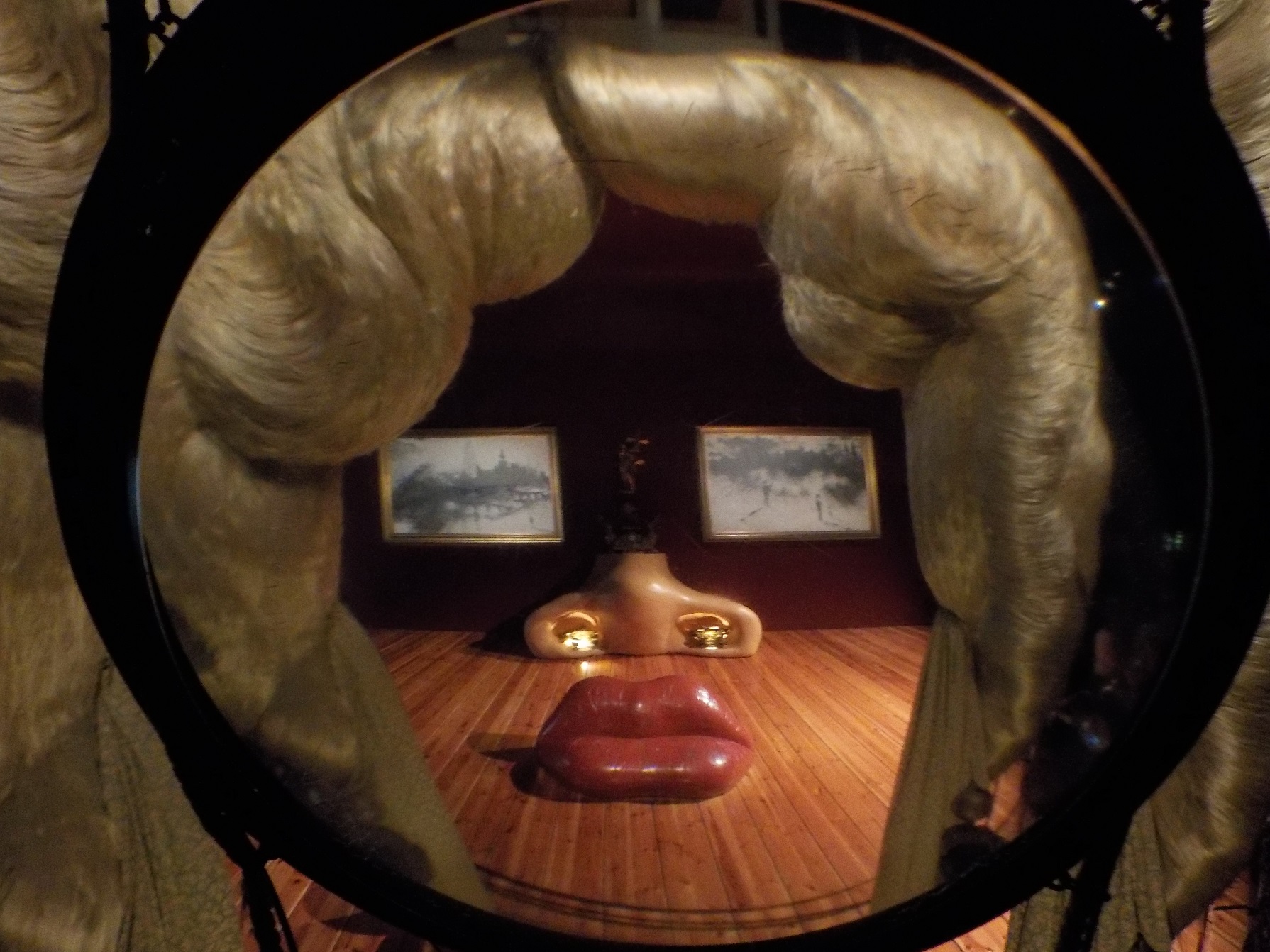
Dali was thrown out of a Surrealist painters group because he was considered too focused on money. He went to New York, and drew or painted anything that anyone would pay him to do. Eventually, he created this museum in Spain and lived not far away for the rest of his life, failing to burn himself up but burning one of his houses down in the process. A lot of his work seems hasty, but I believe that’s because he was so full of ideas. For example, who could even think of this: Mae West as an apartment.

10.13.15 Figueres Dali-005

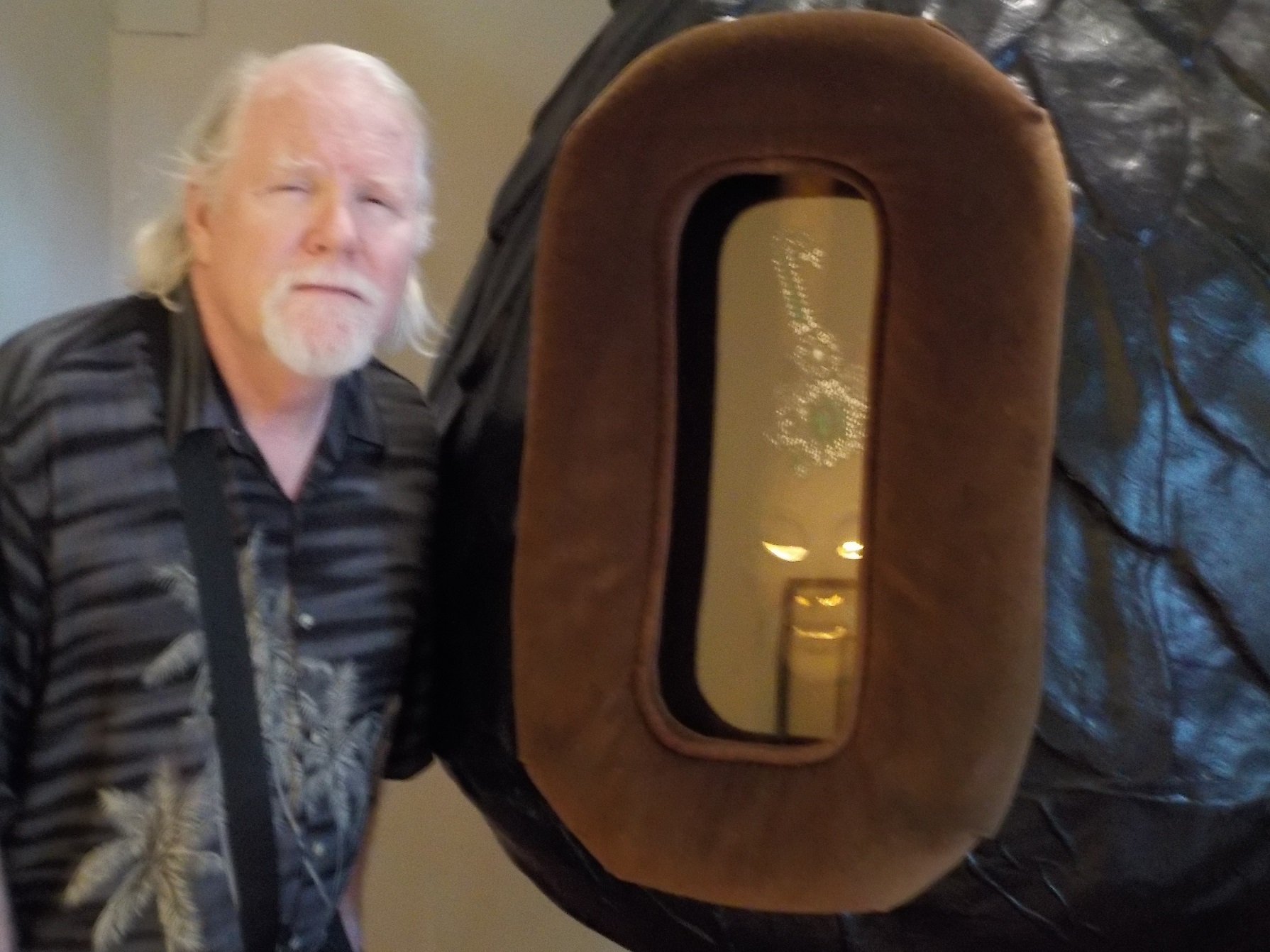
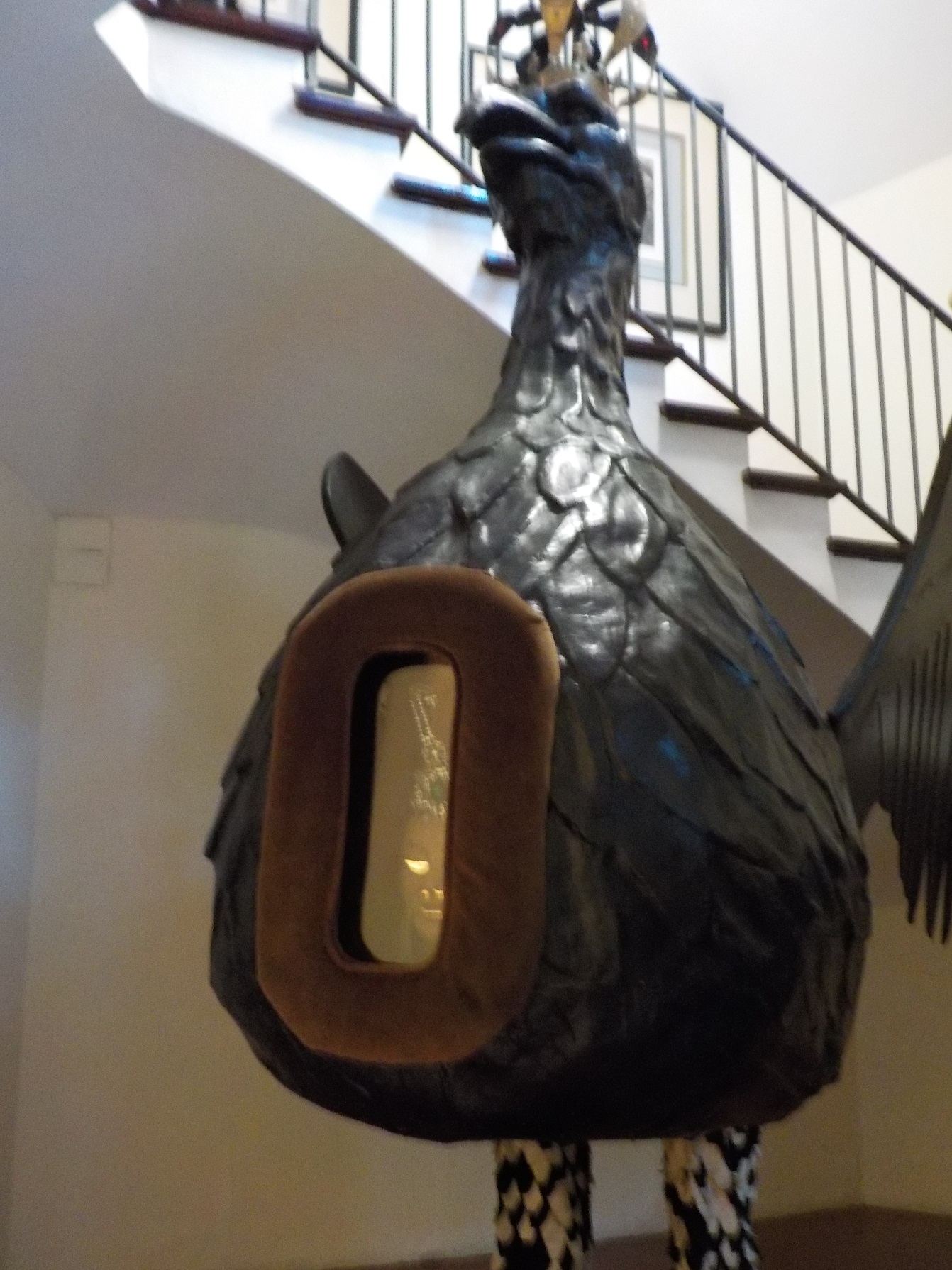
The original is a painting at the Art Institute of Chicago. This is an actual room in the Dali Museum, but to see it complete like this, you have to climb some stairs and look at the room through a convex glass that hangs from the belly of a fiberglas camel, and peer between the huge acrylic tresses. Honestly, who could even think of this? Once you have the idea, you can start imagining all kinds of people as apartments, but who could imagine such a thing to start with? Dali.

Dali was bursting with ideas. There is a series of sketches where he seems to have been emptying his very busy and tightly packed brain onto sheets of drawing paper and they include a lot of misogynist imaginings. We know he absolutely adored his wife Gala. The paintings of her are spectacular, but buried in among all that was some pretty uncomfortable imagery, if you’re a woman, or have any nerve-endings.
10.13.15 Figueres Dali-003

There are lots of quirky exhibits, like this African mask, embellished and placed in the stomach of a huge bird.

10.13.15 Figueres Dali 10.13.15 Figueres Dali-001

I stopped taking photos, because the place is both overwhelming and slapdash. Some of the art is excellent, but some appears hasty, as though he had so much on his mind that he had to keep moving. There is a ceiling full of “bats” that turn out to be painted burlap bags. There is another ceiling full of galvanized buckets.

The highly detailed, carefully painted pictures like the melted watches that he is known for are largely elsewhere. The painting that I found on a postcard and sent to the whole family is one that reminds me of Jonathan: Self-Portrait with Bacon.

October’s bright blue weather and a semi-abandoned science zone

That was the name of a poem I had to memorize in about 3rd grade–I don’t remember anything but the title. The description is very apt, as the days have been exquisitely blue and bright, even as the sun rises a bit later and sets a little earlier every day. We’ve visited two large city parks, the Ciutadella and Montjuic, as well as spending another day at the beach. I even went for a dip.

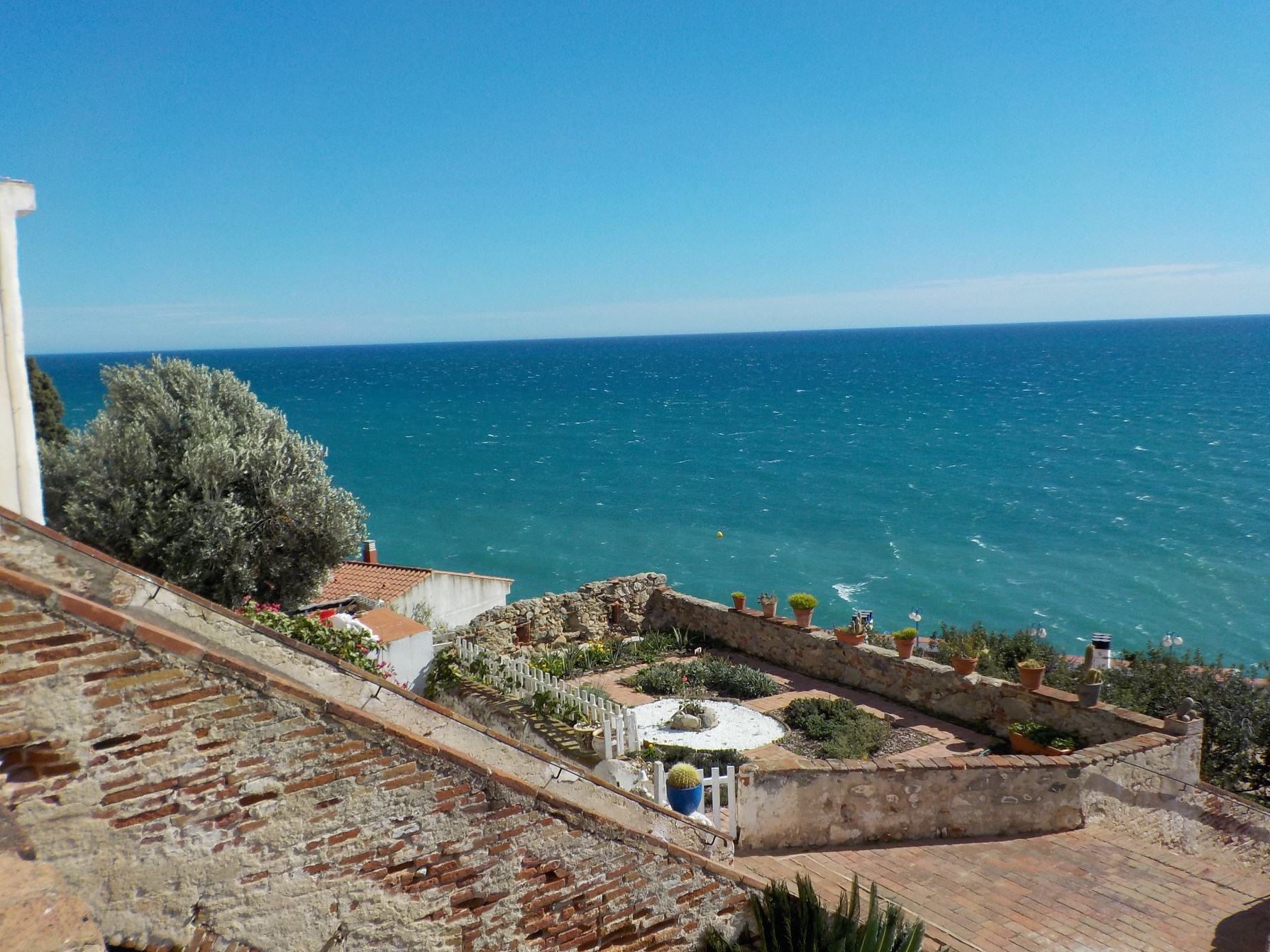
10.6.15 Sant Pol de Mar-004smThe Mediterranean from the Ermita de Sant Pau in the town of Sant Pol de Mar. There’s not a lot in the town, but walking to the top of the hill provides this gorgeous view, and the hermitage (we’re standing on its terrace) is the oldest building around, started in the 10th century. The beach is the real draw here.


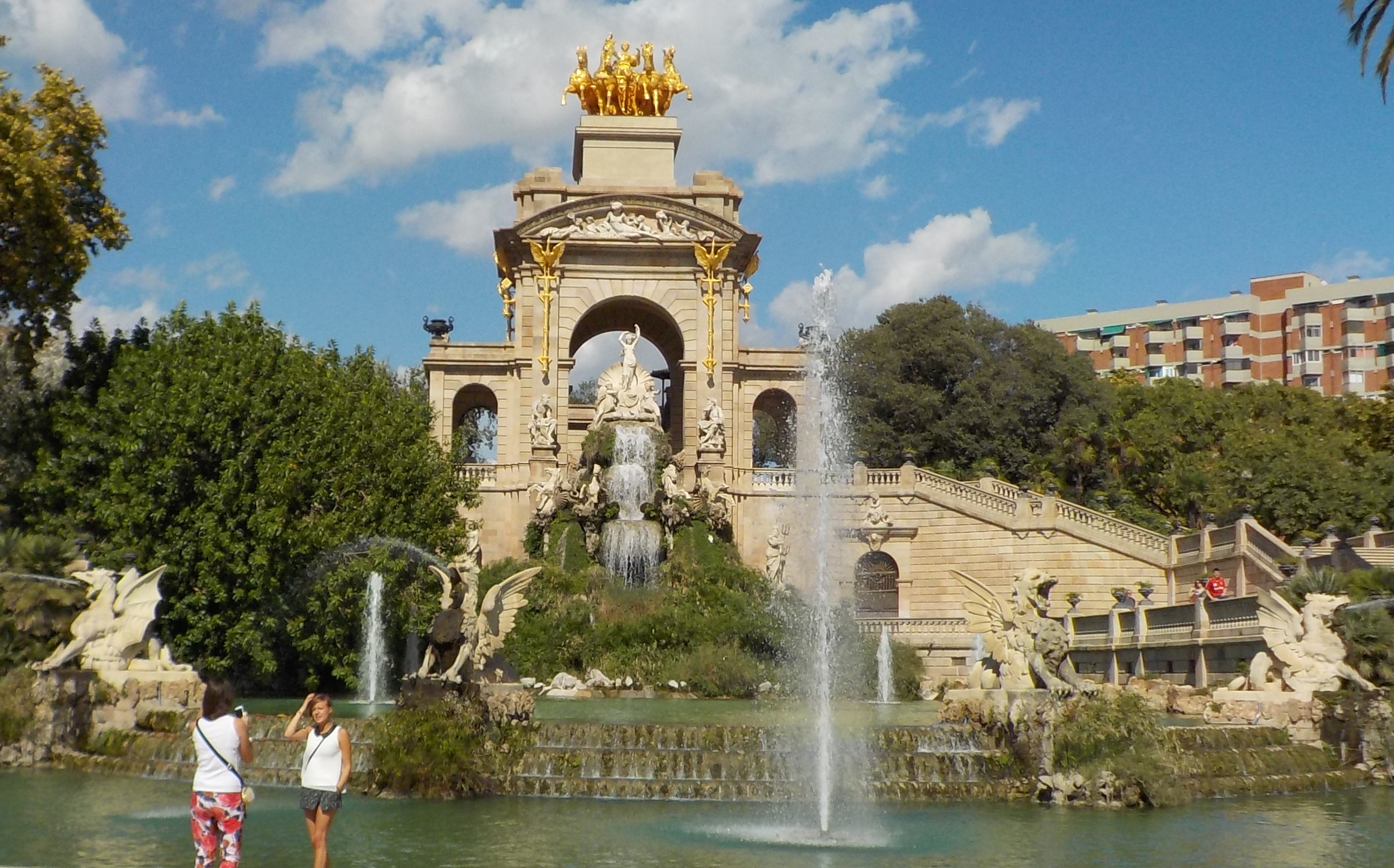
In the city, we are now focusing on the great parks. The Ciutadella seems to have been intended as a multi-site natural history zone, but that was around 1888. Most of the buildings were repurposed or are currently abandoned or semi-abandoned, while the collections have moved elsewhere. An eclectic group of stops remains. There’s the spectacular “Monumental Fountain”

10.7.15 Ciutadella-013sm

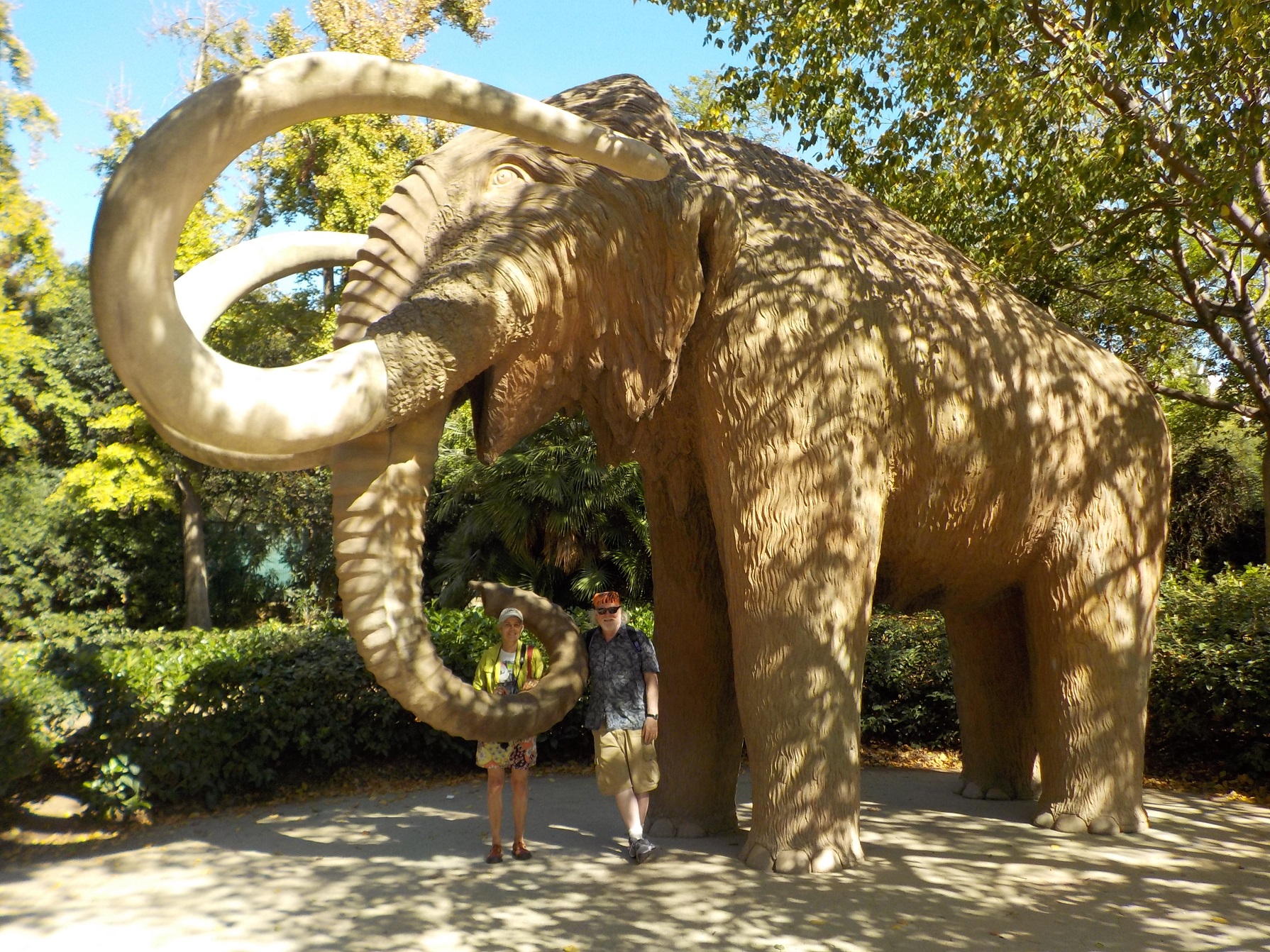
There’s also a mastodon:

10.7.15 Ciutadella-0sm

And a lake with rowboats:

10.7.15 Ciutadella-017sm

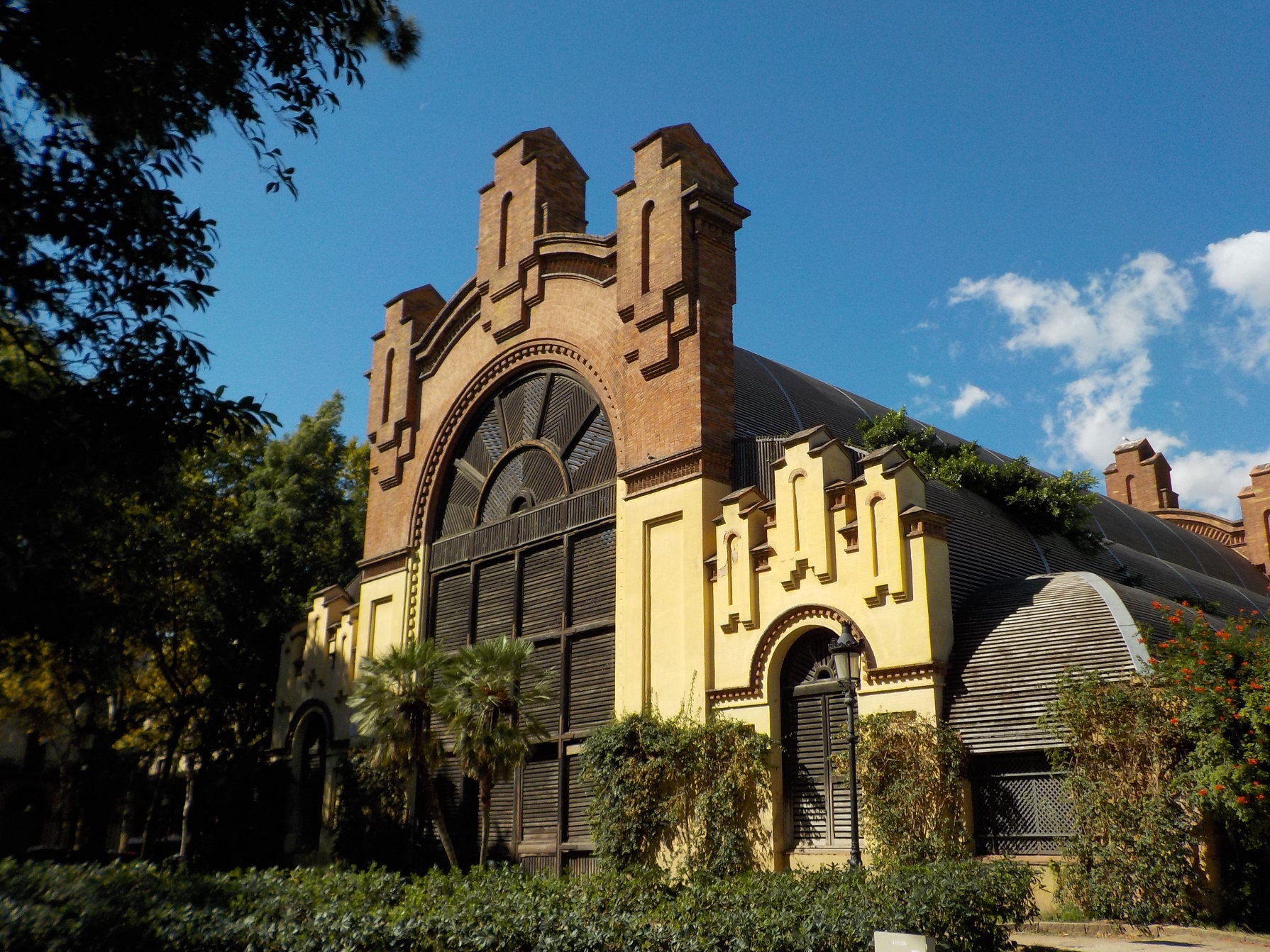
The science museum buildings are all from the modernist era:

10.7.15 Ciutadella-012sp

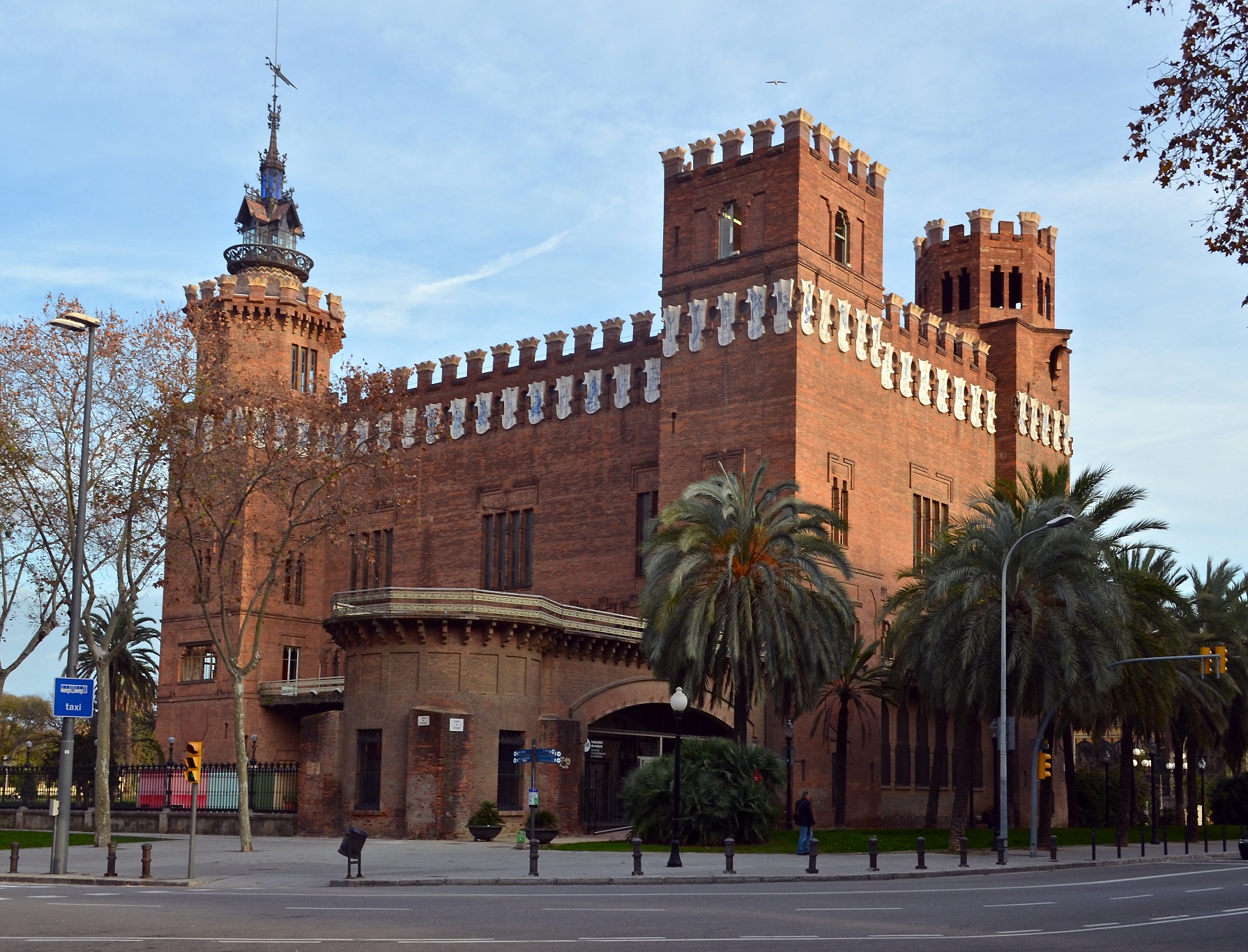
This, for example, is the Umbracle, or shade house, a building with a slatted roof but no windows so that air circulates but the bright sun doesn’t burn the leaves of tender plants. There’s also a Hivernacle, or green house. I would have liked to have my office in the Castle of the Three Dragons, now a science research library.

Barcelona_-_Castell_dels_Tres_Dragons_(2)

The idea of science in the park is lovely, but the reality is not. All the buildings we visited are in disrepair, the castle above is roped off for repairs and closed to the public. The contents of the plant houses are well on their way to running wild and the greenhouse has broken windows. A homeless woman was drying her clothes on the greenhouse fence.

10.7.15 Ciutadella-002sm

When we went home, we tried to find out what had happened to natural history, as the large geology museum between the two plant houses was also closed, and abandoned-looking. The collections have all been moved to a large contemporary building, the Museu Blau, in another part of the city. What is discouraging in terms of promoting science to the public is that there is no explanation at all about the buildings in the Ciutadella park, among the most heavily visited in the city. A visitor is left with the idea that there is no interest in science, because there is nothing to tell you why these vintage buildings are abandoned or where you can find the science museum today. Since there is an effort to preserve every structure considered modernist and the structures in the park seem to be in the limbo between active use and repurposing as part of the “modernism route.”

Next time we’ll visit the zoo, located in the southern portion of the Ciutadella.

Gaudi Week, Day 5. We blink.

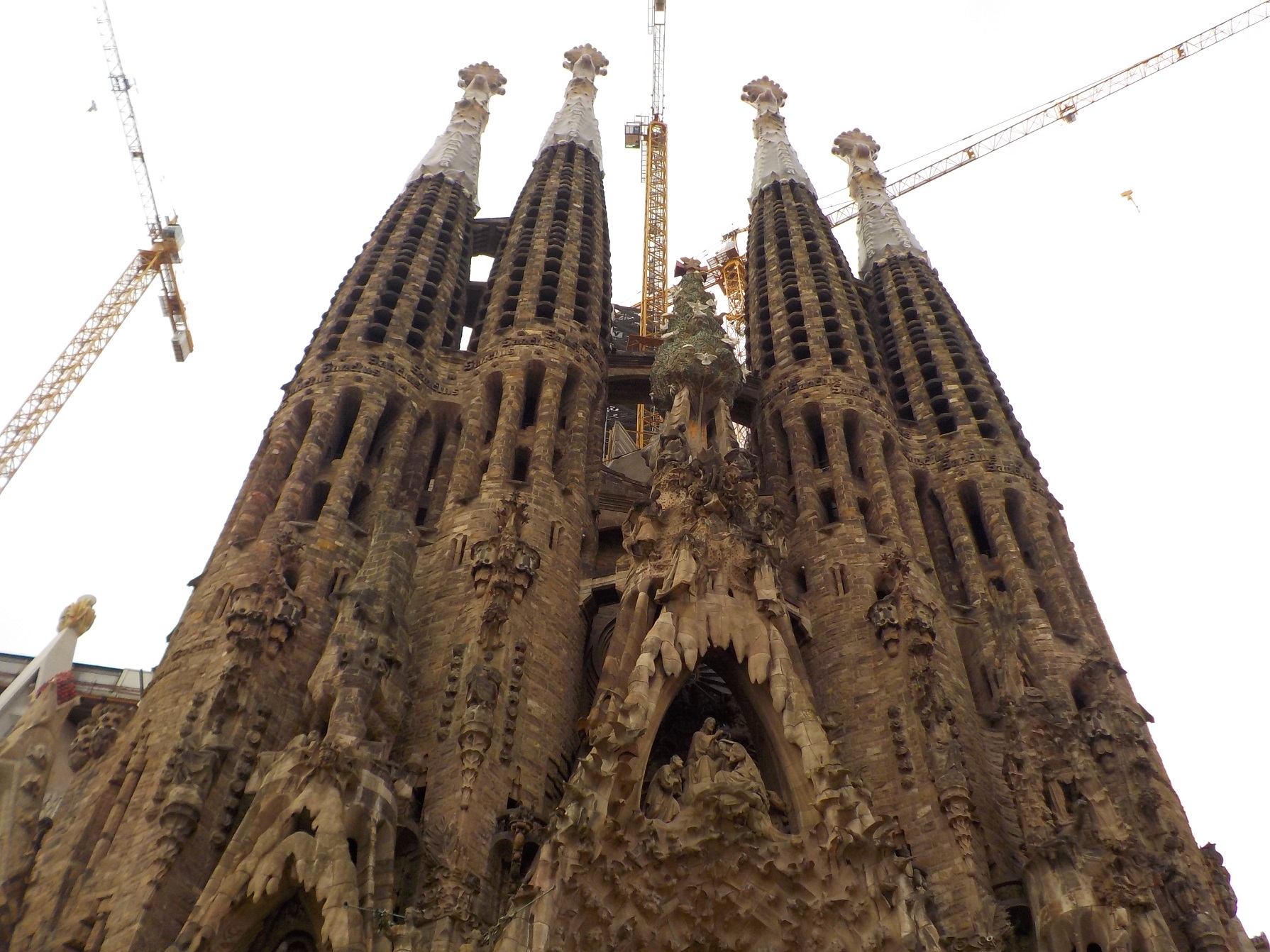
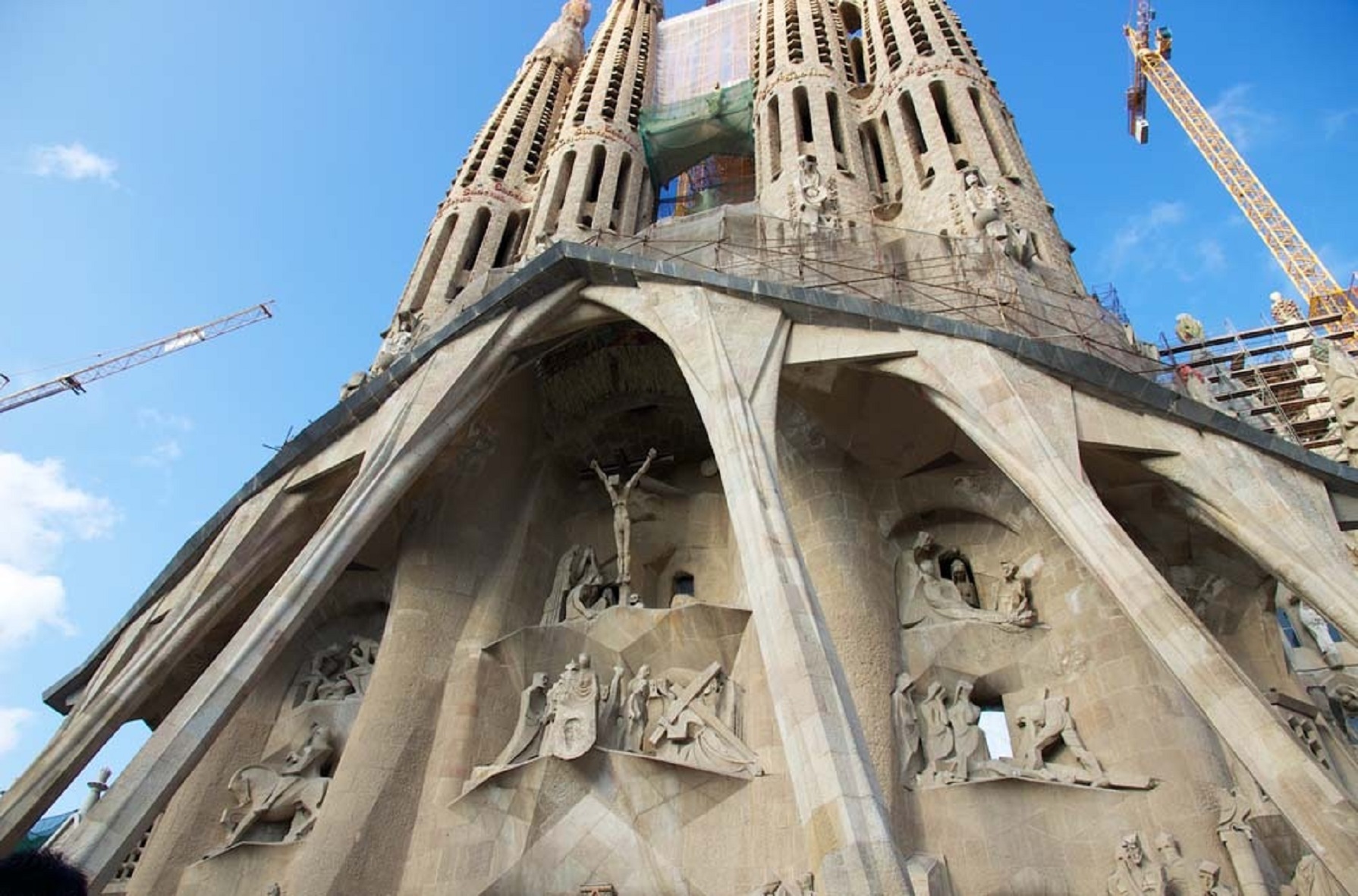
Sagrada Familia, the still unfinished masterwork that consumed the final years of Gaudi’s life, is the single must-see work of Gaudi’s for anyone visiting Barcelona. That’s not my opinion, that’s from tourist statistics that suggest 85% of visitors to the city make a stop at the church. It’s now a ‘minor’ basilica (no resident cardinal) dedicate by Pope Benedict XVI in 2011. Construction will not end until 2026 at the earliest and tall construction cranes hover over the massive structure. Eventually, a street will be vacated to provide space for the final section.

9.29.15 Sagrada Familia-002smThis is the “Nativity” facade of Sagrada Familia. There are two others, the “Resurrection” facade and the “Gloria” facade, each with four tall spires like this one. An even taller center spire is intended to complete the project.


The newer construction is intended to carry out Gaudi’s intentions, but the Resurrection facade, mostly complete, is created of smoother stone, probably to simplify construction, and you can see the difference.

resurrection_sagradafamiliaThe upshot of our reconnaissance was that we did not purchase our tickets. To get our ICOM admission, we need to wait in line (no on-line sales) and take the next time available. We were put off by the crowds and tentatively plan to visit during the last week in October.

We blinked.

Gaudi can be overwhelming. Maybe it will be better after a bit of a break.


What we discovered in visiting Sagrada Familia is the astonishing number of visitors. When we arrived on a Monday (OK, it was midday), the line to purchase a ticket was 30 minutes long. If you purchased a ticket, your entry time would be 4 pm–all earlier times sold out–then you walked to the opposite side of the building, 2 blocks away, to wait. Even with a ticket, it takes another 30 minutes of standing in line to get into the building.

There are more than 3 million visitors per year to Sagrada Familia. To put it in familar terms, that is about 30% more than the largest number of people who have ever visited the Field Museum in a year (Think King Tut, Sue the first year). That means that every day of the year around 8,000 people visit. That turns out to be a lot of people.

Gaudi Week, Day 4–Museums of Catalan Crafts

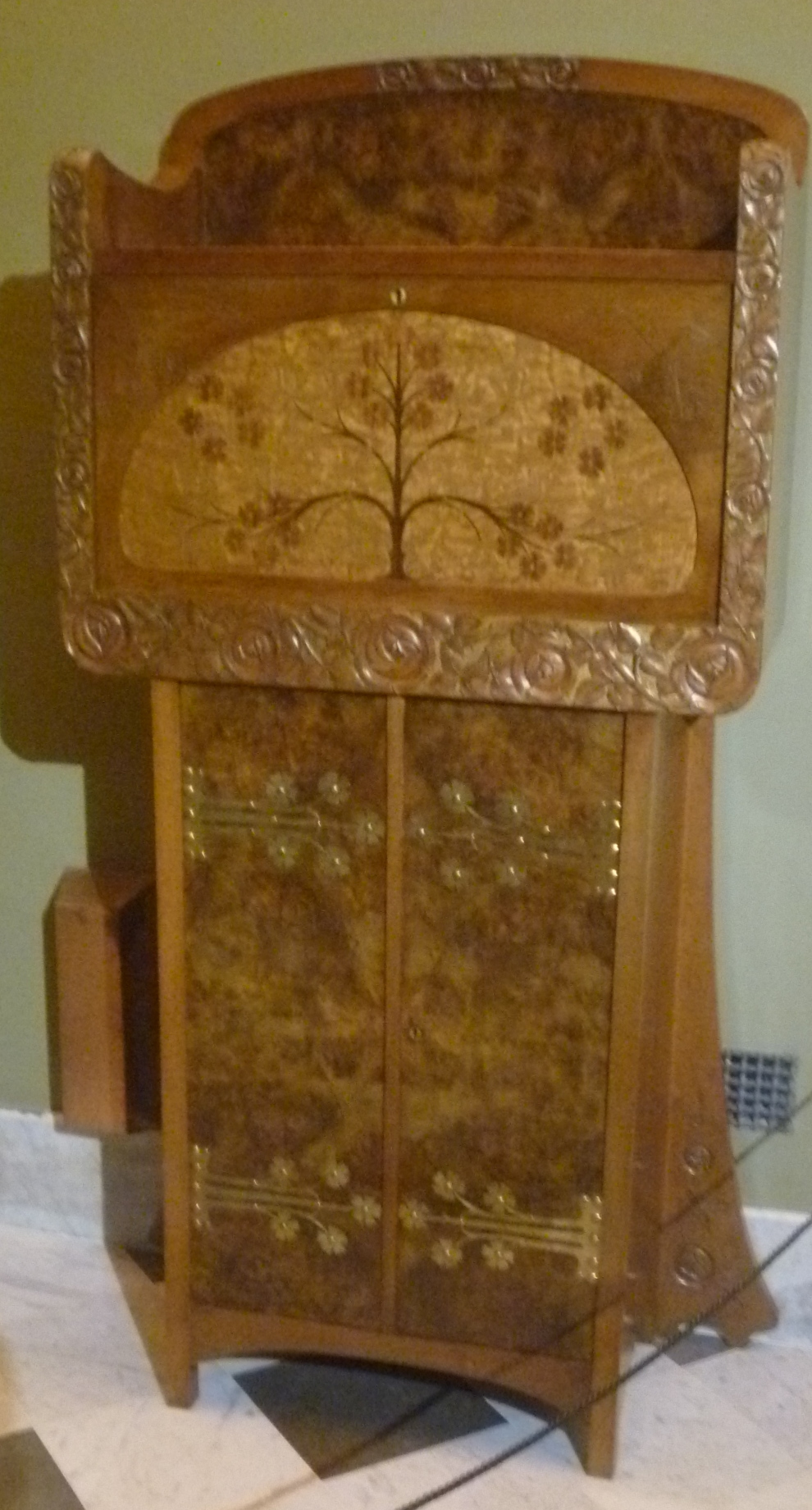
After seeing places built by Gaudi himself, it’s not quite as interesting to go to a museum. On the other hand, museums often have the furnishings that have been removed over the years from the houses and buildings that Gaudi designed. The Museum of Catalan Modernism is a relatively small collection, but with some fantastic furniture, some by Gaudi and some by other craftsmen, including the most elaborate marquetry desk either of us has ever seen.9.27.15 Museum of Catalan Modernism-007sm

9.22.15 Palau Guell-071sm

This is another elaborate drop front desk from the Palau Guell. It makes you wonder whether anyone ever used it. I think you would be wondering whether you would damage the finish every time you sat down at it.

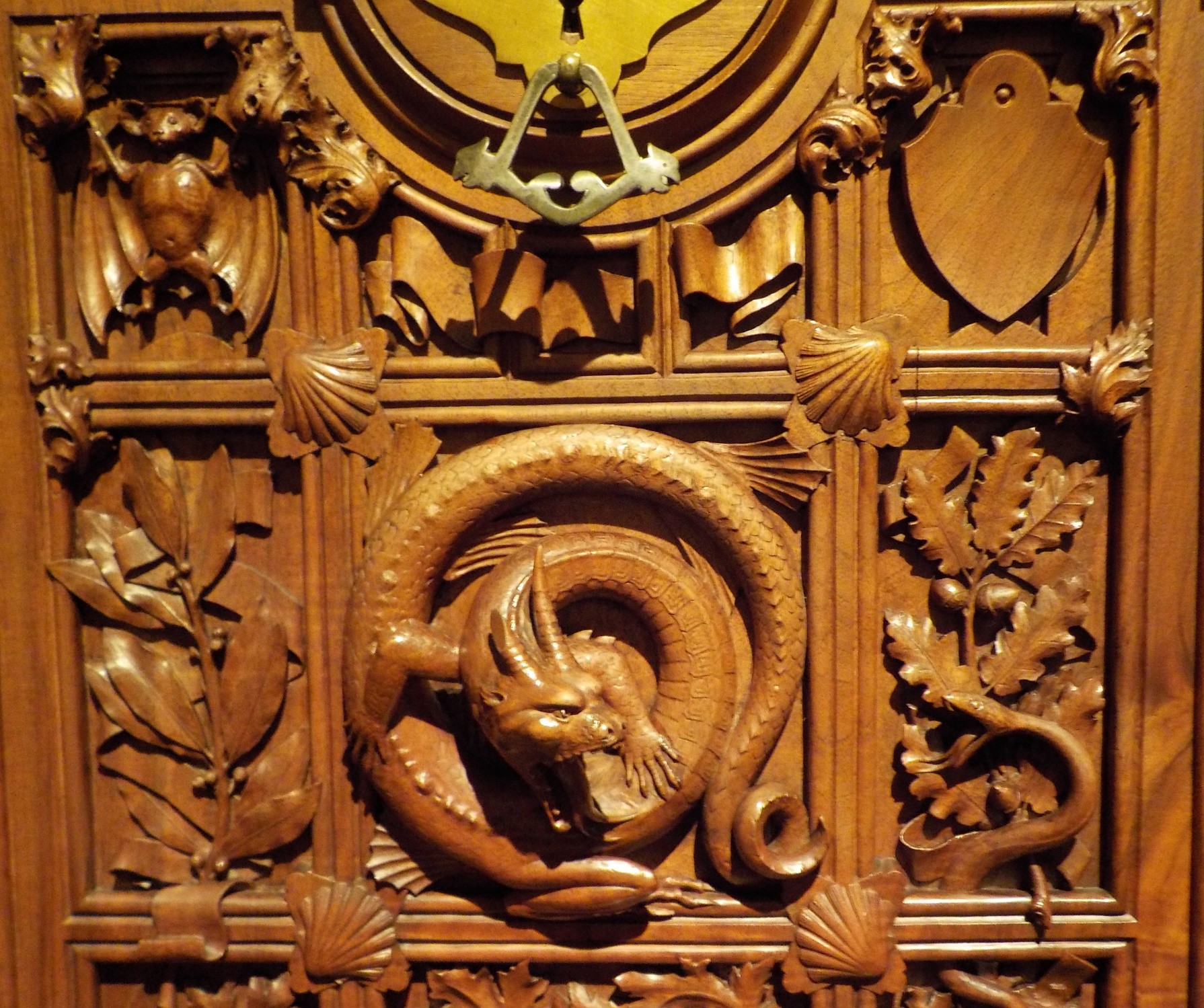
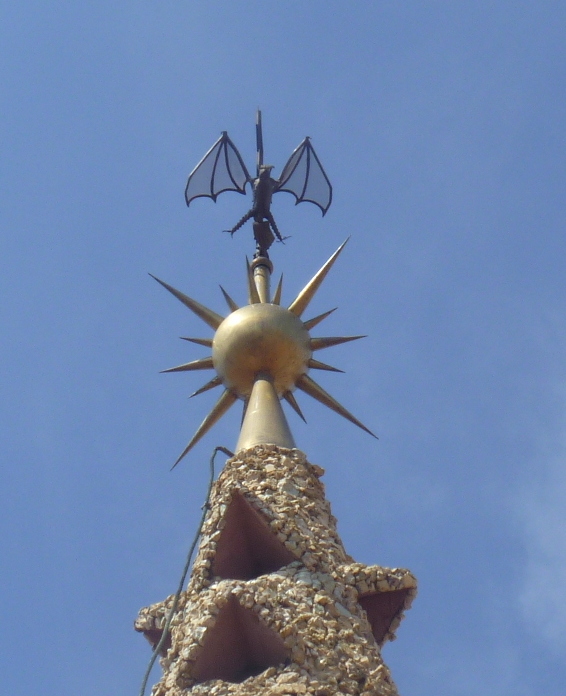
Some works have great details. Why did the Catalans like dragons and bats? No idea.

9.27.15 Museum of Catalan Modernism-0089.22.15 Palau Guell-084sm

We also visited the National Museum of Catalan Art. This is much larger, but begins with the Romans and ends with Catalan contemporary artists. We looked at so much art in the latter museum that we were almost worn out before we got to the Gaudi exhibit.

I have few photos of furniture designed by Gaudi. There are very recognizable chairs made by Gaudi for the Casa Battlo. Because it has no furnishings in it today, there are a lot of pieces to go around and many museums have a chair or two.

9.28.15 Gaudi Hse Mus at Parc Gsm

There are single and double chairs similar to this one, along with end tables and other chairs. You can purchase a repro for about 1300€.

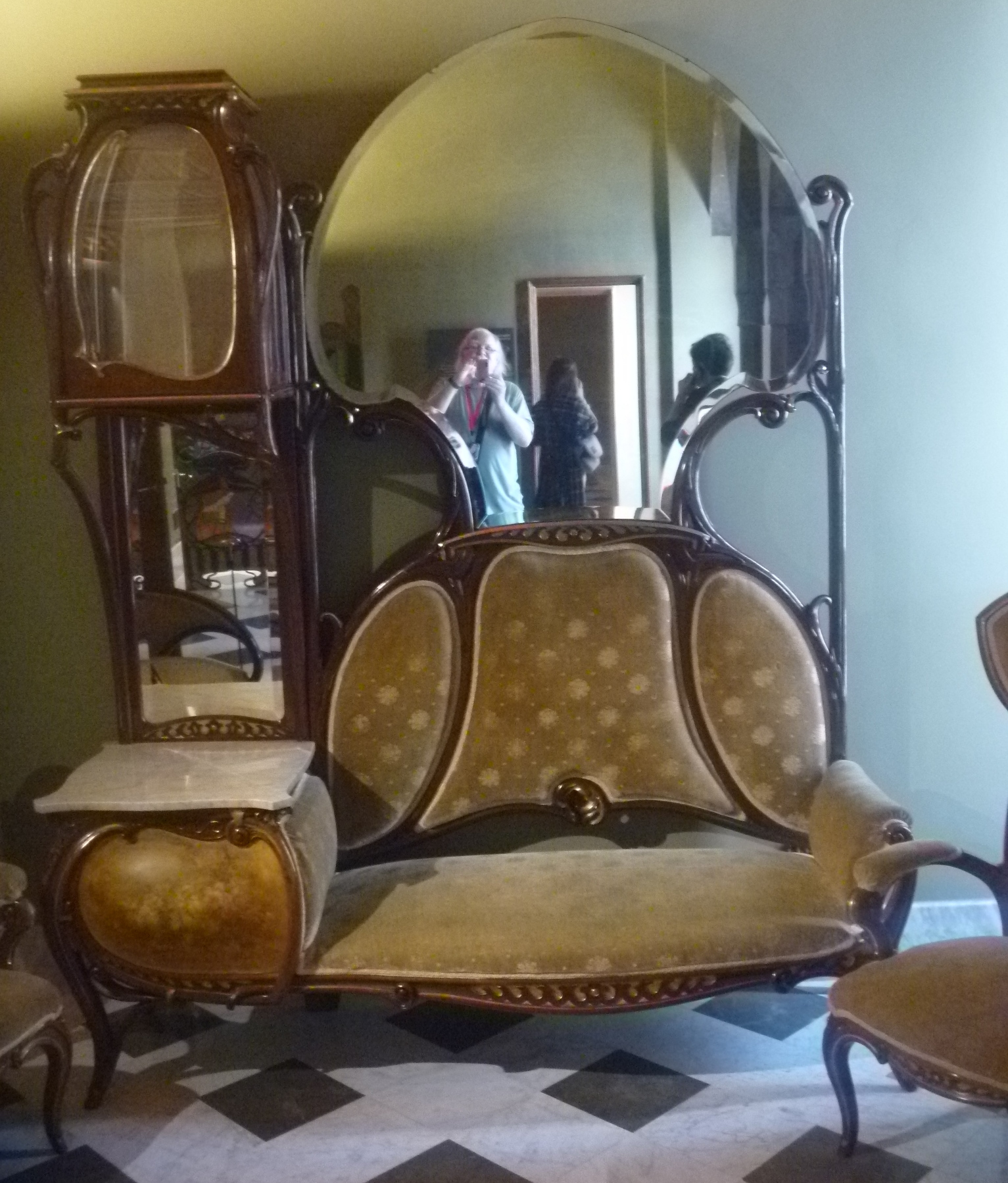
The piece below is earlier, from the Palau Guell, one of Gaudi’s earlier projects for Eusebi Guell. It is more clearly related to Art Nouveau with all its curling sections but also because it is a combination piece, settee/end table and display cabinet.

9.22.15 Palau Guell-072sm

There are more Gaudi-designed structures, the most distinctive remaining is the church of the Sagrada Familia.

Gaudi Week, Day 3–Casa Batlló

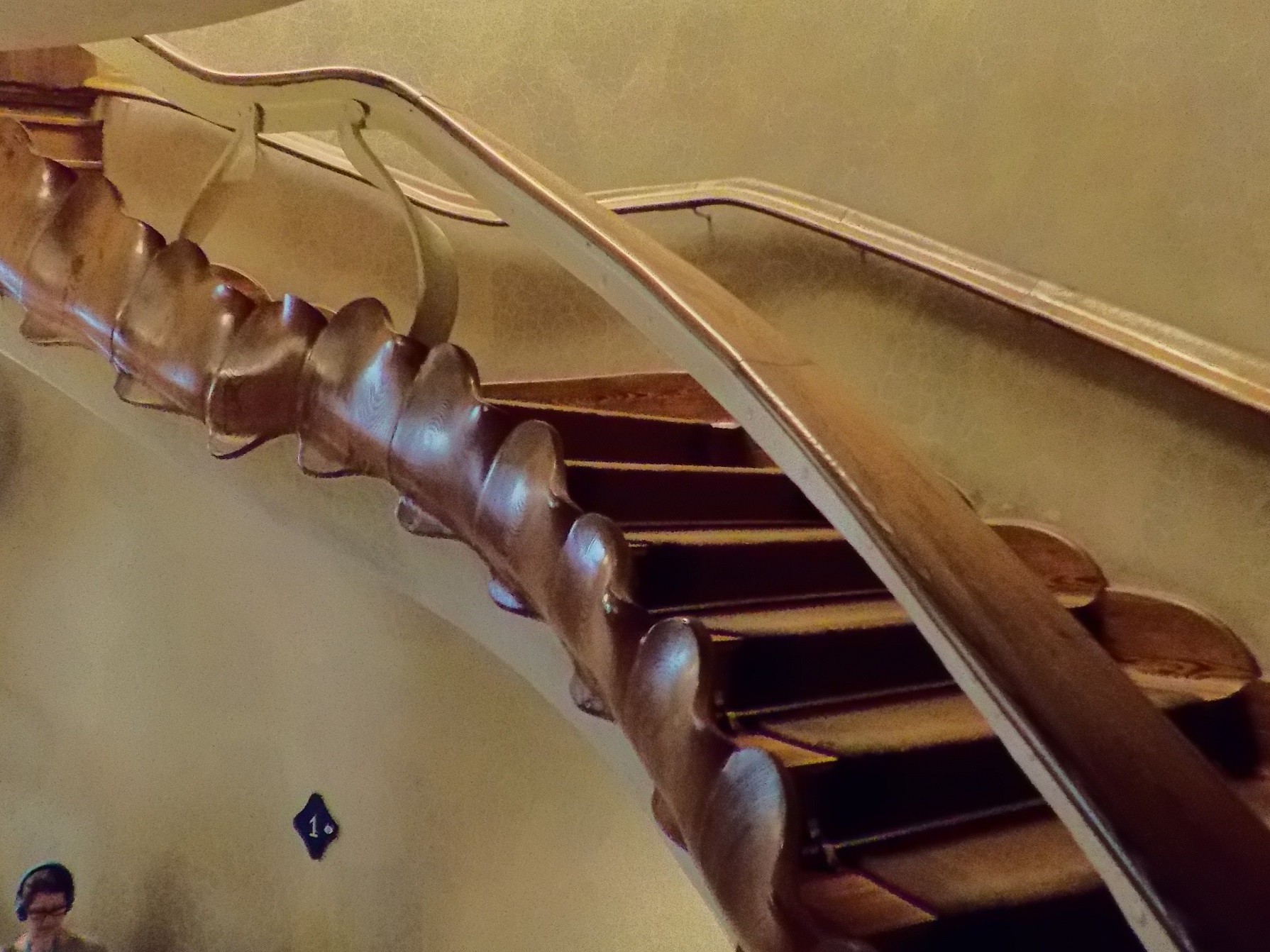
First, it’s Casa Bai-OH (skip the t, skip the ll sort of). This apartment building is arguably the most distinctive structure Gaudi worked on. He transformed an existing building by adding curved balconies to the exterior and adding two stories and an exotically curved peaked roof. There are a series of references to a skeleton, first by the ground floor staircase that is seen by some as looking like vertebrae:

9.29.15 Casa Batllo-008smI can see it.


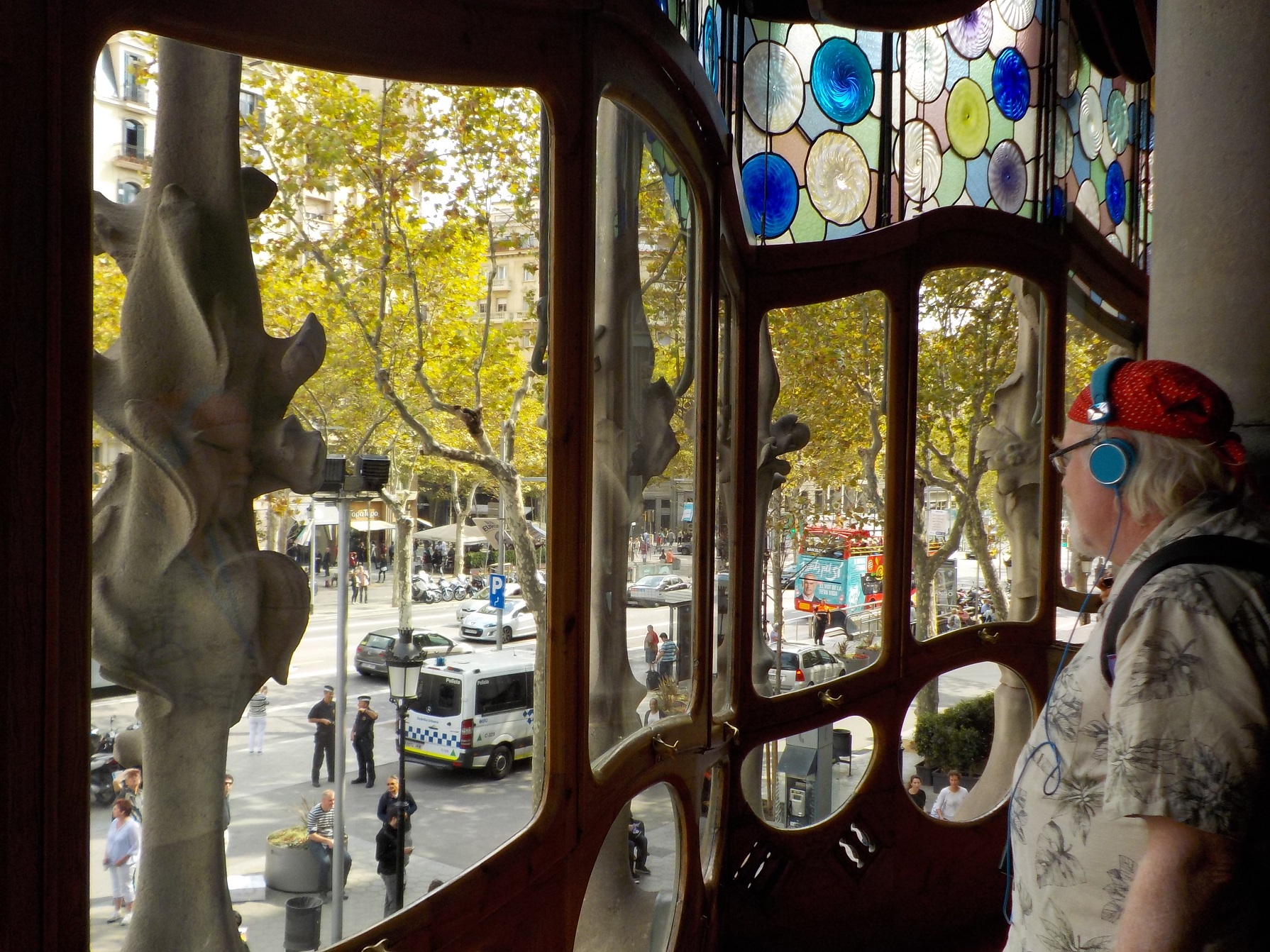
There is also a suggestion of bones in the supports for small balconies on the lower floors that you can see through the windows below:

9.29.15 Casa Batllo-023sm

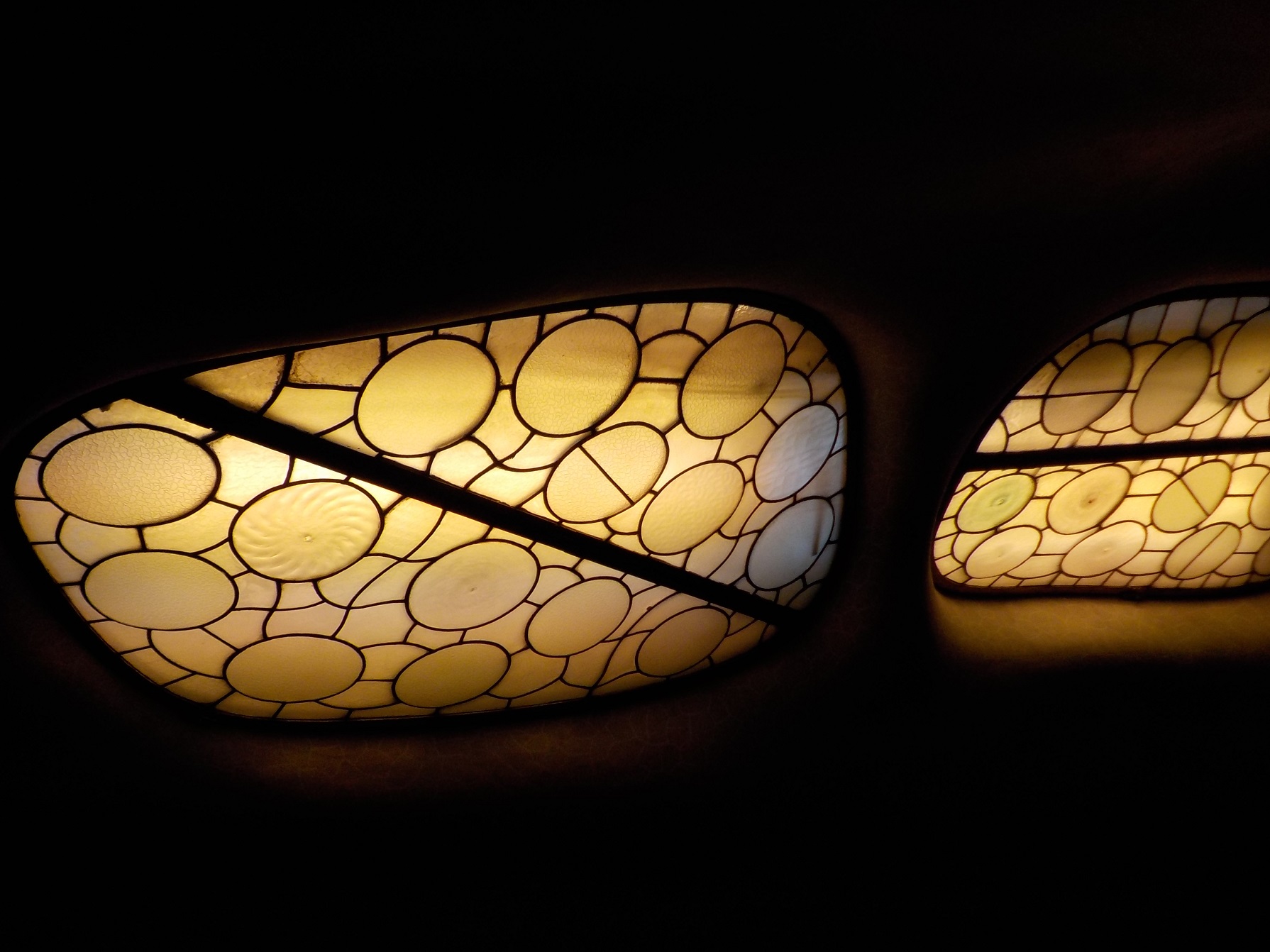
There are skylights reminiscent of turtles or lizard skin:

9.29.15 Casa Batllo-009sm

At the very top of the house, the roof line does look like a dinosaur’s back.

9.29.15 Casa Batllo-037sm

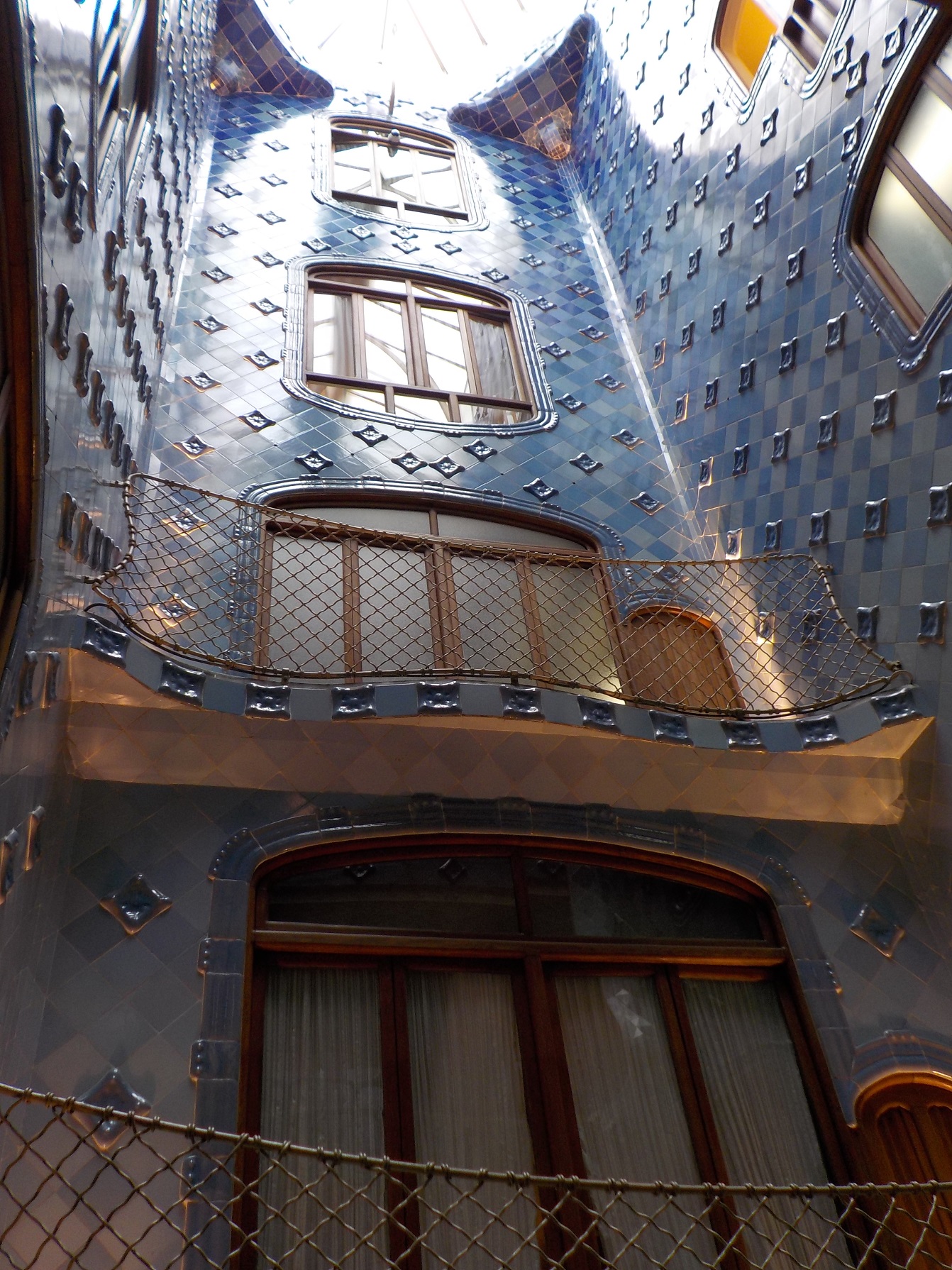
The inside was highly decorative and cleverly engineered to promote circulation of air through all six stories, via a central air well and adjustable vents. The air well was a work of art, tiled to reflect more light in the lower levels and less light where it was brightest at the top.

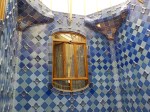
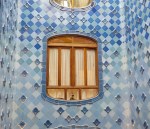
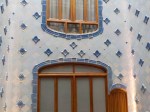
When you look at the entire area, it is a uniform blue from top to bottom:

9.29.15 Casa Batllo-031sm

Up close the blue becomes lighter and lighter as you descend from the roof (L-R).

In all this fabulous decor, it is strange that there are no furnishings. That appears to be intentional to accommodate crowds. The house was full of people the entire time we were there:
9.29.15 Casa Batllosm

9.29.15 Casa Batllo-013sm

Notice that we are all wearing headphones and holding smartphones. In each room, in addition to an audio presentation there is a virtual reality program that shows you the room with its furnishings. If you point your phone toward one wall or corner of the room, it shows you that area. As you rotate the screen around the room you see the rest of the room with its period furnishings. Many of the original pieces can be seen at museums in Barcelona like the Museum of Art of Catalonia and the Museum of Catalonian Modenism. I wondered why there were so many pieces from the Casa Batlló in museums when the house was open for visitors. In the virtual rooms the floors are covered with large persian rugs and the wooden chairs, end tables, armoires, etc. that Gaudi designed specifically for the house, are all positioned around the rooms. This is from staging and photographing the rooms, not taken from historic photos, so the scenes don’t have the lived-in quality that photos provide, but they also show the objects to best advantage. There is a historic photo of an elaborate settee that has chairs in front of it, the settee unused. No wonder they didn’t do a virtual reality of that arrangement.
Like other Gaudi houses, the roof is a fantasia of tiled chimneys, the skylight over the air well and the dinosaur back of the facade.

9.29.15 Casa Batllo-033sm

From the roof it is easy to look onto the terrace of the adjacent house, Casa Amatller, another Moderniste design by one of Gaudi’s contemporaries, Josep Puig i Cadafalch. I wonder what the homeowners thought of one another with their competing monuments to bourgeois success side by side on a main thoroughfare. Is there a hint in the fact this was called the “Manzana de la Discordia (the block of discord).” Was it the discordant architectural styles, or friction among the owners? Guidebooks aren’t saying.

Gaudi Week, Day 2–Parc Guell

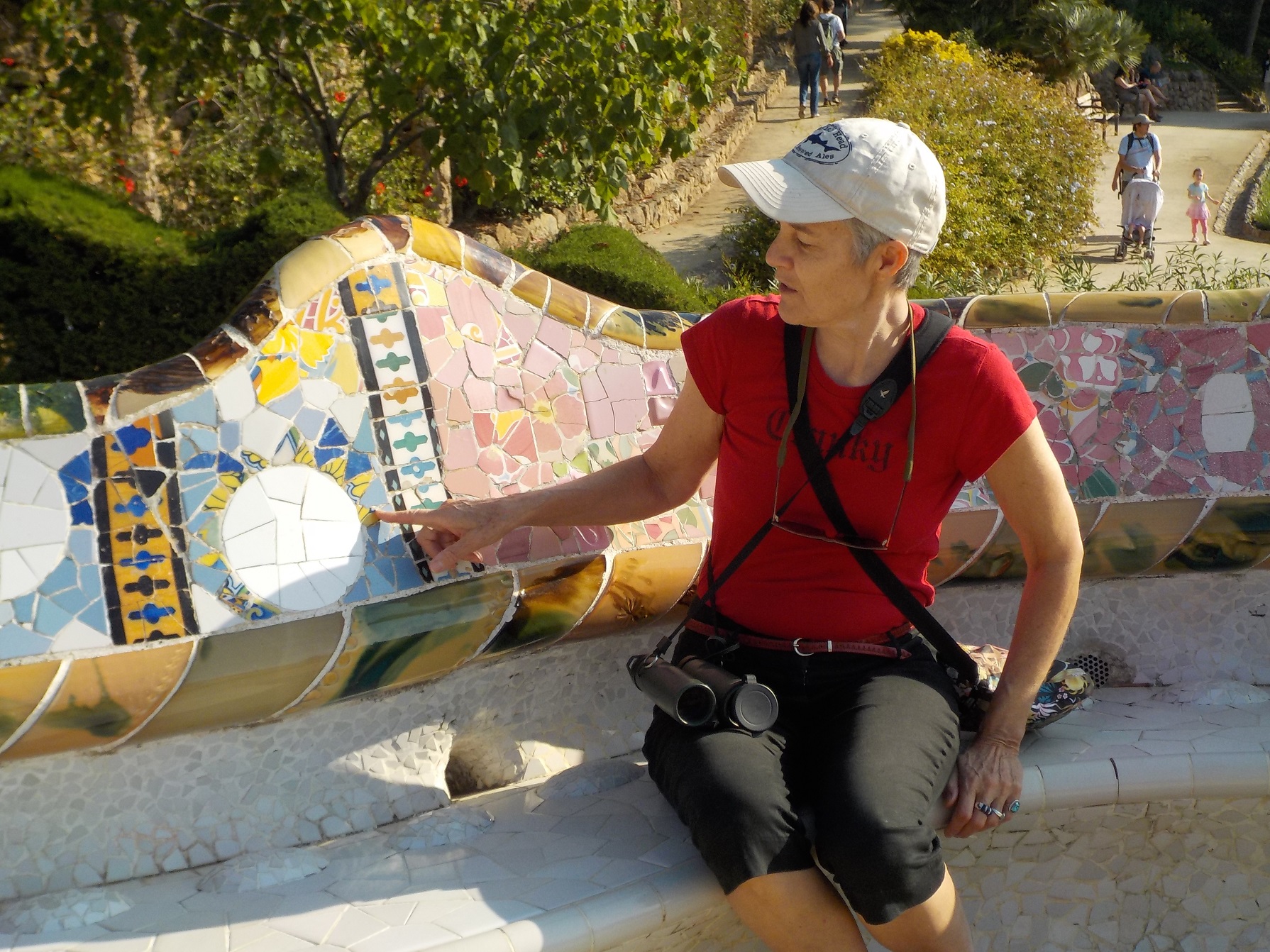
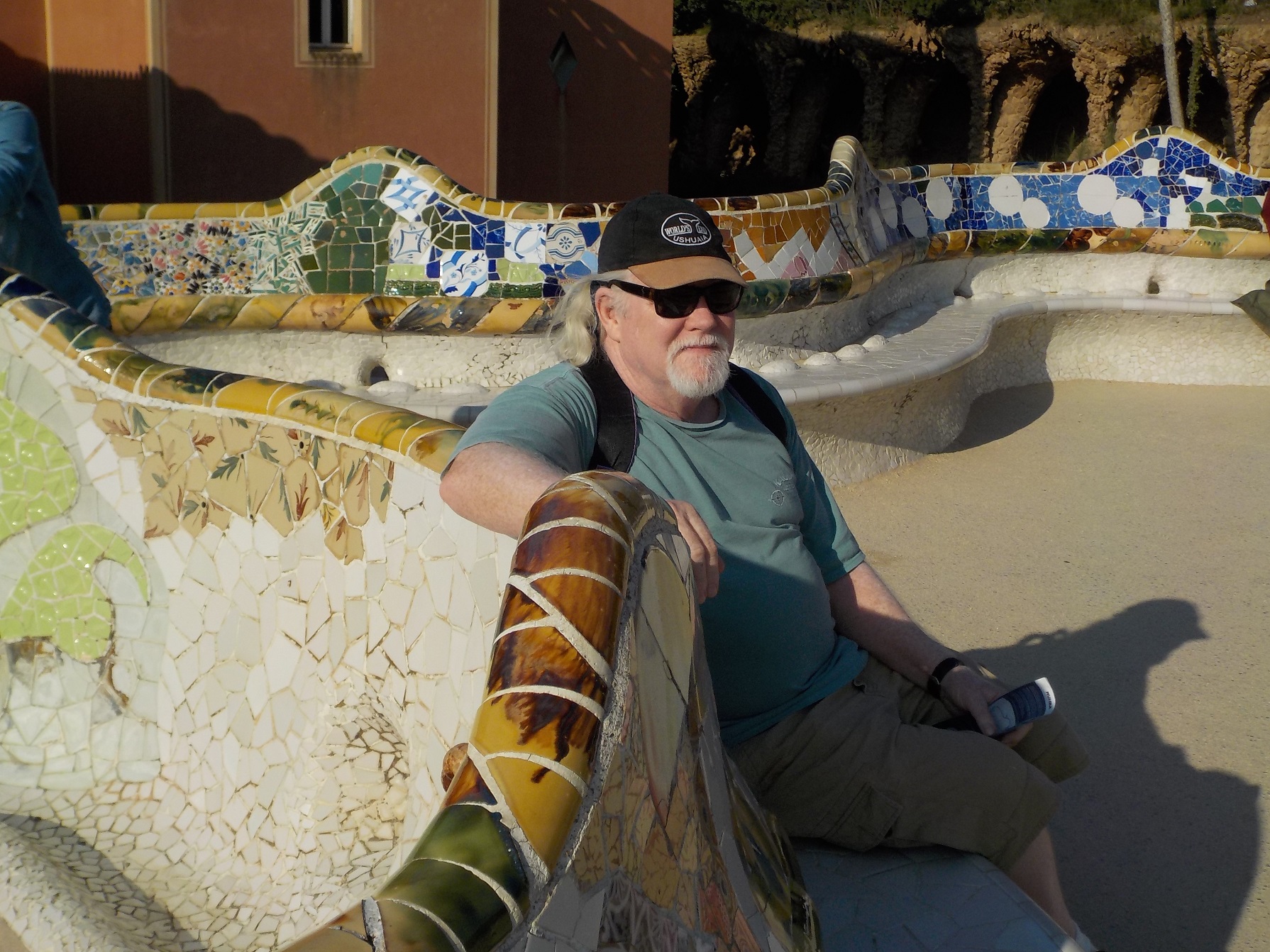
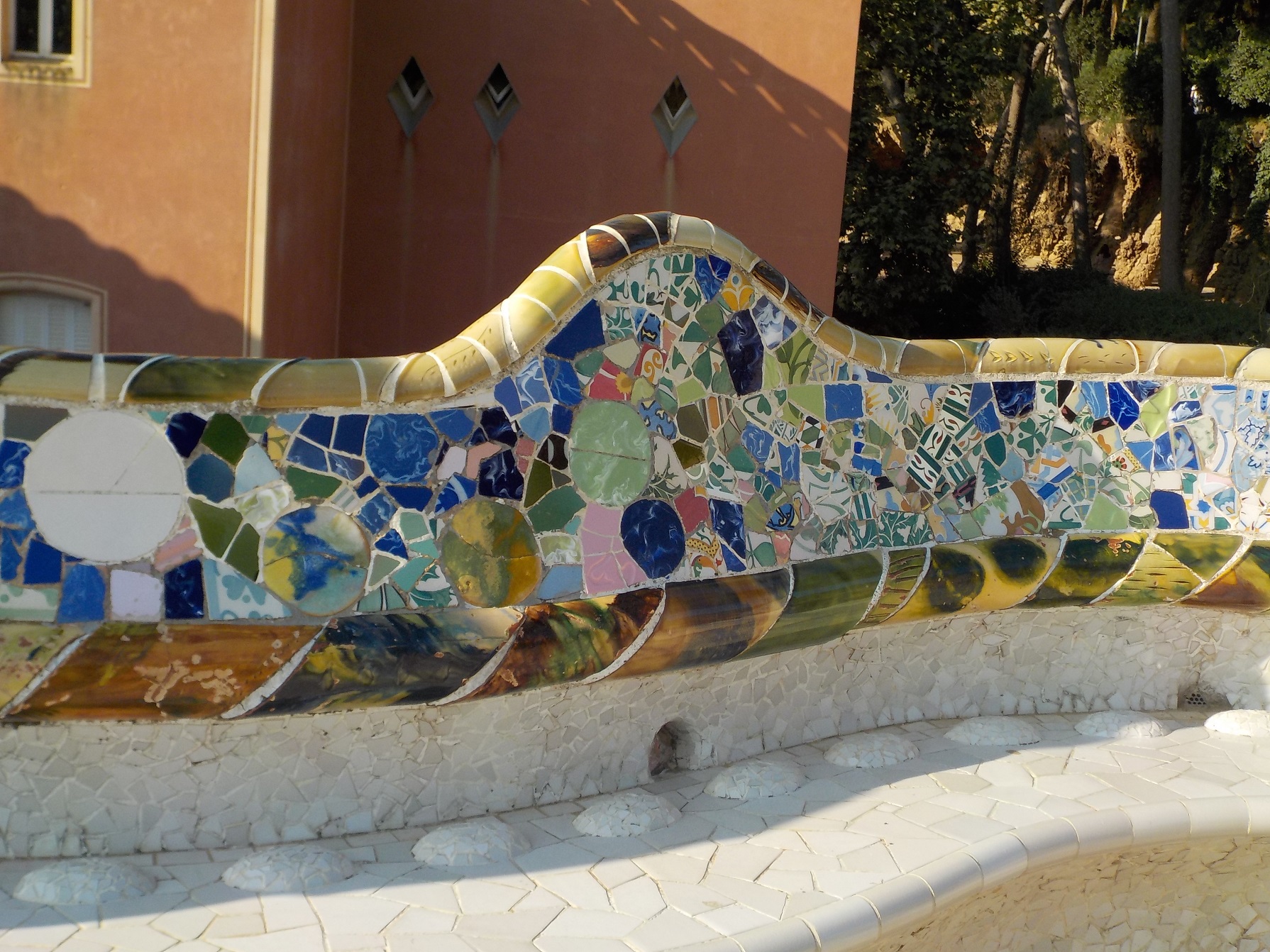
We have been to Parc Guell twice, once to see the section outside the pay zone and once with a ticket. There is more than enough for both visits. Inside the ticketed area is the best known feature of the park, a long sinuous tiled bench that runs around the perimeter of a plaza that overlooks all of Barcelona.

9.28.15 Parc Guell-010sm

9.28.15 Parc Guell-003sm

9.28.15 Parc Guell-00sm1

The park is high on a hill over Barcelona, chosen for the healthful qualities of the area for a residential development sponsored by Gaudi’s patron, Eusebi Guell. Two small structures are also part of the gated park. The gift shop (L-below) was a reception area for the failed residential development that was to surround the park. The other was a park guard’s house–I hope they enjoyed it. Today there are no furnishings, just the space and audio-visuals, but it would be a magical place to live.

9.28.15 Parc Guell-043sm 9.28.15 Parc Guell-034sm

We also visited the Gaudi House museum. Though it was originally part of the park, it is now operated by the Sagrada Familia organization (can you say ‘turf’ and ‘income’ boys and girls?).

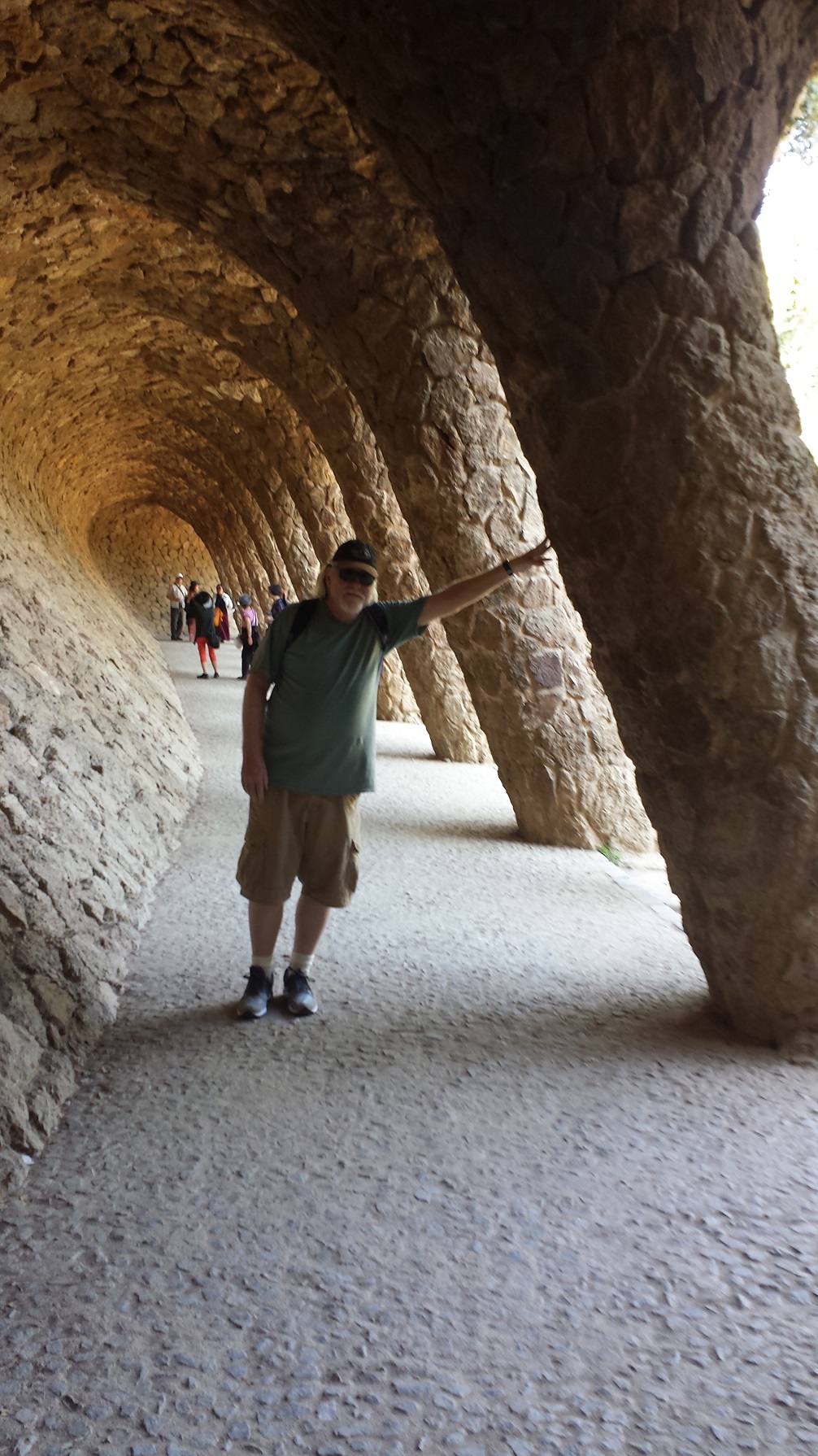
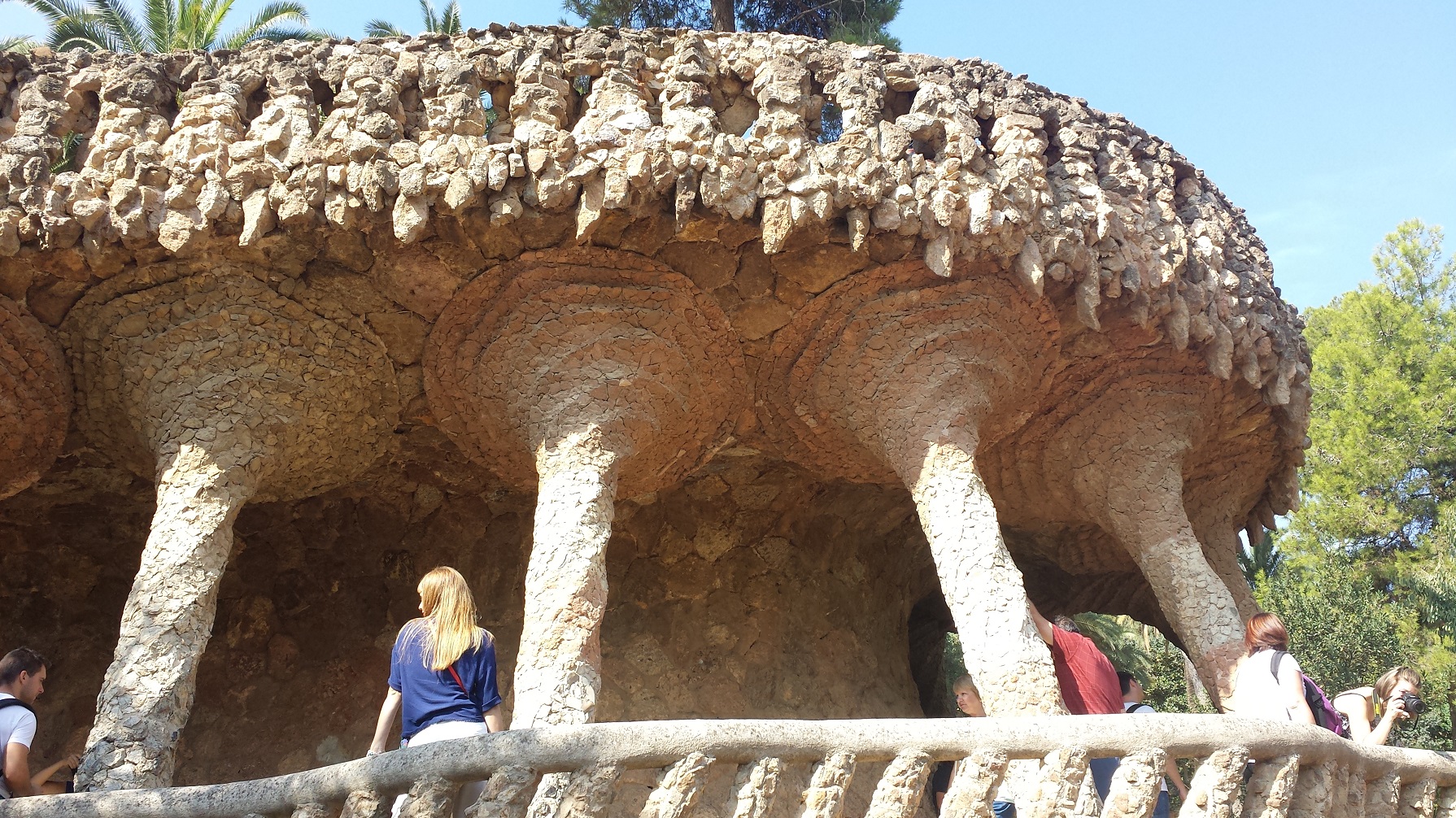
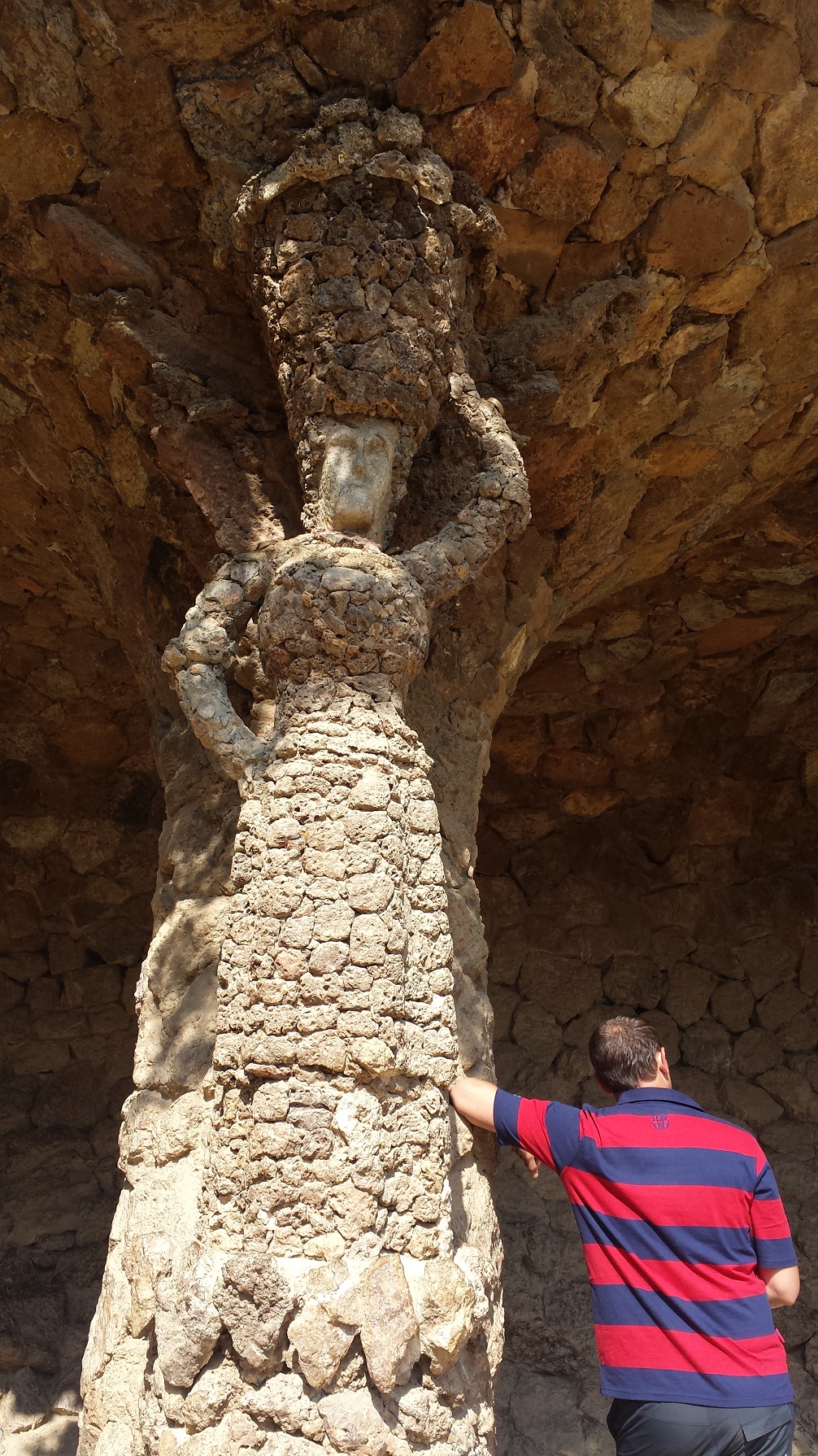
The passages and walkways are all sculptural and wonderful. There is a space called the hypostyle hall, full of columns that lean in different directions. Its tiled ceiling is ornamented with medallions of sea creatures.

Not that there are any columns that don’t lean.

9.28.15 Parc Guell-050sm9.28.15 Parc Guell-046sm


9.28.15 Parc Guell-052sm9.28.15 Parc Guell-031sm

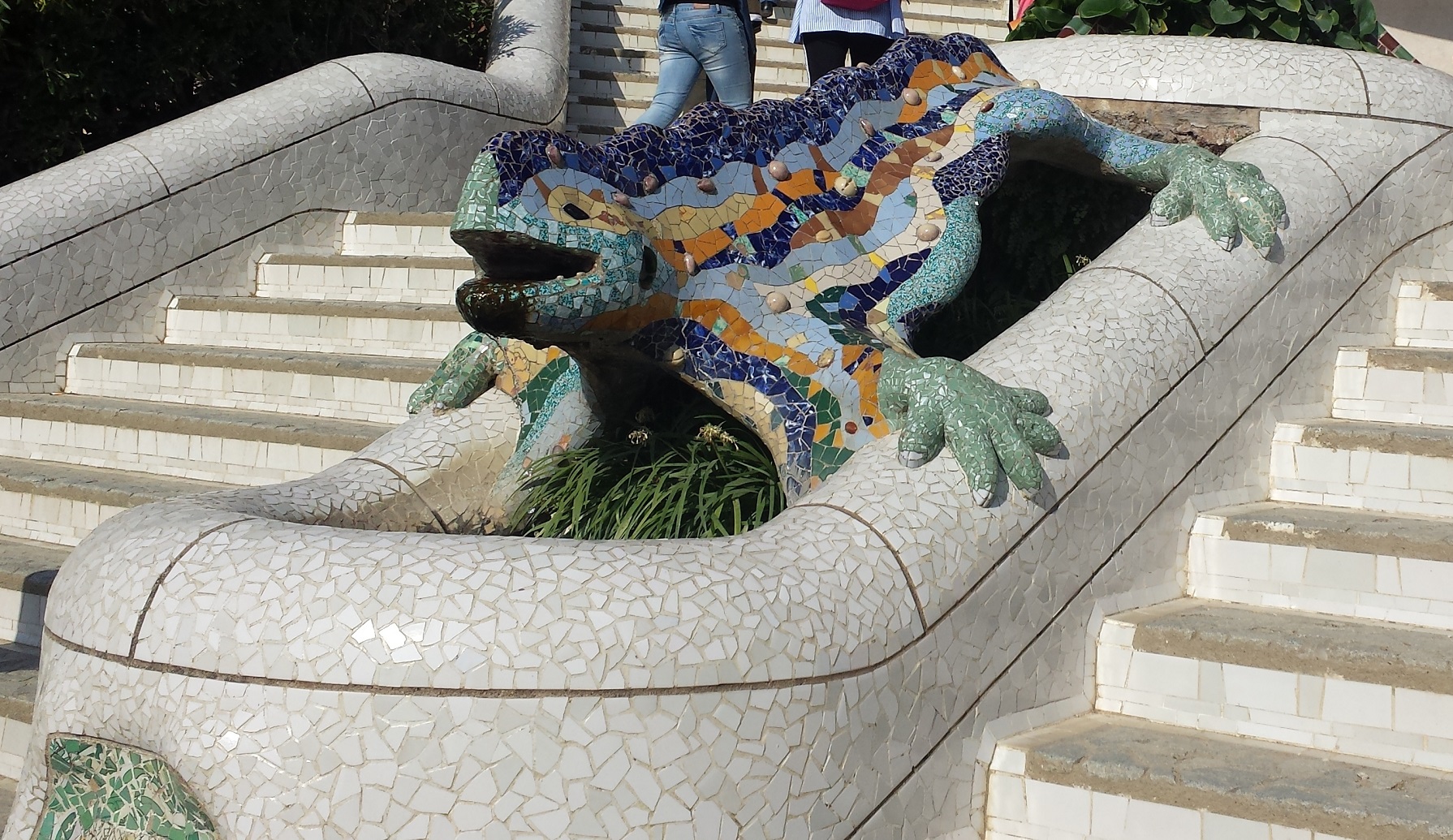
We had an interesting chat with the guard shooing people away from the iconic symbol of the park: the iguana (below). You can buy a copy of it as a fridge magnet or a keychain, snowglobe, tshirt, potholder…..anywhere in Barcelona. Therefore, people would like a photo of themselves hugging it or sitting on it or merely patting it on the hand/paw. The guard’s job is to ask people not to do that, except that most visitors either don’t pay any attention or don’t understand him. He was very exasperated as he flapped his hand at tens of people as we stood nearby. “Oh! You understand Spanish. Hardly anyone does. Do you know what my boss will say if he comes by and sees people sitting on this? I’ll be in for it. Up! Up!” He flaps at more visitors as a new crowd flows down the steps and starts to sit on the lovely lizard and wave their selfie sticks.

9.28.15 Parc Guell-017sm

Another pillar supporting a well-meaning but uninformed visitor.9.28.15 Parc Guell-053sm

Admission to Parc Guell was 7€ for me and 4.90€ for my pal over 65.

Our entry to the Gaudi House Museum was free (thank you ICOM).

Gaudi Week, Day 1-Palau Guell

We embarked on Gaudi week, trying to see all the surviving architecture of Antoni Gaudi (Gau-DEE) in the Barcelona area. In no particular order:

Casa Guell was the in-town home of Eusebi Guell, Gaudi’s principal patron. Without Guell, I wonder whether Gaudi would have had a career and would have ended up a muttering madman. His creativity was amazing, but it’s not clear he had a sense of balance. He focused on his complex work, and not on financing or marketing any of it. Guell provided numerous commissions and was patient for their extended construction times. Without Guell’s long term, loyal patronage, would we ever have seen Gaudi’s work?

9.22.15 Palau GuellsmThe Guell house has elaborate iron work on the doors and windows.

9.22.15 Palau Guell-012sm

The house also has fourteen chimneys, finished in tile or built of brick. The roof is one of the highlights of a visit.

The curtain below is carved of wood,

9.22.15 Palau Guell-019sm

Admission to the Palau Guell was free thanks to our ICOM membership.

Next stop, Parc Guell.