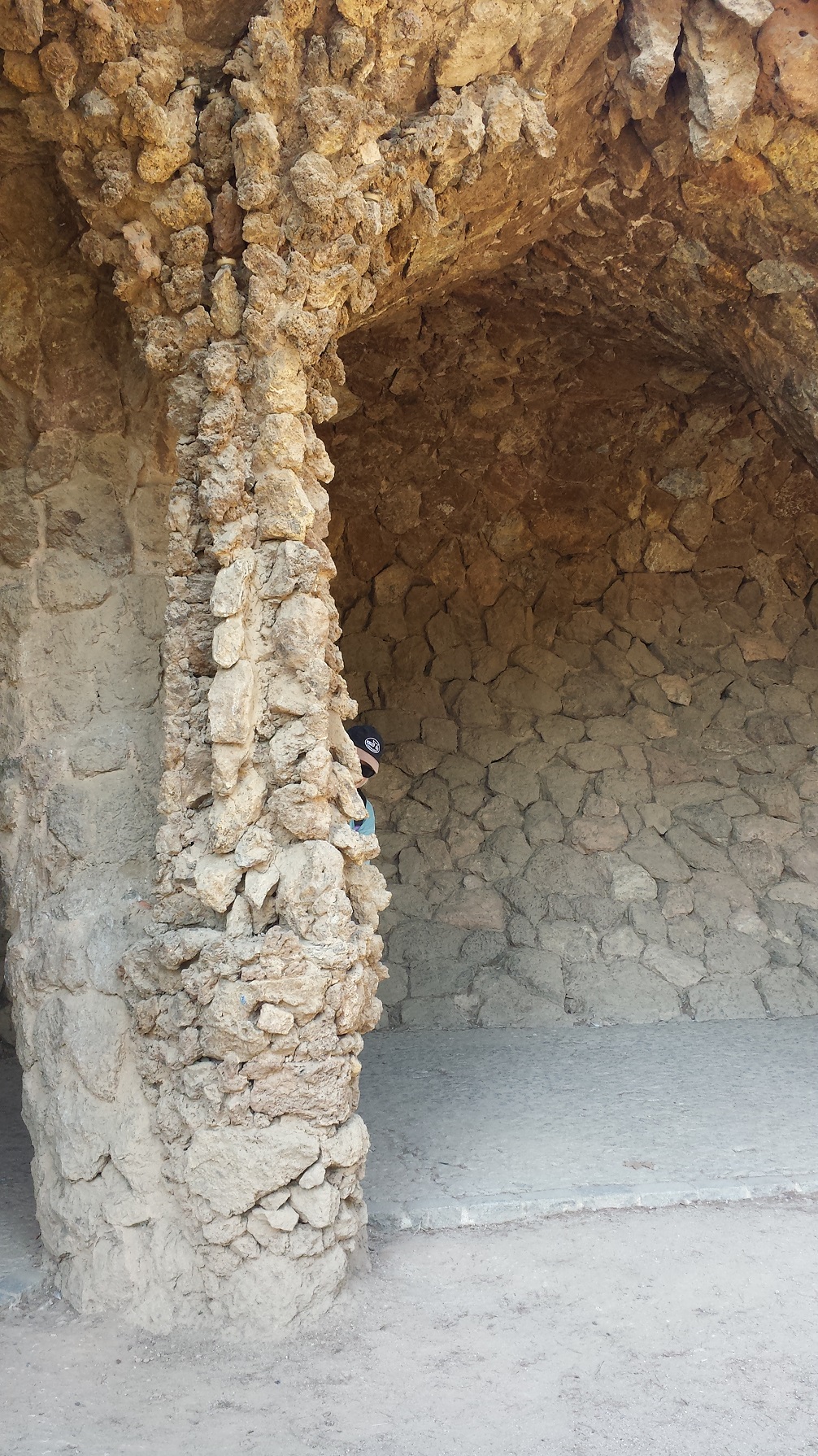
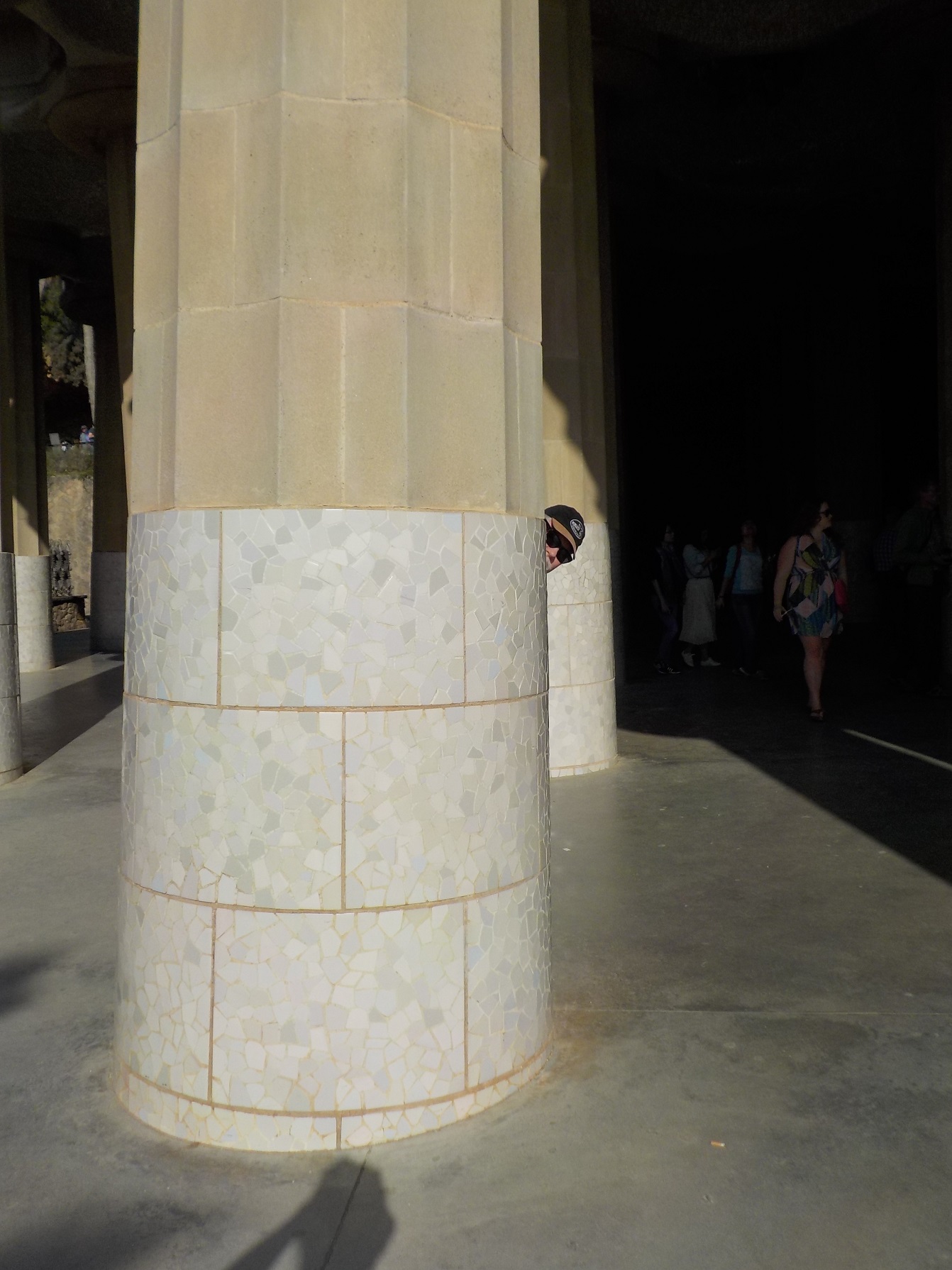
Gaudi Week, Day 5. We blink.

Sagrada Familia, the still unfinished masterwork that consumed the final years of Gaudi’s life, is the single must-see work of Gaudi’s for anyone visiting Barcelona. That’s not my opinion, that’s from tourist statistics that suggest 85% of visitors to the city make a stop at the church. It’s now a ‘minor’ basilica (no resident cardinal) dedicate by Pope Benedict XVI in 2011. Construction will not end until 2026 at the earliest and tall construction cranes hover over the massive structure. Eventually, a street will be vacated to provide space for the final section.
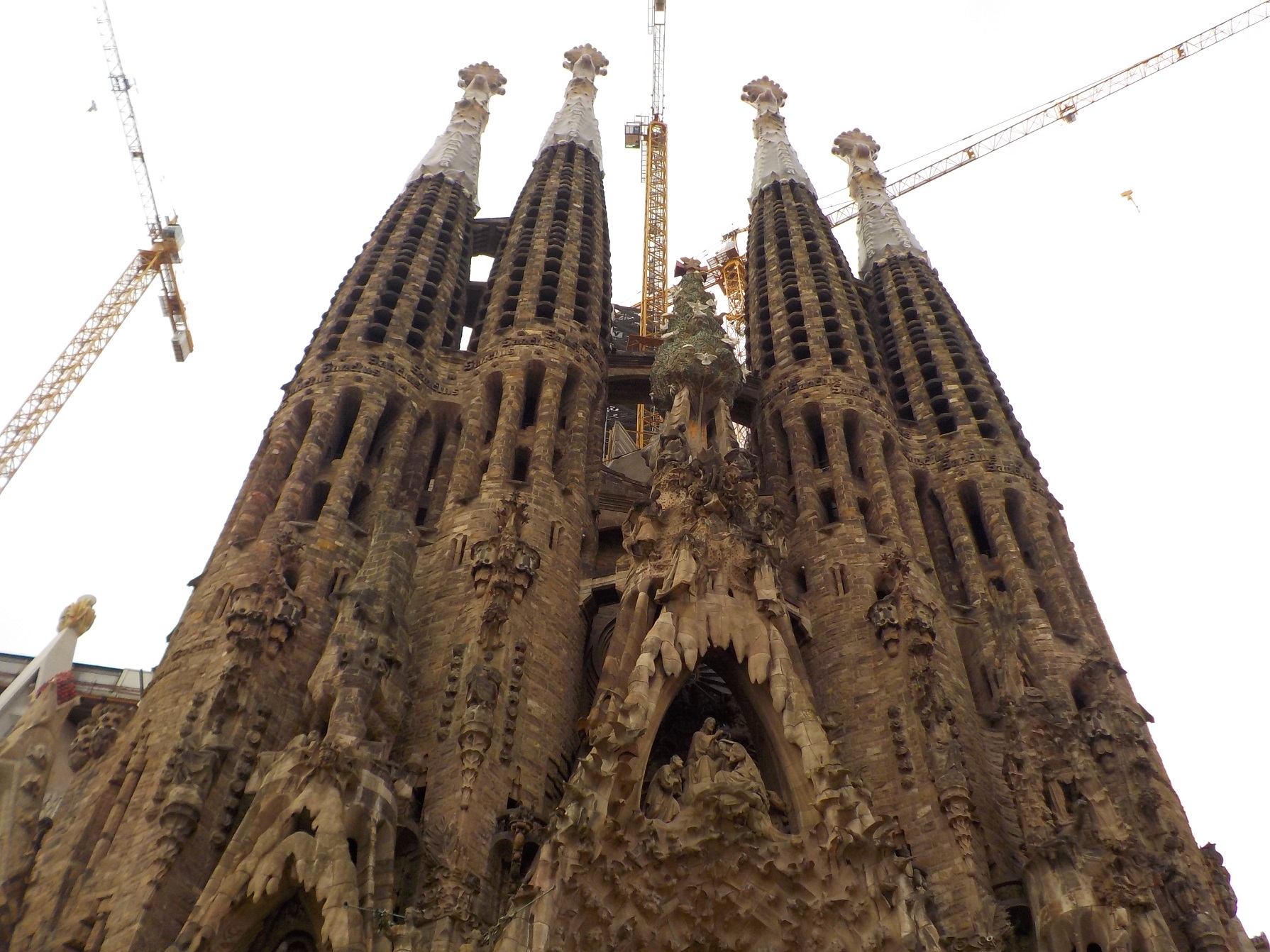
9.29.15 Sagrada Familia-002smThis is the “Nativity” facade of Sagrada Familia. There are two others, the “Resurrection” facade and the “Gloria” facade, each with four tall spires like this one. An even taller center spire is intended to complete the project.


The newer construction is intended to carry out Gaudi’s intentions, but the Resurrection facade, mostly complete, is created of smoother stone, probably to simplify construction, and you can see the difference.
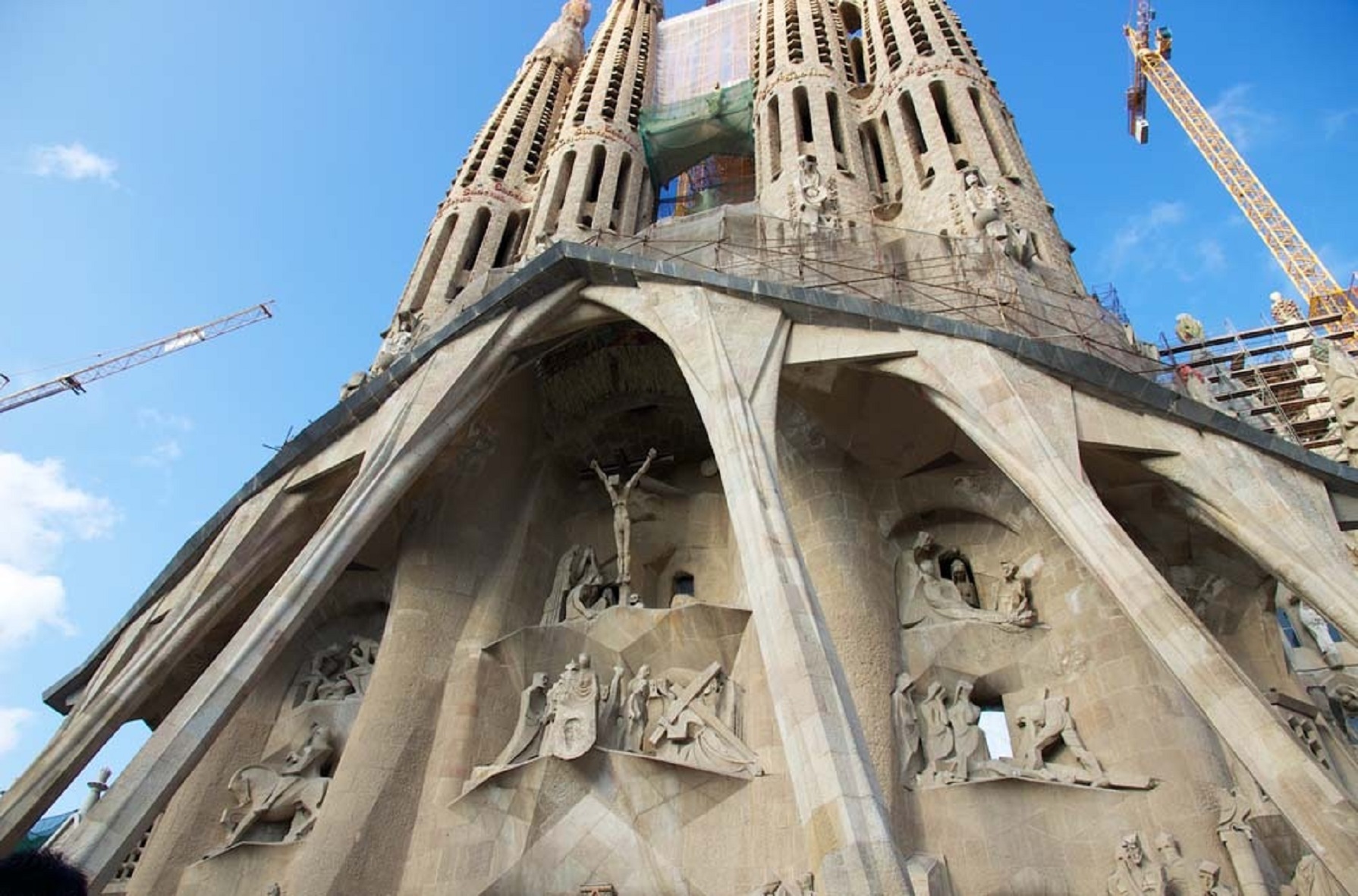
resurrection_sagradafamiliaThe upshot of our reconnaissance was that we did not purchase our tickets. To get our ICOM admission, we need to wait in line (no on-line sales) and take the next time available. We were put off by the crowds and tentatively plan to visit during the last week in October.

We blinked.

Gaudi can be overwhelming. Maybe it will be better after a bit of a break.


What we discovered in visiting Sagrada Familia is the astonishing number of visitors. When we arrived on a Monday (OK, it was midday), the line to purchase a ticket was 30 minutes long. If you purchased a ticket, your entry time would be 4 pm–all earlier times sold out–then you walked to the opposite side of the building, 2 blocks away, to wait. Even with a ticket, it takes another 30 minutes of standing in line to get into the building.

There are more than 3 million visitors per year to Sagrada Familia. To put it in familar terms, that is about 30% more than the largest number of people who have ever visited the Field Museum in a year (Think King Tut, Sue the first year). That means that every day of the year around 8,000 people visit. That turns out to be a lot of people.

Gaudi Week, Day 4–Museums of Catalan Crafts

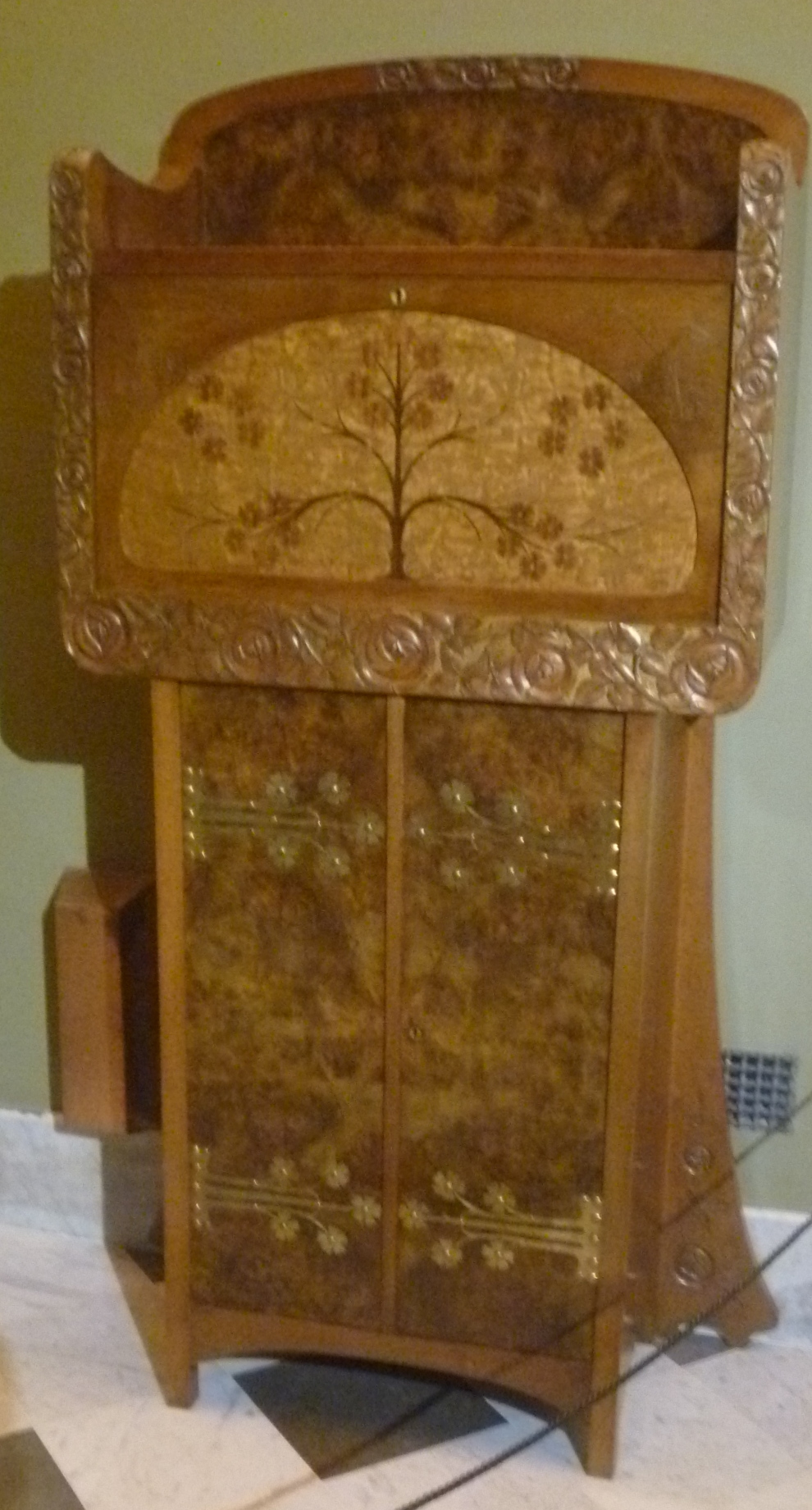
After seeing places built by Gaudi himself, it’s not quite as interesting to go to a museum. On the other hand, museums often have the furnishings that have been removed over the years from the houses and buildings that Gaudi designed. The Museum of Catalan Modernism is a relatively small collection, but with some fantastic furniture, some by Gaudi and some by other craftsmen, including the most elaborate marquetry desk either of us has ever seen.9.27.15 Museum of Catalan Modernism-007sm

9.22.15 Palau Guell-071sm

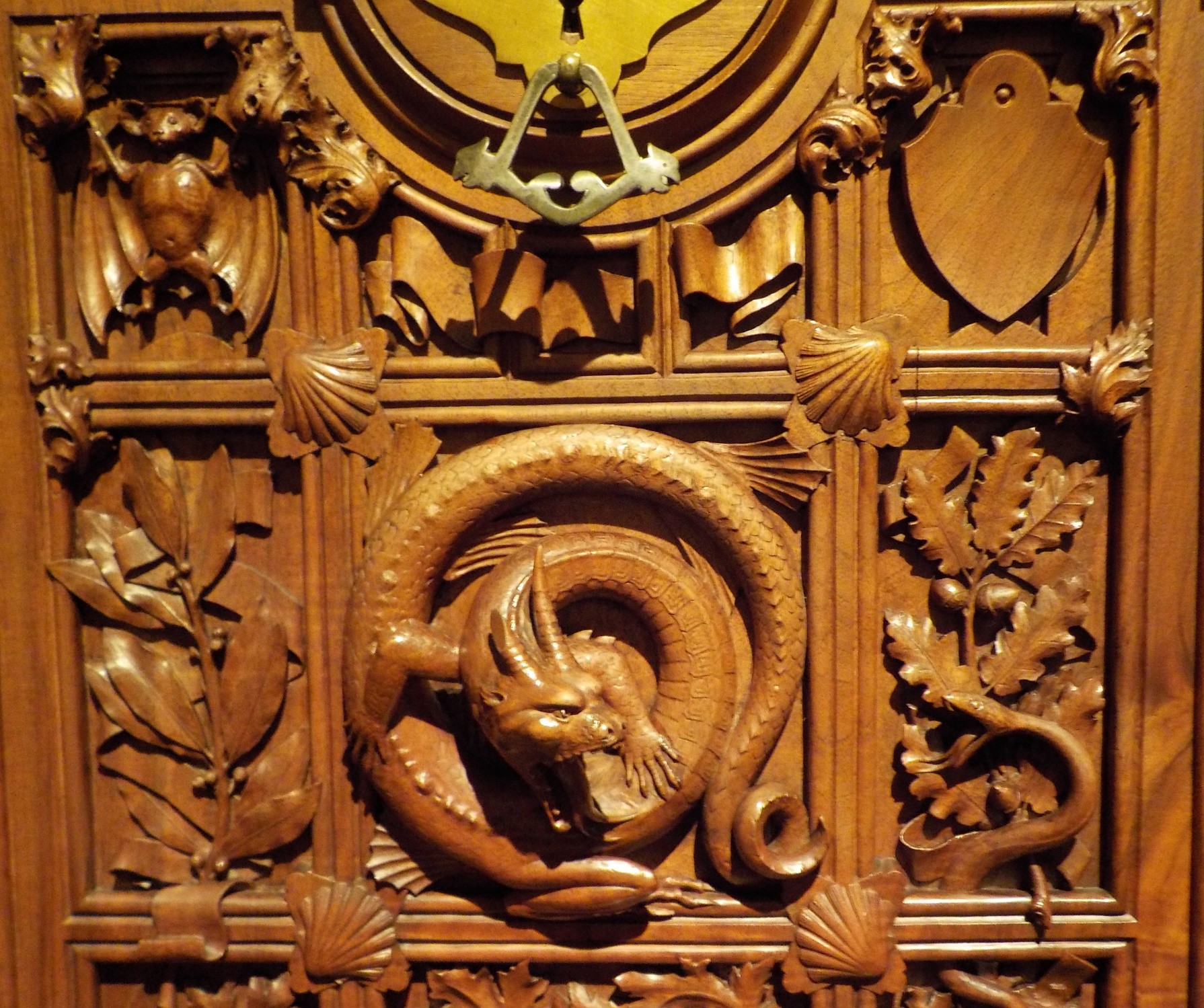
This is another elaborate drop front desk from the Palau Guell. It makes you wonder whether anyone ever used it. I think you would be wondering whether you would damage the finish every time you sat down at it.

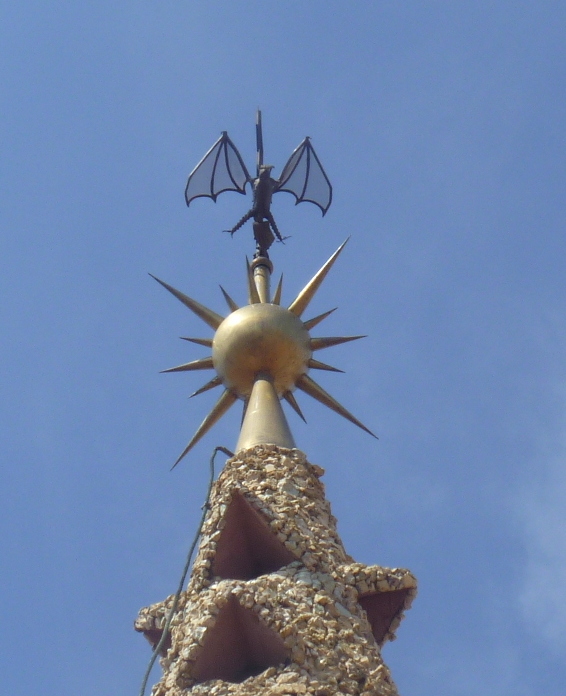
Some works have great details. Why did the Catalans like dragons and bats? No idea.

9.27.15 Museum of Catalan Modernism-0089.22.15 Palau Guell-084sm

We also visited the National Museum of Catalan Art. This is much larger, but begins with the Romans and ends with Catalan contemporary artists. We looked at so much art in the latter museum that we were almost worn out before we got to the Gaudi exhibit.

I have few photos of furniture designed by Gaudi. There are very recognizable chairs made by Gaudi for the Casa Battlo. Because it has no furnishings in it today, there are a lot of pieces to go around and many museums have a chair or two.

9.28.15 Gaudi Hse Mus at Parc Gsm

There are single and double chairs similar to this one, along with end tables and other chairs. You can purchase a repro for about 1300€.

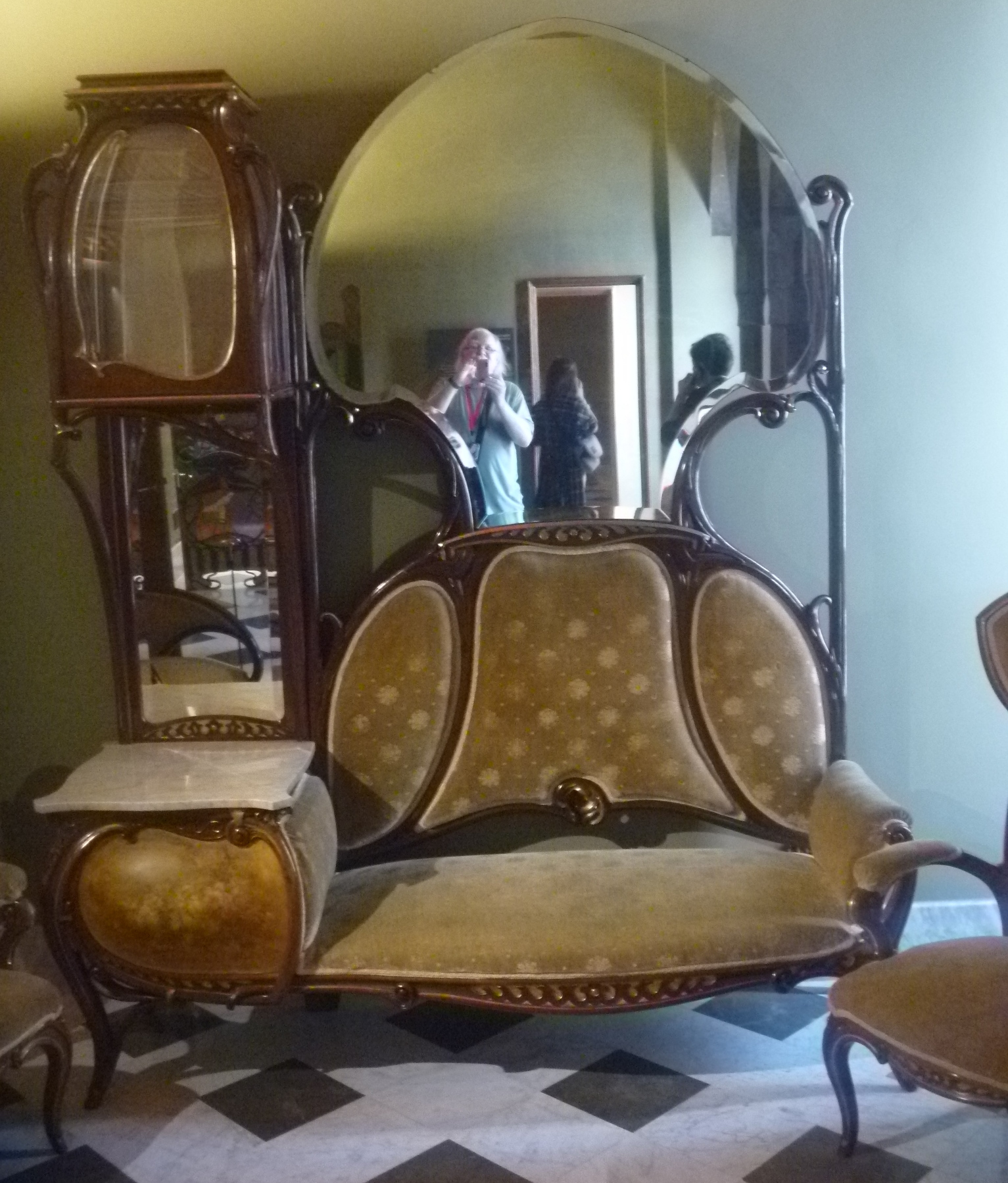
The piece below is earlier, from the Palau Guell, one of Gaudi’s earlier projects for Eusebi Guell. It is more clearly related to Art Nouveau with all its curling sections but also because it is a combination piece, settee/end table and display cabinet.

9.22.15 Palau Guell-072sm

There are more Gaudi-designed structures, the most distinctive remaining is the church of the Sagrada Familia.

Gaudi Week, Day 3–Casa Batlló

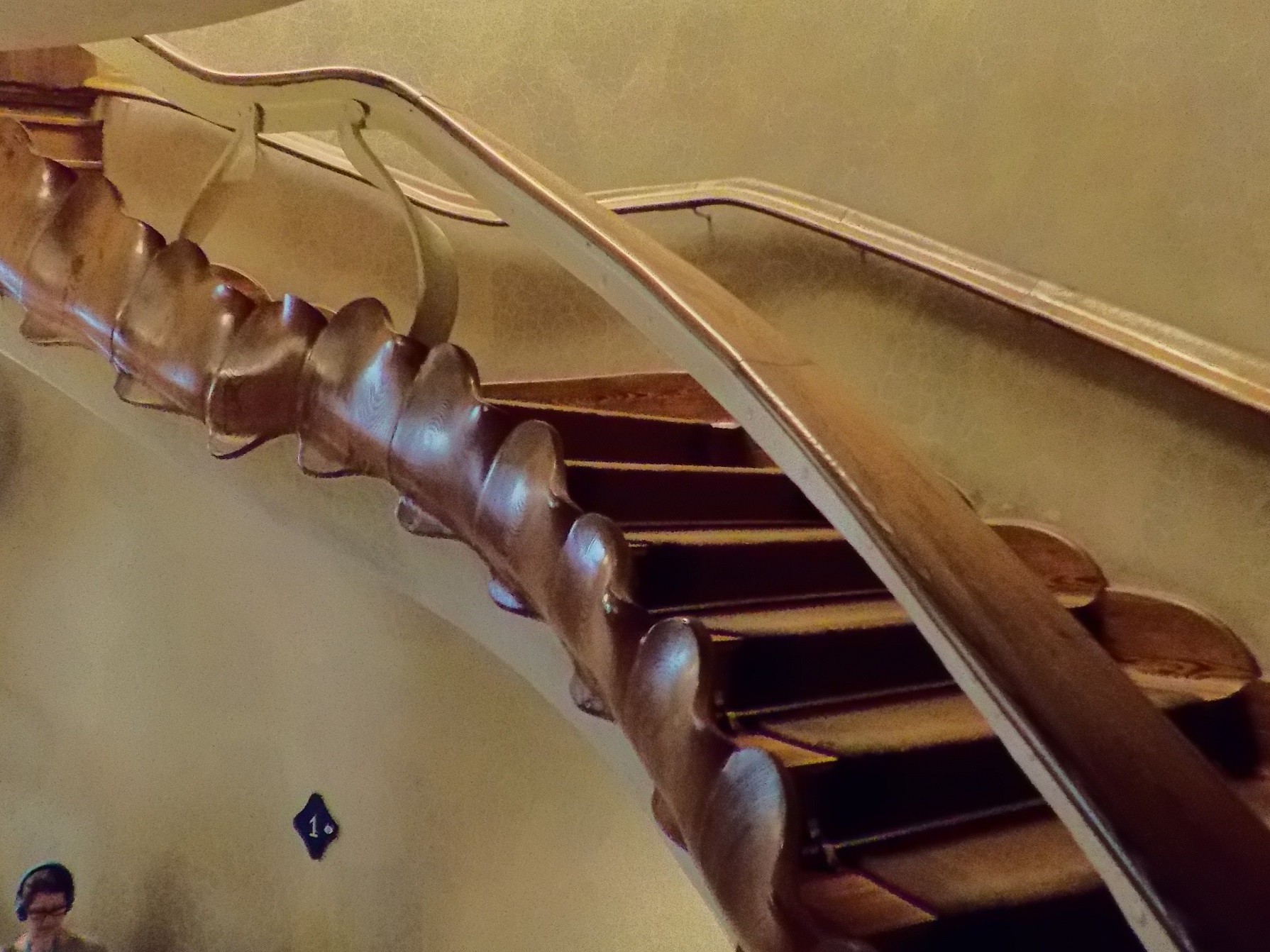
First, it’s Casa Bai-OH (skip the t, skip the ll sort of). This apartment building is arguably the most distinctive structure Gaudi worked on. He transformed an existing building by adding curved balconies to the exterior and adding two stories and an exotically curved peaked roof. There are a series of references to a skeleton, first by the ground floor staircase that is seen by some as looking like vertebrae:

9.29.15 Casa Batllo-008smI can see it.


There is also a suggestion of bones in the supports for small balconies on the lower floors that you can see through the windows below:

9.29.15 Casa Batllo-023sm

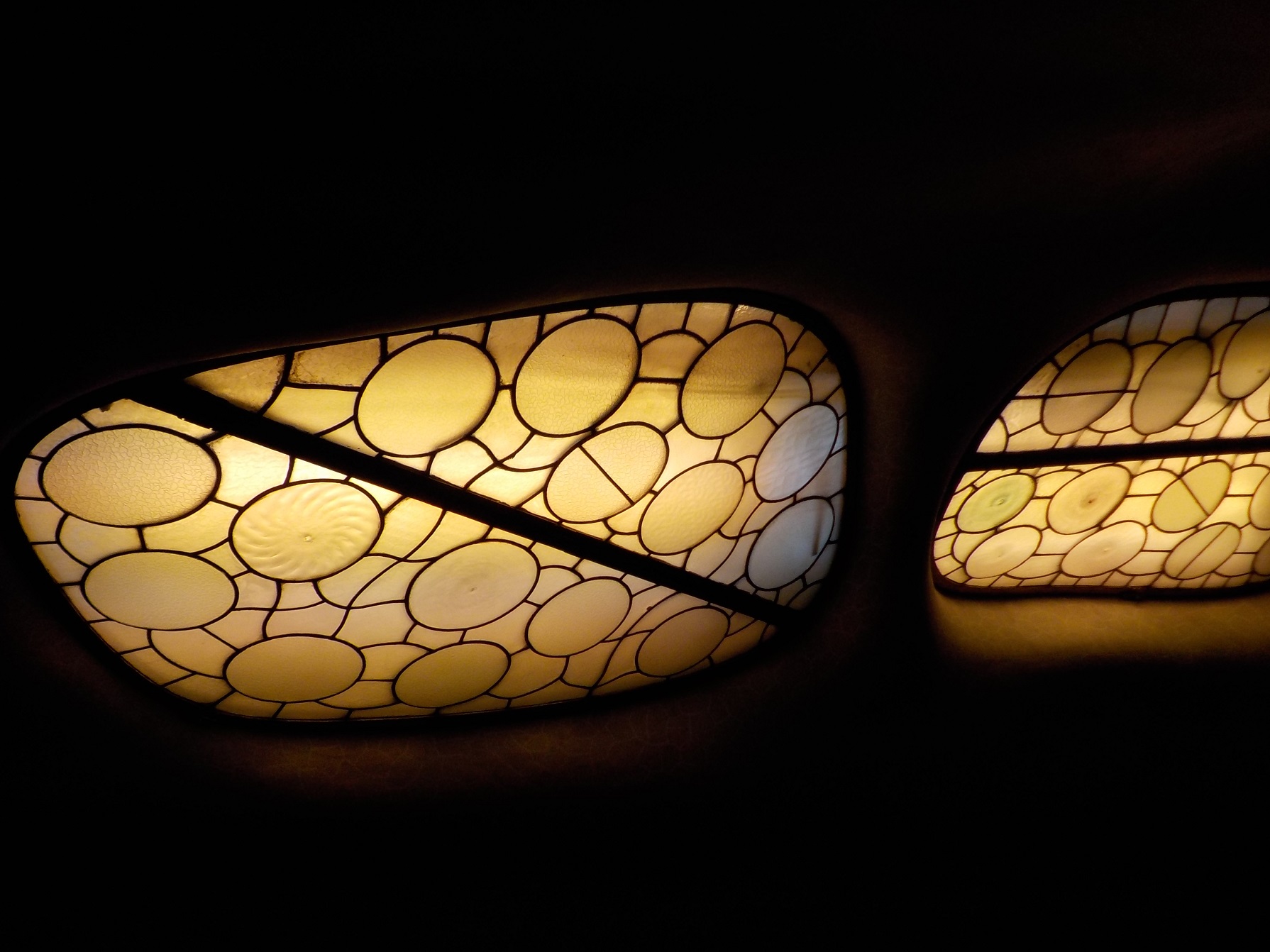
There are skylights reminiscent of turtles or lizard skin:

9.29.15 Casa Batllo-009sm

At the very top of the house, the roof line does look like a dinosaur’s back.

9.29.15 Casa Batllo-037sm

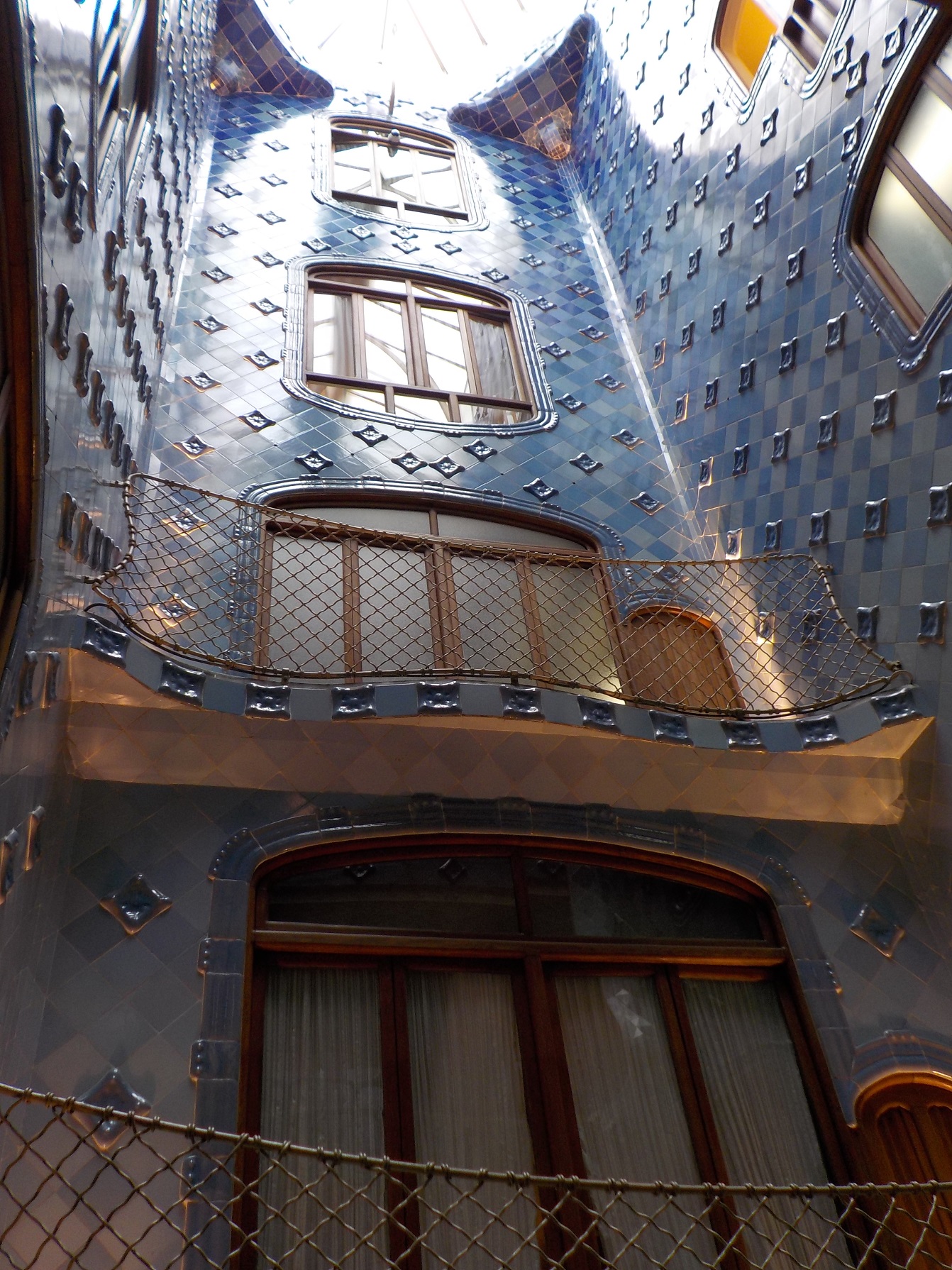
The inside was highly decorative and cleverly engineered to promote circulation of air through all six stories, via a central air well and adjustable vents. The air well was a work of art, tiled to reflect more light in the lower levels and less light where it was brightest at the top.

When you look at the entire area, it is a uniform blue from top to bottom:

9.29.15 Casa Batllo-031sm

Up close the blue becomes lighter and lighter as you descend from the roof (L-R).

In all this fabulous decor, it is strange that there are no furnishings. That appears to be intentional to accommodate crowds. The house was full of people the entire time we were there:

9.29.15 Casa Batllosm

9.29.15 Casa Batllo-013sm

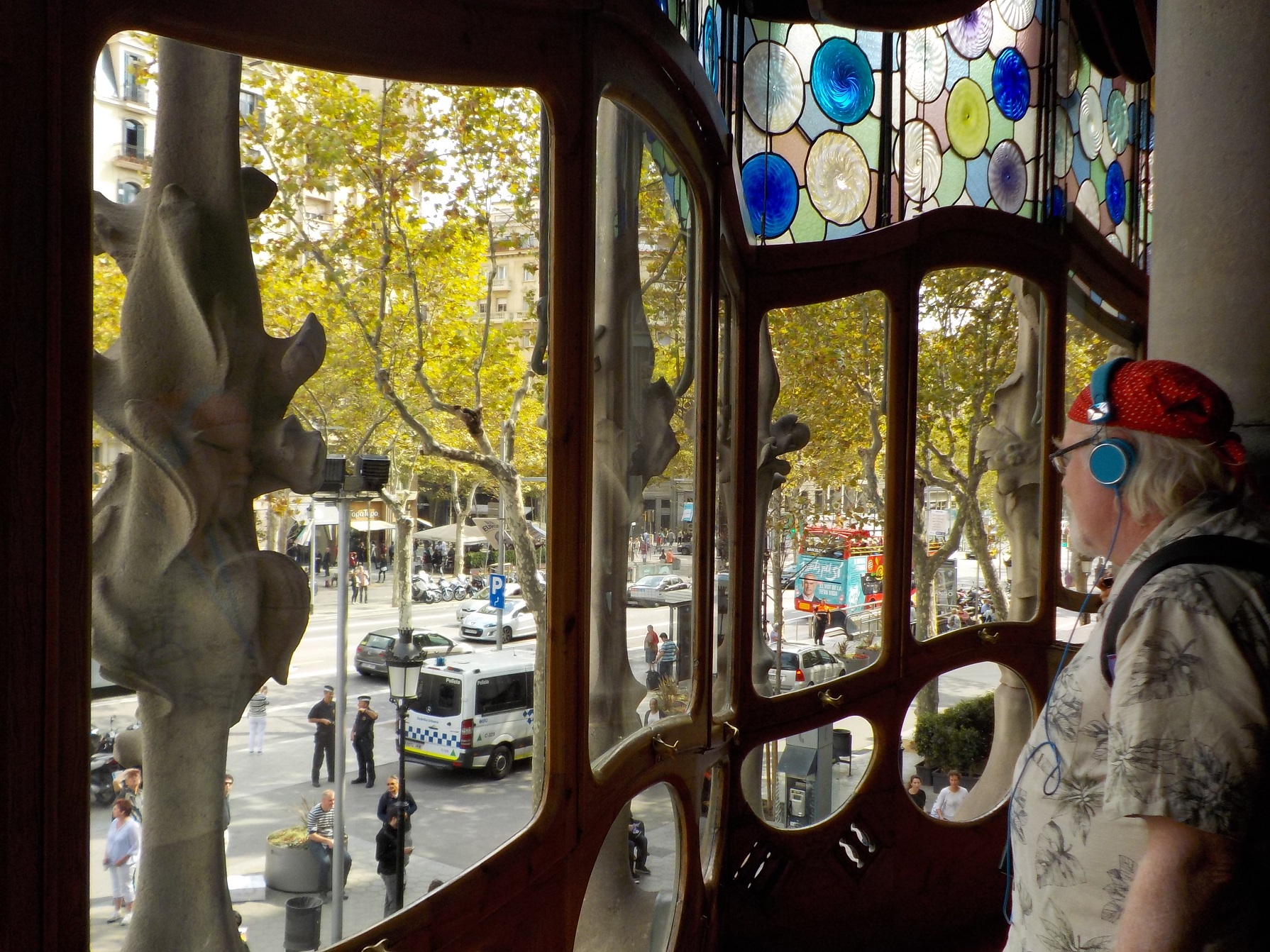
Notice that we are all wearing headphones and holding smartphones. In each room, in addition to an audio presentation there is a virtual reality program that shows you the room with its furnishings. If you point your phone toward one wall or corner of the room, it shows you that area. As you rotate the screen around the room you see the rest of the room with its period furnishings. Many of the original pieces can be seen at museums in Barcelona like the Museum of Art of Catalonia and the Museum of Catalonian Modenism. I wondered why there were so many pieces from the Casa Batlló in museums when the house was open for visitors. In the virtual rooms the floors are covered with large persian rugs and the wooden chairs, end tables, armoires, etc. that Gaudi designed specifically for the house, are all positioned around the rooms. This is from staging and photographing the rooms, not taken from historic photos, so the scenes don’t have the lived-in quality that photos provide, but they also show the objects to best advantage. There is a historic photo of an elaborate settee that has chairs in front of it, the settee unused. No wonder they didn’t do a virtual reality of that arrangement.

Like other Gaudi houses, the roof is a fantasia of tiled chimneys, the skylight over the air well and the dinosaur back of the facade.

9.29.15 Casa Batllo-033sm

From the roof it is easy to look onto the terrace of the adjacent house, Casa Amatller, another Moderniste design by one of Gaudi’s contemporaries, Josep Puig i Cadafalch. I wonder what the homeowners thought of one another with their competing monuments to bourgeois success side by side on a main thoroughfare. Is there a hint in the fact this was called the “Manzana de la Discordia (the block of discord).” Was it the discordant architectural styles, or friction among the owners? Guidebooks aren’t saying.

Gaudi Week, Day 2–Parc Guell

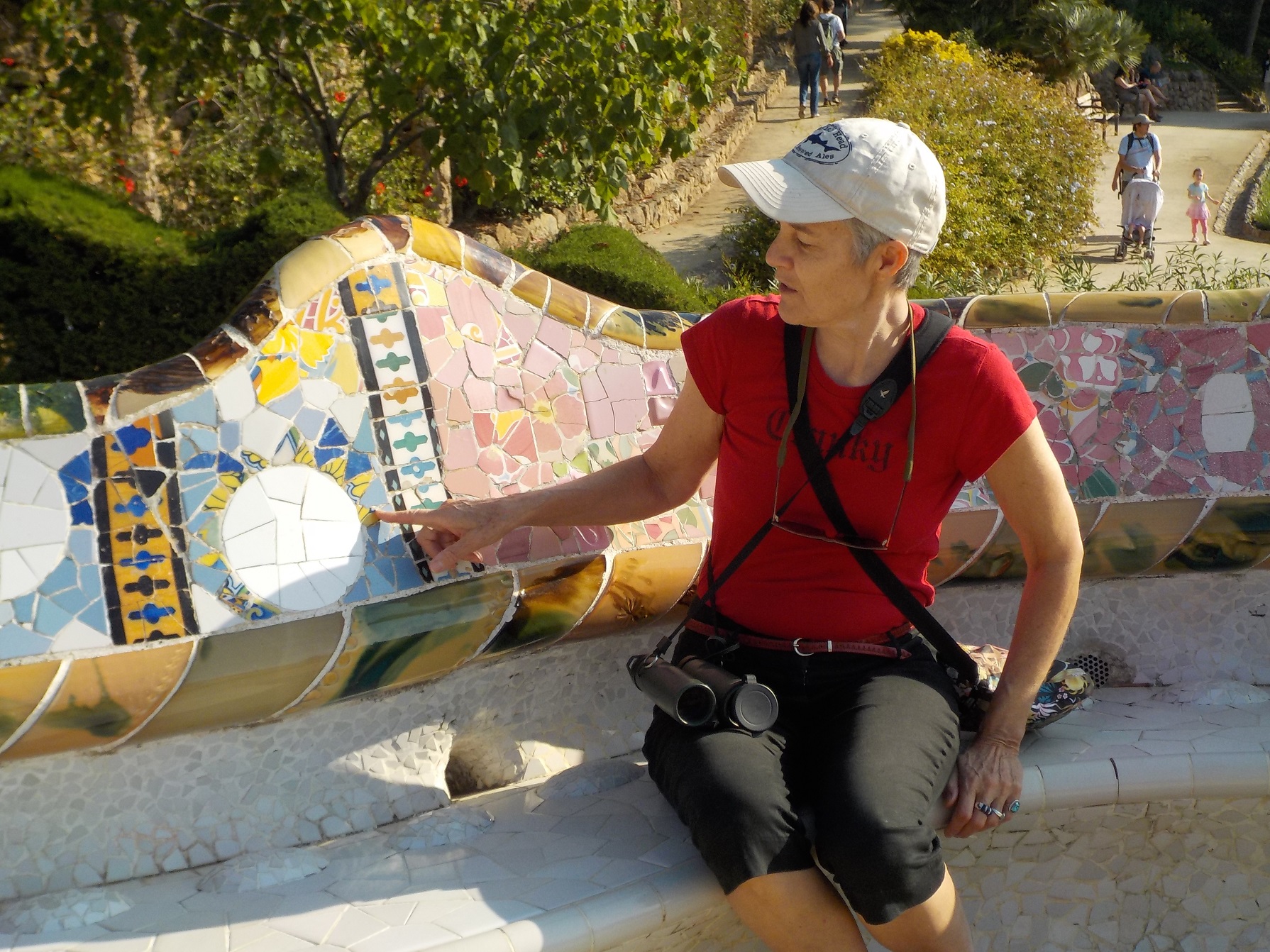
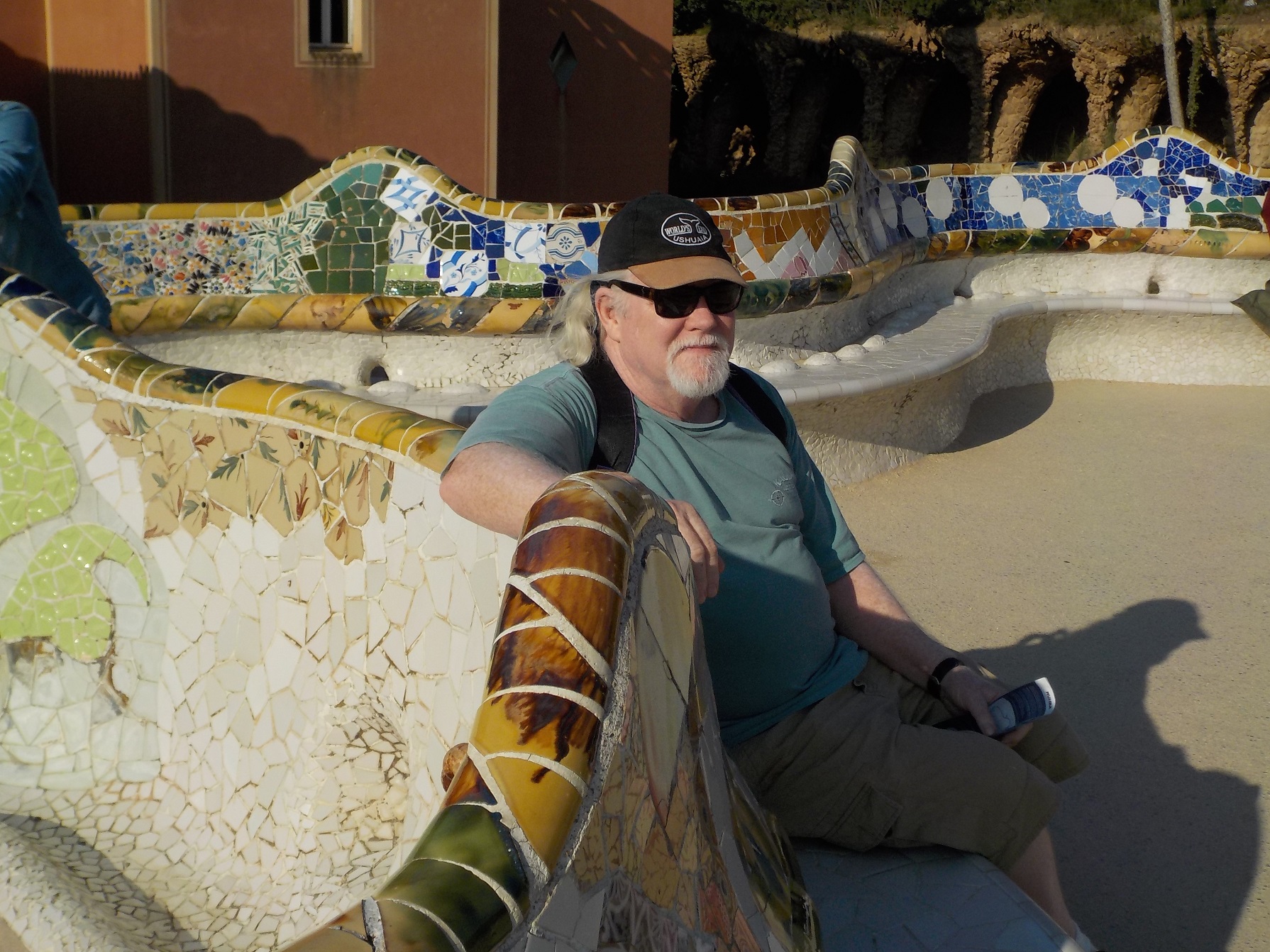
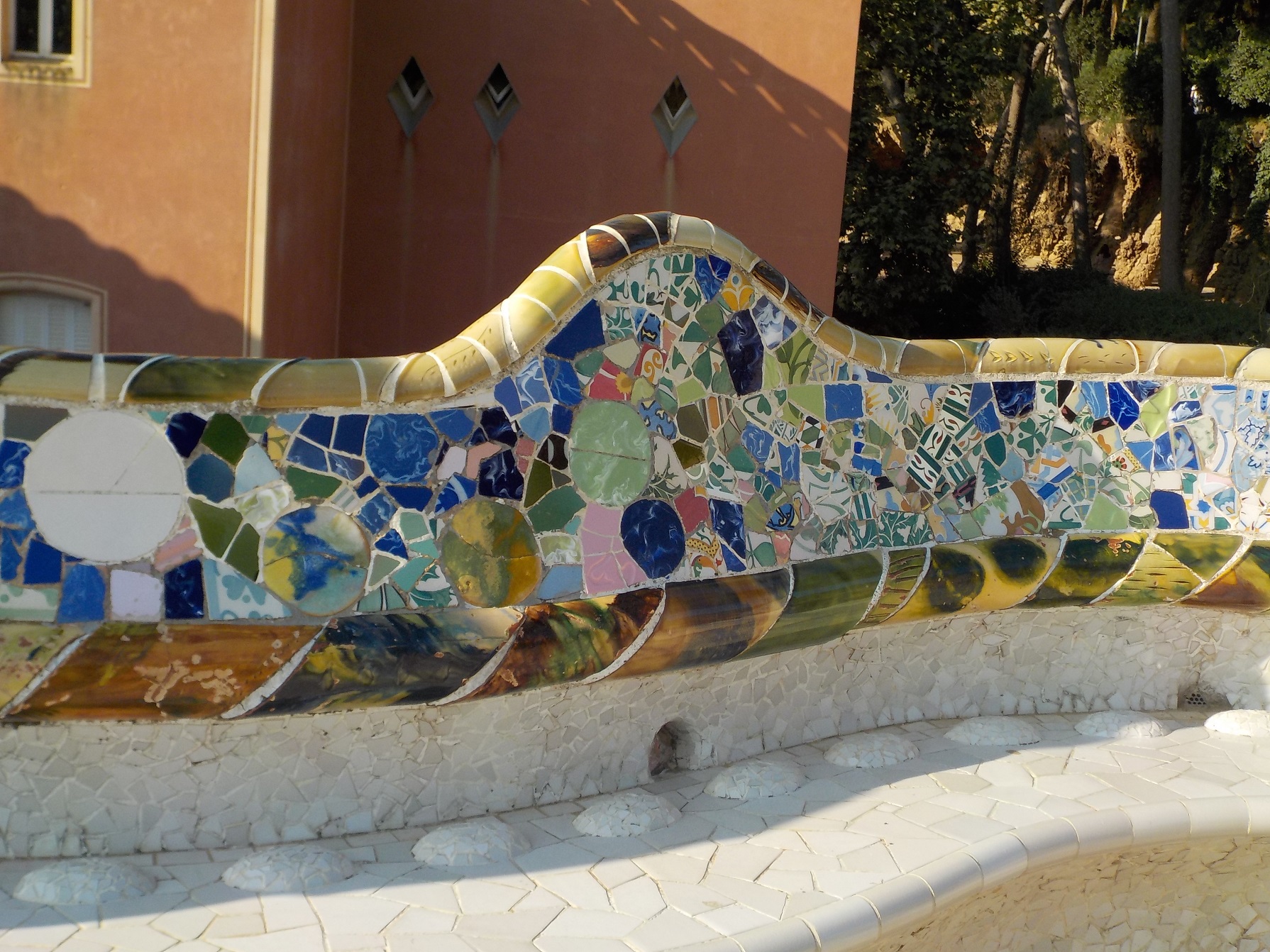
We have been to Parc Guell twice, once to see the section outside the pay zone and once with a ticket. There is more than enough for both visits. Inside the ticketed area is the best known feature of the park, a long sinuous tiled bench that runs around the perimeter of a plaza that overlooks all of Barcelona.

9.28.15 Parc Guell-010sm

9.28.15 Parc Guell-003sm

9.28.15 Parc Guell-00sm1

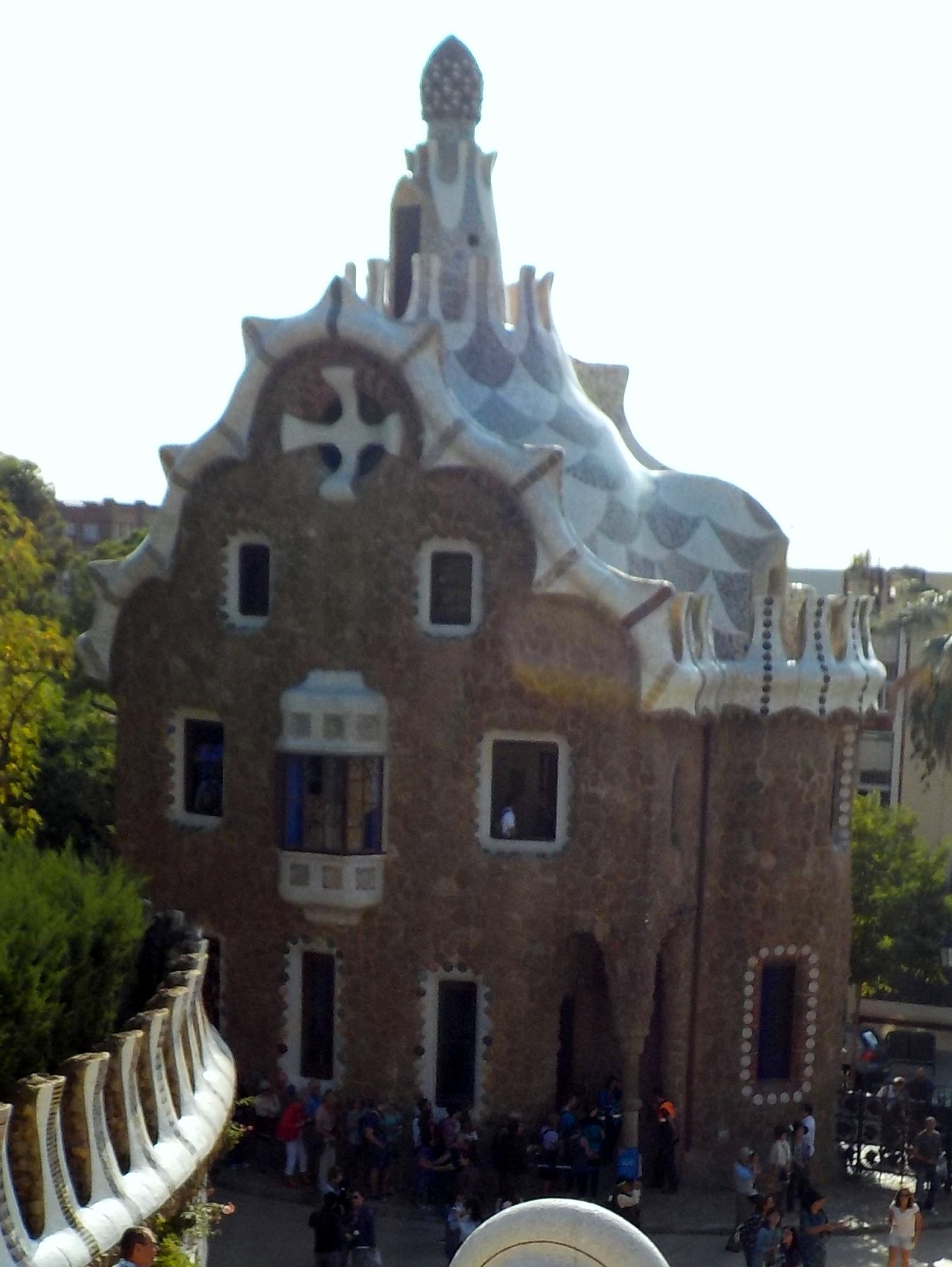
The park is high on a hill over Barcelona, chosen for the healthful qualities of the area for a residential development sponsored by Gaudi’s patron, Eusebi Guell. Two small structures are also part of the gated park. The gift shop (L-below) was a reception area for the failed residential development that was to surround the park. The other was a park guard’s house–I hope they enjoyed it. Today there are no furnishings, just the space and audio-visuals, but it would be a magical place to live.

9.28.15 Parc Guell-043sm 9.28.15 Parc Guell-034sm

We also visited the Gaudi House museum. Though it was originally part of the park, it is now operated by the Sagrada Familia organization (can you say ‘turf’ and ‘income’ boys and girls?).

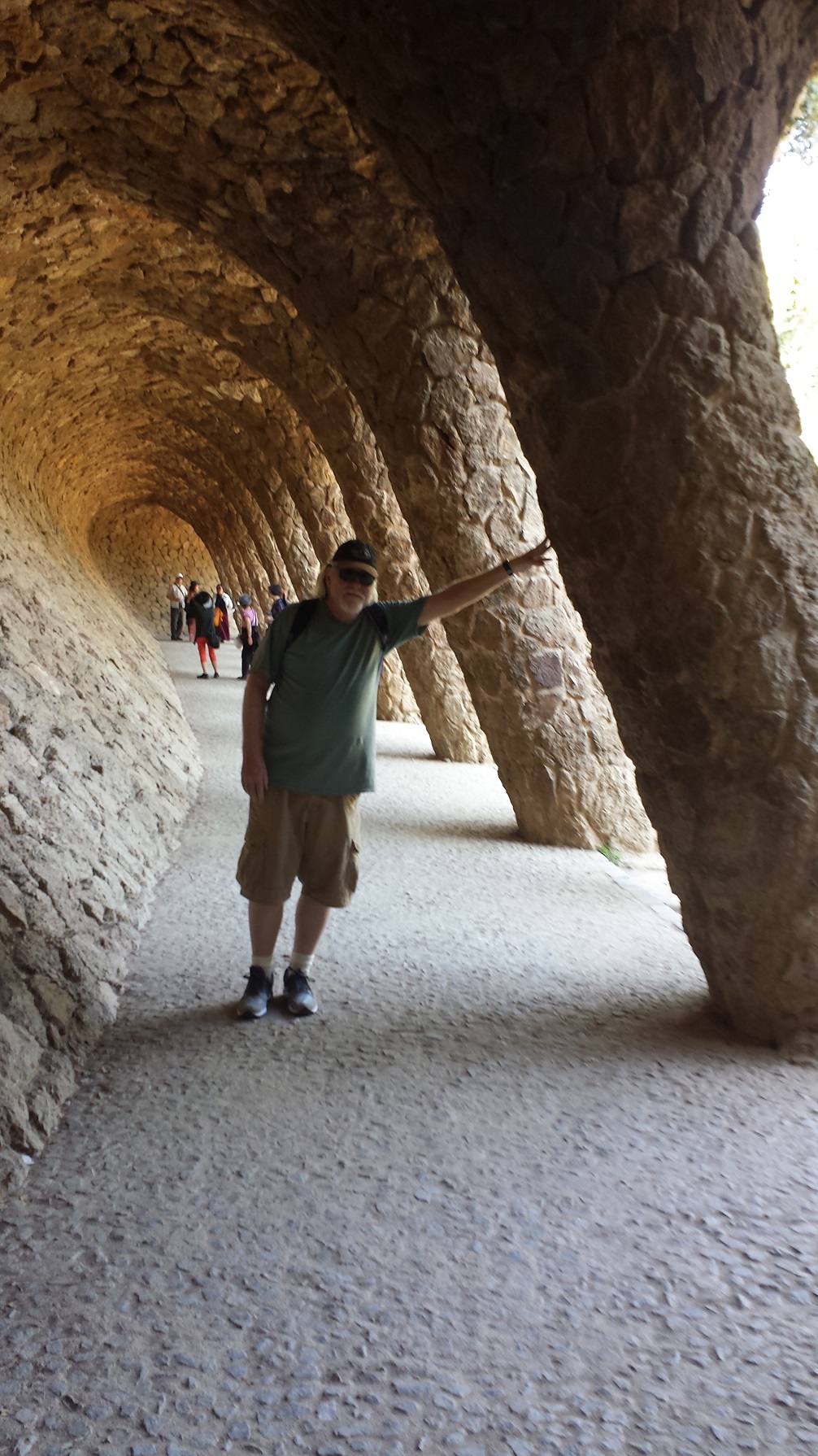
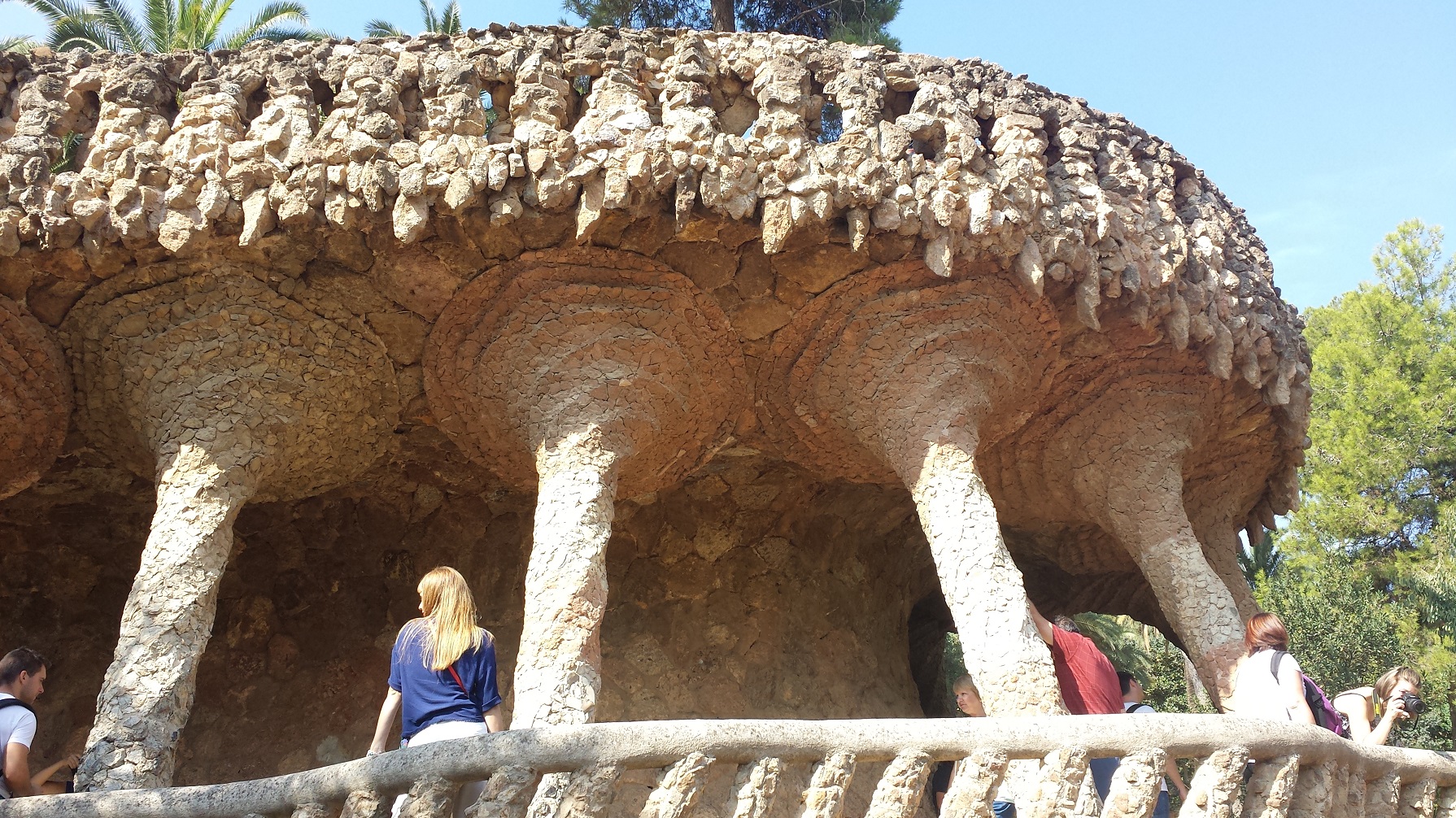
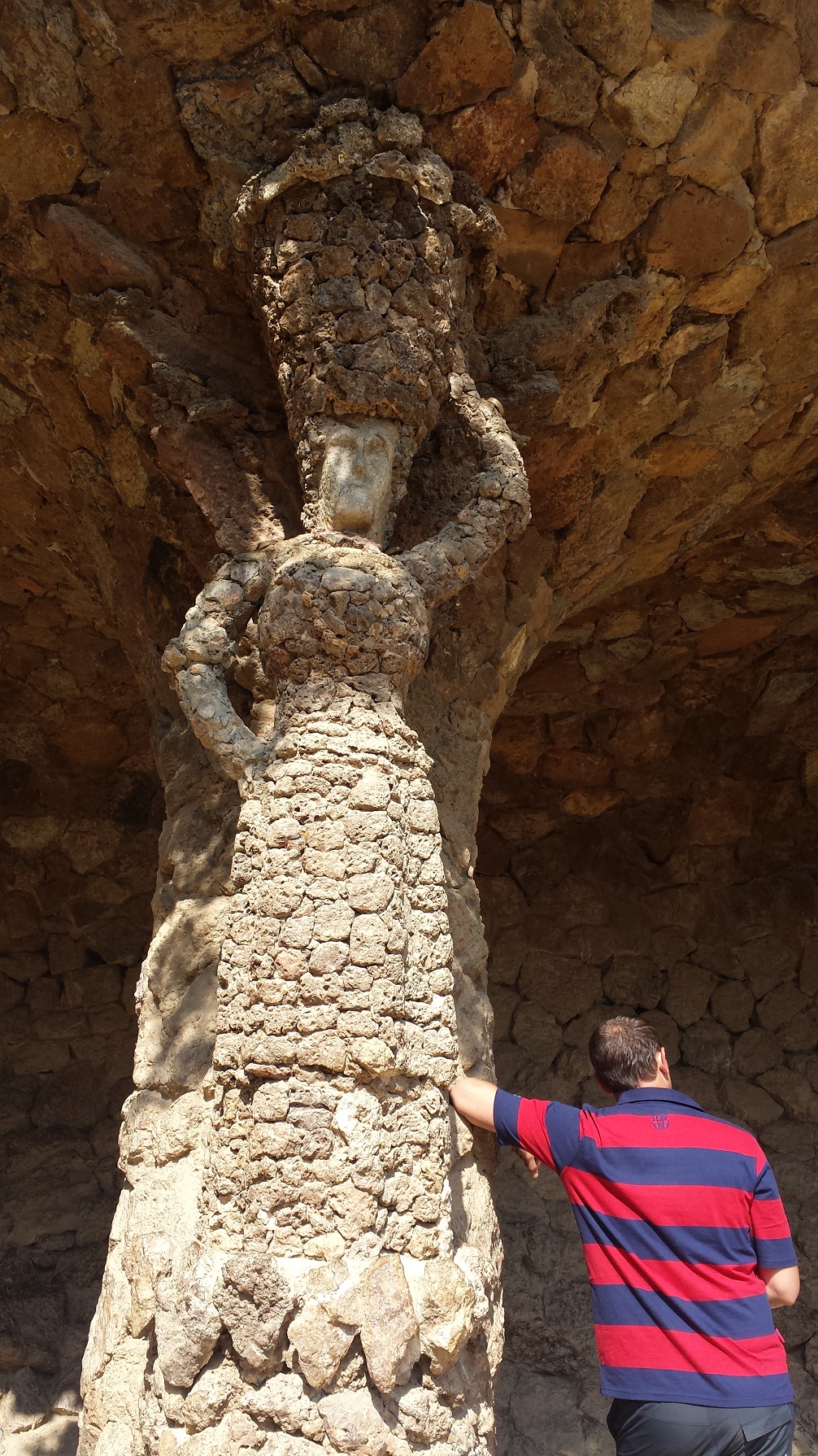
The passages and walkways are all sculptural and wonderful. There is a space called the hypostyle hall, full of columns that lean in different directions. Its tiled ceiling is ornamented with medallions of sea creatures.

Not that there are any columns that don’t lean.

9.28.15 Parc Guell-050sm9.28.15 Parc Guell-046sm


9.28.15 Parc Guell-052sm9.28.15 Parc Guell-031sm

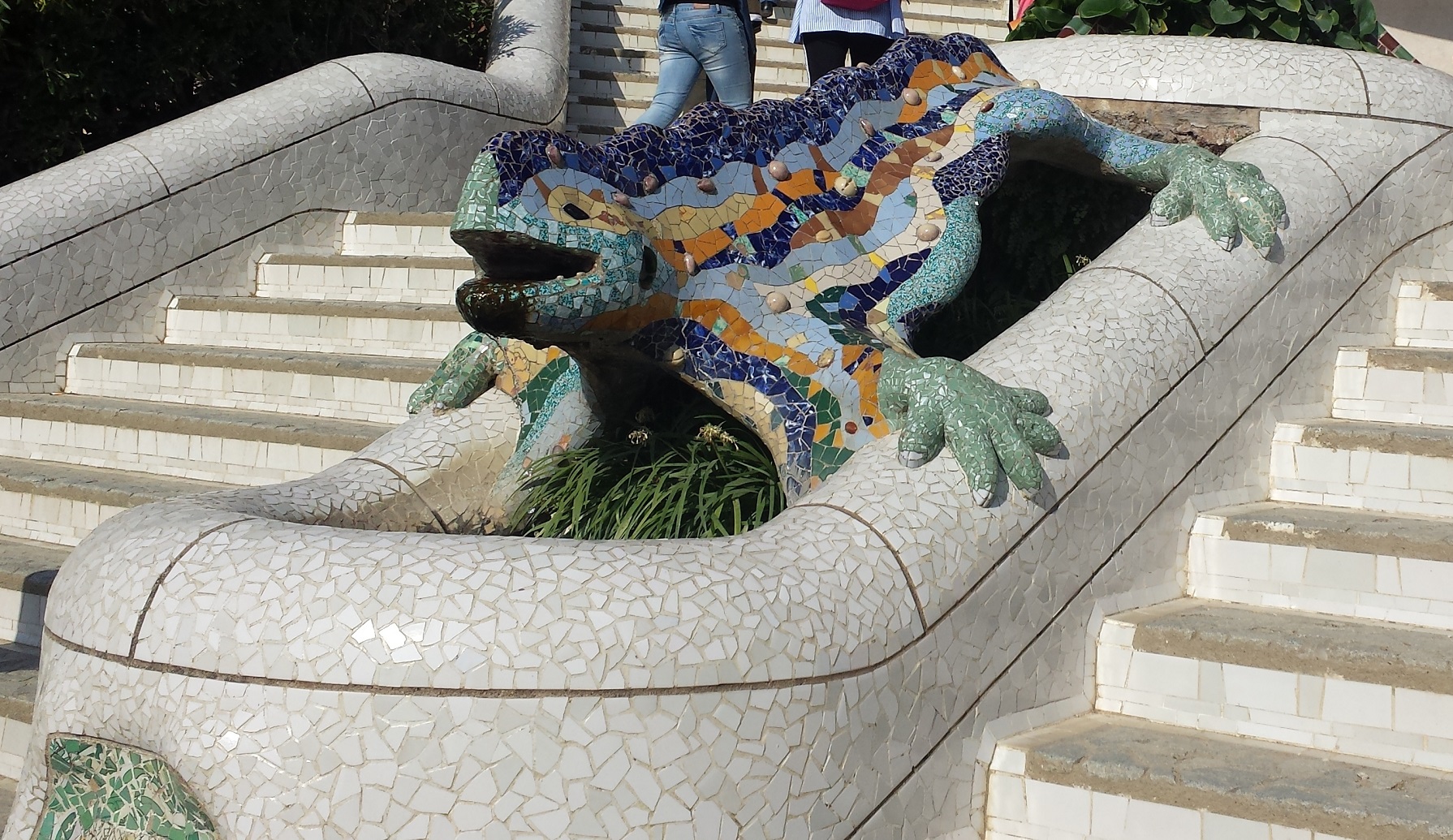
We had an interesting chat with the guard shooing people away from the iconic symbol of the park: the iguana (below). You can buy a copy of it as a fridge magnet or a keychain, snowglobe, tshirt, potholder…..anywhere in Barcelona. Therefore, people would like a photo of themselves hugging it or sitting on it or merely patting it on the hand/paw. The guard’s job is to ask people not to do that, except that most visitors either don’t pay any attention or don’t understand him. He was very exasperated as he flapped his hand at tens of people as we stood nearby. “Oh! You understand Spanish. Hardly anyone does. Do you know what my boss will say if he comes by and sees people sitting on this? I’ll be in for it. Up! Up!” He flaps at more visitors as a new crowd flows down the steps and starts to sit on the lovely lizard and wave their selfie sticks.

9.28.15 Parc Guell-017sm

Another pillar supporting a well-meaning but uninformed visitor.9.28.15 Parc Guell-053sm

Admission to Parc Guell was 7€ for me and 4.90€ for my pal over 65.

Our entry to the Gaudi House Museum was free (thank you ICOM).

Gaudi Week, Day 1-Palau Guell

We embarked on Gaudi week, trying to see all the surviving architecture of Antoni Gaudi (Gau-DEE) in the Barcelona area. In no particular order:

Casa Guell was the in-town home of Eusebi Guell, Gaudi’s principal patron. Without Guell, I wonder whether Gaudi would have had a career and would have ended up a muttering madman. His creativity was amazing, but it’s not clear he had a sense of balance. He focused on his complex work, and not on financing or marketing any of it. Guell provided numerous commissions and was patient for their extended construction times. Without Guell’s long term, loyal patronage, would we ever have seen Gaudi’s work?

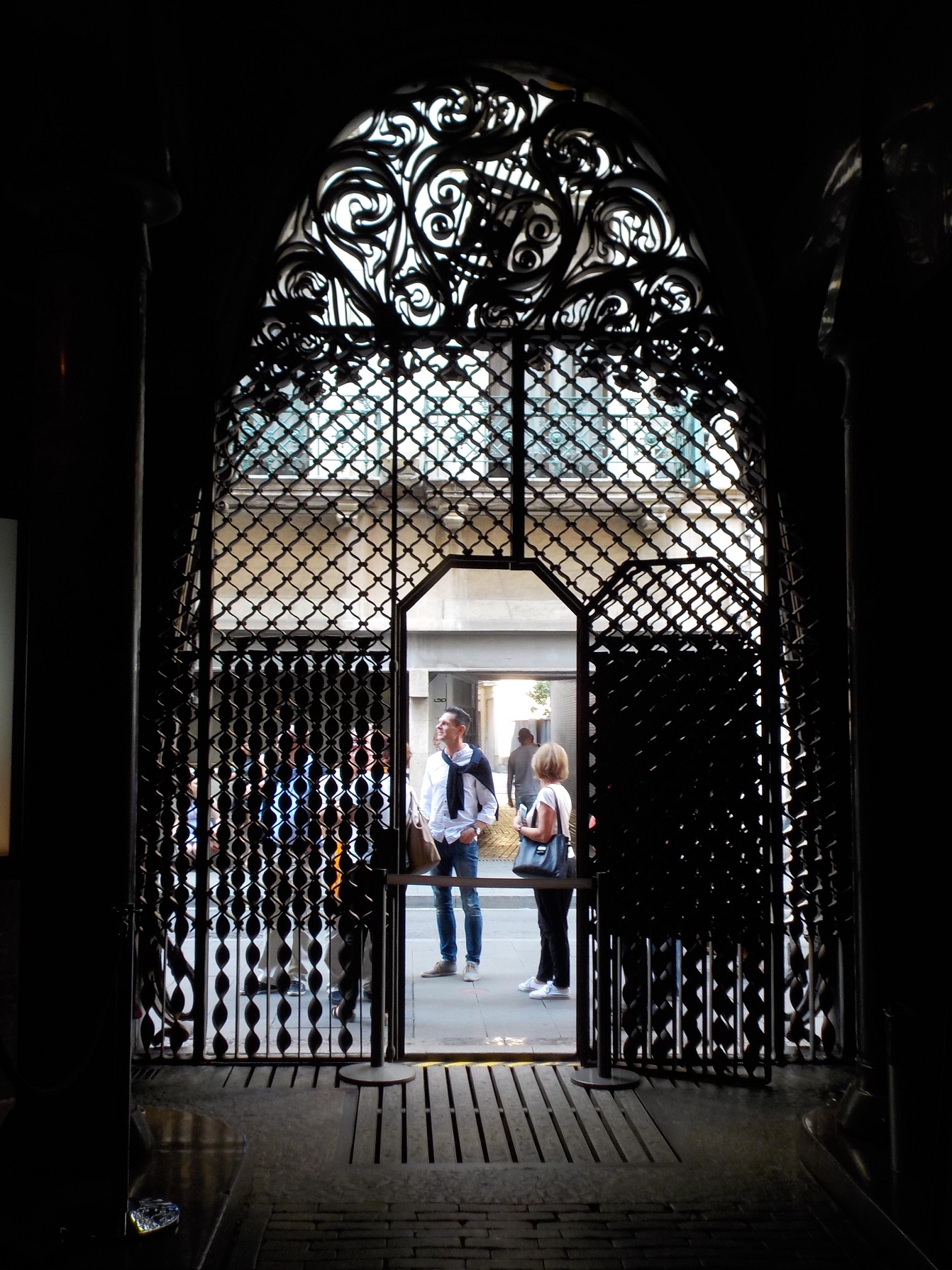
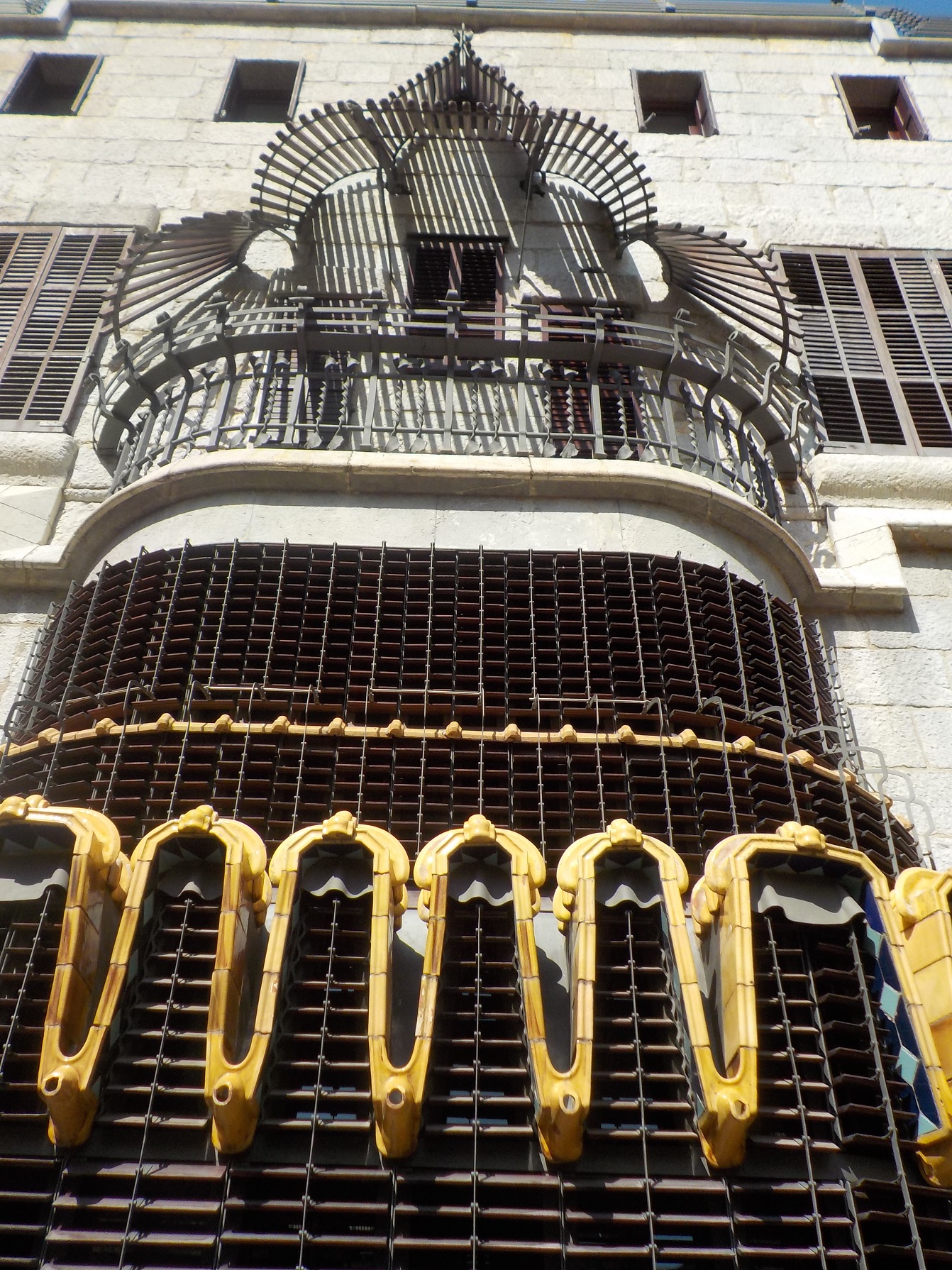
9.22.15 Palau GuellsmThe Guell house has elaborate iron work on the doors and windows.

9.22.15 Palau Guell-012sm

The house also has fourteen chimneys, finished in tile or built of brick. The roof is one of the highlights of a visit.

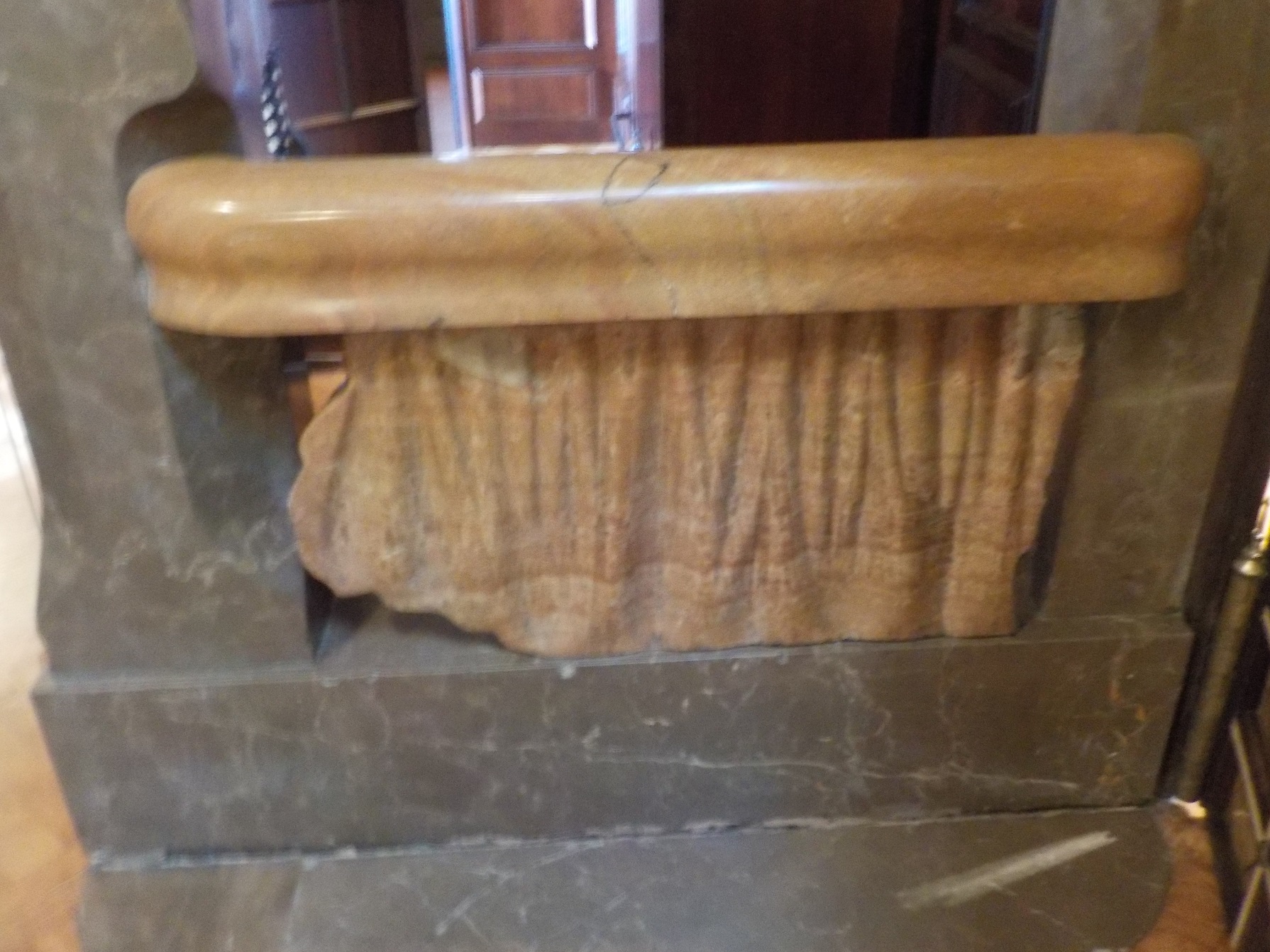
The curtain below is carved of wood,

9.22.15 Palau Guell-019sm

Admission to the Palau Guell was free thanks to our ICOM membership.

Next stop, Parc Guell.


Barcelona architecture page–ongoing


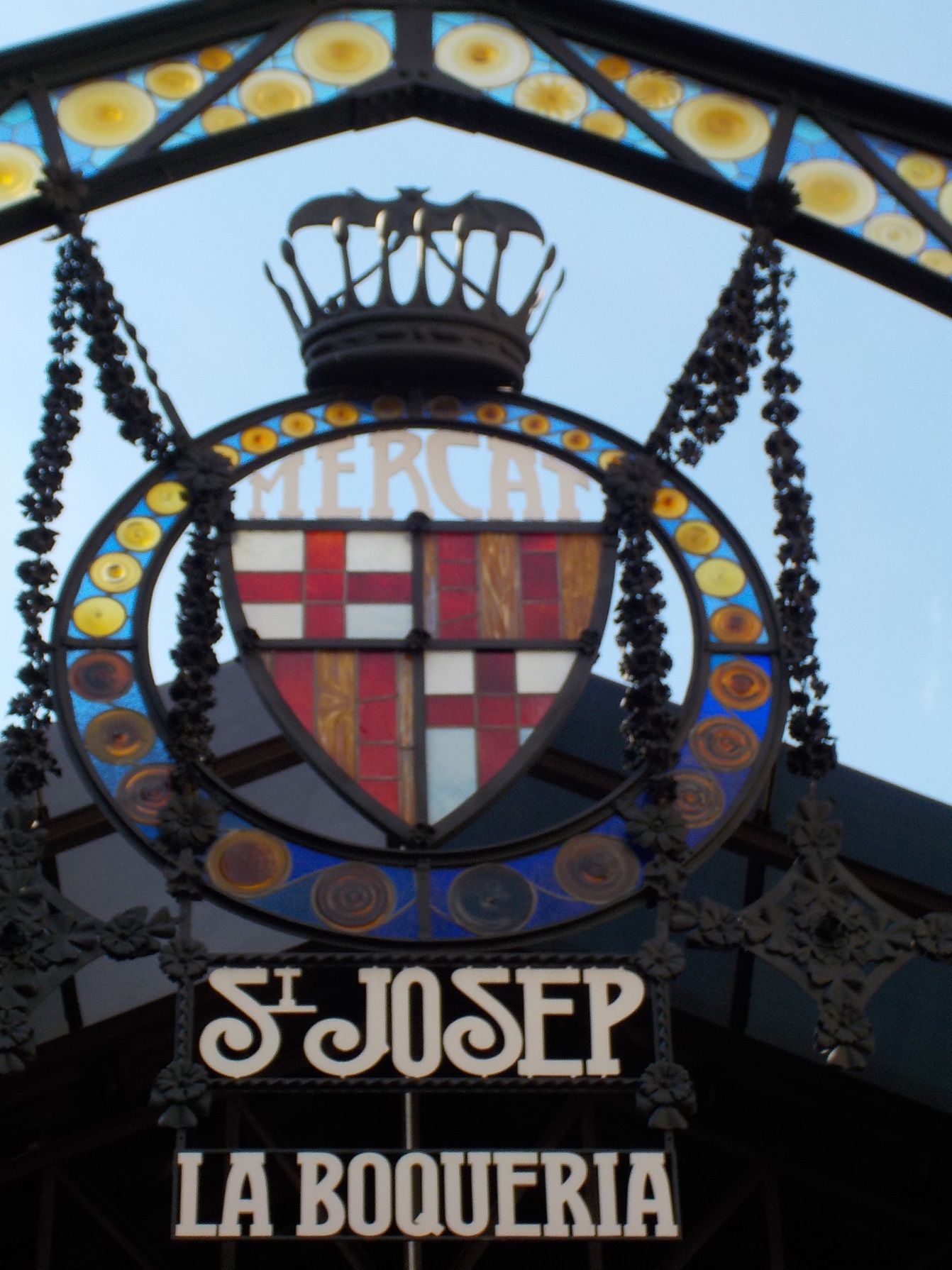
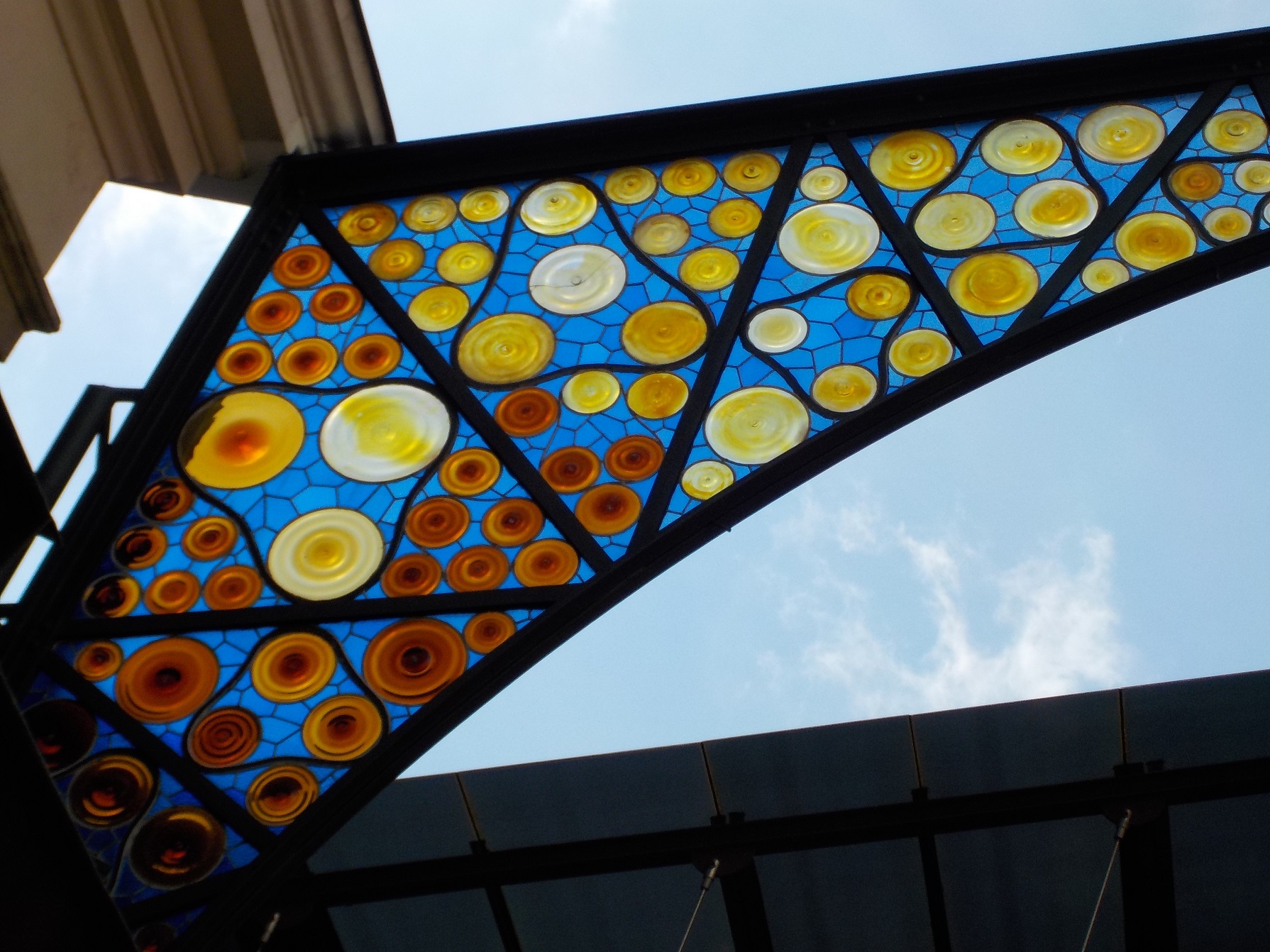
The Boqueria Market is one of the dozen open air markets in Barcelona. The logo and entrance archway in stained glass are considered to be moderniste.

9.21.15-007sm 9.21.15-008sm

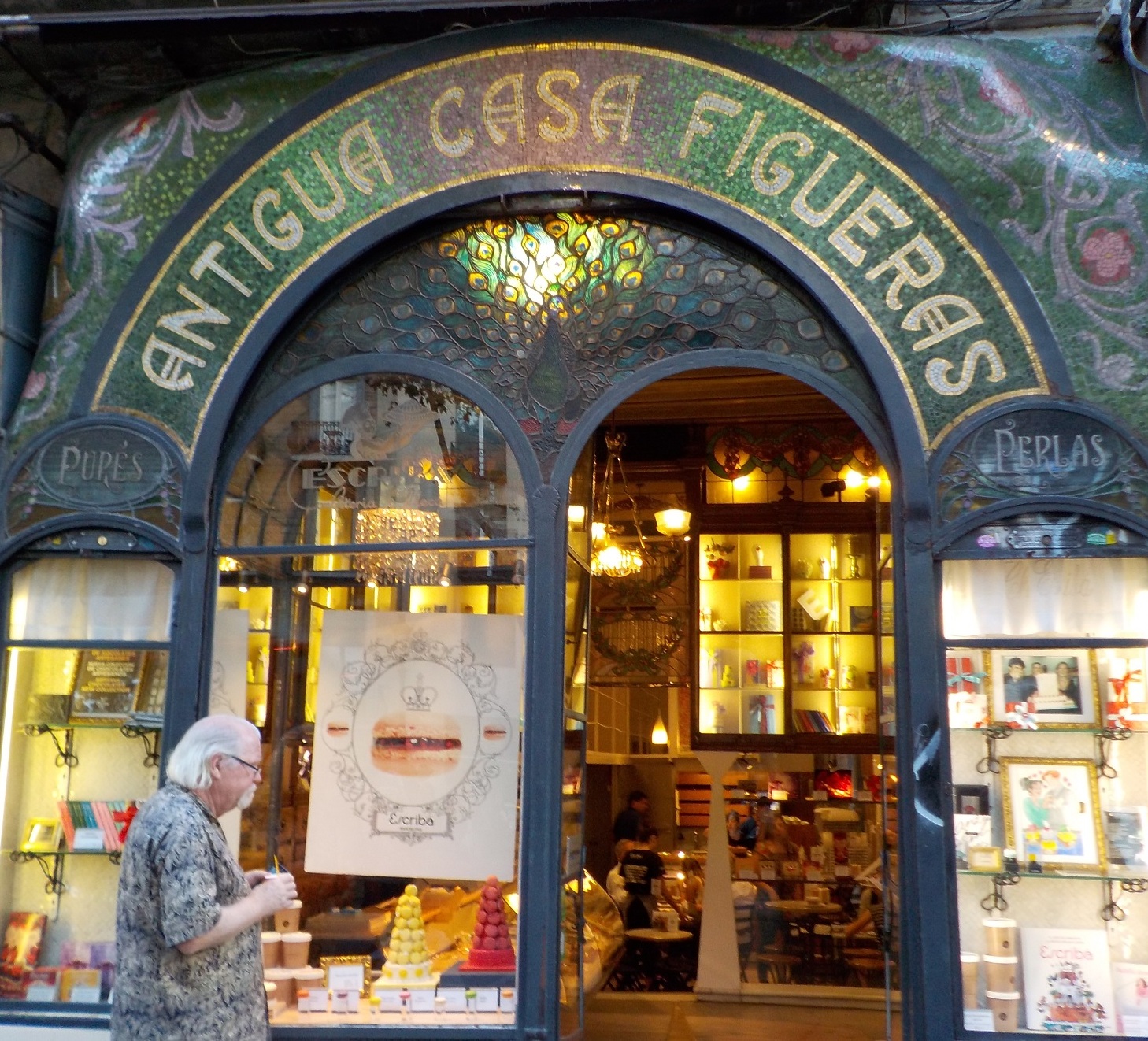
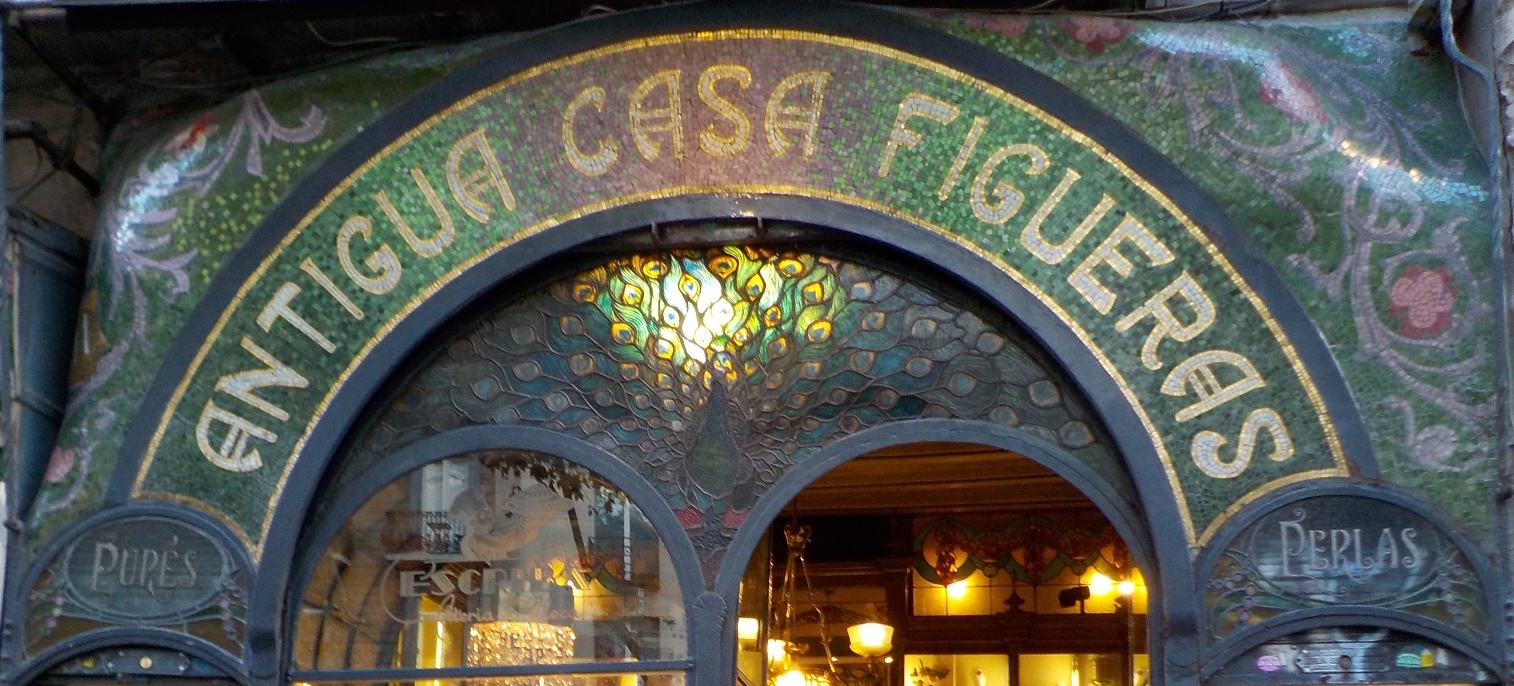
9.5.15 Barcelona-002smaSince there are more than 100 structures considered moderniste (anything not strictly classical), I’ll keep adding interesting images. Stop back again. The rounded corners at the top of this storefront are covered with mosaic tile, a feature of Gaudi-era (Catalan modernisme) structures (1880s through the early 20th century). The original occupant was a pasta maker. Today it is a bakery.  The close up shows the stained glass peacock between the doors.

9.5.15 Barcelona-002smcrop

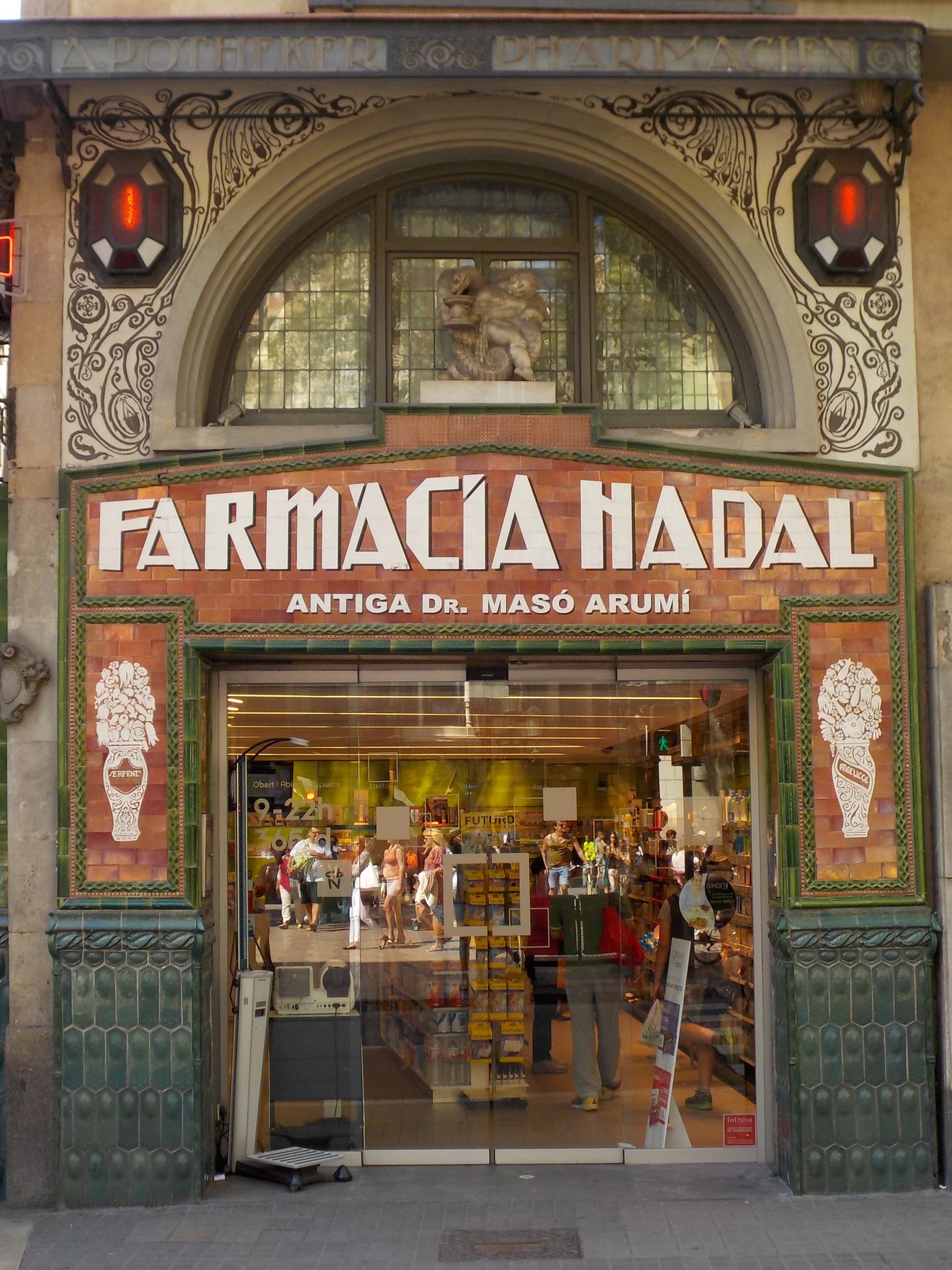
The Antigua Farmacia Nadal is still a pharmacy.

9.7.15-008

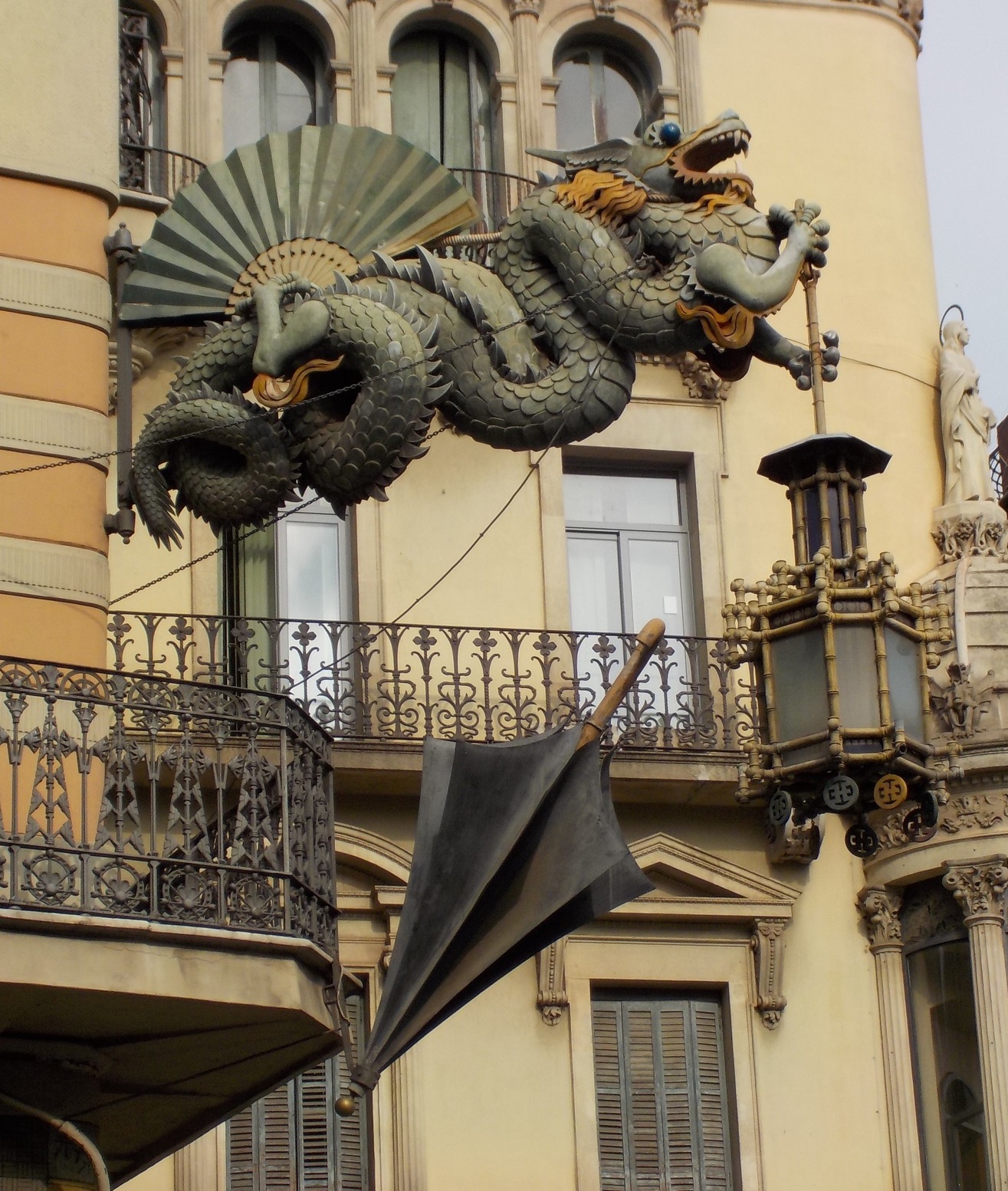
This was a store selling umbrellas. There are medallions on the facade that are the tops of umbrellas.

9.7.15-009

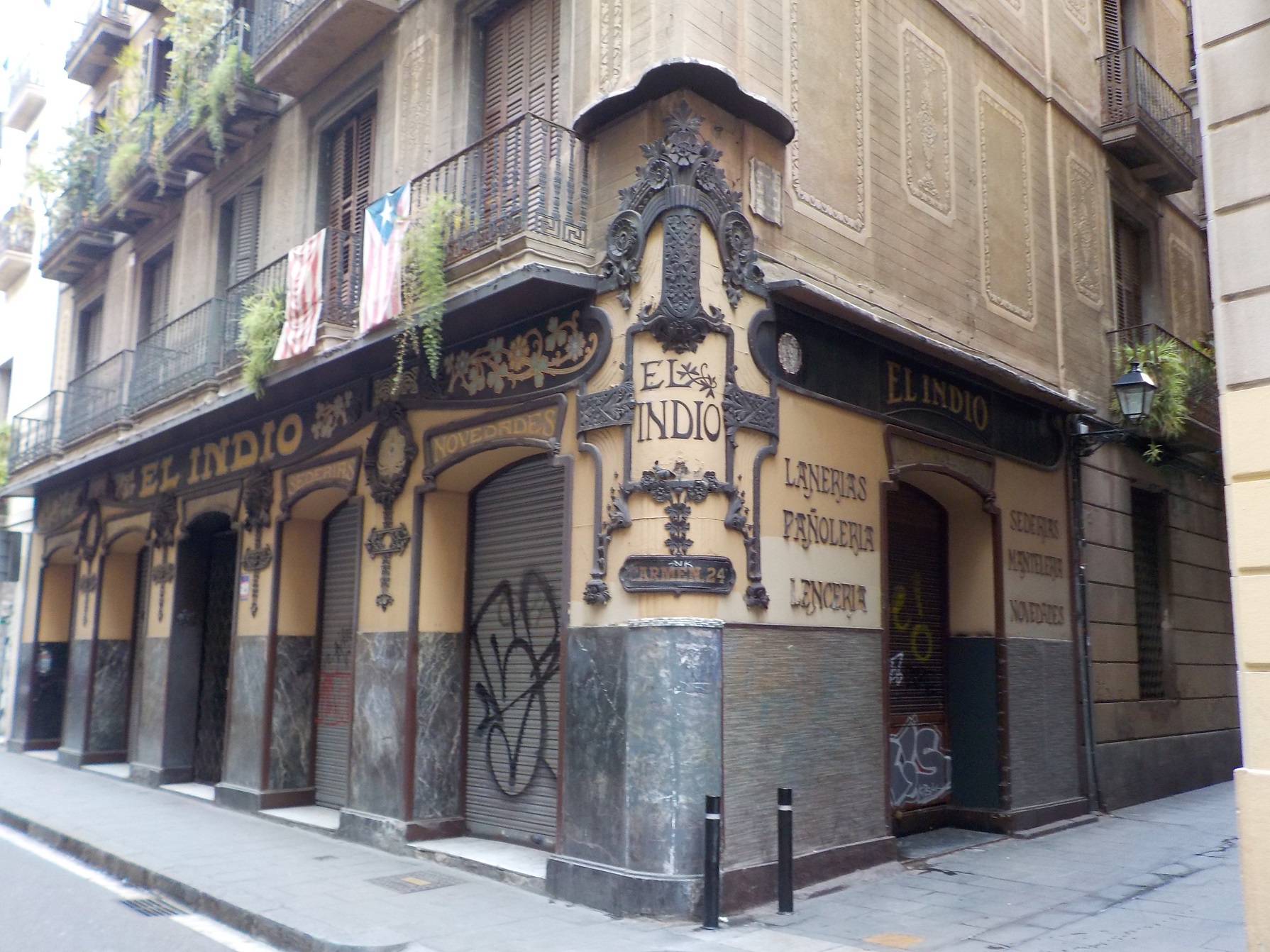
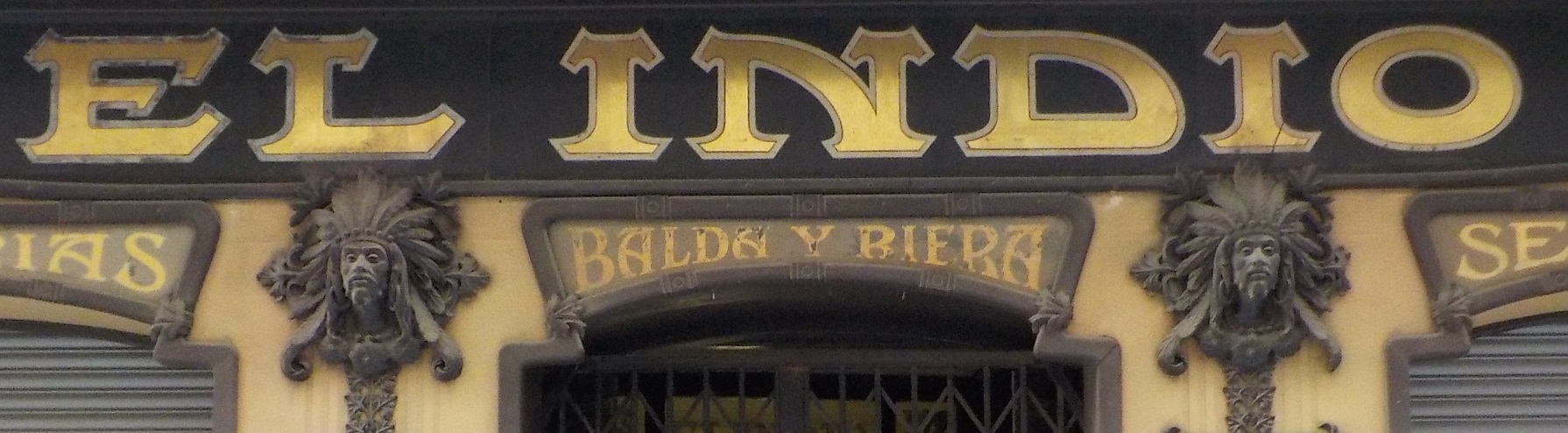
El Indio is not a politically correct name for a store, and the depictions of “Indians” on the facade are highly romanticized (note the beards and mustaches). The detail is attractive, and the politics of the time seem to have indicated that wool, silk, lingerie and accessories came from an exotic locale.
9.15.15 El Indio.Carme.Raval.15 El Raval-002sm 9.15.15 El Indio.Carme.Raval.15 El Raval-003sm

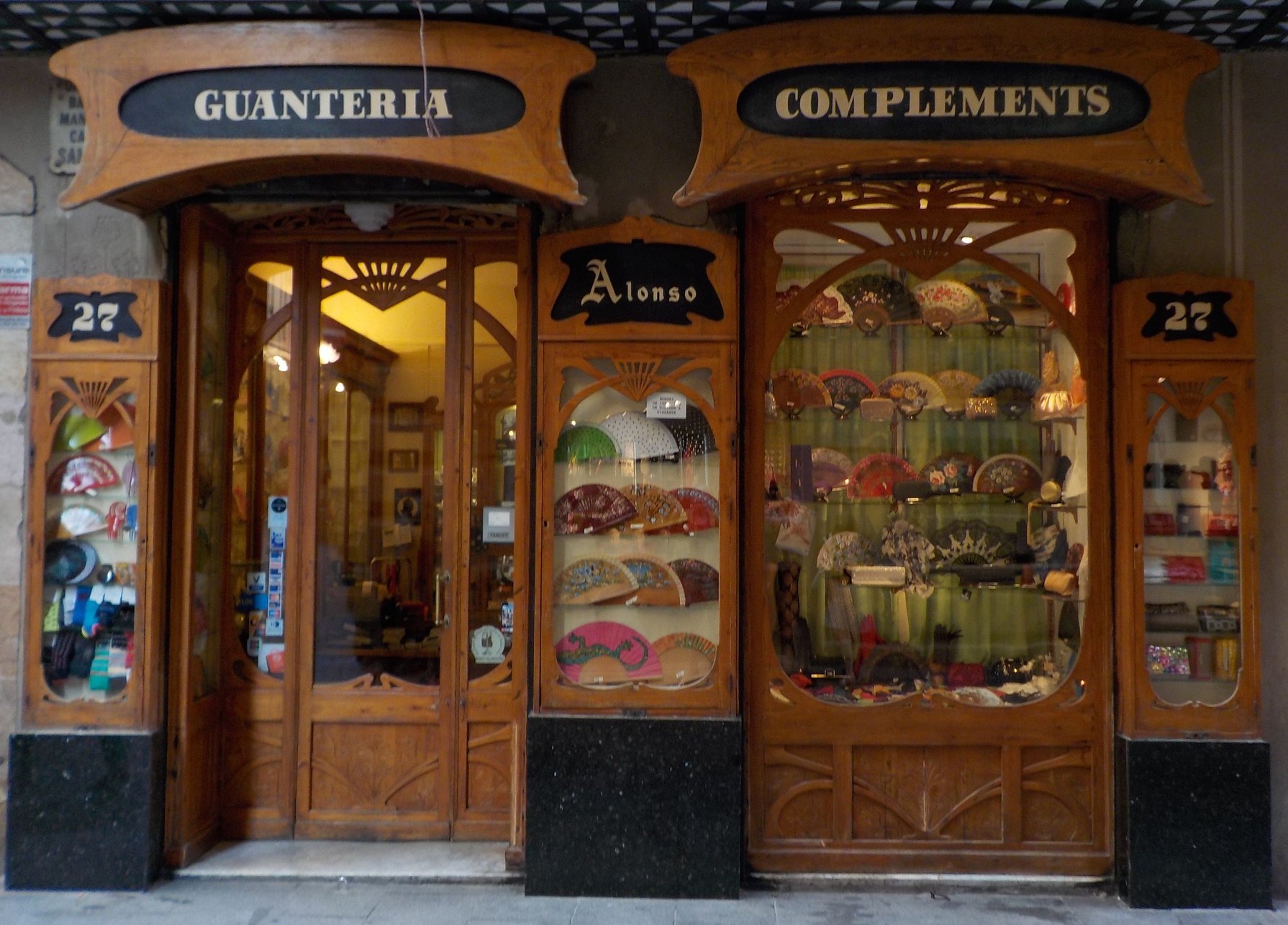
Another accessories store,

9.21.15-GuanteriaAlonso.SantaAnna27.BarriGoticsm

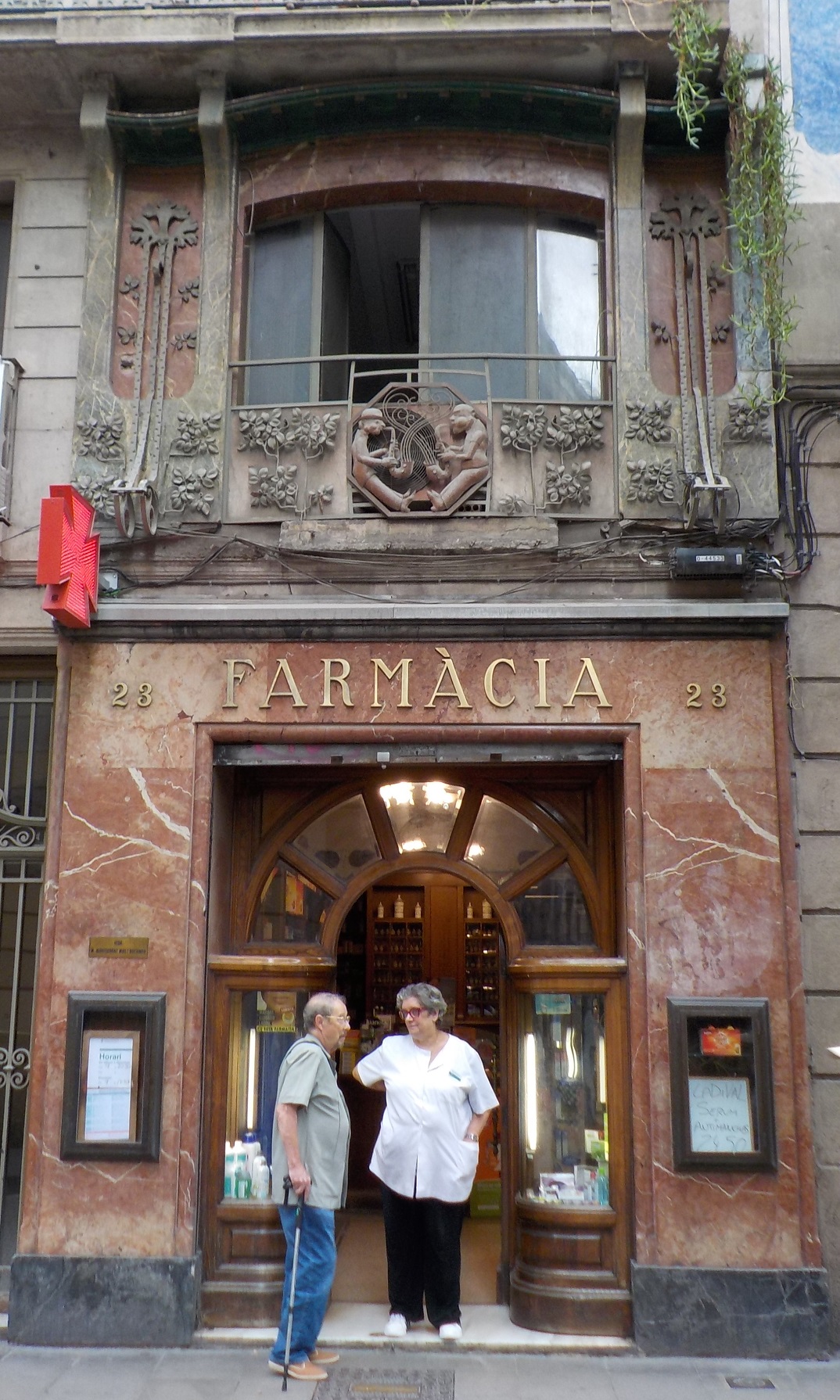
sep.15.15 El Raval-001smHere’s another vintage pharmacy. Notice the two saxophone players carved over the doorway.


This was the home of Dr. Genove. It has obvious Moorish influences, another element in Catalan modernisme.
9.19.15-Casa Dr. Genove.Rambla.15-038sm

Last 24 hours of the Merce festival/spectacle

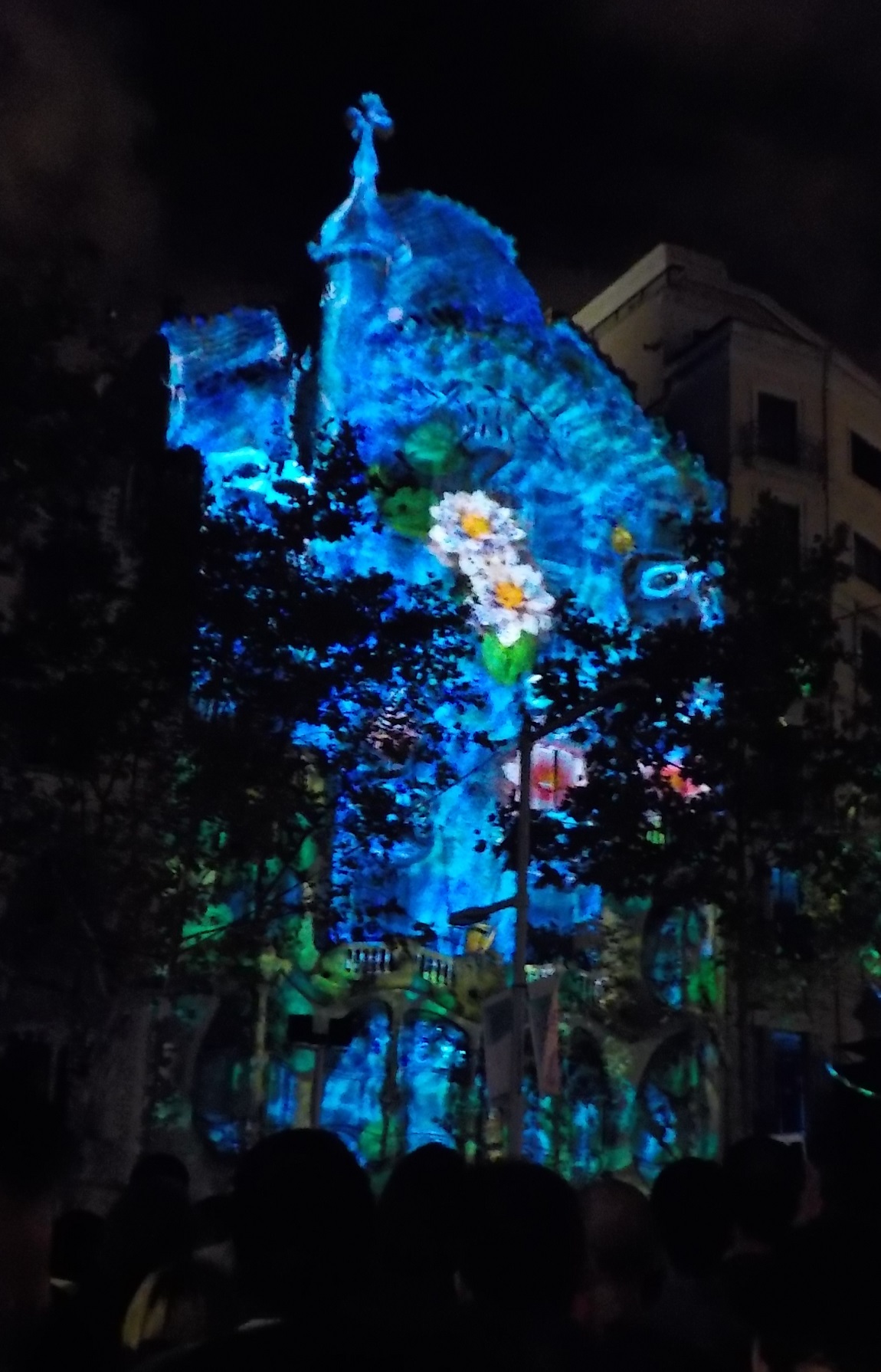
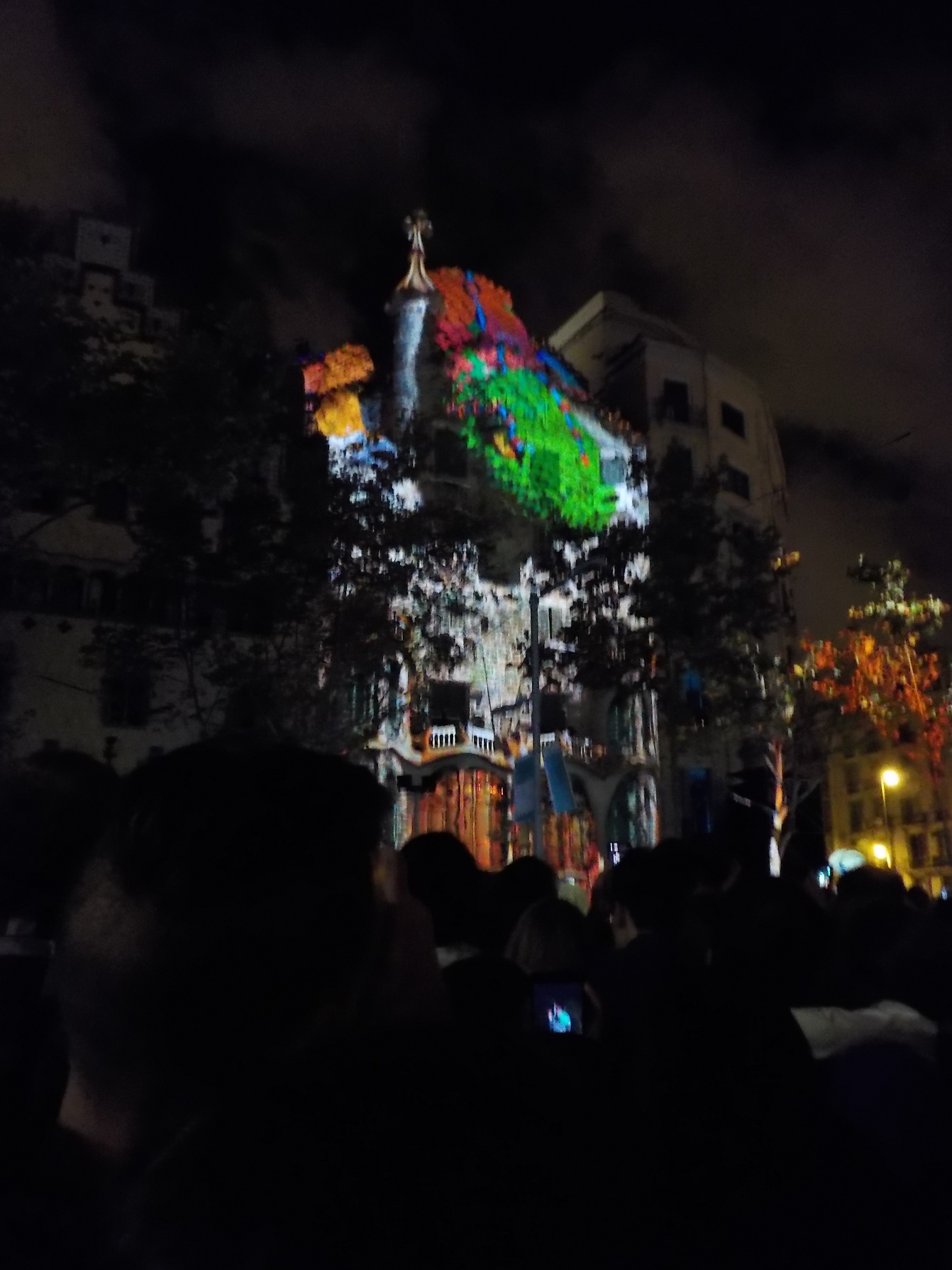
We watched a projection called Awakening the Dragon, at the Casa Batlló, one of Antoni Gaudí’s bests known architectural works, the night before the end of the festival.

9.23.15 Casa Batllo-021sm 9.23.15 Casa Batllo-025sm 9.23.15 Casa Batllo-026sm 9.23.15 Casa Batllo-038sm

It does look like a big lizard is crawling around the roof. The roof line, altered by Gaudi, is an undulating form that was said to be reminiscent of a dragon. The park Gaudi designed, Parc Guell, has a fountain with a centerpiece of a huge tile-spangled iguana (ish) animal. Hence the images in this show.

The structure, the Casa Batllo, is among the showiest of Gaudi’s works, with undulating balconies that are depicted in one video as frog mouths. The group that runs this house has the strongest social media presence of all Gaudi’s work in Barcelona, including these periodic projection nights, photo contests and family activity days. It may be a case of survival of the media-savvy.

We saw a lively musical group Sabor de Gracia, on Placa Catalunya on Wednesday evening on our way home from Casa Batllo.         They’re on Apple music.)

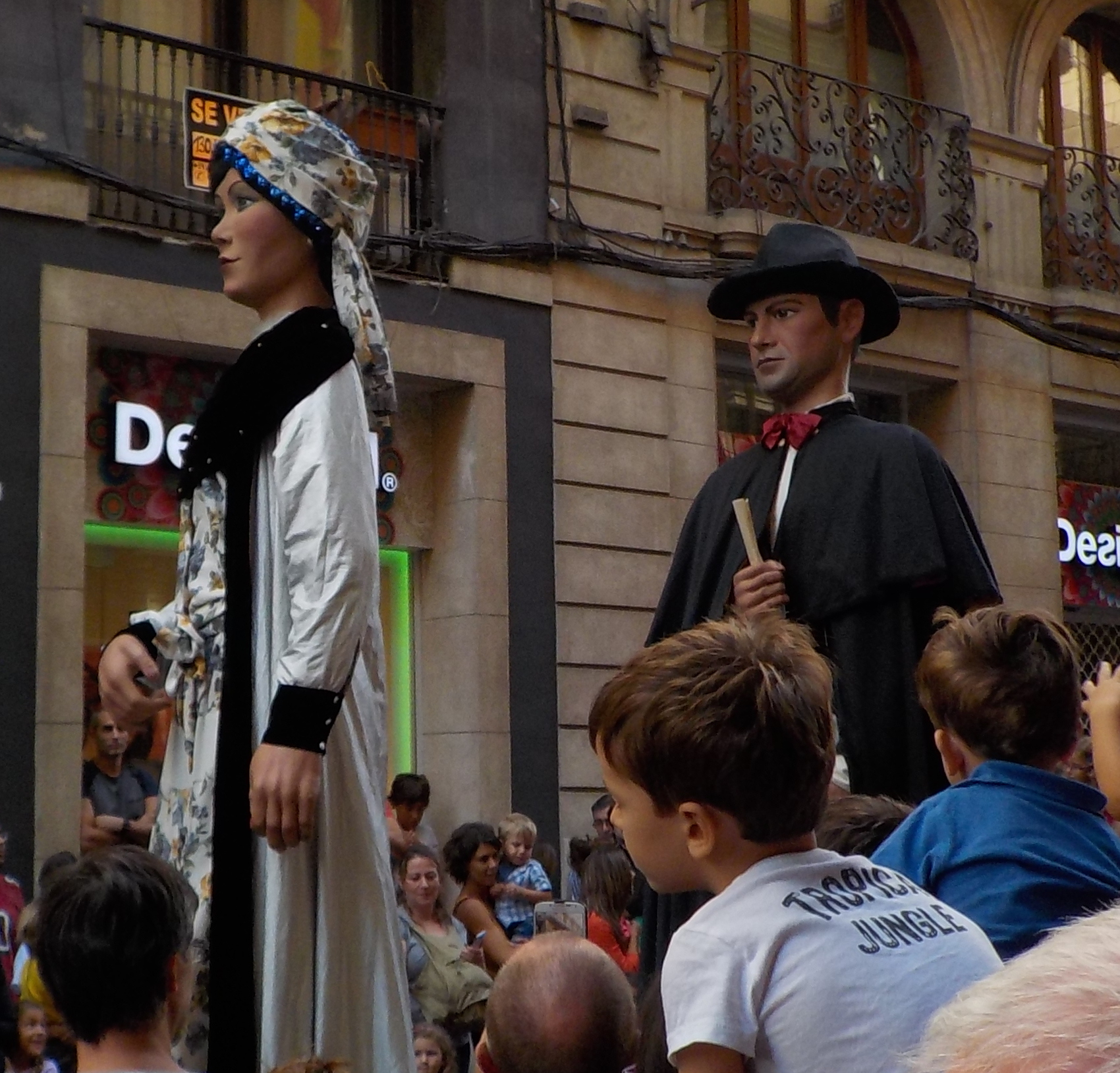
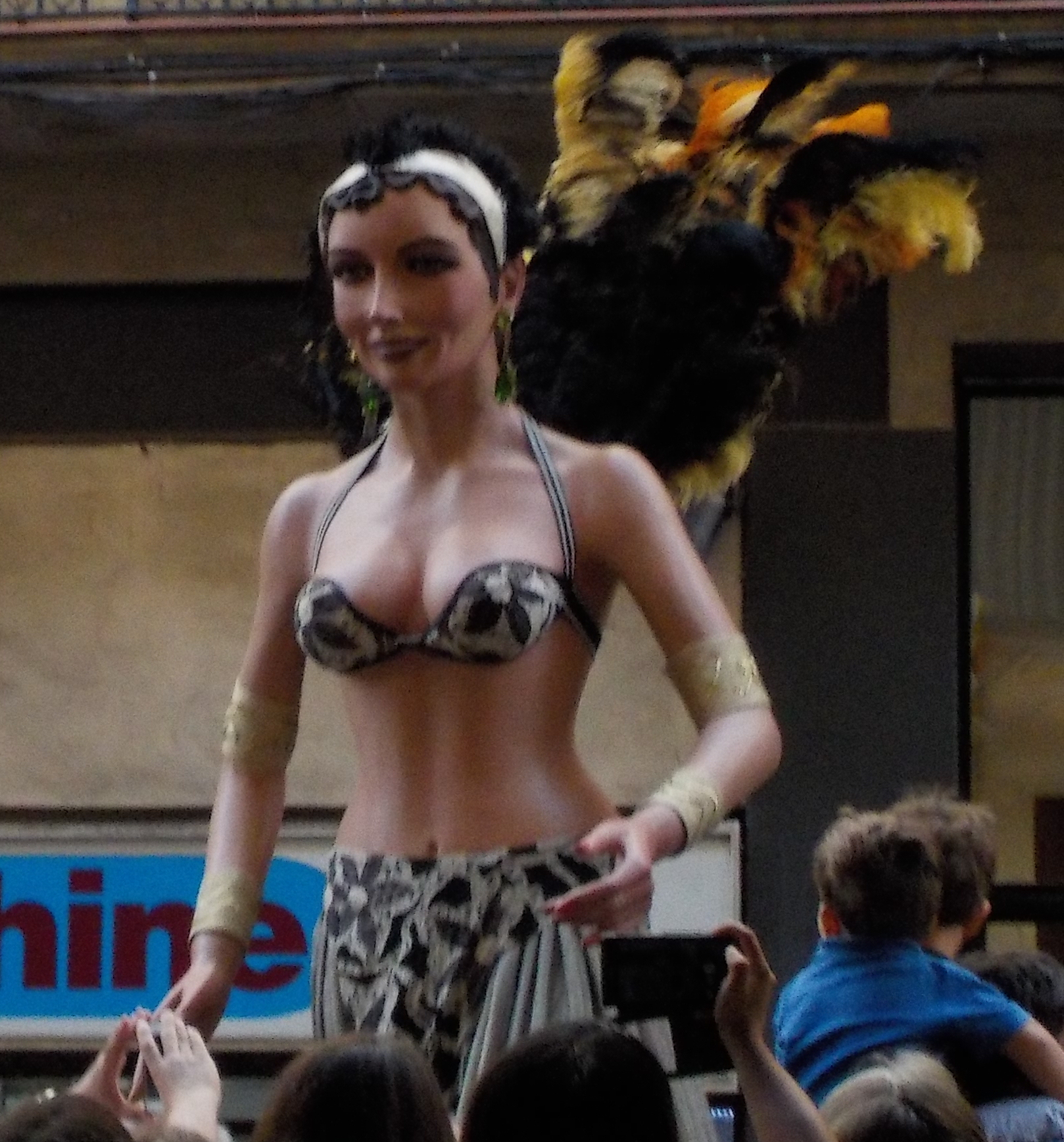
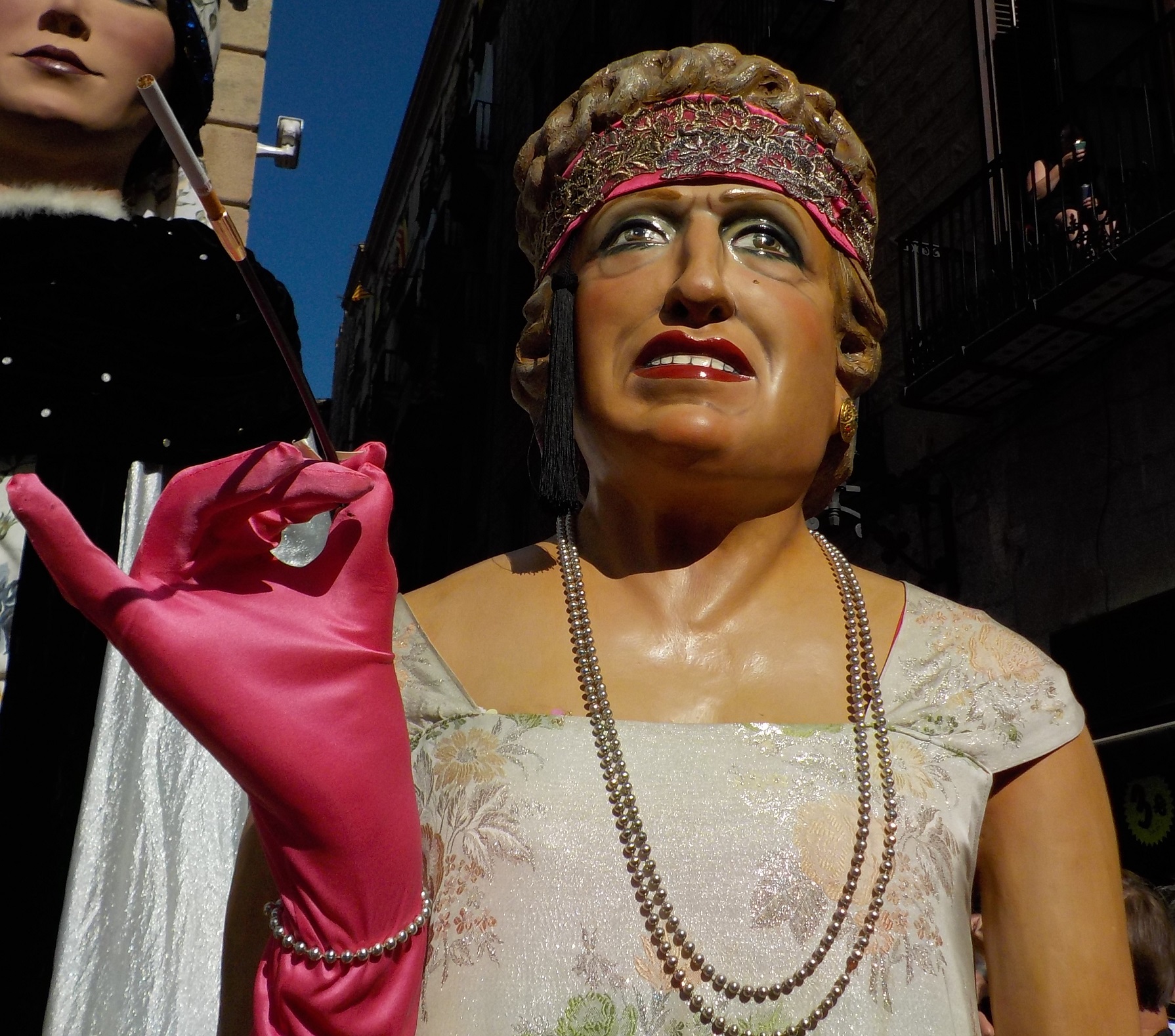
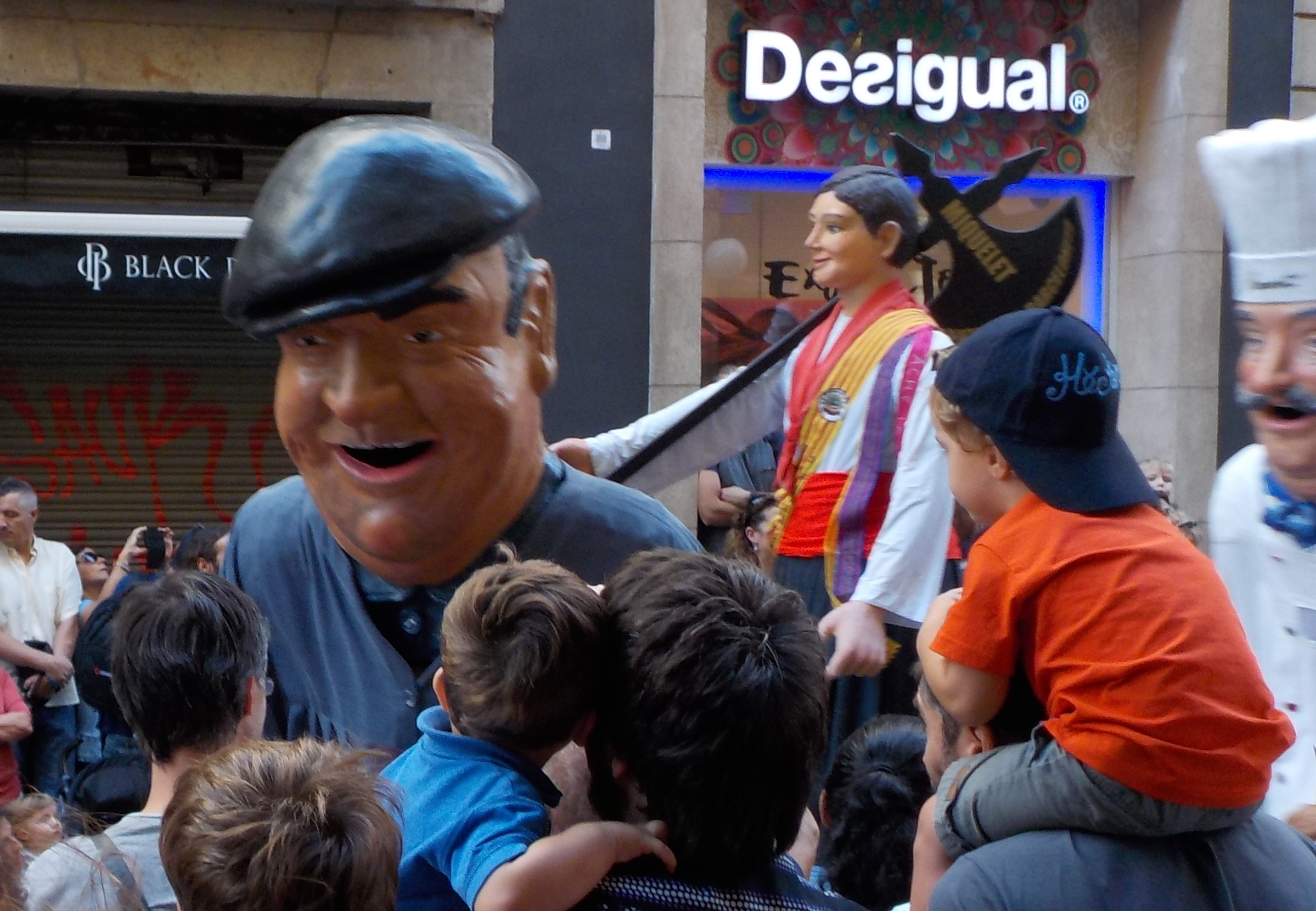
The next day at noon we watched the parade of ALL the city’s giants. Part of the time we were sitting in a cafe while we watched, an almost perfect venue. The giants ranged from highly realistic figures to fanciful Sun and Moon figures. Every stereotype you can imagine is presented. (If you dance down the street, then it’s not a bad stereotype, it’s just a…….big puppet!).

9.24.15 Giants parade-003

There were kings and queens

9.24.15 Giants parade-018sm

High society

9.24.15 Giants parade-079sm

(Is that the Gatsbys?)

9.24.15 Giants parade-032sm

(Is that Putin?)

9.24.15 Giants parade-031sm

Is that a friend of Putin? (or was it Berlusconi’s friend?)

Cafe society

9.24.15 Giants parade-006sm

Local celebrities (I guess),

9.24.15 Giants parade-060sm

Traditional folk

9.24.15 Giants paradesm

and folk dances,

9.24.15 Giants parade-063sm

Familiar birds

9.24.15 Giants parade-016sm

9.24.15 Giants parade-027sm

Unconventional birds…

9.24.15 Giants parade-009sm

And a lot of others.

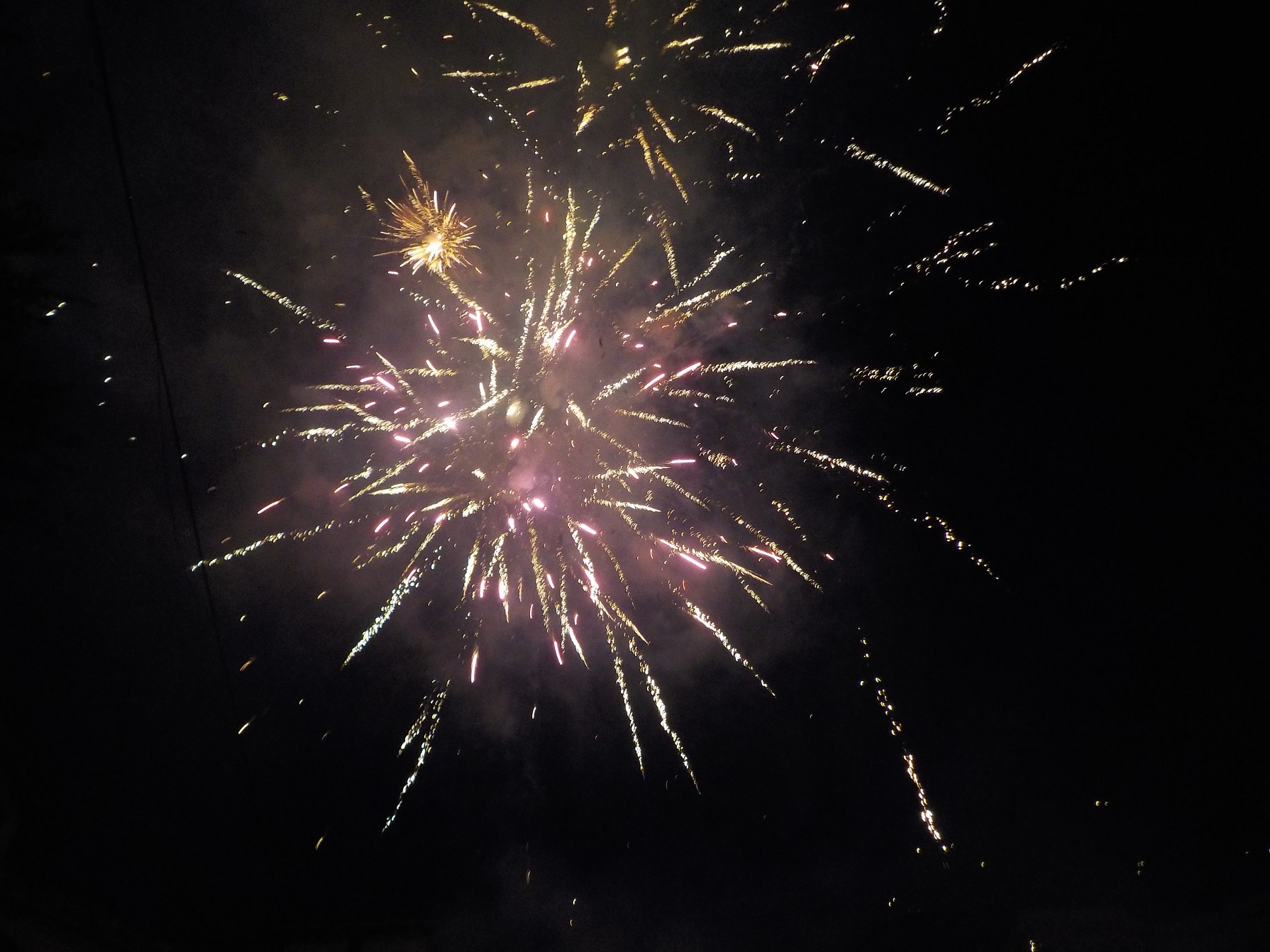
The final element was the fireworks, music and colored fountains. It was the biggest fireworks display and the biggest crowd I’ve ever seen, estimated at 108,000, packed across a large plaza and all the adjacent streets in front of the Palacio Nacional (the National Museum of the Art of Catalonia). After it was over, we were surprised at how well-organized the subway was, with personnel letting people into the station in waves, then holding the crowd until the station was clear and continuing. Trains arrived every 2-3 minutes. We were home in less time than it took to get from our viewing spot to the subway, shuffling along with the crowd. Below is the youtube video. There are others more professionally done, but this one gives you a sense of the fireworks, searchlights, tubes shooting flames, smoke, and the fountain changing colors.

And that, was the end of the festival. What a week! The city’s patroness should be well satisfied for the coming year.


Correfoc: A crack in the Gates of Hell

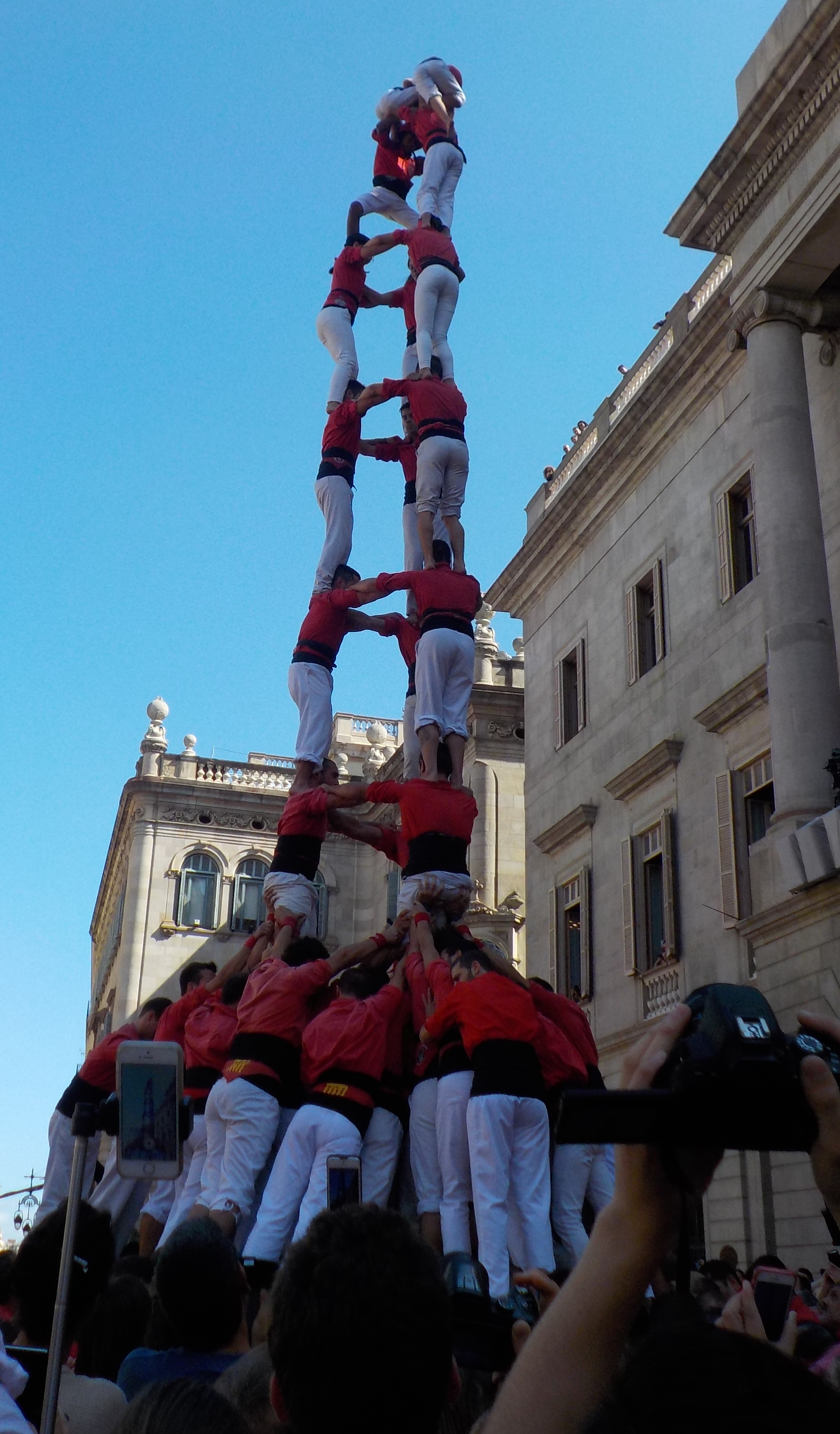
Barcelonans are fearless. They make human towers up to eight people high:

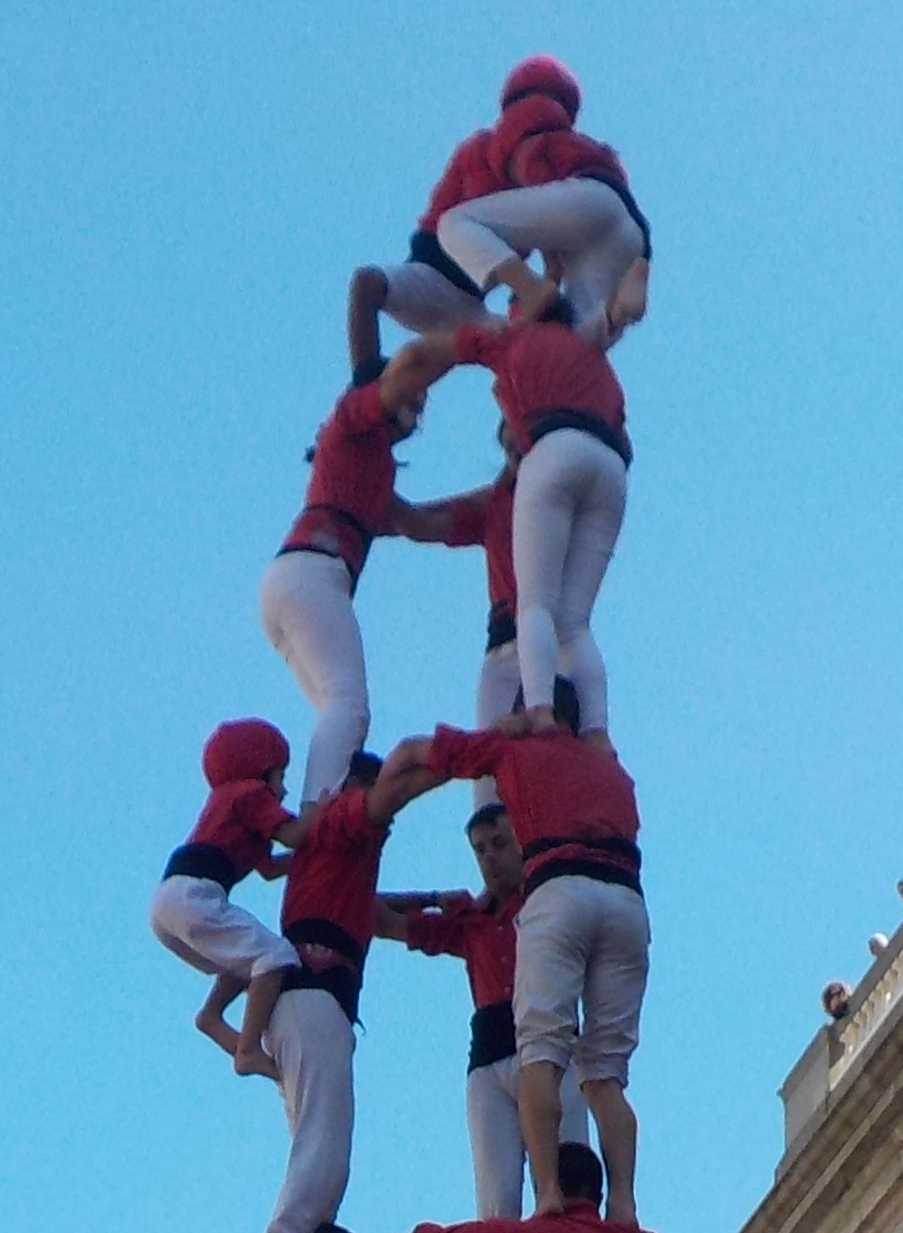
Keep in mind that the people you see at the bottom of this photo are the second tier. They are all standing on people underneath.


9.20.15 Castellers-005Also note the size of the child climbing to the eighth level–the one wearing the helmet…

9.20.15 Castellers-003sm

Barcelonans also take small children to the Correfoc, the Fire Run, where they are likely to be scared out of their wits.

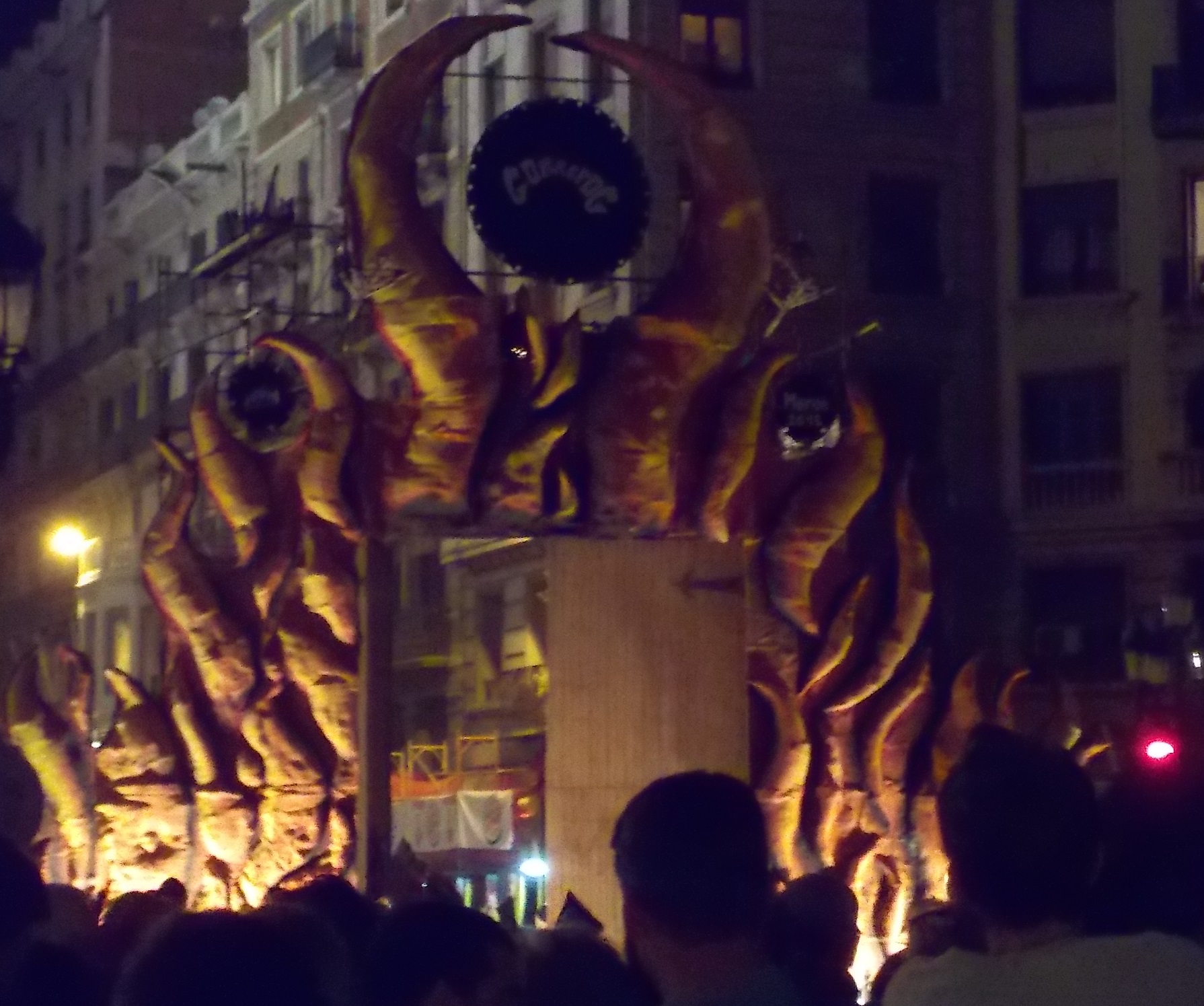
It is night. There is a big portal covered with horns, or flames.

9.20.15 Carrefoc-001sm

It opens to admit so many drumming groups that the area becomes a single wall of deafening sound. Then the lights change:

9.20.15 Carrefoc-016sm

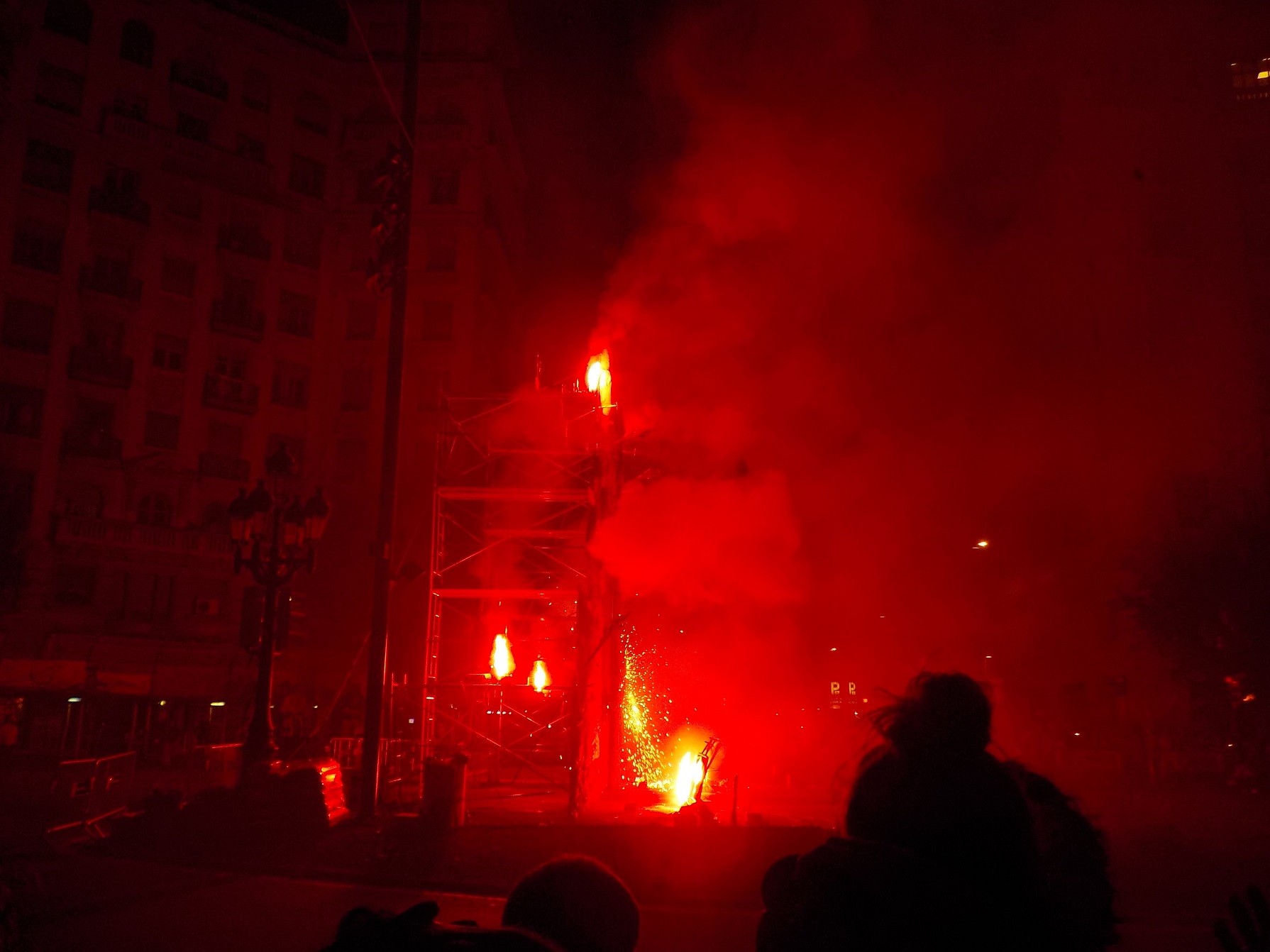
This is followed by a series of large fireworks that are exploded over everyone’s heads. You’re supposed to know to bring something to cover your head from the sparks and floating bits of carbonized paper. The smoke can’t be helped.

9.20.15 Carrefoc-015sm

It was a wonderful display–I’ve probably never been so close to fireworks. Since we were about 20 people deep around the plaza at that point, it’s probably a good thing no one caught on fire from the falling debris.

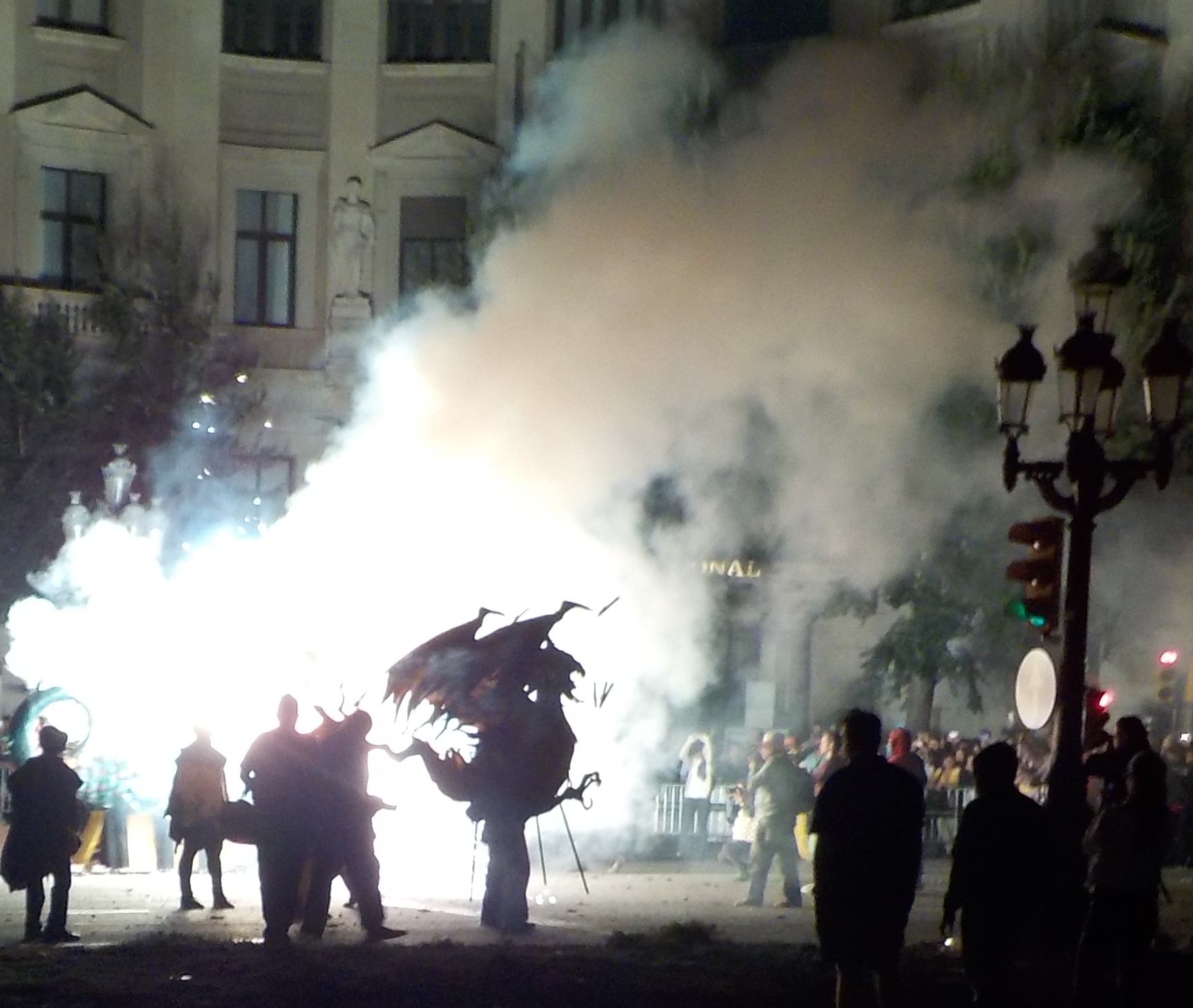
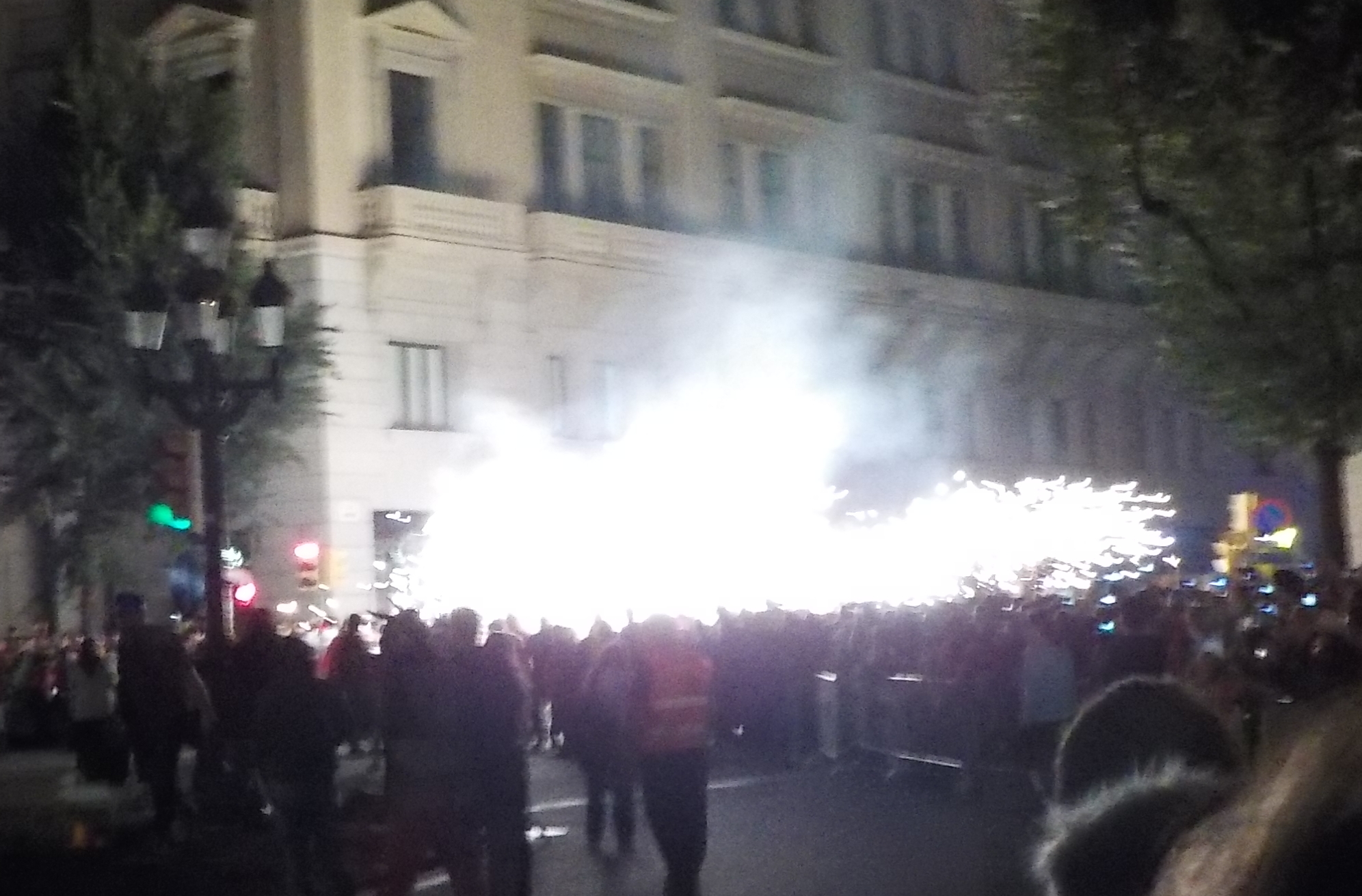
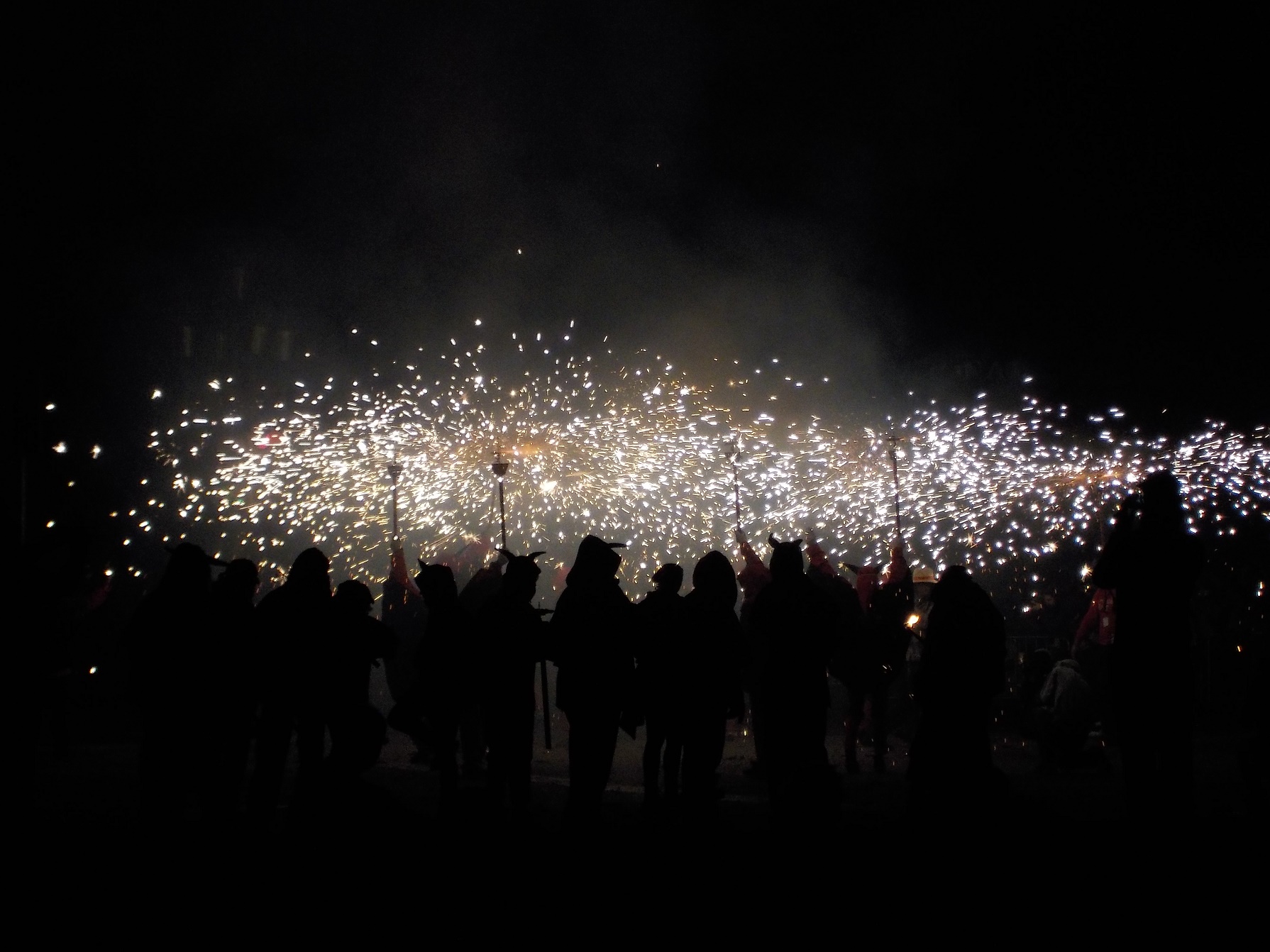
Next, the demons emerge and are set alight. They spit sparks and blow off fireworks at the crowd. It looks like the neighborhood is igniting. These burn out about every 3 minutes and have to be charged again by a guy with a box of fireworks who wheels along after each demon… This is a very slow parade but very showy. The entire route is three blocks.

9.20.15 Carrefoc-026sm 9.20.15 Carrefoc-060sm

This is an exploding mosquito with glowing red eyes.

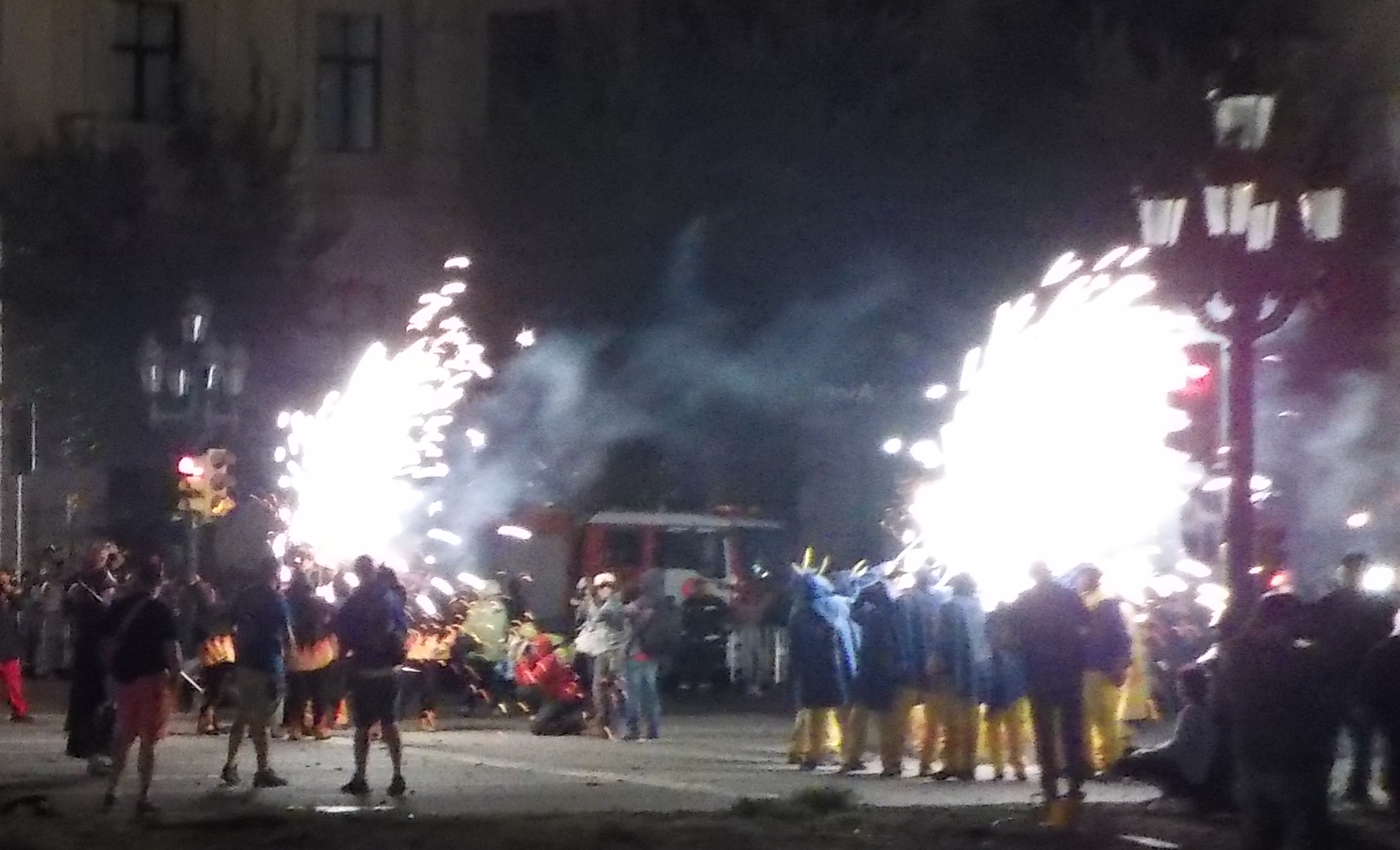
Groups of people dressed as devils take turns lighting their super-giant sized sparkler holders and then twirl them as they move down the street. The sparks cover everyone.

9.20.15 Carrefoc-023smHere they are lighting up.


Here’s where I’m glad I’m not right along the route.

9.20.15 Carrefoc-021sm

Tell me that doesn’t look like the building going up in flames.

There is never a tranquil moment. It’s all out noise, drums, sparklers crackling, explosions and chanting. Groups take turns to enter through the gates, light up, and scare everyone along the parade route. Just another fun evening in Barcelona during a religious festival.

9.20.15 Carrefoc-049smGroup members wear horned capes so you can see their horns and they won’t burn their hair.

(They fear nothing.)

La Mercé: Great big giant heads, parades, fireworks, music, dance…

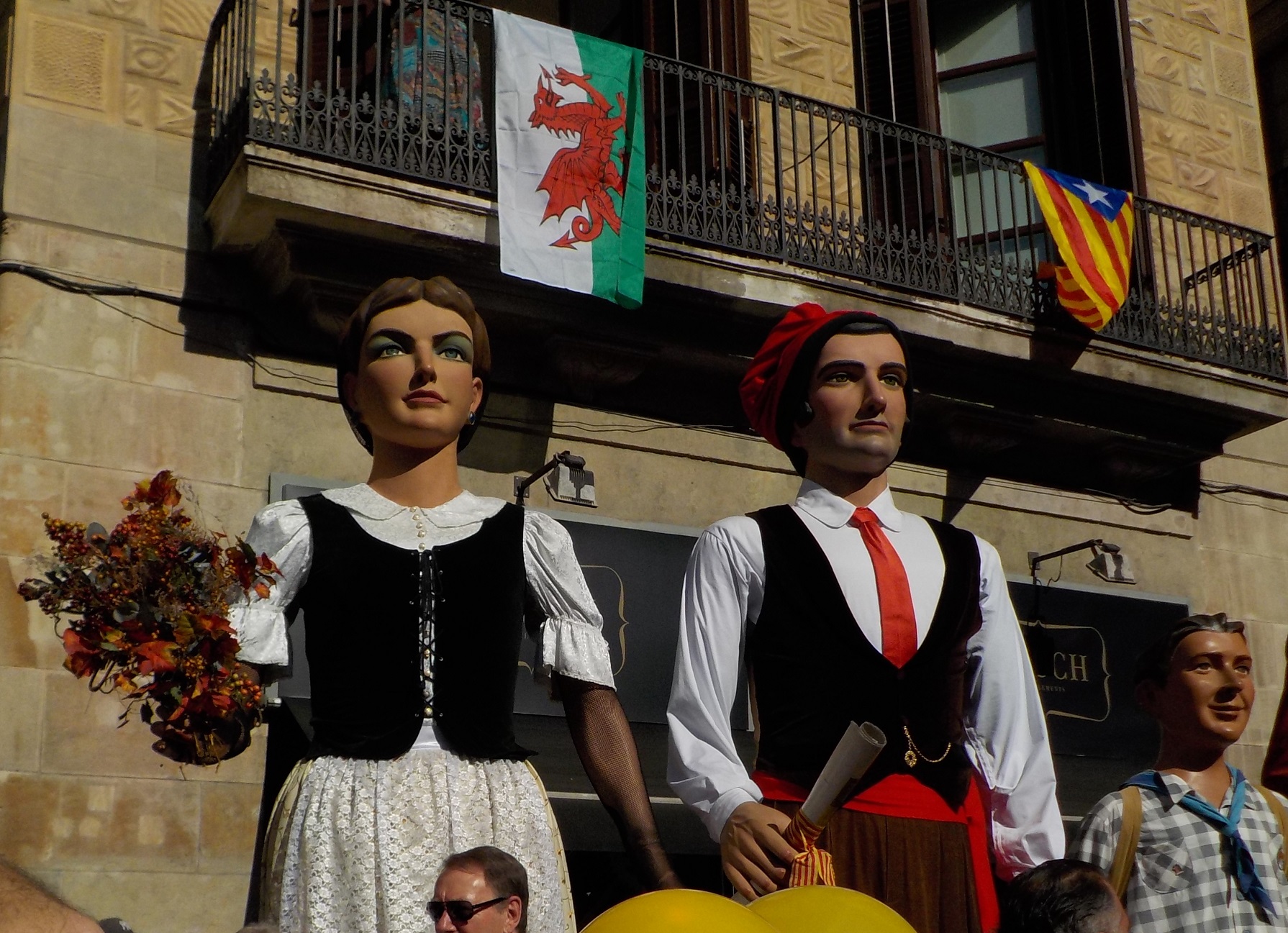
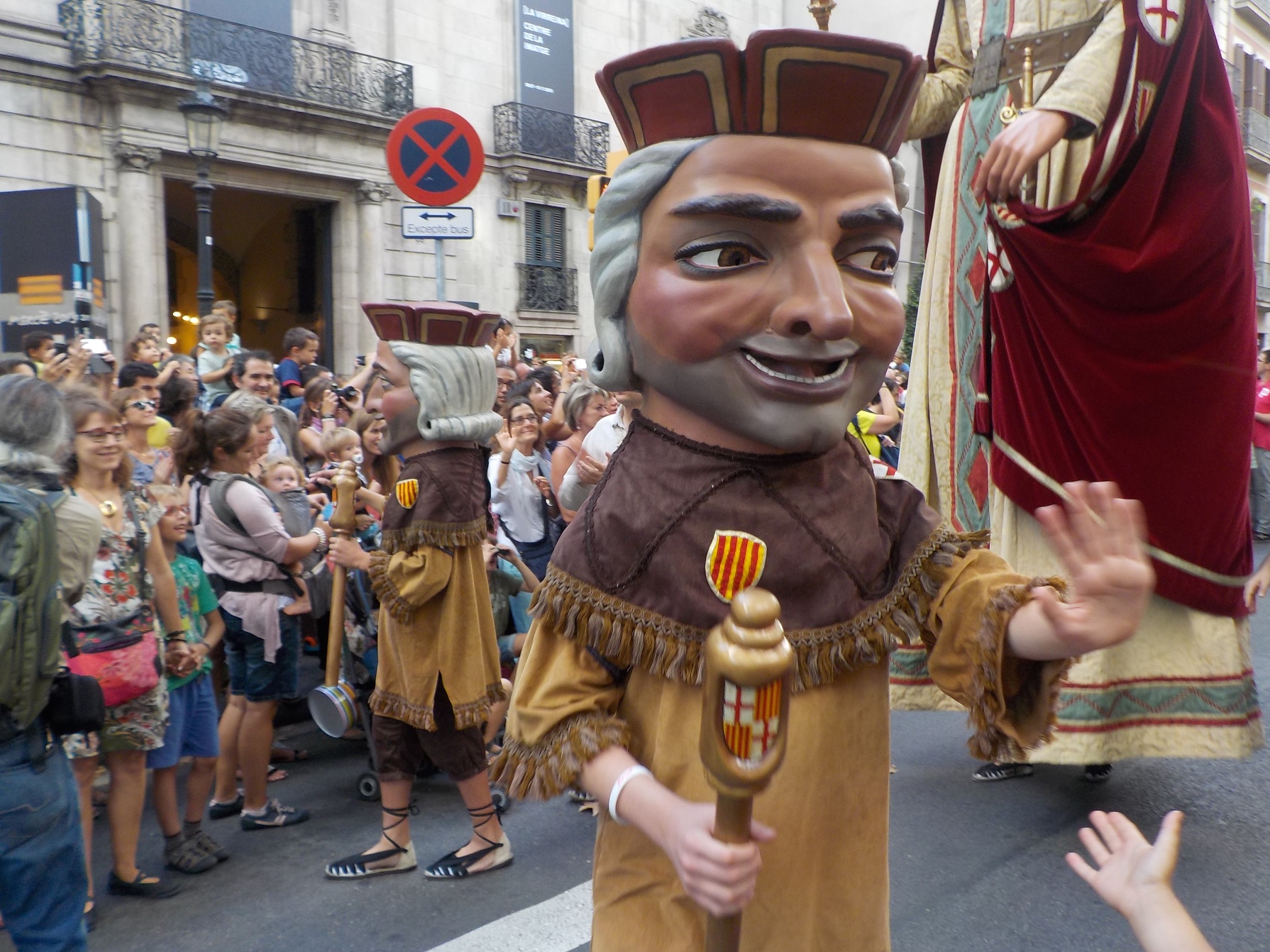
From the title, you get the idea. La Mercé is the annual festival of Our Lady of Mercy, one of the patronesses of Barcelona. It spans a week, this year Sept. 18-24 and there are more events than one person could get to. We went to see the giants and the giant heads before they emerged. They don’t march in a parade, they dance down the street.

9.17.15-001sm

9.19.15-028sm

The attendants are “Big Heads”

9.19.15-030sm

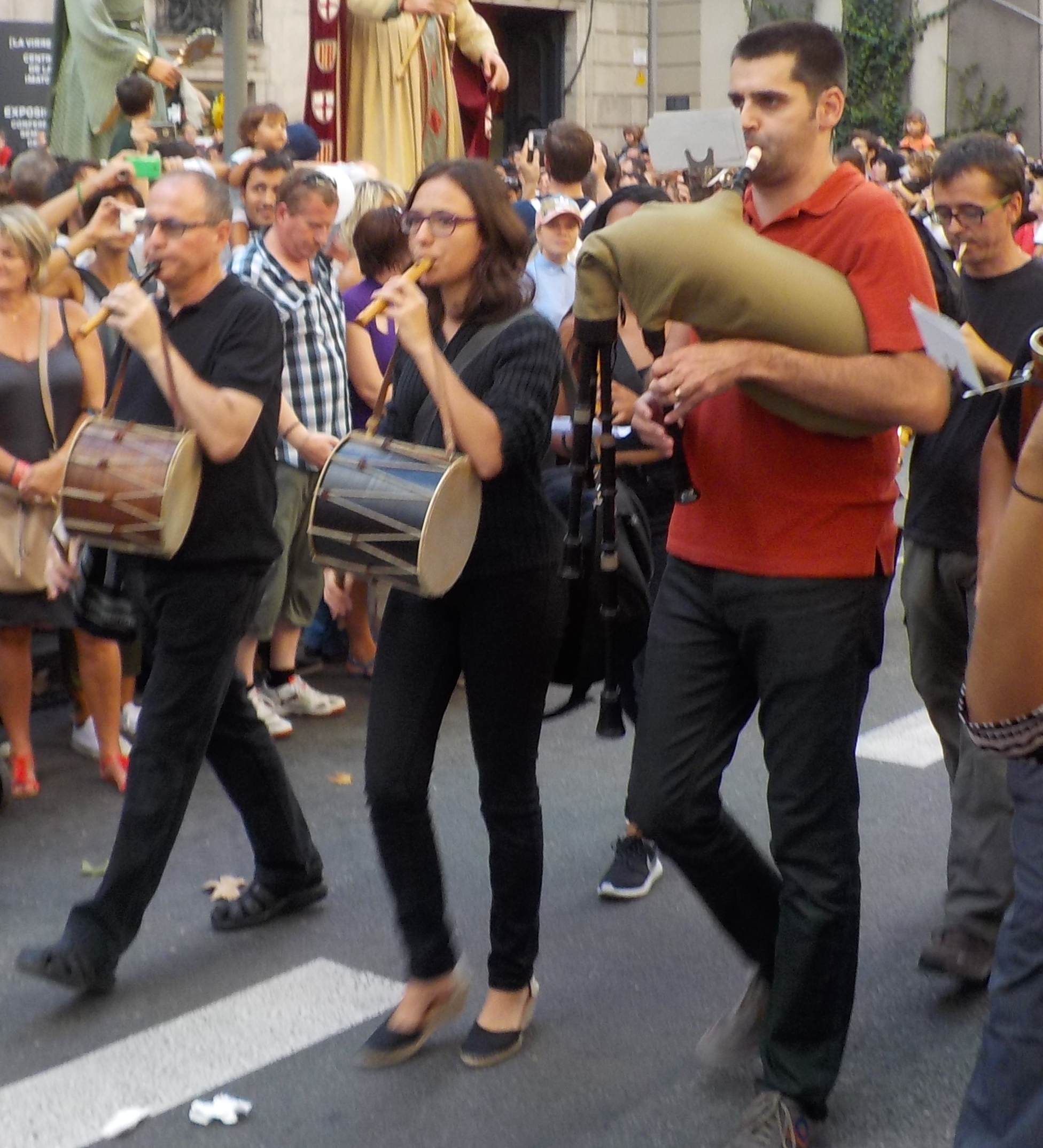
Music is provided courtesy of the Middle Ages, a chorus of oboes, bagpipes, and other loud and squealing things.

9.19.15-027sm

Maybe that’s why she carries a pig. It was part of the band!

9.19.15-025sm

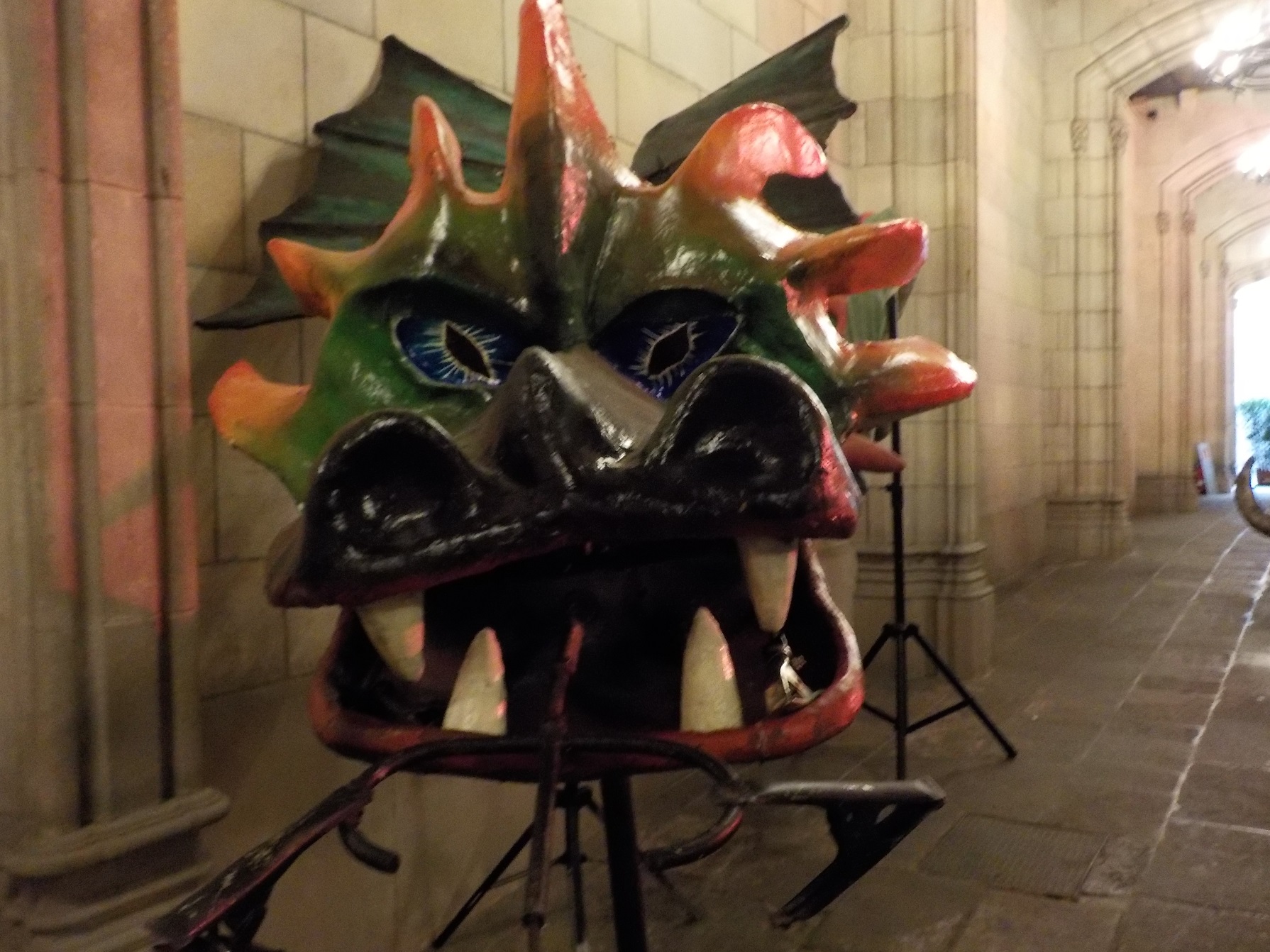
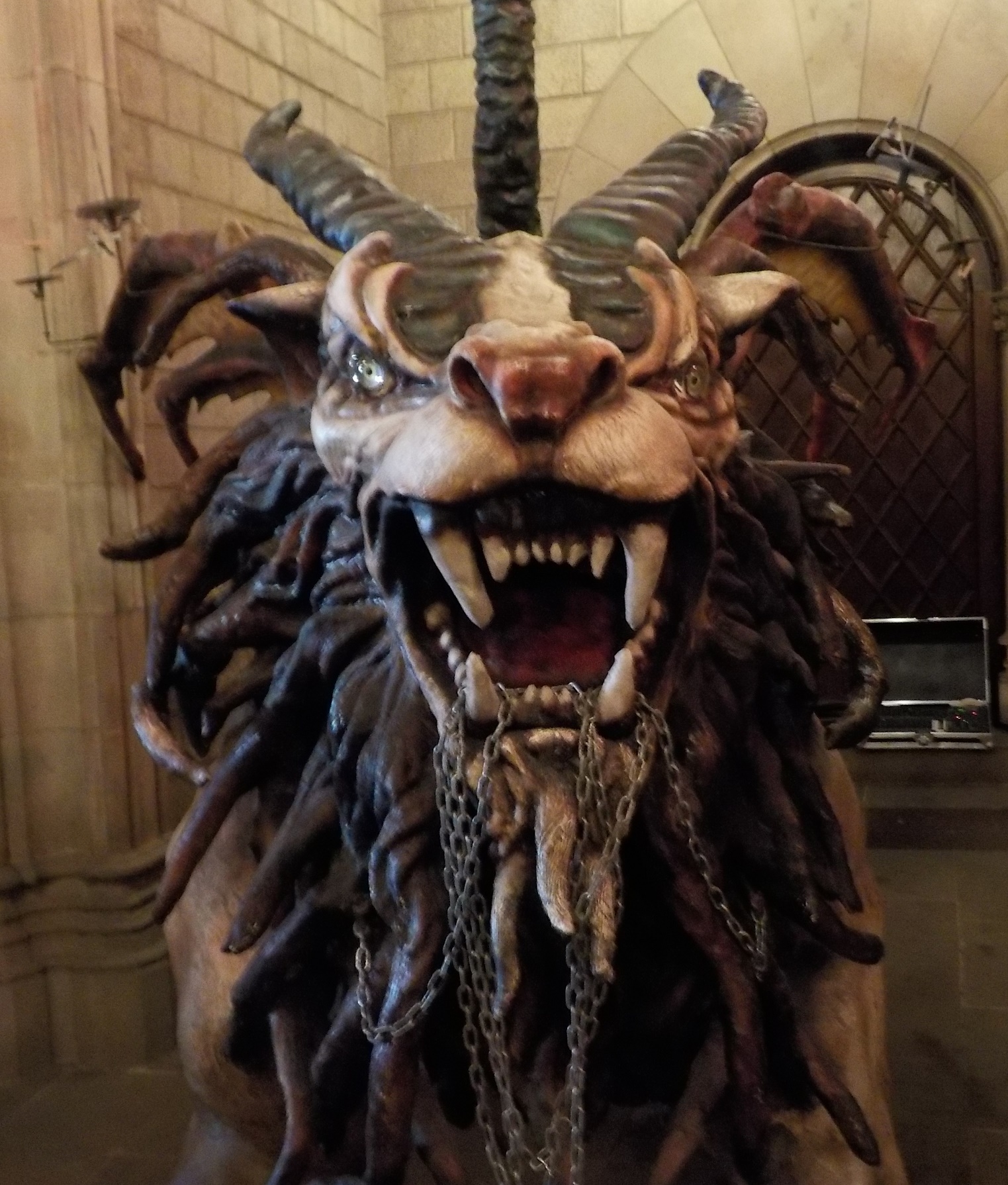
This was the first parade. The next parade was monsters and devils. We saw some of them in advance:

9.17.15-014sm 9.17.15-017sm 9.17.15-018sm 9.17.15-023sm 9.17.15-026sm

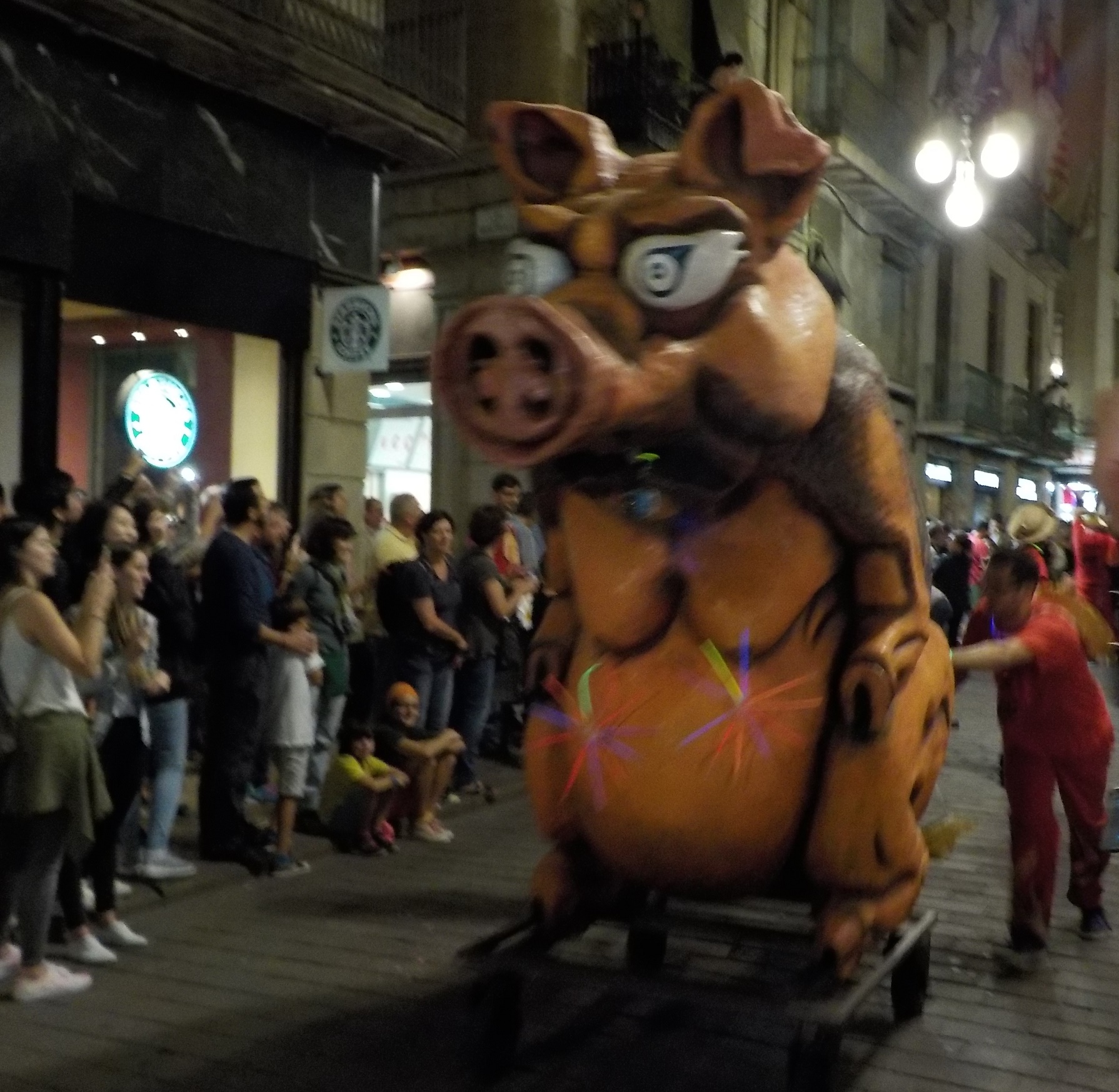
They looked more threatening at night in the street:

9.19.15 La Merce-012sm 9.19.15 La Merce-050sm 9.19.15 La Merce-051sm

Several of the dragons, including the angry dolphin, squirted water on the crowd.

9.19.15 La Merce-029sm

There was a drum group with almost every dragon, a group of 10-16 people, more than half of them women. They made a wall of sound and danced at the same time, some groups more choreographed than others. Impressive.

Museums and Modernism-Modernismo 9.16.15

Barcelona’s wonderful museums include many that focus on artists and architects of the early 20th century. We are starting to make the rounds and may make return visits to both the Picasso Museum

http://www.museupicasso.bcn.cat/en/

and the Miro Foundation.

http://www.fmirobcn.org/en/

A great deal is made of modernism, but what that is remains puzzling. Definitions suggest that it was a movement that wanted to break with the past. In Barcelona, that meant a rejection of classical and Gothic architecture OR its reworking. Modernism include everything from Gaudi’s extravagant organic shapes to the boxy, white cubes of the Fundacio Miro designed by Spanish architect Josep Lluis Sert.

https://encrypted-tbn1.gstatic.com/images?q=tbn:ANd9GcTlcz_dxzgH2kgo1UZbs_xduebEdCMMtiYd_3AiIhuEGDrMOaZp

That’s a lot to put between one set of brackets. I’m starting a page of Barcelona architecture that I will add to from time to time that includes images of interesting things that I see–not all will be modernist, but many will be unusual. Take a look.

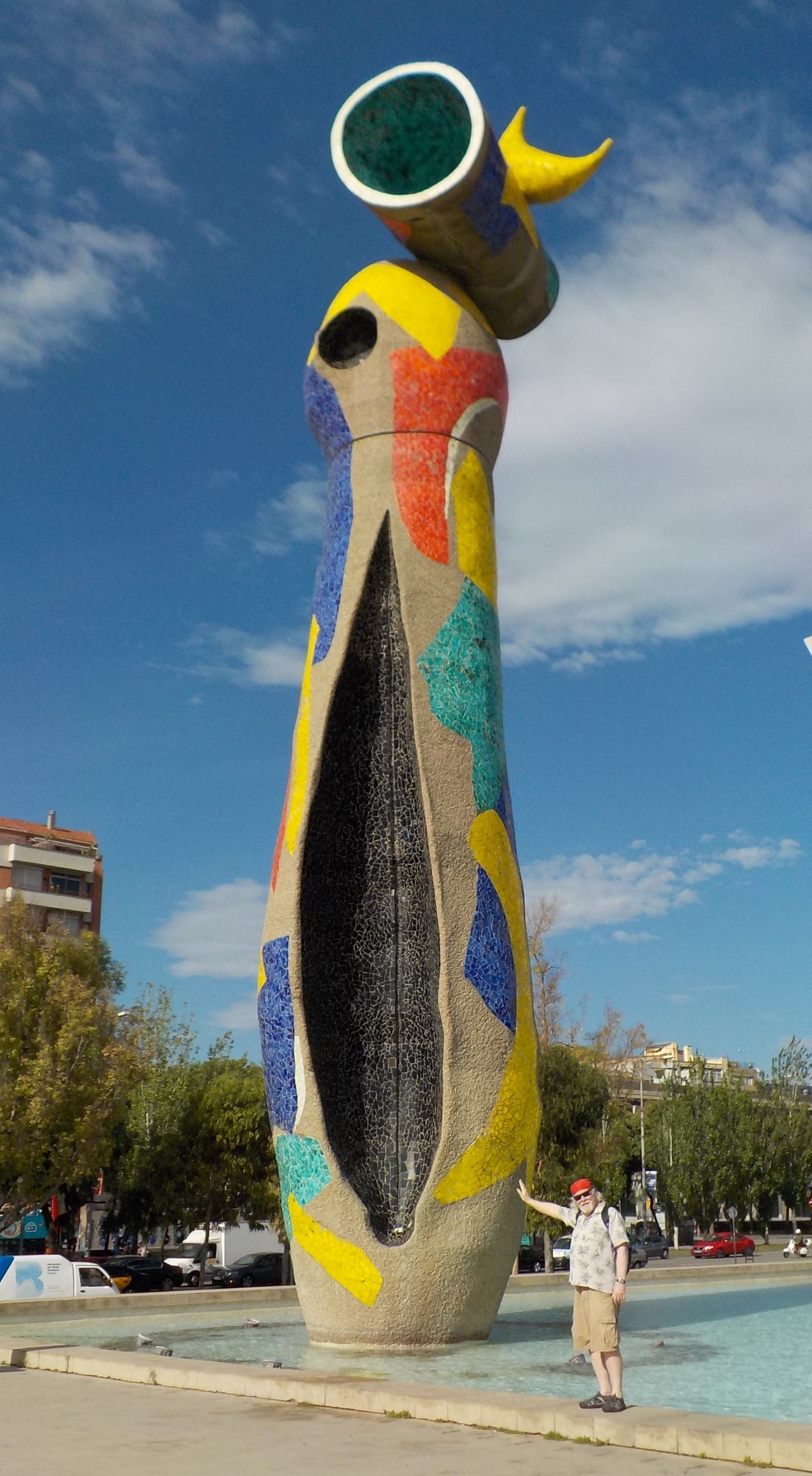
The Miro museum doesn’t allow photography in the indoor areas. The collection, donated by Miro, his wife and close friends, is spectacular. Really unusual. Some of Miro’s earlier pieces have emotion jumping off the page (joy, anger, disgust) in a way that I don’t usually feel from looking at art in museums. It’s startling to look at a painting and get a sense of what the artist was feeling at the time. It was a wonderful visit. Before we got to the museum, we made a brief stop (between subway and bus) at the Joan Miro park, where one of his pieces is installed. It is wonderful, really tall and overlooks the entire park. Though there are apartment buildings around most of the park there are a couple of places where you can photograph the sculpture with the sky as your background. The title is Woman with Bird.

9.16.15 Woman w Bird-003sm

9.16.15 Woman w Bird-006sma