Our Airbnb house had snorkeling equipment and I found enough to fit, though Jonathan found that his knees don’t much like snorkeling any more. We went snorkeling at Rodgers Beach, in sight of the former refinery, and saw many small fish. We found even better underwater terrain right by our house at Savaneta beach. The shore is a mix of rocks and sand and it was a bit of a balancing act to put on fins. Once in the water, though, visibility was excellent and we saw clouds of tiny fish along with some bigger ones. The small patch of mangrove seems to have been home to the billows of minnows of several species. We watched tiny black fish defending the sunken tire or coral covered brick that was their home base from all kinds of larger interlopers. At Savaneta Beach we met a group of men who usually have lunch on the table we happened to be using. They ended up advising us to try Boca Catalina on the north end of the island, which is a lovely beach with bigger fish than at Savaneta.
We returned to Savaneta for one last exploration because Wayne wanted to reach the barrier island that was a couple hundred yards off the Savaneta dock. With snorkel and fins that distance is no problem when there isn’t fast moving water or marine traffic, so we crossed with relative ease. I’m reminded that I don’t really like the deep water when I can’t see the bottom, but it probably took us less than ten minutes to cross. We’d both carried our sandals to do some exploring. There are a couple of houses out there and Wayne was curious about who would build out there and why, since a big storm would wash over the narrow gravelly strip. We saw that one house was abandoned but the other was someone’s summer home carefully gated across the entrance. A walkway lined with, beach glass, pebbles, and chunks of coral led to the dock! The entire spit of land was the big surprise—it is made of beach glass. Imagine sitting in front of your beach house at your cafe table and chairs amid a carpet of green and white glass pebbles. The entire barrier island is less than 50 ft. wide though it extends for about 500 ft parallel to the shore. We didn’t cover all of it once we discovered the carpet of glass. There is as much as at Glass Beach in northern California. I found a plastic bag among the usual shore detritus and picked up as much as I thought I could carry on the swim home. We laughed at how easy it was to collect pieces that we’d been combing the beaches to collect elsewhere on the island. It was a fantastic last day on Aruba. The swim back took two or three extra minutes as I carried my bag of loot to the other side. This was the perfect last day of snorkeling in Aruba. I now have jewelry-making supplies that will last a year or more.
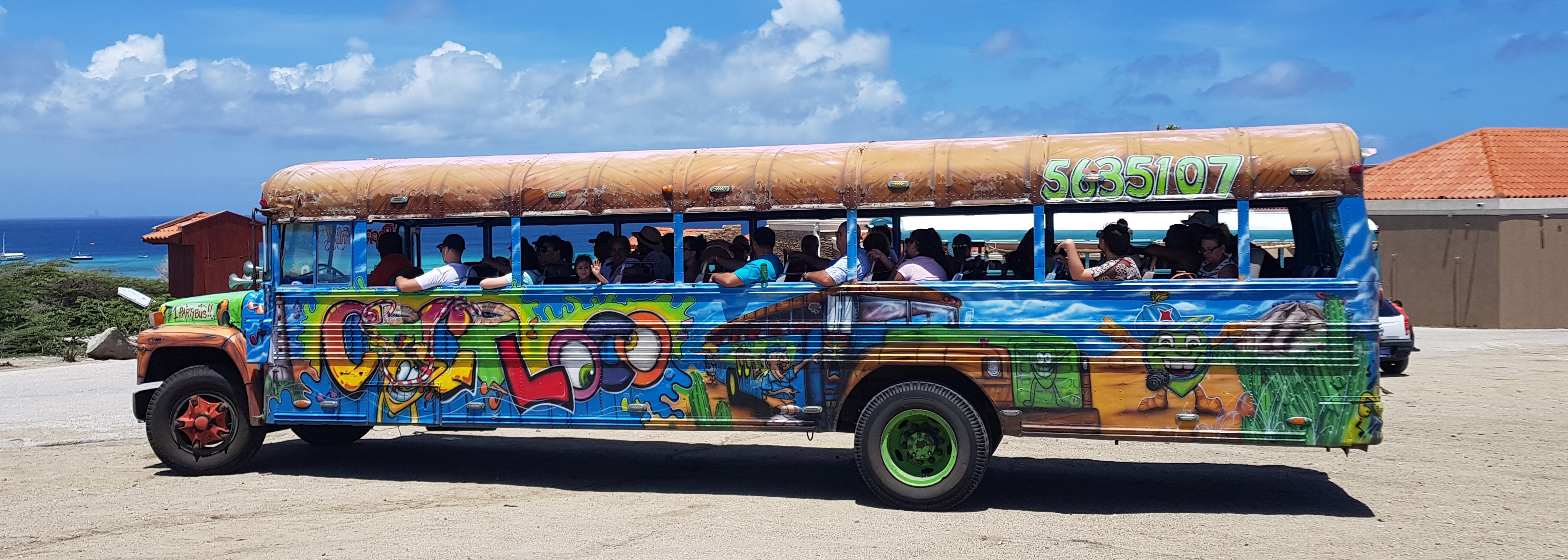
When we arrived, I thought we might spend two weeks making our way from beach to beach around the island of Aruba. We have been happily distracted along the way. My sister Paula and her guy Wayne are with us and wanted to see the California Lighthouse at the north end of Aruba. The lighthouse is on most tours for the view out over the blue, blue water to the west and crashing waves to the east. We got a kick out of the tour vehicles that drove up. One minute there would be eight tiger-striped jeeps with whooping passengers. Next came four wheelers on balloon tires and then The Party Bus, a retired school bus with a hippy paint job. Whether they screeched to a halt or eased slowly into the parking lot, every group had their own personality.The sky was brilliant blue and the guys cutting the tops off drinking coconut were very busy. All this tourism wore us out, so we headed home to rest up by the pool.
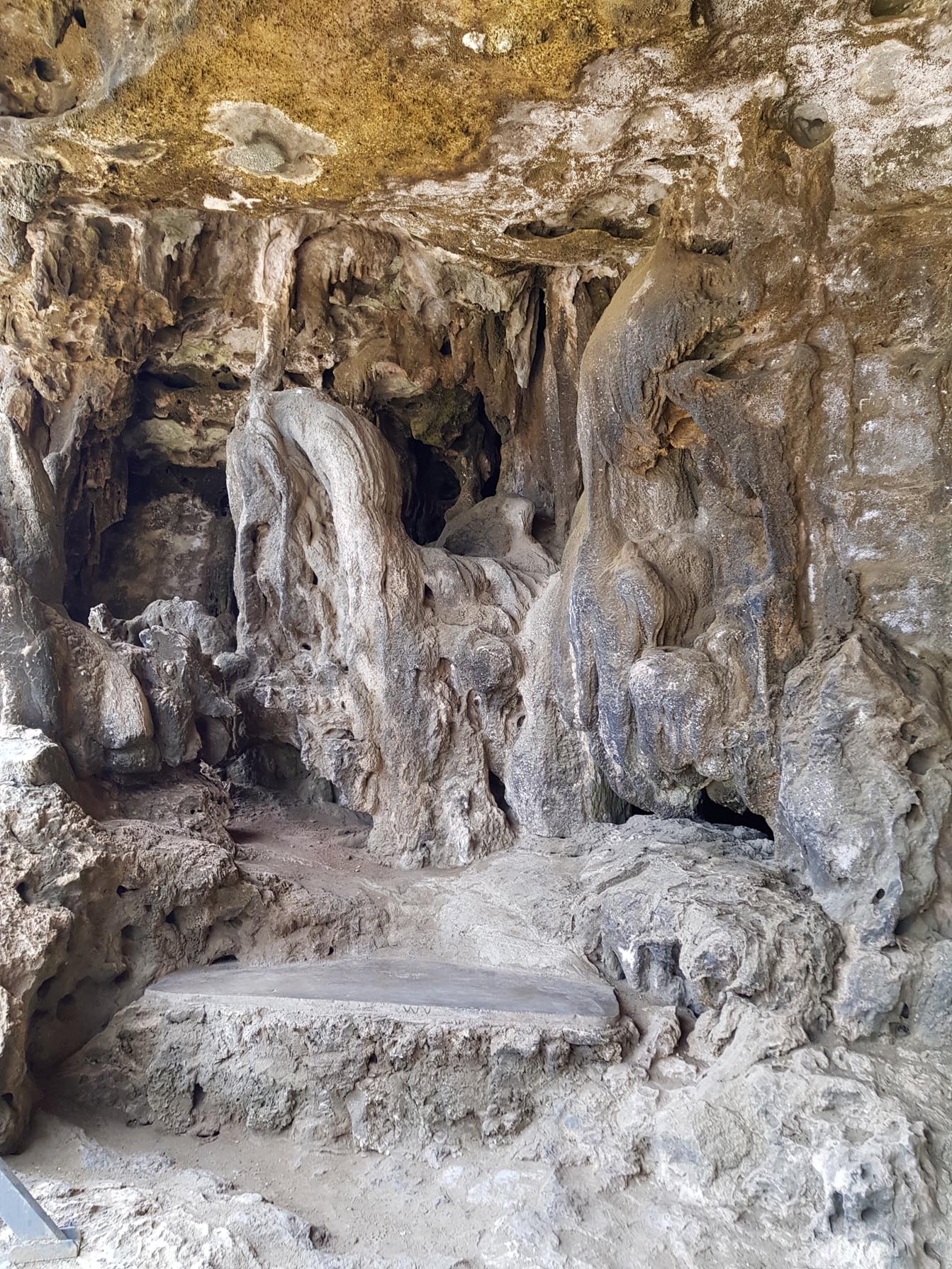
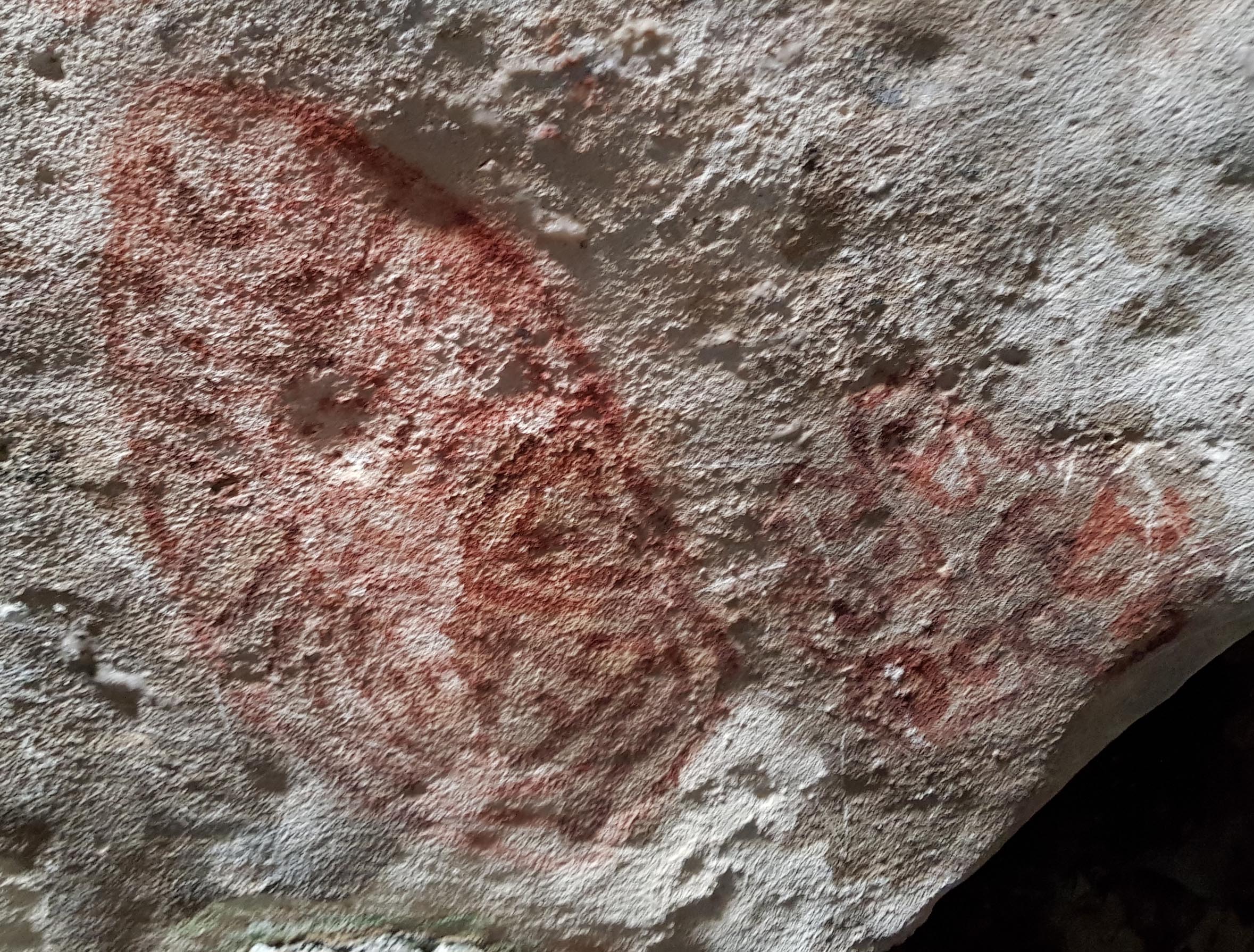
The east side of Aruba is honeycombed with caves. Many of these are part of Arikok National Park. We stopped at Fontein Cave to see the rock art. Some of the stone is twisted in fantastic shapes. We also visited Quadiriviri cave, where an interior room with a hole to the surface is reached by walking down a dark path. A bat emerged from among those sleeping on the ceiling.
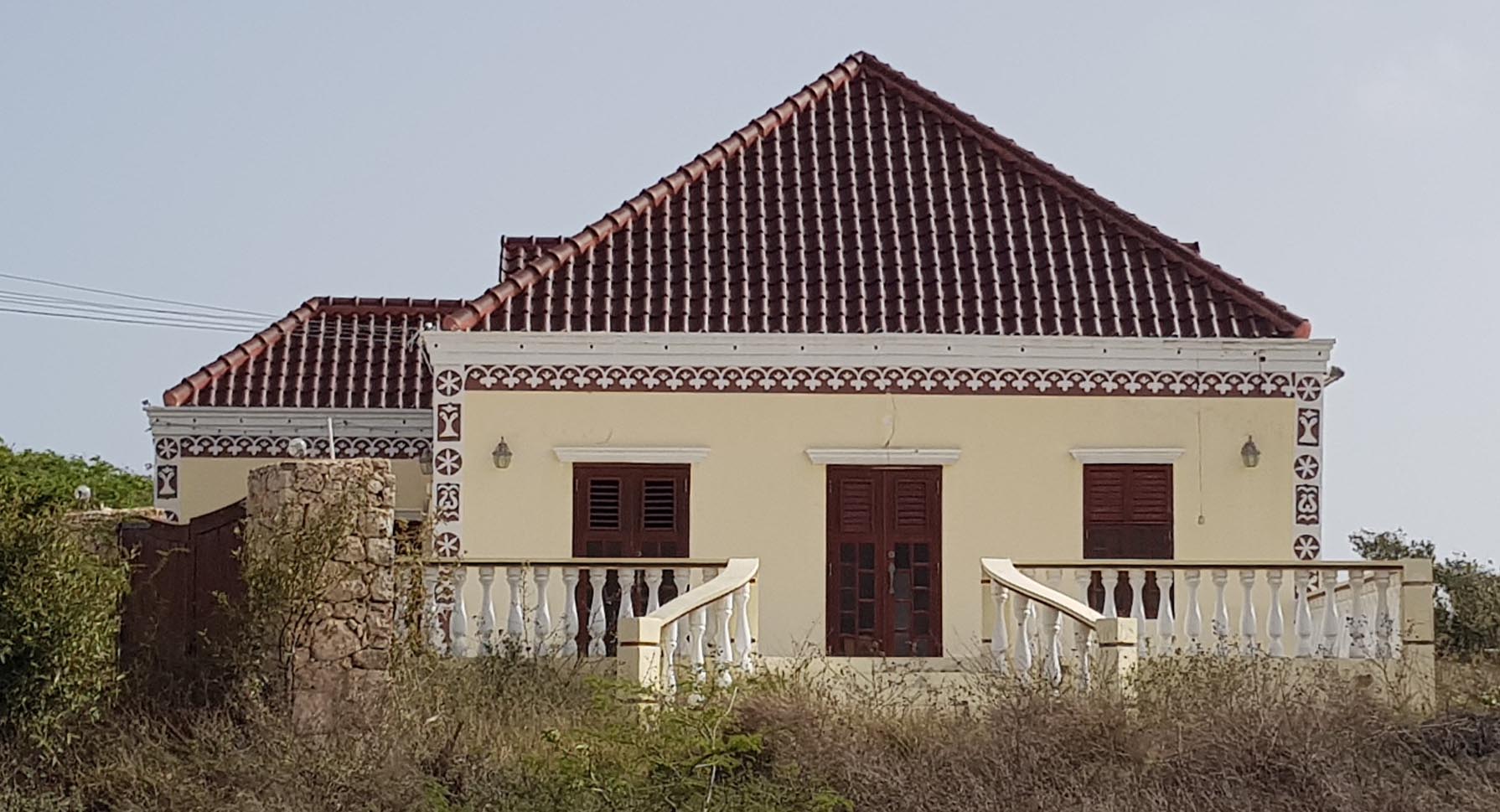
On our way out the south entrance to the park we passed the island’s wind farm, a row of turbines that catch the strong wind coming in from the east. Driving back to Savaneta we passed a number of houses with decorative painted trim. Houses range from tiny cottages, workers housing from the oil refinery days, to large walled compounds with beautifully landscaped gardens.
The hotels are a world apart in Aruba. Just north of Oranjestad is a signpost to the “low rise” hotels and beyond that, another sign to the “high-rise” hotels. These face Eagle Beach and the adjacent beaches and are the center of the Aruba tourist industry, where all-inclusive resorts, package tours, and destination weddings are held. Guests sign up for one day adventure tours, parasailing, kite surfing and other activities. When we went snorkeling at Boca Catalina, along the tourist coast, we saw all this going on just off the beach all at the same time: jet skis, kite surfers, windsurfers, parasailers, catamarans full of snorkelers, a two-masted sailboat, and a flat dredge-like boat leading a group using self-propelled devices to motor through the water in their snorkeling gear.
The cruise ship terminal is in the middle of Oranjestad and traffic slows to a halt when ships are in, up to three at a time moored and looming over the small downtown. One day on our way back from birdwatching, we saw three ships of very different sizes, from a Tradewinds vessel that holds about 200 passengers to a Fortune of the Seas that holds 4,000. We met a two men at the birdwatching site who had arrived that morning. Their ship was leaving again at 3 pm and they were trying to squeeze in some birdwatching and a trip to the beach. When I said we were only in Aruba for two weeks, they laughed at “only,” as their stop was “only” seven hours.
Oranjestad is mostly a single main street along the water, though we found interesting stops a block further inland as we searched for parking. The largest lime kiln still standing in all the Caribbean is the feature of a now-neglected park. The walls are almost two feet thick. A lot of coral was turned into lime for cement here.
Not far away in a restored colonial building is a shop called “Cosecha,” which means “harvest” in Spanish. They carry items made locally and of local materials. There were some lovely things to see and the young woman managing the shop was pleasant and able to talk about the artists.
No trip to Aruba is complete without a visit to one of the fish restaurants, and we decided to give Jonathan a break on cooking to go to the Flying Fishbone. Not only is it down the street from our house, it was part of the directions to get here. I didn’t realize that the tables in demand at the Flying Fishbone are the ones in the water. Yes, the tide comes in and surrounds the legs of the tables up about 12 inches. The restaurant provides racks to hold shoes, though part of ours was submerged–it was high tide at 8 pm. Since Aruba is very warm, even at night, sitting with my feet under water resting on the sand was not uncomfortable. The high tide tables are not the only feature, our seafood was delicious and generous. We had another meal at home of the shrimp, fish, mussels, and scallops that we carried off when we were done. We only had room to share one creme brulee among the four of us. During dinner there was a bit of disturbance at a nearby table when a crab scuttled over the diners’ feet. As we got up to leave, a circle had cleared around another table and people were peering into the water at the base of a post. A waitress told us that there is a moray eel that’s become habituated to the diners and comes out to scrounge. The diners are not used to the eel, however, and there was lots of eek-ing and peeking.
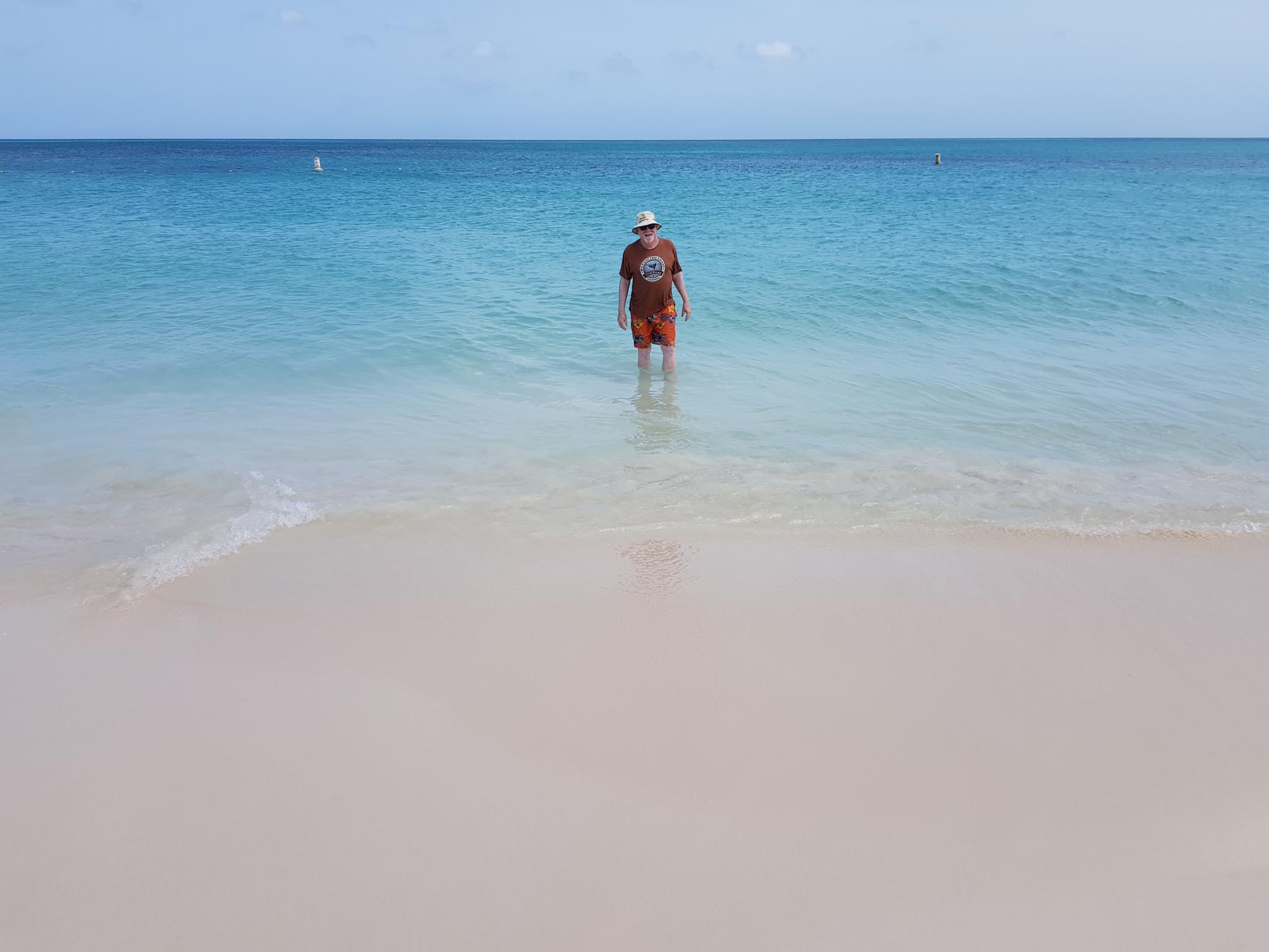
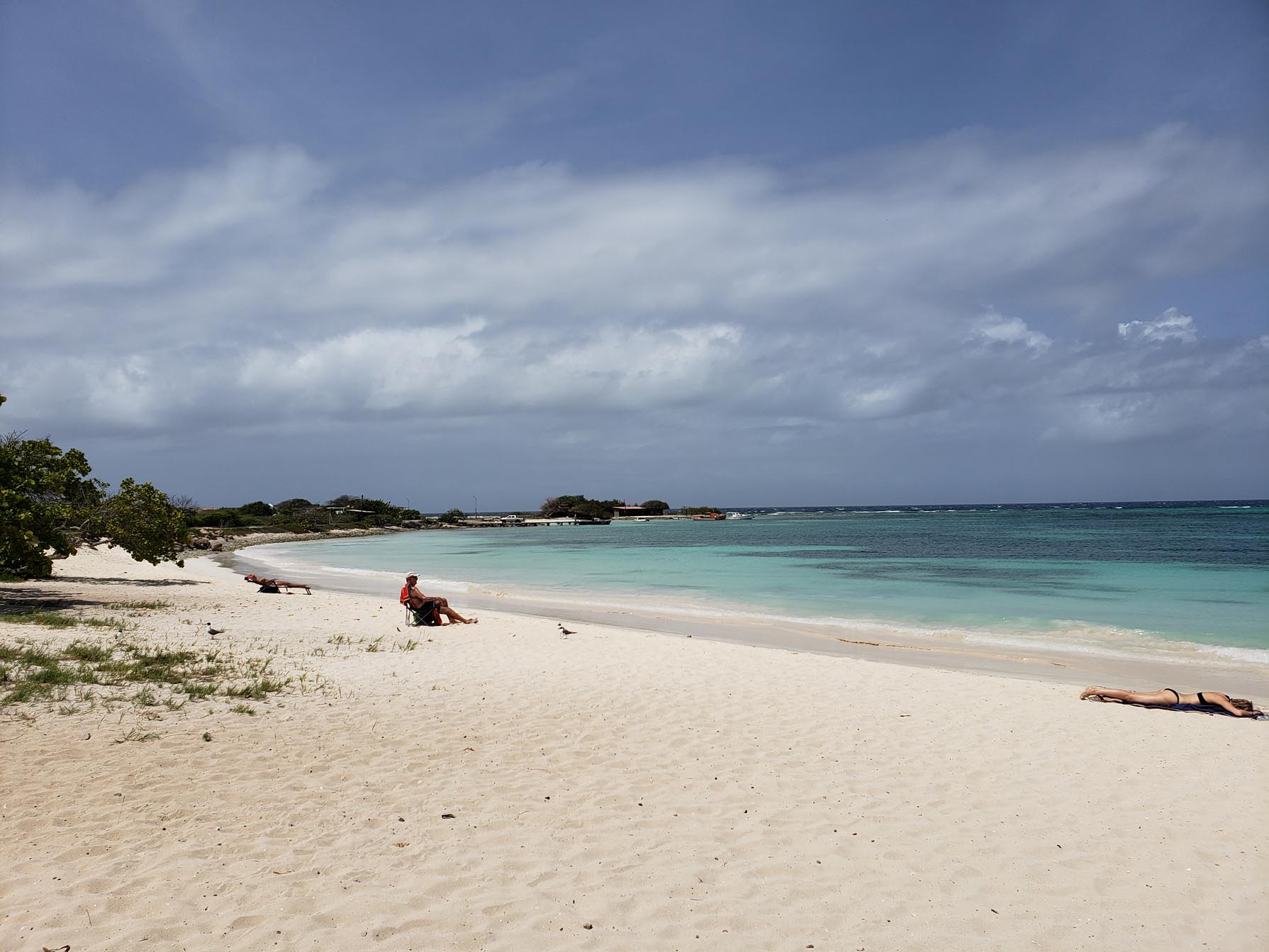
Aruba is justifiably known for its white sand beaches and turquoise water. Directly across the road from our house is Savaneta beach. Sections of white sand beach are punctuated by small stands of mangrove. Snorkeling takes you into clouds of minnows and the occasional foursome of little squid. From here we skipped over the huge extent of the old refinery area. It may not be in use but it is thoroughly fenced off. Within sight of the tank field we snorkeled at Rodgers Beach, the next in our counterclockwise tour of the shore. The fish are tiny, but captivating, mini-angel fish, parrotfish, wrasses and the elegant spotted trunkfish. It looks like it should be carrying a Chanel bag.
At Baby Beach, a deep U-shaped stretch of calm water, we walked out to the far end and looked back to where the thatched beach shelters are almost invisible. The beach combing was very good among stubs of ancient coral as big as tree trunks. It’s easy to imagine they are the bones of whales or turtles that washed up and are now petrified.
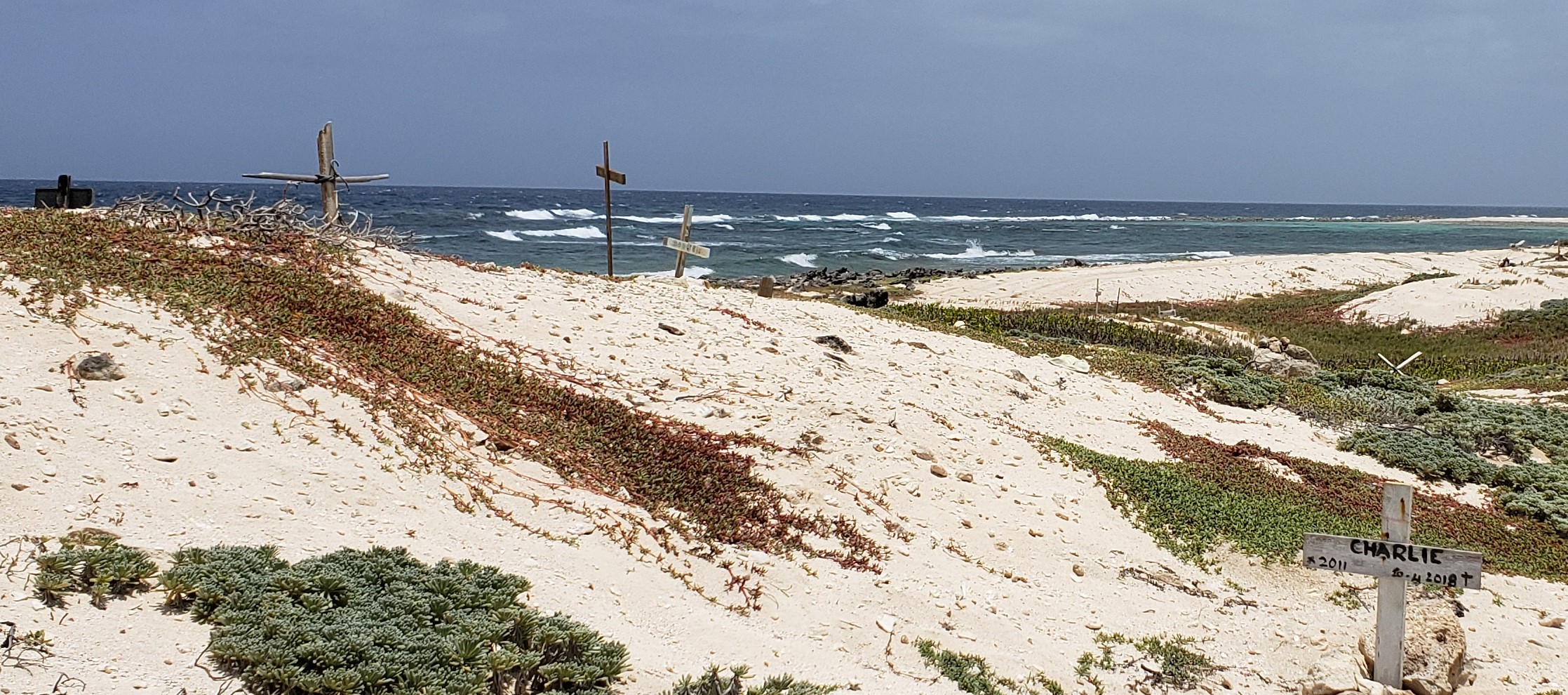
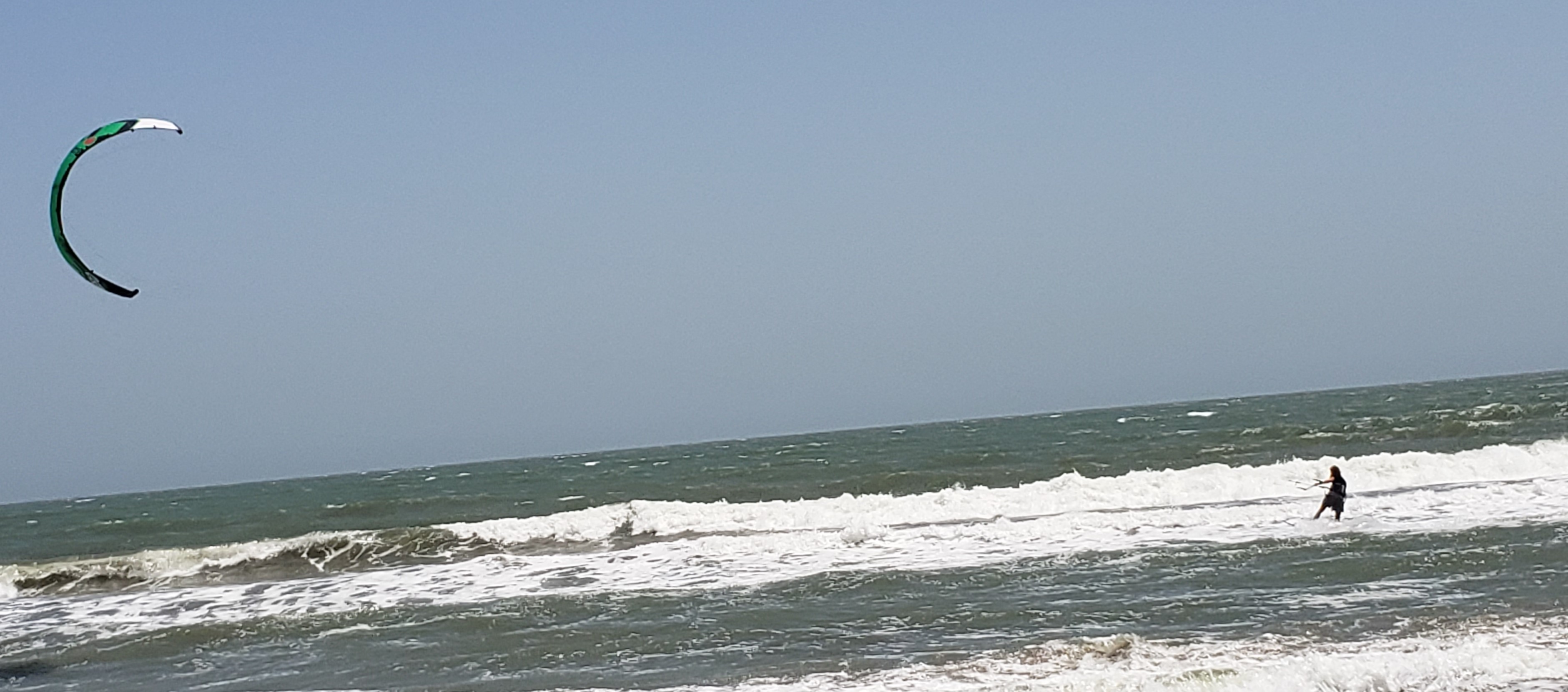
We moved on to the Santana di Cacho, a beach of shelving rock that is bordered by a huge pet cemetery. When the oil refinery was working, this area was started by employees. The tradition continues. The pet cemetery beach is at the southern tip of Aruba. Our exploration headed up along the eastern Atlantic side of the island. When you look out over the ocean, the next land mass is either the island of Grenada or Guinea, Africa. The waves are larger, though broken by shelving rock. We walked from Bachelor’s Beach to Boca Grandi (in Papiamento, the local language) where kite surfers take lessons and practice. All day long ten or more kite surfers can be found zooming across the bay. We passed a deeply tanned young man sitting on the beach in conversation with a newcomer (pale skin) while his kite flew above him, tethered to his safety vest. From Boca Grandi we visited Grapefield Beach, another long rocky stretch. We had traded beach combing comments with a young man we met at the pet cemetery. He was collecting driftwood and dried coral fans for his mother in law. When we showed him our beach glass, he directed us to the northern end of Grapefield beach where there is an abandoned settlement and a newer settlement. He said the turnoff was marked by a boat on the roadside, and sure enough, it is. It felt a bit strange to beach comb among houses right on the shore. Most are empty during the day. The young man we spoke to said that it would be fine to collect things there. “The people live here and so they don’t need to collect things to take back to the US. To them it has no purpose.”
From Grapefield beach the route enters Arikok National Park. There is a visitor’s center in the center of the island that tells how the park was started and identified some of the many paths and sights. Our visit ended at a “boca,” an inlet eroded into the shore. This one, Boca Prinz, is not the smallest but it’s less than 100 yards across. We scouted for beach glass (none) and admired the pink sand.
For the rest of our stay we are going to work our way up the boca, boca, boca indented east coast until we reach the California Lighthouse (more about that next).
We visited beaches on the south/west side of Aruba from our house northward to Mangel Halto. There is a fish supplier near the inlet to Spanish Lagoon where we bought red snapper that was delicious on the grill. Jonathan and I took a multi-visit detour to the bird refuge around Spanish Lagoon and enjoyed seeing new species. Across the inlet is the industrial part of the shore with the extensive desalination plant that supplies all the drinking water for the island, and adjacent to that, the landfill. (I’m pretty sure these two go to great lengths to avoid contact with one another.) We started along this road looking for the marina where visiting trawlers would moor. Since Aruba is valued as a harbor for private yachts during hurricane season, we know there’d be a big, big marina and we found it behind the airport at the edge of the industrial area. It’s an excellent location for yacht owners, you can fly into Aruba and be on your boat in under an hour.
A neighbor told us to see Eagle Beach, a long, long stretch of white sand the borders hotels. It is lovely, but there isn’t anything to do but swim or sit in the shade. The sandy shore has no driftwood or beach glass and the water was cloudy for snorkeling. After some floating around, I went inside a nearby resort and got my hair cut, a great treat. Then we moved back toward Oranjestad to Divi Beach, smaller but similar. The beaches at the far north/west end of the island are still on our radar. A group of “old-timers” having lunch on Savaneta Beach told us not to miss Boca Catalina in the northern zone. It’s now on our list.
The story of Aruba: So many beaches, so little time.
I’d never heard of the A, B, C islands and like people of a certain age, when I looked at the map I saw that west to east, the islands of Aruba, Curacao and Bonaire are not in ABC order….
People who visit these Caribbean islands have their favorites. Some prefer Aruba for the well developed beach of high rise hotels that looks a bit like Waikiki. Others like Bonaire for its dive sites. The islands are south of the hurricane zone, appealing to anyone fearful of bad weather. Aruba is mostly desert, too. Though the air is humid, not much rain falls and the temperature is in the 80s all day, all year, with sea breeze to stir the air and dispel the heat. I’m not sure how anyone managed to sleep before the invention of air conditioning. The blue water and white sand make you forget everything but floating.
Aruba is a small island (8 x 21 mi) of volcanic rock covered with coral. The rocky coast is cut by numerous sandy beaches, though the east side of the island facing out to the Atlantic is rockier than the west side.
It was a pleasure to find our house on the “far” south part of the island meant it was about a 15 minute drive from the airport. We are in Savaneta, a residential community of beaches, bungalows, restaurants and small markets that each sell a little of a lot of things. When we drove into the only large town, Oranjestad (the capital), we visited the “American-style” supermarket. Ling’s has a larger selection, stronger A/C, and higher prices than other stores, and its where we found peanut butter, half and half, and a big wine and liquor department.
All of our subsequent stops have been beaches, working our way from Savaneta south around the tip of the island and up the east side. We snorkeled at Savaneta Beach and Rodgers Beach (top), beachcombed at Baby Beach, Pet Cemetery (Santana di Cacho) beach and Bachelor’s Beach. We watched kite surfers at Boca Grandi–what strength they possess! An Amazon swooped up out of the water about 20 feet, hung upside down for a moment and landed back on the water.
Our visit to Colombia was only two weeks and we spent the first week visiting specific places. I have fewer general comments about Colombia as a result.
Airbnb
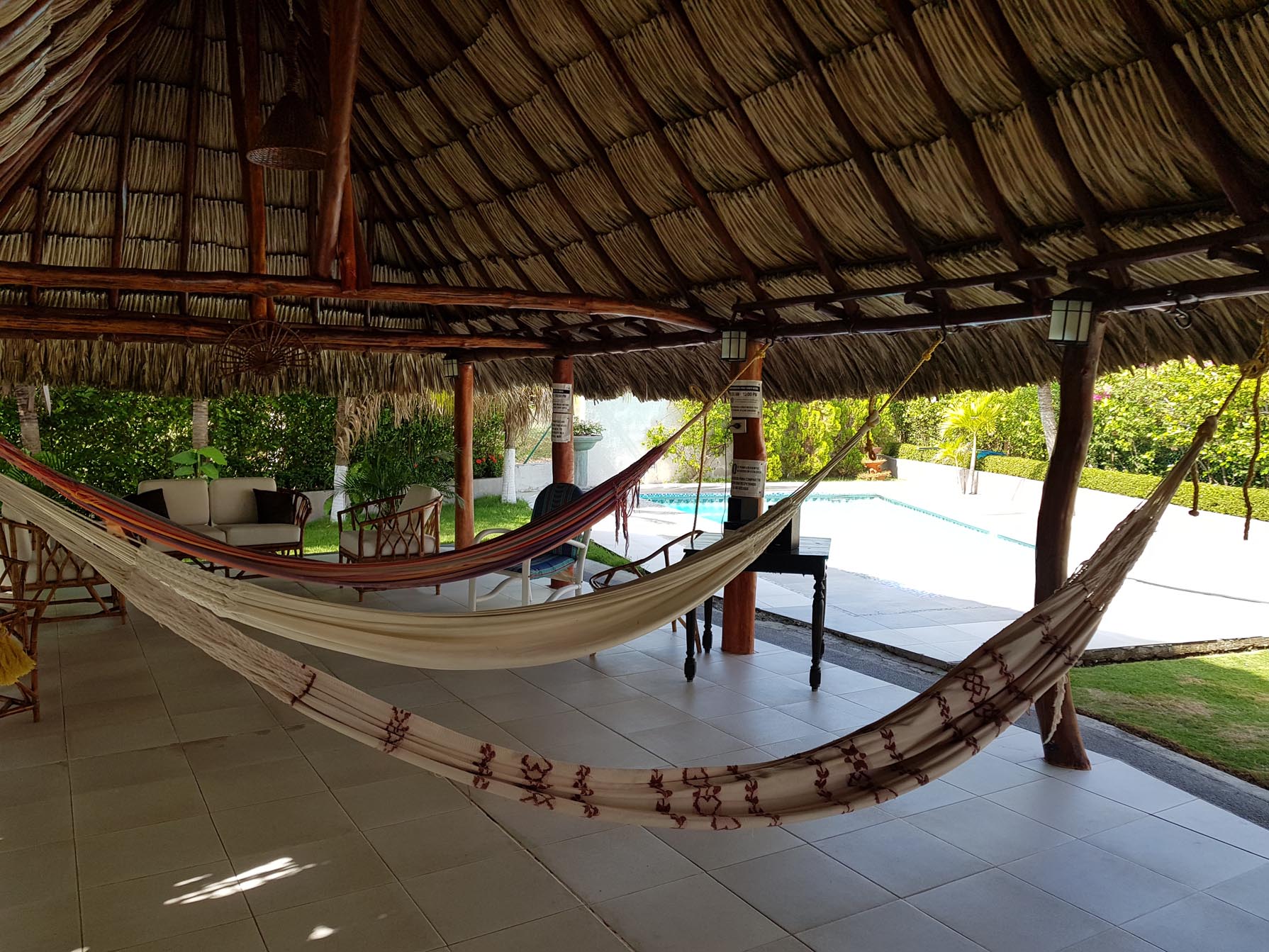
Our Airbnb rental was eight days, much shorter than usual. Our experience shows the ups and downs of Airbnb. Our host texted us GPS coordinates, and Jonathan recognized the house from the Airbnb listing. As I mentioned, the place was gorgeous, but when we arrived, the host was not there, left no message, no booklet of carefully worded instructions. There was a caretaker whose job was to open the gate across the driveway as we went in and out, water the garden and clean the pool. There was no wifi and the local phone signal was minimal. We never book a place without wifi and had no idea what happened. The house was completely empty of food, too. There was no welcome basket of fruit, bottle of wine, loaf of bread, butter or bottle of milk in the fridge as we sometimes find. There was not even salt, and it was 5 pm on Friday evening. We asked about a grocery store and found the nearest was 20 km back the way we came. With no alternative we set off again.
Driving
We rented a car at the Barranquilla airport, and though the checkout took a long time, we had no trouble with the car. We were warned that visiting Santa Marta and Cartagena required checking to make sure that the car wasn’t banned from the city that day (It depends on the last digit of the license plate). We were also warned about speed cameras and police stops, though as far as we can tell we did not run afoul of any of the cameras and we were not stopped by the police.
Language
Like every country, Spanish is spoken in its own way in Colombia, and we had little trouble being understood with our Peruvian vocabulary. It was sometimes difficult to understand the directions we were given. Many people speak some English, though our waitress at La Perla seemed relieved that she could bring us Spanish language menus. Outside of cities we didn’t run into a lot of English speakers.
Shopping
There are lots of handicrafts available in Colombia, including woven bags, hats, leather goods that seem to be mostly handbags, and lots of souvenirs. The border with Panama seems to be influential as there are lots of molas for sale and things made from molas, like bags, hairbands, clothing, and even shoes (I bought a pair). There are lots of beaded necklaces and earrings hung on boards in the street, especially calle 7 in Bogota.
We saw two spectacular “spirit boat” carvings made by Amazonian people, one in the gift shop of the Museo de Oro and another in a shop in Cartagena. Both were too large and too fragile to get home easily.
Tipping
Most restaurants and service businesses in Colombia add a 10% “propina voluntaria,” or voluntary tip. We paid the tip every time and when I tried to ask a waitress whether the tip could be removed from the bill if a customer was dissatisfied, she said yes, but in a way that suggestedl it would be awkward to decline this “voluntary” donation. We did decline to tip the guy who stood in the exit of a parking lot that we had already paid to enter.
Colombia is famous for the hundreds of bird species within its boundaries. You can spend two weeks or more on a dedicated birding trip just to get started. The High Noon Birdwatching Society takes a low key approach, looking at lovely flying creatures when it is most convenient. We have seen and heard some highly entertaining species. In Cartagena, we met the squirrel cuckoo. These are named after their sound, vaguely like that of a squirrel. We found two young individuals sitting in a tree by the sidewalk begging to be fed. The mother bird was in a tree overhead, declining to answer their frantic screeching. The young birds hopped and flopped upward among the tree branches trying to reach mama, though they didn’t succeed. I later read that squirrel cuckoos leave the nest before they can fly. That’s just how they looked—unwillingly out of the nest.
By our beach house, a pair of brown fronted parakeets ate seed pods from the neighbor’s tree. Near the house we also saw a white winged swallow, brown chested martin, and the biggest wren we’ve seen, the bicolored wren.
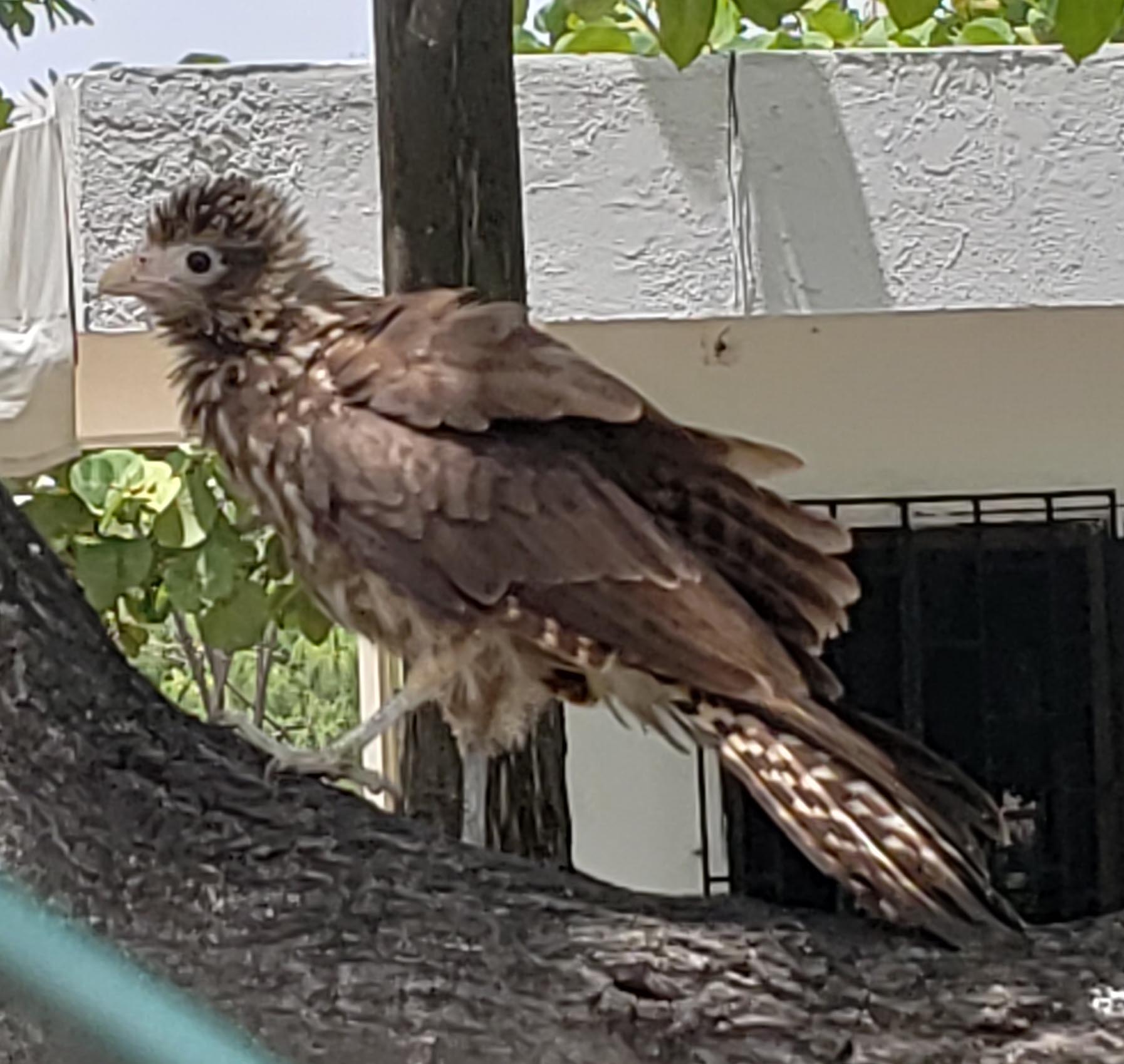
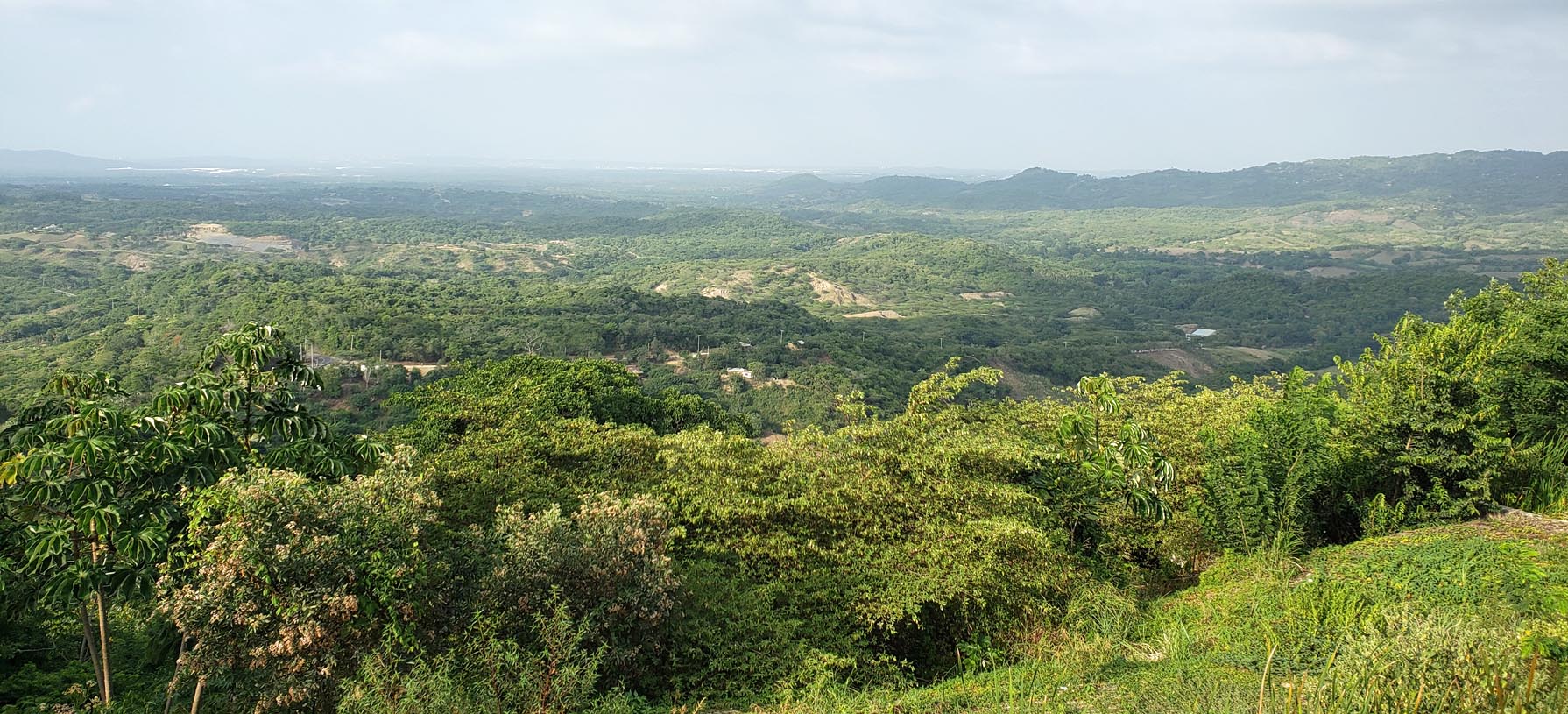
When we drove inland to the town of Tubara we found the town spread across the crest of a high hill and down into the adjacent valley. From one moment to the next you go from a coastal region to an inland one, covered with forest. In a clearing by the road we saw yellow oriole, red crowned woodpecker, boat billed flycatcher, smooth bill ani, tropical kingbird, blue black grassquit, ruddy dove and a gray bird sitting on a nest that we couldn’t identify. A very gangly savannah hawk stood on a stump staring at us by the side of the road. Other raptors we saw included yellow headed caracara, pearl kite and American kestrel. On the way home we saw a group of orange chinned parakeets.
At the Hotel Monasterio in Saint Agustin the guans were making so much racket that you couldn’t hear the roosters crow. Unfortunately, we never saw any guans though we heard them all around us. We also saw the scrub tanager, a blue and yellow tanager sort of bird, a rufous collared sparrow, and an Andean siskin.
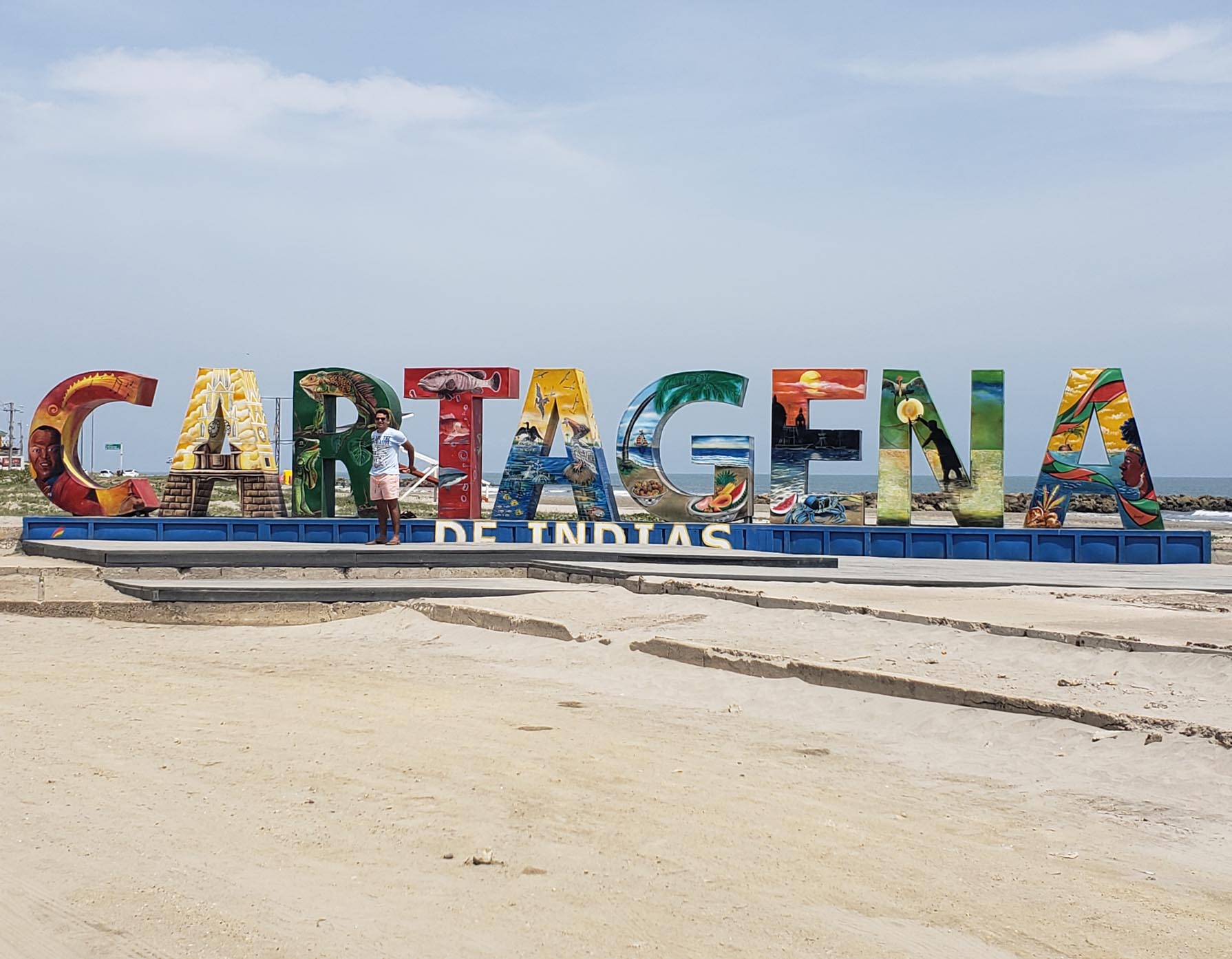
The sign says it all. We arrived in Cartagena, one of the oldest cities in the New World founded in the 1500s. It has survived all these years despite colonization, wars and heat. Many places are suffering from high heat this summer, but Cartagena is always hot and humid. Hot, hot, hot, and sweat-dripping-from-every-pore humid.We enjoyed strolling the walled city, window shopping, having a coffee and wifi access, chatting with the café owner who is back in the area after 20 years in Florida–his accent, or lack of it, gave him away. We stopped for lunch at La Perla, run by the people who run the Peru sushi restaurant next door. Our Peru-inflected food was delicious, including shrimp ceviche Cartagena style in a spicy tomato sauce, oxtail and blue cheese filled appetizer puffs, and ravioli with shrimp and crab. The air conditioning felt delicious, too.
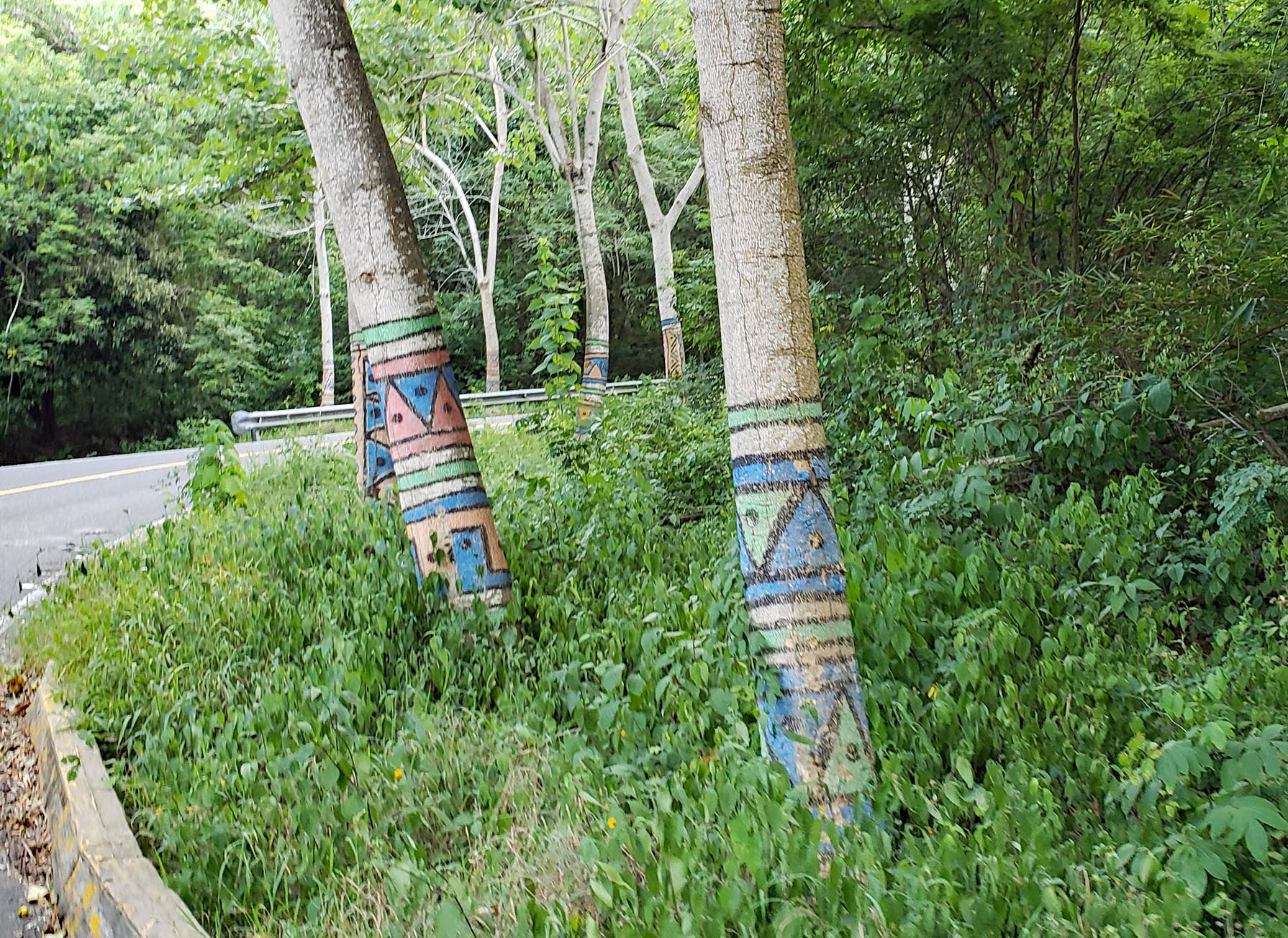
Houses are carefully painted and decorated, often with lizards.
The arcades are remodeled storage from earlier times when the arches housed storage for mariners or the fort. Today, vendors offer woven goods, leather bags, and souvenirs.
As we headed back to the car, we stopped in a store to buy some Colombian chocolate for scientific purposes, to compare with single source chocolate from Peru and Bolivia. It’s all pretty tasty.
Three young men wanted to rap to us for a tip and were unhappy to find us hot and tired and uninterested in rap. Some people enjoy these performers, and pass by the entrance to the fort to see whether the trumpeter will guess their nationality and play the national anthem of their home country.
We stuck to the UNESCO World Heritage site portion of the city. It is lovely, though touristy, a bit like the French Quarter in New Orleans, or the Casco Viejo in Panama, and makes a pleasant day trip.
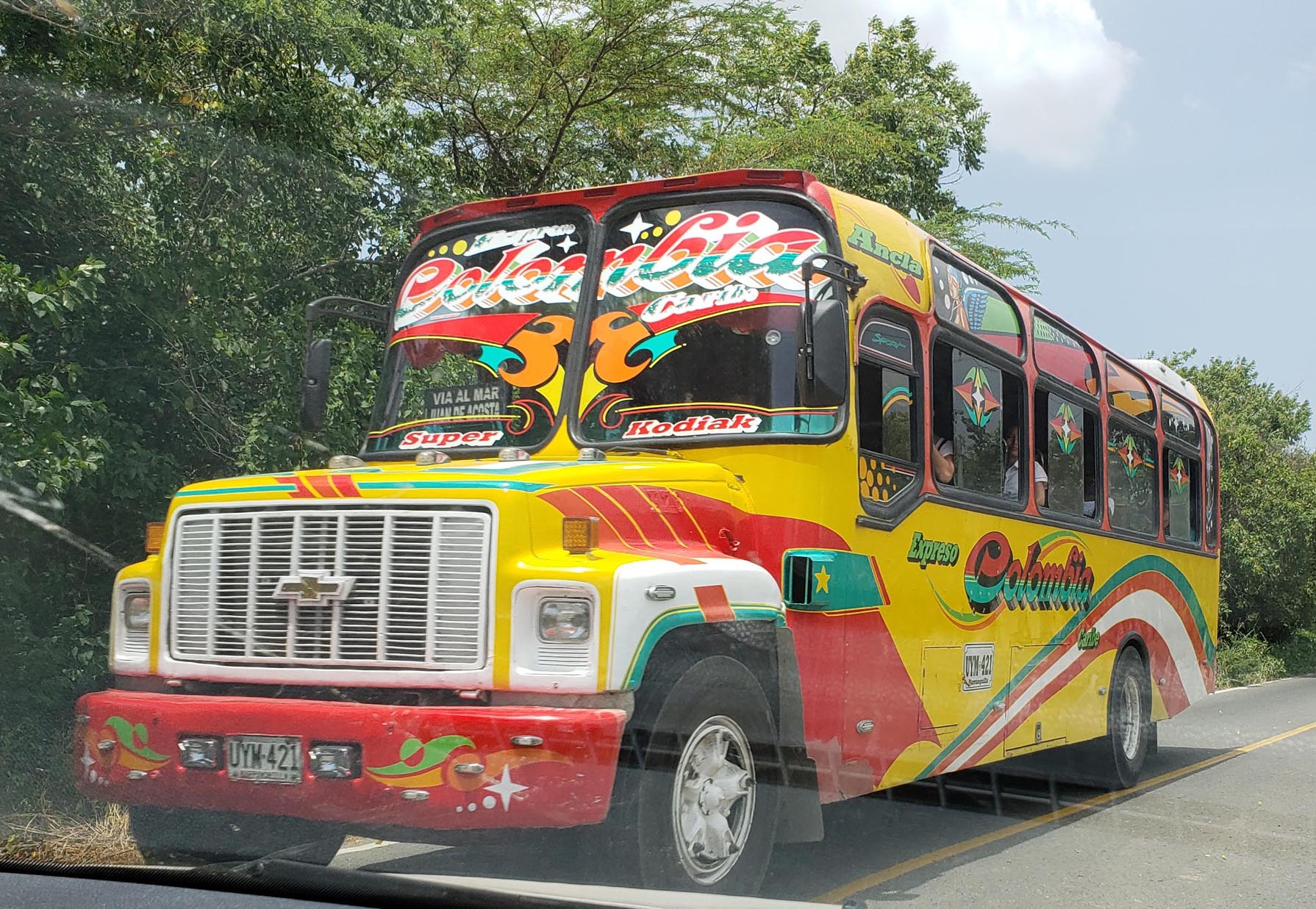
Though most people are pretty low key here, you see that some people are struggling. Like the young rappers in Cartagena getting up close hoping for a tip, fruit-sellers rush to your window when you stop along the highway. There’s a touch of desperation in their desire to sell you something. It can be overwhelming to be offered a bag of mangoes by five different people at the same time. Even if you wanted mangoes, how would you choose?
No one moves fast in the Caribbean, it’s too hot. Barranquilla and the surrounding area rarely gets below 30⁰C (80s℉). This was our first lesson, as it took almost an hour to pick up our rental car. There were no problems, just an endless stream of information written on paper, xeroxed, typed into a computer, printed, signed and fingerprinted. We managed to get around Barranquilla on its ring road before rush hour took serious hold and made it to our new place in Tubará.
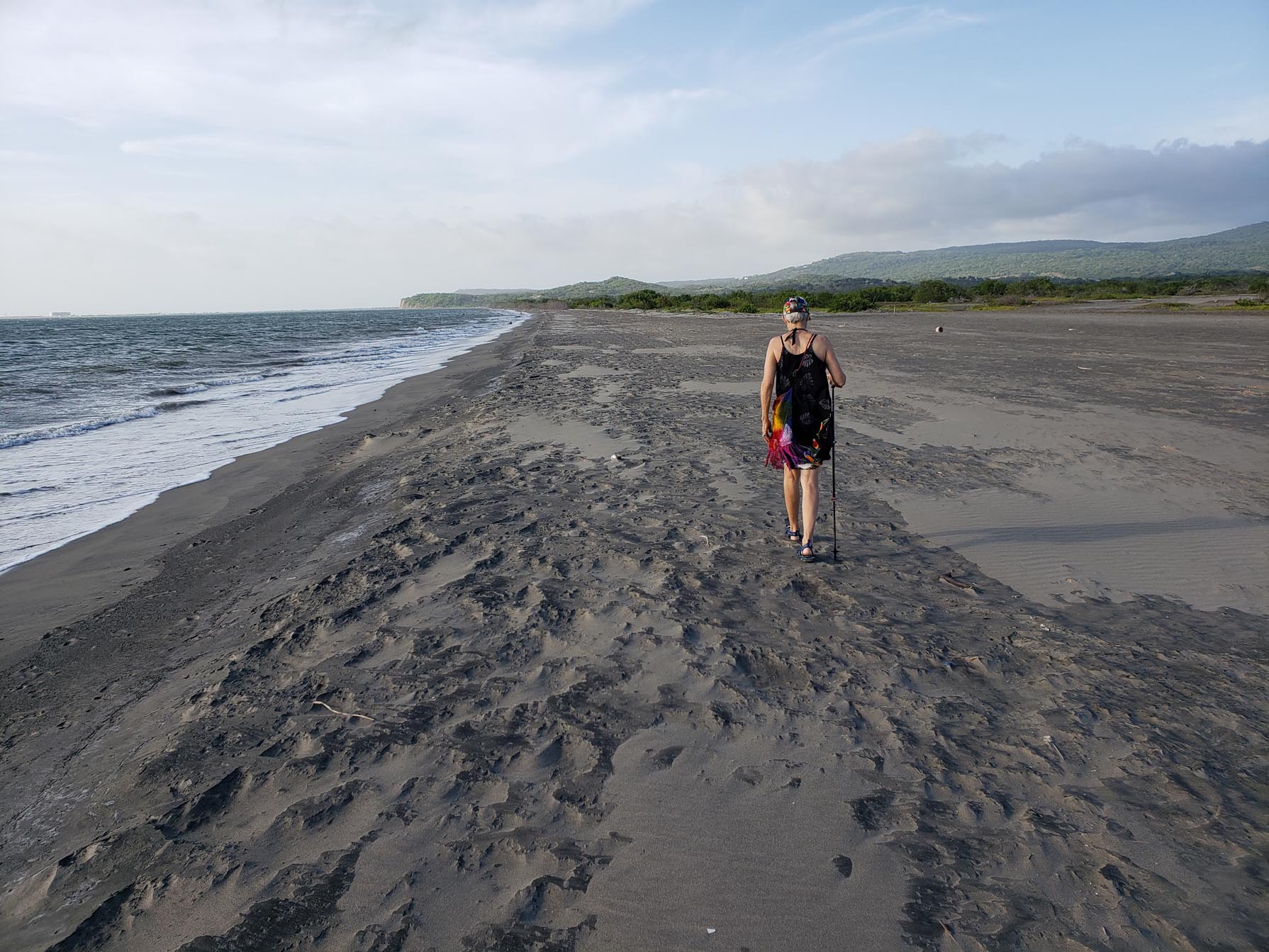
The next day we took a long walk on the beach, did some beachcombing and headed for the store with a shopping list for the rest of our stay. With vague directions, we drove toward Cartagena and toured a bit of the region, ending up at a small grocery store in Juan de Acosta. Remarkably, we found everything on our list.
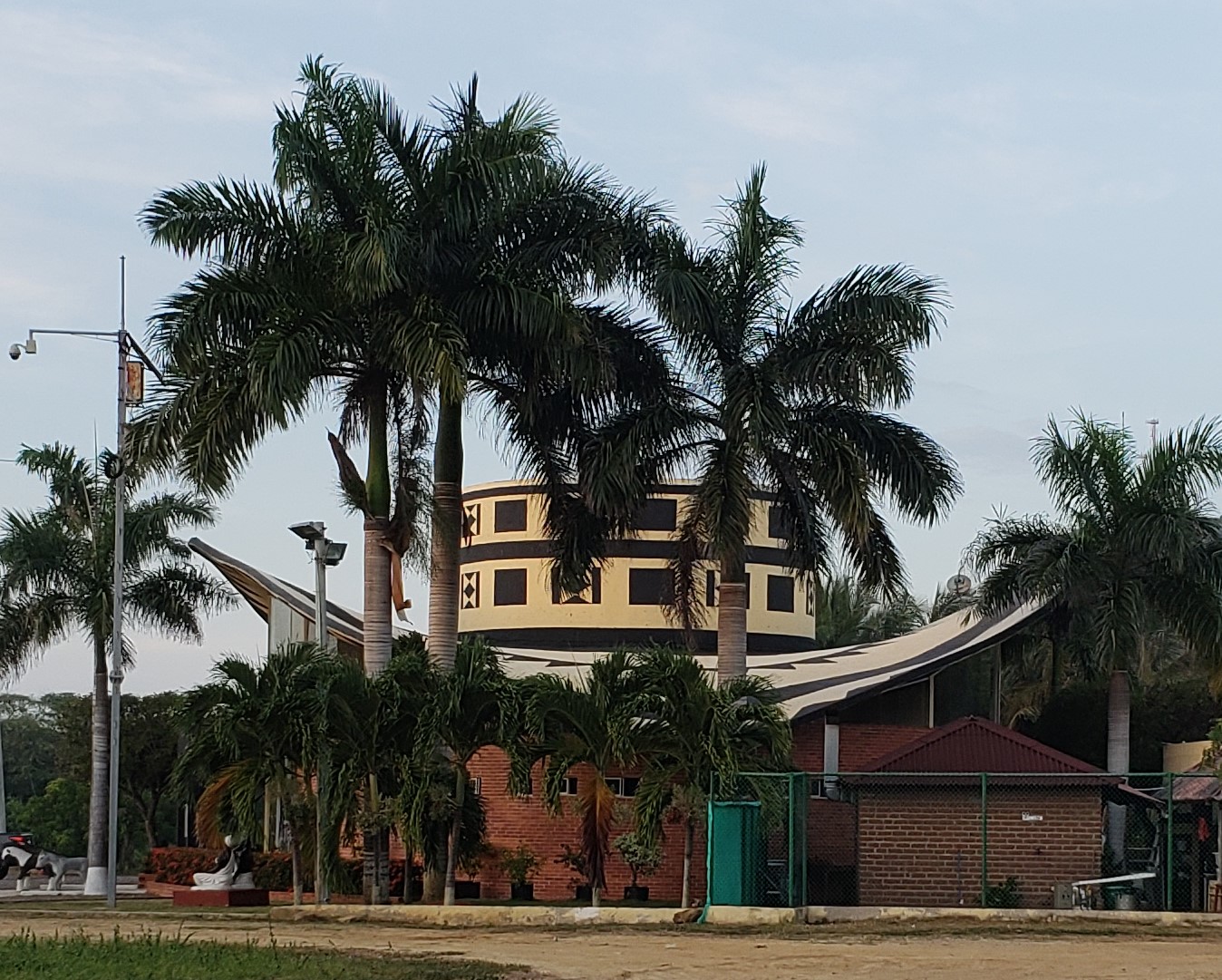
One of the local landmarks is The Sombrero, a restaurant, store, roadside stop.
We stopped at a woodworking stand where the owner showed us a wood sink basin he was carving. It yielded bright yellow sawdust. The wood is called Golden something for the color.
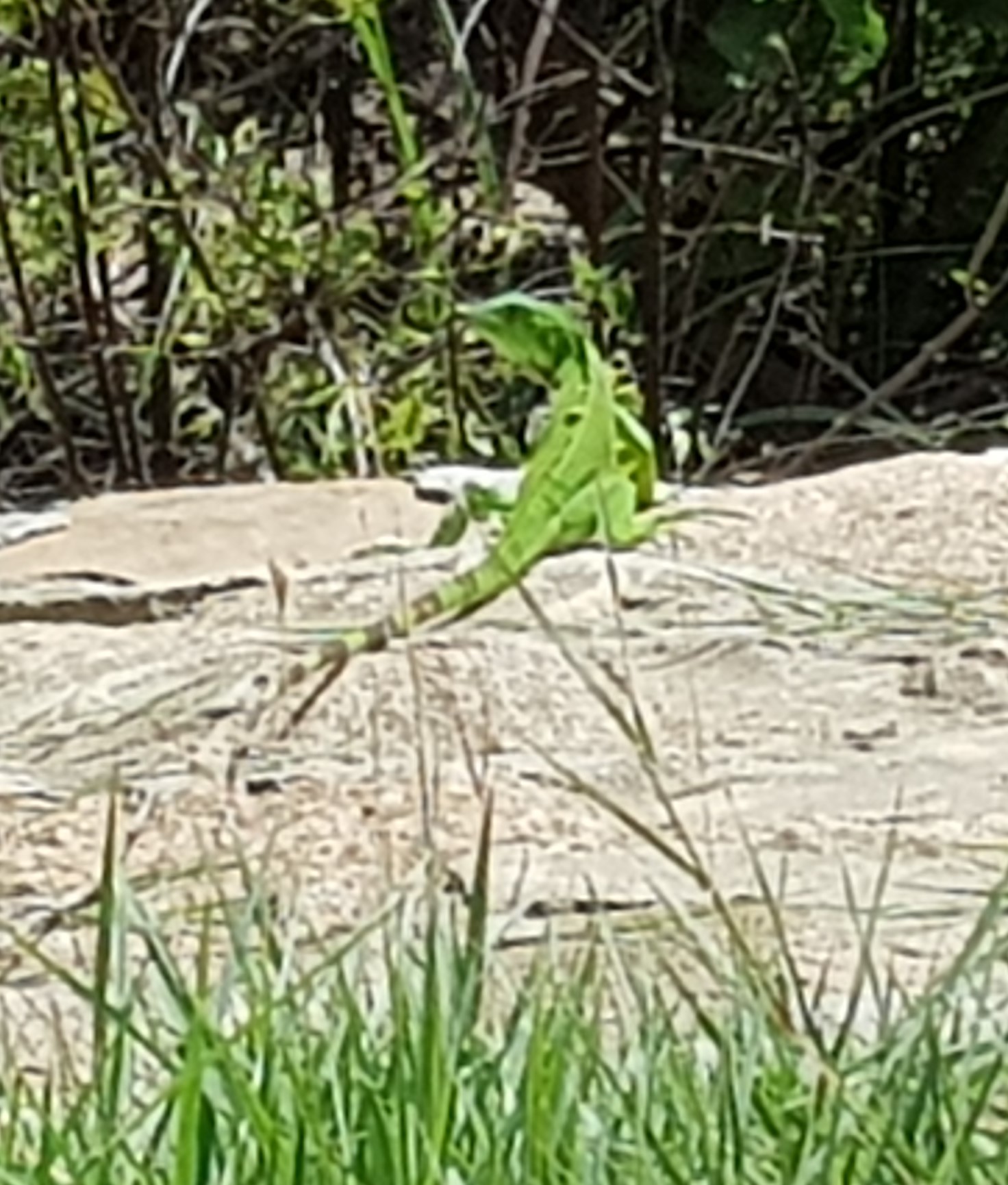
We saw a few birds and are still waiting for more of the local fauna to step out.
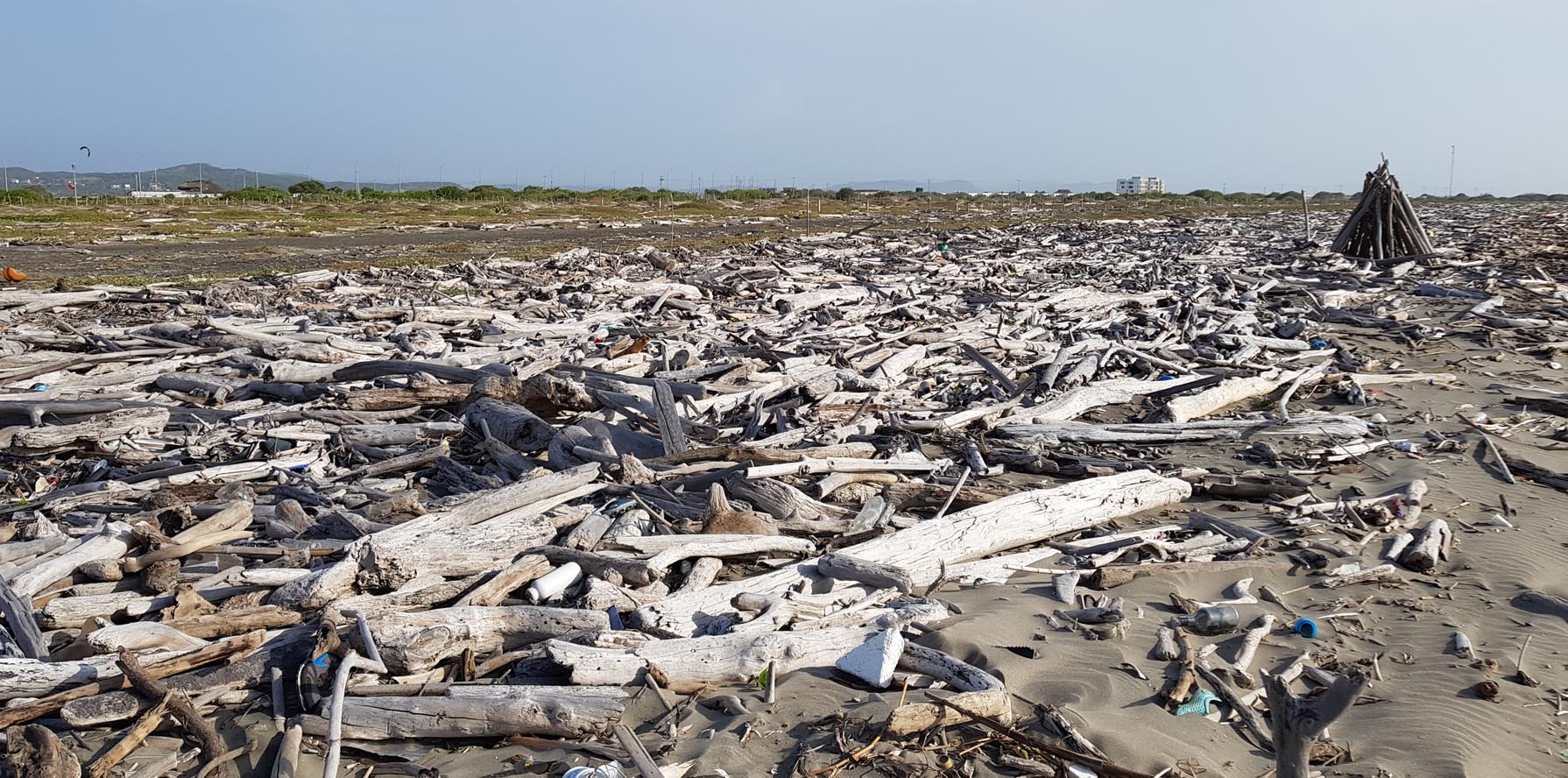
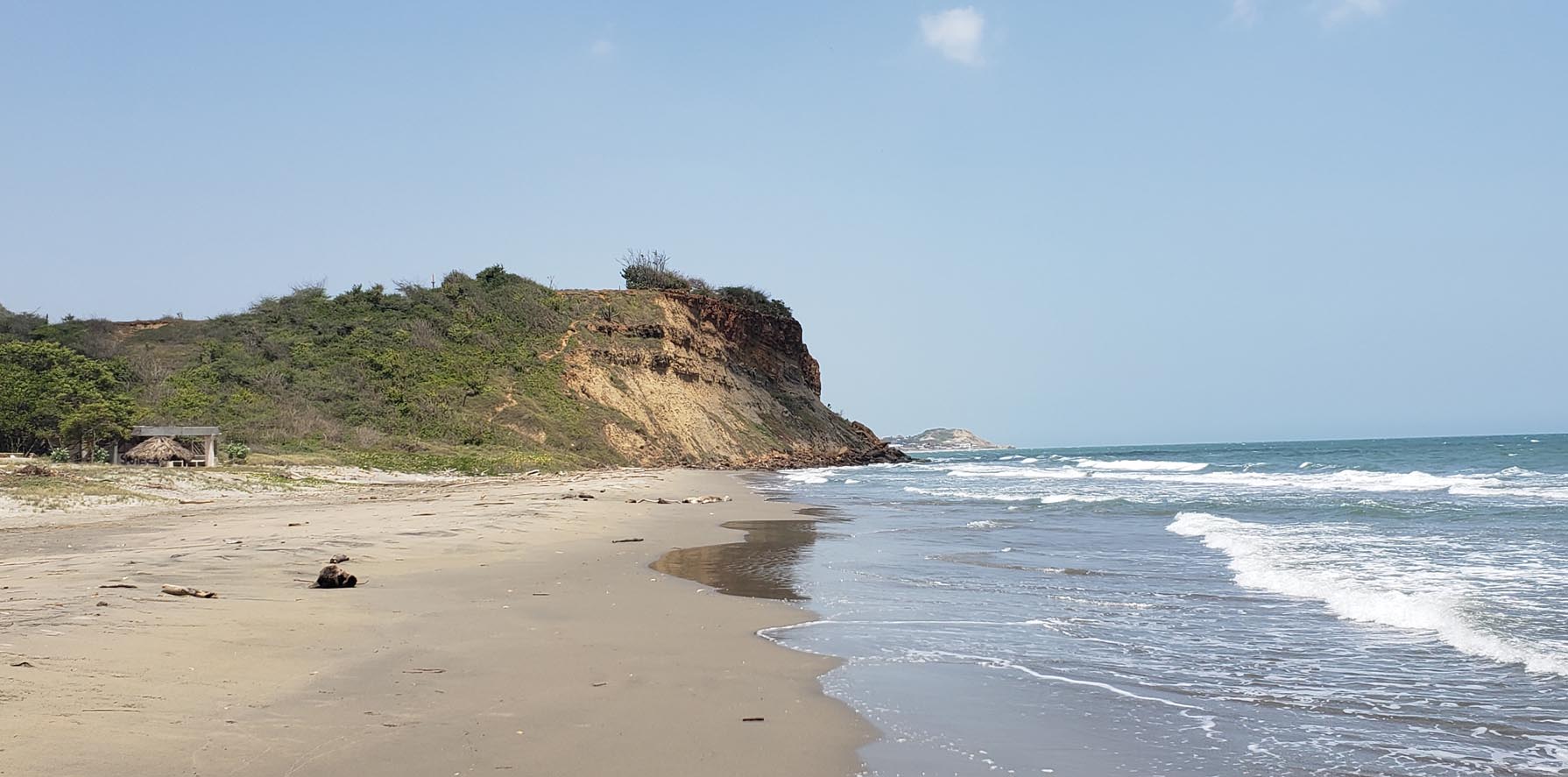
The beaches are highly varied. There are barely any waves on Playa Cano Dulce, the closest to our house. One arm of a long bay, Ensenada de Trebol, shields the beach. When we went out to the sea side of the Ensenada we found an astonishing beach full of driftwood. There are huge logs and twisted shapes of all kinds.
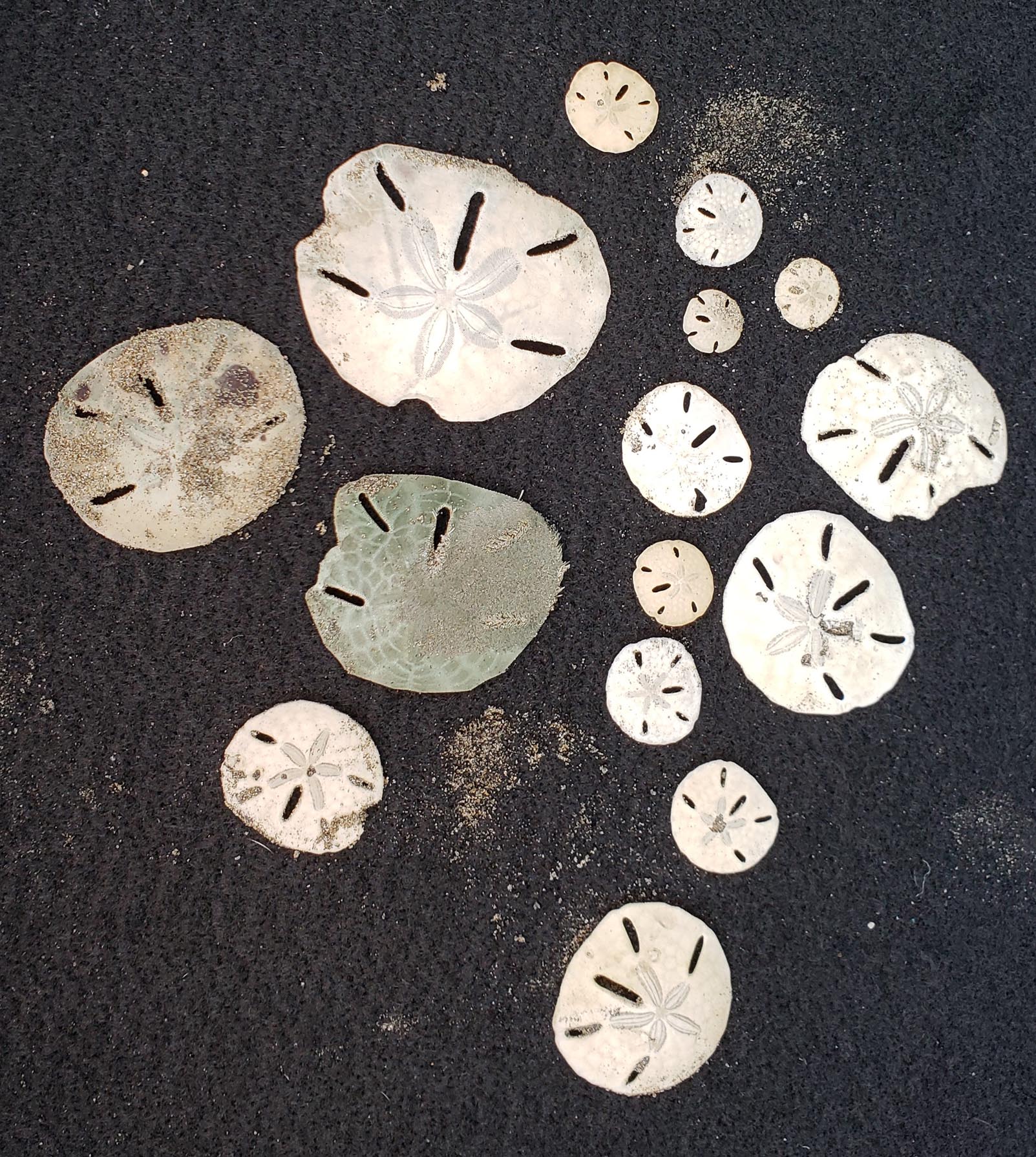
The next day we visited Playa Mendoza, where we found sand dollars.
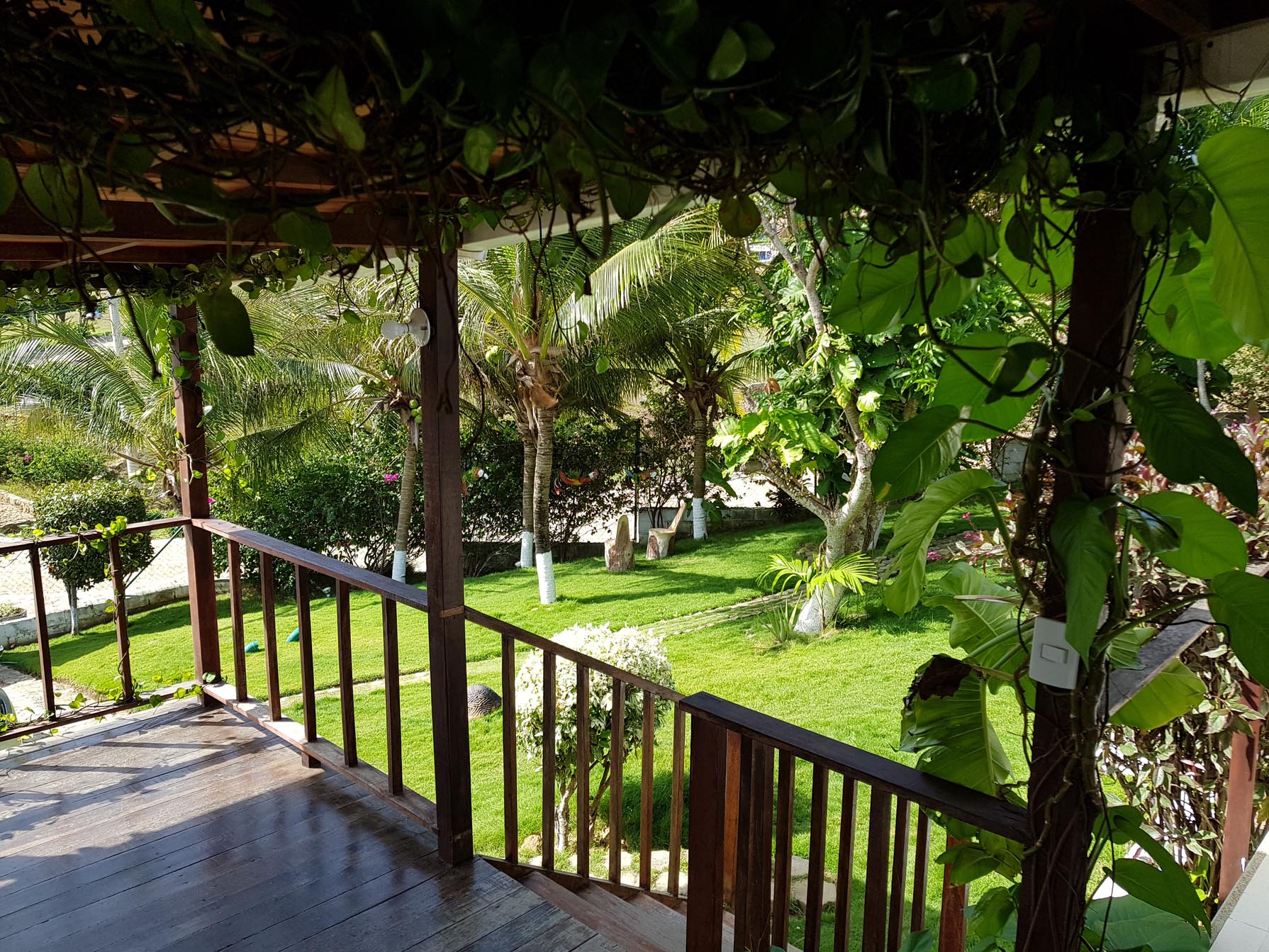
What would it be like to live in this region? Getting used to the heat is the biggest hurdle. It makes most sense to go out in the morning and evening and stay home in the shade in the middle of the day. You wouldn’t need to worry about getting to the office and into the air-conditioning at work because no one commutes to Barranquilla from here. Our house this week is a “casa campestre,” part of a development of vacation homes. On Saturday and Sunday we can hear the voices of people on the beach. At night there is music. Weekdays we are alone apart from the caretakers. We had to summon someone to open the gate to the beach on Monday morning.
The people who live in this area full time are those who staff the beachside businesses, teach kite-surfing or build new villas for the weekenders, as development extends ever further along the coast between Baranquilla and Cartagena.
The pace of life suits us fine, as we visit beaches in the morning and late afternoon. We are at home for a dip in the pool, lunch and rest in the shade while it is hot.
We drive through the Colombian countryside alongside the Magdalena River in a tiny cab. When we met Hugo and his taxi at 9 am we were glad we decided to leave our big suitcases at the hotel in Neiva and travel with our carry-ons for our two-day trip to San Agustin. Other than the occasional swerve when we go over a bump or hit a pothole we are doing well, seeing rural sights as we make our way toward the archaeological sites of the San Agustin region. We were doubly happy that we hired Hugo to drive when his car was struck by a branch about a half hour out of Neiva. He stopped and negotiated with the trimmers from the electric company and we continued on our way.
Crops of all kinds are out the car windows. Colombia grows fruit, vegetables, ornamental plants and cut flowers. In addition to pineapple, banana, watermelon and papaya at breakfast, we tried juice of lulo (ugh) and cholupa (yum). Passing through Campoalegre we saw cacao beans drying on the sidewalk. There are lots of combination businesses, like photocopies and coffee, or parking and coffee.
Here’s a reason to eat less beef and drink more coffee.
Cattle pastureShade grown coffee
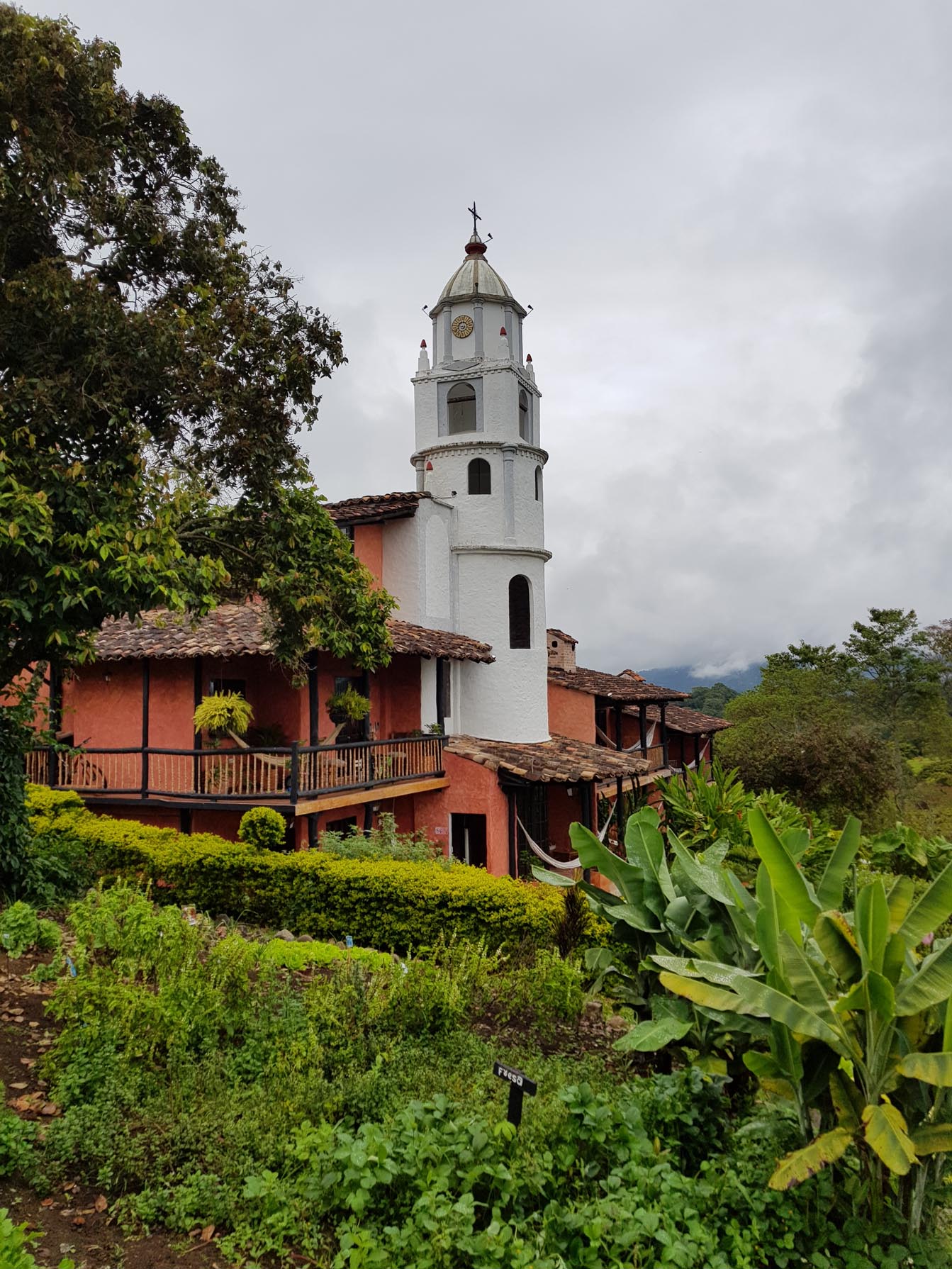
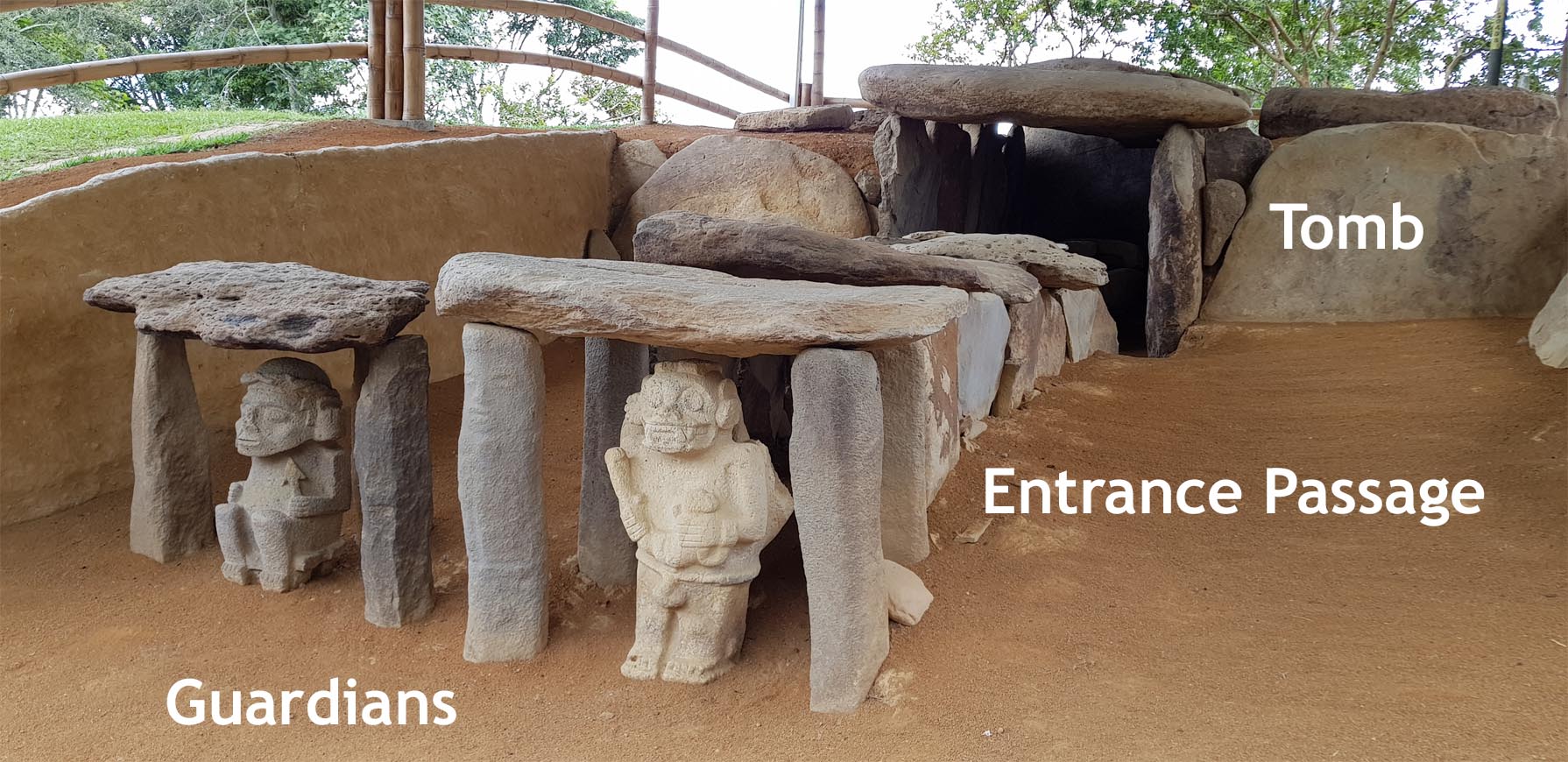
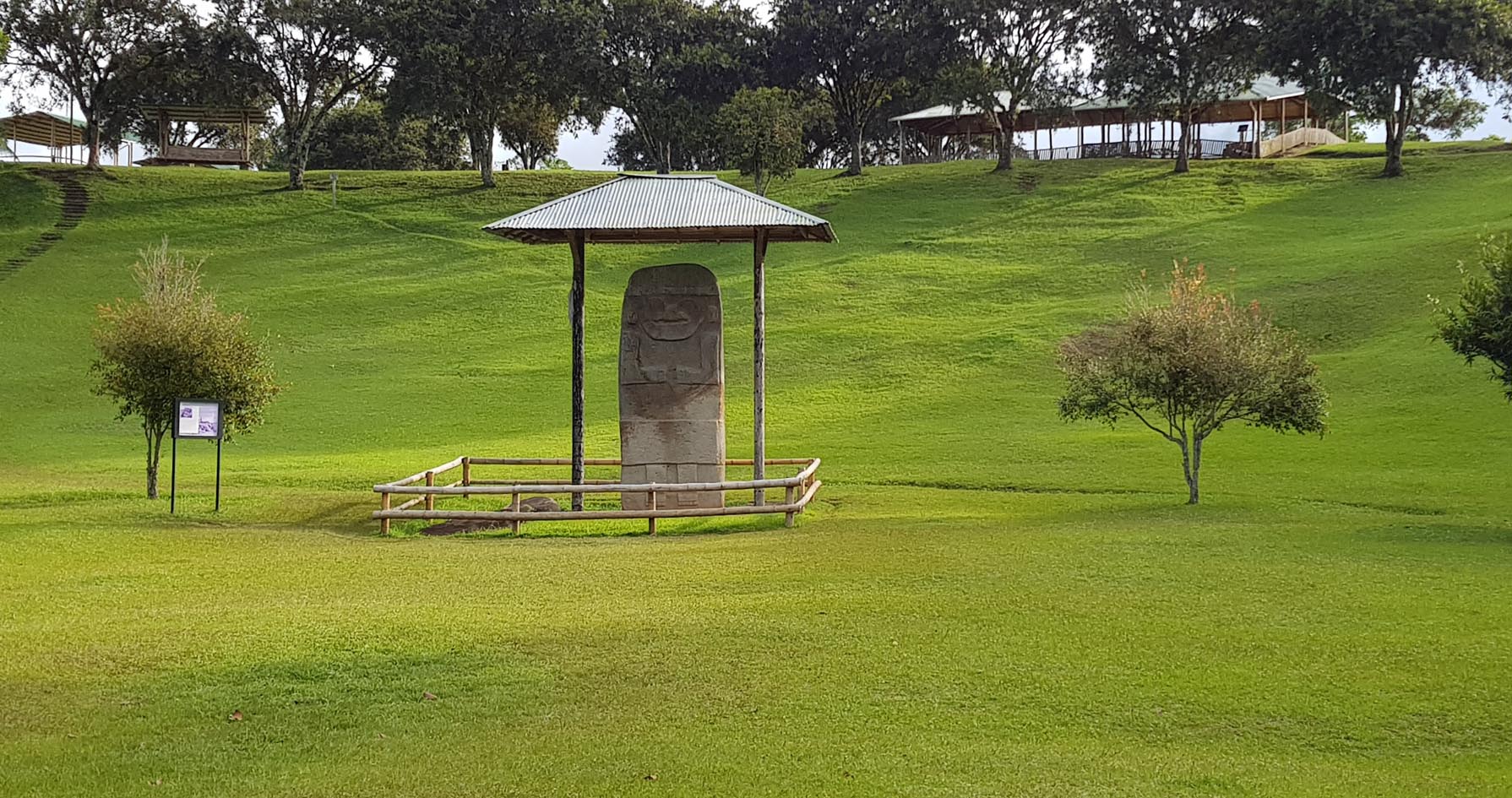
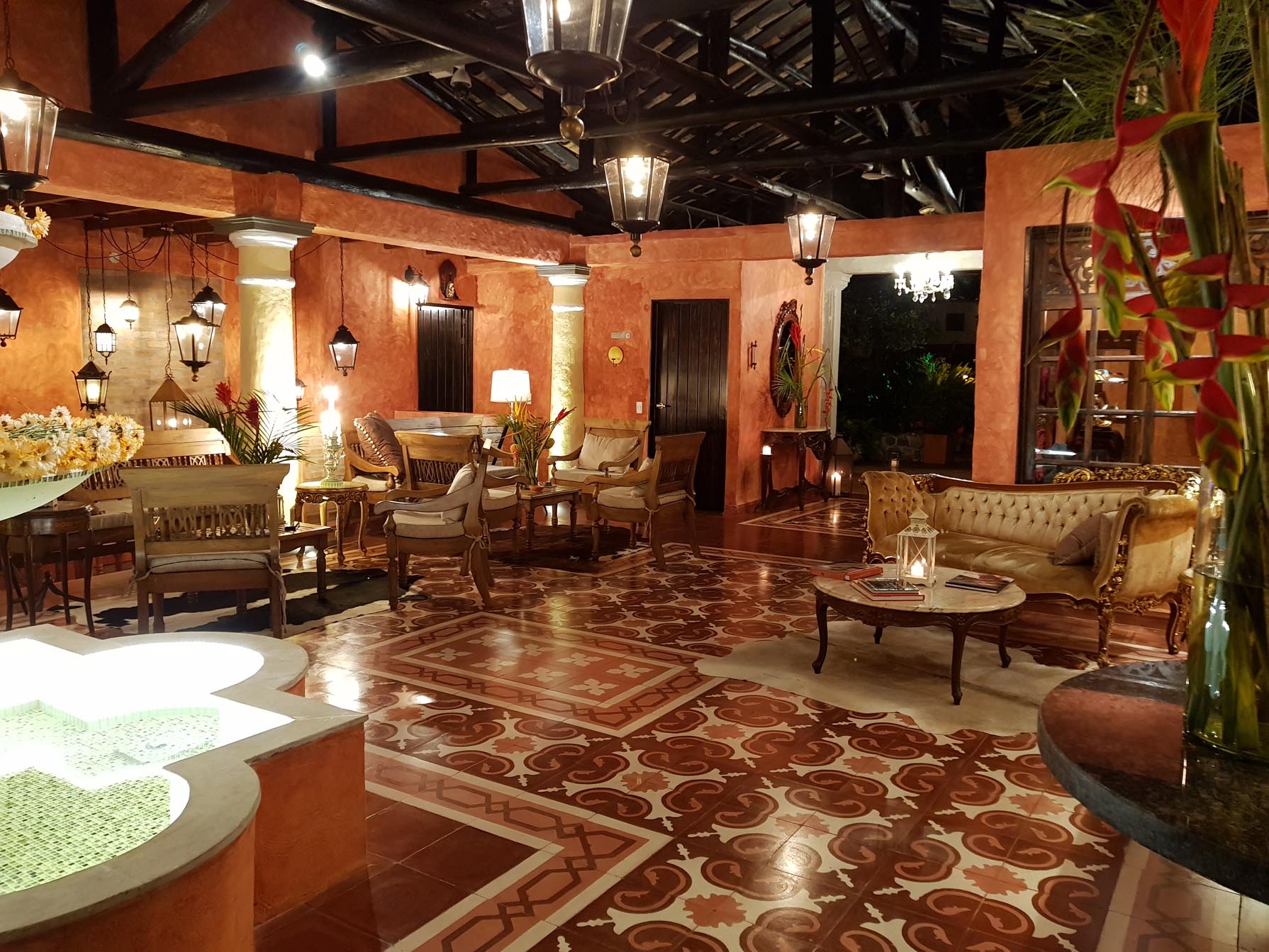
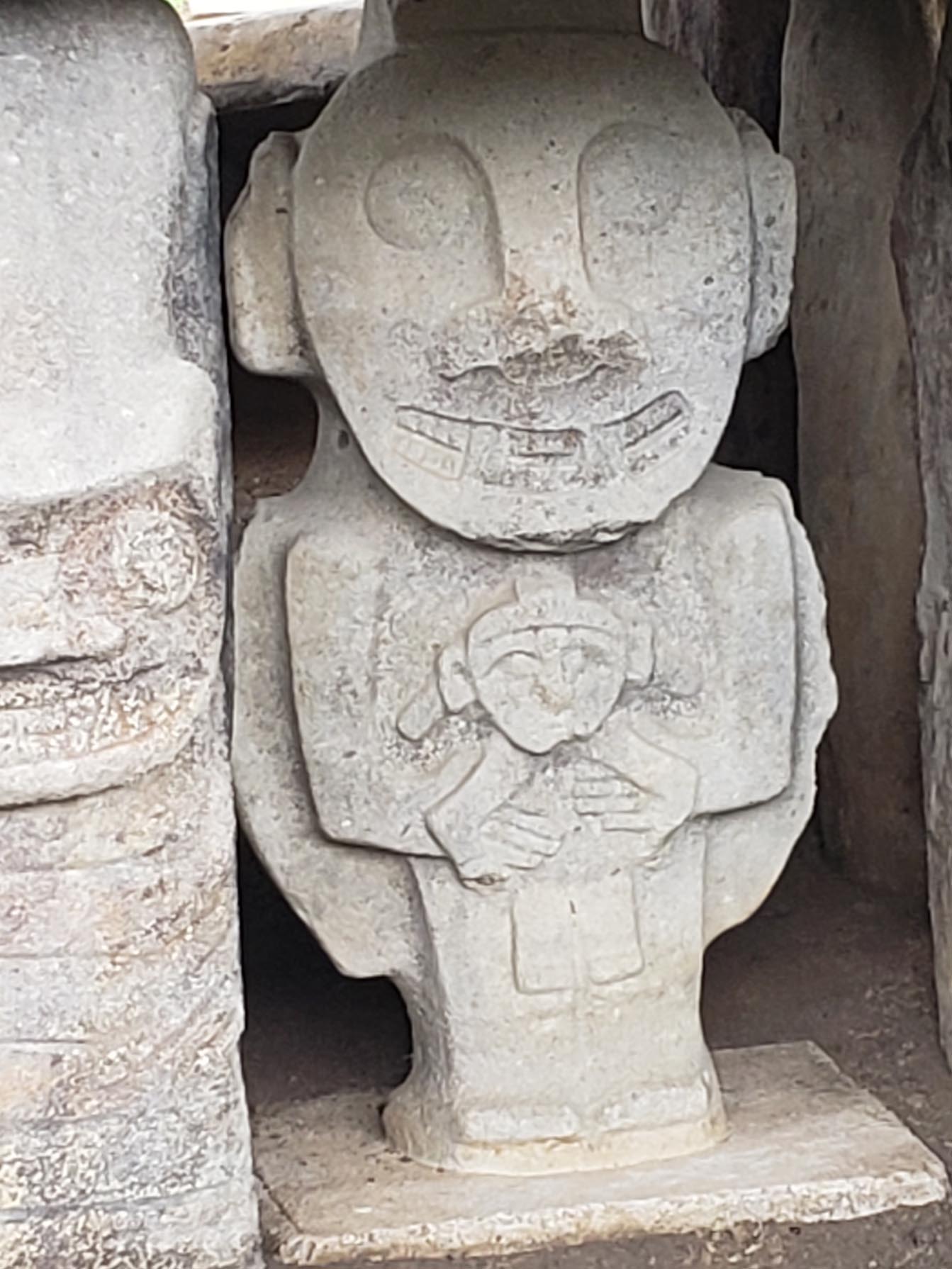
The drive to San Agustin takes five hours. We arrived tired and had trouble finding the hotel, which is a lovely hacienda with a small chapel that gives it the name Hotel Monasterio. It is about a half mile past the end of the paved road and has no sign so when we found it we were delighted, though it was more isolated than we expected. No one was available to drive us anywhere. We renegotiated our agreement with Hugo so that he drove us to see the sites as well as the coming and going from Neiva. Before unpacking or rest, we found that we could follow a tour group to one of the other sites, Alto de los Idolos. Alto de los Idolos was about a half hour drive away, again further than we imagined, but well worth it. In a manicured park, we visit huge carved stone monuments and tombs. These were built by some of the earliest chieftains in the Americas, during the early Formative period, as early as 1000 BC. Large mounds were built to cover stone tombs, and carved figures guarded the entrances.
We were at Alto de los Idolos just before sunset, and the setting sun lit the park in green and gold.We had dinner at the hotel and it was delicious, with the best-tasting broccoli I have ever eaten in a restaurant.
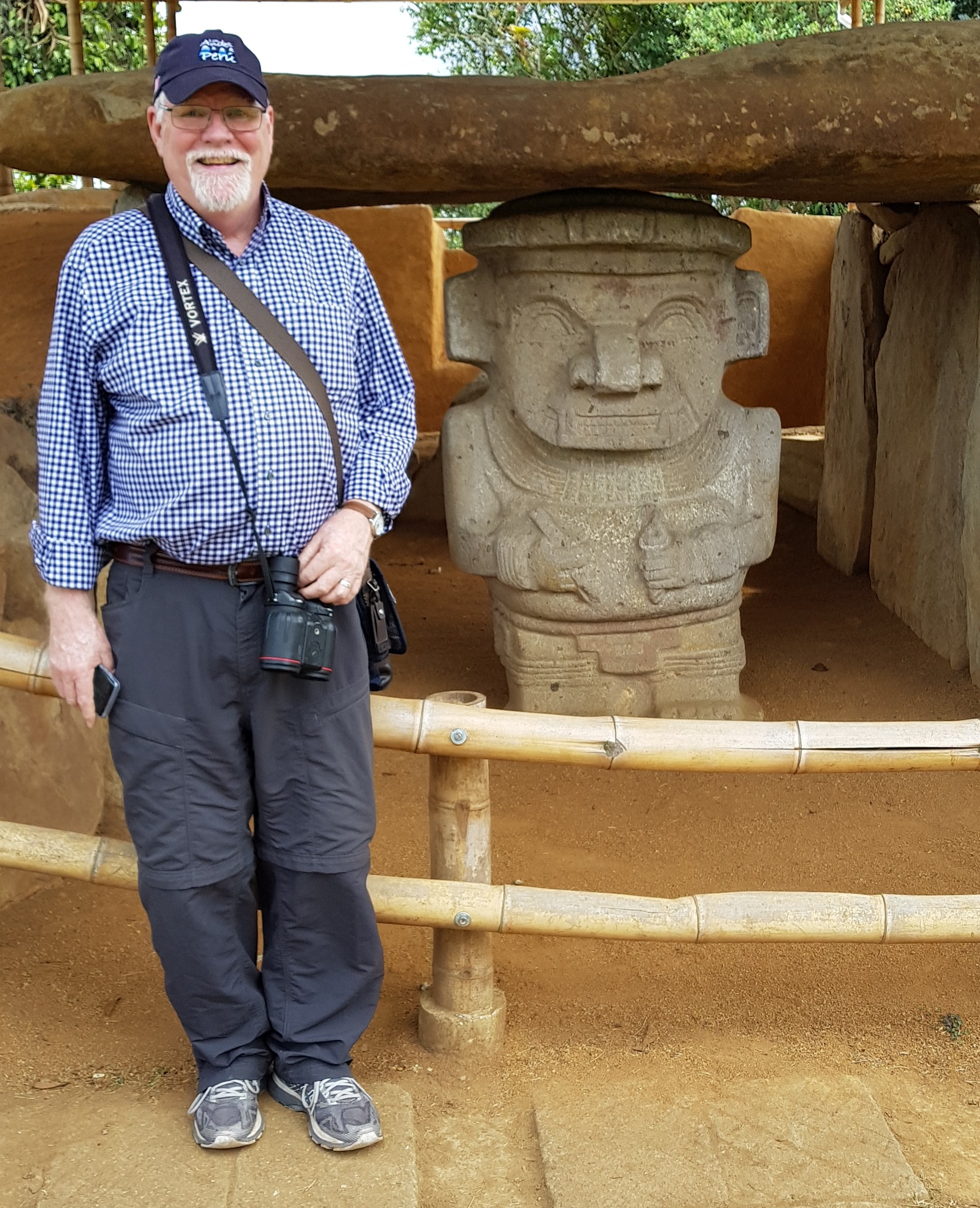
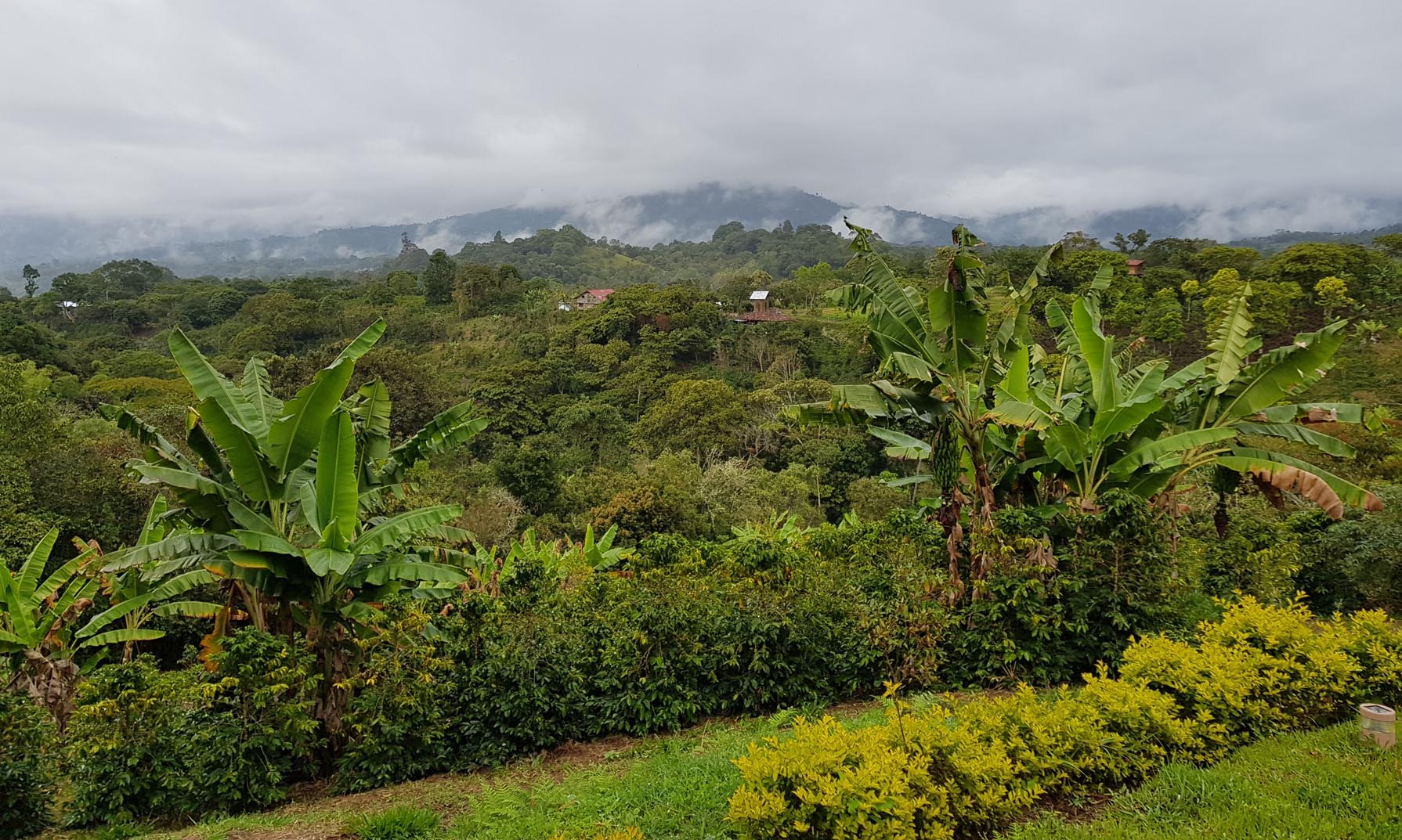
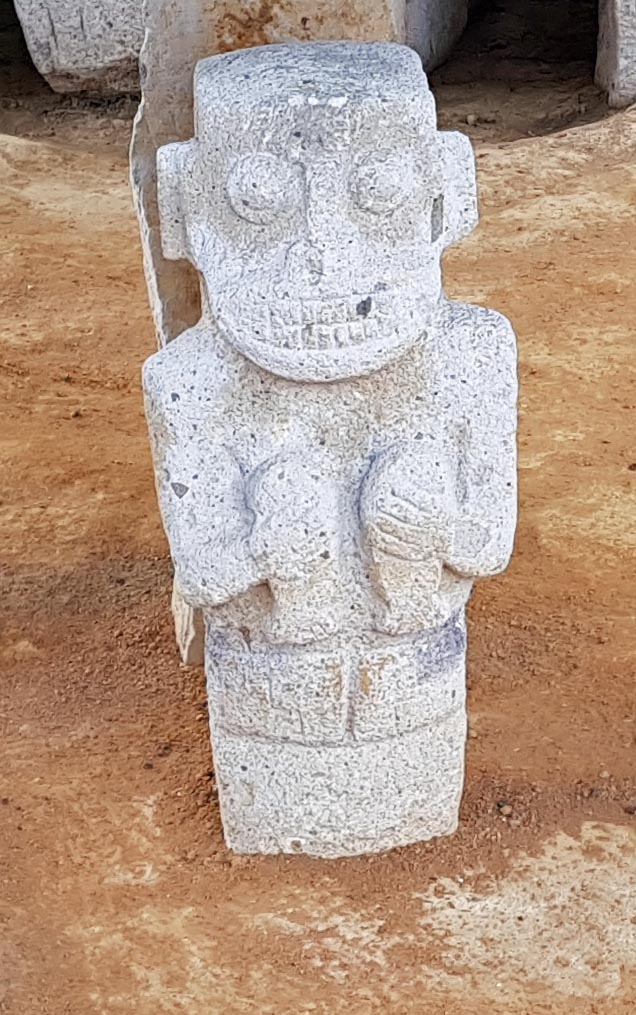
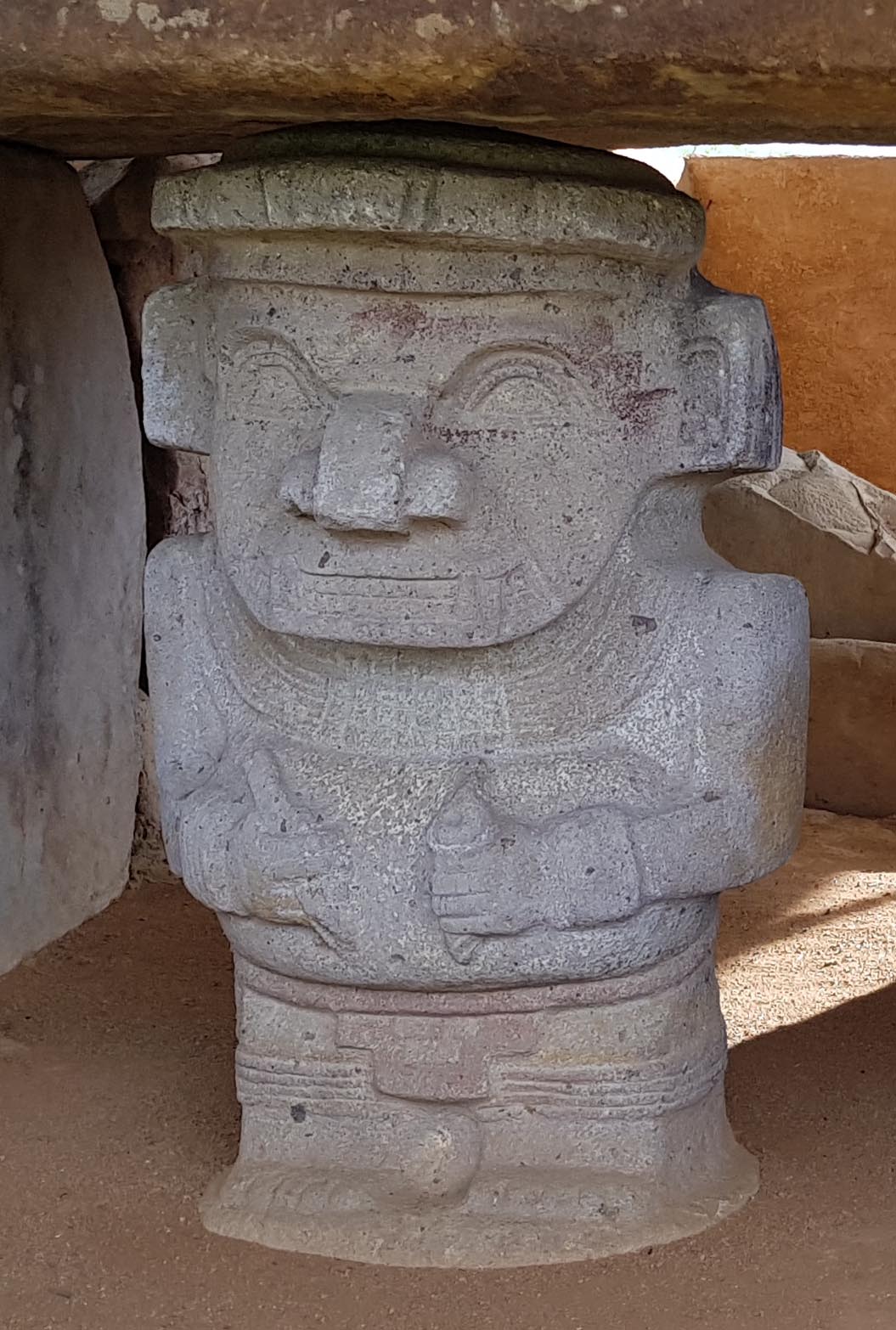
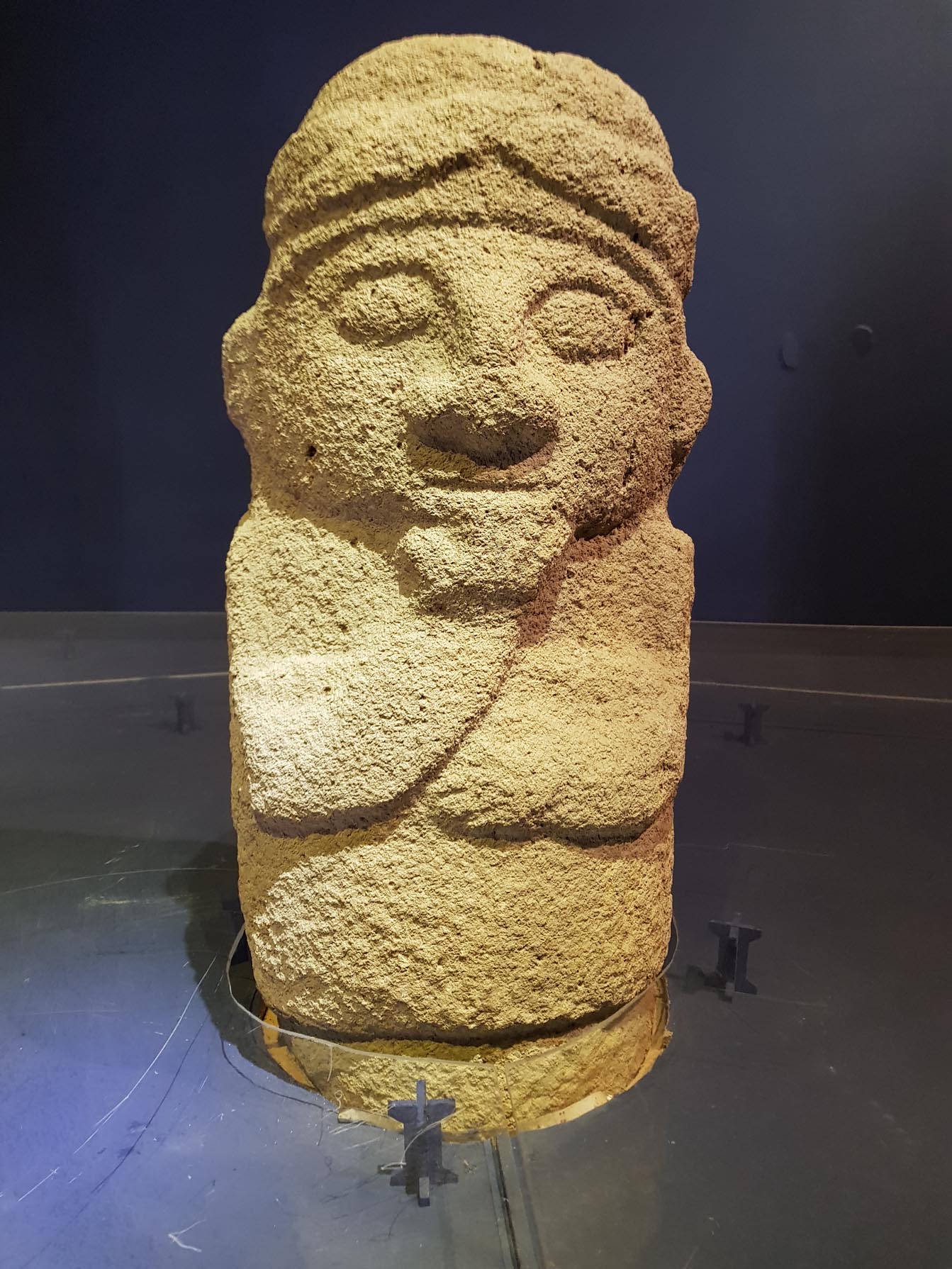
There were fantastic birds around the hotel, red tanagers, yellow and green birds, hummingbirds that are dark blue and purple. We ate breakfast and looked out over the landscape. The mist in the distance rises off the Rio Magdalena, the huge main artery of the region. It did not rain on us despite the low clouds.The San Agustin archaeological park encompasses four groups of stone monuments and tombs and an area of stream bed that was carved into channels and pools decorated with carved figures, the Fuente de Lavapatos. The monuments have focused themes. Each figure has large eyes, broad nose, fangs, claws and sometimes wears a helmet. The hands/claws are most often held close together and may be holding a captive (?), two fish (?), two staves, a cup, an arrow, a pencil (?), an ice cream cone (?). There is also “The Thinker,” Colombia style.
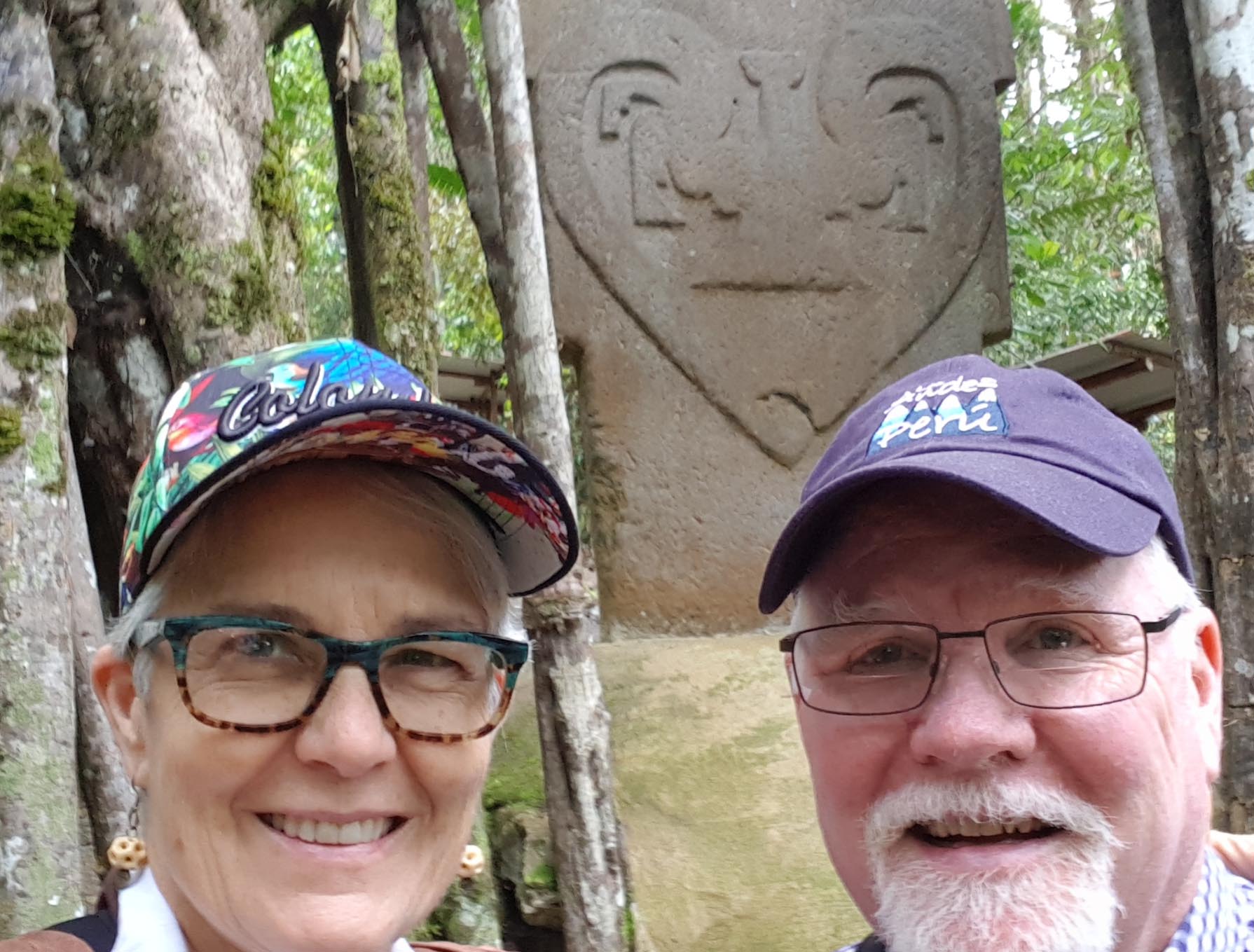
The entire circuit takes at least a half day to cover. Overcast weather made for a comfortable visit, and there were places to stop for coffee and souvenir shopping. I had a fresh ginger, lime, mint tea that was delicious. We finished off with a selfie.
We got back on the road again in the early afternoon for the five hour return trip to Neiva. For another view of visiting San Agustin, see this article in the NYT from last week. We seem to have visited at the same time!
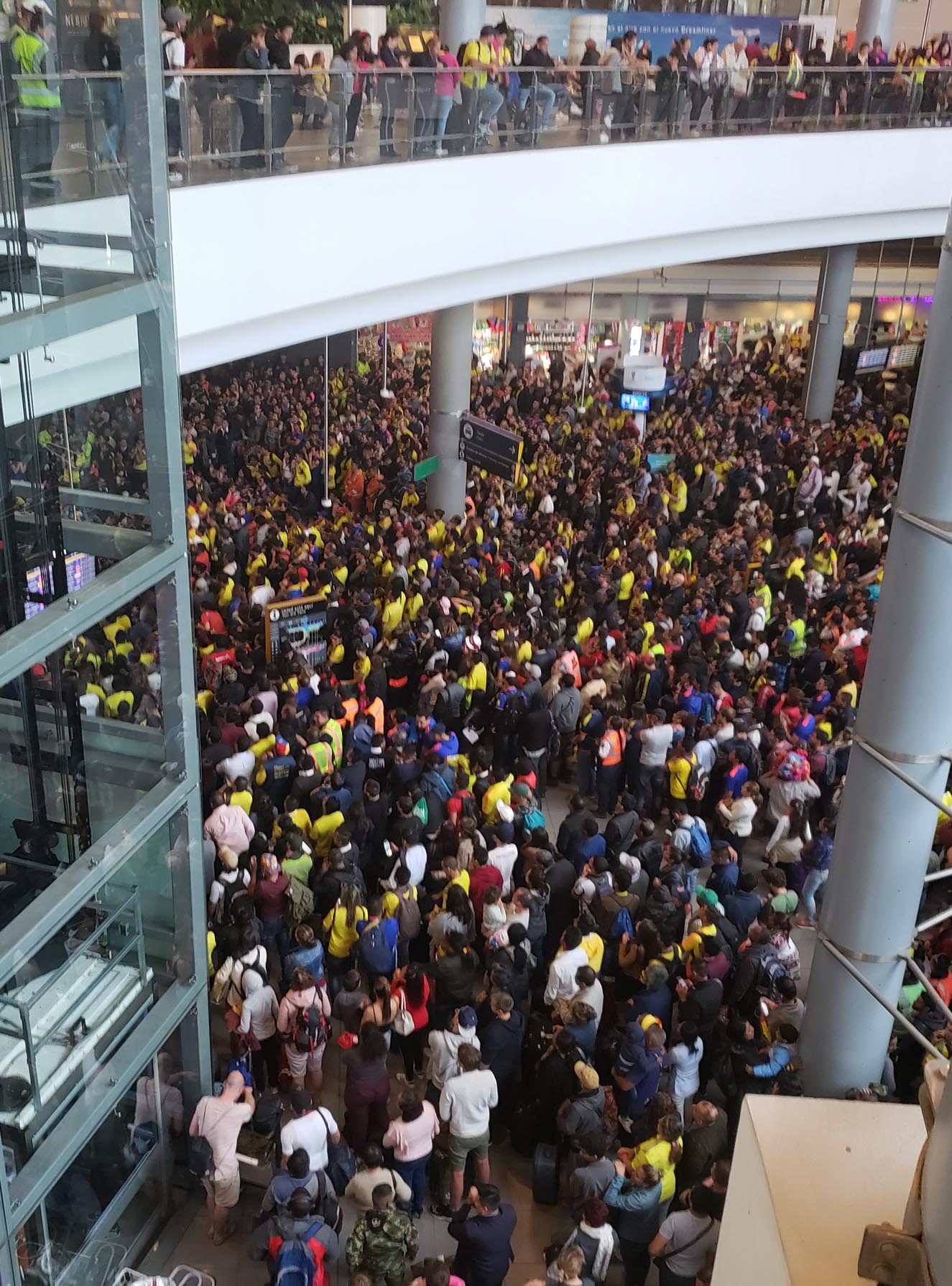
Our flight on to Barranquilla was the next morning at 10 am, so there was no time for a longer stay in Neiva and the San Agustin area, though there are many more things to see. We did happen to be on layover in Bogota during the final moments of the Colombia-England game of the World Cup. Everyone was watching until the bitter end, when Colombia lost on the final penalty kick.
The San Agustin archaeological park encompasses four groups of stone monuments and tombs and an area of streambed that was carved into channels and pools decorated with carved figures. The monuments have a limited range of themes. The figures have large eyes, broad nose, fangs, claws and sometimes wear a helmet. The hands/claws are most often held close together and may be holding a captive (?), two fish (?), two staves, a cup, an arrow, a pencil (?), an ice cream cone (?). There is also “The Thinker” Colombia style.
The entire circuit takes at least a half day to cover. Overcast weather made for a comfortable visit, and there were places to stop for coffee and souvenir shopping. I had a fresh ginger, lime, mint tea that was delicious. We finished off with a selfie.
We got back on the road again in the early afternoon for the five hour return trip to Neiva. Our flight on to Barranquilla was the next morning at 10 am, there was no time for a longer stay in the San Agustin area, though there are many more things to see. We did happen to be on layover in Bogota during the final moments of the Colombia-England game of the World Cup. Everyone was watching until the bitter end, when Colombia lost on the final penalty kick.
It just happened to be sunset, lighting the park in green and gold.
We had dinner at the hotel and it was delicious, with the best-tasting broccoli I have ever eaten in a restaurant. We were still in a panic about how we could have chosen a hotel so far from our destination. We double checked the map and discovered our error. We are indeed only 15 min from the San Agustin archaeological park. It was an awful few hours, but now our visit tomorrow will be reasonable.
There are fantastic birds around the hotel, red tanagers, yellow and green birds, hummingbirds that are dark blue and purple. We have breakfast and look out over the landscape. The mist in the distance is rising off the Rio Magdalena, the huge main artery of the region. So far it has not rained on us despite the low clouds.
The San Agustin archaeological park encompasses four groups of stone monuments and tombs and an area of streambed that was carved into channels and pools decorated with carved figures. The monuments have a limited range of themes. The figures have large eyes, broad nose, fangs, claws and sometimes wear a helmet. The hands/claws are most often held close together and may be holding a captive (?), two fish (?), two staves, a cup, an arrow, a pencil (?), an ice cream cone (?). There is also “The Thinker” Colombia style.
The entire circuit takes at least a half day to cover. Overcast weather made for a comfortable visit, and there were places to stop for coffee and souvenir shopping. I had a fresh ginger, lime, mint tea that was delicious. We finished off with a selfie.
We got back on the road again in the early afternoon for the five hour return trip to Neiva. Our flight on to Barranquilla was the next morning at 10 am, there was no time for a longer stay in the San Agustin area, though there are many more things to see. We did happen to be on layover in Bogota during the final moments of the Colombia-England game of the World Cup. Everyone was watching until the bitter end, when Colombia lost on the final penalty kick.
We came to Bogota for a single reason: to see the best gold museum in the world. The Museo De Oro is full of gold panned from streams around Colombia, hammered and cast into amazing shapes. One of the fascinating parts of this history is that several regions of Colombia made gold objects in clearly recognizable styles. One of the first exhibits you see takes you through these areas. This could exhaust anyone.
The Sinu style of gold-working used a lot of wire to make detailed shapes and poses, including the coolest gold artifact in the Americas, the golden raft.
Quimbaya work was thicker than the others because they had more productive sources of gold. Pieces were made with exquisite detail. The museum has so many different artifacts that hundreds of them are shown in a very short light show. It’s difficult to take in how many pieces there are. There are a few chunks of Colombian emerald, too.
This is a sample of what is in the museum. It’s worth a trip to Bogota. Our hotel in Bogota, in the historic Candelaria neighborhood, was lovely. Decorated with furniture from an elegant private home, The Orchids also served the best arepas we’ve eaten in Colombia.
 Our Airbnb house had snorkeling equipment and I found enough to fit, though Jonathan found that his knees don’t much like snorkeling any more. We went snorkeling at Rodgers Beach, in sight of the former refinery, and saw many small fish. We found even better underwater terrain right by our house at Savaneta beach. The shore is a mix of rocks and sand and it was a bit of a balancing act to put on fins. Once in the water, though, visibility was excellent and we saw clouds of tiny fish along with some bigger ones. The small patch of mangrove seems to have been home to the billows of minnows of several species. We watched tiny black fish defending the sunken tire or coral covered brick that was their home base from all kinds of larger interlopers. At Savaneta Beach we met a group of men who usually have lunch on the table we happened to be using. They ended up advising us to try Boca Catalina on the north end of the island, which is a lovely beach with bigger fish than at Savaneta.
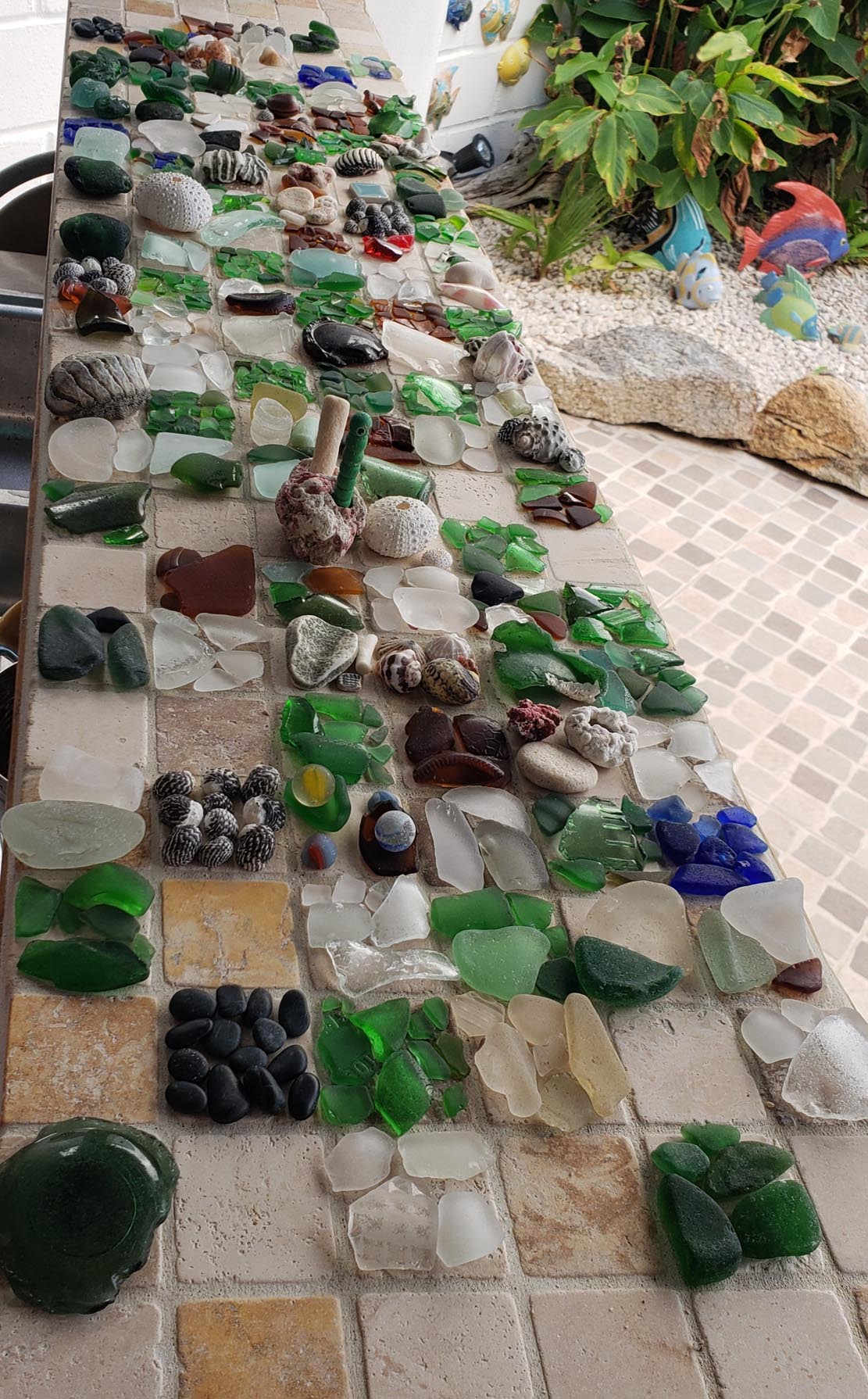 We returned to Savaneta for one last exploration because Wayne wanted to reach the barrier island that was a couple hundred yards off the Savaneta dock. With snorkel and fins that distance is no problem when there isn’t fast moving water or marine traffic, so we crossed with relative ease. I’m reminded that I don’t really like the deep water when I can’t see the bottom, but it probably took us less than ten minutes to cross. We’d both carried our sandals to do some exploring. There are a couple of houses out there and Wayne was curious about who would build out there and why, since a big storm would wash over the narrow gravelly strip. We saw that one house was abandoned but the other was someone’s summer home carefully gated across the entrance. A walkway lined with, beach glass, pebbles, and chunks of coral led to the dock! The entire spit of land was the big surprise—it is made of beach glass. Imagine sitting in front of your beach house at your cafe table and chairs amid a carpet of green and white glass pebbles. The entire barrier island is less than 50 ft. wide though it extends for about 500 ft parallel to the shore. We didn’t cover all of it once we discovered the carpet of glass. There is as much as at Glass Beach in northern California. I found a plastic bag among the usual shore detritus and picked up as much as I thought I could carry on the swim home. We laughed at how easy it was to collect pieces that we’d been combing the beaches to collect elsewhere on the island. It was a fantastic last day on Aruba. The swim back took two or three extra minutes as I carried my bag of loot to the other side. This was the perfect last day of snorkeling in Aruba. I now have jewelry-making supplies that will last a year or more.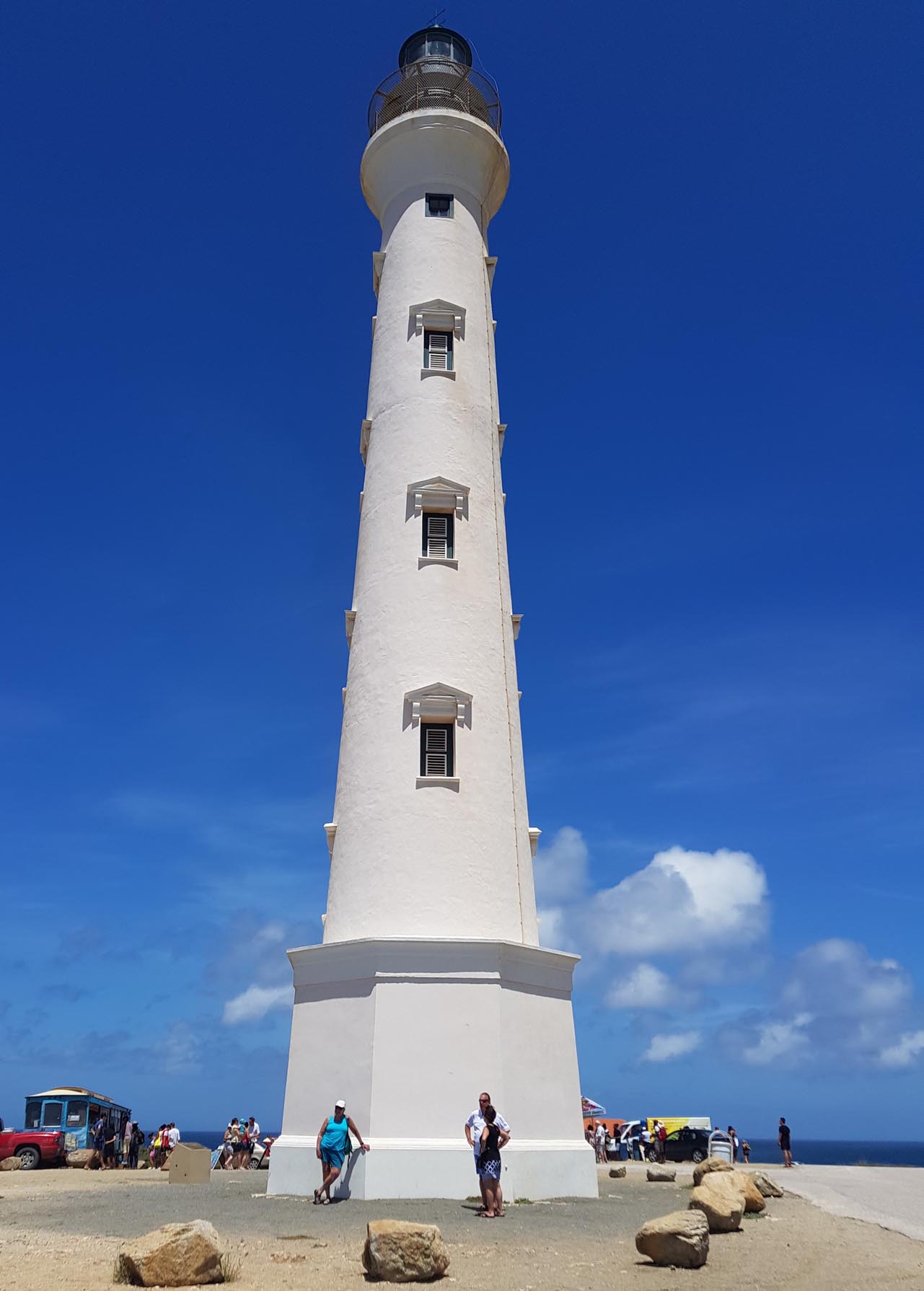




 O
O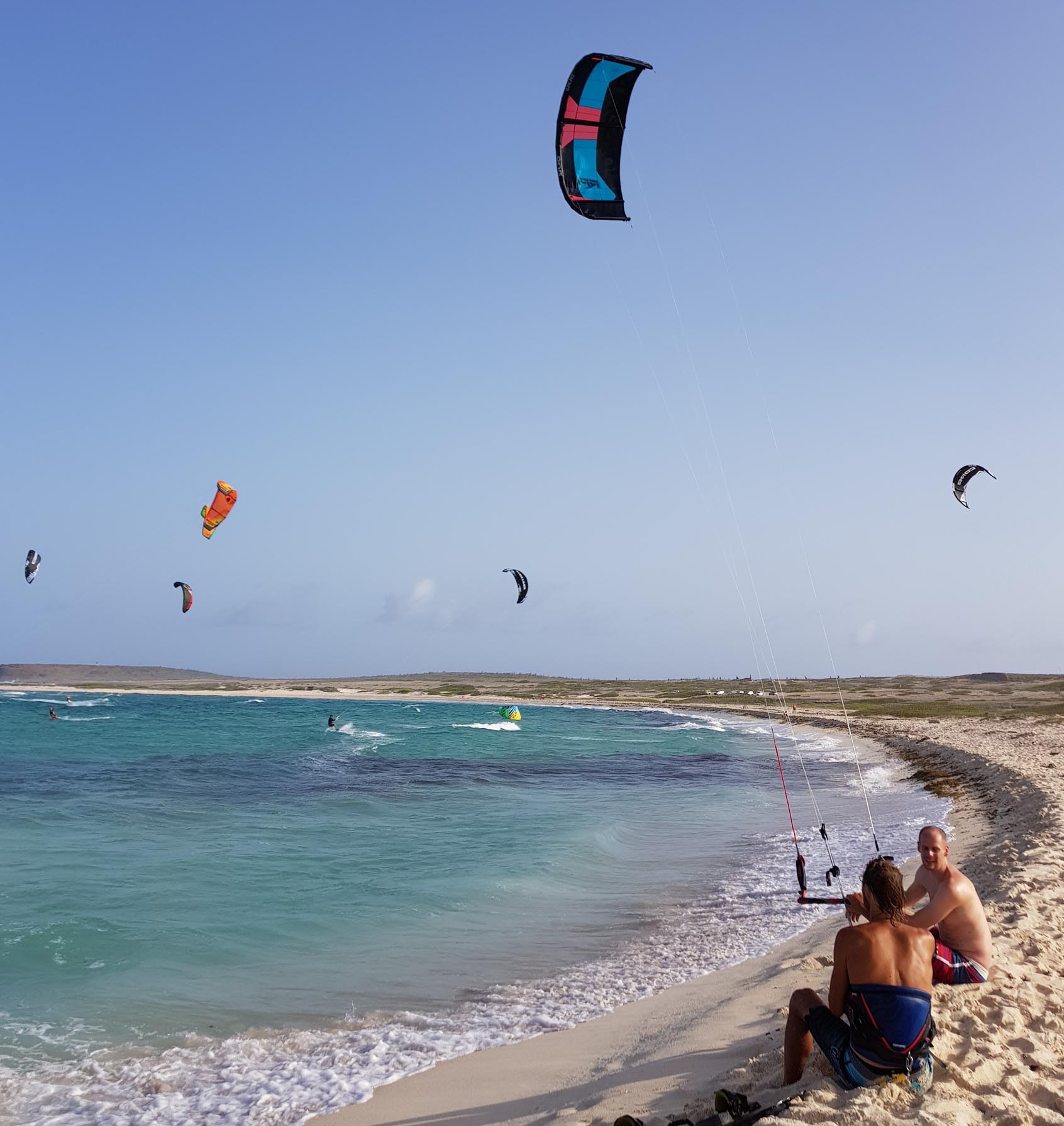











 Llywindatravels 2025