Renting a Hyundai Kona

Paula and I arrived at the Enterprise counter in the Syracuse New York airport just after 11 pm. We’d managed to find flights from our respective homes that converged at about the same time so that we could share a car and Airbnb. The counter offered us an all-electric vehicle. It sounded fun and we went for it.

The Hyundai Kona is a mini-SUV. It looks like an SUV, but only a single suitcase fit in the luggage area at the back of the vehicle. We managed to get our other bags in the car and were grateful to be on the road. The small size wasn’t a problem–we had no plans to drive with other passengers. The agent at the desk said we could exchange it if we changed our minds about the EV.

A couple of days went smoothly, as we were based in Jamesville, close to my mother. I looked into getting some charge added to the vehicle when it became clear that our 250 mile charge wouldn’t cover the entire week. It wasn’t going back and forth to visit mom, but anything else, especially running out to Otisco Lake to see my brother and his family. The timing of our visits was based on being able to spend a few days with mom and also attend my brother’s 70th birthday celebration at the Vesper Hills Golf Club. We were looking forward to it, though every place we wanted to go seemed to be ten or twenty miles away.

I rapidly learned that there are many electric vehicle (EV) charging apps. I started with ChargePoint, then Volta. (I decided not to add Plugshare, that identifies the location of charging stations.) Each charging app wants credit card information. A user gains access to the charger and pays through the app. I’d rather scan my credit card at the point of sale like a gas pump, but that’s not how they do it.

Good news: My mom’s residential complex has a ChargePoint with two cords. If you scan your phone, you can get a free charge, though it didn’t work well. One day we got about 50 miles worth of charge during our stay, but the other two tries gave us less than 10 miles. I may not have scanned my phone properly one day, but there is nothing to indicate whether your swipe works other than the ability to plug in the cable.

By Saturday night, we realized the car really needed charging, and with nothing nearby, we couldn’t leave the car overnight to charge fully. When I looked closely at the location of charging stations in Greater Syracuse, I discovered there were almost none outside the city limits. There are two in Skaneateles (nowhere near us), but other than the free charge, we’d have to drive about ten miles just to get to a charger. I identified a Volta fast charger at a Wegman’s grocery store in the area called Fairfield.

First thing Sunday, I set off to charge up. After driving around the parking lot for a few minutes, I found the charger, delighted that it was available. I got out to scan my phone and discovered that both ports were out of service. They may never have worked, either brand new and not ready, or already broken. No evidence of use. I had to go elsewhere. I had less than 35 miles of charge left, and a day of activities scheduled. I found a ChargePoint six miles away in Solvay, at an otherwise closed auto repair. On the way, I passed several architecturally interesting buildings that I didn’t have time to investigate, though I couldn’t resist a photo of the Ukrainian Catholic Church*.

Once I found the ChargePoint, I practice the drill: exit the car with keys in hand, press the unlock button, open the charger cover, remove cap. Go to charger stand, scan ChargePoint app, unhook cable and connect to car.

I exchanged messages with Paula for a while. She called the airport to see if we could still swap the EV for a gas vehicle. “That’ll take too long!” I snapped. My mistake. After a half hour, I was desperate for coffee having left home thinking I’d be sitting at a Wegman’s food court all morning. I looked up nearby Recess Coffee, unhooked and drove there for coffee. This popular place was so busy that I could get regular brewed coffee only. It was a 20 minute wait for anything with espresso or steamed milk (sigh). The neighborhood was very interesting, a big sign proclaimed I was in Tipperary Hill, and houses were draped with both Irish and Ukrainian flags.

Back at the ChargePoint, I realized that the car charges very slowly. If it takes ten hours for a full charge, I’d need half that to get what I needed. A few sips of coffee and bites of muffin later, I called Paula. “We’re swapping the car.” I could drive back to Jamesville and out to the airport to switch cars faster than I could charge the Kona.

The people at the Enterprise kiosk in the airport parking garage were very helpful, had a car ready for us and we were back on the road in no time. Our new car was the opposite of our Kona. We got a massive Ford Edge, 22.5 mpg, but enough room to put all our luggage and then some in the rear compartment alone. It was an about-face from an EV.

Driving the Kona was fine, charging was not. It’s a bit of a paradox. If you live in an urban area where you can walk or take public transportation, you can charge an EV relatively easily. If you live outside the urban center, you need to have a charger at your residence, whether it’s your own home, a hotel, or a rental. It’s essential to be able to charge your vehicle overnight. I don’t think I am likely to rent an EV again. When I rent a car, it is usually so that I can travel around, out of town, to visit friends in the suburbs, go exploring, to the beach, or some rural location. For now, I can only do that if the place I stay has an EV charger. That’s something of a limitation.

It appears to be true that the US needs a lot more charging infrastructure if we want everyone to switch to EV in the coming years.

*Many thanks to my cousin Theresa Pizzuti for providing the correct identification of this lovely church.
Flood Stage

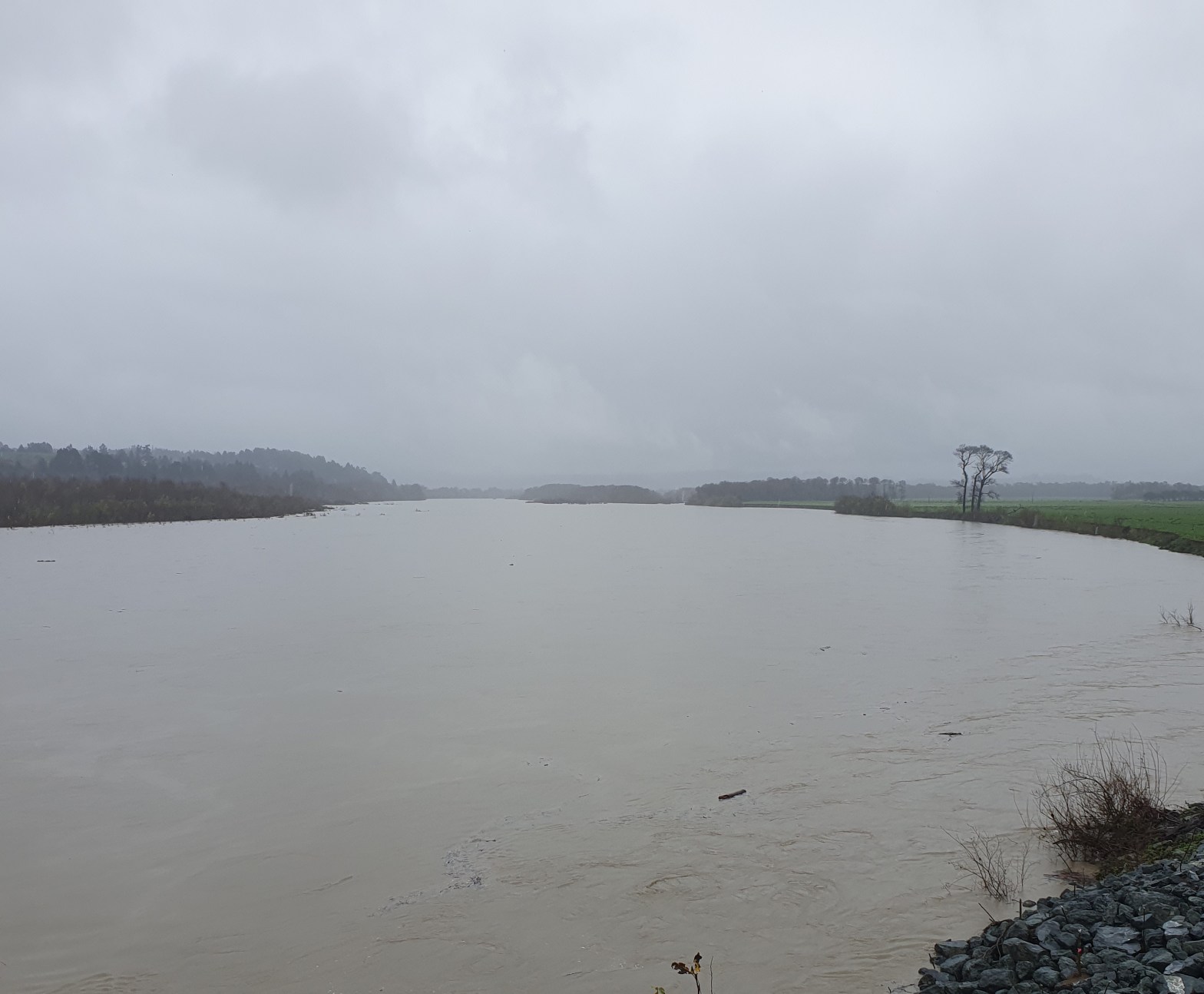
California is having record-breaking rain. Yesterday, the Los Angeles area received over 4 inches of rain, more than double the previous record set in the 1920s. Here in Eureka, there hasn’t been as much rain, but it’s been rainy. Today, we decided to do some exploring and go take a look at the Eel River.

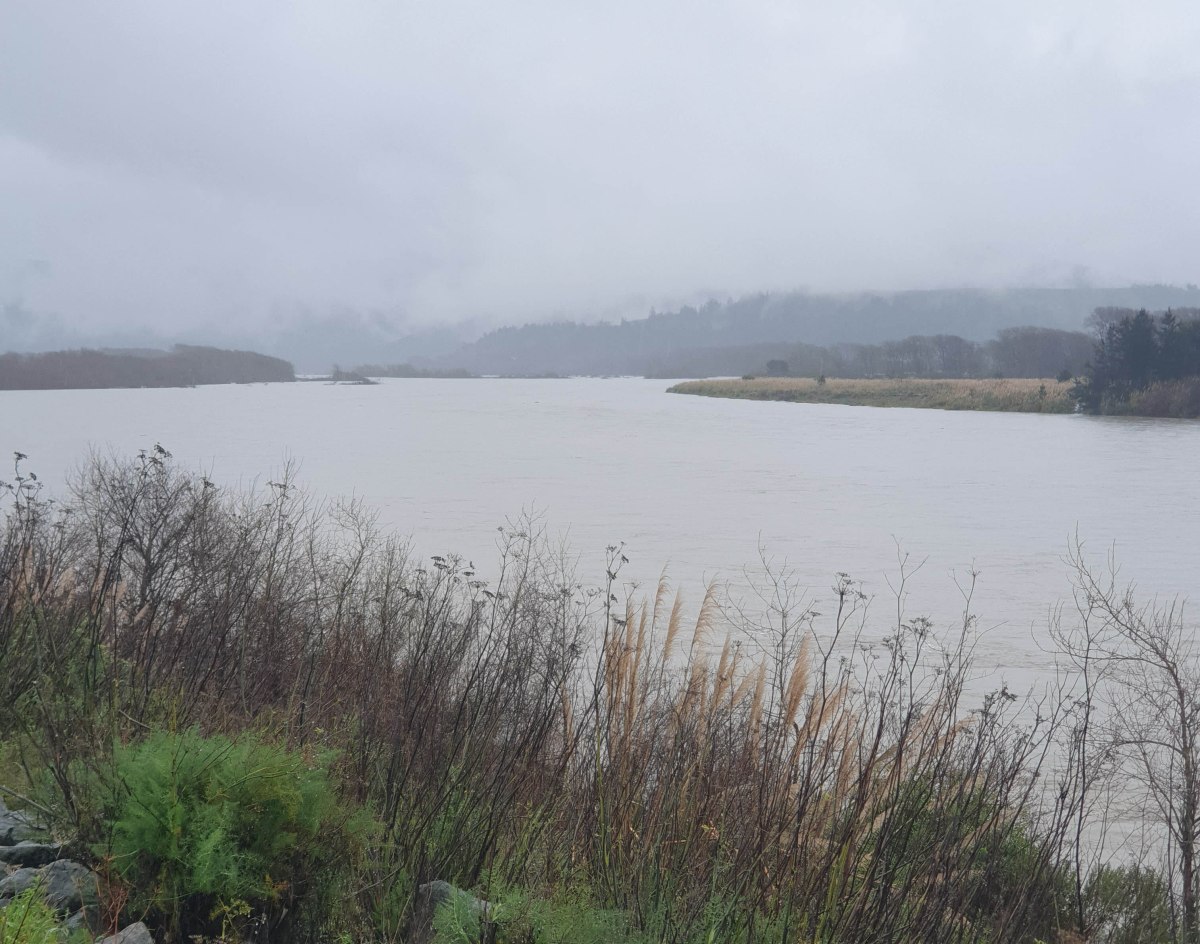
We drove south until we could approach the shore and it was easy to see the river is high. Normally there are gravel bars along both sides of the river, but today the river was full to the banks.

After seeing the full river, we headed for Crab Park, where the Eel River empties into the ocean. When we visited in the past, we could see logs and debris floating out the mouth of the river. Today, the water was moving much faster and who knows what we might see. We turned onto Cannibal Island Rd. (!), that runs straight as an arrow to the west for four miles to Crab Park. The rain was not heavy, but continuous, and we didn’t get very far.

Flooding across the road kept us from continuing. We made it through the water in this photo, but found more flooding beyond, where we couldn’t see any break in the water ahead. Driving a Prius rather than a 4 wheel drive truck limits where we can go, and we’ve been stuck in the past. These days we’re trying to stay on the pavement….

Two days later, we drove the other direction to look at Mad River. The river had been flooding, and we wanted to see what it looked like. The water was still very high, filling the river from bank to bank across all the sandbars that are usually visible. 

We had a great view from the footbridge across the river.

Our next stop was once again going to be the nearest beach, and once again, we didn’t get there, with too much water across the road.

The grass is bright green from all the rain. It’s a wonderful color. A flock of white egrets rose out of a field, a larger group than we’ve ever seen.

Holiday Season in Humboldt

This is a busy time in and around Eureka, generally called “Humboldt” in reference to greater Humboldt County. There have been multiple Christmas fairs, craft fairs, holiday fairs, and school fairs all month, and these continue right up to Christmas Eve. I haven’t been to many of these, but I know there are all kinds of wonderful things to be had. I stopped in at Pierson’s, the hardware and lumber store to browse their selection of locally made items carried during this time of year. It was fun to see all the items people make in our region, food, crafts, clothing, a little of everything.

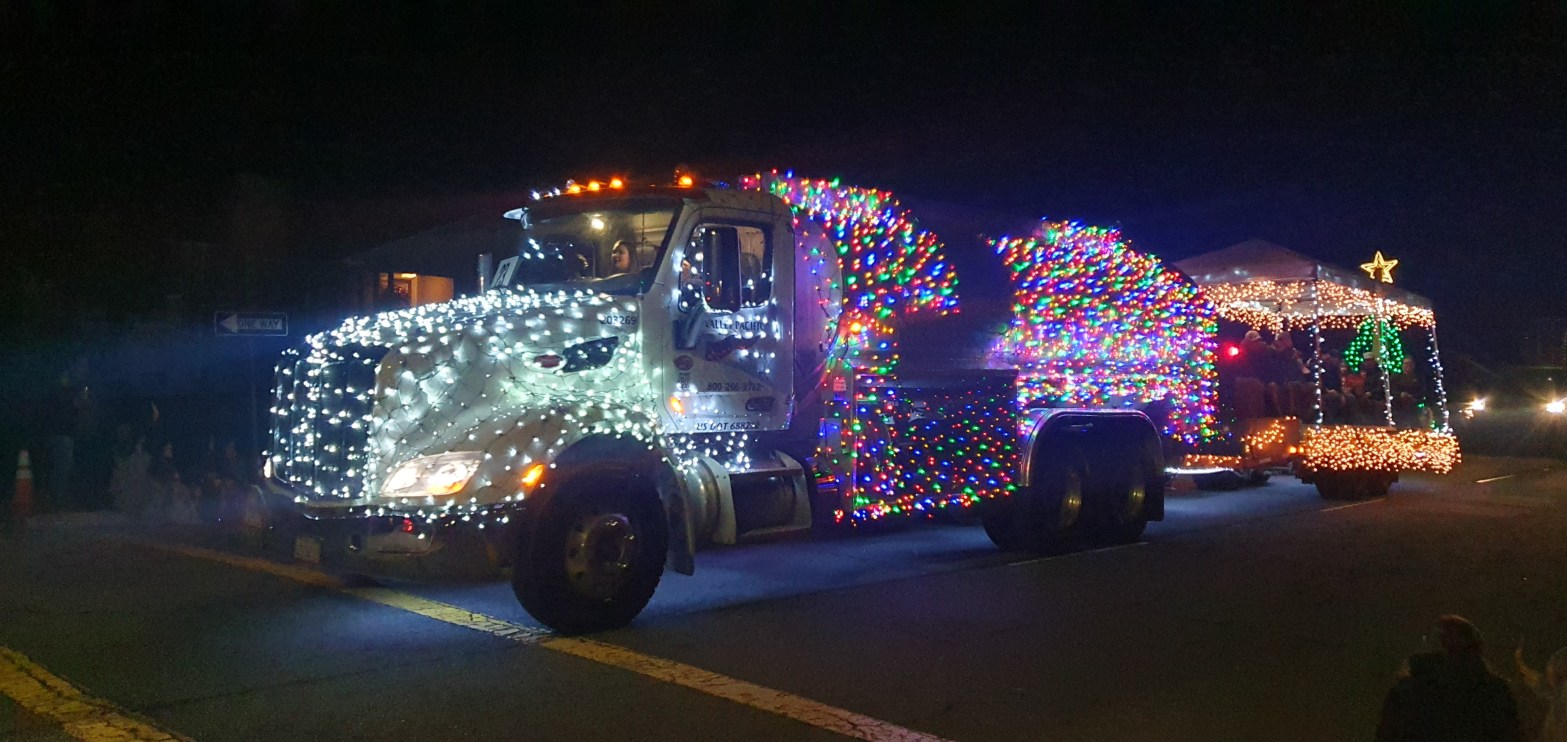
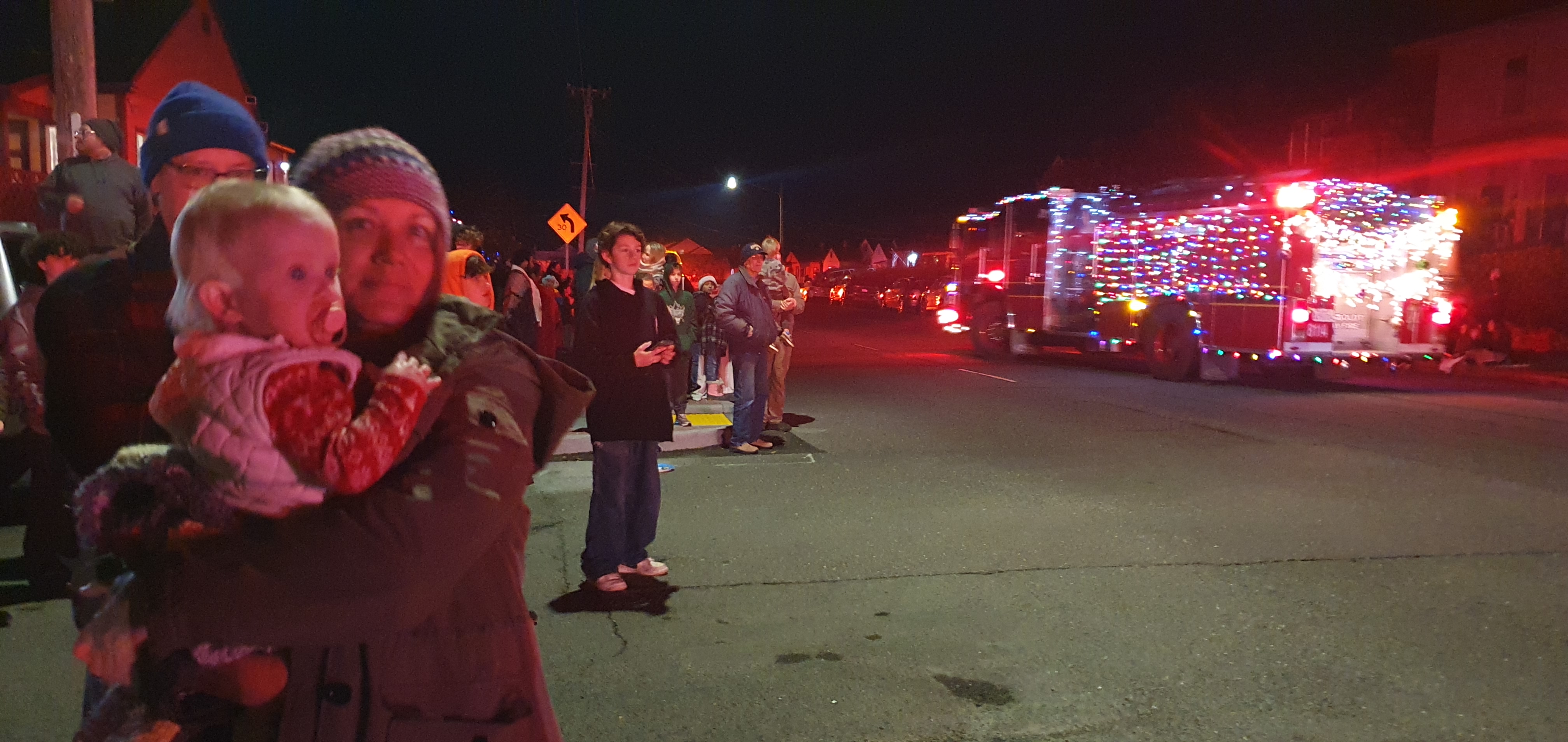
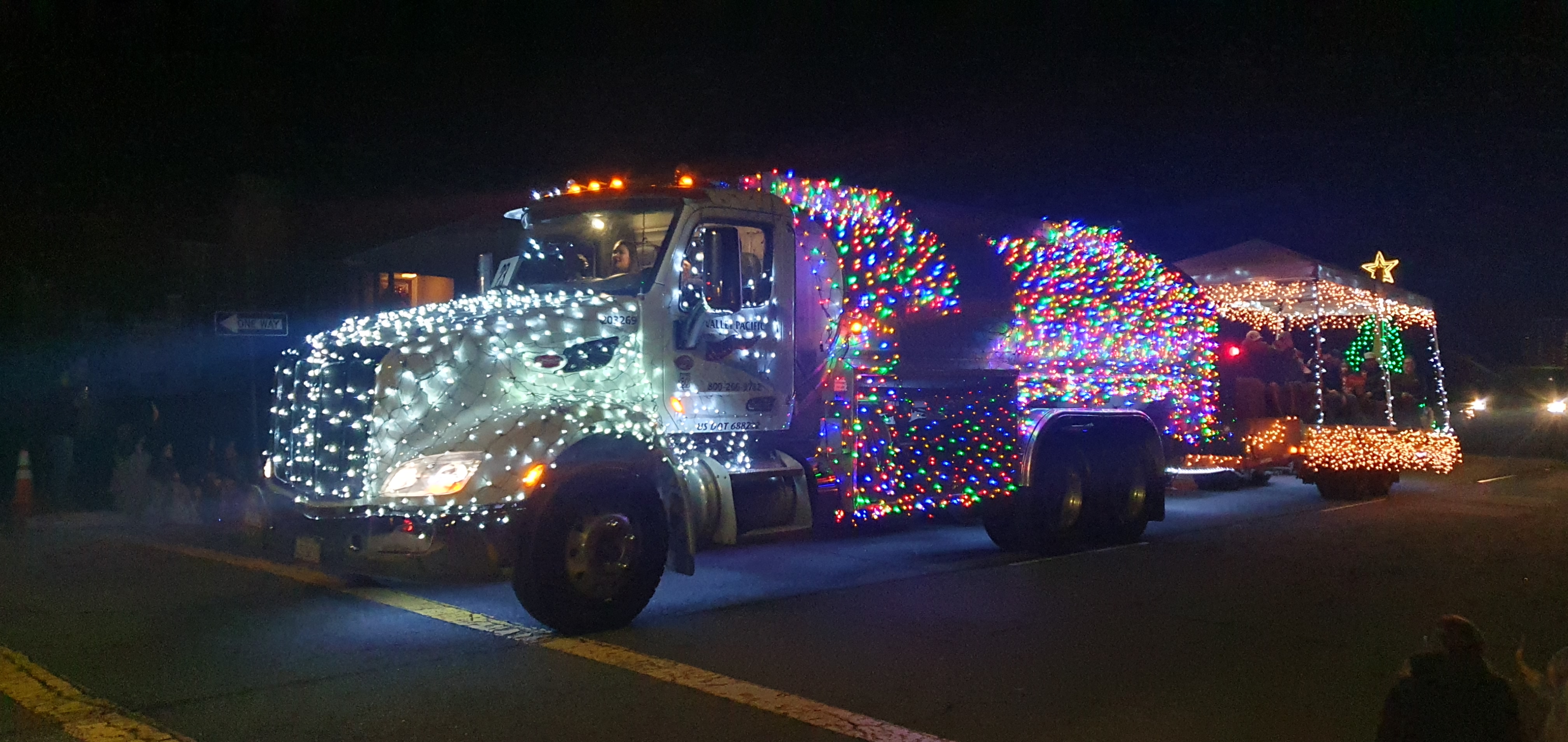
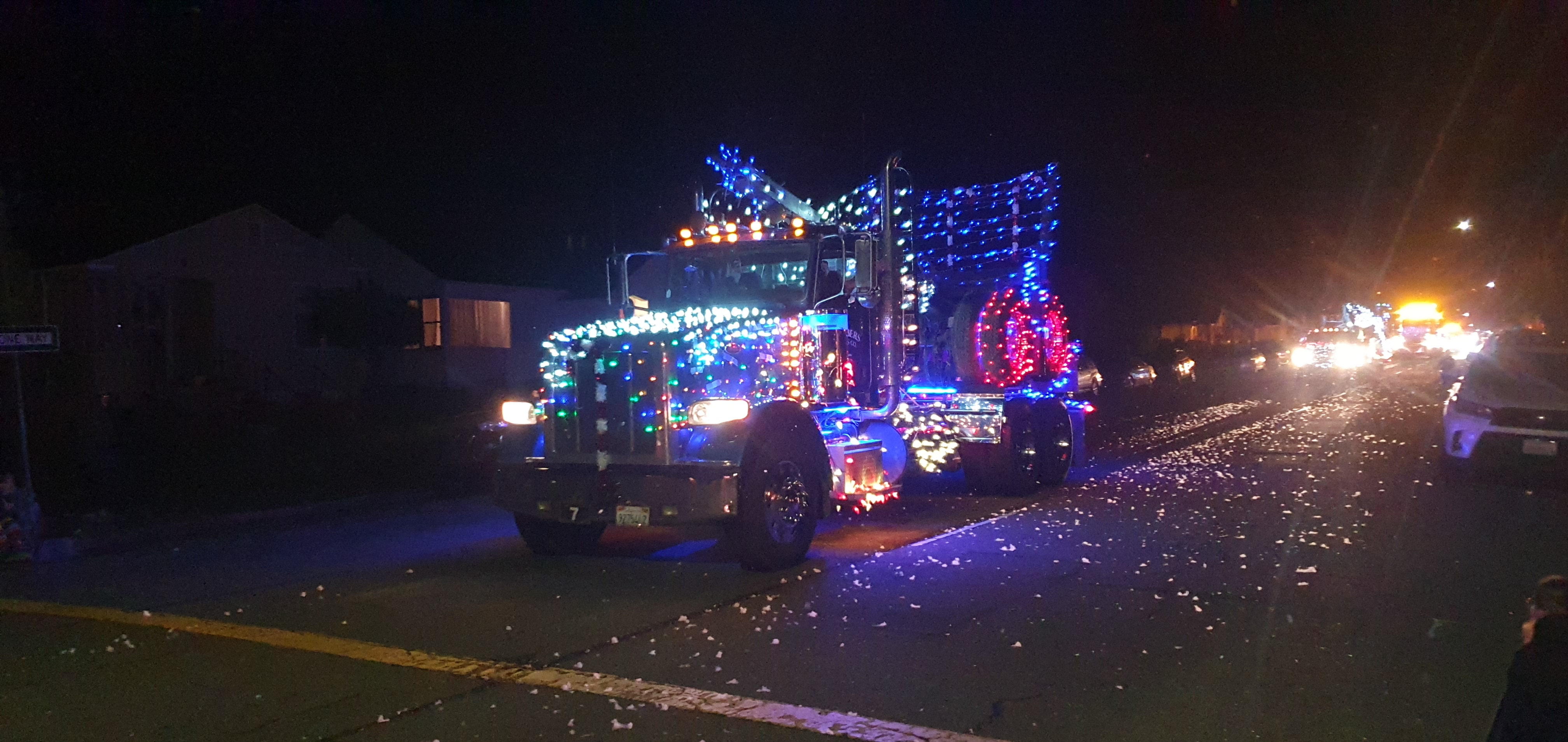
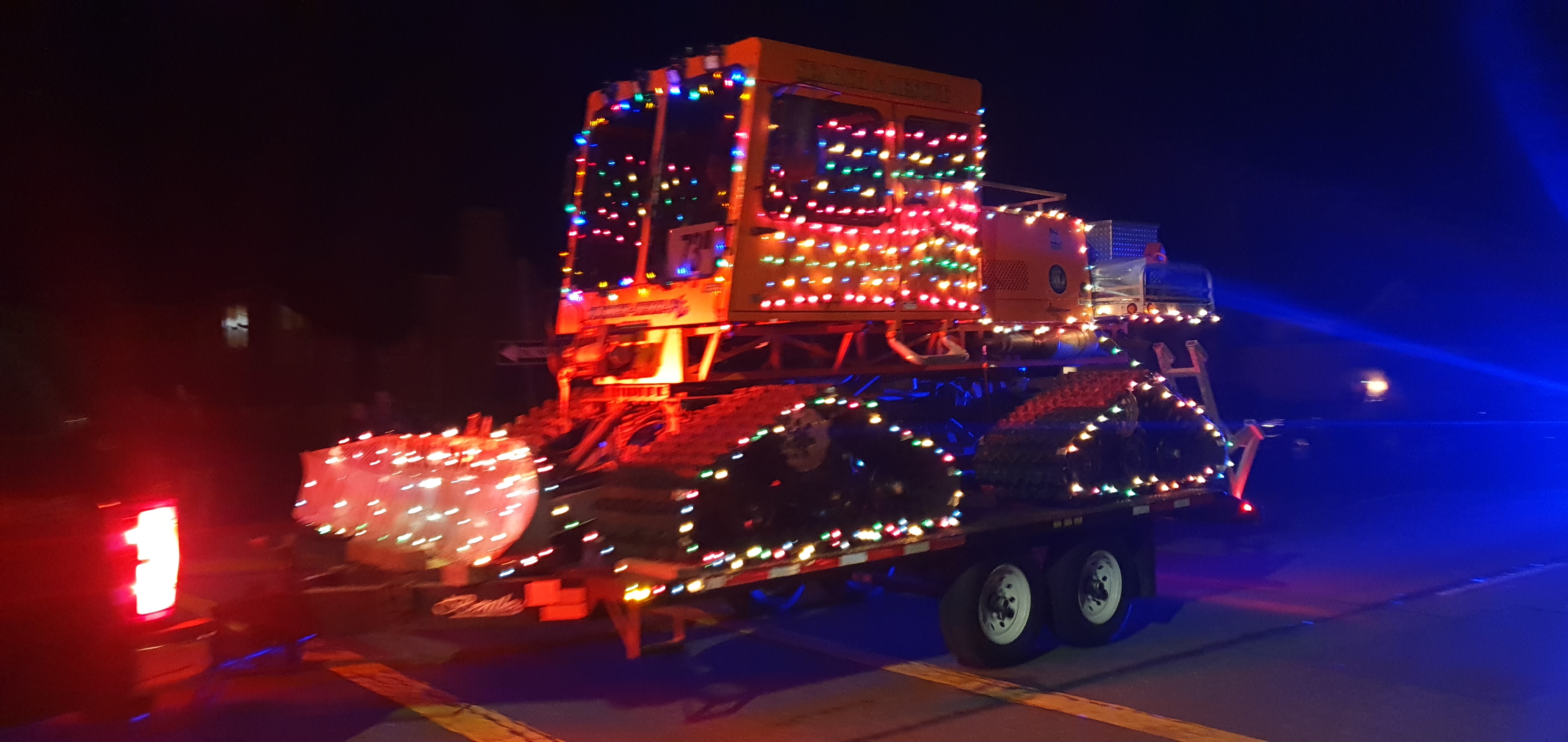
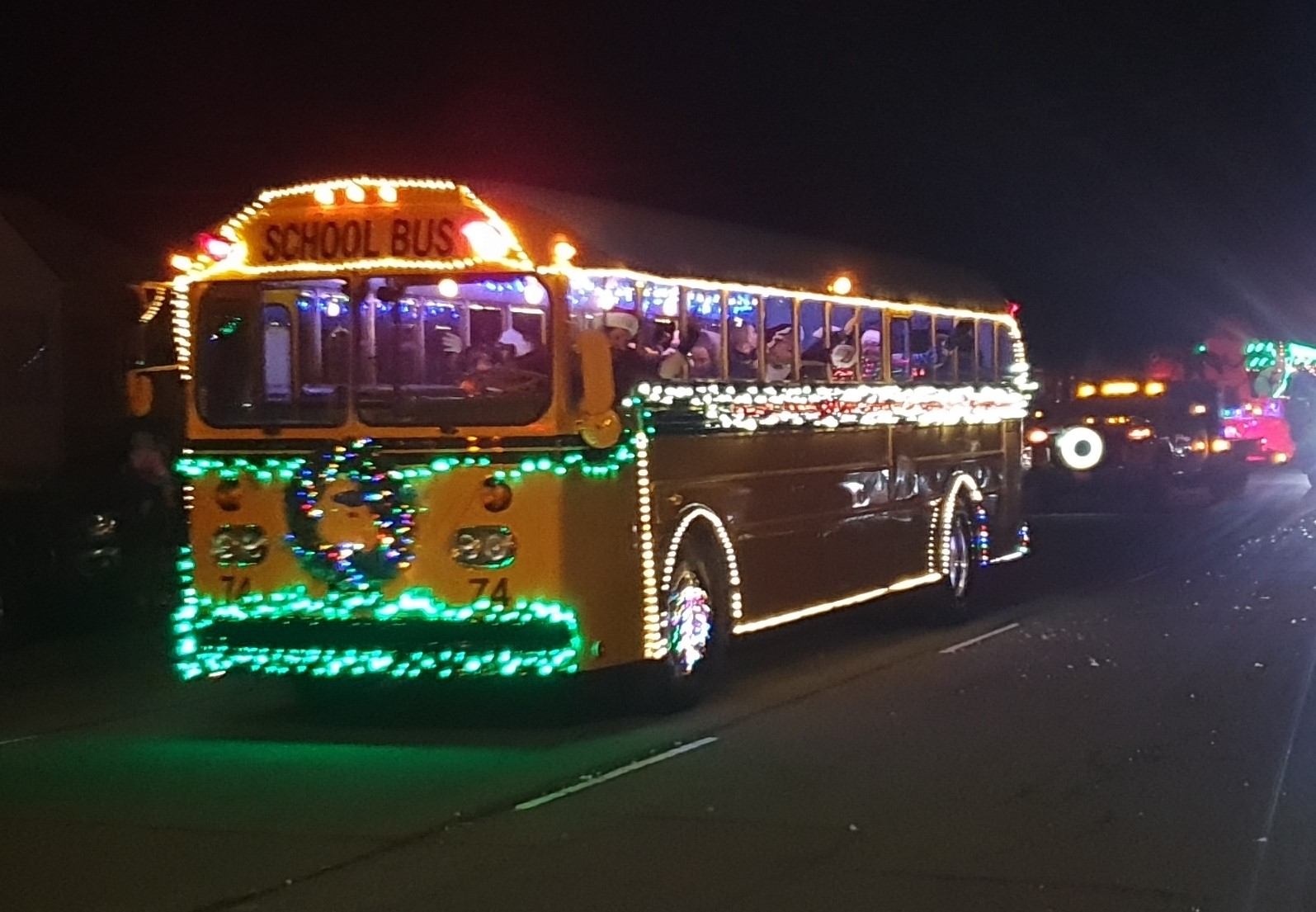
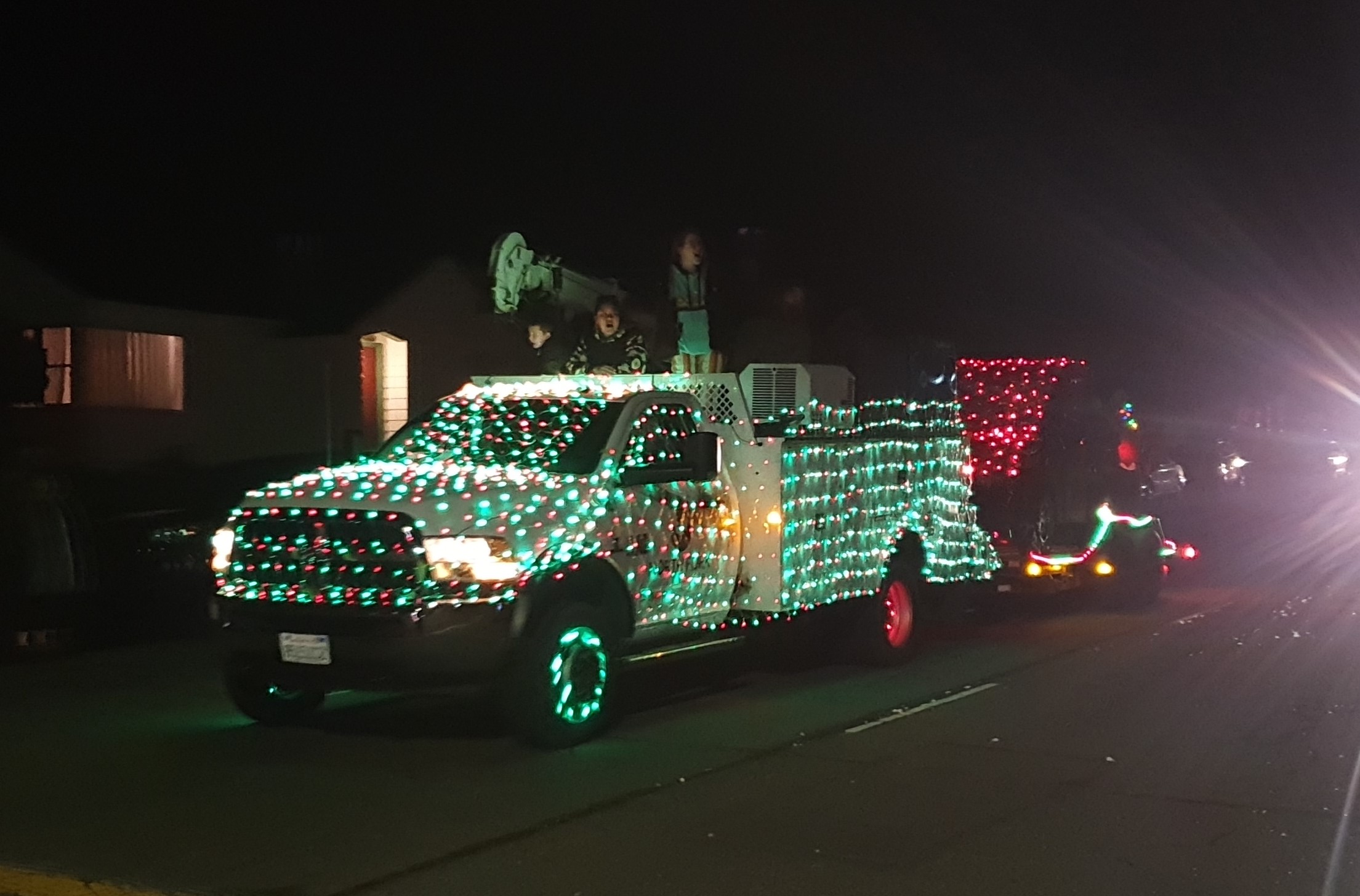
Holiday parades are fun, especially when it is not raining, and this year the rain held off. On Friday evening at 6 pm was the Trucker’s Parade right in Eureka. We watched a very long line of wildly decorated trucks of every size make their way down I Street. There was a lot of one note honking of Jingle Bells (think about it: honkhonkhonk – honkhonkhonk…..). Aurora was a bit confused by all the noise and being out in her stroller in the dark, but we all enjoyed it.

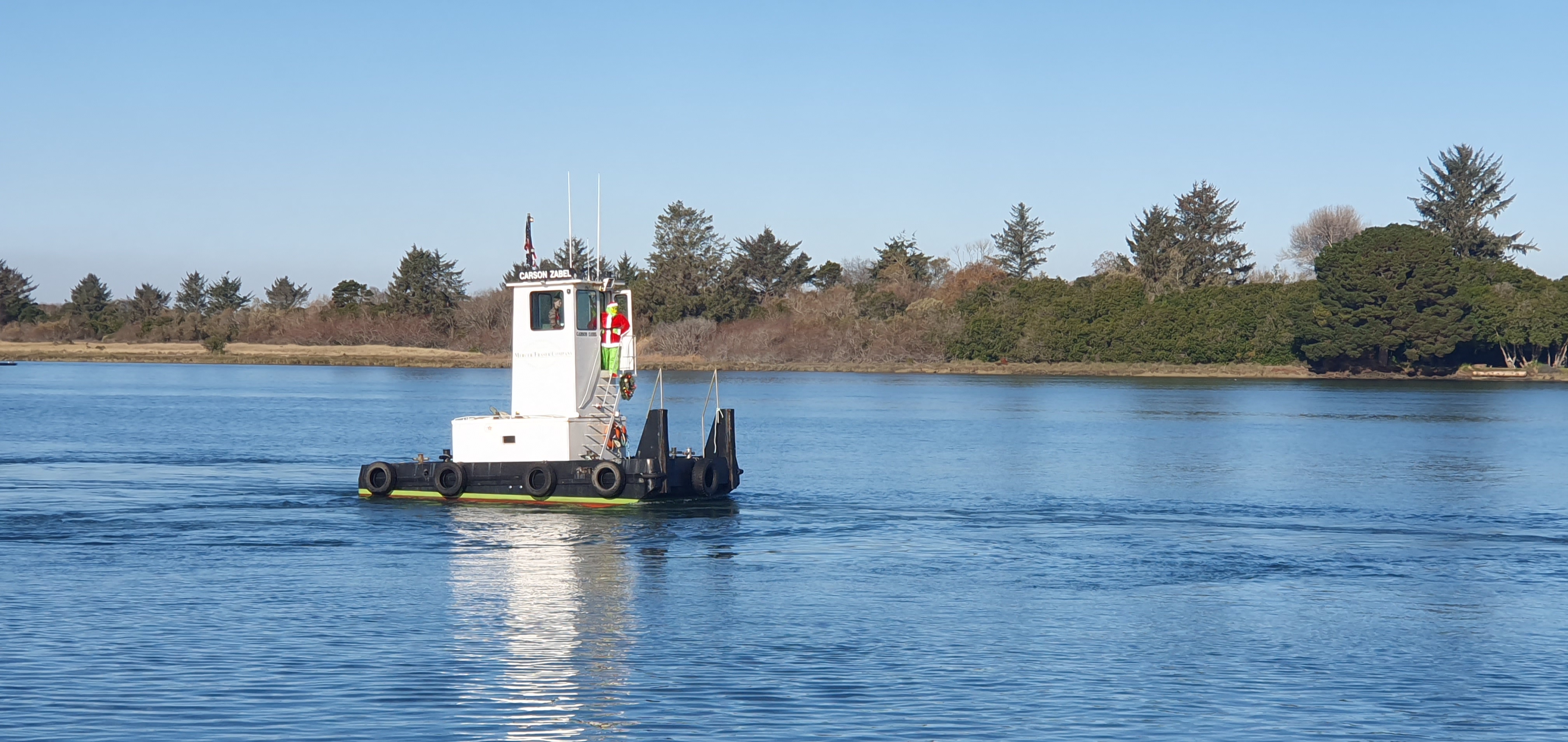
The following morning was the Salty Santa Boat Parade along the downtown waterfront in Eureka. Families lined the walkway watching the seagulls and the other families. Many people wore Santa hats or holiday sweaters. Eventually, the parade began with a great deal of hooting from boat horns. Those air horns are loud!

From top: Salty Santa Boat Parade with the historic tour boat Madaket leading; a tiny tug carries the Grinch; a boat handing out candy canes at the end of a fishing pole; Santa and friends sailing in the parade.

It was an ideal day, sunny and not too cold. The parade route wasn’t crowded at all and as we strolled we could see the boats going by, everything from a very large tug to a pair of sculls. At the end, two young women asked if they could interview me for the local news:

https://kiem-tv.com/2023/12/16/this-was-the-annual-salty-santa-boat-parade/

In the interview, I said the parade could use a few more boats. I think they could also use a cart selling hot coffee! If you are in the area before the holidays, the parades are worth seeing.

Baoase Luxury Resort, Curacao

This is for anyone who wants to see what our resort looked like. We booked this resort through Laura Sangster, an agent with The Journey Group, Boca Raton, FL. We gave her tentative dates for our group, and said we wanted to stay in an all-inclusive setting somewhere that was unlikely to be hit by a hurricane during our visit in November. Laura gave us three options on different islands, and we chose Curacao. The island is very close to the northern coast of South America and tends to be out of the path of the big storms.

The Baoase Luxury Resort is on the south coast of Curacao, just over one mile east of downtown Willemstad. It includes 23 units ranging from two person guest rooms to eight person villas. We stayed in a Superior Private Villa with pool and it was perfect for our group.

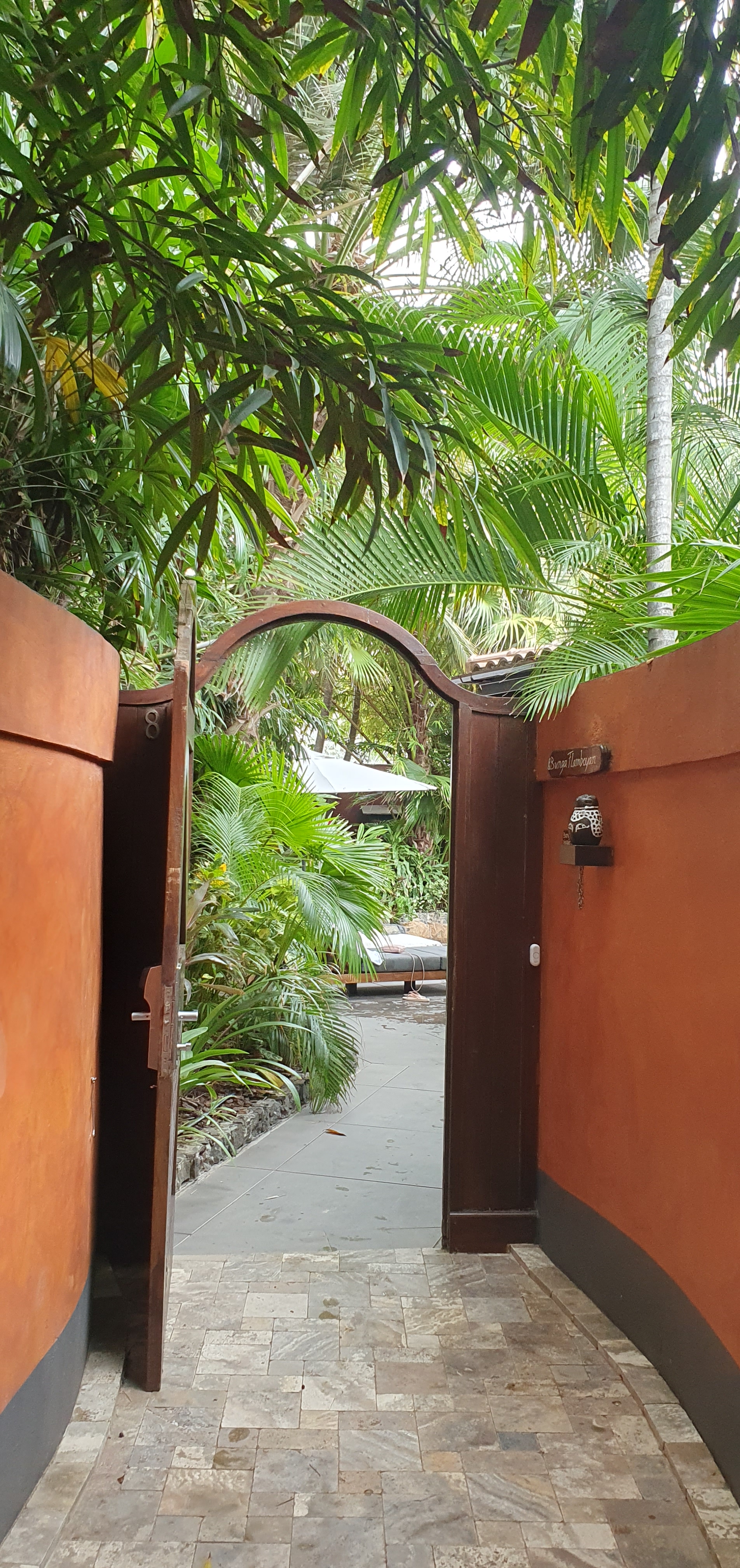
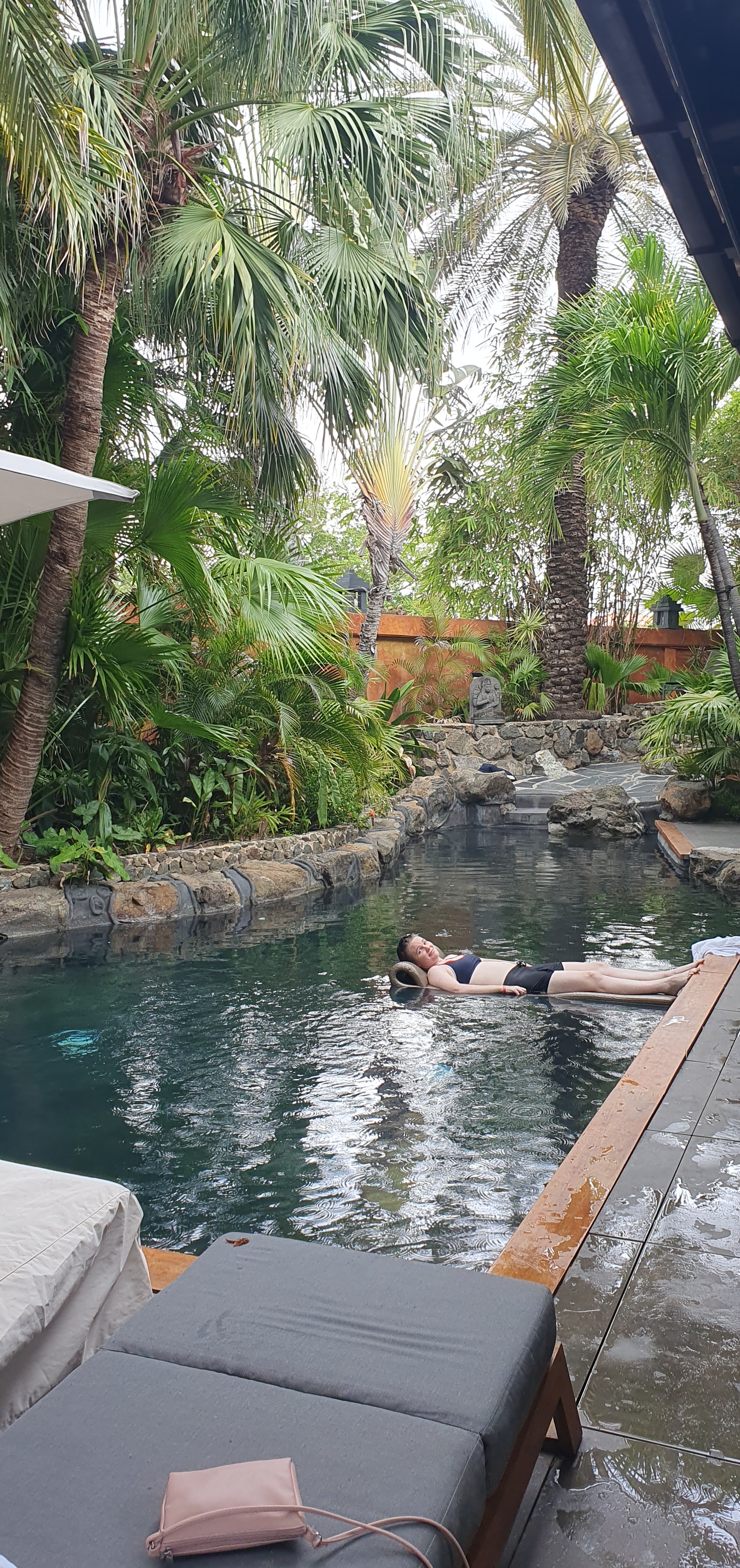
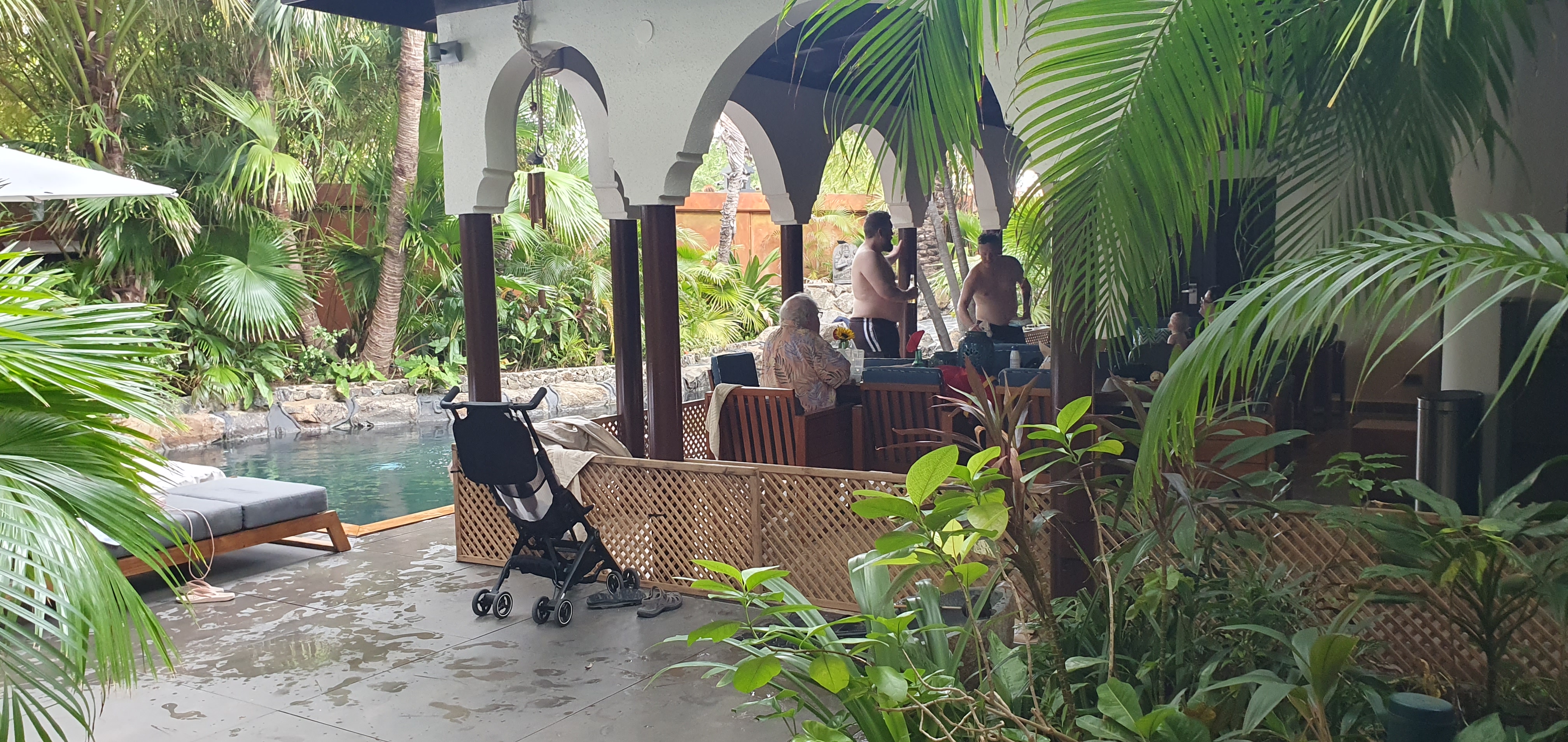
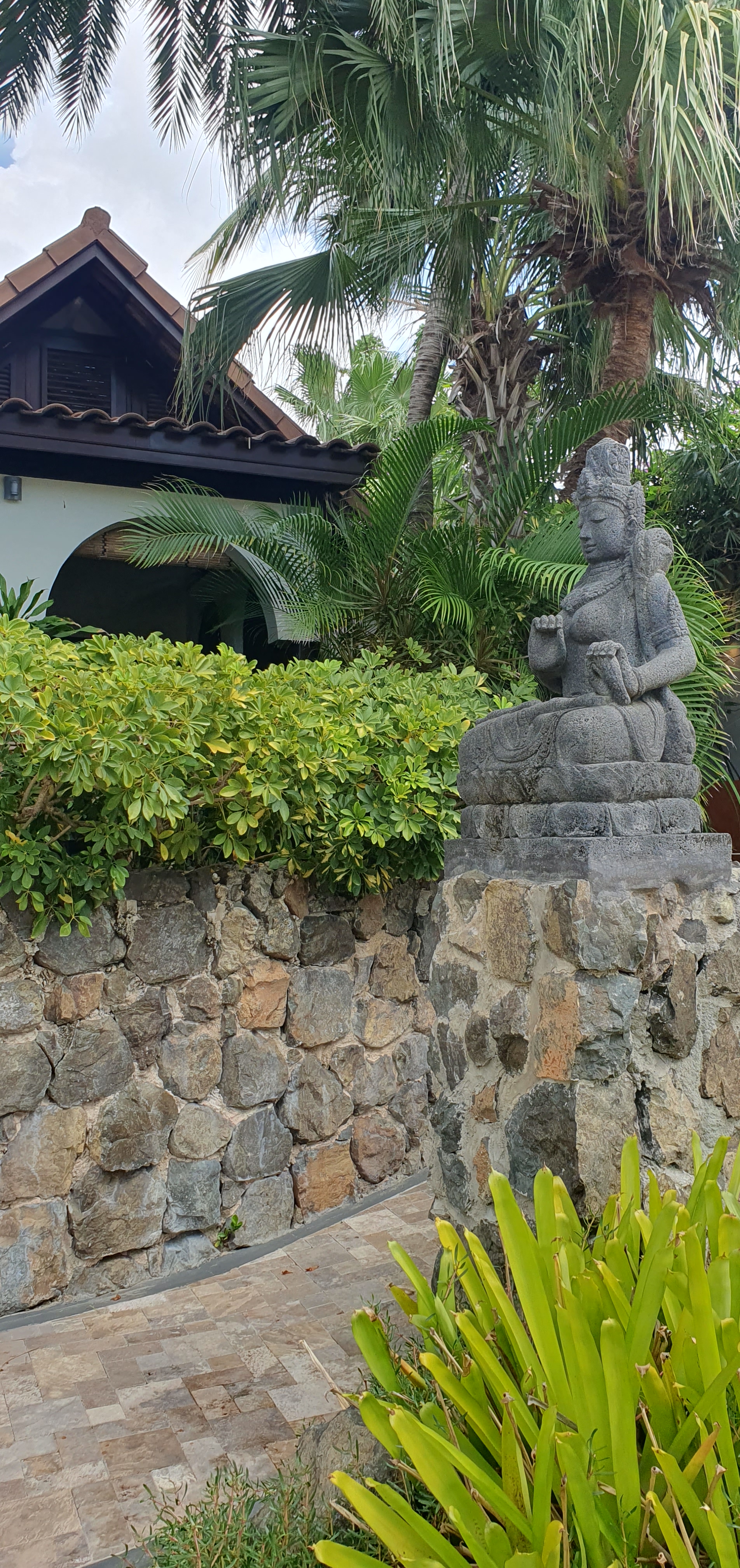
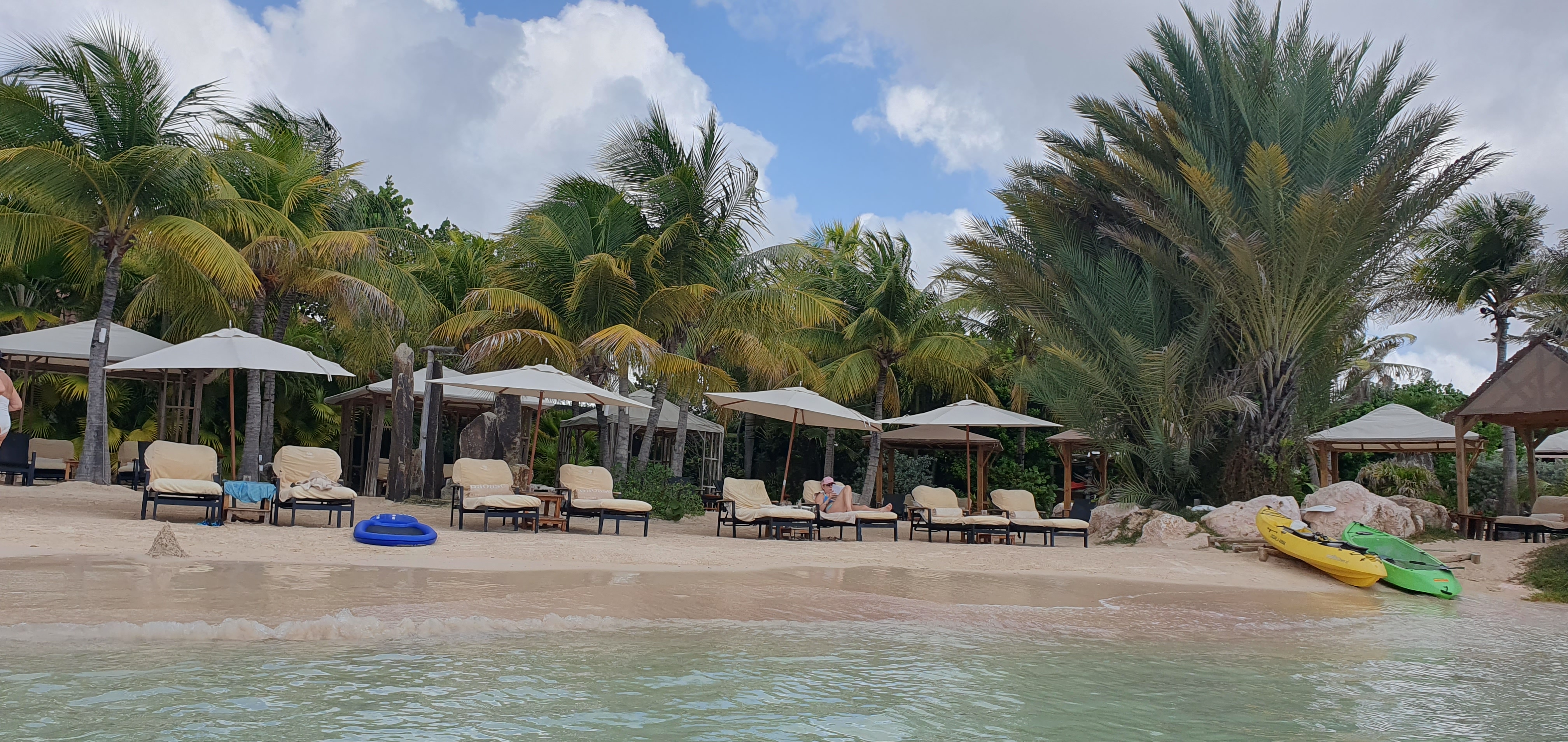
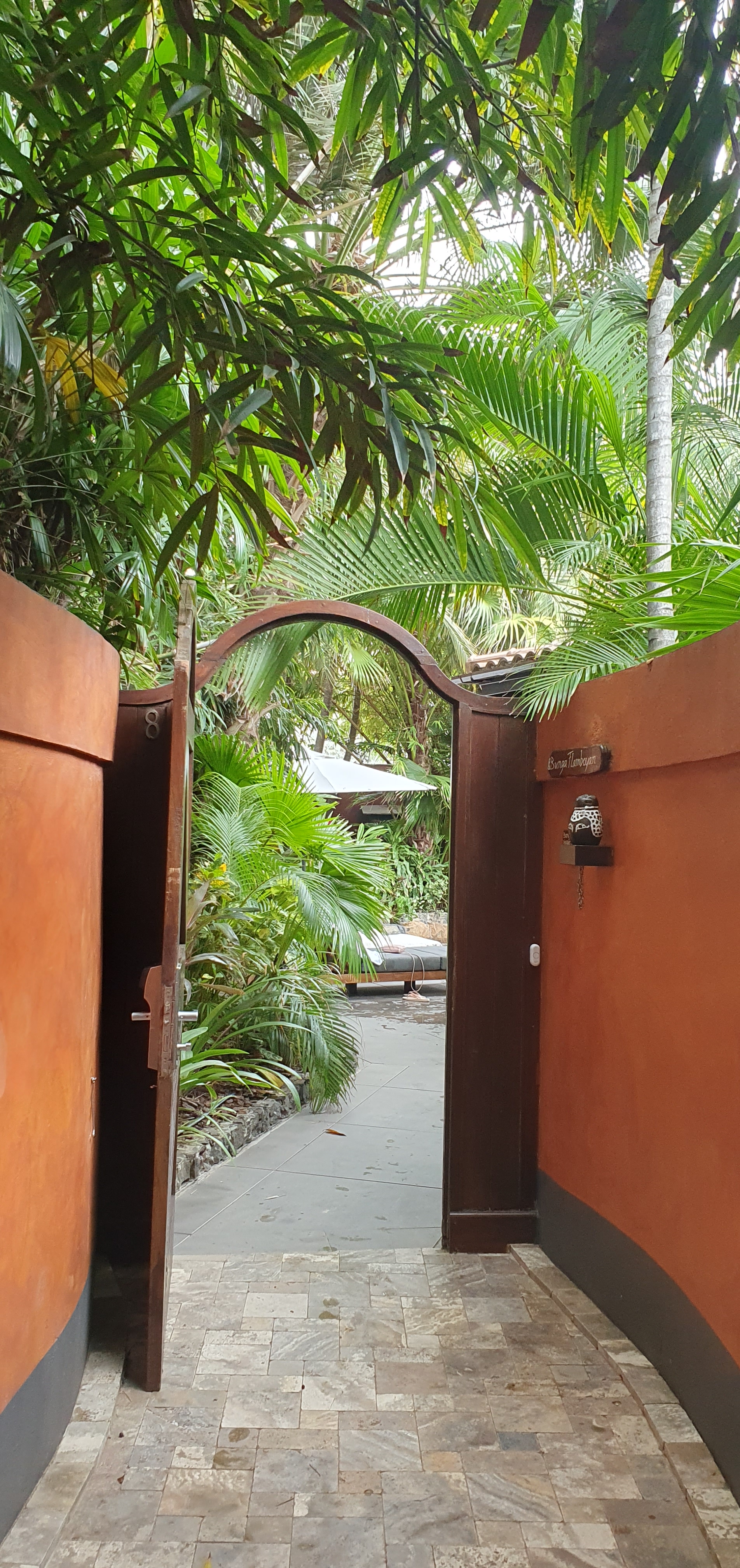
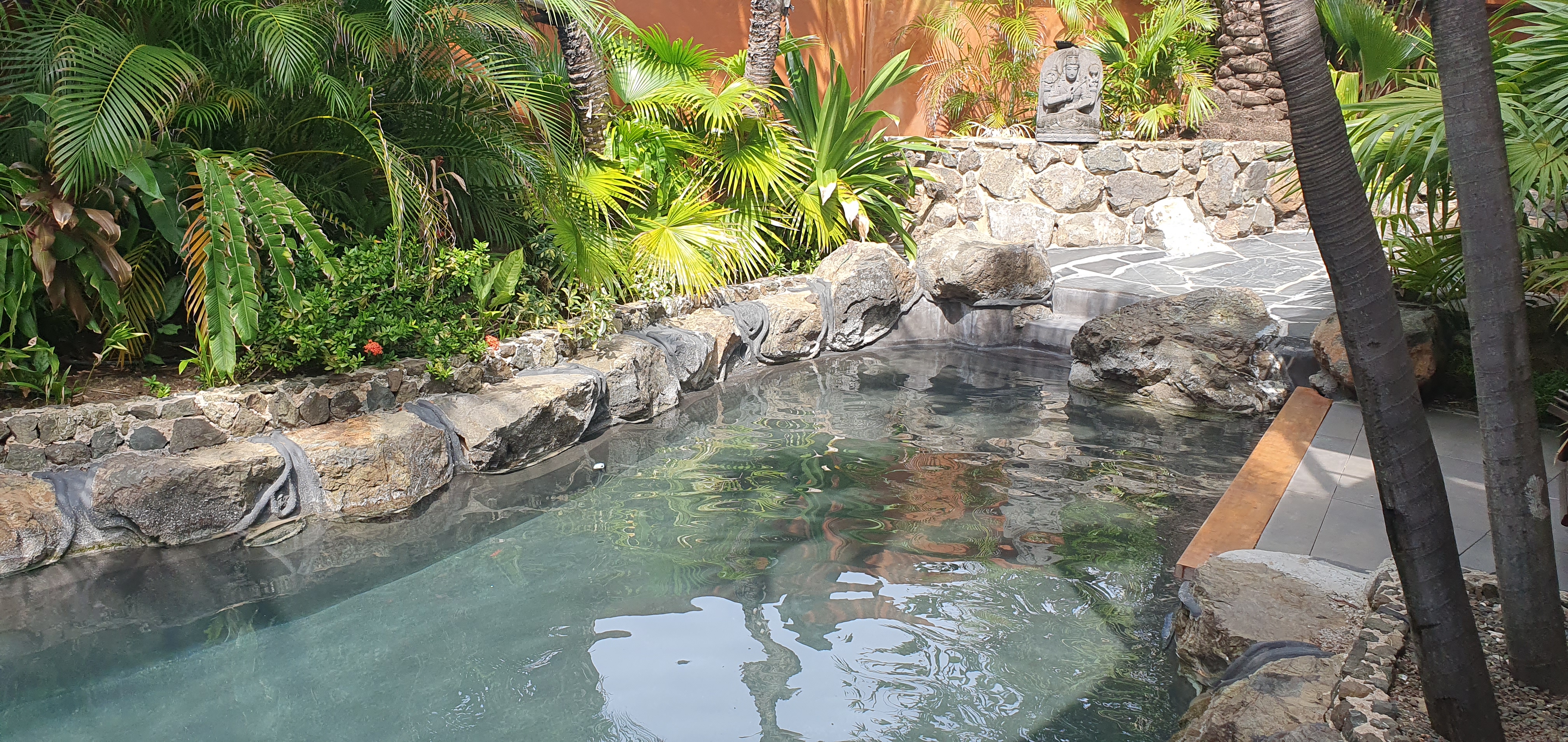
L-R: Entrance to our villa, our pool, outdoor seating area, outdoor seating area in use

Our villa had a generous outdoor seating area where we sat to play Yahtzee and chat. We did not use outdoor kitchen or the large outdoor dining table for meals since our stay included all meals in the dining room. It was possible to order breakfast delivered to the villa by ordering before 8 pm each day for the following morning, but we preferred to go to the restaurant. We could have hired a chef to come in and cook for us, as well, but we didn’t use that option. When people were at the villa, they tended to sit in the airconditioned indoor living room. It was a bit smaller than the outdoor area, but there was enough room for everyone on the occasions we were all indoors. There was a small powder room off the living area, as well as a rear entrance to the street, though only to exit.

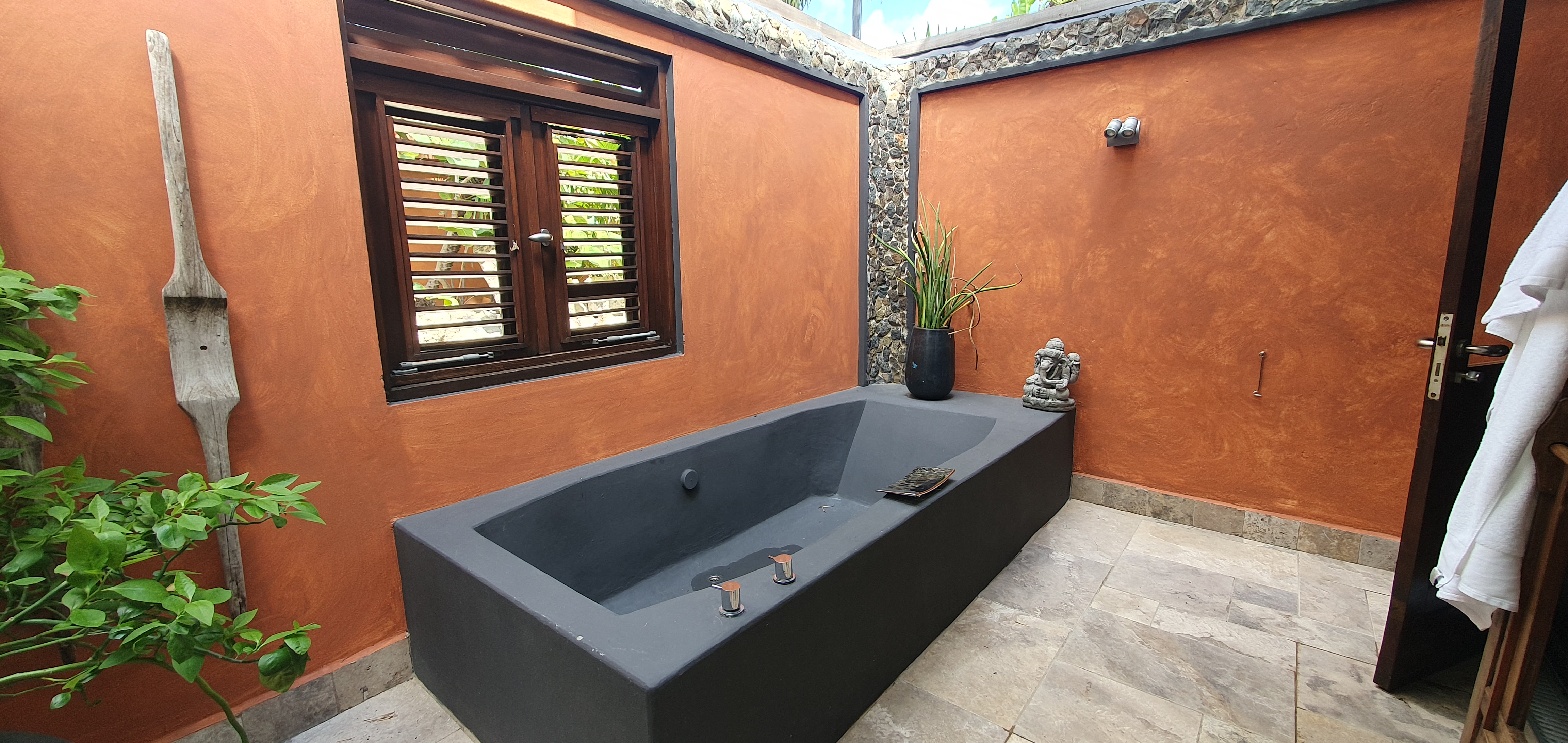
The bedroom and bath on the main floor were for Jonathan and I, as we claimed the “no stairs” option. All the bathrooms had indoor toilets and sinks, with outdoor showers. Our unit had a very large tub in the outdoor enclosure, too. After thinking about it, we didn’t get around to using the tub. It would have taken 20 minutes to fill the thing. If you were in the mood, though, there was lots of space to set candles and wine glasses around the edge, and easily space for two people. Did I mention that the resort regularly hosts honeymooners? Amanda and Jim chatted with a newly married couple.

Upstairs in the villa are three bedrooms and two bathrooms. The kids knew in advance that one of the baths would be shared and were ok with it. Amanda and Jim and baby Aurora got the private bath. The upstairs seems to have worked well, as we heard no comments from our group. The showers were outdoor even there, on balconies, so everyone had the tropical bathing experience.

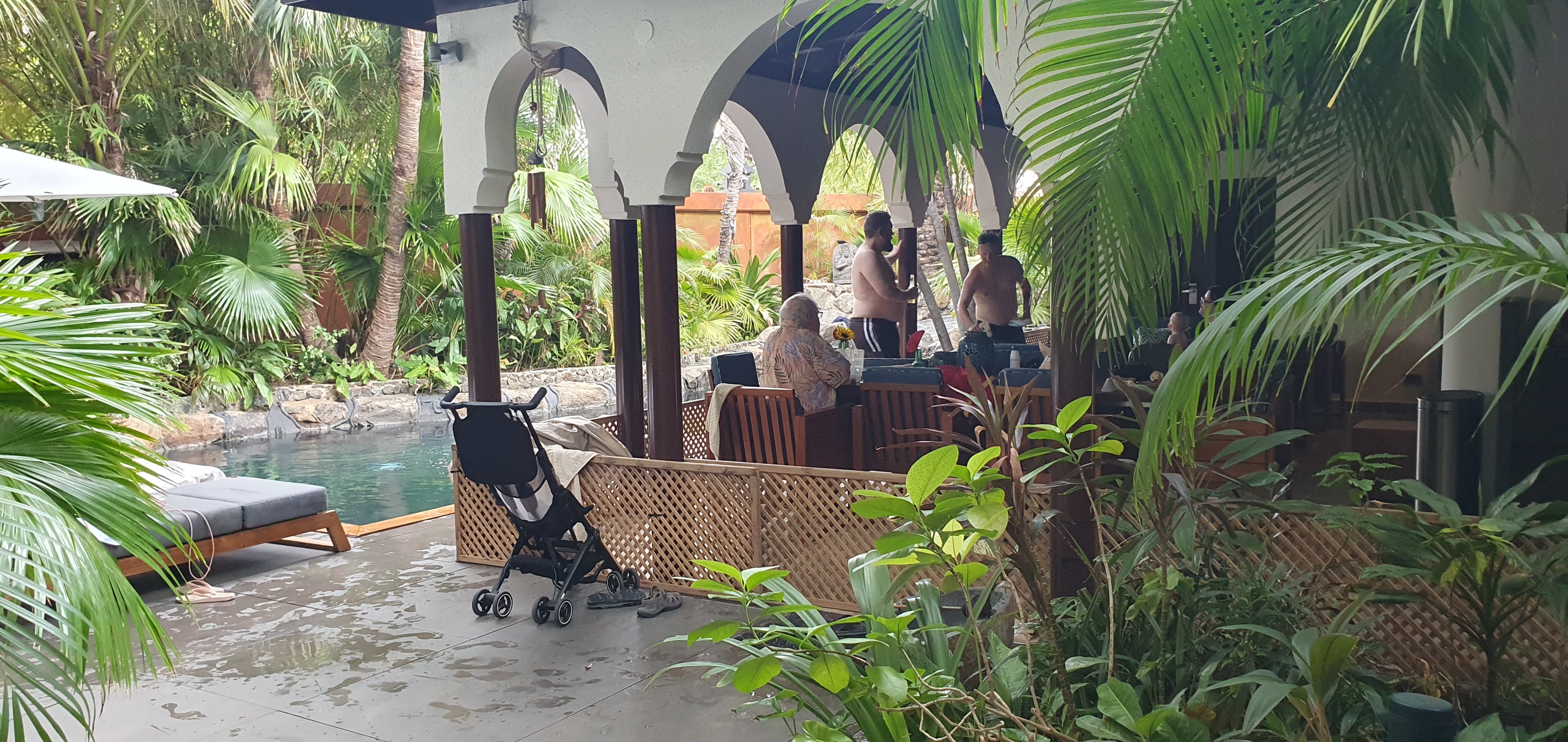
The pool was quite shaded and was perfect for those who needed a break from the bright sun of the beach. (There were a lot of mosquitos around the pool, which was too bad, because we would have liked to lounge outdoors. The resort did provide each guest with a complimentary bottle of bug spray, so they are aware of the issue.) When I called the Baoase in advance to ask about a crib, they also offered to put a barrier between the patio and the pool. It was all in place when we arrived.

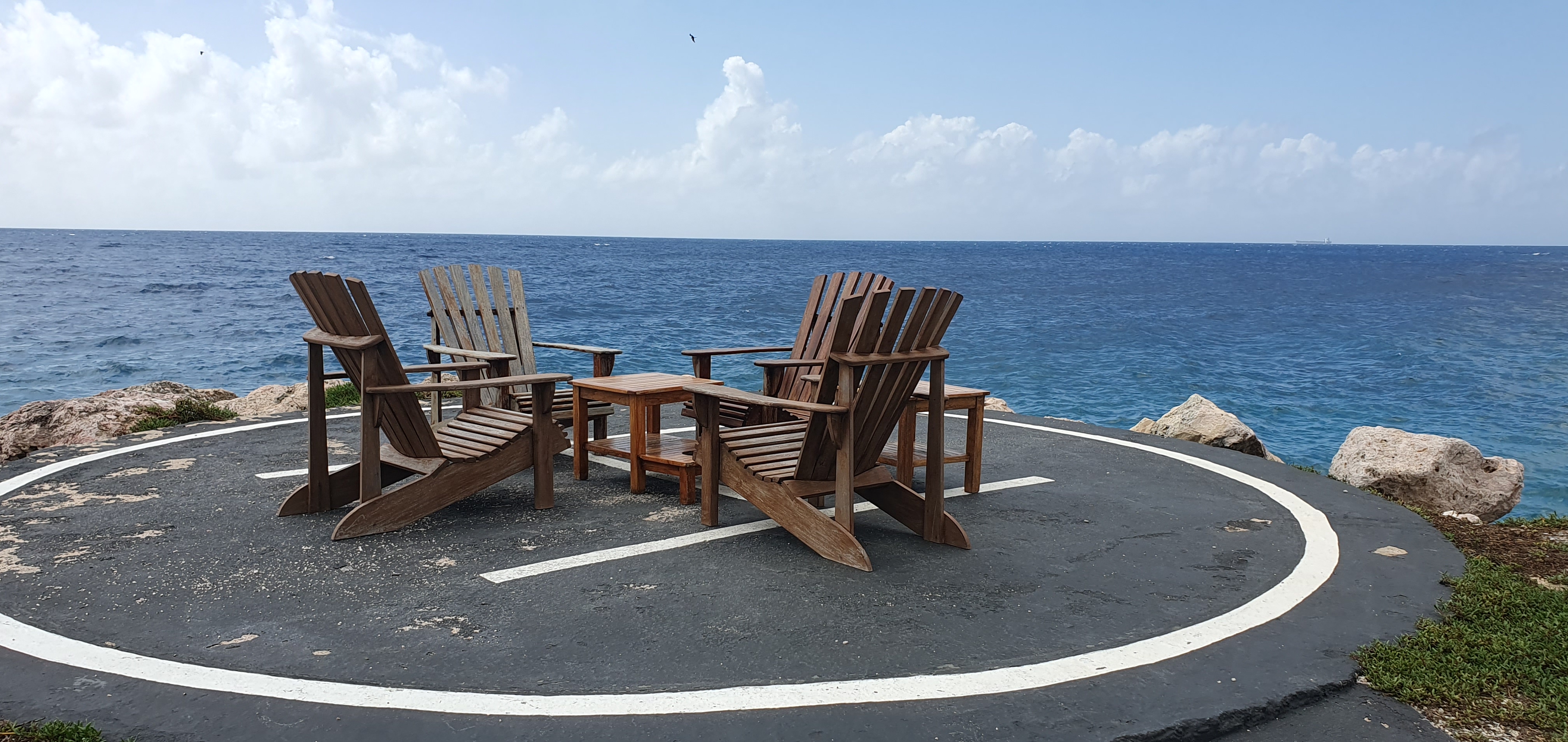
The resort encircles an artificial lagoon that created a sandy beach surrounded by rocky walls where little fish swim. Thus, it’s possible to snorkel inside the lagoon itself. Two channels connected with the ocean. When it was calm, we could snorkel out of the lagoon along the ocean-facing walls, and along the shore in either direction. The resort has planted some corals offshore, though it will be years before they spread very far. I was happy there were some corals and fish. Amanda and Jim, our strongest swimmers and divers, saw octopus, squid, a conch, and even a gurnard, a fish that looks like an underwater butterfly when disturbed.
(Internet photo of gurnard)

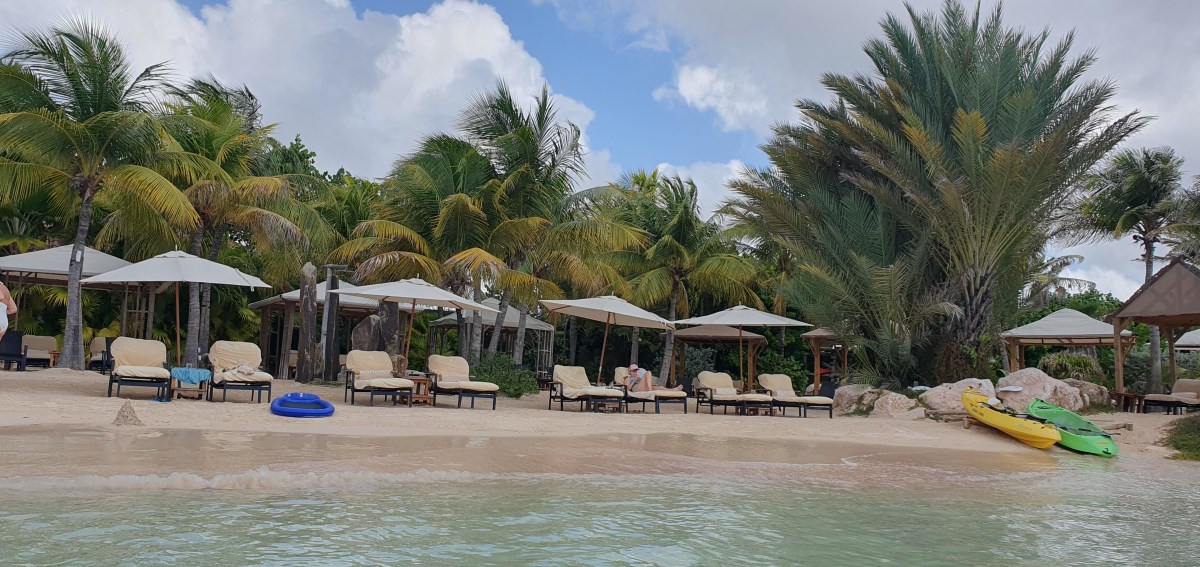
Along the shore are lounge chairs in groups and under cabanas. Though the Thanksgiving break was a holiday for our group, the resort was not full and we could easily find a cabana with enough shade and chairs for those who were at the shore. I mentioned in a previous post that the weather might be a bit less humid and perhaps a bit cooler during the high season (Dec-April). The resort is likely to be more crowded then.

There are two restaurants at the Baoase, both outdoor. During our stay, the Sunset Deck was only in use twice a week for themed dinners, though I imagine that during high season both the dining area and the bar there are open all the time. That didn’t bother us at all. The first dinner we had on the Sunset Deck was during a dead calm and proved too warm for us. The staff was very accommodating and let us dine at a large table by the water every night. When there was a themed meal on the Sunset Deck, they brought it to our table. I was impressed by their willingness to make us comfortable.

Seafood night was a big treat. The servers place dishes on the table and then explain what it is. We needed extra light to see it all.

Lunch could take all afternoon, but could also move along. The food was excellent, as I’ve commented on in previous posts. Dinner was similar, either an experience taking up most of the evening, or a bit less than that. The seafood night was a highlight.

Over the course of a week, specials and theme meals change every day, so it’s not until a visitor’s eighth day there that menus repeat. Fortunately for us, the repeated meal were Asian Night, when we could eat all the sushi we wanted. Before we arrived, I was concerned that the young people would want to venture out to try the food in other places, and I was glad we were close to the downtown area for that reason. The food at the resort was so good that no one expressed interest in going out.

Breakfast included hot specials as well as a buffet of yogurt, fruit, juice, and granolas. The juice blend called “Whisper of Summer” was a favorite, and the cut up fruit served in small jars was perfect sized and fresh. The coffee was good too, including cappucinos and lattes. There was none of that tasteless hotel coffee we often get when traveling.

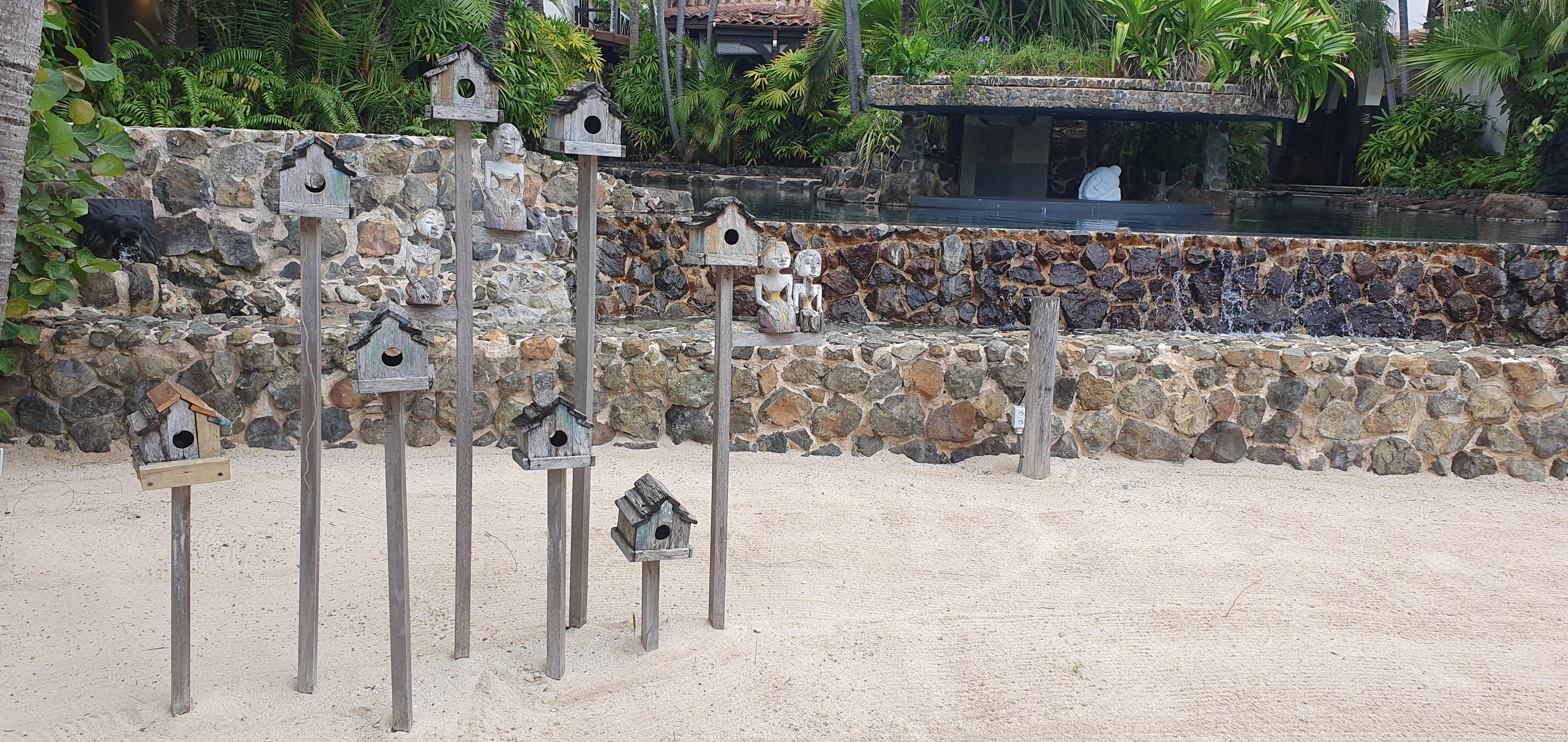
The name of the resort, Baoase, is not easy to pronounce. It seems to be “bow-ah-say”. It’s a hybrid of two words that are meaningful to the owners. There is a decidedly Asian, or perhaps Balinese vibe to the place, enhanced by the sculpture and decorative items all around the resort that reflect an Asian connection. The Dutch, former colonizers of Curacao, were great explorers of East Asia a long time ago.

The result is lovely, and we enjoyed our vacation thoroughly.

Let me know if you have questions, or would like to see other photos

Shopping in Willemstad and Good to Know About Curacao

(The banner photo for this post that you may or may not be able to see depending on the device you are using is the Aida Perla cruise ship, with about 1,600 passengers, docked in Willemstad, Curacao, Nov. 25, 2023)

I only ventured into the downtown area a couple of times. I wasn’t interested in doing much shopping, and I wondered about the crowds that might come from the cruise ships that docked regularly. On the day three ships were in port, one the enormous Symphony of the Seas, they added about 8,000 people to the island, all disembarking in Willemstad. Can you blame me for avoiding that?

There are some pretty sights to see in the downtown area called Punda, starting with the row of houses that hark back to the Dutch colonial period. Though the beautiful storefronts only extend for a block or two, they are lovely.

Smaller cruise ships moor across the canal just beyond this block, with a lovely view of the town during their stay. A long pontoon bridge connects the two sides of town. It opens and closes during the day and pedestrians have to scuttle off or get trapped for about an hour. It’s fun to see the bridge open if you are not in a hurry to get anywhere. Small ferries operate back and forth even when the bridge is open, so it’s only a minor inconvenience.

Like many Caribbean islands, most goods here are imported, which is why I was happy to visit a shop of locally made crafts and products. I did buy a cute octopus for my granddaughter. I also found a metal a parrot to add to my collection. It has a sly look that gives it some personality. We purchased it at the row of stalls considered to be the floating market, where the vendors are stationed beside boats.

We did a few silly things, like pose in cutouts of “typical tourists”. The opposite side had “tourists” of color. The white ones were fat, the others were not. Hmmm. Next, we did some drumming with the local troupe of troupials.

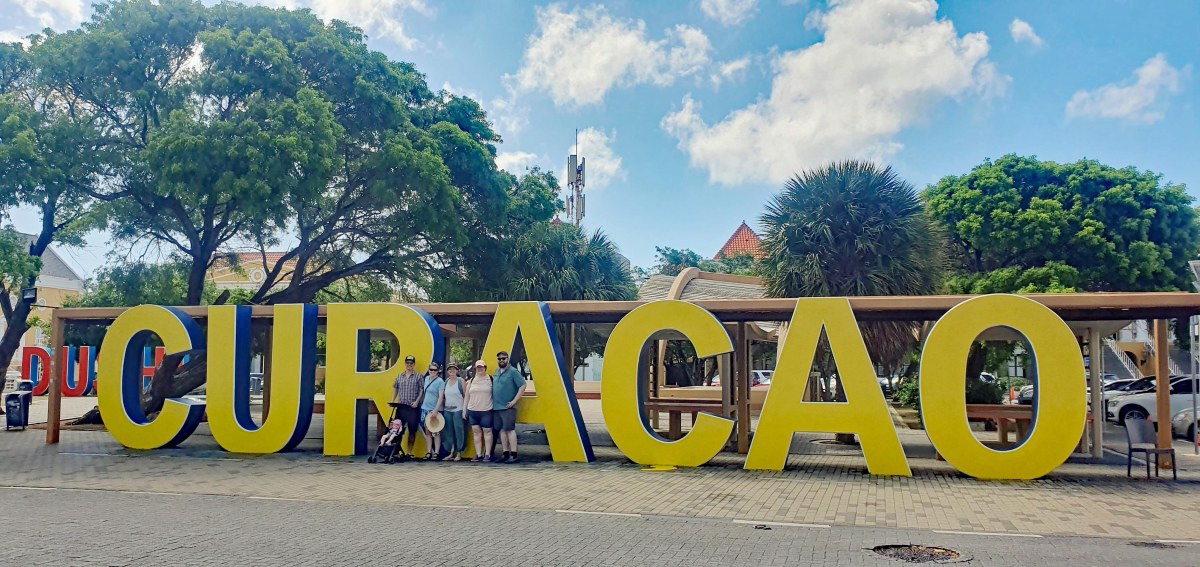
The kids posed in front of the giant CURACAO sign. It is too big to get a good photo, everyone looks tiny. I think you could fit the passengers from an entire cruise ship in front of this.

There is a lot more to explore in Willemstad. We barely started in on the side of town with the cruise ship terminal, called Otrobanda. The weather was too hot, too sunny, and too humid for walking around. We were grateful to find a few souvenirs, stroll a short way, and return to our shaded pool and beach.
GOOD TO KNOW ABOUT CURACAO

Before you plan a trip to the Caribbean, make sure it’s the right destination for everyone in your group. We went to Curacao with at least one person who reacts badly to high heat and humidity. If your traveling companions break out in a rash when the humidity is high, or from bright sun, Caribbean islands may not be their ideal vacation.

Travel: It’s a long way to Curacao

If everyone is ok with lots of heat, humidity, and bright sun, then Curacao is a fine choice. From the west coast of the US the trip was long, but went smoothly. Flights to Curacao from the US mostly connect through Miami. (There are a number of direct flights from Amsterdam.)

We had no trouble on arrival. Everyone had filled out the Curacao arrival card and saved a screenshot/printed a copy of it. We got through immigration and customs easily and picked up our rental car.

Car Rental

All the major rental car companies operate in Curacao right at the airport. We rented from Budget and had no difficulties. Driving is on the same side as in the US. Roads include a main highway between the airport and Willemstad, the largest city and capital, and many smaller roads, some lumpy with repairs, others full of potholes, and a few unpaved. Drivers have to be alert and cautious, as many intersections don’t have traffic lights or stop signs.

Car return and Departures are at opposite ends of the airport. It was a VERY long walk from the rental car return to the terminal with all our luggage. If you’re with others, you might want to drop people and luggage at the departure terminal and have one person return the car.

Weather

We visited Curacao in late November. The weather felt stifling, hot and humid, the kind of day when it’s difficult to imagine doing anything other than lying on a beach chair under an umbrella. Staff members at our resort commented that we were fortunate that the long stretch of hot weather they’d been having had let up! The afternoon breeze cooled things down a bit, but air conditioning was essential for comfortable sleep. Toward the end of our visit, the humidity decreased noticeably and the temperature went down slightly. I suspect weather from December to April (the high season) is more comfortable than November.

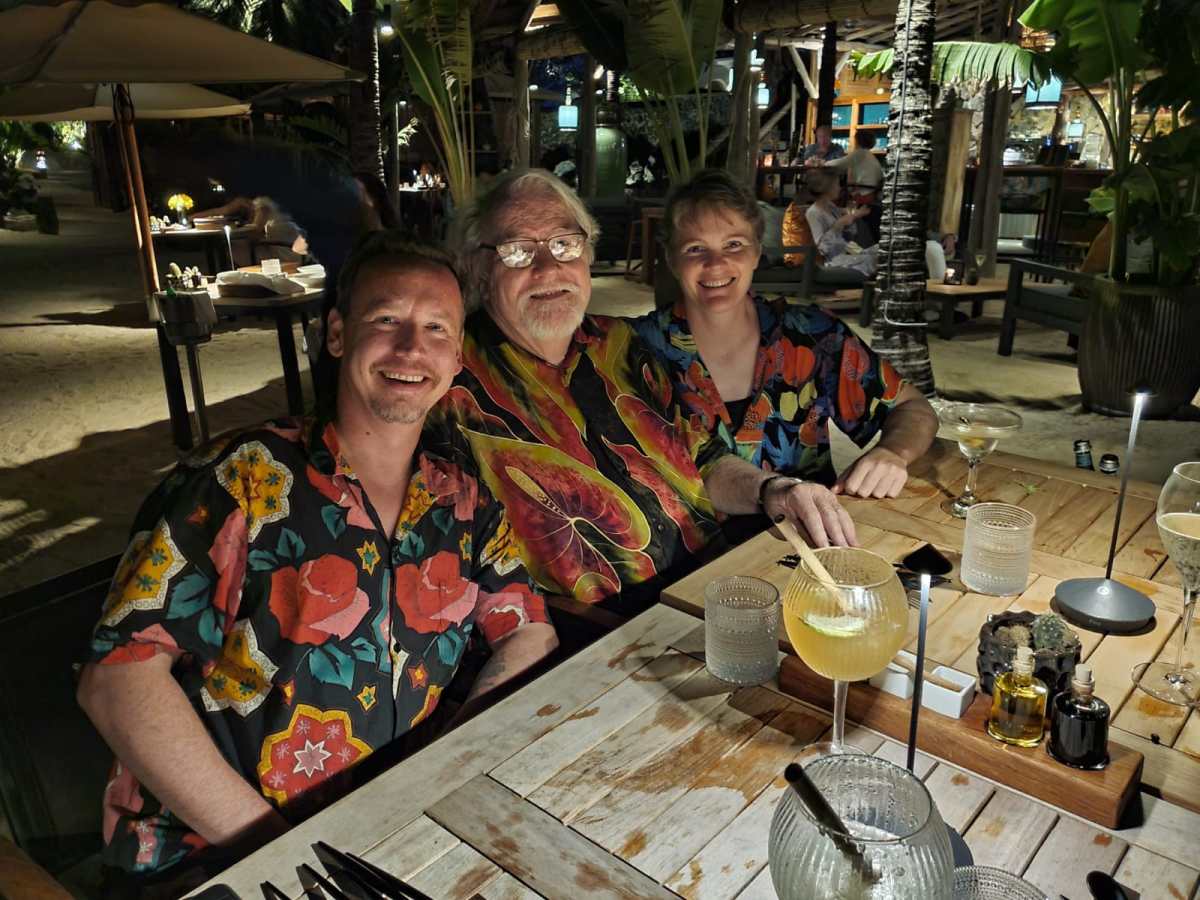
Tropical Garb was the order of the day

Going to the Beach

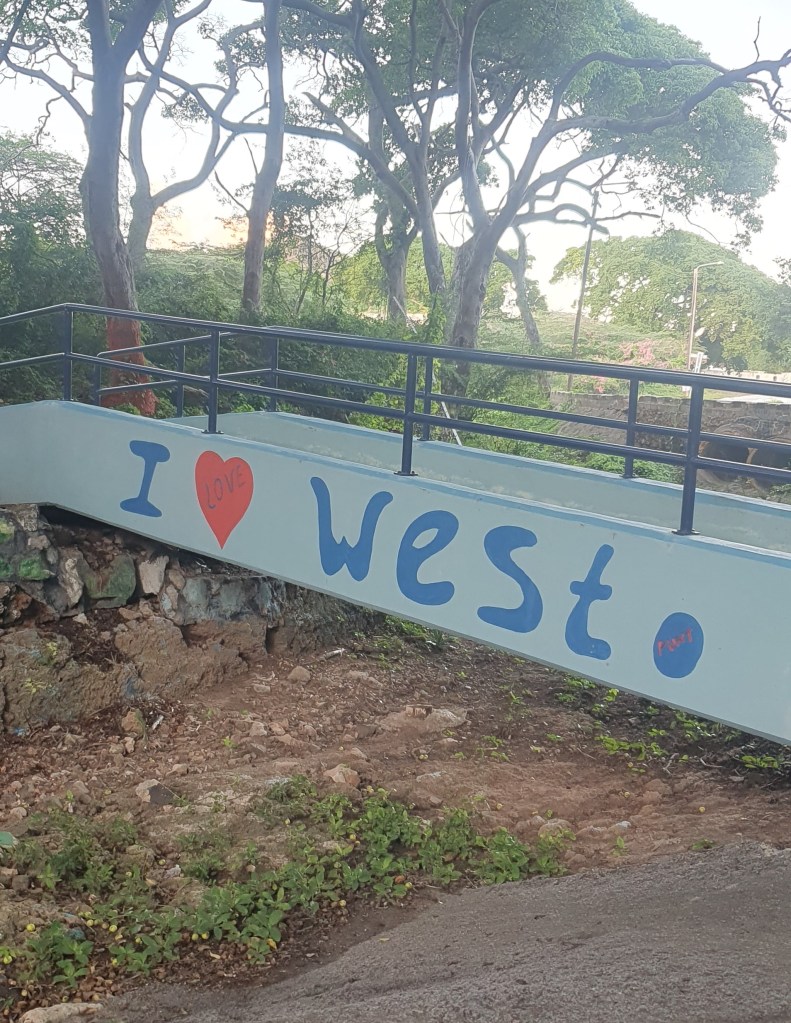
I Love West (Punt)

Much of Curacao’s shore is rocky or covered with broken coral. It’s pretty but demands footwear even for swimming. Sandy beaches are usually edged with coral, too. We all brought water shoes. Some resorts have constructed their own lagoons, where you can snorkel along the rocky perimeter and sit on a stretch of sandy beach inside the lagoon.

The beaches we visited were relatively small, and crowded with sun lounges and umbrellas. We stopped at Playa Kalki, near the westernmost point of the island when the tide was coming in and it washed under most of the beach chairs on the narrow beach. I was a bit surprised at how popular it was.
Playa Grandi was a big treat, because sea turtles were swimming there on the afternoon we visited. We went late in the day and found parking easily, but all the businesses closed at 5 pm and we couldn’t rinse off after our swim—a minor inconvenience. We paid $12 for a pair of lounge chairs and an umbrella. We didn’t get to other beaches, but renting beach chairs and an umbrella is the thing to do.

Near Playa Grandi

Money

Curacao uses the Netherlands Antilles Guilder as its currency, and most businesses also accept US dollars. This can get confusing, as the exchange rates are different (1.8 NAG = US $1). Businesses usually post two prices. We had no trouble paying in dollars, though change is usually given in the local currency. If you use a $20 bill for a small purchase, you may end up with more NAG than you would like. We experienced some minor difficulties, like having to ask specifically for correct change, as quite a few vendors don’t see why a tourist should get change.

Shopping

Curacao is a popular port for cruise ships. We could see the mooring for the largest cruise ships from our resort, and there was a new cruise ship almost every day. Some of these were relatively small, like the sail assisted Club Med 2 (350 passengers). Others were immense, like the Symphony of the Seas (5-6,000 passengers). Most passengers spend at least a short time shopping in the picturesque downtown of Willemstad.

Curacao is best known for the orange-flavored liqueur of the same name, but most of the items for sale to tourists were the same things you see on every Caribbean island, t shirts to key rings. There is a waterside market area that includes fruit and vegetable sellers, and a short stretch of international shops.

Look for shops that sell locally made goods, including food products, carvings, paintings, and other artwork. I liked seeing what local artisans produce.

Safety

Full Moon on our final night in Curacao

Within a resort, all you need to do it put your valuables in the hotel safe and remember to close the door of your room. When you’re out exploring, though, keep in mind that Curacao has high unemployment among young people. Tourism brings people to the island who want to show off the fun they’re having, while local people of the same age may be struggling. There is a fair amount of petty theft, including breaking into rental cars. That can be an expensive occurrence, and you should take seriously the advice to leave nothing at all in your car when you park. Consider leaving your glove box open to show there is nothing in it. Be practical and don’t carry all your money with you, don’t keep money in a purse with a dangling strap, and don’t leave your backpack unzipped. It’s common sense.

Out & About in Curacao: Beach, Beachcombing, Birds

It would be easy to spend ten days within the confines of a resort in Curacao, but we did venture out a few times to see a bit of the island.

Beach

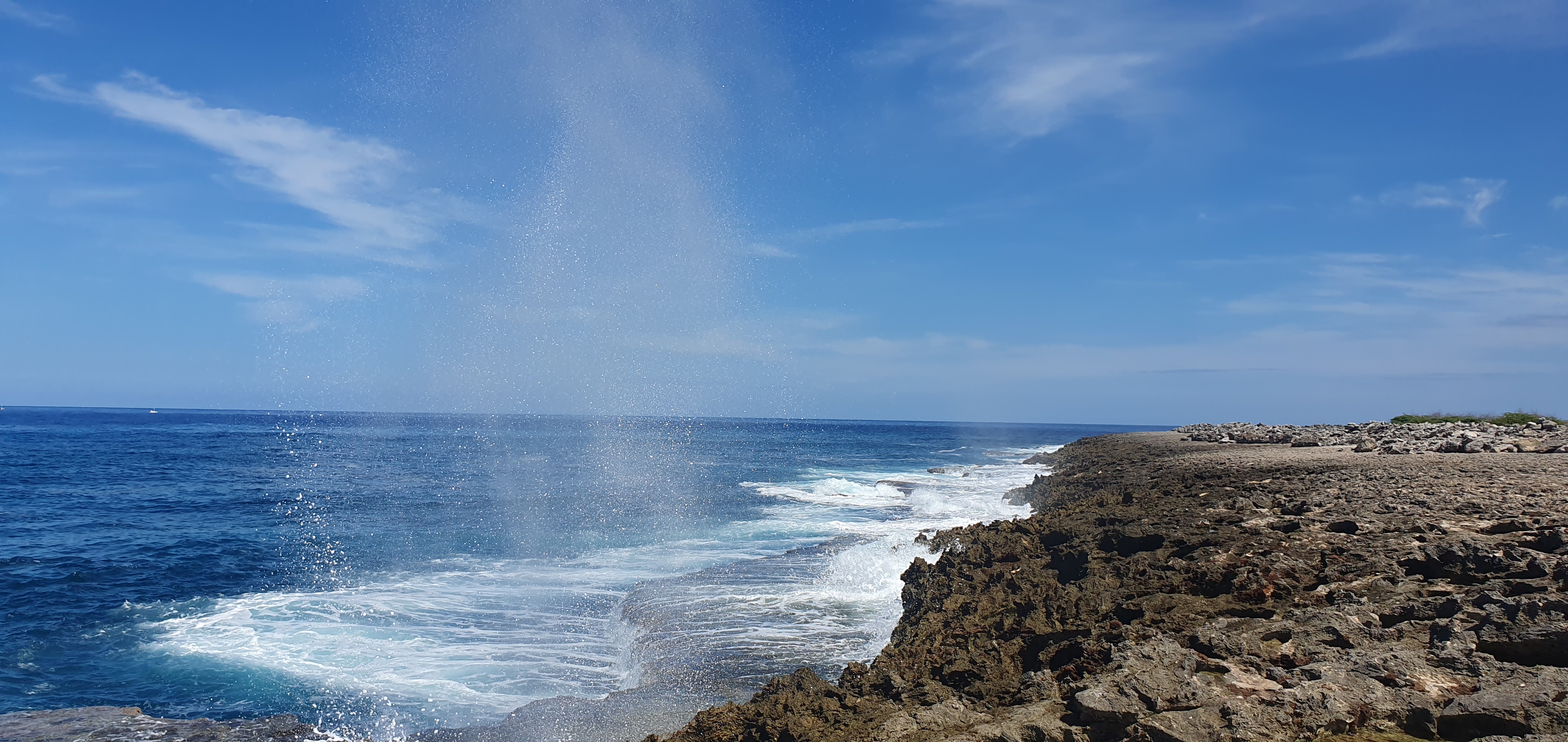
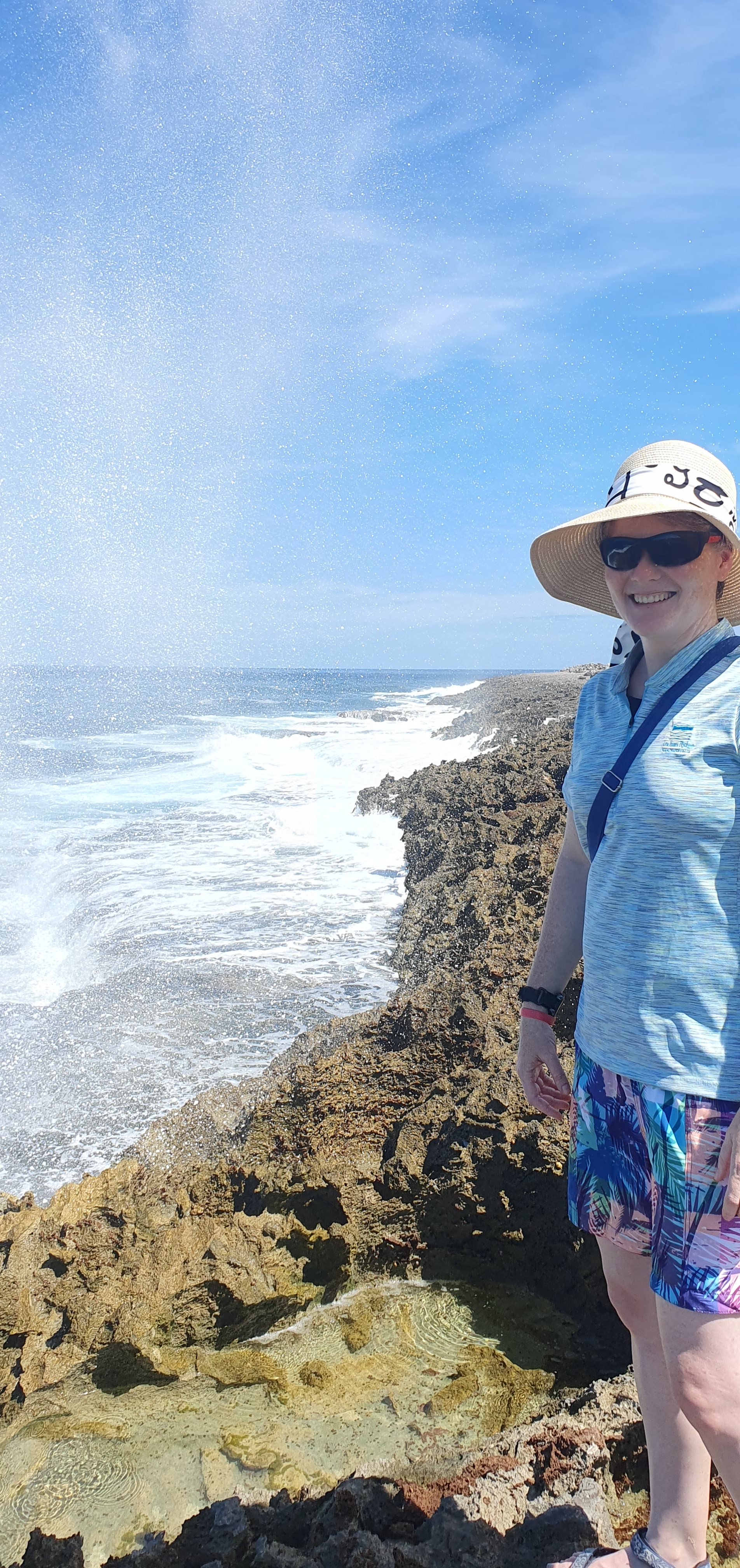
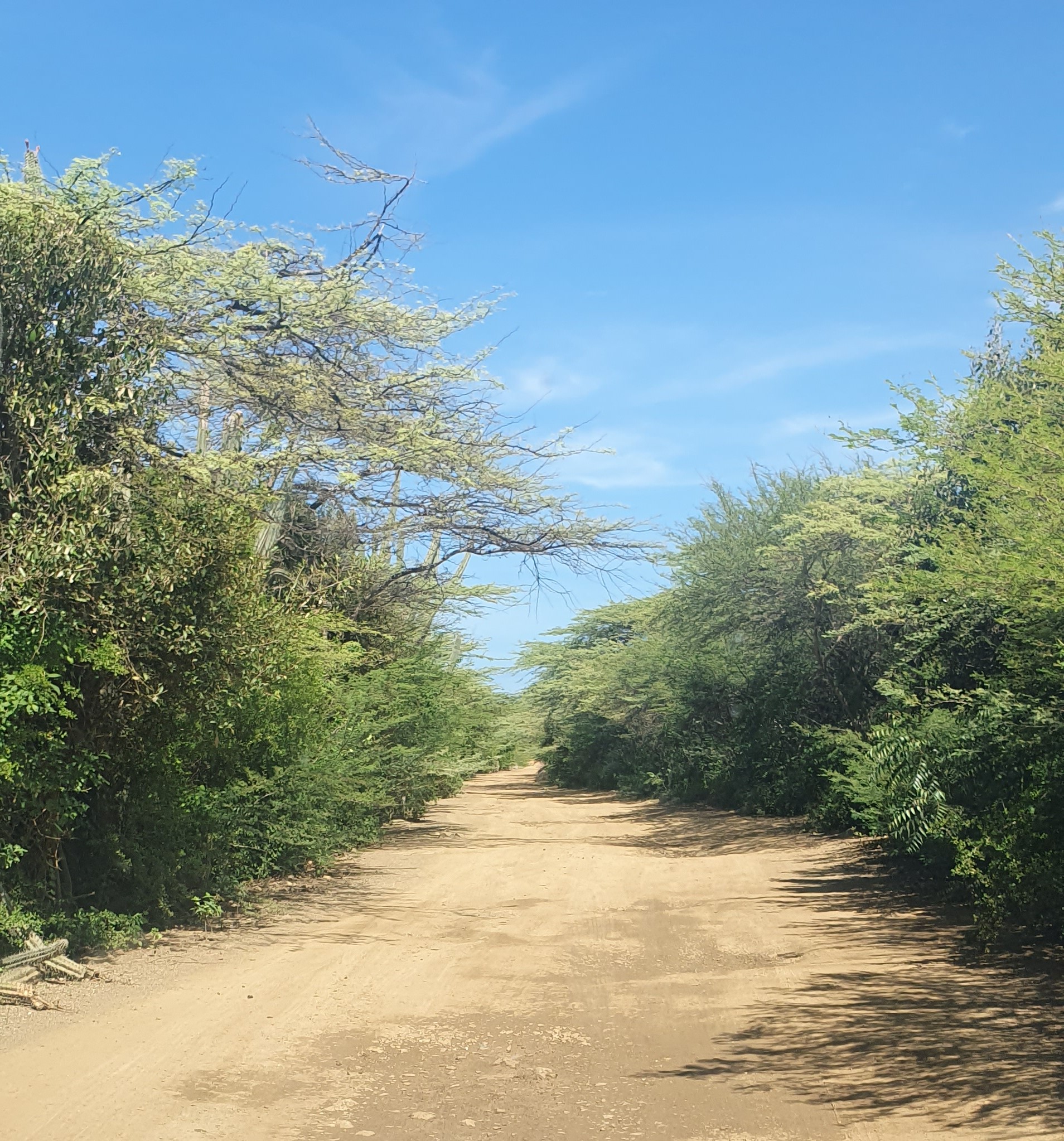
Our first goal was to visit Westpunt, the far west end of Curacao. We drove as far as we could, and ended up at Watamula Hole, a series of blowholes on a rocky shore. Walking was difficult on the broken rock and fossilized coral. Getting to the parking area was a triumph of navigation, owed in part to my getting a local SIM card. I ended up not needing to make local calls, but definitely used the data to find directions.

Watamula Blowhole at Westpunt. We didn’t walk to the precise westernmost point of the island because of the uneven rock/coral surface. The last mile or so of the road was unpaved, too.

Curacao roads tend to be narrow, but there was little traffic, and we had no trouble getting around. On our way back we stopped to scope out Kalki Beach, mentioned in all the guidebooks. It was very small and very crowded, with the high tide washing under the legs of the beach chairs. If you didn’t rent a beach chair, you’d need to stand in the water!

A couple of days later, Lyra suggested we visited another west-end beach, Playa Grandi. Sea turtles visit the beach most afternoons, and we were lucky enough to be able to snorkel and watch them. The turtles are graceful underwater, flying through the water with a flick of their flippers just like birds float among the trees. They’d dip to the bottom and browse on the greenery, then swoop up to the surface for a breath of air, then back under again. We stayed until the light started to fade (2 beach chairs & 1 umbrella $12).

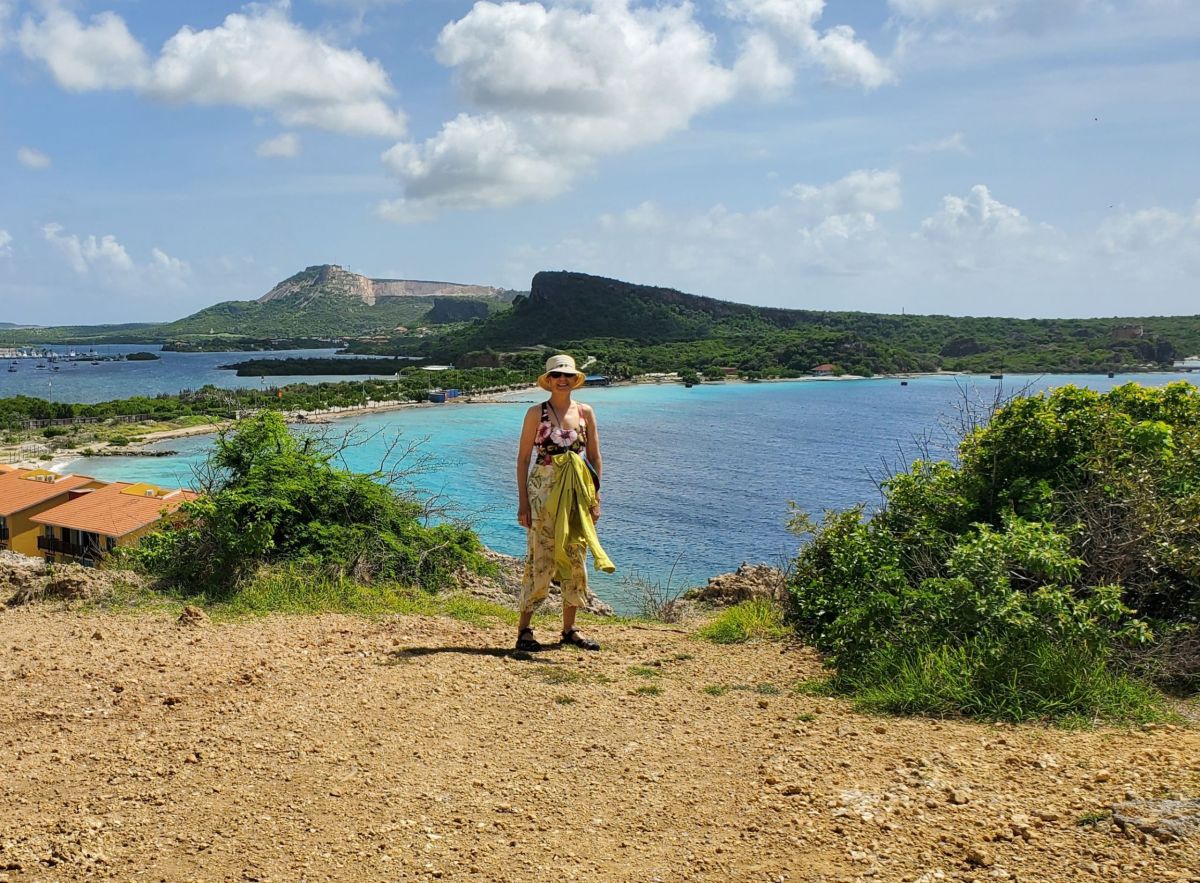
We were planning to visit the opposite end of the island, but found out the roads don’t go that far, as it’s all privately owned. We visited Jan Thiel beach to see if there was any beachcombing, but found little in the way of beach, or beach to walk along. There was a big stretch of beach chairs, and lots of people enjoying the water. We had a brief look around and decided our resort was more interesting. On the way back, we stopped several places to see if there were options for beachcombing. We stopped on this bluff to look down at a very promising beach, only to find it was an island. Without a kayak, it was not accessible.

Here I am, elegantly draped with binoculars, articles of clothing, and my phone. It was a gorgeous spot.

Beachcombing

There was beachcombing on Curacao, rocks, coral, flotsam and jetsam, also beach glass. The bits of beach on either side of our resort proved to be as good as anywhere else to browse. The coast around Willemstad seems to have been used for trash disposal at some time in the past, and as the shore erodes into the sea, fragments of broken bottles and crockery are tumbled into gems. There was not a lot of recognizably old glass, only a few pieces were fluorescent, for example, and we found none of the thick bottle bottoms that sometimes indicate century-old glass. It was a lot of fun to pick up pieces, and I have enough material to make necklaces and bracelets for another year. The few pink pieces we found were a surprise.

Birdwatching

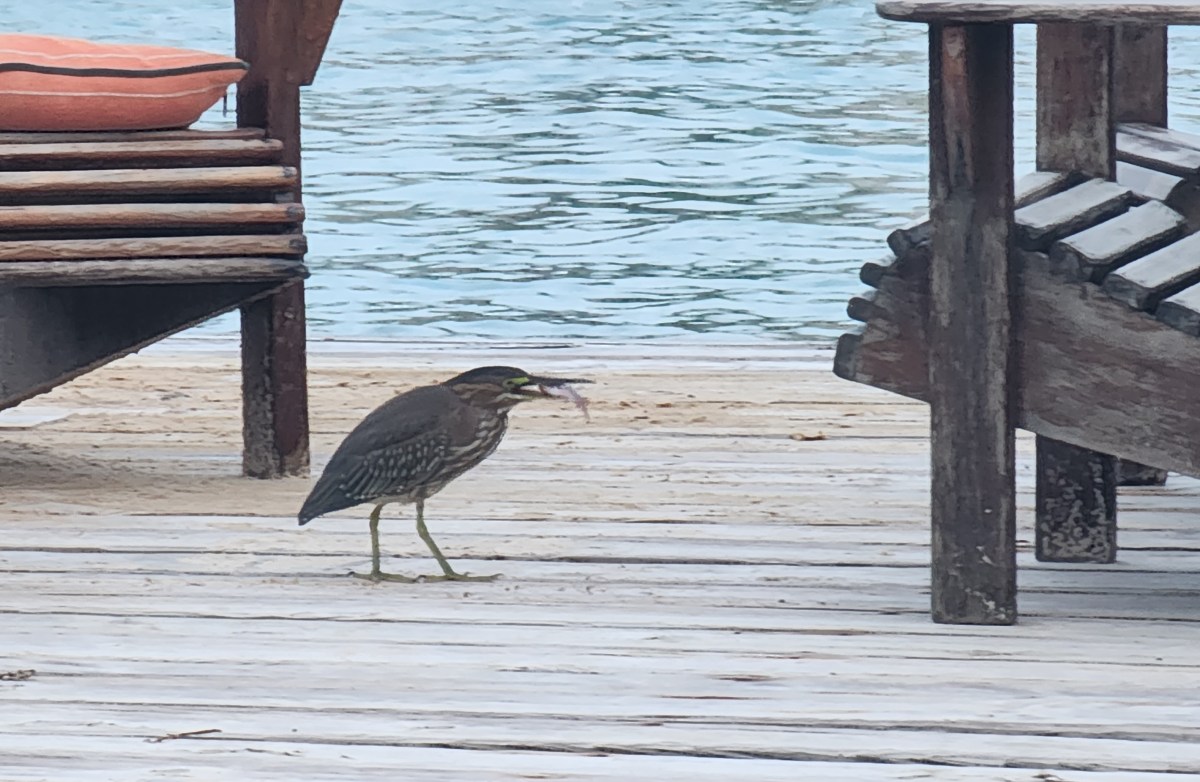
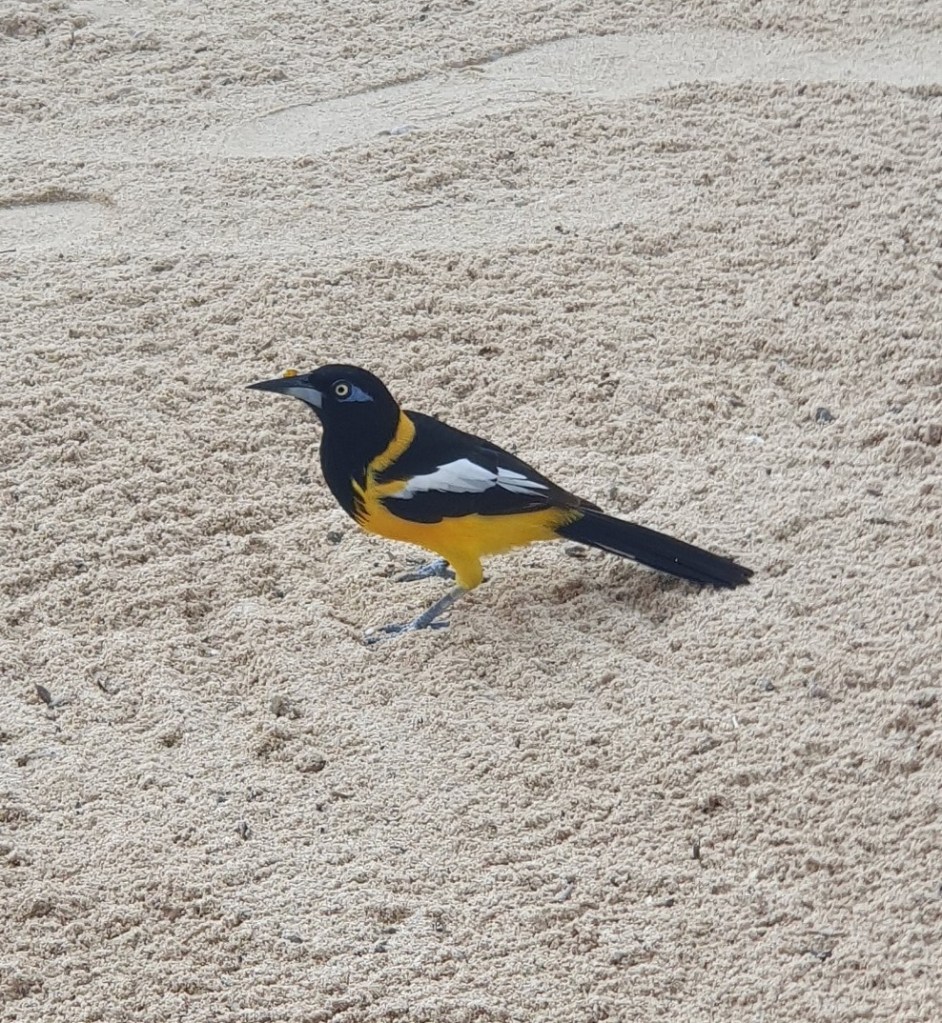
We didn’t stretch ourselves much to go birdwatching on Curacao. The resort had one of our favorite Caribbean birds, the bananaquit (sounds like a fancy drink, doesn’t it?). Bananaquits were building a nest on the rafters of one of the beach cabanas, and we saw bright troupials in several places. The troupial is a sort of tropical oriole, and the national bird of Venezuela. A variegated heron fished and ate his minnow as we watched. An osprey sat on the same bare branch most evenings, sometimes eating a fish. Terns, frigate birds, and pelicans flew overhead. On the shore, we saw Greater Yellowlegs, Ruddy Turnstones, and a few others. Though there isn’t a huge array of species on Curacao, there are plenty of interesting birds to see.

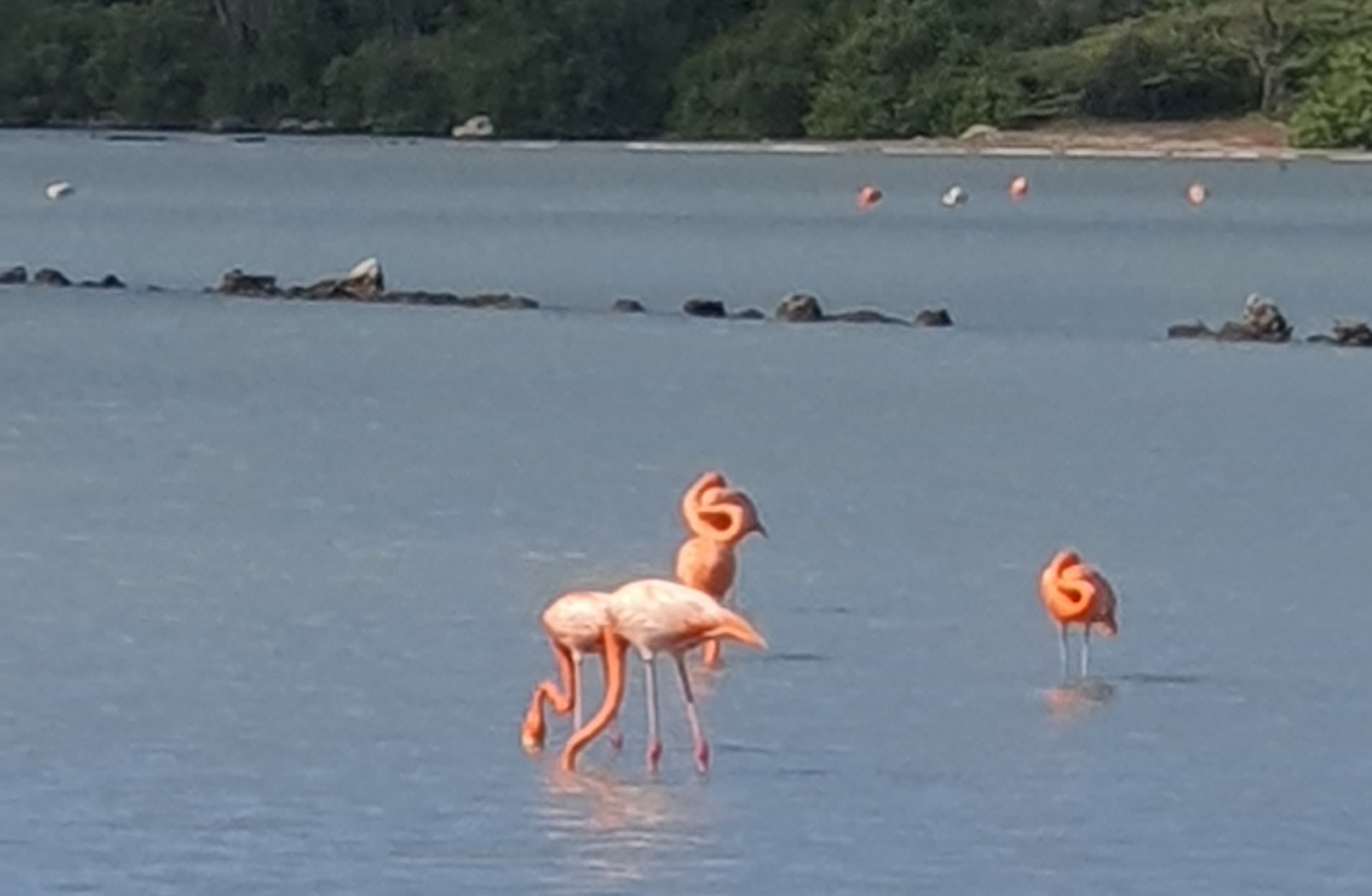
Our single outing to seek out birds took us to what is marked on maps at “flamingo habitat”. Sure enough, it was a shallow area full of flamingos. The flamingos were fun to watch. They put their heads under a wing when resting, but their necks are so long they have to coil them up. Amazing! I had hoped to see scarlet ibis, a brilliant bird of the mangrove, but we couldn’t find any on the day we went to look for them.

We also saw a caracara perching on a bare tree. These are large raptors that look a bit like an eagle wearing a beret. I can see it as a cartoon character similar to Foghorn Leghorn (if you are old enough to remember him).

(Internet photos of caracara, brown fronted parakeet, bananaquit)

Lyra spotted the Curacao version of the brown fronted parakeet. It has bright yellow-orange on its head, making the name not very useful for identification, though we were happy to see one in the wild.

There are lots of other outdoor adventures available on Curacao. We didn’t take a boat trip to Klein Curacao, the small island off the east end of the island, nor did members of our group rent any of the jet skis that roared by the resort from time to time. We saw wind-surfers at Jan Thiel, and there is scuba diving all around the island. In all, it’s more than enough to keep vacationers busy.

Curacao

A long-planned family trip to the Caribbean is unfolding this week. About a year ago, we talked about taking a family trip, and settled on the ten day period around Thanksgiving, when everyone would be able to travel. Months passed. A location was identified, the Baoase Resort in Curacao, one of the so-called ABC Islands (Aruba, Bonaire, Curacao), just off the coast of Venezuela. Today Curacao is an independent country and part of the Kingdom of the Netherlands. I’m not exactly sure what that means, and the currency is still the ANG, Antillean Guilder (US 1 = 1.8 ANG).

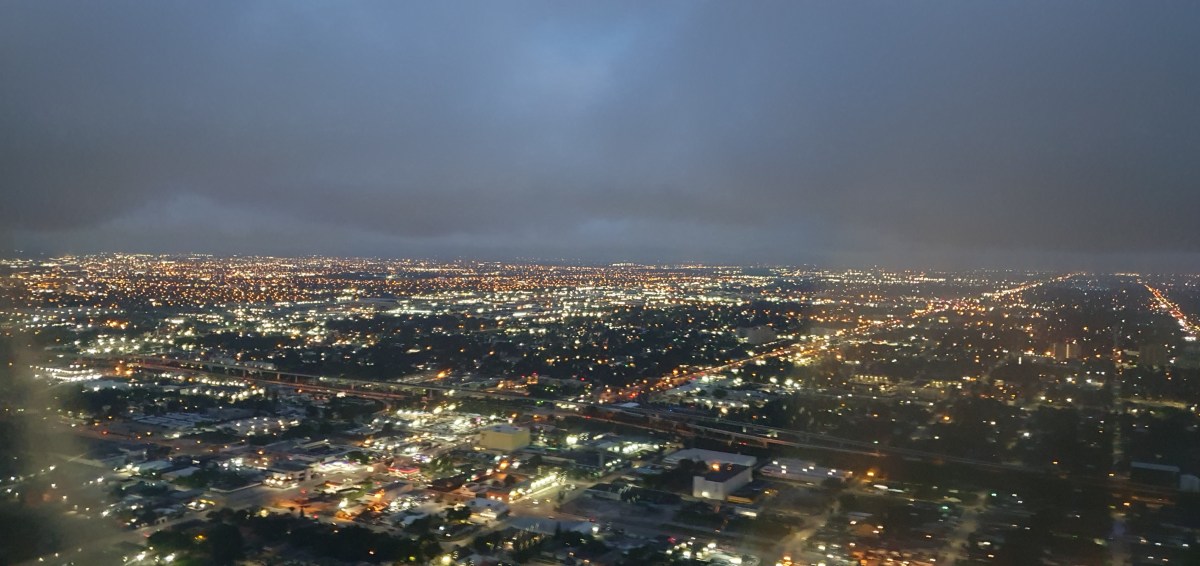
L: Leaving Eureka (Trinidad Head in the distance), 4 pm; R: Leaving Los Angeles, 11 pm

It’s a long way to travel, but the region rarely gets hurricanes or heavy rain during the end of November. Finally, the day came. We left Eureka at 3:40 pm, changed planes in Los Angeles, where we met part of the family. The flight from LAX to Miami was an “overnight” flight of six hours, plus 3 hours of time change, bringing us to Miami at 7:30 am with three hours until the final leg to Curacao. By the time we were in the air we were all very tired, and no one was very certain what time it was. Fortunately, all our flights were on time and we picked up our rental cars without any difficulty. We dropped the first group at the hotel and checked in, then returned to the airport to pick up Lily and Neil, who arrived on the next flight from Miami. By 5 pm we had all arrived, many hours after we left home. A brief nap, a tour of the resort with a young Dutch staff member, and we were all set.

There are eight of us including the baby, so we have a villa with its own pool. Lovely, quite private, and comfortable. Dipping in the pool was the first order of business. We’re provided with a floating mat, perfect for staring up into the palm fronds. Some of our group are sensitive to the sun, and our pool is shaded most of the day. Everyone has a place to sit comfortably, in the sun or in the shade. We spent our first days here lounging in different spots–our pool, the lagoon, the bar/restaurant area.

There are pretty tropical fish in the lagoon and just outside along the rocks and coral. The sea has been quite calm most of the time, making snorkeling effortless. We’ve floated past schools of dark blue Tang fish, so bright they appear neon. We’ve seen hundreds of small fish and tiny minnows busily combing the coral or the sandy bottom for food. There’s an occasional boxfish, puffer fish, trumpet fish, and even a small barracuda. The parrotfish are the most colorful, blue, pink, multicolor, even checkerboard.

Some tropical fish in Curacao (by Matthew Trader)

It’s not just the fish that makes snorkeling enjoyable here. I float on the surface, breathing easily through the snorkel, moving slowly with just a wave of my toes in swim fins. The scene is constantly changing and relaxing. There hasn’t been rough surf, wind, or strong currents, each of which requires greater attention. Easy vacation snorkeling!

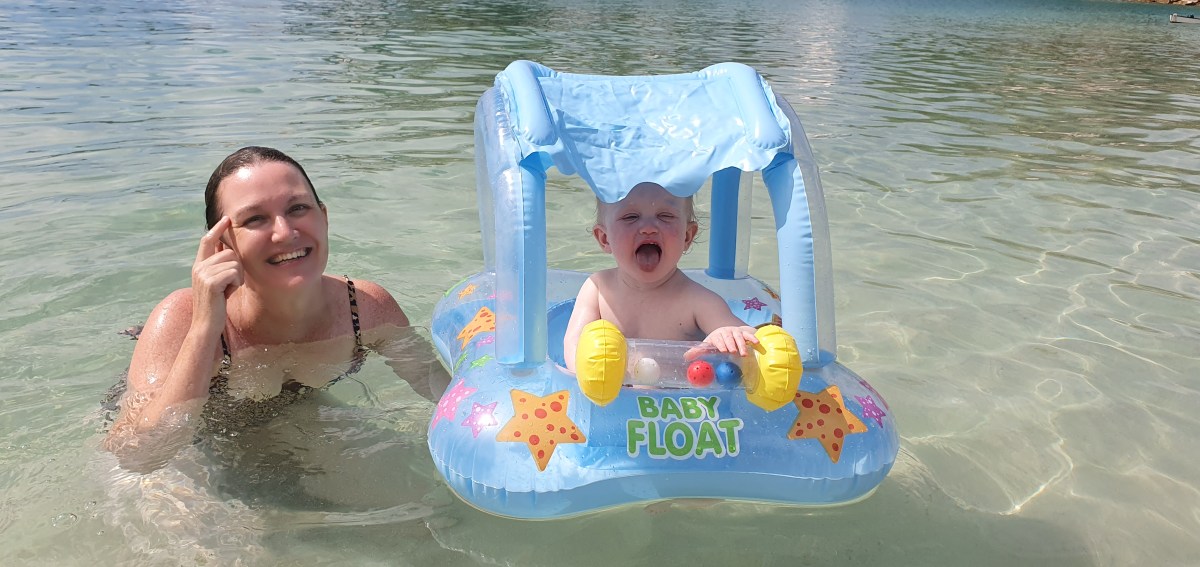
When we’re not in the water, there are loungers by the lagoon. Amanda and Jim hustle out in the morning and set up in a cabana that provides at least a bit of shade so that Aurora won’t get too much sun. So far no sun rash, and she’s a natural in the water like her parents. She may not know how to swim, but she knows that she wants to go in the water. They found the perfect floating seat for her and their family swim in the lagoon is very sweet.

Meals are a very big deal here. There are fruity cocktails, an “Arrivée” tray of focaccia, fried polenta sticks, and savory seed-filled crackers. Drinks are served, the menu arrives, and then, very slowly, lunch arrives. In the afternoon there is time for another swim, snorkeling, a nap, reading, beachcombing, or a field trip (more about that in my next post).

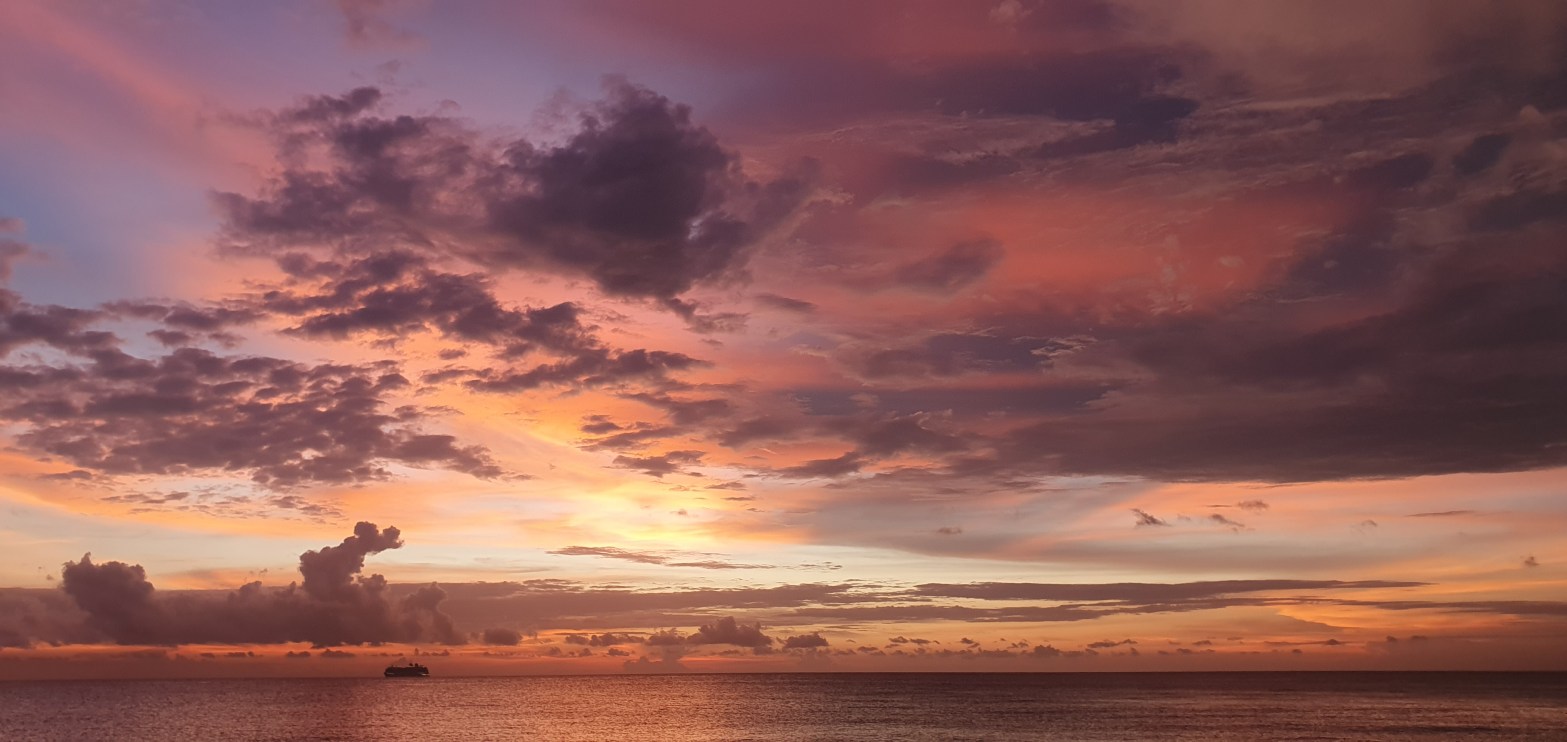
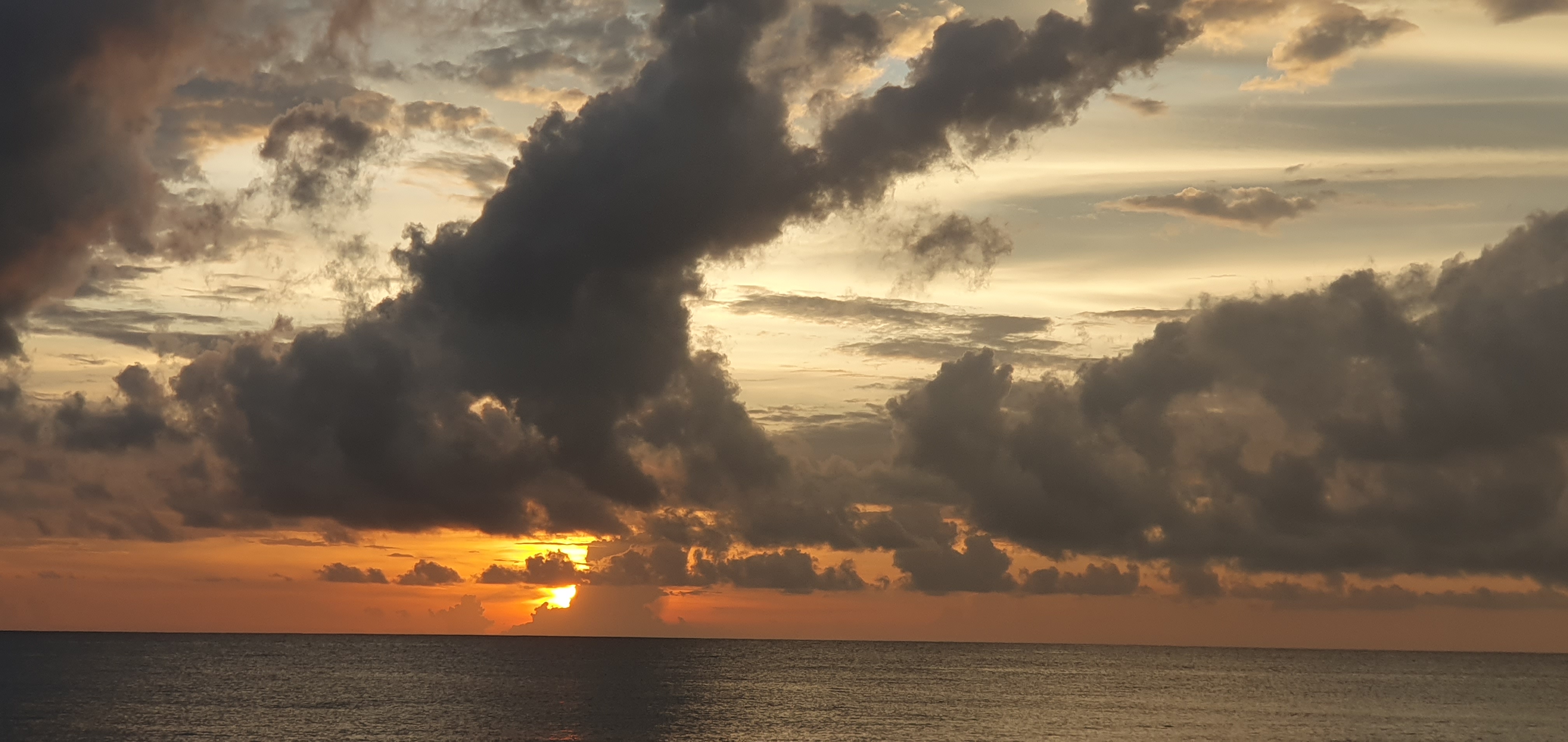
Watching the sunset is another great pleasure. We’re in the tropics, where sunset is around the same time all year long. Curacao is close to the Equator (12° N), and in November, the sun sets around 6 pm. That’s also the hour when most cruise ships depart, and sail into the sunset, literally. We watched the vast Symphony of the Seas (5-6,000 passengers), and the sail-assisted cruise ship Club Med 2, leave the harbor yesterday at sunset.

By the time the sunset is over and we’ve finished chatting, it is dark and about time for dinner. We’re on the all-inclusive plan, and there are some festive cocktails with fruit juice and rum, or with Blue Curacao, the signature alcoholic beverage of the island.

Baoase resort at night

We go to dinner around 7 pm, sometimes finishing at 9:30 pm. The food is delicious and creative, but we’re going to try and speed up the process a bit, so there is time for some conversation or a game after dinner. So far, after dinner most of us take a short stroll or go straight to bed.

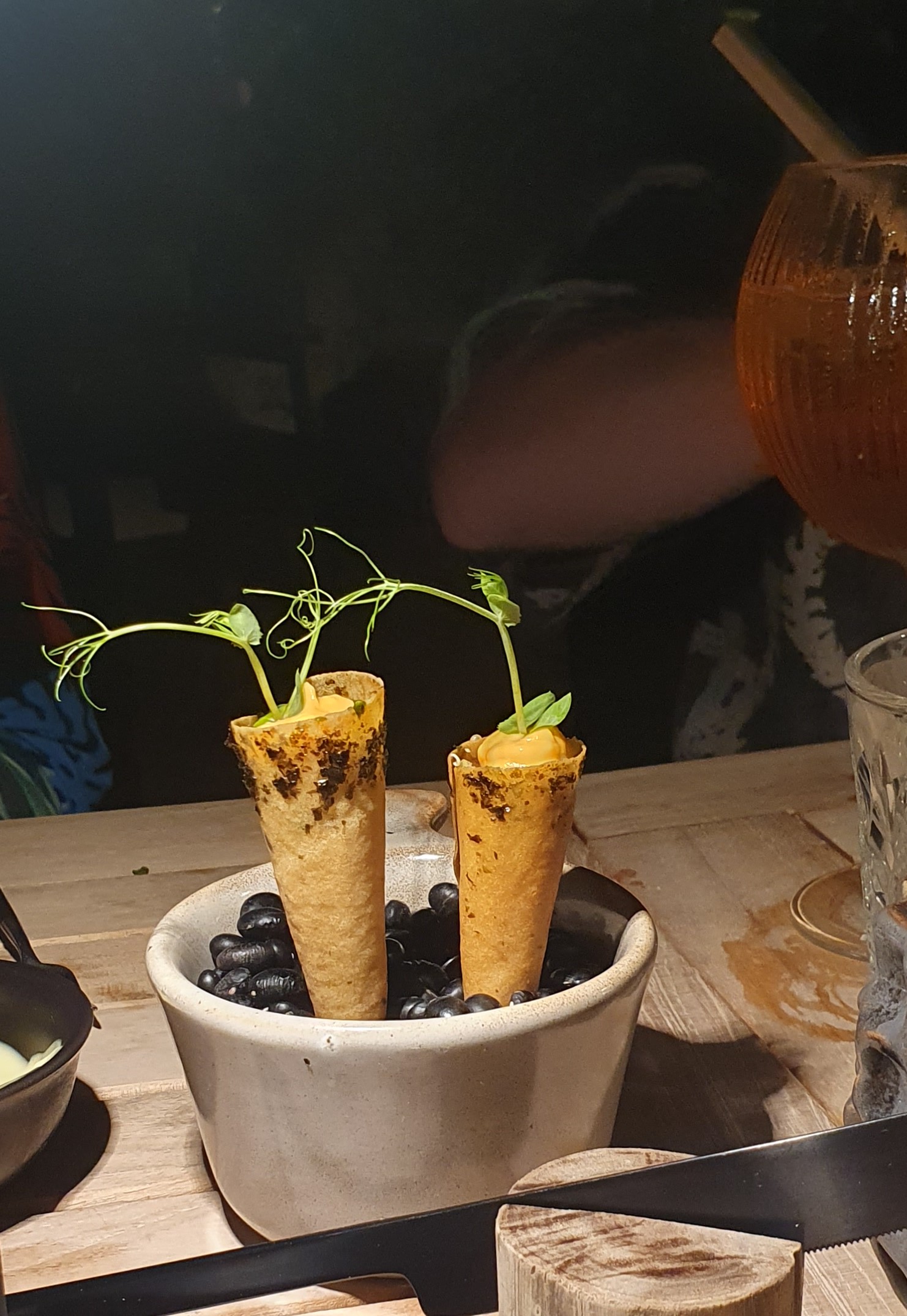
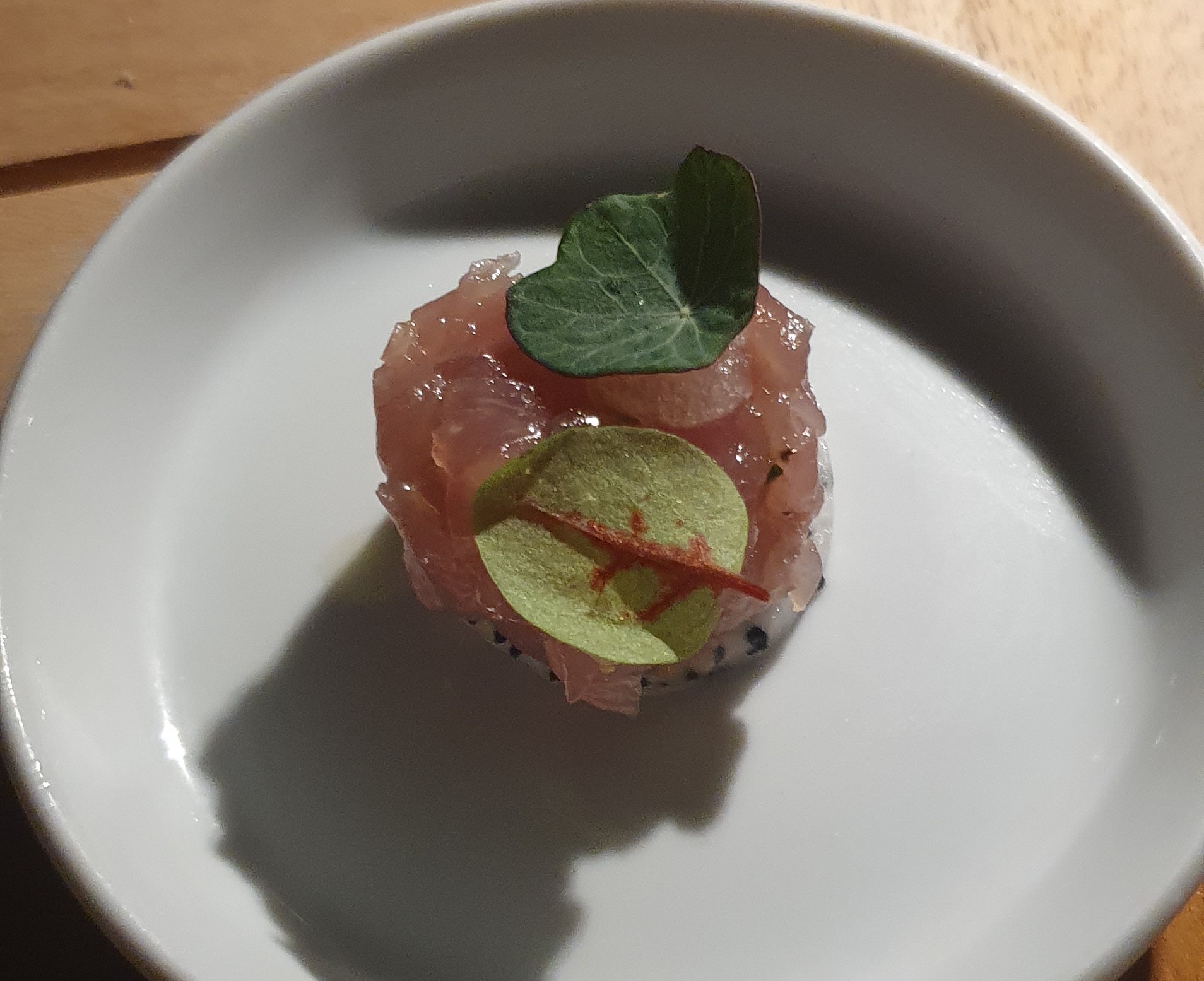
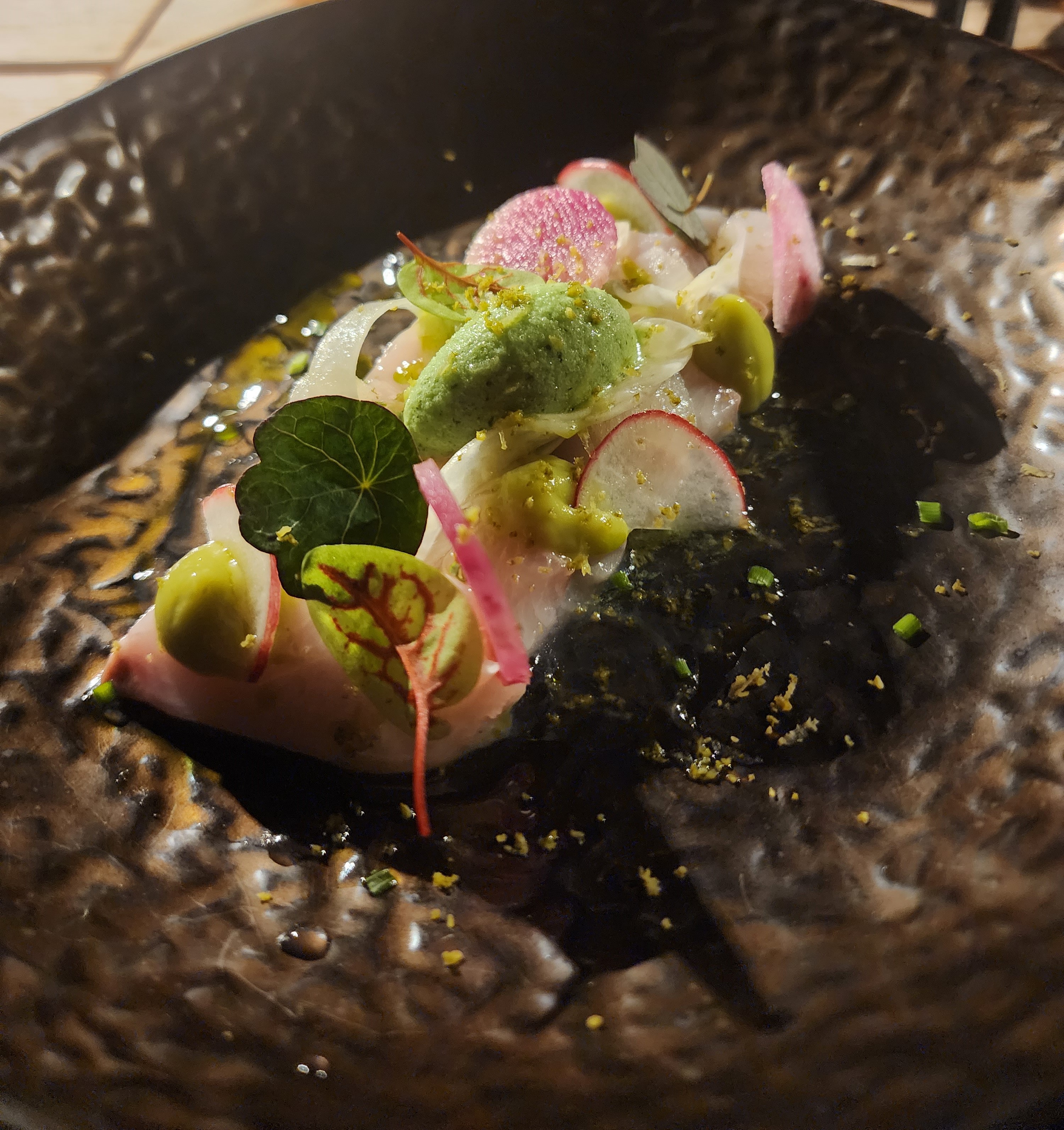
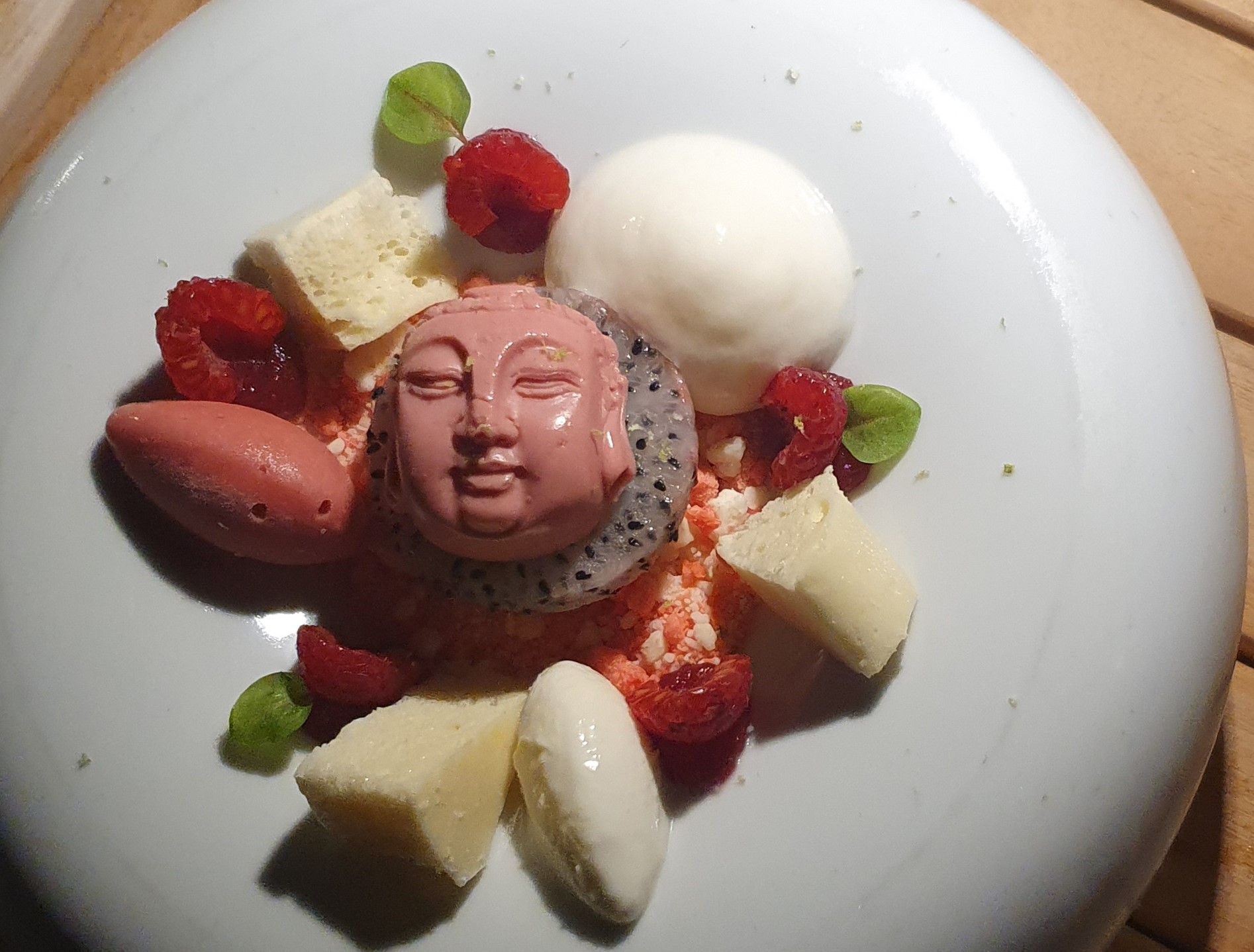
(Clockwise from top left): Quinoa salad bite w/pea shoots; Tuna tartare w/radish leaves; Hamachi ceviche; chocolate dessert with caramelized popcorn, gold-spangled sugar spiral, and apple bites topped with caramel Buddha heads; raspberry dessert including dragon fruit topped with a raspberry mouse Buddha head [The butter also comes in Buddha head shapes.]

The rooms are all air-conditioned and we’ve slept well. The bathrooms are indoor and the showers are all open-air, which is fun. An orange cheeked parakeet sometimes sits on the wire outside the upstairs shower, watching with great curiosity.

It would be easy to spend our entire visit inside the resort moving from beach to pool to dining room and back again. We’ve played gin, and Yahtzee, and listened to a bit of music, but floating in the water and lounging in the warm atmosphere has been our principal activity. In my next post, I’ll show you what we’ve seen outside the resort. I may add a couple more photos to this post, too. Please come back and have another look.

The wrong way to Portland: Music, Wine, Family

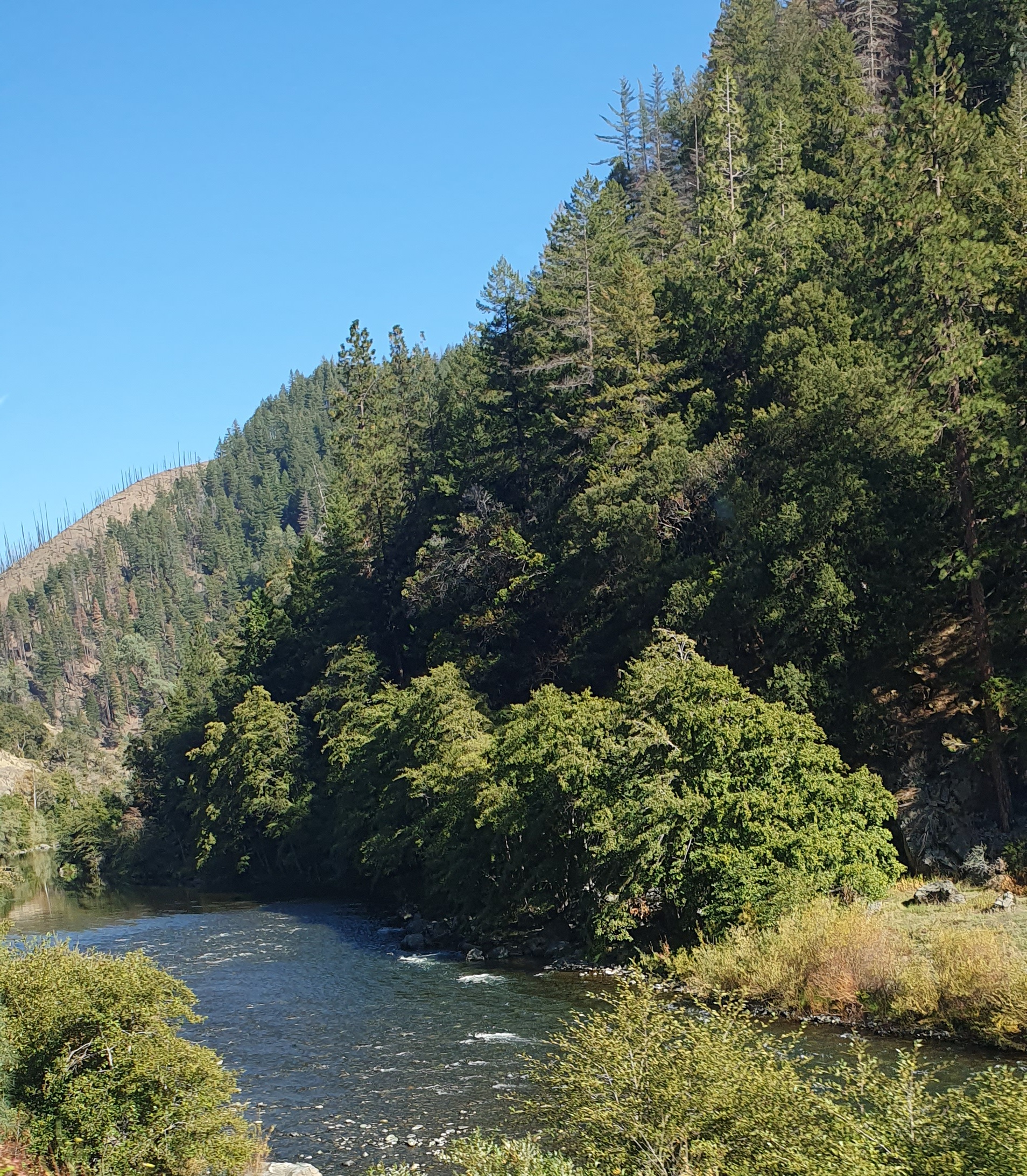
We planned an easy trip to Portland, driving from Eureka, CA to Grant’s Pass, OR on Friday afternoon and on to Portland on Saturday. We’d drive four hours each day. The road winds through the forests of far northern California, and straightens out in Oregon at Interstate 5.

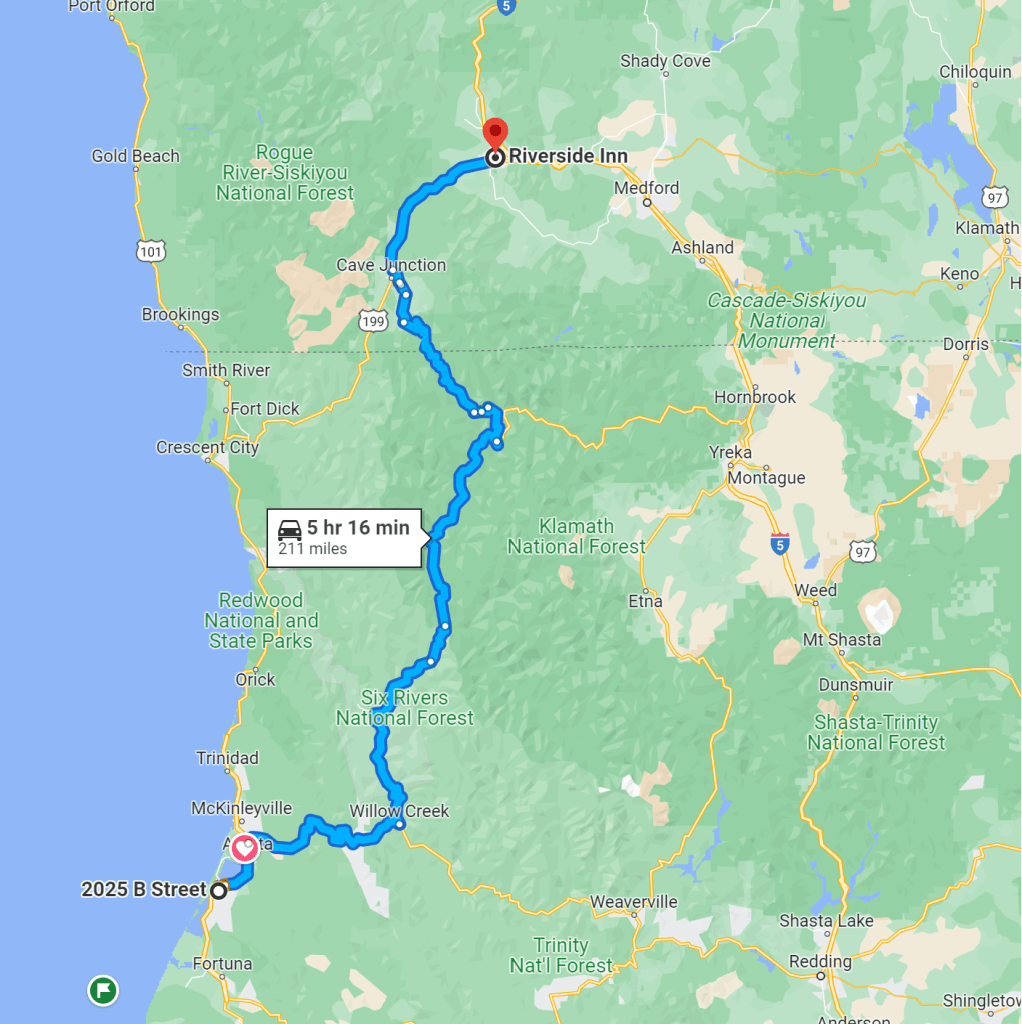
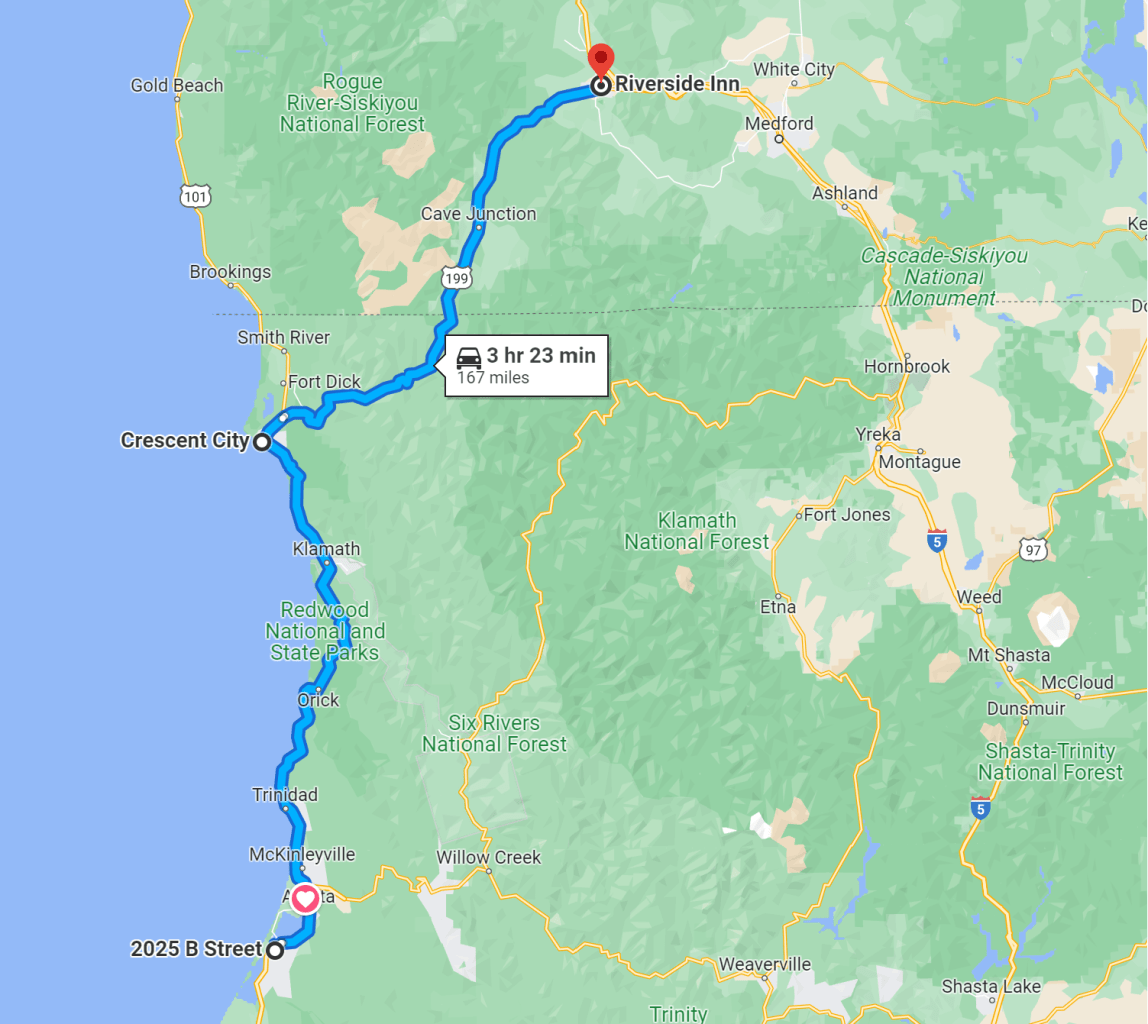
It’s been just long enough since we last made this drive that I forgot the only important caveat to the journey–there is no cell service for most of the first day’s route. A road map is helpful, a route saved off-line on your phone, or a copy printed on paper. Without this kind of backup, we got well into our drive before realizing that we’d failed to make a turn at Willow Creek.

Here’s what happened:

L: The route we planned to take

C: The route we should have taken in the first place.

R: The route we took

Right about when we got to Gazelle, CA and had a gorgeous view of Mount Shasta, we wished we’d gone via the coast route, foregone the views and had time to sip wine at the Riverside Inn’s happy hour.

This is similar to our view of Mt. Shasta, though I did not take the photo (Wikimedia Commons)

We arrived at our motel at about 6:30 pm rather than four-ish, pretty tired and grumpy. The Riverside Inn seems perfectly nice, but we were in the “cottage”, a room attached to the breakfast room, away from the main building, and dark outside. We were concerned about parking our car in the otherwise empty parking area. Fortunately, nothing happened. We stopped at the hot breakfast included with our room. I was torn between making my own waffle, and biscuits and gravy, so that was a good start to the day.

We hit the road to Portland, thinking how much shorter the drive would be. Just north of Salem, however, our directions showed multiple car crashes and a lengthy backup on our route. I directed us to an alternate route–my next mistake. The back road became crowded and was full of twists and turns. After a hour, we finally made it back to the highway and realized we should have just stayed on the highway. The road was indeed closed, but only in the opposite direction.

Still, we got to Portland by about 4 pm, with time for a short rest before heading to an early dinner at Rocio’s, a Mexican restaurant just around the corner from my sister Paula, with whom we stayed.

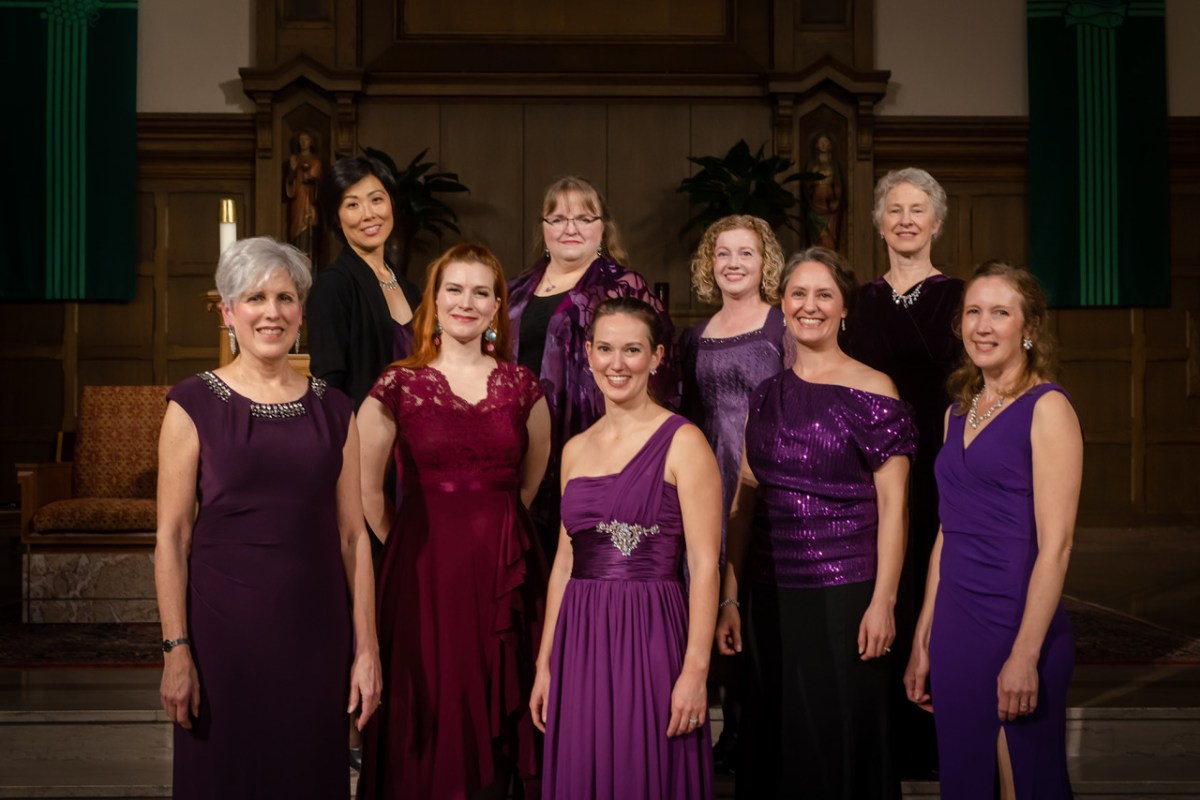
The rest of the trip is all good news. We went to two concerts. Saturday night’s was, In Mulieribus, (Among Women, in Latin). The group is eight professional singers featuring music written before 1750. They’ve added pieces written by women composers in recent years, and the music was ethereal and lovely. The contemporary music fit in surprisingly well with the ancient pieces, and the director, Anna Song, gets high marks for the selection.

In Mulieribus ensemble, before their Oct. 24, 2023 concert. They wear different coordinated ensembles at every concert. One member is a fantastic stylist/shopper.

Strangely, though, the program was called Songs of Loss and Lamentation, with a program cover of a classical statue of a drooping woman. Who would go to a concert with that title? We went because Paula is on the board, and were surprised and delighted at the excellent concert. It should have been titled Songs of Hope and Renewal, but I guess no one looked closely at the title and thought about the impression it might make.

The next afternoon at 4 pm, we attended the Oregon Repertory Singers concert, in which Paula sang along with the other 119 members of the group. The program was a bit out of the ordinary, a single piece, Rachmaninoff’s “All Night Vigil” Vespers. It has 15 sections, making a 90 minute concert without an intermission. I could imagine it as an overnight vigil, with a group singing one section every half hour from 11 pm until morning. The group sang in Russian, and it was a fine concert of a piece not often performed. We enjoyed it thoroughly.

On the plus side, the concert was over in time to make a stop at home before going to dinner at Sushi and Maki, a delicious sushi place on SE 32nd Ave. in Portland. The good food kept on coming. On Monday night, Wayne cooked ribs on his Traeger and they came out lightly smoked and falling off the bone tender, accompanied by cornbread and salad.

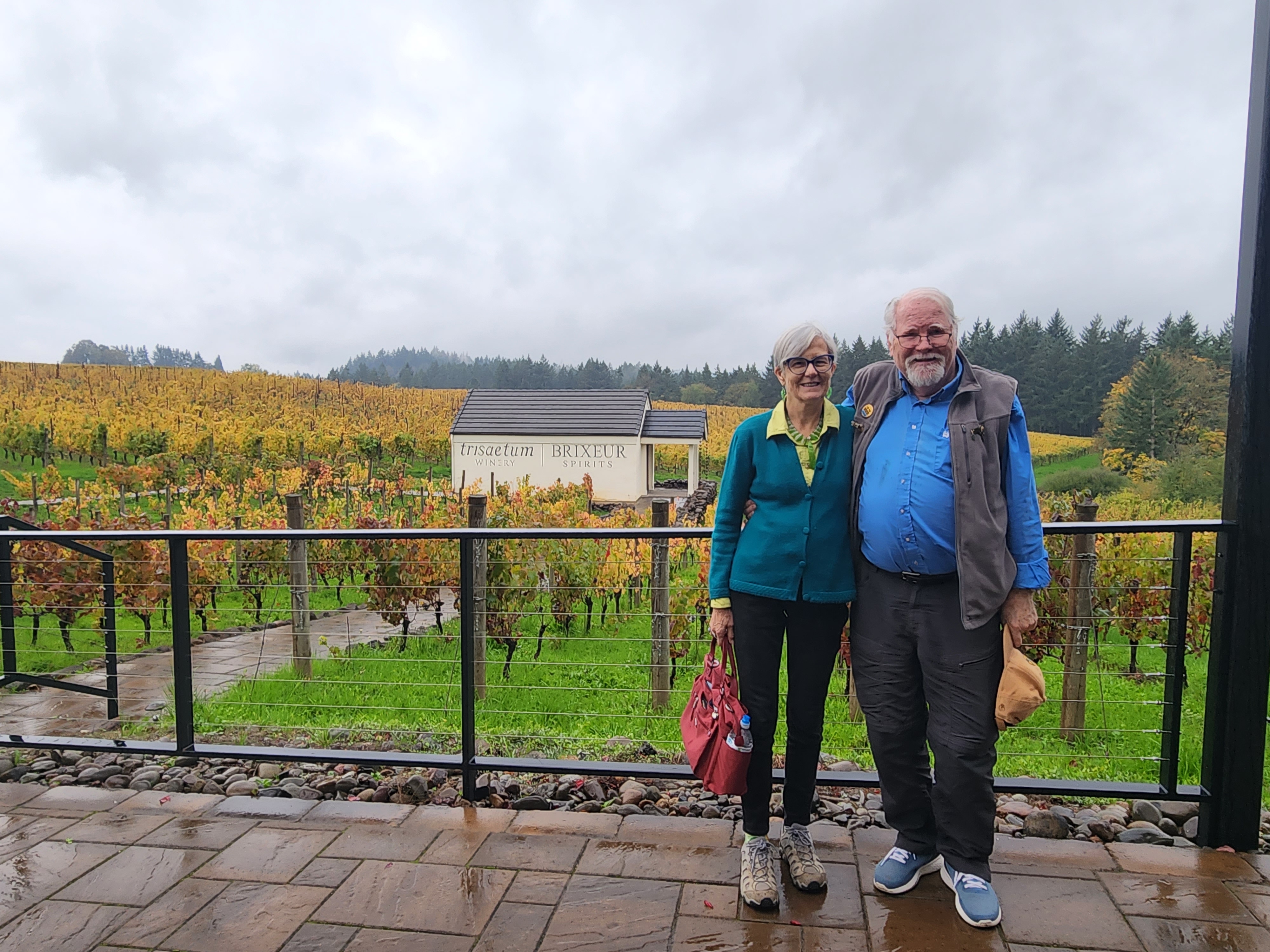
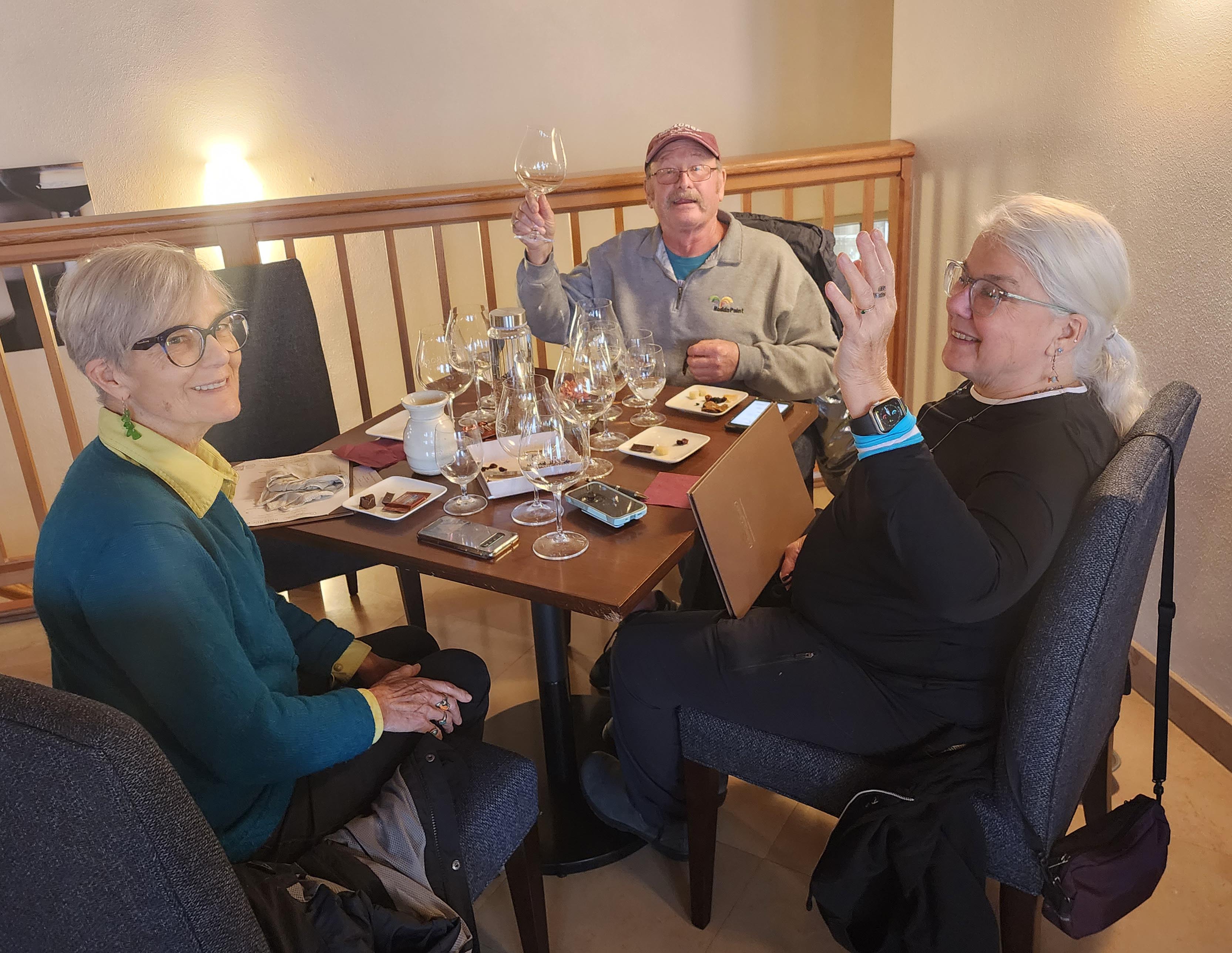
Tuesday was wine tasting day, and we visited Paula’s two wine club vineyards, Drouhin and Trisaetum. At both places, she’s on a first name basis with the host, and we were treated well. We tasted all the wine we possibly could, and Paula collected her quarterly allotment. On the drive back into town, we decided to eat dinner out and ended up with a reservation at Nostrada, which has excellent food. We were a bit surprised to find that there is a mandatory 22% tip added to every tab, especially when our server made it clear the 22% was shared, and if we wanted to leave him personally a tip, we could do that. We decided that we had contributed enough, delicious as it all was. Have you had this experience?

Wednesday we left Portland for home, stopping overnight in Gold Beach, Oregon. We walked on the beach, had dinner at a local spot and enjoyed a quiet night. The last leg of our trip went through Crescent City, CA, where we stopped to do some beachcombing, found some beach glass, and some agates. It was a really nice break on the drive.

We were glad we went to Portland, and we were glad to be home again.

Morris Graves Museum “Junque Arte”

I recoil slightly at the term Junk Art, as I don’t view my jewelry as junk at all. Our local museum, the Morris Graves Museum of Art has an annual Junque Arte exhibit, a juried show of objects made from reused materials. I entered two pieces and both were accepted.

Roman Holiday L-R: (top) Mondrian, Romulus, Remus & the she-wolf, Canova, Matisse; (center) Virgin, Botticelli, ( ), Bernini; (bottom) Raphael, Bernini, Raphael, Virgin

Since we traveled to Italy in 2017, I’ve been making jewelry from sea glass, pieces we’ve collected along different shores. It gives me something to do with my finds other than pile them up or fill a lamp base. Initially, though, I began putting things together out of household scraps, and my first necklace was made of prosecco caps and images cut from ticket stubs and guides from the museums we visited in Rome. The chain came from a broken light pull. I entered that necklace in the exhibit, calling it “Roman Holiday.”

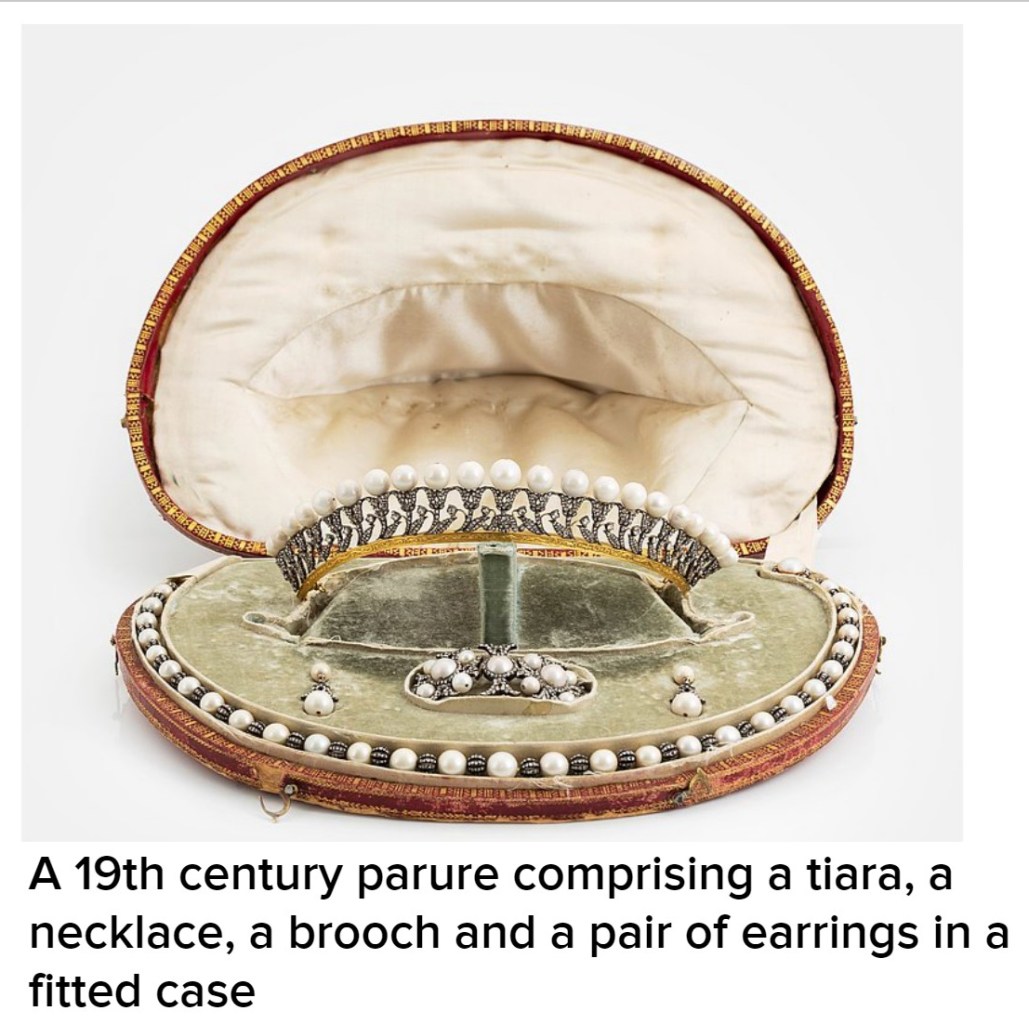
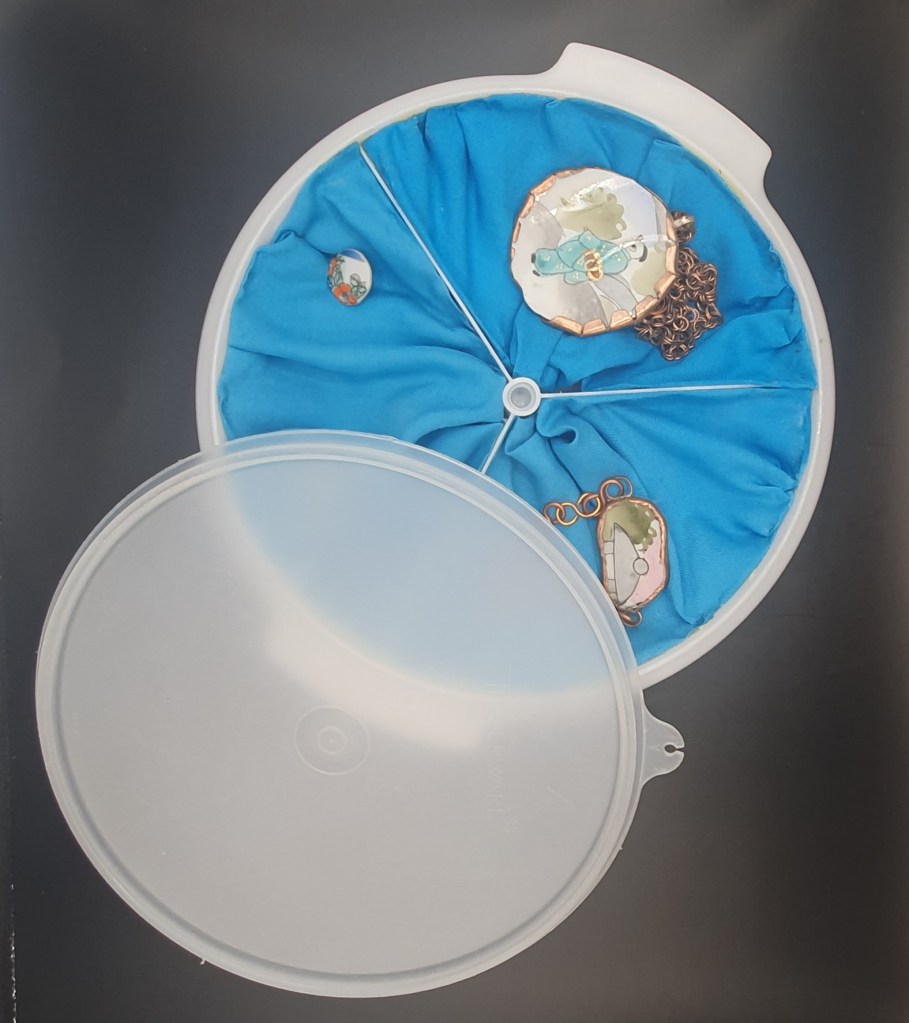
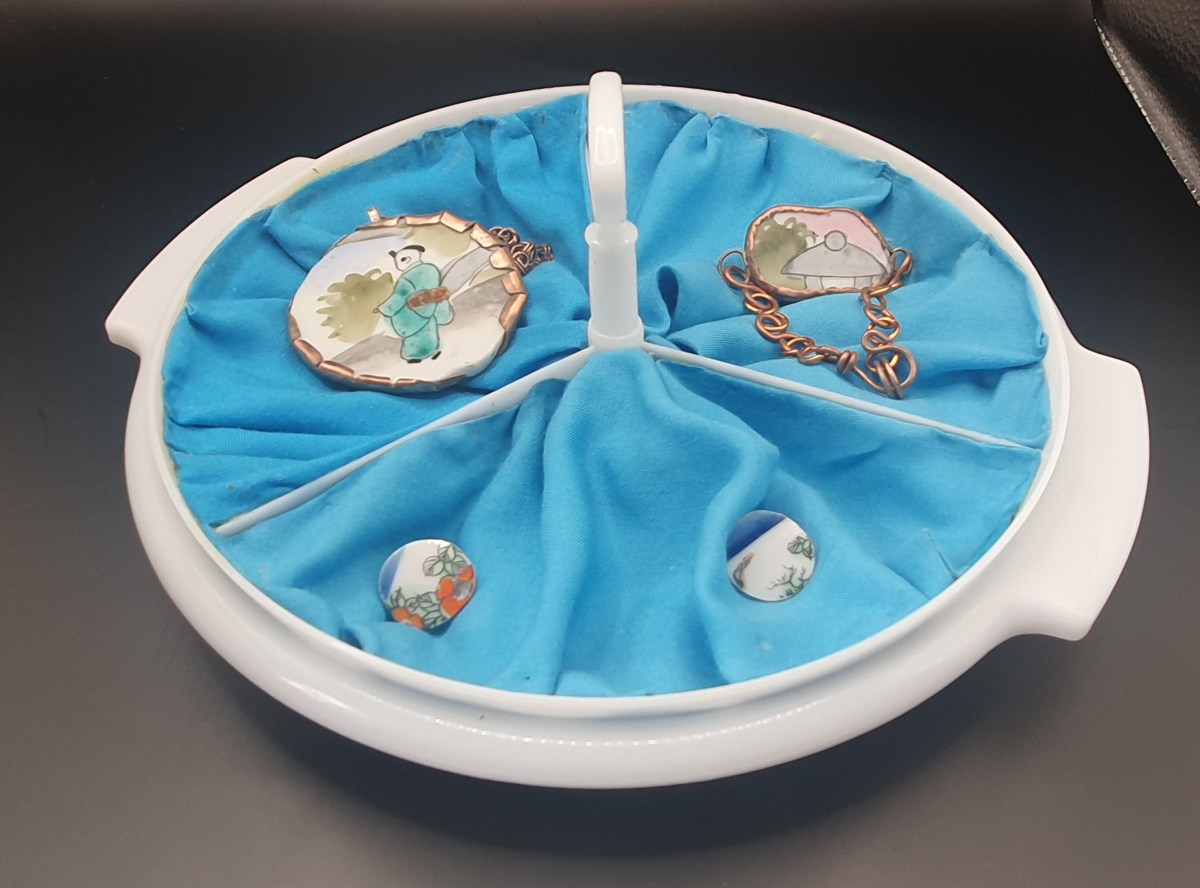
The second piece I entered was my Earthquake parure. I used pieces of my daughter’s vintage Japanese porcelain cups and saucers that broke during the December 2022 earthquake in Rio Dell, CA set in recycled copper, to make a pendant necklace, a bracelet, and earrings. A parure is a set of jewelry meant to be worn together. A century ago, a parure was likely to include a tiara, a necklace, a bracelet, a brooch, or a pair of dress clips, and earrings presented in an elaborate, custom-fitted box.

In the spirit of a true parure, but using recycled or used materials, I found a Tupperware with three sections and lined it with cloth from an old skirt that I had cut up.

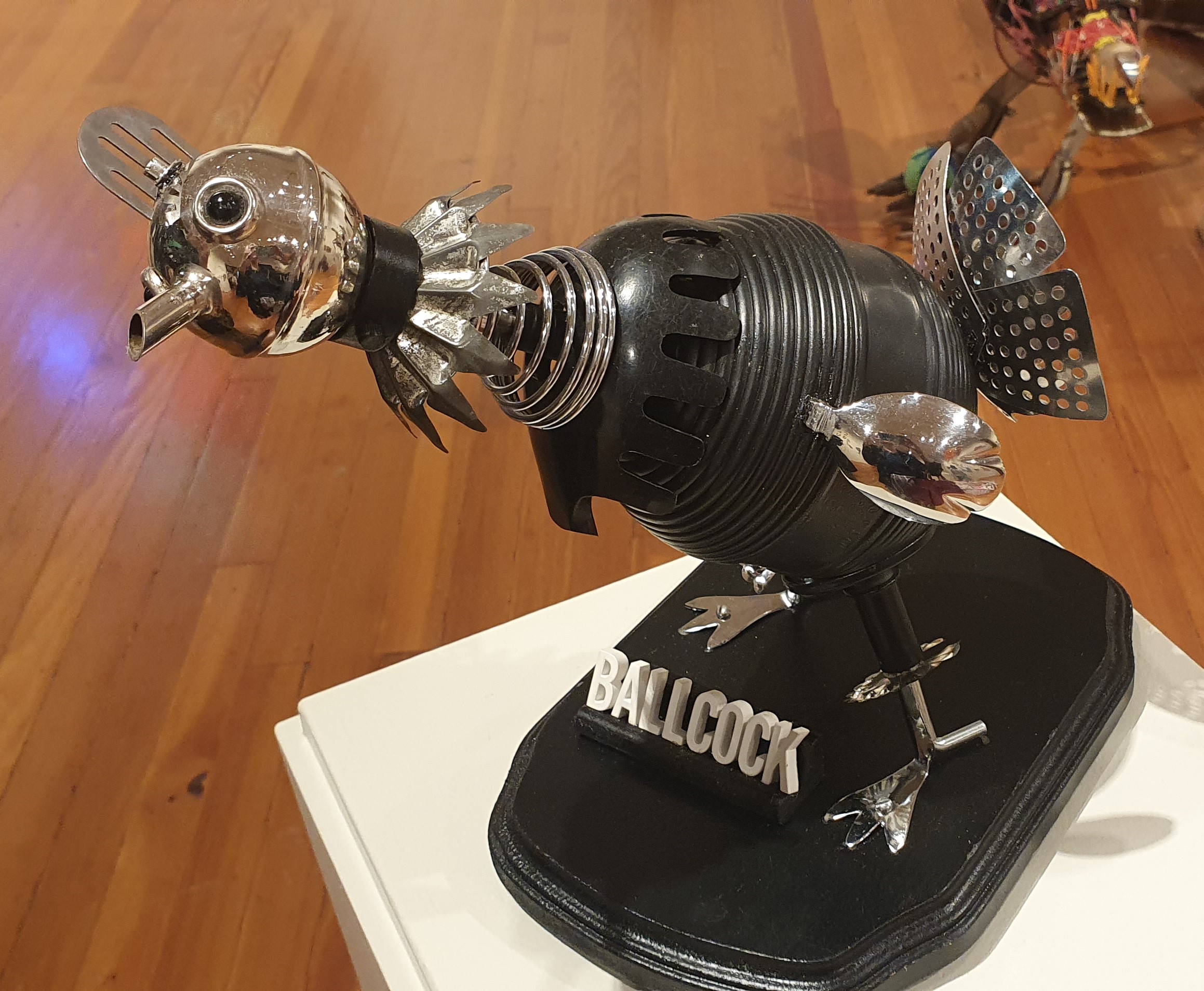
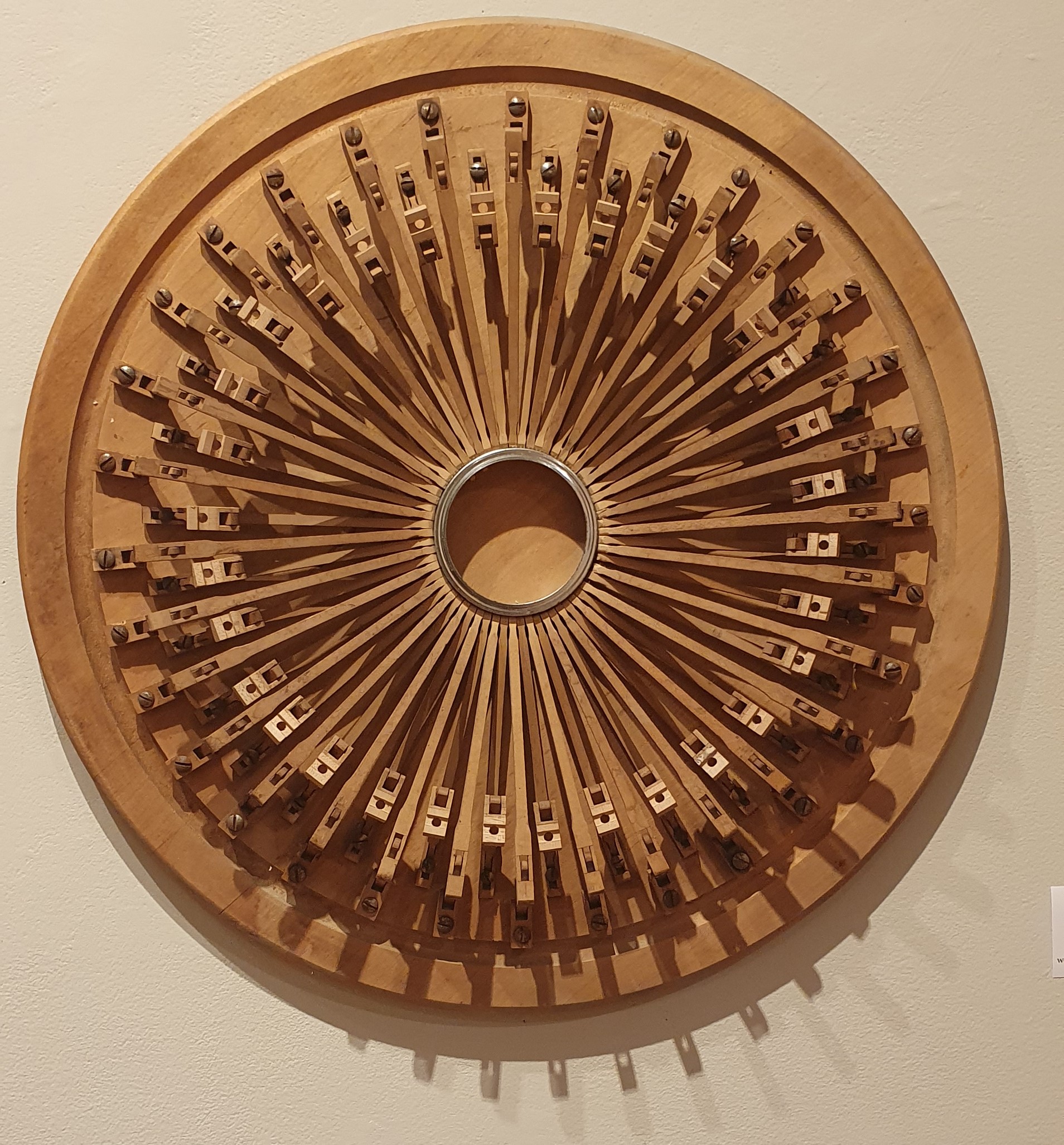
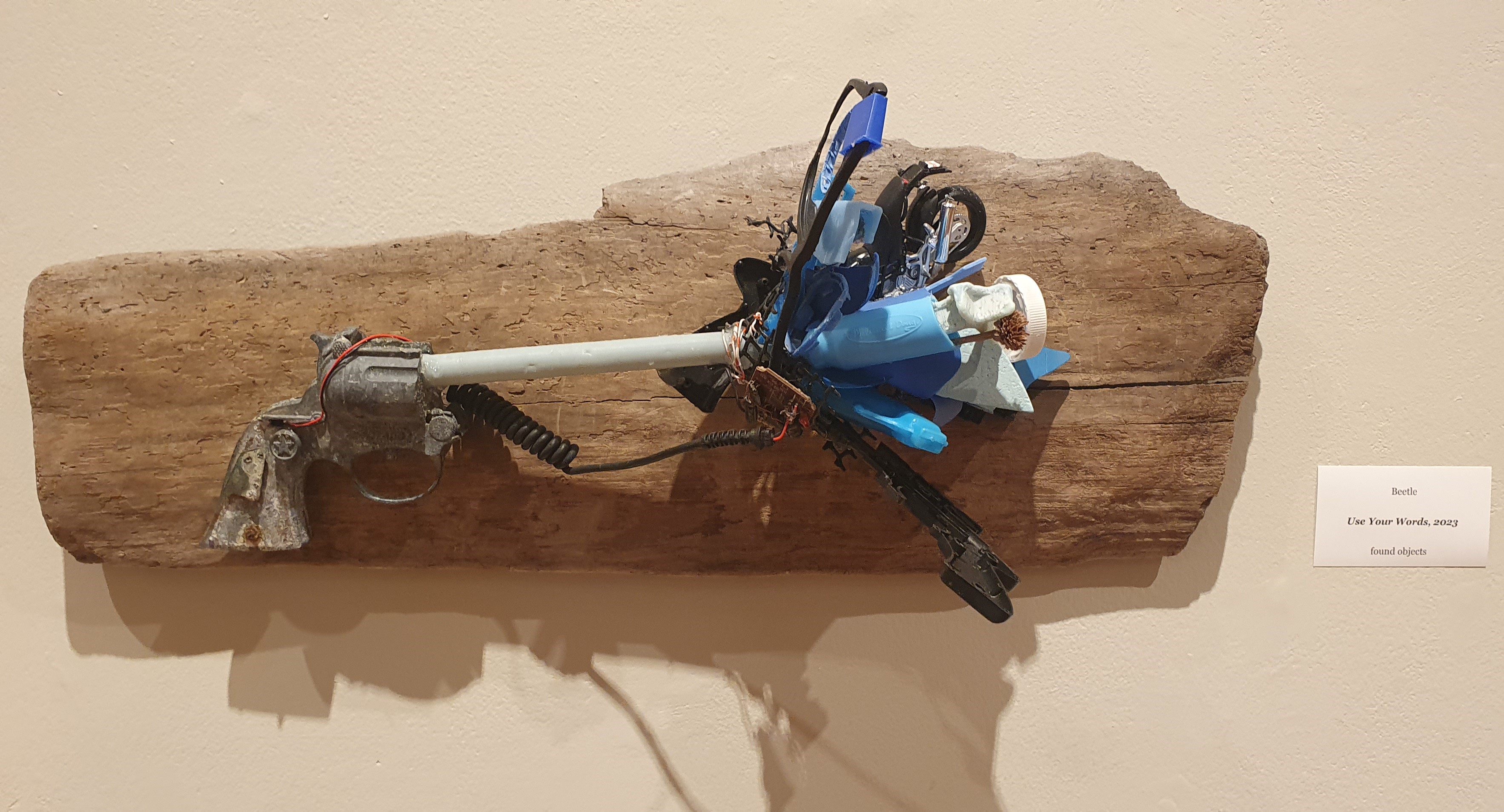
I went to the museum when the exhibit opened to see the other pieces. They were delightful. People put a lot of work into their ideas and the results were creative, interesting, and full of whimsy. The exhibit may have been sponsored by our waste disposal service, Recology, but the artwork was not trashy at all.

Clockwise from upper left: Ballcock, Sewing Fairy, Belly of the Beast, Use Your Words, (no title).

The best piece of all was a thought-provoking sculpture, Blinde Injustice. I spoke to the artist who explained that her piece comes from real life. She doesn’t believe in suppressing any book, and she has a Little Library box in front of her house that has been set on fire on three different occasions by people who believe her book sharing is dangerous. “When they banned Charlotte’s Web because the animals could talk,” she said, “I knew I had to put it in my library.” Thousands of books we all read as children and students have been banned in the US, for reasons that are often implausible. For me, this piece was Best in Show by a long stretch, a reminder that art can make us think, and perhaps, act.

The equinox hints at fall

I believed that September 21 was always the start of Autumn, but I am wrong. This year the fall equinox when night and day are the same length on the Equator, is September 23, in the middle of the night.

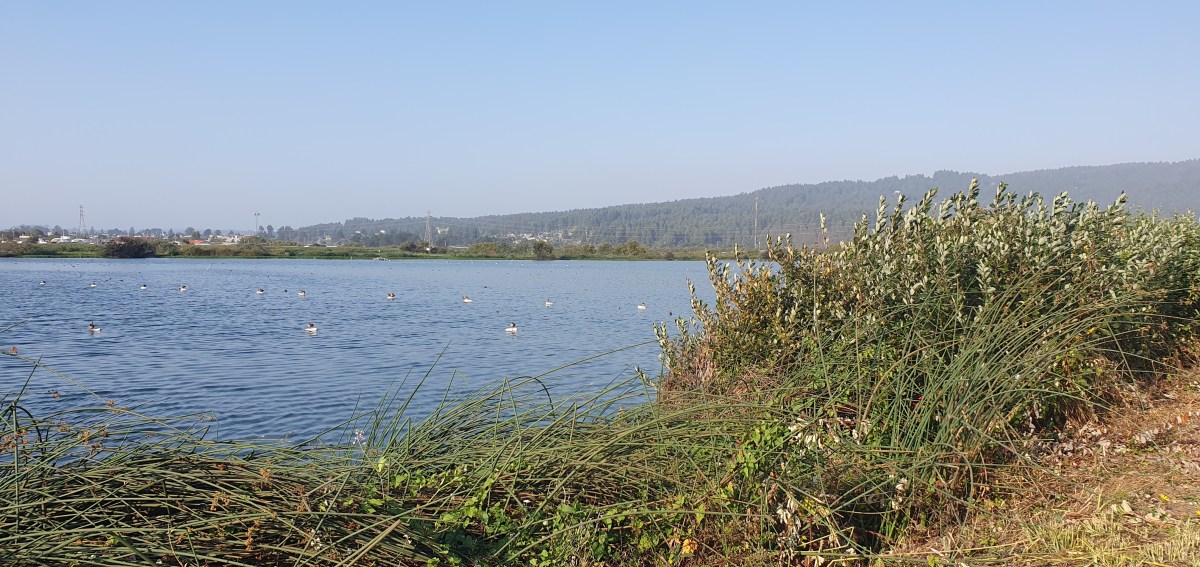
The past few days have hinted that the seasons are beginning to change. I went for a walk and heard the rustling of leaves on the trees that somehow foretells fall. Why do the leaves sound different this week? I cannot say, but the afternoon light is beginning to slant in a way that also tells me fall is coming. For birdwatchers, migratory birds are beginning to show up in the brushy trees along walking paths, and at Arcata Marsh where thousands of shorebirds stop on their seasonal journeys.

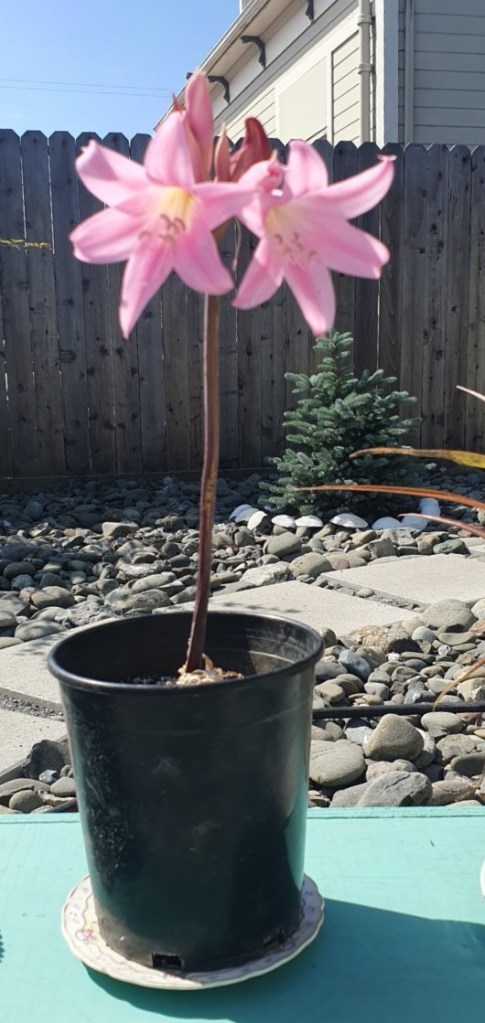
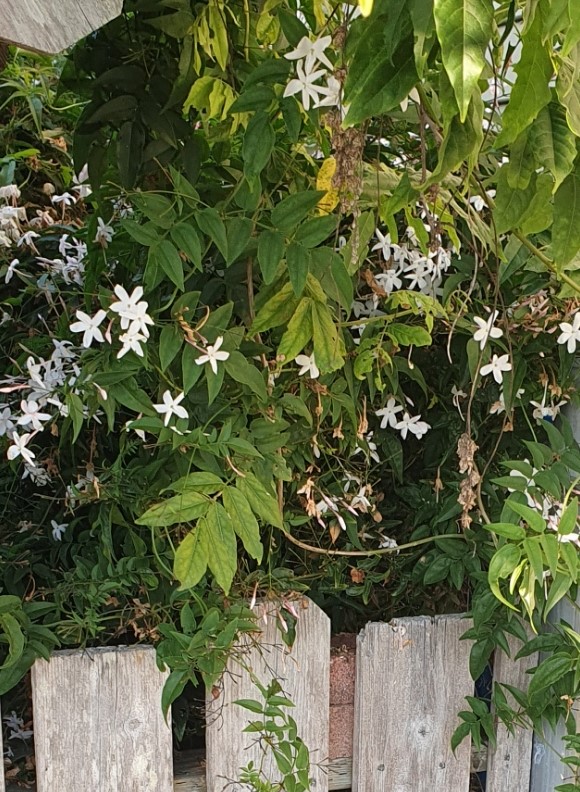
Northern California continues to surprise me, with many flowers still in bloom in late summer. A favorite is the Naked Lady (or Pink Lady, if you wish), a bulb that blooms on a leafless stalk after all its greenery has died back. They are in full flower now, lovely and a bit strange. I’m also surprised that the scent of jasmine is in the air. It’s blooming on fences all around Eureka. I thought it was a spring flower!

With the beautiful late sun and flowers all around, there is the natural flip side. Rain is scheduled to start again at the end of this weekend, and should increase and continue through the winter months. It’s the price of trees and flowers that start to bloom in March and continue through September. Though it has barely rained since June, I’ve been able to cover about 80% of my watering with gray water I collect in the kitchen. Our contact heater takes 1-3 gallons to go from cold to hot, and I run all that water into a bucket that I put on the plants. That and a bit of rinse water from things that need hand washing, I get 5-6 gallons a day to put on my plants.

By doing this, I hope to have tomatoes for another month or more. I didn’t do very well with our tomato plant and had to move it, so it’s just hitting its stride and putting out a lot of flowers now. I guess we’ll at least have some home grown green tomatoes for frying.

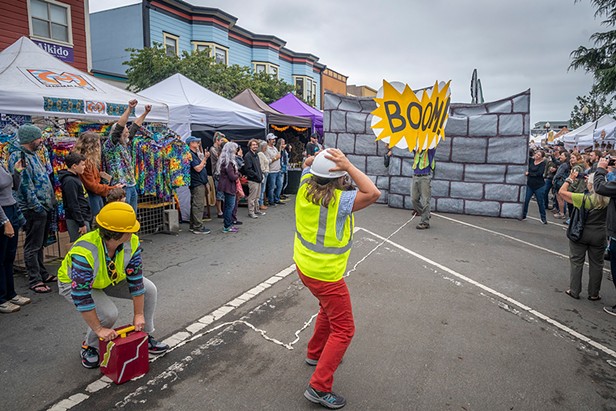
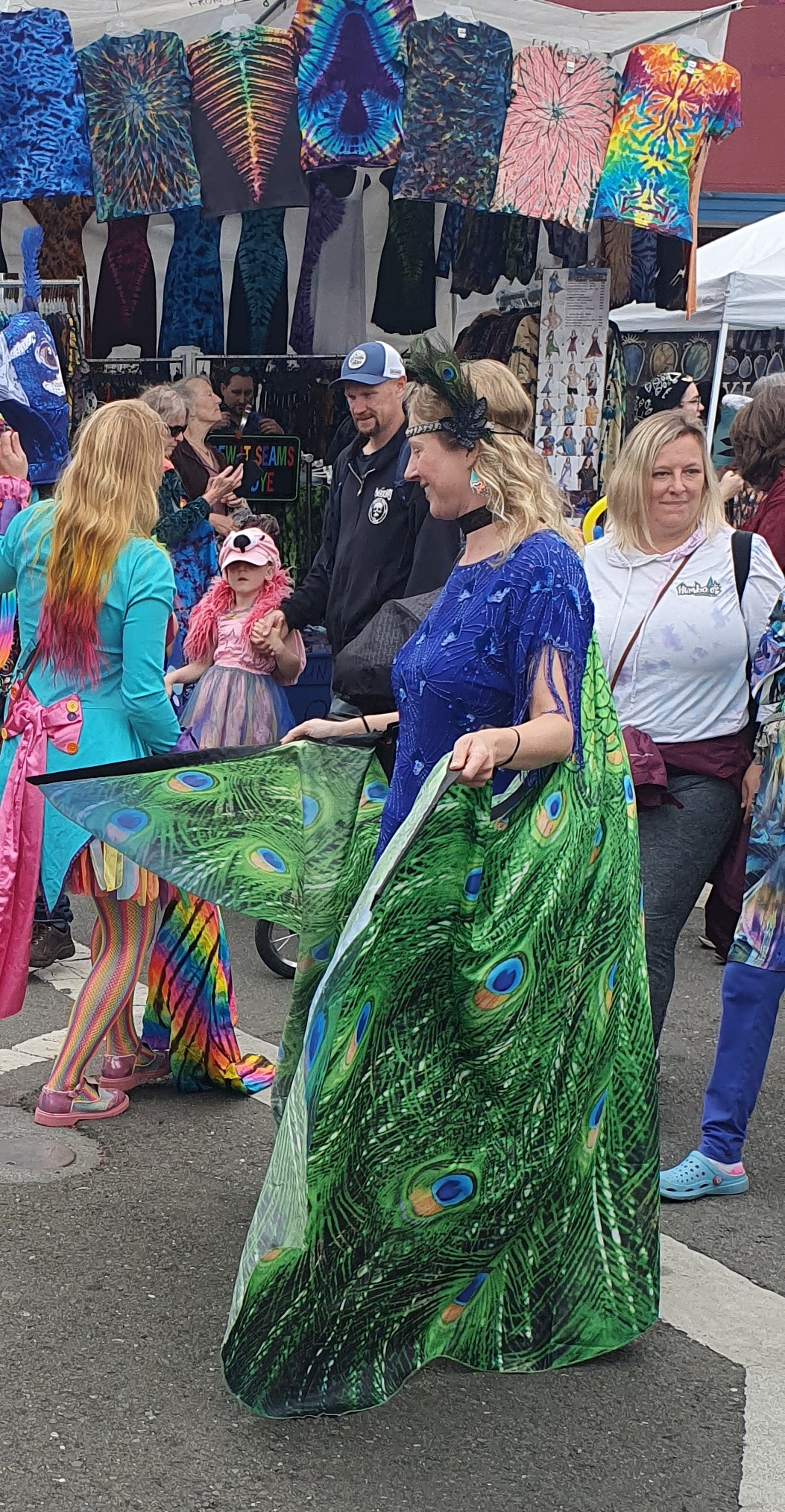
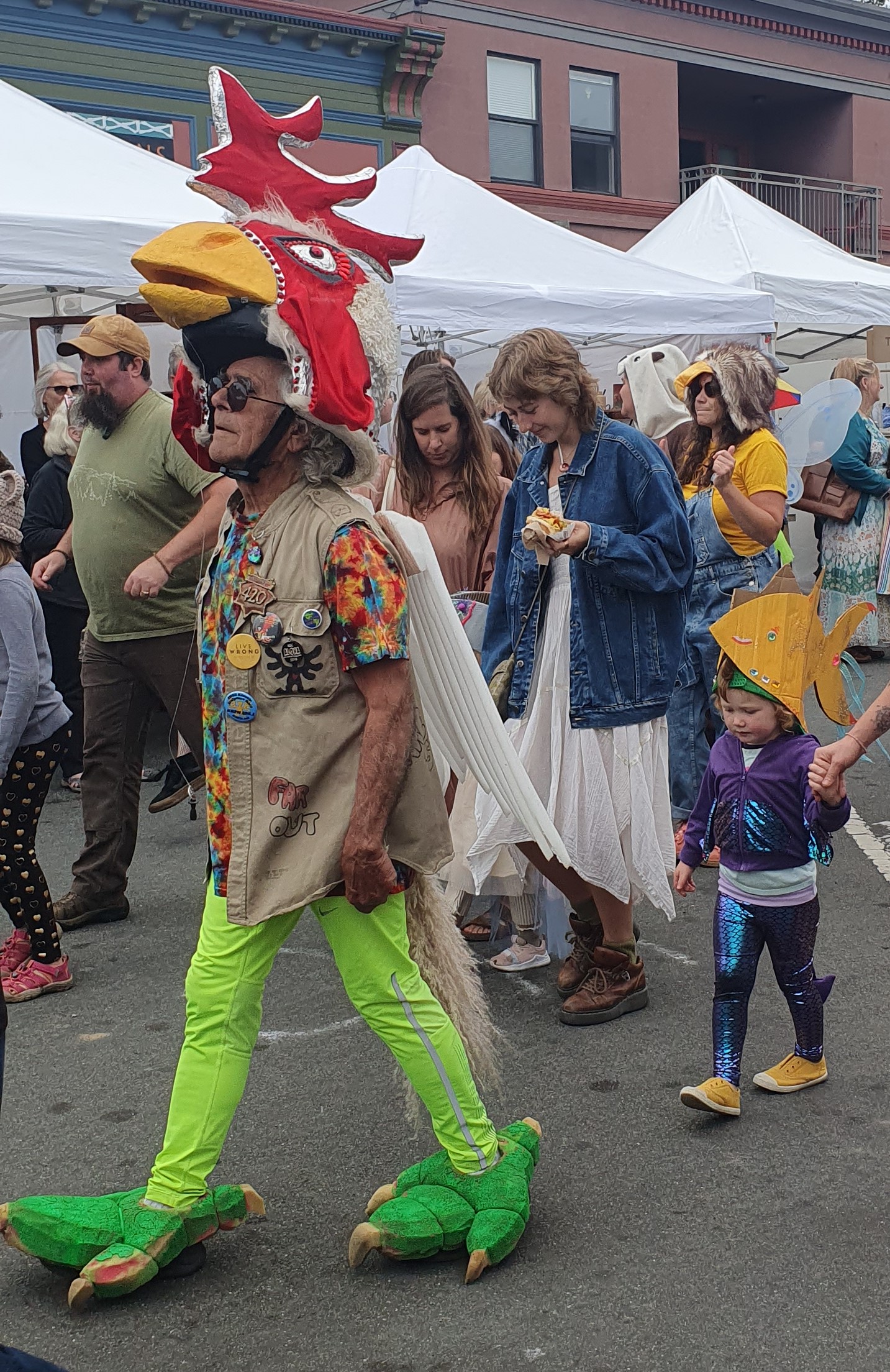
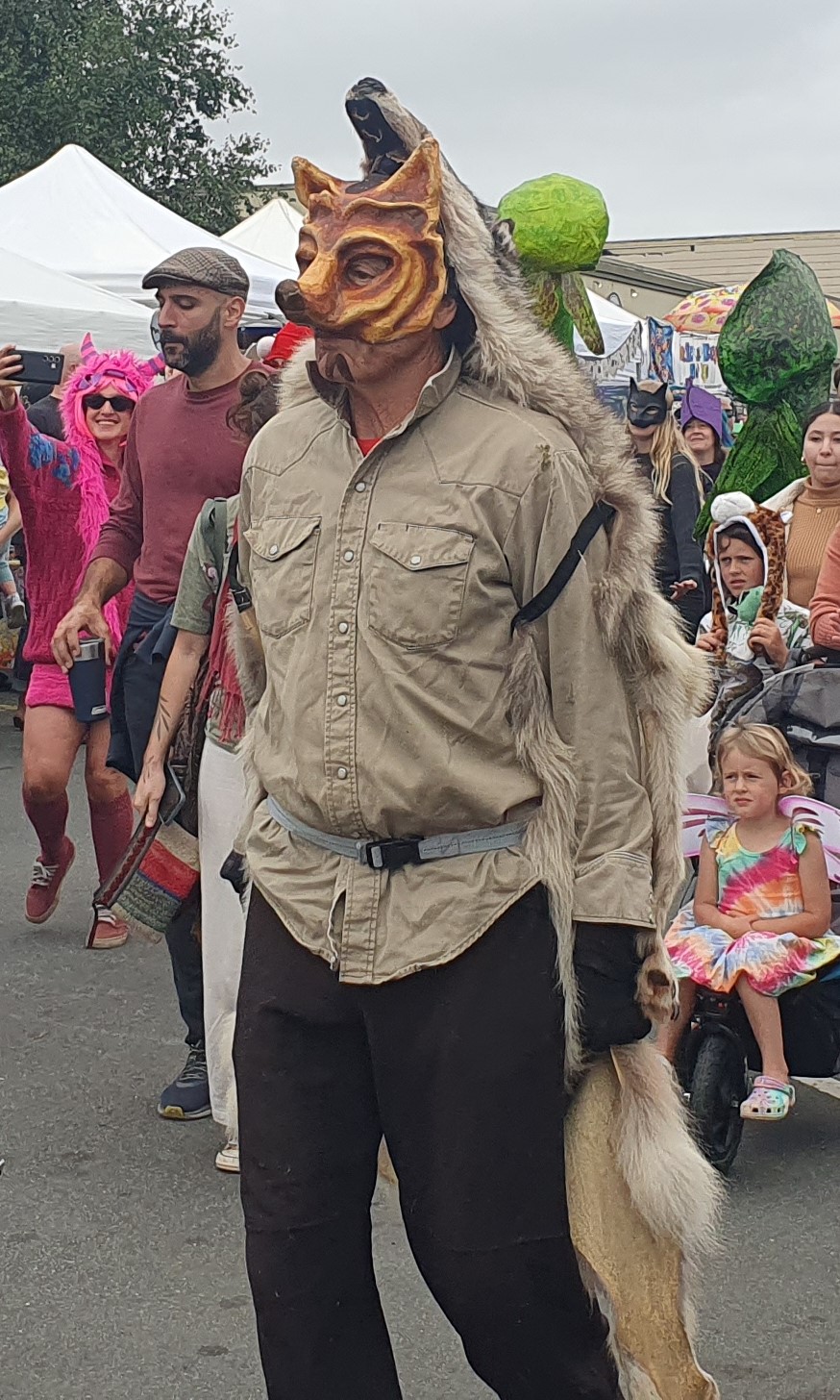
The North Country Fair last weekend provided some punctuation to the summer season, highlighted by the All-Species parade. This year it celebrated the removal of four dams from the Klamath River, a change that may increase salmon spawning which has decreased disastrously in recent years. A wall, “the dam”, led the parade. Immediately behind it were many “salmon”, leaping for the chance to reach their traditional spawning grounds. Periodically, a big “BOOM” sign opened, the dam parted, and the fish ran forward happily.

The rest of the parade consisted of people dressed as every imaginable creature. One of my favorites was the flock of peacocks.

With that excellent celebration and enough memories of the wackiness that is the heart of Humboldt, we’ll get through the drippy months ahead.

Salmon jumping down the river in the All Species Parade