Christmas is not just a major holiday in Peru, it kicks off the summer vacation season. Schools let out the week before Christmas and stay closed until March first. Families take beach holidays. Seaside businesses make most of their annual income between Christmas and Easter. This week we started to see the build-up in expectation of holiday visitors. The weather is gradually changing too, with more days of blue sky and bright sun.
No one starts preparing for the holidays too soon. The city is repainting the lines along streets and sidewalks. They repainted one of the big streetside flower pots, too, with just a bit of over-spraying. The city is rebuilding the sidewalk around a small park at the end of the street. I should be happy that it is being done, but of all the civic projects I could think of, this one is at the bottom of my list.
One problem is that all of the houses on the right side of the street are abandoned. Maybe this will encourage someone to buy the vacant properties and redevelop them.
Vendors have started to set up every weekend. This couple has been awaiting visitors every Thursday through Sunday since early November. He tells me they have a business renting small carnival rides to local fairs during the winter (April-November). Business hasn’t been very good, so they decided to come to the beach early.
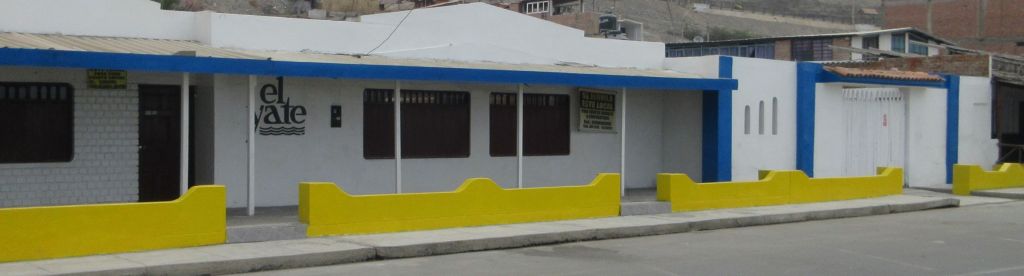
We are looking forward to the new restaurant that is scheduled to open soon. Since the Las Gaviotas restaurant adjacent to our house closed two years ago, we’ve been waiting for something new. There are lots of restaurants along the beach, but none of them has taken the place of Gaviotas. The new one (no name as of yet) is on the terrace and in the lobby area of what was the Hostal Casa Blanca. The lodging closed a couple of years ago when the city tightened oversight and the owners received a long list of repairs and changes required to be recertified as a hotel. They decided it wasn’t worth the cost. The new restaurant could revive the property.
From this post you can see that we are involved in small town life in our corner of the beach. Neighbors are building new apartments next door, and all along the beach people are cleaning up, replacing the woven mats that are used in sun shades, and painting facades and walls along the street. By the time Christmas arrives, the beach will be looking its best, waiting for visitors to celebrate the holidays.
Other changes are afoot that will take a bit longer to be completed. Some properties are for sale, waiting to be taken over and repurposed like this failed dance hall.
Two houses down from us is an old house, designed and built in the 1940s by an agronomist as the summer house for his family, while he worked on a sugar hacienda in one of the nearby valleys. The family moved to Lima after land reform in the 1960s ended the hacienda system, but they kept the house for the summers. Many years later, the family has decided to sell the property. There is a large undeveloped area behind the existing house and the banner proposes sixteen luxury condominiums, pool, garages, and green space. I will be very interested to see this development take shape, though I’ll miss the distinctive facade of the old house. It’s one of the last of the old houses to come down. Our house is nearly the last one left.
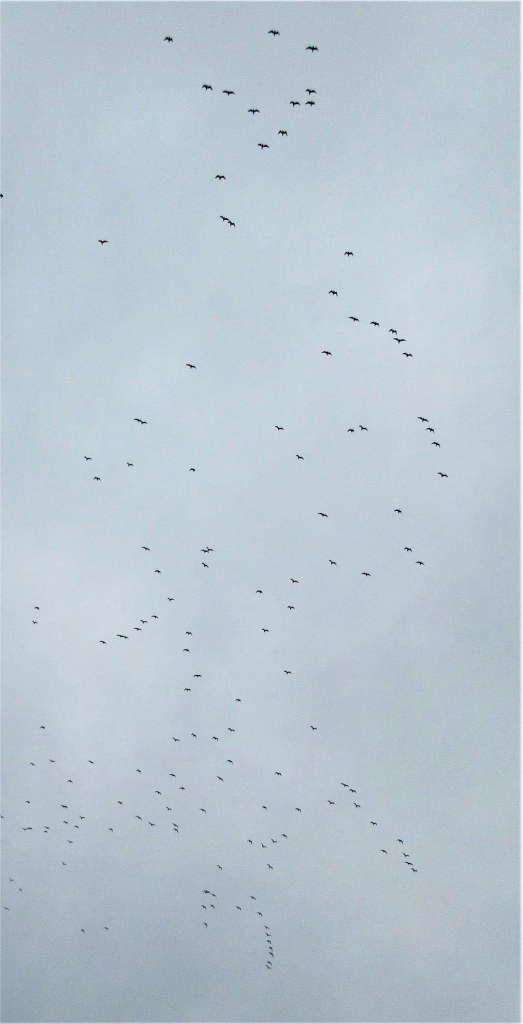
It’s migration season and over the past few days there have been birds flying south along the coast. Overhead there is a constant line or V- or swarm of gulls, terns, pelicans, and other birds making their way past us. Yesterday, we were amazed by the sheer number of birds flying overhead.
At one point, the birds began to fly in circles forming a whirlpool of wings, dipping down to the water. I looked with my binoculars and could see many were diving into the water, fishing. There was a school of anchovies beneath the surface, and the birds were taking advantage to feed. The pelicans were particularly thick over the fishing zone.
If you don’t look carefully, the birds can be nearly invisible, tiny dots in the sky. Watching for a few minutes, you realize there must have been more than 100,000 birds pass by over the past three days, as every hour, thousands of birds fly by.
it’s a quiet month here in Barranca. We don’t celebrate Thanksgiving in Peru, making this another stress-free week. Our daily routine of walking to the far end of the beach and back continues to let us monitor all the species of shore birds that are here, as well as the ebb and flow of neighborhood life. The hotel that closed is opening a restaurant on their ground floor. Since our next door neighbor Gaim died and his restaurant, Gaviotas, closed, there hasn’t been a place where people in the neighborhood meet over lunch. This could be the new hangout.
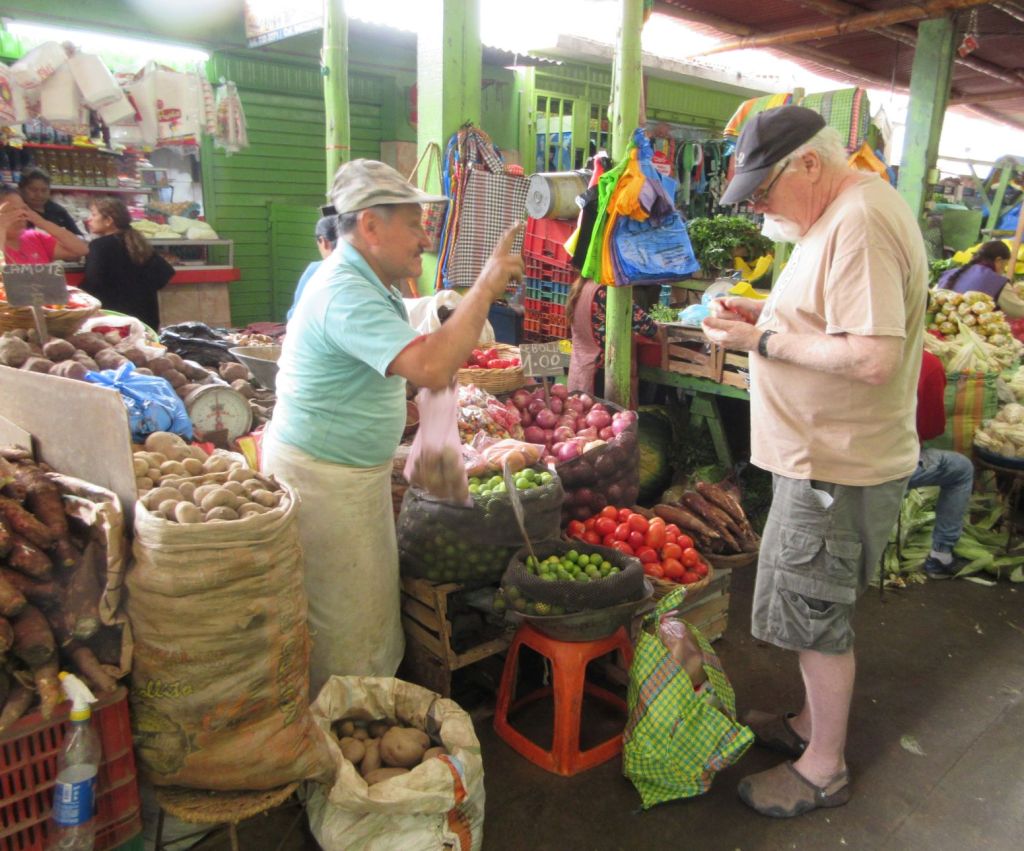
Managing our time, we only go to the market twice a week. It gives us a chance to buy fresh fish along with our fruit and veg. Jonathan is known to the people who sell fish. They call out the species he likes when they see him coming, hoping to sell him a chubby grouper, or a sole as large as a serving platter. It’s best not to look down, as the fish aisle usually has a thin layer of unsavory origins underfoot, but the fish is right off the boats, often still alive or in rigor.
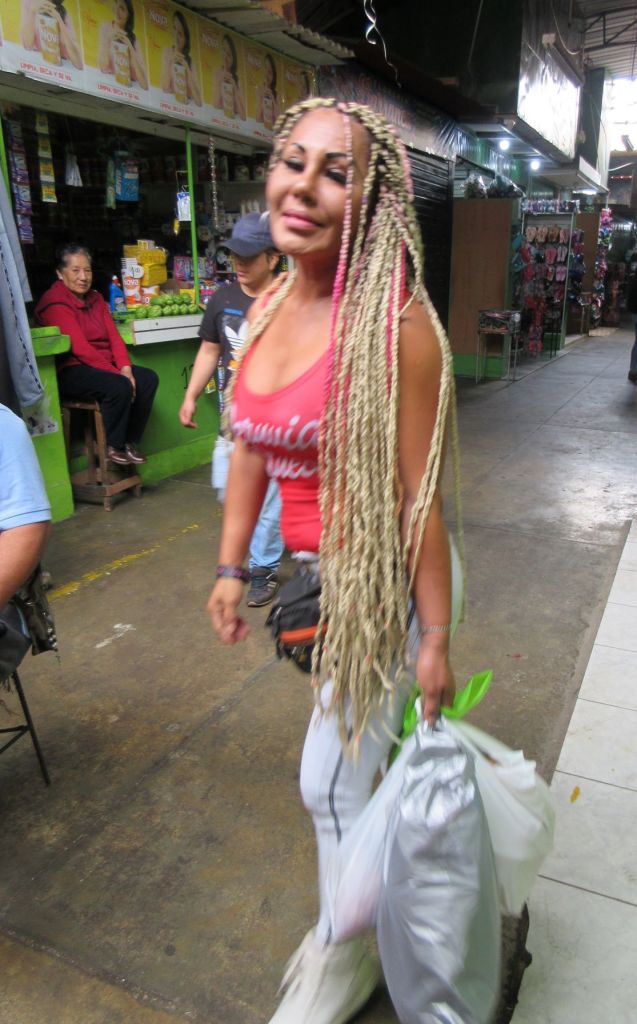
If I am looking for jewelry supplies, elastic, watch batteries, or baskets, I go to those vendors while Jonathan buys meat and veg. I saw a woman with outrageous hair chatting with a friend, and when they’d finished, I asked if I could take a photo. What a look!
Jonathan continued from fish to Adele the olive lady, and back to our favorite fruit stand, across from Pollos Don Goyo, run by our friend Lilliam and her husband. I accepted the gift of a tangerine from our vendor, and we headed out of the market. This year we’ve really become locals, buying a rolling cart to pull along rather than lugging straw baskets of supplies. Now that the grocery store charges for plastic bags, we use our baskets for groceries.
It’s election season in Peru. The president, Martin Vizcarra, dismissed the parliament for corruption, and ordered new elections at the end of January. Candidates have just finished getting their names on the rolls and campaigning is gearing up. Outside Lima, this means lots of new paint on walls. Traditionally, candidates offer to paint large walls with their names and party affiliation. The owner gets the wall painted at no charge, as long as they aren’t sensitive to what the color scheme and logo look like.
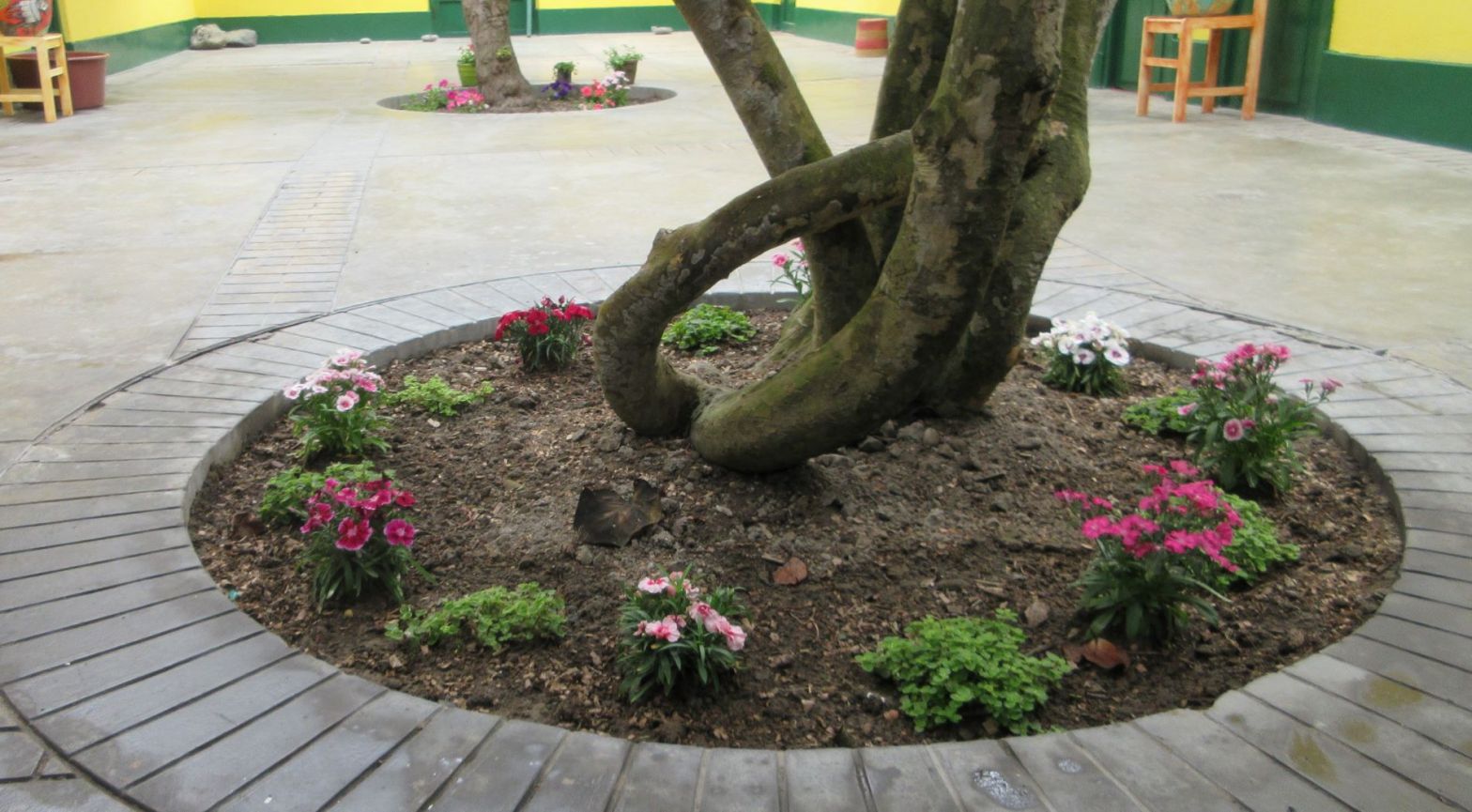
Our weekly achievement around the house could be the flowers planted around the trees in the patio.
At the end of this post about how to navigate airport lost and found, I recommend asking for a refund if you inadvertently pay for a lost and found search service, like Instafile, as I did. I contacted Instafile, putting a request for a refund. After a couple of days, my request was denied. I wrote again, pointing out that the Seattle airport, where I left my jacket, has no relationship with any service, and therefore they had no standing to act on my behalf there. Since they were offering a service they had no right to offer, it sounded like a scam to me. I received a cheerful reply pointing out that they had filed a report on my behalf–I do not believe this–and also said they would give me a refund. Today I was notified that the refund is being processed. It took a couple of emails to get my $29.99 back, but I recommend that you don’t let these people keep your money for nothing if you make the same mistake I did.
My recent experience trying to get back a jacket left at a TSA screening station provided several useful pointers that I want to share. We all hope that we won’t lose anything during our travels, but I can attest to the fact that it’s almost impossible to keep everything in order all the time. Sometimes things get lost. I’ve had good luck getting items returned, though every time it happens I am more and more surprised to get my lost item back.
On Oct. 27, I got to the Seattle-Tacoma airport with plenty of time before my flight to LA. I got in the line for TSA pre-check, and it was pretty short. However, it required going through the scanner, and a TSA staff member offered to take my jacket, which apparently you can’t wear through the scanner even if you have pre-check. I never got it back, but I also never thought about it, because it wasn’t cold and I didn’t need it. While waiting for my luggage in LA, I finally realized my jacket was missing. I was only in town overnight before my flight to Lima, so I didn’t act on my missing item until the next morning at LAX while waiting for my flight to be called.
At that time, I found a website called Instafile.com that claims to locate items lost in airports all over the US. The site claims to have the cooperation of many airports. They don’t. It’s a scam. I didn’t figure this out until several days after I paid $29.99 to Intafile Reporting. I received a cheery email from “agent232@instafilereporting. com, with additional “updates” telling me hard they were working, and asking me to advise them if I got word of my missing item via one of their partner agencies.
I looked at contacting TSA, since that’s where I lost my jacket. TSA will hold on to your keys, cell phone, or electronics for a minimum of 30 days, though in some airports, items left at checkpoints are turned over to the airport lost and found at the end of each day. https://www.tsa.gov/contact/lost-and-found
TSA works with another website that claims to help people collect their lost items from airports (Rejjee.com). Their service was free, but they did suggest that I prepay $39.99, for the return of my jacket, because it would be a lower rate that the charge after my jacket was found. I don’t know whether they are legit or not, but I had my doubts. I did more web-surfing and found that Seattle-Tacoma airport doesn’t partner with any organization, they have their own lost and found, complete with website and phone number. I started over. I filed a report online with a description of my jacket. I even found a photo of me wearing it. By this time, it was four days since I’d left Sea-TAC, and I didn’t really have any hope, but why not?
I received “still looking” updates on Oct. 31 and Nov. 4 from all three groups. On Nov. 11, my file Instafile case was archived without any result. that same day I received a note from “noreply@lostandfoundsoftware.com” that asked for my email address. I almost deleted it, but went ahead and put in my email address and got a message that my jacket was found by the Seattle airport lost and found. After double checking that the phone number provided was actually the number for the Sea-Tac lost and found, I called and arranged to have my jacket shipped to my daughter in the US. The fedex shipping cost was $26.99, less than Rejjee.com’s “bargain” $39.99 shipping.
I hope I never ever leave anything behind in an airport again, but now I have learned a few things.
Keep track of your stuff. Try not to hand things off quickly, even when people are trying to help.
If you lose something, follow up as soon as possible, especially if you are still in the airport. If you have lounge access, ask for help there. Four years ago, I was reunited with a brand new tablet I left in my seat back due to the quick intervention of an American Airlines lounge agent. It was delivered to me onboard just before my connecting flight departed.
No longer in the airport? Figure out who to contact before you act. TSA has their own lost items page where you can file a report. They suggest using Rejjee.com, but I’m not sure I’d recommend that. Don’t do what I did and pay the first website that offers to help.
Contact the airport lost and found, even if your item was left at a TSA checkpoint. Though I could provide the exact checkpoint and time where I left it, my jacket ended up in the airport’s general lost and found.
Don’t pay anyone to look for your item, they are mostly scams.
PS. The woman at the Sea-Tac lost and found strongly suggested I contact the Instafile people and ask for a refund. She says most people brush off the $29.99 as not worth the effort, but she believes such scams won’t be curtailed if people just pay. Think how much money they make every day from a few automatically generated “we can help” emails.
I’m back in Peru after a full year on the road, eight months south of the equator and four in the US. Where has the time gone! I am happy to be back and settled for the winter. There have been some changes in the past year, though most are slight. I do notice the continued prosperity of Peru that stands in marked contrast to the civil unrest in neighboring Bolivia, Chile, Ecuador, and Venezuela. Despite troubles elsewhere in Latin America, and Peru’s recent political turmoil that resulted in the Congress being dismissed, people are going about their lives, building another story on their home, shopping in the outdoor market and at the supermarket. Shops are busy, construction is underway at several places along the beach, and life is generally bustling. There’s a new Barranca sign on the hillside!
Jonathan has already been here for a month, and has reestablished contact with our friends and neighbors. We had a surprise visit from our colleague Alvaro Ruiz. It was good to catch up a bit. Jonathan has hosted Saturday lunch gatherings with local friends. It’s a chance to sit down and talk in addition to the occasional exchange of greetings in the street. There is always gossip, who is building what, whose family is coming to visit, who is in Lima, how everyone’s children are doing, new grandchildren born this year. So much news to keep up with.
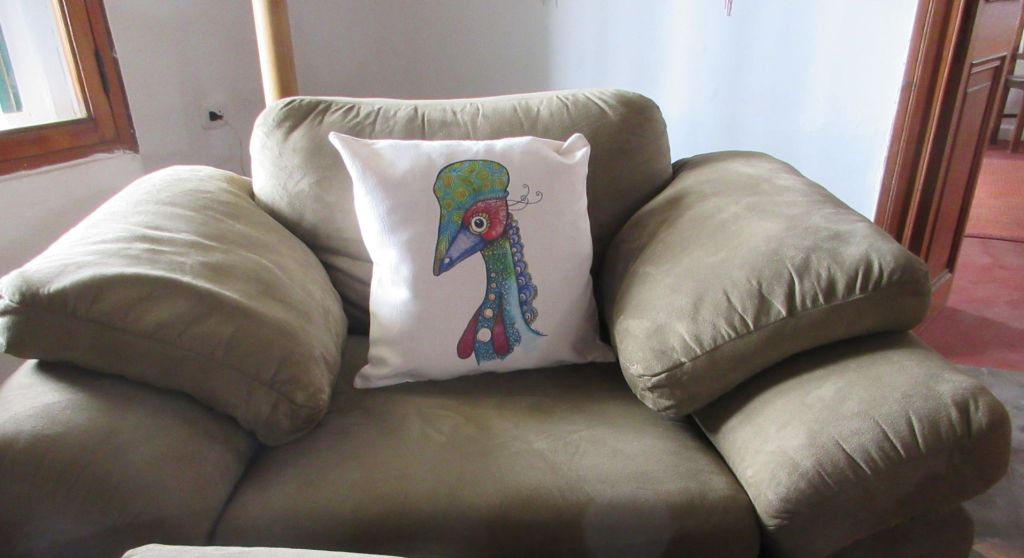
Our annual round of home improvements has begun, with new plants in the patio and our pillow covers from New Zealand and Australia stuffed and deployed. We’re creating a system to circulate water from the well through the yard to fill the small pools and waterfalls that have been dry for several years. By recirculating the water we will be able to make the garden greener without letting any of the water get away. It’s a precious commodity here. Other plans are percolating as we gear up for the visit of our daughters and their spouses/fiancés over the holidays.
The last part of my friends and family tour of the US took me to Los Angeles and Seattle. In Los Angeles, I stayed a couple of nights with daughter Lyra and another few at the home of my daughter Amanda’s future mother-in-law, Connie. Amanda and Jim live there, too, making it an excellent base of operations on this side of Los Angeles. An episode of Homeland had just finished filming a scene at the neighbor’s. Then they filmed a scene inside Connie’s! (I wasn’t there yet.) In Los Angeles, unusual things happen all the time.
The next day I met up with my sister Sheila and her husband. They live in Hesperia, and since I usually stay in Los Angeles we meet at a halfway point, the huge Victoria Gardens mall in Rancho Cucamonga. The drive is opposite traffic and the sky gets deeper and deeper blue as you drive away from the city. The three of us dawdled over lunch and caught up with family news. We headed our opposite directions before rush hour got going, and the drive back was painless.
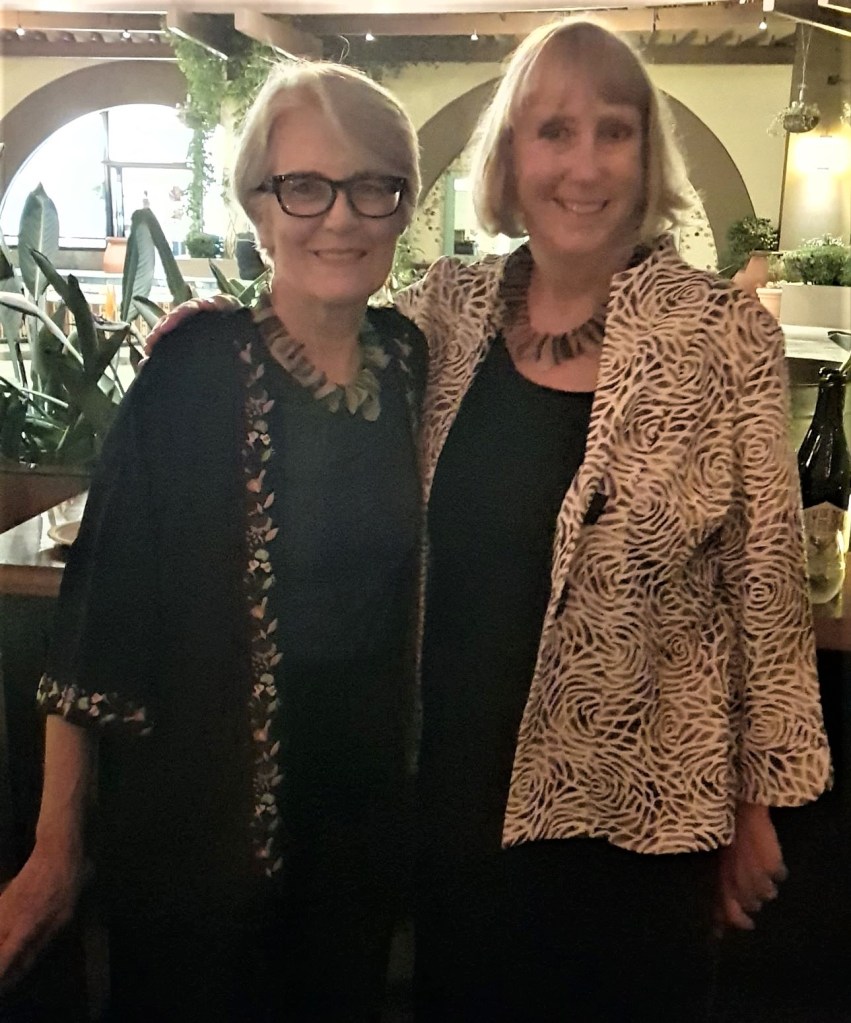
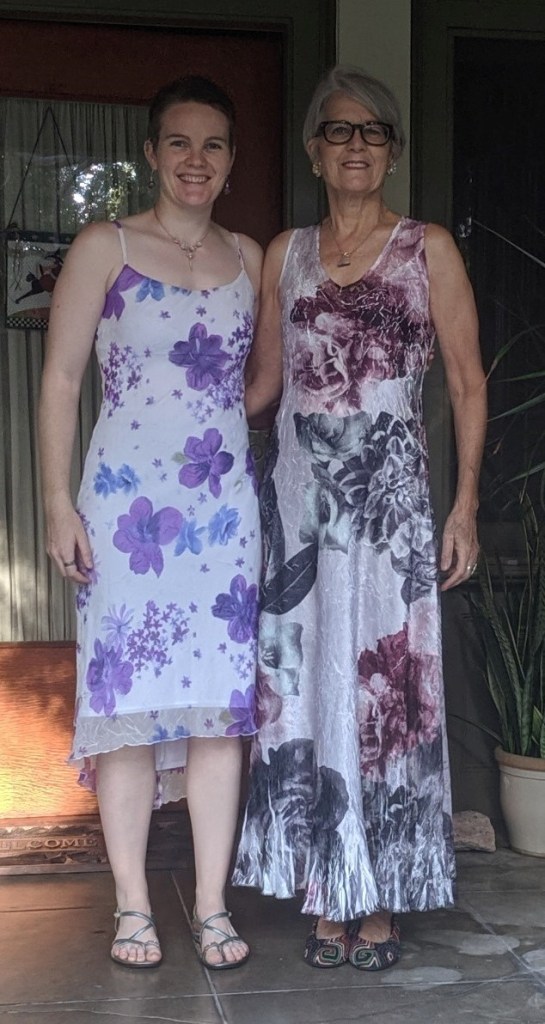
I was in Los Angeles to see my sister, my daughters and also to attend a wedding. I’ve known Linda since we were both sixteen–and her daughter’s wedding was another milestone in life that needed celebrating. Lyra went with me to all the wedding events (Thanks, Lyra!)
The wedding events were very enjoyable, and the ceremony was lovely, full of heartfelt vows. We were outdoors at Descanso Gardens in Pasadena at sunset, and the weather was perfect. The bride’s dress was a beautiful column of white, her flowers were white, cream, and deep burgundy roses. We had a delicious dinner and chatted with people from all over the country. Ceremonies like these renew my faith in the future.
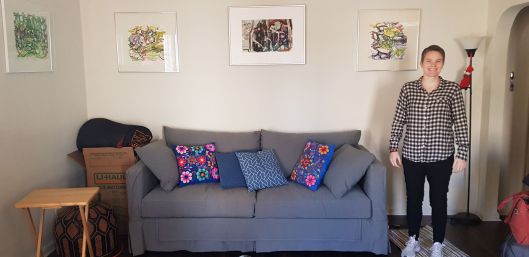
I did my good deed of the trip the next day and helped Lyra hang paintings in her new apartment. She moved just a few weeks ago, and managed to get move all the furniture and boxes over a weekend, but then work intervened, and she still had art stacked against the walls.
In a hour, we managed to get most things where she wanted them and her place looks much more settled.
After a quick dinner, we walked to the Saban Theater in Beverly Hills to hear Jane Fonda and Lily Tomlin speak. What a pair they are! Jane Fonda led with an impassioned plea for action to halt climate change by phasing out fossil fuels and plastic bags, pointing out that oil companies like Exxon knew thirty years ago that their products could irreparably damage the environment. The audience was full of fans who, like us, have watched every episode of Grace and Frankie. We laughed at all their jokes while the moderator tried his best to keep them on topic. It was a lot of fun.
Packing in just a few more activities, I drove to Pasadena on Monday morning and visited the Norton Simon Museum with Amanda. She’s familiar with the exhibits from being at every opening with her fiance Jim, who is a preparator there. We particularly liked the William Crutchfield exhibit, though it was fun to walk around while Amanda showed me her favorite pieces throughout the museum.
In the afternoon, Linda came by and took me to Koi, a boutique in Highland Park. She has gotten to know the owner, another Linda, and the sales manager, Brenda. We chatted about jewelry and looked over some of the necklaces I’ve made, and some gorgeous things that Brenda makes. Everyone had good suggestions. With a few improvements, some of my pieces will be for sale in Koi in the new year. I am delighted.
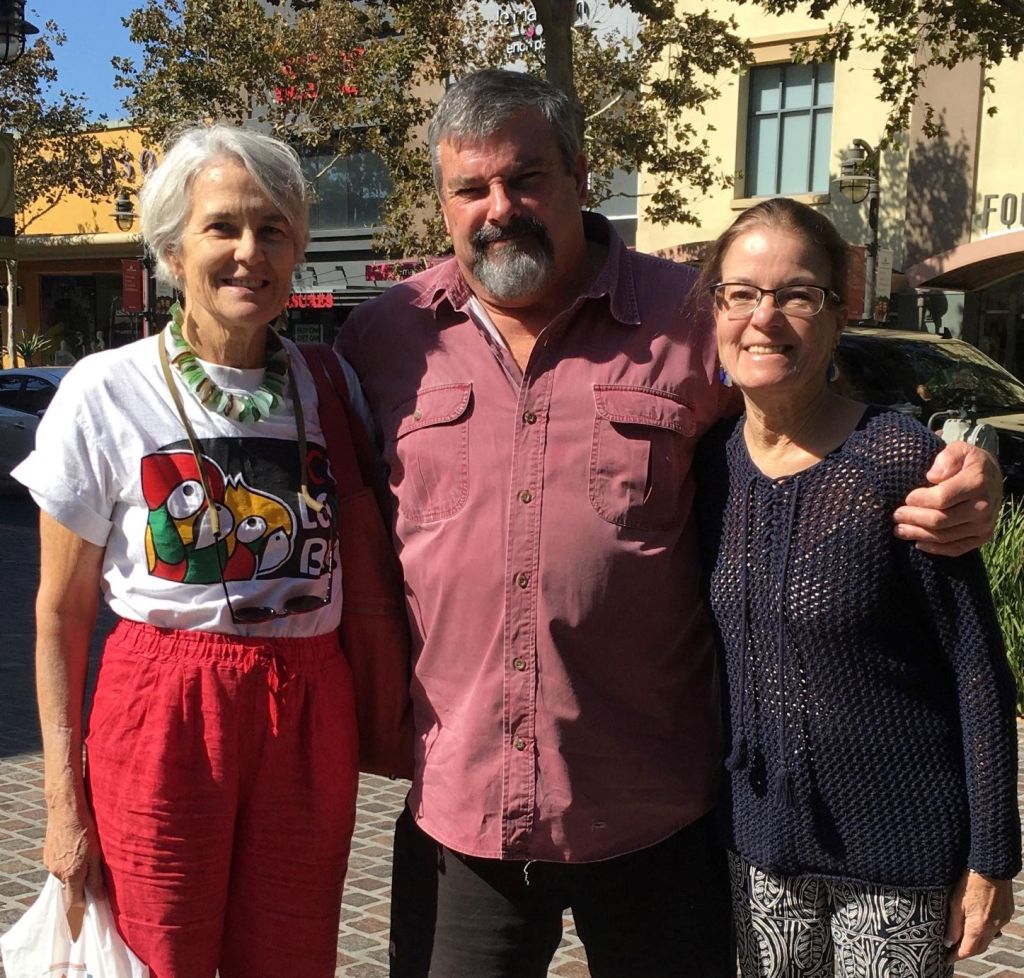
A last dinner with Amanda, Jim, and Connie, and I was off to Seattle to stay a few days with Larry and Sharon. Larry and I were undergraduates together at Harvard, and see each other every five years at reunions. I have read some of his books, and he has given me some very helpful comments on the mystery I eventually plan to complete. Sharon and I met in Melbourne last year. Their daughters and grandchildren live in Melbourne, so they now spend half the year there.
Seattle was unusually cooperative, providing day after day of sunny weather. We visited Snoqualmie Falls, standing in the mist while the falls thundered into the river below.
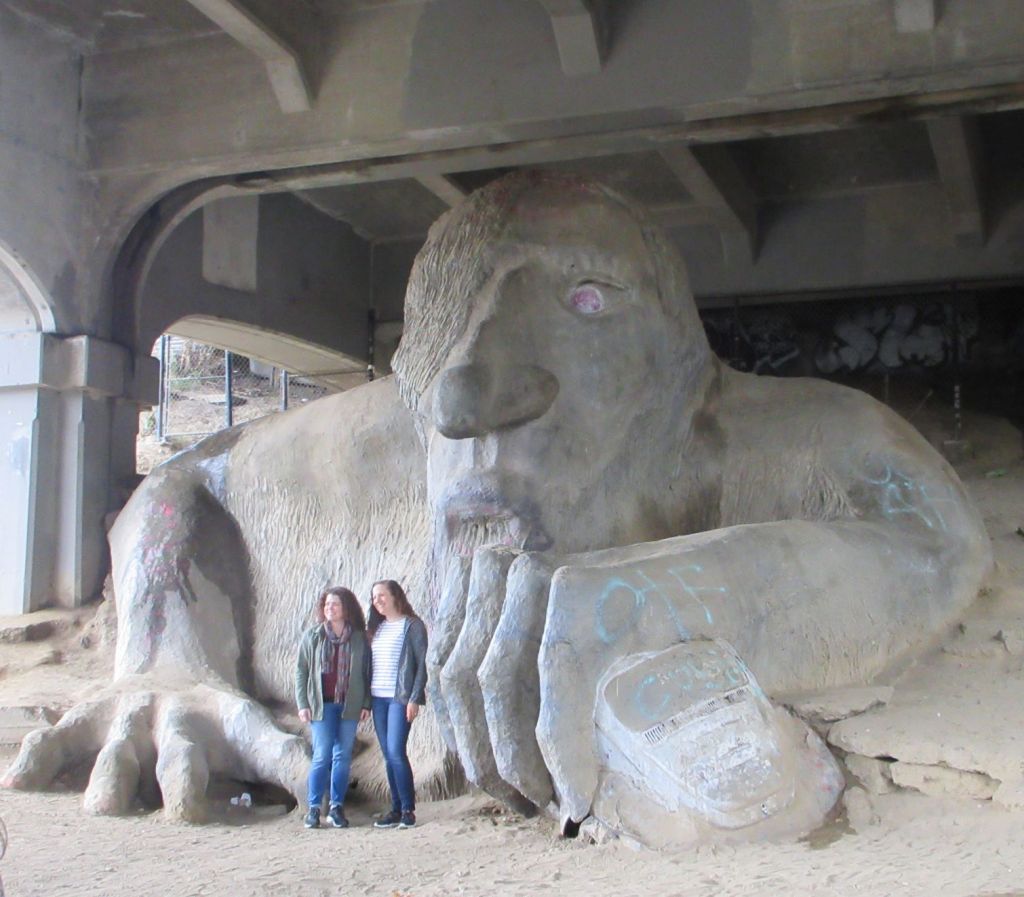
We had a great tour of some of the city’s icons. The troll under the bridge is a fanciful landmark that should have everyone who visits rushing home to read a fairy tale.
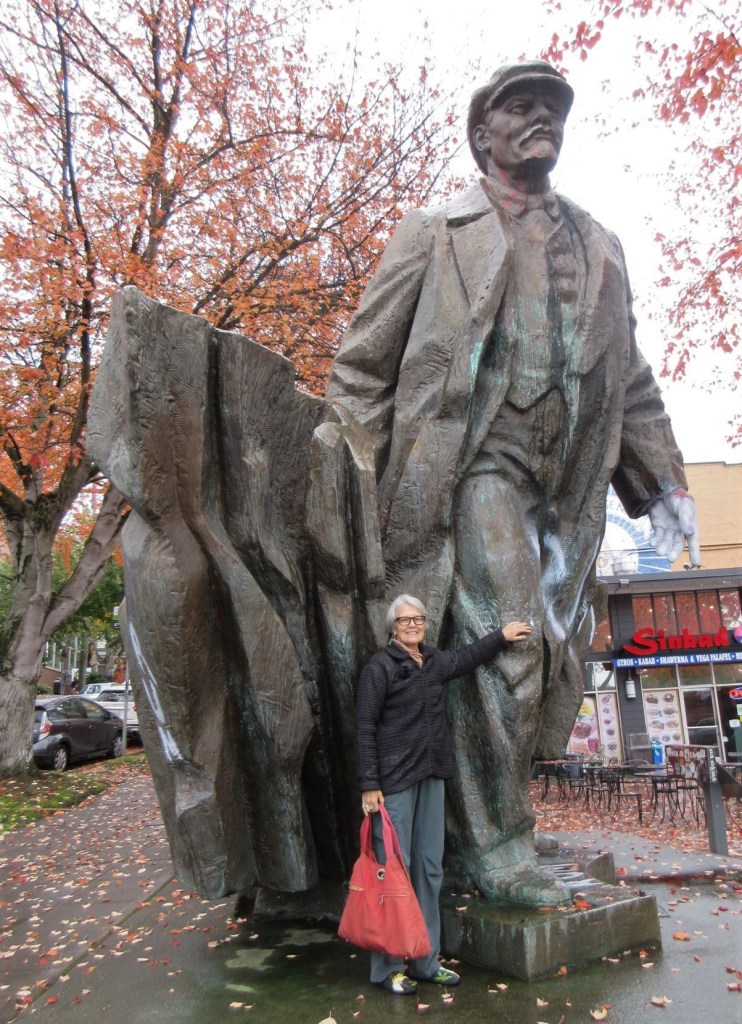
Just down the street is a huge statue of Lenin leaning into the intersection. The tale of how this huge relic of Soviet history made its way from a scrapyard in Czechoslovakia to a street corner in Seattle is a testament to people’s pig-headed desires to do things that make no sense to anyone but them. How Lenin got to Seattle.
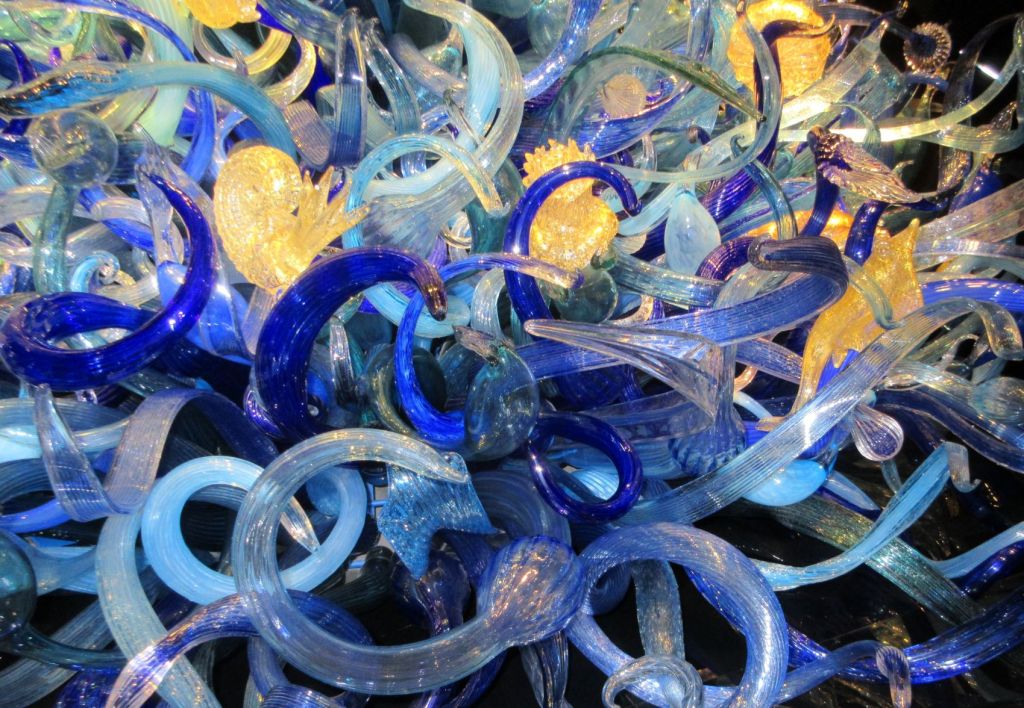
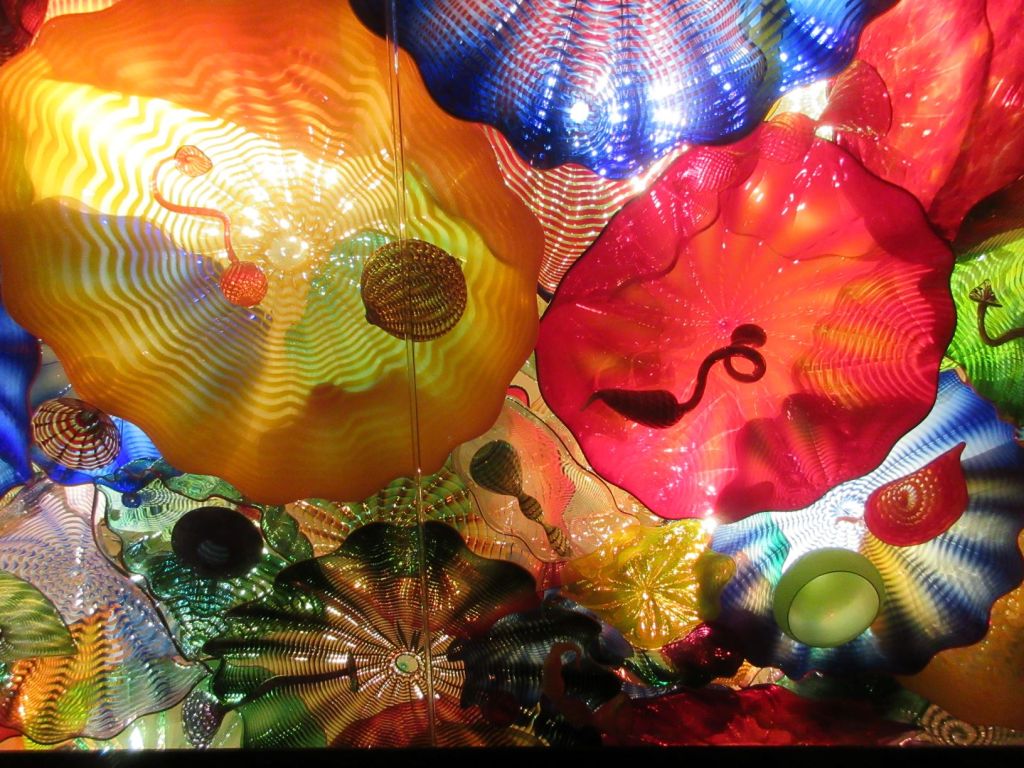
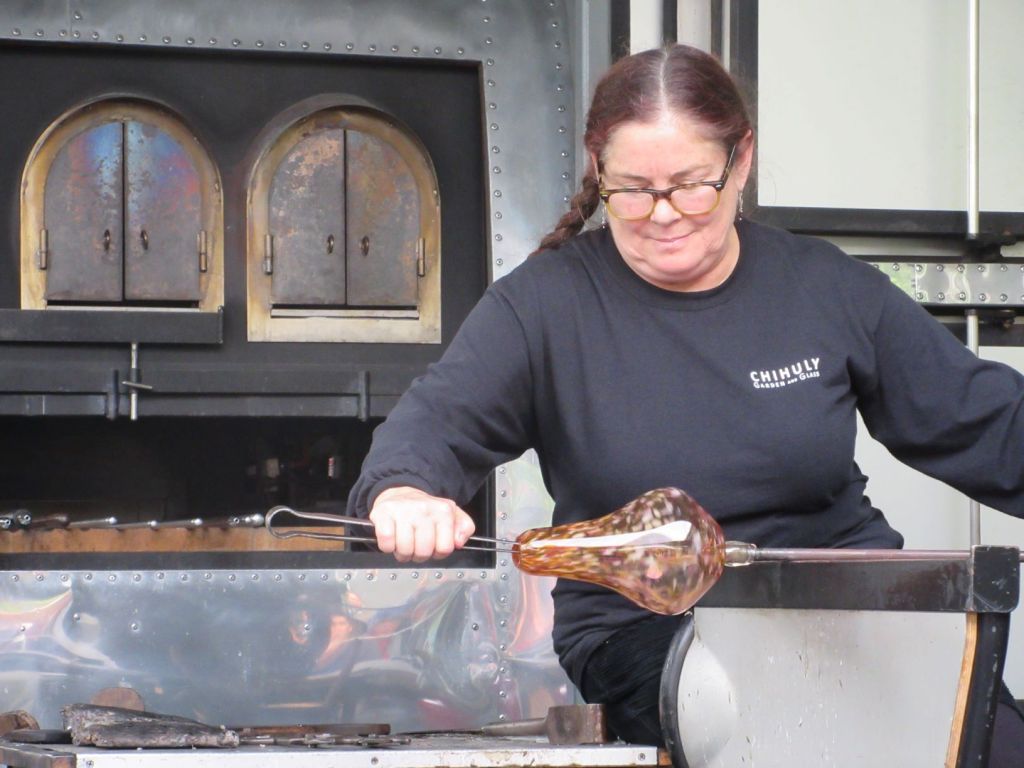
We visited the Chihuly Gardens, a gorgeous display of oversized glass plant life. After seeing the amazing, massive glass structures emerging from the ground, we watched a pair of glass-blowers from the Community Hot Shop (glass blowing furnaces and ovens in a converted Airstream trailer) make a vase. These bowls and vases are sold at the Space Needle gift shop, so we had to go have a look. They are not terribly expensive ($45-$65) and would make a distinctive gift from Seattle.
We rode the monorail from the Space Needle to the Pike Place market. Even mid-afternoon, there were rows of dungeness crab, clams, shrimp, tuna, and more varieties of fish than I could name. Fruit and vegetables, and stalls selling hundreds of things that you need and don’t need. (We failed to locate the wall of chewed gum–I’m not sure I regret missing it.) We returned home after this, and ended the day with dinner at the Carnation Cafe, an excellent restaurant near Larry and Sharon’s. The desserts, all made in-house, were really, really delicious.
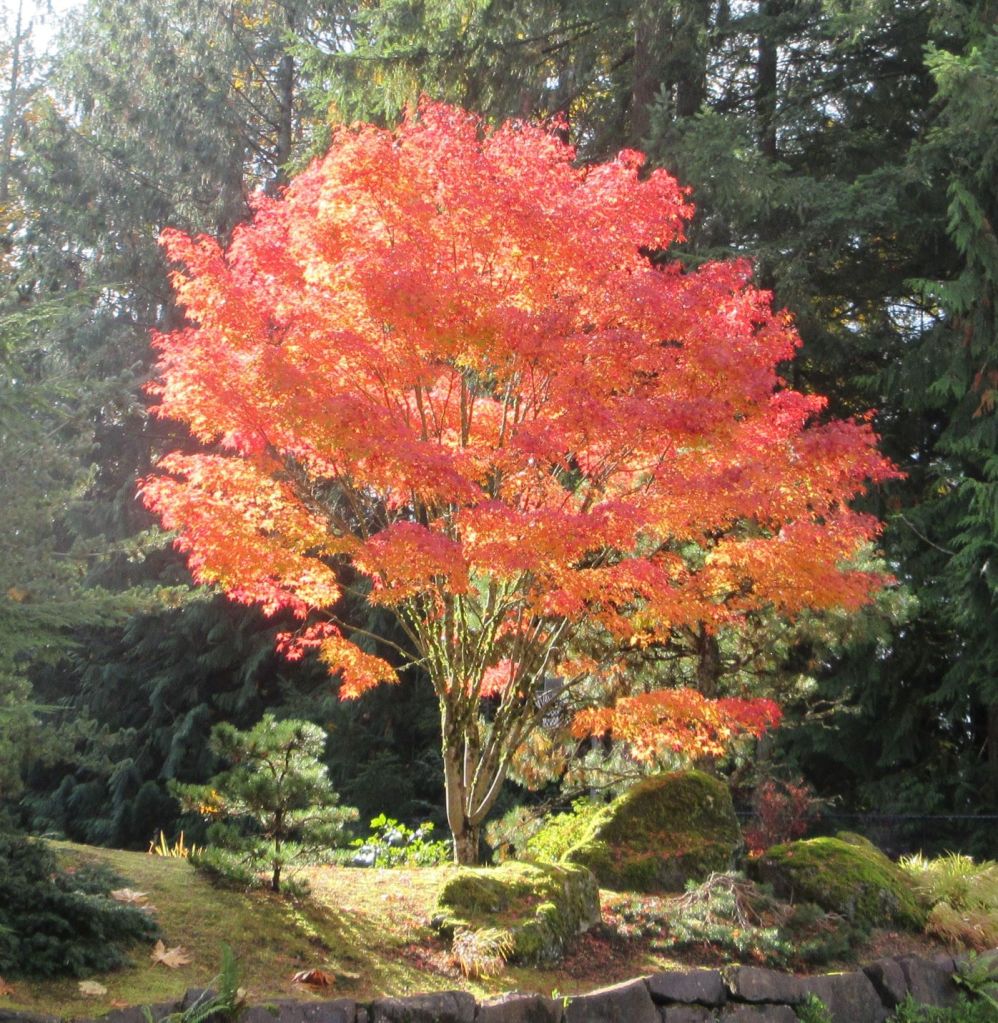
Having seen so much in such a short time, I took a day to walk around the local area, making my way down to the bridge across the Snoqualmie and Tolt Rivers. It was a beautiful afternoon, the sun making the trees blaze with color. For about three minutes, though, it rained, and the bouncing raindrops turned out to be hail. I sheltered under a fir tree to avoid the hail and in another five minutes the rain stopped, the sun came out, and I walked home. A beautiful end to this adventure.
This month is full of visits to family and friends. From Charleston, I stopped a few days in Grand Rapids, MI with my sister Catherine. The weather was rainy but we entertained ourselves by getting haircuts. We did a decluttering sweep of a sitting room, cut one huge piece of fabric for curtains, repaired an existing linen duvet cover, and then cut deep green fabric for a new duvet cover.
We managed to sneak in lunch with a few of Catherine’s friends who I met on a trip to Italy several years ago. Another highlight was dinner with an old friend from our hometown of Thornwood, NY. I wouldn’t have recognized Dennis Flint, but Catherine found him through the magic of Facebook and we had dinner with him on his way through Grand Rapids on business. We laughed about growing up in Thornwood, with a lot of what-ever-happened-to, and swapped stories about our kids.
After just a few days enjoying Grand Rapids, I spent a day trying to get to Syracuse to see my mom. It took three flights, but by the end of the day, I made it. As annoying as the trip was, our visit was very low key and relaxing. That’s all to the good considering mom is 94. We took a field trip to Otisco Lake where my brother and sister-in-law live. After admiring their recently renovated lake house, we visited a new farmer’s market/craft sales complex called Willowdale Bend. I carefully toured the barn full of antiques, but didn’t find anything I loved enough to add to my overstuffed suitcase. On the way home we stopped and picked a quart of red raspberries ($4) at Berdock’s berries. They were delicious!
I took a walk in the neighborhood one afternoon and found a long-abandoned road through the trees from the watertower behind my mom’s home down toward the road. I figure it was used long ago before highways connected the towns around Syracuse with the city.
Another evening we had dinner at the Lakeside Vista restaurant overlooking Otisco Lake. The building is unprepossessing but the deck outside is perfect for warm weather and the food was very good. This area is gradually shifting from predominantly summer homes to year-round residences and the success of Lakeside Vista will mean there is a good restaurant in the neighborhood. We hope they’ll stay.
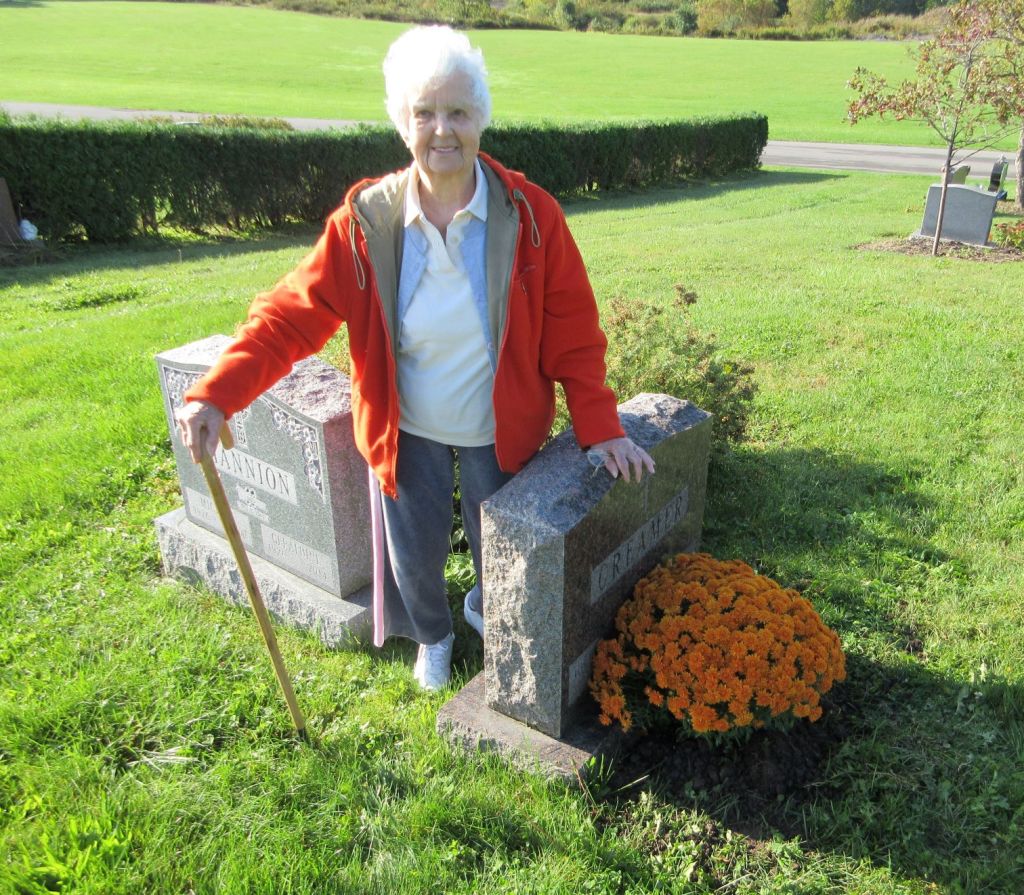
My week in Syracuse ended with a visit to plant a chrysanthemum by my dad’s grave. I have done a spring or fall planting with my mom a few times, as my visits often land in April or September. We admire the graves that have been decorated and planted, chat with my dad, and then head back home.
I flew from Syracuse to Chicago, picked up a car and got to Wheaton before sunset. I stay with my good friend Peggy, who is one of the world’s great hostesses. We saw the new movie Judy, then went to AAUW film night to discuss it, and we had dinner with a different friend every night.
On Sunday, I drove to Champaign, IL to visit my daughter Lillian and son in law Neil. They are settling in to the house they bought in the spring, and I love seeing their progress from visit to visit. We took a walk around the neighborhood enjoying the gorgeous cool, clear day and ran some errands. There was no need to undertake a big event, we just enjoyed being together.
I arrived back in Chicago in time to have dinner with Peggy and one last friend before my trip ended. In the morning, I crept off to the airport, making a stop at the storage unit to toss in a few items that I didn’t want to carry around. I had already picked up a second suitcase to take to Peru. Navigating from Chicago’s car rental center onto the bus and off at the terminal was challenging. I only had to wrangle my two suitcases, carry-on, and handbag as far as the check-in counter. It was a relief to drop them off.
Onward to Portland and my sister Paula, who scooped me up at the airport, saving me hauling my bags more than a few steps. My visit here was perfectly timed to overlap with that of my nephew Brian, his wife Emily, and their darling 13 month-old Eliza, who I had not met in person. She is a charmer, of course, with a huge smile and slightly wobbly legs. She’ll be walking before Christmas. We’ve enjoyed taking Eliza for walks, and catching up on family news. One night I was able to accompany Paula to the rehearsal of the Oregon Repertory Singers. What wonderful music! Their next concert includes a piece where the sound washes over you in undulating waves and makes you close your eyes just to enjoy it.
A big family dinner was the final event of my Portland visit. Eleven of us forgot about the drizzle outside as we dug in to braised beef, roast vegetables, salad, and apple-blueberry crisp, with Oregon wines, of course. After a memorable evening, I packed up and headed for my last stop, Los Angeles.
I will miss the carriage tours clopping down our street, the convenience of being able to walk to coffee shops, pastry heaven, and excellent restaurants. What I will miss most about Charleston are the people we’ve met here. Some are from here, some not. Most everyone in Charleston has been friendly, tourists and locals alike. Even the people who work in coffee shops and restaurants have been good-natured.
Our most interesting new friends are from birding. Lest you think that birders are all staid white-hairs wearing many-pocketed jackets, they are not. We’ve found local birding groups to be welcoming, the members interesting, and we’ve gone well beyond the birds, meeting up to go on other outings, have a meal, and enjoy conversation. We even went to a play at the local Theater 34 West. It was a terrific venue, about 30 seats around small tables, and a bar! About 20 minutes into the very animated musical, “Can’t Buy Me Love,” the actress (cast of four) fainted and it wasn’t part of the script. We figured it out as the cast started to clear a path for the EMTs to get to the stage. I’d go back on another visit to see an entire show.
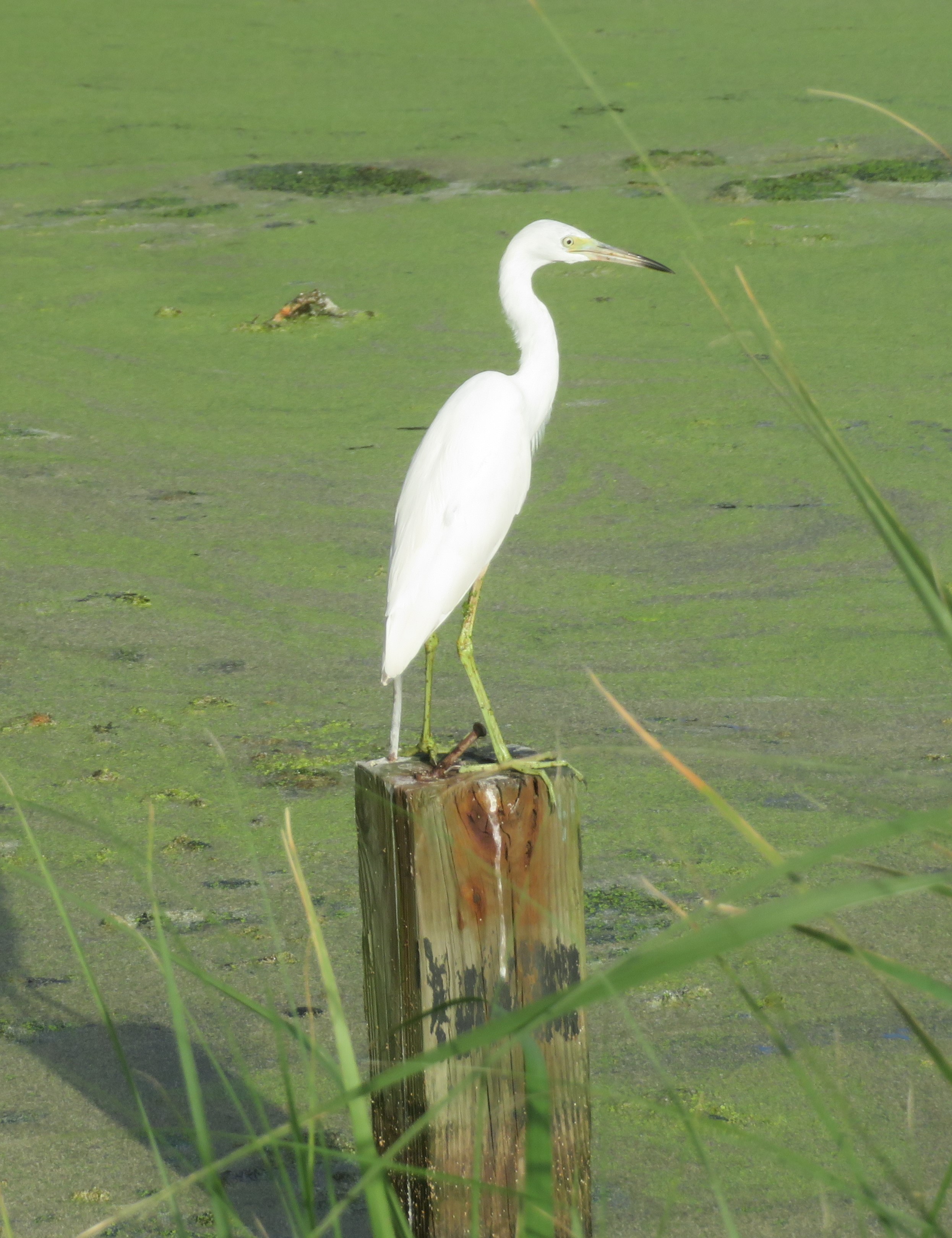
Our birding days let us see bald eagles, ospreys, herons and egrets, and some of the smaller, harder to see peepers. It’s been a lot of fun (a multi-pocket vest can be very handy…). We ran into a bit of difficulty birding on our own. Twice, at the end of a generous drive, we arrived at places with well known trails to find the site closed for deer hunting (season Sept. 16-Dec. 1 this year). I’d checked the web site in advance for each location and found no notices. There was a sign at the entrance to Botany Bay by the locked entrance gate. At Dungannon Plantation, the trail was open but a notice pointed out that it was open for bow hunting and anyone out on the trail should wear international orange (also known as Blaze Orange). We don’t carry that kind of gear with us so turned back.
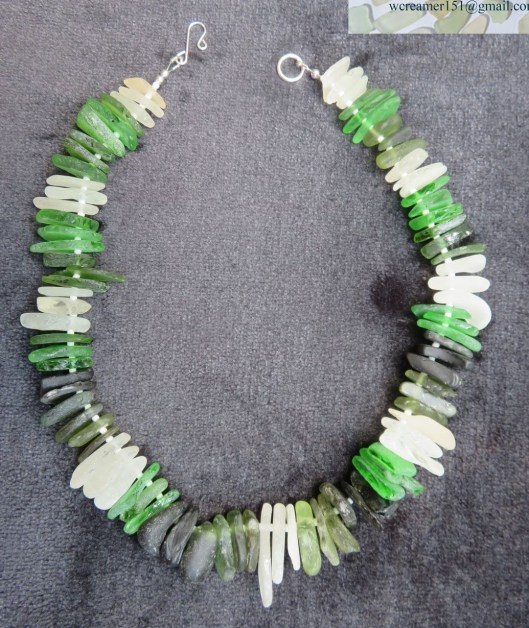
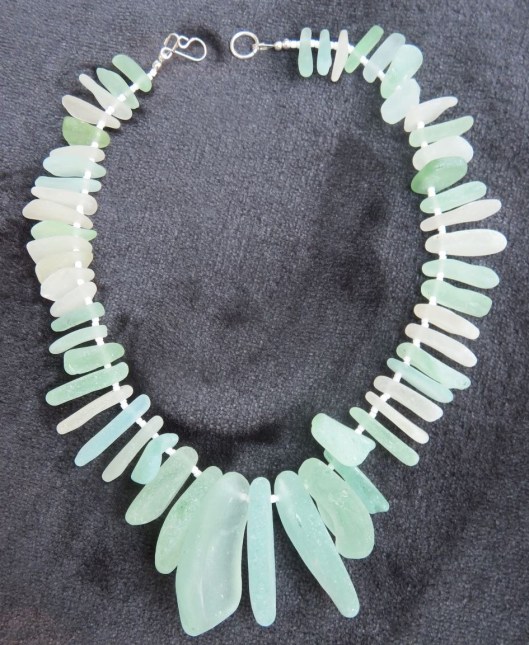
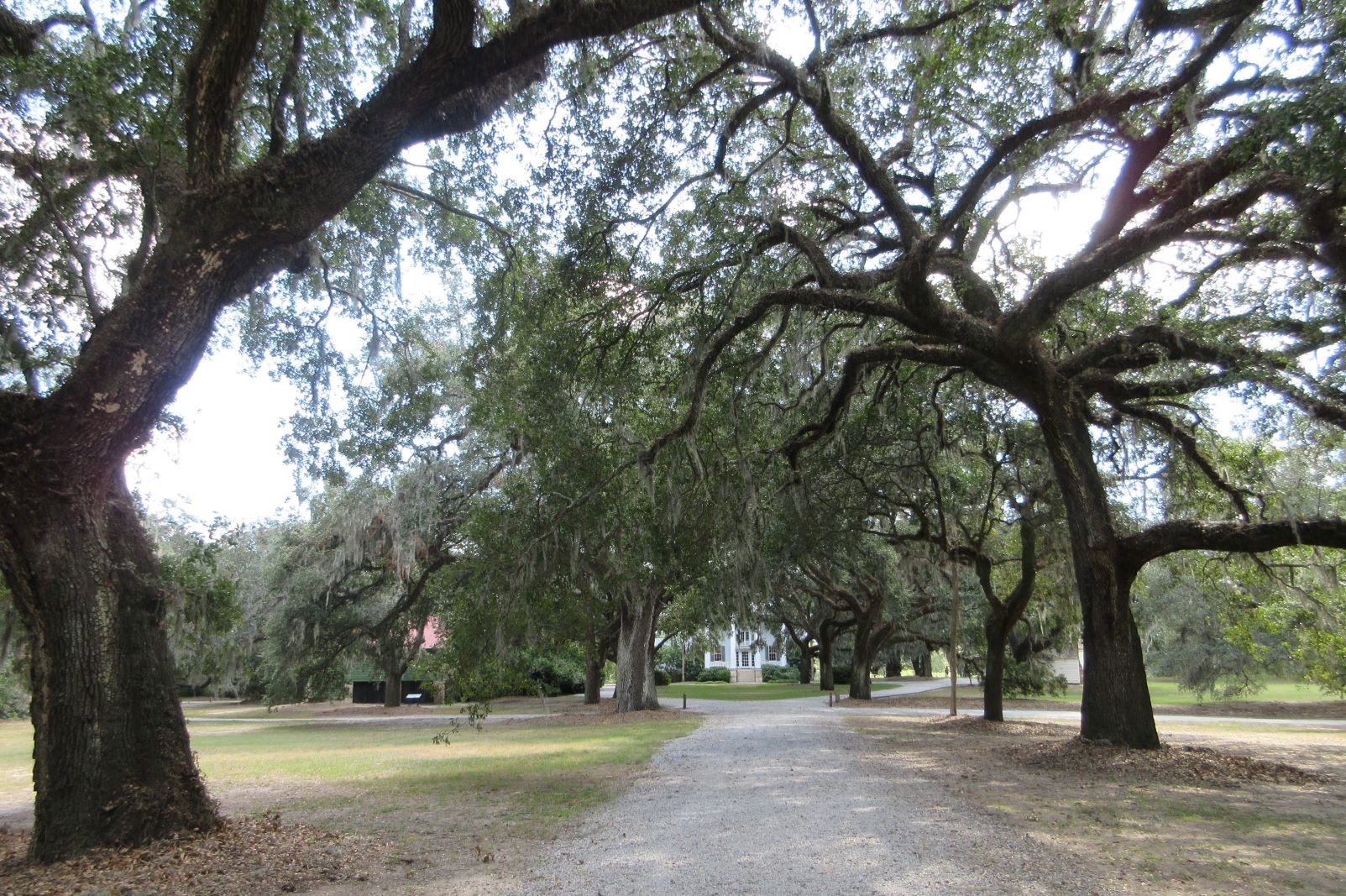
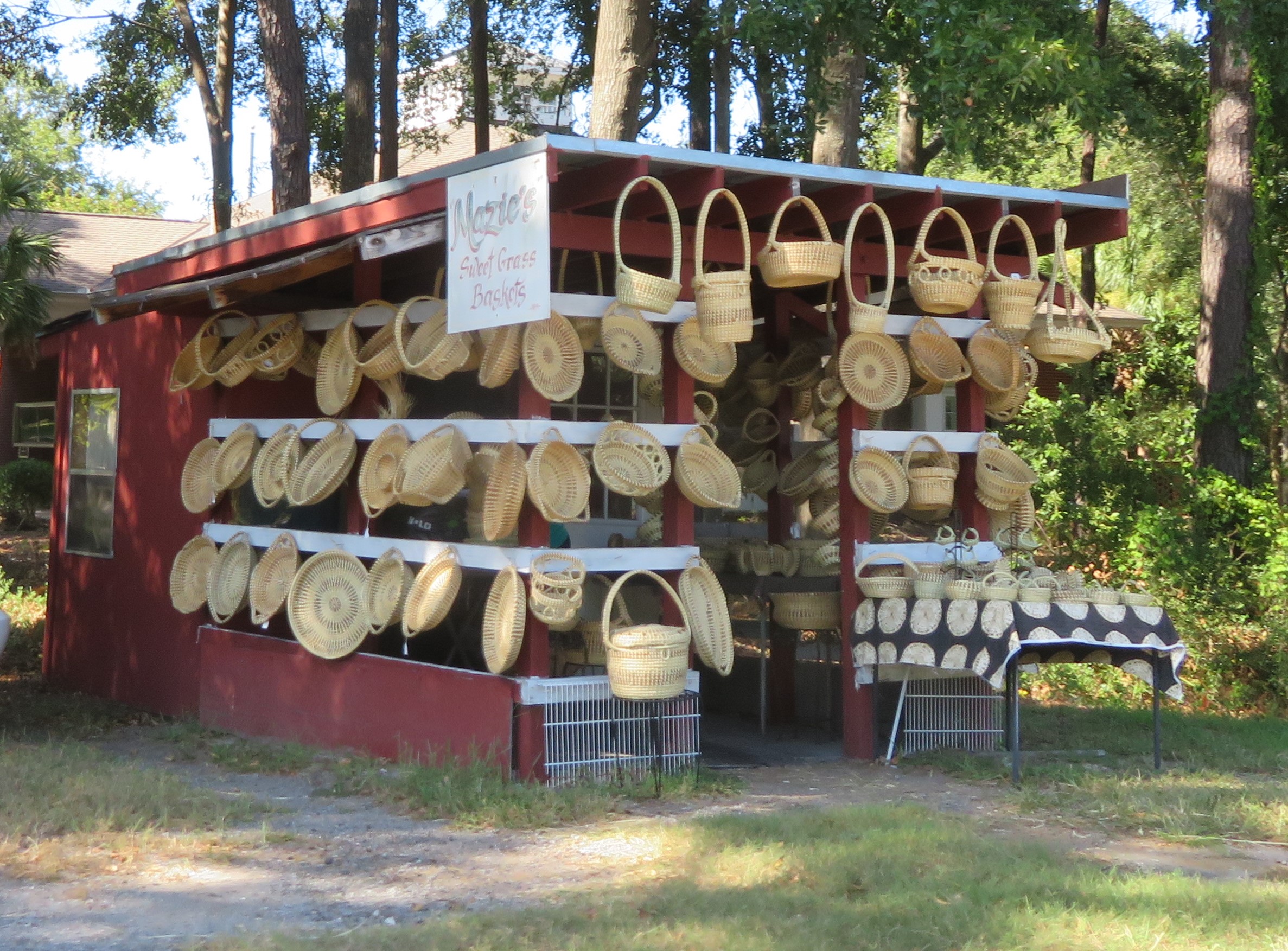
In addition to the activities I’ve mentioned, we enjoyed farmers markets, sweet grass basket sellers, the Charleston Aquarium, McLeod Plantation, and the Gibbs Art Museum, our favorite cultural stop. Our bird walks at Caw Caw state park and Magnolia Plantation and Gardens were excellent. Santee National Wildlife Refuge let us see a painted bunting. We even stopped to look at the gigantic Angel Oak. We made a field trip to Georgetown, an interesting spot on the way to Myrtle Beach. On one of our final days in Charleston, we discovered there is beach glass along the battery at low tide. We chatted with people walking along the sidewalk who were curious about what we were doing, and heard about where they look for beach glass.
Whether you’re from here or not, Charleston is a friendly place with a lot to do.
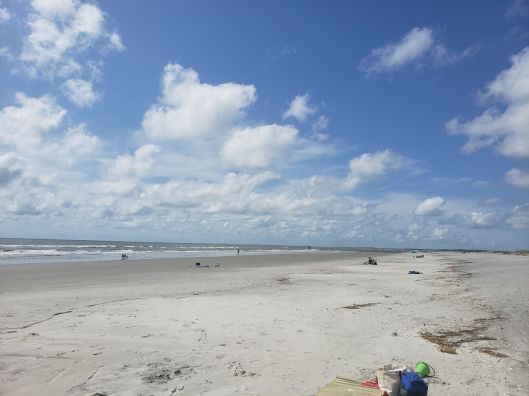
A car comes in handy once you decide to get out of town, as Charleston is surrounded by water, and though the beaches are beautiful, they are not close by. We’ve tried as many beaches as we could. Every one is an endless strip of white sandy beach unfurling as far as the eye can see in either direction. Much of this is illusion, as the beaches end at inlets that reach deep inland. Visiting two adjacent beaches can involve an hour’s drive or even longer. If we get tired of the view at one end of a beach, we make our way to the other end, a mile or two or three down the road.
Folly Beach
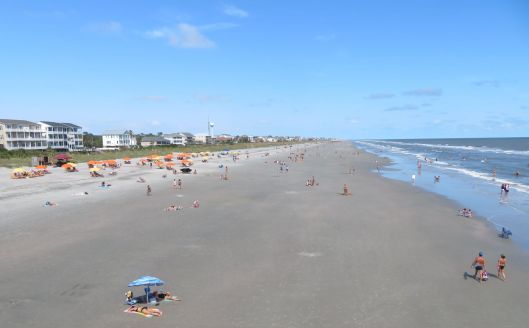
Folly Beach is the closest beach south of Charleston. More than five miles separates Folly Beach County Park on the south from the far end of the road at the north end of the island. Halfway along is Folly Pier, a long fishing pier with a few shops and restaurants.
Folly Pier
On the beach, we were fascinated by the evidence of nesting sea turtles. Most have hatched and wriggled their way into the water by now, but turtles nest all along the coast here. Nests are marked and monitored by the state and dedicated volunteers. This year some nests were damaged by hurricane Dorian, and the few that haven’t hatched yet may be storm casualties. We spoke to a volunteer who said there was a big uptick in the number of eggs and turtle hatchlings this year, just about 30 years after the protection program started. It takes about 30 years for a sea turtle to mature and begin to lay eggs on the beach where it was born. It looks like the efforts to protect sea turtles are just beginning to pay off. We can use some good news on the nature front.
Edisto Beach
To the south of Folly Beach is Kiawah Island, best known for its very large resort. Beyond that is Seabrook Island, then Edisto Beach.
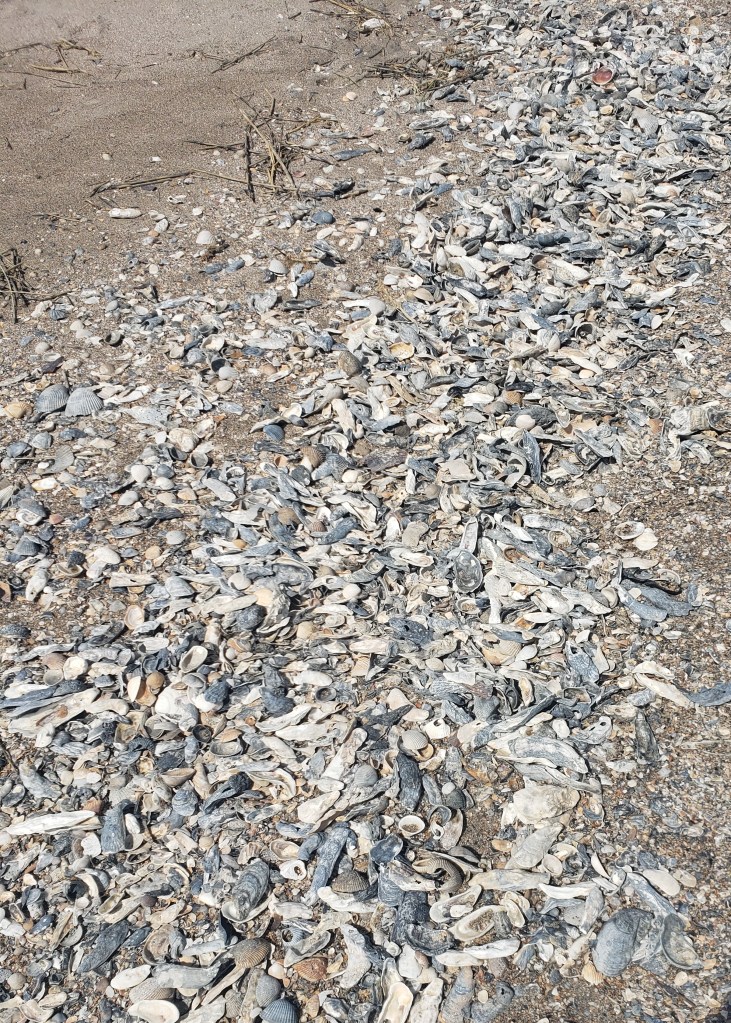
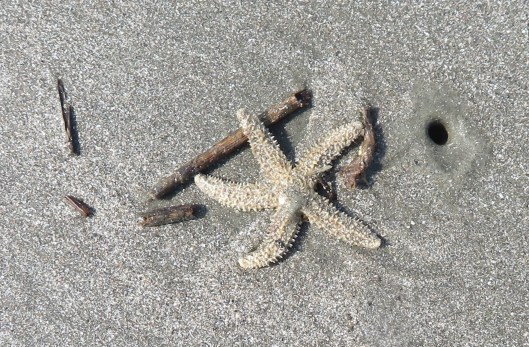
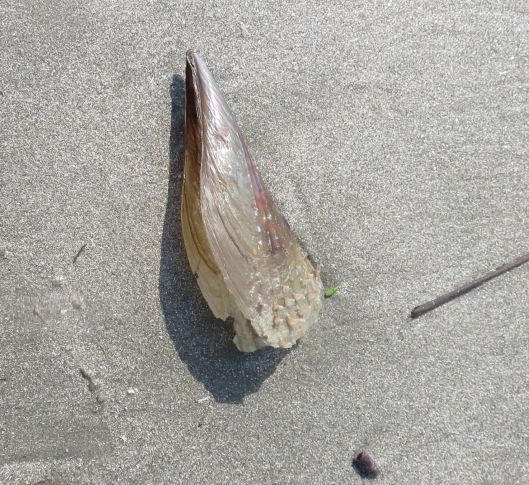
There were a lot of shells on the beach at Edisto, and a lot of people beachcombing. We chatted with people who hunted for whelk shells after Hurricane Dorian passed through, a woman holding what looked like a wok spoon on a stick who was hunting for shark teeth, and people looking for shells, driftwood, or just looking. We were looking for beach glass, but didn’t find any. Jonathan turned up one piece this entire month. We occasionally found broken glass, but that’s a lot less interesting than nicely rounded glass pebbles. This may be a testament to the clean beaches of the region, but it gave us less to hunt for as we strolled. We decided that Edisto would be as far as we’d go from Charleston, as it took almost an hour and a half to get there. The next beaches to the south are beyond Beaufort.
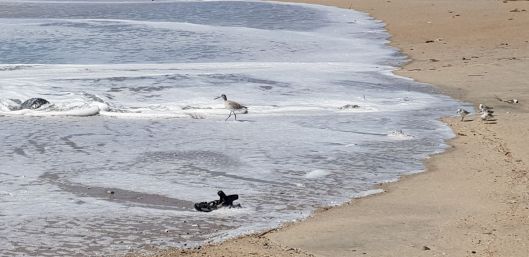
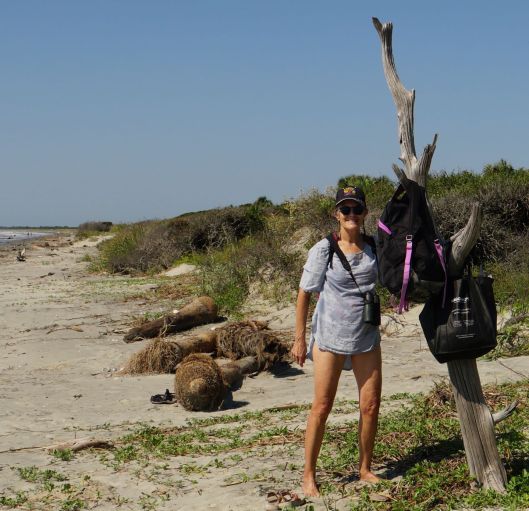
At Edisto Beach, I was so focused on taking a picture of the shore bird (willet) that I didn’t notice my sandals were escaping into the waves until I looked at my photo.
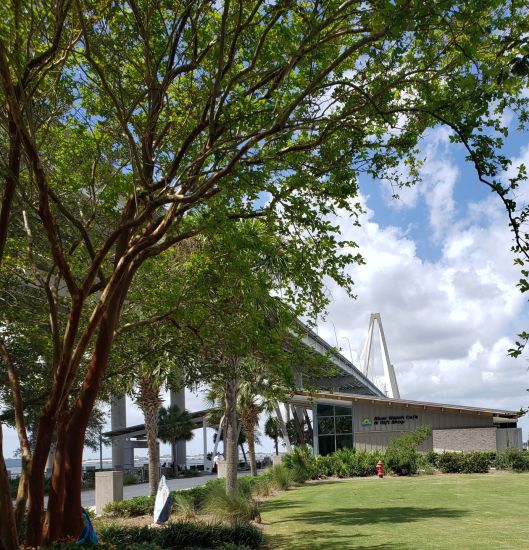
On other days we drove north out of the city. Just over the bridge is the Mt. Pleasant Pier and Memorial Waterfront Park, tucked in under the dramatic harp-like spans of the Ravenel bridge. It’s a gorgeous setting with a view over Charleston. There’s fishing for those interested and a cafe and gift shop for everyone else. Paths wind through the gardens.
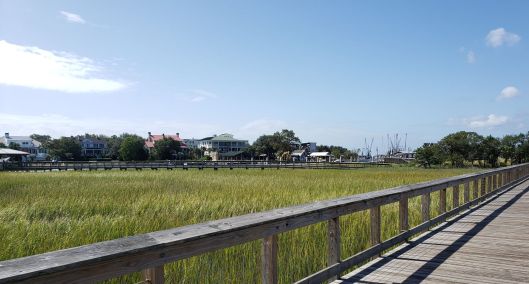
Shem Creek boardwalk
Beyond the park complex is Patriot’s Point, where you can visit a retired aircraft carrier. Nearby is Shem Creek park. We discovered the park accidentally, on our way somewhere else. There is a long boardwalk over fields of spartina grass, with egrets and herons. Boats are moored nearby and navigate the channel out to the ocean.
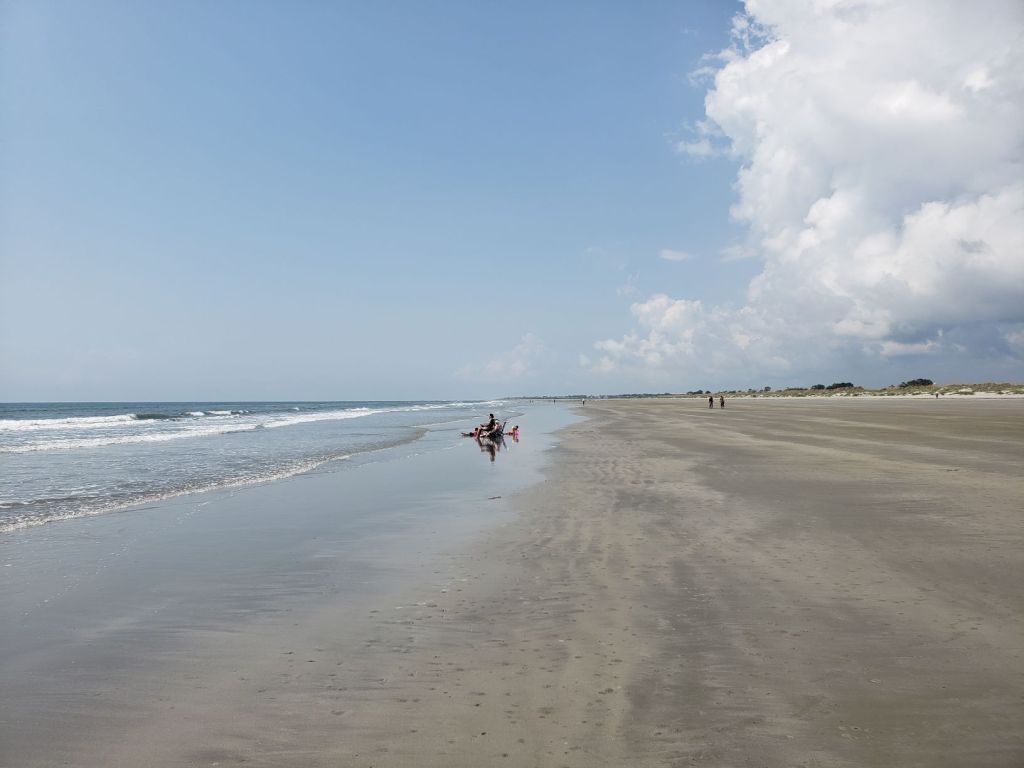
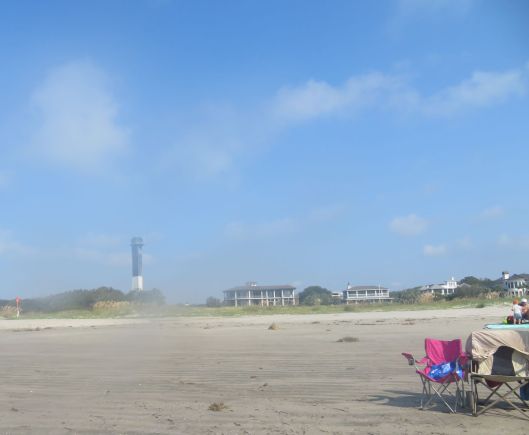
We continued on to Sullivan’s Island, another beach that extends about halfway down the length of the island, Sullivan’s Island in turn becomes Isle of Palms, with it’s own county park.
Sullivan’s Island
One difference we noticed between South Carolina and other places we’ve visited is that there is a lot of private beachfront. I don’t know what the law is, but gated resorts block access to large stretches of beach. You may be able to access these beaches on foot, but the walk would be a mile or more each way. Between mid-May and mid-September, the temperature can be over 80 (F.) and the humidity is often high. A long walk on the beach is not on my to-do list under those circumstances. We stuck to walks that started and ended in the county or local parks and never ran out of beach.
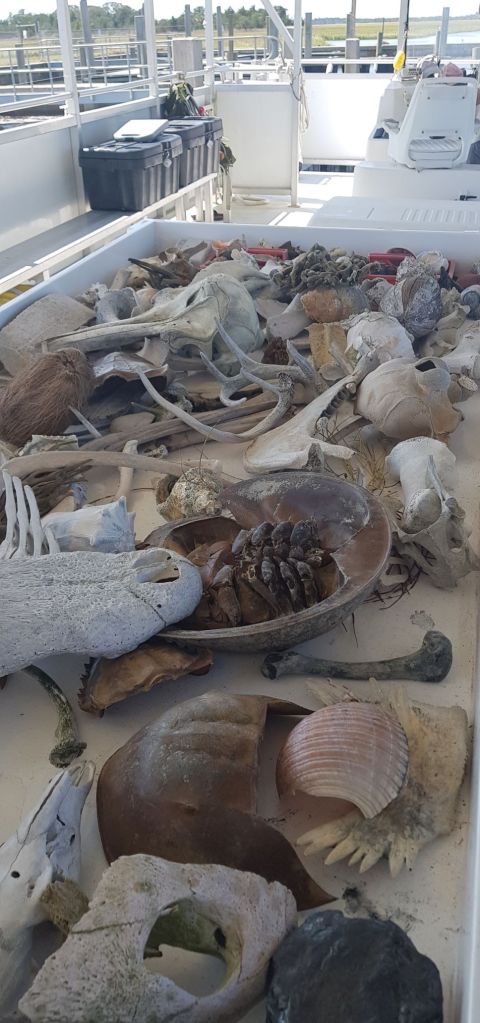
The next stop up the coast was Bull Island, part of the Cape Romain National Wildlife Refuge. It takes a bit more effort to visit because you take a 30 minute ferry ride to get to the island. The boat captains are also naturalists and spend the trip out describing the island habitats and species. They have a collection of materials from the island, alligator skulls, dolphin bones, shells, even pottery from long-abandoned settlements.
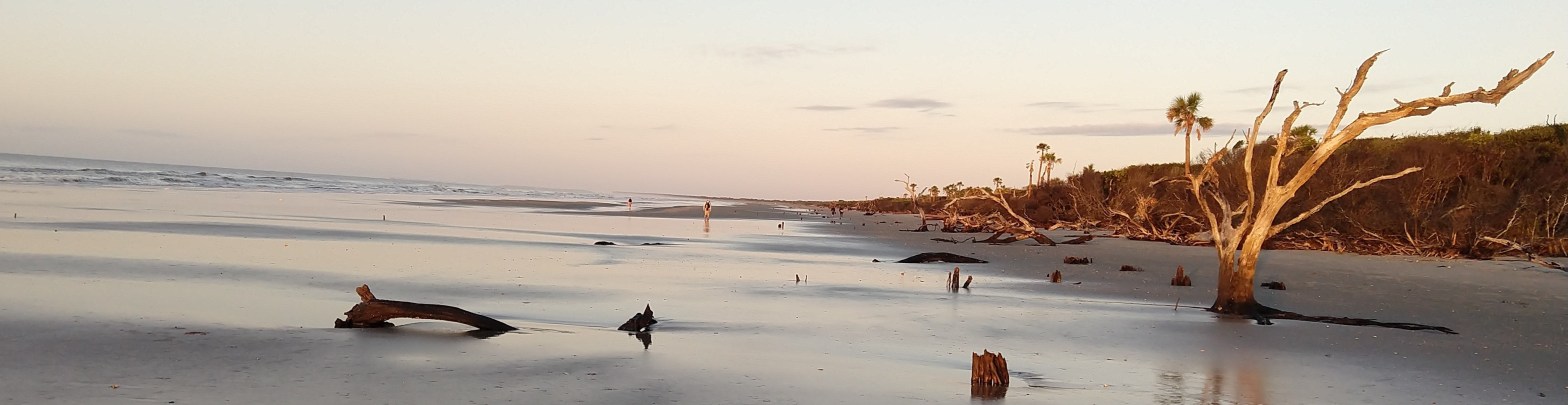
Since the site is a federal property, the refuge status is taken seriously and there are no amenities after you pass restrooms not far from the ferry landing. It takes nearly an hour to walk across to the beach. It was a very hot day when we were out there, 90+, and humid, while the shady path to the beach was swarming with mosquitos. By the time you get to the beach, you have only a half hour until it is time to hike back to the ferry landing, or another four hours until the later ferry. If visitors want to walk to Boneyard Beach, it’s five miles each way. On the beach there are no picnic tables, trash cans, shade, and no rest rooms. Though we brought lots of food and water, we didn’t realize there wouldn’t be places to sit and no shade at all. It would have been a better visit on a cloudier or cooler day.
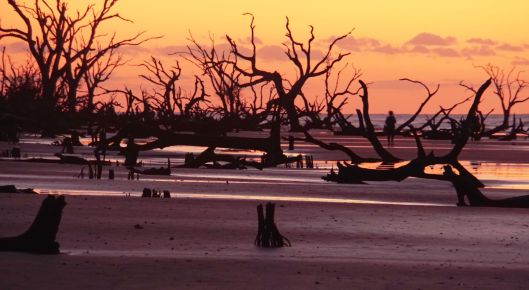
There is another way to visit Bull Island that we didn’t try. Go with a group. Once or twice a month, there are events specifically designed to get people out to the area of drowned trees called Boneyard Beach at sunrise. It’s a photographer’s delight, and a chance to see the beach early in the day. The ferry leaves the landing about and hour and a half before sunrise (five am these days). At the island, a truck with bench seats takes visitors the six miles or so to Boneyard Beach, arriving in time for sunrise. Since no trip is ever perfect, visitors are back on the mainland by 8 am, having little time to enjoy the beach beyond Boneyard once the sun is up, but there’s a lot less walking than the regular visit. The dawn photo here is by a new friend, Linda Miller, photographer and fellow birder. She liked the early visit a lot and got some wonderful photos.
The beaches of South Carolina take some time to get to, and require some preparation if you plan to stay more than an hour. Sunshade or umbrella, chairs, sunscreen, bug spray, swimming gear, picnic, and lots of water. Some beaches have changing rooms and outdoor showers, but others do not. The water is not clear, but it is as warm as the Caribbean. I loved being able to walk right into the ocean and stay in as long as I wanted. Since our visit was after Labor Day and the start of the school year, none of the beaches were crowded, but there were always people out enjoying the sun, sand, and waves.
Visiting the beach in South Carolina:
Take Sunscreen, Water, and Mosquito Repellent. If you forget, you will suffer.
Leave time to get to the beach and back. Roads are single lane, there is little opportunity to pass. Relax, what’s the rush?
Charleston has extremely heavy traffic at rush hour both morning and evening. It helps if you are going against traffic. You may need an extra half hour to get anywhere if you are going the same direction as commuters.
We wanted to avoid the heat of a late summer day and find something interesting to do in an indoor, air-conditioned place that was not a shopping mall. The Charleston Museum seemed to fill the bill. We could have walked, but with high humidity and the temperature hovering around 90 (F.) we decided to save our energy for visiting the museum, and took The Dash, Charleston’s free bus. There are three overlapping routes around the downtown area, and in September it still runs four times each hour from early morning until about 8 pm.
The Charleston Museum has a little of everything. Fossils, animals, history and culture. I saw some of my favorite extinct birds, carefully mounted and displayed together.
There were artifacts from everyday life long ago recovered during local excavations. Every time construction begins in Charleston, material used to fill in the coast or level building lots reveals what people threw away, lost, or that blew away in past hurricanes.
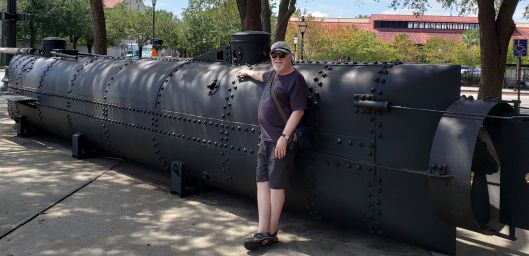
In front of the museum is a full size replica of the H. L. Hunley, a Confederate submarine used in the Civil War. The sub disappeared after it sank one of the Union ships blockading Charleston Harbor in 1864. A search for the Hunley was spearheaded by author Clive Cussler, who used the sub in one of his novels. His group was successful in finding the Hunley in 1995, over 100 years after it disappeared.
The museum collection of this and that made an interesting visit on a day that was too hot outdoors for most humans.
























 Llywindatravels 2025