Making Our Move

We spent October 2020 in Eureka, CA, and moved on to Monterey after that. What brought us back now is our impending grandchild and her parents. That, and Jonathan and I can’t seem to find a way to live together comfortably in hot weather.

Eureka, in far northern California, has very little snow in the winter (annual average snowfall, 1″), quite a bit of rain (annual average rainfall, 46″), and cool summer weather when temperatures rarely top 75o F. How did the two of us who have been chasing summer for seven years, traveling from one warm region to another, always choosing the desert over the garden, end up in a cool place?

I loved all the hot places: the coast of Colombia, Aruba, northern Peru, Darwin Australia, but each of these houses were on the beach or had a swimming pool. In principle, though, I don’t want to own a pool and handle the upkeep. In the US, where air conditioning is widely available, we don’t have to tolerate blistering temperatures, and theoretically we could live anywhere. That’s how we ended up in Charleston, SC in September 2019. We met some lovely people there, and enjoyed our walks, beachcombing, and bird watching, but the heat and humidity created a problem. For Jonathan to keep from dripping sweat on the furniture, the temperature had to be kept at a level that required me to wear a sweater and fingerless gloves.

Where we have found middle ground is in places that don’t require frequent use of air conditioning. We enjoyed our months in Monterey, CA for that reason and now we’re going to give Eureka another try. We’d become completely unaccustomed to rain when we first visited, but the drought that afflicts the entire western US, especially California, is not as bad in this area because there is rain. We feel growing appreciation for water that falls from the sky free of charge, and I will purchase rain pants for walking.

I am enjoying life in a place where almost no one uses or even has A/C. I can open my windows and let the cool air in, and yet I can count on pleasant weather to go for a walk most days.

Unless it’s raining.

The last time we were here we decided against staying because of the regional shortage of health care personnel. We are giving it another try in hopes we can make it work with a bit more effort and greater lead time in making appointments. I have high hopes. As of January 2022, Humboldt State University became Cal Poly Humboldt, adding a dozen new programs in the coming year alone, and doubling enrollment over the next seven year, supported by more than $400 million from the state and federal governments. I am hoping that the expansion will draw more health care professionals to this area and that among them will be the retina specialist I need.

Jonathan found us a perfect house in Eureka, open and sunny, and we plan to stay here for a year to start. Even though we will be out of town for a month now and then on our travels, committing to a full year in one place is a big change for us.

——–What makes Eureka Eureka——– The Kinetic Grand Championship

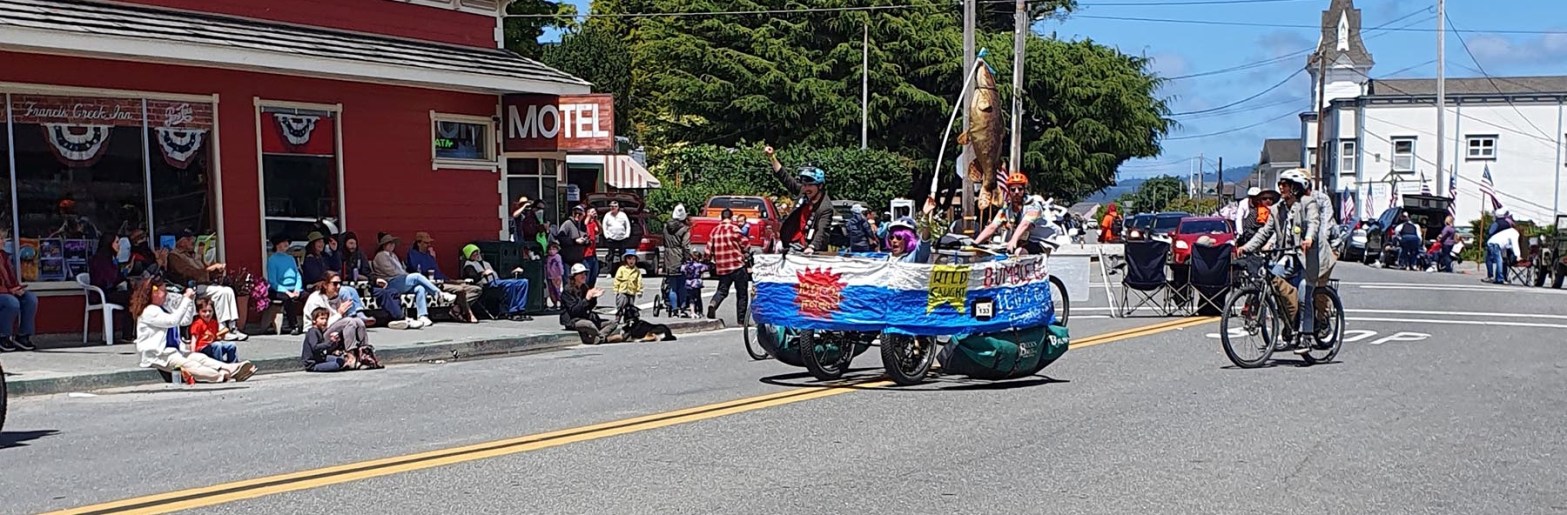
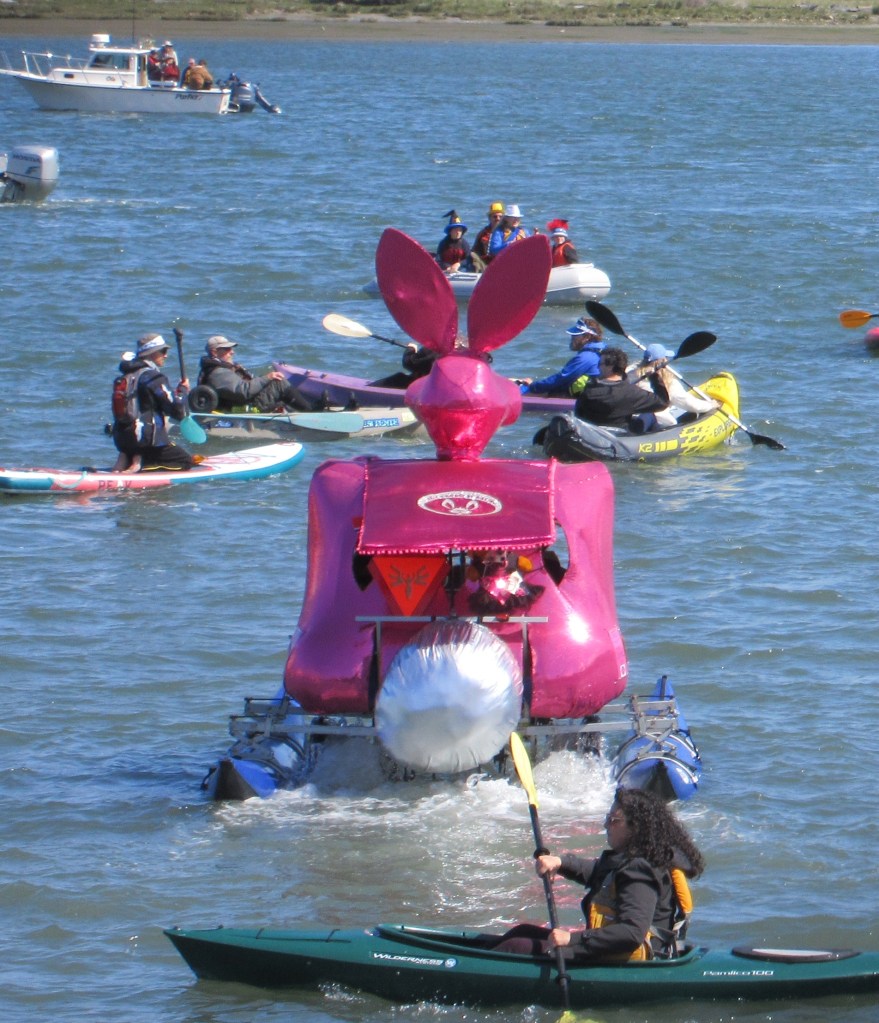
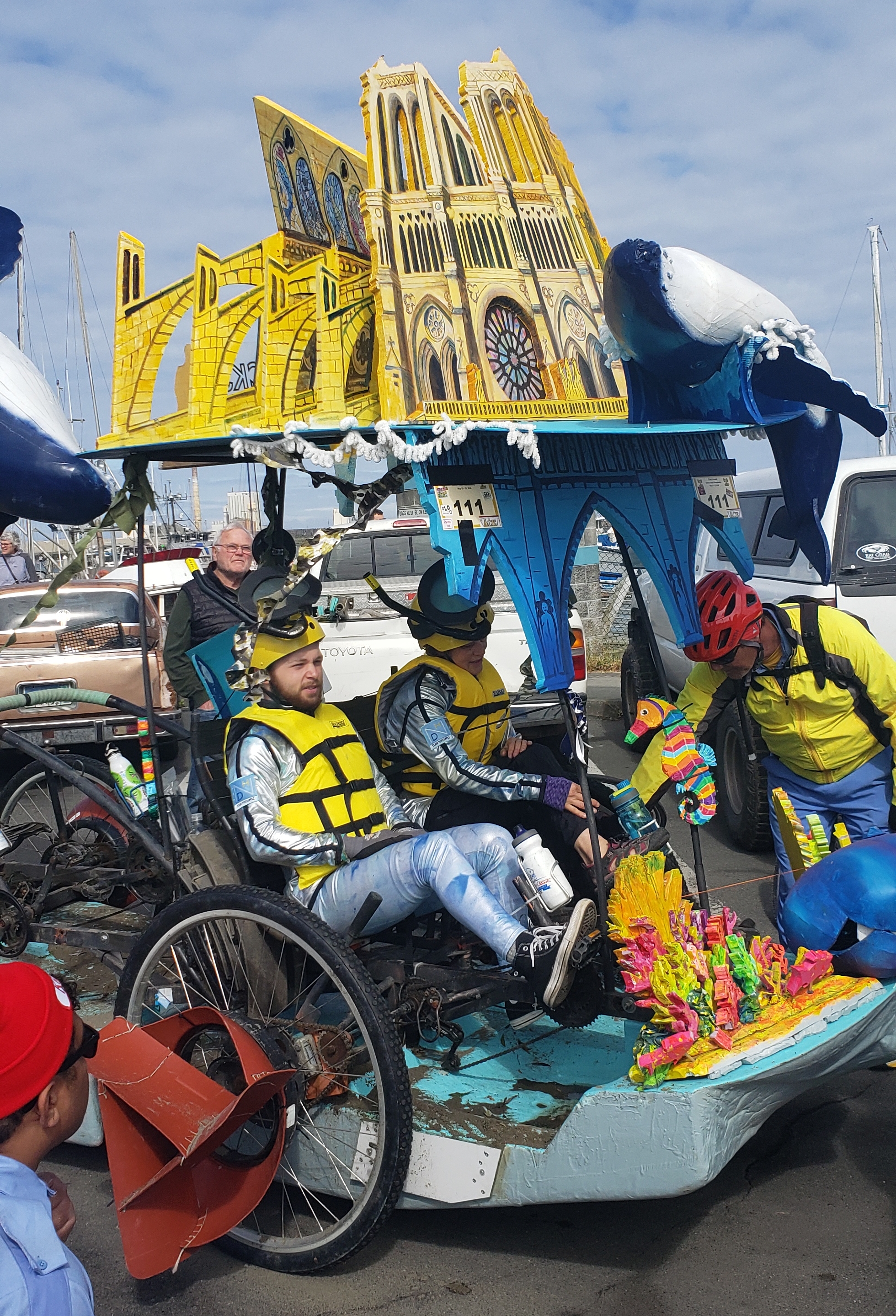
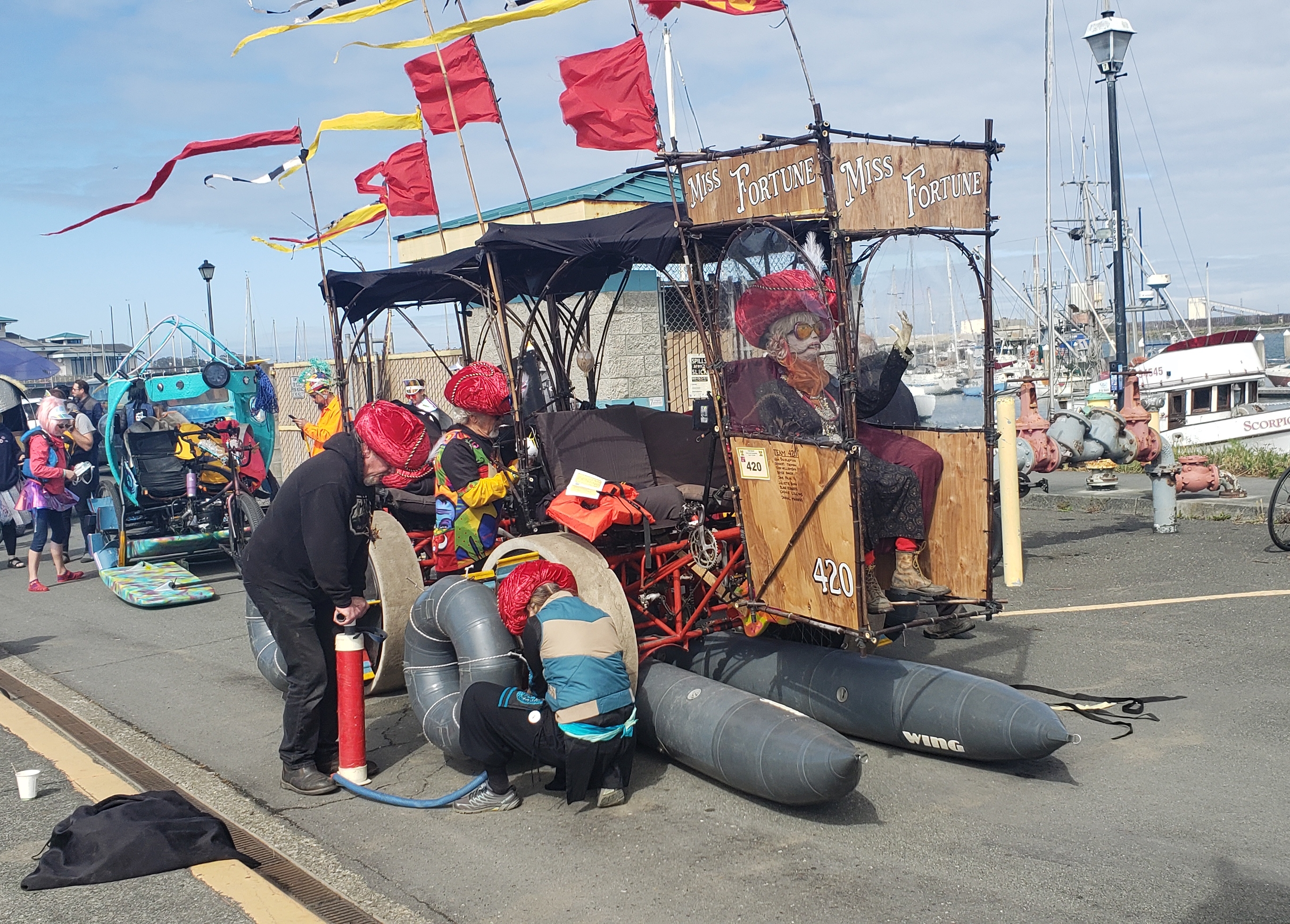
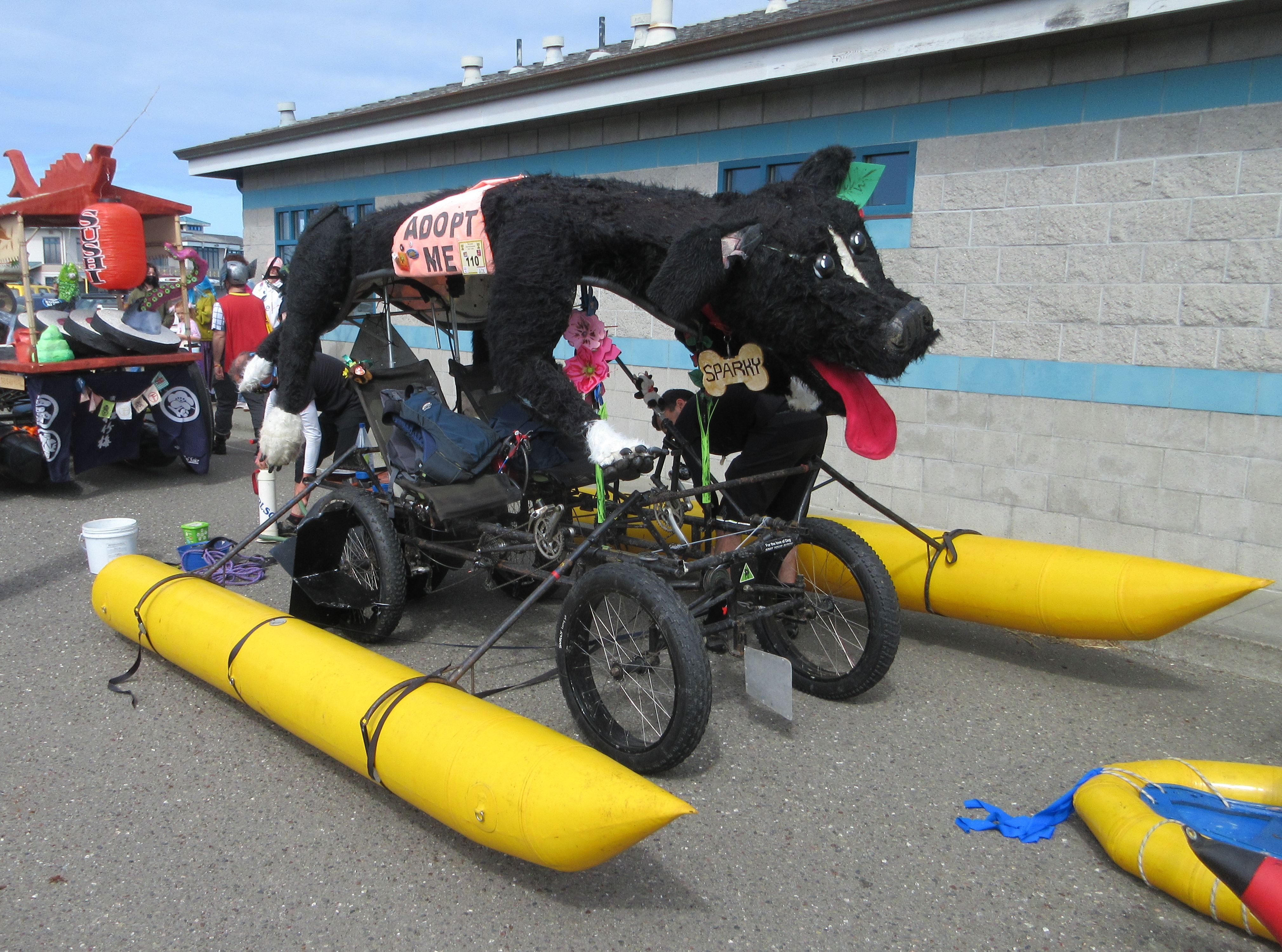
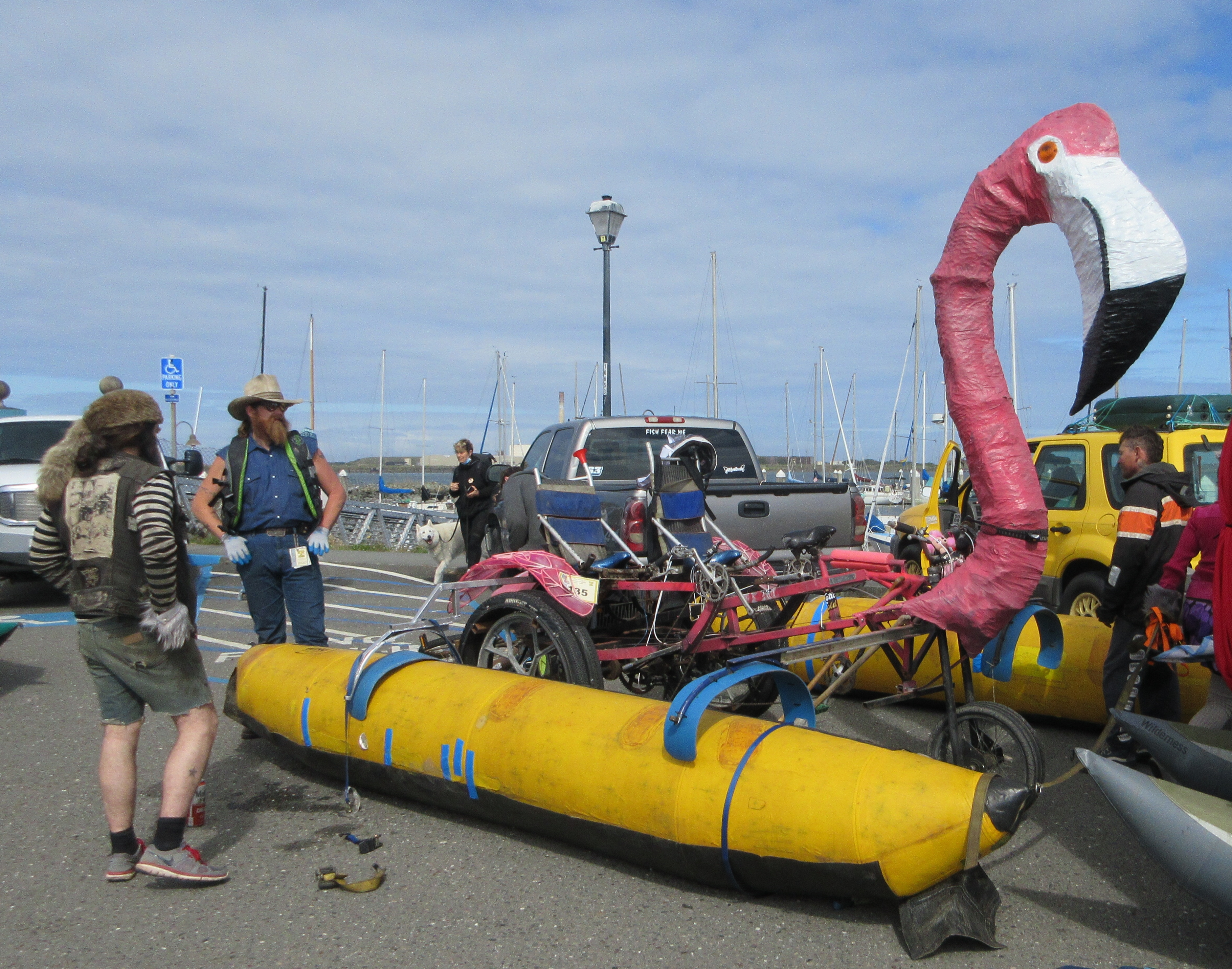
I read some local news and discovered that Eureka’s best known annual event, the Kinetic Grand Championship, was underway on our first weekend in town. Artists and enthusiasts create moving sculptures, kinetic works of art. Over three days, these pedal-powered artworks race along roadways, up and down sand dunes, and with a break to attach pontoons, roll into the water, crossing the finish line around noon on Memorial Day in the center of Ferndale.

In all, these moving sculptures cover miles of roadway and coastline, starting with a circuit of the plaza in Arcata, then going out to the coast, and south toward Eureka on the first day. Day two, competitors take swim in Humboldt Bay. We caught up at the boat launch in Eureka, where a few hundred people walked around the sculptures as they lined up.

One at a time, the sculptures rolled into the water. Crew members began pedaling furiously to make headway against the stiff wind. About 500 yards later, each vehicle lumbered out of the water and continued their land journey south. At the end of the second day, pilots and co-pilots were required to camp out at Crab Beach, about halfway between Eureka and Ferndale on the coast. (We did not camp.)

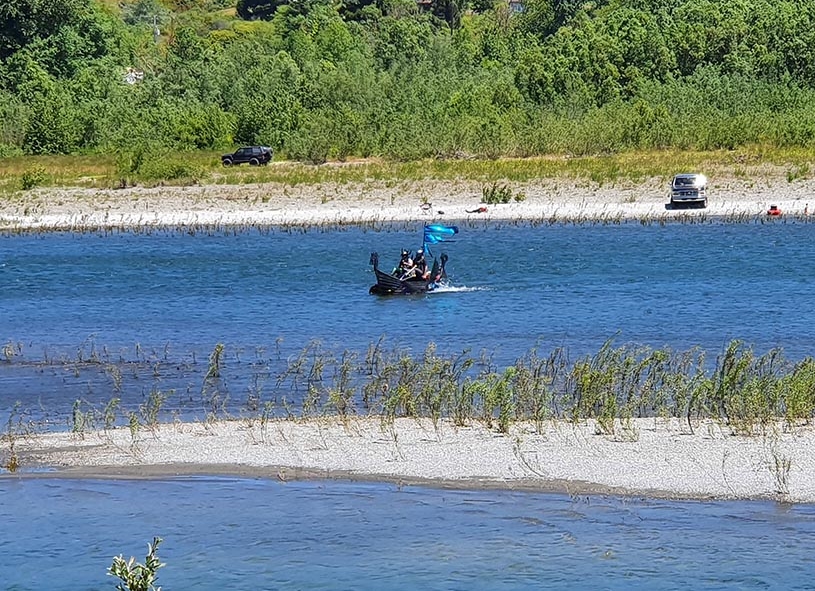
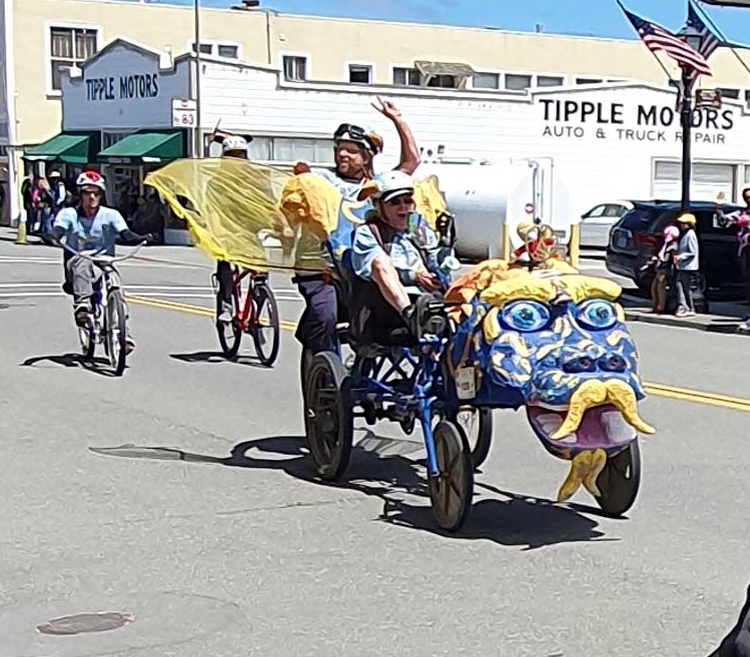
L-R: Vikings crossing the Eel R., crossing the sand bar, and at the finish line in Ferndale.

On the final day, we drove to watch contestants cross the Eel River. Each sculpture had to stop on the shore, attach their pontoons/flotation devices (they are required to carry these with them) and after a longish period of adjustment, enter the water, pedaling like crazy to go upstream to the exit point.

Not everyone opted for the full competition, and a number of pieces were brought to the Eel River crossing or the Humboldt County Fairgrounds where they resumed the land portion of the journey toward the finish line.

After watching about half the entrants cross the river, we drove into Ferndale, wedged ourselves into a parking space, and watched the festivities. There was a wildly energetic band playing, led by a woman in a majorette dress wielding an oversized spatula.

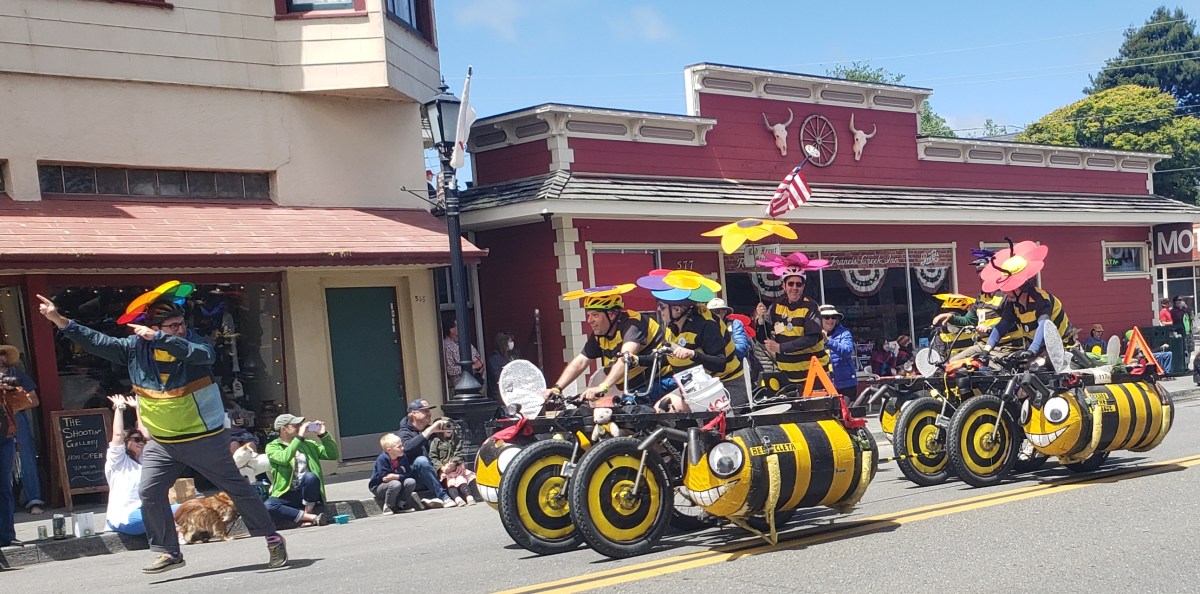
Spectators were dressed in everything from street clothes to wild and crazy getups. We sat down and had a bite to eat, considering it a contribution to local fund-raising rather than a culinary achievement. By the time we got up, the first finisher was rolling down the street, having made much better time than I would have thought from the river to Ferndale. A trickle of finishers began arriving, and after admiring some of our favorites, like the tuna can, the pink lamé camel, the Viking couple, and the bumblebees, we took our leave.

This is a wonderful festival, and though they had to miss a couple of years due to Covid, it seems to be back as wild as ever. It’s a Eureka moment in Eureka.

Want to see professionally produced photos of the race? Here’s a terrific article:

Burning Man Meets the Tour de France

Moving from East to West

Over the past couple of months we’ve considered where we’d like to live in the US. I wanted to try the East coast before making a decision about which coast we’d prefer, since coastal life is our first choice. As much as we enjoyed Virginia Beach, VA and Wilmington, NC, recent family developments convinced us that California is for us, so we’re moving to Eureka, CA for now. (I’m going to be a grandma.)

We stopped in Wheaton, IL for a few days to pack and re-pack, getting items from our storage unit, and leaving other things behind. We stayed with our friend Peggy, and had a wonderful time for such a short stay. One evening was a book discussion with our Wheaton-Glen Ellyn AAUW non-fiction book group. We all read Code Breaker, by Walter Isaacson, about the 2020 Nobel prize-winning scientist Jennifer Doudna and the development of CRISPR gene-editing. The next night was a the AAUW Spice Routes group dinner. Twice yearly, participants hold a themed potluck focusing on the cuisine of a particular region. Our theme was tapas, and we ate small plates from Spain and Portugal, from gravlax to anchovies, accompanied by flan and sangria. This was also a chance for me to catch up with friends I hadn’t seen for some time. It was a wonderful way to celebrate our impending move to new surroundings, though it reminds me how much we’ll miss our Wheaton friends.

Mid-morning, crossing the Rocky Mountains beyond Denver

Early on Saturday we headed to the airport. We flew to Denver, then to Eureka, and were in our new Airbnb by 1:30 pm (Pacific Time). It had been an early start, and by the time we unloaded our luggage, unpacked, and did a bit of shopping, the day was over and the time change had tired us out. It drizzled on and off all day, and we were reminded of how much warmer the weather had been in our previous locations.

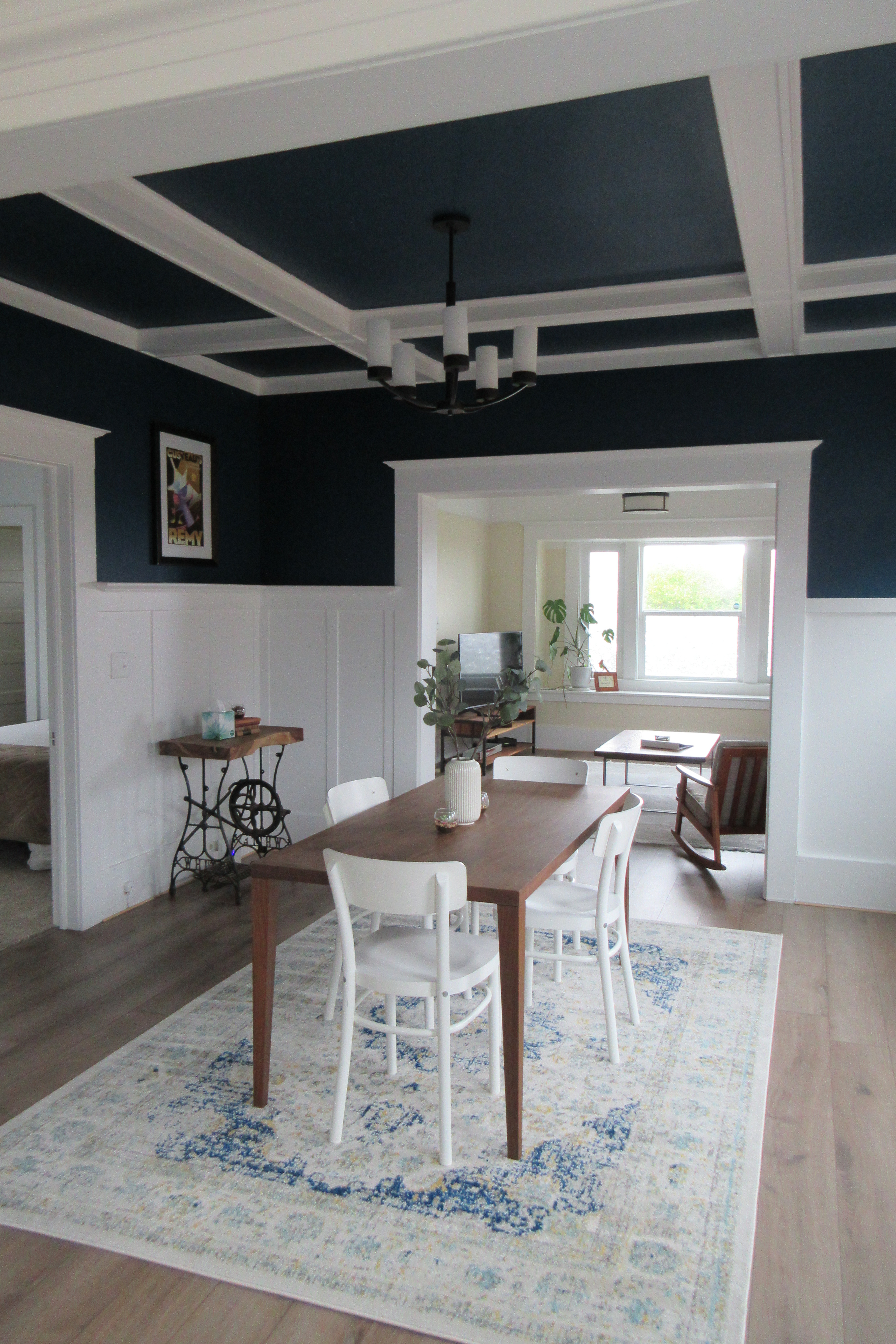
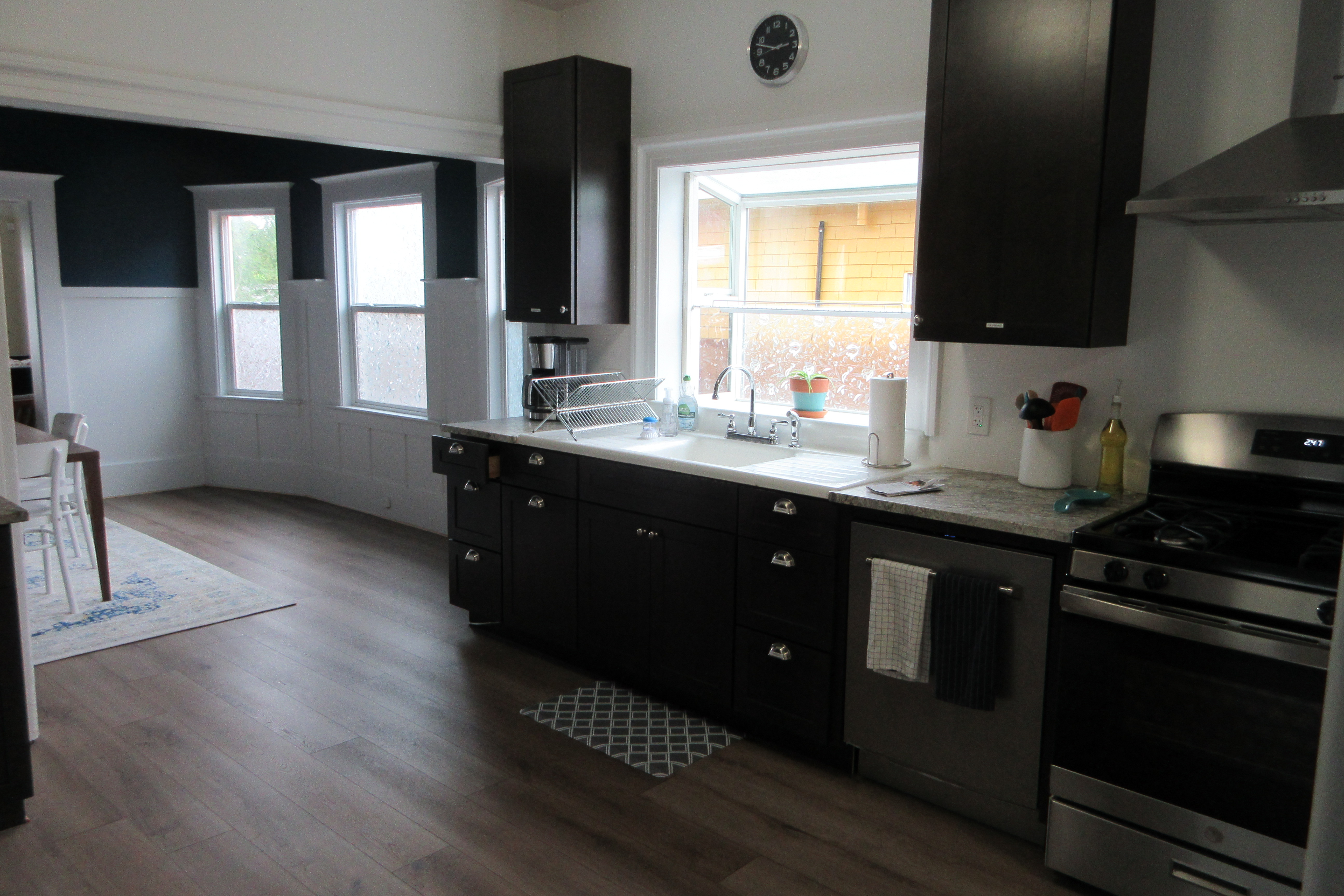
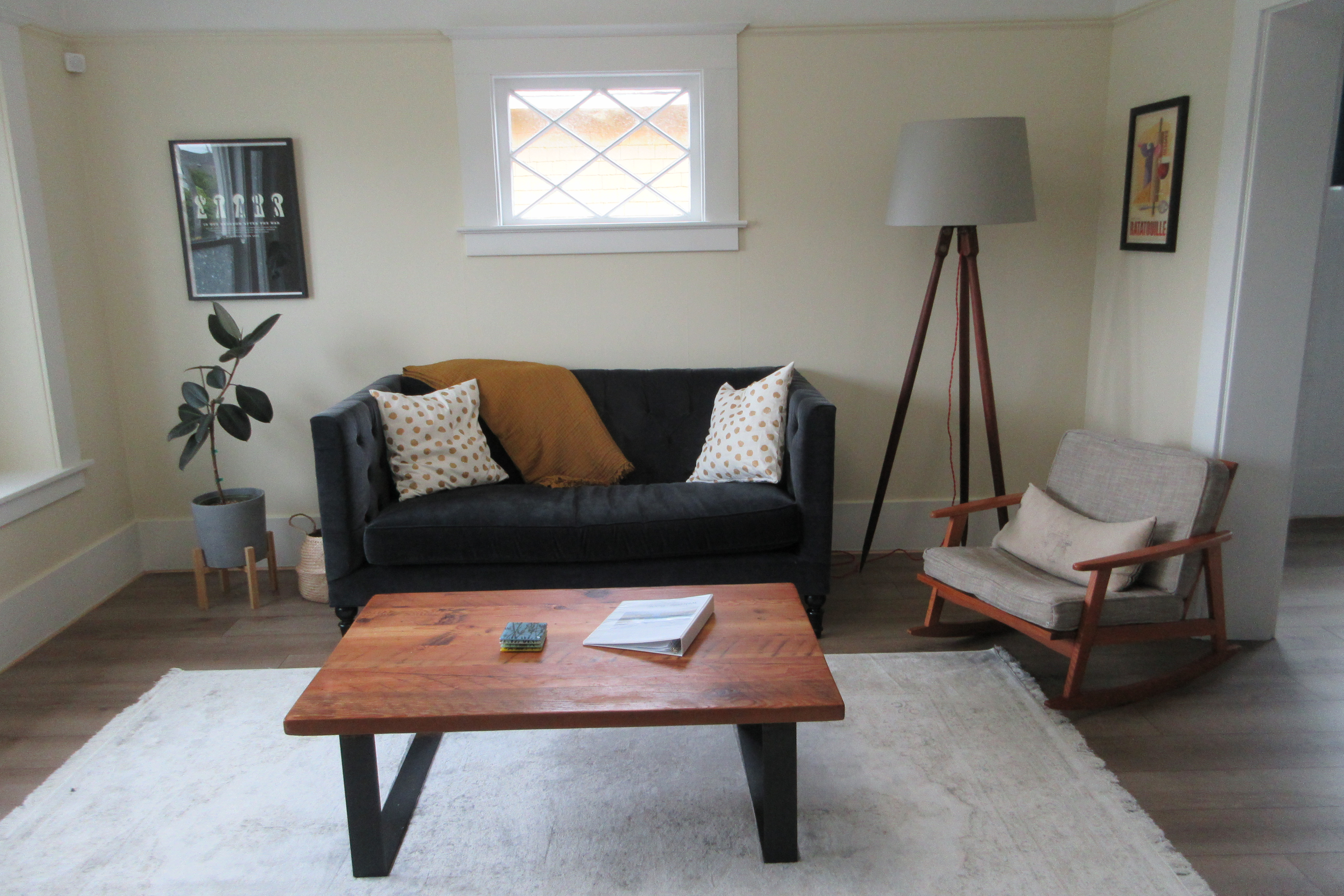
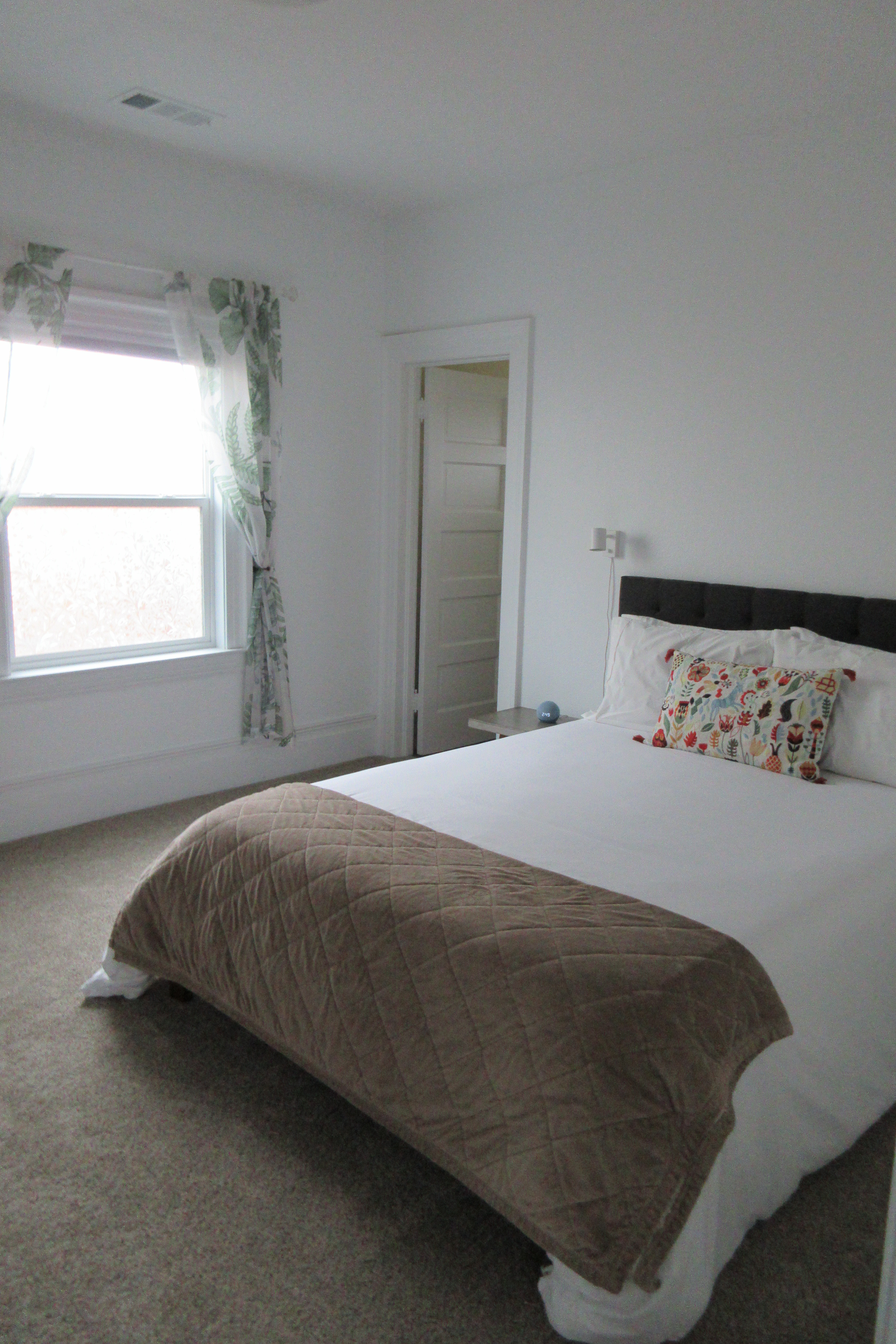
Our new house is bright and comfortable, and we may be the first occupants after a recent renovation. We have an extra bedroom, a bit of outdoor space, and even a garage for our rental car. Airbnb owners often keep a home’s garage for personal storage, so it’s unusual to have one available.

Our house in Wilmington was full of plants, art, and household accumulation, and our Eureka house is just about the opposite, furnished, but with space to add some of our own things. Monday is Memorial Day, and everything is closed, but on Tuesday we begin the process of deciding whether to stay in this house indefinitely and looking at other housing options in the area.

Buy, rent? Thoughts, advice?

A few days in the Outer Banks

As a child, our weather report regularly included the area “from Block Island to Cape Hatteras.” I wasn’t quite sure where it all was, but it sounded interesting. Since arriving in Wilmington, NC, we decided to make a short visit to see Cape Hatteras. When we sat down to plan, we found an enormous chain of narrow islands more than 100 miles long that stretches from the town of Sandbridge and Back Bay Wildlife Refuge that we visited south of Virginia Beach, to Ocracoke Island, offshore east of New Bern, NC. All this is the Outer Banks.

We decided to stay right on the bend in the chain of islands, on Hatteras Island at the Cape Hatteras Motel. We made our reservation, but a week before we were scheduled to arrive we received a call from the manager. Bad weather was due, and they expected flooding and overwash (flooding and sand on the roads). Would we like to change our reservation? We looked at the weather reports and decided to put our visit off for a week, and we were glad we did! The storm was a big Nor’easter. Strong winds pushing water north to south combined with full moon higher than average tides resulted in flooding, tons of sand deposited on roads and parking lots, and high winds that made it dangerous to go outdoors and painful when the wind sandblasts anyone in their path. This was the week that made the news when two houses in the town of Rodanthe collapsed into the ocean. That was just up the road from our motel. Six days later, the sea and wind had subsided and we went for our visit.

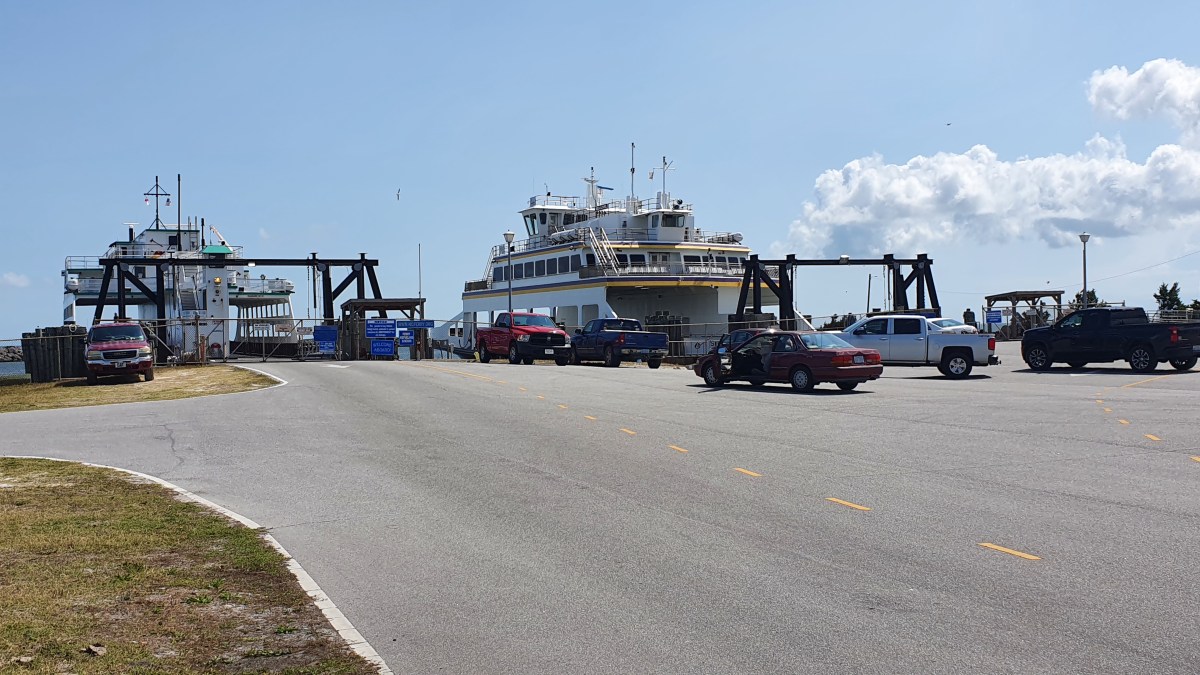
Since we’re in Wilmington, NC, it seemed like a good idea to take the ferry that runs from Cedar Island, NC to Ocracoke Island, drive the length of Ocracoke (about 14 miles) and take the free car ferry to Hatteras. We’d save a couple of hours of driving and see a lot of the area. I reserved a spot on the 10:30 am ferry from Cedar Island, though that meant we had to leave home no later than 7 am to check in by 10 am and not lose our reservation.

Cedar Island ferry terminal

The day came and off we went, arriving at the ferry landing at about 10:02 am, the very last car in line. The lanes weren’t full, so we hadn’t been in danger of losing our place, but people had driven quite a ways to be there. I spoke to a woman who left Chapel Hill with her family at 5:30 am to get to the ferry on time. Once we all checked in, we were told boarding would begin in 10-15 minutes. We waited, and waited. Over an hour later, I saw a couple pin down a man in white shirt and black slacks, possibly a captain, as he walked from one building to another, pointedly NOT approaching passengers. When their conversation was over, I went up and asked the couple what they found out. By now it was 11:30 am with no movement on the ferry.

There was not going to be a 10:30 am ferry. A mechanical problem that we were told earlier was fixed and only needed inspection, was a red herring. Those with reservations would be given priority on the 4:30 pm ferry. However, the ferry takes two hours. The drive down Ocracoke takes about 40 minutes, and the next ferry to Hatteras takes an hour. The earliest we’d arrive at our hotel would be around eight pm. If we drove, we’d be on the road much more of the day than we planned, but leaving Cedar Island by noon, we’d arrive at our hotel by 5:30 pm. We hit the road.

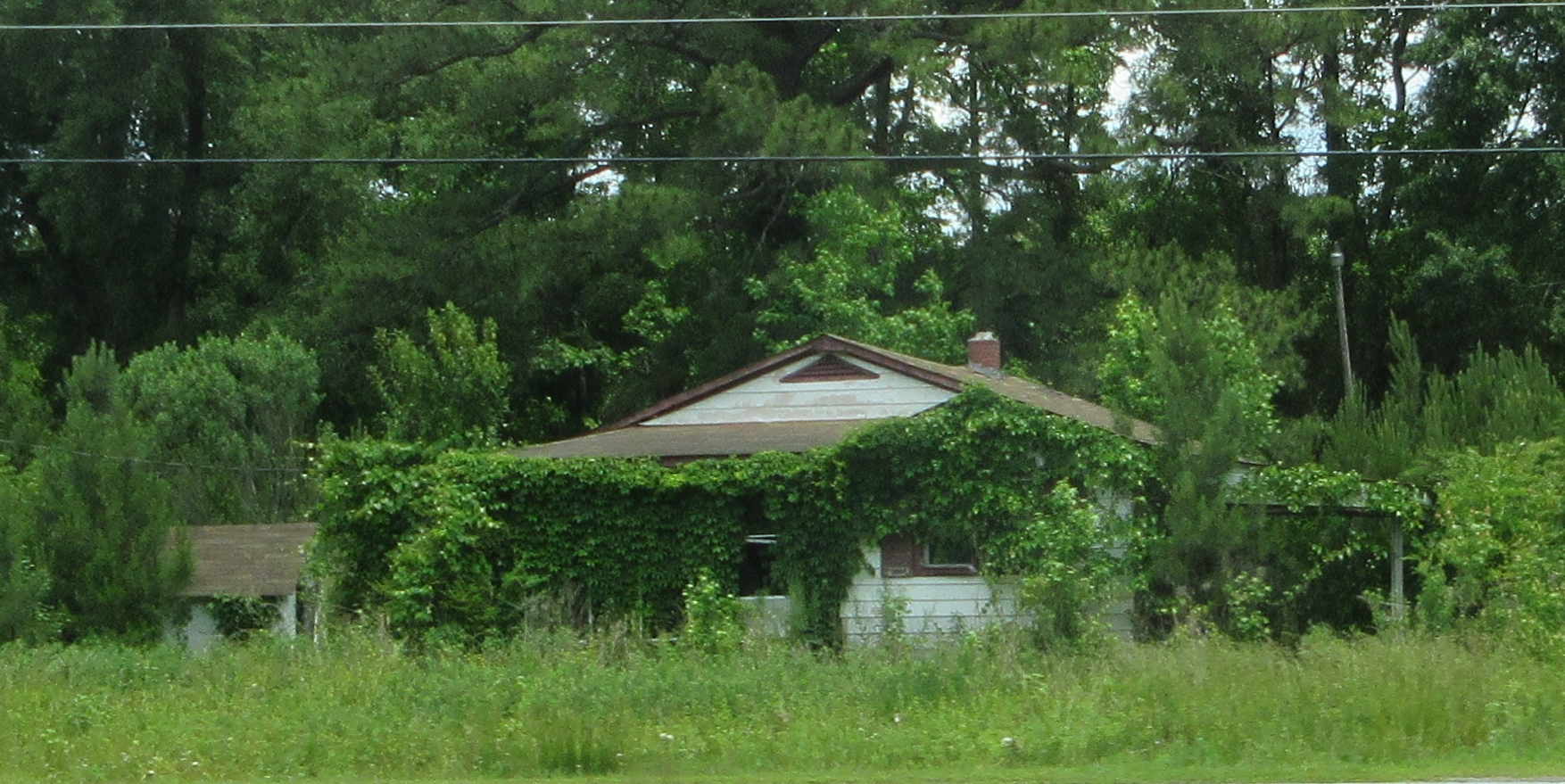
It was a very long drive. We crossed a lot of rural North Carolina, and I was intrigued by the abandoned houses sprouting greenery from windows and doors. There was also evidence of rural poverty when we mistook unpainted houses for abandoned ones.

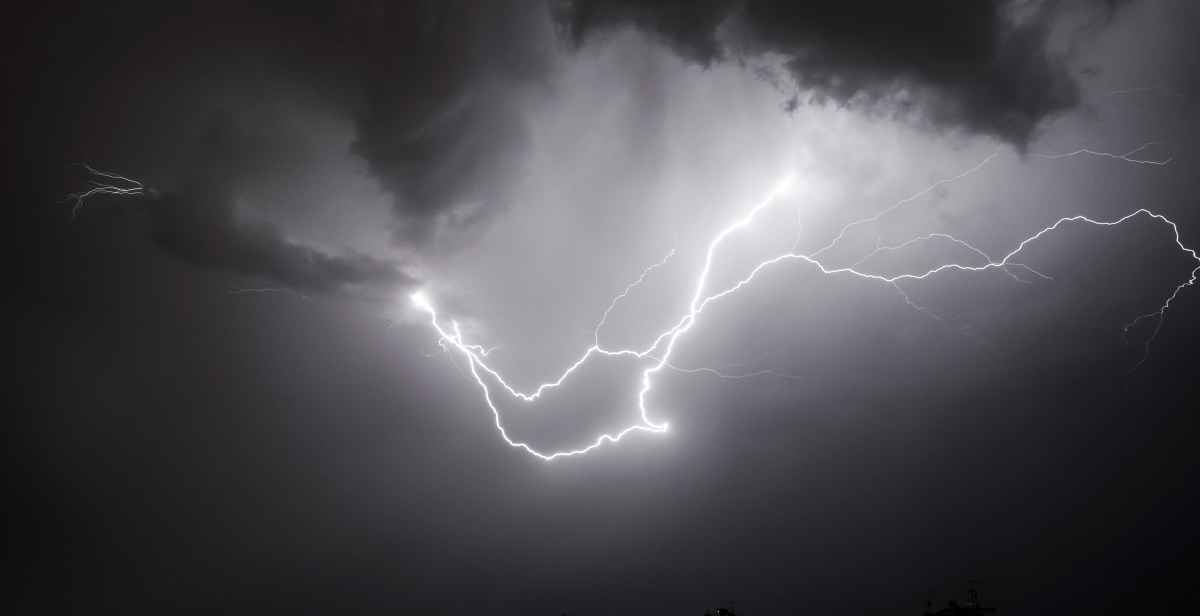
On the last stretch of highway heading east for the shore, the wind suddenly picked up and blew so hard that I looked out the window to see if the sky was green or whether there was a funnel cloud nearby. It was dark and gusty. We outran the storm, though it caught up later. Finally, we crossed the first bridge over the Alligator River and then the Croatan Sound and Roanoke Island and made it onto Bodie Island. We turned south along the long, narrow string of islands toward Hatteras, and arrived at our motel around 5:30 pm. Though we’d spent the day sitting in the car, we were tired. We took a short walk on the beach, and had dinner at the Diamond Shoals Cafe nearby. Back in our motel room, we heard the storm breaking and stepped onto the covered deck to watch. The wind howled, rain poured down, and lightning struck in long horizontal lines over the ocean. We were lucky to have been under cover.

Cloud to cloud lightning, horizontal in the sky during the storm (Internet photo)

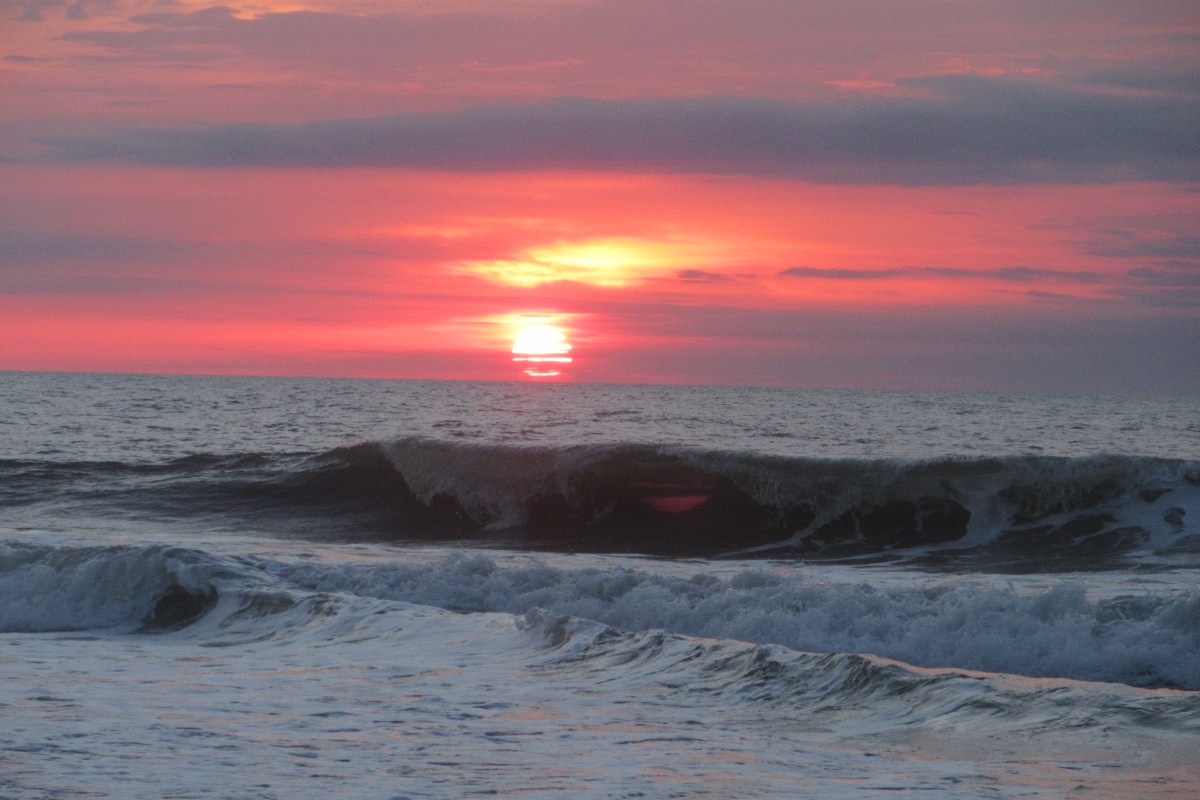
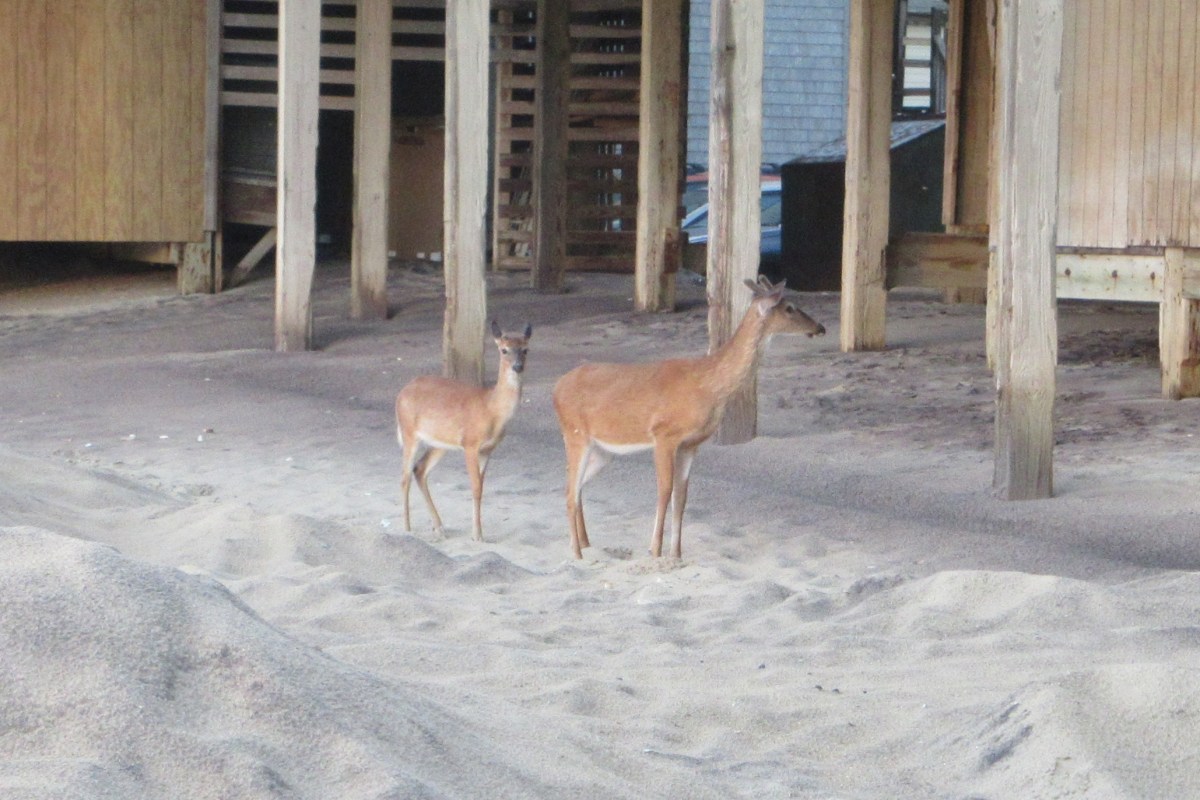
We saw the full moon the next morning when we got up to see the sunrise. 5:45 am is a bit earlier than I am usually awake, but it was worth it to see the sun come up over the waves and climb above the clouds. We spooked a pair of deer on our way back to the motel. I was as surprised to see them on the beach as they were to see us.

Deer scoping out our motel

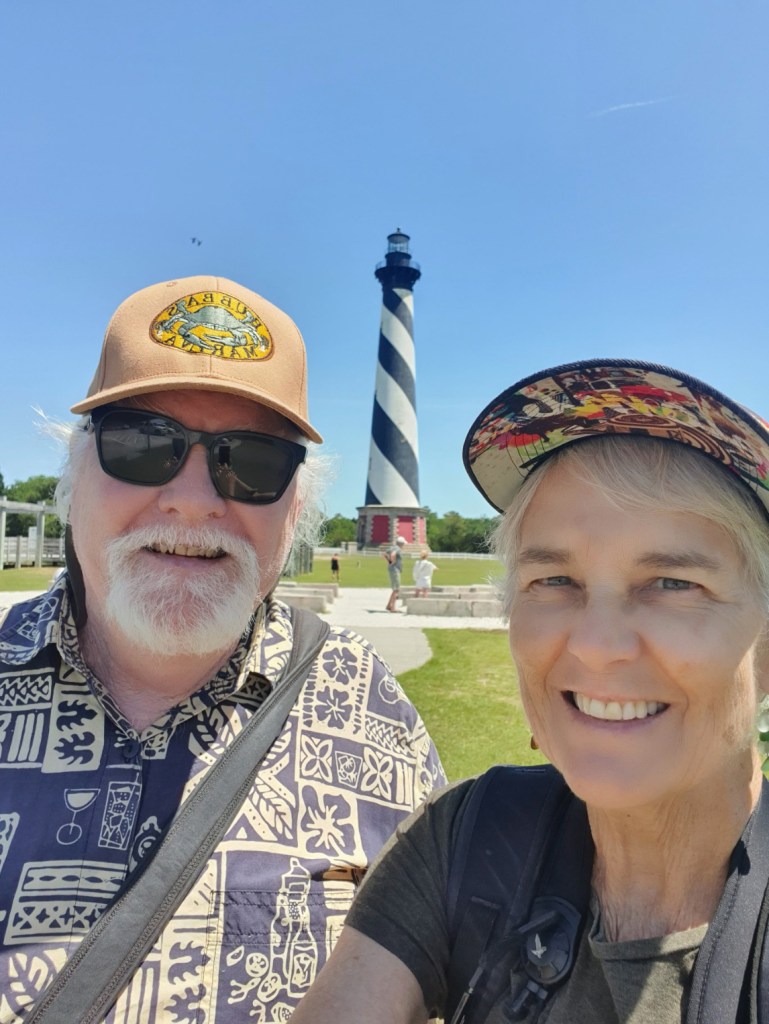
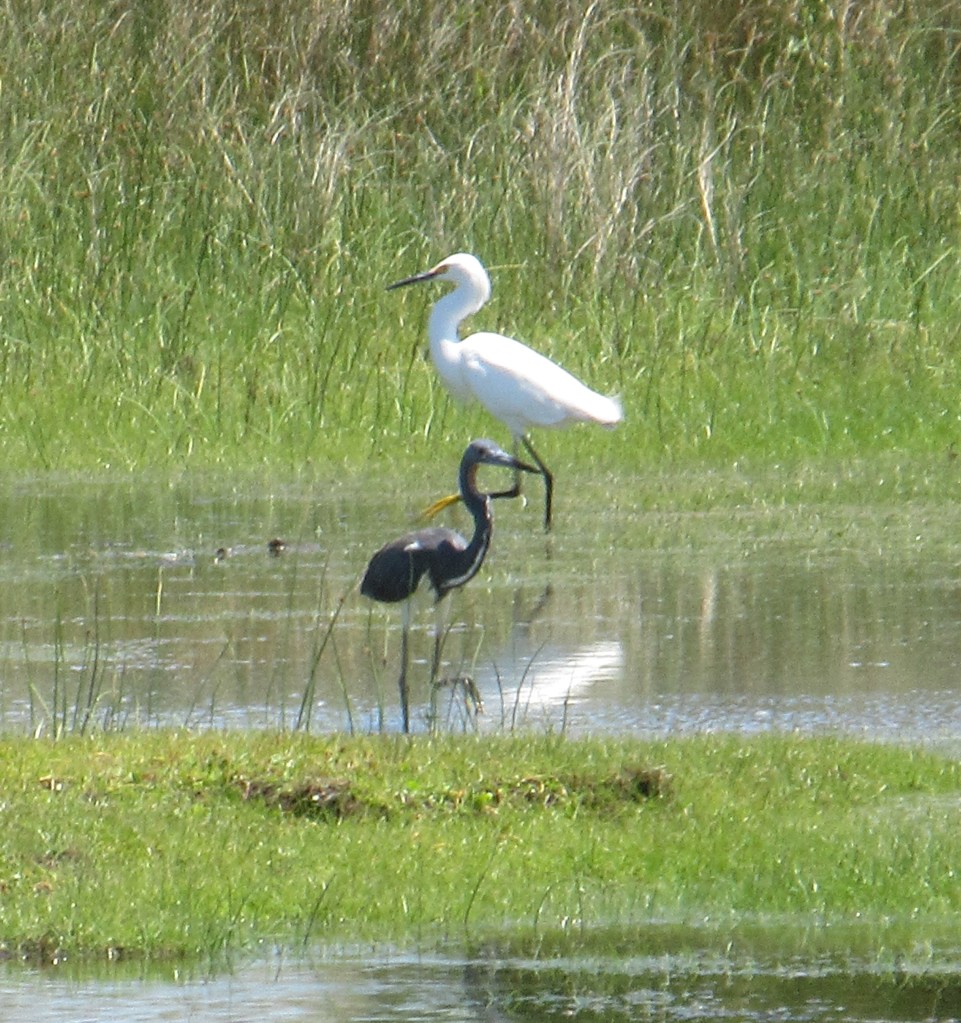
Later, we visited the Cape Hatteras lighthouse, stopping along the way to look at shore birds wading in the shallow pools at the end of Lighthouse Road. We walked on the beach out toward the point where the coast changes direction, different currents mix, and the water is shallow and roiling with sand–to me this is the Cape Hatteras.

From the lighthouse we crossed the road to the Buxton Woods Trail, to see some of the inland part of the island. The path is shaded and winds through the trees. It was far too late for birds, and on a hot day, lovely to be under the trees.

Heron and egret

In the early evening we met a friend from years ago who now spends part of each year in Avon, NC, just north of Hatteras. We sat and chatted on his deck overlooking the ocean as the sun began to set, watching the waves and the birds that floated by. This was a perfect day. We moved on to have dinner at Oceana’s Bistro where they’ve invented a sort of extended tortilla cheese flat bread called a “griller.” Jonathan had the one with mushrooms, artichoke, and other things that was delicious.

With only one day left, we got busy early, getting up to drive north to the Pea Island National Wildlife Refuge. Unfortunately, during this time of year when birds may be nesting, a lot of the refuge is closed off to visitors and there doesn’t seem to be a place where visitors can find out what is open on any given day. We made the best of it and saw some good shore birds on the sound side of the sand spit, then crossed to the ocean side to look at some others.

Pea Island National Wildlife Refuge–Ocean side

After a stop at Scones and Muffins for sustenance, we returned to the motel and then decided to visit the local museums in Frisco, first the Native American Museum, then the Graveyard of the Atlantic Museum. The Native American Museum was a labor of love created by a local man, Carl Bornfriend, who collected Native American objects wherever he found them. Now a non-profit foundation, the collection has grown to include thousands of objects. Displays line the walls and walkways at the museum and are so varied that there is something to see at every turn. Outdoors is a nature trail.

Frisco Native American Museum

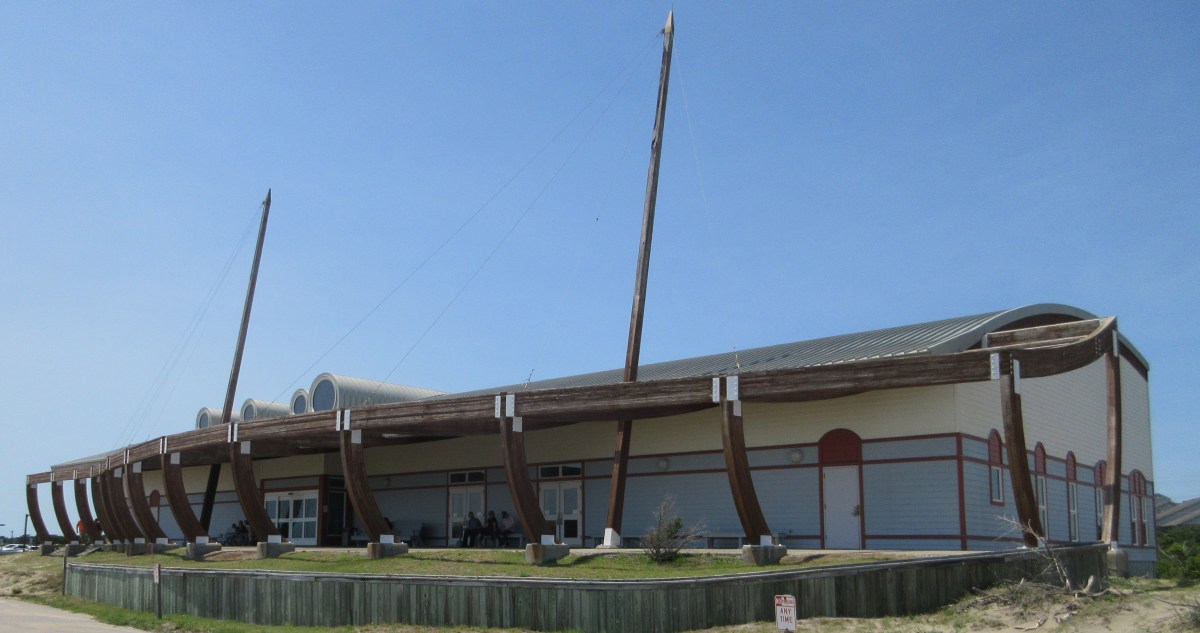
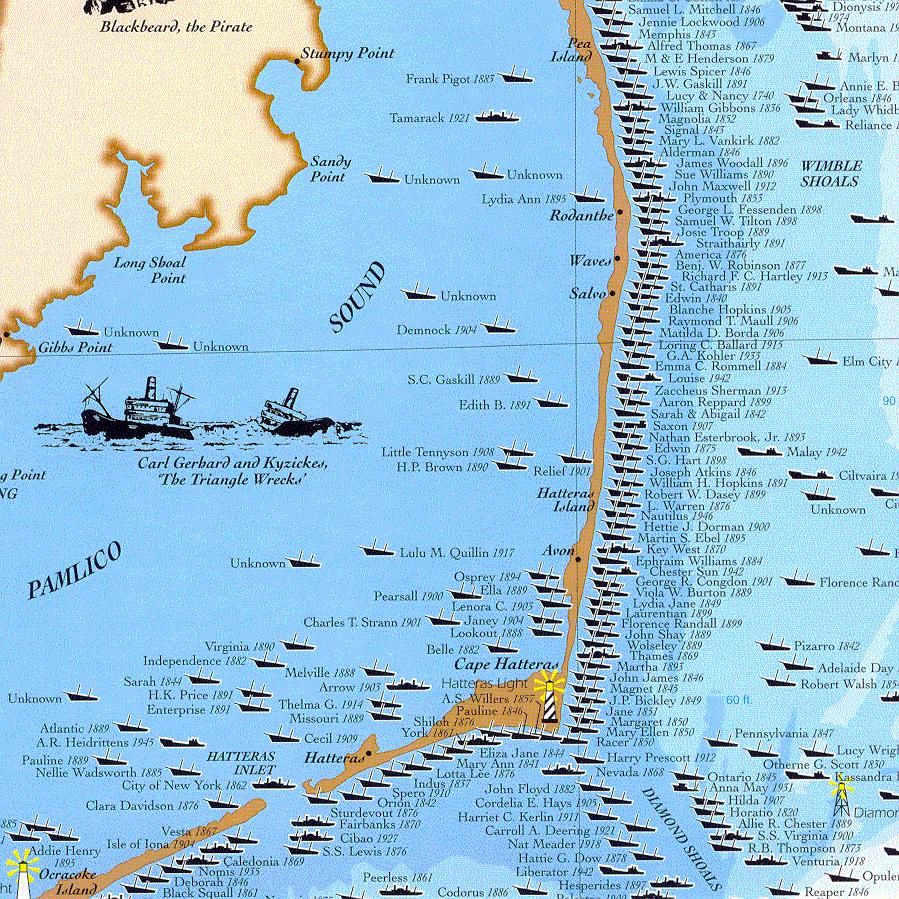
Our second stop was the Graveyard of the Atlantic Museum, also known as the shipwreck museum. The building is reminiscent of the skeleton of a ship, and the exhibits cover anything related to ships. The North Carolina coast deserves the graveyard name, as there are several thousand shipwrecks in the offshore waters. In addition to famous wrecks, the museum includes stories of famous sea rescues, and shows the development of maritime technology, including scuba breathing apparatus, and underwater cameras. An infusion of Covid recovery funding is allowing the museum to expand and update its exhibits.

At the Graveyard of the Atlantic museum, the exterior patio is shaped like the framework of a ship

After a late afternoon beach walk, we had dinner at Cafe Pamlico at the Inn on Pamlico Sound. The food was delicious. There was live music, and I always hesitate to sit in a room with live music in case it is too loud for conversation. When I mentioned this, we were seated far enough from the performance area that we could hear the very enjoyable playing, and still talk to one another.

We planned to take the ferry on our return trip, but when we looked at the three hours of ferry ride and the four hours of driving, it added up to another long day. By driving back the way we came, we’d give up a visit to Ocracoke Island, but get home mid-afternoon. I cancelled our ferry reservation and we packed up. The next morning, when we were already a half hour down the road, I received an email from the NC-DOT ferry people letting me know that not only was the ferry cancelled, there would be no other ferries running between Ocracoke and Cedar Island that day due to mechanical problems and Coast Guard inspections. They were sorry they would not be able to take us anywhere and we’d have to find another way to the mainland.

We might have gotten up, driven to the landing and gotten in line for the shorter (one hour) ferry, arrived on Ocracoke, driven down that island, and then found that there would be no ferry. That would have added about four hours to the four and a half hour drive. I was grateful that we had decided against the ferry.

Some shipwrecks of the Outer Banks. It really is the Graveyard of the Atlantic (Internet photo)

Cape Hatteras is an adventure. We watched lots of kite surfers along the shore, went bird watching, even watched as a tiny biplane towed a huge advertising sign over Nag’s Head and Manteo as we drove off the island. We surprised deer, and avoided getting stuck in the drifts of fine, pale sand heaped everywhere after last week’s storm. For boating, fishing, surfing, or any other water sport, Hatteras is a wonderful spot. There are miles of beaches, and though there’s hardly any beach glass, there are sea shells and smooth rocks to fit any pocket. Sunrise and sunset are a beachgoers delight. Watch out for storms, high wind, beach erosion, rip currents, and nesting wildlife, and you’ll be just fine.

Music and Art in Wilmington, NC

We were fortunate to arrive in Wilmington in time to see the North Carolina Symphony perform at the Wilson Center (Cape Fear Community College). The program featured Scheherazade, by Rimsky-Korsakov, a piece we knew would be enjoyable. What we didn’t realize was that was the second half of the program. The piece to be performed before intermission was much more ambitious, a Percussion Concerto by Jennifer Higdon, a contemporary American composer. She wrote it for Colin Currie, who was performing the piece. We seem to have stumbled into something special. The work was written in 2005, and won a Grammy.

Seeing the stage, I assumed this work was played by a percussion section, as there was a marimba on the far right of the stage in the position a soloist would stand, and next to it was a vibraphone, with space for another player. On the other side of the conductor were two other places. On the far left was a drum kit with bass and snare drum and a variety of cymbals, and just to the left of the conductor was a rack and table that proved to hold small clicking and tapping items, a library of woodblocks. Colin Currie played them all.

Colin Currie, percussionist (NC Symphony web page)

He didn’t rush around, but played at one station, then walked to the next and the next, moving across the stage and back. His shift in position was not distracting, and it was fascinating to be able to see him clearly as he played, often with two mallets in each hand. The piece was interesting, varied, and we were delighted to have been there. After the intermission, Scheherazade was a pleasant part two, restful and familiar.

It was the final concert of the season, our only musical experience in Wilmington. We decided to check out the local art museum, the Cameron Museum. The museum is not large, but has some interesting works indoors and in the sculpture park around the building. With apologies to all the artists mentioned, I seemed to find connections between the pieces I saw with artists of other times and places.

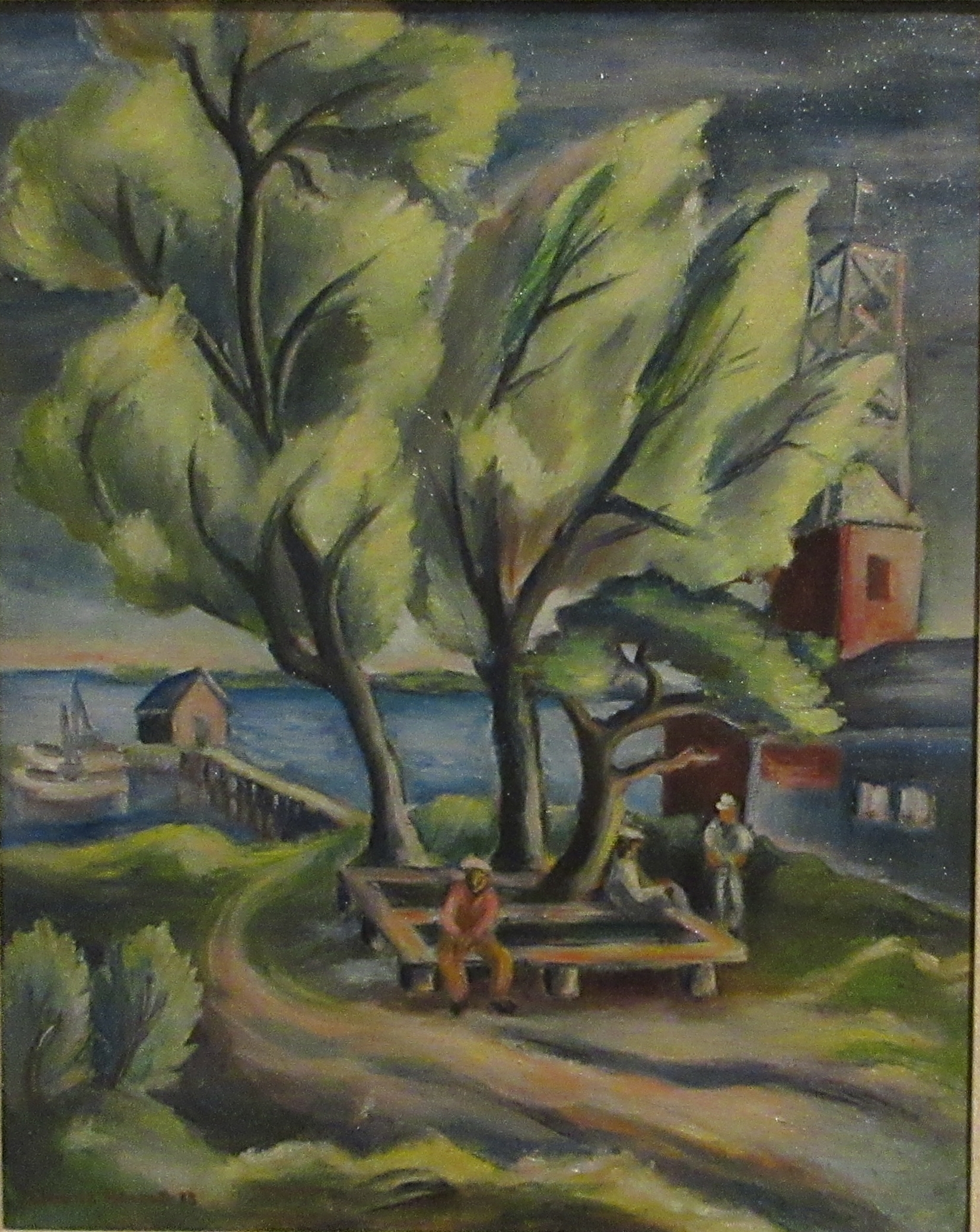
When I saw this painting by Claude Howell, it looked very familiar. Later, I realized it reminded me of work by Thomas Hart Benton.

Left: Claude Howell; Right: Thomas Hart Benton

We passed a painting that made me think of Picasso:

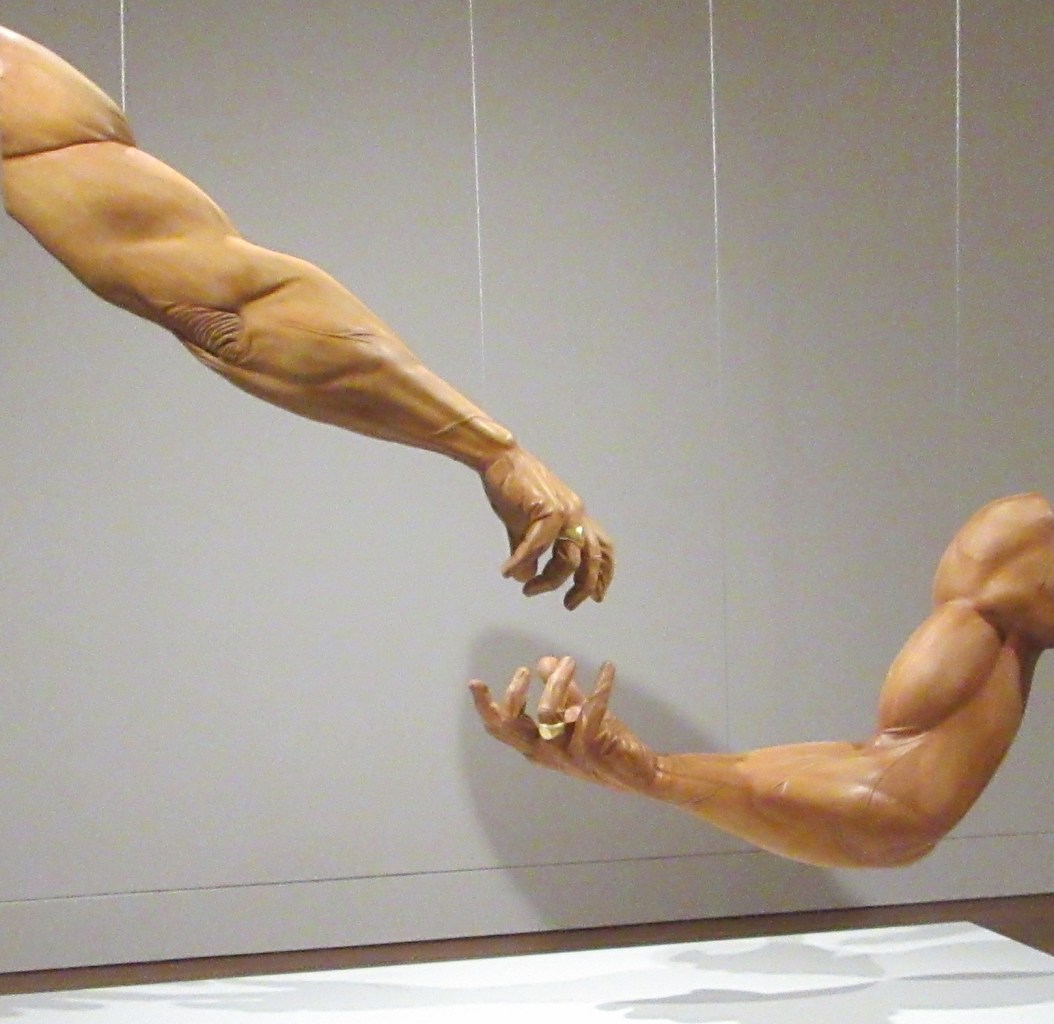
In the sculpture gallery, we saw a take on Michelangelo:

A staff member suggested we be sure to visit their current installation, Flying School (Ecole d’Aviacion), by Diane Landry. It was wonderful. Here is a clip:

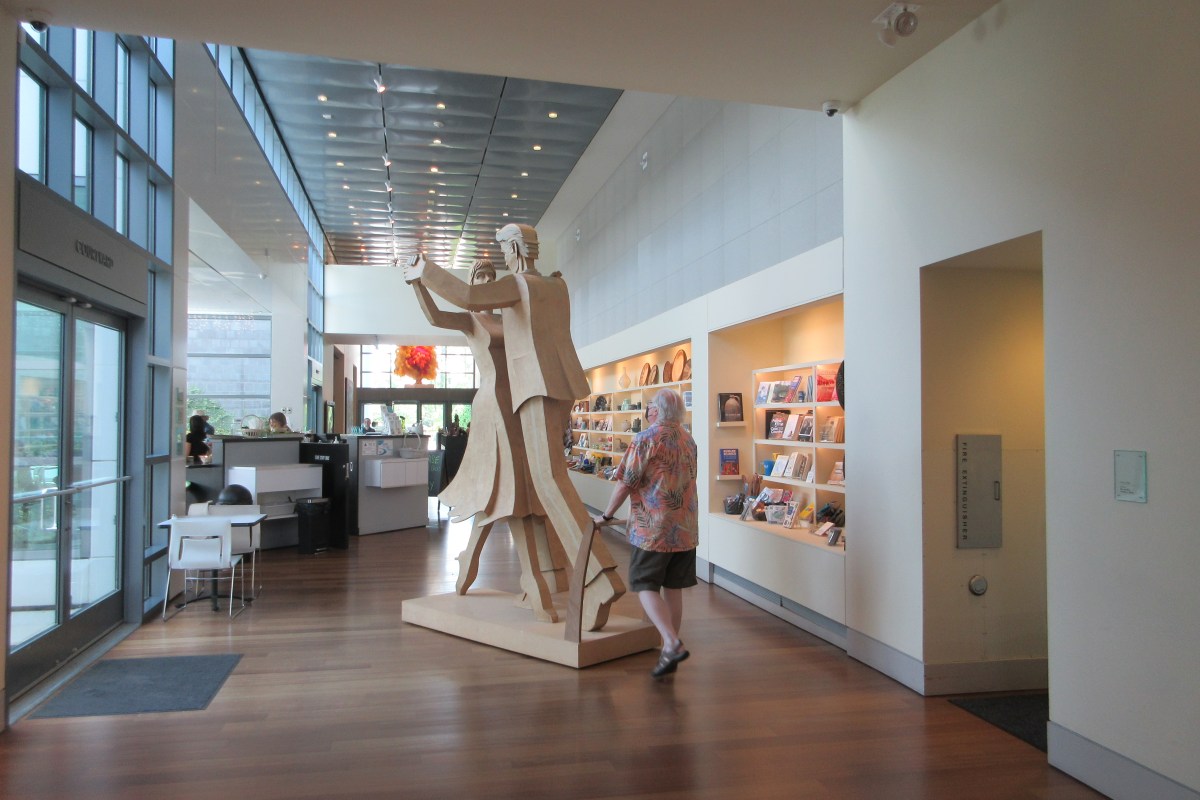
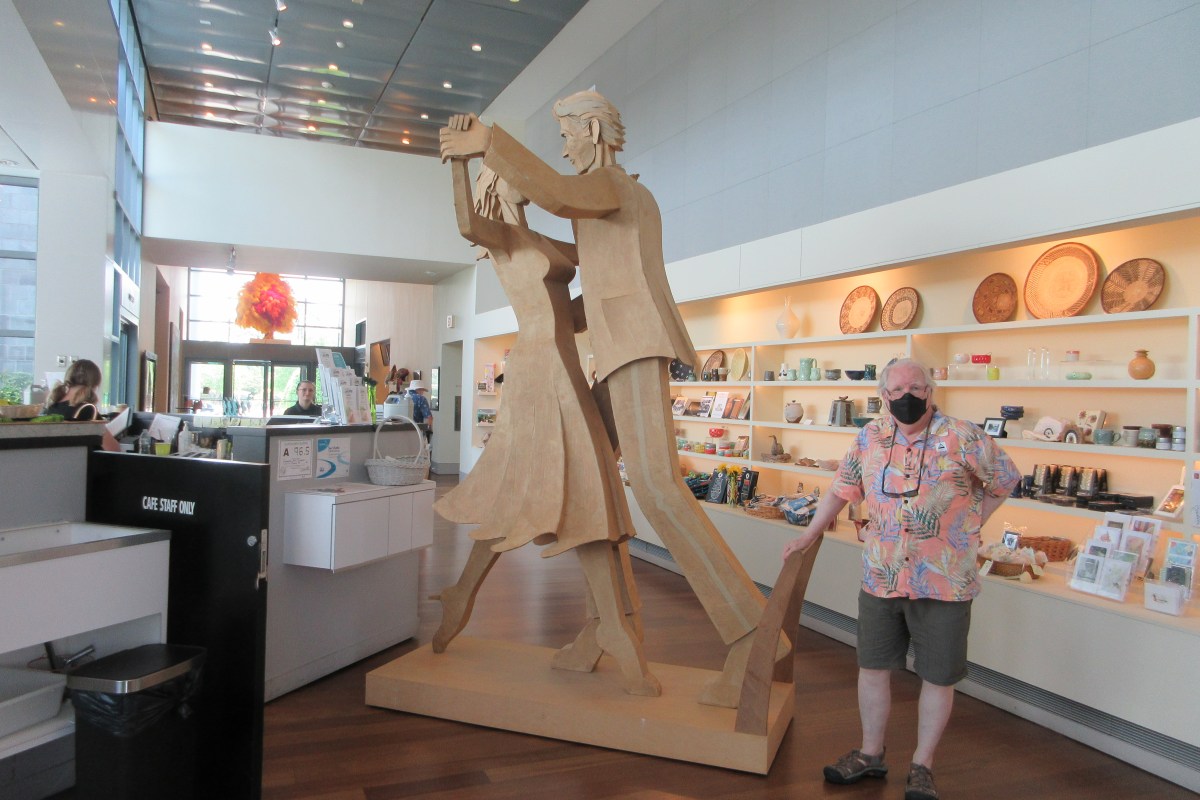
Before we headed for home, Jonathan followed the instructions on this big dancing couple and took them for a stroll. It was allowed, but the attendant was nervous.

A thoroughly enjoyable visit.

Around Wilmington, NC

There are a lot of things going on in Wilmington and the surrounding area. May has arrived and people are preparing for the high season of visitors, Memorial Day to Labor Day. Downtown Wilmington is gearing up. A road project blocks quite a bit of the Riverwalk this week, along with a stretch of Front St. Across the river, the battleship North Carolina is getting ready, too, with a section covered by scaffolding and covers over the smokestacks. Presumably, all the work will be completed soon.

In contrast, we visited Southport, just under an hour’s drive south, at the mouth of the Cape Fear River, and they are already rolling for the season. Shops line the street leading to the fishing pier, and there was lots of parking available on the Wednesday we were there. Southport has a comfortable feel. Our arrival coincided with the first craft/farmers market of the season, and we looked at all the things on offer before moving to the shore. We strolled along the water, and along the sidewalk in front of the big houses that face the shore. Many of them appear to still be private homes–not all guest houses in this age of Airbnb. It was lovely to eat lunch overlooking the water at Oliver’s. Outdoor seating was available without a reservation, and the breeze kept us cool.

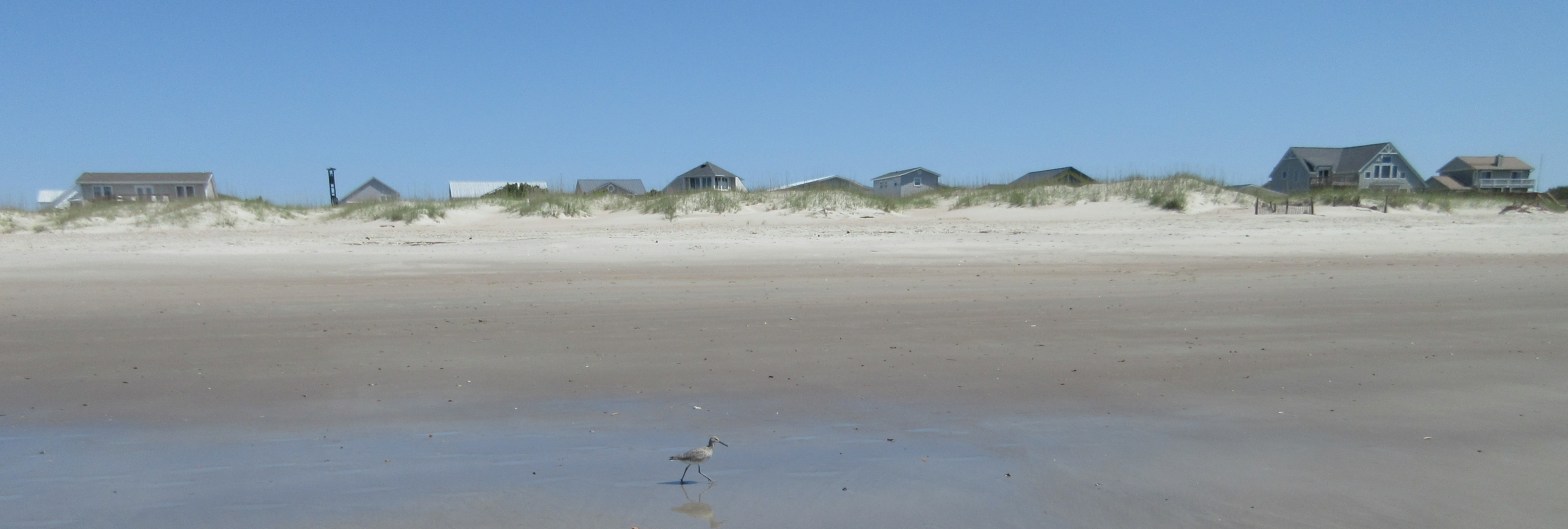
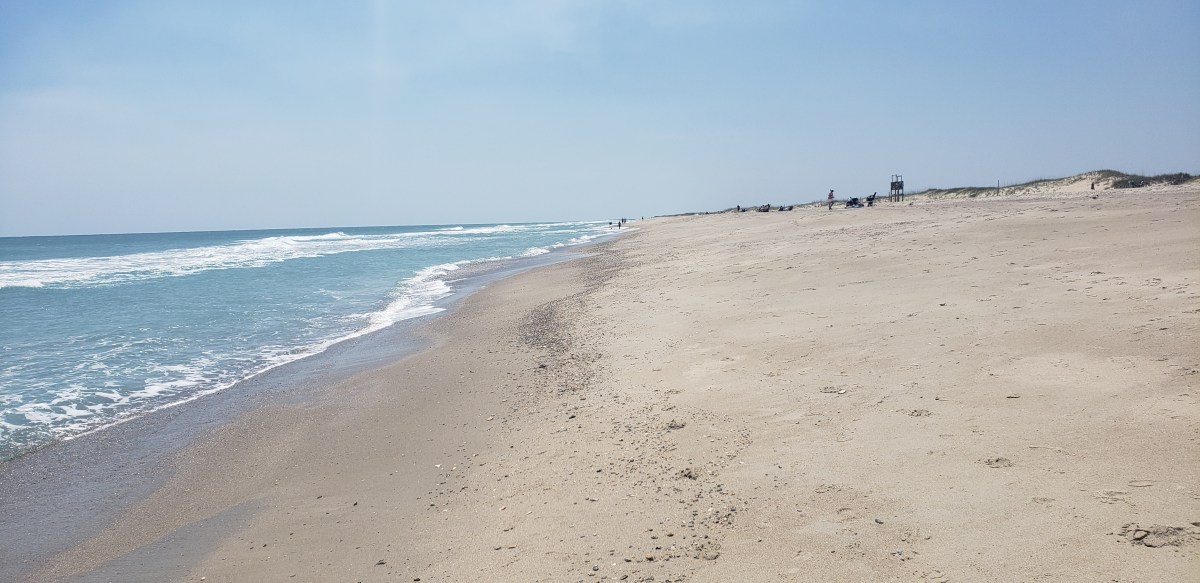
It’s not all shopping and strolling in Greater Wilmington, there are beaches everywhere. We still have many places to see. After Wrightsville Beach, we went out to Caswell Beach, at the eastern end of Oak Island. Beautiful water and waves, a long uncrowded beach with the lighthouse in the distance made for a pretty day. There isn’t much to collect in this area, but you can’t have everything. (The first photo of this post shows a willet on Caswell Beach.)

Volunteer wearing a suit to make the dunking even more fun.

We headed due south to visit Kure Beach for their local festival where we watched a couple of very enthusiastic members of the ocean rescue group get doused in a dunk tank, to the enthusiastic laughs of the children dunking them, and their watching parents. It was a successful fundraiser. Beach restoration is in its final stages at Kure Beach. It’s a mess now, with machinery and a big plume of sandy water, not to mention the central area of the beach that is closed, but I imagine the idea is to get the work done by Memorial Day. What I don’t understand is how Kure Beach can be a turtle nesting beach and yet so heavily disturbed. I guess this is the fine line between pleasing the public (beach restoration) and slowing extinctions (efforts to let sea turtles nest).

Ft. Fisher beach

Fort Fisher is just a bit further down the island. We drove as far as we could, then wished for a pedal car to keep going. Only pedestrians and cyclists can continue, and we did keep going, but the road continues for miles. The beach had shore birds along the edge and sea birds in the water. We never tire of watching pelicans and terns dive for fish. Osprey were fishing the area as well, hauling fish after fish inland to their nests. Beachcombing is limited. That is a good thing, in that there is very little trash on the beach, and signs everywhere reminding people to pick up what they bring to the sand. The down side is that there isn’t much flotsam and jetsam. Some places have pretty shells, like Wrightsville and Caswell beaches, but so far we have only one small triangle of beach glass from our wanderings.

Summer tanager (Wikipedia)

Regular readers of my posts know that we enjoy birdwatching very much, but as charter members of the High Noon Birdwatching Society, we are not always out as early as the birds are. To improve our experience, we met up with a local Audubon Society group at Maides Park on a Saturday morning at 8 am. We are capable of getting up early, though usually only to meet a group. The park was pretty regular looking, but our leader, Miles, a student at UNC Wilmington, explained that for the North Carolina Atlas of Birds, updated every few years, this area needed to be reviewed. As is always the case, the group was welcoming, and birding in a group always seems to result in everyone seeing more birds than they might on their own. We saw birds new to us, the highlight being a bright red summer tanager that Miles managed to spot for us after hearing it. Our group ranged from old coots like ourselves to younger people, even a team of grandma, mom, and small son. He made it all the way around the route (only had to be carried a little bit). Several people had the huge camera lenses you need to get good bird photos, and they were quick to share the good pictures they got. We always enjoy these outings, no matter where we are.

The birders gave us good ideas for future walks, too. We already followed up on the suggestion of visiting Greenville Lake, a park right in Wilmington.

A week of Nature’s surprises

Great blue heron and cormorant at Airlie Gardens

We had an unusual series of unexpected run-ins with the wonders of nature, both out on our daily roaming and in our backyard. The banner at the top of this post shows the pageant of turtles out sunning themselves at Airlie Gardens during our visit this week. The annual highlight is the azaleas in bloom. That was a few weeks ago, and it didn’t matter at all, there are so many lovely vistas within the garden. We will go back for another visit to walk on more of the trails.

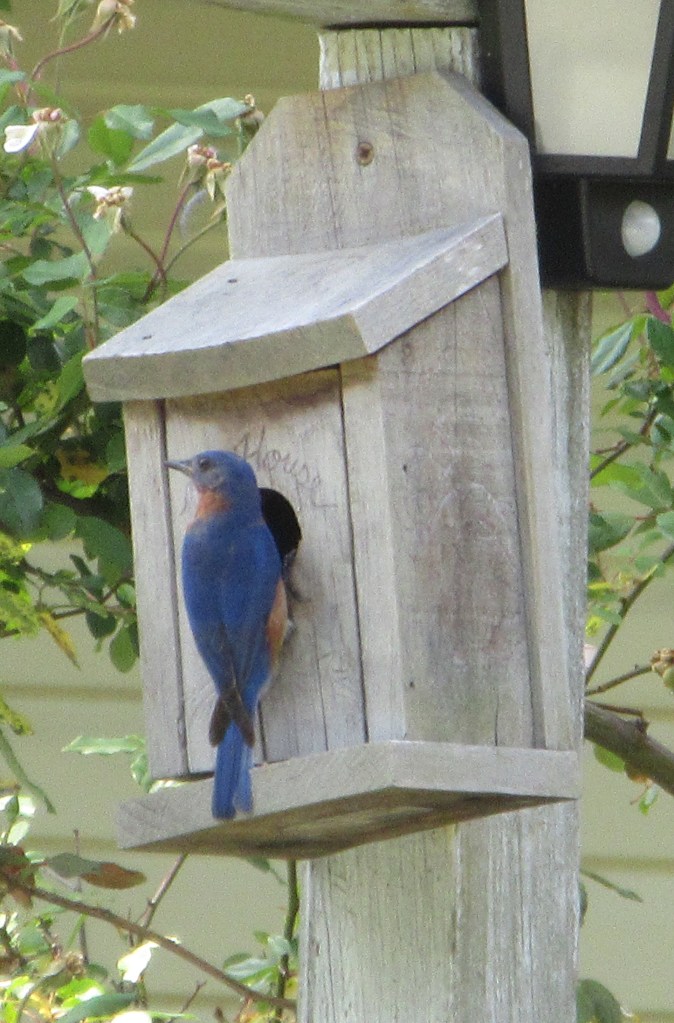
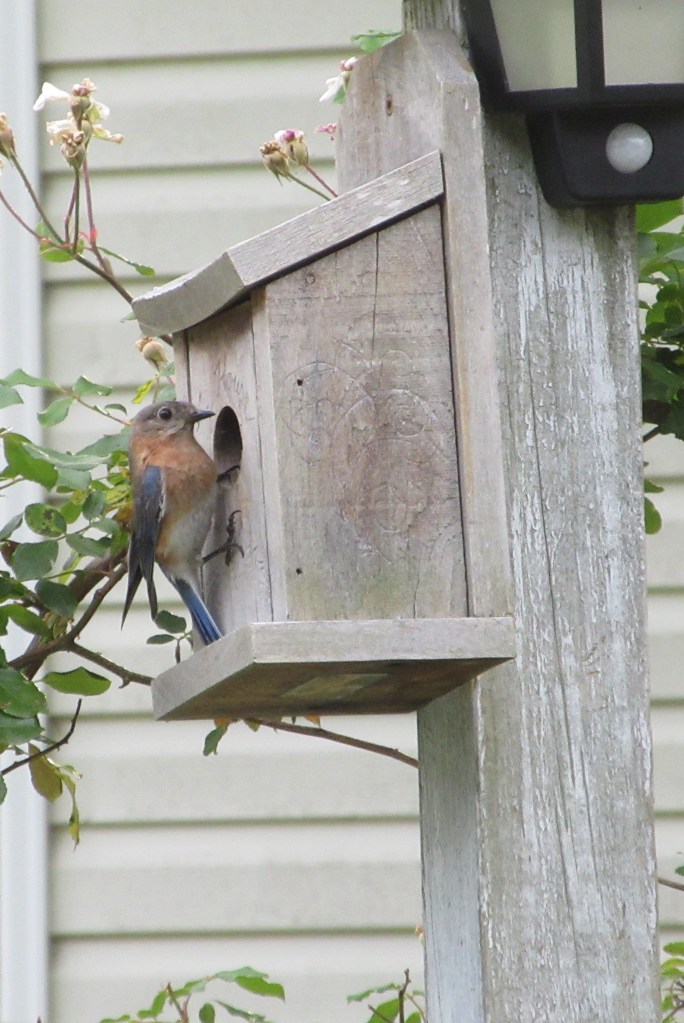
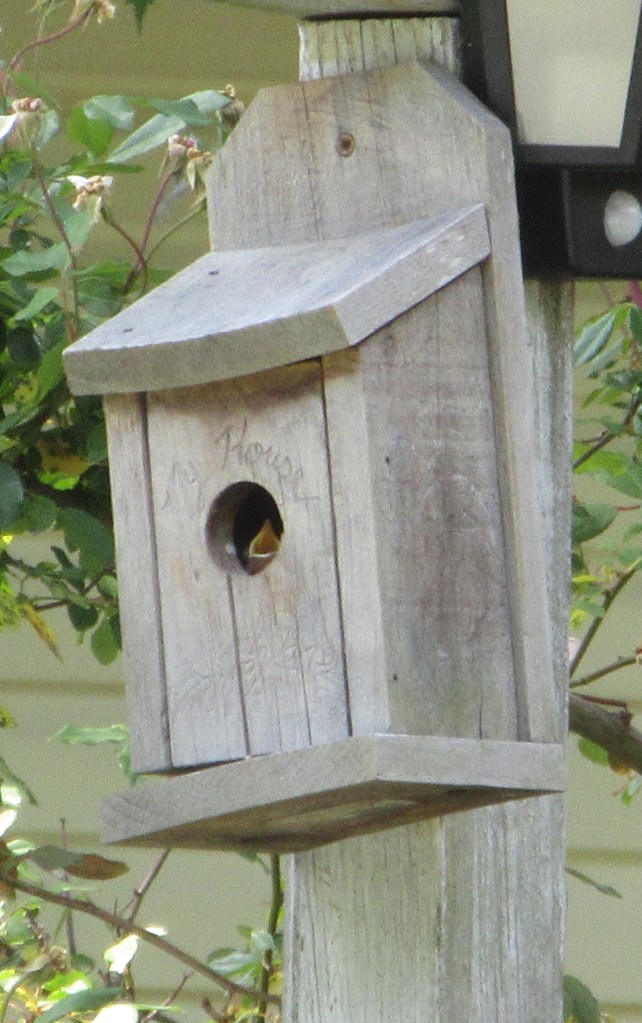
I’ve seen a lot of bluebird boxes, but rarely have I found one with an active nest. Now there’s one in our yard! Since we arrived, the egg(s) have hatched, and we see both parent birds flying back and forth across the yard delivering food. The other day, I even caught a glimpse of the little mouth that appears to be about 50% of the baby bird at this point.

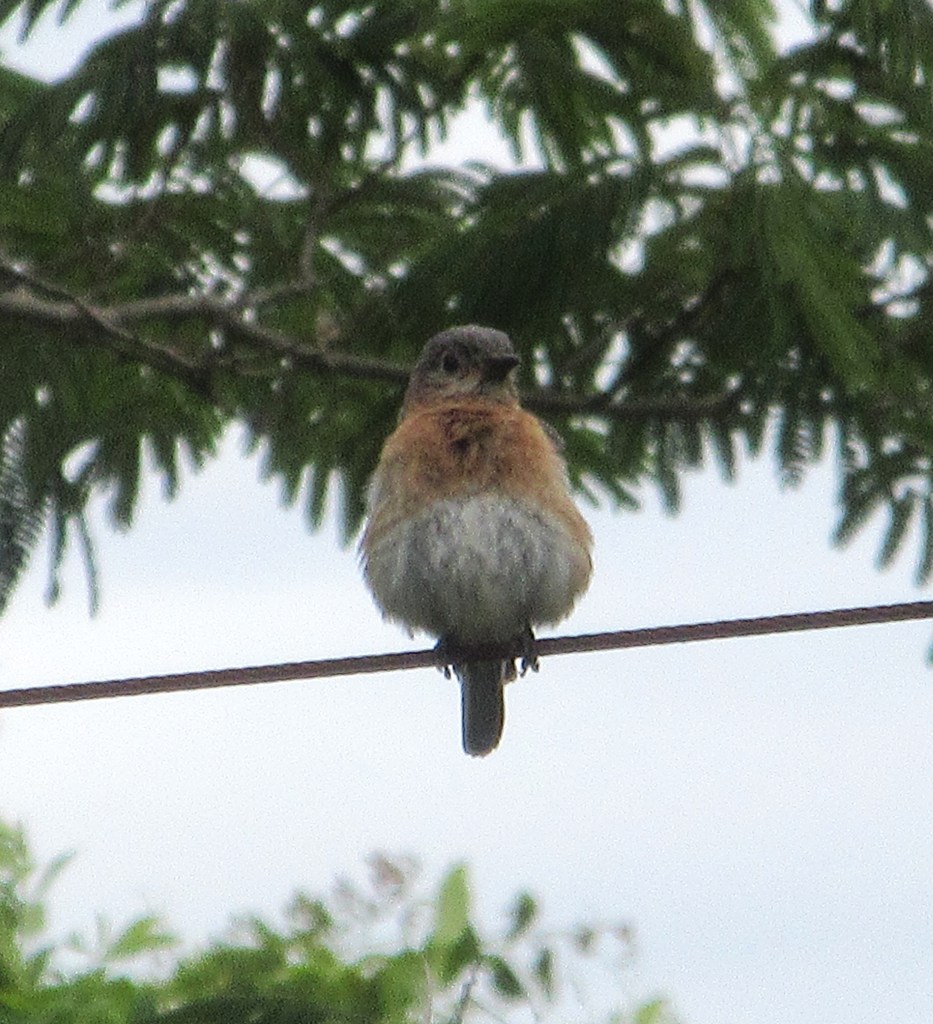
The next day we found a baby bluebird was out of the box!

Pileated woodpecker we saw in Montana, just like the one we saw this week in our backyard in Wilmington, NC

We sit in our backyard in the late afternoon sipping tea, or iced tea, and play a few hands of gin rummy. A lot of birds circle around, and I’ve gotten in the habit of having my binoculars at hand. One evening, I spotted a bird on top of the electrical tower that passes behind us, a peregrine falcon!

Later, Jonathan pointed out a woodpecker on a dead tree. I was able to get my sights on it and Wow! it was a pileated woodpecker. These are big, red-headed birds, uncommon though widespread. The last one we saw was in Montana, and I didn’t think I’d ever see another. It will date me, but below is a Woody Woodpecker cartoon, where you can see an animated view of these birds. (After the first ten seconds, you’re on your own. I don’t know how to cut out a clip….)

Look at that tail! (Internet photo)

We went looking for a beach access point near the Ft. Fisher and Bald Head Island ferries. We didn’t find any place open to the public, though we got to see some interesting neighborhoods south of the ferry landing. As we were heading back to the main road, Jonathan stopped, saying, “that’s not a squirrel!” I looked over and saw an animal on the tree that had a mottled head, pale chest, and a long, long furry tail. With the binoculars, we followed it into the trees, then looked back at the tree where it had been. There was a squirrel where it had been, reinforcing the fact we’d seen something else. When we got home and had a chance to look at images, we found that we’d seen a long-tailed weasel, a rarely seen animal. There was even a request to report the location of our sighting to a state wildlife monitor.

Often, the impressive sights we see pass so quickly that they can’t be recorded, like the day we saw dolphins just offshore at Fort Fisher, three gray arches as they each dove in and out of the waves. Or when we see an osprey crash into the water and come out holding a fish in its talons. At this time of year, all the nests are occupied.

Mississippi kite on its nest (backyardbirdcam.com)

Other times, we can see an intriguing sight but cannot get a photo. At Greenville Lake, a park not far from us in Wilmington, Jonathan spotted a bird on a nest high in a pine tree. We could see it clearly with binoculars, but it was so far from us that without a very long (and bulky and heavy) camera lens, a photo was impossible. The head of the bird was white, with a dark spot near the eye and we were able to identify it as a Mississippi kite sitting on its nest. A great thing to see and remember.

It’s been quite a week of nature observation. Who knows what next week will bring?

We find adventure in Wilmington NC

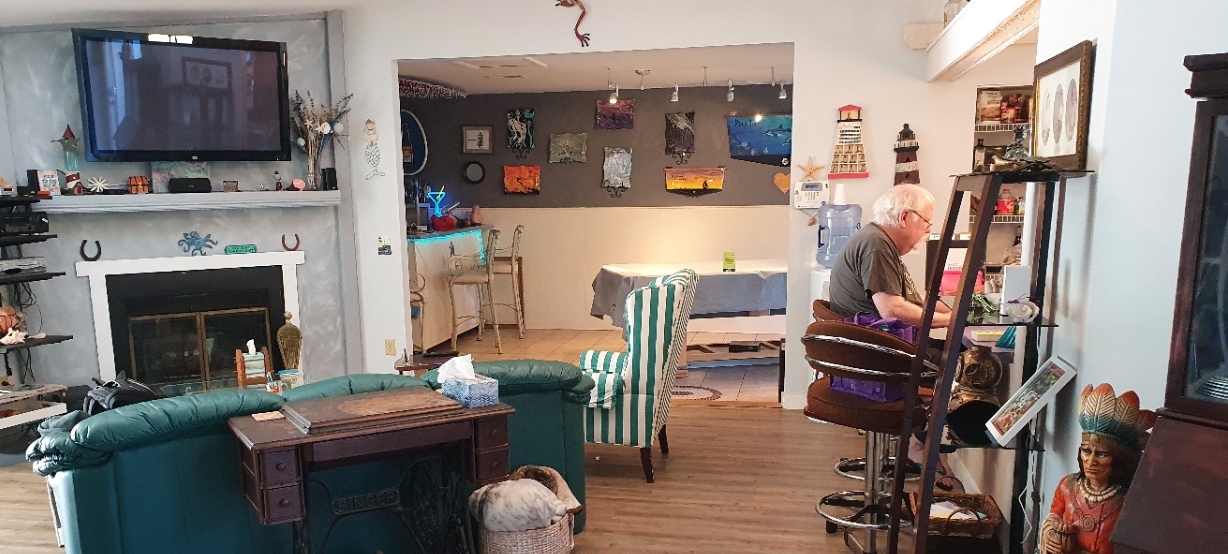
On Sunday, we made the drive from Virginia Beach, VA to Wilmington, NC. It’s a 4 1/2 hour drive according to Googlemaps, but we stop a bit more frequently than it does. We were settled in our new house by the end of the day. It’s the most playful place we’ve ever stayed. The space that might be a dining room has a bar and pool table. The sun room is an art studio. The bedrooms are colorful and full of seaside decor. There’s even a swimming pool in the back yard. It’s not very big, but it’s very nice, with chairs, table with umbrella, and a little pool house. The property backs on an undeveloped overgrown forested area, and lots of birds sing in the trees. A bluebird is nesting in the box in the yard, and I think the eggs are about to hatch. I’m looking forward to seeing baby birds.

We spent a day settling in, shopping so that Jonathan will have the kitchen the way he likes it. I made a batch of oatmeal raisin cookies and Jonathan made his wonderful multi-seed rye/wheat crackers, enough to last for the month. Thus grounded, we had to see a beach, settling on Wrightsville Beach, nearby and popular, for a late afternoon stroll.

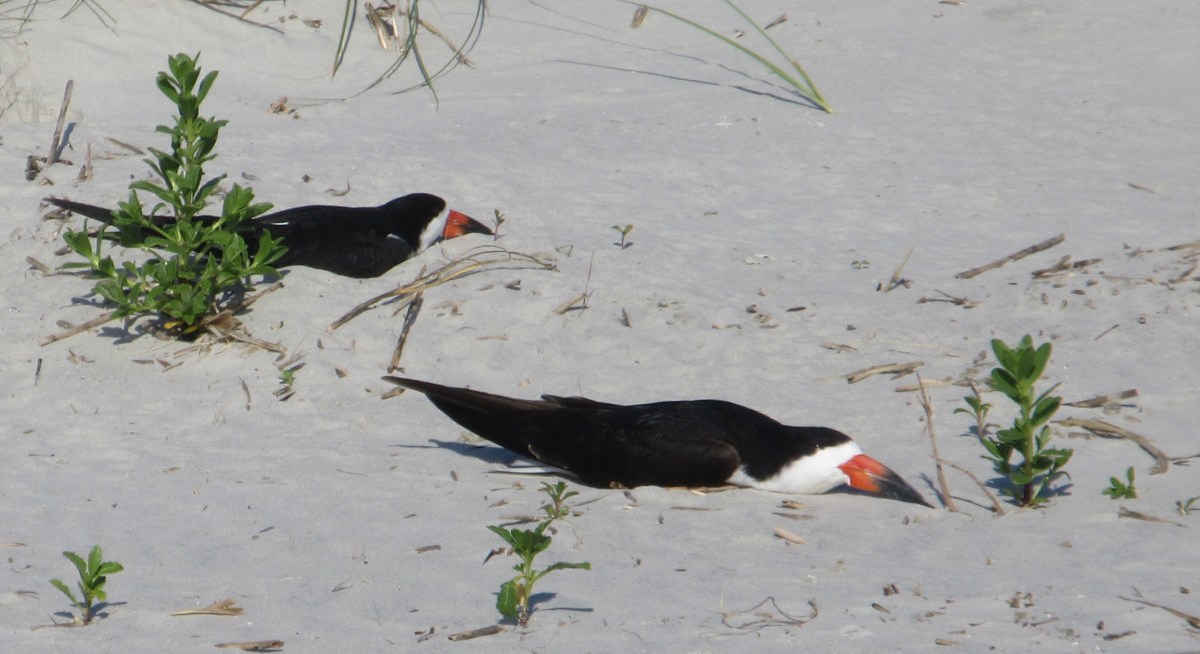
Our first lesson in living here arrived in Wrightsville. All parking is limited and expensive here. Where there is a moderate amount of free parking in the neighborhoods of Virginia Beach, and beach access at the end of every street, beaches in this area do not want visitors. Lots of the shoreline is accessible only to land owners, and parking is metered and closely monitored, $5/hour or $25/day. If that isn’t discouraging, there’s a “convenience fee” added to your parking payment, so in fact it costs more than the hourly/daily rates. We figure we’ll spend between $100-$200 on beach parking in a month. Who knew? On the bright side, the phone app lets you add time from a distance if you decide you need one more hour. Wrightsville Beach was lovely. We spent our time at the far southern end of the beach, strolling and beachcombing and watching the nesting skimmers, and least terns. My favorite image was the skimmer lying on its nest like an exhausted dog, neck stretched out–a mom, perhaps, trying to catch a break.

[I WAS WRONG ABOUT PARKING IN THE WILMINGTON AREA! Though most beaches had parking fees, Wrightsville turned out to be the most expensive and most thoroughly policed. Even Wrightsville lets people park at no cost before 9 am and after 6 pm. Other beaches cost less per hour and per day, and we found a number of places that provided free parking. My first experience with beach parking was a shock, but we probably spent barely $30 on parking the entire month. Added: June 2022]

Skimmers, Wrightsville Beach NC

Next up among our activities is birdwatching, and though it is nice enough in our yard, we looked for a place nearby where there might be more or different birds. On the map we saw Eagle Island, a large tract that is being turned into a park, though there isn’t infrastructure at present. The website materials we read indicated that part of the area is controlled by the Corps of Engineers, but it’s a large area, so we set off. The only actual developed area is the battleship North Carolina monument, so we started there. There’s a park around the site where the battleship is moored, and we strolled a bit, then decided to try the other end of the road that runs around the southern tip of Eagle Island.

In general, we like to drive to the end of a road and see what’s there. Our rule is if there isn’t a sign that says Keep Out, we continue onward. We are respectful of contractors and policemen who roll their window down and say “What are you doing here?” Recently, a contractor believed we should have known to stay out because there were orange cones on either side of the road. They weren’t IN the road, mind you, but on the side. To us, this said, “Don’t pull over in the places with the orange cones.” It did not say Keep Out, and the gate was open. We were courteous and turned back, but if you don’t want visitors, close your gate.

Where the Cape Fear & Brunswick Rivers meet. From Eagle Island

We applied the same technique to Eagle Island, driving down a reasonable road until it turned to a reasonable dirt road. We passed through an open gate past a sign that said in large letters, No Hunting. We kept going. I was surprised that there weren’t gates or keep out signs from the Corps of Engineers, but happy to be able to get down to the far south end and look out over the confluence of the Cape Fear and Brunswick Rivers. It was lovely, sunny and warm at the end of the day. We didn’t see as many birds as we’d hoped, but on the last leg of our loop around the toe of the island we saw a purple martin perched on the roadside. It was beautiful, and the light was just right to show off its dark purple feathers.

Purple martin, allaboutbirds.org

For a moment our day was a complete success.

We completed a circuit of the area and turned back down the access road past two construction trailers to find the gate had been closed and padlocked. We were shut into this huge site. What I haven’t mentioned is that while we were looking out at the river and the birds, the interior of Eagle Island at its south end is being mauled by the Corps of Engineers. Huge trucks were parked beside the road as we drove in, though none were at work. Piles of earth are being moved around all over the place. Later I read that this locality has been used to deposit material dredged from Wilmington Harbor “for decades.”

There we were looking at the gate–no way to go around the ends in a sedan. Each of us had nightmares whirling in our heads: miles of walking to find help, staying overnight in the car until some workman showed up the next morning, calling 911. We sat in shock as stomach-churning thoughts whirled in our heads.

We are not without resourcefulness, though, and returned to the construction trailers to look for emergency numbers or contact information, or anything that might help us out of our predicament. Sure enough, there were names of two supervisors with cell phone numbers. I called the first one and got no answer and left a message. I tried the second number and got a voice. I asked if it was Darryl, the name on the posted sheet, and got a reluctant yes. Then I explained our situation.

Darryl believes there is a Do Not Enter sign posted on the gate, and he was very unsympathetic to our plight. I explained that we’d been birdwatching and saw the No Hunting sign, but not the other. I subsequently did see that below the No Hunting sign is a heavily mud-spattered yellow sign that says “no unauthorized persons,” and “hard hat required.” Such small letters, and so muddy…..

When he finished letting me know that you can’t just come in and drive around, he said, “8038,” and I said “What’s that, a phone number?” It was the gate code! The padlock was a dial lock, not a key lock, so we were able to turn the dials and escape. I thanked Darryl and went to open the gate. Jonathan was on the phone, and it turned out that the other supervisor had called back. After he was finished with his admonitions, Jonathan hung up, drove through the gate and we were back on the road to civilization after a mere ten minutes or so. We do like to drive to the end of the road and see what’s there, and the view and the bird were great. Would they have been worth spending the night in the car?

Sometimes I think, “We have got to stop doing this,” but then there’s another road, or another trail, and I forget my resolution. Today’s exploration definitely had a happy ending, and maybe we won’t do anything like this again.

Virginia is For……Museums

Despite the long-standing tag line that Virginia is for lovers, our area is certainly a place of excellent museums. We have visited three this month; each one has a different focus and wonderful things.

The Hermitage was the Norfolk home of Florence and William Sloan, a wealthy couple who built an extensive home, developed gardens around it, and collected art. We visited to do some birdwatching in the gardens and were captivated by the collections in the Sloane’s former home. Florence must have been quite a character, or strong-willed, or perhaps merely with more money than sense. Who else would decide to have a large, custom made and installed living room disassembled and rotated 90o to make room for a different room–on a 12 acre property?

L-R: Chinese ceramic camel; female sculpture; snuff bottles; kingfisher feather boxes.

Like many collections assembled in the early 20th century, it’s a sampling of global history and prehistory. There are beautiful ceramics, boxes made of exotic materials, and interesting statuary, much of it created by female sculptors who Florence admired.

The gardens around the house face the broad bay of the Elizabeth River, just down the shore from the Virginia Port Authority and the Port of Norfolk. After we finished looking at the collections we walked along the shore and around the grounds. Despite the proximity to a huge industrial port area, the Hermitage property is quiet, and the birds visit. I could live quite happily in the studio/boat shed that sits near the shore. It even has a tower, the former water tower.

One of the nice things about Norfolk is that the Elizabeth River runs through the city. Upstream from the Hermitage, and across the city just off the river is the Chrysler Museum, another collection amassed by a wealthy family and donated to the city. Walter Chrysler, son of the founder of the Chrysler car company, collected art from all over the world. When he and his wife donated their collection, the Norfolk Museum of Arts and Sciences founded in 1933 became the Chrysler Museum (1971). Not only did the Chryslers donate European and American art by a panorama of famous artists (Tintoretto, Manet, Monet, the Hudson River School), there are antiquities from around the world. Some of the pieces are so exquisite (Maya painted vases, Costa Rican sculptures, Aztec vessels) that I wonder if they are fakes.

My glass bead workshop in action.

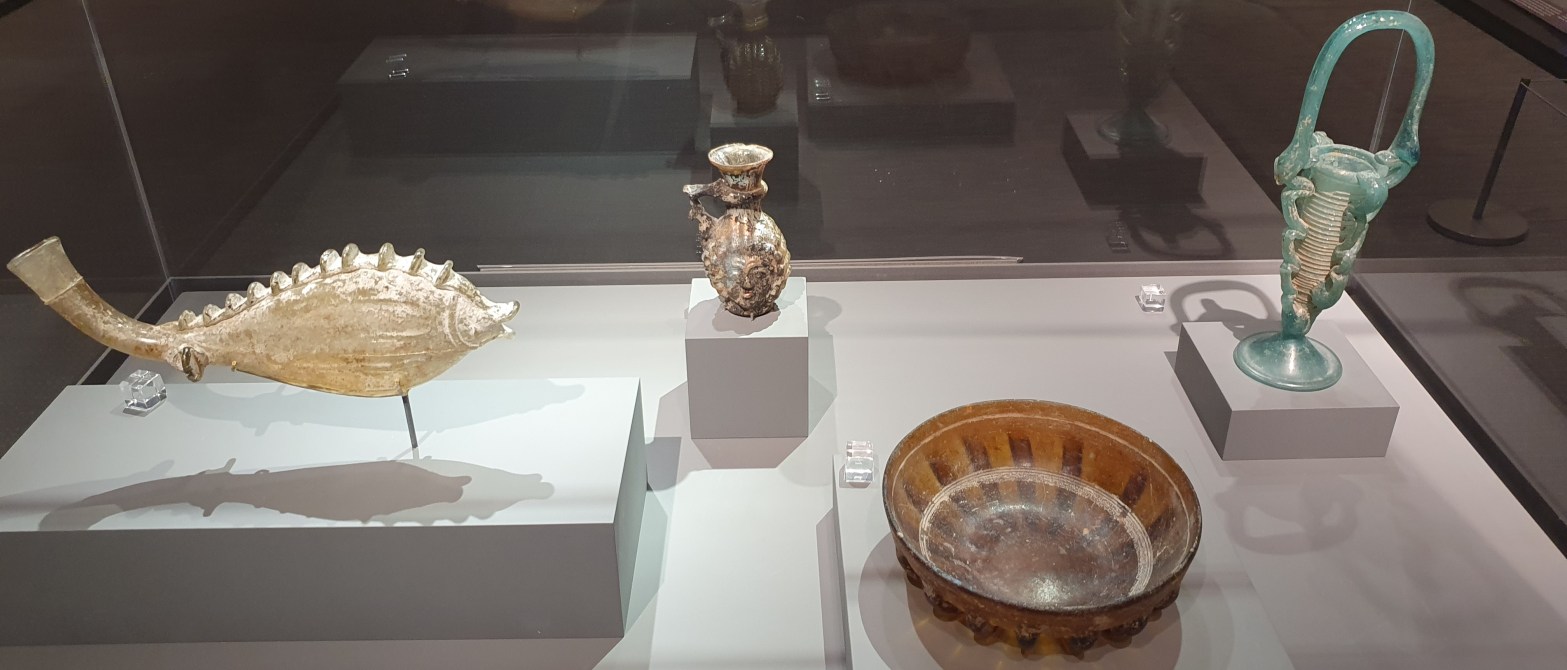
And there’s more. Somewhere along the line, the Chryslers excellent collection of glass was enhanced by the construction of a glass studio. Not only did we spend an entire day looking at the collection of glass made by everyone from the ancient Egyptians to contemporary artists (a sample of their ancient glass is at the head of this post), we watched a demonstration by glass blowers who created a multicolored glass vase as we watched. They pulled clear glass from a furnace, shaped it, blew air into it, colored and shaped it further, completing the project in an annealing oven. It was impressive. I returned the next week to take a Saturday workshop and learned how to make glass beads.

What a face!
(M C Escher woodcut, 1930s)
Atrani from Potrone (the Amalfi coast) M.C. Escher woodcut

We returned to the Chrysler Museum to see the current exhibit on M. C. Escher, an extensive collection of his works from early in his career through his most famous tesselated images of birds morphing into fish and back again, and stairs and ladders to nowhere. The exhibit included a lot of works, all from a Greek private collection. I didn’t know that Escher made quite a few woodcuts of the Amalfi coast, as well as lots of work that was not strictly tesselated patterns. We enjoyed the size and breadth of the exhibit, stayed twice as long as we had planned, and agreed that if we lived in this area, we’d become members of the Chrysler. It’s quite a remarkable place.

Hand-made household goods, Art Museums of Colonial Williamburg
I’m not sure what a cat decoy is used for.
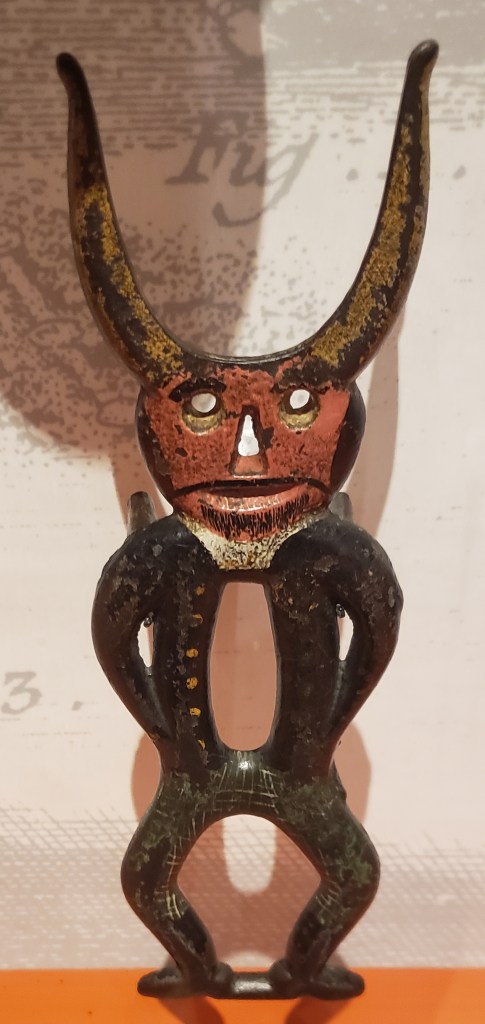
Boot jack disguised as the devil.

Last but not least, was our day at Colonial Williamsburg. Known for the costumed docents who practice a wide range of professions from colonial times, we enjoyed the art museum as much or perhaps more than the reenactors we saw along the streets. Called the art museum(s), all the collections are now housed in a single structure. The folk art collection must be among the finest anywhere. We were bowled over by the shop signs, weathervanes, decoys, naïve paintings, kitchen utensils, porcelain, and glass. Every piece was among the finest of its kind. We could imagine individuals with unusually fine examples of American folk art wanting to see their item in the collection. The creativity on display was awe-inspiring.

Tobacconist figures, they weren’t just Indians.
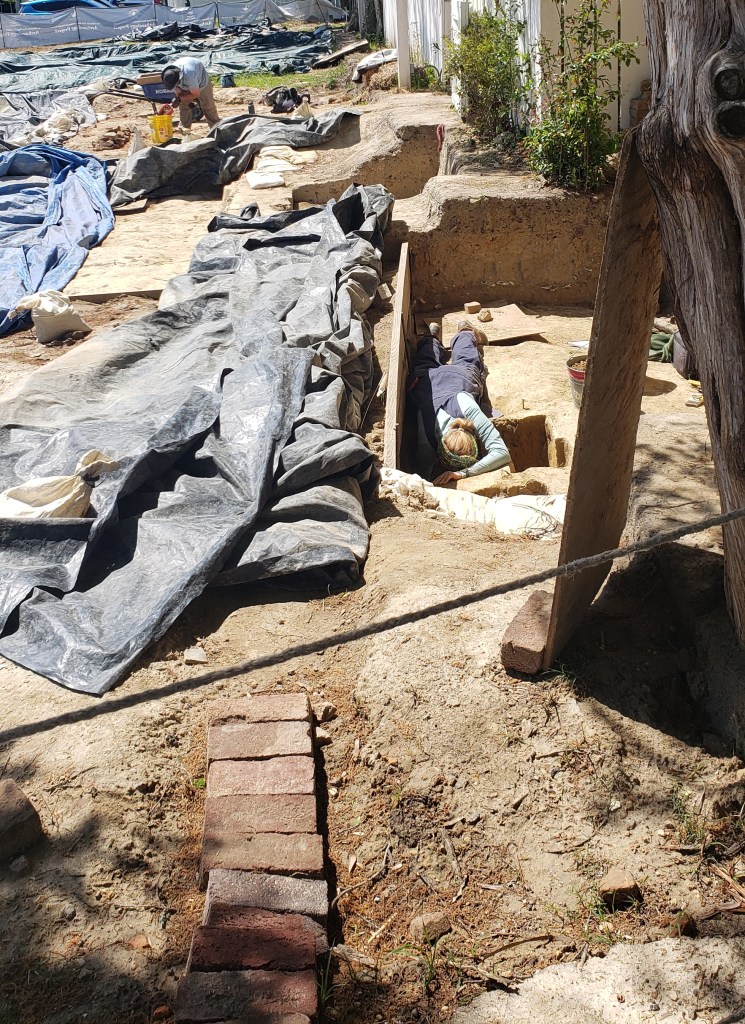
Archaeological excavations at First Baptist Church, Williamsburg.

We took a break from folk art overload and ate lunch in the cafe at the museum, then set out to visit some of the workshops manned by modern day craftspeople. We stopped in to see what the archaeologists were up to in two different places, the Custis home site, and the site of a Baptist church. After that we strolled the main street and saw engravers, printers, blacksmiths, weavers and dyers, fiddlers, and fifers. On other days, and with more time and energy we might also see founders pouring molten metal into molds, barrel makers, candle makers, an apothecary mixing remedies, a muster of the regiment, and I have surely forgotten someone. By mid-afternoon, the main street begins to resemble an old settlement, as tourists fill the streets, and costumed interpreters stand in each doorway inviting visitors in. It made an interesting, if exhausting day.

Teaching passers-by how to balance a basket on their head.

Williamsburg requires a greater effort to visit than other places. Where the Hermitage Museum and Gardens and Chrysler Museum are free of charge and provide parking, tickets to Colonial Williamsburg start at $46.50 (+tax) per person. Lots of add-ons are available, like a carriage ride ($40-65), an evening ghost walk ($19), even the opportunity to fire a musket ($95). Multiply some of these additional activities by two persons, or four, add a hotel and meals if you plan to take the ghost walk, and you are looking at as much as $200 a person before food and lodging. That’s a pretty special day or two or three. We were fine with our one day visit.
One of my favorites, the lady blacksmith.

These three museums in the greater Norfolk area (we include Williamsburg), each made a wonderful day. We enjoyed the folk art, the glass and ceramics, and the incredible creativity shown by everyone from the glassblowers and M. C. Escher all the way back to the Assyrians. Our visits were only the tiniest tip of the iceberg, too. For anyone interested in American history, the region is peppered with historic sites, battlefields, naval, and military museums. Every community has some special theme to contribute. I could spend years finding all the possible places there are to investigate. So many museums, so little time.

Spring: Birds and Flowers in Virginia Beach

We’ve spent a lot of time visiting parks this month as the weather shifted toward spring and warmer temperatures. There are miles of trails through state and city parks, national wildlife reserves, and beaches. We’ve visited a few markets and museums, yet at this time of year, the outdoors is the place to be. The azaleas and dogwoods hit their peak and are now turning from pink and white to leafy and green. There were a gorgeous couple of weeks where every tree bloomed.

Pleasure House Point was our first discovery, a park not far from our house with a trail that winds along a bit of Crab Creek and Pleasure House Creek, both of which open on the mouth of Chesapeake Bay. Another trail circles two small ponds. We see shore birds and land birds depending on which way we walk.

Jonathan along Pleasure House Pt. trail
Warbler in a tree

Even closer to where we live is First Landing State Park. On our first visit, we went into the park by car, and walked along the shore, doing a bit of beach combing (fishing weight and hook), and checking out the birds. We tried the northern entrance to First Landing, too, where we found the best place to see warblers yet. Raised walkways extend into the marsh, and there are excellent places to stop and listen for birds, then try to find them in the trees. We saw four different warblers on the afternoon of our visit, and we plan to go back.

Cypress knees in First Landing SP

We don’t even have to get in the car to visit First Landing, as our street dead ends at the park’s eastern edge. We walked west into the park along raised ridges that head across the park toward the water. The area was drained and logged in the early 20th century but is now overgrown with secondary forest. We didn’t see many birds, but the forest is beautiful, with cypress knees growing in the low spots, and extravagant fungi sprouting from fallen logs.

Next on our itinerary came Great Dismal Swamp. With a name like that, I knew we had to visit. We headed to the area recommended for bird watching, walking a section of Jericho Lane, and the brushy sides of the road were perfect warbler habitat. Several different species sang and hopped in front of us, along with kinglets and cedar waxwings. The sun was out, it was relatively warm, and not at all dismal.

First Landing SP looked like our imagining of Great Dismal Swamp

We haven’t spent all our time in the swamp, though that’s often where the birds sing the loudest. We had another excellent day at Back Bay National Wildlife Refuge, south of Virginia Beach. There were fish shoaling offshore, because every bird in the neighborhood was out fishing. We watched a pelican gulping fish with its head in the water while ospreys crashed into the water and flew off with fish in their talons. Terns dove for fish from the sky while cormorants ducked under the surface to do their fishing. It was quite a show and we wondered whether it was always that busy a fishing area. We plan a return visit to drive a bit further down the narrow peninsula south of Virginia Beach that ends beyond Back Bay to False Cape State Park, though I’m not sure how we could see more birds than we have already.

On a sunny day, turtles perch on every log. They are canny things, plunking into the water just as I get my camera focused on them. Some are much larger than the aquarium turtles I’m used to. In ponds, the turtles paddle around, ignoring us.

Though some days have been chilly, I hesitate to complain because there are no bugs. I understand that this area cultivates a pretty thick cloud of mosquitoes once it warms up. I’m enjoying the outdoors at the perfect season.