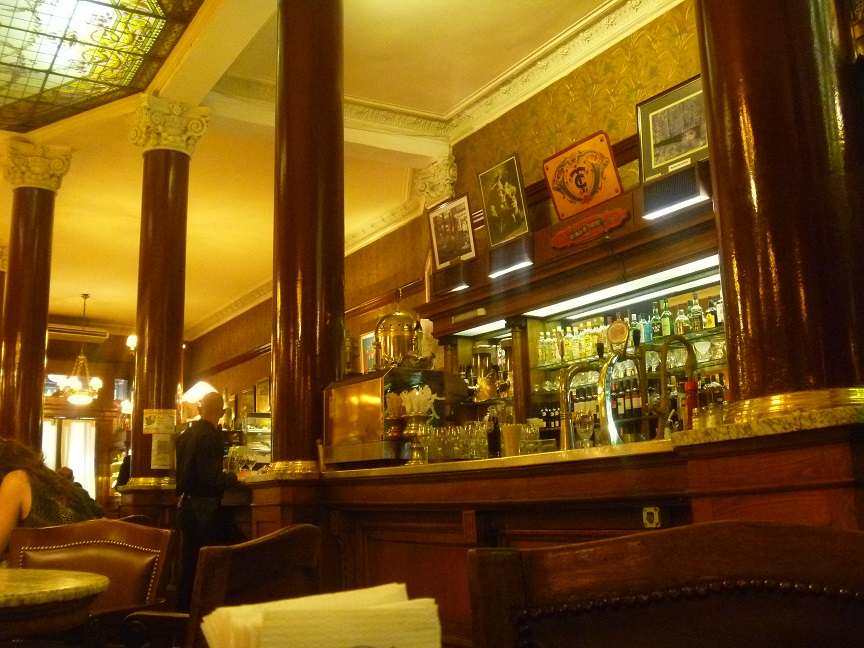
Ushuaia, Argentina–the toe of the world.

Feb. 16, 2015

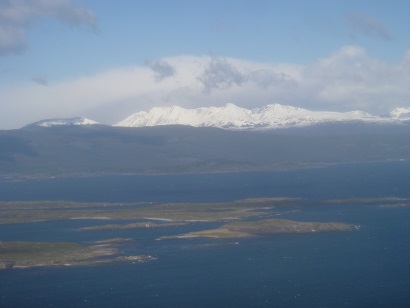
We got up at 5:00am to make our way to the Ezeiza airport and onto the plane to Ushuaia that left at 8:10 am. We flew for over 3 hours and were still in Argentina when we swooped down over the ocean and could see huge mountains:

P1040259sm

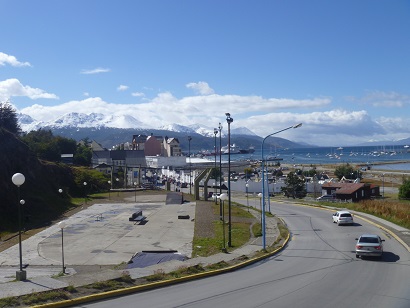
The rather ordinary city with the very unusual name–Ushuaia (Oo-shoe-why-ya)–is surrounded by snow capped mountains up to 2300 m high and yet it is at sea level, so there’s no gasping for air. The scenery is spectacular, except perhaps right in town.

P1040262sm

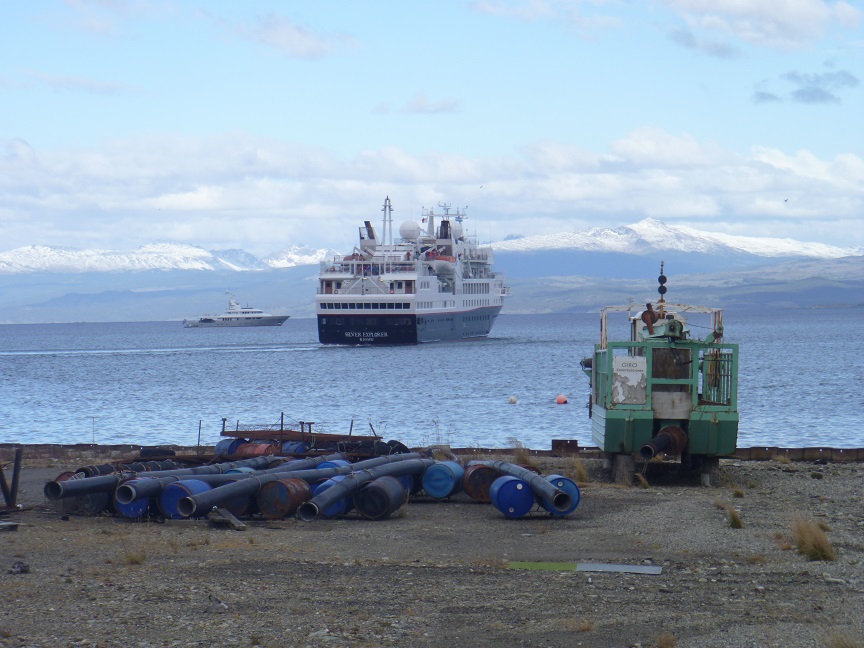
Tour boats pull in and out every few days on their way to Antarctica or to Punta Arenas, Chile.

P1040293sn

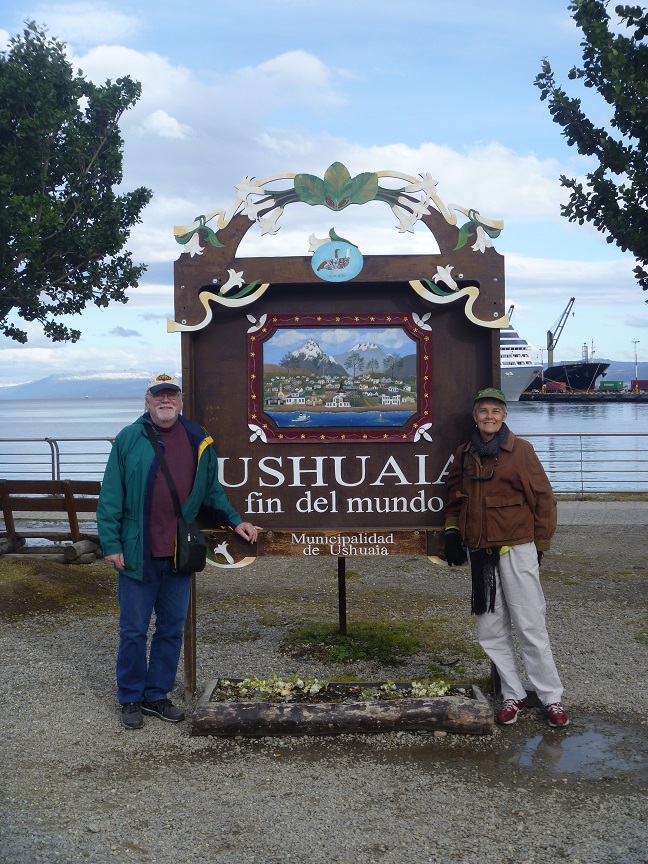
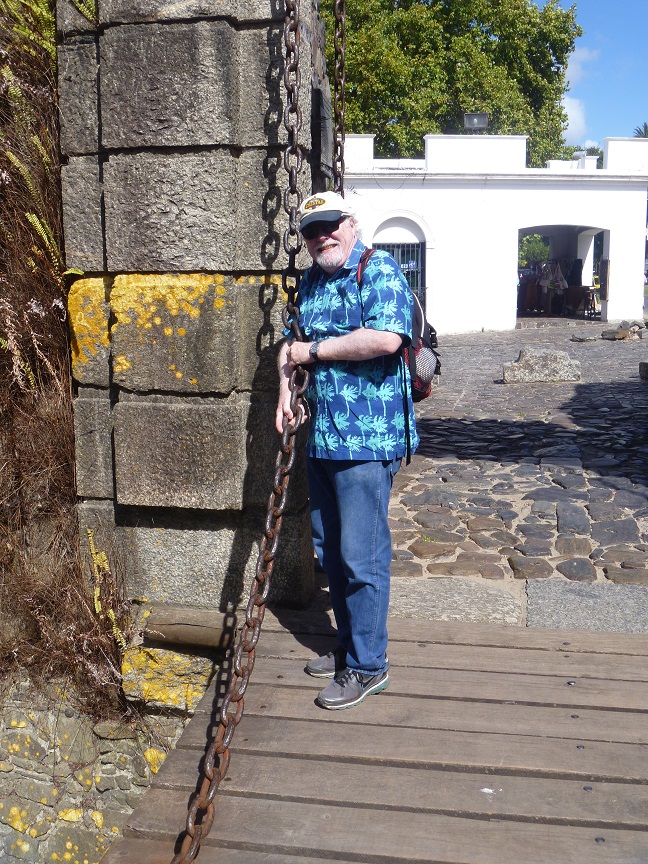
We took the requisite tourist photo:

P1040301sm

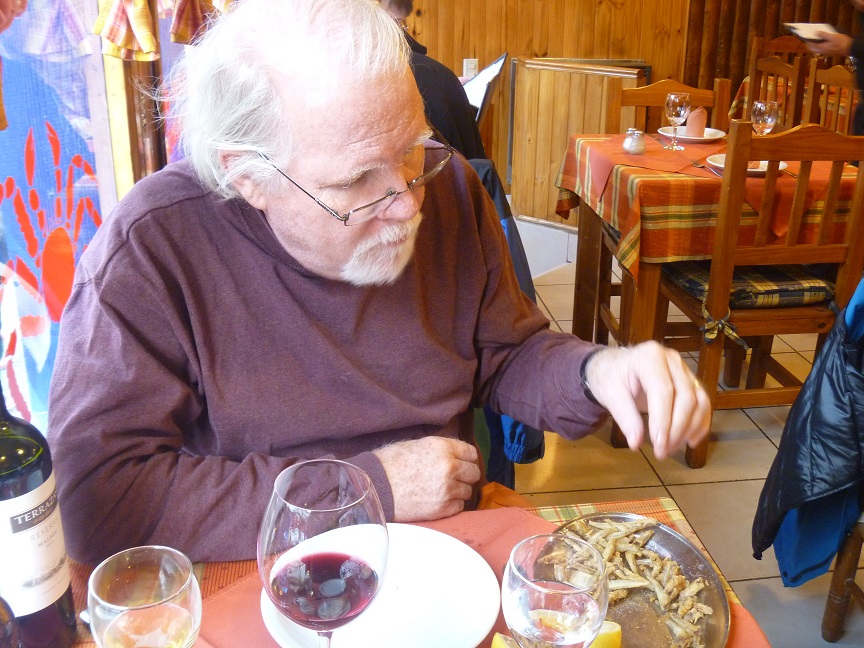
And then retreated to eat tiny fish followed by fresh king crab–really, really delicious. We had a great conversation with the couple at the next table, Dorota and Kristof, who live in Cologne, Germany. We exchanged stories and they told us about good German wine.

P1040307sm

Last Day in Buenos Aires, Feb. 15, 2015

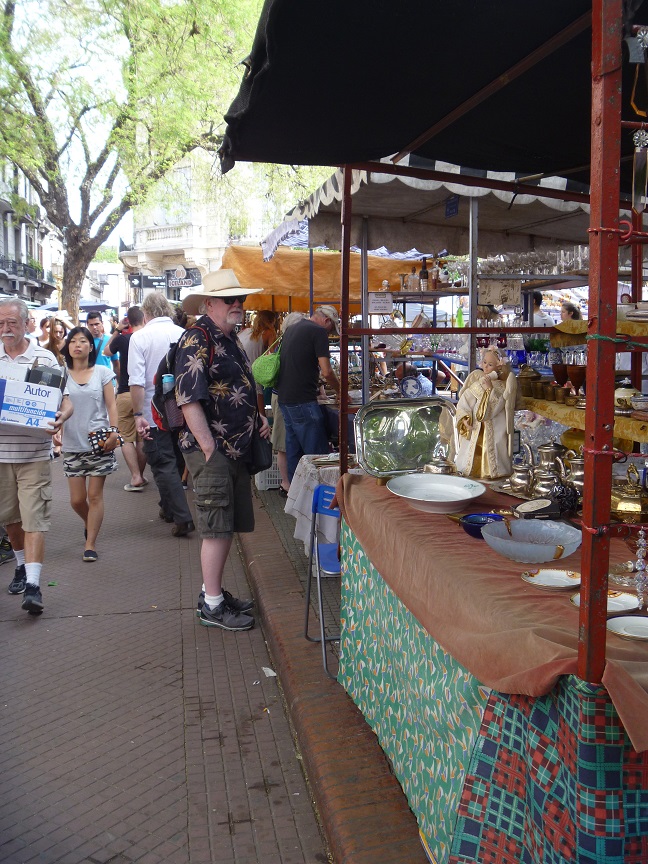
We celebrated our last day in Buenos Aires by sleeping in and taking remedies for that second (or was it third?) glass of champagne. We learned yesterday that the fairs don’t rev up until noon, so around that hour we returned to San Telmo, this time to Plaza Dorrego where the Antiques Fair takes place on Sunday.

P1040254sm

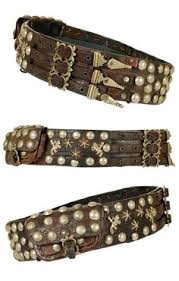
It’s a great fair, with booths around the plaza and up the streets. Stores are open as well, and these sell everything from Chinese carvings to vintage Argentine gaucho gear. Gauchos wore wide belts decorated with coins as a show of wealth, and some are very impressive. I did not even ask about prices, but saw a couple almost as lavish as these:

gaucho coin belt

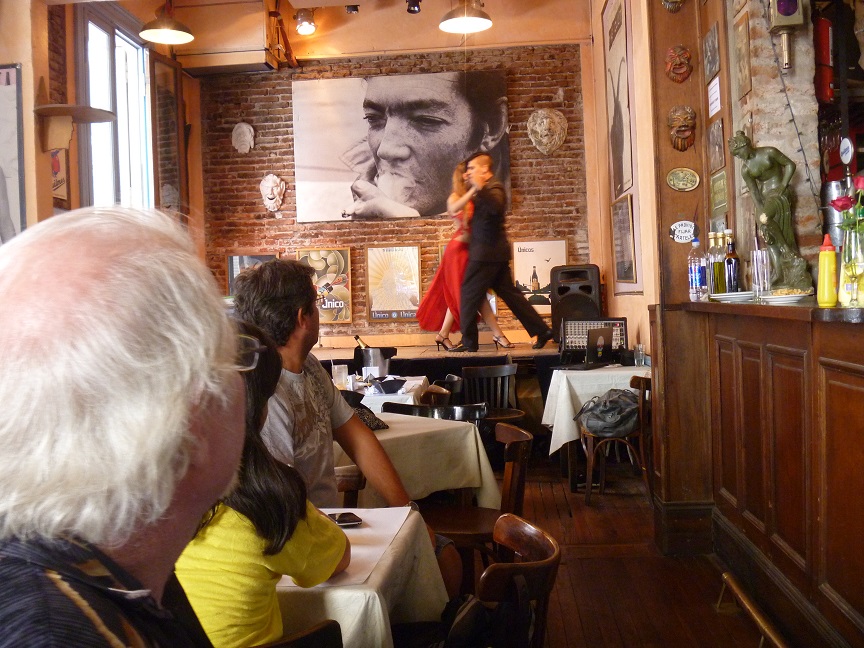
We stopped for our second cup of coffee/lunch in a restaurant that had a pair of tango dancers perform, a lot of fun to watch more dancing. I give them credit for getting up on a tiny stage in a busy restaurant/cafe and doing a good job. We put 50 pesos in their hat.

P1040251sm

By 4 pm or so it was time to retreat and pack. Our taxi to the airport comes at 5:30 am…..and we’re having dinner with our hosts Manuel and Maria, at 8:30 pm.

Valentine’s Tango Show, Feb. 14, 2015

We set out to visit craft fairs today and found that not much goes on anywhere before noon. We started in San Telmo at Parque Lezama. There seems to be controversy over whether the park will be surrounded by a fence after construction that is currently underway. In the meantime the vendors moved down the street. The area was not artesania, but more of a tube socks kind of event, so we moved on to Plaza Italia. Turns out we meant Plaza Francia,, which we never get to. A second cup of coffee in a café near Plaza Italia was followed by a walk down to Plaza Cortazar/Plaza Serrano, where we found tapestry shoes for me and a treasure for someone for next Christmas. There are lots of vendors, of all kinds of things. Downsizing puts a bit of a damper on shopping, however. I’d reach for something and realize it was just like something I used to have…..Great people watching, everywhere.
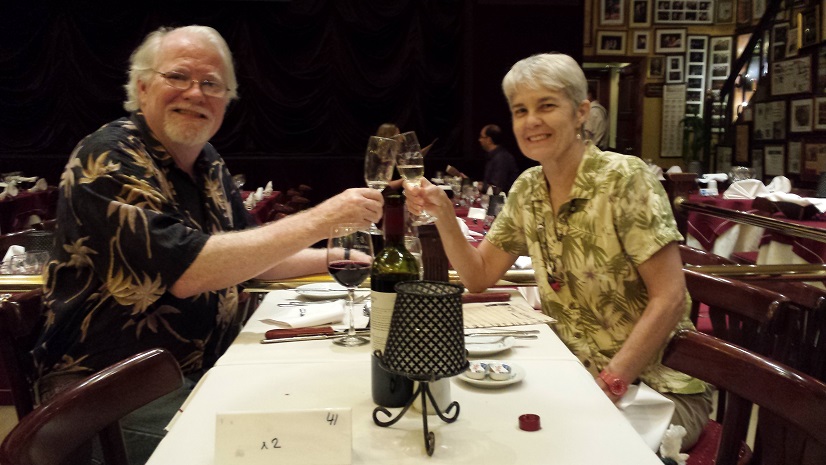
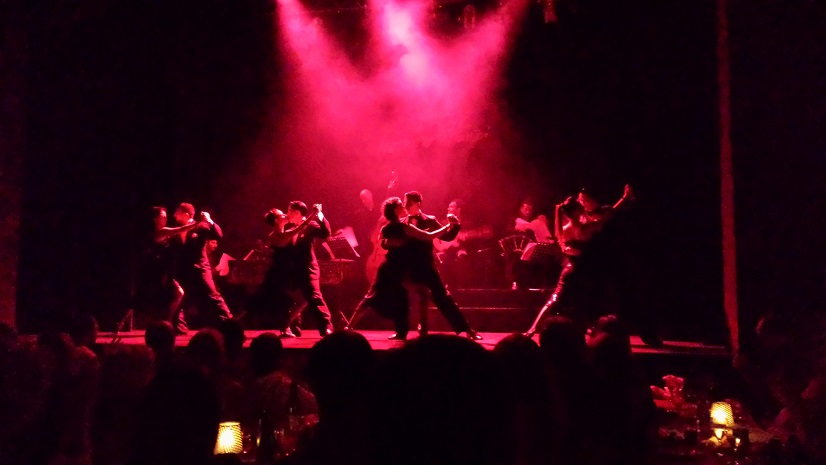
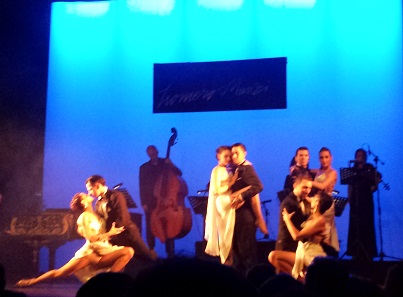
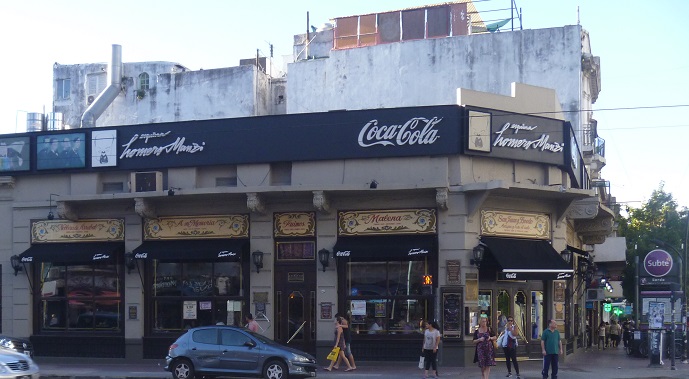
At 8:15 pm a taxi called and took us to our tango show. We chose El Esquina de Homero Manzi because it proved nearly impossible to select a tango show from the many different recommendations of many people. This one was close to our apartment and no more expensive than any other. Many comments on Trip Advisor describe tango shows as steak and fries with a cheap bottle of wine and a lackluster show for a steep price. Yes, it’s expensive and even our “superior” menu, was limited, but our waiter was attentive because we arrived before the busloads of hotel guests. He whisked out our first course, skipping the appetizer of sherry and empanadita. Jonathan asked where the sherry and empanada were and he replied, “Sherry? You have champagne”! “The empanada”?, Jonathan asked. “You have butter!”, the waiter said. “For what?” responded Jonathan. “For the bread I am about to bring you!” And he did.20150214_204415sm 20150214_215821sm

About 300 people filled the restaurant. We had great seats near the stage, between a young couple of women from Brazil and an extended family of 16 (all ages) celebrating the (grand) mother’s 80th birthday. The dancers and music were excellent, and though neither of us are connoisseurs of tango singers, we liked the female singer better than the male singer. The show ran from about 10:30 pm-midnight.

20150214_230855sm 20150215_000151sm 20150215_000337sm

It was a highly entertaining Valentine’s Day.

Day Trip to Uruguay, Feb. 13, 2015

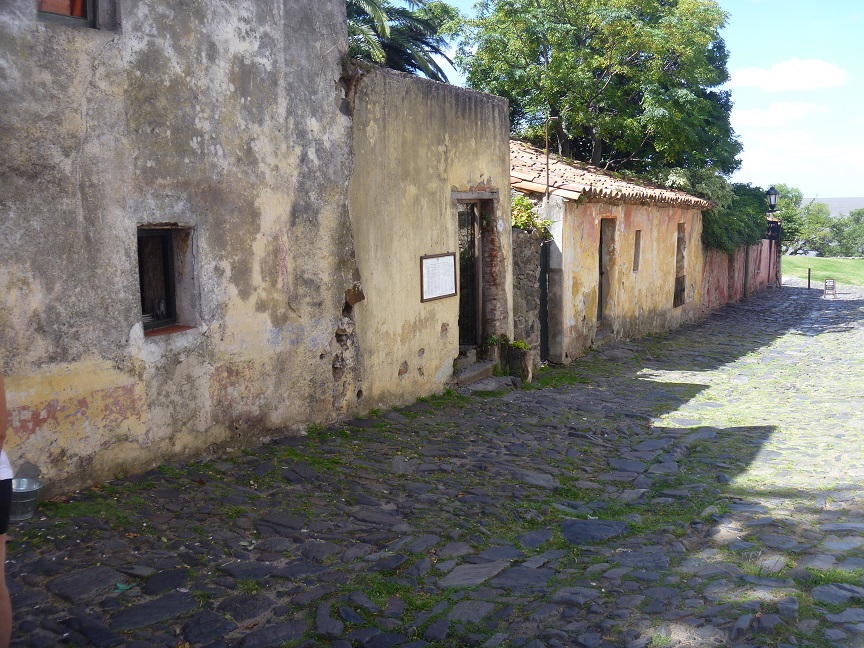
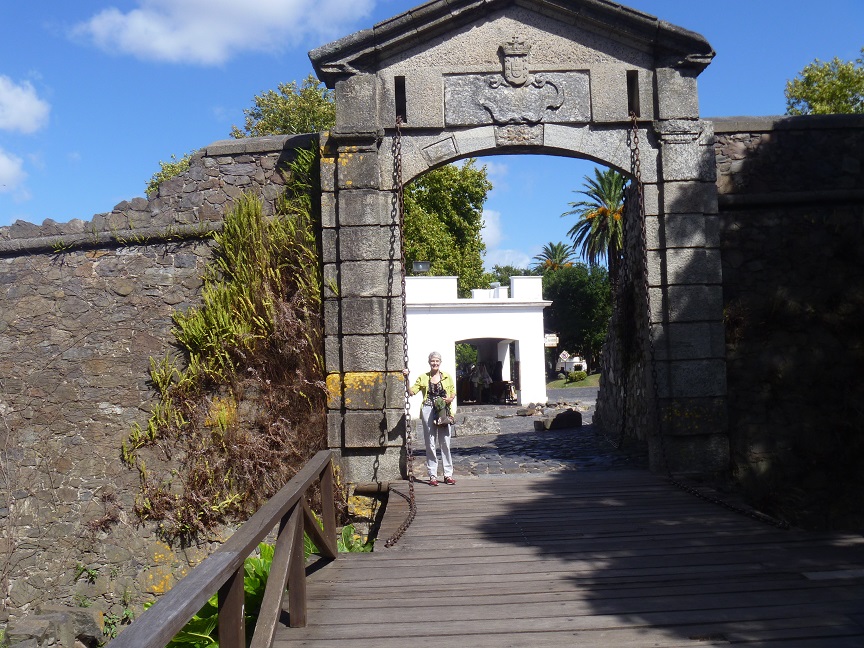
Because it was there. Now that you know why we went to Colonia, Uruguay for the day, I can say that Colonia is a fine day trip if you don’t want to do very much—and we didn’t. We strolled around the very small surviving remnants of the settlement founded in 1680.

P1040224sm

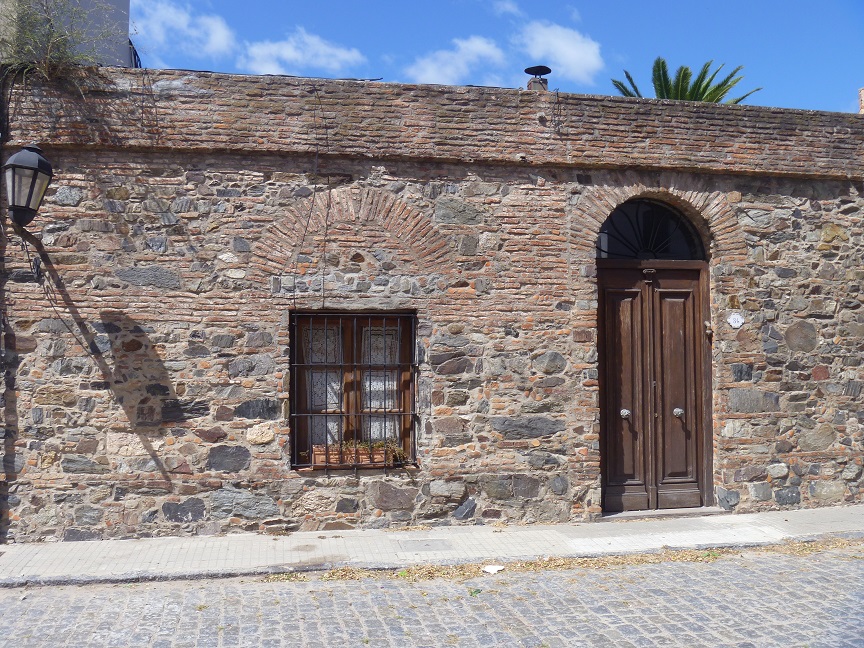
That is very old, I agree, but it is a stretch for a day trip. On the other hand, for the purpose of saying, “I’ve been to Uruguay”, it’s just right. It might have been more fun to visit Punta del Este and look for movie stars, but that would involve several days, and I probably wouldn’t recognize any of them, anyway. For architecture lovers, there are some nicely restored houses in Colonia.

P1040225sm
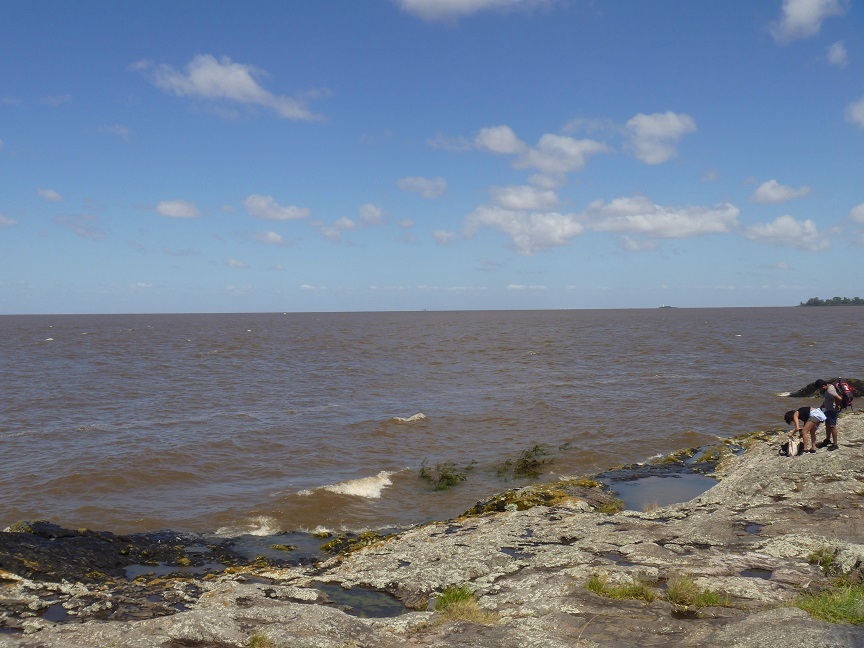
The first unusual thing about taking a ferry from Buenos Aires to Colonia is the fact that you are out of sight of land at one point, And You are Still in the Mouth of A River! (The Parana). Just as weird, and making you feel that you might be in a science fiction story under the light of some strange sun, is the fact that The Water is Very Brown!

P1040226sm

From a distance it looks like an extensive farm field, then you notice the whitecaps. It is very strange. Looking into the situation further is not very encouraging. Argentina as a whole treats about 10% of their sewage, thus, the Rio Parana is probably as bad as it looks. We did not go for a swim.
UNEP report on sewage treatment in Argentina

We strolled, ate lunch, strolled some more, including the archaeological site of the early Plaza de Armas and house of the governor, where we saw a cistern that looks just like the one in our back yard in Illinois.

P1040232sm

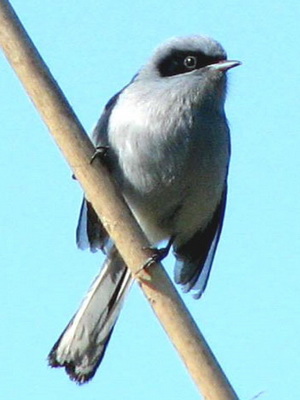
We also saw more birds. More monk parakeets, confirmed the grassland yellow finch, and the masked gnatcatcher that we also saw at the Reserva Ecologica. Here are more photos from my favorite website for Argentine birds:

http://www.reservacostanera.com.ar/en

grassland yellow finchjpg Grassland yellow finch

tacuarita-azul-AB-09-06

Masked gnatcatcher

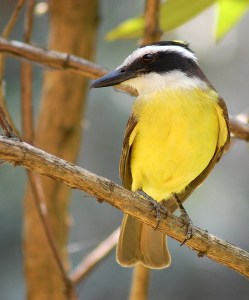
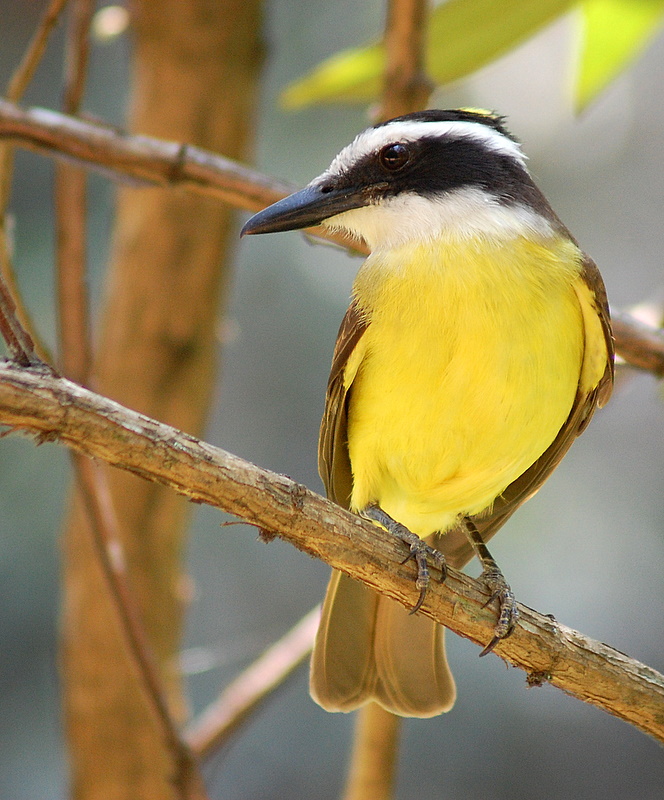
Pitangus_sulphuratus_front

Great Kiskadee (Pitangus sulfuratus)

Details: Sunny, no clouds, high in the low 80s F. A perfect day.

Day trips to Colonia, Uruguay are possible, though you may not be able to buy a ticket at the last minute. We bought round-trip tickets on Tuesday for a Friday visit and were not able to get the lowest price. On the way to Colonia, the ferry was full, on the way back it was not. Our round trip tickets cost about $220 for both of us. The ferries seem to want to profit as much as possible, so they require payment in dollars or credit card by foreigners. That means that the official exchange rate of AR pesos 8.5=US$1 must be paid and not the unofficial rate of 12.9 AR pesos=US$1 that can be paid with Argentine pesos cash.

We were told to print our own boarding passes or be charged US$5 per boarding pass. We were also told to be at the ferry landing at 7:15 am for an 8:15 am departure. The location of the ferry is not well described, but our taxi driver knew where to go. We went on Colonia Express, and our trip was scheduled to take 70 minutes, but took more like 90 min. On the ferry, no one mentions a time change–Uruguay is an hour earlier than Argentina at this time of year. Had Jonathan not struck up a conversation with some Americans at the cafe where we had a coffee, we might have shown up at the dock after our ferry had departed. That’s another thing, the ferry leaves when all the scheduled passengers are on board. Going and coming we left more than 5 minutes ahead of schedule. Who’s ever heard of such a thing?

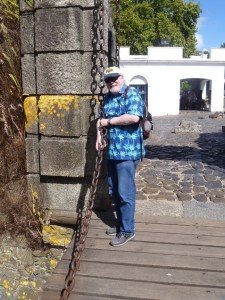
P1040222sm P1040223sm P1040237sm

Everything in Colonia costs more than anything in Buenos Aires. Our lunch was adequate but not exceptional, the same with coffee. I was tempted by the reproduction majolica objects (like a coffee cup), but they were not very good quality and were pretty expensive for what you get (Majolica coffee cup $US 17). There were interesting paintings by an Argentine/Uruguayan artist Alejandra Miranda in one store that had more unusual items. Her work reminded us of the paintings of Eleanor Haas.

We were ready to return to Buenos Aires at 4:30 pm when we were due at the ferry terminal. The trip back was uneventful and the taxi line was not too long. We arrived back at our apartment at about 6:30 pm. Our host, Manuel, stopped by briefly to drop off his bike and we had a good chat.
 

An International Haircut

I needed to get my hair cut, and when we were in the “trendy” Palermo neighborhood of Buenos Aires, I found a reasonable looking place and we walked in. The young man spoke English very well and when I asked him how he came to speak so well, he said he worked for several years in Dubai. In fact, he has only been in Argentina for a year and a half, and since we spoke English the entire time, I have no idea how good his Spanish is—my stylist is Syrian. He left Syria 9 years ago when he was about 19, spent a few years in Dubai and moved to Argentina with a woman. (She does not seem to be in the picture now). He has cut hair since he was in his early teens, and though he doesn’t aspire to cut hair indefinitely, he is pretty good at it, and it does allow him to work almost anywhere. He told a couple of terrorist jokes and we asked whether always being called a terrorist bothered him. He said yes, but he goes with the flow and ignores the fact that he looks as Argentine as he does Syrian. His future plans: go to Carnival in Rio de Janeiro, and anything can happen. I wished him good luck—he should be there by now, as Carnival started today.

Don’t look for a taxi at lunch time, Feb. 12, 2015

We emerged from the Reserva Ecologica at about 1 pm and needed a taxi to get home. We walked over a block to a likely street, and sure enough there were taxis everywhere, coming and going. We stood for about 10 minutes, the longest we’ve ever waited in Buenos Aires, even though cabs were all around us. Why? Cabbies come here to eat lunch and most of the twenty or more cabs around us were sitting in the café on the corner taking their break. You want a ride home? Not right now….. Yes, we did get a cab after a wait. I guess he was having lunch later on.

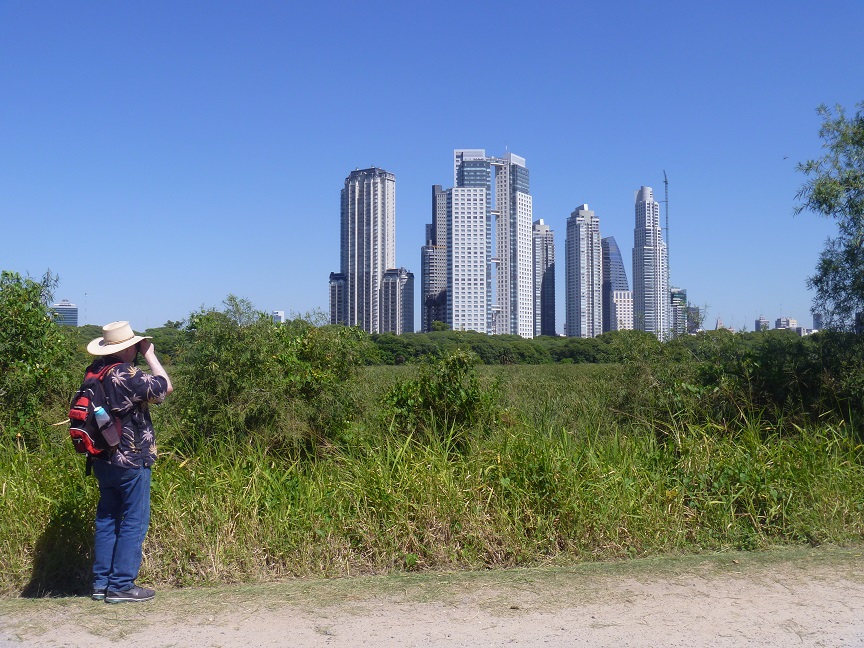
Bird-watching in the Reserva Ecologica was excellent, we saw at least six new birds. People walked, ran and bicycled by on the broad paths. The reserve has a great story, it was created from the dumping of construction debris in the Parana River off Buenos Aires. When the junk caught sediment and a range of plants grew, it attracted birds, turtles, lizards, snakes, and a colony of nutria. When the city decided to convert the abandoned port area into a new high rise neighborhood (Canary Wharf in London is mentioned as an example), the marshy zone was converted into an ecological reserve with great success. Definitely win-win. Now, if you could put your feet in the river without risk of cholera…..

P1040215sm
Details: Clear blue sky, very hot by noon (over 30 C). After 5 pm stiff wind for 2 hours that tapered off without any rain. We visited the Reserva Ecologica Costanera Sur, Puerto Madero, Buenos Aires and saw a number of new birds. Some were difficult to identify because they are similar to many others such as a yellow breasted bird with a black beak and large head, much like a kingbird. Others were difficult to identify because they were females, like a grosbeak with a pale yellow breast, and gray/brown back.The distinctive species I managed to identify are below.

I did not take the photos of the birds we saw (below). One of the best nature sites I’ve seen includes photos of birds at the Reserva, by people interested in the area. Thank you to everyone who took such great photos of the birds we saw. The site is available in both English and Spanish with scientific names as well.

http://www.reservacostanera.com.ar/en
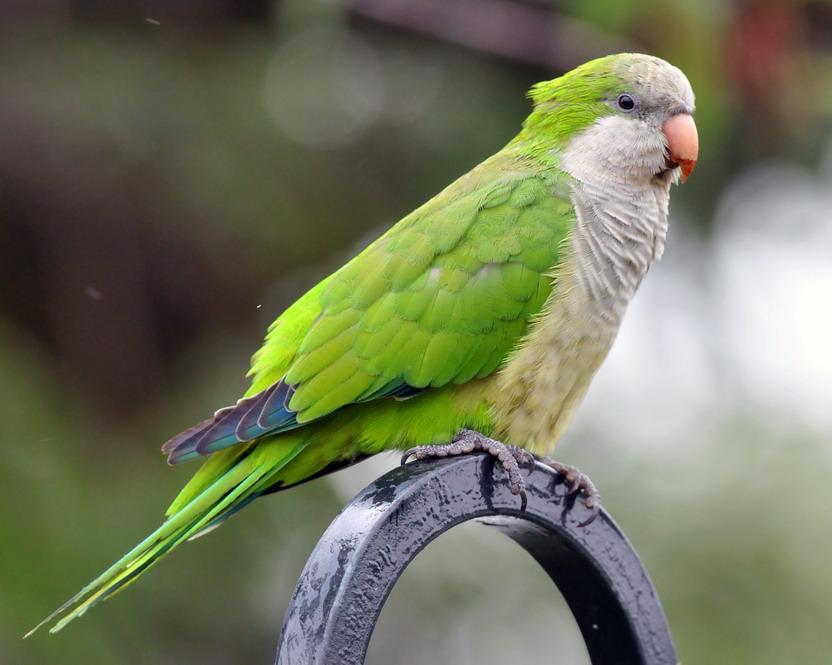
Monk parakeet/Cotorra, green with blue flight feathers, buff/white chest. Very noisy.

monk parakeet BAMyopsitta
Yellow-billed Cardinal/Cardenillo, red head, black throat, white body, this one landed on a bush holding a red berry in its beak.

cardenillo
Glittering-bellied Emerald/Picaflor Comun, has an iridescent back, purple out of the sun, but turquoise/emerald green in sun, green throat, and long red downcurved beak, dark at the end.

picaflorcomun

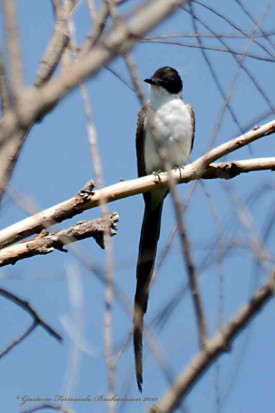
Fork-tailed flycatcher, which we also saw in the Mendoza area (Lujan de Cuyo).

tijereta-GFB-2-15-275x413

Pato picazo (Netta peposaca), a duck with red above the beak:

Pato01

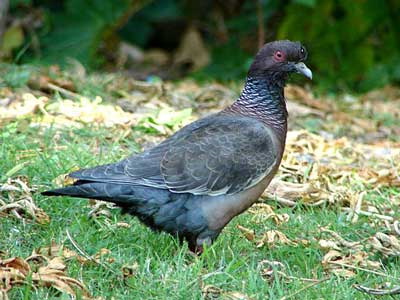
Paloma picazuro/Blue beaked dove (Columba picazuro), these are very big, they look like gray cats sitting in the trees:

picazuroJ-JGV-2-2006

One last yellow headed bird, I identified as a yellow grassland finch/Jilguero dorado (Sicalis flaveola).

We might also have seen a tacuarita azul. it looked like a nuthatch with a pale blue chest.

Details: High temperature over 90 F. winds picked up around 6 pm but no rain.

Peron continued, Feb. 11, 2015

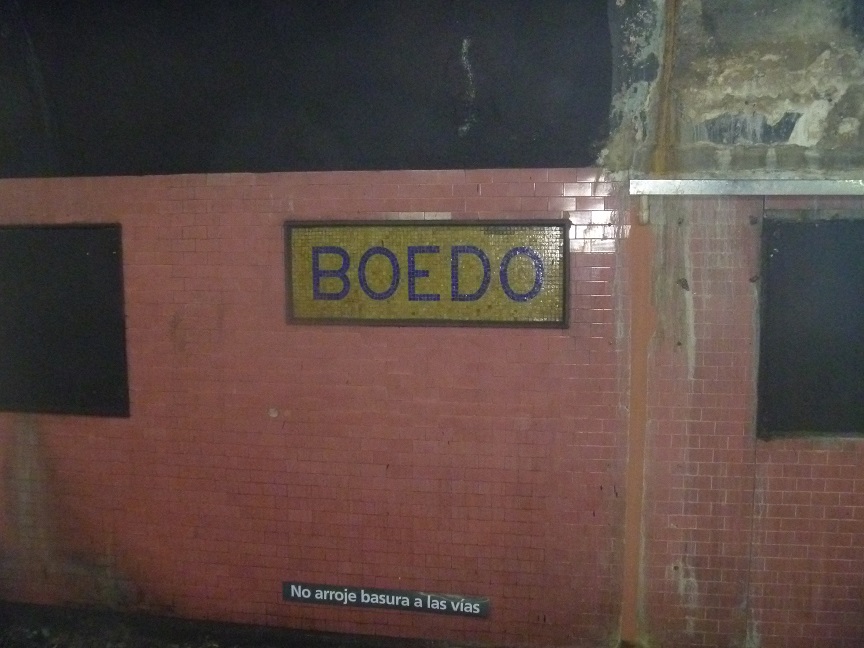
We took the Subte=Subterranean=Subway from our stop (Boedo) to the end of the line near the Plaza de Mayo. We looked at the Peru subway stop adjacent, where there are supposed to be restored subway cars running. The tile walls and reproduction turn of the 20th century ads are ok, but not a big deal in my view.

P1040196sm

Riding on the train remind you of the New York subway? It should, Buenos Aires is the third oldest subway system in the Americas, right after New York and Boston. I’d forgotten that New York now uses rubber wheels and pneumatic brakes–the BA subway has Not been updated and the screeching metal-on-metal wheels and the piercing sound of the air brakes are more than enough to make you stuff your ears with your fingers.

P1040197sm

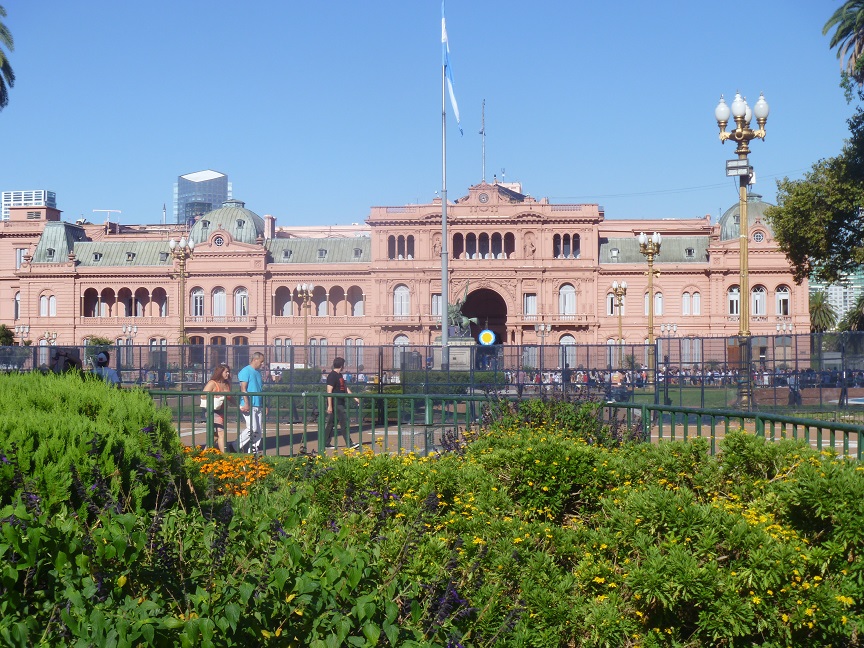
Out of the subway is the Plaza de Mayo, where mothers of the “disappeared” still walk the perimeter in memory of the dead every Thursday. At one side is the Casa Rosada, the seat of government, though not lived-in today. Evita and Juan Peron lived there, and she made appearances from one of the balconies.

P1040198sm

Today a demonstration was underway, complete with t shirts, chanting, drums, singing and dancing and a long line of people waiting to be let in. We were not sure what the cause was, but the vests and t-shirts mentioned social justice.

P1040200sm

No day is complete without a cafe stop, and today’s was the Cafe Tortoni. Reputed to have been a favorite of Borges, there is a life size sculpture of three people at a back table that is supposed to be Borges and two friends. Looks a bit like the Addams family, but artists like to have their work added to the pieces on the walls, so there is a wide range of quality in the framed art. The turn of the century (20th) ambience is very attractive, despite touristy elements. Someone has even written an ode to the thirteen columns….

P1040208sm


Eva Peron’s Recoleta Cemetery, Feb. 11, 2015

The cemetery doesn’t really belong to Eva Peron, and there are no signposts to her grave though there are signposts to the grave of others. It doesn’t matter because the tour groups flock to Evita’s grave. Though stories tell of heaps of fresh flowers at her crypt, though we saw only one fresh flower and a few plastic blooms. Other tombs include the founders and statesmen of Argentina and the wealthy, though many of the names on the splendid tombs no longer sound familiar.

Recoleta cemetery is in better condition than the Pere Lachaise Cemetery in Paris, with workers busy cleaning and restoring tombs. At the same time, there are tombs that are empty except for buckets and ladders. Who decides which tombs are maintained and which are abandoned? One reason that Pere Lachaise is in much worse shape than Recoleta is that it is much larger and the tombs are spread out more, meaning there is grass and a bit of parkland, while only a few trees and potted plants are present at Recoleta, a compact city of tombs.

Now we’ll all recite a verse of Ozymandias.

Taxi Drivers in Buenos Aires, Feb. 11, 2015

Many taxi drivers in Buenos Aires strike up a conversation immediately. They ask where you are from, why you are in Argentina and then go directly to why they drive a taxi, unemployment, taxes and politics. I’ve found some of them to be quite well-spoken.

One man is a widower and drives a cab to keep buisy. He knows all the streets

of Buenos Aires and which way they run. He also went on to describe his boyhood in the neighborhood of Mataderos. At that time, it was still the slaughterhouse of Buenos Aires and most people worked in related activities. He described a close-knit community where neighbors all went to work together and spent their free time together.

Unfortunately, he blames the change in sense of community on outsiders. His mother taught him to greet everyone. Today in his apartment building, people sweep by without a word. They are not properly educated. According to him, the problem is the influx of immigrants. Not Chileans (we’va always had some of them), but Bolivians, Peruvians, and to a lesser extent Paraguayans (they are very hard workers, even though they are clannish and brutish).

What kind of response can a visitor make to these remarks? Times change,  people change, and it is probably not immigrants who change things. If you say something along these lines, your words are swept away with a hand gesture or a word. It is very difficult to alter conventional wisdom.

Today’s taxi driver was a mechanical engineer, working with companies to make machines work. He’s been driving a cab for 15 years. The unspoken explanation is that he was laid off as the Argentine economy collapsed in 2001 and is now permanently underemployed. We are the same age, have the same number of children, though he leads in grandchildren (2). We could all agree on the fact that at our ages one must try to enjoy every minute.

Tango Mania-Competing Corners of Boedo, Feb. 10,2015

In Buenos Aires, everyone has an opinion about tango. The corner of Boedo & San Juan is home to two cafes that still exist, both of which claim to have hosted early 20th century tango stars.

P1040186sm

P1040182smP1040187sm