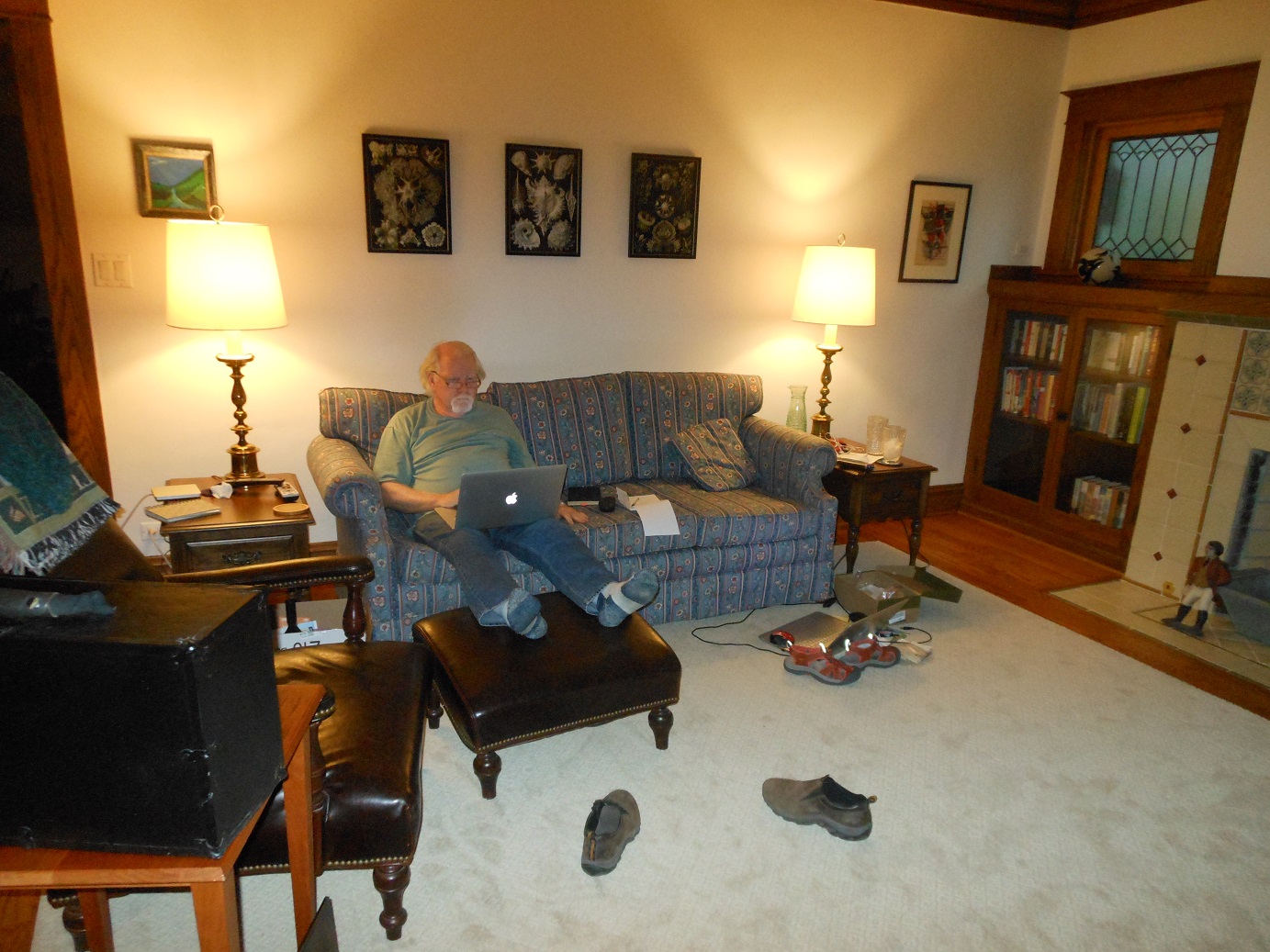
During the month of May 2015, from the day before the closing on the sale of our house until the week after Memorial Day, we are renting an apartment in a (very nice) two flat in LaGrange. We found it on Airbnb, the owners live upstairs and so far it is both comfortable and convenient.
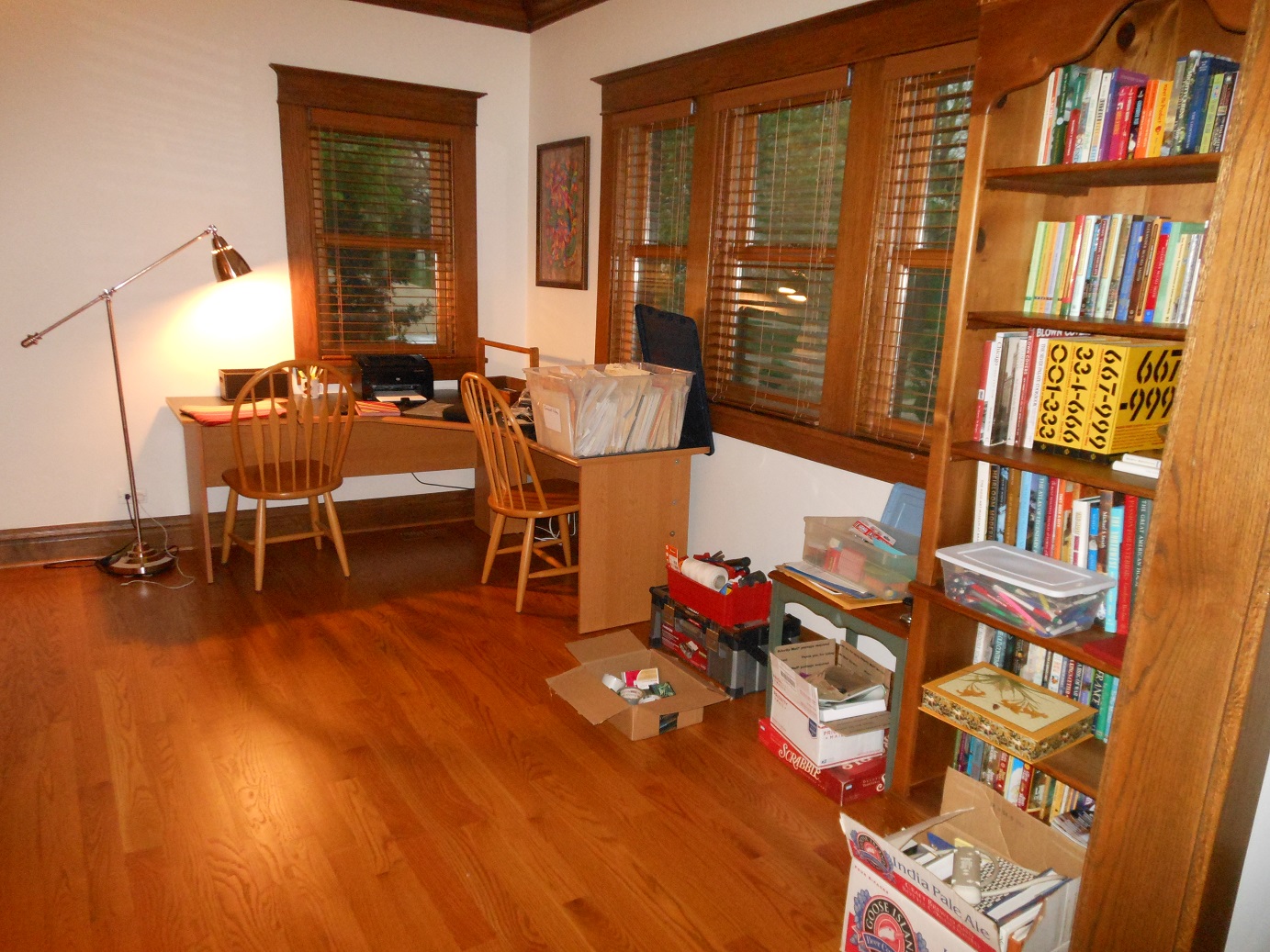
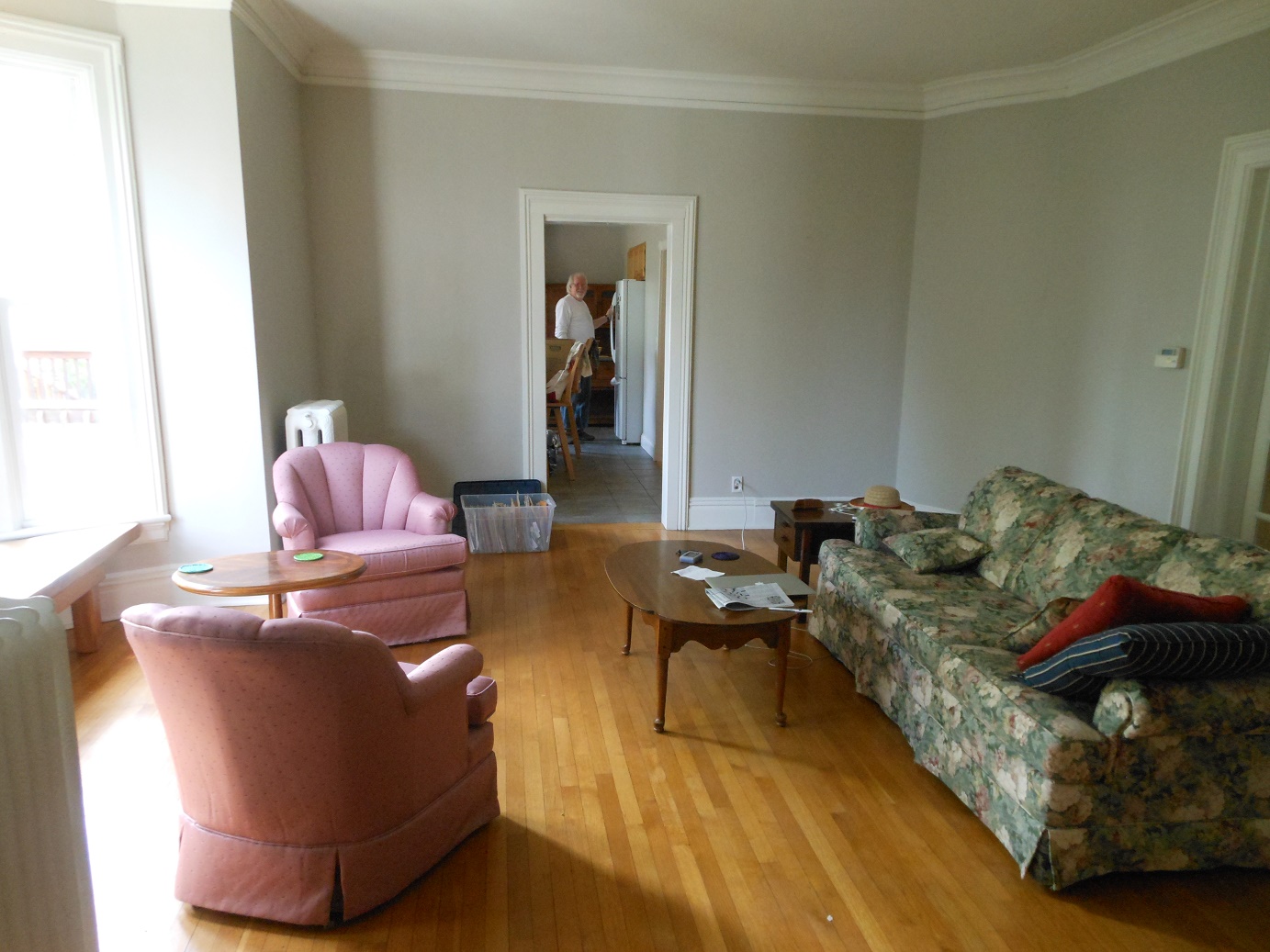
We have managed to put our own stamp on the extremely clean and orderly surroundings.
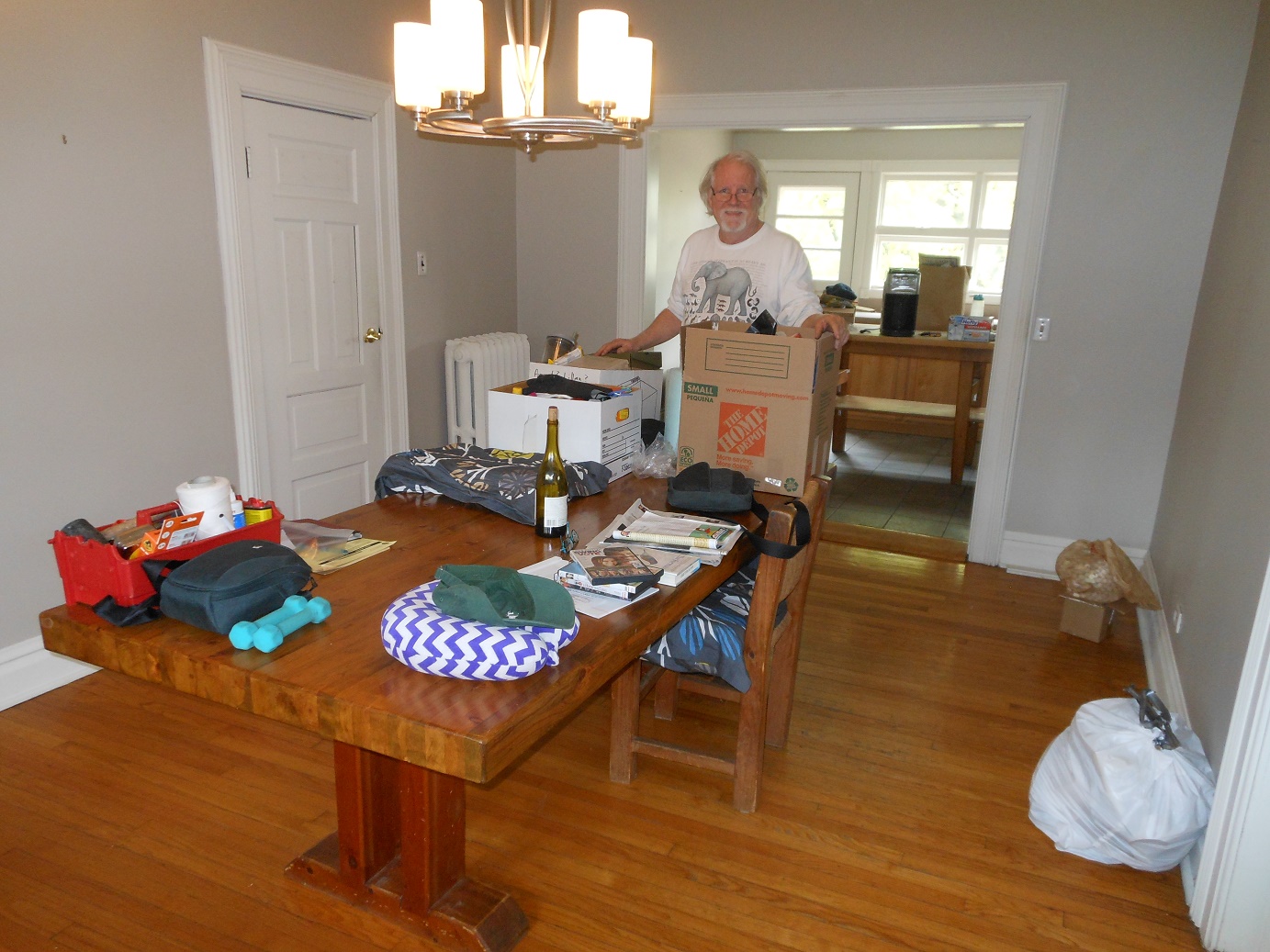
All the cardboard boxes are ours. The desk has a wireless printer–a very handy amenity. There’s also a nicely equipped kitchen.
We are out and the house is officially sold. Here are some of the photos I took before we got in the car to go to our rental house.
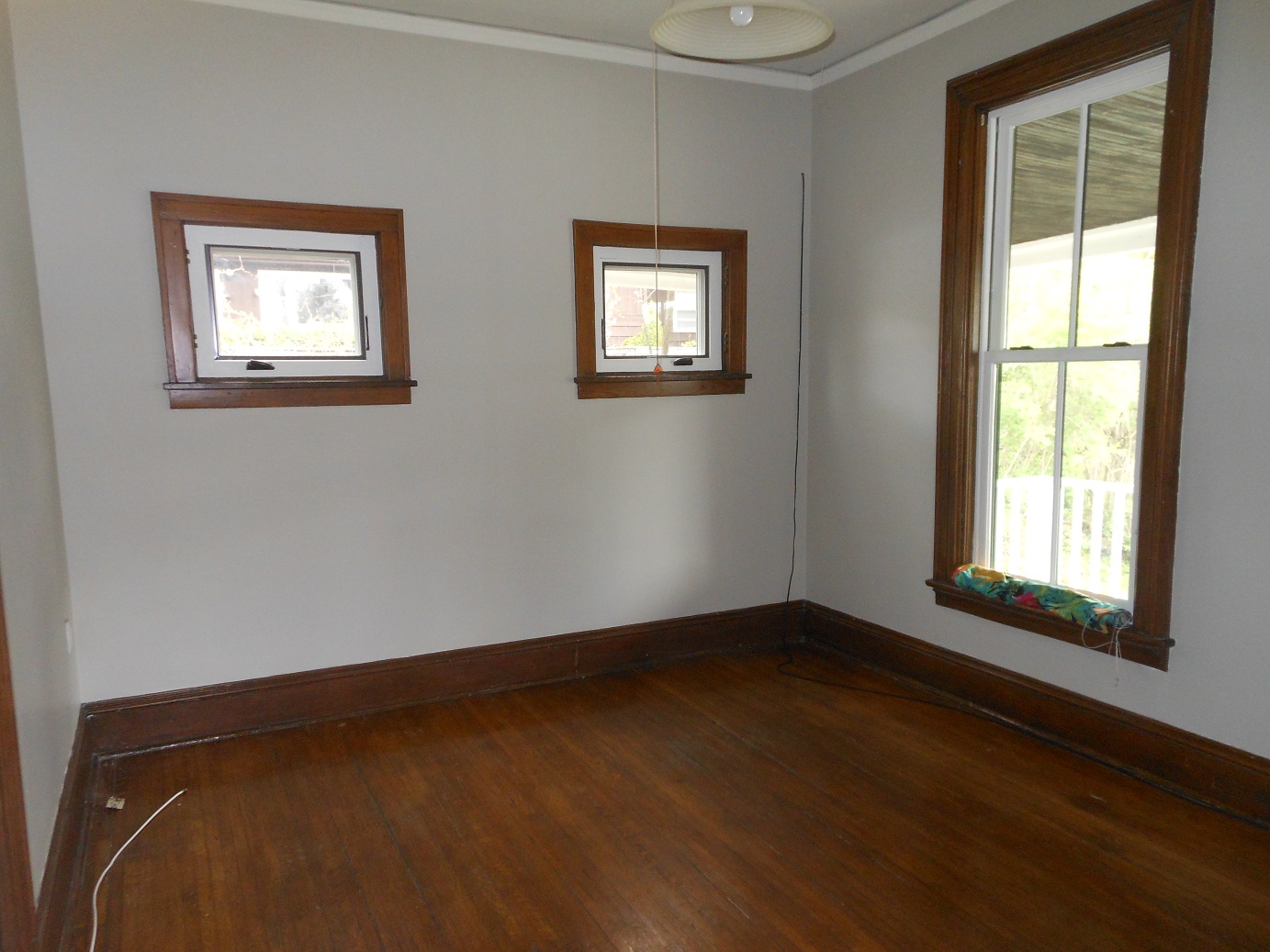
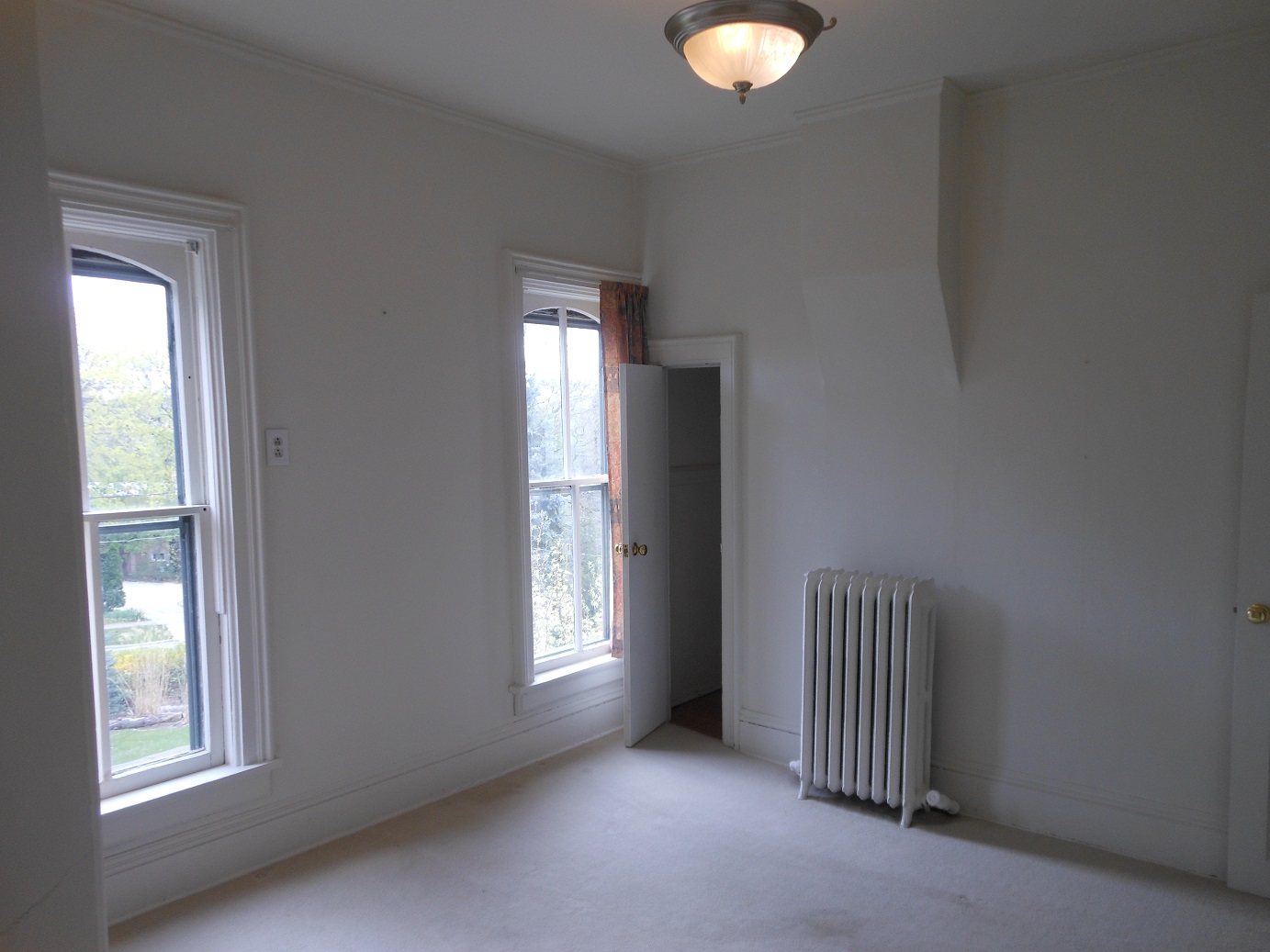
The kitchen without the butcher block island.The study stripped of desks, book cases, chairs, pictures and a lot of miscellany.Upstairs bedroom overlooking the street where the girls used to sit on the roof.Small bedroom.
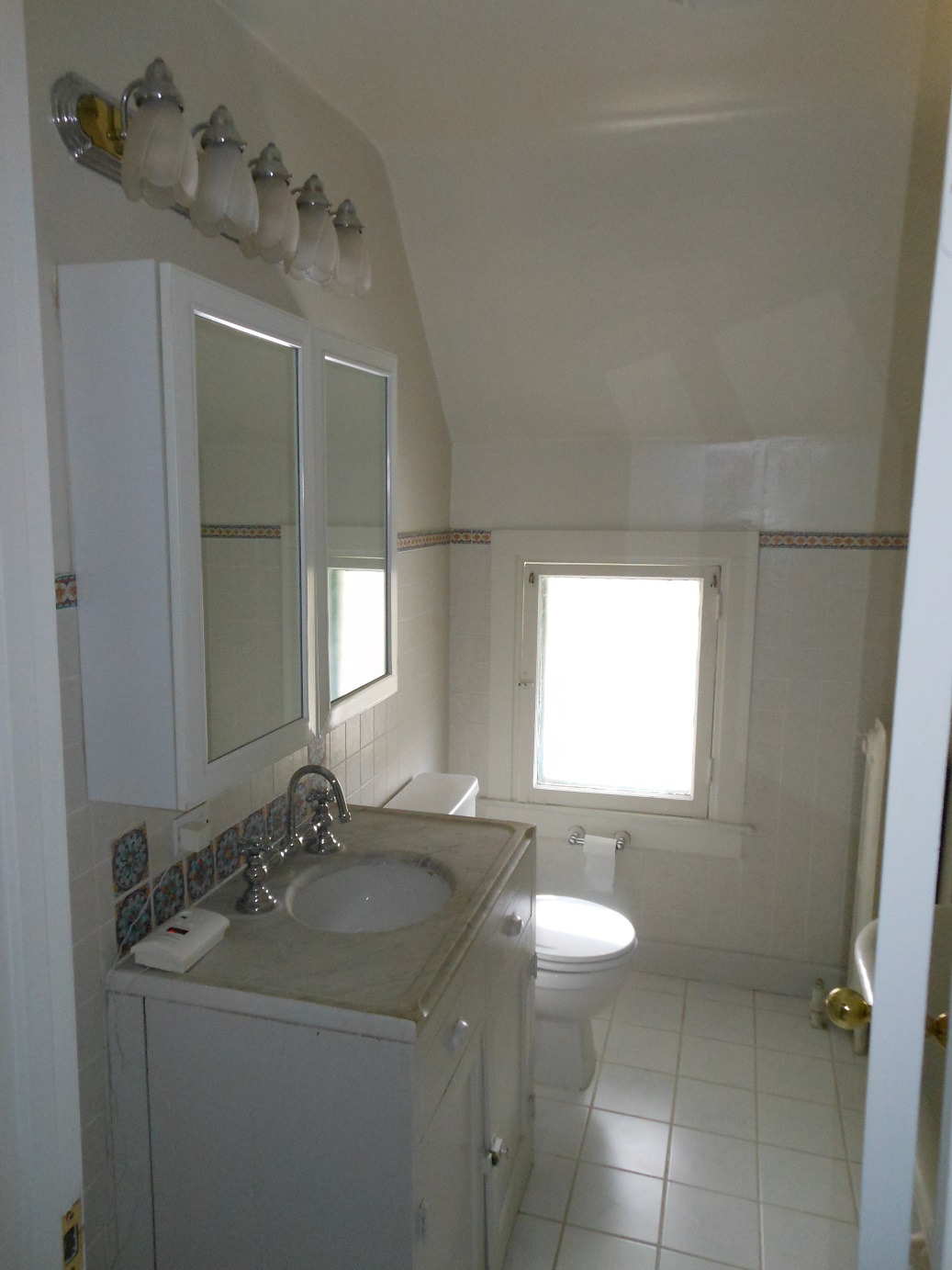
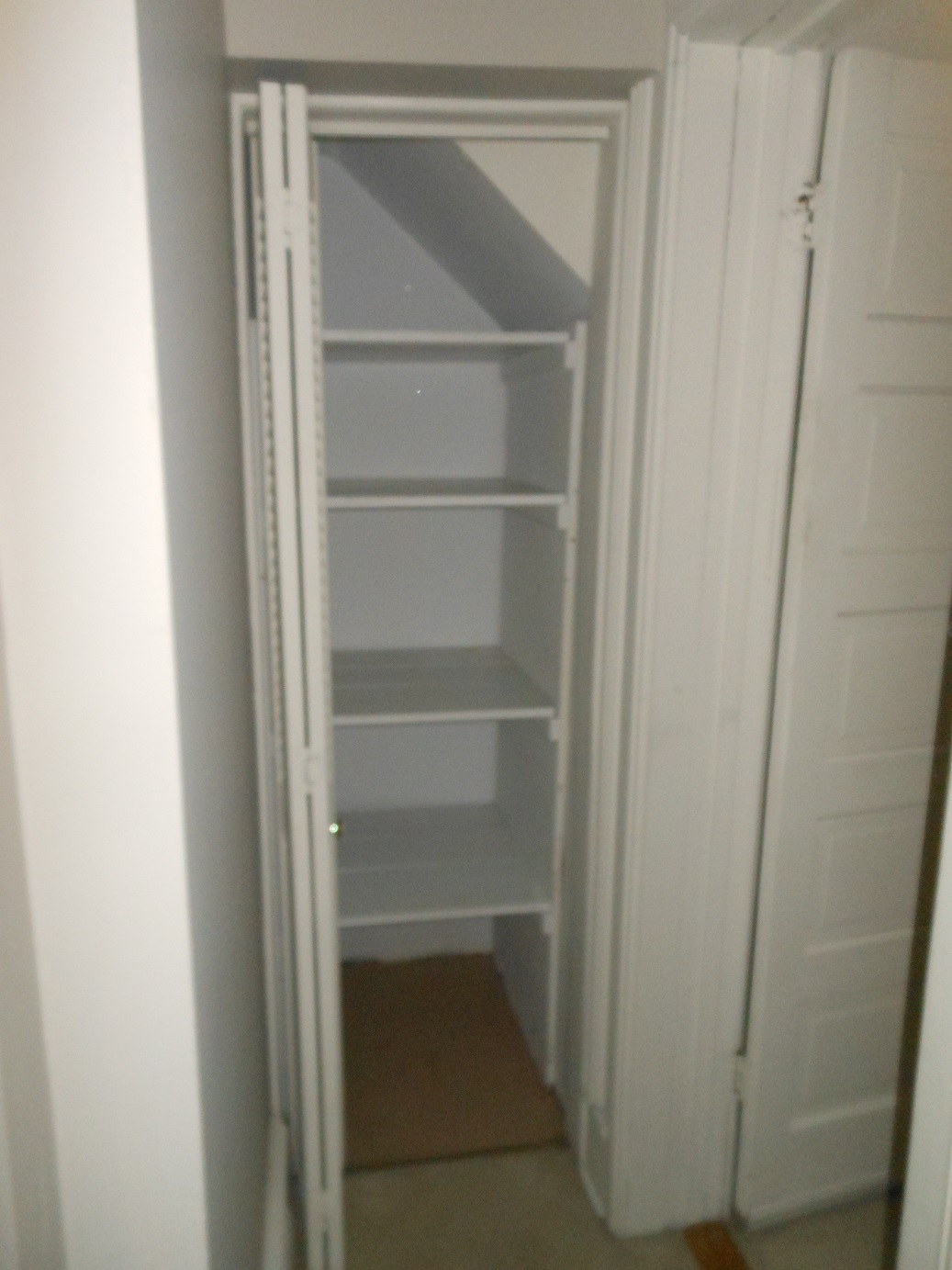
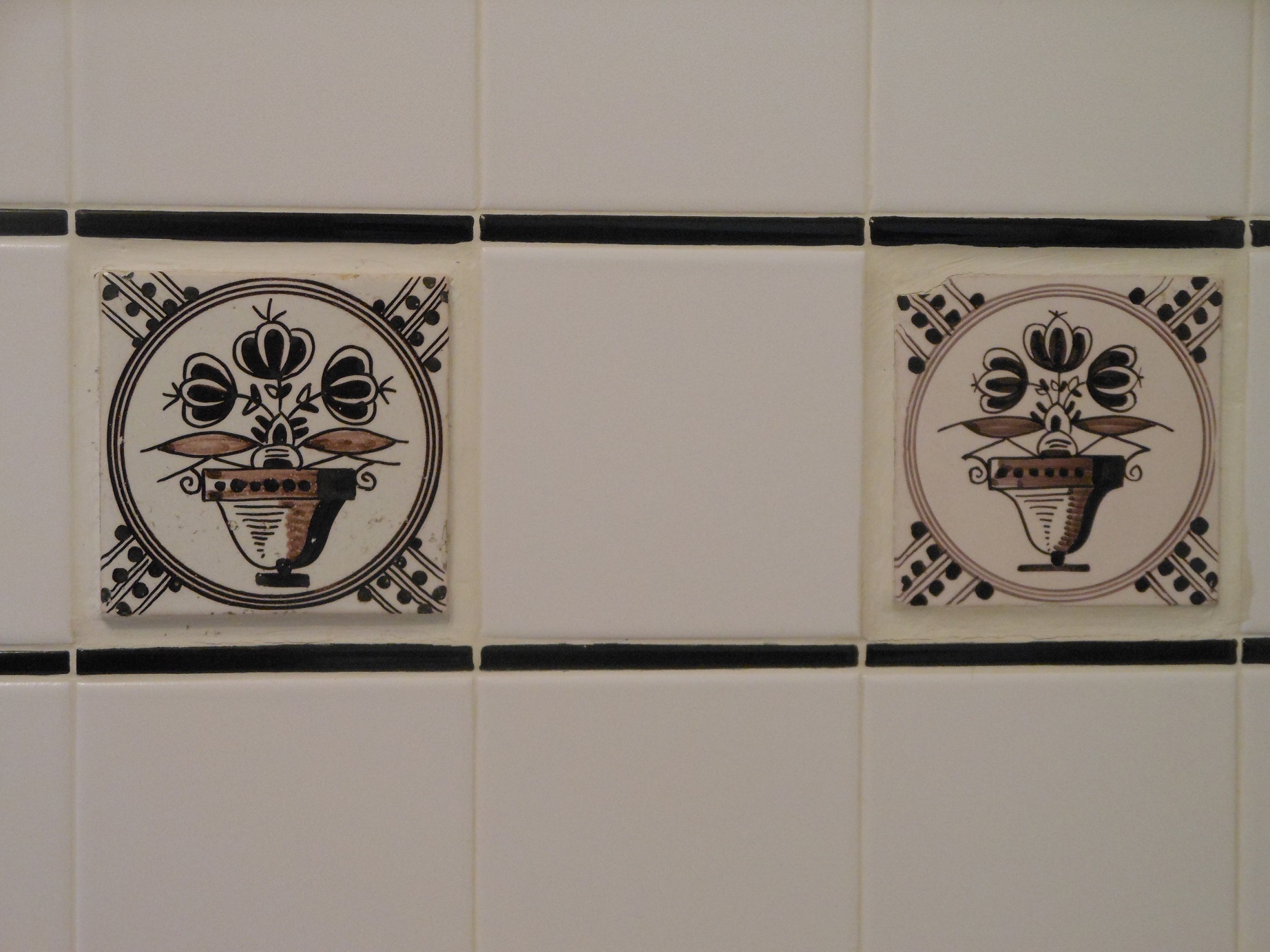
Upstairs bathroom that we completely remodeled.Upstairs hall looking east to the street.Linen closet upstairs.Master bath that we added when we moved in.18th century tiles I bought in Delft the year we moved in to the house. I love the differences you can see even though they were both made from the same design template.Back stairs leading up.
After a year of downsizing, estate sale, and many carloads of donations, we still seem to have had every closet in the house full of miscellaneous things. To get these into our storage unit we started over, renting a slightly larger unit (10 x 15 ft) and purchasing steel shelving units, six in all. The shelves, from Home Depot, proved very easy to assemble and it took only two visits to get them up and move the contents of the smaller unit moved. From there we began adding boxes from the house.
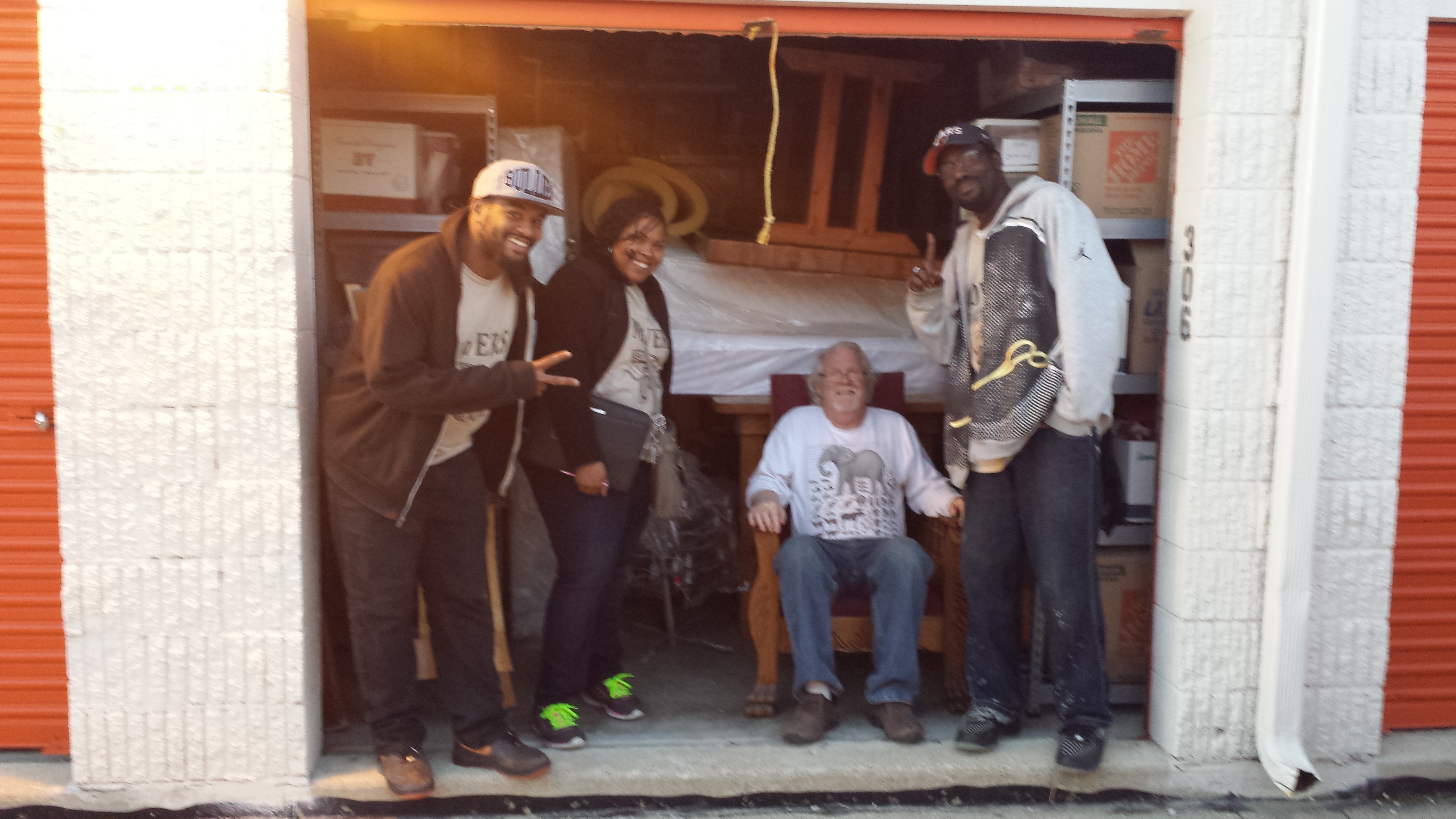
Our pencil post bed, one of the few pieces of furniture we’re putting in storage, ready to go.Last days in the kitchen.The kitchen is almost empty.Jonathan packed the dining room and kitchen.After the last furniture was donated, this is what was left.Annie and the movers at the bitter end, with light fading and storage unit stuffed full.
We arrived in Wheaton on April 15, just as spring was emerging. It’s the most beautiful time of year at our house, when the flowering trees, forsythia and tulips are in bloom. How lucky we are to be here for two weeks, packing up the house in anticipation of closing on the sale May 1.
Semana Santa, Easter week, is one of the busiest holiday weeks of the year. Barranca is filling up with visitors. This gives us a chance to see our friends from Lima one more time before we leave for the US in two weeks. The weather is still warm, though maybe not quite warm enough to swim.
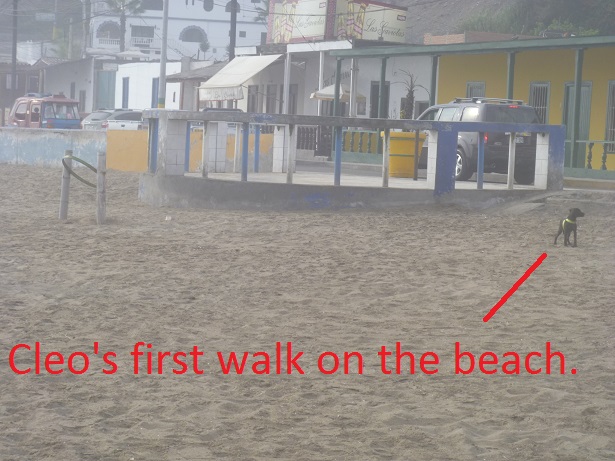
Our new puppy and future guard dog, Cleopatra, is gaining confidence.
Our daily schedule changes slightly during a week this crowded. We walk down the beach and back earlier in the day rather than our usual 5 pm to avoid crowds.
We still bring out the armchairs on the front porch at 6 pm to watch the sunset. This week we add an extra chair because there is always someone passing by who can be tempted to sit for a few minutes and chat during the ever changing sunset and afterglow in the clouds.
Sunset’s afterglow on the beach in Barranca, Holy Thursday, April 2, 2015.
Mototaxis are sometimes called “motocuys” for their resemblance to motorized guinea pigs. This was the banner photo for our trip in January and February 2015
Those of you who have followed this blog know that the title turned out not to be entirely representative of our travels, as we never made it to Bolivia. That remains for another time. Since we’re starting on the next round of travels on April 15, I want to retire this banner and put up a new one.
A gorgeous day, 19 C and sun. Big plans for our last day in Chile. Checked out of the house at noon with our hostess Sara, sister of the owner of the house (Marcela) who has emigrated to Norway with her husband.
Headed for Santiago on a brand new highway, the Acceso Sur. It ended before the line on the map ended and we were lost for a while, but found ourselves again and got to the center and parked. Had a great lunch at Bocanariz, a wine bar that has lots of wine by the glass in small (tasting) and full glass sizes. Jonathan had tongue/oxtail and I had rabbit in mustard sauce, pretty great for a last meal. After lunch we visited the Pueblito de los Dominicos, a faux village where craftsmen rent spaces where they can work as well as sell goods, as they choose. There is a wide range of goods and quality, but there were some exceptionally creative people making jewelry, woodwork, and woven goods. We chatted longest with an artist who makes jewelry but also sells work by two Mapuche families. They each produce metal jewelry based on traditional Mapuche designs. There were some long tupu/pins and metal breastplate-like neck pieces that were stunning.
By the time we got to the car we had very little time to get to the airport and no map that actually showed its location. By luck, intuition or divine intervention we made all the correct turns until Jonathan shouted “Aeropuerto!” (he’d seen an airport sign) and all was well. We got to the gate with time to have a coffee and spend the last of our Chilean pesos on chocolate bars. It seemed like we stood in line for ages (we did), and then we boarded (chaotic, crowded), and then we sat. The first announcement mentioned five minutes and routine maintenance check (why wasn’t this done earlier?), then the next and the next, each less accurate than the previous. This familiar story has a happy ending. After an hour and a half we left, arriving into Lima about an hour late. It would have been even later but for the 2 hour time difference between Santiago and Lima. We left at 9:40 pm Santiago time and arrived at 11:40 pm Lima time, but after 4 hours of travel.
March 5, 2015
It is even warmer in Lima than Santiago, but heavily overcast, part of the change from summer to fall in Peru. It warmed up and the sun came out, but by then we’d checked out of the Senorial, shopped at the Surquillo market and at Wong and were practically in Barranca. After being away for six weeks, Peru’s roads don’t seem as bad as I recalled, and the desert is more dramatic than ever. We went for our regular walk along the beach at 5 pm an then watched the sunset after 6 pm. Home again.
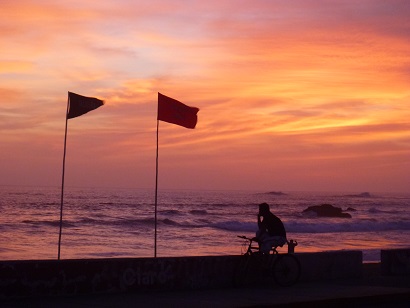
Barranca at sunset. The left flag shows water quality is good, the right flag says no swimming due to turbulence.
I plan to keep writing, but perhaps a bit less frequently. Thanks for following along with us.
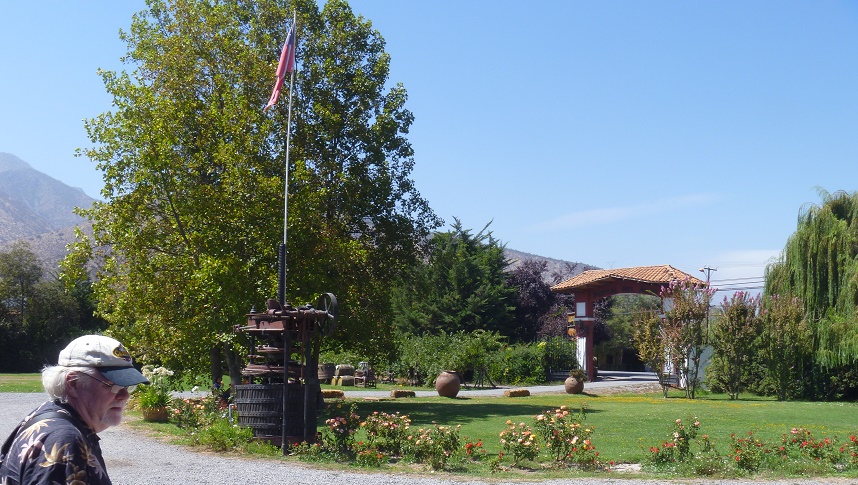
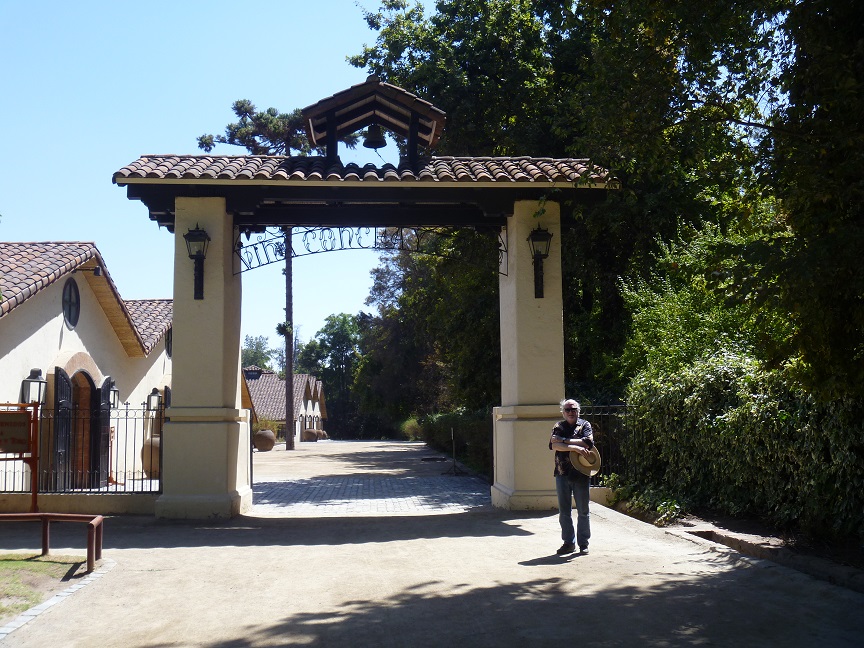
Jonathan assembled a list of vineyards in our part of the Maipo Valley (Altos de Jahuel) that have web pages, participate in the network of wine tourism of the region, and for which he could divine their location. We set off in the late morning. Our first stop, Portal del Alto. It had a nice open area with parking, but that was it. The vineyard makes at least four categories of wine, a broad range of products including sparkling and late harvest wines. One blend is called “Four Reds”, suggesting they export to English speaking countries. Despite web information to the contrary they do not offer tours or tasting, though they do sell wine. The two women in the office seemed far too busy to host visitors. My conclusion, the company exports most of their production and is not interested in local publicity that might be generated by visits to the winery.
Portal del Alto, Alto Jahuel
Next stop was Concha y Toro, a large winery with vineyards in several countries and an internationally recognized name. We’d avoided the large wineries in favor of those whose products were less likely to be available in the US, but we decided to visit Concha y Toros. They run a wide variety of tours and when we arrived we were impressed by the size of the grounds, parking area, wine shop, restaurant. They can host hundreds at a time. Fortunately for us, they only had two groups of about 16 that we saw, in addition to a couple of pairs or small groups.
We found that a tour was not required and that a wide variety of wines are available in 1/2 glass portions, a typical Chilean tasting size. Jonathan was looking for a good Carmenere to take back to Peru, so he tried a Carmenere and a blend without finding just the right thing. However, he was able to try just what he wanted. Often, a tasting includes 2-4 set wines and cannot be altered to let you try something that you would prefer to taste. We were seated in the restaurant, and the food looked delicious, though we decided not to stay for lunch. Too many wineries still to visit (Had we but known…). Thus, a huge wine company that we suspected would be uninterested in two casual visitors gave us a good experience in beautiful surroundings.
There’s not even a photo to share of our next stop, Vina William Fevre (corner of Hernan Prieto and Circ. Maximo Valdes, Alto Jahuel or Pirque), because it was a small structure that was shut, despite the sala de ventas sign. It was probably closed for lunch because it was 2 pm. We drove by much later and the doors were open but we did not stop, mostly because of what transpired in the interim.
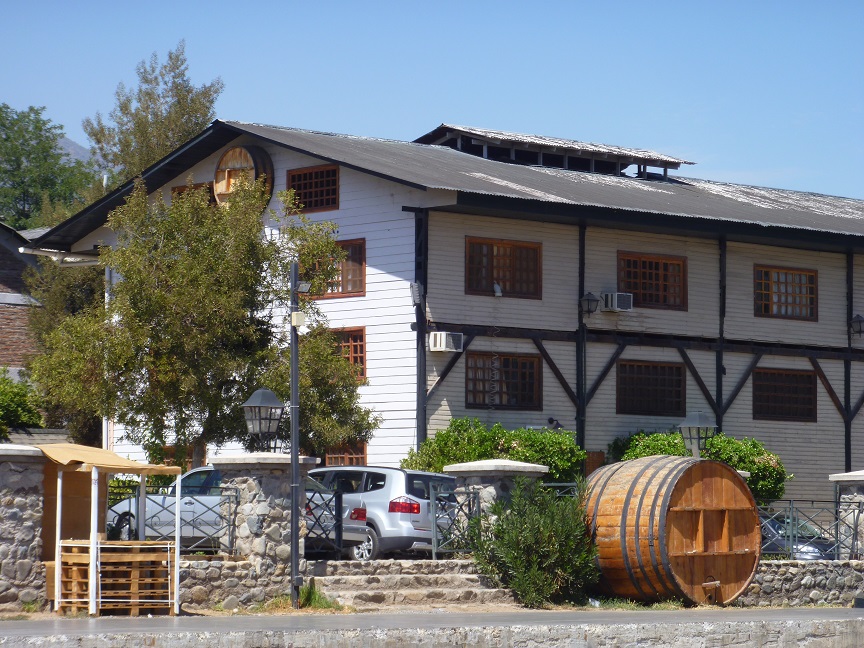
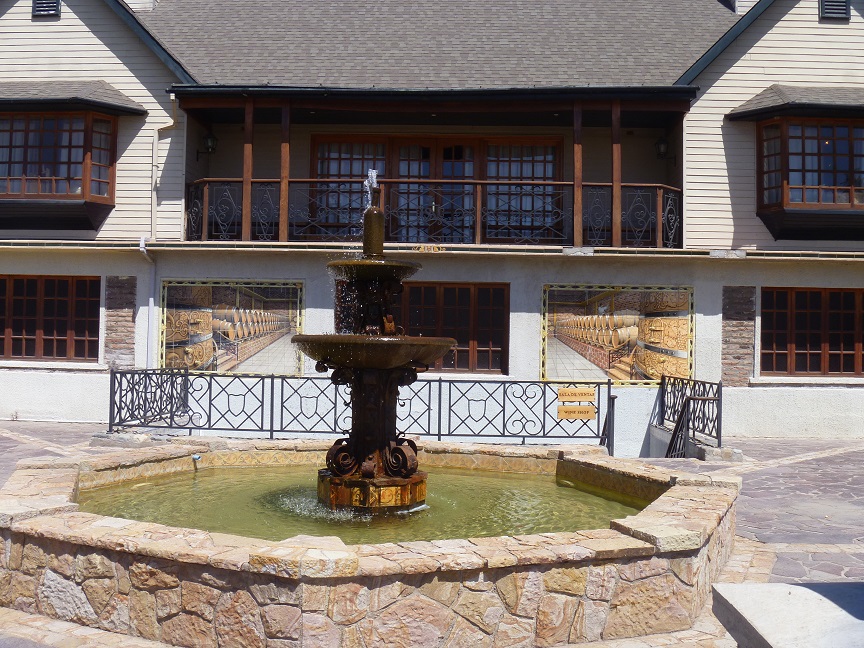
We stopped in the shade for a picnic lunch before continuing on to our next stop, Vina Santa Alicia. We followed large brown signs to the left and the right for several miles toward the mountainside, each sign indicating “wine tourism”, “vineyards”, and other delights. Finally we arrived at the winery, a large facility with warehouses whose exterior is made to look like old fashioned houses, and signs indicating the sala de ventas (wine store). This was down a flight of stairs–we could smell the wine.
Vina Santa AliciaEntrance to the wine shop is down the stairs past the murals.
What we found at the bottom of the stairs was a bit of a disappointment. A tasting room, half of it stacked with cases of wine. A staff member who could provide a list of wines (prices not printed), though she pointed out that virtually 100% of their production is exported and what was for sale in Chile was in that room. When we asked about the elaborate signage that got us out to their relatively remote location, she said that the firm is building toward having tastings and regular visitors but is not prepared for visitors yet.
We had not run out of vineyards. Next was a pair of vineyards, Haras de Pirque and El Principal (same name as a nearby community). We followed one large brown and white sign after another across the Pirque Valley. When we pulled into the Haras de Pirque entry the two guards asked whether we had appointments. When we asked about tasting, they said the winery offered no visits at all. When we protested and pointed out the signs, they mentioned new owners, and one said that the signs were installed by the municipality and had nothing to do with the vineyards. Of course, they mentioned that in the future……blah blah. Somewhat disgruntled, we continued onward.
What proved to be the last stop was Vina El Principal, where it really looked like we were going to get to the end of the road at the base of a mountain.
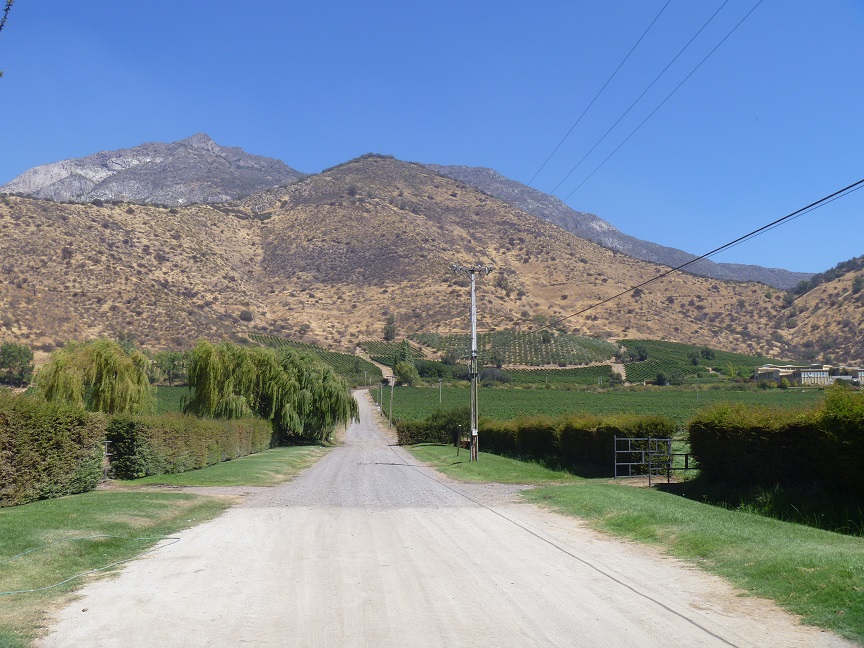
Vina El Principal, also known as the very far end of the Pirque Valley. From here the roads only go back.
The winery is just to the left of this sentence on the edge of the photo.
The grounds are extensive and the winery is in the distance off to the right. It is a very large operation. We stopped at the gate and spoke to a man who went to the phone. He returned to tell us that visits were only by appointment and besides, they weren’t having any. When we pointed out that we had emailed (no answer) and that the phone also went unanswered, he shrugged. He also pointed out that it was harvest season. We pointed out that in other regions, harvest season is the busiest time of the year for tourism. He looked mildly surprised. The office at the vineyard that deals with appointments consists of one person.
With that, we threw in the proverbial and by now not much wine-stained towel. Someone wants wine tourism, but it doesn’t seem to be the wineries, who appear to export close to 100% of their production and don’t have much interest in people who visit Chile in hopes of seeing the vines and trying wines in their home locations. How about that? If you want to taste wine, go to Argentina, or California. I’m not sure but I think Australia, New Zealand, and South Africa are into wine tourism, too. If you want Chilean wine, go to Binny’s. They do wine tastings.
Since the day had started at about 19 C (66F) and ended up at 30 C (86F), we went home, put our feet up and opened some of the wine we accumulated earlier in the week. Ahhhh.
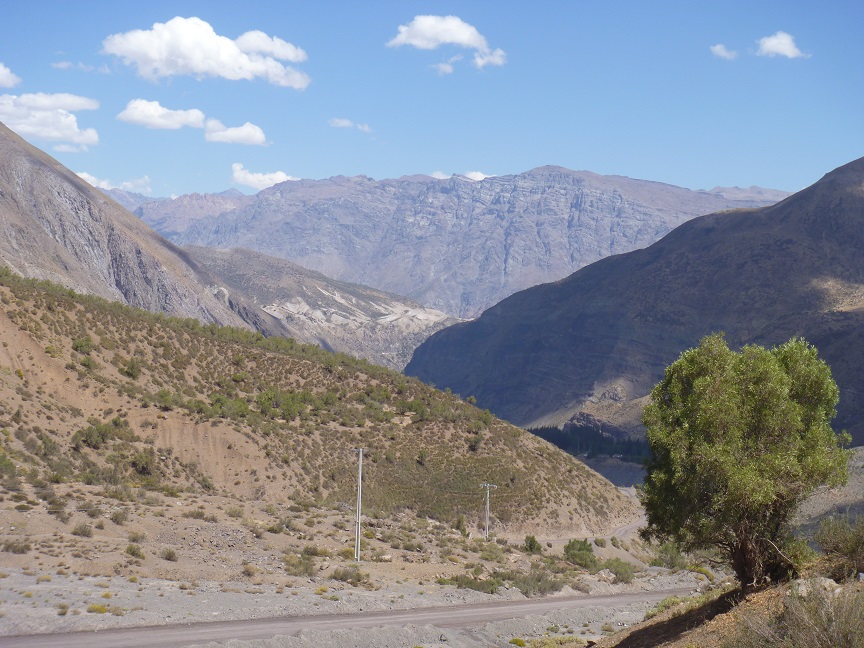
We set out for Embalse El Yeso (Gypsum Dam), east of Santiago heading into the Andes. Since the last 22 km of the route are unpaved, I wasn’t sure how far we would get. Along the way is the Cascada de las Animas, an area that sounded like it would be good for bird watching, so we went to look for condors. Other birders reported seeing a variety of interesting and endemic species on this route.
Raising the bar at Cascada de las Animas–beautiful metal work by Taller Pangal.
This beautiful facility only offers guided activities, so we moved on. The artist/architect who created the center has a studio nearby and makes unique creative objects, up to and including houses at his Taller Pangal
White browed ground tyrant. This internet photo shows the rufous patch on his head that was a good identifier:
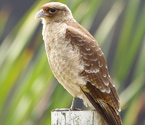
Chimango caracara is common but it took us a while to identify it. They spend a lot of time on the ground–eating dead things, I believe.
I’m still looking for the little guy with the white patch at the end of the tail….
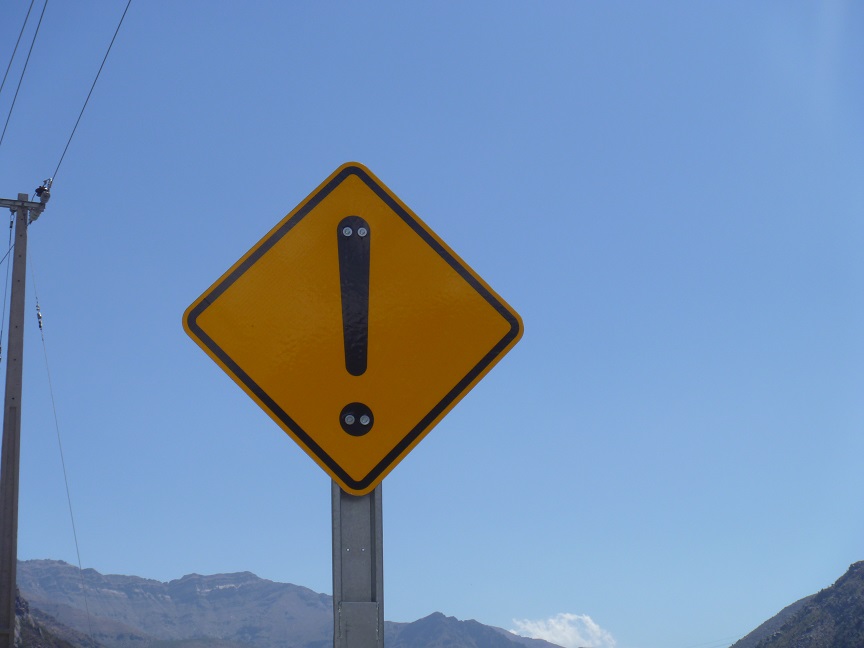
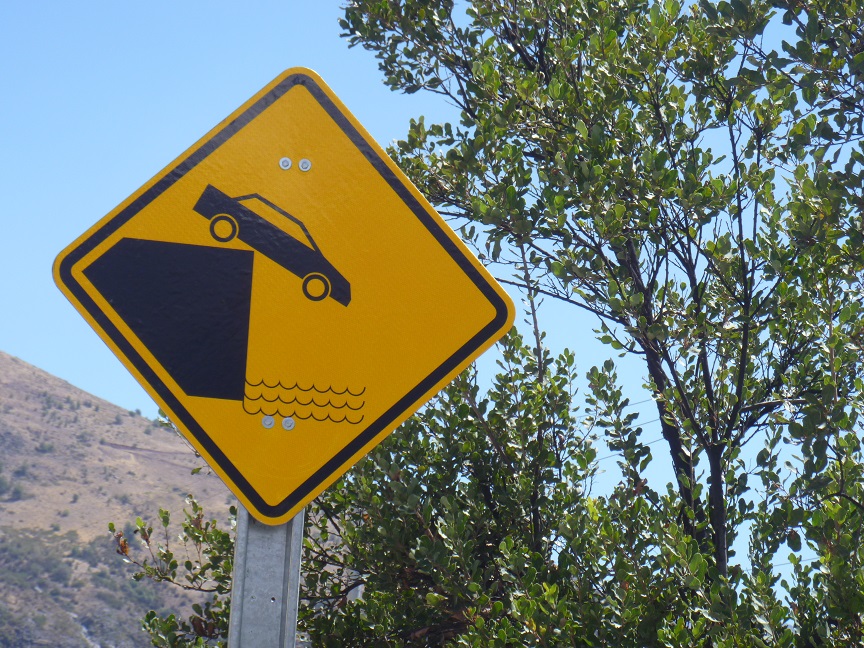
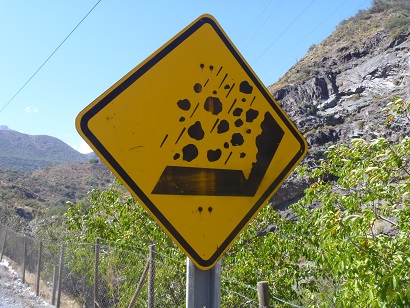
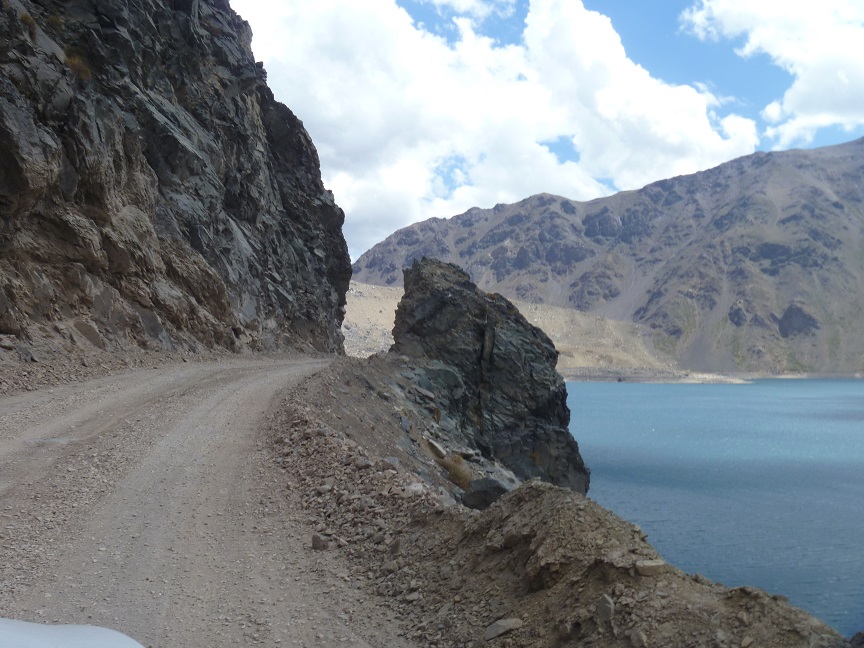
We got all the way up to the lake without seeing any condors. Well, we might have seen a condor but it ducked behind a mountainside. The road to the Embalse El Yeso was a bit hazardous:
We saw lots of evidence of rock falls and flooding.
Recent slide into the road not yet cleared because a crew is working on the others farther along.Top right you see an irrigation tunnel through the rock–the road can’t be widened without breaking into it.
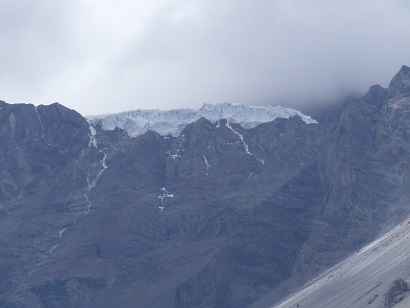
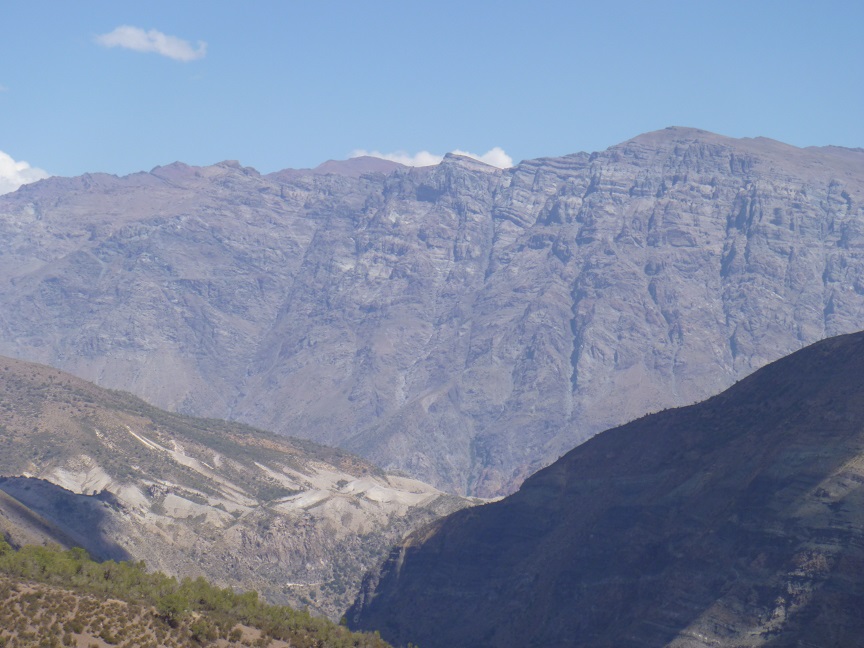
There was scenery all over the place, including a glacier. We’d wanted to see a glacier in Patagonia, but it involves more hiking than we could do. We were driving up the valley when I saw a glacier while I was scoping for condors.
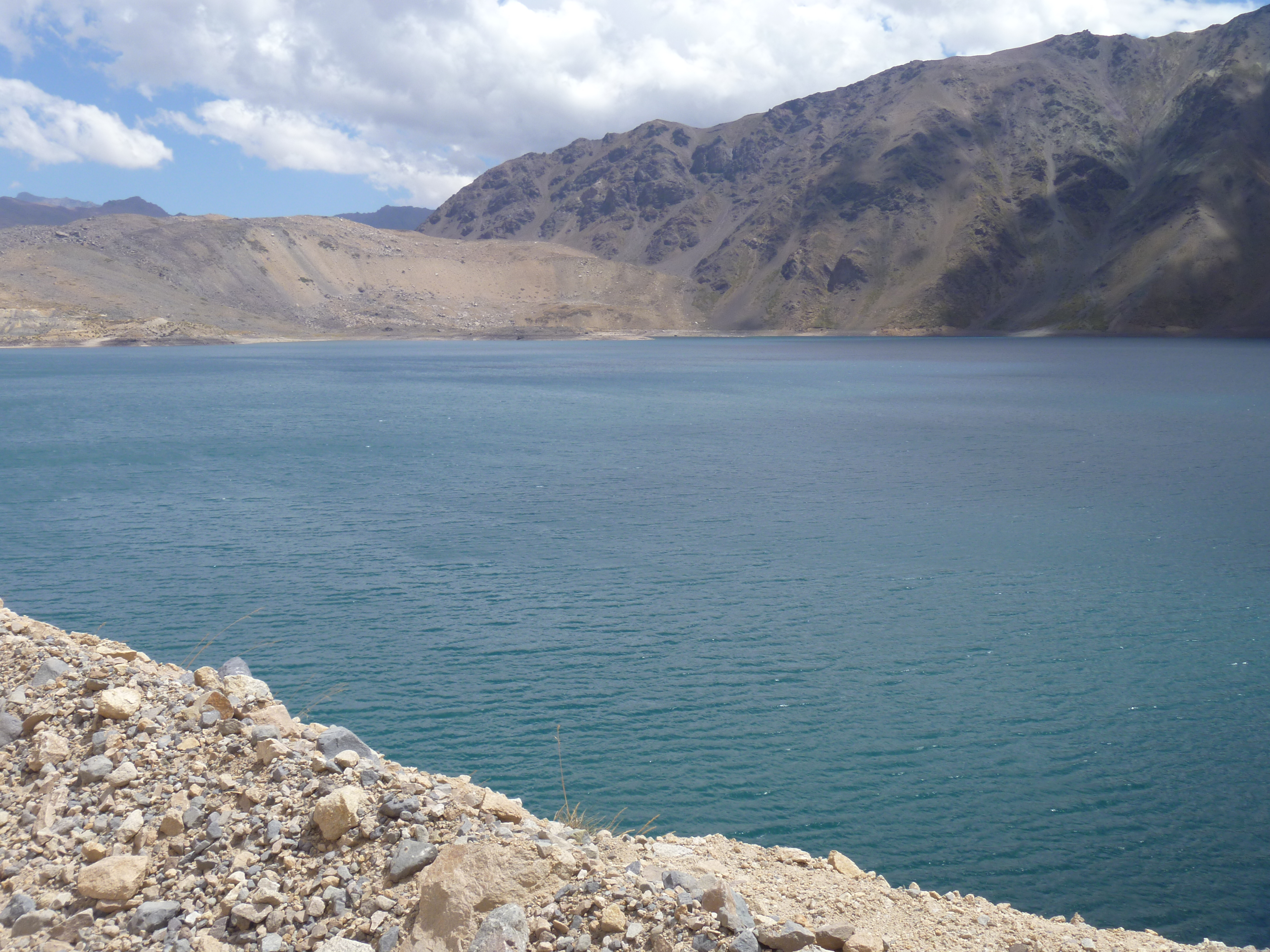
We made it to the reservoir. The name of the river, dam and reservoir, El Yeso, refer to the principal product of the area, gypsum, and explains the cavalcade of trucks going both ways that disrupts birders (and others). There is a cement plant at the junction of the unpaved and paved roads, too. It shows the conflict between environment and economy. The dam belongs to Aguas Andinas, Santiago’s water company, and a banner at Cascada de las Animas says “No more hydropower in the Alto Maipo,” alluding to plans to expand some aspect of the operation at the dam.
Man-made and low on water (down a few meters) it may be, but the reservoir is bright blue and attracts birds–can we ask for more? I don’t know whether there are any fish.
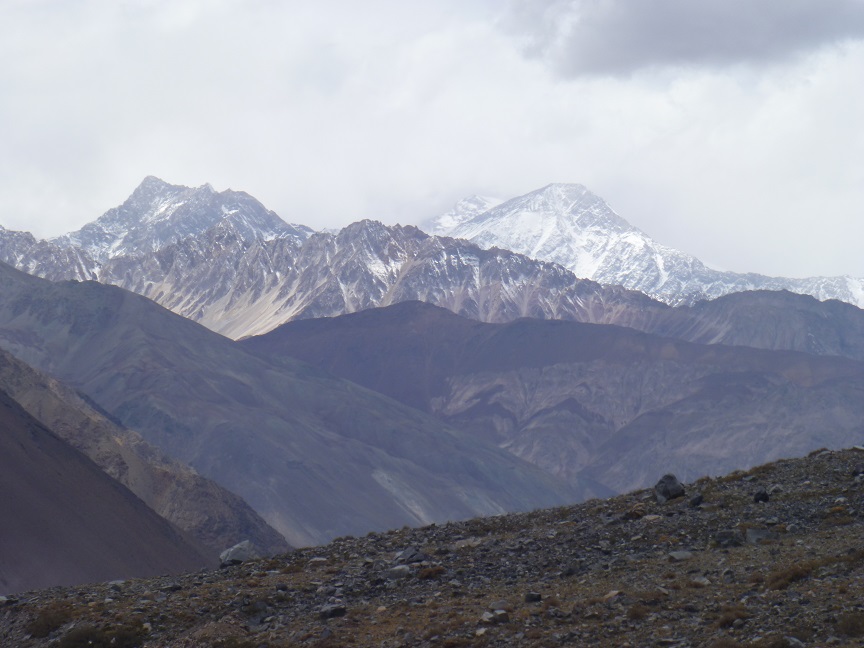
The view was spectacular, and about 5 minutes after I photographed the mountains the mist moved in and covered the far peak.
After our picnic and a bit of strolling around, we turned back. We’d seen a few birds but no condors, and decided they might be slightly lower where there would be more food–the landscape is pretty bare around the dam and reservoir. Jonathan drove and I scouted for condors. We got down to roughly the area where we thought we’d seen one in the morning. A bit greener than the reservoir, a few grazing animals, with very steep mountainsides:
This is where we spotted two condors and pulled over to watch them soar. They circled back and forth for a while, giving us a chance to identify their rectangular shape with wings spread, a flash of white on the back and neck. A third condor was so high that it appeared only when I was looking at the others, a tiny flying spot in the background. We watched until they flew so high there was little to see. Condors in the wild, how about that?
The condors were definitely a high point, because we got back into Buin at rush hour on the afternoon of the first day of school and the line in the supermarket was approximately 4 billion people long. It took an hour to buy water and cookies, but the vision of condors helped.
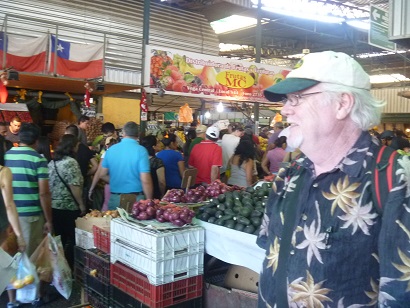
We made the rounds of street markets today. The La Vega market was by far the largest and operates every day. This is Jonathan’s favorite kind of market, food….
In his element among the fruits and veg, planning dinner for tonight and tomorrow.
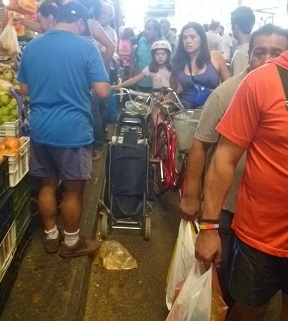
The passageways were very narrow and almost everyone pulls a half-filled shopping trolley behind them, or pushes a stroller, or a bicycle. My favorite was the barrel-chested, white haired man in bike shorts, striped jersey and helmet, earbuds in place, pushing his bike down the aisle–to buy eggs. I assume he knew how to get them home, but I wondered.
We need bicycles as much as we need the trolleys and strollers.
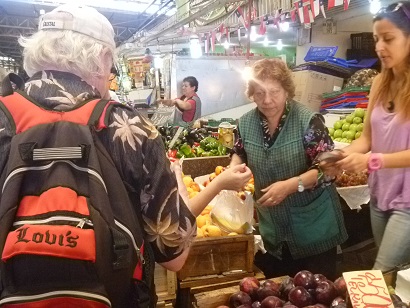
The La Vega market has every kind of shopper, as many men as women, both sellers and buyers.
Husband and wife sales team.Don’t tap that cigarette on my mango!Mother/son sales force.Home made shopping trolley of a laundry basket on a dolly.Mother/daughter sellers.
After stocking up on fruit, vegetables, meat, dried fruit, peanuts, olives and pickles, we returned to stow all our shopping in the car, before going on to the next market.
The Franklin Market functions only on Sunday, and spreads down the sides of the streets, Franklin, Bio Bio and others, as well as in a number of roofed “gallerias” that consist of rows of stalls. i was interested in “antiguedades” which includes anything perceived as old. This turned out to be a broader group of things than I’d hoped, as it included lots of used books, plastic toys, and old hardware (Jonathan liked that). We realized that we chose the most crowded Sunday of the year (or one of them) because school starts tomorrow for most young Chileans and families were out to catch up on their school shopping, and their random shopping. It was a crush like the weekend before Christmas on a narrow sidewalk outside Best Buy. But there were bright spots:
Sidewalk entertainment.
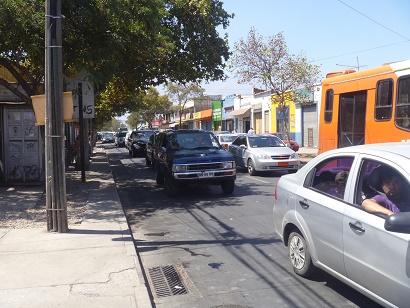
The streets were jammed with cars, most of them not moving. After failing to find anything that we absolutely had to have, we walked until we found cars moving and a cab to go on to our next stop. LUNCH. We planned to go to a wine-tasting cafe and found it at the correct address, but closed. We took a break at a sidewalk restaurant, enjoying the Lastarria neighborhood, a pleasant mix of new and old. A few weekend market stalls cover a small plaza and we added a stop there to our stroll.
Our final shopping salvo was a short walk through a park and over a bridge to a small crafts market in an area called Bellavista. I believe we visited this market on our previous brief trip to Chile, and it was just what I was looking for, finding a silver ring set with Chilean lapis. After a bit of shopping we wrapped up our day, amazed to have gotten around the city to four different places.




















 Llywindatravels 2025