Wonderful to be back at the beach! Any beach! I was itching to see what our shore is like, though we arrived late in the day at our latest Airbnb and had to unpack just a little. By then it was dark. We can see birds from our deck and hear them all around our house (half a house) at the end of a dead end street, peaceful apart from the chirping. We’ve already met a nice neighbor, too.
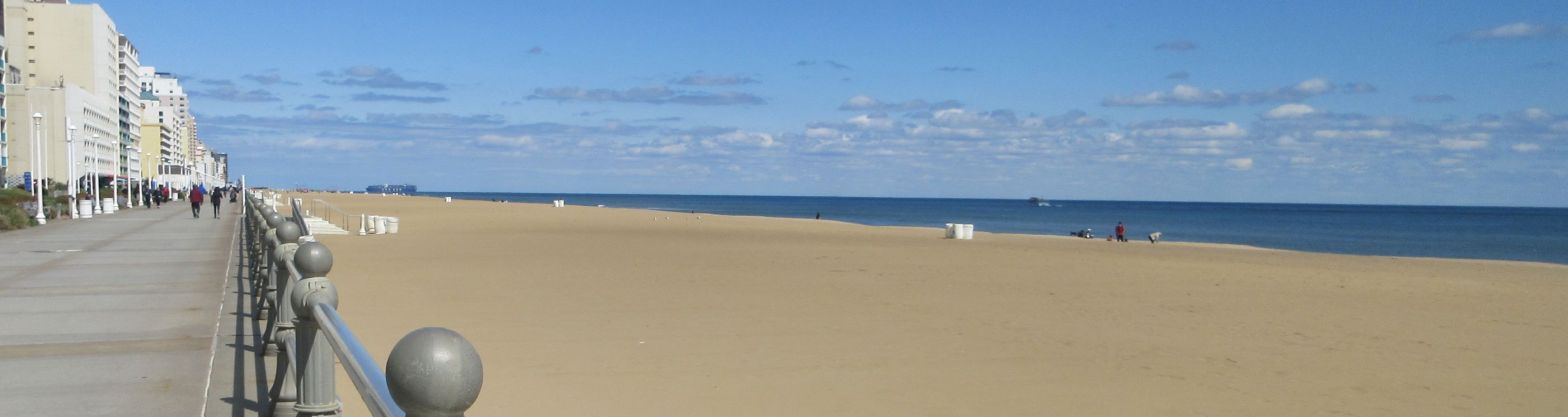
It’s two blocks to the beach, and unlike some of the other places we’ve been (Bainbridge Island, I’m looking at you), there is public access at the end of every street. The beach is broad and extends a long way. Offshore lie huge ships waiting to enter the port of Norfolk. We watched an immense container ship heading out of the estuary into the open sea. It was amazingly large, and once at sea, it moved surprisingly fast. (We also saw the giant cloud of pollution its diesel motors emit to achieve that pace.)
Our house is lovely, just renovated, with a deck and gas grill. It only took Jonathan a few tries to get the TV working-I threw in the towel when I pressed “power” on the remote and got fuzz. (I love finding the folded paper of symbols that comes with the remote and no other instructions. No I don’t.)
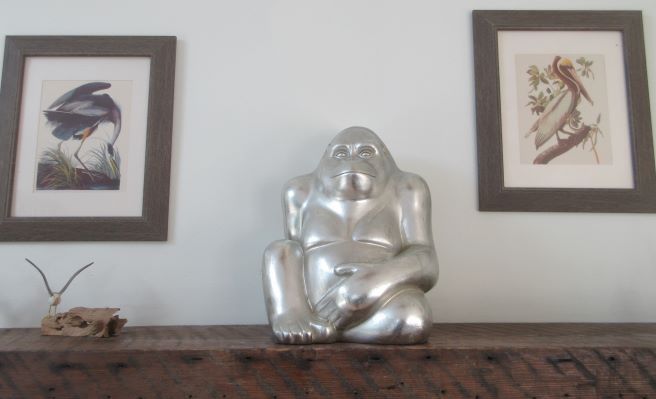
Decor is beachy, with some Audubon prints that I like, and one strange item. What on earth is this? Does anyone know if it has special significance in Virginia, or is it just the usual case of decorating a property with a combination of Ikea and Christmas presents you don’t dare regift?
Jonathan hasn’t done too much cooking, because once we were settled, we found the gas stove isn’t working. A couple of calls to our property manager revealed that we are the first guests after an extensive renovation, and no one checked to make sure the utilities were all reconnected. We did not hang around to meet the gas guys on Saturday morning, thinking that the province of the manager, and consequently, were not home when the gas guy came by and couldn’t put the gas back on. With luck, we’ll have gas on Monday. Good thing Jonathan found the fuel for our barbeque. That and a microwave, and we’re fine for now.
Virginia Beach has swimming, surfing, body boarding, even horseback rides along the sand. Boat tours run up and down the shoreline. However, it’s not a beachcombers delight. Little sweeps of broken shell line the high tide margin, just where we expect to find beach glass, but nothing is there. We plan to expand our search area in the coming week.
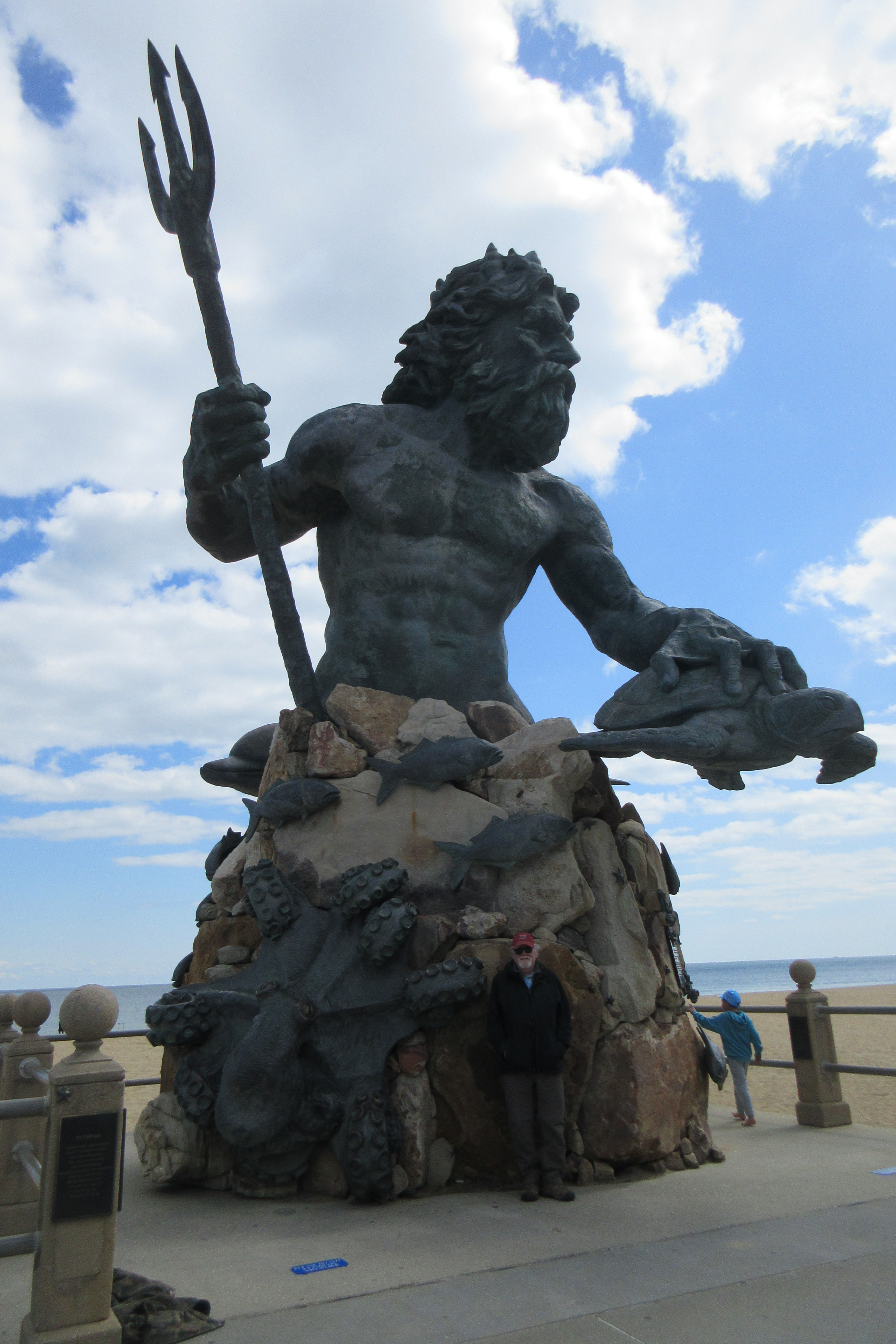
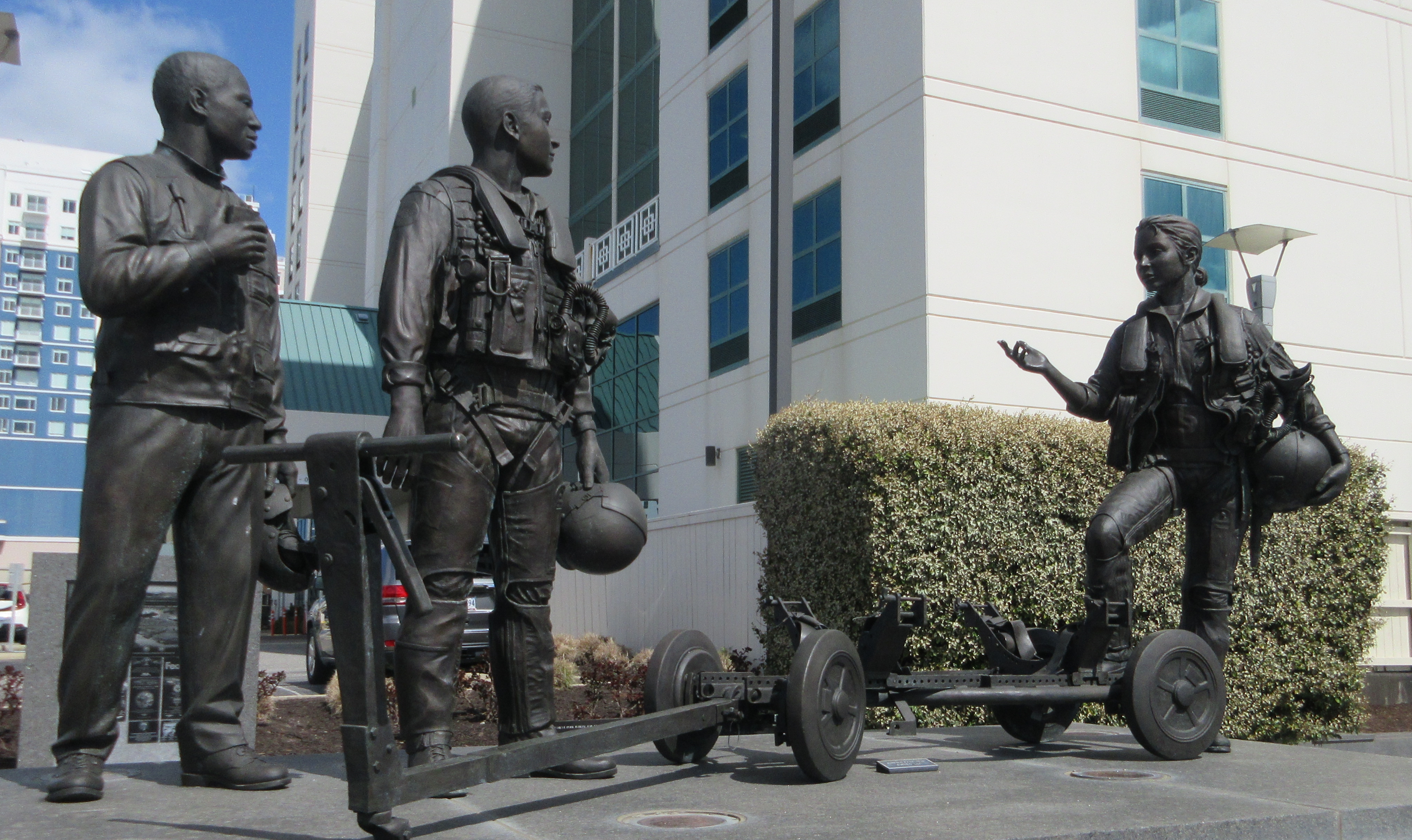
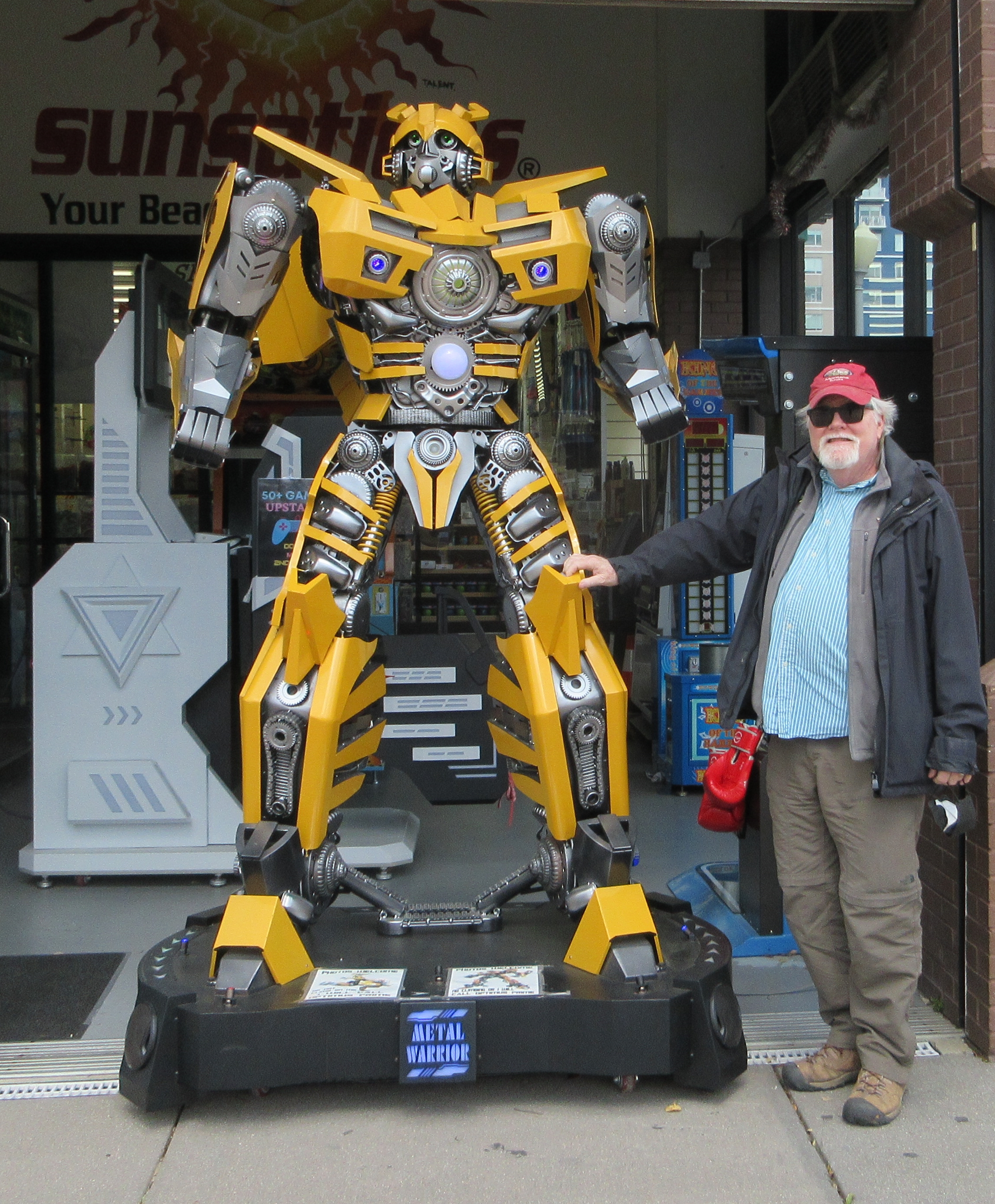
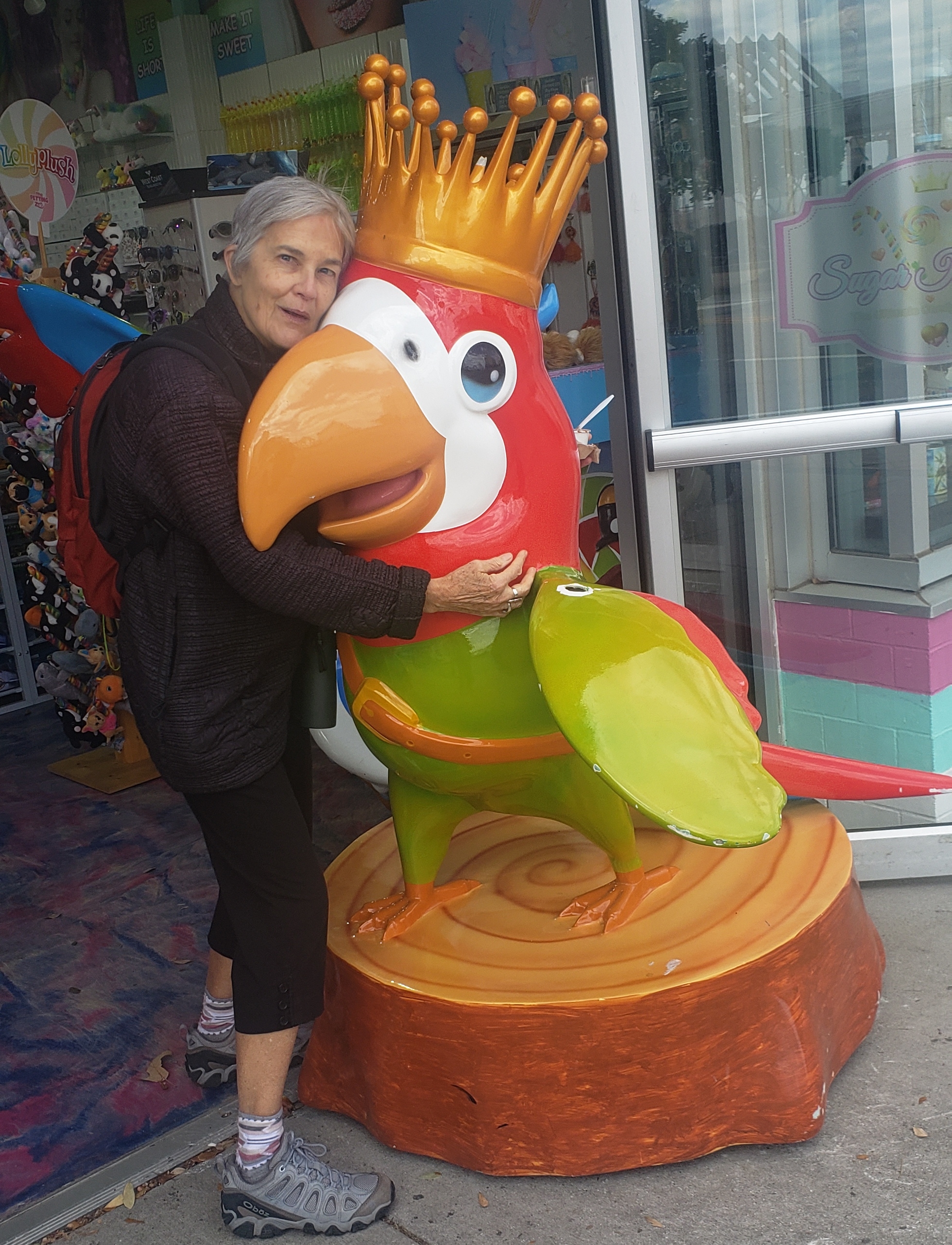
We began our local exploration at the extensive boardwalk that runs for about a mile past identical hotels, balconies empty now, but likely to be full on Easter weekend. The boardwalk is lovely and broad, with a separate lane for bicycles and pedal carts. We stopped at a number of sculptures along the way, and passed people playing on the beach. As we passed what looked like a game of rugby on the sand, the group broke up, with about ten of the players heading down to the water’s edge, where they lined up and then ran together into the water for a very quick dip. The air temperature was in the mid-50’s (F). The water temperature was probably similar.
Clockwise from upper left: King Neptune with Jonathan hidden in front; Contemporary airmen memorial reminds me of my niece Julia, an Air Force flyer; me with parrot friend; Jonathan with robot friend; Jonathan with shell; Norwegian lady and I face Moss, Norway, where a companion monument is located, both dedicated to victims of a shipwreck.
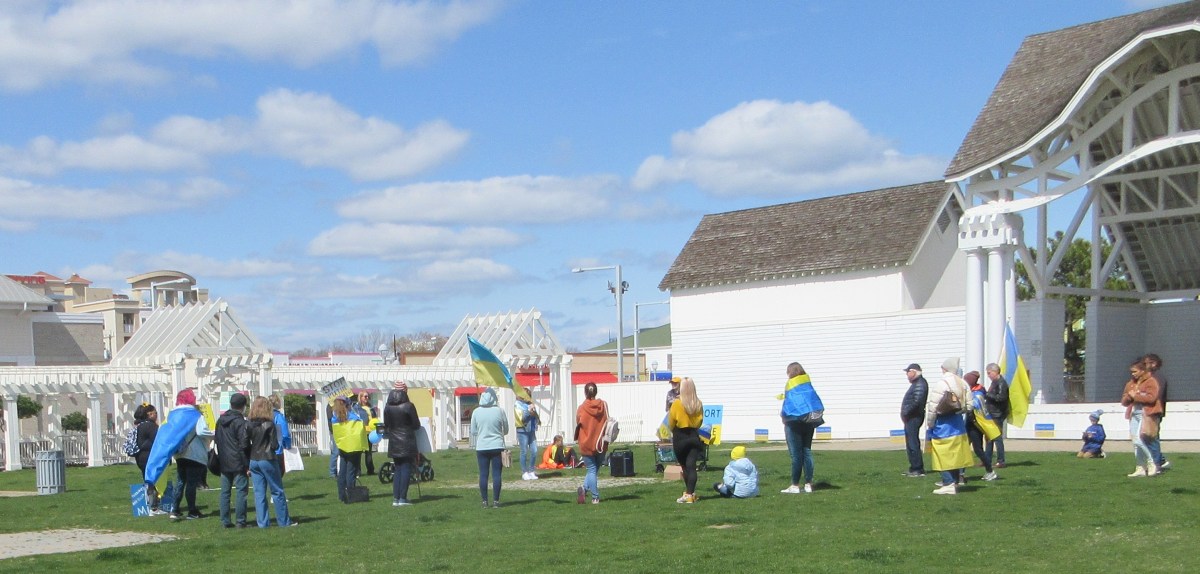
We also passed a rally in support of Ukraine.
Rally in support of Ukraine’s fight against Russian invasion.
All this in one walk, and there is more in either direction. It was pretty cold outside, with a brisk wind. We may put off our next stroll until later in the week when it is scheduled to warm up. For now, the beach and the sun is a good introduction.
We’ve managed to get around our self-imposed two suitcase limit since we returned from Hawaii last fall (when you fly, you really need to keep your luggage to one checked bag). When we went to Peru in November, we had things we needed to move there, and when we returned in February, we were trying to bring back items that would not survive shipping.
We’ve been in the Chicago area for five weeks, and tomorrow we turn in our car and fly to Norfolk, VA, pick up a different car and head to Virginia Beach, VA for a month. I am looking forward to new surroundings, and I don’t mind packing, but I didn’t realize how much stuff we extracted from the storage unit while we were here. It all had to go back.
Craft supplies
I also hadn’t realized how much beach glass, rocks, beads, shells, and metal bits I brought back from Peru. My packing usually begins with craft supplies, so that I know what needs to be stored, and I don’t run out of time and have to jumble everything into boxes. Little did I know! After three afternoons of sorting bits of glass and deciding what I might be able to make in Virginia without a lot of equipment, I surveyed my table and could barely tell any difference.
In the end, I filled one of those under-bed type storage boxes to the brim with materials, measuring spoons, future resin casting projects, even a small sewing project that I am just not going to get to in the next 24 hours. In addition, there was a box of finished items too bulky to take along (I am taking my entire inventory of jewelry…lol…must keep my Etsy shop going http://Llywindatreasures.etsy.com). Another box held paper, stationery, and envelopes, and another was random items that didn’t fit a category, like the finial from our porch railing in Peru that just came off during repairs in February. It’s an odd, handmade shape, and I decided to keep it. Some people’s sentimental items are family heirlooms. I have a finial from my front porch.
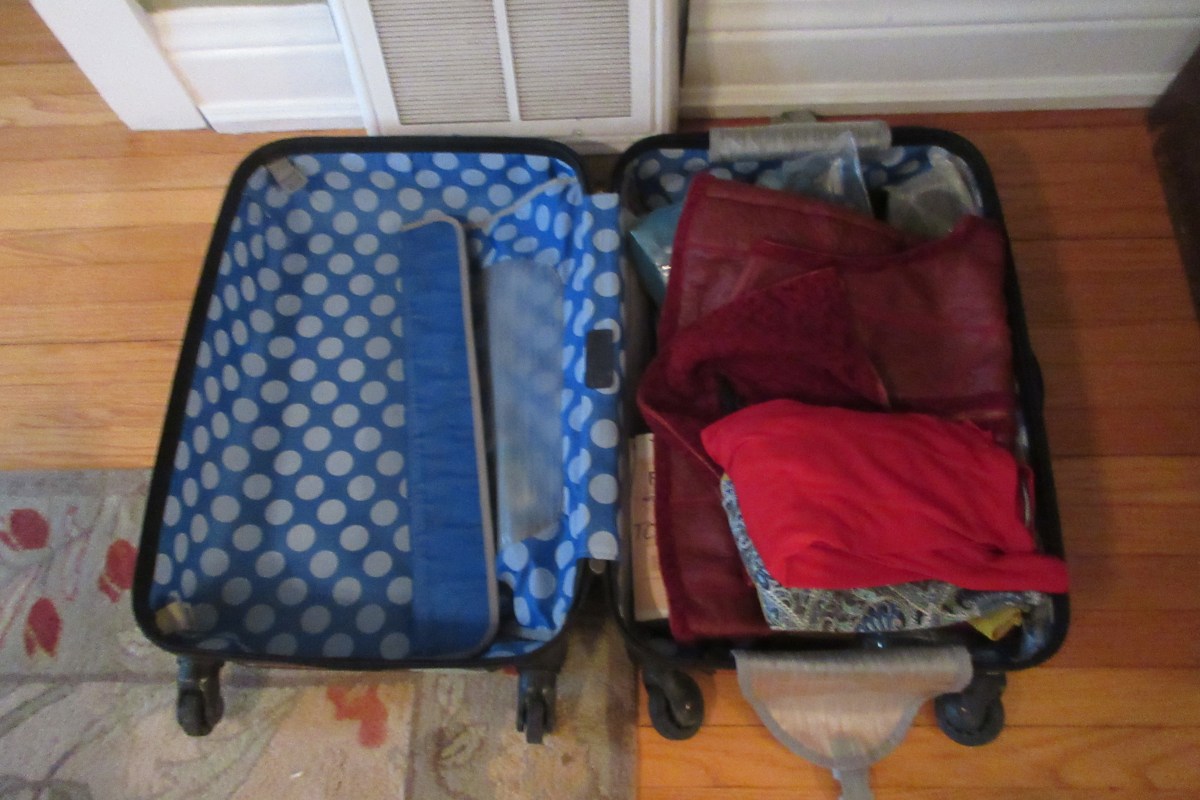
The “next trip to Peru” suitcase
I filled one half of a suitcase with items I want when we return to Peru at the end of May. I left the other half for Jonathan, who dutifully filled it with things he will want before we leave the US again.
Yet another suitcase was filled with clothing we are leaving in storage for the present. A box was full of kitchen items, and another had a Christmas ornament I brought back from Peru, a book I just finished reviewing, and a tea cozy that needs stuffing.
After that, we each packed the suitcase we are taking with us. I hated giving up my extra pairs of shoes, and my bedroom slippers. I travel with walking shoes, sandals that double as water shoes, and flip flops that are also my slippers. I will miss my various shoes of other colors, shapes, and materials.
I dropped two bags of clothing and household goods at Goodwill, threw a few outworn items in the trash, and we still had a full carload of suitcases and boxes to stow in the storage unit. It was raining while we were there passing suitcases and boxes across the deep puddle that forms in front of our unit every time it rains. The rain ended just as we returned home (surprise!).
On the bright side, I met my packing goal of not having to wrestle with closing my suitcase. It zipped without anguish, and easily fit my pillow in the top section that I save for the purpose. My carry-on is biggish, but that is due to my Etsy collection. We’ll have a fresh start in Virginia Beach–I can’t wait.
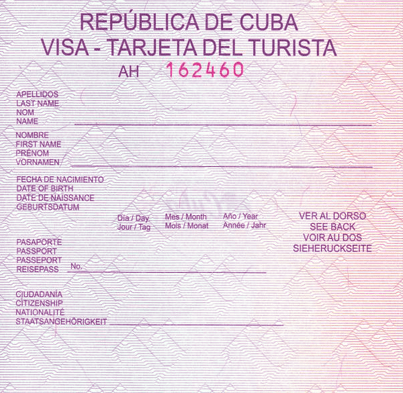
We need to obtain residence visas (carne de extranjeria) for Peru in order to be able to open a bank account. We are back in the US for about 90 days with the goal of obtaining the necessary paperwork here. When we return to Peru, we will use a service to process the paperwork for us, and hopefully expedite the process a little bit.
One of the more difficult aspects of the process is understanding what is involved. I’ve read about this several times and now have 1) the application form downloaded from the gob.pe website:
Though people ask you to get a carne de extranjeria, that is the second step in the process. We must first request a change in our immigration status from that of tourist to that of “annuitant,” that is, someone who has retirement income. Filling out the form is straightforward.
2) Next is the background check. We were told to get a background check covering the previous five years in the place where we live, not an INTERPOL background check. There were several options, and we looked for the most convenient rather than the least expensive. In the winter weather, spending a day at the police administrative offices in Chicago was not appealing.
We found a business licensed to do background checks using the Livescan system, with the advantage of being located nearby. I made appointments and we drove over, finding ourselves outside a building with no sign of BioScan Tek on the outside, and without the matching street number anywhere. After driving around, we decided to go inside and ask someone. We found the building number we were looking for inside the complex, on the door of a rental workspace and went in. The workspace appeared to be empty, with cubicles, seating areas, dining area, vending machines, standing silently waiting for clients. At the end of the hall was a cubicle with the door open, lights, and one person puttering. That turned out to be BioScan.
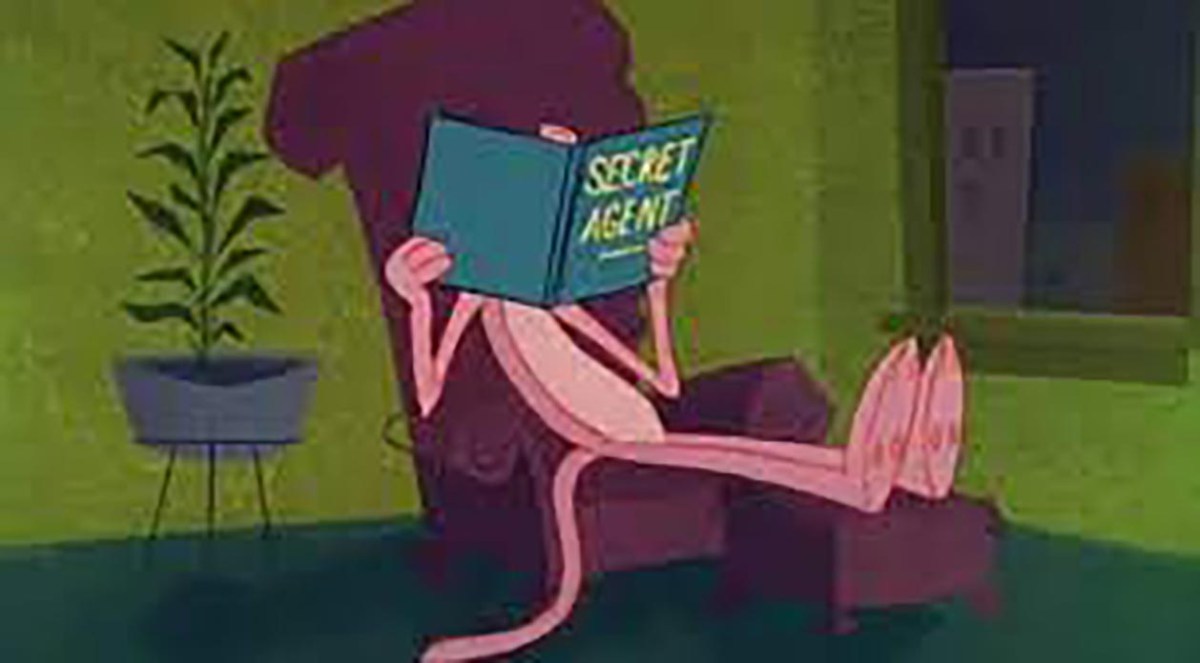
The confusing location didn’t make much difference, as the equipment for both State of Illinois and FBI background checks was in place. We filled out the forms, listened to the required advice, and each took our turn getting fingerprinted. I took a bit longer to get finished because my fingerprints don’t show up very well–I probably should have become a spy, I don’t appear to leave much trace–. After trying several times and using different compounds on my fingertips in an effort to make them visible, my prints were submitted. We will receive email notices, and letters in the mail with our results.
That afternoon, I received a call from our fingerprinter. My prints were rejected by the FBI system. I agreed to go over again the next day to try again. I was advised to put vaseline on my fingers and wear gloves overnight to enhance my prints. I did as instructed and went back the next morning. We struggled to get better prints, and Marie, my fingerprinter, called to see whether they would be accepted. Though we weren’t sure, they were sent on.
The good news is that someone actually looked at the scan and decided it would work. Three days later, I received email confirmation that my background is clear according to the FBI. I downloaded a copy of the letter and now await the physical letter arriving in our maibox. Jonathan is still awaiting his FBI letter, and we both are awaiting our State of Illinois background checks. Marie mentioned that Illinois has a hefty backlog of requests from the Covid years.
What we requested:
1) Illinois State Police Background Check
2) FBI Criminal Report for Personal Review
We went in for our fingerprinting on Feb. 28, 2022
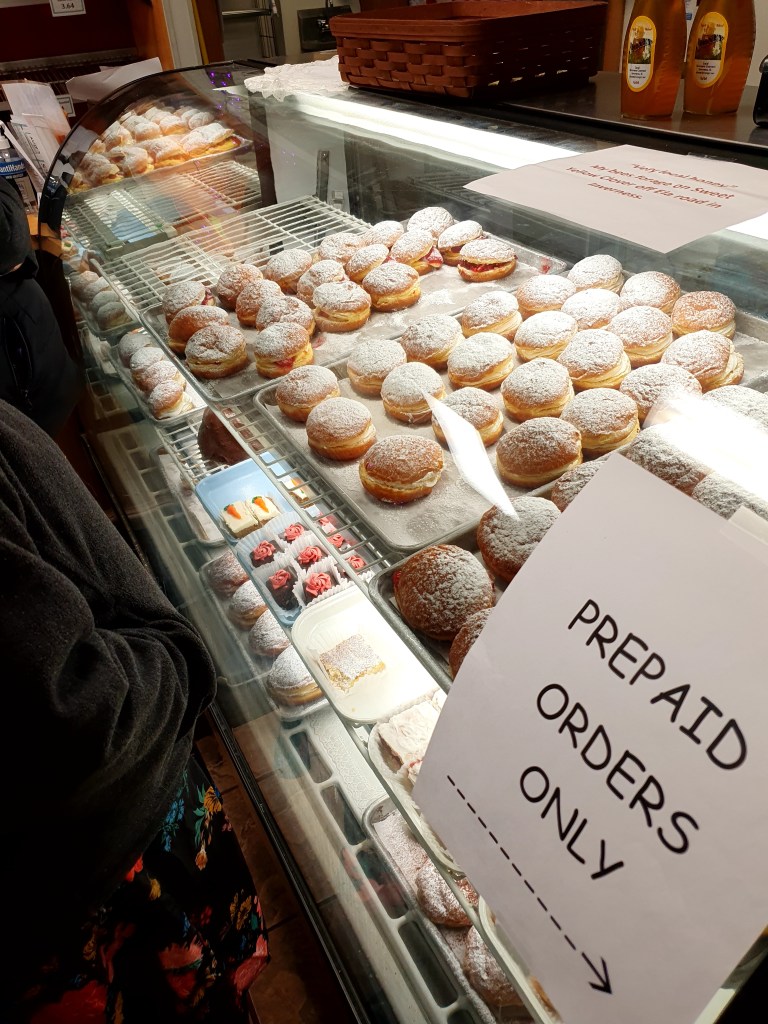
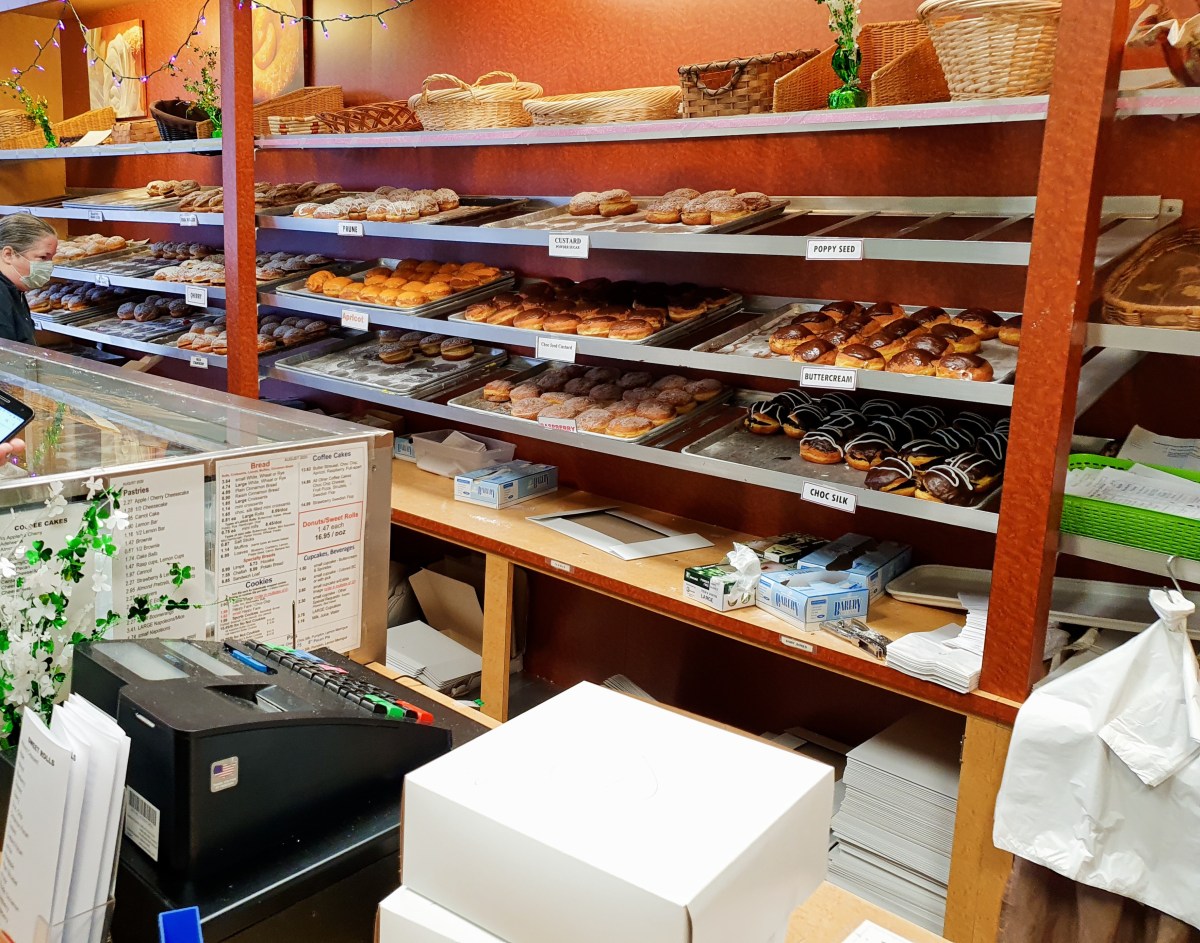
I knew nothing of Paczki until we moved to the Chicago area years ago. For those who haven’t heard of them, think: filled donuts. Originally a Polish specialty, paczki are now deeply Chicagoan. Available all year round at certain bakeries, their big day is Mardi Gras, when everyone with or without Christian heritage can have one last big treat before the forty days of Lent begins.
Even if you have no plans to go on a diet, stop eating meat, or any other mortification of the flesh between now and Easter, Mardi Gras reminds me that once in a while we should eat these treats. Traditionally, paczki came with apricot jam, prune, or poppyseed filling. Today, the sky’s the limit. I ordered my Fat Tuesday paczki from Lilac Bakery, just down the street from us. They make about twenty different fillings. New this year was banana, and key lime. I stuck to tradition because I like prune and poppyseed fillings and don’t usually find them in any other pastry, but I also got lemon and cherry/cream cheese, and all of them were a treat.
Even if I forget all about paczki until next year, I have a tasty memory of this year’s Mardi Gras, without a trip to New Orleans.
I am among the world’s most fortunate people. I can travel, though if I want to, I can stay home. I am warm, dry, and fed. My life is not threatened. I am retired and on a fixed income, but I have more than enough.
As I was about to embark on this post, focusing most of my energy on how cold I feel now that we are back in the Chicago area, I realized that my gripes are awfully small when compared to the rest of the world. If you are thinking about this, too, please consider donating to any charity that will help people suffering elsewhere in the world. We favor Doctors Without Borders, CARE, and the International Red Cross, but there are many groups doing good. You may know of one.
Yes, we are back in the Chicago suburbs, in the house we stayed in exactly two years ago on our return from Peru when Jonathan broke his shoulder. His shoulder brought us back this time, too. It’s been bothering him, and we believed he would need replacement surgery. Nothing is simple, however, and the surgeon he consulted advised against a replacement for a number of reasons. A cortisone injection decreased the pain Jonathan has been feeling, and increased his mobility. For the present, that is enough.
We’ve chased summer around the world since 2014, but winter finally caught up to us here, with temperatures in the teens last week, and in the 20s this week. After years in warmer climes, I seem to have trouble warming up, and my fingers and toes get sooooo cold!
Regulars to this blog know we normally spend an hour or two outdoors every day. Determined to get outdoors, I bundled up, added multiple layers everywhere, bought gloves (my NZ merino/possum gloves wore out completely), and off we went. We started with a short walk around the neighborhood, then we strolled a section of the nearby the Prairie Path. The birds never let us down, and we even saw a flock redpolls (that we’ve never seen in the US before).
We returned to one of our favorite parks, Churchill Woods. There are always birds, and even on the coldest day, we saw a pair of hawks circling in the frigid air. We spotted a muskrat, which we only recognized because another walker explained the difference between a muskrat (narrow tail) and a beaver (wide tail). There is a beautiful beaver lodge along the river at Churchill Woods. Many beaver dams are considered nuisances because they cause flooding, but this lodge is positioned where any associated dam is unlikely to flood anything new.
Beaver lodge in the DuPage River at Churchill Woods.
These familiar stomping grounds give us a deep pleasure. We like the birds, the animals, our fellow walkers. There’s no high speed trail through here. Most walkers are out for a breath of air, or with their dog. For a few minutes, at least, I’m distracted from the cold by the beauty of nature.
We did pretty well when you take in the big picture, but on our final Sunday night in Peru, we both were about to have our heads explode. Too many loose ends needed tying up and we were running out of time. Most of our luggage was packed, but we still didn’t know whether we would be able to arrange to ship some of our favorite handicrafts back to the US. We didn’t know whether we’d be able to open the bank account that we need to deposit the proceeds from the sale of our house, if it occurs. I wasn’t entirely sure that the last of my things would actually fit in the suitcases, even with a first class allotment of two 70 lb bags each. We still needed Covid tests, 24 hours or less prior to departure. We didn’t think there could be a winter storm in the US to delay our travels (It didn’t).
On Monday, I crammed more items into each suitcase, until each was as full as it could be. No suitcase ever reached 70 lb, but they were heavy.
I called the notary and the lawyer to see if there was any progress on finding a bank that would allow us to open an account. Unfortunately, it seemed that none of the banks in Barranca would allow foreigners to open an account without a foreign residency visa. We do not have resident visas, as we’ve never needed them. Until 2020, a tourist could stay in Peru for up to 6 months per year, and we usually stay 4 months. For a number of years, 2000-2012, we had a bank account in Peru, but the fees added up, so we closed it. For the last ten years or so, we have not needed a bank account in Peru. We pay our US bills online, and our Peru bills in person (by the caretaker). We get cash from an ATM, and all has been well.
Now we find that when you sell property, you cannot wire the proceeds directly out of the country, the money must go into a bank here first, then get sent onward. Cash transactions are limited to about US $1,000. Any greater sum must be moved by check or electronic transfer. We need to have a bank account if we sell our house. Our papers are in order to sell the house, and we are represented by a real estate agency, so though we can sell the house at this point, we cannot do anything but hold on to the check until we have a bank account in Peru. I had scheduled our pre-travel Covid tests for 2 pm at Suiza Lab, so our departure time from Barranca for Lima was set at 9 am, to make sure we arrived on time for our tests.
There was another important step that seemed to be at a dead end. We need a person who we trust who can sign sale papers for our house if we are not in Peru when a sale is ready to be completed. Though we don’t have anyone lined up to purchase the house, we have to be ready. For a power of attorney, however, one needs a form filled out, the “power” itself, and also a “minuta,” a contract of who can do what. The notary wanted to include the bank account number in the minuta, to specify where the money from the sale would go. We were getting nowhere with banking, and we did not want to leave Peru without having someone in charge. I called and explained that we needed the power of attorney so a sale could theoretically be completed, though the bank check for the proceeds would have to be held until there was an account.
To explain this, we went to see the notary, and he agreed to what we needed, though we’d also have to see the lawyer in Lima. There were more papers to legalize (notarize), signatures with a fingerprint beside them, and lots and lots of proof-reading. If you get one letter or number wrong (or leave out your middle name that appears on your passport but not in your signature, as in my case), the official agency that registers property can refuse to approve your sale.
During our last afternoon in Barranca, Jonathan heard from the potential shipping company, and found that a contract would need to be prepared before we left town the next morning. He had to learn to use WhatsApp, in order to show the representative our goods, and then he had to convince the man that he did not need to notarize his passport. When we went to the notary’s office, Jonathan got one set of papers for the shipper, while we awaited others for the power of attorney (the lawyer in Lima prepares the power of attorney, while the notary in Barranca prepares the minuta).
It was after six pm when it was all done. We were both tired from sitting on the edges of our chairs while people phoned back and forth and typed. We agreed to stop by the office of the lawyer in Lima after our Covid tests on Tuesday. It was Valentine’s Day, but we were content to eat leftovers, watch some funny TV, and get some sleep.
On Tuesday, we were up and getting dressed by 7:45 am, with the goal of leaving Barranca by 9 am. I continued to agonize over art supplies, and how much more I could stuff in the cracks of my full suitcases. We left right on time, waving goodbye to our houseguests, Brian and Eliana, who are staying on for a bit. Fellow archaeologists and excellent houseguests, they had projects of their own to attend to. We enjoyed having dinner together, walking on the beach, and each doing our own thing the rest of the time.
We left our house in the hands of good friends
We arrived in Lima with enough time to drop our luggage at the Hotel Senorial, our regular hotel for the past 22 years. Suiza Lab, our stop for Covid tests, was a bit chaotic, and it took about a half hour to get our 30 second sample swabs taken. Once completed, I checked with the lawyer, with whom I’d agreed to meet at 3 pm. He had initially suggested 4 pm, and when I called, he had indeed forgotten I wanted to meet earlier, and had just gone for lunch.
Moving on to our lawyer’s office at 4 pm, we explained that the bank account was a dead end. Optimistically, the lawyer said that he heard the Banco Pichincha allowed accounts to be opened with a notarized copy of one’s passport. We looked at each other and explained that we had to be at the airport at 6 am the next morning, so investigating another banking possibility was no longer possible. He understood, though this means we’ll need to return to the US, put together the papers required for a temporary residence visa (application, proof of solvency, FBI background check, each notarized and apostilled). We pointed out that we really had to have a useable power of attorney before we left, even without a bank account number on it. We then went through another version of the previous day’s anxiety as we waited while the final power of attorney was prepared. Because we were in Peru, we had to get in the car and go down the street to a different office to get the final papers notarized. It has to do with who does favors for whom and when and under what circumstances. Thus, our lawyer uses a notary down the street rather than the one in his own office. We didn’t ask.
Once again, it was after six pm when we were finished, but with the power of attorney in hand, and promises that it would be appropriately registered and recorded the next day, we returned to the hotel.
Carlos, our driver, had stuck with us all day, and agreeing to take us to the airport at 5:30 am, he left for the evening. We decided to reward ourselves by walking down the street to Punta Azul, a very good fish restaurant, that serves lunch to people from Lima (mostly) and dinner to foreigners (mostly). I had forgotten that the decline in tourism over the course of the pandemic would slash their evening trade, and indeed, Punta Azul was closed. We were crushed, and tired. Two blocks down, we stopped at a place that had pizza and pisco sours, grateful to have made it through as many of our to-do list items as we had.
Our Covid test results arrived on schedule: NEGATIVE!
The outstanding issue now is our need to obtain residency visas, and open a bank account. Once we’re in the US, we can use the 90 days that we must stay out of Peru (the country now lets tourist visit for 90 days, then requires them to remain outside the country for 90 days) to collect our paperwork. When we can return, we’ll file our applications, and open a bank account as soon as we are able to do so. Then we’ll really be ready to sell our house.
Everything else is underway and pending: sale of the house, shipping of our goods, further travel.
Our flight left right on time at 9 am, Delta to Atlanta. The flight was long, but the seats were very good, much better than on the Lima to Miami, American Airlines flight we usually take. We had a three hour layover in Atlanta, but the airport is so vast that it took the first hour to go from landing to find our suitcases. Endless corridors have cheery signs like “Only 10 minutes more walking to your next stop.”
A brief stop in a lounge, and it was on to Chicago. Jonathan went to collect the rental car while I corralled the luggage and rolled it out to the curb. We found our Airbnb in Lombard easily, since we stayed there two years ago. We were completely exhausted.
The next day we crawled out of bed, went to our storage unit for winter clothing, and then to the grocery store. We arrived home about 1 pm, just as the first flakes of snow began to fall. The wind picked up and howled the rest of the day, while snow flew sideways and we gratefully stayed supplied and indoors. Today we got up to find it is clear and sunny, 2 inches of snow, and about 4 degrees F (-15 C). We are glad to be here, we think.
Back before the Omicron variant had infected so many of our friends and neighbors, we invited my sister Paula and her partner, Wayne, to come to Peru for a visit. Paula has been here twice before, but this would be Wayne’s first visit. Peru is a good place for a mid-winter visit, and they would exchange a couple of weeks of wet winter weather in Portland, Oregon for summer sun and beach days in Barranca.
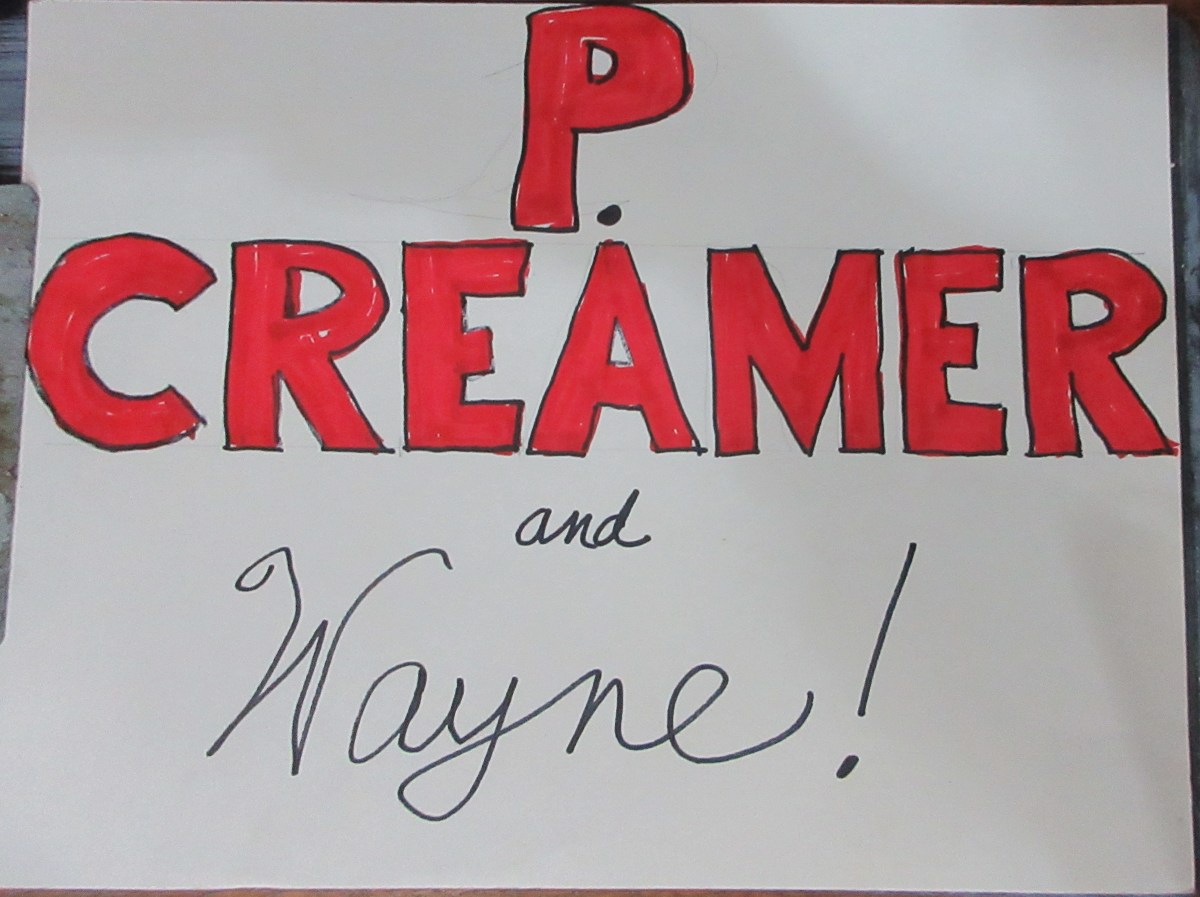
As Omicron began to ravage the world, we kept our plans in place, hoping all would be well. Carlos, our driver, went into Lima and stayed overnight, then collected Paula and Wayne from the airport at dawn and brought them straight to Barranca. Their flight via Atlanta, was long, but went relatively smoothly, with a wait of about a half hour for Immigration, and their luggage arriving relatively promptly after that. Carlos found them exiting the terminal, without even having to hold up the sign I made.
By ten a.m. they’d arrived in Barranca, and we took a walk on the beach, with plans to visit archaeological sites that Wayne would enjoy. Our plan lasted one single day. Paula and Wayne arrived on Friday, and by Saturday afternoon our housekeeper was feeling unwell. We sent her home early, but she was obviously sick. On Monday, we sent the caretaker, housekeeper, and our driver Carlos, for Covid tests. All three came back positive. We sent them home until the following Monday. That meant that there would be no one making the beds, sweeping the floors, and mopping the kitchen every day, nor would there be anyone to take us to see the sights. We are a bit reticent to go out on our own (though we do) because foreigners are sometimes a target for holdups.
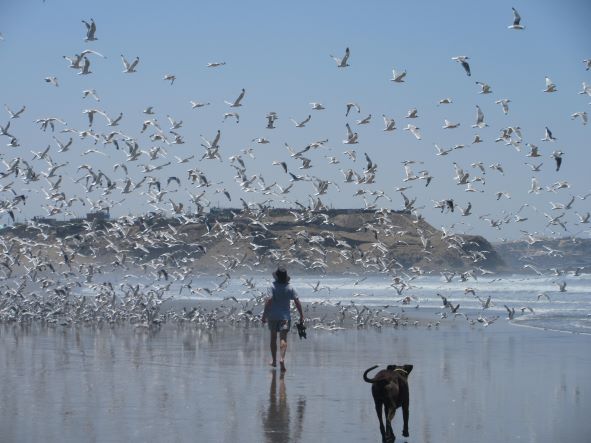
Recalibrating our activities, the daily walk on the beach became our big event of the day, sometimes combined with a brief swim or body boarding in the afternoon. The water is very cold, and while a dip is refreshing, a long swim is bone-chilling.
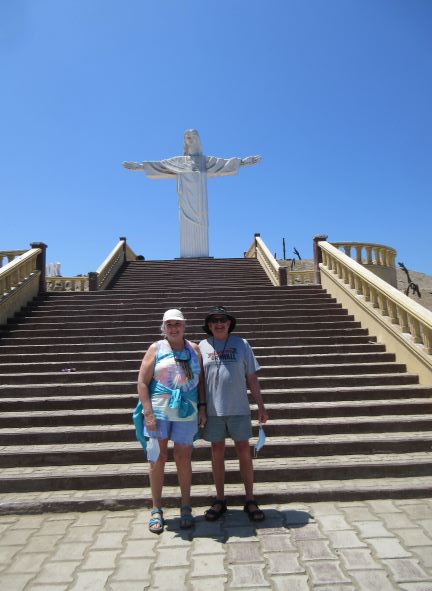
We ventured to the top of the nearby hill, where an enormous statue of Christ the Redeemer looks over the bay, and various railings and balconies provide views of the sea and the beach. On the far side of the hill is a beach that is much emptier than the one in front of our house. Called Playa Colorado, the area is mostly undeveloped. The beach is lovely, but the cross-currents create rip tides, and the land behind the beach floods regularly. There are food kiosks, and a stall that rents umbrellas and beach chairs beside the stream that drains into the ocean, but no other services. The road between the beach and the land is unpaved, and many Barranquinos learn to drive on it.
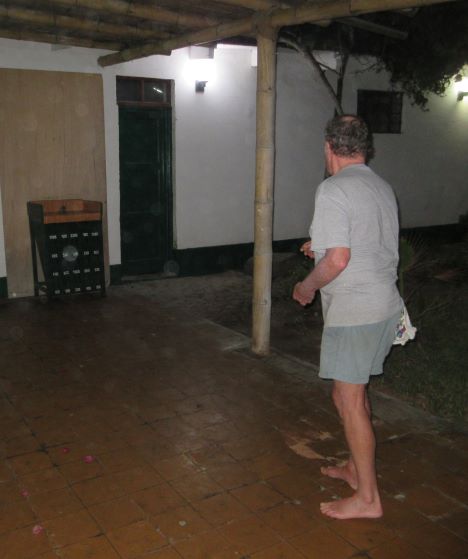
Fortunately for us, our back yard is spacious, filled with trees and flowers. It’s a bit like staying at a resort with no other guests. At six pm, we have beverages and play five hands of gin rummy, sometimes watching the sun set from the front porch, and in the garden when the music from the neighboring restaurant is too loud. At seven pm, Jonathan goes into the kitchen to cook, and the rest of us play sapo (Toad), a game that involves hurling heavy metal tokens at a tabletop full of holes, that also holds a brass toad. Getting a token in the toad’s mouth is virtually impossible, but tossing the markers into the slots is a lot of fun. We kept up a lively competition.
On Sunday, we decided to venture out to an archaeological site despite not having Carlos, and we set out for Porvenir, a large Late Archaic (3500-1800 BC) site just inland from the Fortress of Paramonga, a Chimu monument along the Panamerican Highway near the town of the same name.
The road was dusty, with tire tracks passing right by the archaeological portion of the site to end at some small rocky overhangs that have become shrines to “black magic”. This shrine was present in 2003, when we first visited to conduct archaeological research, and has grown to the extent that candle wax now covers a larger section of rocky outcrop, and a statue that I mistook as the Virgin Mary from a distance, turns out to be the Grim Reaper. We were disappointed to find that pilgrims are also slobs, and empty boxes of candles and bottles of love and vengeance potions litter the entire area. Hell hath no housekeeper.
The Grim Reaper
The archaeological site of Porvenir is a large village and ceremonial center that dates to 3000-2000 BC. We conducted excavations at Porvenir in 2003, and the site is still there, not yet subsumed by farm fields or chicken farms like some of the others we’ve tested. There has been additional looting of the much, much later cemetery that made use of the sunken circular plaza. The plaza area has largely disappeared under mounds of dirt from illicit diggers, though the looters don’t seem to get any actual loot. We saw fragments of broken pottery, sticks wrapped with string and a few shreds of textiles, but nothing that indicated the presence of substantial tombs or metal artifacts that would give the diggers whatever payday you get at the bottom of the illegal antiquities food chain.
Still pontificating when I have an audience.
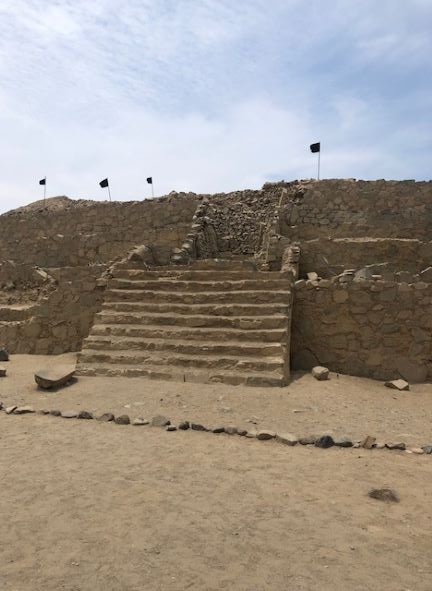
Visiting archaeological sites is dusty work, so when we visited Caral, the best known Late Archaic (3500-2000 BC) site in this region, we again went with long pants, long sleeves, and big hats. Work at Caral focuses on excavation and restoration, so there is a lot of architecture to look at. During the summer months (Christmas through Easter), the Supe River, that borders the site of Caral, is almost dry, allowing visitors to drive up to the Visitors Center parking area. Summer temperatures are in the 80s (F), and the trail around the site is long and unshaded, so parking right by the Visitors Center is a plus. (During the winter when the river is high, parking is about a half mile from the site. Unless you are visiting with young people you are trying to wear out, my advice is to pay for a ride to the Visitors Center. If you’ve never ridden in a mototaxi, or standing in the back of a tiny truck, it will be an adventure.)
Paula and Wayne, emperors of all they survey
We made our way to the ticket booth and site entrance, stopping to look at some of the interesting graphics, and taking advantage of the “photo op” setup of a tiny circular plaza headed by twin thrones. Admission was s./11 per person, with an additional s./20 for the mandatory guide for the group. For three of us the total was s./53, about US $14 at the current exchange rate. Our guide, Reber, has worked at Caral for six years giving tours.
At the start of our walk, I explained that I had actually done a bit of work at Caral way back in 2000, collecting radiocarbon samples for the famous article that put the site on the map. The man at the ticket desk heard me and looked up. “Do you know Jonathan Haas?” he asked rather breathlessly. “He’s my husband,” I replied. He and the guide oh-ed and looked at me with admiration. (I know a famous person.) Paula and Wayne were greatly entertained.
The tall bamboo and thatch ramadas (shade covers) that were put up to protect Caral’s architecture from the El Nino a few years ago have been removed, making it easier to take photos. We walked from one huge pyramid to the next, as each pyramid has something interesting about it, either a special find that is associated, or a sunken circular plaza. There is only one place that allows you to sit down along the way, a ramada and benches overlooking the Supe River. By the time we got that far, Paula and I were happy to sit in the shade for a while. Wayne could have kept going all day. We took just over two hours to cover the route. By the end, we were tired and dehydrated, despite our water bottles.
After a brief stop to check out the souvenir selection, we headed for home. We were glad to have brought sandwiches along. There isn’t any food service at Caral, though I believe you can buy water. We ate in the car, happy to be in the shade and air conditioning as we drove back down the Supe Valley. We got back to Barranca in about 40 minutes, and all decided that an afternoon nap, followed by a dip in the ocean, was in order.
The rest of our week was quiet. We walked on the beach, ate lunch in the garden, watched the sunset, played cards and Yahtzee, ate Jonathan’s wonderful dinners, while Paula and Wayne enjoyed being on vacation. Jonathan’s birthday dinner started the week, though the highlight was Rufo (our blue tick hound) stealing and eating two pounds of beautiful beef tenderloin about to go on the grill. We had an instant replay of the beef a couple of nights later, but it was a very funny moment. “Wait, where’s the meat?” “Is this a joke?” “Wayne??!!!!”
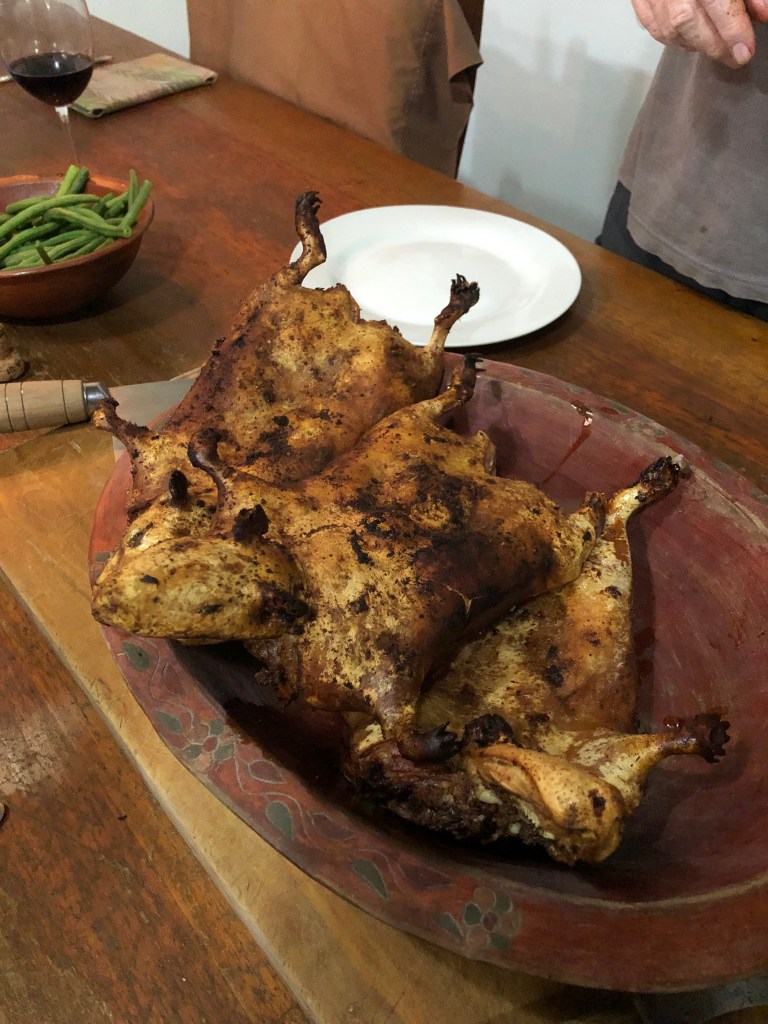
We had tacu-tacu, the local specialty of rice, beans, and ground orange chili peppers. We ate guinea pigs cooked to perfection so that Wayne could try them. The guinea pigs were raised by Dalmira, and though they look strange with their heads on, they taste very good when prepared by Jonathan, who also made his annual dish of duck fries, french fries cooked once in sunflower oil, then in duck fat until they are crispy and delicious. There are never any left over, and as a rule, we never eat them more than once a year, what with duck fat not really being a health food.
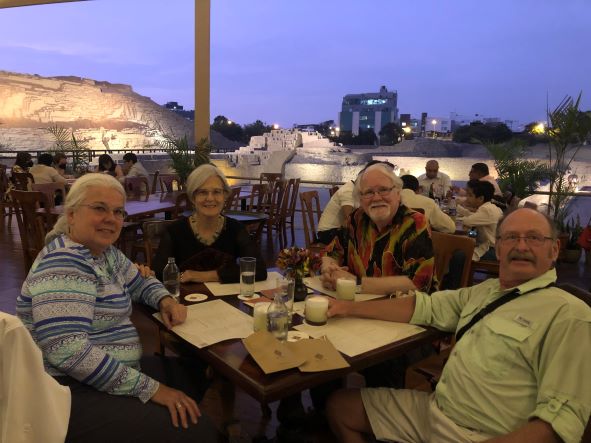
Paula and Wayne decided they’d spend a day in Lima at the end of their trip, so we all went in to Lima on Saturday. After some shopping at the tourist market and a nap, we ended their visit with Wayne’s birthday dinner at the Restaurant La Huaca that overlooks the archaeological site of Huaca Pucllana. The restaurant is located on the side of an archaeological site, where a vast pyramid made of mud bricks that dates to about 1400 AD is illuminated after dark, and makes a spectacular setting for dinner on their outdoor patio. The food is excellent, too. We ate ceviche, crab cakes, squid ink rice, baked charela (fish), and seco de res (beef stew with cilantro sauce. Dessert was mango/passionfruit ice cream, zapallo (squash) waffles with panela (raw sugar) sauce, and chocolate volcano cake with ice cream. (urp!) We had a white Viognier from Argentina, and a Carmenere from the Maipo Valley in Chile. We all went home happy.
We parted ways the next morning, Paula and Wayne to get Covid tests for their return to the US on Monday morning, Jonathan and I to shop and return to Barranca. The visit seems to have been a success. We all had fun, (and no one got sick.) Our guests were very accommodating to our schedule and did not require a great deal of entertaining. They were content to go to the market or the shops, walk along our beach, and sit on our front porch or out in the garden. We went on a couple of field trips, but we spent many days at home, and I wonder whether other visitors would be anxious to “go out and do stuff.” We could have visited a couple of other beaches, and another archaeological site or two, but that is hot work at this time of year, and I think most people are not into long, hot hikes on their vacation. Having visitors during Covid times means you have to have the right visitors, and we did.
We’ve owned our house in Peru for twenty years, quite a long time by any reckoning. We never tire of watching the sun set over the ocean, or sitting in the garden listening to the birds in the trees. We’ve gone from being here with a cast of about 40 people, leaving to work on archaeological excavations at 8:30 am, and returning in the late afternoon, with more note-taking after that, to living here with no schedule at all, happily retired.
There was never any chance we would stay forever, it’s just too complicated to live outside the US as an “older” adult. We have never tried to get residence in Peru. It may well have been possible, but we always planned to sell our house on the beach and return to the US. Somehow, that time has arrived. This week we met with a realtor recommended by a friend. We’ve had photos and video taken, we’re getting a contract reviewed, and by next week, our wonderful house will officially be on the market.
Ours is truly a wonderful house, as I’ve alluded to in other posts. It’s big, originally used as a field station for our archaeological research project. There are between seven and nine bedrooms, four baths, a huge kitchen with an oven big enough to roast two pigs at once. We’ve rarely used all of the burners on the stove.
Caretakers house with studio above
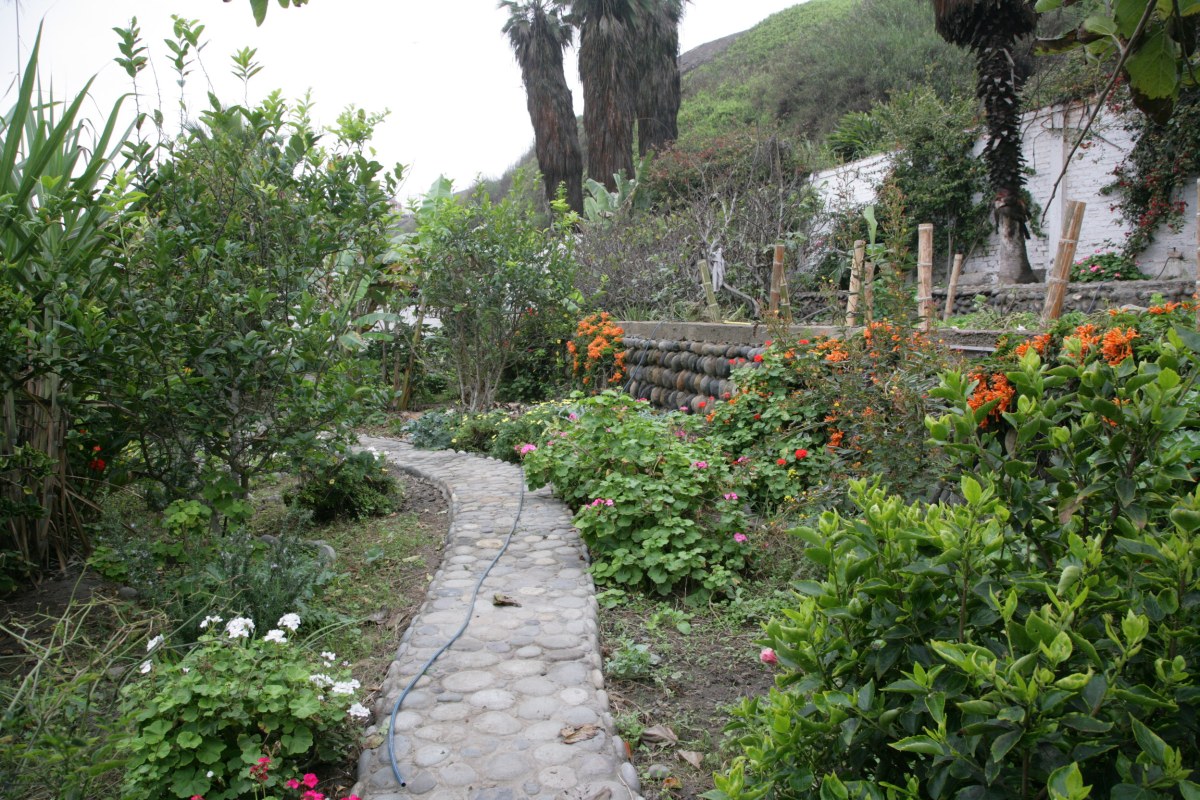
The back yard has space to park several cars. It also holds a two-story house. The downstairs is the caretakers apartment, while the upstairs was our research lab. Now it is my art studio. There is a patch of grass just big enough to play volleyball, and stairs up three tiers of garden with paths, palm trees, dripping fountains, and an herb and vegetable garden. The coast of Peru is a desert, and the garden is kept green by a recirculating water system that is pumped out of a well we dug a few years ago, up to a storage tank. Water then runs downhill through the canals and back into the well again through a filter of sand.
There is nothing else like our house any more. Big houses like these were the norm in the first half of the twentieth century, when agronomists and managers who worked at the haciendas inland, built beach houses for their families. When we arrived in this area more than twenty years ago, there were a few big houses left, “casonas,” built of adobe, likely to withstand earthquakes, simple, elegant, and labor-intensive. Today, the rest are either ruins or have been replaced by multi-story structures of brick and cement. The new buildings require less maintenance, but they lack that special something that thick walls and high ceilings provide.
Barranca kitchen
Now we have to brace ourselves for the future. We don’t know whether our house will sell in a month, or a year, or two or three.
We have mixed feelings about giving up our home here, as you can imagine. In the US, we will not be able to live in a spacious single story home across the road from a broad beach on the Pacific Ocean. Nor will Jonathan have the kitchen of his dreams. We will leave our very large and sweet dog Orca with a good friend who will appreciate her, and that is the last large dog we will have.
We will miss our friendly neighbors, and I will miss working on the unusual “Geniograma” puzzle in the newspaper with my neighbor Teresa. In the US, crossword answers don’t go in all different directions. Nor do crosswords include a combination of thumbnail photos, and answers that can be in the form of initials, and include a quote that threads around the page. The Geniograma has been a good learning experience for me.
The local market, with fresh caught fish, fresh picked fruit and vegetables, inexpensive avocados, mangos and pineapples, will no longer be near us, nor will our garden of fresh asparagus, broccoli, cauliflower, lettuce, and herbs, even lemongrass.
We’ll gain easier access to medical care, Medicare coverage (not applicable outside the US), and more cultural events. We’d like to live in an area where we can use public transportation, where there is a swimming pool, and a college or university where we can take a class or listen to a public lecture. I’d like to join the nearest AAUW group. I’m still a member of my group in Illinois, full of interesting people who like to discuss books, movies, and the issues of the day. No matter where we end up, we’ll be nearer to our daughters, because we’ll be in the US.
It will take us some time to resettle, to get used to having a home base, and not having Peru to look forward to each winter. As much as we’ve enjoyed our travels, the lure of having a home base is pretty attractive. Our trial run of eight months in Monterey, CA during the pandemic convinced us that we will be just fine. We’ll still spend some time each year on the road, though probably not as many months. There are still a lot of places on our list to visit.
Stay tuned, and we’ll see where we end up.
Here is a link to the photos taken by the realtors. They were all taken with a fisheye lens, and somewhat distorted as a result. The lens makes small rooms look larger, but I’m not sure it does much for us.
When we rushed home from Peru at the beginning of March 2020, it was to get Jonathan’s shoulder mended, though inadvertently, we escaped getting locked down for Covid in Peru. Last year, 2020, was the year of quarantine, when we all stayed home, wore masks, washed hands, and kept away from other people, awaiting development of a vaccine.
2021 brought a Covid vaccine. The vaccine was going to fix everything and we were going to get life going again, reactivate our travel plans, and get moving. How naive we were! At least in 2020, we knew what the future held–vaccination, then normality. Now? We’ve spent all of 2021 waiting for normalcy, whatever that is, and it never arrived. We’ve ducked and weaved, vaccinated, then boosted, and here we are, back in Peru, arriving at New Years Eve without any real understanding of what the future holds.
On the beach in Peru where we are located, at the far northern tip of the Lima province, a week ago, there were no specific rules about public gatherings. On Christmas Day, the beaches of Lima (city) were mobbed with thousands of people looking for a way to celebrate and not be cooped up. The photos shocked politicians into action, and a new rumor arose every day this week about steps that would be taken to limit contagion. Final decrees were out by the morning of Dec. 30, closing all beaches in Lima province on the 31st, and on January 1, to prevent large gatherings.
Today, when I went across the street to take a walk, I was turned away by a policeman. Bright sun, brisk breeze, no people. Every medical authority interviewed by the newspaper commented that closing the beach for two days would have no impact at all on the spread of Covid. Where will people go if they cannot go to the beach? Restaurants, malls, movie theaters, and homes, mostly enclosed, indoor spaces. Restaurants are open all along the beach. I will stay in today and tomorrow.
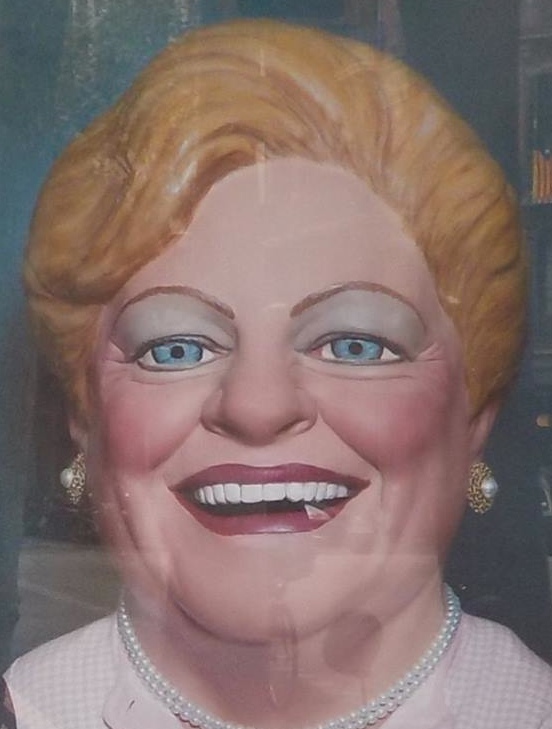
When I first saw this giant head figure in Barcelona, I couldn’t figure out who it was. The Queen, Margaret Thatcher, some Spanish celebrity? No, it’s Lady Luck.
If you are looking for a bright side, be grateful if you have a home that has enough private space for you to breathe a bit of air, do a few stretches, sit comfortably, and prepare food easily. Not everyone is as lucky as we are.
Searching for ways to improve your luck for the new year? There are truckloads of grapes in Barranca today so that everyone can eat 12 grapes at midnight for good luck. Yellow underwear is for sale in every streetside kiosk, so that we can wear our yellow underwear tonight for good luck in the coming year (Banner photo for this post is a New Year’s stand of lucky yellow goods in Barranca). In Spain, the lottery for Lady Luck will probably be a good one today, too.
What happened to 2021? Just call it a black hole and hope for better things next year.
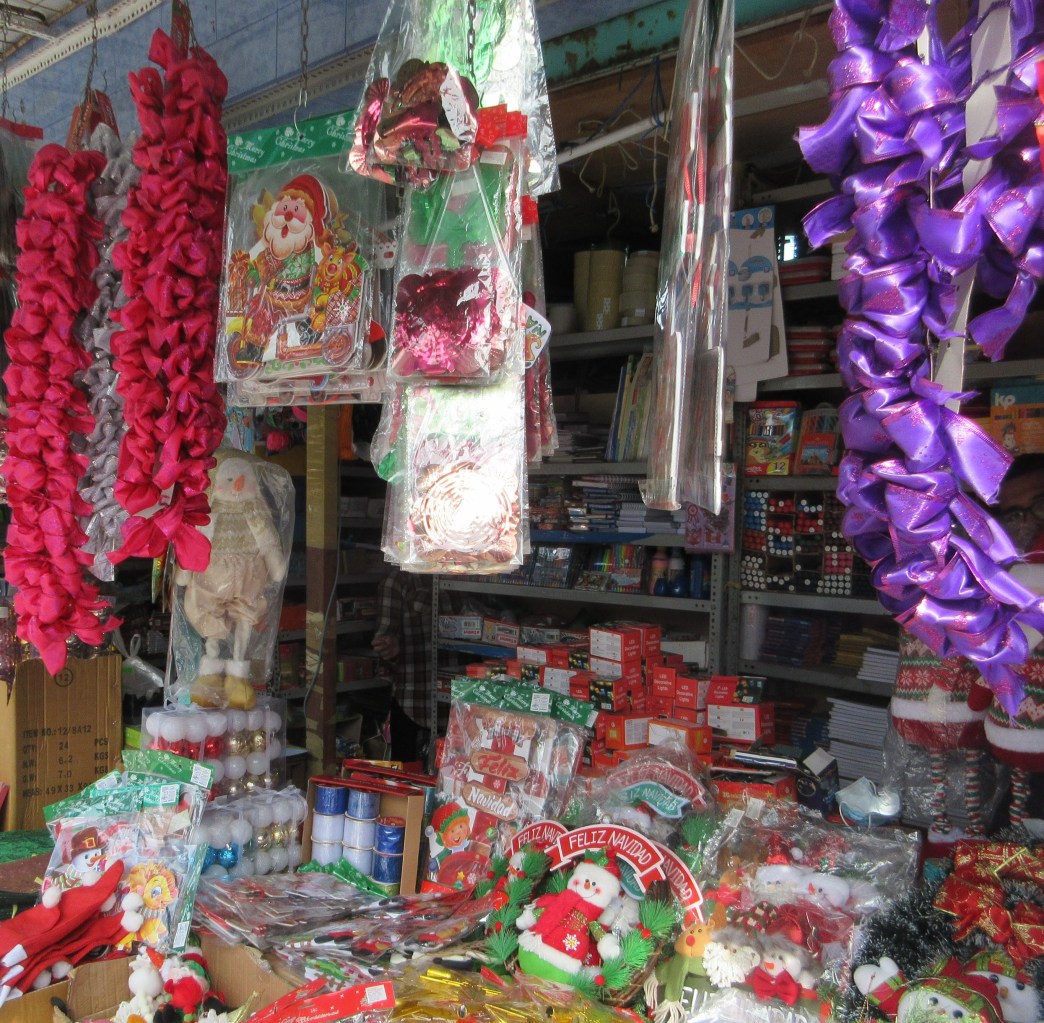
People don’t go overboard with holiday decorating in our part of Peru. There are stalls in the market selling artificial trees, garlands and ornaments, but there’s not a lot to see along the streets. Since Christmas falls at the beginning of the summer, there’s an emphasis on having get-togethers, going to the beach, and celebrating with family.
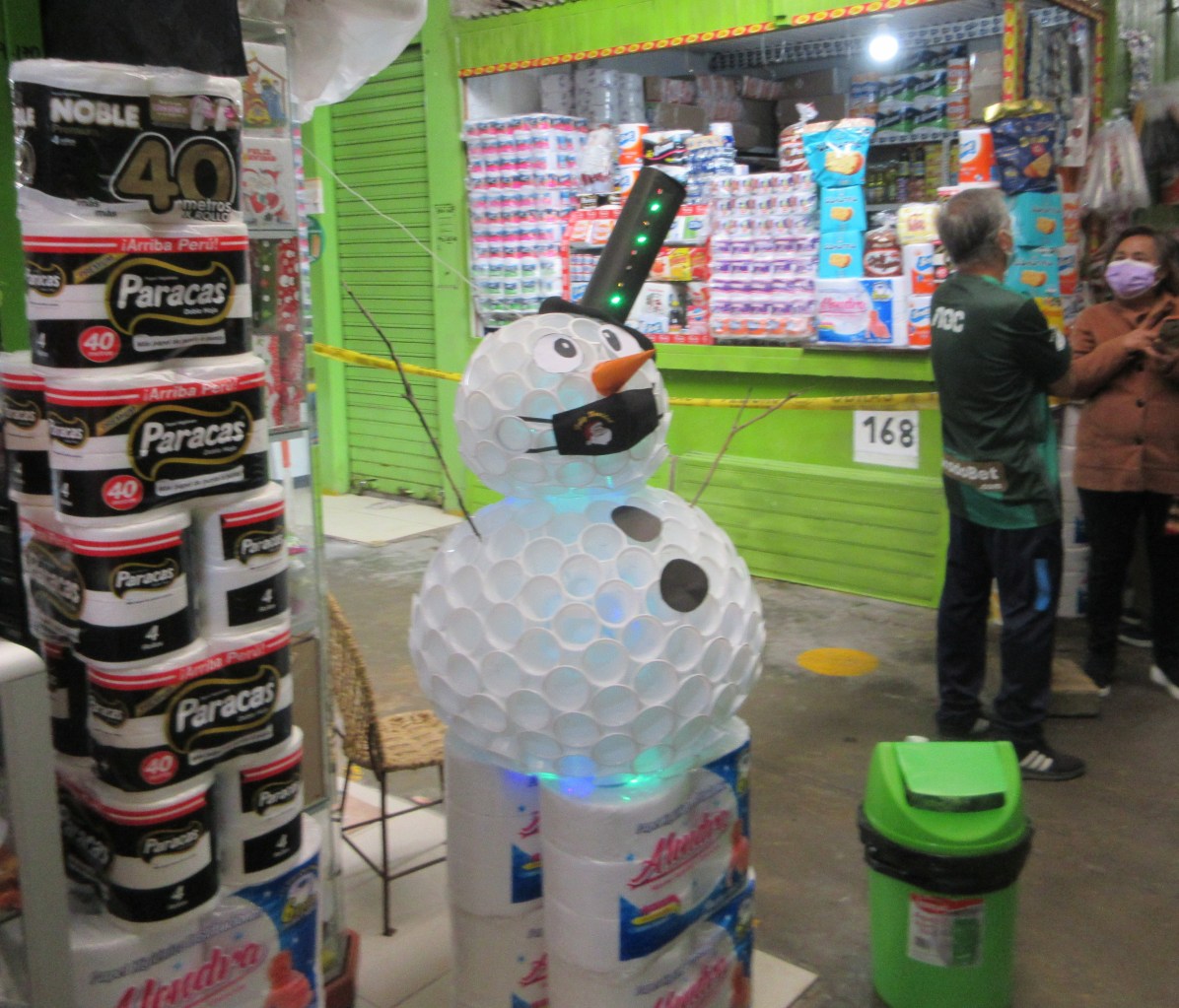
Snowman made of paper cups, available from this vendor, in case you’d like to make your own.
This year, there’s a lot of wait-and-see in the holiday equation. During most of the summer last year (2020-2021), people were not allowed to go onto the beach, nor were they allowed to stroll the sidewalk along the beach. Now we are able to go on our daily walk down the sidewalk and return along the beach, but there are rumblings that gatherings of any size will be forbidden between Christmas and New Years, and that the police will patrol the beach to enforce the rules. This is particularly threatening in a place where the police are known to pad their salaries with fines collected from members of the public.
New regulations appear to be issued every evening, as every morning, our driver Carlos tells us what the latest additions to the list have been. The government is trying to avoid a huge surge of illness after the holiday, though it is an uphill battle to convince people that they should avoid large family gatherings. People come from all over the world to visit family at this time of year.
As of Dec. 23, 2021 we have:
No overnight camping on the beach
Curfew from 11 pm to 4 am on Dec. 24 and Dec. 31. Social events and gatherings are not permitted to include more than the occupants of one dwelling.
Sale and consumption of alcoholic beverages on beaches, rivers, and at swimming pools is prohibited on Dec. 25, 26, 31, Jan. 1, and 2
On the days mentioned, restaurants need special permits to be open and cannot sell or serve alcohol.
Normally, 20-60 people camp overnight on the beach between Christmas and New Years, drink beer and other adult beverages in restaurants, on the sidewalk, and on the beach during the day and in the evenings for the entire holiday season. There are no sanitary facilities for campers, plus there’s danger of broken glass, and occasional drunken revelers on the sidewalk early in the morning. Those of us who live along the beach may not appreciate campers, but it is a local tradition. We are not sure what is going to happen with the new rules, whether they will be enforced, or circumvented.
Peru has had an overnight curfew for some time, from 1-4 am. Moving the curfew earlier, especially before midnight, is HUGE. In Peru, on Christmas Eve and New Years Eve, people may attend midnight mass, or stay home to celebrate midnight with family, and then they go out. Overnight celebration is a very big deal and involves lots of people. Discos and dance halls get to stay open all night, and revelers buy grilled meat, stuffed potatoes, chips, and soda from sidewalk vendors. Closing down at 11 pm suggests there will be no celebration at all. One memorable New Year’s Eve, when we were new to local customs, we strolled down the street at 11 pm tut-tutting that business was so poor, and the bars were not going to have much going on. We returned home and went to bed shortly after the turn of midnight. Within about a half hour, there was loud music from multiple locations that continued all night long, and when we got up the next morning and opened the shutters facing the street, there was a naked man sleeping on the sidewalk across from our front door. The party definitely revved up after midnight.
Closing restaurants at this relatively late point before the holidays will affect all the small places that have been straightening up, painting, and purchasing food this week. Many places planned to open on Christmas Eve, then stay in business as long as customers turned up. Many don’t even make it to Easter, traditionally the end of the season. The Christmas tree in front of Tato’s Restaurant, probably the best known eatery in all of Barranca, suggests they are ready for holiday crowds, and not planning to be closed. Many businesses make 25% or more of their annual income during the next two weeks.
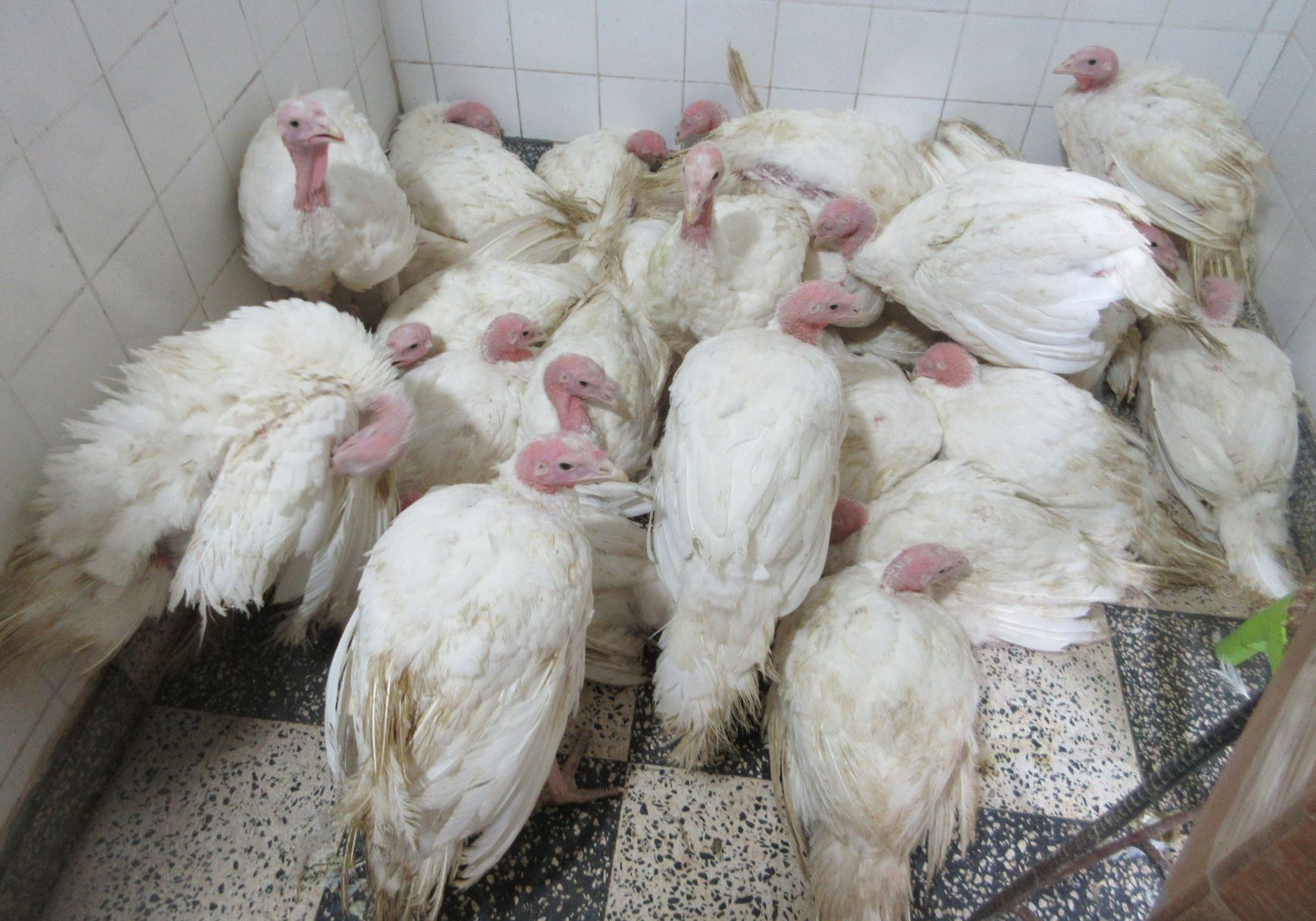
Despite the lengthening list of prohibited activities, vendors are selling toys in stalls up and down one of the main streets. Yellow underwear is on sale, ready for anyone who needs to get some good luck by wearing it on the 31st. It is customary to give household help a turkey for Christmas, and we went to collect the two we had reserved, and found the chicken vendor overwhelmed with turkeys in all states of processing. In Peru, you know where your food comes from.
We have a live Christmas tree that will eventually be added to the back yard. It’s a Norfolk pine, a variety that grows well here on the beach. I’ve made a few holiday cookies, gingerbread with a bit of frosting, and sesame shortbread that is very good indeed. I’ll share a few with my neighbors, the man who delivers the newspaper, our local lifeguard, and our household helpers.
My Christmas creche consists of a lot of tiny animals I’ve collected over the years, and the Christmas family, magi, and several baby Jesuses. They all get to come out and celebrate.
We are doing our best to keep spirits bright during this season, and we wish you all the company of good friends and family.























 Llywindatravels 2025