Not all smooth sailing

Jan. 19, 2015

I thought getting stuck behind a cart full of plants was a problem. Ha ha ha ha ha. It was a ten hour day in the end, but so jam-packed with things to see and talk about that it wasn’t bad at all.

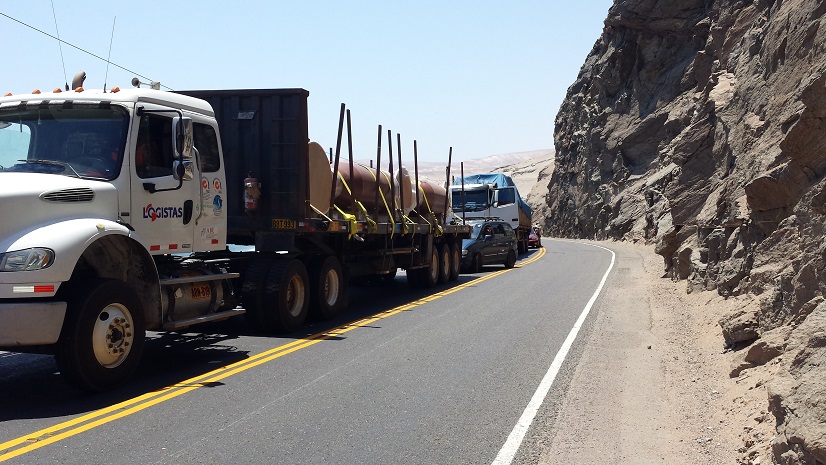
We lost some time on the way to Camana when traffic was stopped dead on a mountainside by a woman swathed head to toe in bright orange. We needed to wait a half hour so that the stripes on the road could be repainted. On the bright side, I pulled ahead of about 20 trucks and their disgruntled drivers to get up to the front to find out what was going on. In Peru, women are seen to be the best enforcers, they direct traffic, hand out parking fines, and manage road blocks. Women are considered more resistant to bribes than men.

20150119_131140sm

We ate lunch while standing around, stretched our legs and finally got going again after we watched all the traffic going downhill let through first–despite there being two lanes. After that we set off, to find that the painting team had probably painted 500 yards of stripes on the road during the better part of an hour when all traffic was stopped.

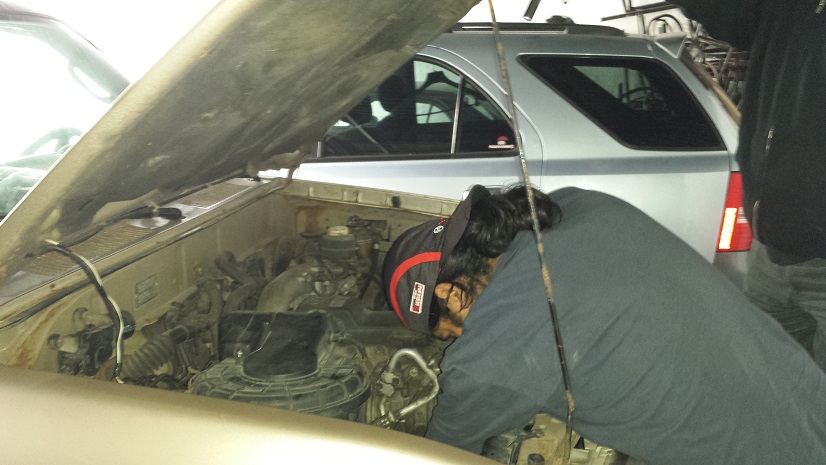
Meanwhile, we decided to try and get to Arequipa with a broken thermostat in the car, because car repair is difficult late on a Sunday afternoon in Nazca. The gauge swung up and down without much reference to speed, use of A/C or gear ratio, though we turned off the A/C and opened the windows when the thermostat went into the red zone periodically. As we neared Arequipa (2,000 m) the air cooled off quite a bit, though the car did not, but we made it, and a mechanic that the front desk found for us came by the hotel at 3:30 pm today (now Tues) to make the repair. He replaced the thermostat (original to the vehicle in 2002), replaced the radiator cap and tightened the fan belts, for $70 including parts.20150120_163055


From the desert coast to the White City, Arequipa

Jan. 19, 2015

The day started clear, sunny and hot with most of the day in the 80s F–27C and ended up at 52 F–11C at 10 pm. Today’s drive was constantly changing and surprising. Anticipating a long day, we left the Nazca Lines Hotel just before 8 am and immediately ran into a problem, literally.

20150119_081827sm

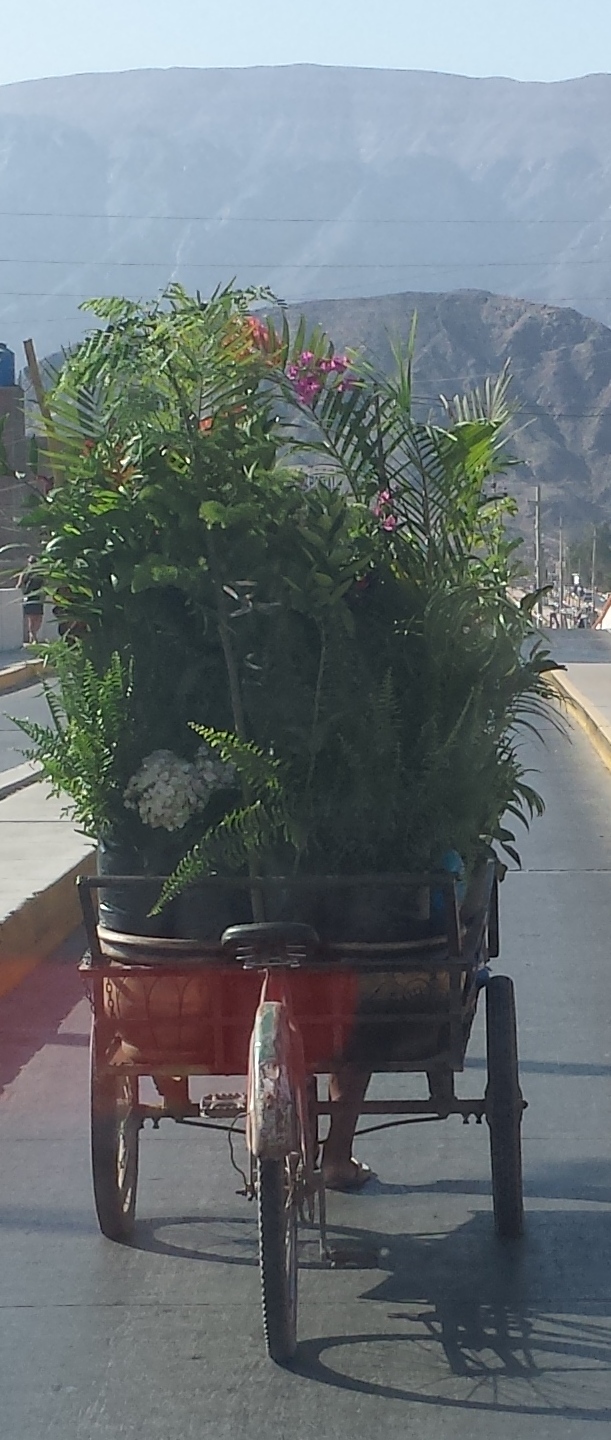
This is a bicycle cart of ornamental plants. The driver decided to pull it across the bridge rather than ride it.

The desert beyond Nazca continued in all directions. The exceptions are the river valleys, few in number and widely spaced. One of the first we passed through was the Yauca Valley, entirely planted in olive trees right out to the edge of the desert (We bought olives). Further along, the Ocona and Camana Valleys are the electric green of rice.

We bought olives from a roadside stand.

For almost 200 km (100 miles) between Chala and Camana, the rocky coast alternates with sandy beaches. The road curves up and down through hairpin curves to cross the rocky headlands that jut into the ocean. There were sections that we imagined were like driving through the Cinque Terre of Italy with one difference–there is no one there. NO ONE. One hundred miles of empty beach and rocky shore.

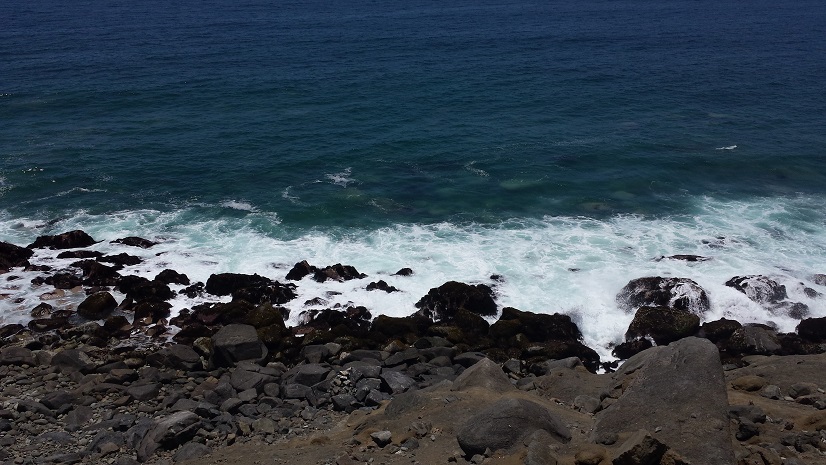
The water was beautiful green and blue. This photo was my attempt to show the color that I think of as Winslow Homer blue–it’s not just the waters of New England. Mile after mile of beaches and rocky outcrops.

Then we started up toward Arequipa, both of us surprised at the sand. In some places the dunes have filled in behind the retaining walls intended to hold back the sand to a height of more than 2 meters. Sandbags are perched on top of the retaining walls to prevent sand from sliding over the top and covering the road, but it’s only a matter of time until nature wins.

The approach to Arequipa includes a view of the optimistically named Cerro Verde mine. Only the tailings are visible, dominating the landscape until you reach the city.

20150119_163329sm

We found our hotel Los Tambos, and ended having dinner in a rooftop cafe overlooking the cathedral towers.

20150119_191942

Lima to Nazca! Jan. 18, 2015

Lima to Nasca 118.15

Just south of Lima are several popular surfing and vacation beaches. Along the way, you can purchase anything you might have forgotten. There are also some peculiar decorative objects along the highway. It looks like an elaborate arrangement of plastic strips–on a telephone pole sized stand.

Lima to Nasca 118.15-002sm

There is NOTHING on the road to Nazca. Without the discovery of the lines, this area might be empty. Sometimes the sights are better above the ground, as there is a lot of construction debris and garbage along the Panamerican highway. Despite what you see in these pictures, there are quite a few tolls along the highway. At one point–it was one lane each way with plenty of buses and trucks–we decided they were charging a toll so that they could eventually build a highway.

Lima to Nasca sm118.15-008

Lima to Nasca sm118.15-006

We drove 444 km today. Though it started out cloudy in Lima, it was sunny and hot most of the way, peaking at 32 C (89 F). We took just under seven hours, leaving Lima at 8:45 am and arriving in Nazca at 3:40 pm. In the early afternoon, we discovered that the car was overheating, so turned off the air conditioner, and that seemed to help. Then it didn’t seem to make any difference.

Lima to Nasca sm118.15-009

When we got to Nazca and called Carlos (driver, handyman) he suggested it could be the thermostat. We will have to get it looked at.

Fortunately for us, our day ended at the Hotel Lineas de Nazca, where they have a pool! We went directly to the pool after checking in–exercise, stress reliever and general go-soak-your-head fun. We drank complimentary miniature pisco sours beside the pool before strolling down to the Plaza de Armas. We took a turn around the plaza; at 7 pm every seat on every bench was filled with people waiting to see who else would turn up. We went down the street to the restaurant Los Angeles for dinner. The man waiting on us gave us copies of a very old book by Maria Reiche on the Nazca lines to read while we waited. The copies were falling to pieces, and printed on acidic paper that turned yellow long ago, but they were signed by Reiche herself and the black and white prints of one of the lines aligned with the setting sun on the winter solstice was surprisingly clear.

hotelnazcalines

We have flown over the Nazca lines in the past (Jonathan three times, Winifred twice), so we won’t be stopping for that experience. If you are thinking of making the trip, we strongly recommend flying over the lines. You really cannot get a sense of them from the ground, and from the air they are remarkable. It is surprising, too, that they were not noticed until 1939 when Paul Kosok, a historian interested in canals and ancient agriculture, went to Peru and carried out a rather general aerial survey of the coast. Kosok did not end up working in the Nazca area, and Maria Reiche, a German woman, began looking at the lines and spent the rest of her life among them. Kosok produced a beautiful and informative book called “Life, Land, and Water in Ancient Peru,” that is full of aerial photos of the coast north of Lima with comments about the remains of ancient civilizations that can be seen right on the surface, but that are best viewed from the air. Jonathan and I started our work in Peru in 1999 by looking at Kosok’s photos of the Fortaleza, Pativilca, Supe and Huaura Valleys.

Since we were only in Nazca for an afternoon and evening, the Nazca Lines Hotel was the center of our interest on this trip–it was great. Very clean and light and air conditioning that worked. Breakfast was good, too. They serve the usual bread and fresh fruit but also offered to make eggs to order and had wheat germ and bran and kiwicha (andean grain) to sprinkle on cereal or yogurt.

Last Day in Lima Festivities, Jan. 17, 2015

After errands, we went to the Larcomar cinema down the street and saw the Metropolitan Opera Live in HD presentation of The Merry Widow, with Renee Fleming, Nathan Gunn, Kelli O’Hara and Alek Shrader. Spanish supertitles, but the opera was in English! Our lucky day. So does Nathan Gunn look more like George Clooney or Castle?

merry widow sm2It was an excellent performance, one of those events where you don’t really need to enjoy opera to appreciate the music, singing, dancing and all-around fun. You leave the theater humming.

We met our friends Mario and Carmela and their daughters Alicia (7) and Silvia (1 1/2). It was our first meeting with Silvia and today they were a contrast. Alicia was as full of words as ever while Silvia was quietly observing all that went on.

Dinner at Ko Asian Kitchen in Larcomar. Nothing to write home about.

Last Day in Lima, Jan. 17, 2015

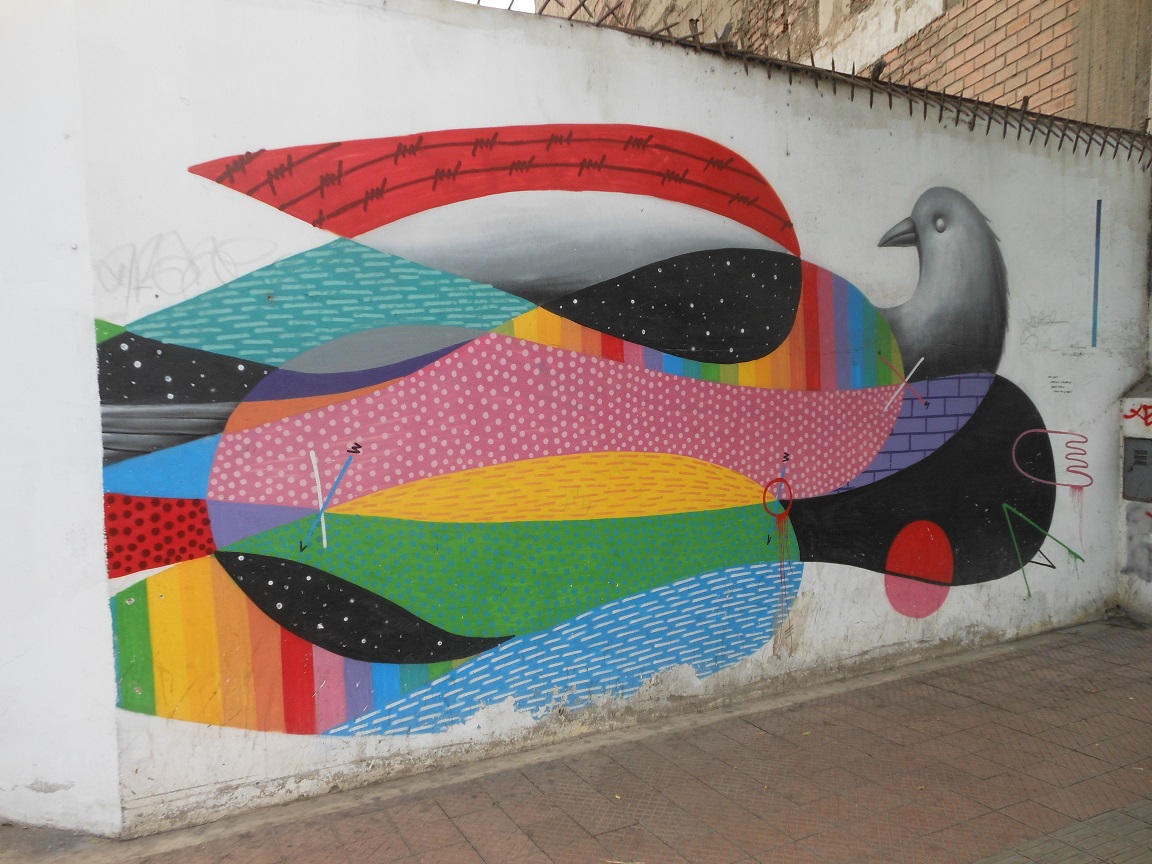
Last minute shopping, I passed more great street art. These flank the entrance to a parking lot:

muralsm2mural sm1


Walking around the Miraflores neighborhood, I am constantly reminded of changing times. Large single family homes dating between 1920-1960 are being replaced by 6-10 story apartment buildings. Often an old house has a sign out front that says “Approved for 8 stories” below the “for sale.”

old miraflores1Houses like the one at left show the European influence in architecture of that earlier period as well. Newer structures are all built in contemporary concrete/cement and fashion tends toward sleek, eurostyle shapes and furnishings.

Lima’s population reflects some of that earlier era, as well. There are clearly delineated social strata in Peru–most visible in Lima–where European background provides social advantage. The society pages in the main newspaper “El Comercio” show faces that you could see in Miami, FL or Miami, OH. It is faintly disturbing to fail to see anyone who looks like the vast majority of the Peruvian people. No one talks about indigenous, or native, or local ancestry. No one mentions relatives that come from the highlands or the “country” unless a hacienda is mentioned, or unless they are close enough friends that class is understood.


Lima, Peru Jan. 16, 2015

A long chat with the owner of the Barcelona restaurant revealed that he speaks six languages and worked on cruise ships. One of his first days as a cruise ship waiter, each of his tables had people speaking different languages and he became so confused he had to hide in a stairwell to sort out what to say. We saluted his skill with a Pisco sour, the national cocktail of Peru.

Brindis

Lima, Peru Jan. 15-17

senorial sm

We are staying at the Hotel Senorial, where we have stayed regularly since we first visited Peru 15 years ago. The best thing about the Senorial is the outdoor dining room where breakfast is served, and the attractive landscaping. The hotel has grown from fifteen rooms to more than fifty, losing its alpaca blankets and a lot of charm along the way. We stick with it because it has secure parking and friendly staff members, a few of whom have been here longer than we have. The owner parks his classic car outside our room.

antique ford sm

Weather report for Lima: High 74 deg F, low 67. Overcast from air pollution.

You Are About to Enter Lima, Peru

traffic sm

You don’t really have to abandon all hope, but you are best off if someone else is driving. Lima drivers don’t have much use for lane lines. They like to turn left, or right, from the middle lane if there are three or more lanes. They live for excitement.

DSCN2548

Lima has many good things about it, one of which is public art. There is a lot of new public art since we last visited. This is on Av. Larco in Miraflores.

Manolo sm

Manolo’s is a cafe known for hot chocolate and churros, and pretty good for a meal. Tourist prices, but we split a club sandwich and only made it through half. Jonathan is happy to be embarking on our adventure, though we realize that we are not used to eating out regularly and need to figure out how we will do this. We usually go to a place and rent an apartment, so that he can visit the market and cook. This time we are on the road for quite a few days. Most hotels come with breakfast to get us started.

For dinner we went to Ache, a Japanese place at the base of the Hilton in Miraflores. It is fine for sushi beginners (very fresh, but a small selection). The flambeed roll tasted like lighter fluid, and when I told the waiter it tasted funny from the flambee, he suggested it was the oyster sauce. I don’t think he eats much sushi. The chef sent us a half order of something different and we called it even.

Man vs Nature: Nature 2 Man 0

Two Sundays ago we found a cat eating the leftover bacon in the kitchen. He looked up and ran for the window, jumping between the decorative bars. The kitchen gets too hot to close the windows, so we put screen across the window, and the cat stopped stopping by. The next week, however, there was a cat in the kitchen, sitting on top of the oven, still warm from baking. I shooed it out and carefully closed the door and the second window. The next morning there was no cat. That night we ate lamb and after dinner I wrapped the leftover lamb in plastic and left it on the counter.

The following morning, I went into the kitchen and the lamb was wrapped in its plastic, undisturbed. Then I heard a funny noise, sort of creaking–no birds out the window, so I turned back, and there on top of the oven was the cat, curled up in a basket that had held strawberries (Note to self, scrub basket). The cat had batted at the smaller window and bumped the sides open and had entered and made itself at home, not hungry at all. When I came in, it hopped out the small window onto the patio. The doors were all closed so I opened a door and carefully moved to the side so it could make a break for the door.

Never mind–it had no interest in the door. It climbed up the strangler fig in the middle of the patio, stopped half way up to meow a few times to protest its ouster and then continued up onto the roof and away. Now I have to lock the small window at night in addition to putting a rock by the door to keep it closed.

Man vs Nature: Nature 1 Man 0

Blackbird1DSCN2530

Southern Blackbirds create a big, liquid sound. They also like to tap at reflections in mirrors and window panes, and sing to them, which is how we ended up with a blackbird sitting on our window sill, singing its loudest, starting at 5:30 am. It would not be shooed away. After all, we already covered the external mirror on the car with a plastic bag so that the bird(s) would not perch there to admire themselves and leave drips. Jonathan created a mobile of old cds that seems to have worked in keeping the bird away. The blackbirds still sing, but not quite so nearby.