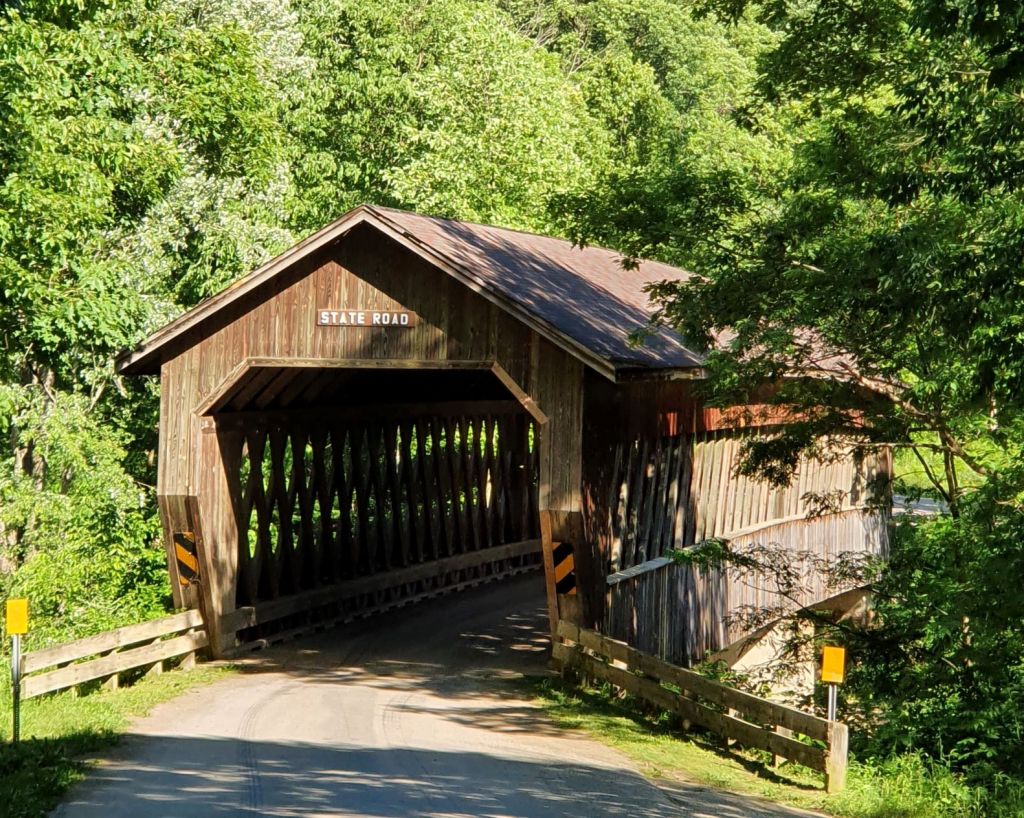
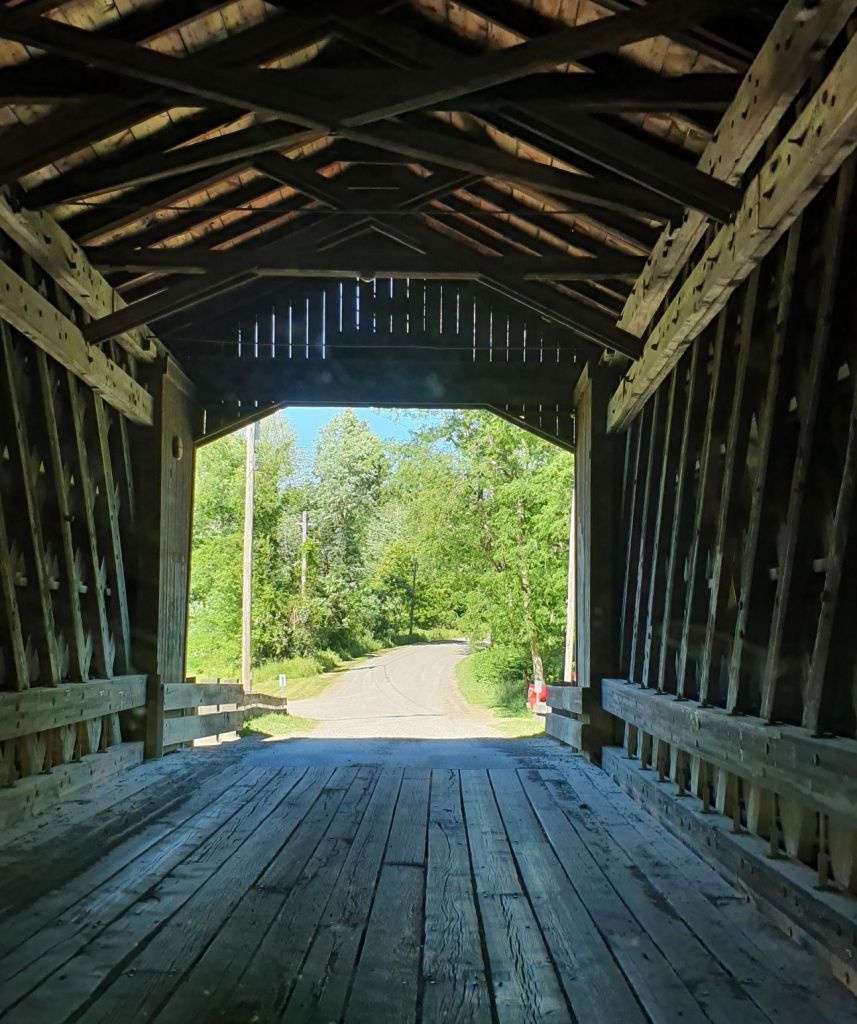
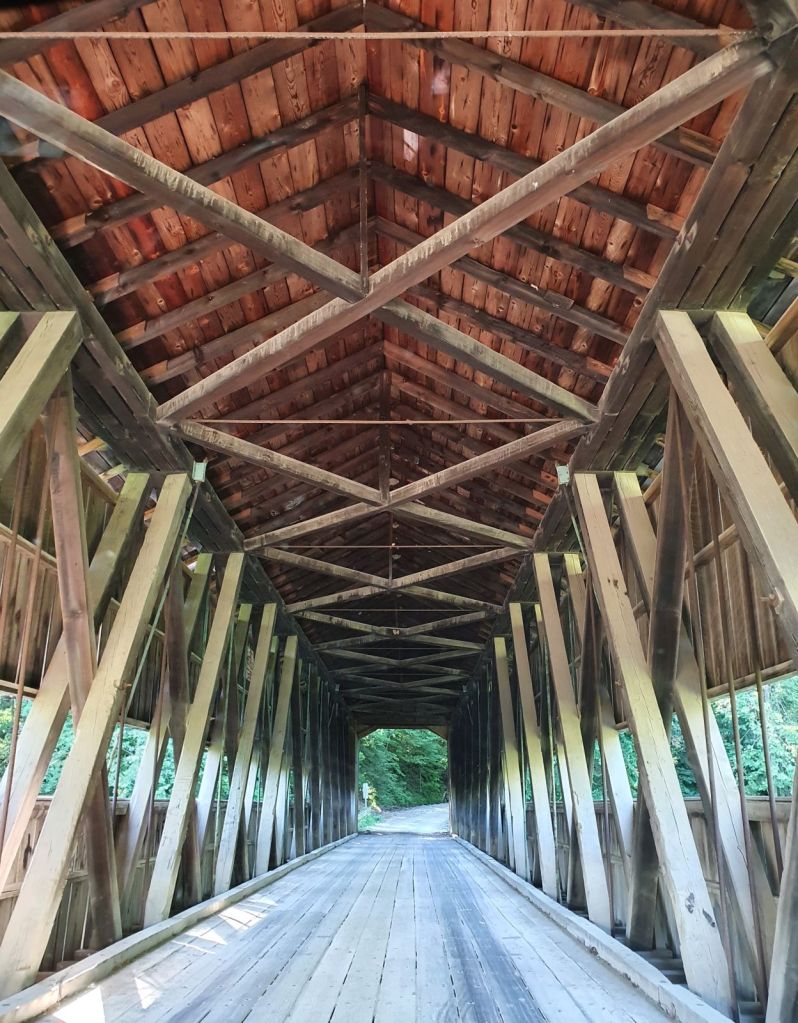
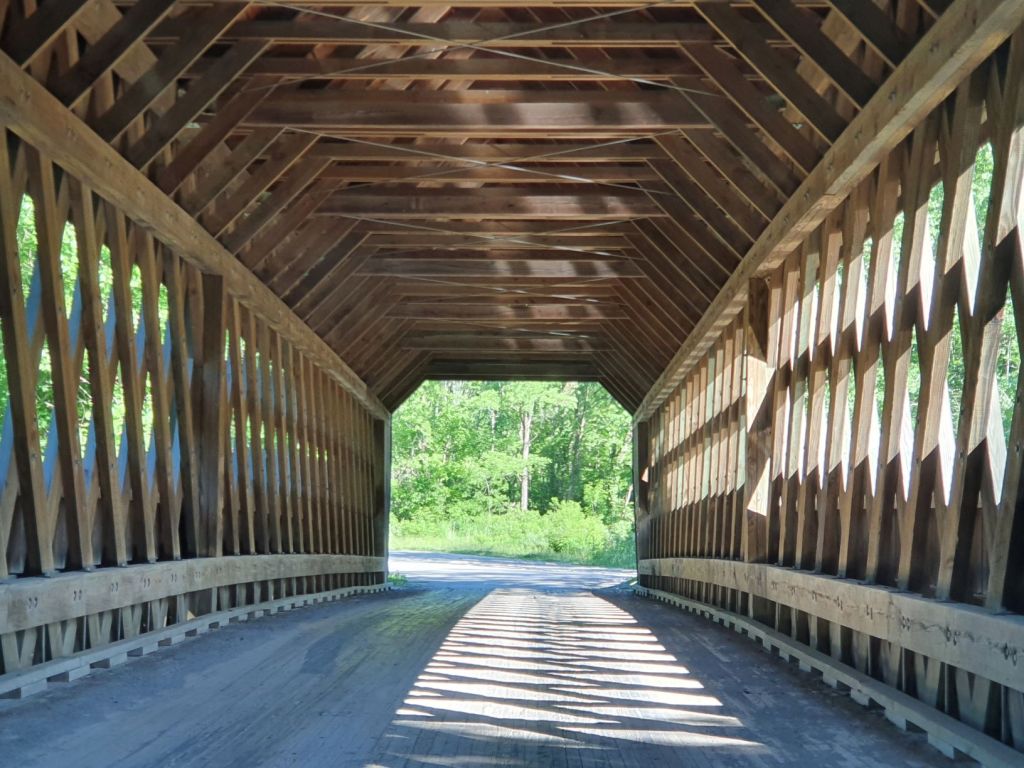
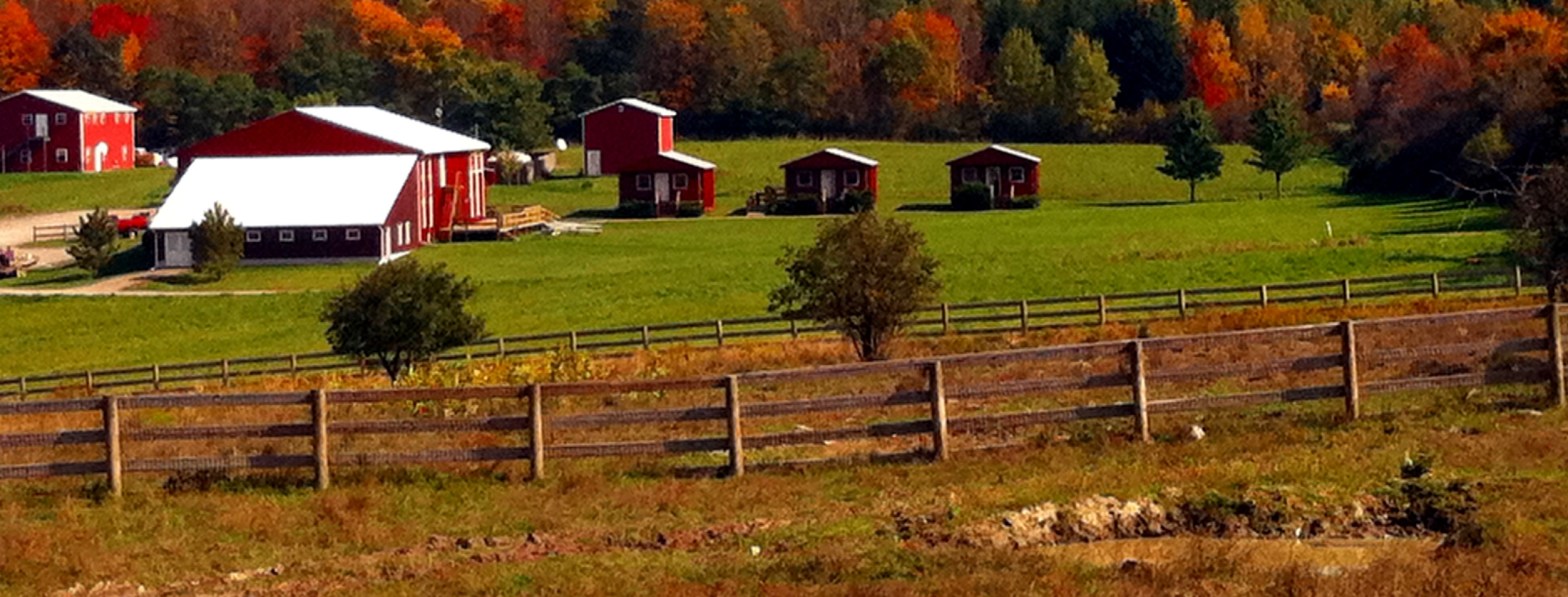
Symbols on a local tourist map turned out to be covered bridges, and on a perfect sunny afternoon we set out to see three that are all very near Conneaut.
Whizzing by on the highway, Ohio is flat and featureless. The creeks that wind their way into Lake Erie are invisible. In contrast, covered bridges predate the interstate, along roads that follow the contours of the land, skirting fields that alternate with stands of woodland, gently curving around low hills. The road dips down toward the creek, turns to cross perpendicular to the stream, then straightens out again and climbs up to the level of the fields.
Covered bridges: the same, but different
Farmland now competes with housing, creating a suburban/rural combination that is new to us. Our speed dropped as we navigated the country roads and took time to pull over and admire the sights. We were never more than a few miles from the center of Conneaut, yet the landscape was entirely different. Adjacent to Conneaut Creek are vineyards, part of the local wine industry. With everything closed, we have not been able to taste Ohio wine yet.
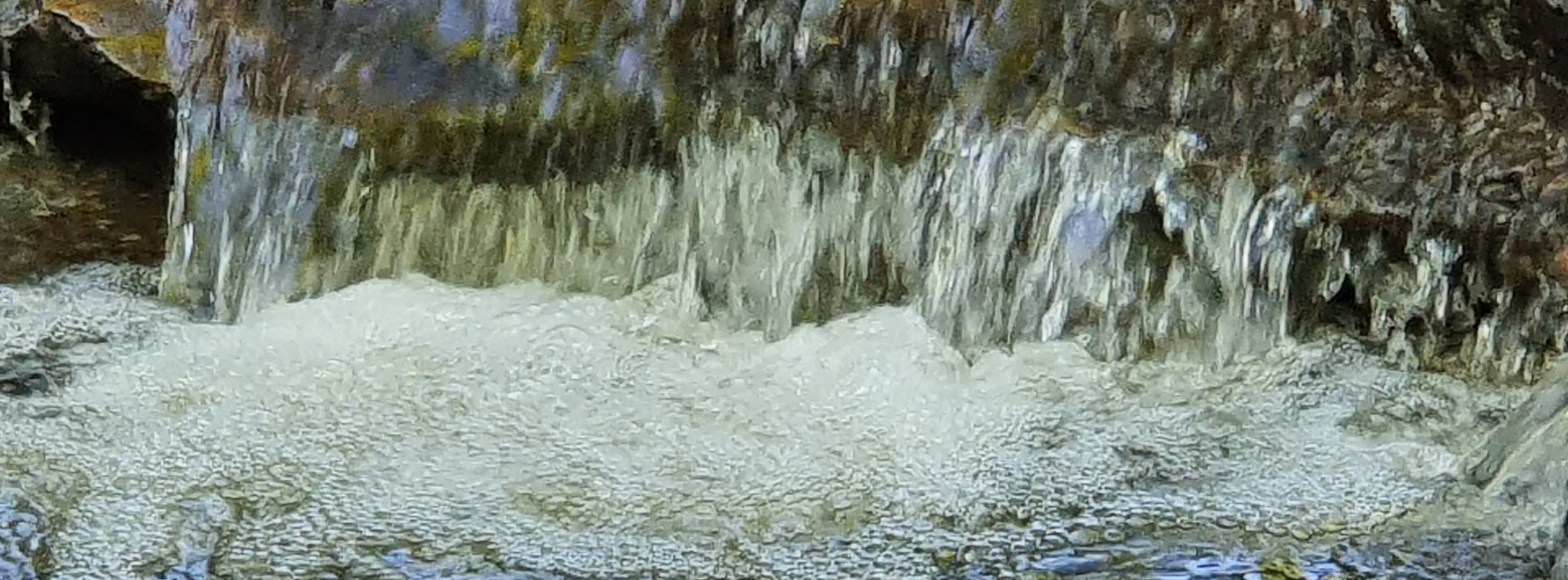
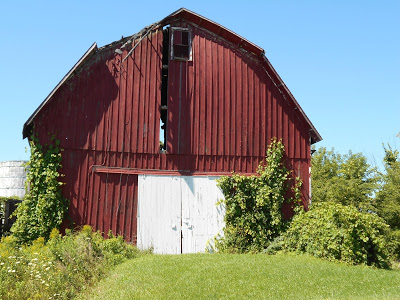
Between stops on the covered bridge trail, we passed a huge octagonal barn, a wonderful structure that isn’t built any more. Beyond the next bridge, the map on my phone showed Bear Creek Waterfall, so we stopped. A broad sheet of water runs across the rock, pooling part way down before flowing into the creek. Imagine this as the centerpiece of a vast Japanese garden, water flowing across the rock, serene and constant. We watched the flow of the water for a few minutes before continuing on to the next bridge. At the end of our tour, we were at the opposite end of town, still only a few miles from home. All this in one afternoon!
The more we explore, the more we find. Along our route among the covered bridges, we found the Clara D. Peet Preserve, a grassy trail into the woods that we plan to walk another day. Online, I discovered a map of Ashtabula County parks, including at least two others we’ll enjoy exploring during the remainder of our month here.
This month we are in Ohio, enjoying the shore of Lake Erie. Conneaut is pronounced “CONeeOtt,” and our house is a lake cottage that has just had the final touches of renovation added, so everything is new and comfy. The interior paint work is particularly nice, changing from robin’s egg blue to pale mint green with the light (also painted different shades on different walls). It’s a lovely effect.
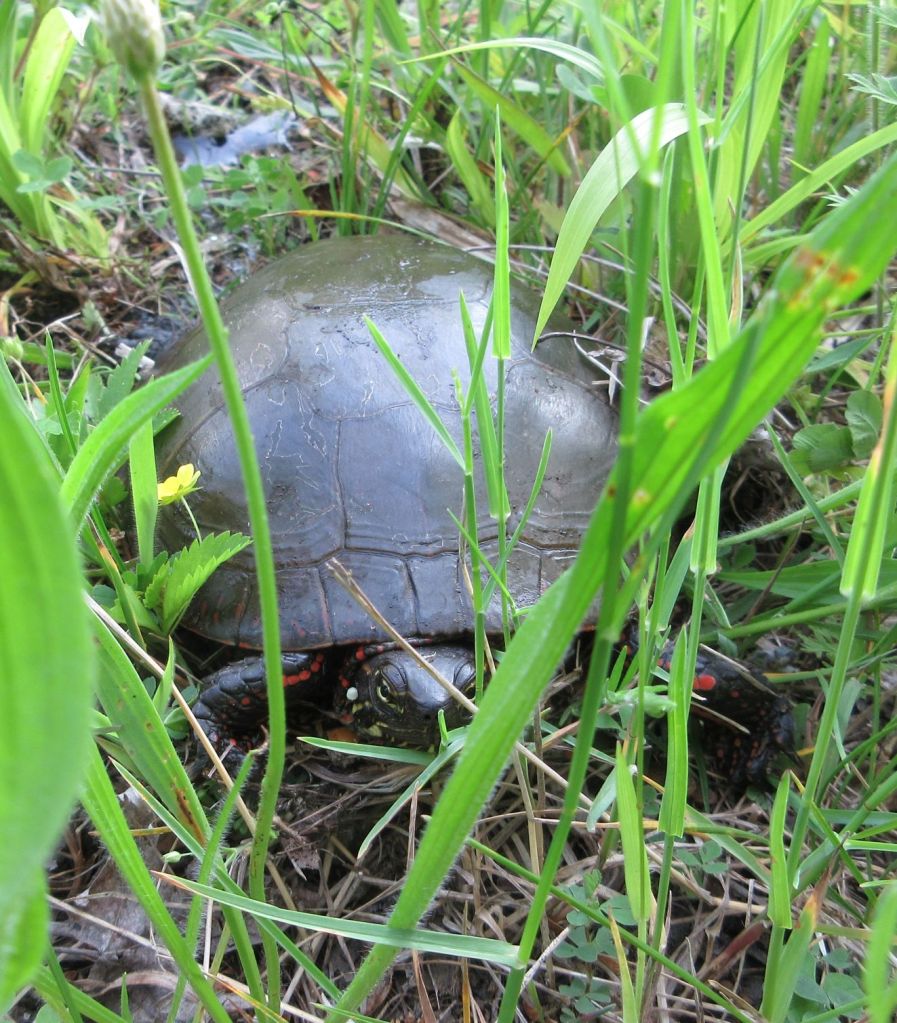
A midland painted turtle on the path
The weather is nicer than that of the Chicago area. It is hot and humid some days, but not as humid as Lombard was. Other days are delightfully sunny and warm with some breeze off the lake. We did have a day of wind and rain, and the lake changed from clear and flat calm to a constant crash of turbulent brown water. When the weather is good, boats of people going out to fish leave from landings all along the shore. Most of the edge of the lake is a bluff 20-40 ft high, so any spot that is low enough to provide a bit of beach and a boat landing is either a public park or marina.
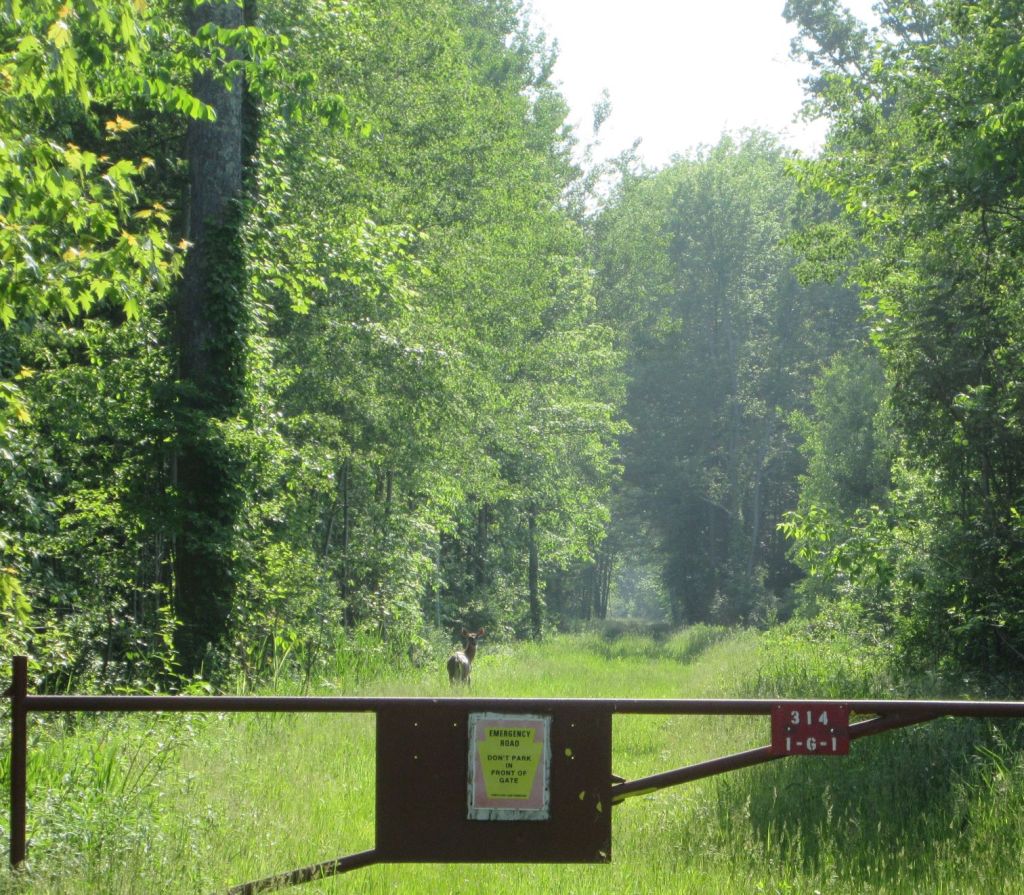
Whitetail deer just before fleeing for the woods
Our first efforts at birdwatching took us to the OH/PA border where there are State Hunting Lands. Though we didn’t see a lot of birds, we saw some of the local wildlife: a woodchuck, deer, turtles on the path, and frogs in the swamp. Birds hide quite successfully in the now fully leafy trees, and we are often frustrated in trying to find them, even if we’ve just watched a bird fly straight in to a particular branch. Fortunately, there are a lot more spots to visit.
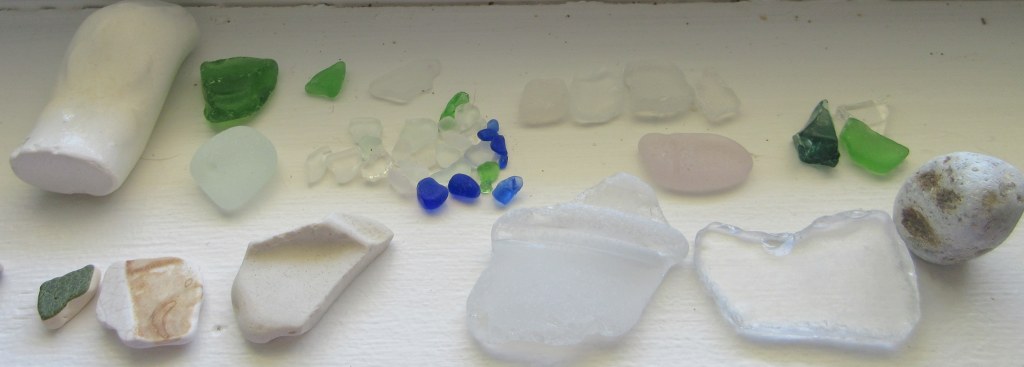
Beachcombing is touted on some Facebook pages as a great diversion here, but there is a down side! People have had so much time on their hands during the past weeks of isolation and social distancing that the beaches have been combed and combed. Finding beach glass may once have been easy, but now there are a lot of people spending a lot of time on the shore.
I walked down the 87 steps from the bluff nearest our house to the shore and found a man lounging in his kayak after having walked our tiny stretch of beach. He said he’d found a few pieces, but the lake shore this year is much smaller than last year, so not only are there more people trying their luck at finding beach glass, there is somewhat less shore to search. That’s ok, I always find something. See the pebble that looks the “The Scream”?
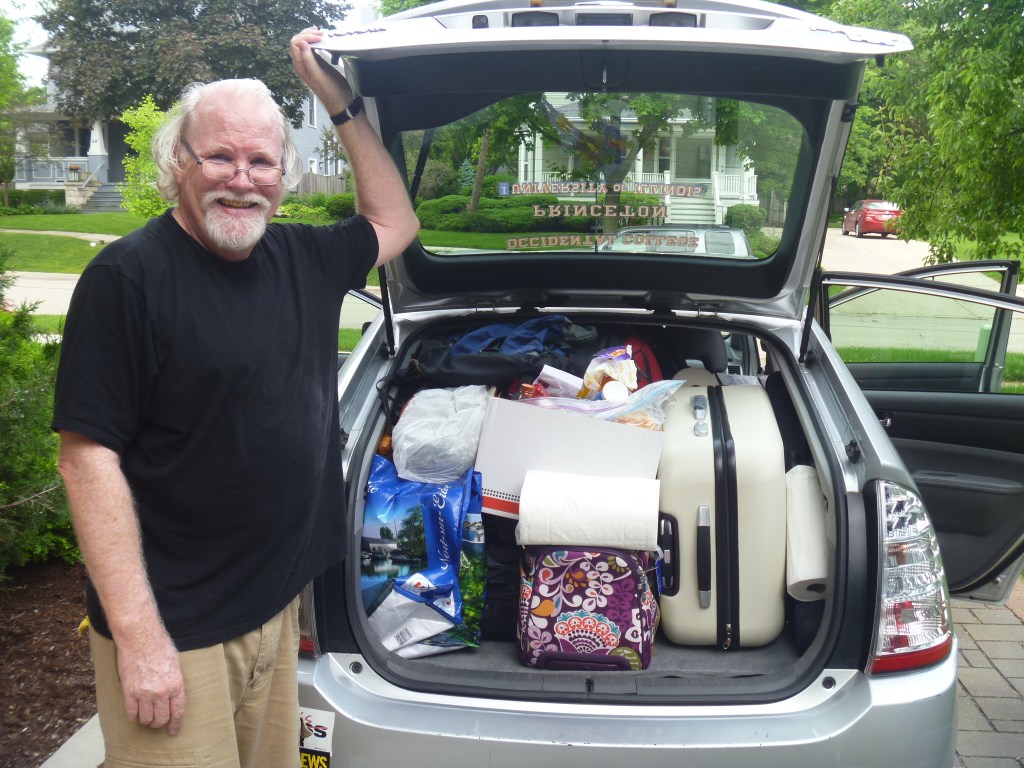
We’ve been in Lombard, IL for two and a half months, much longer than our normal stops. On June 1, when we should be flying from Athens to Vienna, we will be leaving Lombard, IL for Conneaut, OH, the last town before the PA border.
Why?
Lake Erie, for starters. We’ve never been there, and our new house overlooks the lake. There is also beach combing. Cleveland and other places threw all their trash into the lake for about a century and today pieces rounded by the water and sand wash up waiting for people like me to see them. I’m looking forward to new surroundings, and a lake for swimming.
The change of seasons has also gotten to us. Our cute house is cozy and warm in cold weather, but it doesn’t have air conditioning. Chicago has sneaky spring weather, staying cool, even chilly, into May. There’s a reason that people don’t plant their gardens until mid-May. One day, though, you open the front door and step into a cloud of hot steam. Step outside and it feels like you are breathing through a hot washcloth. Summer has arrived in Chicago! It will be hot and humid on many days between today and September. For us, it’s time to move on.
March 23, March 24, April 12, May 26, 2020
Our stay here began just before the official start of spring. We went for walks and started seeing birds, even when we had to bundle up in heavy coats, hats, scarves, and gloves. Back when the branches were bare, we got used to spotting smaller birds that we had barely seen before.
Birdwatching is made for the current times. We walk slowly, scrutinizing the sides of the path or looking up into the trees, turning away from anyone who may be passing on the other side of the path. Watching for a flicker of wings among the twigs and brambles my mind wanders, testing the cold, the wind, checking the angle of the sun. I understand how people who spend their lives outdoors know the season and the time by the feel of the day.
We occasionally stop and chat with people who are fishing or who ask what birds we have seen. Most park walkers are polite and observant of social distancing. Sometimes we meet a regular birdwatcher who points us toward a better viewing spot, or a new bird. That’s how I spotted a Blackburnian warbler.
Dupage County has more parks and forest preserves than we have been able to visit, places we never set foot in when we lived here for twenty-four years, but now we appreciate them day after day. The knoll at the center of Lincoln Marsh, its grove of tall trees ringed by a vast spread of brown reed stems, reminds me of The Invisible Island, one of my favorite books growing up.
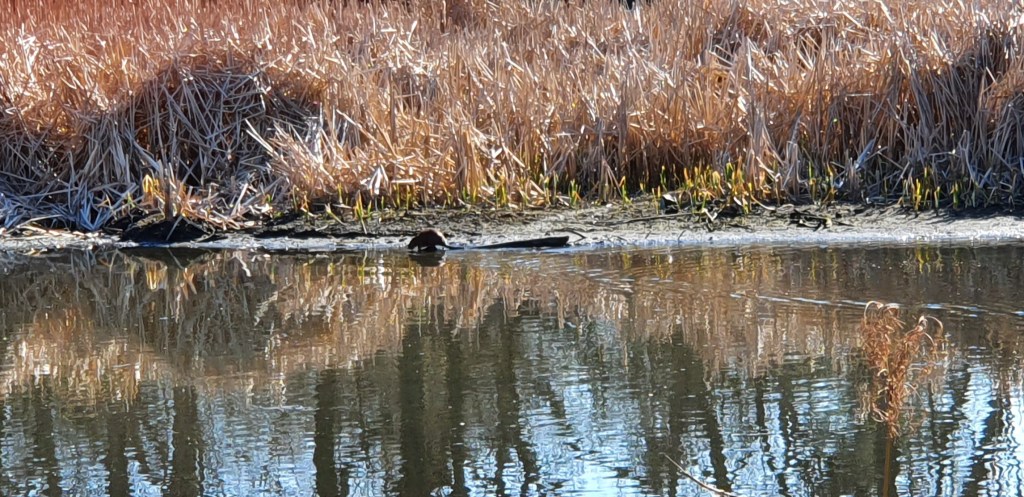
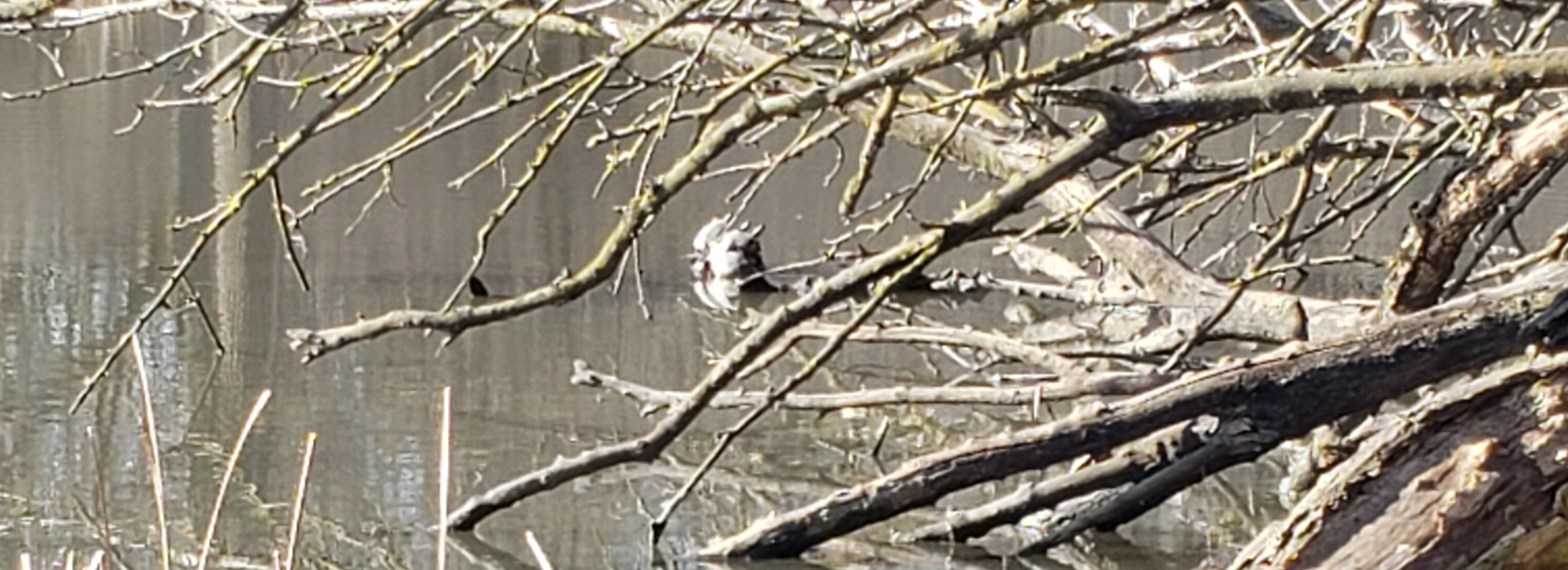
There’s a list of the sixty-three different birds we’ve been able to identify at the end of this post. We’ve seen surprising animals, as well. I didn’t realize that beavers had made such a comeback in this region. There must be quite a few living in the Dupage River system, as we’ve seen beavers swimming by several times. One day, a beaver swam by us, and as we watched, it climbed out of the water (below), waddled into the reeds and returned with a stick in it’s mouth. It set off swimming down the river until we lost sight of it.
As the days passed, we got better at spotting woodpeckers up in the trees. I don’t feel like a walk is officially over until we’ve seen at least one woodpecker. They are so funny-looking, hopping up the tree like a colorful squirrel. The brush on either side of the path became slightly greener as the trees budded. It was a bit more difficult to see birds, but improved our spotting of warblers and kinglets.
Over the weeks, we visited more places, and through other birders, discovered the hotspots in Dupage County, like Elsen’s Hill, in W. Dupage Woods, where we saw bushes full of warblers.
There was a Great Horned Owl mother and baby at Lincoln Marsh, and the tiny nest of a blue-gray gnatcatcher, barely the size of a baseball, at Fabyan Forest Preserve. Every colorful bird is a marvel. At the top of a tree we spotted a male cardinal, scarlet red in all his glory, facing a Baltimore oriole in bright orange and black.
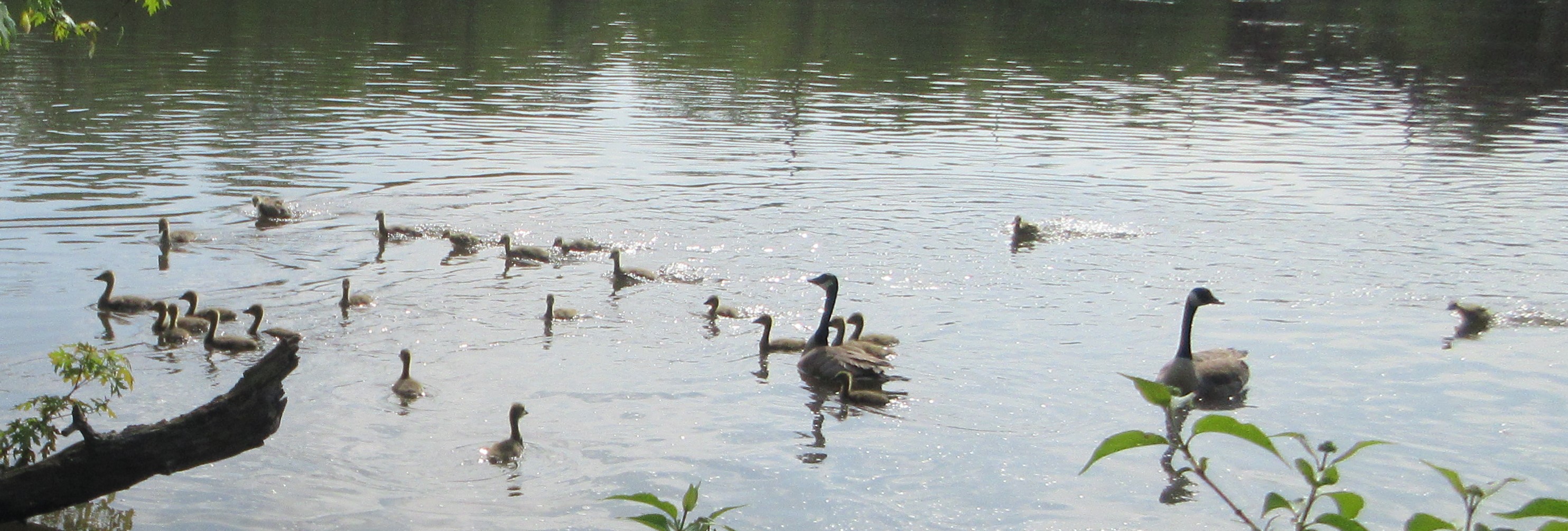
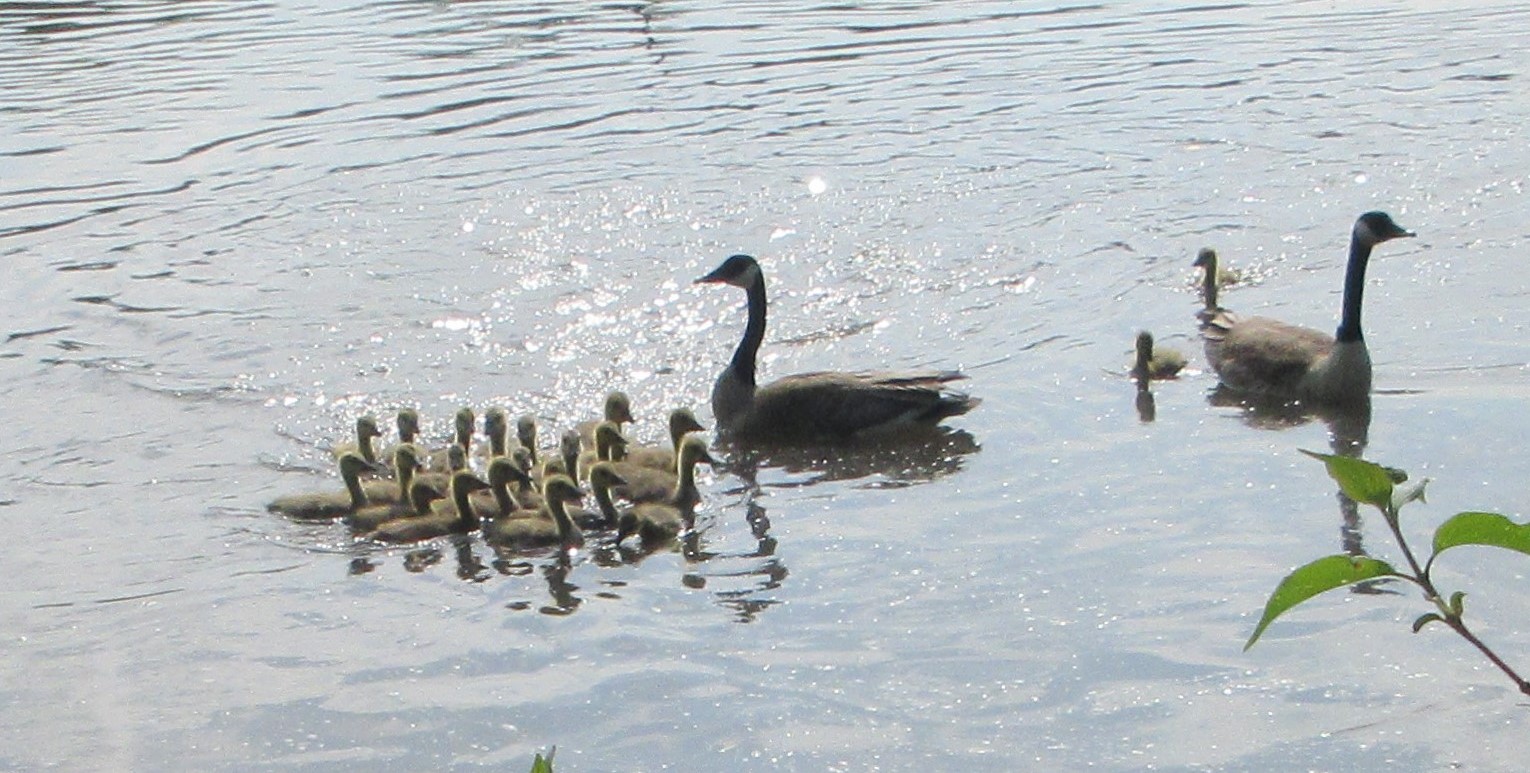
Now our stay here is ending, just as the goslings and ducklings are hatching. We saw a multi-mother flock of goslings on the Fox River, spreading out across the water as their mothers looked on. We must have gotten a bit too close, because one of the geese gave off a short sharp sound, and in seconds the group of more than 20 goslings merged into a single ball of fluff.
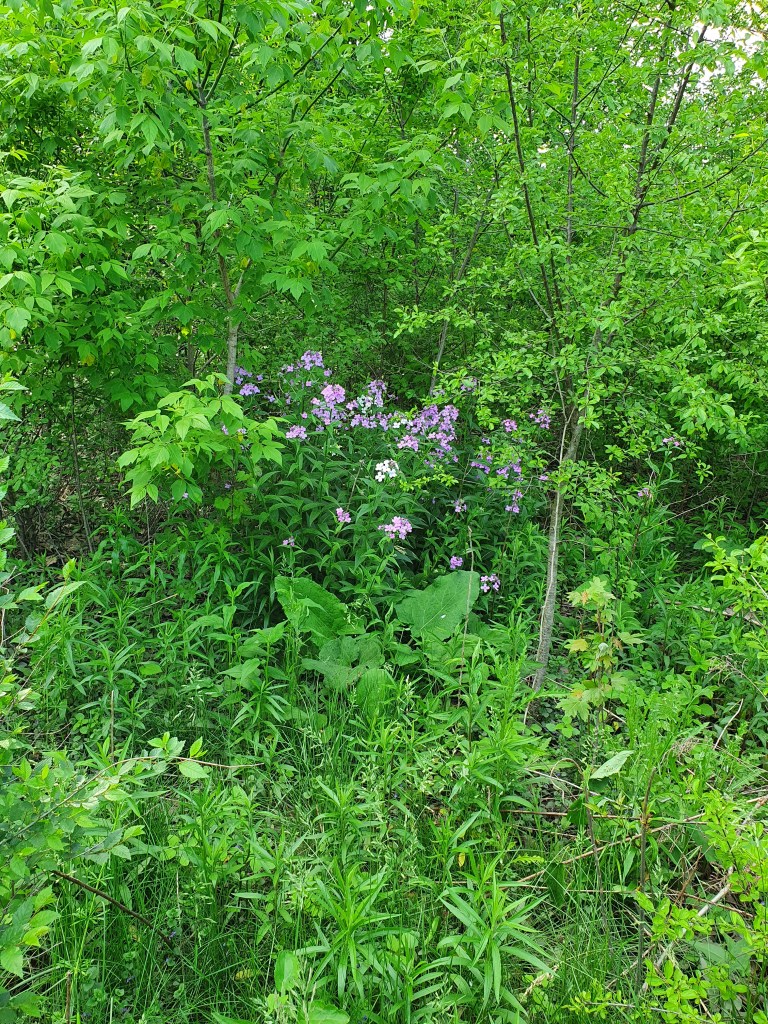
The brush along the trails has gone from a handful of gray sticks to a dense mat of green. There are wild phlox in little gaps in the trees and lining some of the picnic areas. The migrating birds have moved on toward Canada and the Arctic for the summer, leaving the permanent residents to raise their chicks, and often, to make another nest and do it all over again before fall arrives. We are moving on as well. Every day, I think about my family, and miss being able to visit them, and to hug each one. Instead, I am grateful for the company that nature has provided.
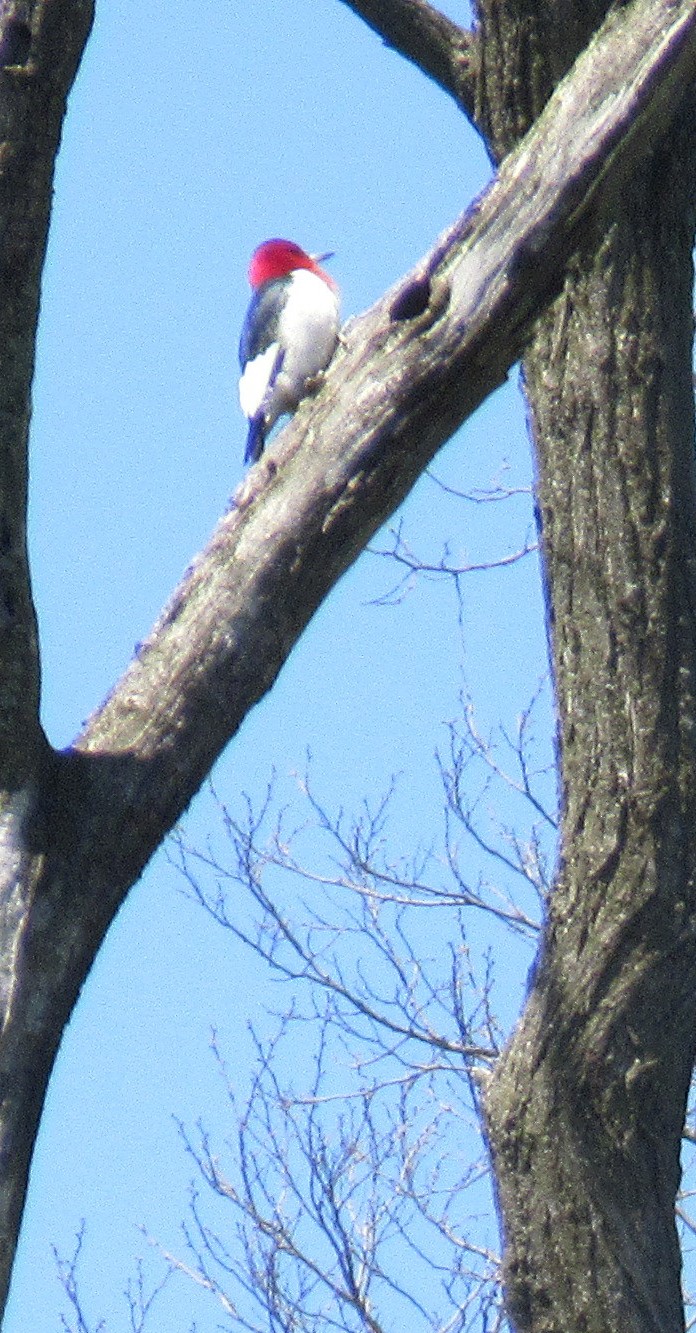
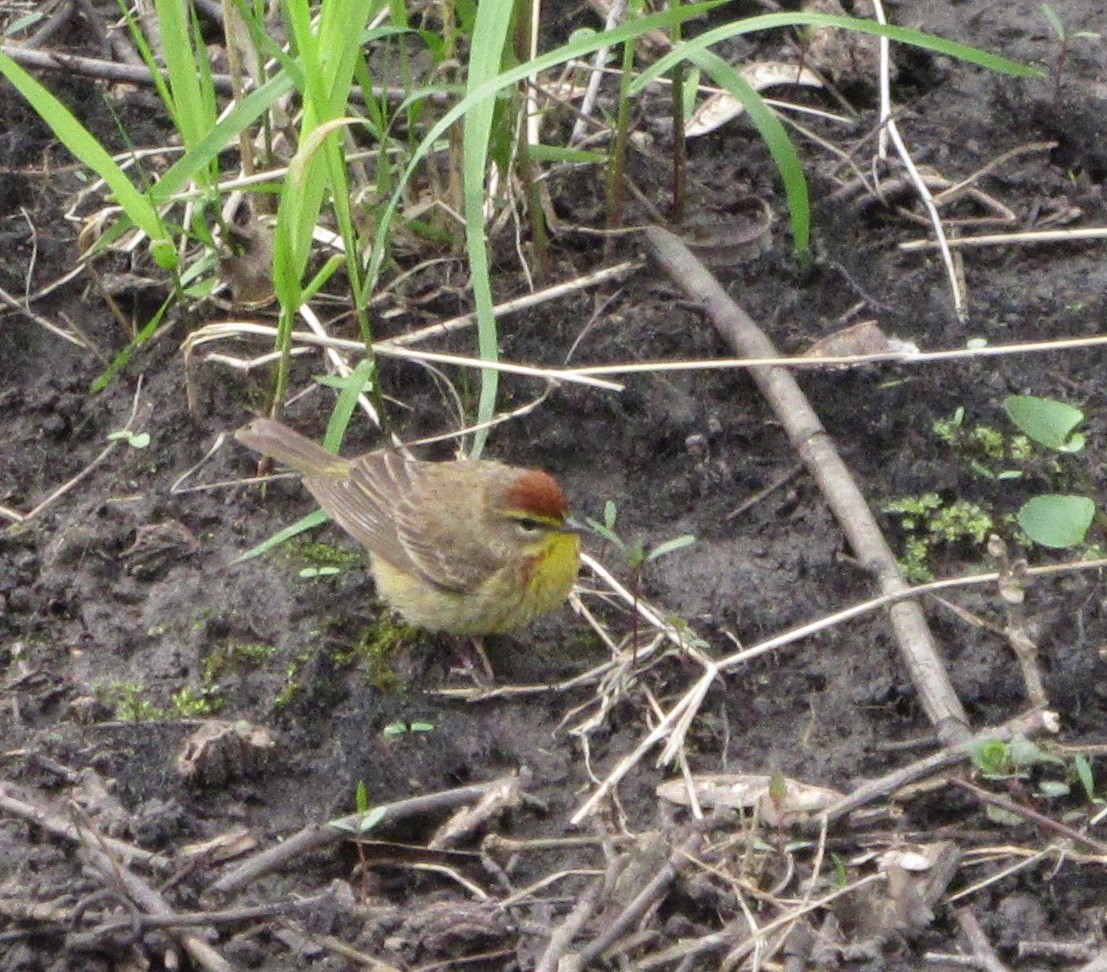
Clockwise from upper left: Eastern bluebird, Red-headed woodpecker, Swainson’s thrush, robin’s nest on our drainpipe, palm warbler.
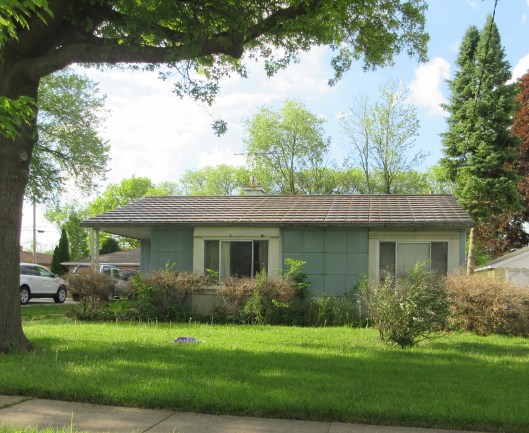
Lombard, Illinois has a particularly interesting mix of housing from every period since its founding in 1833. We are staying in a house built from a kit purchased from Sears Roebuck in 1926, and there are several of these around town, but there is another experimental type, the Lustron House, that has more than a dozen surviving examples in Lombard. We took ourselves on a self-guided tour of some of these very intriguing houses.
Lustron Houses were developed as part of the post WWII effort to construct housing for returning GIs and their families. Carl Strandlund, a Chicago industrialist and inventor, was going to build gas stations for Standard Oil, but was told he could only get an allocation of steel if he were to build homes. He came up with the idea of building an all steel house using enameled steel panels for a maintenance-free exterior, pitching his homes as a way for families to maximize their free time together.
Desert Tan Lustron house, Lombard, IL
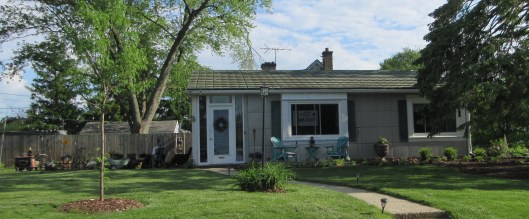
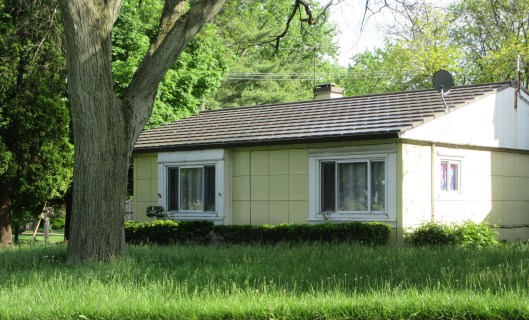
Between 2500-3000 Lustron houses were built, and many are still standing, due to the sturdy steel panels, the same material used to make enameled cookware, though heavier. Even the roof tiles have lasted 50 years or more. These are relatively small houses, 700-1100 sq ft. and those that have been demolished were generally removed to make way for larger homes. The enameled steel construction was quite strong and durable, but didn’t lend itself to remodeling or additions. As anyone who has chipped the corner of an enameled pot knows, the chips can’t be mended. Most surviving examples are in their original form in one of the four colors that were available. On our tour, we wondered whether the relatively small size of these houses has turned some into rental properties. About half of the Lustrons we saw had minimal landscaping and outdoor maintenance.
This Dove Gray Lustron’s original front porch has been enclosed as a vestibule.
This maize yellow Lustron is for sale, in case you’d like your own.
The built-in metal bookshelves and cupboards were handy, but there was no way to add a picture hook except for magnets. This might be an excellent house for a true minimalist. Having seen all four exterior colors in different settings, we concluded our tour, intrigued by the concept. Today Lustron houses are a collectors item, though the use of steel in home construction was ahead of its time.
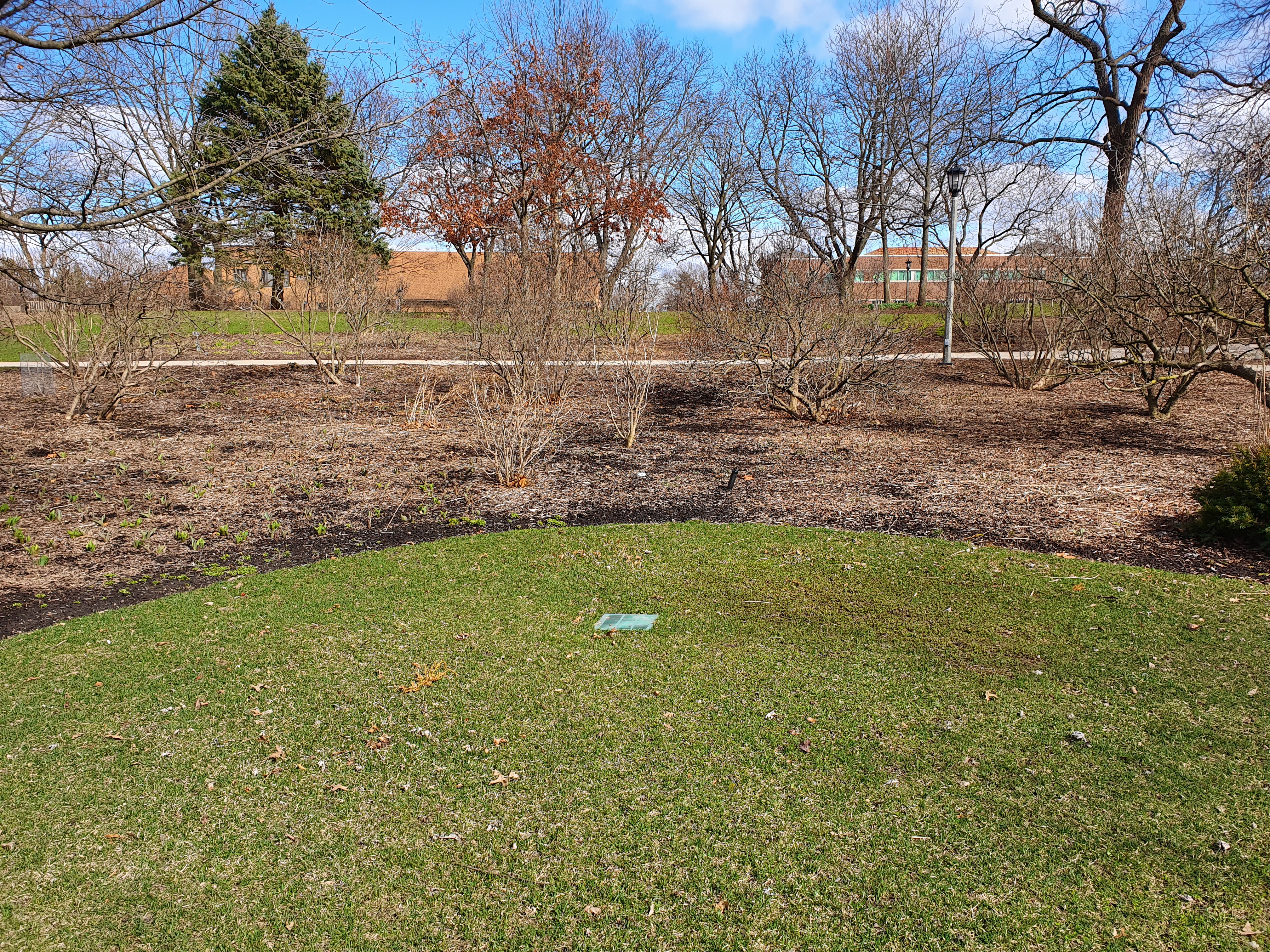
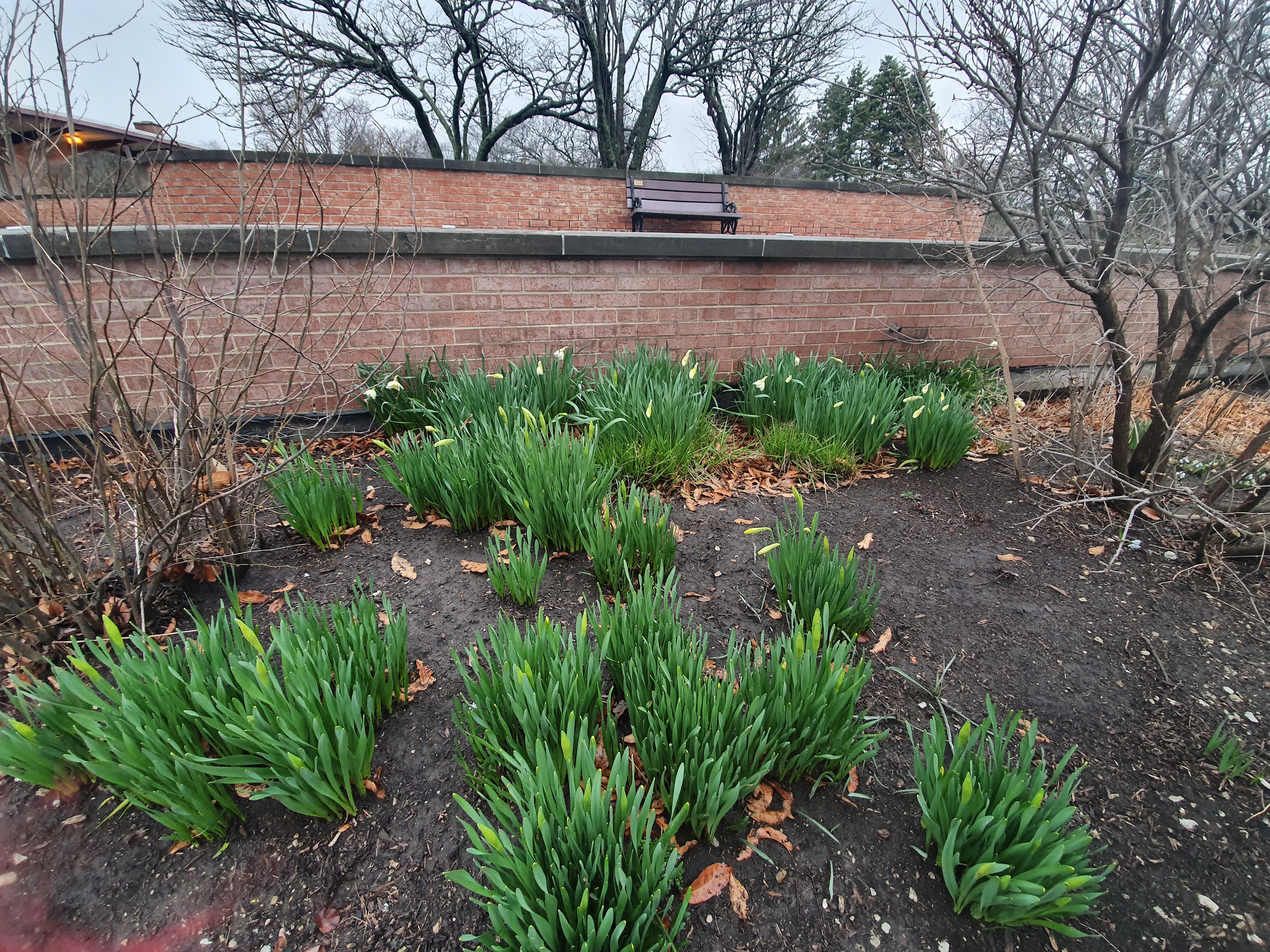
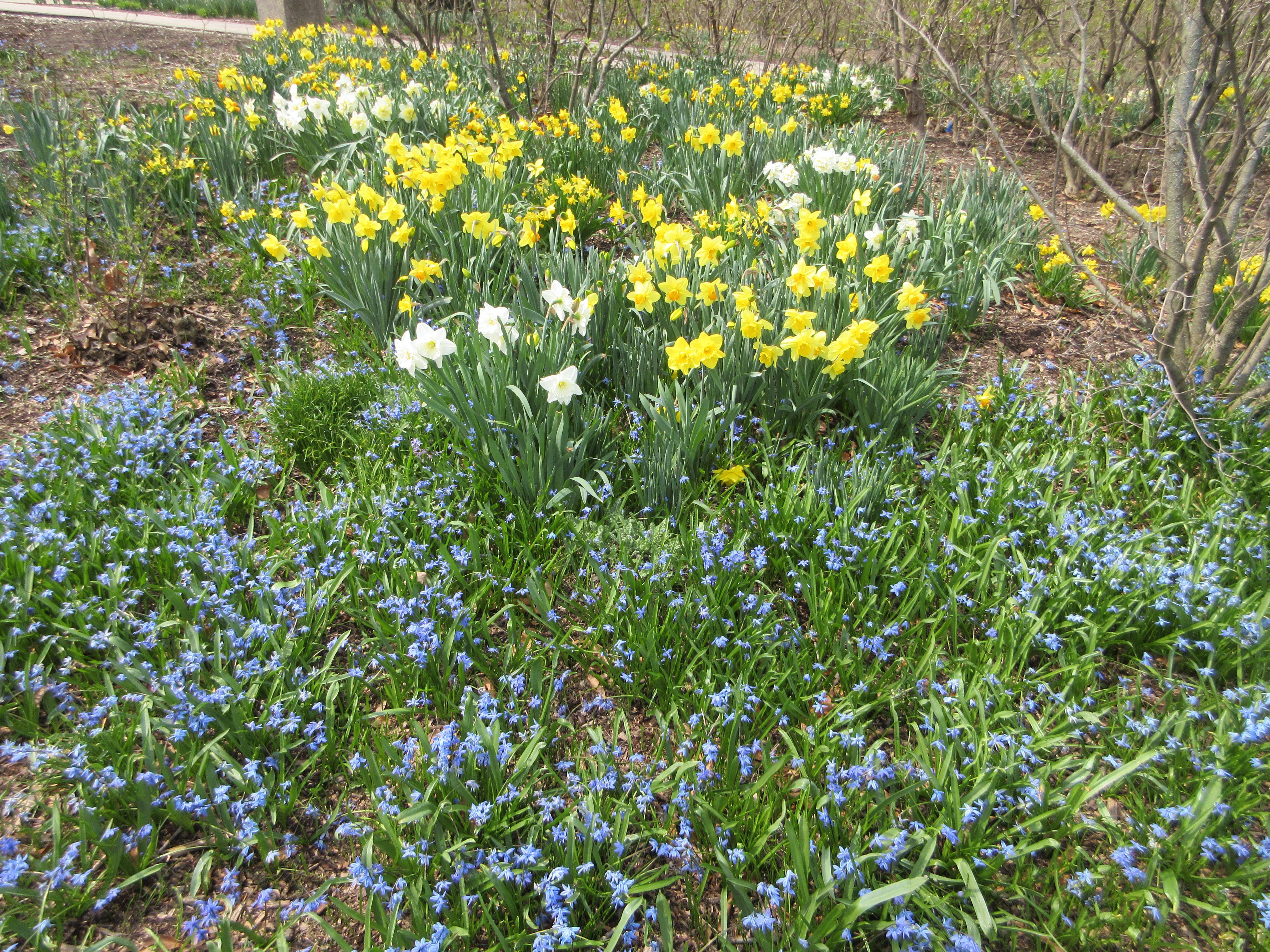
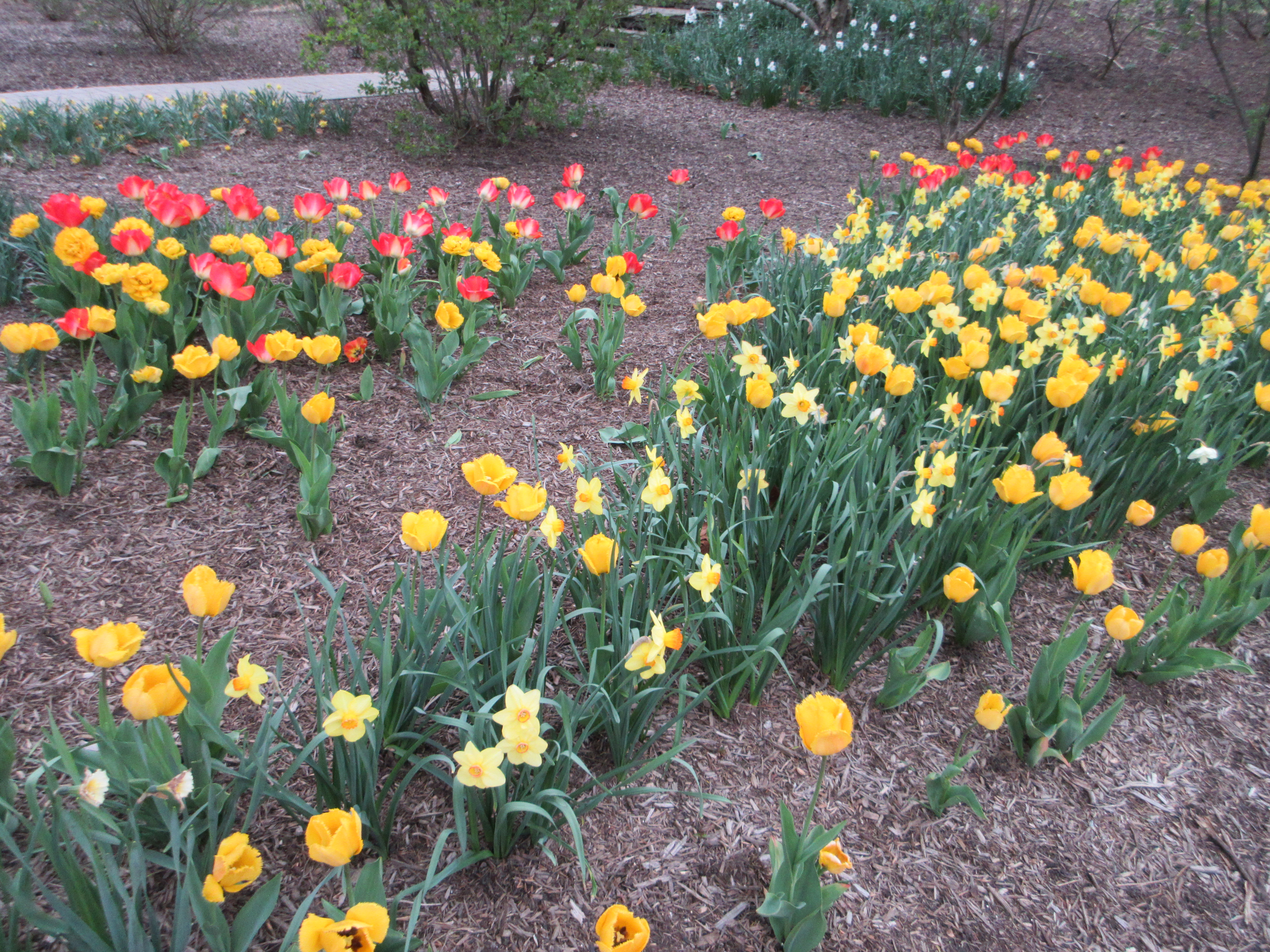
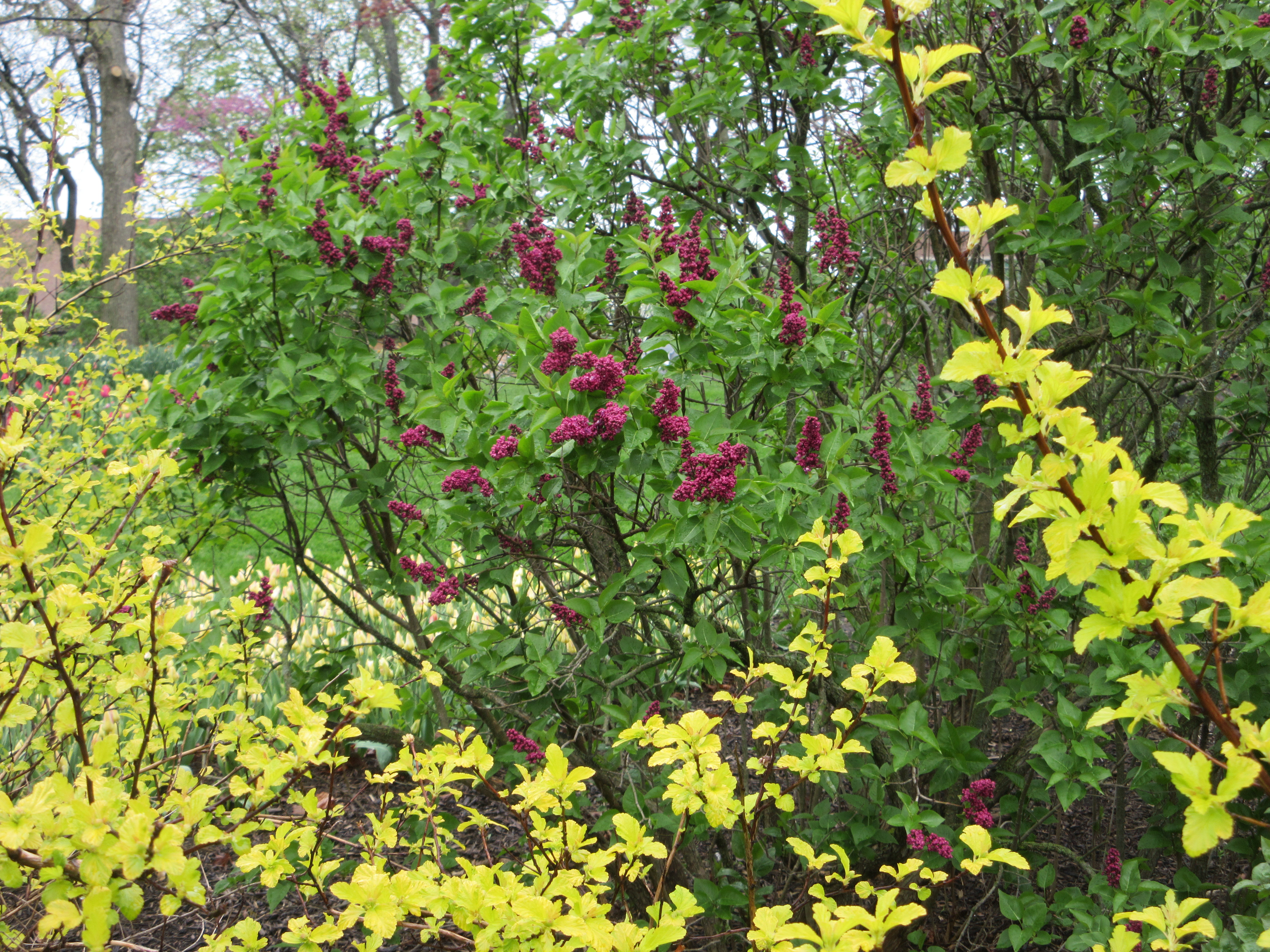
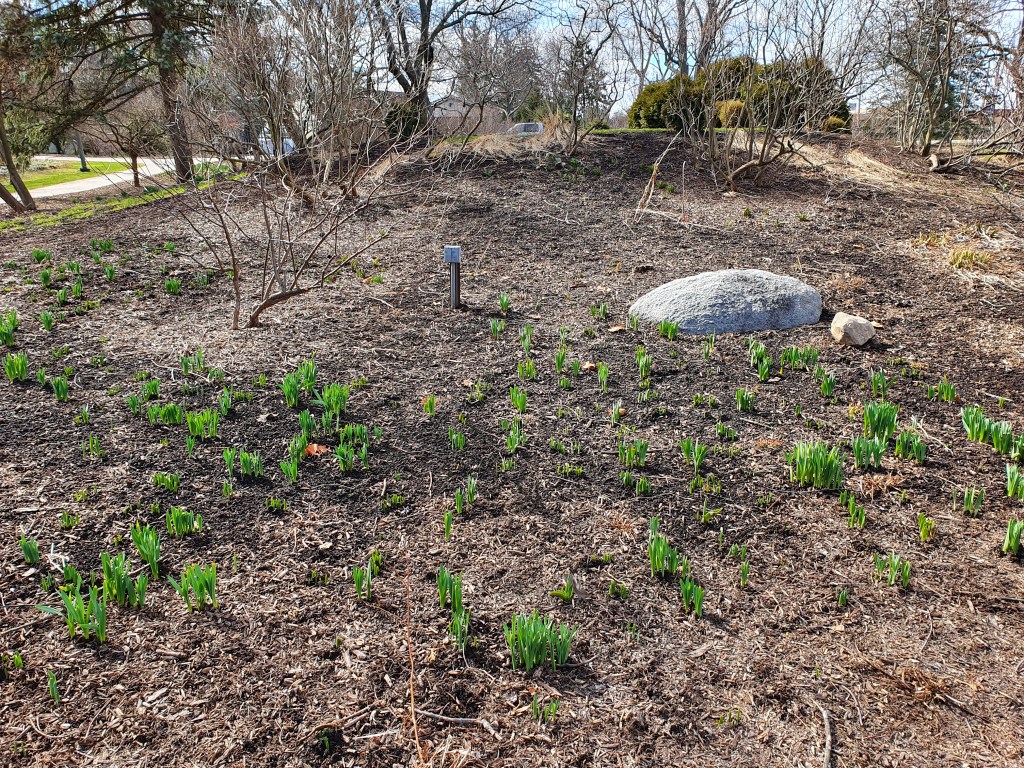
Since the first day of spring, we’ve walking Lilac Park twice a week, watching the arrival of the flowers. At first there was snow that melted rapidly, then chilly wind that demanded layers, gloves, hats, and scarves that continued into April. Finally, warmer weather has crept in. Now that it’s mid-May, we’ve been through the blooming of daffodils, a profusion of tulips, and the big event, lilacs, arrived this week. The bushes of blooms smell wonderful, not too strong, and the colors range from white through many layers of pinkish and purplish to a few dark purple blooms. This is the height of the year in the garden, and very much worth a walk. We’ve never found too many people here, making it easy to visit. My first photos taken in March are at the top, and the photos from yesterday are at the bottom.
Spring began Mar. 19, 2020, the earliest date in a century, but the weather hasn’t impressed me. Gradually, the cold is abating and I am wearing fewer layers when we go for our daily stroll. The landscape is responding, front lawns turning green, daffodils sprouting, accompanied by a few crocuses and tiny blue flowers.
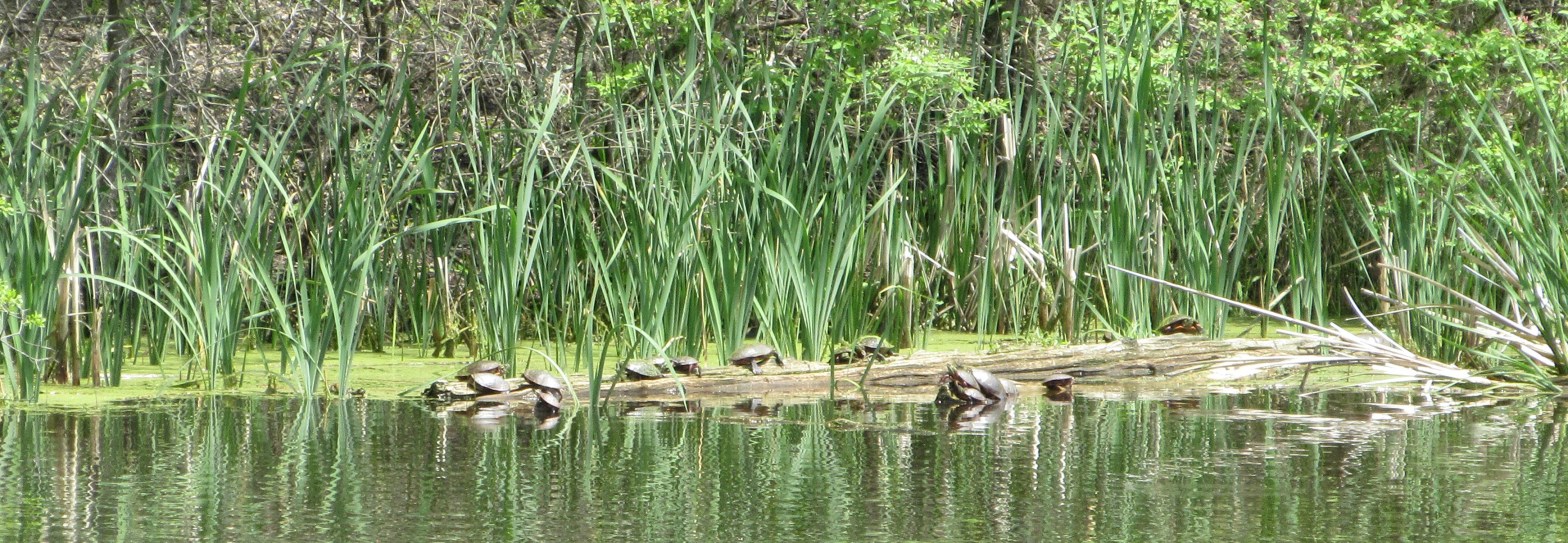
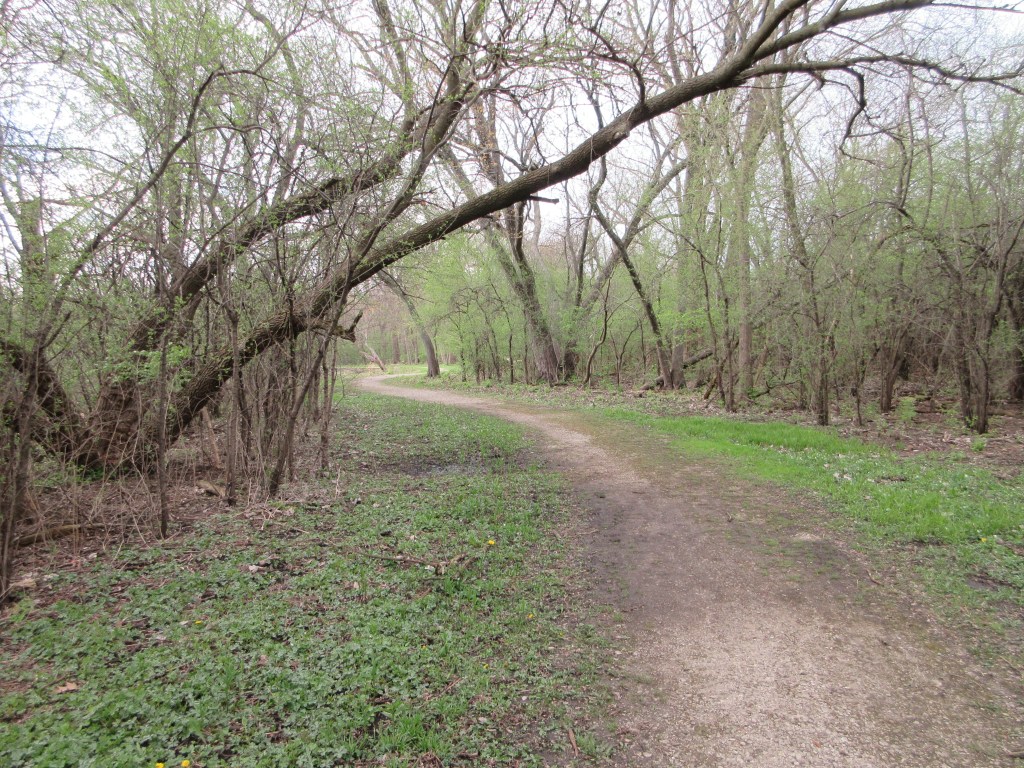
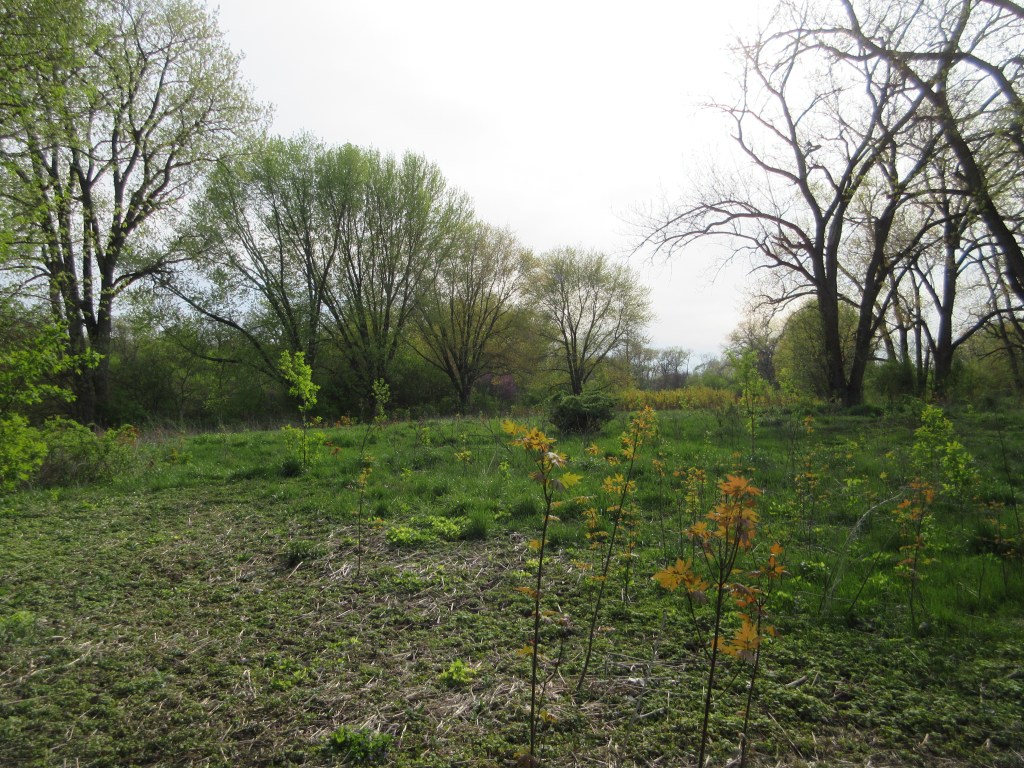
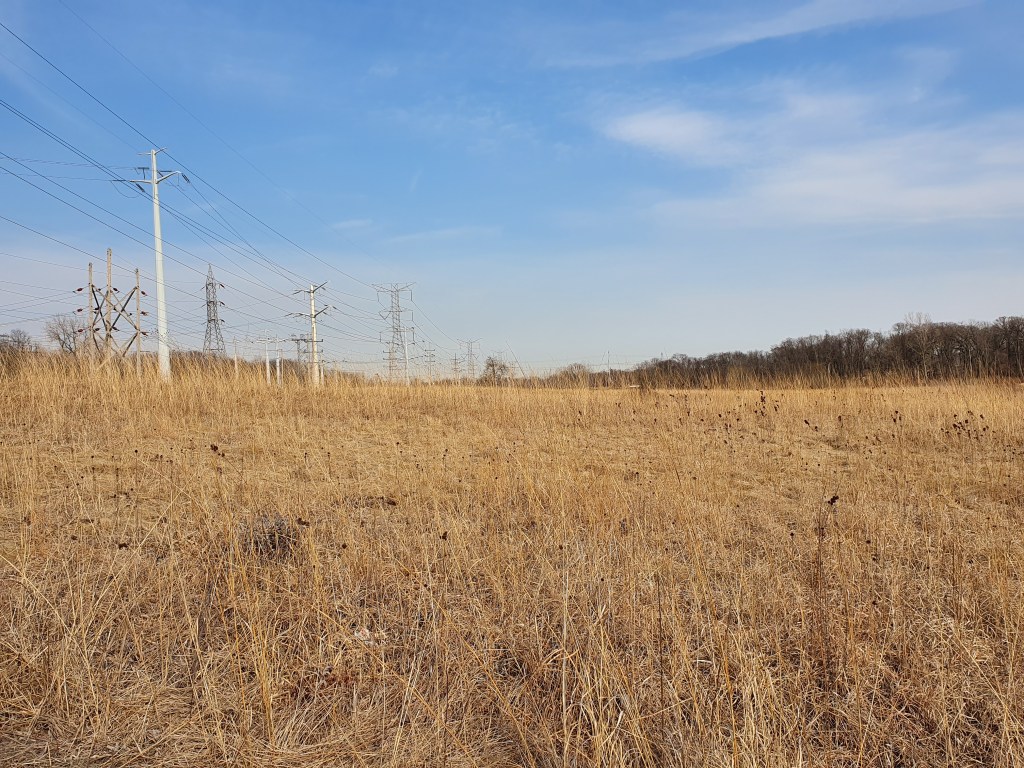
We’ve discovered a nearby area called Churchill Woods that includes a number of paths through woods, a remnant patch of prairie, and trails along the east bank of the Dupage River. We’ve seen birds including woodpeckers, ducks, geese, sparrows, blackbirds, cardinals, and tons of robins, as well as a bunch of tiny birds we haven’t been able to identify. On a warm day there were seven turtles lined up on a log with their necks stretched out.
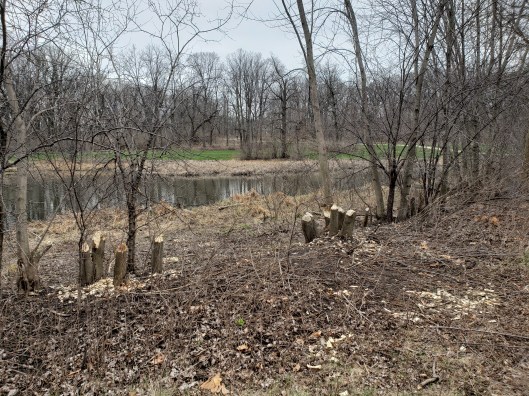
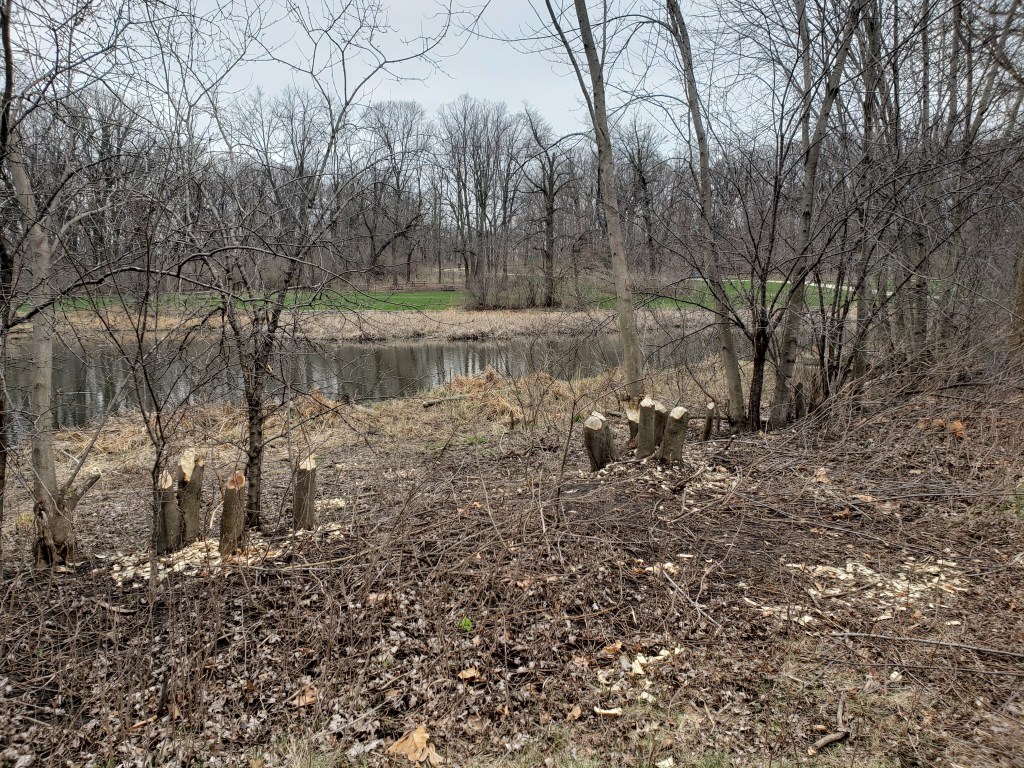
We passed a mound of debris in the water and Jonathan said it was a beaver dam. I was dubious until around the next corner we saw this:
Yes, it is indeed a beaver dam.
We plan to keep going back to see how springtime develops. Maybe we’ll see the beavers!
Wanderlust is the desire to move, the need to see what is over the next horizon, the inability to turn back on the trail. Everyone has it to some extent, whether it is the need to get to the back of the closet, or the far reaches of the attic, the need to hike the Appalachian Trail, or see the Pamirs.
I have always felt wanderlust. One of my earliest memories is of riding a train across the country with my parents and my sister. I was three, and we were moving from Shelton, WA to the New York suburbs. At night, the circular overhead fluorescent bulb cast a greenish glow on my mother’s face when she tucked us in. I was on the bottom bunk, the younger sister. When the train rounded a bend, we looked out the windows to see the cars stretching far ahead, pulling us toward Chicago, then New York. I don’t remember what was out the window, just the head of the train in the distance, pulling us on and on.
Our suburban neighborhood was a series of interconnected dead end streets, great for riding bicycles and roller skating. All the kids had to walk to the intersection of the neighborhood street with a much busier road to catch the bus. The bus stop was a landmark, the point beyond which no one could go without parental permission. Within the neighborhood, all roads were open. There were only four streets, but we knew everyone, and the landscape seemed pretty large.
In middle school, though, we sometimes walked or rode our bikes to the bus stop and sat on the split-rail fence and talked. I have no recollection of what we talked about, but behind our conversations was a yearning for something else, something different.
What else was out there? On vacations we visited family in upstate New York. My grandparents didn’t go to Florida, like some of my friends grandparents did. I had no concept of Florida, but I was pretty sure we were missing out. My father’s parents lived in the city of Syracuse, in an urban neighborhood. Their house was much older than our 1949 brick ranch, and their cellar still smelled like coal, dark and lit by a single light bulb on a string. With their six children grown and gone, the house seemed huge, and we raced up and down the back stairs and around the empty upstairs rooms. The attic was full of boxes and trunks.
My mother’s family lived in Penn Yan, a more rural area, and we spent more time outdoors, wandering around front yards, peering into abandoned farmyards, and climbing on Grandpa Mills’ long moribund diesel tractor in the back yard. We entertained ourselves by looking in the barn and getting used to the smell of hay–very strange to suburban noses. We swatted flies on Grandpa’s front porch all one morning, Paula and I, with cousins Michael and Carol, the four of us paired in ages. When we were together with cousins we had adventures hunting for junk and old glass bottles in farmyard dumps, or horn buttons and auto insignia from old cars abandoned in nearby fields. I believe my cousin still has some of our booty.
When we went visiting, we saw the fancy chickens my Uncle Buddy raised. They had topknots of black feathers that looked like some of the ladies hats we saw in church. The hens laid colored eggs, pastel blue and green, yellow and coral. I asked Uncle Buddy why stores didn’t have colored eggs for sale, they were so pretty. He said that no one wants strange colors, why, people practically wouldn’t eat brown eggs. For stores, people wanted white eggs. I didn’t agree.
At Uncle Jack’s house on Keuka Lake there was always a boat, and a dock to jump off. There were more cousins, too, older ones who knew about marching band, and football, and summer jobs. At Grandpa Mills’, we stood in the back yard and listened to dad and Grandpa shoot doves in the barn. We ate them for dinner that night and learned to pick the shot out before we hurt our teeth. Life in other places seemed full of adventure compared to the suburbs back home. Maybe wanderlust comes from seeing things different from what you know and deciding you like them.
What happens when a travel blogger runs out of travel? I was looking forward to getting back on the road after our winter in Peru when things started to go sideways. It wasn’t just that Jonathan broke his arm, or that I found out many retina specialists use an imaging device that doesn’t show my patch of degeneration (how can I be treated properly if they can’t see the bad spot?).
This is not the Parthenon
The real problem is the novel coronavirus. We’ve been in social isolation for two weeks, and that makes it impossible for us to leave for Athens tomorrow. We cancelled our Airbnb near the Parthenon–Oh! wound in my heart!–and today I am cancelling our flight on Iberia airlines to Athens via Madrid. As the months go by, we will cancel each of our other stops and the associated flights.
Adding to my disgruntlement is the fact that we are sheltering in place in our old stomping grounds, the Chicago suburbs. We have a lovely house here through Airbnb, but remember–when Jonathan and I left this area almost six years ago, we had NO plans to return. I would have preferred to be isolated in a new potential home town on the east or west coasts, but here we are, where the doctors are familiar and we can navigate the health care system relatively easily.
Playing dress-up outside our childhood home.
How to make lemonade? Rather than write about travel past or travel future, I am going to tell the stories of how I developed wanderlust and where it led me. How did I go from a youthful home firmly rooted in the New York suburbs–we arrived when I was 3, left I was 30–to someone who has given up a fixed home? With apologies to Groucho, perhaps my epitaph should be “I’d rather be–anywhere than here.”
I’ve decided to post these stories separately at LLLYWINDACHRONICLES.wordpress.com
We are living in a lovely house in Lombard, IL until the end of April, when we may know something more about the current pandemic. Our month in Athens is off, and probably the rest of our travels this season, but we will check our options at the end of each month.
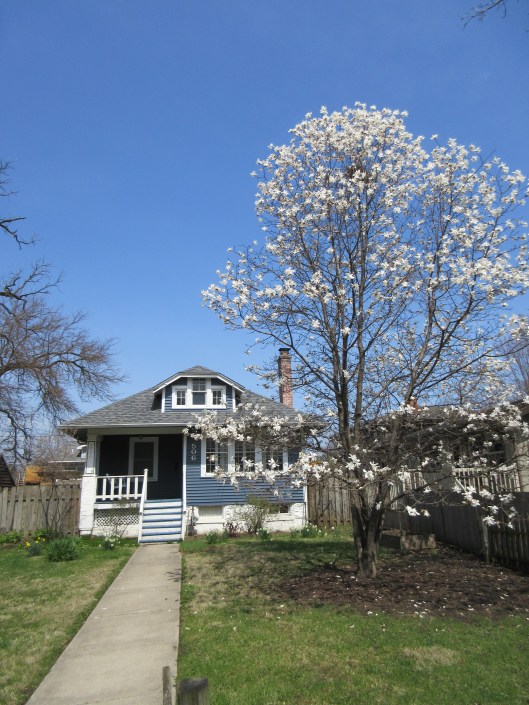
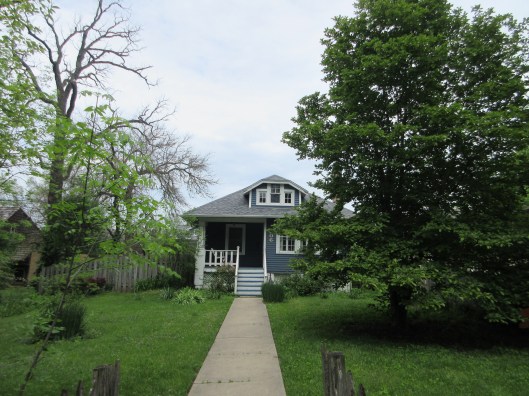
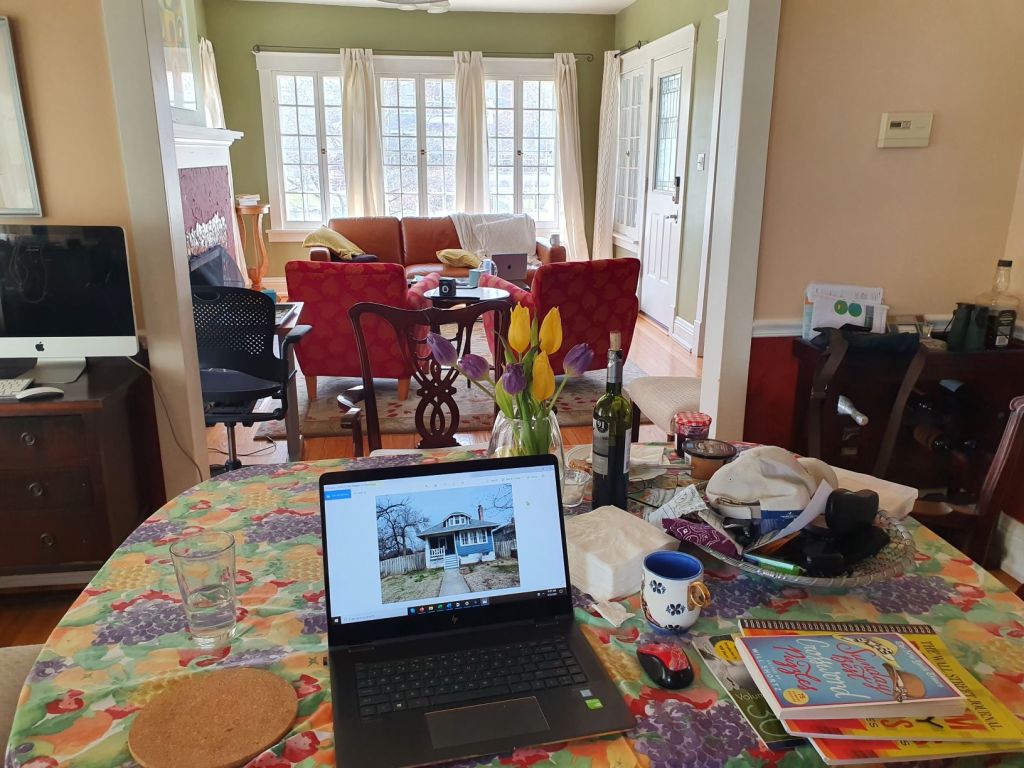
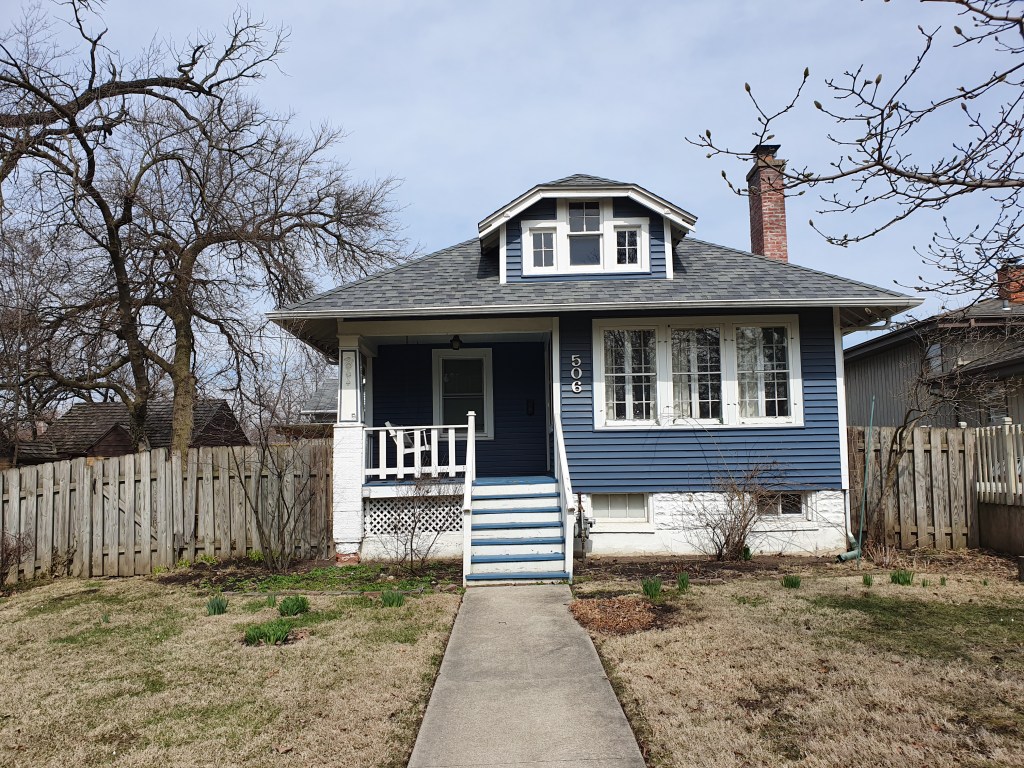
We are fortunate to have found a nice place to stay. There is a historic element, here, too, as the house is one of the “Sears catalogue” houses built between 1908-1940 from kits that included all that was needed to build a house shipped from Sears to the building site. (Ours is a single story, not exactly like the pictured two story house.)
Though the house looks modest from the outside, the lower floor is completely finished and contains a bedroom and bath, media room/den, home office, laundry room, and storage. The upstairs has living room, dining room, kitchen, two bedrooms and a bath.
The neighborhood is interesting, long settled and with a variety of homes built at different times and in different styles. Downtown Lombard is about a ten minute walk to the east, where there is a Metra station for trains to Chicago. Two blocks south of us is the Prairie Path, a regional walking/biking trail that extends more than 50 miles, from Chicago through the western suburbs.
The best known feature of the town is Lilacia Park, donated to the city by Col. William Plum, a local resident. The city was given his home, land, and the garden of lilacs that he and his wife had been cultivating for a number of years. The Plum’s began their garden with two lilac bushes they brought from France in 1907. The park was established in 1927, and today it includes over 200 varieties of lilacs. I had no idea there were that many variants! Though the plants are not in bloom yet, daffodils and tulips are coming up, and within a couple of weeks the park should begin its showiest time of the year. There won’t be a Lilac Festival this year, but the flowers will bloom no matter what. I intend to walk by regularly to keep track of them, and to smell the lilacs.
The day after I took this walk, it got drizzly and cold. I explored some of the downtown streets and didn’t pass many people. I noticed that the liquor store and smoke shop were open, and I was surprised that a hair salon and a nail salon were still open. I hadn’t been keeping up with the news, so I didn’t know that people were still crowding together at the beach in Florida and California, and standing in line to see the cherry blossoms in Washington. I suppose there are also people who still want to get their nails done. I have cancelled all appointments except for one eye doctor appointment that is already overdue.
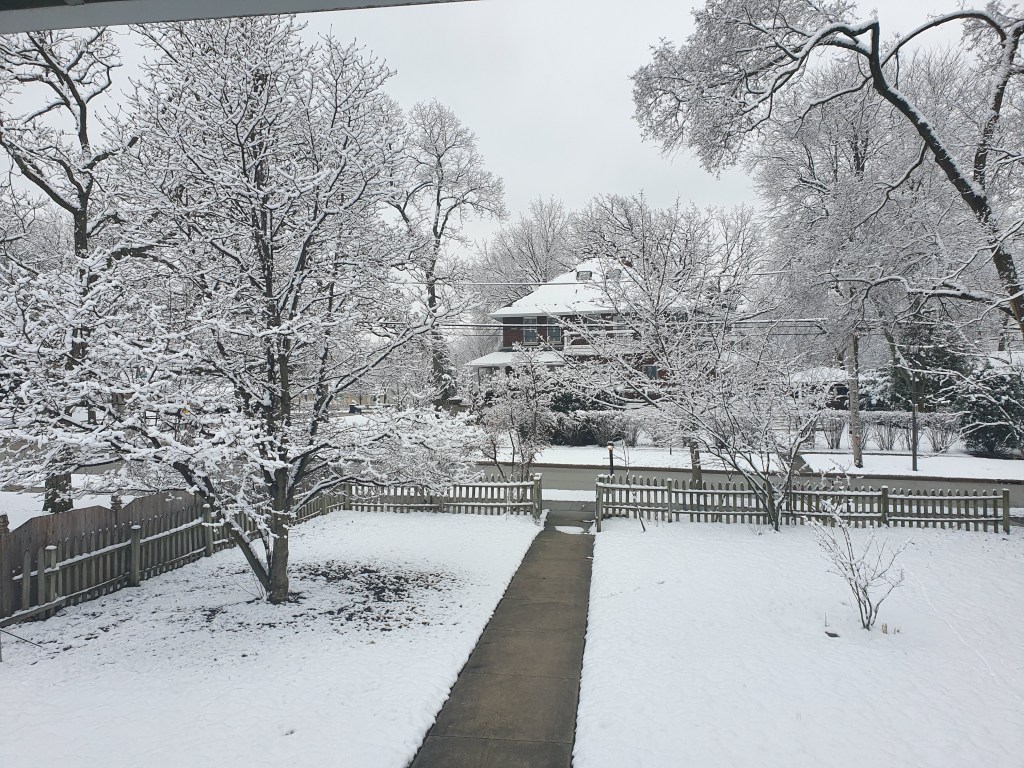
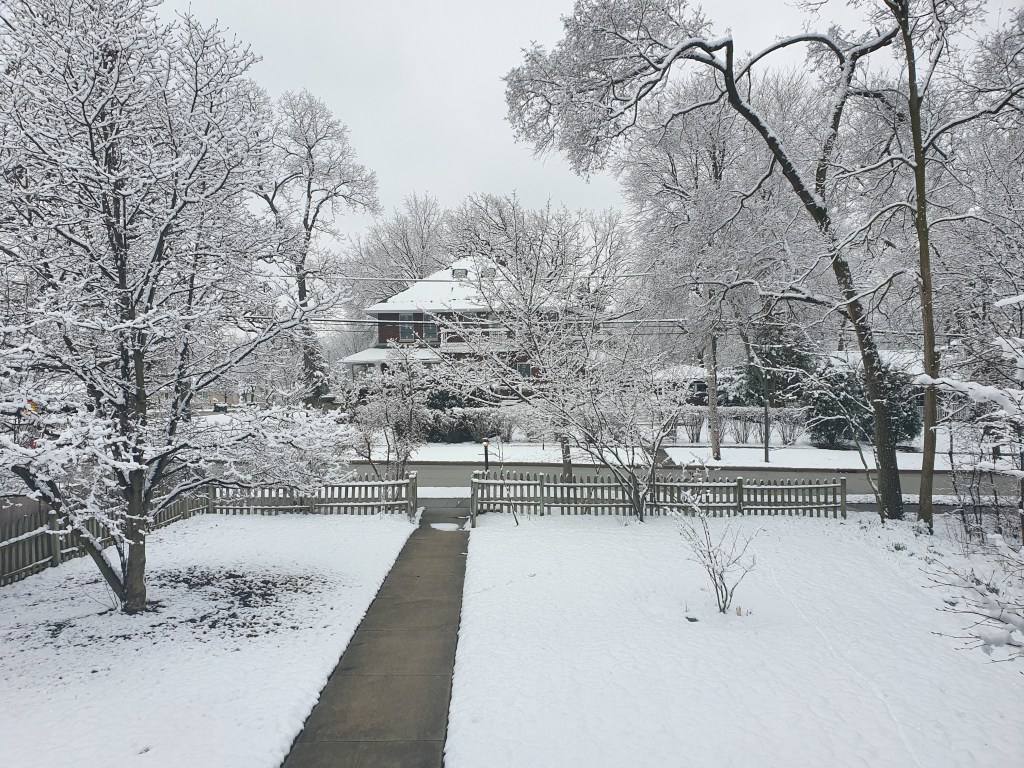
This morning we were surprised to get up and find snow. What a change! It was so depressing to think that I’ve given up life on the beach for this–Illinois at the worst time of year. My moaning was premature, as the snow was completely melted and the sun was out by mid-afternoon. At 8 am, though, I was ready to abandon ship and go back to South America.
What do you like best about the beginning of spring? The longer days, warmer sun, options for gardening?