Last Sips of Wine, Feb. 6, 2015

Friday, Feb.6, 2015 Last sips of wine
Since we must continue our journey tomorrow, today was our last tasting opportunity. We made an appointment to visit the Norton winery and taste sparkling wines at 11 am. After several wrong turns, we got onto the big highway (40), and made our way to Norton without much trouble. None of the wineries are well-marked and all publicity seems to be individual, so you are not sure whether there will be signs or not—usually there are few to none.
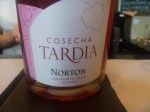
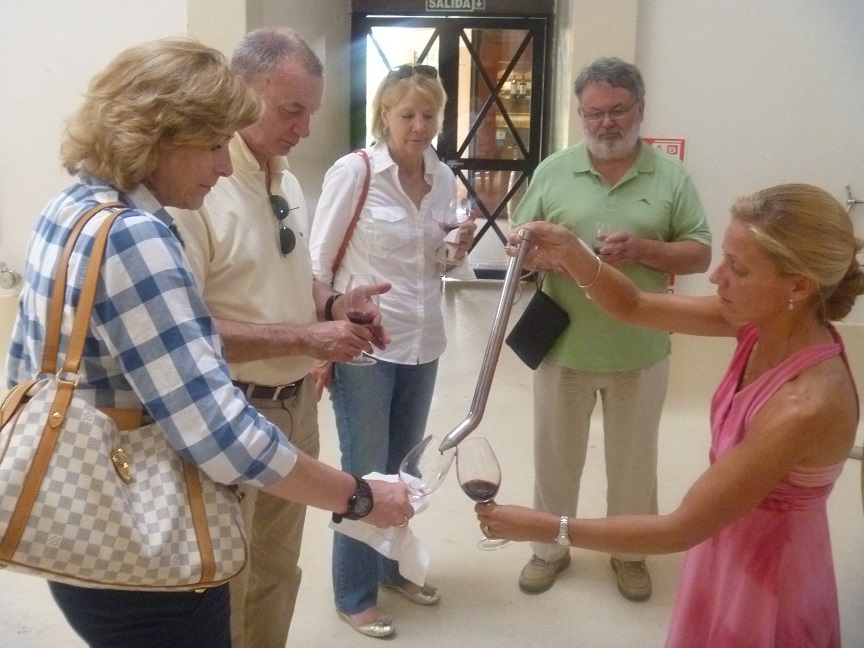
The tasting at Norton was very interesting; most are charmat method where the second fermentation is in a pressurized tank rather than in the bottle (champenois method). We tried sparkling blends that had different levels of bubbles, and a bottle of sweet, strawberry pink sparkling wine that was so good that we dry wine drinkers bought a bottle. What a wedding toast it would make (with cheesecake anyone?}

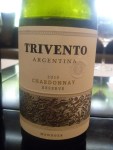
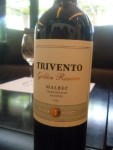
After we visited Norton, we went into Lujan de Cuyo and had coffee. Afterward we had a picnic lunch and a nap in a shady lane. At 3 pm we stopped in at Trivento and asked if we could visit. They began at 3:30 pm and we had a good visit, tasting some nice wines. The Amado sur is a blend created for the US market, and while it may sound cynical, it was really, really good. Especially when you find out that Trivento is owned by Concha y Toro, a huge Chilean company.

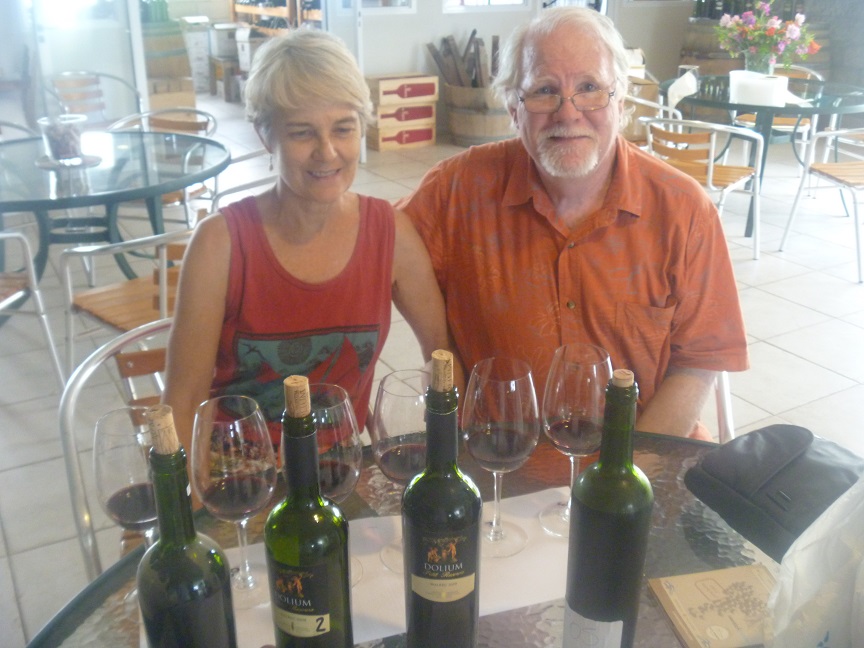
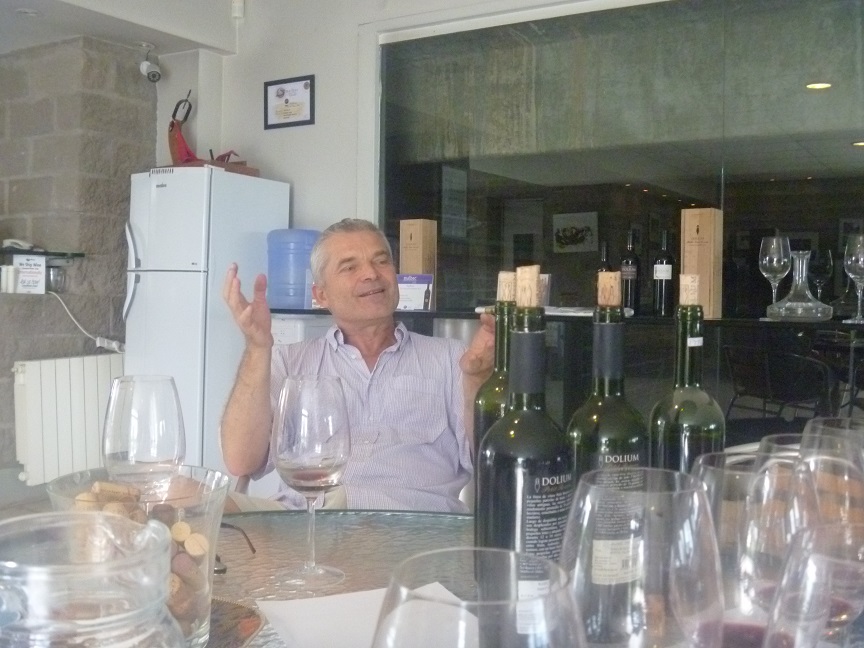
From Trivento, we returned to Dolium to have a “vertical tasting” of Malbecs from different years. We started with 2013 and went back in time, 2012, 2011, 2010, 2008, 2006.

Dolium vertical tastingsmDolium vertical tasting-001sm


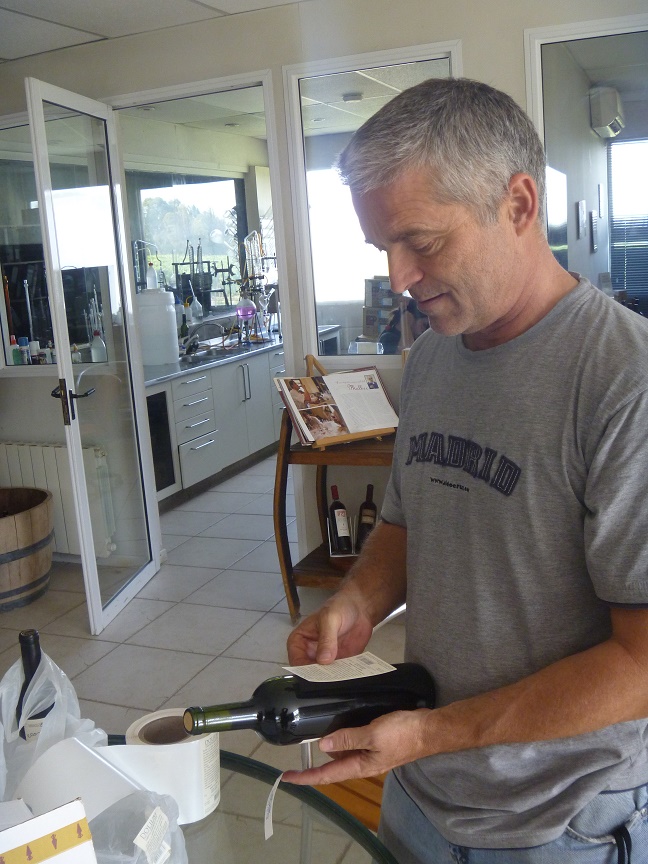
Our host, Ricardo, after a difficult week, was happy to discuss wine.

Dolium vertical tasting-005sm

Details: The day began overcast, went up into the high 80s, and cooled a bit when it rained. The rain fell when we were indoors visiting wineries (Norton and Trivento). On our way to Norton, I stopped in at our money changing contact, and though the rate was down slightly (12.90 AR pesos =US $1), that is more than the official exchange rate. We continued on to the bric a brac market in Parque Pelligrini, where very little was set up at 10 am. What was there suggests this market is similar to the market in the center of Parque Kennedy in Miraflores on weekend evenings, so I felt better about not staying.

When we returned to Mendoza it was already after 7 pm. Jonathan made risotto with peas and salami, it was delicious.

What is a vacation?

Feb. 5, 2015, Though the high temperature of the day may have been 89 F, the day was pleasant as long as you stay out of direct sun. There was rain in the mountains but not in town.

A vacation is when you are in a really interesting place but you do NOT feel that you have to get up and rush out to visit six places in order to take full advantage of the visit. We had a leisurely morning, visited a winery, prided ourselves on returning home relatively rapidly on a desirable route, having a delicious dinner (lamb cutlets, sauteed leeks with chopped green olives, delicious Argentine wine), and a stroll around the neighborhood for ice cream. Does life get better than that?

Having been out late, we slept in and then went to the main Mendoza market. We found that this is not a market that sustains the city, but a market for people having lunch and for tourists. The street, Las Heras, is also for tourists, full of travel agencies and souvenir stores. Since we didn’t need a mate cup, silver straw, blankets, ponchos or other items, we looked but purchased little–some olive oil and fruit. We decided against taking the “Wine Bus” Bus Viniviticola. While it would save us driving, we would have to be ready for pickup at 8am at a nearby hotel. By sleeping late we would be able to go out for a winery visit at 2 pm, but only one winery. In that case, we decided to take the car. We ran out of phone time in the middle of trying to get a reservation to visit Norton winery, so among our errands was to top up the phone.

P1040094sm P1040093sm

After lunch back at the apartment, we set off for Achaval Ferrer, a winery we’d heard of that seemed to not be very picky about reservations, and we could not find a phone number for them. We arrived around 3 pm, and were greeted cordially. They had both English and Spanish tours about to begin, and we joined the English group. A couple from Boston were there with friends from London, all very pleasant. Our guide, Cecelia, spoke English pretty well and was very knowledgeable about the vineyard. Unlike some others, Acheval Ferrer was begun by a consortium of 5 people who purchased existing vineyards and rehabilitated or reoriented their production. They own vineyards in three different zones, the area east of Lujan de Cuyo, the area we visited in Lujan de Cuyo and a slightly higher altitude vineyard that also is affected by volcanic ash. Most of their production is Malbec and we tasted a malbec from each of the three vineyards, two from barrels (pre-bottling–the wines age 12 months in bottles), one malbec blend.

P1040095

What we tasted:

Quimera-blend of 40% malbec with varying amounts each year of Cabernet sauvignon, Syrah, Cabernet franc and Petit Verdot

They bottle a small amount of each of the varietals that go into the Quimera and sell those separately. After telling us how exceptional the Cabernet Franc was, she noted that it was sold out.

Malbec Altamira, from the barrel, lots of tannin,

Malbec Bellavista from the bottle

Malbec Mirador, from the barrel, lots of tannins

All of the wines were quite expensive compared to what we have had in Mendoza, from 350 to 1300 pesos per bottle or more.

A subterranean winery with a Latin name–very archaeological.

Wednesday Feb. 4, 2015, 32 C (89F) It doesn’t feel as hot as 89, probably because it was overcast most of the day.
We decided to visit the thermal springs in Cacheute, outside Mendoza. When we arrived around noon, the place was packed with hundreds of cars and people. After a walk around to look at the situation we decided this was not what we wanted to do, so we cruised back toward Lujan de Cuyo and I called to see whether we could get a tasting at Chandon. They don’t answer their phone, but I was able to contact their neighbor, Dolium.

P1040090sm

After only getting lost for a little while we arrived at Dolium and met Ricardo, the owner, son of the original builder of the winery. It’s distinction is that the facility is completely underground, or rather 2 meters deep and then built and covered with earth for passive cooling. There is a visitor center and tasting area above ground. It’s a small vineyard with small production, fewer than 10,000 cases per year.

Ricardo is very instruction-oriented, his first goal with visitors is to teach them to spit the wine out so that you can taste it without getting sloshed. We started out doing that, so saved him a lesson and got on his good list. We tasted two rose de Malbec, two cabernet sauvignons and three malbecs, a malbec reserve and a petit reserve (a smaller more select wine) and a late harvest Malbec that was excellent, even though I don’t usually like the sweetness of late harvest wines. This one had a big fruity flavor and sweetness but was not cloying. Ricardo pointed out that it has less sugar than most late harvest wines, and that may explain the difference. It proved a long afternoon, as we were at the winery from about 3:30 to 5:30pm, then took San Martin all the way home—the slow route in a straight line cross country.

P1040088sm
We put our feet up for an hour and went to meet Tom and Sue for dinner. We ate at Azafran, just around the corner from their hotel, the Diplomat. They are from Ohio, ran a health food store for a long time and are on an adventure even more extensive than ours. We chatted about wine and travel, it made a lovely evening. The problem is staying up for a while after eating a late dinner.

Wines tasted:
Rose de Malbec (2) This was to show contrast between years within a single area. One was more mineral-scented than the other, with different flavors
Cabernet Sauvignon (2) The contrast between these two bottles was even greater. One was more brick red, with caramel/vanilla scents, the other purple red with herbal notes.
Malbec (2) Again, the contrast was notable. The bottle from 2003 was funky, cheese/moss scents, something that would go with mushrooms. The bottle from 2012 was fruity in scent, though not in flavor.
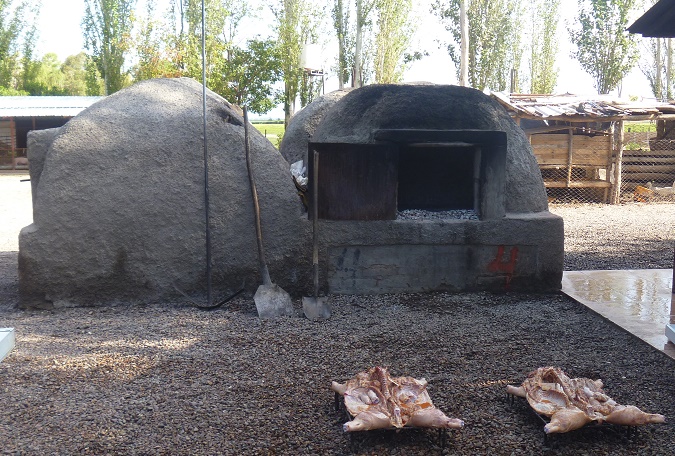
Tempranillo. This was tempranillo with a small amount of sauvignon blanc intentionally to add a spicy flavor, which it did, almost a clove scent and peppery. Ricardo serves this at lunch with salami, and when we were interested, he sent us down the road to the guy he buys his salami from. We saw a row of salamis and hams air drying, and the pigs about to be roasted. In 25 wood fired ovens, this farmer can roast 100 hundred pigs. I wondered what holiday would call for 100 roast baby pigs. The two going in to the oven looked to be about 15-18 lb each.

P1040092sm
Malbec Petit Reserva. This 2011 wine has a short life. Ricardo pointed out the marmalade scent, caramel notes bordering on sherry-like. This means that despite its recent harvest, this wine is not going to last more than a couple more years. He doesn’t know why.
Late harvest Malbec. Delicious, see above.

Vistalba, Decero wineries

Feb. 3, 2015 continued

We did not have a reservation for the Vistalba winery, but it was near Kaiken, and we  met the bicyclists there, too. We did not take the tour, having just toured Kaiken, but we joined the group for tasting in the cellar where they’ve got a high-ceilinged room exposing one wall of the natural soil to show the “terroir”, pale fine earth over rocky (glacial cobbles from the look of it). The rock provides mineral flavors to the grapes.

20150203_120940

Interestingly, Vistalba is owned by the brother of the owner of the Pulento Estates. Apparently the father had huge wine growing land under cultivation a generation ago when Argentina focused on producing wine in large volume, and not very good, either. Argentines drank a very large amount of wine per capita. That has all changed since the 1990s. Now the focus is on better wine in smaller quantities from smaller vineyards.

I tasted the “classic” group

Sparkling Tomero 2014. Faintly pink, rather acidic.

Malbec Tomero 2013.

Vistalba Corte C blend 2013. I like this blend the best of the Vistalba wines

and Jonathan tasted the “premium” group.

Sparkling, very smooth.

Tomero Gran Reserva, 100% malbec

Vistalba Corte A. Blend, Not as heavy tannins as other big reds

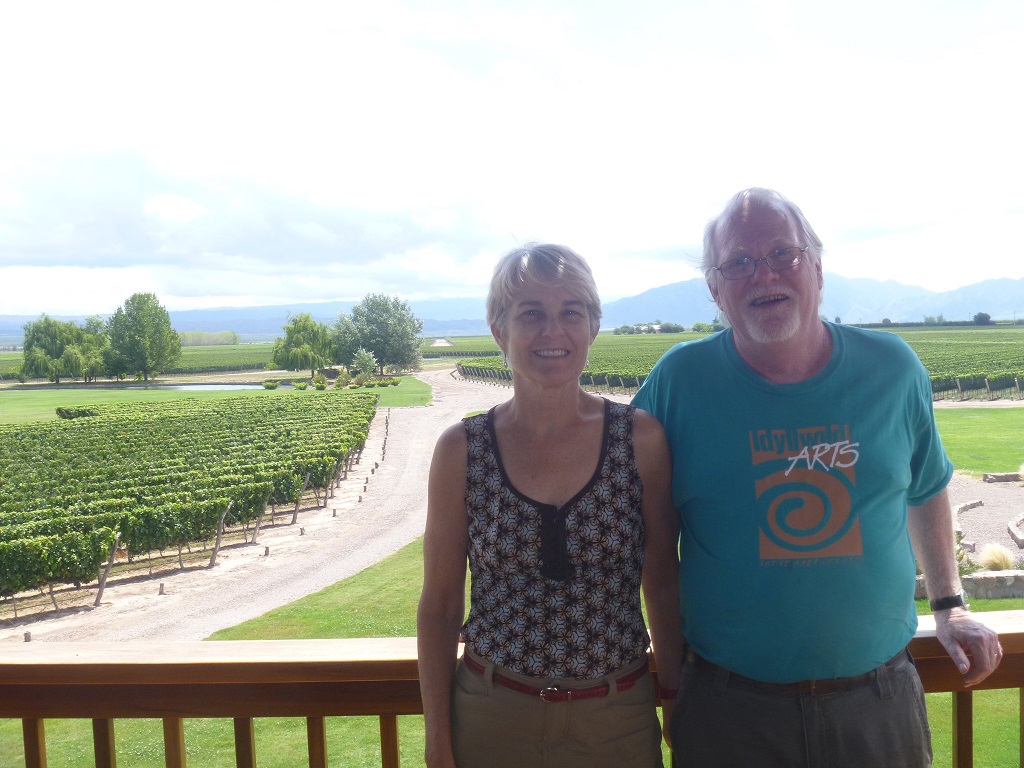
After this adventure, we wound around to find the Decero Winery where we had lunch. We were escorted to a dining room overlooking beautiful and extensive grounds, more than 200 hectares, of which 170 are under cultivation.

P1040073

Fantstic lunch, green salad with mustard glazed chicken bits and sunflower seeds, carpaccio of zucchini with two perfectly broiled shrimp, the best filet mignon JH has ever eaten (so he says–a real Gil Garcia moment), broiled chicken with fine match-stick vegetables. Dessert was one loser, apple crumble (not much apple, and crumble not crunchy) and one winner, a ball of chocolate ganache with tiny bits of candied fruit and nuts in it–like eating the inside of a very fine choc/fruit & nut Easter egg.

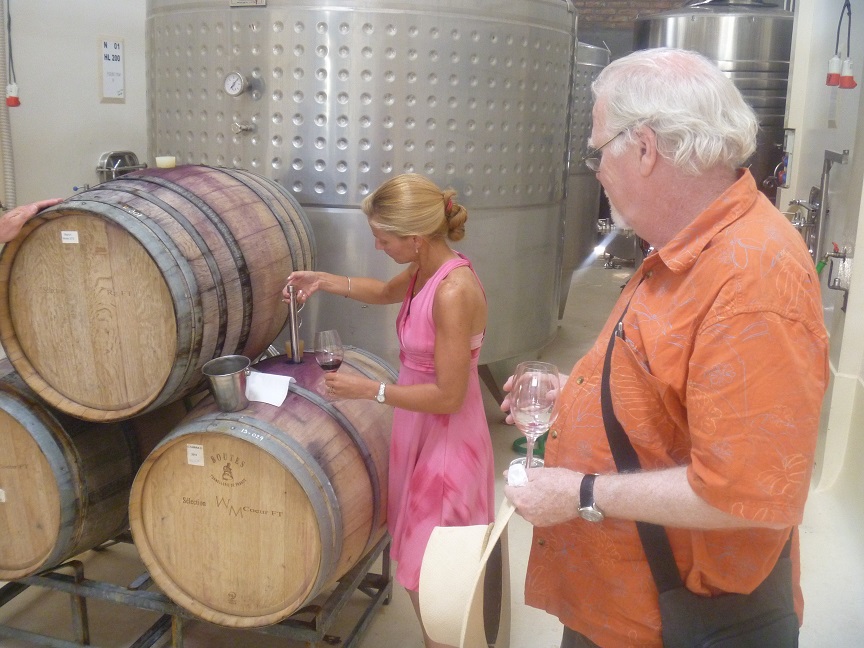
At that point it was almost 3 pm and we decided to skip Pulento. Good thing, too, because we were offered a brief tour of Decero that was excellent. The young man spoke in Spanish but used English for technical wine terms, obviously comfortable in both languages. We saw steel tanks, gravity-flow bins and French oak barrels. All in all a lovely visit.

We got lost on the way home and arrived about 5 pm. Rested until our rental car, now repaired, turned up at 6:30 pm driven by the Alamo franchisee’s daughter and male friend. All seems well. After a day with all that wine and food, we managed to eat cucumber and carrot sticks for dinner and called it a day.

Lujan de Cuyo near Mendoza–Feb. 3, 2015

On our way in and out of wineries, we saw all these birds. It was great!

Big day for Wine.

Fist stop was Kaiken, in Lujan de Cuyo, where we joined about 8 other people for an English language tour. Very nice tour, lovely grounds, nice group of people from 2-3 different tours. Five were on bicycles as part of an adventure tour (Scotland, Canada), two were Swiss, and two more from Toronto.

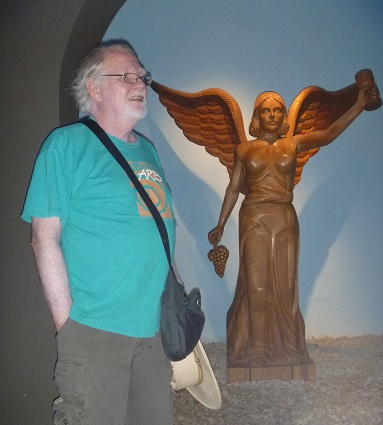
P1040065sm Jonathan and the spirit of the vines.P1040068sm


The lighting of the barrels was very dramatic:


We tasted three wines. I am no expert, so take my comments with a grain of salt the size of the Empire State Building:

Torrontes (Terroir Series), mineraly, faint greenish cast

Malbec Reserva 2013 (cherry, dark fruit, faintly spicy)

Third was  Kaiken Terroir Series 2012, a blend of Cabernet Sauvignon, Malbec and Petit Verdot. This was more caramel flavored than the Malbec and its color was more brick red than purple. We were on the “Classic” (read: Basic) tasting, so these are the regular quality wines. They did not seem as good as the wines we had at our tasting.
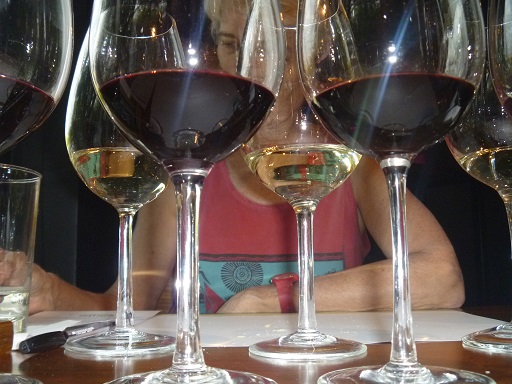
Next stop Vistalba, nearby.

Getting Started in Wine Country

Today was a planning day. We called Carolina at 9 am. She came over and we discussed moving downstairs, parking the car in the garage space at the apartment rather than down the street and finding a dentist to glue Jonathan’s broken crown back (no more caramels). Fortunately, Carolina arranged a dentist appointment for 5 pm. She dropped us off at Vines of Mendoza.

We decided to make reservations (required) to visit vineyards (Kaiken, Vistalba, Decero (for lunch), and Pulento). We also visited a local tasting room Vines of Mendoza at 3 pm, where we had a Lorca Poetica 2013 Viognier, and then decided to return at 6:30 pm for a tasting (WC whites, JH reds).

P1040051sm

At 8-8:30 pm we walked a block or two down the street and had dinner at Vinos y Fuegos. There was a cooking event going on inside, so we ate on the patio, chatting with our fellow diner, a young man from Brazil. He went to Chile to carry out some medical research (pediatric) and ended up traveling around both the Chilean and Argentine wine country. Apparently, his experiment didn’t work out in Chile, so he had some time to spare. We also chatted with a couple we’d seen while tasting at Vines of Mendoza, and now we’re planning to have dinner with them on Wednesday. Aren’t we the social butterflies? By the time this was over, our first real late night Argentine dinner, we were done in.

Wine info:

My tasting was: Especial de Blancos and included:

Gimenez Rilli Extra Brut (Chardonnay, Chenin Blanc, Pinot Noir)

Recuerdo Torrontes 2013

Las Perdices Albarino 2013 (funkiness?, food flavors)

Serval Viognier Atamisque Valley (cheese, hay?)

Catalpa Chardonnay 2011, (honey, vanilla)

What I noticed about all these wines was the fact that they tasted smoother, with more vanilla-like notes and less of the citrusy flavor that I associate with whites. Overall, they seemed less acidic than what I am used to.  At some point our server (very knowledgeable, excellent English) indicated that might be related to alcohol content. I’m not sure there’s that much variety in the alcohol content of whites.
Jonathan’s tasting was: Las Reservas del Valley (El primer acercamiento del valle)

Marcelo Pelleriti Reserva Malbec 2010

Padres Dedicados Malbec 2012

Cuvelier Grand Vin 2008

Atamisque Assamblage 2009

Gran Lorca Petit Verdot 2008

The reds ranged in price from 150-355 AR pesos. (US$1=8.5 AR pesos)

Details: Feb. 2, 2015. Heavy rain overnight, tapering off in the morning, and lowering the temperature. Rather than being over 30 C, it is around 26-28 C (83 F), and overcast. This is much better weather for…..everything. Overcast weather is nicer for visiting vineyards.

Dr. Santini, the dentist, was great. She has an office at home because she loves to travel and doesn’t want to have the cost of a separate office. There is Egyptian art hanging on her wall, and she’s been everywhere. While she and Jonathan were gluing down his tooth and discussing everywhere they’ve been and want to visit, Carolina and I discussed Argentina’s heavy dependence on taxing the middle class, the good roads, teaching and a lot of other things—we have a lot in common. She manages her three apartments and also teaches, English, Spanish and Math.

Parrots in the wild!

P1040023sm

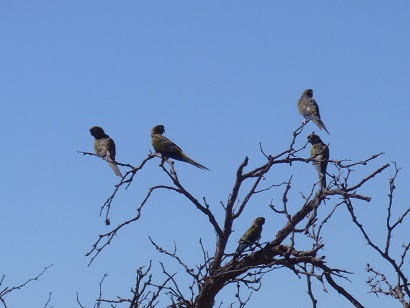
You all know that I love parrots, so it was a thrill to see parrots perching on the power lines, flying around in groups. These are burrowing parrots.  They looked black, but they are really dark green, with blue on the wings, orangy underparts, and a red chest spot. A scholarly article suggests that the red chest spot is an indicator of fitness, and individuals that mate that have larger red spots have chicks with larger spots and they are larger, weigh more, and one presumes, live longer. We were glad they held still long enough to get a photo.

We’ve also seen the national bird of Argentina, the rufous hornero (ovenbird). Also some wondeful cream-banded raptors, but we haven’t figured out what they are yet.


Mendoza, Wine Capital of Argentina

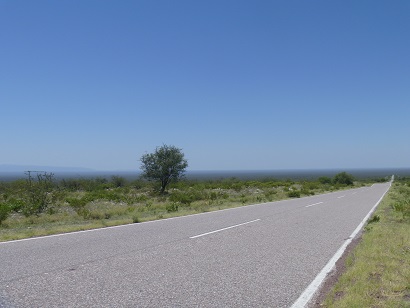
Why does Argentina have excellent infrastructure for transportation? With the exception of the vacation crowds in Valle Hermosa at the start of our trip, the roads have been in good condition and with light traffic, to none at all.

P1040024sm

Why does Peru have one speed bump per kilometer between Puno and Desaguadero (! There were 77), while Argentina has clear roads with a circunvalacion, or ring road, around almost every city. The contrast is striking. In Peru you can make about 350 km per day, while in Argentina you can often travel 550 km in the same number of hours traveling. Why? In Chilecito, the ring road around the city is being completed and the highway widened to four lanes, even though the population is only around 50,000. In Barranca, Peru, a city of over 100,000 there is a ring road around half the city and traffic on the Panamerican highway is heavy all the time.
On a happier note, there has to be a story behind the old cars on the highway in Argentina. Renaults going back about 30 years are on the roads, and quite a few Willys Jeeps that disappeared from the US long ago. Granted, many of these vehicles are in truly terrible condition, the Willys Jeep with the best paint job I’ve seen was perched on top of a junk yard, yet many are still running.

There’s not a lot to see on the road from San Juan to Mendoza, though there’s definitely food for thought in the flood warning signs we passed. If the water on the highway registers on the flood marker, it is way too late for a person to drive through….

P1040044sm
Details Feb. 1, 2015 Sunny, warm in San Juan, heading for the 90s F. Very good hotel breakfast. We planned to leave at 9 am, got all our things to the lobby, paid the bill, etc. and Jonathan went over to collect the car and it would not start. The starter motor turned over, but it wouldn’t start. We dug out the Alamo information and called the help number with the aid of the woman at the desk of the hotel. She was very helpful throughout. The agent in Buenos Aires said we’d left the lights on, which we hadn’t because there’s an alarm. After I told him three times, I passed the phone to the receptionist. He then said he would send someone from Mendoza—she pointed out there is a local Alamo office in San Juan. Finally, he said he’d contact the local guy and call us back. By the time he did that, I’d already called the local guy with the receptionist’s help and he was due to show up in a half hour. When I called him again after an hour he got all huffy about being busy with another client (his office is closed on Sundays), but he did show up, look at the car with Jonathan, and when it didn’t start he loaded us up and took us to the San Juan airport to get a different car. It turned out ok, we got on the road by 11:30 am, and the Alamo agent will repair our vehicle and bring it to Mendoza.
I called Carolina, our contact in Mendoza and she assured us she could meet us a bit later, at 3pm. We arrived about 1:30 pm and though Carolina wasn’t there, her son Lautaro let us in. We also met a longer term renter, William, as he was going out. Our apartment is not at all like the photos, so I asked Carolina if we can move to one of the others. Apparently we can do that tomorrow. She was going to stop by but did not.
At 4 pm we walked down to the Plaza Independencia via Parque Italia, part of the system of five parks in the center of town. We ate late lunch at Café Bute on the main plaza, delicious mixed salad and plate of meat and cheese. The menu tried to explain what “Bute” means and it included so many words I’d need to look up in a dictionary and so much post-modern blather that I decided that “Bute”=”Beaut”, more or less. We walked home via the shady spots—there are huge sycamores watered by a series of canals along both sides of every block. After that we found the superbowl on TV, ok, narrated in Spanish, but it makes a nice end to the evening.

La Difunta Correa shrine, Ischigualasto, and Chilecito to San Juan, Argentina, Jan. 31, 2015

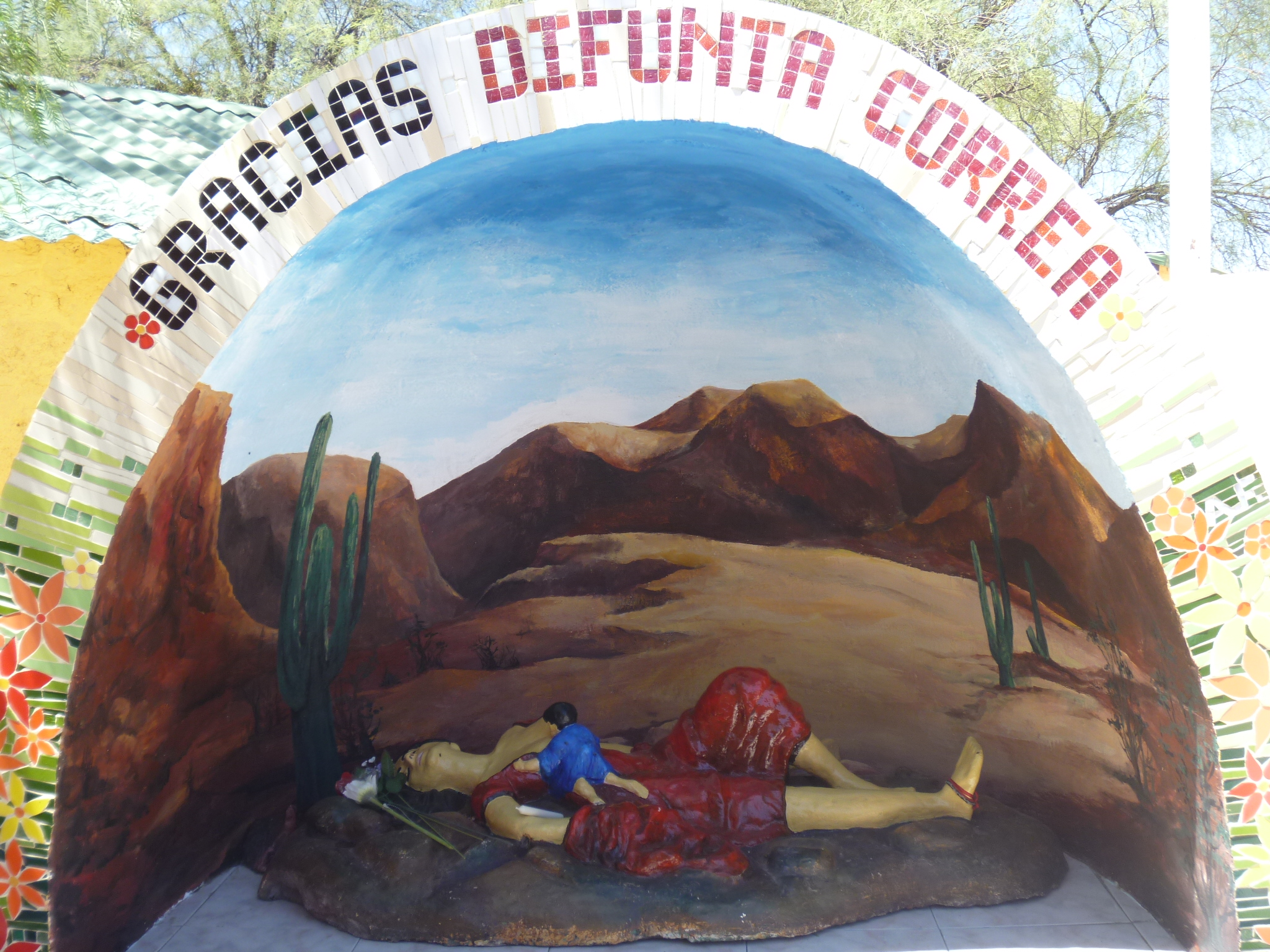
On the way into San Juan, we stopped at Vallecito, home of “La Difunta Correa”. The story goes that in the mid 1800s, Sra. Deolinda Correa followed her husband as he went off to battle, impressed into service as was common at the time. Sra Correa died of thirst on the trail, seeking her husband, but her baby survived by nursing its dead mother. Since that time, La Difunta Correa has become the patron of travelers, though her status has not been confirmed by the Catholic church.

P1040033L

P1040029sm P1040032sm
http://www.visitedifuntacorrea.com.ar/
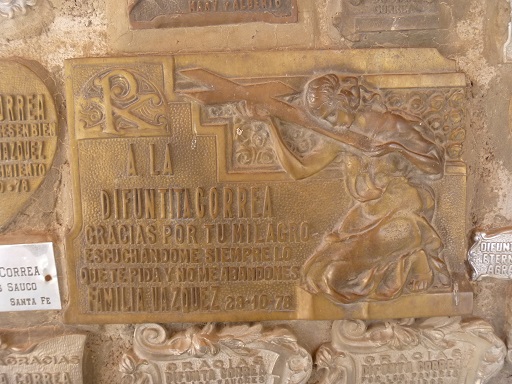
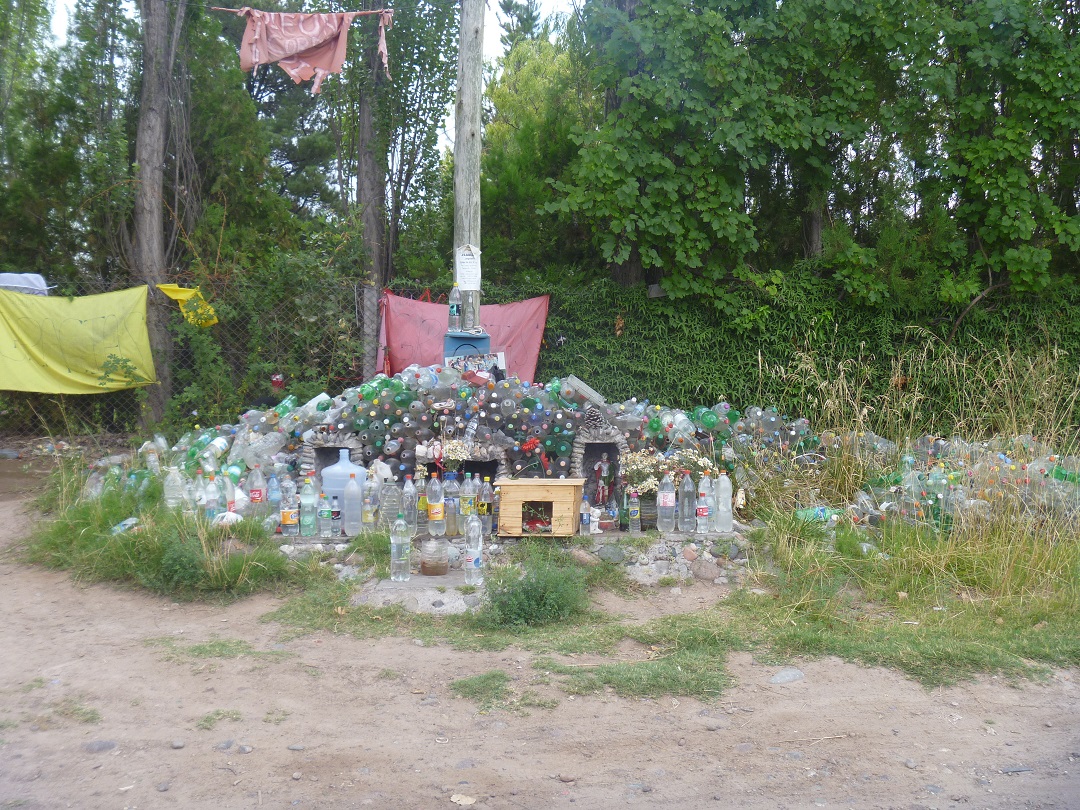
Travelers give gifts of water bottles to the difunta at roadside shrines. Some have hundreds of bottles. The main shrine goes far beyond water bottles. Plaques created in gratitude for safe travels cover the sides of several structures, and gift range from paintings and sculpture to wedding and christening dresses, trophies, toys, and a room full of model trucks, each emblazoned with the name of a transport company seeking safe travels. The site covers about an acre and at least 5 times that area is covered by picnic areas, barbeque grills, bus parking and other amenities. There could be thousands of people visiting at one time, though there were only about ten people there while we were at the shrine. Here is a roadside shrine to la difunta:

P1040086sm
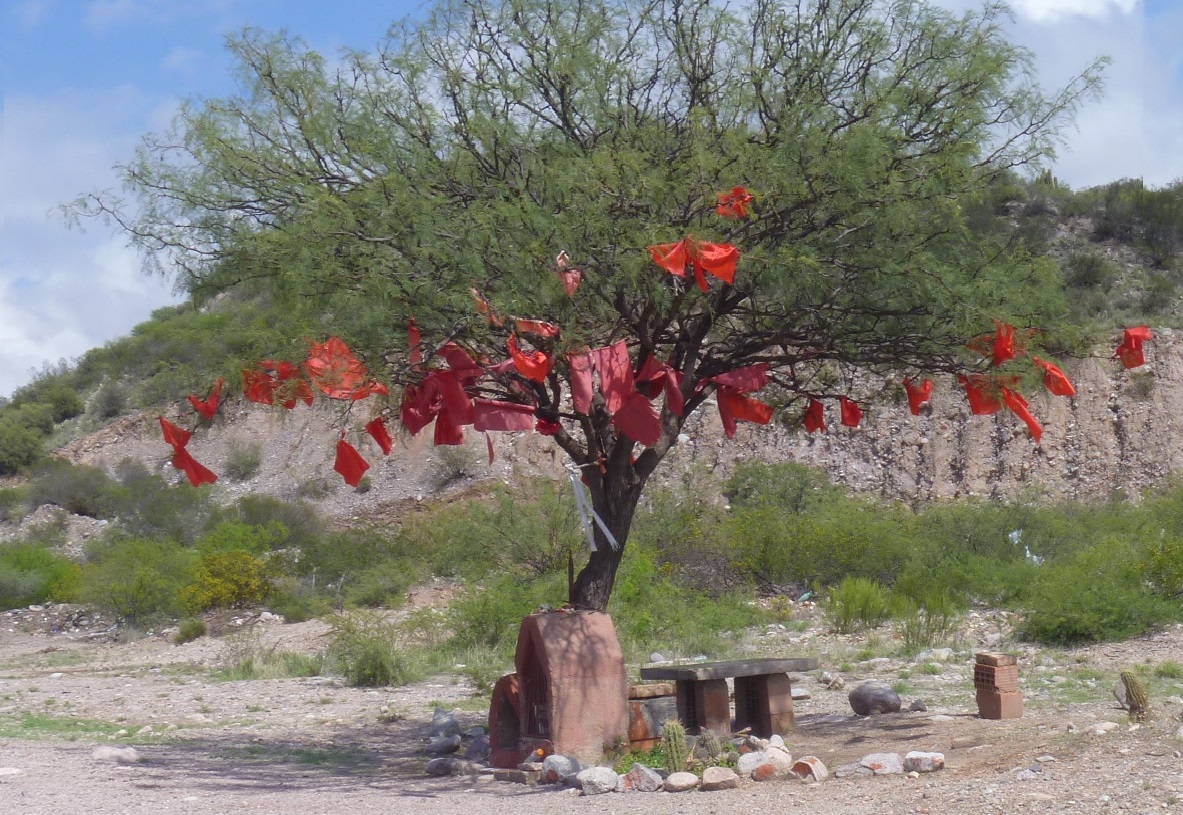
Another shrine along the roadside consists of a monument by the roadside, possibly containing a saint, and surrounded by red flags. These honor Gaucho Gil, and show places where near misses took place. It is a change from the roadside monuments to the dead, as the red flags celebrate survival.

P1030983ver

1/31 Details: We planned to leave early, but had to wait to pay and had to get gas. We left Chilecito around 9 am heading for San Juan by way of Ischigualasto, a regional park with wild wind-carved sandstone spires. When we arrived we found that part of the route was washed out and only half the features would be visited. It would take at least two hours, so we contented ourselves with a souvenir coffee cup and the general landscape.

We arrived in San Juan at about 4 pm after our visit to La Difunta Correa. It was 38 C (100 F), so we retreated to our air conditioned room in the Del Bono Suites. The room was a nice, a studio with an anteroom containing table and two chairs, and kitchenette. The A/C was essential. When the sun went down and it cooled off a bit, we ventured out for shopping: water, dinner. We didn’t eat at a restaurant because they didn’t open until 9 pm. We just haven’t adjusted to Argentina enough to eat dinner late at night yet.

Chilecito Day 2, Jan. 30, 2015

Motorbikes and scooters are very popular in Chilecito, and many are driven by women. This seems to bring up a new problem. We saw a woman driving a motorcycle with one hand while holding a sleeping infant in the other. We saw a man driving a motorcycle with a small child behind him, then the mom, who was holding the folded-up baby stroller. Do any of these people wear helmets? No. This is difficult to watch–so dangerous.

1/30 Details: Breakfast was the usual, bread, (good) jam and manjar blanco, coffee with milk, also good, but no fruit. We met Augustina’s mom Vicki, the owner, and she gave us directions to all the sights in Chilecito and Famatina. We left for the bodega de vinos La Riojana, where we found this was the outlet store and no tours were scheduled. We could call in the afternoon and find out whether there would be a 3 pm tour. From there we went south toward Miranda, to check and see whether it was really true that our route to Villa Union was closed. Too true, it is closed. Good news for the region, the road is being paved—it was dirt. Bad news for us. On the way back, we wove through Sañogasta, an old town, and came out by the TauroWasi gift shop, where we bought dried figs and a small basket. Back to Chilecito, we went to the main square where we found a place that could put a new chip in my phone for 15 Ar pesos, and we loaded 40 pesos of time. From here we went to Rancho de Fierrito, restaurant that was recommended to us by Contador Miranda.

When we met Sr. Miranda, we were on the plaza by the Banco de la Nacion looking for an ATM. We asked if he knew where there was a supermarket and he answered, “Senores, you are in Chilecito, province of La Rioja.” (i.e., Where do you think you are?). He then directed us to a mini market and when we asked for a recommendation for dining, he suggested Rancho de Fierrito.

20150130_132128sm 20150130_134600sm

The place is old timey, groups of men eating lunch, also some families. Jonathan had bife de chorizo, a big piece of meat. I had Puchero de pollo. This turns out to be boiled chicken, potato, squash, tomato (raw), chard (cooked), hard boiled egg and thigh/leg of chicken. If it is cooked in a fragrant broth, none of that arrives on the plate. However, we’d been offered some Roquefort spread that went well on everything, so the lunch was a success.
After lunch we went back to the Posada del Sendero and had a nap. After that, we set out for Famatina, recommended by Vicki. We stopped at an archaeological site Cayapa, dated 1592, 12 km north of the ovalo at the north end of Chilecito. It’s several km off the road, but consists of several adobe ruins, and a lot of slag.

P1030996sm

P1030998sm

Apparently this was an early mining site. It was interesting to walk around. We found glass in the slag, and some sherds, though not the quantity you might expect for a living area. Leaving the site, we saw an animal that Jonathan said looked like a rabbit, but I saw a back that looked like German shepherd. Turns out it’s a Patagonian mara.

From the site, we went on to Famatina, where not much was going on. We continued through town until we found the Finca Huayrapuco, where they grow and process walnuts. They make honey and lots of kinds of jam, and have extensive farm lands that you can walk around, go horseback riding, have tea, and even see the setup for cracking and grading walnuts. The woman there claimed all this is done by hand, but I had a hard time believing that hand cracked and graded walnuts could be a business. Walnut shells are used for mulch over the grounds, when you look down, you notice that everything underfoot is walnut shell.

20150130_180754sm20150130_175717sm

It’s a lovely setting, well worth the visit. The recreated bedroom had the wildest Art Nouveau iron bedstead I’ve ever seen.

20150130_180913sm
We headed back to Chilecito, sat in the yard at Posada del Sendero for wine, cheese, salami, bread and olives, then retreated to our room with A/C for the evening.
The work on the highway makes our day tomorrow longer, but makes us drive by Ischigualasto, the Valley of the Moon rock formations.