
Our first out of town adventure in ages was a visit to Redwood Grove, a house designed by Julia Morgan, the first woman architect in the state of California1. Morgan is best known for designing much of Hearst Castle, the estate overlooking the coast in San Simeon, CA. Her work at Hearst Castle spanned much of her career, though she had other clients, and in 1926 she accepted a commission to construction a summer home for Margaret Stewart as part of an extensive resort planned for Benbow, in far northern California.
Morgan designed Stewart’s property to harmonize with the Benbow Hotel, demonstrating her interest in the Craftsman movement, the Arts and Crafts style that preceded it, and the eclectic designs of her mentor Bernard Maybeck.

We met owner Tanya Musgrave at the end of the long driveway to the property. She arrived in a golf cart to give a lift to those who weren’t ready for a hike before the site visit. Arriving at the property, we entered a large reception room that looks very much like a chapel. Morgan designed it to have the air of a chapel, with a peaked roof and stained glass panel, though it was not specifically used as a religious space. I sat in one of the outrageous chairs (Egyptian Revival?) while Tanya told us the story of the house. After Margaret Stewart, the house passed through several owners and gradually fell into disrepair. By 2000, the house was at the point of abandonment when it was taken on as a personal restoration project by Allison Huegel and Jim Sergi, a couple from the Bay area, who put time, effort, and a lot of money into restoring the structure.

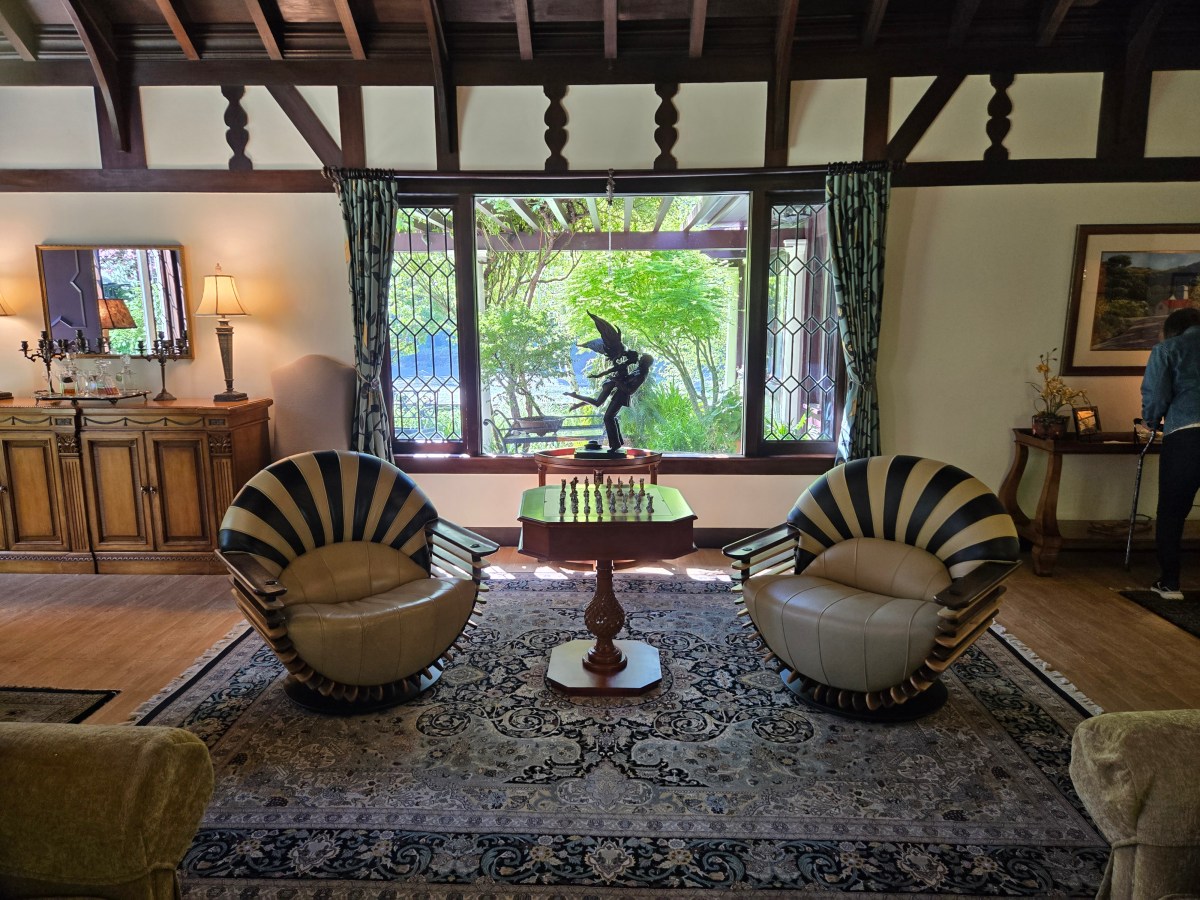
From the reception room, we toured the open portion of the house with the woman who manages the house while her husband manages the outdoor portion of the property.
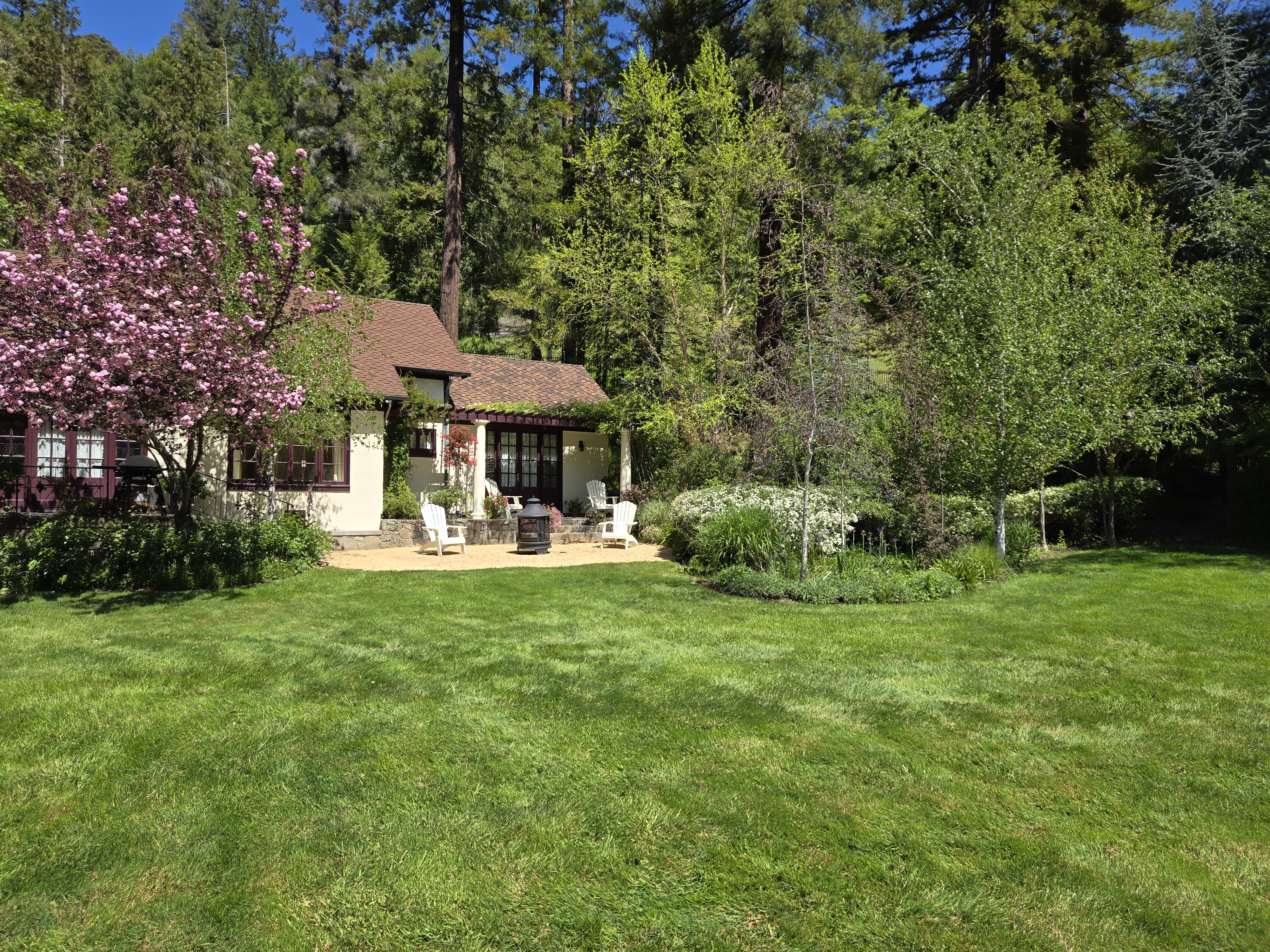
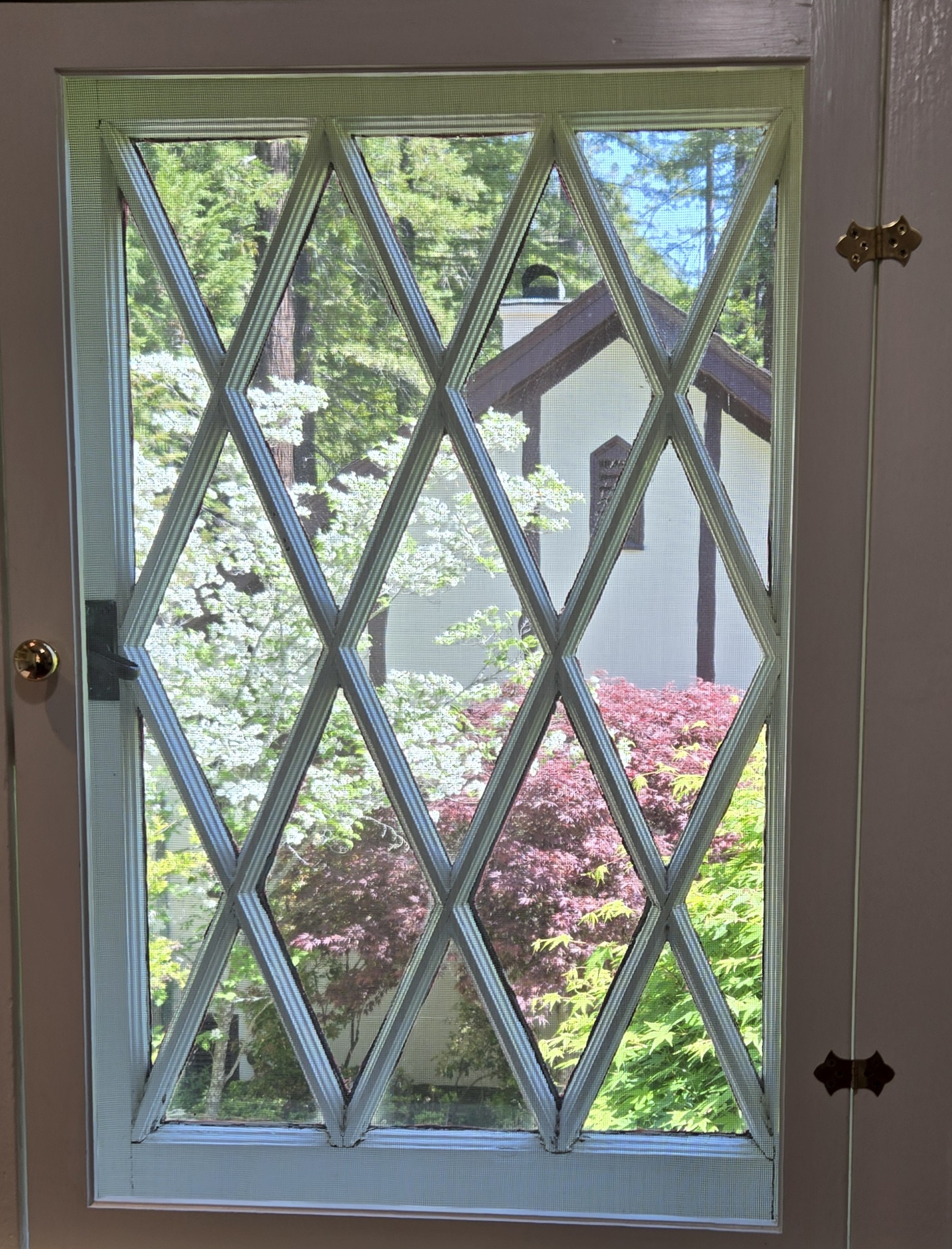

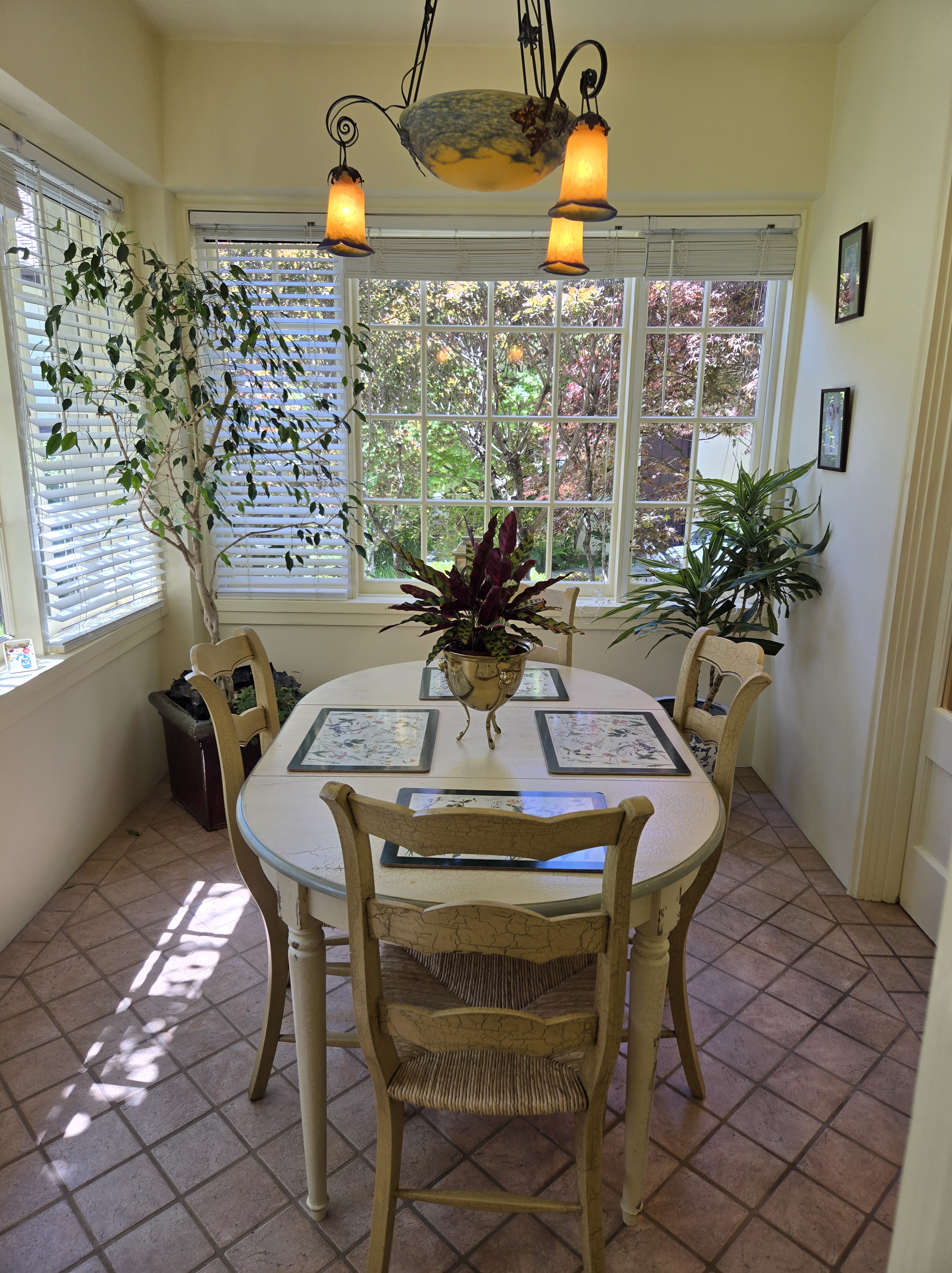
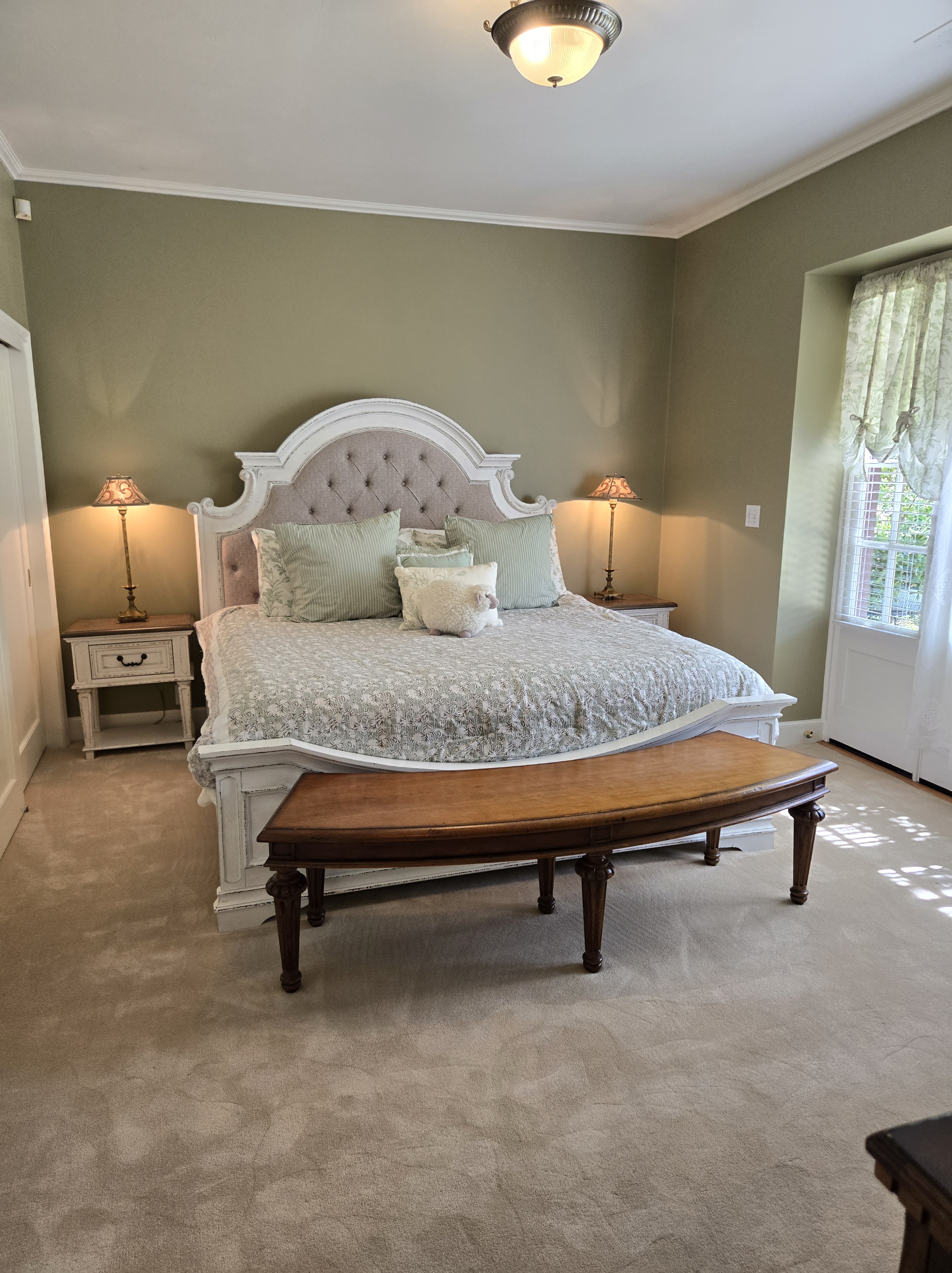

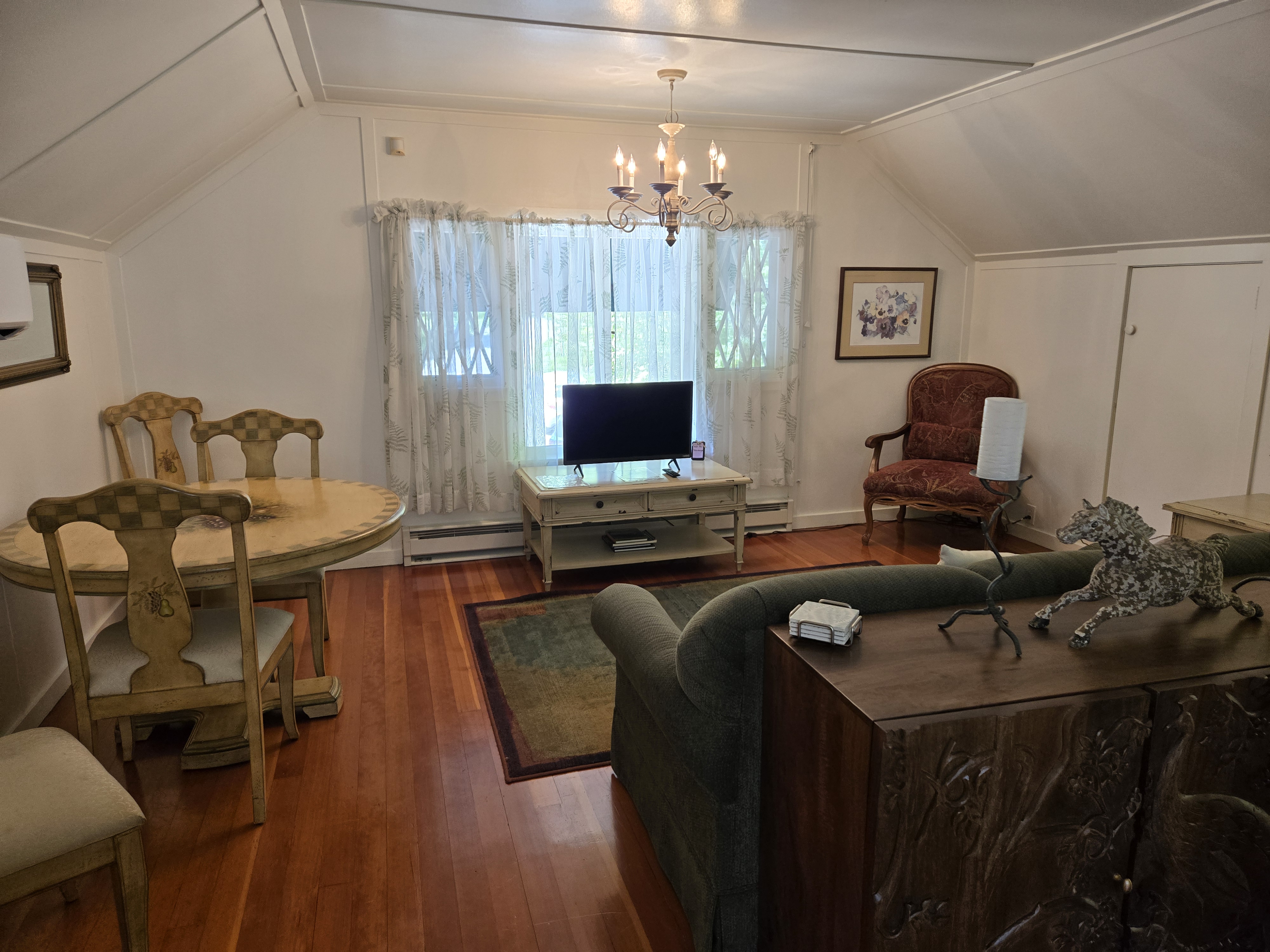


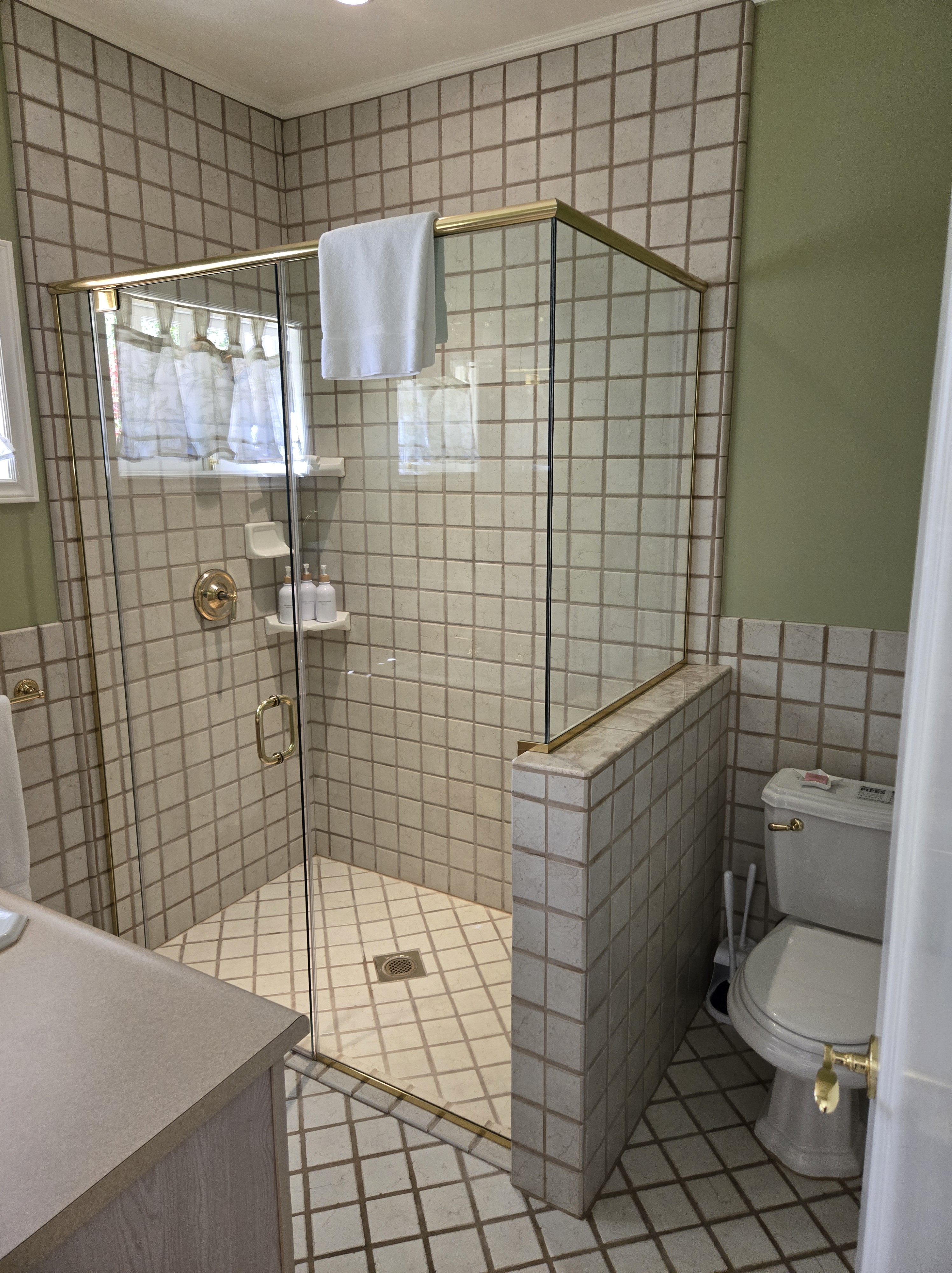

The house has been remodeled, and the elements of Julia Morgan’s design that remain are the overall structure, the redwood beams in the chapel, the built-in shelves and structural details that are hallmarks of the Craftsman style. Rosettes are carved along a number of beams; these were a hallmark of Morgan’s work. Birds appear in a number of details, such as the tile around a fireplace, and in wallpaper. Period details are part of the property’s charm.
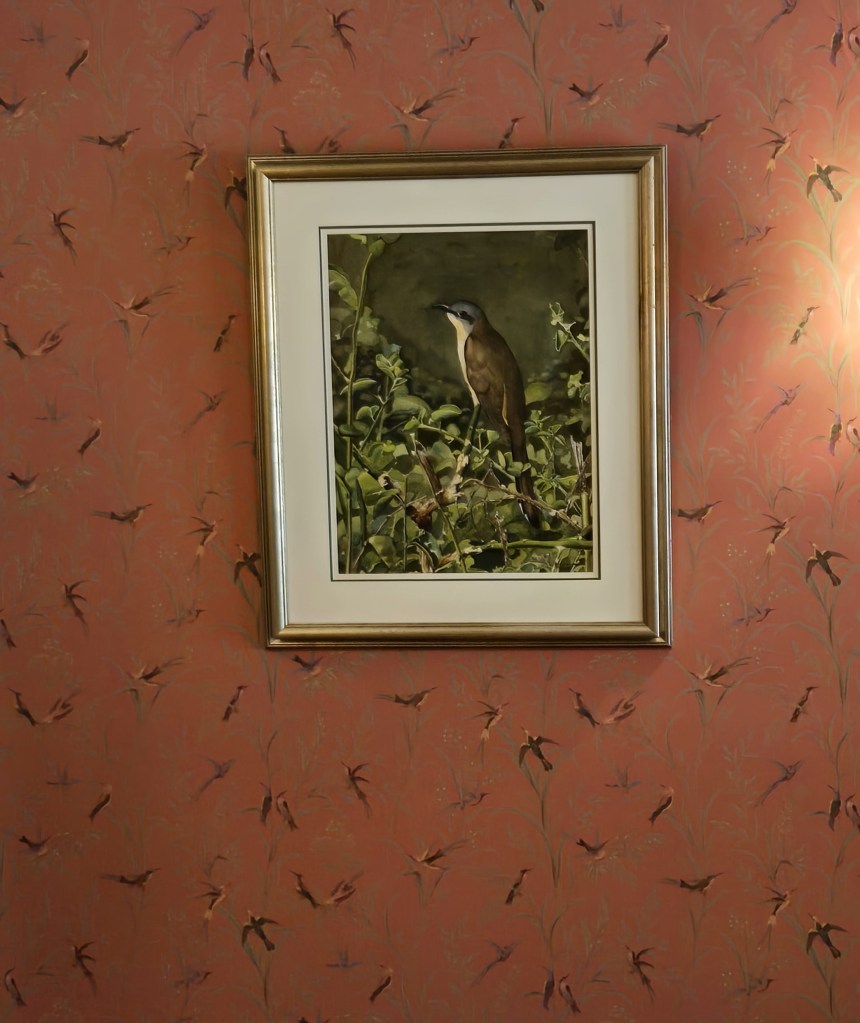
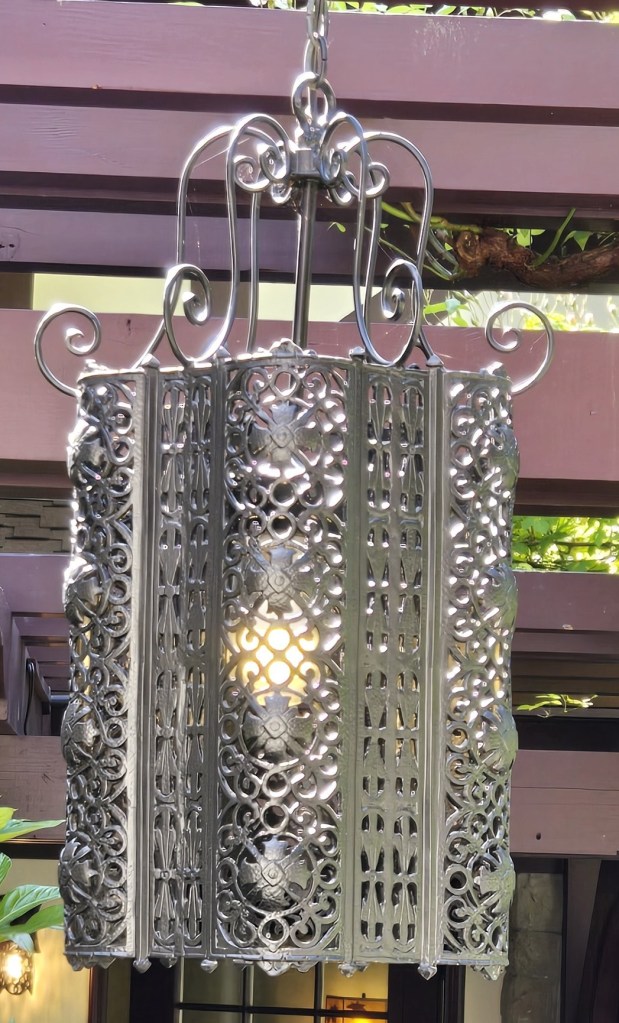
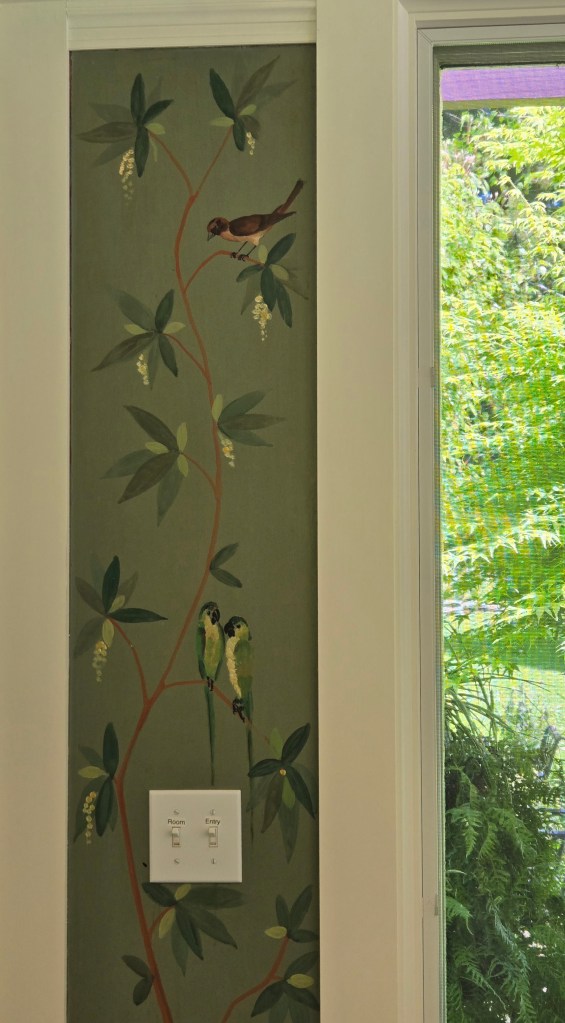


We were impressed by the lengths the various owners have gone to reproduce some of the home’s original details. The “leaping gazelle” fabric was used in curtains found hanging in tatters. Tanya and her husband Greg tracked down the original maker, a German company based in Italy, and had new fabric woven. Panels of wallpaper painted with birds were restored and placed in a conservatory that looks out over the Eel River. The entire conservatory had to be shored up so that it would not fall into the river.


The grounds include seating areas and flower gardens between the different living spaces. The orchard overlooks the river, and has become a popular wedding spot. We roamed the outdoor spaces admiring the pond and the plantings.
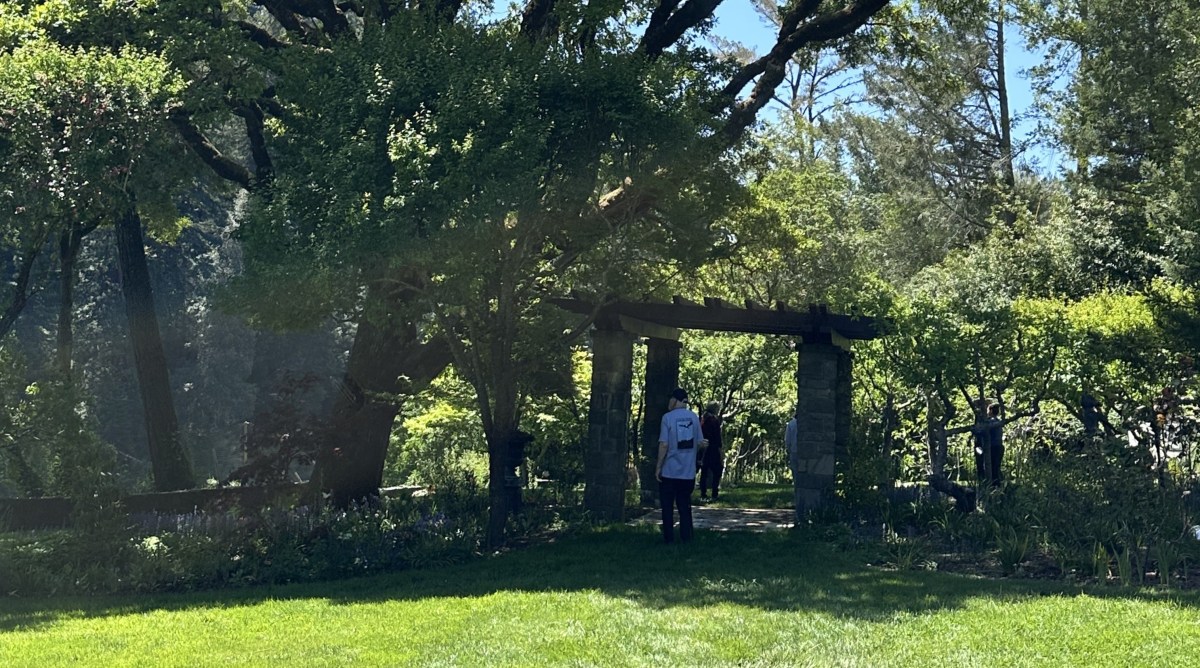
At the end of the tour we rode and walked back to the entrance gate, and were let out to collect our cars. It’s just over an hour’s drive to Eureka, but Garberville is only a mile to the north, providing a stop for lunch.
A Stay at the Benbow Inn

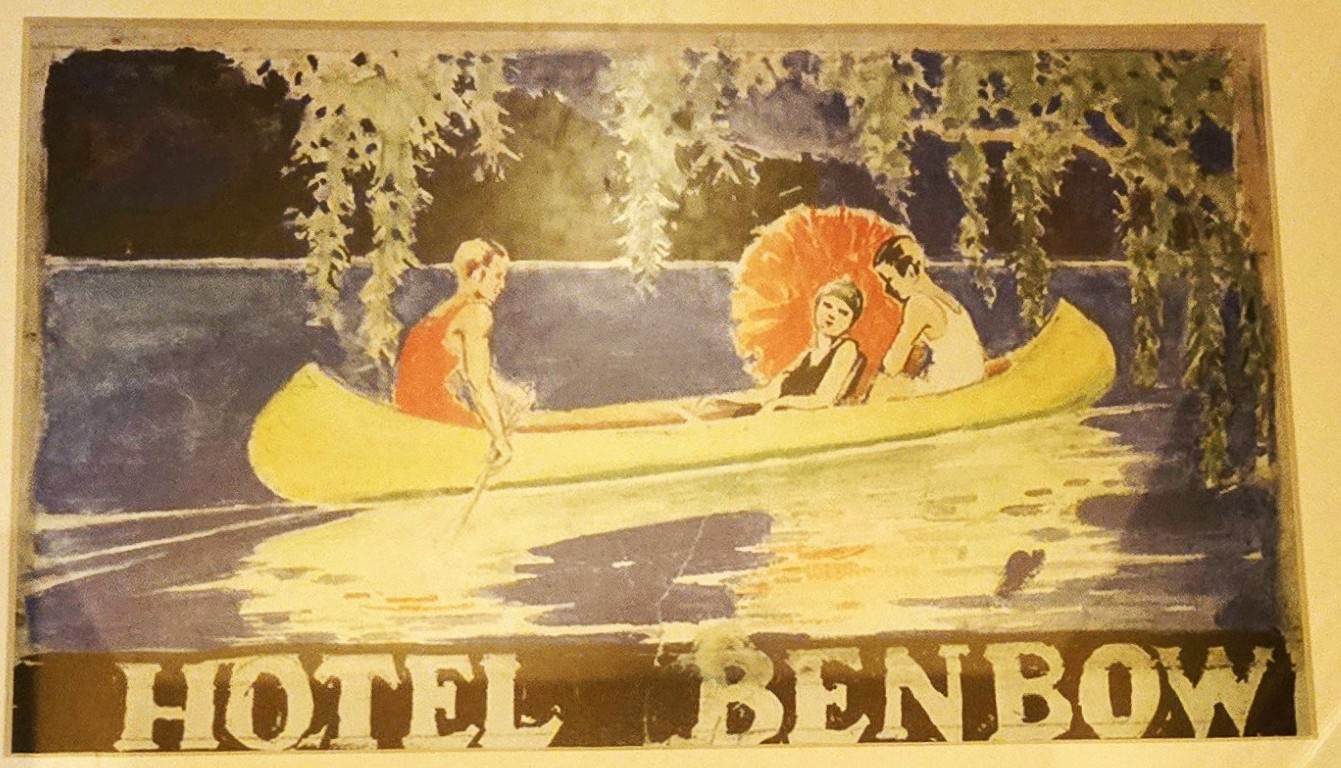
L: The Benbow Inn today. R: Vintage sign for the Hotel Benbow
The night before our tour of the Julia Morgan Redwood Grove estate we stayed at the Benbow Inn. It was planned as the anchor for an extensive resort, and though the entire resort was not completed, the Benbows were visionaries in believing that the valley surrounding a bend in the Eel River would be an ideal vacation spot. Since completion of the hotel in 1926, and later campgrounds, the area has been popular with summer visitors who hike among the redwoods and swim in the river.
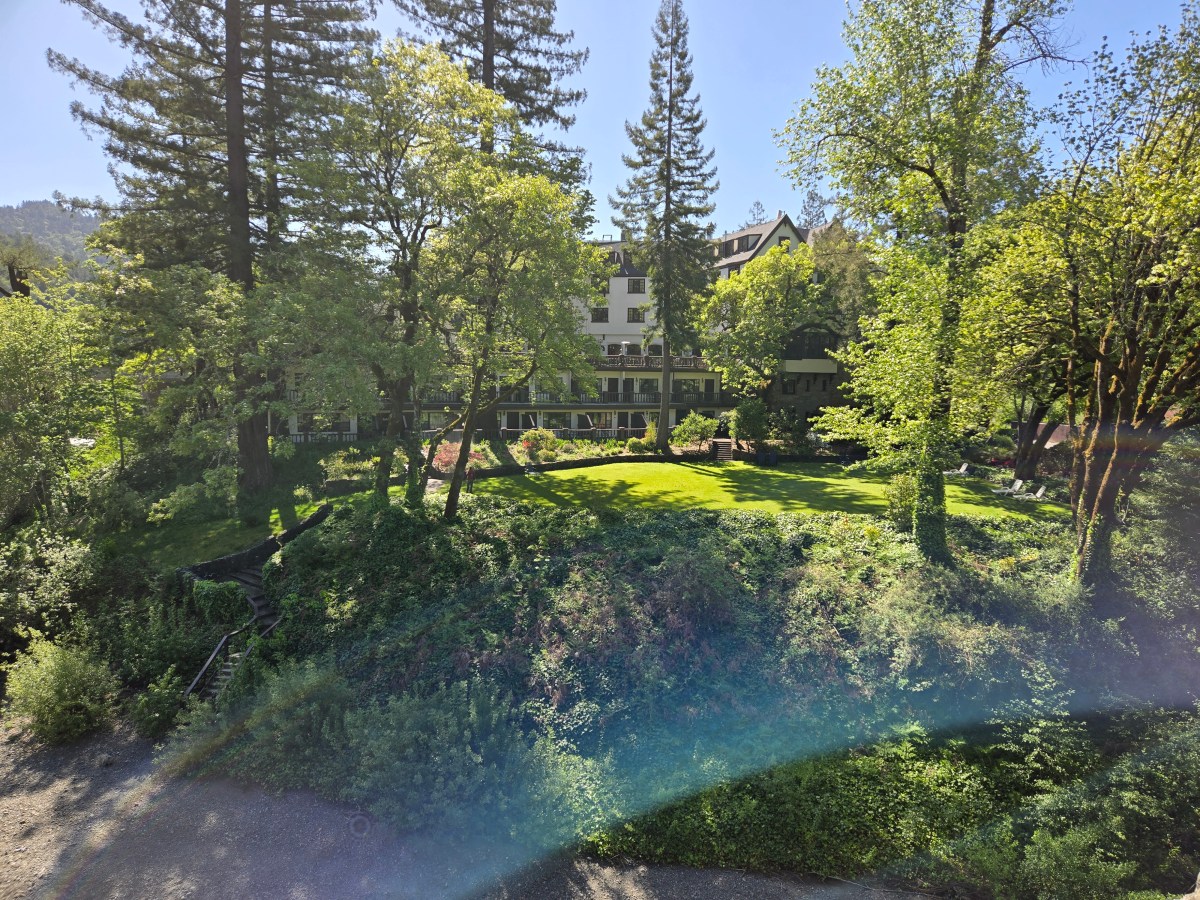
The estate Julia Morgan designed is just across the river from the hotel, and the two structures are similar in overall design.
The Benbow Inn retains the vintage style of its origins. When we arrived, we entered the ground floor reception area. While Jonathan checked us in, I admired the library.
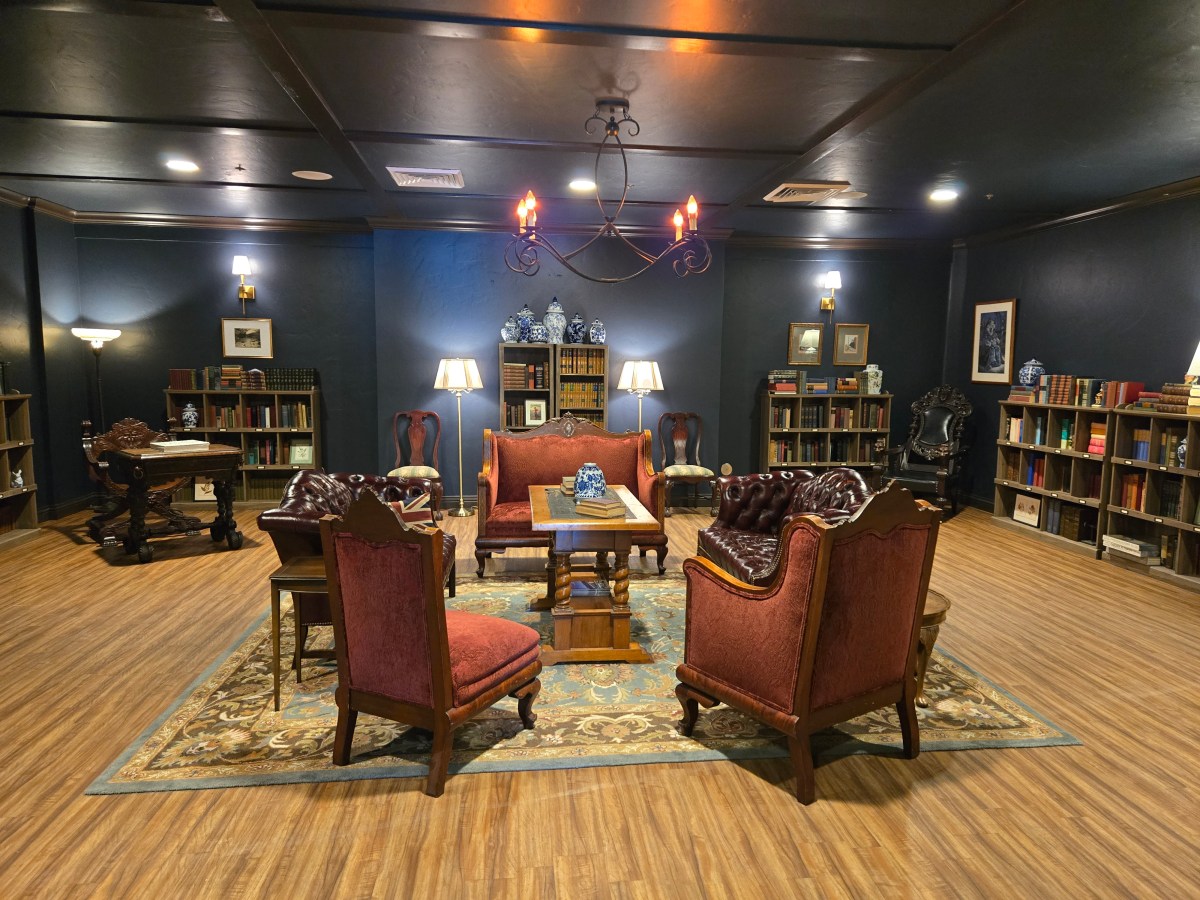
Renovations a few years ago included creating the ground floor lobby and added an elevator, which we appreciated, as reception is on floor 0, the lounge and restaurant are on floor 1, and our guest room was on floor 2. We had windows over a courtyard and the Eel River.
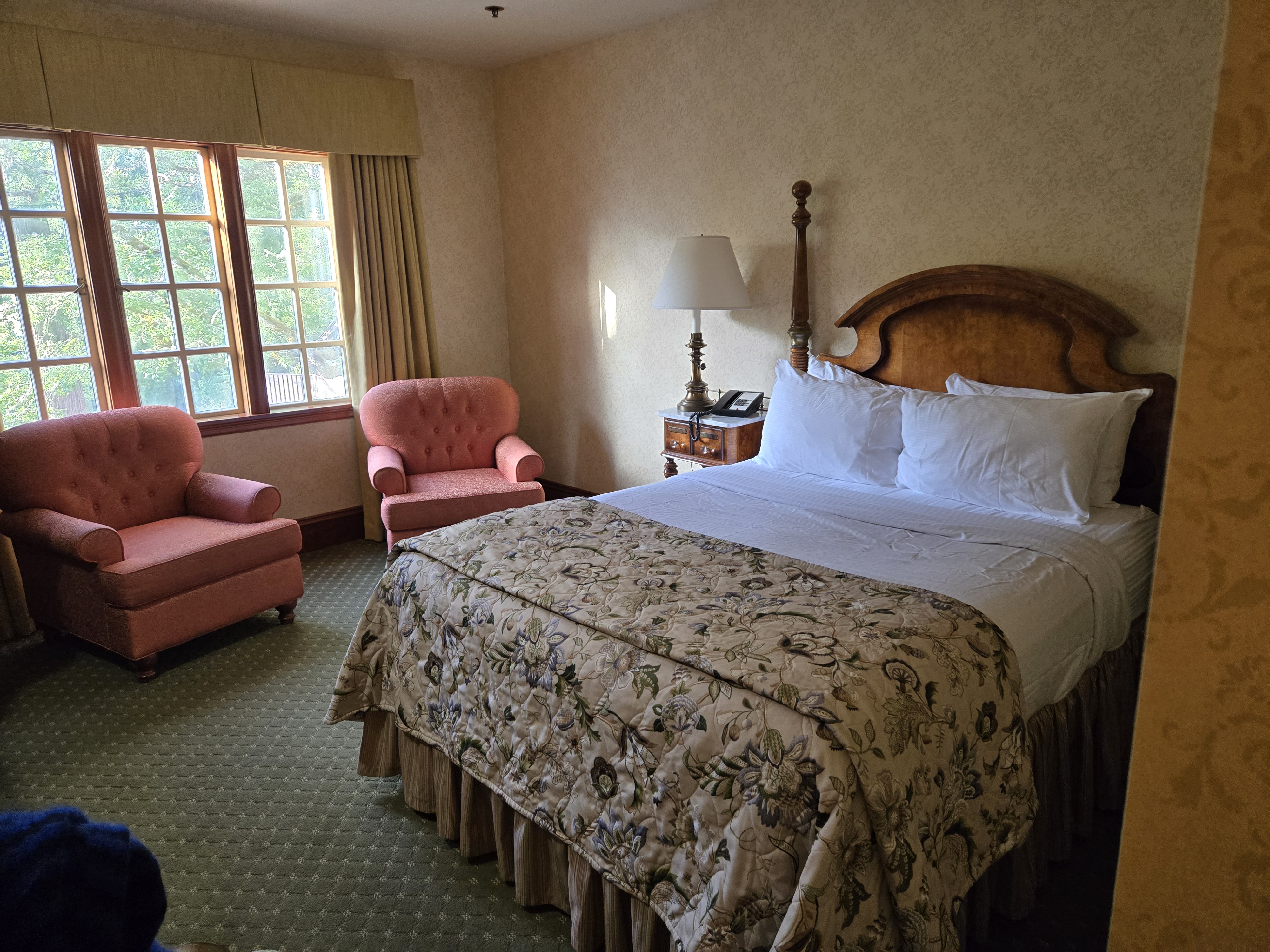

I laugh at myself, as the entire Inn is a tribute to “brown furniture”. While I’m not sure my children and their friends would agree, I liked the decor, old-fashioned and comfortable. I was ready to carry off one of their nightstands for myself.

We had a drink and played cards in the large lounge and then had dinner in the restaurant. It was very good. I was concerned about the restaurant, as guests are a captive audience. The menu was not large, but we each found things we enjoyed. I had a dinner salad with shrimp, and Jonathan had three different appetizers, one of which was truffled french fries. We enjoyed our choices, and shared a slice of chocolate cake, too.
A few details:


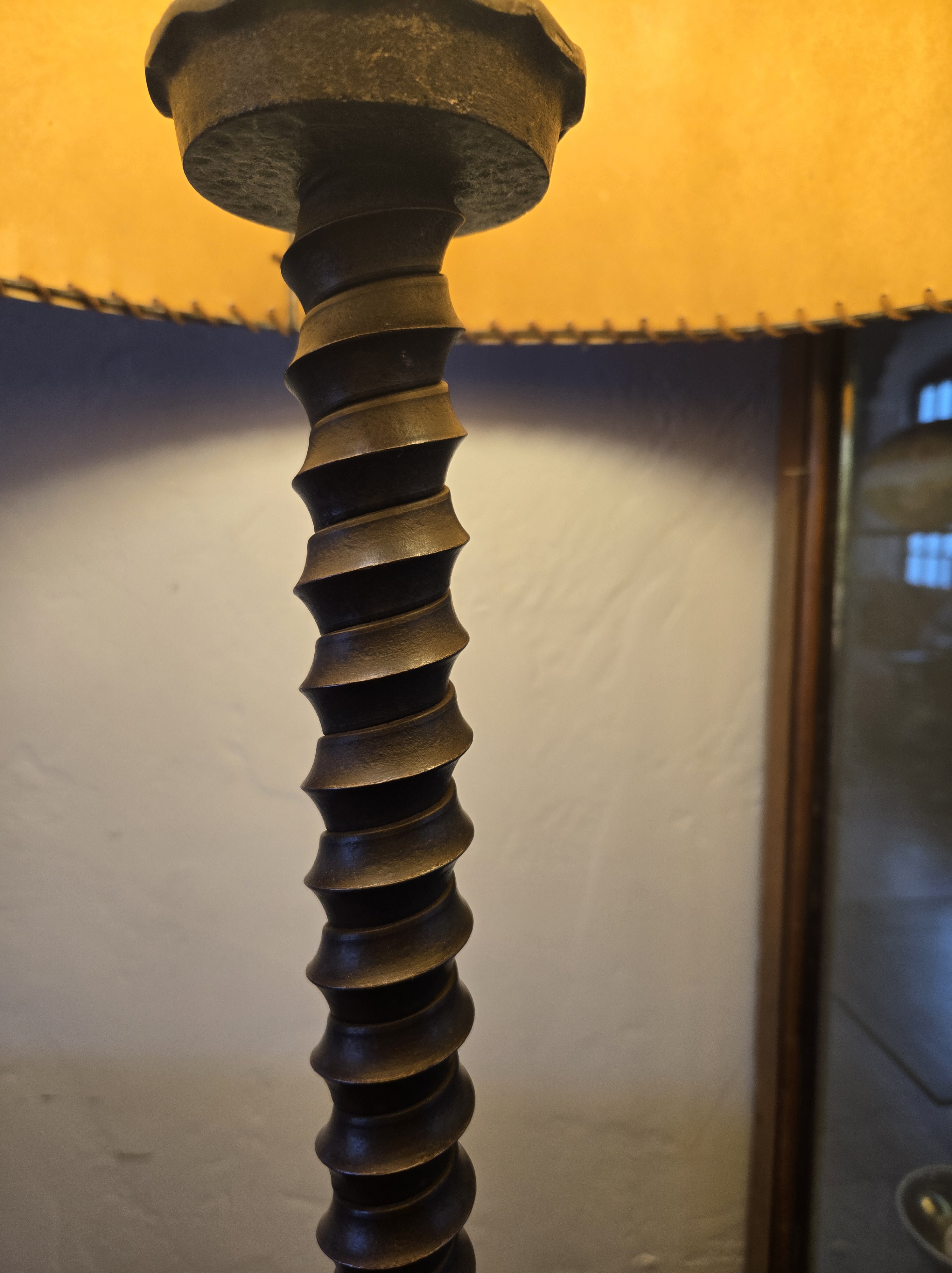

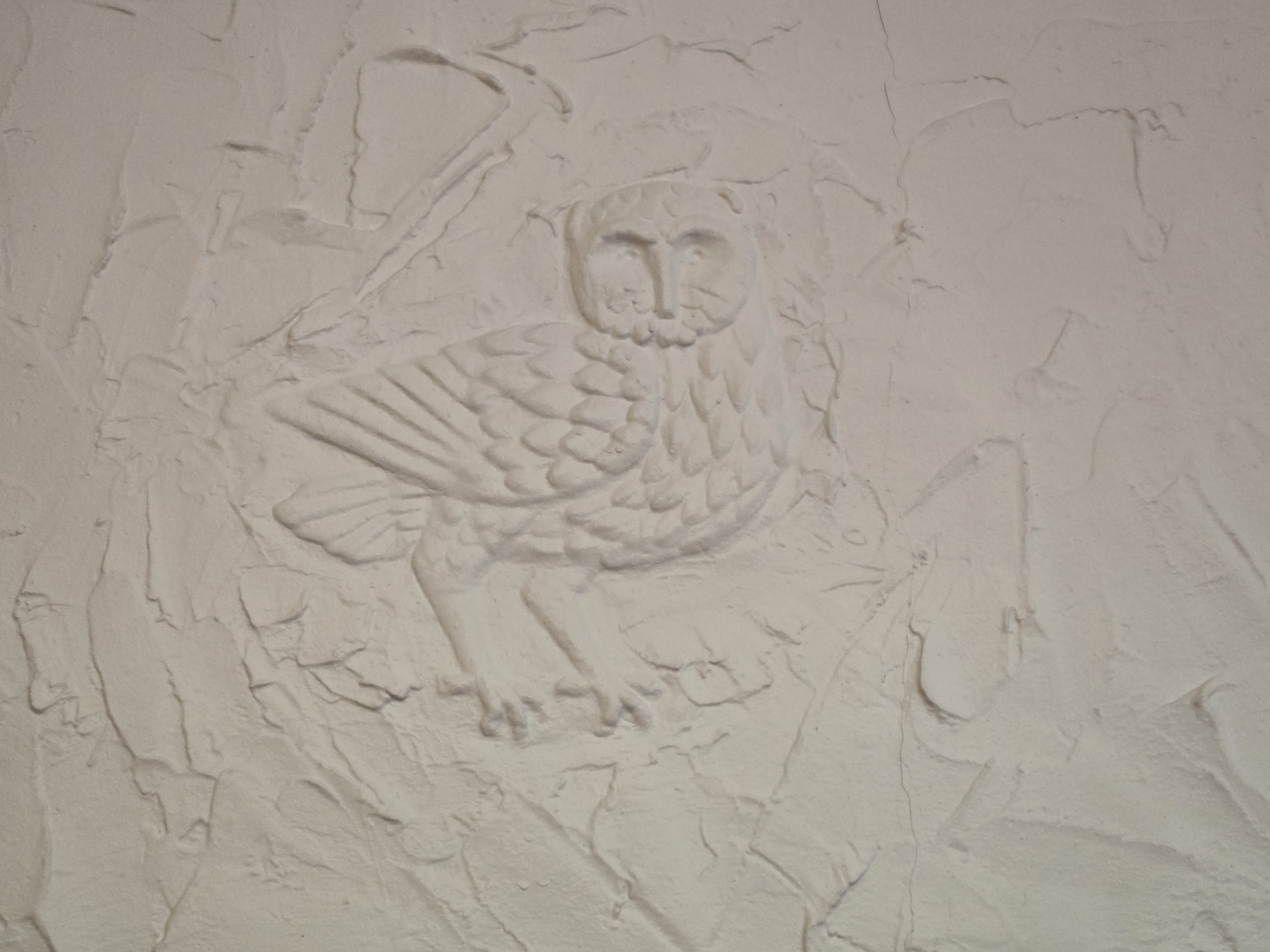
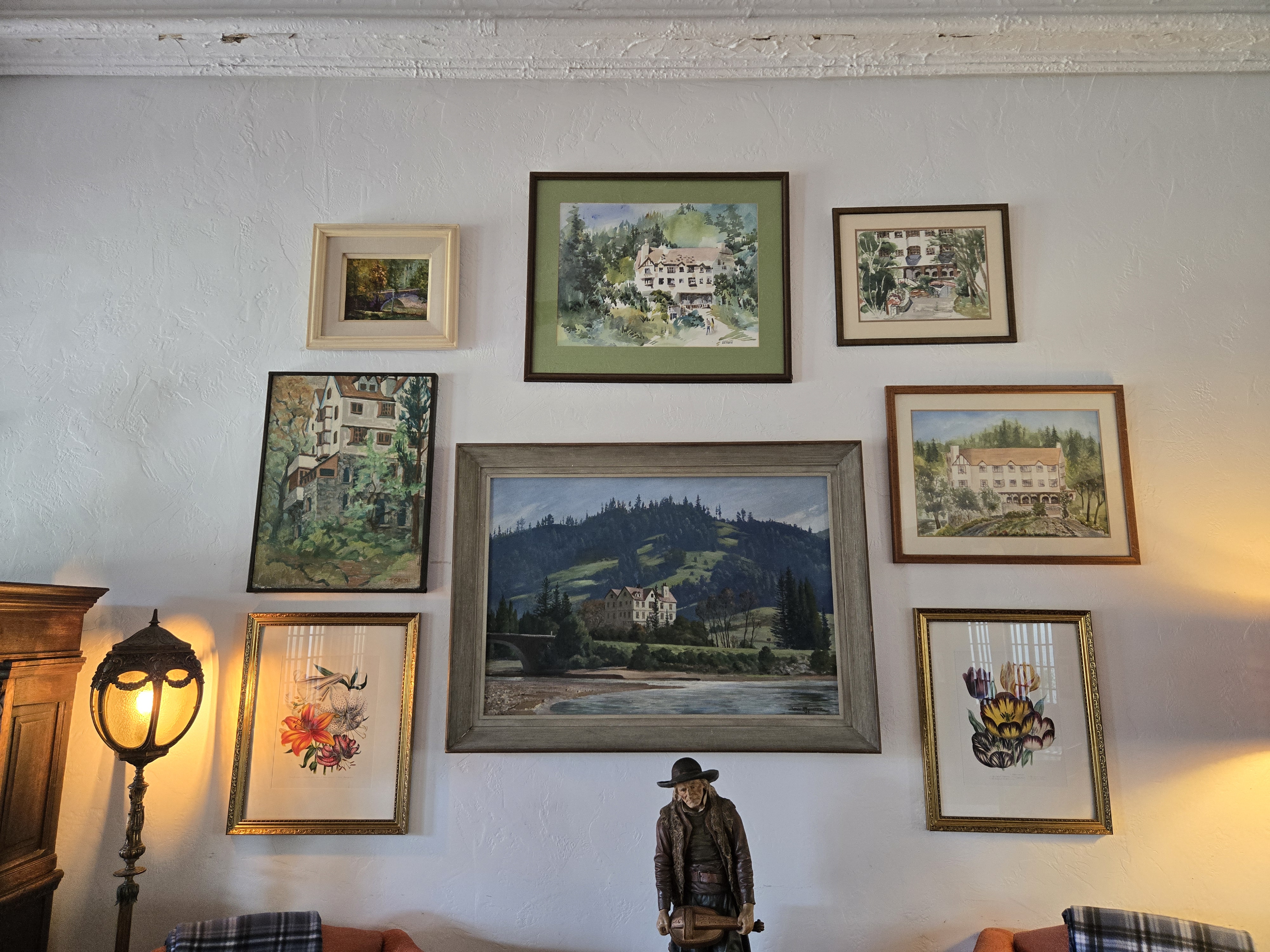


The lounge has information about the history of the hotel, and their web page has a list of the Hollywood celebrities and political figures who have stayed there, from Douglas Fairbanks to Eleanor Roosevelt.
We slept well, and were ready for our tour the next morning, delighted that we turned our field trip into and adventure.
1Morgan was a woman of many firsts. She was the first female graduate of UC Berkeley with a degree in Civil Engineering (1894). She was the first woman to receive a certificate in architecture from the Ecole des Beaux Arts, Paris (1902). She worked on several buildings on the UC Berkeley campus. Her first reinforced concrete structure, the bell tower on the Mills College campus (1904), withstood the 1906 San Francisco earthquake. That success and her knowledge and interest in reinforced concrete and earthquake-resistant construction launched her career, resulting in her designing and building more than 700 structures, mostly in the state of California https://en.wikipedia.org/wiki/Julia_Morgan (Wikipedia).
 Llywindatravels 2025