
It would be easy to spend ten days within the confines of a resort in Curacao, but we did venture out a few times to see a bit of the island.
Beach
Our first goal was to visit Westpunt, the far west end of Curacao. We drove as far as we could, and ended up at Watamula Hole, a series of blowholes on a rocky shore. Walking was difficult on the broken rock and fossilized coral. Getting to the parking area was a triumph of navigation, owed in part to my getting a local SIM card. I ended up not needing to make local calls, but definitely used the data to find directions.

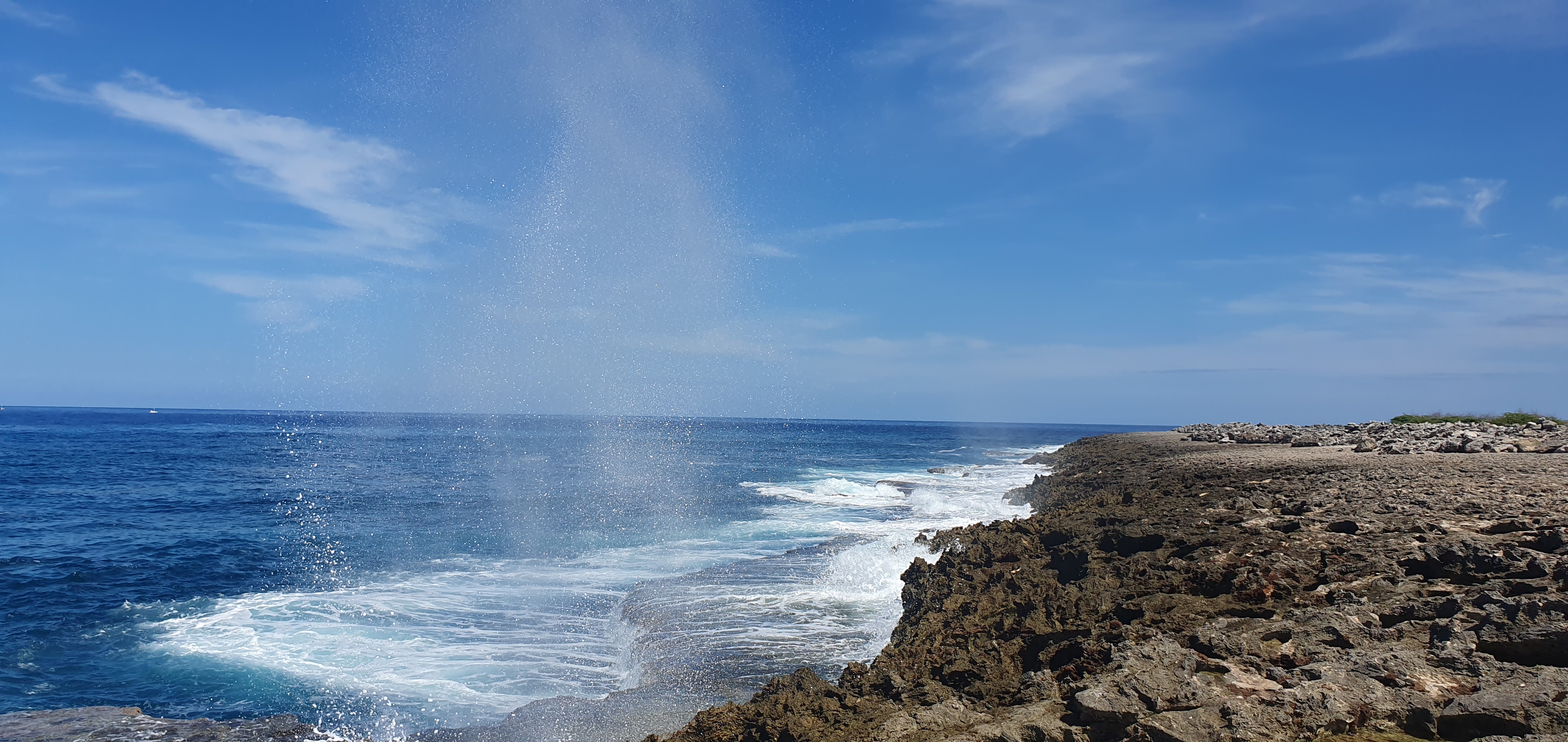
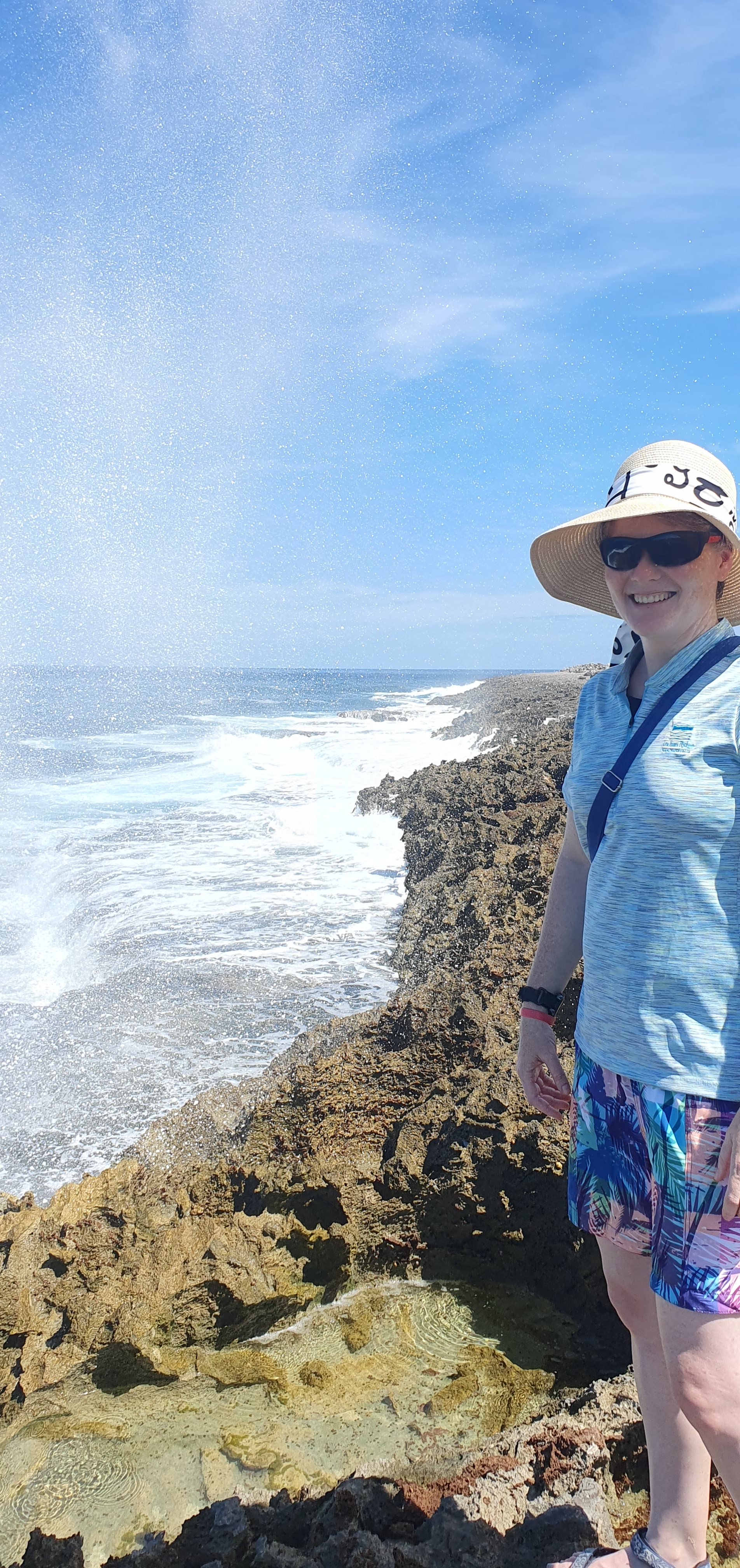


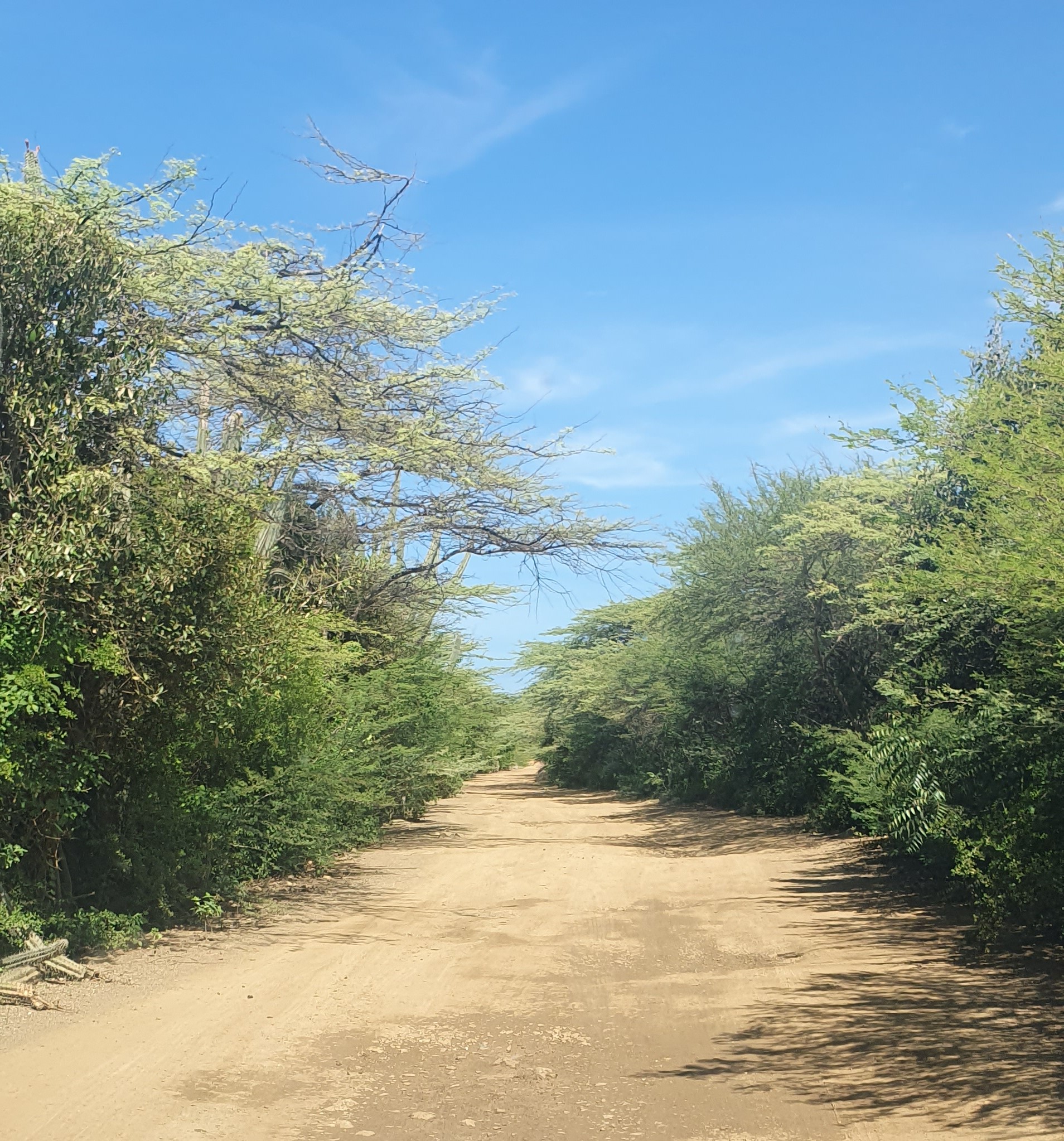
Watamula Blowhole at Westpunt. We didn’t walk to the precise westernmost point of the island because of the uneven rock/coral surface. The last mile or so of the road was unpaved, too.

Curacao roads tend to be narrow, but there was little traffic, and we had no trouble getting around. On our way back we stopped to scope out Kalki Beach, mentioned in all the guidebooks. It was very small and very crowded, with the high tide washing under the legs of the beach chairs. If you didn’t rent a beach chair, you’d need to stand in the water!
A couple of days later, Lyra suggested we visited another west-end beach, Playa Grandi. Sea turtles visit the beach most afternoons, and we were lucky enough to be able to snorkel and watch them. The turtles are graceful underwater, flying through the water with a flick of their flippers just like birds float among the trees. They’d dip to the bottom and browse on the greenery, then swoop up to the surface for a breath of air, then back under again. We stayed until the light started to fade (2 beach chairs & 1 umbrella $12).
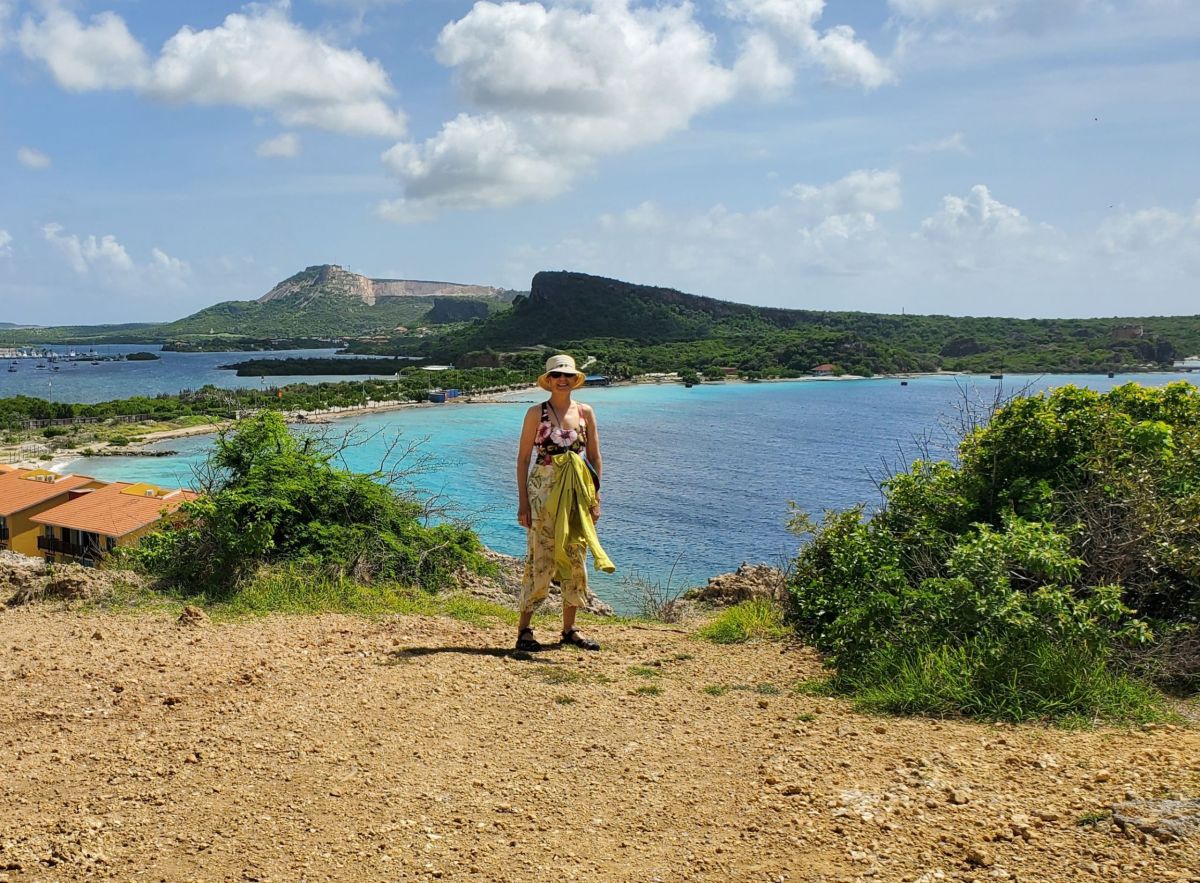
We were planning to visit the opposite end of the island, but found out the roads don’t go that far, as it’s all privately owned. We visited Jan Thiel beach to see if there was any beachcombing, but found little in the way of beach, or beach to walk along. There was a big stretch of beach chairs, and lots of people enjoying the water. We had a brief look around and decided our resort was more interesting. On the way back, we stopped several places to see if there were options for beachcombing. We stopped on this bluff to look down at a very promising beach, only to find it was an island. Without a kayak, it was not accessible.
Beachcombing
There was beachcombing on Curacao, rocks, coral, flotsam and jetsam, also beach glass. The bits of beach on either side of our resort proved to be as good as anywhere else to browse. The coast around Willemstad seems to have been used for trash disposal at some time in the past, and as the shore erodes into the sea, fragments of broken bottles and crockery are tumbled into gems. There was not a lot of recognizably old glass, only a few pieces were fluorescent, for example, and we found none of the thick bottle bottoms that sometimes indicate century-old glass. It was a lot of fun to pick up pieces, and I have enough material to make necklaces and bracelets for another year. The few pink pieces we found were a surprise.


Birdwatching
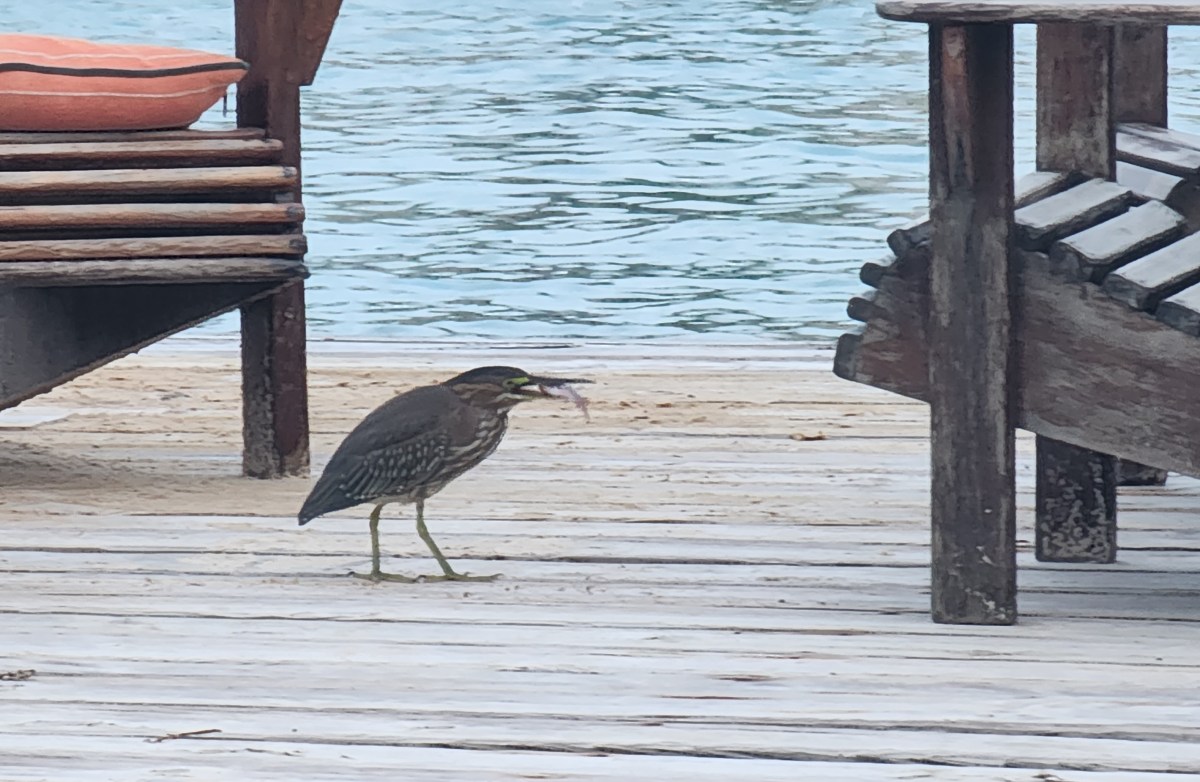
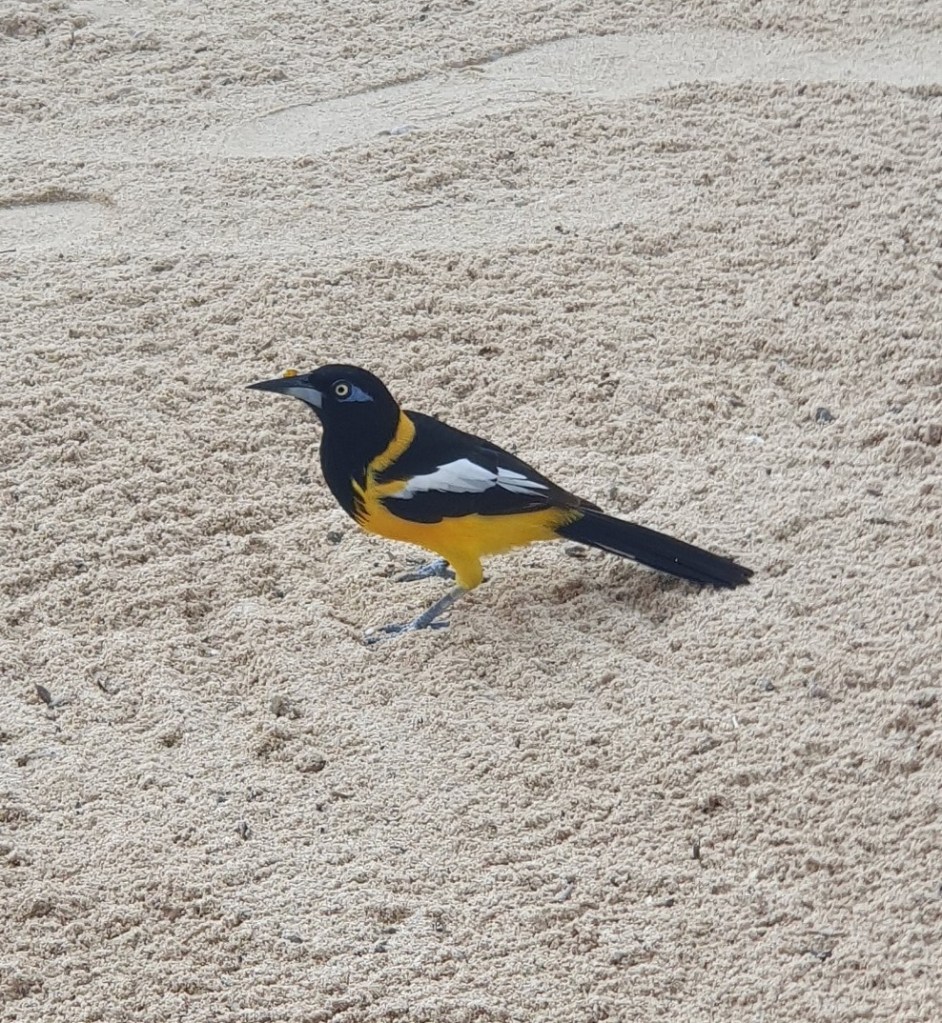
We didn’t stretch ourselves much to go birdwatching on Curacao. The resort had one of our favorite Caribbean birds, the bananaquit (sounds like a fancy drink, doesn’t it?). Bananaquits were building a nest on the rafters of one of the beach cabanas, and we saw bright troupials in several places. The troupial is a sort of tropical oriole, and the national bird of Venezuela. A variegated heron fished and ate his minnow as we watched. An osprey sat on the same bare branch most evenings, sometimes eating a fish. Terns, frigate birds, and pelicans flew overhead. On the shore, we saw Greater Yellowlegs, Ruddy Turnstones, and a few others. Though there isn’t a huge array of species on Curacao, there are plenty of interesting birds to see.
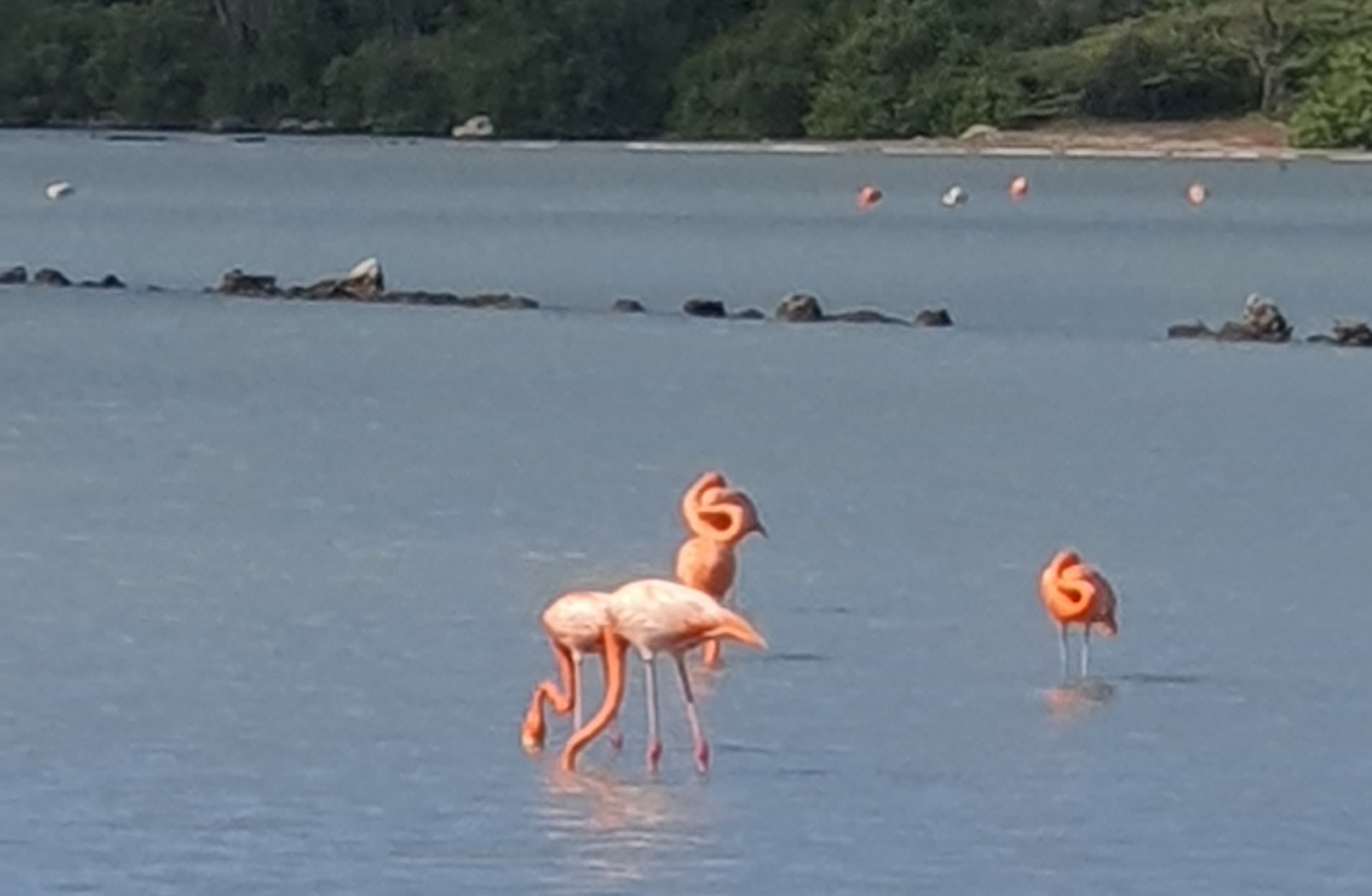
Our single outing to seek out birds took us to what is marked on maps at “flamingo habitat”. Sure enough, it was a shallow area full of flamingos. The flamingos were fun to watch. They put their heads under a wing when resting, but their necks are so long they have to coil them up. Amazing! I had hoped to see scarlet ibis, a brilliant bird of the mangrove, but we couldn’t find any on the day we went to look for them.


We also saw a caracara perching on a bare tree. These are large raptors that look a bit like an eagle wearing a beret. I can see it as a cartoon character similar to Foghorn Leghorn (if you are old enough to remember him).


(Internet photos of caracara, brown fronted parakeet, bananaquit)
Lyra spotted the Curacao version of the brown fronted parakeet. It has bright yellow-orange on its head, making the name not very useful for identification, though we were happy to see one in the wild.
There are lots of other outdoor adventures available on Curacao. We didn’t take a boat trip to Klein Curacao, the small island off the east end of the island, nor did members of our group rent any of the jet skis that roared by the resort from time to time. We saw wind-surfers at Jan Thiel, and there is scuba diving all around the island. In all, it’s more than enough to keep vacationers busy.
 Llywindatravels 2025
Glad you found supplies for your jewelry making! You were good to make the effort to leave the resort.
LikeLiked by 1 person
Peggy, You are so right. The rare occasions when beach glass is heaped on the shore is always a celebration.
LikeLiked by 1 person
What a treasure trove of beach glass! After the painstaking searches on other beaches, this must feel like winning at the slot machines in Las Vegas!
LikeLiked by 1 person