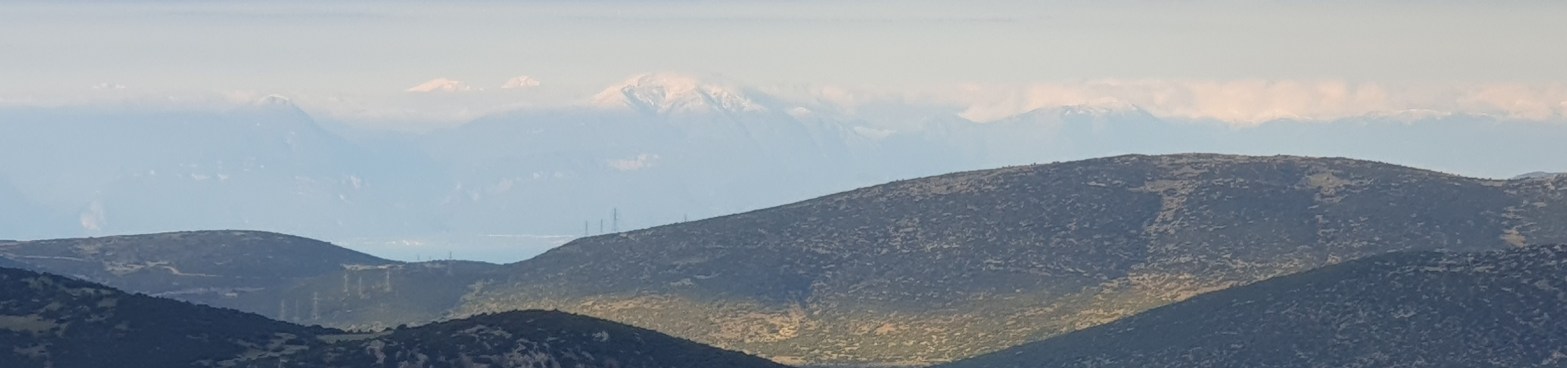
Our final day on tour took us from chilly Arachova back to Athens. We saw beautiful snow-capped mountains off to the north as we headed south, then turned off the highway to visit one last Mycenean site.
Gla, or Glas, was a large Mycenean fortress that was the center of a network of forts during the end of the Mycenean era, around 1300 BC. We saw the remains of imposing gateways through walls of huge stone quarried nearby and rolled into place.
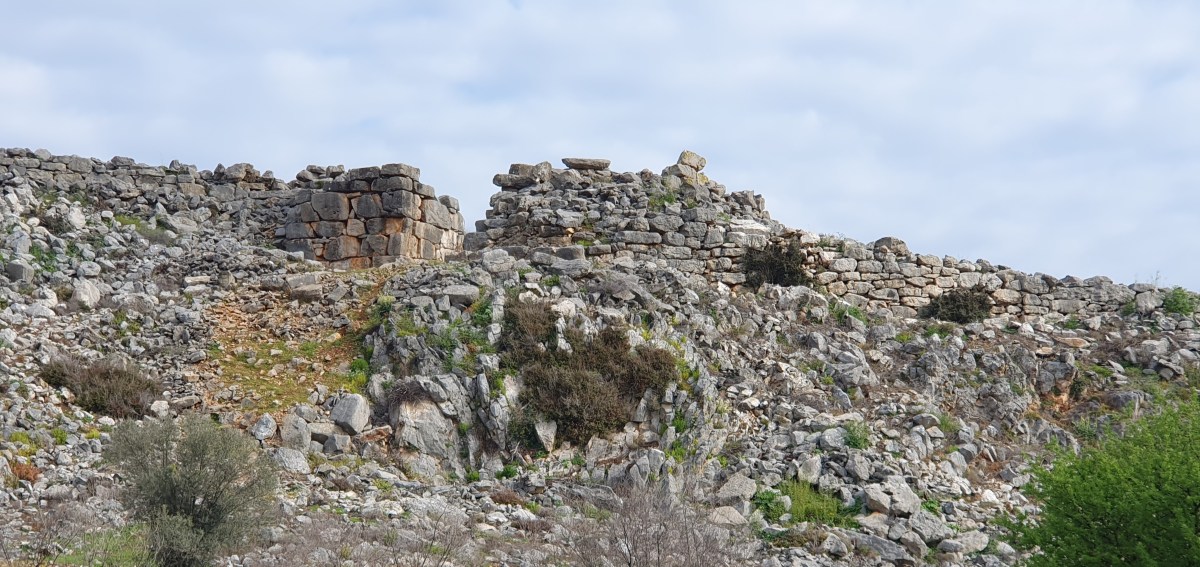
Having just visited beautifully restored Mycenae, the Treasury of Atreus, and the Palace of Nestor, we didn’t take a long walk at Gla. Perhaps we should have. This lesser known site may be the ancient city of Orchomenos, now attributed to a nearby locality. Archaeological research that began in 2010 has shown that the extensive city walls (seven times the length of Mycenae’s) enclosed houses, shops, and small fields. Two structures may have been for agricultural storage, and the collection of taxes (in goods). Most Bronze Age sites like this one are mentioned by Homer in the Iliad, and during excavation yield offices full of clay tablets that provide names and dates. An intriguing suggestion is that the single badly eroded corner of Gla held records that were destroyed in the collapse. Thus, Gla has remained unidentified. An article that digs into the mystery of the site and how it is being unraveled is below.
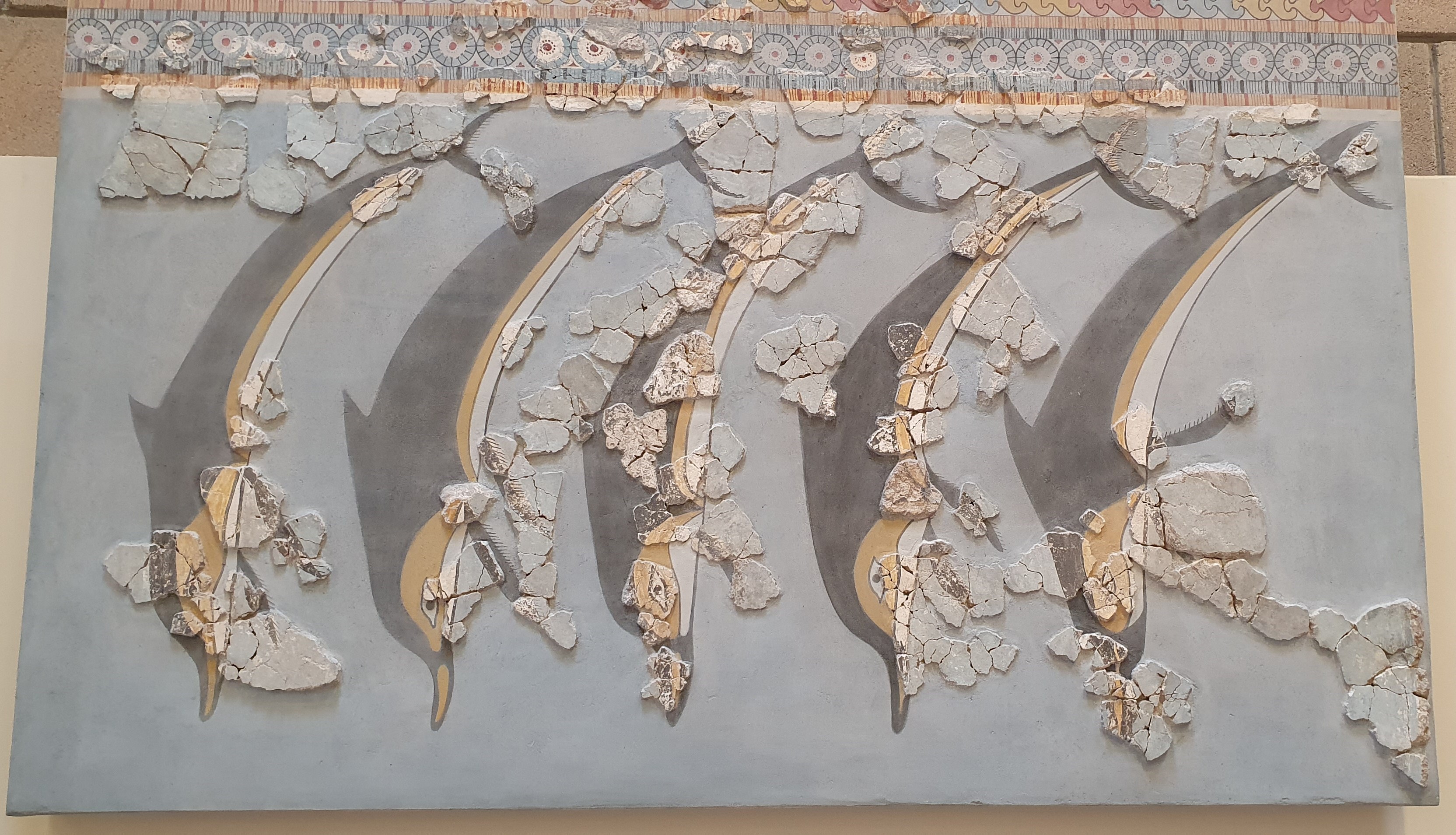
Our final stop was the Archaeological Museum in the city of Thebes. Like other museums, it has some spectacular items on display collected from sites in the region including Orchomenos. It may add pieces from Gla in future years. I particularly liked the depictions of sea creatures, octopus, squid, and fish. The dolphins are painted in Minoan style similar to the wall paintings at Knossos on Crete.

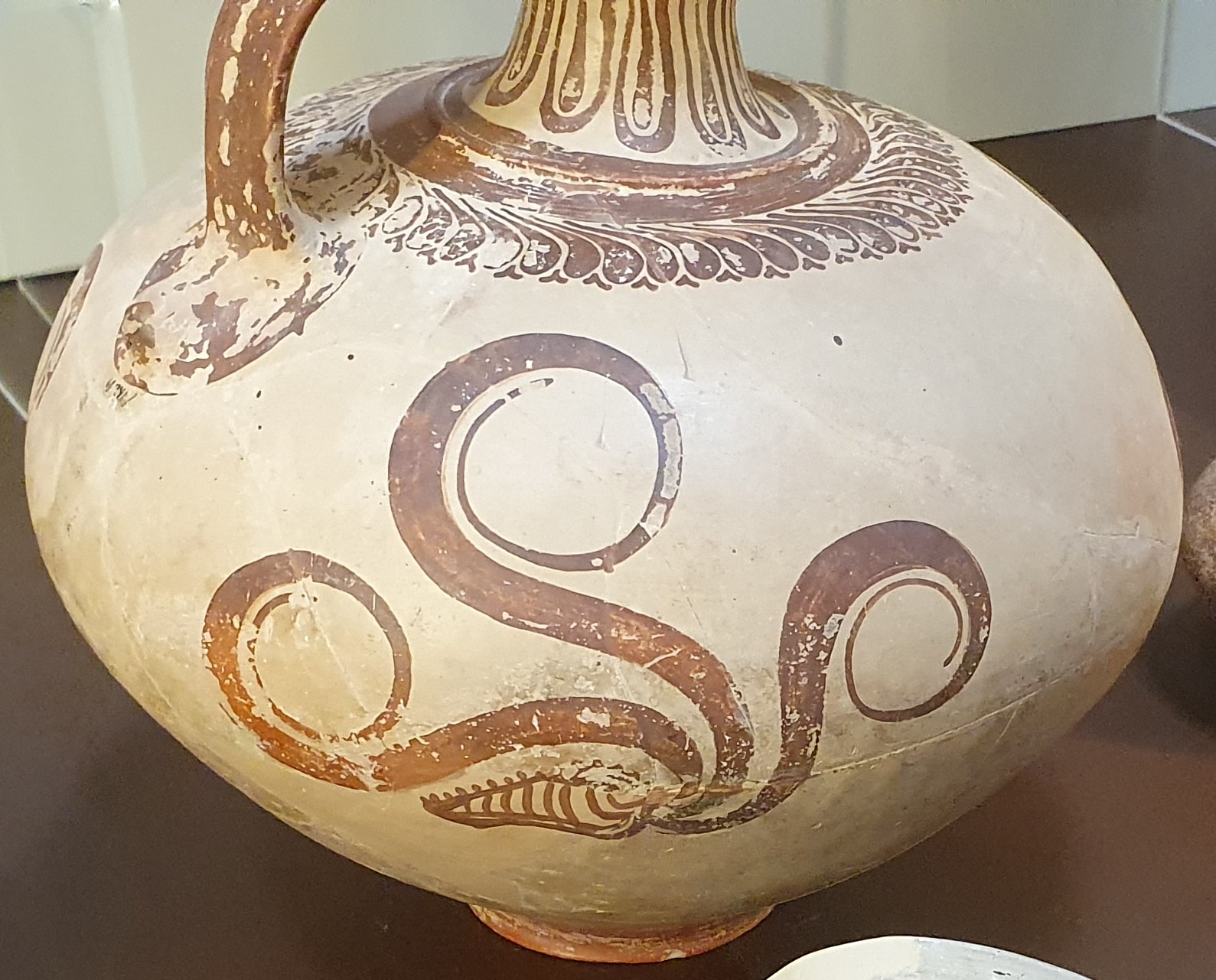
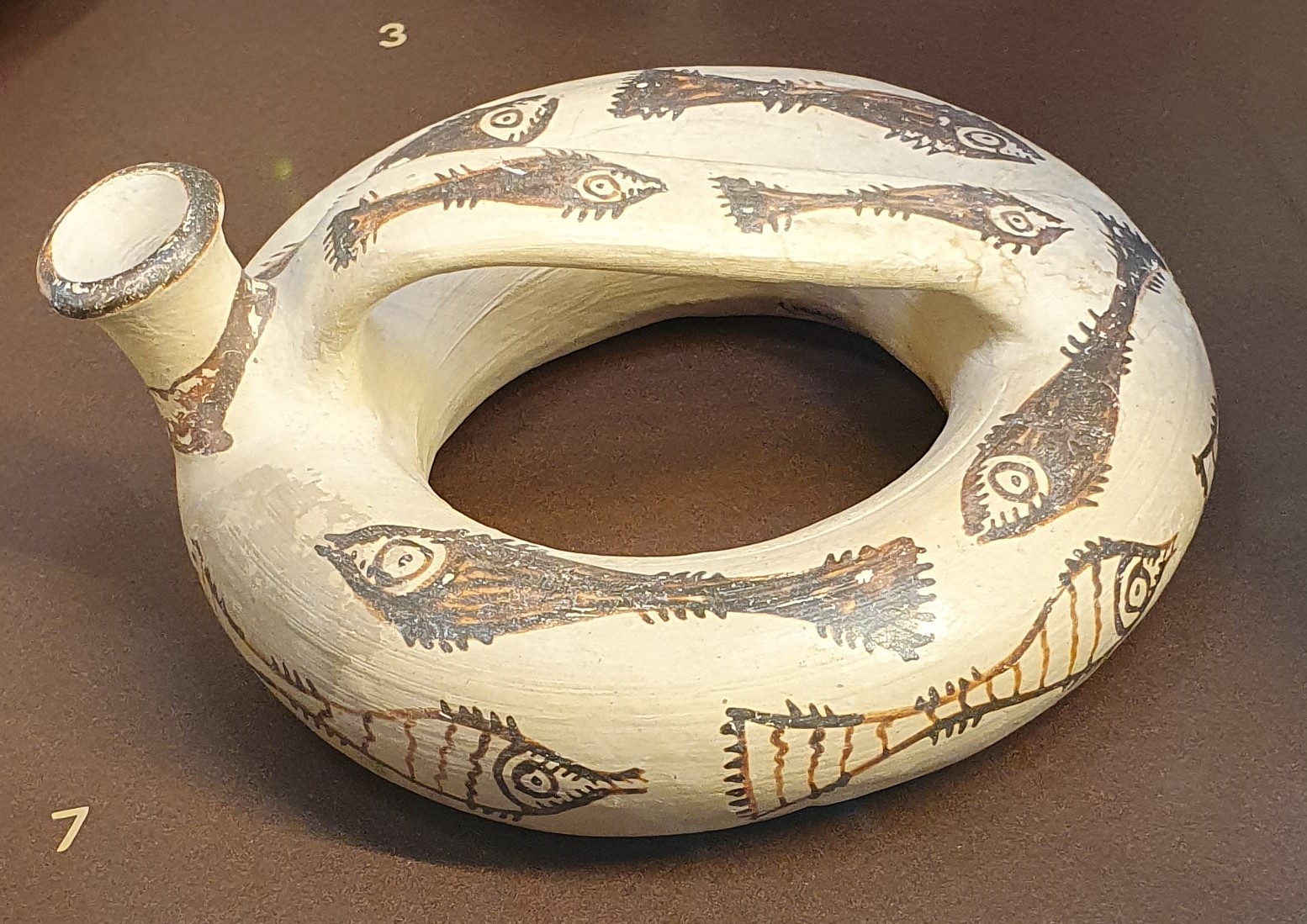
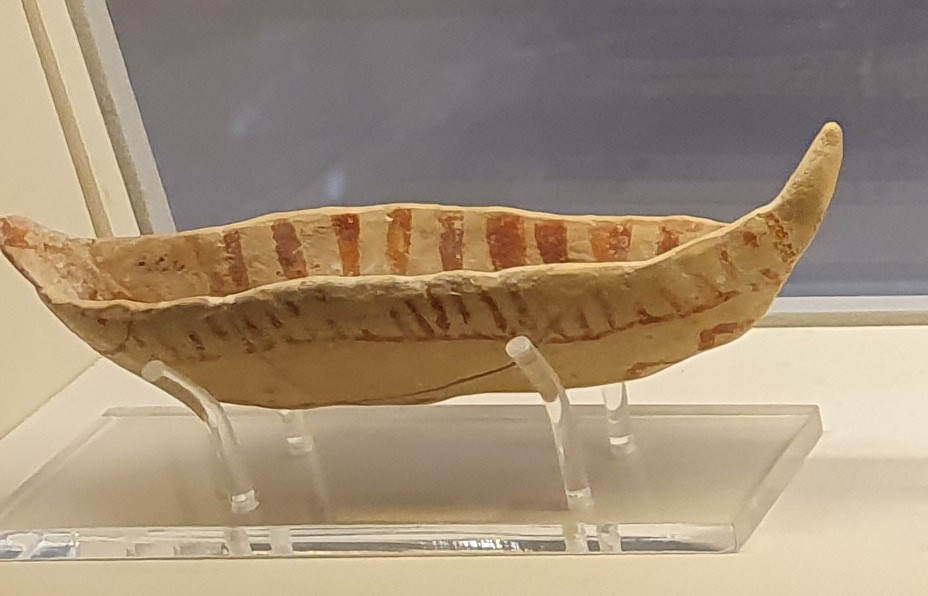
As always, there were many beautiful objects, mostly from tombs, that showed the artistry of people long ago.
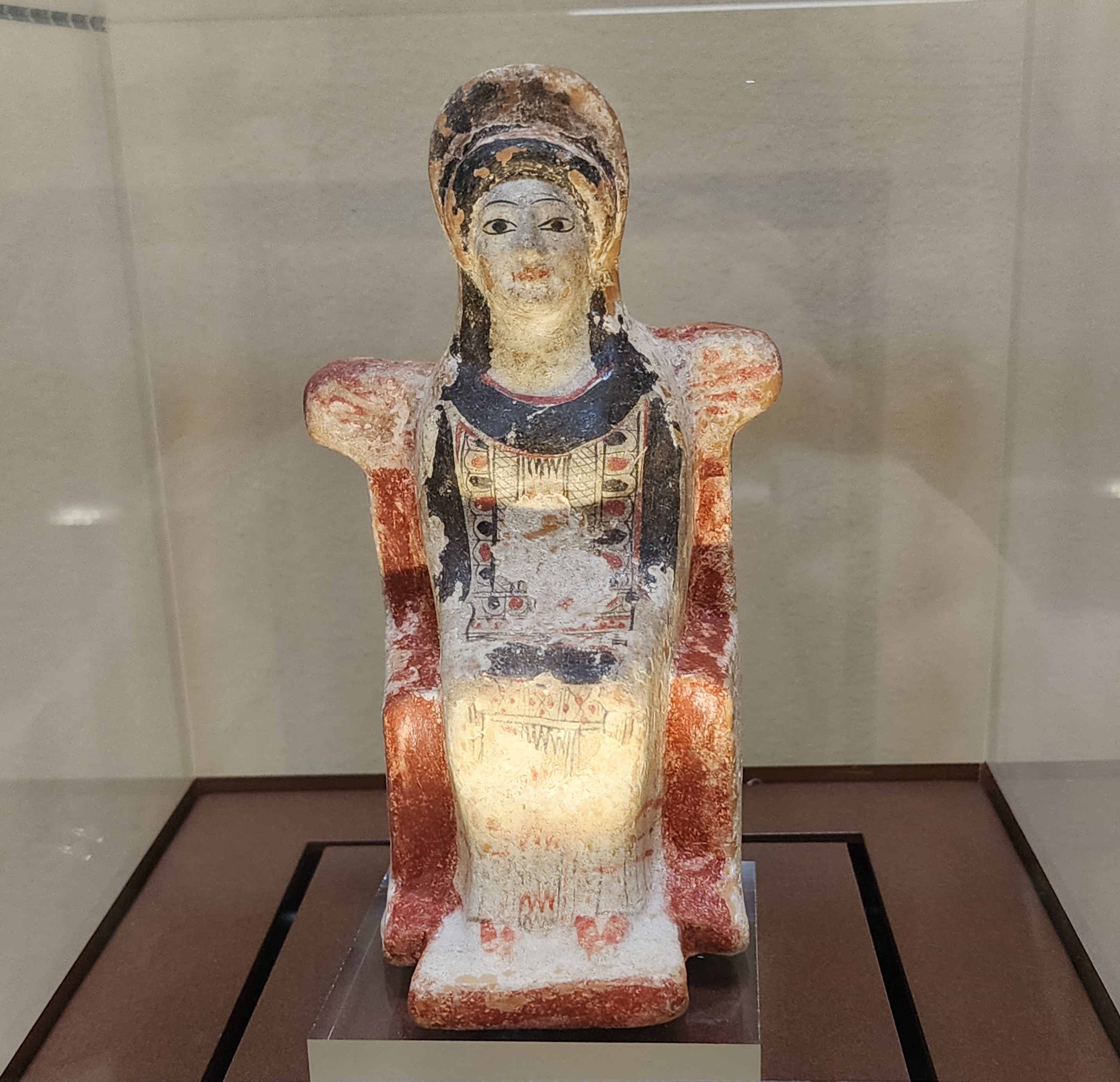
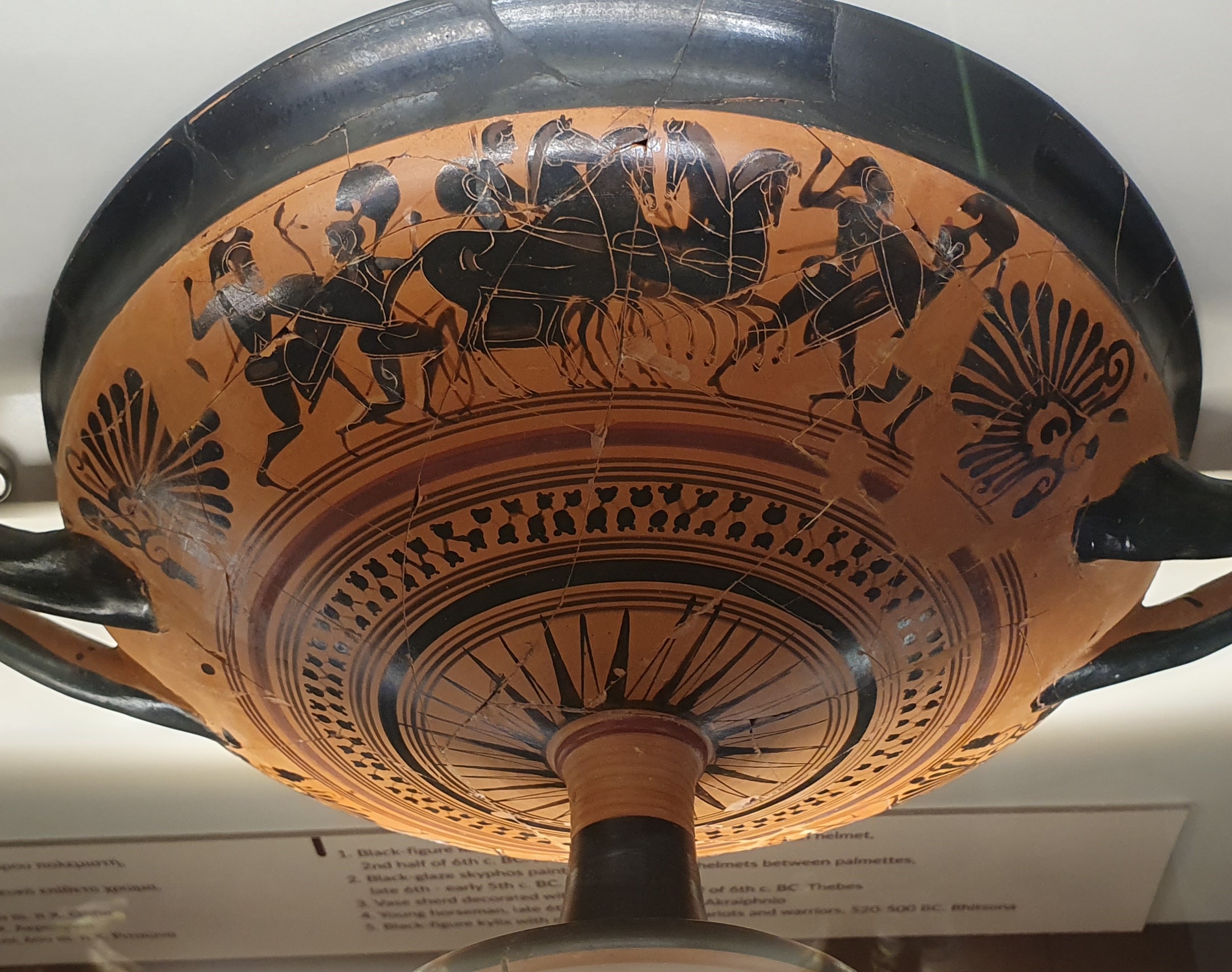

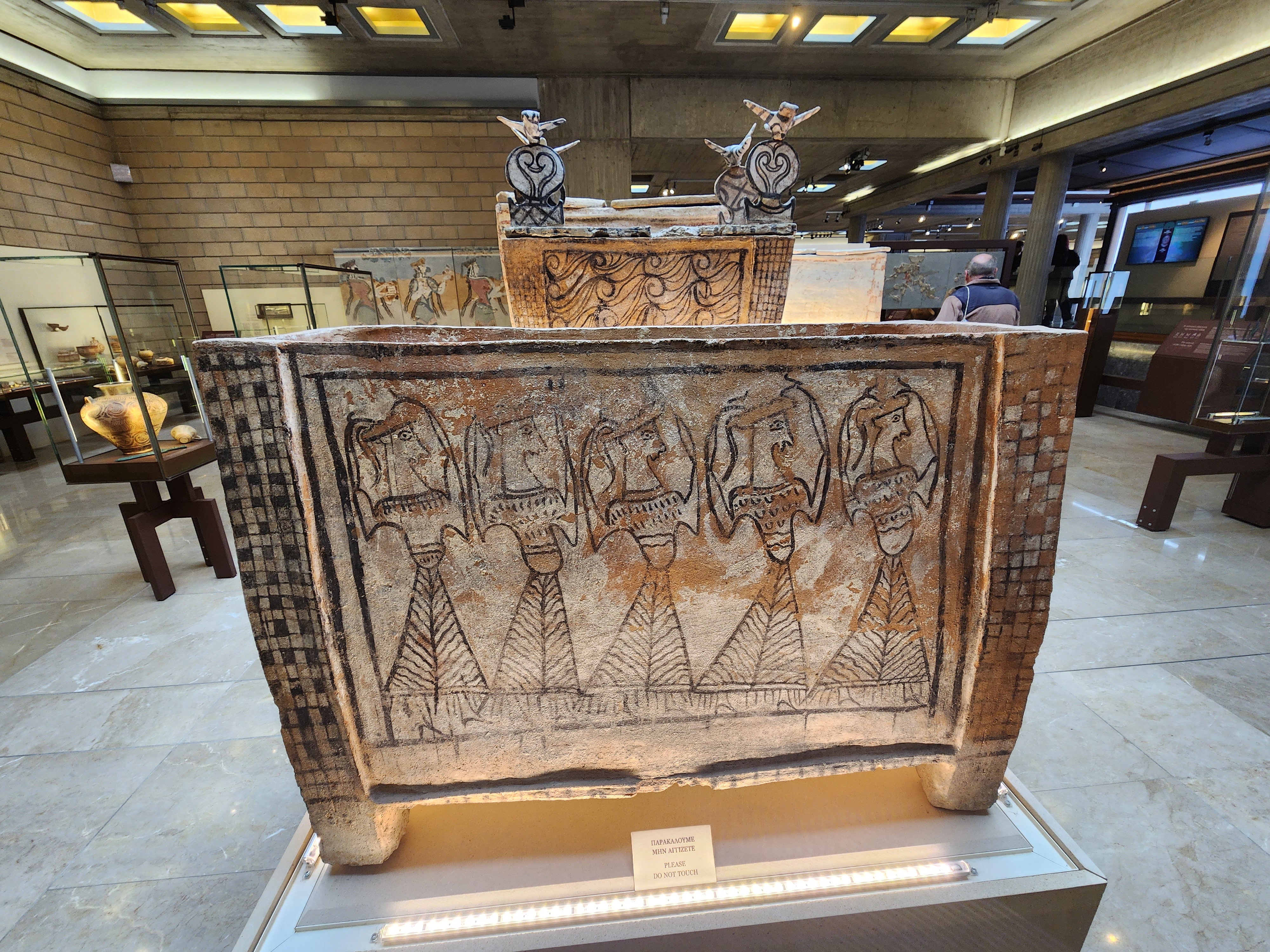
Every different style that we associate with ancient Greece was represented in the collection at Thebes.


It certainly looks like the designers from Star Wars stopped by to take notes. Eventually, we had to keep going. There was lunch on the horizon back in Athens at Strofi, a very nice restaurant with a view of the Acropolis that George was able to get us into. It’s moussaka is legendary, and was absolutely delicious.
Overall, our trip around the Peloponnese was magical. We saw all the archaeological sites we had longed to see, and others like Gla that we knew nothing about but were glad to be introduced to. The museums hold so many treasures that we become jaded by yet another lifelike sculpture, golden bead, or signet ring carved with a team of horses. We are grateful to Aristotle and George for making it all work.

Tour Manager:
George Gaitis, Pictours of Greece, 0030 697 2026 519
Guide: Aristotle
Lunch with a view of the Acropolis: Strofi (excellent)
Dinner: Sea Wolf, Athens (excellent)
(I’ve already posted about our final weekend in Athens as part of the post About Athens)
 Llywindatravels 2025