
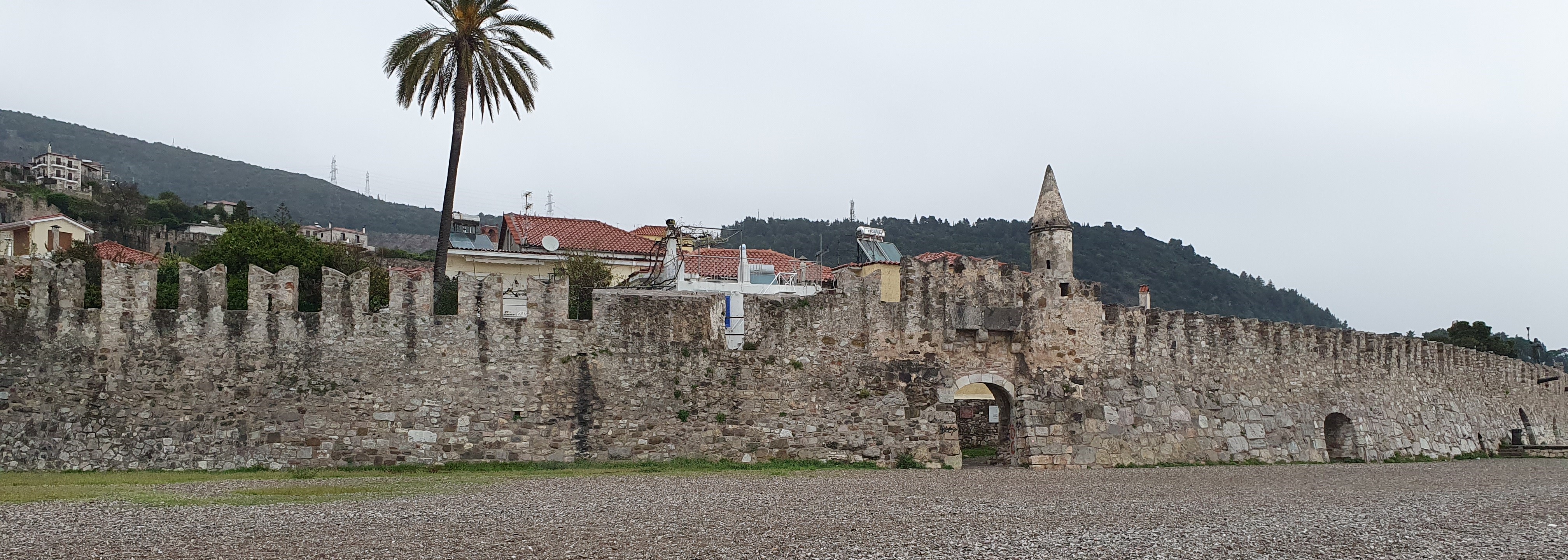
It rained overnight in Nafpaktos. I went out to the shore in the morning between showers, saw some fishermen heading home, and the remains of a Venetian fortress, but didn’t find any beach glass.

We headed for Delphi to hear from the oracle. Delphi is located in rough country, a lovely drive when someone else is at the wheel.

We visited the museum first, where we admired relief carvings made for the Sifnian Treasury. Treasuries held donations and offerings to the temples from specific localities. The Athenian Treasury at Delphi was known for displaying items captured in the Battle of Marathon.

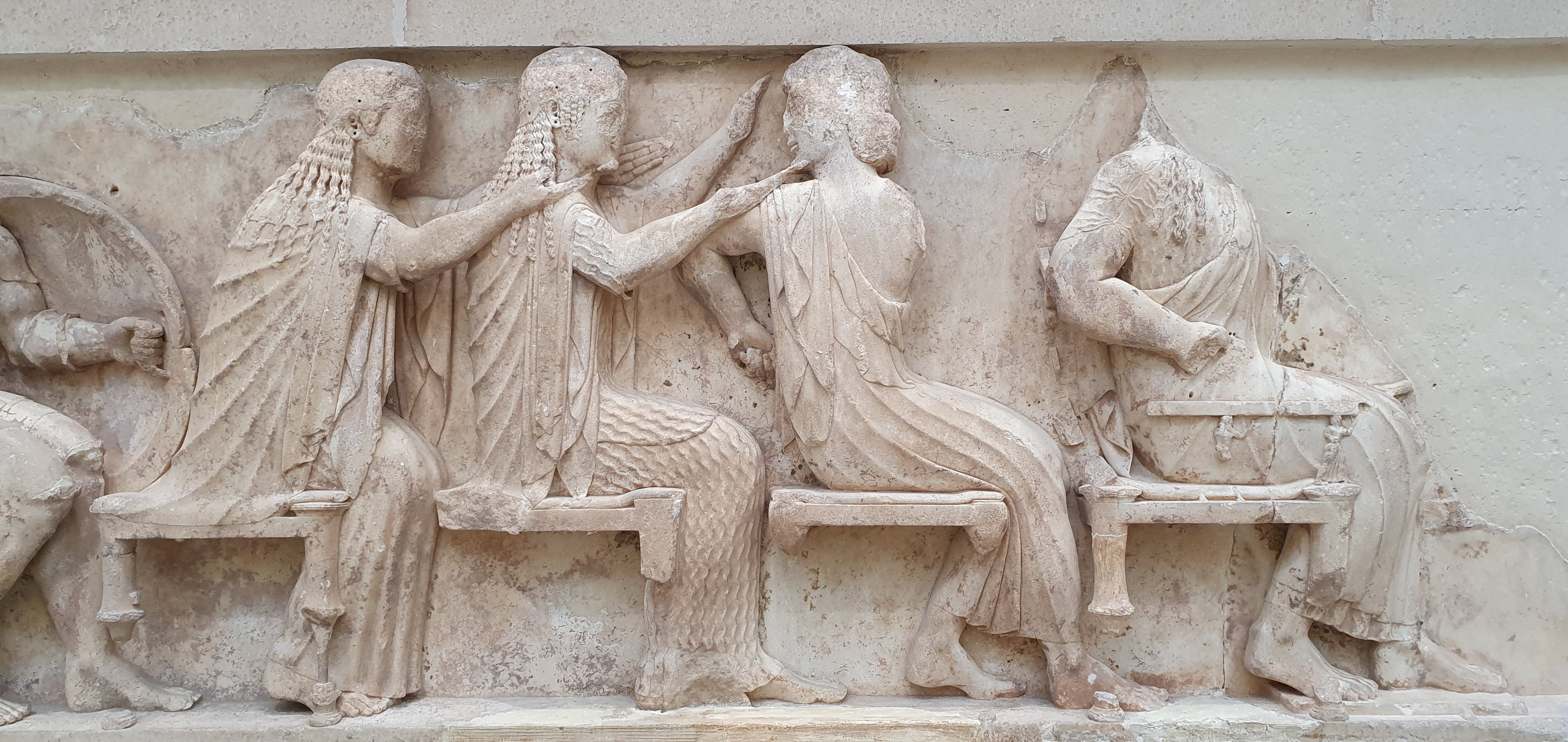
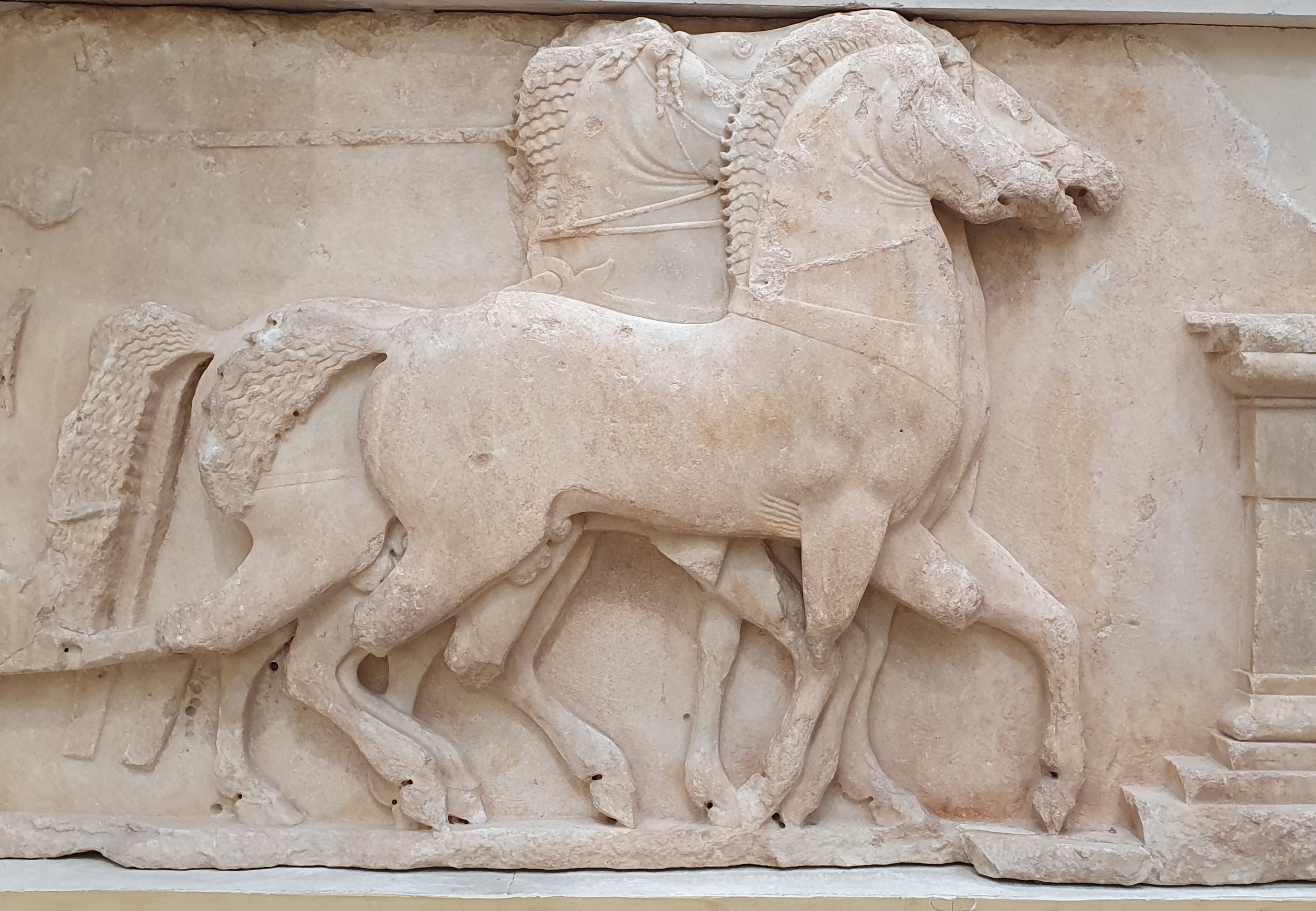

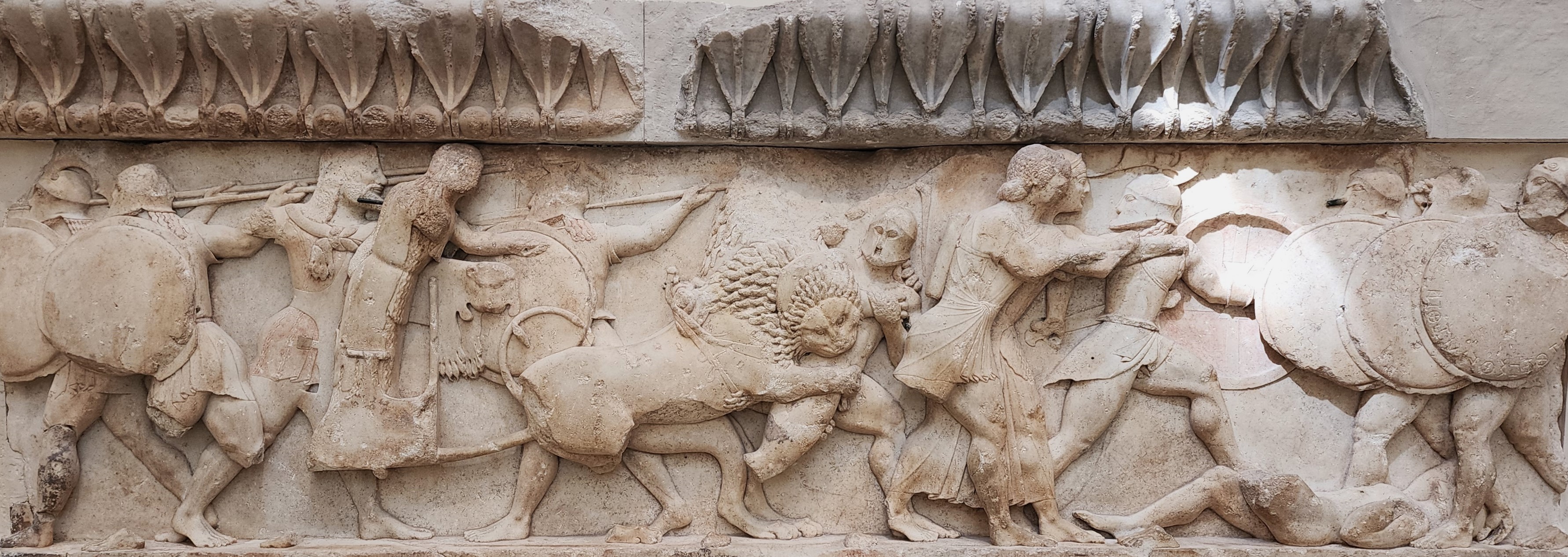
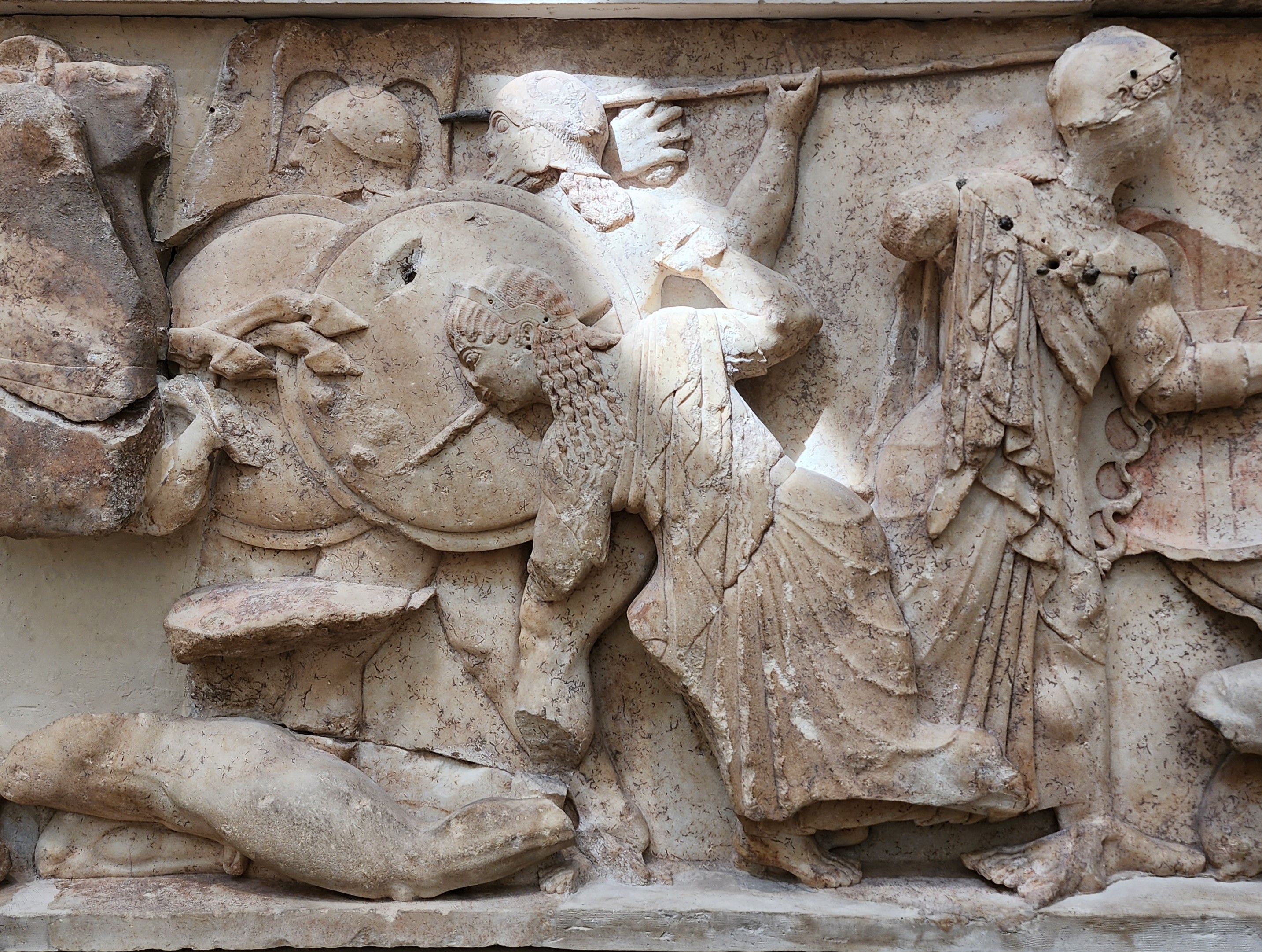
Upper L: The Athenian Treasury; All others: Panels that surrounded the Sifnian Treasury.
Cities vied for position–Sifnos hired famous sculptors, Naxos installed a Sphinx atop a column 36 ft (12 m) high. Other offerings included a life sized bull made of beaten gold and silver, and three ivory and gold statues (Apollo, Artemis, and Leto).

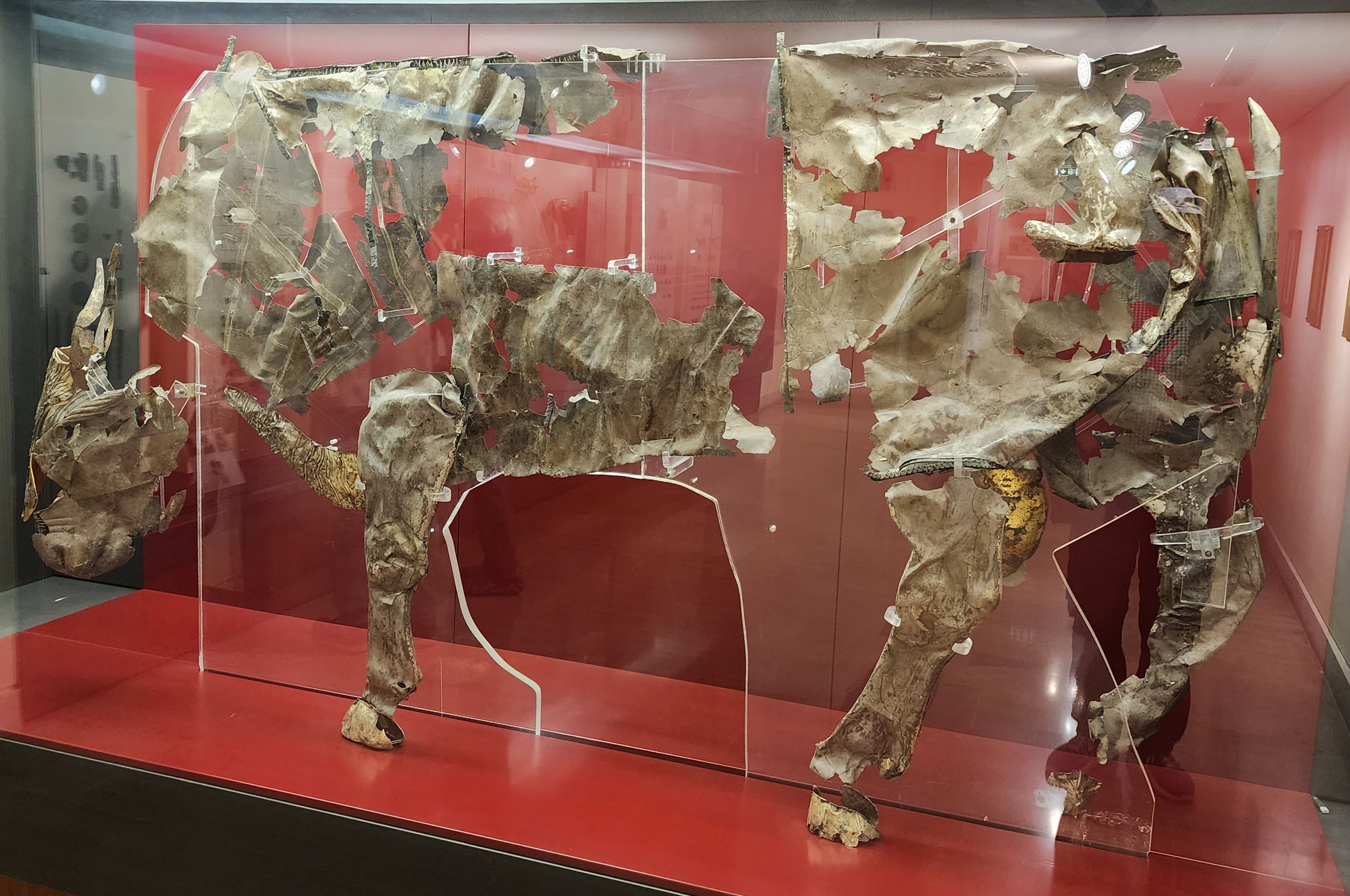

In the museum at Delphi: The Sphinx of Naxos, down from its tall perch; the beaten gold and silver, bull; and a goddess feeling rather smug because she’s made of ivory and gold.
We stopped for a late lunch at Baxos (Bacchus) in Delphi and went on to the site. Delphi stretches up the slope of a mountain to the base of a cliff. It reminded me of Kayenta, AZ.
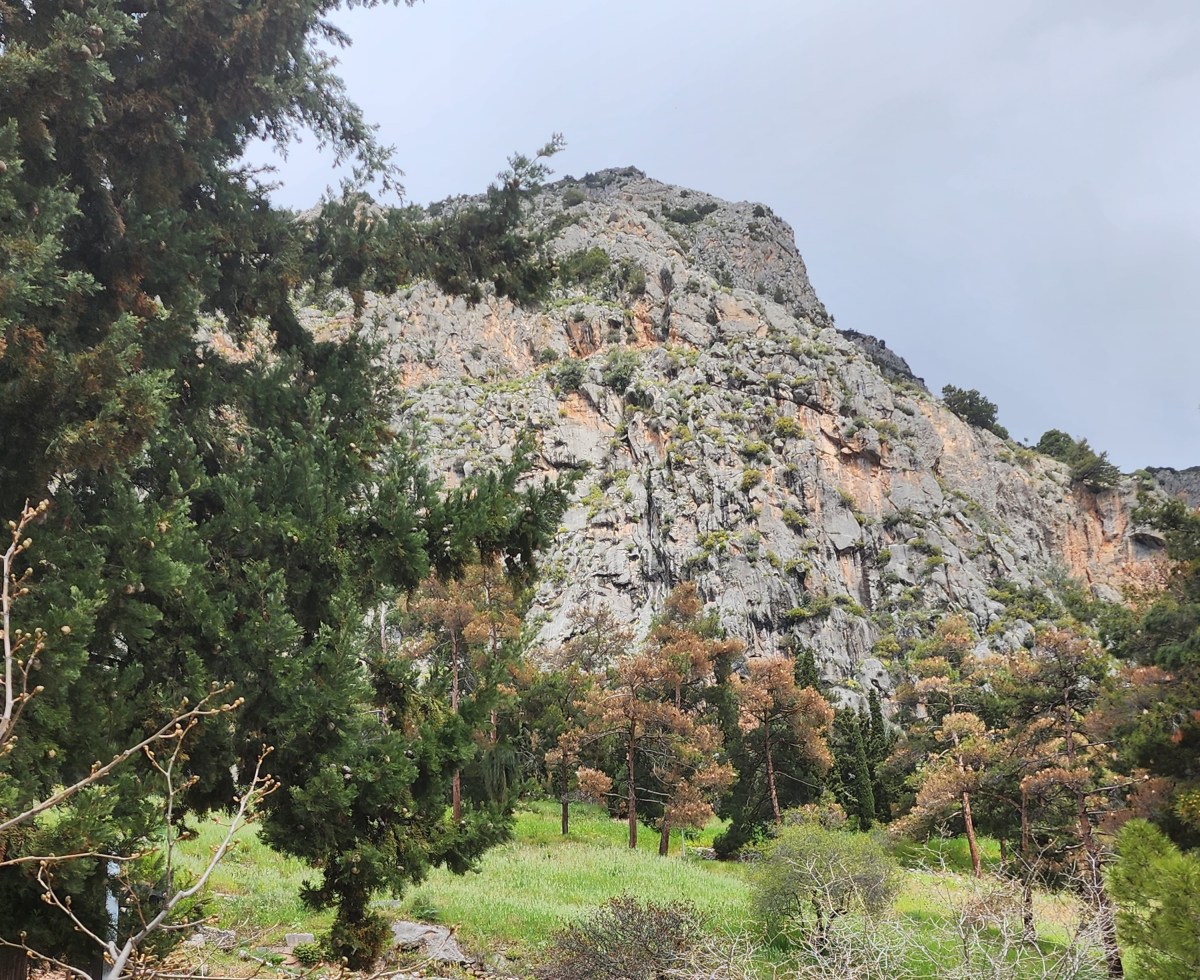
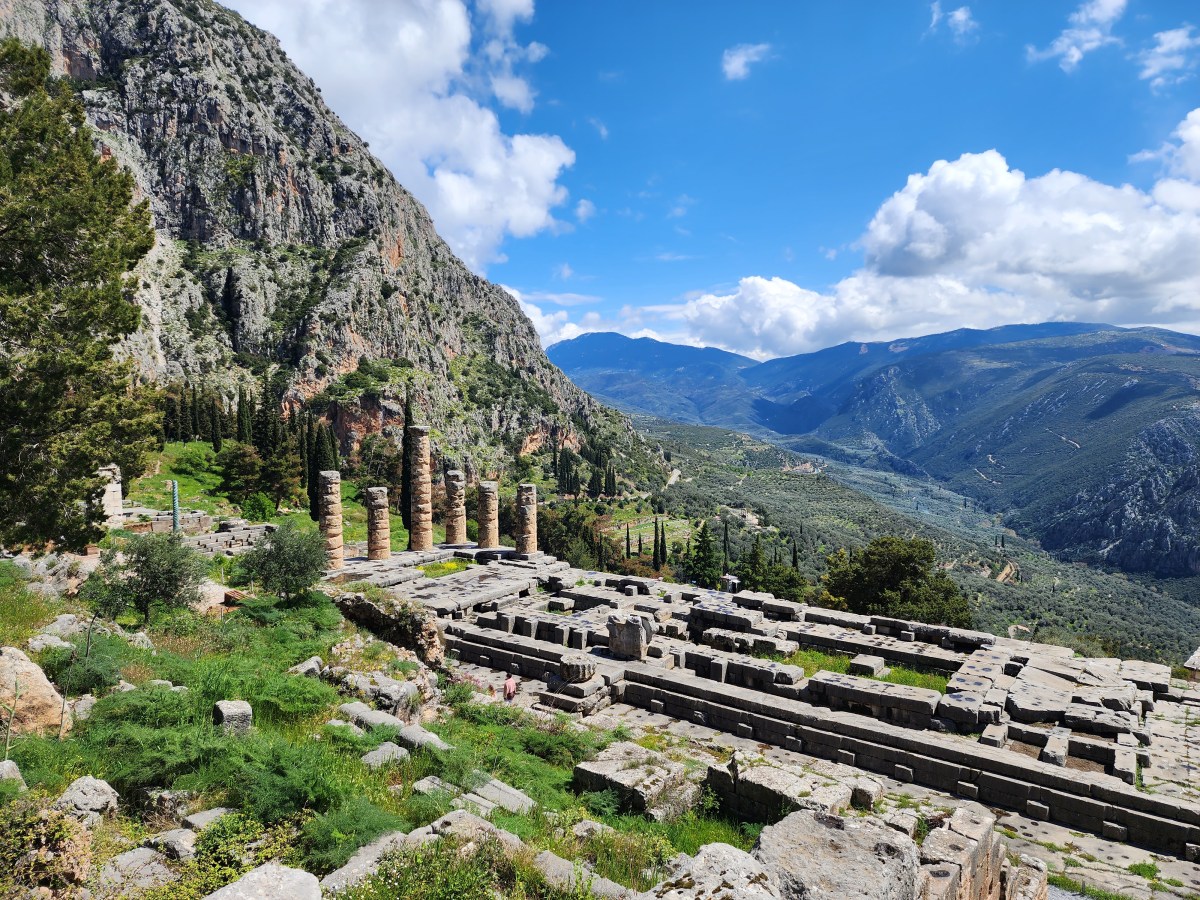
Despite its location on a rocky hillside, Delphi had all the features of a Greek city. In addition to its agora and theater it had a stadium, a bouleterion (council room), asklepion (for healing), lots of treasuries, and a remarkable number of inscriptions by those who visited.

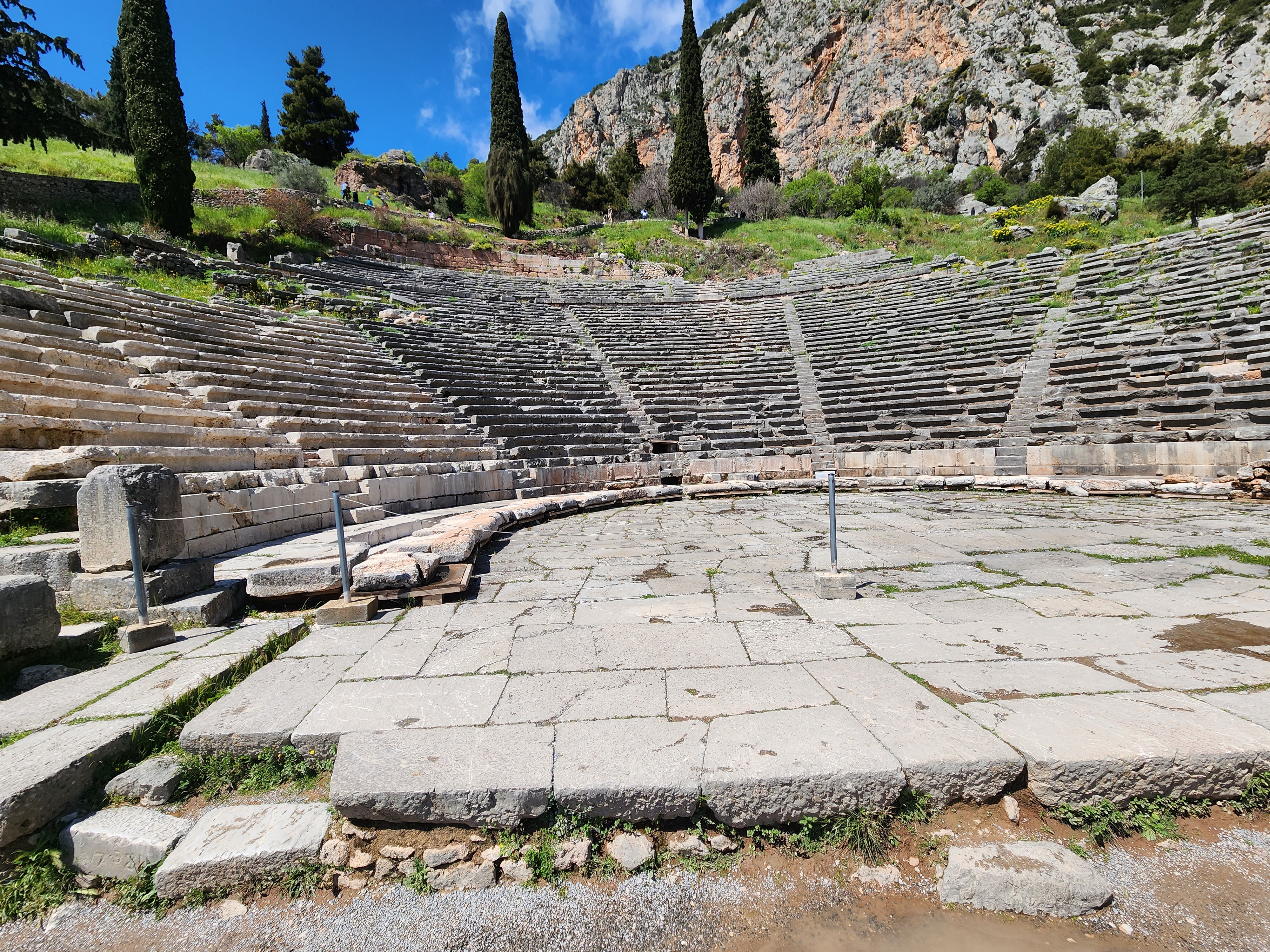

(Clockwise from L): The Temple of Apollo; the theater; a view over the agora at Delphi.
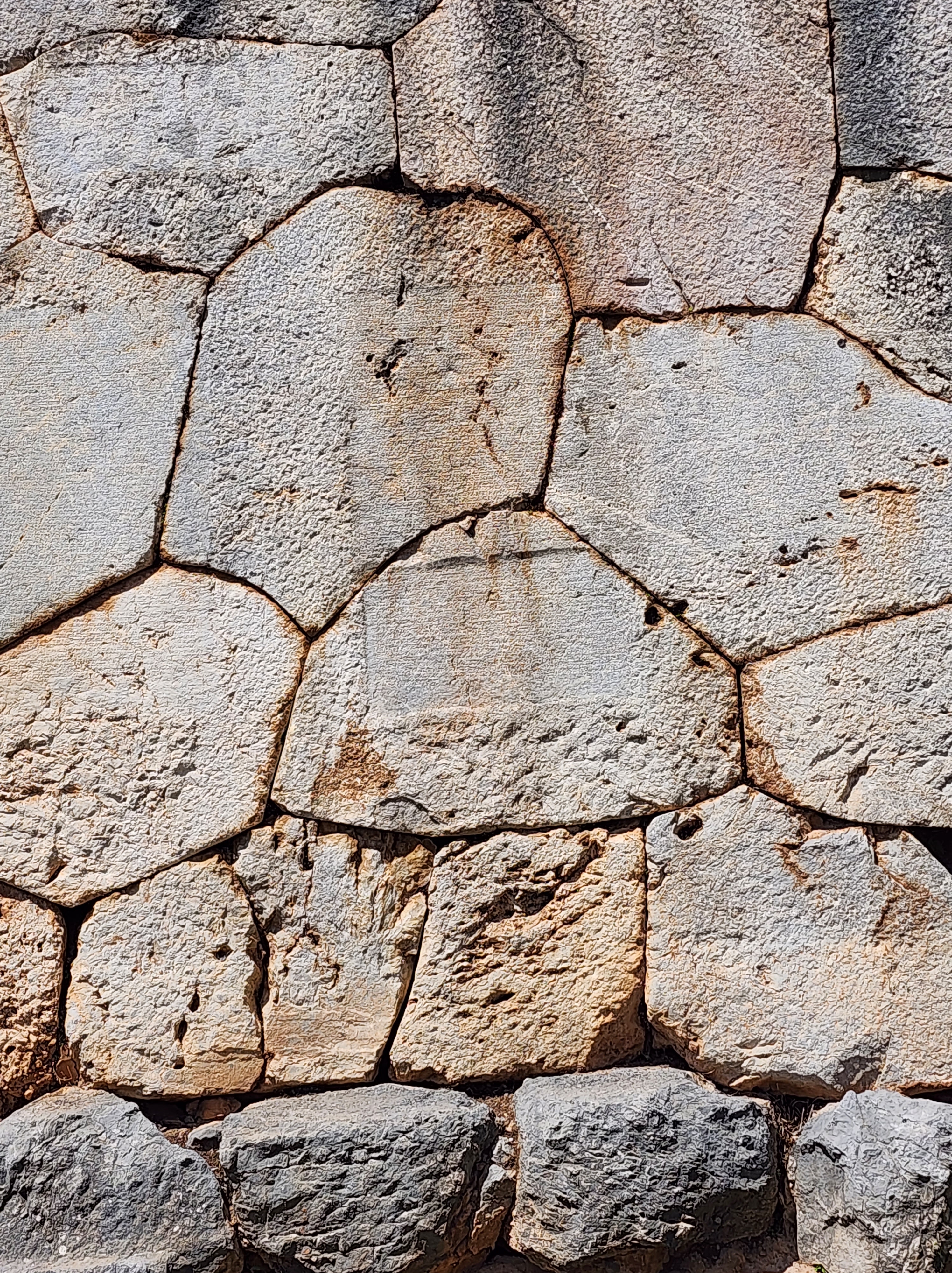
In Olympia, each dedication might have been part of a freestanding monument, but at Delphi there are so many that a carefully constructed stone wall turns out to have inscriptions carved into many of its component blocks.
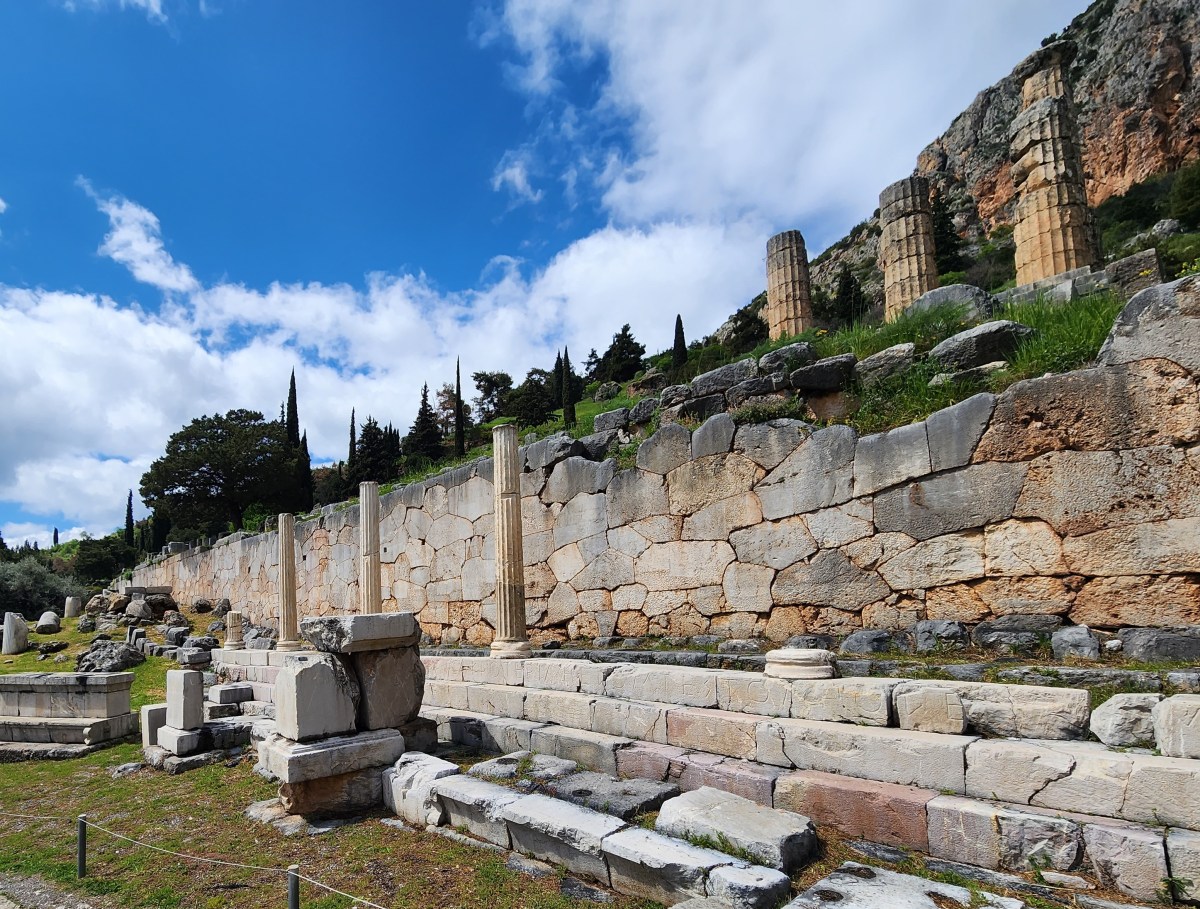

The Temple of Apollo was the place from which the oracle delivered prophesies. Sadly, there was no oracle in attendance. We enjoyed the sun and the whispering of the breeze, but couldn’t make out the words. There are many theories about what made the oracle at Delphi so highly regarded for so long, from at least 800 BC to around AD 600. A favorite is that vapors emerging from the crevices in the earth below the Temple of Apollo put the individual into a drugged state from which their speech emerged. Others say the oracle spoke gibberish, and priests translated her words into poetic, enigmatic prophesies. Both of these interpretations are highly contested. Probably neither is true.
We may not have seen the future, but we enjoyed the day very much. It was a highlight of our tour, not because it was different from many of the other ancient cities we visited this week, but because it was Delphi, the Delphi, where the oracle spoke. I stood on the hillside and looked out and thought about all the people who have been in the same spot wondering about the world, themselves, their future. It makes you feel like part of something bigger than yourself. I could feel the continuity of history.
We eventually left for our overnight spot, Likoria Hotel in Arachova, a ski resort part of the year. We saw a bit of late afternoon sun and stopped to take pictures.
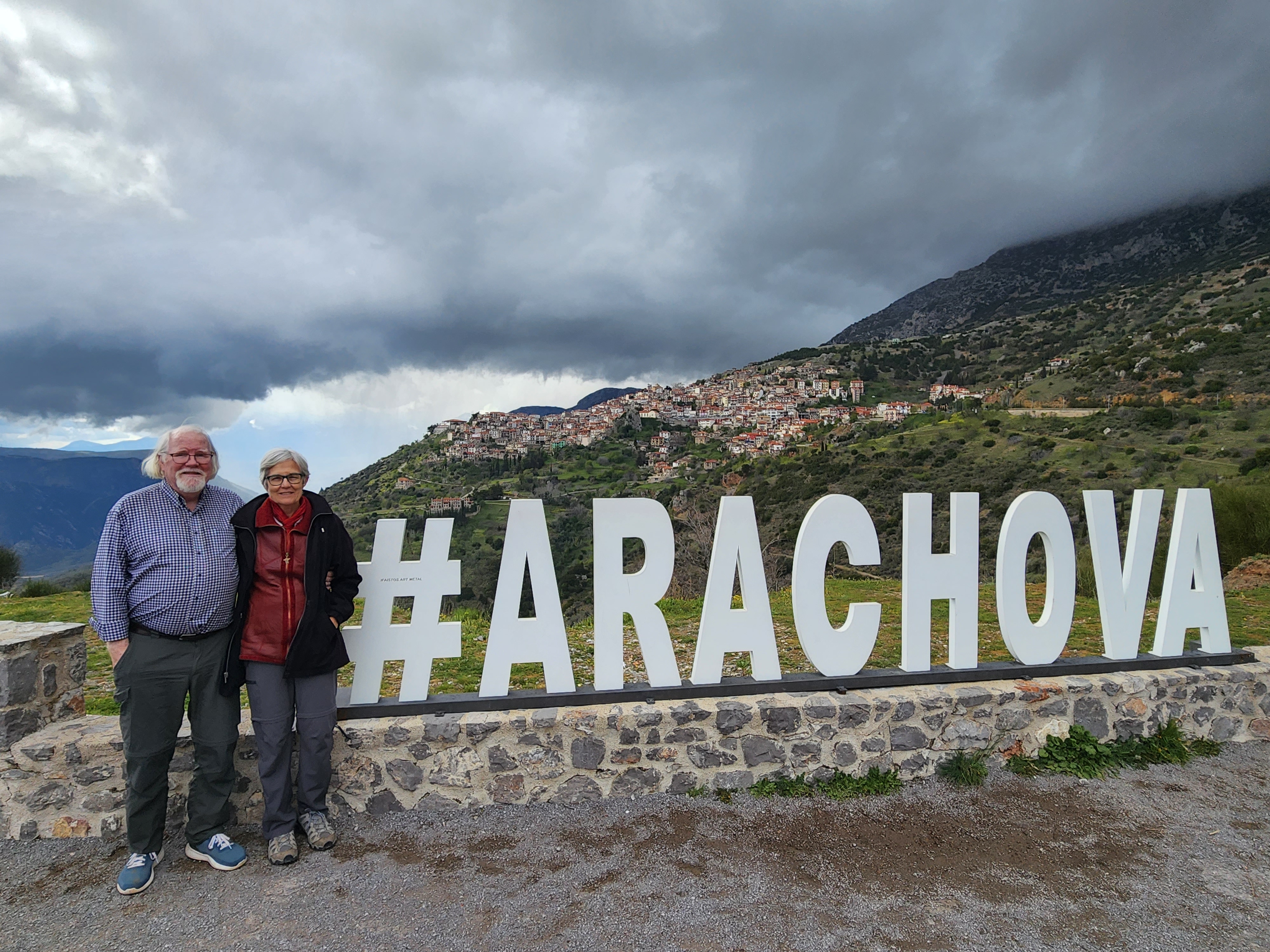
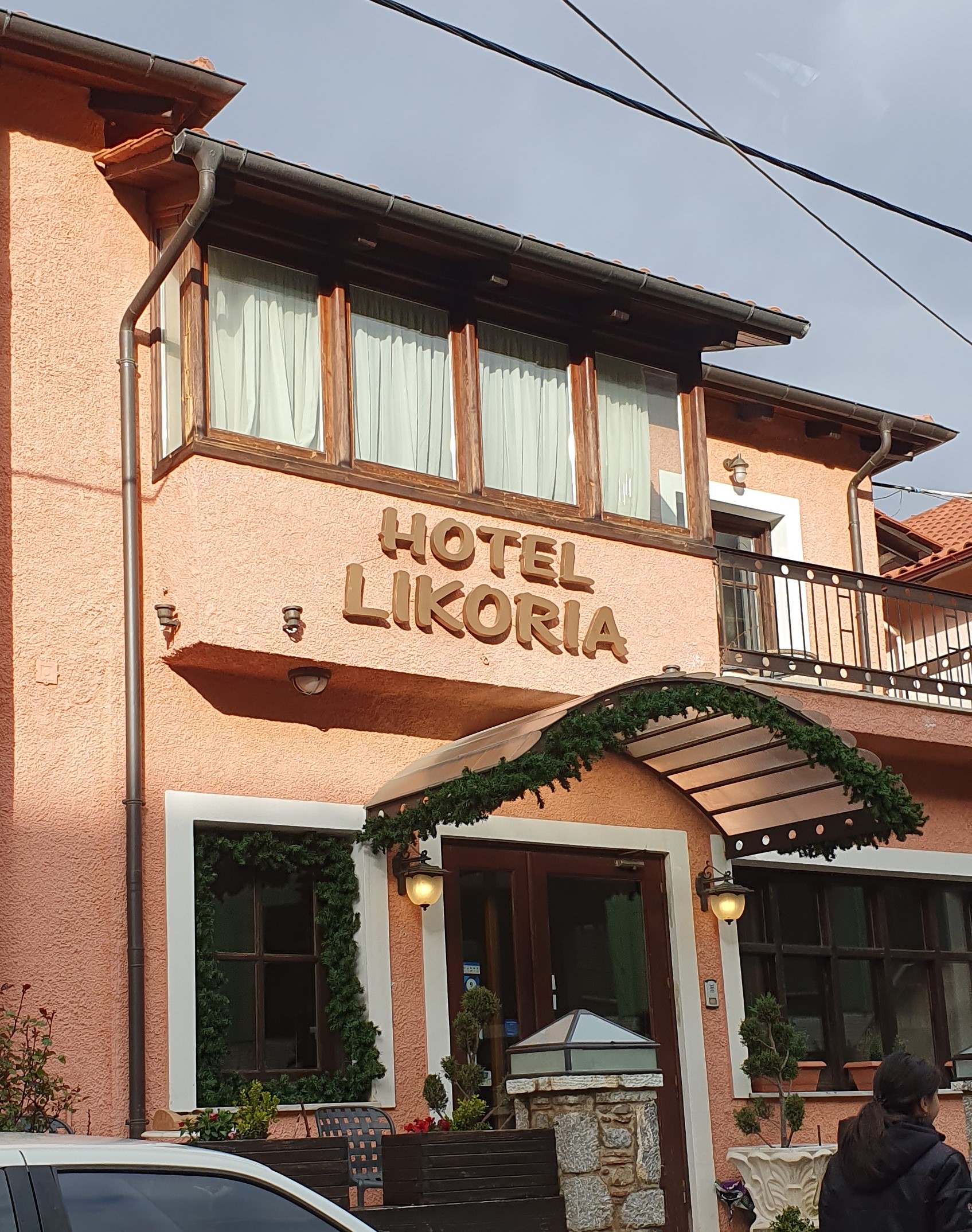
L-R: The town perches in the background of the Arachova sign; Our hotel.
There was time for a stroll through town before sunset. Arachova is a pleasant small town. Most visitors to Delphi are on day trips from Athens and don’t stay overnight in the area. The town was not thronged with visitors in the evening, though that could change in the summer. We enjoyed our stroll to To Tsoukani, where the proprietor sat down with us to go over the menu, to make sure we got what we wanted.


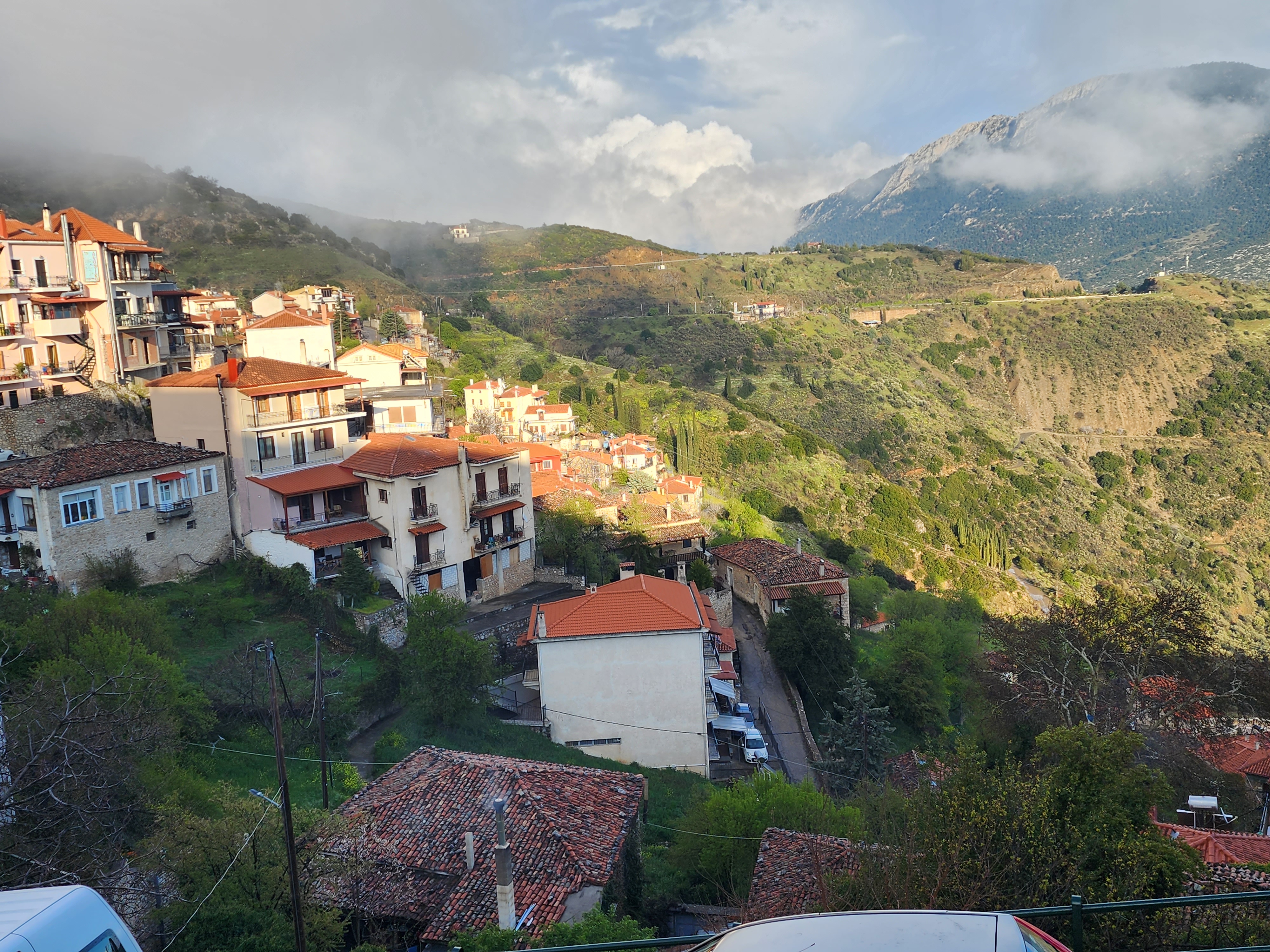


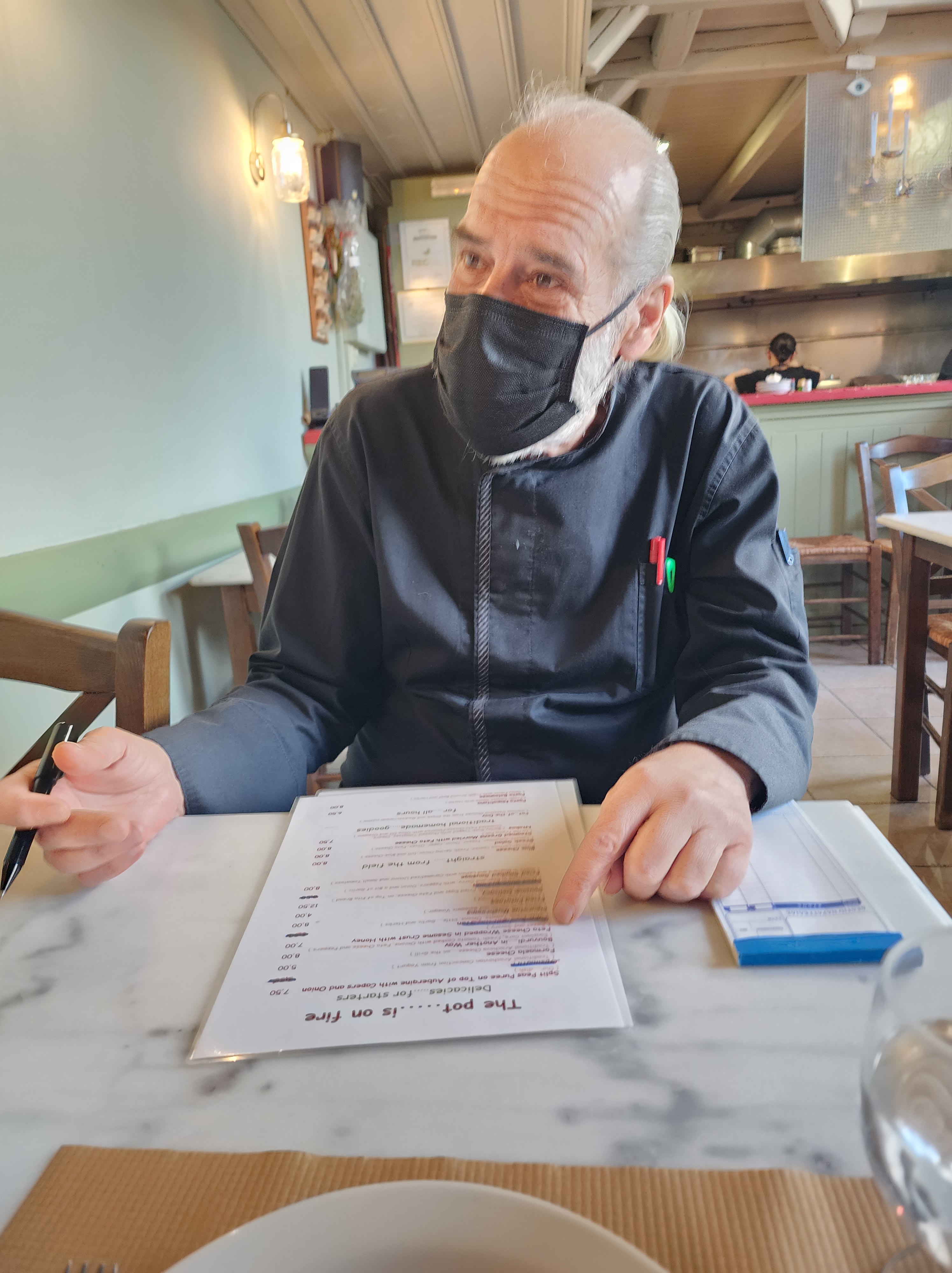
Pre-dinner stroll through Arachova after the rain; Reviewing the menu at To Tsoukani.
Our walk home in the dark highlighted different parts of town.
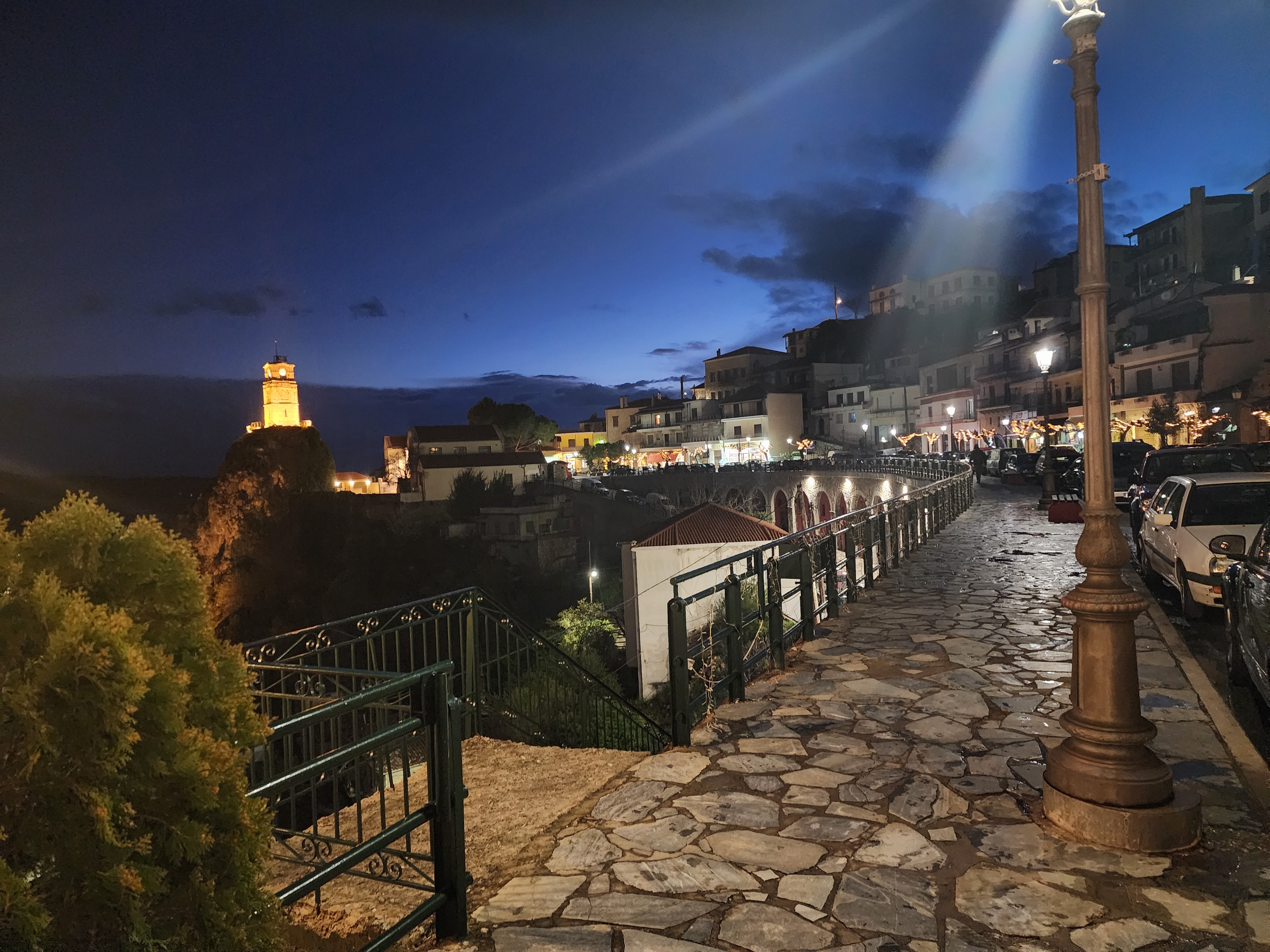


We realized that our visit to Delphi was the last full day of our tour with George and Artistotle. It’s been a long week, but a lot of fun and a true busman’s holiday for us as archaeologists.
 Llywindatravels 2025